Article

Efficient Prediction and Enhancement in Friction Wear Performance of Synthetic Brake Pads Using Machine Learning


1
Institute for Composites Science Innovation (InCSI), School of Materials Science and Engineering, Zhejiang University, 866 Yuhangtang Road, Hangzhou 310027, China
2
Zhejiang Key Laboratory of Advanced Composites & Structures, Zhejiang University, Hangzhou 310058, China
*
Author to whom correspondence should be addressed.
J. Compos. Sci. 2026, 10(4), 193; https://doi.org/10.3390/jcs10040193
Submission received: 16 February 2026 / Revised: 8 March 2026 / Accepted: 26 March 2026 / Published: 1 April 2026
(This article belongs to the Section Composites Modelling and Characterization)

Abstract

To tackle traditional synthetic brake pads’ friction instability and performance degradation at high speeds, as well as the costly and time-consuming empirical formula optimization, a multi-stage synergistic optimization (MSSO) framework driven by two-stage machine learning is proposed in this study. The novelty lies in integrating Pearson correlation filtering with Gaussian noise for data enhancement, employing a hybrid sparrow search algorithm-gray neural network model for dataset expansion, and utilizing a red-billed blue magpie optimization-backpropagation neural network for high-precision multi-target prediction. Experimental verification shows that brake pads manufactured using the optimized formulations exhibit improved average friction coefficient and wear rate, with reduced error compared to traditional methods. The friction characterization results of composite brake pads show the features of optimized composite brake pads at the surface microscopic level. This provides an efficient solution for developing lightweight brake materials for high-speed trains.

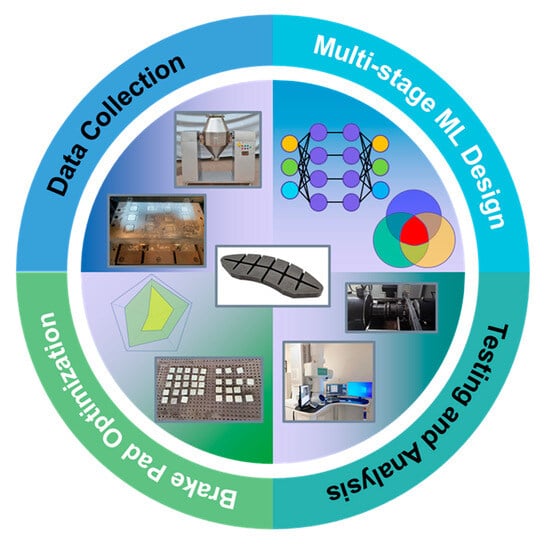
Graphical Abstract

1. Introduction

With advantages such as cost-effectiveness and environmental friendliness, resin-based synthetic brake pads are widely used in the braking systems of urban trains, subways, and automobiles. Composite brake pads serve as the critical safety components within high-speed train braking systems [1]. Their formulation design and performance optimization critically impact train braking efficiency and operational safety [2,3,4,5]. However, conventional composite brake pads exhibit limited thermal stability, leading to decomposition at high temperatures. As a result, their various performance indicators decrease significantly when applied to high-speed urban trains (120–200 km/h) [6,7,8]. Because its friction performance and service life do not meet the requirements, it cannot be equipped on high-speed urban trains [9,10]. Therefore, a fast and effective method is urgently needed to design high-performance brake pads that meet the demands of high-speed rail vehicles.
The brake pad is a complex composite material, typically comprising a matrix (e.g., phenolic resin), reinforcing fibers (e.g., steel, aramid), friction modifiers (e.g., graphite, metal sulfides), and functional fillers (e.g., barite) [11]. Each component contributes to the overall performance through synergistic physical and chemical interactions [12,13,14,15]. Resin matrix provides adhesion and thermal stability, fibers enhance mechanical strength, friction modifiers optimize surface interface behavior, and fillers regulate thermal conductivity and wear characteristics [16,17,18,19,20]. Among all factors, the balance of matrix elements, friction elements, and lubrication elements plays a crucial role in brake performance [21,22,23,24,25,26]. This multicomponent, multi-scale composite structure makes it extremely difficult to design [27]. Traditional methods rely on trial-and-error optimized mode, which need to go through complex processes such as material matching, sample preparation, bench test, road verification, etc. Approaching the optimal solution typically requires hundreds of iterative tests, leading to long research and development (R&D) cycles and high resource consumption [28]. Therefore, developing an efficient formula prediction R&D method has become the key point for the breakthrough of brake pad development technology [29,30,31,32,33,34]. Most studies focused on adjusting a single element, and an optimized comprehensive composition strategy has not been achieved yet [35,36,37].
Machine learning (ML) and data mining methods, due to their universality and high efficiency, offer a promising approach to simulate the synergistic effects among components of complex composite materials [38,39,40,41,42,43,44]. Different machine learning methods were used to select material characteristics such as composition ratios, hardness, and density as training features, and algorithms were tuned based on their fitting performance to the experimental tribological data [45,46]. The brake pad material formula of high-speed trains was optimized, resulting in improved stability of the coefficient of friction (COF) and reduced heat generation and wear rate [30,32]. Artificial neural networks were used to calculate tribological properties and examine tribological properties of unidirectional fiber reinforced epoxy composites. Various normal loads and samples were used in experiments performed on a pin-on-disk tribometer [47]. Bas et al. used a ML algorithm to predict the frictional torque and COF of statically loaded radial plain bearings [39]. Hasan et al. obtained a ML model of friction and wear performance of Al-based alloys with their material properties, processing procedure, heat treatment, and tribological test variables [40,48]. So far, machine learning has been widely applied to the study of friction properties [49]. However, a mature method based on machine learning for optimizing the multi-objective performance of synthetic brake pad formulations has not yet been established.
To address these challenges, we proposed a two-stage machine learning driven framework for brake pad formulation development. Formulation development here refers to the process of determining the optimal mass percentages of the various components (matrix, fibers, modifiers, fillers) to achieve target performance. In Stage 1, data enhancement techniques and algorithms are applied to overcome the small-sample data bottleneck. In Stage 2, a high-precision prediction model is designed for multi-objective optimization, simultaneously predicting the COF and wear rate for any given formulation. This framework automates the complete workflow from data preprocessing to the generation of optimized formulation candidates. The optimized formulations are manufactured in batches using a high-throughput process, specifically a mold designed to produce many distinct compositions simultaneously. The resulting brake pads are characterized and tribologically tested to validate the reliability of the numerical predictions. This method reduces reliance on empirical trial-and-error methods and improves development efficiency.

2. Materials and Methods

2.1. Materials

The materials of synthetic brake sheet formula can be divided into matrix, fiber, friction modifier, and filler. The nitrile butadiene rubber (model HLN40-3, Mooney viscosity 40) and phenolic resin (model 50590J, solid content >90%) were both purchased from Shanghai Macklin (Shanghai, China). Fibers include steel cotton fiber and mineral fiber from Sinopharm Chemical Reagent (Shanghai, China), and aramid fiber from Tayho Advanced Materials (Yantai, China). Graphite, zircon sand, aluminum oxide, chromic oxide, and antimony sulfide as friction modifiers were purchased from Shanghai Aladdin Biochemical Technology (Shanghai, China). The filler is barium sulfate, purchased from Sigma-Aldrich Trading (Shanghai, China). All materials were supplied as dry powders or short fibers. The particle sizes for powdered components (fillers, modifiers) ranged from 5 to 150 µm. The steel cotton fiber had a length of 2–6 mm and a diameter of 50–100 µm, the mineral fiber was 1–4 mm in length, and the aramid fiber was 3–6 mm in length.

2.2. Numerical Models for Machine Learning

In the first part of the model, small samples are selected for feature selection and data enhancement. Additional samples are generated through noise augmentation. These augmented samples were trained with a linear model optimized for small-sample, short-term prediction, producing an intermediate dataset. The intermediate dataset was then combined with the original unoptimized data and fed into the second stage. Large-scale numerical predictions are conducted using a high-capacity model. This two-stage approach effectively addresses low prediction accuracy in small-data scenarios.
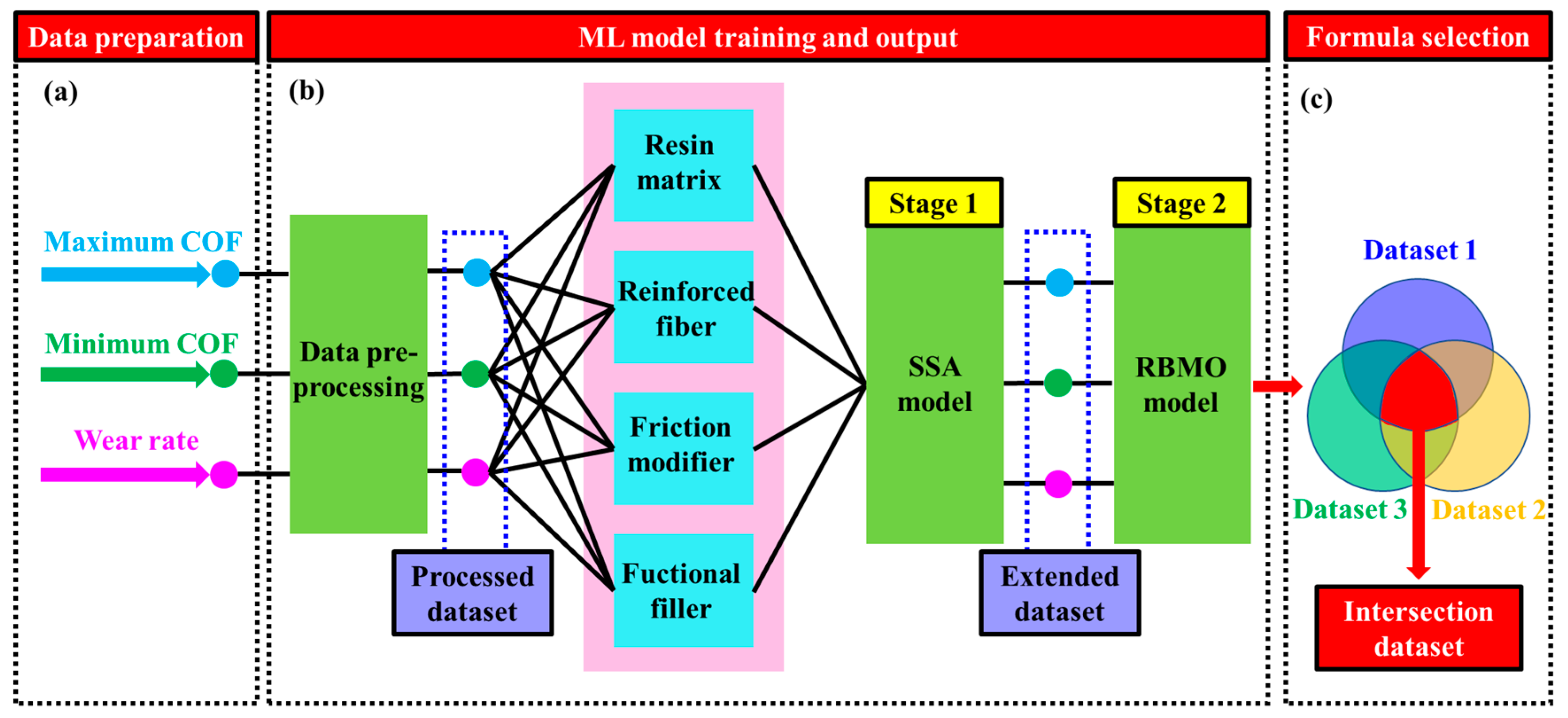
Composite brake pads were evaluated by two key tribological performance targets, the COF and wear rate. While the prediction model constructed in this study outputs one-dimensional values, multiple training is needed to achieve multi-objective optimization. The logic flow of the machine learning method is illustrated as Figure 1.
In data preparation (part a), the machine learning model designed in this study used three sets of data input with different synthetic brake formulations. The maximum COF, minimum COF and wear rate were regarded as feature values, corresponding to each set of formulations as target outputs. After data pre-processing, model training and prediction data output, the optimized synthetic brake formulations for the above three target outputs are obtained.
In ML model training and output (part b), the virtual synthetic brake pad formulation with the content of each component falling within the range is randomly generated as the predicted data set based on the content distribution range of each material component. After training, the corresponding performance parameters were predicted. Three optimized formulation groups are then identified according to the target performance outputs. Each group undergoes screening against the synthetic gate model’s performance index thresholds.
In the formula selection (part c), the resulting datasets are then intersected. This process yields a final optimized formulation meeting all comprehensive performance requirements. It is hard for conventional multi-dimensional methods to simultaneously optimize three tribological performance metrics. In contrast, the proposed approach broke down the problem into three single-dimensional prediction tasks. Each target was optimized independently, which reduced model design and training complexity. This strategy enables precise parameter adjustment for individual performance indices. Consequently, prediction accuracy improves while computational time decreases significantly.

2.2.1. Input Data Collection

Developing numerical prediction models for friction material wear relies on reliable optimized data. Such data supplies qualified input datasets for model training, validation, and testing. Based on 16 traditional trial-and-error formulations, a series of synthetic brake pad samples with varied component contents were prepared. The raw materials are configured and mixed according to the original recipe, then prepared using the cold pressing process, and finally cured. This generated foundational optimization data for machine learning input.

2.2.2. Data Preprocessing Module

Before model training, feature screening and data enhancement are performed on the initial dataset. Feature screening involves selecting the most relevant material composition variables (features) based on their statistical correlation with the target performance outputs (COF, wear rate). Data enhancement is then applied to artificially increase the size and diversity of the dataset. By adding random Gaussian noise (normal distribution) to the original data, the measurement error or environmental disturbance that may exist in the actual experiment can be simulated, so as to improve the adaptability of the model to the real scene. In order to evaluate the correlation between variables, Pearson Correlation Coefficient (PCC) is adopted as the key evaluation index. The calculation formula of PCC is as follows:
PCC = i = 1 n y i y i ¯ y i y i ¯ i = 1 n y i y i ¯ 2 i = 1 n y i y i ¯ 2
where n is the number of data, y i , y i , y i ¯ , y i ¯ are the individual sample points for measured values, the individual sample points for predicted values, average values of measured values, and average values of predicted values, respectively.
Gaussian noise injection, as defined in Equation (2), was applied to the normalized feature matrix. Following noise addition, a boundary check and renormalization procedure was implemented: any resulting component value outside its predefined physical range [0, 1] was clipped to the nearest boundary. Subsequently, all component values for each synthetic formulation were renormalized to sum to unity, ensuring the physical validity and consistency of all augmented data points.
X ˜ = X ϵ , ϵ N 0 , σ 2 I , σ = 0.02 s t d X
where X ˜ is the noise matrix, X is the unoptimized matrix, ϵ is the noise matrix,   indicating the duplication and splicing of the matrix along the row direction. The enhancement factor α = 20 is selected, that is, the unoptimized data set is expanded to 20 times, and the sample diversity is significantly improved.

2.2.3. Dataset Expansion Module

The Sparrow Search Algorithm (SSA) is a population-based metaheuristic optimization algorithm. It simulates the collective behaviors of sparrows, which are abstracted into a discoverer–follower–watcher mechanism to balance global search and local refinement within the solution space. Grey neural network (GNN) is a combination of neural network and grey system theory. It aims to make use of the modeling advantages of grey model in systems with small samples, poor information, and uncertainty to enhance or improve the learning and forecasting ability of a neural network. Its critical principle is to regard the discrete time axis data as an evolving sequence, so as to achieve the purpose of prediction. The grey model adopted in this study is the Gm (1, n) model, that is, X variables are modeled by N-order differential equations. The principle is that the discrete data scattered on the time axis are regarded as a series of continuous changes, and the unknown factors in the grey system are weakened and the influence degree of the known factors is strengthened by means of accumulation and subtraction. Finally, a continuous differential equation with time as a variable is constructed, and the parameters in the equation are determined by mathematical methods, so as to achieve the purpose of prediction. The GM (1, n) model is mapped to the extended back propagation neural network, and a grey neural network with n − 1 input parameters and 1 output parameter is obtained. The position vector of each “sparrow” of SSA in this module represents a set of candidate parameter combinations of GNN. The hybrid optimization model combining SSA with the neural network is suitable for modeling data with small samples and limited information. In the SSA, the core algorithm consists of three equation sets: population initialization, position update, and boundary constraints, as shown in Equations (3)–(6).
  • Population initialization discoverer update
X 0 = r a n d N , d ( u b l b ) + l b , N = 30 , d = m + 1
  • Discoverer update
x i t + 1 = { x b e s t   + 0.1 R R < 0.8 x i t + 0.1 N 0 , 1   o t h e r w i s e
  • Followers update
x i t + 1 = x b e s t   + 1 2 Δ 1 + r a n d
  • Boundary constraint
: x i j = { l b j x i j < l b j u b j x i j > u b j
where x i t represents the ith sparrow position of the tth generation, x b e s t   represents the current optimal solution position, = x i t x b e s t   represents the gradient direction, u b ,     l b represents the upper and lower boundary vectors, respectively, R is the random disturbance gradient, R is the threshold control parameter, and N 0 , 1 is the standard normal distribution noise.
The neural network here combines the grey theory GM (1, N), and substitutes the scaling coefficient a and the characteristic weight vector b obtained by solving the whitening equation established after the accumulation of the sequence into the prediction function, so that the prediction value of the ith sample y i ^ can be obtained as
y i ^ = j = 1 p c j w j 1 + e a t i 1 a j = 1 m b j x i j a
where t i is the sample order index, c j represents dynamic feature transformation, and w j is the scaling coefficient.
Based on this model, short-term prediction can be made on the initial data set and an extended intermediate data set can be obtained.

2.2.4. High-Precision Multi-Target Prediction Module

A neural network model combining the Red-billed Blue Magpie Optimization (RBMO) algorithm with a backpropagation neural network is developed to achieve high-accuracy large-scale prediction. RBMO is an optimization algorithm that simulates the swarm intelligence of the red-billed blue magpie. Red-billed blue magpie improves efficiency by small group cooperation and stores food for later consumption. This collaborative behavior, information exchange, and social intelligence are translated into the core mechanisms of algorithms that balance exploration and development.
To achieve predictions of brake pad performance for large-scale virtual formulations, a neural network model was developed. This model integrates the RBMO algorithm to optimize the initial weights and thresholds of a Backpropagation Neural Network (BPNN). BPNN is the standard method for training neural networks by iteratively minimizing prediction error through gradient descent. This hybrid RBMO-BP model effectively mitigates the local minima problem inherent in traditional BPNN training. The neural network of the model adopts a three-layer feedforward structure, and its output calculation formula is shown as Equation (8):
y ^ = f 2 W 2 f 1 W 1 X + B 1 + B 2
where W 1 is the weight matrix from the input layer to the hidden layer (dimension hiddennum × inputnum), W 2 is the hidden layer bias vector (dimension hiddennum × 1), B 2 is the weight matrix from the hidden layer to the output layer (dimension outputnum × hiddennum), f 1 is the output layer bias scalar, is the hidden layer activation function (default tan-sigmoid), and f 2 is the output layer linear activation function.
The RBMO process consists of two stages, namely, the position update in the exploration stage and the position update in the hunting stage.
X i t + 1 = { X i t + X p m e a n   X R 1 t   r a n d     i f   r a n d < ϵ X i t + X q m e a n   X R 1 t   r a n d     o t h e r w i s e  
X p m e a n   represents the mean of random 2–5 individuals, X q m e a n   is the mean of random 10–N individuals, R 1 is an index of randomly selected individuals, ϵ is exploration probability threshold.
X i t + 1 = { X f o o d   + C F X p m e a n   X i t   r a n d n     i f   r a n d < ϵ X f o o d   + C F X q m e a n   X i t   r a n d n     o t h e r w i s e  
X f o o d   indicates the current optimal position, C F = 1 t / T 2 t / T is convergence factor, t is current iteration number, T is maximum number of iterations.
Regularization is the implementation of structural risk minimization strategy. A regularization term or penalty term is added to the empirical risk. There are two kinds of regularization term: L1 and L2. L1 regularization adds a penalty proportional to the absolute value of weights, which can drive some weights to zero, effectively performing feature selection. L2 regularization adds a penalty proportional to the square of the weights, which shrinks weights uniformly but does not set them to zero. Therefore, the following L2 regularization term is added in the training process, and the overfitting is suppressed by adding a weighted square sum term to the loss function.
L = R M S E + λ W 1 F 2 + W 2 F 2
where λ is the regularization coefficient, · is the Frobenius norm.

2.2.5. Machine Learning Reliability Criterion

Root mean square error (RMSE) and the coefficient of determination (R2) can be used to judge the reliability of the model. The RMSE can be seen through Equation (14), the smaller the value, the closer the predicted value is to the true value, the more accurate the model prediction. The larger the R2, the better the data correlation, and the closer the R2 is to 1, the better the model fits the data. The RMSE of the model was 0.19 and R2 was 0.83, indicating that the model fit was high and the reliability of the extended dataset was high.
RMSE   = 1 n i = 1 n y i y ^ i 2
R 2 = 1 i = 1 n y i y ^ i i = 1 n y i y ¯
where n is the number of the data, y i is actual value, y ^ i is predicted value, y ¯ is mean of accrual value, respectively.

2.3. Preparation Method

According to the test formula defined in Table 1, materials are taken for batching, and grouped according to different components. In the mixing stage, batch feeding scheme is adopted. Grouping is carried out according to the size of different components. And fine adjustment of mixing batches is carried out comprehensively considering the conductivity of components, so as to reduce the agglomeration phenomenon of materials caused by static electricity in the mixing and stirring process. First, all friction modifiers, fillers and aramid fibers are added in the first batch, the rest fibers are added in the second batch, and the matrix is added in the last batch. Add the classified materials into the mixer for mixing according to batches, and the mixing time of each batch shall not be less than 30 min. The mixer is HH-5 manufactured by Zhengzhou Mogong (Zhengzhou, China). After taking out the mixed raw materials, weigh them according to the target quality and divide them into multiple portions.
The pressing process of brake pad adopts cold pressing technology. The pressing equipment is plate vulcanizer, model is LSVU-350, manufactured by Guangzhou Potop (Guangzhou, China). The mold is designed with high-throughput production orientation, and twelve vacancies of the same size are distributed simultaneously, so that multiple synthetic brake pads of different compositions can be produced at one time. First, the mold release agent is coated on the inner wall of the mold, and the ingredients are quickly poured into the mold cavity and smoothed. The pressure is set at 600 Mpa, the pre-pressing time is 2 min, and the pressurization time is 10 min, and then the program is started for pressing molding. After demolding, the composite brake sheet is heat treated in an oven according to the curing process of 110 °C, 130 °C, 150 °C, 170 °C for 1 h, 190 °C for 2 h and 200 °C for 12 h to completely cure each component material and organic adhesive, as shown in Table 1.
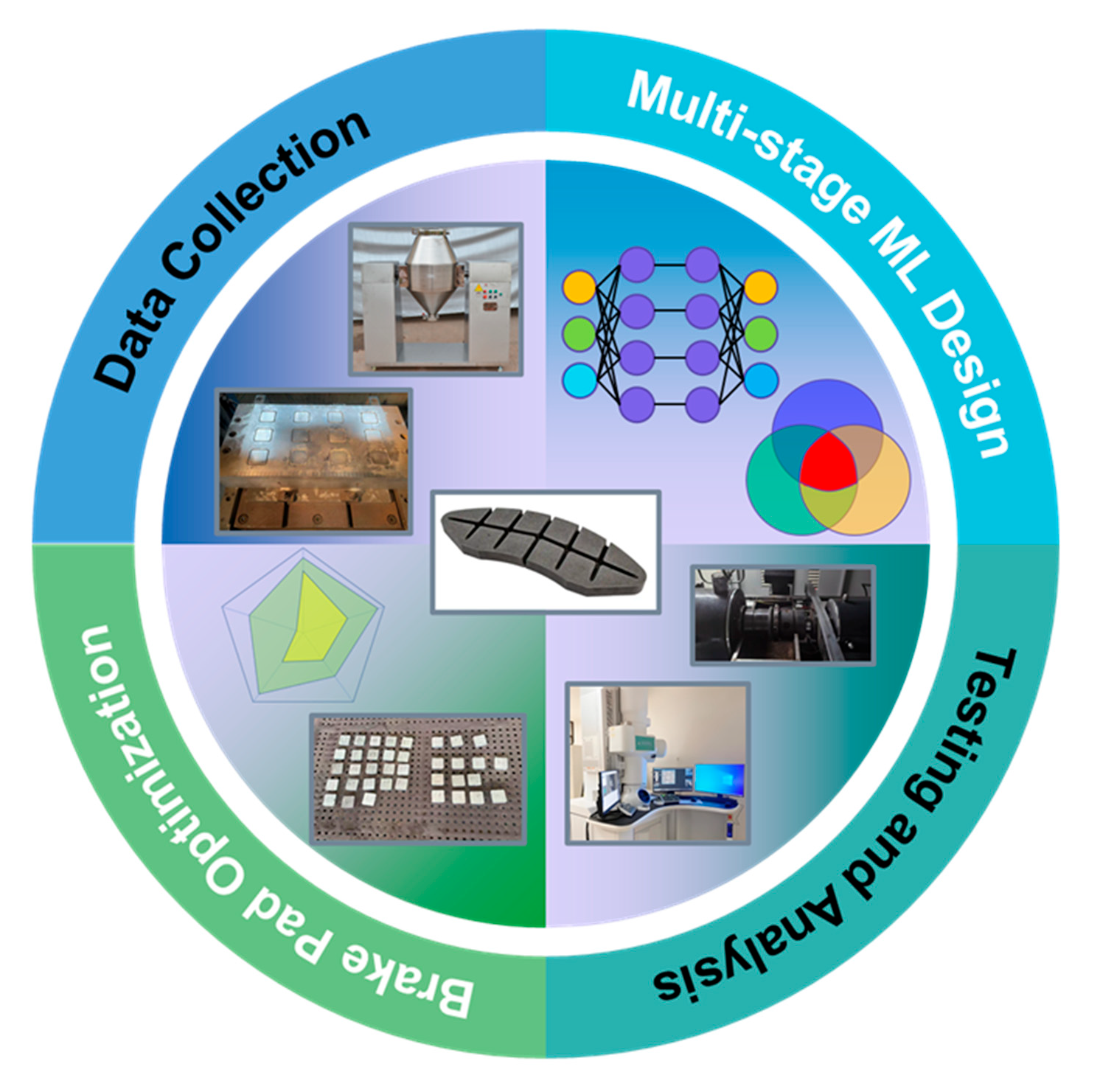
After the post-curing stage is completed, the sample is taken out and cut into size blocks of 10 × 10 × 12 mm by using a processing lathe for subsequent testing. The workflow of brake pads preparation is shown in Figure 2.

2.4. Tests and Characterization Techniques

The performance test of composite brake pad is based on MM-3000 friction and wear tester manufactured by Jinan Hengxu (Jinan, China). Before starting the test, the instrument was calibrated and the brake pad test specimen was loaded on the tool in a center-symmetrical manner. A round of pre-grinding was performed to increase the contact area between the brake disc and the friction sample. Then the equipment was started and the rotation speed of the brake disc was gradually increased. When the rotation speed reached the set maximum value, a constant pressure was applied to the sample so that the brake disc and the friction sample were in close contact to start the braking process. During the test, the rotation speed was changed by preset program, and various parameters such as COF were dynamically monitored for the composite brake pad during braking. The wear amount was calculated according to the mass difference in the composite brake pad before and after the experiment. The optimized conditions were designed according to the cyclic braking mode in actual application. The pressure was set to a constant 0.46 MPa, the angular speed was set from 890 rpm to 4410 rpm, the braking speed was set every 440 rpm (corresponding to the braking conditions from 40 km/h to 200 km/h), and each braking speed was looped for 5 times. SEM observation is based on model SU-8010 and EDS analysis is based on Oxford X-max 80, manufactured by Japan Hitachi (Tokyo, Japan).

2.5. Performance Calculation

During the friction and wear test, the sensor can monitor the torque borne by the composite brake pads in real time, so as to calculate the friction coefficient, as follows:
μ = T f N · r
where μ is COF, T f is torque borne, N is pressure, r is the distance of brake pad and core of brake disc.
The wear rate is calculated by dividing the mass difference before and after the composite brake pad test by the amount of work, as follows:
w = m 1 m 2 W
where w is wear rate, m 1 is the weight before the test and m 2 is the weight after the test, W is total energy of the test.

3. Results and Discussion

According to the friction and wear optimized data, the unoptimized data set is established. The minimum COF, the maximum COF, and the wear rate are, respectively, taken as the target outputs. And the corresponding formula data are divided into three data sets for infor input respectively.

3.1. Data Processing

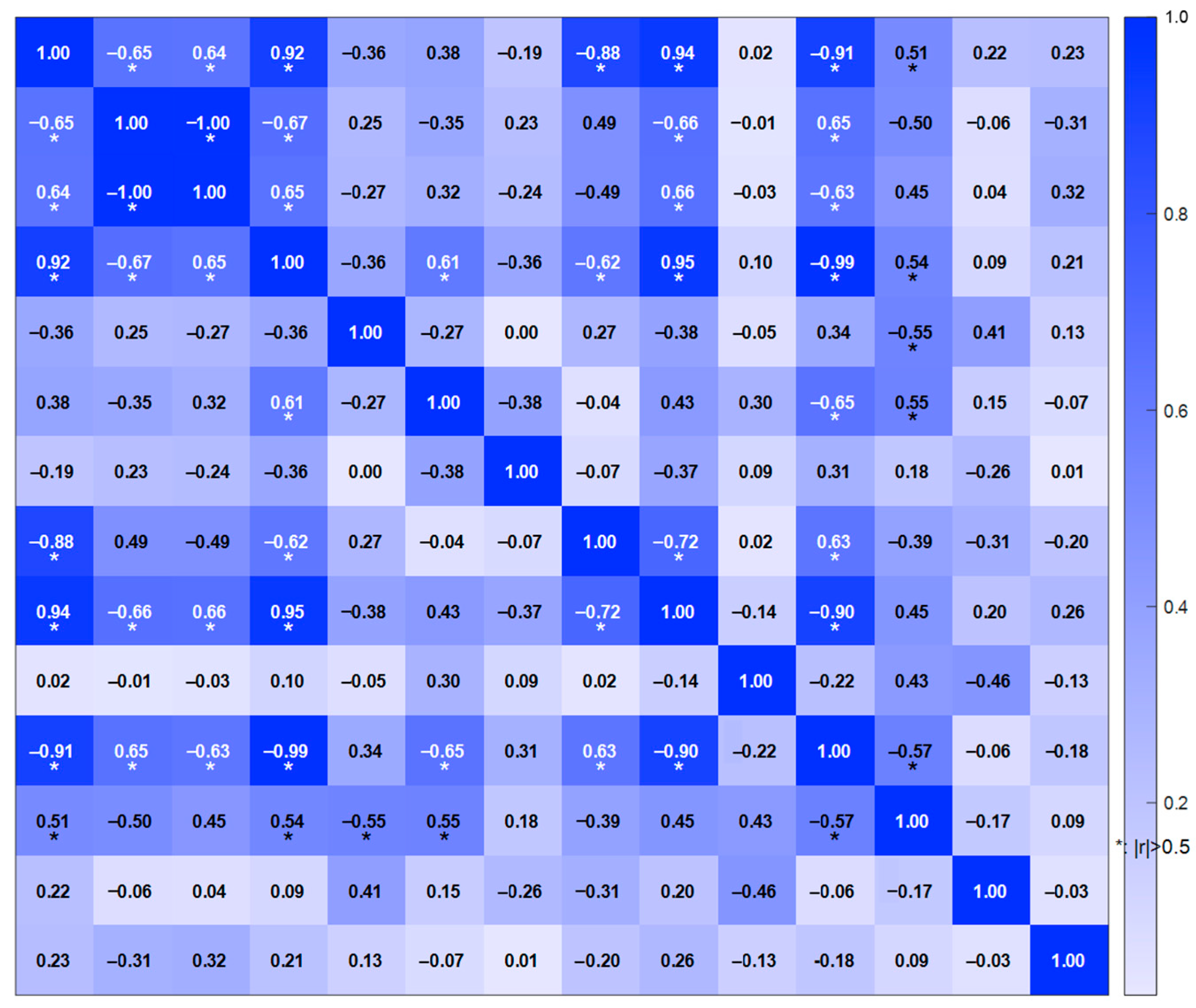
PCC is used to calculate the correlation between variables, and the normalized heat map between features is shown in Figure 3. The value range of PCC is [−1, 1], and the closer its absolute value is to 1, the higher the correlation coefficient is. Perform hierarchical screening on the correlation coefficient matrix between features: first remove features with correlation coefficient lower than threshold ∣ρ∣ < 0.1 with target variable. Then perform redundancy control between features, keep variables with high correlation with target (∣ρ∣ ≥ 0.1) and high independence between two features (∣ρXiXj∣ < 0.9), and set the maximum number of features to 10.

3.2. Data Expanding

SSA model is trained with the processed data set. The training set and test set were divided into a ratio of 7:3, 15-fold cross-validation was used. After expansion, 200 sets of data are obtained.
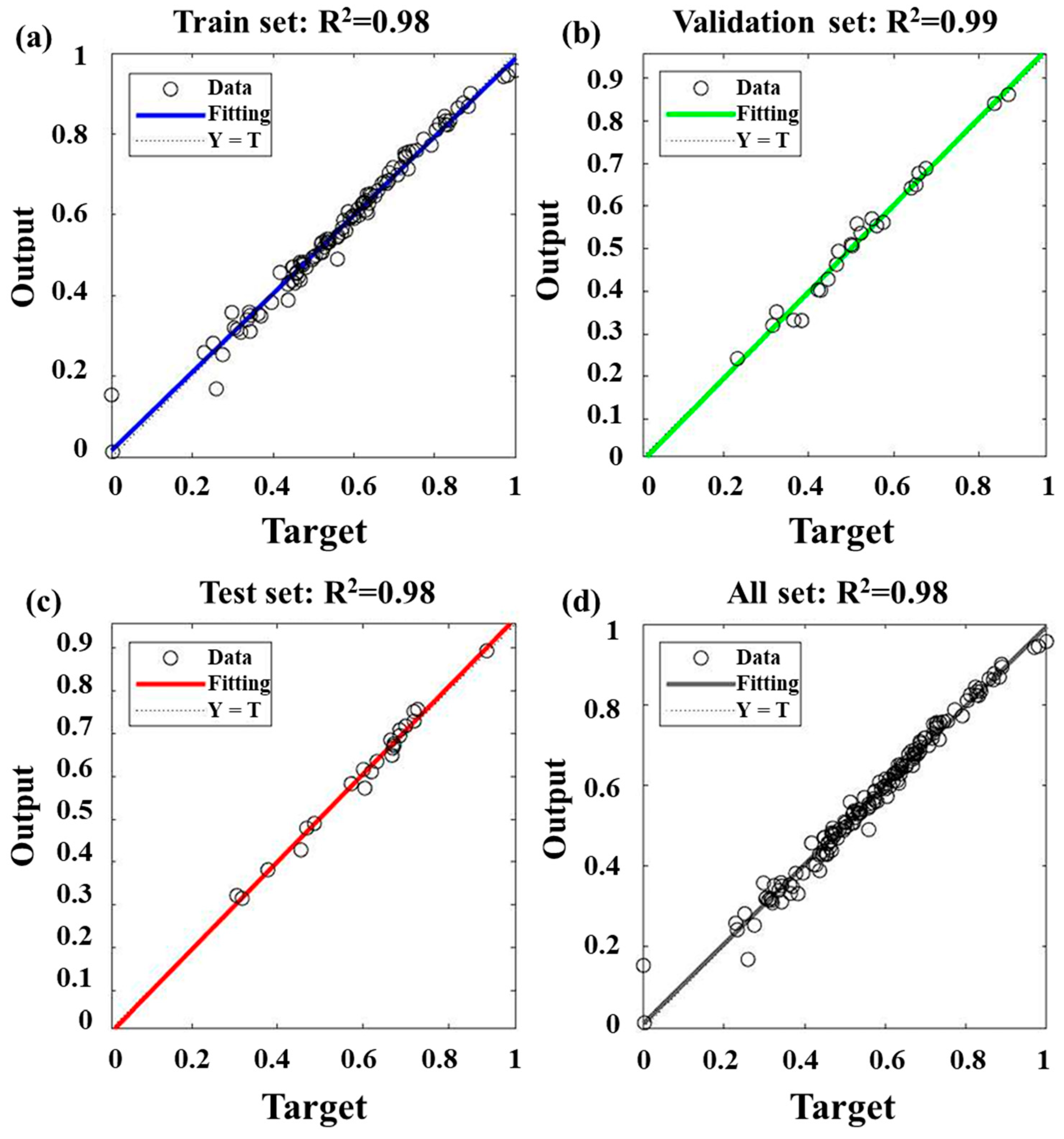
The extended dataset is used for final numerical prediction. The training set and test set of the RBMO-BP prediction module are divided in the same ratio of 7:3. The training results are shown in Figure 4.
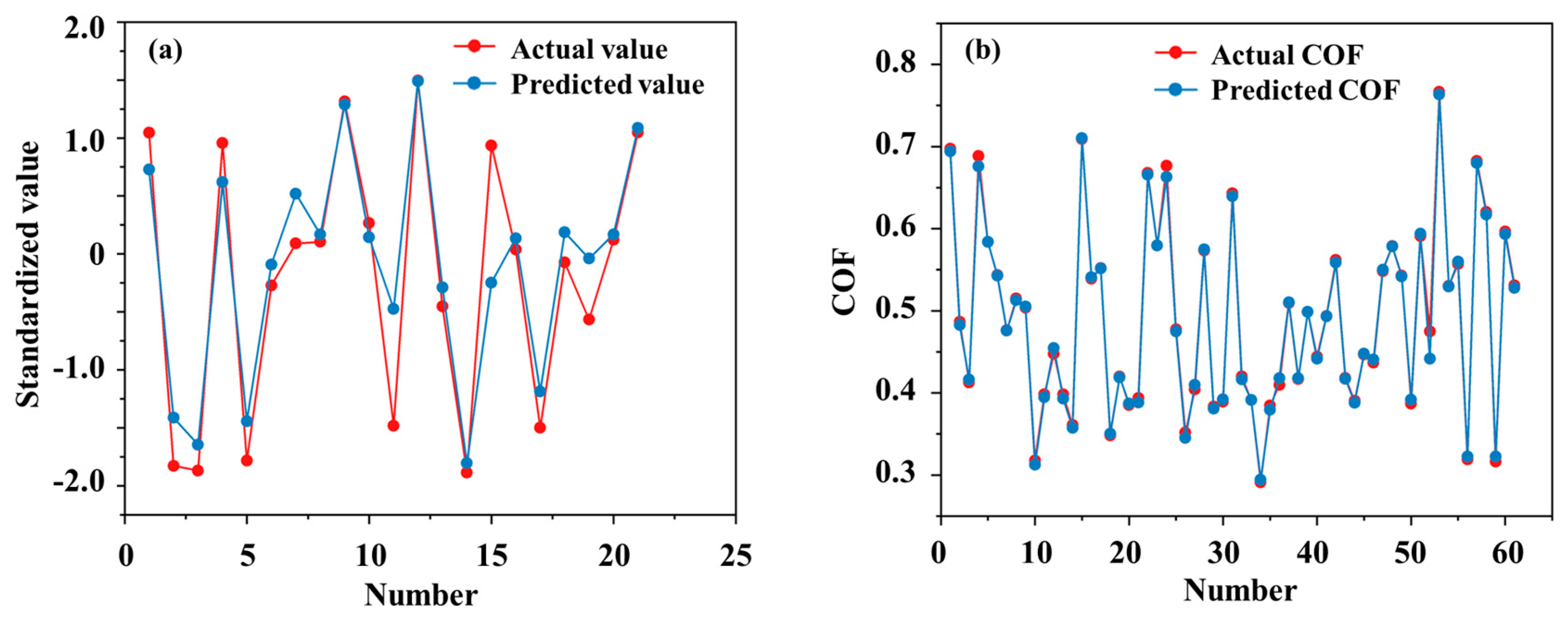
The R2 of each data set in Figure 4 exceeds 0.95, indicating excellent goodness of fit. The R2 values of the training and validation sets are nearly identical, with no significant decrease, suggesting that the model is not overfitted and exhibits reliable generalization. The training process of the model is rapid and stable, and the parameter optimization is effective. The training results are as shown in Figure 5.
According to the trained RBMO-BP model, formulation prediction was performed to obtain three sets of optimal formulations. The three formula sets are sorted according to the optimization and intersected within the target performance interval. The resulting comprehensive optimized formulation dataset is summarized in Table 2.

3.3. Friction and Wear Performance

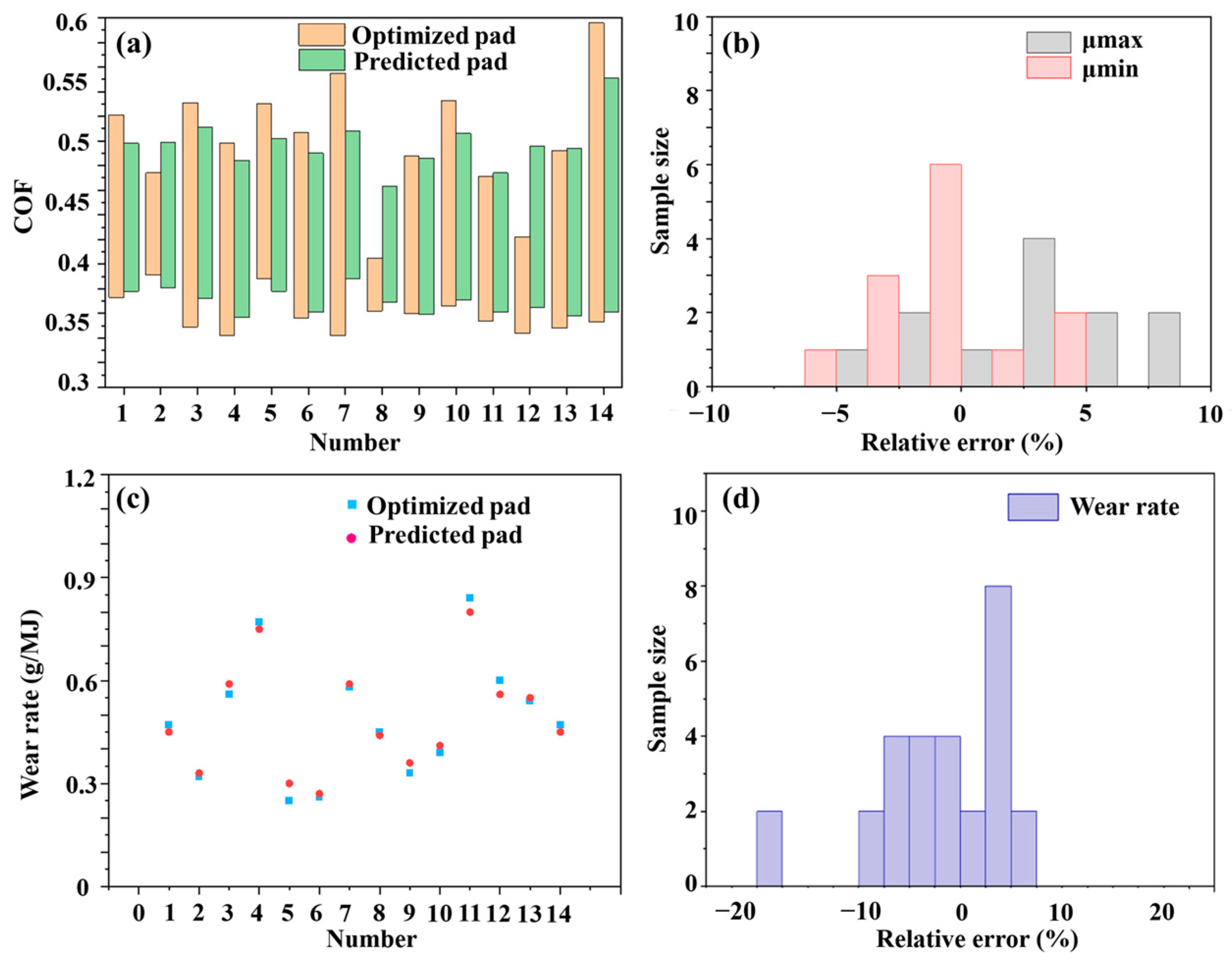
Each friction specimen was prepared by selecting a part of the optimized formula generated by the machine learning process. Friction and wear performance testing was subsequently conducted strictly adhering to the standard friction braking test protocol. The resulting performance metrics are presented in Figure 6, which illustrates the comparison between the experimentally measured values (optimized) and the machine learning predicted values for both COF and the wear rate of the optimized formula. In the majority of the formula comparison results, a close agreement is observed, with the optimized data points and the predicted values exhibiting significant overlap. The absolute error for the COF measurements is predominantly below 0.02, while the absolute error for the wear rate remains within 0.04 g/MJ. Furthermore, the distributions of relative error, depicted in Figure 6b,d, demonstrate tight clustering; over 80% of the samples fall within a narrow band of ±5% relative error. These outcomes indicate consistently small absolute errors alongside well-constrained relative errors, collectively demonstrating the high reliability, robustness, and dependability of the proposed machine learning model.
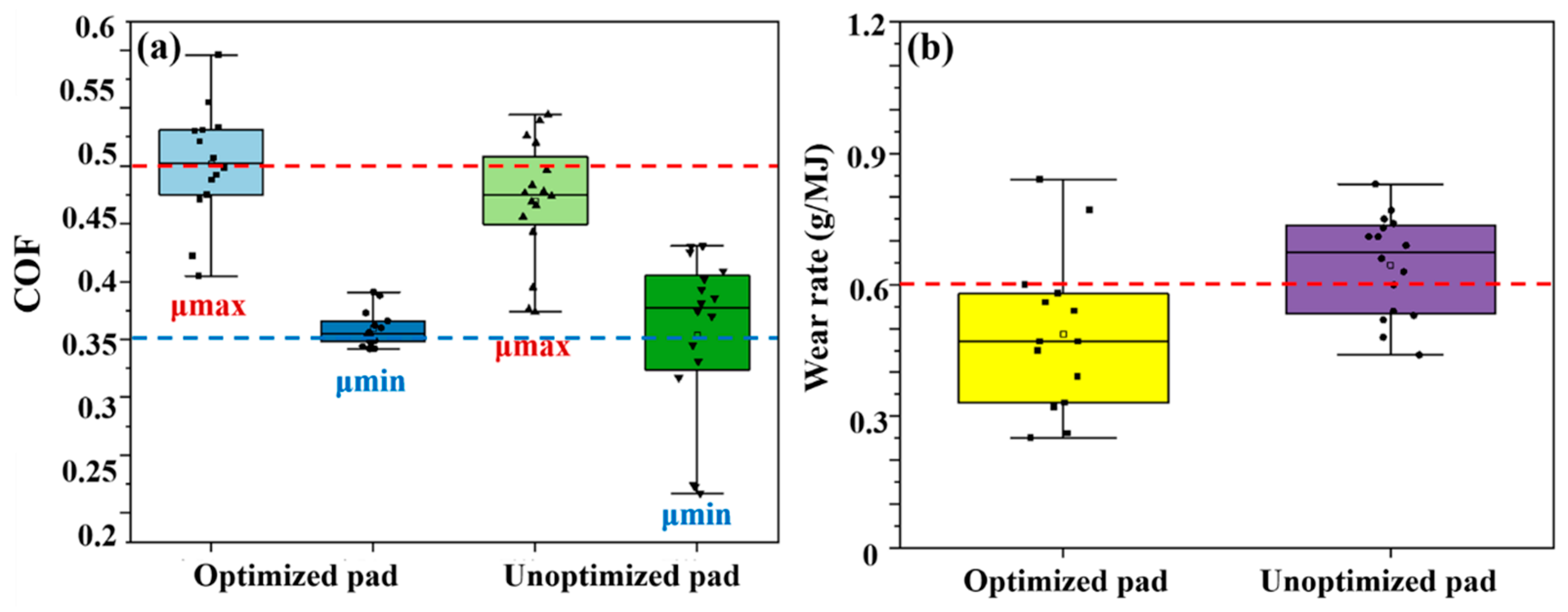
As shown in Figure 7, the box plot compares the performance of the optimized and unoptimized formulations. However, the data points of the maximum COF of the optimized formula are highly concentrated between 0.49 and 0.52, while the data points of the maximum COF of the unoptimized formula are scattered between 0.46 and 0.54. It indicates that the fluctuation of maximum value of the improved formula is significantly reduced, and the stability is improved. The minimum COF of the optimized formulation also shows reduced variability, with extreme values observed in the unoptimized data eliminated, resulting in a more concentrated overall performance range. Although the wear rate distribution shows less obvious change, the overall wear rate value is reduced, indicating that the performance is improved.
Furthermore, Figure 7 clearly demonstrates that the COF for the optimized formulation achieves values within the target performance range at a markedly higher frequency compared to the unoptimized formulation. The wear rate distribution presented in the figure also reveals a distinct shift, indicating a substantially increased proportion of optimized samples exhibiting wear rates below the specified threshold of 0.6 g/MJ. These improvements in both COF compliance and wear rate reduction collectively indicate that the overall performance characteristics and the functional yield of the friction material samples have undergone an enhancement following the optimization process.
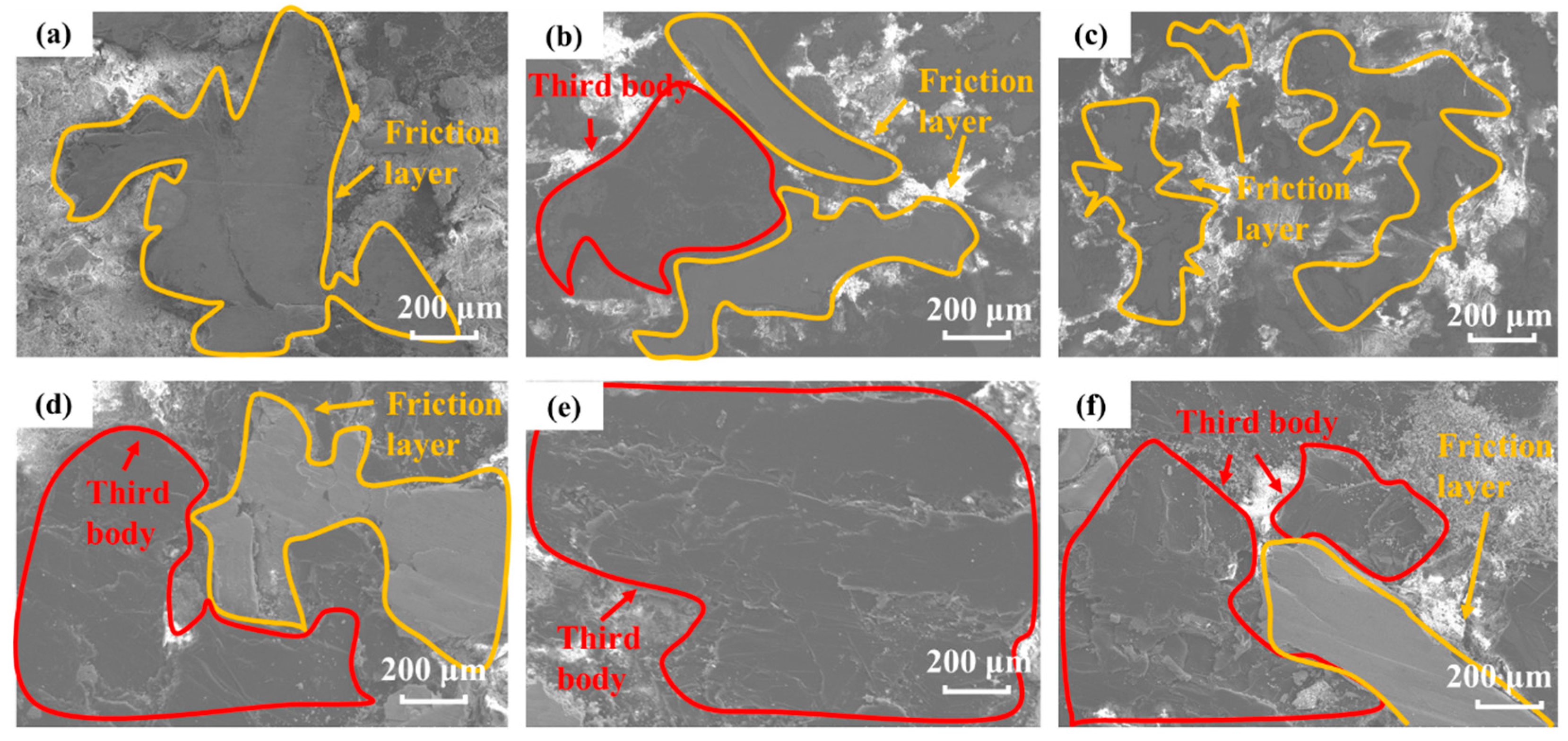
Microstructural analysis via SEM is shown in Figure 8, revealing the formation of compacted plastic friction layer (light smooth platform) and oxidation layer (dark smooth platform) formed on the surface of unoptimized brake pad (a–c) and optimized brake pad (d–f). The plastic friction layer is mainly formed by mechanical grinding and bonding of materials in the composite brake pad, while the oxide layer is mainly composed of the third body produced by a complex mechanical–chemical process. This layered structure may be related to the interlayer interaction and interfacial spalling behavior of the materials during friction.
Samples (a–c) represent three typical morphologies on the surface of the unoptimized composite brake pad. Sample (a) shows a continuous plastic friction layer with a large area, (b) exhibits the coexistence of the third body and the plastic friction layer, and (c) displays the plastic friction layer with island-like distribution. The SEM images of samples (d–f) show that a layered friction layer is also formed on the surface of the optimized brake pad. Sample (d) exhibits the case where both the plastic friction layer and the third body region exist, (e) shows a large third body zone, and (f) displays the third body zone with island-like distribution. Based on contour calibration and area statistics of the two characteristic regions divided in SEM micrographs, grouped comparison shows that for the unoptimized brake pad group (a–c), the total area of the marked friction layer regions is approximately 7.6 × 104 μm2, while the total area of the marked third body regions is approximately 3.2 × 104 μm2, with the area proportion of the friction layer reaching 70.4% in all marked regions of this group, indicating that the friction layer is the dominant phase on the friction surface of the unoptimized brake pad. For the optimized brake pad group (d–f), the total area of the marked friction layer regions is approximately 5.3 × 104 μm2, while the total area of the marked third body regions is approximately 15.9 × 104 μm2, and the area proportion of the third body reaches 75.0% in all marked regions of this group, which is significantly higher than that of the unoptimized group. Across all six micrographs, the third body also shows a wider size distribution, ranging from approximately 1.2 × 104 μm2 to more than 11.4 × 104 μm2, while the area of the friction layer is mostly concentrated in the interval of 1 × 104 μm2 to 4.5 × 104 μm2. It can be found that the distribution and area of plastic friction layer on the surface of composite brake pad are random after friction experiment, whereas third-body regions are more aggregated and uniform. This indicates that new oxidation platforms are repeatedly formed at the contact position of the friction pair during the friction process. The friction interface may undergo periodic material peeling and transfer, and new third body platforms are continuously formed, thus forming typical delamination phenomena. The oxidation platform consists predominantly of soft organic matrix oxides with minor metallic oxide inclusions. Their higher viscosity compared with plastic friction layers contributes to enhanced wear resistance.
In addition, the SEM results of the optimized brake pad clearly reveal a larger surface area occupied by smooth platforms relative to the unoptimized brake pad. Concurrently, the proportion of the surface exhibiting plastic deformation is substantially smaller for the optimized formulation, whereas the surface area covered by the oxidation layer constitutes a significantly larger fraction. This microstructural configuration suggests that unoptimized brake pads experience considerably more severe shear forces during the friction process. These heightened forces result in pronounced material plastic flow and extensive plastic deformation. Consequently, optimized composite brake pads, characterized by a significantly larger third body area ratio encompass these smooth and oxidized regions. That is the reason they demonstrate enhanced friction performance.
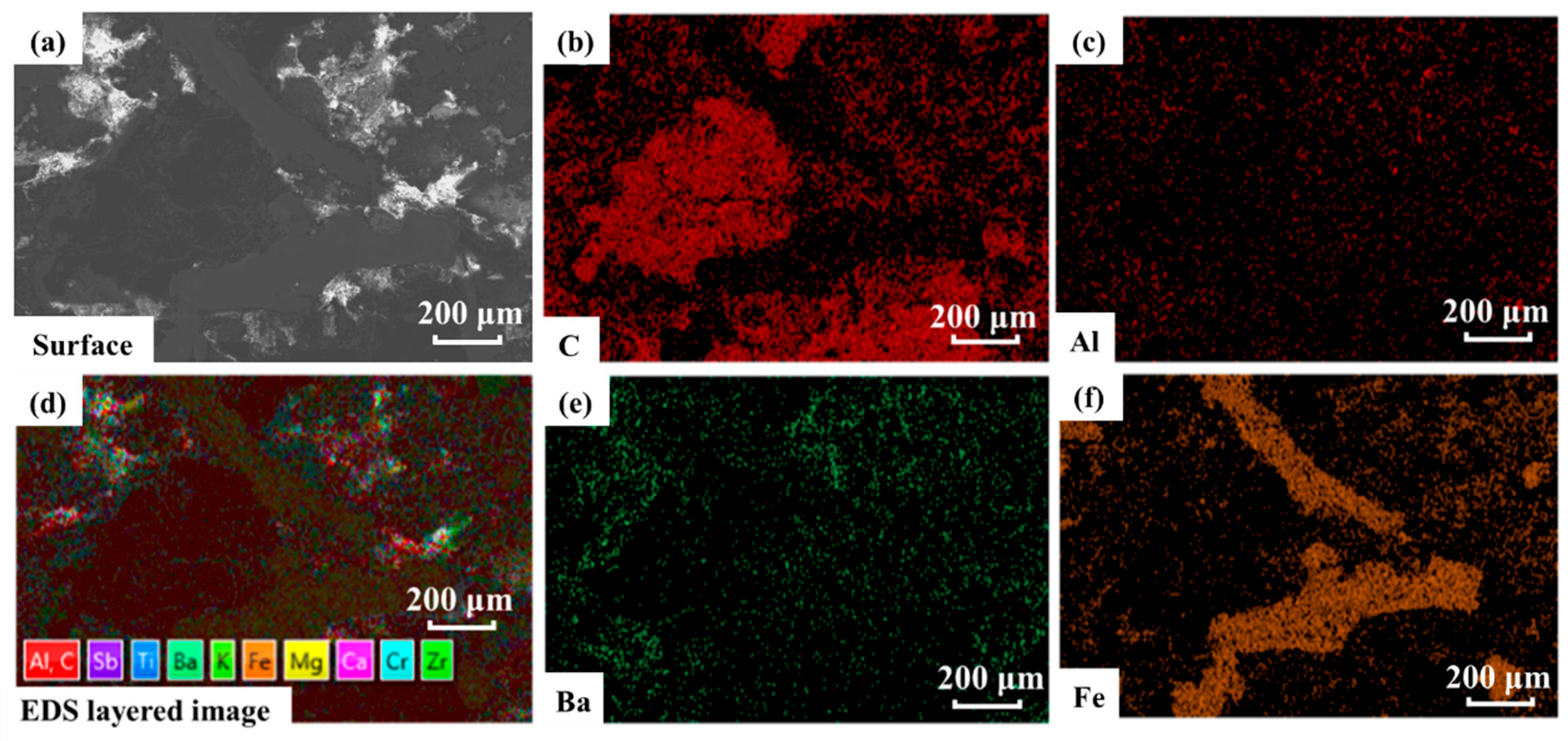
EDS images of a sample surface are shown in Figure 9. The lighter regions are rich in metallic elements, primarily Fe, confirming that they correspond to smooth friction layers formed by plastic deformation. The energy spectrum of the dark platform shows that its C element content is higher than that of other surrounding morphological regions and higher than that of matrix regions without a smooth platform. It proves that its main component is a third body platform formed through complex physical and chemical changes.
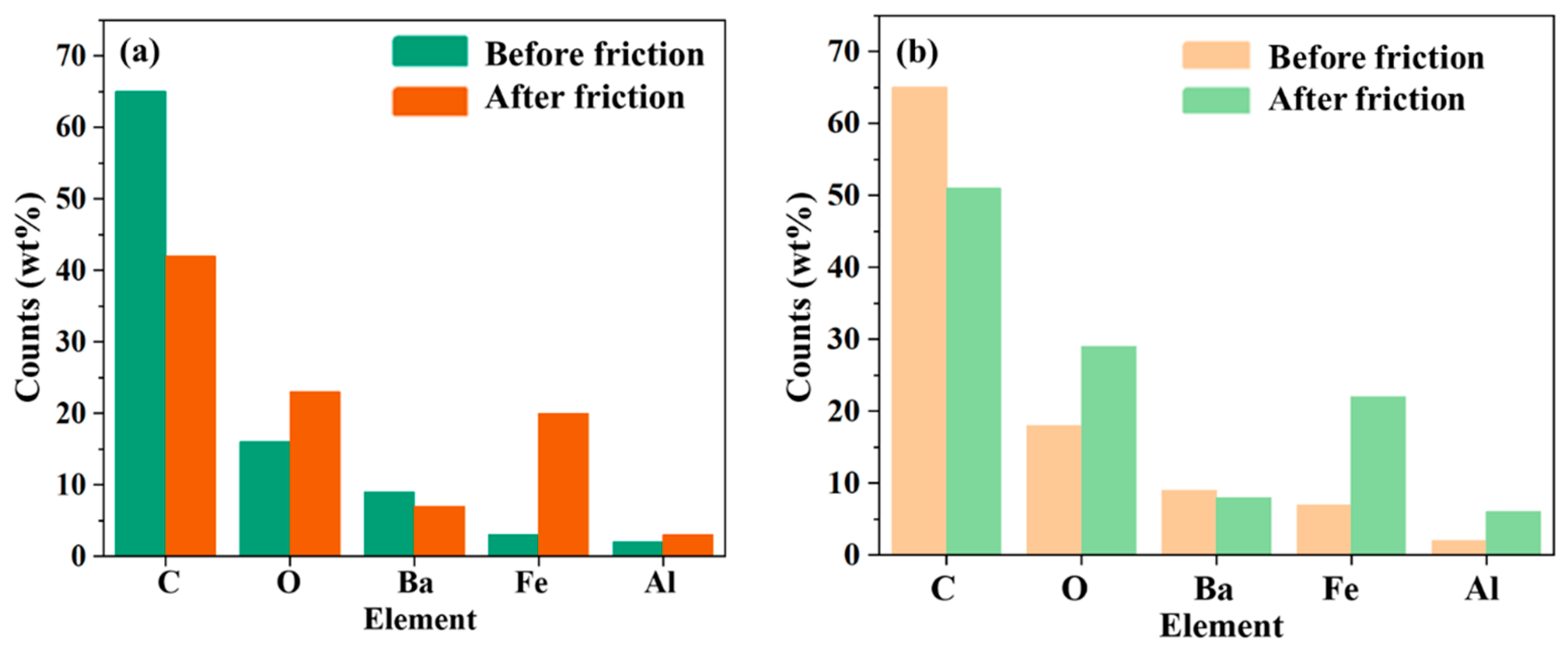
In order to deeply study the migration and interface evolution mechanism of materials in the friction process, the quantitative analysis of the element composition of the traditional brake pad before and after friction was carried out, as shown in Figure 10. By comparing the element content before and after friction, it is found that the friction pad has obvious composition changes after friction. The decrease in carbon (C) content indicates that the carbon content in the friction pad mainly comes from graphite and other lubricating phases. After friction, the reduction in C may result from gradual peeling of graphite layer, diffusion to the friction interface, and partial transfer to the brake disc. The increase in O content suggests enhanced oxidation reactions at the friction interface. While the increase in Fe and Al contents may be due to the migration of brake disc materials, which indicates that part of brake disc materials are worn and transferred to the friction pad surface during friction, forming an interface layer rich in Fe and Al. This phenomenon further proves that there is obvious material exchange between friction pairs.
Comparing the element contents of the two kinds of composite brake pads, it can be found that the C element content on the surface of the optimized brake pads after friction is higher. This indicates that the decomposition degree of the soft resin matrix is lower, and the loss amount in the friction process is less. Meanwhile, the higher oxygen (O) content on the optimized pad surface indicates the formation of more third-body particles during friction, contributing to improve COF and friction stability.

3.4. Comparison Between MSSO and Traditional Methods

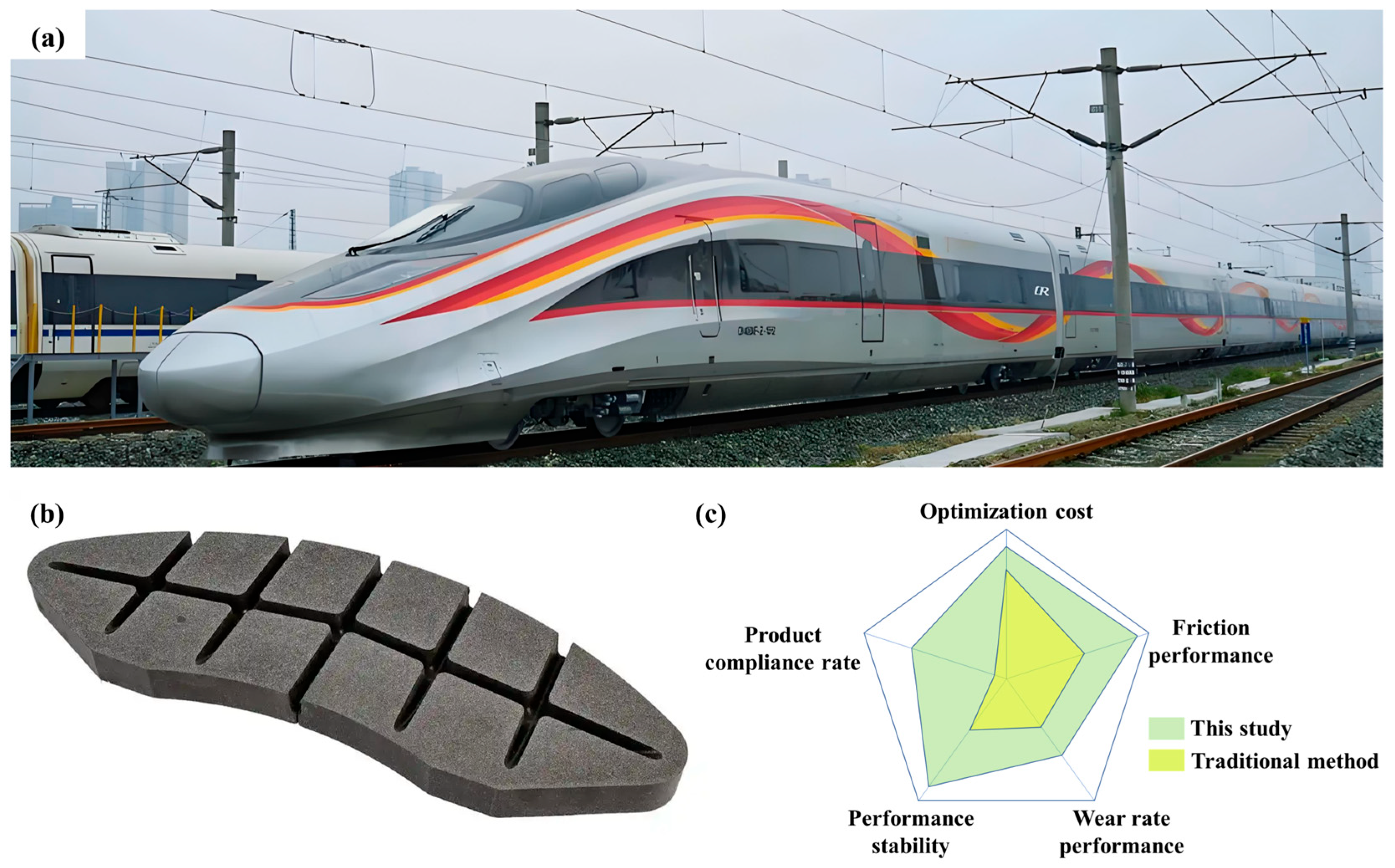
As shown in Figure 11, (a) showcases currently deployed high-speed trains, (b) shows the finished synthetic brake pad products, and (c) presents a comprehensive comparison between the proposed approach and traditional methods for synthetic brake pads across five critical performance metrics: optimization cost, friction performance, wear rate, performance stability, and product compliance rate. Notably, the performance area of the traditional method is entirely enclosed by that of the proposed method, demonstrating the comprehensive superiority of the latter.
Traditional recipe modification methods mainly regulate one or two components in the gate, limiting changes to a local scale and preventing coordination of the overall formulation. Unlike component-wise adjustment methods, machine learning approaches holistically modify formulations using all global variables. This methodology provides intrinsic advantages for formulation optimization mechanisms. The optimized data obtained from machine learning show clear improvements compared with formulations developed using traditional trial-and-error methods. The proposed method reduces optimization costs through streamlined procedural or algorithmic approaches, eliminating the inefficiencies inherent in traditional methods. Its better performance in wear rate slows material degradation under mechanical stress, extending pad lifespan significantly compared to traditional materials which often exhibit accelerated wear. This durability is complemented by enhanced performance stability: the proposed method maintains consistent braking efficiency across varying operating conditions, addressing the variability that compromises the reliability of traditional methods. Furthermore, a higher product compliance rate highlights its ability to meet stringent industry standards with greater consistency.
Collectively, this balanced improvement positions the proposed method as a superior alternative to traditional approaches. For synthetic brake pads, where performance directly impacts safety, efficiency, and lifecycle costs, the proposed method offers a more sustainable and effective solution, aligning with the evolving demands of modern transportation systems.

4. Conclusions

This study addresses the dual challenges of low efficiency in traditional trial-and-error method and the difficulty of modeling small-samples datasets during the optimization of brake pad formula for high-speed trains. The proposed methodology integrates Pearson correlation filtering with Gaussian noise augmentation for data preprocessing, employs SSA-GNN model for dataset expansion, and utilizes RBMO-BPNN model for high-precision multi-target prediction. This innovative approach effectively addresses the challenges associated with small-sample data and the complexity of multi-objective optimization in brake pad formulation design. Experimental verification confirms that the optimized formulation significantly improves the key properties of brake materials: COF fluctuations are significantly reduced, extreme low values are eliminated, wear rates meet standards, and machine learning predictions show highly controllable errors. Microstructural analysis revealed the formation of a more compacted plastic friction layer and a stable oxidation layer on the surface of optimized brake pads, suggesting improved interfacial characteristics and enhanced durability under high-speed braking conditions. The method thoroughly innovates the traditional mode, effectively shortens the formulation development cycle, cuts the optimized cost, and directly guides the engineering production by outputting the key component optimization interval. Thus, solving the formulation optimization problem of multiple formulation components with high dimension and strong coupling. It successfully tackles multi-component formulation optimization with high dimensionality and strong coupling.

Author Contributions

H.X.: Conceptualization, Investigation, Validation, Formal analysis, Data curation, Writing—original draft, W.S., L.F. and Y.W.: Software, Investigation, Validation. H.W., F.Q. and H.-X.P.: Formal analysis, Writing—review and editing. P.X.: Conceptualization, Validation, Formal analysis, Investigation, Data curation, Writing—original draft, Supervision, Funding acquisition. All authors have read and agreed to the published version of the manuscript.

Funding

This work is supported by National Key Research and Development Program (2023YFB3710603).

Data Availability Statement

The data presented in this study are available on request from the corresponding author.

Conflicts of Interest

The authors declare no conflicts of interest.

Abbreviations

The following abbreviations are used in this manuscript:
MSSOMulti-stage synergistic optimization
COFCoefficient of friction
MLMachine learning
PCCPearson correlation coefficient
SSASparrow search algorithm
GNNGrey neural network
RBMORed-billed blue magpie optimization
BPBackpropagation neural networks
RMSERoot mean square error

References

  1. Shrestha, S.; Spiryagin, M.; Bernal, E.; Wu, Q.; Cole, C. Recent advances in wheel-rail RCF and wear testing. Friction 2023, 11, 2181–2203. [Google Scholar] [CrossRef]
  2. Meng, Y.; Xu, J.; Jin, Z.; Prakash, B.; Hu, Y. A review of recent advances in tribology. Friction 2020, 8, 221–300. [Google Scholar] [CrossRef]
  3. Lontin, K.; Khan, M. Interdependence of friction, wear, and noise: A review. Friction 2021, 9, 1319–1345. [Google Scholar] [CrossRef]
  4. Won, J.Y.; Seo, H.; Kim, Y.; Jeong, H.; Kyeong, J.; Oh, W.; Lee, M. Multi-scale friction model for automotive brake system incorporating tribological effects of surface asperities. Mater. Des. 2025, 256, 114239. [Google Scholar] [CrossRef]
  5. Wang, H.; Qin, G.; Fu, B.; Gao, Y.; Li, C. A novel method to establish friction coefficient model for numerical simulation of inertia friction welding. Mater. Des. 2024, 245, 113234. [Google Scholar] [CrossRef]
  6. Lee, H.; Kim, K.I.; Kim, J.; Pin, M.; Oh, K.H.; Kim, K.T. Electron microscopy characterization of the tribolayer formation mechanism in sintered Cu-based composites under dry sliding. Mater. Today Commun. 2022, 30, 103154. [Google Scholar] [CrossRef]
  7. Zhong, W.; Zhang, X.; Wang, Z.; Zhang, X.; Yan, Q. The braking performance of pads for high-speed train with rigid and flexible structure on a full-scale flywheel brake dynamometer. Tribol. Int. 2023, 179, 108143. [Google Scholar] [CrossRef]
  8. Chen, F.; Li, Z.; Luo, Y.; Li, D.; Ma, W.; Zhang, C.; Tang, H.; Li, F.; Xiao, P. Braking behaviors of Cu-based PM brake pads mating with C/C–SiC and 30CrMnSi steel discs under high-energy braking. Wear 2021, 486–487, 204019. [Google Scholar] [CrossRef]
  9. Peng, T.; Yan, Q.; Zhang, X. Stability of Metal Matrix Composite Pads During High-Speed Braking. Tribol. Lett. 2018, 66, 63. [Google Scholar] [CrossRef]
  10. Zhang, P.; Zhang, L.; Fu, K.; Cao, J.; Shijia, C.; Qu, X. Effects of different forms of Fe powder additives on the simulated braking performance of Cu-based friction materials for high-speed railway trains. Wear 2018, 414–415, 317–326. [Google Scholar] [CrossRef]
  11. Liew, K.W.; Nirmal, U. Frictional performance evaluation of newly designed brake pad materials. Mater. Des. 2013, 48, 25–33. [Google Scholar] [CrossRef]
  12. Jiang, Z.; Sun, Y.; Liu, B.; Yu, L.; Tong, Y.; Yan, M.; Yang, Z.; Hao, Y.; Shangguan, L.; Zhang, S.; et al. Research progresses of nanomaterials as lubricant additives. Friction 2024, 12, 1347–1391. [Google Scholar] [CrossRef]
  13. Cai, M.; Yu, Q.; Zhou, F.; Liu, W. Physicochemistry aspects on frictional interfaces. Friction 2017, 5, 361–382. [Google Scholar] [CrossRef]
  14. Carlevaris, D.; Varriale, F.; Wahlström, J.; Menapace, C. Pin-on-disc tribological characterization of single ingredients used in a brake pad friction material. Friction 2024, 12, 2576–2593. [Google Scholar] [CrossRef]
  15. Peretyagin, P.; Yanushevich, O.; Krikheli, N.; Pristinskiy, Y.; Solis Pinargote, N.W.; Smirnov, A.; Grigoriev, N. Tribological and Low Temperature Behavior of ZTA Composites with Graphene Oxide Addition Reinforced with Ductile Particles. J. Compos. Sci. 2026, 10, 1. [Google Scholar] [CrossRef]
  16. Österle, H.; Heyden, K. Electronic Markets: Editorial 20/1. Electron. Mark. 2010, 20, 1. [Google Scholar] [CrossRef][Green Version]
  17. Wahlström, J.; Olander, L.; Olofsson, U. A Pin-on-Disc Study Focusing on How Different Load Levels Affect the Concentration and Size Distribution of Airborne Wear Particles from the Disc Brake Materials. Tribol. Lett. 2012, 46, 195–204. [Google Scholar] [CrossRef]
  18. Hong, U.S.; Jung, S.L.; Cho, K.H.; Cho, M.H.; Kim, S.J.; Jang, H. Wear mechanism of multiphase friction materials with different phenolic resin matrices. Wear 2009, 266, 739–744. [Google Scholar] [CrossRef]
  19. Bijwe, J. Composites as friction materials: Recent developments in non-asbestos fiber reinforced friction materials—A review. Polym. Compos. 1997, 18, 378–396. [Google Scholar] [CrossRef]
  20. Manoharan, S.; Vijay, R.; Lenin Singaravelu, D.; Kchaou, M. Experimental Investigation on the Tribo-Thermal Properties of Brake Friction Materials Containing Various Forms of Graphite: A Comparative Study. Arab. J. Sci. Eng. 2019, 44, 1459–1473. [Google Scholar] [CrossRef]
  21. Lin, H. Optimal control of a stochastic production inventory system with controllable backorder rate and investment to reduce inventory level variability. Int. J. Ind. Syst. Eng. 2020, 36, 149–164. [Google Scholar] [CrossRef]
  22. Li, X.; Liang, J.; Shi, T.; Yang, D.; Chen, X.; Zhang, C.; Liu, Z.; Liu, D.; Zhang, Q. Tribological behaviors of vacuum hot-pressed ceramic composites with enhanced cyclic oxidation and corrosion resistance. Ceram. Int. 2020, 46, 12911–12920. [Google Scholar] [CrossRef]
  23. Xiao, Y.; Zhang, Z.; Yao, P.; Fan, K.; Zhou, H.; Gong, T.; Zhao, L.; Deng, M. Mechanical and tribological behaviors of copper metal matrix composites for brake pads used in high-speed trains. Tribol. Int. 2018, 119, 585–592. [Google Scholar] [CrossRef]
  24. Peng, T.; Yan, Q.; Li, G.; Zhang, X. The Influence of Cu/Fe Ratio on the Tribological Behavior of Brake Friction Materials. Tribol. Lett. 2017, 66, 18. [Google Scholar] [CrossRef]
  25. Du, A.; Lattanzi, L.; Jarfors, A.E.W.; Zheng, J.; Wang, K.; Yu, G. Role of matrix alloy, reinforcement size and fraction in the sliding wear behaviour of Al-SiCp MMCs against brake pad material. Wear 2023, 530–531, 204969. [Google Scholar] [CrossRef]
  26. Li, X.; Das, H.; Pole, M.; Li, L.; Soulami, A.; Grant, G.J.; Herling, D.R.; Efe, M. Exceptional strength and wear resistance in an AA7075/TiB2 composite fabricated via friction consolidation. Mater. Des. 2024, 242, 113006. [Google Scholar] [CrossRef]
  27. Rosenkranz, A.; Marian, M.; Profito, F.J.; Aragon, N.; Shah, R. The Use of Artificial Intelligence in Tribology—A Perspective. Lubricants 2021, 9, 2. [Google Scholar] [CrossRef]
  28. Jacko, M.G.; Tsang, P.H.S.; Rhee, S.K. Automotive friction materials evolution during the past decade. Wear 1984, 100, 503–515. [Google Scholar] [CrossRef]
  29. Aleksendrić, D. Neural network prediction of brake friction materials wear. Wear 2010, 268, 117–125. [Google Scholar] [CrossRef]
  30. Quamar, D.; Sarkar, C. Modelling of performance parameters of phenolic base resins Non-Asbestos Organic (NAO) friction material in brake pad using machine learning algorithms. Tribol. Int. 2024, 191, 109188. [Google Scholar] [CrossRef]
  31. Rahimi, M.; Candeo, S.; Da Lio, M.; Biral, F.; Wahlström, J.; Bortoluzzi, D. A novel approach for brake emission estimation based on traffic microsimulation, vehicle system dynamics, and machine learning modeling. Atmos. Pollut. Res. 2023, 14, 101872. [Google Scholar] [CrossRef]
  32. Wu, L.; Zhang, P.; Xu, B.; Liu, J.; Yin, H.; Zhang, L.; Jiang, X.; Zhang, C.; Zhang, R.; Wang, Y.; et al. Data-driven design of brake pad composites for high-speed trains. J. Mater. Res. Technol. 2023, 27, 1058–1071. [Google Scholar] [CrossRef]
  33. Yi, Z.; Wang, X.; Li, W.; Qin, X.; Li, Y.; Wang, K.; Guo, Y.; Li, X.; Zhang, W.; Wang, Z. Interfacial friction at action: Interactions, regulation, and applications. Friction 2023, 11, 2153–2180. [Google Scholar] [CrossRef]
  34. Tan, D.; Xia, S.; Yob, A.; Yang, K.; Yan, S.; Givord, M.; Liang, D. Evaluation of the wear resistance of aluminium-based hybrid composite brake discs under relevant city rail environments. Mater. Des. 2022, 215, 110504. [Google Scholar] [CrossRef]
  35. Jiang, L.; Zhang, Z.; Hu, H.; He, X.; Fu, H.; Xie, J. A rapid and effective method for alloy materials design via sample data transfer machine learning. npj Comput. Mater. 2023, 9, 26. [Google Scholar] [CrossRef]
  36. Jiang, L.; Wang, C.; Fu, H.; Shen, J.; Zhang, Z.; Xie, J. Discovery of aluminum alloys with ultra-strength and high-toughness via a property-oriented design strategy. J. Mater. Sci. Technol. 2022, 98, 33–43. [Google Scholar] [CrossRef]
  37. Liu, P.; Huang, H.; Jiang, X.; Zhang, Y.; Omori, T.; Lookman, T.; Su, Y. Evolution analysis of γ’ precipitate coarsening in Co-based superalloys using kinetic theory and machine learning. Acta Mater. 2022, 235, 118101. [Google Scholar] [CrossRef]
  38. Marian, M.; Tremmel, S. Current Trends and Applications of Machine Learning in Tribology—A Review. Lubricants 2021, 9, 86. [Google Scholar] [CrossRef]
  39. Baş, H.; Karabacak, Y.E. Machine learning-based prediction of friction torque and friction coefficient in statically loaded radial journal bearings. Tribol. Int. 2023, 186, 108592. [Google Scholar] [CrossRef]
  40. Hasan, M.S.; Kordijazi, A.; Rohatgi, P.K.; Nosonovsky, M. Triboinformatic modeling of dry friction and wear of aluminum base alloys using machine learning algorithms. Tribol. Int. 2021, 161, 107065. [Google Scholar] [CrossRef]
  41. Graser, J.; Kauwe, S.K.; Sparks, T.D. Machine Learning and Energy Minimization Approaches for Crystal Structure Predictions: A Review and New Horizons. Chem. Mater. 2018, 30, 3601–3612. [Google Scholar] [CrossRef]
  42. Caliskan, E.; Abedi, R.; Lupo Pasini, M. Graph neural networks for mechanical property prediction of 2D fiber composites. Mater. Des. 2025, 257, 114500. [Google Scholar] [CrossRef]
  43. Alswat, H.M. Sustainable and Industry-Ready Metal Matrix Composites Produced by Stir Casting and Cryorolling: Process–Property Insights Enabled by Machine Learning—A Review. J. Compos. Sci. 2026, 10, 95. [Google Scholar] [CrossRef]
  44. Haruna, S.I.; Farouk, A.I.; Ibrahim, Y.E.; Nawar, M.T.; Abdulrahman, S.; Abdulhadi, M. Insights into the Feature-Selection Mechanisms for Modeling the Shear Capacity of Stud Connectors in Concrete: A Machine Learning Approach. J. Compos. Sci. 2026, 10, 34. [Google Scholar] [CrossRef]
  45. Yin, N.; Yang, P.; Liu, S.; Pan, S.; Zhang, Z. AI for tribology: Present and future. Friction 2024, 12, 1060–1097. [Google Scholar] [CrossRef]
  46. Gomez-Flores, A.; Cho, H.; Hong, G.; Nam, H.; Kim, H.; Chung, Y. A critical review on machine learning applications in fiber composites and nanocomposites: Towards a control loop in the chain of processes in industries. Mater. Des. 2024, 245, 113247. [Google Scholar] [CrossRef]
  47. Egala, R.; Jagadeesh, G.V.; Setti, S.G. Experimental investigation and prediction of tribological behavior of unidirectional short castor oil fiber reinforced epoxy composites. Friction 2021, 9, 250–272. [Google Scholar] [CrossRef]
  48. Hasan, M.S.; Kordijazi, A.; Rohatgi, P.K.; Nosonovsky, M. Triboinformatics Approach for Friction and Wear Prediction of Al-Graphite Composites Using Machine Learning Methods. J. Tribol. 2021, 144, 011701. [Google Scholar] [CrossRef]
  49. Singh, T.; Patnaik, A.; Chauhan, R. Optimization of tribological properties of cement kiln dust-filled brake pad using grey relation analysis. Mater. Des. 2016, 89, 1335–1342. [Google Scholar] [CrossRef]
Figure 1. Machine learning logic flow chart. (a) Data preparation part. (b) ML model training and output part. (c) Formula selection part.
Jcs 10 00193 g001
Figure 2. Workflow of brake pads preparation.
Jcs 10 00193 g002
Figure 3. PCC value table.
Jcs 10 00193 g003
Figure 4. RBMO model regression analysis results. (a) Training set; (b) Validation set; (c) Test set; (d) All set.
Jcs 10 00193 g004
Figure 5. Machine learning model training results (a) SSA model (b) RBMO model.
Jcs 10 00193 g005
Figure 6. (a) Distribution interval diagram of COF. (b) Distribution diagram of relative error in COF prediction. (c) Wear rate distribution chart. (d) Distribution diagram of relative error in wear rate prediction.
Jcs 10 00193 g006
Figure 7. (a) Box plot of COF. (b) Box plot of wear rate.
Jcs 10 00193 g007
Figure 8. SEM images of brake pad surface. (ac) Surface of unoptimized brake pad. (df) Surface of optimized brake pad.
Jcs 10 00193 g008
Figure 9. (a) EDS images of brake pad surface (b) Element C (c) Element Al (d) EDS layered image (e) Element Ba (f) Element Fe.
Jcs 10 00193 g009
Figure 10. Statistics of surface elements of brake pads. (a) Unoptimized brake pad. (b) Optimized brake pad.
Jcs 10 00193 g010
Figure 11. (a) High speed trains. (b) Brake pad. (c) Comparison of comprehensive performance between this study and traditional methods.
Jcs 10 00193 g011
Table 1. Heat treatment process.
Step 1Step 2Step 3
Temperature110 °C130 °C150 °C170 °C190 °C200 °C
Time2 h1 h1 h1 h1.5 h12 h
Table 2. Optimized and unoptimized formula for brake pads.
ComponentUnoptimized Formula Mass Percentage RangeOptimized Formula Mass Percentage Range
Nitrile butadiene rubber0.080–0.1600.084–0.155
Steel cotton fiber0.250–0.4000.283–0.570
Mineral fiber0.010–0.0600.015–0.053
Barium sulfate0.100–0.2200.113–0.197
Graphite0.060–0.1600.063–0.119
Zircon sand0.004–0.1200.047–0.114
Aluminum oxide0.020–0.0800.026–0.073
Chromic oxide0.005–0.0250.008–0.022
Antimony sulfide0.005–0.0300.012–0.024
Aramid fiber0.005–0.0250.005–0.012
Phenolic resin0.050–0.2000.082–0.137
Disclaimer/Publisher’s Note: The statements, opinions and data contained in all publications are solely those of the individual author(s) and contributor(s) and not of MDPI and/or the editor(s). MDPI and/or the editor(s) disclaim responsibility for any injury to people or property resulting from any ideas, methods, instructions or products referred to in the content.