
Article

Design of Metal Leading Edge Cap Joint on Thin Wall Composite Fan Blade in Aircraft Engine

1
Department of Mechanical Engineering, SRM University AP, Amaravati 522240, India
2
Symbiosis Institute of Technology, Symbiosis International University, Lavale, Pune 412115, India
*
Author to whom correspondence should be addressed.
J. Compos. Sci. 2026, 10(3), 166; https://doi.org/10.3390/jcs10030166
Submission received: 10 February 2026 / Revised: 15 March 2026 / Accepted: 16 March 2026 / Published: 18 March 2026
(This article belongs to the Section Composites Modelling and Characterization)

Abstract

Thin wall composite fan blades in aircraft engines demand designs that ensure structural integrity under operational loads while resisting foreign object damage and bird strikes. This study presents a finite element investigation of thin wall composite blades with metal leading edge caps, modeled through parametric coupon analyses under static flexure loading using ANSYS APDL. Three metallic leading edge caps, Ti-6Al-4V, Inconel 718, and 15-5 PH stainless steel, were combined with IM7/8551-7 carbon fiber composites. Parametric variations included changes in metal cap material, geometric designs of the joint, and other things. Performance was evaluated in terms of failure stress, interlaminar shear strains, interface integrity, and failure margins. Results reveal that cap design and cap material critically govern structural response, with distinct interchanges between strength-to-weight efficiency, interface stresses, and interlaminar shear strain. Optimal designs reduced interlaminar shear strain levels in thin wall composite blades, while retaining adequate stiffness and strength. The results underscore the importance of interface design for effective load transfer and provide design guidelines for lightweight, damage-tolerant thin wall composite fan blade structures.

1. Introduction

The aviation sector has witnessed unprecedented growth, with global air traffic expected to double in the coming 20 years, necessitating the emergence of more efficient and viable aircraft engine technology. It is predicted that the aircraft engine blade market will experience significant growth in the years 2024 to 2032 because of growth in the application of turbomachines in aircraft engines and advancements in fan technology. The modern jet engine is designed to operate in the most extreme conditions, with the turbine blades having temperatures of over 1600 °C, a pressure difference of a number of atmospheres, and rotational speeds of up to 15,000 rpm [1]. Such strenuous working conditions require the processing of superior materials and safety mechanisms to uphold structural integrity and safety in the operations of the engine throughout the engine’s service life [2,3,4].
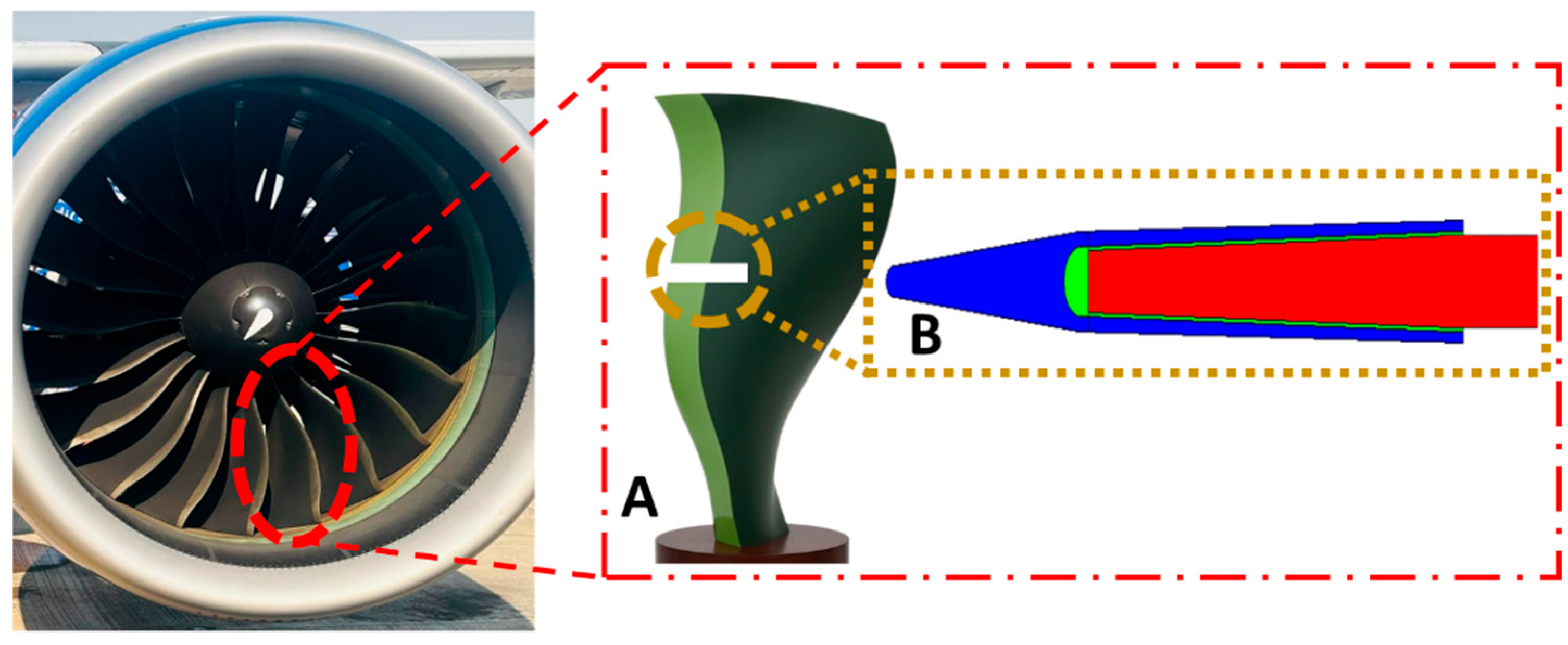
The fan blade tip is a very critical area and is subjected to the first strike of high velocity air and prone to many degradation processes such as erosion, oxidation, and thermal fatigue [5,6,7]. Jet engine blades or fan blades are generally fabricated of nickel-based superalloys, which are amalgamated of cobalt, chromium, and rhenium, although even these high-tech materials need further protection in the high stress environment. The importance of leading edge protection in the airplane can hardly be overestimated since leading edge damage may lead to disastrous engine failure with serious safety and economic effects. Unlike in other industrial usage, aircraft engines work in conditions where there are extreme safety demands, and the effects of component failures can be life-threatening. Foreign object damage (FOD) in the aviation sector consists of bird strikes, ingestion of ice, and runway debris, all of which may result in extreme leading edge damage unless proper protection is put in place [8,9]. Metal leading edge caps are more impact-resistant than the conventional polymer-based coating, and, therefore, they are required in critical aerospace applications (Figure 1). For further analysis, an individual blade section (Figure 1A) of the jet engine fan blade is considered. To facilitate the design of a metal leading edge cap joint on a thin-walled composite fan blade in an aircraft engine, a coupon or cut section extracted from this blade section (Figure 1B) is used as the representative specimen for investigation.
The choice of material to use in aircraft jet engine leading edge caps is a complicated trade-off between the required performance and the constraints of reality. The alloys are mainly nickel, cobalt, and chromium, with minor proportions of other metals such as molybdenum, niobium, tungsten, and rhenium, which give the required strength in high temperatures and corrosion resistance [8]. However, these metallic caps combined with lightweight thin wall composite blade structures present some difficulties associated with thermal expansion mismatch, galvanic corrosion, and stress concentration at material interfaces. State-of-the-art design strategies are expected to consider these multi-physics interactions in order to provide credible long-term performance.
Recent studies have enhanced the behavior of thin composite fan blades by the use of advanced computer and experimental methods. Miller et al. [10] conducted tests on ballistic impacts on subcomponents and established that the addition of metallic leading edge protection and hardening of the composite significantly enhanced the performance to simulated bird and gelatin impact, and was comparable to titanium. Jain et al. [11,12] explored the fused, geometry-controlled metallic noses and edge features, which would be used to customize protection, good fit, and control load transfer in composite airfoils. James et al. [13] researched thin wall composite blades reinforced with an adhesively bonded metallic bond and made afterward projections to minimize stress concentrations and increase fatigue strength. According to Bouillon et al. [14], the solid metal reinforcements against the thin wall composite and leading edge were made with holes to take in the energy of impact and protect the core. Johns et al. [15,16] examined early experimental efforts regarding graphite/boron composite blades with nickel-plated stainless steel sheaths, which point out the weakness of FOD and the protective mechanism of the metallic edges under various impact conditions.
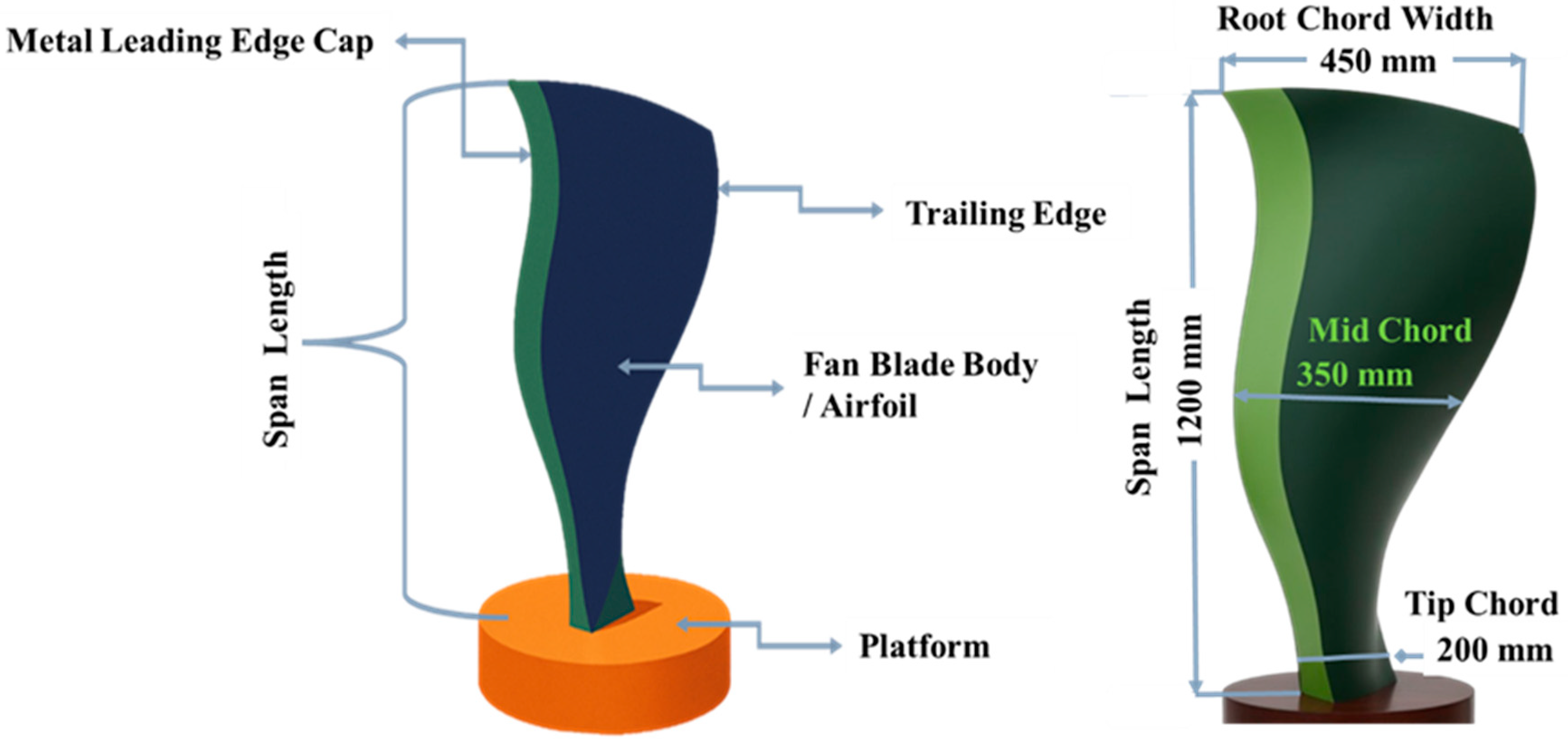
The composite material finds increasing use in aviation and aerospace products where alternatives to aluminum structures are being substituted by composites because of their appealing high strength-to-weight and stiffness-to-weight ratios [17]. The use of composite materials in the construction of thin wall fan blades not only represents substantial weight savings and flexibility in design, but also poses new problems in joining dissimilar materials and even the predictability of long-term survival. The contact between metal leading edge caps and thin wall composite blade structures is a key design factor that controls the efficiency of load transfer and the overall performance of the structure (Figure 2). The figure illustrates the geometric shape of the designed fan blade of the jet engine, and the length of the fan blade is total 1200 mm as the length that spans between the root and the tip. At the base, chord width is a maximum of 450 mm and middle-span chord width is 350 mm, hence depicting a tapered wide-chord setup. The blade in question is attached to a platform, whose width at the base (where the hub attaches) is 200 mm. The approximate composite blade size is 1200 mm long and 450 mm wide with a max thickness of 11 mm, hence the structure falls into the thin-walled type structure.
Existing methods of computation, which are used in aerospace applications, have proved the capability of finite element analysis in complex structural problems. Computer codes have been worked out in order to examine the gross structural reaction of fan engine fan blades experiencing bird strikes, uniting ANSYS 19.1 MAPDL finite element models with impact analysis and showing the complexity of the current analysis potential [18,19,20]. Most of the available studies are, however, concentrated on certain loading conditions or full-scale parts, leaving gaps in the basic knowledge at the coupon level, wherein the material interactions can be isolated and defined.
Regardless of major improvements in fan blade technology and protective systems, there are a number of knowledge gaps in the literature. To begin with, partial parametric analysis of integrated metal–composite systems specially made for aircraft jet engine applications, where the active environment that is required of the aircraft jet engine is rare and the safety requirements of the basic specialized design strategies are essential, are considered [21]. The majority of the literature focuses on pure composite structures or metallic materials, but no studies have fully investigated their collective response to realistic loading conditions [22]. Secondly, the existing studies do not contain any systematic coupon-level study linking to blade level, which is capable of giving basic ideas about the material interaction mechanisms and local stress distribution at the metal–composite interfaces [23]. Also, the literature lacks modes of expansion into design optimization outlines that can effectively investigate the 3D design of metal leading edge cap systems, which come along with thin wall composite structures. Lastly, measurable performance data during static flexural loading is the most scarce, which limits the derivation of consistent design guidelines and validation data with which computational models should be developed [18,23].
The present study is a parametric finite element analysis of a cap joint coupon model to analyze the performance of a thin wall composite structure that is connected to metal leading edge caps under static flexural loading. It aims at the precise modeling of the metal leading edge cap interaction with thin wall composite structures; assessment of stress difference, deformation, and failure initiation; parametric study of important design factors, which include leading edge cap geometry, material properties, orientation of composite materials, and loading conditions; and development of design space and optimization solutions to integrate metal leading edge caps in thin wall composite jet engine blades. This research supports the development of aircraft engines by offering an understanding of metal–composite inclusion in leading edge protection against critical impact situations such as bird strikes. This field of research is effectively explored and optimized through the modeling approach.

2. Materials and Methodology

The methodology will involve the development of a quantitative numerical model, which will determine the metal leading edge cap joint of the thin wall composite fan blade of an aircraft engine at the coupon level. The part under consideration here is the fan blade, which is located at the front section of the engine where the objective is to suck in most of the atmospheric air. This part is made of fiber-reinforced composite and has a metal cap over it. The temperature in this location of the engine is low, in the range of −50 deg C to 70 deg C. The three possible materials for the metal leading edge cap are TI64, Inconel 718, and 15-5Ph. The geometrical design variations (eight various designs) were modeled in ANSYS APDL by creating scripts through a sequence of commands. Analysis employed the Finite Element Method (FEM) with nonlinear static analysis using displacement loading, and appropriate fixed boundary conditions at the composite elements are solved with ANSYS MAPDL, using the incremental and iterative Newton–Raphson method [24]. The composite–adhesive–metal system has complex interactions. These interactions exist in this system under quasi-static loading conditions. Analysis evaluates hardness plus stiffness, the elastic–plastic transition, and residual stress effects. For adhesively bonded composites, analysis reveals how load transfers happen across adhesives and substrates, whether residual stresses cause premature yielding/delamination, and local stiffness variations due to bonding quality.

2.1. Governing Equations and Mathematical Framework

2.1.1. Structural Analysis

The nonlinear static analysis was performed in ANSYS 19.1. Geometric nonlinearity was introduced in terms of large deformation analysis. Material nonlinearity was introduced in terms of simple bilinear elastic–plastic material properties for adhesive and metal. For the composite, unidirectional carbon composite properties with all nine elastic constants were used.

2.1.2. Matrix Formulations in Ansys MAPDL

The formation of the elemental stiffness matrix is based on the following relationship:
K e = V 0 B T D B d V
B is the strain-displacement matrix, D is the material constitutive matrix, V is the element volume, and the superscript T is the transposition of matrices. The process of this integration is done numerically with the help of the Gaussian quadrature of each finite element of the computation model. The present study is concerned with three varying material models, each of which needs a definite constitutive matrix formulation in order to comprehend the material behavior with the loading conditions [25].
In the case of the orthotropic carbon-fiber-reinforced polymer (CFRP) composite material (Material 1), ANSYS creates an orthotropic elasticity matrix D that is made up of nine independent elastic constants [26]. This matrix is a consideration of the directional characteristics of composite materials, fit in three elastic moduli (E1, E2, E3), three Poisson ratios (12, 13, 23), and three shear moduli (G12, G13, G23). Hysol EA 9460 is a structural adhesive product (Material 2), which behaves as a bilinear isotropic until yield strength is achieved and bilinear isotropic plasticity occurs. In the nonlinear stage, ANSYS finds the new tangent modulus matrix through an iterative process to capture the prevailing stress state and subsequent plastic deformation. Equally, the Metals-Titanium 64 alloy, Inconel 718, and 15-5ph stainless steel (Material 3) characteristics resemble bilinear isotropic plasticity behavior, in which the material behaves linearly before the yield point, after which plastic behavior ensues with a lower tangent modulus that depends on the loading condition as expressed by the generalized Hooke law in 3D orthotropic materials.
σ 1 σ 2 σ 3 σ 4 σ 5 σ 6 = C 11 C 12 C 13 0 0 0 C 21 C 22 C 23 0 0 0 C 31 C 32 C 33 0 0 0 0 0 0 C 44 0 0 0 0 0 0 C 55 0 0 0 0 0 0 C 66 ε 1 ε 2 ε 3 ε 4 ε 5 ε 6
Equation (2) shows the constitutive stiffness matrix, which can be written as
ε 11 ε 22 ε 33 2 ε 23 2 ε 32 2 ε 23 = 1 E 1 ν 12 E 2 ν 23 E 3 0 0 0 ν 12 E 1 1 E 2 ν 32 E 3 0 0 0 ν 23 E 1 ν 23 E 2 1 E 3 0 0 0 0 0 0 1 G 23 0 0 0 0 0 0 1 G 31 0 0 0 0 0 0 1 G 12 σ 11 σ 22 σ 33 σ 23 σ 31 σ 12
Here, in Equation (2), 11, 12, 13, 22, 23, 21, 31, 32, 33 represent the directions xx, xy, xz, yx, yy, yz, zx, zy, zz, respectively; in Equation (3), 12, 23, 32 show the directions of axes xy, yz, zx, respectively.
(E1, E2, E3) E is Young’s modulus along axes (x, y, z); (ν12, ν23, ν32) ν is Poisson’s ratio, which corresponds to a contraction in direction j when an extension is applied in direction (x, y, z); ε is the strain tensor, which is dimensionless; (G23, G31, G12) G is the shear modulus in the direction on the plane whose normal is in directions x, y, z.
ε 11 ε 22 2 ε 12 = 1 E 1 ν 12 E 2 0 ν 12 E 1 1 E 2 0 0 0 1 G 12 σ 11 σ 22 σ 12
Under plane stress, material (1), which is CFRP composite, will behave in a form shown above in Equation (4), which obeys Hooke’s Law.

2.1.3. Material Model Used for MLE, Adhesive, and CFRP

In this simulation of a metal leading edge cap bonded to a thin wall composite fan blade with structural adhesive, carbon-fiber-reinforced composite uses an orthotropic material model (EX, EY, EZ, PRXY, PRXZ, PRYZ, GXY, GXZ, GYZ) and reflects anisotropic material behavior in three of the specified orthotropic directions, i.e., XY, YZ, ZX. Elastic properties have been obtained according to the characterization methodology [27]. As this is a structural evaluation of a bonded metal cap on the fiber-reinforced composite, the application is unique and, therefore, no ASTM standards were available for the unique geometry and boundary condition. However, the company follow their own processes or internal standards, and non-standard coupon evaluation is done according to internal company standards. The adhesive is isotropic and uses an elastic–plastic model, which shows isotropic bilinear isotropic hardening material behavior and perfect plasticity, ideal for bonding interfaces with ductile failure. The metal leading edge (MLE) of the composite fan blade of a jet engine is proposed to be made of three materials, namely Ti-6Al-4V, Inconel 718, and 15-5PH stainless steel, which are modeled using a bilinear isotropic hardening plasticity material model. The material behavior for each material is elastic, perfectly plastic with linear strain hardening, appropriate for metallic components undergoing large plastic deformation under high-impact loading, such as a bird strike on a fan blade leading edge system.

2.2. Experimental Test of MLE Composite Coupons Failure

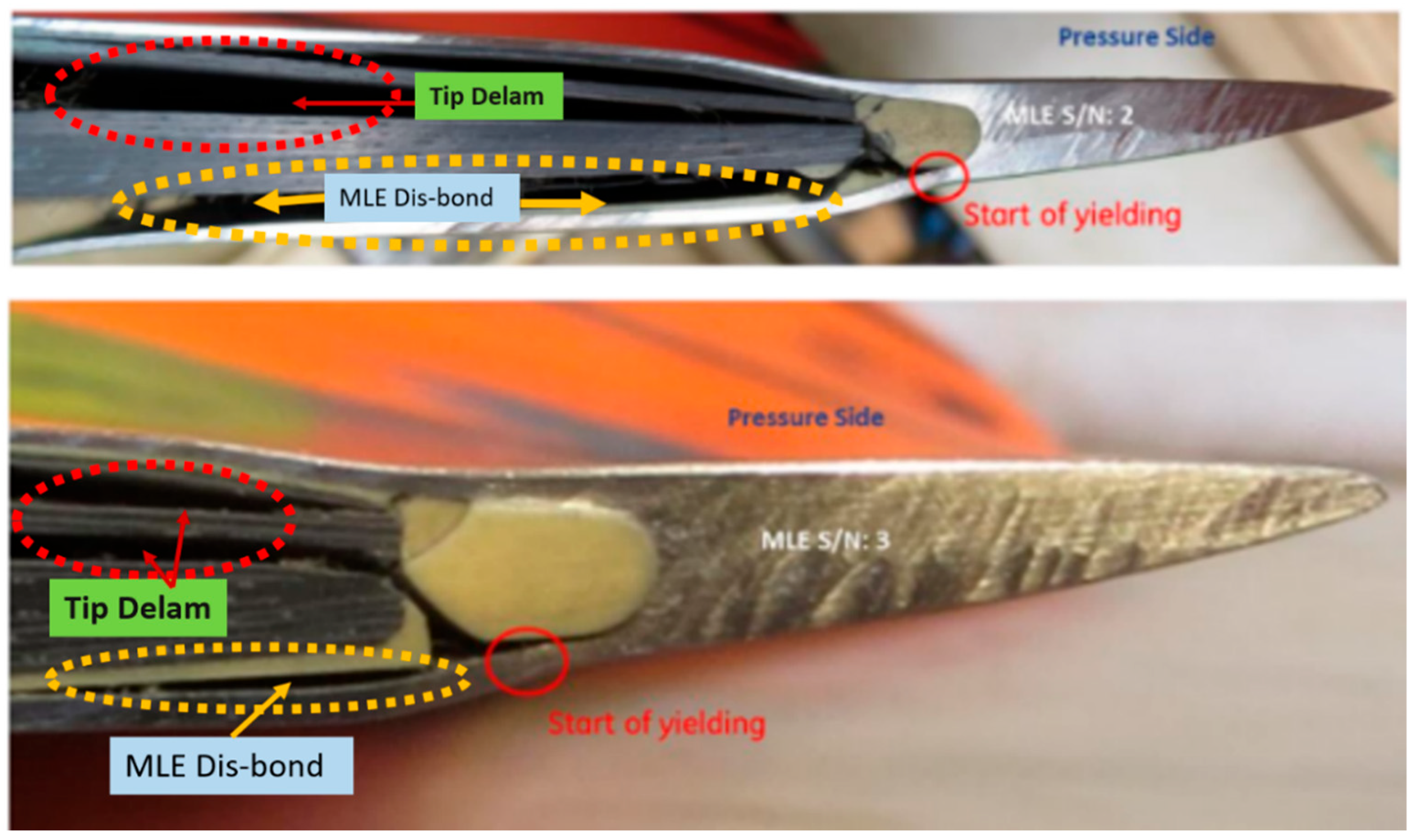
Figure 3 describes a case study of experimental evaulation on the failure mechanisms of a metal leading edge bonded to a thin wall composite structure coupon, where the MLE material tested is Inconel with a specific cut section model. These tests were performed on a few cut section specimens to check the feasibility of the cantilever test setup and displacement load boundary conditions. Failure analysis of these coupons gave some ideas and helped to explore further designs using the analysis. These coupon samples are manufactured and experimentally tested with the same dimensions as those of the actual blade small cut section, and they show the most important damage modes when subjected to applied pressure side stress. The failures observed are tip delamination (Delam) at the thin composite, which is the breaking up of internal composite layers, and MLE disbond with the thin composite, which is the breakdown of the adhesive bond between the outer material and the core structure. Importantly, in both specimen samples, they show the beginning of yielding to be at a localized point next to a foam section, meaning that the material or its interface, in this high-stress concentration region, has undergone permanent plastic deformation that is extremely valuable in structural design validation and material choice.

2.3. Model Development for the Coupon Model of the Fan Blade

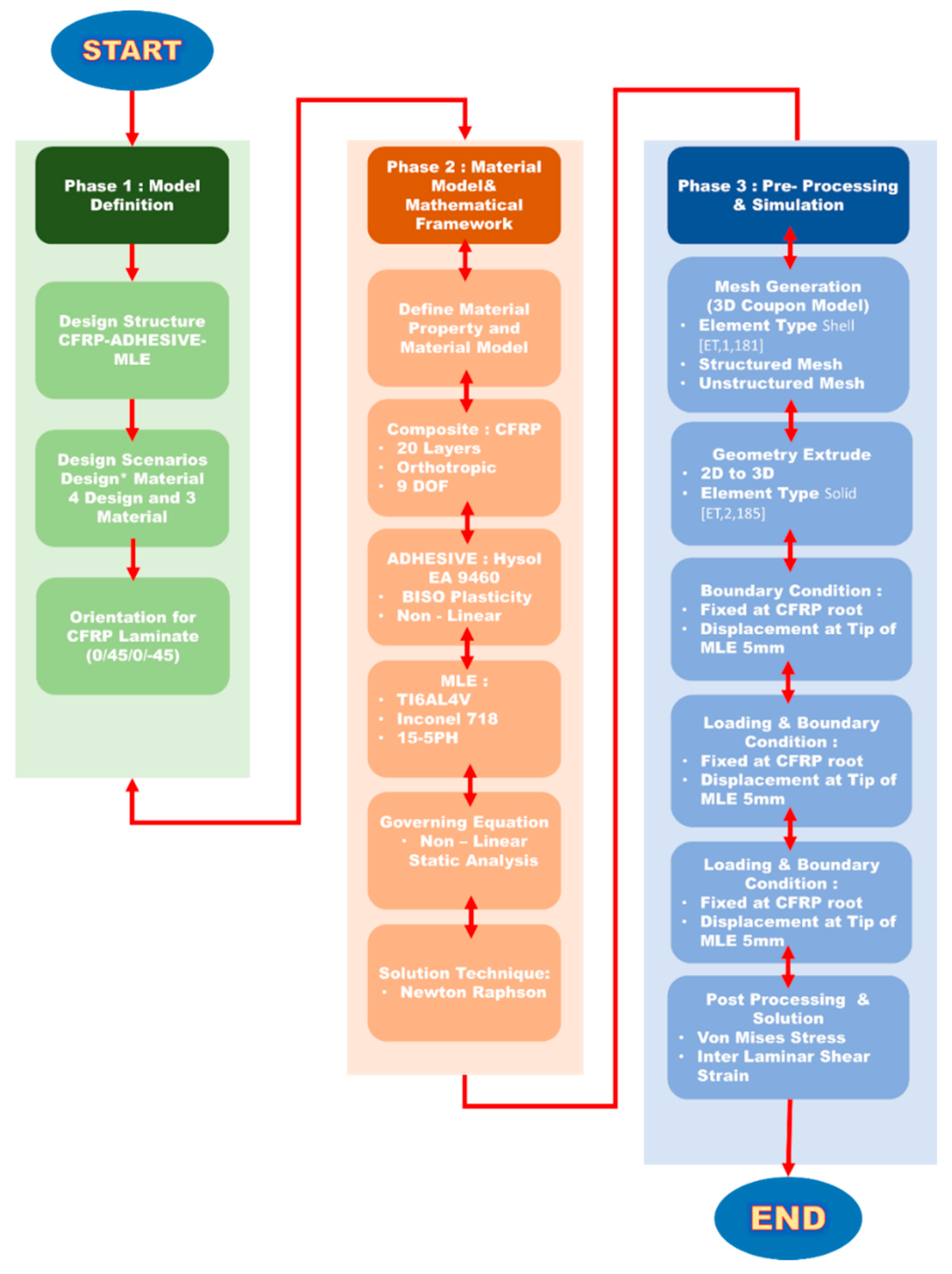
The computational methods used for the simulation in this model, from phase 1, developing geometry to providing the orientation, to phase 2, where material property is input with the given material model and behavior, to phase 3, indicating mesh generation, applying the boundary condition, and obtaining the results in postprocessing, are shown in Figure 4.
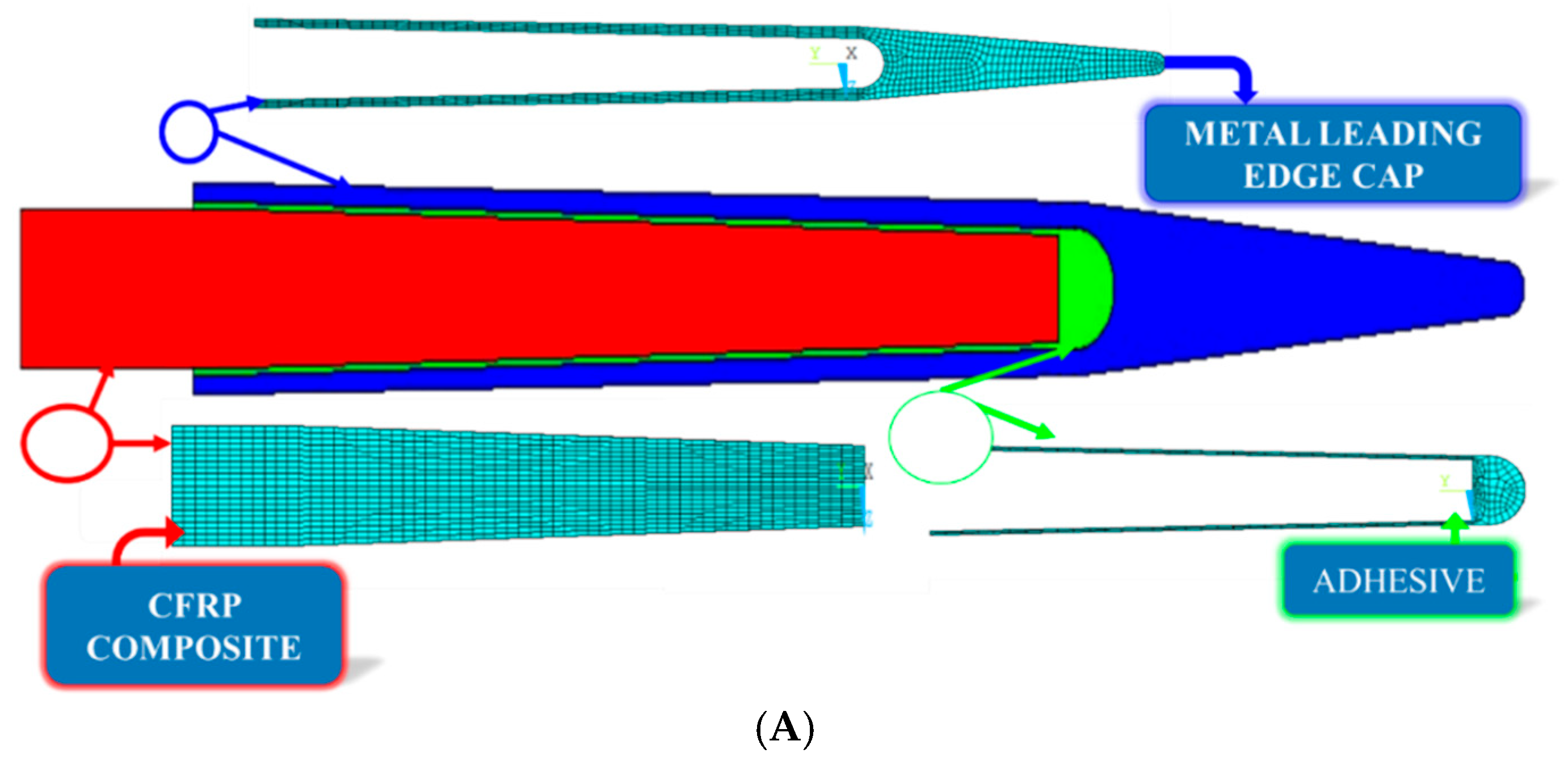
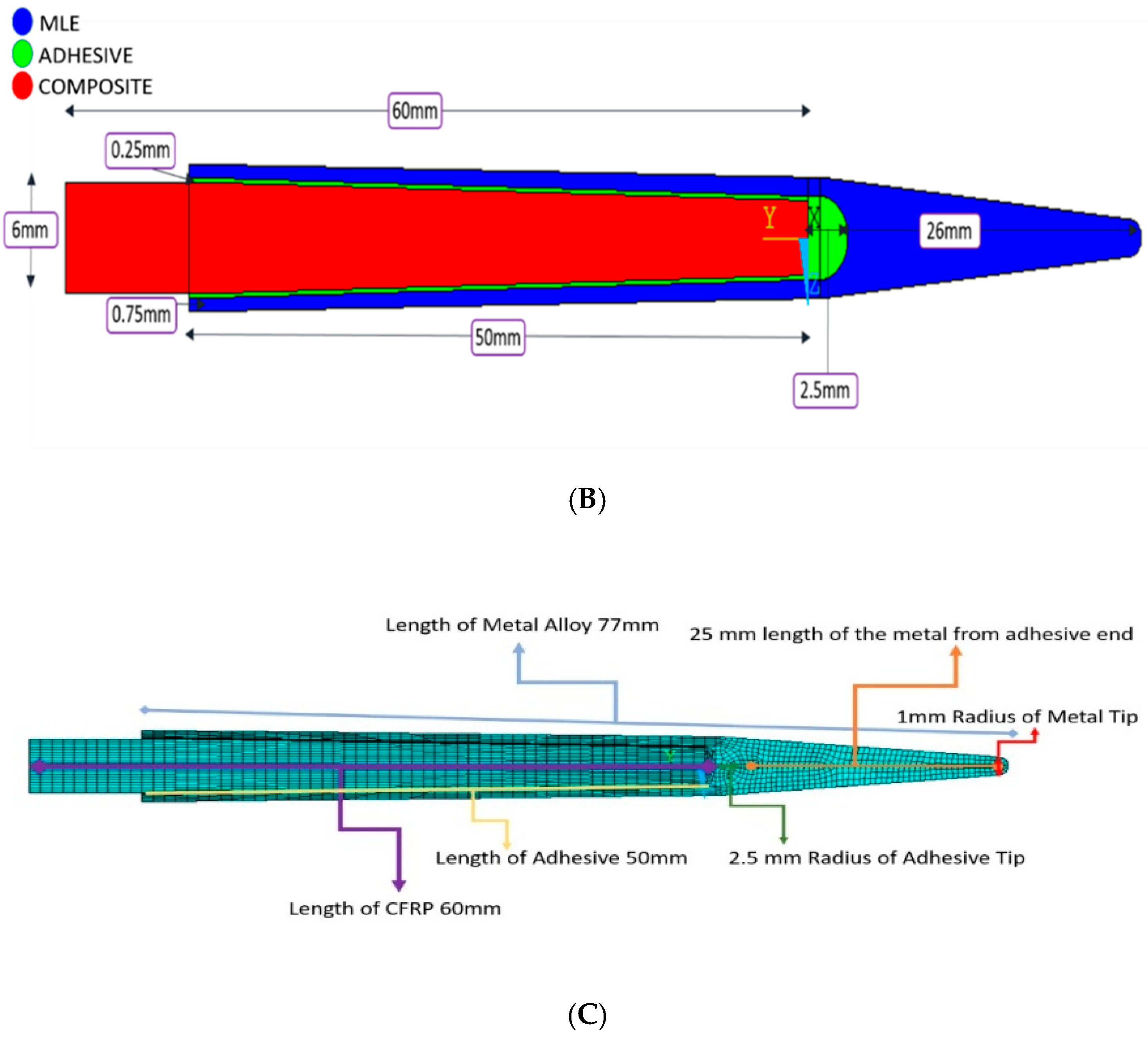
The structural shape of the cap joint consists of three primary components. The first is a CFRP thin wall composite laminate, designed with a tapered profile of 60 mm length, having a thickness of 6 mm at the root and reducing to 4 mm at the tip. In Figure 5A, the CFRP thin wall composite is shown in red, the metal leading edge cap is in blue, and the adhesive layer is in green, bonding the metal cap to the composite structure. Figure 5B,C show the detailed design dimensions of the components of the cap joint of the fan blade. The model dimensions are based on the actual composite fan blade and MLE cap dimensions. The thin wall composite section is covered by an adhesive layer (component 2) of 0.25 mm initial thickness and 50 mm length, applied symmetrically on the upper and lower surfaces to ensure proper bonding and load transfer. The adhesive serves as an interface between the CFRP and the metallic reinforcement. The third component is an MLE section of 77 mm total length, which starts with a base thickness of 0.7 mm. Within the bonded region, its thickness increases to 1 mm to match the composite–adhesive system, and it transitions smoothly towards the leading edge with a curved tip of a 2 mm radius. This design provides a continuous load path, combining the lightweight, high-strength characteristics of CFRP with the toughness and damage resistance of the metallic cap, while the adhesive layer ensures efficient stress transfer and mitigates interfacial delamination.

2.4. Material Properties Used for the Cut Section of the Fan Blade

The assembly module is controlled by the user-defined code. This step involves combining the different pieces that have been made into one piece. This simulation has incorporated the three different components, but the materials were considered to be orthotropic and isotropic. CFRP will be representative of a symmetric layup sequence in (0°/45°/0°/−45°) 5S orientation with 20 layers ply by ply, displayed in Table 1.
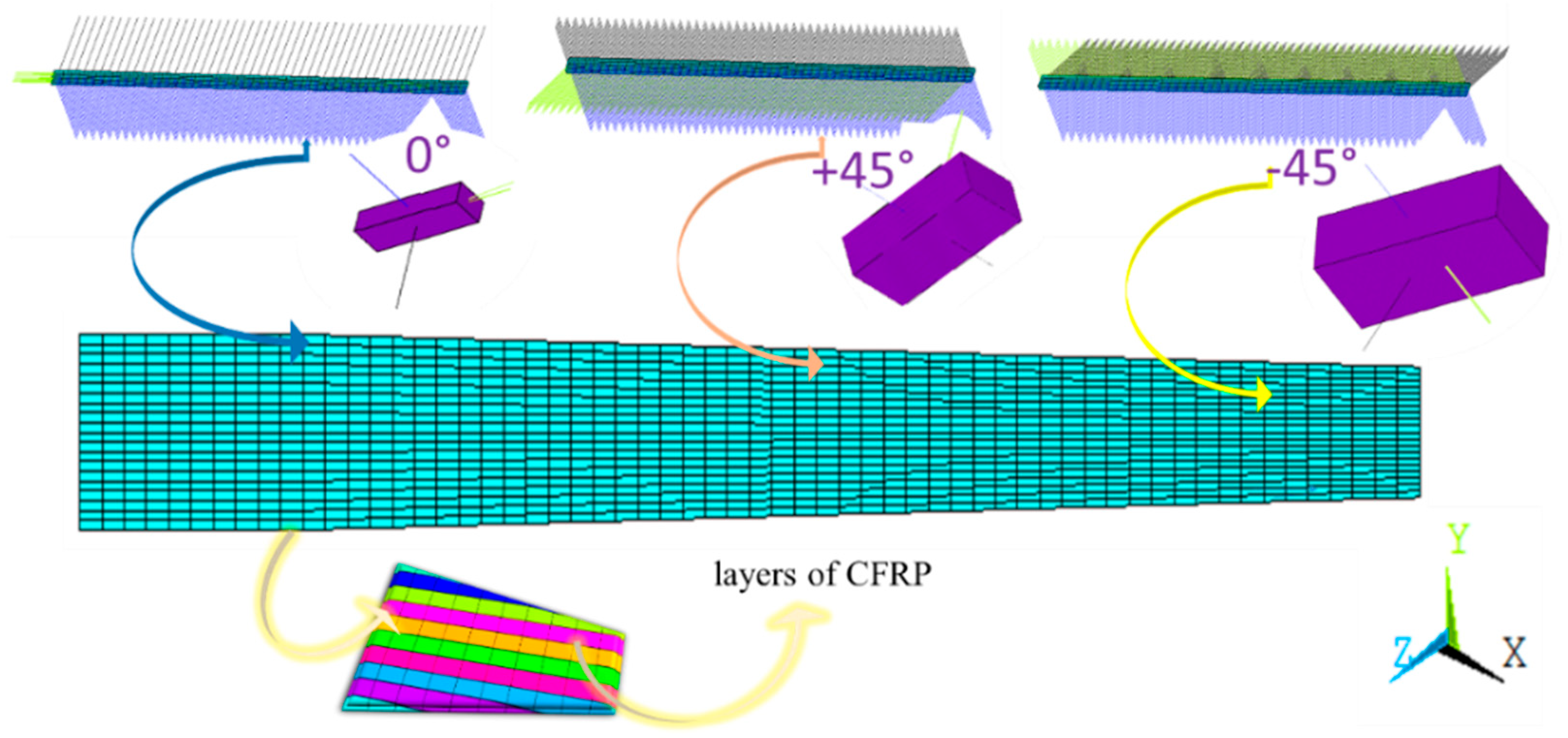
The material properties of carbon-fiber-reinforced polymer (CFRP) is presented in Table 2. In this simulation, different materials for the cap are tried, namely Ti-6Al-4V (Ti64), 15-5PH stainless steel, and Inconel 718, which can reflect the vigilant stability required for jet engine fan blade leading edge caps. Hysol EA 9460 adhesive two-part epoxies are considered for a flexible bonding layer, transferring loads smoothly between the composite and material through their yielding, plastic response. Ti64 offers an effective compromise between strength and weight, making it a reliable choice for lightweight yet durable structures. Figure 6 represents the composite layer orientation as defined in Ansys APDL in the local coordinate system. The 15-5PH and Inconel 718 provide superior strength and erosion resistance, qualities critical in high-stress, high-temperature regions, though at the cost of increased weight. Taken together, these materials illustrate how aerospace design is always a matter of trade-offs—balancing stiffness, strength, weight, and environmental durability to achieve reliable performance in extreme operating conditions. Table 3 reflects all the mechanical properties used for the Hysol EA9460 and metals, respectively.

2.5. Mesh Generation for the Components of the Cut Section of the Fan Blade

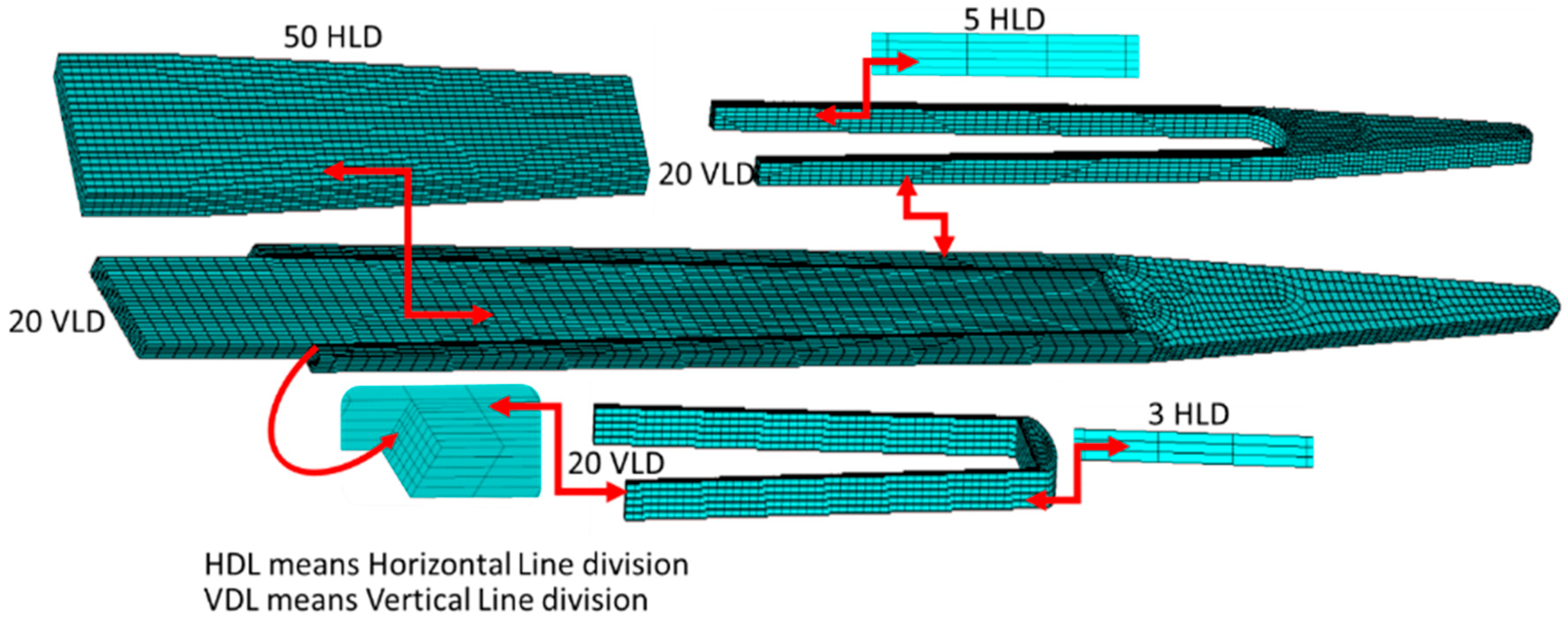
The mesh generation process influences the MLE design of the FEA model. The dimensions of the element were defined by mesh controls; 3D coupon FEA models were created with Ansys Parametric Design Language by scripting commands (APDL) such that the location and orientation of the joint of fibers in the model could be altered parametrically. In Figure 7, the mesh pattern adopted in the simulation can be seen. The IM7/8551-7 carbon fiber epoxy composite area is meshed in structured way. The adhesive component is meshed with unstructured mesh, whereas the metal areas are shown with structural mesh up to the length of the composite, and the remaining areas are unstructured mesh. Table 4 and Table 5 contain the information on the mesh division and the number of elements and nodes created during the mesh process. Table 5 also defines the type of elements used during 2D to 3D extrusion.

2.6. Boundary Conditions Used in Structural Analysis

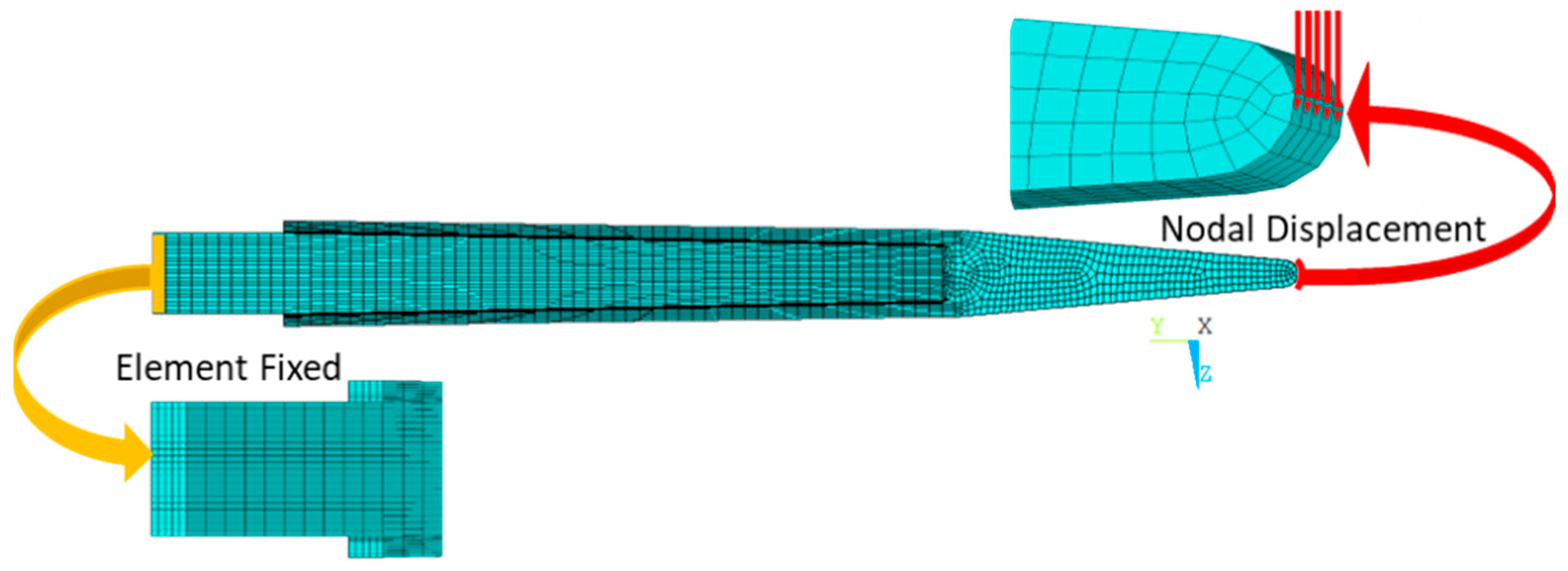
To imitate the fan blade cut section, the model’s boundary conditions were appropriately applied. The left end set of nodes is fixed like a cantilever. Nodal displacement loading of 5 mm at the other end, similar to a cantilever, was applied to the model. This 5 mm loading comes from the test data, where failure was observed at this displacement. Since the impact happens at a specific location (the section under investigation), the boundary conditions in this study were predicated. The constraints apply as shown in Figure 8. Since the impact takes place at the edge or tip (MLE tip), the displacement loading is applied there, while the other side is fixed.

2.7. Design and Material Cases of the Cut Section of the Fan Blade

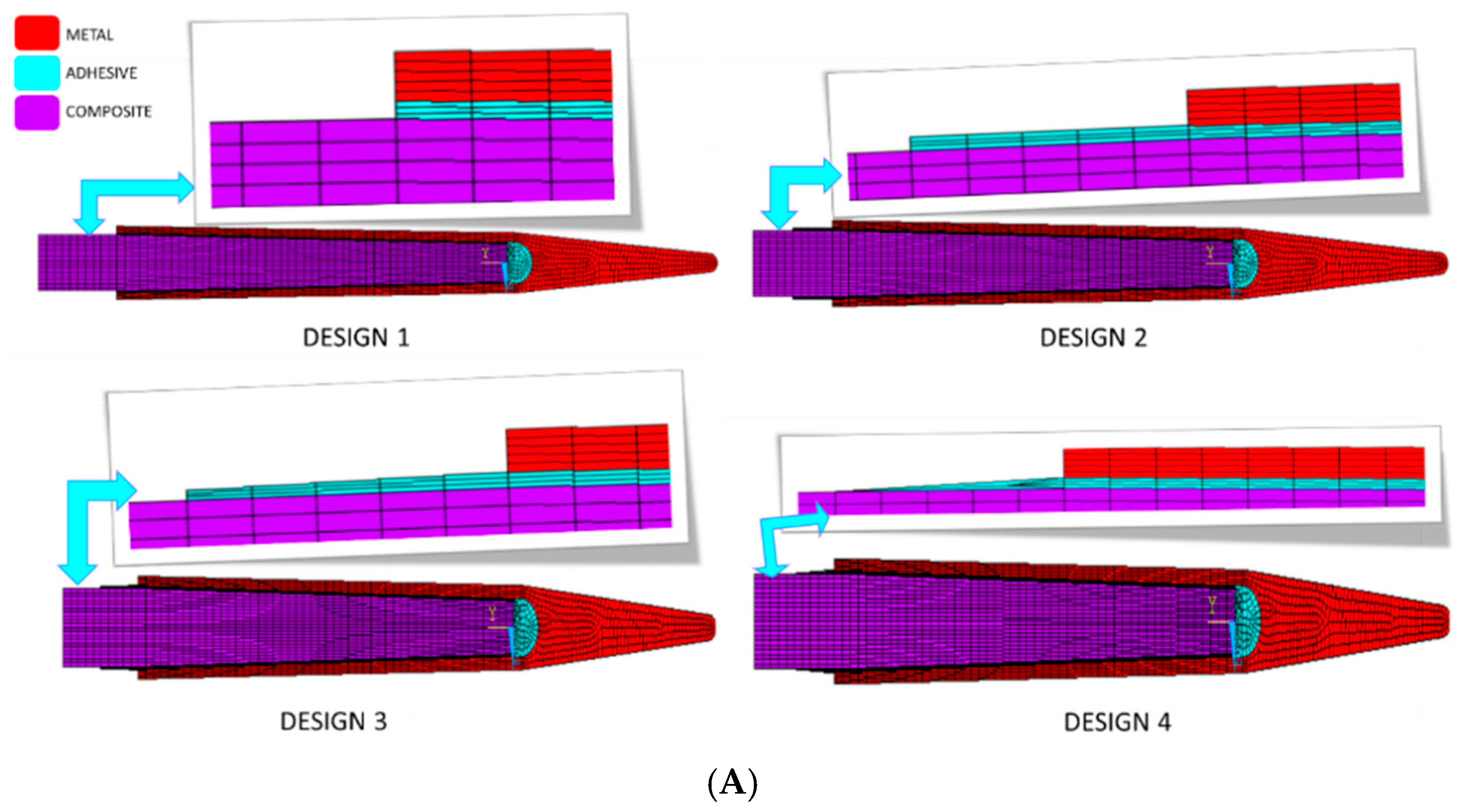
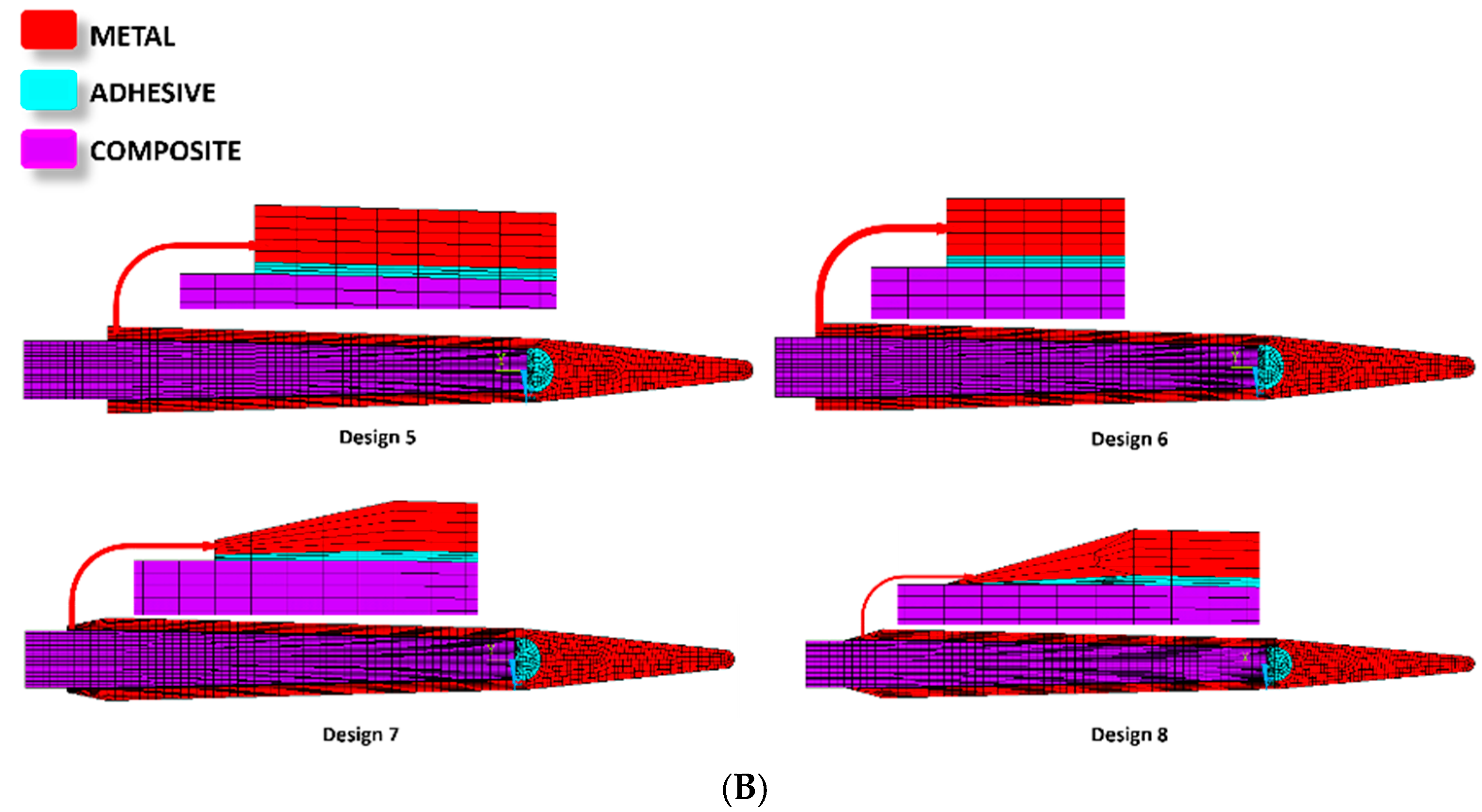
This study investigates eight distinct geometric design configurations for the composite–adhesive–MLE joint interface, as indicated in Figure 9A,B, with each configuration evaluated across three different metallic material options for the MLE cap component. These geometric designs manipulate the adhesive layer and its extension into the composite section to optimize stress distribution and load transfer characteristics from metal to composite.
Table 6 shows design options. The basic design is chosen design 1, which forms the basic joint design where the MLE cap is attached to the composite using a normal adhesive layer; the bond area is confined within the area of 50 mm overlap, as in the original model development. A variant of design 2 has been proposed, where the addition of an adhesive layer is introduced as a change into the design, whereby the adhesive layer reveals an extension of the composite section of 5 mm on both sides of the primary bond interface, still producing an extension area with the same thickness profile of adhesive all through. Design 3 builds upon this by an extension design management strategy in which the 5 mm adhesive projection is tapered in thickness as it traverses the contact with the composite section, providing a gradual change of rigidity that is aimed at reducing local stress concentration at the interface discontinuity. Design 4 is a triangular extension design where a 5 mm triangle-shaped adhesive contour is incorporated into the composite section—a design aimed at to handling peel stresses, which typically occur at bond termination points.
Design D5 does not make changes in the adhesive layer but makes changes in the metal substrate by adding 0.5 mm of thickness to the substrate metal adherend geometry. Its thickness changes from 0.5 mm at the starting point to 0 mm at the point of going back to the base, forming a localized thickened area in the metal substrate near the bonded joint. Such a change should enrich local rigidity and redistribute stresses in the adherend metal and, in any case, reduce peel stress by enhancing bending resistance in the critical joint region. Design D6 represents a hybrid change approach where the adhesive layer and metal substrate are all given 5 mm extensions. The metal layer is extended 5 mms over and above the base geometry at a constant thickness, and the adhesive layer is also extended by the same 5 mms in a flat geometry, thus synergistically improving the performance of the joints due to increased substrate rigidity and bonded area, creating a larger load transfer zone. Design D7 features tapering extensions on both the metal substrate and adhesive layer, reducing their thickness by 5 mms. This design aims to decrease stress concentration through a gradual geometric transition, allowing for a smoother stiffness transition, which theoretically redistributes loads effectively. Lastly, Design D8, on the other hand, incorporates 5 mm triangular extensions on both components, forming wedge shapes that enhance stress flow and distribution. These eight geometric forms of a simple overlap joint are designed to enhance the mechanical strength of the connection. The aim is to more evenly redistribute the stresses that are naturally present at the interface and to make the drastic change present in the stiffness that exists between the metal leading edge cap and the composite material much more gradual than is present in these critical points of stress concentration propensity. In this paper, for the above eight designs, the simulation will be executed with the three given metallic materials used in the leading edge cap, as in Table 6. Table 7 refers to the material characteristics used when using a cap on a metal leading edge.

3. Results

The coupons were designed with bonded metal–adhesive–composite assemblies under static loading conditions. The simulations were conducted using ANSYS MAPDL, with results reported in terms of von Mises stresses for the metal and adhesive components, and interlaminar shear strains (XY, YZ, ZX planes) for each composite layer. Loading was applied incrementally across 10 sub-steps, simulating increasing displacement. For each design configuration (1 to 8), three material variants (1, 2, and 3) were evaluated. At the sub-step at which adhesive stress peaks (indicating potential onset of failure or load redistribution), the corresponding stresses/strains were recorded. The coupon joint design maximum stresses in adhesive/MLE and interlaminar strain in composites at the critical joints are listed as shown in Table 8. Additionally, the maximum shear strains in composites are with the YZ plane, consistently showing the dominant shear deformation due to the 5 mm loading orientation. The adhesive layer is assumed to fail when von Mises or shear stress reaches 89 MPa. The composite laminate is considered to have failed or entered damage initiation when the maximum interlaminar shear strain in any ply exceeds 1.6%. In order to validate the failure strain%, the highest interlaminar shear strain limit of the present research (1.6%) was compared with the published experimental interlaminar failure strains of unidirectional carbon/epoxy composite in the literature. Past research shows that interlaminar failure strain is normally between 1.5 and 1.8% for aerospace-grade CFRP systems. Jones [26], in 1999, attributed interlaminar failure strains ranging between 1.5 and 1.7% to carbon/epoxy laminar, whereas Daniel et al. [28] recorded an average of 1.5–1.8%. Moreover, failure strains were examined in experimental studies by Gilat et al. [29], who also showed failure strains to be close to 1.5–1.6% under quasi-static loading conditions. The assumed failure strain of 1.6% in the current simulation model, thus, falls well within the experimentally known range, and this confirms the viability of the damage initiation criterion adopted as a strain-based criterion. The von Mises stress criterion was used to assess yielding in isotropic materials (metal and adhesive), while shear strains in the composite highlight interlaminar or in-plane deformation/delamination risks. Discussions focus on load transfer mechanisms, failure implications, and design–material interactions.

Evaluated Designs with Variant Materials Analysis

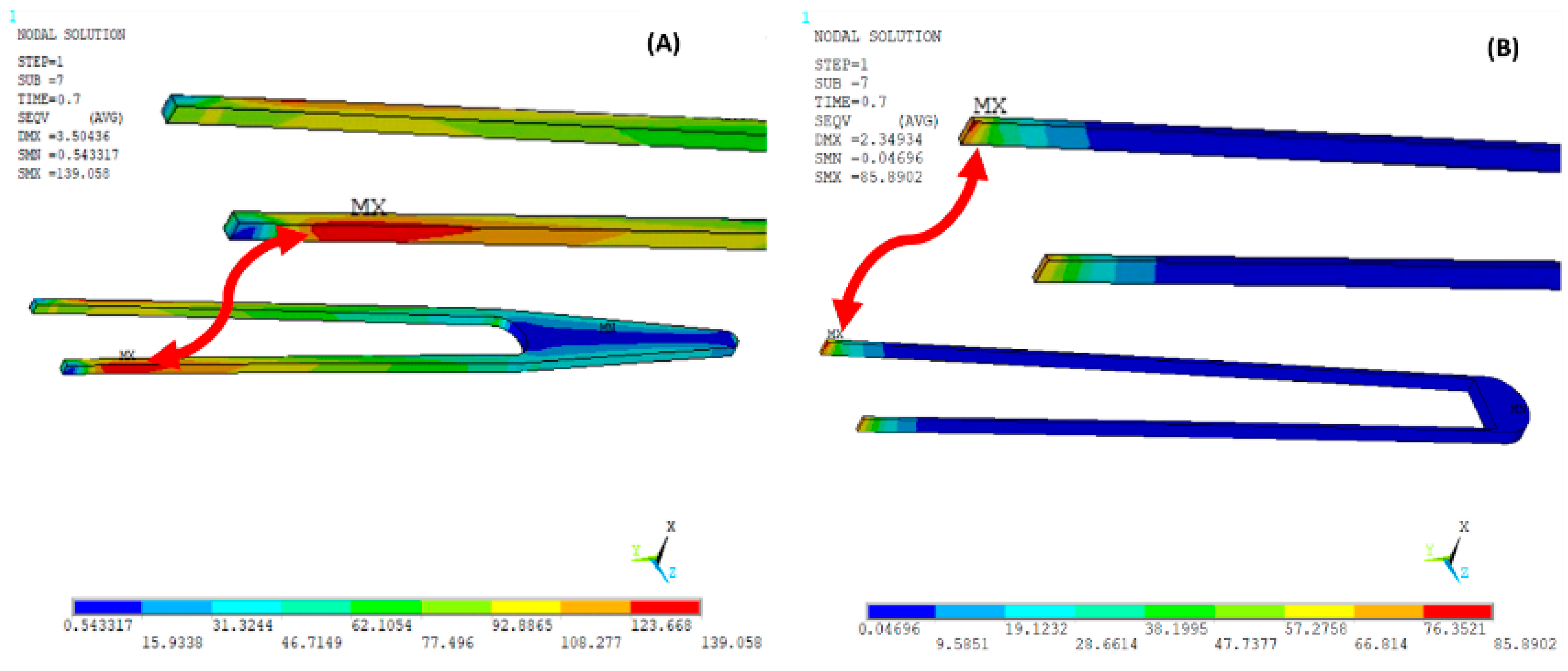
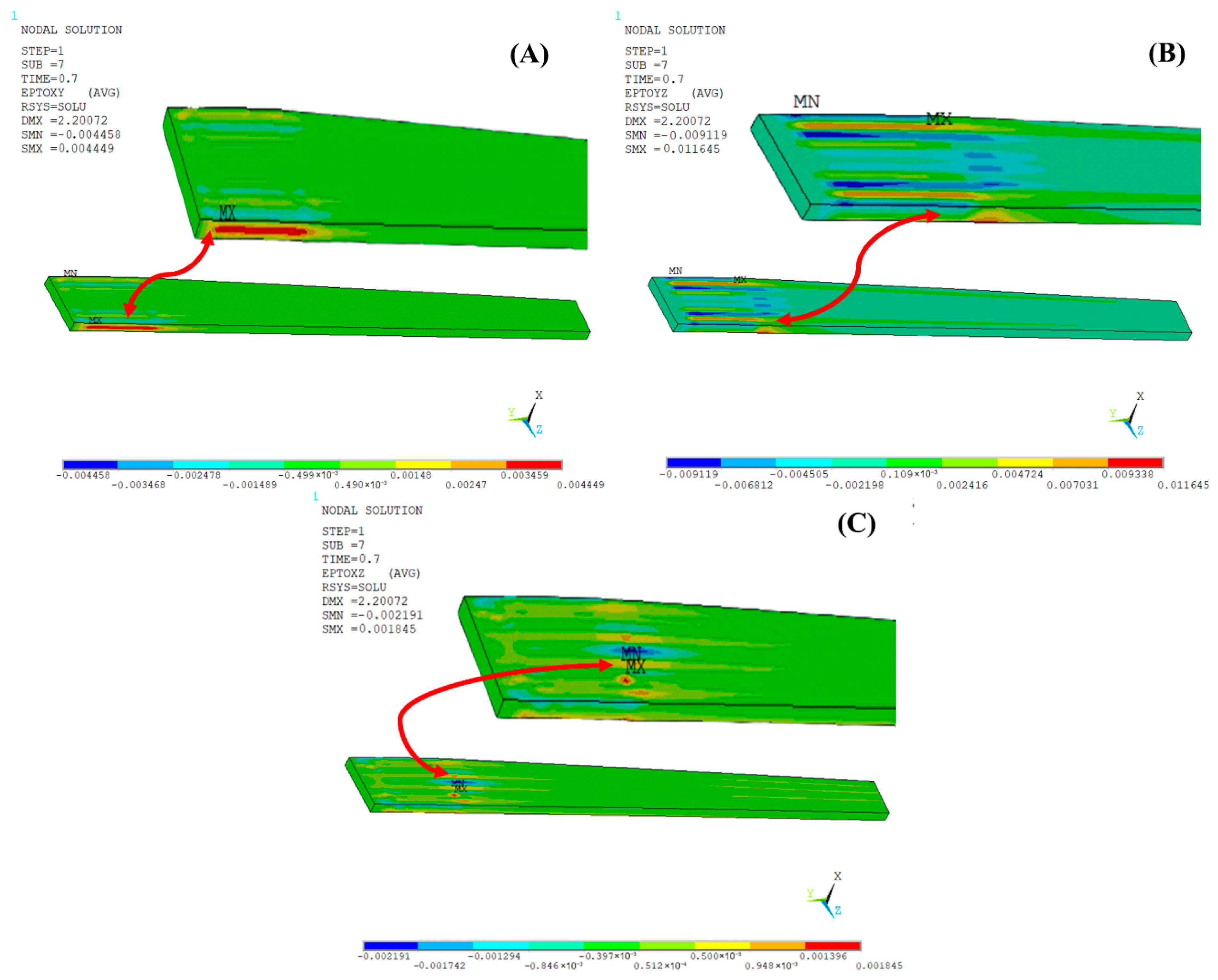
Figure 10 and Figure 11 show the best monitored result of Design 1 with material 1 (D1M1), which represents a baseline configuration with a moderate bonding area and standard adhesive thickness. Each case was observed at 10 increasing sub-steps of loading conditions, and it was found that the YZ shear strain in the composite is dominant over the others, i.e., XZ and XY shear strains. This is seen because the adhesive layer is quite thin, so shear deformation through the thickness in the YZ plane becomes more dominant than normal or in-plane deformation. As a result, load transfer mainly occurs through interlaminar shear stress along the interface rather than by normal stress. The composite’s laminate orientation (0°/45°/0°/−45°) 5S makes it relatively stiff within the plane XY but more flexible through the thickness in YZ, which means that the YZ direction is perpendicular to the fibers and will experience higher shear strain, as the bonding epoxy in interlaminar regions deforms more easily compared to the fiber-dominated layers. As shown in Table 8, the result of one such shortlisted case, D8M2, shows that the maximum interlaminar shear strains occur in the YZ plane. All other cases in this category show consistently similar maximum interlaminar shear strain and adhesive and metal correlation.
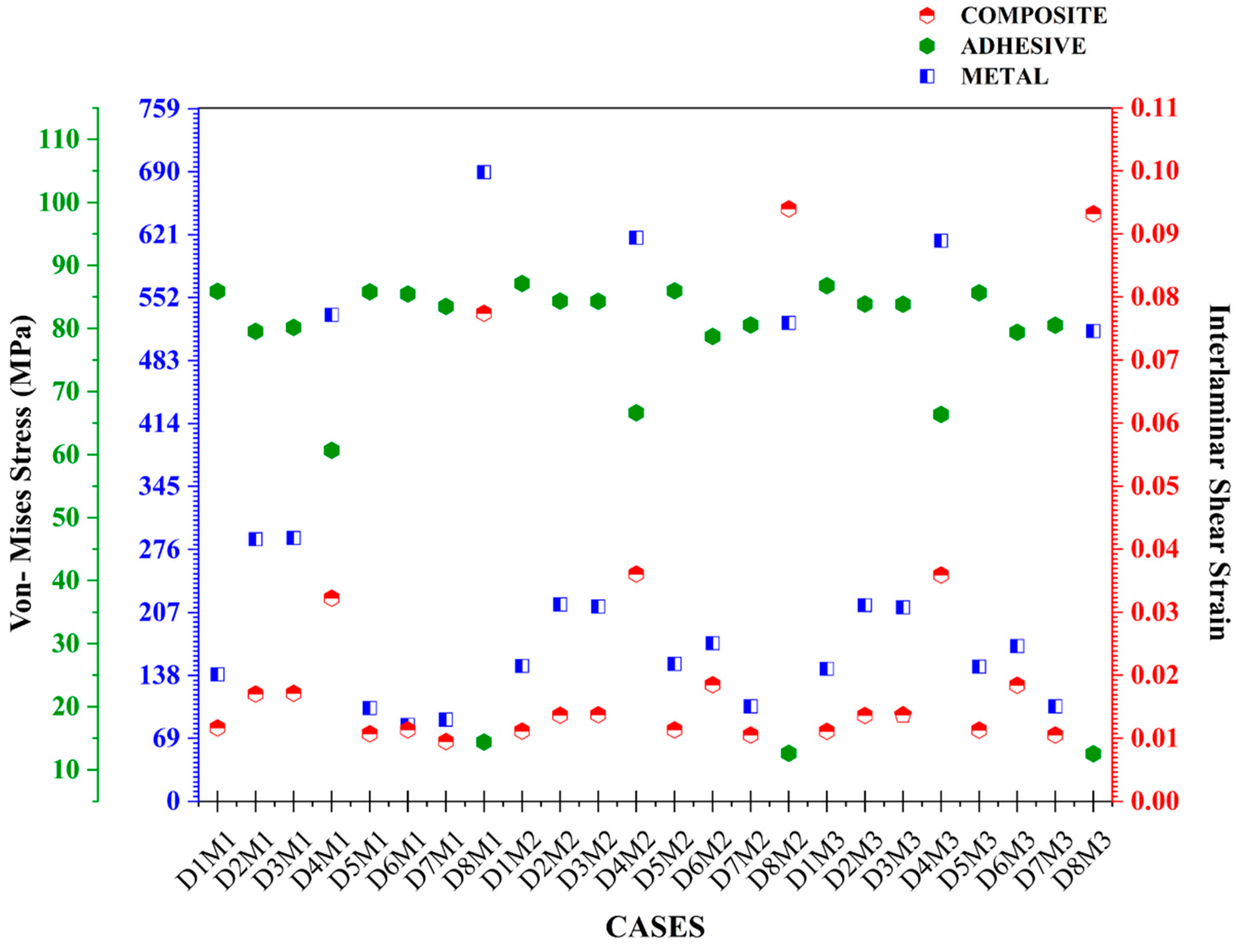
In this analysis, the results observed for both the metal and adhesive precisely focus on von Mises stress in adhesive/metal and the strain in the composite. The result depends on the material properties of the chosen metal and also varies across different design configurations. The experiment has been done for a range of materials and designs, and the results for the best-performing combinations are shown in Figure 10 and Figure 11 for the one-sample case. This analysis has considered the strain generated in each component layer (20 layers), ply by ply. Figure 12 shows the graph with the stress and strain response levels of MLE, adhesive, and composite. The applied load was divided into 10 sub-steps. It has been found that the adhesive experienced the highest stress at certain sub-steps, i.e., sub-step nos. 6, 7, and 10, as displayed in Table 8. Additionally, inside each sub-step that produced the maximum strain in the composite, the specific layer number and orientation showing the most strain at that point were identified. Across all designs and materials, it is seen that the sub-step with the maximum von Mises stress in the adhesive generated the highest strain in Layers 3 and 7 of the composite, which has a 0° orientation.

4. Discussion

As seen in Table 8, the simulation findings of 20-layered symmetric composite laminates attached to metallic substrates revealed a repeated failure mode: maximum strain concentration was found only in 0°-oriented layers in all 24 of the configurations examined. Specifically, Layers 3, 7, 1, 8, and 14 (with 0° orientation) were showing the values of critical strains, and those with ±45 orientation (layers) were relatively unstressed. This effect can be seen in the very nature of the work of composite laminates under axial loading, which is inherent in the adhesive-bonded joints.
In unidirectional composite layers, the load-bearing capacity is primarily carried by the fibers in the longitudinal direction, with the remaining load being carried by the matrix in the transverse and shear directions. When 0° layers are stacked in the direction of the fiber, they exhibit the stiffness that is 10 to 20 times higher than their transversal counterparts and therefore take most of the applied force. The symmetric stacking sequence (0°,45°,0°,−45°) S guarantees that, at tensile or compressive loading at the 0° axis, the layers immediately oppose the loads. On the other hand, oblique-oriented layers (±45 degrees) have much lower normal strains and serve as a major contributor to shear stiffness, restraining Poisson expansion of the 0° layers. The YZ strain component that is tracked is through-thickness or transverse strain; in the case of 0° layers, it is an effect of Poisson contraction and interlaminar shear effects, which are critical under high axial stresses. The fact that the charm of max strain in the +45° and −45° layers is negative is indicative that the orientations are effective in redistributing stress concentrations, but do not become critical failure locations.
The maximum strain located in 0° layers affects the integrity of the structure and the failure process. Once these layers are subjected to strains that are greater than the 1.3% damage initiation threshold, several degradation processes occur simultaneously. The matrix micro-cracking occurs in a direction perpendicular to the loading direction at a strain of 1.3–2%. Although these microscopic cracks have not yet been found to be disastrous on their own, they allow moisture ingress and reduce transverse stiffness, acting as initiation sites for severe forms of damage. D2M1 (1.704%), D3M1 (1.715%), D6M2 (1.848%), and D6M3 (1.840%) exist in this regime and have matrix-dominated damage, degrading long-term durability, despite sufficient immediate loading capacity.
Table 9 shows the status for all the cases from D1M1 to D8M3. Any strain above 1.7% strain causes the fiber and the matrix interfacial bonds to degrade, thus leading to inefficiency in loading transfer. The composite transforms into a more or less integrated material system, becoming a disaggregated one, with loads being carried by the fibers and matrix separately. D4M1 (3.224%), D4M2 (3.608%), and D4M3 (3.591%) operate in this damage regime; they experience a large reduction in stiffness (40 to 60%). Fiber rupture becomes unavoidable at extreme levels of strain, which is more than 7%. The maximum strain that carbon fiber can be stretched is 1.5–1.7% in carbon. The D8 series, which includes strains of 7.744%, 3.397%, and 9.319%—(D8M1), (D8M2), and (D8M3), respectively—has clearly exceeded the fiber failure limits. The 0° layers lose their primary load-carrying ability at such magnitudes, and all of the load must be reassigned to the rest of the layers. Since the presence of 0° layers means half of the laminate is in the alternated pattern, they cause a compromise of the other half of the laminate 0°, such that the half-layers of ±45° (remaining) are not able to support the loads transferred, thus resulting in a cascading failure of the entire laminate.
The symmetric layup has eliminated membrane-bending coupling, meaning that, when the pure membrane is loaded, it should be possible to observe uniform mid-plane strains. However, the fact that the peak strain occurs in selected 0° layers, which are mostly Layer 3 and Layer 7, as opposed to all 0° layers, points to the existence of secondary effects, including through-thickness stress differences and interlaminar shear as well as possible bending contributions. Stringent strains arise at Layer 3, which is close to the outer surface, through bending contributions, whereas, at Layer 7, which is at the transition zone, there are interlaminar shear concentrations where there is transfer of loads among ply groups.
One important observation is the fact that decoupling of adhesive von Mises stress criteria and composite strain failure criteria occurs. Several configurations prove that, as long as one criterion is met, there is no promise that the other will be met, and both failure modes should be considered at the same time. Ten of these configurations satisfy the 1.6% composite strain threshold and still have an adhesive von Mises stress below 89 MPa, such as D2M1, D3M1, D4M1, D4M2, D6M2, D8M2, D4M3, D6M3, D8M3, and D8M1. These are defective designs, even though they may look safe as far as the adhesive is concerned. The disconnect is best demonstrated by the D8 series, where adhesive stresses are at a paltry 14 to 16% of the failure capacity, and typical adhesive-based design methods would declare such a joint grossly over-designed with too much safety margin. Nevertheless, the composites are catastrophically strained six or seven times the allowable strain, making the joints totally inappropriate to be used in structural applications.
This decoupling is attributed to the fact that adhesive stress and composite strain indicate the reaction to different facets of the load transfer mechanisms. Adhesive stress measures the intensity of the interfacial shear between adherends, and the overall response of the composite to aggregate deformation is recorded through composite strain. Inefficient load transfer in the form of partial debonding, excessive adherend deformation, or alternate load paths causes the adhesive stress to be minimal with extreme transference deformations in the composite subjected to adverse loading-conditions-bending, peel tension, or concentration through-thickness compression. The results of the research indicate that there are several methods of enhancing bonded joints in hybrid composite–metal structures. The maximization of the overlap length, coupled with adherence to fundamental design principles, is an important way of improving joint performance. End tapering on the bonded materials reduces peel stresses, and this aids in enhancing durability. Preparation of the surface is important. Specific surface treatments are essential for the quality of the bond because various materials do not behave in the same way when bonded. The selection of the adhesive is also significant. It should be able to fit the necessary stiffness to make it efficient with the surfaces that it is to be used with. A close examination of the distribution of stress at composite metallic interfaces informs these recommendations. The above-mentioned design techniques are demonstrated to enhance the mechanical integrity of bonded structures in challenging industries, including aerospace, automotive, marine, and major infrastructure. Finally, the correct design of such joints is not only crucial to optimization, but also to the safety and structural stability of such joints in the practical environment.
There is no doubt that a feasible design must meet the two failure criteria simultaneously: any breach of either one makes the design invalid. This observation is reflected in the serial character of the failure of bonded joints, where the strength of the joint is limited by the weakest component. Configuration D1M2 has an adhesive stress of 87.15 MPa (97.9% of capacity) and a composite strain of only 1.114% (85.7% of capacity). This means it operates close to its adhesive limit while maintaining good composite margins. On the other hand, D4M1 has comfortable adhesive margins (60.67 MPa, 68.2% of capacity) but too much composite strain (3.224%, 248% of what is allowed). The corrected strain threshold of 1.7% makes this analysis much clearer. Configurations D2M1, D3M1, D6M2, and D6M3 all move into the failed category, going over the threshold by 31–42%.
An effective design will consider the adhesive shear and stress fields to ensure that the von Mises equivalent does not surpass 89 MPa, and will constantly check the strain of all composites ply by ply to ensure that the overriding shear strain of each ply does not reach a toleration of 1.6%. Of equal significance is load path considerations, which require the complete involvement of all joint constituents that have neither stress concentrations nor load bypass, and a balanced failure-mode regime where none of the components will be performing at the extent of its design limits as others continue to be over-worked. In these multidimensional constraints, 14 configurations (i.e., D1M1, D5M1, D6M1, D7M1, D1M2, D5M2, D7M2, D1M3, D5M3, and D7M3) meet the above criteria successfully. All of these structures maintain adhesive stress levels less than 89 Mpa and composite strains less than 1.6 percent, thus providing a compromise for future design activities.
The numerical findings are directly supported by Figure 1, Figure 2, Figure 3, Figure 4, Figure 5, Figure 6, Figure 7, Figure 8, Figure 9, Figure 10 and Figure 11. Figure 1 shows the actual picture of the fan blade of a jet engine, which are from a commercial engine. Then it shows the coupon model, where the individual blade figure has been indicated and extracted in the coupon, thus showing the bending shear coupling of the thin-walled blade. Figure 2 indicates solo blade geometry and terminology. Experimental results in Figure 3 support the fact that there was localized yielding and delamination, which is expected based on the predicted peak adhesive stress and the highest strain. Figure 4 accounts for the effect of geometric nonlinearity, as well as the elastic–plastic behavior and the nonlinear redistribution of stresses between successive sub-steps. In Figure 5, the 0.25 mm adhesive with respect to 4–6 mm laminate thickness is highlighted, which favors the through-thickness shear transfer in accordance with the calculated interlaminar strain trends. Figure 6 represents the (0°/+45°/0°/−45°) 5S lay-up in which a high longitudinal modulus is used to justify that the strain is concentrated in 0° layers. Figure 7 validates the interface meshing to obtain precise results on stress and strain gradients. Figure 8 shows that cantilever loading is dominated by bending, and this is mathematically justified as the interlaminar shear strain being the controlling element leading to composite failure instead of adhesive yielding.

5. Conclusions

This paper assessed the mechanical performance of adhesively bonded MLE caps to the thin wall composite fan blades of aircraft engines with eight design configurations (D1_D8) over three material variants (M1M3) through a parametric 3D coupon FEA model with a suitable boundary condition. The design optimization was performed to determine the optimal possible designs that can produce a minimum level of max interlaminar shear strain, which will minimize the probability of failure in thin-walled composite fan blades. Coupon-level analysis can play an effective role as a protective measure to detect the best design cases and save a lot of time and cost due to the avoidance of full-blade-level analysis and tests. Designs passed through this stage shall be furthered to sub-element plate and blade-level assessments with the intention of putting into effect the best designs in the thin wall composite fan blade of an aircraft engine. This is likely to resolve existing delamination problems on the thin wall composite fan blade structure.

Author Contributions

Conceptualization, P.J.; Methodology, N.Y., P.J. and C.L.; Software, N.Y.; Validation, N.Y. and C.L.; Formal analysis, N.Y.; Investigation, N.Y.; Resources, N.Y. and P.J.; Data curation, N.Y., P.J. and C.L.; Writing—original draft, N.Y.; Writing—review & editing, P.J. and C.L.; Visualization, P.J.; Supervision, P.J. and C.L. All authors have read and agreed to the published version of the manuscript.

Funding

This research received no external funding.

Data Availability Statement

The original contributions presented in this study are included in the article. Further inquiries can be directed to the corresponding author.

Conflicts of Interest

The authors declare no conflict of interest.

Abbreviations

APDLAnsys parametric design language
CFRPCarbon-fiber-reinforced polymer
FEMFinite Element Method
FODForeign object damage
MAPDLMechanical ANSYS parametric design language
MLEMetal leading edge

References

  1. Mol, S.K.; Sadiq, A. Material parametric optimisation of wing leading edge profile against soft body impact. Int. J. Crashworthiness 2022, 27, 677–687. [Google Scholar] [CrossRef]
  2. Aslam, M.A.; Bin Rayhan, S.; Zhang, K. Dynamic Response of Structurally Reinforced Wing Leading Edge against Soft Impact. Aerospace 2022, 9, 260. [Google Scholar] [CrossRef]
  3. Liu, J.; Zhang, C.; Juan, B.; Li, Z.; Zhang, C.; Li, Y. Damage sensitivity of a wing-type leading edge structure impacted by a bird. Chin. J. Aeronaut. 2023, 36, 328–343. [Google Scholar] [CrossRef]
  4. Wang, H.; Chen, B. Investigation on aerodynamic noise for leading edge erosion of wind turbine blade. J. Wind Eng. Ind. Aerodyn. 2023, 240, 105484. [Google Scholar] [CrossRef]
  5. Zhu, J.; Cai, X.; Gu, R. Aerodynamic and structural integrated optimization design of horizontal-axiswind turbine blades. Energies 2016, 9, 66. [Google Scholar] [CrossRef]
  6. Corsini, A.; Marchegiani, A.; Rispoli, F.; Venturini, P.; Sheard, A.G. Predicting blade leading edge erosion in an axial induced draft fan. In Proceedings of the ASME Turbo Expo, Vancouver, BC, Canada, 6–10 June 2011; ASME: New York, NY, USA, 2011; Volume 4, pp. 435–444. [Google Scholar]
  7. Bogage, G.I. Metal Contoured Blade with Rolled Edges at Impact Surfaces. U.S. Patent US5645403, 8 July 1997. Available online: https://patents.google.com/patent/US5645403A/en (accessed on 13 September 2025).
  8. Yin, W.; Liu, Y.; He, X.; Li, H. Effects of Different Materials on Residual Stress Fields of Blade Damaged by Foreign Objects. Materials 2023, 16, 3662. [Google Scholar] [CrossRef] [PubMed]
  9. Yella, G.; Jadhav, P.; Lande, C. Bird-Strike Analysis on Hybrid Composite Fan Blade: Blade-Level Validation. Aerospace 2023, 10, 435. [Google Scholar] [CrossRef]
  10. Handschuh, K.M.; Miller, S.G.; Sinnott, M.J.; Kohlman, L.W.; Roberts, G.D.; Pereira, J.M.; Ruggeri, C.R. Materials, manufacturing and test development of a composite fan blade leading edge subcomponent for improved impact resistance. In Proceedings of the International SAMPE Technical Conference, Seattle, WA, USA, 2–5 June 2014. [Google Scholar]
  11. Jain, N. Apparatus and System for Composite Fan Blade with Fused Metal Lead Edge. U.S. Patent US20180163432A1, 14 June 2018. Available online: https://patents.google.com/patent/US20180163432A1/en (accessed on 11 September 2025).
  12. Li, Q.; Kray, N.J. Metal Leading Edge on Composite Blade Airfoil and Shank. U.S. Patent US20160208615A1, 21 July 2016. Available online: https://patents.google.com/patent/US20160208615A1/en (accessed on 7 September 2025).
  13. James, I.D.; Merriman, N.M. Composite Turbomachine Blade. U.S. Patent US8851855B2, 7 October 2014. Available online: https://patents.google.com/patent/US8851855B2/en (accessed on 4 September 2025).
  14. Blanchard, S.P.G.; Bouillon, E.; Coupe, D.; Illand, H.; Roussille, C. Method for Producing a Turbomachine Blade Made from a Composite Material. U.S. Patent US8607454B2, 17 December 2013. Available online: https://patents.google.com/patent/US8607454B2/en (accessed on 3 September 2025).
  15. Johns, R.H. Impact Resistance of Composite Fan Blade. 1973. Available online: https://ntrs.nasa.gov/citations/19750006770 (accessed on 3 September 2025).
  16. Jain, N.; Sharma, V.; Kray, N.J. Metal Leading Edge for Composite Fan Blade. Chinese Patent CN109415940B, 2 September 2022. Available online: https://patents.google.com/patent/CN109415940B/en (accessed on 20 August 2025).
  17. Clark, J.P. Aircraft Engine Structure Materials. 2008. Available online: https://publications.sto.nato.int/publications/STO Educational Notes/RTO-EN-AVT-207/EN-AVT-207-13.pdf (accessed on 20 August 2025).
  18. Su, K.; Bai, R.X.; Bai, H.S. Numerical research on the effect of aircraft leading-edge curvature on bird strike resistance. J. Phys. Conf. Ser. 2021, 1798, 012044. [Google Scholar] [CrossRef]
  19. Sun, F.; Sun, Q.; Ni, L.; Liang, K. Numerical analysis of anti-bird strike performance in structural connection design for a vertical tail leading edge. Thin-Walled Struct. 2019, 144, 106319. [Google Scholar] [CrossRef]
  20. Sun, J.; Liu, M.; Li, N.; Jiang, B.; Guo, Y. Bird strike on aeroengine fan blades: A combined experimental and numerical study. Aerosp. Sci. Technol. 2026, 168, 110955. [Google Scholar] [CrossRef]
  21. Gebrehiwet, L.; Abate, E.; Negussie, Y.; Teklehaymanot, T.; Abeselom, E. Application of Composite Materials In Aerospace & Automotive Industry: Review. Int. J. Adv. Eng. Manag. 2023, 5, 697. [Google Scholar] [CrossRef]
  22. Irwin, T.P.; Powell, P.E.A.; Musial, N.T.; Manning, J.R. Leading Edge Protection for Composite Blades. U.S. Patent US4006999, 8 February 1977. Available online: https://patents.google.com/patent/US4006999A/en (accessed on 19 August 2025).
  23. Wood, R.J.K.; Lu, P. Leading edge topography of blades-a critical review. Surf. Topogr. Metrol. Prop. 2021, 9, 023001. [Google Scholar] [CrossRef]
  24. Jadhav, P.; Yella Gruha, L. Design and Optimization of Hybrid Interface Joint in a Composite Fan Blade of Aircraft Engine. IOP Conf. Ser. Mater. Sci. Eng. 2021, 1126, 012036. [Google Scholar] [CrossRef]
  25. Zienkiewicz, O.C.; Taylor, R.L. The Finite Element Method: Volume 1: The Basis, 5th ed.; Butterworth-Heinemann: Oxford, UK, 2000. [Google Scholar]
  26. Jones, R.M. Mechanics of Composite Materials, 2nd ed.; Taylor & Francis: Philadelphia, PA, USA, 1999. [Google Scholar]
  27. ASTM D3039/D3039M-17; Standard Test Method for Tensile Properties of Polymer Matrix Composite Materials. ASTM International: West Conshohocken, PA, USA, 2017.
  28. Daniel, I.M.; Ishai, O. Engineering Mechanics of Composite Materials, 2nd ed.; Oxford University Press: New York, NY, USA, 2006; ISBN 9780195150971. [Google Scholar]
  29. Gilat, A.; Goldberg, R.K.; Roberts, G.D. Experimental study of strain-rate-dependent behavior of carbon/epoxy composite. Compos. Sci. Technol. 2002, 62, 1461–1468. [Google Scholar] [CrossRef]
Figure 1. Sample fan blade segment extraction showing the (A) 3D geometry of the solo blade cross-section, and (B) the coupon model.
Jcs 10 00166 g001
Figure 2. Thin-walled fan blade with metal leading edge cap and labeled geometric features.
Jcs 10 00166 g002
Figure 3. Sample of post-bird-strike test failure pic of bonded metal cap blade joint.
Jcs 10 00166 g003
Figure 4. Flowchart showing the methodology used in the present study.
Jcs 10 00166 g004
Figure 5. (A) FEA model of a section of fan blade denoting the main components: CFRP in red, HYSOL EA 9460 in green, and MLE in blue. (B) Component-wise detailed dimensions of the coupon section in mm. (C) Detailed dimensions of coupon model MLE components in mm.
Jcs 10 00166 g005aJcs 10 00166 g005b
Figure 6. Orientation for different layers of composite material (0°/45°/0°/−45°) 5S.
Jcs 10 00166 g006
Figure 7. Mesh area along vertical and horizontal lines of baseline design.
Jcs 10 00166 g007
Figure 8. Loading and boundary conditions of the MLE fan blade coupon model.
Jcs 10 00166 g008
Figure 9. (A). Adhesive design consideration (1) baseline, (2) flat extension, (3) tapered extension, and (4) triangular extension. (B). MLE and adhesive design consideration (5) thickness extension, (6) flat extension, (7) tapered extension, and (8) triangular extension.
Jcs 10 00166 g009aJcs 10 00166 g009b
Figure 10. Von Mises stress generated in (A) metal component and (B) adhesive component (example: Design 1), showing that maximum stress is generated at metal 139 MPa, which is optimal for fan blade design.
Jcs 10 00166 g010
Figure 11. Interlaminar shear strain developed in composite component (A) XY direction, (B) YZ direction, and (C) XZ direction (example: Design 1), showing that maximum strain is generated at the YZ plane of 1.16%, at 0° orientation, which is optimal for fan blade design [29].
Jcs 10 00166 g011
Figure 12. Stress–strain response of adhesive, metal, and composite layers.
Jcs 10 00166 g012
Table 1. Orientation representation layer by layer (0°/45°/0°/−45°) 5S.
LAYER NO.ORIENTATION
Layer 1
Layer 2+45°
Layer 3
Layer 4−45°
Layer 5
Layer 6+45°
Layer 7
Layer 8−45°
Layer 9
Layer 10+45°
Layer 11+45°
Layer 12
Layer 13−45°
Layer 14
Layer 15+45°
Layer 16
Layer 17−45°
Layer 18
Layer 19+45°
Layer 20
Table 2. Mechanical property of unidirectional CFRP.
Material/PropertyEX
(GPa)
EY
(GPa)
EZ
(GPa)
PRXY
-
PRYZ
-
PR
-
GXY
(GPa)
GYZ (GPa)GXZ (GPa)
CFRP150.999.178.270.350.320.374.344.823.03
Table 3. Mechanical properties for other metals and Hysol EA 9460.
Material/PropertyHYSOL EA9460TI64INCONEL 71815-5PH
E (MPa)1669115,103206,843200,637
Shear Modulus (MPa)62843,71078,60477,905
Density (kg/m3)1550445682507835
Poisson Ratio (ν)0.3320.3180.3120.292
Yield Strength (MPa)7789711861076
Strain Failure % 5.3%0.8%0.6%0.5%
Hardening Modulus (MPa)Elastic-plastic690690690
Strain-rate-dependentNoYesYesYes
Table 4. Mesh detail component-wise.
Meshed AreaVertical LinesHorizontal Lines
Composite Material2050
Adhesive203
Metal205
Table 5. Mesh detailed specification.
Mesh Specification
Number of Nodes15,894
Number of Elements12,575
Initial Geometry
2D Element Type
Shell 181
After Extruding from 2D to 3D Element TypeSolid 185
Table 6. Description of design variants.
Design No.Geometric Shape at High-Stress RegionExtension Length at High-Stress RegionComponent
D1BaselineNo extensionAdhesive
D2Flat5 mm adhesiveAdhesive
D3Tapered5 mm adhesiveAdhesive
D4Triangular5 mm adhesiveAdhesive
D5Thickness0.5 MLE–0 mm AdheMLE
D6Flat5 MLE–5 mm AdheMLE & Adhesive
D7Tapered5 MLE–5 mm AdheMLE & Adhesive
D8Triangular5 MLE–5 mm AdheMLE & Adhesive
Table 7. Materials variants used for the MLE that is part of the fan blade of a jet engine.
Material CodeMaterial NameComponent
M1Ti-6Al-4V (Ti64)MLE cap
M2Inconel 718MLE cap
M315-5PH Stainless SteelMLE cap
Table 8. Stress levels for adhesive and metal; interlaminar strain for composite.
CasesMetalAdhesiveCompositeSubstepLayer No.Orientration
UnitsMPaMPaYZ Strain %No.Max Strain
D1M113985.91.1673
D2M1287.179.61.70103
D3M1288.580.21.72103
D4M1533.160.73.22103
D5M1102.185.81.0767
D6M183.785.41.1347
D7M189.583.50.9537
D8M1689.414.47.74107
D1M2148.387.11.1163
D2M2215.684.31.3773
D3M2213.384.31.3773
D4M2617.666.63.61103
D5M2150.685.91.1367
D6M2173.278.71.85614
D7M2104.180.51.0537
D8M2524.212.69.40107
D1M3145.286.71.1163
D2M3214.983.81.3673
D3M3212.583.81.3773
D4M3614.266.33.59101
D5M3147.585.61.1367
D6M3170.179.41.83614
D7M3104.180.51.0537
D8M3515.412.69.31107
Table 9. Design configuration statistic status.
CasesAdhesiveCompositeOverall Design
StatusStatusStatus
D1M1Pass (96.5%)Pass (89.6%)✓ ACCEPTABLE
D2M1Pass (89.4%)Fail (131.1%)✗ REJECTED
D3M1Pass (90.1%)Fail (132.0%)✗ REJECTED
D4M1Pass (68.2%)Fail (248.0%)✗ REJECTED
D5M1Pass (96.5%)Pass (82.4%)✗ REJECTED
D6M1Pass (96.0%)Pass (87.2%)✓ ACCEPTABLE
D7M1Pass (93.8%)Pass (72.9%)✓ ACCEPTABLE
D8M1Pass (16.2%)Fail (595.7%)✗ REJECTED
D1M2Pass (97.9%)Pass (85.7%)✓ ACCEPTABLE
D2M2Pass (94.8%)Fail (105.2%)✗ REJECTED
D3M2Pass (94.7%)Fail (105.7%)✗ REJECTED
D4M2Pass (74.9%)Fail (277.5%)✗ REJECTED
D5M2Pass (96.6%)Pass (87.1%)✓ ACCEPTABLE
D6M2Pass (88.5%)Fail (142.1%)✗ REJECTED
D7M2Pass (90.5%)Pass (81.1%)✓ ACCEPTABLE
D8M2Pass (14.2%)Fail (722.8%) ✗ REJECTED
D1M3Pass (97.5%)Pass (85.4%)✓ ACCEPTABLE
D2M3Pass (94.3%)Fail (104.8%) ✗ REJECTED
D3M3Pass (94.2%)Fail (105.3%)✗ REJECTED
D4M3Pass (74.5%)Fail (276.2%) ✗ REJECTED
D5M3Pass (96.3%)Pass (86.9%)✓ ACCEPTABLE
D6M3Pass (89.2%)Fail (141.5%) ✗ REJECTED
D7M3Pass (90.5%)Pass (80.8%)✓ ACCEPTABLE
D8M3Pass (14.1%)Fail (716.9%)✗ REJECTED
Disclaimer/Publisher’s Note: The statements, opinions and data contained in all publications are solely those of the individual author(s) and contributor(s) and not of MDPI and/or the editor(s). MDPI and/or the editor(s) disclaim responsibility for any injury to people or property resulting from any ideas, methods, instructions or products referred to in the content.