Article

Synergistic Effects in Hybrid TPMS Lattices: Improved Energy Absorption Under Quasi-Static Compression


1
Fujian Sanming Expressway Co., Ltd., Sanming 365000, China
2
Fujian Expressway Science and Technology Innovation Research Institute Co., Ltd., Fuzhou 350001, China
3
National Engineering Research Center of Road Tunnel, China Merchants Chongqing Communications Technology Research & Design Institute Co., Ltd., Chongqing 400067, China
4
School of Instrument Science and Technology, Xi’an Jiaotong University, Xi’an 710049, China
5
Sydney Business School, The University of Sydney, Sydney, NSW 2006, Australia
*
Author to whom correspondence should be addressed.
J. Compos. Sci. 2026, 10(3), 150; https://doi.org/10.3390/jcs10030150
Submission received: 2 February 2026 / Revised: 23 February 2026 / Accepted: 25 February 2026 / Published: 9 March 2026

Abstract

Lattices have attracted increasing attention for their outstanding mechanical and multifunctional properties. In this study, a novel class of hybrid lattices composed of Primitive (P) and I-Wrapped Package (W) topologies is proposed by a mathematical formula. The deformation behaviors, mechanical properties, and energy absorption characteristics of the hybrid lattices are systematically investigated using compression experiments and simulations. The results show that the hybrid lattices exhibit a localized initial failure followed by stress redistribution, effectively avoiding brittle interlayer collapse of the P-type sub-lattices and maintaining a high load-bearing capacity even after the initial failure. A synergistic enhancement effect of ‘1 + 1 > 2’ is observed, in which the hybrid lattices outperform the linear combination of their constituent sub-lattices. Compared with the total performance of the P and W sub-lattices, the hybrid lattices exhibit increases of 11.6%, 30.0%, 34.5%, and 368% in elastic modulus, yield strength, compressive strength, and energy absorption, respectively. The exceptional energy absorption capability of hybrid lattices is attributed to the synergistic deformations and stress redistribution mechanisms during the compression. The proposed hybrid lattices significantly improve energy absorption, and they have potential applications in a tunnel lamp maintenance robot.

1. Introduction

Lattices have attracted increasing attention due to their outstanding mechanical and multifunctional properties [1,2,3]. Benefiting from their periodic architectures, lattices can exhibit properties that far exceed those of their constituent solids, including high specific strength and stiffness [4], tailorable thermal responses [5], excellent energy absorption [6], and even unusual behaviors such as a negative Poisson’s ratio [7,8]. These superior properties originate from the rational design of internal architectures rather than the characteristics of the materials. Consequently, lattice metamaterials hold significant potential in diverse engineering fields. For example, the tunnel lamp maintenance robot operates in a confined, unpredictable tunnel environment. The arm of the tunnel lamp maintenance robot should be lightweight to minimize deflection and possess high energy absorption to protect both the robot and the infrastructure from damage. However, conventional fabrication techniques, such as casting, machining, or foaming, have limited the realizable geometries of lattices, particularly those involving intricate or highly controlled porosity. The emergence of additive manufacturing (AM) technologies has fundamentally removed this constraint, enabling the accurate and support-free production of complex three-dimensional architectures of lattices [9].
Triply periodic minimal surface (TPMS) lattices have gained particular interest because of their zero-mean-curvature surfaces and smoothly interconnected channels [10]. Compared with traditional strut-based lattices, TPMS lattices avoid node-induced stress concentrations and often exhibit improved mechanical performances. Typical TPMS lattices such as Gyroid, Primitive (P), Diamond, and I-Wrapped Package (W) have been widely studied [11,12,13]. Previous studies have shown that the mechanical properties of TPMS lattices are strongly governed by their microstructural topology. For instance, P lattices generally exhibit stretching-dominated deformation with high initial stiffness but also brittle collapse modes [14]. In contrast, W lattices tend to be bending-dominated and thus possess superior energy absorption capabilities but comparatively reduced load-bearing capacities [15]. This intrinsic trade-off between strength and energy absorption is often observed between different TPMS topologies, which has posed challenges for applications requiring simultaneous high energy absorption and high strength.
To address these limitations, numerous optimization strategies have been explored, including strut-shape modification [16,17,18,19], functional grading [20,21,22,23], machine-learning-assistant designs [24,25,26], and bio-inspired architectures [27,28,29,30]. For example, Viswanath et al. [17] improved the buckling strength of lattices by 35% through strut cross-section modification from circle to square without reducing stiffness. Niknam et al. [21] demonstrated that graded lattices enable layer-by-layer deformation, enhancing energy absorption by up to 110%. Zhao et al. [26] proposed a data-driven design approach for energy-absorbing lattices, and the trained model successfully explored the new lattices that surpassed the energy absorption of the original ones. Additionally, researchers have designed many new bionic lattices derived from natural materials. Bamboo-inspired lattices exhibited high relative stiffness and strength [28,29], and woodpecker-head-inspired double-layer lattices showed high energy absorption [30]. Although these efforts have substantially expanded the design space and improved the mechanical properties of lattices, most existing strategies are based on single-type lattices.
Recently, some studies found that heterogeneous design strategies offer a promising pathway for addressing the inherent limitations of single-type lattices [31,32,33]. Li et al. [32] proposed novel heterogeneous lattices inspired by the biological cuttlebone. The heterogeneous lattices exhibited high deformation-tolerant compressive responses, which resulted in a 30% improvement in energy absorption. Zhang et al. [33] designed lattices with topology variation along the loading direction. Compared to the single-type lattices, the heterogeneous ones improved the specific energy absorption by up to 30.48%. Notably, the existing research largely focuses on macro-scale grading, while the integration of distinct TPMS topologies at the unit-cell scale remains limited. Additionally, the synergistic deformation mechanisms arising from different TPMS lattices remain insufficiently investigated.
Therefore, this study aims to investigate the mechanical responses of hybrid TPMS lattices. Firstly, the design approach of hybrid lattices composed of Primitive (P) and I-Wrapped Package (W) sub-lattices is proposed based on the TPMS formula. Subsequently, the deformation behavior, mechanical properties, and energy absorption characteristics of the hybrid lattices were systematically investigated via compression experiments and simulations. Finally, the strengthening mechanisms are discussed. The results show that the hybrid lattices significantly enhanced energy absorption, and therefore they have potential applications in aerospace and robotics to protect internal electronic systems.

2. Materials and Methods

2.1. Design of Hybrid Lattices

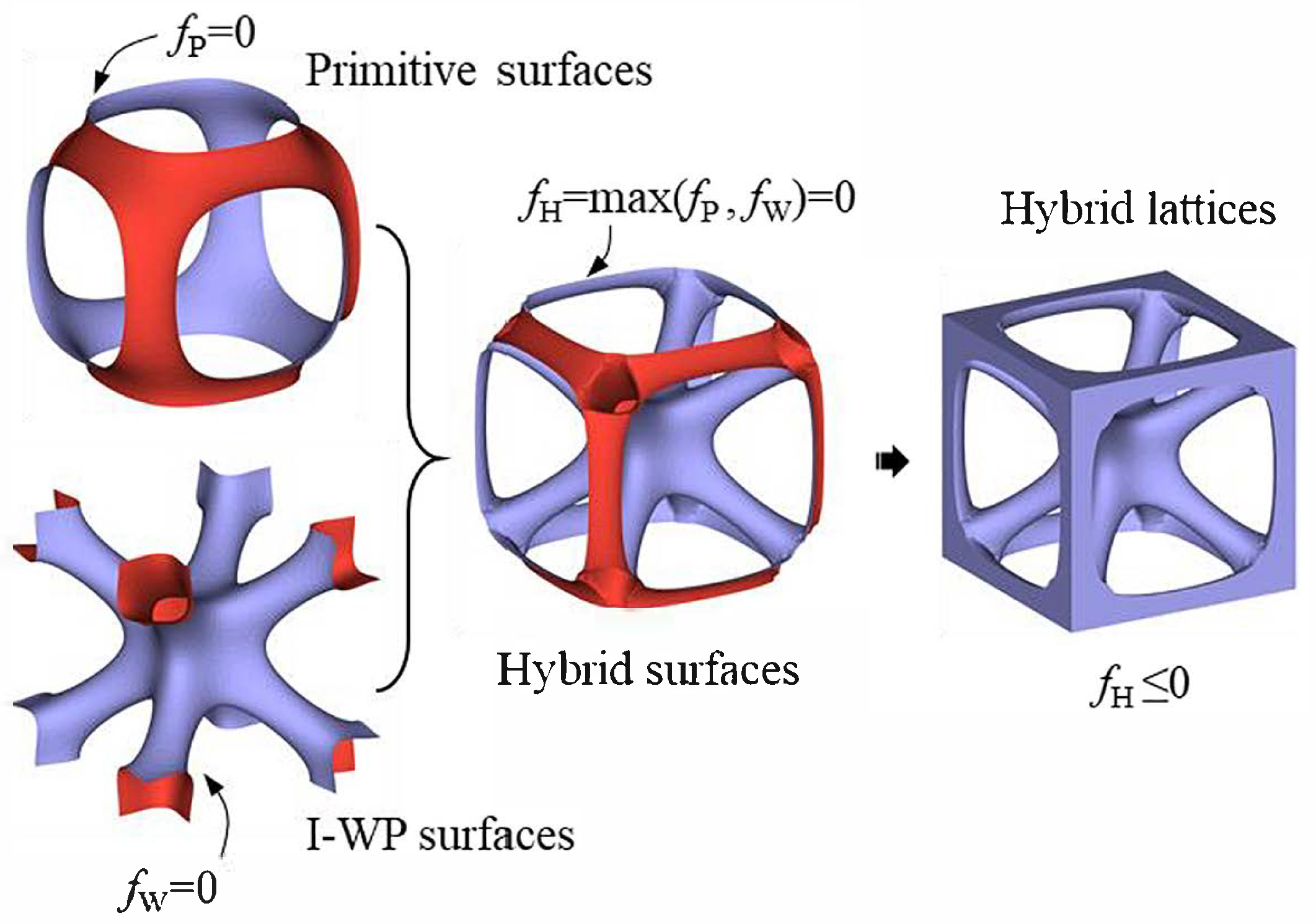
TPMSs are zero–mean-curvature surfaces that exhibit smooth and continuous topological characteristics in design space. These surfaces partition a design domain into two interpenetrating but non-overlapping regions, making them widely adopted as interfaces between solid and void phases in architected lattices. TPMSs can be described using implicit functions. In this study, two representative TPMS topologies were selected, including P and W, as shown in Figure 1. Their corresponding mathematical formulas are as follows:
f P = c o s ( ω x ) + c o s ( ω y ) + c o s ( ω z ) + 0.52 [ cos ω x cos ω y + c o s ( ω y ) c o s ( ω z ) + c o s ( ω z ) c o s ( ω x ) ] + t P = 0
f W = c o s 2 ω x + c o s 2 ω y + c o s 2 ω z 2 [ c o s ω x c o s ω y + c o s ω y c o s ω z + c o s ω z c o s ω x ] + t W = 0
where ω defines the periodic length of the surfaces and t P and t W control the offset of the surfaces, which in turn determine the relative density ρ of the P and W lattices, respectively. As illustrated in Figure 1, the hybrid lattices can be generated by combining the two basic TPMS surfaces using a maximum function:
f H = max f P , f W = 0
The solid domain of the hybrid lattices is defined as f H 0 , as shown in Figure 1. The mechanical responses of the hybrid lattices were dependent on both the relative density and the relative proportions of the constituent sub-lattices. Therefore, a hybrid parameter η was introduced to represent the proportion of the P lattices within the hybrid lattices:
η = ρ P ρ H
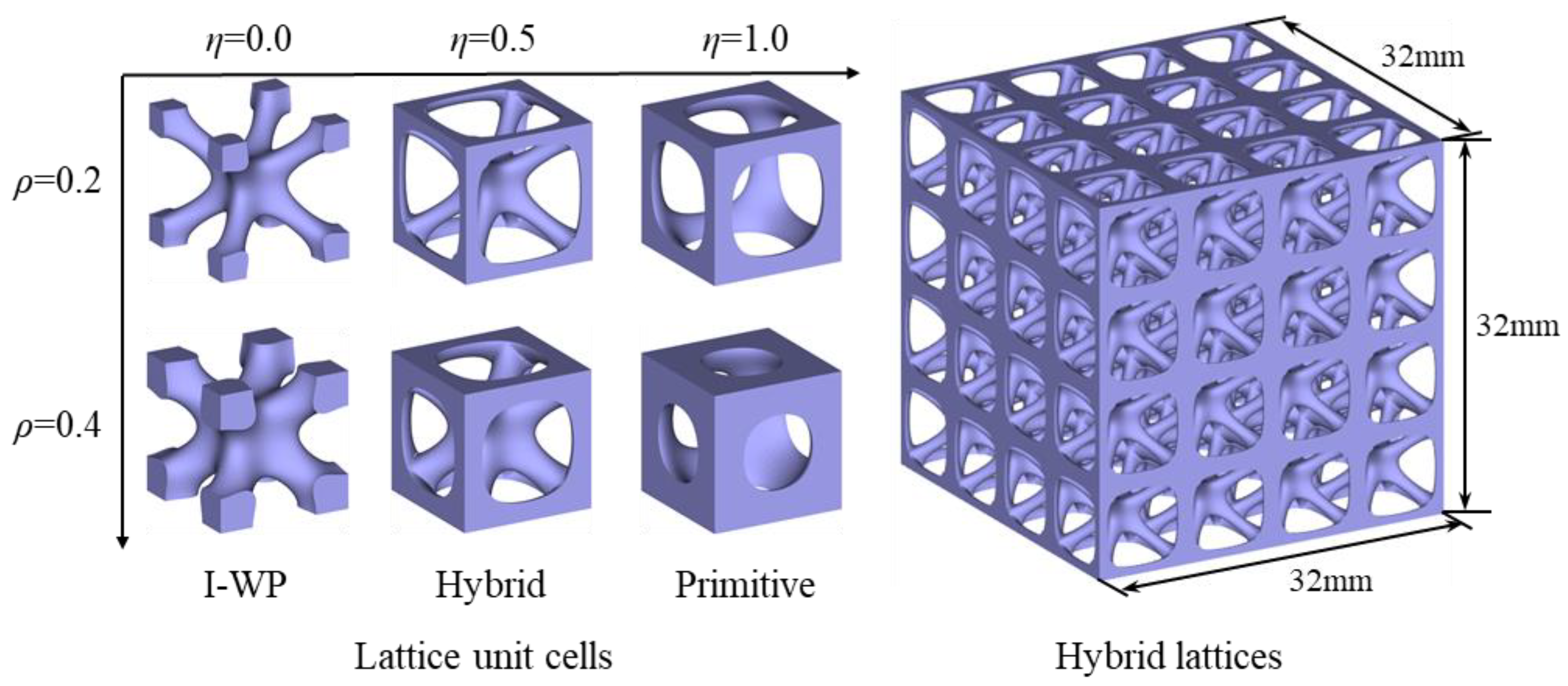
The limiting cases η = 0 and η = 1 correspond to pure W and P lattices, respectively. Figure 2 shows the unit cells with various volume densities ρ and hybrid parameters η .

2.2. Fabrication

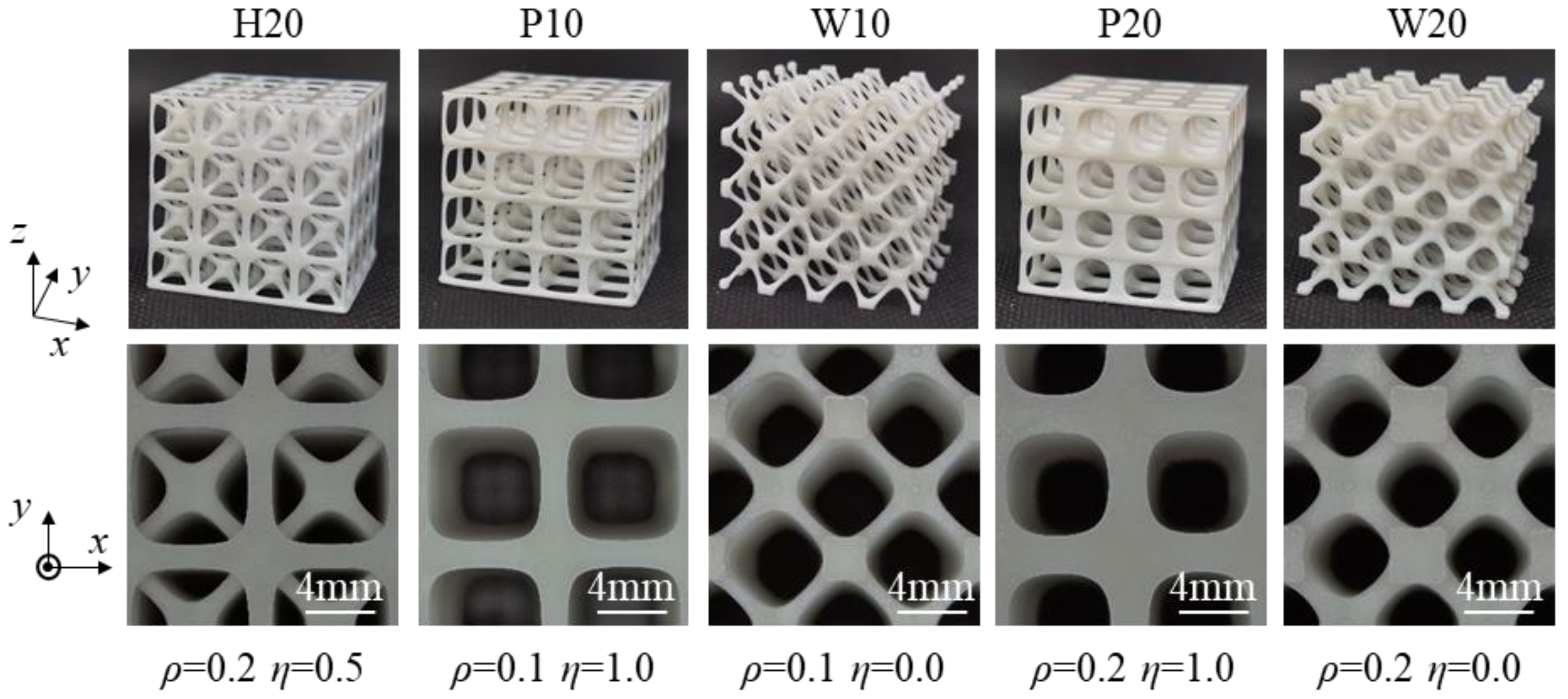
To investigate the mechanical responses of the hybrid lattices, specimens were fabricated via a digital light processing (DLP) printer (Photon Mono M7, Shenzhen Anycubic Technology Co., Ltd., Shenzhen, China) with a rigid photopolymer resin. The design parameters for all lattice samples are listed in Table 1. The sample naming convention uses the letters P, W, and H to denote Primitive, I-Wrapped Package, and hybrid lattices, respectively, while the numerical suffix indicates the relative density expressed as a percentage. The printing parameters were as follows: layer exposure of 1.8 s, layer thickness of 0.05 mm, and light intensity of 5000 μW/cm2. After printing, the samples were cleaned in isopropyl alcohol for 20 min and subsequently post-cured under UV light for 30 min. All lattices were successfully manufactured without visible cracks, as shown in Figure 3. Optical microscopy images further confirmed that the surface morphologies were smooth and continuous.

2.3. Experiment

Compression tests were conducted using a 50 kN testing machine, and two replicate specimens were tested for each lattice configuration. The upper platen was displaced downward at a constant displacement rate of 2 mm/min, while the lower platen remained fixed. The loading direction was parallel to the printing direction. The elastic modulus was obtained from the slope of the linear elastic region of the stress–strain curve. The yield strength was defined as the stress corresponding to 0.2% plastic strain, and the compressive strength was taken as the maximum stress at the onset of structural failure. Deformation and failure processes of the specimens were captured using a camera.

2.4. Simulation

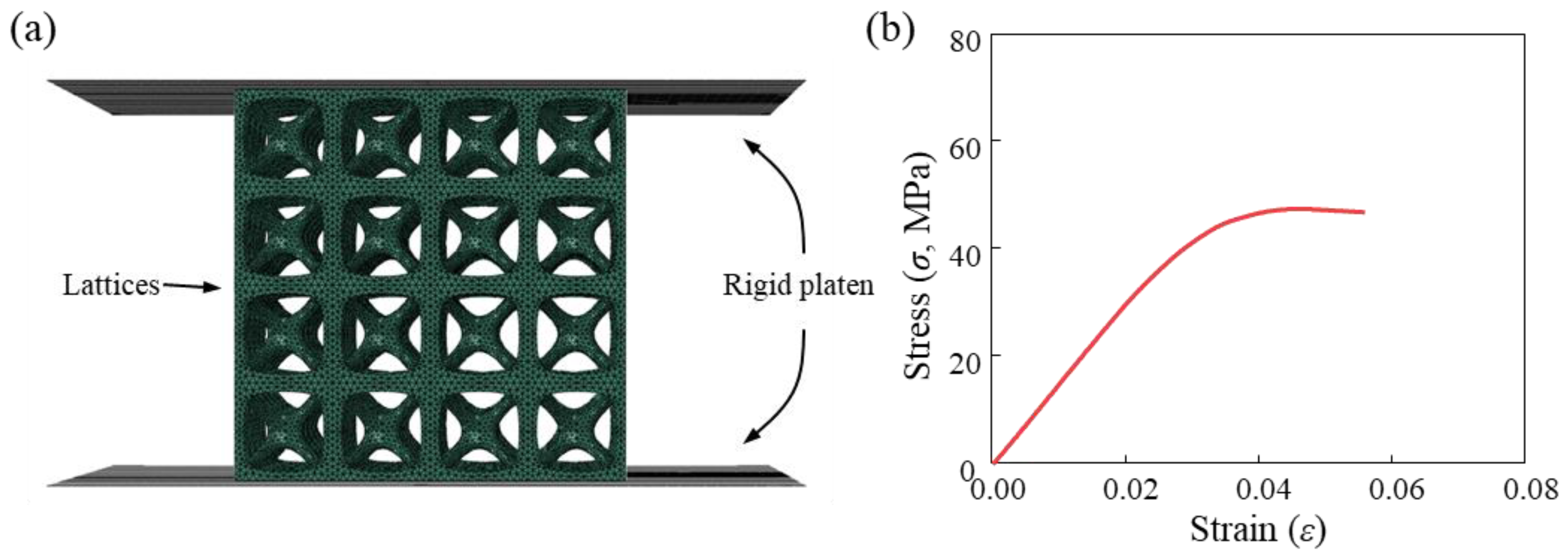
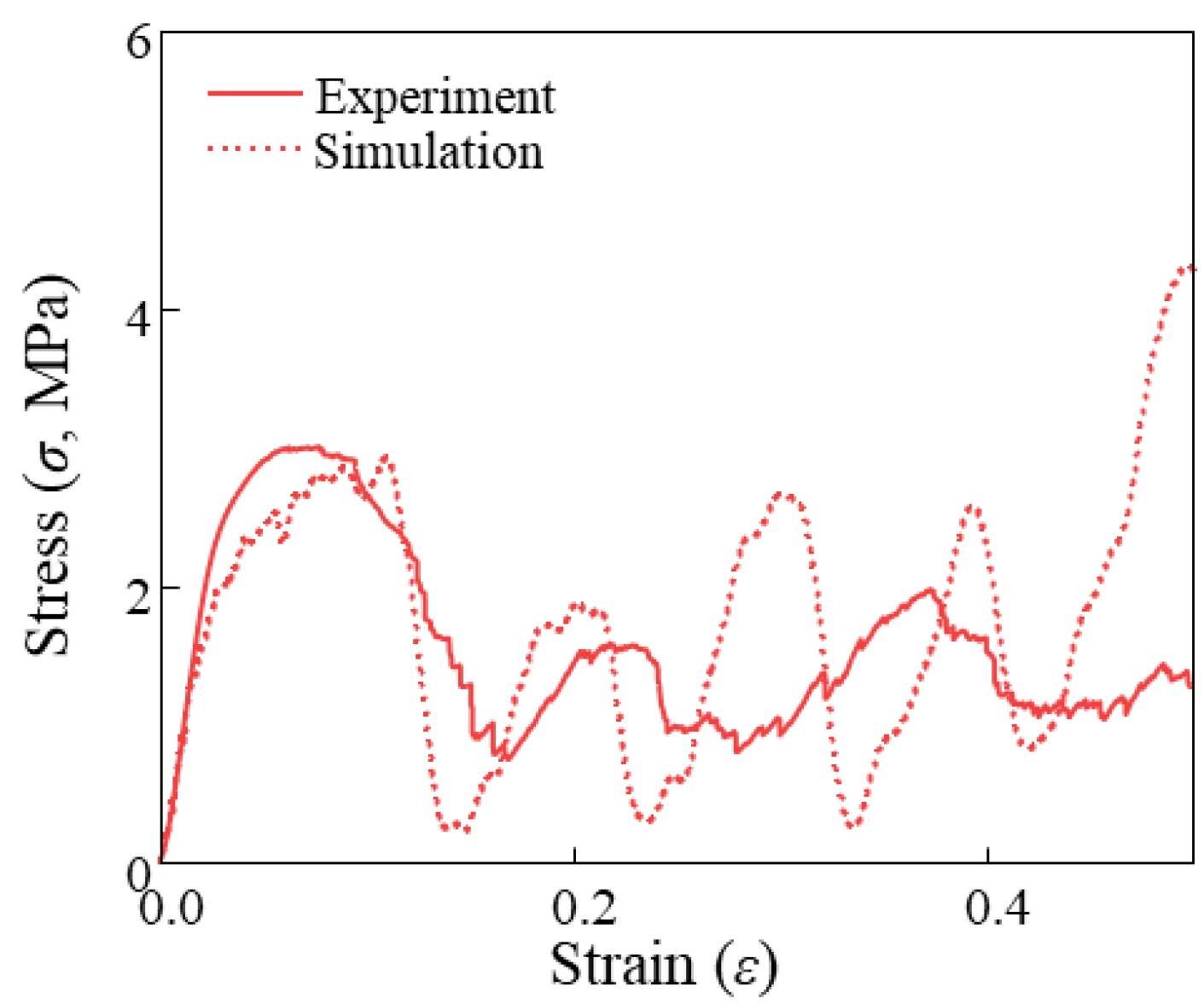
Finite element analyses were performed in Abaqus/Explicit to simulate the mechanical responses of the lattices. As shown in Figure 4a, two rigid platens were applied to the top and bottom of each lattice model, with the upper platen moved downward 16 mm and the lower plate constrained. The global contact with friction coefficient of 0.1 was applied for the whole finite element model. Lattice geometries were discretized using C3D10M tetrahedral elements, and the rigid plates with R3D4 quadrilateral elements. The STL file of lattice model was generated using Marching Cubes algorithm, and the tetrahedral elements were generated from the STL file using Netgen mesh generator NETGEN. Due to the complex geometry of lattices, the size of elements was not a constant. Based on mesh convergence studies, each lattice model contained approximately 600,000 elements. The material parameters were obtained from the tensile test, as shown in Figure 4b. The elastic modulus and yield strength were 1554 MPa and 39.3 MPa, respectively. The experimental and simulated stress–strain curves of H20 lattices are shown in Figure 5. It can be seen that the finite element model primarily captured the overall deformation characteristics of the lattices, particularly the hardening and softening features observed in the stress–strain curves. While good agreement was observed in terms of the overall trend, some deviations in the stress values appeared at higher strain levels. These discrepancies were mainly attributed to fractures occurring in the experimental samples, as well as possible manufacturing imperfections introduced during the printing process.

3. Results and Discussion

3.1. Deformation Behaviors

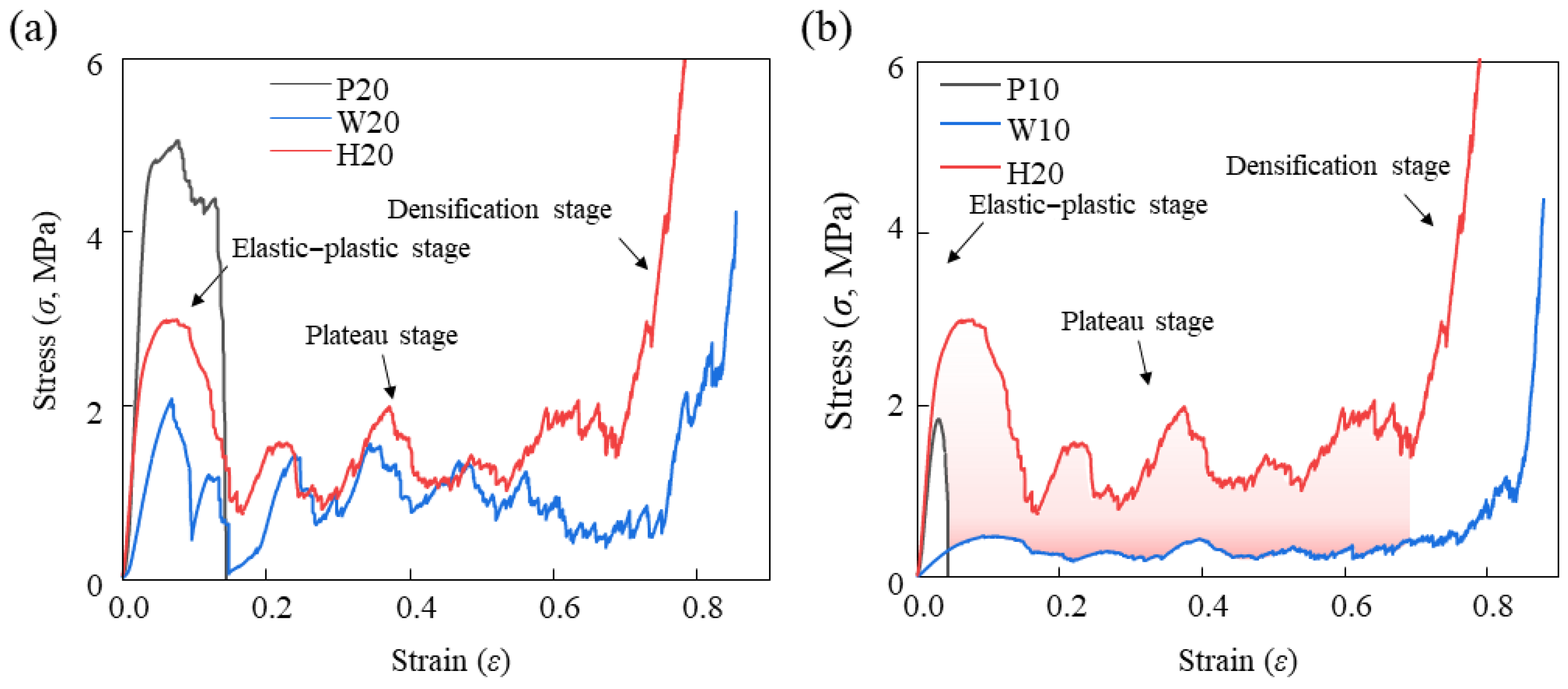
Figure 6 shows the stress–strain curves of the lattices under compression. Figure 6a compares the stress–strain curves of the P20, W20, and H20 lattices with the same relative density of 0.2. All the lattices exhibited three typical deformation stages: elastic–plastic, plateau, and densification, which is similar to previous studies [34,35]. In the elastic–plastic stage, the stress increased rapidly for all the lattices. Following the first peak, each sample experienced a pronounced stress drop and subsequently transitioned into the plateau region. Upon further compaction, the stress rose sharply again, marking the onset of densification.
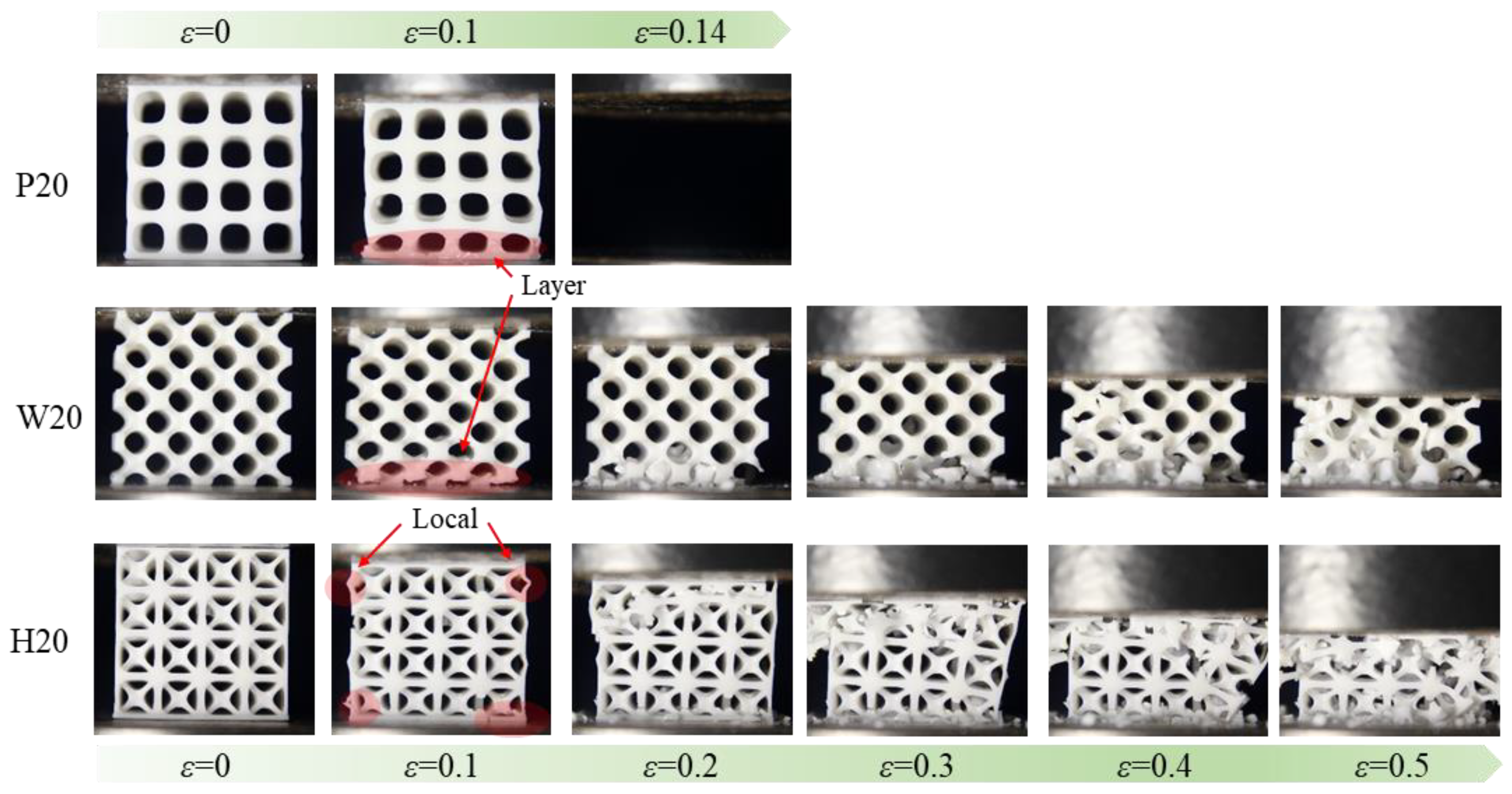
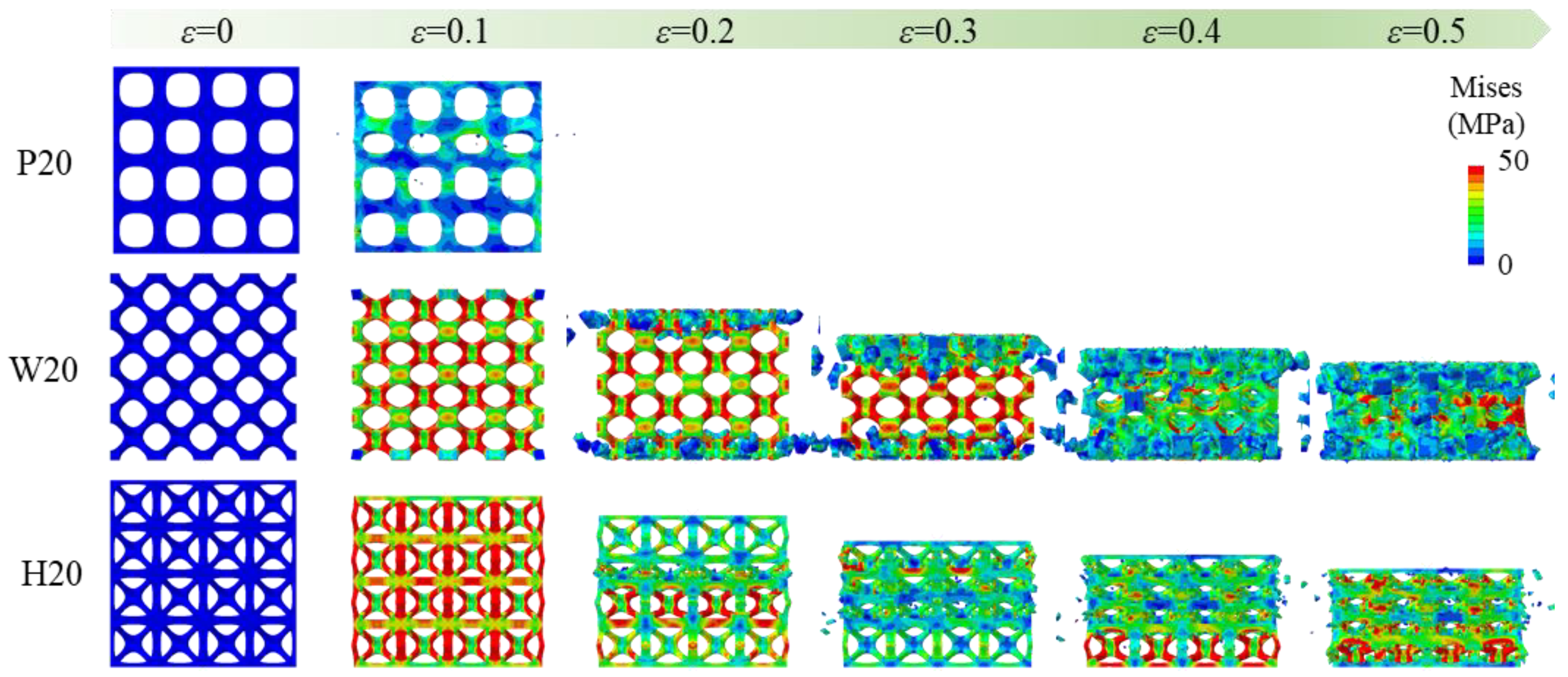
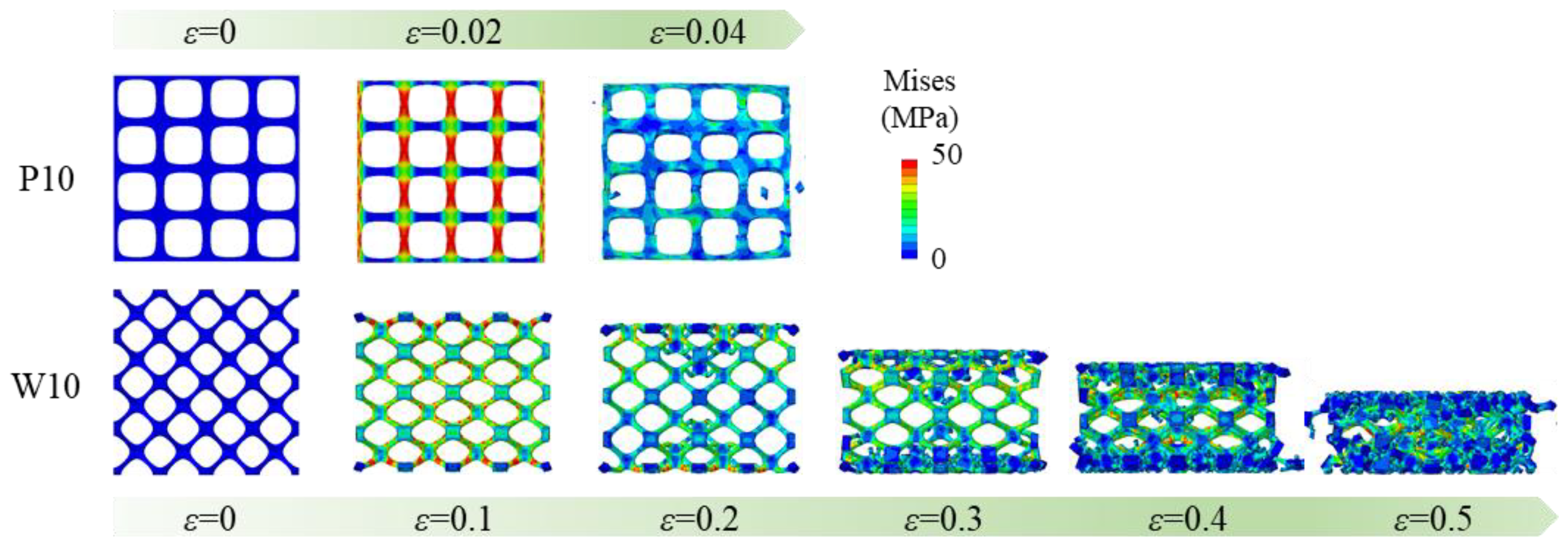
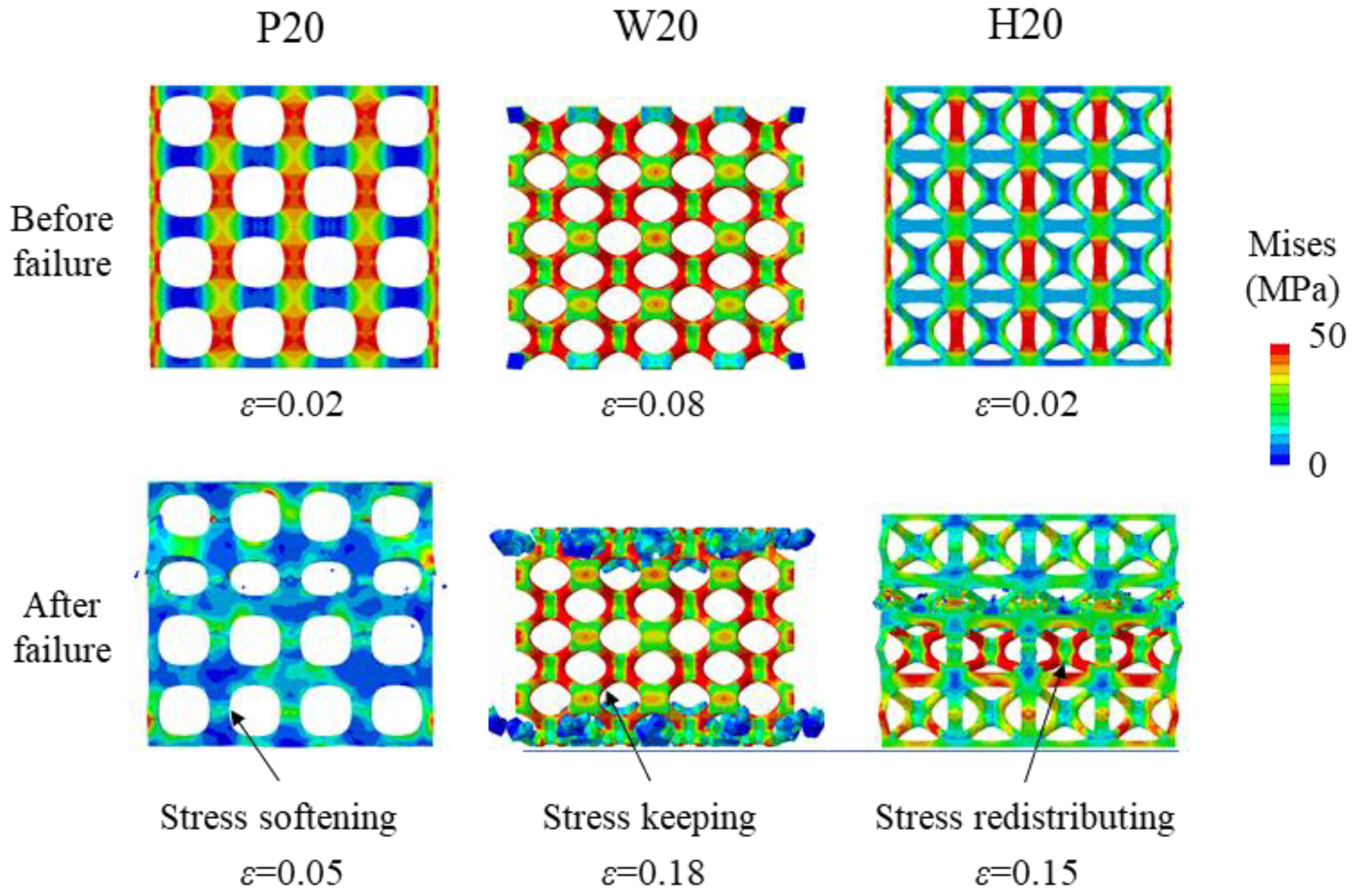
Notably, the densification stage was absent in the P20 lattices. This behavior is mainly attributed to the inherent brittleness of the used photopolymer resin, which caused interlayer fractures and global structural instability immediately after the first peak stress. Consequently, the P20 lattices rapidly lost their load-carrying capability, as shown in Figure 7. Meanwhile, the simulation results also show that the high stress of the P20 lattices was eliminated after the first failure, as illustrated in Figure 8. The low stress means the remaining struts of the P20 lattices had little contribution to load resistance. This failure behavior is due to the stretching-dominated deformation behaviors of P20 lattices. In previous studies, the abrupt layered collapse was also observed in some stretching-dominated lattices [14,36]. During the compression, the P20 lattices experienced catastrophic brittle fracture, causing sudden disintegration and the release of stored elastic energy, which results in the observed stress drop to zero. Although the W20 lattices also experienced interlayer fractures, their decline in load-bearing capacity after the initial collapse was relatively lower than that of the P20 lattices. This difference arises from the bending-dominated deformation mechanism of the W-type topology. The bending of the diagonal struts mitigated the sudden and catastrophic interlayer collapses, and the fractured regions were quickly supported by the remaining structure. As illustrated in Figure 8, after the initial failure, the high stress was located in the struts of the remaining part, and the compressive load was resisted through strut bending. The stress redistribution further enhanced the residual load-bearing performance of the W20 lattices.
For the H20 lattices, the initial failure was highly localized, effectively suppressing the abrupt interlayer collapses observed in the P20 lattices. Consequently, the stress of the H20 lattices only dropped 75.5% after the initial failure. Meanwhile, during the plateau stage, the H20 lattices demonstrated enhanced load-bearing capability owing to the interaction between the embedded P and W sub-lattices. Compared to the W20 lattices, the H20 lattices had higher and more stable stress values in the plateau stage, indicating their superior load-bearing capacity under compression. At 0.2 strain, the high stress regions of the H20 lattices redistributed to the struts of the embedded W lattices, as shown in Figure 8. Therefore, the enhanced load-bearing capability originates from the interaction between the two embedded sub-lattices. When one sub-lattice failed, the deformations were constrained by the other, which redistributed the loads and delayed the subsequent failures.
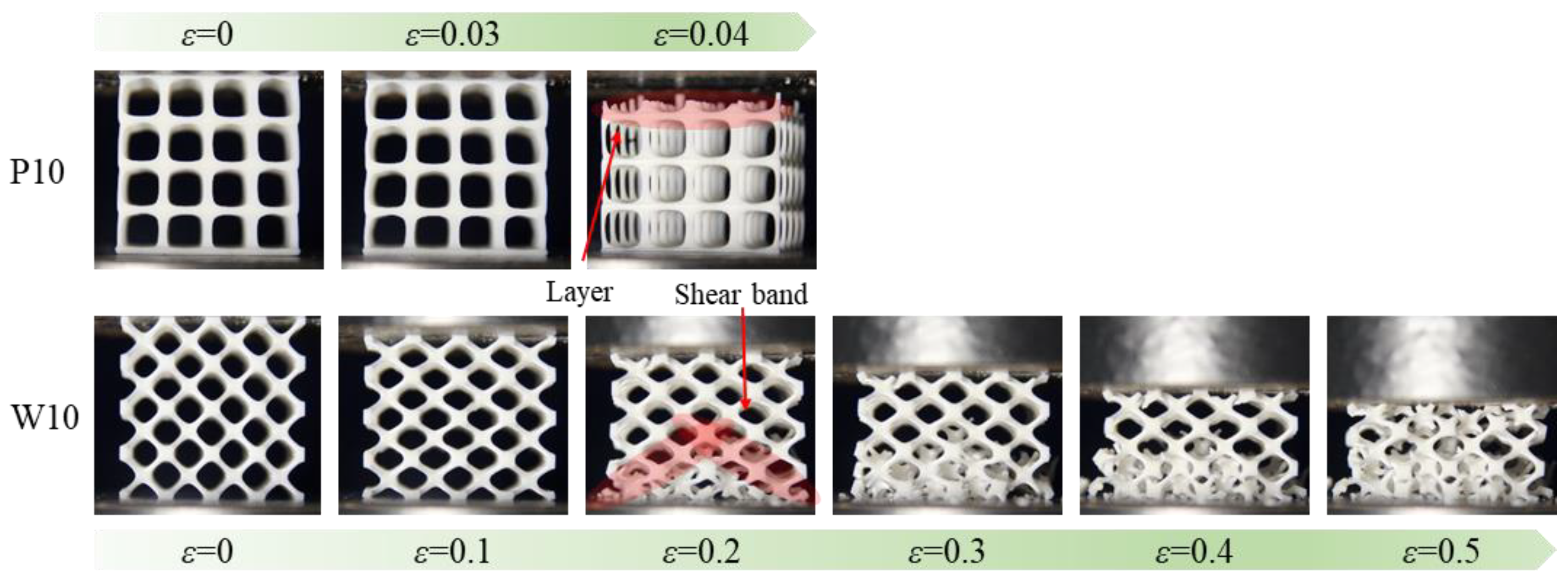
Interestingly, the hybrid design also produced a synergistic strengthening effect. Figure 6b compares the H20 lattices ( ρ = 0.2) with their constituent single-topology lattices of P10 ( ρ = 0.1) and W10 ( ρ = 0.1). The H20 lattices not only inherited the high strength of the P-type lattices and the long plateau of the W-type lattices but also exceeded the linear superposition of their stress–strain curves, achieving a clear ‘1 + 1 > 2’ enhancement. Figure 9 and Figure 10 further show the deformation behaviors of the P10 and W10 lattices. At 0.02 strain, the stresses in the P10 lattices concentrated in the vertical struts aligned with the loading direction, which resulted in high stiffness and strength. However, the P10 lattices underwent a sudden layered failure at 0.04 strain, resulting in a complete loss of load-bearing capacity despite their high stiffness and strength. In contrast, the W10 lattices developed a gradual shear band at approximately 0.2 strain, allowing the remaining parts to continue supporting the load and forming a long plateau. Therefore, for the H20 lattices, these distinct deformation modes cooperated beneficially during the compression process. The outer P-type regions contributed high stiffness and strength during the early stage, while the inner W-type regions provided geometric confinement and structural support after the onset of local failures. This synergistic interaction allowed the hybrid lattices to maintain excellent load-bearing performance throughout the entire compression process.

3.2. Mechanical Properties

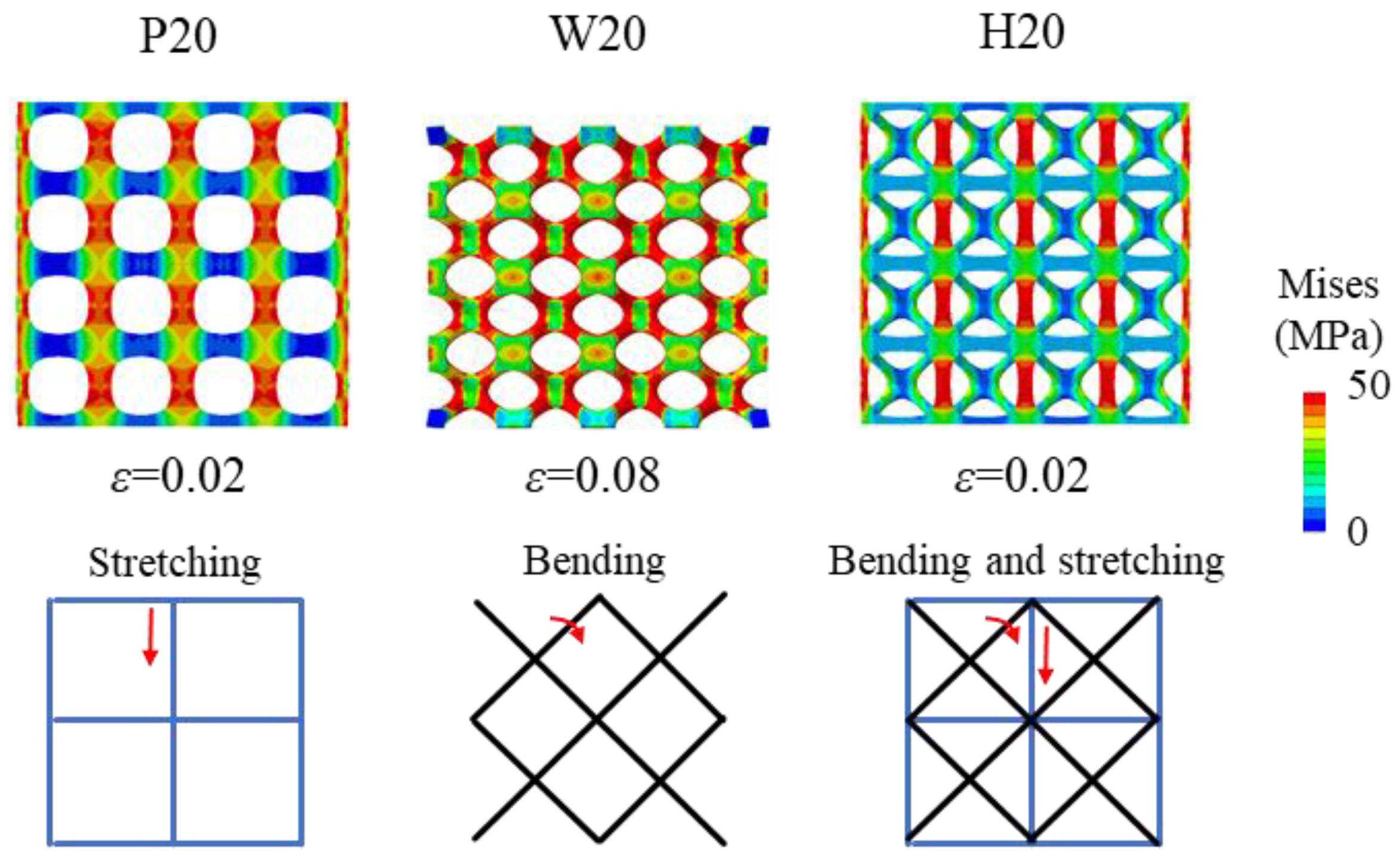
Table 2 summarizes the mechanical properties of the lattices obtained from the experimental stress–strain curves. At the same volume fraction of 0.2, the P-type lattices exhibited significantly higher elastic modulus, yield strength, and compressive strength than the W-type lattices. Specifically, the increases in elastic modulus, yield strength, and compressive strength were 304~1096.3%, 150.2~336.5%, and 158.4~402.7%, respectively. These differences in mechanical properties arose from the distinct deformation mechanisms of P-type and W-type lattices, as shown in Figure 11. P-type lattices belong to the stretch-dominated group, and the high stress distributed at the vertical struts to carry the uniaxial load, resulting in higher stiffness and strength. In contrast, W-type lattices belong to the bending-dominated group, and their struts underwent bending under external loading, leading to lower stiffness and strength. A similar phenomenon, that the stretching-dominated lattices had high mechanical properties, was also reported in Refs. [37,38].
Obviously, the mechanical properties of the H20 lattices lay between those of the P20 and W20 single-type lattices. This is due to the bending and stretching deformation behaviors that simultaneously occurred in the H20 lattices. However, the mechanical properties of the H20 lattices exceeded the combined mechanical properties of their P10 and W10 constituent lattices. Compared with the sum of the mechanical properties of P10 and W10, the elastic modulus, yield strength, and compressive strength of H20 increased by 11.6%, 30.0%, and 34.5%, respectively. The results again confirmed the synergistic strengthening effect discussed in Section 3.1.
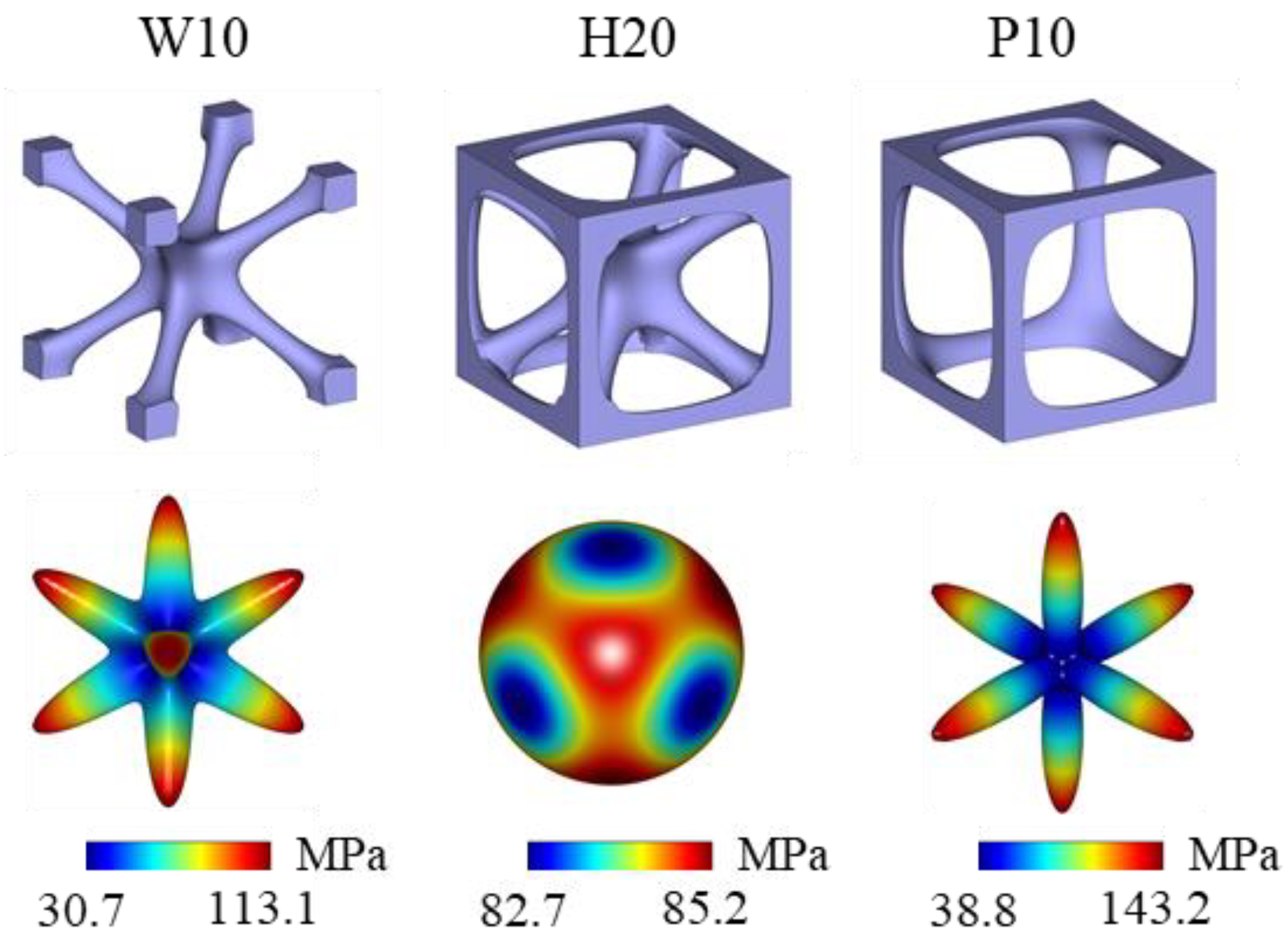
Figure 12 shows the elastic modulus surfaces of the H20 lattices and their constituent P10 and W10 lattices. The elastic modulus surfaces were calculated by using the homogenization approach [39]. For the W10 lattices, the struts were oriented diagonally, resulting in maximum stiffness in these directions and minimum stiffness in the uniaxial directions. Conversely, the P10 lattices exhibited maximum stiffness along the principal axes and minimal stiffness along the diagonals due to their uniaxially aligned struts. Interestingly, the H20 lattices exhibited a nearly isotropic response, effectively eliminating the elastic anisotropy observed in the single-topology lattices. This isotropy arises from the complementary stiffness distributions of the P and W sub-lattices, which combine to balance directional stiffness variations across the hybrid architecture.

3.3. Energy Absorption

Lattices dissipate energy during compression through deformation of their struts. The total absorbed energy was calculated by integrating the engineering stress–strain curves obtained from the experiments:
W = 0 ε 0 σ d ε
where ε 0 is the densification strain, calculated using the energy absorption efficiency method. ε 0 is defined as the strain at the maximum energy absorption efficiency [40].
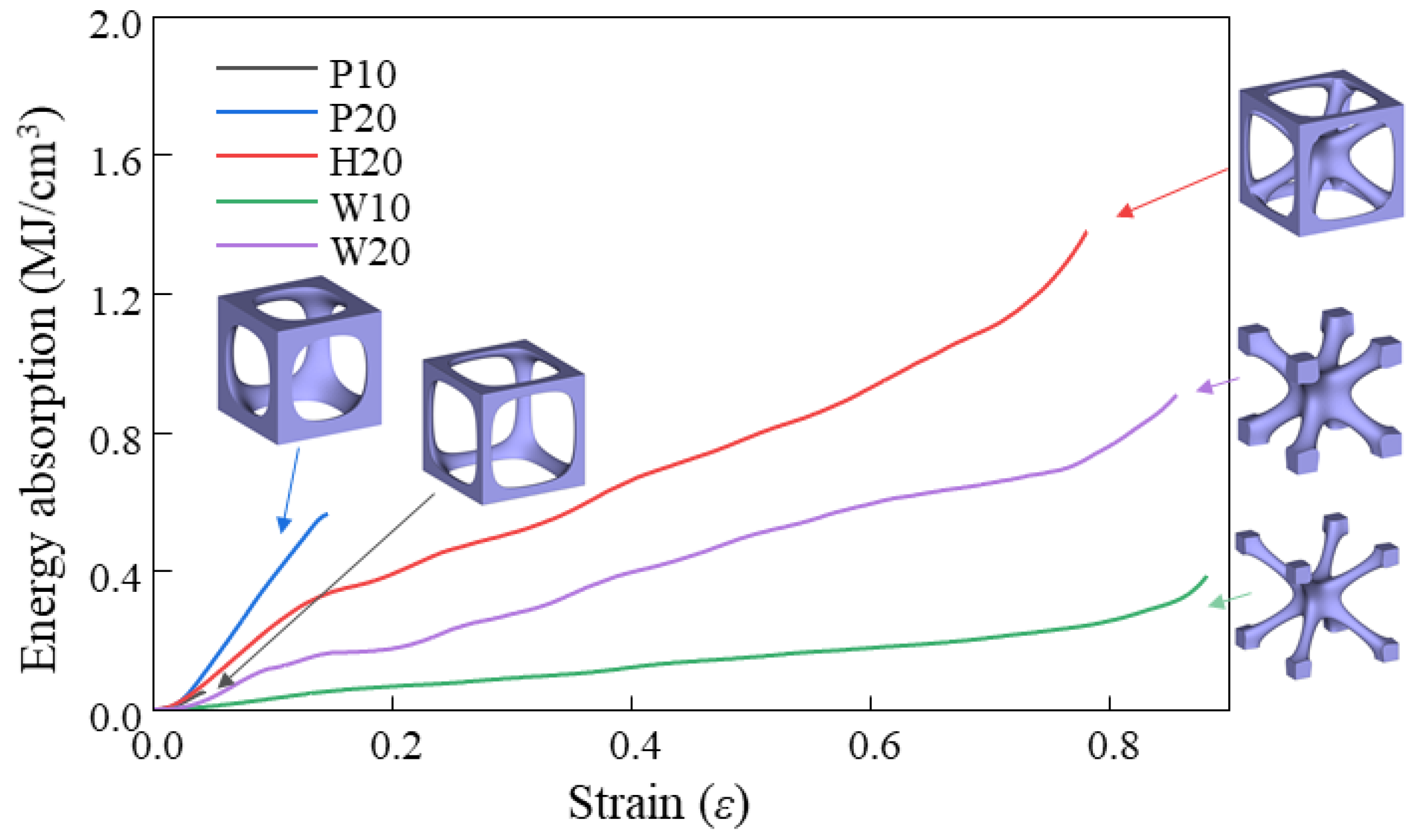
The calculated energy absorption values of the five types of lattices are shown in Table 2. For the single-type lattices, the W-type lattices exhibited higher energy absorption, absorbing 15.1–343.4% more energy than the P-type ones at the same relative density. Figure 13 shows the energy absorption curves of the lattices. During the elastic–plastic stage, the P-type lattices rapidly absorbed a large amount of energy, but their sudden interlayer failure eliminated further load-bearing capability, resulting in the lowest total energy absorption. The stress distributions of the P20, W20, and H20 lattices before and after the initial failure are shown in Figure 14. At the elastic–plastic stage, high stress was distributed on the vertical struts of the P20 lattices, indicating that they absorbed higher energy. Once these struts fractured, the stress rapidly decreased, which means that the whole structure lost its load-bearing capacity and could not absorb further energy. For the W20 lattices, the stress concentrations occurred on the diagonal struts at the elastic–plastic stage, and the lattices absorbed less energy through the bending of the struts. After the initial failure, the stress concentrations still existed on the remaining struts of the W20 lattices, and these struts continued to bear the compressive loads to absorb more energy.
Compared to the P20 and W20 lattices, the H20 lattices exhibited the highest energy absorption capacity, with the total absorbed energy being 85.7% and 61.3% higher, respectively. The superior energy absorption performance of the H20 lattices is primarily attributed to their unique stress distribution and redistribution mechanism. The P-type sub-lattices provided high elastic–plastic properties, while the W-type sub-lattices offered excellent energy absorption capability. As shown in Figure 14, at the early elastic–plastic stage, high stress was mainly distributed on the vertical struts of the H20 lattices. After the initial local failure observed in these areas, the stress was not abruptly released but redistributed to the internal diagonal struts, allowing the whole structure to stably dissipate the energy over a longer strain range. This stress redistribution mechanism provided a high energy absorption capacity for the hybrid lattices. The H20 lattices exhibited a synergistic enhancement effect that surpassed the simple addition of their components. The total energy absorption of H20 was 368% higher than the sum of the P10 and W10 values, achieving a ‘1 + 1 > 2’ synergistic enhancement effect. This synergy arises from the mechanical coupling effect introduced by the hybrid design. The W-type sub-lattices not only contributed to good plastic deformation capacity but also formed geometric constraints on the P-type sub-lattices after the local failures, suppressing the expansion of brittle cracks and preventing global collapse. Therefore, the H20 lattices integrated the deformations of the constituent sub-lattices and amplified the early high load-bearing capability and later long plateau stress of the two types of sub-lattices.
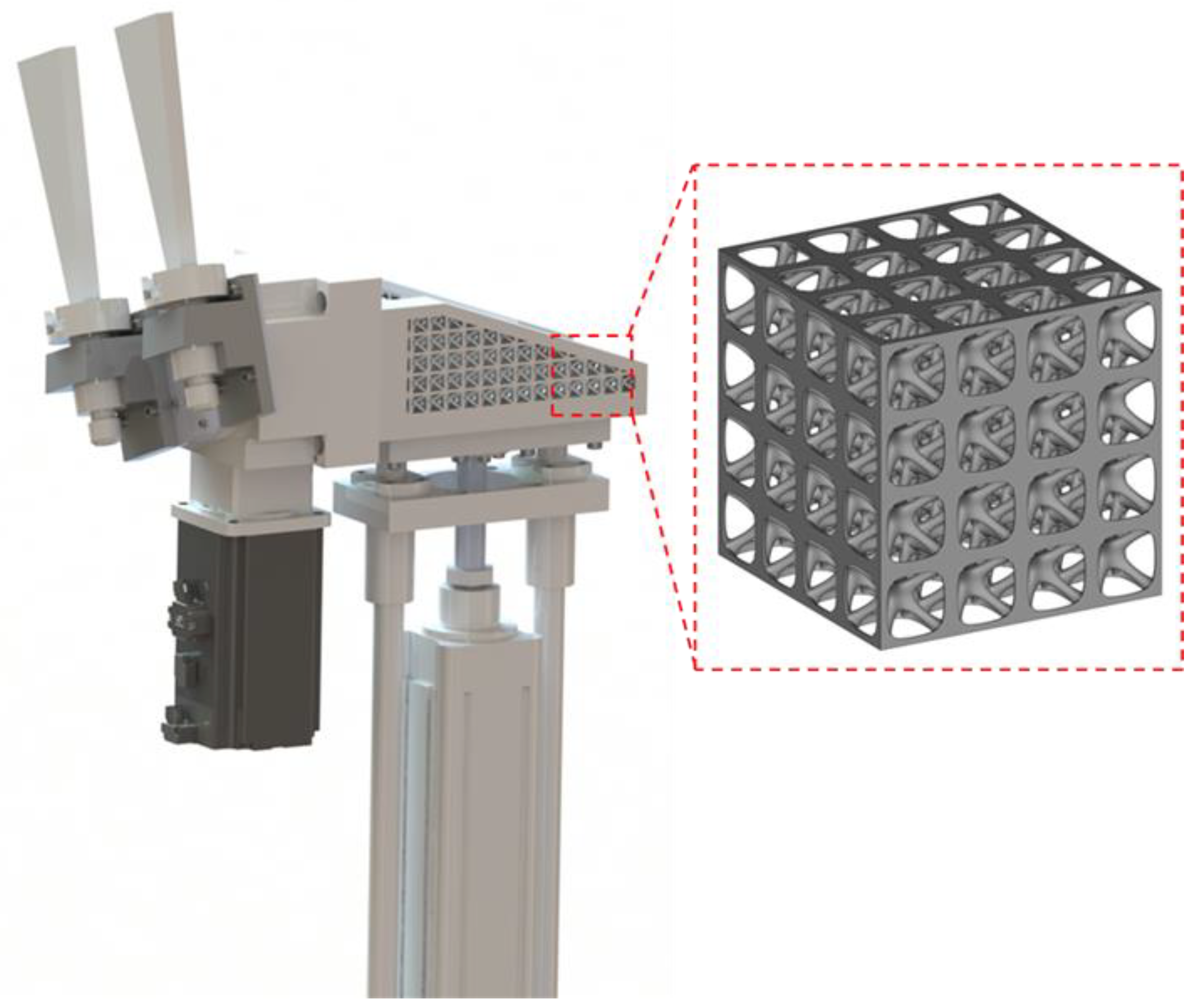
The proposed hybrid lattices have potential applications in robotic components to ensure lightweight characteristics and impact resistance. For example, as shown in Figure 15, the tunnel lamp maintenance robot operates in a confined, unpredictable tunnel environment. The arm of the tunnel lamp maintenance robot should avoid deflection and vibration to ensure the arm can accurately position tools against the lamp surface and maintain stability during operation. Additionally, the arm should absorb the impact energy from accidental collisions with tunnel walls and pipes, thereby protecting both the robot and the infrastructure from damage. Therefore, the proposed hybrid lattices can be filled into the arm component to reduce its weight and enhance its energy absorption.

4. Conclusions

This study designed hybrid lattices composed of P-type and W-type sub-lattices based on the TPMS formula. The hybrid lattices and single-type lattices were successfully fabricated via AM. Their deformation behavior, mechanical properties, and energy absorption characteristics were systematically investigated using compression experiments and simulations. The main conclusions are as follows:
(1) A design method for hybrid lattices based on the TPMS formula was proposed, which mathematically integrated two types of sub-lattices (P and W). A hybrid parameter was introduced to continuously control the geometry of the lattices.
(2) Under compression, the H20 lattices exhibited localized initial failure followed by stress redistribution. This mechanism effectively prevented the brittle interlayer collapse of the P-type sub-lattices and enabled a high load-bearing capacity even after the initial failure.
(3) The H20 lattices provided a synergistic enhancement effect of ‘1 + 1 > 2’ on the mechanical properties that surpassed the sum of their P10 and W10 sub-lattices. Compared with the combined response of the P10 and W10 lattices, the elastic modulus, yield strength, and compressive strength increased by 11.6%, 30.0%, and 34.5%, respectively. In addition, the homogenization analysis indicated that the hybrid design significantly reduced the elastic anisotropy compared with the single-type lattices.
(4) The H20 lattices achieved the highest energy absorption capability among all the samples studied. Their total energy absorption exceeded the linear combination of P10 and W10 by 368% and surpassed that of P20 and W20 by 85.7% and 61.3%, respectively. This enhancement was due to the synergistic deformations and stress redistribution mechanisms.
This study proposes a novel class of hybrid lattices composed of two types of sub-lattices. The hybrid lattices exhibit enhanced energy absorption. However, these lattice samples are made of rigid photopolymer resin, and only quasi-static mechanical responses are investigated. Future work will investigate the effects of bulk materials (ductile or brittle materials) on the energy absorption of hybrid lattices, and the dynamic mechanical responses and fatigue properties will be also evaluated. Additionally, a machine learning approach can be applied to predict and optimize the energy absorption of hybrid lattices.

Author Contributions

Conceptualization, J.X., S.W. and Z.Y. (Zhe Yang); methodology, J.X., Z.Y. (Zhe Yang), and Z.Y. (Zhentao Yang); software, J.X. and W.L.; validation, S.W., W.L. and Y.Z.; formal analysis, H.L. and Z.Y. (Zhentao Yang); investigation, J.X., S.W., Z.Y. (Zhe Yang), W.L., Y.Z., and H.L.; writing—original draft preparation, J.X., S.W. and Z.Y. (Zhe Yang); writing—review and editing, Z.Y. (Zhe Yang), W.L., Y.Z., and Z.Y. (Zhentao Yang); visualization, J.X., Y.Z., and Z.Y. (Zhentao Yang); supervision, Z.Y. (Zhe Yang); project administration, Z.Y. (Zhe Yang); funding acquisition, Z.Y. (Zhe Yang). All authors have read and agreed to the published version of the manuscript.

Funding

This research was funded by the Fujian Provincial Transportation Science and Technology Project (Grant No. ZH202316).

Data Availability Statement

The raw data supporting the conclusions of this article will be made available on request.

Conflicts of Interest

Jiangping Xie was employed by Fujian Sanming Expressway Co.; Shaofeng Wu was employed by Fujian Expressway Science and Technology Innovation Research Institute Co.; Zhe Yang, Wenfeng Li, Yunteng Zhou and Huahua Liang were employed by China Merchants Chongqing Communications Technology Research & Design Institute Co. The remaining authors declare that the research was conducted in the absence of any commercial or financial relationships that could be construed as a potential conflict of interest.

References

  1. Perez-Garcia, C.; Zaera, R.; Aranda-Ruiz, J.; Bordiga, G.; Risso, G.; Lopez-Donaire, M.L.; Bertoldi, K.; Garcia-Gonzalez, D. Reprogrammable Mechanical Metamaterials via Passive and Active Magnetic Interactions. Adv. Mater. 2025, 37, e2412353. [Google Scholar] [CrossRef]
  2. Zheng, Z.; Yu, J.; Yu, W.; Xiao, J.; Liang, X. Simulation study of compressive mechanical properties of spheroidal cytosolic lattice structures. Mech. Adv. Mater. Struct. 2024, 32, 1912–1923. [Google Scholar] [CrossRef]
  3. Wang, P.; Yang, F.; Zheng, B.; Li, P.; Wang, R.; Li, Y.; Fan, H.; Li, X. Breaking the Tradeoffs Between Different Mechanical Properties in Bioinspired Hierarchical Lattice Metamaterials. Adv. Funct. Mater. 2023, 33, 2305978. [Google Scholar] [CrossRef]
  4. Noronha, J.; Dash, J.; Rogers, J.; Leary, M.; Brandt, M.; Qian, M. Titanium Multi-Topology Metamaterials with Exceptional Strength. Adv. Mater. 2024, 36, e2308715. [Google Scholar] [CrossRef] [PubMed]
  5. Sha, W.; Hu, R.; Xiao, M.; Chu, S.; Zhu, Z.; Qiu, C.-W.; Gao, L. Topology-optimized thermal metamaterials traversing full-parameter anisotropic space. npj Comput. Mater. 2022, 8, 179. [Google Scholar] [CrossRef]
  6. Wang, X.; Li, X.; Li, Z.; Wang, Z.; Zhai, W. Superior Strength, Toughness, and Damage-Tolerance Observed in Microlattices of Aperiodic Unit Cells. Small 2024, 20, e2307369. [Google Scholar] [CrossRef]
  7. Ding, L.; Zhang, D.; Yang, H.; Dong, J.; Liao, B. Curve beam for strengthening the negative Poisson’s ratio effect of rotating auxetic metamaterial: Experiments and simulations. Mater. Today Commun. 2024, 38, 107810. [Google Scholar]
  8. Zhao, M.; Cui, J.; Chen, L.; Jin, K.; Zeng, Z. Enhanced mechanical properties and energy absorption of lattice metamaterials inspired by crystal imperfections. Compos. Struct. 2025, 356, 118894. [Google Scholar] [CrossRef]
  9. Chen, X.; Liao, W.; Wei, H.; Zhu, Z.; Yang, T.; Zhang, C.; Liu, T. Formation mechanisms and control strategies of metallurgical defects and microstructures during laser powder bed fusion of AlSi10Mg lattice structures. J. Mater. Res. Technol. 2024, 28, 139–153. [Google Scholar]
  10. Al-Ketan, O.; Lee, D.W.; Rowshan, R.; Abu Al-Rub, R.K. Functionally graded and multi-morphology sheet TPMS lattices: Design, manufacturing, and mechanical properties. J. Mech. Behav. Biomed. Mater. 2020, 102, 103520. [Google Scholar] [CrossRef]
  11. Liu, F.; Tang, Y.; Xie, H.; Zhao, M.; Ren, Z.; Wang, X.; Chen, J. Strengthening mechanisms of minimal surface lattices with CT deviation. Int. J. Mech. Sci. 2023, 240, 107932. [Google Scholar] [CrossRef]
  12. Wan, M.; Hu, D.; Zhang, H.; Pi, B.; Ye, X. Crashworthiness study of tubular lattice structures based on triply periodic minimal surfaces under quasi-static axial crushing. Compos. Struct. 2024, 327, 117703. [Google Scholar]
  13. Lin, D.; Zhang, C.; Chen, X.; Wang, N.; Yang, L. TPMS_Scaffold_Generator: A Scaffold-Structure Generator Based on Triply Periodic Minimal Surfaces. Addit. Manuf. Front. 2024, 3, 200123. [Google Scholar]
  14. Zhang, X.; Zhao, M.; Li, X.; Tian, C.; Su, F.; Peng, B.; Zeng, Z. Novel hierarchical interpenetrating lattice metamaterials with superior energy absorption. Eng. Struct. 2025, 345, 121549. [Google Scholar] [CrossRef]
  15. Al-Ketan, O.; Rowshan, R.; Abu Al-Rub, R.K. Topology-mechanical property relationship of 3D printed strut, skeletal, and sheet based periodic metallic cellular materials. Addit. Manuf. 2018, 19, 167–183. [Google Scholar] [CrossRef]
  16. Zhao, M.; Zhang, D.Z.; Li, Z.; Zhang, T.; Zhou, H.; Ren, Z. Design, mechanical properties, and optimization of BCC lattice structures with taper struts. Compos. Struct. 2022, 295, 115830. [Google Scholar] [CrossRef]
  17. Viswanath, A.; Khalil, M.; Al Maskari, F.; Cantwell, W.J.; Khan, K.A. Harnessing buckling response to design lattice structures with improved buckling strength. Mater. Des. 2023, 232, 112113. [Google Scholar] [CrossRef]
  18. Zhang, Q.; Li, B.; Zhou, S.; Luo, M.; Han, F.; Chai, C.; Wang, J.; Yang, X. Superior energy absorption characteristics of additively-manufactured hollow-walled lattices. Int. J. Mech. Sci. 2024, 264, 108834. [Google Scholar]
  19. Lee, S.; Zhang, Z.; Gu, G.X. Generative machine learning algorithm for lattice structures with superior mechanical properties. Mater. Horiz. 2022, 9, 952–960. [Google Scholar] [CrossRef]
  20. Zhang, Z.; Song, B.; Fan, J.; Wang, X.; Wei, S.; Fang, R.; Zhang, X.; Shi, Y. Design and 3D Printing of Graded Bionic Metamaterial Inspired by Pomelo Peel for High Energy Absorption. Chin. J. Mech. Eng. Addit. Manuf. Front. 2023, 2, 100068. [Google Scholar] [CrossRef]
  21. Niknam, H.; Akbarzadeh, A.H. Graded lattice structures: Simultaneous enhancement in stiffness and energy absorption. Mater. Des. 2020, 196, 109129. [Google Scholar] [CrossRef]
  22. Plocher, J.; Panesar, A. Effect of density and unit cell size grading on the stiffness and energy absorption of short fibre-reinforced functionally graded lattice structures. Addit. Manuf. 2020, 33, 101171. [Google Scholar] [CrossRef]
  23. Zhao, M.; Zhang, D.Z.; Liu, F.; Li, Z.; Ma, Z.; Ren, Z. Mechanical and energy absorption characteristics of additively manufactured functionally graded sheet lattice structures with minimal surfaces. Int. J. Mech. Sci. 2020, 167, 105262. [Google Scholar] [CrossRef]
  24. Schneider, J.; Ebert, M.; Tipireddy, R.; Krishnamurthy, V.R.; Akleman, E.; Kumar, S. Concurrent geometrico-topological tuning of nanoengineered auxetic lattices fabricated by material extrusion for enhancing multifunctionality: Multiscale experiments, finite element modeling and data-driven prediction. Addit. Manuf. 2024, 88, 104213. [Google Scholar]
  25. Meier, T.; Li, R.; Mavrikos, S.; Blankenship, B.; Vangelatos, Z.; Yildizdag, M.E.; Grigoropoulos, C.P. Obtaining auxetic and isotropic metamaterials in counterintuitive design spaces: An automated optimization approach and experimental characterization. npj Comput. Mater. 2024, 10, 3. [Google Scholar] [CrossRef]
  26. Zhao, M.; Li, X.; Yan, X.; Zhou, N.; Pang, B.; Peng, B.; Zeng, Z. Machine learning accelerated design of lattice metamaterials for customizable energy absorption. Thin-Walled Struct. 2025, 208, 112845. [Google Scholar] [CrossRef]
  27. Vangelatos, Z.; Yildizdag, M.E.; Grigoropoulos, C.P. A designer’s challenge: Unraveling the architected structure of deep sea sponges for lattice mechanical metamaterials. Extrem. Mech. Lett. 2023, 61, 102013. [Google Scholar]
  28. Zhang, Z.; Zhang, L.; Song, B.; Yao, Y.; Shi, Y. Bamboo-inspired, simulation-guided design and 3D printing of light-weight and high-strength mechanical metamaterials. Appl. Mater. Today 2022, 26, 101268. [Google Scholar]
  29. Zhao, M.; Li, X.; Zhang, D.Z.; Zhai, W. Geometry effect on mechanical properties and elastic isotropy optimization of bamboo-inspired lattice structures. Addit. Manuf. 2023, 64, 103438. [Google Scholar] [CrossRef]
  30. Wang, L.; Tong, Z.; Song, F.; Yin, W.; Wang, L.; Miao, K.; Li, D. Controllable Energy Absorption Design and 3D Printing of High Energy Absorbing Biomimetic Double-Layer Impact-Resistant Structure. Addit. Manuf. Front. 2025, 4, 200193. [Google Scholar]
  31. Ozdemir, M.; Simsek, U.; Kiziltas, G.; Gayir, C.E.; Celik, A.; Sendur, P. A novel design framework for generating functionally graded multi-morphology lattices via hybrid optimization and blending methods. Addit. Manuf. 2023, 70, 103560. [Google Scholar] [CrossRef]
  32. Li, X.; Yu, X.; Zhao, M.; Li, Z.; Wang, Z.; Zhai, W. Multi-Level Bioinspired Microlattice with Broadband Sound-Absorption Capabilities and Deformation-Tolerant Compressive Response. Adv. Funct. Mater. 2023, 33, 2210160. [Google Scholar]
  33. Zhang, J.; Xie, S.; Li, T.; Liu, Z.; Zheng, S.; Zhou, H. A study of multi-stage energy absorption characteristics of hybrid sheet TPMS lattices. Thin-Walled Struct. 2023, 190, 110989. [Google Scholar] [CrossRef]
  34. Choy, S.Y.; Sun, C.-N.; Leong, K.F.; Wei, J. Compressive properties of Ti-6Al-4V lattice structures fabricated by selective laser melting: Design, orientation and density. Addit. Manuf. 2017, 16, 213–224. [Google Scholar]
  35. Sharma, D.; Hiremath, S.S. Bio-inspired repeatable lattice structures for energy absorption: Experimental and finite element study. Compos. Struct. 2022, 283, 115102. [Google Scholar] [CrossRef]
  36. Kantaros, A.; Chatzidai, N.; Karalekas, D. 3D printing-assisted design of scaffold structures. Int. J. Adv. Manuf. Technol. 2015, 82, 559–571. [Google Scholar] [CrossRef]
  37. Altamimi, S.; Lee, D.-W.; Barsoum, I.; Rowshan, R.; Jasiuk, I.M.; Abu Al-Rub, R.K. On Stiffness, Strength, Anisotropy, and Buckling of 30 Strut-Based Lattices with Cubic Crystal Structures. Adv. Eng. Mater. 2022, 24, 2101379. [Google Scholar] [CrossRef]
  38. Maskery, I.; Ashcroft, I.A. The deformation and elastic anisotropy of a new gyroid-based honeycomb made by laser sintering. Addit. Manuf. 2020, 36, 101548. [Google Scholar] [CrossRef]
  39. Zhao, M.; Li, X.; Zhang, D.Z.; Zhai, W. Design, mechanical properties and optimization of lattice structures with hollow prismatic struts. Int. J. Mech. Sci. 2023, 238, 107842. [Google Scholar]
  40. Maskery, I.; Aboulkhair, N.T.; Aremu, A.O.; Tuck, C.J.; Ashcroft, I.A.; Wildman, R.D.; Hague, R.J.M. A mechanical property evaluation of graded density Al-Si10-Mg lattice structures manufactured by selective laser melting. Mater. Sci. Eng. A 2016, 670, 264–274. [Google Scholar]
Figure 1. Schematic illustration of hybrid lattices.
Jcs 10 00150 g001
Figure 2. Lattices with different hybrid parameters and volume fractions.
Jcs 10 00150 g002
Figure 3. The fabricated samples with different design parameters.
Jcs 10 00150 g003
Figure 4. (a) Finite element model of lattices. (b) Stress–strain curve of standard resin obtained from the tensile test.
Jcs 10 00150 g004
Figure 5. Experimental and simulated stress–strain curves of H20 lattices.
Jcs 10 00150 g005
Figure 6. Stress–strain curves of lattices obtained from experiments: (a) P20, W20, and H20; (b) P10, W10, and H20.
Jcs 10 00150 g006
Figure 7. Deformation behaviors of P20, W20, and H20 lattices.
Jcs 10 00150 g007
Figure 8. Simulated deformation behaviors of P20, W20, and H20 lattices.
Jcs 10 00150 g008
Figure 9. Deformation behaviors of P10 and W10 lattices.
Jcs 10 00150 g009
Figure 10. Simulated deformation behaviors of P10 and W10 lattices.
Jcs 10 00150 g010
Figure 11. Deformation mechanisms of P20, W20, and H20 lattices.
Jcs 10 00150 g011
Figure 12. Elastic modulus surfaces of P10, W10, and H20 lattices.
Jcs 10 00150 g012
Figure 13. Energy absorption curves of five lattices obtained from experiments.
Jcs 10 00150 g013
Figure 14. Stress distribution of P20, W20, and H20 lattices before and after the initial failure.
Jcs 10 00150 g014
Figure 15. Potential applications of hybrid lattices for tunnel lamp maintenance robot.
Jcs 10 00150 g015
Table 1. Design parameters of lattice samples.
SampleType Relative   Density ,   ρ Hybrid   Parameter ,   η Unit Cell SizeOverall Size
W10I-WP0.108 mm32 mm × 32 mm × 32 mm
P10Primitive0.11
H20Hybrid0.20.5
W20I-WP0.20
P20Primitive0.21
Table 2. Mechanical properties of lattices obtained from experiments.
SampleElastic Modulus
(MPa)
Yield Strength
(MPa)
Compressive Strength
(MPa)
Energy Absorption
(MJ/cm3)
P1072.98 ± 0.141.79 ± 0.011.81 ± 0.010.046 ± 0.003
W106.10 ± 0.670.41 ± 0.070.36 ± 0.040.204 ± 0.039
H2088.27 ± 1.152.86 ± 0.072.92 ± 0.081.107 ± 0.044
P20151.31 ± 0.534.78 ± 0.055.04 ± 0.020.596 ± 0.046
W2037.45 ± 1.931.91 ± 0.091.95 ± 0.130.686 ± 0.032
Disclaimer/Publisher’s Note: The statements, opinions and data contained in all publications are solely those of the individual author(s) and contributor(s) and not of MDPI and/or the editor(s). MDPI and/or the editor(s) disclaim responsibility for any injury to people or property resulting from any ideas, methods, instructions or products referred to in the content.