Article

Manufacturing of Banana Fiber-Reinforced Bidirectional Fabric with UPR Matrix by Vacuum-Assisted Resin Transfer Molding


by
Juan Altamiranda Suárez
1,*,
Oswaldo Rivero-Romero
2,
Luis Armando Espitia Sanjuán
1 and
Jimy Unfried-Silgado
1
1
ICT Research Group, Department of Mechanical Engineering, University of Córdoba, Montería 230002, Colombia
2
Research Group CCComposite, Mechanical Engineering Department, University of Antioquia, Medellin 050001, Colombia
*
Author to whom correspondence should be addressed.
J. Compos. Sci. 2026, 10(3), 149; https://doi.org/10.3390/jcs10030149
Submission received: 21 October 2025 / Revised: 17 November 2025 / Accepted: 1 December 2025 / Published: 9 March 2026

Abstract

This study explores the use of banana pseudostem fibers from Córdoba, Colombia, as reinforcement in polymer composites manufactured through vacuum-assisted resin transfer molding (VARTM). The fibers were decorticated, oven-dried at 40 °C, and subjected to mercerization and epoxy coating treatments. Plain-weave fabrics were produced using continuous yarns composed of 10 and 15 fibers, both treated and untreated. Experimental analyses included pull-out tests, thermogravimetric analysis, fourier-transform infrared spectroscopy, winding speed, surface twist angle, and tensile strength tests for yarns, as well as tensile load, adhesion, and permeability tests for fabrics and tensile and flexural strength tests for composites. Treated yarns exhibited a slight increase in diameter and a lower extraction (25%) compared to untreated yarns (33%). Although treated fabrics showed enhanced permeability and improved resin infiltration, untreated fabrics demonstrated superior mechanical performance, with a tensile load of 2.33 kN in comparison to 1.37 kN for treated yarns. The highest tensile strength of 76.56 MPa was achieved in composites reinforced with three layers of untreated fabric, while the best flexural strength of 86.93 MPa was observed in single-layer composites with the same configuration. These results emphasize the potential of untreated banana fiber fabrics as promising reinforcement in structural composite applications.

1. Introduction

The orientation and configuration of fibers, whether unidirectional or bidirectional, play a critical role in determining the mechanical performance of natural fiber-reinforced composites [1]. Bidirectional fabrics enable uniform load distribution across multiple directions, making them particularly suitable for advanced structural applications in sectors such as aerospace and energy storage [2]. Conversely, unidirectional fabrics are advantageous when loads are applied along a single direction, optimizing stiffness and tensile performance [3]. Furthermore, chemical treatments such as mercerization can enhance fiber–matrix interactions. However, recent studies suggest that untreated natural fibers may outperform treated ones in certain matrices, particularly epoxy, due to superior surface compatibility [4].
Despite the relevance of these microstructural factors to composite performance, it is also essential to consider the availability and valorization potential of plant fiber sources. Banana production reached 135 million tons globally in 2022, representing an 8% increase over 2021, with an average yield of 23 tons per hectare [4]. In Colombia, production grew by 2% in 2023, totaling 2.6 million tons, with the department of Córdoba contributing significantly through approximately 29,152 hectares under cultivation [5]. Nevertheless, up to 85% of banana biomass—primarily pseudostems, leaves, and rachis—is discarded, posing environmental risks due to pathogen exposure [5]. Circular economy strategies offer a sustainable alternative by valorizing this biomass into plant fibers suitable for composite manufacturing [6]. A green pseudostem of ~40 kg contains approximately 3% fiber, yielding around 1.2 kg per unit [7]. With planting densities of 1111–1280 plants/ha, fiber yields can reach up to 1.5 tons/ha, providing opportunities for agro-industrial development and small-scale agriculture.
This availability and valorization potential has driven growing interest in developing banana fiber-based biocomposites [7,8]. Consequently, this fiber has emerged as a sustainable alternative to synthetic fiber-based systems [8]. Biocomposites fabricated via vacuum-assisted resin transfer molding (VARTM) using unidirectional banana fiber fabrics have demonstrated notable improvements in mechanical properties, including a 160% increase in flexural strength and a 217% increase in tensile strength compared to manually laminated composites [9]. In [10], it was shown that drying banana fibers at 90 °C improves their mechanical properties by removing non-cellulosic materials and reducing lignin content. Finer fibers (148–250 μm) exhibited higher tensile strength and stiffness, confirming their potential as reinforcement in polymer matrices.
Despite these advances, significant limitations remain in characterizing fabrication processes and reinforcement architectures. Somasundaram et al. [11] reported enhanced mechanical performance in polyester composites reinforced with cassava cellulose and banana fiber fabric using manual lamination, achieving a tensile strength of 137.3 MPa and contact angles exceeding 70°, suitable for industrial and aerospace applications. Nevertheless, the use of VARTM in banana fiber-based composites remains limited, representing only 4% of reported processes. Manual lamination with compression is the most common method, used in 30% of cases, followed by vacuum bagging and cold curing, at 14% and 12%, respectively [12].
Although studies exist on banana fibers subjected to infusion processes, the recent literature indicates that most focus on discontinuous fibers, nonwoven mats, or simple fabrics, whereas systematic studies on the mechanical behavior of woven fabrics produced specifically from banana pseudostems for VARTM remain scarce [13,14]. Moreover, various reviews highlight that variations in fiber quality, fabric type, and permeability conditions during infusion represent critical factors that are not yet adequately characterized for lignocellulosic fibers [15,16]. This clearly evidences a gap in the comprehensive understanding of: (i) fabric design; (ii) fiber treatments; (iii) VARTM process efficiency, particularly in unsaturated polyester matrices.
Given the performance and sustainability potential of banana fibers, this study aims to develop fabrics from banana pseudostem fibers for use as reinforcement in unsaturated polyester resin (UPR) composites via the VARTM process. This work provides relevant experimental evidence by comparatively evaluating the influence of fiber treatment and fabric architecture on the tensile and flexural performance of the composites, directly addressing the identified literature gap and reinforcing the viability of these reinforcements for advanced manufacturing applications.

2. Materials and Methods

2.1. Raw Material Procurement

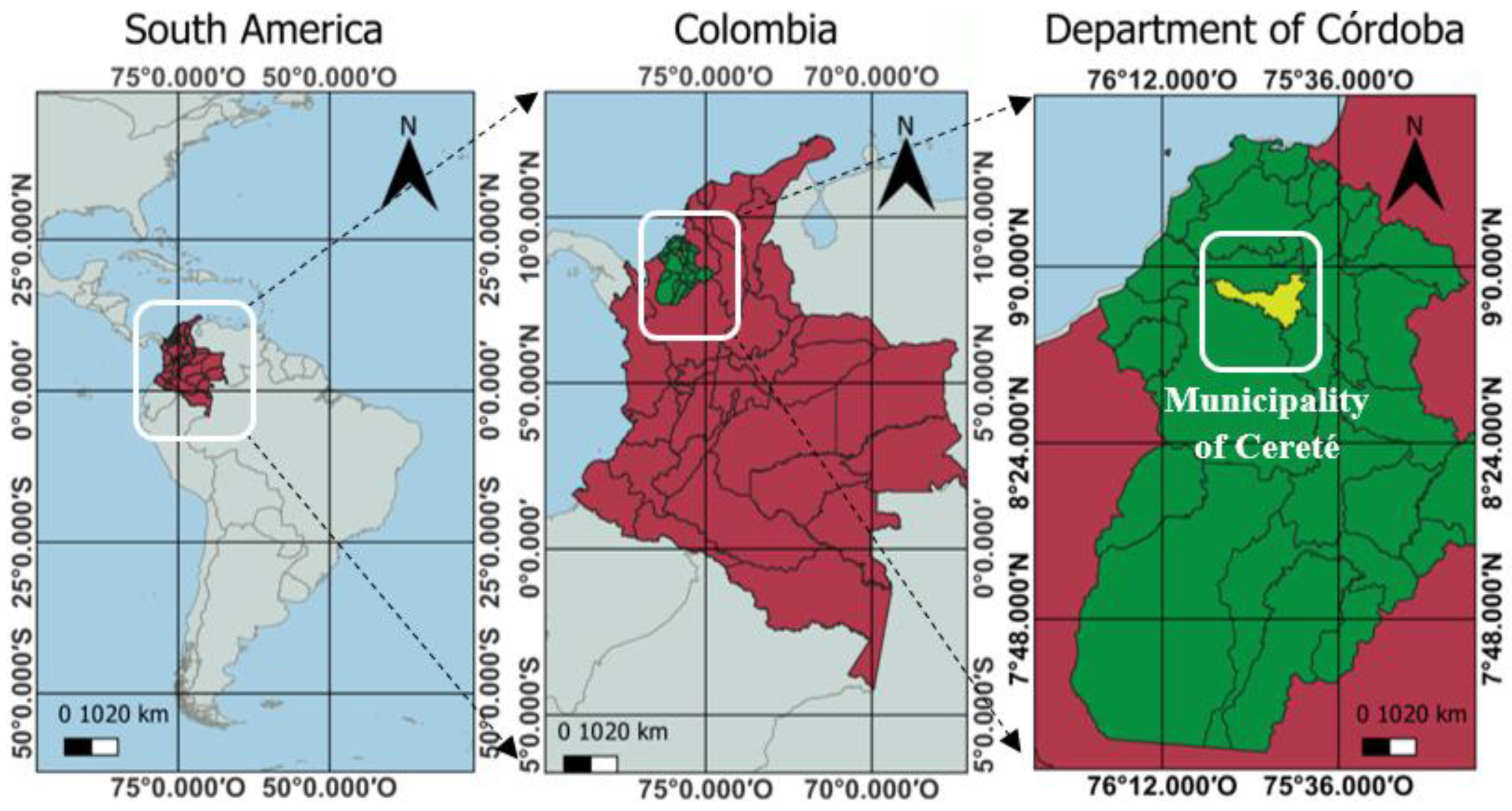
Banana pseudostems were collected from the post-harvest residues of the Hartón variety. The collection took place in the township of Retiro de los Indios, located in the municipality of Cereté, department of Córdoba, at coordinates 8°86′60.71″ N 75°82′47.2″ W (8.86071, −75.82472), according to geolocation data from QGIS (QGIS.org Association, Zürich, Switzerland) (see Figure 1).
In this study, a semi-mechanical fiber production method was employed, which was an adaptation of the Loenit method involving the use of a comb to extract the fibers [10,17]. The extraction process of banana fiber is illustrated in Figure S1 in Section S1 of the Supplementary Materials.

2.2. Chemical Treatment and Coating Application

The mercerization process was conducted by immersing the fibers in a 5% NaOH solution at room temperature for one hour, with periodic agitation to ensure uniform treatment. Subsequently, the fibers were washed with 50% acetic acid and rinsed with distilled water. For the coating, a flexible epoxy resin was used in a 1:1 ratio with its hardener. Given the need to coat long lengths of yarn for fabric production, manual application of the resin was chosen.

2.3. Effect of Winding Speed on the Surface Twist Angle

In this study, four winding speed conditions were analyzed, 180 rpm, 250 rpm, 320 rpm, and 390 rpm, along with two treatment conditions, untreated fibers (UTs) and treated fibers (Ts), as shown in Table S1 of the Supplementary Materials. A digital tachometer model KLX-DT-2234C (KLX, São Paulo, Brazil) was employed to accurately measure the winding speeds, ensuring compliance with the designated parameters. The twist angles were measured using optical microscopy (Motic, Xiamen, China). It is important to note that the spinning device had a maximum rotational speed of 390 rpm.

2.4. Effect of Winding Speed on Tensile Properties

For the tensile testing of banana pseudostem yarns an alternative methodology was utilized, developed by the Polymer Laboratory at the Metropolitan Institute of Medellín. This technique is accredited under ISO 17025 [18] and follows the ASTM D3822-07 [19] standard for tensile property evaluation.

2.5. Fiber Pull-Out Test

This test aimed to evaluate the effect of surface treatments on the interfacial adhesion of banana yarns embedded in unsaturated polyester resin. The experimental setup considered the matrix type and surface treatment condition. Tests were performed using a Shimadzu® EZ Test texture analyzer at AGROSAVIA (Kyoto, Japan), with a 100 N load capacity and 0.001 N precision. The fiber was fixed in the upper grip and the polymeric matrix in the lower one. Pull-out tests were conducted at 5 mm/min and 23 °C, with force–displacement data recorded via RheoMeter® software (version 1.3, Anton Paar GmbH, Graz, Austria).

2.6. Contact Angle Measurement

Untreated fiber, mercerized fiber, mercerized-coated fiber, untreated yarn, and treated yarn samples were tested to evaluate contact angle behavior. For each condition, 7 samples were analyzed, totaling 35 measurements. The tests were performed using droplets of flexible epoxy resin with hardener (coating) and polyester resin with organic peroxide (matrix).

2.7. Fourier-Transform Infrared Spectroscopy Method (FTIR)

This spectroscopy analysis was conducted under a controlled atmosphere at 27 °C and 47% relative humidity. A Shimadzu IRTracer-100 spectrometer (Kyoto, Japan) equipped with a Specac ATR Quest accessory in attenuated total reflectance (ATR) mode was used for the measurements, employing a ZnSe crystal. The device is capable of measuring transmittance (%T) and performs 32 scans per sample with a minimum resolution of 4 cm−1, covering a wavelength range from 4000 to 500 cm−1.

2.8. Experimental Calculation of Unidirectional Permeability

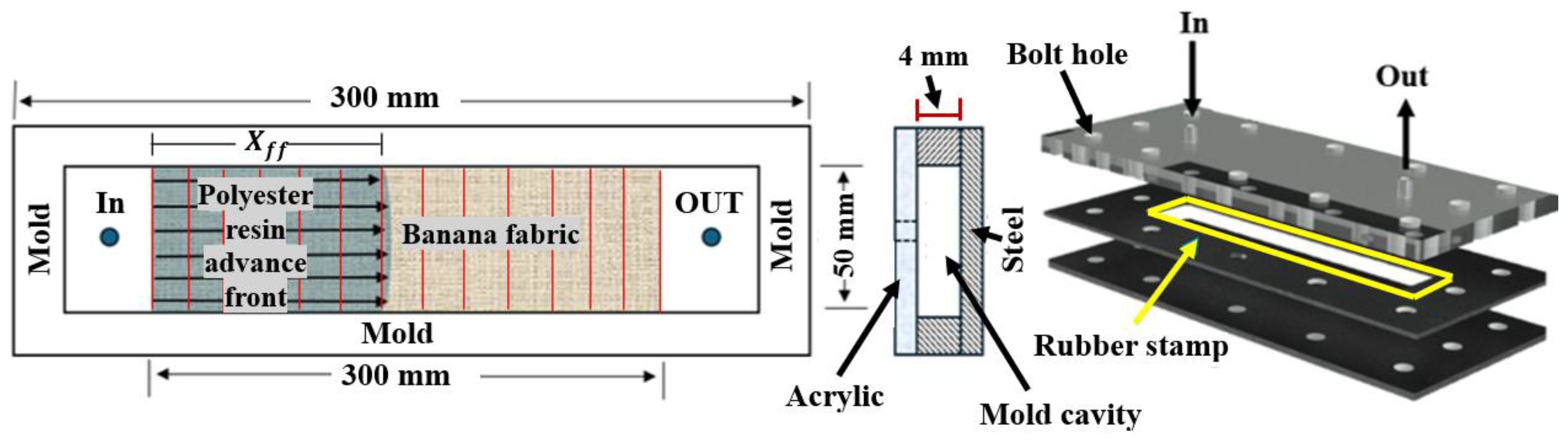
To experimentally estimate this permeability a custom experimental setup was designed, adapted from the study by the authors of [20]. This adaptation was implemented according to the established conditions for permeability measurement under constant-pressure unidirectional injection. The mold used for unidirectional permeability estimation was employed to fabricate the composites (see Figure 2). This process enables the production of panels measuring 50 mm in width, 200 mm in length, and 3.2 mm in thickness. The procedure followed was based on the method described by the authors of [20]. It is assumed that the advancing front is perpendicular to the longitudinal axis of the preform. Therefore, by integrating Darcy’s Law for a given time, the permeability in the measured direction is determined [20].
If the square of the advancing front position ( X f f ) is plotted against time for the recorded position–time pairs, a linear trend can be observed with a slope denoted by the letter “m.” Using Equation (1), the slope “m” of the line, and the known injection pressure, the experimental permeability in that direction can be calculated as:
K e x p = X f f 2 μ 2 P i n j m

2.9. Tensile Testing of Fabrics

The tests were conducted on an MTS Criterion® testing machine (MTS Systems Corporation, Eden Prairie, MN, USA) with a 300 kN load cell. Data collection included the displacement of the moving head, force, and time. The testing speed was 300 ± 10 mm/min (12 ± 0.5 in/min) following ASTM D5034 [21], and sandpaper tabs were used to ensure proper grip of the clamps. The results were reported in accordance with ASTM D5034 [21], which requires the average breaking force of the tested samples to be documented [22].

2.10. Adhesion Test

The adhesion tests were conducted on an MTS Criterion® testing machine (MTS Systems Corporation, Eden Prairie, MN, USA). Data collection included the displacement of the moving head, force, and time. The testing speed was 100 ± 10 mm/min, and the sample dimensions were 75 mm in width and 200 mm in length, in accordance with ISO 2411 [23].

2.11. Manufacturing of the Composite Material by VARTM

After the tensile, permeability, and adhesion tests on the fabrics, the composite material was manufactured using 1 and 3 layers of banana pseudostem fiber fabric (with and without treatment) to reinforce a polyester resin matrix. Due to the thickness of the preform consisting of three fabric layers, pressing was required to fit it into the mold, whereas single-layer preforms did not require this step (Figure S2 in the Supplementary Materials).

2.12. Tensile and Flexural Tests

Tensile tests were conducted for each composite material configuration following ASTM D3039 [24], while three-point flexural tests were performed according to ASTM D790 [25]. Specimens with an unreinforced matrix were evaluated as a control variable. Both tensile and flexural tests were carried out using an MTS Criterion® testing machine (MTS Systems Corporation, Eden Prairie, MN, USA). In the tensile and flexural tests, five treatments were considered: control (unsaturated polyester resin without reinforcement), 10 fibers–1 layer, 10 fibers–3 layers, 15 fibers–1 layer, and 15 fibers–3 layers. Each treatment included five specimens per test type, resulting in a total of 25 runs for the tensile tests and 25 runs for the flexural tests.

3. Results and Discussion

3.1. Manufacturing of Chemically Treated and Coated Yarns

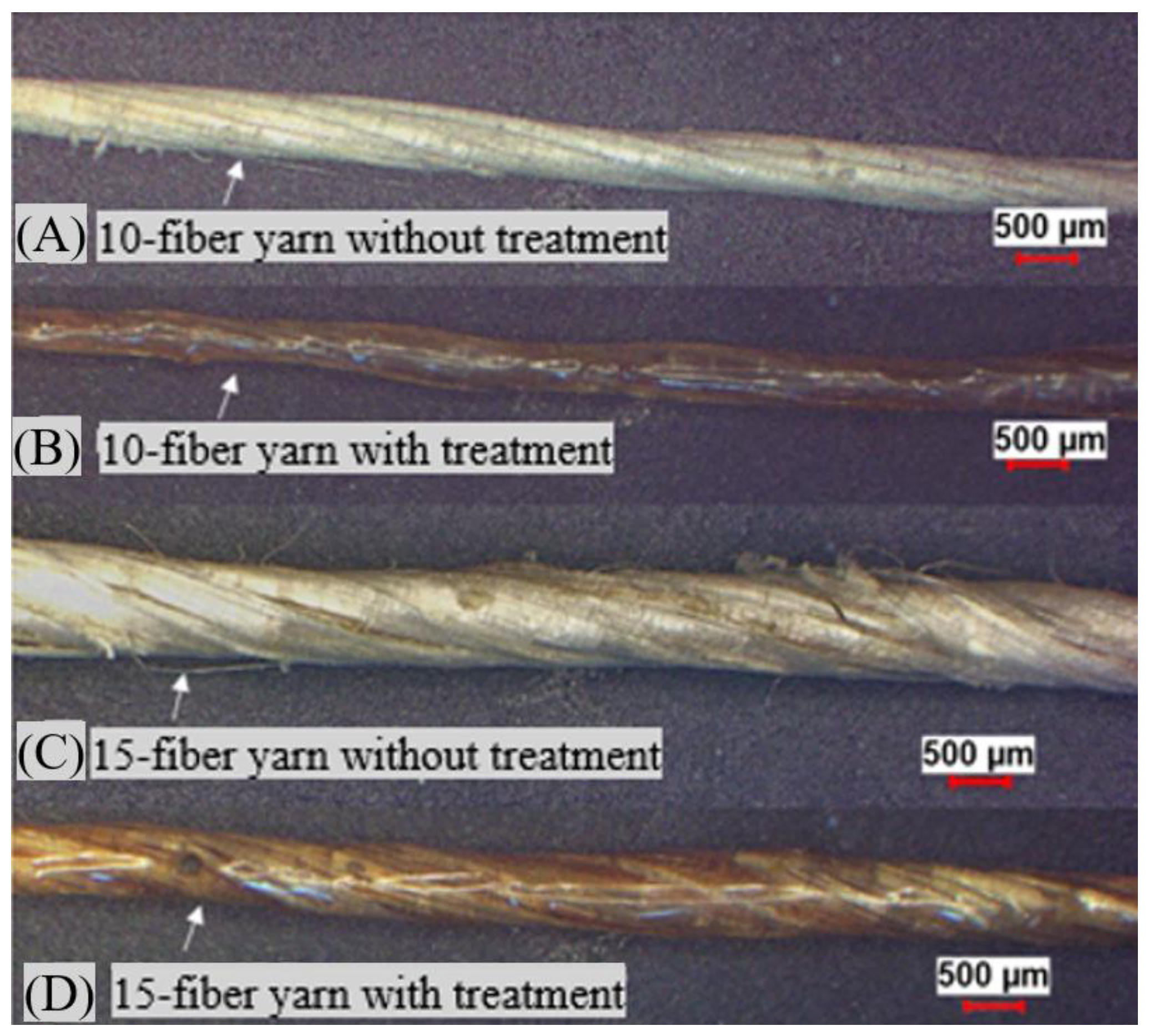
As illustrated in Figure 3, micrographs depict four types of banana fiber yarns produced through a spinning process utilizing a spindle prototype manufactured via 3D printing technology. Initially, yarns composed of five fibers were assessed. For each spinning speed condition, 7 yarns were evaluated, and 10 diameter measurements were taken per yarn, resulting in 70 measurements per RPM (Table S1 in the Supplementary Materials). Considering the four winding speeds and the two treatment conditions, a total of 560 diameter measurements were performed. The effects of the NaOH treatment and the coating application are detailed in Section S2.1 of the Supplementary Materials. The coating was applied manually using latex gloves, and its uniformity and continuity were assessed through optical microscopy and SEM, as shown in Figures S3 and S4 in the Supplementary Materials.

3.2. Effect of Spinning Speed on Surface Twist Angle and Tensile Strength

The surface twist angle is a key factor in this research. Previous studies indicate that lower angles improve yarn consistency, homogeneity, and axial fiber strength [26]. Additionally, composites with high twist levels exhibit lower tensile properties [27]. Figure S4 illustrates the measurement process for this angle.
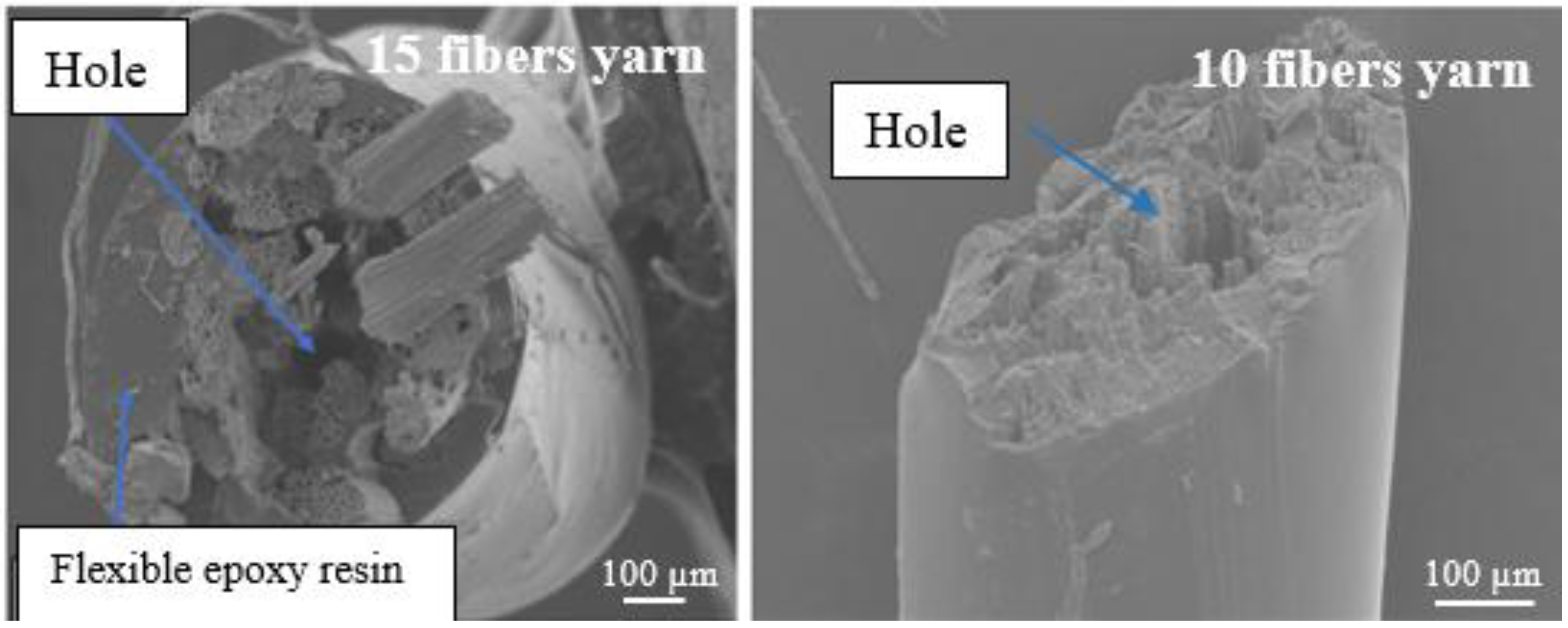
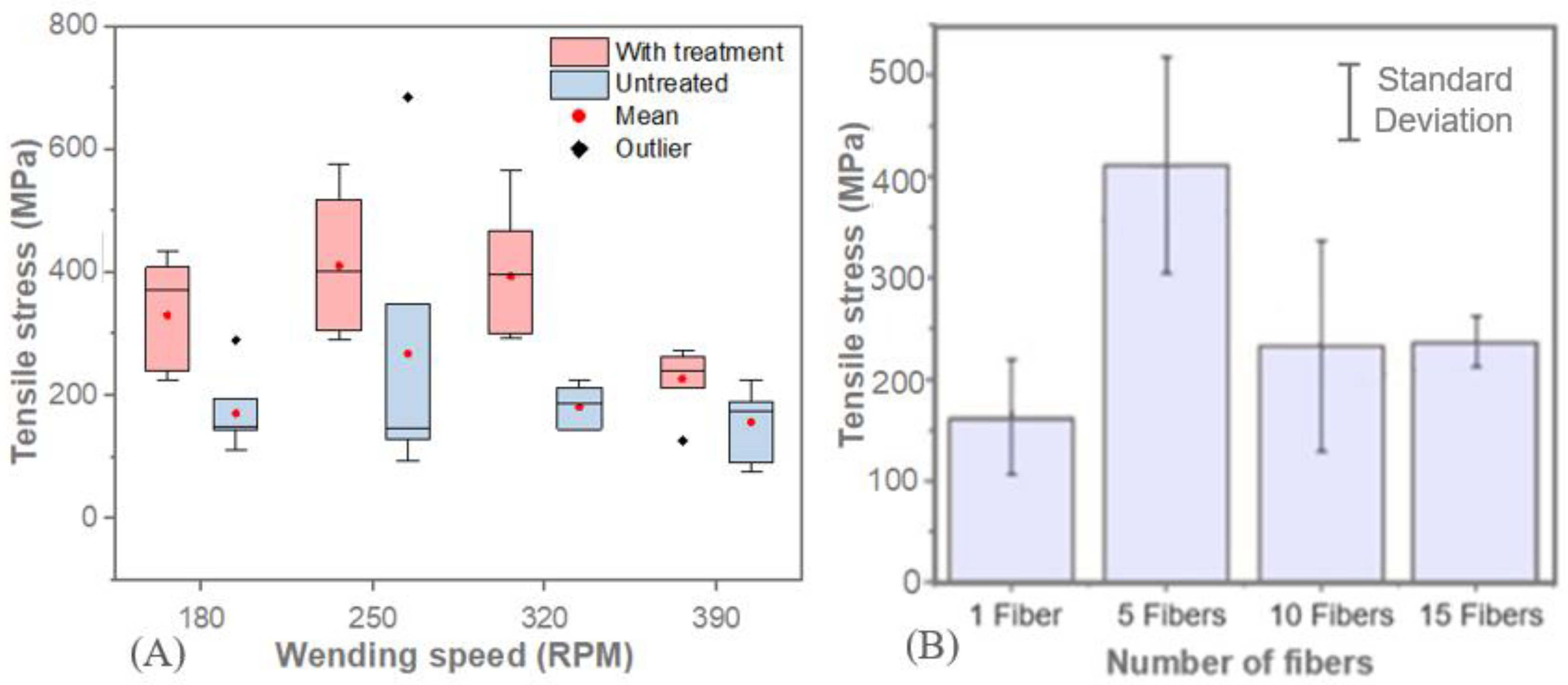
Figure 4 presents the tensile response of five-fiber yarns subjected to different twisting speeds and surface treatments. In Figure 4A, tensile strength increases from 180 to 250 rpm due to enhanced inter-fiber friction but decreases at higher speeds when torsional stress exceeds the cohesive forces between fibers [26,27]. Figure 4A further shows that mercerization combined with epoxy coating stabilizes twist angles and prevents the preload loss induced during winding. Yarns produced at 250 rpm and treated with NaOH followed by epoxy coating exhibited the highest tensile strengths, supporting their suitability for polyester composites manufactured via VARTM processing [28,29]. After establishing the optimal treatment conditions, the effect of fiber count was assessed. As reported in [27], strength increases with fiber content up to a threshold, beyond which it declines. This trend is confirmed here: tensile strength rises from 1 to 5 fibers and subsequently decreases for the 15 fiber yarns (Figure 4B). This reduction is not primarily attributed to resin infiltration—since the resin preserves twist integrity—but rather to internal geometric changes. As the number of fibers increases, the yarn diameter grows, enlarging the characteristic central void which acts as a stress concentrator as described in [28], thereby reducing load-transfer efficiency. This mechanism is consistent with the observations in Figure 5.

3.3. Pull-Out Test

Table 1 shows that mercerized and coated banana fibers achieved the highest interfacial shear strength (1.75 MPa) with partial extraction (28.6 %), indicating strong fiber–matrix adhesion. In contrast, coated fibers without mercerization showed low interfacial shear strength IFSS (0.54 MPa) and full extraction (100 %), confirming that coating alone is ineffective. Mercerized fibers without coating reached 1.41 MPa with no extraction, highlighting the effectiveness of mercerization in improving interfacial bonding, further enhanced when combined with coating [30].
The full extraction observed in untreated coated fibers contrasts with fiber breakage in uncoated yarns, likely due to reduced tensile strength. In coated mercerized yarns, partial extraction suggests interfacial failure governed by higher fiber strength [31], while coating delamination may also contribute to reduced performance [32]. The interfacial adhesion between the coating (flexible epoxy resin) and the yarns, both mercerized and untreated, reached 0.78 MPa for the non-mercerized yarns and 1.85 MPa for the mercerized yarns (Table 1). This indicates that mercerization effectively enhances the interfacial bonding between the yarn and the coating.
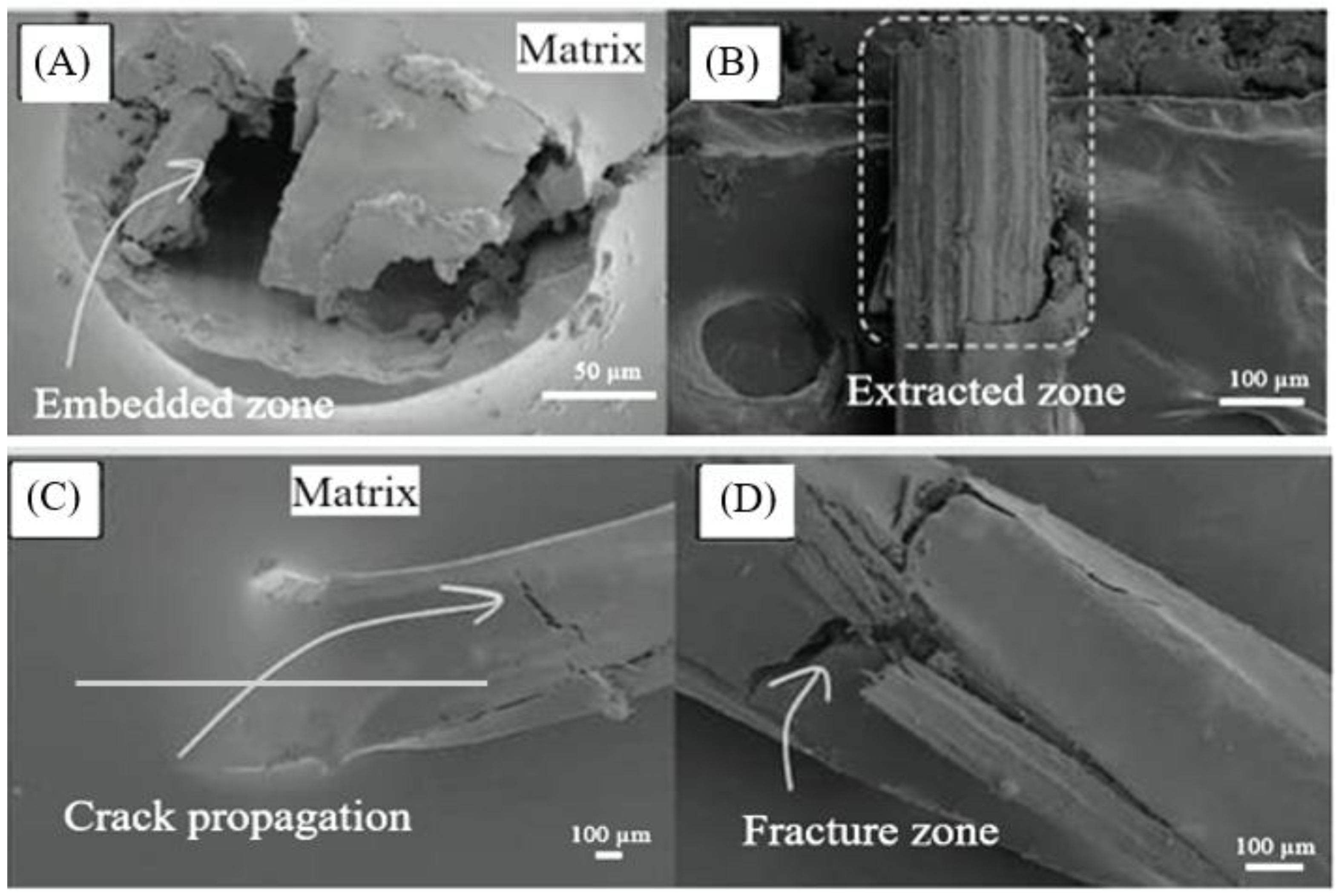
As observed in Figure 6A, the coating remains attached to the UPR matrix, while in Figure 6B, the yarn appears uncoated in the embedded region, indicating weak adhesion between the non-mercerized yarn and the coating. Not all samples exhibited pull-out behavior; in several cases, fiber rupture preceded detachment (Figure 6C,D), suggesting interfacial strength may exceed the fiber’s tensile strength [33]. However, this interpretation requires caution, as premature failure could stem from natural defects such as diameter variations, cross-sectional changes, or stress concentrators. Moreover, no pull-out was observed in twisted filaments embedded in flexible epoxy, regardless of chemical treatment, indicating that mechanical anchoring from torsion plays a more dominant role than chemical compatibility in interfacial resistance [34].

3.4. Contact Angle

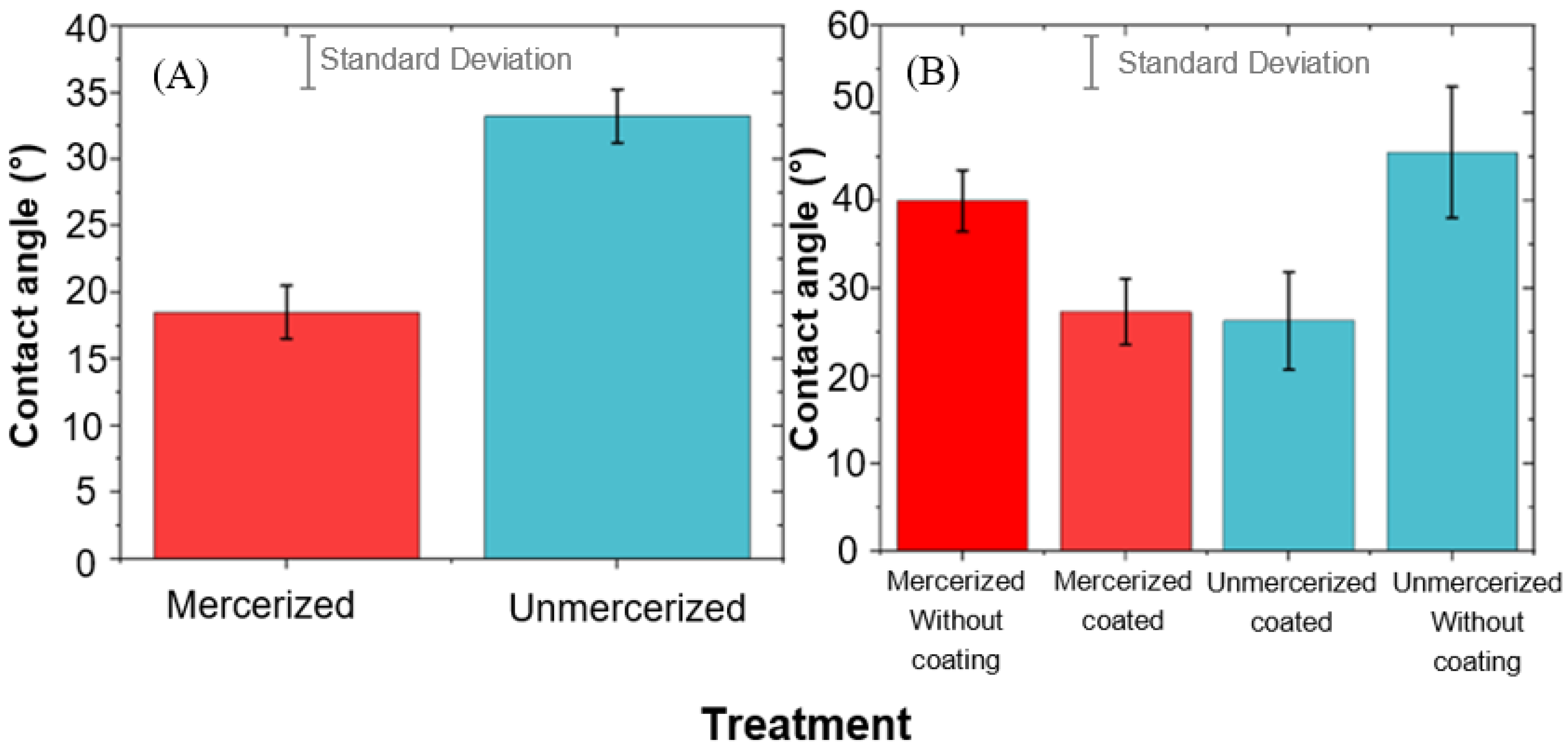
One of the key interfacial interactions occurs between filaments and the coating. Figure 7A presents contact angle measurements using a droplet of flexible epoxy resin with hardener. The results demonstrate that the application of chemical treatment to yarns significantly reduces the contact angle from approximately 33° to 19°, thereby enhancing resin impregnation and ensuring a more uniform coating along the entire filament [35]. Figure 7B shows that mercerized-coated and mercerized-uncoated filaments exhibited low contact angles (27° and 40°, respectively), while non-mercerized samples showed higher values (26° for coated and 44° for uncoated). No significant difference was observed between the mercerized-coated and mercerized-uncoated yarns, indicating that mercerization, not the coating, primarily influences wettability. This supports the notion that contact angle measurements reflect the interaction between the coating and matrix, rather than the effect of chemical treatment alone. These results align with pull-out data, where lower contact angles correlated with enhanced resin distribution and improved interfacial adhesion [36].

3.5. Fourier-Transform Infrared Spectroscopy (FTIR)

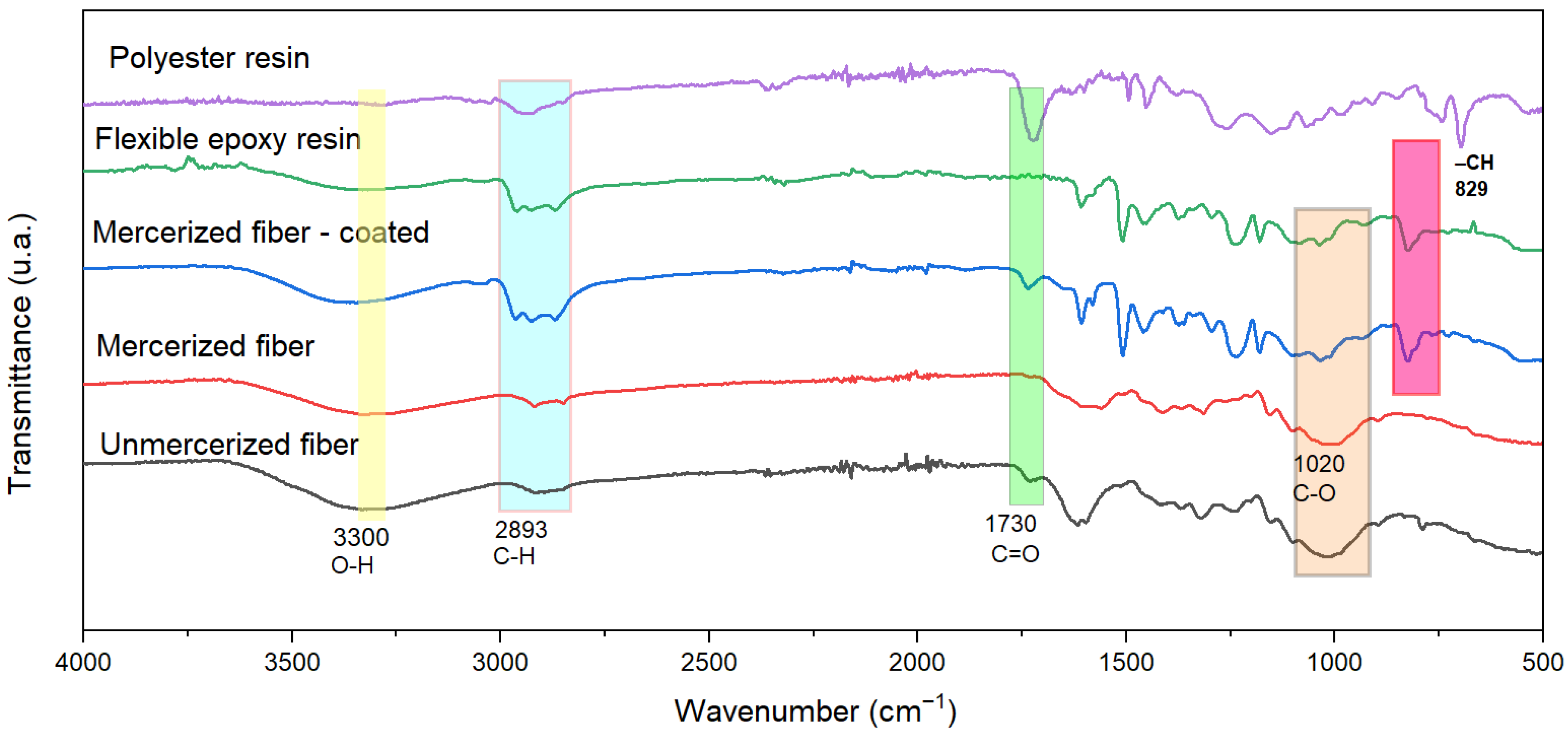
Figure 8 presents the FTIR spectra of un-mercerized (UM), mercerized (M), mercerized-coated (MC) banana fibers, and flexible epoxy resin (REF). A broad band near 3300 cm−1, assigned to O–H stretching in cellulose, hemicellulose, and lignin, decreased in intensity for M and MC fibers, indicating structural modification due to treatment [37]. The chemical treatment and flexible epoxy resin coating modify the fiber surface by reducing lignin and hemicellulose through mercerization, which exposes hydroxyl (O–H) groups in cellulose, increasing polarity and enhancing interaction with the resin [38].
The FTIR results shows a decrease in the intensity of O–H bands after coating, indicating the possible formation of secondary bonds between hydroxyl groups and the epoxy groups of the resin [39]. Additionally, an increase in C–O (1020 cm−1) and C=O (1730 cm−1) bands is observed, providing evidence of new chemical bonds [39]. This modification improves wettability and adhesion, as evidenced by the lower contact angles of mercerized fibers (see Figure 7), confirming a higher affinity between the treated surface and the flexible epoxy resin. These findings are consistent with Table 1 (pull-out tests), where mercerized fibers exhibit increased IFSS. The higher availability of hydroxyl groups identified by FTIR, the reduction in contact angle, and the increase in IFSS in pull-out collectively demonstrate that mercerization promotes the formation of hydrogen bonds between the fiber and the flexible epoxy resin, thereby strengthening interfacial adhesion.

3.6. Estimation of Experimental Unidirectional Permeability

The results indicate that treated fibers (mercerized and coated) exhibit higher permeability than their untreated counterparts. Table 2 presents the permeability values of banana pseudostem fabrics, both untreated and treated, with fiber counts of 10 and 15. This increase suggests that the applied treatments enhance the yarns’ capacity to facilitate polyester resin flow through the fabric, likely due to modifications in the fibers’ surface morphology [40]. For untreated fabrics, increasing fiber count reduced permeability due to denser packing, which limited resin flow through capillary effects. Local resin absorption further created low-permeability zones along the flow path [40]. In contrast, treated fabrics showed higher permeability with fiber count, reaching 1.8 × 10⁻⁸ m2 and 6.48 × 10⁻⁸ m2 for 10 and 15 fibers, respectively. In three-layer systems, the pre-application of polyester resin films before compression molding improved compaction and layer integration. Experimental results confirmed that fiber treatment significantly affects permeability: untreated fabrics showed higher values (8.98 × 10⁻⁹ m2 and 6.34 × 10⁻⁹ m2 for 10 and 15 fibers) compared to coated ones (3.16 × 10⁻¹⁰ m2 and 1.37 × 10⁻⁹ m2). As shown in Table 2, single-layer treated fabrics processed via VARTM exhibited better permeability than multi-layer versions, promoting resin infusion and reducing void content [40]. In contrast, the reduced permeability in treated multi-layer assemblies may hinder resin flow during processing.

3.7. Analysis of Tensile Testing of Fabrics

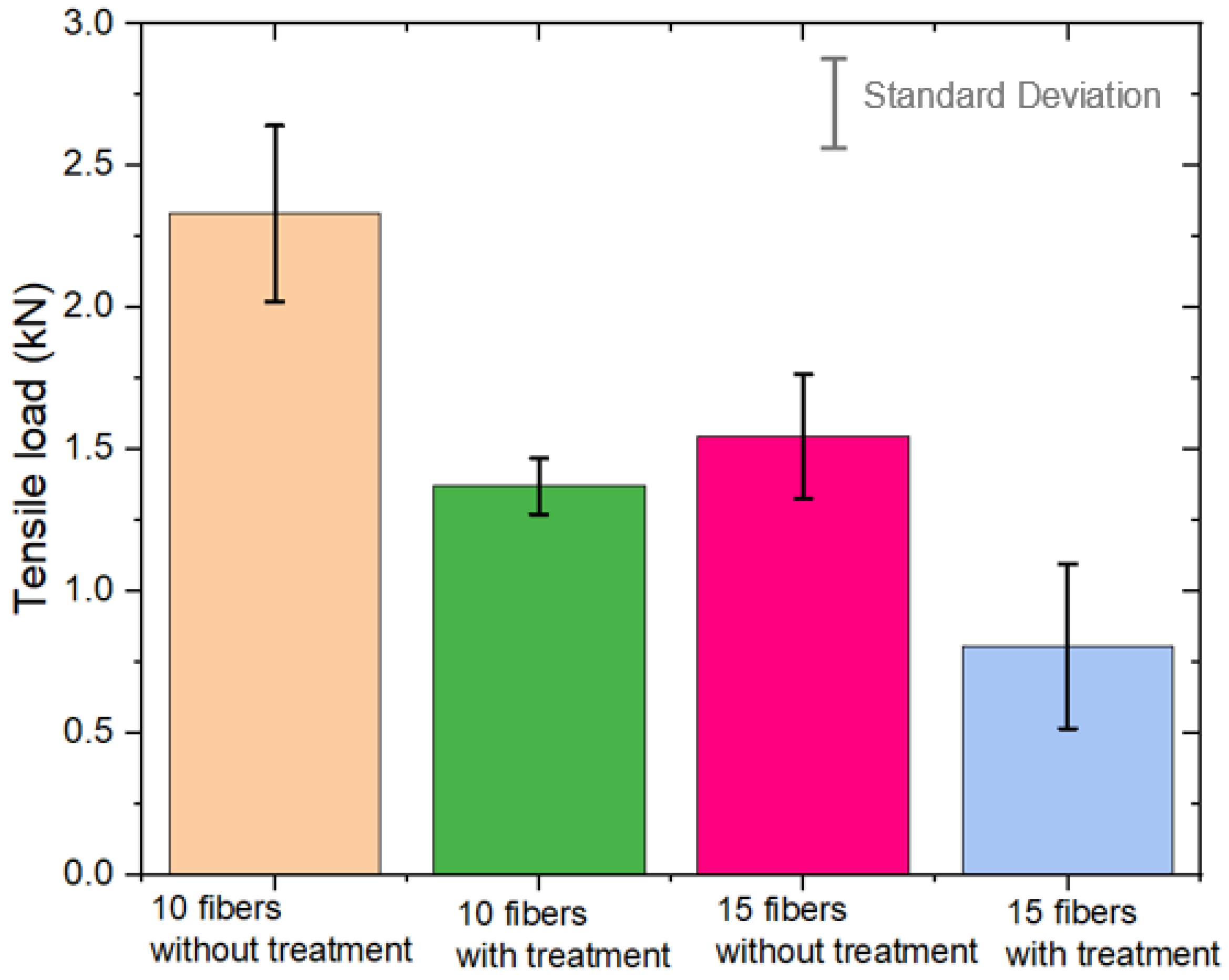
Figure 9 presents the tensile test results of banana pseudostem fiber fabrics, comparing untreated and treated (mercerized and coated) fiber fabrics in samples of 10 and 15 fibers. The untreated yarns exhibited higher tensile load values, reaching 2.33 kN for 10-fiber yarns and 1.55 kN for 15-fiber yarns, while the treated (mercerized and coated) yarns exhibited reduced tensile load values of 1.37 kN and 0.8 kN, respectively.
Although the treatment enhances permeability (Table 2), it compromises yarn integrity, reducing mechanical performance. Treated fabrics showed a 41% and 48% decrease in tensile load capacity for 10- and 15-fiber yarns, respectively. This reduction is likely due to increased stiffness from mercerization and epoxy coating, which lowers yarn flexibility and increases failure risk at crossover points within the weave [40]. Compared to previous studies (Table 3), untreated banana fiber fabrics exhibit competitive mechanical behavior. The 10-fiber untreated fabric reached an average tensile load of 2.3 kN, exceeding reported values for kenaf (1.25 kN) and flax (2.1 kN). Despite the weakening effect of chemical treatment, untreated fabrics maintain sufficient tensile strength for use in natural fiber-based applications.

3.8. Adhesion Test in Fabrics

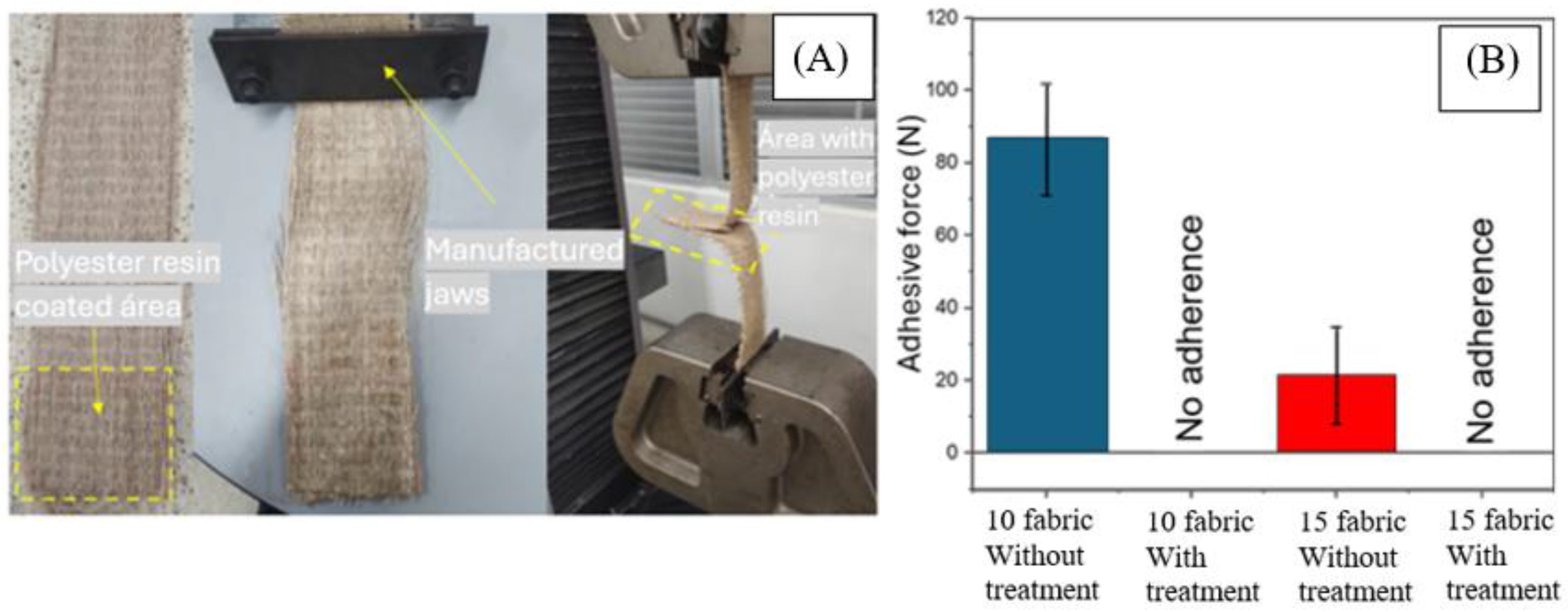
Figure 10A illustrates the experimental setup used to evaluate the interfacial adhesion strength between banana pseudostem fiber fabrics and polyester resin, following ISO 2411 standard [23]. Figure 10B presents the adhesion force results for treated and untreated fabrics. A comparative analysis indicates that untreated fabrics composed of 10-fiber yarns exhibit an adhesion force of 87 N, whereas those with 15-fiber yarns display a significantly lower adhesion force of 21.5 N.
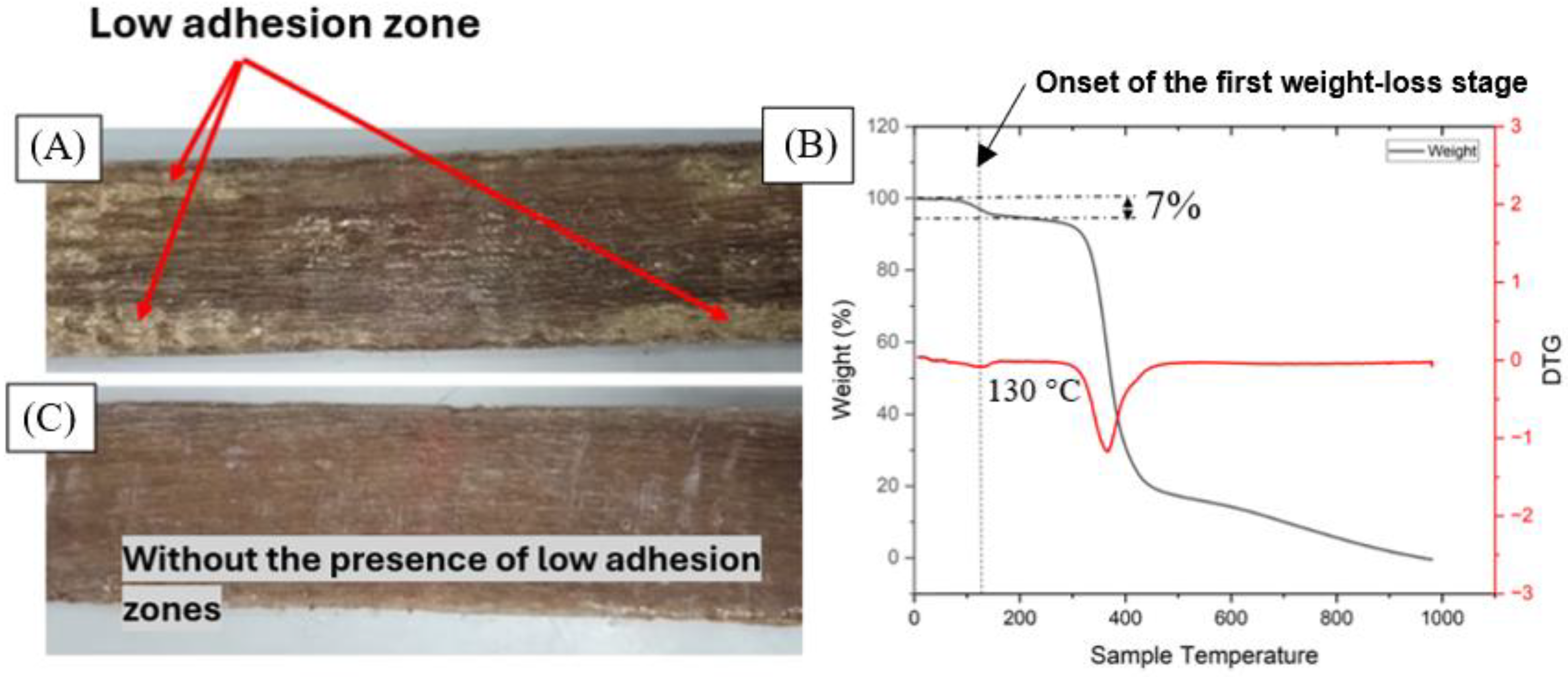
In contrast, the fabrics treated with 10 and 15 fibers per yarn exhibited no adhesion to the polyester resin: the low-adhesion regions are shown in Figure 11A. The most plausible cause is that the high temperatures generated by the exothermic curing reaction, reaching up to 160 °C, are sufficient to disrupt bonds in low-crosslinked polymers such as flexible epoxy resins. Figure 11B shows the TGA curve of the coating, where a degradation event is observed at approximately 130 °C. This thermal degradation provides a plausible mechanism to explain the low-adhesion regions identified in Figure 11B, as the temperatures reached during the exothermic curing reaction may exceed this threshold and compromise the integrity of the coating. Consequently, the interfacial compatibility between the treated fabric and the polyester resin may be reduced, weakening the reinforcement–matrix bond and compromising the structural integrity of the composite.
The lack of proper curing in the matrix further supports this interpretation, suggesting that the treated fabric surface may interfere with the formation of effective interfacial bonds [41]. This observation aligns with previous findings showing that certain surface treatments can alter the chemical and physical characteristics of fabrics, weaken adhesion, and ultimately reduce the mechanical performance of the final composite [42].
To address this, the composite was fabricated by pre-impregnating mercerized fiber fabrics with a thin layer of rigid epoxy resin, whose highly crosslinked structure offers superior thermal resistance and prevents thermal degradation during curing. Consequently, no regions of poor adhesion were detected, enabling the successful production of composite material (Figure 11C). Figure 12 presents the surface finish of the composites developed in this work, which exhibit minimal defects and include representative samples reinforced with fabrics containing 10 and 15 fibers per yarn.
A clearer visualization of the segmentation and quantification procedure for the reinforcement fraction is provided in the supplementary information (see Section 2.3, Figures S6 and S7, and Table S3 in the Supplementary Materials).

3.9. Tensile Strength

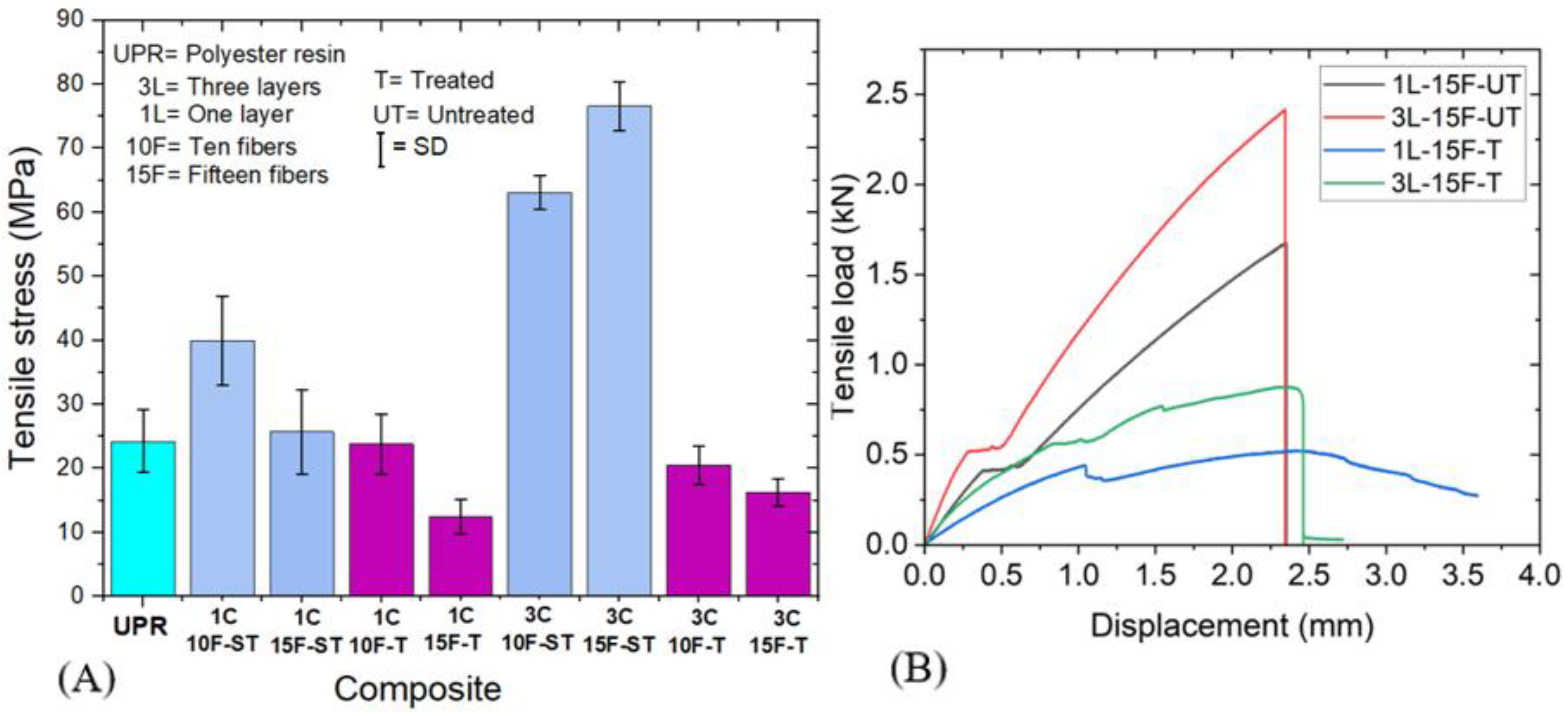
Figure 13A presents the tensile strength results of composite materials reinforced with banana fiber yarns under different experimental configurations. Notable differences can be observed between the tensile strengths of treated and untreated composite groups. The 1L-10F-UT samples reached a tensile strength of 39.99 ± 2.68 MPa, reflecting a 67.91% increase compared to their treated counterparts. A similar trend was observed in the 1L-15F-UT samples, which achieved 25.69 ± 6.59 Mpa, nearly double the strength of the treated versions.
Treated three-layer composites showed a significant decline in mechanical performance. The 3L-10F-T and 3L-15F-2T samples registered tensile strengths of 20.47 ± 2.98 MPa and 16.25 ± 2.11 MPa, representing a three- to four-fold reduction compared to untreated composites [43]. In contrast, untreated variants such as 3L-10F-UT-3C and 3L-15F-UT outperformed the neat UPR matrix, with strength increases of approximately 1.5 and 2 times, respectively. This improvement is attributed to the fabric’s three-layer architecture and high fiber volume fraction (~80%), which enhanced stress distribution and overall load transfer. The 3L-15F-UT composites reach the highest loads and exhibit more stable stress–strain responses, which is consistent with the strong fiber–matrix adhesion previously identified (See Figure 13B). In contrast, the treated composites show lower load peaks and abrupt fluctuations, in line with the reduced interfacial adhesion observed in earlier results, which constrains their ability to sustain axial loading.
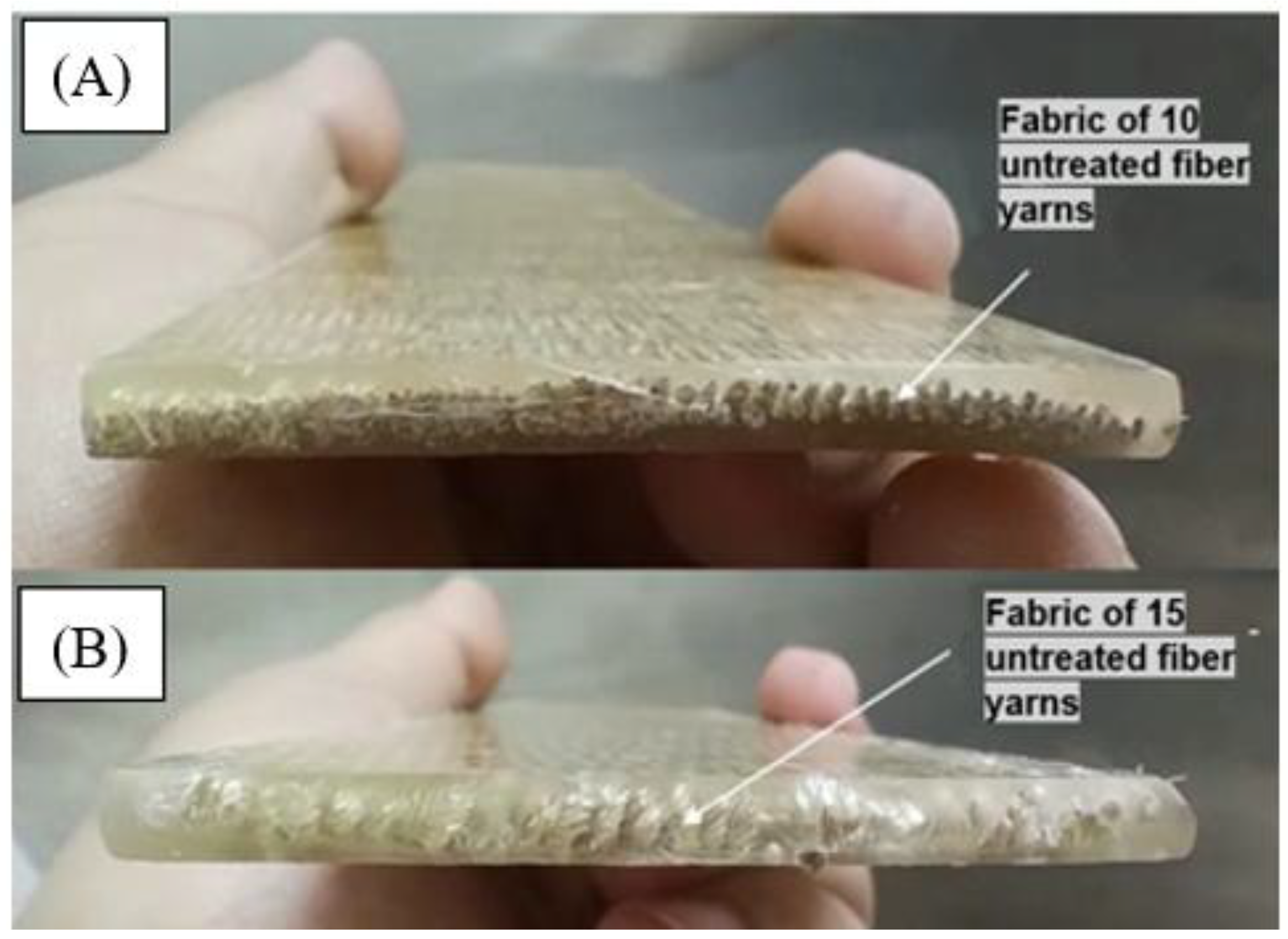
Figure 14 illustrates these effects, highlighting how fiber orientation and placement during pressing contribute to improved tensile strength [44]. These results support previous findings that emphasize the importance of uniform fiber distribution [45] and show that fabric geometry, interlacing density, and pre-tensioning significantly influence composite behavior [46].
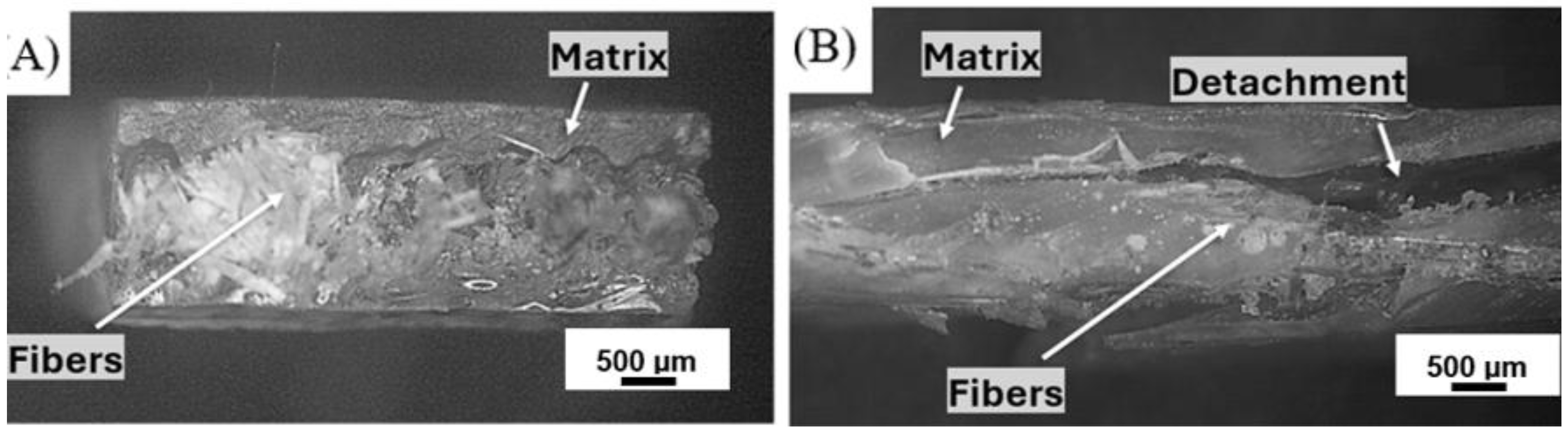
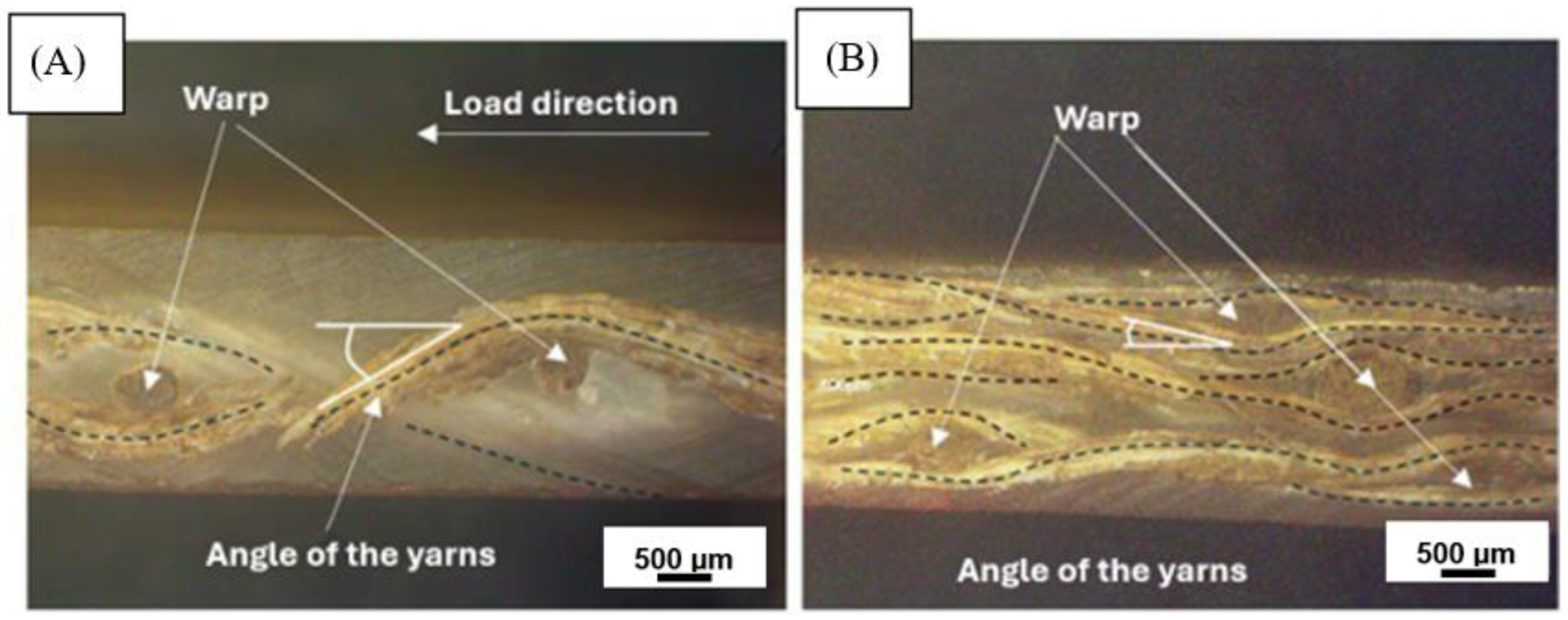
Figure 15 shows the fracture surfaces of the 3L-15F-UT and 1L-10F-T samples. The 3L-15F-UT specimen exhibited a brittle fracture across the cross-section (Figure 15A), with a large proportion of visible reinforcing fibers. The homogeneous fracture surface suggests efficient stress transfer and strong fiber–matrix interaction. In contrast, the longitudinal fracture of the 1L-10F-T sample (Figure 15B) displayed matrix-dominated failure with clear interfacial debonding. This detachment indicates poor adhesion between the matrix and treated fibers, consistent with the lower tensile strength observed in these composites. Weak interfacial bonding likely limits stress transfer, reducing the material’s mechanical performance.

3.10. Flexural Test Results Analysis

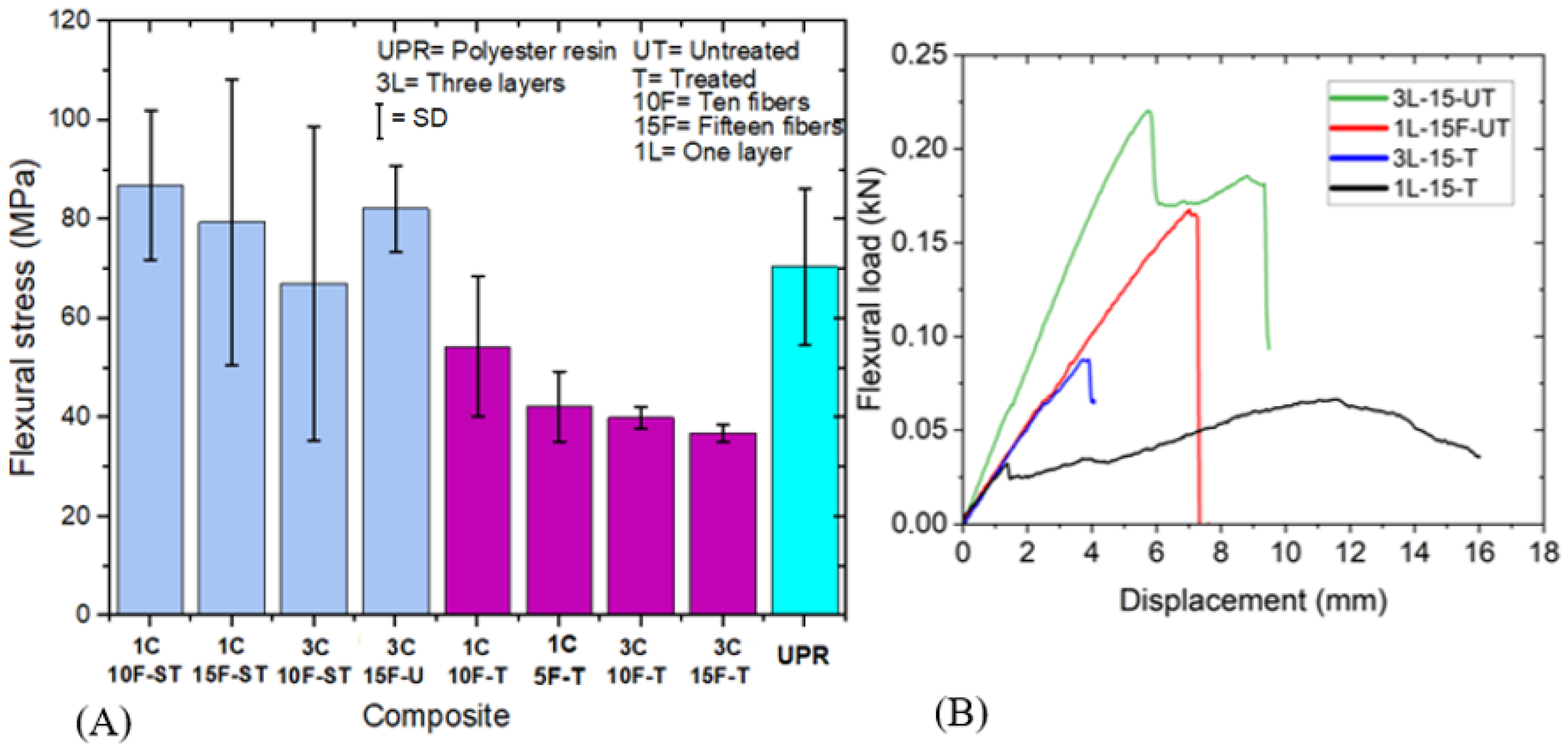
According to Figure 16A, the flexural strength of the fabricated composites is presented. The 1L-10F-UT samples exhibited a flexural strength of 86.93 ± 15.09 MPa, representing a 1.6-fold increase compared to the 1L-10F-T samples. Similarly, the 1L-15F-UT samples achieved 79.40 ± 28.81 MPa, which is 1.8 times higher than their treated counterparts (1L-15F-T). The 3L-10F-UT composites showed a flexural strength of 67.12 ± 31.69 MPa, while the 3L-10F-T samples reached 39.90 ± 2.19 MPa, indicating a 1.67-fold increase for the untreated samples. Notably, the 3L-15F-UT composites exhibited a 2.2-fold increase in flexural strength compared to the 3L-15F-T samples, with values of 82.18 ± 8.77 MPa and 36.89 ± 1.79 MPa, respectively. Composites treated with NaOH and epoxy coating exhibited reduced flexural strength, with 3L-15F-T samples reaching only 36.89 MPa. In contrast, neat polyester resin reached 70.50 MPa higher than treated composites but a lower value than untreated ones. These results indicate that both the single-layer 10-fiber and three-layer 15-fiber untreated configurations effectively enhance flexural performance. Figure 17 shows the fracture surfaces of 3L-15F-UT and 3L-15F-T samples.
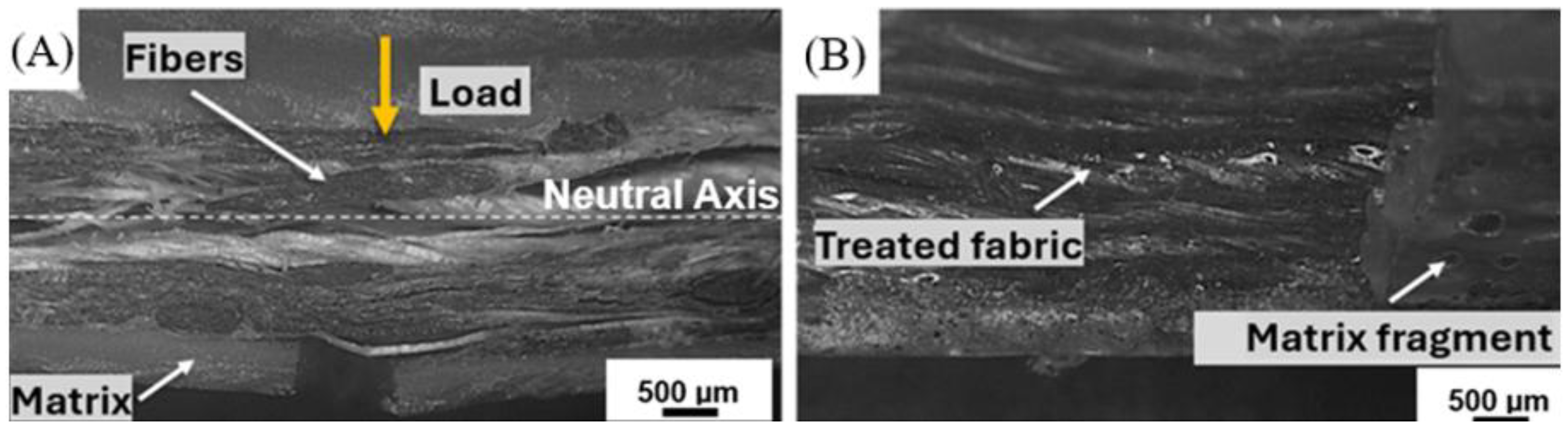
The 3L-15F-UT composites maintain the trend observed in tension, exhibiting higher load-bearing capacity and a more continuous trajectory—behavior consistent with the stronger interface previously evidenced in the adhesion analyses (Figure 16B). The treated composites display early load drops, which aligns with the documented reduction in interfacial adhesion reported for chemically modified natural fibers, where surface treatments can weaken bonding and disrupt load transfer [47]. In the untreated specimen (Figure 17A), cracks propagated perpendicular to the fabric orientation, initiating below the mid-plane in the tensile zone. This suggested that the fabric acted as an effective barrier to crack growth, consistent with the crack-bridging mechanisms reported for flax and jute woven composites under bending [48]. In contrast, the treated composite (Figure 17B) exhibited matrix detachment and visible fabric structure, indicating weak fiber–matrix bonding—failure features consistent with SEM observations of debonding, fiber pull-out, and early matrix peeling in surface-treated natural-fiber composites subjected to flexural loading [49,50]. This combination of interfacial debonding, reduced crack-arrest capability, and enhanced delamination propensity explains the reduced flexural strength observed in the treated configuration.
As shown in Section 3.2, the IFSS results elucidate the differences observed in the mechanical performance of the composites. Although mercerized and coated fibers reached the highest IFSS (1.75 MPa), their tensile and flexural responses were deficient due to thermal degradation of the coating and the interfacial debonding reported in Section 3.7, Section 3.8 and Section 3.9. In contrast, mercerized uncoated fibers, which exhibited a high IFSS (1.41 MPa) with no extraction, enabled more efficient load transfer and consequently higher mechanical strengths. Consistently, treated configurations with low IFSS—such as non-mercerized coated fibers—displayed matrix-dominated debonding fractures and marked reductions in their mechanical properties. Taken together, these findings indicate that IFSS constitutes a reliable parameter for predicting stress-transfer efficiency and, therefore, the overall performance of the composite material.

4. Conclusions

The analysis revealed that untreated three-layer composites achieved the highest tensile strengths 63.11 MPa with 10-fiber fabrics and 76.56 MPa with 15-fiber fabrics, indicating that increasing the number of layers and avoiding chemical treatment improves tensile performance. In contrast, the highest flexural strengths were obtained in single-layer untreated composites: 86.93 MPa for 10 fibers and 79.40 MPa for 15 fibers. These results suggest that a single untreated 10-fiber layer offers an optimal configuration for maximizing flexural resistance. Tensile strength was significantly affected by both layer configuration and surface treatment, as confirmed by ANOVA analysis. In contrast, fiber count showed no statistically significant effect on flexural strength, indicating it is not a critical factor in determining the composite’s flexural performance (see Section S2.4 in the Supplementary Information, Tables S3 and S4). This study highlights the potential of banana pseudostem fibers for composite fabrication via VARTM as a sustainable approach to mitigating agro-industrial waste. The developed composites exhibited mechanical properties superior to those of unsaturated polyester resin (UPR), with tensile and flexural strengths exceeding those of the matrix by factors ranging from 1.5 to 2.
Future work should incorporate a manometer or a controlled-pressure system during the pressing stage to enhance process repeatability and minimize the variability in the thickness of the three-layer reinforcements.

Supplementary Materials

The following supporting information can be downloaded at: https://www.mdpi.com/article/10.3390/jcs10030149/s1, “Supporting Information for Manufacturing of banana fiber-reinforced bidirectional fabric with UPR matrix by Vacuum-Assisted Resin Transfer Molding.” This document includes Figures S1–S7, which illustrate the extraction and chemical treatment of banana fibers, reinforcement architecture, vacuum-assisted resin infusion sequence, and SEM micrographs of the fiber–matrix interfacial morphology; and Tables S1–S5, which summarize the experimental parameters, reinforcement segmentation data, fiber volume fraction estimation, and ANOVA statistical analysis of the tensile and flexural tests. These supplementary materials provide additional experimental details that support and validate the results presented in this manuscript [51,52,53,54,55,56,57,58,59,60].

Author Contributions

Conceptualization, J.U.-S.; methodology, J.A.S.; software, J.A.S.; validation, J.A.S. and O.R.-R.; formal analysis, J.A.S.; investigation, J.A.S.; data curation, J.A.S.; visualization, J.A.S.; writing—original draft, J.A.S.; writing—review and editing, O.R.-R.; supervision, L.A.E.S. and J.U.-S.; project administration, J.U.-S.; funding acquisition, J.U.-S. All authors have read and agreed to the published version of the manuscript.

Funding

This research was funded by the Colombian Ministry of Science, Technology, and Innovation through Project Strengthening the circular economy through the generation of added value from agricultural waste in the departments of Córdoba and Sucre, identified with the code BPIN: 2021000100052. Financial support was used for the development of experimental work, including the purchase of raw materials and supplies, the fabrication of specimens, and the execution of mechanical and interfacial characterization tests in specialized laboratories.

Data Availability Statement

The data are available on reasonable request from the corresponding author.

Acknowledgments

The authors would like to thank the Group of Materiales Avanzados y Energía (MATyER) at the Instituto Tecnológico Metropolitano for providing access to their facilities for material characterization. Special thanks to the DADCOMP Research Group at the Universidad Nacional de Colombia for allowing the mechanical and pull-out tests to be conducted in their facilities. The authors also appreciate the support of the University of Córdoba for providing access to their laboratories during the development of the project.

Conflicts of Interest

The authors declare no conflicts of interest.

References

  1. Seshaiah, T.; Kumar Reddy, K.V. Effect of fiber orientation on the mechanical behavior of e-glass fibre reinforced epoxy composite materials. Int. J. Mech. Prod. Eng. Res. Dev. 2018, 8, 379–396. [Google Scholar] [CrossRef] [Scilit]
  2. Zeng, D.; Xia, Z.C.; Webb, J.; Lu, L.; Gan, Y.; Sun, X.; Lasecki, J. Effect of fiber orientation on the mechanical properties of long glass fiber reinforced (LGFR) composites. SAE Tech. Pap. 2014. [Google Scholar] [CrossRef] [Scilit]
  3. Ahmed, U.; Asra, T.; Yasir, N.; Khubab, S.; Khaliq, Z.; Muhammad, U. Comparison of mechanical behavior of biaxial, unidirectional and standard woven fabric reinforced composites. Fibers Polym. 2020, 21, 1308–1315. [Google Scholar] [CrossRef] [Scilit]
  4. Patel, R.V.; Yadav, A.; Winczek, J. Physical, mechanical, and thermal properties of natural fiber-reinforced epoxy composites for construction and automotive applications. Appl. Sci. 2023, 13, 5126. [Google Scholar] [CrossRef] [Scilit]
  5. Waraczewski, R.; Bartosz, G.S. Potential valorization of banana production waste in developing countries: Bio-engineering aspects. Fibers 2024, 12, 72. [Google Scholar] [CrossRef] [Scilit]
  6. Korniejenko, K.; Kozub, B.; Żak, A.B.; Ponnambalam, B.; Marimuthu, U.; Furtos, G. Tackling the circular economy challenges—Composites recycling: Used tyres, wind turbine blades, and solar panels. J. Compos. Sci. 2021, 5, 243. [Google Scholar] [CrossRef] [Scilit]
  7. Nascimento, R.E.A.; Mónica, C.; João, G.C.; Luísa, A.N. Extraction and characterization of cellulose obtained from banana plant pseudostem. Clean Technol. 2023, 5, 52. [Google Scholar] [CrossRef] [Scilit]
  8. Kamarudin, S.H.; Mohd Basri, M.S.; Rayung, M.; Abu, F.; Ahmad, S.; Norizan, M.N.; Osman, S.; Sarifuddin, N.; Desa, M.S.Z.M.; Abdullah, U.H.; et al. A review on natural fiber reinforced polymer composites (NFRPC) for sustainable industrial applications. Polymers 2022, 14, 3698. [Google Scholar] [CrossRef] [Scilit]
  9. Pradhan, M.; Banerjee, M.K.; Patnaik, A. Experimental investigation of physical, mechanical, and thermal behaviour of bi-directional date palm fiber reinforced epoxy composite. Mater. Today Proc. 2024, 6, 015072. [Google Scholar] [CrossRef] [Scilit]
  10. Montoya, B.J.; Negrete, M.J.; Altamiranda, S.J.; Ávila, D.C.; Rivero-Romero, O.; Unfried-Silgado, J. Influence of drying temperature on the properties of Colombian banana fibers for its potential use as reinforcement in composite materials. Sci. Rep. 2024, 14, 76460. [Google Scholar] [CrossRef] [Scilit]
  11. Somasundaram, S.; Kumar, S.M.; Anand, S.H.; Muthulakshmanan, A. Mechanical, wear, hydrophobic, and thermal behavior of waste cassava root cellulose and twill weaved banana fiber reinforced unsaturated polyester composites. Biomass Convers. Biorefin. 2024, 14, 25161–25171. [Google Scholar] [CrossRef] [Scilit]
  12. Turjo, S.M.K.S.; Hossain, M.F.; Rana, M.S.; Al-Mamun, M.; Ferdous, M.S. Durability and mechanical characteristics of unidirectional jute/banana and synthetic fiber reinforcement epoxy composite. Hybrid Adv. 2024, 6, 100232. [Google Scholar] [CrossRef] [Scilit]
  13. Fonseca-Pinheiro, L.; Garavello, M.E.P.; Baruque-Ramos, J.; de Souza, A.L.; de Oliveira, R.A. Banana pseudostem fibers (Musa sp.—Cultivar AAB Prata): Physicochemical characteristics. Mater. Circ. Econ. 2022, 4, 21. [Google Scholar] [CrossRef] [Scilit]
  14. Manjusha, W.; Josphine, J.; Deepa, P.; Sujatha, S.; Raj, S.A. Biosoftening of banana pseudostem fiber using cellulase and pectinase enzyme isolated from Aspergillus niger for textile industry. J. Genet. Eng. Biotechnol. 2023, 21, 170. [Google Scholar] [CrossRef] [Scilit]
  15. Pantaloni, D.; Bourmaud, A.; Baley, C.; Clifford, M.J.; Ramage, M.H.; Shah, D.U. A review of permeability and flow simulation for liquid composite moulding of plant fibre composites. Materials 2020, 13, 4811. [Google Scholar] [CrossRef] [Scilit]
  16. Rout, S.K.; Panda, J.; Gavande, V.; Panda, P.K.; Anwar, S.; Pandey, S.; Tripathy, B.C. Revisión de vanguardia que destaca los enfoques clave para la transformación química de fibras lignocelulósicas en compuestos de ingeniería viables. Discov. Polym. 2024, 1, 6. [Google Scholar] [CrossRef] [Scilit]
  17. Mumthas, A.C.; Wickramasinghe, G.; Gunasekera, U. Effect of physical, chemical and biological extraction methods on the physical behaviour of banana pseudo-stem fibres: Based on fibres extracted from five common Sri Lankan cultivars. J. Eng. Fiber Fabr. 2019, 14, 1–15. [Google Scholar] [CrossRef] [Scilit]
  18. ISO/IEC 17025:2017; General Requirements for the Competence of Testing and Calibration Laboratories. International Organization for Standardization: Geneva, Switzerland, 2017.
  19. ASTM D3822–07; Standard Test Method for Tensile Properties of Single Textile Fibers. ASTM International: West Conshohocken, PA, USA, 2007.
  20. Muños, D.E. Fabricación y Caracterización de Green Composites con Bioresina y Tejido de Fibra Natural de Lino Mediante Moldeo por Transferencia de Resina. Ph.D. Thesis, Universitat Politècnica de València, Valencia, Spain, 2016. [Google Scholar]
  21. ASTM D5034–21; Standard Test Method for Breaking Strength and Elongation of Textile Fabrics (Grab Test). ASTM International: West Conshohocken, PA, USA, 2021.
  22. Zuo, Q.; Salleh, K.M.; Wang, C.; Liu, S.; Lu, C.; Wang, L.; Li, Y.; Yi, X.; Zakaria, S. Prediction and analysis of properties of ramie fiber staple yarn reinforced unsaturated polyester composite based on fiber packing density. Compos. B Eng. 2022, 237, 109869. [Google Scholar] [CrossRef] [Scilit]
  23. ISO 2411:2021; Rubber- or Plastics-Coated Fabrics—Determination of Coating Adhesion. International Organization for Standardization: Geneva, Switzerland, 2021.
  24. ASTM D3039/D3039M–17; Standard Test Method for Tensile Properties of Polymer Matrix Composite Materials. ASTM International: West Conshohocken, PA, USA, 2017.
  25. ASTM D790–17; Standard Test Methods for Flexural Properties of Unreinforced and Reinforced Plastics and Electrical Insulating Materials. ASTM International: West Conshohocken, PA, USA, 2017.
  26. Yu, X.; Fan, W.; Azwar, E.; Ge, S.; Xia, C.; Sun, Y.; Gao, X.; Yang, X.; Wang, S.; Lam, S.S. Twisting in improving processing of waste-derived yarn into high-performance reinforced composite. J. Clean. Prod. 2021, 317, 128446. [Google Scholar] [CrossRef] [Scilit]
  27. Zaidi, B.Z.J.; Magniez, K.G.H.; Miao, M. Optimizing twisted yarn structure for natural fiber-reinforced polymeric composites. J. Compos. Mater. 2017, 52, 373–381. [Google Scholar] [CrossRef] [Scilit]
  28. Webo, W.; Maina, M.; Leonard, M. The combined effect of mercerisation, silane treatment and acid hydrolysis on the mechanical properties of sisal fibre/epoxy resin composites. MRS Adv. 2020, 5, 1225–1233. [Google Scholar] [CrossRef] [Scilit]
  29. Viel, Q.; Esposito, A.; Saiter, J.M.; Santulli, C.; Turner, J.A. Interfacial characterization by pull-out test of bamboo fibers embedded in poly(lactic acid). Fibers 2018, 6, 7. [Google Scholar] [CrossRef] [Scilit]
  30. Dassios, K. A review of the pull-out mechanism in the fracture of brittle-matrix fibre-reinforced composites. Adv. Compos. Lett. 2007, 16, 17–24. [Google Scholar] [CrossRef] [Scilit]
  31. Roark, J.; Thomas, F.D.; Sockalingam, S.; Kempf, J.; Christy, D.; Haas, D.; O’brien, D.J.; Senecal, K.J.; Crittenden, S.R. Experimental investigation of the influence of metallic coatings on yarn pull-out behavior in Kevlar® fabrics. Fibers 2023, 11, 7. [Google Scholar] [CrossRef] [Scilit]
  32. Richard, M.; Zhenjin, W.; Hiroki, K.; Narita, F. Fatigue characterization of cellulose nanofiber–reinforced silk yarns for enhanced structural applications. Compos. Sci. Technol. 2024, 257, 110793. [Google Scholar] [CrossRef] [Scilit]
  33. Bernhard, U.; Ulrich, M.; Maximilian, P.; Enrique, H.; Stefan, V. Influence of yarn structure and coating on the mechanical performance of continuous viscose fiber/epoxy composites. Polym. Compos. 2022, 43, 1012–1021. [Google Scholar] [CrossRef] [Scilit]
  34. Gu, S.; Li, H.; Zhang, W.; Wang, C.; Li, M.; Cheng, H.; Wang, G. Effect of alkali treatment on the wettability and tensile failure of twisted bamboo fiber/epoxy composites. Acta Mater. Compos. Sin. 2024, 41, 1870–1878. [Google Scholar] [CrossRef]
  35. Mulla, M.H.; Norizan, M.N.; Rawi, N.F.M.; Kassim, M.H.M.; Abdullah, N.; Norrrahim, M.N.F. Surface and interfaces effects of concentrations and alkaline treatment durations on sugar palm fiber as structural reinforcement in polymer composites. J. Nat. Fibers 2025, 22, 2527277. [Google Scholar] [CrossRef] [Scilit]
  36. Seisa, K.; Chinnasamy, V.; Ude, A.U. Surface treatments of natural fibres in fibre reinforced composites: A review. Fibres Text. East. Eur. 2022, 30, 82–89. [Google Scholar] [CrossRef] [Scilit]
  37. Zhang, X.; Sinha, T.K.; Kim, J.K.; Oh, J.S.; Lee, J. Fabrication of graphene reinforced silicone-based 3D printed tactile sensor: An approach towards an applicable piezo-sensor. J. Appl. Polym. Sci. 2022, 139, e52341. [Google Scholar] [CrossRef] [Scilit]
  38. Muñoz, M.F.; Hidalgo, S.M.A.; Mina, H.J.H. Effect of content and surface modification of fique fibers on the properties of a low-density polyethylene (LDPE)-Al/fique composite. Polymers 2018, 10, 1050. [Google Scholar] [CrossRef] [Scilit]
  39. Rachtanapun, P.; Sawangrat, C.; Kanthiya, T.; Kaewpai, K.; Thipchai, P.; Tanadchangsaeng, N.; Worajittiphon, P.; Suhr, J.; Wattanachai, P.; Jantanasakulwong, K. Comparison of effects of plasma surface modifications of bamboo and hemp fibers on mechanical properties of fiber-reinforced epoxy composites. Polymers 2024, 16, 3394. [Google Scholar] [CrossRef] [Scilit] [PubMed]
  40. Wang, F.; Lu, M.; Zhou, S.; Lu, Z.; Ran, S. Effect of fiber surface modification on the interfacial adhesion and thermo-mechanical performance of unidirectional epoxy-based composites reinforced with bamboo fibers. Molecules 2019, 24, 2682. [Google Scholar] [CrossRef] [Scilit] [PubMed]
  41. Soltani, A.; Raeesi, R.; Taheri, A.; Deng, A.; Mirzababaei, M. Improved Shear Strength Performance of Compacted Rubberized Clays Treated with Sodium Alginate Biopolymer. Polymers 2021, 13, 764. [Google Scholar] [CrossRef] [Scilit]
  42. Motaleb, K.Z.M.A.; Ahad, A.; Laureckiene, G.; Milasius, R. Innovative banana fiber nonwoven reinforced polymer composites: Pre- and post-treatment effects on physical and mechanical properties. Polymers 2021, 13, 3744. [Google Scholar] [CrossRef] [Scilit]
  43. Hung, Y.-C.; Parman, S.; Jamaludin, A.N. Study on the influence of fiber orientation to the tensile strength in banana fiber reinforced polyepoxydes composite. Prime Publ. J. Mech. Eng. 2023, 1, 7–16. [Google Scholar]
  44. Kusić, D.; Božič, U.; Monzón, M.; Paz, R.; Bordón, P. Thermal and mechanical characterization of banana fiber reinforced composites for its application in injection molding. Materials 2020, 13, 3581. [Google Scholar] [CrossRef] [Scilit]
  45. Risteska, S.; Srebrenkoska, V.; Zhezhova, S.; Srebrenkoska, S.; Risteski, S.; Jordeva, S.; Golomeova Longurova, S. The Effect of Textile Structure Reinforcement on Polymer Composite Material Mechanical Behavior. Polymers 2024, 16, 3478. [Google Scholar] [CrossRef] [Scilit]
  46. El Messiry, M.; Eltahan, E.; Fathy, S. Influence of pre-tensioning high-performance yarns on the bending stiffness of textile composites. J. Ind. Text. 2024, 54, 1–26. [Google Scholar] [CrossRef] [Scilit]
  47. Tazi, M.; Liu, Y.; Hu, H.; Van Vuure, A.W. Experimental Evaluation of Interface Adhesion in Natural Fiber–Reinforced Thermoplastic Composites. Int. J. Adhes. Adhes. 2023, 125, 103330. [Google Scholar] [CrossRef] [Scilit]
  48. Alipour, A.; Jayaraman, K. Performance of Flax/Epoxy Composites Made from Fabrics of Different Structures. Fibers 2024, 12, 34. [Google Scholar] [CrossRef] [Scilit]
  49. Wang, X.; Li, H.; Camilleri, D.; Surnam, B.Y.R.; Wu, Z.; Cheng, X.; Shi, L.; Lu, W. Analysis of Interfacial Properties in Flax Yarn-Reinforced Epoxy Resin Composites. Fibers 2025, 13, 118. [Google Scholar] [CrossRef] [Scilit]
  50. Kumaar, K.R.; Boopathy, G.; Bejaxhin, B.H.A.; Ramanan, N. Considerations on Fractured Edge Dislocations of Mechanical Tested Hand-Laid Hemp–Flax GFRP Hybrid Polymer Composites with SEM Verifications. J. Polym. Compos. 2024, 11, 1–19. [Google Scholar]
  51. Montoya Berrío, J.E.; Negrete Martínez, J.D.D. Caracterización De La Fibra Del Pseudotallo Del Plátano Como Potencial Refuerzo Para La Elaboración De Materiales Compuestos; Universidad de Córdoba, Facultad de Ingenierías, Ingeniería Mecánica: Montería, Colombia, 2023. [Google Scholar]
  52. Luchese, C.L.; Engel, J.B.; Tessaro, I.C. A Review on the Mercerization of Natural Fibers: Parameters and Effects. Korean J. Chem. Eng. 2024, 41, 571–587. [Google Scholar] [CrossRef] [Scilit]
  53. Zhang, K.; Wang, F.; Liang, W.; Wang, Z.; Duan, Z.; Yang, B. Thermal and Mechanical Properties of Bamboo Fiber Reinforced Epoxy Composites. Polymers 2018, 10, 608. [Google Scholar] [CrossRef] [Scilit]
  54. Prasad, N.; Agarwal, V.K.; Sinha, S. Banana fiber reinforced low-density polyethylene composites: Effect of chemical treatment and compatibilizer addition. Iran Polym. J. 2016, 25, 229–241. [Google Scholar] [CrossRef] [Scilit]
  55. Cadena Ch, E.M.; Vélez R, J.M.; Santa, J.F.; Otálvaro G, V. Natural Fibers from Plantain Pseudostem (Musa Paradisiaca) for Use in Fiber-Reinforced Composites. J. Nat. Fibers 2017, 14, 678–690. [Google Scholar] [CrossRef] [Scilit]
  56. Kaysar, M.A.; Ahmed, S.J.; Jamil, A.T.M.K.; Habib, M.M.; Dayan, M.A.R.; Gafur, M.A. Impact of NaOH Treatment on the Chemical, Structural, Physico-mechanical, and Thermal Characteristics of Jute Species. Fibers Polym. 2024, 25, 1765–1777. [Google Scholar] [CrossRef] [Scilit]
  57. Karuppuchamy, A.; Ramya, K.; Siva, R. Novel banana core stem fiber from agricultural biomass for lightweight textile applications. Ind. Crops Prod. 2024, 209, 117985. [Google Scholar] [CrossRef] [Scilit]
  58. Gañán, P.; Zuluaga, R.; Velez, J.M.; Mondragon, I. Biological natural retting for determining the hierarchical structuration of banana fibers. Macromol. Biosci. 2004, 4, 978–983. [Google Scholar] [CrossRef] [Scilit]
  59. Zhang, L.; Ren, W.; Liu, F.; Xia, L.; Wu, X.; Yang, R.; Yu, Y.; Zhang, X. A Comparative Investigation on Structural and Chemical Differences between the Pith and Rind of Sunflower Stalk and Their Influences on Nanofibrillation Efficiency. Polymers 2022, 14, 930. [Google Scholar] [CrossRef] [Scilit]
  60. Monticeli, F.M.; Montoro, S.R.; Voorwald, H.J.C.; Cioffi, M.O.H. Porosity Characterization of Carbon Fiber/Epoxy Composite Using Hg Porosimetry and Other Techniques. Polym. Eng. Sci. 2020, 60, 841–849. [Google Scholar] [CrossRef] [Scilit]
Figure 1. Geolocation of the banana plantation.
Jcs 10 00149 g001
Figure 2. Schematic of the procedure for estimating experimental permeability.
Jcs 10 00149 g002
Figure 3. Optical images of obtained yarns: (A) 10-fiber untreated, (B) 10-fiber mercerized and coated, (C) 15-fiber untreated, and (D) 15-fiber mercerized and coated.
Jcs 10 00149 g003
Figure 4. (A) Tensile stress of coated treated and untreated yarns at different spinning speeds, (B) effect of the number of treated fibers on the tensile properties of the yarn.
Jcs 10 00149 g004
Figure 5. Cross-sectional view of mercerized coated yarns with 15 fibers and 10 fibers.
Jcs 10 00149 g005
Figure 6. SEM micrograph of fractures in pull-out tested samples. (A) Embedded region, (B) extracted region, (C) crack initiation and propagation, (D) fracture of the coated filament.
Jcs 10 00149 g006
Figure 7. Contact angle measurement using a droplet of: (A) flexible epoxy resin and (B) polyester resin.
Jcs 10 00149 g007
Figure 8. FTIR spectra of non-mercerized fibers (SMs), mercerized fibers (Ms), mercerized-coated fibers (MRs), and flexible epoxy resin (REF).
Jcs 10 00149 g008
Figure 9. Tensile loads of fabrics with different fiber counts per yarn and treatment conditions.
Jcs 10 00149 g009
Figure 10. Adhesion test: (A) adhesion test setup and (B) adhesion force results.
Jcs 10 00149 g010
Figure 11. Adhesion issues in this study: (A) sample with low adhesion areas, (B) evaluation of catalyst percentage, and (C) sample with no apparent adhesion issues.
Jcs 10 00149 g011
Figure 12. Composite material samples reinforced with banana fiber fabrics.
Jcs 10 00149 g012
Figure 13. (A) Tensile strength of the fabricated composite materials, (B) load–displacement behavior.
Jcs 10 00149 g013
Figure 14. Lateral section of composites: (A) single-layer composite and (B) three-layer composite.
Jcs 10 00149 g014
Figure 15. (A) Fracture of 3L-15F-UT in the cross-section and (B) fracture of 1L-10F-T in the longitudinal section.
Jcs 10 00149 g015
Figure 16. (A) Flexural properties, (B) load–displacement behavior.
Jcs 10 00149 g016
Figure 17. (A) Fracture of 3L-15F-UT in the longitudinal section and (B) fracture of 3L-15F-T in the normal section.
Jcs 10 00149 g017
Table 1. Pull-out tests with an embedded length of 4 mm. (a) Matrix of polyester resin, (b) matrix of flexible epoxy resin.
TypeCombinations of TreatmentsMatrixIFSS (Mpa)Extraction (%)
YarnMercerized coatedPolyester1.75 ± 0.6728.6
MercerizedPolyester1.41 ± 0.710
Non-mercerized coatedPolyester0.54 ± 0.44100
Non-mercerizedPolyester0.87 ± 0.410
MercerizedFlexible epoxy resin1.85 ± 0.4330
Non-mercerizedFlexible epoxy resin0.78 ± 0.2412
Table 2. Permeability of banana pseudostem fiber fabric, untreated and treated. 1L/3L: one/three layers, 10F/15F: 10 or 15 fibers, and UT/T: untreated/treated.
Fabric TypeK (m2)Fabric TypeK (m2)
1L–10F–UT8.3 × 10−9 ± 2.06 × 10−103L–10F–UT8.98 × 10−9 ± 2.51 × 10⁻¹⁰
1L–10F–T1.8 × 10−8 ± 7.16 × 10−93L–10F–T3.16 × 10−10 ± 6.41 × 10⁻¹¹
1L–15F–UT4.99 × 10−9 ± 1.06 × 10−93L–15F–UT6.34 × 10−9 ± 1.02 × 10⁻¹⁰
1L–15F–T6.48 × 10−8 ± 4.27 × 10−93L–15F–T1.37 × 10−10 ± 8.1 × 10⁻¹¹
Table 3. Comparison of results with different studies.
Type of FabricAverage Load (kN)Reference
Fabric made of 10 fiber yarns without treatment2.3This research
Fabric made of 10 fiber yarns with treatment1.5This research
Fabric made of 15 fiber yarns without treatment1.8This research
Fabric made of 15 fiber yarns with treatment1.2This research
Kenaf fiber fabric1.25[31]
Linen fiber fabric0.76[32]
Disclaimer/Publisher’s Note: The statements, opinions and data contained in all publications are solely those of the individual author(s) and contributor(s) and not of MDPI and/or the editor(s). MDPI and/or the editor(s) disclaim responsibility for any injury to people or property resulting from any ideas, methods, instructions or products referred to in the content.