Review

Challenges in Tensile Testing of Fibre-Reinforced Polymer Composites at Room and Cryogenic Temperatures: A Review


Department of Mechanical Engineering, University of Canterbury, Christchurch 8041, New Zealand
*
Author to whom correspondence should be addressed.
J. Compos. Sci. 2026, 10(1), 25; https://doi.org/10.3390/jcs10010025
Submission received: 18 November 2025 / Revised: 19 December 2025 / Accepted: 23 December 2025 / Published: 6 January 2026

Abstract

Fibre-reinforced polymer (FRP) composites are key materials used in the fabrication of lightweight and high-performance structures. Thus, a comprehensive understanding of material performance is required to ensure the safe and reliable operation of FRPs across a broad range of temperatures. For example, the application of FRPs in cryogenic environments, especially for lightweight cryogenic fuel storage, is gaining considerable attention. However, obtaining accurate tensile property measurements for FRPs can be challenging, as failure of the test specimen near the grips is common, even at room temperature. Under cryogenic conditions, the increased complexity of the experimental setup further reduces the accuracy and reproducibility of the tensile properties. This paper reviews standard test methods for tensile testing of FRPs and discusses the challenges of performing tensile tests in both room and cryogenic environments. Key experimental design considerations and directions for future research are identified to support the development of reliable tensile test methods that yield accurate and consistent measurements of FRP material properties.

1. Introduction

Fibre-reinforced polymer (FRP) composites are materials composed of a polymer matrix embedded with high-strength fibres such as glass, carbon, or aramid [1]. FRPs have been used extensively in aerospace [2], automotive [3], marine [4], and construction [5] industries due to their superior properties, which include high specific strength and stiffness, excellent fatigue and corrosion resistance, and low thermal expansion [6]. The rising demand for lightweight structures has driven widespread adoption of FRP composites across a broad range of industries and applications [7]. Among these applications, there is growing interest in the use of FRPs in the cryogenic temperature regime [8,9]. Cryogenic temperatures, classified as temperatures below 120 K [10], are typically encountered in aerospace, superconductivity, energy, and medical fields [11].
Due to their low thermal conductivity, excellent electrical insulation, and high strength under cryogenic conditions, FRPs have been employed as structural and insulating materials in superconducting systems for particle accelerators, particle detectors, and MRI magnets [12,13,14]. FRPs have recently emerged as key materials for lightweight cryogenic fuel storage, which is critical for the advancement of zero-carbon commercial aviation [15], as well as weight savings in propellant tanks for launch vehicles [8]. Key cryogenic applications of FRP composites, along with their typical minimum operating temperatures, are summarised in Table 1. Ensuring the safe and reliable performance of FRP composites for these applications requires a comprehensive understanding of the material properties in both ambient and cryogenic conditions.
FRP composites can be categorised according to the length of the reinforcing fibres [21]. Continuous FRPs are reinforced with long fibres, while discontinuous FRPs contain short or chopped fibres. Due to their higher strength and stiffness, continuous FRP composites are generally preferred for high-performance structural applications [22]. Continuous FRPs can be further classified by fibre orientation. Unidirectional FRPs feature fibres predominantly aligned in a single direction, and in some cases, a small proportion of off-axis fibres may be included to improve the fabric’s handling qualities [23]. Multidirectional FRPs contain fibres aligned in two or more directions, including woven, stitched, braided, and knitted composites, or composites made up of unidirectional plies stacked in multiple directions.
Tensile testing is one of the simplest mechanical tests for material characterisation, in which a material specimen is clamped at each end and pulled under axial load until failure [24]. For FRPs, however, the room-temperature tensile strength is frequently underestimated due to grip-induced stress concentrations that lead to premature material failure outside the gauge section [25].
At cryogenic temperatures, several authors have reported inconsistency and scatter in the measured tensile properties of FRP composites [26,27,28]. For example, some studies have observed an increase in tensile strength with decreasing temperature for unidirectional [29,30,31] and multidirectional [32] carbon/epoxy materials. At the same time, other studies observed a decrease in tensile strength with decreasing temperature for similar unidirectional [33,34,35] and multidirectional [36] carbon/epoxy materials. While this variation could be explained by different matrix compositions [37] or contradictory thermo-mechanical interactions at the microscopic level [27], the increased experimental complexity associated with tensile testing in cryogenic environments also plays a significant role.
This review provides an overview of the standard test methods for room temperature tensile testing of continuous FRP composites. It discusses the challenges associated with ambient and cryogenic temperature testing and highlights key experimental design considerations to improve the accuracy and repeatability of results. Finally, directions for future research are identified with the aim of developing robust, reliable, and cost-effective composite tensile test methods suitable for both ambient and cryogenic temperatures.

2. Standard Tensile Test Methods

Internationally recognised standard tensile test methods, such as ASTM D3039 [38] and ISO 527 (Parts 4 and 5) [39,40], describe test procedures for determining the in-plane tensile properties of FRP materials. Although these standards accommodate testing in non-laboratory environments, it should be noted that they are designed for ambient test temperatures [41]. Dedicated tensile test methods for low or cryogenic temperatures, such as ASTM E1450 [42] and ISO 6892 (Parts 3 and 4) [43,44] for metallic materials, do not currently exist for FRP composites.
In contrast to metals, which typically exhibit isotropic behaviour, the tensile properties of FRP composites are highly dependent on fibre orientation [24]. As a result, experimental testing parameters and specimen requirements often vary according to the direction of testing and the specific material being tested. For example, ISO 527 differentiates between material types with ISO 527-4 specifying test conditions for multidirectional composites and ISO 527-5 covering unidirectional composites. Herein, ISO 527 refers to Parts 4 and 5 collectively, unless otherwise stated.

2.1. Specimen Geometry Recommendations

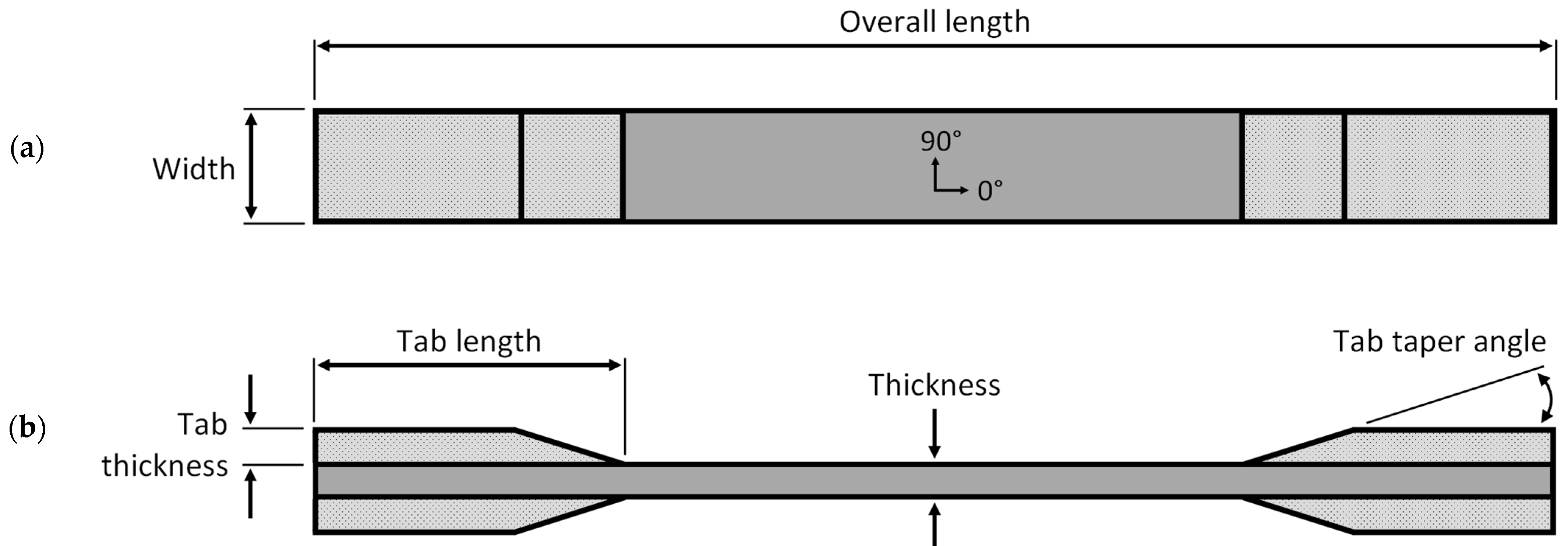
ASTM D3039 and ISO 527 recommend the use of straight-sided specimens for testing of both unidirectional and multidirectional continuous FRP composite materials [38,39,40]. Figure 1 depicts a typical straight-sided tensile specimen with bonded end tabs. ISO 527-4 also includes a specimen with a gradual width taper, which is suggested for testing multidirectional continuous FRPs having a thermoplastic matrix.
Unidirectional composites may be tested with fibres oriented in the 0° (longitudinal) direction or 90° (transverse) direction [38,39,40]. Longitudinal tensile strength is dominated by the fibres, while transverse tensile strength is dominated by the matrix. Since the fibres carry most of the load [24], the 0° unidirectional fibre orientation exhibits significantly greater tensile strength compared to the 90° unidirectional fibre orientation. Tensile testing in the longitudinal direction typically requires smaller cross-sectional dimensions as longitudinal specimens exhibit higher strengths than transverse specimens (Table 2). In general, ASTM D3039 and ISO 527 recommend similar overall dimensions for unidirectional and multidirectional continuous FRPs. One major difference is the overall length recommended for 90° unidirectional specimens: ASTM D3039 recommends 175 mm rather than 250 mm. Additionally, ASTM D3039 recommends a thickness of 2.5 mm for multidirectional specimens, which is thicker than the 2 mm recommended by ISO 527-4.

2.2. Tabbing Recommendations

End tabs are commonly bonded to the specimen’s grip region to prevent crushing of fibres due to the gripping forces that may cause premature specimen failure [45]. Although end tabs are optional in ASTM D3039 and ISO 527 standards, ASTM D3039 recommends tabs when testing unidirectional specimens in the fibre direction. For both unidirectional and multidirectional specimens, ISO 527 advises testing without tabs first, and if failure in the gauge section cannot be achieved, bonded tabs should be used. Both standards recommend end tabs to be made from cross-ply or woven glass fibre-reinforced polymer (GFRP) laminates, bonded at a ±45° fibre angle [38,39,40]. According to ASTM D3039, any high-elongation adhesive applied with a uniform bondline and minimum thickness may be used. ISO 527 suggests adhesives with a shear strength greater than 30 MPa that exhibit an elongation at break higher than the test material.
A minimum tab length of 50 mm is advised by ISO 527 for unidirectional and multidirectional specimens. ASTM D3039 provides the following equation to calculate the minimum bonded tab length:
L min = F t u   h 2   F s u   ,
where F t u is the tensile strength of the coupon material, h is the coupon thickness, and F s u is the shear strength of the weakest material (adhesive, coupon, or tab).
The recommended tab taper angle varies between the ASTM D3039 and ISO 527 standards. ASTM D3039 suggests different tab taper angles depending on the type of grips used. For example, a taper angle of 90° is suggested for non-wedge grips, while low taper angles (7–10°) are suggested when using wedge action grips. In contrast, ISO 527 only specifies end tabs with a 90° taper angle. Other tabbing arrangements can be used, such as friction tabs from emery cloth or tabs made from the same material as the specimen.

2.3. Preparation Recommendations

Defects introduced during the specimen preparation process are a known cause of scatter in composite tensile measurements [38]. ASTM D3039 recommends moulding individual test specimens or cutting specimens from plates using water-lubricated sawing, milling, or grinding processes with diamond tooling. ISO 527 emphasises the use of coolant to avoid heat build-up during machining and suggests drying the specimen following the use of liquid coolant.

2.4. Gripping Recommendations

Grips are intended to hold the specimen with sufficient pressure to prevent slippage, while also avoiding crushing or damaging the specimen [38,39]. Precise control over grip pressure can be achieved with hydraulic or pneumatic grips. Lightly serrated grip faces, with approximately 1 serration/mm, are recommended by ASTM D3039. Rotationally self-aligning grips are also recommended to minimise specimen bending stresses [38].
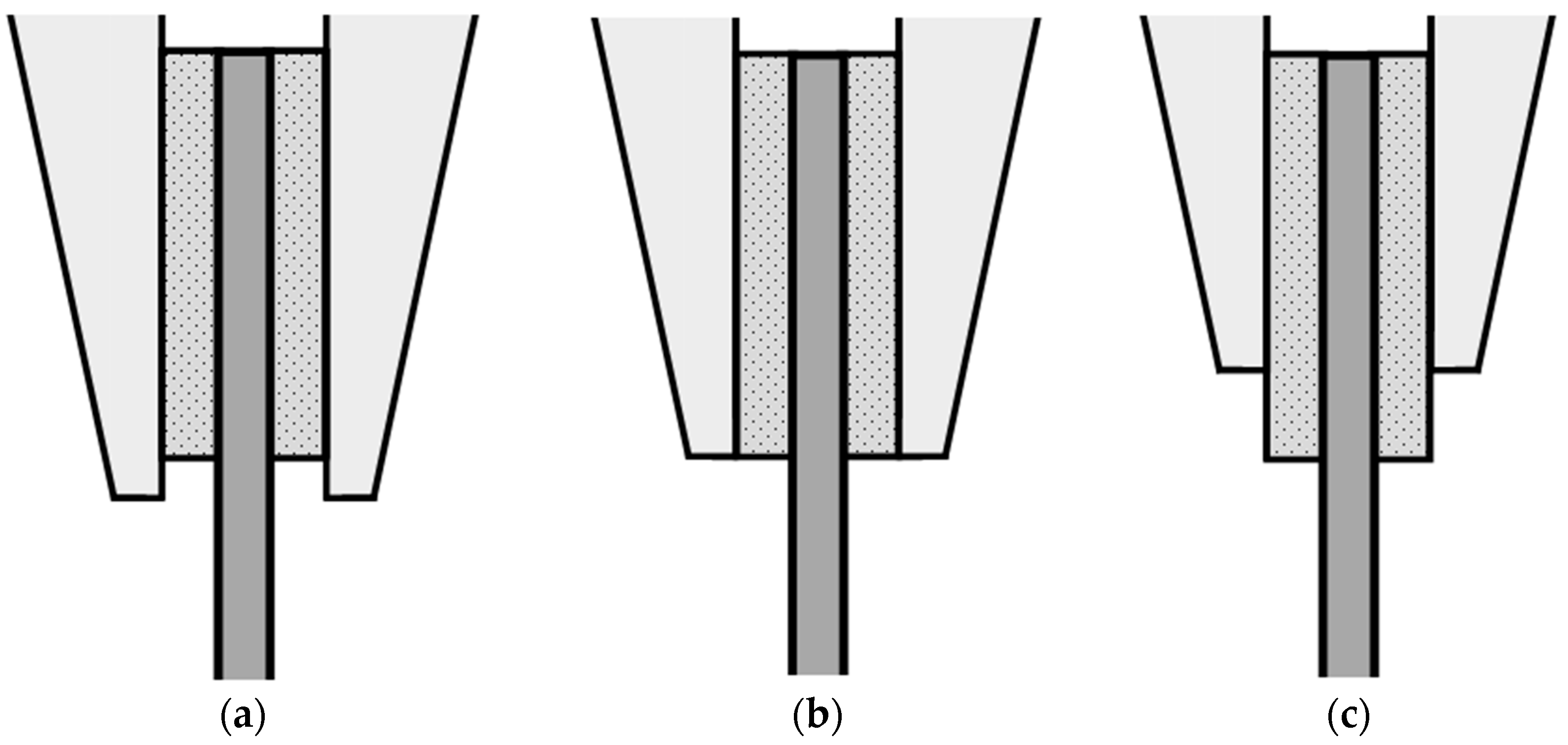
The position of the grip is a key consideration when testing specimens with tabs. Portnov et al. [46] used finite element analysis (FEA) to study the effect of grip position on the maximum stress concentrations in carbon/epoxy composites. The FEA results for both elastic and elastoplastic adhesive behaviour showed minimal variation in the maximum longitudinal stress concentration for three different grip positions (Figure 2), as also reported by De Bare et al. [47]. However, the lowest maximum normal stress concentration occurred with the tabs positioned fully inside the grip. The maximum normal stress concentration was at least 1.8 times higher with the end tab level with the grip edge and at least 2.4 times higher with the end tab partly outside the grip. Consequently, when testing tabbed specimens, ASTM D3039 and ISO 527 suggest that the grips should overhang the bevelled portion of the tab by 10–15 mm and ≥7 mm, respectively.

2.5. Alignment Recommendations

Poor alignment of the testing machine and specimen can contribute to premature material failure [38]. If there is uncertainty regarding the alignment of the testing setup, ASTM D3039 and ISO 527 both recommend checking alignment using a strain-gauged coupon of similar size and stiffness to the test specimen.

3. Ambient Testing

It is widely reported that compliance with the ASTM D3039 and ISO 527 standards does not ensure that tensile failure occurs within the gauge section of the FRP specimen [25,41,48,49,50,51]. In fact, failures commonly occur near the grips due to multi-axial stress concentrations that arise from geometric discontinuities in the specimen [25]. Such failures are deemed invalid according to ASTM D3039 and ISO 527, with ASTM D3039 advising a thorough evaluation of the test setup when a significant proportion of the failures are located within one specimen width of the tab or grip [38].

3.1. Unidirectional Composites

When testing unidirectional composites, especially in the longitudinal direction, grip failure can be expected in almost every case [25]. This is caused by the material’s high strength, which often requires large clamping pressures to prevent specimen slippage, thus worsening stress concentrations. Additionally, increased clamping pressure can cause crushing of the specimen in the grip area, making end tabs essential for unidirectional composite testing [45].
Matsuo et al. [52] demonstrated that the benefit of tabs may depend on the material being tested. Tensile tests of tabbed and untabbed unidirectional carbon/polyamide 6 (CF/PA6) and carbon/polypropylene (CF/PP) specimens were performed by five separate testing laboratories, all following the ISO 527-5 standard. Tabbed CF/PA6 and CF/PP specimens exhibited an average longitudinal tensile strength that was 14.2% higher and 39% lower than their untabbed counterparts, respectively.
Fazlali et al. [53] used a thin ply unidirectional carbon/epoxy composite to compare the longitudinal tensile properties of specimens without tabs, with tapered woven glass/epoxy tabs, and with squared woven glass/epoxy tabs. The untabbed specimens demonstrated at least 14% and 9.7% lower tensile strength and failure strain, respectively, compared to that of the tabbed specimens, in spite of their reduced geometric discontinuity. The above reductions in properties were attributed to surface damage from the serrated grips. However, the differences in tensile strength and failure strain between the tapered and squared tabbed specimens were not statistically significant. Similarly, Hojo et al. [54] found that unidirectional carbon fibre-reinforced polymer (CFRP) specimens exhibited similar strength when using square cut tabs and tabs with a 10° taper. Interestingly, the tapered tabs were more prone to severe delamination that extended under the tabbed area prior to final fracture.
Yoo et al. [49] evaluated the effect of various tab materials on the tensile properties of unidirectional carbon/epoxy specimens. Straight-sided specimens with no tabs, CFRP tabs, GFRP tabs, and 60-grit emery cloth were investigated. Bonded emery cloth tabs produced the highest average tensile strength of the tab configurations tested, while also demonstrating failure within the gauge section. The difference between the average tensile strength of specimens with GFRP tabs and emery cloth tabs was not statistically significant. However, specimens with GFRP tabs appeared to fail more consistently at the grips. Although emery cloth was the most promising tab material, only 4 of the 20 specimens tested with emery cloth failed within the gauge section.
In some unidirectional composites, the compressive shockwave generated by the release of energy during failure can cause fracture at multiple locations along the specimen’s length [55]. The resulting failure is broom-like in appearance [54,56], making it challenging to identify how far the failure occurs from the grip. Fazlali et al. [55] found that a high-speed camera recording at 1000 frames per second was suitable for determining the failure location in unidirectional carbon/epoxy laminates, although much greater frame rates are required to observe the full evolution of failure.

3.2. Multidirectional Composites

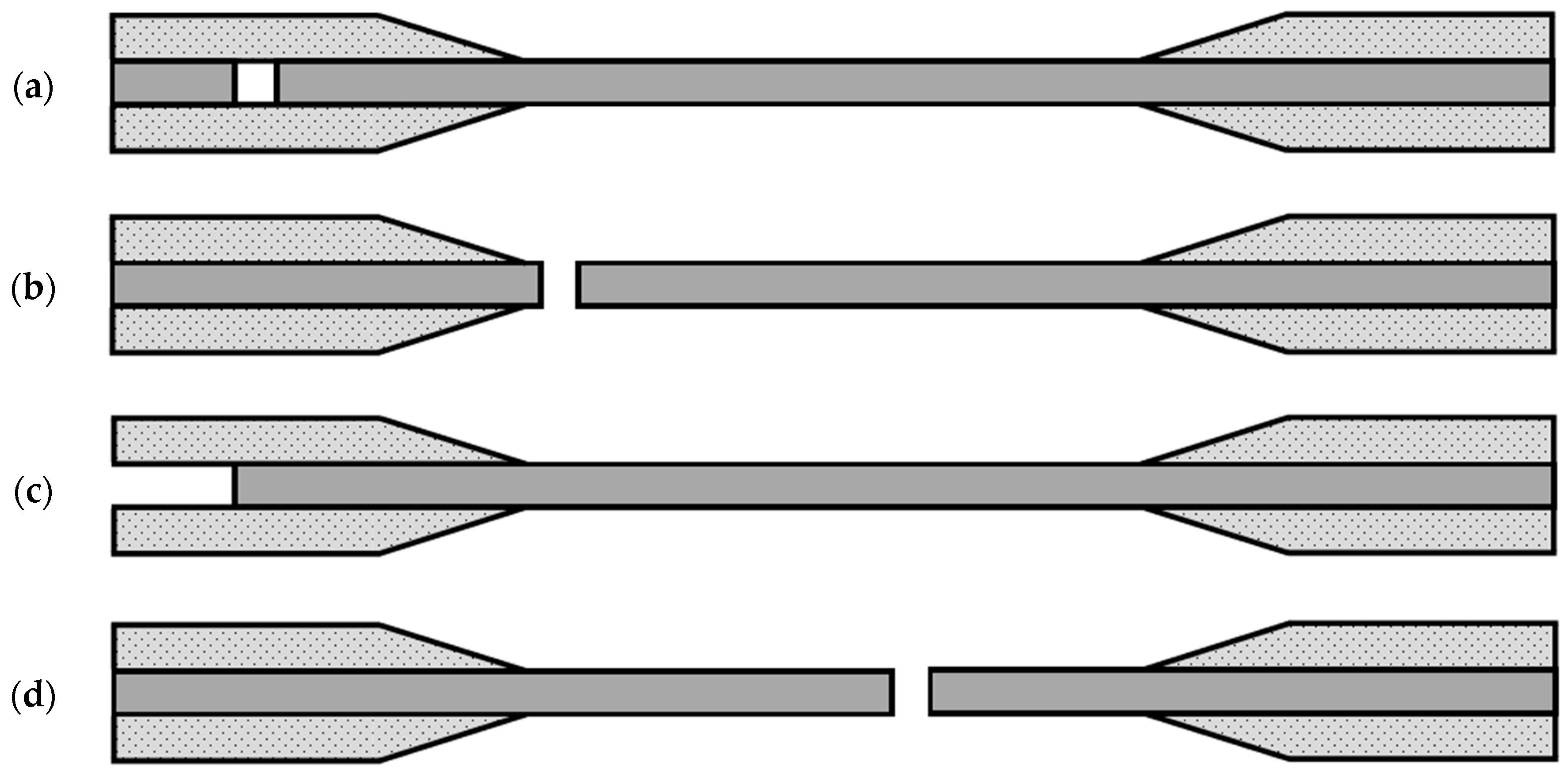
While grip-induced failures are particularly prominent in unidirectional composites due to high stress concentrations [25,55], numerous studies have also documented similar failures when testing multidirectional FRP composites [50,51,57]. De Baerre et al. [51] report tensile testing of woven carbon/epoxy composite using different tab materials (aluminium, glass, carbon), tab geometries (12° taper, square cut), adhesives, and surface preparation methods. Material failure occurred inside the tabs, near the tabs, or due to the test material being pulled out of the tabs, with not a single failure in the gauge region being observed (Figure 3).
Al-Qrimli et al. [57] also reported specimen failure near the grips when testing woven carbon/epoxy composites while following ASTM D3039. A finite element model predicted a tensile strength of 884 MPa and failure strain of 0.012, which was validated with the experimental averages of 894 MPa and 0.013, respectively. FEA of the stress state within the specimen indicated that principal stresses were highest at the end of the tabbed region.

3.3. Non-Standard Specimen Geometry

Alternative specimen geometries, such as dog bone-shaped specimens, have been used to encourage failure to occur within the gauge region [58]. These specimens involve width tapering that aims to reduce the width of the gauge section to promote failure further away from the gripped area. According to Worthem [58], width-tapered specimens tend to fail in the transition between the straight-sided gauge section and gripping area due to localised stress concentrations. Width-tapered composite specimens of varying transition contours were investigated using FEA, demonstrating that tensile specimen geometries could be improved by designing transitions with minimal slope and a radius that gradually tapers to zero as it approaches the gauge section. A specimen with a large 41.91 cm radius demonstrated the lowest normal stress and in-plane shear stress, as well as the largest separation between maximum stress values, which helps to reduce the combined stress state. Although the large radius design reduced transition region stresses, the study pointed out that specimens with curved transitions may be more prone to machining-induced damage during manufacture compared to straight-sided coupons.
The concept of incorporating large transition radii in FRP tensile specimens has been further explored in butterfly specimens [59]. Like dog bone shapes, butterfly specimens involve a tapered width in the gauge section. However, the radius is extended to the very ends of the butterfly specimen, resulting in a larger radius of curvature compared to a dog bone-shaped specimen. Kumar et al. [56] performed tensile tests on straight-sided, butterfly, and elongated butterfly (X-butterfly) unidirectional carbon/vinyl ester specimens with glass/epoxy end tabs. The results showed that butterfly and X-butterfly specimens exhibited failure strains that were 8.4% and 10% higher than straight-sided specimens, respectively.
Fazlali et al. [53] noted a lower strength and failure strain in tabbed butterfly specimens compared to tabbed straight-sided specimens when testing a thin ply unidirectional carbon/epoxy. This was caused by longitudinal splitting along the length of the specimen that resulted in premature material failure. Longitudinal splitting often occurs in the transition region of width-tapered unidirectional composites due to low shear strength, according to Adams et al. [45]. Machining-induced damage when manufacturing the radii may have also been a key factor. Fazlali et al. [53] reported that the waterjet cutting process creates a slightly roughened edge that may contribute to the initiation of longitudinal splitting in butterfly specimens.
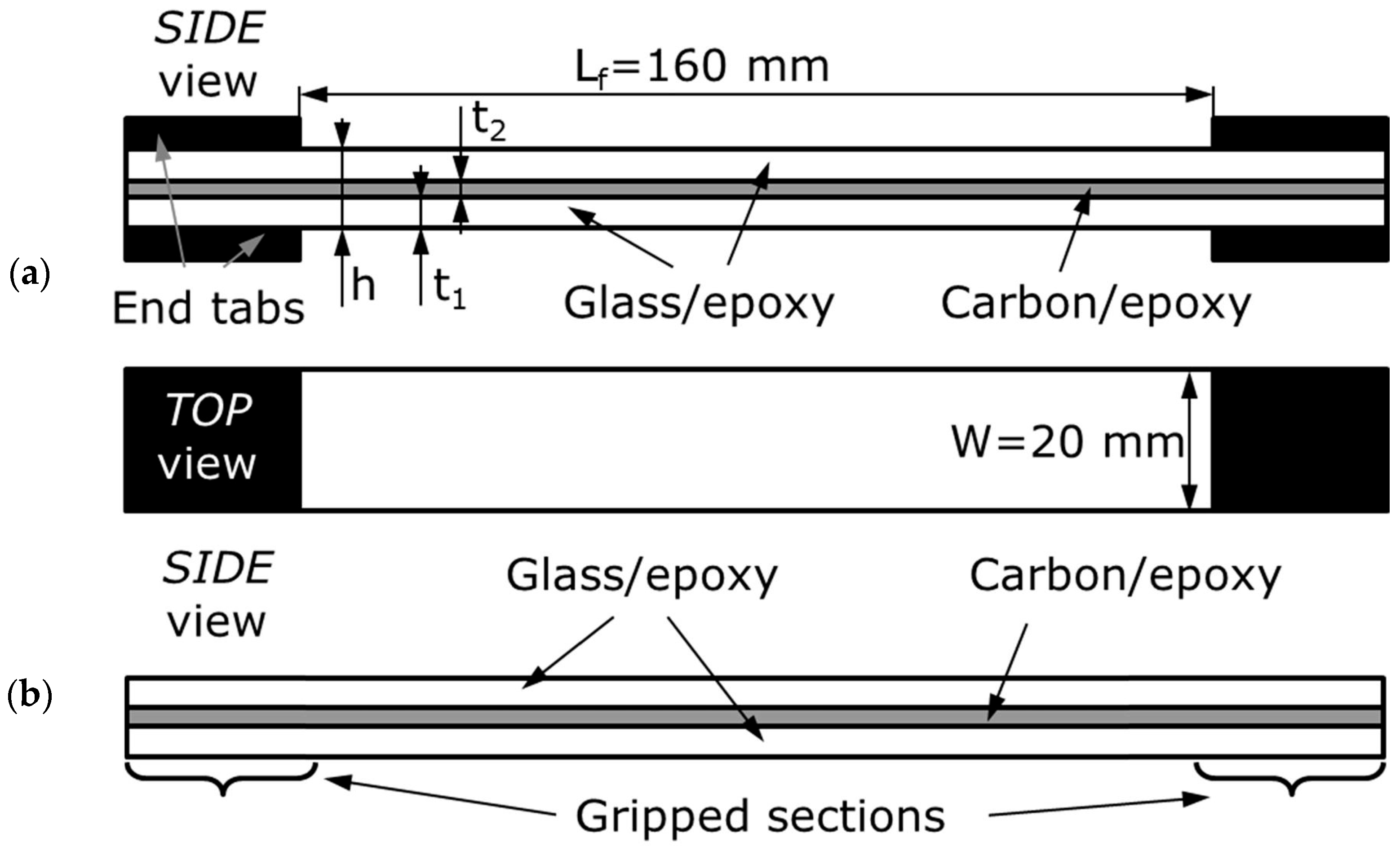
Czél et al. [60,61] proposed a novel concept for tensile testing unidirectional FRPs that involves bonding the test material between two continuous tabs. Carbon/epoxy was used as the test material, with glass/epoxy used for the continuous tabs (Figure 4). The continuous nature of the tabs minimises both grip-induced stress concentrations in the unidirectional carbon/epoxy material and surface damage due to gripping. By ensuring that the low-strain (carbon/epoxy) layer fails before the glass/epoxy continuous tabs, a significant and identifiable stress drop will indicate the failure strain of the carbon/epoxy material. Czél et al. [61] demonstrated an increase of 25.3% in tensile failure strain for continuous tabbed specimens over conventional specimens. Additional tests compared continuous tabbed specimens with and without end tabs. Tests without end tabs produced consistent gauge failure in the carbon layer and similar failure strains compared to the continuous specimens with tabs. Therefore, end tabs were found not to be necessary.
A limitation of specimens with continuous tabs is that the tensile strength of the carbon/epoxy layer cannot be measured directly. This means that tensile strength must be back-calculated, and variations in the thickness of the carbon/epoxy layer across the specimen’s width can increase errors in the calculation [62]. For these reasons, continuous tabs are suitable for strain measurement but are not recommended for measurement of tensile strength [25].
Fazlali et al. [53] also investigated different tab geometries to encourage gauge section failures. Experimental tests were performed on unidirectional carbon/epoxy specimens with conventional end tabs, continuous tabs and arrow end tabs. Continuous tabs and arrow end tabs exhibited 7% and 4.8% (both statistically significant) higher failure strains, respectively, compared to conventional end tabs. However, the measured and back-calculated tensile strengths of specimens with arrow end tabs and continuous tabs, respectively, were comparable to conventional end tabs. FEA optimisation of the arrow-shaped end tab led to the design of a circular-shaped end tab that maximally reduces the longitudinal, transverse, and shear stress components. However, experimentally, the circular-shaped end tab did not result in statistically significant differences in the failure strain or tensile strength compared to the arrow end tab.
While bonded end tabs are the most frequently used method of tabbing, some studies have also investigated specimens with internally dropped plies where the specimen thickness gradually decreases towards the gauge section by terminating internal plies [25]. Wisnom et al. [63] examined the tensile properties of a unidirectional glass/epoxy prepreg by manufacturing straight-sided specimens with ply drops over a 15 mm length. The result was a unidirectional specimen which contained 15 plies at the specimen ends, which reduced to only 8 plies in the gauge section. Extensive failure was observed in the specimen gauge section, although damage in some specimens initiated near the taper. Khan et al. [64] and Wisnom et al. [65] found that delamination and fibre failure in the tapered section of the specimen were eliminated by chamfering the dropped plies. Yet, there is increased complexity in the manufacturing process for specimens with internally dropped plies compared with bonded tabs.

3.4. Strain Measurement

Strain measurements in tensile testing are traditionally obtained by contact methods that include the use of strain gauges or extensometers [66]. Strain gauges bonded to the surface of the test specimen offer a low-cost and accurate method of strain measurement [66]. However, the measurement accuracy of strain gauges strongly depends on precise alignment during the bonding process [67]. Contact extensometers use a linear variable differential transformer to measure strain from a change in the displacement over a fixed gauge length by simply clipping onto the test specimen, reducing the required setup time.
Non-contact strain measurements, using video or laser extensometers, are also used for tensile testing of composites. Optical methods enable the measurement of full-field strain over the specimen’s surface through digital image correlation (DIC) [68,69]. Recently, Fazlali et al. [55] conducted round-robin tensile testing of unidirectional carbon/epoxy laminates at several different testing labs. Different strain measurement methods were used across the various testing labs, including optical extensometer, DIC, contact (clip-on) extensometer, and strain gauges. Practical difficulties were observed while using contact measurement methods, such as difficulty securely attaching clip-on extensometers and unreliable failure strain results from strain gauges. Fibre splitting at the specimen’s edge or surface was thought to interfere with the strain gauge’s contact with the specimen.

4. Cryogenic Testing

4.1. Cooling Methods

Tensile specimens are typically cooled to cryogenic temperatures by immersion in cryogenic liquids and/or exposure to cold gas [28]. Common cryogens and their boiling points are outlined in Table 3. Due to their relative availability and safety, liquid nitrogen (LN2) and liquid helium (LHe) are the most widely used cryogens for mechanical testing. However, investment in a recovery system needs to be considered to minimise helium consumption for high-volume or long-term testing, given the high cost of helium [70]. Liquid hydrogen (LH2) may also be utilised for cryogenic testing, but safety concerns related to the flammability of hydrogen limit its widespread use [71].
Immersion in cryogenic liquid enables rapid and uniform cooling, with the test temperature generally limited to the boiling point of the cryogenic liquid, unless decompression is applied. Aviles Santillana et al. [73] designed a 100 kN cryostat for tensile testing at temperatures down to 4.2 K with LHe. Cooling times of 20–25 min were achieved between consecutive tests, with 25–30 L of LHe consumed per test. The setup consisted of a 15 L vacuum-insulated dewar with 20 layers of multi-layer insulation (MLI) and thermal screens to minimise heat leak. Within the dewar, the lower specimen grip was mounted on an internal load-bearing frame, while the upper specimen holder was coupled to an internal load cell and pull rod. The system was leak-tight and equipped with an outlet located on the top flange for recovery of the helium vapour.
Huang et al. [74] developed a similar, albeit multichambered, cryostat capable of attaining temperatures down to 1.8 K. The cryostat was first pre-cooled with LN2 prior to being filled with LHe to reduce LHe consumption. The helium vapour was pumped out of the chamber to reduce the pressure after establishing thermal equilibrium at 4.2 K, enabling the system to reach 1.8 K within 2 h. Excellent thermal performance was obtained by using a separate LN2 chamber to cool the MLI-wrapped radiation shield, as well as using activated carbon to enhance the vacuum quality within the vacuum chamber.
In contrast to immersion in cryogenic liquids, cold gas offers the flexibility for controlled cooling rates and a broad range of test temperatures [75,76,77]. This is accomplished through pressure control [33], flow rate adjustment, active heating [78], or a combination of these methods. Kim et al. [33] conducted thermo-mechanical cycling of carbon/epoxy tensile specimens by regulating the evaporating pressure of LN2. Temperatures of 223 K, 173 K, and 123 K were attained after 2 h by maintaining a 22 psi evaporating pressure.
Guan et al. [79] designed and fabricated a variable temperature cryogenic chamber for performing tensile tests between 293 K and 77 K. The system used a needle valve for LN2 flow rate control as well as an electric heating element for precise temperature regulation. A direct spray and power-controllable air circulation system was also implemented to improve the rate of vapour diffusion and ensure a uniform temperature distribution around the specimen.
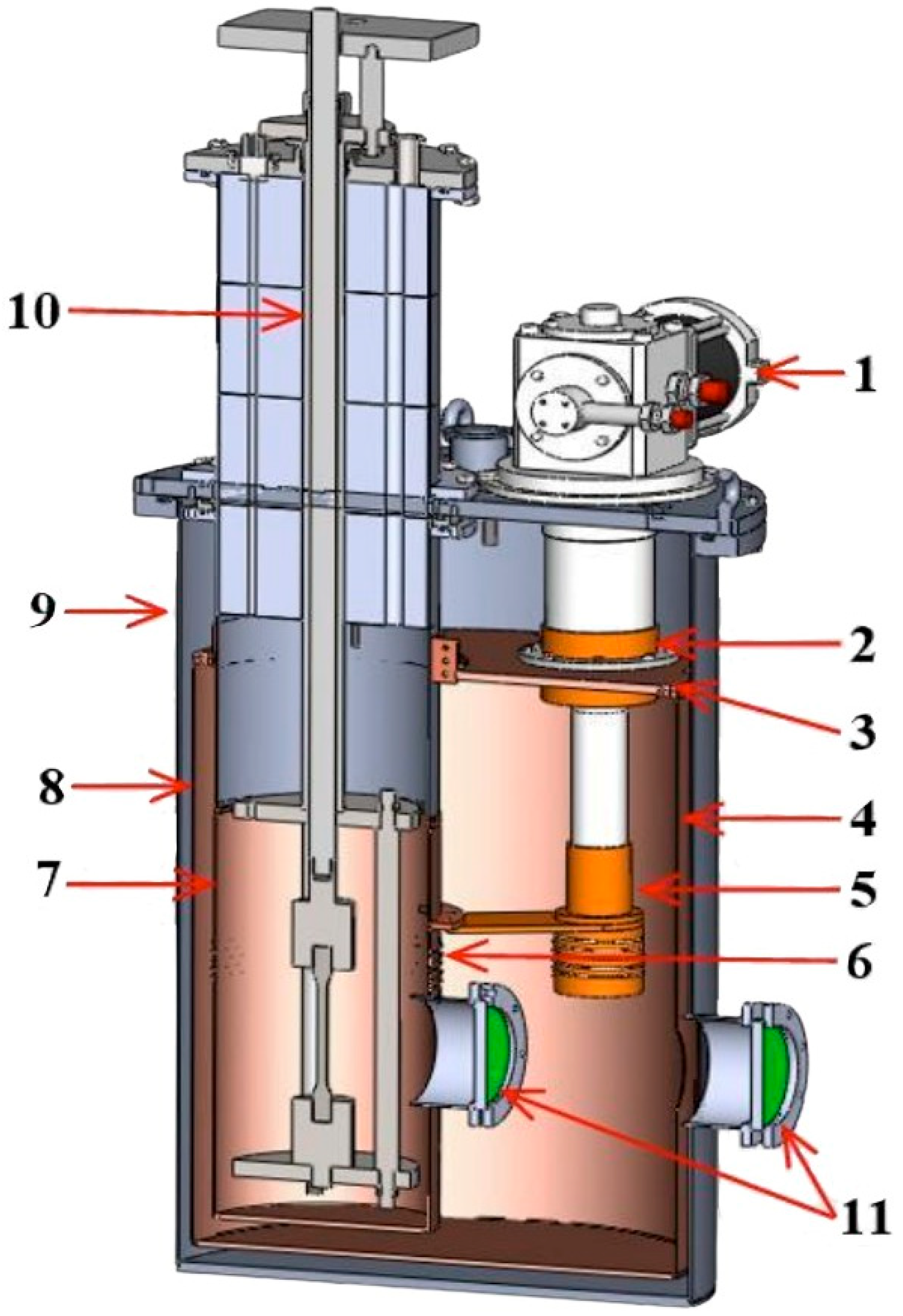
In addition to evaporating cryogens, cold gas can also be produced through mechanical refrigeration with cryocoolers [80,81]. Since cryocoolers do not require cryogenic liquids, they can provide cooling with relatively low operating costs, though vibration can be a concern [82]. Zhang et al. [83] used mechanical refrigeration to develop a conduction-cooled mechanical property testing system with two Gifford-McMahon (G-M) cryocoolers (Figure 5). In this system, the specimen chamber was filled with helium gas and cooled via thermal bridges between the chamber and cryocooler cold heads. After the specimen reached thermal equilibrium at 11.1 K, a dry scroll pump was used to lower the chamber pressure by pumping out helium gas. This decompression process reduced the specimen temperature from 11.1 K to 2.7 K, reaching the final temperature after a total of 7.5 h.
Kim et al. [81] performed tensile tests at 20 K using a single G-M cryocooler. The cryostat was insulated with a vacuum jacket and an aluminium thermal shield covered with 30 layers of MLI. The first stage cold head was used to cool the thermal shield, while the second stage was connected to the test chamber via a copper block. With only one G-M cryocooler, cooling from room temperature to 20 K took approximately 13 h.
From the examples given above, it is evident that the lower cooling capacity of gases significantly reduces the rate of cooling compared to cryogenic liquids [26]. Although this may result in prolonged test times, the slower cooling rates can prevent thermal shock to the specimen. Thermal shock of composites may result in microcracking of the reinforcing phase, matrix phase and/or the reinforcement–matrix interface when the material is rapidly exposed to cryogenic temperatures [84,85].
At the fibre level, Zhang et al. [86] studied the effect of cooling rate on the tensile and interfacial properties of T300 carbon fibre. The fibres were cooled from room temperature to 77 K at two different rates: slowly at 2 K/min, and rapidly through direct quenching in LN2. Both cooling methods caused a reduction in tensile strength compared to untreated fibres. While intrinsic defects were the dominant reason for fibre failure in the untreated and slow-cooled fibres, quenched fibres were more likely to fail due to an increase in microcracking at the fibre surface. Fibres treated by slow cooling exhibited a 41% increase in surface roughness compared to untreated fibres, whereas the quenched fibres showed minimal change. The increased surface roughness was believed to provide a stronger fibre–matrix interface, resulting in a 30% increase in interfacial shear strength for the slow-cooled fibres. In contrast, the quenched fibres showed no change in interfacial shear strength.
Microcracking of composite laminates at cryogenic temperatures is driven by the mismatch in the coefficients of thermal expansion between the fibre and matrix materials [87,88,89]. A review by Sápi et al. [26] noted that composites exposed to larger temperature changes and higher cooling rates developed more cracks. For instance, Hohe et al. [90] reported the absence of microcracking in carbon/epoxy composites following exposure to 4.2 K at a slow cooling rate of 1.2 K/min, as determined by X-ray computed tomography.
In contrast, Griffith et al. [91] observed increased damage during slow cooling compared to rapid cooling. Slow cooling was performed at a cooling rate of 2.3 K/min using cold nitrogen gas, while rapid cooling was performed by immersion in slush nitrogen at around 66 K. Despite the faster cooling rate and greater temperature change, rapid cooling resulted in comparatively less interfacial debonding and significantly less matrix cracking.
To summarise, the selected method and rate of cooling can play a significant role in the cryogenic performance of FRP composites. Therefore, both the cooling rate and temperature should be carefully selected to replicate the operational environment of the composite under evaluation. For example, filling of an LH2 fuel tank might result in a relatively rapid cooling rate that generates thermal shock, consequently influencing the mechanical properties of the composite when tested at cryogenic temperatures. Continued research into the influence of different cooling methods and rates will also help the standardisation of cryogenic testing methods.

4.2. Cryogenic Tensile Specimens

Full-scale component testing is possible at cryogenic temperatures [92,93]. However, cryogenic test apparatus are generally designed to be compact in order to minimise heat leak and reduce cryogen consumption [27]. For the same reasons, standard tensile coupons used for room temperature testing are also often reduced in size for cryogenic testing. However, studies have shown that this reduction in specimen size may have an independent and significant influence on the tensile properties measured at cryogenic temperatures [65,94]. Wisnom [94] reviewed experimental data from tensile, flexural, and compressive tests, focusing on unidirectional carbon/epoxy and glass/epoxy materials. The results showed a significant size effect in the strength of continuous fibre-reinforced composites, with tensile strength decreasing as specimen volume increases. In many cases, this trend could be described by the Weibull statistical distribution [95].
According to the Weibull weakest link theory, the strength of a brittle material under uniform stress is governed by its most critical defect. Since defects tend to be randomly distributed, larger volumes have a higher probability of containing a more severe defect, resulting in lower strength. Wisnom et al. [65] discovered a 14% reduction in the strength and failure strain when scaling up all of the dimensions of unidirectional carbon/epoxy tensile specimens by a factor of 8.
Kumar et al. [96] developed an analytical model based on the Weibull weakest link theory to quantify the stress ratio between two specimens with the same probability of failure. When applied to experimental data that showed a 7% increase in tensile strength from changing specimen geometry from straight-sided to butterfly, the model found that 1–2% of the increased strength was the result of differences in the specimen shape and volume.
It is common to use reduced-sized specimens in cryogenic testing due to space limitations. However, it is important to consider the size effects of specimens while also ensuring that the specimen’s cross-section includes enough fibres to reliably reflect the properties of the bulk material [38].

4.3. Cryogenic Gripping

Cryogenic environments present significant challenges for the reliable gripping of tensile specimens. A common issue in cryogenic testing is specimen slippage that may result from (i) ice formation due to moisture trapped between the specimen and grip face [97], or (ii) thermal contraction of both the specimen and grips [41]. Simply increasing the grip force to prevent specimen slippage can elevate stress concentrations within the specimen, increasing the risk of premature failure [98].
Thermal contraction may also pose problems for the performance of the grips themselves, particularly when interacting components are constructed from dissimilar materials [97]. Differences in the coefficient of thermal expansion in the test setup can lead to mechanical stresses, misalignment, or loosening of threads and load-bearing connections. Salmeron Perez et al. [50] performed tensile tests at 108 K in an environmental chamber cooled by evaporated LN2 and found that traditional wedge action grips were unsuitable for cryogenic testing. The sliding metallic surfaces of the wedges would seize at cryogenic temperatures, causing the test specimens to slip. At the same time, the large mass of the grips contributed to high LN2 consumption (75 L per test) and long cooling times (90 min per test).
As with room temperature testing, proper alignment of the experimental setup is important to minimise bending stresses in the test specimen. System alignment can be verified with a strain-gauged coupon [38], while cryogenic grips can also be designed with self-aligning features [73,97]. Spetsieris et al. [97] designed a self-aligning cylindrical gripping system for cryogenic FRP testing that addressed issues with traditional wedge-action grips. A modular system was designed with interchangeable wedge grip faces for both tensile and compression testing. To ensure excellent cryogenic performance and minimise friction between components, the grips were constructed from Inconel 718, a nickel-chromium superalloy, with a graphitic carbon-based coating. The grips were designed to be lighter and more compact than traditional grips while supporting loads up to 250 kN.
Non-wedge grips consisting of two face plates clamped together with bolts have also been employed for cryogenic tensile testing [99]. The simplified design avoids the seizing of any sliding surfaces that occurs with wedge grips. Whitley et al. [100] used a hand-held torque wrench to achieve specific gripping forces. Additionally, spring or Belleville washers can be used to maintain bolt tightness at cryogenic temperatures [78].
Several authors have tested shoulder grips that use a tapered specimen geometry to introduce load into the specimen, rather than relying solely on friction [101,102]. Kumagai et al. [36] conducted tensile tests on woven carbon/epoxy specimens at room temperature, 77 K, and 4 K using bonded GFRP wedge tabs (Figure 6). The wedge tabs allow the specimen to be wedged into a mating fixture with no moving parts, providing a more reliable means of load introduction at cryogenic temperatures than conventional wedge grips. The study reported that wedge tabs eliminated the gripping issues previously encountered in cryogenic tensile tests.
Kumagai et al. [101] studied the performance of woven glass/epoxy dog bone specimens, using shoulder grips and conventional wedge grips for comparison. The shoulder grips transferred the tensile load from the fixture to the specimen via mating contact through the test specimen’s transition radius. The study found that at room temperature, there was no significant variation in tensile properties measured with the different gripping methods. However, the use of the wedge grips at 77 K resulted in invalid results due to specimen slippage, while the shoulder grips gave valid results with a tensile strength almost double that of the room temperature measurements. Despite eliminating specimen slippage at cryogenic temperature, failure consistently appeared in the specimen’s transition radius, independent of the grip type.
Li et al. [75,102] also used shoulder grips when testing both glass/epoxy and carbon/epoxy FRP composites at 93 K. Rather than a conventional dog bone specimen with a filleted transition radius, the test specimens in these studies featured a straight 45° angled transition between the grip section and the gauge section. In this design, the tensile load was applied through the 45° shoulders of the test specimen. The effect of this specimen geometry and the gripping method on test performance was not reported.
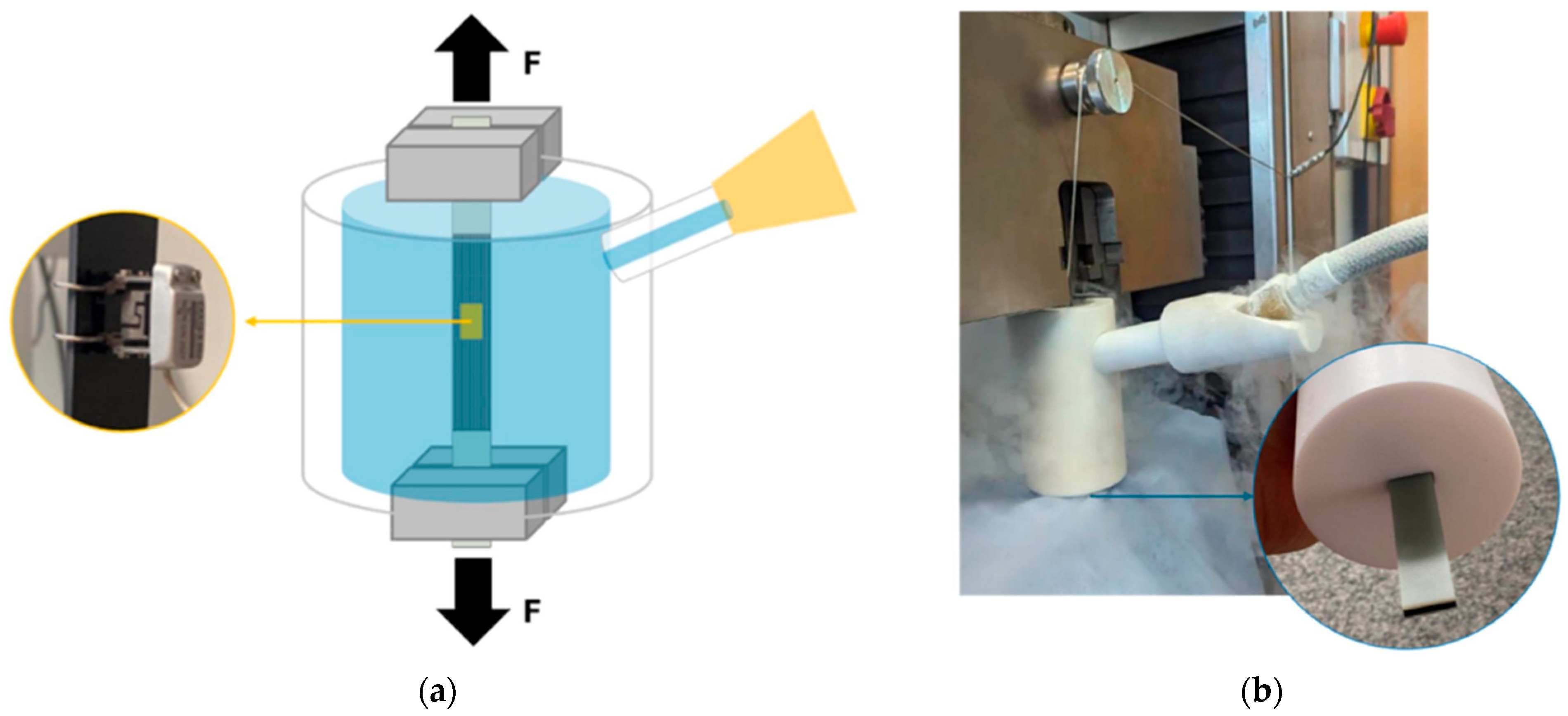
Cryogenic tensile tests have also been performed by only cooling the gauge section of the specimen, in order to lower the need for specifically designed cryogenic grips. Szpoganicz et al. [103] tested quasi-isotropic carbon/epoxy laminates at 77 K using a polytetrafluoroethylene mould to contain LN2 around the specimen (Figure 7). The mould was large enough to accommodate a clip-on extensometer, and a silicone seal was applied at the bottom of the mould to prevent any leakage of LN2. This method allowed the specimen to be clamped with standard grips that remain near room temperature throughout the test. Since only a small thermal mass is cooled, this approach also reduces testing time and cryogen consumption. Localised cooling does present some drawbacks; these include a significant thermal gradient along the length of the specimen that may cause non-uniform contraction, and the development of strain and stress gradients in the material [26]. Additionally, as the system does not operate as a closed loop, continuous cryogen consumption would make testing at LHe temperatures expensive.

4.4. Tab Delamination

Tab delamination is not uncommon in cryogenic testing [50]. Kumagai et al. [36] performed tensile tests on woven carbon/epoxy specimens at 77 K and 4 K using bonded tabs made of woven glass/epoxy and observed shear failure of the adhesive. Kim et al. [37] reported similar difficulties when testing carbon/epoxy laminates at 123 K. The separation between the tab and laminate at high loads was attributed to shear stresses resulting from the different coefficients of thermal expansion of the materials. Emery cloth was used as the tab material to prevent tab delamination.
These studies demonstrate that when using bonded tabs at cryogenic temperatures, it is important to select an adhesive with suitable cryogenic performance and to consider the coefficients of thermal expansion of the tab and the test material. If delamination continues, emery cloth can be used as an alternative tab material.

4.5. Cryogenic Strain Measurement

Strain measurements in cryogenic environments are generally obtained with strain gauges or extensometers. While many authors have used strain gauges with success [37,104], the thermal expansion of strain gauges and adhesive can lead to detachment of the gauge [26]. Aoki et al. [105] found that extensometers were more reliable than conventional strain gauges at cryogenic temperatures. In contrast, Hohe et al. [90] observed strain jumps due to slipping of the extensometer blades on the specimen surface, causing invalid strain measurements for parts of tests or entire tests conducted in LHe. Additionally, when immersed in cryogenic liquids, particularly LHe, extensometer self-heating can cause turbulence, which results in thermomechanical noise. Womack [106] recommended lowering the supply voltage to reduce the self-heating effect. Nevertheless, clip-on extensometers are widely used for cryogenic tests at specialised material testing labs such as CryoMaK, CERN, and NASA [107].
The reliability of optical strain measurements can be hindered by ice, condensation, and/or the boiling of liquid cryogens [108]. Despite its challenges, a handful of studies have shown successful DIC measurements during tensile testing at cryogenic temperatures. Zhang et al. [83] tested a titanium alloy at 20 K, while Kawasaki et al. [109] used ultrafine-grained 304 stainless steel specimens at 77 K. Although these studies focused on metallic tensile specimens, their successful non-contact measurement of local macroscopic strain under cryogenic conditions highlights the potential application of non-contact cryogenic strain measurement techniques to FRP composite materials.

4.6. In Situ Damage Monitoring and Characterisation

Developments in various in situ characterisation techniques have enabled detailed investigation of the cryogenic damage evolution in FRP composites during tensile testing. Shindo et al. [110] conducted acoustic emission (AE) monitoring of glass/epoxy composites during tensile testing in LN2. As the sensors could not operate at 77 K, they were attached to the specimen by stainless steel waveguides and placed outside the dewar. More recent studies have demonstrated in situ AE monitoring using fibre optic sensors immersed in LN2, with the sensors mounted directly onto the specimen surface using silicone grease [77,99,111].
Visual monitoring techniques have also been applied to cryogenic tensile testing. Griffith et al. [91] used a microscope camera to monitor the growth of microcracks during tensile testing of CFRP material at 118 K. The cryostat had a viewing port which allowed the microscope camera to observe the polished edge of the tensile specimen for the duration of the test. To maintain a clear view of the polished specimen edge, surface ice was sublimated by directing a heat gun through the viewing port. In contrast, Li et al. [75,102] performed in situ tensile X-ray computed tomography on both carbon/epoxy and glass/epoxy at temperatures as low as 93 K. This technique facilitated the 3D reconstruction of the test specimens at five different stages during the tensile test, with scans carried out under fixed displacement conditions.

5. Conclusions and Future Research

Performing tensile tests on fibre-reinforced polymer composites can be challenging due to stress concentrations that often cause premature material failure in the specimen. A review of existing research highlights the limitations of current tensile testing standards, which fail to reliably induce gauge section failures in both unidirectional and multidirectional materials. Increasing the consistency of gauge section failures can decrease the cost of testing and increase confidence in the measured tensile properties.
Additional challenges, such as specimen slippage and tab delamination, arise when performing tensile tests at cryogenic temperatures. These challenges, alongside the lack of guidance for cryogenic experimental setups and testing procedures, may contribute to the inconsistent tensile properties observed for fibre-reinforced polymer composites at cryogenic temperatures.
This study has identified several potential areas for future research, which include the following:
  • Systematic experimental and numerical studies aimed at optimising existing specimen geometries and investigating new designs for unidirectional and multidirectional laminates. Novel methods to minimise or even eliminate stress concentrations in tensile specimens could help to achieve more consistent gauge section failures. Further testing should also be conducted using different fibre-matrix material combinations to investigate the potential impact of material variation on specimen failure.
  • Standardisation of tensile test methods for fibre-reinforced polymer composites at cryogenic temperatures. A dedicated standard would provide guidance for experimental procedures and test setups in cryogenic environments. Specific recommendations regarding cryogenic gripping methods may help reduce scatter in the literature.
  • Further investigation into the effects of cooling rates on the tensile properties of fibre-reinforced polymer composites at cryogenic temperatures. Understanding the extent of these effects would offer valuable insight into their potential implications for cryogenic testing procedures as well as the design of cryogenic structures.
While advanced in situ characterisation techniques are crucial for developing a greater understanding of the cryogenic behaviour of FRP composites, their success depends heavily on the reliability and reproducibility of tensile tests. Premature specimen failure due to stress concentrations can prevent the observation of true tensile damage mechanisms, reducing the utility of advanced techniques and leading to potentially costly and inconsistent results. Future work should prioritise the development of standardised cryogenic testing procedures for FRPs to ensure the accurate, consistent, and meaningful application of advanced material characterisation methods at cryogenic temperatures.

Author Contributions

Conceptualisation, J.J.N., J.E.C. and M.P.S.; investigation, J.J.N.; resources, J.E.C.; writing—original draft preparation, J.J.N.; writing—review and editing, J.J.N., J.E.C. and M.P.S.; visualisation, J.J.N., J.E.C. and M.P.S.; supervision, J.E.C. and M.P.S.; project administration, J.E.C.; funding acquisition, J.E.C. All authors have read and agreed to the published version of the manuscript.

Funding

This research received no external funding.

Data Availability Statement

No new data were created or analysed in this study. Data sharing is not applicable to this article.

Conflicts of Interest

The authors declare no conflicts of interest.

Abbreviations

The following abbreviations are used in this manuscript:
AEAcoustic emission
CFRPCarbon fibre-reinforced polymer
DICDigital image correlation
FEAFinite element analysis
FRPFibre-reinforced polymer
GFRPGlass fibre-reinforced polymer
G-MGifford-McMahon
LCH4Liquid methane
LHeLiquid helium
LH2Liquid hydrogen
LN2Liquid nitrogen
LOXLiquid oxygen
MLIMulti-layer insulation
MRIMagnetic resonance imaging

References

  1. Masuelli, M.A. Introduction of Fibre-Reinforced Polymers—Polymers and Composites: Concepts, Properties and Processes. In Fiber Reinforced Polymers—The Technology Applied for Concrete Repair; IntechOpen: London, UK, 2013; ISBN 978-953-51-0938-9. [Google Scholar]
  2. Soutis, C. Fibre Reinforced Composites in Aircraft Construction. Prog. Aerosp. Sci. 2005, 41, 143–151. [Google Scholar] [CrossRef]
  3. Zhang, W.; Xu, J. Advanced Lightweight Materials for Automobiles: A Review. Mater. Des. 2022, 221, 110994. [Google Scholar] [CrossRef]
  4. Mouritz, A.P.; Gellert, E.; Burchill, P.; Challis, K. Review of Advanced Composite Structures for Naval Ships and Submarines. Compos. Struct. 2001, 53, 21–42. [Google Scholar] [CrossRef]
  5. Bakis, C.E.; Bank, L.C.; Brown, V.L.; Cosenza, E.; Davalos, J.F.; Lesko, J.J.; Machida, A.; Rizkalla, S.H.; Triantafillou, T.C. Fiber-Reinforced Polymer Composites for Construction—State-of-the-Art Review. J. Compos. Constr. 2002, 6, 73–87. [Google Scholar] [CrossRef]
  6. Rajak, D.K.; Pagar, D.D.; Menezes, P.L.; Linul, E. Fiber-Reinforced Polymer Composites: Manufacturing, Properties, and Applications. Polymers 2019, 11, 1667. [Google Scholar] [CrossRef]
  7. Phiri, R.; Rangappa, S.M.; Siengchin, S.; Oladijo, O.P.; Ozbakkaloglu, T. Advances in Lightweight Composite Structures and Manufacturing Technologies: A Comprehensive Review. Heliyon 2024, 10, e39661. [Google Scholar] [CrossRef]
  8. Liu, N.; Ma, B.; Liu, F.; Huang, W.; Xu, B.; Qu, L.; Yang, Y. Progress in Research on Composite Cryogenic Propellant Tank for Large Aerospace Vehicles. Compos. Part A Appl. Sci. Manuf. 2021, 143, 106297. [Google Scholar] [CrossRef]
  9. Mitchell, N.; Zheng, J.; Vorpahl, C.; Corato, V.; Sanabria, C.; Segal, M.; Sorbom, B.; Slade, R.; Brittles, G.; Bateman, R.; et al. Superconductors for Fusion: A Roadmap. Supercond. Sci. Technol. 2021, 34, 103001. [Google Scholar] [CrossRef]
  10. Radebaugh, R. Historical Summary of Cryogenic Activity Prior to 1950. In Cryogenic Engineering: Fifty Years of Progress; Timmerhaus, K.D., Reed, R.P., Eds.; Springer: New York, NY, USA, 2007; pp. 3–27. ISBN 978-0-387-46896-9. [Google Scholar]
  11. Chen, D.; Li, J.; Yuan, Y.; Gao, C.; Cui, Y.; Li, S.; Liu, X.; Wang, H.; Peng, C.; Wu, Z. A Review of the Polymer for Cryogenic Application: Methods, Mechanisms and Perspectives. Polymers 2021, 13, 320. [Google Scholar] [CrossRef]
  12. Ablikim, M.; An, Z.H.; Bai, J.Z.; Berger, N.; Bian, J.M.; Cai, X.; Cao, G.F.; Cao, X.X.; Chang, J.F.; Chen, C.; et al. Design and Construction of the BESIII Detector. Nucl. Instrum. Methods Phys. Res. Sect. A Accel. Spectrometers Detect. Assoc. Equip. 2010, 614, 345–399. [Google Scholar] [CrossRef]
  13. Zhang, K.; Zhu, Z.; Zhao, L.; Hou, Z.; Wang, M.; Zhang, G.; Yao, W.; Ning, F.; Wang, Z.; Zhang, X. Cold Mass Support Structure Design of MRI Superconducting Magnet Developed by IHEP. IEEE Trans. Appl. Supercond. 2015, 25, 4400106. [Google Scholar] [CrossRef]
  14. Idesaki, A.; Nakamoto, T.; Yoshida, M.; Shimada, A.; Iio, M.; Sasaki, K.; Sugano, M.; Makida, Y.; Ogitsu, T. Development of High Radiation-Resistant Glass Fiber Reinforced Plastics with Cyanate-Based Resin for Superconducting Magnet Systems. Fusion Eng. Des. 2016, 112, 418–424. [Google Scholar] [CrossRef]
  15. Minshull, J. Advanced Materials: A Key Enabler for Zero-Carbon Emission Commercial Flight; FlyZero; Aerospace Technology Institute: London, UK, 2022. [Google Scholar]
  16. Boddorff, A.K. Choosing the Right Stuff: Material Selection for Liquid Hydrogen Aircraft Cryotanks; National Aeronautics and Space Administration: Hampton, VA, USA, 2025.
  17. Suman, N.; Kar, S.; Noor Siddiquee, A. Composite Support System for 1.5 T Whole-Body MRI Cryostat. Mater. Today Proc. 2022, 62, 309–317. [Google Scholar] [CrossRef]
  18. Bansemir, H.; Haider, O. Fibre Composite Structures for Space Applications—Recent and Future Developments. Cryogenics 1998, 38, 51–59. [Google Scholar] [CrossRef]
  19. Peabody, H. Thermal Design for Spaceflight; Goddard Space Flight Center: Greenbelt, MD, USA, 2023.
  20. Piacentini, L.; Dassa, L.; Perini, D.; Ratkus, A.; Torims, T.; Uberti, S. Literature Review of Suspension Systems for Superconducting Elements. Machines 2023, 11, 929. [Google Scholar] [CrossRef]
  21. Diniță, A.; Ripeanu, R.G.; Ilincă, C.N.; Cursaru, D.; Matei, D.; Naim, R.I.; Tănase, M.; Portoacă, A.I. Advancements in Fiber-Reinforced Polymer Composites: A Comprehensive Analysis. Polymers 2024, 16, 2. [Google Scholar] [CrossRef]
  22. Mitchell, B.S. An Introduction to Materials Engineering and Science for Chemical and Materials Engineers; John Wiley & Sons: Hoboken, NJ, USA, 2003; ISBN 978-0-471-43623-2. [Google Scholar]
  23. Gurit. Guide to Composites; Gurit: Wattwil, Switzerland, 2017. [Google Scholar]
  24. Dowling, N.E.; Prasad, K.S.; Narayanasamy, R. Mechanical Behavior of Materials, 4th ed.; Pearson Education Limited: Harlow, UK, 2013. [Google Scholar]
  25. Fazlali, B.; Lomov, S.V.; Swolfs, Y. Reducing Stress Concentrations in Static and Fatigue Tensile Tests on Unidirectional Composite Materials: A Review. Compos. Part B Eng. 2024, 273, 111215. [Google Scholar] [CrossRef]
  26. Sápi, Z.; Butler, R. Properties of Cryogenic and Low Temperature Composite Materials—A Review. Cryogenics 2020, 111, 103190. [Google Scholar] [CrossRef]
  27. Hohe, J.; Neubrand, A.; Fliegener, S.; Beckmann, C.; Schober, M.; Weiss, K.-P.; Appel, S. Performance of Fiber Reinforced Materials under Cryogenic Conditions—A Review. Compos. Part A Appl. Sci. Manuf. 2021, 141, 106226. [Google Scholar] [CrossRef]
  28. Salmeron Perez, N.; Shaw, R.M.; Gower, M.R.L. Mechanical Testing of Fibre-Reinforced Polymer Matrix Composites at Cryogenic Temperatures. Requirements for Mechanical Test Capability at −269 °C (4 K); MAT 102; National Physical Laboratory: Teddington, UK, 2022. [Google Scholar]
  29. Gong, M.; Wang, X.F.; Zhao, J.H. Experimental Study on Mechanical Behavior of Laminates at Low Temperature. Cryogenics 2007, 47, 1–7. [Google Scholar] [CrossRef]
  30. Wei, W.; Rongjin, H.; Chuanjun, H.; Zhao, Y.; Li, S.; Laifeng, L. Cryogenic Performances of T700 and T800 Carbon Fibre- Epoxy Laminates. IOP Conf. Ser. Mater. Sci. Eng. 2015, 102, 012016. [Google Scholar] [CrossRef]
  31. Krzak, A.; Nowak, A.J.; Frolec, J.; Králík, T.; Boroński, D.; Kotyk, M. Impact of Fibre Reinforcement on Cryogenic Performance of Novel Epoxy Composites for Cryogenic Applications. Cryogenics 2025, 145, 103995. [Google Scholar] [CrossRef]
  32. Li, D.; Duan, H.; Jiang, N.; Jiang, L. Mechanical Response and Failure of 3D MWK Carbon/Epoxy Composites at Cryogenic Temperature. Fibers Polym. 2015, 16, 1349–1361. [Google Scholar] [CrossRef]
  33. Kim, M.-G.; Kang, S.-G.; Kim, C.-G.; Kong, C.-W. Tensile Response of Graphite/Epoxy Composites at Low Temperatures. Compos. Struct. 2007, 79, 84–89. [Google Scholar] [CrossRef]
  34. Meng, J.; Wang, Y.; Yang, H.; Wang, P.; Lei, Q.; Shi, H.; Lei, H.; Fang, D. Mechanical Properties and Internal Microdefects Evolution of Carbon Fiber Reinforced Polymer Composites: Cryogenic Temperature and Thermocycling Effects. Compos. Sci. Technol. 2020, 191, 108083. [Google Scholar] [CrossRef]
  35. Qu, C.-B.; Wu, T.; Huang, G.-W.; Li, N.; Li, M.; Ma, J.-L.; Liu, Y.; Xiao, H.-M. Improving Cryogenic Mechanical Properties of Carbon Fiber Reinforced Composites Based on Epoxy Resin Toughened by Hydroxyl-Terminated Polyurethane. Compos. Part B Eng. 2021, 210, 108569. [Google Scholar] [CrossRef]
  36. Kumagai, S.; Shindo, Y.; Horiguchi, K.; Takeda, T. Mechanical Characterization of CFRP Woven Laminates between Room Temperature and 4K. JSME Int. J. Ser. Solid. Mech. Mater. Eng. 2003, 46, 359–364. [Google Scholar] [CrossRef]
  37. Kim, M.-G.; Kang, S.-G.; Kim, C.-G.; Kong, C.-W. Tensile Properties of Carbon Fiber Composites with Different Resin Compositions at Cryogenic Temperatures. Adv. Compos. Mater. 2010, 19, 63–77. [Google Scholar] [CrossRef]
  38. ASTM D3039/D3039-17; Standard Test Method for Tensile Properties of Polymer Matrix Composite Materials. ASTM International: West Conshohocken, PA, USA, 2017.
  39. ISO 527-4; Plastics—Determination of Tensile Properties—Part 4: Test Conditions for Isotropic and Orthotropic Fibre-Reinforced Plastic Composites. International Organization for Standardization: Geneva, Switzerland, 2023.
  40. ISO 527-5; Plastics—Determination of Tensile Properties—Part 5: Test Conditions for Unidirectional Fibre-Reinforced Plastic Composites. International Organization for Standardization: Geneva, Switzerland, 2021.
  41. Eisenreich, T.J.; Cox, D.S. Modification of the ASTM D 3039 Tensile Specimen for Cryogenic Applications. In Materials; Fickett, F.R., Reed, R.P., Eds.; Springer: Boston, MA, USA, 1992; pp. 437–444. ISBN 978-1-4757-9050-4. [Google Scholar]
  42. ASTM E1450-24; Standard Test Method for Tension Testing of Structural Alloys in Liquid Helium. ASTM International: West Conshohocken, PA, USA, 2024.
  43. ISO 6892-3; Metallic Materials—Tensile Testing—Part 3: Method of Test at Low Temperature. International Organization for Standardization: Geneva, Switzerland, 2015.
  44. ISO 6892-4; Metallic Materials—Tensile Testing—Part 4: Method of Test in Liquid Helium. International Organization for Standardization: Geneva, Switzerland, 2015.
  45. Adams, D.; Adams, D. Tabbing Guide for Composite Test Specimens; U.S. Department of Transportation Federal Aviation Administration: Washington, DC, USA, 2002.
  46. Portnov, G.G.; Kulakov, V.L.; Arnautov, A.K. A Refined Stress-Strain Analysis in the Load Transfer Zone of Flat Specimens of High-Strength Unidirectional Composites in Uniaxial Tension 2. Finite-Element Parametric Analysis. Mech. Compos. Mater. 2007, 43, 29–40. [Google Scholar] [CrossRef]
  47. De Baere, I.; Van Paepegem, W.; Degrieck, J. On the Design of End Tabs for Quasi-Static and Fatigue Testing of Fibre-Reinforced Composites. Polym. Compos. 2009, 30, 381–390. [Google Scholar] [CrossRef]
  48. Polilov, A.N.; Arutyunova, A.S.; Tatus’, N.A. Effect of Stress Concentration near Grips on the Tensile Strength of Composites. Inorg. Mater. 2021, 57, 1555–1564. [Google Scholar] [CrossRef]
  49. Yoo, J.; Huh, H.; Lim, J.; Lee, T. Tensile Properties of CFRP Manufactured by Resin Transfer Molding Considering Stacking Sequences at Various Strain Rates. J. Compos. Mater. 2019, 53, 2015–2030. [Google Scholar] [CrossRef]
  50. Salmeron Perez, N.; Shaw, R.M.; Gower, M.R.L. Mechanical Testing of Fibre-Reinforced Polymer Matrix Composites at Cryogenic Temperatures (−165 °C); MAT 112; National Physical Laboratory: Teddington, UK, 2022. [Google Scholar]
  51. De Baere, I.; Van Paepegem, W.; Quaresimin, M.; Degrieck, J. On the Tension–Tension Fatigue Behaviour of a Carbon Reinforced Thermoplastic Part I: Limitations of the ASTM D3039/D3479 Standard. Polym. Test. 2011, 30, 625–632. [Google Scholar] [CrossRef]
  52. Matsuo, T.; Hojo, M.; Kageyama, K. Influence of Gripping Method on Tensile Properties of Unidirectional Thermoplastic CFRP—Round-Robin Activity for International Standardization in Japan. J. Compos. Mater. 2019, 53, 4161–4171. [Google Scholar] [CrossRef]
  53. Fazlali, B.; Upadhyay, S.; Ashokbhai Ashodia, S.; Mesquita, F.; Lomov, S.V.; Carvelli, V.; Swolfs, Y. Specimen Designs for Accurate Tensile Testing of Unidirectional Composite Laminates. Compos. Part A Appl. Sci. Manuf. 2023, 175, 107799. [Google Scholar] [CrossRef]
  54. Hojo, M.; Sawada, Y.; Miyairi, H. Influence of Clamping Method on Tensile Properties of Unidirectional CFRP in 0° and 90° Directions—Round Robin Activity for International Standardization in Japan. Composites 1994, 25, 786–796. [Google Scholar] [CrossRef]
  55. Fazlali, B.; Breite, C.; Czél, G.; Fiedler, B.; Gibhardt, D.; Hojo, M.; Koerber, H.; Kumar, R.; Velasco, M.L.; McEnteggart, I.; et al. Round-Robin Programme for Longitudinal Tensile Testing of Unidirectional Composites: Results, Conclusions, and Recommendations. Polym. Test. 2025, 152, 108974. [Google Scholar] [CrossRef]
  56. Kumar, R.; Mikkelsen, L.P.; Lilholt, H.; Madsen, B. Experimental Method for Tensile Testing of Unidirectional Carbon Fibre Composites Using Improved Specimen Type and Data Analysis. Materials 2021, 14, 3939. [Google Scholar] [CrossRef]
  57. Al-Qrimli, H.F.; Mahdi, F.A.; Ismail, F.B. Carbon/Epoxy Woven Composite Experimental and Numerical Simulation to Predict Tensile Performance. Adv. Mater. Sci. Appl. 2015, 4, 33–41. [Google Scholar] [CrossRef]
  58. Worthem, D.W. Flat Tensile Specimen Design for Advanced Composites; National Aeronautics and Space Administration: Hampton, VA, USA, 1990.
  59. Korkiakoski, S.; Brøndsted, P.; Sarlin, E.; Saarela, O. Influence of Specimen Type and Reinforcement on Measured Tension–Tension Fatigue Life of Unidirectional GFRP Laminates. Int. J. Fatigue 2016, 85, 114–129. [Google Scholar] [CrossRef]
  60. Czél, G.; Jalalvand, M.; Wisnom, M.R. Demonstration of Pseudo-Ductility in Unidirectional Hybrid Composites Made of Discontinuous Carbon/Epoxy and Continuous Glass/Epoxy Plies. Compos. Part A Appl. Sci. Manuf. 2015, 72, 75–84. [Google Scholar] [CrossRef]
  61. Czél, G.; Jalalvand, M.; Wisnom, M.R. Hybrid Specimens Eliminating Stress Concentrations in Tensile and Compressive Testing of Unidirectional Composites. Compos. Part A Appl. Sci. Manuf. 2016, 91, 436–447. [Google Scholar] [CrossRef]
  62. Fazlali, B.; Ashodia, S.A.; Upadhyay, S.; Lomov, S.V.; Carvelli, V.; Swolfs, Y. Is the Standard for Tensile Testing of Unidirectional Composites Optimal? In Proceedings of the ICCM International Conference on Composite Materials, Belfast, UK, 30 July–4 August 2023; International Committee on Composite Materials: Belfast, UK, 2023. [Google Scholar]
  63. Wisnom, M.R.; Atkinson, J.W. Reduction in Tensile and Flexural Strength of Unidirectional Glass Fibre-Epoxy with Increasing Specimen Size. Compos. Struct. 1997, 38, 405–411. [Google Scholar] [CrossRef]
  64. Khan, B.; Potter, K.; Wisnom, M.R. Suppression of Delamination at Ply Drops in Tapered Composites by Ply Chamfering. J. Compos. Mater. 2006, 40, 157–174. [Google Scholar] [CrossRef]
  65. Wisnom, M.R.; Khan, B.; Hallett, S.R. Size Effects in Unnotched Tensile Strength of Unidirectional and Quasi-Isotropic Carbon/Epoxy Composites. Compos. Struct. 2008, 84, 21–28. [Google Scholar] [CrossRef]
  66. Motra, H.B.; Hildebrand, J.; Dimmig-Osburg, A. Assessment of Strain Measurement Techniques to Characterise Mechanical Properties of Structural Steel. Eng. Sci. Technol. Int. J. 2014, 17, 260–269. [Google Scholar] [CrossRef]
  67. McEnteggart, I. A Review of Contacting Strain Measurement Techniques for Composites Laminate Testing; Instron: Norwood, MA, USA, 2014. [Google Scholar]
  68. Brynk, T.; Molak, R.M.; Janiszewska, M.; Pakiela, Z. Digital Image Correlation Measurements as a Tool of Composites Deformation Description. Comput. Mater. Sci. 2012, 64, 157–161. [Google Scholar] [CrossRef]
  69. Amraish, N.; Reisinger, A.; Pahr, D. A Novel Specimen Shape for Measurement of Linear Strain Fields by Means of Digital Image Correlation. Sci. Rep. 2021, 11, 17515. [Google Scholar] [CrossRef]
  70. Giannis, S.; Gower, M.; Spetsieris, N.; Mildeova, P.; Edwards, H. International Landscape on Cryogenic and Hydrogen Materials Testing; National Physical Laboratory: Teddington, UK, 2024. [Google Scholar]
  71. Aziz, M. Liquid Hydrogen: A Review on Liquefaction, Storage, Transportation, and Safety. Energies 2021, 14, 5917. [Google Scholar] [CrossRef]
  72. Radebaugh, R. Cryogenics. In The MacMillan Encyclopedia of Chemistry; MacMillan: New York, NY, USA, 2002. [Google Scholar]
  73. Santillana, I.A.; Betemps, R.; Gerardin, A.; Guinchard, M.; Langeslag, S.A.E.; Sgobba, S. Design and Fabrication of a Cryostat for Low Temperature Mechanical Testing for the Mechanical and Materials Engineering Group at CERN. IOP Conf. Ser. Mater. Sci. Eng. 2015, 102, 012007. [Google Scholar] [CrossRef]
  74. Huang, Y.N.; Sun, W.T.; Huang, C.J.; Bao, R.; Dai, J.J.; Ma, L.H.; Wang, W.; Xin, J.J.; Shi, L.; Li, L.F.; et al. The Design and Experimental Research of a Mechanical Testing Apparatus for Ultralow Temperatures. IOP Conf. Ser. Mater. Sci. Eng. 2025, 1327, 012214. [Google Scholar] [CrossRef]
  75. Li, Y.; Wei, Y.; Meng, J.; Zhang, L.; Wang, P.; Zheng, H.; Lei, H. Damage Evolution Characterization of Glass Fabric Composites at Cryogenic Temperatures via In-Situ Tensile X-ray Computed Tomography Tests. Compos. Commun. 2022, 35, 101326. [Google Scholar] [CrossRef]
  76. Li, Y.; Meng, J.; Luo, J.; Wang, P.; Ma, J.; Zhao, Z.; Lei, H. Cryogenic Mechanics and Damage Behaviors of Carbon Fiber Reinforced Polymer Composites. Compos. Part A Appl. Sci. Manuf. 2023, 169, 107484. [Google Scholar] [CrossRef]
  77. Ma, L.; Du, X.; Zhou, W.; Huang, C.; Sun, W.; Wang, B. Acoustic Emission and Multiscale Computation-Guided Tensile Damage Identification in Woven Composite Laminates at Cryogenic Temperatures as Low as 20 K. Thin-Walled Struct. 2024, 205, 112464. [Google Scholar] [CrossRef]
  78. Ekin, J. Experimental Techniques for Low-Temperature Measurements: Cryostat Design, Material Properties and Superconductor Critical-Current Testing; Oxford University Press: Oxford, UK, 2006; ISBN 978-0-19-857054-7. [Google Scholar]
  79. Guan, M.; Wang, X.; Zhou, Y. Cryogenic Temperature Dependence of Tensile Response of NbTi/Cu Superconducting Composite Wires. IEEE Trans. Appl. Supercond. 2012, 22, 8401106. [Google Scholar] [CrossRef]
  80. Ogata, T. Evaluation of Mechanical Properties of Structural Materials at Cryogenic Temperatures and International Standardization for Those Methods. AIP Conf. Proc. 2014, 1574, 320–326. [Google Scholar] [CrossRef]
  81. Kim, M.-S.; Lee, T.; Son, Y.; Park, J.; Kim, M.; Eun, H.; Park, J.-W.; Kim, Y. Metallic Material Evaluation of Liquid Hydrogen Storage Tank for Marine Application Using a Tensile Cryostat for 20 K and Electrochemical Cell. Processes 2022, 10, 2401. [Google Scholar] [CrossRef]
  82. Shu, Q.-S.; Demko, J.; Fesmire, J.; Duckworth, R. Design, Configuration, and Thermal Optimization of Advanced Cryostats. IOP Conf. Ser. Mater. Sci. Eng. 2024, 1301, 012041. [Google Scholar] [CrossRef]
  83. Zhang, H.; Xu, D.; Huang, R.; Huang, C.; Liu, H.; Han, Y.; Li, L. Liquid Helium Free Mechanical Property Test System with G-M Cryocoolers. Cryogenics 2017, 85, 58–62. [Google Scholar] [CrossRef]
  84. Mizutani, Y.; Hiratsuka, T.; Tanabe, H.; Takemoto, M. Damage Analysis of CFRP Plates Exposed to Cryogenic Shock by AE Monitoring. Adv. Compos. Mater. 2005, 14, 99–111. [Google Scholar] [CrossRef][Green Version]
  85. Grogan, D.M.; Leen, S.B.; Semprimoschnig, C.O.A.; Brádaigh, C.M.Ó. Damage Characterisation of Cryogenically Cycled Carbon Fibre/PEEK Laminates. Compos. Part A Appl. Sci. Manuf. 2014, 66, 237–250. [Google Scholar] [CrossRef]
  86. Zhang, Y.; Xu, F.; Zhang, C.; Wang, J.; Jia, Z.; Hui, D.; Qiu, Y. Tensile and Interfacial Properties of Polyacrylonitrile-Based Carbon Fiber after Different Cryogenic Treated Condition. Compos. Part B Eng. 2016, 99, 358–365. [Google Scholar] [CrossRef]
  87. Lord, H.W.; Dutta, P.K. On the Design of Polymeric Composite Structures for Cold Regions Applications. J. Reinf. Plast. Compos. 1988, 7, 435–458. [Google Scholar] [CrossRef]
  88. Reed, R.P.; Golda, M. Cryogenic Properties of Unidirectional Composites. Cryogenics 1994, 34, 909–928. [Google Scholar] [CrossRef]
  89. Timmerman, J.F.; Tillman, M.S.; Hayes, B.S.; Seferis, J.C. Matrix and Fiber Influences on the Cryogenic Microcracking of Carbon Fiber/Epoxy Composites. Compos. Part A Appl. Sci. Manuf. 2002, 33, 323–329. [Google Scholar] [CrossRef]
  90. Hohe, J.; Schober, M.; Fliegener, S.; Weiss, K.-P.; Appel, S. Effect of Cryogenic Environments on Failure of Carbon Fiber Reinforced Composites. Compos. Sci. Technol. 2021, 212, 108850. [Google Scholar] [CrossRef]
  91. Griffith, J.C.; Wang, S.; Palubiski, D.R.; Ramakrishnan, K.R.; Rochat, S.; Giuliani, F.; Walls-Bruck, M.; Hamerton, I. Investigating the Microcracking Behaviour of a Commercial Epoxy Matrix under Cryogenic Conditions. Compos. Part A Appl. Sci. Manuf. 2025, 199, 109190. [Google Scholar] [CrossRef]
  92. Khitruk, A.A.; Klimchenko, Y.A.; Kovalchuk, O.A.; Marushin, E.L.; Mednikov, A.A.; Nasluzov, S.N.; Privalova, E.K.; Rodin, I.Y.; Stepanov, D.B.; Sukhanova, M.V. 1000–Ton Testing Machine for Cyclic Fatigue Tests of Materials at Liquid Nitrogen Temperatures. AIP Conf. Proc. 2014, 1573, 1269–1276. [Google Scholar] [CrossRef]
  93. Sas, J.; Weiss, K.-P.; Bagrets, N. CryoMaK—The Overview of Cryogenic Testing Facilities in Karlsruhe. Acta Metall. Slovaca 2015, 21, 330–338. [Google Scholar] [CrossRef]
  94. Wisnom, M.R. Size Effects in the Testing of Fibre-Composite Materials. Compos. Sci. Technol. 1999, 59, 1937–1957. [Google Scholar] [CrossRef]
  95. Weibull, W. A Statistical Distribution Function of Wide Applicability. J. Appl. Mech. 1951, 18, 293–297. [Google Scholar] [CrossRef]
  96. Kumar, R.; Madsen, B.; Lilholt, H.; Mikkelsen, L.P. Influence of Test Specimen Geometry on Probability of Failure of Composites Based on Weibull Weakest Link Theory. Materials 2022, 15, 3911. [Google Scholar] [CrossRef] [PubMed]
  97. Spetsieris, N.; Lovelock, P.; Shaw, R.; Gower, M.; Giannis, S. Optimising Grip Designs for the Tensile Testing of Fibre-Reinforced Polymer Composites at Cryogenic Temperatures. In Proceedings of the ECCM21 21st European Conference on Composite Materials, Nantes, France, 2–5 July 2024; pp. 900–904. [Google Scholar]
  98. Shindo, Y.; Watanabe, S.; Takeda, T.; Narita, F.; Matsuda, T.; Yamaki, S. Numerical and Experimental Evaluation of Cryogenic Tensile Strength of Woven Fabric-Reinforced Glass/Epoxy Composites Using Open Hole Specimens. J. Mech. Mater. Struct. 2011, 6, 545–556. [Google Scholar] [CrossRef]
  99. Su, Y.; Zhang, T.; Sun, H.; Ma, L.; Zhou, W. Cryogenic Damage Behavior of Carbon Fiber Reinforced Polymer Composite Laminates via Fiber-Optic Acoustic Emission. Compos. Part A Appl. Sci. Manuf. 2024, 186, 108435. [Google Scholar] [CrossRef]
  100. Whitley, K.S.; Gates, T.S. Thermal/Mechanical Response of a Polymer Matrix Composite at Cryogenic Temperatures; National Aeronautics and Space Administration: Hampton, VA, USA, 2003.
  101. Kumagai, S.; Shindo, Y.; Horiguchi, K.; Narita, F. Experimental and Finite-Element Analysis of Woven Glass-Cloth/Epoxy Laminate Tensile Specimen at Room and Low Temperatures. Mech. Adv. Mater. Struct. 2004, 11, 51–66. [Google Scholar] [CrossRef]
  102. Li, Y.; Meng, J.; Niu, G.; Yang, H.; Wang, P.; Lei, H.; Fang, D. Cryogenic Damage Mechanisms of CFRP Laminates Based on In-Situ X-Ray Computed Tomography Characterization. Compos. Sci. Technol. 2024, 247, 110413. [Google Scholar] [CrossRef]
  103. Szpoganicz, E.; Hübner, F.; Beier, U.; Geistbeck, M.; Korff, M.; Chen, L.; Tang, Y.; Dickhut, T.; Ruckdäschel, H. Effect of Prepreg Ply Thickness and Orientation on Tensile Properties and Damage Onset in Carbon-Fiber Composites for Cryogenic Environments. Compos. Struct. 2025, 359, 118996. [Google Scholar] [CrossRef]
  104. Takeda, T.; Fan, W.; Feng, Q.-P.; Fu, S.-Y.; Narita, F.; Shindo, Y. Cryogenic Mechanical Properties of Woven Glass/Epoxy Composites Modified with Multi-Walled Carbon Nanotube and n-Butyl Glycidyl Ether under Tensile Static and Cyclic Loadings. Cryogenics 2013, 58, 33–37. [Google Scholar] [CrossRef]
  105. Aoki, T.; Kumazawa, H.; Ishikawa, T.; Morino, Y. Mechanical Performance of CF/Polymer Composite Laminates under Cryogenic Conditions. In Proceedings of the 41st Structures, Structural Dynamics, and Materials Conference and Exhibit, Atlanta, GA, USA, 3–6 April 2000; American Institute of Aeronautics and Astronautics: Atlanta, GA, USA, 2000. [Google Scholar]
  106. Womack, W. Cryogenic Thermomechanical Noise; Tech Note; Epsilon Technology Corporation: Jackson, WY, USA, 2022. [Google Scholar]
  107. Tabin, J. Strain Measurement by Means of Clip-on Extensometers during Discontinuous Plastic Flow at 4 K. Cryogenics 2022, 123, 103451. [Google Scholar] [CrossRef]
  108. Cochran, J.; Mennu, M. Using Digital Image Correlation for Material Testing at Cryogenic Temperatures. In Proceedings of the International Digital Image Correlation Society (iDICs) Annual Conference, Boston, MA, USA, 7–10 November 2022. [Google Scholar]
  109. Kawasaki, T.; Harjo, S.; Gong, W.; Mao, W.; Yamashita, T.; Ito, T.; Aizawa, K. Cryogenic Tensile Testing System for Simultaneous In Situ Neutron Diffraction and Digital Image Correlation Strain Analysis. Rev. Sci. Instrum. 2025, 96, 093901. [Google Scholar] [CrossRef] [PubMed]
  110. Shindo, Y.; Takano, S.; Narita, F.; Horiguchi, K. Tensile and Damage Behavior of Plain Weave Glass/Epoxy Composites at Cryogenic Temperatures. Fusion Eng. Des. 2006, 81, 2479–2483. [Google Scholar] [CrossRef]
  111. Bao, R.; Sun, W.; Zhou, Y.; Huang, C.; Shi, L.; Li, L. Acoustic Emission Monitoring of Internal Damage of CFRP at Cryogenic Temperature. J. Phys. Conf. Ser. 2025, 2956, 012023. [Google Scholar] [CrossRef]
Figure 1. Typical straight-sided FRP composite tensile specimen with bonded end tabs, including the dimensions as specified by the standards: (a) top view and (b) side view. Fibre orientations of 0° and 90° are indicated, representing the longitudinal and transverse directions, respectively.
Jcs 10 00025 g001
Figure 2. Tensile grip positions shown by the light grey wedge grip, spotted end tab, and dark grey specimen, in the following configurations: (a) end tab fully in the grip, (b) end tab level with the grip edge, and (c) end tab partly outside the grip. Finite element analysis showed position (a) with the lowest maximum normal stress concentration [46], which is also the position recommended by ASTM D3039 and ISO 527.
Jcs 10 00025 g002
Figure 3. Tensile failure modes for multidirectional FRP composites, with invalid failure modes including (a) failure inside the tabs, (b) failure at the tabs, and (c) specimen pull-out, while (d) failure in the gauge section is considered valid.
Jcs 10 00025 g003
Figure 4. Continuous glass/epoxy tabs bonded to the full length of the carbon/epoxy test material to minimise stress concentrations near the grips and prevent surface damage. Successful testing was achieved both (a) with end tabs and (b) without end tabs, adapted from [61].
Jcs 10 00025 g004
Figure 5. Cryogenic mechanical testing system with a (1) cryocooler, (2) first-stage cold head, (3) copper flange, (4) thermal bridge, (5) second-stage cold head, (6) heater, (7) sample chamber, (8) radiation shield, (9) vacuum vessel, (10) pulling rod, and (11) optical window, adapted from [83].
Jcs 10 00025 g005
Figure 6. Illustration of the bonded wedge tabs used by Kumagai et al. [36], which were reported to eliminate gripping issues previously encountered during cryogenic tensile testing.
Jcs 10 00025 g006
Figure 7. Cryogenic tensile testing arrangement with localised gauge section cooling: (a) Schematic of the specimen and extensometer inside the mould; (b) Experimental setup with a liquid nitrogen-filled polytetrafluoroethylene mould sealed with silicone to prevent leaking, adapted from [103].
Jcs 10 00025 g007
Table 1. Cryogenic applications of fibre-reinforced polymer composites.
FieldApplicationMinimum Operating
Temperature
Refs
AircraftOnboard LH2 fuel tanks20 K[16]
MedicalMRI magnet support systems4 K[13,17]
SpacecraftLiquid propellant tanks (LH2, LOX, LCH4)20 K[11]
Support structures3 K[18,19]
SuperconductivityElectrical insulation and structural materials1.8 K[14,20]
Table 2. Recommended specimen dimensions from ASTM 3039 [38] and ISO 527 [39,40].
Fibre OrientationDimensionASTM D3039 ISO 527
0° UnidirectionalWidth1515
Overall length250250
Thickness1.01.0
Tab length5650
Tab thickness1.50.5 to 2.0
Tab taper angle5° to 90°90°
90° UnidirectionalWidth2525
Overall length175250
Thickness2.02.0
Tab length2550
Tab thickness1.50.5 to 2.0
Tab taper angle90°90°
MultidirectionalWidth2525
Overall length250250
Thickness2.52.0
Tab length-50
Tab thickness-1.0 to 3.0
Tab taper angle-90°
Note: Dimensions are given in milimeters (mm), unless indicated otherwise.
Table 3. Boiling points of common cryogens at atmospheric pressure [72].
CryogenTemperature [K]Temperature [°C]
Methane112−162
Oxygen90−183
Nitrogen77−196
Hydrogen20−253
Helium4.2−269
Disclaimer/Publisher’s Note: The statements, opinions and data contained in all publications are solely those of the individual author(s) and contributor(s) and not of MDPI and/or the editor(s). MDPI and/or the editor(s) disclaim responsibility for any injury to people or property resulting from any ideas, methods, instructions or products referred to in the content.