

Application of a Hybrid Explainable ML–MCDM Approach for the Performance Optimisation of Self-Compacting Concrete Containing Crumb Rubber and Calcium Carbide Residue

 ,
,  , ,
, ,  and
and
Abstract
1. Introduction
2. Materials and Methods
2.1. Materials
2.2. Mix Design and Proportioning
2.3. Samples Preparation and Test Methods
2.4. Data Source and Pre-Processing
2.5. Composite Score Construction (MCDM Layer)
2.6. Model Training and Selection
2.7. Model Evaluation
2.8. Model Explainability
2.9. Continuous CR–CCR Optimisation
2.10. Overfitting Mitigation
3. Results
3.1. Experimental Results
3.2. Modelling and Simulation
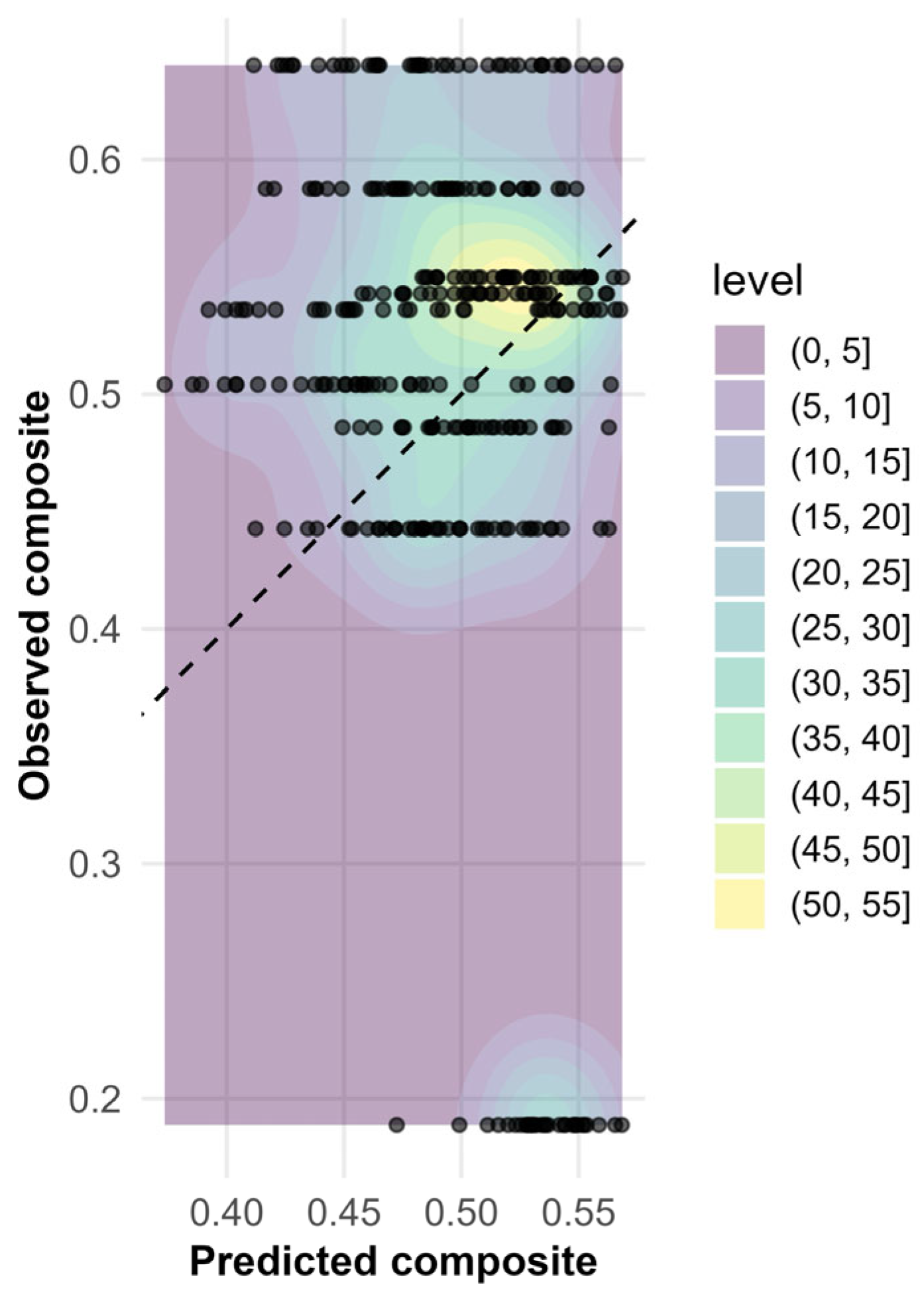
3.2.1. Predictive Performance on the Test Set

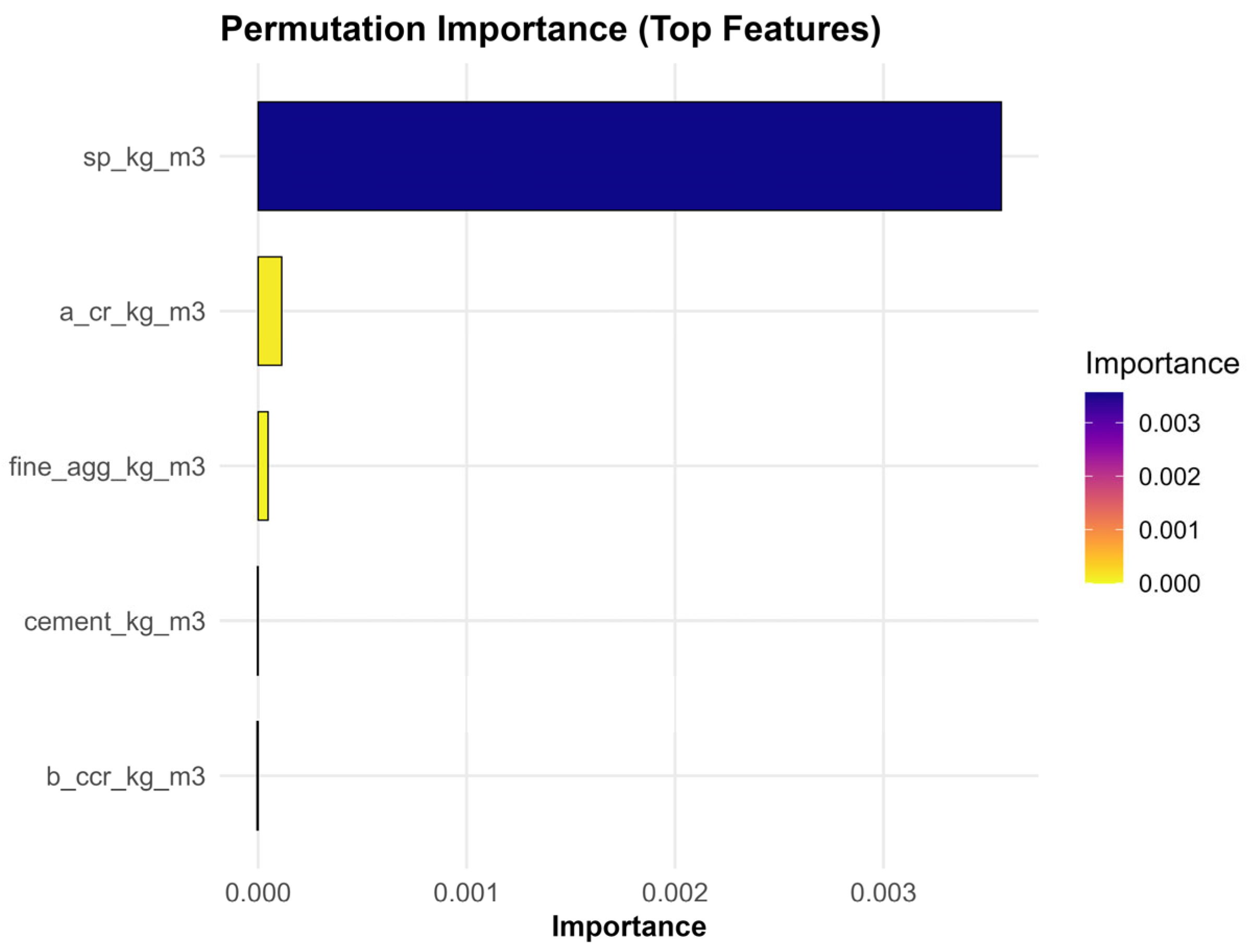
3.2.2. Global Feature Importance
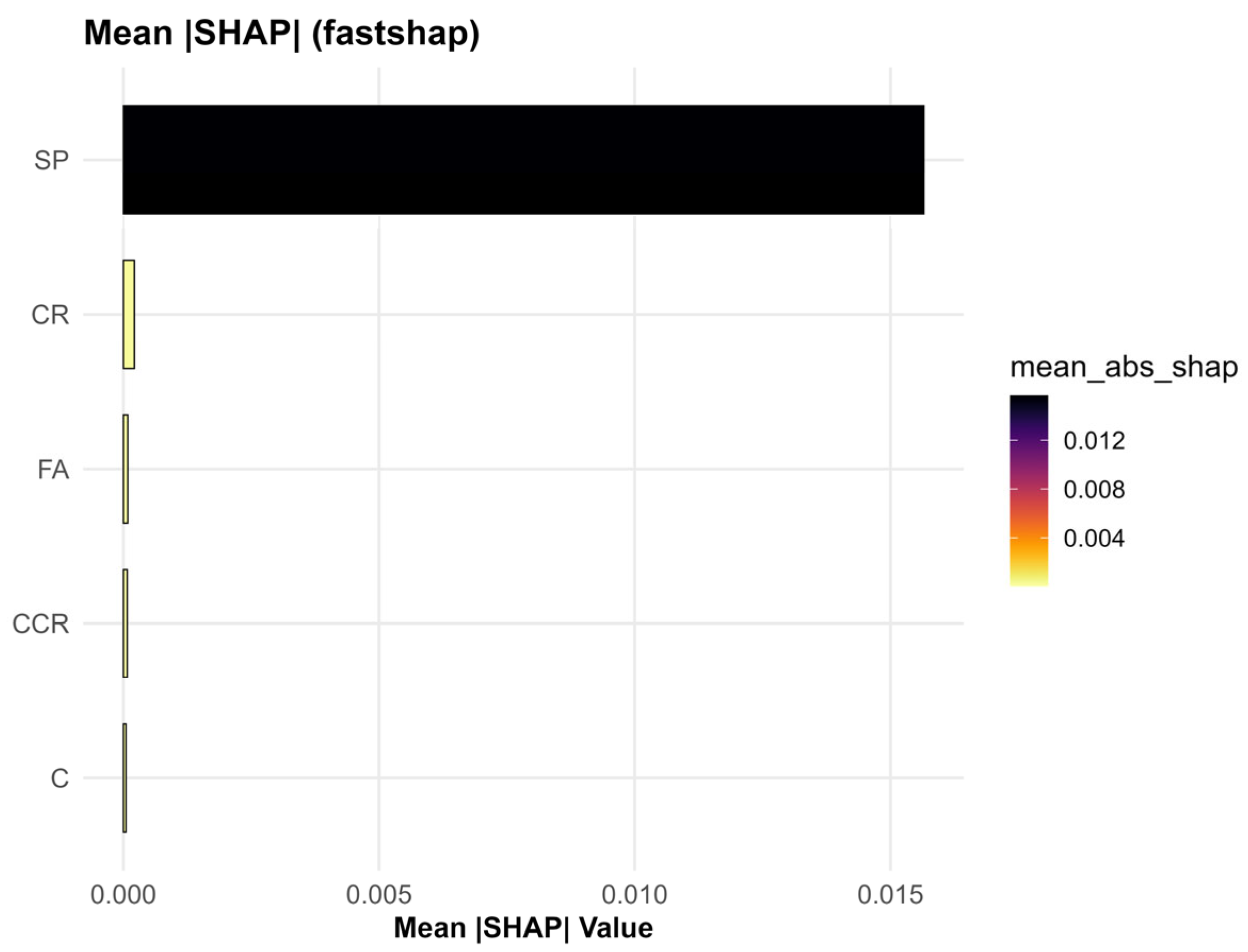
3.2.3. SHAP-Based Marginal Influence
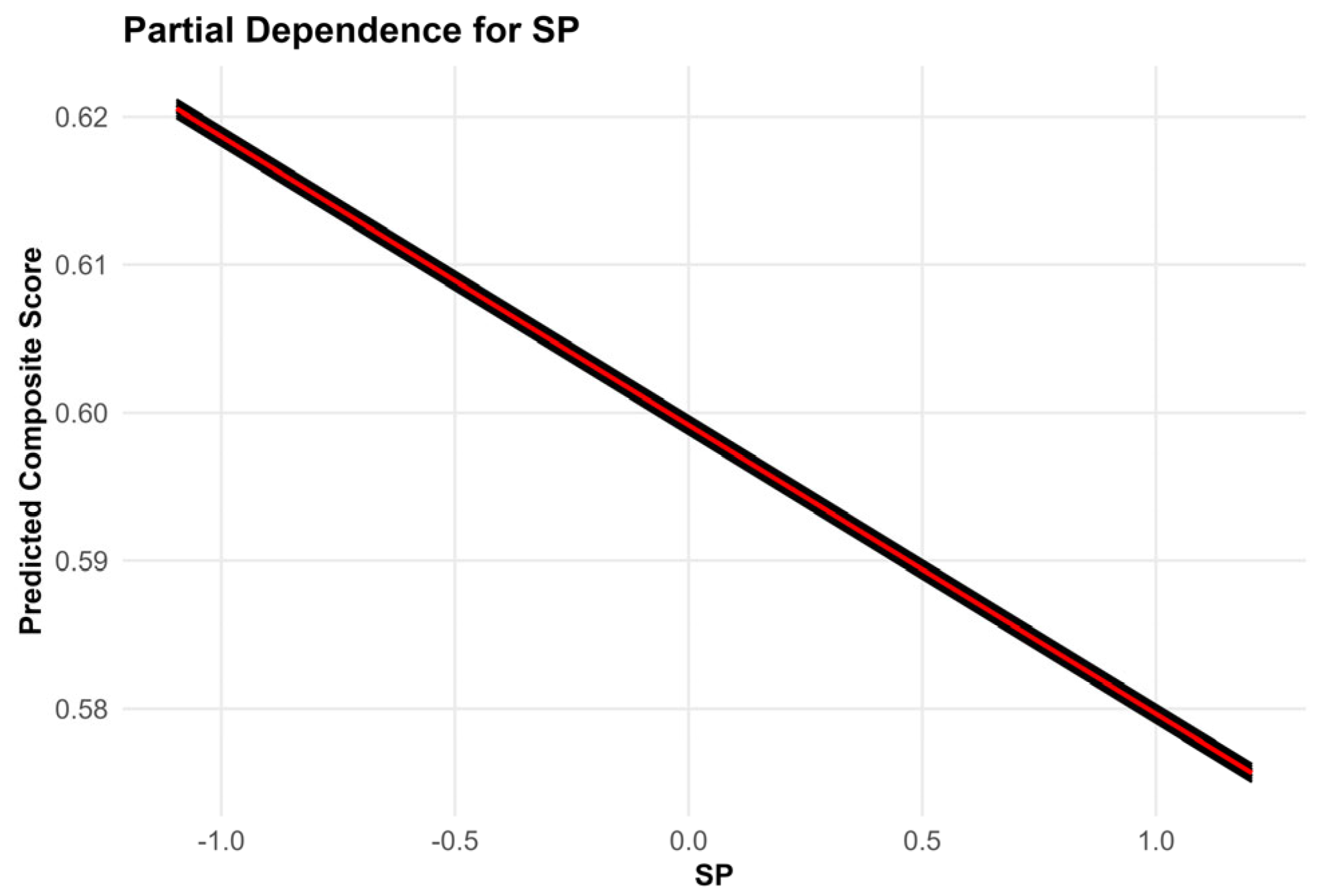
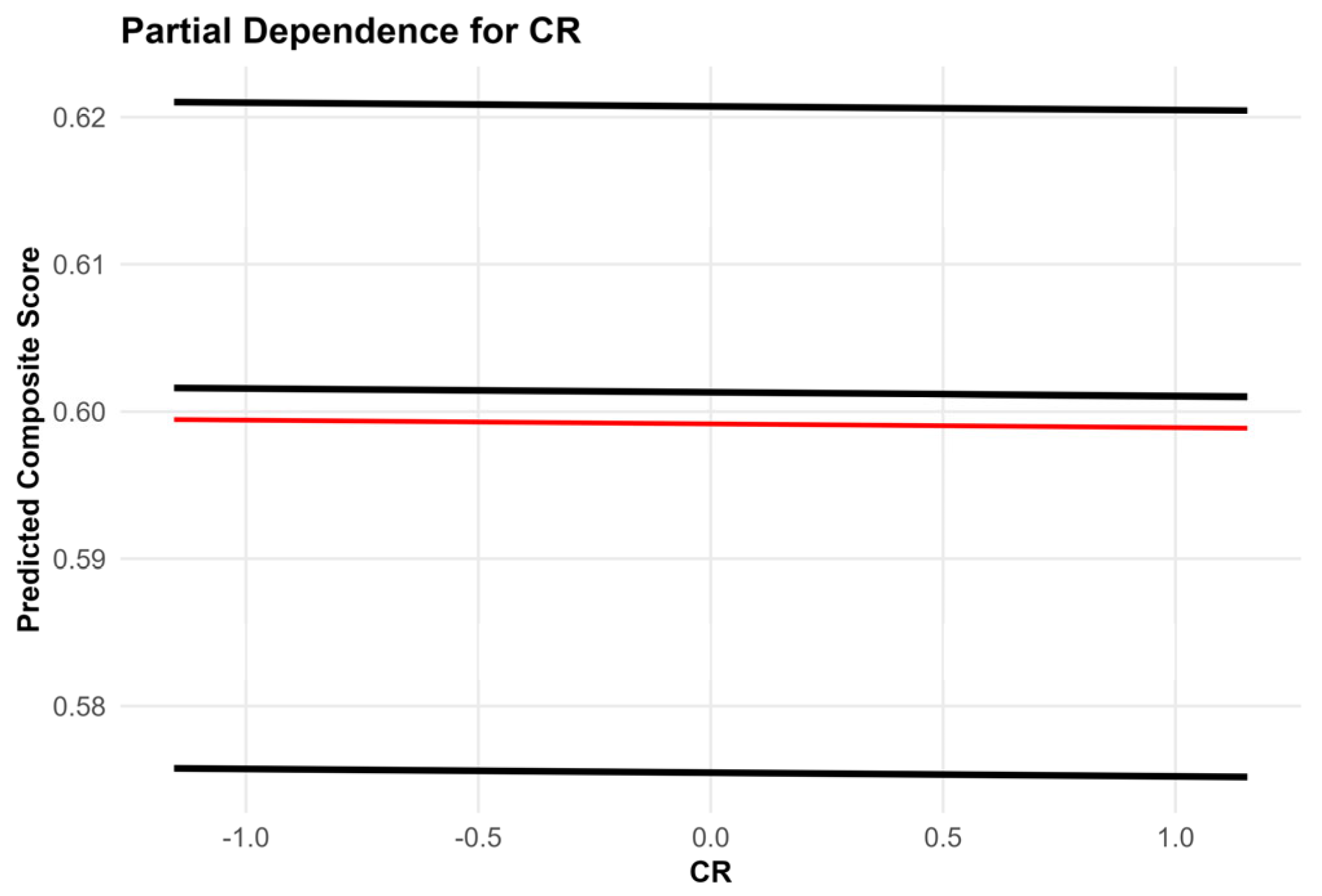
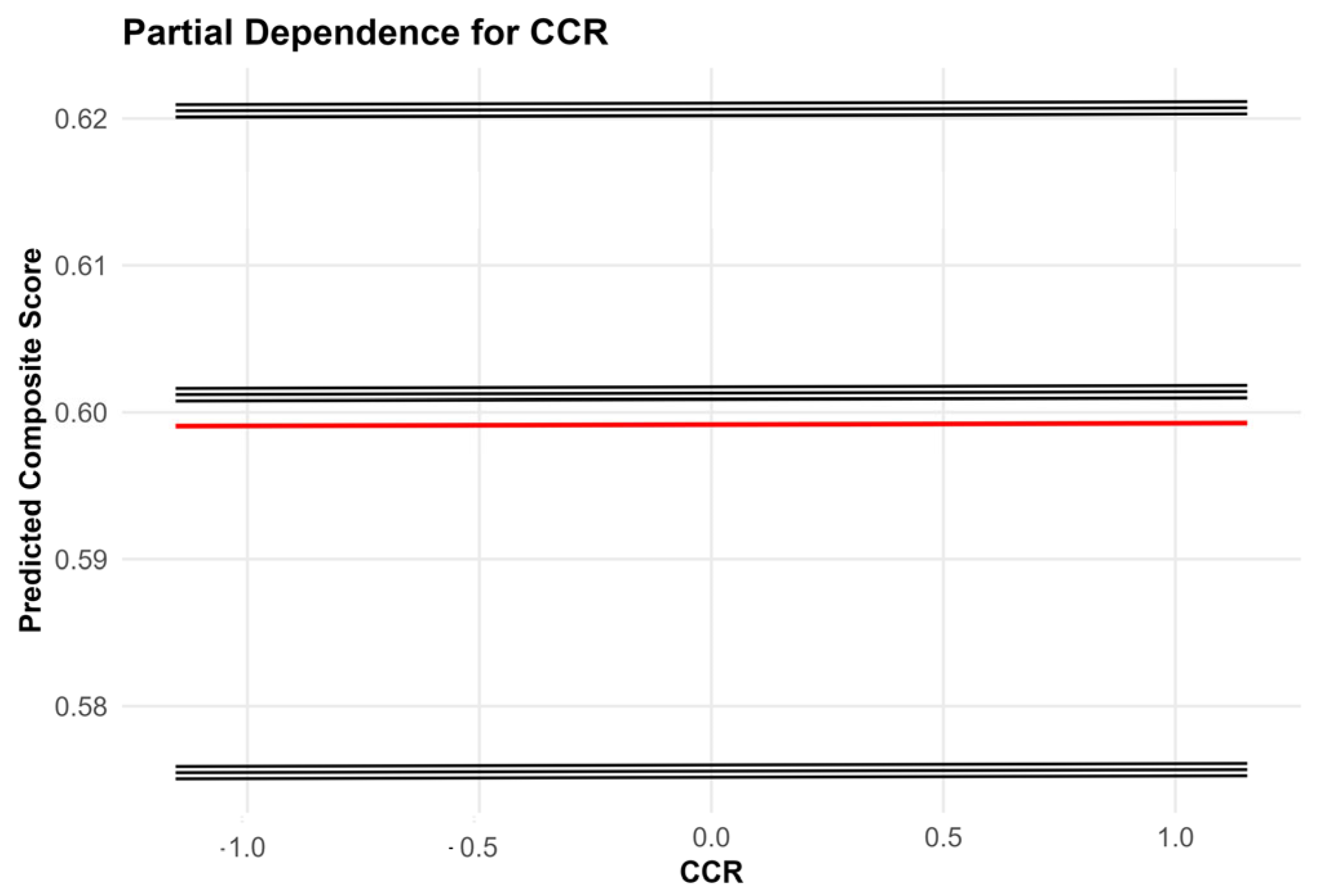
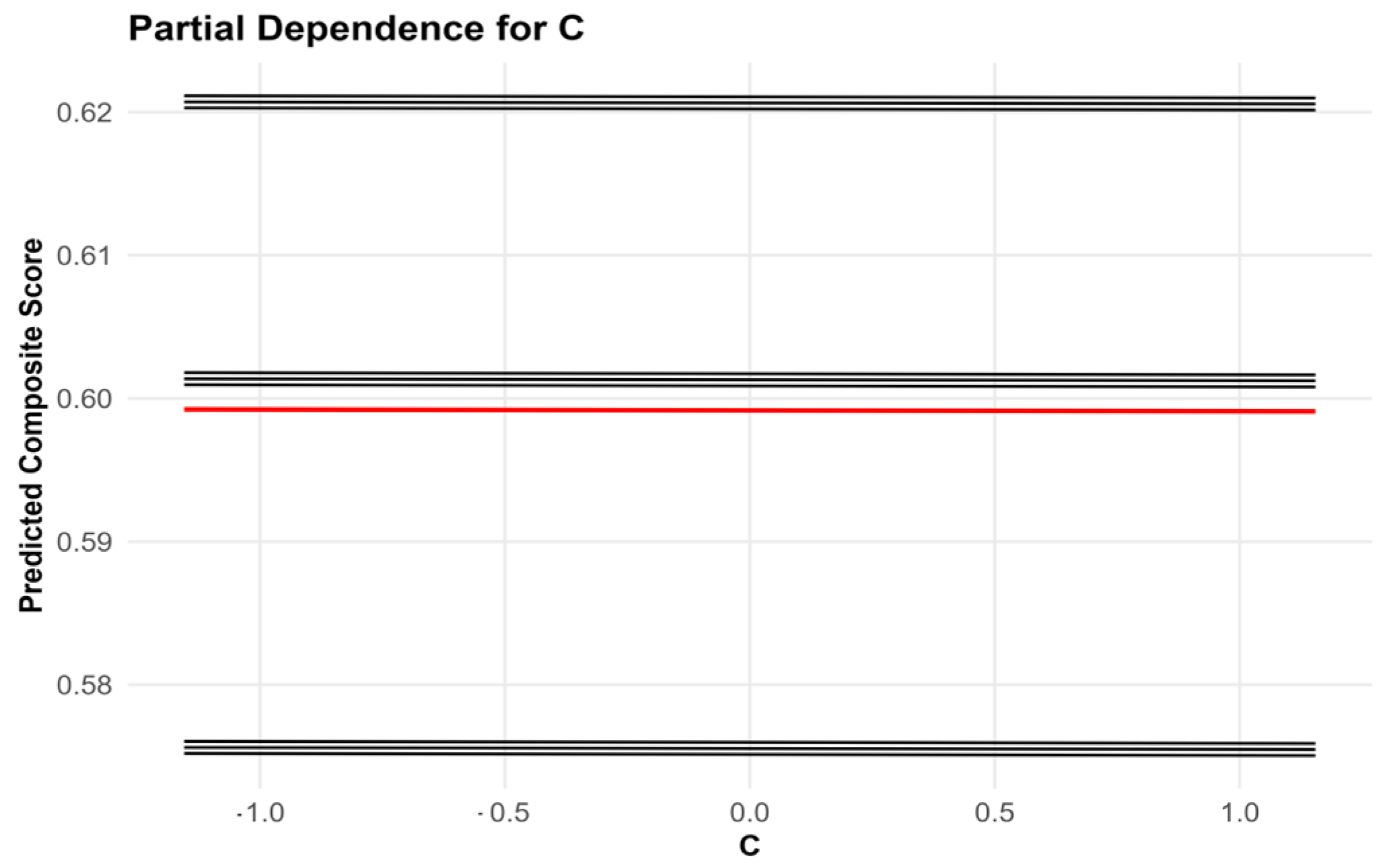
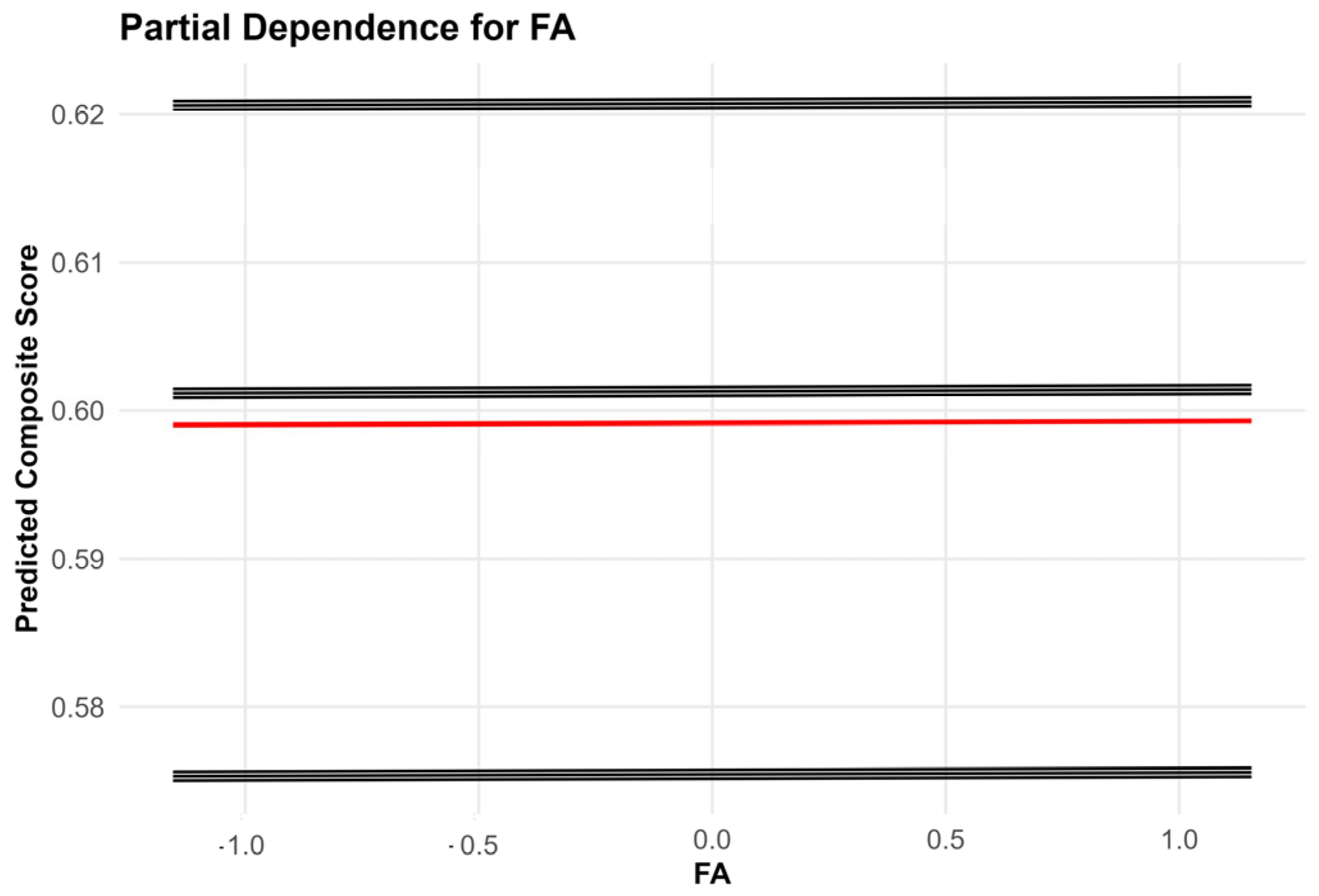
3.2.4. Partial Dependence Trends
3.2.5. Continuous Optimisation of CR–CCR Space
3.2.6. Consistency Across Interpretation Methods
3.3. Discussion
4. Experimental Variability and Limitations
5. Conclusions
Author Contributions
Funding
Data Availability Statement
Acknowledgments
Conflicts of Interest
References
- Kumar, P.R. Low carbonizing cement and concrete industry: A state-of-art review on quaternary blended sustainable self-compacting concrete. Innov. Infrastruct. Solut. 2025, 10, 43. [Google Scholar] [CrossRef]
- Ahmed, A. Assessing the effects of supplementary cementitious materials on concrete properties: A review. Discov. Civ. Eng. 2024, 1, 145. [Google Scholar] [CrossRef]
- Zhu, K.; Liang, Y.; Yuan, J.; Yu, H.; Jiang, L.; Wang, J.; Zhang, J.; Zhang, J.; Song, D.; Xia, L.; et al. Flexible cement fibers with high toughness and water-activated setting behavior for construction. Nat. Commun. 2025, 16, 6529. [Google Scholar] [CrossRef]
- Hosseini-Poul, S.-A.; Mousavinejad, S.H.G.; Hosseini-Poul, S.A.; Asadi, M.; Nematzadeh, M.; Hadizadeh, M. Synergistic effects of GGBFS and EAFS on rheology, mechanical properties, and durability of self-compacting concrete: Experiments, predictions, and life cycle assessment. Constr. Build. Mater. 2024, 437, 136948. [Google Scholar] [CrossRef]
- Saingam, P.; Chatveera, B.; Promsawat, P.; Hussain, Q.; Nawaz, A.; Makul, N.; Sua-Iam, G. Synergizing Portland Cement, high-volume fly ash and calcined calcium carbonate in producing self-compacting concrete: A comprehensive investigation of rheological, mechanical, and microstructural properties. Case Stud. Constr. Mater. 2024, 21, e03832. [Google Scholar] [CrossRef]
- Nie, S.; Zhou, J.; Yang, F.; Lan, M.; Li, J.; Zhang, Z.; Chen, Z.; Xu, M.; Li, H.; Sanjayan, J.G. Analysis of theoretical carbon dioxide emissions from cement production: Methodology and application. J. Clean. Prod. 2022, 334, 130270. [Google Scholar] [CrossRef]
- Ali, N.; Jaffar, A.; Anwer, M.; Alwi, S.K.K.; Anjum, M.N.; Ali, N.; Raja, M.R.; Hussain, A.; Ming, X. The greenhouse gas emissions produced by cement production and its impact on environment: A review of global cement processing. Int. J. Res. (IJR) 2015, 2, 488–500. [Google Scholar]
- Mitikie, B.B.; Ayalewu, W.Z.; Cherkos, F.D. Effect of water hyacinth ash on properties of concrete containing superplasticizer. Discov. Civ. Eng. 2025, 2, 21. [Google Scholar] [CrossRef]
- Zhan, P.-M.; He, Z.-H. Application of shrinkage reducing admixture in concrete: A review. Constr. Build. Mater. 2019, 201, 676–690. [Google Scholar] [CrossRef]
- Kelechi, S.E.; Adamu, M.; Mohammed, A.; Ibrahim, Y.E.; Obianyo, I.I. Durability performance of self-compacting concrete containing crumb rubber, fly ash and calcium carbide waste. Materials 2022, 15, 488. [Google Scholar] [CrossRef]
- Roy, K.; Akhtar, A.; Sachdev, S.; Hsu, M.; Lim, J.; Sarmah, A. Development and characterization of novel biochar-mortar composite utilizing waste derived pyrolysis biochar. Int. J. Sci. Eng. Res. 2017, 8, 1912–1919. [Google Scholar]
- Li, Z.; Gao, X.; Lu, D.; Dong, J. Early hydration properties and reaction kinetics of multi-composite cement pastes with supplementary cementitious materials (SCMs). Thermochim. Acta 2022, 709, 179157. [Google Scholar] [CrossRef]
- Hamed, Y.R.; Keshta, M.M.; Elshikh, M.M.Y.; Elshami, A.A.; Matthana, M.H.; Youssf, O. Performance of sustainable geopolymer concrete made of different alkaline activators. Infrastructures 2025, 10, 41. [Google Scholar] [CrossRef]
- Jittin, V.; Bahurudeen, A. Production of cleaner binders by reusing agricultural by-products: An approach towards zero cement concrete for sustainable future infrastructure. J. Clean. Prod. 2024, 451, 141990. [Google Scholar] [CrossRef]
- Sarı, F.A.; Öztürk, İ.Ş.; Gönen, T.; Emiroğlu, M. Evaluation of waste metallic powder as fine aggregate replacement in Roller compacted concrete: Impact on physical and mechanical properties. Constr. Build. Mater. 2025, 468, 140386. [Google Scholar] [CrossRef]
- Rambabu, D.; Sharma, S.K.; Akbar, M.A. Two-lift concrete pavement with advanced fibre reinforced concrete as the top lift and roller compacted concrete as the bottom lift. Road Mater. Pavement Des. 2025, 26, 1197–1223. [Google Scholar] [CrossRef]
- Alshahrani, A.; Cui, T.; Almutlaqah, A.; Kulasegaram, S. Designing sustainable high-strength self-compacting concrete with high content of supplementary cementitious materials. Eur. J. Environ. Civ. Eng. 2024, 28, 1830–1849. [Google Scholar] [CrossRef]
- Rojo-López, G.; González-Fonteboa, B.; Martínez-Abella, F.; González-Taboada, I. Rheology, durability, and mechanical performance of sustainable self-compacting concrete with metakaolin and limestone filler. Case Stud. Constr. Mater. 2022, 17, e01143. [Google Scholar] [CrossRef]
- Marvila, M.T.; de Azevedo, A.R.G.; de Matos, P.R.; Monteiro, S.N.; Vieira, C.M.F. Materials for production of high and ultra-high performance concrete: Review and perspective of possible novel materials. Materials 2021, 14, 4304. [Google Scholar] [CrossRef]
- Murtaza, M.; Zhang, J.; Yang, C.; Cui, X.; Su, C.; Ramadan, A.N. Performance analysis of self compacting concrete by incorporating fly ash, coal gangue powder, cement kiln dust and recycled concrete powder by absolute volume method. Constr. Build. Mater. 2024, 431, 136601. [Google Scholar] [CrossRef]
- Pandey, S.; Rajhans, P. Durability assessment of quaternary blended recycled aggregate concrete under chloride environment. Mater. Today Proc. 2023; in press. [Google Scholar] [CrossRef]
- Al Rifai, M.M.; Sikora, K.S.; Hadi, M.N. Effect of micro steel fibers volume fraction on behavior of high-strength self-compacting concrete. Constr. Build. Mater. 2024, 450, 138709. [Google Scholar] [CrossRef]
- Cheng, B.; Mei, L.; Long, W.-J.; Luo, Q.; Zhang, J.; Xiong, C.; Shu, Y.; Li, Z.; Gao, S. Data driven multi-objective design for low-carbon self-compacting concrete considering durability. J. Clean. Prod. 2024, 450, 141947. [Google Scholar] [CrossRef]
- Malazdrewicz, S.; Ostrowski, K.A.; Sadowski, Ł. Self-compacting concrete with recycled coarse aggregates from concrete construction and demolition waste–Current state-of-the art and perspectives. Constr. Build. Mater. 2023, 370, 130702. [Google Scholar] [CrossRef]
- Asghari, Y.; Mohammadyan-Yasouj, S.E.; Koloor, S.S.R. Utilization of metakaolin on the properties of self-consolidating concrete: A review. Constr. Build. Mater. 2023, 389, 131605. [Google Scholar] [CrossRef]
- Dey, S.; Kumar, V.P.; Goud, K.; Basha, S. State of art review on self compacting concrete using mineral admixtures. J. Build. Pathol. Rehabil. 2021, 6, 18. [Google Scholar] [CrossRef]
- Gupta, N.; Siddique, R.; Belarbi, R. Sustainable and greener self-compacting concrete incorporating industrial by-products: A review. J. Clean. Prod. 2021, 284, 124803. [Google Scholar] [CrossRef]
- Kumar, S.; Kumar, R.; Rai, B.; Samui, P. Prediction of compressive strength of high-volume fly ash self-compacting concrete with silica fume using machine learning techniques. Constr. Build. Mater. 2024, 438, 136933. [Google Scholar] [CrossRef]
- Bahmani, H.; Mostofinejad, D. Innovative fiber-reinforced self-compacting concrete using activated slag from sugar factory lime waste. Case Stud. Constr. Mater. 2025, 22, e04752. [Google Scholar] [CrossRef]
- Abbas, S.N.; Qureshi, M.I. An investigation of mechanical properties of self compacting concrete (scc) after addition of ground granulated blast furnace slag (GGBFS) and fly ash (FA). Mater. Chem. Phys. Sustain. Energy 2025, 2, 100008. [Google Scholar] [CrossRef]
- Hakeem, I.Y.; Amin, M.; Zeyad, A.M.; Tayeh, B.A.; Agwa, I.S.; Abu El-Hassan, K. Properties and durability of self-compacting concrete incorporated with nanosilica, fly ash, and limestone powder. Struct. Concr. 2023, 24, 6738–6760. [Google Scholar] [CrossRef]
- Mim, N.J.; Meraz, M.M.; Islam, M.H.; Farsangi, E.N.; Mehedi, M.T.; Arafin, S.A.K.; Shrestha, R.K. Eco-friendly and cost-effective self-compacting concrete using waste banana leaf ash. J. Build. Eng. 2023, 64, 105581. [Google Scholar] [CrossRef]
- Tran, A.V.; Nguyen, A.H.; Bui, T.L. Evaluation on comprehensive properties of slag-cement based self-compacting mortar modified with hybrid addition of limestone powder and unground rice husk ash. Comput. Concr. 2025, 35, 619–629. [Google Scholar]
- Plando, F.R.P.; Maquiling, J.T. Construction potential of rice husk ash as eco-friendly cementitious material in a low-water demand for self-compacting concrete. Constr. Build. Mater. 2024, 418, 135407. [Google Scholar] [CrossRef]
- Das, D.; Saravanan, T.J.; Bisht, K.; Kabeer, K.S.A. A review of fresh properties of self-compacting concrete incorporating sugarcane bagasse ash. Mater. Today Proc. 2022, 65, 852–859. [Google Scholar] [CrossRef]
- Moretti, J.P.; Nunes, S.; Sales, A. Self-compacting concrete incorporating sugarcane bagasse ash. Constr. Build. Mater. 2018, 172, 635–649. [Google Scholar] [CrossRef]
- Uche, O.A.; Kelechi, S.E.; Adamu, M.; Ibrahim, Y.E.; Alanazi, H.; Okokpujie, I.P. Modelling and optimizing the durability performance of self consolidating concrete incorporating crumb rubber and calcium carbide residue using response surface methodology. Buildings 2022, 12, 398. [Google Scholar] [CrossRef]
- Peng, G.-F.; Wang, P.-J.; Peng, Y.-C.; Zhang, G.; Huang, Y.-Z.; Niu, X.-J.; Ding, H. Novel cementless ultra-high performance concrete using calcium carbide residue as activator by the aid of combined curing. Mater. Struct. 2025, 58, 38. [Google Scholar] [CrossRef]
- Zhu, H.; Yang, S.; Wu, C.; Wang, T.; Qin, J.; Ma, K.; Liu, Y.; Pang, S. Effect of calcium carbide residue dosage on the workability and mechanical properties of geopolymer filling cementitious materials. Constr. Build. Mater. 2025, 470, 140649. [Google Scholar] [CrossRef]
- Bawab, J.; El-Hassan, H.; El-Dieb, A.; Khatib, J.; El-Mir, A. Utilization of calcium carbide residue as a concrete component: A comprehensive review. Case Stud. Constr. Mater. 2025, 22, e04823. [Google Scholar] [CrossRef]
- Horpibulsuk, S.; Phetchuay, C.; Chinkulkijniwat, A. Soil stabilization by calcium carbide residue and fly ash. J. Mater. Civ. Eng. 2012, 24, 184–193. [Google Scholar] [CrossRef]
- Liu, X.; Xiao, G.; Yang, D.; Dai, L.; Tang, A. Sustainable Cementitious Materials: Strength and Microstructural Characteristics of Calcium Carbide Residue-Activated Ground Granulated Blast Furnace Slag–Fly Ash Composites. Sustainability 2024, 16, 11168. [Google Scholar] [CrossRef]
- Bawab, J.; El-Hassan, H.; El-Dieb, A.; Khatib, J. Accelerated carbonation curing of concrete incorporating calcium carbide residue. J. Build. Eng. 2024, 88, 109258. [Google Scholar] [CrossRef]
- Sun, H.; Li, Z.; Bai, J.; Memon, S.A.; Dong, B.; Fang, Y.; Xu, W.; Xing, F. Properties of chemically combusted calcium carbide residue and its influence on cement properties. Materials 2015, 8, 638–651. [Google Scholar] [CrossRef]
- Julphunthong, P.; Joyklad, P.; Manprom, P.; Chompoorat, T.; Palou, M.-T.; Suriwong, T. Evaluation of calcium carbide residue and fly ash as sustainable binders for environmentally friendly loess soil stabilization. Sci. Rep. 2024, 14, 671. [Google Scholar] [CrossRef]
- Govindan, S.A.; Mudavath, H.; Vaddemani, G.P.R. Evaluating the sustainability of using calcium carbide residue for clay stabilization: Integrating mechanical behaviour and life cycle assessment. Environ. Sci. Pollut. Res. Int. 2025, 32, 15772–15789. [Google Scholar] [CrossRef]
- Wang, P.-J.; Peng, G.-F.; Ding, H.; Guo, X.-H.; Jia, Y.-J. Mechanical properties and microstructure of cementless ultra-high performance concrete activated by calcium carbide residue under thermal curing with electrical-blanket covering. Constr. Build. Mater. 2025, 492, 143024. [Google Scholar] [CrossRef]
- Bawab, J.; El-Hassan, H.; El-Dieb, A.; Khatib, J. Synergetic impact of volcanic ash and calcium carbide residue on the properties and microstructure of cementitious composites. Constr. Build. Mater. 2024, 439, 137390. [Google Scholar] [CrossRef]
- Azunna, S.U.; Aziz, F.N.; Rashid, R.S.; Bakar, N.B. Review on the characteristic properties of crumb rubber concrete. Clean. Mater. 2024, 12, 100237. [Google Scholar] [CrossRef]
- Zhou, W.; Lu, C.; Yu, Z.; Mo, J. Mechanical properties and pore structure characterization of crumb rubber concrete using equal size replacement method. J. Build. Eng. 2025, 102, 112026. [Google Scholar] [CrossRef]
- Saad, A.G.; Sakr, M.A.; Khalifa, T.M.; Darwish, E.A. Structural performance of concrete reinforced with crumb rubber: A review of current research. Iran. J. Sci. Technol. Trans. Civ. Eng. 2025, 49, 3211–3254. [Google Scholar] [CrossRef]
- Yang, G.; Chen, X.; Xu, J. Molecular dynamics simulation of interfacial mechanical properties of crumb rubber concrete. Constr. Build. Mater. 2024, 438, 137336. [Google Scholar] [CrossRef]
- Chen, Y.; Zhao, Y.; Zeng, L.; Zhang, W.; Yang, T. Bond performance and bond-slip constitutive model for rebar embedded in rubber powder-modified polypropylene fiber reinforced concrete. Constr. Build. Mater. 2023, 375, 130934. [Google Scholar] [CrossRef]
- Alizadeh, M.; Eftekhar, M.R.; Asadi, P.; Mostofinejad, D. Enhancing the mechanical properties of crumb rubber concrete through polypropylene mixing via a pre-mixing technique. Case Stud. Constr. Mater. 2024, 21, e03569. [Google Scholar] [CrossRef]
- Hisbani, N.; Shafiq, N.; Shams, M.A.; Farhan, S.A.; Zahid, M. Properties of concrete containing crumb rubber as partial replacement of fine aggregate—A review. Hybrid Adv. 2025, 10, 100481. [Google Scholar] [CrossRef]
- Xiao, Y.; Zhang, Y.; Zeng, L.; Liu, Y.; Zhou, K.; Wang, A.; Li, R. Quasi-static cyclic test on seismic performance of steel reinforced concrete frame with replaceable energy-dissipating member. Structures 2023, 54, 1649–1667. [Google Scholar] [CrossRef]
- Mo, J.; Ren, F.; Guo, S.; Tian, S.; Feng, W.; Lu, H.; Xiong, J.; Zhou, W. Impact of sand to aggregate ratio on mechanical properties and micro-structures of waste crumb rubber concrete. J. Build. Eng. 2024, 88, 109212. [Google Scholar] [CrossRef]
- Adamu, M.; Mohammed, B.S.; Shafiq, N.; Liew, M.S. Effect of crumb rubber and nano silica on the fatigue performance of roller compacted concrete pavement. Cogent Eng. 2018, 5, 1436027. [Google Scholar] [CrossRef]
- Adamu, M.; Mohammed, B.S.; Liew, M.S.; Alaloul, W.S. Evaluating the impact resistance of roller compacted concrete containing crumb rubber and nanosilica using response surface methodology and Weibull distribution. World J. Eng. 2019, 16, 33–43. [Google Scholar] [CrossRef]
- Aghamohammadi, O.; Mostofinejad, D.; Mostafaei, H.; Abtahi, S.M. Mechanical properties and impact resistance of concrete pavement containing crumb rubber. Int. J. Geomech. 2024, 24, 04023242. [Google Scholar] [CrossRef]
- Qaidi, S.M.; Dinkha, Y.Z.; Haido, J.H.; Ali, M.H.; Tayeh, B.A. Engineering properties of sustainable green concrete incorporating eco-friendly aggregate of crumb rubber: A review. J. Clean. Prod. 2021, 324, 129251. [Google Scholar] [CrossRef]
- Sanjaya, B.; Appuhamy, J.; Bandara, W.; Venkatesan, S.; Gravina, R. The potential of recovering design strength of rubberized concrete using aqua-thermally treated crumb rubber at lower replacement ratios. Constr. Build. Mater. 2025, 458, 139627. [Google Scholar] [CrossRef]
- Adamu, M.; Mohammed, B.S.; Liew, M.S. Mechanical properties and performance of high volume fly ash roller compacted concrete containing crumb rubber and nano silica. Constr. Build. Mater. 2018, 171, 521–538. [Google Scholar] [CrossRef]
- Mohammed, B.S.; Adamu, M. Mechanical performance of roller compacted concrete pavement containing crumb rubber and nano silica. Constr. Build. Mater. 2018, 159, 234–251. [Google Scholar] [CrossRef]
- Iqbal, H.W.; Hamcumpai, K.; Nuaklong, P.; Jongvivatsakul, P.; Likitlersuang, S.; Pothisiri, T.; Chintanapakdee, C.; Wijeyewickrema, A.C. Enhancing fire resistance in geopolymer concrete containing crumb rubber with graphene nanoplatelets. Constr. Build. Mater. 2024, 426, 136115. [Google Scholar] [CrossRef]
- Fakhri, M.; Yousefian, F.; Amoosoltani, E.; Aliha, M.; Berto, F. Combined effects of recycled crumb rubber and silica fume on mechanical properties and mode I fracture toughness of self-compacting concrete. Fatigue Fract. Eng. Mater. Struct. 2021, 44, 2659–2673. [Google Scholar] [CrossRef]
- Okokpujie, I.P.; Tartibu, L.K.; Kelechi, S.E.; Kazeem, R.A.; Akinlabi, E.T. Interaction and optimisation study of the influence of calcium-carbide-waste, crumb rubber, and fly-ash on the mechanical properties of a developed self-compacting-rubberized concrete for sustainable manufacturing processes. Int. J. Interact. Des. Manuf. (IJIDeM) 2025, 19, 3967–3984. [Google Scholar] [CrossRef]
- Kelechi, S.E.; Uche, O.A.U.; Adamu, M.; Alanazi, H.; Okokpujie, I.P.; Ibrahim, Y.E.; Obianyo, I.I. Modeling and optimization of high-volume fly ash self-compacting concrete containing crumb rubber and calcium carbide residue using response surface methodology. Arab. J. Sci. Eng. 2022, 47, 13467–13486. [Google Scholar] [CrossRef]
- BS EN 196-6; Methods of Testing Cement-Determination of Fineness. British Standards Institution: London, UK, 2018.
- BS 882; Specification for Aggregates from Natural Sources for Concrete. British Standards Institution: London, UK, 1992.
- Kelechi, S.E.; Adamu, M.; Mohammed, A.; Obianyo, I.I.; Ibrahim, Y.E.; Alanazi, H. Equivalent CO2 emission and cost analysis of green self-compacting rubberized concrete. Sustainability 2021, 14, 137. [Google Scholar] [CrossRef]
- EFNARC. The European Guidelines for Self Compacting Concrete Specification, Production, and Use; The European Federation of Specialist Construction Chemicals and Concrete Systems: Farnham, UK, 2005. [Google Scholar]
- BS 1881-125; Methods for Mixing and Sampling Concrete in the Laboratory. British Standards Institution: London, UK, 2013.
- BS EN 12350-8; Testing Fresh Concrete-Self-Compacting Concrete. Slump-Flow Test. British Standards Institution: London, UK, 2019.
- BS EN 12350-12; Testing Fresh Concrete-Self-Compacting Concrete. J-Ring Test. British Standards Institution: London, UK, 2010.
- BS EN 12350-11; Testing Fresh Concrete-Self-Compacting Concrete. Sieve Segregation Test. British Standards Institution: London, UK, 2010.
- BS EN 12390-7; Testing Hardened Concrete-Density of Hardened Concrete. British Standards Institution: London, UK, 2009.
- BS EN 12390-3:2009; Testing Hardened Concrete. Compressive Strength of Test Specimens. British Standards Institution: London, UK, 2009.
- BS EN 12390-6; Testing Hardened Concrete-Tensile Splitting Strength of Test Specimens. British Standards Institution: London, UK, 2009.
- BS EN 12390-5; Testing Hardened Concrete-Flexural Strength of Test Specimens. British Standards Institution: London, UK, 2019.
- ASTM C642; Standard Test Method for Density, Absorption, and Voids in Hardened Concrete. ASTM: West Conshohocken, PA, USA, 2013.
- BS EN 12667; Thermal Performance of Building Materials and Products. Determination of Thermal Resistance by Means of Guarded Hot Plate and Heat Flow Meter Methods. Products of High and Medium Thermal Resistance. British Standards Institution: London, UK, 2001.



| Chemical Compounds | Cement | Calcium Carbide Residue |
|---|---|---|
| CaO | 74.03 | 96.46 |
| Al2O3 | 3.01 | 0.04 |
| SiO2 | 12.00 | 1.1 |
| SO3 | 2.07 | 0.29 |
| MgO | 1.3 | - |
| K2O | 1.28 | 0.45 |
| Na2O | 0.19 | 0.01 |
| LOI | 1.02 | 1.02 |
| Specific Gravity | 3.15 | 2.22 |
| Mix No | Variables (%) | Constituent Materials for 1 kg/m3 (kg/m3) | ||||||||
|---|---|---|---|---|---|---|---|---|---|---|
| CR | CCR | Cement | CCR | Fine Agg | CR | Coarse Agg | Water | SP | W/B | |
| 1 | 0 | 0 | 520 | 0 | 880 | 0 | 850 | 192.4 | 7.80 | 0.37 |
| 2 | 0 | 10 | 468 | 36.65 | 880 | 0 | 850 | 192.4 | 7.59 | 0.38 |
| 3 | 10 | 5 | 494 | 18.32 | 792 | 38.25 | 850 | 192.4 | 7.68 | 0.38 |
| 4 | 10 | 10 | 468 | 36.65 | 792 | 38.25 | 850 | 192.4 | 7.59 | 0.38 |
| 5 | 20 | 10 | 468 | 36.65 | 704 | 76.49 | 850 | 192.4 | 7.59 | 0.38 |
| 6 | 20 | 5 | 494 | 18.32 | 704 | 76.49 | 850 | 192.4 | 7.68 | 0.38 |
| 7 | 10 | 0 | 520 | 0 | 792 | 38.25 | 850 | 192.4 | 7.80 | 0.37 |
| 8 | 20 | 0 | 520 | 0 | 704 | 76.49 | 850 | 192.4 | 7.80 | 0.37 |
| 9 | 0 | 5 | 494 | 18.32 | 880 | 0.00 | 850 | 192.4 | 7.68 | 0.38 |
| Mix | CR (%) | CCR (%) | Passing Ability | Slump Flow (mm) | Segregation Resistance (%) | Density (kg/m3) | Compressive Strength (MPa) | Flexural Strength (MPa) | Split Tensile Strength (MPa) |
|---|---|---|---|---|---|---|---|---|---|
| 1 | 0 | 0 | 0.86 | 680 | 5.4 | 2176.07 | 45.4 | 5.37 | 3.8 |
| 2 | 0 | 10 | 0.88 | 723 | 13.6 | 2161.44 | 41.5 | 3.01 | 3.32 |
| 3 | 10 | 5 | 0.86 | 750 | 13.8 | 2117.55 | 39.5 | 3.2 | 3.32 |
| 4 | 10 | 10 | 0.8 | 560 | 12.5 | 2110.23 | 39 | 4.31 | 3.29 |
| 5 | 20 | 10 | 0.8 | 557 | 12.6 | 2059.19 | 39 | 4.31 | 3.29 |
| 6 | 20 | 5 | 0.84 | 723 | 13.5 | 2066.5 | 40.1 | 3.11 | 3.66 |
| 7 | 10 | 0 | 0.84 | 723 | 13.5 | 2124.85 | 40.1 | 3.11 | 3.66 |
| 8 | 20 | 0 | 0.77 | 550 | 12.1 | 2073.79 | 37 | 4 | 3.09 |
| 9 | 0 | 5 | 0.93 | 785 | 7.1 | 2168.76 | 44.7 | 3.15 | 3.07 |
| Mix | CR (%) | CCR (%) | Weight Reduction in H2SO4 (%) | Weight Reduction in MgSO4 (%) | Water Absorption (%) | Residual Compressive Strength at 400 °C (MPa) | Weight Reduction at 400 °C (%) | Thermal Conductivity (W/mK) |
|---|---|---|---|---|---|---|---|---|
| 1 | 0 | 0 | 7.78 | 1.89 | 1.74 | 33.8 | 3.89 | 1.13 |
| 2 | 0 | 10 | 10.17 | 2.78 | 1.78 | 34.1 | 3.11 | 1.04 |
| 3 | 10 | 5 | 4.24 | 1.14 | 2.35 | 30.4 | 4.1 | 0.94 |
| 4 | 10 | 10 | 4.12 | 0.99 | 2.5 | 29.5 | 4.61 | 0.89 |
| 5 | 20 | 10 | 5.45 | 1.5 | 2.15 | 27 | 5.39 | 0.77 |
| 6 | 20 | 5 | 6 | 2.2 | 2.19 | 27.6 | 5.38 | 0.79 |
| 7 | 10 | 0 | 6.58 | 2.04 | 2.37 | 31 | 4 | 0.98 |
| 8 | 20 | 0 | 10.4 | 2.91 | 2.83 | 28 | 5.35 | 0.82 |
| 9 | 0 | 5 | 9.49 | 2.16 | 1.76 | 34 | 3.75 | 1.09 |
| Item | Description | Value |
|---|---|---|
| Mean OOB-predicted composite score | Bootstrap out-of-bag prediction (model stability indicator) | 0.498 |
| Optimised composite score | Maximum predicted value on continuous CR–CCR surface | 0.509 |
| Optimal CR content | Continuous optimisation result | ≈0 kg/m3 |
| Optimal CCR content | Continuous optimisation result | ≈36.6 kg/m3 |
Disclaimer/Publisher’s Note: The statements, opinions and data contained in all publications are solely those of the individual author(s) and contributor(s) and not of MDPI and/or the editor(s). MDPI and/or the editor(s) disclaim responsibility for any injury to people or property resulting from any ideas, methods, instructions or products referred to in the content. |
© 2026 by the authors. Licensee MDPI, Basel, Switzerland. This article is an open access article distributed under the terms and conditions of the Creative Commons Attribution (CC BY) license.
Share and Cite
Adamu, M.; Choudhari, S.M.; Raut, A.; Ibrahim, Y.E.; Kelechi, S. Application of a Hybrid Explainable ML–MCDM Approach for the Performance Optimisation of Self-Compacting Concrete Containing Crumb Rubber and Calcium Carbide Residue. J. Compos. Sci. 2026, 10, 76. https://doi.org/10.3390/jcs10020076
Adamu M, Choudhari SM, Raut A, Ibrahim YE, Kelechi S. Application of a Hybrid Explainable ML–MCDM Approach for the Performance Optimisation of Self-Compacting Concrete Containing Crumb Rubber and Calcium Carbide Residue. Journal of Composites Science. 2026; 10(2):76. https://doi.org/10.3390/jcs10020076
Chicago/Turabian StyleAdamu, Musa, Shrirang Madhukar Choudhari, Ashwin Raut, Yasser E. Ibrahim, and Sylvia Kelechi. 2026. "Application of a Hybrid Explainable ML–MCDM Approach for the Performance Optimisation of Self-Compacting Concrete Containing Crumb Rubber and Calcium Carbide Residue" Journal of Composites Science 10, no. 2: 76. https://doi.org/10.3390/jcs10020076
APA StyleAdamu, M., Choudhari, S. M., Raut, A., Ibrahim, Y. E., & Kelechi, S. (2026). Application of a Hybrid Explainable ML–MCDM Approach for the Performance Optimisation of Self-Compacting Concrete Containing Crumb Rubber and Calcium Carbide Residue. Journal of Composites Science, 10(2), 76. https://doi.org/10.3390/jcs10020076