1. Introduction
Recycling composites plays an increasingly important role in today’s world. In the aviation sector, for example, the growing importance of lightweight construction for reducing operation costs has led to an increased use of composites. With an increasing number of aircrafts reaching the end of their service life, it has become vital to find ways to reuse or recycle components. The main drivers of this necessity are political regulations concerning the recyclability of components and the use of recycled materials in new products. At the same time, there are increasingly better and more efficient recycling methods and technologies. This also results in an ongoing decline in the prices of recycled materials [
1,
2,
3,
4]. Nevertheless, the effort to recycle composite materials (rCFRP) and the missing infrastructure and supply chain, or the lack of demand for recycled materials, still remains high. This leads to higher prices compared to new materials. At the same time, recycled fibers (rCF) are only profitable if they are used in load-bearing structures again, to regain their mechanical potential [
5,
6,
7,
8,
9,
10]. Therefore, the question arises as to how recycled fibers can offer benefits when used in technical applications compared to new fibers, despite the high cost and limited availability of recycled fibers. To answer this question, it is important to develop not only recycling methods and new semi-finished products made from rCF, but also manufacturing processes, as well as characterizing the mechanical properties and analyzing the mechanical behavior.
A new manufacturing method for rCF-PA6 tapes from rCF staple fiber yarns is presented in [
11]. In addition to the advantages of using continuous tapes due to the highly aligned rCF fibers and the use of established manufacturing processes for further processing, the mechanical characteristics are also investigated. The stiffness of the rCF PA6 tape was up to 85% that of the reference material made from new fibers. In terms of strength, however, it is only 50% of that of new fibers, which is probably due to the poor fiber–matrix interface (mainly fiber pullout visible).
Similar results are achieved in [
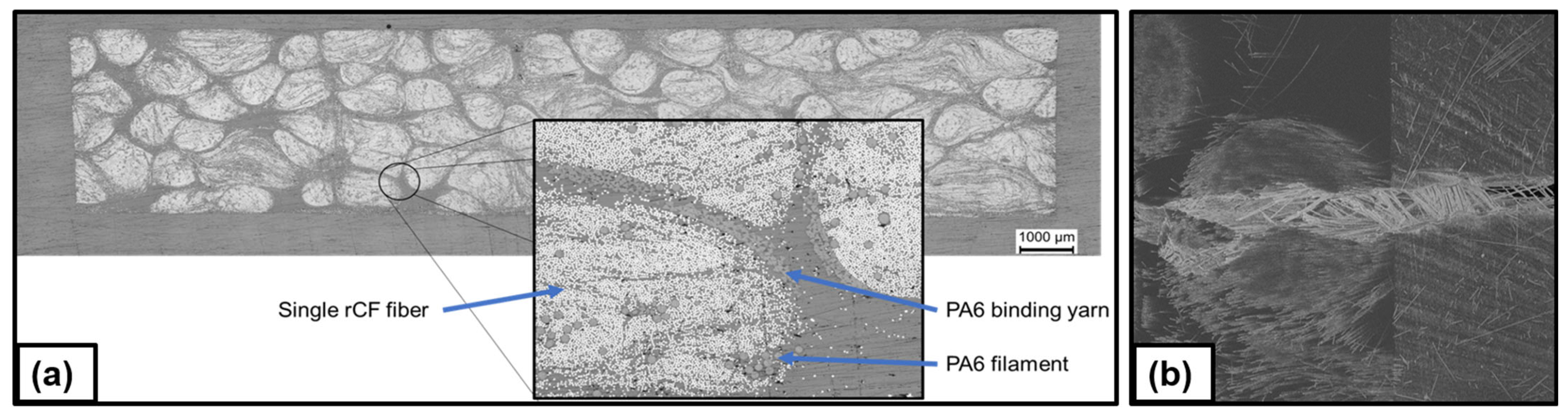
12]. The production of plate material with a fiber volume content of 45–50% is achieved through the processing of rCF staple fiber yarns (micro-section in
Figure 1a) using a winding process. Mechanical tests (tensile, compressive and flexure) achieve yielded stiffness values of up to 110 GPa and strengths of up to 800 MPa. These values represent up to 75% of those of plates made from new carbon fibers. The only major issue is again the lack of strength at the fiber–matrix interface (fiber pullout at fracture surface visible). Another interesting result of this study is that the inhomogeneity of the rCF staple fiber yarn, caused by undulations, misaligned fibers and roving structure (particularly thickness) leads to increased fiber bridging in the crack zone. This is demonstrated in in situ X-ray microscopy experiments, in which fiber bridging in the crack tip is investigated during transverse tensile testing (see
Figure 1b).
Fiber bridging is an intrinsic property of FRP materials caused by delamination due to defects or impact damage, for example [
13,
14,
15]. The occurrence of fiber bridging is influenced by various factors:
Geometric specifications (e.g., thickness of part) [
16];
Load conditions (quasi-static or fatigue);
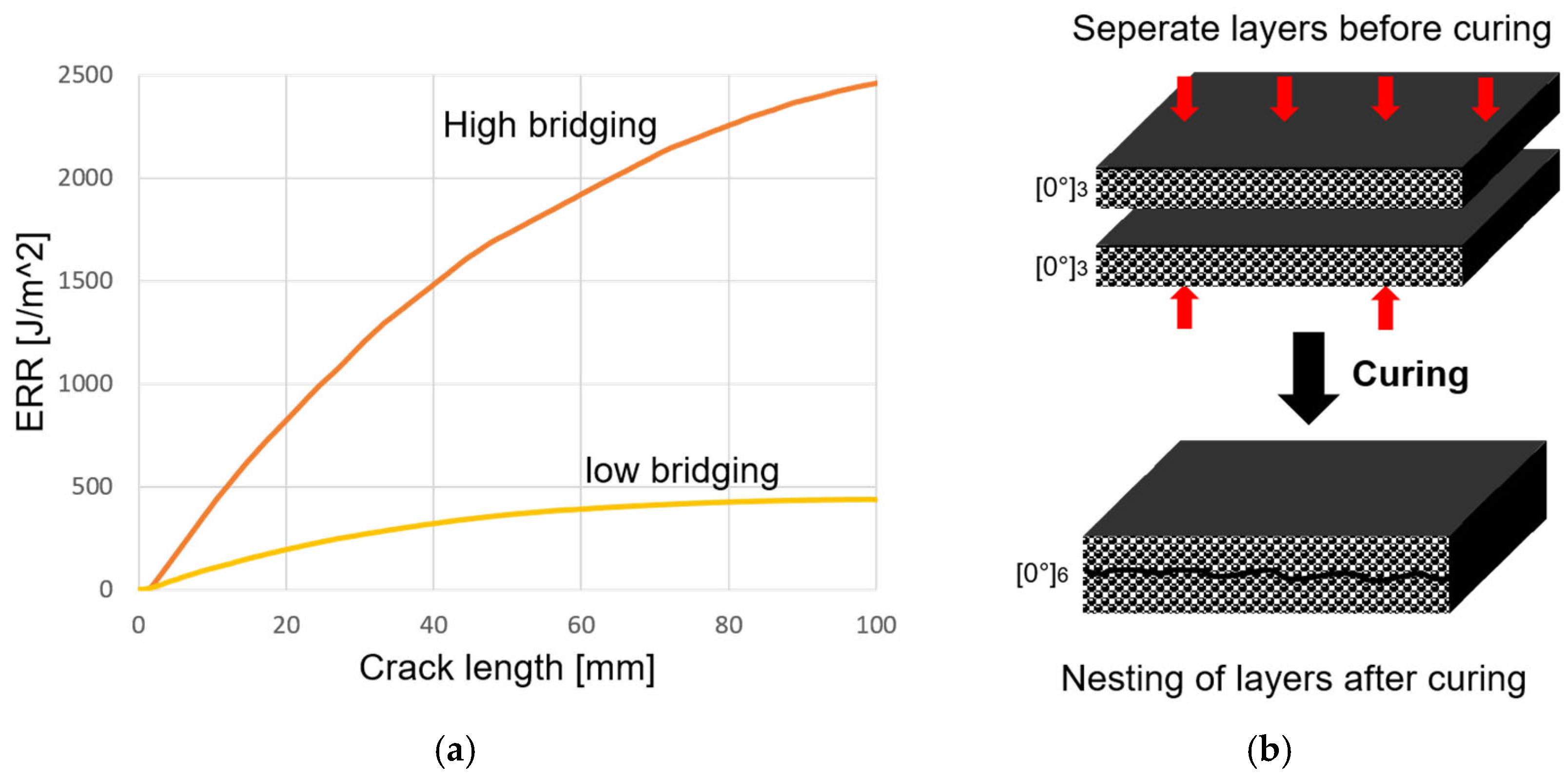
Fiber orientation at delamination interface—fiber orientation can cause nesting of adjacent layers especially in unidirectional (UD) laminates (
Figure 2b) [
17];
Material structure and quality (e.g., weak interfaces, larger fiber volume fraction, toughness of resin) [
18,
19,
20];
Processing parameters (e.g., cooling rate, pressure).
To provide a general description of delamination behavior, fiber bridging must be considered as an interlaminar strengthening mechanism [
14]. This can be illustrated using the resistance curve (R-curve), which can be obtained from a DCB (double cantilever beam) test [
21,
22]. An increased number of bridging fibers in the crack zone leads to an increase in the G
IC value during crack opening; conversely, a low number of bridging fibers results in a constant G
IC value over the crack opening. This effect is illustrated in
Figure 2a.
Figure 2.
Resistance curve from DCB tests with comparison of high and low fiber bridging effect (
a) [
22]; “Nesting-Effect” in unidirectional FRP materials (
b) [
17].
Figure 2.
Resistance curve from DCB tests with comparison of high and low fiber bridging effect (
a) [
22]; “Nesting-Effect” in unidirectional FRP materials (
b) [
17].
Taking into account the interlaminar strength of components at increased risk of delamination failure due to impact loading, for example, is a well-known problem in the design of such structures [
23,
24]. The simplest solutions, such as adjusting layer orientation and increasing thickness, are often not feasible for cost or design reasons (the main fiber orientation must be aligned with the main load direction). Other methods such as stitching the layers together or pinning (piercing and connecting the layers with metal or plastic pins) significantly increase interlaminar strength [
25,
26]. However, this also disrupts the fiber orientation in the material, creating additional resin-rich areas that can reduce in-plane strength [
27]. The interlaminar strength enhancement achieved through fiber bridges, coupled with the comparatively minimal reduction in strength and stiffness of rCFRP made from staple fiber yarn compared to new fiber material, raises the question of whether the pronounced fiber bridging of rCF staple fiber yarn also increases the interlaminar strength of rCF sheet material.
This study investigates the interlaminar strength of rCFRP made from recycled staple fiber yarn in comparison to reference samples made from newly produced fibers (vCF). The focus of this work is on the formation of fiber bridges and the initiation and propagation of the crack front, as well as the failure of the fiber bridges in the crack front. To this end, DCB tests were performed to determine the G1C values, and further microscopic analysis was conducted on the fracture surfaces. Additionally, the influence of the “Nesting-effect” on the formation of fiber bridges is discussed.
2. Materials and Methods
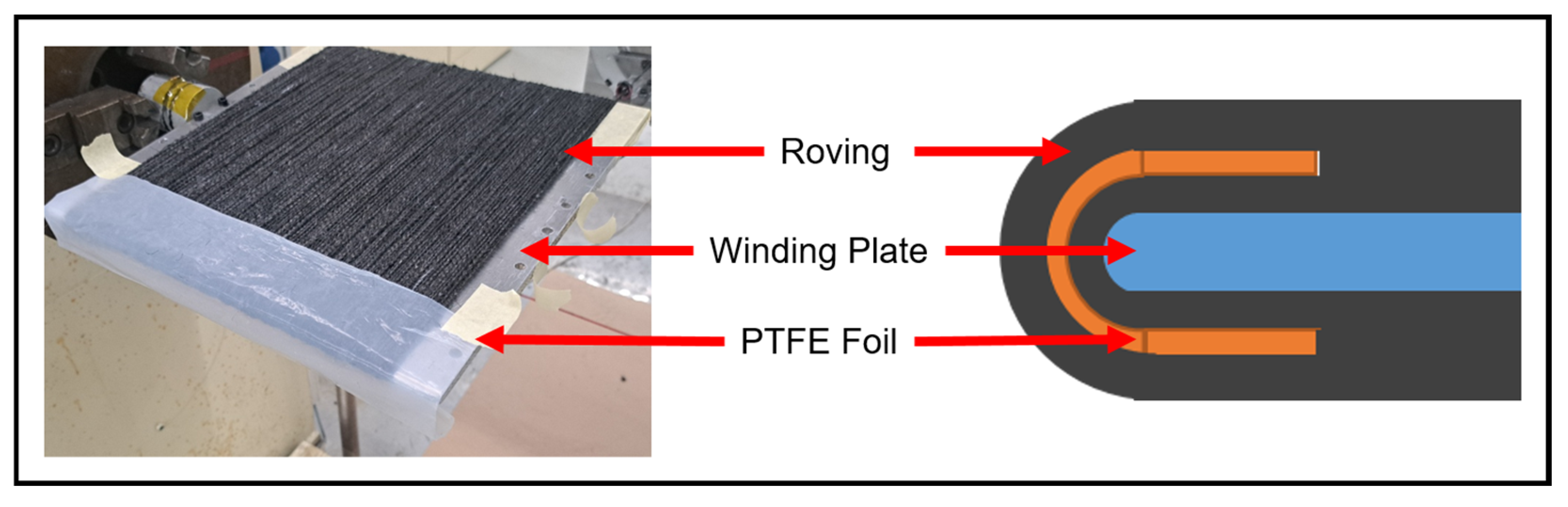
The test specimens were produced by processing various materials into sheet material using a winding process (
Figure 3). The rCF staple fiber yarn (Wagenfelder Spinnereien GmbH, Wagenfeld, Germany) used consists of 60–80 mm long rCF single fibers, which were mixed with PA6 filaments of the same length in a ratio of 90 to 10 (rCF to PA6). In addition, the yarn was wrapped with a PA6 wrapping yarn to give the yarn additional stability. The exact combinations, information on the manufacturing process, and the resulting sample labeling are illustrated in
Table 1. In all variants, a PTFE film was inserted between half of the layers (
Figure 3). This film later served to separate the layers and initiate cracking (25 mm pre-crack length). The target plate thickness is 3 mm in each case. Plates with different layer orientations (LO) were produced to characterize the effect of nesting. The panels were then packed in a vacuum bag and cured in an autoclave at 140 °C with 4 bar pressure for 8 h.
Table 1.
Material combinations, processing route and sample lay-up used in this work.
Table 1.
Material combinations, processing route and sample lay-up used in this work.
| Sample Name | Fiber
Material | Matrix Material | Processing | Fiber Volume Content | Layer orientation (LO) |
|---|
| rCF-EP-“LO” | rCF staple fiber roving (Wagenfelder Spinnereien GmbH, Wagenfeld, Germany) [28] | Huntsman Epoxy (100:90:2)
Araldite LY 1135-1
Araldur 917
Fastener 960-1
(Huntsman Corporation, The Woodlands, TX 77380, USA) | Wet winding
Autoclave | 45% | [0 °]6 |
| [+3°/−3°]3 |
| [+5°/−5°]3 |
| vCF-EP-“LO” | TenaxTM Filament Yarn ITS55
(Teijin Carbon Europe GmbH, Wuppertal, Germany) | Huntsman Epoxy (100:90:2)
Araldite LY 1135-1
Araldur 917
Fastener 960-1 | Wet winding
Autoclave | 46% | [0 °]6 |
| [+3°/−3°]3 |
| [+5°/−5°]3 |
Test specimens measuring 250 × 25 mm (length l × width b) are cut from the manufactured plates in accordance with DIN EN 6033 [
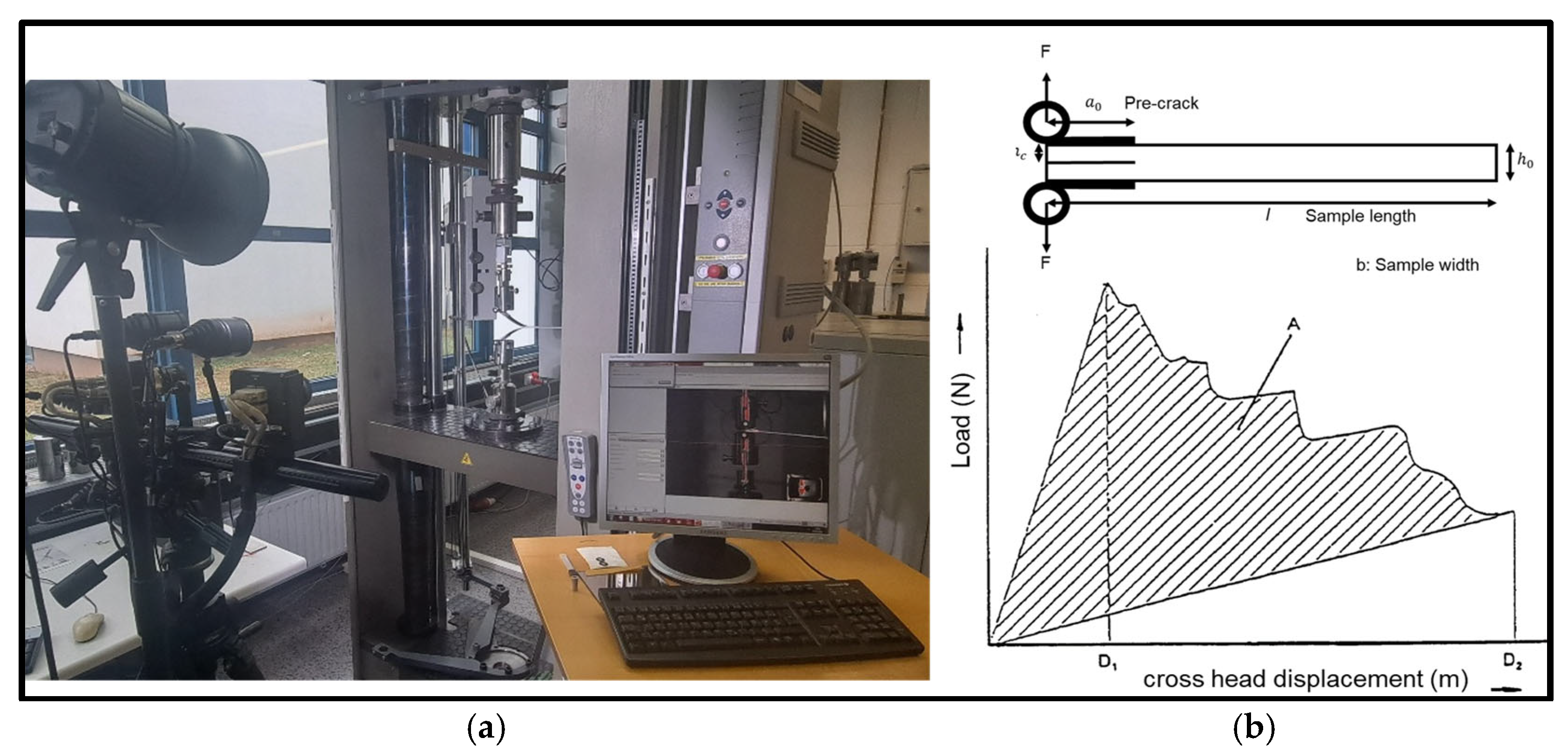
29]. The specimens are tested on an electro-mechanical testing machine (Zwick 1485 from ZwickRoell GmbH & Co. KG, Wuppertal, Germany with a 10 kN load cell) at a speed of 5 mm/min until the crack propagates to a length of 100 mm. Crack propagation was observed using a marking on the edge surface (see Figure 6) and additionally tracked by an optical measuring system (GOM Aramis 4M, Carl Zeiss IQS Deutschland GmbH, Oberkochen, Germany). The camera system can also be used to record fiber bridging effects during measurement. By recording the force-time diagram and correlating it with the crack progression, a force-displacement diagram can be created. This diagram can then be used to calculate the energy release rate (ERR) by defining the area below the measurement curve. The setup, sample geometry and calculation method are visualized in
Figure 4.
The work focuses on describing the formation of the fiber bridges and analyzing their mechanical behavior at the crack front and the underlying failure behavior, such as fiber breakage and pull-out. Therefore the tested samples are examined in detail with microscopy techniques. First, the fracture surfaces were examined using scanning electron microscopy (SEM) (ZEISS SUPRA 40VP, Carl Zeiss IQS Deutschland GmbH, Oberkochen, Germany) to determine possible failure mechanisms. Additionally, X-ray microscopy analyses (μCT) were performed using a ZEISS Xradia 520 Versa (Carl Zeiss IQS Deutschland GmbH, Oberkochen, Germany) to determine fiber orientation, crack fronts, and layer structures. This method can also be used to visualize fiber bridging.
3. Results and Discussion
First, the DCB rCF-EP-0° and vCF-EP-0° samples were tested.
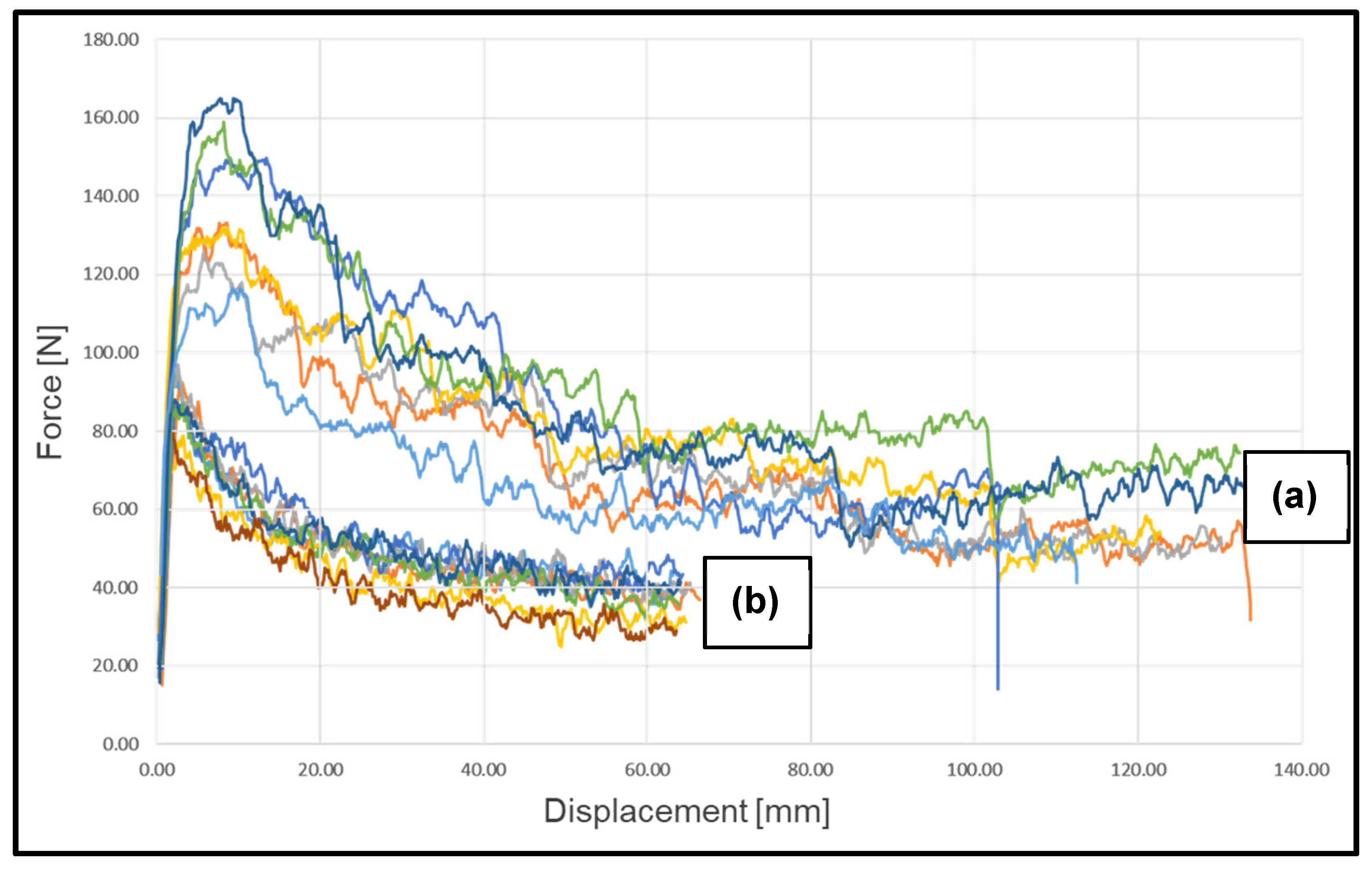
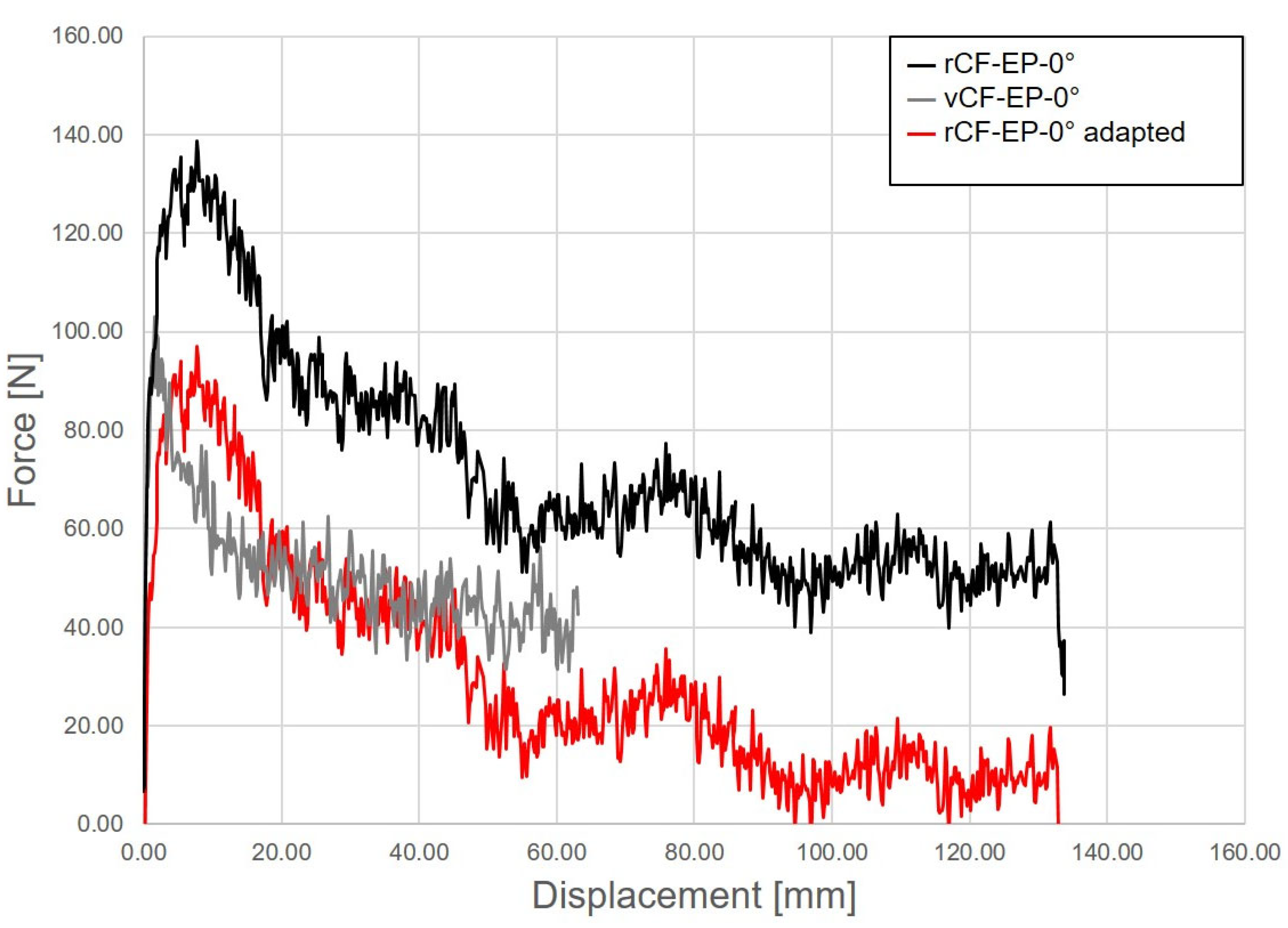
Figure 5 shows the resulting load–displacement curves. The energy release rate (ERR) can be calculated using Equation (1). To do this, the area
A below the measurement curve is determined using the trapezoidal rule. The sample width
w was measured in advance. The crack propagation length a can be determined by optical measurement of the test.
For the tests of the 0° samples, the ERR of the rCF-EP-0° at 2519 J/m
2 is four times greater than that of the vCF-EP-0° at 587 J/m
2. Examining
Figure 6 and the force-displacement diagram (
Figure 5) reveals several factors that account for the differences in ERR:
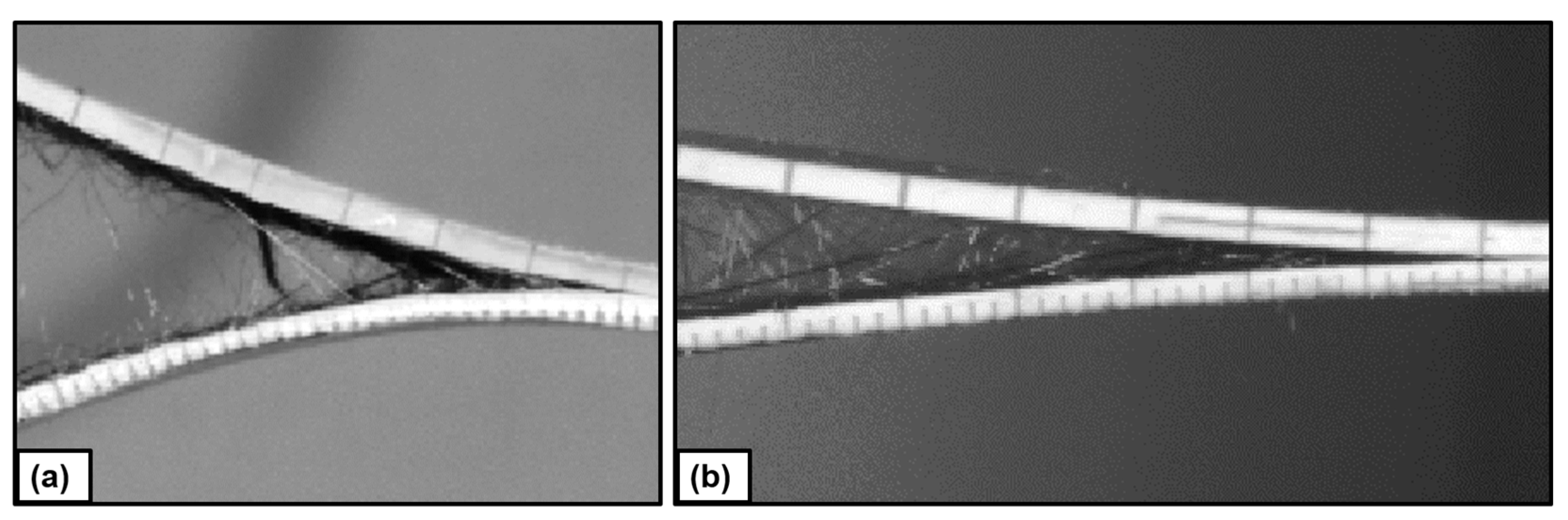
Crack-bridging fibers can be seen in both vCF-EP-0° and rCF-EP-0°. However, in rCF-EP-0°, entire roving bundles and PA6 filaments can be seen bridging the crack surfaces.
The crack opening angle between the two materials differs greatly.
Figure 6 shows that the opening angles are 15° for rCF and 10° for vCF at a crack length of 60 mm. With rCF-EP-0°, significantly higher bending/cracking forces are required to open the crack. This may indicate a pronounced effect of greater fiber bridging stress/numbers.
To achieve a crack propagation of 100 mm, the cross head displacement must be approximately 100% longer for rCF.
Figure 5.
Force–displacement diagram from DCB test of rCF-EP-0° (a) and vCF-EP-0° (b).
Figure 5.
Force–displacement diagram from DCB test of rCF-EP-0° (a) and vCF-EP-0° (b).
Figure 6.
Images of the crack propagation captured during DCB tests showing fiber bridging effects of (a) single fibers, PA6 filaments and roving bundles in rCF-EP-0° and (b) fiber bridging in vCF-EP-0°.
Figure 6.
Images of the crack propagation captured during DCB tests showing fiber bridging effects of (a) single fibers, PA6 filaments and roving bundles in rCF-EP-0° and (b) fiber bridging in vCF-EP-0°.
As can be seen from
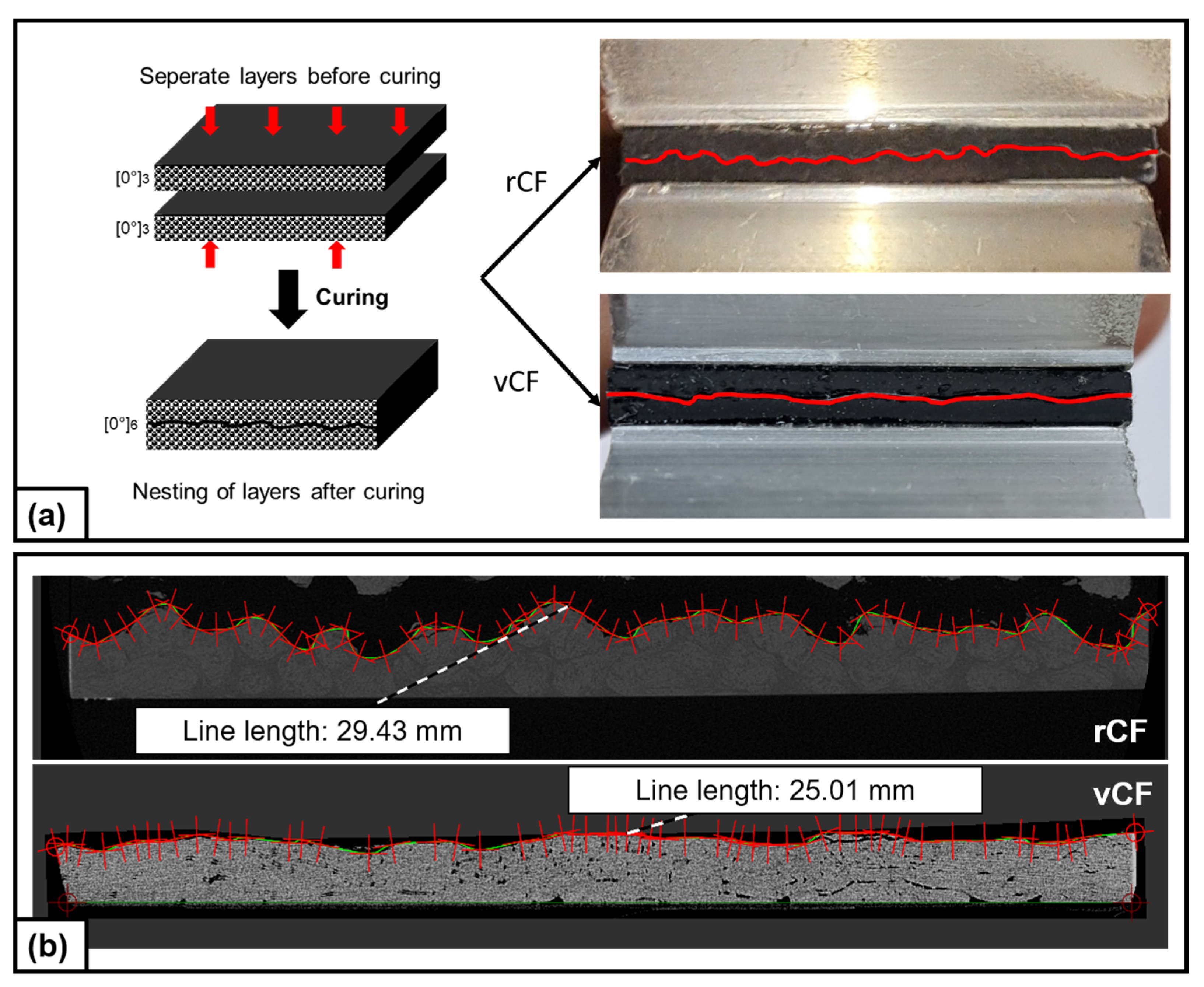
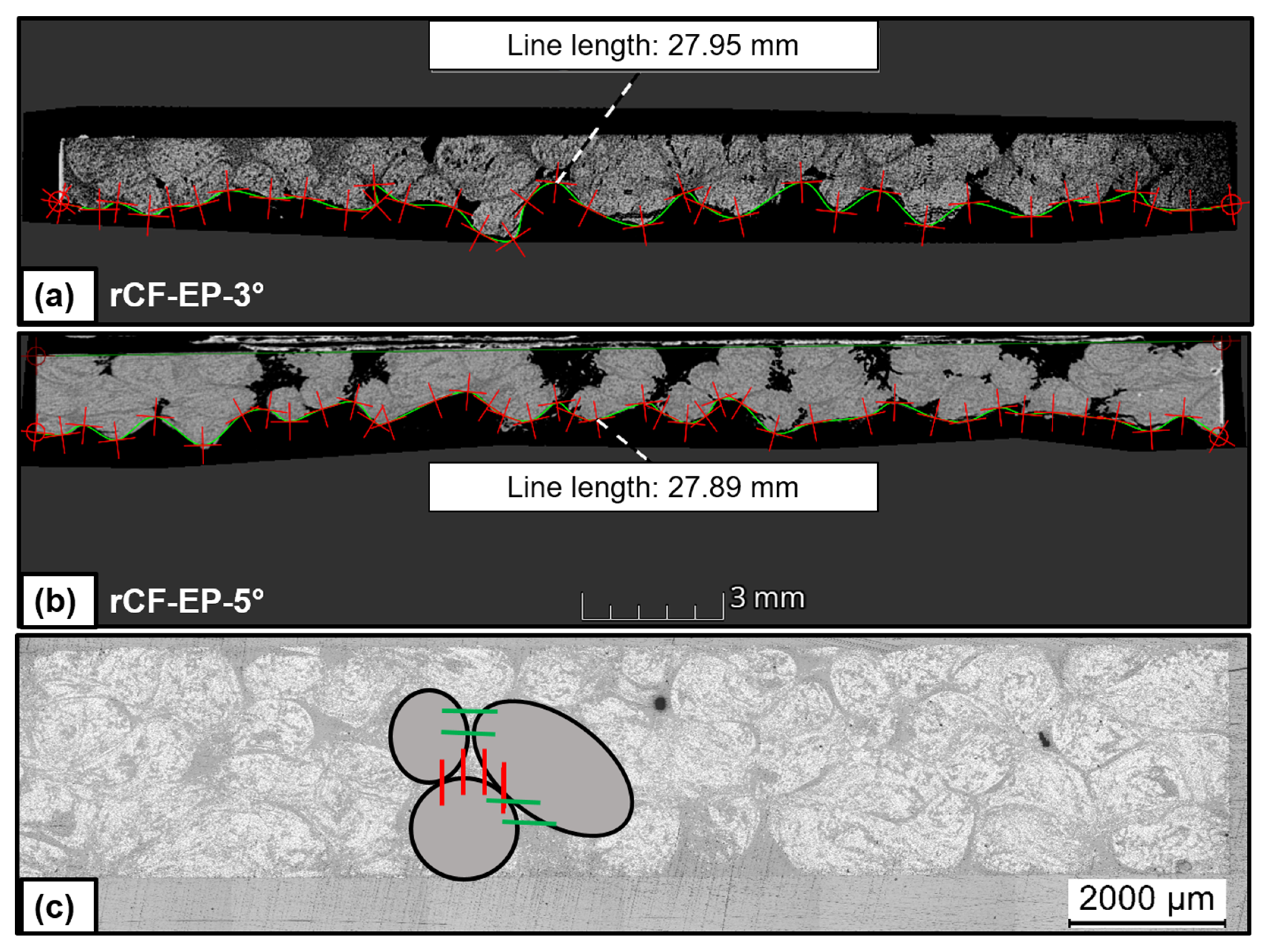
Figure 7a, the nesting effect described above is particularly noticeable in the rCF-EP-0° samples when the fracture surfaces of the two materials are examined. To measure the real fracture surface, CT scans were carried out (
Figure 7b). With a length of 29.43 mm measured over the width of the fracture surface, the rCF-EP-0° samples are approximately 18% larger than that of the vCF-EP-0° samples. When the ERR is recalculated based on this higher surface area, the value is reduced to 2139 J/m
2 (minus 379 J/m
2). The value remains approximately 3.5 times higher than that of vCF. This may indicate that fiber bridging has a higher influence on the interlaminar strength of rCF than the nesting effect.
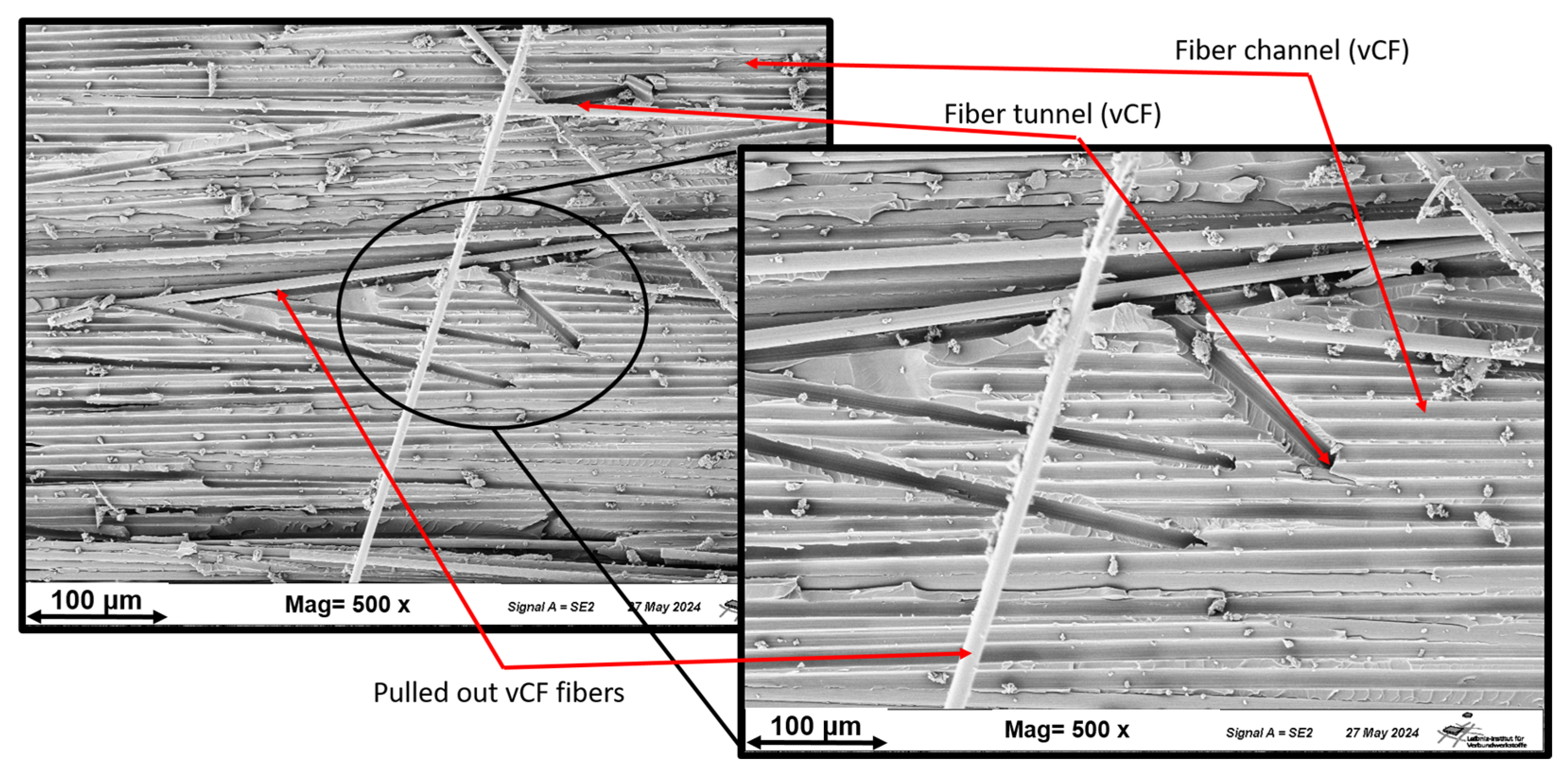
To assess this, SEM images of the fracture surface are taken. To this end, a gold-palladium layer was sputter-coated (Sputter coater; Brand: Balzer) onto the surfaces of the test specimen halves.
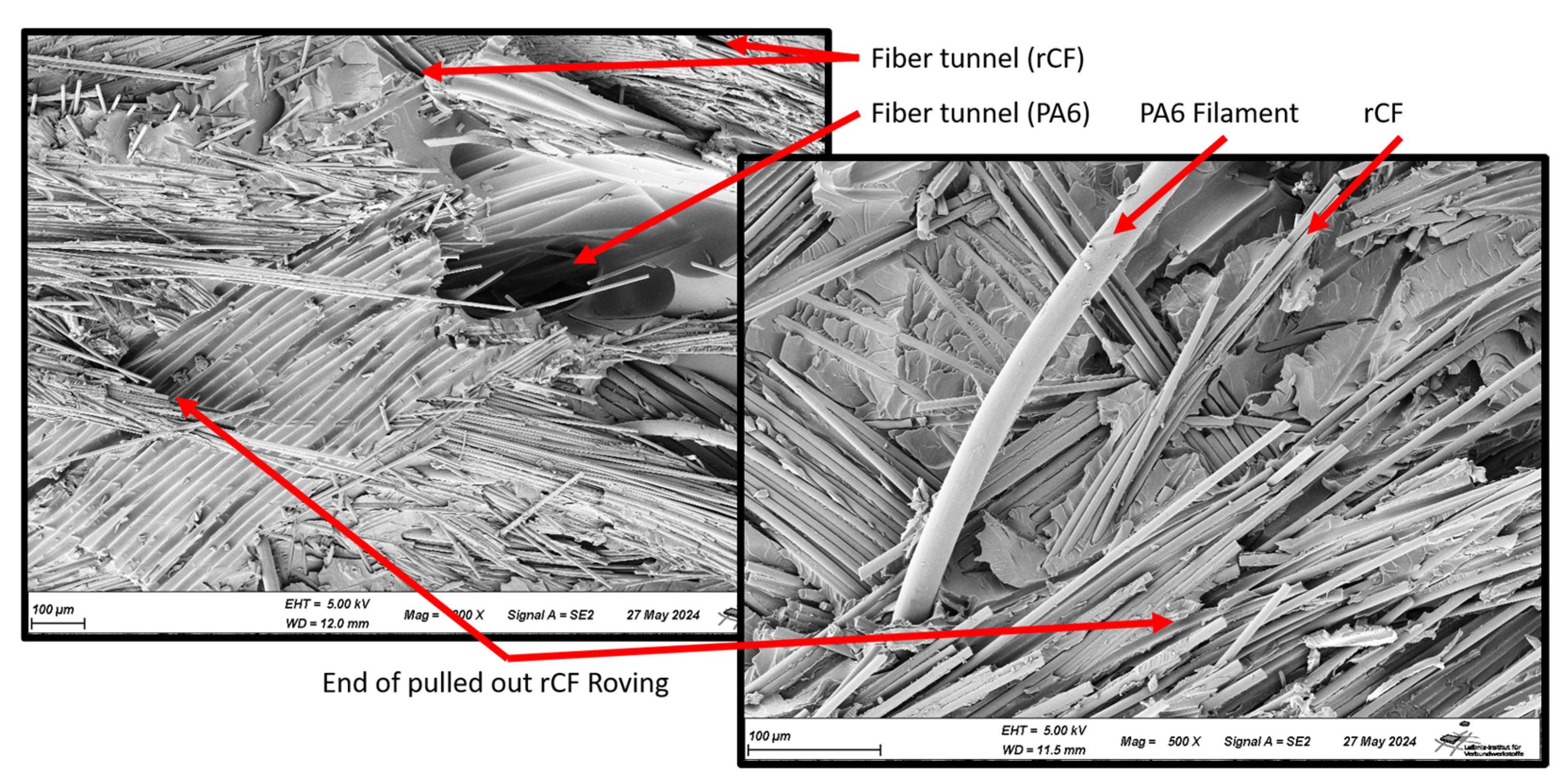
Figure 8 shows that a large number of fiber tunnels are visible on the fracture surfaces, which are caused by individual fibers of the rCF and PA6 filaments being pulled out. However, free ends of complete rCF roving structures can also be seen on the right-hand side of
Figure 8. The SEM image and the optical images during the test confirms the assumption that fiber bridges form both through the rCF fiber and through PA6 filaments and entire rCF roving. This extensive fiber bridging increases interlaminar strength and thus improves the ERR.
The SEM images also illustrate the underlying failure mechanism in the Mode 1 test. Examining the exposed fibers reveals no visible matrix residues. This is consistent with the findings in the previous work [
12] that there are no binding forces between the fiber and the matrix (i.e., poor fiber-matrix adhesion), which is due to insufficient or inactive sizing on the rCF fiber. This means that the dominant failure mechanism during crack propagation is fiber pull-out and debonding with friction between the fibers and the matrix. Poor fiber-matrix interphase was also detected in the vCF-EP samples (see
Appendix A and
Figure A1). The main effect here was the detachment of fibers within the interface. Fiber tunnels were also detected in isolated cases. This also confirms the visible occurrence of fiber bridges. Since both materials are subject to the same failure mechanisms, the DCB test results are comparable.
The force–displacement curves of the DCB tests of the rCF-EP-0° exhibit the classic step-shaped progression. By comparing this curve with the findings from the SEM images, we can conclude that the drop in force is related to overcoming friction forces between the fiber and the matrix due to poor fiber-matrix adhesion. Therefore, the drop in force can be correlated with failure pattern (fiber debonding followed by fiber pull-out).
In [
30], various mathematical approaches have been proposed to describe fiber bridging and the resulting fiber bridge stress during delamination of layered structures. These approaches include the mathematical description of deboning with coulomb friction, which is the main effect in this work. The fiber bridge stress
can be calculated using Equations (2) and (3).
Based on the test results and microscopic images obtained, it can be concluded that debonding with constant friction in the fiber-matrix interface occurs in the rCF-EP samples. This is confirmed by the SEM images, which show no fiber-matrix bond and fiber pull-out channels with no visible fiber breaks, as well as by the force-displacement diagrams. After reaching the maximum force required to initiate crack growth, step formation with the development of constant force plateaus can be observed here. This indicates that, once a defined force threshold (i.e., the friction force between the fiber and the matrix) is exceeded, pure fiber pull-out (i.e., an increase in crack propagation length) initially occurs at a constant force with no friction effects between the fiber and the matrix.
Calculating the fiber bridging stress using Equations (2) and (3) (see the
Appendix B for derivation and characteristic values) gives a stress of approx. 70.63 N/mm
2. This gives a fiber bridging force of approximately 41 N (the fiber bridge stress projected onto the theoretical fracture surface, where the fracture surface corresponds to the fiber diameter multiplied by the fiber pull-out length). Subtracting this value from the force values measured in the Mode 1 test provides an approximation of the curve from the VCF-EP-0° tests (
Figure 9). It should be noted, however, that changes in the path length required to achieve 100 mm crack propagation cannot be taken into account. Therefore, it is not possible to calculate the ERR backwards without fiber bridging stress. Nevertheless, this theoretical calculation of fiber bridging stress shows that the deviations in the force-displacement diagram and in the ERR between rCF and vCF are caused by fiber bridging.
To assess the effect of nesting on ERR, samples with layer differences of 3° and 5° were tested. In [
17], the impact of nesting on fiber bridging is investigated, with a particular focus on the influence of fiber intermingling due to nesting. It was also demonstrated that an orientation difference of more than 1.5° or 3° between adjacent layers reduces the effect of nesting.
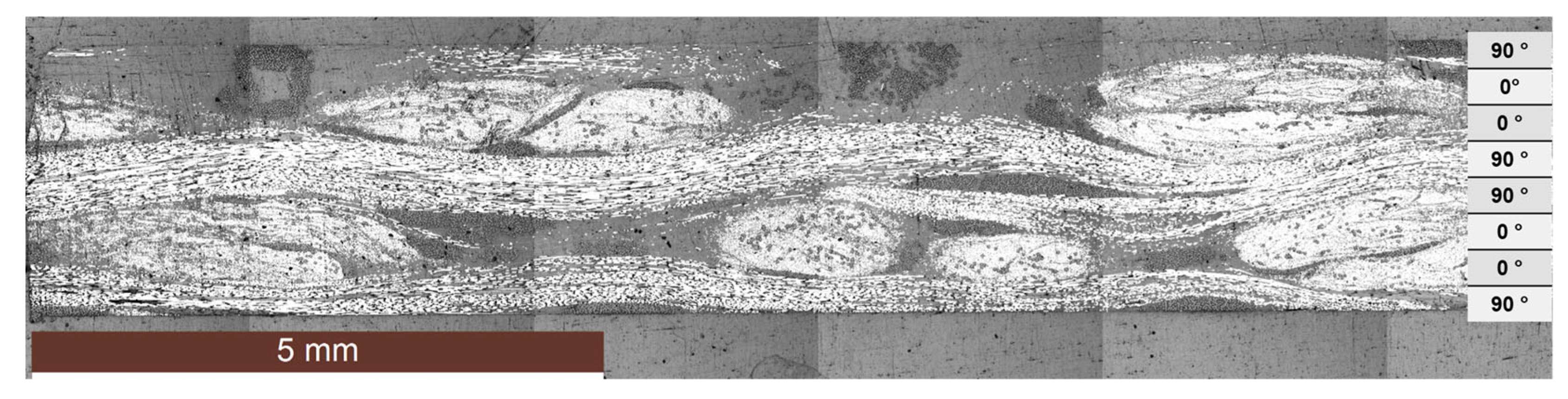
Figure 10a,b shows the reduction in crack width at 3° and 5°, compared to 29.42 mm at 0° (based on a CT scan and measurement of the crack width). Between 0° and 3°, the reduction in crack width is 1.5 mm. Between 3° and 5°, however, the reduction is only approximately 0.05 mm. Due to the coarse structure and inhomogeneity of the rCF roving, it can be assumed that the nesting effect cannot be completely eliminated, as the difference in fiber angles between adjacent layers increases. The coarse roving structure always allows nesting of the layers among themselves. Micrographs of a 0/90 fabric made of rCF roving confirm this assumption (see
Appendix C:
Figure A2 and
Figure A3).
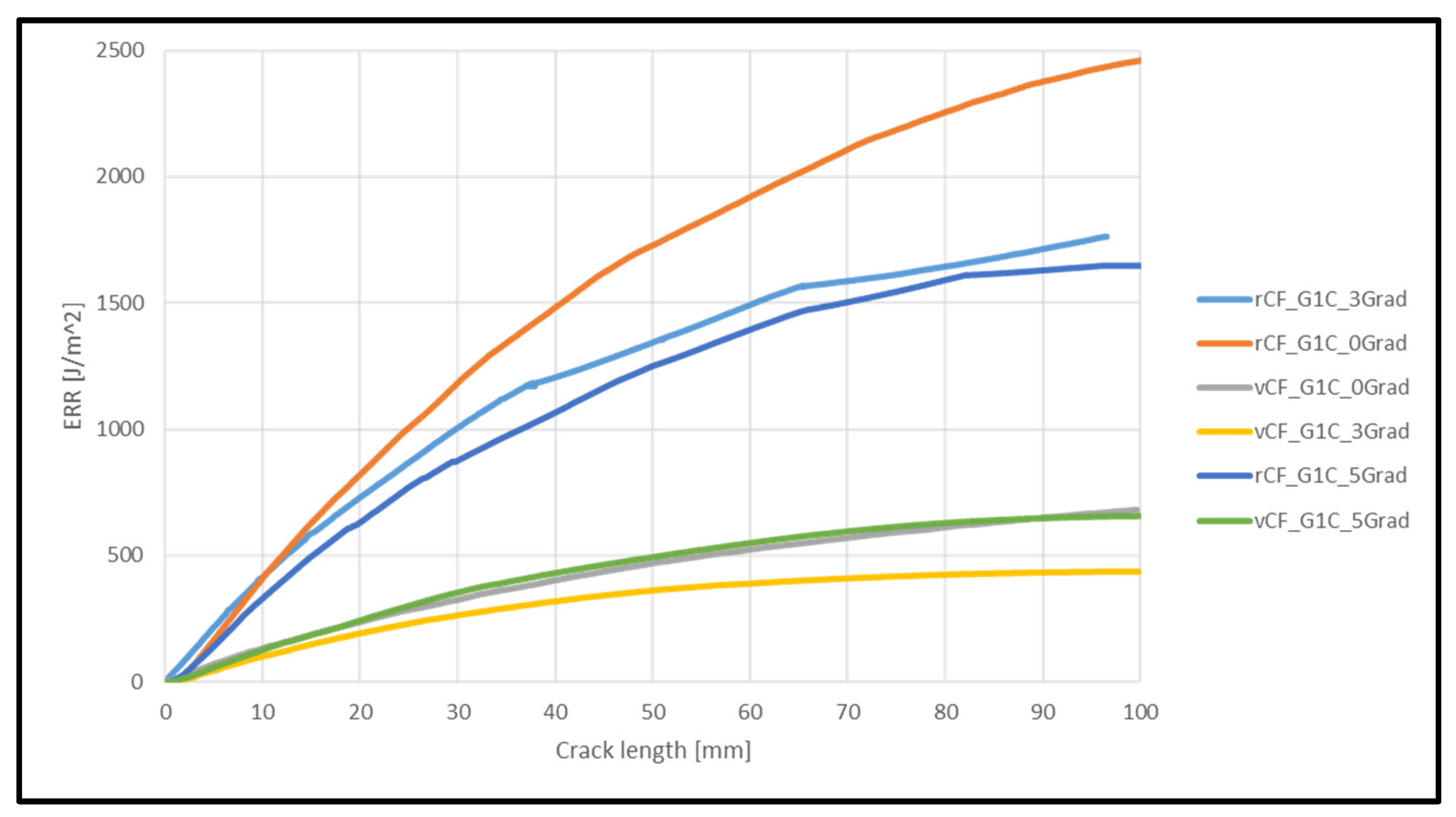
Figure 11 and
Table 2 show the influence of nesting on the ERR compared to the 0° samples. As can be seen, there is a sharp drop in the ERR of 450 J/m
2 to approx. 1700 J/m
2 with rCF between 0° and 3°. Between 3° and 5°, there is only a drop of 120 J/m
2 to 1570 J/m
2. This is primarily due to the sharp decrease in crack surface width at a fiber orientation difference of 0° to 3° between the layers.
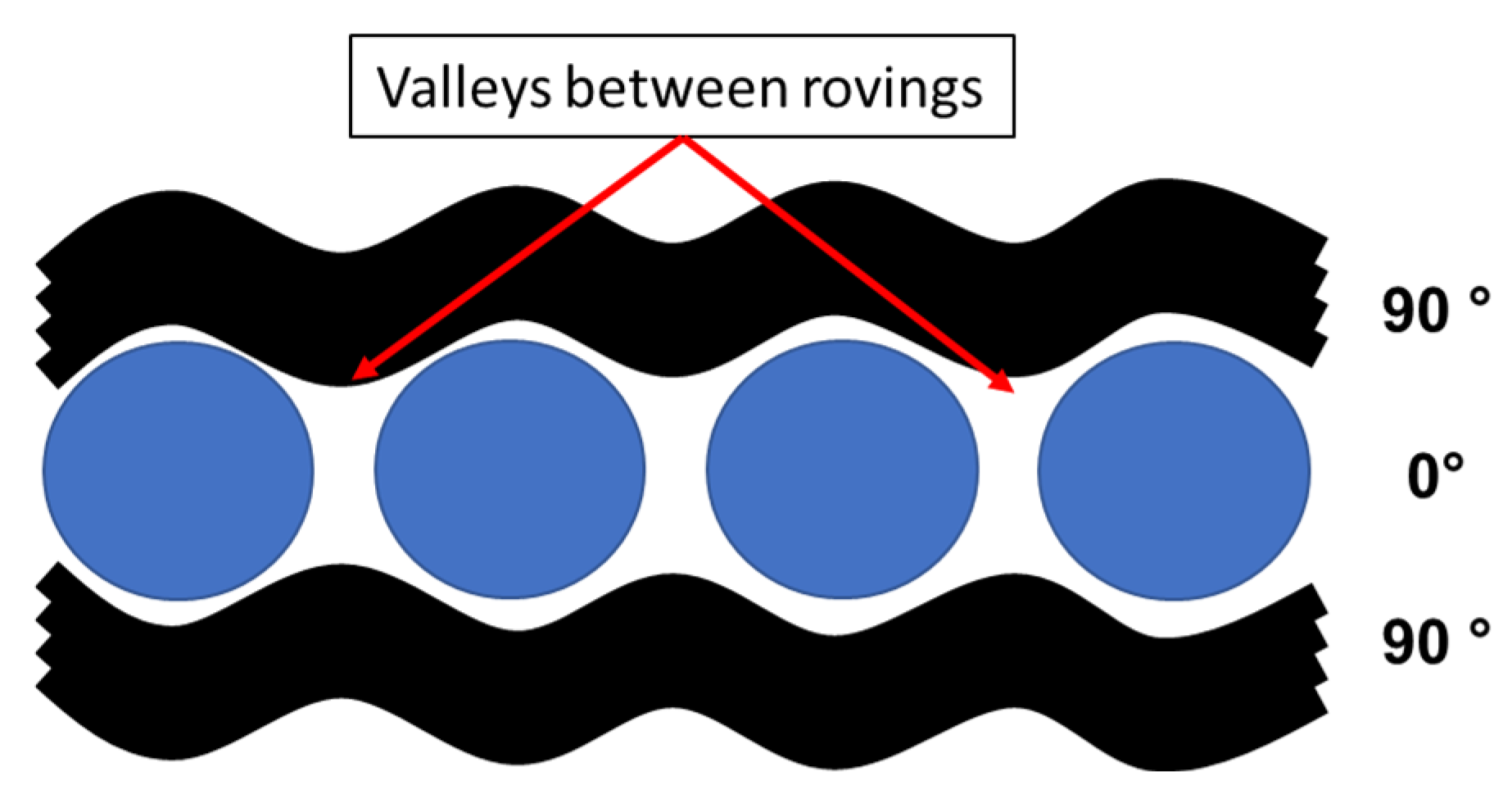
As the difference between the layer orientations increases, the rCF roving can no longer press as strongly into the “valleys” of the layer below. Consequently, fewer fiber bridges are formed within these “valleys”; instead, fiber bridge formation is mainly reduced to the boundary between the layers (see
Figure 10c).
In vCF samples with increased fiber orientation differences between layers, a 160 J/m
2 decrease in ERR is noticeable between 0° and 3°. The nesting effect is not visible microscopically at 0° in the vCF samples because only individual fibers can nest, unlike the entire roving structure seen in rCF. However, this effect is significantly minimized at a layer difference of 3°. The increase in ERR in the vCF-EP-5° samples is due to an increased plate thickness of 3.3 mm, which is greater than the 3 mm thickness of the vCF samples. The resulting increase in bending stiffness leads to a higher force required to initiate crack growth. This is supported by Farmand-Ashtiani [
31], who demonstrated the effect that sample thickness has on ERR. As can be seen, greater sample thickness leads to higher ERR. Therefore, uniform sample thickness is crucial for comparability. Therefore, the vCF-EP-5° test is only of limited significance.
In the vCF samples, when we compare the ERR of rCF and vCF at 0°, 3°, and 5° with each other, it is evident that approximately four times more energy is required to achieve layer separation in the rCF material, regardless of nesting. This suggests that the coarse, inhomogeneous structure of the rCF roving promotes fiber bridging within and between layers of the laminate, thereby increasing interlaminar strength. However, in this context, it should be noted that the energy distribution across the increased crack surface is not uniform. Nesting increases surface roughness, resulting in higher ERR in localized areas compared to “flat” areas. At the same time, as described above, there is greater formation of fiber bridges in the area of the interlocked fiber bundles (see
Figure 10c). Since these local effects are difficult to measure experimentally, the energy distribution is simplified and assumed to be uniform across the entire crack surface. Locally, the ERR is therefore overestimated or underestimated relative to the determined value.
4. Conclusions
This study examined the interlaminar failure behavior of rCFRP made from staple fiber yarn, comparing it to new and continuous fibers with an identical matrix system. The study focused on the significant impact of fiber bridging in rCFRP due to the roving’s coarse and inhomogeneous structure. To this end, unidirectional plates were produced using the wet winding process with rCF staple fiber roving (quasi-continuous reinforcement) and new fiber roving (continuous reinforcement). The energy release rate of the materials was determined through G
1C testing according to DIN 6033. The rCF material (2519 J/m
2) has an ERR that is more than four times higher than that of the vCF material (587 J/m
2) due to the higher amount of fiber bridging. This was also demonstrated by Russo [
22], who investigated the impact of a high or low fiber bridging on the ERR using both experimental and analytical methods on an epoxy resin/carbon fiber composite. He also observed a factor of three between the ERR values of low and high fiber bridging. A notable feature of the rCF material is the nesting effect between the layers, which increases the effective fracture area. Taking the increased fracture area into account the ERR reduces for rCFRP to 2139 J/m
2. The increase in ERR is due to the formation of fiber bridges between the layers. Not only individual fibers, but also entire roving bundles bridge the cracks. SEM images show that, locally, PA6 filaments (components of the rCF roving), as well as entire roving bundles, bridge the cracks. This significantly increases the interlaminar strength of the rCFRP.
The SEM images also allow us to draw conclusions about the underlying failure behavior at the crack front and at the fiber bridges. As previously determined, the bond between the fibers and the matrix in both rCFRP and vCFRP is minimal or absent due to inadequate or deactivated fiber sizing. This is evidenced by exposed fiber ends with no visible matrix adhesion. SEM images clearly show fiber channels (detached fibers), fiber tunnels (fibers pulled out of the matrix), and gaps between the matrix and embedded fibers. These results, coupled with the lack of visible fiber fractures in the images, lead to the conclusion that the main failure mechanism at the crack front is fiber debonding, followed by fiber pull-out, with constant friction between the fiber and the matrix. Analytical calculations of fiber bridge stress confirm this.
Not only does the nesting of the roving bundles in rCFRP lead to a larger fracture surface, but it also ensures the formation of fiber bridges between the layers (interlaminar) and between the branched roving bundles (intralaminar). Therefore, this significantly increases ERR compared to new fiber material, where fiber bridging only occurs interlaminar and is limited to specific areas.
To investigate the effect of nesting on ERR, additional DCB tests were performed on samples with different layer orientations (3° and 5° differences in layer orientation). As can be seen here, there is a decrease in ERR for both rCF and vCF. Notably, there is a significant decrease in ERR between the 0° and 3° orientations to 1640 J/m
2 for rCF. Nevertheless, the ERR of rCFRP is significantly higher than that of vCFRP due to rCFRP’s coarse roving structure. Because of this structure, the fibers can nest into each other even with larger layer orientations (nesting continues to occur), resulting in pronounced fiber bridging. This effect decreases in vCFRP as the difference in layer orientation increases. The results for the rCF and vCF samples are similar to those reported by Johnson [
17]. He also demonstrated that changing the position from 0° to 3° significantly decreases the ERR (from 1000 J/m
2 to 650 J/m
2). It also became apparent here that nesting is no longer evident.
In summary, rCFRP made from staple fiber roving exhibits significantly higher interlaminar strength than comparable materials made from new fibers. However, previous studies have shown that the in-plane properties (stiffness and strength) are only about 70% of those of virgin fiber materials despite the insufficient fiber-matrix interphase [
11,
12]. This could be a potential application area for rCF roving in structural components. Using an intermediate layer of rCFRP could increase a component’s interlaminar properties without requiring targeted interlaminar reinforcement through stitching or Z-pins during manufacturing. However, stitching or pinning can reduce the in-plane properties of a component by interrupting fiber orientation due to deflection or interruptions of the fibers. This effect could potentially be mitigated with an rCFRP intermediate layer because the formation of fiber bridges at the roving ends does not influence the main orientation of the fibers. Experiments on this topic are currently being conducted to expand the range of applications for rCF and integrate the material into load-bearing components in a mechanically and cost-efficient manner.