
Article

Impact of Recycled Rubber Mesh Size and Volume Fraction on Dynamic Mechanical and Fracture Characteristics of Polyester/Fiberglass Composites


by
Essam B. Moustafa
1,2,*,
Ghassan Mousa
3,
Ahmed S. Abdel-Wanees
1,
Tamer S. Mahmoud
2 and
Ahmed O. Mosleh
4
1
Faculty of Engineering, Benha National University (BNU), Al Obour 13518, Egypt
2
RDI Converging Sciences and Emerging Technology (CoSET) Center, Benha National University (BNU), Al Obour 13518, Egypt
3
Mechanical Engineering Department, Faculty of Engineering, King Abdulaziz University, Jeddah 21589, Saudi Arabia
4
Mechanical Engineering Department, Faculty of Engineering at Shoubra, Benha University, Cairo 11629, Egypt
*
Author to whom correspondence should be addressed.
J. Compos. Sci. 2026, 10(1), 53; https://doi.org/10.3390/jcs10010053 (registering DOI)
Submission received: 4 December 2025 / Revised: 7 January 2026 / Accepted: 15 January 2026 / Published: 17 January 2026
(This article belongs to the Special Issue Research on Recycling Methods or Reuse of Composite Materials)

Abstract

This work examines the impact of integrating recycled rubber particles on the dynamic mechanical properties of polyester/fiberglass (P/F) composites. Rubber particles of several mesh sizes (M20 and M40) and volume fractions (10%, 20%, and 30%) were included in the P/F composite. The findings indicate that increasing rubber content reduces density and affects the tensile strength and fracture characteristics of the composites. Rubber often decreases stiffness while potentially enhancing damping, contingent on its interaction with the polyester matrix. The P/F/M40_20% composite demonstrates significant stiffness and moderate damping, indicating a distinctive reinforcing mechanism. The relationship between rubber tensile strength and fractured behavior is complex. M40 composites weaken at 30% owing to debonding, but M20 composites only slightly decrease in strength at 20% rubber. Interestingly, M20_30% has increased strength due to rubber–fracture interactions. Fiberglass reinforcement stiffens the material but reduces vibration absorption. Rubber enhances flexibility and may attenuate vibrations. A weighted scoring method determines that the P/F/M20_20% rubber composite is the most advantageous for attaining equilibrium of toughness, strength, and damping characteristics. This work elucidates how to optimize the performance of P/F composites by modifying the properties of rubber particles for targeted applications.

1. Introduction

Researchers have extensively explored the use of fiber-reinforced polymers (FRPs) in the construction of buildings. Their primary focus is evaluating the mechanical performance of these materials and assessing their potential as substitutes for steel reinforcement in concrete [1]. Additional research, such as [2], has demonstrated that adding rubber to composite materials enhances their durability and impact absorption, particularly in ceramics. Similarly, reinforcing buildings constructed with rubberized concrete involves using FRP sheets to improve overall functionality [3]. However, the FRP reinforcement and rubber connection must be exceptionally robust for these composite materials to function well. Researchers are investigating methods to alter the surfaces through plasma treatment to enhance this interaction [4]. Incorporating rubber particles can significantly improve the mechanical characteristics of composite materials. Adding rubber particles with a butylacrylate core–shell structure to polycarbonate (PC) blends and polyethylene terephthalate (PET) reduced susceptibility to cracks and enhanced impact resistance [5]. The inclusion of rubber particles within the PC phase was credited for this beneficial impact.
Recycled tire rubber as a sandwich layer in epoxy–glass composites significantly enhances their mechanical properties and environmental sustainability, a finding validated through comprehensive strength testing and rigorous statistical analysis [6]. Similarly, Dreerman et al. [7] found that adding rubber particles increased the durability of vinyl ester resins, rendering them more resistant to fracture. Nevertheless, this enhancement was achieved at the expense of some flexibility and resistance to bending. A different study highlights the need for a harmonious combination of strength, stiffness, and resilience to high temperatures. A thorough analysis of the connection between the rubber structure and the composite material’s properties is necessary [8]. Rubber particles can be utilized to prevent “brittle failure” in epoxy resins. When a crack starts to form, these recycled rubber particles absorb energy and arrest its progression [9].
Multiple aspects are involved, particularly the force they can withstand when pulled (tensile strength). Many researchers have highlighted that flaws in fibers can lead to vulnerabilities in the ultimate composite [10,11]. A robust connection between the fibers and the surrounding matrix is essential for achieving high tensile strength [12,13]. In addition, natural fibers with a high failure strain, meaning they can expand significantly before breaking, are advantageous in composite applications [14]. These studies indicate that various factors, including fiber quality, fiber–matrix bonding, and fiber properties, influence the tensile strength of composites. Studies on the dynamic characteristics of epoxy and polymer fiber composites have yielded several significant findings [15,16,17]. Weibo et al. [18] determined that the crosslink density and pendant methyl concentration influence the loss factor of polyether urethane damping materials. Another investigation was carried out on the impact of impregnation quality, fiber/matrix adhesion, and fiber quality on the mechanical and damping properties of epoxy/flax fiber composites [19]. The investigation revealed that enhancing the adhesion between the fiber and matrix resulted in a substantial augmentation in damping. Including glycerol and polyglycerol in flax composites increased the damping coefficient [20]. This is attributed to a stick–slip mechanism that involves the repetitive breaking and reforming of hydrogen bonds. The literature indicates that these investigations demonstrate the potential to improve the ability of epoxy and polymer fiber composites to reduce vibrations by altering the materials used and their processing methods. The rubber component in composite materials plays a crucial role in determining their damping behavior, as evidenced by the longer decay period observed in composites containing rubber compared to those made only of polyester and fiberglass [21]. This is corroborated by the finding that the P/F/M20_30% sample, which had the highest rubber concentration, showed the least deterioration in vibration over time. Reinforcing glass with rubber improves damping but reduces stiffness as fiber volume increases [22,23]. Smaller fiber diameters and interleaved rubber layers can enhance damping without sacrificing stiffness [24,25]. Recent research demonstrates that incorporating recycled tire waste and strategically distributed rubber layers into epoxy matrices can effectively enhance mechanical performance and cost-efficiency, offering a viable pathway toward material circularity [26]. Fiber position and proportion also significantly affect damping in hybrid composites [27]. Therefore, this research aims to evaluate the influence of recycled rubber mesh size (M20 vs. M40) and volume fraction (10–30%) on the physical, mechanical, and dynamic mechanical performance of the resulting composite. By analyzing key parameters such as density, tensile strength, impact resistance, and damping characteristics—including natural frequency and storage/loss moduli—the study seeks to identify an optimal formulation that effectively balances structural stiffness with enhanced energy dissipation for multifunctional applications.

2. Materials and Methods

2.1. Materials and Fabrication Process

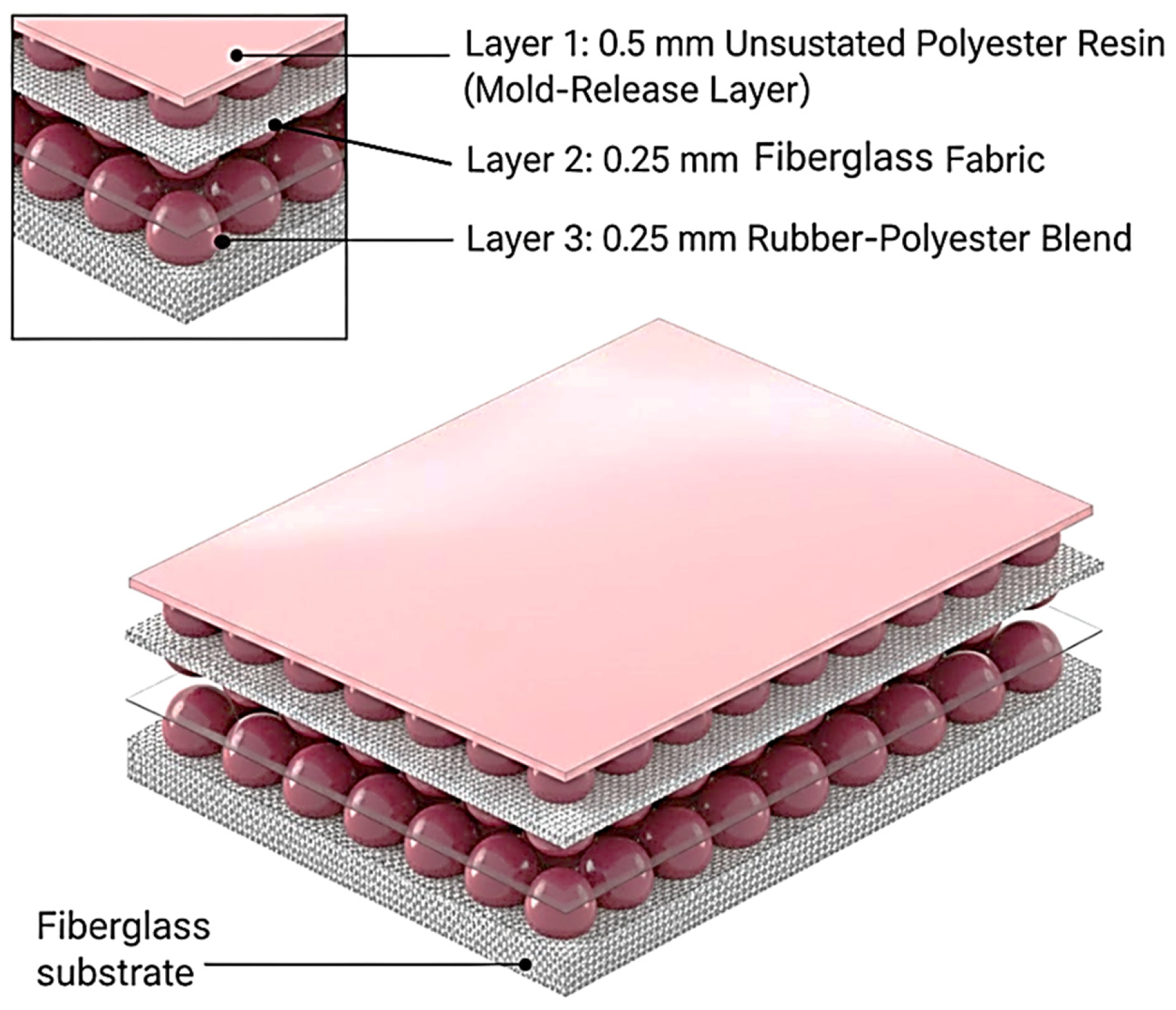
The composite laminates were fabricated using a hand lay-up technique, a laborious process involving systematically applying resin layers and reinforcing materials. Each laminate’s formation began with (Layer 1) of unsaturated polyester resin, which was cured using MEKP (methyl ethyl ketone peroxide, 1.5 wt%) as hardener at room temperature (25 °C) for 24 h, followed by post-curing at 60 °C for 2 h. Resin was acquired from SUNPOL (Adana, Turkey).. The density of the polyester resin was 1.23 g/cm3. The recycled rubber particles, obtained from HOPPEC (El Sadat City, Egypt), an Egyptian company, had an average density of 0.4 g/cm3. The particles were classified by size distribution, with the 40-mesh particles having sieve openings of about 420 µm and the 20-mesh particles having sieve openings of about 850 µm. Afterward, the rubber–resin blend was applied over the initial resin coating. Layer 3, sometimes known as the last layer, consisted of a fiberglass reinforcing fabric supplied by Jushi, Co., Ltd (Suez Canal Economic Zone, Egypt). The fiberglass material had a specific weight of 300 g/m2, indicating a substantial fiber content, and a roll width of 1524 mm. The fiberglass was meticulously positioned and organized over the existing layer, and an additional layer of unsaturated polyester resin was subsequently applied to properly impregnate the fiberglass and establish robust adhesion in the composite laminate.
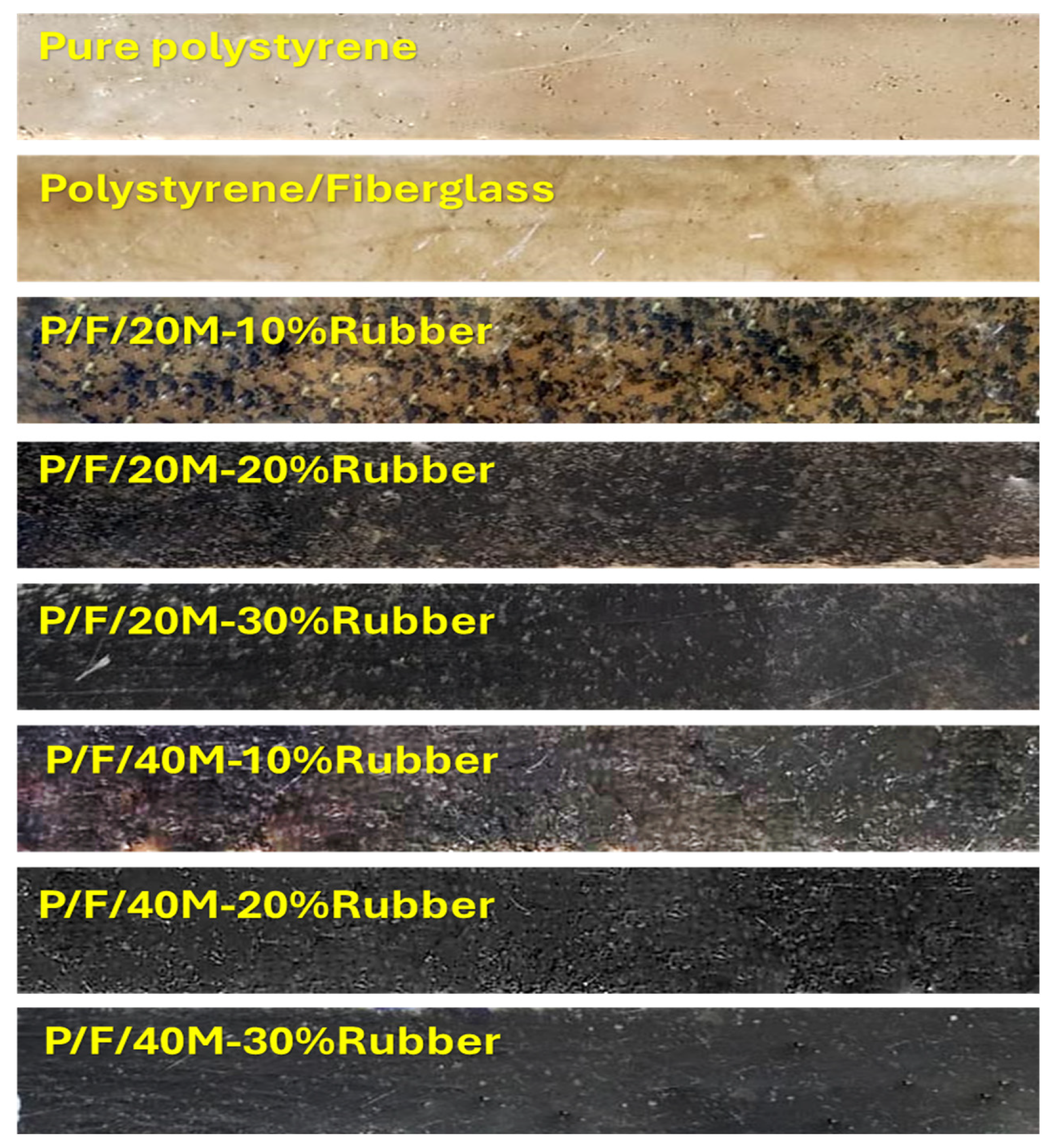
The composite laminates were manufactured using a hand lay-up technique, a manual procedure that involves placing predefined layers onto a mold surface in a precise sequence. The meticulous layer configuration for each laminate was carefully designed to achieve the desired final thickness and material composition. The initial resin layer was unsaturated polyester. A 0.5 mm thin layer enhanced the bond between the mold surface and the ultimate composite laminate. The second layer comprised fiberglass reinforcement. A pre-cut fiberglass fabric layer measuring 0.25 mm in thickness was positioned on the initial resin layer, as shown in Figure 1. The third layer consisted of a mixture of Polyester resin and recycled rubber granules, applied after the fiberglass layer. The exact proportion of these particles within the resin matrix was predetermined by the experimental design and varied across different laminate configurations. To ensure precise control over the final laminate thickness, the maximum thickness of layer one was limited to 1 mm. Layers two and three, which incorporated rubber particles, a resin interlayer, and glass fibers, were then replicated to achieve the desired laminate structure. This approach ensured consistent processing and handling characteristics during subsequent evaluations, as the overall laminate thickness remained 4.5 mm or less. Figure 2 depicts the manufactured polyester/fiberglass samples strengthened with varying proportions of rubber particles. The illustration displays multiple specimens, most likely with a rectangle or square configuration, made from a polyester/fiberglass substrate. The samples may exhibit diverse hues or noticeable differences in texture, possibly due to varying amounts of rubber particles.
Final laminate dimensions: 210 mm × 24 mm × 4.5 mm for vibration tests; 250 mm × 25 mm × 4 mm for tensile tests (ASTM D3039/D3039M-17) [28]). The samples were prepared and cut using a Water-cooled diamond saw to minimize thermal damage. All specimens were stored at 23 ± 2 °C and 50% RH for 48 h before testing.

2.2. Scanning Electron Microscopy (SEM) and Energy-Dispersive X-Ray Spectroscopy (EDX)

The surface morphology of the samples was investigated using a scanning electron microscope (SEM) JEOL JSM-7600F (JEOL Ltd., Akishima, Tokyo, Japan). The elemental composition and distribution were analyzed using an energy-dispersive X-ray spectrometer (EDX) (Oxford Instruments, Abingdon, UK) coupled with the SEM. To ensure accurate quantification and to account for the presence of both light (C, O) and heavy (Si, Ca) elements, the system was calibrated, and standardless quantification was performed using the software’s ZAF (Aztec software, Oxford Instruments, High Wycombe, UK) correction algorithm. The energy range of the spectra was [0–20 keV], suitable for detecting both light and heavy elements in our samples.

2.3. Free Vibration Test

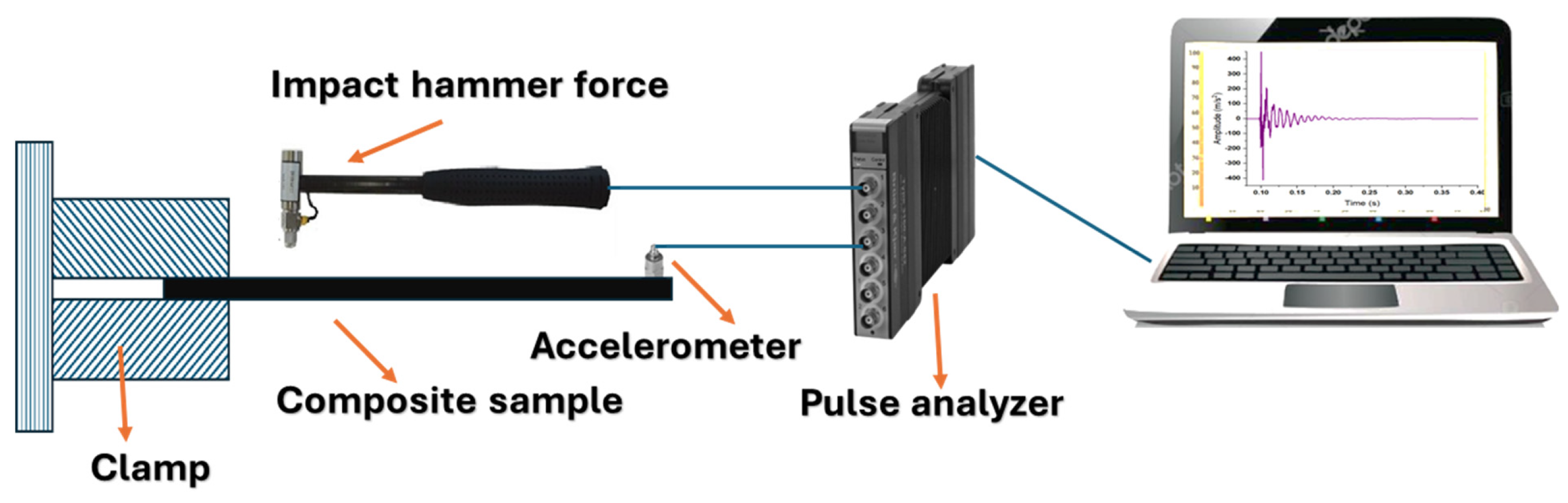
The dynamic properties of the composite materials were characterized by conducting free-vibration tests in accordance with ASTM E756−05 Standard Test Method for Measuring Vibration-Damping Properties of Materials. ASTM International: West Conshohocken, PA, USA, 2017. This test method provides a non-destructive assessment of a material’s intrinsic stiffness and damping properties by measuring its natural frequencies [17,29,30,31,32]. The experiment utilized a composite with a regular rectangular cross-section beam measuring 210 mm in length, 24 mm in width, and 4 mm in thickness. The test specimen was fabricated as a cantilever beam, with one end securely attached and the other unrestricted. A B&K model 4507 B accelerometer was affixed to the unfixed end of the cantilever beam to record its time-based reaction. Vibrations were induced in the composite beam using a B&K model 8206 impulse hammer. The resulting vibration response was subsequently measured and examined using an impulse data analyzer (B&K module 3160-A-4/2) (Brüel & Kjær, Virum, Denmark). Figure 3 depicts the entire experimental configuration. The obtained data were processed using ME’Scope (Vibrant Technology, Inc., Centennial, CO, USA), a software for modal analysis. This software enabled the computation of the frequency response function (FRF), damping ratio, and fundamental frequencies. To ensure the precision of the results, the free-vibration test was conducted five times. The average results from these repeated experiments were subsequently used to develop various correlations between the material characteristics and the measured variables.

2.4. Mechanical Properties

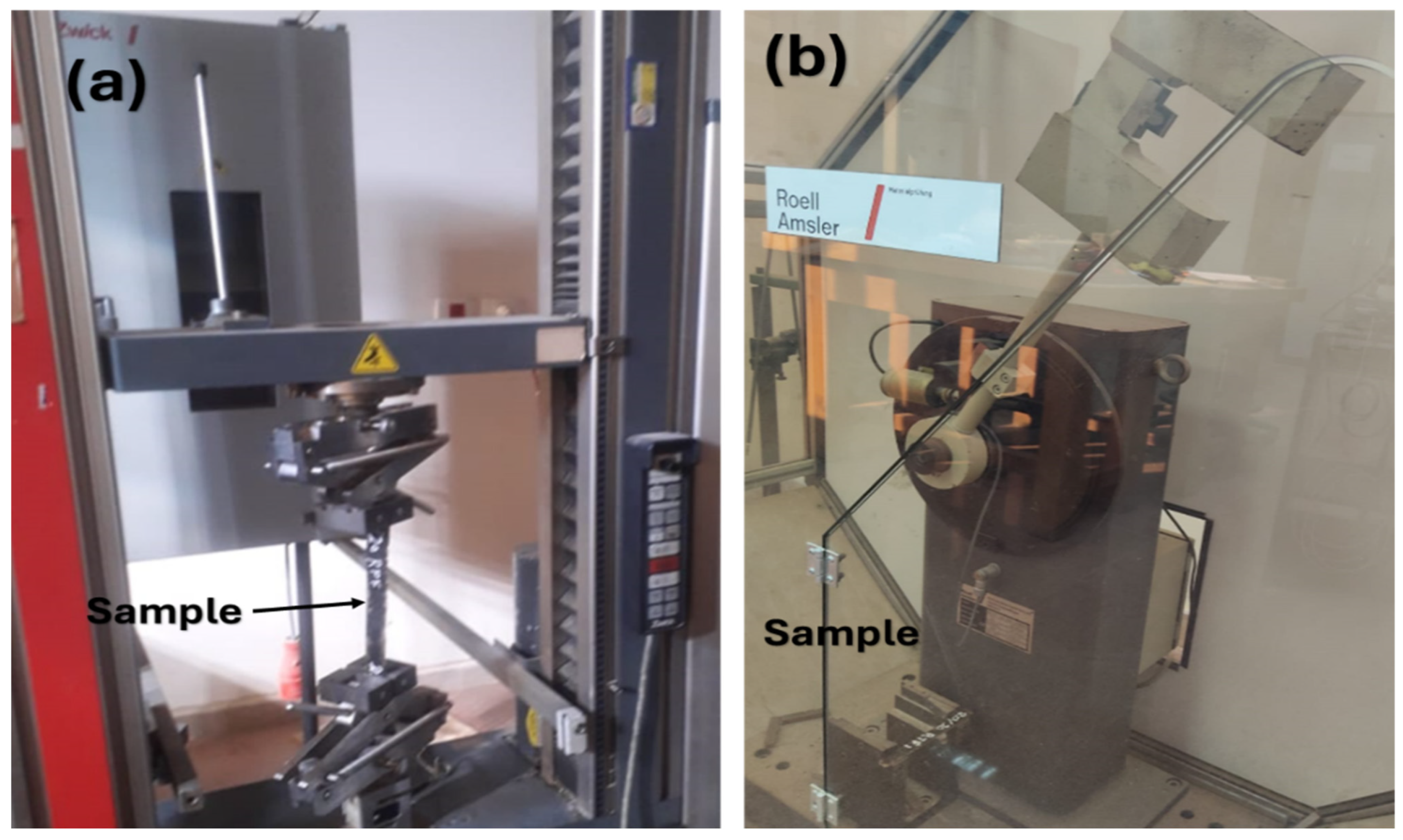
The Zwick universal tensile testing and impact machine evaluates and calculates mechanical properties, as shown in Figure 4. Therefore, a 10 kN load cell and an extensometer speed of 2 mm/min are used, according to ASTM D 3039/D 3039M, to perform the tensile test. The ASTM E23 Standard Test Methods for Notched Bar Impact Testing of Metallic Materials. ASTM International: West Conshohocken, PA, USA, 2023 performs notched bar impact tests. Specimens are tested under ambient conditions with a pendulum speed of 5.4 m/s. For each sample condition, three samples are tested, and the mean value of the absorbed energy must be recorded together with the corresponding standard deviation.

3. Results and Discussions

3.1. Physical Results

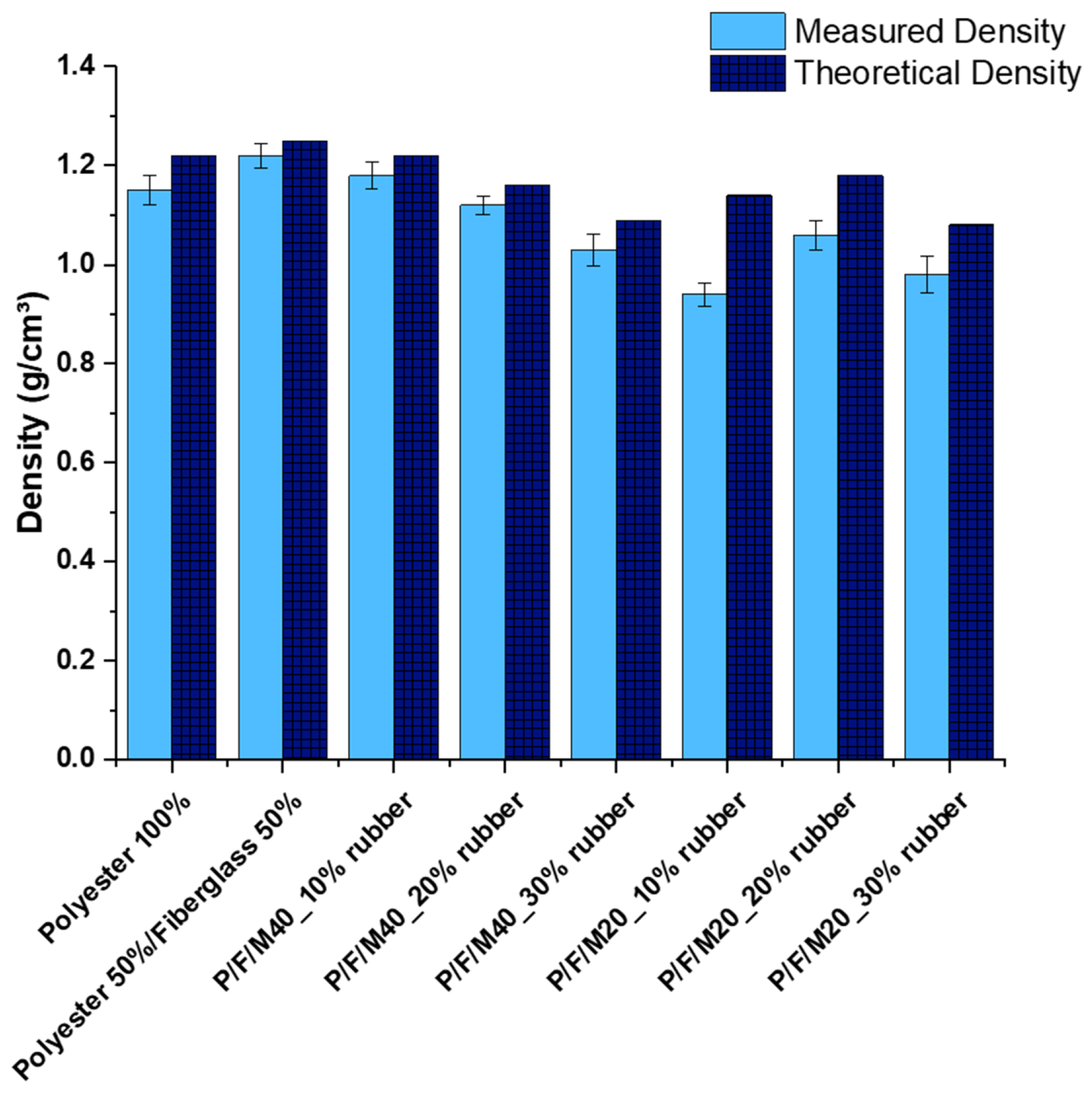
As shown in Figure 5, pure polyester displays a baseline density (approx. 1.15 g/cm3 measured), which is characteristic of a standard polymer matrix. The introduction of fiberglass reinforcement increases the composite’s overall density, as fiberglass is denser than the polyester matrix alone. Fiberglass reinforcement increases the composite material’s density more than pure polyester. Fiberglass has a higher density than polyester; thus, its inclusion increases the composite’s overall density. Nevertheless, the rise is not as substantial as the decrease observed when rubber is added. The rubber content directly affects the composite density. Specifically, increasing the rubber content from 10% to 30% decreases density for both mesh sizes (20 and 40). Rubber generally has a lower density than polyester and fiberglass. As the rubber content of the composite increases, the material’s overall density decreases. Remarkably, the density reduction becomes more pronounced as the rubber content increases, particularly for mesh size 20 compared to 40. The influence of mesh size is notable in composites with higher rubber content (20% and 30%). The composites with a mesh size of 40 exhibit a much higher density than those with a mesh size of 20, despite having the same rubber content. These findings indicate that using a mesh size 40 configuration could result in a more compact arrangement of the rubber particles in the composite matrix.

3.2. Mechanical Behavior Results

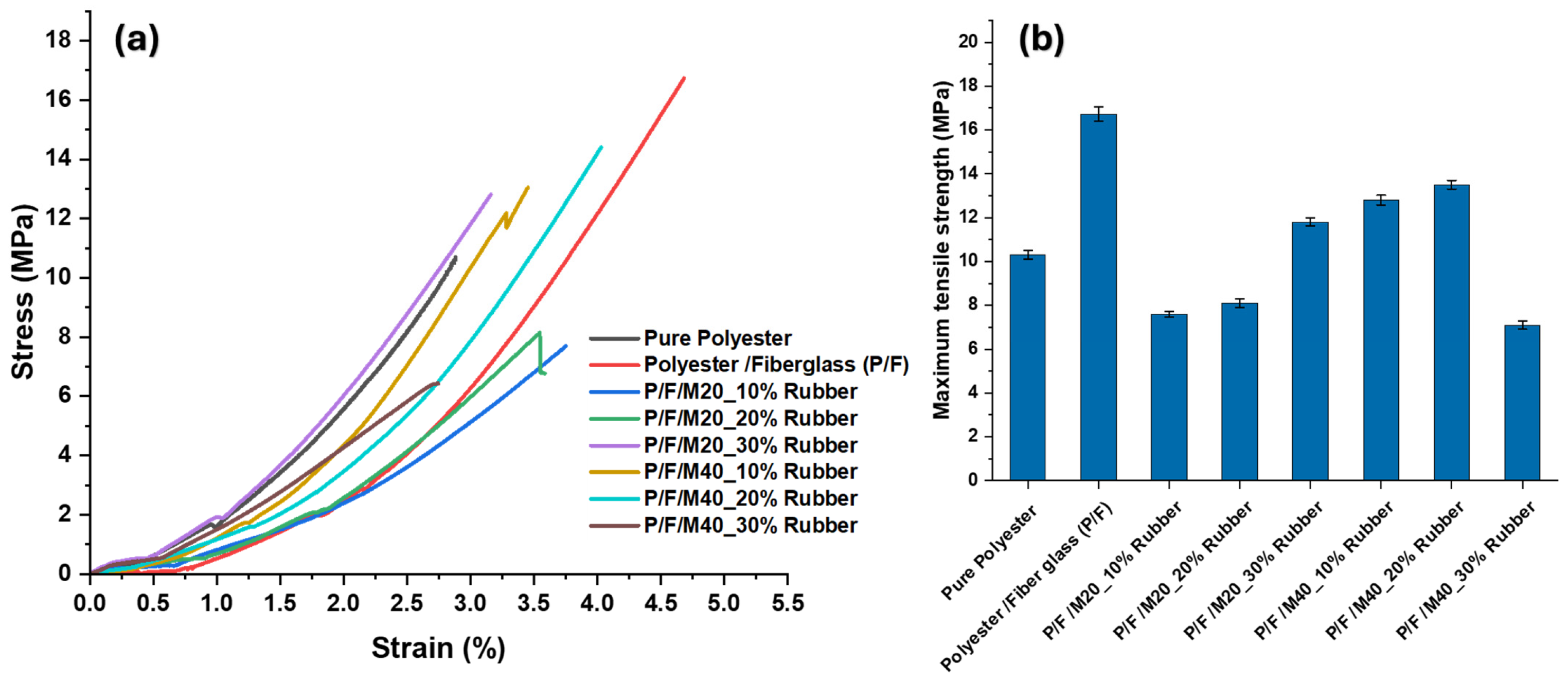
An intricate connection with high tensile strength arises when rubber is added to the P/F composite. With a rubber content of 10%, both mesh sizes (M20 and M40) exhibit reduced strength compared to the P/F composite without rubber. Figure 6 illustrates the impact of rubber content and mesh size on the tensile strength of polyester/fiberglass composites. Figure 6a most likely represents a set of stress–strain curves, visually demonstrating the correlation between the applied stress and the consequent strain experienced by the composite samples [33]. These curves are crucial for understanding the material’s deformation behavior under tension. Figure 6b is expected to examine the highest tensile strength attained by each composite sample. The inherent strength of rubber is typically lower than that of fiberglass and polyester, particularly in terms of tensile strength. Including this element diminishes the overall integrity of the composite construction to a certain degree. Rubber particles may hinder the effective stress transmission between the robust fiberglass fibers and the polyester matrix, disrupting load transfer. Excessive stress can cause the composite to break down prematurely [34].
Nevertheless, the pattern shifts when the rubber percentage increases to 20% and 30%. The strength of the M20 composites (7.6, 8.1, 11.8) exhibits a gradual and consistent increase. This phenomenon may be attributed to an improved dispersion of the rubber particles at larger concentrations, potentially reducing the negative impact on stress transmission. The M40 composites (12.8, 13.5, 7.1) exhibit distinct behaviors. Although the composites with 10% and 20% rubber content demonstrate a gain in strength relative to the pure P/F composite, the composite with 30% rubber content experiences a substantial decrease. This implies that using a larger mesh size (M40) may not be optimal for adding significant quantities of rubber while preserving strength. Using a larger mesh size could result in less effective dispersion of rubber particles at higher content levels, leading to a greater reduction in strength. The results indicate that the mesh size may significantly affect the ultimate tensile strength, especially in composites containing higher levels of rubber (20% and 30%). The M40 composites typically demonstrate superior tensile strength compared to their M20 counterparts when the rubber content is the same, except for composites containing 30% rubber. This phenomenon may be attributed to a higher density of the fiberglass reinforcement within the more extensive mesh structure. An increased fiber density could enhance the composite’s structural integrity, even in the presence of rubber particles. Nevertheless, the noticeable decrease in strength in the M40_30% Rubber composite suggests that increasing the mesh size may not always be advantageous when a substantial amount of rubber is included.
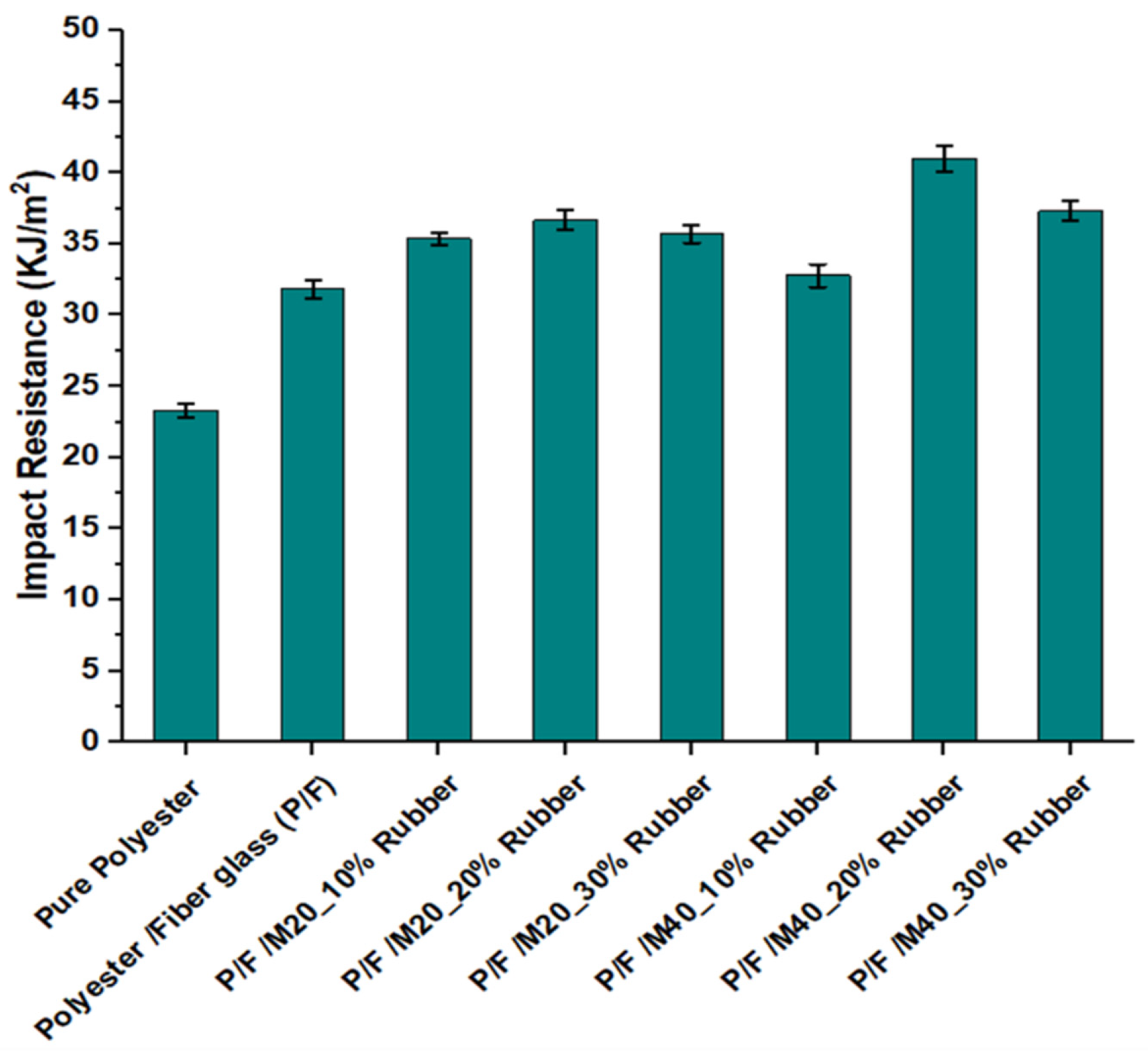
The integration of rubber particles significantly influences the energy absorption capacity and impact strength of P/F composites. As shown in Figure 7, a rubber content of 10% for both mesh sizes (M20 and M40) results in improved impact strength compared to the base P/F composite. This enhancement is attributed to the inherent high toughness of rubber; as an elastic phase, it acts as a toughening agent, effectively absorbing impact energy, attenuating microcracks, and reducing stress concentrations within the brittle polyester matrix. However, the impact performance varies at higher loading levels (20% and 30%). For M20 composites, the impact strength peaks at 20% (36.67 kJ/m2) before a slight decline at 30% (35.70 kJ/m2). Similarly, M40 composites reach a maximum at 20% (40.98 kJ/m2) but exhibit a drop at 30% (37.32 kJ/m2). This reduction in toughness at 30% rubber content is not a contradiction of the rubber’s toughening effect, but rather a result of fabrication-related constraints. At high volume fractions, the increased presence of voids and the potential for rubber particle agglomeration weaken the interfacial bonding between the rubber and the matrix. These structural imperfections act as stress concentrators, initiating premature cracking under impact and thereby limiting the rubber’s overall energy-absorption capacity despite its theoretical toughness.

3.3. Fracture Analysis

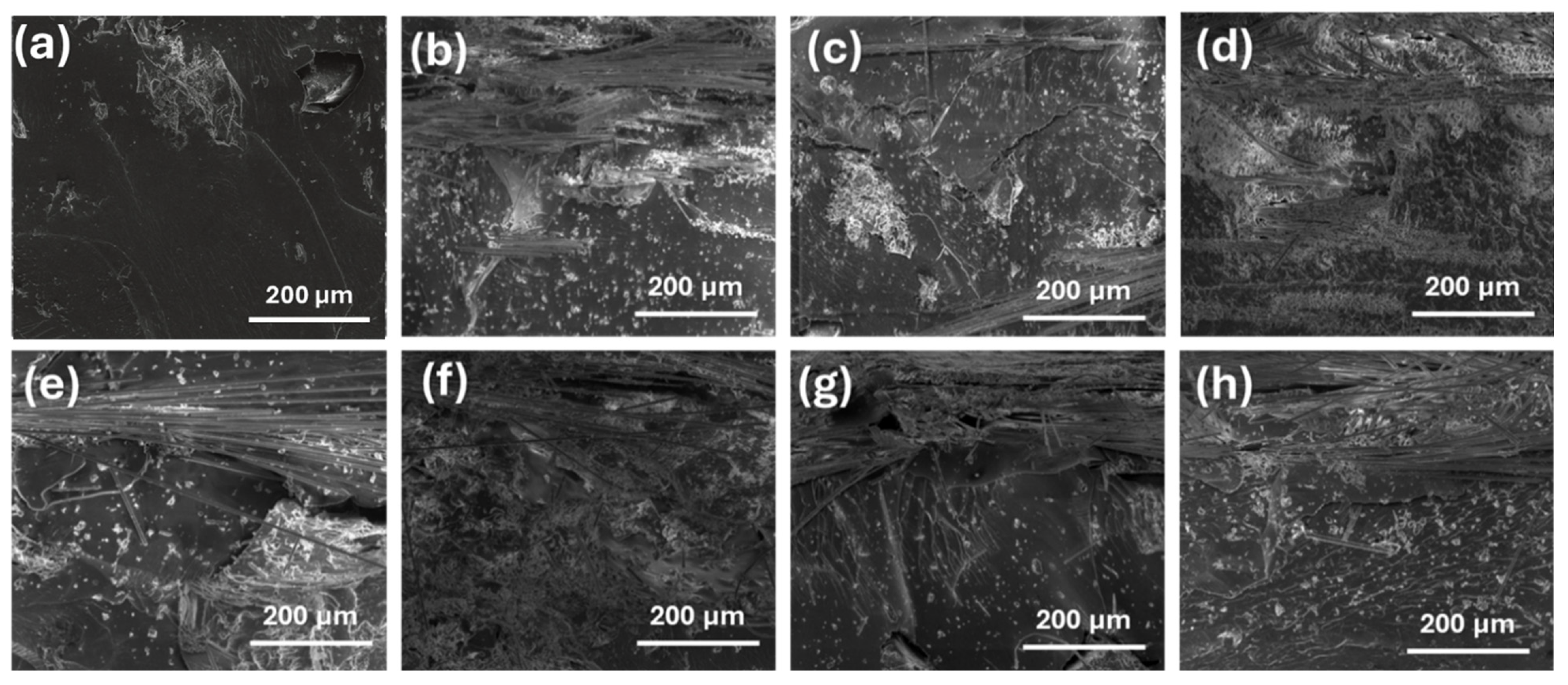
Given that pure polyester has a naturally limited ability to withstand tension, the fractured surface of this material is expected to exhibit brittle behavior. This could appear as a very even surface with minimal plastic deformation, suggesting a small amount of stretching before breaking, as shown in Figure 8a. Including fiberglass fibers in the P/F composite is expected to result in a rougher, more uneven fracture surface than pure polyester (Figure 8b). This can be attributed to fiber pull-out mechanisms, which occur when tensile stress partially detaches fibers from the polyester matrix, leaving distinct impressions or holes on the fracture surface. Debonding refers to the separation of fibers from the matrix, which can roughen the fracture surface. In addition, fibers may exhibit some plastic deformation before complete collapse, suggesting slightly more malleable behavior than pure polyester [35]. At 30 vol.%, the M20 rubber particles (sieve opening ≈850 µm) achieve a relatively uniform dispersion within the polyester matrix (Figure 8e), creating a high density of rubber–matrix interfaces. These interfaces serve as preferential sites for microcrack initiation but, more critically, promote crack deflection, branching, and blunting due to the low interfacial energy between rubber and polyester. This blunting effect mitigates stress concentration at the crack tip, delays catastrophic failure, and permits greater plastic deformation before fracture—a phenomenon corroborated by the slightly rougher, more complex fracture surface observed in Figure 8e compared to lower-rubber-content composites.
Furthermore, the viscoelastic nature of rubber is pivotal under tensile loading. As microcracks propagate, the rubber particles undergo localized stretching and cavitation, dissipating significant fracture energy through internal friction and hysteresis. This toughening mechanism is particularly effective with M20 particles because their larger size (relative to M40) provides an optimal balance:
(i)
a higher surface-area-to-volume ratio enhances interfacial interactions with the matrix,
(ii)
they create numerous discrete energy-dissipating sites per unit volume, and
(iii)
their size prevents them from acting as large, singular stress concentrators, unlike coarser particles that may induce premature failure.
In stark contrast, the P/F/M40_20% composite exhibits peak stiffness and strength (≈13.5 MPa) not via toughening, but through optimized load transfer facilitated by its unique microstructure. The finer M40 particles (sieve opening ≈ 420 µm) at 20 vol.% are sufficiently small to avoid agglomeration yet large enough to induce moderate matrix shear yielding without compromising interfacial integrity. Here, rubber acts less as a softening agent and more as a reinforcing filler, where constrained polymer chains around well-bonded particles enhance stress distribution. This formulation achieves a rare synergy of high stiffness and strength, as evidenced by its elevated storage modulus (2.67 GPa). The divergent behavior is further highlighted by the performance of P/F/M40_30%, which suffers catastrophic failure (strength ≈ 7.1 MPa). At this high volume fraction, the finer M40 particles overwhelm the matrix, leading to particle clustering, void formation, and severe interfacial debonding (Figure 8h). This results in localized regions of weakness, where cracks propagate unimpeded through the compromised interface and brittle matrix. Conversely, the larger M20 particles in the 30% composite facilitate a more controlled failure mode. While some debonding occurs, it does not lead to complete separation, allowing the matrix to maintain load-bearing continuity and absorb energy through extensive plastic deformation around the dispersed particles. This analysis underscores that the mechanical response of these composites is governed not merely by rubber content or particle size, but by the complex interplay among particle morphology, interfacial adhesion, and the resulting fracture mechanics. The M20_30% composite exemplifies how larger, uniformly dispersed particles can paradoxically enhance strength by promoting energy-dissipating mechanisms. In contrast, the M40_20% composite demonstrates how finer particles can reinforce the matrix when their concentration is optimized to preserve interfacial quality.
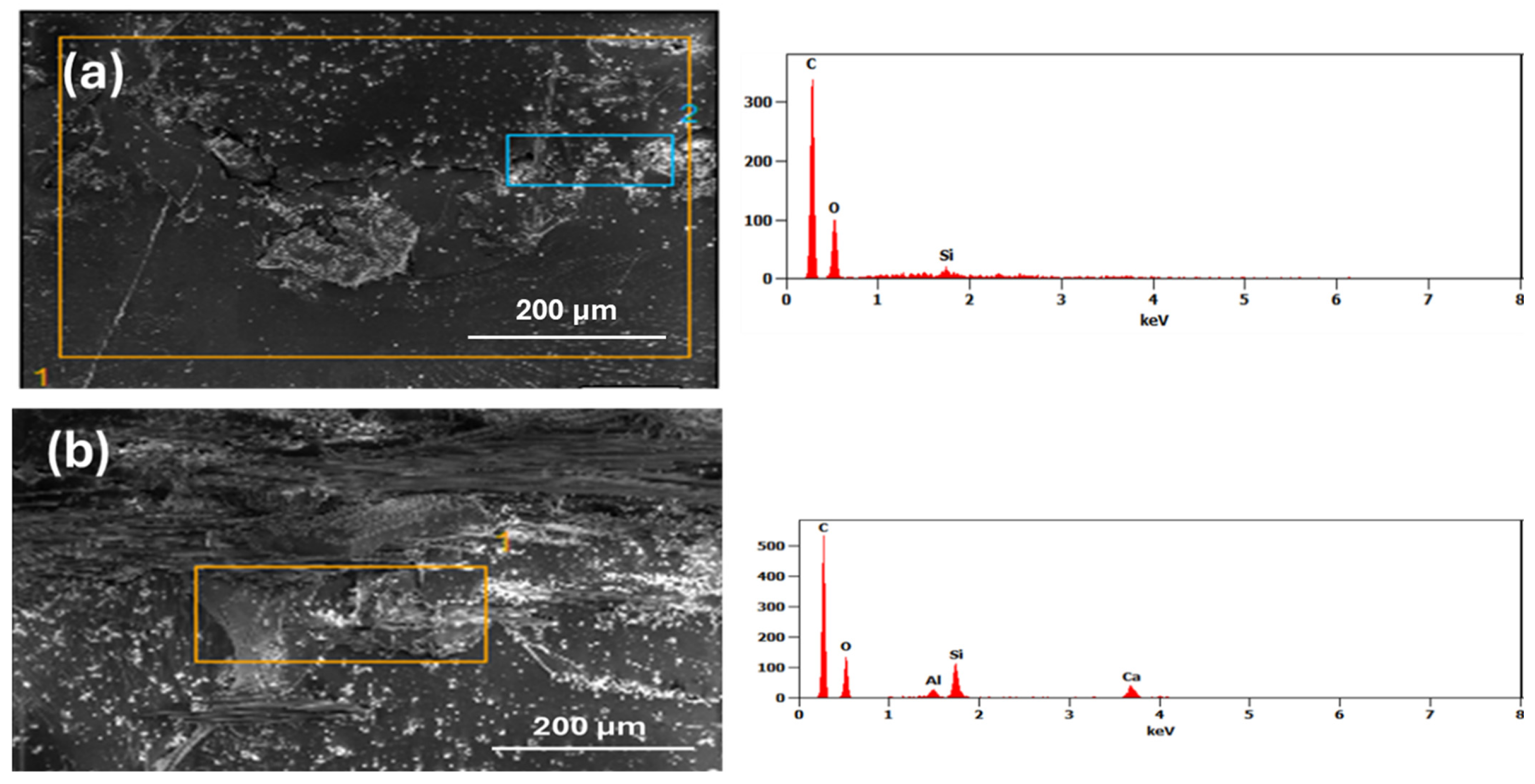
Figure 9a displays the EDX spectrum of the Polyester/Fiberglass (P/F) composite. The main objective of this study is to detect distinct peaks associated with components often present in polyester and fiberglass. Polyester, a carbon-based polymer, primarily consists of carbon (C) and oxygen (O), with minor amounts of hydrogen (H) possible. Hence, the anticipated spectra for the P/F composite (a) should display distinct peaks for both carbon (C) and oxygen (O). Fiberglass is a composite material reinforced with glass fibers and strengthened by adding silicon (Si) and oxygen (O). Consequently, the P/F composite (a) spectrum is likewise anticipated to exhibit a notable silicon (Si) peak. The EDX spectrum of the P/F composite containing 20% rubber material (Figure 9b) is expected to exhibit variations compared to the pure P/F composite, primarily because of the inclusion of rubber particles. Furthermore, this spectrum may show peaks corresponding to components in the rubber and to the elements detected in the P/F composite. The precise elemental composition of the rubber will vary depending on its exact type. Most rubbers consist primarily of carbon (C), oxygen (O), and hydrogen (H). However, certain types of rubber may also contain other elements, such as sulfur (S), aluminum (Al), and calcium (Ca).

3.4. Dynamic and Damping Behavior

3.4.1. Effect of Rubber Additive on the Natural Frequency and Damping Behavior

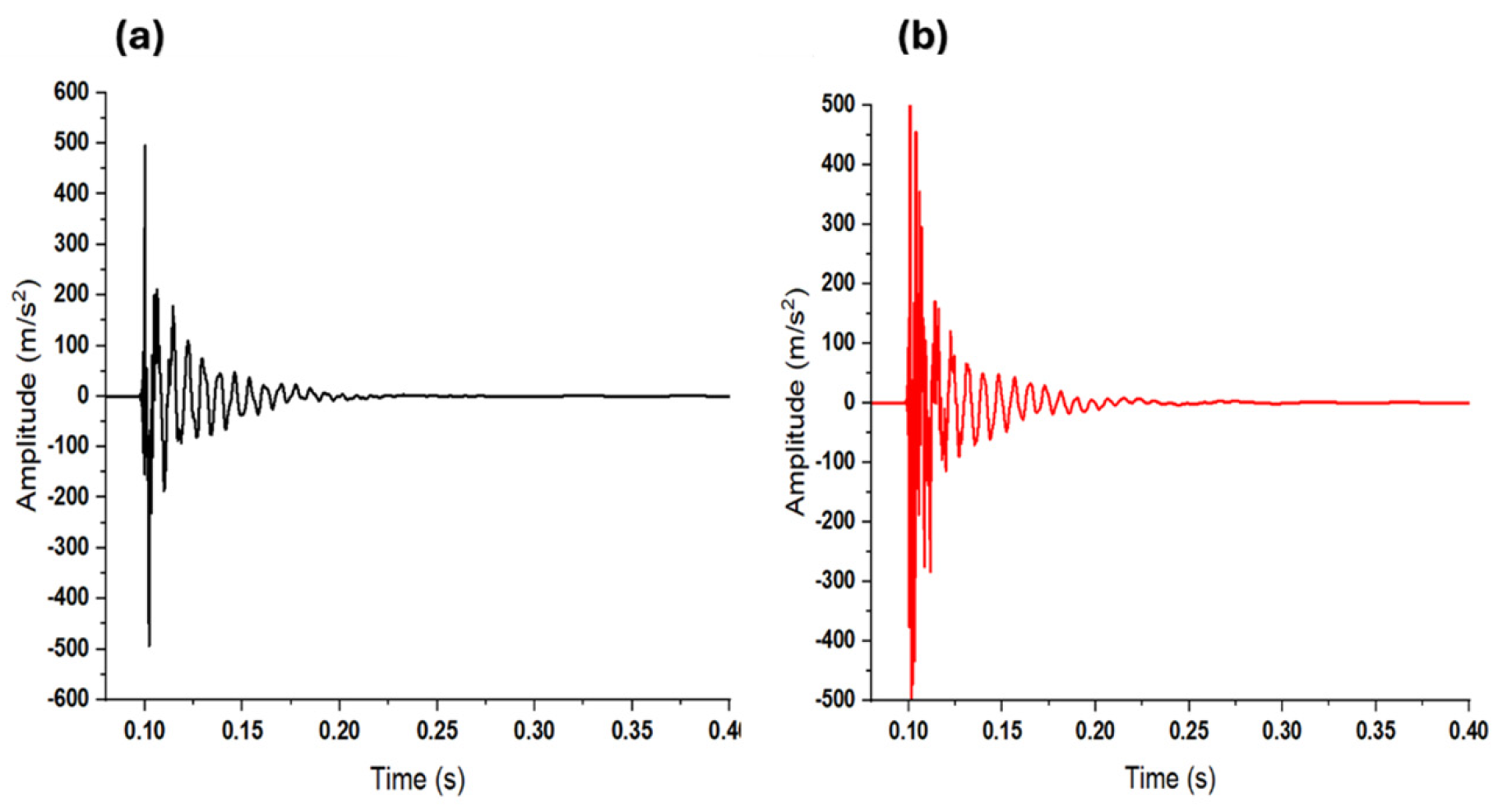
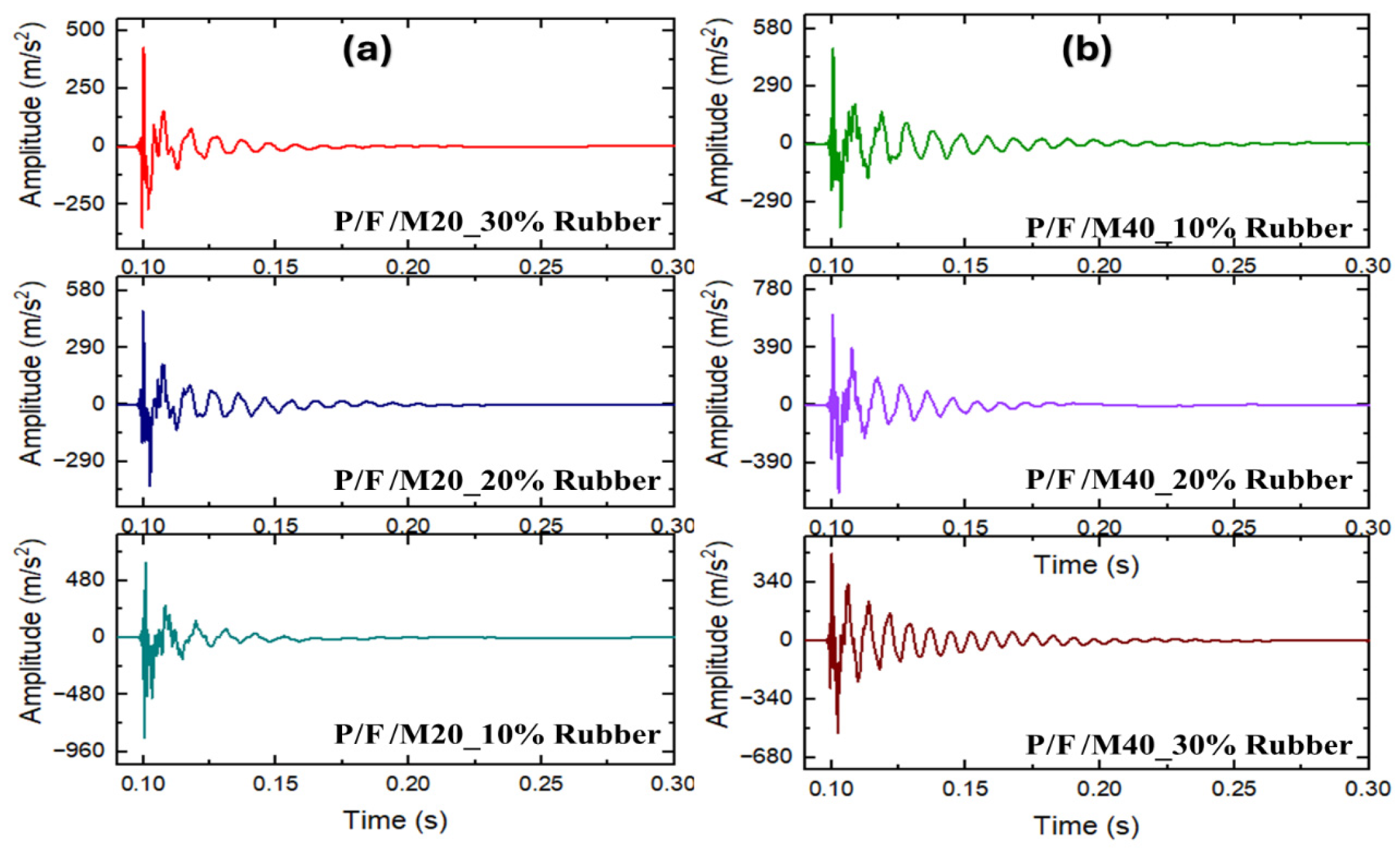
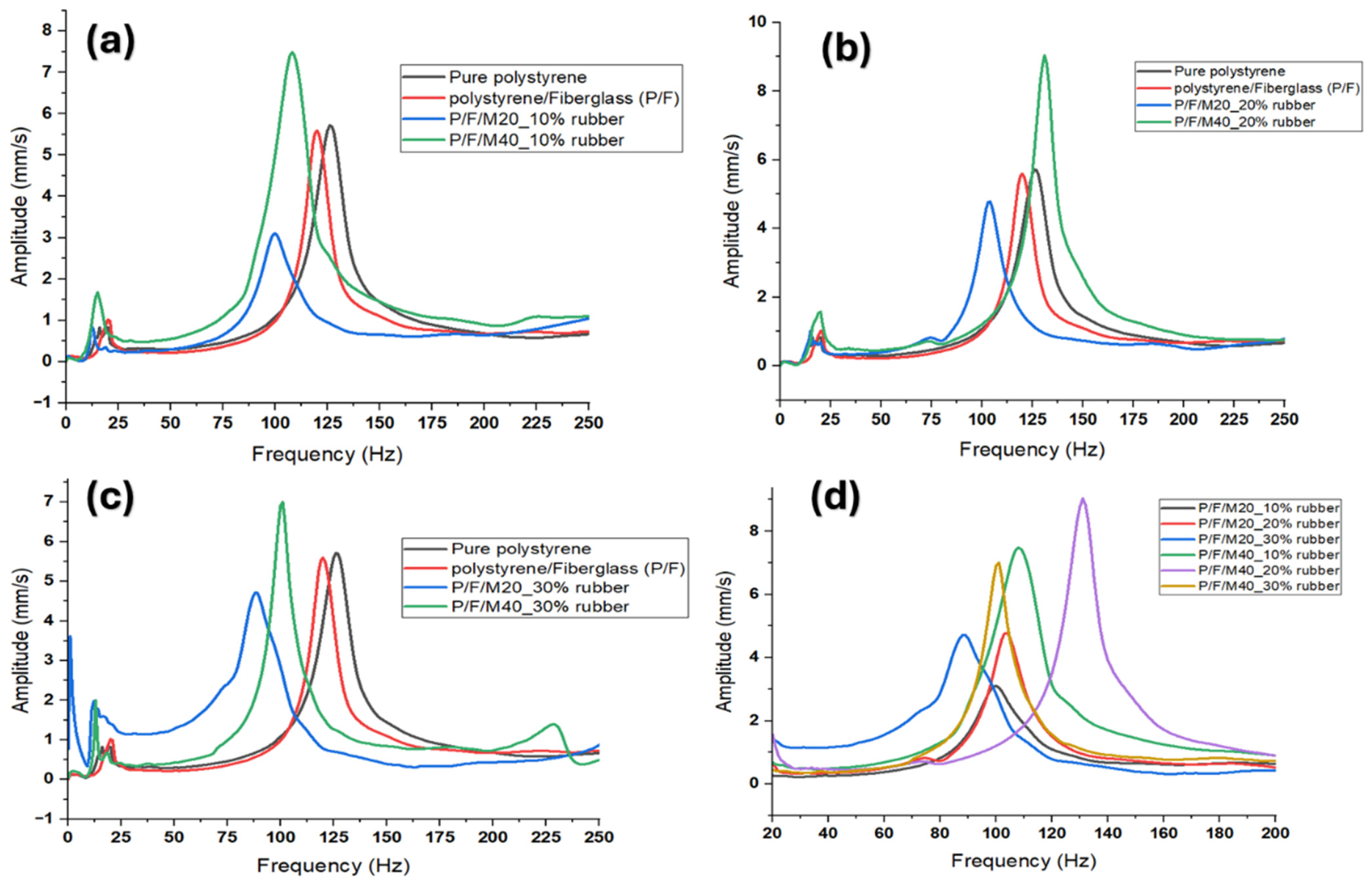
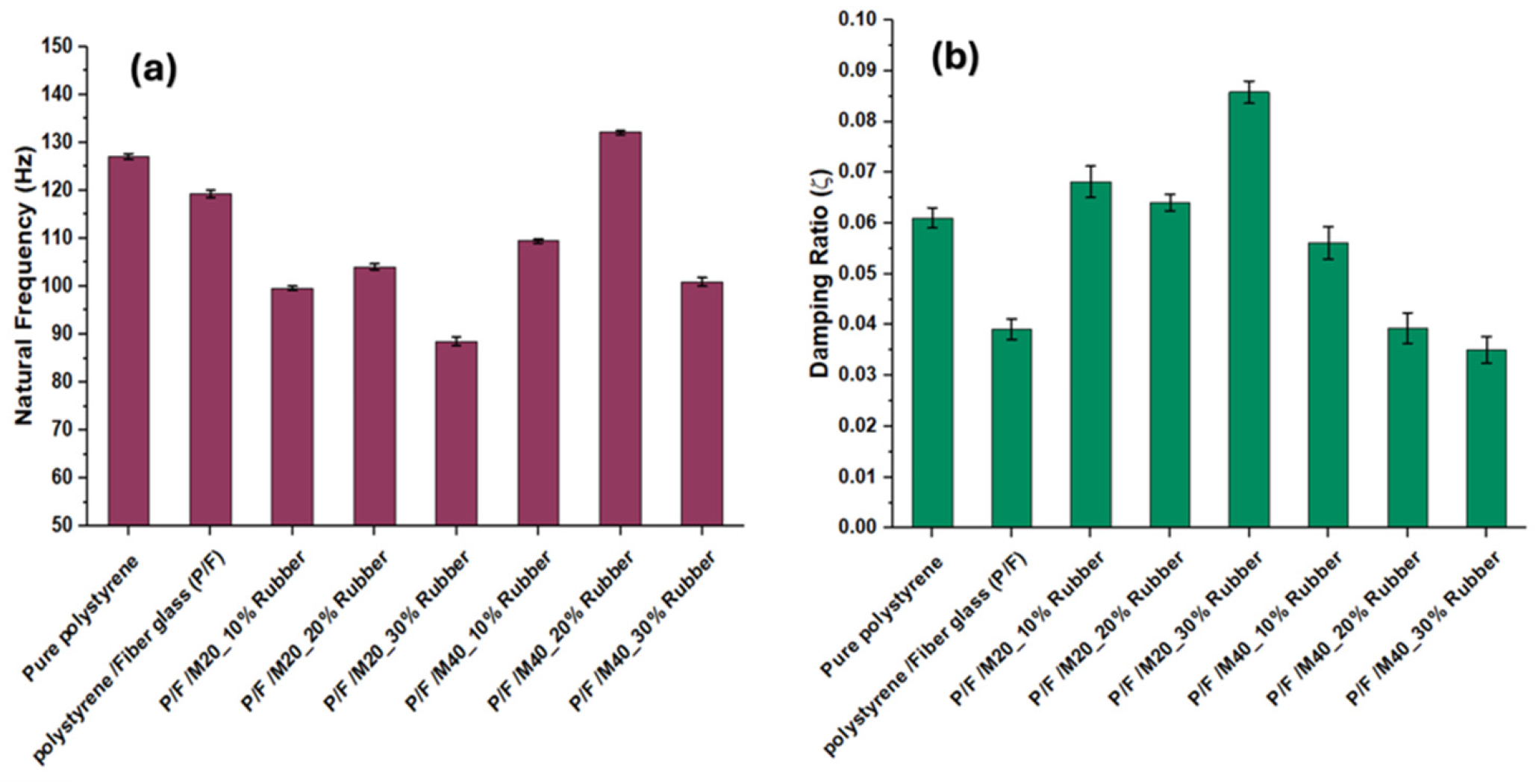
The free-vibration test results for all samples are shown in the time-domain curves of Figure 10 and Figure 11. Hence, the pure polyester and its composite with fiberglass (Figure 10) showed a relatively higher decay time than the other composites reinforced with rubber, except for the sample labeled P/F/M20_30% rubber, which exhibited the least decay in vibration over time. This observation suggests that the rubber content plays a significant role in the damping behavior of these composite materials. In other words, the higher rubber content in the P/F/M20_30% sample likely contributes to its ability to dissipate vibrational energy more effectively than the different composites. The natural frequency, expressed in Hertz (Hz), denotes the intrinsic vibration frequency of the material. Below is an analysis of the observations and possible explanations. When fiberglass was added to pure polyester (127.06 Hz), the natural frequency decreased to 119.30 Hz. These findings indicate that stiffer fiberglass fibers may lead to minor flaws or areas of concentrated stress in the composite, thereby reducing its overall stiffness. Including rubber further reduced the natural frequency across all samples compared to using only polyester/fiberglass (Figure 12). This is expected because rubber is more elastic than polyester and fiberglass, thereby decreasing the composite’s stiffness. The magnitude of this decline appears to depend on the rubber composition. Increasing the rubber content to 30% resulted in a more pronounced decrease in the natural frequency (e.g., polyester/fiberglass/rubber 30% mesh size 20 = 88.52 Hz) compared to a lower rubber concentration of 10% (e.g., polyester/fiberglass/rubber 10% mesh size 20 = 99.60 Hz). No discernible correlation between mesh size and natural frequency was detected. At a rubber percentage of 10%, the 20-mesh (99.59 Hz) sample exhibits a lower frequency than the 40-mesh (109.42 Hz) sample. Additional data or analysis may be necessary to ascertain whether mesh size has a statistically significant impact.
Figure 13 presents an analysis of the first resonance natural frequency and damping ratio for various composite materials. The data reveal that pure polyester exhibits the highest natural frequency (approximately 127 Hz) but the lowest damping ratio among the base materials. Introducing fiberglass (P/F) results in a slight reduction in natural frequency (to approximately 119 Hz) and a corresponding decrease in the damping ratio (to approximately 0.040). The inclusion of rubber generally lowers the natural frequency, with a more pronounced effect at higher volume fractions (e.g., 30%). Concurrently, adding rubber increases the damping ratio relative to both pure polyester and the P/F composite, indicating enhanced vibration absorption. The influence of mesh size on the damping ratio is less straightforward; the P/F/M40_30% sample shows the lowest damping ratio across all tested composites (approximately 0.035). Notably, the P/F/M40_20% sample is an outlier, exhibiting the highest natural frequency (approximately 132 Hz) and a moderate damping ratio (approximately 0.068), suggesting a unique synergistic interaction between the 20% rubber content and the M40 mesh structure.
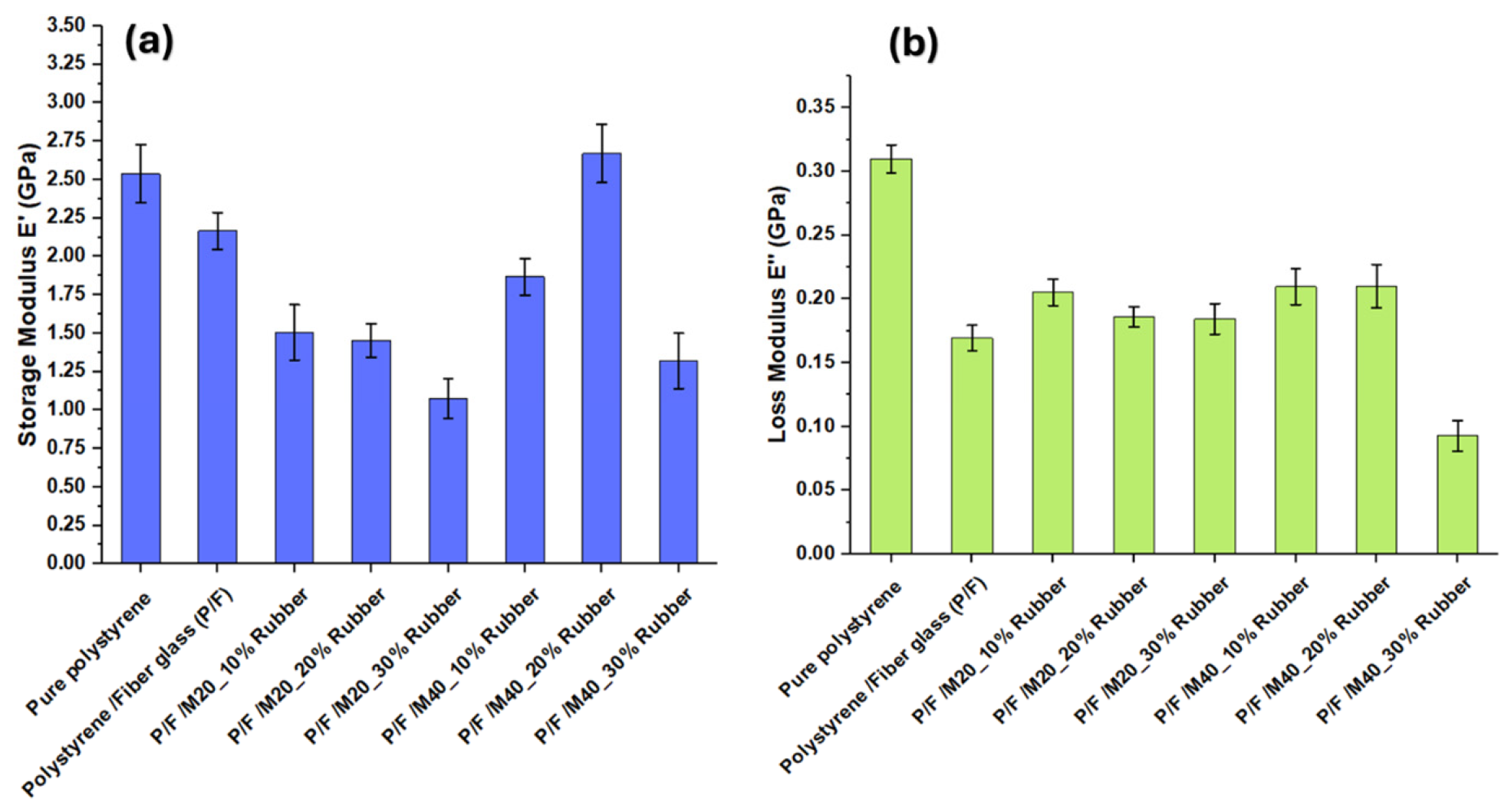
Investigating the storage modulus (G′) and the loss modulus (G″) shows the interaction between stiffness and energy dissipation in polyester composites. Pure polyester has the highest stiffness of 2.54 GPa and the highest loss modulus of 0.31 GPa. When fiberglass (P/F) is added, there is a slight decrease in both moduli (2.17 GPa and 0.17 GPa), indicating a reduction in stiffness and energy dissipation. The presence of rubber typically reduces the storage modulus, indicating an increase in flexibility, especially at higher volume fractions (30%). Remarkably, the rubberized composites exhibit a storage modulus of 2.67 GPa, exceeding that of pure polyester. It is noted that P/F/M40_20% has the highest storage modulus among these composites. The influence of rubber on the loss modulus is somewhat unclear, as it increases at lower volume fractions (M20_10% and M40_10%) and decreases at higher ones (20% and 30%). The reported loss modulus of 0.093 GPa in the P/F/M40_30% composite indicates low stiffness and effective vibration damping. Fiberglass reinforcement is expected to enhance the composite material’s strength. Still, it may also diminish its innate ability to dampen vibrations, as shown by a lower loss modulus (Figure 14). The rubber increases flexibility (decreases the storage modulus) but can also affect energy dissipation, depending on the interaction between the rubber and the matrix. The ideal equilibrium may depend on the mesh size and volume percentage. The material labeled P/F/M40_20% appears to deviate from the norm, exhibiting elevated rigidity and moderate energy dissipation. This phenomenon may be attributed to a distinct reinforcing mechanism between the 20% rubber content and the M40 mesh.

3.4.2. Relationship Between Tensile Strength and Dynamic Complex Moduli (Storage & Loss Moduli)

An analysis of the relationship between tensile strength and the dynamic complex moduli reveals a nuanced picture: while there is a general positive correlation between tensile strength and storage modulus (G′), this trend is not absolute and is highly dependent on the specific composite formulation. The P/F/M40_20% composite serves as a notable exception, exhibiting both the highest storage modulus (2.67 GPa) and the highest tensile strength (~13.5 MPa) among all tested samples, suggesting that this particular combination of 20% rubber content and M40 mesh size facilitates an optimal interaction—perhaps through enhanced stress distribution or a unique reinforcing mechanism—that simultaneously boosts stiffness and strength. In contrast, pure polyester, despite its high storage modulus (2.54 GPa), possesses low tensile strength due to its inherent brittleness. In comparison, the standard P/F composite shows a lower storage modulus (2.17 GPa) and only moderate tensile strength, reflecting the detrimental impact of poor interfacial bonding between the fiberglass and matrix. Composites with higher rubber content, such as M40_30%, generally exhibit reduced storage modulus and tensile strength, as the rubber softens the material and, at high volume fractions, promotes debonding and failure. Conversely, no direct or consistent relationship exists between tensile strength and loss modulus (G″), which primarily reflects energy dissipation under cyclic loading. For instance, pure polyester has the highest loss modulus (0.31 GPa) but the lowest tensile strength. In contrast, the high-strength P/F/M40_20% composite has only a moderate loss modulus (~0.12–0.15 GPa), and the weak P/F/M40_30% composite exhibits a very low loss modulus (0.093 GPa). This underscores that the mechanisms governing damping (e.g., viscoelasticity, interfacial friction) are distinct from those determining static load-bearing capacity.
From the free-vibration test, the dynamic (complex) Young’s modulus E * , which characterizes the overall stiffness of the material under dynamic loading, and the damping ratio ζ , which quantifies energy dissipation, were extracted using modal analysis in ME’Scope software. The loss tangent ( tan δ ), a direct measure of damping, was subsequently determined from the damping ratio using the approximation t a n δ 2 ζ . Assuming isotropic material behavior, the dynamic shear modulus G * was then calculated from the dynamic Young’s modulus and Poisson’s ratio ( ν ) according to the relation [36]:
G * = E * 2 ( 1 + ν )
In this study, a Poisson’s ratio of ν = 0.35   w as assumed for all composite formulations, consistent with typical values reported for polyester-based fiber-reinforced composites in the literature.
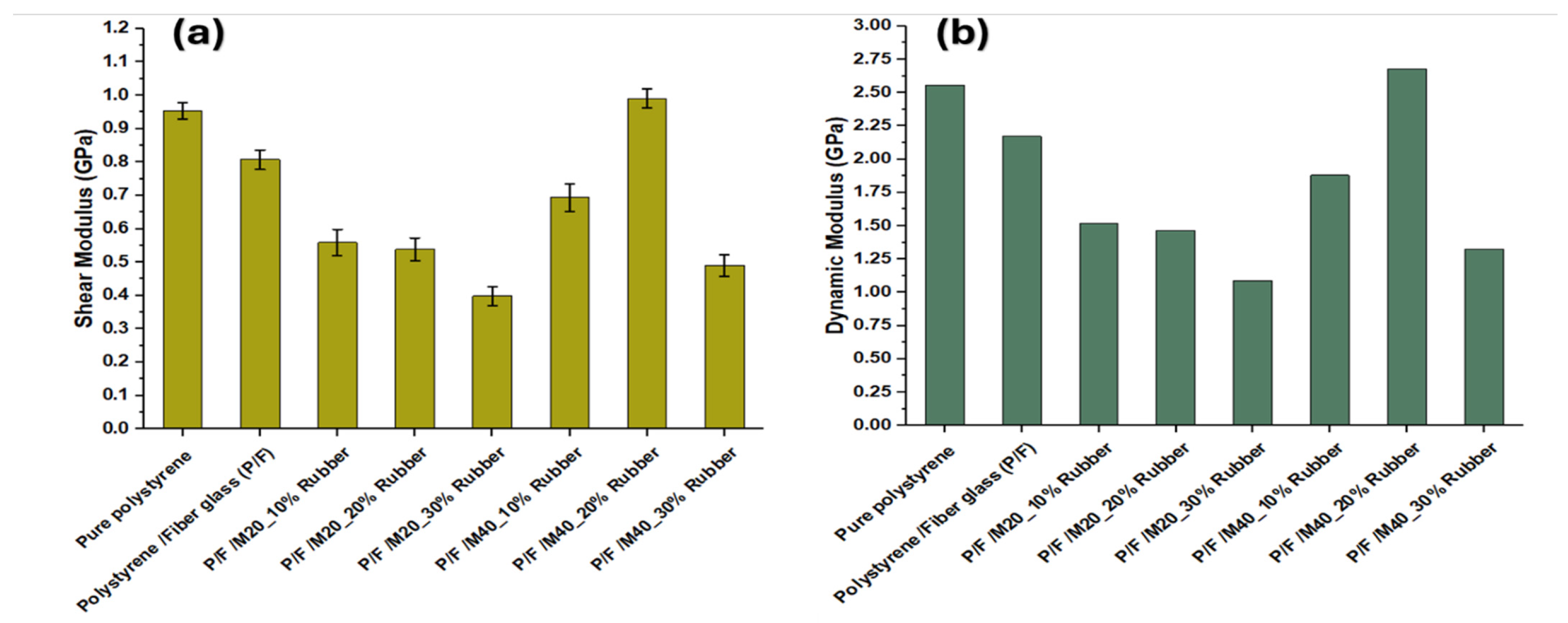
The incorporation of fiberglass (P/F) into pure polyester results in a modest decrease in the shear modulus, reducing it from 0.954 to 0.807 GPa. When rubber is introduced, the shear modulus decreases in all situations, and the decline is more pronounced with greater rubber concentrations (30%), as shown in Figure 15. The presence of fiberglass and rubber inclusions diminishes the material’s ability to withstand deformation when subjected to shear stress. The dynamic modulus has a comparable pattern. The most significant value of 2.556 GPa is observed in pure polyester, while adding fiberglass (P/F) slightly reduces it to 2.172 GPa. The addition of rubber further reduces the dynamic modulus across all samples, with the most significant decrease observed at the highest rubber content (30%).

4. Conclusions

This study was designed to evaluate how the mesh size (M20 ≈ 850 µm; M40 ≈ 420 µm) and volume fraction (10–30%) of recycled rubber particles influence the density, tensile strength, fracture morphology, and dynamic mechanical response of polyester/fiberglass (P/F) composites, with the ultimate goal of developing multifunctional materials that balance structural performance and vibration damping for sustainable engineering applications.
The experimental results confirm that rubber incorporation effectively reduces composite density by up to 12% at 30 vol.%, with M20 composites exhibiting greater lightweighting potential due to the lower packing efficiency of larger particles. More critically, the study reveals non-monotonic and microstructure-dependent mechanical responses: while rubber typically softens polymer matrices, the P/F/M20_30% composite defies expectations by achieving a tensile strength of ~11.8 MPa, surpassing both the base P/F composite (~8.5 MPa) and lower-rubber formulations. This anomaly is mechanistically explained by crack blunting, deflection, and viscoelastic energy dissipation enabled by uniform dispersion of large M20 particles, which act as distributed stress-relief zones without inducing catastrophic debonding.
Conversely, the P/F/M40_20% composite emerged as the optimal formulation for stiffness-damping synergy, exhibiting the highest tensile strength (13.5 MPa), the maximum storage modulus (2.67 GPa), and an elevated natural frequency (132.13 Hz), while maintaining a moderate damping ratio (0.068). This unique combination arises from the fine dispersion of M40 particles at 20 vol.%, which enhances interfacial load transfer and induces constrained polymer chain dynamics without compromising matrix integrity.
These findings directly fulfill the study’s objective of tailoring composite functionality through rubber particle design. Based on the comprehensive property profile, we propose targeted applications:
P/F/M40_20% is ideal for structural components requiring high rigidity with moderate vibration control, such as automotive body panels, drone frames, or machine housings.
P/F/M20_30%, with its superior energy absorption and lightweight nature, is better suited for impact-resistant and damping-critical applications, including railway sleepers, sports equipment, or building elements in seismic zones.

Author Contributions

Methodology, G.M. and A.O.M.; Software, G.M.; Validation, G.M.; Investigation, E.B.M. and A.O.M.; Resources, A.S.A.-W.; Data curation, A.S.A.-W.; Writing—original draft, E.B.M. and A.O.M.; Writing—review & editing, E.B.M.; Visualization, T.S.M.; Supervision, E.B.M.; Project administration, T.S.M. All authors have read and agreed to the published version of the manuscript.

Funding

This Project was funded by the Deanship of Scientific Research (DSR) at King Abdulaziz University, Jeddah, Saudi Arabia, under grant no. (IPP: 419-135-2025).

Data Availability Statement

The original contributions presented in this study are included in the article. Further inquiries can be directed to the corresponding author(s).

Acknowledgments

This Project was funded by the Deanship of Scientific Research (DSR) at King Abdulaziz University, Jeddah, Saudi Arabia, under grant no. (IPP: 419-135-2025). The authors, therefore, acknowledge with thanks DSR for technical and financial support.

Conflicts of Interest

The authors declare no conflict of interest.

References

  1. Shakir Abbood, I.; Odaa, S.A.; Hasan, K.F.; Jasim, M.A. Properties evaluation of fiber reinforced polymers and their constituent materials used in structures—A review. Mater. Today Proc. 2021, 43, 1003–1008. [Google Scholar] [CrossRef]
  2. Kabakci, G.C.; Aslan, O.; Bayraktar, E. Toughening Mechanism Analysis of Recycled Rubber-Based Composites Reinforced with Glass Bubbles, Glass Fibers and Alumina Fibers. Polymers 2021, 13, 4215. [Google Scholar] [CrossRef] [PubMed]
  3. Mohammed, T.J.; Breesem, K.M. Enhancement of the Shear-flexural Strength of the Rubberized Concrete Prism Beam by External Reinforcement. Int. J. Eng. 2022, 35, 1017–1023. [Google Scholar] [CrossRef]
  4. Guruswamy, K.P. A Review on Surface Modification of Textile Substrate Using Plasma to Improve Interfacial Bonding with Rubber Matrix. Chem. Sci. Rev. Lett. 2019, 8, 179–184. [Google Scholar]
  5. Liao, Z.-L.; Chang, F.-C. Rubber-Toughened polymer blends of polycarbonate (PC) and poly (ethylene terephthalate (PET). J. Polym. Res. 1994, 1, 197–203. [Google Scholar] [CrossRef]
  6. Żuk, D.; Abramczyk, N.; Charchalis, A. Analysis of the Impact of Rubber Recyclate Addition to the Matrix on the Strength Properties of Epoxy–Glass Composites. Polymers 2023, 15, 3374. [Google Scholar] [CrossRef]
  7. Dreerman, E.; Narkis, M.; Siegmann, A.; Joseph, R.; Dodiuk, H.; DiBenedetto, A.T. Mechanical behavior and structure of rubber modified vinyl ester resins. J. Appl. Polym. Sci. 1999, 72, 647–657. [Google Scholar] [CrossRef]
  8. Wang, J.; Zhang, X.; Jiang, L.; Qiao, J. Advances in toughened polymer materials by structured rubber particles. Prog. Polym. Sci. 2019, 98, 101160. [Google Scholar] [CrossRef]
  9. Turkben, M.; Kocaman, S.; Özmeral, N.; Soydal, U.; Cerit, A.; Ahmetli, G. Sustainable production of recycled rubber waste composites with various epoxy systems: A comparative study on mechanical and thermal properties. Ind. Crops Prod. 2023, 195, 116490. [Google Scholar] [CrossRef]
  10. Madueke, C.I.; Mbah, O.M.; Umunakwe, R. A review on the limitations of natural fibres and natural fibre composites with emphasis on tensile strength using coir as a case study. Polym. Bull. 2023, 80, 3489–3506. [Google Scholar] [CrossRef]
  11. Elfaleh, I.; Abbassi, F.; Habibi, M.; Ahmad, F.; Guedri, M.; Nasri, M.; Garnier, C. A comprehensive review of natural fibers and their composites: An eco-friendly alternative to conventional materials. Results Eng. 2023, 19, 101271. [Google Scholar] [CrossRef]
  12. JA, M.H.; Majid, M.A.; Afendi, M.; Marzuki, H.F.A.; Fahmi, I.; Gibson, A.G. Mechanical properties of Napier grass fibre/polyester composites. Compos. Struct. 2016, 136, 1–10. [Google Scholar] [CrossRef]
  13. Herrera-Franco, P.J.; Valadez-González, A. Mechanical properties of continuous natural fibre-reinforced polymer composites. Compos. Part A Appl. Sci. Manuf. 2004, 35, 339–345. [Google Scholar] [CrossRef]
  14. Adusumali, R.-B.; Reifferscheid, M.; Weber, H.; Roeder, T.; Sixta, H.; Gindl, W. Mechanical Properties of Regenerated Cellulose Fibres for Composites. Macromol. Symp. 2006, 244, 119–125. [Google Scholar] [CrossRef]
  15. Basha, M.; Moustafa, E.B.; Melaibari, A. The Dynamic and Flexural Behavior of Coated GFRP Rebars after Exposure to Elevated Temperatures. Coatings 2022, 12, 902. [Google Scholar] [CrossRef]
  16. Essam, B.; Moustafa, K.H.A.; Hossameldin, H. Effect of Crack Orientation on Laminated CFRP Composites Using Vibration and Numerical Analysis. Mater. Eval. 2021, 79, 1081–1093. [Google Scholar]
  17. Moustafa, E.B.; Almitani, K.H. Detecting Damage in Carbon Fibre Composites using Numerical Analysis and Vibration Measurements. Lat. Am. J. Solids Struct. 2021, 18, e362. [Google Scholar] [CrossRef]
  18. Weibo, H.; Fengchang, Z. Studies on the dynamic mechanical and vibration damping properties of polyether urethane and epoxy composites. J. Appl. Polym. Sci. 1993, 50, 277–283. [Google Scholar] [CrossRef]
  19. Duc, F.; Bourban, P.-E.; Månson, J.-A.E. Dynamic mechanical properties of epoxy/flax fibre composites. J. Reinf. Plast. Compos. 2014, 33, 1625–1633. [Google Scholar] [CrossRef]
  20. Duc, F.; Bourban, P.E.; Plummer, C.J.G.; Månson, J.A.E. Damping of thermoset and thermoplastic flax fibre composites. Compos. Part A Appl. Sci. Manuf. 2014, 64, 115–123. [Google Scholar] [CrossRef]
  21. Karthik, K.; Rohith Renish, R.; Irfan Ahmed, I.; Niruban Projoth, T. Free Vibration Test for Damping Characteristics of Hybrid Polyester Matrix Composite with Carbon Particles. Nano Hybrids Compos. 2016, 11, 1–6. [Google Scholar] [CrossRef]
  22. Dai, Q.; Liu, Y.; Qin, Z.; Chu, F. Damping and Frequency Response Characteristics of Functionally Graded Fiber-Reinforced Composite Cylindrical Shells. Int. J. Struct. Stab. Dyn. 2022, 22, 2250107. [Google Scholar] [CrossRef]
  23. Kargarnovin, M.H.; Hashemi, M. Free vibration analysis of multilayered composite cylinder consisting fibers with variable volume fraction. Compos. Struct. 2012, 94, 931–944. [Google Scholar] [CrossRef]
  24. Nagasankar, P.; Velmurugan, R. The effect of the strand diameter on the damping characteristics of fiber reinforced polymer matrix composites: Theoretical and experimental study. Int. J. Mech. Sci. 2014, 89, 279–288. [Google Scholar] [CrossRef]
  25. Bansod, S.; Joshi, M.M. Damping characteristics of glass fiber reinforced composite with viscoelastic layers. Asian J. Converg. Technol. 2017, 3, 1–6. [Google Scholar]
  26. Camacho-Iglesias, M.; Germán, L.; Iturmendi, A.; Seoane-Rivero, R. Circular Approaches for Thermoset Composites. J. Compos. Sci. 2025, 9, 682. [Google Scholar] [CrossRef]
  27. Bulut, M.; Alsaadi, M.; Erkliğ, A.; Alrawi, H. The effects of S-glass fiber hybridization on vibration-damping behavior of intraply woven carbon/aramid hybrid composites for different lay-up configurations. Proc. Inst. Mech. Eng. Part C J. Mech. Eng. Sci. 2018, 233, 3220–3231. [Google Scholar] [CrossRef]
  28. ASTM D3039/D 3039M; Standard Test Method for Tensile Properties of Polymer Matrix Composite Materials. ASTM International: West Conshohocken, PA, USA, 2017.
  29. Ahmed, H.M.; Ahmed, H.A.M.; Hefni, M.; Moustafa, E.B. Effect of Grain Refinement on the Dynamic, Mechanical Properties, and Corrosion Behaviour of Al-Mg Alloy. Metals 2021, 11, 1825. [Google Scholar] [CrossRef]
  30. Abushanab, W.S.; Moustafa, E.B.; Youness, R.A. Evaluation of the dynamic behavior, elastic properties, and in vitro bioactivity of some borophosphosilicate glasses for orthopedic applications. J. Non-Cryst. Solids 2022, 586, 121539. [Google Scholar] [CrossRef]
  31. Mousa, G.; Basha, M.; Moustafa, E.B. Evaluation of the mechanical and dynamic properties of scrimber wood produced from date palm fronds. J. Mech. Behav. Mater. 2024, 33, 20220305. [Google Scholar] [CrossRef]
  32. Moustafa, E.B. Dynamic Characteristics Study for Surface Composite of AMMNCs Matrix Fabricated by Friction Stir Process. Materials 2018, 11, 1240. [Google Scholar] [CrossRef] [PubMed]
  33. Kim, B.-J.; Oh, C.-B.; Lee, J.E.; Lee, M.Y. Effects of the Simultaneous Strengthening of the Glass Fiber Surface and Polyamide-6 Matrix by Plasma Treatment and Nanoclay Addition on the Mechanical Properties of Multiscale Hybrid Composites. J. Compos. Sci. 2023, 7, 176. [Google Scholar] [CrossRef]
  34. Abu-Jdayil, B.; Mourad, A.-H.I.; Hussain, A. Investigation on the mechanical behavior of polyester-scrap tire composites. Constr. Build. Mater. 2016, 127, 896–903. [Google Scholar] [CrossRef]
  35. Fu, S.-Y.; Feng, X.-Q.; Lauke, B.; Mai, Y.-W. Effects of particle size, particle/matrix interface adhesion and particle loading on mechanical properties of particulate–polymer composites. Compos. Part B Eng. 2008, 39, 933–961. [Google Scholar] [CrossRef]
  36. Almutairi, S.S.; Mosleh, A.O.; Mohamed, S.S.; Mahmoud, T.S.; Moustafa, E.B. Max-phase Ti3SiC2 and diverse nanoparticle reinforcements for enhancement of the mechanical, dynamic, and microstructural properties of AA5083 aluminum alloy via FSP. Nanotechnol. Rev. 2024, 13, 20240130. [Google Scholar] [CrossRef]
Figure 1. Schematic drawing of the polyester reinforced with fiberglass and rubber particles.
Jcs 10 00053 g001
Figure 2. Typical images of the fabricated polyester/fiberglass samples reinforced with different percentages of rubber particles.
Jcs 10 00053 g002
Figure 3. Schematic diagram of the free vibration impact test for a cantilever beam.
Jcs 10 00053 g003
Figure 4. Typical mechanical test. (a) Tensile test, (b) Impact test.
Jcs 10 00053 g004
Figure 5. Density comparison of polyester/fiberglass composites with varying rubber content (10–30%) and mesh size (20–40).
Jcs 10 00053 g005
Figure 6. Effect of rubber content and mesh size on the tensile strength of polyester/fiberglass composites. (a) Stress–strain curves, (b) Maximum tensile strength of composite samples.
Jcs 10 00053 g006
Figure 7. Impact strength of polyester/fiberglass composites reinforced with varying rubber content (10%, 20%, 30%) and mesh sizes 20 and 40.
Jcs 10 00053 g007
Figure 8. SEM images of the investigated samples after the tensile test, (a) Pure Polyester, (b) Polyester/Fiberglass (P/F), (c) P/F/M20_10% Rubber, (d) P/F/M20_20% Rubber, (e) P/F/M20_30% Rubber, (f) P/F/M40_10% Rubber, (g) P/F/M40_20% Rubber, and (h) P/F/M40_30% Rubber.
Jcs 10 00053 g008
Figure 9. EDX analysis of selected samples (a) Polyester/Fiberglass composite (P/F) and (b) P/F/M40_20% Rubber composite.
Jcs 10 00053 g009
Figure 10. Time domain decay of the unreinforced (a) Pure polyester, (b) Polyester/fiberglass.
Jcs 10 00053 g010
Figure 11. Time domain response of the polyester/fiberglass composite samples with varying rubber mesh percentages: (a) 20% rubber mesh, (b) 40% rubber mesh.
Jcs 10 00053 g011
Figure 12. Frequency domain response of the polyester/fiberglass composite samples with varying rubber mesh percentages. (a) Effect of rubber size with a constant volume fraction of 10%. (b) Volume fraction (vo.%) of 20%. (c) Volume fraction (vo.%) of 40%. (d) Comparison of composites with and without rubber mesh and pure polyester/fiberglass samples.
Jcs 10 00053 g012
Figure 13. Dynamic parameters. (a) First resonance natural frequency, (b) Damping ratio.
Jcs 10 00053 g013
Figure 14. Dynamic complex moduli. (a) Storage modulus, (b) Loss modulus.
Jcs 10 00053 g014
Figure 15. Shear and dynamic moduli of different polyester composites. (a) Shear modulus, and (b) Dynamic modulus.
Jcs 10 00053 g015
Disclaimer/Publisher’s Note: The statements, opinions and data contained in all publications are solely those of the individual author(s) and contributor(s) and not of MDPI and/or the editor(s). MDPI and/or the editor(s) disclaim responsibility for any injury to people or property resulting from any ideas, methods, instructions or products referred to in the content.