
Sheep Wool Biochar-Enhanced HDPE Composites

 ,
,
Abstract
1. Introduction
2. Materials and Methods
2.1. Raw Materials
2.2. Material Preparation and Lab-Scale Pyrolysis
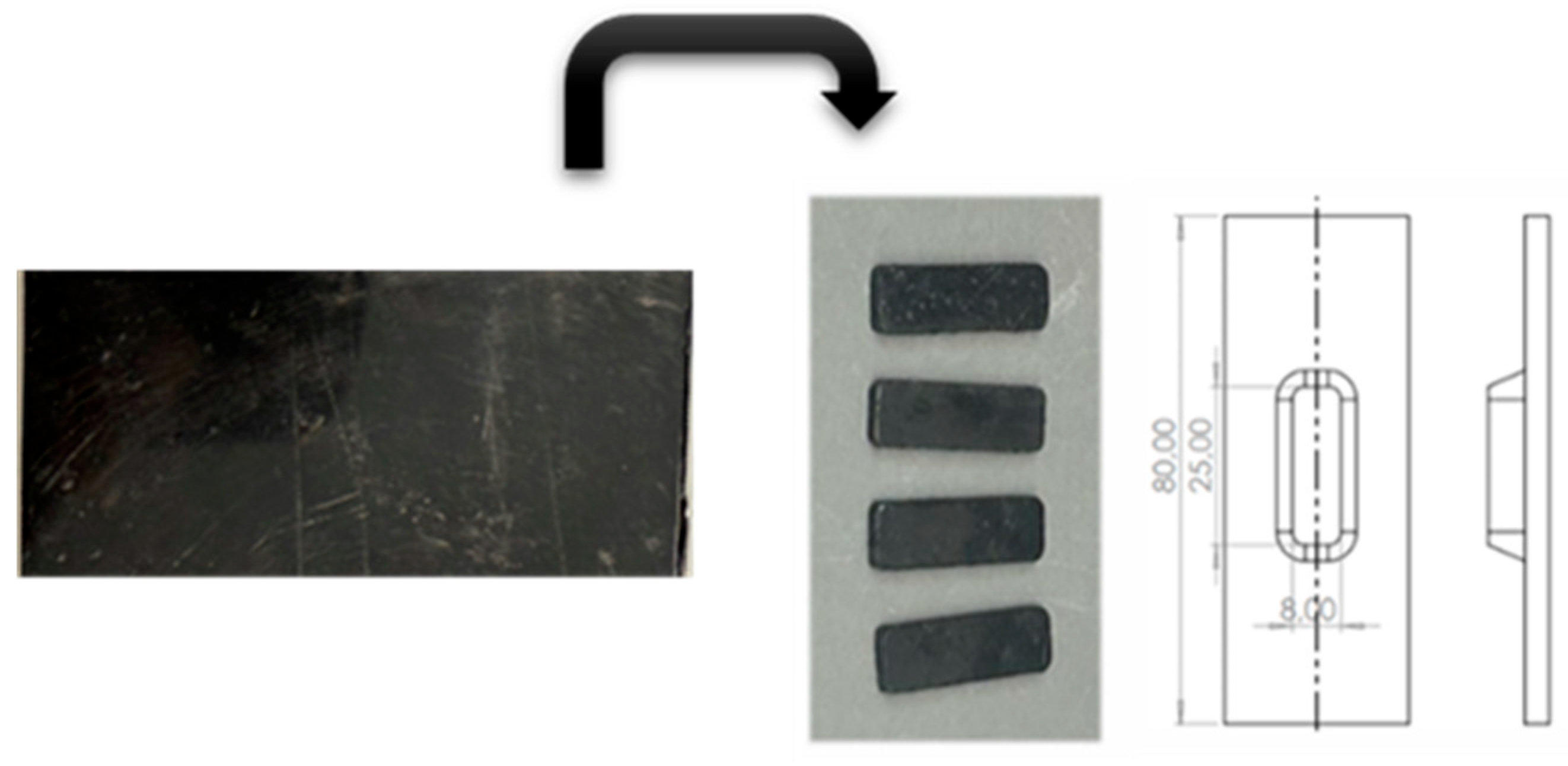
2.3. Fabrication of HDPE/SW Biochar Composites
2.4. Morphological Characterization
2.5. Fourier Transform Infrared Spectroscopy (FTIR)
2.6. Energy Dispersive X-Ray Spectroscopy
2.7. Thermomechanical Characterization
3. Results and Discussion
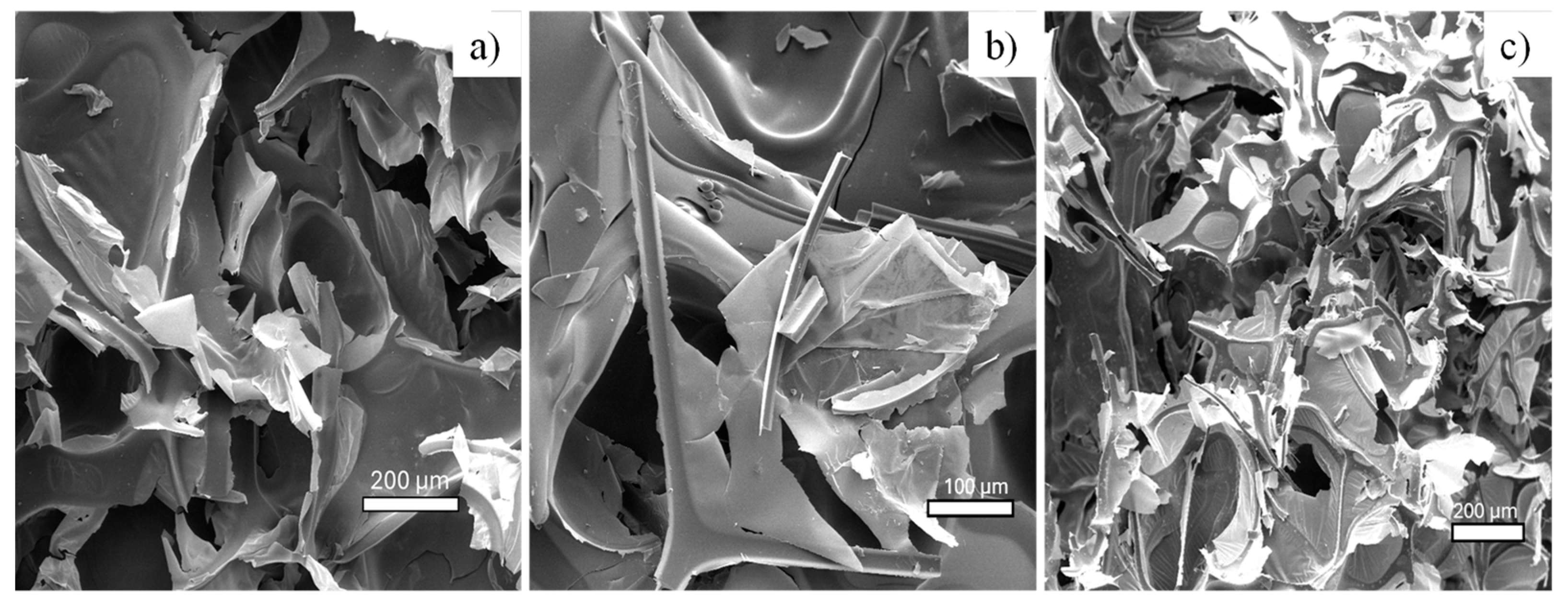
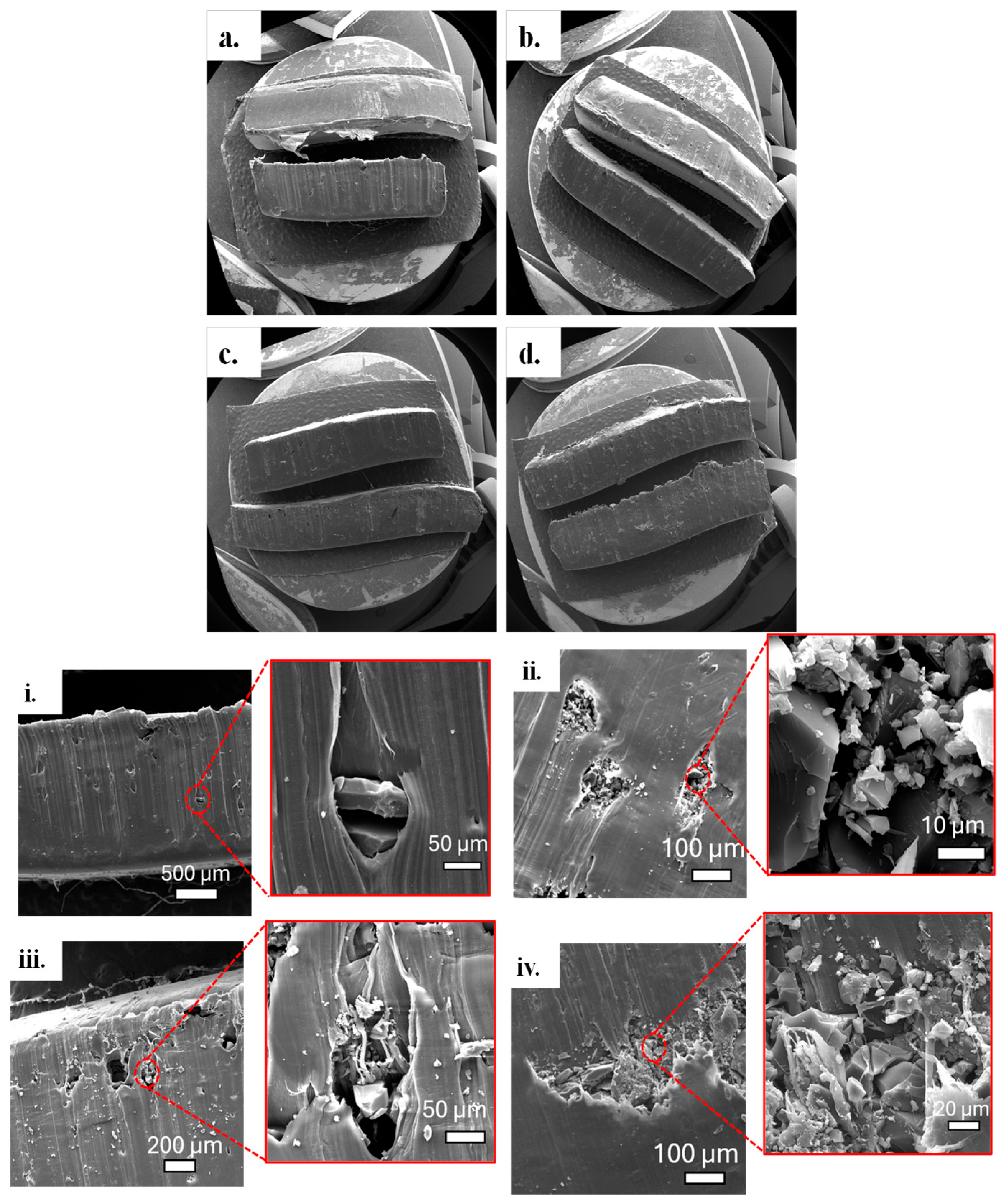
3.1. Morphological Characterization
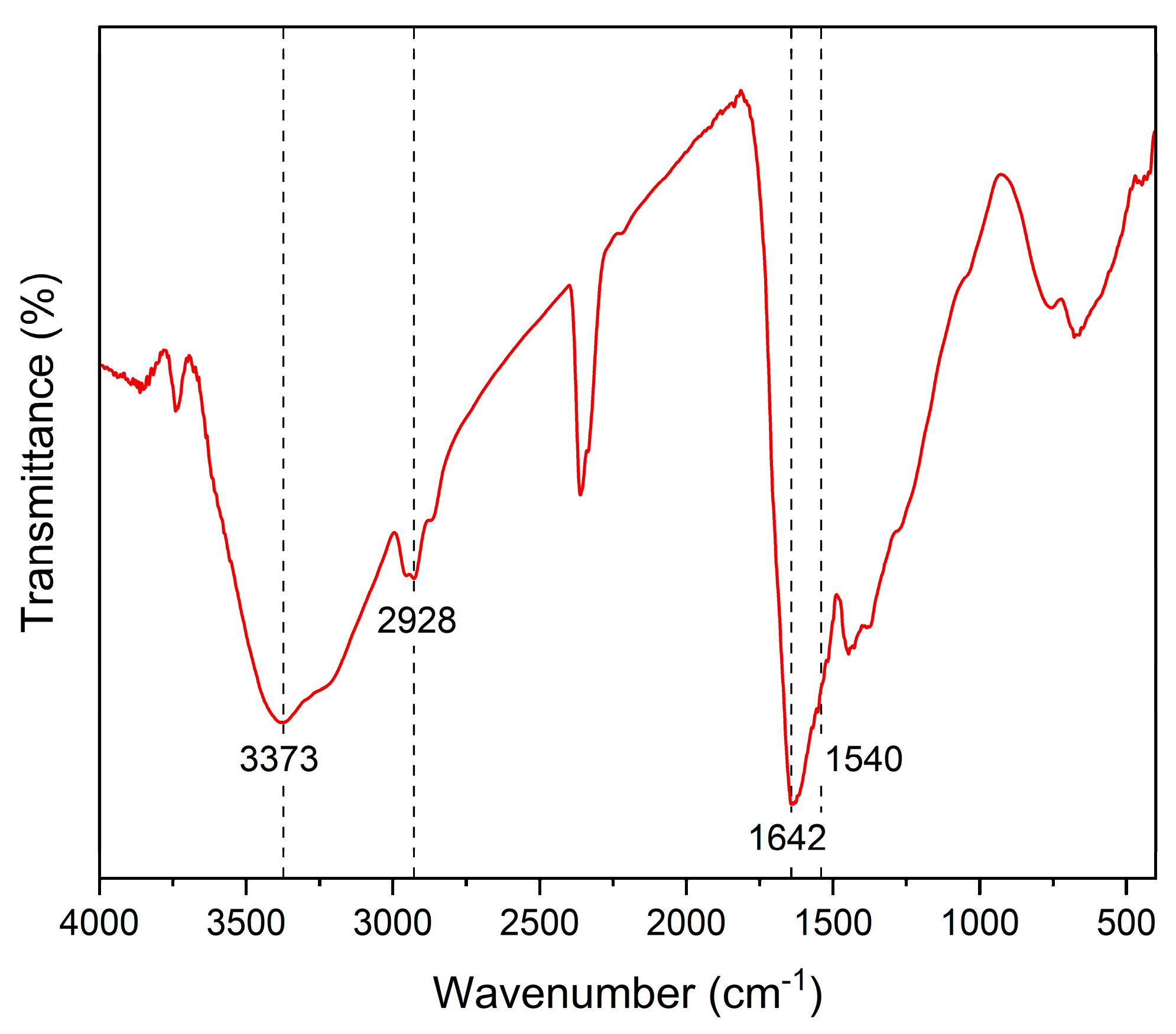
3.2. Fourier Transform Infrared Spectroscopy (FTIR)
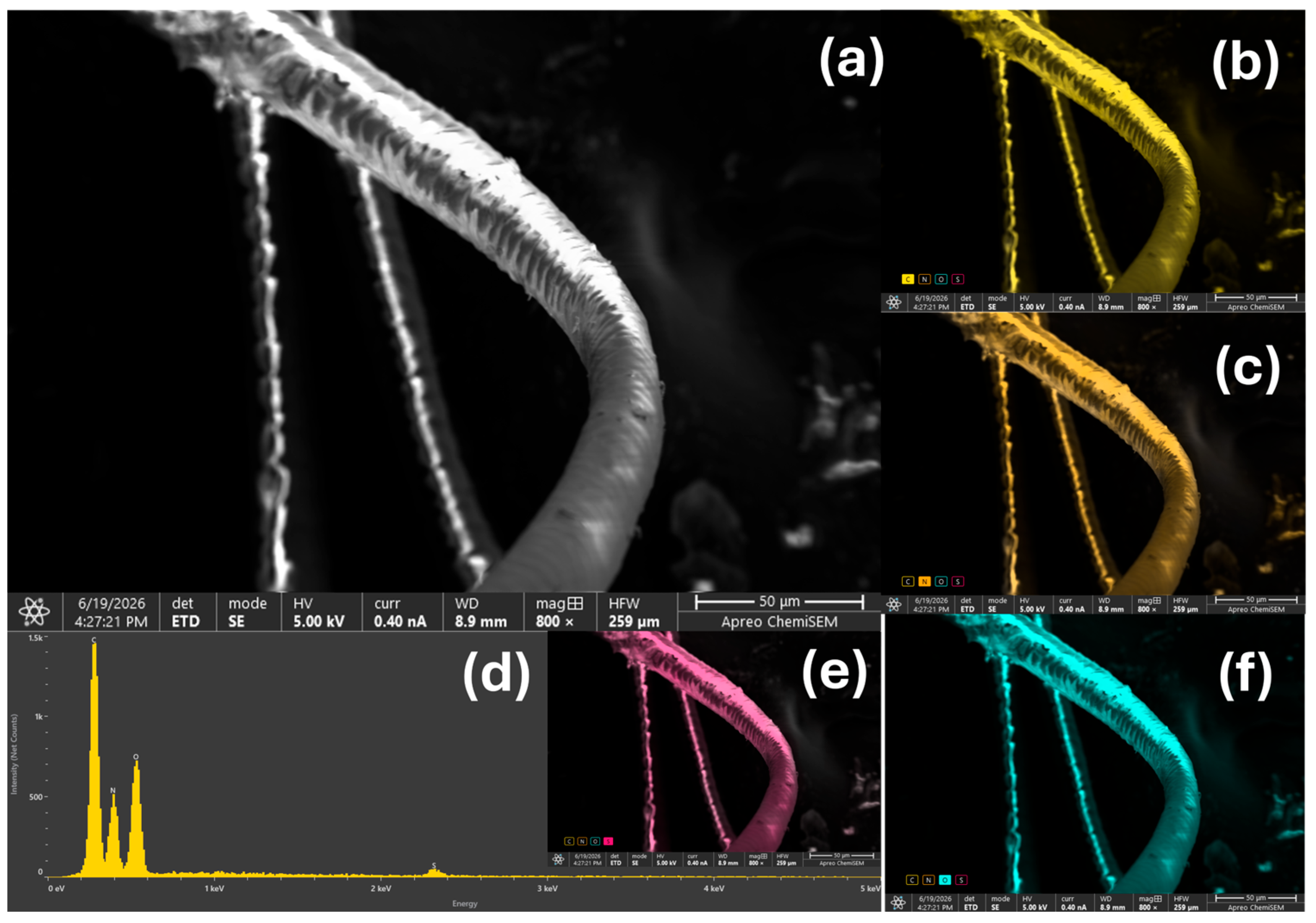
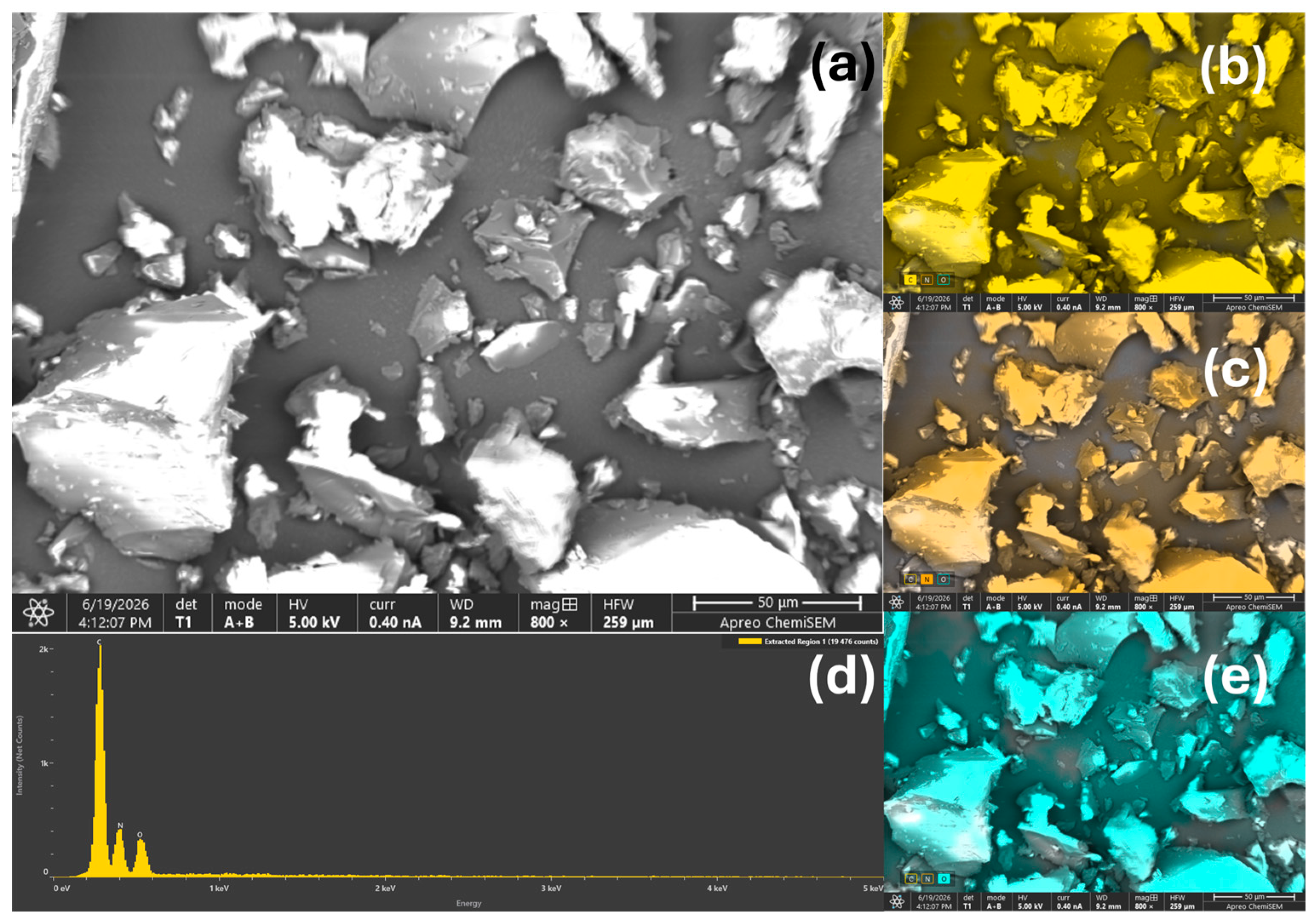
3.3. Energy Dispersive X-Ray Spectroscopy Elemental Mapping
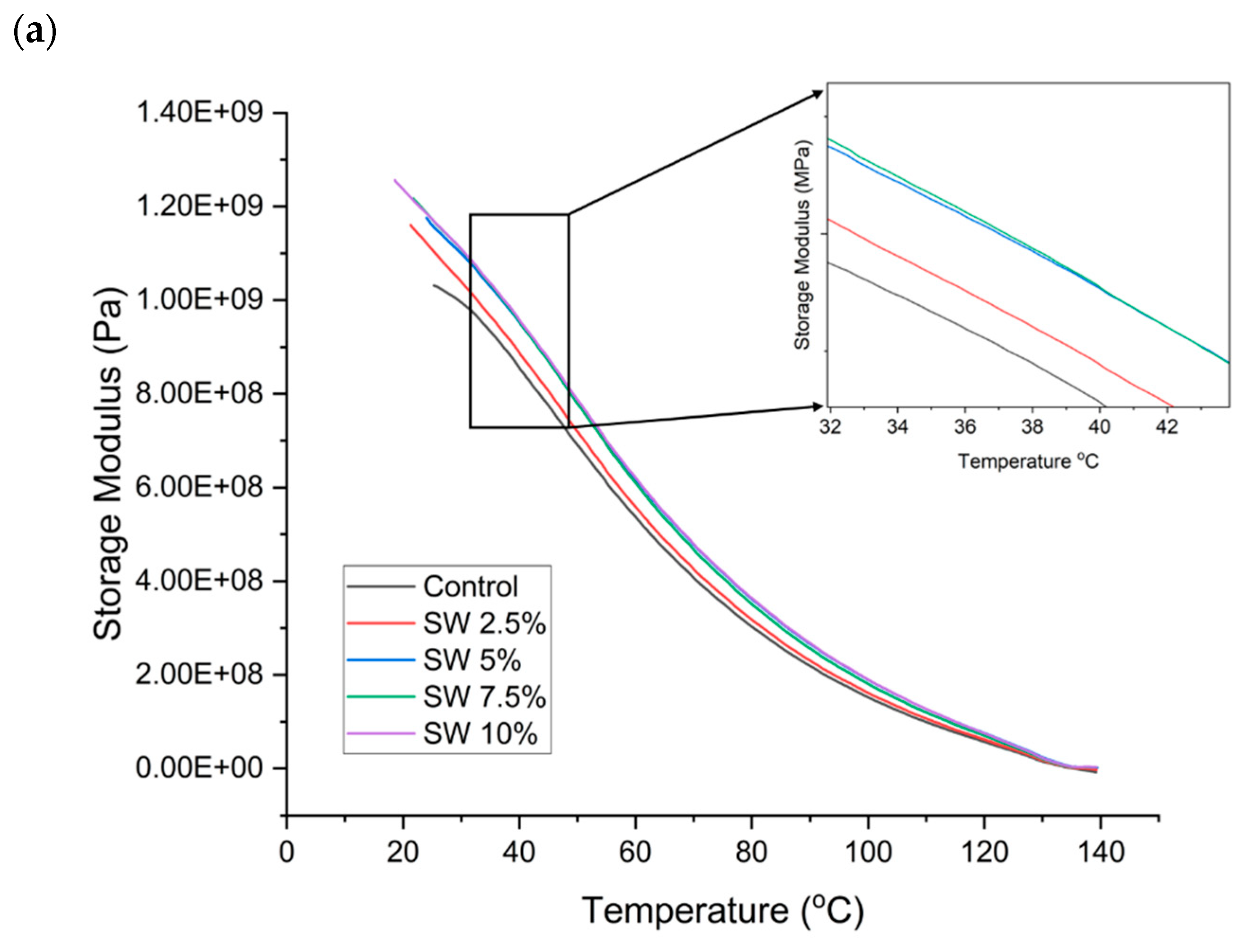
3.4. Thermomechanical Performance
4. Conclusions
Author Contributions
Funding
Data Availability Statement
Acknowledgments
Conflicts of Interest
References
- Rhodes, C.J. Plastic Pollution and Potential Solutions. Sci. Prog. 2018, 101, 207–260. [Google Scholar] [CrossRef] [PubMed]
- Khoaele, K.K.; Gbadeyan, O.J.; Chunilall, V.; Sithole, B. The Devastation of Waste Plastic on the Environment and Remediation Processes: A Critical Review. Sustainability 2023, 15, 5233. [Google Scholar] [CrossRef]
- Gutberlet, J. Global Plastic Pollution and Informal Waste Pickers. Camb. Prism. Plast. 2023, 1, e9. [Google Scholar] [CrossRef]
- Geyer, R.; Jambeck, J.R.; Law, K.L. Production, use, and fate of all plastics ever made. Sci. Adv. 2017, 3, e1700782. [Google Scholar] [CrossRef] [PubMed]
- Jambeck, J.R.; Geyer, R.; Wilcox, C.; Siegler, T.R.; Perryman, M.; Andrady, A.; Narayan, R.; Law, K.L. Plastic waste inputs from land into the ocean. Science 2015, 347, 768–771. [Google Scholar] [CrossRef] [PubMed]
- Lourmpas, N.; Papanikos, P.; Efthimiadou, E.K.; Fillipidis, A.; Lekkas, D.F.; Alexopoulos, N.D. Degradation assessment of high-density polyethylene (HDPE) debris after long exposure to marine conditions. Sci. Total Environ. 2024, 954, 176847. [Google Scholar] [CrossRef] [PubMed]
- Zhang, Q.; Zhang, D.; Xu, H.; Lu, W.; Ren, X.; Cai, H.; Lei, H.; Huo, E.; Zhao, Y.; Qian, M.; et al. Biochar filled high-density polyethylene composites with excellent properties: Towards maximizing the utilization of agricultural wastes. Ind. Crops Prod. 2020, 146, 112185. [Google Scholar] [CrossRef]
- Istrate, I.-R.; Juan, R.; Martin-Gamboa, M.; Domínguez, C.; García-Muñoz, R.A.; Dufour, J. Environmental life cycle assessment of the incorporation of recycled high-density polyethylene to polyethylene pipe grade resins. J. Clean. Prod. 2021, 319, 128580. [Google Scholar] [CrossRef]
- Eleutério, T.; Trota, M.J.; Meirelles, M.G.; Vasconcelos, H.C. A Review of Natural Fibers: Classification, Composition, Extraction, Treatments, and Applications. Fibers 2025, 13, 119. [Google Scholar] [CrossRef]
- Bhuvaneswari, V.; Devarajan, B.; Arulmurugan, B.; Mahendran, R.; Rajkumar, S.; Sharma, S.; Mausam, K.; Li, C.; Eldin, E.T. A Critical Review on Hygrothermal and Sound Absorption Behavior of Natural-Fiber-Reinforced Polymer Composites. Polymers 2022, 14, 4727. [Google Scholar] [CrossRef] [PubMed]
- Li, X.; Tabil, L.G.; Panigrahi, S. Chemical Treatments of Natural Fiber for Use in Natural Fiber-Reinforced Composites: A Review. J. Polym. Environ. 2007, 15, 25–33. [Google Scholar] [CrossRef]
- Ku, H.; Wang, H.; Pattarachaiyakoop, N.; Trada, M. A review on the tensile properties of natural fiber reinforced polymer composites. Compos. Part B Eng. 2011, 42, 856–873. [Google Scholar] [CrossRef]
- Jawaid, M.; Abdul Khalil, H.P.S. Cellulosic/synthetic fibre reinforced polymer hybrid composites: A review. Carbohydr. Polym. 2011, 86, 1–18. [Google Scholar] [CrossRef]
- Adekomaya, O.; Adama, K. A Review on Application of Natural fibre in Structural Reinforcement: Challenges of Properties Adaptation. J. Appl. Sci. Environ. Manag. 2018, 22, 749. [Google Scholar] [CrossRef]
- Das, O.; Sarmah, A.K.; Bhattacharyya, D. A sustainable and resilient approach through biochar addition in wood polymer composites. Sci. Total Environ. 2015, 512–513, 326–336. [Google Scholar] [CrossRef] [PubMed]
- Bartoli, M.; Arrigo, R.; Malucelli, G.; Tagliaferro, A.; Duraccio, D. Recent Advances in Biochar Polymer Composites. Polymers 2022, 14, 2506. [Google Scholar] [CrossRef] [PubMed]
- Spitalsky, Z.; Tasis, D.; Papagelis, K.; Galiotis, C. Carbon nanotube–polymer composites: Chemistry, processing, mechanical and electrical properties. Prog. Polym. Sci. 2010, 35, 357–401. [Google Scholar] [CrossRef]
- Das, O.; Bhattacharyya, D.; Hui, D.; Lau, K.-T. Mechanical and flammability characterisations of biochar/polypropylene biocomposites. Compos. Part B Eng. 2016, 106, 120–128. [Google Scholar] [CrossRef]
- Nan, N.; DeVallance, D.B.; Xie, X.; Wang, J. The effect of bio-carbon addition on the electrical, mechanical, and thermal properties of polyvinyl alcohol/biochar composites. J. Compos. Mater. 2016, 50, 1161–1168. [Google Scholar] [CrossRef]
- Woolf, D.; Amonette, J.E.; Street-Perrott, F.A.; Lehmann, J.; Joseph, S. Sustainable biochar to mitigate global climate change. Nat. Commun. 2010, 1, 56. [Google Scholar] [CrossRef] [PubMed]
- Tayo, B.A.; Ajayi, A.E.; Faloye, O.T.; Jongbo, A.O. A Review on Biochar in Agriculture: Production, Applications, and Impacts. Eng. Innov. 2026, 17, 19–40. [Google Scholar] [CrossRef]
- Roberts, K.G.; Gloy, B.A.; Joseph, S.; Scott, N.R.; Lehmann, J. Life Cycle Assessment of Biochar Systems: Estimating the Energetic, Economic, and Climate Change Potential. Environ. Sci. Technol. 2010, 44, 827–833. [Google Scholar] [CrossRef] [PubMed]
- Das, O.; Bhattacharyya, D.; Sarmah, A.K. Sustainable eco–composites obtained from waste derived biochar: A consideration in performance properties, production costs, and environmental impact. J. Clean. Prod. 2016, 129, 159–168. [Google Scholar] [CrossRef]
- Aboughaly, M.; Babaei-Ghazvini, A.; Dhar, P.; Patel, R.; Acharya, B. Enhancing the Potential of Polymer Composites Using Biochar as a Filler: A Review. Polymers 2023, 15, 3981. [Google Scholar] [CrossRef] [PubMed]
- Corscadden, K.W.; Biggs, J.N.; Stiles, D.K. Sheep’s wool insulation: A sustainable alternative use for a renewable resource? Resour. Conserv. Recycl. 2014, 86, 9–15. [Google Scholar] [CrossRef]
- Cardinale, T.; Arleo, G.; Bernardo, F.; Feo, A.; De Fazio, P. Thermal and mechanical characterization of panels made by cement mortar and sheep’s wool fibres. Energy Procedia 2017, 140, 159–169. [Google Scholar] [CrossRef]
- Hassan, M.M.; Carr, C.M. A review of the sustainable methods in imparting shrink resistance to wool fabrics. J. Adv. Res. 2019, 18, 39–60. [Google Scholar] [CrossRef] [PubMed]
- Fantilli, A.P.; Sicardi, S.; Dotti, F. The use of wool as fiber-reinforcement in cement-based mortar. Constr. Build. Mater. 2017, 139, 562–569. [Google Scholar] [CrossRef]
- Banthia, N.; Nandakumar, N. Crack growth resistance of hybrid fiber reinforced cement composites. Cem. Concr. Compos. 2003, 25, 3–9. [Google Scholar] [CrossRef]
- Alyousef, R.; Aldossari, K.; Ibrahim, O.; Mohamed, A.M.; Siddika, A. Effect of Sheep Wool Fiber on Fresh and Hardened Properties of Fiber Reinforced Concrete. Int. J. Civ. Eng. Technol. 2019, 10, 190–199. [Google Scholar]
- Alyousef, R.; Alabduljabbar, H.; Mohammadhosseini, H.; Mohamed, A.M.; Siddika, A.; Alrshoudi, F.; Alaskar, A. Utilization of sheep wool as potential fibrous materials in the production of concrete composites. J. Build. Eng. 2020, 30, 101216. [Google Scholar] [CrossRef]
- Demircan, R.K.; Mecit Işık, M.A.; Benli, A.; Genç, G.; Beyhan, F.; Kaplan, G. Eco-efficient lime/pumice mortars with sheep wool for heritage restoration: Life cycle and energy savings. Renew. Sustain. Energy Rev. 2025, 215, 115624. [Google Scholar] [CrossRef]
- Chowdhury, M.F.F.; Oyshi, M.T.; Hasan, M. Thermo-Mechanical, Structural, and Biodegradability Properties of Water Hyacinth and Sheep Wool Fiber Reinforced Hybrid Polypropylene Composites. MJCSM 2024, 13, 14–24. [Google Scholar] [CrossRef]
- Das, O.; Kim, N.K.; Sarmah, A.K.; Bhattacharyya, D. Development of waste based biochar/wool hybrid biocomposites: Flammability characteristics and mechanical properties. J. Clean. Prod. 2017, 144, 79–89. [Google Scholar] [CrossRef]
- Pudełko, A.; Postawa, P.; Stachowiak, T.; Malińska, K.; Dróżdż, D. Waste derived biochar as an alternative filler in biocomposites—Mechanical, thermal and morphological properties of biochar added biocomposites. J. Clean. Prod. 2021, 278, 123850. [Google Scholar] [CrossRef]
- Taskin, M.B.; Kadioglu, Y.K.; Yagcioglu, K.D.; Gunes, A. Keratin-rich wastes as sustainable organic fertilizers: Nutritional effects of sheep wool, poultry feathers, and human hair for lettuce. J. Plant Nutr. 2026, 49, 1484–1495. [Google Scholar] [CrossRef]
- Leng, L.; Xu, S.; Liu, R.; Yu, T.; Zhuo, X.; Leng, S.; Xiong, Q.; Huang, H. Nitrogen containing functional groups of biochar: An overview. Bioresour. Technol. 2020, 298, 122286. [Google Scholar] [CrossRef] [PubMed]
- Wan, Y.; Hu, Y.; Zhou, W. Catalytic mechanism of nitrogen-doped biochar under different pyrolysis temperatures: The crucial roles of nitrogen incorporation and carbon configuration. Sci. Total. Environ. 2022, 816, 151502. [Google Scholar] [CrossRef] [PubMed]
- Gao, Y.; Xu, S.; Yue, Q.; Ortaboy, S.; Gao, B.; Sun, Y. Synthesis and characterization of heteroatom-enriched biochar from keratin-based and algous-based wastes. Adv. Powder Technol. 2016, 27, 1280–1286. [Google Scholar] [CrossRef]
- Sarfaraz, Q.; da Silva, L.S.; Drescher, G.L.; Zafar, M.; Severo, F.F.; Kokkonen, A.; Molin, G.D.; Shafi, M.I.; Shafique, Q.; Solaiman, Z.M. Characterization and carbon mineralization of biochars produced from different animal manures and plant residues. Sci. Rep. 2020, 10, 955. [Google Scholar] [CrossRef] [PubMed]
- Ioannou, I.; Kyriacou, P.; Pantelas, M.; Pashalidis, I.; Makris, J.; Rallis, S.; Kostas, G.; Avraam, K.; Krasia-Christoforou, T. Fabrication and thermomechanical properties of carbonized Luffa cylindrica-reinforced high-density polyethylene composites. J. Appl. Polym. Sci. 2022, 139, 52040. [Google Scholar] [CrossRef]
- Kanagaraj, S.; Varanda, F.R.; Zhil’tsova, T.V.; Oliveira, M.S.A.; Simões, J.A.O. Mechanical properties of high density polyethylene/carbon nanotube composites. Compos. Sci. Technol. 2007, 67, 3071–3077. [Google Scholar] [CrossRef]
- Barani, H.; Calvimontes, A. Effects of Oxygen Plasma Treatment on the Physical and Chemical Properties of Wool Fiber Surface. Plasma Chem. Plasma Process. 2014, 34, 1291–1302. [Google Scholar] [CrossRef]
- France Tribe, S.R.; Lee, P.X.; Czibula, C.; Simões, M.G.; Bleher, R.; Duncan, K.E.; Thoman, M.; Topp, C.N.; Dravid, V.P.; Chazot, C.A.C. The Hierarchical Structure of Sheep Wool and Its Impact on Physical Properties. Adv. Funct. Mater. 2025, 35, e10035. [Google Scholar] [CrossRef]
- Stylianou, M.; Christou, A.; Dalias, P.; Polycarpou, P.; Michael, C.; Agapiou, A.; Papanastasiou, P.; Fatta-Kassinos, D. Physicochemical and structural characterization of biochar derived from the pyrolysis of biosolids, cattle manure and spent coffee grounds. J. Energy Inst. 2020, 93, 2063–2073. [Google Scholar] [CrossRef]
- Nishimiya, K.; Hata, T.; Imamura, Y.; Ishihara, S. Analysis of chemical structure of wood charcoal by X-ray photoelectron spectroscopy. J. Wood Sci. 1998, 44, 56–61. [Google Scholar] [CrossRef]
- Kumar, R.; Gunjal, J.; Chauhan, S. Effect of carbonization temperature on properties of natural fiber and charcoal filled hybrid polymer composite. Compos. Part B Eng. 2021, 217, 108846. [Google Scholar] [CrossRef]
- Idrees, M.; Jeelani, S.; Rangari, V. Three-Dimensional-Printed Sustainable Biochar-Recycled PET Composites. ACS Sustain. Chem. Eng. 2018, 6, 13940–13948. [Google Scholar] [CrossRef]
- Poulose, A.M.; Elnour, A.Y.; Anis, A.; Shaikh, H.; Al-Zahrani, S.M.; George, J.; Al-Wabel, M.I.; Usman, A.R.; Ok, Y.S.; Tsang, D.C.W.; et al. Date palm biochar-polymer composites: An investigation of electrical, mechanical, thermal and rheological characteristics. Sci. Total Environ. 2018, 619–620, 311–318. [Google Scholar] [CrossRef] [PubMed]
- Giorcelli, M.; Bartoli, M. Development of Coffee Biochar Filler for the Production of Electrical Conductive Reinforced Plastic. Polymers 2019, 11, 1916. [Google Scholar] [CrossRef] [PubMed]
- Das, C.; Tamrakar, S.; Kiziltas, A.; Xie, X. Incorporation of Biochar to Improve Mechanical, Thermal and Electrical Properties of Polymer Composites. Polymers 2021, 13, 2663. [Google Scholar] [CrossRef] [PubMed]
- Shah, A.U.R.; Imdad, A.; Sadiq, A.; Malik, R.A.; Alrobei, H.; Badruddin, I.A. Mechanical, Thermal, and Fire Retardant Properties of Rice Husk Biochar Reinforced Recycled High-Density Polyethylene Composite Material. Polymers 2023, 15, 1827. [Google Scholar] [CrossRef] [PubMed]
- Ugarte, L.; Fernández-d’Arlas, B.; Larraza, I.; Berra, G.; Gabilondo, N.; Eceiza, A. Revalorization of sheep-wool keratin for the preparation of fully biobased printable inks. J. Polym. Environ. 2023, 31, 4302–4313. [Google Scholar] [CrossRef]
- Verdnik, A.; Čolnik, M.; Knez, Ž.; Škerget, M. Isolation of Keratin from Waste Wool Using Hydrothermal Processes. Acta Chim. Slov. 2021, 68, 433–440. [Google Scholar] [CrossRef]
- Brebu, M.; Spiridon, I. Thermal degradation of keratin waste. J. Anal. Appl. Pyrolysis 2011, 91, 288–295. [Google Scholar] [CrossRef]
- Cardamone, J.M.; Nuñez, A.; Garcia, R.A.; Aldema-Ramos, M. Characterizing Wool Keratin. Adv. Mater. Sci. Eng. 2009, 2009, 147175. [Google Scholar] [CrossRef]
- Arrigo, R.; Jagdale, P.; Bartoli, M.; Tagliaferro, A.; Malucelli, G. Structure–Property Relationships in Polyethylene-Based Composites Filled with Biochar Derived from Waste Coffee Grounds. Polymers 2019, 11, 1336. [Google Scholar] [CrossRef] [PubMed]
- Das, O.; Kim, N.K.; Kalamkarov, A.L.; Sarmah, A.K.; Bhattacharyya, D. Biochar to the rescue: Balancing the fire performance and mechanical properties of polypropylene composites. Polym. Degrad. Stab. 2017, 144, 485–496. [Google Scholar] [CrossRef]





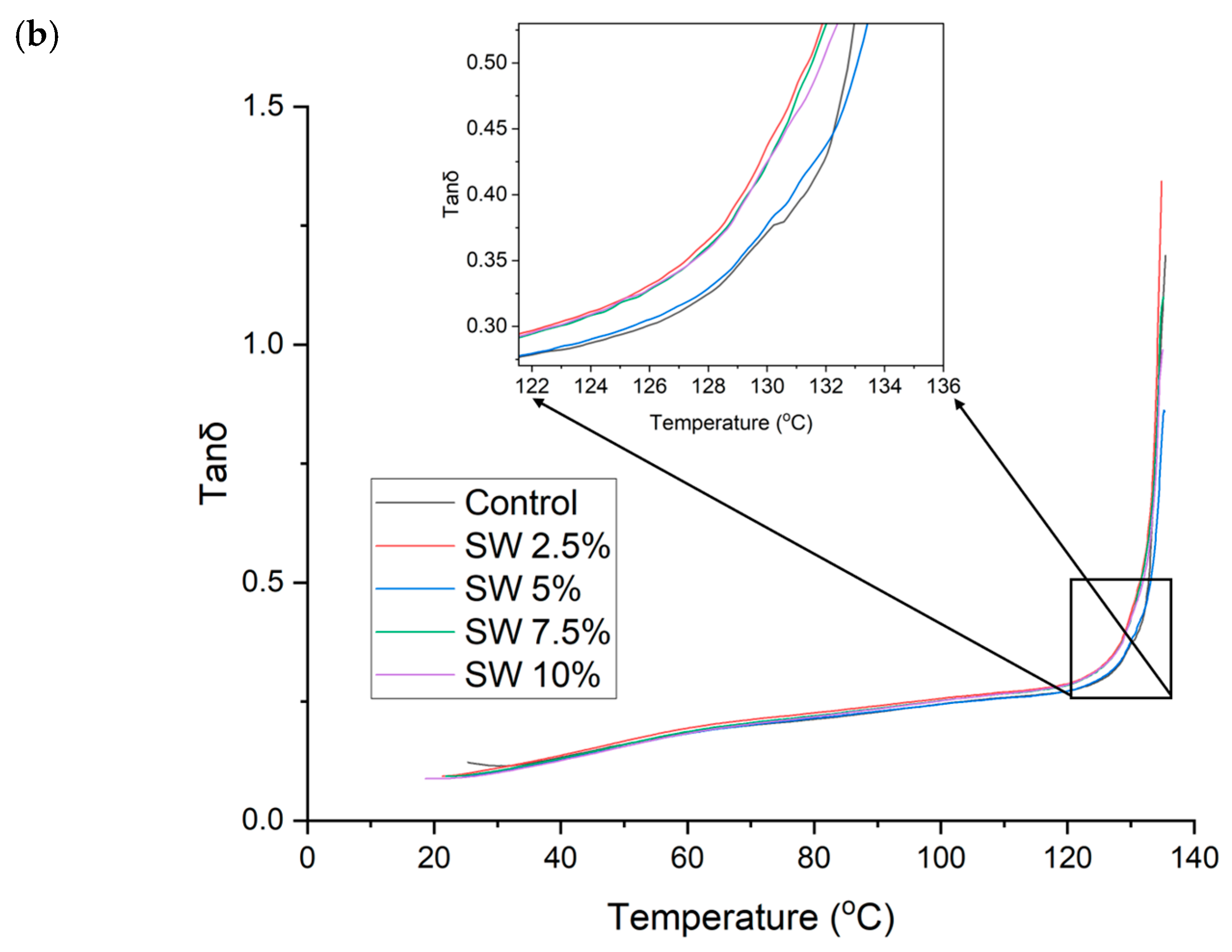
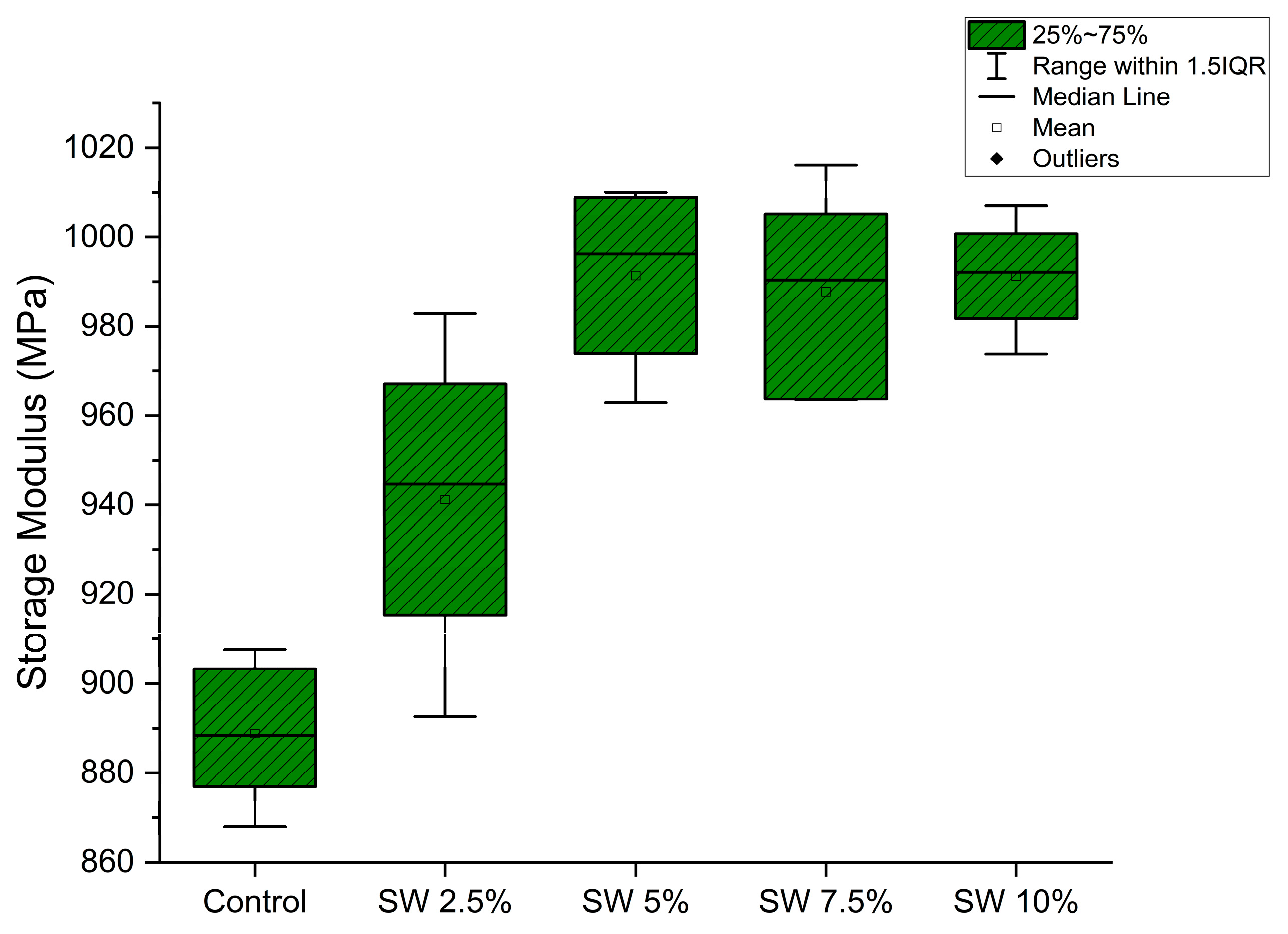

| Sample | Storage Modulus (MPa) | SD (MPa) | Tanδ | SD |
|---|---|---|---|---|
| Control (HDPE) | 888.86 | 19.33 | 0.13 | 0.004 |
| SWB (2.5%)/HDPE | 921.03 | 42.40 | 0.13 | 0.002 |
| SWB (5%)/HDPE | 985.20 | 39.06 | 0.12 | 0.003 |
| SWB (7.5%)/HDPE | 987.77 | 34.24 | 0.12 | 0.002 |
| SWB (10%)/HDPE | 991.25 | 13.93 | 0.12 | 0.002 |
Disclaimer/Publisher’s Note: The statements, opinions and data contained in all publications are solely those of the individual author(s) and contributor(s) and not of MDPI and/or the editor(s). MDPI and/or the editor(s) disclaim responsibility for any injury to people or property resulting from any ideas, methods, instructions or products referred to in the content. |
© 2026 by the authors. Licensee MDPI, Basel, Switzerland. This article is an open access article distributed under the terms and conditions of the Creative Commons Attribution (CC BY) license.
Share and Cite
Theodorou, V.; Pashalidis, I.; Ioannou, P.S.; Krasia-Christoforou, T. Sheep Wool Biochar-Enhanced HDPE Composites. J. Manuf. Mater. Process. 2026, 10, 224. https://doi.org/10.3390/jmmp10070224
Theodorou V, Pashalidis I, Ioannou PS, Krasia-Christoforou T. Sheep Wool Biochar-Enhanced HDPE Composites. Journal of Manufacturing and Materials Processing. 2026; 10(7):224. https://doi.org/10.3390/jmmp10070224
Chicago/Turabian StyleTheodorou, Viktoria, Ioannis Pashalidis, Panagiotis S. Ioannou, and Theodora Krasia-Christoforou. 2026. "Sheep Wool Biochar-Enhanced HDPE Composites" Journal of Manufacturing and Materials Processing 10, no. 7: 224. https://doi.org/10.3390/jmmp10070224
APA StyleTheodorou, V., Pashalidis, I., Ioannou, P. S., & Krasia-Christoforou, T. (2026). Sheep Wool Biochar-Enhanced HDPE Composites. Journal of Manufacturing and Materials Processing, 10(7), 224. https://doi.org/10.3390/jmmp10070224