
Review

Recent Advances and Challenges in Hybrid Additive Manufacturing: Classification, Architectures, and Industrial Applications

by
Sheraly Bekbolatov
1,
Asset Rakishev
1,* and
Khairur Rijal Jamaludin
2
1
Metallurgy and Mechanical Engineering Faculty, Abylkas Saginov Karaganda Technical University, Karagandy 100012, Kazakhstan
2
Faculty of Artificial Intelligence, Universiti Teknologi Malaysia, Jalan Sultan Yahya Petra, Kuala Lumpur 54100, Malaysia
*
Author to whom correspondence should be addressed.
J. Manuf. Mater. Process. 2026, 10(7), 223; https://doi.org/10.3390/jmmp10070223
Submission received: 26 May 2026 / Revised: 19 June 2026 / Accepted: 21 June 2026 / Published: 27 June 2026

Abstract

Hybrid additive manufacturing (HAM) integrates additive and subtractive processes within a unified production system, combining the geometric flexibility and material efficiency of additive manufacturing with the dimensional accuracy and surface quality of conventional machining. This review provides a comprehensive analysis of HAM technologies through a proposed four-criterion classification framework encompassing process integration strategy, additive manufacturing process type, machine architecture, and application domain. DED-based, PBF-based, and polymer-based hybrid systems are examined alongside integrated hybrid machines, retrofit solutions, and robotic architectures. A comparative analysis of representative commercial platforms evaluates build envelope, integration strategy, and monitoring capability. Documented performance outcomes across aerospace, automotive, energy, and biomedical sectors confirm substantial improvements in surface quality, fatigue performance, dimensional accuracy, and material efficiency relative to conventional manufacturing routes. Current limitations are critically assessed across technical, process integration, and economic dimensions, and a structured near-to-long-term research roadmap is proposed, prioritising in-process sensing and toolpath standardisation, digital twin-based adaptive process planning, and ultimately autonomous hybrid manufacturing cells with lifecycle certification. These findings position HAM as a central enabling technology for intelligent, flexible, and sustainable production within Industry 4.0 and Industry 5.0 paradigms.

1. Introduction

Modern mechanical engineering is undergoing a period of profound technological transformation, driven by the need to establish highly efficient manufacturing systems capable of producing components with complex geometries and superior performance characteristics, while minimising both material consumption and energy costs. In this context, hybrid manufacturing technologies have gained particular importance, representing a fundamentally new approach to the organisation of technological processes through the integration of additive and subtractive methods within a single production cycle.
The concept of hybrid manufacturing has emerged as a response to the limitations inherent in conventional manufacturing methods and is aimed at overcoming technological barriers that hinder the creation of components with unique functional properties. The underlying principle of the hybrid approach lies in the synergistic combination of the advantages offered by different technological processes, enabling results that cannot be achieved by applying each method in isolation.
For a long time, the primary criteria for evaluating manufacturing processes were surface quality and dimensional accuracy of the produced components. However, in recent decades, manufacturing sustainability and environmental impact have become increasingly important assessment criteria for modern production systems [1]. Hybrid manufacturing addresses these emerging challenges by aligning with current industrial trends focused on enhanced product quality, resource efficiency, and lean manufacturing principles [2].
The concept of hybrid manufacturing involves combination of traditional and non-traditional machining methods on the same machine platform to achieve enhanced results [3,4]. Accordingly, hybrid manufacturing aims to combine two or more distinct manufacturing processes within a shared working environment so as to capitalise on the advantages of each process while mitigating their inherent limitations [5,6,7].
Most commonly, hybrid manufacturing combines additive manufacturing technologies with subtractive operations such as milling [8]. Subtractive manufacturing includes conventional material removal processes such as milling, grinding, boring, drilling, and laser-assisted machining. By removing material from a workpiece, these processes provide excellent dimensional tolerances and surface quality, making them highly suitable for advanced engineering applications.
However, despite these advantages, subtractive manufacturing remains limited in its ability to produce highly complex geometries and internal features that are difficult or impossible to manufacture using conventional machining alone. To address these limitations, additive manufacturing technologies are incorporated into hybrid systems, enabling the fabrication of complex near-net-shape geometries prior to final subtractive finishing.
Additive manufacturing (AM) is a relatively recent production technology, and the number of publications in this field has increased significantly over the past decade, reflecting the growing scientific and industrial interest in this area [9]. Various additive manufacturing technologies are employed in hybrid manufacturing systems, each offering specific advantages depending on the application.
One of the most significant advantages of AM over conventional manufacturing methods is its ability to fabricate components with highly complex geometries through layer-by-layer material deposition. This enables the production of intricate shapes and internal structures that are difficult or impossible to achieve using traditional manufacturing routes. Such design freedom allows the fabrication of highly customised and application-specific products [10,11]. Unlike conventional manufacturing methods, which typically rely on material removal or deformation processes, additive manufacturing builds components additively in successive layers, thereby providing unprecedented geometric flexibility.
This design freedom has enabled numerous advanced applications across multiple industries. For example, additive manufacturing facilitates the production of patient-specific medical implants tailored to individual anatomical requirements [12], customised sports equipment designed for enhanced ergonomic performance [13], and lightweight aerospace components featuring optimised internal lattice or cellular structures [14].
In addition to geometric flexibility, additive manufacturing has transformed modern production by enabling the fabrication of multi-material and functionally tailored components. One of the notable advantages of AM lies in its material versatility. For instance, recent studies have demonstrated the feasibility of producing multi-material Inconel 718-Aluminium components, combining the high thermal resistance of Inconel with the low density of aluminium to achieve an improved balance between thermal performance and weight reduction [15].
Furthermore, growing awareness of climate change, resource depletion, and environmental sustainability has intensified interest in environmentally responsible manufacturing technologies, leading to extensive research in this area [16,17]. Since additive manufacturing deposits material only where required, it offers significantly improved material utilisation compared with conventional subtractive methods. For example, comparative studies on steel mill spare parts have shown that AM can reduce material consumption by 40–80% relative to conventional CNC machining [18,19]. In addition to material savings, substantial research efforts have focused on the incorporation of recycled feedstock materials into additive manufacturing processes to further enhance sustainability [20].
The aforementioned advantages have made additive manufacturing one of the fastest-growing areas in modern production engineering, contributing to the increasing accessibility and affordability of 3D printing technologies. Nevertheless, despite its rapid development, additive manufacturing still exhibits several inherent limitations, including relatively poor mechanical properties, inferior surface finish, and limited dimensional and geometric accuracy [10,21,22].
These characteristics remain critical constraints in the production of engineering components, as dimensional precision and surface integrity are essential requirements in modern high-performance mechanical systems. In this context, subtractive post-processing and integrated machining operations can substantially improve the dimensional and surface quality of additively manufactured parts—for example, post-processing of laser powder bed fused Ti-6Al-4V specimens has been shown to reduce surface roughness Ra from approximately 18 µm (as-built) to below 5 µm while improving elongation by up to 116% relative to the as-built condition [23].
Several comprehensive reviews addressing aspects of hybrid additive manufacturing have been published in recent years. Early contributions by Zhu et al. [24] and Lauwers et al. [5] established foundational taxonomies and process definitions for hybrid manufacturing, while Flynn et al. [25] provided a dedicated analysis of hybrid additive–subtractive machine tool configurations and research developments. Pragana et al. [4] reviewed the state of the art in metal hybrid AM with emphasis on process physics and material interactions, and Sebbe et al. [6] offered a broad survey of hybrid process combinations for the production of complex components. Process-specific reviews have further covered directed energy deposition-based hybrid systems [26] and powder-based laser hybrid AM of metals [27], while more recent contributions have examined emerging integration trends and system architectures [28,29]. Although these reviews have made valuable contributions, they are predominantly focused on individual process categories or specific machine configurations, and none simultaneously addresses process integration strategy, AM process type, machine architecture, and application domain within a unified classification framework. Furthermore, existing reviews offer limited quantitative comparison of key process parameters and insufficient analysis of commercial hybrid system capabilities, including monitoring strategies and industrial performance metrics. The present review addresses these gaps by proposing a four-criterion classification framework, providing systematic process capability comparisons, and evaluating commercial hybrid manufacturing systems across the aerospace, automotive, biomedical, and energy sectors.
Against this background, and in response to the identified gaps in the existing literature, the present review provides a comprehensive analysis of hybrid manufacturing with particular emphasis on the integration of additive and subtractive processes. The review consolidates current knowledge regarding the technological foundations, industrial applications, and performance potential of hybrid manufacturing in overcoming the limitations of stand-alone additive and subtractive approaches.
Particular attention is devoted to machine architecture, equipment design, process parameters, and material-related challenges, alongside representative industrial case studies demonstrating the benefits of hybrid manufacturing in terms of efficiency, flexibility, and product quality. Furthermore, the review identifies current state-of-the-art developments and highlights future research directions that may facilitate the broader industrial adoption of hybrid manufacturing technologies in aerospace, biomedical, energy, and other high-value sectors.
The remainder of this paper is organised as follows. First, the fundamental concepts and classification approaches of hybrid manufacturing are presented. Subsequently, industrial implementations and practical applications are reviewed, followed by a discussion of the principal technological challenges and future development trends. Finally, the paper concludes by summarising the key findings and their implications for both academic research and industrial practice.

2. Classification of Hybrid Additive Manufacturing

Given the diversity of hybrid manufacturing technologies, a structured classification framework is necessary to systematically analyse their underlying principles, technological characteristics, and industrial applicability. In this review, hybrid manufacturing systems are classified based on four principal criteria: process integration strategy, additive manufacturing process type, machine architecture, and application domain. The proposed classification framework is summarised in Figure 1.

2.1. Classification by Process Integration Strategy

In a broad sense, hybrid manufacturing is defined as the combination of two or more manufacturing processes within a single production system. However, several authors have further refined this definition by emphasising that, in certain hybrid systems, the combined processes may occur simultaneously within the same processing zone [24,30]. Accordingly, based on the temporal relationship between the constituent processes, hybrid manufacturing can be broadly classified into concurrent and sequential integration types [4].
In concurrent integration, two or more combined tools or technologies interact simultaneously within the processing zone to produce a synergistic effect. This category can be further subdivided into assisted processes and mixed processes. In assisted processes, one technology remains the primary manufacturing method, while the secondary process serves an auxiliary role by enhancing the effectiveness of the main operation. A typical example is a conventional material removal process assisted by an auxiliary energy source that facilitates chip formation or reduces cutting resistance.
The second subgroup, mixed processes, involves two or more processes occurring simultaneously or near-simultaneously in the same processing zone, where each contributes directly to material transformation. According to several authors, both processes should operate more or less concurrently to satisfy the definition of a mixed hybrid process [5,31].
In contrast, sequential integration refers to hybrid manufacturing routes in which individual processes are performed consecutively rather than simultaneously. This category commonly includes additive manufacturing processes followed by conventional subtractive finishing operations within the same manufacturing chain [4]. The increasing industrial adoption of additive manufacturing and the emergence of new additive–subtractive process chains have significantly expanded the relevance and implementation of sequential hybrid integration.

2.2. Classification by Additive Manufacturing Process Type

This review focuses specifically on hybrid manufacturing systems based on additive manufacturing technologies, namely the integration of additive and subtractive processes within a unified manufacturing workflow. In such systems, additive manufacturing is employed to generate the near-net-shape geometry of a component, which is subsequently refined to its final dimensional accuracy and surface quality through subtractive post-processing operations.

2.2.1. DED-Based Hybrid Manufacturing

The development of advanced engineering materials with enhanced mechanical properties, reduced density, and improved performance characteristics has created significant manufacturing challenges associated with their processing and fabrication. Consequently, new technological approaches are required to manufacture such components efficiently and accurately. In this context, hybrid manufacturing offers a promising solution, particularly through the integration of Directed Energy Deposition (DED) or Powder Bed Fusion (PBF) with conventional machining operations.
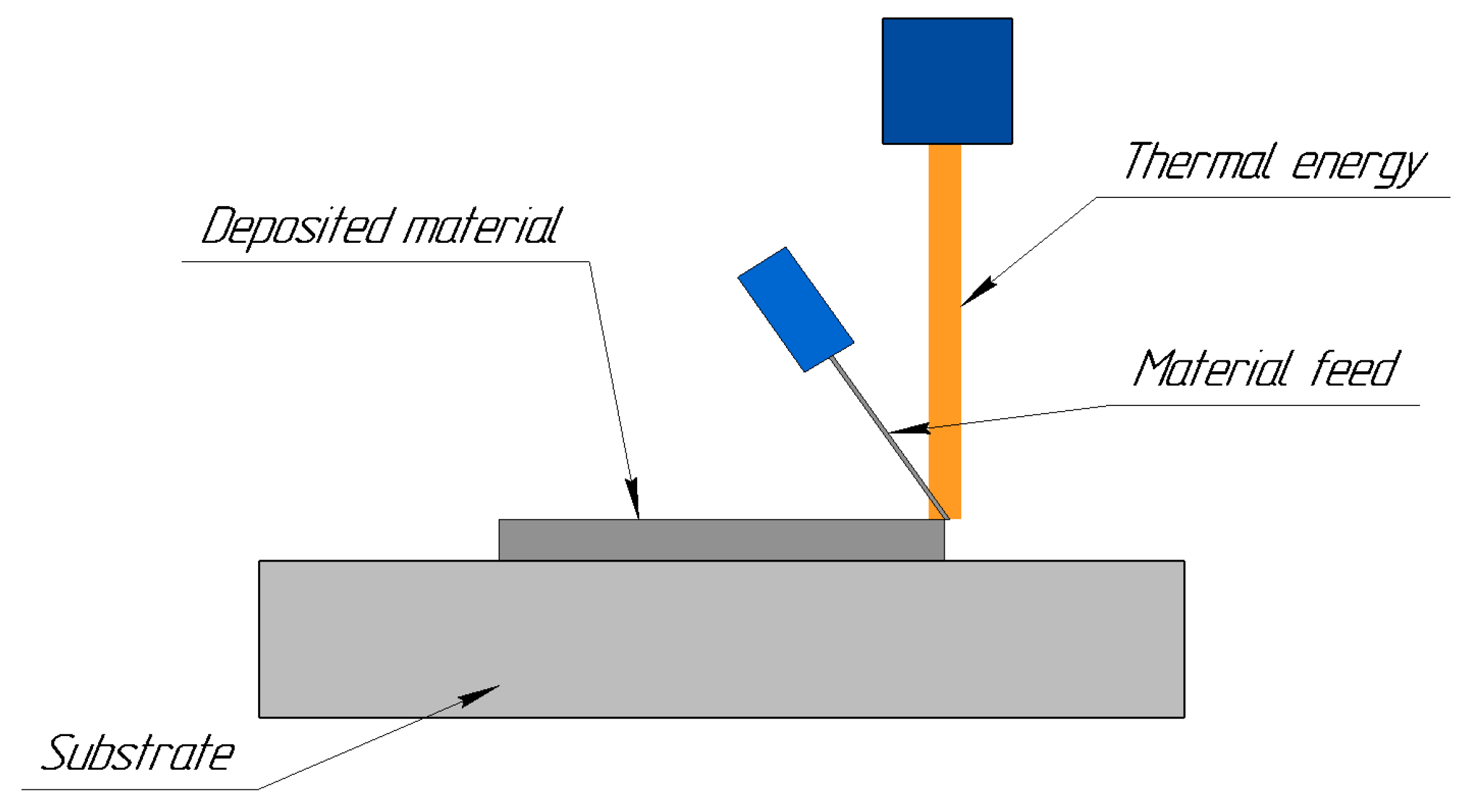
According to ISO/ASTM 52900:2021 [32], DED is an additive manufacturing process in which focused thermal energy is used to fuse materials by melting them as they are deposited (Figure 2). The heat source may consist of a laser beam, plasma arc, or electron beam. Depending on the employed energy source, DED encompasses several additive manufacturing variants, including arc-based deposition, laser cladding, and electron beam deposition [24].
Wire Arc Additive Manufacturing (WAAM) represents one of the earliest forms of metal additive manufacturing, with origins dating back to the early twentieth century [33], and is currently widely used for the fabrication of medium- and large-scale metallic components due to its high deposition rate and productivity [34]. WAAM systems are commonly categorised into gas metal arc welding (GMAW), gas tungsten arc welding (GTAW), and plasma arc welding (PAW)-based variants [26,35,36].
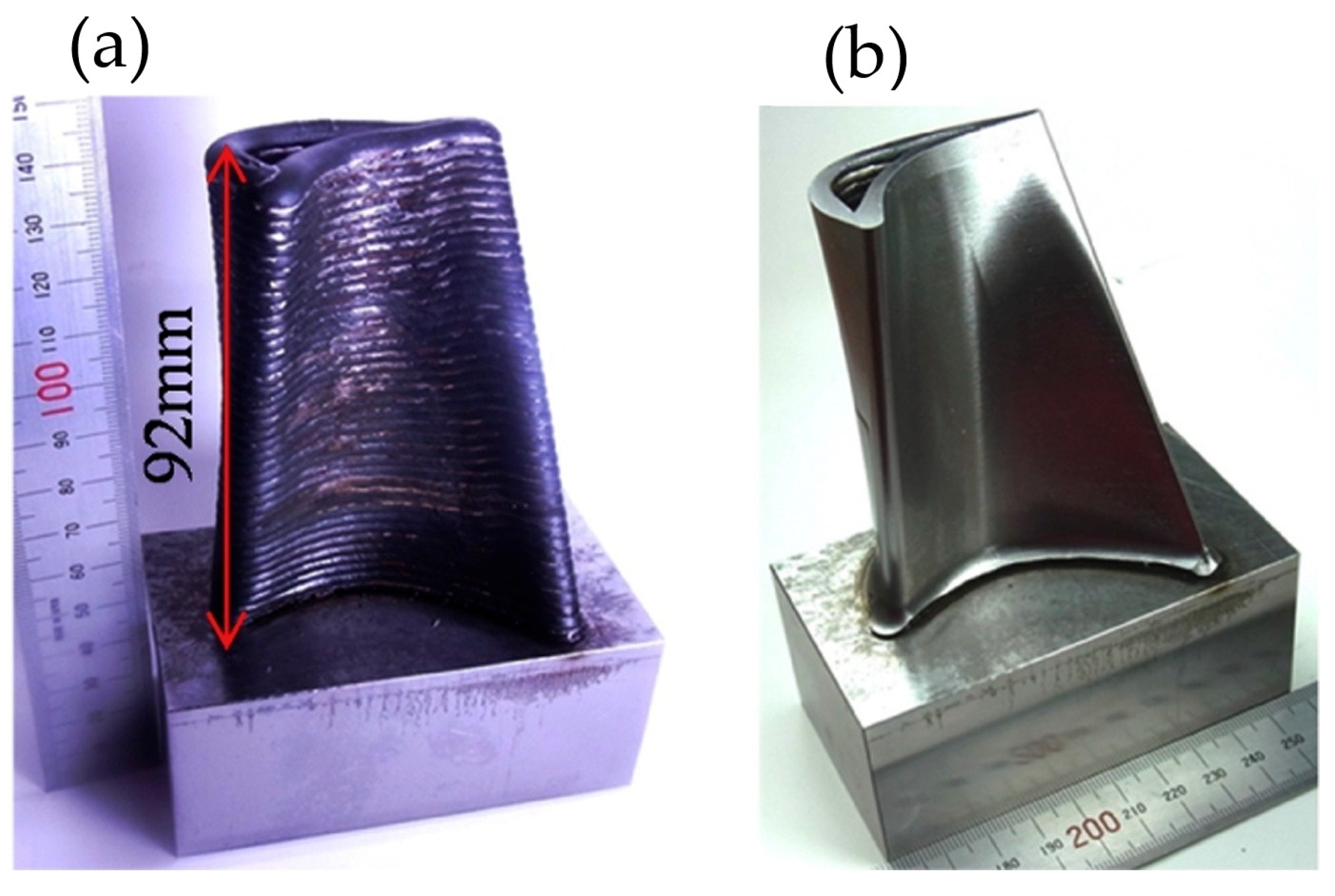
In WAAM-based hybrid systems, metallic feedstock in the form of wire or powder is deposited onto a substrate in a layer-wise manner to build the required geometry. Various deposition systems have been implemented using CNC platforms and robotic manipulators to improve process flexibility and scalability. In WAAM-based hybrid systems, the layer-wise arc deposition process produces characteristic bead waviness and surface undulation arising from arc instability, bead overlap geometry, and solidification dynamics [26,35]. These surface artefacts, combined with HAZ-induced residual stresses and directional grain growth in the deposition direction, necessitate CNC machining of all functional surfaces prior to final use.
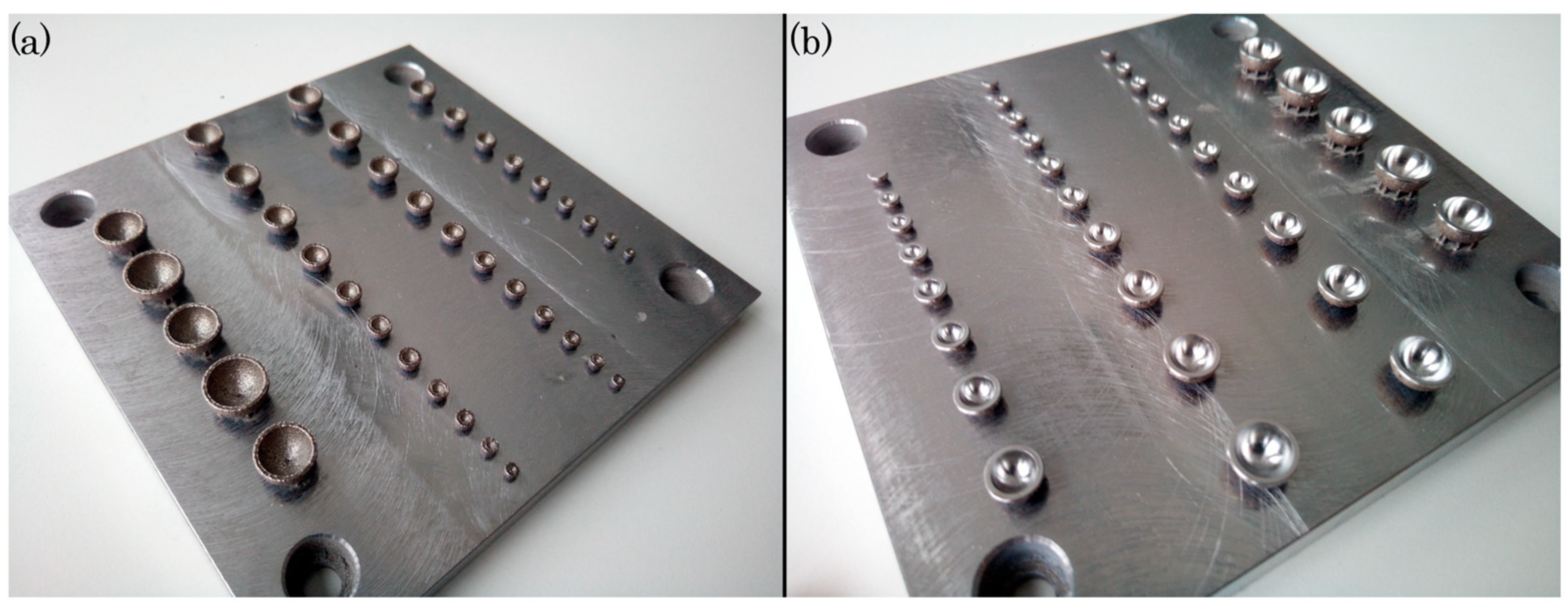
Figure 3 illustrates this principle: the as-deposited WAAM hollow turbine blade shape (a) exhibits characteristic bead-waviness and directional surface undulation arising from arc solidification, while the same component after CNC finishing (b) demonstrates the dimensional accuracy and surface quality achievable through hybrid DED–subtractive processing [37].
Laser cladding-based hybrid manufacturing follows a similar principle, combining laser-assisted material deposition with subsequent subtractive finishing. In this process, powder or wire feedstock is melted by a laser beam and deposited layer by layer onto the target substrate to form the component geometry. To prevent oxidation during deposition, inert shielding gases are typically employed [38]. This hybrid laser additive–subtractive approach has been widely investigated for repair and remanufacturing applications involving steels and high-performance alloys [39,40]. For example, studies on crack repair in Inconel 718 have demonstrated favourable microstructural characteristics and mechanical performance of repaired regions, with wear resistance comparable to that of the base material [40].
Despite its widespread use, laser cladding remains limited in processing certain highly reflective or thermally conductive materials. In such cases, electron beam-based deposition offers superior energy transfer efficiency and improved processing capability, particularly for materials such as copper [41]. Electron Beam Additive Manufacturing (EBAM) has demonstrated the ability to produce dense, low-porosity copper components at high deposition rates.
Overall, DED-based hybrid manufacturing technologies continue to gain industrial relevance owing to their capability to fabricate and repair complex metallic components from a broad range of engineering materials while combining high deposition productivity with improved final part quality through integrated machining operations [42].
A comparative summary of the principal DED-based hybrid manufacturing variants, including key process performance metrics and typical applications, is provided in Table 1.

2.2.2. PBF-Based Hybrid Manufacturing

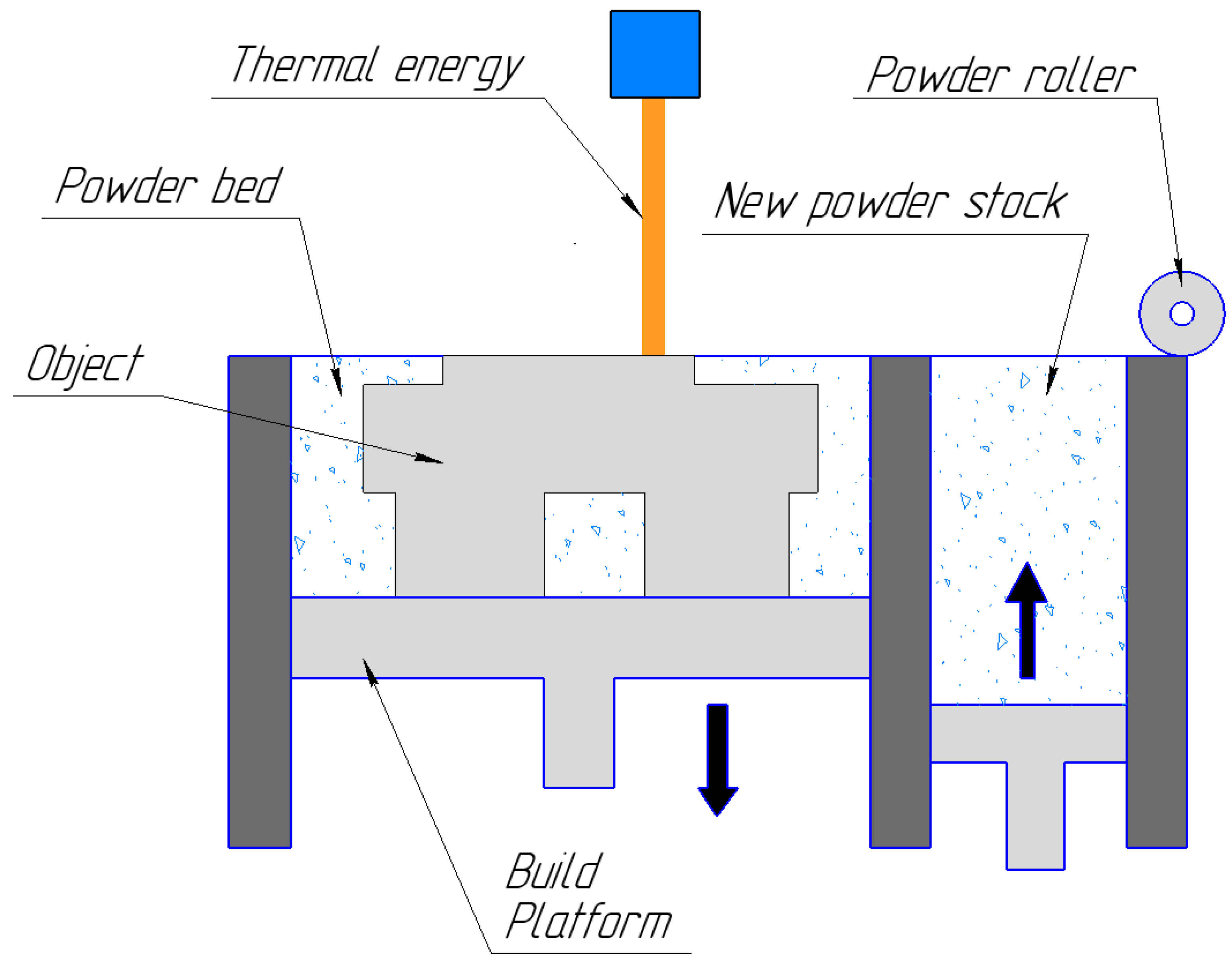
Powder Bed Fusion (PBF) represents another major category of additive manufacturing employed in hybrid manufacturing systems. Similar to DED, PBF technologies may be classified according to the employed energy source, most commonly laser- or electron beam-based systems, and include processes such as Direct Metal Laser Sintering (DMLS), Selective Laser Melting (SLM), Selective Laser Sintering (SLS), Selective Heat Sintering (SHS), and Electron Beam Melting (EBM) [6,32]. In PBF processes, thermal energy selectively fuses powder particles layer by layer to form a solid component (Figure 4).
Among hybrid additive manufacturing approaches, powder-bed-based systems—particularly those based on laser powder bed fusion—have attracted considerable research attention due to their ability to produce components with relatively high density and fine microstructural uniformity. In PBF, these limitations manifest particularly in restricted accuracy of small internal features such as channels and holes, where powder removal and surface finishing are inherently constrained by feature geometry. Consequently, hybrid PBF systems commonly incorporate in situ or sequential subtractive operations, including milling, grinding, and drilling, to improve final part quality and dimensional precision [27].
Post-processing of PBF-fabricated components has been consistently shown to improve surface integrity and specific mechanical properties. For instance, sandblasting and chemical etching of LPBF Ti-6Al-4V specimens reduced surface roughness while improving elongation by up to 116% compared with the as-built condition [23]. Similarly, hybrid PBF-machining approaches applied to titanium aerospace components have demonstrated significant improvements in surface finish and dimensional accuracy through five-axis finishing, albeit with challenges related to titanium’s poor machinability.
The practical significance of this surface quality gap is illustrated in Figure 5, which directly compares SLM-fabricated components in their as-built condition with equivalent geometries following CNC milling, confirming the substantial surface improvement achievable through hybrid PBF-machining [44].
Although PBF technologies are capable of producing highly dense components with homogeneous microstructures [45], limitations remain in the fabrication of small-diameter channels and holes, which often require secondary drilling or finishing operations to meet engineering tolerances [22]. Beyond new-part fabrication, powder-bed-based hybrid manufacturing has also shown potential in repair applications. For example, hybrid electron beam powder bed fusion has been investigated for the repair of Ti-6Al-4V components, demonstrating satisfactory metallurgical bonding and interfacial properties between deposited material and substrate across varying substrate surface conditions [46].
Overall, PBF-based hybrid manufacturing provides an attractive solution for producing high-precision metallic components with complex geometries, particularly where superior density, fine microstructure, and enhanced dimensional accuracy are required.

2.2.3. Polymer-Based Hybrid Manufacturing

Polymer-based additive manufacturing represents one of the most widely adopted categories of additive manufacturing technologies in both industrial and consumer sectors, largely due to its accessibility, low equipment cost, and process simplicity. The most common polymer-based additive manufacturing methods employed in hybrid manufacturing systems include Fused Deposition Modelling (FDM) and Stereolithography (SLA).
Despite their widespread adoption, polymer-based additive manufacturing processes remain constrained by limited surface quality, geometric inaccuracies, and layer-induced surface artefacts, which restrict their direct applicability in high-precision engineering applications [47]. Consequently, the integration of subtractive finishing operations has emerged as an effective strategy for improving the dimensional and surface quality of polymer additively manufactured components, thereby expanding their industrial applicability.
Most studies on polymer-based hybrid manufacturing focus on the combined optimisation of printing parameters and machining conditions to achieve target surface roughness and dimensional tolerances [48]. In addition to surface quality improvement, recent research has also investigated productivity and material efficiency within hybrid manufacturing workflows. For example, increasing nozzle diameter has been shown to significantly reduce build time without adversely affecting the final surface quality after hybrid machining operations [49].
Many polymer-based hybrid manufacturing systems utilise dedicated machine platforms integrating FDM deposition and milling operations within a single machine tool. These systems commonly adopt a three-axis architecture in which both the extrusion head and machining spindle are mounted along the Z-axis and operate sequentially within a shared workspace [7,49,50].
Furthermore, the growing demand for multifunctional products incorporating embedded electronics, sensing elements, and diagnostic systems has increased interest in polymer-based hybrid manufacturing for multi-material and functionally integrated components. In this context, hybrid manufacturing platforms provide an efficient route for producing complex polymer-based functional assemblies with improved manufacturing flexibility and reduced process chain complexity.
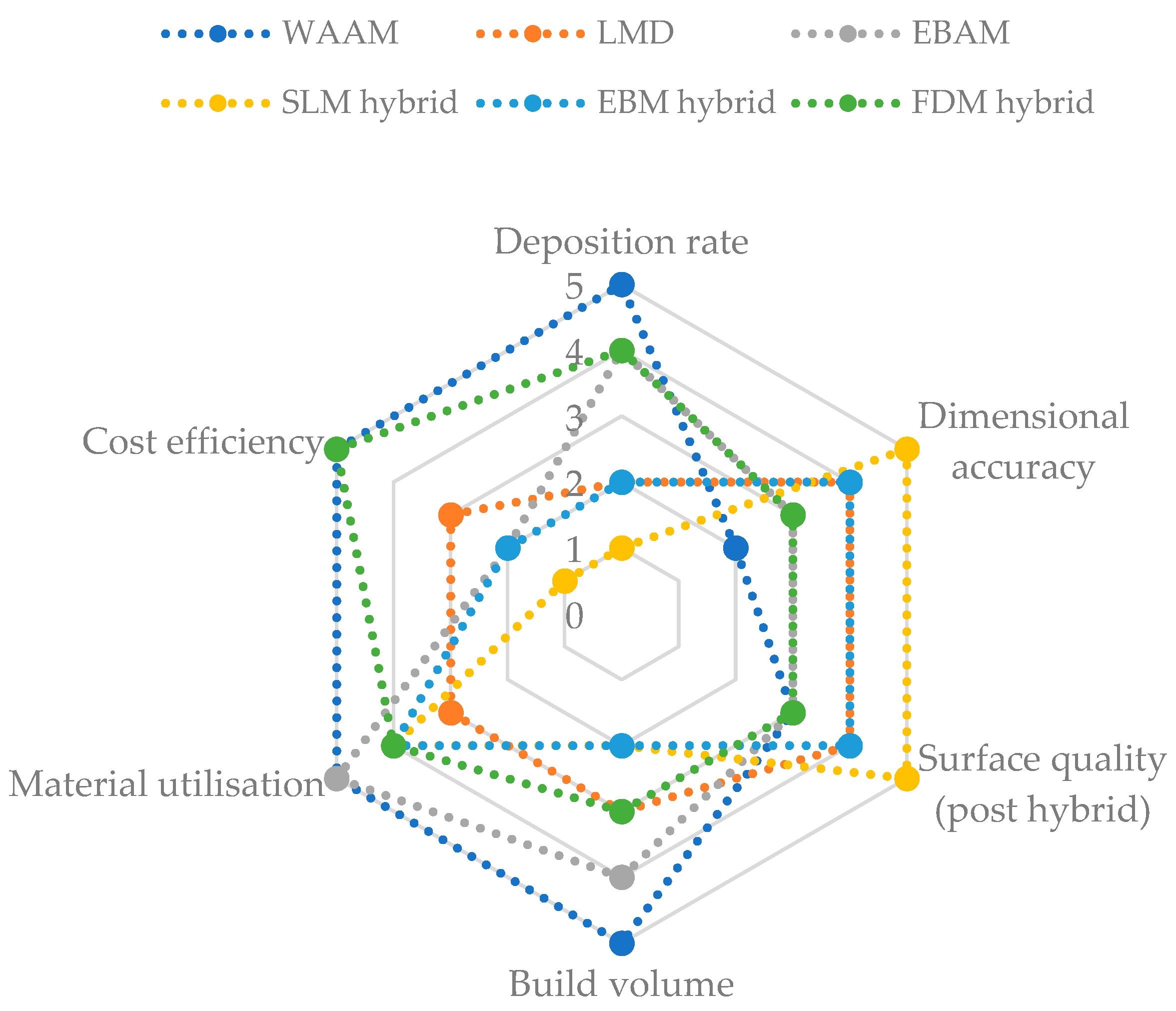
Figure 6 presents a normalised cross-process capability comparison across six performance dimensions—deposition rate, dimensional accuracy, post-hybrid surface quality, build volume, material utilisation, and cost efficiency—illustrating the quantitative trade-offs that govern process selection for a given application.

2.3. Classification by Application Domain

The rapid advancement and industrial adoption of additive manufacturing technologies have significantly broadened the application scope of hybrid manufacturing systems, extending their use from heavy industrial components to high-value customised products. Based on the analysed literature, several principal industrial sectors can be identified in which hybrid additive manufacturing demonstrates particular technological and economic relevance.
One of the most prominent application domains is the aerospace industry, where hybrid additive manufacturing is employed for the fabrication and repair of geometrically complex, lightweight, and high-performance components, including turbine parts, structural brackets, and aerospace repair elements [51]. The capability of hybrid systems to combine near-net-shape fabrication with precision finishing is especially valuable in aerospace applications, where strict dimensional tolerances and weight reduction are critical.
The automotive sector represents another major area of adoption, particularly in rapid prototyping, tooling manufacture, and the production of forming tools. In this field, hybrid manufacturing enables the efficient fabrication of tooling components with complex geometries and improved functional features, thereby reducing lead times and manufacturing costs [52].
Biomedical engineering constitutes a further important application domain, driven by the demand for patient-specific and highly customised products. Hybrid additive manufacturing is increasingly applied in the production of prostheses, implants, surgical instruments, and dental devices, where high geometric accuracy and tailored design are essential [53].
Energy engineering is also emerging as a significant application area for hybrid manufacturing technologies. Hybrid systems are used for the manufacture and repair of turbine components, heat exchangers, nuclear reactor elements, and other high-value engineering parts operating under severe thermal and mechanical conditions. Market analyses additionally indicate strong growth potential for hybrid additive manufacturing in the energy sector, particularly for the production of corrosion-resistant and structurally optimised components [54].
Detailed industrial case studies and practical implementations of hybrid additive manufacturing within these sectors are discussed in Section 4.

2.4. Classification by Machine Architecture

From a machine architecture perspective, hybrid additive manufacturing systems can be broadly classified into three main categories: integrated hybrid machines, retrofit hybrid solutions, and hybrid robotic architectures. This classification focuses on the level of process integration and machine configuration rather than specific additive manufacturing technologies, providing a technology-agnostic framework suitable for industrial and research applications.

2.4.1. Integrated Hybrid Machines

Smith et al. [55] define integrated hybrid metal additive–subtractive machine tools as systems that perform material deposition and removal within a unified workspace and control system, distinguishing them from conventional cell-based configurations. This approach aligns with the ISO/ASTM 52900 standard [43] and reflects a shift from isolated post-processing towards integrated manufacturing chains.
The use of a shared workspace and control system enables the elimination of part refixturing, which has been shown to improve dimensional accuracy and process reliability. Two primary architectural configurations are commonly reported in the literature: side-by-side mounting (e.g., Mazak, DMG Mori) and spindle-mounted systems. Side-by-side configurations may limit the accessible workspace due to geometric offsets between process heads, whereas spindle-mounted solutions reduce such constraints but introduce limitations related to tool length and Z-axis reach [25,55].
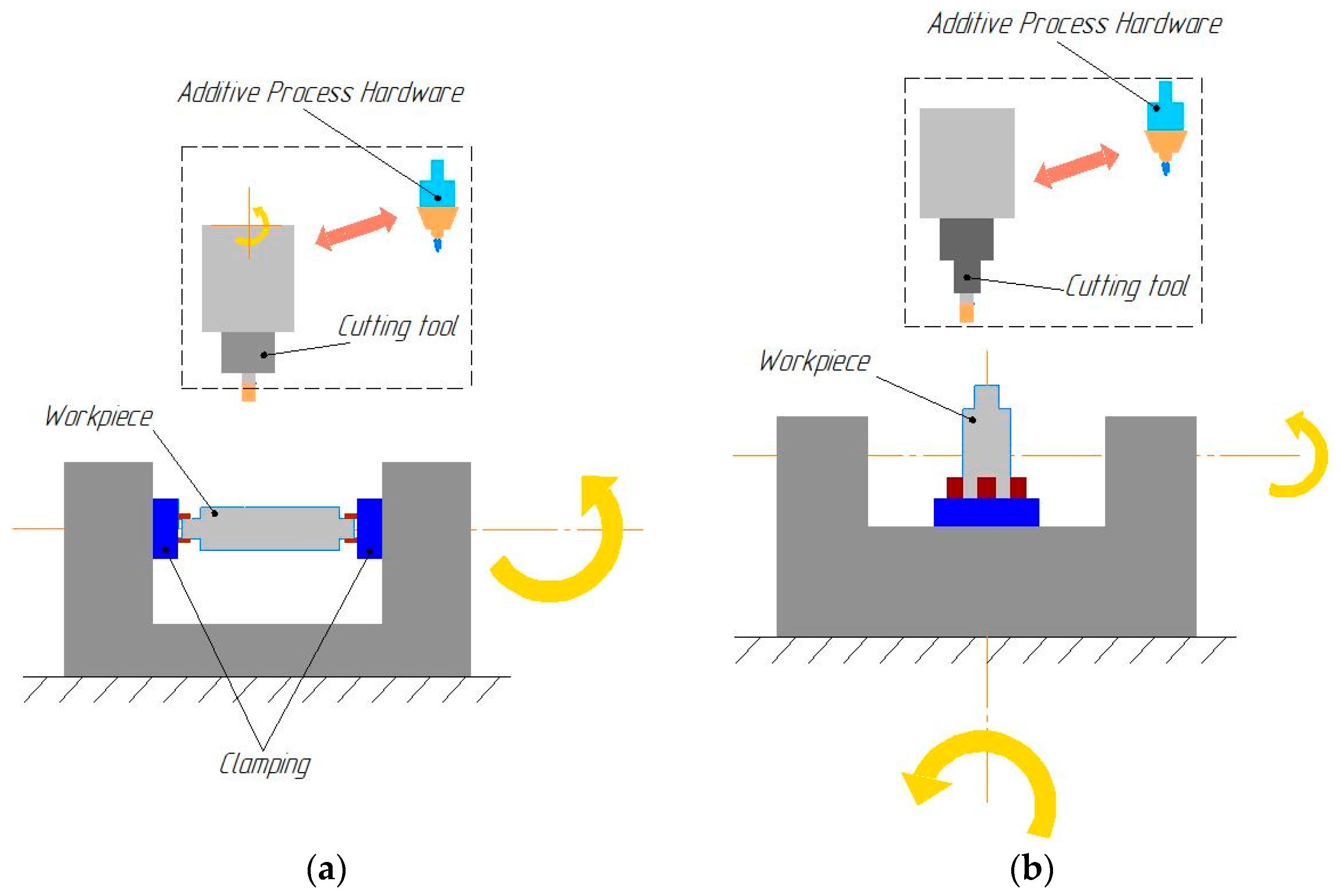
The operating principle of these side-by-side integrated DED–subtractive systems is illustrated in Figure 7. In both the DMG MORI LASERTEC 65 and Mazak INTEGREX AM configurations, the additive deposition head and subtractive machining tools are integrated within a common CNC workspace and share a unified coordinate system. This arrangement enables sequential deposition and machining operations to be performed without part refixturing, thereby reducing alignment errors and improving dimensional consistency. Depending on the machine configuration and component geometry, the subtractive stage may involve milling (Figure 7a) or turning (Figure 7a) process. Furthermore, the integrated architecture supports layer-wise interleaving of additive and subtractive operations, enabling near-net-shape manufacturing with enhanced geometric accuracy and surface quality.
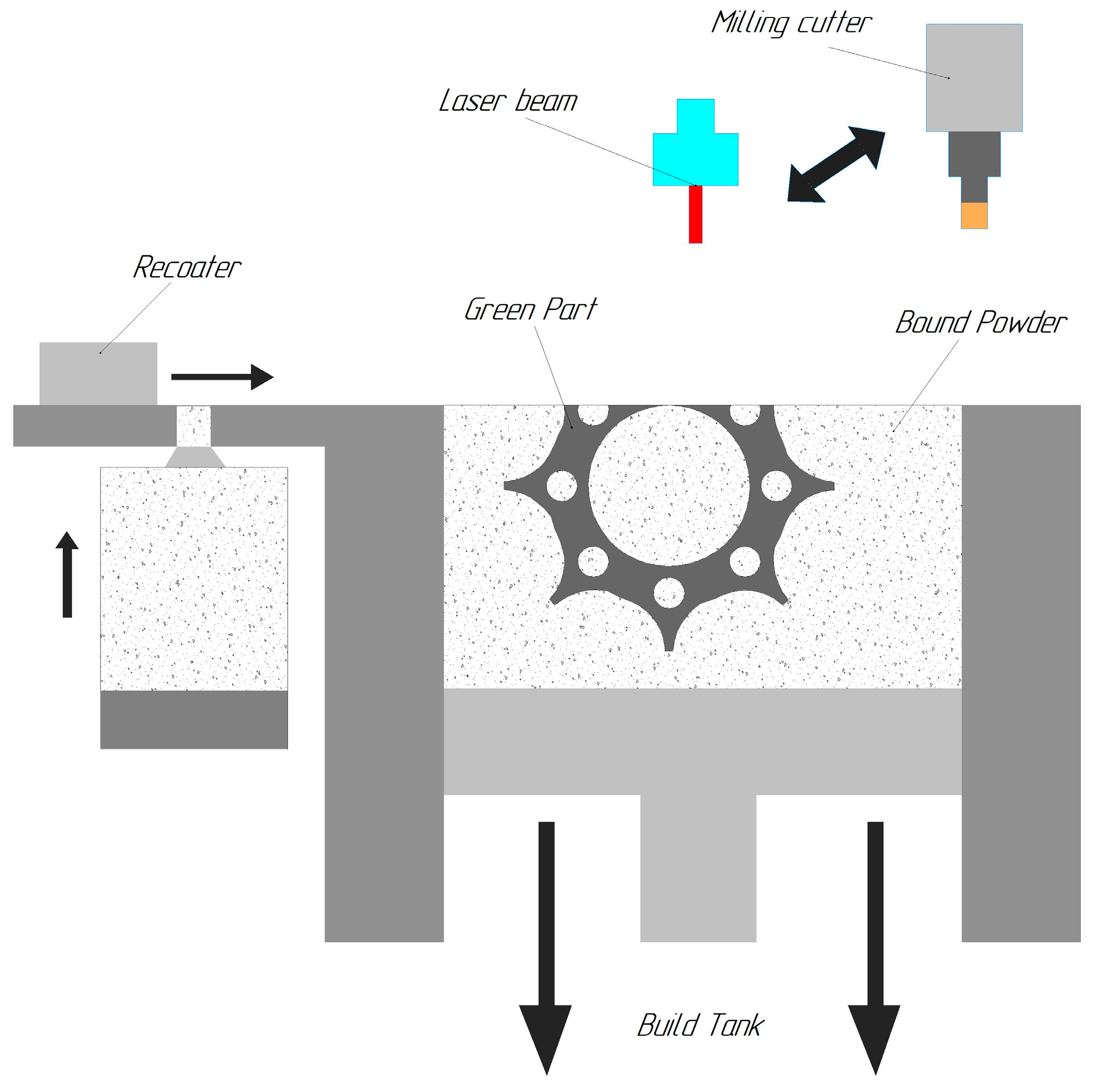
A fundamentally different integration principle is employed in powder-bed-based hybrid systems such as the Matsuura LUMEX Avance, illustrated in Figure 8. In this architecture, a high-speed milling spindle descends into the sealed build chamber at defined layer intervals to machine the exposed surface of the partially built component before the next powder layer is spread by the recoater. This layer-by-layer interleaving enables access to internal features—such as conformal channels and undercut geometries—that would be inaccessible to any post-build machining operation.
Hybrid integration has been widely explored for processes such as DED, PBF, and sheet lamination, where it facilitates the achievement of tight geometric tolerances and improved surface quality [56,57]. In particular, layer-wise machining enables the fabrication of complex internal features that would otherwise be inaccessible in conventional manufacturing workflows. However, challenges such as tool wear caused by powder-tool interactions have also been reported, necessitating additional process control strategies [58].
Overall, integrated hybrid machines are increasingly recognised as a promising approach for improving manufacturing efficiency and enabling complex geometries, thereby attracting growing industrial and research interest [59,60].

2.4.2. Retrofit Hybrid Systems

Retrofit hybrid solutions are commonly defined as the integration of AM modules into existing subtractive platforms, most frequently CNC machine tools, enabling combined material deposition and removal within a shared coordinate system [7]. Such systems are generally regarded as a transitional yet practical approach to hybrid manufacturing, extending conventional machining capabilities through modular augmentation rather than purpose-built integration. This approach addresses inherent limitations of both additive and subtractive processes, particularly the need for improved dimensional accuracy and surface quality in additively manufactured components [25].
Architecturally, retrofit systems are characterised by modular configurations in which additive end-effectors such as extrusion heads, laser-based deposition nozzles, or welding systems are mounted onto existing machine tool structures, often via spindle interfaces or automatic tool changers. This enables sequential or alternating execution of additive and subtractive operations within a single setup, reducing repositioning errors and improving process efficiency [61]. However, due to the absence of full architectural integration, such systems may exhibit limitations related to alignment accuracy, process synchronisation, and control system compatibility.
Retrofit hybridisation has been explored across multiple AM technologies. In metal-based systems, particularly those involving laser or DED, hybrid configurations enable near-net-shape fabrication followed by precision machining, which is essential for achieving required tolerances and surface integrity [62]. These approaches are especially relevant in high-value applications where additive processes alone cannot ensure sufficient accuracy or material consistency. Concurrently, studies have highlighted the importance of process planning and parameter optimisation in hybrid workflows, particularly in coordinating deposition and machining stages to minimise residual stresses and geometric deviations [25].
Polymer-based implementations, typically using material extrusion techniques, represent another important class of retrofit systems, particularly in prototyping and low-cost manufacturing contexts. In such cases, machining is frequently employed to compensate for the limited surface quality and anisotropic properties associated with extrusion-based AM [63]. Nevertheless, these systems are generally considered less representative of industrial hybrid manufacturing compared to metal-based implementations.
Overall, retrofit hybrid solutions offer significant advantages in terms of cost-effectiveness, flexibility, and accessibility, enabling the adoption of hybrid manufacturing without substantial capital investment. However, their reduced level of integration compared to fully integrated hybrid machines may limit achievable precision and process continuity, positioning them as a pragmatic but inherently constrained alternative in the broader hybrid manufacturing landscape [28].

2.4.3. Hybrid Robotic Architectures

Hybrid robotic architectures represent an advanced class of hybrid manufacturing systems in which industrial robotic manipulators act as the primary platform for integrating additive and subtractive processes. In contrast to conventional machine tools, robotic systems provide extended working envelopes and multi-axis flexibility, enabling manufacturing in complex spatial configurations and on large-scale components [64]. Such architectures are increasingly considered a key enabler for flexible and reconfigurable hybrid manufacturing systems.
A defining characteristic of robotic hybrid systems is the use of multi-degree-of-freedom manipulators, typically six-axis robots, equipped with interchangeable end-effectors such as extrusion heads, laser deposition nozzles, or machining spindles. This modular approach allows sequential or alternating execution of additive and subtractive operations within a single robotic platform. For example, the HydraX system demonstrates the feasibility of combining multiple processes, including material extrusion, milling, and laser-based operations, through an automatic tool-changing mechanism [65]. In addition, advanced control and programming strategies, including customised post-processors and extended G-code functionalities, are required to coordinate hybrid operations and ensure process consistency [66].
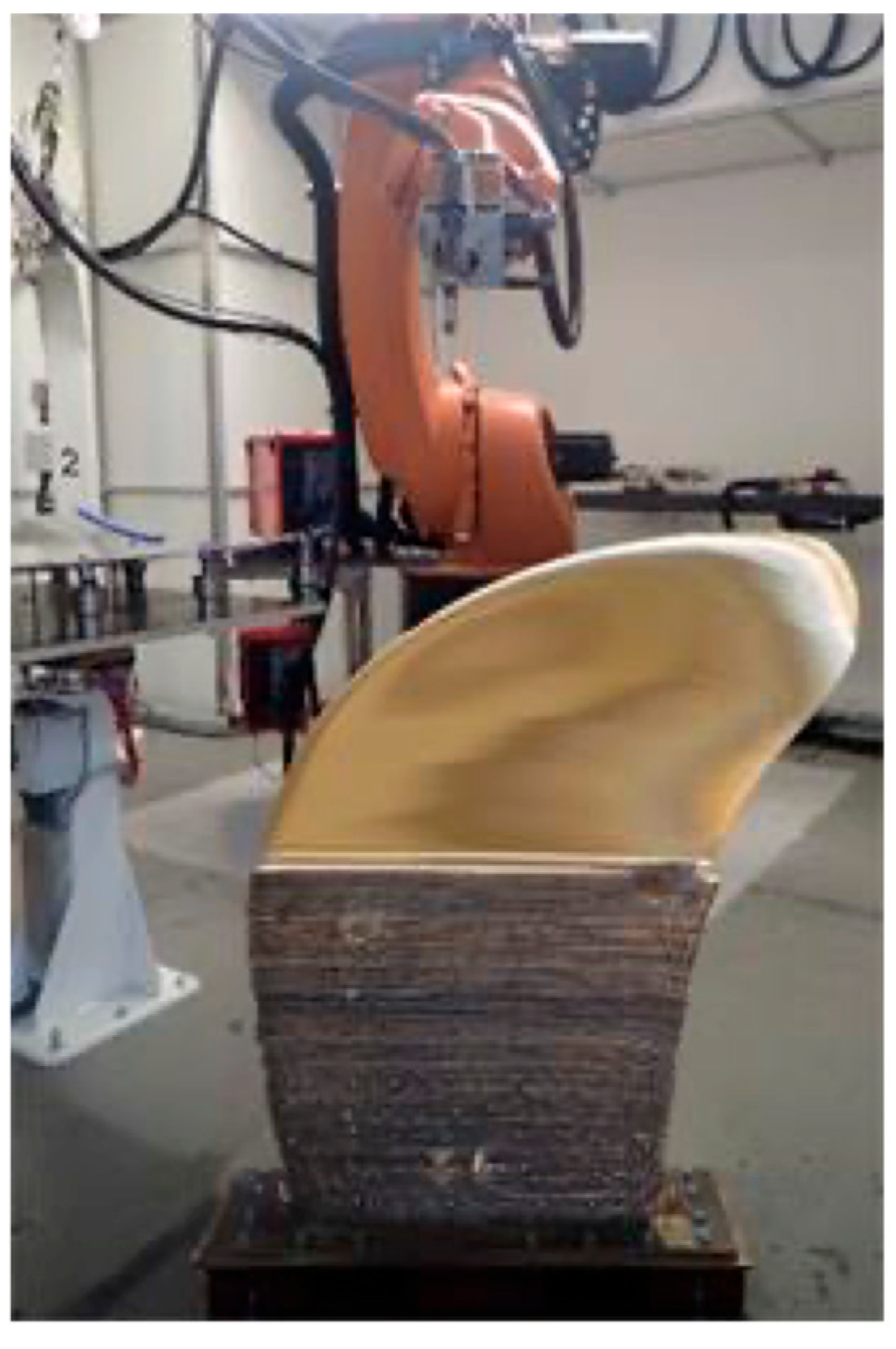
Recent studies have increasingly focused on metal-based robotic hybrid manufacturing, particularly those integrating DED or WAAM with robotic machining. Such systems may employ one or more robotic manipulators to perform deposition and subsequent finishing operations, enabling near-net-shape fabrication followed by precision machining of large-scale components. Such systems have demonstrated improvements in dimensional accuracy and surface integrity achievable through integrated robotic machining—Li et al. [67] reported that incorporating robotic milling into a WAAM platform reduced geometric deviations and improved surface quality of stainless steel structures, while Hu et al. [68] validated a hybrid WAAM-milling repair platform capable of restoring dimensional tolerances within the required engineering envelope. Figure 9 demonstrates the practical output of a robotic hybrid WAAM–milling system at industrial scale: the large-format marine propeller blade shows a clear visual distinction between the as-deposited WAAM condition (lower region) and the CNC-machined functional surface (upper region), confirming the capability of robotic hybrid architectures to deliver precision finishing on large freeform components [55].
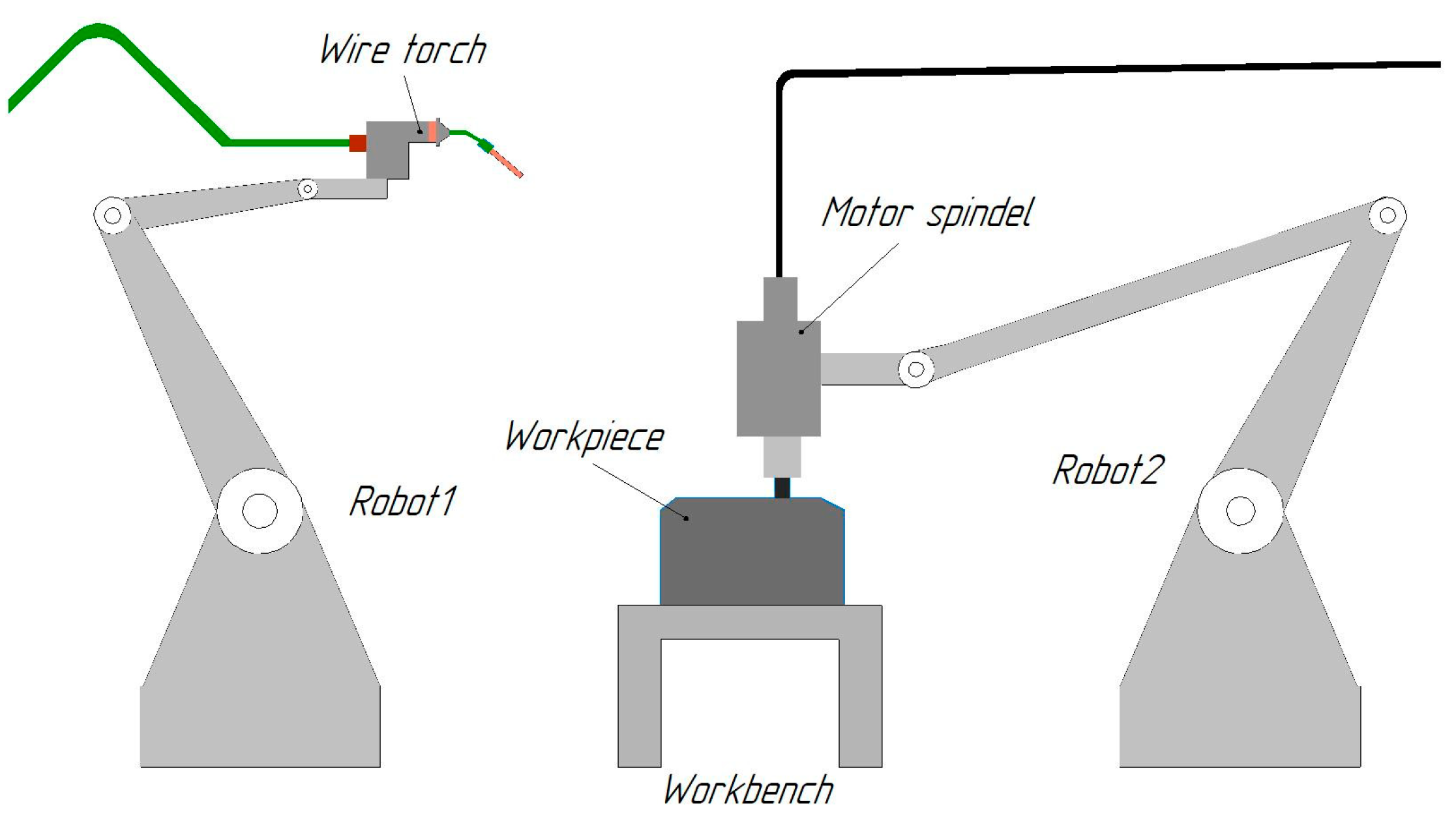
The operating principle underlying this class of systems is shown schematically in Figure 10. In this configuration, additive and subtractive operations are performed by two separate robotic manipulators. The first robot carries a WAAM deposition torch for material addition, whereas the second is equipped with a machining spindle for post-deposition finishing. Such an arrangement eliminates the need for tool exchange and allows each process to be optimised independently. Depending on the specific system architecture, the workpiece may be mounted on a servo-driven positioner to enhance accessibility and maintain favourable process orientation during both deposition and machining stages.
A key advantage of robotic architectures lies in their ability to perform manufacturing operations along arbitrary orientations and non-planar trajectories. This capability enables the fabrication of complex freeform geometries and reduces anisotropic effects typically associated with layer-by-layer processes [65]. Furthermore, robotic systems are well suited for post-processing large additively manufactured parts, where conventional CNC machines may be limited by workspace constraints [64].
However, robotic hybrid systems also present several limitations. The relatively low structural stiffness of industrial robots compared to CNC machine tools may lead to vibration, reduced machining accuracy, and limited surface quality during subtractive operations [64]. In addition, precise coordination between additive and subtractive processes requires advanced calibration, toolpath planning, and real-time control strategies, which remain challenging in practical implementations.
Overall, hybrid robotic architectures offer a highly flexible and scalable alternative to conventional hybrid machine tools, particularly for large-scale and complex components. Nevertheless, their broader industrial adoption depends on further advancements in stiffness enhancement, control integration, and process optimisation, which continue to be active areas of research.

3. Commercial Hybrid Manufacturing Equipment

The manufacturing landscape is increasingly shifting toward integrated hybrid manufacturing (HM) systems that combine additive and subtractive processes within a single platform. This approach reduces cumulative errors associated with part relocation and re-fixturing, while enabling the combination of geometric flexibility inherent to AM with the precision and surface quality of subtractive manufacturing (SM) [29,69]. As a result, commercial hybrid systems are becoming a key enabler of efficient and high-precision production workflows.
Commercial hybrid manufacturing platforms can be broadly categorised according to both their additive process type and their integration architecture. DED-based systems, including laser powder deposition and wire arc variants, are characterised by high deposition rates and large build envelopes, making them well suited for near-net-shape fabrication and repair of large metallic components. PBF-based hybrid platforms, by contrast, operate at lower volumetric build rates but offer superior geometric resolution and are predominantly applied in high-precision tooling and medical device manufacture. Robotic hybrid architectures extend the build envelope beyond fixed machine tools but operate at reduced positioning accuracy, positioning them for structural applications where subsequent machining of critical surfaces is planned [29,55,70].
Analysis of commercial hybrid systems reveals that sequential integration, in which additive deposition and subtractive operations are performed alternately within a shared workspace, is the predominant configuration across all currently available platforms. This can be further divided into two operational modes: full-part sequential systems, such as the DMG MORI LASERTEC 65 and Mazak INTEGREX, in which the complete near-net-shape deposit is produced prior to machining; and layer-by-layer hybrid systems, exemplified by the Matsuura LUMEX Avance, in which milling is interleaved with PBF deposition at regular layer intervals [55,71]. The layer-by-layer approach enables machining access to internal features that would be inaccessible after full-part deposition, but introduces substantially longer cycle times and more complex process planning. Robotic platforms adopt a modular sequential strategy via interchangeable end-effectors, offering greater workspace flexibility at the cost of reduced positioning accuracy relative to machine-tool-based configurations [55]. True concurrent integration, where deposition and machining occur simultaneously, remains largely confined to research settings and has not yet been realised in commercially available systems.
Monitoring capabilities differ significantly across commercial platforms and represent a key determinant of achievable part quality and process reliability. Among the systems compared in Table 2, the highest reported positioning accuracies are found in laser-based platforms: the DMG MORI LASERTEC 65 DED hybrid achieves an axis positioning accuracy of 4 µm, while the Matsuura LUMEX Avance-25 achieves ±0.0025 mm, both supported by dedicated volumetric calibration routines. By contrast, positioning accuracy figures for WAAM-based and robotic hybrid platforms are not consistently published, reflecting the wider dimensional tolerances and application-dependent precision requirements typical of large-format metal deposition. Melt pool monitoring via CCD cameras and pyrometers, as implemented in the DMG MORI LASERTEC series, enables thermal feedback during DED operations and supports early defect identification [29]. Eddy current inspection has been demonstrated for subsurface defect detection during hybrid AM sequences, enabling layer-by-layer quality assurance prior to continued deposition [72]. Atmosphere control systems, as employed in the Matsuura LUMEX Avance, maintain inert gas environments that reduce oxidation during both PBF and milling operations. However, fully integrated closed-loop adaptive control, where real-time sensor data modifies deposition or machining parameters within the same production cycle, is not yet standard in commercial platforms. Robotic WAAM systems rely primarily on arc parameter monitoring and vision-based bead inspection, which offer lower sensing fidelity than precision machine-tool-based counterparts. The commercial transition toward autonomous hybrid manufacturing therefore depends critically on advances in standardised in-process sensing and digital integration frameworks, which are discussed further in Section 5.
A comparison of representative commercial hybrid manufacturing systems, covering process configurations, build envelope, integration strategy, monitoring capability and primary industrial application is presented in Table 2.
Build envelope figures are reported from manufacturer specifications where available. For systems without a fixed build chamber (robotic platforms), the envelope is application-dependent and governed by the reachable workspace of the manipulator.
The compared systems reflect clear trade-offs between build scale, precision, and process monitoring maturity. Laser-based platforms such as the DMG MORI LASERTEC 65 and Matsuura LUMEX Avance combine micron-level positioning accuracy with relatively compact-to-medium build envelopes and the most developed in-process monitoring suites, supporting their dominant use in aerospace repair and precision tooling. WAAM-based systems, including the Gefertec arc series and robotic platforms, prioritise large build envelopes and high deposition rates over fine positional accuracy, reflecting their application to large structural components where final-form machining accommodates wider as-deposited tolerances. Monitoring capability follows a similar pattern: melt pool imaging and atmosphere control are standard on laser-based PBF and DED platforms, whereas arc-based systems rely primarily on process parameter monitoring and vision-based inspection. These differences confirm that no single commercial platform addresses the full range of HAM requirements, and platform selection must be guided by the relative priority given to build scale, dimensional precision, and monitoring sophistication for a given application.
Overall, commercially available hybrid manufacturing systems represent a maturing but still fragmented technology landscape, with significant variation in integration strategy, monitoring capability, and achievable performance. The majority of current platforms adopt sequential integration and offer limited native in-process sensing, reflecting the gap between research-demonstrated capabilities and production-ready implementation. Continued development of standardised monitoring protocols, machine-agnostic control interfaces, and closed-loop adaptive systems is expected to underpin the next generation of commercial hybrid platforms and facilitate their broader adoption across the aerospace, automotive, energy, and biomedical sectors discussed in the next section.

4. Applications of Hybrid Manufacturing

The following subsections review documented applications in the aerospace, automotive, energy, and biomedical sectors, with emphasis on quantified performance outcomes and economic advantages relative to conventional manufacturing routes.
The aerospace industry represents the most mature and extensively documented application domain for hybrid additive manufacturing. Jones et al. [73] demonstrated turbine blade remanufacture via laser cladding, in-process scanning, and machining within a single setup, achieving restoration accuracy sufficient to meet service tolerances and significantly improving geometric conformity compared with conventional manual TIG welding and grinding approaches. In terms of microstructural performance, mechanical surface finishing of additively manufactured Ti-6Al-4V has been shown to substantially improve fatigue performance: as-built material with Ra ≈ 18 µm exhibits fatigue strength around 300 MPa, whereas milling to Ra ≈ 0.3 µm increases fatigue strength to as much as 775 MPa, attributable to surface roughness reduction and the introduction of compressive residual stress [56]. From an economic perspective, MRO represents 10–20% of an airline’s overall operating costs [74], establishing a strong financial incentive for cost-effective repair technologies. Oyesola et al. [74] developed a Time Driven Activity Based Costing model for HAM in aerospace MRO, demonstrating through a Ti-6Al-4V bracket case study that machine run time—at approximately $73/h under 80% utilisation—constitutes the dominant cost driver, accounting for over 88% of total part cost. The model identifies machine utilisation rate and deposition speed as the primary levers for achieving economic competitiveness in HAM-based repair workflows. These combined performance and economic findings confirm the growing strategic role of HAM in aerospace maintenance operations.
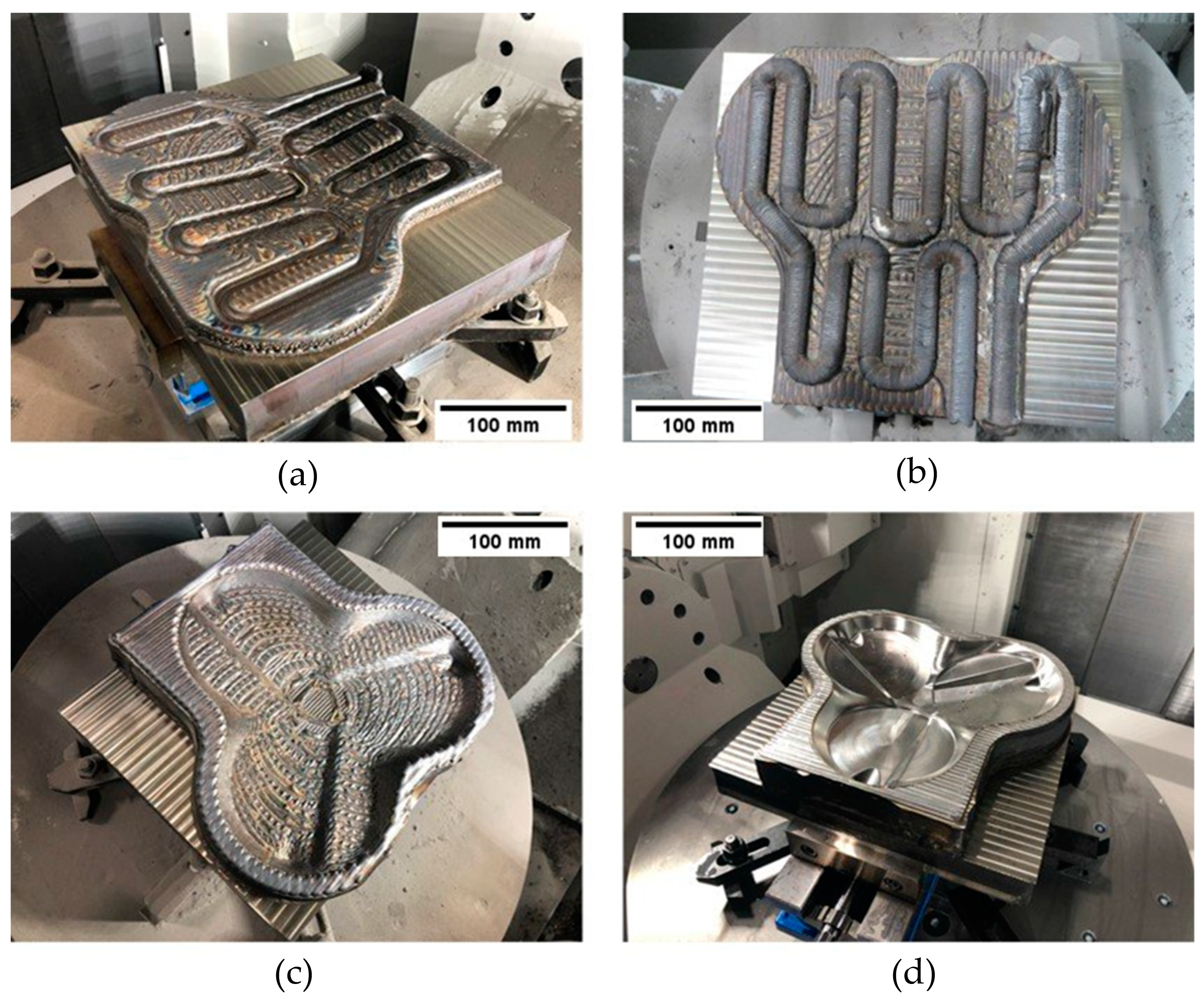
In the automotive sector, HAM has demonstrated particular value in tooling manufacture through the fabrication of conformal cooling channels that are geometrically inaccessible to conventional cross-drilling operations. Feldhausen et al. [75] manufactured a 316L stainless steel compression moulding tool with integrated out-of-plane conformal cooling channels using blown-powder DED and CNC machining on an Okuma MU8000V Laser EX hybrid system. Since cooling dominates injection moulding cycle time—comprising 70–80% of the total cycle—even moderate thermal improvements translate directly into substantial production rate gains [75]. CFD simulation of the manufactured tool showed that conformal cooling channels achieved a maximum mould temperature of 67 °C compared with 74 °C for straight-drilled channels after 270 s of cooling, a 9.3% reduction, while holding 69.3% more cooling fluid volume [75]. The hybrid-manufactured mold design also achieved a 13.8% weight reduction relative to the conventional billet-machined equivalent through topology-informed near-net-shape deposition [75]. Key challenges identified include delamination from residual thermal stresses during DED of hollow geometries and the complexity of five-axis CAM toolpath generation for non-planar channel sections, which the authors resolved through an iterative process of channel outline pre-deposition and powder retention as support medium. Figure 11 illustrates the sequential production stages of this hybrid-manufactured compression mould, demonstrating how the hybrid DED-CNC approach enables the fabrication of out-of-plane conformal cooling geometries inaccessible to conventional cross-drilling operations. Dardaei Joghan et al. [52] further demonstrated hybrid manufacture of automotive forming tools, reporting improved die service life through targeted deposition of wear-resistant material on critical contact surfaces.
In energy engineering, hybrid additive manufacturing addresses the challenge of producing and maintaining components subjected to extreme thermal and mechanical loading. Wang et al. [76] demonstrated LPBF-based repair of a damaged SRR99 nickel-based turbine blade using CM247LC filler, achieving a crack-free metallurgical interface with large epitaxially grown grains following hot isostatic pressing. The repaired CM247LC exhibited 8.62% higher hardness than the SRR99 substrate, and tensile testing of the repaired sample reached an ultimate tensile strength of 791 MPa with fracture occurring on the substrate side—indicating that the repair interface was at least as strong as the base material, a result not typically achievable with conventional welding repair due to heat-affected zone degradation and porosity. Kanishka and Acherjee [77] reviewed additive-based remanufacturing across energy sector applications, documenting dimensional restoration accuracies of ±0.1–0.3 mm for laser cladding combined with post-machining, which meets operational tolerances for rotating machinery. Hybrid approaches using functionally graded multi-material deposition, such as Ti-6Al-4V to IN718 transitions produced by Scaramuccia et al. [78], enable the fabrication of components with spatially varying thermal resistance, directly relevant to turbine hot-section design. Compared with full component replacement, hybrid repair and remanufacturing routes consistently reduce material consumption by 60–80% and cut lead times by 30–50% for large turbine components, contributing measurably to lifecycle cost reduction and operational efficiency [77,79].
A consolidated comparison of documented HAM performance outcomes relative to conventional manufacturing routes across key industrial sectors is presented in Table 3.
Performance values are representative ranges drawn from cited primary literature; specific results are process- and geometry-dependent. HAM outcomes reflect post-hybrid (post-machining) conditions unless stated otherwise.
Biomedical applications of HAM remain comparatively underexplored relative to aerospace and automotive, but the underlying rationale follows the same principle: additive fabrication enables patient-specific or topology-optimised geometries, while subtractive finishing addresses the dimensional tolerances and surface quality required for functional and load-bearing surfaces. Du et al. [79] reviewed hybrid additive–subtractive manufacturing for the repair of stainless steel components, noting that post-machining of additively manufactured metallic parts can achieve surface finish values comparable to fully subtractive machining from billet, while substantially reducing material consumption—a characteristic directly transferable to small-batch or patient-specific biomedical component production, where material cost and lead time are significant constraints. Kanishka and Acherjee [77] similarly note that additive-based remanufacturing routes reduce material waste relative to subtractive-only approaches across a range of component types. The integration of subtractive finishing in hybrid platforms also addresses the surface quality limitations inherent to as-built PBF and DED processes—including staircase effects and satellite powder adherence—which would otherwise require separate post-processing steps when AM components are intended for surfaces with functional or biocompatibility requirements. Dedicated experimental studies quantifying dimensional accuracy and surface roughness outcomes for hybrid-manufactured metallic implants remain a gap in the current literature, representing an opportunity for future targeted research.

5. Challenges and Future Research Directions

Despite the rapid development of HAM, several critical challenges continue to limit its industrial implementation. These challenges can be broadly classified into technical, process integration, and economic aspects.
From a technical standpoint, the most significant challenges in HAM arise specifically at the transition boundary between deposition and machining operations, rather than from standalone AM limitations. In DED-based systems, layer height variation, bead-overlap undulation, and columnar grain growth produce spatially variable hardness that causes tool wear rates measurably higher than those observed when machining equivalent wrought material—Careri et al. [81] reported accelerated tool wear during the machining phase of hybrid IN718 manufacture, attributable to the hardness gradients introduced by rapid solidification. Thermal distortion driven by steep temperature gradients during deposition accumulates with build height and creates uncertain stock allowances that compromise the dimensional outcome of subsequent machining steps [35]. Moritz et al. [82] demonstrated that the integration of cryogenic milling into a laser metal deposition sequence for Ti-6Al-4V partially mitigates surface damage by controlling temperature at the cutting zone, confirming that the thermal interaction between deposition and machining stages is a critical and process-specific design variable. Residual stresses introduced during deposition further persist into the machined surface and affect fatigue performance in a manner that depends on the specific sequence and dwell time between deposition and machining operations [83].
Multi-material and functionally graded structures—increasingly relevant for turbine component fabrication and biomedical implants—introduce additional interfacial challenges specific to hybrid routes. Compositionally graded transitions between titanium and nickel-based superalloys produced via DED or PBF generate intermetallic phases at the interface that are susceptible to cracking during the machining phase, where cutting forces and thermal shock act on the already-stressed transition zone [27,78]. Achieving stable and defect-free bimaterial interfaces therefore requires not only optimised deposition parameters but also careful sequencing of machining operations relative to interface location—a level of integrated process planning that current commercial hybrid systems do not yet support natively [55].
From a process integration perspective, the absence of standardised toolpath and process data exchange formats between DED modules and CNC machining controllers represents one of the most practically constraining barriers to hybrid manufacturing adoption [55]. All current commercial hybrid platforms implement proprietary coordination solutions, preventing interoperability and increasing programming complexity. A directly related challenge is the uncertainty of deposited material state at the machining transition: the thermal history, residual stress distribution, and as-deposited geometry at a given build stage are insufficiently characterised in real time to permit reliable automated machining parameter selection [26]. Although in-process sensing approaches including eddy current subsurface inspection and co-axial melt pool imaging have been demonstrated in research environments [72], they are not natively integrated into production-grade systems, leaving most commercial platforms reliant on post-process inspection. Sequential hybrid integration, universal across current commercial systems, further imposes a productivity compromise: the machine cannot simultaneously deposit and machine, and the dwell time between stages increases overall cycle time relative to continuously operating standalone processes [55].
Economic and industrial barriers further constrain adoption. The capital cost of commercial hybrid manufacturing platforms, typically two to five times that of equivalent standalone CNC machine tools, requires high machine utilisation to be economically viable [74]. Oyesola et al. [74] demonstrated through a cost model for aerospace MRO that machine run time accounts for over 88% of total per-part cost in HAM-based repair workflows, meaning that underutilisation—a common condition during early adoption—directly eliminates the cost advantage over conventional repair routes. The lack of dedicated qualification and certification standards for hybrid-manufactured components in aerospace and medical sectors further constrains adoption, as no established process chain traceability framework exists that spans the combined AM and subtractive production steps [28]. The dual expertise requirement—encompassing AM process knowledge, CNC programming, and materials characterisation—also creates a skills gap not addressed by existing training frameworks for either manufacturing discipline in isolation [55].
In addition to technical and economic issues, environmental sustainability has recently emerged as a critical challenge. Although hybrid manufacturing has the potential to reduce material waste through near-net-shape production, it is associated with considerable energy consumption and carbon emissions. Life cycle analyses indicate that both energy-related and material-related emissions contribute almost equally to the total carbon footprint, with major contributions from laser systems, cooling units, and powder consumption [84]. Therefore, optimisation of process parameters, energy-efficient system design, and the use of sustainable materials are essential to fully realise the environmental benefits of hybrid manufacturing.
Addressing these challenges requires a phased research strategy aligned with technology readiness milestones. In the near term (1–3 years), the highest-priority advances are in standardised in-process sensing: the integration of melt pool monitoring and thermal imaging as native, vendor-agnostic modules in commercial hybrid platforms would directly address the material state uncertainty that currently limits automated machining parameter selection [72]. Concurrent development of open-standard hybrid CAM toolpath formats—enabling interoperability between deposition and machining G-code across different hardware platforms—would reduce programming complexity and support wider industrial uptake [55]. Process-specific distortion compensation models, validated across the common aerospace alloy families processed by DED-based systems, represent a third near-term priority that would significantly reduce the geometric uncertainty accumulating across tall builds [35,38].
In the medium term (3–7 years), digital twin models capable of simulating the coupled thermal-mechanical-microstructural state across full hybrid build sequences would enable adaptive process planning, allowing deposition and machining parameters to be adjusted in response to predicted rather than measured part state [28,29]. AI-assisted process planning for hybrid manufacturing—jointly optimising deposition strategy, inter-layer machining intervals, and final machining allowances for a target geometry and material—represents a natural extension of recent advances in machine learning for both CNC and AM individually. Alongside these process developments, multi-material qualification frameworks tailored to the specific interfacial microstructure of hybrid-manufactured components are required before hybrid-route turbine and biomedical components can be certified for service [27,78].
In the long term (7+ years), the convergence of autonomous monitoring, adaptive control, and digital process integration is expected to enable fully autonomous hybrid manufacturing cells capable of producing and self-certifying complex components with minimal operator intervention, underpinned by industry-wide qualification standards and lifecycle-verified process protocols [28,55]. Concurrently, advances in energy-efficient laser and arc systems, combined with optimised hybrid process sequencing, are expected to reduce the carbon footprint of HAM toward parity with conventional machining, addressing the sustainability constraints identified by Panagiotopoulou et al. [84].
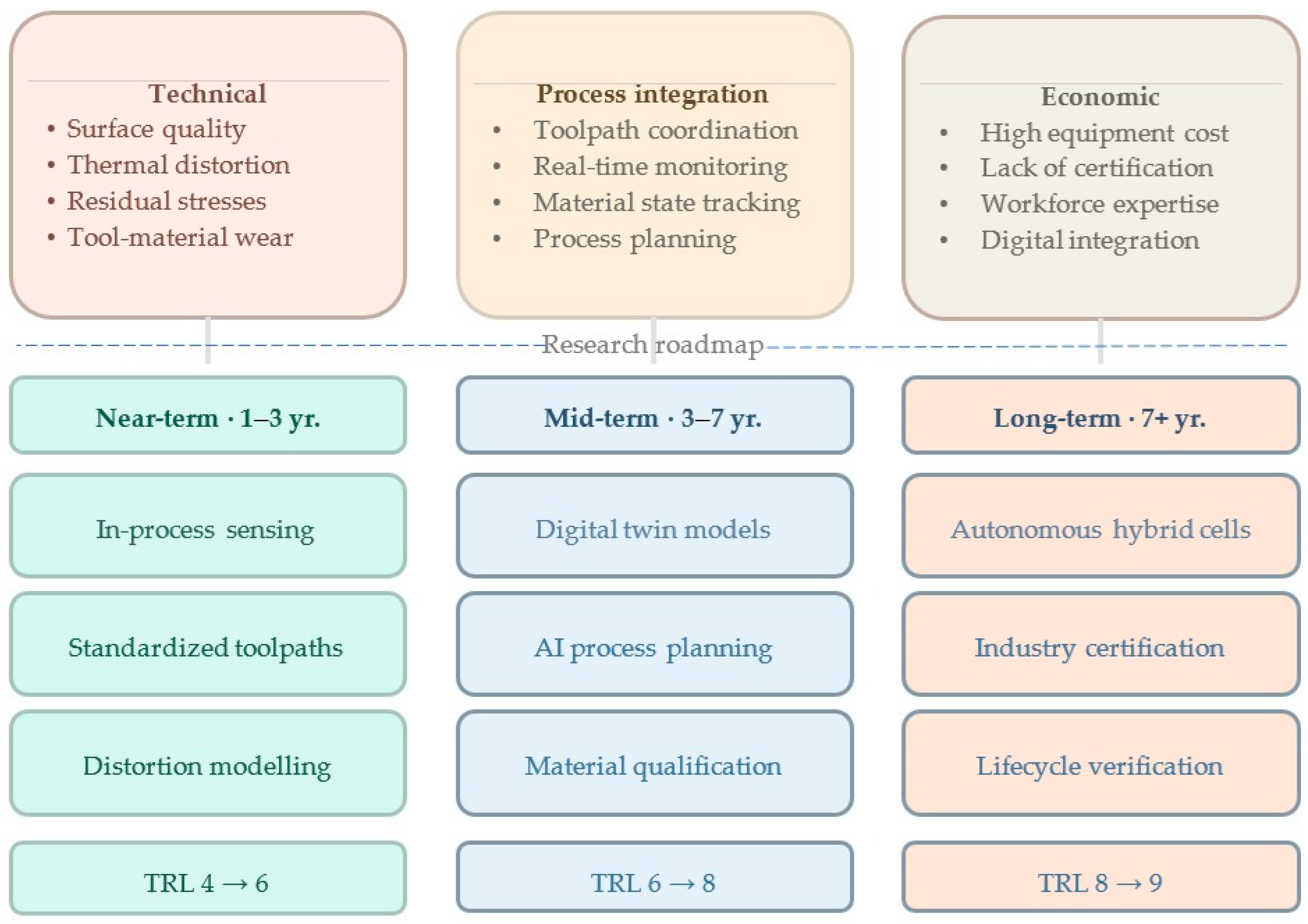
The principal challenges and their corresponding research priorities are consolidated in Figure 12, which maps the three challenge categories identified above to a structured near-to-long-term research roadmap with associated technology readiness level progression targets.

6. Conclusions

Hybrid additive manufacturing has emerged as a transformative manufacturing paradigm that combines the geometric freedom and material efficiency of additive manufacturing with the precision, surface quality, and dimensional control of subtractive processes. The integration of additive and subtractive operations within unified manufacturing systems enables the production of complex, high-value components that would be difficult or inefficient to realise using stand-alone approaches.
This review proposed a four-criterion classification framework based on process integration strategy, additive manufacturing process type, machine architecture, and application domain. Among available technologies, DED-based hybrid systems remain the most industrially mature, while PBF-based systems offer superior geometric precision suited to high-accuracy applications. Polymer-based and robotic hybrid architectures continue to demonstrate growing potential for specialised applications. A comparative analysis of commercial platforms confirmed that sequential integration is universal across current systems, with significant variation in build envelope, positioning accuracy, and monitoring maturity, and that no single platform addresses the full range of HAM requirements.
The industrial relevance of HAM is evident across aerospace, automotive, energy, and biomedical sectors, where documented performance outcomes confirm meaningful improvements in surface integrity, fatigue performance, thermal efficiency, and material utilisation relative to conventional manufacturing routes. Biomedical applications remain comparatively underexplored in quantitative terms and represent a clear opportunity for future research.
Despite these advantages, technical challenges related to thermal distortion, residual stresses, and tool wear at the deposition–machining interface, combined with the absence of standardised toolpath formats and dedicated certification frameworks, continue to constrain broader industrial adoption. A structured three-phase research roadmap has been proposed to address these barriers progressively, from near-term sensing and toolpath standardisation through medium-term digital twin integration and material qualification, to long-term autonomous hybrid cells underpinned by industry-wide certification.
Overall, hybrid additive manufacturing represents one of the most promising directions in next-generation production engineering and is expected to play a central role in the evolution of intelligent, flexible, and sustainable manufacturing systems within the Industry 4.0 and Industry 5.0 paradigms.

Author Contributions

Conceptualization, A.R.; methodology, A.R.; validation, S.B. and K.R.J.; investigation, S.B. and A.R.; writing—original draft preparation, S.B. and A.R.; writing—review and editing, K.R.J.; visualization, S.B.; supervision, A.R.; project administration, A.R.; funding acquisition, S.B. All authors have read and agreed to the published version of the manuscript.

Funding

This research received no external funding.

Data Availability Statement

No new data were created or analyzed in this study. Data sharing is not applicable to this article.

Conflicts of Interest

The authors declare no conflicts of interest.

Abbreviations

The following abbreviations are used in this manuscript:
HAMHybrid additive manufacturing
AMAdditive manufacturing
CNCComputer Numerical Control
DEDDirected Energy Deposition
PBFPowder Bed Fusion
WAAMWire Arc Additive Manufacturing
GMAWGas metal arc welding
GTAWGas tungsten arc welding
PAWPlasma arc welding
EBAMElectron Beam Additive Manufacturing
LMDLaser Metal Deposition
DMLSDirect Metal Laser Sintering
SLMSelective Laser Melting
SLSSelective Laser Sintering
SHSSelective Heat Sintering
EBMElectron Beam Melting
FDMFused Deposition Modelling
SLAStereolithography
HMHybrid manufacturing
SMSubtractive manufacturing
MROMaintenance, Repair, Operations

References

  1. Duflou, J.; Kellens, K. Cleaner production. In CIRP Encyclopedia of Production Engineering; Springer: Berlin/Heidelberg, Germany, 2016; pp. 1–4. [Google Scholar] [CrossRef]
  2. Karunakaran, K.P.; Suryakumar, S.; Pushpa, V.; Akula, S. Low cost integration of additive and subtractive processes for hybrid layered manufacturing. Robot. Comput.-Integr. Manuf. 2010, 26, 490–499. [Google Scholar] [CrossRef]
  3. Saxena, K.K.; Bellotti, M.; Qian, J.; Reynaerts, D.; Lauwers, B.; Luo, X. Chapter 2–Overview of Hybrid Machining Processes, Hybrid Machining; Academic Press: London, UK, 2018; pp. 21–41. ISBN 9780128130599. [Google Scholar]
  4. Pragana, J.P.M.; Sampaio, R.F.V.; Bragança, I.M.F.; Silva, C.M.A.; Martins, P.A.F. Hybrid metal additive manufacturing: A state-of-the-art review. Adv. Ind. Manuf. Eng. 2021, 2, 100032. [Google Scholar] [CrossRef]
  5. Lauwers, B.; Klocke, F.; Klink, A.; Tekkaya, A.E.; Neugebauer, R.; Mcintosh, D. Hybrid processes in manufacturing. CIRP Ann.-Manuf. Technol. 2014, 63, 561–583. [Google Scholar] [CrossRef]
  6. Sebbe, N.P.V.; Fernandes, F.; Sousa, V.F.C.; Silva, F.J.G. Hybrid manufacturing processes used in the production of complex parts: A comprehensive review. Metals 2022, 12, 1874. [Google Scholar] [CrossRef]
  7. Krimpenis, A.A.; Iordanidis, D.M. Design and analysis of a desktop multi-axis hybrid milling-filament extrusion CNC machine tool for non-metallic materials. Machines 2023, 11, 637. [Google Scholar] [CrossRef]
  8. Merklein, M.; Junker, D.; Schaub, A.; Neubauer, F. Hybrid additive manufacturing technologies—An analysis regarding potentials and applications. Phys. Procedia 2016, 83, 549–559. [Google Scholar] [CrossRef]
  9. Celik, H.K.; Elham, A.; Erbil, M.A.; Rennie, A.E.W.; Akinci, I. A decade of design for additive manufacturing research: A bibliometric analysis (2014-2024). Rapid Prototyp. J. 2025. ahead-of-print. [Google Scholar] [CrossRef]
  10. Chattopadhyay, S.; Mahapatra, S.D.; Mandal, N.K. Advancements and challenges in additive manufacturing: A comprehensive review. Eng. Res. Express 2024, 6, 012505. [Google Scholar] [CrossRef]
  11. Praveena, B.A.; Lokesh, N.; Buradi, A.; Santhosh, N.; Praveena, B.L.; Vignesh, R. A comprehensive review of emerging additive manufacturing (3D printing technology): Methods, materials, applications, challenges, trends and future potential. Mater. Today Proc. 2022, 52, 1309–1313. [Google Scholar] [CrossRef]
  12. Jakimiuk, A.; Skwira, A.; Wróbel, Z.; Wróbel, Z. 3D-printed patient-specific implants made of polylactide (PLDLLA) and β-tricalcium phosphate (β-TCP) for corrective osteotomies of the distal radius. 3D Print. Med. 2024, 10, 42. [Google Scholar] [CrossRef] [PubMed]
  13. Chénier, F.; Parent, G.; Leblanc, M.; Bélaise, C.; Andrieux, M. Using a quantitative assessment of propulsion biomechanics in wheelchair racing to guide the design of personalized gloves: A case study. arXiv 2023. [Google Scholar] [CrossRef]
  14. Neumann, G.; Schwarz, H.; Groh, W.; Winkler, K.; Rümmler, C.; Hähnel, F.; Holfeld, D.; Nebel, S.; Markmiller, J. A data-based certification approach for additively manufactured metal aircraft components. Prog. Addit. Manuf. 2025, 10, 4061–4071. [Google Scholar] [CrossRef]
  15. Marques, A.; Guimarães, B.; Bartolomeu, F.; Miranda, G.; Silva, F.S.; Carvalho, O. Multi-material Inconel 718-aluminium parts targeting aerospace applications: A suitable combination of low-weight and thermal properties. Opt. Laser Technol. 2023, 158, 108913. [Google Scholar] [CrossRef]
  16. Jayawardane, H.; Davies, I.J.; Gamage, J.R.; John, M.; Biswas, W.K. Sustainability perspectives—A review of additive and subtractive manufacturing. Sustain. Manuf. Serv. Econ. 2023, 2, 100015. [Google Scholar] [CrossRef]
  17. Mechete, A.; Tarlochan, F.; Kucukvar, M. A review of conventional versus additive manufacturing for metals: Life-cycle environmental and economic analysis. Sustainability 2023, 15, 12299. [Google Scholar] [CrossRef]
  18. Jung, S.; Kara, L.B.; Nie, Z.; Simpson, T.W.; Whitefoot, K.S. Is additive manufacturing an environmentally and economically preferred alternative for mass production? Environ. Sci. Technol. 2023, 57, 6373–6386. [Google Scholar] [CrossRef] [PubMed]
  19. Segovia-Guerrero, L.; Baladés, N.; Gallardo-Galán, J.J.; Gil-Mena, A.J.; Sale, D.L. Additive vs. subtractive manufacturing: A comparative life cycle and cost analyses of steel mill spare parts. J. Manuf. Mater. Process. 2025, 9, 138. [Google Scholar] [CrossRef]
  20. Prasad, G.; Arunav, H.; Dwight, S.; Ghosh, M.B.; Jayadev, A.; Nair, D.I. Advancing sustainable practices in additive manufacturing: A comprehensive review on material waste recyclability. Sustainability 2024, 16, 10246. [Google Scholar] [CrossRef]
  21. Du, W.; Bai, Q.; Zhang, B. A novel method for additive/subtractive hybrid manufacturing of metallic parts. Procedia Manuf. 2016, 5, 1018–1030. [Google Scholar] [CrossRef]
  22. Loyda, A.; Arizmendi, M.; Ruiz de Galarreta, S.; Rodriguez-Florez, N.; Jimenez, A. Meeting high precision requirements of additively manufactured components through hybrid manufacturing. CIRP J. Manuf. Sci. Technol. 2023, 40, 199–212. [Google Scholar] [CrossRef]
  23. Soe, A.N.; Sombatmai, A.; Promoppatuma, P.; Srimaneepong, V.; Trachoo, V.; Pandee, P. Effect of post-processing treatments on surface roughness and mechanical properties of laser powder bed fusion of Ti-6Al-4V. J. Mater. Res. Technol. 2024, 32, 3788–3803. [Google Scholar] [CrossRef]
  24. Zhu, Z.; Dhokia, V.G.; Nassehi, A.; Newman, S.T. A review of hybrid manufacturing processes-state of the art and future perspectives. Int. J. Comput. Integr. Manuf. 2013, 26, 596–615. [Google Scholar] [CrossRef]
  25. Flynn, J.M.; Shokrani, A.; Newman, S.T.; Dhokia, V. Hybrid additive and subtractive machine tools-Research and industrial developments. Int. J. Mach. Tools Manuf. 2016, 101, 79–101. [Google Scholar] [CrossRef]
  26. Lalegani Dezaki, M.; Serjouei, A.; Zolfagharian, A.; Fotouhi, M.; Moradi, M.; Ariffin, M.K.A.; Bodaghi, M. A review on additive/subtractive hybrid manufacturing of directed energy deposition (DED) process. Adv. Powder Mater. 2022, 1, 100054. [Google Scholar] [CrossRef]
  27. Jiménez, A.; Bidare, P.; Hassanin, H.; Tarlochan, F.; Dimov, S.; Essa, K. Powder-based laser hybrid additive manufacturing of metals: A review. Int. J. Adv. Manuf. Technol. 2021, 114, 63–96. [Google Scholar] [CrossRef]
  28. Rabalo, M.Á.; García, A.; Rubio, E.M. Emerging trends in hybrid additive and subtractive manufacturing. Appl. Sci. 2025, 15, 6102. [Google Scholar] [CrossRef]
  29. Freitas, B.; Richhariya, V.; Silva, M.; Vaz, A.; Lopes, S.F.; Carvalho, Ó. A review of hybrid manufacturing: Integrating subtractive and additive manufacturing. Materials 2025, 18, 4249. [Google Scholar] [CrossRef] [PubMed]
  30. Nau, B.; Roderburg, A.; Klocke, F. Ramp-up of hybrid manufacturing technologies. CIRP J. Manuf. Sci. Technol. 2011, 4, 313–316. [Google Scholar] [CrossRef]
  31. Schuh, G.; Kreysa, J.; Orilski, S. Roadmap “Hybride Produktion”. Z. Wirtsch. Fabr. 2009, 104, 385–391. [Google Scholar] [CrossRef]
  32. Baker, R. Method of Making Decorative Articles. U.S. Patent US1533300A, 4 April 1925. [Google Scholar]
  33. Williams, S.W.; Martina, F.; Addison, A.C.; Ding, J.; Pardal, G.; Colegrove, P. Wire + Arc Additive Manufacturing. Mater. Sci. Technol. 2016, 32, 641–647. [Google Scholar] [CrossRef]
  34. Kapil, S.; Rajput, A.S.; Sarma, R. Hybridization in wire arc additive manufacturing. Front. Mech. Eng. 2022, 8, 981846. [Google Scholar] [CrossRef]
  35. Rokkala, U.; Mohammad, F.K.; Patel, S.; Biradar, A.; Ansari, N.; Paresi, P.; Mohammed, R. Advancements and applications of wire arc additive manufacturing with future perspectives. In Engineering Advanced Materials for Manufacturing, Energy, and Smart Systems; Balakrishnan, D., Buradagunta, R., Fernando, W., Eds.; IGI Global Scientific Publishing: Hershey, PA, USA, 2026; pp. 195–212. [Google Scholar] [CrossRef]
  36. Nagamatsu, H.; Sasahara, H.; Mitsutake, Y.; Hamamoto, T. Development of a cooperative system for wire and arc additive manufacturing and machining. Addit. Manuf. 2020, 31, 100896. [Google Scholar] [CrossRef]
  37. Yue, W.; Zhang, Y.; Zheng, Z.; Lai, Y. Hybrid laser additive manufacturing of metals: A review. Coatings 2024, 14, 315. [Google Scholar] [CrossRef]
  38. Sun, G.F.; Shen, X.T.; Wang, Z.D.; Zhan, M.J.; Yao, S.; Zhou, R.; Ni, Z.H. Laser metal deposition as repair technology for 316L stainless steel: Influence of feeding powder compositions on microstructure and mechanical properties. Opt. Laser Technol. 2019, 109, 71–83. [Google Scholar] [CrossRef]
  39. Xu, Z.; Ouyang, W.; Jia, S.; Jiao, J.; Zhang, M.; Zhang, W. Cracks repairing by using laser additive and subtractive hybrid manufacturing technology. J. Manuf. Sci. Eng. 2020, 142, 031006. [Google Scholar] [CrossRef]
  40. Baufeld, B. Wire electron beam additive manufacturing of copper. J. Phys. Conf. Ser. 2023, 2443, 012001. [Google Scholar] [CrossRef]
  41. Svetlizky, D.; Das, M.; Zheng, B.; Vyatskikh, A.L.; Bose, S.; Bandyopadhyay, A.; Schoenung, J.M.; Lavernia, E.J.; Eliaz, N. Directed energy deposition (DED) additive manufacturing: Physical characteristics, defects, challenges and applications. Mater. Today 2021, 49, 271–295. [Google Scholar] [CrossRef]
  42. Osipovich, K.; Kalashnikov, K.; Chumaevskii, A.; Gurianov, D.; Kalashnikova, T.; Vorontsov, A.; Zykova, A.; Utyaganova, V.; Panfilov, A.; Nikolaeva, A.; et al. Wire-Feed Electron Beam Additive Manufacturing: A Review. Metals 2023, 13, 279. [Google Scholar] [CrossRef]
  43. ISO/ASTM 52900:2021; Additive manufacturing—General principles—Fundamentals and Vocabulary. International Organization for Standardization: Geneva, Switzerland, 2021.
  44. Sommer, D.; Götzendorfer, B.; Esen, C.; Hellmann, R. Design rules for hybrid additive manufacturing combining selective laser melting and micromilling. Materials 2021, 14, 5753. [Google Scholar] [CrossRef] [PubMed]
  45. Liu, Y.; Liu, W.; Zhang, Y.; Guan, F.; Xue, X.; Zheng, Y.; Bai, Q. Study on the surface quality of overhanging holes fabricated by additive/subtractive hybrid manufacturing for Ti6Al4V alloy. Metals 2024, 14, 979. [Google Scholar] [CrossRef]
  46. Tosi, R.; Muzangaza, E.; Tan, X.P.; Wimpenny, D.; Attallah, M.M. Hybrid electron beam powder bed fusion additive manufacturing of Ti-6Al-4V: Processing, microstructure, and mechanical properties. Metall. Mater. Trans. A 2022, 53, 927–941. [Google Scholar] [CrossRef]
  47. Pajtinka, L.; Švecová, M.; Matúš, M.; Hanko, L. Research of geometric accuracy and print quality in additive manufacturing by FDM. WSEAS Trans. Environ. Dev. 2025, 21, 1144–1151. [Google Scholar] [CrossRef]
  48. Jabłońska, M. Experimental study on hybrid additive and subtractive manufacturing processes for improving surface quality. Materials 2025, 18, 3136. [Google Scholar] [CrossRef] [PubMed]
  49. Grguraš, D.; Kramar, D. Optimization of hybrid manufacturing for surface quality, material consumption and productivity improvement. Stroj. Vestn. J. Mech. Eng. 2017, 63, 567–576. [Google Scholar] [CrossRef]
  50. Mertkan, İ.A.; Tezel, T.; Kovan, V. Surface and dimensional quality of thermoplastics manufactured by additive manufacturing-based hybrid manufacturing. Res. Sq. 2022; preprint. [CrossRef] [PubMed]
  51. Liu, R.; Wang, Z.; Sparks, T.; Liou, F.; Newkirk, J. Aerospace applications of laser additive manufacturing. In Laser Additive Manufacturing: Materials, Design, Technologies, and Applications; Woodhead Publishing: Cambridge, UK, 2017; pp. 351–371. [Google Scholar] [CrossRef]
  52. Joghan, H.D.; Hölker-Jäger, R.; Komodromos, A.; Tekkaya, A.E. Hybrid additive manufacturing of forming tools. Automot. Innov. 2023, 6, 311–323. [Google Scholar] [CrossRef]
  53. Hollister, S.J.; Bergman, T.L. Biomedical applications of integrated additive/subtractive manufacturing. In Additive/Subtractive Manufacturing Research and Development in Europe; WTEC Panel Report; World Technology Evaluation Center, Inc.: Baltimore, MD, USA, 2004; pp. 55–62. [Google Scholar]
  54. Hybrid Additive Manufacturing Machine Market—Companies, Size & Share. Mordor Intelligence. Market Research Report on Hybrid Additive Manufacturing Machines: Market Trends, Forecasts and Competitive Landscape, 2024. Available online: https://www.mordorintelligence.com/industry-reports/hybrid-additive-manufacturing-machine-market (accessed on 23 May 2026).
  55. Smith, S.; Schmitz, T.; Feldhausen, T.; Sealy, M. Hybrid metal additive/subtractive machine tools and applications. CIRP Ann. 2024, 73, 615–638. [Google Scholar] [CrossRef]
  56. Bagehorn, S.; Wehr, J.; Maier, H. Application of mechanical surface finishing processes for roughness reduction and fatigue improvement of additively manufactured Ti-6Al-4V parts. Int. J. Fatigue 2017, 102, 135–142. [Google Scholar] [CrossRef]
  57. Dávila, J.L.; Neto, P.I.; Noritomi, P.Y.; Coelho, R.T.; da Silva, J.V. Hybrid manufacturing: A review of the synergy between directed energy deposition and subtractive processes. Int. J. Adv. Manuf. Technol. 2020, 110, 3377–3390. [Google Scholar] [CrossRef]
  58. Matsuura Lumex Series. Available online: https://www.lumex-matsuura.com/english/about (accessed on 23 May 2026).
  59. Strong, D.; Sirichakwal, I.; Guha, P.; Manogharan, T.; Wakefield, T. Current state and potential of additive-hybrid manufacturing for metal parts. Rapid Prototyp. J. 2017, 23, 577–588. [Google Scholar] [CrossRef]
  60. Strong, D.; Kay, M.; Conner, B.; Wakefield, T.; Manogharan, G. Hybrid manufacturing-Integrating traditional manufacturers with additive manufacturing (AM) supply chain. Addit. Manuf. 2018, 21, 159–173. [Google Scholar] [CrossRef]
  61. Amanullah, A.N.M.; Murshiduzzaman; Saleh, T.; Khan, R. Design and development of a hybrid machine combining rapid prototyping and CNC milling operation. Procedia Eng. 2017, 184, 163–170. [Google Scholar] [CrossRef]
  62. Tang, C.; Zhao, J.; Wang, Z.; Zhao, Y.; Wang, T. Experimental investigation on the effect of process parameters in additive/subtractive hybrid manufacturing 316L stainless steel. Int. J. Adv. Manuf. Technol. 2022, 121, 2461–2481. [Google Scholar] [CrossRef]
  63. Cadiou, T.; Demoly, F.; Gomes, S. A hybrid additive manufacturing platform based on fused filament fabrication and direct ink writing techniques for multi-material 3D printing. Int. J. Adv. Manuf. Technol. 2021, 114, 3551–3562. [Google Scholar] [CrossRef]
  64. Zhang, R.; Li, X.; Yao, Y.; Wang, S.; Zhou, Y.; Hu, Z. Six-axis robotic milling for enhancing surface quality and dimensional accuracy of fused granular fabrication parts. Polymers 2026, 18, 608. [Google Scholar] [CrossRef] [PubMed]
  65. Krimpenis, A.A.; Papapaschos, V.; Bontarenko, E. HydraX, a 3D printed robotic arm for hybrid manufacturing. Part I: Custom design, manufacturing and assembly. Procedia Manuf. 2020, 51, 103–108. [Google Scholar] [CrossRef]
  66. Papapaschos, V.; Bontarenko, E.; Krimpenis, A.A. HydraX, a 3D printed robotic arm for hybrid manufacturing. Part II: Control, calibration & programming. Procedia Manuf. 2020, 51, 109–115. [Google Scholar] [CrossRef]
  67. Li, B.; Nagaraja, K.M.; Zhang, R.; Malik, A.; Lu, H.; Li, W. Integrating robotic wire arc additive manufacturing and machining: Hybrid WAAM machining. Int. J. Adv. Manuf. Technol. 2023, 129, 3247–3259. [Google Scholar] [CrossRef]
  68. Hu, S.; Wang, K.; Li, X.; Du, W.; Liu, M.; Qi, J. Development and experimental validation of a hybrid wire arc additive manufacturing and milling repair platform. Int. J. Precis. Eng. Manuf. 2025, 26, 2073–2092. [Google Scholar] [CrossRef]
  69. Tapoglou, N.; Clulow, J. Investigation of hybrid manufacturing of stainless steel 316L components using direct energy deposition. Proc. Inst. Mech. Eng. Part B J. Eng. Manuf. 2021, 235, 1633–1643. [Google Scholar] [CrossRef]
  70. Feldhausen, T.; Raghavan, N.; Saleeby, K.; Love, L.; Kurfess, T. Mechanical properties and microstructure of 316L stainless steel produced by hybrid manufacturing. J. Mater. Process. Technol. 2021, 290, 116970. [Google Scholar] [CrossRef]
  71. Avegnon, K.; Menendez, A.; Liu, J.; Soost, J.; Houle, T.; Sealy, M. Porosity formation from disrupted gas flow in laser powder bed fusion of 316 stainless steel. J. Manuf. Process. 2023, 90, 333–340. [Google Scholar] [CrossRef]
  72. Du, W.; Bai, Q.; Wang, Y.; Zhang, B. Eddy current detection of subsurface defects for additive/subtractive hybrid manufacturing. Int. J. Adv. Manuf. Technol. 2018, 95, 3185–3195. [Google Scholar] [CrossRef]
  73. Jones, J.; McNutt, P.; Tosi, R.; Perry, C.; Wimpenny, D. Remanufacture of turbine blades by laser cladding, machining and in-process scanning in a single machine. In Proceedings of the 23rd Annual International Solid Freeform Fabrication Symposium—An Additive Manufacturing Conference (SFF 2012), Austin, TX, USA, 6–8 August 2012; pp. 821–827. [Google Scholar]
  74. Oyesola, M.O.; Mpofu, K.; Mathe, N.R.; Daniyan, I.A. Hybrid-additive manufacturing cost model: A sustainable through-life engineering support for maintenance repair overhaul in the aerospace. Procedia Manuf. 2020, 49, 199–205. [Google Scholar] [CrossRef]
  75. Feldhausen, T.; Paramanathan, M.; Heineman, J.; Hassen, A.; Heinrich, L.; Kurfess, R.; Fillingim, K.; Saleeby, K.; Post, B. Hybrid manufacturing of conformal cooling channels for tooling. J. Manuf. Mater. Process. 2023, 7, 74. [Google Scholar] [CrossRef]
  76. Wang, D.; Liu, Z.; Deng, G.; Zhou, X.; Li, S.; Wang, H.; Yang, Y.; Han, C. A laser powder bed fusion-based methodology for repairing damaged nickel-based turbine blades: Investigation of interfacial characteristics and hot isostatic pressing treatment. Mater. Charact. 2024, 212, 113948. [Google Scholar] [CrossRef]
  77. Kanishka, K.; Acherjee, B. A systematic review of additive manufacturing-based remanufacturing techniques for component repair and restoration. J. Manuf. Process. 2023, 89, 220–283. [Google Scholar] [CrossRef]
  78. Scaramuccia, M.G.; Demir, A.G.; Caprio, L.; Tassa, O.; Previtali, B. Development of processing strategies for multigraded selective laser melting of Ti6Al4V and IN718. Powder Technol. 2020, 367, 376–389. [Google Scholar] [CrossRef]
  79. Du, W.; Li, X.; Zhang, J.; Chen, C.; Zhu, S. Review of hybrid additive-subtractive manufacturing of stainless steel for repair applications. Addit. Manuf. Front. 2026, 5, 200290. [Google Scholar] [CrossRef]
  80. Gao, J.; Chen, X.; Yilmaz, O.; Gindy, N. An integrated adaptive repair solution for complex aerospace components through geometry reconstruction. Int. J. Adv. Manuf. Technol. 2008, 36, 1170–1179. [Google Scholar] [CrossRef]
  81. Careri, F.; Umbrello, D.; Essa, K.; Attallah, M.M.; Imbrogno, S. The effect of the heat treatments on the tool wear of hybrid additive manufacturing of IN718. Wear 2021, 470–471, 203617. [Google Scholar] [CrossRef]
  82. Moritz, J.; Seidel, A.; Kopper, M.; Bretschneider, J.; Gumpinger, J.; Finaske, T.; Riede, M.; Schneeweiss, M.; Lopez, E.; Bruckner, F.; et al. Hybrid manufacturing of titanium Ti-6Al-4V combining laser metal deposition and cryogenic milling. Int. J. Adv. Manuf. Technol. 2020, 107, 2995–3009. [Google Scholar] [CrossRef]
  83. Salvati, E.; Lunt, A.J.G.; Ying, S.; Sui, T.; Zhang, H.J.; Heason, C.; Baxter, G.; Korsunsky, A.M. Eigenstrain reconstruction of residual strains in an additively manufactured and shot peened nickel superalloy compressor blade. Comput. Methods Appl. Mech. Eng. 2017, 320, 335–351. [Google Scholar] [CrossRef]
  84. Panagiotopoulou, V.C.; Xydea, E.; Stavropoulos, P. Evaluating carbon emissions of hybrid manufacturing process: A case study on additive and subtractive manufacturing. Procedia CIRP 2025, 133, 256–261. [Google Scholar] [CrossRef]
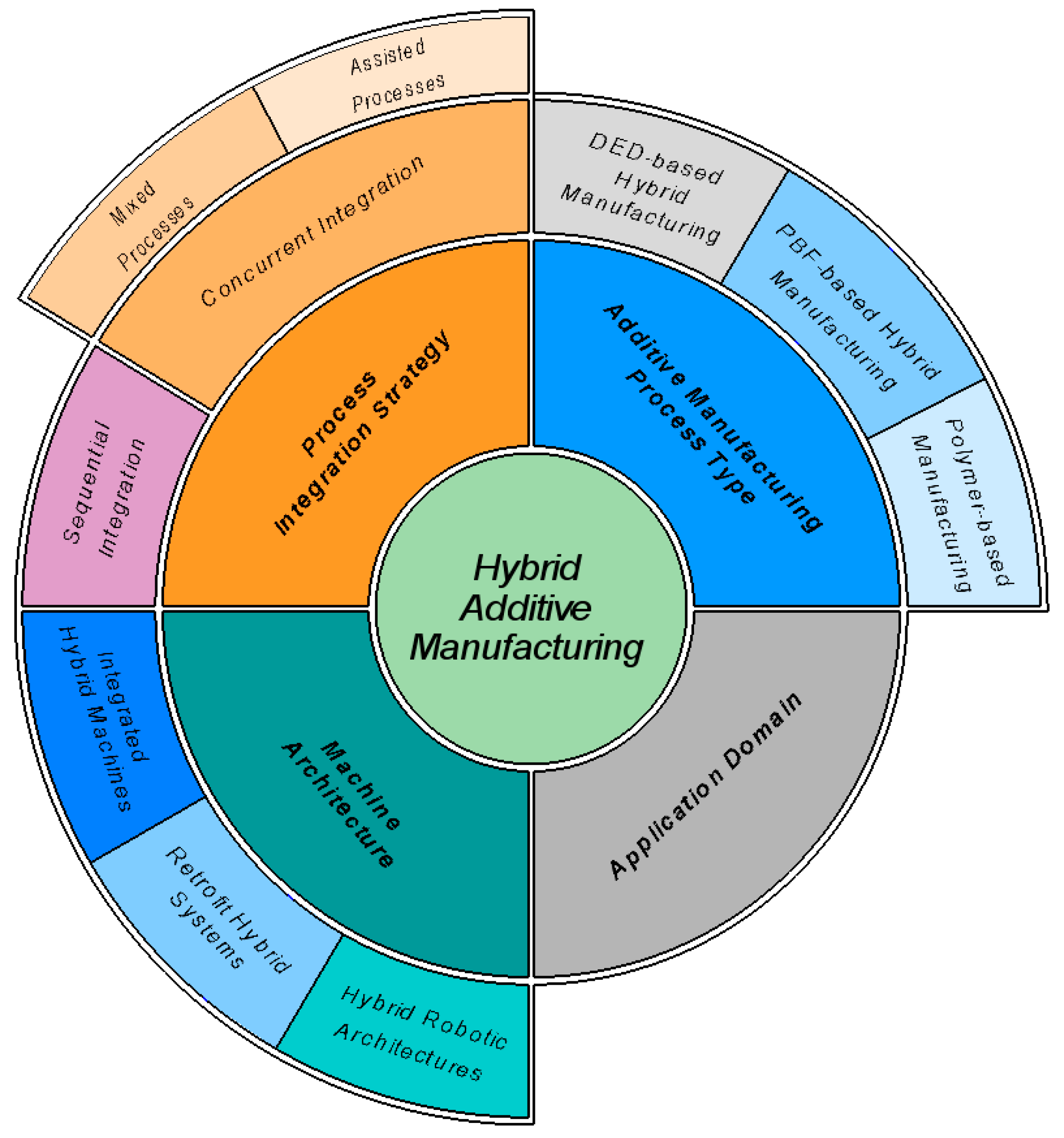
Figure 1. Classification framework of hybrid additive manufacturing systems.
Jmmp 10 00223 g001
Figure 2. Schematic representation of the DED process.
Jmmp 10 00223 g002
Figure 3. Representative WAAM-fabricated hollow turbine blade shape: (a) as-deposited condition showing characteristic arc-bead surface morphology; (b) finished component after CNC machining [37].
Jmmp 10 00223 g003
Figure 4. Schematic representation of the PBF process.
Jmmp 10 00223 g004
Figure 5. Surface quality comparison between SLM-fabricated components illustrating the improvement in surface finish achievable through hybrid PBF–subtractive processing [44]: (a) as-built component; (b) CNC-milled equivalent.
Jmmp 10 00223 g005
Figure 6. Process capability comparison chart.
Jmmp 10 00223 g006
Figure 7. Operating principle of integrated DED–subtractive machine tools: (a) LMD head and turning operation sharing a common rotary worktable; (b) DED head and milling spindle operating within a shared CNC workspace.
Jmmp 10 00223 g007
Figure 8. Operating principle of the Matsuura LUMEX Avance layer-by-layer hybrid PBF–milling machine.
Jmmp 10 00223 g008
Figure 9. Large marine propeller blade produced by robotic hybrid WAAM-milling [55].
Jmmp 10 00223 g009
Figure 10. Operating principle of robotic hybrid WAAM–milling architecture.
Jmmp 10 00223 g010
Figure 11. Hybrid-manufactured compression mould with conformal cooling channels produced by blown-powder DED and CNC milling [75]: (a) bottom half deposited to mid-channel height; (b) deposited cooling channel geometry; (c) completed mould base deposition; (d) finished mould after milling.
Jmmp 10 00223 g011
Figure 12. Challenges and research roadmap.
Jmmp 10 00223 g012
Table 1. Comparative overview of major DED-based hybrid manufacturing technologies.
DED Process VariantHeat SourceFeedstock FormDeposition Rate (kg/h)As-Built Surface QualityPost-Machining Surface QualityDimensional Accuracy (mm)Material UtilisationEnergy ConsumptionTypical Applications
WAAMElectric arcWire1–4Low (rough, 15–50 µm as-built)High (smooth after CNC milling)±0.5–2.0HighLowLarge structural components, repair [26,35]
Laser Cladding/LMDLaser beamPowder/Wire0.1–1.5Medium Low (better than WAAM, 5–30 µm)Very high (precision finishable to <1 µm)±0.05–0.3MediumHighTurbine blade repair, coatings [27,38]
EBAM/EB-DEDElectron beamWireup to ~20(rough, similar to WAAM)High (smooth after finish machining)MediumHighHighAerospace Ti/Cu components [41,42,43]
Table 2. Representative commercial hybrid manufacturing systems.
MachineAM + Subtractive ProcessBuild EnvelopeIntegration StrategyMonitoring/SensingPrimary Industrial SectorRef.
DMG MORI LASERTEC 65LMD (laser powder) + 5-axis milling, turning, grindingLarge (up to Ø840 × 350 mm)Sequential; layer-by-layer optionalMelt pool camera, pyrometer, thermal imaging, powder flow sensorAerospace repair, tooling, high-value components[29,55]
Mazak INTEGREX AMDED (laser + hot-wire) + 5-axis mill-turnMedium–Large (multi-tasking mill-turn envelope)Sequential (full-part deposit then machine)Selectable high-speed/high-accuracy cladding heads; in-process gaugingLarge aerospace and industrial components[55,70]
Matsuura LUMEX Avance-25/60PBF (laser) + high-speed 5-axis millingCompact–Medium (250 × 250 × 185 mm/600 × 600 × 500 mm)Sequential layer-by-layer (milling interleaved with PBF)Layer inspection; atmosphere and gas controlPrecision tooling (moulds/dies), medical devices[55,71]
Gefertec arc405/arc605WAAM (3DMP arc) + 5-axis millingMedium–Large (large-format metallic components)Sequential (near-net-shape deposit, then machine)Arc parameter monitoring; optional in-process inspectionTooling, shipbuilding, rail, large structural components[55]
KUKA robotic WAAM systemWAAM (arc) + robotic milling (modular end-effectors)Large (application-dependent robotic envelope)Sequential; separate deposition and machining stages via tool-changingArc monitoring; vision-based bead inspectionLarge structural components, MRO[55]
Table 3. Performance comparison of HAM versus conventional manufacturing across key application sectors.
SectorApplicationHAM ProcessPerformance MetricHAM OutcomeConventional BaselineRef.
AerospaceTurbine blade remanufactureLMD + in-process scanning + machiningDimensional restoration accuracyRestoration accuracy sufficient to meet service tolerancesManual TIG weld + grind[73,80]
AerospaceTi-6Al-4V surface finishingLMD + mechanical finishingFatigue strength/as-builtAs-built: ~300 MPa (Ra ≈ 18 µm) → up to ~775 MPa after milling (Ra ≈ 0.3 µm)As-built AM Ti-6Al-4V[56]
AerospaceMRO cost structure (bracket)DED + machiningDominant cost driver identificationMachine run time: ~88% of total part cost at 80% utilisationFramework comparison only[74]
AutomotiveInjection moulding toolingDED (316L) + CNC (conformal cooling)Max mould temperature after 270 s67 °C (conformal) vs. 74 °C (straight)—9.3% reductionStraight cross-drilled channels[75]
AutomotiveMould weightDED + machiningMould weight reduction13.8% vs. billet-machined designConventional billet mould[75]
EnergyNickel superalloy turbine repair (CM247LC/SRR99)LPBF + HIPInterfacial hardness and bond strength8.62% higher hardness than substrate; UTS 791 MPa, fracture on substrate side (crack-free interface)Conventional weld repair (HAZ degradation, porosity)[76]
Disclaimer/Publisher’s Note: The statements, opinions and data contained in all publications are solely those of the individual author(s) and contributor(s) and not of MDPI and/or the editor(s). MDPI and/or the editor(s) disclaim responsibility for any injury to people or property resulting from any ideas, methods, instructions or products referred to in the content.