Article

Drilling Temperature and Cutting Force Analysis in Additive-Modified CFRP Composites

by
Mohamed Slamani
1,2,*,
Chabha Kebaili
2 and
Jean-François Chatelain
2
1
Mechanical Engineering Department, École de Technologie Supérieure, 1100, Notre-Dame West St., Montreal, QC H3C 1K3, Canada
2
Engineering Sciences Research Center, Imam Mohammad Ibn Saud Islamic University (IMSIU), Riyadh 11432, Saudi Arabia
*
Author to whom correspondence should be addressed.
J. Manuf. Mater. Process. 2026, 10(6), 184; https://doi.org/10.3390/jmmp10060184
Submission received: 30 April 2026 / Revised: 21 May 2026 / Accepted: 26 May 2026 / Published: 28 May 2026

Abstract

Carbon fiber-reinforced polymer (CFRP) composites are difficult to machine due to their heterogeneous structure, leading to high force and temperatures during drilling. This study investigates the synergistic effects of graphene and wax additives on cutting forces and temperature in CFRP drilling. A full factorial design was employed with cutting speed (50–250 m/min), feed rate (0.005–0.11 mm/rev) and material composition (nine combinations of 0–2 wt% graphene and 0–2 wt% wax), resulting in 675 tests. Feed rate emerged as the dominant factor controlling cutting force, while temperature was governed by complex interactions. The addition of 1% wax reduced force by 33% and temperature by 22%, whereas 2% graphene alone reduced force by 35% and temperature by 18%. However, combining 2% graphene with wax increased force by 14–16% compared to graphene alone, indicating a transition from lubrication to reinforcement dominance (Wax:Graphene interaction: F = 103.29). No corresponding temperature increase was observed, revealing a decoupling of mechanical and thermal responses (r = 0.01). Material modification improves CFRP machinability, but optimal formulations must balance competing mechanisms. The highest stability was achieved with 1% wax/0.25% graphene for cutting force (±4.04 N) and 2% wax/0.25% graphene for temperature (±1.48 °C).

1. Introduction

Carbon fiber-reinforced polymer (CFRP) composites have become essential materials in modern engineering applications, particularly in aerospace, automotive, and renewable energy sectors, due to their high specific strength, stiffness, and excellent resistance to fatigue and corrosion [1,2]. The increasing demand for lightweight and high-performance structures has led to a widespread adoption of CFRP components, which often require secondary machining operations such as drilling for assembly purposes [3,4].
Despite their superior mechanical properties, CFRP composites are widely recognized as difficult-to-machine materials due to their heterogeneous and anisotropic structure [5,6]. The combination of hard and abrasive carbon fibers embedded within a comparatively soft polymer matrix leads to complex cutting mechanisms that differ significantly from those encountered in metallic materials. During machining, this heterogeneity results in non-uniform material removal, rapid tool wear, and unstable cutting conditions [7,8]. In particular, drilling operations are associated with high thrust forces and elevated temperatures, which can induce critical defects such as delamination, fiber pullout, matrix cracking, and thermal degradation [9].
Among these defects, delamination is considered one of the most detrimental, as it directly affects the load-bearing capacity and structural integrity of the composite component [10]. Previous studies have shown that excessive thrust forces during drilling are the primary cause of delamination, especially at the hole exit [11,12]. In addition, the low thermal conductivity of polymer matrices leads to heat accumulation in the cutting zone, which can soften or degrade the matrix and further deteriorate hole quality [13,14,15]. Therefore, controlling both mechanical and thermal loads during drilling is essential for achieving high-quality machining outcomes.
Extensive research has been conducted to investigate the influence of machining parameters on CFRP drilling performance. It is well established that feed rate is the most significant factor affecting cutting forces, as it directly controls the uncut chip thickness and material removal rate [16,17]. Cutting speed, on the other hand, primarily influences temperature generation due to frictional interactions at the tool–material interface [18]. Although optimization of machining parameters can reduce damage to some extent, it does not fully overcome the intrinsic limitations associated with CFRP machinability, particularly in terms of thermal management and frictional behavior [19].
To address these limitations, recent studies have explored the modification of composite materials through the incorporation of nanofillers and functional additives. Among these, graphene has attracted considerable attention due to its exceptional thermal conductivity, high mechanical strength, and large surface area [20,21]. The addition of graphene to polymer matrices has been shown to significantly enhance thermal transport properties, thereby improving heat dissipation during machining processes [22,23]. Furthermore, graphene can improve load transfer within the matrix, leading to enhanced mechanical performance and potentially reducing cutting resistance [24,25]. Several authors have reported that graphene-reinforced composites exhibit improved machinability and reduced damage during drilling and cutting operations [26,27].
In parallel, the use of solid lubricants such as wax has been proposed as an effective strategy to reduce friction at the tool–material interface. Wax additives can form a lubricating layer that decreases adhesion and sliding resistance, thereby reducing cutting forces and limiting heat generation [28,29]. The beneficial effects of solid lubricants have been widely demonstrated in metal matrix composites and polymer-based materials, where they contribute to improved tribological performance and reduced tool wear [30,31,32].
The combined use of graphene and wax represents a promising approach to simultaneously address both thermal and mechanical challenges associated with CFRP machining. While graphene enhances heat dissipation within the composite, wax reduces frictional interactions at the tool–material interface. This synergistic effect has the potential to significantly improve drilling performance by reducing both cutting forces and temperature. However, despite the growing interest in additive-modified composites, there remains a lack of comprehensive studies investigating the combined influence of these additives under varying machining conditions.
Most existing studies focus either on the optimization of machining parameters or on the effect of individual additives, without considering their combined impact within a systematic experimental framework. In particular, there is a need for detailed investigations that integrate material modification and process parameters using a full design of experiments approach.
Therefore, the objective of the present study is to investigate the drilling performance of additive-modified CFRP composites in terms of cutting forces and temperature. A full factorial design of experiments is employed to evaluate the effects of feed rate, cutting speed, and additive composition. The study aims to provide a deeper understanding of the coupled thermo-mechanical behavior of CFRP during drilling and to demonstrate the effectiveness of material modification as a strategy for improving machinability.

2. Materials and Methods

2.1. Materials

Carbon fiber-reinforced polymer (CFRP) laminates were manufactured using an epoxy matrix modified with different concentrations of graphene and wax additives. The reinforcement consisted of unidirectional carbon fiber fabric, reference TC-09-U (St-Jean sur Richelieu, QC, Canada). The laminate had a total of 16 plies, resulting in a final thickness of 5 mm. The epoxy matrix was SikaBiresin® CR72 (Madison Heights, MI, USA) used with CH72-2 (medium) hardener at a mix ratio of 100:18 by weight (or 100:20 by volume). The mixed system has a viscosity of 390 cP at 25 °C and a gel time of 43 min for a 150 g mass at 25 °C. Laminates were cured at room temperature for 24 h. Graphene nanoplatelets, GrapheneBlack 0X (Nano-Xplore Inc., Montréal, QC, Canada), were incorporated at concentrations of 0%, 0.25%, and 2% by weight to enhance thermal conductivity and mechanical performance. According to the manufacturer’s datasheet, the graphene additive has a primary particle size predominantly ranging from 0.5 to 1 µm, an agglomerate size distribution of D10 = 4 µm, D50 = 12 µm, and D90 = 27 µm, a layer thickness between 6 and 10 layers, and a bulk density of 0.2–0.3 g/cm3. Wax additive, Ceraflour 996 (BYK USA Inc., Wallingford, CT, USA) was added at concentrations of 0%, 1%, and 2% by weight as a solid lubricant to improve tribological behavior during machining.
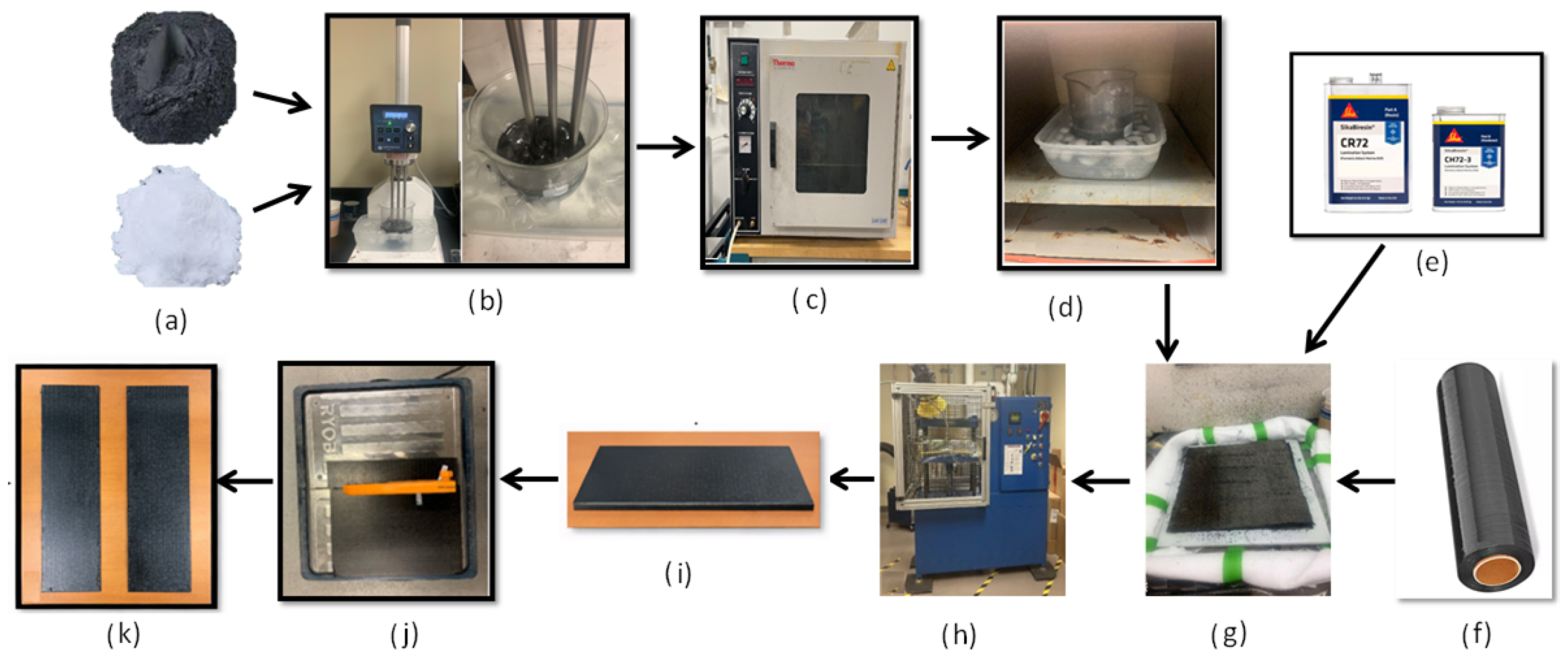
The fabrication process of the additive-modified CFRP composites is presented in Figure 1. Initially, graphene and wax additives are introduced into the epoxy system (Figure 1a) and dispersed through mechanical mixing in an ice bath to prevent premature curing and ensure homogeneous distribution (Figure 1b). The mixture is then subjected to thermal treatment (Figure 1c) and further homogenization (Figure 1d), followed by the addition of resin and hardener (Figure 1e). Carbon fibers are subsequently incorporated (Figure 1f), and laminate fabrication is performed through lay-up (Figure 1g). Consolidation is achieved using a hydraulic press (Figure 1h), producing fully cured laminates (Figure 1i), which are then cut and finished to obtain final specimens (Figure 1j,k).
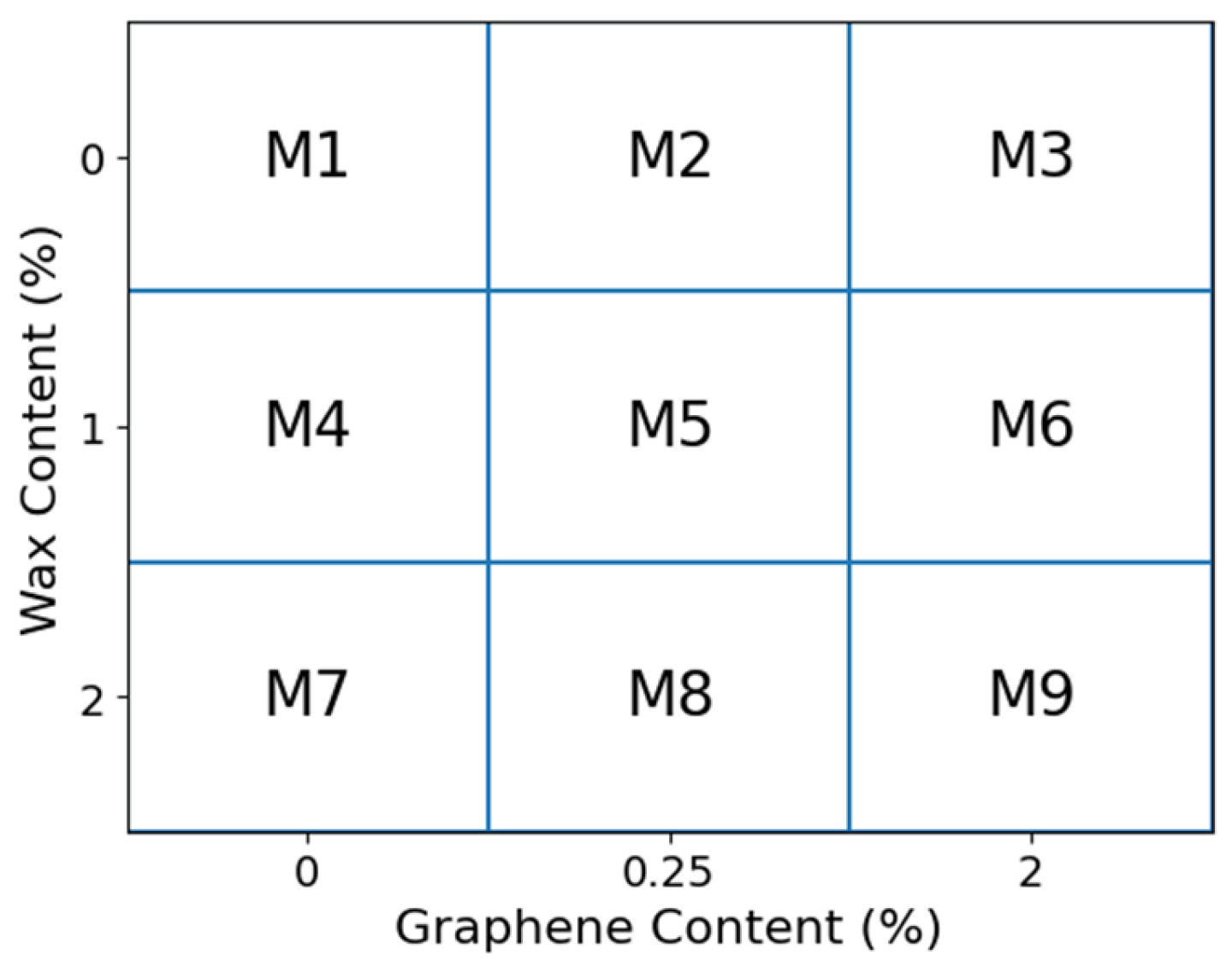
A total of 9 composite configurations were produced, each replicated three times, resulting in 27 fabricated plates. These configurations were defined by the full factorial combination of graphene (0%, 0.25%, and 2%) and wax (0%, 1%, and 2%) weight fractions. The distribution of these formulations is illustrated in Figure 2, including a reference material without additives.
The selection of wax levels (0%, 1%, and 2%) and graphene contents (0%, 0.25%, and 2%) was guided by previously published works investigating additive effects in composite materials [27,33]. Regarding wax, these particular concentrations were selected to explore a spectrum ranging from lubrication benefits to preservation of structural integrity. Concentrations exceeding 2% were excluded since prior research indicates they may cause excessive composite softening, thereby reducing mechanical performance [27]. The 1% and 2% levels represent moderate and pronounced lubricating actions, respectively, while the 0% condition served as a reference.
Concerning graphene, the chosen weight fractions (0%, 0.25%, and 2%) reflect concentrations known to improve thermal and mechanical behavior while minimizing the risk of nanoparticle agglomeration, a frequent issue at higher loadings. The literature indicates that graphene amounts above 2% tend to degrade mechanical properties due to particle clustering [34,35,36] and can also raise resin viscosity, rendering the mixture unsuitable for the GFRP manufacturing process. The 0.25% concentration represents a minimal yet impactful dosage for reinforcing material properties, whereas the 2% level was selected to examine the upper boundary of graphene’s positive influence. Intermediate concentrations such as 0.5% or 1% were omitted to keep the experimental design practical while still capturing essential data trends.
The incorporation of graphene and wax into the epoxy matrix plays a critical role in determining the final composite performance. Uniform dispersion is essential to avoid nanoparticle agglomeration, which can adversely affect both mechanical properties and machining behavior. Thermal treatment enhances the interaction between additives and the polymer matrix, stabilizes viscosity, and facilitates effective fiber impregnation during the lay-up stage.
The consolidation step ensures strong fiber–matrix bonding, minimizes void content, and improves structural integrity. Subsequent cutting and finishing operations prepare the laminates for machining tests, where the presence of graphene and wax contributes to reduced cutting forces, improved thermal dissipation, and enhanced tool–material interaction. The defined hole distribution (Figure 2) enables repeatability and supports reliable statistical analysis within the experimental design framework.

2.2. Experimental Design

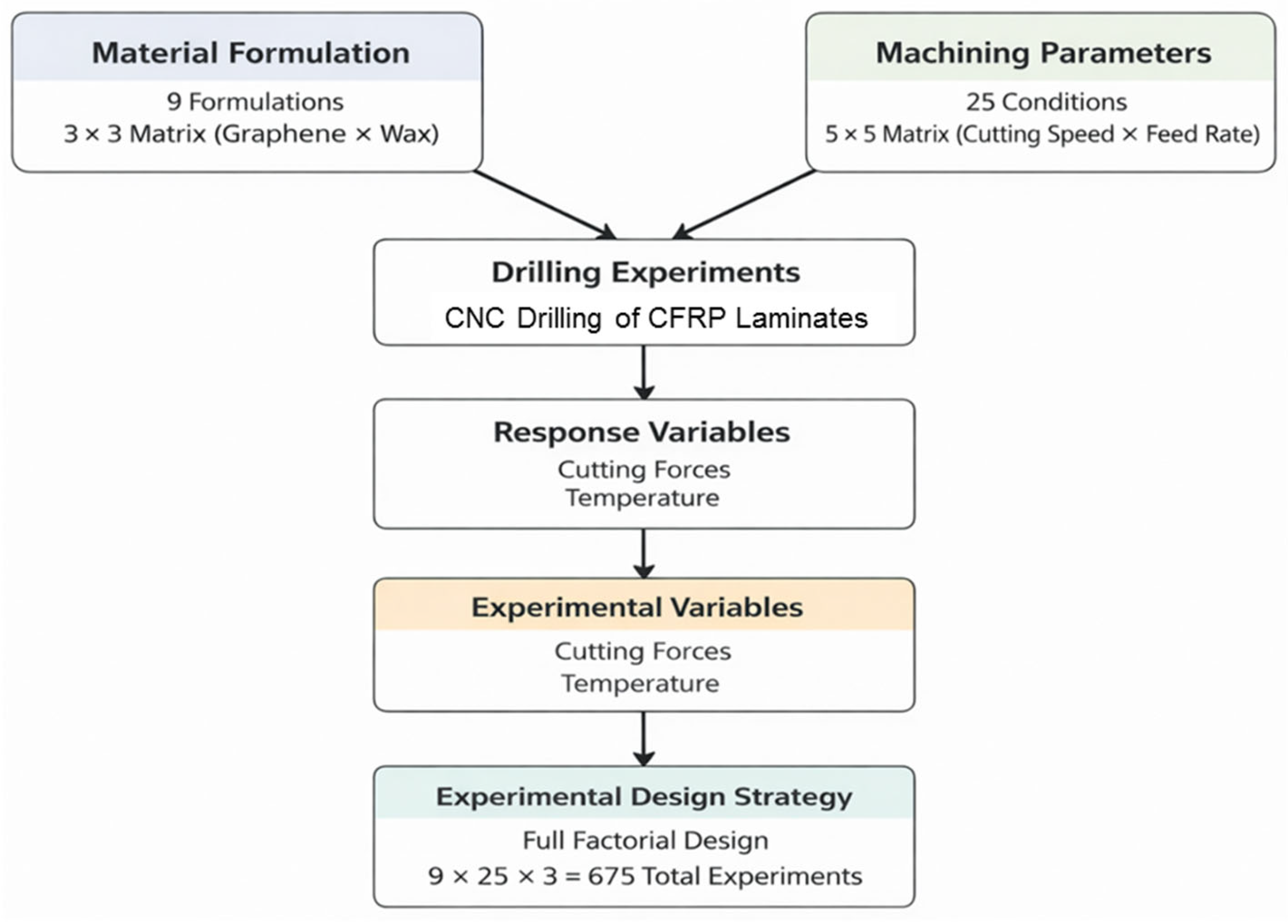
A full factorial design of experiments (DOE) was adopted to evaluate the effects of machining conditions and material composition on drilling performance. As illustrated in Figure 3, the study considered three primary factors: cutting speed, feed rate, and additive-modified material formulations.
Cutting speed was examined at five levels (50, 100, 150, 200, and 250 m/min), while feed rate was varied across five levels (0.005, 0.02, 0.05, 0.08, and 0.11 mm/rev), resulting in 25 machining conditions. The material factor consisted of nine composite configurations, corresponding to all combinations of graphene and wax contents (Figure 2).
Each experimental condition was repeated three times to ensure reproducibility and account for experimental variability. Therefore, as shown in Figure 3, the complete experimental matrix consisted of 9 × 25 × 3 = 675 drilling experiments. This full factorial approach enables a systematic evaluation of both the main effects of each factor and their potential interactions.

2.3. Drilling Procedure and Response Measurements

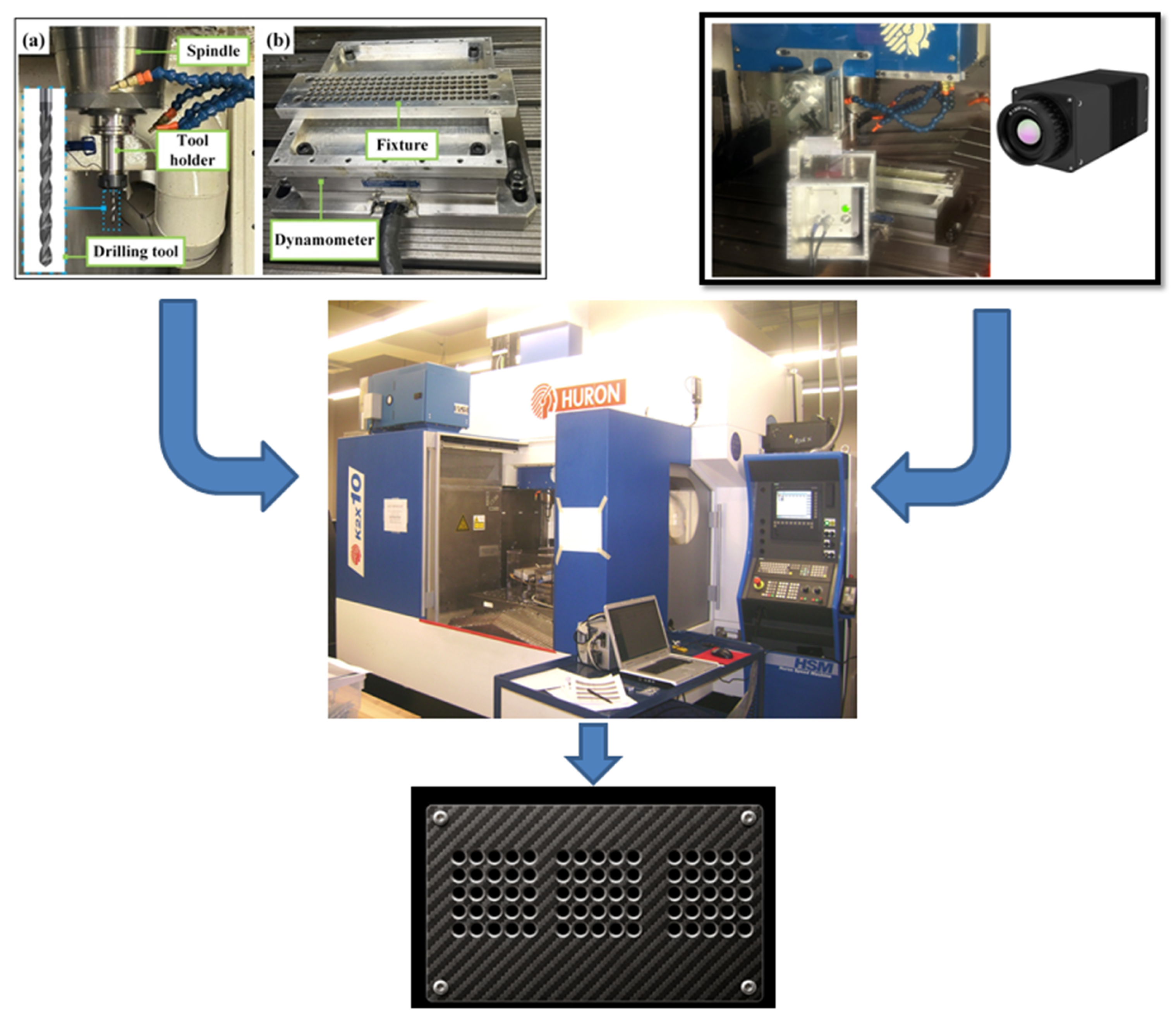
Drilling experiments were conducted on a Huron K2x10 three-axis milling machine (Huron, Eschau, France) under controlled conditions, as illustrated in Figure 4. A CoreHog diamond-coated drill bit, manufactured in the USA, was selected due to its superior wear resistance and effectiveness in machining abrasive materials such as CFRP. The tool specifications were as follows: solid carbide substrate with a true crystalline CVD diamond coating, drill diameter of 7/32 inch (5.56 mm), point angle of 118°, secondary point angle of 80°, two flutes, flute length of 1.5 inches (38.1 mm), and overall length of 4 inches (101.6 mm). All drilling operations were performed under dry conditions, without external cooling, in order to assess the intrinsic thermal and tribological behavior of the composites.
The composite specimens were securely clamped to ensure stability and minimize vibration during machining. For each experimental run, a through-hole was produced according to the predefined machining parameters. Consistent tool conditions were maintained throughout the tests to minimize the influence of tool wear on the measured responses.
Cutting forces were measured using a Kistler 9255B dynamometer (Kistler Group, Winterthur, Switzerland) mounted on the machine table (Figure 4). This system enabled accurate measurement of the thrust force during drilling. The force signals were continuously recorded and subsequently processed to extract representative values corresponding to the steady-state drilling phase. For each condition, the final cutting force value was determined by averaging repeated measurements, ensuring reliable and reproducible results.
The drilling temperature was monitored using an infrared thermal camera (VarioCAM® HD head 900, InfraTec, Dresden, Germany) positioned to capture the machining zone (Figure 4). According to the manufacturer’s specifications, the camera is calibrated using proprietary algorithms with multiple calibration curves that compensate for temperature fluctuations, ensuring high measurement accuracy and repeatability across a wide temperature range, with a thermal resolution of up to 0.02 K. Real-time thermal data were recorded during each drilling operation, allowing for the analysis of temperature evolution. The maximum temperature reached was extracted from the recordings and used as a representative indicator of the thermal load. Measurement consistency was ensured by maintaining constant camera positioning and emissivity settings throughout all experiments.
The collected data were analyzed to assess the influence of machining parameters and material modification on cutting forces and temperature. Statistical analysis, including analysis of variance (ANOVA), was performed to evaluate the significance of the main effects and their interactions.

3. Results

3.1. Cutting Force Results

3.1.1. Cutting Force Signal

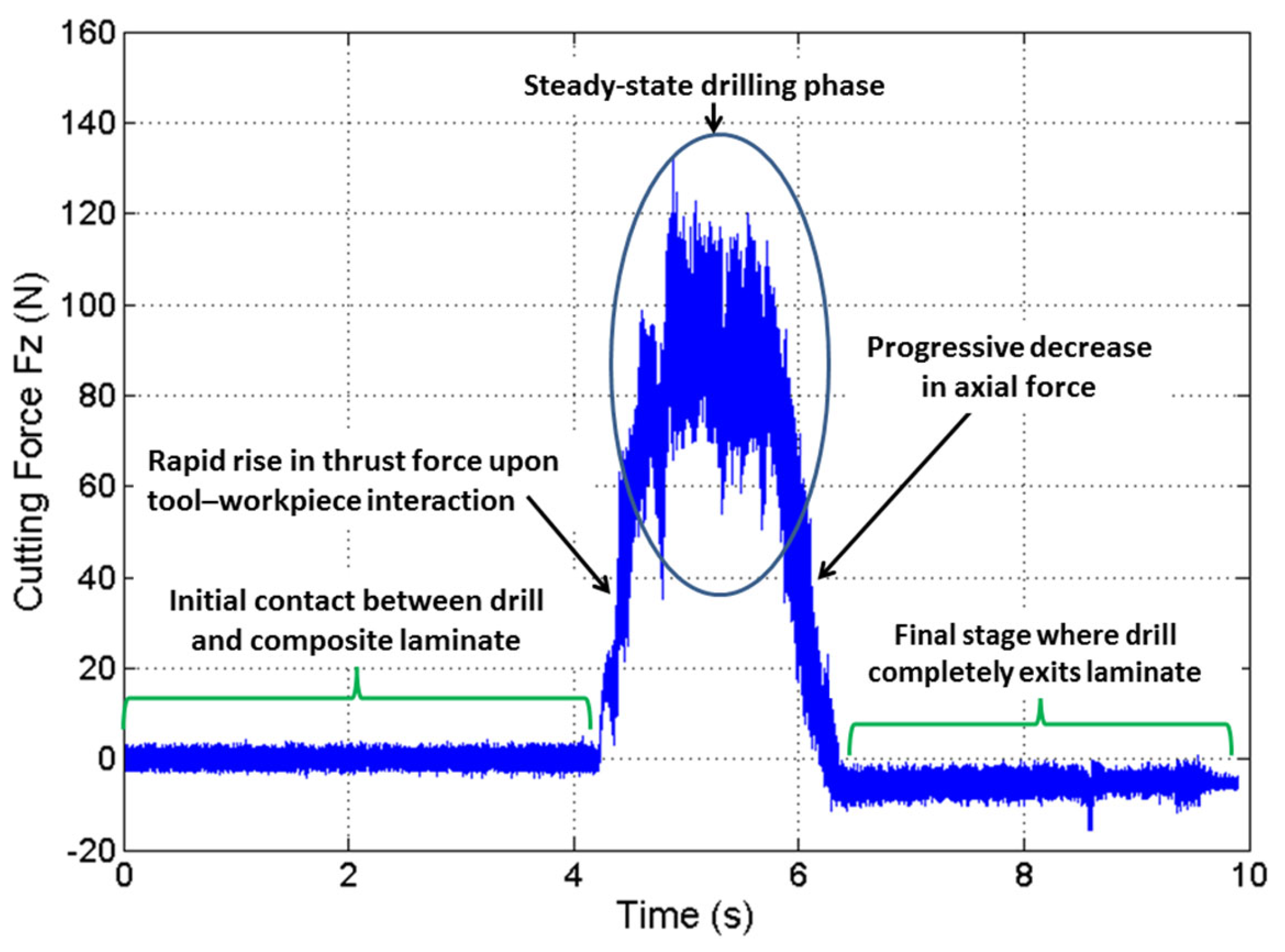
Figure 5 illustrates a typical cutting force signal obtained during drilling of the reference composite (0% wax, 0% graphene) at a cutting speed of 50 m/min and a feed rate of 0.08 mm/rev. The signal reveals five characteristic stages. The first stage corresponds to the initial contact between the drill and the composite laminate. This is immediately followed by a rapid rise in thrust force upon tool–workpiece interaction. The third stage represents the steady-state drilling phase, during which the drill lips are fully engaged and the axial force remains relatively stable with small fluctuations due to intermittent fiber fracture. The fourth stage shows a progressive decrease in axial force as the drill begins to exit the laminate. The fifth and final stage is where the drill completely exits the workpiece. The mean cutting force for each experimental condition was extracted from the steady-state region of the signal. The observed force fluctuations during the steady-state phase are typical of CFRP drilling and result from the heterogeneous and anisotropic nature of the composite material [37,38].

3.1.2. Mean Cutting Force Results

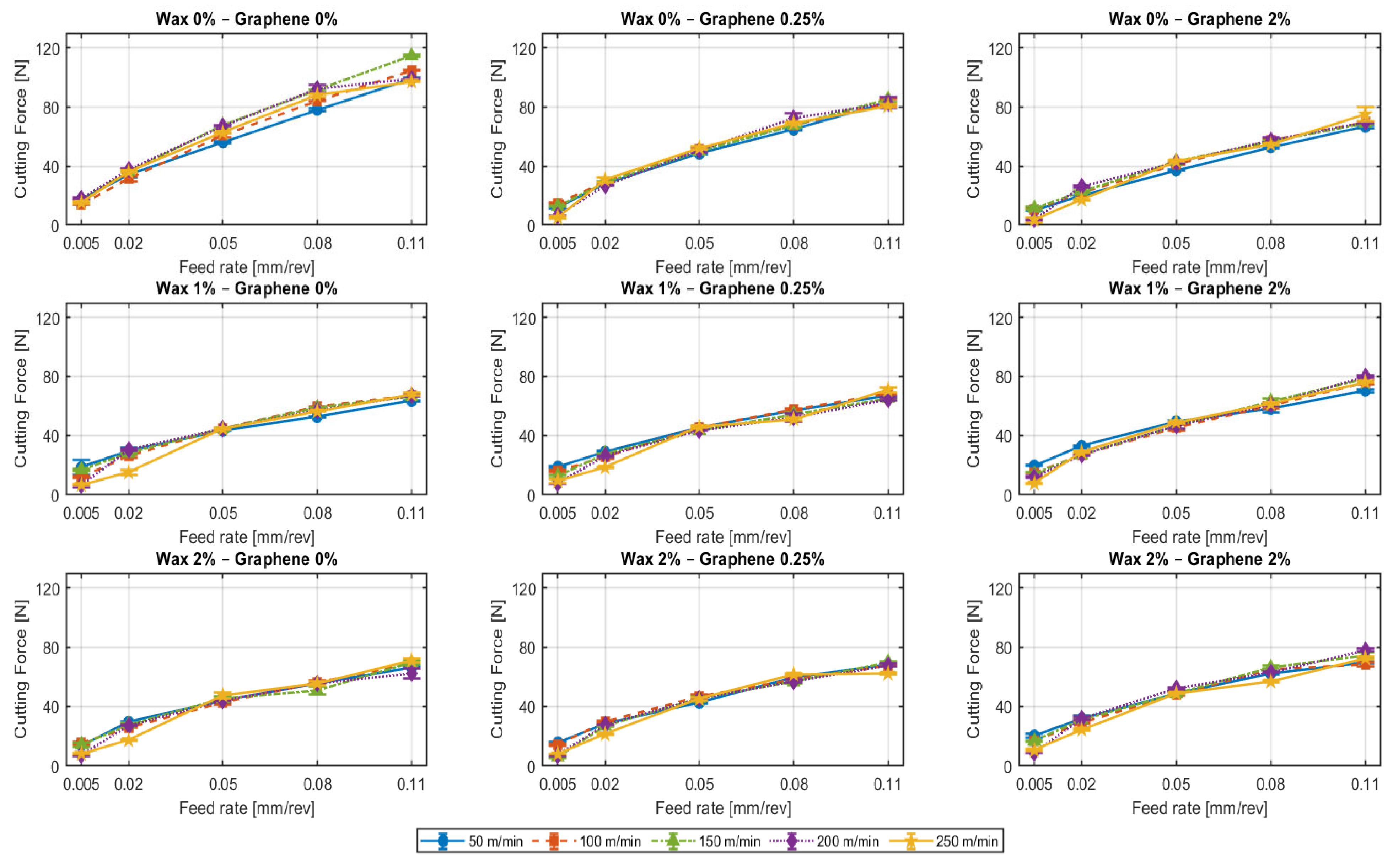
Figure 6 shows the variation in cutting force with feed rate. A strong and consistent increase in cutting force is observed as feed rate increases from 0.005 to 0.11 mm/rev across all cutting conditions. For the unmodified material (0% wax, 0% graphene), the force rises from approximately 15–18 N at 0.005 mm/rev to about 95–115 N at 0.11 mm/rev, representing an increase of more than 500%. This dominant trend is clearly confirmed by the ANOVA results in Table 1, where feed rate is the most influential parameter (F = 2131.7, p ≈ 0), contributing the largest share of variance.
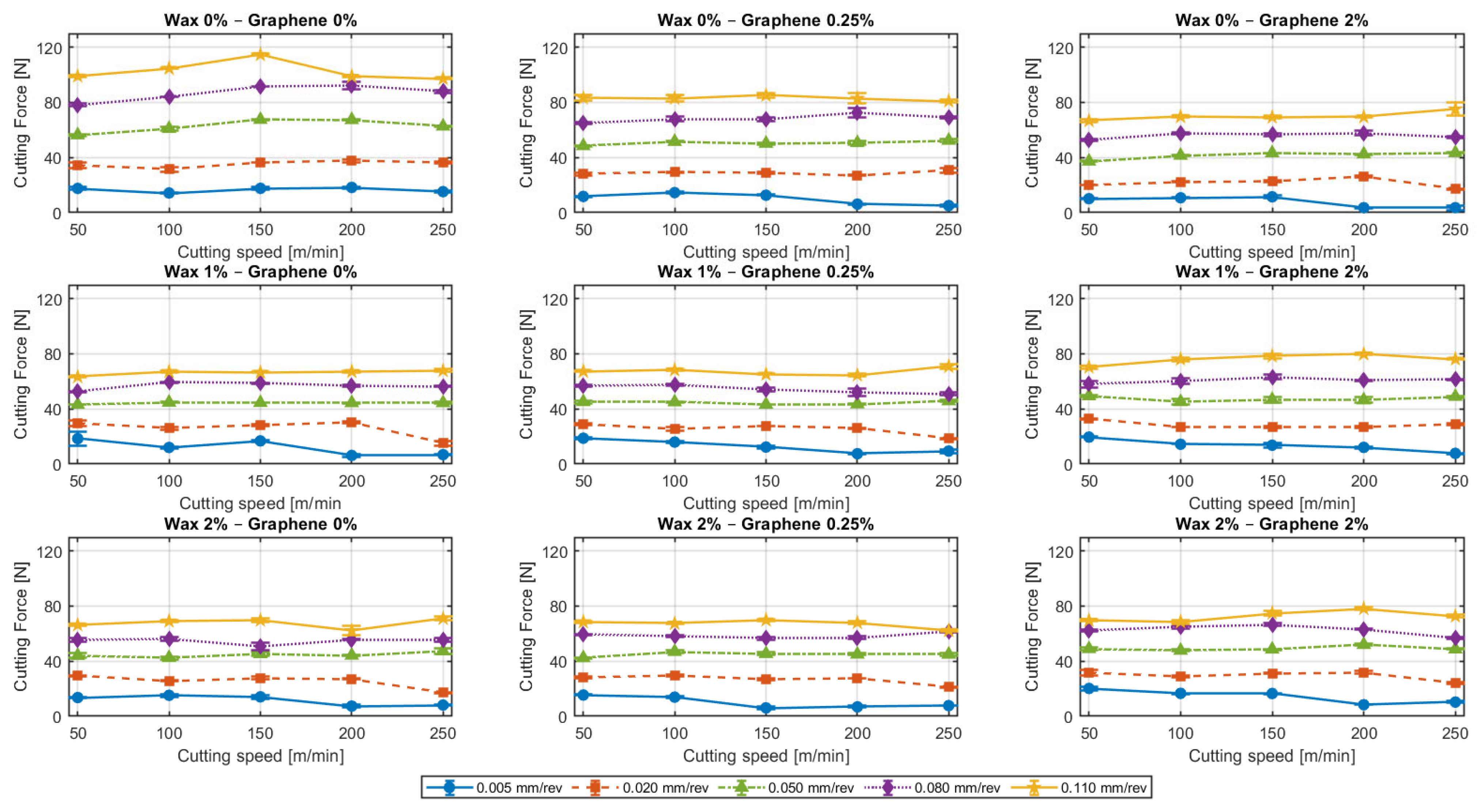
The effect of cutting speed (Figure 7) is comparatively weaker and exhibits a non-monotonic behavior [39]. At a given feed rate, cutting force generally increases from 50 to around 150–200 m/min, followed by a slight decrease or stabilization at higher speeds (250 m/min). For example, at 0.05 mm/rev and without additives, the force increases from approximately 56 N at 50 m/min to about 67–68 N at 150–200 m/min, before slightly decreasing at higher speed. This moderate influence is supported by Table 1, where cutting speed is statistically significant (p = 0.0137) but with a much lower F-value (F = 3.24) compared to feed rate.
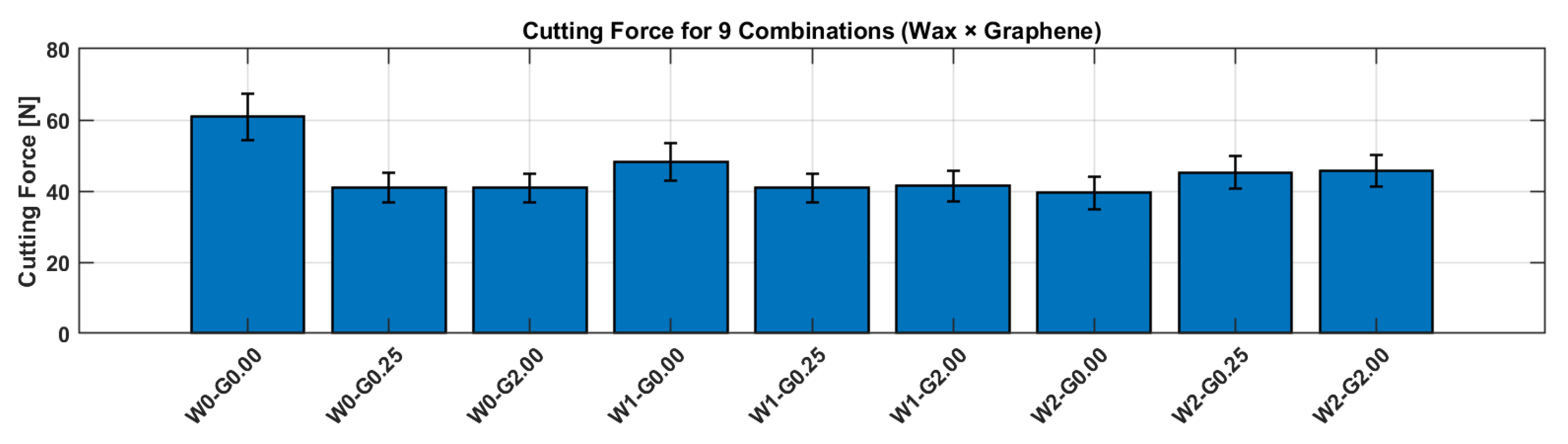
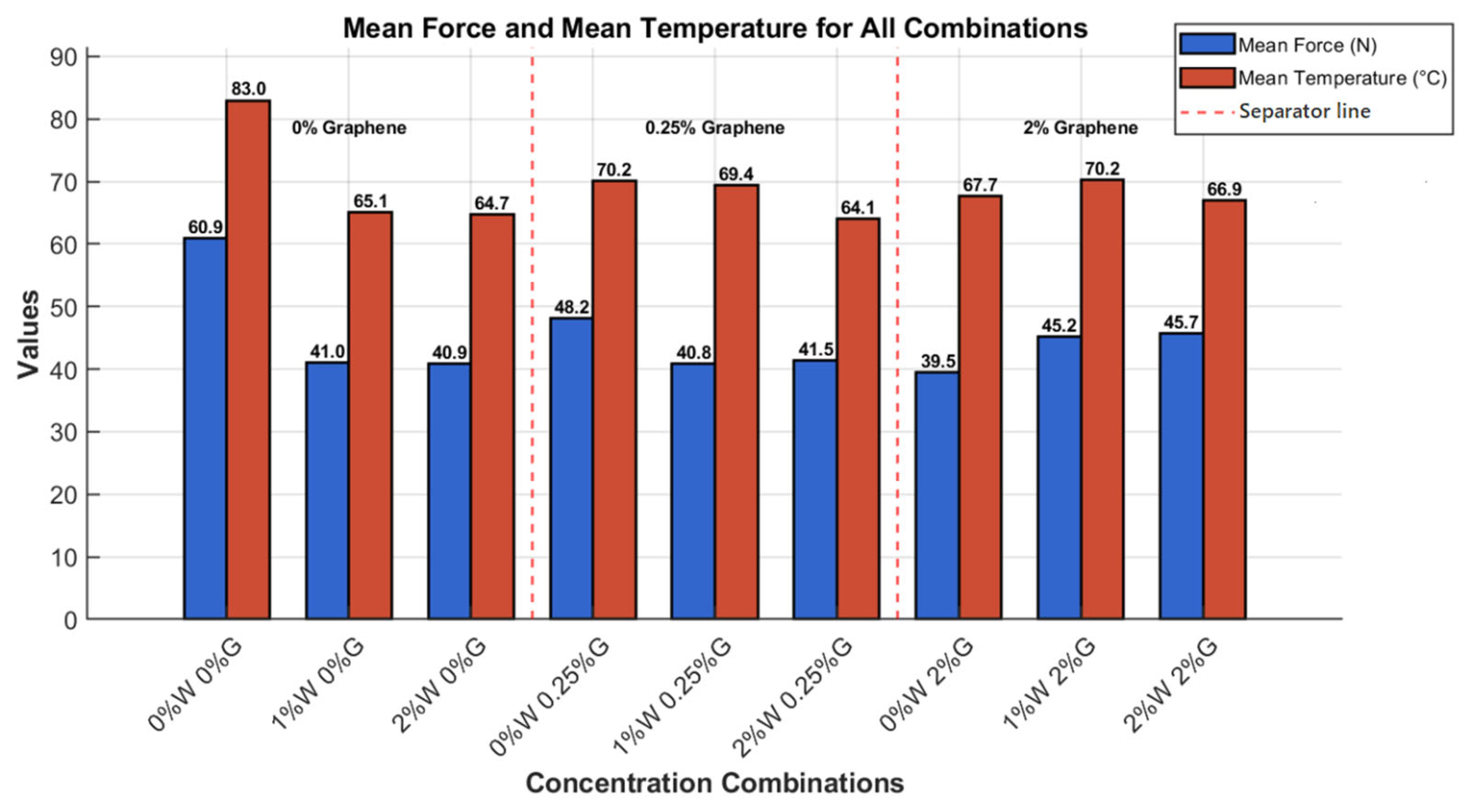
Figure 8 presents the mean cutting force for each combination of wax and graphene content, averaged across all feed rates and cutting speeds. For the baseline composition (0% wax, 0% graphene), the mean force is 60.9 N. The addition of 1% wax alone reduces mean force to 41.0 N (a reduction of 33%). Increasing wax to 2% alone yields a similar value of 40.9 N, indicating a saturation effect.
The addition of 0.25% graphene alone reduces mean force to 48.2 N (21% reduction). The addition of 2% graphene alone reduces mean force further to 39.5 N (35% reduction).
For hybrid compositions, at 1% wax with 0.25% graphene, mean force is 40.8 N. At 2% wax with 0.25% graphene, mean force is 41.5 N. However, when 2% graphene is combined with 1% wax, mean force increases to 45.2 N. When combined with 2% wax, mean force increases to 45.7 N. These values represent increases of approximately 14–16% compared to 2% graphene alone (39.5 N).
Figure 9 presents the mean cutting force and associated uncertainty for each wax–graphene composition. Uncertainty values range from ±4.04 N to ±6.56 N. The lowest uncertainty (±4.04 N) is observed for the 1% wax/0.25% graphene composition. The highest uncertainty (±6.56 N) is observed for the baseline composition (0% wax/0% graphene).
For wax-alone compositions, mean forces are 48.19 N (±5.39 N) at 1% wax and 39.46 N (±4.62 N) at 2% wax. For graphene-alone compositions, mean forces are 41.04 N (±4.12 N) at 0.25% graphene and 40.85 N (±4.14 N) at 2% graphene.
For hybrid compositions, mean forces range from 40.84 N to 45.74 N, with uncertainties from ±4.04 N to ±4.59 N. The 1% wax/0.25% graphene composition achieves the lowest mean force among hybrids (40.84 N), with the lowest uncertainty overall (±4.04 N). The 2% wax/2% graphene composition exhibits the highest mean force among hybrids (45.74 N), with an uncertainty of ±4.40 N.
Table 1 presents the analysis of variance (ANOVA) for the cutting force, quantifying the statistical significance and relative contribution of each factor and their interactions. Feed rate exhibits by far the largest effect, with a sum of squares of 116,098.4 and an F-value of 2131.7 (Prob>F = 0), confirming it as the dominant parameter controlling cutting force. Wax and graphene also exert highly significant individual effects (F = 89.79 and 31.00, respectively), while cutting speed shows a much smaller but still statistically significant influence (F = 3.24, Prob>F = 0.0137).
Among two-way interactions, the Wax:Graphene interaction is particularly strong (F = 103.29, Prob>F = 0), confirming the dual behavior observed in Figure 6, where the effect of graphene reverses depending on the presence of wax. The Wax:Feed interaction is also significant (F = 18.34), while the Speed:Feed interaction (F = 3.14, Prob>F = 0.0001) indicates a mild coupling between these parameters. In contrast, Wax:Speed (F = 1.60, Prob>F = 0.13), Graphene:Speed (F = 1.03, Prob>F = 0.4156) and Graphene:Feed (F = 1.69, Prob>F = 0.1034) are not statistically significant at the 5% level, indicating that the influence of cutting speed does not strongly depend on material composition.

3.2. Temperature Results

The experimental results reveal that temperature evolution is governed by the combined influence of machining parameters and material composition, as illustrated in Figure 10, Figure 11 and Figure 12 and statistically supported by the analysis of variance presented in Table 2.
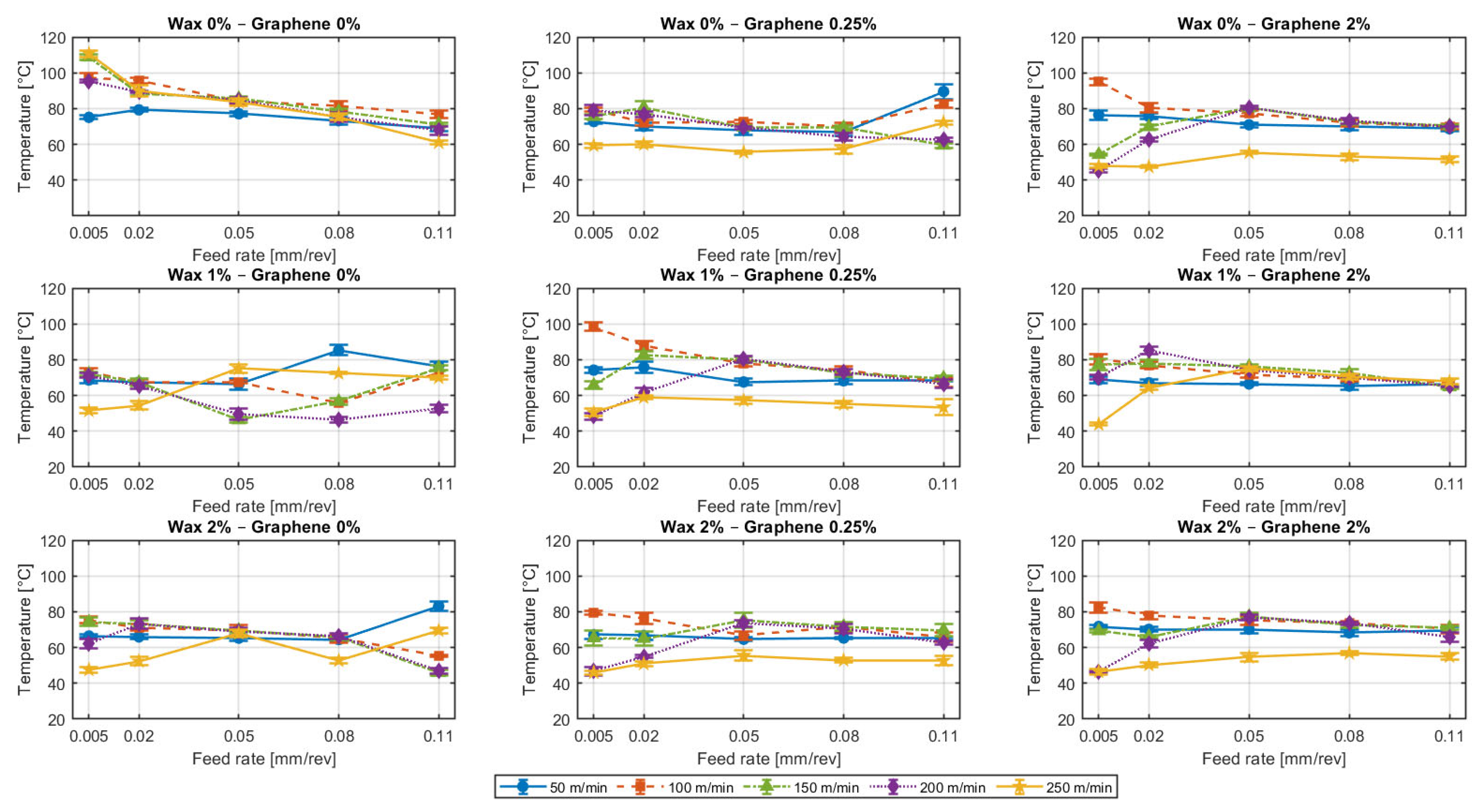
Figure 10 shows the variation in temperature as a function of feed rate. An overall decreasing tendency is observed as the feed rate increases; however, this trend is not strictly monotonic. For instance, for the unmodified material (0% wax, 0% graphene) at 50 m/min, temperature increases slightly from approximately 75 °C at 0.005 mm/rev to about 79–80 °C at 0.02 mm/rev, before decreasing at higher feed rates. Similar local fluctuations are observed across other cutting speeds and material configurations. Nevertheless, at higher feed rates (0.08–0.11 mm/rev), temperature values generally stabilize at lower levels, typically within the range of 60–75 °C.
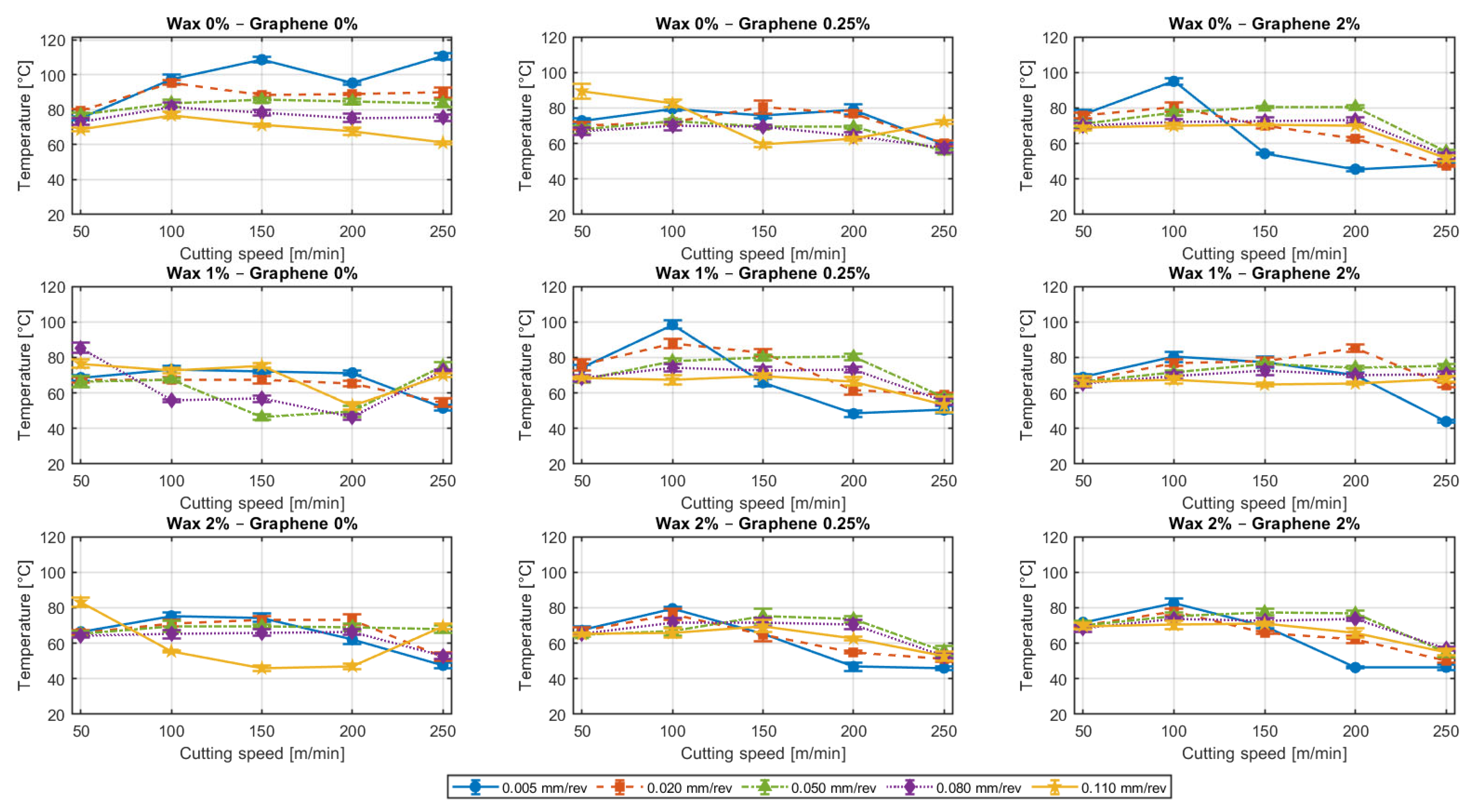
The effect of cutting speed, presented in Figure 11, exhibits a non-monotonic and condition-dependent behavior. At low feed rates (e.g., 0.005 mm/rev), temperature increases significantly when the cutting speed rises from 50 to approximately 100–150 m/min, reaching peak values exceeding 100 °C for the unmodified material. However, further increases in cutting speed (200–250 m/min) do not systematically lead to higher temperatures; instead, stabilization or even a decrease is observed depending on the material composition. For example, with the addition of graphene (0.25%), temperature at high cutting speed (250 m/min) decreases to approximately 55–60 °C, indicating improved thermal behavior under specific conditions.
Figure 8 also presents the mean cutting temperature for each composition. For the baseline composition (0% wax, 0% graphene), the mean temperature is 83.0 °C. The addition of 1% wax alone reduces mean temperature to 65.1 °C (a reduction of 22%). Increasing wax to 2% alone yields a similar value of 64.7 °C.
The addition of 0.25% graphene alone reduces mean temperature to 70.2 °C (15% reduction). The addition of 2% graphene alone reduces mean temperature to 67.7 °C (18% reduction).
For hybrid compositions, at 1% wax with 0.25% graphene, mean temperature is 69.4 °C. At 2% wax with 0.25% graphene, mean temperature is 64.1 °C. At 1% wax with 2% graphene, mean temperature is 70.2 °C. At 2% wax with 2% graphene, mean temperature is 66.9 °C. Unlike force, no clear increase in temperature is observed for hybrid compositions compared to individual additives.
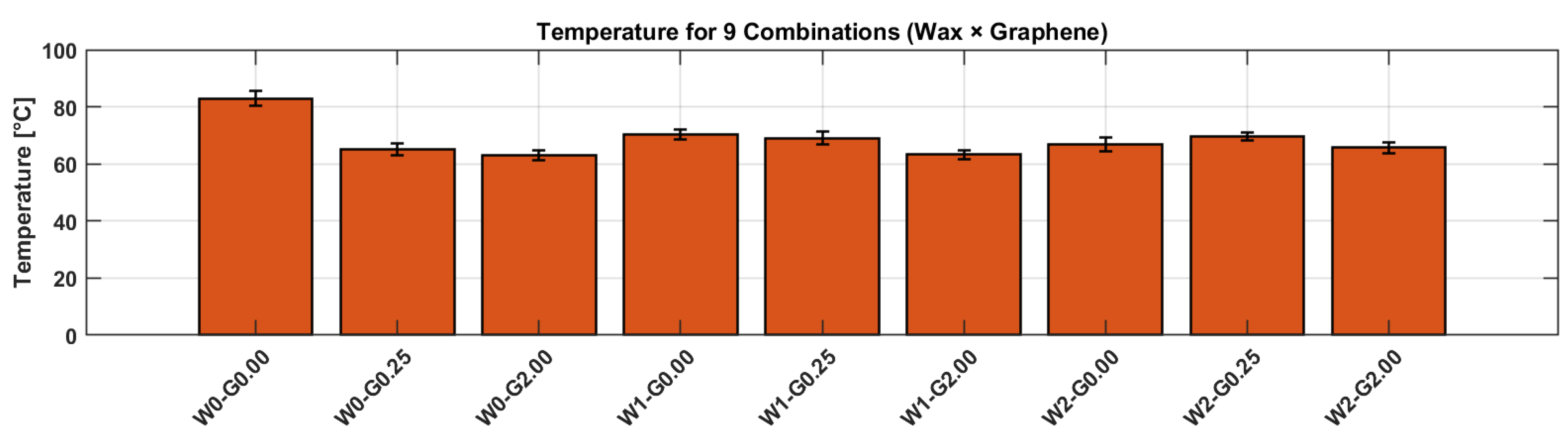
Figure 12 presents the mean cutting temperature and associated uncertainty for each wax–graphene composition. Uncertainty values range from approximately ±1.48 °C to ±2.66 °C. The lowest uncertainty (±1.48 °C) is observed for the 2% wax/0.25% graphene composition. The highest uncertainty (±2.66 °C) is observed for the baseline composition (0% wax/0% graphene).
For wax-alone compositions, mean temperatures are 70.29 °C (±1.83 °C) at 1% wax and 66.80 °C (±2.44 °C) at 2% wax. For graphene-alone compositions, mean temperatures are 65.25 °C (±2.07 °C) at 0.25% graphene and 63.01 °C (±1.79 °C) at 2% graphene.
For hybrid compositions, mean temperatures range from 63.34 °C to 69.64 °C, with uncertainties from ±1.48 °C to ±2.29 °C. The 1% wax/2% graphene composition exhibits a mean temperature of 63.34 °C (±1.59 °C), which is the lowest among all hybrid compositions. The 2% wax/0.25% graphene composition achieves the lowest uncertainty overall (±1.48 °C) while maintaining a mean temperature of 69.64 °C.
Unlike the force uncertainty analysis where the 1% wax/0.25% graphene composition showed the lowest uncertainty, for temperature the 2% wax/0.25% graphene composition exhibits the lowest uncertainty. Additionally, the baseline composition shows the highest uncertainty for both force and temperature, while the 2%-graphene-alone composition shows low uncertainty for both responses.
The ANOVA results summarized in Table 2 confirm that feed rate is the most significant factor affecting temperature (p < 0.001), followed by cutting speed and wax content. Graphene exhibits a lower statistical contribution, while interaction terms between parameters are also significant, indicating that the effect of one factor depends on the levels of the others.
It should be noted that the ANOVA presented in Table 1 and Table 2 was performed using the mean values of the three repetitions for each experimental condition (225 observations: 9 formulations × 25 machining conditions). The three repetitions were averaged to reduce the influence of random experimental variability and to focus on the main effects and interactions of the controlled factors. The standard deviations derived from the repetitions are presented in Figure 8 and Figure 11 as uncertainty bars.

3.3. Correlation Results

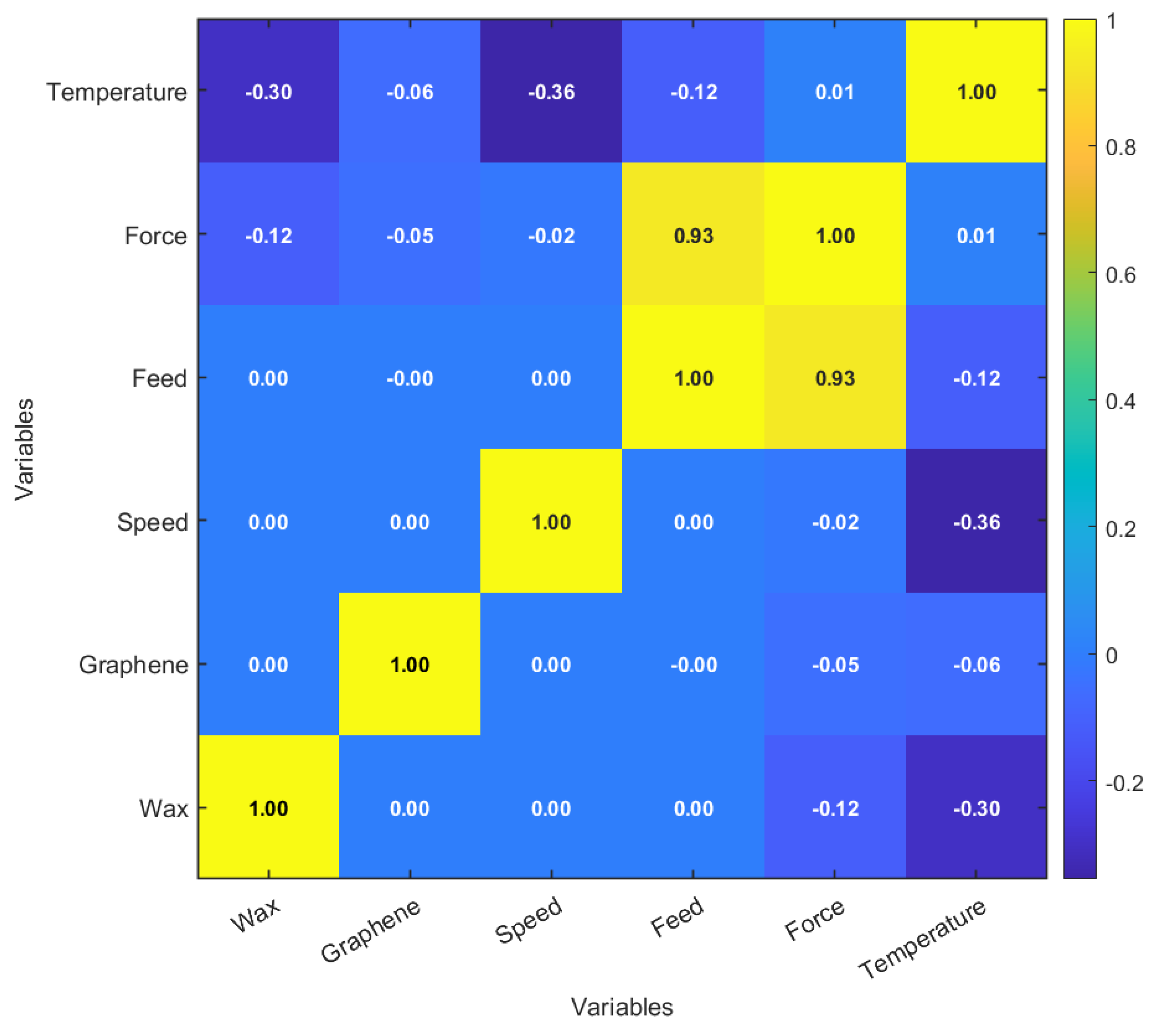
Figure 13 presents the correlation matrix between the four input parameters (wax, graphene, speed, feed) and the two measured responses (cutting force and temperature). Feed rate exhibits a very strong positive correlation with cutting force (r = 0.93), while its correlation with temperature is weak and negative (r = −0.12). Cutting speed shows a weak positive correlation with temperature (r = 0.20) and a negligible correlation with force (r = −0.02). Wax content displays weak negative correlations with both force (r = −0.12) and temperature (r = −0.30). Graphene content shows very weak negative correlations with force (r = −0.05) and temperature (r = −0.06). The correlation between force and temperature is near zero (r = 0.01), indicating no linear relationship between these two responses. All correlations among the input parameters are zero or near zero, confirming the orthogonality of the experimental design.

4. Discussion

4.1. Cutting Force

The combined experimental results and ANOVA analyses (Table 1) provide clear insight into the mechanisms governing cutting force during machining.
The dominant influence of feed rate is consistent with fundamental cutting mechanics. Increasing feed rate directly increases the uncut chip thickness, leading to higher material removal resistance and, consequently, higher cutting forces. The extremely high F-value (2131.7) obtained in Table 1 confirms that feed rate overwhelmingly controls force generation. This behavior is widely reported in the machining literature, where cutting force is primarily governed by chip load and shear deformation mechanisms [40,41].
The effect of cutting speed is comparatively weak but statistically significant. The observed non-monotonic behavior can be explained by two competing mechanisms. At low-to-intermediate speeds, increased friction and deformation rates lead to higher forces. At higher speeds, thermal softening of the material and improved chip formation can reduce cutting resistance, resulting in stabilization or slight reduction of force. This explains the relatively low F-value (3.24) despite statistical significance and is consistent with observations in composite machining studies [42].
The mean force values confirm that both wax and graphene act as effective lubricants when used individually in CFRP drilling. The 33% reduction with 1% wax alone demonstrates wax’s ability to reduce friction at the tool–chip interface and facilitate chip evacuation [43,44]. The saturation effect between 1% and 2% wax (41.0 N vs. 40.9 N) suggests the existence of a lubrication threshold, beyond which additional wax does not further reduce cutting resistance, consistent with the significant Wax:Feed interaction reported in the force ANOVA [45].
The progressive force reduction with increasing graphene content (60.9 N → 48.2 N → 39.5 N) in the absence of wax confirms graphene’s solid lubrication mechanism. Recent studies have shown that graphene-based additives form a protective tribofilm on the tool surface during CFRP drilling, reducing friction and preventing fiber–tool adhesion [46,47,48].
The most notable finding is the reversal of graphene’s effect in the presence of wax. When 2% graphene is combined with 1% or 2% wax, mean force increases by 14–16% compared to 2% graphene alone. This confirms the highly significant Wax:Graphene interaction observed in the force ANOVA (F = 103.29, Prob>F = 0). In the absence of wax, graphene’s lubricating effect dominates. However, when wax is present, the reinforcing effect of graphene on the composite matrix becomes dominant, increasing the material’s rigidity and rupture limits, thereby raising cutting resistance [49].
The ANOVA results in Table 1 provide statistical confirmation of the trends observed graphically. The dominant F-value and sum of squares for feed rate quantitatively substantiate the conclusion that feed rate governs cutting force during CFRP drilling. Recent studies on CFRP drilling have confirmed that feed rate exerts the greatest influence on thrust force and delamination, with statistical analysis demonstrating its predominant role in drilling operations [43,44]. The highly significant Wax:Graphene interaction supports the proposed transition from lubrication-dominated to reinforcement-dominated behavior: the effect of graphene cannot be considered independently of wax content. Investigations into graphene-reinforced polymer composites have shown that graphene incorporation can increase thrust force due to enhanced rupture limits, while wax-based additives have demonstrated superior performance in reducing drilling temperatures through combined lubricating and heat sink effects [45,49]. Specifically, formulations containing 2% wax achieved the lowest drilling temperatures, underscoring wax’s effectiveness as a lubricant in composite machining [45].
The non-significant Graphene:Feed interaction (Prob>F = 0.1034) indicates that the influence of graphene on cutting force is consistent across feed rates, whereas the significant Wax:Feed interaction suggests that the lubricating benefit of wax becomes more pronounced at higher feed rates. In CFRP drilling, the effectiveness of solid lubricants often increases under more severe conditions (higher feed rates) due to improved film formation and reduced fiber–tool adhesion [46].
The lack of significance for Wax:Speed and Graphene:Speed confirms that cutting speed plays only a secondary, composition-independent role within the tested range, consistent with the absence of a clear monotonic trend in Figure 6. This aligns with recent findings where cutting speed was identified as having a less pronounced effect on thrust force compared to feed rate in CFRP drilling operations [43,50]. Finally, the significant Speed:Feed interaction, albeit with a modest F-value, suggests that at some combinations of speed and feed, second-order effects (e.g., local thermal softening of the epoxy matrix or fiber pullout mechanisms) may slightly modulate cutting force during CFRP drilling.
The uncertainty values in Figure 8 quantify the repeatability of cutting force measurements. The baseline composition exhibits the highest variability (±6.56 N), which is attributed to the heterogeneous nature of unmodified fiber-reinforced polymer composites, where inconsistent fiber fracture and tool–fiber adhesion lead to fluctuating force signatures during drilling [49,51].
The progressive reduction in uncertainty observed with wax addition alone (±5.39 N at 1% wax; ±4.62 N at 2% wax) indicates that wax enhances process stability by providing consistent lubrication at the tool–chip interface. Similarly, graphene alone reduces uncertainty (±4.12–4.14 N) through the formation of a stable tribofilm on the cutting tool, which maintains low and consistent friction across repeated drilling cycles [45,46].
The 1% wax/0.25% graphene hybrid composition achieves the lowest uncertainty (±4.04 N) while also maintaining a low mean force (40.84 N). This suggests a synergistic effect at moderate concentrations: wax provides effective boundary lubrication, while graphene nanoparticles fill microscale asperities on the tool surface, creating a more uniform and durable lubricating layer compared to either additive used alone [45,52].
In contrast, the 2% wax/2% graphene composition exhibits higher mean force (45.74 N) and moderate uncertainty (±4.40 N). The force increase confirms the transition from a lubrication-dominated to a reinforcement-dominated regime at high additive concentrations. However, the uncertainty remains comparable to other hybrid compositions, indicating that while the mechanical resistance increases, the process remains stable. This is consistent with findings that excessive nanofiller content can increase composite rigidity without necessarily compromising drilling repeatability [49,51].

4.2. Temperature

The experimental results (Figure 9 and Figure 10) combined with the statistical analysis (Table 2) highlight that temperature evolution during machining is governed by a complex interaction between machining parameters and material composition.
The dominant effect of feed rate observed in Table 2 is consistent with well-established machining mechanisms. Increasing feed rate generally reduces the tool–workpiece contact time, thereby limiting heat accumulation and promoting heat evacuation through chip removal. However, the non-monotonic trends observed in Figure 9 indicate that this relationship is not purely linear. Similar behavior has been reported in recent studies on composite machining, where temperature depends on the balance between frictional heat generation and chip evacuation efficiency rather than a single dominant parameter.
The influence of cutting speed (Figure 10) is also non-monotonic. The increase in temperature at intermediate speeds (50–150 m/min) can be attributed to higher energy input and friction at the tool–chip interface. However, at higher cutting speeds (200–250 m/min), the observed stabilization or decrease in temperature suggests improved heat dissipation due to shorter contact time and faster chip removal. This behavior agrees with recent findings in composite machining, where thermal response is strongly dependent on the interplay between cutting parameters and material properties.
The mean temperature values reveal that both wax and graphene individually reduce cutting temperature, with wax showing a stronger effect (22% reduction at 1% wax) compared to graphene (18% reduction at 2% graphene). The saturation effect observed for force is also present for temperature: 1% wax alone reduces temperature to 65.1 °C, while 2% wax alone yields a similar value of 64.7 °C, indicating that additional wax beyond 1% provides minimal further thermal benefit [45].
Unlike force, hybrid compositions do not show an increase in temperature. The mean temperatures for 1% wax/2% graphene (70.2 °C) and 2% wax/2% graphene (66.9 °C) remain within the range of other wax-containing formulations (64.1–70.2 °C). This indicates that while graphene reinforces the composite and increases cutting force in the presence of wax, this reinforcement does not proportionally increase cutting temperature. The temperature response remains governed primarily by the lubricating and heat-dissipating actions of the additives rather than by the mechanical strength of the composite [53,54].
The decoupling between force and temperature is further evidenced by comparing the 2%-graphene-alone composition (39.5 N, 67.7 °C) with the 2% wax/2% graphene composition (45.7 N, 66.9 °C). Despite a 16% higher cutting force, the temperature is nearly identical (66.9 °C vs. 67.7 °C), suggesting that force and temperature are governed by different physical mechanisms during CFRP drilling: force by mechanical shearing of carbon fibers, and temperature by frictional and thermal phenomena at the tool–matrix interface [50].
The ANOVA results (Table 2) further confirm that temperature evolution cannot be attributed to independent parameter effects. The statistical significance of interaction terms indicates that the effect of each parameter depends on the levels of the others. In particular, the beneficial effects of wax and graphene are more pronounced under conditions where friction dominates (low feed rates), whereas their influence diminishes when mechanical effects become dominant.
To recap, the results demonstrate that feed rate is the most influential parameter, followed by cutting speed and wax content, while graphene exhibits a secondary but condition-dependent influence. The non-monotonic trends observed experimentally are consistent with the recent literature and emphasize the importance of considering parameter interactions when optimizing machining processes.
The uncertainty values in Figure 11 reflect the repeatability of cutting temperature measurements during CFRP drilling. The baseline composition exhibits the highest thermal variability (±2.66 °C), which is attributed to inconsistent frictional heating caused by irregular fiber–tool contact and intermittent chip evacuation in unmodified composites [49,51].
Compared to force uncertainty, temperature uncertainties are substantially smaller in magnitude (max ±2.66 °C vs. ±6.56 N). This indicates that temperature measurements are inherently more repeatable than force measurements, likely because temperature reflects integrated thermal effects over the drilling cycle, whereas force captures instantaneous mechanical fluctuations [45,52].
The 2% wax/0.25% graphene composition achieves the lowest thermal uncertainty (±1.48 °C). This contrasts with the force analysis, where the 1% wax/0.25% graphene composition had the lowest uncertainty. This suggests that thermal stability is optimized at higher wax content (2%) combined with low graphene (0.25%), whereas mechanical stability is optimized at moderate wax (1%) with low graphene. Slamani et al. [45] reported that although graphene alone slightly elevated median temperatures, it substantially reduced thermal variability during drilling, supporting the observed low uncertainties for graphene-containing compositions.
The 2%-graphene-alone composition achieves both low mean temperature (63.01 °C) and low uncertainty (±1.79 °C). This indicates that graphene’s solid lubrication mechanism not only reduces frictional heating but also provides consistent thermal performance across repeated drilling cycles. The formation of a stable graphene tribofilm on the tool surface likely minimizes fluctuations in the coefficient of friction, leading to more uniform heat generation [46,52].
Among hybrid compositions, the 1% wax/2% graphene composition exhibits the lowest mean temperature (63.34 °C) with low uncertainty (±1.59 °C). This combination achieves thermal performance comparable to 2% graphene alone (63.01 °C) while using half the graphene content. This suggests a synergistic thermal effect where wax assists in dispersing graphene and promoting uniform tribofilm formation, enhancing both heat reduction and thermal stability [45,51].
Notably, the 2% wax/2% graphene composition shows a mean temperature of 65.68 °C (±1.96 °C), which is slightly higher than the 1% wax/2% graphene composition (63.34 °C). This indicates that excessive wax content (2%) when combined with high graphene (2%) may impede heat dissipation, possibly due to the insulating effect of a thick wax layer or agglomeration of graphene nanoparticles at high concentrations [46,49].

4.3. Analysis of the Correlation Matrix

The correlation matrix confirms and quantifies the relationships observed in Figure 5 and Figure 6 and Table 1 and Table 2. The very strong positive correlation between feed rate and cutting force (r = 0.93) substantiates feed rate as the dominant mechanical factor in CFRP drilling, consistent with ANOVA findings where feed rate exhibited the highest F-value for force [43,44]. In contrast, the weak negative correlation between feed rate and temperature (r = −0.12) suggests that higher feed rates reduce thermal exposure by shortening tool–workpiece contact time, thereby limiting heat accumulation in the CFRP laminate [46].
The weak positive correlation between cutting speed and temperature (r = 0.20) aligns with the ANOVA results showing speed as a significant factor for temperature (F = 21.76, Prob>F = 0). Higher cutting speeds increase frictional heat generation at the tool–composite interface, elevating the risk of epoxy matrix thermal degradation [45,50]. However, the near-zero correlation between speed and force (r = −0.02) confirms that speed plays a secondary role in mechanical cutting resistance, consistent with the non-significant Wax:Speed and Graphene:Speed interactions observed in the force ANOVA.
The weak negative correlations of wax with force (r = −0.12) and temperature (r = −0.30) confirm wax’s dual lubricating and heat-reducing function. The stronger negative correlation with temperature (−0.30 vs. −0.12) suggests that wax’s primary benefit in CFRP drilling may be thermal mitigation rather than force reduction, likely due to its ability to form a lubricating film that reduces frictional heating [45]. Graphene shows very weak correlations with both responses, consistent with the ANOVA finding that graphene’s effect on force is highly dependent on wax content (significant Wax:Graphene interaction) rather than acting as a standalone factor [49].
Finally, the near-zero correlation between force and temperature (r = 0.01) reveals that these two responses are decoupled in CFRP drilling under the tested conditions. This indicates that high cutting forces do not necessarily translate to high temperatures, and vice versa, suggesting that force is governed primarily by mechanical shearing of carbon fibers, while temperature is dominated by frictional and thermal phenomena at the tool–matrix interface [50].

5. Conclusions

Based on the systematic investigation of CFRP drilling performance using a full factorial design of experiments with graphene and wax additives, the following conclusions are drawn:
  • Feed rate is the dominant factor controlling cutting force (F = 2131.7, r = 0.93), while temperature is governed by complex interactions between machining parameters and material composition.
  • Addition of 1% wax alone reduces mean cutting force by 33% and temperature by 22%. Addition of 2% graphene alone achieves a 35% force reduction and 18% temperature reduction. Saturation effects are observed beyond 1% wax.
  • A significant Wax:Graphene interaction exists (F = 103.29, p ≈ 0). In the absence of wax, graphene acts as an effective solid lubricant. However, when wax is present, graphene’s reinforcing effect dominates, increasing cutting force by 14–16% at 2% graphene content.
  • Force and temperature are decoupled (r = 0.01), indicating distinct physical mechanisms. Force is governed by mechanical shearing of carbon fibers, while temperature is controlled by frictional phenomena at the tool–matrix interface.
  • Optimal force stability is achieved with 1% wax and 0.25% graphene (±4.04 N). Optimal thermal stability is achieved with 2% wax and 0.25% graphene (±1.48 °C).
  • Material modification offers a viable strategy for improving CFRP machinability. However, optimal formulations require careful balancing of competing reinforcement and lubrication mechanisms.

Future Works

Based on the limitations acknowledged throughout the review process, several research directions are proposed for future investigation:
  • Hole quality assessment: Systematic investigation of hole quality, including delamination factor, surface roughness, and circularity, should be conducted to establish direct correlations with cutting forces and temperatures, as the present study focused solely on the measurement of these fundamental physical responses.
  • Microstructural analysis: Direct evidence of the proposed mechanisms should be obtained through complementary analyses, including SEM examination of machined surfaces and tool wear, Raman spectroscopy for graphene dispersion characterization, DSC/TGA for thermal property evaluation, and thermal conductivity measurements. Detailed microscopic analysis of hole morphology, including fiber fracture mechanisms, matrix deformation, and the influence of ply layering on cutting force and temperature reduction, is recommended to validate the hypothesized lubrication and reinforcement mechanisms.
  • Tool wear and tribofilm formation: Extended drilling tests should be carried out to evaluate tool wear progression and tribofilm formation, as the current study maintained consistent tool conditions to isolate additive effects.
  • Optimization of additive concentrations: Systematic exploration of intermediate graphene concentrations between 0.25% and 2% combined with wax levels from 0% to 1% is advised to determine optimal formulations that enhance lubrication while limiting reinforcement drawbacks.
  • Machine learning for process optimization: The extensive dataset collected (675 tests) offers a basis for creating machine learning models to predict cutting forces and temperatures for real-time process control.
  • Industrial validation: Validation under diverse industrial conditions, including different tool geometries, cooling strategies, and workpiece configurations, would confirm the applicability of these laboratory findings to practical manufacturing settings.

Author Contributions

Conceptualization, M.S. and J.-F.C.; methodology, M.S. and C.K.; software, M.S.; validation, M.S. and J.-F.C.; formal analysis, M.S.; investigation, M.S.; resources, J.-F.C.; data curation, C.K.; writing—original draft preparation, M.S.; writing—review and editing, M.S. and J.-F.C.; visualization, M.S.; supervision, J.-F.C.; project administration, J.-F.C.; funding acquisition, J.-F.C. All authors have read and agreed to the published version of the manuscript.

Funding

This research was funded by the Natural Sciences and Engineering Research Council of Canada (NSERC) grant number #RGPIN-2017-04305.

Data Availability Statement

Data available upon request.

Conflicts of Interest

The authors declare no conflicts of interest. The funders had no role in the design of the study; in the collection, analyses, or interpretation of data; in the writing of the manuscript; or in the decision to publish the results.

Abbreviations

The following abbreviations are used in this manuscript:
CFRPCarbon fiber-reinforced polymer
DOEDesign of experiments
ANOVAAnalysis of variance
FF-value
Sum Sq.Sum of squares
d.f.Degrees of freedom
Mean Sq.Mean square

References

  1. Davidson, M.; Graunke, R.; Green, A.; Haelsig, H.; Heinemann, L.; Antony Jose, S.; Menezes, P.L. Carbon Fiber-Reinforced Polymer Matrix Composites: Processing, Properties, and Applications. Fibers 2026, 14, 29. [Google Scholar] [CrossRef]
  2. Houari, A.; Siguerdjidjene, H.; Chellil, A.; Amroune, S.; Slamani, M.; Louhichi, B.; Alawad, M.A. Experimental and numerical study of the vibration behavior of a CFRP plates repaired with a bonded composite patch and its adhesive. J. Vib. Eng. Technol. 2026, 14, 64. [Google Scholar] [CrossRef]
  3. Slamani, M.; Chatelain, J.-F. Kriging versus Bezier and regression methods for modeling and prediction of cutting force and surface roughness during high speed edge trimming of carbon fiber reinforced polymers. Measurement 2020, 152, 107370. [Google Scholar] [CrossRef]
  4. Slamani, M.; Chatelain, J.-F.; Hamedanianpour, H. Influence of machining parameters on surface quality during high speed edge trimming of carbon fiber reinforced polymers. Int. J. Mater. Form. 2019, 12, 331–353. [Google Scholar] [CrossRef]
  5. Ozkan, D.; Gok, M.S.; Karaoglanli, A.C. Carbon fiber reinforced polymer (CFRP) composite materials, their characteristic properties, industrial application areas and their machinability. In Engineering Design Applications III: Structures, Materials and Processes; Springer: Berlin/Heidelberg, Germany, 2020; pp. 235–253. [Google Scholar]
  6. Karataş, M.A.; Gökkaya, H. A review on machinability of carbon fiber reinforced polymer (CFRP) and glass fiber reinforced polymer (GFRP) composite materials. Def. Technol. 2018, 14, 318–326. [Google Scholar] [CrossRef]
  7. Slamani, M.; Chatelain, J.-F. Issues and challenges in robotic trimming of CFRP. In Proceedings of the 2015 12th International Conference on Informatics in Control, Automation and Robotics (ICINCO), Colmar, France, 21–23 July 2015; pp. 400–405. [Google Scholar]
  8. Tima, T.S.; Geier, N. Machining-Induced Burr Suppression in Edge Trimming of Carbon Fibre-Reinforced Polymer (CFRP) Composites by Tool Tilting. J. Manuf. Mater. Process. 2024, 8, 247. [Google Scholar] [CrossRef]
  9. Ali, M.; Xiang, L.; Yue, D.; Liu, G. Assessment of cutting performance of cemented tungsten carbide drills in drilling multidirectional T700 CFRP plate. J. Manuf. Mater. Process. 2018, 2, 43. [Google Scholar] [CrossRef]
  10. Urresti-Espilla, I.; Telleria, M.; Llanos, I.; López de Lacalle, L.N. CFRP drilling–induced defect investigation: Part quality characterization and process monitoring approach. Int. J. Adv. Manuf. Technol. 2025, 1–14. [Google Scholar] [CrossRef]
  11. Fernández-Pérez, J.; Domínguez-Monferrer, C.; Miguélez, M.H.; Cantero, J.L. Analysis of tool wear and hole delamination for large-diameter drilling of CFRP aircraft fuselage components: Identifying performance improvement drivers and optimization opportunities. J. Manuf. Mater. Process. 2023, 7, 76. [Google Scholar] [CrossRef]
  12. Elhadi, A.; Amroune, S.; Slamani, M.; Köklü, U.; Arslane, M.; Grine, M.; Louhichi, B. Evaluation of thrust force, delamination and hole quality during drilling an alfa-jute/epoxy natural fiber hybrid composite. J. Compos. Mater. 2026, 60, 303–320. [Google Scholar] [CrossRef]
  13. Elhadi, A.; Slamani, M.; Arslane, M.; Amroune, S.; Köklü, U.; Alrasheedi, N.; Louhichi, B. Machine Learning-Based Predictive Modeling of Machining Forces and Temperatures in Alumina-Reinforced Jute/Epoxy Functional Composites. Int. J. Adv. Manuf. Technol. 2026. [Google Scholar] [CrossRef]
  14. Ge, J.; Fu, G.; Almeida, J.H.S., Jr.; Jin, Y.; Sun, D. Thermal effect in CFRP machining: Temperature field characteristics, heat generation mechanism and thermal damage management. Compos. Struct. 2025, 356, 118845. [Google Scholar] [CrossRef]
  15. Yashiro, T.; Ogawa, T.; Sasahara, H. Temperature measurement of cutting tool and machined surface layer in milling of CFRP. Int. J. Mach. Tools Manuf. 2013, 70, 63–69. [Google Scholar] [CrossRef]
  16. Xu, J.; Geier, N.; Shen, J.; Krishnaraj, V.; Samsudeensadham, S. A review on CFRP drilling: Fundamental mechanisms, damage issues, and approaches toward high-quality drilling. J. Mater. Res. Technol. 2023, 24, 9677–9707. [Google Scholar] [CrossRef]
  17. Espilla, I.U.; Telleria, M.; Llanos, I.; de Lacalle, L.N.L. Experimental study on drilling machinability of CFRP: Tool geometry, hole quality and process monitoring analysis. Procedia CIRP 2025, 131, 80–85. [Google Scholar] [CrossRef]
  18. Wang, F.; Chen, P.; Fu, R.; Bi, G. Effects of cutting speed and fiber orientation on tool wear and machining quality in milling CFRP with PCD cutter. Proc. Inst. Mech. Eng. Part B J. Eng. Manuf. 2023, 237, 1364–1375. [Google Scholar] [CrossRef]
  19. Rodríguez, A.; Calleja, A.; de Lacalle, L.L.; Pereira, O.; Rubio-Mateos, A.; Rodríguez, G. Drilling of CFRP-Ti6Al4V stacks using CO2-cryogenic cooling. J. Manuf. Process. 2021, 64, 58–66. [Google Scholar] [CrossRef]
  20. Huang, X.; Qi, X.; Boey, F.; Zhang, H. Graphene-based composites. Chem. Soc. Rev. 2012, 41, 666–686. [Google Scholar] [CrossRef]
  21. Barakat, M.; Reda, H.; Harmandaris, V. A semi-continuum multiscale model of graphene-based polymer nanocomposites: Mechanical characterization. Comput. Mater. Sci. 2025, 257, 113968. [Google Scholar] [CrossRef]
  22. Mohan, M.M.; Bandhu, D.; Mahesh, P.V.; Thakur, A.; Deka, U.; Saxena, A.; Abdullaev, S. Machining performance optimization of graphene carbon fiber hybrid composite using TOPSIS-Taguchi approach. Int. J. Interact. Des. Manuf. (IJIDeM) 2025, 19, 3171–3182. [Google Scholar] [CrossRef]
  23. Tiwari, S.K.; Sahoo, S.; Wang, N.; Huczko, A. Graphene research and their outputs: Status and prospect. J. Sci. Adv. Mater. Devices 2020, 5, 10–29. [Google Scholar] [CrossRef]
  24. Dananjaya, V.; Abeykoon, C. Thermo-mechanical and electrical properties of graphene nanoplatelets reinforced recycled polypropylene nanocomposites. Int. J. Lightweight Mater. Manuf. 2025, 8, 374–384. [Google Scholar] [CrossRef]
  25. Mashhadzadeh, A.H.; Mashhadzadeh, A.H.; Golman, B.; Spitas, C.; Faroughi, S.A.; Kostas, K.V. Recent advancements in mechanical properties of graphene-enhanced polymer nanocomposites: Progress, challenges, and pathways forward. J. Mol. Graph. Model. 2025, 135, 108908. [Google Scholar] [CrossRef] [PubMed]
  26. Kumar, J.; Verma, R.K. Experimental investigation for machinability aspects of graphene oxide/carbon fiber reinforced polymer nanocomposites and predictive modeling using hybrid approach. Def. Technol. 2021, 17, 1671–1686. [Google Scholar] [CrossRef]
  27. El-Ghaoui, K.; Chatelain, J.-F.; Ouellet-Plamondon, C. Effect of graphene on machinability of glass fiber reinforced polymer (GFRP). J. Manuf. Mater. Process. 2019, 3, 78. [Google Scholar] [CrossRef]
  28. Kubiak, T.; Ciesielski, K. Thermo-Responsive Wax Millicapsules as Lubricating Agents Carriers. Lubricants 2025, 13, 439. [Google Scholar] [CrossRef]
  29. Ameli Kalkhoran, S.N.; Vahdati, M.; Zhang, Z.; Yan, J. Influence of wax lubrication on cutting performance of single-crystal silicon in ultraprecision microgrooving. Int. J. Precis. Eng. Manuf.-Green Technol. 2021, 8, 611–624. [Google Scholar] [CrossRef]
  30. Ronchi, R.M.; de Lemos, H.G.; Nishihora, R.K.; Cuppari, M.G.D.V.; Santos, S.F. Tribology of polymer-based nanocomposites reinforced with 2D materials. Mater. Today Commun. 2023, 34, 105397. [Google Scholar] [CrossRef]
  31. Matanda, B.K.; Patel, V.; Joshi, U.; Joshi, A.; Oza, A.D.; Prakash, C.; Prasad, R. A systematic review on machining of nanocomposite: Present scenario and Future Prospects. Int. J. Interact. Des. Manuf. (IJIDeM) 2024, 18, 5271–5282. [Google Scholar] [CrossRef]
  32. Shah, R.; Kausar, A.; Muhammad, B.; Shah, S. Progression from graphene and graphene oxide to high performance polymer-based nanocomposite: A review. Polym.-Plast. Technol. Eng. 2015, 54, 173–183. [Google Scholar] [CrossRef]
  33. Sridharan, V.; Raja, T.; Muthukrishnan, N. Study of the effect of matrix, fibre treatment and graphene on delamination by drilling jute/epoxy nanohybrid composite. Arab. J. Sci. Eng. 2016, 41, 1883–1894. [Google Scholar] [CrossRef]
  34. Chhetri, S.; Adak, N.C.; Samanta, P.; Mallisetty, P.K.; Murmu, N.C.; Kuila, T. Interface engineering for the improvement of mechanical and thermal properties of covalent functionalized graphene/epoxy composites. J. Appl. Polym. Sci. 2018, 135, 46124. [Google Scholar] [CrossRef]
  35. Kamar, N.T.; Hossain, M.M.; Khomenko, A.; Haq, M.; Drzal, L.T.; Loos, A. Interlaminar reinforcement of glass fiber/epoxy composites with graphene nanoplatelets. Compos. Part A Appl. Sci. Manuf. 2015, 70, 82–92. [Google Scholar] [CrossRef]
  36. Pathak, A.K.; Borah, M.; Gupta, A.; Yokozeki, T.; Dhakate, S.R. Improved mechanical properties of carbon fiber/graphene oxide-epoxy hybrid composites. Compos. Sci. Technol. 2016, 135, 28–38. [Google Scholar] [CrossRef]
  37. Slamani, M.; Chatelain, J.-F.; Hamedanianpour, H. Comparison of two models for predicting tool wear and cutting force components during high speed trimming of CFRP. Int. J. Mater. Form. 2015, 8, 305–316. [Google Scholar] [CrossRef]
  38. Slamani, M.; Gauthier, S.; Chatelain, J.-F. A study of the combined effects of machining parameters on cutting force components during high speed robotic trimming of CFRPs. Measurement 2015, 59, 268–283. [Google Scholar] [CrossRef]
  39. Álvarez-Alcón, M.; Lopez de Lacalle, L.N.; Fernández-Zacarías, F. Multiple sensor monitoring of CFRP drilling to define cutting parameters sensitivity on surface roughness, cylindricity and diameter. Materials 2020, 13, 2796. [Google Scholar] [CrossRef]
  40. Fulemová, J.; Sklenička, J.; Hnátík, J.; Gombár, M.; Sýkora, J.; Povolný, M.; Lukáš, A. Cutting Force Mechanisms in Drilling 90MnCrV8 Tool Steel: ANOVA and Theoretical Insights. J. Manuf. Mater. Process. 2026, 10, 38. [Google Scholar] [CrossRef]
  41. Sun, S.; Brandt, M.; Dargusch, M. Characteristics of cutting forces and chip formation in machining of titanium alloys. Int. J. Mach. Tools Manuf. 2009, 49, 561–568. [Google Scholar] [CrossRef]
  42. Sheikh-Ahmad, J.Y. Machining of Polymer Composites; Springer: Berlin/Heidelberg, Germany, 2009. [Google Scholar] [CrossRef]
  43. Baraheni, M.; Soudmand, B.H.; Amini, S.; Bayat, M.; Ebrahimi, A. Burr constitution analysis in ultrasonic-assisted drilling of CFRP/nano-graphene via experimental and data-driven methodologies. J. Reinf. Plast. Compos. 2025, 44, 602–619. [Google Scholar] [CrossRef]
  44. Hamdy, K.; Ali, S. Trade-Off for CFRP Quality Using High-Frequency Ultrasonic-Assisted Drilling Under Lubricant Absence. Lubricants 2025, 13, 241. [Google Scholar] [CrossRef]
  45. Slamani, M.; Chatelain, J.-F.; Jammel, S. The effect of lubricant and nanofiller additives on drilling temperature in GFRP composites. J. Compos. Sci. 2025, 9, 558. [Google Scholar] [CrossRef]
  46. Wang, T.; Liu, S.; Meng, Z.; Hu, K.; Luo, B.; Zhang, K. Investigation on Hole Quality and Tool Wear of CFRP Drilling with Cryogenic-Minimal Quantity Lubrication. Polym. Compos. 2025, 46, 15666–15683. [Google Scholar] [CrossRef]
  47. Gonzalez, H.; Pereira, O.; López de Lacalle, L.N.; Calleja, A.; Ayesta, I.; Muñoa, J. Flank-milling of integral blade rotors made in Ti6Al4V using Cryo CO2 and minimum quantity lubrication. J. Manuf. Sci. Eng. 2021, 143, 091011. [Google Scholar] [CrossRef]
  48. Pereira, R.B.D.; Gómez-Escudero, G.; Calleja-Ochoa, A.; Pereira, O.; González-Barrio, H.; Brandão, L.C.; de Lacalle, L.N.L. Hybrid cryogenic/MQL helical milling for hole-making of Inconel 718. Results Eng. 2025, 26, 104776. [Google Scholar] [CrossRef]
  49. Mishra, B.P.; Mishra, D.; Panda, P.; Sahoo, P.K.; Behera, R.K. Experimental and numerical analysis of thrust force and torque during drilling of bi-directional graphene reinforced GF/epoxy polymer nano composite. Matériaux Tech. 2025, 113, 101. [Google Scholar] [CrossRef]
  50. Zhang, X.; Cao, S.; Wu, C.; Huang, W.; Yang, M.; Liu, Y.; Tang, Y. Dynamic force modeling and delamination analysis of thin-walled CFRPs by ultrasonic vibration assisted drilling. J. Manuf. Process. 2025, 150, 24–37. [Google Scholar] [CrossRef]
  51. Harsha, M.S.; Kumar, V.S.H.; Prasad, M.B.; Muthukumar, C.; Thiagamani, S.M.K.; Ayrilmis, N.; Krishnasamy, S.; Ng, L.F.; Jesuarockiam, N. Synergistic effects of titanium dioxide and graphene nanofillers on delamination and thrust forces in machining glass fiber reinforced nanocomposites. Sci. Rep. 2025, 15, 7539. [Google Scholar] [CrossRef]
  52. Slamani, M.; Jammel, S.; Chatelain, J.-F. Effects of wax and graphene concentrations on cutting force in drilling GFRP composites: A comprehensive study using a full factorial design of experiments. J. Compos. Mater. 2025, 59, 2779–2797. [Google Scholar] [CrossRef]
  53. Guduru, R.K.; Gupta, A.A. Consumer applications of graphene and its composites. In Handbook of Consumer Nanoproducts; Springer: Berlin/Heidelberg, Germany, 2022; pp. 471–500. [Google Scholar]
  54. Mamidi, V.K.; Xavior, M.A. A review on selection of cutting fluids. J. Res. Sci. Technol. 2012, 1, 3–19. [Google Scholar]
Figure 1. Fabrication sequence of additive-modified CFRP composites: (a) graphene and wax, (b) additive–epoxy mixing in an ice bath, (c) oven treatment, (d) homogenized wax/graphene–resin mixture, (e) resin and hardener, (f) carbon fibers, (g) CFRP plate preparation, (h) hydraulic pressing and consolidation, (i) laminate, (j) laminate cutting, and (k) plate finishing.
Jmmp 10 00184 g001
Figure 2. Weight fraction combinations of graphene and wax in CFRP laminate formulations.
Jmmp 10 00184 g002
Figure 3. Full factorial experimental design combining material formulations and drilling parameters for CFRP composites.
Jmmp 10 00184 g003
Figure 4. Drilling test configuration with instrumentation for cutting force and temperature measurement, (a) cutting tool, (b) drilling fixture.
Jmmp 10 00184 g004
Figure 5. Representative thrust force (Fz) signal during drilling of the baseline CFRP composite (0% wax, 0% graphene) at 50 m/min and 0.08 mm/rev, showing the distinct phases of drilling.
Jmmp 10 00184 g005
Figure 6. Evolution of cutting force with feed rate.
Jmmp 10 00184 g006
Figure 7. Variation in cutting force with cutting speed.
Jmmp 10 00184 g007
Figure 8. Influence of wax and graphene on mean cutting force and mean temperature.
Jmmp 10 00184 g008
Figure 9. Impact of wax and graphene concentrations on cutting force with uncertainty.
Jmmp 10 00184 g009
Figure 10. Temperature as a function of feed rate.
Jmmp 10 00184 g010
Figure 11. Temperature as a function of speed.
Jmmp 10 00184 g011
Figure 12. Effect of wax and graphene concentrations on temperature with uncertainty analysis.
Jmmp 10 00184 g012
Figure 13. Correlation matrix.
Jmmp 10 00184 g013
Table 1. ANOVA results for cutting force.
SourceSum Sq.d.f.Mean Sq.FProb>F
Wax2445.221222.689.790
Graphene844.22422.131.000
Speed176.7444.23.240.0137
Feed116,098.4429,024.62131.70
Wax:Graphene5625.441406.3103.290
Wax:Speed173.8821.71.600.13
Wax:Feed1997.98249.718.340
Graphene:Speed112.2814.01.030.4156
Graphene:Feed184.6823.11.690.1034
Speed:Feed684.21642.83.140.0001
Error2178.516013.6
Total130,521224
Table 2. Analysis of variance (ANOVA) for cutting temperature.
SourceSum Sq.d.f.Mean Sq.FProb>F
Wax2682.421341.2120.180
Graphene414.12207.033.120.0471
Speed5785.341446.3321.760
Feed566.74141.682.130.0793
Wax:Graphene3455.44863.8413.000
Wax:Speed292.3836.530.550.8175
Wax:Feed724.7890.591.360.2166
Graphene:Speed1416.38177.032.660.0090
Graphene:Feed1026.88128.341.930.0587
Speed:Feed2472.516154.532.330.0041
Error10,633.516066.46
Total29,469.9224
Disclaimer/Publisher’s Note: The statements, opinions and data contained in all publications are solely those of the individual author(s) and contributor(s) and not of MDPI and/or the editor(s). MDPI and/or the editor(s) disclaim responsibility for any injury to people or property resulting from any ideas, methods, instructions or products referred to in the content.