
Article

Aluminum–Calcium Alloy for Laser Powder Bed Fusion
by
Nikolay V. Letyagin
1,2,*,
Torgom K. Akopyan
1,2,
Pavel A. Palkin
2,
Ivan S. Solovev
1,2,
Leonid V. Fedorenko
2,
Stanislav V. Chernyshikhin
1,2,
Ekaterina O. Babenko
2 and
Ruslan Yu. Barkov
2
1
Department of Materials Science, Moscow Polytechnic University, 38, Bolshaya Semyonovskaya Str., Moscow 107023, Russia
2
Department of Metal Forming, National University of Science and Technology MISIS, 4 Leninsky Prospekt, Moscow 119049, Russia
*
Author to whom correspondence should be addressed.
J. Manuf. Mater. Process. 2026, 10(5), 148; https://doi.org/10.3390/jmmp10050148
Submission received: 23 March 2026 / Revised: 22 April 2026 / Accepted: 24 April 2026 / Published: 26 April 2026
(This article belongs to the Special Issue Advances in Powder Bed Fusion Technologies)

Abstract

Developing specialized aluminum alloys for additive processes is a strategic approach to achieve both strength and mass reduction in high-performance products. The prospects of the new metallic powder composition of Al3Ca2La2Mn0.4Zr alloy for laser powder bed fusion (LPBF) have been studied. It has been found that the best printing mode, providing a more than 99.0% density of the specimens, includes substrate heating to 150 °C and printing with a 350 W laser power, a 1500 mm/s printing speed, a 0.08 mm hatch distance and a 0.03 mm layer thickness (energy density 97.2 J/mm2). The optimal printing mode provides for the following strength parameters: UTS 366 ± 5 MPa, yield strength 223 ± 8 MPa, and relative elongation 30 ± 3%. The alloy exhibits high thermal stability for the structure and its properties. Annealing temperatures below 300 °C have no critical effect on the alloy hardness: the hardness decreases by less than 10% of the initial 110 ± 3 HV. At 350 °C, the hardness decreases by 25.5% (82 ± 2 HV); 100 h exposure at 350 °C reduces the UTS to 265 ± 2 MPa and the yield strength to 178 ± 10 MPa, while maintaining the relative elongation of 29 ± 2%.

1. Introduction

Currently, one of the most rapidly developing trends in advanced digital metallurgical production is layerwise final product synthesis (additive technology), delivering a unique set of product properties. Apart from the accompanying processes, e.g., computer-assisted design (CAD), the above technology allows rapid synthesis of products exhibiting the best fit to the computer model, minimum material consumption, and only minor limitations on the shape of the final product. Laser powder bed fusion is considered to be one of the most promising options for the layerwise synthesis of parts for use in the aerospace, robotics, power and automotive industries [1,2].
Since additive manufacturing includes the melting and accelerated solidification of microscopic material volumes (by analogy with welding processes, where the casting properties determine the application of the respective materials), conventional aluminum–silicon eutectic-based casting alloys (silumines Al12Si, AlSi10Mg, AlSi20, AlSi7Mg, and AlSi9Cu3) [3,4,5,6,7,8,9,10,11] have become the main materials used in advanced 3D growth technologies for layerwise powder synthesis. However, the presence of silicon as the main alloying element imposes a number of fundamental limitations on the additive alloys of that group. For example, the low thermal stability of the silicon phase causes an almost complete loss of strength during even short-term heating at above 300 °C as a result of the degradation of the LPBF-synthesized fine-grained eutectic structure [6,7]. The incompatibility of the silicon phase with small Zr and Sc additions, along with the limitation on the heat treatment temperature, significantly limits the potential for improving the strength properties of the alloys through heterogenizing annealing or conventional heat treatment, including high-temperature heating to quenching.
An effective solution to the above problems is a transition to new alloying systems. The most widely used alternative alloying systems are aluminum alloys with nickel [12,13,14], cerium [15,16,17,18,19,20,21,22,23,24], and copper [25,26,27,28]. The solidification of the above alloys during rapid cooling involves the formation of a heterogeneous structure with a high volume fraction of fine-grained intermetallic phases, which deliver tangible strengthening. Another advantage of the above alloys is the possibility of complex alloying and strengthening due to the formation of a supersaturated solid solution of transition metals, e.g., manganese, zirconium, and scandium, in aluminum [12,17,18,29]. Furthermore, zirconium and scandium provide for significant strengthening during the annealing of alloys containing most of the above-listed eutectic-forming elements.
One should however bear in mind that the above alloys have significant drawbacks due to the presence of expensive rare-earth metals, nickel and copper additions, which increase the density of the alloys, etc.
In the authors’ opinion, an integrated solution to the above disadvantages, taking into account the requirement to keep adhering to the abovementioned existing alloying principles, would be a transition to new aluminum alloys based on alumocalcium eutectics, which are light, processible, and economically viable [30,31,32,33,34,35].
The new group of alumocalcium alloys have shown good performance for casting [30], deformation treatment [30], welding [31], and the fabrication of parts with various functional and protective coatings [32]. Special competitive advantages of the above alloys are provided by the low weight and cheapness of calcium as an alloying element, high volume fraction of the Al4Ca intermetallic phase, which reaches ~30 wt.% in a ~7.6 wt.% Ca eutectic alloy, and the characteristics of the above intermetallics that provide for the high plastic and corrosion properties.
The most widely used alumocalcium alloy compositions include Al-Ca-Fe-Si [36], Al-Ca-Mn [37], Al-Ca-Cu-Mn [33], Al-Ca-La-Mn [30], Al-Ca-Ni-Mn [38], and Al-Zn-Mg-Ca [39], which can be furthermore synthesized at high concentrations of Fe and Si as the main impurity elements in aluminum. The processibility of the above alloys for conventional metallurgical processes remains high, allowing, among other options, the hybridization of the item fabrication process, aimed at improving the marginality of the final products. One of the most vivid examples described in earlier reports is the Al-3Ca-2La-1Mn(Zr) alloy which is considered promising both for casting processes and deformation treatment, and, on the other hand, for “wrought product–wrought product” and “as-cast product–wrought product” welding models [30,31]. Competitors to the new alloy are both the most widely used conventional alloys, such as A356, and the wrought 6xxx series alloys, which are inferior to it in both the properties and the processibility, partially due to long-term homogenizing annealing operations [30,33].
However, despite the predicted high processibility of the above alumocalcium alloys for additive technologies, there has been no integrated research (except basic processibility estimates) aimed at the development of metal-powder compositions of multicomponent alumocalcium alloys.
In the literature, 10 × 10 × 10 mm3 Al-10 wt. % Ca alloy cubic specimens have been first synthesized by selective laser melting [40] (the powder was obtained using gas atomization). The specimens grown with a 300 W laser power and a 1200 mm/s printing speed have high quality and density and no cracks. The hardness of the specimens is within 178–188 HV. Other authors [41] studied the effect of up to 1 wt.% Ca additions on the structure and properties of Al-Ce-Mn-Zr system-based alloys. The alloys exhibit a good range of mechanical and plastic properties upon annealing (UTS about 350 MPa, relative elongation 16%), and significant heat resistance (yield strength about 60 MPa at 350 °C). In recent studies, the team that authored this work suggested the Al-5Ca-3Cu-1.5Mn-0.4Zr [35] composition (wt.%), additionally containing transition metals, for which the effect of high solidification rate during the laser remelting of thin rolled sheets on the structure and hardness evolution during subsequent long-term high-temperature annealing was studied. It was shown that remelting produces a fine eutectic structure with a particle size of ~200 nm. The hardness of the alloy was ~96 HV, and its high thermal stability during long-term 400 °C annealing was specifically mentioned.
Thus, this work focuses on investigating the structure and properties of aluminum–calcium alloys, specifically the Al3Ca2La2Mn0.4Zr alloy, fabricated via selective laser melting under various processing conditions.

2. Materials and Methods

The Al3Ca2La2Mn0.4Zr alloy was prepared in an electric resistance furnace using 99.9% pure aluminum and lanthanum, supplemented by Al-10% Ca, Al-20% Mn, and Al-15% Zr binary master alloys. Upon reaching a full melt of the primary components, the alloy was gravity-cast into a graphite mold featuring a 40 mm diameter cavity. Casting was performed at approximately 800 °C, achieving a cooling rate of roughly 10 K/s. The resulting microstructure and chemical composition (wt.%) are detailed in Figure 1 and Table 1.
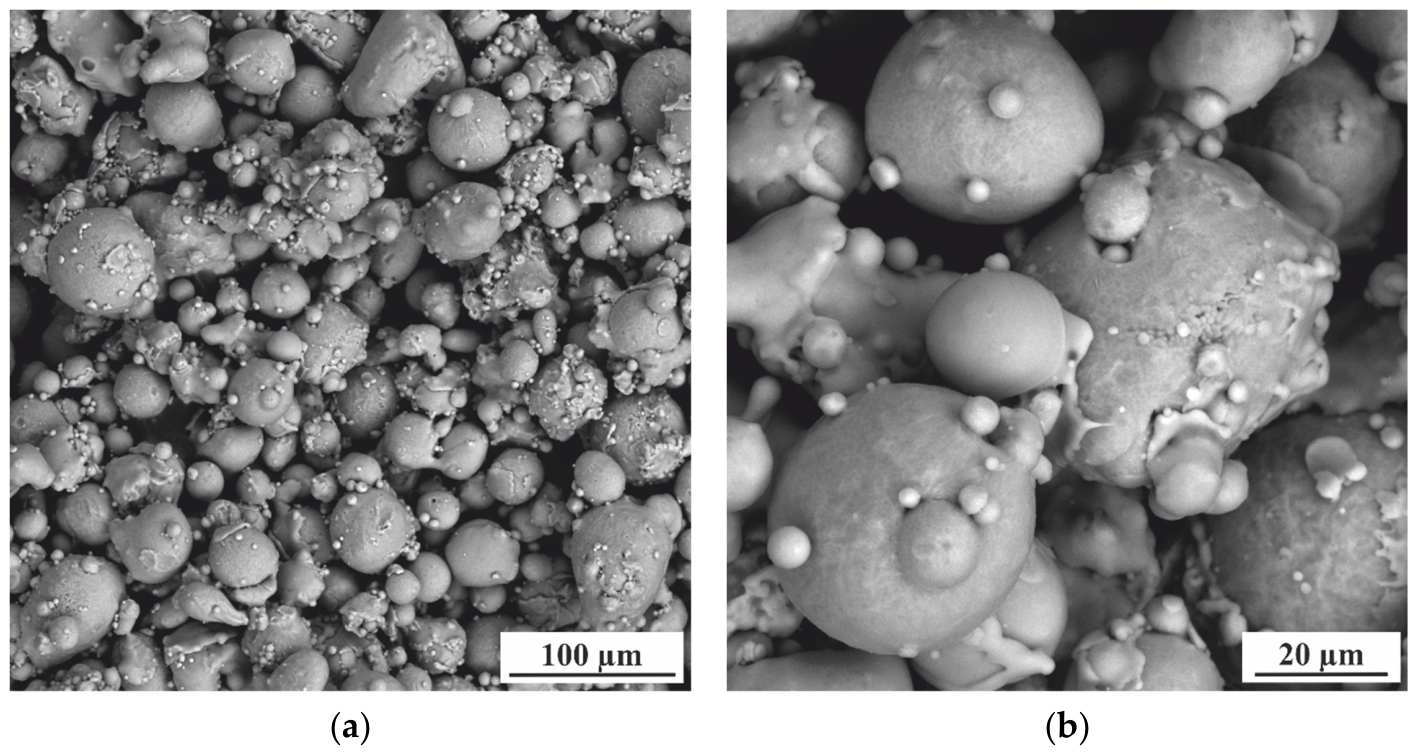
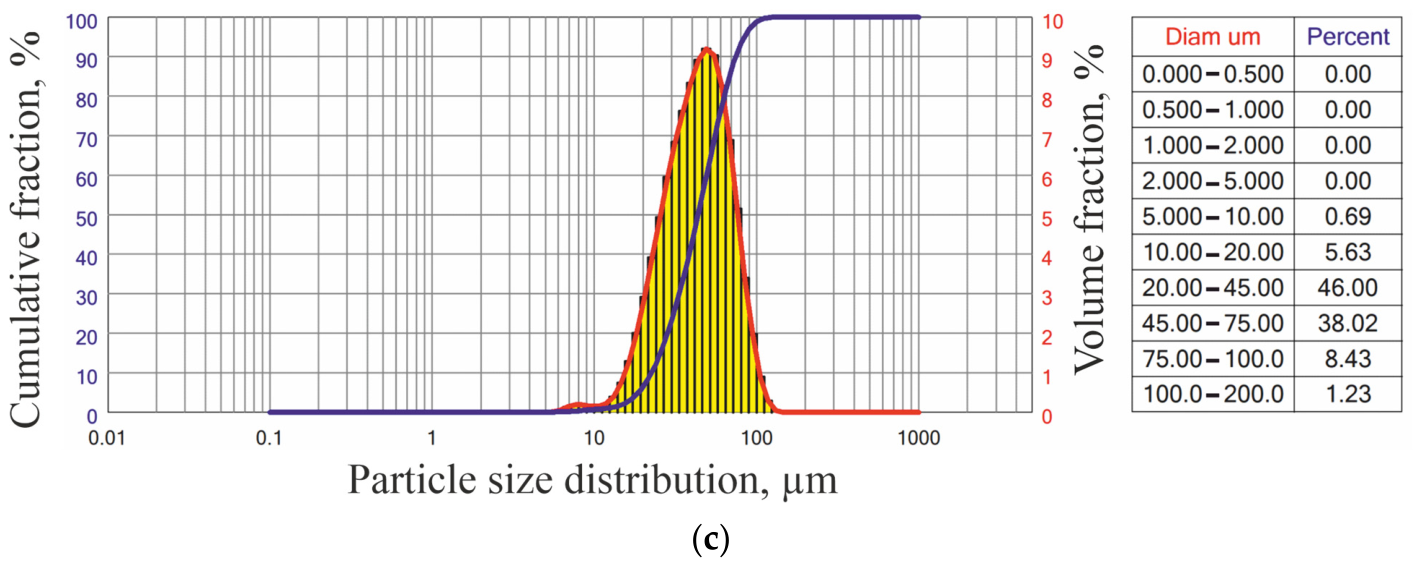
The powder of the experimental Al3Ca2La2Mn0.4Zr alloy was produced from the initial cast ingot using the Gas Atomization technique to ensure high particle sphericity. The chemical composition (Table 1) and powder morphology (Figure 2a,b) were characterized via scanning electron microscopy (SEM) using a TESCAN Vega 3 system (TESCAN, Brno, Czech Republic) equipped with an Oxford Aztec (Oxford Instruments, High Wycombe, UK) energy-dispersive X-ray spectrometer for electron microprobe analysis (EMPA). Granulometric analysis was conducted using a Fritsch Analysette 22 laser particle sizer (Fritsch, Idar-Oberstein, Germany). The particle size distribution (PSD), shown in Figure 2c, is unimodal with the following characteristic percentiles: d10 = 21.6 µm, d50 = 36.7 µm, and d90 = 57.2 µm.
Specimens were produced via L-PBF using an AddSol D50 machine (AddSol, Moscow, Russia) equipped with a 400 W fiber laser (IPG Photonics, Marlborough, MA, USA). Printing was performed in an argon environment on a substrate preheated to 150 °C. Tensile dogbones (gauge length 10 mm, diameter 3 mm) were built in the vertical orientation using a cross-hatching strategy. Guided by prior research [40], the process parameters included a layer thickness of 0.03 mm, a hatch spacing of 0.08 mm, and varied combinations of laser power (300–350 W) and scanning speed (600–1500 mm/s).
Metallographic analysis was performed using a Carl Zeiss Axio Observer A1m optical microscope (Zeiss, Oberkochen, Germany). The system was employed to evaluate porosity on polished surfaces and to characterize the microstructure on surfaces etched with Keller’s reagent. For processing and analyzing scientific images, including porosity, public domain software ImageJ2 was used.
Also, the microstructure and elemental composition of the alloys were characterized using scanning electron microscopy (SEM, TESCAN VEGA 3, TESCAN, Brno, Czech Republic) equipped with electron microprobe analysis (EMPA, Oxford Aztec, Oxford Instruments, High Wycombe, UK), as well as transmission electron microscopy (TEM, JEM-2100, Tokyo, Japan). Specimen preparation involved a combination of mechanical and electrolytic polishing. For TEM analysis, thin foils were prepared via ion thinning using a Struers system (Struers, Copenhagen, Denmark) and examined at an accelerating voltage of 200 kV.
X-ray diffraction (XRD) measurements were performed at room temperature using a DRON-4 diffractometer with Co-Kα radiation. The data were processed using a specialized software package [42]. XRD patterns were recorded in a 2θ range from 10° to 130° with a step size of 0.1° and an exposure time of 5 s per step.
The defect characterization of the specimens was performed prior to testing using a nanoVoxel 1000 system (Sanying Precision Instruments, Tianjin, China) at a resolution of 7.51 μm/voxel. The micro-computed tomography (CT) scanning involved 1440 projections at 130 kV and 50 μA, with an exposure of 0.75 s per frame. VoxelStudio software (Sanying Precision Instruments, Tianjin, China) was utilized for image reconstruction, followed by pore analysis and data segmentation in VG Studio Max (Volume Graphics, Heidelberg, Germany).
SNOL furnaces were employed for the heat treatment of the printed specimens, ensuring a temperature control precision of 3 °C.
The Vickers microhardness was evaluated using a DUROLINE MH-6 machine (Metkon, Bursa, Turkey). The measurements were conducted under a 1 N load and a 5 s dwell time. To obtain representative values, a minimum of ten measurements were taken for each sample.
Tensile testing was carried out on an Instron 5569 system (Norwood, MA, USA) in accordance with GOST 1497-2023 [43] at a strain rate of 0.001 s−1. A video extensometer was employed to monitor deformation, and at least two samples were evaluated per condition for statistical consistency. Post-mortem fractographic analysis was conducted using SEM at magnifications ranging from 200× to 5000× to characterize the failure mechanisms.

3. Results

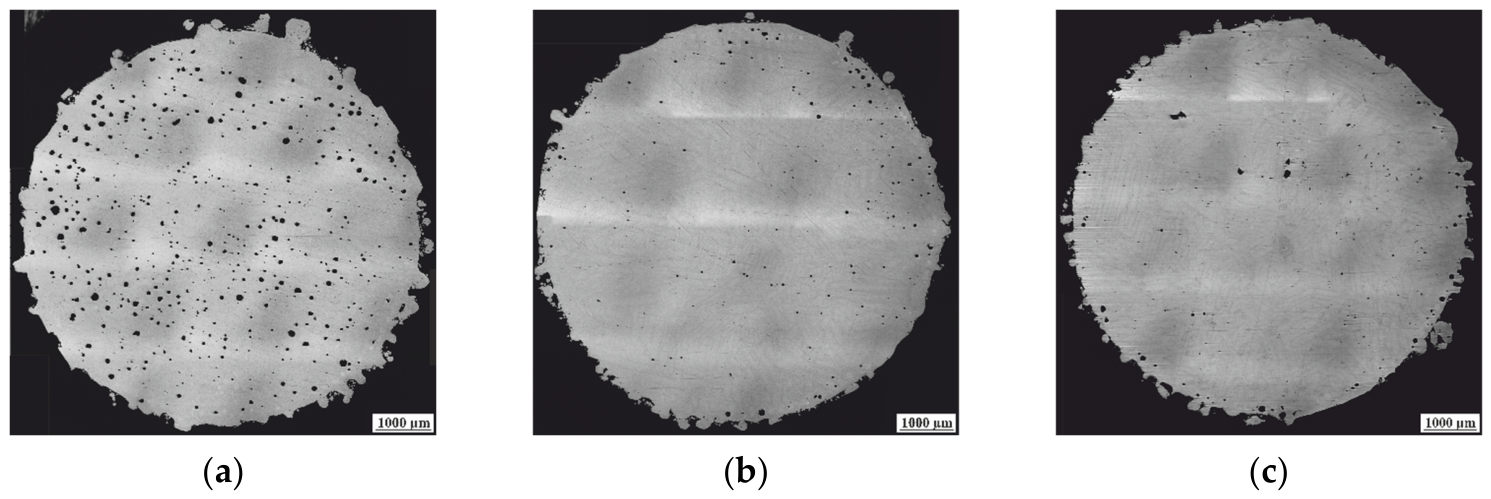
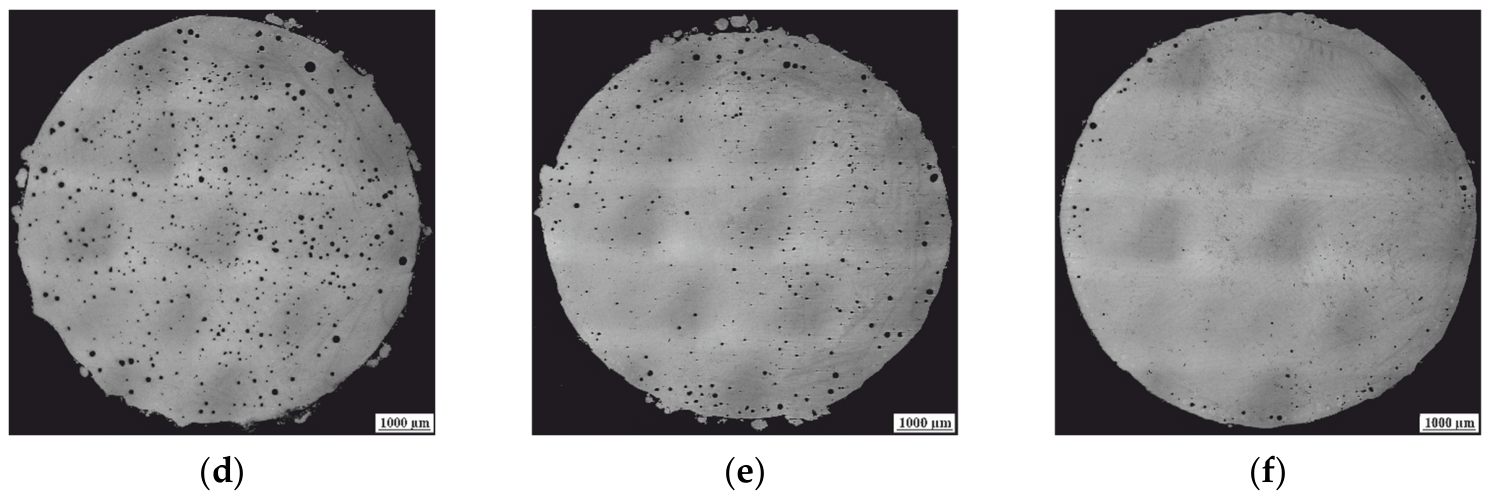
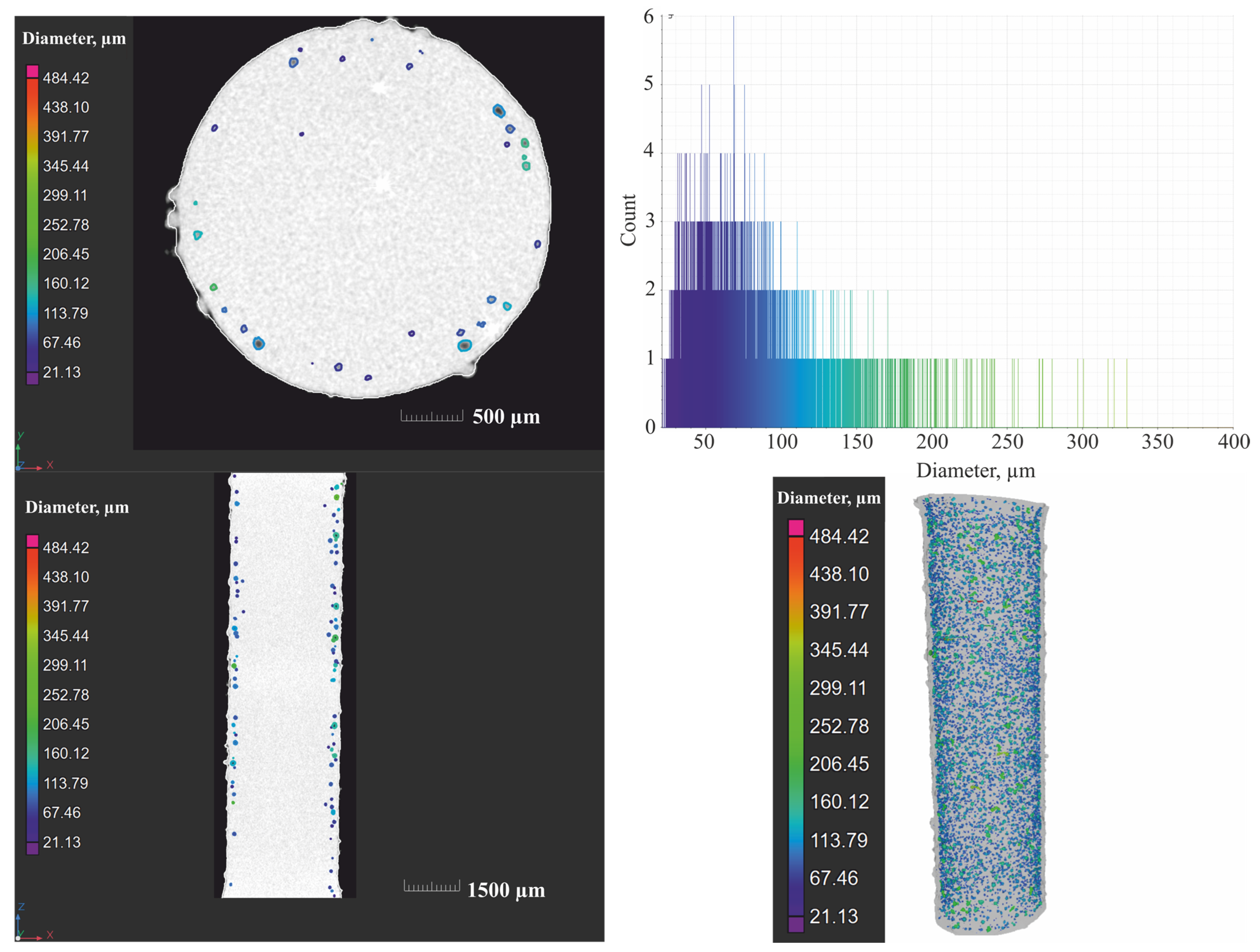
This study focuses on optimizing the printing parameters for new alloys, prioritizing crack-free structures and minimal porosity. As indicated in Table 2, a significant improvement in relative density is observed when the energy density is reduced by fine-tuning the laser power and scanning speed. Optimal printing conditions for Al3Ca2La2Mn0.4Zr alloy are achieved by maintaining energy density below 100 J/mm3, specifically using a laser power of 350 W and a scanning speed of 1500 mm/s. Other fixed parameters include a layer thickness of 0.03 mm and a hatch distance of 0.08 mm. According to metallographic analysis (Figure 3), specimens produced using the aforementioned parameters exhibit a relative density of 99.4%. Figure 4 presents the micro-CT results for samples fabricated under optimal LPBF conditions, illustrating the pore distribution across longitudinal and transverse cross-sections. The pore volume fraction for samples printed at 350 W, 1500 mm/s, and 0.08 mm was 0.9–1.0%. This result aligns with the porosity values obtained via metallography. The observed pores were primarily spherical, with sizes distributed between 10 and 100 μm. Simultaneously, the majority of the porosity is localized at the periphery of the specimens. The microhardness of the optimized samples reaches 110 ± 3 HV, which is 1.7 times higher than that of the cast sample (66 ± 2 HV).
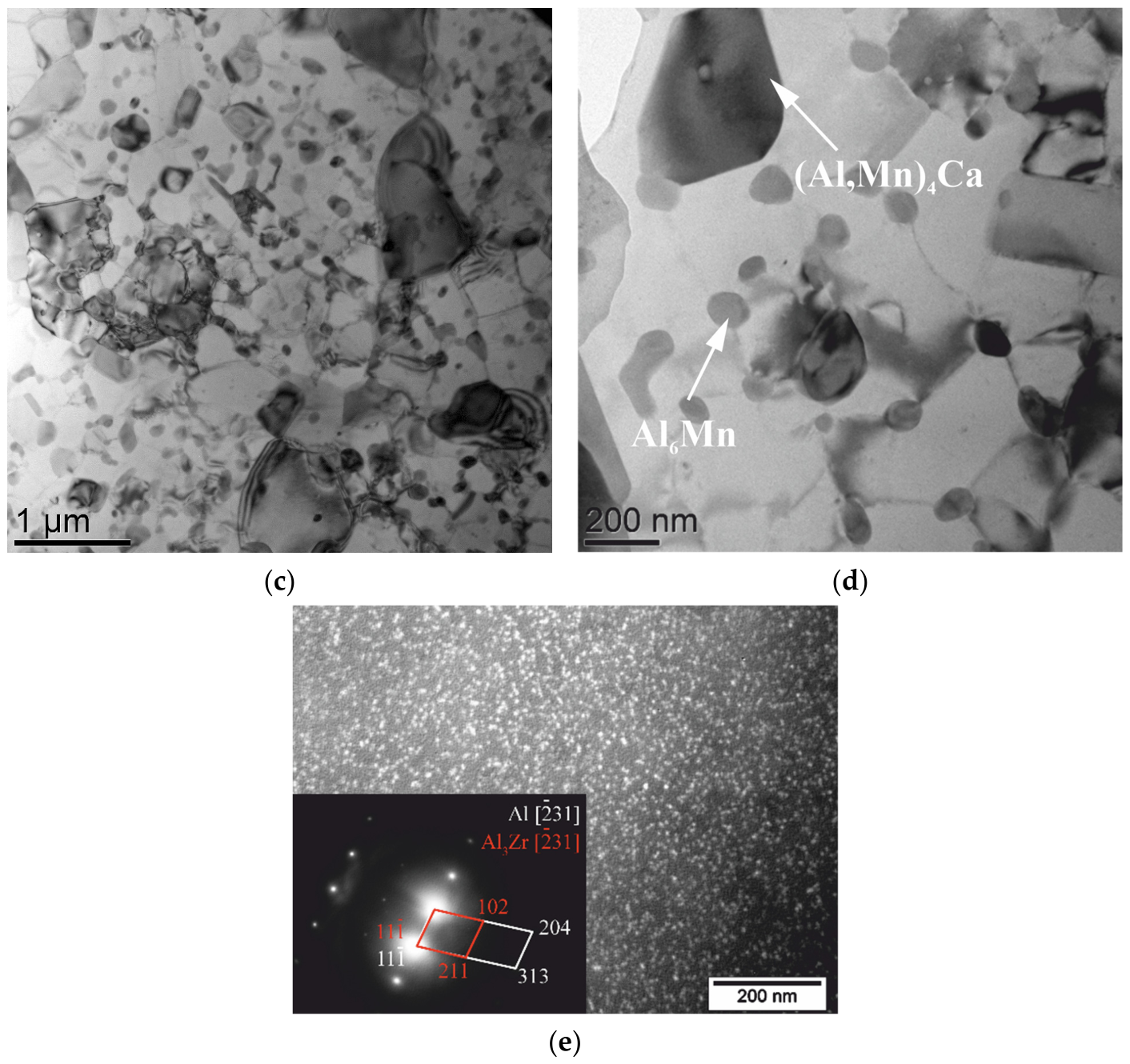
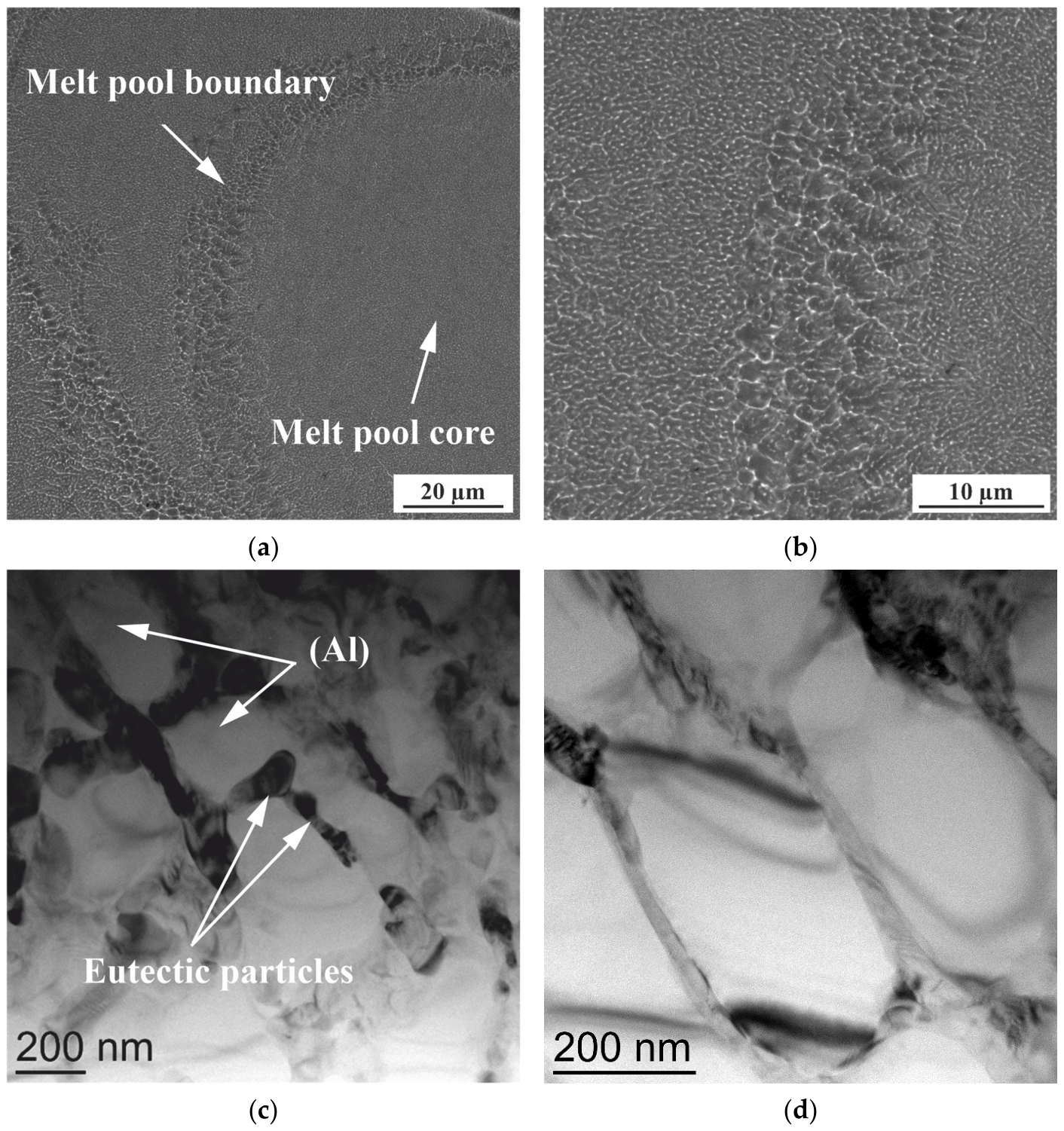
The SEM microstructure of the alloy after selective laser melting is shown in Figure 5a,b. The eutectic features quite a fine structure, in which discrete submicron-sized particles can only be resolved at the melt pool boundary. This zone forms due to the thermal impact during the melting of each new layer with the earlier solidified one, analogous to the melting zone in melt welding processes. The TEM structural image of the alloy after LPBF is shown in Figure 5c,d. One can see well-resolved slightly elongated dendrites of the aluminum solid solution with lateral sizes of about ~250–350 nm and longitudinal sizes of about 350–500 nm. The dendrites are decorated by thin veins of eutectic origin particles having lateral sizes of ~100–150 nm. Thus, one can conclude that LPBF produces nanometer-sized structural features in the alloy, which, taking into account the high content of the eutectic phase, should lead to a significant increase in the hardness and strength parameters of the material.
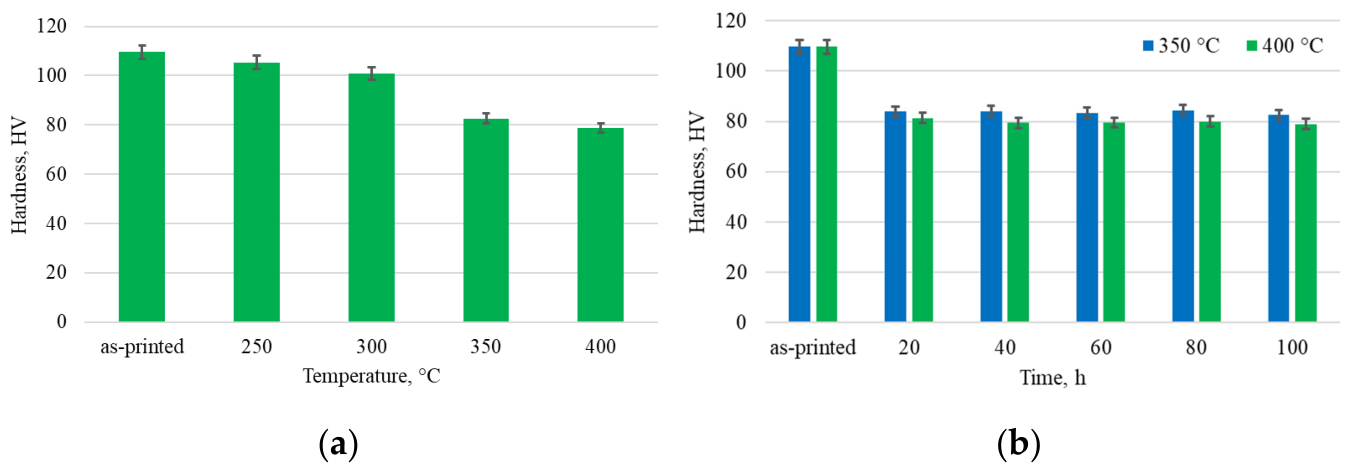
The specimens synthesized in the optimal selective laser melting mode were subjected to stepwise annealing in the 250–400 °C range with a 3 h step duration. Figure 6a shows that annealing temperatures of up to 300 °C do not exert any critical effect on the hardness of the alloy. The hardness reduction is within 10% of the initial 110 ± 3 HV level. Further increase in the annealing temperature leads to a dramatic decline in the hardness. At 350 °C, the hardness reduction is 25.5%, reaching 82 ± 2 HV. At 400 °C, the hardness declines by 28.2% from the initial level (79 ± 2 HV vs. 110 ± 3 HV). Then, isothermal annealing (Figure 6b) is carried out for 100 h with 20 h steps at 350 and 400 °C. In the first 20 h, the hardness declines dramatically by 23.5–26.5% from the initial level. Further annealing at 350 °C stabilizes the hardness at 84 ± 2 HV, whereas annealing at 400 °C leads to a further decrease in the hardness to 79 ± 2 HV vs. 110 ± 3 HV in the initial state, the reduction being about 28.2%.
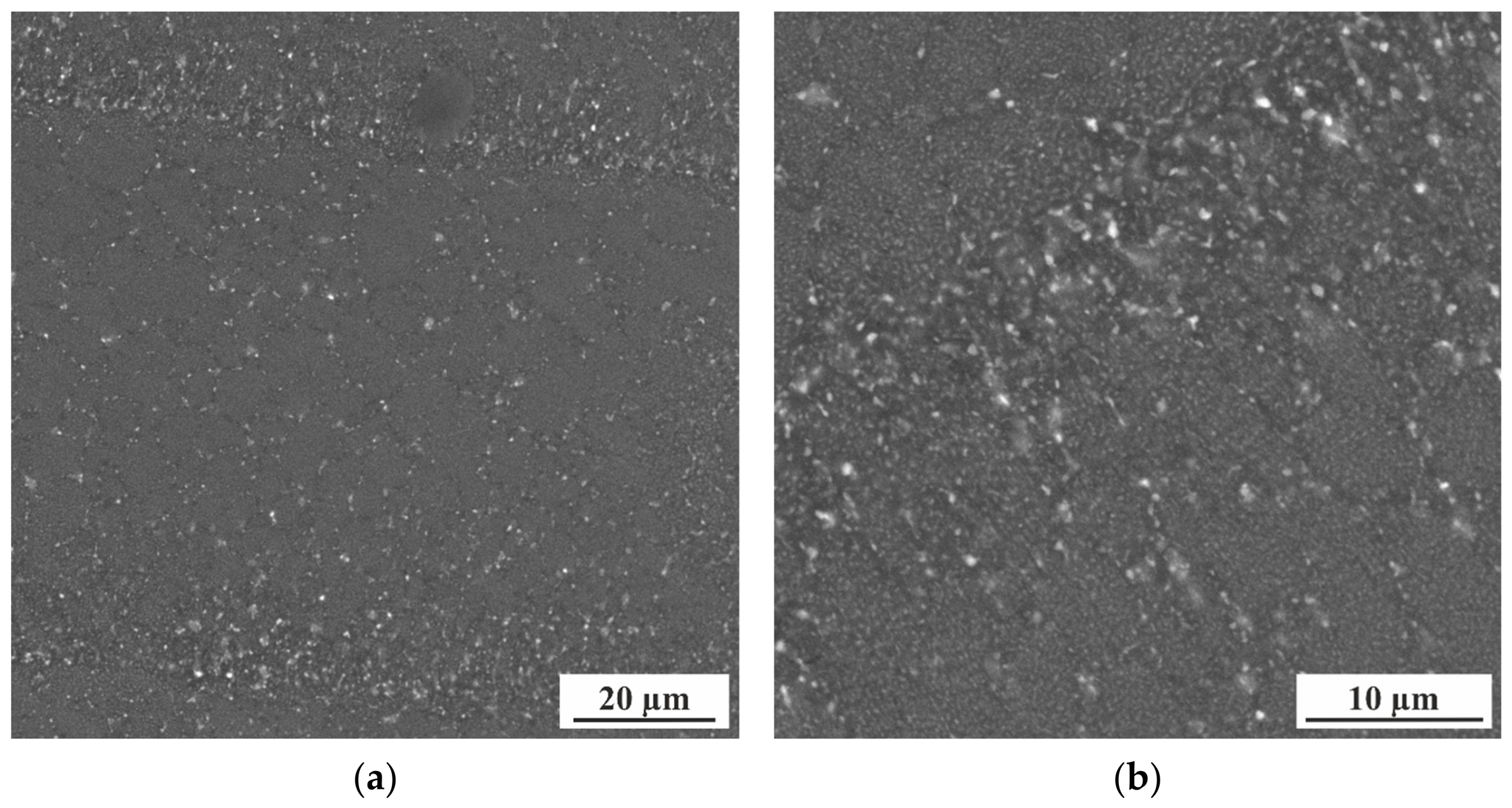
The microstructure of the alloy after annealing at 350 °C/100 h is shown in Figure 7a,b. It can be seen that, despite the long annealing time at a relatively high temperature, most of the eutectic structure remains ultrafine-grained. At the same time, there is a local coarsening of the eutectic structure along the interface between the initial alloy baths, where, as noted above, the structure is considerably coarser, even after LPBF, due to accompanying thermal impacts (Figure 7b).
TEM structural data for the alloy in the same condition after annealing at 350 °C/100 h is shown in Figure 7c,d. It can be seen that, as compared with the initial state after LPBF (Figure 5c,d), when the eutectic particles, in fact, form a whole reinforcing framework, in the voids that are filled with the aluminum solid solution, annealing destroys that framework as a result of developing fragmentation processes. Indeed, one can observe coarsened eutectic phase particles, sized up to 600 nm, and discrete particles with an average size of 150–200 nm, having nearly spherical shapes and concentrated in large quantities at the grain boundaries (Figure 7d). The grain size is therefore stabilized by the above particles at 400–800 nm.
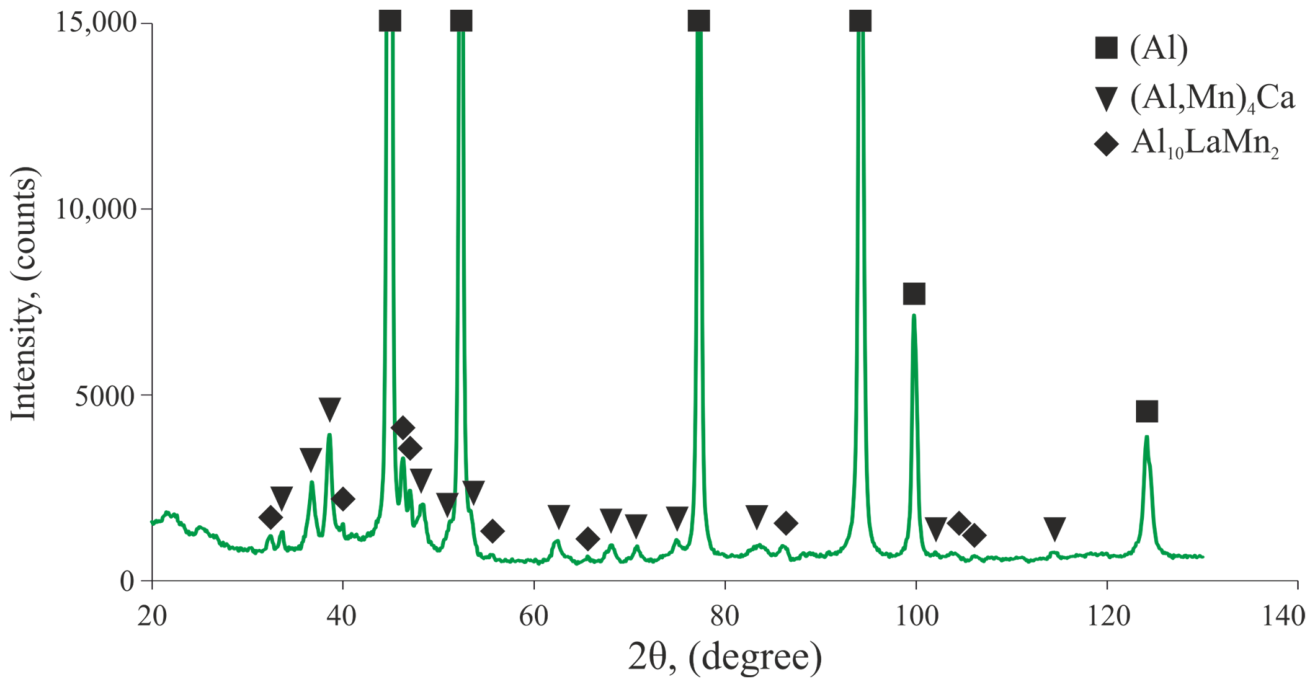
According to the XRD data (Figure 8 and Table 3), the microstructure of the Al3Ca2La2Mn0.4Zr alloy (wt.%) after annealing at 350 °C for 100 h contains the (Al, Mn)4Ca phase with a volume fraction of ~6.8%, and the Al10LaMn2 phase (~1.4%) in equilibrium with the aluminum solid solution. A TEM analysis of the annealed Al3Ca2La2Mn0.4Zr alloy confirms the presence of spherical Al6Mn particles, approximately 100–150 nm in size (Figure 7d). Additionally, fine 15 nm dispersoids, identified as the Al3Zr–L12 phase, are observed within the primary α-Al matrix (Figure 7e). These observations align with thermodynamic calculations (ThermoCalc), which predict that the dissolution of 1.4 wt.% Mn and 0.35 wt.% Zr in (Al) results in the formation of approximately 5.2 vol.% Al6Mn (avg. diameter ~150 nm) and 0.6 vol.% L12-type phase (avg. diameter ~15 nm) at 350 °C, respectively. Thus, the volume fraction of the secondary phases is at a level of 14%.
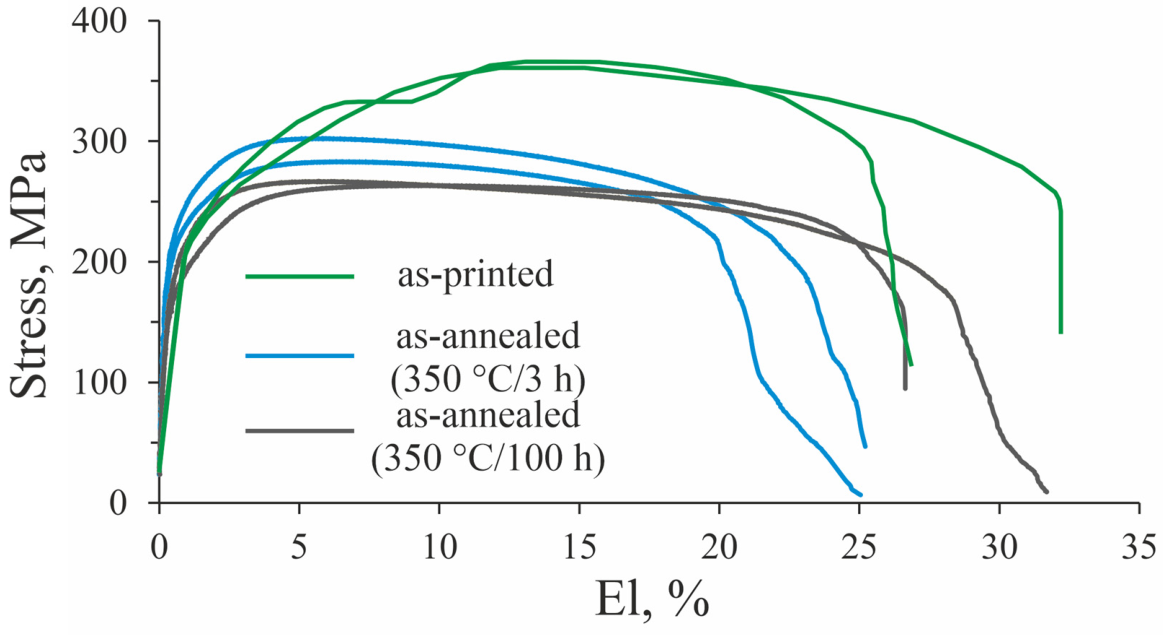
Table 4 summarizes the mechanical properties of the specimens obtained using selective laser melting, both in the initial state and after isothermal annealing in different modes. The initial properties of the as-printed specimens are as follows: the UTS, yield strength, and relative elongation are 366 ± 5 MPa, 223 ± 8 MPa, and 30 ± 3%, respectively. After annealing at 350 °C for 3 h, the UTS decreases significantly to 294 ± 8 MPa, the decrease being 19.6% of the initial strength. The yield strength remains at almost the same level, while the relative elongation decreases by 16%, reaching 25 ± 1% vs. 30 ± 3% in the initial state. The further exposure of the specimens for up to 100 h leads to a stable decrease in the strength properties: UTS decreases by 27.5% from the initial level, reaching 265 ± 2 MPa, and the yield strength declines by 20.1%, reaching 178 ± 10 MPa. The relative elongation increases to the initial values. Figure 9 shows the strength curves illustrating the above-listed data.
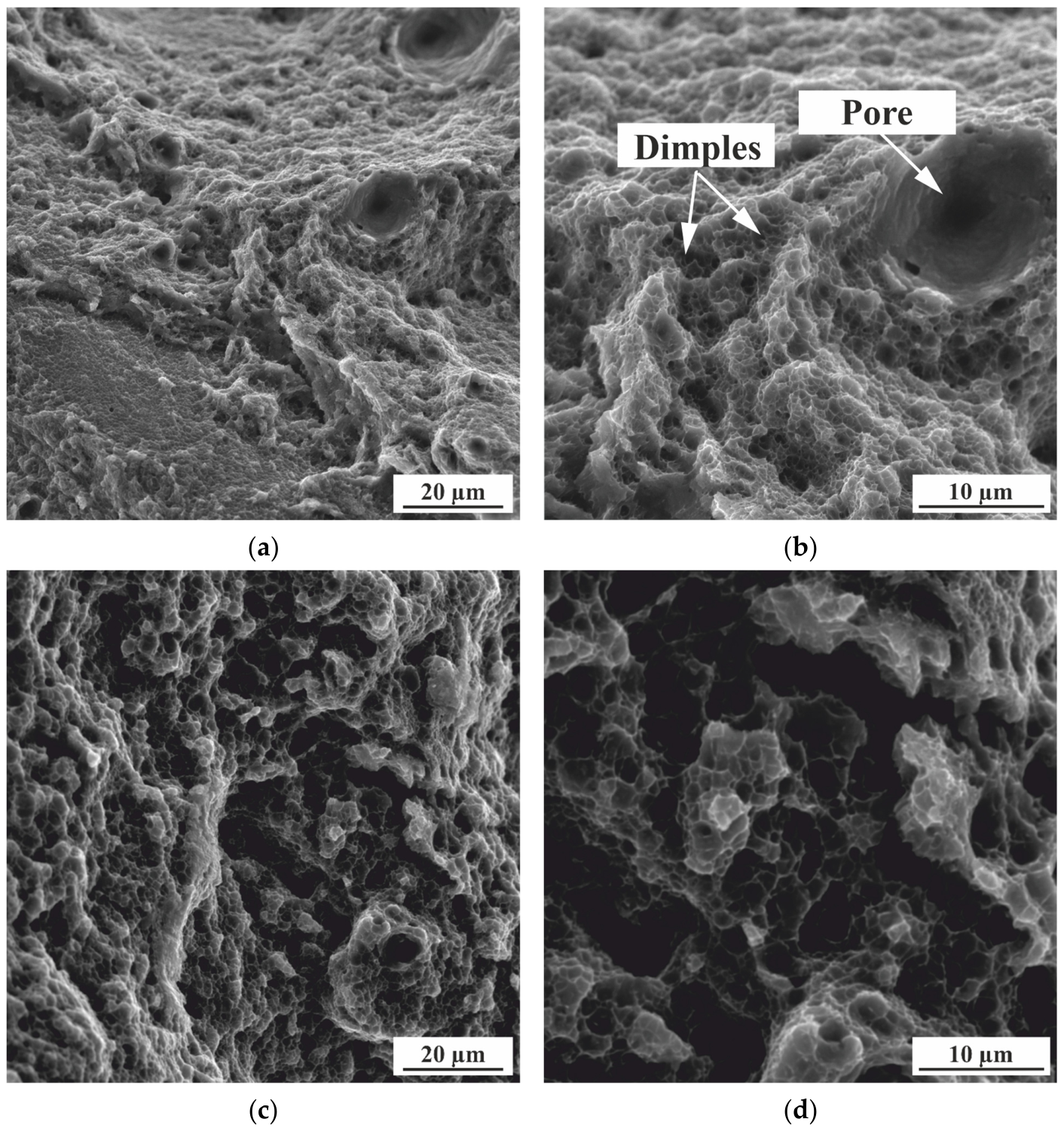
Figure 10 illustrates the fracture morphology of L-PBF Al3Ca2La2Mn0.4Zr tensile specimens in both as-printed and as-annealed conditions. While the fractures appear generally uniform, minor porosity is evident (Figure 10a,b), which may slightly compromise the alloy’s mechanical performance. Both the as-printed and 350 °C/100 h annealed samples exhibit characteristic ductile fracture features, marked by numerous dimples. However, annealing leads to a more heterogeneous fracture structure, with dimples becoming notably shallower and smaller compared to those in the initial printed state. These changes result from limited grain growth during the annealing process, the development of additional second-phase particles, and the precipitation/coarsening of phases along grain boundaries. However, the size of the secondary phases, their uniform distribution, and the slight enlargement of the grain structure itself, as can be seen in the TEM results, only add to the elongation.

4. Discussion

The results of the studies show that, during specimen manufacturing by selective laser melting, the mechanical properties of the test alumocalcium alloy are significantly improved in comparison with the as-cast state, due to the high solidification rates that are typical of the process and provide for the formation of a fine structure. Table 5 shows the mechanical properties of alloys in different technological states. The UTS of the new alloy is 1.65 times that of the as-cast alloy [30], having a similar composition; the yield strength is 1.28 times higher, and the relative elongation is 5.4 times greater. As compared to the as-deformed alloy [44] specimens, the UTS is 1.27 times higher, and the relative elongation is 5.4 times greater. Notably, this work confirmed the excellent processability of the tested alloy across all metallurgical (casting and deformation) and additive manufacturing processes. This suggests strong potential for hybrid shaping using the additive manufacturing–casting–wrought product’ model, provided that current limitations regarding weld junctions between alloys in different states are overcome [45,46]. Comparable as-printed properties can be achieved for binary alloys containing ~10 wt.% Ce (expensive REM) [22], but their UTS and relative elongation would be far lower. One should also note that the properties of the as-printed specimens obtained in this work are close to those of the latest developed Al3Ce0.9Ca1.9Mn1.2Zr [41]-type alloys, but the content of the expensive REM is lower by up to 1%. There is furthermore a potential for improving the strength properties of the new alloy by increasing the Zr concentration in the material. For example, the Al3Ce0.9Ca1.9Mn1.2Zr alloy of a close design (high fraction of eutectic coupled with solid solution strengthening), which has a 3-fold higher Zr content, exhibits a 23.6% higher UTS, a 46.1% higher yield strength, and a 32.7% lower relative elongation. The latter change in the properties is associated both with the relaxation of the printing-induced stress and with the decomposition of the aluminum solid solution, causing the formation of dispersoids that greatly improve the strength properties.
While the traditional AlSi10Mg alloy [47] exhibits slightly better mechanical properties (within 10%), its elongation is 4.5 times lower than that of the new Al3Ca2La2Mn0.4Zr composition. This superior ductility suggests substantial potential for further compositional optimization and property enhancement for new alumocalcium alloys.
A typical feature of the test alumocalcium alloys is their thermal stability at high temperatures. For example, upon isothermal aging at up to 300 °C, the hardness of the alloy decreases by within 10% of the initial level. By way of comparison, the newly developed silumine [6] exhibits comparable thermal stability only at within 250 °C. Further increase in temperature to 275 °C leads to a drop in the hardness by up to 17.5% of the initial figures. For the AlSi10Mg [11] alloy, an increase in temperature to 300 °C causes a drop in the hardness by up to 35%. Comparable dependences are also observed for the Al-20Si alloy [7]. For the herein presented Al3Ca2La2Mn0.4Zr alloy, the size of discrete eutectic particles after aging at 400 °C is within 600 nm vs. the initial 150 nm, whereas the size of the silicon particles for the Al-20Si alloy reaches 1.3 mm vs. the initial 500 nm.

5. Conclusions

In this study, the possibilities of a new group of high-tech alumocalcium alloys of the Al-Ca-La-Mn-Zr system were studied using LPBF technology. The specimens were investigated in terms of the relative density, microstructure, and heat resistance at 250–400 °C for 3 to 100 h, as well as mechanical properties. Regarding the present results, the main conclusions are as follows:
(1)
The optimal LPBF process conditions providing minimal porosity (the volume fraction of pores being 0.9–1.0%) of the manufactured specimens are as follows: laser power 350 W, scanning speed 1500 mm/s, hatch spacing 80 μm, and layer thickness 30 μm.
(2)
The microstructure of the as-grown specimens features an extremely fine structure, where discrete submicron-sized particles can only be resolved at the alloy bath edge. Analysis of the fine structure revealed well-resolvable slightly elongated dendrites of the aluminum solid solution with lateral sizes of about ~250–350 nm and longitudinal sizes of about 350–500 nm. The dendrites are decorated by thin veins of eutectic origin particles having lateral sizes of ~100–150 nm. Long-term isothermal annealing at 350 °C/100 h showed that most of the eutectic structure remains ultrafine-grained. There is a local coarsening of the eutectic structure along the interface between the initial alloy baths. TEM structural analysis showed that, as compared with the initial state after LPBF, when the eutectic particles, in fact, form a whole reinforcing framework, annealing destroys that framework as a result of developing fragmentation processes. One can observe coarsened eutectic phase particles, sized up to 600 nm, and discrete particles with an average size of 150–200 nm having nearly spherical shapes and concentrated in large quantities at the grain boundaries. The grain size is stabilized by the above particles at 400–800 nm.
(3)
The alloy exhibits high thermal stability. Annealing temperatures of below 300 °C have no critical effect on the alloy hardness: the hardness decreases to within 10% of the initial hardness (110 ± 3 HV). At 350 °C, the hardness decreases by 25.5% (82 ± 2 HV).
(4)
The optimal printing mode provides for the following strength parameters: UTS 366 ± 5 MPa, yield strength 223 ± 8 MPa, and relative elongation 30 ± 3%. Further, 100 h exposure at 350 °C reduced the UTS to 265 ± 2 MPa and the yield strength to 178 ± 10 MPa, keeping the relative elongation values at the same level of 29 ± 2%.
Thus, the LPBF prospects of the new Al3Ca2La1.5Mn0.4Zr alloy were demonstrated for different printing modes. The results underscore the viability of Al-Ca alloys for 3D printing, while pointing to the need for the extensive development of alloy grades and the fine-tuning of processing conditions. Further work based on the data obtained will include the LPBF of AlCaLaMnZr alloy compositions at increased scanning speeds for studying the structure and properties of the manufactured samples, analyzing possible ways to increase their strength properties, and investigating the fatigue performance of parts manufactured from the samples.

Author Contributions

Conceptualization, N.V.L., T.K.A.; Data curation, P.A.P., N.V.L.; Investigation, L.V.F., S.V.C., I.S.S., P.A.P., E.O.B., R.Y.B.; Methodology, N.V.L., T.K.A.; Writing—original draft, N.V.L.; Writing—review and editing, T.K.A.; Visualization, N.V.L.; Project administration, T.K.A.; Funding acquisition, N.V.L., T.K.A. All authors have read and agreed to the published version of the manuscript.

Funding

This research was funded by the Ministry of Science and Higher Education of the Russian Federation within the framework of state assignment No. FZRR-2026-0005 (L-PBF, TEM, mechanical properties) and with the financial support of the grant of the Russian Science Foundation (Project No. 23-79-10147, https://rscf.ru/en/project/23-79-10147/) (preparation of materials, SEM, HV).

Data Availability Statement

The raw/processed data required to reproduce these findings cannot be shared at this time due to technical or time limitations.

Conflicts of Interest

The authors declare no conflicts of interest.

References

  1. Zhu, Z.; Hu, Z.; Seet, H.; Liu, T.; Liao, W.; Ramamurty, U.; Nai, S. Recent progress on the additive manufacturing of aluminum alloys and aluminum matrix composites: Microstructure, properties, and applications. Int. J. Mach. Tools Manuf. 2023, 190, 104047. [Google Scholar] [CrossRef]
  2. Almonti, D.; Salvi, D.; Mingione, E.; Vesco, S. Lightweight and Sustainable Steering Knuckle via Topology Optimization and Rapid Investment Casting. J. Manuf. Mater. Process. 2025, 9, 252. [Google Scholar] [CrossRef]
  3. Cui, L.; Peng, Z.; Chang, Y.; He, D.; Cab, Q.; Guo, X.; Zeng, Y. Porosity, microstructure and mechanical property of welded joints produced by different laser welding processes in selective laser melting AlSi10Mg alloys. Opt. Laser Technol. 2022, 150, 107952. [Google Scholar] [CrossRef]
  4. Gao, T.; Gao, J.; Zhang, J.; Song, B.; Zhang, L. Development of an accurate “composition-process-properties” dataset for SLMed Al-Si-(Mg) alloys and its application in alloy design. J. Mater. Inf. 2023, 3, 6. [Google Scholar] [CrossRef]
  5. Ma, P.; Prashanth, K.G.; Scudino, S.; Jia, Y.; Wang, H.; Zou, C.; Wei, Z.; Eckert, J. Influence of Annealing on Mechanical Properties of Al-20Si Processed by Selective Laser Melting. Metals 2014, 4, 28–36. [Google Scholar] [CrossRef]
  6. Pozdniakov, A.V.; Churyumov, A.Y.; Loginova, I.S.; Daubarayte, D.K.; Ryabov, D.K.; Korolev, V.A. Microstructure and properties of novel AlSi11CuMn alloy manufactured by selective laser melting. Mater. Lett. 2018, 225, 33–36. [Google Scholar] [CrossRef]
  7. Zhang, S.; Ma, P.; Jia, Y.; Yu, Z.; Sokkalingam, R.; Shi, X.; Ji, P.; Eckert, J.; Prashanth, K.G. Microstructure and Mechanical Properties of Al–(12-20)Si Bi-Material Fabricated by Selective Laser Melting. Materials 2019, 12, 2126. [Google Scholar] [CrossRef] [PubMed]
  8. Manca, D.R.; Churyumov, A.Y.; Pozdniakov, A.V.; Ryabov, D.K.; Korolev, V.A.; Daubarayte, D.K. Novel heat-resistant Al-Si-Ni-Fe alloy manufactured by selective laser melting. Mater. Lett. 2019, 236, 676–679. [Google Scholar] [CrossRef]
  9. Salandari-Rabori, A.; Wang, P.; Dong, Q.; Fallah, V. Enhancing as-built microstructural integrity and tensile properties in laser powder bed fusion of AlSi10Mg alloy using a comprehensive parameter optimization procedure. Mater. Sci. Eng. A 2021, 805, 140620. [Google Scholar] [CrossRef]
  10. Bi, J.; Wei, W.; Sun, Y.; Hu, J.; Gao, Z.; Shi, W.; Zhou, X.; Wen, S.; Huang, H.; Gao, K.; et al. Multi-modal microstructure evolution and strengthening mechanisms in Al6Si1Mg0.5Er1Zr alloy fabricated by laser powder bed fusion. Mater. Sci. Eng. A 2025, 947, 149257. [Google Scholar] [CrossRef]
  11. Padovano, E.; Badini, C.; Pantarelli, A.; Gili, F.; D’Aiuto, F. A comparative study of the effects of thermal treatments on AlSi10Mg produced by laser powder bed fusion. J. Alloy. Compd. 2020, 831, 154822. [Google Scholar] [CrossRef]
  12. Richter, N.A.; Rakhmonov, J.; Poplawsky, J.D.; Perrin, A.E.; Haynes, J.A.; Shyam, A.; Plotkowski, A.; Bahl, S. A high strength Al-2Ni-0.5Zr conductor alloy fabricated via laser powder bed fusion. Mater. Sci. Eng. A 2025, 948, 149251. [Google Scholar] [CrossRef]
  13. Rödler, G.; Fischer, F.G.; Preußner, J.; Friedmann, V.; Fischer, C.; Weisheit, A.; Schleifenbaum, J.H. Additive manufacturing of high-strength eutectic aluminium-nickel alloys—Processing and mechanical properties. J. Mater. Process. Technol. 2021, 298, 117315. [Google Scholar] [CrossRef]
  14. Oeser, S.; Preußner, J.; Rödler, G.; Pirch, N.; Weisheit, A. Laser Metal Deposition of a Near-Eutectic Al-Ni Alloy. Adv. Eng. Mater. 2022, 24, 2200696. [Google Scholar] [CrossRef]
  15. Rakhmonov, J.U.; Weiss, D.; Dunand, D.C. Solidification microstructure, aging evolution and creep resistance of laser powder-bed fused Al-7Ce-8Mg (wt%). Addit. Manuf. 2022, 55, 102862. [Google Scholar] [CrossRef]
  16. Henderson, H.B.; Hammons, J.A.; Baker, A.A.; McCall, S.K.; Li, T.T.; Perron, A.; Sim, Z.C.; Ott, R.T.; Meng, F.; Thompson, M.J.; et al. Enhanced thermal coarsening resistance in a nanostructured aluminum-cerium alloy produced by additive manufacturing. Mater. Des. 2021, 209, 109988. [Google Scholar] [CrossRef]
  17. Rakhmonov, J.; Rahman, O.; Bahl, S.; Ziabari, A.K.; Plotkowski, A.; Shyam, A. Creep ductility limiting mechanisms in an additively manufactured Al-Ce-Ni-Mn-Zr alloy. Addit. Manuf. 2025, 112, 104983. [Google Scholar] [CrossRef]
  18. Bahl, S.; Wu, T.; Michi, R.A.; An, K.; Yu, D.; Allard, L.F.; Rakhmonov, J.U.; Poplawsky, J.D.; Fancher, C.M.; Dunand, D.C.; et al. An additively manufactured near-eutectic Al-Ce-Ni-Mn-Zr alloy with high creep resistance. Acta Mater. 2024, 268, 119787. [Google Scholar] [CrossRef]
  19. Wu, T.; Poplawsky, J.D.; Allard, L.F.; Plotkowski, A.; Shyam, A.; Dunand, D.C. Microstructure and strengthening of Al-6Ce-3Ni-0.7Fe (wt.%) alloy manufactured by laser powder-bed fusion. Addit. Manuf. 2023, 78, 103858. [Google Scholar] [CrossRef]
  20. Manca, D.R.; Churyumov, A.Y.; Pozdniakov, V.; Prosviryakov, A.S.; Ryabov, D.K.; Krokhin, A.Y.; Korolev, V.A.; Daubarayte, D.K. Microstructure and Properties of Novel Heat Resistant Al–Ce–Cu Alloy for Additive Manufacturing. Met. Mater. Int. 2021, 25, 633–640. [Google Scholar] [CrossRef]
  21. Ekaputra, C.N.; Rachmonov, J.U.; Leinenbach, C.; Dunand, D.C. Hypereutectic Al-Ce-X (X=Mn, Cr, V, Mo, W) alloys fabricated by laser powder-bed fusion. Addit. Manuf. 2024, 93, 104442. [Google Scholar] [CrossRef]
  22. Zhou, L.; Huynh, T.; Park, S.; Hyer, H.; Mehta, A.; Song, S.; Bai, Y.; McWilliams, B.; Cho, K.; Sohn, Y. Laser powder bed fusion of Al–10 wt% Ce alloys: Microstructure and tensile property. J. Mater. Sci. 2020, 55, 14611–14625. [Google Scholar] [CrossRef]
  23. Chernyshikhin, S.V.; Dzidziguri, E.L.; Fedorenko, L.V.; Gromov, A.A.; Larionov, K.B.; Lyange, M.V.; Kharitonova, N.A.; Naumova, E.A.; Ozherelkov, D.Y.; Pelevin, I.A.; et al. Structure and Mechanical Properties of Al–Ce–Fe Alloy Synthesized by LPBF Method. Met. Mater. Int. 2024, 30, 3184–3201. [Google Scholar] [CrossRef]
  24. Grejtak, T.; Shyam, A.; Blau, P.J.; Qu, J. Additively manufactured and cast high-temperature aluminum alloys for electric vehicle brake rotor application. Wear 2025, 1, 205961. [Google Scholar] [CrossRef]
  25. Rojas-Arias, N.; Coury, F.G.; Amancio-Filho, S.T.; Gargarella, P. A novel approach for tailoring aluminum alloys for additive manufacturing. Sci. Eng. A 2025, 931, 148179. [Google Scholar] [CrossRef]
  26. Schon, A.F.; Gouveia, G.L.; Sobral, B.S.; Spinelli, J.E.; Riva, R.; Capella, A.G.; Silva, B.L. Microstructure and hardness of laser remelted surfaces of Al-5%Cu and Al-4%Cu-1%Ni alloys. J. Alloys Compd. 2023, 954, 170189. [Google Scholar] [CrossRef]
  27. Vikram, R.J.; Gokulnath, S.A.; Prashanth, K.G.; Suwas, S. Effect of scanning strategy on microstructure and texture evolution in a selective laser melted Al-33Cu eutectic alloy. J. Alloys Compd. 2023, 936, 168098. [Google Scholar] [CrossRef]
  28. Lu, R.; Zhang, S.; Li, X.; Yan, H.; Yi, D.; Wang, J.; Yang, X.; Liu, B.; Xu, H.; Bai, P. Composition design method of Al-Cu alloy for laser powder bed fusion. J. Alloys Compd. 2022, 914, 165298. [Google Scholar] [CrossRef]
  29. Kimura, T.; Nakamoto, T.; Ozaki, T.; Miki, T. Microstructures and mechanical properties of aluminum-transition metal binary alloys (Al-Fe, Al-Mn, and Al-Cr) processed by laser powder bed fusion. J. Alloys Compd. 2021, 872, 159680. [Google Scholar] [CrossRef]
  30. Akopyan, T.K.; Letyagin, N.V.; Avxentieva, N.N. High-tech alloys based on Al-Ca-La(-Mn) eutectic system for casting, metal forming and selective laser melting. NFM 2020, 1, 52–59. [Google Scholar] [CrossRef]
  31. Letyagin, N.V.; Akopyan, T.K.; Palkin, P.A.; Cherkasov, S.O.; Lyukhter, A.B.; Pechnikov, I.S. Laser welding of aluminum-calcium alloys based on ((Al) + Al4(Ca, La)) eutectic. Metallurgist 2024, 68, 692–701. [Google Scholar] [CrossRef]
  32. Letyagin, N.V.; Akopyan, T.K.; Sokorev, A.A.; Sviridova, T.A.; Cherkasov, S.O.; Mansurov, Y.N. The Characterization of Coatings Formed on As-Cast Al, Al–Si, and Al–Ca Aluminum Substrates by Plasma Electrolytic Oxidation. Metals 2023, 13, 1509. [Google Scholar] [CrossRef]
  33. Letyagin, N.V.; Musin, A.F.; Sichev, L.S. New aluminum-calcium casting alloys based on secondary raw materials. Mater. Today Proc. 2021, 38, 1551–1555. [Google Scholar] [CrossRef]
  34. Rogachev, S.O.; Naumova, E.A.; Komissarov, A.A.; Vasina, M.A.; Pavlov, M.D.; Tokar, A.A. Effect of laser surface modification on the structure and mechanical properties of Al–8%Ca, Al–10%La, Al–10%Ce, and Al–6%Ni eutectic aluminum alloys. Izv. Vuzov. Tsvetnaya Metall. 2022, 28, 58–70. [Google Scholar] [CrossRef]
  35. Letyagin, N.V.; Akopyan, T.K.; Palkin, P.A.; Cherkasov, S.O.; Fortuna, A.S.; Lyukhter, A.B.; Barkov, R.Y. Characteristics of Laser-Remelted Al–Ca–Cu–Mn (Zr) Alloys as a New Material for Additive Manufacturing. J. Manuf. Mater. Process. 2025, 9, 242. [Google Scholar] [CrossRef]
  36. Belov, N.A.; Naumova, E.A.; Ilyukhin, V.D.; Doroshenko, V.V. Structure and mechanical properties of Al—6% Ca—1% Fe alloy foundry goods, obtained by die casting. Tsvetnye Met. 2017, 3, 69–75. [Google Scholar] [CrossRef]
  37. Belov, N.A.; Naumova, E.A.; Doroshenko, V.V.; Korotkova, N.O.; Avxentieva, N.N. Determination of the Parameters of a Peritectic Reaction that Occurred in the Al-Rich Region of the Al–Ca–Mn System. Phys. Met. Metallogr. 2022, 123, 759–767. [Google Scholar] [CrossRef]
  38. Naumova, E.; Doroshenko, V.; Barykin, M.; Sviridova, T.; Lyasnikova, A.; Shurkin, P. Hypereutectic Al-Ca-Mn-(Ni) Alloys as Natural Eutectic Composites. Metals 2021, 11, 890. [Google Scholar] [CrossRef]
  39. Shurkin, P.K.; Belov, N.A.; Musin, A.F.; Aksenov, A.A. Novel High-Strength Casting Al−Zn−Mg−Ca−Fe Aluminum Alloy without Heat Treatment. Russ. J. Non-Ferr. Met. 2020, 61, 179–187. [Google Scholar] [CrossRef]
  40. Preußner, J.; Rödler, G.; Fischer, F.G.; Hintz, K.; Friedmann, V.; Weisheit, A. Additive manufacturing of a lightweight Al-Ca alloy by direct energy deposition and laser powder bed fusion. Pract. Metallogr. 2023, 60, 704–715. [Google Scholar] [CrossRef]
  41. Zhang, W.; Wang, M.; Yu, X.; Zhang, Z.; Cai, D.; Shen, B.; Long, J.; Sun, Y. Microstructure and Mechanical Properties of a Novel Lightweight and Heat-Resistant Al-3.0Ce-0.9Ca-1.9Mn-1.2Zr Alloy Fabricated by Selective Laser Melting. Coatings 2025, 15, 247. [Google Scholar] [CrossRef]
  42. Shelekhov, E.V.; Sviridova, T.A. Programs for X-ray analysis of polycrystals. Met. Sci. Heat Treat. 2000, 42, 309–313. [Google Scholar] [CrossRef]
  43. GOST 1497-2023; Metals. Methods of tension test. Russian Standardization Institute: Moscow, Russia, 2024.
  44. Letyagin, N.V.; Akopyan, T.K.; Nguen, Z.; Sviridova, T.A.; Koshmin, A.N.; Aksenov, A.A. The Effect of La on the Microstructure and Mechanical Properties of the (Al) + Al4(Ca,La) Wrought Alloys. Phys. Metals Metallogr. 2023, 124, 80–86. [Google Scholar] [CrossRef]
  45. Wu, Z.; Luo, S.; Wang, D.; Wang, X.; Chen, X.; Nagaumi, H.; Hu, Z. Effect of thermophysical properties on porosity and microstructure of laser welded cast and wrought aluminum alloy dissimilar lap joints. J. Mater. Res. Technol. 2023, 26, 1833–1849. [Google Scholar] [CrossRef]
  46. Dimatteo, V.; Liverani, E.; Ascari, A.; Fortunato, A. Weldability and mechanical properties of dissimilar laser welded aluminum alloys thin sheets produced by conventional rolling and Additive Manufacturing. J. Mater. Process. Technol. 2022, 302, 117512. [Google Scholar] [CrossRef]
  47. Wang, X.; Zhang, D.; Li, A.; Yi, D.; Li, T. A Review on Traditional Processes and Laser Powder Bed Fusion of Aluminum Alloy Microstructures, Mechanical Properties, Costs, and Applications. Materials 2024, 17, 2553. [Google Scholar] [CrossRef]
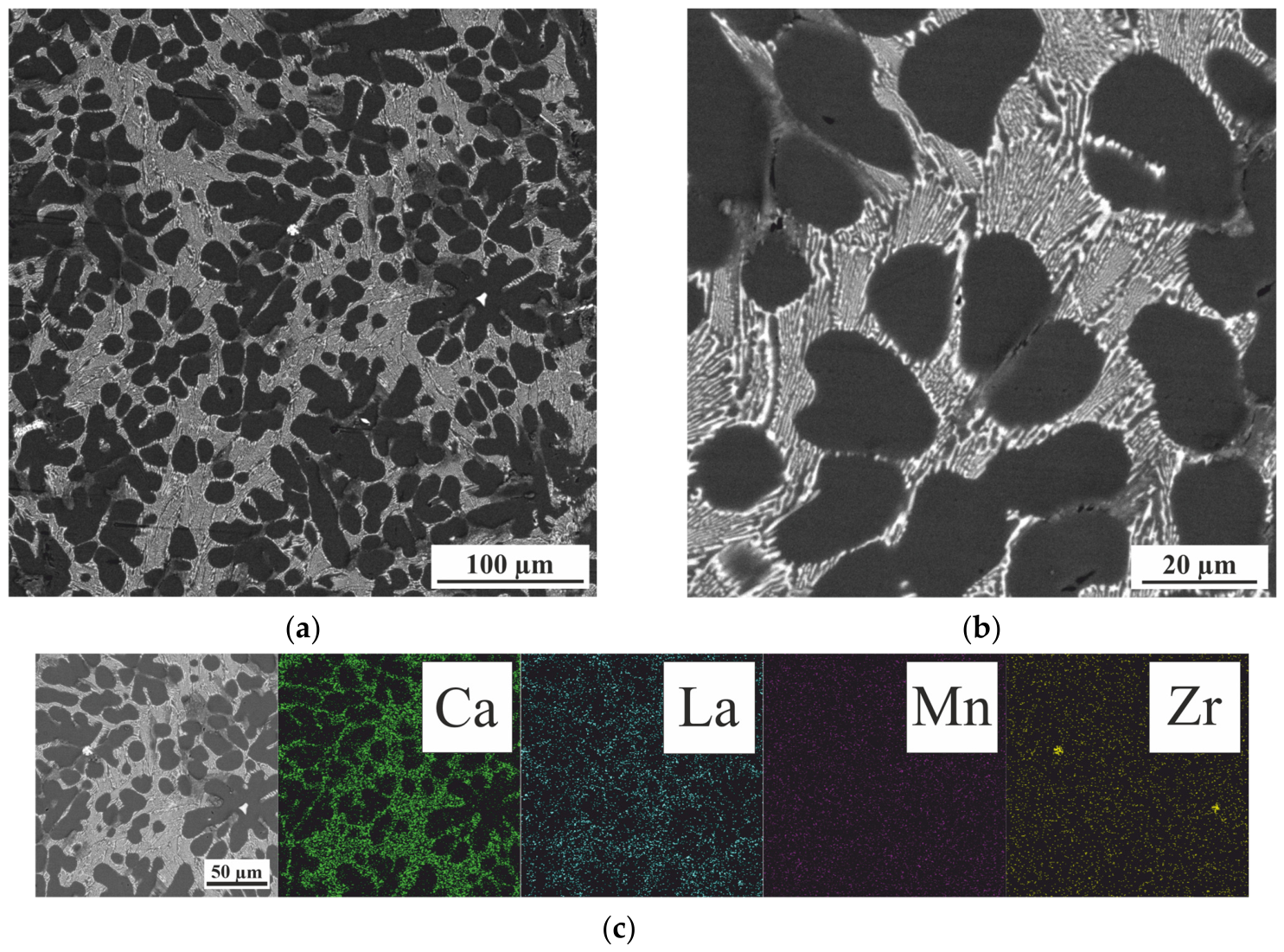
Figure 1. SEM (ac) microstructure of the experimental alloy in cast state and elemental mapping obtained from the selected area (c).
Jmmp 10 00148 g001
Figure 2. Appearance of the Al3Ca2La2Mn0.4Zr powder (a,b) and PSD of the powder (c).
Jmmp 10 00148 g002aJmmp 10 00148 g002b
Figure 3. Cross-sectional porosity (OM) of the printed sample in different modes at 50× magnifications: (a) 1, (b) 2, (c) 3, (d) 4, (e) 5, (f) 6.
Jmmp 10 00148 g003aJmmp 10 00148 g003b
Figure 4. Micro-CT results for samples manufactured with optimal process parameters P = 350 W, V = 1500 mm/s, and h = 0.08 mm.
Jmmp 10 00148 g004
Figure 5. (a,b) SEM and (c,d) TEM microstructure in the X–Y plane of the printed sample.
Jmmp 10 00148 g005
Figure 6. (a) Dependence of additive manufacturing (6 mode) hardness on temperature of step annealing (3 h), and (b) dependence of additive manufacturing hardness on time during annealing at 350 °C and 400 °C.
Jmmp 10 00148 g006
Figure 7. (a,b) SEM and (ce) TEM structure of Al3Ca2La2Mn0.4Zr after annealing at 350 °C for 100 h.
Jmmp 10 00148 g007aJmmp 10 00148 g007b
Figure 8. XRD pattern for the Al3Ca2La2Mn0.4Zr alloy. The Al3Ca2La2Mn0.4Zr alloy was analyzed in the as-annealed state (350 °C/100 h) using CoKα radiation.
Jmmp 10 00148 g008
Figure 9. Typical tensile stress–strain curves of experimental alloy obtained after L-PBF and in as-annealed state: 350 °C/3 h, 350 °C/100 h.
Jmmp 10 00148 g009
Figure 10. Fracture surface of dogbone-shaped tensile specimens after tensile test, SEM: (a,b) after L-PBF, (c,d) as-annealed at 350 °C/100 h.
Jmmp 10 00148 g010
Table 1. Chemical composition of experimental alloy.
No.Alloy DesignationConcentration, wt.% (Target/Actual)
AlCaLaMnZr
1Al3Ca2La2Mn0.4Zrbalance3.0/2.82.0/2.12.0/1.80.4/0.35
Table 2. Printing process conditions and results of printed samples density and hardness measurement.
No.Laser Power, WScanning Speed, mm/sHatch Distance, mmLayer Thickness, mmEnergy Density, J/mm3Density, %Microhardness, HV
13006000.080.03208.33.492 ± 4
23009000.080.03138.80.67103 ± 5
330012000.080.03104.20.68106 ± 3
43509000.080.03162.02.9494 ± 5
535012000.080.03121.51.997 ± 5
635015000.080.0397.20.6110 ± 3
Table 3. XRD for the experimental alloy.
AlloyPhasePearson SymbolVolume Fraction, %Lattice
Parameters, Å
ac
Al3Ca2La2Mn0.4ZrAlcF4/191.8 ± 0.14.046-
(Al,Mn)4CatI10/16.8 ± 0.14.37211.197
Al10LaMn2tP52/21.4 ± 0.08.420-
Table 4. Mechanical properties of Al3Ca2La2Mn0.4Zr alloy in as-printed and as-annealed states.
AlloyStateTensile
Strength/MPa
Yield
Strength/MPa
Elongation/
%
Al3Ca2La2Mn0.4Zras-printed366 ± 5223 ± 830 ± 3
as-annealed
(350 °C/3 h)
294 ± 8226 ± 625 ± 1
as-annealed
(350 °C/100 h)
265 ± 2178 ± 1029 ± 2
Table 5. Mechanical properties of alloys in different technological states.
AlloyTechnological StateTensile
Strength/MPa
Yield
Strength/MPa
Elongation/
%
Al3Ca2La2.0Mn [29]as-cast225 1745.2
Al3Ca2La1.5Mn [44]as-deformed
at 400 °C (reduction
rate 80%)
292 236 5.5
Al3Ca2La2Mn0.4Zras-printed366 223 30
Al3Ce0.9Ca1.9Mn1.2Zr [41]as-printed333 245 24.4
Al3Ce0.9Ca1.9Mn1.2Zr [41]as-printed (as-annealed at 375 °C/8 h)41135916.8
Al10Ce [21]as-printed31922210.8
AlSi10Mg [47]as-printed4142476.6
Disclaimer/Publisher’s Note: The statements, opinions and data contained in all publications are solely those of the individual author(s) and contributor(s) and not of MDPI and/or the editor(s). MDPI and/or the editor(s) disclaim responsibility for any injury to people or property resulting from any ideas, methods, instructions or products referred to in the content.