1. Introduction
Unmanned aerial vehicles (UAVs) have become important platforms for agricultural inspection, traffic monitoring, infrastructure assessment, and emergency response [
1]. Their accessibility and operational flexibility have also increased the frequency of unauthorized flights in controlled low-altitude airspace. Such activity can threaten airports, energy facilities, communication infrastructure, and densely populated areas. Effective low-altitude surveillance must therefore detect UAV activity and identify the associated model under realistic operating conditions. Beyond high recognition accuracy, a practical system must remain reliable at long range, tolerate environmental interference, and support continuous deployment.
Current UAV sensing technologies rely mainly on radar, vision, acoustics, and radio frequency (RF) signals. Radar provides all-weather operation, but dedicated hardware is costly and small consumer UAVs often have weak radar cross sections [
2,
3,
4]. Vision can exploit appearance and motion cues, yet performance depends strongly on illumination, occlusion, viewing distance, and background complexity [
5]. Acoustic sensing uses characteristic propeller and motor signatures but is constrained by ambient noise and rapid sound attenuation [
6,
7,
8]. RF sensing offers a complementary passive solution by intercepting communication signals exchanged between a UAV and its controller [
9]. It does not require line of sight and can support model identification while detecting UAV activity [
10].
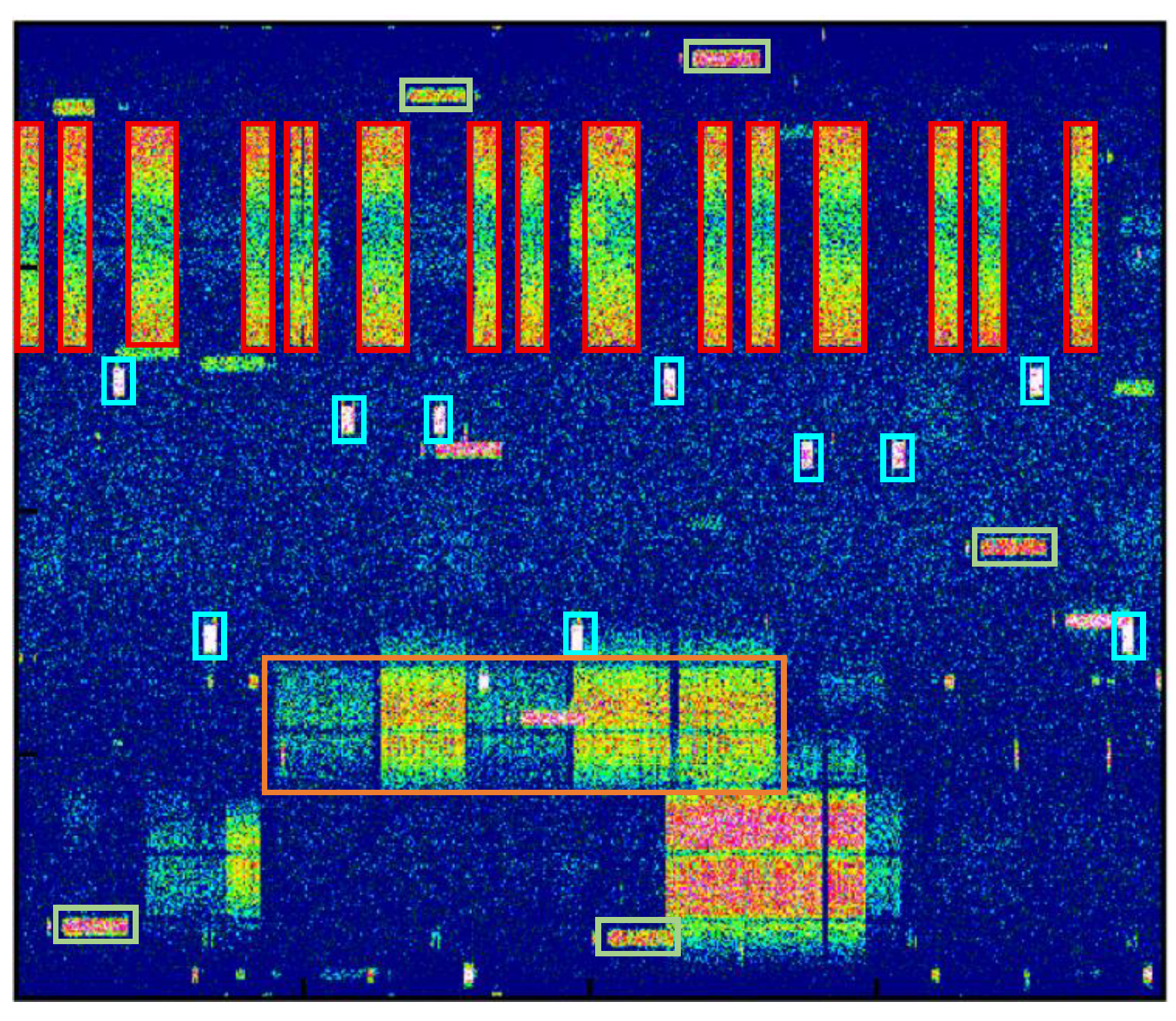
Early RF-based identification combined handcrafted time-domain statistics, spectral entropy, or higher-order features with conventional classifiers. Deep learning subsequently enabled representation learning from raw in-phase/quadrature (I/Q) sequences, channelized spectra, and time-frequency spectrograms [
11,
12,
13,
14]. Among these representations, spectrograms are well suited to UAV communications because they expose signal evolution in both time and frequency. Narrowband remote-control links may exhibit stable carriers or frequency-hopping patterns, whereas video-transmission links often contain broader and more transient structures. Convolutional neural networks (CNNs) can learn these local patterns without manually specifying signal descriptors, making time-frequency learning a common approach to RF-based UAV recognition.
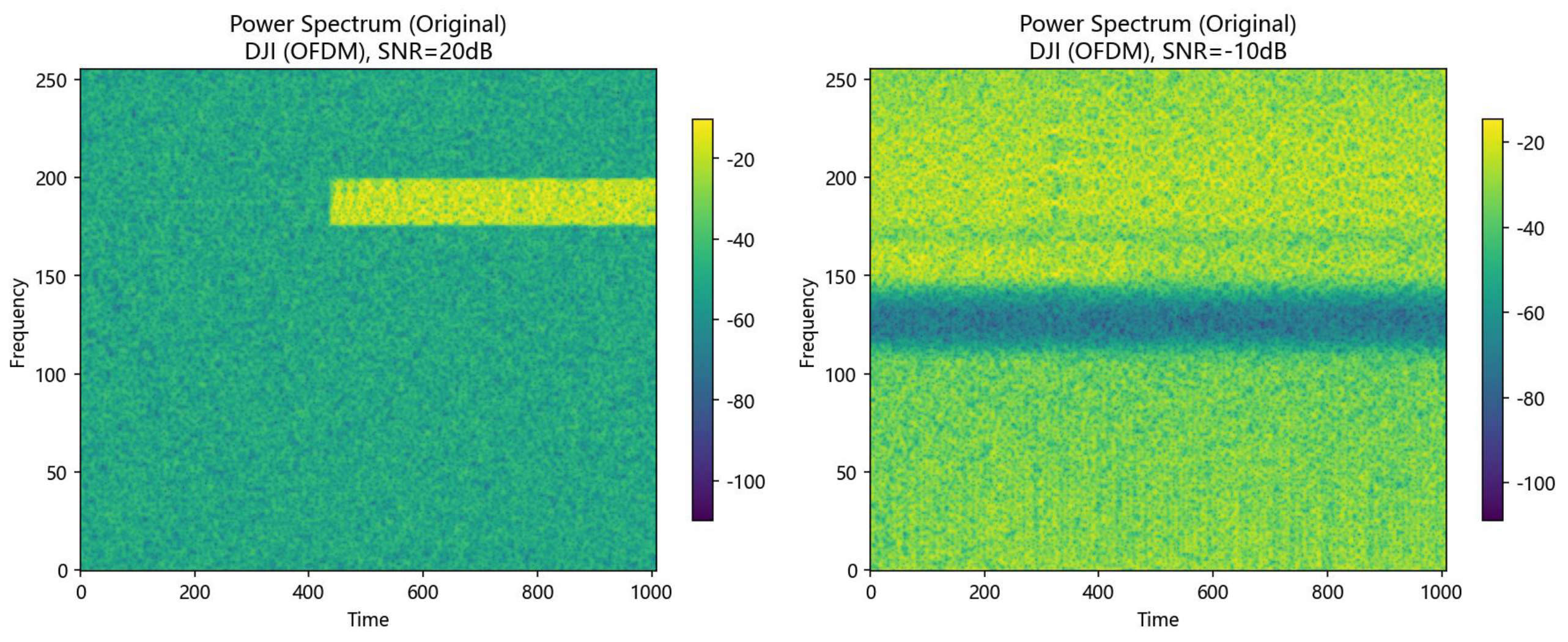
Despite this progress, low signal-to-noise ratio (SNR) remains a central obstacle to field deployment. Received power decreases with propagation distance, while thermal noise, multipath propagation, and environmental electromagnetic interference further degrade the observation. These effects do more than reduce overall signal energy. They obscure local time-frequency contours, weaken transient components, and suppress subtle differences between UAV models. The problem is particularly difficult when models share communication protocols, frequency bands, or modulation schemes. Their amplitude patterns can become similar under noise, causing intra-class dispersion and inter-class overlap in the learned embedding space. Robust long-range identification therefore requires information that remains meaningful when pointwise spectrogram amplitudes are unreliable.
Two limitations of existing deep models are especially relevant. First, a fixed short-time Fourier transform (STFT) imposes a single compromise between time and frequency resolution. A short window captures rapid bursts but provides limited spectral detail, whereas a long window resolves narrowband components but smooths short-duration changes. One resolution cannot fully characterize both control and video-transmission signals. Second, conventional CNN training mainly optimizes classification from local amplitude textures. Cross-entropy supervision does not explicitly preserve signal-derived relationships or enlarge angular margins between similar classes. Noise can therefore dominate the learned representation even when other statistical structure remains available.
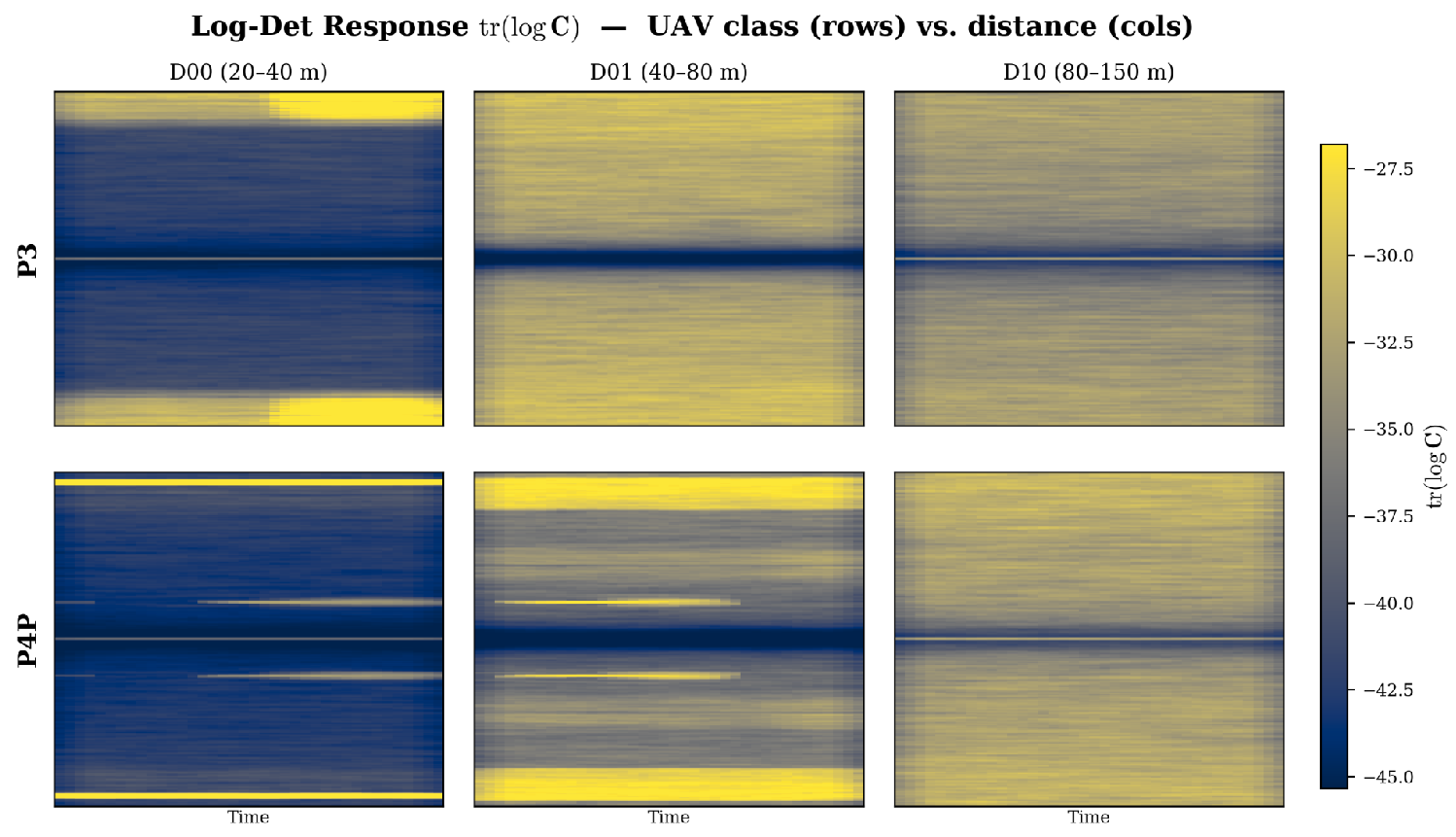
Multi-channel RF observations provide a possible source of such structure. Within a local time-frequency region, channel covariance describes second-order relationships among I/Q components and, for multiple receivers, across reception channels. These relationships can encode differences associated with modulation, hardware characteristics, propagation paths, and receiver positions. Unlike isolated amplitudes, covariance aggregates information over a neighborhood and can retain useful correlations under degradation. A regularized covariance matrix lies in the symmetric positive definite (SPD) matrix space, whose geometry is non-Euclidean. Riemannian metrics can represent differences between SPD matrices without discarding their intrinsic structure. However, direct manifold-based classification may introduce additional implementation and inference costs, which are undesirable for continuous low-altitude monitoring.
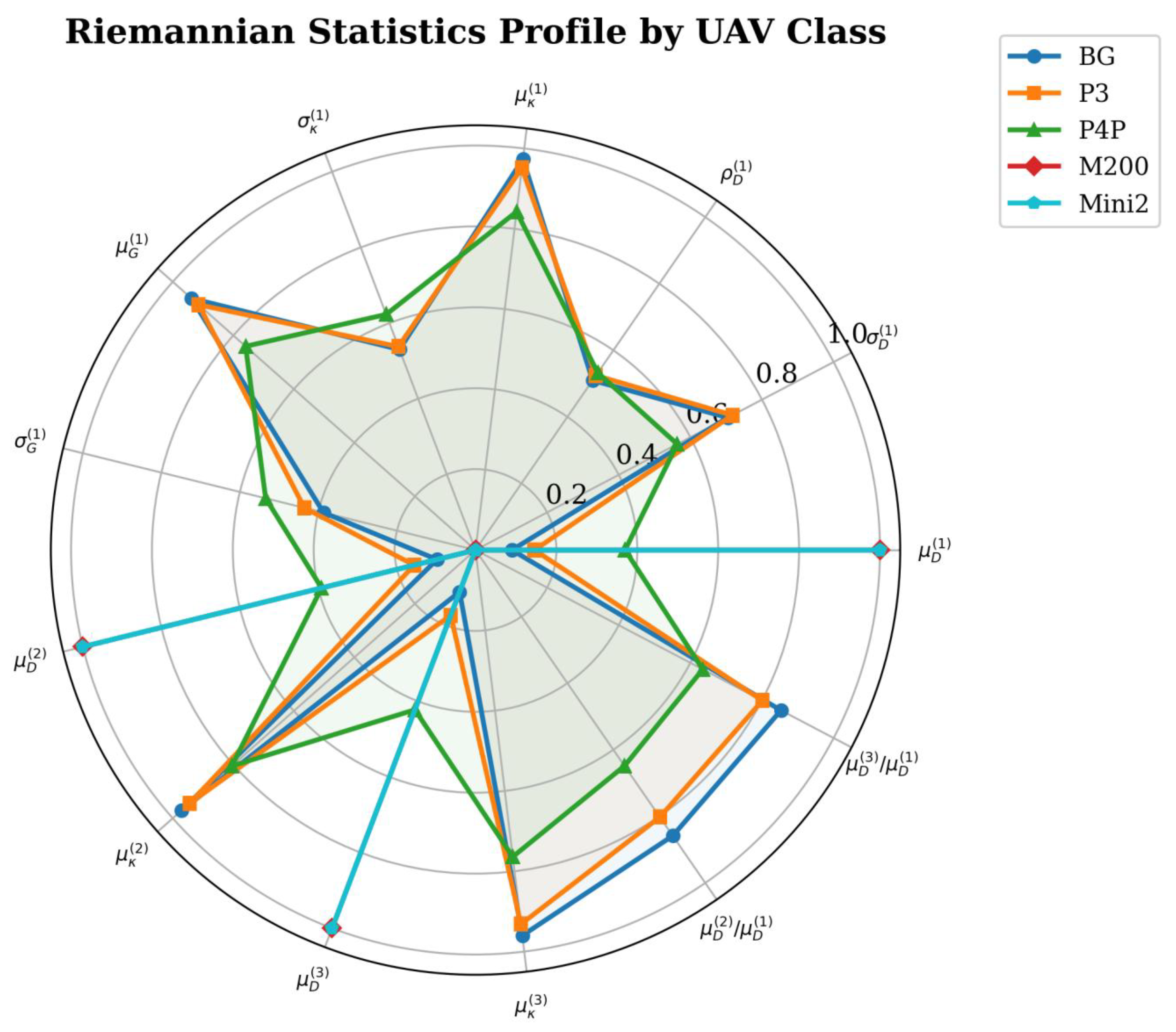
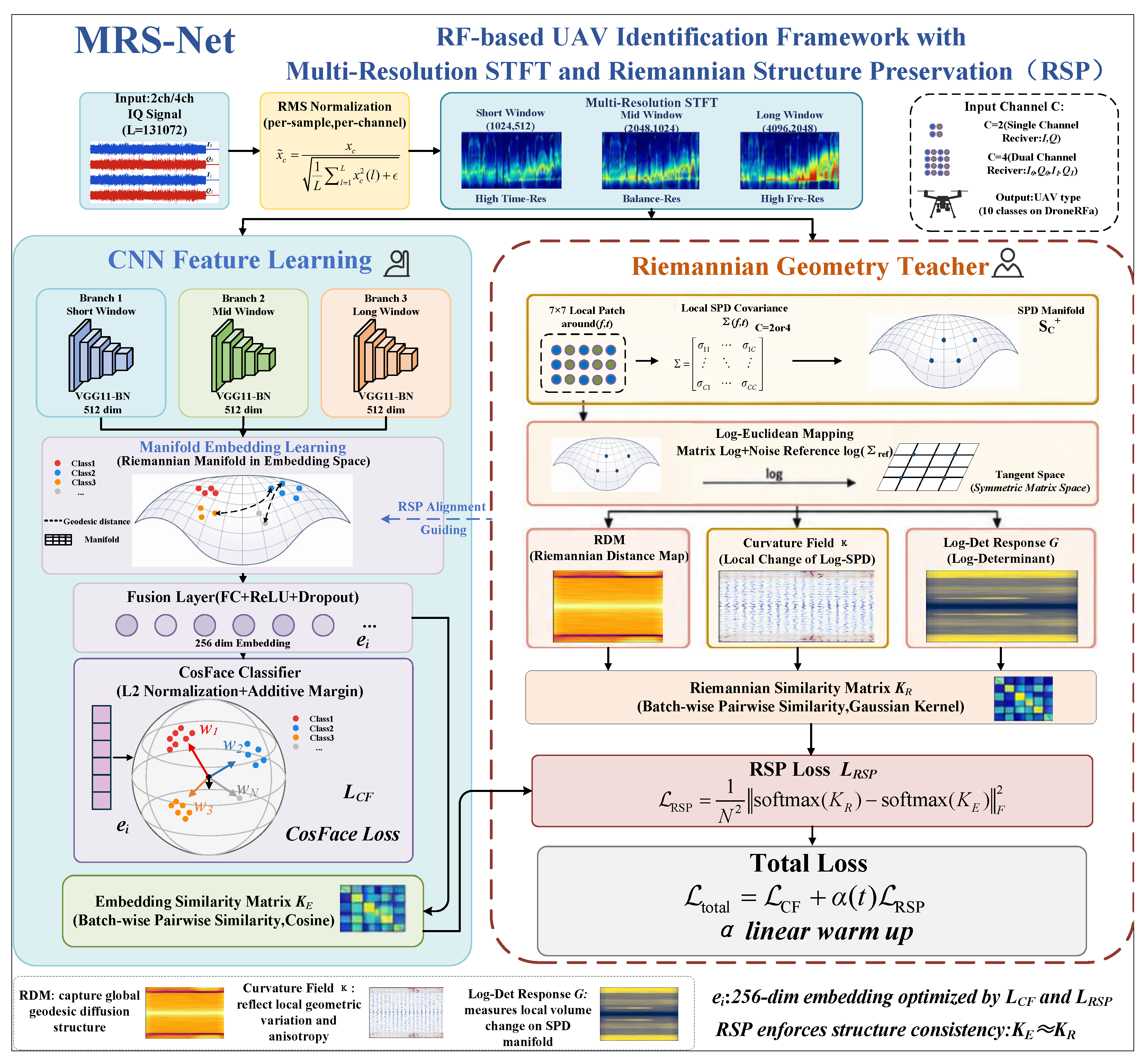
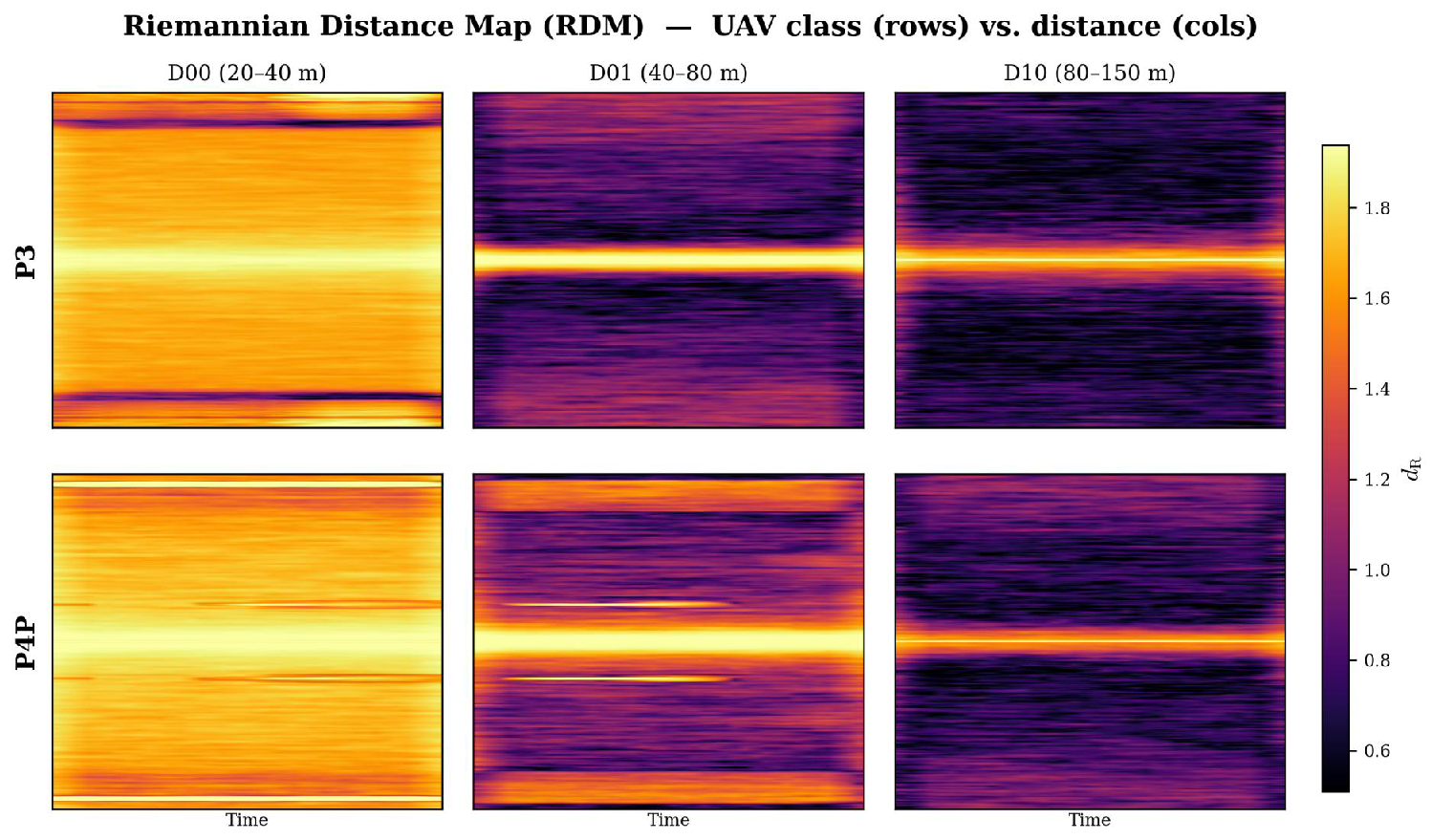
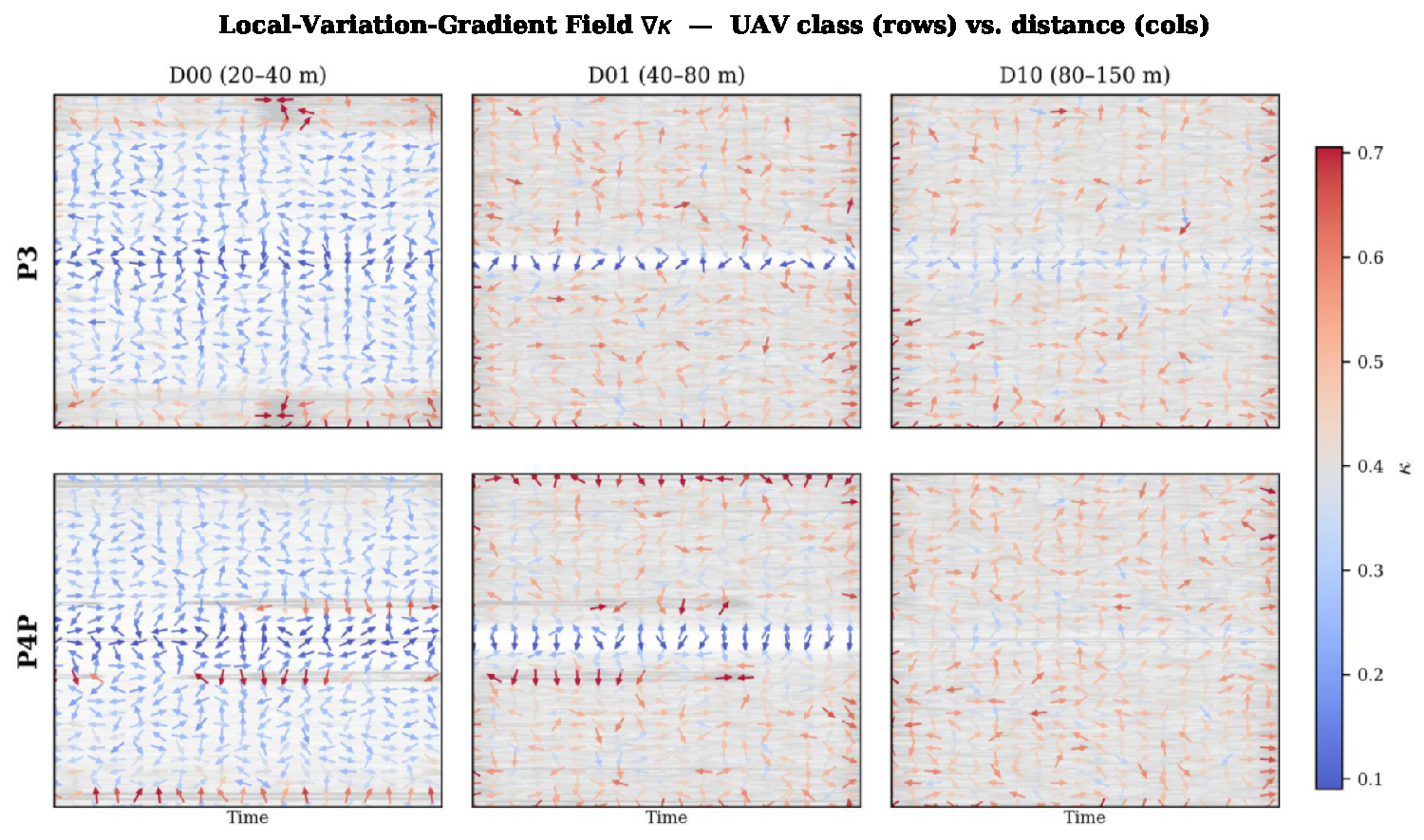
To address these limitations, we propose MRS-Net, a Multi-resolution Riemannian-Spherical Network centered on Riemannian Structure Preservation (RSP). RSP derives compact geometric statistics from local SPD covariance matrices of multi-channel spectrograms. It characterizes deviation from a noise reference, local structural variation, covariance volume, and cross-scale response. Rather than concatenating these statistics with CNN features, RSP uses them to define pairwise similarities between training samples. A relational alignment loss transfers these similarities into the CNN embedding space as a teacher signal. This design preserves signal-derived structure during training while removing all manifold computation at inference. Complementary STFT branches improve the observation of heterogeneous signal scales, and CosFace enlarges angular margins between UAV classes. Multi-resolution STFT, RSP, and CosFace, respectively, address weak-signal observation, structural-prior utilization, and embedding discrimination.
These design choices correspond to three testable hypotheses that structure the experiments in
Section 5. (H1) A single fixed-resolution STFT cannot serve narrowband control signals and broadband video-transmission bursts equally well; observing the signal at complementary time-frequency resolutions should improve class separability under low SNR. (H2) Relative to cross-entropy supervision, a hyperspherical margin loss (CosFace) enlarges inter-class angular separation and thereby reduces embedding overlap under low SNR. (H3) When cross-channel SPD covariance is informative and the backbone preserves local time-frequency structure, distilling this covariance into the CNN embedding as a training-time relational teacher (RSP) can reduce cross-fold training variability on a difficult data split. This reduction is not assumed to yield a statistically significant increase in mean accuracy, nor to reproduce identically across random seeds;
Section 5.6 and the
Supplementary Materials examine the evidence for and against each hypothesis, including the conditions under which it does not hold.
RSP is distinct from end-to-end Riemannian-manifold classifiers such as SPDNet. It does not classify on the SPD manifold, does not feed the 51-dimensional Riemannian statistical vector into the classification head, and removes all manifold computation at inference, so the CNN embedding itself remains Euclidean/hyperspherical. The manifold-derived statistics instead act as a training-time, batch-wise relational teacher signal that regularizes the similarity structure of this Euclidean embedding, rather than as an end-to-end manifold-valued feature representation.
The main contributions of this work are summarized as follows.
We propose RSP for low-SNR drone RF identification. It summarizes local SPD covariance using noise-referenced Riemannian distance, local geometric variation, log-determinant, and multi-scale statistics. Pairwise alignment then transfers these structural relationships into CNN embeddings without adding manifold computation at inference.
We develop a three-branch multi-resolution STFT representation that jointly observes narrowband control and broadband video-transmission signals. The representation provides complementary weak-signal features for the CNN and richer local covariance structures for RSP.
We evaluate MRS-Net on the public DroneRFa and Noisy Drone RF datasets under real propagation attenuation and controlled additive noise. Channel-wise, distance-wise, component, backbone, and alignment analyses quantify the contributions and clarify the conditions under which RSP is effective.
5. Experimental Evaluation and Results
This section evaluates MRS-Net under real propagation attenuation and controlled additive noise, focusing on whether RSP can exploit multi-channel local covariance priors. DroneRFa [
27] combines outdoor propagation attenuation, distance variation, and dual-receiver multi-channel RF signals, making it the primary dataset for testing the RSP hypothesis. Noisy Drone RF [
28] provides explicit SNR labels and supports complementary validation and cross-method comparison under additive noise. Progressive, parameter-aligned, and backbone ablations further isolate the contribution of each module and characterize the applicability boundary of RSP.
5.1. Datasets and Experimental Protocol
5.1.1. Datasets
We use two public datasets, Noisy Drone RF and DroneRFa, which represent complementary forms of low-SNR degradation. Noisy Drone RF uses additive white Gaussian noise (AWGN) to construct specific SNR levels and supports evaluation under controlled noise degradation. DroneRFa was collected outdoors using two RF receivers and characterizes signal-quality degradation by distance, more closely reflecting practical low-altitude monitoring.
Table 1 summarizes the main attributes of both datasets.
For DroneRFa, we select nine DJI drone classes and one background-noise class. The distance ranges are D00 (20–40 m), D01 (40–80 m), and D10 (80–150 m). Each sample is cropped to 131,072 points during training. The 2ch setting contains the I/Q components of one receiver, whereas the 4ch setting concatenates those of two receivers.
5.1.2. Model Variants and Implementation Details
To clarify the progression from a conventional CNN to RSP-guided learning, we construct the three model variants shown in
Table 2.
On DroneRFa, SR-CNN uses
and
. MR-Spherical and MRS-Net use
,
, and
for their three STFT branches. At a sampling rate of 100 MHz, these branches emphasize high temporal resolution, an intermediate time-frequency resolution, and high frequency resolution, respectively. For the shorter Noisy Drone RF signals, the STFT parameters are scaled according to the same multi-resolution principle.
Table 3 lists the main training hyperparameters. All experiments use PyTorch 2.5.1 (CUDA 12.1) and torchaudio 2.5.1 and run on an NVIDIA RTX 4090 GPU with 24 GB of memory.
5.1.3. Evaluation Metric and Cross-Validation Protocol
Given the imbalanced class distribution in RF identification, we use balanced accuracy (BAcc) as the primary evaluation metric:
where
K is the number of classes, and
and
denote true positives and false negatives for class
k, respectively. BAcc equals the macro-average of per-class recall and prevents majority classes from dominating the evaluation. All main experiments use 5-fold stratified cross-validation and report the mean ± standard deviation. For DroneRFa, joint class-and-distance labels guide stratification to balance both distributions across folds.
Each DroneRFa recording session is cut into multiple fixed-length slices (
Section 4.4), and this protocol stratifies at the slice level without grouping by source session. Slices from the same session can therefore appear on both sides of a fold, so
Table 4 and the associated ablations evaluate discrimination under matched acquisition conditions (in-session discrimination) rather than generalization to unseen recording sessions. As a stricter check, we additionally run session-level grouped 5-fold cross-validation, in which no slice from a given session appears on both sides of a fold; this changes what is being measured and yields lower absolute BAcc, so we report it as a separate cross-session check in
Section 5.6 and the
Supplementary Materials rather than substituting it into
Table 4.
We report the cross-fold standard deviation as an indicator of training reproducibility under multi-channel low-SNR conditions. Because the five folds partition one fixed dataset rather than constituting independent draws, paired comparisons across folds are treated as descriptive rather than confirmatory. The corresponding
p-values, 95% confidence intervals, and effect sizes appear in the
Supplementary Materials and are not used in the main text to characterize the significance of a comparison.
5.2. Recognition Performance on DroneRFa
DroneRFa is the primary dataset used to evaluate the core RSP mechanism. Unlike the synthetic additive noise in Noisy Drone RF, it combines outdoor propagation attenuation, distance variation, and dual-receiver information. This combination tests whether MRS-Net can exploit cross-channel local covariance structures under degraded signal quality.
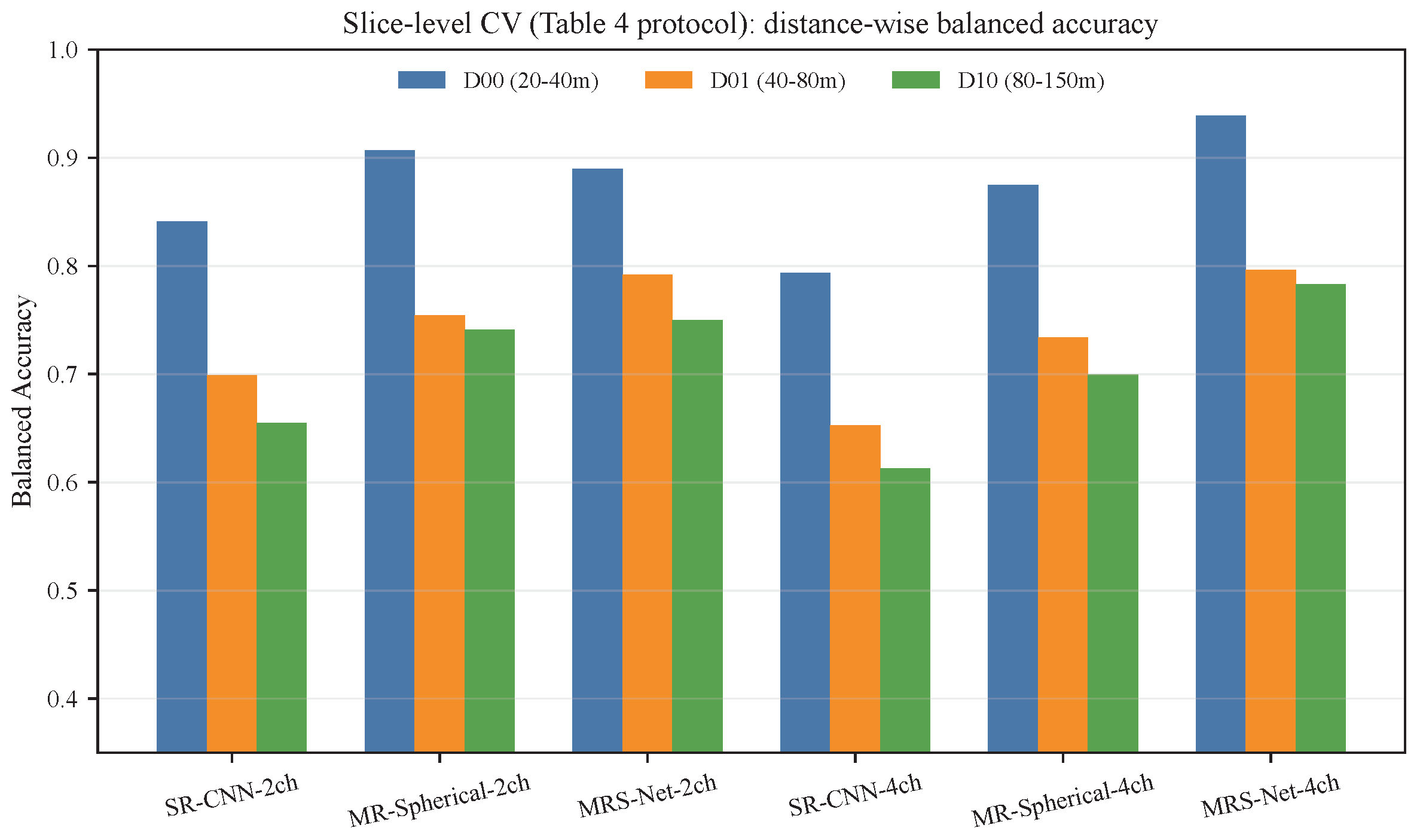
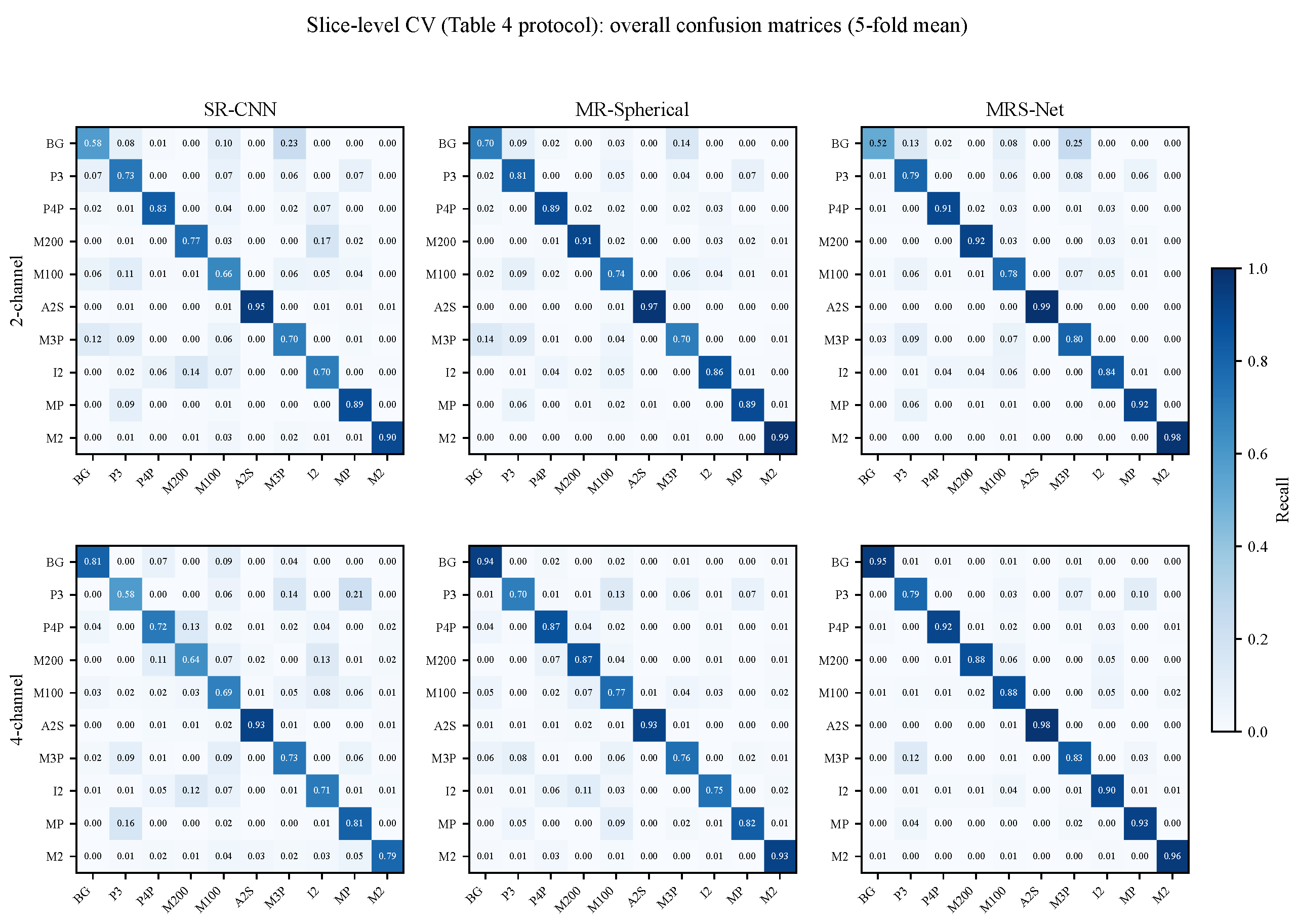
Table 4 reports overall and distance-wise BAcc, together with the performance decrease from D00 to D10, for all six settings.
| Input | Method | D00 | D01 | D10 | Overall | D00–D10 |
|---|
| 2ch | SR-CNN | 84.13 ± 3.14 | 69.90 ± 6.20 | 65.50 ± 4.07 | 77.02 ± 3.78 | |
| 2ch | MR-Spherical | 90.70 ± 0.93 | 75.43 ± 2.28 | 74.10 ± 1.89 | 84.74 ± 0.94 | |
| 2ch | MRS-Net | 88.97 ± 1.44 | 79.20 ± 1.44 | 75.00 ± 2.46 | 84.50 ± 1.48 | |
| 4ch | SR-CNN | 79.33 ± 7.60 | 65.27 ± 10.36 | 61.30 ± 11.80 | 74.01 ± 12.11 | |
| 4ch | MR-Spherical | 87.47 ± 11.69 | 73.37 ± 16.27 | 69.97 ± 16.96 | 83.20 ± 16.78 | |
| 4ch | MRS-Net | 93.90 ± 1.72 | 79.63 ± 2.44 | 78.30 ± 1.10 | 90.30 ± 1.46 | |
Figure 8 shows distance-wise BAcc on DroneRFa. Among the tested configurations, MRS-Net-4ch achieves the highest overall BAcc at 90.30%, exceeding SR-CNN-4ch by 16.29 percentage points (pp) and MR-Spherical-4ch by 7.10 pp. As
Section 5.6 details, this 7.10 pp gap is driven mainly by a single difficult fold and does not reproduce consistently across random seeds or under a stricter grouped cross-session split; we therefore read the mean-accuracy gap as protocol-specific and center the interpretation of RSP on its effect on cross-fold variability, discussed below. MRS-Net-4ch achieves the highest BAcc in every distance interval and reaches 78.30% at 80–150 m, 17.00 pp above SR-CNN-4ch, so its benefit extends to the interval with the strongest propagation attenuation.
Increasing the number of input channels alone does not necessarily improve performance. From 2ch to 4ch, the overall BAcc decreases from 77.02% to 74.01% for SR-CNN and from 84.74% to 83.20% for MR-Spherical. Although dual-receiver input contains more information, it also introduces more complex cross-channel variation and greater overfitting risk. By contrast, MRS-Net improves from 84.50% to 90.30%, suggesting that RSP can exploit the additional local covariance structure. A SPD matrix has three independent degrees of freedom, whereas a matrix has ten. Four of the six off-diagonal terms in the latter capture cross-receiver correlations, while the remaining two encode within-receiver I/Q coupling.
The complete MRS-Net outperforms SR-CNN under both 2ch and 4ch input. Under 4ch input, RSP’s contribution to mean accuracy is small relative to the cross-fold variability on this protocol (
Section 5.6), but it reduces the cross-fold standard deviation from 16.78% to 1.46%, indicating substantially more stable training across the evaluated splits.
All methods decline from D00 to D10, consistent with the reduction in effective SNR caused by path loss. MRS-Net shows a smaller decrease and retains the highest absolute BAcc at D10 among the tested methods. This result is consistent with the proposed design: when amplitude textures become unstable at long range, local SPD covariance supplies an additional second-order prior.
Figure 9 presents, in a
layout (2ch/4ch by SR-CNN/MR-Spherical/MRS-Net), the class-level confusion matrices for the six settings under real distance attenuation reported in
Table 4; the corresponding confusion matrices under the session-level grouped protocol are shown in the
Supplementary Materials.
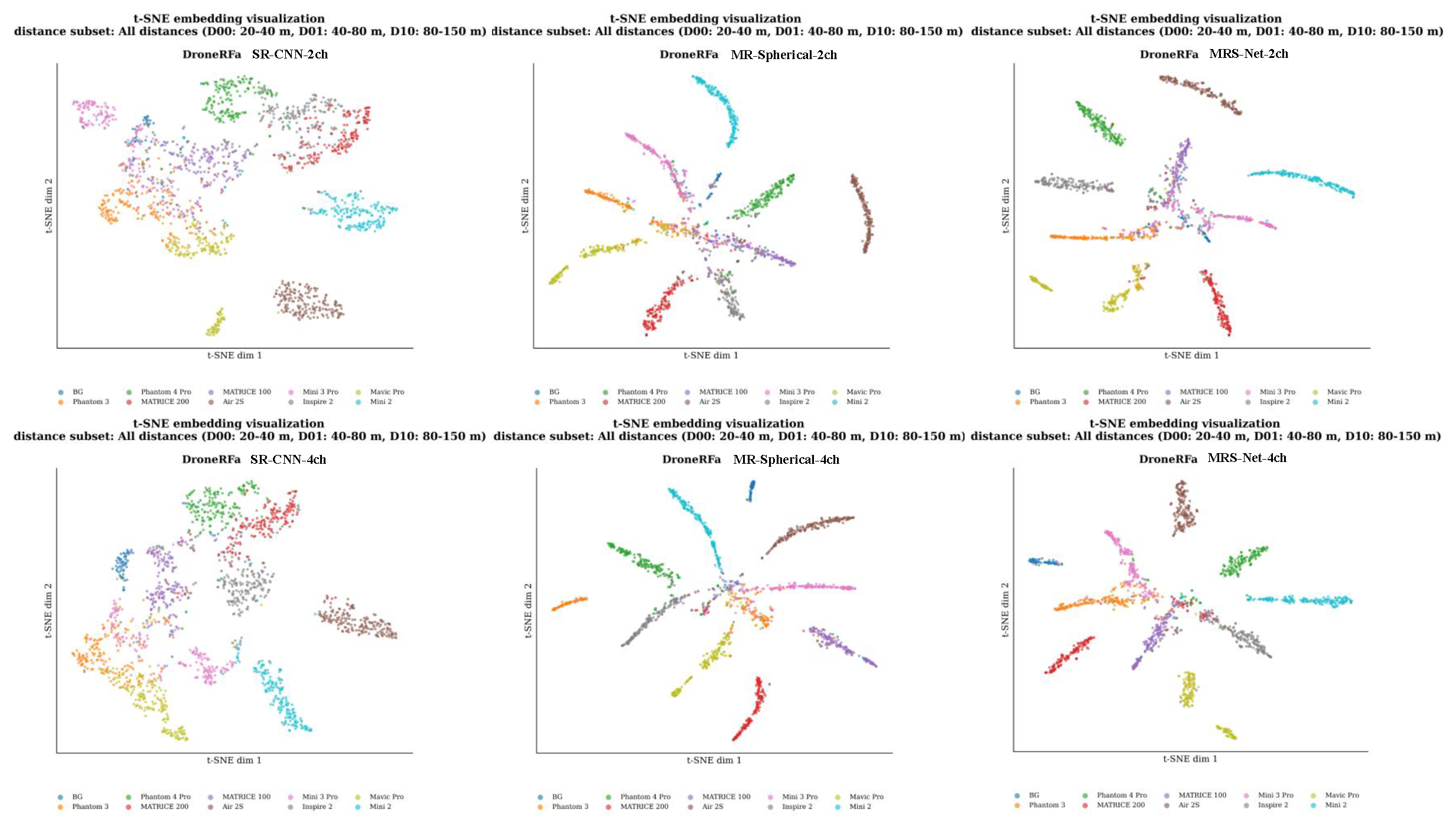
Figure 10 shows the corresponding t-distributed stochastic neighbor embedding (t-SNE) visualizations. The MRS-Net embeddings exhibit greater inter-class separation and tighter intra-class distributions, although t-SNE provides qualitative rather than quantitative evidence.
5.3. Complementary Experiment: Cross-Method Comparison on Noisy Drone RF
Noisy Drone RF provides complementary evaluation under explicit additive noise and comparison with representative backbone networks.
Table 5 reports BAcc at SNRs from
dB to
dB. The “Mean” row averages BAcc over these six reported low-SNR levels, whereas “Overall” denotes BAcc over the complete SNR range from
dB to 30 dB.
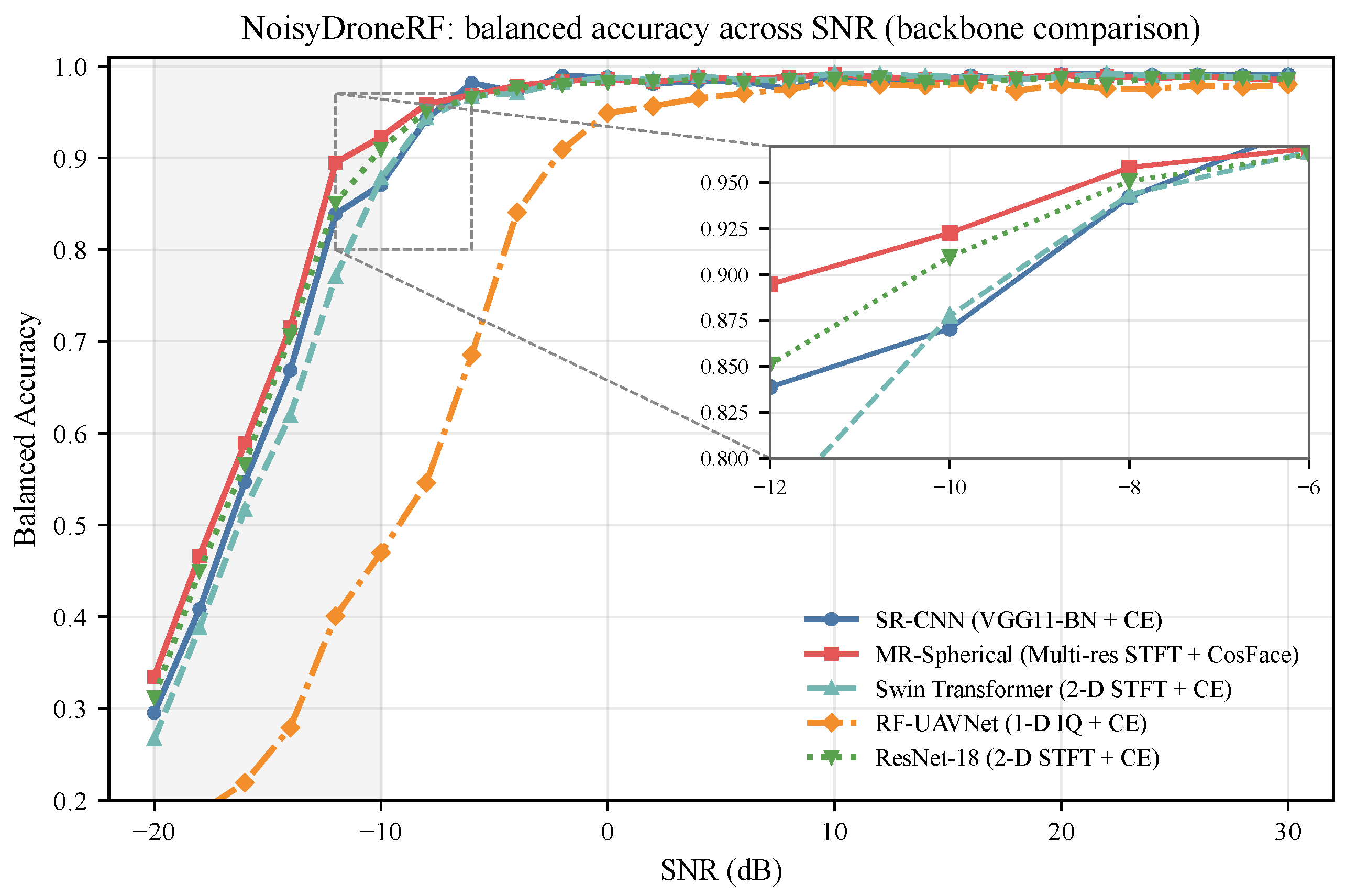
Figure 11 shows the BAcc-versus-SNR curves. From
dB to
dB, MR-Spherical achieves a mean BAcc of 65.38%, exceeding SR-CNN by 4.91 pp. MR-Spherical also exceeds SR-CNN at every reported SNR in this interval. These results support the benefit of multi-resolution representation and hyperspherical discrimination under strong additive noise.
Table 5.
Cross-method comparison on Noisy Drone RF. “Mean” averages BAcc over the six reported SNR levels from dB to dB, whereas “Overall” reports BAcc over the full SNR range from dB to 30 dB.
Table 5.
Cross-method comparison on Noisy Drone RF. “Mean” averages BAcc over the six reported SNR levels from dB to dB, whereas “Overall” reports BAcc over the full SNR range from dB to 30 dB.
| SNR (dB) | SR-CNN | MR-Spherical | Swin Transformer | ResNet-18 | RF-UAVNet |
|---|
| 29.54 | 33.46 | 26.68 | 31.23 | 16.34 |
| 40.81 | 46.64 | 38.79 | 45.25 | 18.74 |
| 54.68 | 58.90 | 51.67 | 56.63 | 21.95 |
| 66.84 | 71.50 | 61.91 | 70.56 | 28.05 |
| 83.89 | 89.48 | 77.06 | 85.09 | 39.65 |
| 87.06 | 92.28 | 87.76 | 91.18 | 47.08 |
| Mean | 60.47 | 65.38 | 57.31 | 63.32 | 28.64 |
| Overall | 89.72 ± 0.22 | 90.78 ± 0.35 | 88.92 ± 0.48 | 90.06 ± 0.43 | 77.93 ± 1.17 |
Comparison with other backbones indicates that network complexity alone does not determine low-SNR RF identification performance. Although Swin Transformer and ResNet-18 perform strongly at some SNRs, MR-Spherical achieves the highest mean BAcc across the reported low-SNR interval. This result supports the importance of both input representation and feature-space constraints. Multi-resolution STFT improves weak-structure observation, while CosFace increases the angular class margin.
5.4. Ablation Studies
Three groups of ablation experiments isolate the contribution of each module and characterize the conditions under which RSP is effective.
5.4.1. Progressive Component Ablation
The comparison between SR-CNN and MR-Spherical measures the joint gain of multi-resolution representation and the hyperspherical constraint. MR-Spherical increases overall BAcc from 77.02% to 84.74% under 2ch input and from 74.01% to 83.20% under 4ch input. Multi-resolution STFT provides complementary observations of narrowband control and broadband video-transmission signals. CosFace enlarges the inter-class angular margin and reduces embedding overlap under low SNR.
Because this comparison changes both the STFT representation and the classification loss at the same time, it does not by itself isolate the contribution of CosFace.
Table 6 reports a
factorial ablation, under the same slice-level protocol and hyperparameters as
Table 3, that crosses single-resolution (SR) and multi-resolution (MR) STFT with cross-entropy (CE) and CosFace losses; the SR + CE and MR + CosFace rows reproduce the SR-CNN and MR-Spherical entries of
Table 4, while SR+CosFace and MR+CE were trained separately to complete the design.
Under 2ch input, both factors contribute positively and are roughly additive: CosFace contributes +4.95 pp with a single-resolution STFT and +4.02 pp with a multi-resolution STFT, while multi-resolution STFT contributes +3.70 pp under cross-entropy and +2.77 pp under CosFace. Under 4ch input, multi-resolution STFT is the dominant factor (+8.99 pp under cross-entropy, +5.29 pp under CosFace), whereas the additional contribution of CosFace once multi-resolution STFT is already present is small (+0.20 pp). RSP is not part of this design; its contribution is examined separately below.
The comparison between MR-Spherical and MRS-Net isolates the effect of RSP. Under 2ch input, their overall BAcc values are similar (84.74% and 84.50%), suggesting that the
SPD matrix formed from single-receiver I/Q carries limited exploitable geometric information. Under 4ch input, MRS-Net exceeds MR-Spherical by 7.10 pp while the cross-fold standard deviation falls from 16.78% to 1.46%; as
Section 5.6 shows, the mean gap is fold-sensitive, so we treat the variance reduction as the more robust evidence for RSP. This benefit is therefore concentrated in the multi-channel setting, where
SPD matrices encode richer cross-receiver correlations.
5.4.2. Parameter-Aligned Ablation of Multi-Resolution STFT
To isolate the effect of multi-resolution STFT, we conduct a parameter-aligned ablation on Noisy Drone RF. All variants use CosFace and differ only in STFT resolution and branch count.
Table 7 reports the results. Overall, BAcc follows the same full-range definition from
dB to 30 dB.
The results indicate that the gain does not arise solely from additional parameters. A1 has the same branch count and a similar parameter count as MR-Spherical, yet MR-Spherical achieves higher low-SNR BAcc. Complementary STFT resolutions therefore contribute information beyond model capacity. The strong performance of the single-branch A3 also highlights the importance of frequency resolution for narrowband signals. MR-Spherical further improves on A3 by combining high temporal resolution, an intermediate time-frequency resolution, and high frequency resolution.
Table 7.
Parameter-aligned ablation results of multi-resolution STFT.
Table 7.
Parameter-aligned ablation results of multi-resolution STFT.
| Experiment | STFT Config | Loss | Branches | Overall BAcc (%) | Low-SNR BAcc (%) |
|---|
| SR-CNN | | CE | 1 | 89.72 ± 0.22 | 60.47 |
| A2 | | CosFace | 1 | 89.47 ± 0.31 | 59.58 |
| A3 | | CosFace | 1 | 90.49 ± 0.41 | 64.80 |
| A4 | | CosFace | 2 | 90.21 ± 0.41 | 63.14 |
| A5 | | CosFace | 2 | 90.41 ± 0.22 | 62.71 |
| A1 | | CosFace | 3 | 90.49 ± 0.40 | 63.84 |
| MR-Spherical | | CosFace | 3 | 90.78 ± 0.35 | 65.38 |
5.4.3. Backbone Generalization Ablation
To test whether the MRS-Net gains depend on VGG11-BN, we replace it with ConvStem-Transformer and RF-UAVNet [
14], a published one-dimensional CNN baseline for RF-based drone identification, as backbones, which also lets this comparison serve as an external-baseline check under our own training protocol. We compare SR-CNN, MR-Spherical, and MRS-Net under the same DroneRFa protocol, using identical cropping, the same slice-level 5-fold splits as
Table 4, the same RMS normalization, and the same sampling length.
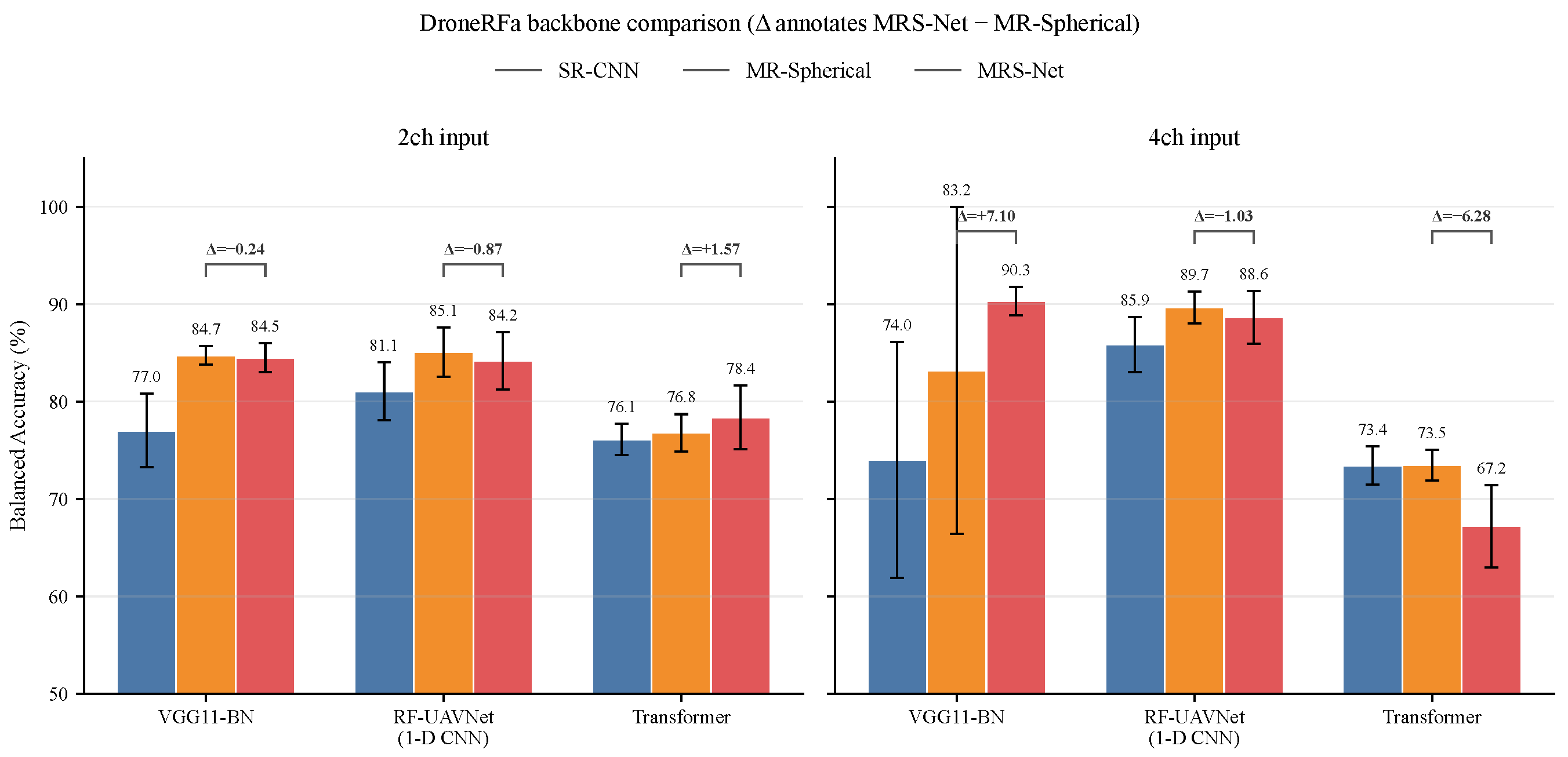
Table 8 and
Figure 12 report the results, including a
(MRS-Net−MR-Spherical) column that isolates the independent contribution of RSP from the joint multi-resolution-STFT-plus-CosFace effect captured by
(MRS-Net−SR-CNN).
The results are best read through the
(MRS-Net−MR-Spherical) column, which isolates the contribution of RSP from the multi-resolution-STFT-plus-CosFace effect already captured by
(MRS-Net−SR-CNN). On this basis, RSP’s contribution is positive only for VGG11-BN-4ch (+7.10 pp; see
Section 5.6 for the caveats on this figure), essentially flat for VGG11-BN-2ch (
pp) and for RF-UAVNet-2ch/4ch (
/
pp), and clearly negative for Transformer-4ch (
pp). MRS-Net is therefore not restricted to VGG11-BN: with RF-UAVNet as the backbone, the complete framework exceeds SR-CNN under both 2ch and 4ch input. However, MRS-Net underperforms its MR-Spherical counterpart with the Transformer backbone and 4ch input, showing that RSP is not universally compatible with arbitrary backbones. RSP is therefore not a backbone-agnostic accuracy booster; because the RSP teacher signal is derived from local SPD covariance, it is better matched to extractors that preserve local time-frequency or temporal structure together with sufficiently rich cross-channel covariance. The globally oriented Transformer embedding does not align well with this local constraint under 4ch input, and the same is true, to a smaller degree, of RF-UAVNet’s one-dimensional convolutional structure.
5.5. Deployment and Complexity Analysis
RSP computes local SPD statistics and the similarity-alignment loss only during training and is removed at inference. MRS-Net and MR-Spherical, therefore, share the same backbone structure and nearly identical inference complexity.
Table 9 reports parameter counts, single-sample inference times, and throughput.
The three-branch multi-resolution structure is the main source of inference overhead. CosFace changes only the classification head and adds negligible inference cost, while RSP adds no online computation. SR-CNN or MR-Spherical may be better suited to resource-constrained real-time deployment. MRS-Net-4ch is more appropriate for fixed multi-receiver stations that prioritize robustness under long-range, low-quality conditions.
5.6. Discussion
Under the slice-level, in-session protocol of
Table 4, MRS-Net-4ch achieves the strongest overall BAcc, distance-wise BAcc, and cross-fold stability among the tested DroneRFa configurations, supporting the combined use of multi-resolution representation, CosFace, and RSP under matched acquisition conditions. Multi-resolution STFT and CosFace also improve low-SNR performance on both Noisy Drone RF and DroneRFa: the factorial ablation in
Table 6 shows that both factors contribute under 2ch input, while multi-resolution STFT dominates under 4ch input. The benefit of RSP itself is more conditional. It depends on a sufficiently rich multi-channel covariance structure and on a backbone that preserves local time-frequency structure (
Table 8), and it is most evident with 4ch dual-receiver input and VGG11-BN but flat or negative with 2ch input, RF-UAVNet, or the Transformer backbone.
This conditional pattern motivated two further checks on how much the RSP result depends on the data split and the random seed. Session-level grouped cross-validation, which forbids slices from the same recording session from appearing on both sides of a fold, lowers overall BAcc for all six configurations (
Supplementary Materials): to
/
/
for SR-CNN/MR-Spherical/MRS-Net on 2ch input, and to
/
/
on 4ch input. Multi-resolution STFT and CosFace remain positive relative to SR-CNN on 2ch input under this stricter protocol, but on 4ch input the MRS-Net-minus-MR-Spherical gap falls to about
percentage points, so the 4ch advantage seen under the in-session protocol does not persist under cross-session evaluation. Repeating the 4ch slice-level training with two additional seeds (123 and 2024, same fixed folds) confirms that the single-fold collapse of MR-Spherical-4ch at seed 42 is not a general pattern: it does not recur at either additional seed, and the mean MRS-Net-minus-MR-Spherical difference is seed-dependent, ranging from a small negative to a small positive value across the three seeds (
Supplementary Materials).
We accordingly restrict the claim for RSP to three points: it reduces the cross-fold standard deviation under 4ch input on the evaluated slice-level run; this stability benefit is not guaranteed to reproduce identically across random seeds or to persist under session-level cross-validation; and its effect is backbone- and channel-dependent, turning negative for the Transformer backbone and for RF-UAVNet (
Table 8). We do not claim a generally reproducible mean-accuracy gain from RSP, and none of these findings extend to unseen recording sessions, unseen hardware, unseen interference types, or open-set UAV classes, which lie outside the scope of the present evaluation.
Overall, the results match the intended roles of the three modules. Multi-resolution representation mitigates the limits of a single time-frequency scale, CosFace reduces low-SNR embedding overlap, and RSP exploits local multi-channel SPD statistics to improve structural stability under the evaluated in-session, multi-channel configuration, subject to the seed- and protocol-dependence noted above. Together they address weak-signal observation, embedding discrimination, and structural-prior utilization.
6. Conclusions
We propose MRS-Net for robust drone RF identification under low SNR, long-range attenuation, and multi-channel reception. Its RSP mechanism transfers local SPD covariance relationships into CNN embeddings through pairwise similarity alignment, multi-resolution STFT improves weak-signal observation, and CosFace enlarges angular class margins, combining signal-derived structural supervision with discriminative representation learning.
On DroneRFa, MRS-Net reaches 90.30% overall BAcc with 4ch input under the slice-level, in-session protocol of
Table 4, improving BAcc at 80–150 m from 61.30% (SR-CNN-4ch) to 78.30% and reducing the 5-fold standard deviation from 16.78% to 1.46% relative to MR-Spherical-4ch. Complementary experiments under additive noise support the multi-resolution and CosFace contributions independently of the fold, seed, or backbone tested. The evidence for RSP is more limited: its mean-accuracy gain over MR-Spherical is not established as a robust effect, since it depends on a single difficult fold, is seed-dependent, does not persist under session-level cross-validation, and turns flat or negative for the Transformer backbone, RF-UAVNet, and 2ch input. We therefore restrict the robustness claim for RSP to a reduction in cross-fold training variability under 4ch, VGG11-BN-based training on the evaluated protocol, rather than a general improvement in mean accuracy.
None of the reported results are evaluated on unseen recording sessions, receiver hardware, interference types, or open-set UAV classes. Future work will examine lighter backbones, richer propagation information, and more complex interference and open-set conditions.