Systematic Review

Human-Drone Interaction in Older Adults: A Systematic Review

by
Agustín Gómez-López
1,*,
Yuxa Maya-López
2,
Pablo Olivos-Jara
3 and
Rafael Morales
4
1
Department of Psychology, Faculty of Education, University of Castilla-La Mancha (UCLM), 02071 Albacete, Spain
2
Department of Psychology, Faculty of Medicine, University of Castilla-La Mancha (UCLM), 02008 Albacete, Spain
3
Department of Psychology, Faculty of Labor Relations and Human Resources, University of Castilla-La Mancha (UCLM), 02071 Albacete, Spain
4
Department of Electrical, Electronic, Automatic and Communications Engineering, Higher Technical School of Industrial Engineering, University of Castilla-La Mancha (UCLM), 13071 Ciudad Real, Spain
*
Author to whom correspondence should be addressed.
Drones 2026, 10(5), 389; https://doi.org/10.3390/drones10050389
Submission received: 16 April 2026 / Revised: 14 May 2026 / Accepted: 15 May 2026 / Published: 20 May 2026

Highlights

What are the main findings?
  • The use of drones for social and health purposes for older people is still in its infancy.
  • The main identified applications relate to care support, health monitoring, emergency response, and promoting independence among older adults.
What are the implications of the main findings?
  • Drones show promising potential in social and healthcare applications for older adults.
  • Future success requires person-centered designs that harmonize strict regulatory compliance with the psychological safety of the older adults.

Abstract
An aging population, increased life expectancy and loneliness among older people constitute a growing challenge, driving interest in technological solutions such as home drones. The aim of this study is to analyze their potential for older adults through a systematic review following PRISMA guidelines, including articles indexed in Web of Science, Scopus, PubMed and the ACM Digital Library up to February 2026 and following the Joanna Briggs Institute (JBI) methodology. A total of 285 records were initially identified and imported into JBI, of which 41 duplicate records were removed, and 231 studies were excluded after screening, resulting in 13 studies meeting the inclusion criteria. The reviewed studies suggest generally favorable perceptions among some older adults regarding the use of drones in the areas of health, support and safety, alongside barriers related to usability, trust and user interaction. Recent studies incorporate practical applications, highlighting the potential applicability of drones in supporting aspects related to autonomy, health and safety among older adults. Overall, the literature, though still limited, shows a shift towards more specific applications, highlighting the potential of drones to support the autonomy, health and safety of older adults, although their implementation remains influenced by factors of acceptance and user experience.

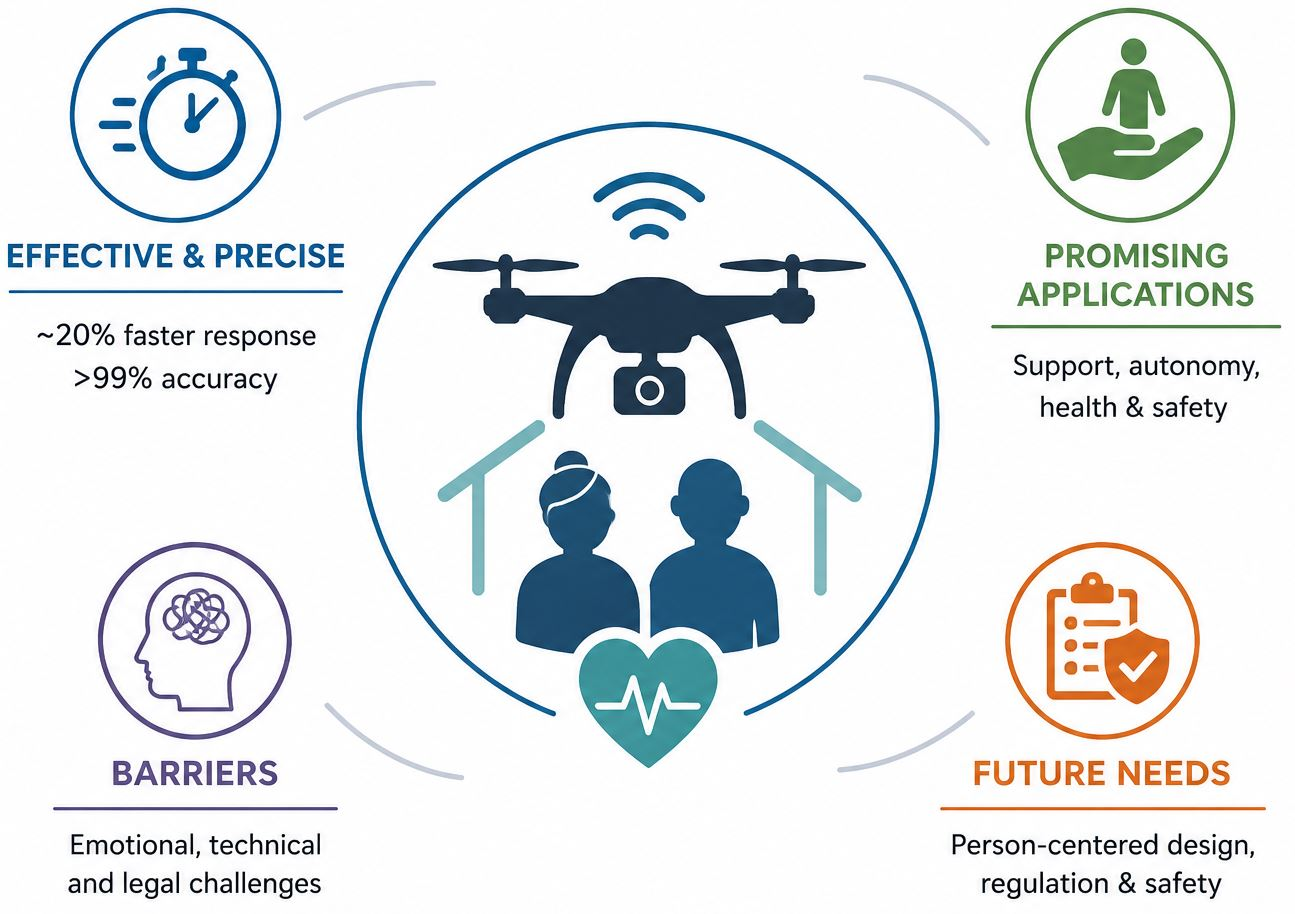
Graphical Abstract

1. Introduction

1.1. Aging Population

According to the United Nations, 2018 marked a historic milestone in the aging of the global population: the number of people aged over 65 exceeded that of children under 5. Eurostat data for 2024 indicate that approximately 20% of the European population was aged 65 or over [1]. In Spain, the population aged 65 and over exceeds 9 million people, representing approximately 20.4% of the total population, according to data from the National Institute of Statistics (Instituto Nacional de Estadística, INE) as of January 2024. Furthermore, the population aged 55 and over exceeds 15.5 million, equivalent to 32% of the total population [2].
Aging is a natural stage of human life. Health and quality of life decline with age [3]. Some studies indicate that, following the onset of old age, physical and mental functioning declines by 1.5% each year [4]. Other studies suggest that approximately 40% of older adults experience mobility limitations and chronic pain [5]. All of this leads to a reduction in quality of life and in their ability to perform basic tasks in their daily lives.
In our society, old age is still commonly associated with retirement, with this threshold generally set between the ages of 60 and 65 [6]. Aging should not be understood solely in chronological terms; the influence of personal and environmental factors must also be considered [7]. It is also a biological phenomenon that affects physical and mental health, as well as sociological and economic, due to the increase in life expectancy and the need to support this population; and psychological, due to the changes that occur in cognitive and emotional functioning [8].
Loneliness is a significant, yet neglected, issue that affects many people, particularly older adults [9]. This loneliness, in particular, is often associated with loss of loved ones and, often, with a decrease in support networks or social contacts, as well as a reduction in income after retirement [10,11].

1.2. Drones as Social and Healthcare Assistants for Older Adults

This demographic growth and rise in loneliness among the elderly population demands immediate and priority social care, which should not be limited solely to their physical condition, but should also address their social and psychological situation—aspects that profoundly impact their quality of life [12].
In this context, technological advances and the expansion of drone or Unmanned Aerial Vehicles (UAVs) applications have particular relevance in the face of demographic changes. The progressive aging of the population poses new challenges in areas such as health, safety, home care, and social welfare, encouraging the search for innovative solutions based on emerging technologies. In this regard, drones present themselves as a tool with the potential to address some of the needs associated with old age, particularly in situations of vulnerability, dependency, or isolation.
Recent developments in drone technology have facilitated their integration into numerous areas of civil society, highlighting their versatility and ability to operate efficiently in complex environments, which has opened up a wide range of civilian applications [13,14]. For example, in the agricultural sector, drones have established themselves as key tools in precision farming, allowing the monitoring of crops, the optimization of resources, and the improvement of the sustainability of agricultural production [15,16]. Similarly, their use in the inspection of civil infrastructure, such as roads, bridges, buildings, or power lines, facilitates damage assessment and maintenance in difficult-to-reach areas, reducing costs and risks [17,18].
In the fields of health and human safety, there is evidence of the efficient application of drones: from the transport of biological samples [19] to the delivery of medicines according to clinical needs [20], or the design of models to locate people in complex mountainous terrain or to assist firefighters in forest fires [21,22].
With the rise of new technologies in the digital age, and as is the case with drones, it is increasingly likely that people will encounter or interact with them in their daily lives [23]. In this context, it becomes particularly relevant to analyze the interaction between humans and these technological systems. It should be noted that the field of study known as Human-Drone Interaction (HDI) is relatively new, which highlights the need to continue developing research that explores its dynamics, implications, and applications [24].
One of the most promising emerging fields and applications, with the greatest social impact, is the social and healthcare sector, particularly focused on improving and facilitating access to and quality of care for vulnerable populations, such as the elderly. In this population, typically characterized by chronic illnesses, polypharmacy, reduced mobility, and a higher risk of social isolation, the potential benefits of using drones take on particular significance. According to Cheskes et al. [25], this technology could contribute significantly to improving the quality of life, independence, and safety of this population group. Hence, there is a need to further investigate the use of drones among older people.
Studies such as those by Fink et al. [26] demonstrate acceptance of drone use, specifically to deliver drugs in rural areas. The results indicate a positive correlation between the usability of a drone app for pharmacies and the willingness of participants to use it. This acceptance was higher when users felt more competent in using the app.
The use of technology can help improve cognitive-sensorimotor functioning and autonomy in older people [27]. In practice, they already use everyday devices, such as televisions with remote controls or household appliances that make day-to-day life easier. However, significant barriers to their use remain. In this regard, Yazdani-Darki et al. [28] identified that physical limitations—such as visual problems, back pain, or tremors—hinder the use of technologies such as computers and the internet, whilst cognitive difficulties constitute the main barrier to the use of smartphones, computers, and tablets among older adults.

1.3. Regulation and Technical Feasibility of Care Drones

The deployment of drones in civilian settings, particularly in social and healthcare applications, is intrinsically linked to a rigorous regulatory framework that guarantees the safety and privacy of citizens. The European Union Aviation Safety Agency (EASA) has established common regulations: Delegated Regulation (EU) 2019/945 [29] and Implementing Regulation (EU) 2019/947 [30]. These core regulations classify drone operations into Open, Specific and Certified categories, depending on the risk they present.
Most applications for elderly care, such as the delivery of medicines or home monitoring, would fall under the Specific category due to the need to fly over urban or residential areas, which requires a Specific Operations Risk Assessment (SORA) and the express authorization of the national aviation authority [31]. For example, delivering supplies to balconies or windowsills -often cited as ‘last-mile’ delivery challenges- presents significant legal and safety hurdles. These include the ‘ground effect’ (aerodynamic turbulence near flat surfaces) and the risk to bystanders, necessitating drones with certified Parachute Recovery Systems (PRS) and Flight Termination Systems (FTS) [32]. Mechanisms such as ‘winch-drop’ systems (lowering the package via cable) are preferred over landing on balconies to minimize noise and the risk of rotor-human contact, especially considering the potentially reduced mobility or slow reaction times of elderly recipients [31]. Furthermore, residential zones are often designated as ‘No-Fly Zones’ or require ‘U-space’ integration to manage high-density traffic safely, which currently limits the immediate feasibility of doorstep delivery for older adults in apartment buildings [33,34].
These regulations impose significant limitations that must be taken into account. Flying over populated areas (urban and residential zones) is severely restricted for unmanned aircraft of a certain weight, and operations beyond the pilot’s visual line of sight (BVLOS) are complex to authorize. Added to this is the challenge of privacy: the collection of images or personal data using drones is subject to the General Data Protection Regulation (GDPR), requiring explicit consent and a clear justification of the purpose, especially when it comes to vulnerable individuals [35]. Public perception of drones as tools for invasive surveillance constitutes a significant social barrier that may compromise the acceptance of these systems, regardless of their technical utility [36].
From a technical perspective, the intrinsic characteristics of the drone also determine its viability. The weight of the UAV is a critical factor, as it determines not only its regulatory category but also its payload capacity (for example, to transport medicines or defibrillators) and the potential risk in the event of failure. For medical purposes, such as Automated External Defibrillators (AED) or medication transport, UAVs typically require a take-off mass between 4 and 25 kg to ensure stability against urban wind gusts. Current industry standards for ‘last-inch’ delivery drones suggest a payload capacity of 1.5 to 5 kg and an effective flight time of 20 to 40 min, covering a radius of approximately 10–15 km [31].
Battery life, currently limited in small and medium-sized commercial models to flight times of 20–30 min, severely restricts the operational range and the ability to carry out prolonged monitoring or assistance missions [37,38].
Finally, navigation and interaction in domestic environments present additional challenges. Outdoor navigation relies on global positioning systems (GPS), which are unreliable indoors, where alternative technologies such as SLAM (Simultaneous Localization and Mapping) or vision sensors are required to avoid collisions with furniture, people or pets [39]. The noise generated by the propellers, although often underestimated, is a crucial ergonomic factor that can cause stress or anxiety in older people, directly affecting the acceptability of the technology in the home environment [40,41,42]. Therefore, the design of drones for geriatric care must strike a balance between operational functionality, regulatory compliance and human acceptance.

1.4. Objectives of the Systematic Review

The research question formulated for this systematic review is as follows: What scientific research has been published in scientific journals that examines the relationship between older adults and drones?
The objectives set for this systematic review are as follows:
  • To describe what has been published in scientific journals regarding the relationship between older adults and the use of drones.
  • To describe the methodologies used in these studies.
  • To analyze the main findings and recommendations of these studies.

2. Methodology

This study is based on a systematic review that follows the principles of the Preferred Reporting Items for Systematic Reviews and Meta-Analyses (PRISMA) statement [40]. The completed PRISMA 2020 checklist is available as Supplementary Material. Furthermore, the studies were processed using the JBI methodology, which includes a critical appraisal tool for use in systematic reviews [43].
The review process followed a series of stages: formulation of the research question; establishment of inclusion and exclusion criteria; search for and selection of studies up to February 2026; assessment of the methodological quality of the studies; collection, analysis and synthesis of data from the studies; and, finally, the presentation and interpretation of the results.
To contribute to the principles of Open Science and scientific replicability, the protocol for this systematic review was registered in PROSPERO (International Prospective Register of Systematic Reviews) under registration number CRD420251034458 [44].

Study Selection Process

For this systematic review, four electronic databases were selected for the search for scientific publications: Web of Science (WOS), Scopus, PubMed, and ACM Digital Library, due to their recognized international prestige, their broad multidisciplinary coverage, and the inclusion of bibliometric indicators that allow the quality and impact of publications to be assessed. The Web of Science is one of the most established databases for scientific research, integrating multiple collections and specialized resources, including the Derwent Innovation Index, Grant Index, MEDLINE® and ProQuest™, enabling comprehensive searches and citation analysis across high-impact journals. Scopus, developed by Elsevier, is a multidisciplinary database that indexes content from numerous publishers and more than 22,000 peer-reviewed journals, books, and conference proceedings, offering advanced tools for bibliometric analysis and citation tracking dating back to 1970. PubMed, managed by the National Library of Medicine, is the leading database in health sciences and biomedicine, containing millions of references from various peer-reviewed sources, with powerful search filters and a controlled vocabulary (MeSH). For its part, the ACM Digital Library provides specialized access to computer science and information technology, including journals, conference proceedings, and publications from the Association for Computing Machinery, which are highly relevant to technological research. Together, these databases ensure a rigorous and comprehensive search of high scientific quality.
Keywords were selected using a combined strategy that included the use of official dictionaries, Thesaurus vocabulary (https://www.thesaurus.com) and terms identified in a preliminary search of titles, abstracts and keywords from relevant articles.
Starting with the initial term “elderly”, an analysis of frequently used synonyms was carried out, identifying “aged”, “aging”, and “older adults” as the most relevant, to which the term “old” was added due to its medium-high frequency. The selection of these terms was intended to comprehensively and accurately cover all possible terms used in the scientific literature to refer to the older population, guaranteeing the inclusion of studies specifically focused on this group and ensuring that no relevant research was excluded from the sample due to semantic variations in the description of age.
In contrast, other terms identified during the exploratory phase, such as “retired”, “ancient,” or “grey”, were discarded due to their low frequency of use in the scientific literature and their possible pejorative, pathologizing, or imprecise connotations in the context of aging, which could introduce bias and affect the conceptual validity of the search strategy.
Finally, the search strategy was executed by cross-referencing technological terms with demographic ones. In this way, each keyword referring to technology (“drone” and “UAV”) was linked through boolean operators to each of the high-frequency terms relating to old age and ageing (“elderly”, “ageing”, “aged”, “older adults” and “old”), thus narrowing the scope of the study to the direct relationship between older adults and the use of unmanned aerial systems (UAV).
This process was carried out using the search syntax of the Web of Science (WOS), Scopus, PubMed, and ACM Digital Library databases. The results of these searches are detailed in Table 1. With the aim of ensuring an exhaustive and, at the same time, progressively more precise search, a sequential strategy involving three levels of filtering was applied. In the first phase, keyword combinations were applied in all document fields to maximize the sensitivity of the search and identify as many potentially relevant records as possible. In the second phase, the search was restricted to the titles, abstracts, and author keywords fields, thus increasing the specificity and thematic relevance of the results obtained. Finally, from these records, the studies that had a direct relationship with the interaction or application of drones in human populations were selected.
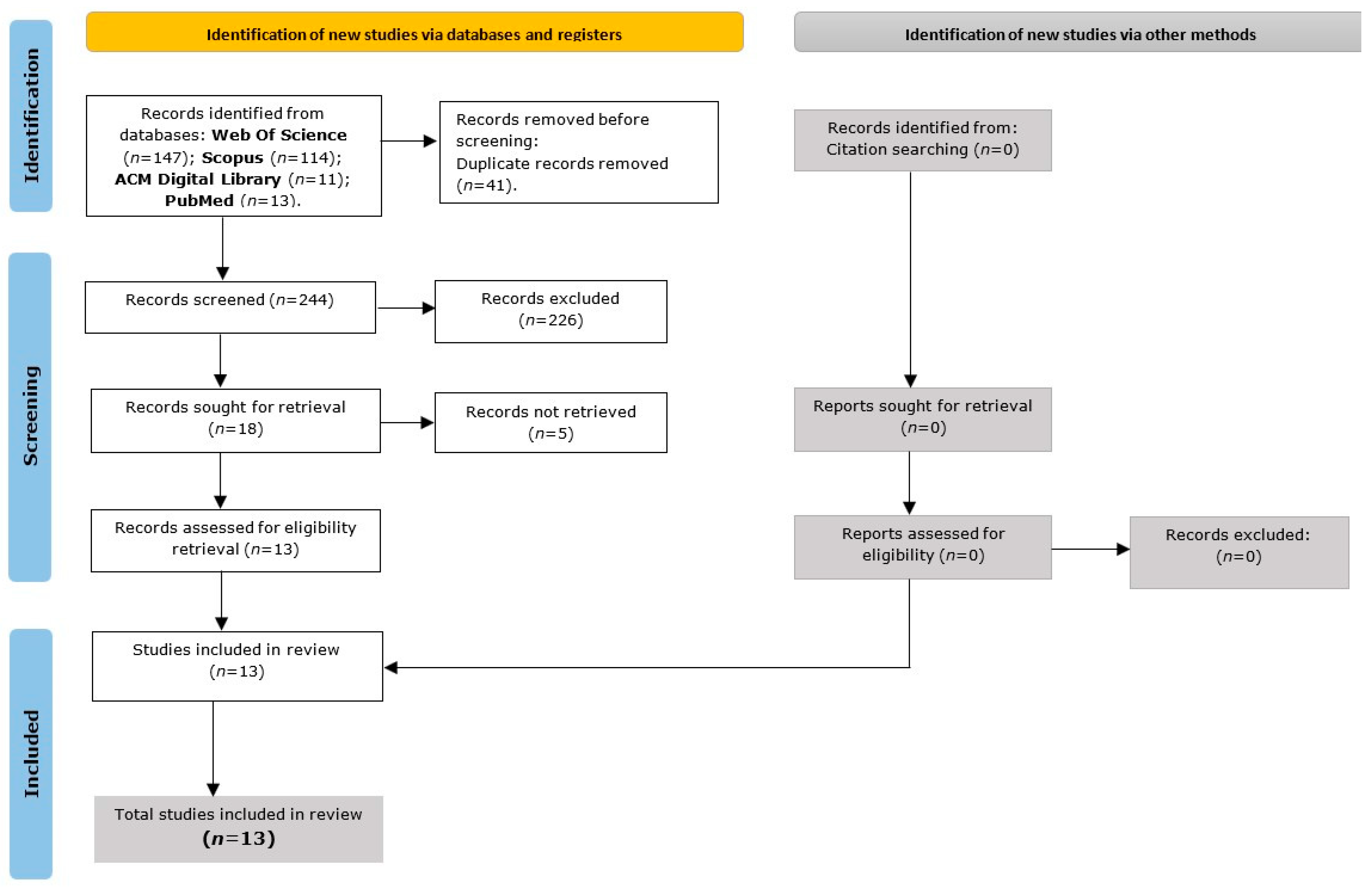
These identified records (n = 285) were imported into the JBI critical appraisal tool for a more careful selection process and quality assessment of the studies [44,45]. To this end, inclusion and exclusion criteria were established: published studies demonstrating the direct interaction of drones with human populations aged 65 and over, specifically regarding social and healthcare objectives, with no restrictions on publication date or language. Studies that did not address this interaction and contained objectives other than the use of drones were excluded.
In addition, the methodological quality of the included studies was independently assessed by two reviewers using the appropriate JBI critical appraisal checklist according to the methodological design of each study. Due to the heterogeneity of the included evidence, different JBI appraisal tools were applied for qualitative studies, cross-sectional studies, quasi-experimental designs and review-based studies. The main methodological limitations identified and the overall appraisal of the included studies are summarised in Table 2.
Duplicate results (n = 41) were identified and removed after importation. Two reviewers examined the titles and abstracts to ensure that the eligibility and exclusion criteria were applied consistently. Potentially eligible studies (n = 18) were retrieved in full text. The reference lists of all selected studies were checked for additional articles and potentially eligible studies for further extraction, but no new articles were found that met the inclusion criteria.
Any disagreements that arose between the reviewers at each stage of the selection process were resolved through discussion of the discrepancies until a consensus was reached. The final selection resulted in the inclusion of thirteen studies [46,47,48,49,50,51,52,53,54,55,56,57,58]. The results of the selection and final inclusion process of the studies using the JBI tool can be seen in the PRISMA flow diagram in Figure 1.
Table 2. Methodological quality assessment of included studies using the JBI critical appraisal tool.
Authors, YearStudy TypeJBI Appraisal ToolMain Methodological Limitations IdentifiedOverall Methodological Quality
Srisamosorn et al., 2016. [46] Quasi-Experimental/prototype studyJBI Quasi-Experimental ChecklistSmall-scale validation in controlled settings; absence of long-term evaluation with older adultsLow–Moderate
Kim et al., 2016. [47]Experimental training studyJBI Quasi-Experimental ChecklistReduced sample size; short intervention period; limited ecological validityModerate
Balasingam, 2017. [48]Literature reviewJBI Checklist for Systematic Reviews and Research SynthesesNon-systematic synthesis; absence of structured risk-of-bias assessmentLow–Moderate
Cao & Zhan, 2018. [49]Quasi-Experimental. Engineering/simulation studyJBI Quasi-Experimental ChecklistSimulation-based environment; lack of real-world clinical implementationModerate
Fakhrulddin et al., 2019. [50]Experimental emergency-response systemJBI Quasi-Experimental ChecklistControlled operational conditions; limited external validationModerate–High
Jeoung & Kim, 2019. [51]Experimental rehabilitation study. Engineering Design.JBI Quasi-Experimental ChecklistPrototype-oriented design; reduced sample and short-term assessmentModerate
Fakhrulddin & Gharghan, 2020. [53]Experimental/IoT emergency studyJBI Quasi-Experimental ChecklistUrban simulation scenarios; absence of large-scale deploymentModerate–High
Sheridan, 2020. [52]Literature reviewJBI Checklist for Systematic Reviews and Research SynthesesConceptual synthesis with limited empirical evidenceModerate
Li et al., 2021. [54]Literature review.JBI Checklist for Systematic Reviews and Research SynthesesExploratory scope; heterogeneous evidence and absence of quantitative synthesisLow–Moderate
Fasterholdt et al., 2023. [55]Cross-sectional surveyJBI Analytical Cross Sectional Studies ChecklistSelf-reported perceptions; absence of longitudinal follow-upModerate–High
Samaddar & Petrie, 2024. [56]Qualitative study. Literature review.JBI Checklist for Systematic Reviews and Research SynthesesLimited sample size; context-dependent perceptionsModerate
Chaitika et al., 2025. [57]Quasi-Experimental home-based exercise studyJBI Quasi-Experimental ChecklistShort-term validation; limited real-world deploymentModerate–High
Finney et al., 2025. [58]Qualitative/survey-based studyJBI Checklist for Qualitative ResearchEmotional responses assessed in hypothetical emergency scenariosModerate

3. Results

This systematic review analyzed thirteen studies published between 2016 and 2025 (Table 3), revealing a diverse but steadily growing body of literature focusing on the interaction between drones and older people in social and healthcare settings. Overall, the reviewed studies suggest a shift from conceptual or exploratory approaches towards more applied scenarios related to emergency response, home support, physical stimulation and healthcare logistics, although the evidence remains methodologically diverse and, to a large extent, based on prototypes, simulations or controlled environments.
A first thematic focus identified across the studies relates to the use of drones in emergency healthcare and rapid medical response. Experimental studies consistently show that drones could help reduce response times in critical situations. Fakhrulddin et al. [50] reported accuracy rates exceeding 99% in fall detection and heart rate monitoring, alongside reductions in response times compared to conventional ambulance systems, whilst Fakhrulddin and Gharghan [53] identified an average saving of 1.75 min in urban emergency scenarios. Similarly, Cao and Zhan [49] described an approximate 20% reduction in response times through the integration of UAVs with IoT systems. Taken together, these studies suggest growing interest in drones as complementary tools for emergency support, particularly in contexts where reducing response times may be clinically relevant. However, the reviewed evidence also indicates that most of these systems have been validated under controlled or semi-experimental conditions, rather than in real-world healthcare deployments, which limits the generalisation of their operational effectiveness.
A second thematic trend relates to the progressive shift from surveillance-focused functions towards forms of active support and the promotion of healthy aging. Chaitika et al. [57] demonstrated high levels of usability and accuracy in tracking trajectories using a home-based exercise system utilizing nano-drones, whilst Jeoung and Kim [51] proproposed drone-assisted motion recognition systems aimed at cognitive stimulation and the prevention of dementia. Similarly, Srisamosorn et al. [46] explored facial tracking and emotional assessment systems in geriatric settings using drones. These findings suggest that drones are beginning to be conceptually explored not only as monitoring devices, but also as interactive agents with potential applications in rehabilitation, stimulation or functional support activities. In this regard, the literature points towards an emerging conceptualization of the drone as a social or care-giving technological companion within the domestic and healthcare settings [52,54].
Another major thematic category identified in the reviewed studies relates to user acceptance, emotional responses and human-drone interaction. In qualitative and public opinion studies, acceptance appears to be strongly influenced by usability, perceived safety, technological familiarity and emotional comfort. Finney et al. [58] observed that older adults recognized the social value of drones for the delivery of AEDs, although they simultaneously expressed anxiety regarding the use of the device in stressful and emergency situations. Similarly, Samaddar and Petrie [56] identified ambivalent attitudes towards care drones in the home, combining perceptions of usefulness with concerns regarding noise, airflow and the intimidating nature associated with the device’s size. These concerns are consistent with the general observations of Balasingam [48], who emphasized that psychological acceptance and perceptions of safety remain fundamental barriers to their implementation.
At the same time, the literature also provides evidence that contradicts certain stereotypes regarding technological rejection in old age. Fasterholdt et al. [55], in a representative survey conducted in Denmark, observed an increase in support for healthcare drones as participants’ age and technological knowledge increased. Similarly, Kim et al. [47], in a small experimental study, observed that some older adults were able to acquire flight-control skills comparable to those of younger participants following specialized training. Taken together, these findings suggest that technological acceptance may depend less on chronological age and more on factors related to familiarity, usability, training and the perceived usefulness of the technology.
The reviewed studies also reveal a constant tension between technological feasibility and implementation in real-world contexts. Although various studies report promising technical indicators -such as high detection rates, wireless connection stability or trajectory tracking accuracy- many applications remain limited to prototypes, proofs-of-concept or highly controlled environments. Furthermore, the literature repeatedly identifies operational constraints related to indoor navigation, battery life, load capacity, environmental noise and regulatory limitations in urban or residential areas [48,56]. Consequently, current evidence suggests that this field is still in a transitional phase between technological validation and large-scale implementation and sustained integration in real social and healthcare contexts.
Finally, although promising, the current evidence remains methodologically heterogeneous and largely exploratory. The included studies range from narrative reviews and exploratory conceptual analyses to qualitative interviews, surveys, engineering designs and experimental validations. This diversity highlights both the multidisciplinary nature of the field and the absence of established methodological standards. As a result, the literature currently provides preliminary and heterogeneous evidence regarding the potential utility of drones in care for older people -particularly in the areas of health emergencies, functional support and rehabilitation- although contradictions persist regarding emotional acceptance, domestic integration and long-term viability under real-world operational conditions.

4. Discussion

The thematic landscape revealed by this systematic review shows a progressive transformation in social robotics and in social and healthcare models: the transition of the drone from an industrial or military instrument to a social agent with clinical, care and rehabilitation potential. However, this transformation is not only technological but may introduce significant changes in care practice within the traditional ecosystem of elderly care.
A critical analysis of the evidence suggests that the field appears to be in the midst of a period of technological expansion [48], where the reviewed literature suggests promising potential applications of drones in emergency response and in certain stimulation or functional support contexts. However, real-world implementation is hindered by a mismatch between technical capabilities and user-related limitations. The clinical implications of drones as part of the ‘chain of survival’ are compromised by a critical psychological factor: anxiety about human-drone interaction. As recent empirical studies highlight, the technical speed of a drone that delivers a life-saving device is of little value if the recipient experiences rejection or extreme stress due to the intimidating presence of the device or the emotional burden of the emergency [58]. This suggests that the focus of current research is perhaps too focused on flight efficiency and not sufficiently on the emotional experience and acceptance of the user during their interaction with the drone.
Furthermore, the applicability of drones in the domestic sphere faces a complex triad of barriers: legal, technical, and social. From a regulatory perspective, the framework established by agencies such as EASA [31] introduces significant restrictions on the implementation of these solutions in urban and residential environments; specifically, the requirement for drones in the ‘Specific’ category to feature certified flight termination systems and integrate into ‘U-space’ management remains a critical hurdle for delivering medical supplies directly to balconies or windows [32]. Whilst safety is paramount, current restrictions on flights in urban and residential areas, coupled with the complexities of authorizing operations beyond the visual line of sight, limit many of the proposed solutions to experimental or restricted settings. Legally, privacy concerns represent a significant challenge. The use of drones for domestic monitoring must navigate the strict requirements of the GDPR, ensuring that the benefit of ‘security surveillance’ does not become a perception of ‘invasive spying’ that could lead to the rejection of the technology by the population it is intended to serve [56,59]. Technically, the review reveals that the indoor environment remains a context with operational or accessibility limitations for standard UAVs. The lack of reliable indoor GPS, the nuisance of high-pitched propeller noise and the physical intimidation of device size are operational limitations that demand a move towards smaller prototypes and noise-masking technologies to ensure a non-intrusive presence [56,57]. Beyond indoor use, the large-scale feasibility of care drones depends on technical benchmarks such as maintaining a take-off mass between 4 and 25 kg, a payload capacity of at least 1.5 kg for essential medical kits and extending flight times beyond the current 20–40 min limit. To mitigate risks in residential zones, winch-delivery mechanisms are identified as a safer alternative to landing on elevated surfaces, especially given the potentially slower mobility and reaction times of older adults [31,34].
The possible transition of drones from passive surveillance tools towards more interactive support technologies [51,57] is perhaps one of the most promising aspects identified in this review. However, this shift requires addressing and mitigating the ‘novelty effect’: the risk that initial enthusiasm for a new device fades over time, compromising long-term adherence to programs such as physical rehabilitation at home [54]. Some preliminary findings suggest that older adults can achieve high levels of flight control and interaction proficiency [47], debunks the technophobic bias often associated with this demographic group, but also shifts the responsibility onto developers to create designs centered on the person and not just on technology.
However, the findings of this review should be interpreted with caution due to the characteristics of the corpus analyzed. The included studies exhibit considerable methodological heterogeneity, ranging from narrative reviews to experimental studies, surveys, and developments based on prototypes or simulations. Furthermore, a significant portion of the evidence is not based on real samples of older adults or has been obtained in controlled environments, which limits the generalization of the findings to real-world application contexts.
For this reason, a robust research roadmap for the future of this discipline must be established to ensure the efficiency and sustainability of these social and healthcare interventions. This roadmap should prioritize the conduct of long-term longitudinal studies that assess the possible long-term effects of drone-based interventions on aspects related to quality of life and functional independence among older adults, moving beyond one-off experimental validations. At the same time, it is essential to innovate in the development of multimodal interaction interfaces that integrate natural language processing and haptic feedback, ensuring that the technology is inclusive and reaches older adults with sensory or cognitive impairments. Furthermore, the standardization of ethical and legal protocols is required to balance domestic privacy with medical necessity, along with a targeted effort in public education to demystify the ‘military’ or ‘invasive’ image of drones.
Another key objective should be to design drone technology with older adults as active participants, rather than simply for them, by understanding their needs, fears and aspirations. Incorporating an analysis of psychological mechanisms—such as trust, technological anxiety, and perceived control—can support this person-centered design, contributing to a more positive and sustainable relationship between the user and the technology. Promoting education and the visibility of drones in everyday contexts will be the key to demystifying this technology, securing public support for it, and integrating it into economic policies for its implementation in social contexts, such as among older people, where there is vulnerability and a need for care and support.
Only by integrating these dimensions can drone technology move beyond its current status as a promising prototype and become a potentially reliable and useful complementary resource within geriatric social and healthcare care.

5. Review Limitations

The main limitations of this systematic review relate to the search strategy and the characteristics of the available evidence. Although the search was conducted in databases with broad coverage and a high level of indexing (Web of Science, Scopus, PubMed and ACM Digital Library), it is possible that some relevant studies not indexed in these sources or published in alternative repositories may not have been included, which could affect the comprehensiveness of the review.
Furthermore, the number of studies ultimately included remains limited, reflecting a field of research that is still developing. Added to this is the methodological heterogeneity of the analyzed studies, which range from narrative reviews to qualitative studies, surveys, and experimental designs, making it difficult to directly compare results and limiting the possibility of conducting quantitative syntheses. Furthermore, a significant proportion of the studies are based on prototypes, simulations, or controlled environments, with small sample sizes or without the direct participation of older adults, which restricts the generalization of the findings to real-world contexts. Finally, the conclusions should be interpreted with caution, given that the implementation of drones in social and healthcare settings is conditioned by technical, regulatory, and social acceptance factors that are still evolving and under development.

Supplementary Materials

The following supporting information can be downloaded at: https://www.mdpi.com/article/10.3390/drones10050389/s1.

Author Contributions

Conceptualization, A.G.-L., Y.M.-L., P.O.-J. and R.M.; methodology, A.G.-L., Y.M.-L., P.O.-J. and R.M.; validation, A.G.-L., Y.M.-L., P.O.-J. and R.M.; formal analysis, A.G.-L., Y.M.-L., P.O.-J. and R.M.; investigation, A.G.-L., Y.M.-L., P.O.-J. and R.M.; resources, A.G.-L., Y.M.-L., P.O.-J. and R.M.; data curation, A.G.-L., Y.M.-L., P.O.-J. and R.M.; writing—original draft preparation, A.G.-L., Y.M.-L., P.O.-J. and R.M.; writing—review and editing, A.G.-L., Y.M.-L., P.O.-J. and R.M.; visualization, A.G.-L., Y.M.-L., P.O.-J. and R.M.; supervision, A.G.-L., Y.M.-L., P.O.-J. and R.M.; project administration, A.G.-L., Y.M.-L., P.O.-J. and R.M.; funding acquisition, A.G.-L., Y.M.-L., P.O.-J. and R.M. All authors have read and agreed to the published version of the manuscript.

Funding

This research was partially supported by the Spanish Ministry of Science and Innovation (MCIN) grant number PID2022-141978NB-I00. This work has also been partially supported by Junta de Comunidades de Castilla-La Mancha/ESF (grant numbers SBPLY/21/180501/000030 and SBPLY/24/180225/000225) and Grant 2025-GRIN-38441 funded by Universidad de Castilla-La Mancha and by “ERDF A way of making Europe”.

Data Availability Statement

The data presented in this study are available upon request from the corresponding author.

Conflicts of Interest

The authors declare that the research was conducted in the absence of any commercial or financial relationships that could be construed as a potential conflict of interest.

Abbreviations

The following abbreviations are used in this manuscript:
JBIJoanna Briggs Institute
UAVUnmanned Aerial Vehicle
HDIHuman-Drone Interaction
EASAEuropean Union Aviation Safety Agency
EUEuropean Union
INEInstituto Nacional de Estadística
SORASpecific Operations Risk Assessment
PRSParachute Recovery Systems
FTSFlight Termination Systems
BVLOSBeyond Visual Line of Sight
GDPRGeneral Data Protection Regulation
AEDAutomated External Defibrillators
GPSGlobal Positioning Systems
SLAMSimultaneous Localization and Mapping
PRISMAPreferred Reporting Items for Systematic Reviews and Meta-Analyses.
WOSWeb of Science
DIoTDrone-based Internet of Things
EFASemergency first aid system
EFDFall detection algorithm
FDDFall detection device
FDB-HRTFall Detection Based on Heart Rate Threshold
IoTInternet of Things

References

  1. Eurostat. Population in Candidate Countries and Potential Candidates; Eurostat: Luxembourg, 2025; Available online: https://ec.europa.eu/eurostat/statistics-explained/index.php?title=Population_in_candidate_countries_and_potential_candidates (accessed on 10 February 2025).
  2. INE. España en Cifras; Instituto Nacional de Estadística (INE): Madrid, Spain, 2025. Available online: https://www.ine.es/prodyser/espa_cifras/ (accessed on 23 February 2025).
  3. Hajbaghery, M.A. Evaluation of old-age disability and related factors among an Iranian elderly population. East. Mediterr. Health J. 2011, 17, 671–678. [Google Scholar] [CrossRef]
  4. Tak, E.; Kuiper, R.; Chorus, A.; Hopman-Rock, M. Prevention of onset and progression of basic ADL disability by physical activity in community dwelling older adults: A meta-analysis. Ageing Res. Rev. 2013, 12, 329–338. [Google Scholar] [CrossRef]
  5. Yusif, S.; Soar, J.; Hafeez-Baig, A. Older people, assistive technologies, and the barriers to adoption: A systematic review. Int. J. Med. Inform. 2016, 94, 112–116. [Google Scholar] [CrossRef]
  6. Moreno, M.; Alvarado, A. Aplicación del modelo de adaptación de Roy para el cuidado de enfermería en el anciano sano. In Adaptación y Cuidado en el Ser Humano: Una Visión de Enfermería; Manual Moderno; Universidad de La Sabana: Bogotá, Colombia, 2007; p. 331. [Google Scholar]
  7. da Costa Rosa, T.E.; Benício, M.H.D.; do Rosário Dias de Oliveira Latorre, M.; Ramos, L.R. Determinant factors of functional status among the elderly. Rev. Saude Publica 2003, 37, 40–48. [Google Scholar] [CrossRef]
  8. Kart, C.S.; Kinney, J.M. The Realities of Aging: An Introduction to Gerontology; Allyn & Bacon: Boston, MA, USA, 2001. [Google Scholar]
  9. del Barrio Truchado, E.; Villarejo, P.C.; Castiello, M.S.; Chuliá, M.A.T.; Sundström, G.; Malmberg, B. La soledad de las personas mayores en España y Suecia: Contexto y cultura. Rev. Española Geriatría Gerontol. 2010, 45, 189–195. [Google Scholar] [CrossRef]
  10. Fernández, T.; de León, L.P. Trabajo Social con Familias; Cátedra Paralela: Madrid, Spain, 2013; Available online: https://catedraparalela.unr.edu.ar/index.php/revista/article/view/109 (accessed on 30 August 2025).
  11. de León, L.P.; Cabello, S.A. Envejecimiento activo en el ámbito rural en España. EHQUIDAD. Rev. Int. Políticas Bienestar Trab. Soc. 2017, 7, 175–198. [Google Scholar] [CrossRef]
  12. López, E.R.; Clemente, C.C. Soledad y aislamiento, barreras y condicionamientos en el ámbito de las personas mayores en España. EHQUIDAD. Rev. Int. Políticas Bienestar Trab. Soc. 2019, 12, 127–154. [Google Scholar] [CrossRef]
  13. Al-Dosari, K.; Hunaiti, Z.; Balachandran, W. Systematic Review on Civilian Drones in Safety and Security Applications. Drones 2023, 7, 210. [Google Scholar] [CrossRef]
  14. Austin, R. Unmanned Aircraft Systems: UAVS Design, Development and Deployment; Wiley: Fort Myers, FL, USA, 2010. [Google Scholar]
  15. Soleimani, A.; Abbaspour-Fard, M.H.; Sapkota, R.; Sanaeifar, A. Artificial intelligence in agricultural machinery & robotics: A systematic review and future outlook. Appl. Soft Comput. 2026, 194, 114889. [Google Scholar] [CrossRef]
  16. Guebsi, R.; Mami, S.; Chokmani, K. Drones in Precision Agriculture: A Comprehensive Review of Applications, Technologies, and Challenges. Drones 2024, 8, 686. [Google Scholar] [CrossRef]
  17. Molina, A.A.; Huang, Y.; Jiang, Y. A Review of Unmanned Aerial Vehicle Applications in Construction Management: 2016–2021. Standards 2023, 3, 95–109. [Google Scholar] [CrossRef]
  18. Panigati, T.; Zini, M.; Striccoli, D.; Giordano, P.F.; Tonelli, D.; Limongelli, M.P.; Zonta, D. Drone-based bridge inspections: Current practices and future directions. Autom. Constr. 2025, 173, 106101. [Google Scholar] [CrossRef]
  19. Callewaert, N.; Pareyn, I.; Acke, T.; Desplinter, B.; Van de Pitte, K.; Van Vooren, J.; De Meyer, M.; Seeldraeyers, E.; Peeters, F.; De Meyer, S.F.; et al. Limited Impact of Drone Transport of Blood on Platelet Activation. Drones 2024, 8, 752. [Google Scholar] [CrossRef]
  20. Steinhoff, C. Einsatz von Drohnen für den Medikamententransport und das Rettungswesen. Der Unfallchirurg 2021, 124, 965–973. [Google Scholar] [CrossRef]
  21. Collignon, M.; Perrusquía, A.; Tsourdos, A.; Guo, W. Search and rescue operations in wildfires using unmanned aerial vehicles: A multi-agent deep reinforcement learning approach. Neurocomputing 2025, 653, 131211. [Google Scholar] [CrossRef]
  22. Ngo, T.B.; Ngo, L.; Nguyen, D.T.; Phi, A.V.; Perera, A.; Nguyen, A. UAV-Based Visual Detection and Tracking of Drowning Victims in Maritime Rescue Operations. Drones 2026, 10, 146. [Google Scholar] [CrossRef]
  23. Goodrich, M.A.; Schultz, A.C. Human-Robot Interaction: A Survey. Found. Trends® Hum.–Comput. Interact. 2007, 1, 203–275. [Google Scholar] [CrossRef]
  24. Tezza, D.; Andujar, M. The State-of-the-Art of Human–Drone Interaction: A Survey. IEEE Access 2019, 7, 167438–167454. [Google Scholar] [CrossRef]
  25. Cheskes, S. Drone delivery of automated external defibrillators for out-of-hospital cardiac arrest: It’s all about location. Resuscitation 2025, 209, 110561. [Google Scholar] [CrossRef]
  26. Fink, F.; Kalter, I.; Steindorff, J.-V.; Helmbold, H.K.; Paulicke, D.; Jahn, P. Identifying Factors of User Acceptance of a Drone-Based Medication Delivery: User-Centered Design Approach. JMIR Hum. Factors 2024, 11, e51587. [Google Scholar] [CrossRef] [PubMed]
  27. Wang, L.; Rau, P.-L.P.; Salvendy, G. Older Adults’ Acceptance of Information Technology. Educ. Gerontol. 2011, 37, 1081–1099. [Google Scholar] [CrossRef]
  28. Yazdani-Darki, M.; Rahemi, Z.; Adib-Hajbaghery, M.; Izadi-Avanji, F.S. ‘Older Adults’ Barriers to Use Technology in Daily Life: A Qualitative Study. Nurs. Midwifery Stud. 2020, 9, 229. [Google Scholar]
  29. Europea, U.; Delegado, R. 2019/945 de la Comisión, de 12 de Marzo de 2019, Sobre Los Sistemas de Aeronaves no Tripuladas y los Operadores de Terceros Países de Sistemas de Aeronaves no Tripuladas. Available online: https://www.boe.es/buscar/doc.php?id=DOUE-L-2019-81002 (accessed on 11 April 2026).
  30. Commission Implementing Regulation (EU) 2019/947 of 24 May 2019 on the Rules and Procedures for the Operation of Unmanned Aircraft (Text with EEA Relevance.). 2019, Volume 152. Available online: http://data.europa.eu/eli/reg_impl/2019/947/oj (accessed on 11 April 2026).
  31. EASA. Drones & Air Mobility. Available online: https://www.easa.europa.eu/en/domains/civil-drones (accessed on 11 April 2026).
  32. Aurambout, J.-P.; Gkoumas, K.; Ciuffo, B. Last mile delivery by drones: An estimation of viable market potential and access to citizens across European cities. Eur. Transp. Res. Rev. 2019, 11, 30. [Google Scholar] [CrossRef]
  33. Grote, M.; Oakey, A.; Pilko, A.; Smith, A.; Cherrett, T. Drones: The Scope for Integration into Multi-modal Urban Logistics Services. In The Routledge Handbook of Urban Logistics; Routledge: London, UK, 2023; p. 448. [Google Scholar] [CrossRef]
  34. Mohamed, A.; Mohamed, M. Unmanned Aerial Vehicles in Last-Mile Parcel Delivery: A State-of-the-Art Review. Drones 2025, 9, 413. [Google Scholar] [CrossRef]
  35. de Hert, P.; Papakonstantinou, V.; Kamara, I. The cloud computing standard ISO/IEC 27018 through the lens of the EU legislation on data protection. Comput. Law Secur. Rev. 2016, 32, 16–30. [Google Scholar] [CrossRef]
  36. Clothier, R.A.; Greer, D.A.; Greer, D.G.; Mehta, A.M. Risk Perception and the Public Acceptance of Drones. Risk Anal. 2015, 35, 1167–1183. [Google Scholar] [CrossRef]
  37. Dorling, K.; Heinrichs, J.; Messier, G.G.; Magierowski, S. Vehicle Routing Problems for Drone Delivery. IEEE Trans. Syst. Man Cybern. Syst. 2016, 47, 70–85. [Google Scholar] [CrossRef]
  38. Stöcker, C.; Bennett, R.; Nex, F.; Gerke, M.; Zevenbergen, J. Review of the Current State of UAV Regulations. Remote. Sens. 2017, 9, 459. [Google Scholar] [CrossRef]
  39. Scaramuzza, D.; Fraundorfer, F.; Odometry, V. Visual Odometry: Part I: The First 30 Years and Fundamentals. IEEE Robot. Autom. Mag. 2011, 18, 80–92. [Google Scholar] [CrossRef]
  40. Kawai, C.; Jäggi, J.; Georgiou, F.; Meister, J.; Pieren, R.; Schäffer, B. Short-term noise annoyance towards drones and other transportation noise sources: A laboratory study. J. Acoust. Soc. Am. 2024, 156, 2578–2595. [Google Scholar] [CrossRef] [PubMed]
  41. Christian, A.; Cabell, R. Initial Investigation into the Psychoacoustic Properties of Small Unmanned Aerial System Noise; American Institute of Aeronautics and Astronautics: Reston, VA, USA, 2017. Available online: https://ntrs.nasa.gov/citations/20170005870 (accessed on 11 April 2026).
  42. Kähler, S.T.; Tomat, M.; Luna-Rodriguez, A.; Jacobsen, T. Assessing the acceptance and aesthetics of unmanned aerial vehicles (drones): An experimental and survey-based comparison between students and older adults. Transp. Res. Interdiscip. Perspect. 2025, 32, 101497. [Google Scholar] [CrossRef]
  43. Page, M.J.; McKenzie, J.E.; Bossuyt, P.M.; Boutron, I.; Hoffmann, T.C.; Mulrow, C.D.; Shamseer, L.; Tetzlaff, J.M.; Akl, E.A.; Brennan, S.E.; et al. The PRISMA 2020 statement: An updated guideline for reporting systematic reviews. BMJ Br. Med. J. 2021, 372, 71. [Google Scholar] [CrossRef]
  44. Munn, Z.; Aromataris, E.; Tufanaru, C.; Stern, C.; Porritt, K.; Farrow, J.; Lockwood, C.; Stephenson, M.; Moola, S.; Lizarondo, L.; et al. The development of software to support multiple systematic review types: The Joanna Briggs Institute System for the Unified Management, Assessment and Review of Information (JBI SUMARI). JBI Evid. Implement. 2019, 17, 36. [Google Scholar] [CrossRef]
  45. Booth, A.; Clarke, M.; Dooley, G.; Ghersi, D.; Moher, D.; Petticrew, M.; Stewart, L. The nuts and bolts of PROSPERO: An international prospective register of systematic reviews. Syst. Rev. 2012, 1, 2. [Google Scholar] [CrossRef]
  46. Srisamosorn, V.; Kuwahara, N.; Yamashita, A.; Ogata, T.; Ota, J. Design of Face Tracking System Using Environmental Cameras and Flying Robot for Evaluation of Health Care. In Digital Human Modeling: Applications in Health, Safety, Ergonomics and Risk Management; Duffy, V.G., Ed.; Springer International Publishing: Cham, Switzerland, 2016; pp. 264–273. [Google Scholar] [CrossRef]
  47. Kim, K.-H.; Ahn, G.-I.; Lim, H.-S.; Jung, D.-G. Drone Tech Industry Education for Elderly Workers Linking with Jobs. J. Korean Inst. Inf. Commun. Eng. 2016, 20, 2181–2186. [Google Scholar] [CrossRef]
  48. Balasingam, M. Drones in medicine-The rise of the machines. Int. J. Clin. Pract. 2017, 71, e12989. [Google Scholar] [CrossRef]
  49. Cao, H.-R.; Zhan, C. A Novel Emergency Healthcare System for Elderly Community in Outdoor Environment. Wirel. Commun. Mob. Comput. 2018, 1, 11. [Google Scholar] [CrossRef]
  50. Fakhrulddin, S.S.; Gharghan, S.K.; Al-Naji, A.; Chahl, J. An Advanced First Aid System Based on an Unmanned Aerial Vehicles and a Wireless Body Area Sensor Network for Elderly Persons in Outdoor Environments. Sensors 2019, 19, 2955. [Google Scholar] [CrossRef]
  51. Jeoung, S.-J.; Kim, B.-H. Design of Dementia Prevention System using Motion Recognition Sensor Drone. Int. J. Innov. Technol. Explor. Eng. 2019, 8, 8S2. [Google Scholar]
  52. Sheridan, T.B. A review of recent research in social robotics. Curr. Opin. Psychol. 2020, 36, 7–12. [Google Scholar] [CrossRef]
  53. Fakhrulddin, S.S.; Gharghan, S.K. An Elderly First Aid System Based-Fall Detection and Unmanned Aerial Vehicle. IOP Conf. Ser. Mater. Sci. Eng. 2020, 745, 012096. [Google Scholar] [CrossRef]
  54. Li, J.; Goh, W.W.; Jhanjhi, N. The Use of Emerging Technologies DIoT: Elderly Daily Living in Post-Epidemic Era. MATEC Web Conf. 2021, 335, 04004. [Google Scholar] [CrossRef]
  55. Fasterholdt, I.; Knudsen, M.P.; From, N.; Frederiksen, M.H. Future healthcare logistics: A survey of the public opinion on drones in Denmark. Drone Syst. Appl. 2023, 11, 1–8. [Google Scholar] [CrossRef]
  56. Samaddar, S.; Petrie, H. GUFO: Three studies in the initial development of an assistive drone for older people living independently. In Proceedings of the 13th Nordic Conference on Human-Computer Interaction, in NordiCHI ’24; Association for Computing Machinery: New York, NY, USA, 2024; pp. 1–16. [Google Scholar] [CrossRef]
  57. Chaitika, K.; Chieh, H.-F.; An, K.-N.; Lin, C.-J.; Su, F.-C. Pei-Wo Drone: A home-based exercise guidance system with a drone for older adults. Sci. Rep. 2025, 15, 10668. [Google Scholar] [CrossRef]
  58. Finney, O.; Snowdon, K.; Mckellow, A.; Geen, K.; Wilkinson, C.; McClelland, G. Perceptions of older people regarding drone-delivered defibrillators for out-of-hospital cardiac arrest: A qualitative study. Br. Paramed. J. 2025, 10, 10–18. [Google Scholar] [CrossRef]
  59. Finn, R.L.; Wright, D. Unmanned aircraft systems: Surveillance, ethics and privacy in civil applications. Comput. Law Secur. Rev. 2012, 28, 184–194. [Google Scholar] [CrossRef]
Figure 1. PRISMA flow diagram.
Drones 10 00389 g001
Table 1. Keyword search strategy for each search engine.
Search Engine Search Syntax All Fields Title, Abst., Key. Import to JBI Total
Import
SCOPUSdrone AND aged234919223114
drone AND aging538334825
drone AND elderly2709729
drone AND old95275029
drone AND older adults1912385
uav AND elderly216917913
uav AND aging58503689
uav AND elderly21195611
uav AND old82244328
uav AND older adults90872
WoSdrone AND aged99389724147
drone AND aging98289763
drone AND elderly322510
drone AND old6194975
drone AND older adults65604
uav AND elderly115099817
uav AND aging106799812
uav AND elderly26147
uav AND old5123573
uav AND older adults15142
DIGITAL LIBRARYdrone AND aged10,4752211
drone AND aging556111
drone AND elderly10,47322
drone AND old744511
drone AND older adults602105
uav AND elderly165200
uav AND aging120200
uav AND elderly165100
uav AND old112800
uav AND older adults108200
PUBMEDdrone AND aged9516313
drone AND aging49112
drone AND elderly9992
drone AND old81430
drone AND older adults9721
uav AND elderly63112
uav AND aging970
uav AND elderly6642
uav AND old46370
uav AND older adults6311
TOTAL285
Note. The identified articles (n = 285) were imported into the JBI tool.
Table 3. Key data and characteristics of the selected studies.
Authors, Year, CountryObjectiveDesignSampleMethodologyStudy SettingMain Results
Finney et al., 2025. United Kingdom. [58]To explore older adults’ perspectives on drones delivering AEDs in cases of cardiac arrest.Qualitative.12 older adults (>65 years).Semi-structured interviews following viewing of a video demonstrating the technology.Qualitative emergency-response perception studyAnxiety about using the AED vs. comfort with the drone; perceived social benefit; need for public education.
Chaitika et al., 2025. Taiwan. [57]To evaluate a home exercise guidance system (Pei-Wo Drone) to promote healthy ageing.Mixed (experimental/descriptive).15 older adults (mean: 67.4 years).Trajectory tracking tests using a nano-drone and auditory feedback; Likert scale.Home-based exercise prototype under semi-controlled conditionsTracking accuracy (>88%); high usability and satisfaction; perception of safety and ‘companionship’.
Samaddar & Petrie, 2024. United Kingdom. [56]To analyse the presence and attitudes of older adults towards a care drone in the home.Qualitative. Literature review.3 articles (86 people aged 65+ in total).Semi-structured interviews and questionnaires on attitudes towards robotics.Qualitative domestic-environment perception studyPositive/negative attitude; perception of noise and airflow; anxiety vs. intention to use.
Fasterholdt et al., 2023. Denmark. [55]To investigate citizens’ views on drones in healthcare logistics.Quantitative. Online survey.1004 Danish adults (representative).Statistical analysis (ANOVA, frequency tables) of a 15-item survey.Large-scale population survey68% support in healthcare; positive correlation between older age/knowledge and acceptance.
Li et al., 2021. Malaysia. [54]To analyse the use of emerging technologies (drones) among older people.Qualitative. Literature review.35 articles selected.Compilation of descriptive information on the benefits of DIoT (Drone-based Internet of Things).Scoping review of healthcare drone applicationsClassification of functionalities: motion control, communication protocols and routes.
Sheridan, 2020. USA. [52]To analyse research on social robotics and assistive technology for people with disabilities.Qualitative. Literature review.46 articles selected.Analysis of trends and main areas of research.Narrative review/conceptual synthesisClassification: Affect and personality; Sensation and control; Care for the elderly and disabled.
Fakhrulddin & Gharghan, 2020. Iraq. [53]Proposing an emergency first aid system (EFAS) for fall detection and delivery of kits via UAV.Quantitative/Experimental.5 volunteers for calibration; 4 test locations.Fall detection algorithm (EFD) and vital signs validation.Urban simulation and IoT-assisted emergency-response systemFall detection accuracy (99.11%); time saving of 1.75 min compared to an ambulance in urban areas.
Fakhrulddin et al., 2019. Iraq/Australia. [50] Implementing a support system to monitor elderly people at risk of falling and deliver medicines via UAV.Quantitative/Experimental.10 volunteers (validation) and 17 locations (GPS).Fall detection device (FDD) with sensors linked to a drone and a hybrid FDB-HRT (Fall Detection Based on Heart Rate Threshold) algorithm.Controlled experimental emergency-response prototypeAccuracy for heart rate (99.16%) and falls (99.2%). Time saved by UAV vs. ambulance (31.81%).
Jeoung & Kim, 2019. Korea. [51]Designing a dementia prevention system linking motion recognition and drones.Non-experimental. Engineering design.No human participants.Engineering design process and ICT technological convergence.Controlled rehabilitation and motion-recognition prototypeDefinition of system architecture; integration of flight control for cognitive stimulation.
Cao & Zhan, 2018. China. [49]Developing an outdoor emergency healthcare system based on UAVs and Internet of Things (IoT) for the elderly.Quantitative/Experimental.Campus/real-world testing.Analysis of 4-layer architecture; communication channel algorithm and medicine delivery.Engineering simulation and IoT-based conceptual system20% reduction in response time compared to current methods; wireless connection stability.
Balasingam, 2017. Malaysia. [48]Identify potential applications of drones in medicine and geriatrics.Qualitative. Literature review.Case studies and international deployments.Descriptive analysis of current uses (disasters) and potential uses (telemedicine, AED transport).Narrative review/conceptual analysisClassification of advantages (speed, saving lives) and barriers (regulation, acceptance, storage).
Srisamosorn et al., 2016. Japan. [46]Designing a facial tracking system using ambient cameras and drones to evaluate healthcare.Quantitative/Experimental.1 participant (proof of concept).Integration of 5 Kinects and a Crazyflie quadcopter; data fusion for human tracking.Controlled experimental prototype in laboratory/geriatric simulation environmentSuccessful control of the drone by tracking movements; acquisition of facial images for emotional assessment.
Kim et al., 2016. Korea. [47]Analysis of existing training programmes for the elderly in the drone industry.Mixed (quantitative/qualitative).30 participants (10 students, 10 elderly people, 10 experts).Flight training and cross-sectional analysis of questionnaires and observation.Experimental training study under controlled laboratory conditionsFlight control skills (rotations, coordination) comparable between young and older people following training.
Disclaimer/Publisher’s Note: The statements, opinions and data contained in all publications are solely those of the individual author(s) and contributor(s) and not of MDPI and/or the editor(s). MDPI and/or the editor(s) disclaim responsibility for any injury to people or property resulting from any ideas, methods, instructions or products referred to in the content.