Proceeding Paper

Planar Localization of Radio-Frequency or Acoustic Sources with Two Receivers †

by
José Manuel Fresno
,
Guillermo Robles
* and
Juan Manuel Martínez-Tarifa
Department of Electrical Engineering, Universidad Carlos III de Madrid, Avda, Universidad, 30, Leganés, 28911 Madrid, Spain
*
Author to whom correspondence should be addressed.
Presented at the 4th International Electronic Conference on Sensors and Applications, 15--30 November 2017; Available online: https://sciforum.net/conference/ecsa-4.
Proceedings 2018, 2(3), 103; https://doi.org/10.3390/ecsa-4-04892
Published: 14 November 2017

Abstract

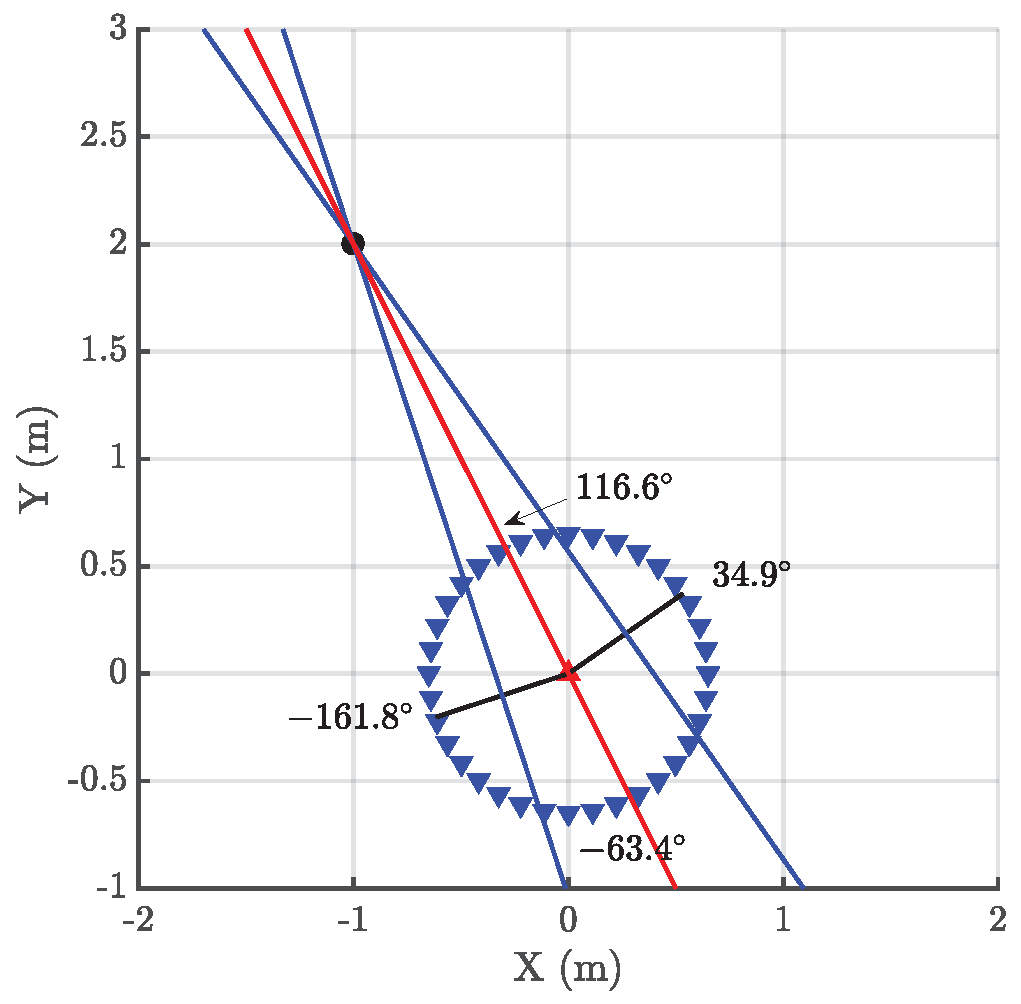
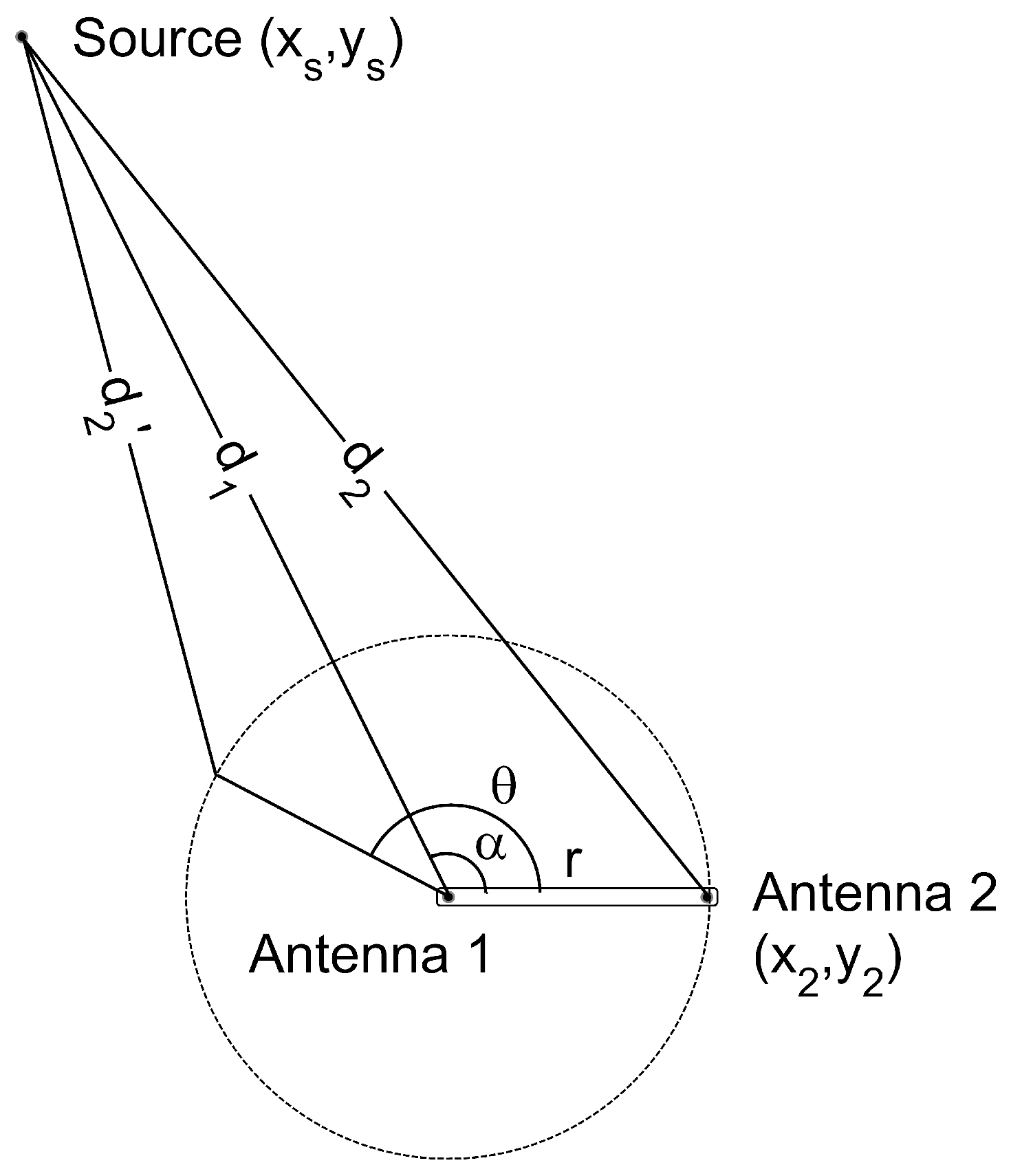
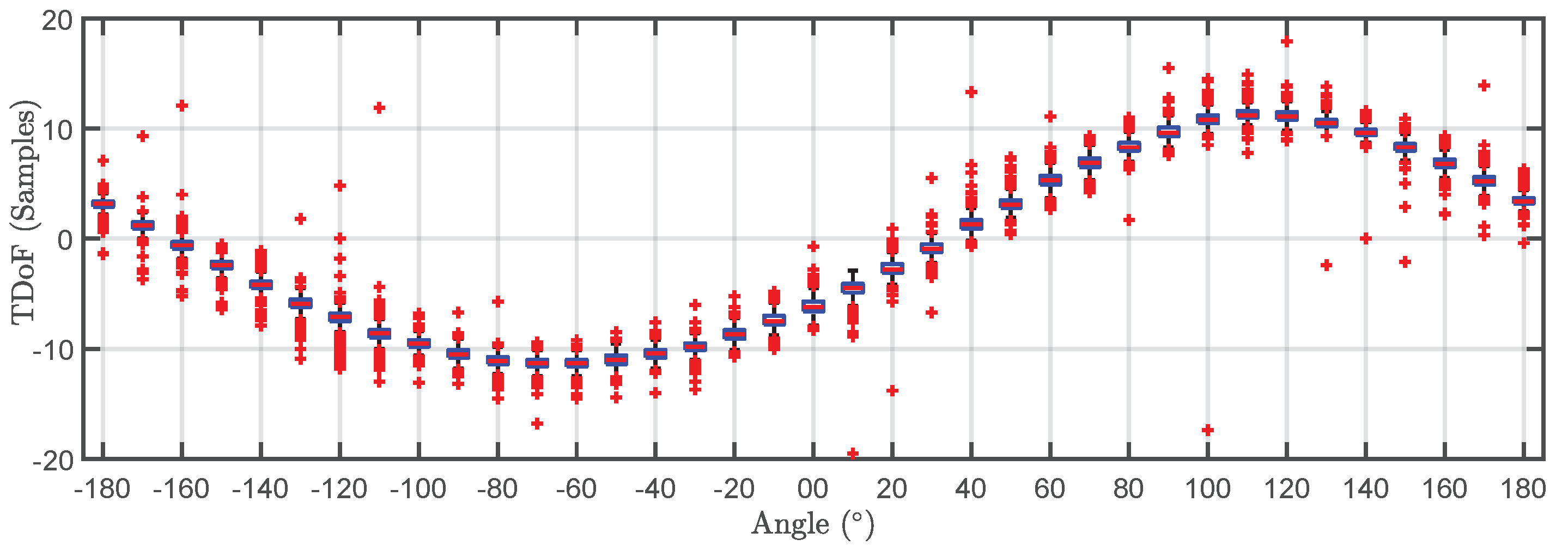
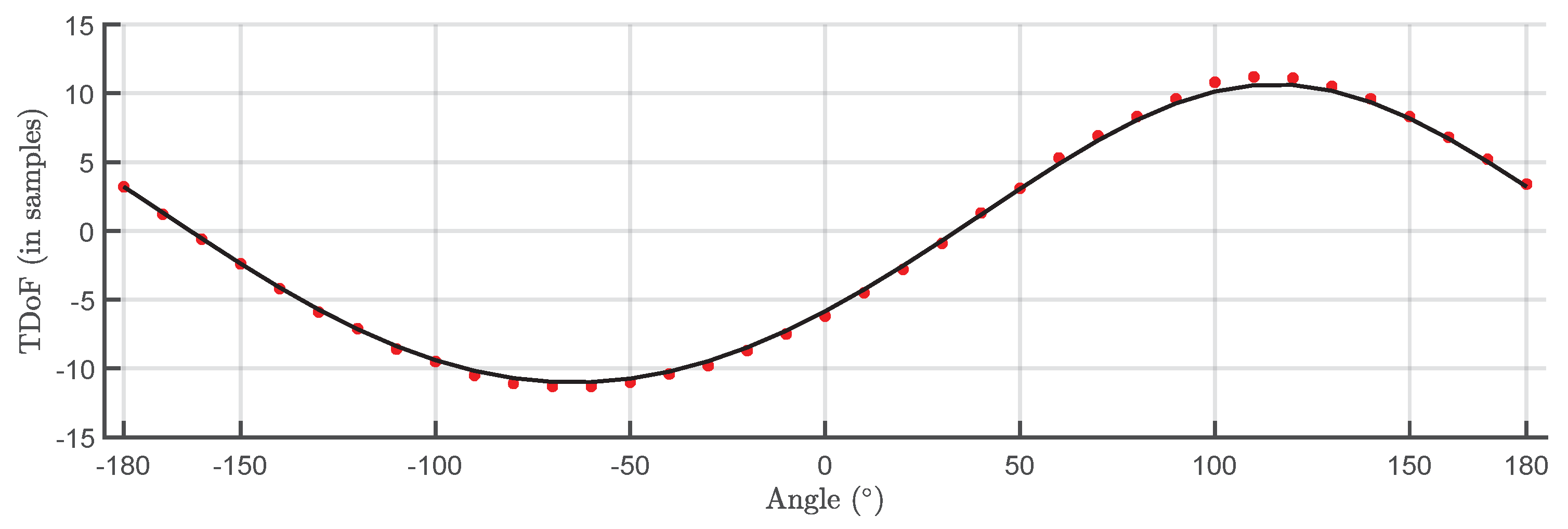
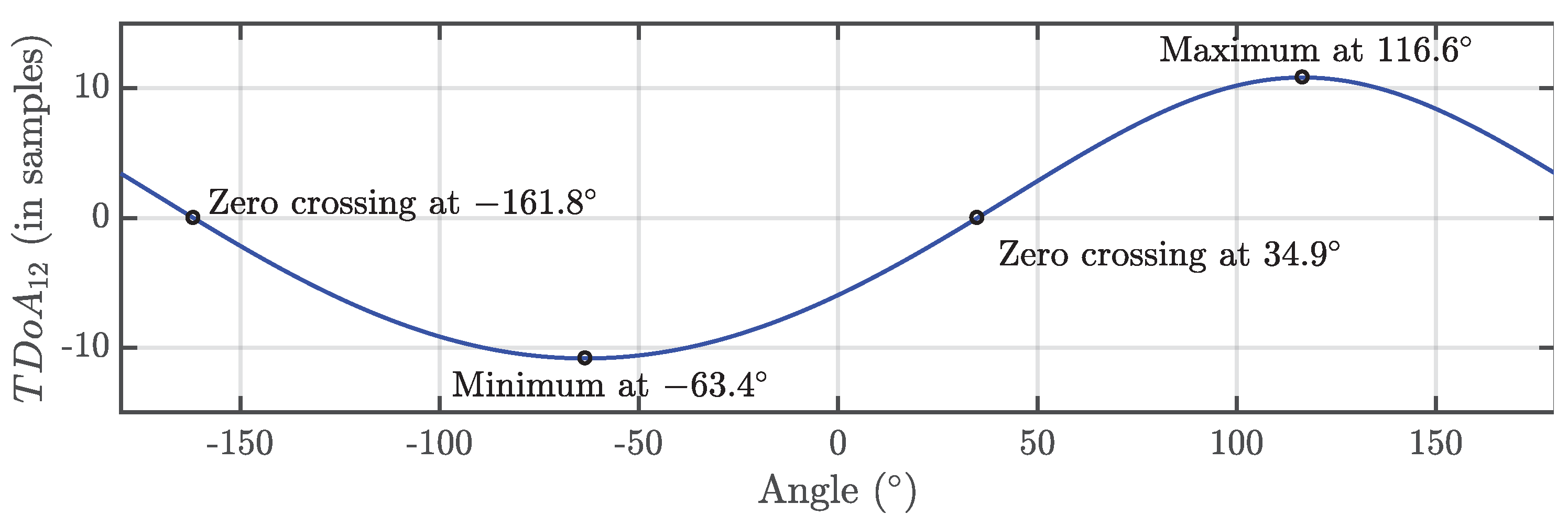
Spatial localization of emitting sources is especially interesting in different fields of application. The focus of an earthquake, the determination of cracks in solid structures or the position of bones inside a body are some examples of the use of multilateration techniques applied to acoustic and vibratory signals. Radar, GPS and wireless sensors networks location are based on radiofrequency emissions and the techniques are the same as in the case of acoustic emissions. This paper is focused on the determination of the position of sources of partial discharges inside electrical insulation for maintenance based on the condition of the electrical machine. The use of this phenomenon is a mere example of the capabilities of the proposed method because its emission can be electromagnetic in the UHF range or acoustic when the insulation is immersed in oil. Generally, when a pulse is radiated from a source, the wave will arrive to two receivers at different times. One of the advantages of measuring these time differences of arrival or TDOA is that it is not required a common clock as in other localization techniques based on the time of arrival (TOA) of the pulse to the receiver. With only two sensors, all the possible points in the plane that would give the same TDOA describe a hyperbola. Using an independent third receiver and calculating the intersection of the three hyperbolas will give the position of the source. Therefore, planar localization of emitters using multilateration techniques can be solved at least with three receivers. This paper presents a method to locate sources in a plane with only two receivers, one of them in a fixed position and the other is placed describing a circumference around the first one. The TDOA are measured at different angles completing a total turn and obtaining a function, angle versus TDOA, that has all the geometric information needed to locate the source. The paper will show how to derive this function analytically with two unknown parameters: the distance and bearing angle from the fixed receiver to the source. Then, it will be demonstrated that it is possible to fit the curve with experimental measurements of the TDOA to obtain the parameters of the position of the source.
Keywords: localization; signal characterization; Partial discharges; UHF detection localization; signal characterization; Partial discharges; UHF detection