1. Introduction
Sustainable food systems constitute a scientific and political field of growing interest, as they integrate environmental, economic, and social dimensions of sustainability. Unlike the environmental and economic pillars, the social dimension remains theoretically fragmented and empirically under-documented, particularly regarding consumer behaviors and local practices [
1,
2]. Existing literature highlights the significance of concepts such as community resilience, ethics of consumption, and food justice, yet without the formulation of a unified theoretical framework that integrates them [
3,
4,
5]. Furthermore, the majority of empirical studies focus on high-income countries, leaving socially and geographically vulnerable regions underexplored [
6,
7].
The objectives of this research are to: (a) conduct a systematic bibliometric analysis based on PRISMA 2020 of 211 articles from the Scopus database, (b) perform concept mapping through Biblioshiny, and (c) provide a critical synthesis of thematic clusters, focusing on the relationship between social equity and consumer behavior [
8,
9]. This study aims to explore the nexus between social sustainability and sustainable food consumption, revealing research trends and providing proposals for policy and educational actions that promote sustainable practices.
2. Methodology
The research process was developed in two stages: (a) bibliometric mapping and (b) a structured literature selection process. The initial search was conducted in the Scopus database using the keywords “social sustainability”, “sustainable food consumption”, and “policy governance” in titles, abstracts, and keywords, without any time restriction, in order to capture the historical evolution of the field [
1]. A total of 1,245 records were retrieved and exported in CSV format.
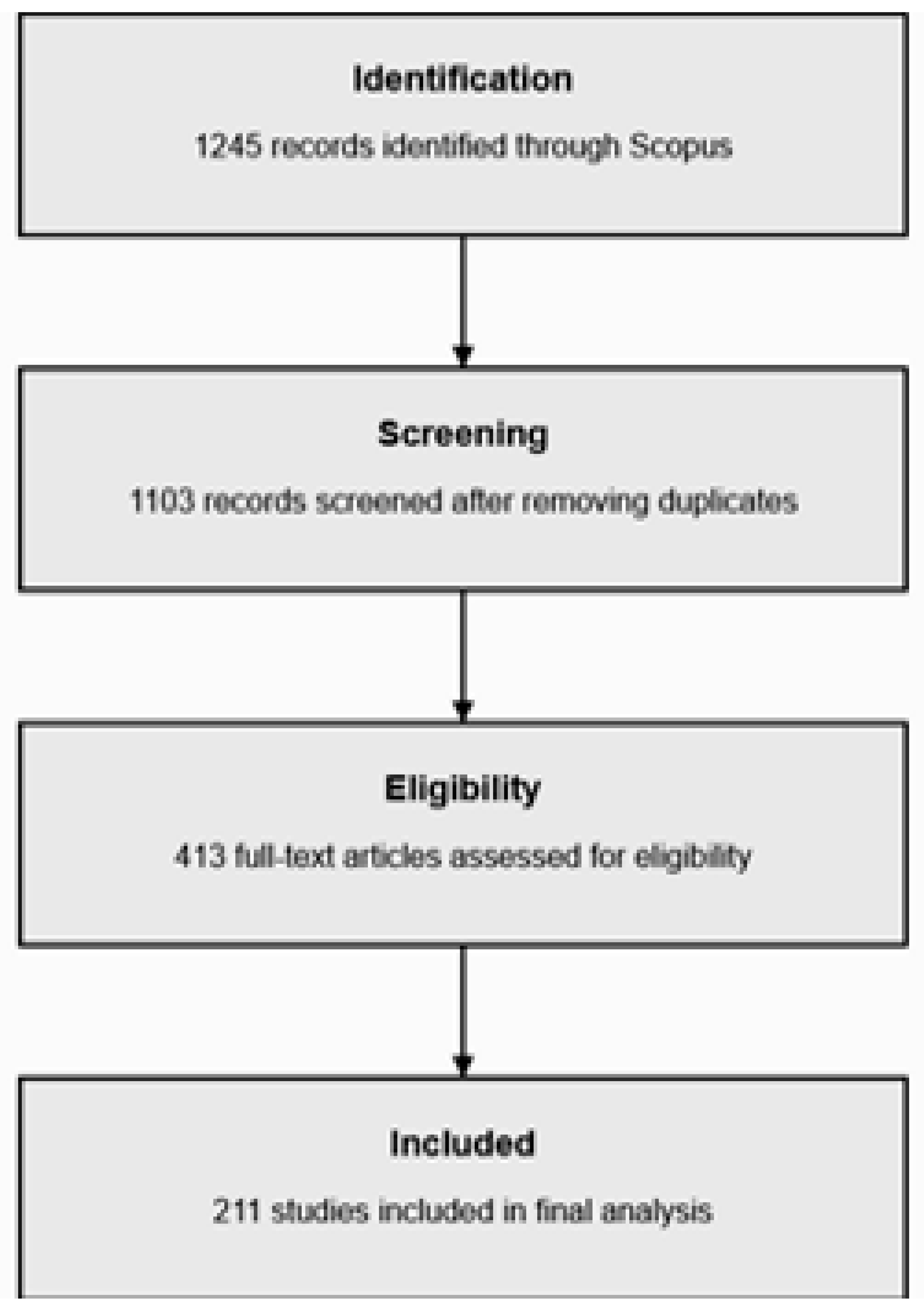
The selection of articles followed the PRISMA 2020 protocol for systematic reviews, ensuring transparency, methodological rigor, and scientific validity [
6]. The PRISMA process consisted of four stages:
Identification: Gathering all relevant records from the database.
Screening: Removing duplicates and irrelevant records (final total: 1103 records).
Eligibility: Thematic screening and exclusion of 690 studies not directly related to the research scope.
Inclusion: In-depth review of 413 studies and final selection of 211 publications for analysis.
The analysis of the selected articles was conducted using the Biblioshiny tool, applying techniques such as co-word analysis, co-citation analysis, and thematic clustering [
1]. The PRISMA flow diagram (
Figure 1) visually represents the full selection process, reinforcing methodological completeness and documentation of the filtering stages.
3. Results
The bibliometric mapping revealed a scientific field that is fragmented and unevenly distributed in terms of thematic and geographical dimensions. The main conceptual clusters identified revolve primarily around concepts such as food security, consumer behavior, and policy governance. However, the analysis showed that important social parameters—such as labor rights, gender, ethnic identity, and migration—remain underrepresented in existing studies [
10].
Table 1 presents the thematic clusters and key terms identified in the sustainable food consumption research, along with their betweenness, centrality, and PageRank values indicating the importance of each term in the bibliometric network.
These themes, although directly connected to social sustainability, have not yet become a central focus of analysis. Furthermore, the mapping revealed differences in the development of specific thematic areas; for example, education for sustainability shows high research activity and an increased number of publications, whereas other critical areas such as food sovereignty, just transition, and intersectionality appear to be underdeveloped in research terms. On a geographical level, most studies originate from countries in the Global North, with a marked underrepresentation of regions in the Global South and socially vulnerable populations. This imbalance limits the generalizability of findings and highlights the need for targeted studies in diverse socio-economic and cultural contexts. Finally, there is a growing interest in technological innovations in sustainable food consumption; however, most approaches remain technocentric, with limited integration of social variables and participatory methods [
8].
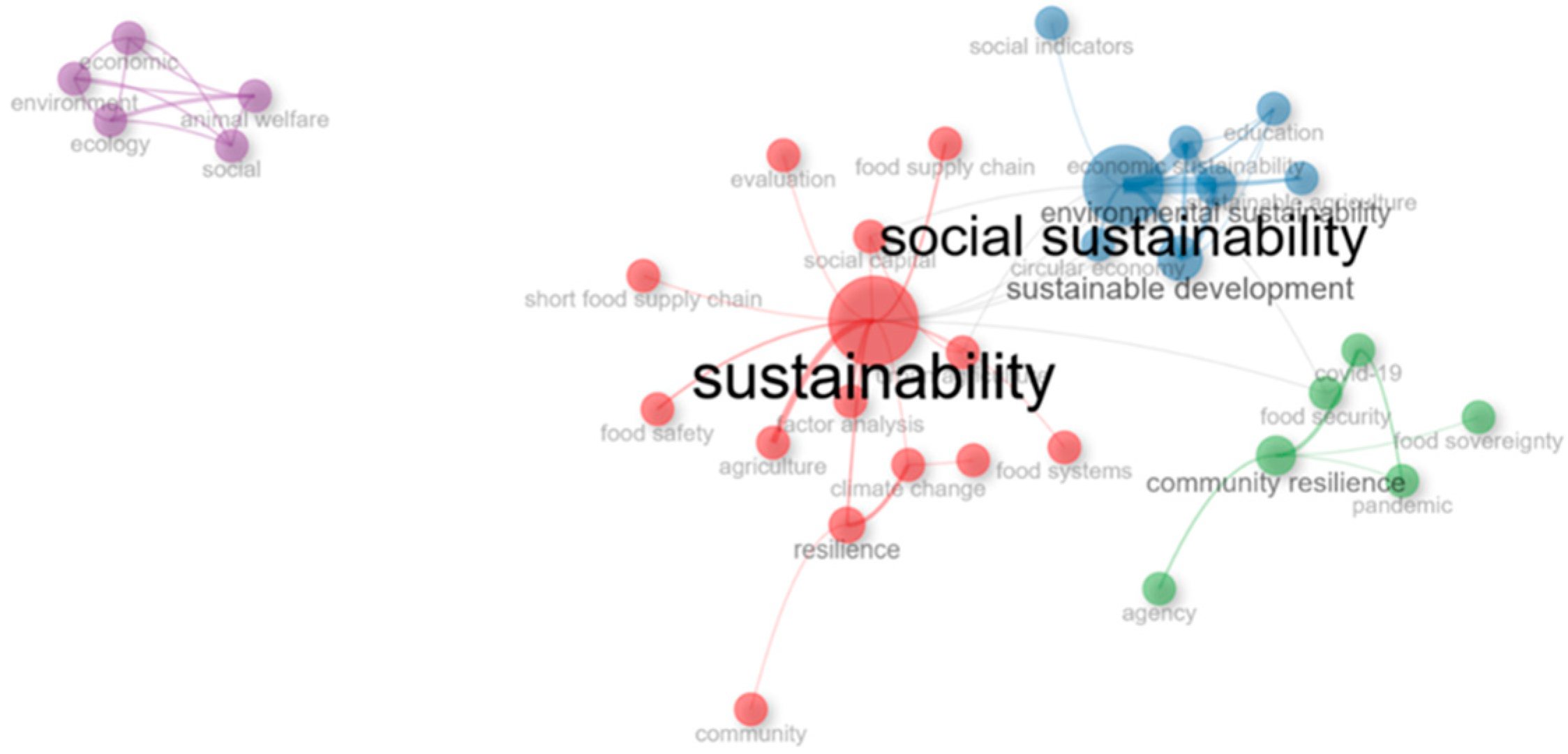
In addition, the co-occurrence analysis of keywords revealed the thematic structure of the field. The nodes and edges form distinct clusters, reflecting the main research themes, such as social sustainability and sustainable food consumption. Some clusters display high density and strong linkages, while others, more sparse, represent emerging approaches [
1].
Figure 2 presents the co-word network showing thematic clusters and research gaps in sustainable food consumption.
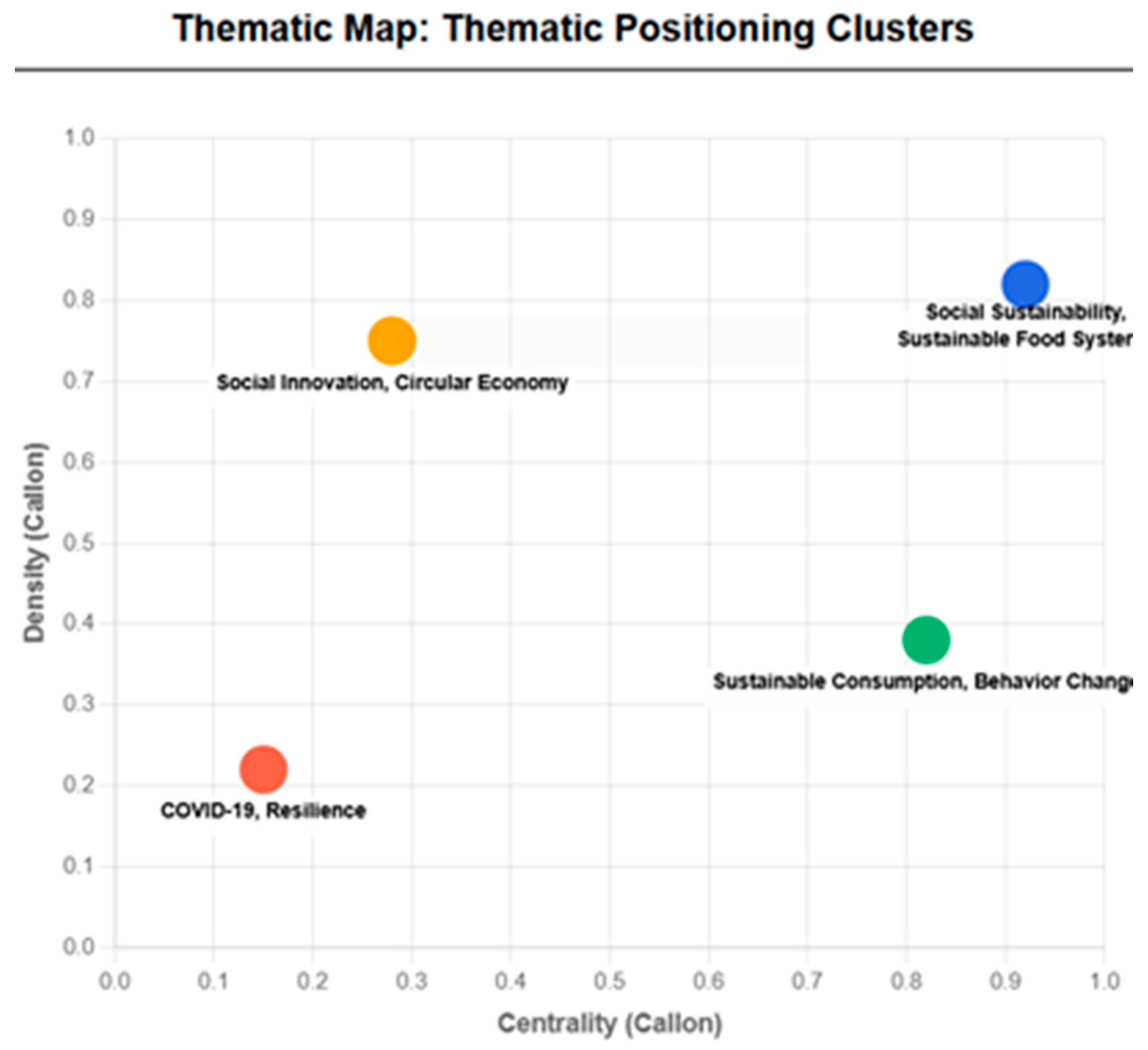
Moreover, the visual representation of the thematic structure is produced through the thematic map, which is based on the axes of density (Callon Density) and centrality (Callon Centrality). Each cluster represents a group of terms that co-occur in scientific publications. Specifically, the position and size of the clusters highlight the significance and maturity of each thematic area, enabling the identification of both well-established and emerging topics in the field of social sustainability and sustainable food consumption.
Figure 3 shows the thematic map with clusters based on Callon Density and Callon Centrality.
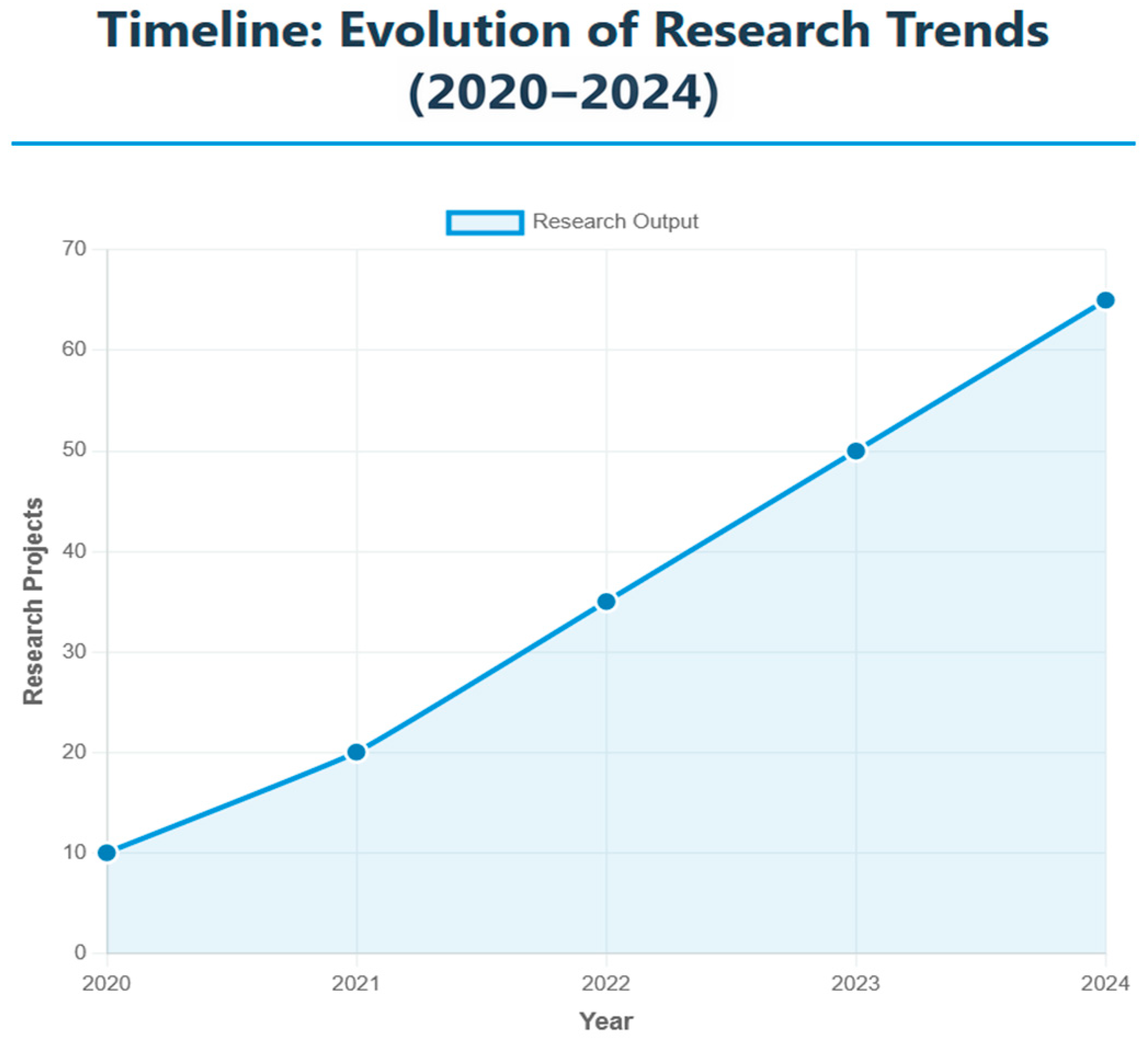
Subsequently, the analysis of publication frequency per year reveals an upward trend, with a notable increase after 2020 due to the COVID-19 pandemic, which reinforced the importance of sustainable food management and social cohesion [
4].
Figure 4 illustrates the annual publication frequency in the field of social sustainability and sustainable food.
In conclusion, the combined presentation of tables, networks, and thematic maps provides a comprehensive overview of the field, highlighting the main thematic areas, core research questions, trends, and thematic gaps, thereby offering a solid foundation for future research.
4. Discussion
The findings of this bibliometric analysis indicate that the field of sustainable food consumption and social sustainability exhibits a high degree of theoretical fragmentation and limited integration of social parameters. While the primary focus on consumer behavior and policymaking is important, it does not adequately address critical issues such as labor rights, cultural identity, and socioeconomic inequalities [
5,
9,
11].
Additionally, the geographic distribution of studies shows clear imbalance, with an overrepresentation of high-income countries and limited research in socially and geographically vulnerable regions [
2]. This imbalance restricts the generalizability of the results and highlights the need for targeted comparative and cross-cultural studies.
At the same time, there is growing interest in the application of technological solutions and social innovation in sustainable food consumption. However, these interventions are not accompanied by participatory and socially embedded approaches. Therefore, the need for interdisciplinary research frameworks that incorporate sociocultural dimensions and empower local community participation is confirmed.
Furthermore, the co-word network and thematic map analysis revealed significant research gaps, such as food sovereignty, just transition, and cross-thematic issues, which remain limited or unexplored. These gaps indicate areas for future research, focusing on interdisciplinary approaches, socially embedded strategies, and the integration of local sociocultural parameters.
Figure 5 illustrates the identified research gaps and areas with limited scientific coverage in the field.
Overall, the findings emphasize the need for research strategies that combine technological innovation with social participation in order to promote a just and sustainable transition of food systems, enhancing resilience, cohesion, and sustainability at all levels.
5. Conclusions
In summary, the present study highlighted the fragmented theoretical foundation and the limited social orientation of the existing literature on sustainable food consumption and social sustainability. The prevailing focus on consumer behavior and policymaking, although important, often overlooks critical structural variables such as labor rights, cultural identity, and socioeconomic inequalities.
The bibliometric mapping, through co-word analysis and thematic mapping, revealed key thematic clusters while also identifying research gaps that require further investigation. However, these research gaps present an opportunity for the development of interdisciplinary research frameworks and the integration of social variables and participatory approaches, supporting just and sustainable transitions in food systems.
At a practical level, the findings provide guidance for the development of policies, educational programs, and innovative strategies that respond to real social needs. In the future, the integration of digital tools, the implementation of participatory methods, and the examination of comparative cross-cultural cases can strengthen sustainability and social cohesion, shaping a more comprehensive and resilient framework for social sustainability in sustainable food consumption.
Author Contributions
Conceptualization, M.K.; methodology, M.K.; investigation, M.K.; data curation, M.K.; writing—original draft preparation, M.K.; writing—review, editing, and validation, G.K.V. and I.A.; supervision, G.K.V. and I.A.; project administration, M.K. All authors have read and agreed to the published version of the manuscript.
Funding
This research received no external funding.
Institutional Review Board Statement
Not applicable.
Informed Consent Statement
Not applicable.
Data Availability Statement
The data presented in this study are part of an ongoing Ph.D. project and are not publicly available at this stage. The data will be made available upon completion of the project or upon reasonable request to the corresponding author.
Conflicts of Interest
The authors declare no conflicts of interest.
References
- Aria, M.; Cuccurullo, C. Bibliometrix: An R-tool for comprehensive science mapping analysis. J. Informetr. 2017, 11, 959–975. [Google Scholar] [CrossRef]
- Béné, C. Resilience of local food systems and links to food security—A review of some important concepts in the context of COVID-19 and other shocks. Food Sec. 2020, 12, 805–822. [Google Scholar] [CrossRef]
- El Bilali, H. Research on agro-food sustainability transitions: A systematic review of research themes and an analysis of research gaps. J. Clean. Prod. 2019, 221, 353–364. [Google Scholar] [CrossRef]
- Food and Agriculture Organization (FAO). The State of Food and Agriculture 2021: Making Agri-Food Systems More Resilient to Shocks and Stresses; FAO: Rome, Italy, 2021. [Google Scholar] [CrossRef]
- Magis, K. Community resilience: An indicator of social sustainability. Soc. Nat. Resour. 2010, 23, 401–416. [Google Scholar] [CrossRef]
- Page, M.J.; McKenzie, J.E.; Bossuyt, P.M.; Boutron, I.; Hoffmann, T.C.; Mulrow, C.D.; Shamseer, L.; Tetzlaff, J.M.; Akl, E.A.; Brennan, S.E.; et al. The PRISMA 2020 statement: An updated guideline for reporting systematic reviews. BMJ 2021, 372, n71. [Google Scholar] [CrossRef] [PubMed]
- Patel, R. Stuffed and Starved: From Farm to Fork—The Hidden Battle for the World Food System, Expanded ed.; Melville House: New York, NY, USA, 2012. [Google Scholar]
- Repo, P.; Matschoss, K. Social Innovation for Sustainability Challenges. Sustainability 2020, 12, 319. [Google Scholar] [CrossRef]
- Thøgersen, J. Country differences in sustainable consumption: The case of organic food. J. Macromark. 2010, 30, 171–185. [Google Scholar] [CrossRef]
- Verain, M.C.D.; Dagevos, H.; Antonides, G. Sustainable food consumption: Product choice or curtailment? Appetite 2015, 91, 375–384. [Google Scholar] [CrossRef] [PubMed]
- Tilman, D.; Clark, M. Global diets link environmental sustainability and human health. Nature 2014, 515, 518–522. [Google Scholar] [CrossRef] [PubMed]
| Disclaimer/Publisher’s Note: The statements, opinions and data contained in all publications are solely those of the individual author(s) and contributor(s) and not of MDPI and/or the editor(s). MDPI and/or the editor(s) disclaim responsibility for any injury to people or property resulting from any ideas, methods, instructions or products referred to in the content. |