Article

Integrating Milk Protein Hydrolysate and Plasma-Activated Water as Alternative Nitrogen Inputs for Growth, Nutrition, and Postharvest Quality of Hydroponic Cos Lettuce Under Low Nutrient Supply


by
Aryanis Mutia Zahra
1,
Apiradee Uthairatanakij
1,*,
Natta Laohakunjit
2,
Pongphen Jitareerat
1,
Nattapon Kaisangsri
3 and
Arak Tira-Umphon
4
1
Division of Postharvest Technology, School of Bioresources and Technology, King Mongkut’s University of Technology Thonburi, Bangkok 10150, Thailand
2
Division of Biochemical Technology, School of Bioresources and Technology, King Mongkut’s University of Technology Thonburi, Bangkok 10150, Thailand
3
Pilot Plant Development and Training Institute, King Mongkut’s University of Technology Thonburi, Bangkok 10150, Thailand
4
School of Crop Production Technology, Institute of Agricultural Technology, Suranaree University of Technology, Nakhon Ratchasima 30000, Thailand
*
Author to whom correspondence should be addressed.
Nitrogen 2026, 7(1), 18; https://doi.org/10.3390/nitrogen7010018

Submission received: 2 January 2026 / Revised: 22 January 2026 / Accepted: 28 January 2026 / Published: 1 February 2026

Abstract

The application of plasma-activated water and biostimulants offers a sustainable approach to supporting plant growth under reduced-nutrient conditions by supplying bioavailable nitrogen. This study investigated the growth and postharvest performance of hydroponically grown cos lettuce (Lactuca sativa L.) supplied with three Hoagland-based nutrient treatments: half-strength solution prepared with tap water (HS), half-strength solution with plasma-activated water (HS+PAW), and half-strength solution with plasma-activated water containing 1 mL L−1 milk protein hydrolysate (HS+PAW+MPH). Plants treated with PAW, particularly those in the HS+PAW+MPH, exhibited increases in growth, biomass accumulation, and mineral composition, with reduced nitrate content compared to controls. At harvest, lettuce under HS+PAW+MPH exhibited nearly double fresh yield and enhanced dry matter, protein, lipid, phenolic, and flavonoid profiles as well as increased antioxidant capacity, indicating improved nitrogen utilization and nutritional quality under reduced nutrient input. Postharvest quality was evaluated by packing samples in polypropylene bags and storing them at 10 ± 1 °C and 95–98% relative humidity for 21 days. The HS+PAW+MPH treatment substantially suppressed respiration and production of ethylene, limited weight loss and color change, and better preserved pigments, bioactive compounds, and antioxidant stability compared to HS and HS+PAW, indicating HS+PAW+MPH as a sustainable nutrient management approach for hydroponic systems.

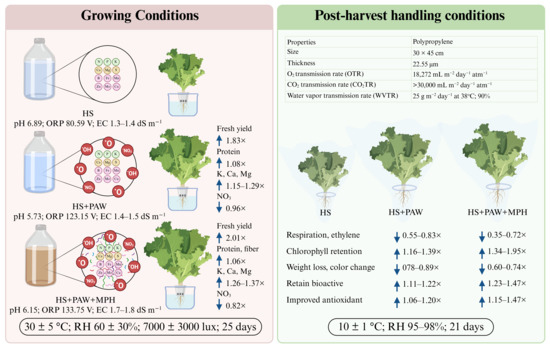
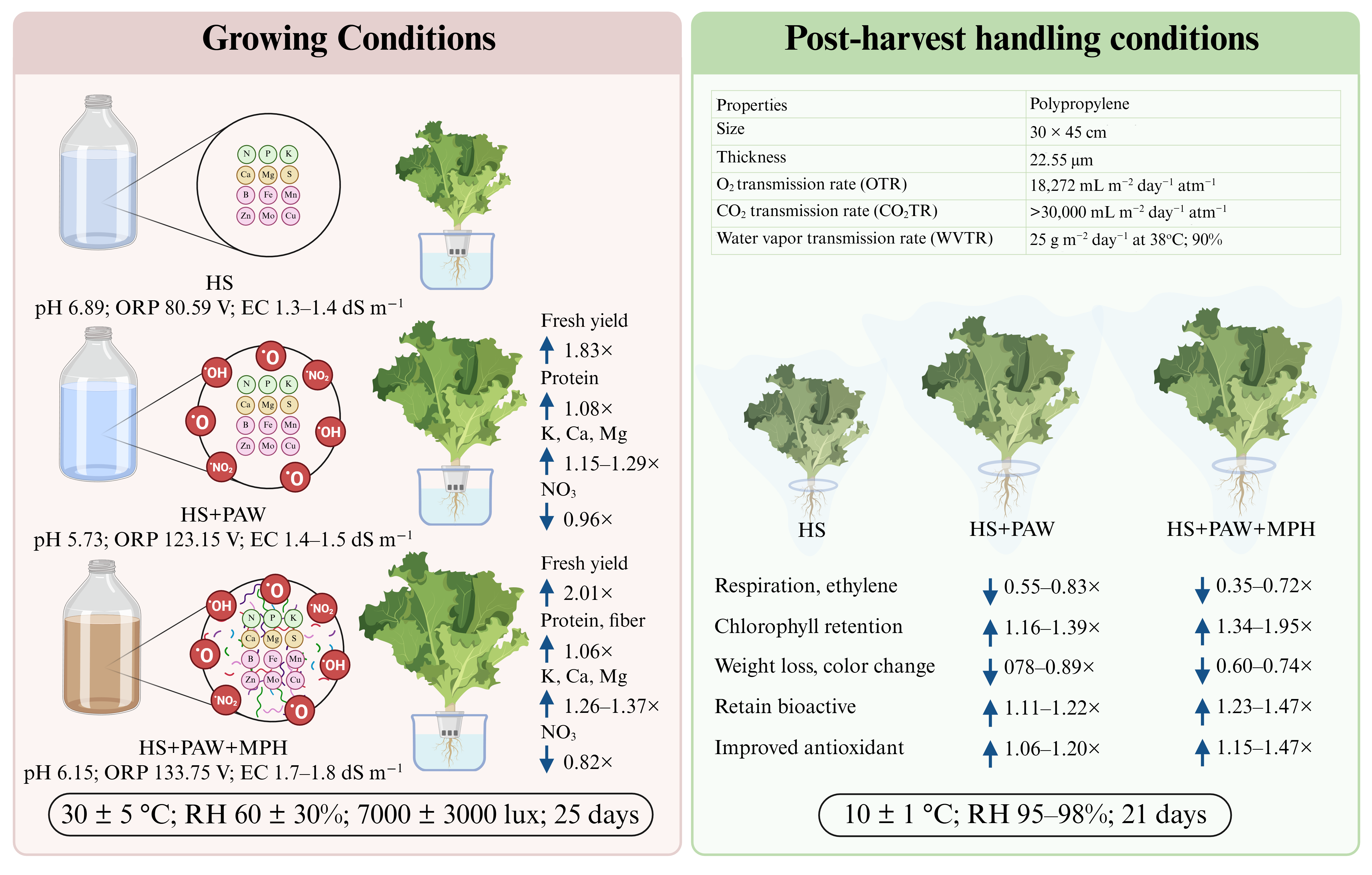
Graphical Abstract

1. Introduction

Lettuce (Lactuca sativa L.) is among the world’s most widely consumed leafy vegetables, reflecting both global dietary trends and its considerable economic importance [1,2]. This crop is valued for its high nutritional content, serving as a notable source of fiber, vitamins, minerals, and phytochemicals, such as phenolics and flavonoids, that are associated with protective roles in plant physiology and human health [1,3,4,5]. The growing shift toward health-conscious diets and the popularity of ready-to-eat salads have increased demand for lettuce, as its combination of low caloric value, rich micronutrient profile, and wide range of colors and textures aligns well with global consumer preferences [2,6]. In cultivation systems, hydroponic production offers advantages for lettuce by enabling year-round production and providing a consistent supply of high-quality produce [7,8]. Research has demonstrated that hydroponic lettuce benefits from a shortened growing cycle that reduces transplanting days by up to 25 percent, achieves superior water use efficiency, with up to 65 percent less water consumed, and offers space optimization, with production yields increasing by as much as 50 percent [9,10]. Additionally, closed hydroponic systems minimize the need for fertilizers, allow for precise nutrient delivery while reducing nitrogen losses, and result in consistently high nutritional content, including enhanced protein, fiber, bioactive compounds, antioxidant capacity, and improved texture attributes [9,10,11]. These strengths position hydroponically grown lettuce as an exemplary model for sustainable urban agriculture, harnessing advanced technology to support food security and environmental stewardship as global populations and resource constraints continue to rise [7,8].
Despite the advantages of hydroponic lettuce cultivation, several persistent challenges remain regarding sustainability, food security, and product quality. Nutrient management remains a critical hurdle, as the increasing demand for vegetables has driven extensive farming practices that often lead to inefficiency and environmental concerns due to excessive or unbalanced use of chemical fertilizers, especially when nitrate accumulates in the edible portions of lettuce, when nitrogen is lost through volatilization and nitrogen oxide emissions, or when nitrates leach into groundwater, with consequences for both food safety and environmental quality [2,12]. Although nitrates themselves are not toxic, their metabolites, such as nitrites and reactive nitrogen intermediates, can pose health risks, and the consumption of fresh leafy vegetables increases dietary intake of these compounds [12]. Additionally, lettuce is a highly perishable crop, with rapid postharvest deterioration that causes significant economic losses and contributes to food waste throughout the supply chain [2,13]. Environmental conditions during preharvest, including temperature extremes, fluctuations in humidity, and suboptimal light levels, further limit consistent production [2,13,14]. These stressors can impair nutrient uptake, reduce growth and yield, induce physiological disorders such as tip burn, and negatively affect the accumulation of secondary metabolites, which are factors that are vital for both plant resilience and nutritional quality [2,14]. These interconnected challenges highlight the urgent need for innovative and sustainable interventions, and the application of plasma-activated water, together with supplementation with plant biostimulants, offers a promising strategy for improved nutrient management in hydroponic lettuce cultivation [15]. Developing innovative nutrient management strategies in hydroponic systems can reduce the dependency on fertilizer and support lettuce production while maintaining yield, promoting the accumulation of bioactive compounds, and minimizing postharvest losses [15,16,17].
Recent research has identified bio-based technologies such as protein hydrolysates (PHs) and plasma-activated water (PAW) as promising tools for improving nitrogen cycling in hydroponic systems [18,19]. PHs derived from both vegetal and animal proteins have demonstrated remarkable potential as effective plant biostimulants, fundamentally differing from traditional fertilizers and pesticides by stimulating natural plant processes and enhancing physiological responses rather than merely providing direct nutrient supplementation or targeting pests and diseases [17,18,20,21]. PHs are also known to modulate hormone-like activities, promote root development, regulate nitrogen assimilation enzymes, improve nitrogen use efficiency, support mineral biofortification, induce phenolic biosynthesis, and enhance antioxidant capacity, all of which contribute to better growth, yield, and quality, while strengthening stress resilience in lettuce and other crops [17,21,22,23]. PAW is formed by exposing water to cold plasma, resulting in a mixture of long-lived reactive oxygen and nitrogen species (RONS), such as hydrogen peroxide, nitrate, and nitrite, that in turn alter the physicochemical properties of water by lowering the pH, increasing the oxidation-reduction potential (ORP), and raising electrical conductivity (EC) [19,24,25]. PAW treatments have been shown to improve growth rates, chlorophyll content, and antioxidant activity, especially at optimal concentrations of nitrate-rich nutrients [19,24]. However, PAW does not consistently outperform conventional nutrient solutions when used alone, particularly under a reduced nutrient supply [15,26,27]. Previous studies have investigated protein hydrolysates and plasma-activated water as independent treatments [16,19,28], and there is limited mechanistic understanding of their synergistic effects when combined as nitrogen-supplementing nutrient solutions, particularly regarding their influence on the quality of hydroponically grown lettuce at harvest and after cold storage.
To date, to the best of our knowledge, only one report has demonstrated that combining PAW and a seaweed biostimulant enhanced nitrogen-related metabolic activity and the expression levels of stress genes in tomato under drought stress [15]. To address this knowledge gap, the present study introduces a novel approach by integrating plasma-activated water and milk-derived protein hydrolysate (MPH) as an advanced nitrogen management solution for hydroponically grown Cos lettuce, using a scaled-up greenhouse experiment. This study systematically examines the combined effects of PAW and MPH under a low nutrient supply, evaluating lettuce growth, yield, proximate and mineral composition at harvest, and physiological changes during storage, including ethylene production, respiration rate, pigment content, weight loss, color, phenolic and flavonoid profiles, and antioxidant capacity. Ultimately, this work provides actionable insights for advancing sustainable nitrogen management and environmentally friendly hydroponic practices, enabling the production of nutritionally enriched crops through circular resource use and innovative biostimulant strategies.

2. Materials and Methods

2.1. Lettuce Hydroponic Cultivation

‘Green Cos’ lettuce (Lactuca sativa L.) seeds were obtained from a line of native seeds that was maintained and propagated as open-pollinated in a greenhouse at the School of Bioresources and Technology, King Mongkut’s University of Technology Thonburi (Bangkhuntien Campus, Bangkok, Thailand; 13°34′35.5″ N, 100°26′33.0″ E), originating from seeds collected in Buriram, Thailand. Seeds were germinated for 2 × 24 h in a Petri dish lined with moistened tissue paper, followed by an initial nursery phase in sponge blocks in a growth chamber maintained at 25 ± 1 °C and 70% relative humidity. Illumination was provided by 1:1 Red:Blue LED lights for 12 h daily at a PPFD of 100 µmol m−2 s−1. After two weeks, uniformly germinated seedlings were transplanted to a nutrient film technique (NFT) hydroponic system at a plant spacing of 15 cm × 15 cm, giving a plant density of 30 plants m−2, with water supplied by a 50 L water tank. The plants were continually supplied with a half-strength nutrient solution prepared according to Hoagland and Arnon [29] containing 105.0 mg L−1 N, 15.5 mg L−1 P, 97.5 mg L−1 K, 100.0 mg L−1 Ca, 24.0 mg L−1 Mg, 32.0 mg L−1 S, for macronutrients, and 2.50 mg L−1 Fe, 0.50 mg L−1 B, 0.55 mg L−1 Mn, 0.05 mg L−1 Zn, 0.02 mg L−1 Cu, 0.01 mg L−1 Mo, for micronutrients. MPH was produced from expired commercial milk via acid hydrolysis, yielding a hydrolyzed product containing abundant free amino acids, with defined macro- and micronutrient profiles as detailed in our previous study [21].
Plasma-activated water (PAW) was generated using an underwater discharge plasma system composed of a water reservoir, a plasma generator (SAP08PAW-013-PP; 870 × 700 × 1500 mm) (Creating-Nano Technologies Inc., Taiwan, China), a power supply (AC220V, 50/60 Hz, 20 A), and an oil-free air compressor supplying clean dry air (CDA) via a quick connector. Reverse osmosis (RO) water (600 L) circulated through a closed-loop system at a flow rate of 40 L min−1 via 1.27 cm diameter inlets and outlets. The plasma module (SAP013T series) operated at 600–800 W, with CDA supplied at >6 kg cm−2 via a PU tube (φ8 × 5 mm) and an airflow rate of 100 L min−1 to support plasma generation. Brass electrodes (22.5 mm long, 2.0 mm in diameter) enclosed in quartz tubes spaced 1 mm apart served as the discharge electrodes, operating at a control voltage of 10 kV, an input voltage of 20 kV, and a repetition frequency of ~20 kHz. An ultrasonic fogger (frequency ~1.7–2.4 MHz) was incorporated into the system to facilitate the formation of fine water mist and enhance plasma–liquid interactions during treatment. A tungsten electrode, grounded and positioned perpendicularly to the air stream within the reservoir, minimized interference from air bubbles. Plasma discharge was maintained directly in the water for 15 min at 30 ± 1 °C, yielding PAW with a pH of 3.50, an oxidation–reduction potential (ORP) of 310 mV, and electrical conductivity (EC) of 50 dS m−1, and containing 100 ± 0.50 mg L−1 nitrate, 0.25 ± 0.01 mg L−1 nitrite, 96.50 ± 0.50 mg L−1 total nitrogen, and 263.5 ± 0.50 mg L−1 reactive hydrogen peroxide.
Three nutrient solution treatments were used: half-strength solution (HS) prepared with tap water; average weekly pH 6.89, ORP 80.59 V, and EC 1.3–1.4 dS m−1; half-strength with plasma-activated water (HS+PAW; pH 5.73, ORP 123.15 V, and EC 1.4–1.5 dS m−1); and half-strength with plasma-activated water and 1 mL L−1 MPH (HS+PAW+MPH; pH 6.15, ORP 133.75 V, and EC 1.7–1.8 dS m−1). All solutions provided equivalent concentrations of macro- and micronutrients. MPH was supplied on days 3, 8, 13, and 18 after transplanting, coinciding with EC adjustment. The volume of water in both the tap water and PAW tanks was adjusted biweekly. During cultivation (September–October 2024), the environmental conditions were a 13 h photoperiod, an average temperature of 30 ± 5 °C, a relative humidity of 60 ± 30%, and a light intensity of 7000 ± 3000 lux.

2.2. Growth Measurements and Post-Harvest Handling Conditions

To evaluate treatment effects, lettuce heads were harvested 25 days after transplanting (DAT) at the rosette stage before full head formation from four independent hydroponic trays, each serving as a treatment replicate. Each replicate contained thirty lettuce plants; from these, twenty-four were randomly selected for individual analysis and immediately transported to the laboratory in a cooled chamber. Samples were precooled at 10 ± 1 °C and RH 95–98% for 2 h prior to packaging. Plant height and root length (cm) were measured on harvesting day. Shoot and root fresh weights (g) were determined using an electronic scale (OHAUS Pioneer PA4102) (Parsippany, NJ, USA), and the average fresh weight per plant was multiplied by plant density to estimate total fresh yield (kg m−2). Plant canopy area (cm2) was quantified using ImageJ (v1.52a; National Institutes of Health, Bethesda, MD, USA) by arranging the lettuce heads and a ruler on white fabric in a 60 × 60 cm PhotoBox to avoid overlap, ensuring precise leaf area measurements for image processing. The images were converted to 8 bit and thresholded for analysis.
For post-harvest quality evaluation, six biological replicates were randomly selected from each hydroponic tray per treatment, yielding 96 uniform lettuce heads without physical damage. These were divided into four subgroups. The roots were washed and blotted dry to remove excess nutrient solution, then wrapped in paper towels to retain moisture. Each lettuce head was packed in a modified atmosphere packaging (MAP) using a transparent polypropylene (PP) bag (Fresh & Fresh®, Thantawan Industry Public Company Ltd., Nakhon Pathom, Thailand) and sealed with food-grade adhesive tape. The bags featured a film thickness of 22.5 μm, dimensions of 30 × 45 cm, an oxygen transmission rate of 18,272 mL−1 m−2 day−1 atm−1, a CO2 transmission rate exceeding 30,000 mL−1 m−2 day−1 atm−1, and a water vapor transmission rate of 25 g−1 m−2 day−1 at 38 °C and 90% RH. Packaged samples were placed in plastic trays by subgroup and stored on shelves in a dark room at 10 ± 1 °C and 95–98% RH for up to 21 days. Fresh weight, color, physiological parameters, pigment content, bioactive compounds, and total antioxidant capacity were assessed at seven-day intervals throughout the storage period.

2.3. Proximate Composition Analysis

The proximate composition of lettuce samples, including moisture, ash, protein, fat, and carbohydrate content, was assessed using standard AOAC procedures [30]. Shoot tissues were first oven-dried at 70 °C to constant weight to determine shoot dry biomass, and subsamples of this material were further dried at 105 °C to constant weight to determine moisture and calculate dry matter, which was then used to express other proximate components on a dry weight basis. The crude protein content was determined by the macro-Kjeldahl method (Nx6.25), using a KjelDigester K-446 for digestion and a MultiKjel K-365 for automated distillation and titration (Buchi, Bangkok, Thailand). Ash content was quantified by incineration at 500 °C. Crude fat was extracted with petroleum ether using a Soxhlet apparatus (FatExtractor E-500, Buchi, Bangkok, Thailand). The total carbohydrate content was calculated by the equations below.
Carbohydrate (g 100 g−1) = 100 − (g moisture + g fat + g ash + g protein)

2.4. Determination of Mineral Composition

Mineral analysis of lettuce samples was carried out according to the Wolf method [31]. Initially, 5 g of the oven-dried lettuce leaves was incinerated in a muffle furnace at 500 °C for 3 h. Following this, 0.1 g of the collected ash was digested in a solution of deionized water, concentrated nitric acid, and sulfuric acid (1:1:1) and maintained at 100 °C for 6 h. The concentrations of phosphorus, magnesium, potassium, calcium, and iron were determined using an ICP-OES Avio 220 Max system (PerkinElmer, Waltham, MA, USA) employing a Scott/cross-flow configuration, with calibration performed via Syngistix software version 5.1 (PerkinElmer, Shelton, CT, USA) against standard references. The salicylic–sulfuric acid method [32] was used to assess soluble nitrate. One gram of fresh lettuce leaves was homogenized (using a Polytron PT 3100 D homogenizer; Kinematica, Swiss, Switzerland) in 10 mL phosphate-buffered saline (0.01 M PBS, pH 7.0), then centrifuged at 5000× g for 10 min at 4 °C using a Kubota 6000 centrifuge (Kubota Corp., Tokyo, Japan). A 1 mL aliquot of the supernatant was mixed with 0.4 mL of 5% salicylic acid and 9.5 mL of 2 M sodium hydroxide, and the absorbance was then measured at 410 nm (using a UV-1800 Spectrophotometer; Shimadzu Corp., Kyoto, Japan).

2.5. Determination of Ethylene Production and Respiration Rate

Physiological parameters were determined by measuring ethylene production and the respiration rate [33]. Two lettuce plants were placed in an 8500 mL airtight polypropylene container equipped with a septum for sample collection. After incubation for 2 h at 10 °C and 95–98% RH, a 1.0 mL headspace gas sample was collected and injected into a gas chromatograph (GC-2014B, Shimadzu Corp., Kyoto, Japan) equipped with a Porapak™ Q 80/100 column (1.5 m × 3 mm; Shimadzu Corp., Kyoto, Japan), and a flame ionization detector. The injector and detector temperatures were set to 120 °C, with hydrogen and helium used as carrier gases. Ethylene production was expressed as ethylene volume in microliters per kilogram of fresh weight per hour (µL C2H4 kg−1 h−1), whereas respiration rate was expressed as carbon dioxide mass in milligrams per kilogram of fresh weight per hour (mL CO2 kg−1 h−1).

2.6. Determination of Pigment Contents

Mature leaf tissue from the third to fifth leaf position (0.5 g) was homogenized and subsequently immersed in 10 mL of N, N-dimethylformamide at room temperature in the dark for 48 h. The mixture was centrifuged at 15,000× g for 10 min at 4 °C. The absorbance at 470, 645, and 663 nm was used to determine total chlorophyll and carotenoid contents, reported as milligrams per gram fresh weight (mg g−1 FW), following the methodology described by Wellburn [34].

2.7. Measurement of Weight Loss and Color Attributes

Weight loss (%) was determined using the AOAC method [30] by weighing the same replication sample of lettuce plants at harvest (day 0) and subsequently every seven days throughout the 21-day storage period. For color measurements, three mature leaves were selected per plant and evaluated at three distinct points between the tip and base on the upper surface using a CR-400 colorimeter (Konica Minolta, Tokyo, Japan). The parameters recorded were lightness (L), a* value, and b* value. These values were used to calculate total color difference (ΔE), with calibration performed using a standard white tile [33].

2.8. Determination of Total Phenolic and Total Flavonoid Contents

Bioactive compounds were extracted following Bhatt et al. [35]. Fresh leaf tissue (3 g) was homogenized in 5 mL of 100% methanol, incubated for 24 h at 25 °C, and centrifuged at 15,000× g for 20 min at 4 °C. Total phenolic content (TPC) was determined using the Folin–Ciocalteu assay as described by Attard et al. [36]. In this method, 0.1 mL of methanolic extract was mixed with 1.55 mL of deionized water, 0.1 mL of Folin–Ciocalteu reagent, and 0.3 mL of 20% sodium carbonate, incubated for 30 min at 40 °C, and the absorbance was measured at 765 nm. Total flavonoid content (TFC) was measured using the aluminum chloride colorimetric assay, as described by Jia et al. [37]. Briefly, 1 mL of methanolic extract was reacted with 0.15 mL of 5% sodium nitrite, 2 mL of 1 M aluminum chloride, 1 mL of 1 M sodium hydroxide, and 1.2 mL of deionized water, incubated for 30 min at 25 °C, and then the absorbance was recorded at 510 nm. TPC was expressed as milligrams of gallic acid equivalent per gram of dry weight (mg GAE g−1 DW), and TFC as milligrams of quercetin equivalent per gram of dry weight (mg QE g−1 DW).

2.9. Profiling of Individual Phenolic and Flavonoid Compounds

Phenolic and flavonoid profiles were determined using a modified method from Bhatt et al. [35]. Freeze-dried lettuce leaves (0.5 g) were extracted in 5 mL of 100% methanol for 24 h at 25 °C. The extracts were centrifuged at 15,000× g for 20 min at 4 °C, then passed through 0.45 μm nylon syringe filters. Chromatographic analysis was carried out using a Shimadzu LC-40 system (Shimadzu Corp., Kyoto, Japan) equipped with a photodiode-array detector (SPD-M40) and a reverse-phase Inertsil ODS-3 C18 column (octadecylsilane; 5 µm, 250 × 4.6 mm). The mobile phases were water and acetic acid (A; 100:1) and a mixture of methanol, acetonitrile, and acetic acid (B; 95:5:1). The flow rate was 1.0 mL min−1 with a 20 μL injection volume, and the column temperature was maintained at 30 °C. The gradient elution was set as follows: 0–2 min, 5% B; 2–10 min, 25% B; 10–20 min, 40% B; 20–30 min, 50% B; 30–45 min, 100% B. The quantification of phenolic and flavonoid compounds was performed by comparing to a mixture of 14 standards, with detection at 325 and 280 nm, and reported as milligrams per 100 g of dry weight (mg 100 g−1 DW).

2.10. Determination of Total Antioxidant Capacity

Antioxidant capacity was evaluated according to the methods described by Sale et al. [38]. The 2,2-diphenyl-1-picrylhydrazyl (DPPH) radical-scavenging rate was measured by mixing 0.5 mL of fresh methanolic extract with 2.5 mL of 0.1 mM DPPH solution, incubating for 30 min at 25 °C in the dark, and recording the absorbance at 517 nm. Ferric reducing antioxidant power (FRAP) was assessed by reacting 150 μL of fresh sample methanolic extract with 2.85 mL of FRAP reagent that consisted of 10 mL acetate buffer (pH 3.6), 1 mL of 2,4,6-triridyl-striazine (TPTZ; 10 mM; in 40 mM hydrochloric acid), and 1 mL of 20 mmol ferric chloride. The mixture was incubated for 30 min at 25 °C, and the absorbance was measured at 593 nm. The data were described as micromole Trolox equivalents per gram of fresh weight (µmol TE g−1 FW).

2.11. Statistical Analysis

All experiments followed a factorial randomized complete block design with four replications. Nutrient solutions and storage periods were the main factors, and results are reported as mean ± standard error. Analysis of variance (ANOVA) was used to evaluate plant growth, biomass, proximate composition, soluble nitrate content, mineral composition, ethylene production, respiration rate, weight loss, color changes, phenolic and flavonoid content and profiles, and total antioxidant capacity. Duncan’s multiple range test was applied for mean separation at a significance level of p < 0.05. All statistical analyses were performed in SAS software version 9.4 (SAS Institute Inc., Cary, NC, USA). Hierarchically clustered heatmaps were used to illustrate how nutrient solution treatments affected the phenolic and flavonoid profiles. Principal component analysis (PCA) was employed to visualize the relationships among morpho-physiological and quality traits of leaf lettuce across nutrient solution treatments. Data processing and visualization, including bar charts and hierarchical clustered heatmaps, were conducted with OriginPro 2024 (OriginLab Corporation, Northampton, MA, USA).

3. Results

3.1. Growth Performance and Morphological Traits of Harvested Lettuce

The average growth performance and morphological features of the lettuce, including plant height, root length, canopy area, and total fresh yield after 25 days after transplanting (DAT), are presented in Table 1. Plant growth and biomass were significantly influenced by nutrient solution treatments. Plasma-activated water (HS+PAW) induced pronounced increases, which were further enhanced by the addition of milk protein hydrolysate (HS+PAW+MPH) compared to the control (HS). Plant height increased by 1.11-fold in the HS+PAW group and by 1.15-fold in the HS+PAW+MPH group, each in comparison to HS. Root length exhibited a similar trend, increasing 1.10-fold under HS+PAW and 1.14-fold under HS+PAW+MPH, both compared to the control. Plant canopy was significantly expanded, from 1.57-fold in HS+PAW to 1.66-fold in HS+PAW+MPH, relative to HS. The most remarkable gains were observed for total fresh yield. HS+PAW nearly doubled the yield, while the combined HS+PAW+MPH treatment further increased the yield to 2.01-fold, underscoring the superior effect when both plasma-activated water and MPH were applied compared to the control. These results demonstrated the synergistic effects of PAW and MPH in optimizing lettuce growth and yield, highlighting their potential for sustainable crop improvement.

3.2. Proximate Composition of Lettuce

The proximate composition of the lettuce, including dry matter, crude protein, crude lipid, ash content, crude fiber, and carbohydrate, was significantly affected by the nutrient solution treatments (Table 2). Both plasma-activated water (HS+PAW) and its combination with milk protein hydrolysate (HS+PAW+MPH) resulted in marked increases in dry matter and crude protein, with both treatments producing values significantly higher than the control. Dry matter content increased by a factor of 1.09 in the HS+PAW group and by 1.20 in the HS+PAW+MPH group compared to HS. Crude protein increased moderately, by 1.08- and 1.06-fold under the HS+PAW and HS+PAW+MPH treatments, respectively. Ash content and crude fiber responded differently; only the HS+PAW+MPH treatment led to notable increases compared to both HS and HS+PAW, which showed similar values. Under HS+PAW+MPH, ash content and crude fiber increased by 1.09-fold and 1.05-fold, respectively, relative to HS. The trends for crude lipids and carbohydrates were opposite but exhibited consistent progression across treatments. Crude lipid showed the greatest increase, rising by 1.33-fold in the HS+PAW group and further increasing to 1.40-fold in the HS+PAW+MPH group. Conversely, the carbohydrate content decreased initially under HS+PAW, reaching 0.89-fold and decreasing further to 0.85-fold under the HS+PAW+MPH treatment, indicating a consistent decline associated with the increase in other proximate fractions. These results suggest that while some parameters respond similarly to both advanced nutrient treatments, others exhibit stepwise or treatment-specific effects, reflecting a nuanced influence of PAW and MPH supplementation on the nutritional composition of lettuce.

3.3. Soluble Nitrate Content and Mineral Composition of Lettuce

The soluble nitrate content and mineral composition of hydroponically grown lettuce, including phosphorus (P), potassium (K), calcium (Ca), iron (Fe), and magnesium (Mg), were significantly influenced by the nutrient solution treatments (Table 3). Plasma-activated water (HS+PAW) induced pronounced increases in K, Ca, and Mg, which were further enhanced by the addition of milk protein hydrolysate (HS+PAW+MPH) compared to the control (HS). Potassium was elevated by 1.15- and 1.26-fold under HS+PAW and HS+PAW+MPH, respectively. The calcium content increased 1.29-fold under HS+PAW and 1.37-fold under HS+PAW+MPH. Magnesium followed a similar pattern, with 1.19- and 1.27-fold increases by the respective treatments. In addition, both plasma-activated water and the addition of milk protein hydrolysate resulted in marked increases in the Fe content, with HS+PAW and HS+PAW+MPH producing values that were 1.21- and 1.19-fold higher than the control, respectively, with significant differences. Phosphorus and soluble nitrate content responded differently: only the HS+PAW+MPH treatment led to notable changes, whereas HS and HS+PAW showed similar values. P levels increased by 1.09-fold with HS+PAW+MPH compared to HS, and by a similar 1.02-fold with HS+PAW. Conversely, soluble nitrate declined slightly with HS+PAW, with no significant difference compared to HS, and further declined significantly under HS+PAW+MPH by a factor of 0.82. These changes highlight the enhanced mineral uptake and balanced nitrate accumulation in lettuce with combined PAW and MPH application.

3.4. Ethylene Production and Respiration Rate of Lettuce

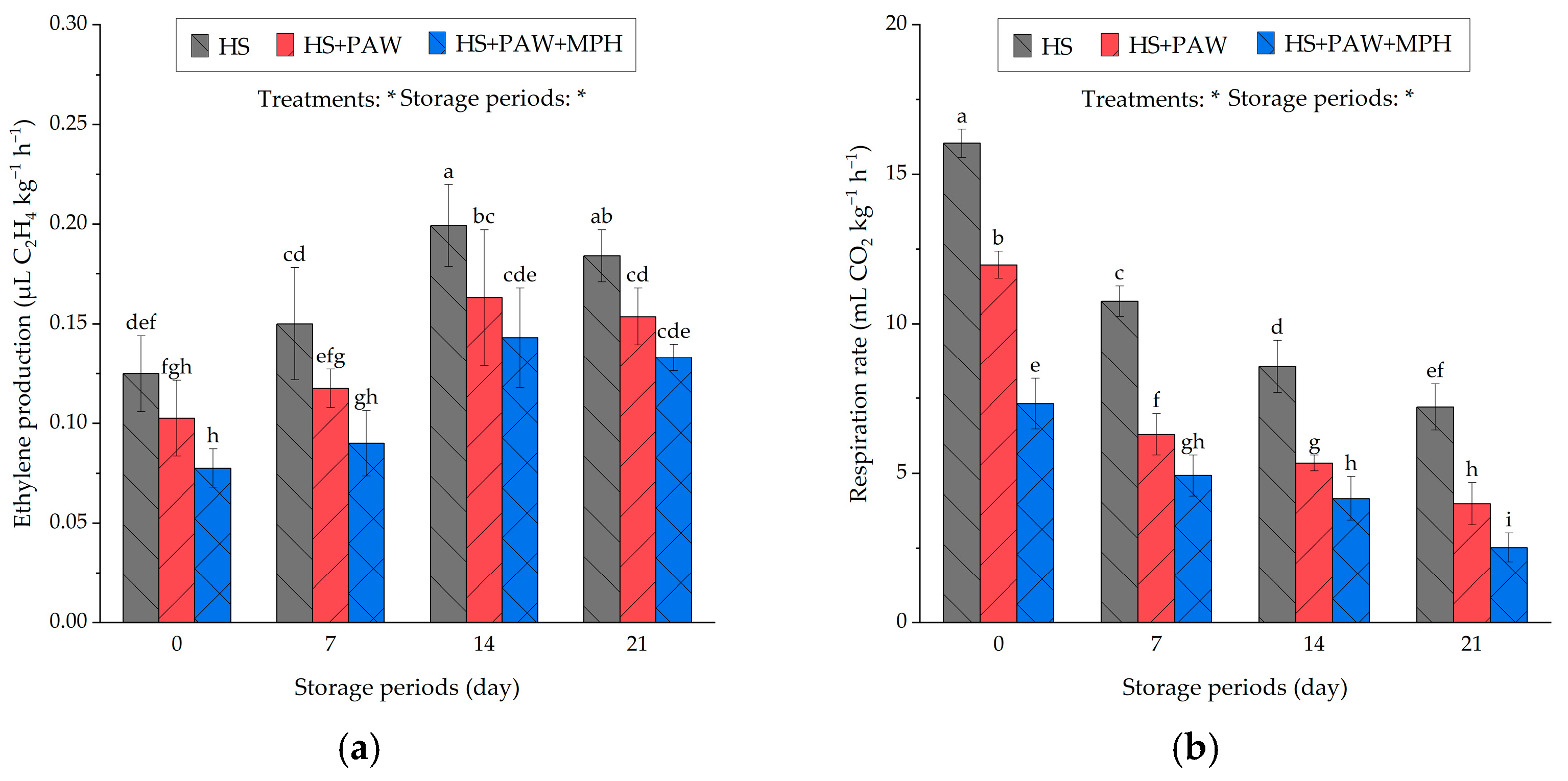
The nutrient solution treatments significantly influenced ethylene production and the respiration rate of hydroponically grown lettuce throughout the 21-day storage period (Figure 1). Plasma-activated water (HS+PAW) and its combination with milk protein hydrolysate (HS+PAW+MPH) consistently reduced both respiration rate and ethylene production relative to the control (HS) at all observation points. As storage progressed, all treatments exhibited a gradual decline in respiration, while ethylene levels showed a modest increase or plateau during the initial stages, then stabilized in the later days. Compared to the control, HS+PAW resulted in lower respiration rates at days 0, 7, 14, and 21, by 0.75-, 0.59-, 0.62-, and 0.55-fold, respectively. The HS+PAW+MPH treatment further suppressed the respiration rate to 0.46-, 0.46-, 0.49-, and 0.35-fold, respectively, during the same period. For ethylene production, HS+PAW maintained values at 0.77-, 0.80-, 0.80-, and 0.83-fold of the control, while HS+PAW+MPH provided an even greater reduction, reaching 0.62-, 0.60-, 0.70-, and 0.72-fold over the 21-day period. These results demonstrate that plasma-activated water and protein hydrolysate treatments not only suppressed respiration and ethylene production immediately after harvest but also sustained significantly lower rates throughout storage, thereby enhancing the postharvest quality and shelf-life of lettuce.

3.5. PAW and MPH Retain Pigmentation During Postharvest Storage of Lettuce

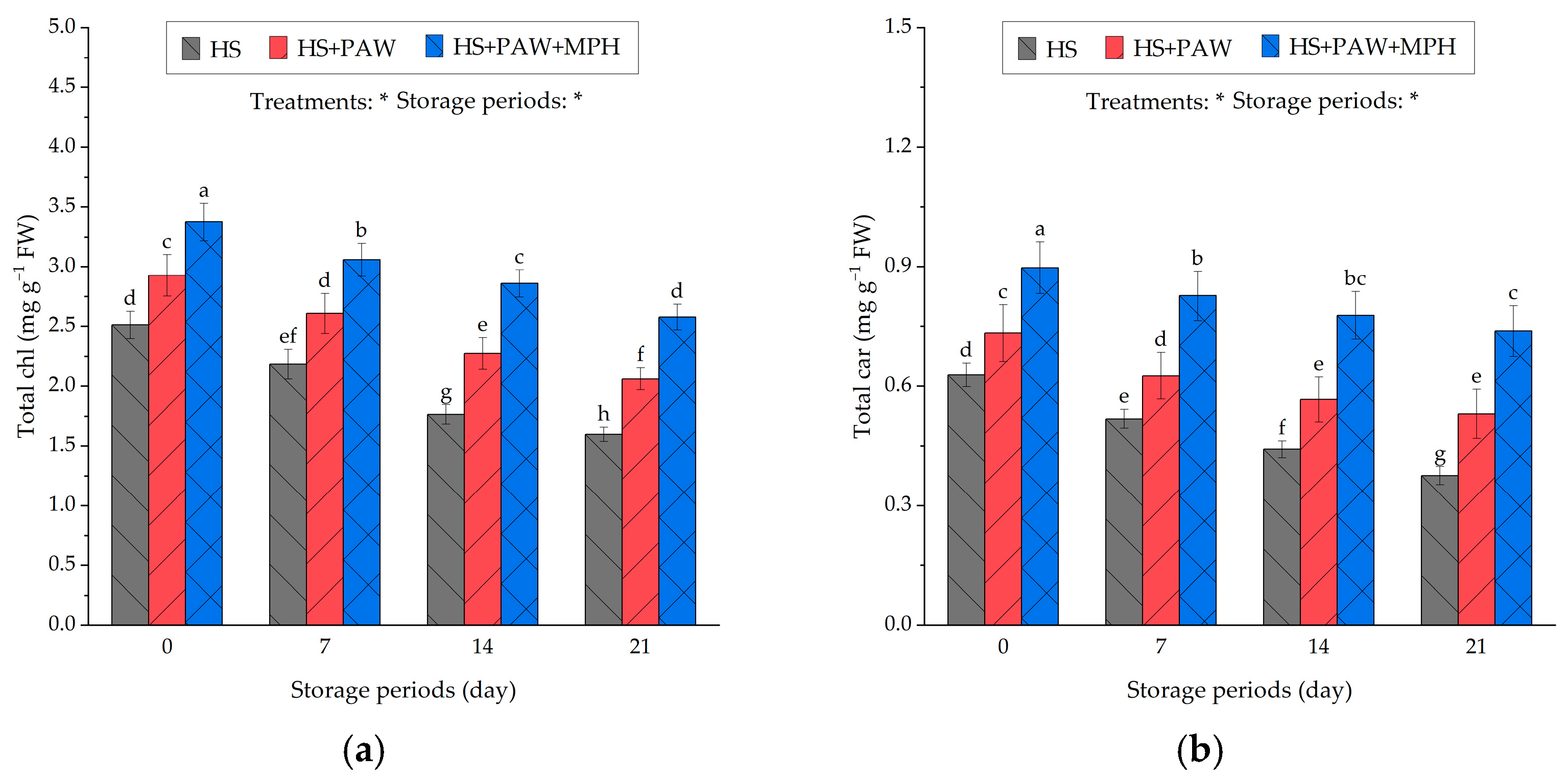
The nutrient solution treatments significantly influenced pigment production and retention in lettuce during the 21-day storage period (Figure 2). The total chlorophyll and carotenoid contents declined gradually in all treatments over time, reflecting natural senescence. However, advanced nutrient solutions, including plasma-activated water (HS+PAW) and its combination with milk protein hydrolysate (HS+PAW+MPH), substantially slowed pigment loss compared to the control (HS). HS+PAW maintained total chlorophyll at 1.17-, 1.19-, 1.29-, and 1.29-fold of the control at days 0, 7, 14, and 21, while HS+PAW+MPH resulted in even greater pigment retention, reaching 1.34-, 1.40-, 1.62-, and 1.61-fold above the control at corresponding time points. Similarly, carotenoid content in HS+PAW was 1.16-, 1.21-, 1.30-, and 1.39-fold that of the control across storage times, with HS+PAW+MPH providing the highest retention, with 1.43-, 1.60-, 1.77-, and 1.95-fold, respectively. These findings indicate that the combination of PAW and MPH is most effective for maintaining pigment stability in lettuce during postharvest cold storage, clearly outperforming PAW alone or the untreated control.

3.6. Effects of PAW and MPH on Weight Loss and Color Changes in Lettuce

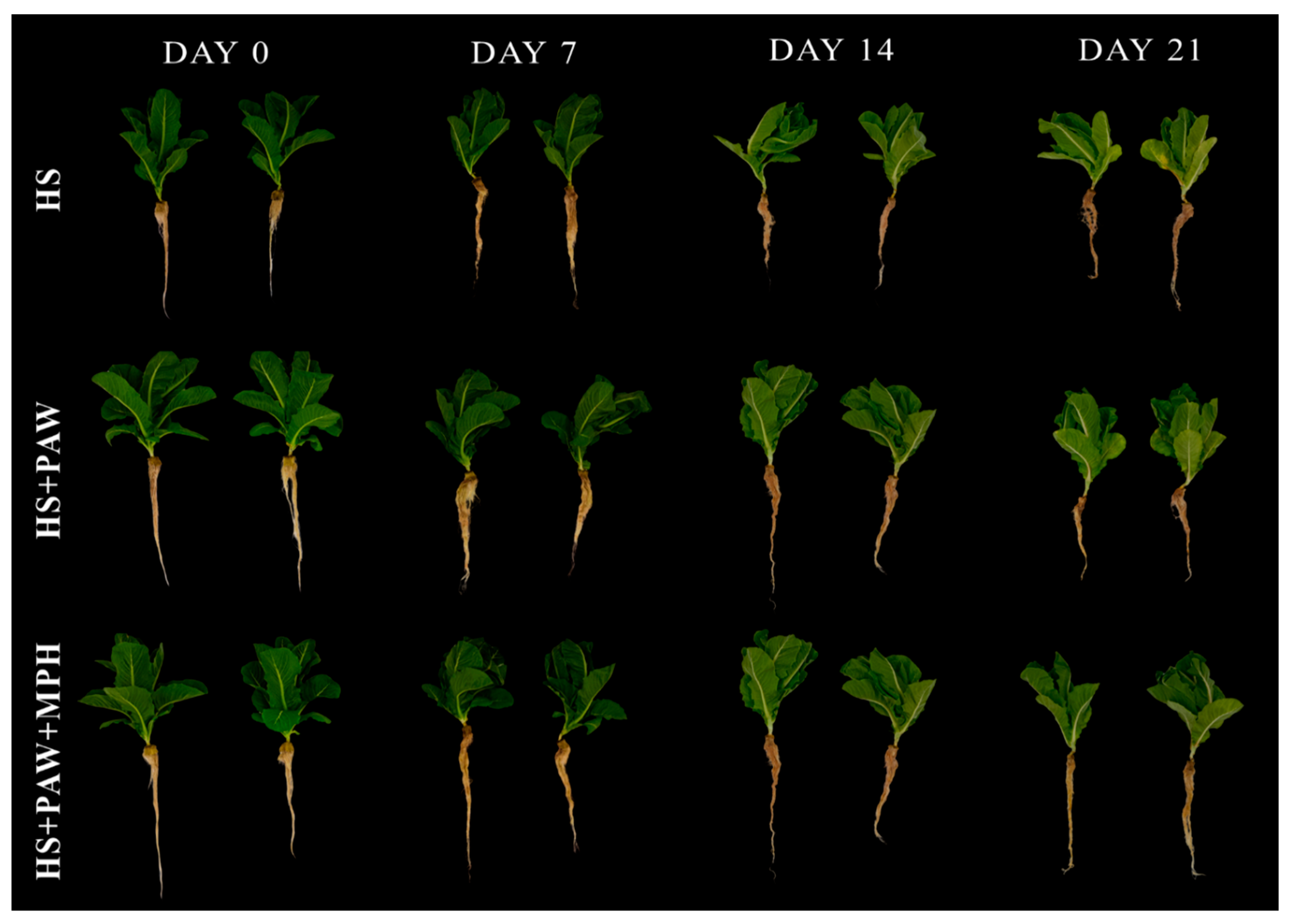
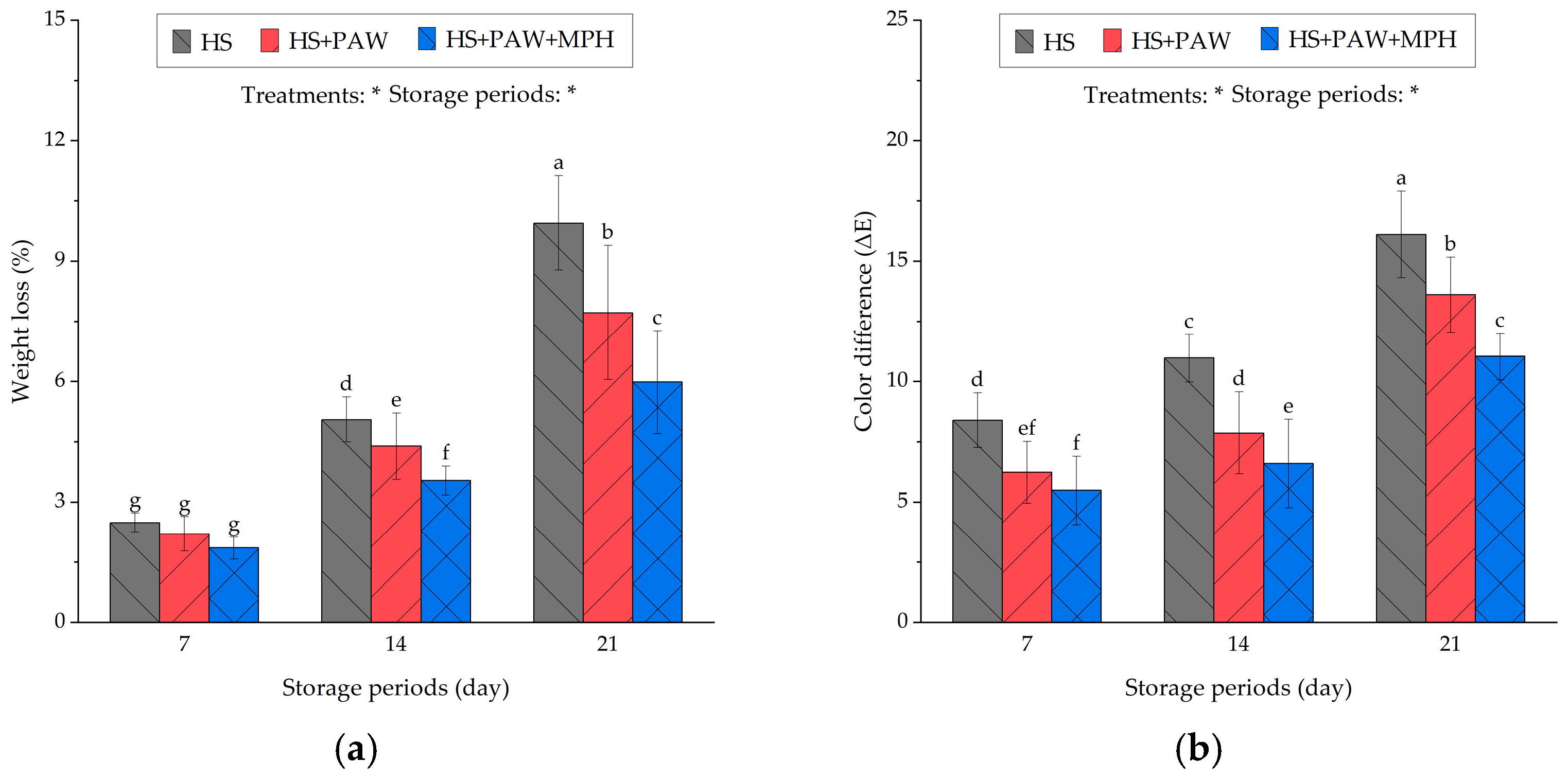
The nutrient solution treatments significantly influenced both weight loss and color difference in lettuce during the 21-day storage period (Figure 3). As expected, all treatments showed a gradual increase in weight loss and color change over the storage duration. Lettuce treated with plasma-activated water (HS+PAW) exhibited consistently lower weight loss than the control (HS), with reductions to 0.89-, 0.87-, and 0.78-fold at days 7, 14, and 21, respectively. The combined treatment of plasma-activated water with milk protein hydrolysate treatment was more effective, suppressing weight loss to 0.74-, 0.70-, and 0.60-fold of the control over the same period. Similarly, color difference (ΔE) was minimized by both treatments. HS+PAW reduced color change by 0.74-, 0.72-, and 0.85-fold, while HS+PAW+MPH achieved the strongest effect at 0.65-, 0.60-, and 0.69-fold relative to the control on days 7, 14, and 21, respectively. The lettuce plants visually demonstrated a progressive loss of freshness and increased wilting in the control (HS), whereas those treated with HS+PAW and HS+PAW+MPH retained better leaf turgor, greener color, and higher overall visual quality throughout the 21-day storage period (Figure 4). These results demonstrate that the PAW and MPH treatments, especially when combined, effectively mitigate postharvest deterioration in lettuce by reducing moisture loss and preserving visual quality during cold storage.

3.7. The Contents of Total Phenolic and Total Flavonoid and Its Profiles

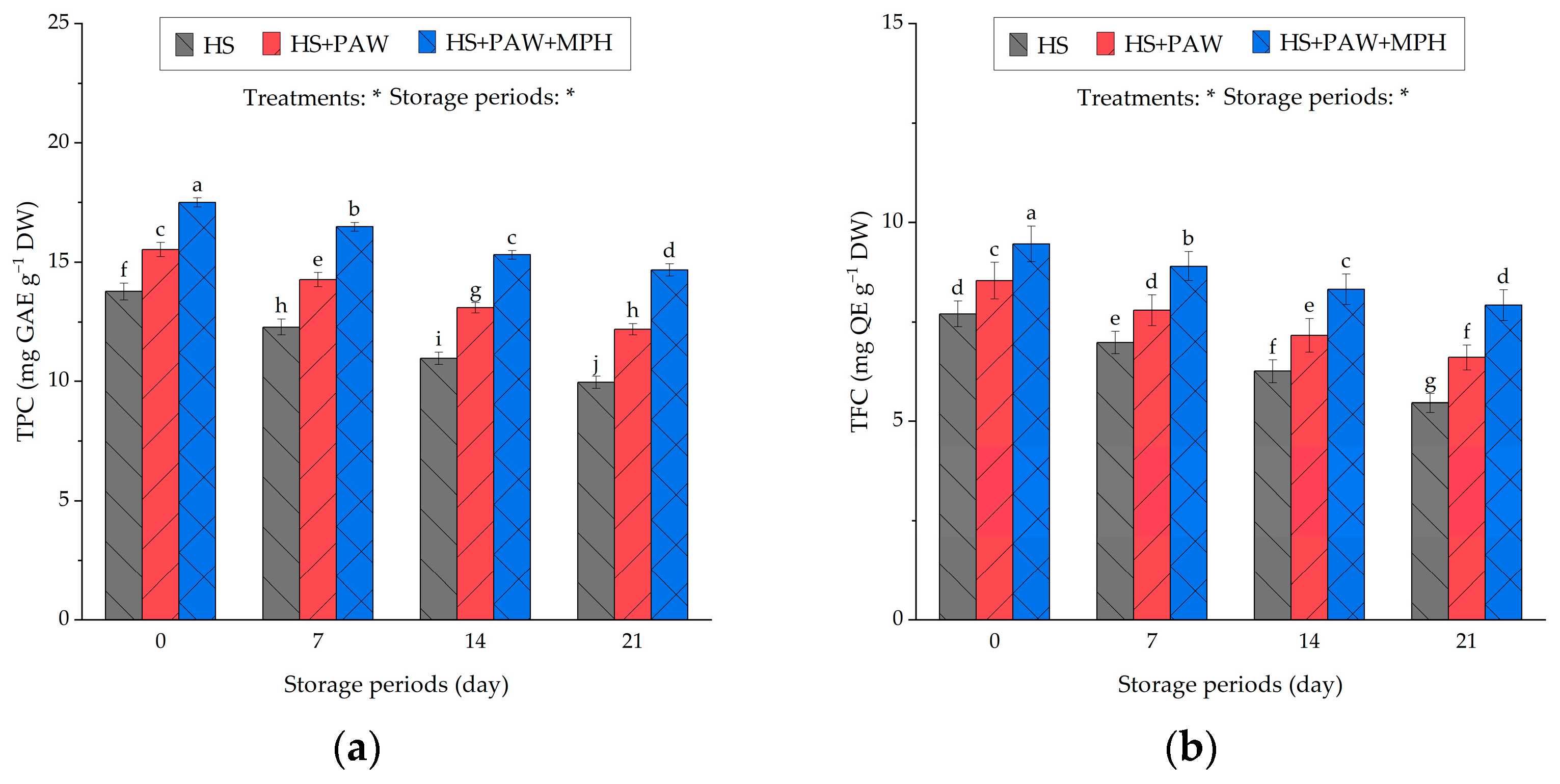
The nutrient solution treatments significantly influenced both the total phenolic content (TPC) and the total flavonoid content (TFC) of lettuce during the 21-day storage period (Figure 5). During postharvest storage, TPC and TFC declined across all treatments, reflecting the natural decrease in bioactive compounds over time. However, plasma-activated water (HS+PAW) and its combination with milk protein hydrolysate (HS+PAW+MPH) significantly improved the retention times of both TPC and TFC compared to the control (HS) throughout the storage period. Lettuce treated with HS+PAW maintained TPC at 1.13-, 1.16-, 1.19-, and 1.22-fold of the control values at days 0, 7, 14, and 21, respectively, while the combination treatment (HS+PAW+MPH) further enhanced TPC retention by 1.27-, 1.34-, 1.40-, and 1.47-fold. A similar trend was observed for TFC, with HS+PAW recording values at 1.11-, 1.12-, 1.15-, and 1.21-fold, and HS+PAW+MPH reaching 1.23-, 1.27-, 1.33-, and 1.45-fold above the control during storage. These results indicate that advanced nutrient treatments are highly effective in preserving bioactive compounds in lettuce during refrigerated storage, consistently outperforming the untreated control at all tested intervals.
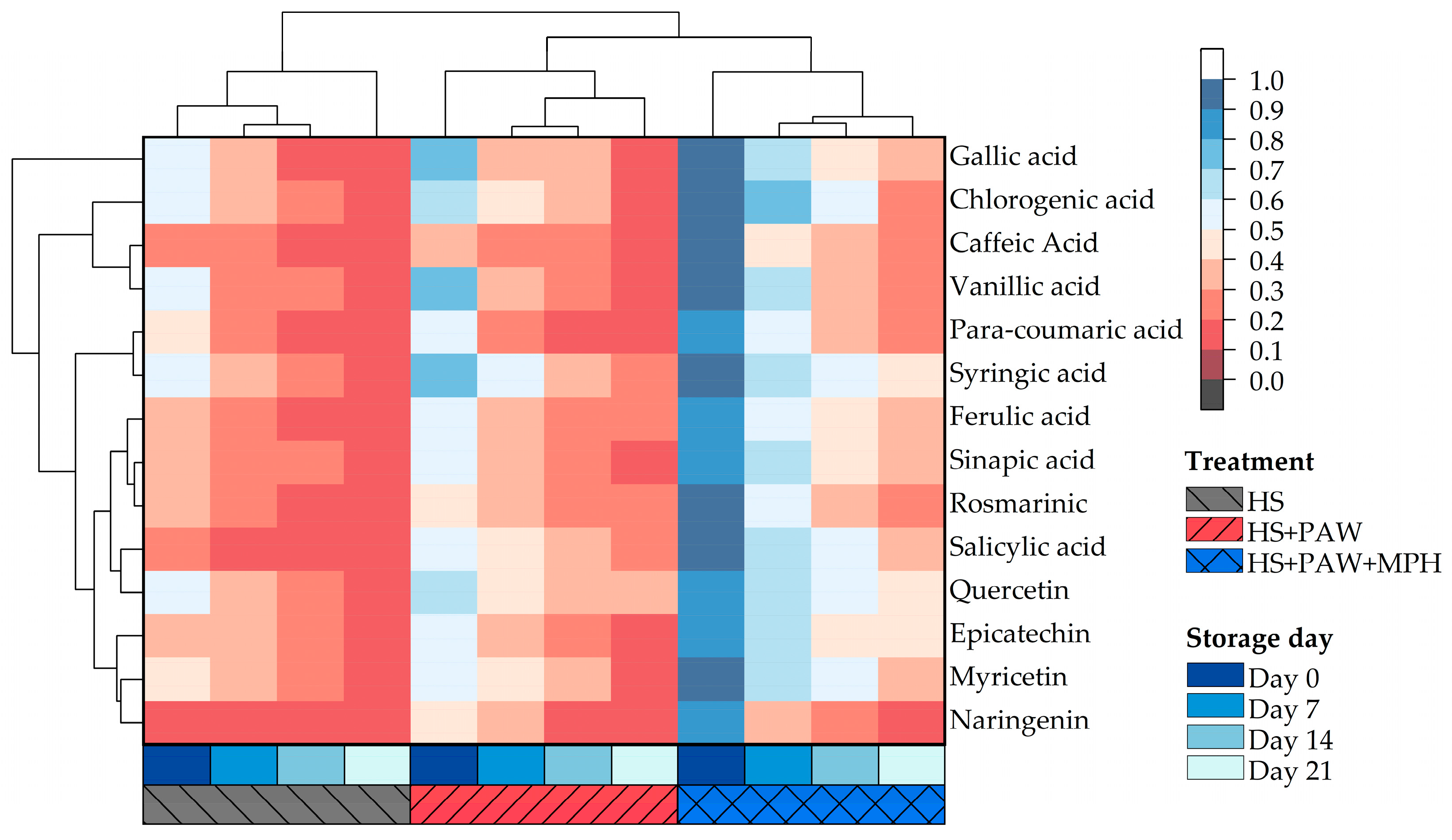
A detailed evaluation of individual phenolic and flavonoid profiles in lettuce revealed significant differences between treatments and across storage times (Figure 6). During the 21-day storage period, all measured phenolic and flavonoid compounds declined in the control (HS), whereas plasma-activated water and its combination with milk protein hydrolysate significantly improved retention during cold storage. This sustained preservation was shown as darker heatmap colors in the figure, especially at later stages, confirming the effectiveness of these treatments in maintaining lettuce bioactive profiles during postharvest storage. For HS+PAW, the level of syringic acid increased 1.29-fold over the control at day 0, then 1.78-fold on days 7 and 14, peaking at 3.20-fold by day 21. The ferulic acid level on day 0 was 1.41-fold that of the control and declined to 1.23–1.14-fold at days 7 and 14, then increased to 2.29-fold by day 21. Rosmarinic acid remained stable through day 14 (1.44–1.33-fold) before increasing to a 5.18-fold difference at day 21. Salicylic acid showed an initial level 3.04-fold of the control (day 0), peaked at 6.33-fold on day 14, and then declined to 0.86 by day 21. Notably, quercetin was the only flavonoid that was consistently sustained during 21-day storage in the HS+PAW group, increasing steadily from 1.71-, 1.80-, and 1.86-fold at days 0, 7, and 14, and peaking at 2.48-fold by day 21. Under the HS+PAW+MPH treatment, the relative gallic acid ratio increased from 1.71- to 3.17-fold; syringic acid increased from 1.59- to 4.60-fold, and ferulic acid decreased from 2.45- (day 0) to 1.79-fold on day 14, then increased to 3.57-fold by day 21. Sinapic acid was highest at day 0 (3.76-fold), decreased at mid-storage (1.62–2.17-fold at days 7 and 14), and returned to no difference by day 21. Salicylic acid remained elevated through day 14 (5.87–7.89-fold) and declined at day 21 (1.86-fold). Flavonoids such as quercetin, epicatechin, and myricetin increased steadily, starting at 1.71-, 2.67-, and 1.90-fold on day 0 and reaching 2.48-, 4.94-, and 3.14-fold by day 21, respectively. Both treatments notably enhanced the retention of phenolics and flavonoids, with HS+PAW+MPH especially promoting salicylic, chlorogenic, and p-coumaric acids, making the combined treatment most effective during extended storage.

3.8. Total Antioxidant Capacity

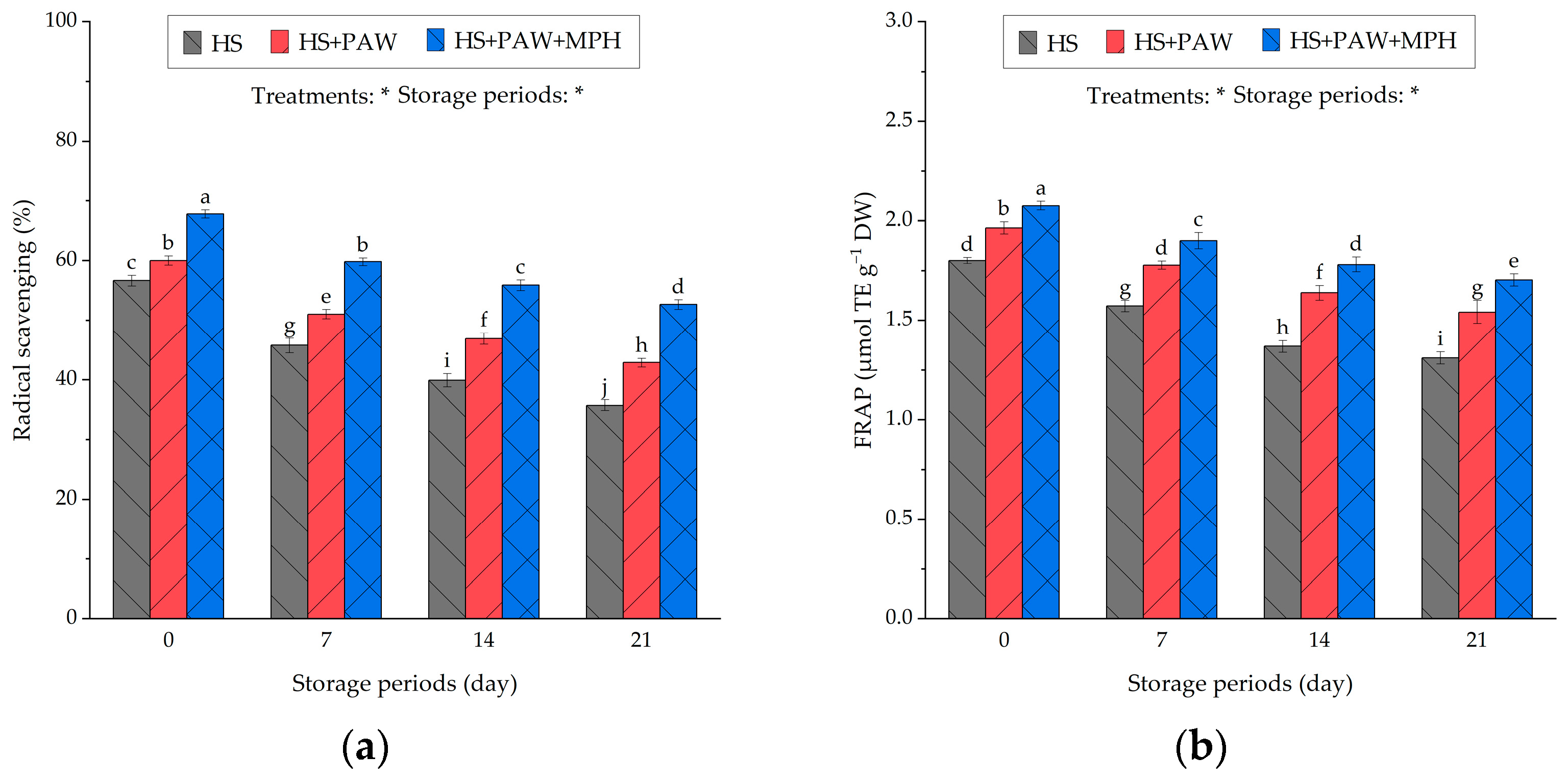
The antioxidant capacity of lettuce, measured by DPPH radical scavenging and FRAP assays, progressively decreased during the 21-day storage period across all treatments (Figure 7). Lettuce treated with plasma-activated water (HS+PAW) exhibited enhanced DPPH activity, maintaining values at 1.06-, 1.11-, 1.18-, and 1.20-fold of the control (HS) at days 0, 7, 14, and 21, respectively. The combined treatment of plasma-activated water with milk protein hydrolysate (HS+PAW+MPH) resulted in even greater retention, with DPPH values of 1.20-, 1.31-, 1.40-, and 1.47-fold of the control. A similar trend was observed for FRAP, where HS+PAW demonstrated antioxidant capacity 1.09-, 1.13-, 1.20-, and 1.18-fold of the control, and HS+PAW+MPH at 1.15-, 1.21-, 1.30-, and 1.30-fold of the control over the 21-day period. These data indicate that plasma-activated water and its combination with milk protein hydrolysate effectively mitigated oxidative quality loss during storage, preserving higher antioxidant capacity throughout the storage period compared to the untreated control.

3.9. Principal Component Analyses (PCA)

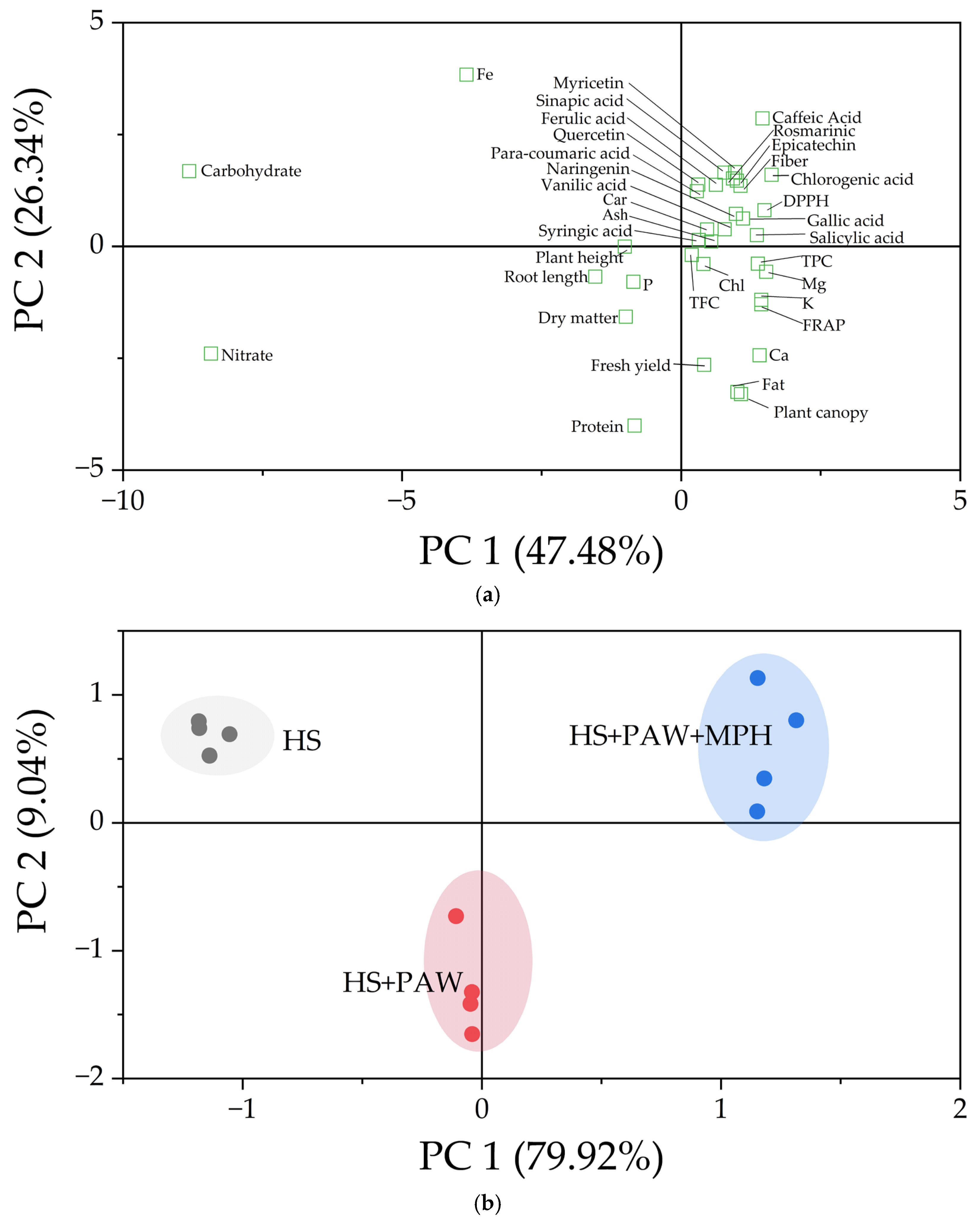
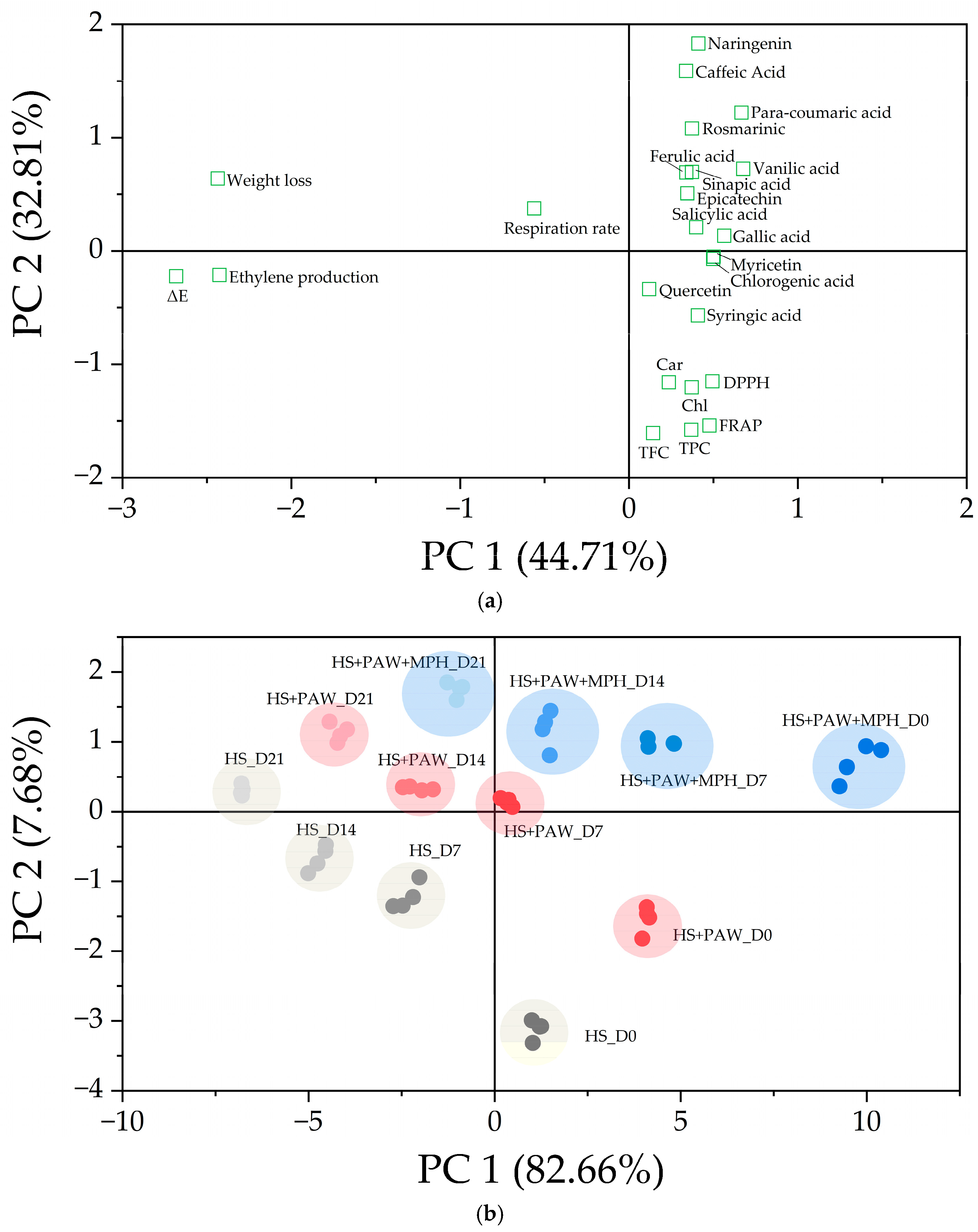
The loading plot illustrates the projection of morpho-physiological and quality variables at harvest onto the PC1–PC2 plane, confirming the positive correlations among growth, biomass, proximate and mineral composition, photosynthetic pigments, total and individual phenolic and flavonoid compounds, and antioxidant capacities (Figure 8). The score plot differentiated the treatments in hydroponically grown Cos lettuce: HS (control) clustered in the negative PC1 and positive PC2 quadrant; HS+PAW clustered in the negative PC1 and negative PC2 area, while HS+PAW+MPH formed a distinct cluster at positive PC1 and higher PC2 values. This spatial separation reflects pronounced alterations in metabolite profiles and morpho-physiological traits due to preharvest supplementation. The loading plot shows strong correlations among quality traits, including weight loss, respiration rate, ethylene production, color difference (ΔE), photosynthetic pigments, phenolic and flavonoid compounds, and antioxidant capacities (Figure 9). The score plot revealed that the HS controls transitioned from positive PC1 and low PC2 to negative PC1 and slightly higher PC2 values during the 21 days of storage, indicating a decline in quality, while the HS+PAW and HS+PAW+MPH treatments maintained elevated PC1 and PC2 scores, with persistent clustering in the upper right quadrant throughout the storage period. This persistent separation demonstrates that integrated PAW and MPH supplementation most effectively preserves compositional and physiological trait profiles during cold storage, mitigating quality decline compared to the control.

4. Discussion

The present study demonstrates that plasma-activated water or its combination with milk protein hydrolysate markedly enhanced lettuce growth and biomass, nearly doubling fresh yield relative to the control. Similar beneficial effects of PAW have been reported in leafy vegetables such as leaf mustard, spinach, garden cress, Bok choy, and lettuce [19,25,39,40], primarily attributed to plasma-induced reactive oxygen and nitrogen species (RONS) that modulate plant metabolic and physiological activities. Protein hydrolysates (PHs) promote shoot and root growth and canopy expansion by supplying amino acids and peptides, improving nitrogen utilization, and exerting auxin- and gibberellin-like activities [18,20,21,22,41]. Combining PAW with PHs further increases intercellular RON formation, nutrient uptake, hormonal regulation, and growth in crops such as tomato [15]. In this study, the individual treatments increased dry matter, protein, and lipid content, while their combination further elevated ash, fiber, and mineral accumulation (potassium, calcium, magnesium, and iron). The simultaneous provision of plasma-derived nitrate and PH-derived nitrogen supplied accessible nitrogen pools for protein synthesis, supporting high-yield production [15,21,24]. Interestingly, both treatments exhibited lower nitrate accumulation, likely due to enhanced nitrate assimilation into amino acids and activation of nitrogen metabolism enzymes such as ammonium and amino acid transporters, glutamine synthase, and glutamate synthase [20,23,26], along with key carbon metabolism enzymes, including citrate synthase, malate dehydrogenase, and isocitrate dehydrogenase [41,42,43]. Previous studies have demonstrated that PAW and biostimulant-based nutrient management separately induced greater increases in total amino acid content at nitrogen-equivalent fertilization rates, indicating enhanced nitrogen assimilation and the presence of growth-promoting amino acids such as glutamic acid, aspartic acid, and alanine [19,42,44,45]. Remarkably, the integrated PAW and MPH treatment yielded superior growth, biomass, and nutritional quality, reflecting synergistic interactions between PAW-driven enhancement of redox potential, water and mineral uptake [26,27,39], and MPH-driven peptide- and amino acid-mediated stimulation of metabolic pathways for growth, nutrient assimilation, and nitrogen use efficiency [15,16].
While studies investigating ethylene production and respiration rate in lettuce following plasma-activated water and protein hydrolysate treatments remain limited, growing evidence highlights their physiological benefits. Protein hydrolysates contribute to cell wall synthesis and modification, strengthening tissue resilience and water retention [46]. In this study, both the individual and combined treatments lowered respiration and ethylene production, thereby delaying postharvest senescence and associated yellowing. Reduced ethylene suppresses senescence by delaying degradation of chlorophyll and membrane and cell wall breakdown, thereby extending shelf life [33,47,48]. Simultaneously, decreased respiration limits carbohydrate depletion and the metabolic drivers of moisture loss and pigment degradation [47,48]. These effects were reflected in reduced weight loss, a greener color, and higher retention of chlorophyll and carotene after 21 days, particularly under the combined treatment. Robust cell wall integrity under lower ethylene and respiration likely maintained turgor, stomatal function, and membrane stability, preserving pigment content and marketable quality [47,48,49]. Mechanistically, PAW improved nitrate availability and nitrogen assimilation, whereas MPH promoted nutrient uptake through chelation, jointly enhancing photosynthesis and pigment stability via improved stomatal conductance and fluorescence [16,18,19,25,39,41]. Both the individual and combined treatments increased the leaf Fe, Mg, and K concentrations, elements essential for pigment synthesis, gas exchange, and sustained photosynthetic activity [50,51]. Furthermore, plasma-stimulated photosynthetic electron transport and PSII functionality, coupled with cytokinin-like biostimulant action, supported pigment retention and delayed visual and functional senescence [28,39]. Conversely, the control treatment exhibited greater pigment loss due to nitrogen deficiency and higher ethylene-related activity, thereby impairing photosynthetic capacity [19,24]. These findings align with previous studies, demonstrating that PAW and biostimulant treatments reduce weight and color losses, maintain pigment content, and improve marketable quality in hydroponically grown lettuce, spinach, and bok choy [15,16,17,19,28].
Plasma-activated water, when combined with a protein hydrolysate, significantly improved the retention of total phenolic content (TPC) and total flavonoid content (TFC) in lettuce during storage, accompanied by increased antioxidant capacity, as demonstrated by DPPH and FRAP assays. Similar improvements in TPC, TFC, and antioxidant activity were previously reported in hydroponically grown lettuce and spinach treated with PAW or MPH, which mitigate oxidative damage and lipid peroxidation during postharvest storage [21,28,39]. The HS control likely exhibited stronger activity of lipid-peroxidation enzymes such as 13-lipoxygenase (LOX), which promote the production of reactive oxygen species (ROS) and the degradation of chloroplasts; this may explain the greater color change and weight loss observed in this treatment [52,53]. In contrast, the HS+PAW and HS+PAW+MPH treatments may have suppressed hydroxyl radical formation, maintained osmotic balance, enhanced ROS scavenging, and limited LOX-associated peroxidation by increasing phenolic–flavonoid contents and strengthening endogenous antioxidant enzyme activities, as reported in previous studies [15]. Moreover, the elevated chlorogenic, salicylic, and p-coumaric acid levels under HS+PAW and HS+PAW+MPH acted as stress-responsive phenolics that strengthened radical scavenging and antioxidant enzyme activity, reinforcing the phenylpropanoid-derived antioxidant pool, limiting ROS-driven peroxidation, and protecting pigment–membranes stability, as reported in various crops treated with exogenous salicylic, p-coumaric, and chlorogenic acids [54,55,56,57,58,59]. Our previous work showed similar trends with MPH alone, with the effect linked to enhanced nitrogen assimilation and the accumulation of aromatic amino acids that serve as precursors for phenolic biosynthesis [21]. Additionally, MPH promotes carbon–nitrogen metabolic coordination, supports the tricarboxylic acid cycle intermediates, and upregulates key phenylpropanoid pathway enzymes, including phenylalanine ammonia-lyase and chalcone synthase, thereby driving the accumulation of antioxidant metabolites [17,42]. Thus, metabolite enrichment under HS+PAW and HS+PAW+MPH reinforced the mechanistic link between RONS signaling and enhanced phenolic–flavonoid profiles [15,24]. Collectively, this enriched phenolic-driven antioxidant system likely delayed senescence in the HS+PAW and HS+PAW+MPH-treated lettuce by suppressing LOX-mediated membrane peroxidation and ROS-driven chloroplast destruction [52,53], sustaining ROS-scavenging redox enzymes and NADP-malic enzyme activities [60], and maintaining UDP-sugar-dependent glycosylation [61].
The principal component analysis demonstrated that PAW and its combination with MPH supplementation significantly improved morpho-physiological and quality parameters in hydroponic lettuce, with the greatest benefits observed from the combined treatment. These enhancements included increased growth, improved nutrient composition, better pigment retention, and elevated antioxidant capacity, which persisted throughout postharvest storage. While these results highlight the promise of integrated biostimulant strategies for maintaining crop quality and storability, successful translation to applied practice will require optimizing treatment protocols for different crops, validating across various cultivation systems, and carefully assessing cost-effectiveness, scalability, and environmental impact. Future studies should also investigate the bioavailability and efficacy of biostimulants enhanced by plasma technologies, evaluate long-term and multi-crop impacts, integrate supplemental lighting, and apply comprehensive metabolomic approaches to further elucidate mechanisms and maximize benefits for resilient and productive food systems.

5. Conclusions

Supplementing half-strength hydroponic nutrient solutions with plasma-activated water and milk protein hydrolysate markedly increased plant height, root length, canopy area, and total fresh yield compared with the controls, while also enhancing dry matter, protein, fat, ash, fiber, and mineral contents and simultaneously reducing tissue nitrate accumulation. These outcomes highlight the potential of plasma-activated water and biostimulants as alternative nutrient sources that enhance nitrogen assimilation, thereby improving product safety and nutritive quality. Notably, the plasma-activated water and milk protein hydrolysate effectively stimulated the synthesis and retention of key bioactive compounds, resulting in enriched total phenolic and total flavonoid contents and antioxidant capacity. In addition, the treatment reduced respiration and ethylene production, mitigated physiological deterioration and weight loss, and better preserved visual, nutritional, and functional quality during cold storage. The synergistic effects observed with PAW and MPH provide compelling evidence for their role as sustainable biostimulants, supporting high crop productivity and improved storability under reduced nutrient input. This indicates that treatment combining plasma-activated water and milk protein hydrolysate is an innovative and eco-friendly nutrient management approach that can complement standard fertilizers, supporting higher productivity and contributing to safer, nutritionally enriched hydroponic lettuce. Further studies should clarify the underlying metabolic pathways, assess long-term performance and cross-crop applicability, and evaluate the economic feasibility of these technologies for broader adoption in commercial-scale hydroponic systems.

Supplementary Materials

The following supporting information can be downloaded at: https://www.mdpi.com/article/10.3390/nitrogen7010018/s1, Table S1: Effect of PAW and MPH applications on physicochemical and physiological parameters; Table S2: Effect of PAW and MPH applications on phenolic and flavonoid profiles.

Author Contributions

Conceptualization, A.M.Z., A.U., N.L., P.J., N.K. and A.T.-U.; methodology, A.M.Z., A.U., N.L., P.J., N.K. and A.T.-U.; software, A.M.Z.; validation, A.M.Z., A.U., N.L., P.J., N.K. and A.T.-U.; formal analysis, A.M.Z.; investigation, A.M.Z.; resources, A.M.Z.; data curation, A.M.Z.; writing—original draft preparation, A.M.Z.; writing—review and editing, A.M.Z., A.U. and N.L.; visualization, A.M.Z.; supervision, A.U., N.L., P.J., N.K. and A.T.-U.; project administration, A.M.Z.; funding acquisition, A.M.Z. All authors have read and agreed to the published version of the manuscript.

Funding

This research was funded by the Petchra Pra Jom Klao Doctoral Scholarship at King Mongkut’s University of Technology Thonburi (KMUTT), under agreement No. 56/2565, provided for scholarship and research funding awarded to Aryanis Mutia Zahra.

Data Availability Statement

The original contributions presented in this study are included in the article; further inquiries can be directed to the corresponding author.

Acknowledgments

The authors would like to thank the Laboratories of Postharvest Physiology, Phytobioactive and Flavor, and Remediation at King Mongkut’s University of Technology Thonburi for providing their laboratory materials and facilities for use. The authors express their sincere appreciation to the United Graduate School of Agricultural Sciences (UGSAS) at Gifu University, Japan, for providing research equipment.

Conflicts of Interest

The authors declare no conflicts of interest.

References

  1. Assefa, A.D.; Choi, S.; Lee, J.E.; Sung, J.S.; Hur, O.S.; Ro, N.Y.; Lee, H.S.; Jang, S.W.; Rhee, J.H. Identification and quantification of selected metabolites in differently pigmented leaves of lettuce (Lactuca sativa L.) cultivars harvested at mature and bolting stages. BMC Chem. 2019, 13, 56. [Google Scholar] [CrossRef]
  2. Damerum, A.; Chapman, M.A.; Taylor, G. Innovative breeding technologies in lettuce for improved post-harvest quality. Postharvest Biol. Technol. 2020, 168, 111266. [Google Scholar] [CrossRef] [PubMed]
  3. Kim, M.J.; Moon, Y.; Tou, J.C.; Mou, B.; Waterland, N.L. Nutritional value, bioactive compounds and health benefits of lettuce (Lactuca sativa L.). J. Food Compos. Anal. 2016, 49, 19–34. [Google Scholar] [CrossRef]
  4. Roy, A.; Khan, A.; Ahmad, I.; Alghamdi, S.; Rajab, B.S.; Babalghith, A.O.; Alshahrani, M.Y.; Islam, S.; Islam, M.R. Flavonoids a bioactive compound from medicinal plants and its therapeutic applications. BioMed Res. Int. 2022, 2022, 5445291. [Google Scholar] [CrossRef] [PubMed]
  5. Cho, E.; Gurdon, C.; Zhao, R.; Peng, H.; Poulev, A.; Raskin, I.; Simko, I. Phytochemical and agronomic characterization of high-flavonoid lettuce lines grown under field conditions. Plants 2023, 12, 3467. [Google Scholar] [CrossRef]
  6. Azam, S.M.R.; Ma, H.; Xu, B.; Devi, S.; Siddique, M.A.B.; Stanley, S.L.; Bhandari, B.; Zhu, J. Efficacy of ultrasound treatment in the removal of pesticide residues from fresh vegetables: A review. Trends Food Sci. Technol. 2020, 97, 417–432. [Google Scholar] [CrossRef]
  7. Fussy, A.; Papenbrock, J. An overview of soil and soilless cultivation techniques—Chances, challenges and the neglected question of sustainability. Plants 2022, 11, 1153. [Google Scholar] [CrossRef]
  8. Rajaseger, G.; Chan, K.L.; Yee Tan, K.; Ramasamy, S.; Khin, M.C.; Amaladoss, A.; Kadamb Haribhai, P. Hydroponics: Current trends in sustainable crop production. Bioinformation 2023, 19, 925–938. [Google Scholar] [CrossRef]
  9. Wang, L.; Ning, S.; Zheng, W.; Guo, J.; Li, Y.; Li, Y.; Chen, X.; Ben-Gal, A.; Wei, X. Performance analysis of two typical greenhouse lettuce production systems: Commercial hydroponic production and traditional soil cultivation. Front. Plant Sci. 2023, 14, 1165856. [Google Scholar] [CrossRef]
  10. Majid, M.; Khan, J.N.; Ahmad Shah, Q.M.; Masoodi, K.Z.; Afroza, B.; Parvaze, S. Evaluation of hydroponic systems for the cultivation of Lettuce (Lactuca sativa L., var. Longifolia) and comparison with protected soil-based cultivation. Agric. Water Manag. 2021, 245, 106572. [Google Scholar] [CrossRef]
  11. Lei, C.; Engeseth, N.J. Comparison of growth characteristics, functional qualities, and texture of hydroponically grown and soil-grown lettuce. LWT 2021, 150, 111931. [Google Scholar] [CrossRef]
  12. Luetic, S.; Knezovic, Z.; Jurcic, K.; Majic, Z.; Tripkovic, K.; Sutlovic, D. Leafy vegetable nitrite and nitrate content: Potential health effects. Foods 2023, 12, 1655. [Google Scholar] [CrossRef]
  13. Tort, Ö.Ö.; Vayvay, Ö.; Çobanoğlu, E. A systematic review of sustainable fresh fruit and vegetable supply chains. Sustainability 2022, 14, 1573. [Google Scholar] [CrossRef]
  14. Gil, M.I. Preharvest factors and fresh-cut quality of leafy vegetables. Acta Hortic. 2016, 1141, 57–64. [Google Scholar] [CrossRef]
  15. Khanam, S.; Amsalu, K.; Kifle, R.; Han, I.; Choi, E.H. Exploring the combined effects of plasma-treated water and seaweed biostimulants on tomato (Solanum lycopersicum) growth and bioactive performance. Food Chem. 2025, 487, 144747. [Google Scholar] [CrossRef] [PubMed]
  16. Miceli, A.; Vetrano, F.; Moncada, A. Influence of Ecklonia maxima extracts on growth, yield, and postharvest quality of hydroponic leaf lettuce. Horticulturae 2021, 7, 440. [Google Scholar] [CrossRef]
  17. Zhou, W.; Zheng, W.; Lv, H.; Wang, Q.; Liang, B.; Li, J. Foliar application of pig blood-derived protein hydrolysates improves antioxidant activities in lettuce by regulating phenolic biosynthesis without compromising yield production. Sci. Hortic. 2022, 291, 110602. [Google Scholar] [CrossRef]
  18. Di Mola, I.; Cozzolino, E.; Ottaiano, L.; Nocerino, S.; Rouphael, Y.; Colla, G.; El-Nakhel, C.; Mori, M. Nitrogen use and uptake efficiency and crop performance of baby spinach (Spinacia oleracea L.) and lamb’s lettuce (Valerianella locusta L.) grown under variable sub-optimal N regimes combined with plant-based biostimulant application. Agronomy 2020, 10, 278. [Google Scholar] [CrossRef]
  19. Ruamrungsri, S.; Sawangrat, C.; Panjama, K.; Sojithamporn, P.; Jaipinta, S.; Srisuwan, W.; Intanoo, M.; Inkham, C.; Thanapornpoonpong, S.-N. Effects of using plasma-activated water as a nitrate source on the growth and nutritional quality of hydroponically grown green oak lettuces. Horticulturae 2023, 9, 248. [Google Scholar] [CrossRef]
  20. Ceccarelli, A.V.; Miras-Moreno, B.; Buffagni, V.; Senizza, B.; Pii, Y.; Cardarelli, M.; Rouphael, Y.; Colla, G.; Lucini, L. Foliar application of different vegetal-derived protein hydrolysates distinctively modulates tomato root development and metabolism. Plants 2021, 10, 326. [Google Scholar] [CrossRef]
  21. Zahra, A.M.; Uthairatanakij, A.; Laohakunjit, N.; Jitareerat, P.; Kaisangsri, N.; Tira-Umphon, A. Valorization of expired milk into protein hydrolysate as a plant biostimulant: Characterization and application on hydroponically grown Cos lettuce. Crops 2025, 5, 56. [Google Scholar] [CrossRef]
  22. Colla, G.; Rouphael, Y.; Canaguier, R.; Svecova, E.; Cardarelli, M. Biostimulant action of a plant-derived protein hydrolysate produced through enzymatic hydrolysis. Front. Plant Sci. 2014, 5, 448. [Google Scholar] [CrossRef] [PubMed]
  23. Sestili, F.; Rouphael, Y.; Cardarelli, M.; Pucci, A.; Bonini, P.; Canaguier, R.; Colla, G. Protein hydrolysate stimulates growth in tomato coupled with N-dependent gene expression involved in N assimilation. Front. Plant Sci. 2018, 9, 1233. [Google Scholar] [CrossRef] [PubMed]
  24. Kučerová, K.; Henselová, M.; Slováková, Ľ.; Bačovčinová, M.; Hensel, K. Effect of plasma activated water, hydrogen peroxide, and nitrates on lettuce growth and its physiological parameters. Appl. Sci. 2021, 11, 1985. [Google Scholar] [CrossRef]
  25. Veerana, M.; Ketya, W.; Choi, E.H.; Park, G. Non-thermal plasma enhances growth and salinity tolerance of bok choy (Brassica rapa subsp. chinensis) in hydroponic culture. Front. Plant Sci. 2024, 15, 1445791. [Google Scholar] [CrossRef]
  26. Sodini, M.; Traversari, S.; Cacini, S.; Gonfiotti, I.; Lenzi, A.; Massa, D. The effect of plasma-treated nutrient solution on yield, pigments, and mineral content of rocket [Diplotaxis tenuifolia (L.) DC.] grown under different nitrogen fertilization levels. Front. Plant Sci. 2024, 15, 1511335. [Google Scholar] [CrossRef]
  27. Inanoglu, S.; Specca, D.; Tepper, B.J.; Simon, J.E.; Karwe, M.V. Cold plasma treatment of sweet basil seeds and nutrient water in hydroponics: Impact on growth and quality. J. Food Sci. 2025, 90, e70224. [Google Scholar] [CrossRef]
  28. Sandepogu, M.; Shukla, P.S.; Asiedu, S.; Yurgel, S.; Prithiviraj, B. Combination of Ascophyllum nodosum extract and humic acid improve early growth and reduces post-harvest loss of lettuce and spinach. Agriculture 2019, 9, 240. [Google Scholar] [CrossRef]
  29. Hoagland, D.R.; Arnon, D.I. The water-culture method for growing plants without soil. Circular 1950, 347, 1–32. [Google Scholar]
  30. Horowitz, A. Official Methods of Analysis of AOAC International; Association of Official Analytical Chemist: Rockville, MD, USA, 2008. [Google Scholar]
  31. Wolf, B. A comprehensive system of leaf analyses and its use for diagnosing crop nutrient status. Commun. Soil Sci. Plant Anal. 1982, 13, 1035–1059. [Google Scholar] [CrossRef]
  32. Cataldo, D.A.; Maroon, M.; Schrader, L.E.; Youngs, V.L. Rapid colorimetric determination of nitrate in plant tissue by nitration of salicylic acid. Commun. Soil Sci. Plant Anal. 1975, 6, 71–80. [Google Scholar] [CrossRef]
  33. Koukounaras, A.; Siomos, A.S.; Sfakiotakis, E. Postharvest CO2 and ethylene production and quality of rocket (Eruca sativa Mill.) leaves as affected by leaf age and storage temperature. Postharvest Biol. Technol. 2007, 46, 167–173. [Google Scholar] [CrossRef]
  34. Wellburn, A.R. The spectral determination of chlorophylls a and b, as well as total carotenoids, using various solvents with spectrophotometers of different resolution. J. Plant Physiol. 1994, 144, 307–313. [Google Scholar] [CrossRef]
  35. Bhatt, P.; Joseph, G.S.; Negi, P.S.; Varadaraj, M.C.; Duru, M.E. Chemical composition and nutraceutical potential of indian borage (Plectranthus amboinicus) stem extract. J. Chem. 2013, 1, 320329. [Google Scholar] [CrossRef]
  36. Attard, E. A rapid microtitre plate Folin-Ciocalteu method for the assessment of polyphenols. Open Life Sci. 2013, 8, 48–53. [Google Scholar] [CrossRef]
  37. Jia, Z.; Tang, M.; Wu, J. The determination of flavonoid contents in mulberry and their scavenging effects on superoxide radicals. Food Chem. 1999, 64, 555–559. [Google Scholar] [CrossRef]
  38. Sale, A.I.; Uthairatanakij, A.; Laohakunjit, N.; Jitareerat, P.; Kaisangsri, N. Pre-harvest supplemental LED treatments led to improved postharvest quality of sweet basil leaves. J. Photochem. Photobiol. B 2023, 248, 112788. [Google Scholar] [CrossRef]
  39. Carmassi, G.; Cela, F.; Trivellini, A.; Gambineri, F.; Cursi, L.; Cecchi, A.; Pardossi, A.; Incrocci, L. Effects of nonthermal plasma (ntp) on the growth and quality of baby leaf lettuce (Lactuca sativa var. acephala Alef.) cultivated in an indoor hydroponic growing system. Horticulturae 2022, 8, 251. [Google Scholar] [CrossRef]
  40. Chalise, R.; Tamang, A.; Kattel, A.; Sharma, S.; Basnet, S.; Khanal, R. Impact of plasma-activated water on germination, growth, and production of green leafy vegetables. AIP Adv. 2024, 14, 065318. [Google Scholar] [CrossRef]
  41. Kumar, S.; Karthik, C.; Govindan, P.; Sharma, R.K.; Padikasan, I.A. Evaluating the biostimulating potential of whey protein hydrolysate (WPH) in Solanum lycopersicum: A comprehensive investigation. Waste Biomass Valori. 2025, 16, 4851–4862. [Google Scholar] [CrossRef]
  42. Bělonožníková, K.; Černý, M.; Hýsková, V.; Synková, H.; Valcke, R.; Hodek, O.; Křížek, T.; Kavan, D.; Vaňková, R.; Dobrev, P.; et al. Casein as protein and hydrolysate: Biostimulant or nitrogen source for Nicotiana tabacum plants grown in vitro? Physiol. Plant 2023, 175, e13973. [Google Scholar] [CrossRef]
  43. Ertani, A.; Cavani, L.; Pizzeghello, D.; Brandellero, E.; Altissimo, A.; Ciavatta, C.; Nardi, S. Biostimulant activity of two protein hydrolyzates in the growth and nitrogen metabolism of maize seedlings. J. Plant Nutr. Soil Sci. 2009, 172, 237–244. [Google Scholar] [CrossRef]
  44. Popko, M.; Michalak, I.; Wilk, R.; Gramza, M.; Chojnacka, K.; Gorecki, H. Effect of the new plant growth biostimulants based on amino acids on yield and grain quality of winter wheat. Molecules 2018, 23, 470. [Google Scholar] [CrossRef] [PubMed]
  45. Rouphael, Y.; Carillo, P.; Cristofano, F.; Cardarelli, M.; Colla, G. Effects of vegetal- versus animal-derived protein hydrolysate on sweet basil morpho-physiological and metabolic traits. Sci. Hortic. 2021, 284, 110123. [Google Scholar] [CrossRef]
  46. Monterisi, S.; Garcia-Perez, P.; Buffagni, V.; Zuluaga, M.Y.A.; Ciriello, M.; Formisano, L.; El-Nakhel, C.; Cardarelli, M.; Colla, G.; Rouphael, Y.; et al. Unravelling the biostimulant activity of a protein hydrolysate in lettuce plants under optimal and low N availability: A multi-omics approach. Physiol. Plant 2024, 176, e14357. [Google Scholar] [CrossRef] [PubMed]
  47. Shezi, S.; Ngcobo, M.E.K.; Khanyile, N.; Ncama, K. Physio-metabolic mechanisms behind postharvest quality deterioration in broccoli (Brassica oleracea var. Italica) and swiss chard (Beta vulgaris L. var. Cicla): A review. Plants 2024, 13, 3174. [Google Scholar] [CrossRef]
  48. Iqbal, N.; Khan, N.A.; Ferrante, A.; Trivellini, A.; Francini, A.; Khan, M.I.R. Ethylene role in plant growth, development and senescence: Interaction with other phytohormones. Front. Plant Sci. 2017, 8, 475. [Google Scholar] [CrossRef]
  49. Soltani Firouz, M.; Alimardani, R.; Mobli, H.; Mohtasebi, S.S. Effect of modified atmosphere packaging on the mechanical properties of lettuce during shelf life in cold storage. Inform. Process. Agr. 2021, 8, 485–493. [Google Scholar] [CrossRef]
  50. Ciriello, M.; Formisano, L.; El-Nakhel, C.; Corrado, G.; Rouphael, Y. Biostimulatory action of a plant-derived protein hydrolysate on morphological traits, photosynthetic parameters, and mineral composition of two basil cultivars grown hydroponically under variable electrical conductivity. Horticulturae 2022, 8, 409. [Google Scholar] [CrossRef]
  51. Carillo, P.; Pannico, A.; Cirillo, C.; Ciriello, M.; Colla, G.; Cardarelli, M.; De Pascale, S.; Rouphael, Y. Protein hydrolysates from animal or vegetal sources affect morpho-physiological traits, ornamental quality, mineral composition, and shelf-life of chrysanthemum in a distinctive manner. Plants 2022, 11, 2321. [Google Scholar] [CrossRef]
  52. Mayta, M.L.; Hajirezaei, M.R.; Carrillo, N.; Lodeyro, A.F. Leaf senescence: The chloroplast connection comes of age. Plants 2019, 8, 495. [Google Scholar] [CrossRef] [PubMed]
  53. Springer, A.; Kang, C.; Rustgi, S.; von Wettstein, D.; Reinbothe, C.; Pollmann, S.; Reinbothe, S. Programmed chloroplast destruction during leaf senescence involves 13-lipoxygenase (13-LOX). Proc. Natl. Acad. Sci. USA 2016, 113, 3383–3388. [Google Scholar] [CrossRef] [PubMed]
  54. Zhang, H.; Cun, Y.; Wang, J.; Wu, M.; Li, X.; Liang, Q.; Wang, C.; Zhao, L.; Deng, J. Acetylsalicylic acid and salicylic acid alleviate postharvest leaf senescence in Chinese flowering cabbage (Brassica rapa var. parachinensis). Postharvest Biol. Technol. 2022, 194, 112070. [Google Scholar] [CrossRef]
  55. Dobon-Suarez, A.; Gutierrez-Pozo, M.; Serna-Escolano, V.; Gimenez, M.J.; Valero, D.; Serrano, M.; Garcia-Pastor, M.E.; Zapata, P.J. Antioxidant metabolism insights into ripening and senescence delay of green pepper fruit through the salicylic acid preharvest treatment. Front. Plant Sci. 2025, 16, 1475068. [Google Scholar] [CrossRef]
  56. Chaves Morillo, D.M.; Tobar Delgado, E.; Valencia Flórez, L.F.; Latorre Vásquez, L.; Trejo Escobar, D.; Mejía España, D.F. Minimally processed lettuces: Extending shelf life through packaging and treatment with salicylic acid and calcium chloride solutions. Braz. J. Food Technol. 2025, 28, e2023116. [Google Scholar] [CrossRef]
  57. Zhang, H.; Xu, Y.; Pu, J.; Wang, M.; Niu, J.; Wang, H.; Tang, X.; Du, Y.; Luo, X.; Zhang, X.; et al. Pre-treatment of p-coumaric acid reduced chilling injury by increasing some antioxidant and enzyme activity in loquat fruit to maintain post-harvest quality. BMC Plant Biol. 2025, 25, 1096. [Google Scholar] [CrossRef]
  58. Cho, M.; Kim, Y.; You, S.; Hwang, D.Y.; Jang, M. Chlorogenic acid of Cirsium japonicum resists oxidative stress caused by aging and prolongs healthspan via SKN-1/Nrf2 and DAF-16/FOXO in Caenorhabditis elegans. Metabolites 2023, 13, 224. [Google Scholar] [CrossRef]
  59. Zhang, M.; Xiao, Q.; Li, Y.; Tian, Y.; Zheng, J.; Zhang, J. Exploration of exogenous chlorogenic acid as a potential plant stimulant: Enhancing physiochemical properties in Lonicera japonica. Physiol. Mol. Biol. Plants 2024, 30, 453–466. [Google Scholar] [CrossRef]
  60. Arias, C.L.; Pavlovic, T.; Torcolese, G.; Badia, M.B.; Gismondi, M.; Maurino, V.G.; Andreo, C.S.; Drincovich, M.F.; Gerrard Wheeler, M.C.; Saigo, M. NADP-dependent malic enzyme 1 participates in the abscisic acid response in Arabidopsis thaliana. Front. Plant Sci. 2018, 9, 1637. [Google Scholar] [CrossRef]
  61. Decker, D.; Kleczkowski, L.A. UDP-sugar producing pyrophosphorylases: Distinct and essential enzymes with overlapping substrate specificities, providing de novo precursors for glycosylation reactions. Front. Plant Sci. 2018, 9, 1822. [Google Scholar] [CrossRef]
Figure 1. The effects of different nutrient solution treatments on ethylene production (a) and respiration rate (b) of hydroponically grown Cos lettuce over 0, 7, 14, and 21 days of storage at 10 ± 1 °C in the dark and 95–98% relative humidity (RH). HS, half-strength nutrient solution prepared with tap water; HS+PAW, half-strength nutrient solution prepared with plasma-activated water; HS+PAW+MPH, HS+PAW supplemented with 1 mL L−1 MPH. Error bars represent the standard errors (n = 8), and different letters indicate statistically significant differences at p < 0.05 according to Duncan’s test; * indicates statistically significant main effect in ANOVA at p < 0.05. Detailed statistical comparisons among treatments and storage times are provided in Table S1.
Nitrogen 07 00018 g001
Figure 2. The effects of nutrient solution treatments on total chlorophyll (a) and total carotenoid content (b) of hydroponically grown Cos lettuce over 0, 7, 14, and 21 days of storage at 10 ± 1 °C in the dark and 95–98% relative humidity (RH). HS, half-strength nutrient solution prepared with tap water; HS+PAW, half-strength nutrient solution prepared with plasma-activated water; HS+PAW+MPH, HS+PAW supplemented with 1 mL L−1 MPH. Error bars represent the standard errors (n = 8), and different letters indicate statistically significant differences at p < 0.05 according to Duncan’s test; * indicates statistically significant main effect in ANOVA at p < 0.05. Detailed statistical comparisons among treatments and storage times are provided in Table S1.
Nitrogen 07 00018 g002
Figure 3. The effects of different nutrient solution treatments on weight loss (a) and color difference (b) of hydroponically grown Cos lettuce over 7, 14, and 21 days of storage at 10 ± 1 °C in the dark and 95–98% relative humidity (RH). HS, half-strength nutrient solution prepared with tap water; HS+PAW, half-strength nutrient solution prepared with plasma-activated water; HS+PAW+MPH, HS+PAW supplemented with 1 mL L−1 MPH. Error bars represent the standard errors (n = 8), and different letters indicate statistically significant differences at p < 0.05 according to Duncan’s test; * indicates statistically significant main effect in ANOVA at p < 0.05. Detailed statistical comparisons among treatments and storage times are provided in Table S1.
Nitrogen 07 00018 g003
Figure 4. The effects of different nutrient solution treatments on hydroponically grown Cos lettuce over 0, 7, 14, and 21 days of storage at 10 ± 1 °C in the dark and 95–98% relative humidity (RH). HS, half-strength nutrient solution prepared with tap water; HS+PAW, half-strength nutrient solution prepared with plasma-activated water; HS+PAW+MPH, HS+PAW supplemented with 1 mL L−1 MPH. Photo credit: Aryanis Mutia Zahra.
Nitrogen 07 00018 g004
Figure 5. The effects of different nutrient solution treatments on total phenolic content (TPC) (a) and total flavonoid content (TFC) (b) of hydroponically grown Cos lettuce over 0, 7, 14, and 21 days of storage at 10 ± 1 °C in the dark and 95–98% relative humidity (RH). HS, half-strength nutrient solution prepared with tap water; HS+PAW, half-strength nutrient solution prepared with plasma-activated water; HS+PAW+MPH, HS+PAW supplemented with 1 mL L−1 MPH. Error bars represent the standard errors (n = 8), and different letters indicate statistically significant differences at p < 0.05 according to Duncan’s test; * indicates statistically significant main effect in ANOVA at p < 0.05. Detailed statistical comparisons among treatments and storage times are provided in Table S1.
Nitrogen 07 00018 g005
Figure 6. Hierarchical clustered heatmap illustrating the effects of different nutrient solution treatments on phenolic and flavonoid profiles of hydroponically grown Cos lettuce over 0, 7, 14, and 21 days of storage at 10 ± 1 °C in the dark and 95–98% relative humidity (RH). HS, half-strength nutrient solution prepared with tap water; HS+PAW, half-strength nutrient solution prepared with plasma-activated water; HS+PAW+MPH, HS+PAW supplemented with 1 mL L−1 MPH. The color scale represents values normalized from 0 to 1 by min–max scaling, from high (blue) to low (red) values. The dendrograms reflect similarities in compound profiles across treatments and storage days. For normalized means ± standard error, color coding, and detailed statistical comparisons among treatments and storage times, see Table S2.
Nitrogen 07 00018 g006
Figure 7. The effects of different nutrient solution treatments on DPPH• radical scavenging (a) and FRAP (b) of hydroponically grown Cos lettuce over 0, 7, 14, and 21 days of storage at 10 ± 1 °C in the dark and 95–98% relative humidity (RH). HS, half-strength nutrient solution prepared with tap water; HS+PAW, half-strength nutrient solution prepared with plasma-activated water; HS+PAW+MPH, HS+PAW supplemented with 1 mL L−1 MPH. Error bars represent the standard errors (n = 8), and different letters indicate statistically significant differences at p < 0.05 according to Duncan’s test; * indicates statistically significant main effect in ANOVA at p < 0.05. Detailed statistical comparisons among treatments and storage times are provided in Table S1.
Nitrogen 07 00018 g007
Figure 8. Loading plots of morpho-physiological and quality characteristics of leaf lettuce plants at harvest (a) and score plots of treatments from a PCA of leaf lettuce (b) grown on different nutrient solutions for preharvest treatments were as follows: HS, half-strength nutrient solution prepared with tap water; HS+PAW, half-strength nutrient solution prepared with plasma-activated water; HS+PAW+MPH, HS+PAW supplemented with 1 mL L−1 MPH.
Nitrogen 07 00018 g008
Figure 9. Loading plots of morpho-physiological and quality characteristics of leaf lettuce plants (a) and score plots of treatment over 0, 7, 14, and 21 days of storage at 10 ± 1 °C in the dark and 95–98% relative humidity (RH) from a PCA of leaf lettuce (b) grown on different nutrient solutions for preharvest treatments were as follows: HS, half-strength nutrient solution prepared with tap water; HS+PAW, half-strength nutrient solution prepared with plasma-activated water; HS+PAW+MPH, HS+PAW supplemented with 1 mL L−1 MPH.
Nitrogen 07 00018 g009
Table 1. Plant growth and biomass of hydroponically grown Cos lettuce cultivated in different nutrient solution treatments at the harvest stage (25 DAT).
TreatmentsPlant Height (cm)Root Length
(cm)
Plant Canopy (cm2)Total Fresh Yield (kg m−2)
HS24.09 b ± 1.4529.94 b ± 4.17410.51 b ± 47.061.12 b ± 0.23
HS+PAW26.69 a ± 1.7633.03 a ± 3.11646.38 a ± 48.632.05 a ± 0.24
HS+PAW+MPH27.63 a ± 2.9434.19 a ± 4.37683.28 a ± 68.102.25 a ± 0.27
All data values represent means ± standard error (n = 16). Values with different letters within a column indicate statistically significant differences among treatments at p < 0.05 according to Duncan’s test. HS, half-strength nutrient solution prepared with tap water; HS+PAW, half-strength nutrient solution prepared with plasma-activated water; HS+PAW+MPH, HS+PAW supplemented with 1 mL L−1 MPH.
Table 2. Proximate composition at harvest stage of hydroponically grown Cos lettuce cultivated in different nutrient solution treatments (25 DAT).
Proximate
Compositions
HSHS+PAWHS+PAW+MPH
Dry matter4.74 b ± 0.425.17 a ± 0.765.70 a ± 0.54
Crude protein21.95 b ± 0.2323.76 a ± 0.2123.21 a ± 0.44
Crude lipid2.88 c ± 0.113.82 b ± 0.014.04 a ± 0.03
Ash content18.27 b ± 0.4218.82 b ± 0.5319.93 a ± 0.10
Crude Fiber22.26 b ± 0.0422.61 b ± 0.2923.39 a ± 0.21
Carbohydrate34.64 a ± 0.0430.99 b ± 0.7129.43 c ± 0.51
Value expressed as g 100 g−1 of dry weight, except for dry matter reported as % dry weight. All data values represent means ± standard error (n = 8). Values with different letters within a row indicate statistically significant differences among treatments at p < 0.05 according to Duncan’s test. HS, half-strength nutrient solution prepared with tap water; HS+PAW, half-strength nutrient solution prepared with plasma-activated water; HS+PAW+MPH, HS+PAW supplemented with 1 mL L−1 MPH.
Table 3. Mineral composition and soluble nitrate content at the harvest stage of hydroponically grown Cos lettuce cultivated using different nutrient solution treatments (25 DAT).
Mineral
Compositions
HSHS+PAWHS+PAW+MPH
P (mg g−1 DW)0.46 b ± 0.020.47 ab ± 0.010.50 a ± 0.01
K (mg g−1 DW)3.31 c ± 0.023.82 b ± 0.034.17 a ± 0.03
Ca (mg g−1 DW)0.63 c ± 0.010.81 b ± 0.020.86 a ± 0.01
Mg (mg g−1 DW)0.26 c ± 0.010.31 b ± 0.010.33 a ± 0.01
Fe (µg g−1 DW)2.63 b ± 0.053.18 a ± 0.193.14 a ± 0.12
NO3 (mg g−1 DW)0.28 a ± 0.010.27 a ± 0.010.23 b ± 0.01
All data values represent means ± standard error (n = 8). Values with different letters within a row indicate statistically significant differences among treatments at p < 0.05 according to Duncan’s test. HS, half-strength nutrient solution prepared with tap water; HS+PAW, half-strength nutrient solution prepared with plasma-activated water; HS+PAW+MPH, HS+PAW supplemented with 1 mL L−1 MPH.
Disclaimer/Publisher’s Note: The statements, opinions and data contained in all publications are solely those of the individual author(s) and contributor(s) and not of MDPI and/or the editor(s). MDPI and/or the editor(s) disclaim responsibility for any injury to people or property resulting from any ideas, methods, instructions or products referred to in the content.