
Multifractal Analysis of Marathon Pacing—Physiological Background and Practical Implications


 , ,
, ,
Abstract
1. Introduction
1.1. General Setting of the Study
1.2. Main Purposes of the Present Study
1.3. A Short Overview of the Previous Studies
- the analysis of Heart Rate Variability (HRV) to monitor the autonomic nervous system’s response during marathons, analyzing the effects of fatigue and endurance on heart rate patterns [3],
- Detrended Fluctuation Analysis (DFA), which allows us to identify scaling behavior in physiological signals like heart rate and speed, revealing the impacts of prolonged exercise and fatigue [14],
1.4. Limitations of the Previous Studies and the New Perspectives Offered by the Weak-Scaling Exponent
1.5. Main Contributions and Limitations
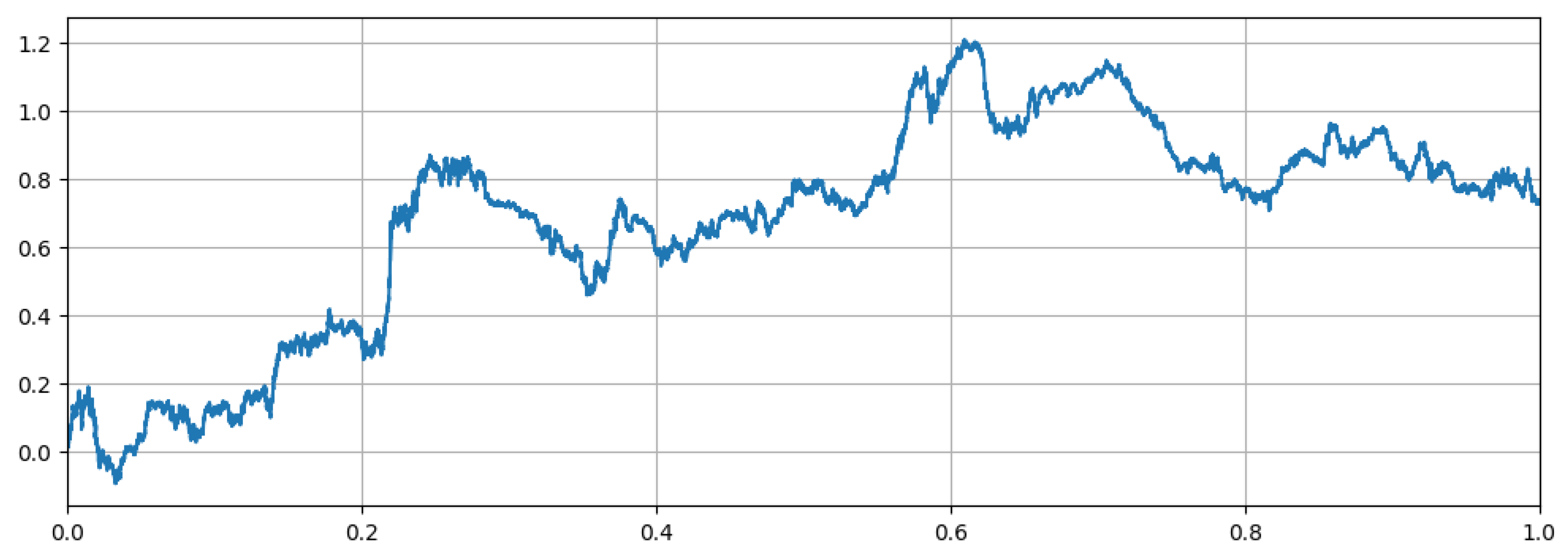
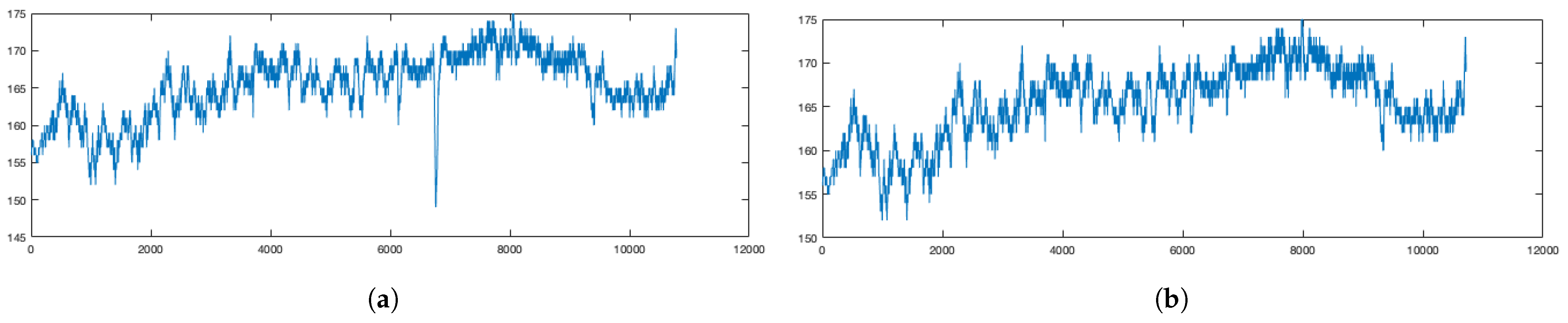
- Initial raw data show significant variations during different phases of the marathon, including warm-ups and breaks. Cleaning the data to remove non-marathon activities requires continuous reconnections to maintain homogeneity; the purpose of the Appendix A is to prove that the procedure which is used does not alter the regularity properties of the data.
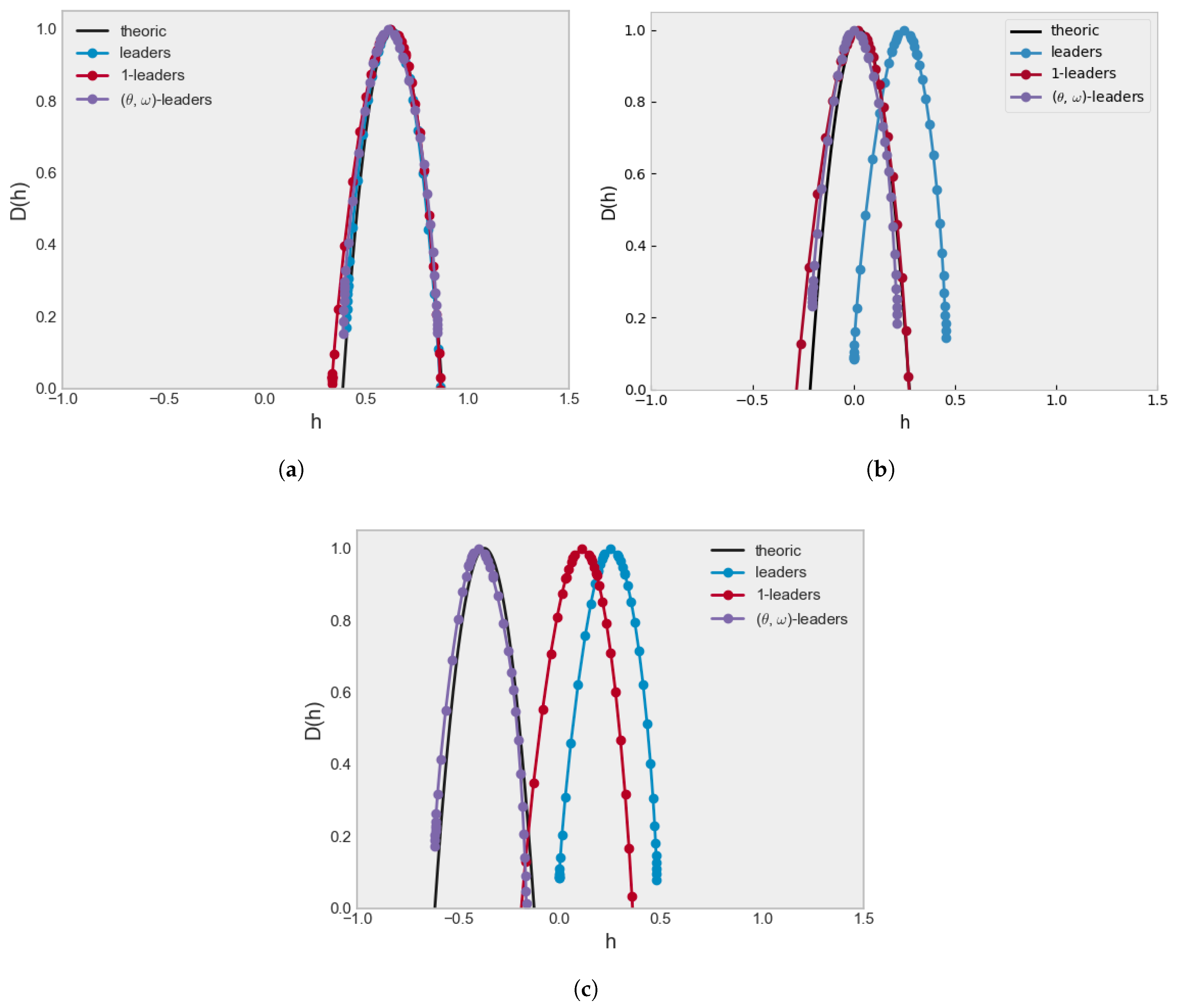
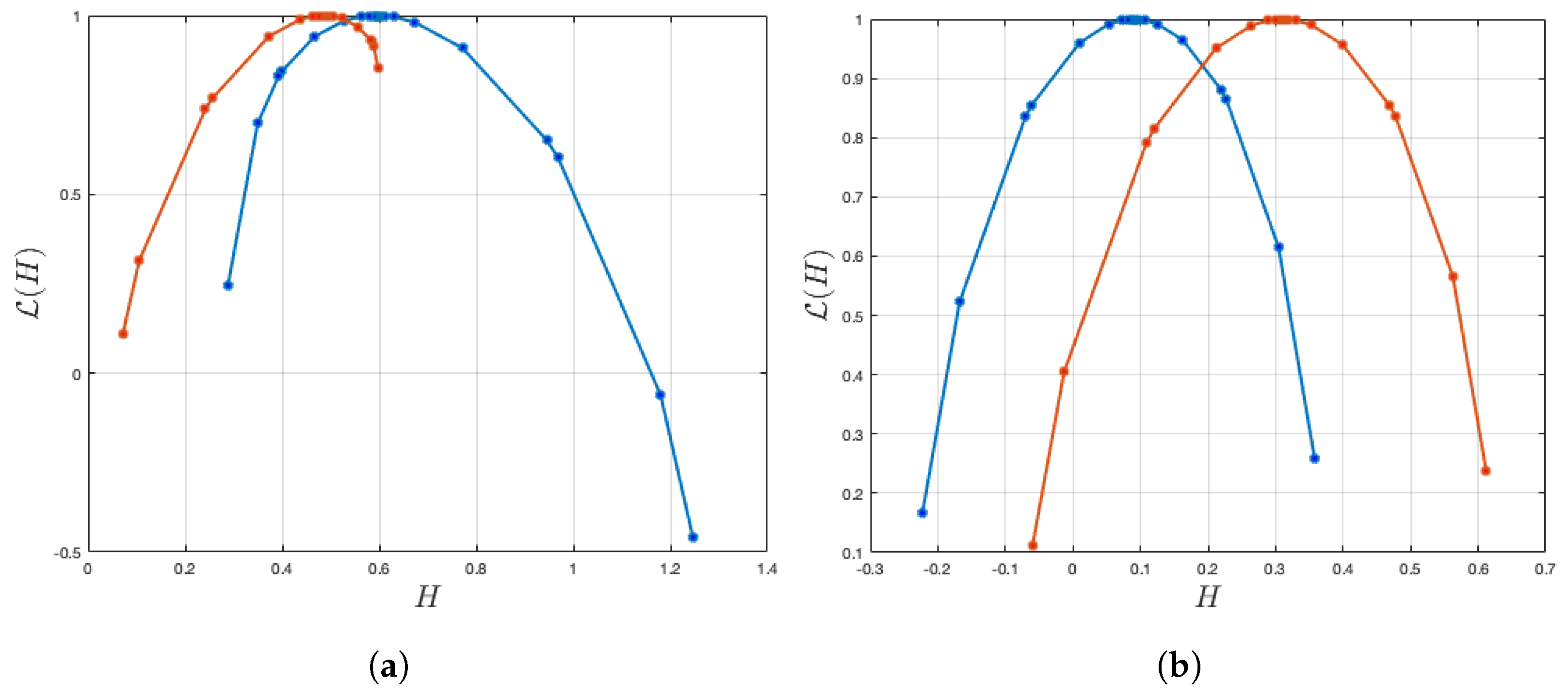
- On a methodological level, a clarification is given on the implicit assumptions under which the currently used techniques in order to derive multifractality parameters are valid, see Section 2.1, and, on the applied side, in the case of the extremely irregular data collected on marathon runners, these assumptions are shown not to be met by most of these methods, see Section 2.1. This indicates the need for a multifractal analysis based on the weak-scaling exponent, which requires no a priori assumption on the data, see Section 2.2.
- This study provides insights into how multifractality parameters using the weak-scaling exponent characterize changes in physiological signals due to fatigue, particularly around the 30th kilometer mark, where perceived exertion is significantly increased.
1.6. Structure of This Paper
2. Materials and Methods
2.1. Pointwise Regularity Exponents
2.2. Weak-Scaling Multifractal Analysis (WS-MFA)
2.3. Practical Multifractal Analysis
- local norms of (where l is a linear term which consists of a local estimation of the Taylor polynomial of degree 1 of f in ),
- local maxima of the continuous wavelet transform,
- local suprema of wavelet coefficients,
- local norms of wavelet coefficients.
- This adds an artificial degree of liberty in the analysis, which makes the interpretation of the results more complex, see [18], where this problem is addressed.
- Since the characteristic of the data being analyzed is their unusually strong irregularity, it is more meaningful not to artificially smooth them before the analysis. Indeed, this smoothing may hide some important information contained in the data.
2.4. WS-MFA Parameters
2.5. Why WS-MFA?
- MF-DFA assumes a certain degree of regularity (e.g., stationarity or weak non-stationarity) in the time series, which is often met with these runners’ heart rate or speed data, given their emphasis on steady-state effort and risk-averse strategies.
- These athletes exhibit moderate heart rate variability (HRV) fluctuations as they avoid overexertion phases or tactical surges (e.g., breakaways or late accelerations).
- The avoidance of “the wall” is, in this scenario, a byproduct of a submaximal performance strategy, where athletes deliberately sacrifice potential performance peaks in favor of pacing regularity and fatigue avoidance. Consequently, the MF-DFA method can effectively detect and quantify this controlled behavior, as it captures scaling properties of heart rate signals that remain relatively stable across time scales.
- MF-DFA and similar techniques assume a minimal level of data regularity, such as local stationarity or weak correlations, which often do not hold under marathon-specific stress conditions.
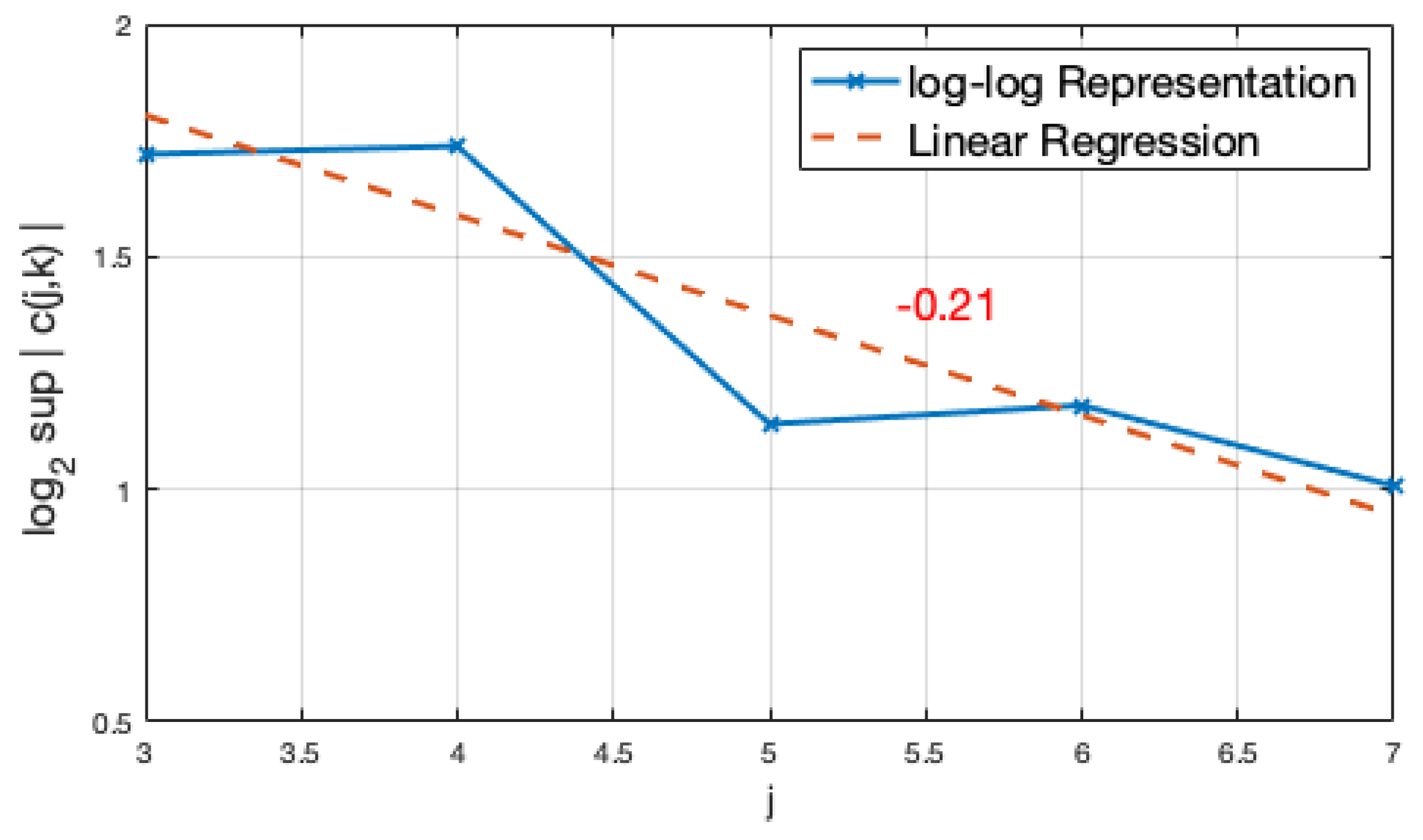
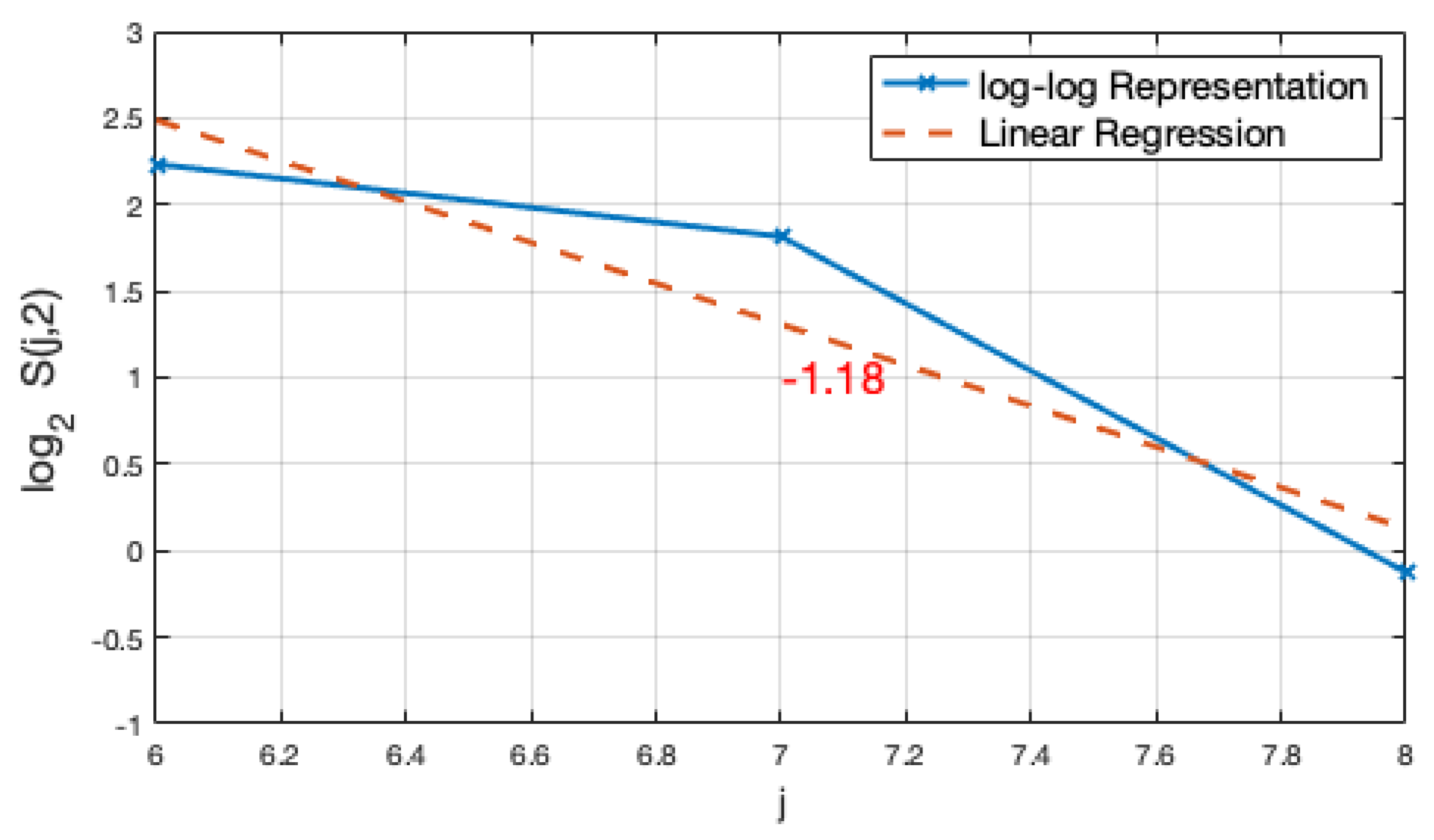
- The irregularity present in such datasets leads to saturation effects in log–log regressions, where the smallest scales dominate the multifractal estimates, resulting in misleading or unstable outputs that lack physiological interpretability.
- Requires no prior assumption about the local boundedness or -integrability of the data, making it robust against extreme irregularities often observed in marathon HRV signals.
- Captures the full range of local singularities without necessitating fractional integration or smoothing preprocessing steps that could mask critical fluctuations related to fatigue and pacing breakdown.
- Provides a stable and physically meaningful characterization of the most irregular segments of the data, which are often the most relevant for detecting early signs of maladaptation to exertion (e.g., pre-collapse HRV signatures).
3. Results
3.1. Description of the Data
3.2. The Subjects’ Characteristics and Their Performance
3.3. Physiological Interpretation of Multifractality Parameters
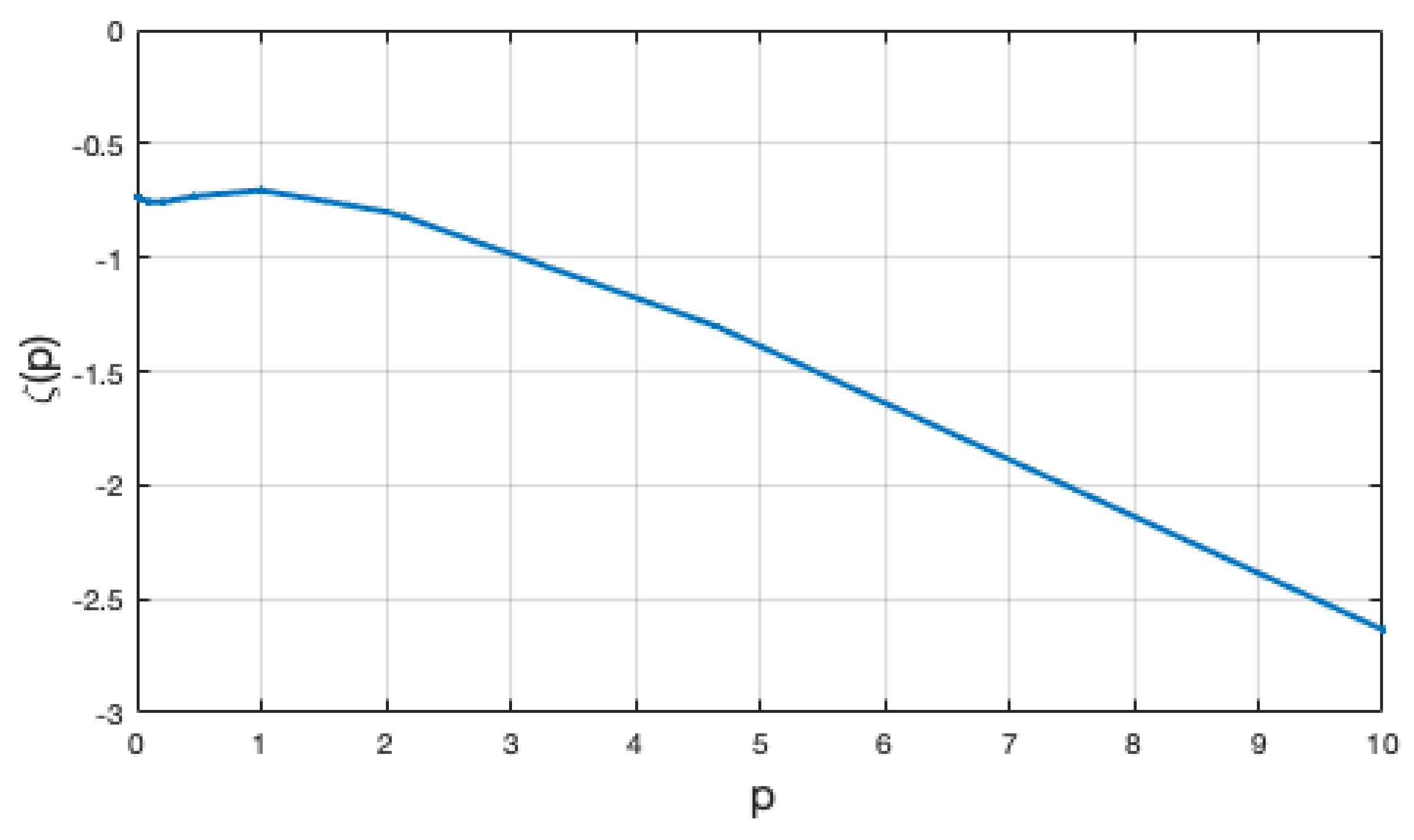
3.4. Results and Discussion
4. Additional Considerations
Practical Use: From WS-MFA Parameters to Coachable Decisions
5. Conclusions
- -
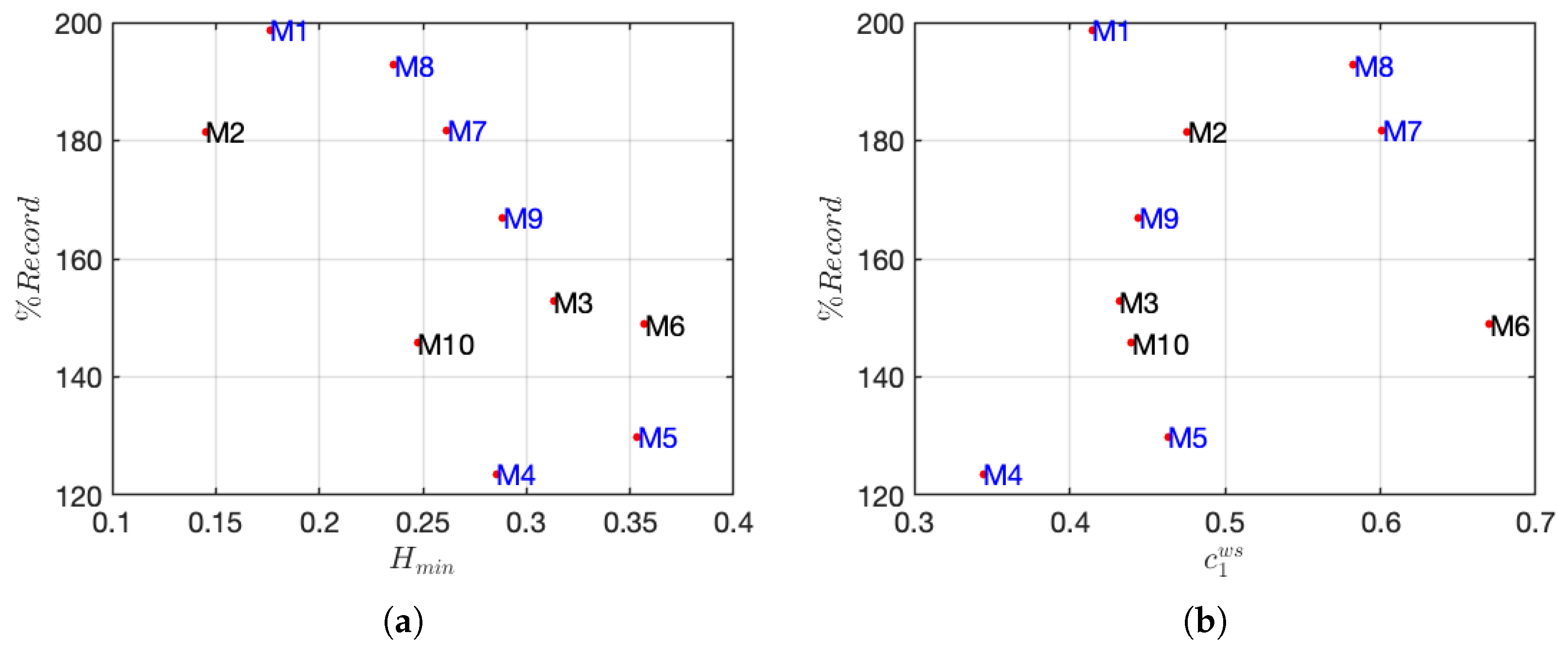
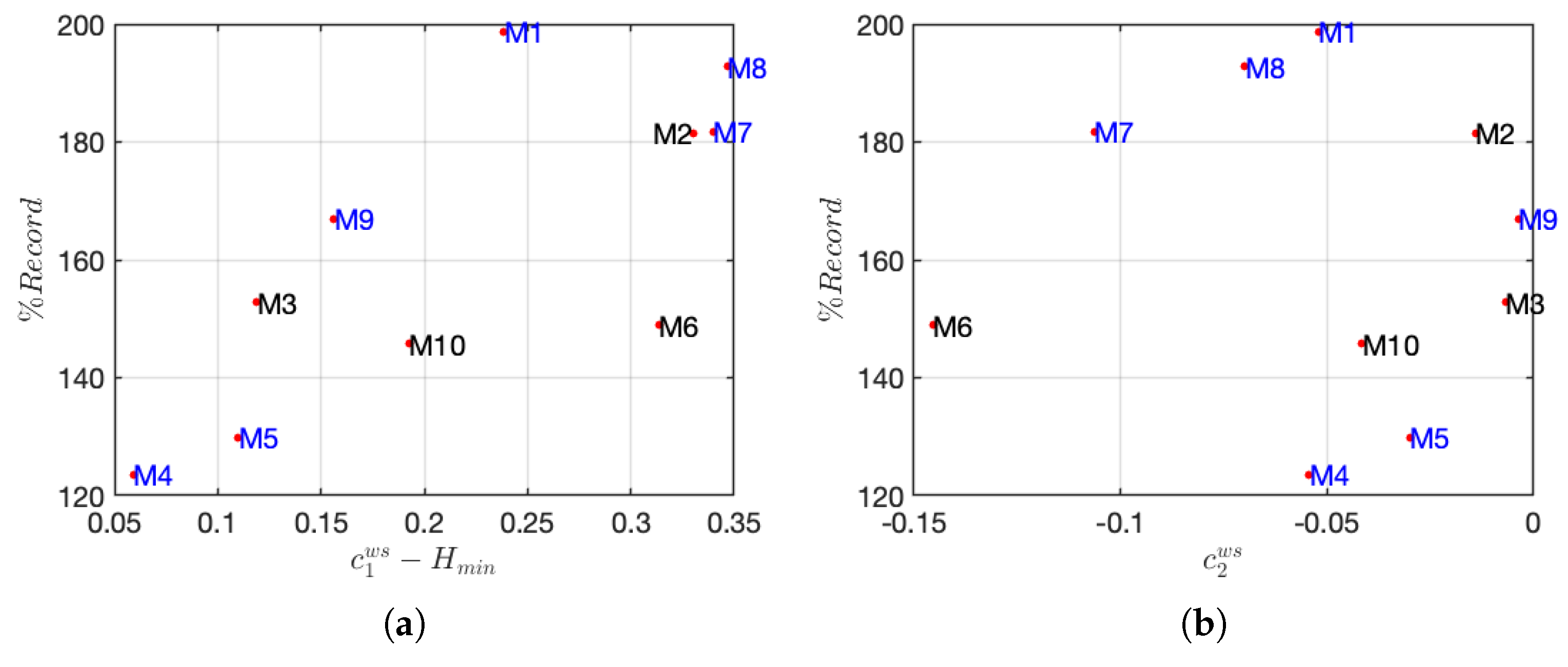
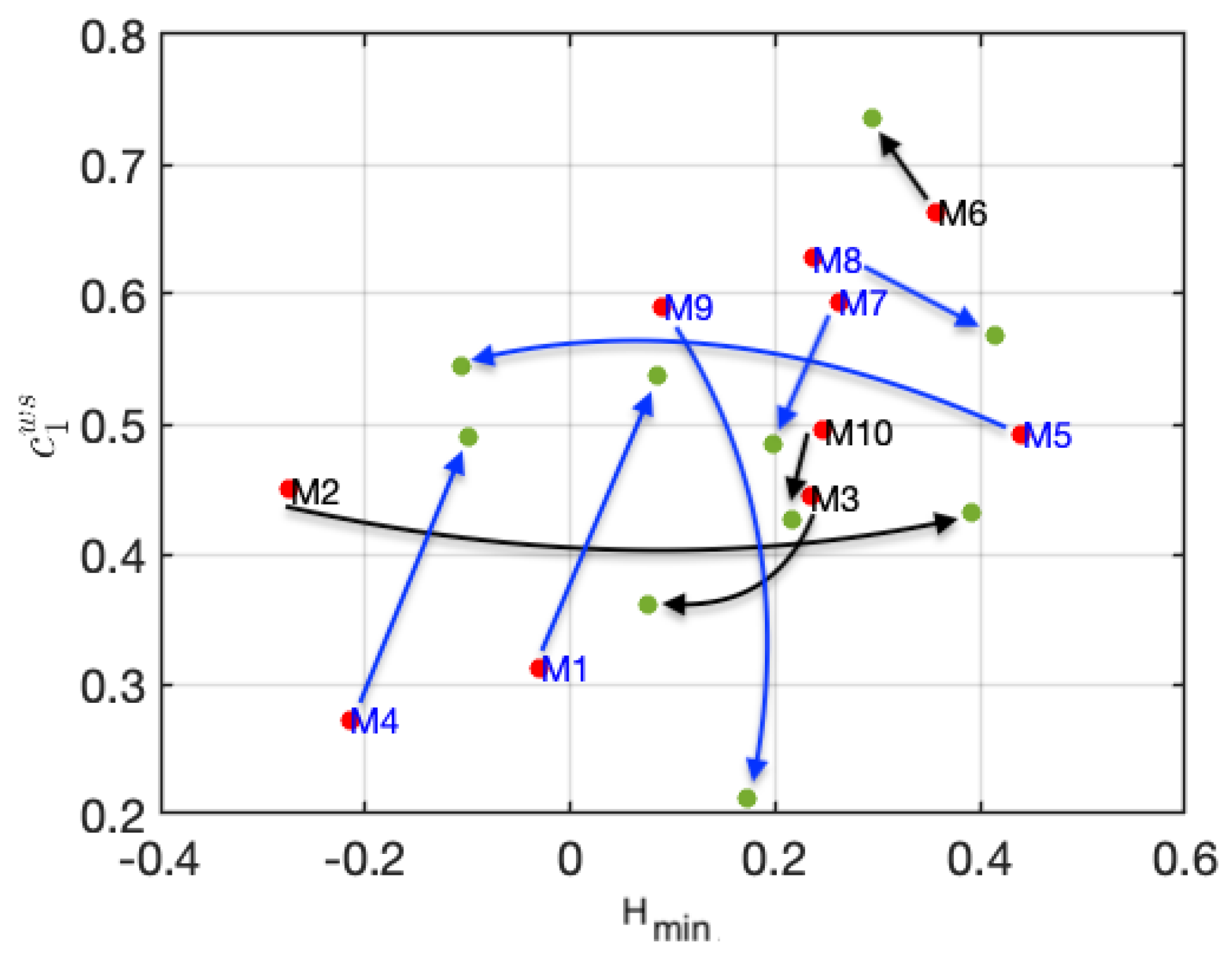
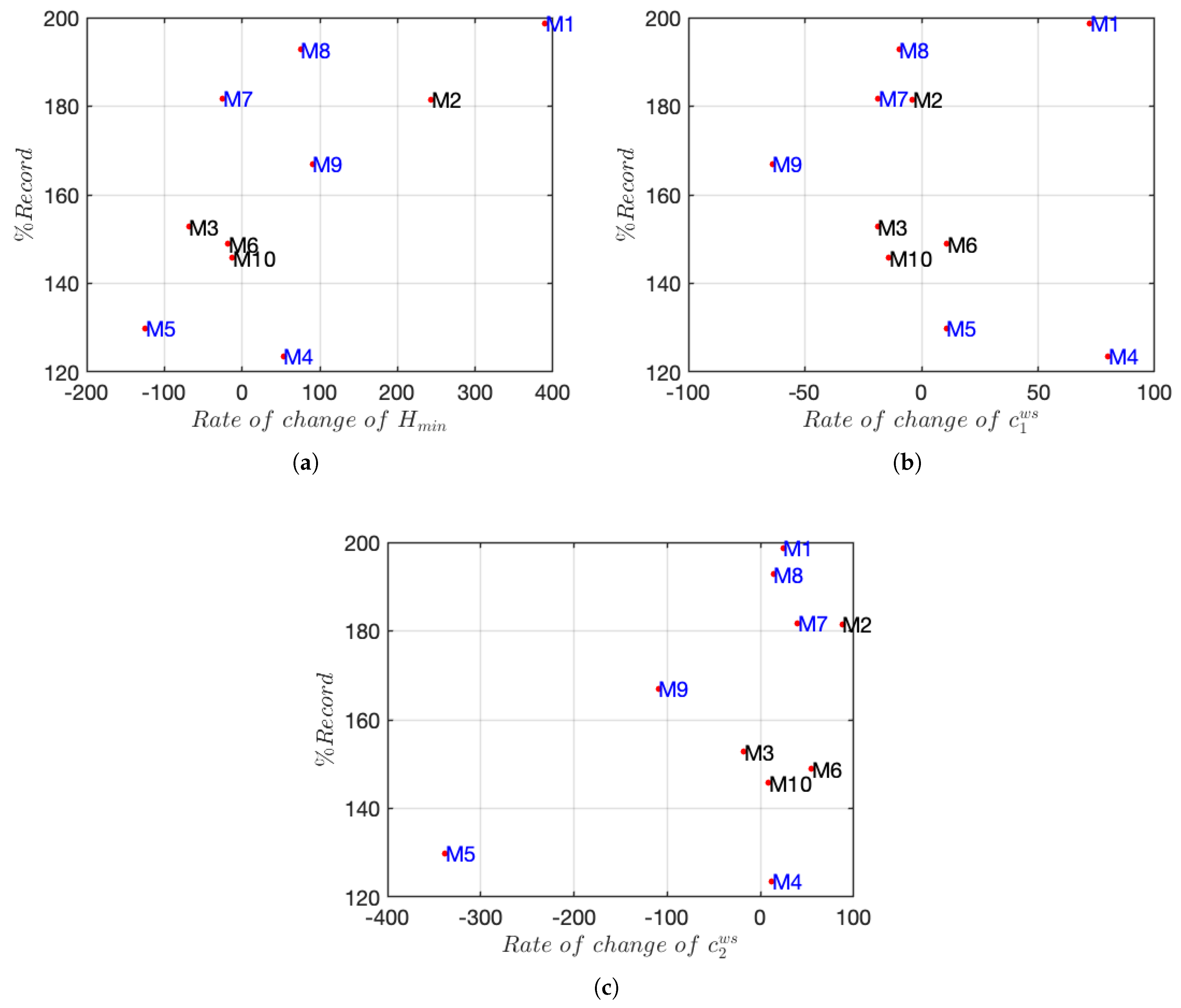
- Changes in , , and from the first to the last segments of the race clearly highlight the physiological impact of fatigue on the runner. In particular, marked decreases in over the course of a marathon (particularly around the 30 km mark) suggest increased physiological stress and onset of fatigue.
- -
- Early detection through multifractal analysis could help runners and coaches adjust pacing strategies proactively, thereby optimizing performance. Note however that automatic segmentation methods (based on change-point detection or entropy-based clustering) could yield a way to refine the a priori segmentation used, and we intend to explore these techniques in future works.
Limitations
Author Contributions
Funding
Institutional Review Board Statement
Informed Consent Statement
Data Availability Statement
Conflicts of Interest
Appendix A
References
- Tucker, R.; Lambert, M.I.; Noakes, T.D. An analysis of pacing strategies during men’s world-record performances in track athletics. Int. J. Sports Physiol. Perform. 2006, 1, 233–245. [Google Scholar] [CrossRef]
- Lopes, R.; Betrouni, N. Fractal and multifractal analysis: A review. Med. Image Anal. 2009, 13, 634–649. [Google Scholar] [CrossRef]
- Ivanov, P.; Amaral, L.N.; Goldberger, A.; Havlin, S.; Rosenblum, M.; Struzik, Z.; Stanley, H. Multifractality in human heartbeat dynamics. Nature 1999, 399, 461–465. [Google Scholar] [CrossRef]
- Hausdorff, J.M. Gait dynamics, fractals and falls: Finding meaning in the stride-to-stride fluctuations of human walking. Hum. Mov. Sci. 2007, 26, 555–589. [Google Scholar] [CrossRef] [PubMed]
- Wang, J.; Ning, X.; Ma, Q.; Bian, C.; Xu, Y.; Chen, Y. Multiscale multifractality analysis of a 12-lead electrocardiogram. Phys. Rev. E-Stat. Nonlinear Soft Matter Phys. 2005, 71, 062902. [Google Scholar] [CrossRef] [PubMed]
- Goldberger, A.L.; Amaral, L.A.; Hausdorff, J.M.; Ivanov, P.C.; Peng, C.K.; Stanley, H.E. Fractal dynamics in physiology: Alterations with disease and aging. Proc. Natl. Acad. Sci. USA 2002, 99, 2466–2472. [Google Scholar] [CrossRef]
- Wesfreid, E.; Billat, V. Randomness and changes of heart rate and respiratory frequency during high altitude mountain ascent without acclimatization. Phys. A Stat. Mech. Appl. 2012, 391, 1575–1590. [Google Scholar] [CrossRef]
- Jiang, Z.Q.; Xie, W.J.; Zhou, W.X.; Sornette, D. Multifractal analysis of financial markets: A review. Rep. Prog. Phys. 2019, 82, 125901. [Google Scholar] [CrossRef]
- Billat, V.; Mille-Hamard, L.; Meyer, Y.; Wesfreid, E. Detection of changes in the fractal scaling of heart rate and speed in a marathon race. Phys. A Stat. Mech. Appl. 2009, 388, 3798–3808. [Google Scholar] [CrossRef]
- Billat, V.; Palacin, F.; Correa, M.; Pycke, J. Pacing Strategy Affects the Sub-Elite Marathoner’s Cardiac Drift and Performance. Front. Psychol. 2020, 10, 3026. [Google Scholar] [CrossRef]
- Terrier, P. Step-to-step variability in treadmill walking: Influence of rhythmic auditory cueing. PLoS ONE 2012, 7, e47171. [Google Scholar] [CrossRef]
- Ihlen, E.A. Introduction to multifractal detrended fluctuation analysis in Matlab. Front. Physiol. 2012, 3, 141. [Google Scholar] [CrossRef]
- Ducharme, S.W.; van Emmerik, R.E. Multifractality of unperturbed and asymmetric locomotion. J. Motor Behav. 2019, 51, 394–405. [Google Scholar] [CrossRef]
- Kantelhardt, J.W.; Zschiegner, S.A.; Koscielny-Bunde, E.; Havlin, S.; Bunde, A.; Stanley, H.E. Multifractal detrended fluctuation analysis of nonstationary time series. Phys. A Stat. Mech. Appl. 2002, 316, 87–114. [Google Scholar] [CrossRef]
- Bacry, E.; Delour, J.; Muzy, J. Multifractal random walk. Phys. Rev. E 2001, 64, 026103. [Google Scholar] [CrossRef] [PubMed]
- Jaffard, S. Wavelet techniques in multifractal analysis. In Fractal Geometry and Applications: A Jubilee of Benoît Mandelbrot, Proc. Symp. Pure Math.; Lapidus, M., van Frankenhuijsen, M., Eds.; AMS: Hong Kong, China, 2004; Volume 72, pp. 91–152. [Google Scholar]
- Jaffard, S.; Saës, G.; Ben Nasr, W.; Palacin, F.; Billat, V. A review of univariate and multivariate multifractal analysis illustrated by the analysis of marathon runners physiological data. In ISAAC Congress (International Society for Analysis, Its Applications and Computation); Springer: Berlin/Heidelberg, Germany, 2021; pp. 3–60. [Google Scholar]
- Abry, P.; Ciuciu, P.; Dumeur, M.; Jaffard, S.; Saës, G. Multifractal Analysis Based on the Weak Scaling Exponent and Applications to MEG Recordings in Neuroscience. 2024. Available online: https://hal.science/hal-04712582/document (accessed on 11 December 2025).
- Muzy, J.F.; Bacry, E.; Arneodo, A. Wavelets and multifractal formalism for singular signals: Application to turbulence data. Phys. Rev. Lett. 1991, 67, 3515. [Google Scholar] [CrossRef]
- Terrier, P.; Dériaz, O. Kinematic variability, fractal dynamics and local dynamic stability of treadmill walking. J. Neuroeng. Rehabil. 2011, 8, 12. [Google Scholar] [CrossRef] [PubMed]
- Sejdić, E.; Lowry, K.A.; Bellanca, J.; Redfern, M.S.; Brach, J.S. A comprehensive assessment of gait accelerometry signals in time, frequency and time-frequency domains. IEEE Trans. Neural Syst. Rehabil. Eng. 2013, 22, 603–612. [Google Scholar] [CrossRef] [PubMed]
- Rhea, C.K.; Kiefer, A.W.; Wittstein, M.W.; Leonard, K.B.; MacPherson, R.P.; Wright, W.G.; Haran, F.J. Fractal gait patterns are retained after entrainment to a fractal stimulus. PLoS ONE 2014, 9, e106755. [Google Scholar] [CrossRef]
- Jaffard, S.; Melot, C.; Leonarduzzi, R.; Wendt, H.; Abry, P.; Roux, S.G.; Torres, M.E. p-Exponent and p-Leaders, Part I: Negative pointwise regularity. Phys. A Stat. Mech. Appl. 2016, 448, 300–318. [Google Scholar] [CrossRef]
- Leonarduzzi, R.; Wendt, H.; Roux, S.; Torres, M.; Melot, C.; Jaffard, S.; Abry, P. p-Exponent and p-Leaders, Part II: Multifractal Analysis. Relations to Detrended Fluctuation Analysis. Phys. A Stat. Mech. Appl. 2016, 448, 319–339. [Google Scholar] [CrossRef]
- Wendt, H.; Abry, P.; Kiyono, K.; Hayano, J.; Watanabe, E.; Yamamoto, Y. Wavelet p-Leader Non Gaussian Multiscale Expansions for Heart Rate Variability Analysis in Congestive Heart Failure Patients. IEEE Trans. Biomed. Eng. 2019, 66, 80–87. [Google Scholar] [CrossRef]
- Nasr, W.B.; Billat, V.; Jaffard, S.; Palacin, F.; Saës, G. The weak scaling multifractal spectrum: Mathematical setting and applications to marathon runners physiological data. In Conference of Fractals and Related Fields; Springer: Berlin/Heidelberg, Germany, 2022; pp. 105–153. [Google Scholar]
- Calderón, A.P.; Zygmund, A. Local properties of solutions of elliptic partial differential equations. In Selected Papers of Antoni Zygmund; Springer: Berlin/Heidelberg, Germany, 1989; pp. 285–339. [Google Scholar]
- Saës, G.; Ben Nasr, W.; Jaffard, S.; Palacin, F.; Billat, V. Analyse Multifractale des données physiologiques de marathoniens. In Proceedings of the GRETSI 2022, XXVIIIème Colloque Francophone de Traitement du Signal et des Images, Nancy, France, 6–9 September 2022; Available online: https://gretsi.fr/data/colloque/pdf/2022_saes762.pdf (accessed on 11 December 2025).
- Abry, P.; Chainais, P.; Coutin, L.; Pipiras, V. Multifractal random walks as fractional Wiener integrals. IEEE Trans. Inf. Theory 2009, 55, 3825–3846. [Google Scholar] [CrossRef]
- Veitch, D.; Abry, P. A wavelet-based joint estimator of the parameters of long-range dependence. IEEE Trans. Inf. Theory 1999, 45, 878–897. [Google Scholar] [CrossRef]
- Meyer, Y. Wavelets, Vibrations and Scalings; Number 9 in CRM Monograph Series; American Mathematical Society: Providence, RI, USA, 1998. [Google Scholar]
- Parisi, G.; Frisch, U. Fully developed turbulence and intermittency. In Turbulence and Predictability in Geophysical Fluid Dynamics and Climate Dynamics; Ghil, M., Benzi, R., Parisi, G., Eds.; North Holland: Amsterdam, The Netherlands, 1985; p. 84. [Google Scholar]
- Wendt, H.; Abry, P. Multifractality tests using bootstrapped wavelet leaders. IEEE Trans. Signal Process. 2007, 55, 4811–4820. [Google Scholar] [CrossRef]
- Wendt, H.; Roux, S.; Abry, P.; Jaffard, S. Wavelet leaders and bootstrap for multifractal analysis of images. Signal Proces. 2009, 89, 1100–1114. [Google Scholar] [CrossRef]
- Catrambone, V.; Wendt, H.; Barbieri, R.; Abry, P.; Valenza, G. Quantifying functional links between brain and heartbeat dynamics in the multifractal domain: A preliminary analysis. In Proceedings of the 2020 42nd Annual International Conference of the IEEE Engineering in Medicine & Biology Society (EMBC), Montreal, QC, Canada, 20–24 July 2020; IEEE: Piscataway, NJ, USA, 2020; pp. 561–564. [Google Scholar]
- Saâdaoui, F. Skewed multifractal scaling of stock markets during the COVID-19 pandemic. Chaos Solitons Fractals 2023, 170, 113372. [Google Scholar] [CrossRef]
- Palacin, F.; Poinsard, L.; Pycke, J.R.; Billat, V. A pilot study using entropy for optimizing self-pacing during a marathon. Entropy 2023, 25, 1119. [Google Scholar] [CrossRef] [PubMed]
- Palacin, F.; Poinsard, L.; Billat, V. Multidimensional Analysis of Physiological Entropy during Self-Paced Marathon Running. Sports 2024, 12, 252. [Google Scholar] [CrossRef] [PubMed]
- Joyner, M.J. Modeling: Optimal marathon performance on the basis of physiological factors. J. Appl. Physiol. 1991, 70, 683–687. [Google Scholar] [CrossRef] [PubMed]
- Pycke, J.; Billat, V. Marathon performance depends on pacing oscillations between non symmetric extreme values. Int. J. Environ. Res. Public Health 2022, 19, 2463. [Google Scholar] [CrossRef] [PubMed]
- Abry, P.; Malevergne, Y.; Wendt, H.; Senneret, M.; Jaffres, L.; Liaustrat, B. Shuffling for understanding multifractality, application to asset price time series. In Proceedings of the 2019 27th European Signal Processing Conference (EUSIPCO), A Coruña, Spain, 2–6 September 2019; IEEE: Piscataway, NJ, USA, 2019; pp. 1–5. [Google Scholar]
- Wendt, H.; Leon, L.; Tourneret, J.Y.; Abry, P. Multifractal anomaly detection in images via space-scale surrogates. In Proceedings of the 2022 IEEE International Conference on Image Processing (ICIP), Bordeaux, France, 16–19 October 2022; IEEE: Piscataway, NJ, USA, 2022; pp. 556–560. [Google Scholar]
- Oświecimka, P.; Drożdż, S.; Frasca, M.; Gebarowski, R.; Yoshimura, N.; Zunino, L.; Minati, L. Wavelet-based discrimination of isolated singularities masquerading as multifractals in detrended fluctuation analyses. Nonlinear Dyn. 2020, 100, 1689–1704. [Google Scholar] [CrossRef]



| M1 | M2 | M3 | M4 | M5 | |
| Time | 4:07:06 | 3:45:37 | 3:05:07 | 2:52:24 | 2:47:50 |
| Marathon | Paris | Tokyo | Montpellier | Paris | Paris |
| Rank | 10 | 7 | 5 | 1 | 2 |
| Age | 44 | 41 | 37 | 50 | 48 |
| Weight (kg) | 79 | 72 | 79 | 65 | 67 |
| Height (cm) | 180 | 173 | 185 | 174 | 174 |
| M6 Women | M7 | M8 | M9 | M10 | |
| Time | 4:06:19 | 4:13:35 | 4:09:04 | 3:22:19 | 0.4399 |
| Marathon | Sully sur Loire | Paris | Paris | Paris | La Rochelle |
| Rank | 4 | 8 | 9 | 6 | 3 |
| Age | 55 | 53 | 48 | 32 | 52 |
| Weight (kg) | 53 | 83 | 78 | 80 | 75 |
| Height (cm) | 170 | 178 | 171 | 181 | 180 |
| M1 | M2 | M3 | M4 | M5 | |
| 0.18 | 0.14 | 0.31 | 0.29 | 0.35 | |
| 0.41 | 0.47 | 0.43 | 0.34 | 0.46 | |
| −0.05 | −0.01 | −0.007 | −0.05 | −0.03 | |
| M6 Women | M7 | M8 | M9 | M10 | |
| 0.36 | 0.26 | 0.24 | 0.29 | 0.25 | |
| 0.67 | 0.60 | 0.59 | 0.44 | 0.44 | |
| −0.14 | −0.11 | −0.07 | −0.004 | 0.44 |
Disclaimer/Publisher’s Note: The statements, opinions and data contained in all publications are solely those of the individual author(s) and contributor(s) and not of MDPI and/or the editor(s). MDPI and/or the editor(s) disclaim responsibility for any injury to people or property resulting from any ideas, methods, instructions or products referred to in the content. |
© 2026 by the authors. Licensee MDPI, Basel, Switzerland. This article is an open access article distributed under the terms and conditions of the Creative Commons Attribution (CC BY) license.
Share and Cite
Ben Nasr, W.; Billat, V.; Jaffard, S.; Palacin, F.; Saës, G. Multifractal Analysis of Marathon Pacing—Physiological Background and Practical Implications. Fractal Fract. 2026, 10, 139. https://doi.org/10.3390/fractalfract10030139
Ben Nasr W, Billat V, Jaffard S, Palacin F, Saës G. Multifractal Analysis of Marathon Pacing—Physiological Background and Practical Implications. Fractal and Fractional. 2026; 10(3):139. https://doi.org/10.3390/fractalfract10030139
Chicago/Turabian StyleBen Nasr, Wejdene, Véronique Billat, Stéphane Jaffard, Florent Palacin, and Guillaume Saës. 2026. "Multifractal Analysis of Marathon Pacing—Physiological Background and Practical Implications" Fractal and Fractional 10, no. 3: 139. https://doi.org/10.3390/fractalfract10030139
APA StyleBen Nasr, W., Billat, V., Jaffard, S., Palacin, F., & Saës, G. (2026). Multifractal Analysis of Marathon Pacing—Physiological Background and Practical Implications. Fractal and Fractional, 10(3), 139. https://doi.org/10.3390/fractalfract10030139