
Predicting NMR T2 Cutoff in Deep Tight Sandstones via Multifractal Analysis of Fully Water-Saturated Spectra: A Non-Destructive Approach

 and
and
Abstract
1. Introduction
2. Geological Setting
3. Samples and Experimental Methods
3.1. Experimental Samples
3.2. Gas Porosity and Permeability Measurements
3.3. NMR Experiments
3.4. Multifractal Theory
4. Experimental Results
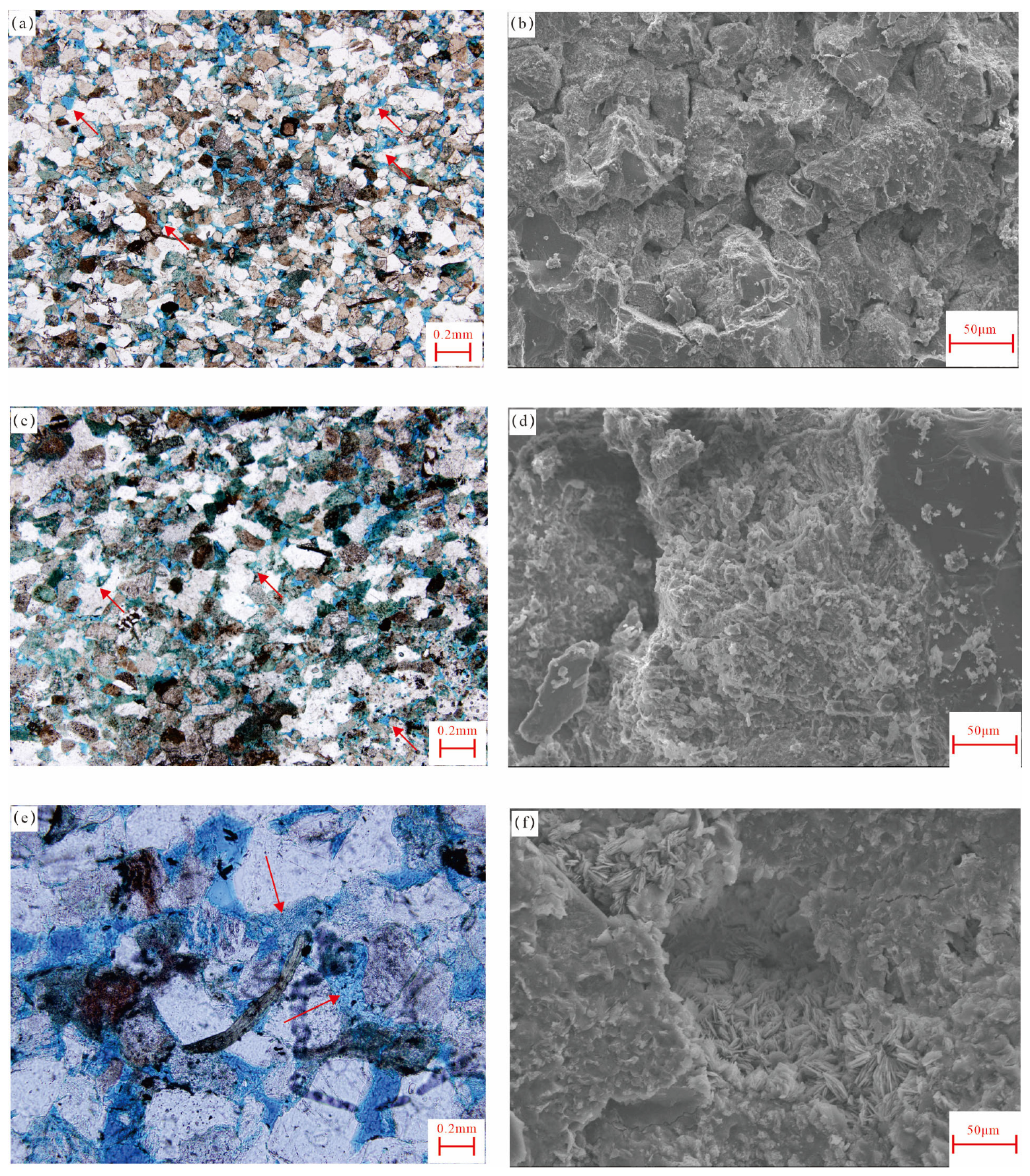
4.1. Physical Properties
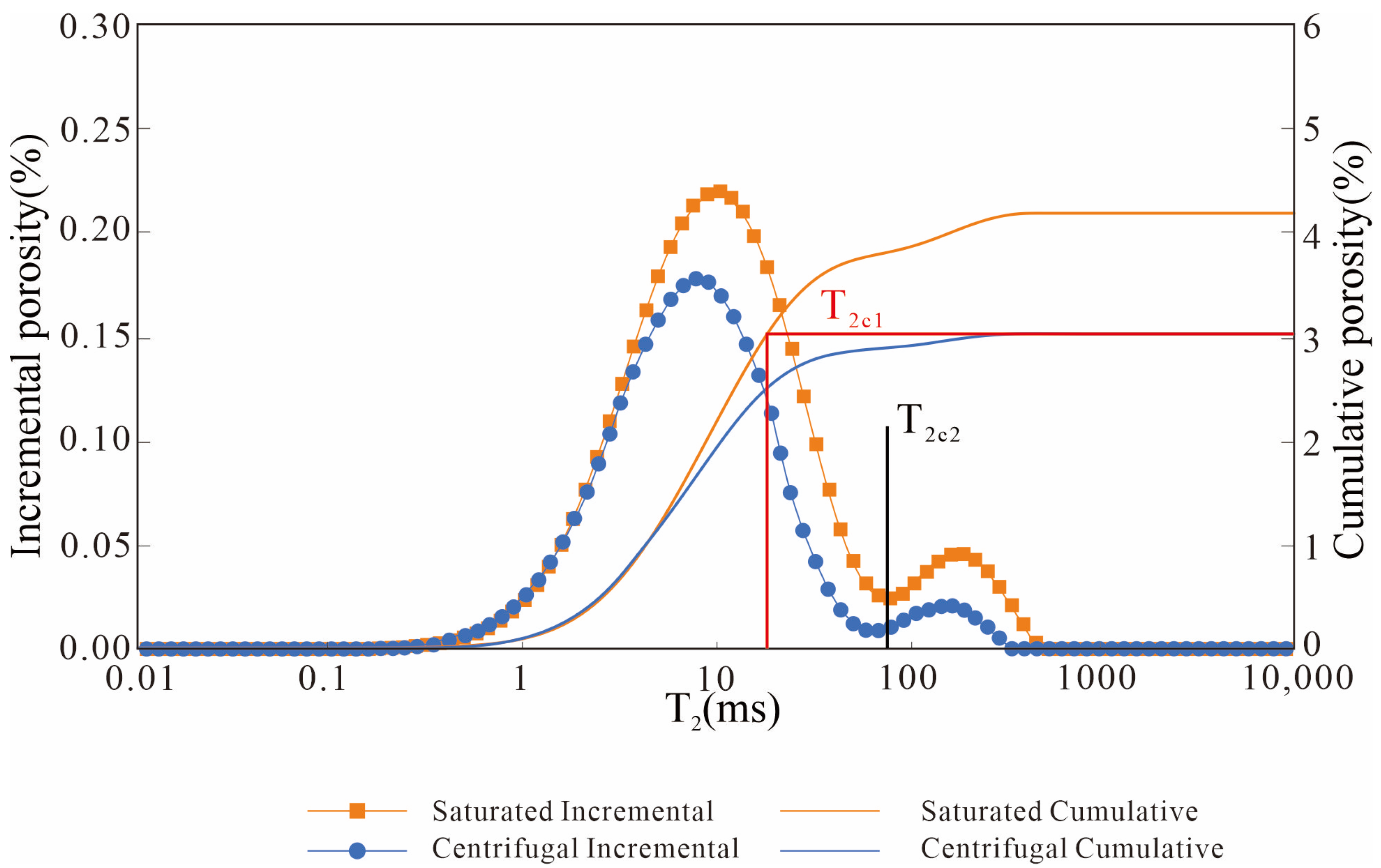
4.2. NMR Characteristics of Tight Sandstone Samples Following Saturation and Centrifugation
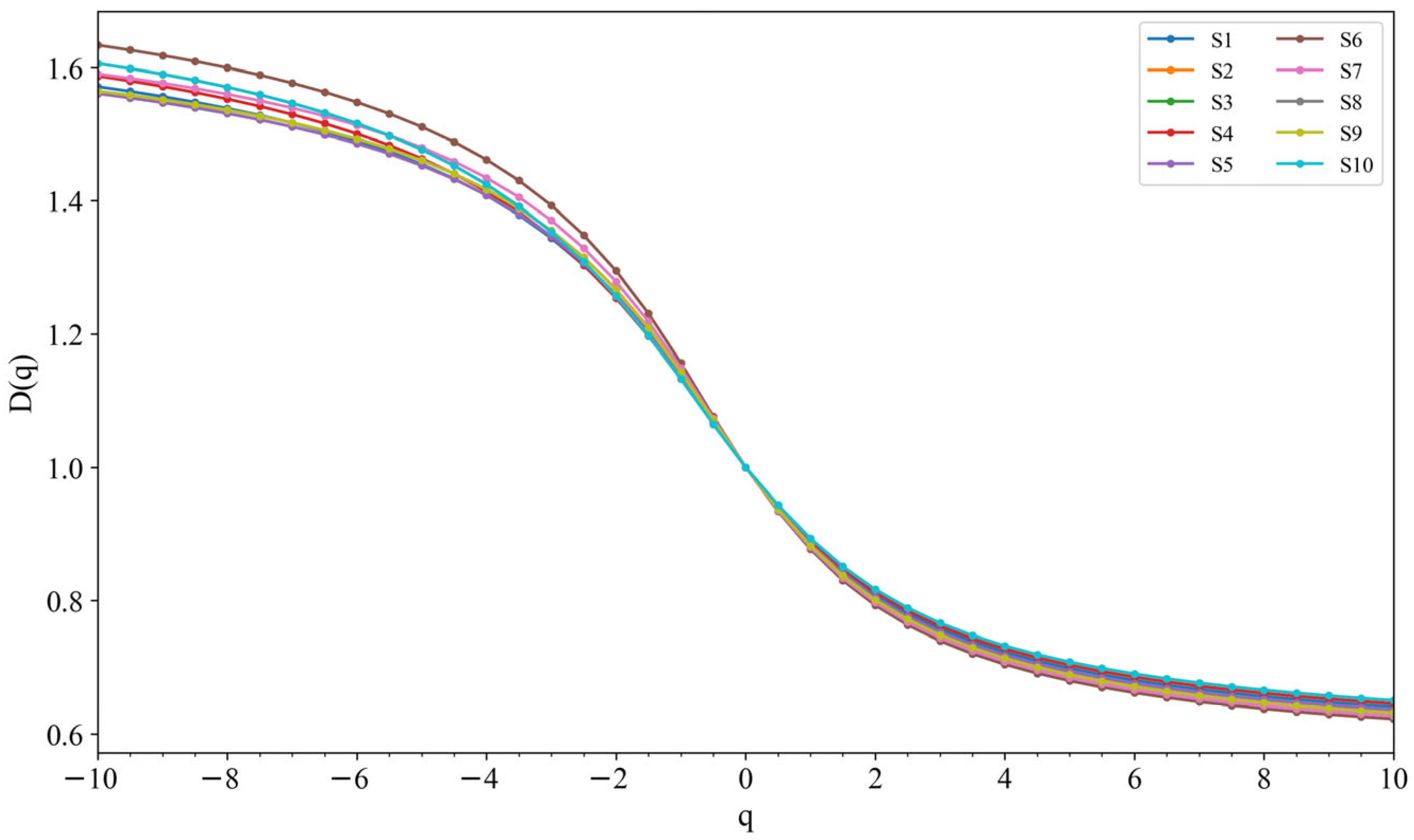
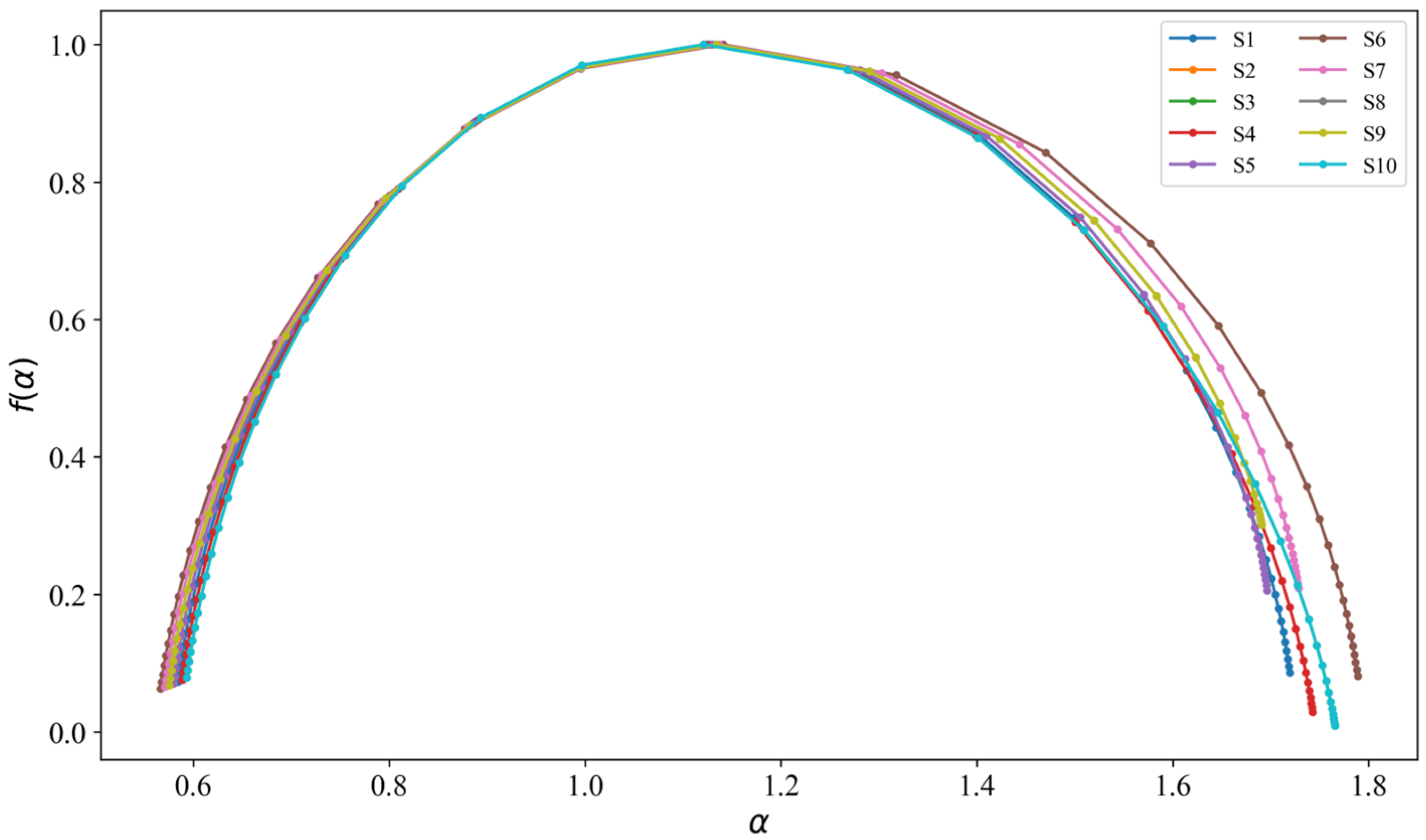
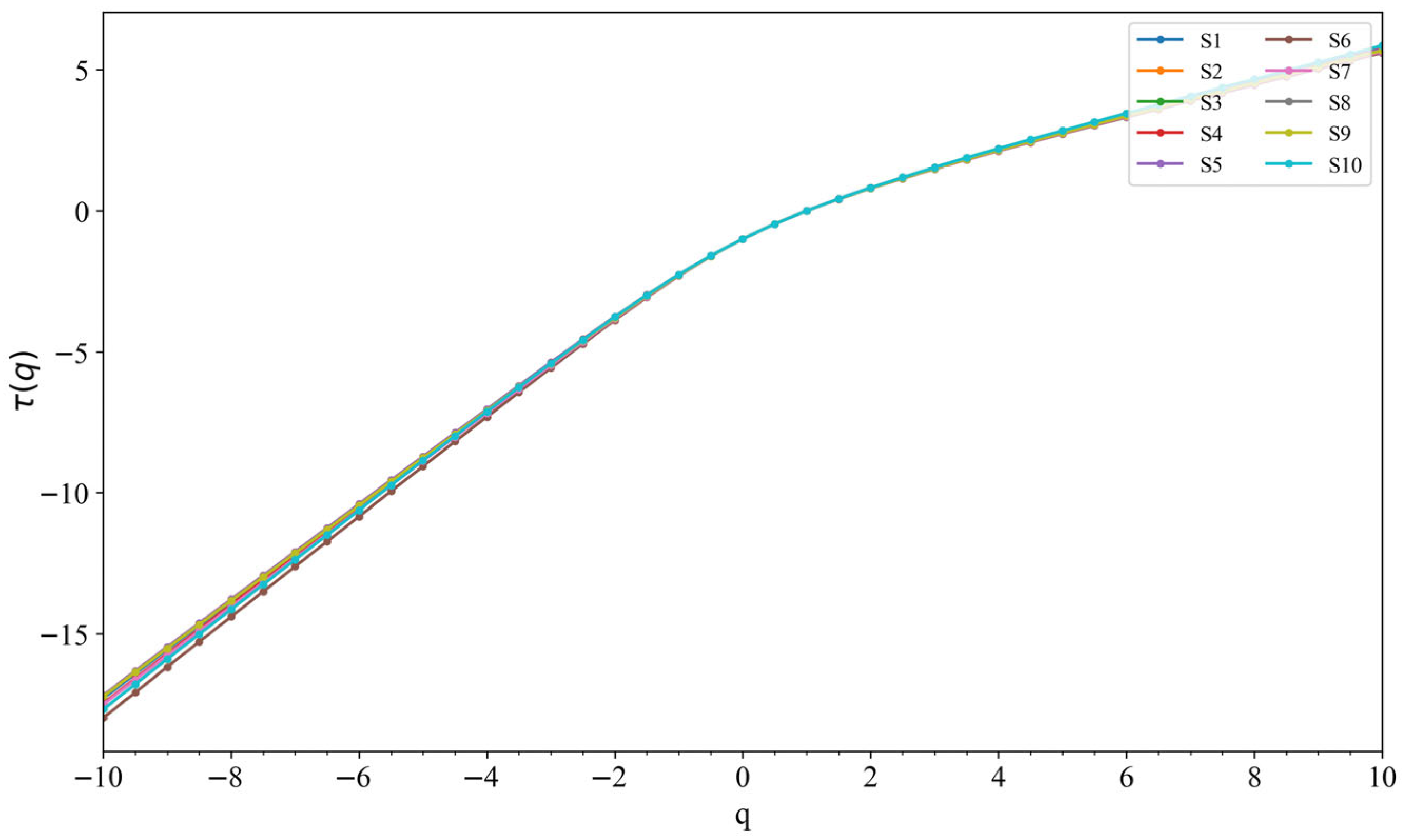
4.3. Multifractal Analysis of the NMR Data
5. Discussion
5.1. Traditional Methods for Determining NMR T2 Cutoff Values
5.1.1. Determination of T2 Cutoff Value Using the Centrifugation Method
5.1.2. T2 Spectrum Morphology Method
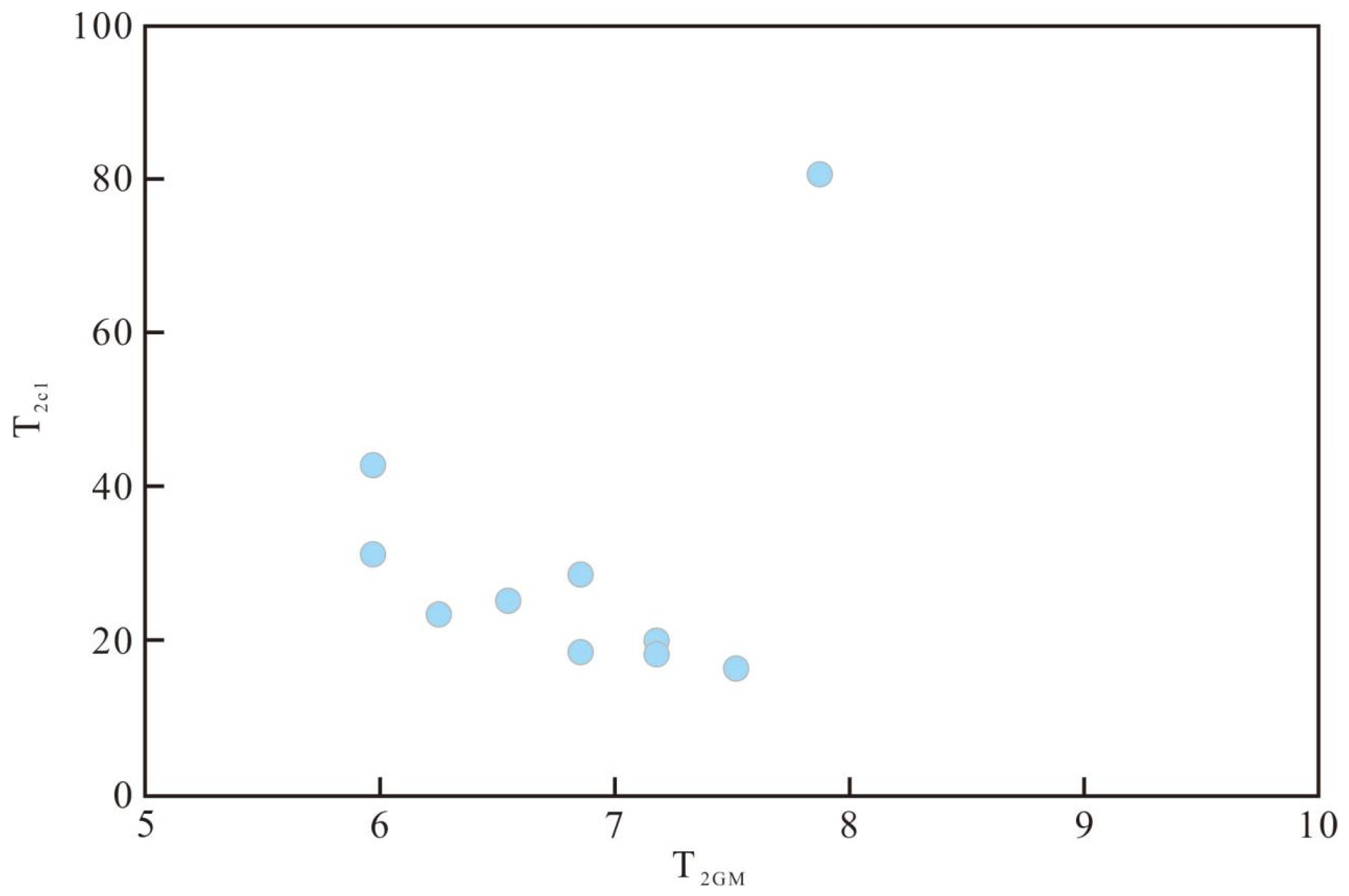
5.1.3. T2GM Method
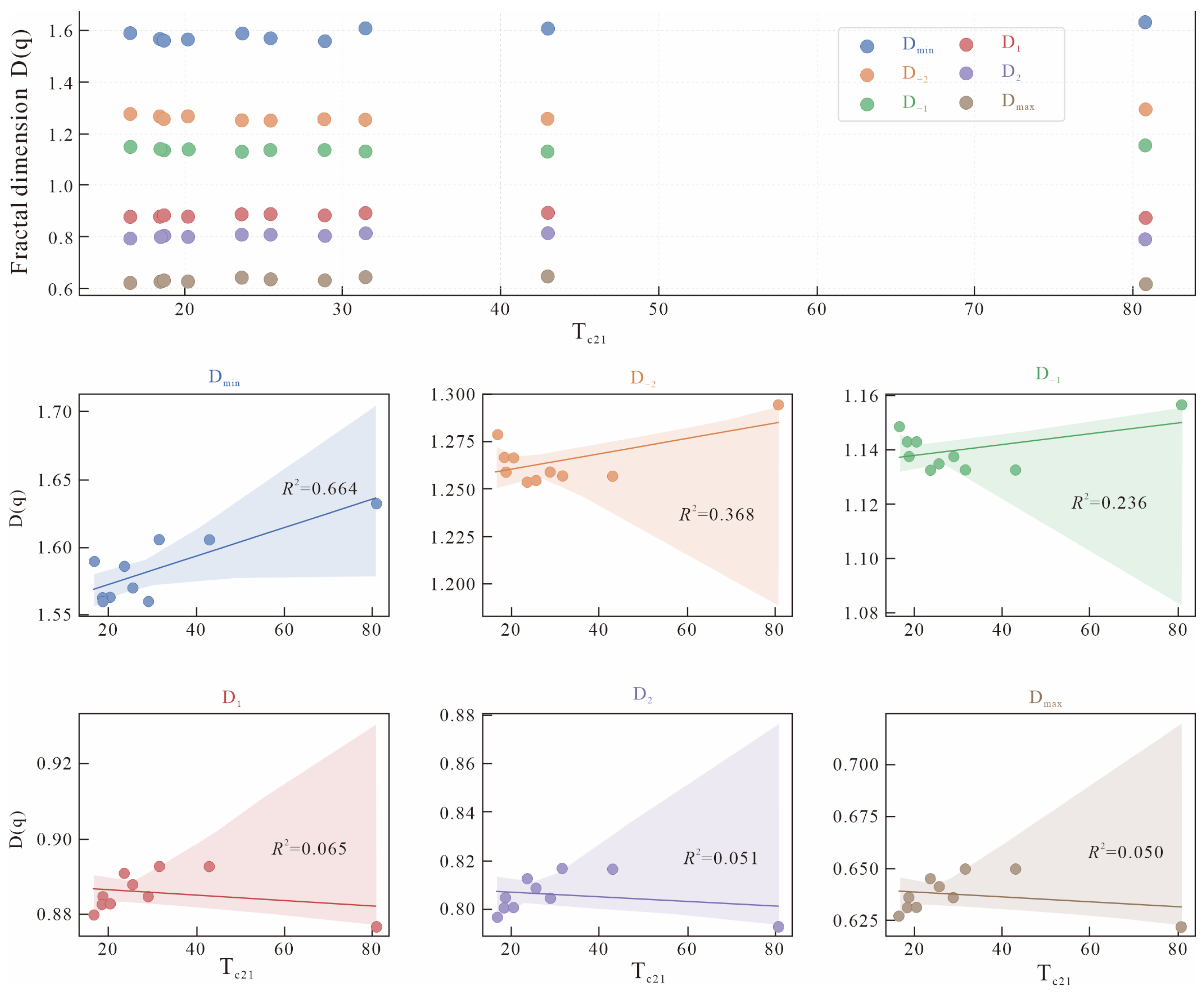
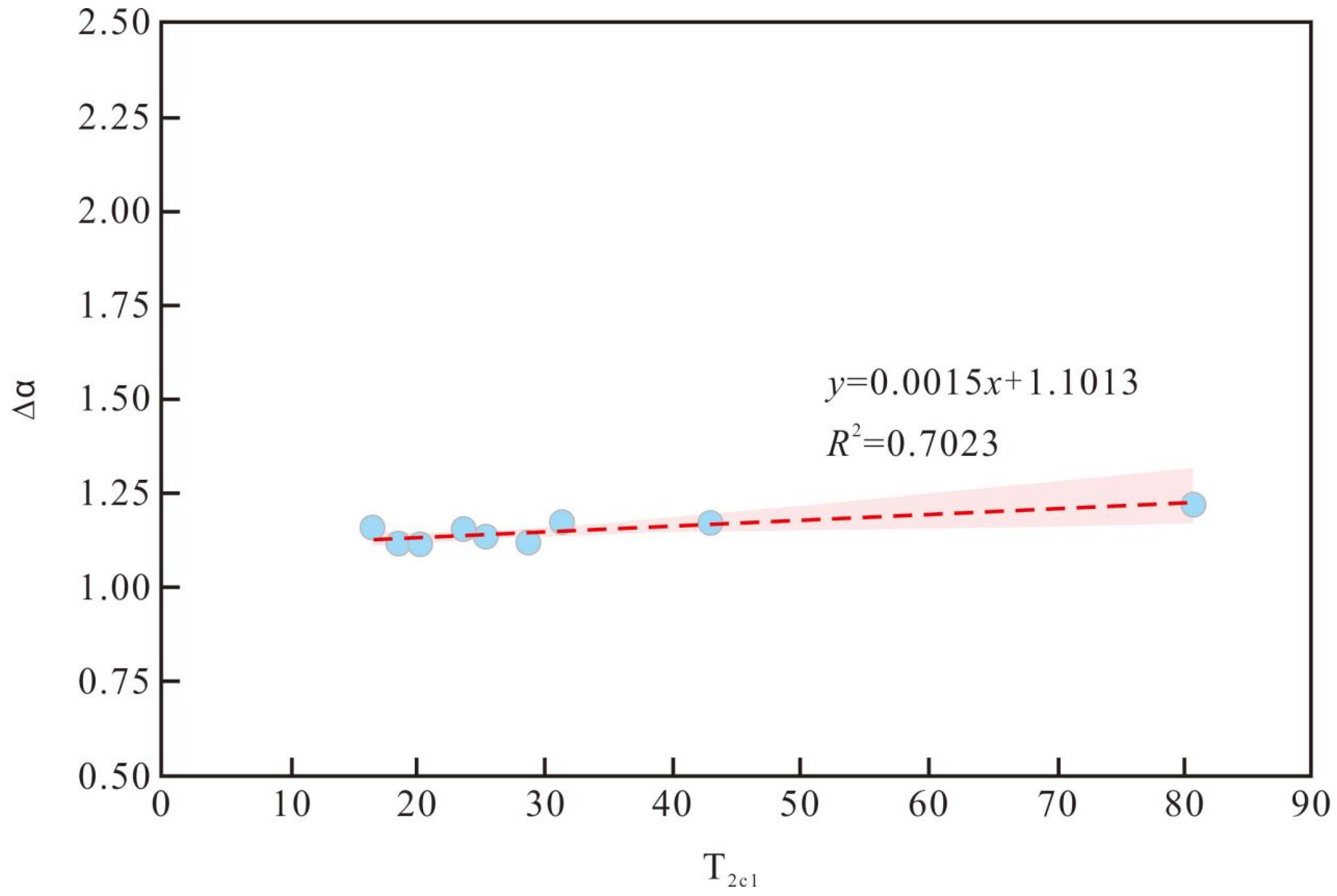
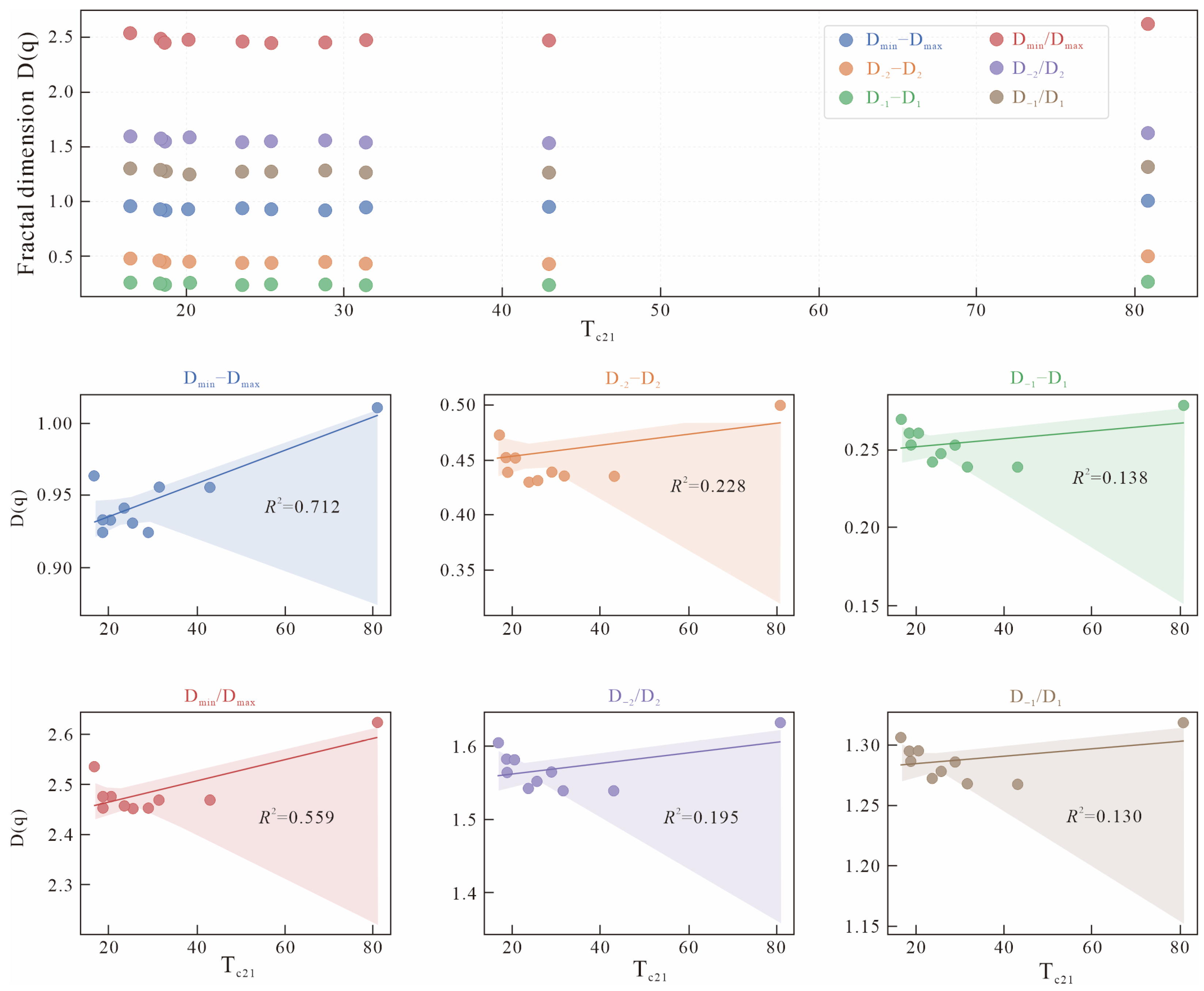
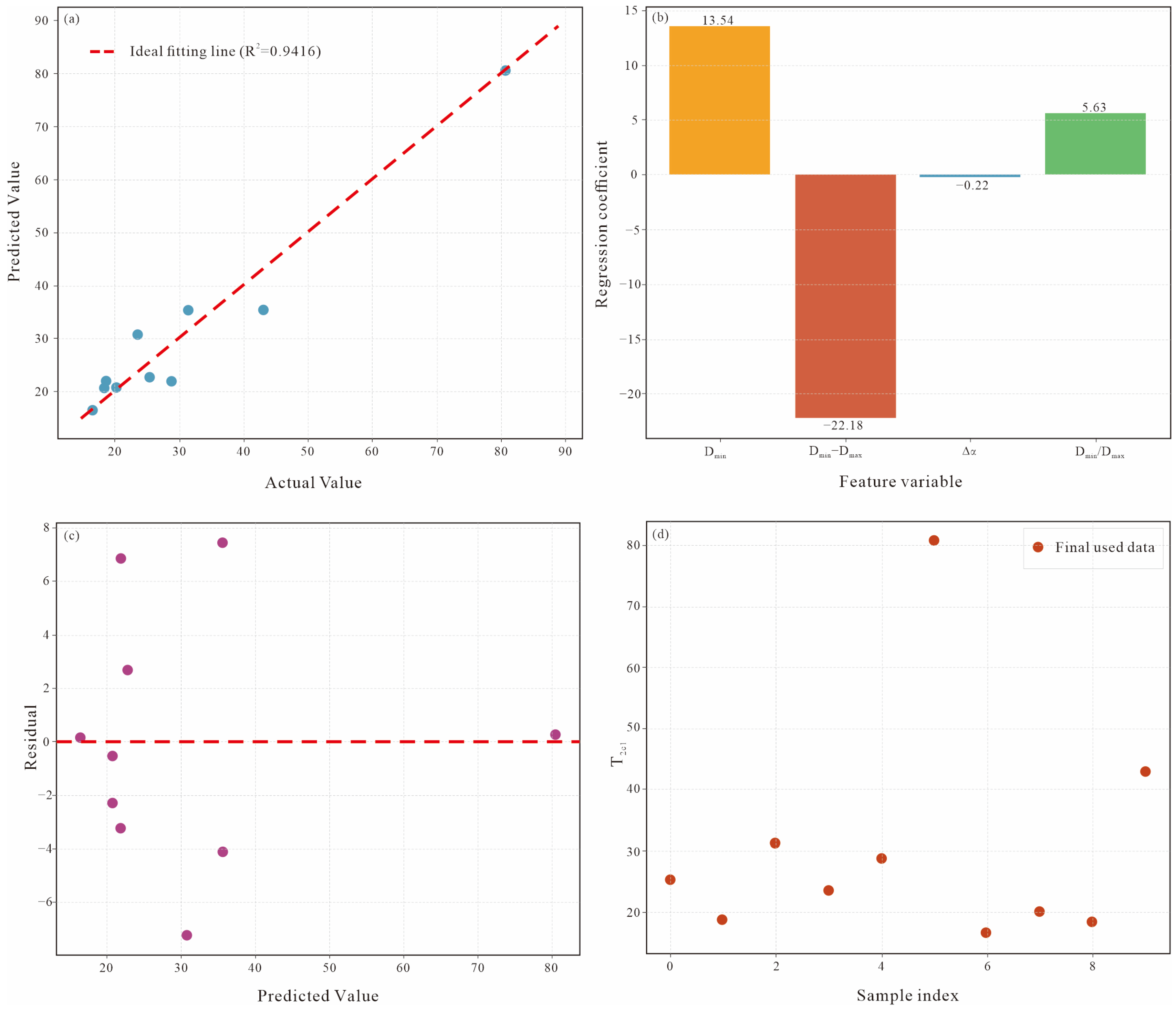
5.2. NMR T2 Cutoff Value Determination Method Based on Multifractal Theory
5.3. Geological Implications and Insights for “Sweet Spot” Identification
6. Conclusions
Author Contributions
Funding
Data Availability Statement
Conflicts of Interest
References
- Zhang, D.; Kang, Y.; Selvadurai, A.P.S.; You, L.; Tian, J. The role of phase trapping on permeability reduction in an ultra-deep tight sandstone gas reservoirs. J. Pet. Sci. Eng. 2019, 178, 311–323. [Google Scholar] [CrossRef]
- Li, P. Fractal Analysis of Pore–Throat Structures in Triassic Yanchang Formation Tight Sandstones, Ordos Basin, China: Implications for Reservoir Permeability and Fluid Mobility. Fractal Fract. 2025, 9, 415. [Google Scholar] [CrossRef]
- Dai, J.; Qin, S.; Hu, G.; Ni, Y.; Gan, L.; Huang, S.; Hong, F. Major progress in the natural gas exploration and development in the past seven decades in China. Pet. Explor. Dev. 2019, 46, 1100–1110. [Google Scholar] [CrossRef]
- Muther, T.; Qureshi, H.A.; Syed, F.I.; Aziz, H.; Siyal, A.; Dahaghi, A.K.; Negahban, S. Unconventional hydrocarbon resources: Geological statistics, petrophysical characterization, and field development strategies. J. Pet. Explor. Prod. Technol. 2022, 12, 1463–1488. [Google Scholar] [CrossRef]
- Abdulhadi, D.; Ali, J.A.; Hama, S.M. Advanced Techniques for Improving the Production of Natural Resources from Unconventional Reservoirs: A State-of-the-Art Review. Energy Fuel 2025, 39, 10853–10876. [Google Scholar] [CrossRef]
- Xie, W.; Wang, M.; Vandeginste, V.; Chen, S.; Yu, Z.; Wang, J.; Wang, H.; Gan, H. Adsorption behavior and mechanism of CO2 in the Longmaxi shale gas reservoir. RSC Adv. 2022, 12, 25947–25954. [Google Scholar] [CrossRef]
- Liu, J.; Li, L.; Zhang, C.; Jiang, Y.; Swennen, R.; Zhao, C.; Hou, S. Identification and quantitative evaluation of pores and throats of a tight sandstone reservoir (Upper Triassic Xujiahe Formation, Sichuan Basin, China). Mar. Pet. Geol. 2022, 140, 105663. [Google Scholar] [CrossRef]
- Wang, M.; Ma, R.; Shan, Y.; Yan, Y. Characteristics and coal-controlling effects of structures in the Zhundong coalfield. Coal Geol. Explor. 2023, 51, 95–103. [Google Scholar]
- Dick, M.J.; Veselinovic, D.; Green, D. Review of recent developments in NMR core analysis. Petrophysics 2022, 63, 454–484. [Google Scholar] [CrossRef]
- Freedman, R.; Heaton, N. Fluid characterization using nuclear magnetic resonance logging. Petrophysics 2004, 45, SPWLA-2004-v45n3a2. [Google Scholar]
- Elsayed, M.; Isah, A.; Hiba, M.; Hassan, A.; Al-Garadi, K.; Mahmoud, M.; El-Husseiny, A.; Radwan, A.E. A review on the applications of nuclear magnetic resonance (NMR) in the oil and gas industry: Laboratory and field-scale measurements. J. Pet. Explor. Prod. Technol. 2022, 12, 2747–2784. [Google Scholar] [CrossRef]
- Fleury, M.; Romero-Sarmiento, M. Characterization of shales using T1–T2 NMR maps. J. Pet. Sci. Eng. 2016, 137, 55–62. [Google Scholar] [CrossRef]
- Ehrenberg, S.N.; Nadeau, P.H. Sandstone vs. carbonate petroleum reservoirs: A global perspective on porosity-depth and porosity-permeability relationships. AAPG Bull. 2005, 89, 435–445. [Google Scholar] [CrossRef]
- Elsayed, M.; El-Husseiny, A.; Kadafur, I.; Mahmoud, M.; Aljawad, M.S.; Alqubalee, A. An experimental study on the effect of magnetic field strength and internal gradient on NMR-Derived petrophysical properties of sandstones. J. Pet. Sci. Eng. 2021, 205, 108811. [Google Scholar] [CrossRef]
- Liu, J.; Zhang, X. Quantitative characterization of permeability heterogeneity of tight-sand reservoirs using nano-CT technology: A case study of the Yanchang Formation, Ordos Basin. Energy Geosci. 2025, 6, 100388. [Google Scholar] [CrossRef]
- Jin, G.; Xie, R.; Liu, M.; Guo, J. Petrophysical parameter calculation based on NMR echo data in tight sandstone. IEEE Trans. Geosci. Remote Sens. 2019, 57, 5618–5625. [Google Scholar] [CrossRef]
- Wang, Y.; Lu, S.; Li, W.; Teng, L. A physical model driven machine learning for predicting maximum leakage rate in supercritical CO2 release. Pet. Sci. Bull. 2023, 8, 102–111. [Google Scholar]
- Li, H.; Ma, J.; Wang, Y.; Zhang, C.; Wu, S.; Su, H. A combinatorial machine learning models-based method for predicting the viscosity-temperature relationship of crude oil. In 2025 IEEE 7th International Conference on Communications, Information System and Computer Engineering (CISCE); IEEE: New York, NY, USA, 2025. [Google Scholar]
- Li, L.; Li, Z.; Han, H.; Liu, C.; Li, Y.; Zhao, W.; Wang, J.; Bao, Z. Multifractal Analysis of Tight Sandstone Using Micro-CT Methods: A Case from the Lower Cretaceous Quantou Formation, Southern Songliao Basin, NE China. Fractal Fract. 2025, 9, 336. [Google Scholar] [CrossRef]
- Li, Z.; Ren, T.; Li, X.; Qiao, M.; Yang, X.; Tan, L.; Nie, B. Multi-scale pore fractal characteristics of differently ranked coal and its impact on gas adsorption. Int. J. Min. Sci. Technol. 2023, 33, 389–401. [Google Scholar] [CrossRef]
- Martins, M.J. From Fractal Geometry to Fractal Cognition: Experimental Tools and Future Directions for Studying Recursive Hierarchical Embedding. Fractal Fract. 2025, 9, 654. [Google Scholar] [CrossRef]
- Lorenz, W.E.; Kulcke, M. Multilayered complexity analysis in architectural design: Two measurement methods evaluating self-similarity and complexity. Fractal Fract. 2021, 5, 244. [Google Scholar] [CrossRef]
- Zhang, N.; Guo, S.; Wang, S.; Tong, Y.; Li, Z.; Wu, J. Fractal and multifractal characteristics on pore structure of coal-based sedimentary rocks using nuclear magnetic resonance. SPE J. 2024, 29, 2624–2637. [Google Scholar] [CrossRef]
- Lai, J.; Wang, G.; Fan, Z.; Zhou, Z.; Chen, J.; Wang, S. Fractal analysis of tight shaly sandstones using nuclear magnetic resonance measurements. AAPG Bull. 2018, 102, 175–193. [Google Scholar] [CrossRef]
- Ge, X.; Fan, Y.; Zhu, X.; Chen, Y.; Li, R. Determination of nuclear magnetic resonance T2 cutoff value based on multifractal theory—An application in sandstone with complex pore structure. Geophysics 2015, 80, D11–D21. [Google Scholar] [CrossRef]
- Chen, X.; Yao, G.; Cai, J.; Huang, Y.; Yuan, X. Fractal and multifractal analysis of different hydraulic flow units based on micro-CT images. J. Nat. Gas Sci. Eng. 2017, 48, 145–156. [Google Scholar] [CrossRef]
- Sun, Y.; Zhai, C.; Zhao, Y.; Xu, J.; Cong, Y.; Zheng, Y.; Tang, W. Multifractal analysis and neural network prediction of pore structures in coal reservoirs based on NMR T 2 spectra. Energy Fuel 2021, 35, 11306–11318. [Google Scholar] [CrossRef]
- Zheng, S.; Sang, S.; Yao, Y.; Liu, D.; Liu, S.; Wang, M.; Feng, G. A multifractal-based method for determination NMR dual T2 cutoffs in coals. J. Pet. Sci. Eng. 2022, 214, 110488. [Google Scholar] [CrossRef]
- Wang, Z.; Yao, Y.; Ma, R.; Zhang, X.; Zhang, G. Application of multifractal analysis theory to interpret T2 cutoffs of nmr logging data: A case study of coarse clastic rock reservoirs in southwestern bozhong sag, China. Fractal Fract. 2023, 7, 57. [Google Scholar] [CrossRef]
- Li, L.; Bao, Z.; Li, L.; Li, Z.; Ban, S.; Li, Z.; Wang, T.; Li, Y.; Zheng, N.; Zhao, C. The source and preservation of lacustrine shale organic matter: Insights from the Qingshankou Formation in the Changling Sag, Southern Songliao Basin, China. Sediment. Geol. 2024, 466, 106649. [Google Scholar] [CrossRef]
- Li, L.; Bao, Z.; Li, Z.; Chen, L.; Xu, X.; Li, Y.; Zhao, Y.; Song, X. Origin of quartz and its implications for different phase fluids in lacustrine shales from the Qingshankou Formation, southern Songliao Basin, China. Geoenergy Sci. Eng. 2024, 234, 212673. [Google Scholar] [CrossRef]
- Zhang, L.; Bao, Z.; Dou, L.; Xu, Q. Diagenetic alterations related to sedimentary architecture of deltaic distributary channels in red beds of the Cretaceous Yaojia Formation, Songliao Basin. J. Pet. Sci. Eng. 2021, 203, 108564. [Google Scholar] [CrossRef]
- Zhang, J.; Xu, X.; Bai, J.; Chen, S.; Liu, W.; Li, Y. Accumulation and exploration of continental shale gas resources of Cretaceous Shahezi Formation in Lishu fault depression, Songliao Basin, NE China. Pet. Explor. Dev. 2022, 49, 502–515. [Google Scholar] [CrossRef]
- Yang, X.; Wang, H.; Li, Z.; Guan, C.; Wang, X. Tectonic-sedimentary evolution of a continental rift basin: A case study of the Early Cretaceous Changling and Lishu fault depressions, southern Songliao Basin, China. Mar. Pet. Geol. 2021, 128, 105068. [Google Scholar] [CrossRef]
- Liu, B.; Babaei, S.; Kanduč, M.; Tian, S.; Bai, L.; Xu, Y.; Ostadhassan, M. Helium expansion revisited: Effects of accessible volume on excess adsorption in kerogen matrices. Chem. Eng. J. 2024, 493, 152690. [Google Scholar] [CrossRef]
- Yousefi, M.; Dehghanpour, H. A model and measurement technique for liquid permeability of tight porous media based on the steady-state method. Energy Fuel 2022, 36, 6860–6867. [Google Scholar] [CrossRef]
- Harbridge, J.R.; Eaton, S.S.; Eaton, G.R. Comparison of electron spin relaxation times measured by Carr–Purcell–Meiboom–Gill and two-pulse spin-echo sequences. J. Magn. Reson. 2003, 164, 44–53. [Google Scholar] [CrossRef]
- Dubrulle, B. Multi-fractality, universality and singularity in turbulence. Fractal Fract. 2022, 6, 613. [Google Scholar] [CrossRef]
- SY/T 6490-2014; Specification for Laboratory Measurement of NMR Parameters in Rock Samples. China Oil & Gas Industry Standard: Beijing, China, 2014.
- Meng, Z.; Sun, W.; Liu, Y.; Luo, B.; Zhao, M. Effect of pore networks on the properties of movable fluids in tight sandstones from the perspective of multi-techniques. J. Pet. Sci. Eng. 2021, 201, 108449. [Google Scholar] [CrossRef]
- Wen, H.; Zhai, C.; Xu, J.; Sun, Y.; Wu, F.; Xu, H.; Wang, Y. Pore characterization of coal cuttings based on low-field nuclear magnetic resonance: A new method. Fuel 2026, 406, 137066. [Google Scholar] [CrossRef]
- Ijasan, O.; Macquaker, J.; Luycx, M.; Alzobaidi, S.; Oyewole, E.; Rudnicki, M. NMR T1–T2 Logging in Unconventional Reservoirs: Pore-Size Distribution, Permeability, and Reservoir Quality. Petrophysics 2022, 63, 352–367. [Google Scholar] [CrossRef]
- Toumelin, E.; Torres-Verdin, C.; Sun, B.; Dunn, K. Limits of 2D NMR interpretation techniques to quantify pore size, wettability, and fluid type: A numerical sensitivity study. SPE J. 2006, 11, 354–363. [Google Scholar] [CrossRef]
- Lyu, C.; Ning, Z.; Cole, D.R.; Wang, Q.; Chen, M. Experimental investigation on T2 cutoffs of tight sandstones: Comparisons between outcrop and reservoir cores. J. Pet. Sci. Eng. 2020, 191, 107184. [Google Scholar] [CrossRef]
- Zheng, S.; Yao, Y.; Liu, D.; Cai, Y.; Liu, Y.; Li, X. Nuclear magnetic resonance T2 cutoffs of coals: A novel method by multifractal analysis theory. Fuel 2019, 241, 715–724. [Google Scholar] [CrossRef]
- Xu, J.; Zhai, C.; Liu, S.; Qin, L.; Wu, S. Pore variation of three different metamorphic coals by multiple freezing-thawing cycles of liquid CO2 injection for coalbed methane recovery. Fuel 2017, 208, 41–51. [Google Scholar] [CrossRef]
- Liu, Y.; Yao, Y.; Liu, D.; Zheng, S.; Sun, G.; Chang, Y. Shale pore size classification: An NMR fluid typing method. Mar. Pet. Geol. 2018, 96, 591–601. [Google Scholar] [CrossRef]
- Xiao, L.; Li, J.; Mao, Z.; Lu, J.; Yu, H.; Guo, H.; Li, G. A method to determine nuclear magnetic resonance (NMR) T2cutoff based on normal distribution simulation in tight sandstone reservoirs. Fuel 2018, 225, 472–482. [Google Scholar] [CrossRef]
- Kleinberg, R.L.; Kenyon, W.E.; Mitra, P.P. Mechanism of NMR relaxation of fluids in rock. J. Magn. Reson. Ser. A 1994, 108, 206–214. [Google Scholar] [CrossRef]
- Ma, C.; Lin, C.; Dong, C.; Elsworth, D.; Wu, S.; Wang, X.; Sun, X. Determination of the critical flow pore diameter of shale caprock. Mar. Pet. Geol. 2020, 112, 104042. [Google Scholar] [CrossRef]
- Cai, J.; Zhang, Z.; Wei, W.; Guo, D.; Li, S.; Zhao, P. The critical factors for permeability-formation factor relation in reservoir rocks: Pore-throat ratio, tortuosity and connectivity. Energy 2019, 188, 116051. [Google Scholar] [CrossRef]
- Lala, A.M.S.; El-Sayed, N.A. Controls of pore throat radius distribution on permeability. J. Pet. Sci. Eng. 2017, 157, 941–950. [Google Scholar] [CrossRef]
- Yang, Y.; Xiao, W.; Zheng, L.; Lei, Q.; Qin, C.; He, Y.; Liu, S.; Li, M.; Li, Y.; Zhao, J. Pore throat structure heterogeneity and its effect on gas-phase seepage capacity in tight sandstone reservoirs: A case study from the Triassic Yanchang Formation, Ordos Basin. Pet. Sci. 2023, 20, 2892–2907. [Google Scholar] [CrossRef]
- Wang, W.; Jiang, Y.; Swennen, R.; Yuan, J.; Liu, J.; Zhang, S. Pore-throat characteristics of tight sandstone reservoirs composed of gravity flow sediments: Yingcheng Formation, Longfengshan sag, China. J. Pet. Sci. Eng. 2018, 171, 646–661. [Google Scholar] [CrossRef]
- Song, X.; Feng, C.; Li, T.; Zhang, Q.; Zhou, J.; Sun, M. Pore Structure Quantitative Characterization of Tight Sandstones Based on Deep Learning and Fractal Analysis. Fractal Fract. 2025, 9, 372. [Google Scholar] [CrossRef]
- Pearce, J.K.; Dawson, G.; Golab, A.; Knuefing, L.; Sommacal, S.; Rudolph, V.; Golding, S.D. A combined geochemical and μCT study on the CO2 reactivity of Surat Basin reservoir and cap-rock cores: Porosity changes, mineral dissolution and fines migration. Int. J. Greenh. Gas Control 2019, 80, 10–24. [Google Scholar] [CrossRef]
- Xie, M.; Mayer, K.U.; Claret, F.; Alt-Epping, P.; Jacques, D.; Steefel, C.; Chiaberge, C.; Simunek, J. Implementation and evaluation of permeability-porosity and tortuosity-porosity relationships linked to mineral dissolution-precipitation. Comput. Geosci. 2015, 19, 655–671. [Google Scholar] [CrossRef]





| No. | Formation | Length (cm) | Diameter (cm) | Dry Weight (g) | NMR Porosity (%) | Helium Porosity (%) | Gas Permeability (mD) |
|---|---|---|---|---|---|---|---|
| S1 | Denglouku | 3.67 | 2.52 | 46.77 | 3.07 | 3.51 | 0.012 |
| S2 | Denglouku | 3.46 | 2.52 | 43.59 | 4.19 | 4.89 | 0.021 |
| S3 | Denglouku | 4.95 | 2.49 | 61.19 | 2.74 | 2.87 | 0.003 |
| S4 | Denglouku | 4.62 | 2.51 | 58.81 | 3.03 | 3.33 | 0.016 |
| S5 | Denglouku | 4.79 | 2.49 | 57.02 | 7.91 | 8.10 | 0.007 |
| S6 | Denglouku | 4.73 | 2.51 | 57.62 | 6.20 | 6.37 | 0.055 |
| S7 | Denglouku | 5.31 | 2.52 | 67.63 | 3.02 | 3.24 | 0.015 |
| S8 | Denglouku | 4.97 | 2.51 | 62.96 | 3.42 | 3.84 | 0.036 |
| S9 | Denglouku | 4.85 | 2.50 | 60.50 | 3.42 | 3.66 | 0.007 |
| S10 | Denglouku | 4.52 | 2.49 | 57.84 | 0.47 | 0.33 | 0.003 |
| Sample | |||||||
|---|---|---|---|---|---|---|---|
| S1 | 1.571248 | 0.640748 | 1.254886 | 1.135139 | 0.887926 | 0.808838 | 1.135808 |
| S2 | 1.560919 | 0.636101 | 1.259096 | 1.138448 | 0.885252 | 0.804893 | 1.116925 |
| S3 | 1.605829 | 0.650237 | 1.256797 | 1.132724 | 0.893246 | 0.816765 | 1.172403 |
| S4 | 1.587117 | 0.645482 | 1.254139 | 1.133248 | 0.890599 | 0.812807 | 1.154395 |
| S5 | 1.561024 | 0.636055 | 1.259182 | 1.138512 | 0.885315 | 0.804944 | 1.116858 |
| S6 | 1.633484 | 0.622307 | 1.294782 | 1.156603 | 0.877123 | 0.79302 | 1.222354 |
| S7 | 1.590251 | 0.626879 | 1.27867 | 1.149157 | 0.879842 | 0.796982 | 1.157666 |
| S8 | 1.564386 | 0.631497 | 1.266899 | 1.143127 | 0.882561 | 0.800951 | 1.115574 |
| S9 | 1.564295 | 0.631553 | 1.266945 | 1.143088 | 0.882498 | 0.800889 | 1.115622 |
| S10 | 1.605744 | 0.650302 | 1.256863 | 1.132685 | 0.893308 | 0.816822 | 1.172355 |
Disclaimer/Publisher’s Note: The statements, opinions and data contained in all publications are solely those of the individual author(s) and contributor(s) and not of MDPI and/or the editor(s). MDPI and/or the editor(s) disclaim responsibility for any injury to people or property resulting from any ideas, methods, instructions or products referred to in the content. |
© 2026 by the authors. Licensee MDPI, Basel, Switzerland. This article is an open access article distributed under the terms and conditions of the Creative Commons Attribution (CC BY) license.
Share and Cite
Wang, T.; Bao, Z.; Li, Z.; Han, H.; Li, Z.; Li, L.; Ban, S. Predicting NMR T2 Cutoff in Deep Tight Sandstones via Multifractal Analysis of Fully Water-Saturated Spectra: A Non-Destructive Approach. Fractal Fract. 2026, 10, 129. https://doi.org/10.3390/fractalfract10020129
Wang T, Bao Z, Li Z, Han H, Li Z, Li L, Ban S. Predicting NMR T2 Cutoff in Deep Tight Sandstones via Multifractal Analysis of Fully Water-Saturated Spectra: A Non-Destructive Approach. Fractal and Fractional. 2026; 10(2):129. https://doi.org/10.3390/fractalfract10020129
Chicago/Turabian StyleWang, Tengyu, Zhidong Bao, Zhongcheng Li, Haotian Han, Zongfeng Li, Lei Li, and Shuyue Ban. 2026. "Predicting NMR T2 Cutoff in Deep Tight Sandstones via Multifractal Analysis of Fully Water-Saturated Spectra: A Non-Destructive Approach" Fractal and Fractional 10, no. 2: 129. https://doi.org/10.3390/fractalfract10020129
APA StyleWang, T., Bao, Z., Li, Z., Han, H., Li, Z., Li, L., & Ban, S. (2026). Predicting NMR T2 Cutoff in Deep Tight Sandstones via Multifractal Analysis of Fully Water-Saturated Spectra: A Non-Destructive Approach. Fractal and Fractional, 10(2), 129. https://doi.org/10.3390/fractalfract10020129