Article

GTDOnto: An Ontology for Organizing and Modeling Knowledge about Global Terrorism

1
Computer Information Systems Department, King Abdullah II School of Information Technology, The University of Jordan, Amman 11942, Jordan
2
Computer Science Department, King Abdullah II School of Information Technology, The University of Jordan, Amman 11942, Jordan
3
Prince Al Hussein bin Abdullah II School of International Studies, The University of Jordan, Amman 11942, Jordan
*
Author to whom correspondence should be addressed.
Big Data Cogn. Comput. 2023, 7(1), 24; https://doi.org/10.3390/bdcc7010024
Submission received: 19 December 2022 / Revised: 18 January 2023 / Accepted: 19 January 2023 / Published: 28 January 2023
(This article belongs to the Special Issue Semantic Web Technology and Recommender Systems)

Abstract

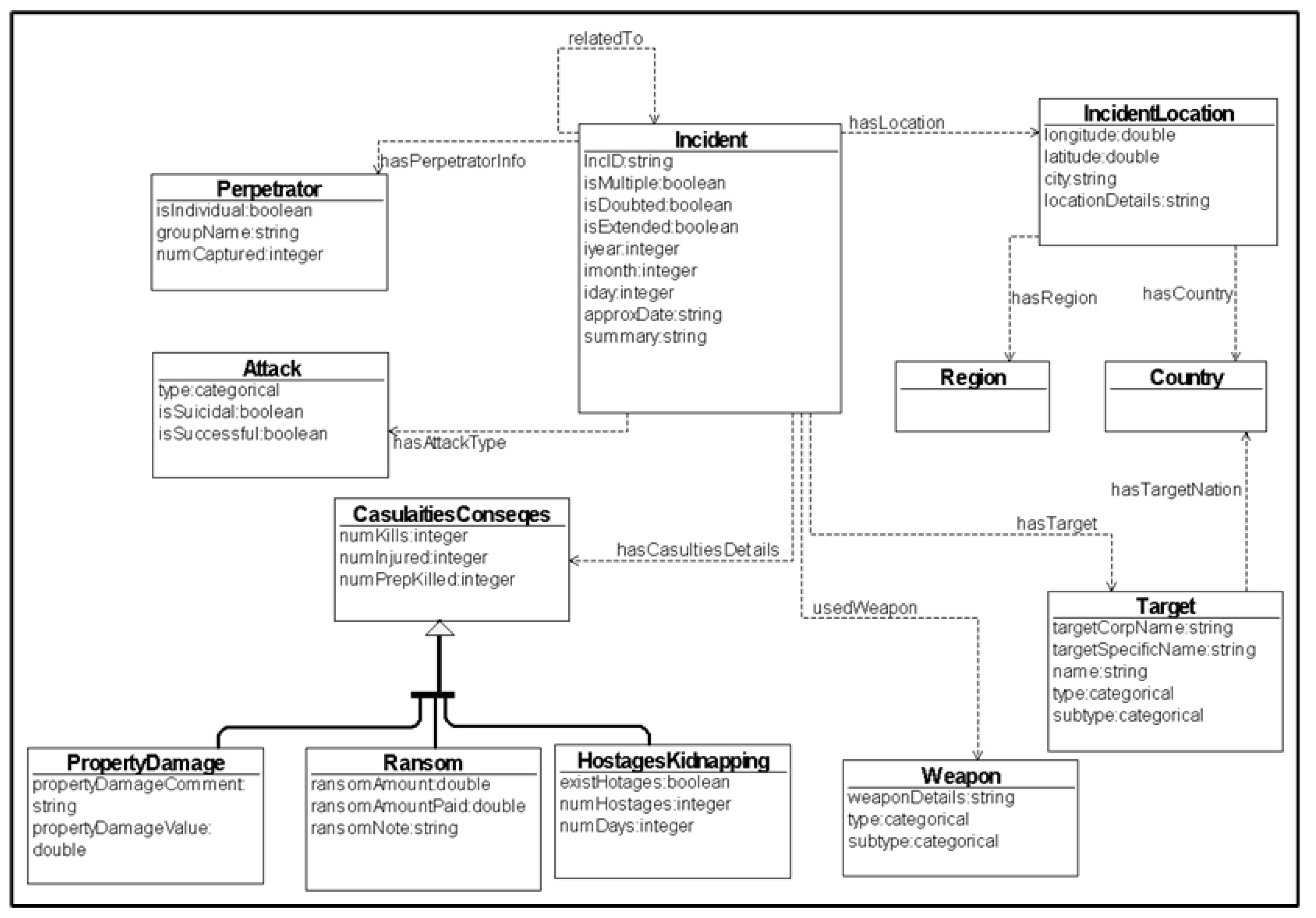
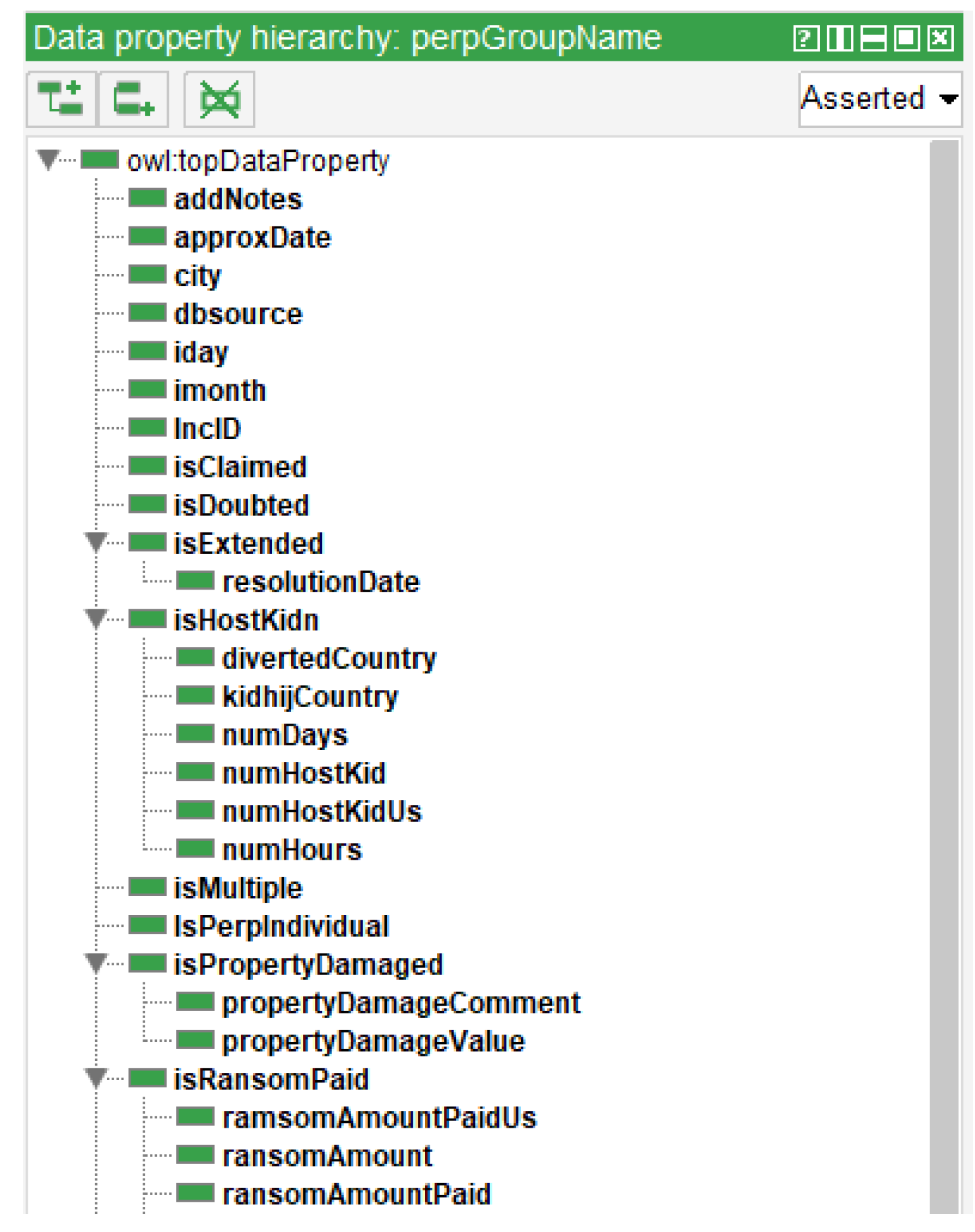
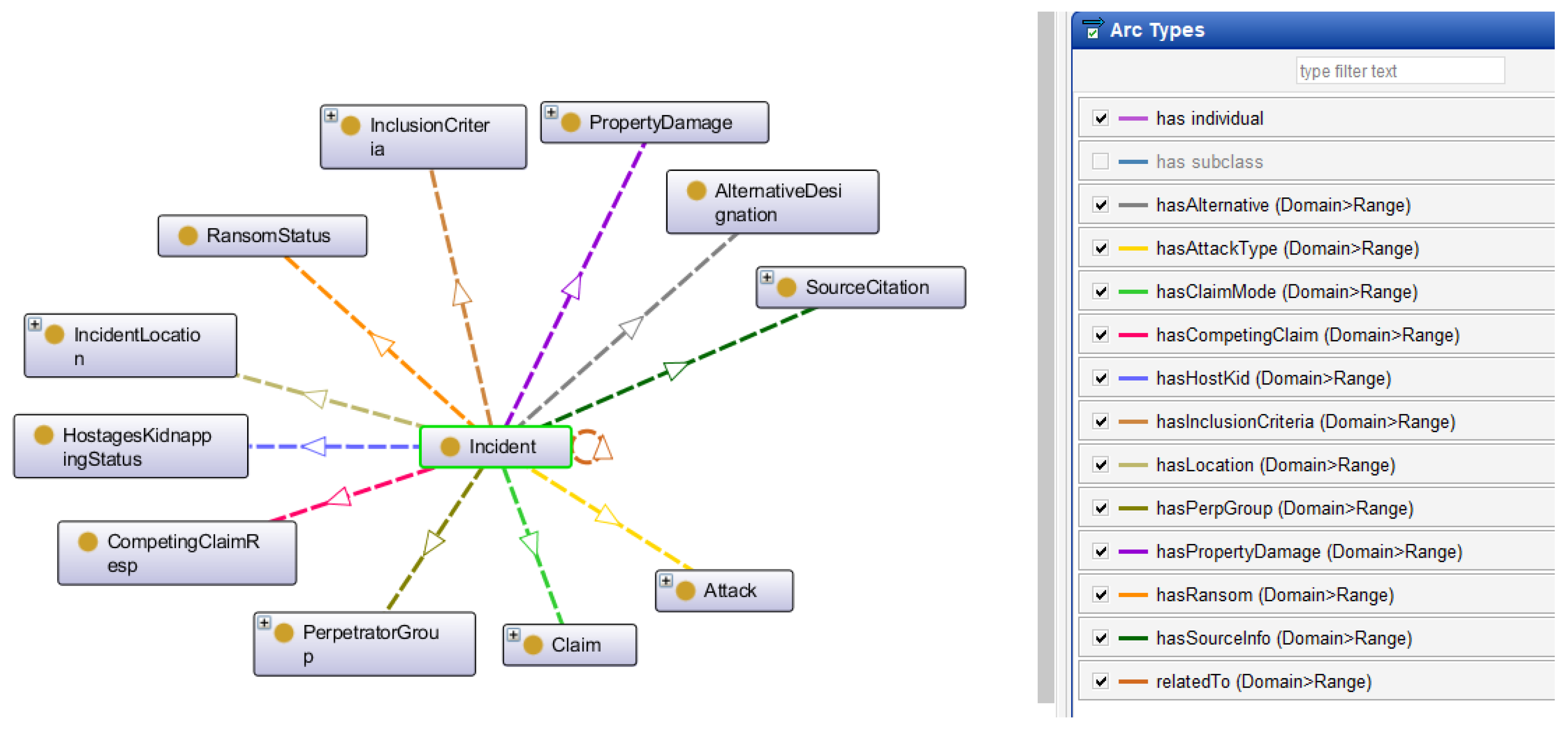
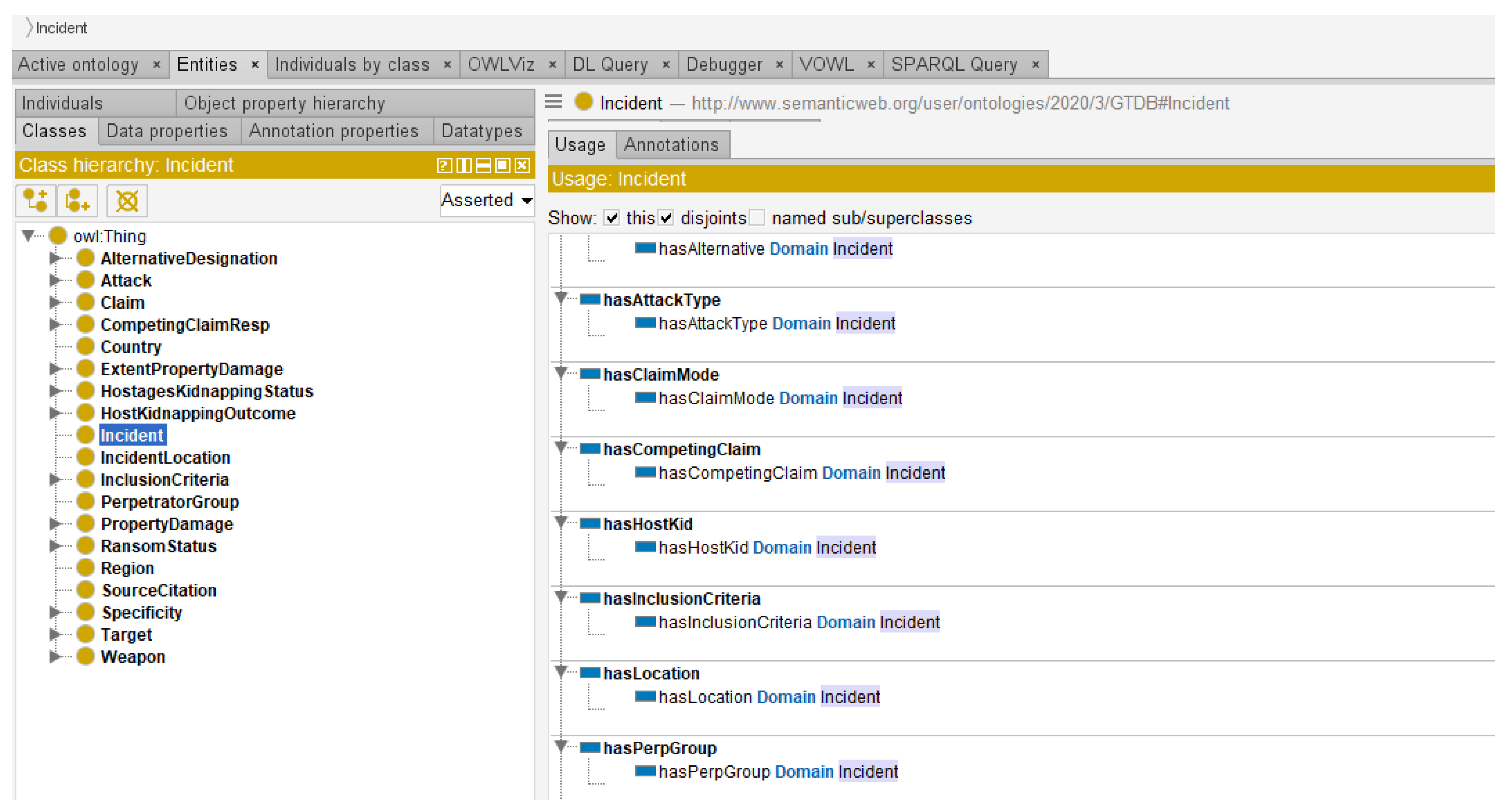
In recent years and with the advancement of semantic technologies, shared and published online data have become necessary to improve research and development in all fields. While many datasets are publicly available in social and economic domains, most lack standardization. Unlike the medical field, where terms and concepts are well defined using controlled vocabulary and ontologies, social datasets are not. Experts such as the National Consortium for the Study of Terrorism and Responses to Terrorism (START) collect data on global incidents and publish them in the Global Terrorism Database (GTD). Thus, the data are deficient in the technical modeling of its metadata. In this paper, we proposed GTD ontology (GTDOnto) to organize and model knowledge about global incidents, targets, perpetrators, weapons, and other related information. Based on the NeOn methodology, the goal is to build on the effort of START and present controlled vocabularies in a machine-readable format that is interoperable and can be reused to describe potential incidents in the future. The GTDOnto was implemented with the Web Ontology Language (OWL) using the Protégé editor and evaluated by answering competency questions, domain experts’ opinions, and running examples of GTDOnto for representing actual incidents. The GTDOnto can further be used to leverage the publishing of GTD as a knowledge graph that visualizes related incidents and build further applications to enrich its content.
Keywords: ontology; semantic web; social data; terrorism; OWL/RDF; knowledge graphs ontology; semantic web; social data; terrorism; OWL/RDF; knowledge graphs