
Systematic Review

Multiple Ways in Which Video Games Make Education Inclusive: A Systematic Review of Cognitive Enhancement for Neurodivergent Learners

1
Surgical, Medical and Dental Department of Morphological Sciences Related to Transplant, Oncology and Regenerative Medicine, Faculty of Medicine, University of Modena and Reggio Emilia, Viale Allegri 9, 42121 Reggio Emilia, Italy
2
Department of Agricultural Sciences, Food, Natural Resources and Engineering, University of Foggia, Via Napoli 25, 71122 Foggia, Italy
3
Department of Biomedical, Metabolic and Neurosciences, University of Modena and Reggio Emilia, Viale Allegri 9, 42121 Reggio Emilia, Italy
*
Author to whom correspondence should be addressed.
Multimodal Technol. Interact. 2025, 9(6), 56; https://doi.org/10.3390/mti9060056
Submission received: 29 April 2025 / Revised: 4 June 2025 / Accepted: 5 June 2025 / Published: 7 June 2025

Abstract

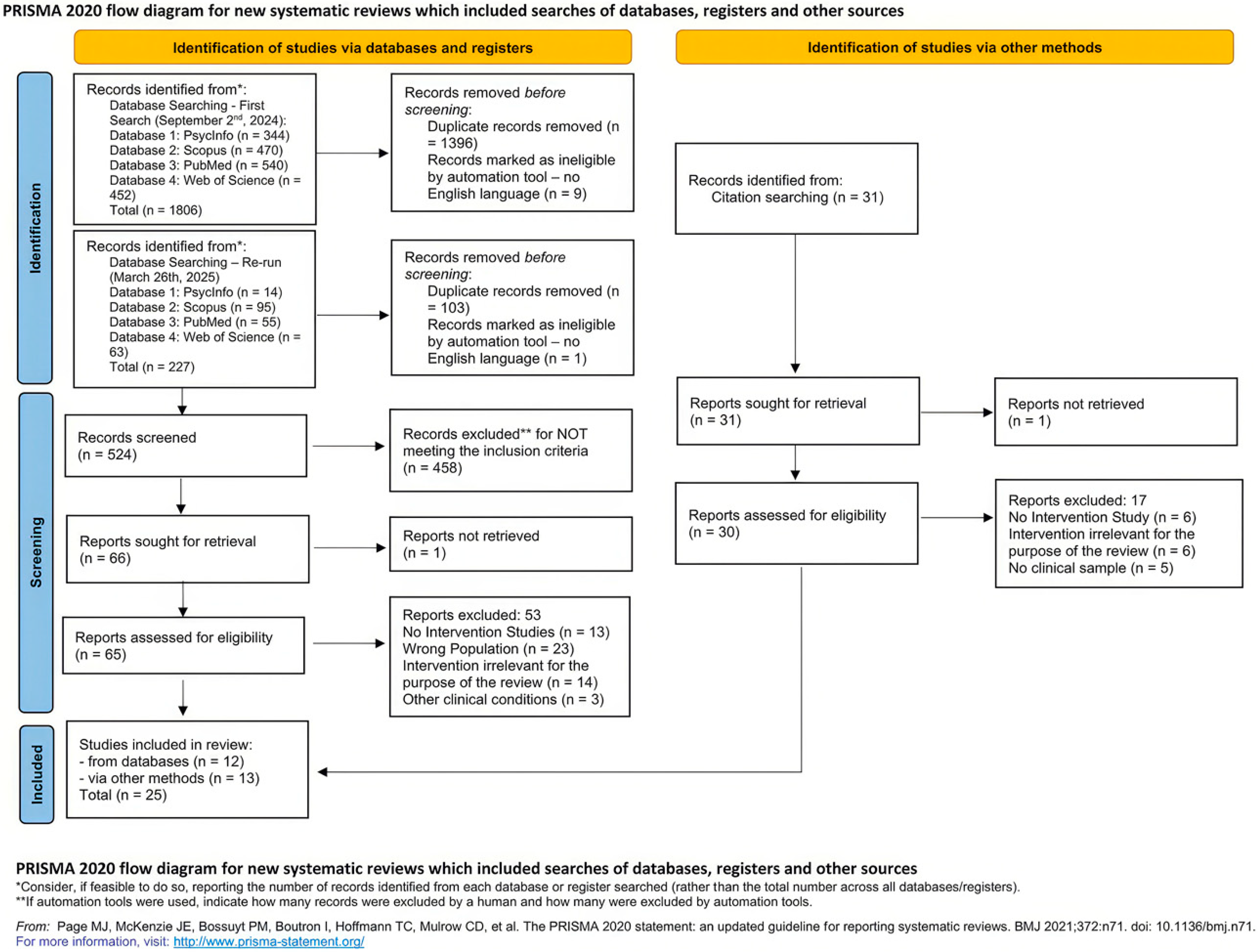
Children with neurodevelopmental disorders, such as ADHD, ASD and SLDs, often face challenges in executive functioning that can impact their inclusion and participation in educational and social experiences. Digital technologies, in particular video games, are becoming increasingly more integrated into children’s lives and are receiving attention as tools to support cognitive development in these populations. This systematic review analyses the effects of video games on Working Memory (WM) and Executive Functions (EFs) in neurodivergent individuals, to evaluate their effectiveness as training tools and their impact in terms of inclusion. Following the PRISMA guidelines, 25 peer-reviewed studies published between 2013 and 2025 were analysed. The interventions included action-video games, exergames, serious games and ad hoc video game training with a pre- and post-assessment in neurodiverse participants. The results indicate that action-video games and exergames show promise in enhancing EFs, while serious games and ad hoc video game training seem to support WM. Despite a few contrasting results, overall, video games are emerging as promising tools of inclusive education thanks to their interactive, customisable and socially empowering nature, especially significant for neurodiverse children. The discussion will depict multiple ways in which video games can make education more inclusive for these populations.
Keywords: video games; executive functions; working memory; neurodevelopmental disorders; inclusion; children; ADHD; ASD; SLDs; systematic review video games; executive functions; working memory; neurodevelopmental disorders; inclusion; children; ADHD; ASD; SLDs; systematic review