Article

Assessing Heuristic Evaluation in Immersive Virtual Reality—A Case Study on Future Guidance Systems


1
Faculty of Media, University of Applied Sciences Ansbach, 91522 Ansbach, Germany
2
UITP—International Association of Public Transport, B-1080 Brussels, Belgium
3
Senior Excellence Faculty, Technical University of Munich, 80333 Munich, Germany
*
Author to whom correspondence should be addressed.
Multimodal Technol. Interact. 2023, 7(2), 19; https://doi.org/10.3390/mti7020019
Submission received: 20 December 2022 / Revised: 31 January 2023 / Accepted: 7 February 2023 / Published: 9 February 2023
(This article belongs to the Special Issue Virtual Reality and Augmented Reality)

Abstract

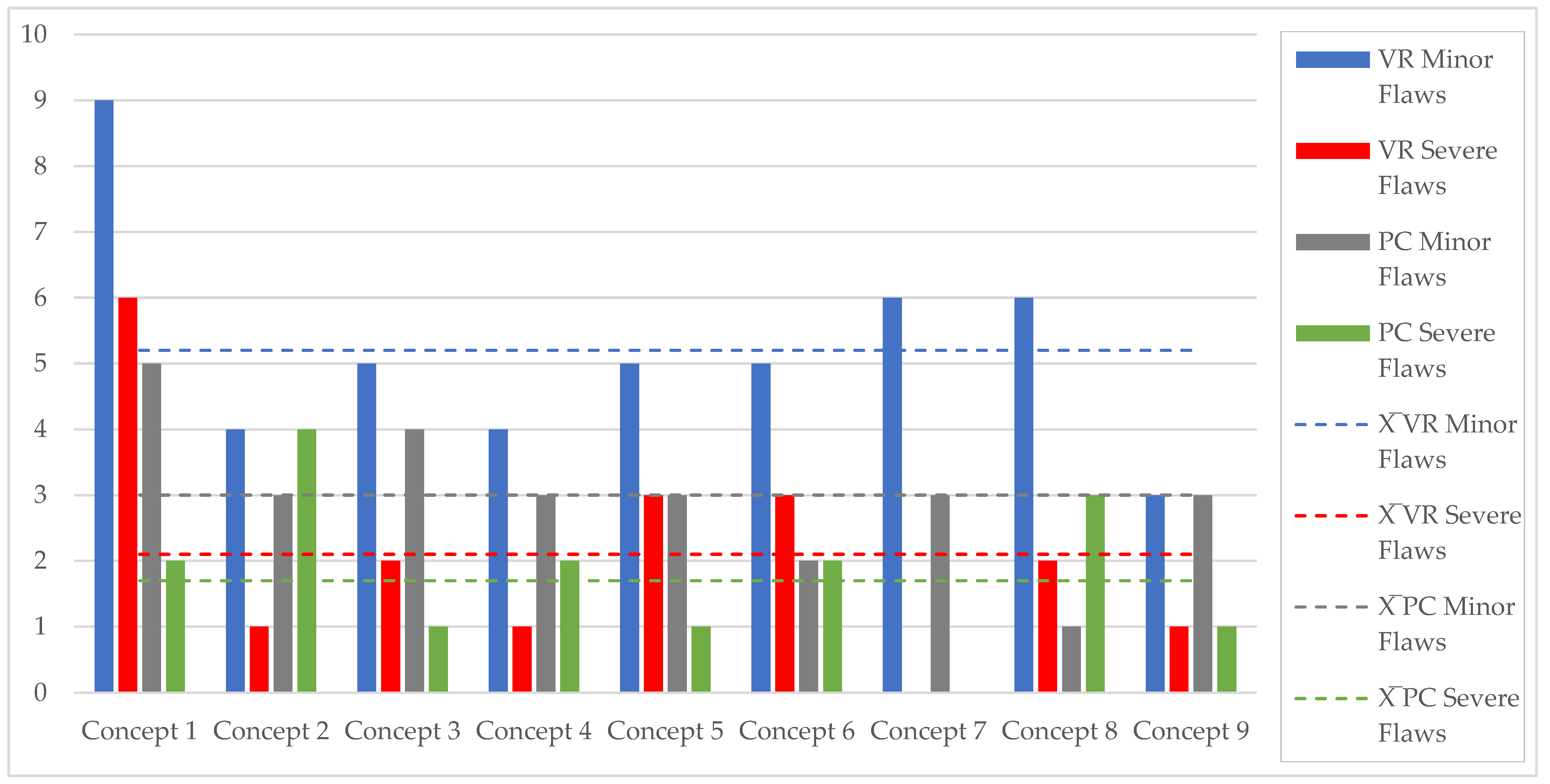
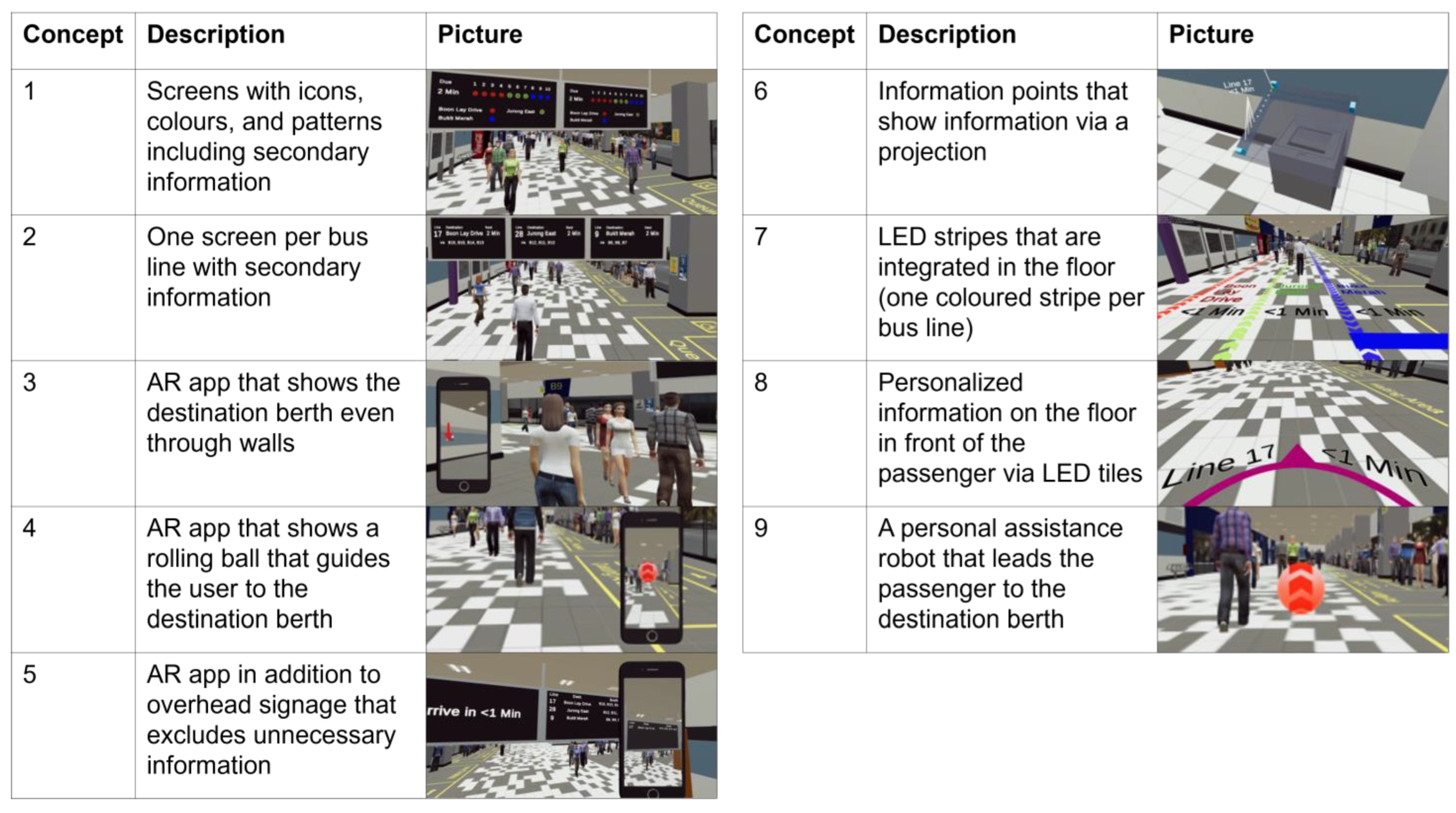
A variety of evaluation methods for user interfaces (UI) exist such as usability testing, cognitive walkthrough, and heuristic evaluation. However, UIs such as guidance systems at transit hubs must be evaluated in their intended application field to allow the effective and valid identification of usability flaws. However, what if evaluations are not feasible in real environments, or laboratorial conditions cannot be ensured? Based on adapted heuristics, in the present study, the method of heuristic evaluation is combined with immersive Virtual Reality (VR) for the identification of usability flaws of dynamic guidance systems (DGS) at transit hubs. The study involved usability evaluations of nine DGS concepts using the newly proposed method. The results show that compared to computer-based heuristic evaluations, the use of immersive VR led to the identification of an increased amount of “severe” usability flaws as well as overall usability flaws. Within a qualitative assessment, immersive VR is validated as a suitable tool for conducting heuristic evaluations involving significant advantages such as the creation of realistic experiences in laboratorial conditions. Future work seeks to further prove the suitability of using immersive VR for heuristic evaluations and compare the proposed method to other evaluative methods.
Keywords: virtual reality; heuristic evaluation; human-computer interaction; user interfaces; guidance system virtual reality; heuristic evaluation; human-computer interaction; user interfaces; guidance system