1. Introduction
1.1. Context and Motivation
Traditional craft practices constitute a vital dimension of European cultural heritage, encoding centuries of accumulated tacit knowledge, material intelligence, and regional identity. Yet this knowledge is under sustained pressure. The aging of master practitioners, the erosion of apprenticeship structures, and the global homogenization of material culture have collectively accelerated the pace at which irreplaceable craft competencies are being lost. At the same time, the rapid proliferation of digital tools, from parametric design software and motion capture systems to additive manufacturing and physically based rendering, has opened new possibilities for documenting, reinterpreting, and transmitting craft knowledge in ways that were unimaginable even a decade ago.
The relationship between digital technology and craft heritage is, however, far from straightforward. The risk of digital mediation is not merely technical; it is cultural. Poorly calibrated digital integration can strip craft practices of their specificity, flattening the material, gestural, and symbolic dimensions that give them meaning within their communities of origin. A motion capture pipeline that records gesture without attending to its social and symbolic context, or a simulation environment that privileges ergonomic efficiency over tactile responsiveness, may produce technically accurate representations that are, in practice, culturally impoverished. The central design question for researchers working at the intersection of digital technology and intangible cultural heritage (ICH) is therefore not whether to digitize, but how and under what conditions digital tools can act as genuine mediators of craft knowledge rather than instruments of standardization.
This question has attracted growing scholarly attention. Studies have examined the role of extended reality (XR) in craft training, the use of computer vision for skill assessment, and the potential of digital fabrication to extend artisanal workflows. However, the existing literature is dominated by single-craft or single-tool studies that, while valuable in their specificity, cannot address questions of methodological transferability across heterogeneous craft domains. Whether the conditions that enable successful digital mediation in one craft context (the gesture-intensive, time-pressure environment of glassblowing) apply or translate to the more deliberate, material-accumulative logic of porcelain making or the precision-oriented sequencing of stone carving, remains an open and empirically underdeveloped question.
1.2. The CRAEFT Design Pilot
This paper addresses the research gap by presenting a cross-domain comparative analysis of the CRAEFT Design Pilot, conducted within the Horizon Europe project Craft Understanding, Education, Training, and Preservation for Posterity and Prosperity (Grant Agreement No. 101094349). The Design Pilot was structured as a co-creative, iterative research initiative operating across five Representative Craft Instances (RCIs): glassblowing at the Centre Européen de Recherches et de Formation aux Arts Verriers (CERFAV) in Nancy; Aubusson tapestry at the Conservatoire National des Arts et Métiers (CNAM) in Paris; Tinos marble-carving and Ioannina silversmithing at the Piraeus Bank Cultural Foundation (PIOP) in Greece; Limoges porcelain at the École Nationale Supérieure d’Art et Design (ENSAD Limoges); and Yecla woodcarving at the Centro Tecnológico del Mueble y la Madera de la Región de Murcia (CETEM) in Spain.
Across these five domains, the Pilot deployed a spectrum of digital tools such as motion capture and gesture visualization, physically based rendering (PBR) for ceramic process states, interactive physics-based simulation, and CAD-integrated additive manufacturing in close collaboration with practicing designers, master craftspeople, and design students. Each deployment was preceded by an investigative phase in which designers’ needs and craft constraints were documented through unstructured interviews, and followed by iterative co-design cycles in which tools were progressively refined in response to practitioner feedback.
1.3. Research Questions and Contribution
The paper is organized around three research questions:
How do context-specific digital tools function as mediators, rather than drivers, of craft knowledge across heterogeneous domains?
What practitioner-level and institutional conditions determine the cultural and operational legitimacy of digital tool adoption in craft contexts?
What constitutes meaningful methodological transferability in a multi-domain craft design pilot, and how can it be distinguished from superficial workflow replication?
In addressing these questions, the paper makes three principal contributions to the fields of digital heritage, design research, and human–computer interaction. First, it provides the first empirically grounded cross-domain comparative analysis of digital tool mediation across five distinct European craft traditions within a single, controlled pilot framework. Second, it proposes a conceptual distinction between mediator and standardizer functions of digital tools in heritage contexts and demonstrates how co-creative methodology is the critical variable that determines which function predominates. Third, it derives a set of actionable design principles for the development of craft-sensitive digital infrastructure that are grounded in practitioner experience rather than tool performance metrics alone.
1.4. Paper Structure
The paper is structured as follows.
Section 2 reviews relevant literature on craft–design convergence, digital heritage documentation, and co-creative methodologies.
Section 3 describes the CRAEFT Design Pilot methodology, including its iterative planning cycle, workshop typologies, and cross-RCI mapping framework.
Section 4 presents an overview of the digital tools deployed across the five RCIs.
Section 5 delivers the cross-domain comparative analysis, organized around four cross-cutting themes: gesture as a universal craft primitive; the mediator–standardizer tension; co-creation as the condition for tool legitimacy; and methodological portability.
Section 6 discusses implications for sustainability, cultural preservation policy, and education in design.
Section 7 addresses limitations and directions for future research.
Section 8 concludes the study.
3. Methodology
3.1. Overview and Methodological Positioning
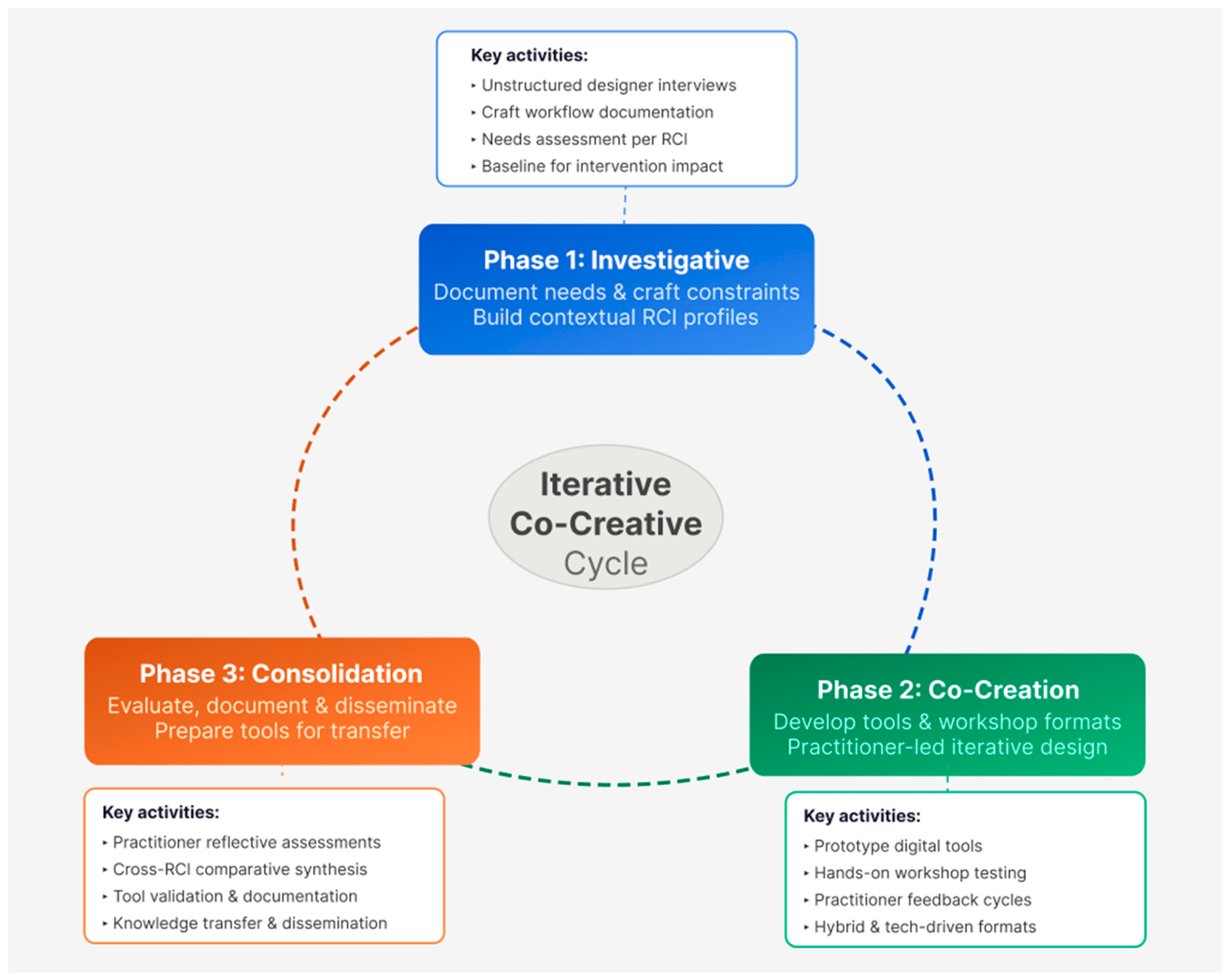
The CRAEFT Design Pilot adopts an iterative, co-creative research methodology that positions craft practitioners, designers, and technologists as equal contributors to the development and refinement of digital tools and workflows (see
Figure 1). This approach departs from the expert-led paradigm that has historically dominated digital heritage work. It treats the Design Pilot not as a technology deployment exercise but as a structured research environment in which digital tools are progressively shaped by the lived realities of craft practice. The methodology is organized around three sequential but overlapping phases: an investigative phase in which designers’ needs and craft constraints are documented; a co-creation phase in which digital tools and workshop formats are developed in direct response to those needs; and a consolidation phase in which refined tools and insights are evaluated, documented, and prepared for broader dissemination. These phases are not executed once in linear sequence. They operate as a recurring cycle, with each workshop iteration feeding directly into the planning of the next.
It is important to note that the CRAEFT Design Pilot was designed as a co-creative design research study. The primary outcomes targeted were cultural legitimacy and practitioner adoption of digital tools within living craft communities. Systematic quantitative measures of output accuracy, workflow efficiency, and material savings, while valuable, were outside the scope of the pilot’s original data collection protocol. This distinction is acknowledged as a limitation in
Section 7, where specific quantitative extensions are identified as priorities for future work.
This cyclical structure reflects a fundamental epistemological commitment. Craft knowledge is tacit, contextual, and materially embedded. It cannot be fully specified in advance. A methodology that seeks to engage with it meaningfully must therefore remain open to revision, capable of incorporating unexpected insights, and structured to acknowledge practitioners’ agency in shaping the direction of inquiry.
3.1.1. Phase 1: The Investigative Phase
The investigative phase serves as the empirical foundation for all subsequent pilot activity. Its purpose is to develop a grounded understanding of how designers engage with craft in their practice, what challenges they encounter when integrating traditional techniques with digital tools, and what forms of support would be most meaningful within each specific RCI context.
The primary instrument of this phase is the unstructured interview. Interviews are conducted with practicing designers affiliated with each RCI, focusing on four thematic areas. The first concerns craft as inspiration: how designers draw on traditional craft techniques, materials, or motifs as sources of creative inquiry. The second concerns material engagement: how the extent of knowledge about specific materials, such as glass, clay, wood, or textile, informs design decisions at the levels of form, process, and cultural meaning. The third concerns workflow integration: the practical methods designers use to incorporate handcrafted elements into digital workflows, including prototyping, finishing, and visual documentation. The fourth concerns cultural narratives: how designers use craft to explore questions related to identity, heritage, and regional tradition through their work.
Participating designers were selected on the basis of three criteria: active professional practice within or adjacent to the craft domain of their respective RCI; institutional affiliation with the partner organization responsible for that RCI; and a demonstrated interest in exploring the integration of digital tools within their creative workflow. This selection approach prioritized practitioner proximity to the craft context over disciplinary diversity, reflecting the pilot’s methodological commitment to grounding digital tool development in the lived realities of craft practice rather than in external design perspectives.
The interviews also address the central tension that runs through all five RCIs: how designers balance the situated nature of craft practice with the efficiency and precision of digital tools. This tension is not addressed as a problem to be resolved but as a productive design space to be navigated. The investigative phase makes this navigation visible, providing a documented baseline against which the impact of subsequent digital interventions can be assessed.
The outputs of the investigative phase are synthesized into a contextual profile for each RCI. This profile documents the key motivations for craft engagement among participating designers, the practical approaches they use to merge craft with digital workflows, and the specific challenges and limitations they face. These profiles directly inform the design of co-creation activities and workshop formats in the subsequent phase.
3.1.2. Phase 2: Co-Creation and Workshop Design
The co-creation phase is the methodological core of the Design Pilot. It transforms the insights gathered during the investigative phase into concrete digital tools, workshop formats, and collaborative workflows through a practitioner-led development process that prioritizes usability and iterative refinement, whilst maintaining cultural sensitivity.
Co-creation within the pilot is grounded in three principles. The first is practitioner-driven insight: the experiences, challenges, and priorities of designers and craftspeople serve as the primary design criterion for all digital tool development. Technical feasibility is a necessary condition, not a sufficient one. The second principle is iterative development: tools and workshops are designed, tested, and refined through multiple rounds of feedback before being considered stable. No tool is treated as complete until practitioners confirm that it is genuinely responsive to their practice. The third principle is collaborative innovation: the combination of artisan expertise, design intelligence, and technical capability serves as the generative source of the pilot’s outputs. No single discipline is privileged over the others.
The co-creation process proceeds through four steps. In the engagement step, structured workshop sessions are convened in which designers articulate their needs, demonstrate their current workflows, and identify specific points of friction or opportunity where digital tools could make a meaningful contribution. In the prototyping step, digital tool prototypes and workshop formats are developed by the technical team in direct response to practitioner input. These prototypes are not polished products; they are functional proposals designed to be evaluated, critiqued, and revised. In the hands-on testing step, practitioners engage with prototypes in real workshop settings, generating detailed feedback on usability, cultural fit, and creative relevance. In the iterative refinement step, this feedback is systematically incorporated into revised versions of the tools, which are then re-tested in subsequent workshop cycles.
The co-creation phase operates differently across the five RCIs, reflecting the different levels of technological readiness, institutional infrastructure, and designer engagement at each site. At CERFAV for glassblowing and PIOP for marble-carving as well as silversmithing, where the integration mode is exploratory, the co-creation process focuses primarily on opening design inquiry and generating reflexive documentation rather than on developing technically complex tool systems. At ENSAD-Limoges for porcelain-making and CETEM for woodcarving, where the integration mode is advanced, the co-creation process extends to the full iterative development of purpose-built digital tools across multiple workshop cycles spanning up to eighteen months.
3.1.3. Phase 3: The Consolidation Phase
The consolidation phase closes the iterative cycle initiated by the investigative and co-creation phases. Its purpose is threefold: to evaluate the tools and workshop formats developed during the co-creation phase against the practitioner needs documented in the investigative phase; to distil the insights generated across individual RCI deployments into transferable knowledge; and to prepare the refined tools, documented workflows, and comparative findings for broader dissemination beyond the pilot community.
Evaluation within the consolidation phase is structured around three dimensions. The first is technical performance: whether the digital tools developed during co-creation function reliably within the material and infrastructural constraints of each RCI, and whether iterative refinements have addressed the usability limitations identified during hands-on testing. The second dimension is cultural legitimacy: whether practitioners experience the tools as genuinely responsive to their craft’s material logic, symbolic significance, and social context, rather than as external impositions that flatten the specificity of their practice. The third dimension is creative impact: whether the tools have generated new design inquiries, opened new relationships between craft and contemporary practices, or produced outcomes that would not have been achievable through conventional design workflows alone.
The primary instruments of the consolidation phase are practitioner reflective assessments, cross-RCI comparative analysis, and artefact review. Reflective assessments are structured conversations conducted with participating designers and craftspeople after the final workshop cycle at each RCI. They invite practitioners to evaluate the overall arc of their engagement with the pilot, identifying which digital interventions were most meaningful, which fell short of expectation, and what conditions made the difference between productive and unproductive tool adoption. Cross-RCI comparative analysis synthesizes these assessments across the five craft domains, identifying patterns that recur regardless of material context and divergences that reflect domain-specific conditions. Artefact review examines the physical and digital objects produced during the pilot as material evidence of the outcomes of digital integration, attending to qualities of formal complexity, cultural resonance, and craft fidelity that qualitative accounts alone cannot fully capture.
The outputs of the consolidation phase are of two kinds. The first are refined, practitioner-validated tool versions and workshop formats that are documented in sufficient detail to be transferred to new craft contexts beyond the five original RCIs. The second are the cross-cutting analytical findings that inform the comparative analysis presented in
Section 5 and the sustainability framework developed in
Section 6. In this sense, the consolidation phase does not merely close the pilot cycle. It transforms the accumulated empirical material of the investigative and co-creation phases into knowledge that can inform the design of future craft-sensitive digital initiatives at European scale.
3.2. Workshop Typologies
The Design Pilot employs two complementary workshop formats, configured in response to the specific craft ecosystem of each RCI. These formats are not fixed templates. They are modular structures that can be adapted to differences in material culture, technological infrastructure, participant profiles, and levels of digital familiarity.
The first format is the Hybrid Craft–Design Workshop. These sessions create a shared space in which traditional craft techniques and contemporary design thinking are brought into direct dialogue. Designers and craftspeople collaborate to reinterpret established practices through new lenses. Digital tools are introduced as complementary instruments that support visualization, analysis, or variation, while the primacy of material engagement is maintained throughout. The focus lies on co-creation and cultural translation, positioning design as a medium through which craft heritage can be made legible and relevant within contemporary contexts.
The second format is the Experimental and Technology-Driven Workshop. These sessions are convened where participants have both the readiness and the motivation to engage with advanced digital integration. Technologies including computational design, 3D printing, augmented reality, and parametric modelling are used to challenge conventional limits and generate speculative proposals. The aim is not technological performance alone. It is the generation of hybrid prototypes that merge computational precision with the tactile sensibility and cultural grounding of craft practice.
Three principles govern the design of all workshop formats, regardless of type. Contextual relevance ensures that each workshop is rooted in the sociocultural, material, and technical specificity of the craft involved. Activities are aligned with local practices, tools, and narratives. Participant-centered design acknowledges the diversity of attendees, from emerging art and design students to master craftspeople with decades of experience. Workshops are shaped around their expectations, skills, and professional realities. Progressive exploration enables gradual integration of digital elements, allowing participants to build confidence and creative vocabulary before engaging with more technically demanding tools or concepts.
3.3. Cross-RCI Mapping
A distinctive feature of the Design Pilot methodology is its cross-RCI mapping framework, which enables comparison of design practices, tool deployments, and outcomes across the five craft domains. This mapping serves two purposes. It ensures that each RCI is understood in its own terms, with full attention to local materials, cultural traditions, institutional resources, and designer profiles. It also enables the identification of cross-domain patterns and divergences that would not be visible from within any single RCI.
The mapping process operates through three analytical layers. The contextual analysis layer examines the cultural, material, and economic conditions that shape each RCI. Craft traditions carry symbolic meanings and regional identities that are not incidental to their practice but constitutive of their value. Understanding these dimensions is a prerequisite for designing digital interventions that are culturally credible. The institutional documentation layer identifies the key organizations, design schools, craft workshops, and cultural institutions that structure practice within each RCI. These institutions are not merely logistical partners; they shape the epistemic and social conditions under which craft knowledge is held, transmitted, and developed. The local practices layer captures the specific workflows, tools, and collaborative dynamics through which design and craft intersect in each RCI, providing the detailed empirical material against which cross-domain comparisons are made.
The results of the mapping process are synthesized into a comparative framework that includes case studies, visual documentation, and reflective assessments from participating designers and craftspeople. This framework provides the analytical foundation for the cross-domain findings presented in
Section 5.
3.4. Pilot Timeline and Milestones
The Design Pilot was executed across an eighteen-month period divided into four stages, running from Month 18 to Month 36 of the CRAEFT project.
The initial planning and setup stage (M18–M24) focused on establishing institutional partnerships, conducting investigative interviews with participating designers, and developing the first-generation prototypes of digital tools and workshop formats at each RCI. The Ghost Gesture Design Workshop at ENSAD-Limoges was conducted during this stage, providing the first structured empirical test of gesture capture as a design pedagogy instrument.
The pilot launch and initial execution stage (M24–M28) saw the first full deployment of workshop activities across all five RCIs. Initial feedback from participants was collected and synthesized, and the first round of tool refinements was implemented. The Plaster Simulator was introduced at Limoges during this stage, based on insights from the Ghost Gesture Workshop. At CETEM, the CAD-to-3D-print workflow was tested with designer Florián Moreno and woodcarver Francisco Sánchez Carcelén.
The mid-pilot review and refinement stage (M28–M30) was dedicated to systematic evaluation of the tools and formats deployed in the preceding stage. Practitioner reflective assessments were gathered, cross-RCI comparisons were conducted, and revised tool versions were prepared for the final execution stage.
The final execution and outcome consolidation stage (M30–M36) delivered the fully refined workshop activities across all RCIs, collected the final round of practitioner feedback, and synthesized the cross-cutting lessons that inform the comparative analysis in this paper.
The scope of workshop activity across the eighteen-month pilot is summarized in
Table 1, which provides an overview of participant profiles, workshop formats, and the digital tools engaged at each stage. Participant counts reflect confirmed workshop attendees across all documented sessions; figures for exploratory RCIs are lower due to the intentionally smaller-scale, dialogue-based format of investigative and early co-creation activities.
3.5. Data Collection and Analysis
Data collection across the pilot combined multiple methods to capture both the technical performance of digital tools and the cultural and experiential dimensions of their adoption. Unstructured interviews conducted during the investigative phase provided qualitative accounts of designers’ relationships with craft, their motivations, and their challenges. Structured feedback sessions conducted after each workshop generated evaluative data on tool usability, cultural appropriateness, and creative impact. Process observation during workshop sessions provided real-time documentation of how practitioners engaged with digital tools, including instances of resistance, adaptation, and unexpected creative application. Artefact analysis of the objects, prototypes, and design proposals produced during the pilot provided material evidence of the outcomes of digital integration.
Cross-RCI analysis was conducted using an inductive thematic analysis procedure. Feedback transcripts, interview notes, and reflective assessment records from all five RCIs were independently reviewed by two members of the research team, each coding for recurring themes related to tool usability, cultural appropriateness, and creative impact. Emerging codes were discussed until consensus was reached, producing a set of primary themes that were then tested for presence and variation across all five RCI datasets. The four cross-cutting themes presented in
Section 5 (gesture as universal craft primitive, the mediator–standardiser tension, co-creation as the condition for tool legitimacy, and methodological portability) emerged from this process and were confirmed as present in all five cases, with domain-specific variations noted where relevant. Cross-RCI validation was achieved by requiring that a finding be evidenced in a minimum of three RCI datasets before being elevated to cross-cutting status.
Bias minimization measures were applied at two levels. At the data collection level, reflective assessments were conducted using a consistent structured protocol across all five RCIs, with questions formulated to invite critical evaluation rather than affirmation (e.g., “Which aspects of the tools fell short of your expectations?” alongside “Which were most meaningful?”). At the analysis level, the separation of evaluation coding from tool development roles—with the analytical coding conducted by team members not primarily responsible for tool implementation at each RCI—provided a degree of independence between development and evaluation judgements. The study’s self-reported character and the participants’ institutional investment in the pilot are acknowledged as limitations (see
Section 7.4), and independent external evaluation is recommended as a direction for future work.
4. Digital Tools Deployed Across the Five RCIs
4.1. Overview
The digital tools deployed within the CRAEFT Design Pilot were not selected from a pre-defined toolkit and uniformly distributed across the five Representative Craft Instances. They were developed or adapted in direct response to the specific material conditions, knowledge structures, and practitioner needs identified during the investigative phase at each site. This section describes each tool cluster in sufficient technical and functional detail to support the cross-domain comparative analysis presented in
Section 5. The tools are organized into four clusters: scene representation and understanding pipeline, motion capture and gesture visualizations systems; physically based rendering for ceramic process states; interactive physics-based simulation; and CAD-integrated additive manufacturing and CNC prototyping.
4.2. Scene Representation and Understanding Pipeline
The scene representation and understanding pipeline constitutes the shared technical foundation upon which gesture capture activities were conducted across all RCIs where motion documentation was deployed. Rather than being developed for a single craft domain, the pipeline was designed as a domain-agnostic infrastructure capable of accommodating the material diversity, spatial configurations, and procedural logics of heterogeneous craft practices.
The pipeline operates in three sequential stages: physical asset digitization, multi-perspective motion recording, and structured knowledge-based registration. In the first stage, the physical tools characteristic of each craft process are digitized in three dimensions and inserted into the project knowledge base before any recording activity. This step establishes a precise geometric reference framework within which subsequent motion data can be spatially grounded. Across different craft domains, the specific tools vary substantially, from glassblowing irons and jacks at CERFAV to silversmithing punches at PIOP and turning tools at ENSAD-Limoges. However, the digitization protocol and the role it plays within the broader pipeline remain consistent across all deployment contexts.
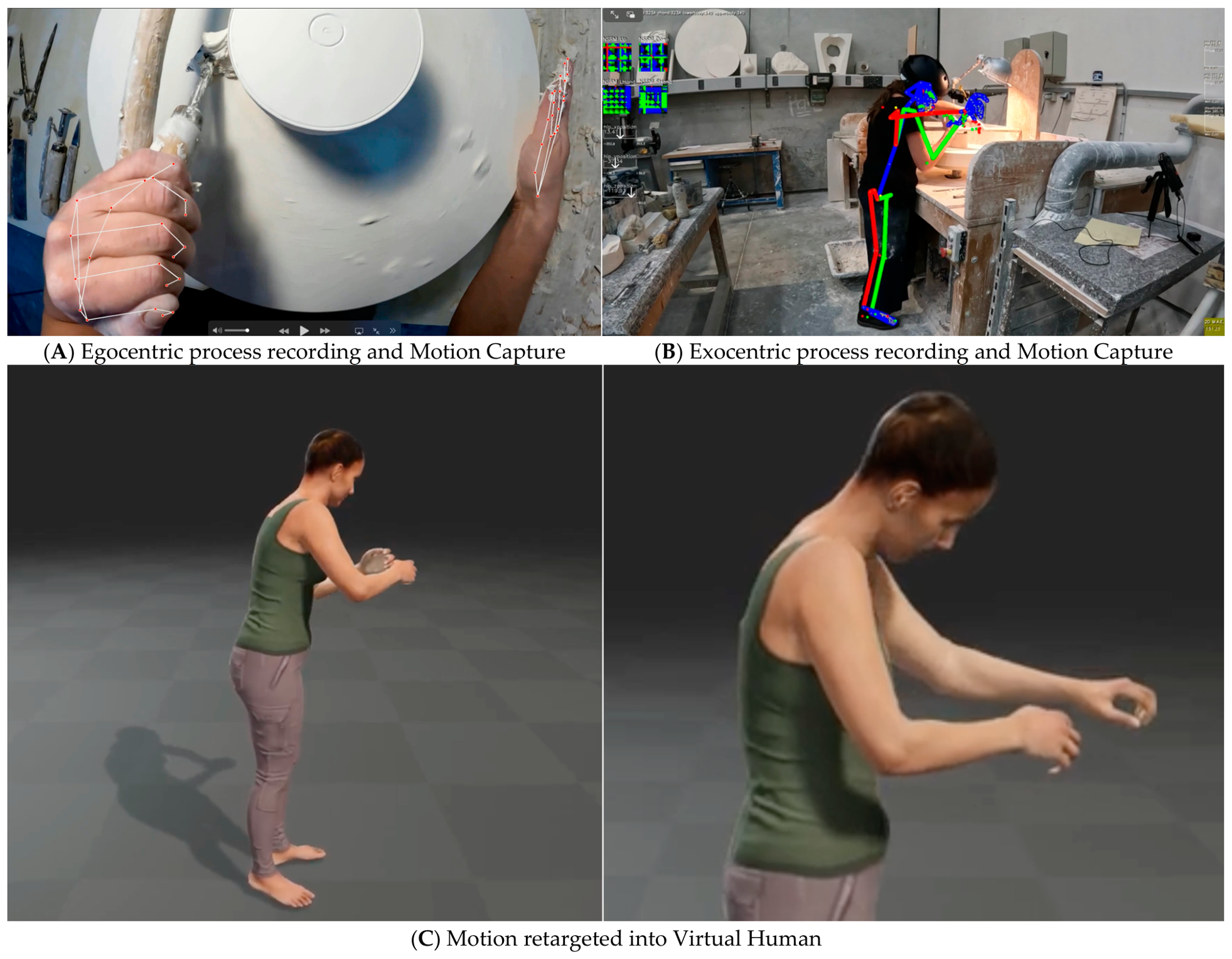
In the second stage, the craft process is recorded using two complementary camera configurations. An egocentric camera, positioned to capture the practitioner’s first-person perspective, records hand movements, tool contact points, and the visual field available to the practitioner at each moment of execution. A scene overview camera provides a stable external reference for workspace interactions, capturing the full body kinematics of the practitioner and the spatial organization of the craft environment. These two streams are processed jointly to reconstruct the practitioner’s motion as a three-dimensional avatar, producing a spatially accurate and temporally resolved representation of the craft sequence that neither camera stream alone could provide. In the third stage, event logs derived from the video data are used to semi-automatically segment the continuous craft sequence into discrete elementary actions. Each extracted action segment is semantically structured by linking it to a defined functional role within the overall procedural sequence of the craft. This semantic layer transforms the raw motion record from a continuous, undifferentiated video stream into a navigable, queryable archive of craft intelligence, in which individual gestures can be retrieved, compared, and interpreted in relation to their procedural function across and within craft domains.
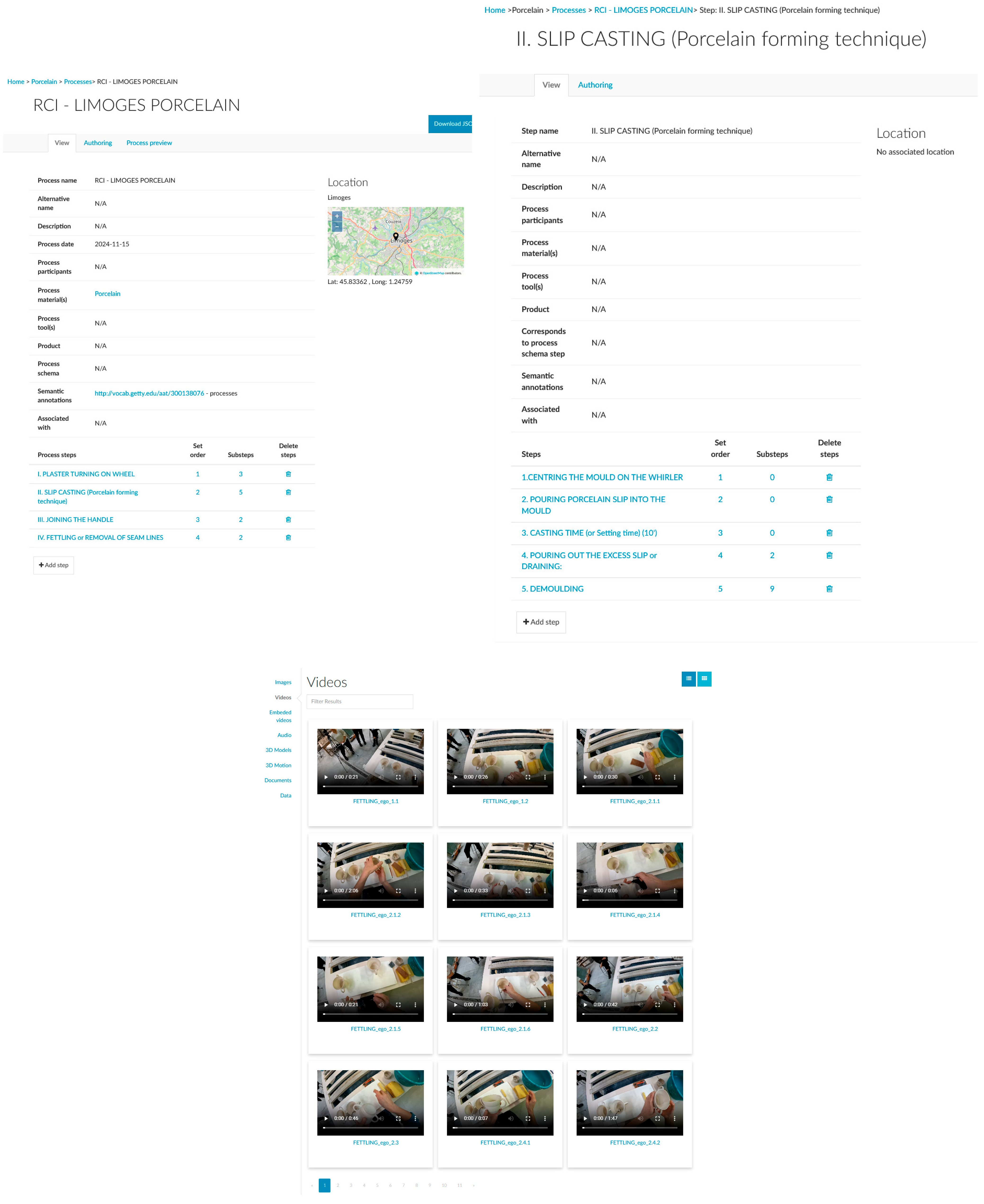
The complete recording session, together with all associated digital assets, is registered as a structured event in the knowledge base. The linked assets, including the three-dimensional tool models and the synchronized audio–visual recordings, are made available for review through standard web browser access. This open-access architecture ensures that documented craft knowledge is not locked within specialist software environments but can be reviewed, annotated, and reused by designers, researchers, and educators across institutional boundaries.
Figure 2 illustrates the three core components of the knowledge base interface as instantiated within a representative deployment: the registration of the recording event (left), the structured collection of segmented actions (center), and the synchronized video segment preview (right).
4.3. Motion Capture and Gesture Visualisation Systems
Gesture capture was the most widely deployed tool category across the pilot, applied in some form at CERFAV, CETEM, CNAM, PIOP, and ENSAD-Limoges. Despite this shared deployment, the specific implementation and purpose of gesture capture differed substantially across these four RCIs, reflecting the different roles that gesture plays within each craft domain.
The core technical pipeline consists of egocentric and overview video capture, semi-automatic action segmentation, and registration of recordings and linked assets in a structured knowledge base for web-based review. The egocentric component uses a head-mounted camera to capture the practitioner’s first-person perspective during craft execution, providing detailed information about tool-material contact, hand positioning, and the visual field of the practitioner at each stage of a procedure. The overview component uses a fixed or mobile external camera to record the full body kinematics of the practitioner, including posture, weight distribution, and bilateral hand coordination. Together, these two streams provide a multi-perspective record of craft gestures that neither alone can deliver.
Semi-automatic action segmentation processes the combined video streams to identify and label discrete procedural events within a craft sequence. The segmentation algorithm identifies temporal boundaries between actions based on motion discontinuities and visual cues, producing a structured timeline of labelled events that can be reviewed, annotated, and navigated by designers and researchers through a web-based interface. This knowledge base registration transforms an otherwise continuous and undifferentiated video record into a structured, searchable archive of craft intelligence. The Data capture and processing pipeline is presented in
Figure 3.
At CERFAV, this pipeline was applied to glassblowing sequences, where the time-critical and thermally bound nature of the craft places particular demands on capture fidelity. The thermal state of the glass at each moment constrains the available gestural operations, making the temporal structure of glassblowing gestures qualitatively different from that of other craft domains. The resulting knowledge base was made available to design students as a creative resource, and several student projects demonstrated that documented gesture sequences could function as generative design stimuli rather than purely archival records.
The glassblowing deployment placed particular demands on the temporal resolution of the capture pipeline. Molten glass undergoes continuous thermal decay from the moment it leaves the furnace, and the available gestural window at each stage of the blowing sequence is directly constrained by this decay curve. A gather that has cooled beyond a critical threshold becomes unworkable and must be reheated, interrupting the gestural sequence. The pipeline’s egocentric and overview streams were therefore configured to capture at sufficient frame rate to resolve the rapid, fine-grained hand and tool movements characteristic of the pre-reheating gestural window, ensuring that the most information-dense phases of the blowing sequence were accurately recorded.
The joint processing of egocentric and overview streams to reconstruct the practitioner’s motion as a three-dimensional avatar preserves the temporal structure of the gestural sequence, including its speed, bilateral coordination, and rhythmic phrasing, in a form that can be reviewed, paused, and navigated by designers without reducing it to a static description. This temporally intact representation is the mechanism by which the digital documentation preserves rather than flattens the embodied rhythm central to glassblowing practice.
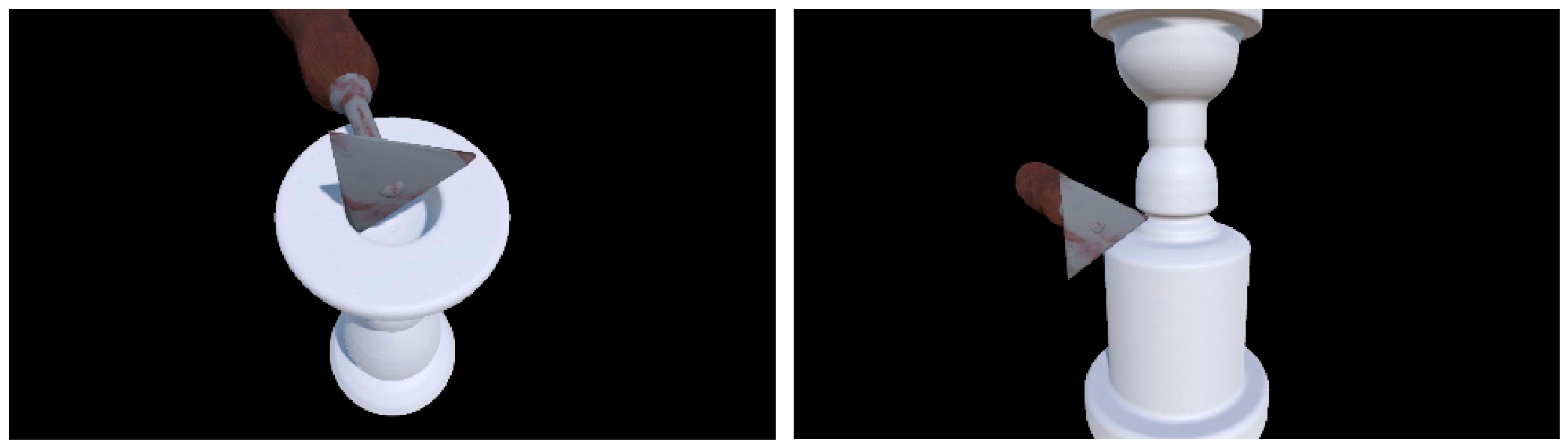
At ENSAD-Limoges, the gesture capture pipeline was deployed specifically for plaster turning within the slip-casting process of porcelain-making, where the relationship between hand gesture and the emerging form of the plaster is the primary site of design intelligence (see
Figure 4). The Ghost Gesture Design Workshop used motion capture overlays to render this relationship visible to students in real time, superimposing skeletal tracking data onto video footage of master throwers to reveal the precise spatial and kinetic logic of gestures that are normally invisible to observers.
At PIOP, gesture capture was applied to both silversmithing and marble carving, with the primary purpose of cultural documentation rather than design pedagogy. The gestural visualization toolkit developed for this context was calibrated to produce outputs legible to heritage audiences as well as design communities, supporting the framing of these crafts as living, practitioner-embodied traditions.
For the CNAM team, gestural documentation was applied to the Aubusson tapestry context with a focus on the relationship between the weaver’s hand movements and the image structure of the finished textile. This application extended the concept of gesture beyond the purely motor domain, treating the weaver’s gestural logic as a form of image-making intelligence that digital visualization could render available for contemporary design inquiry.
4.4. Physically Based Rendering for Ceramic Process States
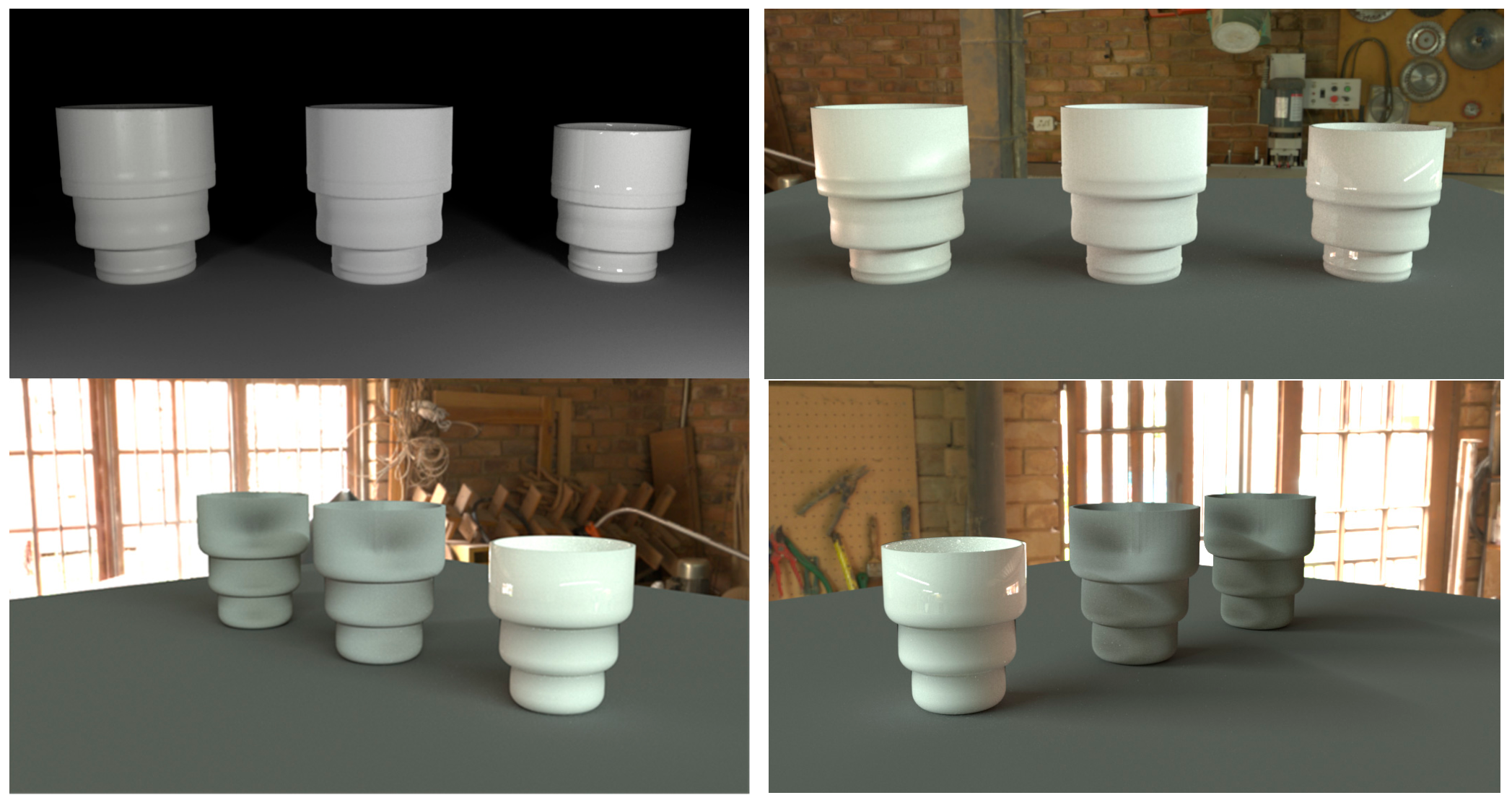
Physically Based Rendering (PBR) was deployed exclusively at the ENSAD-Limoges pilot, addressing a specific and longstanding challenge in porcelain design practice. The challenge concerns the difficulty of predicting, at the design stage, how a ceramic form’s appearance will change across the successive transformation states of the production process: from the soft, matte surface of wet clay through the chalky, shrunken state of air-dried greenware, through the porous, color-shifted surface of bisque-fired ware, to the glossy, vitrified, and dimensionally stabilized final object after glaze firing.
Each of these states involves significant changes in surface color, reflectance, translucency, and physical dimension. A form that appears well-proportioned and aesthetically resolved in its wet state may look quite different after firing, due to differential shrinkage, glaze pooling, and the optical shift from a matte to a specular surface. Designers working without direct ceramic experience may be particularly confronted with these surprises, and experienced ceramicists frequently rely on extensive physical sample series to evaluate design decisions that could, in principle, be made earlier and more efficiently with access to accurate digital previsualizations.
The PBR workflow developed within the pilot addresses this challenge through two complementary lighting environments. The neutral analytical lighting environment uses diffuse, shadow-free illumination to support objective assessment of form, proportion, and surface texture without the perceptual distortions introduced by directional or colored light. The HDRI illumination environment uses high dynamic range image-based lighting to simulate the appearance of the object under realistic environmental conditions, supporting evaluation of glaze reflectance, color temperature, and the visual integration of the object within a designed space.
A third visualization method, rotational comparative video, generates side-by-side turntable animations of a single form across multiple material states and at corrected dimensional scales, compensating for the dimensional change that occurs across firing stages. This allows designers to compare the visual character of a form at each production stage within a single viewing experience, supporting more informed decisions about glaze selection, form proportions, and surface treatment.
The three visualization modes serve distinct evaluative functions. The neutral analytical lighting environment supports objective assessment of form and proportion by eliminating perceptual distortions introduced by directional light—it is the appropriate mode for evaluating silhouette, wall thickness transitions, and foot-ring geometry. The HDRI environmental lighting environment simulates realistic display conditions and is the appropriate mode for evaluating glaze color temperature, surface reflectance, and the visual integration of the object within a designed interior space. The rotational comparative video mode, by presenting a single form across multiple production states at dimensionally corrected scale, supports the specific design decision of whether a form’s proportional logic survives the shrinkage and optical transformation of firing—a question that neither static renders nor physical greenware samples can answer as directly.
The pilot includes a candid evaluation of the cost–benefit balance of PBR implementation for craft design support (see
Figure 5). The conclusion reached is that PBR is justified where design decisions hinge on surface appearance and firing behavior, particularly for complex glazes or forms where dimensional change is a significant design variable. For simpler forms or decorative treatments, the implementation overhead may not be warranted. This grounded assessment reflects the pilot’s commitment to evidence-based evaluation rather than uncritical technology promotion.
The current pilot did not include systematic colorimetric or photometric comparison between PBR previsualization outputs and physically fired ceramic samples. A rigorous quantitative validation of the PBR workflow would involve measuring, for example, the Delta-E color difference between rendered glaze predictions and fired glaze outcomes across a controlled sample series, and comparing the dimensional predictions of the rotational video with measured shrinkage data. Such a comparison is identified in
Section 7 as the highest-priority quantitative evaluation for the Limoges case study in future work.
4.5. Interactive Physics-Based Simulation
The Interactive Plaster Simulator was developed specifically for the ENSAD-Limoges pilot as a design research tool rather than a craft training substitute. Its purpose is to provide design students with a real-time, gesture-responsive environment in which they can explore the relationship between hand movement and clay behavior before committing physical material.
The simulator models the physics of plaster and clay deformation in response to gesture-tracked tool inputs, providing visual and acoustic feedback that approximates, without replicating, the sensorimotor experience of wheel-throwing. The gestural tracking component uses the same motion capture infrastructure as the gesture visualization pipeline described in
Section 4.3, allowing the simulator to be integrated within a unified gesture-centered design research environment.
The development of the simulator followed a fully co-creative trajectory. Early-stage prototypes were evaluated by design students and practicing designers in structured feedback sessions, generating detailed critique across several dimensions. Students identified unrealistic tool behavior, the absence of gravity-responsive base dynamics, insufficient spatial reference cues, poor ergonomic calibration of the virtual tool handle, and inadequate visual contrast between the tool and the simulated material surface as significant barriers to immersive and productive use.
Each of these issues was systematically addressed in successive development iterations between M21 and M36 (see
Table 2). The refined simulator was deployed in the Plaster Simulator Design Workshop in November 2025, where it was used by students to develop gesture-based design hypotheses that were subsequently tested in physical making. The reflective assessments from this workshop confirm that the simulator functioned as intended: as a cognitive pre-visualization environment that extended rather than replaced physical craft practice.
This iterative refinement trajectory illustrates the co-creative development principle that underpins the entire pilot: no tool is treated as complete until practitioners confirm it is genuinely responsive to their practice. The simulator’s evolution from early prototype to validated pedagogical instrument across fifteen months of refinement is the clearest example in the pilot of how methodological time investment directly determines tool legitimacy.
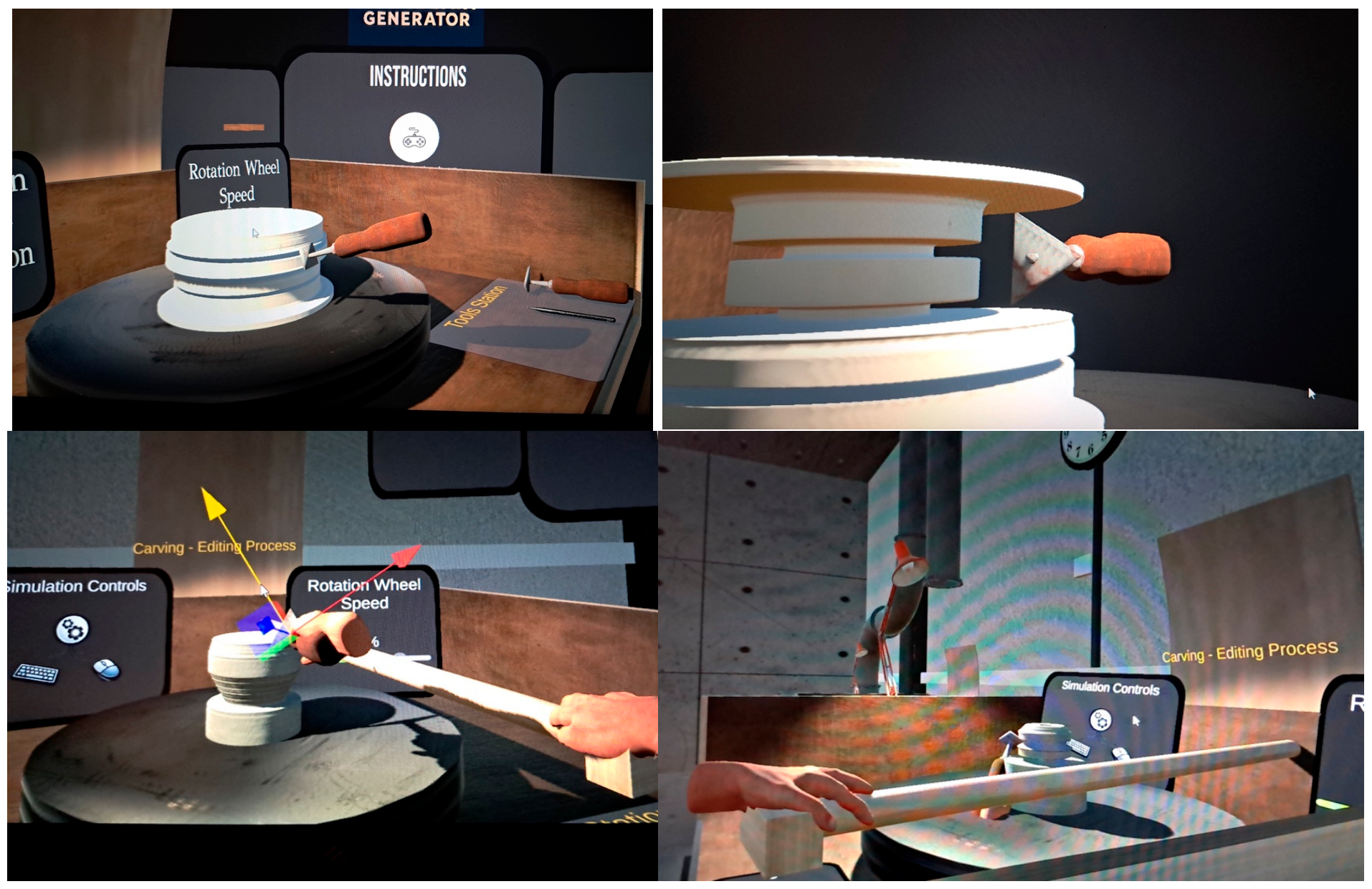
The simulator is built on the Unity game engine (see
Figure 6), with a physics model calibrated to approximate the deformation behavior of plaster and soft clay under tool pressure. The Revolution Solid integration module supports additive and subtractive solid editing workflows within the same environment, allowing students to combine gesture-driven surface modelling with more structured geometric operations within a single session.
4.6. CAD-Integrated Additive Manufacturing and CNC Prototyping
The digital tool pipeline deployed at CETEM differs fundamentally from those described in the preceding sections. Rather than focusing on the capture or simulation of tacit craft knowledge, it addresses the challenge of spatial and formal communication between a designer working in a digital environment and a craftsperson working by hand.
It is important to situate the CETEM pipeline within the broader context of digital fabrication practice in the woodcarving industry. CNC-assisted pre-shaping and CAD-to-production workflows are already widely established in industrial woodcarving contexts, where they are used primarily to optimize production efficiency and dimensional repeatability. The distinctive contribution of the CETEM pilot is not the use of digital fabrication per se, but rather the specific framing of the 3D-printed prototype as a negotiation object between designer intent and craftsperson material judgement, and the co-creative protocol through which this negotiation is structured. Where industrial CNC workflows typically position the digital model as a production specification to be executed, the CETEM pipeline positions it as a communicative proposal to be evaluated, critiqued, and materially revised by the craftsperson before any irreversible carving begins. This distinction between digital fabrication as specification and digital fabrication as dialogue is the methodological contribution of the CETEM case study relative to established industry practice.
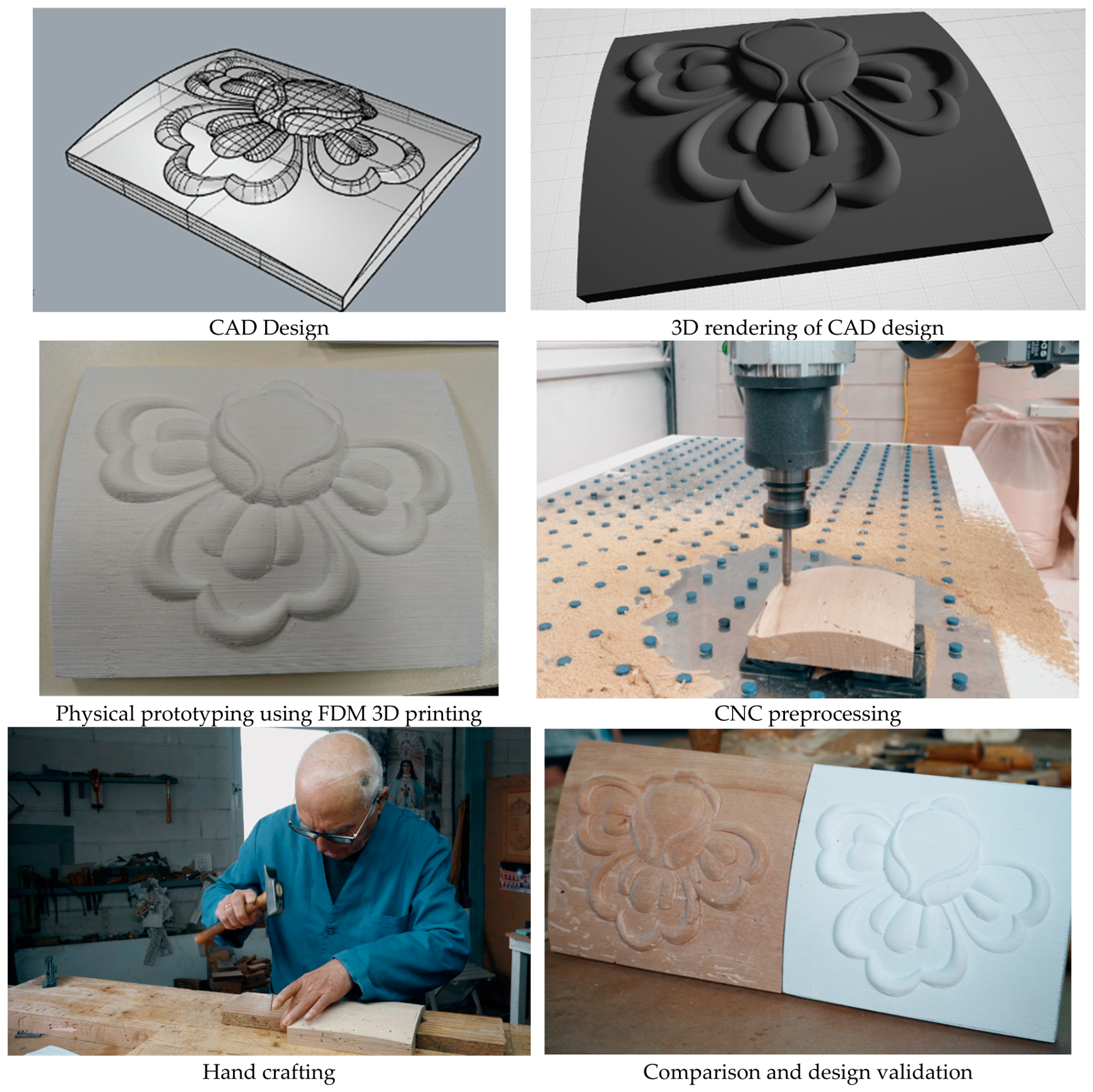
The pipeline consists of five sequential phases (see
Figure 7). In the first phase, the designer develops a three-dimensional sketch of the proposed piece, establishing the overall geometry, proportions, and surface articulation of the design at a level of precision that verbal description or two-dimensional drawing cannot convey. In the second phase, this digital model is used to generate a physical prototype via Fused Deposition Modelling (FDM) 3D printing in PLA. The prototype is produced at a fraction of the cost and material volume of a hand-carved wood equivalent, and its purpose is explicitly communicative rather than aesthetic.
In the third phase, the 3D-printed prototype is presented to the craftsperson for validation and adjustment. The craftsperson evaluates the prototype against the constraints and possibilities of the specific wood material and carving techniques to be used in the final piece. This evaluation generates explicit feedback on aspects of the design that are not feasible, not desirable, or not consistent with the material logic of wood carving. The designer then revises the CAD model in response to this feedback. In the fourth phase, the validated design is executed in wood by the craftsperson using traditional hand-carving techniques, supplemented where appropriate by CNC robot pre-shaping for complex geometries. In the fifth phase, the completed piece is evaluated against the original design intent through stakeholder interviews, process observation, and outcome comparison.
The evaluation results from the CETEM pilot confirm that this pipeline reduced the number of corrective iterations required during the carving phase, improved the clarity of designer intent as perceived by the craftsperson, and supported the production of a more geometrically complex piece than would have been economically feasible through purely manual processes. Critically, the craftsperson reported that the 3D-printed prototype clarified the designer’s formal intentions without constraining his own material judgement during execution. This outcome directly supports the mediator framing developed in
Section 5.
The tools and materials involved in the CETEM pipeline include a six-axis CNC robot for pre-shaping operations requiring high geometric precision, a desktop FDM 3D printer for prototype generation, standard woodcarving hand tools for finish execution, PLA filament for prototypes, and locally sourced hardwood for the final carved pieces.
4.7. Summary: Tool Clusters and Their Functions Across the RCIs
The four tool clusters described in this section were deployed in different combinations and at different levels of development maturity across the five RCIs.
Table 3 summarizes the functional role of each tool within the overall pilot, distinguishing between tools that primarily served documentation purposes, tools that served design support purposes, and tools that served communication purposes between design and craft practitioners.
This classification highlights a structural pattern that will be returned to in the cross-domain analysis: the tools deployed in exploratory RCIs primarily serve documentation and stimulus functions, while those deployed in advanced RCIs extend into active design support and practitioner communication. This difference in functional scope reflects not a difference in tool sophistication alone, but a difference in the depth and duration of the co-creative engagement that preceded and sustained each deployment.
5. Cross-Domain Comparative Analysis
5.1. Overview of the Five RCIs
Before presenting the four cross-cutting thematic findings, it is useful to situate the five RCIs within a shared analytical framework.
Table 4 below evaluates each RCI across seven dimensions drawn from the pilot’s consolidation phase assessments: degree of practitioner adoption, perceived usefulness, cultural legitimacy, technical maturity, sustainability impact, transferability potential, and educational effectiveness. Scores reflect a three-level ordinal scale (Low/Moderate/High) derived from the reflective assessments, workshop feedback, and artefact review conducted during the consolidation phase (
Section 3.1.3). The integration mode assigned to each RCI—exploratory or advanced—reflects the level of technological readiness and iterative tool development achieved across the eighteen-month pilot period.
Two observations structure the cross-RCI comparison. First, the advanced cases (ENSAD-Limoges and CETEM) consistently score higher across technical maturity, sustainability impact, and educational effectiveness, reflecting their extended iterative development cycles of up to eighteen months and the resulting depth of practitioner–tool co-calibration. Second, even the exploratory cases (CERFAV, CNAM, PIOP) achieve High scores on cultural legitimacy, confirming that the co-creative methodological stance—rather than technical sophistication alone—is the primary determinant of cultural legitimacy across heterogeneous craft domains. This finding directly informs the cross-cutting thematic analysis presented in
Section 5.2,
Section 5.3,
Section 5.4 and
Section 5.5.
5.2. Gesture as a Universal Craft Primitive
Perhaps the most striking finding to emerge from the cross-RCI analysis is the recurrence of gesture (the codified, intentional movement of the practitioner’s body in relation to material) as a fundamental unit of craft knowledge across all five domains. This finding is not, in itself, surprising: craft scholarship has long acknowledged the centrality of embodied knowledge. What is significant is that the CRAEFT pilot demonstrates, empirically and comparatively, that gesture is not only universal as a concept but tractable as a computational target across radically different material and temporal conditions.
At CERFAV, glassblowing gestural sequences (intrinsically time-critical and thermally bounded) were captured through egocentric and overview video recording, with semi-automatic action segmentation enabling the isolation of discrete procedural events. The resulting knowledge base allowed designers to review, annotate, and reinterpret gesture sequences in a web-based environment, transforming tacit practitioner knowledge into a structured, navigable archive. Student projects generated in response to this archive (including Making the Glass Sing, which used the acoustic properties of glass as a design medium, and Off-Centered Gestures, which reinterpreted asymmetrical blowing dynamics as a formal design variable) demonstrated that computational gesture documentation could function as a genuine creative stimulus rather than a mere archival record.
At the Limoges porcelain pilot, gesture was approached from a different angle: not as a sequence to be archived but as a generative medium for design exploration. The Ghost Gesture Design Workshop (M18–M24) used motion capture overlays to reveal the complex embodied dynamics of the turning process to design students, highlighting the precise interplay of hand pressure, rotational velocity, and tool angle that determines form. The subsequent Interactive Plaster Simulator (M24–M36) extended this insight into a real-time, physics-based environment in which students could manipulate virtual plaster with gesture-tracked tools, receiving immediate visual and acoustic feedback. Crucially, the simulator was not positioned as a substitute for physical practice but as a cognitive pre-visualization environment that enabled designers to develop gestural hypotheses before committing material. Designer Jessie Drogy, reflecting on her engagement with the Ghost Gesture Workshop and the Interactive Plaster Simulator, reported that working with the motion-captured turning overlays made the spatial and kinetic logic of the throwing process legible to her in a way that direct observation of the master turner had not. She noted that this visibility—the ability to see precisely where, when, and at what angle tool pressure was applied—gave her a new vocabulary for thinking about her own formal intentions. Anne Xiradakis similarly reported that the Plaster Simulator had changed her relationship to material uncertainty in the design process: rather than treating the gap between design intent and fired outcome as an unavoidable unknown, she now approached it as a variable she could investigate and partially anticipate. Both designers confirmed that this shift was not a replacement of physical intuition but an extension of it—the tools made previously implicit aspects of their material intelligence visible, articulable, and therefore available as explicit design variables.
At PIOP, gesture played a distinct but analogous role in the context of silversmithing and marble carving. Here, the gestural visualization toolkit was deployed not primarily for skill transmission but for cultural narrative: the documentation of master practitioners’ movements served as evidence of living heritage, supporting the argument that these crafts remain dynamic, practitioner-embodied traditions rather than museum artefacts. The cross-RCI implication is consequential: gesture capture, regardless of the specific tool pipeline employed, functions as a bridge between tacit knowledge and communicable design language, and this function is stable across domains as diverse as high-temperature glassblowing, slip-casting porcelain-making, and cold-chisel stone carving.
It should be noted explicitly that the gestural documentation toolkit deployed at PIOP for silversmithing functions as a documentation and visualization aid rather than as a process-changing intervention. It records and renders visible the gestural intelligence of master silversmiths without altering the physical execution of the craft. This is a deliberate design choice, consistent with the exploratory integration mode at PIOP and with the pilot’s overarching principle that digital tools should mediate rather than transform craft practice. The primary value of the toolkit at this site lies in making tacit knowledge visible and communicable to heritage audiences and design communities. Fine-detail design support and fabrication accuracy enhancement represent directions for a more advanced integration phase at this RCI, beyond the scope of the current pilot.
Similarly, the digital tools deployed for marble-carving at PIOP were scoped as cultural documentation and heritage communication instruments rather than as design-to-production transfer tools. Geometric precision evaluation and tool-path planning were not within the PIOP deployment brief, reflecting the institutional priority of heritage preservation over workflow optimization at this site. Future development toward production support would require a more advanced integration mode with dedicated geometric measurement protocols, as noted in
Section 7.
5.3. The Mediator–Standardiser Tension
A second cross-cutting finding concerns what the pilot terms the mediator–standardizer tension: the risk that digital tools, by imposing uniform interaction paradigms and output formats, reduce the cultural specificity of the craft practices they are intended to support. This tension manifested differently across the five RCIs, and the pilot’s response to it is instructive for the design of future digital heritage tools.
At CERFAV, the risk of standardization was managed through an explicitly reflexive methodological stance. The Glass Design Pilot framed digital tools (including video capture and knowledge-base registration) as instruments of material awareness rather than performance optimization. Designers were encouraged to engage with the documentation not as a benchmark but as a prompt for phenomenological inquiry: what does the glass feel like under these conditions? What does this gesture communicate beyond its functional effect? By positioning reflexivity as a design value, the CERFAV pilot insulated its digital workflows from the reductionism of purely efficiency-driven digitization.
At CETEM, the tension took a different form. The CAD → 3D printing → woodcarving pipeline is, structurally, a workflow that translates a designer’s digital intent into a physical communication artefact, the 3D-printed mock-up, that a craftsperson can evaluate, correct, and ultimately supersede with hand-carved execution. The risk here was not that digital tools would flatten gesture but that they would flatten form: that the geometric precision of parametric CAD would impose a standardized aesthetic logic onto a craft tradition whose value lies precisely in the variability and expressiveness of hand-carved wood. The pilot managed this risk by positioning the 3D-printed prototype not as a final template but as a negotiation object, a physical proposal that the woodcarver, Francisco Sánchez Carcelén, was explicitly invited to interrogate, modify, and depart from. The evaluation results confirmed that this framing was effective. Woodcarver Francisco Sánchez Carcelén reported that the 3D-printed prototype resolved a recurring problem in the commission workflow: designers had previously communicated their formal intentions through technical drawings or verbal descriptions that left significant ambiguity about proportions, surface transitions, and the intended relationship between carved and smooth areas. The physical mock-up eliminated this ambiguity without prescribing the execution. Sánchez Carcelén could evaluate the prototype tactilely, identify the departures from conventional woodcarving logic that would need to be renegotiated, and propose material-driven modifications before any irreversible carving had begun. His assessment was that the digital pipeline had made the designer legible to him—not as a set of instructions to be followed, but as a collaborator whose intent he could now read, respond to, and where necessary, correct. This is precisely the mediator function: the tool communicated intent without prescribing resolution, leaving the craft intelligence of execution intact.
The Limoges porcelain pilot presented perhaps the most nuanced instance of the tension. The Interactive Plaster Simulator, while technically sophisticated, risked becoming a standardizing influence by encoding a particular physics model of plaster behavior that may not capture the full range of material responses experienced by skilled practitioners. Early feedback from designers and students identified specific artefacts of this standardization: unrealistic tool behavior, the absence of gravity-responsive base dynamics, lack of spatial reference cues, and inadequate ergonomic calibration. The iterative refinement cycle (M21–M36) addressed these shortcomings systematically, but the pilot’s assessment (documented in the reflective evaluations) is that interactive simulation can approximate but not reproduce the full phenomenological richness of physical making. The appropriate role of the simulator is to extend design inquiry, not to replace craft practice.
Across all five RCIs, the evidence converges on a single principle: digital tools function as mediators when their outputs are treated as proposals subject to practitioner critique, and as standardizers when their outputs are treated as specifications that practitioners are expected to execute. This distinction is not only technological but also institutional and relational.
5.4. Co-Creation as the Condition for Tool Legitimacy
The third cross-cutting finding is that co-creation is not just a desirable feature of craft-sensitive digital tool development. It is, as the pilot evidence suggests, a necessary condition for the cultural legitimacy and practical adoption of those tools.
The distinction between co-created and externally imposed tools was sharpest at the Limoges pilot. The Ghost Gesture Design Workshop was not designed in advance of practitioner engagement but emerged from it: the decision to use motion capture overlays as a pedagogical device arose from designers’ expressed need to understand the invisible spatial logic of the throwing process. Similarly, the specific design parameters of the Interactive Plaster Simulator, such as the tool geometry, the noise and acoustic feedback, and the spatial reference conventions, were progressively determined by student and designer feedback across two workshop cycles, in constant dialogue with the technical team. The result was a tool that practitioners experienced as responsive to their practice rather than imposed upon it.
This co-creative dynamic was equally visible, if less elaborately documented, at CERFAV and PIOP. At CERFAV, the reflexive methodology explicitly centered practitioners’ phenomenological experience as the primary design criterion; digital tools were adopted, adapted, or discarded based on their capacity to deepen that experience. At PIOP, the collaboration with designer Achilleas Georgiadis shaped not only the specific gestural visualization experiments conducted but the framing of design itself as a tool for heritage preservation. Georgiadis reported that the documentation process altered his understanding of his own role as a designer in a heritage context. Where he had previously conceived of his work as developing contemporary objects informed by traditional craft, he came to see it—through the process of co-designing the gestural documentation sessions—as an act of cultural inscription: a practice that participates in, and is therefore responsible for, the ongoing survival of the silversmithing and marble-carving traditions with which he works. This reorientation was not produced by the digital tools themselves, but by the co-creative process through which the tools were designed. The tools became a shared object of inquiry around which practitioners and researchers negotiated what was worth preserving, why, and for whom. This was a conceptual reorientation that changed the questions the digital tools were asked to answer.
The cross-RCI implication is that co-creation functions as a form of cultural calibration: it is the process through which universal digital tool capabilities are tuned to the specific material, social, and symbolic conditions of each craft domain. Without this calibration, tools risk operating at a level of generality that is technically functional but culturally hollow. With it, they extend craft intelligence rather than attempting to substitute it.
5.5. Methodological Portability vs. Workflow Replication
The fourth and final cross-cutting finding concerns the nature of transferability across RCIs. A straightforward reading of the pilot might conclude that, because different RCIs employed different tools, the pilot does not demonstrate transferability at all. This is because glassblowing and woodcarving are simply too different to share anything of methodological consequence. This reading is incorrect, but the correct alternative requires a precise distinction: what the pilot demonstrates is methodological portability, not workflow replication.
Workflow replication would mean applying the CETEM CAD-to-3D-print pipeline to a tapestry or glassblowing context or deploying the Limoges plaster simulator in a woodcarving workshop. These transpositions would, in most cases, be technically inappropriate and culturally incongruous. Methodological portability means something different: it refers to the transferability of the structural logic of the co-creative cycle (investigative phase, practitioner-led tool development, iterative workshop refinement, reflective assessment) across all five RCIs, regardless of the specific tools deployed within each.
This structural logic is, as the pilot evidence suggests, robustly portable. Each RCI instantiated the same fundamental sequence: listen to practitioners, prototype a digital response, test it in a real workshop, collect reflective feedback, refine. The specific tools that emerged from this sequence differed radically (PBR previews, gesture archives, physics simulators, 3D-printed mock-ups) because the craft contexts are essentially different. But the sequence itself was stable, and its stability is what enables the pilot to function as a shared research space rather than a collection of isolated experiments.
The cross-pollination enabled by this shared methodology is demonstrated concretely in several instances. The precision and sequencing logic of glassblowing gesture capture informed the design of the motion registration pipeline used at Limoges. The narrative and image-structure analysis developed for tapestry opened perspectives for how gestural documentation at PIOP could be framed for public heritage communication. The material validation methodology developed at CETEM, and in particular the use of a physical prototype as a negotiation object between designer and craftsperson, offers a transferable model for any RCI in which designer intent and craft execution risk becoming misaligned.
The implication for future multi-domain digital heritage projects is direct: invest in the portability of methodology rather than the replication of tools. Shared frameworks for co-creation, documentation, iterative refinement, and reflective assessment produce more durable and culturally sensitive outcomes than the uniform deployment of a single digital tool stack across heterogeneous craft communities.
6. Sustainability and Cultural Preservation Implications
6.1. Reframing Sustainability in the Craft Heritage Context
The concept of sustainability, as applied to traditional craft practices, encompasses dimensions that extend well beyond the environmental metrics typically associated with industrial production. In the craft heritage context, sustainability is simultaneously ecological, cultural, economic, and epistemic: it concerns the reduction in material waste and energy consumption, certainly, but equally the perpetuation of living knowledge traditions, the economic viability of craft communities, and the preservation of the cognitive and gestural repertoires that constitute intangible cultural heritage under UNESCO’s 2003 Convention. The CRAEFT Design Pilot engages all four of these dimensions, and the cross-RCI evidence offers a nuanced picture of how digital tools can support or, if poorly calibrated, undermine each of them.
A critical observation that frames this section is that sustainability and digital innovation are not inherently complementary. Digital tool pipelines carry their own environmental footprint (in computation, hardware manufacture, and energy consumption) and their cultural sustainability depends entirely on the conditions under which they are introduced. The pilot’s evidence suggests that when digital tools are introduced co-creatively, in response to practitioners’ documented needs, their sustainability contribution is positive across multiple dimensions simultaneously. When they are introduced as externally mandated upgrades, their cultural sustainability is at best neutral and at worst corrosive.
6.2. Ecological Sustainability: Material Waste Reduction and Process Optimisation
Two of the five RCIs generated direct evidence of digital tools contributing to ecological sustainability through reduction in material waste and process iterations.
At the Limoges porcelain pilot, the deployment of Physically Based Rendering (PBR) for ceramic process state visualization addressed a longstanding inefficiency in traditional porcelain design practice: the inability to predict with confidence how a form’s appearance will change across successive firing stages, from greenware through bisque to glazed and vitrified states. Porcelain design has historically required extensive physical sample series to evaluate glaze behavior, color development, and dimensional change, each iteration consuming raw material, kiln energy, and studio time. The PBR workflow developed within the pilot allows designers to visualize these transformations digitally, using neutral analytical lighting for objective form assessment and HDRI illumination for realistic appearance evaluation, before committing to physical production. While the pilot is appropriately cautious in quantifying waste reduction since the design process involves irreducible physical experimentation, the directional contribution to material efficiency is clear. Digital pre-visualization narrows the design search space before material resources are committed.
At CETEM, the contribution to ecological sustainability is more directly measurable. The CAD → FDM 3D-printing → woodcarving pipeline introduces a physical prototype at the stage of designer–craftsperson negotiation, replacing what would traditionally have been either a purely verbal briefing (prone to misinterpretation, requiring multiple corrective iterations in expensive carved wood) or a full-scale wood mock-up produced at significant material cost. The 3D-printed prototype, produced in PLA at a fraction of the cost and material volume of a carved wood equivalent, serves as a communication artefact that surfaces misalignments between designer intent and craftsperson interpretation before any irreversible material transformation has occurred. The evaluation results confirm that this intervention reduced the number of corrective carving iterations required, with direct implications for timber consumption, tool wear, and workshop time.
6.3. Cultural Sustainability: Preserving Living Knowledge Traditions
The most consequential sustainability contribution of the Design Pilot is epistemic: the documentation and partial externalization of tacit knowledge that, in the absence of deliberate preservation effort, is at serious risk of disappearing with the practitioners who hold it.
This risk is not uniform across the five RCIs. At CERFAV, glassblowing retains a relatively robust institutional infrastructure. The Centre was established in 1991 specifically to train and support glass artists. The knowledge transmission challenge is primarily one of accessibility and reach rather than imminent loss. At PIOP, however, the situation is more acute. Tinos marble-carving and Ioannina silversmithing are geographically concentrated, demographically aging, and economically marginal crafts whose practitioner communities are small enough that the loss of even a single master craftsperson represents a significant reduction in the total available expertise. The gestural visualization work conducted at PIOP, including the documentation of designer Achilleas Georgiadis’s distinctive working methods, should be understood in this context not merely as a design research exercise but as an act of cultural insurance.
The Aubusson tapestry case raises a different but equally important dimension of cultural sustainability: the sustainability of meaning. Tapestry is not merely a textile technique; it is a complex image technology with deep roots in European representational culture, carrying centuries of iconographic convention, gestural craft intelligence, and institutional heritage. The tapestry design pilot coordinated by the CNAM team approached digital integration through the lens of this complexity, framing the relationship between gesture and image and the way in which a weaver’s physical movement produces pictorial illusion. These were examined as a site of contemporary design inquiry rather than a historical curiosity to be archived. By positioning tapestry as a living image technology capable of engaging contemporary visual culture, the pilot contributes to the cultural sustainability of the practice in a way that purely preservationist approaches cannot: it generates new reasons for audiences, designers, and institutions to invest in the craft’s continuation.
6.4. Economic Sustainability: Enabling Craft Communities Through Design-Led Innovation
A recurring theme across the five RCIs is the potential of design-led digital integration to expand the economic viability of craft communities by opening new markets, reducing production costs, and generating intellectual property in the form of documented knowledge assets.
At CETEM, the design pilot with furniture designer Florián Moreno and woodcarver Francisco Sánchez Carcelén demonstrated that the integration of CAD-based design and digital prototyping into a traditional woodcarving workflow can support the production of more complex, design-intensive pieces than would be economically feasible through purely manual processes. The 3D-printed prototype accelerates the design negotiation phase, compresses the time between concept and carved artefact, and reduces the economic risk of complex commissions by surfacing structural and aesthetic problems early. These efficiency gains do not diminish the craft content of the final product. The carving itself remains entirely hand-executed. Prototypes make the production of ambitious, high-value pieces more commercially accessible.
At PIOP, the framing of digital documentation as a heritage platform explicitly connects cultural preservation with economic opportunity. The documented gestural repertoires, material processes, and cultural narratives generated through the pilot constitute assets that can support educational programs, exhibition content, licensing frameworks for design-led craft reproductions, and applications for heritage designation or craft protection status. These are, in effect, knowledge assets with economic value: they make the cultural specificity of Tinos marble-carving and Ioannina silversmithing legible, communicable, and therefore commercially and institutionally actionable in ways that undocumented tacit knowledge cannot be.
6.5. Epistemic Sustainability: Craft Knowledge as Renewable Resource
The deepest sustainability argument to emerge from the cross-RCI analysis is epistemic: that craft knowledge, properly documented and made accessible through co-creatively designed digital tools, functions not as a finite resource to be conserved but as a renewable one capable of generating new design inquiry, new cultural production, and new communities of practice in each generation that engages with it.
This argument is illustrated most clearly by the student projects generated at CERFAV. The motion-captured gesture archives and the reflexive design methodology through which students engaged with them produced design projects. These projects were named: “Making the Glass Sing”, “Off-Centered Gestures”, “Showing the Temperature of Glass”. These projects were simultaneously rooted in the specific material intelligence of glassblowing and genuinely contemporary in their design ambitions. The digital tools did not replace the craft; they made it available as a creative medium for designers who had not spent years in the furnace room. This is the epistemic sustainability dividend of well-designed digital mediation: it expands the community of practitioners who can engage productively with a craft tradition, without requiring that all of them become master craftspeople.
The Limoges porcelain pilot makes the same argument at greater technical depth. The Ghost Gesture Workshop and the Interactive Plaster Simulator together constitute a pedagogical infrastructure that allows design students to develop intuitions about the gesture–form relationship during plaster turning practice before and alongside physical engagement. As documented in
Section 5.2, designers Drogy and Xiradakis both confirmed that this capacity to render tacit knowledge explicit while maintaining its tacit character in the process is perhaps the most significant sustainability contribution craft-sensitive digital tools can make.
6.6. Implications for Heritage Policy
The cross-RCI sustainability findings carry direct implications for European heritage policy, particularly in the context of the UNESCO 2003 Convention on the Safeguarding of Intangible Cultural Heritage and the EU’s ongoing attention to the cultural and creative industries under the Creative Europe program.
First, the pilot evidence supports the argument that digital documentation strategies for ICH should be designed co-creatively, with practitioner communities, rather than imposed as external preservation mandates. Top-down digitization programs risk producing archives that are technically comprehensive but practically inert, being disconnected from the living practice communities that give the documented knowledge its meaning and its capacity for renewal. The CRAEFT methodology offers an evidence-based model for practitioner-centered digital heritage work that European heritage institutions could adopt and scale.
Second, the pilot demonstrates that investment in craft-sensitive digital infrastructure (tools designed specifically for the material, gestural, and cultural conditions of particular craft domains) generates sustainability returns across ecological, cultural, economic, and epistemic dimensions simultaneously. Generic digital tools, applied without domain-specific calibration, deliver only a fraction of this return. Heritage funding bodies should therefore prioritize the co-creative development of domain-specific tools over the procurement of off-the-shelf digital platforms, even where the latter appear more cost-efficient in the short term.
Third, and most broadly, the pilot reinforces the argument that craft heritage sustainability is not a conservation problem to be solved by archiving what exists, but a living culture challenge that requires ongoing investment in the conditions (educational, institutional, economic, and technological) under which craft knowledge can continue to be practiced, transmitted, and renewed. Digital tools, deployed with methodological care and practitioner partnership, are a powerful instrument in the service of that challenge. They are not, however, a substitute for human relationships, institutional commitments, and policy frameworks that make craft communities viable in the first place.
7. Discussion
7.1. Reframing Digital Transformation in Craft Heritage
The findings presented in
Section 5 and
Section 6 invite a fundamental reframing of what digital transformation means in the context of living craft heritage. The dominant discourse around digital transformation in cultural heritage has tended to position digitization as an unqualified good: a way of making heritage more accessible, more durable, and more legible to contemporary audiences. The CRAEFT pilot evidence complicates this position without rejecting it. Digital transformation is neither inherently beneficial nor inherently harmful to craft heritage. Its value depends entirely on the conditions under which it is introduced, the purposes it is designed to serve, and the degree to which practitioners retain agency over its direction.
The mediator–standardizer framework developed in
Section 5 offers a more precise vocabulary for this evaluation than the binary of “digital good” versus “digital bad.” It shifts attention from the properties of specific tools to the methodological and relational conditions that determine how those tools function in practice. A motion capture system is not intrinsically a mediator or a standardizer. It becomes one or the other depending on whether it is introduced through a co-creative process that centers practitioner experience, or imposed as an external documentation mandate that treats craft knowledge as data to be extracted.
This reframing has practical implications for how digital heritage projects are designed and evaluated. Evaluation frameworks that focus exclusively on technical metrics, such as capture resolution, simulation fidelity, or rendering accuracy, miss the most consequential dimension of digital tool performance in craft contexts. The relevant questions are not only whether the tool works technically, but whether practitioners experience it as culturally legitimate, whether it generates new forms of design inquiry rather than merely recording existing ones, and whether the knowledge it produces remains connected to the living practice community from which it was drawn.
7.2. The Role of Time in Co-Creative Tool Development
One of the most consistent findings across the five RCIs is that the quality of digital tool mediation is strongly correlated with the duration and depth of the co-creative engagement that preceded it. The most technically sophisticated and culturally resonant tools in the pilot, the Interactive Plaster Simulator and the PBR ceramic preview workflow at Limoges, were also those that underwent the most extended iterative development cycles, spanning up to eighteen months of practitioner-led refinement.
This finding has important implications for project design and funding structures. The timeline typically available in research project contexts, including the eighteen-month execution window of the CRAEFT Design Pilot, is at the lower boundary of what is required to develop digital tools that are both technically functional and culturally calibrated. The Ghost Gesture Workshop at Limoges demonstrated that even a single well-designed workshop can generate genuinely productive design inquiry. However, the trajectory from first prototype to refined, practitioner-validated tool requires multiple feedback cycles, and each cycle requires sufficient time for practitioners to integrate the tool into their creative practice before being asked to evaluate it.
The implication for research funders and heritage institutions is direct. Short-term digitization projects, however technically ambitious, are unlikely to produce tools that achieve the cultural legitimacy and practical adoption rates of those developed through sustained co-creative engagement. Funding structures that support multi-year, practitioner-centered development cycles are a prerequisite for the kind of outcomes the CRAEFT pilot demonstrates at its most advanced sites.
7.3. Heterogeneity as a Research Asset
A natural response to the heterogeneity of the five RCIs is to treat it as a methodological limitation. If the craft domains, digital tools, integration modes, and institutional contexts differ so substantially across cases, what can valid cross-domain comparison actually establish? This concern is legitimate but, as the pilot evidence suggests, ultimately misplaced.
Heterogeneity in a multi-domain pilot is not primarily a source of confounds. It is a source of discriminating variation that allows researchers to test which findings are domain-specific and which are genuinely cross-cutting. The mediator–standardizer tension, the centrality of co-creation as a legitimating condition, and the structural portability of the iterative methodology are findings that emerge precisely because they hold across contexts as different as glassblowing and woodcarving, tapestry and silversmithing, porcelain slip-casting and stone carving. If the pilot had been conducted within a single craft domain, these findings would have been indistinguishable from domain-specific results.
The pilot also demonstrates that heterogeneity generates productive cross-pollination that would not be available within a single-domain study. The precision and sequencing logic of glassblowing gesture capture informed the design of the motion registration pipeline used at Limoges. The narrative framing developed for PIOP’s cultural heritage documentation opened new perspectives for how gestural archives could be made accessible to public audiences beyond the design research community. The material validation methodology at CETEM offers a transferable model for any context in which designer intent and craftsperson execution risk becoming misaligned. These transfers are not incidental to the pilot. They are among its most significant methodological contributions.
7.4. Limitations
Six limitations of the present study warrant explicit acknowledgement.
Methodological scope. The CRAEFT Design Pilot was designed as a co-creative design research study. The primary outcomes targeted were cultural legitimacy and practitioner adoption of digital tools within living craft communities. Claims about tool effectiveness are therefore bounded by this scope and should not be generalized to industrial production or precision engineering contexts. Systematic quantitative measures of output accuracy, workflow efficiency, and material savings, while valuable, were outside the pilot’s original data collection protocol. This is the most significant methodological gap for future work, and specific quantitative priorities are identified in
Section 7.6.
Depth asymmetry across RCIs. The five cases were not investigated at equal depth. ENSAD-Limoges and CETEM received substantially more extended and technically developed treatment than CERFAV, Aubusson, and PIOP, which operated primarily in exploratory mode. This asymmetry reflects the actual structure of the pilot rather than an analytical choice, but it means that the cross-domain comparisons in
Section 5 are not fully balanced. Findings drawn primarily from the advanced cases carry greater empirical weight than those drawn from exploratory contexts.
Self-reporting bias in practitioner evaluations. The reflective assessments and feedback sessions that provide the primary qualitative evidence base for this paper were conducted within the pilot itself, with participants who had a degree of institutional investment in its success. Independent evaluation by practitioners with no prior connection to the project would provide a more robust test of the findings, particularly those concerning tool legitimacy and cultural appropriateness.
Absence of longitudinal data. The pilot was designed and executed within a defined project timeframe. It can document the immediate and short-term responses of practitioners to digital tool integration, but it cannot assess whether the tools, workflows, and methodological approaches developed during the pilot have been sustained, adapted, or abandoned by participating institutions after the project funding period ended. Longitudinal follow-up studies would be required to assess the actual durability of the pilot’s outcomes.
Measurement precision. The sustainability contributions documented in
Section 6—particularly the reduction in material waste through digital pre-visualization and prototyping are argued directionally and not measured precisely. The pilot did not include a controlled experimental design that would allow quantitative comparison of material consumption with and without digital tool integration. Similarly, deviation measurements between designed prototypes and final crafted objects, iteration count comparisons against industry baseline workflows, and colorimetric comparison between PBR glaze predictions and fired ceramic outcomes were not collected as part of the pilot’s data protocol. Future studies with more tightly controlled evaluation frameworks could provide the quantitative evidence base that the present qualitative analysis cannot.
External validation. The findings have not been subject to independent external evaluation beyond the project team and partner institutions. Independent replication studies and external expert assessment are recommended before the design principles derived from this pilot are applied at European policy scale.
7.5. Towards a Craft-Sensitive Digital Infrastructure
The cross-RCI findings support the argument for a craft-sensitive digital infrastructure: a set of design principles, institutional arrangements, and funding commitments that enable digital tools to function consistently as mediators rather than standardizers of craft knowledge across the full diversity of European craft traditions.
Several design principles for such an infrastructure emerge from the pilot evidence. Digital tools for craft heritage should be developed through co-creative processes that position practitioners as primary stakeholders, not as subjects of documentation. They should be designed to be modular and contextually adaptable, rather than uniform and domain-agnostic. Their outputs should be treated as proposals subject to practitioner critique, not as specifications for execution. Their evaluation should attend to cultural legitimacy and creative impact, not only technical performance. And their development timelines should be calibrated to the pace at which craft practitioners can meaningfully integrate new tools into their practice, which is invariably slower than the pace at which those tools can be technically developed.
At the institutional level, craft-sensitive digital infrastructure requires sustained partnerships between research institutions, craft schools, museums, and practitioner communities. These partnerships cannot be constituted solely for the duration of a funded project. They require long-term relational investment of the kind that the CRAEFT consortium has begun to develop, and that future initiatives in this space should be designed to continue and deepen.
At the policy level, craft-sensitive digital infrastructure requires funding mechanisms that reward methodological depth and practitioner engagement rather than purely technical output. The most significant contributions of the CRAEFT Design Pilot are not the specific tools it produced, impressive as some of them are. They are the co-creative processes, the practitioner-validated methodologies, and the comparative analytical frameworks that can inform the next generation of digital craft heritage work across Europe and beyond.
7.6. Future Research Directions
Several directions for future research are suggested by the findings and limitations of this study.
Quantitative instrumentation across all RCIs. The most immediate priority is the addition of fully instrumented quantitative evaluation to the case studies. Specific measures include: deviation analysis between 3D-printed prototypes and final carved objects at CETEM, with comparison against industry baseline CNC workflow iteration counts; alignment accuracy and temporal consistency metrics for the motion capture pipeline at CERFAV; Delta-E colorimetric comparison between PBR glaze predictions and fired ceramic outcomes across a controlled sample series at ENSAD-Limoges; and geometric precision assessment for marble-carving tool-path planning at PIOP. These measures would complement the qualitative and ordinal evidence base of the present study and enable claims about tool performance to be stated with greater precision.
Cross-domain comparative studies with balanced depth across all cases would strengthen the empirical basis for the cross-cutting findings identified here. Future pilots should be designed to bring all participating RCIs to an equivalent level of methodological depth, either by extending the timeframe available for exploratory contexts or by concentrating the pilot on a smaller number of cases that can each be investigated with equal thoroughness. This would correct the depth asymmetry acknowledged in
Section 7.4 and strengthen the empirical basis for cross-cutting findings.
Longitudinal evaluation of pilot outcomes would address the sustainability question that the present study leaves open: whether co-creatively developed digital tools are actually sustained and evolved by craft communities after the formal project period ends. This would require follow-up engagement with participating institutions at intervals of one, three, and five years after project completion.
Quantitative studies of material waste reduction and process efficiency gains attributable to digital pre-visualization and prototyping would complement the qualitative sustainability argument developed in
Section 6. Such studies would need to include control conditions in which equivalent design challenges are addressed without digital tool support, allowing direct comparison of material consumption, iteration counts, and production timelines.
Extension of the cross-RCI methodology to craft traditions beyond Europe would test the cultural portability of the co-creative approach. The mediator–standardizer framework and the iterative co-creation methodology were developed within a specifically European institutional and heritage context. Their applicability in craft communities with different relationships to digital technology, different institutional structures, and different conceptions of heritage authenticity remains to be established.
Finally, the role of digital tools in craft education, as distinct from craft documentation and design support, merits dedicated investigation. The pedagogical dimension of the Limoges pilot, particularly the use of gesture capture and simulation to support design students’ development of material intuition, suggests that craft-sensitive digital tools could make a substantial contribution to design education more broadly. Systematic evaluation of learning outcomes, skill transfer, and long-term pedagogical impact has not yet been conducted with the rigor this contribution deserves.
8. Conclusions
8.1. Summary of Findings
This paper has presented a cross-domain comparative analysis of the CRAEFT Design Pilot, examining how context-specific digital tools functioned as mediators of craft knowledge across five heterogeneous European craft traditions: glassblowing, Aubusson tapestry, Tinos marble carving and Ioannina silversmithing, Limoges porcelain, and Yecla woodcarving. The analysis was organized around four cross-cutting themes, each of which generated findings with implications that extend beyond the specific domains and tools of the pilot.
The first finding is that gesture constitutes a universal craft primitive that is tractable as a computational target across radically different material and temporal conditions. Motion capture, gesture visualization, and physics-based simulation each found productive application in craft domains as different as the thermally bounded, time-critical gestures of glassblowing and the diverse gestures of porcelain making. The common thread is not the specific tool pipeline but the function it serves: making visible the embodied intelligence that is otherwise locked within practitioner bodies and inaccessible to designers, students, and heritage audiences.
The second finding is that the mediator–standardizer tension is a real and consequential feature of digital tool deployment in craft heritage contexts, and that co-creative methodology is the primary instrument through which it is managed. Tools introduced through practitioner-led development cycles consistently achieved cultural legitimacy and creative resonance. Tools introduced as external mandates or uniform deployments consistently risked flattening the material, gestural, and symbolic particularity that gives craft traditions their value. This finding reframes the question of digital tool quality from a technical problem to a methodological and relational one.
The third finding is that co-creation is not merely a desirable feature of craft-sensitive digital tool development. It is a necessary condition for the tools’ cultural legitimacy and practical adoption. The evidence from all five RCIs converges on this conclusion. The most technically sophisticated tools in the pilot achieved their impact not because of their technical sophistication alone, but because they were developed through sustained, iterative engagement with practitioners who shaped their design parameters, identified their limitations, and progressively validated their cultural appropriateness.
The fourth finding is that methodological portability, not workflow replication, is the appropriate model for scaling insights from a multi-domain craft pilot. The structural logic of the co-creative cycle, encompassing the investigative phase, practitioner-led tool development, iterative workshop refinement, and reflective assessment, proved stable and transferable across all five RCIs. The specific tools that emerged from this cycle differed radically because the craft contexts differed radically. This is not a limitation of the methodology. It is evidence of its sensitivity to context, which is precisely the quality that craft-sensitive digital infrastructure requires.
8.2. Theoretical Contributions
The paper makes two principal theoretical contributions to the fields of digital heritage, design research, and human–computer interaction.
The first is the mediator–standardizer framework for evaluating digital tools in living heritage contexts. This framework provides a vocabulary for distinguishing between digital interventions that genuinely extend craft intelligence and those that reduce it to data. It is grounded in the empirical evidence of the pilot but draws on broader theoretical traditions in the anthropology of technology, critical heritage studies, and science and technology studies. The framework is applicable to digital heritage projects well beyond the craft domain and offers a more nuanced evaluative lens than purely technical performance metrics.
The second theoretical contribution is the concept of craft-sensitive digital infrastructure: a set of design principles, institutional arrangements, and funding commitments that enable digital tools to function consistently as mediators of craft knowledge across heterogeneous traditions. This concept moves the discussion beyond individual tool evaluations to address the systemic conditions under which craft-sensitive digital development becomes possible and sustainable. It connects the micro-level findings of the pilot to the macro-level questions of heritage policy and research funding that will determine the long-term trajectory of digital craft heritage work in Europe.
8.3. Practical Implications
The findings carry direct practical implications for three communities of practice.
For digital heritage researchers and tool developers, the pilot demonstrates that co-creative, practitioner-centered development cycles consistently outperform expert-led approaches in terms of cultural legitimacy, practitioner adoption, and creative impact. Investment in the process of tool development is as important as investment in the technical capabilities of the tools themselves. Evaluation frameworks should assess cultural resonance and practitioner agency alongside technical performance.
For craft institutions, design schools, and heritage organizations, the pilot demonstrates that digital tools can make genuine contributions to the sustainability of craft knowledge traditions when introduced with methodological care and long-term relational commitment. The specific tools are less important than the conditions under which they are conceived and introduced. Institutions that invest in sustained co-creative partnerships with research and technology communities are better positioned to develop digital resources that serve their communities than those that procure off-the-shelf solutions or participate in short-term digitization projects.
For heritage policy makers and research funders, the pilot provides evidence that the most significant contributions of digital craft heritage projects are methodological and relational rather than purely technical. Funding structures that reward methodological depth, practitioner engagement, and long-term partnership development will generate more durable and culturally valuable outcomes than those that prioritize technical output and short project timelines. The co-creative methodology demonstrated in the CRAEFT pilot offers a replicable model that could inform the design of future European heritage research programs.
8.4. Closing Remarks
Traditional craft practices are not relics of a pre-industrial past awaiting digital rescue. They are living knowledge traditions, sustained by communities of practitioners who hold in their bodies and their workshops forms of intelligence that no archive, however technically sophisticated, can fully capture. The value of digital tools in this context is not to replace that intelligence or to make it permanently accessible in the absence of practitioners. It is to extend the reach of craft knowledge into new design contexts, to make its less visible dimensions more intelligible to those learning to engage with it, and to create the conditions under which it can continue to be practiced, transmitted, and renewed by each new generation that encounters it.
The CRAEFT Design Pilot demonstrates that this is achievable and that it requires no sacrifice of cultural specificity or practitioner agency. It requires only the methodological commitment to listen before building, to test before deploying, and to treat the diversity of craft traditions not as a complication to be standardized away, but as the irreplaceable source of the creativity, resilience, and cultural depth that makes European craft heritage worth preserving in the first place.




 ,
,