1. Introduction
In recent years, there has been a growing interest in the field of psychology regarding the impact of the environment on human development and behavior. A critical area of study is the urban milieu, which affords the chance to identify a multitude of aspects of its influence on city dwellers.
A greater half of the global population resides in urban territories [
1]. Moreover, the majority of people spend approximately 90 percent of their time within the confines of buildings [
2]. The conditions created by the internal environment have various effects on individuals. The elements of architecture, such as lighting, acoustics, color, texture, and geometry, have been shown to exert psychological and physiological influence on urbanites [
3]. Many years ago, the renowned Swiss modernist architect Le Corbusier [
4] posited that architectural forms “exert a physiological influence on our senses”.
Nick Dunn has metaphorically described urban life in the following terms: “the designated, the delineated and the specialized versus the repugnant, the abhorrent and the retrograde: a metropolis in conflict with its own citizenry. The borders and surfaces are marred by the material manifestations of security measures—metallic teeth designed to ward off the very flesh that yearns for respite and regeneration” [
5] (p. 58).
A growing body of scientific inquiry corroborates the notion that psychological well-being is profoundly shaped by the built environment [
6,
7,
8,
9,
10]. Housing quality emerges as a critical determinant of mental health [
11,
12,
13,
14], while graffiti, vandalism, and litter pose significant threats to the state of security [
15,
16], etc. Recent studies have demonstrated the significance of environmental design choices, such as lighting, acoustics, security measures, and the provision of public and esthetic spaces, in shaping the mental well-being of urban residents [
17]. These investigations have also shown that oppressive environments, characterized by excessive noise, a lack of personal space and social support, perplexing layouts, insufficient natural light, and restricted access to natural surroundings, can significantly impair an individual’s physical and psychological health [
18].
Today, existing security research is mainly characterized by a negative approach, with an emphasis on the lack of security and an almost exclusive emphasis on threats and risks [
19]. Historically, research on urban resident security has primarily focused on crime rates and social welfare indicators such as food quality and access to healthcare. This approach mainly addresses material aspects and external environmental comfort. However, scholars have recognized that safety deficiencies are more closely linked to societal structures, cultural norms, and daily experiences of urban dwellers rather than individual criminal incidents [
20].
Despite the increasing body of knowledge regarding the influence of the domestic environment on mental health, there remain areas that require further investigation. One such area is the dearth of empirical studies exploring the psychological security of urban dwellers residing in diverse types of housing.
The approach outlined in this paper serves as a bridge between the fields of environmental psychology and urban sociology. It elucidates the intricate connection between architectural features of residential structures and various dimensions of psychological security, encompassing aspects such as trusting relationships, reliability, self-efficacy, freedom, comfort and control over the environment. The monitoring of psychological security criteria can contribute to an exploration of individual predictors for safe and dangerous behavior among urban dwellers. It can also shed light on the way individuals perceive their surroundings and help to identify the patterns that shape the psychological effects of urbanization. The study of psychological security provides a platform for tackling mental health, well-being, and positive functioning of urban dwellers, significantly advancing theoretical frameworks in psychological science and practice, which aim to comprehend the nuances of human psychological security in urban environments.
Thus, this research aims to explore the intricate relationship between the architectural character of a city dweller’s residence and their psychological security in the urban milieu.
1.1. Psychological Security of Urbanites
The issue of psychological security in the urban environment remains relatively unexplored by psychologists, despite the fact that a substantial portion of the global population resides in urban settings characterized by distinct features. In their study, Chinese psychologists J. Wang, R. Long, H. Chen and Q. Li noted [
21] that the psychological security of urban dwellers as a distinct phenomenon has not been studied or quantified. Contemporary authors emphasize that an individual’s psychological security is intricately linked to their place of residence, which serves as a critical component of their surroundings [
22]. A study conducted by a team of Russian psychologists revealed that the sense of security afforded by one’s residence in a particular urban locale contributes to a reduction in anxiety and stress [
23].
J. Wang, R. Long, H. Chen, and Q. Li [
21] delineated a number of dimensions of psychological security for urban dwellers, including emotional state and sense of security, behavioral flexibility (including propensity for risk-taking), physical and psychological health, confidence in the external world, and predisposition to prosocial behavior. The psychological security of urbanites is also shaped by a multitude of external factors, such as the prevalence of joblessness, migration dynamics, socioeconomic challenges, and so forth [
24], which manifest themselves in the emotional bonds that city-dwellers forge, their perception of their urban surroundings, and their propensity to engage in pro-environment behaviors. Moreover, crucial elements of psychological security in metropolis settings include individuals’ familiarity with urban environments, their level of comprehension of urban culture, and their perception of cities as places where they can feel at ease.
The psychological security of a city resident is “a state of personality in which individuals are able to satisfy their basic needs for self-preservation and the perception of their own psychological security within the city. It can be considered a measure of the individuals’ mental stability, and is largely responsible for determining the features of their response to different situations” [
25] (p. 540).
Contemporary metropolises in the Western world are regarded as the most secure and simultaneously the most perilous they have ever been in history [
26]. “All across the Western world violent crime rates have being dropping dramatically since the early 1990s, at the same time as feelings of fear of crime have been growing to the highest levels ever recorded” [
27] (p. 258). On the contrary, many hazardous areas of urban environments are not regarded as such by, for instance, local inhabitants, for whom all is familiar, all is secure, and all is under their control. W. K. Scarborough and his colleagues [
28] point out that the actual rate of crime has little to do with, if at all, the fear of crime among the public, as this association is illusory. For instance, according to the research conducted by R. Creţan, A. Tuţă, and A. Dragan [
29], the Fabric/Traian district in Timişoara, located in western Romania, was extremely disadvantaged until the 1990s. However, over time, the district underwent renovations, cultural events were organized, and the crime rate decreased to a minimum in the history of the area. Nevertheless, after 30 years, the residents of Timişoara still perceive this district as unsafe.
The trusting relationships between neighbors and the social cohesion of a community are indicators of the state of security, even in places that not only appear neglected, dangerous, forgotten, and uncared for but actually are. Social interactions and experiences [
30], such as close-knit relationships or familial bonds [
31], contribute to an individual’s survival and personal preservation, consequently fostering psychological security. Thus, the investigation of the determinants that impact subjective security is crucial for the design of urban spaces.
1.2. Psychological Security of a Dwelling
A dwelling is a multifaceted aspect of one’s existence, not only providing a physical shelter but also serving as a repository of social, economic, psychological, and a multitude of other resources. A house, according to the social anthropologist T. Ingold [
32], is always a reflection of its owner or occupant. H. Heft [
33,
34] posited that the personalized milieu, “the invisible bubble” that envelops an individual, encapsulates an implicit evaluation of their personality as a whole. Everyone lives in a house that they deserve, which means that each house has its own “environmental price”, in H. Heft’s view.
Japanese scientists put forward a concept known as
i-basho, which refers to a space where individuals experience a sense of comfort, security, and acceptance both physically and mentally. In these environments, individuals are able to fully express their “true selves” [
35], that is, the place where a person resides, which provides security and supports their authenticity. “A home perceived as safe and intimate provides major psychosocial benefits. It represents a protected refuge from the outside world, enables the development of a sense of identity and attachment—as an individual or as a part of a family, and provides a space to be oneself. Any intrusion of external factors or stressors strongly limits this feeling of safety, intimacy, and control, thereby reducing the mental and social function of the home” [
36] (p. 407).
If we adhere to the perspective of Anthony Giddens [
37], then home can be viewed as a source of ontological security, a haven of constancy and stability in a world characterized by increasing uncertainty. It serves as a foundation for spatial and temporal anchors, providing a sense of belonging, purpose, and routine. A. Dupuis and D. Thorns, in their work [
38], formulated the criteria for a home that enjoys ontological security. They defined home as a steadfast anchor in both the social and physical landscapes, serving as the backdrop for the daily transactions of human existence. Home is not merely a physical space but also a psychological sanctuary, where individuals feel most in command of their lives, insulated from the pervasive surveillance of modernity. It serves as a secure foundation upon which identities are constructed.
S.K. Nartova-Bochaver [
39] describes the home as a place that provides security and is a controlled environment. She notes that a person treats their home as a private space, with physical features and social aspects (such as social interactions and communication boundaries) that can be managed and controlled by them. Having control over one’s home gives the individual a sense of freedom and emotional security. Contentment with one’s living environment can foster a sense of self and belonging, as well as enhancing a feeling of security and control, which in turn promotes the development of healthy habits and psychological well-being [
40].
Home is a multifaceted psychological construct that significantly impacts an individual’s sense of psychological security. The house serves as a physical bulwark against inclement weather and hostile elements, providing insulation, heat retention, the means for cooking, and the safety and security of children. In addition, the dwelling fulfills less explicit and more oblique functions pertaining to the diverse pursuits of its occupants, their social standing, and their interactions. Individuals assess dwellings based on their esthetic appeal, status, practicality, and comfort. A home is also a private realm and sanctuary. When selecting a dwelling, an individual selects a specific social milieu, a material setting; manifests a particular level of ambitions; becomes an inhabitant of a particular locality; and experiences a sense of affiliation with it. The home space becomes a source of feeling secure (or insecure), a backdrop against which a person’s basic trust in the world is developed or not developed, according to Erik Erikson [
41]. The home is endowed with subjective meanings that can influence whether a person wants to go back or leave and whether it is a source of strength, integrity, and inspiration, or on the other hand, it can exhaust and deprive them of harmony.
1.3. The Impact of Housing Types on Psychological Security
Home and its surroundings can serve as the foundation for one’s identity, sense of security, and sense of belonging, and some studies suggest that these functions may become increasingly significant over time [
42]. The physical and social attributes of the domestic and urban environments are regarded as significant, yet often intangible, factors that influence the health and well-being of urban residents [
43]. In J.A. Veitch’s view [
44], the type of housing should not be seen only as a marker of socio-economic status [
45] but also as a factor with long-term implications and influence on residents [
44]. A group of scholars headed by M. Gibson [
46] identified several factors related to housing that can impact one’s health. These factors include the characteristics of the surrounding area, such as whether it is affluent or deprived; the internal conditions of the housing, such as whether it is cold or damp; and the ownership status, whether it is owned, rented, or subject to debt.
There is incontrovertible evidence of the pivotal role of housing in shaping social determinants of health and well-being [
47]. The majority of scholars who have explored the impact of dwelling types on human psychological well-being have arrived at the conclusion that residing in apartment complexes generally has a detrimental effect on individuals [
48,
49,
50]. Crowding is often cited as a risk factor for poor health and well-being. The size of living space is believed to be linked to a person’s social and psychological functioning. This includes the need for privacy, the ability to avoid unwanted social interactions, and a sense of control [
51,
52]. M. S. Andargie, M. Touchie, and W. O’Brien [
53] revealed that the level of noise annoyance is higher in older buildings compared to newer ones, particularly among individuals residing on lower floors.
Based on the findings of extensive research, living in apartment buildings can lead to social isolation, due to the lack of shared spaces and opportunities for social interaction [
54], especially for those living on the higher floors [
55]. Living in a high-rise building is also associated with higher levels of loneliness in women [
56]. The presence of neighbors and the associated noise in apartments has led to a decrease in overall mental well-being [
57]. Several studies have shown that high-rise buildings are more likely to cause mental illnesses and social isolation than other types of buildings [
58]. For instance, the inability to exercise territorial control over public spaces may result in a decrease in informal social control. Additionally, the lack of public spaces that provide opportunities for social interaction can lead to a decline in social support. However, a study conducted during the COVID-19 pandemic found a different relationship. Residents of high-rise buildings reported better mental well-being compared to residents of low-rise buildings [
59].
The premises that are difficult to visually inspect may provide an incentive for criminal activity and acts of vandalism. The height of a building, its size, and the number of individuals residing in a single entrance can all contribute to the level of criminal activity [
60]. The fear of crime significantly impacts our daily routines, leading to a heightened awareness of potentially hazardous situations. This fear often prompts individuals to engage in avoidance behaviors and encourages them to remain at home rather than go out [
61]. The lack of access to verdant areas and expanses of open space can diminish the cognitive faculties of urban dwellers [
62,
63].
Some researchers argue that the type of housing can affect the behavior of residents. Living in apartment buildings has been linked to an increase in sitting time [
64], which can have negative health consequences and contribute to obesity [
65]. The expansion of private dwellings provides residents with increased access to green areas, albeit at the cost of significantly greater physical labor required for their upkeep and maintenance [
66]. Owning a home can confer a heightened sense of security and status compared to renting, often serving as a symbol of enhanced long-term control over one’s resources [
46].
Thus, various aspects of housing quality have a significant impact on people’s mental health, well-being, and levels of anxiety. This, in combination, affects the degree of satisfaction with basic needs for self-preservation among city residents and their perception of psychological security in the city.
1.4. Types of Developments in Yekaterinburg
Yekaterinburg is the fourth most populous city in the Russian Federation and represents one of the most compact urban areas in the country [
67]. The city encompasses an area of 1,110,690 square kilometers, representing the third largest urban area in Russia, surpassed only by Moscow and St. Petersburg. The urban area of Yekaterinburg extends for 20 km from north to south and 15 km from west to east [
68]. The compact city, as postulated by numerous scholars, allows for secure, economically advantageous and socially advantageous development [
69,
70,
71]. Conversely, a number of studies [
72,
73,
74] contend that the implementation of compact urban development may lead to an increase in land and housing prices, foster social isolation, negatively impact neighborhood satisfaction [
75] and sense of attachment [
76], and contribute to higher crime rates [
77].
For several years now, Yekaterinburg has consistently ranked among the top ten cities in terms of quality of life. The city boasts a highly developed infrastructure, which includes a subway system and the Koltsovo International Airport, providing convenient transportation options. Cultural life in the city is vibrant, offering a plethora of options for entertainment, ranging from diverse restaurants and cafés to theaters, museums, art galleries, amusement parks, and even a water park and thermal complexes. The supply of job opportunities exceeds the demand, thus providing a constant possibility of finding a suitable position with a reasonable salary.
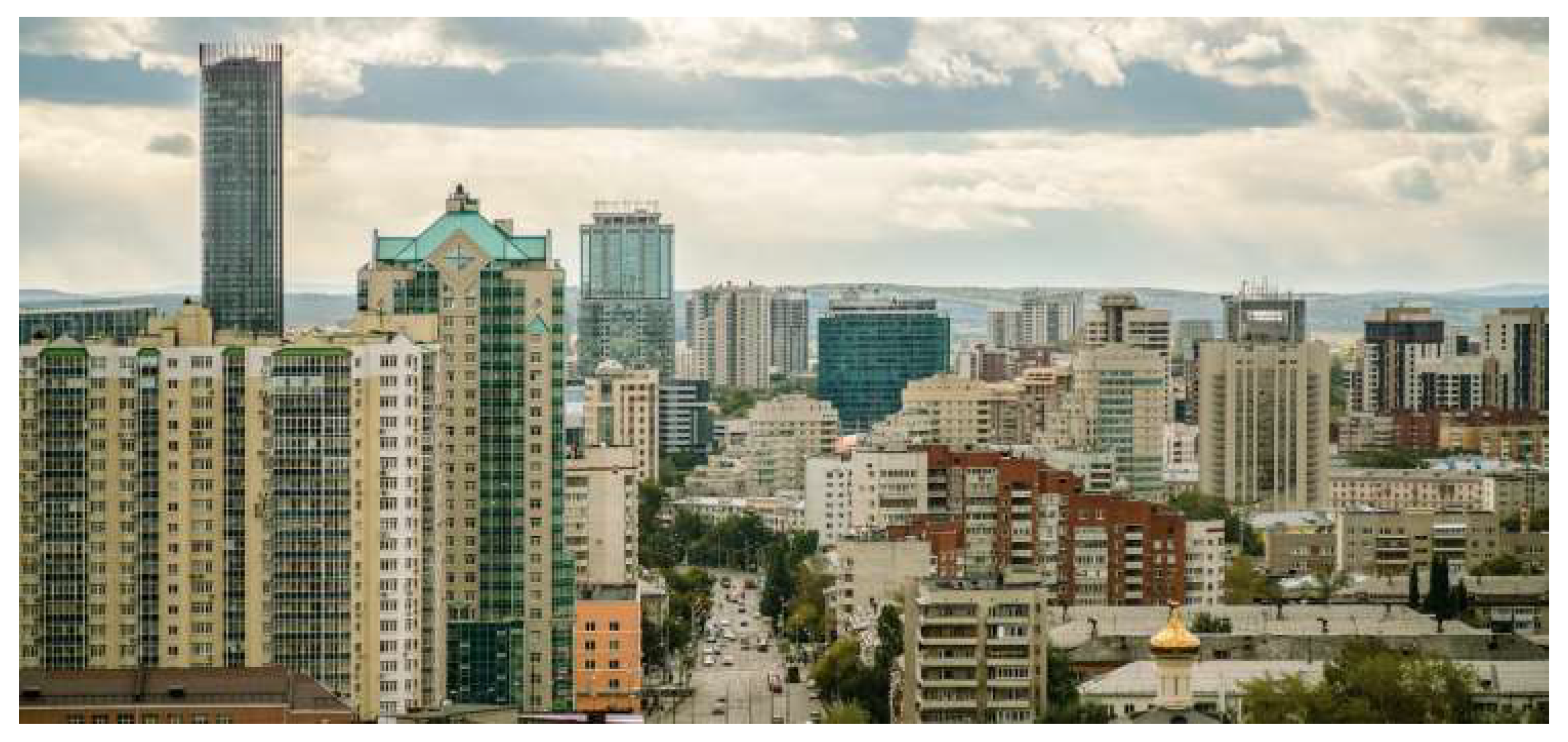
In Yekaterinburg, due to the relatively compact size of the city, all types of buildings can be found side by side. Pre-war apartments with high ceilings from the Great Patriotic War (1941–1945), microdistricts with Soviet-era “Khrushchevkas” and “Brezhnevkas”, and modern housing complexes all coexist harmoniously (
Figure 1).
Individuals have a variety of housing options available to them, yet these choices are frequently constrained by financial means and geographical location.
Today, the “Khrushchevka” apartment block is a reflection of the history, culture, and social norms of Soviet society. Life in these apartments is an experience of overcoming everyday challenges, finding coziness and comfort in a limited space, and maintaining a connection with the past. The confinement of living in a cramped space compels individuals to exercise their creativity and resourcefulness, enabling them to cultivate a sense of coziness within limited dimensions. The inhabitants of the “Khrushchevkas” today represent a fascinating blend of generations, encompassing elderly residents who have called this place home for decades, as well as young families and students.
The “Khrushchevkas” of all types and years of construction are distinguished by their unpretentious design, low number of floors, and small area of apartments. In the houses of the Brezhnev era, this is practically not the case; apartments are designed for more comfortable living for the whole family. The primary advantage of Brezhnev-era dwellings over Stalin-era buildings is their age and relatively better state of preservation. Conversely, the “Brezhnevkas” fall short of the “Stalinkas” in terms of apartment size and ceiling height. Of course, buildings from the Stalin, Khrushchev and Brezhnev eras are significantly inferior to modern houses in terms of their condition, but they often have better locations and more developed neighborhood infrastructure (
Table 1).
1.5. The Description of Houses
In the 1920s and 1930s, the construction of the first standardized houses, known as “Stalinkas,” began in the Soviet Union. These structures were characterized by spacious apartments with tall ceilings and thick walls. The “Stalinkas” were designed for members of the party elite and skilled professionals, and their architecture reflected ideas of luxury and prestige.
“Stalinki” are apartment buildings that were constructed between 1930 and 1960. They are known for their high-quality construction, use of durable materials such as brick, improved apartment layouts, and spacious entranceways.
“Stalin-era buildings” are characterized by the expressive plasticity of their external walls, which are adorned with decorative reliefs and sculptures. They also feature ornamental architectural elements such as decorative panels, inserts, archivolts, orders, and pilasters. Additionally, parapets, balcony railings, and openwork arches are often found in these buildings. The “pyramidal turrets” and crowning sculptural parapets that are typical of the “Stalinist Empire style” add to the unique charm of these structures.
However, by the early 1950s, most people were living in communal apartments and barracks. At that time, the only solution that matched the country’s economic capabilities and did not require a lot of time was industrial housing construction. As a result, “Khrushchev-style” apartments appeared.
The “Khrushchevka” is a type of residential block of flats built during the era of mass construction in the Soviet Union. These buildings are characterized by their small apartment sizes, with a typical kitchen measuring around six square meters; relatively low ceilings; and adjoining rooms with a shared bathroom. These five-story structures became an emblem of the urbanization of the Soviet Union. The dwellings in the buildings constructed during the Khrushchev era were characterized by their diminutive size and compact design, featuring a bare minimum of amenities. The primary objective was to swiftly address the housing crisis affecting millions of Soviet households.
By accelerating technological processes on construction sites, reducing the labor intensity of construction and improving the quality of buildings, factory housing imposed certain limitations on architectural planning. The capability of industrial factory production is based on the limitations and standardization of the values of geometric parameters in buildings, such as the heights of floors, the spans between columns, and the steps of vertical load-bearing structures.
Ten years later, “Brezhnevka” buildings appeared, constructed from pre-fabricated reinforced concrete panels. The “Brezhnevka” apartments are panel houses that were built between 1960 and 1980, and they are considered an upgraded version of the “Khrushchevka” apartments. In houses of this type, there are separate bathrooms, larger kitchens (up to nine square meters), a significantly larger number of floor plans, isolated rooms, elevators, and garbage chutes. “Brezhnevka” apartments were designed for long-term living and comfort.
In the late 20th century, panel residential buildings of the 468th series were constructed specifically for mass production of economy-class housing. These buildings were popularly known as “Pentagons” due to their monotonous gray walls and lack of semi-loggias on the entrance sides. The layout of the apartments in this series remained mostly the same. The larger room is about 20 square meters, the smaller room is around eight square meters, and the kitchen is approximately 6–8 square meters in size. However, the main difference between the 468th series and previous mass-produced options is that the floors of the apartments do not rest directly on the longitudinal walls of the building. This means that redevelopment of the apartments is possible.
Series 137 of residential buildings was designed by architects from Leningrad, hence its popular name “Leningradka”. The first prototype dwelling house of the 137th series virtually became a veritable museum, with frequent guided tours catering to both aspiring young Soviet architects and esteemed foreign experts. This series was immediately met with acclaim, not only from within expert circles but also from the owners of the apartments. The dwelling was designated as upscale, boasting an exquisite design, distinct chambers, a capacious kitchen, commodious hallways, and lofty ceilings measuring 2.7 m. Every apartment in the building has a balcony. Moreover, for the first time in houses of the 137th series, there are ground-floor rooms for storing strollers, bicycles and other personal items. The distinctive features of these dwellings are their balconies with rounded shapes and green-hued cladding.
The dwellings of the 141st series featured enhanced acoustic insulation, enabling the erection of residences in close proximity to railway lines and bustling thoroughfares. Despite the fact that the 141st series buildings were typical, they can only be found in Yekaterinburg. Houses from this series were mass-produced and built in many districts of the city. These are multi-unit buildings equipped with elevators, garbage chutes, and separate bathrooms. The buildings have two entrances, each equipped with an elevator—a freight elevator for larger items and a passenger elevator for people—as well as a cold staircase that can be accessed through a loggia. However, the main advantage of the 141st series is its convenient layout, where the bedrooms and kitchen are separated and have a spacious area.
In the 1990s, during the post-socialist era, there was a shift in housing architecture away from standardized designs and towards more individualized designs. This shift was primarily driven by the emergence of private clients and the rise of personal creative architectural studios. This is how artistically and stylistically interesting architectural solutions began to emerge, influenced by the possibilities of using modern building materials. Residential buildings are undergoing a transformation in their design compared to previous years, becoming more fully fledged architectural structures that meet modern needs and esthetic standards.
Contemporary apartments are distinguished by their well-considered floor plans, lofty ceilings, provision of balconies, the fusion of kitchen and living spaces, state-of-the-art finishes, and ample storage facilities. A wide range of floor plans is available, ranging from studios to expansive apartments with multiple bedrooms. Many residential developments have well-developed infrastructure, encompassing play areas, leisure spaces, and fitness facilities. There are storage areas and advanced security systems.
Cottages and townhouses are often located on more distant plots from the city center, providing more privacy and tranquility. Owners have the freedom to design the interior and exterior of their homes according to their own preferences.
The examination of the scholarly works revealed that the psychological security of urban dwellers is contingent upon external, objective environmental determinants. However, there are no studies that have investigated the connection between an individual’s psychological security in a city and the specific features of how they organize their personal space within that city—specifically, the features of their immediate residence (home). This research was conducted to examine this linkage.
The aim of the study is to explore the psychological security characteristics of city residents who live in different types of housing.
To achieve this goal, the following research objectives were identified:
To determine the values of private and integral indicators of psychological security of residents of the city living in houses of different types.
To reveal the differences between private and integral indicators of psychological security of city residents of different genders living in houses of different types.
To determine the nature of the relationship between the type of residential house of city residents and their psychological security in the urban environment.
2. Materials and Methods
This research is devoted to the analysis of the unique features of the interaction between the physical and spatial components of urban spaces and the psychological security of urban dwellers. The investigation took place in the city of Yekaterinburg. The research encompassed a sample of adult residents of Yekaterinburg, selected through a random process. Banners and offers were placed on various news sites in Yekaterinburg, as well as online platforms such as social media, blogs, and discussion groups, in order to attract potential participants. A cohort of respondents, comprising adult residents of Yekaterinburg, completed an online survey that encompassed a diverse range of data points, including socio-demographic details and specific information regarding their residence in various types of dwellings. A sample was drawn, and data were collected from 1.217 individuals. At the subsequent stage, the acquired sample was subdivided based on the following parameters: gender, age group, educational background, duration of residence in the urban area, and ownership status of the respondent’s current residence. A selection of respondents was made from the general sample, based on the following criteria: gender (50% male, 50% female), age (groups were equalized into 20–30 years, 31–40 years and 41–50 years), level of education (secondary, secondary vocational and higher education), and length of residence in the city (groups of respondents were equalized according to duration of residence up to 5 years, 6–11 years and 11–15 years). All selected respondents owned their place of residence (not rented). The implementation of these criteria for the selection of respondents facilitated the subsequent comparability of samples, namely, samples of residents residing in various types of dwellings.
2.1. Participants
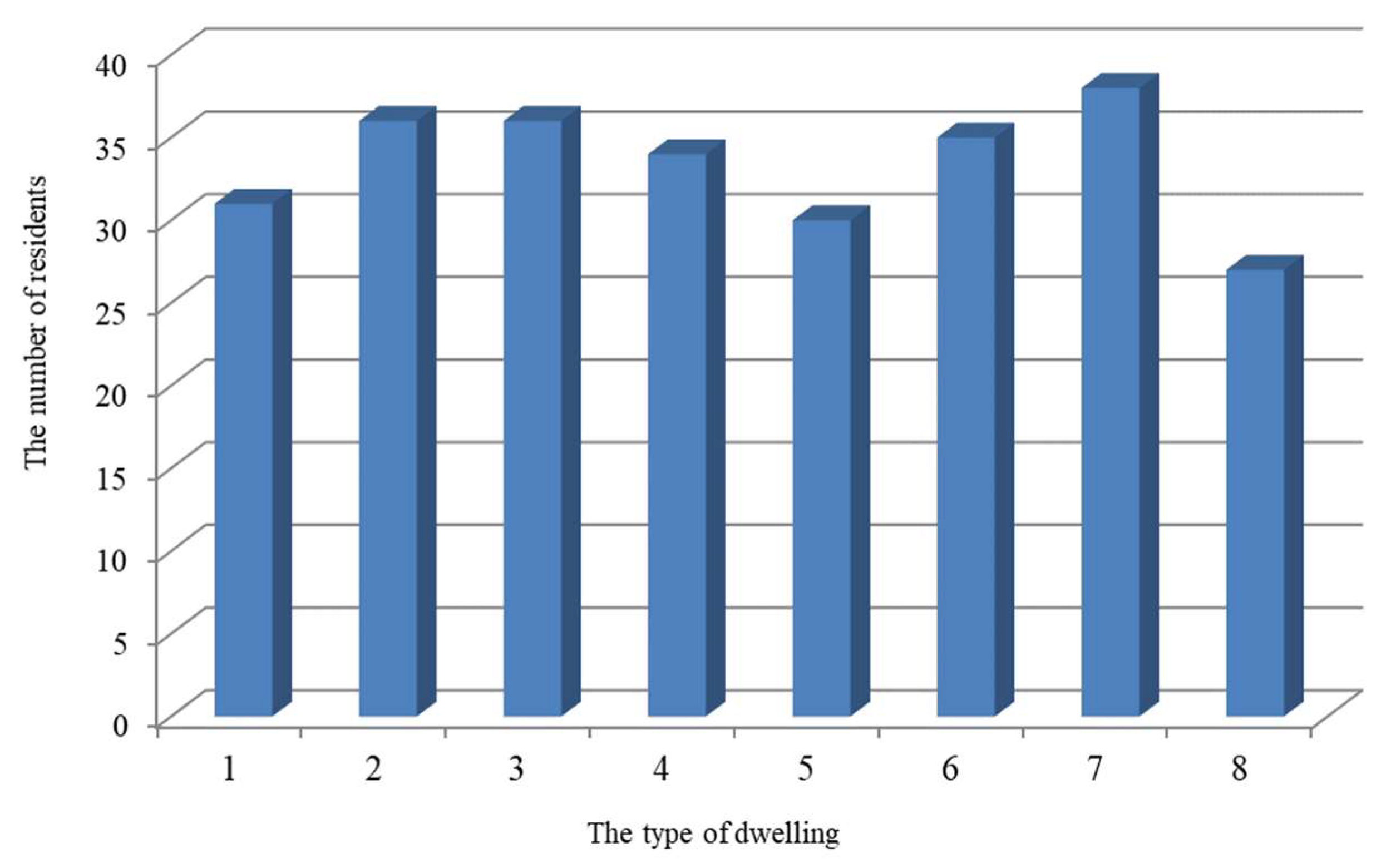
A stratified sample of 233 Yekaterinburg residents with similar characteristics and residing in different types of housing was selected (the selection was made based on the aforementioned criteria from the entire sample) (
Figure 2).
The age of the participants in the comparison groups ranged from 20 to 50 years old (mean age 33, standard deviation 11.25). This age range is defined by the World Health Organization as the period of greatest activity in personal, professional, and social domains. As previously mentioned, all samples were composed in a uniform manner to ensure the accuracy of their comparison (
Table 2).
The study was conducted in accordance with the ethical principles set forth by the Russian Psychological Society [
78]. The protocol was approved by the Ethics Committee of the Department of Social Psychology at Liberal Arts University–University for Humanities. In accordance with the Declaration of Helsinki, written informed consent was obtained from all subjects prior to participation. No compensation was provided for participating in the study.
2.2. Measures
To ascertain the psychological security of city residents, the authors utilized Methodology for Measuring Psychological Security of Urban Dwellers devised by O. Yu. Zotova and L. V. Tarasova [
79]. The methodology comprises 38 statements, which are measured on a five-point scale and belong to six subscales: “Freedom”, “Comfort”, “Self-efficacy”, “Trusting relationships”, “Control over the environment” и “Reliability”, as well as an integral indicator of psychological security of city residents (
Supplementary Materials).
The “Freedom” scale (Fr), comprising six items, encapsulates an individual’s subjective appraisal of their autonomy, independence, and ability to resist and/or protect themselves from external influences in an urban setting. The “Comfort” scale (Cf) comprises six items that provide an indication of the extent to which a city dweller experiences psychological comfort, is able to meet their needs and feels secure (or has the means to safeguard themselves against threats). The six-item “Self-Efficacy” scale (Se) reflects a person’s ability and desire to contribute to the development of their environment, their ability to change their environment (including protection from negative influences or factors), and their personal competence. The six-item “Trusting relationships” scale, abbreviated as Tr, provides an opportunity to evaluate the existence of dependable and open trusting connections with specific individuals in an urban setting, encompassing family, partner, friends, and colleagues. The “Control over environment” scale (Ce), also represented by six items, reflects the subjective feeling of urban residents’ control over their surroundings, their awareness of and environmental competency. This includes knowing where and what is located, how to use resources, where to turn for help, and how to behave to achieve their goals. The “Reliability” scale (Re) comprises eight statements and serves to quantify the degree of trust that an individual places in their surrounding environment. In other words, it assesses the extent to which the environment is perceived as safe. It is important to distinguish that this is not a measure of control. One can exert control over an object or situation without feeling trust or perceiving the environment as stable. Trustworthiness is intertwined with all preceding factors, and only in conjunction with them does it become a defining characteristic of psychological security. This can be illustrated by a situation in which circumstances may be unfavorable, but the situation itself is predictable and stable, which does not necessarily imply psychological security. The integral indicator is evaluated based on an analysis of the private indicators.
The methodology demonstrates favorable psychometric characteristics, including retest reliability, consistency, and convergent validity [
79]. Thus, the process of assessing the reliability of the scales involved evaluating both the overall coherence of the scales, as measured by Cronbach’s α value, and the consistency of their latent variables, which was also assessed using Cronbach’s α value and CR. The analysis revealed that the aggregate score for the index of psychological security among urban dwellers amounted to 0.79, indicating that the methodology employed in the research is robust on the whole. The verification of the consistency of each of the six scales also demonstrated compliance with psychometric requirements (0.72–0.81). The assessment of the discriminating capacity D of Ferguson, carried out for each scale of the methodology, revealed their substantial discriminating power ranging from 0.96 to 0.98. The retest reliability of the methodology for measuring psychological security among urban residents was determined by comparing the results of the initial test and the retest of respondents. A one-month time interval was used to assume that the indicators obtained during the initial testing were preserved. The reliability indicator was found to be sufficient, with a value of 0.82 for the overall score of the methodology and 0.84–0.86 for each of the six subscales.
The assessment of convergent validity revealed significant positive correlations between the overall score of the psychological security methodology for city residents and the psychological security index as measured by S. Bogomaz [
80] (r = 0.68,
p < 0.01), the scale of psychological security in the city [
21] (r = 0.58,
p < 0.01), and a moderate correlation with the results of express diagnostics of personal psychological safety [
81] (r = 0.35,
p < 0.05).
Additionally, a questionnaire was used to document the respondents’ demographic information, including gender, age, level of education, and the type of their dwelling.
The data were processed and analyzed using the Kruskal–Wallis H-test, the Mann–Whitney U-test, and Spearman’s rank correlation coefficient with the statistical software package SPSS 20.0.
3. Results
In the initial phase of the study, the private and integral indicators of psychological security of the residents of Yekaterinburg living in different types of houses were identified. The findings suggest that there is a comparable profile in the psychological security of city dwellers residing in buildings constructed in the 20th century (
Table 3).
The most salient characteristics of the psychological security of the inhabitants of these dwellings in the urban setting is their perception of their urban environment as a “Reliability”, with an average rating of 4.26 on a scale of 1 to 5. In other words, urban dwellers perceive that the municipal authorities, law enforcement agencies, and social and healthcare institutions are attentive to their needs; citizens are assured that in the metropolis where they reside, they can secure employment that is commensurate with their abilities, etc. Another important aspect is that residents report having reliable, open, and trusting relationships with certain people (the average score for this parameter is 3.98). These people are willing to support and assist, protect, and listen, and with them, and one can feel comfortable opening up and acting without fear of negative influences or manipulation. It is worth noting that it may appear that the inhabitants of these dwelling types exhibit the least pronounced “Freedom” parameter in their psychological security, with an average score of 2.93 points. Nonetheless, as the ensuing analysis reveals, this value represents the maximum in this instance for all the houses under comparison. That is, the occupants of more recent dwellings exhibit even lower scores on this scale.
It is noteworthy that the inhabitants of dwellings constructed in the early stages of development (between 1928 and 1956, and between 1957 and 1962), exhibit a higher level of psychological well-being within their urban surroundings, as measured by an integral indicator. Furthermore, the inhabitants of the “Khrushchevka-style” buildings exhibit the highest levels of integral indicator of psychological security of city residents as well as “Reliability”, “Control over the environment”, “Self-efficacy” and “Freedom”. This suggests that the residents of these buildings are particularly satisfied with their living conditions in the urban setting.
The inhabitants of a cluster of dwellings constructed in the latter part of the twentieth and early twenty-first centuries exhibit certain distinctive features (
Table 4).
The results show that the inhabitants of these residential clusters exhibit the highest level of psychological security within the urban environment, with an average score of 3.60. However, residents of these specific houses feel the least “Freedom” (the average score is 2.66). At the same time, residents of these areas have the highest levels of “Comfort” (3.75), “Self-efficacy” (3.51), and “Reliability” (4.36) in the urban environment. That is, the residents of these houses are characterized by a sense of psychological comfort. They are not worried or tense, and they do not experience anxiety or frustration that exceeds their ability to adapt. Residents of these types of homes have positive experiences with their environment. They feel safe and secure, or they have successfully overcome challenges. This experience gives them a sense of certainty about the future, and they see their future as positive, filled with opportunities and free from major obstacles. It is noteworthy that residents of “Leningradka” houses exhibit the highest levels of psychological security, with a strong sense of control over their surroundings, the comfort of the urban environment, and its reliability. In contrast, residents of 141st-series houses, which were constructed at the same time, have lower indicators of overall psychological security in urban environments and specific aspects of it. However, people living in these types of houses show the most pronounced indicators on the “Freedom” scale, while residents of “Contemporary design dwellings “ are characterized by strong feelings of urban environment reliability and personal self-efficacy.
For residents of individual homes (
Table 5), a high “Reliability” score (4.25) and a high expression of the “Trusting relationships” parameter (4.17) are typical. The obtained result is consistent with the previously established pattern: it was found that as the living space per individual expands, so does the trust in relationships in the urban environment [
82].
To assess the statistical significance of the identified features, an analysis was performed using the Kruskal–Wallis H-test (
Table 6).
As a result, it was found that the differences lie precisely in the scales “Freedom”, “Self-efficacy”, “Trusting relationships”, “Reliability” and integral indicator of psychological security of city residents.
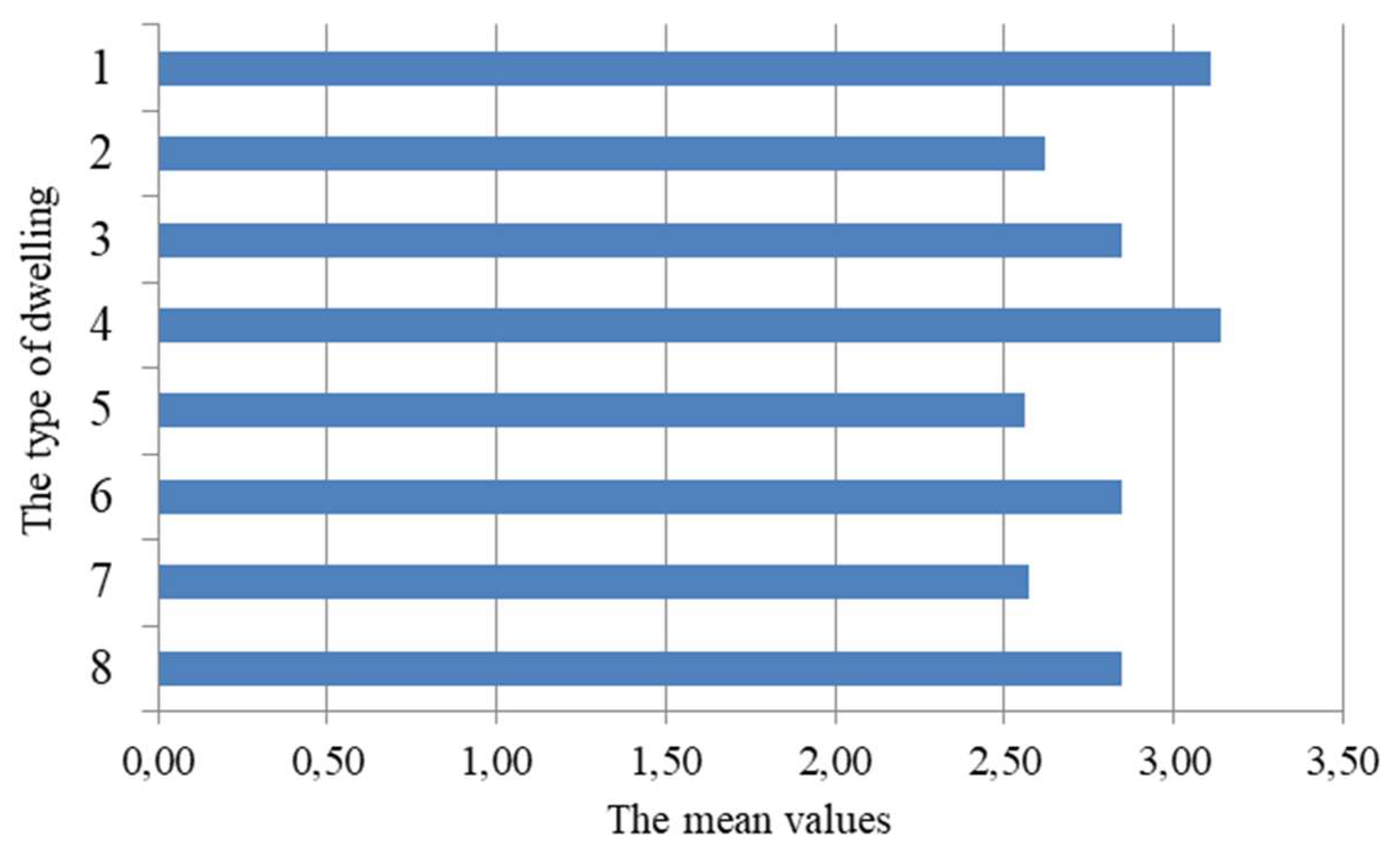
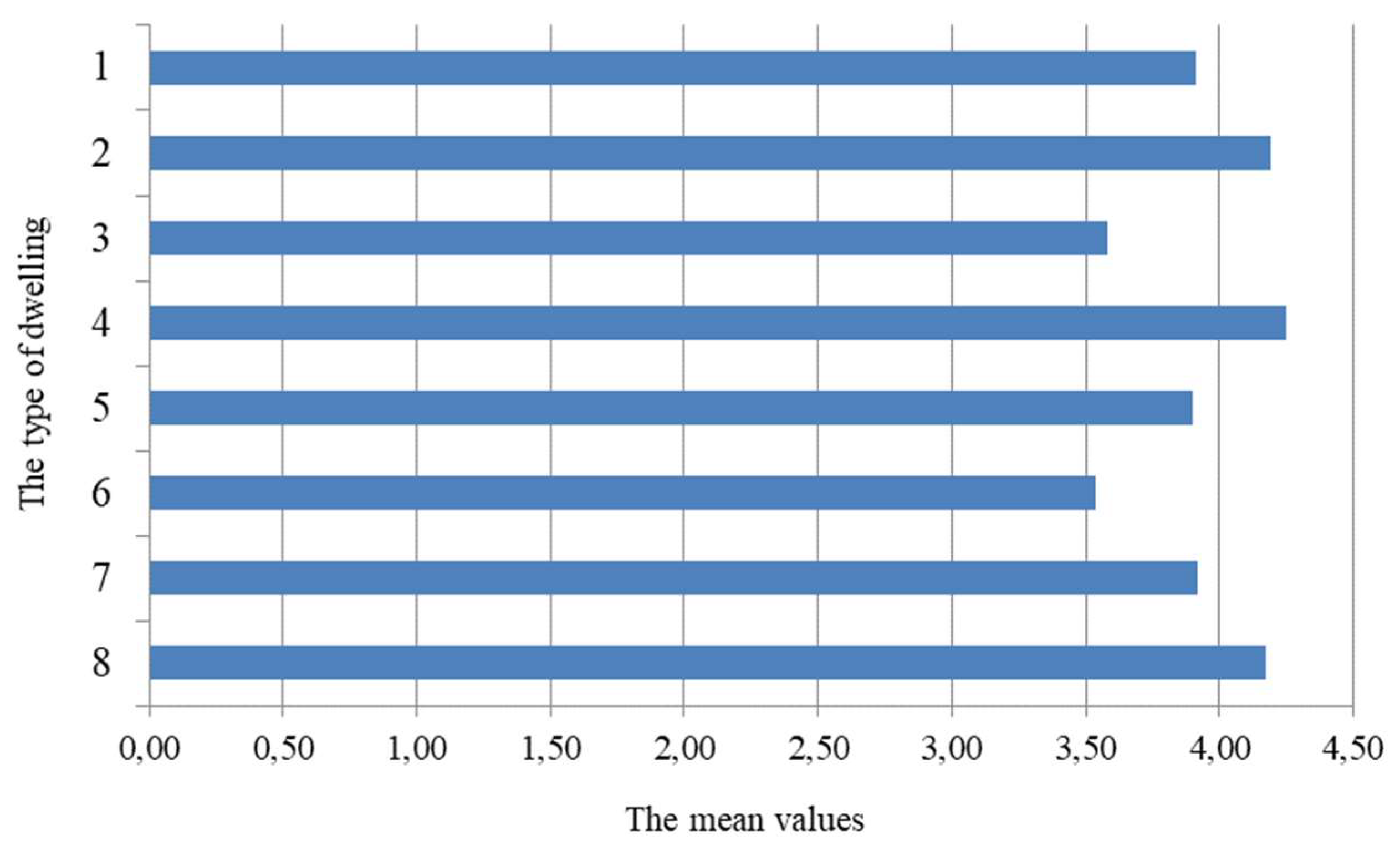
The dwellings that are inhabited by individuals who exhibit the most profound sense of “Freedom” are the “Stalinki” and the “Pentagon”. In this context, freedom is interpreted as independence, liberty for living and personal growth. The lowest values of this parameter are found among residents of the “Leningradka” and “Contemporary design dwellings” (
Figure 3).
It should be noted that the paired comparisons conducted using the Mann–Whitney U-test did not reveal statistically significant differences in the values of the parameter among residents of “Leningradka” and “Contemporary design dwellings” (U = 359,500, p = 0.420). In other cases, however, the differences were statistically significant (U = 174,000–221,500, p < 0.005).
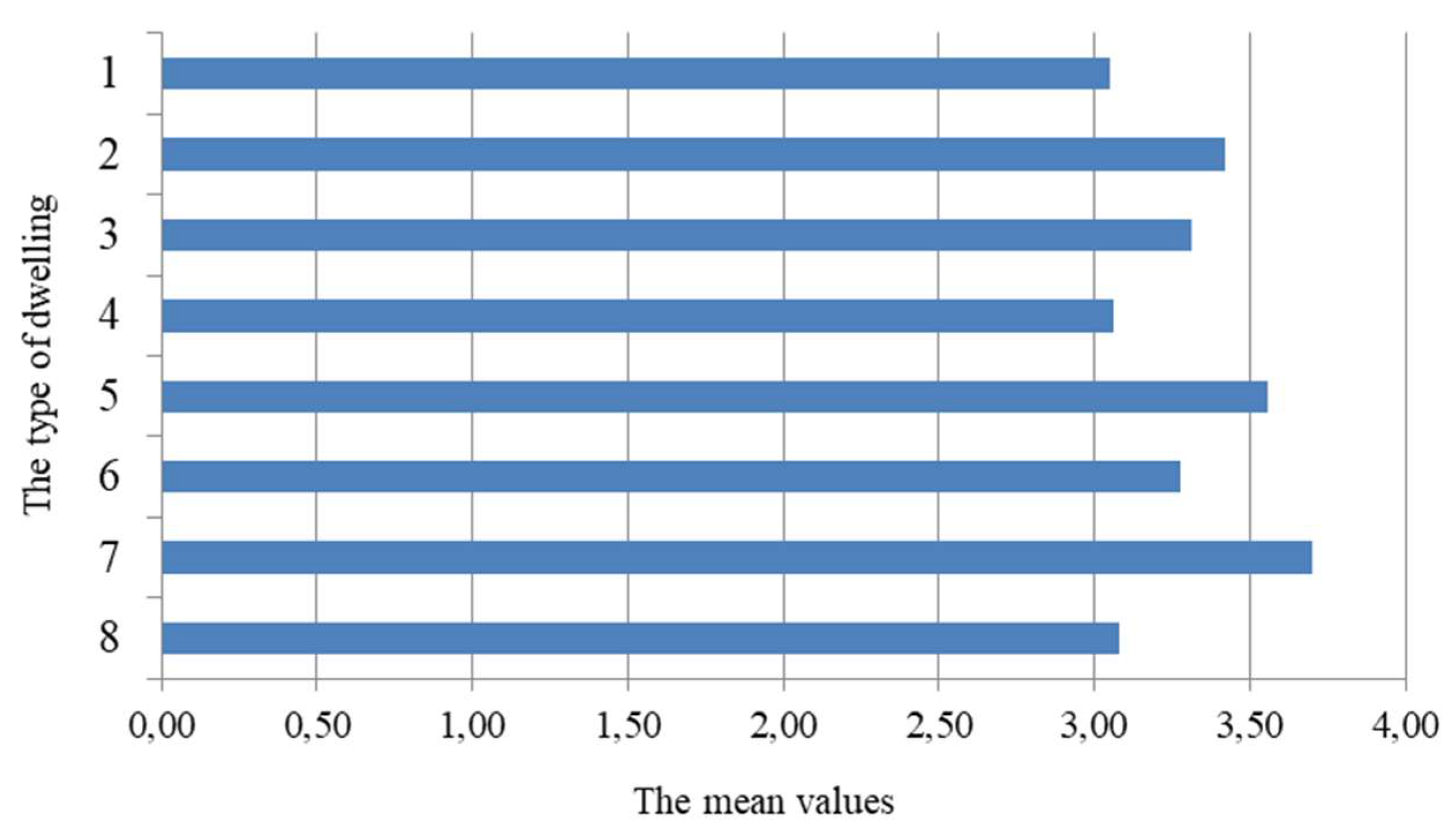
“Self-efficacy” as a parameter that reflects the ability and willingness of a person to contribute to the development of their environment, the capacity to change the surroundings, and personal competency, is most evident among residents of “Contemporary design dwellings” and “Leningradka” buildings (
Figure 4).
The lowest rates of this parameter were observed among residents of “Stalinka” and “Pentagon” buildings, and there were no statistically significant differences between these two groups (U = 330,000, p = 0.271).
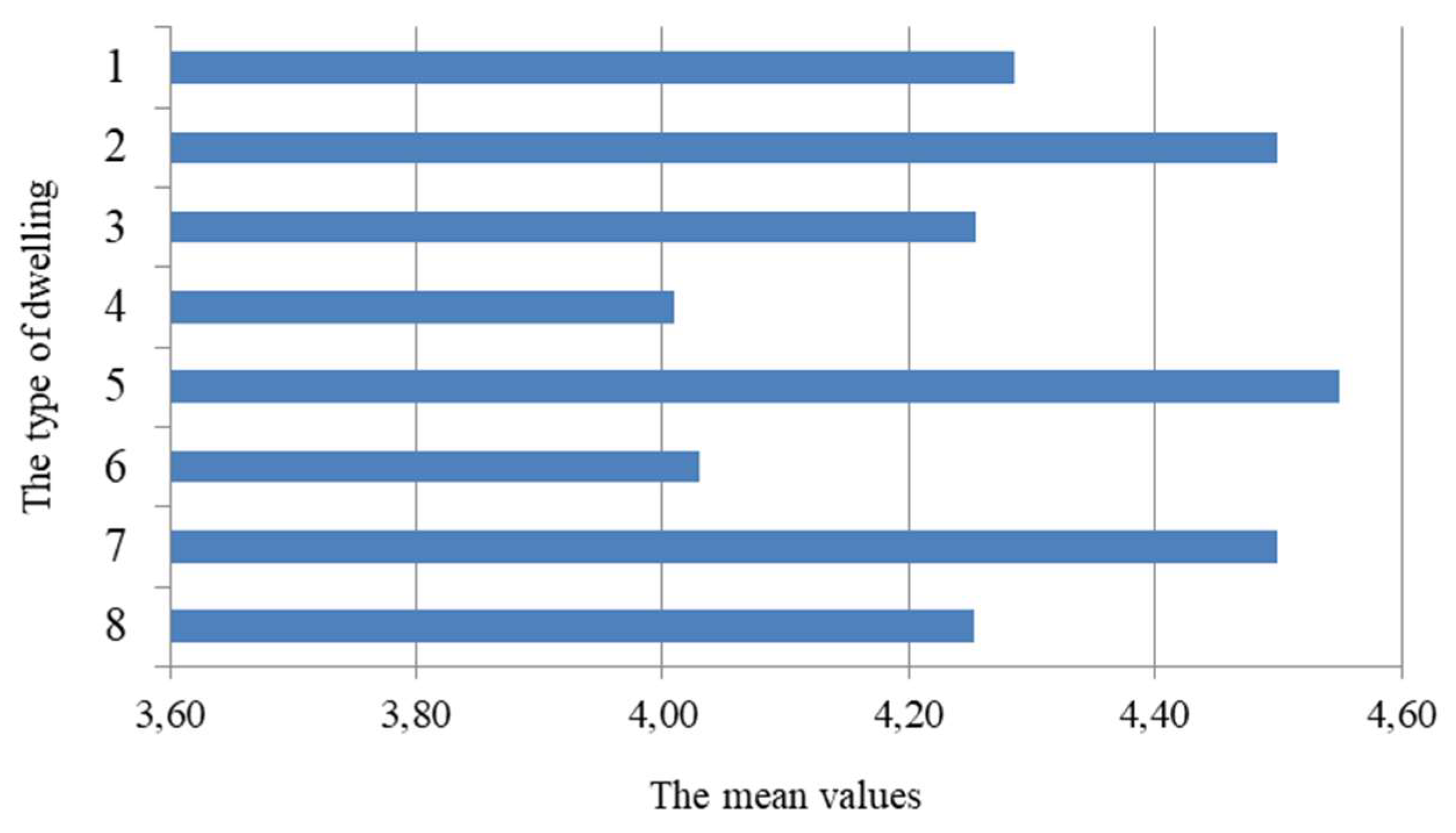
With regard to the parameter of “Trusting relationships”, it is worth noting that the highest ratings are observed among the residents of “Khrushchevka”, “Pentagon” and “Cottages and townhouses”. That is, the residents of these houses highly value their relationships within the urban environment (with family, partner, friends and colleagues) as being reliable, open and trustworthy (
Figure 5).
The lowest values for this parameter were found among residents of “Brezhnevka” and the 141st series. The paired comparisons conducted using the Mann–Whitney U-test did not show any statistically significant differences in the values of the parameter under consideration among residents of “Stalinka”, “Leningradka”, and “Contemporary design buildings” (U = 310,000–405,000, p > 0.190). In other cases, however, the differences were statistically significant (U = 165,000–196,500, p < 0.005).
The level of confidence in the surroundings, that is, the extent to which individuals perceive their environment as secure and dependable, is most profoundly expressed by residents of dwellings of the types known as the “Leningradki”, the “Khrushchevkas”, and “Contemporary design buildings” (
Figure 6). Furthermore, the numerical values of the parameters on this scale did not exhibit a statistically significant difference between the occupants of dwellings constructed during the Khrushchev era and those built in accordance with modern standards (U = 346,000,
p = 0.331). There is no statistically significant difference in the indicators between residents of “Brezhnevki” and “Cottages and townhouses” (U = 335,000,
p = 0.298). The residents of “Pentagon” buildings perceive the urban environment as being the least stable.
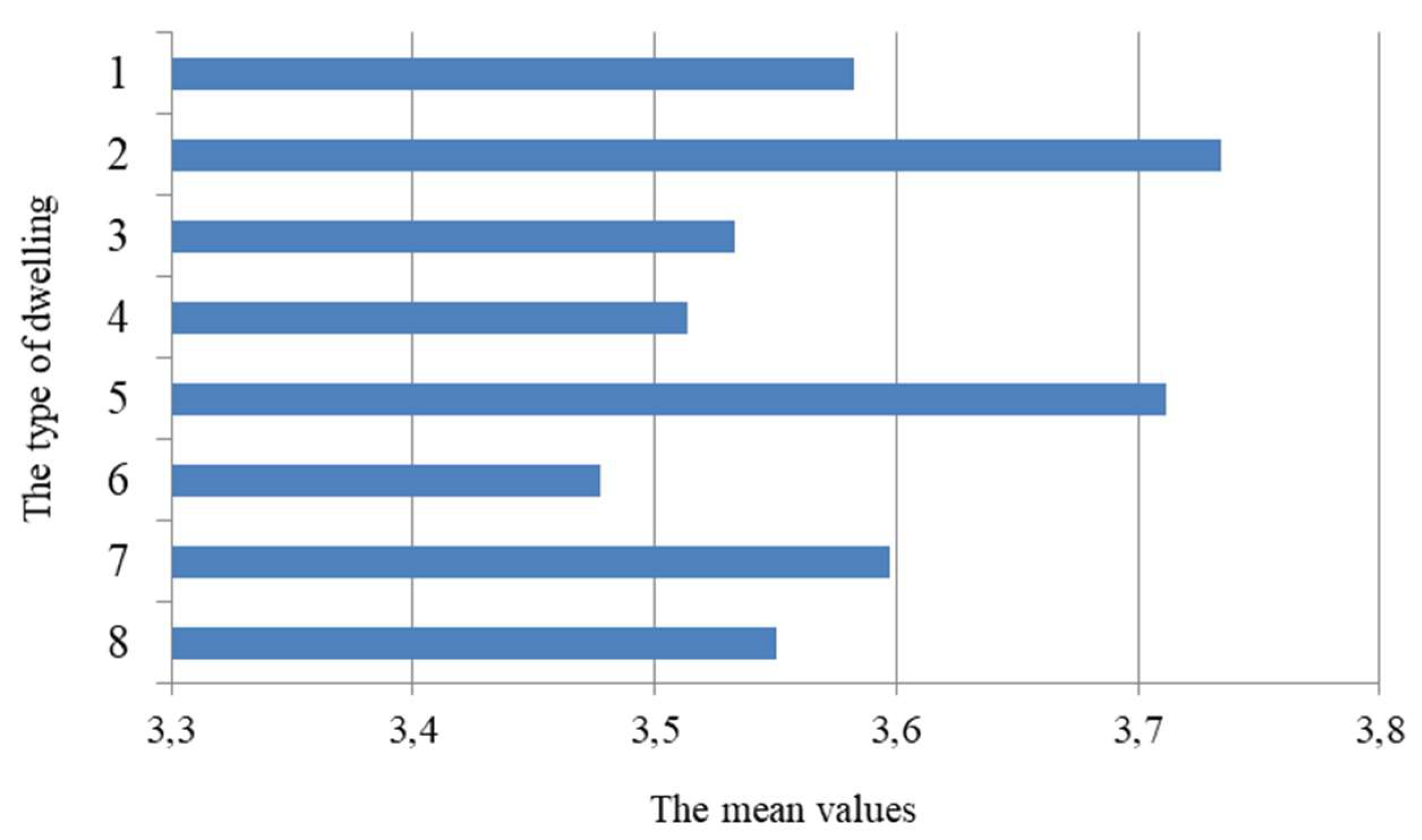
A comparison of the integral indicator of psychological security among residents of different types of residential buildings revealed that residents of “Khrushchevka” and “Leningradka” buildings feel the most psychologically safe in the urban environment and the least—residents of houses of the 141st series (
Figure 7). Paired comparisons of all house types showed statistically significant differences (U = 185,000–210,500,
p < 0.005).
Thus, the state of psychological safety in urban environments is most characteristic of people living in buildings of the “Khrushchevka” and “Leningradka” types. The findings show that the inhabitants of these types of dwellings also exhibit high scores in specific aspects of psychological security for urban residents, with the sole exception of the criterion “Freedom”.
To identify differences in the private and integral indicators of the psychological security of city residents living in different types of housing, depending on their gender, a comparative analysis was carried out using the Mann–Whitney U-test, i.e., for each of the eight subgroups (by type of residential building), the results were analyzed depending on the gender of the participants. The analysis conducted allowed for identifying significant differences depending on gender, only on the scale “Trusting relationships” (
Table 7).
Thus, the findings suggest that women’s scores on the “Trusting relationships” scale are higher than those of men, irrespective of the type of dwelling in which the respondents live. This finding is in line with previously acquired data [
82], and it can be attributed to the fact that, traditionally, women are expected to prioritize the establishment of harmonious relationships and strive for equilibrium in communication, partnership, and interdependence.
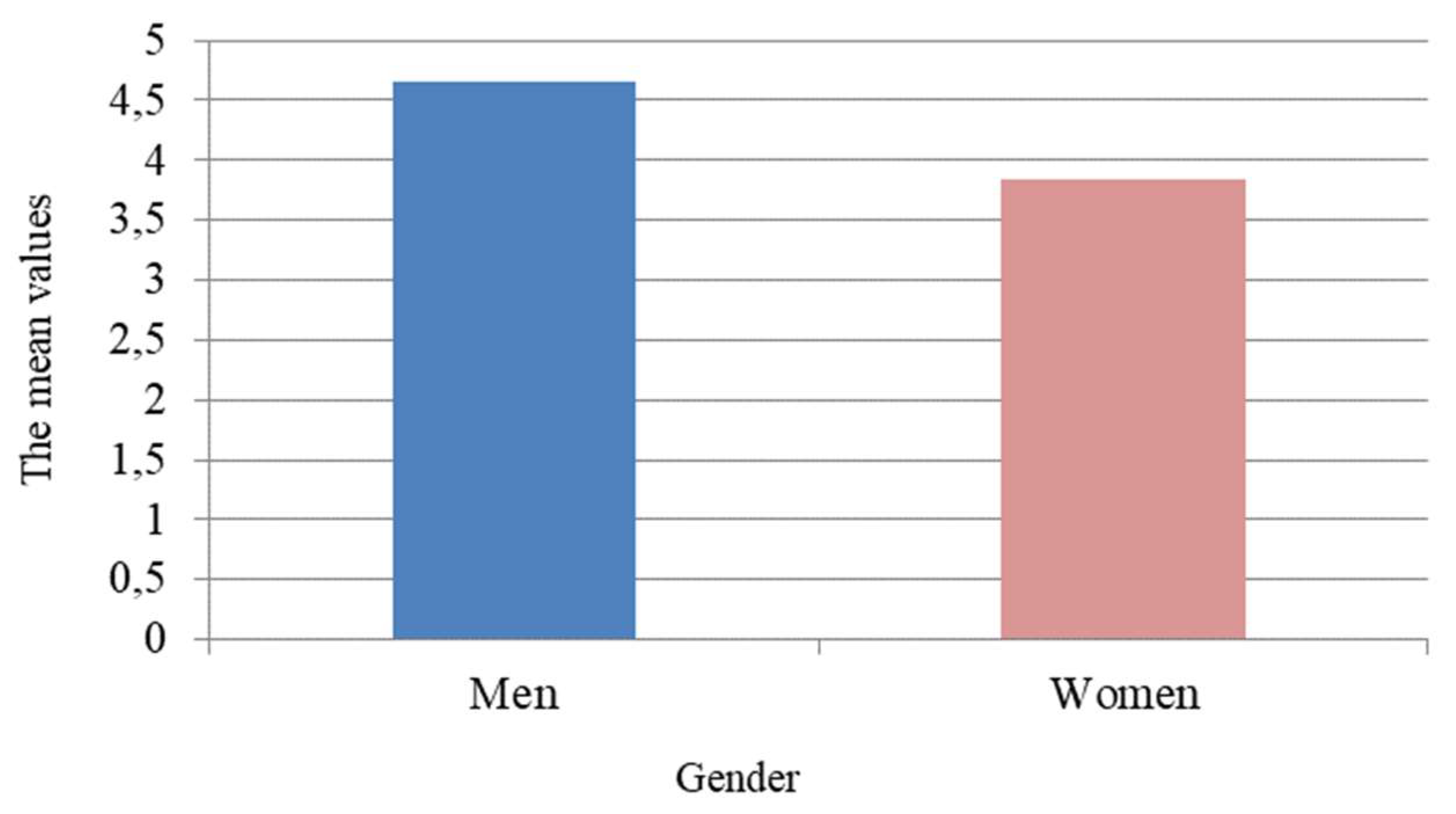
Apart from the “Trusting relationships”, a statistically significant difference was observed in the results obtained from men and women residing in “Cottages and townhouses” on the “Reliability” scale (
Figure 8).
That is, men living in individual buildings are more likely to rate the urban environment as stable and giving them self-confidence, which may be related, among other things, to gender characteristics in the perceptions of the functioning of urban administration institutions. They feel that social and medical institutions are concerned about them; they have confidence that they can find a suitable job in the city where they live; they are satisfied with the ecological situation in the city, etc. (U = 75.500, p = 0.003).
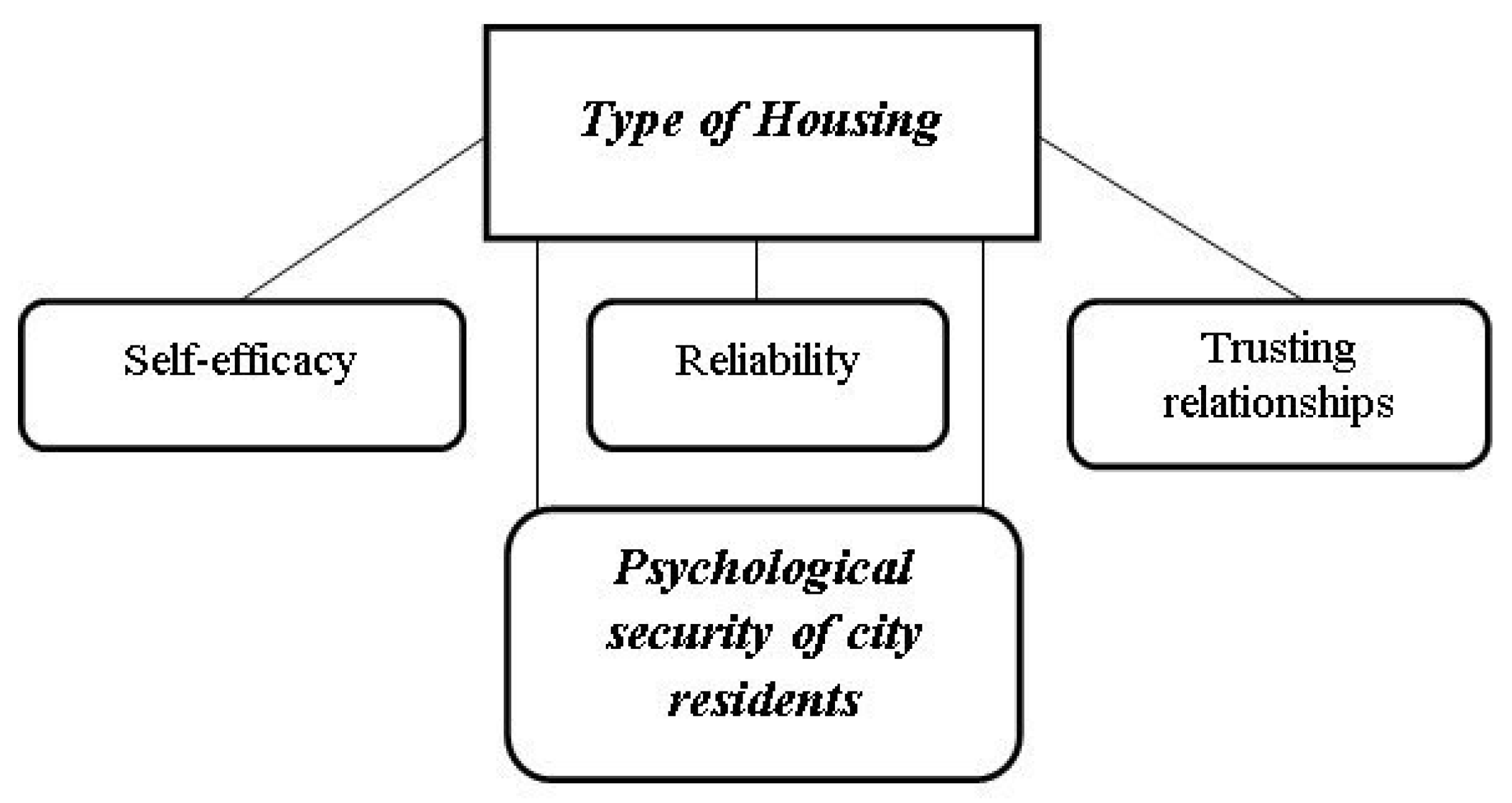
In the next phase of the study, we examined the relationship between the type of residence of urbanites and their psychological security in the city milieu. To assess this relationship, we exploited the Spearman rank correlation coefficient. It was found that there was a moderate correlation between the type of residential building where the respondent lives and their private perceptions of psychological security in the urban environment. Specifically, there was a significant relationship between these factors and the following aspects of psychological security: “Self-efficacy” (r = 0.360,
p = 0.008), “Reliability” (r = 0.360,
p = 0.033), and “Trusting relationships” (r = 0.374,
p = 0.007) (
Figure 9).
Moreover, a moderate correlation was found between the type of residential building and the integral index of psychological security (r = 0.343, p = 0.019).
Thus, it has been established that the level of psychological security in a city is related to the characteristics of the immediate surroundings that directly affect a person—their home. In this research, the particulars of an individual’s immediate surroundings, namely their dwelling, were explored through an analysis of the architectural characteristics of residential structures. In other words, an attempt has been made to establish a correlation between the subjective sense of security experienced by a city dweller and the objective characteristics of their dwelling. The peculiarities of the way in which an urban dweller apprehends their home have not been taken into consideration, despite the fact that it is evident that the same dwelling can be comprehended and assessed variedly by diverse individuals. In this context, the issue remains unresolved as to whether the focus should be on the objective features of urban dwellers’ housing environments or on their subjective perceptions of these features in terms of psychological security.
4. Discussion
The study revealed that there exist discrepancies in the personal and collective indices of psychological security among the inhabitants of Yekaterinburg who reside in various types of dwellings.
The findings suggest that dwelling in individual buildings and townhouses, even within urban boundaries, enjoys a multitude of benefits that shape urban dwellers’ perception of the psychological security of urban living. Thus, one of the benefits of such a lifestyle is the ability to possess and maintain one’s own space, to manage a plot that extends to a belief in one’s capacity to exert control over one’s surroundings (street, neighborhood, city), and to perceive them as secure. This finding is corroborated by the perspective of A. Vinsell, B. Brown, I. Altman and S. Foss [
83], who observed that the capacity for personalization fosters a sense of control.
The second advantage of living in private houses and townhouses is the abundance of personal space, which is a stark contrast to apartment living. This abundance promotes a greater sense of trust towards one’s neighbors and fellow citizens. Research has shown that people who live in detached houses, larger homes, or homes with fewer people report better health, better mental well-being, and higher levels of life satisfaction [
84,
85]. A. Kearns, R. Hiscock, A. Ellaway, and S. Macintyre [
36] wrote that a dwelling that is considered secure and cozy confers substantial psychosocial advantages by serving as a sanctuary from the outside world, fostering the development of one’s sense of self and belonging, and offering a space for self-expression. Any intrusion of extrinsic elements or stimuli significantly impairs this sense of security, intimacy, and autonomy, consequently diminishing the cognitive and social efficacy of the domestic space.
The findings of our study suggest that dwellers of buildings constructed in the late 20th and early 21st centuries, such as the “Leningradka”, 141st series and “Contemporary design dwellings” exhibit the highest composite index of psychological security in the urban environment, indicating a successful satisfaction of their fundamental requirements for self-preservation and a sense of personal psychological security in the city. Nonetheless, the “Freedom” index among respondents residing in buildings constructed in the late 20th and early 21st centuries exhibits the lowest scores, despite the fact that “personal freedom is regarded by individuals as the most crucial aspect of urban life” [
86] (p. 147). They are content, they have faith in their capabilities, and their lives are predictable and secure, yet they fail to perceive the essence of urban life’s security in terms of freedom, autonomy, and the capacity to shape their own destinies and determine the contours of their existence.
Despite the fact that the standardized housing of the twentieth century, such as the “Stalinka”, the “Khrushchevka”, the “Brezhnevka” and the “Pentagon”, is now viewed as monotonous and rather unremarkable, the inhabitants of these structures exhibit relatively high levels of particular aspects of psychological security. The urban milieu is perceived by them as a secure space, where they observe the presence of trustworthy relationships with their surroundings, experience a sense of freedom, and, in general, demonstrate a higher level of psychological security in this urban setting. The results obtained are consistent with the theory of person-environment fit (PE fit) in ecological psychology, which asserts that it is the match between physical functions and forms, individual needs and preferences, rather than objective indicators of the environment, that best predicts satisfaction with the environment and well-being [
87,
88]. According to this theory, a lack of harmony between people and their surroundings can lead to chronic stress and negative effects on mental well-being. The experience and perception of a built environment, on the other hand, are shaped by a person’s cultural background, needs, preferences, and abilities [
88].
The uncomplicated designs of twentieth-century homes possess a distinct simplicity that imbues them with a sense of clarity, evoking associations with dependability and longevity. The uniformity of the architectural designs has resulted in a standardized appearance, which, in essence, fosters a sense of regularity and predictability within the urban landscape. The lack of properly maintained courtyards and communal areas in the vicinity prompts the inhabitants to engage actively in the process of shaping their surroundings. They take it upon themselves to enhance the entrances and maintain the flower beds in their yards. This collaborative effort not only contributes to a sense of unity among the neighbors but also fosters a greater sense of contentment with their living conditions. The data we obtained are in line with the results of the experiment conducted by C. Ellard, as described in his book “Places of the Heart: The Psychogeography of Everyday Life” [
89]. In this virtual reality experience, people were given the opportunity to choose a home to live in. They were presented with three options, two of which were created by renowned architects—both beautiful and comfortable with unique floor plans—and one that was more typical of the modern suburban housing in North America. And it turned out that people chose a typical house for living; that is, people tend to gravitate towards what is more familiar to them.
However, residents of mass-produced housing from the 20th century, such as the “Stalinka”, the “Khrushchevka”, the “Brezhnevka” and the “Pentagon” dwellings, have the lowest level of the psychological security factor known as “Self-efficacy”. This indicates that the size and quality of these apartments may limit the flexibility and variety of activities that people living in them can engage in. In their work, G. W. Evans, N. M. Wells, and A. Moch [
58] noted that difficulties in regulating social interactions and the inability to control access to spaces can contribute to feelings of low self-esteem.
Such an indicator of psychological safety as “Trusting relationships” stirs significant scientific interest. Housing conditions can also influence the availability of instrumental forms of social support [
58]. According to our research, residents of the “Brezhnevka” housing estates and the 141st house series have the lowest levels of satisfaction with relationships that are characterized by complete trust, honesty, openness, and support between people. The main difference between these types of buildings and, for example, “Khrushchevka” or the “Pentagon”, is that they have more faceless and rectangular shapes. These buildings often have indistinguishable outlines and textures, which makes them look similar. These are the homes that have limited visual access, entrances that are easily accessible anonymously, and long, dark corridors that are separated from common areas by staircases. “Social withdrawal in response to uncontrollable social interaction is a typical coping strategy” [
58] (p. 494). The outcome obtained allows us to enrich our knowledge, for example, about city management, incorporating into its structure everyday experience, behavior, emotional forces (Turner), cultural factors (McAdam), and the strength of such psychological phenomena as trust [
90].
Thus, the home is a space that embodies individuality, offers security, and affords maximum control. It is the primary domain where we have the ability to regulate interpersonal interactions [
91]. The type of housing has a direct and indirect influence on perceived security. This indicates that the impact on the environment is complex, multi-factorial, and largely latent. Based on our investigation and a number of analogous studies, it is plausible to assume that the locale in which an individual resides exerts a profound impact on their perception of trust, propensity to lend assistance, and daily interactions with others.
5. Conclusions and Proposals
A dwelling is a personal living space that is essential for an individual’s survival, providing them with the comfort and security they require. It serves as a canvas for self-expression and the realization of cherished plans, projects, and encounters. The results of this research suggest that the psychological security of city dwellers, as a state of their mental health, is systematically linked to the characteristics of their immediate environment, including their home. The different types of residential buildings discussed in this article relate to how intensely a city resident feels about the reliability of the urban environment and the trustworthiness of their relationships within the city. These findings can be employed by environmental psychologists in evaluating the standard of living of urban dwellers, with the aim of creating an environment that is conducive to human well-being. This involves considering human needs and incorporating considerations of emotional state when designing facilities.
A salient aspect of this research is that the participants were not required to assess images of dwellings in diverse architectural styles; rather, their subjective experience of residing in their own homes was taken into consideration. However, it is worth mentioning as a limitation that the fact of residing in a particular type of housing was based on self-reported information from the respondents, rather than objective observations, which may introduce social desirability bias into the answers. Additionally, the sample was formed through online recruitment, limiting the results to those who use online resources. This study is not intended to be universally applicable, due to the inherent limitations of the research sample. These relate to the total number of respondents and their places of residence (all within the boundaries of the same city), and it would therefore seem prudent to consider this study as a pilot one, offering opportunities for putting forward novel hypotheses. Moreover, in this research, the characteristics of the sample, such as age, educational background, and length of residence in the urban area, served as indicators that facilitated the creation of comparable samples. That is, the equalization of all eight subsamples made it possible to eliminate them as potential confounding variables when establishing a correlation between the psychological security of urban residents and the type of dwelling. However, an increase in the number of comparison groups would allow for a more in-depth study of the differences in psychological security between city residents living in different types of houses, with varying lengths of residence and ages, as well as different levels of education. Nevertheless, it is essential to note the presence of potentially distorting factors that are not accounted for in this study, such as the socio-economic status of the respondents and the overall safety of the area where they live, which may affect psychological security regardless of the type of housing. That is, the increase in the number of comparison groups based on specified factors and the expansion of these groups will allow for a more in-depth study of differences in the psychological security of residents living in different types of housing, with varying lengths of time spent in the city and at different ages, educational levels, and socioeconomic backgrounds. The analysis of the findings obtained from respondents, considering these parameters, will undoubtedly enable us to draw more comprehensive conclusions in the future. In addition, the use of an experimental design in future studies will allow us to discover causal relationships between urban environmental factors and psychological safety parameters among city residents. Considering temporal and seasonal factors would also broaden the applicability of our findings.
It should be noted that the sense of security plays a significant role in determining both the behavior and quality of life of individuals, as well as the social and political stability of a country and the level of trust that the population has in the legal and institutional systems that operate within it. Psychological security is a critical aspect that must be thoroughly evaluated when devising strategies aimed at enhancing the competitiveness of urban areas. In the context of accelerating urbanization, cities are called upon to foster a thriving economy, promote a healthy environment, and ensure social well-being for their residents. The evaluation of the psychological security of urban dwellers in relation to the architectural style of their residences can pave the way for the implementation of several efficient strategies in urban planning. These strategies include monitoring the competitive position of the city over time and analyzing existing issues. This process will strengthen relevant aspects at various levels, facilitating the justification of strategic urban decisions. The significance of this endeavor is undeniable in terms of shaping the future trajectory of urban planning. The findings obtained from this research can be invaluable for urban planners as they design homes and create an inviting and secure living environment for urban residents.
A promising avenue for future investigation is the exploration of the microenvironment surrounding a dwelling. Specifically, it might be an investigation into the correlation between the proximity of green spaces to residences, the attributes of illumination in the vicinity, and the psychological security of urban dwellers.
The findings of this study can be harnessed by environmental psychologists for evaluating the well-being of urban dwellers, delving into the influence of diverse stressors on urban residents, and designing interventions aimed at transforming urban environments. This research serves as a foundation for formulating guidelines for creating resilient urban spaces and establishing comprehensive urban regeneration models that cater to the psychological requirements and demands of the populace. Considering the findings of such research in the process of urban planning will significantly enhance the standard of living for the population and bolster their psychological resilience. And only in this way can harmony be achieved between the realm of buildings and structures and the realm of human beings.