Systematic Review

Civil Protection in Greece’s Cities and Regions: Multi-Hazard Performance, Systemic Gaps, and a Roadmap to Integrated Urban Resilience


by
Christina-Ioanna Papadopoulou
1,*,
Stavros Kalogiannidis
1,*,
Dimitrios Kalfas
2,
George Konteos
1 and
Ioannis Kapageridis
3
1
Department of Business Administration, University of Western Macedonia, 51100 Grevena, Greece
2
Department of Agriculture, Faculty of Agricultural Sciences, University of Western Macedonia, 53100 Florina, Greece
3
Department of Mineral Resources Engineering, University of Western Macedonia, 50100 Kozani, Greece
*
Authors to whom correspondence should be addressed.
Urban Sci. 2025, 9(9), 362; https://doi.org/10.3390/urbansci9090362
Submission received: 30 July 2025 / Revised: 1 September 2025 / Accepted: 8 September 2025 / Published: 10 September 2025

Abstract

Greece faces increasing exposure to natural hazards—particularly wildfires, floods, and earthquakes—driven by climatic, environmental, and spatial factors. This study systematically reviews 108 peer-reviewed publications and official reports, applying PRISMA methodology to evaluate the effectiveness of the national civil protection system. The analysis reveals localized progress, notably in earthquake preparedness due to strict building codes and centralized oversight, but also persistent systemic weaknesses. These include fragmented governance, coordination gaps across agencies, insufficient integration of spatial planning, limited local preparedness, and reactive approaches to disaster management. Case studies of major events, such as the 2018 Mati wildfires and 2023 Thessaly floods, underscore how communication breakdowns and delayed evacuations contribute to substantial human and economic losses. Promising developments—such as SMS-based early warning systems, joint training exercises, and pilot GIS risk-mapping tools—illustrate potential pathways for improvement, though their application remains uneven. Future priorities include strengthening unified command structures, enhancing prevention-oriented planning, investing in interoperable communication systems, and fostering community engagement. The findings position Greece’s civil protection as structurally capable of progress but in need of sustained, systemic reforms to build a resilient, prevention-focused framework for increasing disaster risks.

1. Introduction

Civil protection systems constitute a fundamental component of national resilience strategies, particularly in regions experiencing frequent and diverse natural hazards [1,2]. In Greece, a country with a complex geophysical landscape and increasing exposure to climate-related risks, civil protection has consistently been a subject of both policy debate and academic investigation [3]. The growing frequency and intensity of wildfires, floods, and seismic events have reinforced the necessity for robust, well-coordinated disaster risk management frameworks [4,5]. Despite successive legislative reforms, the establishment of institutional structures, and the deployment of technological instruments such as early warning systems, questions persist concerning the overall effectiveness, coherence, and equity of the civil protection system [6,7,8,9,10]. These concerns are heightened by recurring catastrophic events that have resulted in significant human and material losses, raising critical issues regarding the adequacy of preventive measures, inter-agency coordination, and public engagement mechanisms [11,12,13,14]. Greece’s civil protection system has undergone several notable legislative reforms over the past two decades (Table 1). The establishment of the Civil Protection Law of 2003 (Law 3013/2002) introduced a centralized framework under the General Secretariat for Civil Protection, formalizing responsibilities for preparedness, response, and recovery. Subsequent reforms sought to address operational gaps exposed by catastrophic events, such as the 2018 Mati wildfires, leading to Law 4662/2020, which restructured the National Civil Protection System and introduced provisions for risk-based planning. Further amendments in 2021 emphasized decentralization, the modernization of emergency operations, and the integration of early warning systems. Despite these efforts, the recurrence of coordination failures and delayed response in events such as the 2023 Thessaly floods underscores that legislative innovation has not yet translated into systemic resilience.
The existing body of literature on civil protection in Greece provides a comprehensive but heterogeneous perspective, highlighting both achievements and persistent weaknesses. Certain hazard domains, most notably earthquake preparedness, demonstrate progress attributable to stringent building codes and centralized institutional oversight [11,15,16,17]. In contrast, wildfire and flood risk management continue to be constrained by fragmented governance arrangements and the insufficient integration of spatial planning into disaster mitigation strategies [18]. High-impact events such as the 2018 Mati wildfires and the 2023 Thessaly floods have exposed critical shortcomings in evacuation procedures, communication systems, and operational coordination [5,19,20]. These repeated failures, despite previous reforms, indicate that the underlying issues are structural and enduring rather than situational.
The examination of Greece’s civil protection framework is of broader relevance as it offers insights into international discussions on disaster risk governance [7,21]. Countries operating within decentralized or multi-agency civil protection models frequently encounter analogous coordination challenges, rendering the Greek case particularly instructive for comparative analysis [22]. Moreover, the increasing frequency and severity of natural hazards—intensified by climate change, urban expansion, and evolving socio-economic conditions—underscore the urgency of transitioning from a predominantly reactive emergency response model toward a proactive risk reduction paradigm [23]. Achieving this transition necessitates a clear understanding of the structural and institutional barriers to reform, as well as the identification and institutionalization of effective practices.
The purpose of this study is to systematically synthesize the available evidence concerning civil protection in Greece, with an emphasis on assessing the performance of current policies and practices across major hazard categories, identifying systemic deficiencies, and exploring potential avenues for reform. Through the application of a systematic literature review, this research integrates findings from academic publications, technical evaluations, and official policy reports to develop a comprehensive overview of the strengths, weaknesses, and future prospects of the national civil protection system. The analysis identifies recurrent governance challenges, an entrenched imbalance between prevention and response, and limited institutionalization of best practices, while also acknowledging noteworthy areas of progress and innovation.
The structure of the paper is organized to ensure a coherent and systematic presentation of the analysis. The methodology section outlines the search strategy, selection process, and synthesis procedures, conducted in accordance with PRISMA guidelines. The results section presents a thematic synthesis of the literature, emphasizing hazard-specific findings, systemic challenges, and their impacts on life and property. The discussion section interprets these findings within the broader context of governance and policy debates, considering both national implications and comparative international perspectives. The concluding section summarizes the key insights, formulates recommendations for reform, and identifies priorities for future research. This organization provides a clear and logical framework for understanding the current state, structural limitations, and future directions of civil protection in Greece.

2. Materials and Methods

The methodology of this study involved a systematic literature search with the aim of identifying and synthesizing research related to civil protection policies and practices in Greece. The search was primarily conducted through the Scopus database and encompassed all available years up to 2025. The focus was on studies addressing disaster events such as wildfires, floods, and earthquakes, as well as evaluations of emergency management strategies and analyses of relevant policy frameworks. Eligible sources included peer-reviewed journal articles, conference papers, and official reports published in English. Following the removal of unrelated records, titles and abstracts were independently screened for relevance by two reviewers. Studies were selected based on their contribution to understanding the effectiveness of civil protection mechanisms in Greece, lessons derived from past disaster experiences, or the formulation of policy recommendations aimed at enhancing future preparedness and response. A total of 108 studies fulfilled the inclusion criteria and were incorporated into the final analysis, in accordance with PRISMA guidelines.
From each selected study, key information was extracted regarding the type of research conducted, the nature and geographical context of the disaster, main findings on civil protection performance, and any reported quantitative outcomes such as casualty figures and damage estimates. Due to the heterogeneity of study designs—ranging from qualitative case studies to technical assessments of warning systems—a formal and uniform quality assessment could not be systematically applied. Nevertheless, greater emphasis was placed on peer-reviewed publications and studies involving substantial data samples during the synthesis process. Discrepancies in data extraction were resolved through consensus among the reviewers. The studies included in this review exhibited a high degree of methodological diversity, encompassing qualitative case studies based on interviews and documentary analysis, technical engineering reports assessing early warning systems and infrastructure vulnerabilities, GIS-based hazard mapping studies, as well as policy evaluations and legal analyses. This heterogeneity in study design, outcomes, and reporting standards precluded the use of standardized scoring frameworks (e.g., risk-of-bias or GRADE-style checklists) that are typically applied in biomedical or strictly quantitative reviews. Instead, an informal assessment framework was adopted, prioritizing peer-reviewed sources, transparency of data collection methods, triangulation of evidence (e.g., corroboration between technical and policy studies), and comprehensive presentation of findings. Studies with clear methodological rigor, substantial datasets, or official status (e.g., government reports) were given greater weight in the synthesis.
The reporting of results followed the PRISMA 2020 guidelines for systematic reviews and meta-analyses [24,25,26]. Due to the significant methodological diversity of the included studies—ranging from qualitative interviews and case analyses, to engineering and GIS-based hazard mapping reports, as well as legal and policy evaluations—a standardized quality scoring framework (e.g., risk-of-bias checklists) was not applicable. Instead, study reliability was assessed qualitatively, with emphasis placed on peer-reviewed publications, transparent methodology, triangulation of findings, and comprehensiveness of reported data. Quantitative synthesis was limited to pooled descriptive estimates of disaster impacts, such as aggregated casualty numbers and property damage figures. The absence of standardized outcome metrics and effect size calculations precluded the use of formal meta-analysis techniques, such as heterogeneity testing or effect size modeling. As a result, a narrative synthesis approach was adopted to integrate qualitative and quantitative evidence, ensuring both methodological rigor and contextual richness.
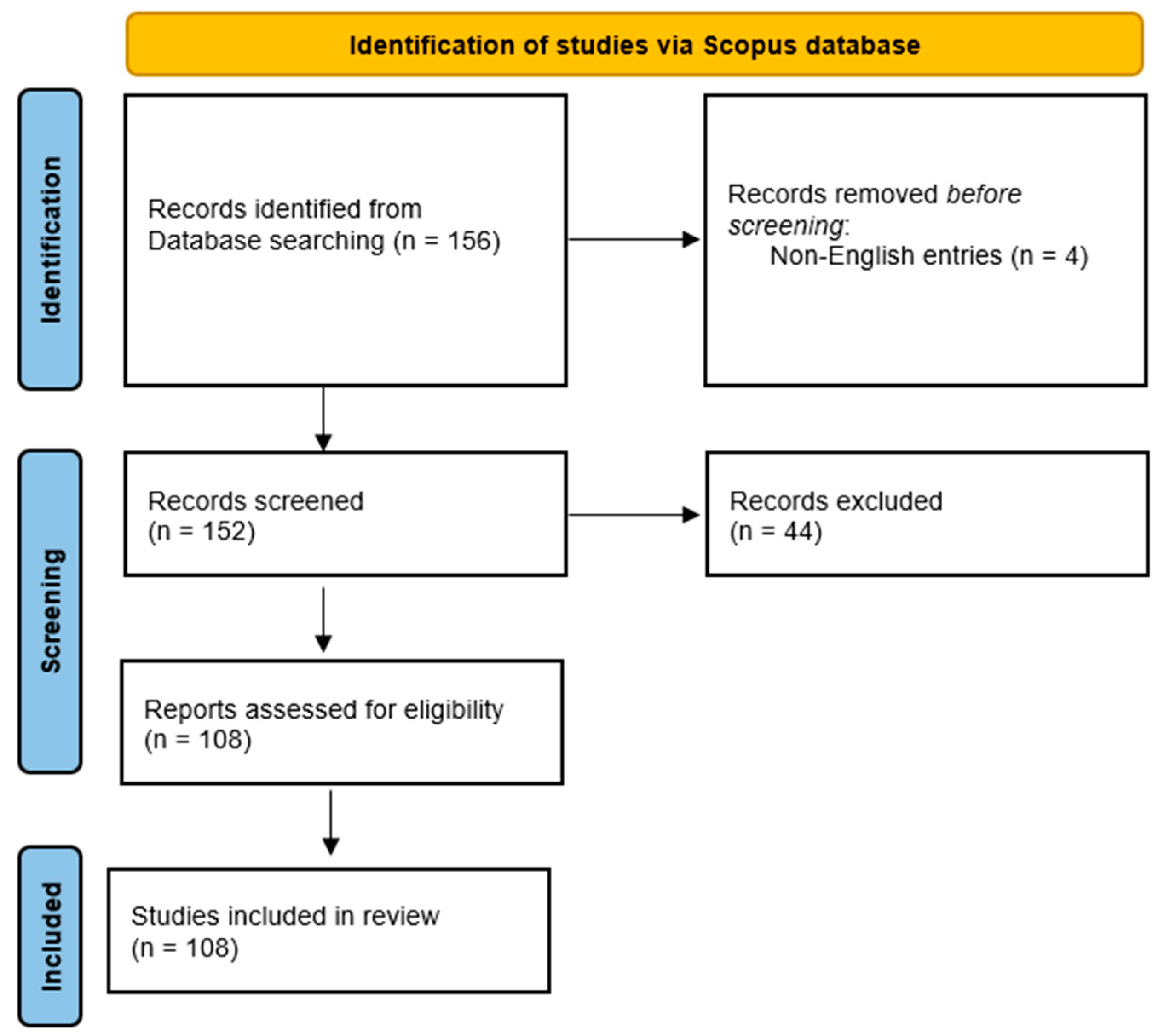
The preliminary literature search yielded 156 entries in Scopus, which were identified through the use of the search terms ‘civil protection AND Greece’. Following the removal of non-English language entries, 152 studies remained. Ultimately, after applying the filter ‘Country/territory equals Greece’, 108 studies were deemed suitable and included in the final compilation. The flow of study identification and selection is summarized in a PRISMA diagram, which analyses the number of records identified, reviewed, excluded, and included at each stage of the process.
In relation to quantitative data analysis, descriptive meta-analytic techniques were applied to compute pooled estimates of disaster impacts where possible. This involved summing reported figures such as the number of deaths and the extent of property damage across the identified studies in order to construct an overall picture of civil protection outcomes in Greece. As formal effect sizes (such as risk ratios or odds ratios) were not reported—given the non-interventional nature of the included studies—the analysis focused on aggregated descriptive statistics. Although statistical heterogeneity was not assessed through conventional meta-analytic metrics due to the descriptive character of the data, observed variations were discussed qualitatively to account for differences in disaster type, regional conditions, and policy context.
This systematic review was conducted and reported in accordance with the PRISMA 2020 guidelines [25]. The PRISMA checklist is provided in the Supplementary Materials, and the study selection process is illustrated in the PRISMA flow diagram (Figure 1).

3. Results

3.1. Overview of Included Studies

The review encompassed a total of 108 studies, covering a broad spectrum of disaster types and civil protection challenges within the Greek context, spanning approximately from 1996 to 2025. The studies predominantly focused on natural hazards, including wildfires, floods, and seismic events. A significant proportion of the literature concentrated on wildfires and floods, with over a dozen studies dedicated to each of these hazards [5,8,27,28,29,30,31,32,33,34,35]. Earthquakes and seismic risks were similarly represented in the studies reviewed [36,37,38,39,40,41,42]. Several of the publications explored governance-related issues, particularly concerning the legal and institutional frameworks underpinning civil protection [28,43,44,45,46]. Others evaluated the role of technological tools, such as early warning systems and GIS-based risk mapping, in enhancing emergency preparedness [6,35,47].
The majority of the reviewed studies took the form of case-specific analyses, examining the response mechanisms and outcomes of particular disasters, such as the 2018 Attica wildfires [19,20], the 2017 Mandra flood [22,48,49], and the 2020 Samos earthquake [37,50,51]. A smaller subset of studies adopted a broader approach, assessing national policies, the effectiveness of institutional responses, or providing historical comparisons over time. Collectively, this body of work offers a multifaceted understanding of civil protection in Greece, encompassing operational, institutional, and societal dimensions.
Despite the diversity of hazards covered, a unifying theme emerged throughout the literature: current civil protection practices in Greece are hindered by systemic limitations [15,36,52,53,54,55,56]. Numerous studies highlighted the fragmentation of the disaster management system and pointed to significant coordination failures among the various governmental levels and agencies involved in disaster response [37,53,57]. While isolated successes were noted, particularly in the domain of seismic safety, attributable to stringent building codes and specialized agencies, such successes were found to be exceptions rather than the norm. In general, the reviewed literature documented more shortcomings than effective practices [21,58,59,60,61]. Table 2 categorizes the studies by hazard type and indicates whether they identified strengths or deficiencies in the system.

3.2. Effectiveness of Civil Protection Practices: Current Status

The overall effectiveness of civil protection policies in Greece is characterized as partial and inconsistent [62,63]. While notable advancements have been made in certain areas, particularly in earthquake risk mitigation through the enforcement of building codes and the institutionalization of the Earthquake Planning and Protection Organization (OASP), substantial deficiencies persist [4,64]. Earthquake preparedness has seen measurable improvements in recent decades, as reflected in the development of more structured response plans and a reduction in structural failures during contemporary seismic events [17,40]. In contrast, preparedness for wildfires and floods remains hindered by significant structural weaknesses, which continue to undermine the effectiveness of civil protection practices in these domains [65,66,67,68].
A central issue undermining the effectiveness of civil protection is the systemic fragmentation of responsibilities among multiple actors, including the General Secretariat for Civil Protection, the fire service, the police, regional and municipal authorities, forestry departments, and health services [21,66]. The lack of clear coordination mechanisms often leads to operational inefficiencies and overlapping mandates. Numerous studies have highlighted this issue, describing it as a problematic interplay among agencies. One example of this fragmentation is the disconnection between land-use planning and disaster risk management, despite the fact that effective land-use planning could serve as a crucial axis for prevention and preparedness [69,70,71]. This institutional fragmentation disrupts the disaster management cycle, encompassing prevention, preparedness, response, and recovery, resulting in duplicated or even contradictory measures across agencies.
Empirical evidence of these deficiencies is abundant. The official inquiry into the 2018 Attica wildfires concluded that poor coordination between the police and fire services, as well as mismanagement among rescue agencies, significantly contributed to the scale of the tragedy [20,72,73]. Overlapping or unclear mandates resulted in critical delays, particularly in issuing evacuation orders [74]. Similar patterns were observed in flood emergencies, where ineffective communication between local and national authorities impeded response efforts and exacerbated the impact of the events [75,76,77].
The literature also emphasizes the reactive nature of Greece’s current disaster management model, which prioritizes crisis response over risk prevention [62,78,79]. For example, forest fire management primarily focuses on suppression, rather than on proactive measures such as fuel reduction or zoning reforms, leaving communities vulnerable during high-risk periods [66,80,81]. In the context of floods, poorly regulated urban development and insufficient early warning systems were repeatedly cited as contributing factors [14,82,83]. Although pilot initiatives in flood nowcasting and GIS-based risk mapping show promise, they have not been sufficiently integrated into a cohesive emergency planning framework, thereby limiting their overall effectiveness [84].
Communication breakdowns further exacerbate these issues. Despite the existence of formal command-and-control structures, effective communication often falters in practice. Several studies have documented how operational agencies fail to exchange critical information in a timely manner, and how municipalities do not always disseminate emergency instructions effectively [20,66]. A prevailing culture of blame and institutional siloing has inhibited meaningful inter-agency reform, even in the aftermath of high-profile disasters.
The impact of these systemic weaknesses is evident in the tangible outcomes of recent disasters. The 2018 Mati wildfire, which claimed over 100 lives and destroyed thousands of homes, was widely attributed to the failure of evacuation protocols and civil protection coordination [73]. Similarly, the 2017 Mandra flood highlighted the role of unregulated construction and fragmented emergency response as key contributors to the high fatality and damage toll [77,85]. The 2023 Thessaly floods, despite being of extreme magnitude, further illustrated coordination deficiencies in evacuation and relief efforts [76,86]. In contrast, earthquake response has generally been more effective, with structural improvements and clearer institutional mandates contributing to reduced damage and casualties in events such as the 1999 Athens and 2020 Samos earthquakes [4,87]. However, challenges remain, including inconsistent implementation of emergency plans and inadequate post-earthquake communication.

3.3. Subgroup Analysis: Hazard-Specific Trends

The in-depth analysis of the reviewed literature, conducted through a hazard-specific lens, revealed significant and nuanced variations in the effectiveness, implementation, and outcomes of civil protection measures across different disaster types in Greece. A comparative summary of systemic issues and identified improvements across the three primary hazard categories can be found in Table 3. Wildfires emerged as a particularly critical area where chronic coordination failures and institutional fragmentation were most acutely manifested [88]. Studies focused on wildfire events, such as those in 2007, 2018, and 2021, consistently documented systemic breakdowns in inter-agency communication, command structures, and operational protocols.
In particular, the catastrophic 2018 Mati fire was highlighted as a poignant example of these issues. Reports from that event underscored how the absence of a unified command and the confusion regarding roles among fire services, police, and local authorities led to fatal delays in evacuation orders, ultimately contributing to the tragic loss of over one hundred lives. The introduction of SMS-based emergency alert systems following the 2018 fires was identified in several studies as a tangible step forward in improving response capabilities [67,75,89]. This new early warning infrastructure was credited with enhancing public responsiveness during the 2021 wildfire season, where despite the extensive scale of the fires, no fatalities were reported [20,90,91].
However, the literature consistently cautioned that while such technological fixes were important, they do not compensate for deeper structural deficiencies in authority demarcation, coordination frameworks, and operational integration [9,92]. Specifically, the overlapping jurisdictions between fire brigades, civil protection agencies, forestry services, and police, particularly concerning evacuation decisions, remain largely unresolved in practice [8]. These persistent issues continue to pose a significant risk of dysfunction in future emergencies, despite the technological improvements and efforts made in the aftermath of the 2018 fires.
Flood risk management in Greece presents a complex governance challenge that differs from, yet is equally intricate, compared to other disaster types [77,83]. The reviewed studies consistently identified a persistent misalignment between spatial planning policies and civil protection imperatives [66,93]. This institutional disconnect has resulted in the proliferation of settlements and infrastructure in flood-prone areas, often without adequate protective measures or emergency access provisions [77,94]. In several flood-related case studies, such as those addressing the 2017 Mandra flood and the 2023 Thessaly storm, coordination among local municipalities, the fire service, police units, and regional authorities was found to be improvised, with limited pre-established operational protocols in place [95,96]. While some pilot initiatives, such as the deployment of hydrometeorological nowcasting tools and GIS-based flood hazard mapping, have demonstrated potential in enhancing early warning capabilities, their operational integration remains fragmented and inconsistent across different jurisdictions [22]. The literature underscores that these technological advancements, while vital, cannot substitute the need for comprehensive governance reform [97,98,99]. Effective flood risk management necessitates synchronized actions among spatial planners, civil protection officials, and infrastructure engineers, coordinated through formal institutional arrangements that are currently perceived as weak or ad hoc.
In contrast to wildfire and flood management, earthquake risk governance in Greece was generally assessed more favorably in the reviewed literature, primarily due to the centralized role of the Earthquake Planning and Protection Organization (OASP) [17]. Greece’s long history of seismic activity has prompted the development of relatively robust regulatory frameworks, including the systematic enforcement of building codes, public awareness campaigns, and pre-approved emergency response plans [4,64,100]. The literature highlights that earthquake preparedness benefits from a degree of institutional maturity, with clearer lines of authority and standardized procedures that contribute to more efficient responses [79]. However, concerns persist regarding the timeliness and consistency of post-earthquake damage assessments, the adequacy of temporary sheltering arrangements, and the effectiveness of risk communication in the immediate aftermath of seismic events [4,17]. Comparative case studies, such as those evaluating the 2020 Samos earthquake, revealed that while structural resilience and initial response efforts were satisfactory, gaps in inter-agency coordination during the recovery phase mirrored the deficiencies observed in other hazard contexts [62].
A recurring and cross-cutting theme throughout the subgroup analysis was the importance of governance reform as a fundamental prerequisite for improving hazard-specific civil protection outcomes. Regardless of the hazard type, the literature emphasized the need for better integration of planning processes, clearer delineation of agency responsibilities, and sustained stakeholder engagement [66]. A particularly instructive case was that of East Attica, where a novel “Agreement on Objectives” framework brought together fire services, forestry departments, municipal authorities, and civil protection officials to collaboratively design and implement coordinated wildfire mitigation measures [60]. The findings suggested that this collaborative model not only improved risk mapping and vegetation management but also enhanced mutual understanding between institutions, fostering a more resilient and coherent civil protection approach [101,102]. The success of this model indicates that integrative, participatory governance practices may offer significant potential for broader application across various regions and hazard domains in Greece.

3.4. Sensitivity Analyses

The implementation of sensitivity analyses is a fundamental methodological approach within systematic reviews, particularly when aiming to validate the robustness, credibility, and generalizability of overarching findings [103,104,105]. In this context, the sensitivity analysis conducted in the present review was designed to examine whether the main conclusions regarding the effectiveness of civil protection in Greece remained stable across different subsets of the literature. Sensitivity analyses are instrumental in highlighting potential biases, identifying whether the exclusion or inclusion of specific groups of studies materially alters thematic interpretations, and ensuring that key findings are not disproportionately influenced by extreme cases or methodological anomalies [106]. By deliberately manipulating the dataset and observing any shifts in conclusions, this analytical technique serves as a critical test of internal validity.
The first layer of sensitivity analysis involved narrowing the dataset to include only studies published after 1996. This temporal restriction was adopted to reflect the post-reform era of civil protection in Greece, particularly following the Civil Protection Law of 2003 and its subsequent legislative and operational modifications. The findings revealed that the core themes—namely, systemic fragmentation, weak inter-agency coordination, and insufficient risk mitigation planning—persisted within this temporally limited subset of the literature. In fact, many of the more recent studies were more explicitly critical, especially in the aftermath of the 2018 East Attica wildfires [72,107]. These later studies emphasized the absence of meaningful systemic reform and provided in-depth critiques of policy inertia, demonstrating that, even after landmark disasters, the civil protection system remained largely reactive and fragmented. The continued recurrence of these themes in newer literature strengthens the argument that these issues are enduring and structural, rather than circumstantial or transitional.
A complementary sensitivity analysis was conducted by focusing exclusively on studies published prior to 2010, which provided a historical perspective on the civil protection system’s performance. Despite expectations that older literature might be less critical or focused on different priorities, similar concerns were evident in this subset, including inadequate preparedness, institutional silos, and uncoordinated disaster response. These concerns were already prevalent in analyses from the early 2000s and late 1990s, indicating that the core problems are deeply rooted and have persisted across political administrations and evolving hazard landscapes [27,42,108]. Therefore, the temporal bifurcation of the literature did not produce materially divergent conclusions but rather reinforced the temporal stability of the findings.
Further sensitivity checks were performed by excluding studies of a purely technical nature—those predominantly focused on remote sensing, GIS applications, engineering innovations, or meteorological forecasting tools—in order to determine whether the synthesis might be skewed by highly specialized but contextually narrow contributions [6,27,47]. The exclusion of these studies did not significantly alter the overarching narrative. Instead, the remaining body of literature continued to emphasize governance gaps, institutional fragmentation, and systemic weaknesses. This finding suggests that the study’s conclusions are not driven by a particular type of research, such as technological or engineering studies, but by a consistent pattern across diverse methodological approaches, including policy evaluations, case study analyses, and interdisciplinary reviews.
To further ensure the internal validity and robustness of the review findings, several sensitivity analyses were conducted, testing whether the observed patterns remained stable under alternative conditions. These analyses examined the effects of temporal filtering, the exclusion of technical studies, and the removal of high-impact outlier events. The results consistently confirmed that the central themes -particularly the persistence of fragmentation, communication breakdowns, and inadequate preparedness- are structural rather than event-specific. A detailed summary of the comparative outcomes is presented in Table 4.

3.5. Impacts on Residents: Lives and Property Losses

Evaluating the effectiveness of civil protection systems requires a thorough analysis of their tangible outcomes on affected populations. In the Greek context, the findings synthesized from a wide range of studies provide compelling evidence of widespread human and material losses linked to disasters over the past three decades [66]. These impacts are not isolated to individual cases but instead reflect broader structural weaknesses in the planning, coordination, and execution of civil protection strategies. From large-scale wildfires to devastating floods and seismic events, the consequences of these inadequacies are evident in repeated patterns of casualties, displacement, and financial devastation [109]. The documented impacts of these disasters reveal systemic flaws that have consistently resulted in significant harm to both lives and property, underscoring the need for more effective and integrated disaster management practices. These repeated outcomes suggest that the underlying challenges in Greece’s civil protection system are not only persistent but also deeply entrenched, manifesting across various hazard types [4,21]. The collective evidence highlights the critical need for reform to address these structural issues in order to mitigate the human and material toll of future disasters. A comparative summary of major catastrophic events and their documented impacts on life and property can be found in Table 5.
Wildfire-related losses in Greece have been particularly catastrophic, with the 2007 fires in the Peloponnese region resulting in at least 84 deaths [110]. The 2018 East Attica (Mati) fire remains one of the deadliest wildfires globally in the 21st century, claiming over 100 lives within a matter of hours [111]. The loss of life in these events is attributed not solely to the intensity of the fires but, critically, to the delayed or absent implementation of evacuation procedures, a lack of coherent public warning systems, and the failure of inter-agency communication in coordinating rescue operations. Several studies point out that local residents were not warned in time or were given conflicting messages, while road access for emergency services was blocked due to poor spatial planning and urban overdevelopment in high-risk areas [19,22,48]. These failures not only undermined the possibility of a timely response but also amplified the exposure and vulnerability of entire communities.
Flood events in Greece present an equally alarming trend in terms of mortality and destruction. According to aggregated findings from the literature, approximately 200 lives have been lost to flood-related disasters since the 1970s [112]. This includes both urban flash floods and riverine overflows, with multiple events causing significant casualties. The 2017 Mandra flood, for instance, resulted in 24 deaths and devastated residential and commercial areas due to unregulated urbanization in floodplains and a lack of adequate drainage systems [113]. The 2023 Thessaly floods, triggered by Storm Daniel, inflicted even greater damage with 17 reported deaths, entire villages submerged, and long-term displacement for thousands of residents [5,114]. These case studies revealed that early warning mechanisms were insufficiently developed, and civil protection actors struggled to coordinate evacuation and relief measures. Even when warning systems existed, their communication to at-risk populations was often sporadic, late, or unclear, diminishing their efficacy.
The economic dimensions of disaster impacts in Greece are equally significant. The Mati wildfire alone destroyed approximately 4000 homes and essential infrastructure, including power and water networks, schools, and community facilities [73]. Insurance losses and reconstruction costs were estimated in the hundreds of millions of euros, with many residents receiving delayed or insufficient compensation. The 2017 flood in West Attica damaged over 1000 buildings [115], while the 2023 flood in Thessaly submerged thousands of hectares of farmland and destroyed irrigation systems, barns, and agricultural equipment. The economic toll of the Thessaly disaster was estimated to exceed €2 to €5 billion [5], marking it as one of the costliest climate-induced disasters in Greece’s history. Beyond these headline events, the literature also documents smaller, recurrent incidents—such as localized wildfires on islands, seasonal floods in Northern Greece, or earthquakes in rural areas—which cumulatively contribute to high levels of property damage and infrastructural degradation year after year.
These impacts are not random nor merely natural in origin; rather, they are the outcome of long-standing institutional failures. The fragmentation of civil protection authority, insufficient preventive investment, and the lack of spatial planning integration are repeatedly cited as root causes [60]. Studies have stressed that prevention continues to receive disproportionately low funding relative to response and recovery, leading to a cycle of recurring loss. Furthermore, weaknesses in preparedness planning, including the absence of rehearsed evacuation strategies and a failure to incorporate vulnerable populations into risk scenarios, have left entire communities exposed during critical moments [20]. Several studies point out that people with disabilities, the elderly, and non-Greek speaking migrants are particularly vulnerable during disasters, yet civil protection plans rarely accommodate their specific needs [116,117].
The reviewed literature provides overwhelming evidence that the human and economic toll of disasters in Greece is strongly correlated with systemic gaps in civil protection governance [53]. These losses are not merely unfortunate outcomes but measurable indicators of policy inefficiency and strategic neglect. By documenting recurring failures across multiple disaster events and quantifying the associated impacts on life and property, this body of evidence presents a compelling argument for urgent and comprehensive reform. Civil protection effectiveness must be evaluated not only in terms of institutional mandates or legislative frameworks but through the lens of actual outcomes: the number of lives saved, the extent of destruction averted, and the resilience of communities in the face of adversity. The failure to protect human life and safeguard livelihoods serves as the ultimate measure of inadequacy in the current system and provides the impetus for meaningful and sustained change.

4. Discussion

4.1. Path Dependency and Political Economy of Reform

The findings of this systematic review underscore the persistent structural deficiencies that characterize Greece’s civil protection system. Despite incremental improvements in certain areas the broader landscape remains defined by fragmented governance, reactive planning, and inconsistent implementation. These patterns mirror conclusions drawn in earlier scholarship, reaffirming longstanding concerns that civil protection in Greece lacks the coherence and integration necessary to manage increasingly frequent and severe natural hazards effectively [60]. The review affirms that the vulnerabilities exposed by disasters are not merely the result of isolated mismanagement but reflect deeper institutional pathologies that have endured across political cycles, administrative reforms, and evolving hazard profiles [116,118].
This persistence of deficiencies over time speaks to the institutional resilience of ineffective governance structures—a phenomenon often conceptualized as path dependency in public policy literature. In public policy scholarship, path dependency refers to a dynamic in which historical decisions, institutional structures, and administrative routines create self-reinforcing feedback loops that constrain future reform trajectories [119]. Once institutional norms, legal frameworks, and bureaucratic practices are established, they often persist even in the face of mounting evidence of inefficiency, due to high ‘switching costs,’ vested interests, and organizational inertia. In the Greek civil protection system, two examples illustrate this mechanism. First, the General Secretariat for Civil Protection has undergone repeated legislative reorganizations (e.g., Law 3013/2002, Law 4662/2020) following major disasters, yet these reforms have largely focused on structural reshuffling rather than substantive capacity-building, leading to recurring coordination failures during subsequent crises such as the 2018 Mati wildfires. Second, the longstanding separation between spatial planning and disaster risk management—despite multiple policy initiatives—demonstrates how entrenched administrative silos reinforce vulnerabilities, allowing unregulated development in high-risk zones to persist over decades. These cases underscore that Greece’s disaster governance challenges are not episodic but structurally embedded, reinforcing the need for systemic, rather than incremental, policy change. The failure to achieve substantive transformation, even in the aftermath of catastrophic events, suggests that the system’s inertia is rooted in entrenched administrative routines, overlapping mandates, and a lack of enforceable accountability mechanisms. Notably, the sensitivity analyses conducted in this review confirm that these issues are not recent developments but rather long-standing characteristics of Greece’s disaster management apparatus. Whether the literature subset is restricted to post-2010 publications, excludes technical studies, or omits high-impact outlier events, the same themes—coordination failures, poor communication, insufficient prevention—consistently emerge. This convergence across methodological filters strengthens the argument that the system’s ineffectiveness is structural and not episodic.
Greece’s recurring governance failures can be understood through the lens of political economy, where reform efforts are shaped by entrenched administrative hierarchies, inter-agency competition, and a post-disaster ‘policy window’ dynamic in which reforms are enacted reactively rather than proactively [120]. These dynamics create an environment in which systemic change is difficult to sustain, even when triggered by catastrophic events, reinforcing a cycle of policy inertia. This mirrors trends in other Southern European contexts, where centralized governance traditions and limited fiscal resources constrain the capacity for risk-based planning and investment in prevention.
The implications of these findings are significant not only for Greece but for other countries that rely on decentralized or fragmented models of civil protection. The Greek case illustrates how institutional complexity, when not accompanied by clearly defined roles, integrated communication systems, and a culture of inter-agency collaboration, can undermine the very foundations of disaster response and risk reduction [121]. The review reveals that while technological advances such as SMS-based alert systems, GIS-based risk mapping, and pilot nowcasting tools offer some promise, their effectiveness remains constrained by weak institutional frameworks. Technology, in this context, cannot substitute for systemic reform. It becomes evident that the effectiveness of civil protection mechanisms should not be judged solely by the presence of tools or legislation, but by tangible outcomes—reduced casualties, minimized property damage, and increased resilience of at-risk populations. The repeated failures to issue timely evacuation orders, the inconsistent communication among agencies, and the lack of preventive spatial planning are not technical oversights but manifestations of governance dysfunction.
Furthermore, the comparative analysis of disaster types—wildfires, floods, and earthquakes—demonstrates that while each hazard poses distinct operational challenges, they all expose similar institutional vulnerabilities. Wildfires have consistently highlighted the consequences of overlapping mandates and unclear command structures, particularly in evacuation decisions. Floods, by contrast, reveal the consequences of inadequate spatial planning and the disconnect between land-use policies and civil protection objectives. Earthquake response shows relatively better performance, yet still suffers from post-event coordination issues, especially in damage assessment and shelter provision. These patterns suggest that while hazard-specific interventions are necessary, they must be underpinned by cross-cutting governance reforms that transcend hazard typologies. The case of East Attica’s multi-agency wildfire agreement illustrates the potential of collaborative governance frameworks to overcome institutional silos and enhance local-level coordination. However, such examples remain exceptions rather than the norm and require institutionalization to serve as scalable models of best practice.
Importantly, the human and economic costs documented in the review provide a compelling empirical foundation for urgent policy transformation. Disasters such as the Mati fire and the Thessaly flood inflicted not only immediate harm but also long-term socio-economic disruption, with impacts disproportionately affecting vulnerable groups. The inability of civil protection plans to account for individuals with disabilities, elderly residents, or non-Greek speakers highlights a significant equity gap in preparedness and response strategies. The repeated exclusion of these populations from evacuation planning and risk communication efforts undermines both the ethical and operational effectiveness of the civil protection system [21]. These findings align with a growing body of international literature emphasizing that inclusive governance is a prerequisite for disaster resilience [122,123,124]. Addressing these inequities requires not only technical fixes but a paradigm shift toward participatory planning and community-based risk reduction.
Looking forward, the findings call for a fundamental reorientation of civil protection policy in Greece. The dominant model, which continues to prioritize response over prevention, must be rebalanced through investment in long-term mitigation strategies, integrated urban planning, and sustained capacity-building. The international policy community, including the United Nations Office for Disaster Risk Reduction (UNDRR), has long advocated for such a shift, promoting frameworks that integrate risk reduction into all aspects of public policy and infrastructure development [125]. In the Greek context, this would involve embedding civil protection considerations into zoning laws, mandating annual drills tailored to local risk profiles, and fostering inter-agency interoperability through shared training and communication platforms. The institutionalization of an Incident Command System (ICS), along with strengthened accountability mechanisms, could provide the structural clarity and operational consistency that the current system lacks [126].
In sum, this study’s synthesis of the literature reveals a civil protection system in Greece that is conceptually ambitious but functionally deficient. The recurring failures identified—fragmented responsibilities, poor coordination, reactive policies, and inequitable protection—underscore the limitations of the existing framework. While some improvements have been made, particularly in seismic safety, they are insufficient to offset the broader vulnerabilities that persist. Addressing these challenges requires more than policy tweaks; it demands a strategic, multi-level reform agenda grounded in principles of integration, participation, and resilience. Future research should build on these findings by exploring comparative models of civil protection, evaluating the efficacy of participatory planning mechanisms, and investigating the socio-political conditions that facilitate or impede reform. Such efforts will be essential not only for understanding Greece’s civil protection landscape but also for informing global debates on disaster risk governance in the context of escalating climate and environmental threats.
Local governance and community-based initiatives play a critical yet underutilized role in disaster resilience in Greece. Municipalities are often the first responders in emergencies, tasked with evacuation logistics, shelter management, and communication with residents, yet they frequently face resource and staffing constraints that limit their effectiveness. Volunteer networks, such as local firefighting teams and neighborhood civil protection associations, have repeatedly demonstrated their capacity to fill operational gaps, particularly in wildfire-prone areas. Comparative experience from Italy and Spain illustrates that formal integration of these grassroots initiatives into disaster planning frameworks—through decentralized governance models, participatory risk mapping, and sustained funding for local training—can enhance overall system resilience. Strengthening these local capacities would help rebalance Greece’s traditionally centralized approach to disaster management and foster a more collaborative, multi-level governance framework.
Despite recent efforts to integrate technology into disaster management, significant barriers hinder the full deployment of solutions such as SMS-based emergency alerts, GIS hazard mapping, and centralized data platforms. The national 112 alert system, for instance, has demonstrated effectiveness during wildfires but remains largely reactive, with limited capacity for predictive alerts or localized customization. GIS mapping tools and remote sensing technologies are increasingly used for risk assessment but are not consistently incorporated into municipal planning or cross-agency decision-making. Barriers to broader adoption include insufficient interoperability between central and local information systems, inconsistent funding for digital infrastructure, and a lack of technical training at the municipal level. Public engagement also poses a challenge, as technology-driven solutions often assume high digital literacy, which is uneven across demographics and regions. Addressing these obstacles is essential to ensure that technological innovation translates into operational resilience rather than remaining an underutilized resource.

4.2. Recommendations and Future Directions

The recommendations presented below are framed to reflect both immediate priorities that can strengthen operational capacity in the short term and strategic reforms that require sustained investment and institutional change. This distinction is intended to provide clearer guidance for policymakers while maintaining a cohesive narrative.
The synthesis of the literature reveals a comprehensive and multidimensional set of recommendations aimed at addressing the chronic deficiencies within Greece’s civil protection system. Central to these proposals is the urgent need to overcome institutional fragmentation, which has consistently emerged as a significant obstacle to coherent disaster management. The creation of unified coordination mechanisms would fundamentally reorganize the relationships between the General Secretariat for Civil Protection, fire services, police, and municipal authorities. Under a standardized Incident Command System (ICS) model, the General Secretariat would serve as the central strategic command, responsible for policy directives, resource allocation, and inter-agency coordination at the national level. The fire service and police would function as lead operational agencies within clearly delineated domains, while municipal authorities would be fully integrated into operational planning and tasked with executing localized evacuation and sheltering protocols. This approach would replace the current siloed decision-making process with a single operational framework that prioritizes interoperability, shared situational awareness, and standardized communication protocols. Such a reorganization would eliminate overlapping mandates, reduce decision-making delays, and create clear accountability pathways during multi-agency responses.
A second critical area for reform pertains to communication systems, both inter-agency and with the general public. Numerous studies have underlined the importance of investing in interoperable communication technologies that facilitate seamless information exchange between different emergency units. These systems must be complemented by the development of clear communication hierarchies and protocols that are activated prior to the onset of crises. Regularly conducted inter-agency drills and operational meetings would further solidify institutional familiarity and trust, which are prerequisites for effective real-time collaboration. On the public side, the need for robust, diversified early warning mechanisms is highlighted. These include SMS alert systems, siren networks, public broadcasting alerts, and digital tools that can disseminate real-time guidance. The successful use of SMS alerts in recent wildfire and flood seasons serves as proof of concept and should be expanded and institutionalized. Equally important is the consistency and clarity of messaging across platforms to ensure that citizens receive reliable and actionable instructions during emergencies.
The literature also emphasizes a pronounced imbalance within Greece’s civil protection system, whereby reactive emergency response is prioritized over preventive and preparatory measures. Future strategies must correct this orientation by embedding prevention and preparedness as foundational pillars. For wildfire risk reduction, this entails not only improved suppression capabilities but also proactive measures such as year-round vegetation management, enforcement of land-use regulations in the wildland–urban interface, and restriction of development in high-risk zones. In the context of floods, the focus must shift toward hydrological risk assessment, the integration of flood maps into urban planning, and the enforcement of spatial planning regulations that prevent construction in vulnerable areas. These preventive actions must be supported by stable funding mechanisms and cross-sectoral governance structures that enable long-term investment in resilience.
Capacity-building through regular training exercises and simulation drills is another widely endorsed recommendation. Simulation-based exercises, which replicate real-world disaster conditions, allow agencies to test existing plans, identify procedural weaknesses, and improve coordination. The literature encourages each municipality and region to institutionalize annual full-scale exercises tailored to their specific risk profile, with particular attention to hazards of highest probability and severity. Furthermore, standardized training curricula for emergency responders, civil protection officials, municipal authorities, and volunteers are needed. These curricula should cover not only technical procedures but also incident command principles, communication strategies, and public engagement techniques. Building human capital is essential not only for effective response but also for fostering a proactive culture of preparedness.
Public education and community engagement initiatives remain underdeveloped in Greece due to a combination of factors, including limited and inconsistent funding streams, a governance culture historically oriented toward centralized decision-making, and the prioritization of emergency response capabilities over prevention and preparedness in national policy agendas. As a result, civil protection awareness campaigns have typically been ad hoc and reactive, often implemented only after major disasters. The absence of sustained, locally driven engagement strategies has contributed to low risk literacy among citizens, particularly in rural areas and vulnerable communities. Institutionalizing these efforts will require not only dedicated funding but also a shift toward participatory governance models, in which municipalities and local volunteer networks play an active role in co-producing risk communication and preparedness measures.
The institutionalization of early warning and evacuation planning is another critical area for improvement. Recent disasters have underscored that delays or confusion in issuing evacuation orders can have deadly consequences. Authorities must develop and maintain up-to-date, hazard-specific evacuation plans for all high-risk zones, including logistical arrangements for people with disabilities, those without access to private transportation, and other vulnerable groups. These plans should be tested through drills and informed by simulation models that account for traffic flow, shelter capacity, and time-to-impact estimates. The use of digital technologies such as AI-based forecasting models and fire spread simulators can further enhance preparedness.
A recurrent theme in the reviewed literature is the need to integrate civil protection into spatial and urban planning. Disaster risk considerations must become an inherent component of all urban development decisions. This means that civil protection authorities should participate in the early stages of planning processes, advising on the siting of infrastructure, building codes, evacuation access, and hazard-specific design standards. New developments must undergo risk assessments and be designed with resilience in mind. This cross-sectoral integration ensures that communities are not only prepared to respond to disasters but are built to minimize their impacts from the outset.
Another structural reform suggested is the adoption of a more formal Incident Command System (ICS), which could clarify roles and responsibilities during emergency situations. The ICS model provides a standardized hierarchy and operational procedure that can be scaled to any type of incident. Its implementation in the Greek context could improve the consistency and effectiveness of crisis response, especially if combined with accountability mechanisms that ensure post-disaster review and consequences for lapses in performance. The tragic failures during the Mati fire have already prompted judicial responses, but forward-looking accountability should focus on system improvement and learning.
Finally, the modernization of equipment and physical infrastructure must accompany these institutional reforms. Several studies point to limitations in Greece’s emergency resources, such as the number and condition of firefighting aircraft, the resilience of flood barriers and drainage systems, and the adequacy of emergency shelters and communication towers. Future investment strategies must ensure that civil protection agencies are equipped with state-of-the-art tools and technologies, from remote sensing for early detection to mobile command units and portable warning systems. Infrastructure development should prioritize multi-hazard resilience, including earthquake-resistant buildings, fire-resistant urban layouts, and redundancy in essential utilities.
Taken collectively, these recommendations form a holistic strategy for transforming civil protection in Greece. They reflect a broad consensus across the reviewed literature that future progress depends not merely on isolated interventions but on a systemic realignment toward integration, prevention, participation, and resilience. Through the deliberate and coordinated implementation of these reforms, Greece can build a modern civil protection system that not only responds effectively to disasters but also actively safeguards communities, mitigates risks, and strengthens societal capacity to withstand future crises. The comprehensive review of the literature yielded a consistent and multidimensional set of recommendations aimed at improving civil protection effectiveness in Greece. These proposals target critical weaknesses identified across the prevention–preparedness–response–recovery cycle and emphasize the need for institutional reform, improved coordination, investment in early warning and evacuation planning, and community-level engagement.
Comparative experience from Mediterranean and EU countries offers valuable lessons for Greece. Italy and Portugal, for example, have similarly struggled with centralized administrative cultures but have made progress through the implementation of standardized Incident Command Systems (ICS) and the integration of multi-hazard early-warning platforms, improving operational interoperability. Spain’s emphasis on regionalized emergency management and proactive risk assessment demonstrates the potential of decentralization in enhancing responsiveness and local capacity. These cases highlight that Greece’s challenges are not unique but underscore the need for sustained investment in prevention and a shift toward integrated governance models, moving beyond the reactive legislative cycle triggered by disasters.
It is recognized that these recommendations must be considered within the realities of limited public resources, administrative capacity, and political feasibility, which remain central challenges for effective implementation.

5. Conclusions

The synthesis of evidence from the reviewed literature confirms that Greece’s civil protection system continues to face persistent, systemic challenges, despite localized improvements and the introduction of new technologies. Coordination failures, fragmented governance structures, and a predominance of reactive over preventive strategies remain central obstacles to effective disaster management. While seismic risk management demonstrates relative progress due to centralized oversight and rigorous building codes, wildfire and flood responses are still undermined by institutional silos, unclear chains of command, and the insufficient integration of spatial planning with risk reduction measures. These weaknesses directly translate into repeated human and material losses, as demonstrated by major events such as the 2018 Mati wildfires and the 2023 Thessaly floods.
The analysis indicates that lasting improvements require more than isolated operational upgrades. A comprehensive, systemic transformation is needed, integrating civil protection into broader governance frameworks, strengthening institutional accountability, and embedding prevention, preparedness, and resilience into urban planning and policy design. Collaborative governance models, such as inter-agency agreements piloted in wildfire-prone areas, highlight potential pathways forward, but their application remains limited and inconsistent. Effective risk reduction in the Greek context will depend on sustained investment in early warning systems, interoperable communication infrastructures, and capacity-building for both institutional actors and local communities.
In conclusion, Greece’s civil protection system reflects a model that is structurally capable of evolution but constrained by entrenched administrative practices. The persistence of coordination gaps, inequitable protection for vulnerable populations, and a response-oriented culture highlights the urgency of a policy shift toward a more integrated, prevention-focused, and inclusive approach. Strengthening cross-sectoral cooperation, institutionalizing best practices, and ensuring systematic accountability will be essential to building a more resilient national framework capable of reducing future disaster impacts.
Future research should prioritize addressing gaps in the literature, which has largely focused on wildfires in Attica and Peloponnese and major earthquakes in urban areas, leaving hazards such as droughts, landslides, and tsunamis, as well as peripheral and island regions, comparatively underexplored. There is a pressing need for longitudinal evaluations of recent reforms, particularly the effectiveness of unified command models in enhancing interoperability among national and local agencies, and for qualitative analyses examining trust-building and collaboration across institutions. Further investigation is also warranted into structural barriers to inclusive risk communication and planning for vulnerable groups, alongside studies assessing the long-term impact of technological interventions, such as early warning systems and spatial planning integration. By pursuing these research avenues, future scholarship can provide actionable insights to bridge the gap between legislative reforms and practical resilience outcomes, fostering a more proactive and inclusive civil protection framework.
This study has several limitations that warrant acknowledgment. As a systematic review, its findings are inherently shaped by the availability, scope, and quality of existing literature, which varies widely in methodological approach—from qualitative case studies and policy evaluations to technical engineering assessments and GIS-based analyses. This heterogeneity constrained the use of formal meta-analytic techniques and led to the decision not to apply a standardized quality assessment framework, raising the possibility of uneven study quality influencing synthesis. Although priority was given to peer-reviewed, methodologically transparent sources, narrative synthesis cannot fully eliminate bias stemming from inconsistent study designs and reporting practices. These limitations highlight the need for more systematic, comparative, and longitudinal research on Greece’s civil protection system, alongside the development of standardized evaluation frameworks as the evidence base expands.

Supplementary Materials

The following supporting information can be downloaded at: https://www.mdpi.com/article/10.3390/urbansci9090362/s1. The PRISMA checklist is provided in the Supplementary Materials, and the study selection process is presented in the PRISMA flow diagram. Reference [25] is cited in the supplementary materials.

Author Contributions

Conceptualization, C.-I.P. and S.K.; methodology, C.-I.P. and D.K.; validation, C.-I.P., S.K., D.K., G.K. and I.K.; formal analysis, C.-I.P.; investigation, C.-I.P. data curation, C.-I.P.; writing—original draft preparation, C.-I.P.; writing—review and editing, C.-I.P.; visualization, C.-I.P. and I.K.; supervision, C.-I.P. All authors have read and agreed to the published version of the manuscript.

Funding

This research received no external funding.

Data Availability Statement

The original contributions presented in this study are included in the article. Further inquiries can be directed to the corresponding authors.

Acknowledgments

The authors would like to thank the editor and the anonymous reviewers for their feedback and insightful comments on the original submission. All errors and omissions remain the responsibility of the authors.

Conflicts of Interest

The authors declare no conflicts of interest.

Abbreviations

The following abbreviations are used in this manuscript:
GISGeographic Information System
PRISMAPreferred Reporting Items for Systematic Reviews and Meta-Analyses
ICSIncident Command System
UNDRRUnited Nations Office for Disaster Risk Reduction

References

  1. Smith, K.; Fearnley, C.J.; Dixon, D.; Bird, D.K.; Kelman, I. Environmental Hazards; Routledge: London, UK, 2023; ISBN 9781351261647. [Google Scholar]
  2. Boni, M.P.; Faiella, A.; Gazzola, V.; Pergalani, F. A Multi-Hazard and Multi-Risk Assessment Methodological Approach to Support Civil Protection Planning in Wide Areas. Int. J. Disaster Risk Reduct. 2025, 119, 105343. [Google Scholar] [CrossRef]
  3. Koulelis, P.P.; Proutsos, N.; Solomou, A.D.; Avramidou, E.V.; Malliarou, E.; Athanasiou, M.; Xanthopoulos, G.; Petrakis, P.V. Effects of Climate Change on Greek Forests: A Review. Atmosphere 2023, 14, 1155. [Google Scholar] [CrossRef]
  4. Mavroulis, S.; Mavrouli, M.; Sarantopoulou, A.; Antonarakou, A.; Lekkas, E. Increased Preparedness During the 2025 Santorini–Amorgos (Greece) Earthquake Swarm and Comparative Insights from Recent Cases for Civil Protection and Disaster Risk Reduction. Geohazards 2025, 6, 32. [Google Scholar] [CrossRef]
  5. Mavroulis, S.; Mavrouli, M.; Lekkas, E.; Tsakris, A. Impact of the September 2023 Storm Daniel and Subsequent Flooding in Thessaly (Greece) on the Natural and Built Environment and on Infectious Disease Emergence. Environments 2024, 11, 163. [Google Scholar] [CrossRef]
  6. Chatzopoulos, G.; Papadopoulos, I.; Vallianatos, F.; Makris, J.P.; Kouli, M. Strong Ground Motion Sensor Network for Civil Protection Rapid Decision Support Systems. Sensors 2021, 21, 2833. [Google Scholar] [CrossRef]
  7. Kalogiannidis, S.; Kalfas, D.; Papaevangelou, O.; Chatzitheodoridis, F. Effectiveness to the Emergency Management in Public Organizations: A Paradigm from a European Civil Protection Mechanism. J. Risk Anal. Cris. Response 2024, 14, 291–313. [Google Scholar] [CrossRef]
  8. Monet, J.-P.; Schaller, P.; Pirone, S.; Ribau, M.C.; Poyau, S.; Dumas, M.; Lampris, C. Civil Protection in Europe: Towards a Unified Command System? Lessons Learned, Studies and Ideas about Change Management. In Proceedings of the 17th International ISCRAM Conference on Information Systems for Crisis Response and Management, Blacksburg, VA, USA, 24–27 May 2020; pp. 315–325. [Google Scholar]
  9. Kotroni, V.; Lagouvardos, K.; Bezes, A.; Dafis, S.; Galanaki, E.; Giannaros, C.; Giannaros, T.; Karagiannidis, A.; Koletsis, I.; Kopania, T.; et al. Storm Naming in the Eastern Mediterranean: Procedures, Events Review and Impact on the Citizens Risk Perception and Readiness. Atmosphere 2021, 12, 1537. [Google Scholar] [CrossRef]
  10. Papalaskaris, T.; Panagiotidis, T.; Pantrakis, A. Stochastic Monthly Rainfall Time Series Analysis, Modeling and Forecasting in Kavala City, Greece, North-Eastern Mediterranean Basin. Procedia Eng. 2016, 162, 254–263. [Google Scholar] [CrossRef]
  11. Kazantzidou-Firtinidou, D.; Gountromichou, C.; Kyriakides, N.C.; Liassides, P.; Hadjigeorgiou, K. Seismic Risk Assessment as a Basic Tool for Emergency Planning: “Paces” EU Project. In The Wit Transactions on the Built Environment; WIT Press: Southampton, UK, 2017; Volume 173, pp. 43–54. [Google Scholar]
  12. Sarchani, S.; Koutroulis, A.G. Probabilistic Dam Breach Flood Modeling: The Case of Valsamiotis Dam in Crete. Nat. Hazards 2022, 114, 1763–1814. [Google Scholar] [CrossRef]
  13. Spyrou, E.D.; Anagnostopoulou, A.; Kappatos, V. Cuckoo Search Algorithm for the Evacuation Strategy of People in Flash Floods Using a Spatiotemporal Conditions Weight. In Proceedings of the E3s Web of Conferences (4th International Conference on Environmental Design (ICED2023)), Athens, Greece, 20–22 October 2023; EDP Science: Les Ulis, France, 2023; Volume 436. [Google Scholar]
  14. Diakakis, M.; Priskos, G.; Skordoulis, M. Public Perception of Flood Risk in Flash Flood Prone Areas of Eastern Mediterranean: The Case of Attica Region in Greece. Int. J. Disaster Risk Reduct. 2018, 28, 404–413. [Google Scholar] [CrossRef]
  15. Jordan, T.H.; Chen, Y.-T.; Gasparini, P.; Madariaga, R.; Main, I.; Marzocchi, W.; Papadopoulos, G.; Sobolev, G.; Yamaoka, K.; Zschau, J. Operational Earthquake Forecasting: State of Knowledge and Guidelines for Utilization. Ann. Geophys. 2011, 54, 319–391. [Google Scholar] [CrossRef]
  16. Theilen-Willige, B.; Savvaidis, P.; Tziavos, I.N.; Papadopoulou, I. Remote Sensing and Geographic Information Systems (GIS) Contribution to the Inventory of Infrastructure Susceptible to Earthquake and Flooding Hazards in North-Eastern Greece. Geosciences 2012, 2, 203–220. [Google Scholar] [CrossRef]
  17. Mavroulis, S.; Lekkas, E.; Grambas, A.; Mavrouli, M.; Mokos, V.; Kourou, A.; Thoma, T.; Karagiannis, F.; Stamati, E.; Kaviris, G.; et al. Enhancing Preparedness and Resilience for Seismic Risk Reduction: The “Minoas 2024” Full-Scale Exercise for Earthquakes and Related Geohazards in Crete (Southern Greece). Geosciences 2025, 15, 59. [Google Scholar] [CrossRef]
  18. Greiving, S.; Pratzler-Wanczura, S.; Sapountzaki, K.; Ferri, F.; Grifoni, P.; Firus, K.; Xanthopoulos, G. Linking the Actors and Policies throughout the Disaster Management Cycle by “Agreement on Objectives”—A New Output-Oriented Management Approach. Nat. Hazards Earth Syst. Sci. 2012, 12, 1085–1107. [Google Scholar] [CrossRef]
  19. Zikeloglou, I.; Lekkas, E.; Lozios, S.; Stavropoulou, M. Is Early Evacuation the Best and Only Strategy to Protect and Mitigate the Effects of Forest Fires in WUI Areas? A Qualitative Research on the Residents’ Response during the 2021 Forest Fires in NE Attica, Greece. Int. J. Disaster Risk Reduct. 2023, 88, 103612. [Google Scholar] [CrossRef]
  20. Zikeloglou, I.; Lekkas, E.; Lozios, S.; Stavropoulou, M. Community’s Evacuation Planning and Response for the 2021–2022 Fire Seasons in Greece. Saf. Sci. 2024, 172, 106434. [Google Scholar] [CrossRef]
  21. Diakakis, M.; Damigos, D.G.; Kallioras, A. Identification of Patterns and Influential Factors on Civil Protection Personnel Opinions and Views on Different Aspects of Flood Risk Management: The Case of Greece. Sustainability 2020, 12, 5585. [Google Scholar] [CrossRef]
  22. Spyrou, C.; Varlas, G.; Pappa, A.; Mentzafou, A.; Katsafados, P.; Papadopoulos, A.; Anagnostou, M.N.; Kalogiros, J. Implementation of a Nowcasting Hydrometeorological System for Studying Flash Flood Events: The Case of Mandra, Greece. Remote Sens. 2020, 12, 2784. [Google Scholar] [CrossRef]
  23. Mani, Z.A.; Goniewicz, K. Adapting Disaster Preparedness Strategies to Changing Climate Patterns in Saudi Arabia: A Rapid Review. Sustainability 2023, 15, 14279. [Google Scholar] [CrossRef]
  24. Nagendrababu, V.; Gopinath, V.K.; Tzanetakis, G.N.; Suresh, A.; Narasimhan, S.; Faggion, C.M.; Abbott, P.V.; Dummer, P.M.H. A Cross-Sectional Study Appraising the Reporting Quality of Abstracts of Systematic Reviews With Meta-Analyses on Traumatic Dental Injuries Using the PRISMA for Abstract Checklist. Dent. Traumatol. 2025. [Google Scholar] [CrossRef] [PubMed]
  25. Page, M.J.; McKenzie, J.E.; Bossuyt, P.M.; Boutron, I.; Hoffmann, T.C.; Mulrow, C.D.; Shamseer, L.; Tetzlaff, J.M.; Akl, E.A.; Brennan, S.E.; et al. The PRISMA 2020 Statement: An Updated Guideline for Reporting Systematic Reviews. BMJ 2021, 372, n71. [Google Scholar] [CrossRef] [PubMed]
  26. Wilson, A.B.; Bay, B.H.; Byram, J.N.; Carroll, M.A.; Finn, G.M.; Hammer, N.; Hildebrandt, S.; Krebs, C.; Wisco, J.J.; Organ, J.M. Journal Recommended Guidelines for Systematic Review and Meta-analyses. Anat. Sci. Educ. 2024, 17, 1392–1395. [Google Scholar] [CrossRef] [PubMed]
  27. Vasilakos, C.; Kalabokidis, K.; Hatzopoulos, J.; Kallos, G.; Matsinos, Y. Integrating New Methods and Tools in Fire Danger Rating. Int. J. Wildl. Fire 2007, 16, 306–316. [Google Scholar] [CrossRef]
  28. Palaiologou, P.; Kalabokidis, K.; Troumbis, A.; Day, M.A.; Nielsen-Pincus, M.; Ager, A.A. Socio-Ecological Perceptions of Wildfire Management and Effects in Greece. Fire 2021, 4, 18. [Google Scholar] [CrossRef]
  29. Kiranoudis, C.T.; Zachariadis, E.; Keramitsoglou, I.; Saini, K.; Kakaliagou, O.; Kleitsikas, E. Wildfire Evacuation Trigger Buffers for Sensitive Areas: EVITA Project. In Proceedings of the 3rd International Workshop on Earth Observation and Remote Sensing Applications EORSA, Changsha, China, 11–14 June 2014; pp. 121–125. [Google Scholar]
  30. Monteiro, A.; Basart, S.; Kazadzis, S.; Gkikas, A.; Vandenbussche, S.; Tobias, A.; Gama, C.; García-Pando, C.P.; Tarradellas, E.; Notas, G.; et al. Multi-Sectoral Impact Assessment of an Extreme African Dust Episode in the Eastern Mediterranean in March 2018. Sci. Total Environ. 2022, 843, 156861. [Google Scholar] [CrossRef]
  31. Tsouni, A.; Katsos, A.; Kontoes, H. FloodHub Diachronic Mapping Service in the Transboundary Evros River Basin. In Proceedings of the Tenth International Conference on Remote Sensing and Geoinformation of the Environment (RSCy2024), Paphos, Cyprus, 8–9 April 2024; Volume 13212. [Google Scholar]
  32. Schismenos, P.; Karvelis, P.; Stylios, C. Risk Flood Assessment for the Arachthos River Using Analytic Hierarchy Process. In Proceedings of the 2021 29th Mediterranean Conference on Control and Automation MED, Puglia, Italy, 22–25 June 2021; pp. 1167–1172. [Google Scholar]
  33. Karanikola, P.; Tampakis, S.; Drosos, V.; Varlamis, N. Informing Residents to Natural Disasters: The Case Study Results from Northern Evros, Greece. In Proceedings of the 7th International Conference on Information and Communication Technologies in Agriculture, Food and Environment (HAICTA 2015), Kavala, Greece, 17–20 September 2015; Volume 1498, pp. 107–116. [Google Scholar]
  34. Chini, M.; Papastergios, A.; Pulvirenti, L.; Pierdicca, N.; Matgen, P.; Parcharidis, I. SAR Coherence and Polarimetric Information for Improving Flood Mapping. In Proceedings of the International Geoscience and Remote Sensing Symposium IGARSS, Beijing, China, 10–15 July 2016; Volume 2016, pp. 7577–7580. [Google Scholar]
  35. Stavropoulos, S.; Zaimes, G.N.; Filippidis, E.; Diaconu, D.C.; Emmanouloudis, D. Mitigating Flash Floods with the Use of New Technologies: A Μulti-Criteria Decision Analysis to Map Flood Susceptibility for Zakynthos Island, Greece. J. Urban Reg. Anal. 2020, 12, 233–248. [Google Scholar] [CrossRef]
  36. Oikonomou, A.D.; Zagora, G. Seismic Events in Modern Greece. From Thessaloniki (1978) to Kefalonia (2014). In Proceedings of the 11th National Conference on Earthquake Engineering: Integrating Science Engineering and Policy, Los Angeles, CA, USA, 25–29 June 2018; Volume 6, pp. 3469–3479. [Google Scholar]
  37. Mavroulis, S.; Ilgac, M.; Tunçağ, M.; Lekkas, E.; Püskülcü, S.; Kourou, A.; Sextos, A.; Mavrouli, M.; Can, G.; Thoma, T.; et al. Emergency Response, Intervention, and Societal Recovery in Greece and Turkey after the 30th October 2020, MW = 7.0, Samos (Aegean Sea) Earthquake. Bull. Earthq. Eng. 2022, 20, 7933–7955. [Google Scholar] [CrossRef]
  38. Theodoulidis, N.; Morfidis, K.; Konstantinidou, K.; Margaris, B.; Papaioannou, C. Shakemap and Rapid Earthquake Damage Assessment in Greece. In Proceedings of the 2nd International Conference on Natural Hazards and Infrastructure, Chania, Greece, 23–26 June 2019. [Google Scholar]
  39. Moisidi, M.; Vallianatos, F.; Gallipoli, M.R. Assessing the Main Frequencies of Modern and Historical Buildings Using Ambient Noise Recordings: Case Studies in the Historical Cities of Crete (Greece). Heritage 2018, 1, 171–188. [Google Scholar] [CrossRef]
  40. Matsakou, A.; Papathanassiou, G.; Marinos, V.; Ganas, A.; Valkaniotis, S. Development of the Coseismic Landslide Susceptibility Map of the Island of Lefkada, Greece. Environ. Earth Sci. 2021, 80, 457. [Google Scholar] [CrossRef]
  41. Pitilakis, K.; Kiratzi, A.; Siskos, S.; Fotopoulou, S.; Karafagka, S.; Petridis, C.; Manakou, M.; Liakakis, K.; Kozalakis, K.; Siozios, K.; et al. Earthquake Early Warning and Real-Time Seismic Risk Assessment System for School Buildings. In Proceedings of the 3rd International Conference on Natural Hazards and Infrastructure, Athens, Greece, 5–7 July 2022. [Google Scholar]
  42. Tsapanos, T.M.; Papadopoulos, G.A.; Galanis, O.C. Time Independent Seismic Hazard Anlysis of Greece Deduced from Bayesian Statistics. Nat. Hazards Earth Syst. Sci. 2003, 3, 129–134. [Google Scholar] [CrossRef]
  43. Saranti, E.K. Can Strategic Litigation Backfire? Challenging the Crackdown on Migration NGOs in Greece Through EU Law. German Law J. 2024, 25, 1002–1010. [Google Scholar] [CrossRef]
  44. Tassopoulos, I.A. The Impact of the Pandemic on the Greek Constitution; Springer: Berlin/Heidelberg, Germany, 2022; ISBN 9783031139000. [Google Scholar]
  45. Chelioudakis, E. Unpacking AI-Enabled Border Management Technologies in Greece: To What Extent Their Development and Deployment Are Transparent and Respect Data Protection Rules? Comput. Law Secur. Rev. 2024, 53, 105967. [Google Scholar] [CrossRef]
  46. Filentas, F.; Paralikas, A. Legal Tools of Environmental Liability in Greece: Application in the Broader Region of Asopos. Int. J. Environ. Sustain. Dev. 2014, 13, 224–238. [Google Scholar] [CrossRef]
  47. Mavroulis, S.; Andreadakis, E.; Spyrou, N.-I.; Antoniou, V.; Skourtsos, E.; Papadimitriou, P.; Kasssaras, I.; Kaviris, G.; Tselentis, G.-A.; Voulgaris, N.; et al. UAV and GIS Based Rapid Earthquake-Induced Building Damage Assessment and Methodology for EMS-98 Isoseismal Map Drawing: The June 12, 2017 Mw 6.3 Lesvos (Northeastern Aegean, Greece) Earthquake. Int. J. Disaster Risk Reduct. 2019, 37, 101169. [Google Scholar] [CrossRef]
  48. Bellos, V.; Costanzo, C.; Kalogiros, J.; Ahmadian, R.; Rozos, E.; Costabile, P. Nowcasting Floods in Detailed Scales Considering the Uncertainties Associated with Impact-Based Practical Applications. Water Resour. Manag. 2025, 39, 4205–4225. [Google Scholar] [CrossRef]
  49. Papaioannou, G.; Varlas, G.; Papadopoulos, A.; Loukas, A.; Katsafados, P.; Dimitriou, E. Investigating Sea-State Effects on Flash Flood Hydrograph and Inundation Forecasting. Hydrol. Process. 2021, 35, e14151. [Google Scholar] [CrossRef]
  50. Kalligeris, N.; Skanavis, V.; Charalampakis, M.; Melis, N.S.; Voukouvalas, E.; Annunziato, A.; Synolakis, C.E. Field Survey of the 30 October 2020 Samos (Aegean Sea) Tsunami in the Greek Islands. Bull. Earthq. Eng. 2022, 20, 7873–7905. [Google Scholar] [CrossRef]
  51. Katsetsiadou, K.-N.; Triantafyllou, I.; Papadopoulos, G.A.; Lekkas, E.; Lozios, S.; Vassilakis, E. Crowdsourcing Data Interpretation for the Response to the First Public Tsunami Alert in the Mediterranean Sea, after the October 30th, 2020 Earthquake (Mw7.0), Samos, Greece. Int. J. Disaster Risk Reduct. 2023, 95, 103867. [Google Scholar] [CrossRef]
  52. Bojadjieva, J.; Fotopoulou, S.; Bozzoni, F.; Sheshov, V.; Edip, K.; Makreska, R.S.; Vitanova, M.; Stojmanovska, M.; Apostolska, R.; Bogdanovic, A.; et al. Harmonized Methodology for Cross-Border Hazard and Risk Assessment of Earthquake-Induced Landslides at Regional Scale. Landslides 2025, 22, 2475–2492. [Google Scholar] [CrossRef]
  53. Kalogiannidis, S.; Toska, E.; Chatzitheodoridis, F. Contribution of Civil Protection to the Urban Economy: Evidence from a Small-Sized Greek City. Sustainability 2022, 14, 981. [Google Scholar] [CrossRef]
  54. Zagora, G. Post-Seismic Procedures. Comparison of the 2008 (Greece) and the 2009 Earthquakes (Italy). In Proceedings of the 11th National Conference on Earthquake Engineering 2018: Integrating Science Engineering and Policy, Los Angeles, CA, USA, 25–29 June 2018; Volume 6, pp. 3448–3457. [Google Scholar]
  55. Zerva, A.; Tsantopoulos, G.; Grigoroudis, E.; Arabatzis, G. Perceived Citizens’ Satisfaction with Climate Change Stakeholders Using a Multicriteria Decision Analysis Approach. Environ. Sci. Policy 2018, 82, 60–70. [Google Scholar] [CrossRef]
  56. Kalogiannidis, S.; Paschalidou, M.; Kalfas, D.; Chatzitheodoridis, F. Relationship between Cyber Security and Civil Protection in the Greek Reality. Appl. Sci. 2023, 13, 2607. [Google Scholar] [CrossRef]
  57. Karagiannis, G.M.; Synolakis, C.E. Tsunami Disaster Risk Management in Greece. In Proceedings of the Coastal Structures and Solutions to Coastal Disasters Joint Conference, Boston, MA, USA, 9–11 September 2015; pp. 76–86. [Google Scholar]
  58. Palmos, D.; Papavasileiou, C.; Papakitsos, E.C.; Vamvakeros, X.; Mavrakis, A. Enhancing the Environmental Programmes of Secondary Education by Using Web-Tools Concerning Precaution Measures in Civil Protection: The Case of Western Attica (Greece). Saf. Sci. 2021, 135, 105117. [Google Scholar] [CrossRef]
  59. Drosos, M. Mass Casualty Incidents in Greece Since 1996: Are We Ready to Face Them? In The Challenges of Disaster Planning, Management, and Resilience; NOVA Science Publisher: Hauppauge, NY, USA, 2023; ISBN 9798886972290. [Google Scholar]
  60. Sapountzaki, K.; Wanczura, S.; Casertano, G.; Greiving, S.; Xanthopoulos, G.; Ferrara, F.F. Disconnected Policies and Actors and the Missing Role of Spatial Planning throughout the Risk Management Cycle. Nat. Hazards 2011, 59, 1445–1474. [Google Scholar] [CrossRef]
  61. Papadopoulos, G.A.; Lekkas, E.; Katsetsiadou, K.-N.; Rovythakis, E.; Yahav, A. Tsunami Alert Efficiency in the Eastern Mediterranean Sea: The 2 May 2020 Earthquake (Mw6.6) and Near-Field Tsunami South of Crete (Greece). Geohazards 2020, 1, 44–60. [Google Scholar] [CrossRef]
  62. Mavroulis, S.; Mavrouli, M.; Kourou, A.; Thoma, T.; Lekkas, E. Multi-Hazard Emergency Response for Geological Hazards Amid the Evolving COVID-19 Pandemic: Good Practices and Lessons Learned from Earthquake Disaster Management in Greece. Sustainability 2022, 14, 8486. [Google Scholar] [CrossRef]
  63. Parker, C.F.; Persson, T.; Widmalm, S. The Effectiveness of National and EU-Level Civil Protection Systems: Evidence from 17 Member States. J. Eur. Public Policy 2019, 26, 1312–1334. [Google Scholar] [CrossRef]
  64. Coccossis, H.; Delladetsimas, P.-M.; Katsigianni, X. Disaster Recovery Practices and Resilience Building in Greece. Urban Sci. 2021, 5, 28. [Google Scholar] [CrossRef]
  65. Kalogiannidis, S.; Kalfas, D.; Zagkas, T.; Chatzitheodoridis, F. Assessing the Effect of Community Preparedness on Property Damage Costs during Wildfires: A Case Study of Greece. Fire 2024, 7, 279. [Google Scholar] [CrossRef]
  66. Dandoulaki, M.; Lazoglou, M.; Pangas, N.; Serraos, K. Disaster Risk Management and Spatial Planning: Evidence from the Fire-Stricken Area of Mati, Greece. Sustainability 2023, 15, 9776. [Google Scholar] [CrossRef]
  67. Psaroudakis, C.; Xanthopoulos, G.; Stavrakoudis, D.; Barnias, A.; Varela, V.; Gkotsis, I.; Karvouniari, A.; Agorgianitis, S.; Chasiotis, I.; Vlachogiannis, D.; et al. Development of an Early Warning and Incident Response System for the Protection of Visitors from Natural Hazards in Important Outdoor Sites in Greece. Sustainability 2021, 13, 5143. [Google Scholar] [CrossRef]
  68. Karampotsis, E.; Kioskli, K.; Tsirimpa, A.; Dounias, G.; Polydoropoulou, A. Understanding Evacuation Behavior for Effective Disaster Preparedness: A Hybrid Machine Learning Approach. Nat. Hazards 2024, 120, 13627–13665. [Google Scholar] [CrossRef]
  69. Kalfas, D.; Kalogiannidis, S.; Papaevangelou, O.; Chatzitheodoridis, F. Assessing the Connection between Land Use Planning, Water Resources, and Global Climate Change. Water 2024, 16, 333. [Google Scholar] [CrossRef]
  70. Thoidou, E. Spatial Planning and Climate Adaptation: Challenges of Land Protection in a Peri-Urban Area of the Mediterranean City of Thessaloniki. Sustainability 2021, 13, 4456. [Google Scholar] [CrossRef]
  71. Troumbis, A.Y.; Gaganis, C.M.; Sideropoulos, H. Probabilistic Wildfire Risk Assessment and Modernization Transitions: The Case of Greece. Fire 2023, 6, 158. [Google Scholar] [CrossRef]
  72. Triantafillidou, A.; Yannas, P. Coping with Natural Disasters: Political Leadership Framing of the 2018 Wildfires in Greece. J. Contingencies Cris. Manag. 2023, 31, 212–225. [Google Scholar] [CrossRef]
  73. Christakis, G. 2018 Attica Wildfires: The Intersection of Governance Failures and Climate Change. HPHR J. 2021. [Google Scholar] [CrossRef]
  74. Rak, J.; Hutchison, D.; Tapolcai, J.; Bruzgiene, R.; Tornatore, M.; Mas-Machuca, C.; Furdek, M.; Smith, P. Fundamentals of Communication Networks Resilience to Disasters and Massive Disruptions. In Guide to Disaster-Resilient Communication Networks; Springer: Berlin/Heidelberg, Germany, 2020; pp. 1–43. [Google Scholar]
  75. Kalogiannidis, S.; Kalfas, D.; Kontsas, S.; Papaevangelou, O.; Chatzitheodoridis, F. Evaluating the Effectiveness of Early Warning Systems in Reducing Loss of Life in Natural Disasters: A Case Study of Greece. J. Risk Anal. Cris. Response 2025, 15, 33. [Google Scholar] [CrossRef]
  76. Diakakis, M.; Sarantopoulou, A.; Gogou, M.; Filis, C.; Nastos, P.; Kapris, I.; Vassilakis, E.; Konsolaki, A.; Lekkas, E. Cascade Effects Induced by Extreme Storms and Floods: The Case of Storm Daniel (2023) in Greece. Water 2025, 17, 912. [Google Scholar] [CrossRef]
  77. Joumar, N.; Gaganis, C.M.; Tourlioti, P.N.; Pantelakis, I.; Tzoraki, O.; Benaabidate, L.; El Messari, J.E.S.; Gaganis, P. Understanding Public Perception and Preparedness for Flood Risks in Greece. Water 2025, 17, 764. [Google Scholar] [CrossRef]
  78. Kalogiannidis, S. Analyzing the Challenges of Cross-Border Disaster Response and Management: A European Perspective. J. Risk Anal. Cris. Response 2024, 14, 178–204. [Google Scholar] [CrossRef]
  79. Nivolianitou, Z.; Synodinou, B. Towards Emergency Management of Natural Disasters and Critical Accidents: The Greek Experience. J. Environ. Manag. 2011, 92, 2657–2665. [Google Scholar] [CrossRef]
  80. Palaiologou, P.; Kalabokidis, K.; Ager, A.A.; Day, M.A. Development of Comprehensive Fuel Management Strategies for Reducing Wildfire Risk in Greece. Forests 2020, 11, 789. [Google Scholar] [CrossRef]
  81. Sapountzaki, K.; Dermosinoglou, K. Hot Spots for Risk-Based Planning in Greece—The Cases of Floods and Forest Fires. Plan. Pract. Res. 2024, 1–25. [Google Scholar] [CrossRef]
  82. Diakakis, M.; Mavroulis, S.; Deligiannakis, G. Floods in Greece, a Statistical and Spatial Approach. Nat. Hazards 2012, 62, 485–500. [Google Scholar] [CrossRef]
  83. Karagiorgos, K.; Thaler, T.; Hübl, J.; Maris, F.; Fuchs, S. Multi-Vulnerability Analysis for Flash Flood Risk Management. Nat. Hazards 2016, 82, 63–87. [Google Scholar] [CrossRef]
  84. Velegrakis, A.F.; Chatzistratis, D.; Chalazas, T.; Armaroli, C.; Schiavon, E.; Alves, B.; Grigoriadis, D.; Hasiotis, T.; Ieronymidi, E. Earth Observation Technologies, Policies and Legislation for the Coastal Flood Risk Assessment and Management: A European Perspective. Anthr. Coasts 2024, 7, 3. [Google Scholar] [CrossRef]
  85. Stamou, A. The Disastrous Flash Flood of Mandra in Attica-Greece and Now What? Civ. Eng. Res. J. 2018, 6. [Google Scholar] [CrossRef]
  86. Dimitriou, E.; Efstratiadis, A.; Zotou, I.; Papadopoulos, A.; Iliopoulou, T.; Sakki, G.-K.; Mazi, K.; Rozos, E.; Koukouvinos, A.; Koussis, A.D.; et al. Post-Analysis of Daniel Extreme Flood Event in Thessaly, Central Greece: Practical Lessons and the Value of State-of-the-Art Water-Monitoring Networks. Water 2024, 16, 980. [Google Scholar] [CrossRef]
  87. Hariri-Ardebili, M.A.; Sattar, S.; Johnson, K.; Clavin, C.; Fung, J.; Ceferino, L. A Perspective towards Multi-Hazard Resilient Systems: Natural Hazards and Pandemics. Sustainability 2022, 14, 4508. [Google Scholar] [CrossRef]
  88. Morehouse, B.J.; Henderson, M.; Kalabokidis, K.; Iosifides, T. Wildland Fire Governance: Perspectives from Greece. J. Environ. Policy Plan. 2011, 13, 349–371. [Google Scholar] [CrossRef]
  89. Kotroni, V.; Cartalis, C.; Michaelides, S.; Stoyanova, J.; Tymvios, F.; Bezes, A.; Christoudias, T.; Dafis, S.; Giannakopoulos, C.; Giannaros, T.M.; et al. DISARM Early Warning System for Wildfires in the Eastern Mediterranean. Sustainability 2020, 12, 6670. [Google Scholar] [CrossRef]
  90. Kaskaoutis, D.G.; Petrinoli, K.; Grivas, G.; Kalkavouras, P.; Tsagkaraki, M.; Tavernaraki, K.; Papoutsidaki, K.; Stavroulas, I.; Paraskevopoulou, D.; Bougiatioti, A.; et al. Impact of Peri-Urban Forest Fires on Air Quality and Aerosol Optical and Chemical Properties: The Case of the August 2021 Wildfires in Athens, Greece. Sci. Total Environ. 2024, 907, 168028. [Google Scholar] [CrossRef]
  91. Giannaros, T.M.; Papavasileiou, G.; Lagouvardos, K.; Kotroni, V.; Dafis, S.; Karagiannidis, A.; Dragozi, E. Meteorological Analysis of the 2021 Extreme Wildfires in Greece: Lessons Learned and Implications for Early Warning of the Potential for Pyroconvection. Atmosphere 2022, 13, 475. [Google Scholar] [CrossRef]
  92. Passas, N.; Kapris, I. Civil Protection Field Exercise for Forest Fire Preparedness at Local Level: The Experience of Region of Attica, Greece, during the 2023 Fire Season. In Proceedings of the International Geoscience and Remote Sensing Symposium IGARSS, Athens, Greece, 7–12 July 2024; pp. 3341–3343. [Google Scholar]
  93. Kalogiannidis, S.; Kalfas, D.; Papaevangelou, O.; Chatzitheodoridis, F.; Katsetsiadou, K.-N.; Lekkas, E. Integration of Climate Change Strategies into Policy and Planning for Regional Development: A Case Study of Greece. Land 2024, 13, 268. [Google Scholar] [CrossRef]
  94. Stefanidis, S.; Alexandridis, V.; Theodoridou, T. Flood Exposure of Residential Areas and Infrastructure in Greece. Hydrology 2022, 9, 145. [Google Scholar] [CrossRef]
  95. Speis, P.-D.; Andreadakis, E.; Diakakis, M.; Daidassi, E.; Sarigiannis, G. Psychosocial Vulnerability and Demographic Characteristics in Extreme Flash Floods: The Case of Mandra 2017 Flood in Greece. Int. J. Disaster Risk Reduct. 2019, 41, 101285. [Google Scholar] [CrossRef]
  96. Zacheilas, C. Comparative Analysis of Flooding in Mandra, Athens 2017 and Western Attica, Athens 1961: Actions, Response and Human Resources. Adv. Soc. Sci. Res. J. 2019, 6, 247–257. [Google Scholar] [CrossRef]
  97. Fernández-Nóvoa, D.; González-Cao, J.; García-Feal, O. Enhancing Flood Risk Management: A Comprehensive Review on Flood Early Warning Systems with Emphasis on Numerical Modeling. Water 2024, 16, 1408. [Google Scholar] [CrossRef]
  98. Shrestha, S.; Dahal, D.; Poudel, B.; Banjara, M.; Kalra, A. Flood Susceptibility Analysis with Integrated Geographic Information System and Analytical Hierarchy Process: A Multi-Criteria Framework for Risk Assessment and Mitigation. Water 2025, 17, 937. [Google Scholar] [CrossRef]
  99. Kiptum, A.; Mwangi, E.; Otieno, G.; Njogu, A.; Kilavi, M.; Mwai, Z.; MacLeod, D.; Neal, J.; Hawker, L.; O’Shea, T.; et al. Advancing Operational Flood Forecasting, Early Warning and Risk Management with New Emerging Science: Gaps, Opportunities and Barriers in Kenya. J. Flood Risk Manag. 2025, 18, e12884. [Google Scholar] [CrossRef]
  100. Marzani, G.; Cavalieri, B.; Santangelo, A.; Triller, P.; Kreslin, M.; Fassoulas, C.; Tondelli, S. Reducing Seismic Vulnerability of Historic Areas: Moving from Good Practices to Tailored Roadmaps. Sustainability 2025, 17, 5062. [Google Scholar] [CrossRef]
  101. Karasmanaki, E.; Mallinis, G.; Mitsopoulos, I.; Karteris, A.; Chrysafis, I.; Bakaloudis, D.; Kokkoris, I.P.; Maris, F.; Arianoutsou, M.; Goldammer, J.G.; et al. Proposing a Governance Model for Environmental Crises. Land 2023, 12, 597. [Google Scholar] [CrossRef]
  102. Vlami, V.; Kokkoris, I.P.; Charalampopoulos, I.; Doxiadis, T.; Giannakopoulos, C.; Lazoglou, M. A Transect Method for Promoting Landscape Conservation in the Climate Change Context: A Case-Study in Greece. Sustainability 2023, 15, 13266. [Google Scholar] [CrossRef]
  103. Razavi, S.; Jakeman, A.; Saltelli, A.; Prieur, C.; Iooss, B.; Borgonovo, E.; Plischke, E.; Lo Piano, S.; Iwanaga, T.; Becker, W.; et al. The Future of Sensitivity Analysis: An Essential Discipline for Systems Modeling and Policy Support. Environ. Model. Softw. 2021, 137, 104954. [Google Scholar] [CrossRef]
  104. Demir, G.; Chatterjee, P.; Pamucar, D. Sensitivity Analysis in Multi-Criteria Decision Making: A State-of-the-Art Research Perspective Using Bibliometric Analysis. Expert Syst. Appl. 2024, 237, 121660. [Google Scholar] [CrossRef]
  105. Paul, J.; Barari, M. Meta-analysis and Traditional Systematic Literature Reviews—What, Why, When, Where, and How? Psychol. Mark. 2022, 39, 1099–1115. [Google Scholar] [CrossRef]
  106. Carroll, C.; Booth, A.; Lloyd-Jones, M. Should We Exclude Inadequately Reported Studies From Qualitative Systematic Reviews? An Evaluation of Sensitivity Analyses in Two Case Study Reviews. Qual. Health Res. 2012, 22, 1425–1434. [Google Scholar] [CrossRef]
  107. Zabaniotou, A.; Pritsa, A.; Kyriakou, E.-A. Observational Evidence of the Need for Gender-Sensitive Approaches to Wildfires Locally and Globally: Case Study of 2018 Wildfire in Mati, Greece. Sustainability 2021, 13, 1556. [Google Scholar] [CrossRef]
  108. Dilaveris, P.; Synetos, A.; Giannopoulos, G.; Gialafos, E.; Pantazis, A.; Stefanadis, C. CLimate Impacts on Myocardial Infarction Deaths in the Athens TErritory: The CLIMATE Study. Heart 2006, 92, 1747–1751. [Google Scholar] [CrossRef] [PubMed]
  109. Nashwan, A.J.; Ahmed, S.H.; Shaikh, T.G.; Waseem, S. Impact of Natural Disasters on Health Disparities in Low- to Middle-Income Countries. Discov. Health Syst. 2023, 2, 23. [Google Scholar] [CrossRef]
  110. Kalabokidis, K.; Palaiologou, P.; Gerasopoulos, E.; Giannakopoulos, C.; Kostopoulou, E.; Zerefos, C. Effect of Climate Change Projections on Forest Fire Behavior and Values-at-Risk in Southwestern Greece. Forests 2015, 6, 2214–2240. [Google Scholar] [CrossRef]
  111. Karyotakis, M.-A. Covering the Wildfire of Mati in Greece: Undermining the Systemic Human Impact on the Environment. In Journalism and Reporting Synergistic Effects of Climate Change; Taylor and Francis: Abingdon, UK, 2022; Volume 16, pp. 425–442. [Google Scholar] [CrossRef]
  112. Diakakis, M. Have Flood Mortality Qualitative Characteristics Changed during the Last Decades? The Case Study of Greece. Environ. Hazards 2016, 15, 148–159. [Google Scholar] [CrossRef]
  113. Diakakis, M.; Deligiannakis, G.; Andreadakis, E.; Katsetsiadou, K.N.; Spyrou, N.I.; Gogou, M.E. How Different Surrounding Environments Influence the Characteristics of Flash Flood-mortality: The Case of the 2017 Extreme Flood in Mandra, Greece. J. Flood Risk Manag. 2020, 13, e12613. [Google Scholar] [CrossRef]
  114. Lagarias, A. Climate Change as Spatial Change: Repercussions of the Disastrous Daniel Flood in Thessaly Region on Its Territorial Future. GeoJournal 2025, 90, 154. [Google Scholar] [CrossRef]
  115. Varlas, G.; Anagnostou, M.; Spyrou, C.; Papadopoulos, A.; Kalogiros, J.; Mentzafou, A.; Michaelides, S.; Baltas, E.; Karymbalis, E.; Katsafados, P. A Multi-Platform Hydrometeorological Analysis of the Flash Flood Event of 15 November 2017 in Attica, Greece. Remote Sens. 2018, 11, 45. [Google Scholar] [CrossRef]
  116. Melidis, M.; Tzagkarakis, S.I.; Papadakis, N. Assessing Greece’s Social Vulnerability Patterns in Times of Perma-Crisis (2008–2022). Front. Polit. Sci. 2024, 6, 1480799. [Google Scholar] [CrossRef]
  117. Trentin, M.; Rubini, E.; Bahattab, A.; Loddo, M.; Della Corte, F.; Ragazzoni, L.; Valente, M. Vulnerability of Migrant Women during Disasters: A Scoping Review of the Literature. Int. J. Equity Health 2023, 22, 135. [Google Scholar] [CrossRef]
  118. Skrimizea, E.; Bakema, M.; McCann, P.; Parra, C. Disaster Governance and Institutional Dynamics in Times of Social-Ecological Change: Insights from New Zealand, the Netherlands and Greece. Appl. Geogr. 2021, 136, 102578. [Google Scholar] [CrossRef]
  119. Torfing, J. Rethinking Path Dependence in Public Policy Research. Crit. Policy Stud. 2009, 3, 70–83. [Google Scholar] [CrossRef]
  120. Maris, G.; Sklias, P.; Maravegias, N. The Political Economy of the Greek Economic Crisis in 2020. Eur. Polit. Soc. 2022, 23, 447–467. [Google Scholar] [CrossRef]
  121. Fokaefs, A.; Sapountzaki, K. Crisis Communication after Earthquakes in Greece and Japan: Effects on Seismic Disaster Management. Sustainability 2021, 13, 9257. [Google Scholar] [CrossRef]
  122. Behnassi, M.; Gupta, H.; Ramachandran, N.; Winniefridah, M.; Ramachandran, G.; Lakeman, S.; Ashfaq, M. Effectiveness of Disaster Risk Governance and Resilience Building: Linkages, Knowledge, Inclusiveness, and Regulation. In Social-Ecological Systems (SES); Springer International Publishing: Cham, Switzerland, 2021; pp. 1–37. [Google Scholar]
  123. Nurhidayah, L.; Djalante, R.; Suntoro, A. Ismeti Transforming Disaster Risk Governance: Towards More Collaborative and Inclusive Approach for Tsunami Risk Reduction. In Two Decades from the Indian Ocean Tsunami; Springer: Berlin/Heidelberg, Germany, 2025; pp. 13–27. [Google Scholar]
  124. Renn, O. Inclusive Resilience: A New Approach to Risk Governance. In Strengthening Disaster Risk Governance to Manage Disaster Risk; Elsevier: Amsterdam, The Netherlands, 2021; pp. 1–5. [Google Scholar]
  125. Naheed, S. Understanding Disaster Risk Reduction and Resilience: A Conceptual Framework. In Handbook of Disaster Risk Reduction for Resilience; Springer International Publishing: Cham, Switzerland, 2021; pp. 1–25. [Google Scholar]
  126. Buck, D.A.; Trainor, J.E.; Aguirre, B.E. A Critical Evaluation of the Incident Command System and NIMS. J. Homel. Secur. Emerg. Manag. 2006, 3. [Google Scholar] [CrossRef]
Figure 1. PRISMA flow chart illustrating the systematic literature selection process.
Urbansci 09 00362 g001
Table 1. Key legislative milestones in Greek civil protection and trigger events.
YearLegislative Reform/Policy ChangeTrigger Disaster Event(s)Key Features and Challenges
Addressed
2003 (Law 3013/2002)Establishment of Civil Protection Law and General Secretariat for Civil ProtectionResponse to late-1990s wildfires and 1999 Athens earthquakeCentralized framework for disaster preparedness and response
2018Post-Mati wildfire reformsMati wildfires (Attica, 102 fatalities)Recognition of gaps in evacuation planning, public alerts, and inter-agency coordination
2020 (Law 4662/2020)National Civil Protection System restructuringDriven by Mati wildfire lessons and growing wildfire/earthquake risksRisk-based planning introduced, ICS-inspired operational model
2021 (Law amendments)Civil protection modernization measuresContinued wildfire seasons and Evia floodsEarly warning system integration; partial decentralization measures
2023Operational reviews and flood response legislationThessaly floods (severe fatalities, infrastructure damage)Emphasis on flood preparedness, cross-sectoral coordination, and climate adaptation
Source: author’s own creation.
Table 2. Distribution of reviewed studies by hazard type and focus area.
Hazard TypeNumber of StudiesFocus AreaCommon Findings
Wildfires40Evacuation, coordination, public warningSevere coordination gaps, communication breakdowns
Floods30Spatial planning, drainage, early warningRisk from urban planning failures, poor warning systems
Earthquakes25Structural preparedness, responseStrong building codes, post-event coordination issues
Multi-hazard/general13Institutional analysis, national policyGovernance fragmentation, legal gaps
Source: author’s own creation.
Table 3. Identified systemic weaknesses by hazard type.
Hazard TypeKey Weaknesses IdentifiedRecent Improvements
WildfiresCoordination failures, delayed evacuations, poor communication, overlapping responsibilitiesSMS Alerts introduced, some joint training
FloodUrban development in floodplains, inadequate drainage, fragmented planning, weak early warningHydrometeorological tools piloted, risk maps in use
EarthquakesPost-quake response gaps, uneven recovery coordination, limited shelter infrastructureStrict building codes, centralized planning (OASP)
Source: author’s own creation.
Table 4. Summary of sensitivity analyses: variations in findings across study subsets.
Subset AnalyzedMain FindingsInterpretation
Post-2010 studiesIntensified criticism of coordination; policy stagnationProblems persist despite reforms
Pre-2010 studiesSimilar concerns (fragmentation, lack of prevention)Issues are long-standing
Excluding technical studiesSame systemic weaknesses evidentGovernance findings are robust
Excluding outlier events (e.g., Mati)Conclusions unchangedIssues not tied only to extreme events
Source: author’s own creation.
Table 5. Summary of disaster impacts in Greece.
Disaster EventFacilitiesHomes/Buildings DestroyedEstimated Economic Loss
2007 Peloponnese wildfires84N/AHundreds of Millions €
2018 Mati wildfire102≈4.000Hundreds of Millions €
2017 Mandra flood24≈1.000High Millions €
2023 Thessaly flood17Thousands€2–5 Billion
2020 Samos earthquake2Moderate damageTens of Millions €
Source: author’s own creation.
Disclaimer/Publisher’s Note: The statements, opinions and data contained in all publications are solely those of the individual author(s) and contributor(s) and not of MDPI and/or the editor(s). MDPI and/or the editor(s) disclaim responsibility for any injury to people or property resulting from any ideas, methods, instructions or products referred to in the content.