
Article

Dynamic Simulation Model for Urban Street Sweeping: Integrating Performance and Citizen Perception
by
Laura Catalina Rubio-Calderón
1,
Carlos Alfonso Zafra-Mejía
2,* and
Hugo Alexander Rondón-Quintana
3
1
Grupo de Investigación para el Desarrollo Sostenible-INDESOS, Facultad del Medio Ambiente y Recursos Naturales, Universidad Distrital Francisco José de Caldas, Bogotá 110321, Colombia
2
Grupo de Investigación en Ingeniería Ambiental-GIIAUD, Facultad del Medio Ambiente y Recursos Naturales, Universidad Distrital Francisco José de Caldas, Bogotá 110321, Colombia
3
Facultad del Medio Ambiente y Recursos Naturales, Universidad Distrital Francisco José de Caldas, Bogotá 110321, Colombia
*
Author to whom correspondence should be addressed.
Urban Sci. 2025, 9(12), 518; https://doi.org/10.3390/urbansci9120518
Submission received: 16 October 2025 / Revised: 24 November 2025 / Accepted: 2 December 2025 / Published: 5 December 2025

Abstract

Urban street sweeping infrastructure plays a critical role in municipal solid waste management by mitigating particulate matter resuspension and preventing contaminant mobilization into water bodies, thereby supporting public health and environmental sustainability. The primary objective of this study is to develop a dynamic evaluation model for urban street sweeping services in four localities of Bogotá, Colombia. Operating system variables are integrated with citizens’ perceptions to capture their coupled socio-environmental behavior. The methodology comprised four phases: a global literature review, a citizen-perception survey, the development of a dynamic simulation model integrating perceptions, and a statistical analysis of all collected data. The results demonstrate that technical efficiency in street sweeping operations, measured through the street cleanliness index, is insufficient to ensure service sustainability without incorporating citizen perception metrics. The model reveals that geometric, spatial, and climatic factors reduce the street cleanliness index by up to 100%, highlighting infrastructure vulnerability to external conditions. Model validation exposes a critical gap between operational cleanliness and citizen perception, with decreases of up to 64.2% in comprehensive service evaluation. The inclusion of perception indicators (Cronbach’s α = 0.770) underscores the significance of variables such as service punctuality and personnel attitude in determining citizen satisfaction and overall service assessment. The dynamic model constitutes a robust decision-support tool for optimizing resource allocation, mitigating socio-environmental impacts, and strengthening institutional legitimacy in urban infrastructure maintenance. Nevertheless, limitations in representing external factors (informal commerce and illegally parked vehicles) and spatial heterogeneity in cleanliness indices suggest future research directions incorporating stochastic modeling approaches and longitudinal studies on citizen perception dynamics.

1. Introduction

The integrated management of municipal solid waste (MSW) is fundamental for sustainable development and quality of life improvement in modern cities. Within this management framework, street sweeping services play an essential role, not only in maintaining urban esthetics but also in directly contributing to public health and environmental pollution mitigation [1,2]. This activity, which is occasionally underestimated, is critical for the removal of dispersed MSW. When accumulated, this MSW becomes a source of atmospheric pollutants and water body contaminants. Inefficient street sweeping infrastructure can result in particulate matter (PM) resuspension and contaminant mobilization through runoff (e.g., heavy metals, microplastics, and organic matter), affecting urban air quality and aquatic ecosystems [3,4,5], respectively. Thus, evaluating the effectiveness of this service is necessary to ensure its effective contribution to a cleaner and healthier urban environment.
Ineffectiveness in street sweeping has direct and measurable consequences on environmental pollution. The accumulation of waste, dust, and other materials on street surfaces contributes significantly to atmospheric pollution through street dust resuspension [6]. Accordingly, various studies have reported a direct correlation between street dust and fine PM concentrations (PM10 and PM2.5) in urban air. This represents a risk to the respiratory health of urban populations [4,7]. Moreover, during rainfall episodes, these contaminants are carried by street runoff, contaminating drainage systems and receiving water bodies. The presence of heavy metals such as Pb, Zn, and Cd, as well as microplastics in street sediments, has also been documented. Therefore, increased frequency and efficiency of street sweeping has been identified as a key measure to mitigate contaminant loads in both the atmosphere and receiving water systems, positively impacting the environmental quality of cities [8,9].
Effectiveness evaluation in urban public service delivery has likely transcended operational metrics to incorporate key social indicators such as citizen perception and social acceptance. Indeed, resident satisfaction with street cleanliness is a reflection of service quality and related infrastructure [10,11]. Furthermore, this is a factor that directly influences trust in local government management and compliance with environmental regulations [12]. Although research evidence exists on integrating the social dimension into MSW management evaluation, a significant knowledge gap is still evident in this area. Thus, research that successfully couples citizen perception with street sweeping service delivery indicators remains scarce. In fact, this methodological deficiency highlights the need to develop dynamic models that allow for a deeper understanding of the complex interactions and feedbacks between street sweeping service provision, social response, and environmental pollution.
Dynamic modeling has proven to be a robust tool for analyzing complex systems with multiple variables and feedbacks. For instance, in the context of MSW management, these types of models have been applied to optimize route planning, treatment capacity, and MSW collection logistics [13]. However, their application in street sweeping service evaluation, integrating both citizen perception indicators and service delivery metrics, remains scarce in Latin American countries. Therefore, this study proposes a dynamic model that represents the interactions between street sweeping service provision and social response. This approach may not only support the evaluation of current systems, but also simulate various management scenarios to help propose effective improvement strategies.
Despite the relevance of urban street sweeping services, the available scientific literature likely presents a methodological gap by not simultaneously integrating street sweeping service delivery indicators and citizen perception. This is within a comprehensive dynamic system modeling framework. This limitation is particularly notable in the Latin American urban context (e.g., in the city of Bogotá, Colombia), where the socioeconomic complexity and high vehicular density of cities exacerbate MSW management challenges [14,15]. This information gap prevents comprehensive street sweeping service evaluation and the formulation of effective management strategies. Hence, this study is justified in proposing a possible solution to this knowledge gap, offering a dynamic model that supports the analysis of the interaction between these variables. The objective is to support decision-making in public management and effectively reduce socio-environmental impacts in urban areas.
The primary objective of this article is to present the development of a dynamic evaluation model for street sweeping services in four localities of Bogotá, Colombia. Thus, a dynamic simulation model is developed that incorporates interactions between operational variables of the street sweeping system and citizen perception. This dynamic model is applied to comprehensively evaluate street sweeping service performance in four urban zones in the study city. Thus, this work seeks to provide a comprehensive tool to support management evaluation and decision-making, which will likely facilitate the optimization of existing resources and infrastructure, and the mitigation of socio-environmental impacts associated with street cleaning in cities.
The structure of this article is organized as follows: the Materials and Methods chapter first outlines the study locations and then details the four-phase research design, including a global literature review, the development and administration of a citizen-perception survey, the construction of a dynamic simulation model of urban street sweeping services, and the statistical analysis of all collected data. The Results and Discussion chapter subsequently presents and interprets the model’s outputs and empirical findings. Lastly, the Conclusions chapter synthesizes the study’s main contributions and highlights implications for urban environmental management and service evaluation.

2. Materials and Methods

2.1. Description of Study Sites

The research was conducted on road surfaces in the localities of Puente Aranda, Fontibón, Barrios Unidos, and Kennedy in Bogotá, Colombia (Figure 1). These study areas were selected based on their differences in urban characteristics and air pollution levels, as well as their proximity to stations of the Bogotá Air Quality Monitoring Network (http://rmcab.ambientebogota.gov.co/home/map (accessed on 15 December 2024)). The study site in Puente Aranda, with 41.8% residential land use and 11.9% industrial use, was characterized by the highest concentration of industrial activities. Kennedy exhibited 58.2% residential land and 1.94% industrial use, although it registered the highest concentrations of PM10 (45.2 µg/m3) and PM2.5 (23.7 µg/m3) among the selected study areas. Fontibón combined 35.7% residential use with 5.38% industrial use, the third highest among the study sites. Barrios Unidos, with 42.4% residential and 1.27% industrial use, exhibited the lowest PM10 concentrations (25.6 µg/m3) [16]. These socio-spatial differences among study sites enabled the incorporation of variations in land use, economic activity, and environmental quality (atmospheric pollution) to comparatively evaluate the operational efficiency and citizen perception of street sweeping services.
Air quality monitoring stations measured air pollutants (PM10, PM2.5, O3, NO2, SO2, CO, and black carbon) and meteorological variables (precipitation, temperature, relative humidity, and wind speed). Daily average values of climatological variables during the study period (n = 36 months) showed the following variations across the study localities: precipitation between 720 and 910 mm, wind speeds between 1.23 and 4.25 m/s, temperatures between 14.2 and 16.0 °C, and relative humidity between 62.3 and 68.2%. At the study sites, street sweeping services were provided through manual and mechanical modalities, with the former being predominant. During the analysis period, petitions, complaints, and claims (PCCs) from users focused on the frequency of street sweeping services. In Barrios Unidos and Fontibón, these PCCs represented 80.3% and 62.3%, respectively. Indeed, these characteristics of the study sites supported their selection to propose a comprehensive evaluation approach for street sweeping (dynamic model) that linked operational efficiency and citizen perception.

2.2. Research Methodology

The research methodology used in this study consisted of four phases. In Phase 1, a global literature review was conducted to identify the main variables related to street sweeping services and citizen perception. In Phase 2, a survey of citizen perception of street sweeping services was developed and administered in the study locations. In Phase 3, a dynamic simulation model of street sweeping services was developed, taking into account citizens’ perceptions. Lastly, in Phase 4, the information collected in all previous phases was statistically analyzed.

2.2.1. Phase 1: Detection of Street Sweeping and Citizen Perception Variables

Phase 1 was conducted using the scientific databases Scopus, ScienceDirect, and Google Scholar, considering publications from the last ten years across all available search fields (title, abstract, keywords, and full text). Initially, the following combination of keywords in English was used: street sweeping and urban roads, which allowed detection of the universe of information in each database considered. Thus, 557, 674, and 18,300 documents were detected, respectively. Subsequently, the following additional keywords in English were considered: traffic, land use, seasonal variation, particle size, and runoff (detected in Scopus using the keywords tool). This enabled the detection and selection of 50 documents with relevant quantitative information for identifying operational and citizen perception variables for constructing the proposed dynamic model. During the literature review, the citation frequency of the variables considered was analyzed to classify them by quartiles (Q1–Q4) [17] and prioritize their use in constructing the proposed dynamic model.
Variable detection was carried out using the methodology described in the previous paragraph, employing the following additional keywords related to street sweeping services, citizen perception, and environmental quality (detected in Scopus using the keywords tool)—initially: urban cleaning and perception, and subsequently adding: waste management, particulate matter, recycling, waste disposal, and air quality. The variables selected for the development of the dynamic model are described in Table 1. Thus, the following methods for measuring citizen perception were detected: questionnaires, surveys, and knowledge-attitudes-practices, registering 40, 36, and 14 publications in the Scopus database, respectively. As an inclusion criterion, it was established that studies must be related to quantitative data and variables applicable within the context of this study. Accordingly, information related to socioeconomic aspects, education, behavior, motivation, attitudes, and practices associated with urban street sweeping infrastructure was prioritized. These variables were subsequently considered by the perception survey applied in the field to comprehensively evaluate the performance of street sweeping services at the study sites.

2.2.2. Phase 2: Citizen Perception Survey

For the application of the perception survey (see Supplementary Information, Table S1) at study sites, stratified random sampling [18] was used for a target population of 81,419 inhabitants aged 15 years and older. The sample size, calculated with a 90% confidence level (Z = 1.645) and 10% error, resulted in 68 surveys. This sample size was expanded to 99 surveys for greater representativeness at the study sites. The final distribution included 34 surveys in commercial zones, 20 in residential areas, 20 in industrial zones, and 23 in high-traffic vehicular corridors, proportional to the population weight of each study zone. The survey employed ordinal questions on a Likert scale and was validated through a pilot test [19,20] with sector workers and citizens not affiliated with the street sweeping infrastructure under study. The survey was administered in person, ensuring homogeneity in data collection conditions and reducing interpretation biases.

2.2.3. Phase 3: Dynamic Simulation Model

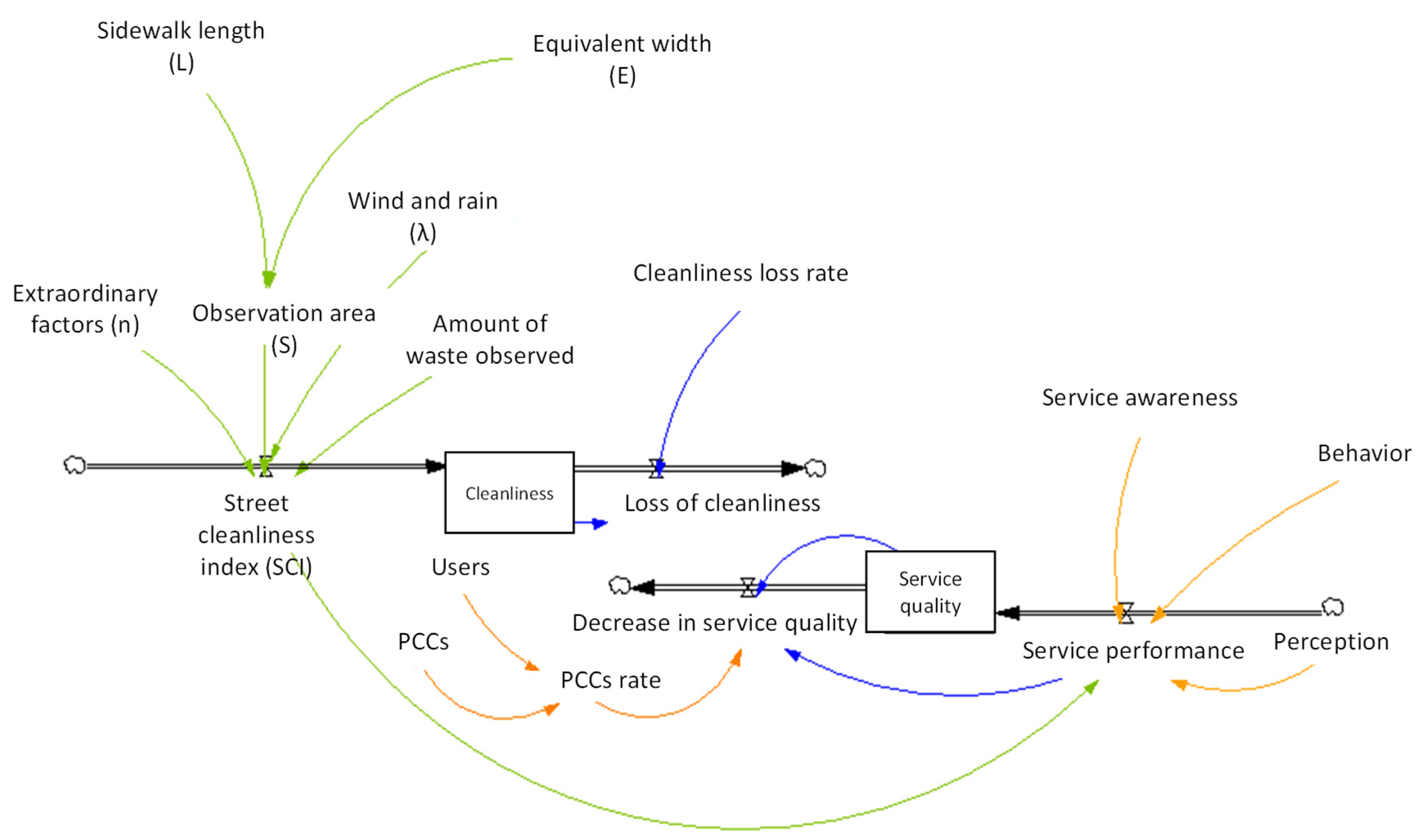
For the development of the comprehensive evaluation model for street sweeping services, a dynamic systems simulation approach was employed [21,22]. This approach integrated variables related to street sweeping service operations, citizen perception, and climatic variables within a quantitative framework (Table 1). System delimitation included identification of dependent and independent variables, units of measurement, and information sources, prioritizing those with empirical evidence in previous studies [23] and those detected in the worldwide literature review conducted (Figure 2). In this study, the Street Cleanliness Index (SCI) proposed by Sevilla et al. [11] was selected for constructing the dynamic model. This index classified cleanliness levels into the following five ranges: SCI < 70 = very high, 70 ≤ SCI < 100 = high, 100 ≤ SCI < 150 = medium, and SCI ≥ 150 = low. The threshold values of the SCI represent explicit physical transitions in street litter accumulation that are perceptible to both municipal operators and citizens. SCI < 70 denotes surfaces where residual particles are scarce and uniformly distributed, reflecting effective sweeping and limited resuspension. Values between 70 and 100 indicate localized accumulations—typically paper, organic debris, or fine sediments—without altering pedestrian or vehicular use. A SCI of 100–150 captures conditions where litter becomes spatially continuous, evidencing insufficient sweeping frequency or adverse meteorological effects. SCI ≥ 150 marks a physically degraded state, where accumulated solids disrupt runoff pathways, elevate resuspension potential, and signify a clear deterioration in the functional and esthetic performance of the streetscape. In this study, the previous SCI limit values were also considered for the dynamic model developed.
The SCI incorporated correction factors such as waste quantity, road observation area (length and width), climate (wind and rain), and extraordinary factors/circumstances (e.g., vehicle parking and presence of informal vendors). This index evaluated the operational aspects of the street sweeping system under study. The dynamic model developed also considered the cleanliness variable within the operational component, influenced by the cleanliness loss rate. Additionally, the service quality variable was included, which was influenced by service performance (service awareness, behavior, and perception). These variables evaluated citizen perception of the street sweeping system. Operational and perception variables fed the initial structure of the conceptual model, determining the degree of complexity and processes represented to comprehensively evaluate street sweeping services (Figure 2). In essence, the developed dynamic model considered the designated operational and citizen perception variables as the main dimensions. Table 1 presents the definition of variables considered for constructing the dynamic model.
Table 1. Definition of variables considered in the dynamic evaluation model of street sweeping services.
No.Type of Variable aVariableUnits bCalculation MethodSource of Information
1.IActual widthmMeasured in the fieldThis study. Average width in each section observed
2.DEquivalent width (E)mAccording to Sevilla et al. [11][11]
3.ISidewalk length (L)mMeasured in the fieldThis study. Average lengths in each observed section
4.IExtraordinary factors (n)A1 = Absence of circumstances and 2 = Presence of circumstances[11]
5.IWind and rain (λ)AMeasured in the field[11]
6.IAmount of waste observedAMeasured in the field[11]
7.DStreet cleanliness index (SCI)AAccording to Sevilla et al. [11][11]
8.DLoss of cleanlinessA(−Service performance × cleanliness loss rate) + CleanlinessAdapted from: [10,11,12,23]
9.DCleanlinessA(SCI—cleanliness loss) × 0.10Adapted from: [10,11,12,23]
10.ICleanliness loss rateA2.90 cThis study. Secondary information
11.DPerception%Favorable public perception This study. Applied survey
12.IService awareness%Correct knowledge about the street cleaning serviceThis study. Applied survey
13.IBehavior%Appropriate behavior in the street cleaning serviceThis study. Applied survey
14.DService performanceASCI + perception + information—behaviorAdapted from: [10,11,12,23]
15.DService qualityAService performance—decrease in service qualityAdapted from: [10,11,12,23]
16.DDecrease in service qualityA(−Service performance × rate of decrease in quality) + Service qualityAdapted from: [10,11,12,23]
17.IPCCs rateAPCCs/usersThis study. Secondary information
18.IPCCsNumberAverage PCCs for 2020This study. Secondary information
19.IUsersNumberAverage users for 2020This study. Secondary information
a = Independent (I), Dependent (D). b = Dimensionless (A). c = This value is adopted as a result of analyzing average monthly variations in sweeping kilometers between 2018 and 2020 at the study sites. The observation area (S) is calculated as the product of the equivalent width (E) and the sidewalk length (L). SCI = Street cleanliness index and PCCs = Petitions, complaints, and claims of the users.
Dynamic simulation was performed using Vensim V.8.0 software [24], constructing Forrester diagrams to represent flows and interactions between service operation and citizen perception variables (Figure 2). The calibration phase included multivariate sensitivity analysis using the Monte Carlo method [25]. Hence, 200 simulations were executed with controlled variations in the variables service perception (between 30 and 100) and sidewalk length (between 10 and 100) to evaluate model robustness and its response to structural changes. Dynamic simulation results were compared with field information from all study sites, which was generated for month 1 of the simulation time window (n = 36). This comparative analysis between actual and simulated values allowed validation of the performance of the dynamic comprehensive evaluation model for street sweeping services. Indeed, the proposed simulation approach integrated operational and perception variables, providing a potential tool for decision-making in urban infrastructure management.

2.2.4. Phase 4: Statistical Analysis

As mentioned in Section 2.2.1, the worldwide literature review was structured into three phases. In all of them, a citation frequency index by quartiles (Q) was used to establish an order of importance for variables considered in this study (operational and perception). Citation frequency quartiles associated with the Q index were defined as follows: Q1 = 0.75–1.00, Q2 = 0.50–0.75, Q3 = 0.25–0.50, and Q4 = 0.00–0.25 [17]. All data series of variables considered in this study were evaluated to determine their distribution through Shapiro–Wilk (n < 50) and Kolmogorov–Smirnov (n ≥ 50) normality tests [26]. In cases where data series did not present normal distribution (p < 0.05), Spearman’s correlation coefficient [27] was applied to analyze the strength and direction of relationships between operational and citizen perception variables. Descriptive statistical analyses (mean, standard deviation, maximum and minimum values, and range) were also considered for both operational and perception variables. Internal consistency of the citizen perception survey, designed under a 15-item Likert scale, was evaluated using Cronbach’s Alpha coefficient [28]. In this study, α-Cronbach was 0.770, indicating acceptable reliability of the survey for social studies. All statistical analyses were implemented using IBM SPSS Statistics V.25 software (95% confidence). Finally, reproducibility and methodological rigor were ensured in the integration of variables into the developed dynamic simulation model.

3. Results and Discussion

3.1. Variable Selection

Results from Spearman correlation analysis indicated no significant relationship between the collected quantity of street sweeping waste (ton/day) and fine PM concentrations (PM10 and PM2.5, in µg/m3). For instance, in Puente Aranda, the correlation coefficient was −0.081 (p-value = 0.676) for PM2.5 and −0.058 (p-value = 0.767) for PM10. In Barrios Unidos, the coefficients were −0.009 (p-value = 0.970) and −0.067 (p-value = 0.785), respectively. Thus, this trend suggested the exclusion of fine PM concentrations as environmental pollution indicators in the development of the proposed dynamic model. Indeed, the literature reported that roadway PM reduction was more strongly influenced by precipitation than by street sweeping operations [4,29]. It was also reported that improvements in road infrastructure (e.g., paving and sidewalk construction) decreased fine PM resuspension by up to 95% [30].
In this study, potential variables for dynamic model development were detected and selected through an analysis based on their citation frequency index (Q) [17] in scientific databases. In the operational dimension, four potential variables with high relevance (>Q3) were detected: traffic density (Q2 = 0.613) > land use (Q2 = 0.557) > seasonal variation (Q2 = 0.522) > particle size of road sediment (Q2 = 0.515). However, only the traffic density and seasonal variation variables were considered in the dynamic model construction due to data availability at the study sites. In the perception (social) dimension, all detected variables with an index greater than Q3 were considered, which were as follows: knowledge and information about the service (Q2 = 0.699) > socioeconomic information (Q2 = 0.664) > behavior toward the street sweeping service (Q2 = 0.610) > perception or opinion of the service (Q2 = 0.586) (Table 1 and Figure 2). The inclusion of these variables enabled the dynamic model to comprehensively evaluate interactions between street sweeping system operability and citizen perception.

3.2. Development of the Dynamic Evaluation Model

The dynamic evaluation model for street sweeping services was structured under two dimensions: operational and social, with a simulation time scale of 36 months. This simulation scale was selected due to data availability at the study sites during this time window. The Forrester diagram integrated these dimensions through 19 variables, color-differentiated according to their dimensional affiliation: green and blue for the operational dimension, and orange for the perception dimension (Figure 2). Indeed, this multidimensional approach enabled the representation of causal relationships and feedback flows between key operational and perception variables such as the street cleanliness index (SCI) and service performance, respectively.
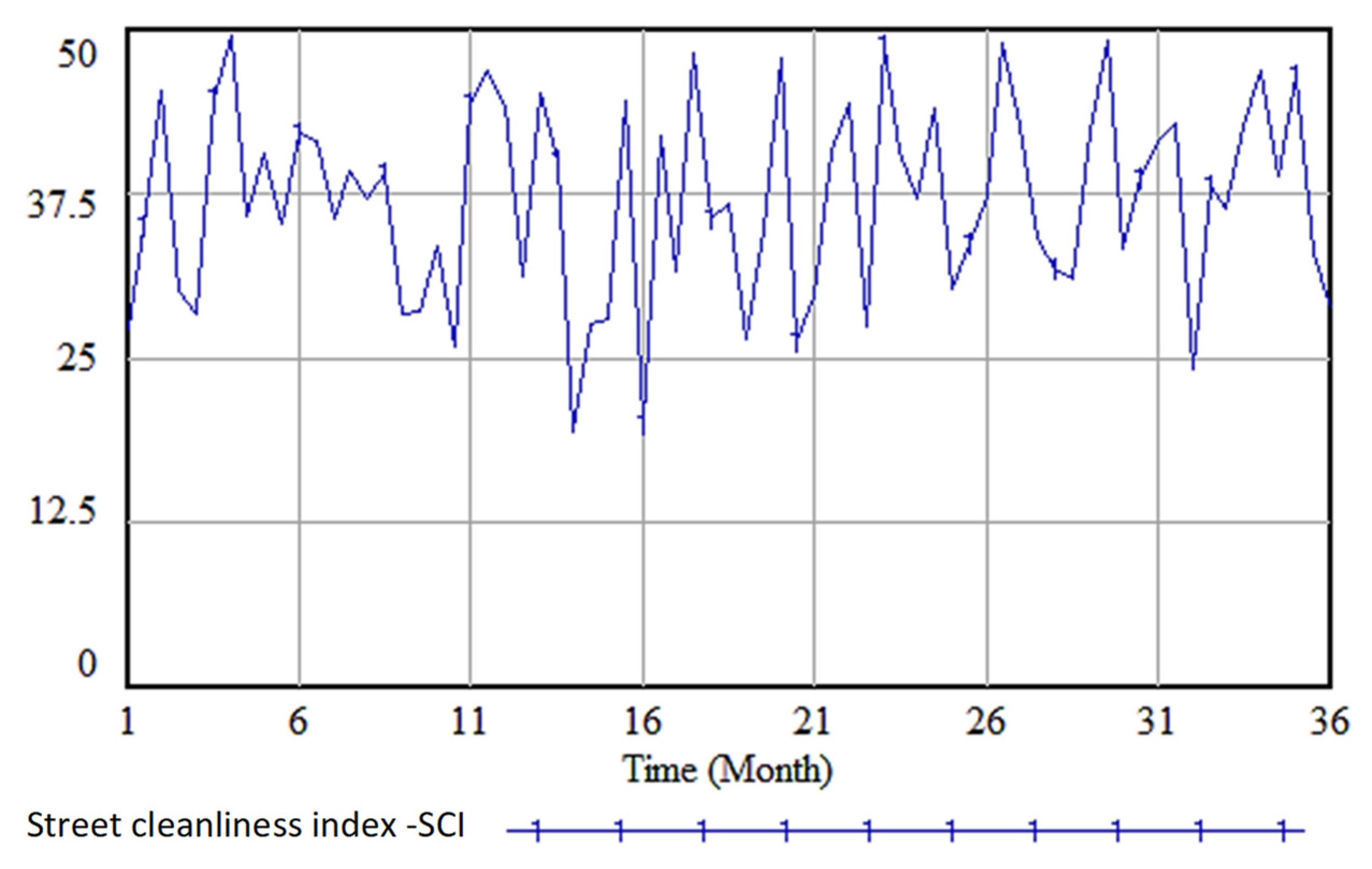
Regarding the operational dimension, dynamic simulation results for SCI showed a variation range between 19.5 and 49.5 (mean = 37, SCI: very high) during the study period (Figure 3). The maximum value was simulated for month 4 (49.5) and the minimum value for month 14 (19.5). On average, this SCI assessment corresponded to a very high classification in the street cleanliness level. Initially, the dynamic simulation results suggested a consistent trend regarding seasonal variability (precipitation regime) of SCI. That is, a decrease in SCI was associated with the rainy season (a lower quantity of road waste) and an increase in SCI was associated with the dry season (a higher quantity of road waste). On average, the findings also showed that simulated SCI values were below, for example, those reported in Granada (Spain) by Sevilla et al. [11]. On average, these researchers reported an SCI of 61.7 (SCI: very high). Thus, the findings suggested that street sweeping service efficiency in the study localities was comparatively better than that reported by Sevilla et al. [11], despite the observed spatial non-homogeneity in SCI (wide variation range) at the considered study sites.
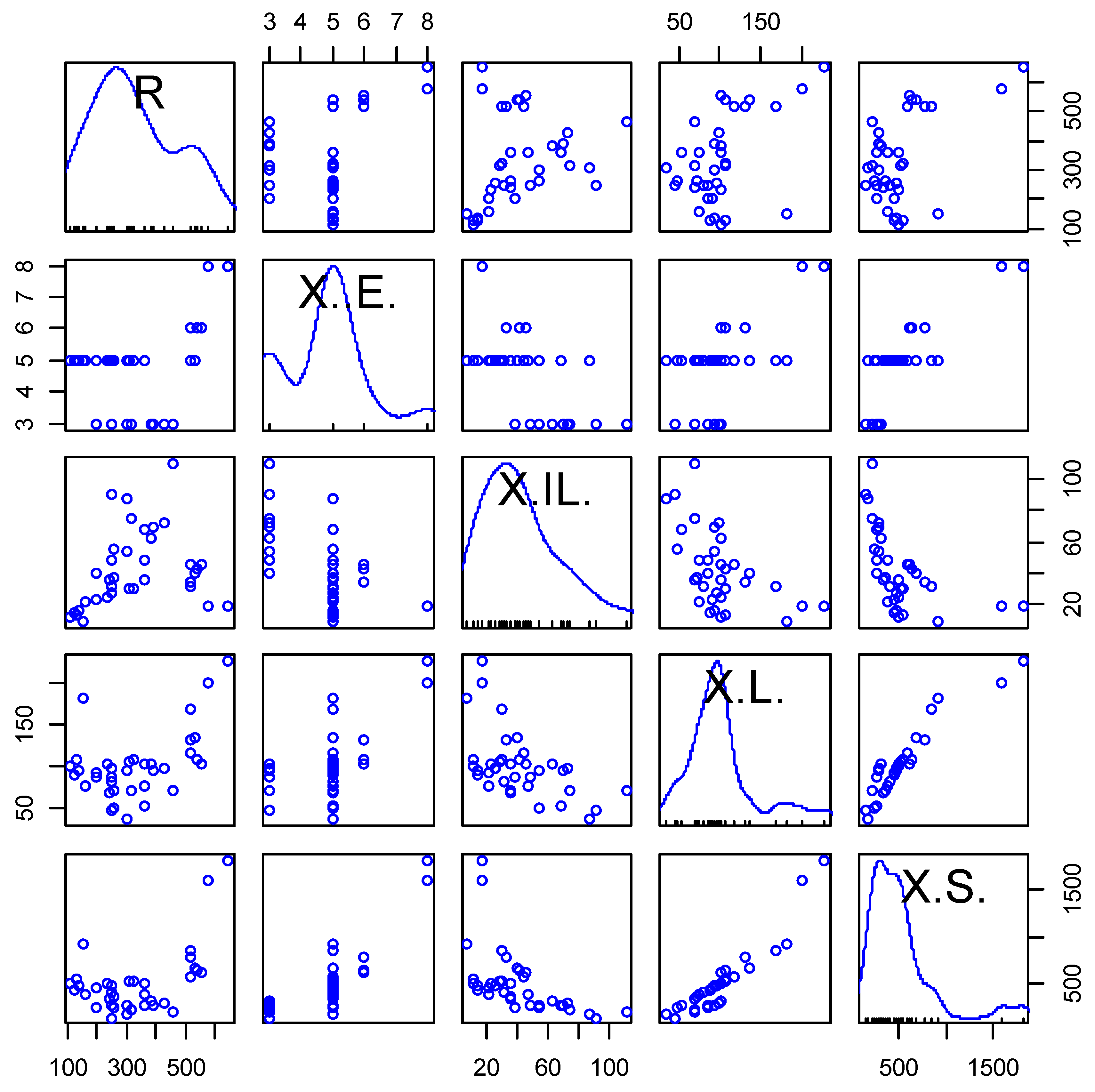
Spearman coefficient (rs) analysis evidenced a medium to strong negative relationship between SCI and the observation area (rs = −0.703; p-value < 0.001) of the roadway (X.IL and X.S in Figure 4, respectively). This trend suggested that roadway segments of smaller extent tended to present a higher SCI (greater road dirtiness). Moreover, a medium to strong negative correlation of SCI with equivalent width (rs = −0.573; p-value < 0.001) and sidewalk length (rs = −0.534; p-value < 0.001) was observed. Studies reported that the waste accumulation pattern in urban areas was not uniform. Small areas, such as sidewalk edges, reduced spaces between vehicles or street furniture, and areas with obstacles (e.g., street vendors), tended to accumulate waste more rapidly and densely [4]. These results suggested that the geometric characteristics of roadways significantly influenced waste accumulation and cleanliness level. Comparative studies in European and Latin American cities reported that road morphology conditioned the effectiveness of mechanical and manual cleaning, increasing particle resuspension and road waste retention time [31,32].
Additionally, the results evidenced that the relationship between SCI and roadway observation area (X.S.) could be better explained by a logarithmic model (R2 = 0.527; SCI = −31.6 × ln [X.S.] + 232.8) (X.IL and X.S in Figure 4, respectively). Indeed, the findings suggested that the perceived service efficiency did not depend exclusively on SCI, but rather on its integration with citizen perception considered in the dynamic model development. As noted by Calabrò and Komilis [33], the provision of urban sanitation service likely did not guarantee operational system efficiency if citizens perceived deficiencies in coverage or collection frequency.
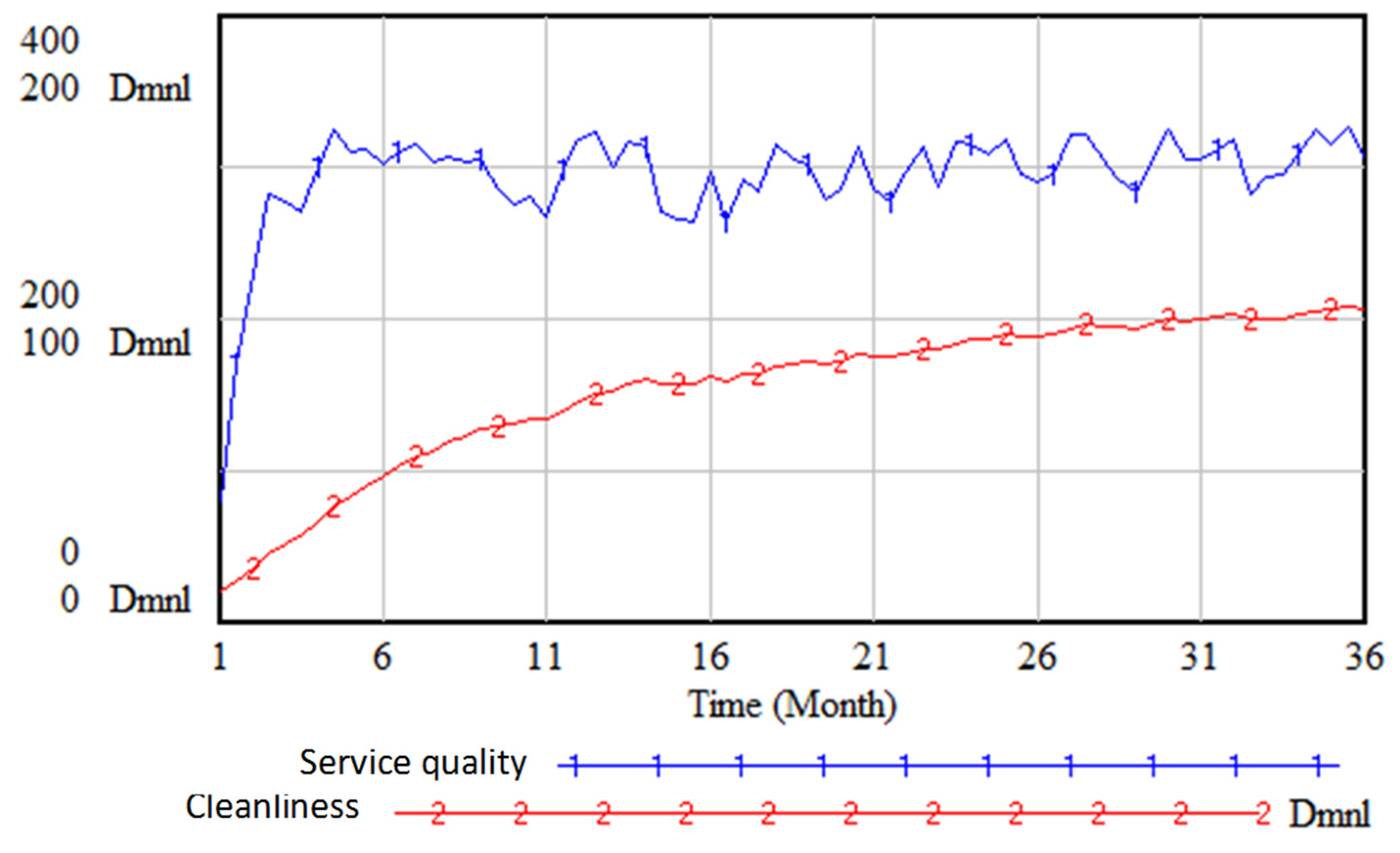
Regarding operational and perception dimensions, the results showed that for the operational variable cleanliness, adjusted with a cleanliness loss rate, there was an increasing trend between months 1 and 14 (Figure 5). Subsequently, stabilized variations near 0.80% were observed. Instead, for the perception variable service quality, calculated through integration of complaint rate and service performance, a variation between 80 and 327 (mean = 294) was observed. Thus, the results showed a weak to medium positive correlation between cleanliness and service quality variables (rs = 0.357; p-value < 0.001). This correlation suggested that greater operational efficiency translated into better citizen perception of street sweeping service quality, albeit with a weak to moderate effect. The perception variable service quality also showed greater fluctuation compared to the operational variable cleanliness.
Additionally, the results also evidenced that the exponential regression model best described the relationship between the operational variable cleanliness and perception variable service quality (Cleanliness = 4.379e(0.0095service quality), R2 = 0.458) (Figure 5). These results were consistent with those reported by Metwally and Samir [34]. These researchers reported that the inclusion of citizen satisfaction indicators (perception) was fundamental for comprehensive street sweeping service evaluation. Other studies reported that service quality perception depended on both the frequency and visibility of street sweeping operations [35].
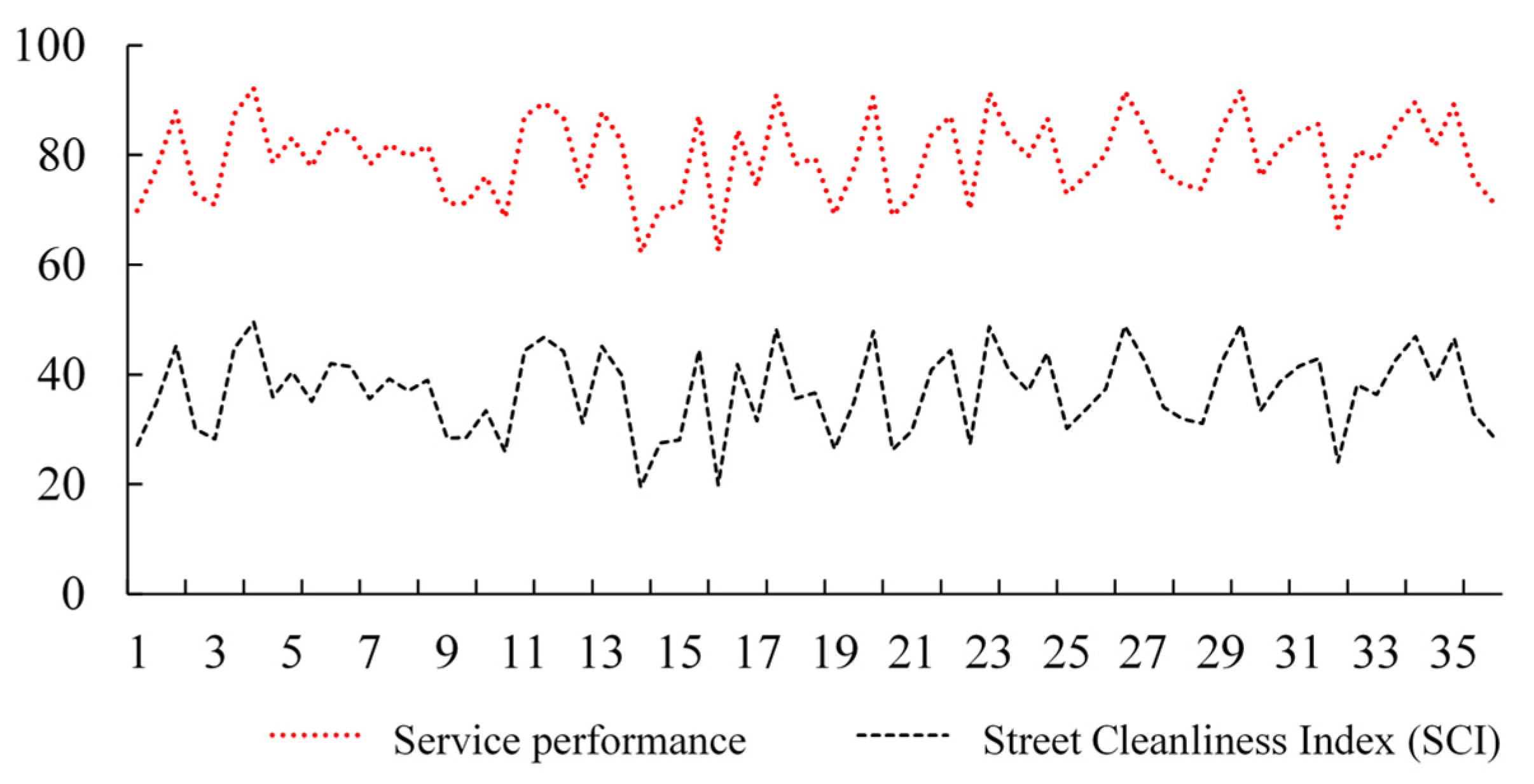
Regarding the impact of the perception dimension on street sweeping service, the results showed that the service performance variable, by integrating variables such as perception, service knowledge, and behavior, generated average SCI values of 79.7 (min. = 62.2, max. = 92.2, cleanliness level between high and very high). This was on average for all study sites. However, when contrasted with the pure SCI (i.e., without considering perception variables), a significant 53.6% reduction in SCI magnitude was evidenced (Figure 6). In other words, there was a 53.6% improvement in service evaluation. The findings suggested that this trend possibly highlighted the weight of citizen dissatisfaction (perception) in comprehensive street sweeping service assessment through the dynamic model developed in this study. This finding agreed with previous studies that highlighted that citizen perception tended to reduce operational efficiency indicators when there was no correspondence with social expectations [4,11]. Therefore, dynamic modeling demonstrated that street sweeping management success did not depend solely on operational metrics, but rather on a balance between technical/operational performance and social acceptance.
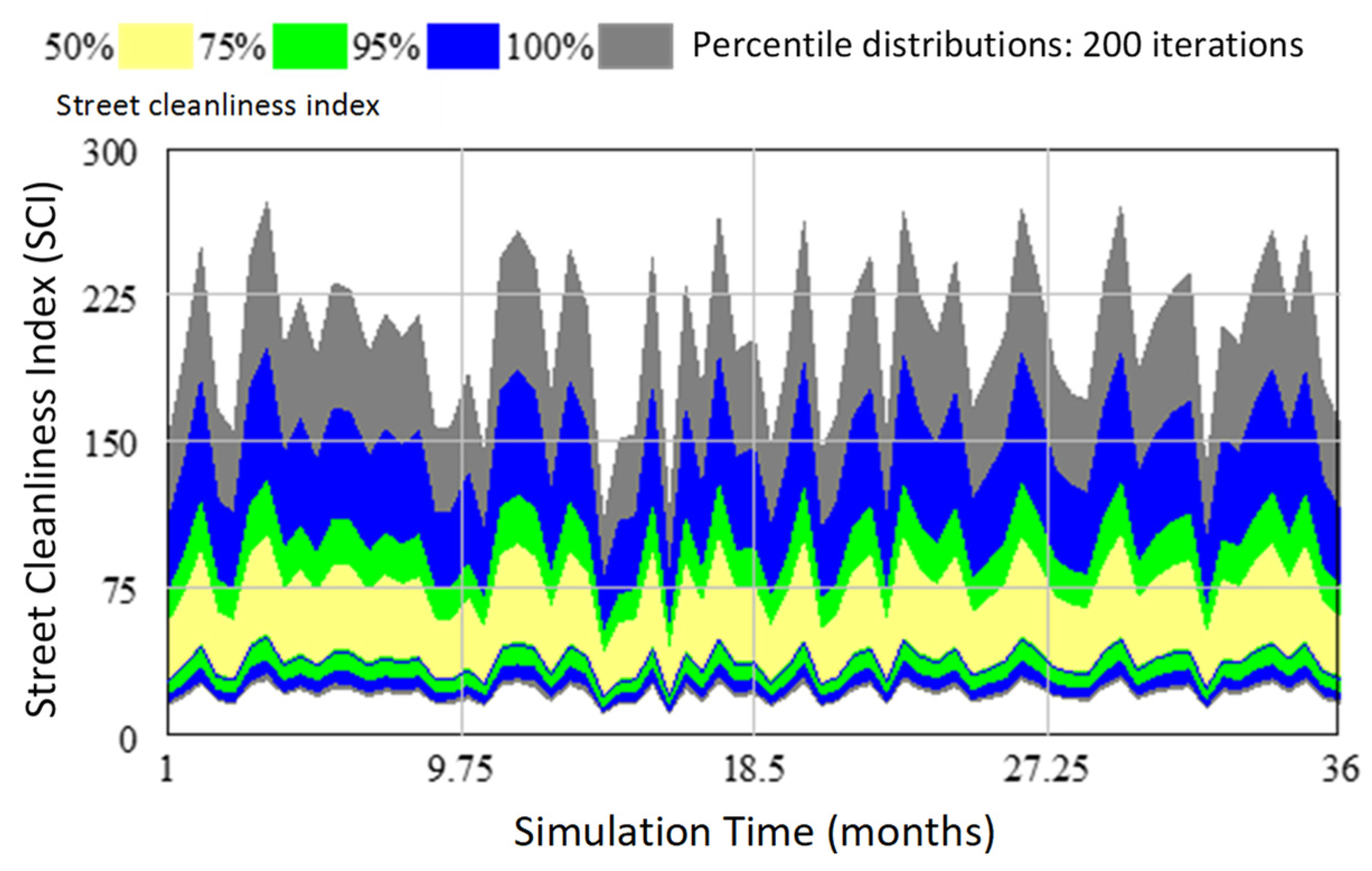
Results from multivariate sensitivity analysis using the Monte Carlo method (200 simulations) showed that SCI varied between 70 and 75 (cleanliness level high), with a normal distribution concentrated above the mean and a 50% confidence interval. It was also observed that more than 60% of SCI simulations fell within this range (Figure 7). Moreover, the control variables with the greatest impact on SCI were equivalent width and sidewalk length. That is, it was evidenced that spatial restrictions decreased street sweeping service assessment by up to 15%. On average, sensitivity analysis on the service quality variable showed that under physical obstacle conditions, cleanliness values (measured by SCI) decreased by up to 20%. Certainly, this trend coherently suggested that limitations in observation area (variable) had a direct impact on the service evaluation (operational and perception) of street sweeping. These findings were similar to those that reported the influence of public space occupied by informal vendors or parking on street sweeping efficacy [36].
Regarding the perception variable service performance and its impact on SCI, sensitivity analysis results evidenced average values between 75 and 80 (cleanliness level high), with wide variation in the 50% confidence interval (75–150). This behavior was possibly attributable to the influence of the perception variables service knowledge, behavior, and citizen perception on SCI. This finding was consistent with reports from other studies, where they recognized the relevance of citizen participation in determining the perceived quality of urban sanitation services [33]. In terms of the climatic variables considered, sensitivity analysis simulations suggested an increase in the cleanliness loss variable of up to 25% under wind and precipitation conditions. This was in relation to the average climatic conditions considered. Therefore, the developed dynamic model evidenced that comprehensive street sweeping service evaluation should simultaneously consider operational and perception dimensions. Indeed, this highlighted the need to develop comprehensive evaluation models as a management tool to improve urban street sweeping service efficiency and sustainability.

3.3. Dynamic Model Validation

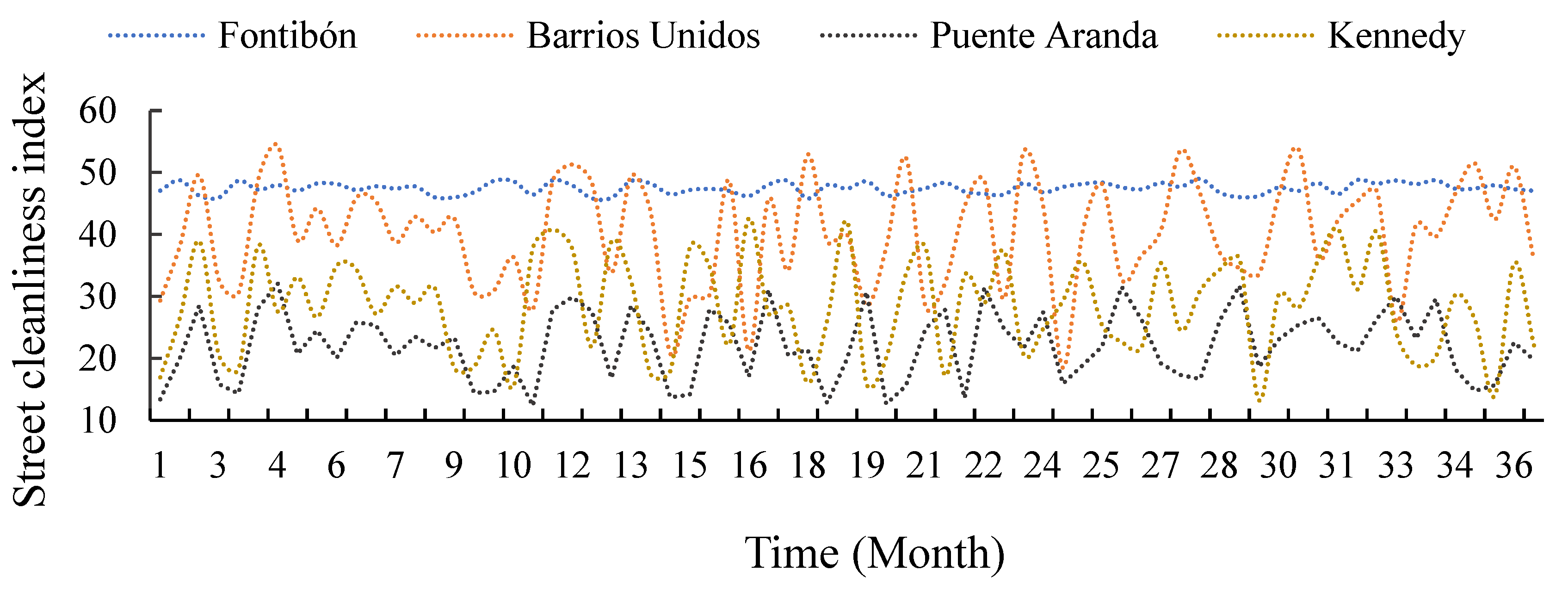
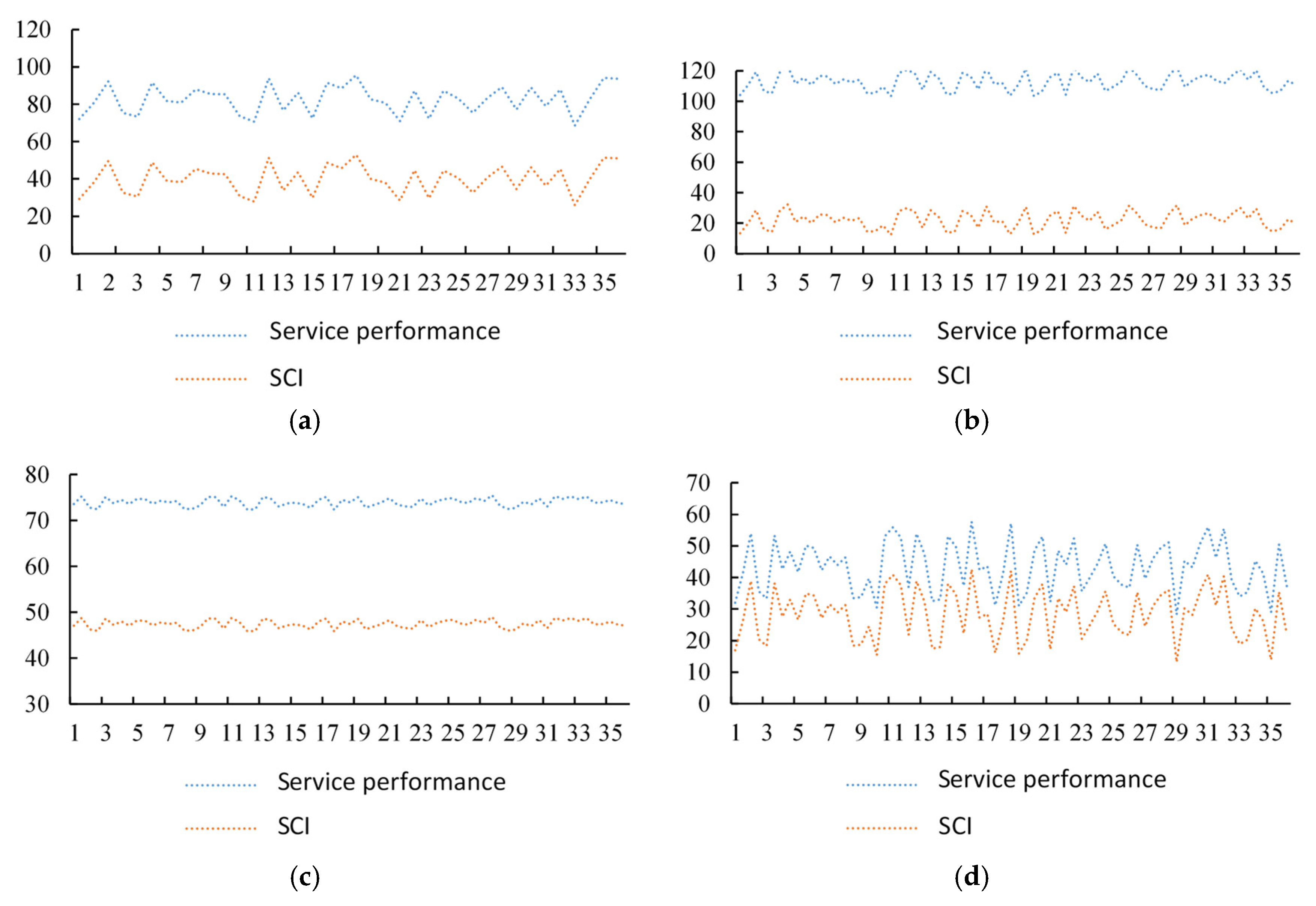
Dynamic modeling throughout the entire study period (n = 36 months) evidenced variations in SCI, probably related to anthropogenic and climatic factors. In Fontibón, values ranged between 45.8 and 48.9 (SCI: very high), in Barrios Unidos between 18.5 and 54.3 (SCI: very high), in Puente Aranda between 12.3 and 32.1, and in Kennedy between 13.2 and 42.6 (Figure 8). All these results fell within the very high SCI category. However, from simulation of 200 scenarios, the SCI variation range was between 11.1 and 186. The increase in SCI variation probably highlighted street sweeping service sensitivity to changes under external conditions, particularly according to observed area (e.g., informal vendors and vehicle parking) and climate (occurrence of rain and wind). These findings also coincided with studies that reported precipitation was a decisive factor in road waste redistribution (i.e., through surface runoff), especially for fine sediments with high pollutant load [4,6].
In this study, simulated results were contrasted with field observations for certain months. For example, for month 1, the field results showed an average SCI of 41.9 (very high) across all study sites. SCI varied between 27.5 in Kennedy and 57.3 in Barrios Unidos, with intermediate values in Puente Aranda (29.3) and Fontibón (40.1). Simulated SCI values with the dynamic model varied between 19.9 and 48.8. On average, SCI simulation errors for month 1 were observed between 17.4% and 38.2%. These field findings suggested the possible existence of external factors such as on-street parking and informal vendors, which were difficult to represent by simulated SCI. Certainly, there were external factors that, due to their occasional occurrence, were complex to represent in the developed dynamic model. These external factors were also reported in other studies as variables that increased waste in urban public spaces [36]. Moreover, Sevilla et al. [11] reported a wider SCI variation range in Granada (Spain) (3.07–181, mean = 61.7) relative to this study. This comparatively indicated that the study localities possibly presented relatively favorable street sweeping service performance, albeit with intra-urban heterogeneity in SCI (variation between 27.5 and 57.3). During month 1, no significant rain and wind episodes were observed in the field, outside their average values.
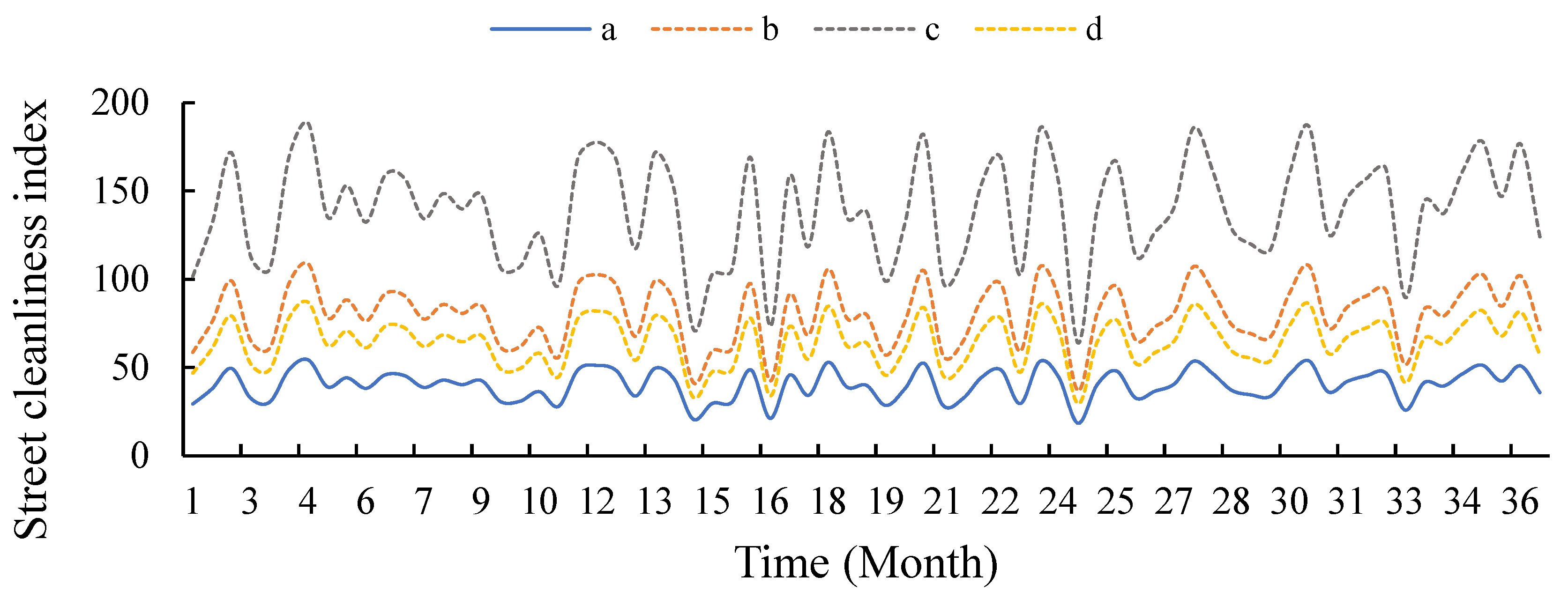
To analyze dynamic model behavior under external and climatic factors, four scenarios were simulated in Barrios Unidos (Figure 9). The scenario designated as (A) showed an average SCI of 40.2 (SCI: very high). This simulation scenario was not influenced by external and climatic factors (baseline scenario). In contrast, in scenario (B), when including external factors such as street vendors, bus stops, and occasional parking, SCI increased on average to 80.4 (SCI: high). This increase in SCI magnitude evidenced a reduction in street sweeping evaluation. In scenario (C), considering a minimum observation area (217.2 m2) due to external factors, SCI averaged 139 (SCI: medium). These findings suggested the negative correlation between observed area and SCI (rs = −0.573; p-value < 0.001). In scenario (D), under average rain and wind conditions, an average SCI of 64.3 (SCI: very high) was evidenced. These results confirmed the importance of external and climatic factors on SCI dynamics, in agreement with reports by other studies [33]. Therefore, the dynamic simulation results suggested that external variables had greater influence on SCI (decrease/road cleaning = 100%) compared to climatic factors (decrease/road cleaning = 60%). These findings possibly implied that local policies should prioritize managing external urban pressures by strengthening communication with citizens, improving operational training, and coordinating with the mobility and informal trade sectors. This is because these interventions would likely yield greater benefits in terms of SCI performance and improve the sustainability and legitimacy of municipal street sweeping systems.
Regarding operational and perception dimensions, dynamic modeling showed a progressive increase in SCI across all study localities during the study period (n = 36). However, fluctuations were observed in the service quality variable. This variable was in turn influenced by the complaint rate and the service performance variable (knowledge, behavior, and service perception; see Figure 2). The service quality variable showed values between 38 and 163, without stable behavior during the study period. This was despite the increasing trend in SCI (Figure 5). The results suggested that street sweeping evaluation indicators based exclusively on operational factors such as kilometers swept possibly did not adequately reflect service quality from citizen perception. Wang et al. [37] reported similar results regarding indicators that exclusively considered operational aspects for street sweeping service evaluation. Moreover, the findings showed that the service performance variable was reduced compared to SCI: −47.9% in Barrios Unidos, −19.4% in Puente Aranda, −64.2% in Fontibón, and −64% in Kennedy (Figure 10). This difference between SCI and the service performance variable suggested that operational expansion in street sweeping services did not guarantee an increase in citizen perception. This trend was also observed in Santander (Spain), where citizen satisfaction decreased despite increases in public service coverage [23]. Therefore, the dynamic simulation results suggested that operational variables should be analyzed jointly with perception variables. This was necessary to establish an appropriate approach for street sweeping service evaluation.

3.4. Citizen Perception

Perception survey results (n = 99) evidenced that users at study sites were predominantly distributed in the following land uses: 35.4% for commercial use in Barrios Unidos, 23.2% for areas adjacent to high-traffic roads in Fontibón, 21.2% for residential use in Kennedy, and 20.2% for industrial use in Puente Aranda. The results showed that survey validity was acceptable (α-Cronbach = 0.770), comparable to that reported by Babaei et al. [38] in waste perception studies (α-Cronbach = 0.850). The findings also showed that the predominant age group was between 27 and 59 years (58.6%), followed by 18–26 years (33.3%), with the majority being employed (68.7%) with monthly incomes between 355 and 710 USD (62.6%). This latter profile was relevant, given that previous studies reported that economically active groups perceived public service quality more critically [39].
The results showed comparative differences between perception variables and SCI. The survey results suggested a medium to low level of street sweeping service knowledge, with percentages varying between 27.9 and 44.4% (Table 2). This finding was coherent with studies that suggested a lack of information directly influenced user behavior and perception of sweeping services [38,39]. In our study, for example, linear regression analysis suggested that, although knowledge of street sweeping schedules and frequencies impacted proper waste disposal, this factor only explained 12.5% of user behavior variation (R2 = 0.125, p-value < 0.001). Therefore, the findings suggested that while dissemination was necessary (service knowledge), it should be part of a more comprehensive strategy addressing other perception variables such as citizen behavior. Indeed, this was the comprehensive approach attempted through the dynamic model proposed in this study.
Findings showed comparatively that SCI was not directly correlated with citizen perception of street sweeping services. In other words, the results suggested differences between citizen perception and SCI. For example, in the Kennedy locality, with the best simulated average SCI (27.5), the lowest positive perception (30.9%) was obtained compared to other study sites. Conversely, Puente Aranda combined a higher SCI of 29.3 (lower cleanliness) with a 70% positive perception of street sweeping services (Table 2). This trend highlighted that user-perceived street sweeping service quality likely went beyond the mere absence of road waste. Certainly, linear regression analyses supported that perception was significantly influenced by factors such as the timely collection of street sweeping waste and staff attitude. Thus, linear regression models developed from the survey results suggested that collection punctuality explained 19.8% of service perception (R2 = 0.198, p-value < 0.001). Staff attitudes explained 16.4% of citizen perception (R2 = 0.164, p-value < 0.001).
Additionally, the applied surveys enabled the study of citizen perception regarding street sweeping impacts on air quality. These air quality variables (PM concentrations) were discarded during dynamic model development because no significant correlation existed between PM concentrations and collected quantity of street sweeping waste. On average, the results showed that 69% of respondents recognized the role of street sweeping in environmental pollution mitigation. However, knowledge about the association between road dirtiness and air pollution was low, with only 21.1% agreeing with this statement. This finding was relevant, as road sediments were reported as a known source of resuspended PM, with implications for public health and urban air quality [6]. In this study, a weak positive correlation was evidenced between perception of road dirtiness and air pollution (r = 0.285, p-value < 0.001).
The findings suggest that a primary limitation of the model lies in the difficulty of representing the occasional occurrence of external factors (informal vending and parked vehicles), which introduces uncertainty into the simulations. Moreover, the spatial heterogeneity of SCI within localities is not fully captured, indicating the need for finer granularity. Lastly, the disconnect between operational cleanliness data and citizen perception highlights a knowledge gap that the model only begins to explore. Future research should focus on stochastic simulation models that incorporate the variability of these factors and on longitudinal studies to better understand the dynamics of long-term perception.

4. Conclusions

The results of this study on the development of a dynamic model for comprehensively evaluating urban street sweeping services allow for the following conclusions.
(1)
The evaluation of street sweeping services through the developed model suggests that technical/operational efficiency, although essential, proves insufficient to ensure system sustainability if not articulated with citizen perception.
(2)
The results indicate that geometric and spatial variables, along with climatic factors, significantly condition the cleanliness level, generating efficiency reductions of up to 100%. However, model validation reveals a critical gap between operational cleanliness and citizen perception, with reductions of up to 64.2% in the comprehensive service assessment.
(3)
The inclusion of perception indicators with acceptable validity (Cronbach’ α = 0.770) highlights the need to consider perceptual variables, such as collection timeliness and personnel attitude, which explain a relevant proportion of citizen satisfaction. In this way, the proposed dynamic model is a solid tool for supporting public management, as it integrates operational and perceptual variables to potentially optimize resources, reduce socio-environmental impacts, and reinforce institutional legitimacy in the provision of urban street cleaning services.

Supplementary Materials

The following supporting information can be downloaded at: https://www.mdpi.com/article/10.3390/urbansci9120518/s1, Table S1: Applied perception survey.

Author Contributions

Conceptualization, L.C.R.-C. and C.A.Z.-M.; Methodology, L.C.R.-C. and C.A.Z.-M.; Software, L.C.R.-C. and C.A.Z.-M.; Validation, L.C.R.-C., C.A.Z.-M. and H.A.R.-Q.; Formal analysis, L.C.R.-C. and C.A.Z.-M.; Investigation, L.C.R.-C. and C.A.Z.-M.; Resources, C.A.Z.-M. and H.A.R.-Q.; Data curation, L.C.R.-C., C.A.Z.-M. and H.A.R.-Q.; Writing—original draft, C.A.Z.-M. and H.A.R.-Q.; Writing—review & editing, L.C.R.-C., C.A.Z.-M. and H.A.R.-Q.; Visualization, L.C.R.-C., C.A.Z.-M. and H.A.R.-Q.; Supervision, C.A.Z.-M.; Project administration, C.A.Z.-M.; Funding acquisition, C.A.Z.-M. and H.A.R.-Q. All authors have read and agreed to the published version of the manuscript.

Funding

This research received no external funding.

Institutional Review Board Statement

This study was exempted from ethical review and approval because it is a low-risk, completely anonymous investigation that uses verbal surveys in public spaces about a non-sensitive urban service, and strictly adhered to the principles of verbal informed consent, anonymity, and voluntariness (Minimal Risk Waiver Clause). The study was conducted in accordance with the ethical principles of the Declaration of Helsinki (1975, revised in 2013) and with Colombian national regulations, including Resolution 8430 of 1993 of the Ministry of Health (which establishes scientific, technical, and administrative norms for research involving human subjects) and Decree 1377 of 2013 on personal data protection.

Informed Consent Statement

All participants were informed about the purpose of the study, and their participation was entirely voluntary. Informed consent was obtained from all subjects involved in the study.

Data Availability Statement

The original contributions presented in this study are included in the article. Further inquiries can be directed to the corresponding author(s).

Acknowledgments

The authors would like to thank the Environmental Engineering Research Group (GIIAUD) and the Sustainable Development Research Group (INDESOS) at the Universidad Distrital Francisco José de Caldas (Colombia).

Conflicts of Interest

The authors declare no conflicts of interest.

References

  1. Kumar, G.; Vyas, S.; Sharma, S.N.; Dehalwar, K. Challenges of Environmental Health in Waste Management for Peri-Urban Areas. In Solid Waste Management: Advances and Trends to Tackle the SDGs; Nasr, M., Negm, A., Eds.; Springer Nature: Cham, Switzerland, 2024; pp. 149–168. ISBN 978-3-031-60684-7. [Google Scholar]
  2. Baud, I.; Grafakos, S.; Hordijk, M.; Post, J. Quality of Life and Alliances in Solid Waste Management: Contributions to Urban Sustainable Development. Cities 2001, 18, 3–12. [Google Scholar] [CrossRef]
  3. Calvillo, S.J.; Williams, E.S.; Brooks, B.W. Street Dust: Implications for Stormwater and Air Quality, and Environmental Management Through Street Sweeping. In Reviews of Environmental Contamination and Toxicology Volume 233; Whitacre, D.M., Ed.; Springer International Publishing: Cham, Switzerland, 2015; pp. 71–128. ISBN 978-3-319-10479-9. [Google Scholar]
  4. Amato, F.; Querol, X.; Johansson, C.; Nagl, C.; Alastuey, A. A Review on the Effectiveness of Street Sweeping, Washing and Dust Suppressants as Urban PM Control Methods. Sci. Total Environ. 2010, 408, 3070–3084. [Google Scholar] [CrossRef] [PubMed]
  5. Mejía, C.A.Z.; Pinzón, E.C.L.; González, J.T. Influence of traffic in the heavy metals accumulation on urban roads: Torrelavega (spain)-soacha (colombia). Rev. Fac. Ing. 2013, 67, 146–160. [Google Scholar] [CrossRef]
  6. Das, S.; Wiseman, C.L.S. Examining the Effectiveness of Municipal Street Sweeping in Removing Road-Deposited Particles and Metal(Loid)s of Respiratory Health Concern. Environ. Int. 2024, 187, 108697. [Google Scholar] [CrossRef] [PubMed]
  7. Lin, S.-L.; Deng, Y.; Lin, M.-Y.; Huang, S.-W. Do the Street Sweeping and Washing Work for Reducing the Near-Ground Levels of Fine Particulate Matter and Related Pollutants? Aerosol Air Qual. Res. 2022, 23, 220338. [Google Scholar] [CrossRef]
  8. Herath, A.; Datta, D.K.; Bonyadinejad, G.; Salehi, M. Partitioning of Heavy Metals in Sediments and Microplastics from Stormwater Runoff. Chemosphere 2023, 332, 138844. [Google Scholar] [CrossRef]
  9. Romero-Barreiro, M.d.P.; Pinilla-Castañeda, R.D.; Zafra-Mejía, C.A. Temporal assessment of the heavy metals (Pb and Cu) concentration associated with the road sediment: Fontibón- barrios unidos (Bogotá D.C., Colombia). Ing. Univers. 2015, 19, 315–333. [Google Scholar] [CrossRef]
  10. Van Ryzin, G.G.; Immerwahr, S.; Altman, S. Measuring Street Cleanliness: A Comparison of New York City’s Scorecard and Results from a Citizen Survey. Public Adm. Rev. 2008, 68, 295–303. [Google Scholar] [CrossRef]
  11. Sevilla, A.; Rodríguez, M.L.; García-Maraver, Á.; Zamorano, M. An Index to Quantify Street Cleanliness: The Case of Granada (Spain). Waste Manag. 2013, 33, 1037–1046. [Google Scholar] [CrossRef]
  12. Benito, B.; Guillamón, M.-D.; Martínez-Córdoba, P.-J.; Ríos, A.-M. Influence of Selected Aspects of Local Governance on the Efficiency of Waste Collection and Street Cleaning Services. Waste Manag. 2021, 126, 800–809. [Google Scholar] [CrossRef]
  13. Anghinolfi, D.; Paolucci, M.; Robba, M.; Taramasso, A.C. A Dynamic Optimization Model for Solid Waste Recycling. Waste Manag. 2013, 33, 287–296. [Google Scholar] [CrossRef] [PubMed]
  14. Henao-Rodríguez, C.; Lis-Gutiérrez, J.P.; Sierra, A.S.G. Factors Influencing Environmental Awareness and Solid Waste Management Practices in Bogotá: An Analysis Using Machine Learning. Air Soil Water Res. 2024, 17, 11786221241261188. [Google Scholar] [CrossRef]
  15. Moreno, J.S. The Urban, Social, and Environmental Impact of Centralized Waste Systems: A Study on Segregation and Local Alternatives for the Doña Juana Landfill in Bogotá, Colombia. Master’s Thesis, Columbia University, New York, NY, USA, 2021. [Google Scholar]
  16. Alcaldía Mayor de Bogotá. Informe Anual de Calidad de Aire de Bogotá. 2022. Available online: http://rmcab.ambientebogota.gov.co/home/text/1512 (accessed on 9 October 2025).
  17. Enciso-Díaz, W.C.; Zafra-Mejía, C.A.; Hernández-Peña, Y.T. Global Trends in Air Pollution Modeling over Cities Under the Influence of Climate Variability: A Review. Environments 2025, 12, 177. [Google Scholar] [CrossRef]
  18. Howell, C.R.; Su, W.; Nassel, A.F.; Agne, A.A.; Cherrington, A.L. Area Based Stratified Random Sampling Using Geospatial Technology in a Community-Based Survey. BMC Public Health 2020, 20, 1678. [Google Scholar] [CrossRef]
  19. Rutkoski, H.; Fowler, B.; Mooney, R.; Pappas, L.; Dixon, B.L.; Pinzon, L.M.; Winkler, J.; Kepka, D. Pilot Test of Survey to Assess Dental and Dental Hygiene Student Human Papillomavirus-Related Oropharyngeal Cancer Knowledge, Perceptions, and Clinical Practices. J. Cancer Educ. 2018, 33, 907–914. [Google Scholar] [CrossRef]
  20. Alabi, A.T.; Jelili, M.O. Clarifying Likert Scale Misconceptions for Improved Application in Urban Studies. Qual. Quant. 2023, 57, 1337–1350. [Google Scholar] [CrossRef]
  21. Xiao, S.; Dong, H.; Geng, Y.; Tian, X.; Liu, C.; Li, H. Policy Impacts on Municipal Solid Waste Management in Shanghai: A System Dynamics Model Analysis. J. Clean. Prod. 2020, 262, 121366. [Google Scholar] [CrossRef]
  22. Pinha, A.C.H.; Sagawa, J.K. A System Dynamics Modelling Approach for Municipal Solid Waste Management and Financial Analysis. J. Clean. Prod. 2020, 269, 122350. [Google Scholar] [CrossRef]
  23. López, I.; Gutiérrez, V.; Collantes, F.; Gil, D.; Revilla, R.; Luis Gil, J. Developing an Indicators Plan and Software for Evaluating Street Cleanliness and Waste Collection Services. J. Urban Manag. 2017, 6, 66–79. [Google Scholar] [CrossRef]
  24. Yang, H.-T.; Chao, H.-R.; Cheng, Y.-F. Forecasting and Controlling of Municipal Solid Waste (MSW) in the Kaohsiung City, Taiwan, by Using System Dynamics Modeling. Biomass Convers. Biorefinery 2024, 14, 9571–9579. [Google Scholar] [CrossRef]
  25. Wang, X.; Zhan, W.; Wang, S. Uncertain Water Environment Carrying Capacity Simulation Based on the Monte Carlo Method–System Dynamics Model: A Case Study of Fushun City. Int. J. Environ. Res. Public Health 2020, 17, 5860. [Google Scholar] [CrossRef] [PubMed]
  26. Yap, B.W.; Sim, C.H. Comparisons of Various Types of Normality Tests. J. Stat. Comput. Simul. 2011, 81, 2141–2155. [Google Scholar] [CrossRef]
  27. Zhang, W.-Y.; Wei, Z.-W.; Wang, B.-H.; Han, X.-P. Measuring Mixing Patterns in Complex Networks by Spearman Rank Correlation Coefficient. Phys. A Stat. Mech. Its Appl. 2016, 451, 440–450. [Google Scholar] [CrossRef]
  28. Georgiadis, A.; Christodoulou, P.; Zinonos, Z. Citizens’ Perception of Smart Cities: A Case Study. Appl. Sci. 2021, 11, 2517. [Google Scholar] [CrossRef]
  29. Kuhns, H.; Etyemezian, V.; Green, M.; Hendrickson, K.; McGown, M.; Barton, K.; Pitchford, M. Vehicle-Based Road Dust Emission Measurement—Part II: Effect of Precipitation, Wintertime Road Sanding, and Street Sweepers on Inferred PM10 Emission Potentials from Paved and Unpaved Roads. Atmos. Environ. 2003, 37, 4573–4582. [Google Scholar] [CrossRef]
  30. Fussell, J.C.; Franklin, M.; Green, D.C.; Gustafsson, M.; Harrison, R.M.; Hicks, W.; Kelly, F.J.; Kishta, F.; Miller, M.R.; Mudway, I.S.; et al. A Review of Road Traffic-Derived Non-Exhaust Particles: Emissions, Physicochemical Characteristics, Health Risks, and Mitigation Measures. Environ. Sci. Technol. 2022, 56, 6813–6835. [Google Scholar] [CrossRef]
  31. Vanegas, S.; Trejos, E.M.; Aristizábal, B.H.; Pereira, G.M.; Hernández, J.M.; Herrera Murillo, J.; Ramírez, O.; Silva, L.F.O.; Amato, F.; Rojas, N.Y.; et al. Spatial Distribution and Chemical Composition of Road Dust in Two High-Altitude Latin American Cities. Atmosphere 2021, 12, 1109. [Google Scholar] [CrossRef]
  32. Vlasov, D.; Ramírez, O.; Luhar, A. Road Dust in Urban and Industrial Environments: Sources, Pollutants, Impacts, and Management. Atmosphere 2022, 13, 607. [Google Scholar] [CrossRef]
  33. Calabrò, P.S.; Komilis, D. A Standardized Inspection Methodology to Evaluate Municipal Solid Waste Collection Performance. J. Environ. Manag. 2019, 246, 184–191. [Google Scholar] [CrossRef]
  34. Metwally, E.; Samir, E. Assessing Citizen Satisfaction Indicators for Urban Public Services to Enhance Quality of Life in Sharm El-Sheikh. Ain Shams Eng. J. 2024, 15, 102841. [Google Scholar] [CrossRef]
  35. Ragazzi, M.; Zuccato, C.; Schiavon, M.; Rada, E.C. Overview and Possible Approach to Street Sweeping Criticalities. Energy Rep. 2023, 9, 117–124. [Google Scholar] [CrossRef]
  36. Jeong, C.-H.; Fang, C.; Evans, G. Spatial Variation of Resuspended Particulate Matter in Urban Environments and Real-World Assessment of Street Sweeping. Environ. Pollut. 2025, 373, 126165. [Google Scholar] [CrossRef]
  37. Wang, L.; Han, X.; He, J.; Jung, T. Measuring Residents’ Perceptions of City Streets to Inform Better Street Planning through Deep Learning and Space Syntax. ISPRS J. Photogramm. Remote Sens. 2022, 190, 215–230. [Google Scholar] [CrossRef]
  38. Babaei, A.A.; Alavi, N.; Goudarzi, G.; Teymouri, P.; Ahmadi, K.; Rafiee, M. Household Recycling Knowledge, Attitudes and Practices towards Solid Waste Management. Resour. Conserv. Recycl. 2015, 102, 94–100. [Google Scholar] [CrossRef]
  39. Xiao, L.; Zhang, G.; Zhu, Y.; Lin, T. Promoting Public Participation in Household Waste Management: A Survey Based Method and Case Study in Xiamen City, China. J. Clean. Prod. 2017, 144, 313–322. [Google Scholar] [CrossRef]
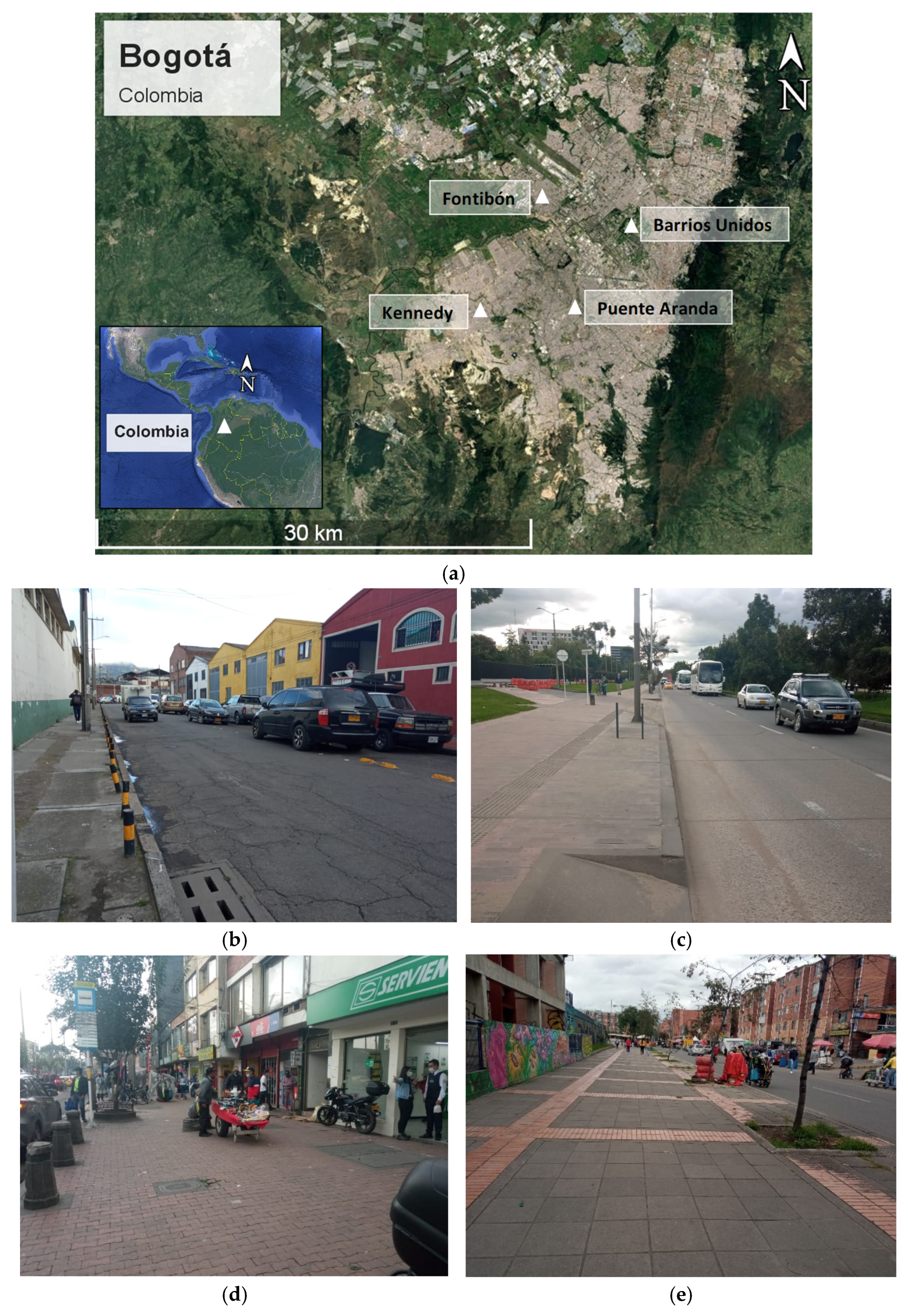
Figure 1. Location map and photographs of the roads under study. (a) Bogotá, Colombia; (b) Puente Aranda; (c) Fontibón; (d) Barrios Unidos; and (e) Kennedy.
Urbansci 09 00518 g001
Figure 2. Forrester diagram for the proposed dynamic evaluation model of street sweeping services. Green and blue = operational variables, and orange = citizen perception variables.
Urbansci 09 00518 g002
Figure 3. SCI forecasts from the developed dynamic simulation model. Average for study sites (n = 36).
Urbansci 09 00518 g003
Figure 4. Spearman correlation matrix for operational variables of the street sweeping service dynamic evaluation model. R = observed waste quantity; X.E. = equivalent width; X.IL. = street cleanliness index—SCI; X.L. = sidewalk length; X.S. = observation area.
Urbansci 09 00518 g004
Figure 5. Forecasts for operational and perception variables cleanliness and service quality, respectively (n = 36).
Urbansci 09 00518 g005
Figure 6. Simulations of pure SCI and SCI including the service performance variable (n = 36). Pure SCI = without considering perception variables, and Service performance = perception, service knowledge, and behavior variables.
Urbansci 09 00518 g006
Figure 7. Results of dynamic model sensitivity analysis using Monte Carlo method. Shaded areas represent percentile distributions from 200 Monte Carlo iterations. Variable: SCI.
Urbansci 09 00518 g007
Figure 8. SCI simulation results for study localities: Fontibón, Barrios Unidos, Puente Aranda, and Kennedy. SCI < 70 = Very High, 70 ≤ SCI < 100 = High, 100 ≤ SCI < 150 = Medium, SCI ≥ 150 = Low.
Urbansci 09 00518 g008
Figure 9. Modeling scenarios of external and climatic factors’ influence on SCI in Barrios Unidos locality. Simulation scenarios: a = without external and climatic factors, b = with external factors, c = minimum observation area, and d = with climatic factors.
Urbansci 09 00518 g009
Figure 10. Simulation results for SCI and service performance variable for study localities: (a) = Barrios Unidos, (b) = Puente Aranda, (c) = Fontibón, and (d) = Kennedy.
Urbansci 09 00518 g010
Table 2. Comparison between perception variables—survey (n = 68) and the SCI simulated by the dynamic model developed.
Study SiteKnowledge (%)Behavior (%)Positive Perception (%)SCI
Kennedy44.460.330.927.5VH
Fontibón41.759.444.240.1VH
Puente Aranda44.223.370.029.3VH
Barrios Unidos27.933.348.157.3VH
Note—Knowledge = correct knowledge about the street cleaning service, Behavior: appropriate behavior in the street cleaning service, Positive perception = Favorable public perception, SCI = Street cleanliness index simulated using the dynamic model developed, and VH = Very High SCI assessment. Sample size = 68 perception surveys.
Disclaimer/Publisher’s Note: The statements, opinions and data contained in all publications are solely those of the individual author(s) and contributor(s) and not of MDPI and/or the editor(s). MDPI and/or the editor(s) disclaim responsibility for any injury to people or property resulting from any ideas, methods, instructions or products referred to in the content.