
Article

Assessing the Readiness for 15-Minute Cities: Spatial Analysis of Accessibility and Urban Sprawl in Limassol, Cyprus

1
Department of Civil Engineering and Geomatics, Faculty of Engineering and Technology, Cyprus University of Technology, Limassol 3036, Cyprus
2
Department of Transportation & Hydraulic Engineering, School of Rural & Surveying Engineering, Faculty of Engineering, Aristotle University of Thessaloniki, 54124 Thessaloniki, Greece
3
Department of Architecture, School of Engineering, Frederick University, Nicosia 1040, Cyprus
*
Author to whom correspondence should be addressed.
Urban Sci. 2025, 9(12), 509; https://doi.org/10.3390/urbansci9120509 (registering DOI)
Submission received: 8 October 2025 / Revised: 23 November 2025 / Accepted: 26 November 2025 / Published: 1 December 2025

Abstract

This study evaluates Limassol’s readiness to adopt the 15-minute city model through a spatial accessibility and urban-form analysis. Using openly available geo-referenced Points of Interest (POIs), road network data, land-use records, and census information, we generated 15-minute walking and cycling isochrones for eight essential urban functions: Education, Food, Green Areas, Health, Services, Shopping, Tourism, and Transport. Residential coverage within each isochrone was calculated to assess accessibility equity across the city. Urban sprawl was quantified using size, density, and fragmentation metrics derived from historical planning zones. Results show that while cycling accessibility is high for most categories (85–95% of residential areas), walking accessibility is considerably lower and unevenly distributed, with several critical functions, particularly Green Areas, Education, and Transport, serving less than half of the residential zones. The analysis also reveals increasing spatial fragmentation and outward population shifts consistent with low-density sprawl, driven by planning policies and development pressures. These findings indicate that Limassol is only partially aligned with the principles of the 15-minute city, with significant gaps in walkable access and decentralized service provision. The study concludes that targeted planning reforms, improved active-mobility infrastructure, and polycentric redistribution of amenities are necessary for enhancing accessibility equity and advancing the city’s transition toward a more sustainable and human-scaled urban model.

1. Introduction

Cities are dynamic and ever-evolving systems, influenced by a range of social, economic, and environmental factors. Effective planning plays a crucial role in guiding their development, as unregulated growth often leads to urban sprawl, inefficient land utilization, poor accessibility, and inadequate public services [1]. As urbanization continues to accelerate, and an estimated 70% of the world’s population is expected to live in cities by 2050, it becomes essential to invest in vital infrastructure, affordable housing, efficient transportation networks, and key social services to ensure cities are inclusive, resilient, and sustainable for all residents [2]. Therefore, sound urban planning is fundamental to achieving sustainability; without it, cities are unlikely to realize a positive and resilient future. Towards this direction, in 2015 the United Nation Member States have adopted the 2030 Agenda for Sustainable Development, which includes 17 Sustainable Development Goals (SDGs), posing an urgent call for action by all countries—developed and developing—in a global partnership [3].
The increase in land value, housing construction costs, economic growth, and planning policies are considered as influential factors for urban sprawl, leading residents to move away from the city center [4,5]. The impact of urban sprawl is multidimensional, increasing transportation’s economic, social, and environmental costs. For cities that continue to follow a sprawl pattern, their spatial distribution will prevent them from achieving sustainable and efficient urban transportation [6]. While the phenomenon of urban sprawl is increasing, it also positively affects car dependency and thus vehicles’ miles traveled per capita, resulting in congestion-related delays [7]. This, in turn, decreases the number of commuters who walk or use public transport [8,9].
Acknowledging the requirements of sustainable cities and communities (11th goal of the 17 SDGs) and the new rhythms of living, working, and leisure requires a transformation of the urban space, which is still strongly monofunctional, with a central city and its various specializations towards a polycentric city, driven by four major components: proximity, diversity, density, and ubiquity. In this context, the idea of the 15-minute city was born, where in 15 minutes, an inhabitant can access his or her essential daily needs either by walking or biking [10]. Therefore, the 15-minute city concept is important to be seen as an urban development theme and not in isolation from urban planning and design practice [11]. Reducing daily journeys to 15 minutes on foot or by bicycle helps reduce congestion in the city, reduce air pollution, improve quality of life, promote a healthy lifestyle, and create more integrated communities [12].
Several studies have analyzed the 15-minute concept (e.g., [13,14,15]). However, analyses related to the 15-minute city concept must account for potential limitations, such as individual differences in walking and cycling abilities. To address this, it is important to consider slower walking speeds and include populations who are unable to walk or cycle in the planning process [16]. Furthermore, cities with cultural preferences for driving may limit the effective use of local amenities, even when alternatives exist [17].
This study implements a spatial analysis utilizing the 15-minute concept in the city of Limassol (Cyprus), a city with an inefficient public transport service and almost inexistent cycling infrastructure [18]. In detail, this paper presents how planning policies may be inadequate over time in avoiding the phenomenon of urban sprawl, thus creating transportation issues (such as congestion). Towards this purpose, walking and cycling isochrones were implemented, investigating the ability of residents to enjoy a higher quality of life by fulfilling six essential urban social functions: living, working, commerce, healthcare, education, and entertainment [19]. Similar applications were made by [20], which used isochrones for capturing realistic travel behavior and spatial dynamics instead of conventional buffer-based approaches.
Social functions were interpreted by the use of geo-located Points-of-Interest (POIs), which are considered adequate information for this application [21]. The level of readiness to adopt the 15-minute concept was estimated by the percentage of residential coverage from the 15-minute walking and cycling isochrones, initiating from the social function locations [22]. The results indicate the lack of readiness to adopt the 15-minute concept in the city of Limassol due to the planning policies followed for the last 20 years, which led to urban sprawl structures due to the unplanned and vast urban development that this city has followed over the years.
This study contributes to the existing literature by introducing an integrated methodological framework that links urban sprawl analysis with accessibility-based evaluation of the 15-minute city, an approach not previously applied to Mediterranean coastal cities such as Limassol. Unlike conventional studies that rely on buffer-based proximity estimates or focus on single categories of amenities, this research employs network-based walking and cycling isochrones across eight essential urban functions, enabling a more realistic and comprehensive assessment of spatial accessibility. Furthermore, by combining this accessibility analysis with quantified sprawl indicators (size, density, and fragmentation) and recent population distribution trends, the study provides the first systematic and data-driven evaluation of Limassol’s readiness to adopt the 15-minute city model. This integrated perspective enhances the understanding of how dispersed urban growth patterns influence equity in access to essential services and offers a replicable framework for cities experiencing similar development pressures.
The rest of the paper is structured as follows. Section 2 presents the case study of this research and the data collected for its purposes. Section 3 presents the results of this study. Discussion and conclusions are provided in Section 4.

2. Case Study: Limassol, Cyprus

In this study we implement a spatial analysis using geo-referenced POIs that describe different social function locations (e.g., educational buildings) along with the road network and the land uses of the region (Limassol, Cyprus). Specifically, 15-minute walking and cycling isochrones were developed, and the coverage percentage of the residential areas was measured. Prior to any implementation, it is important to conceptualize the city model, how this model occurred and has created an urban sprawl structure, and how this can be resolved through the implementation of the 15-minute concept.
It is important to note that this study relies exclusively on openly available secondary data sources, including geo-referenced POIs, road network data, land-use information, and census statistics. No primary data collection, such as resident surveys, interviews, or field-based behavioral assessments, was carried out. As a result, the analysis focuses solely on objectively measured accessibility derived from spatial and network characteristics. However, recent studies have demonstrated that perceived accessibility is related to factors such as demographics (e.g., low-income groups) [23]. However, these perception-based approaches typically require structured survey instruments or qualitative methods, which were beyond the scope of this open-data-based study. Consequently, perceived accessibility could not be incorporated into the present analysis, but it remains an essential direction for future research.

2.1. Unregulated Economic Growth

This section presents an overview of the historic development of Limassol (Cyprus) over the years, along with the planning policies that led to the urban sprawl that characterizes this city. This led to further problems, such as low population densities and congestion, not only in peak hours.
Cyprus launched a naturalization scheme that allowed foreigners to invest in real estate in Cyprus (up a minimum of EUR two million each). This investment scheme lasted until 2020, when the government decided to suspend it after EU recommendations [24]. However, even after 2020, the development continued, based on the attraction of digital nomads, new investors, and highly paid employees as a result of new governmental incentive plans, but also due to the unstable conditions in Middle Eastern and European countries, showing its continuous resilience and importance to the overall economy of the country. Figure 1 presents the number of cases of real estate sales in Limassol and the total amounts declared in the Land Registry, presenting the decrement in 2020 and the escalation of this sector after 2020.
Since Limassol is a coastal city, the prices of plots close to the seafront have become unattainable, leading young people to seek alternative investment options for the redevelopment of their housing. This has resulted in a shift toward the city’s outskirts, where property prices are more affordable; this led Limassol toward an urban sprawl structure.

2.2. Planning Policies

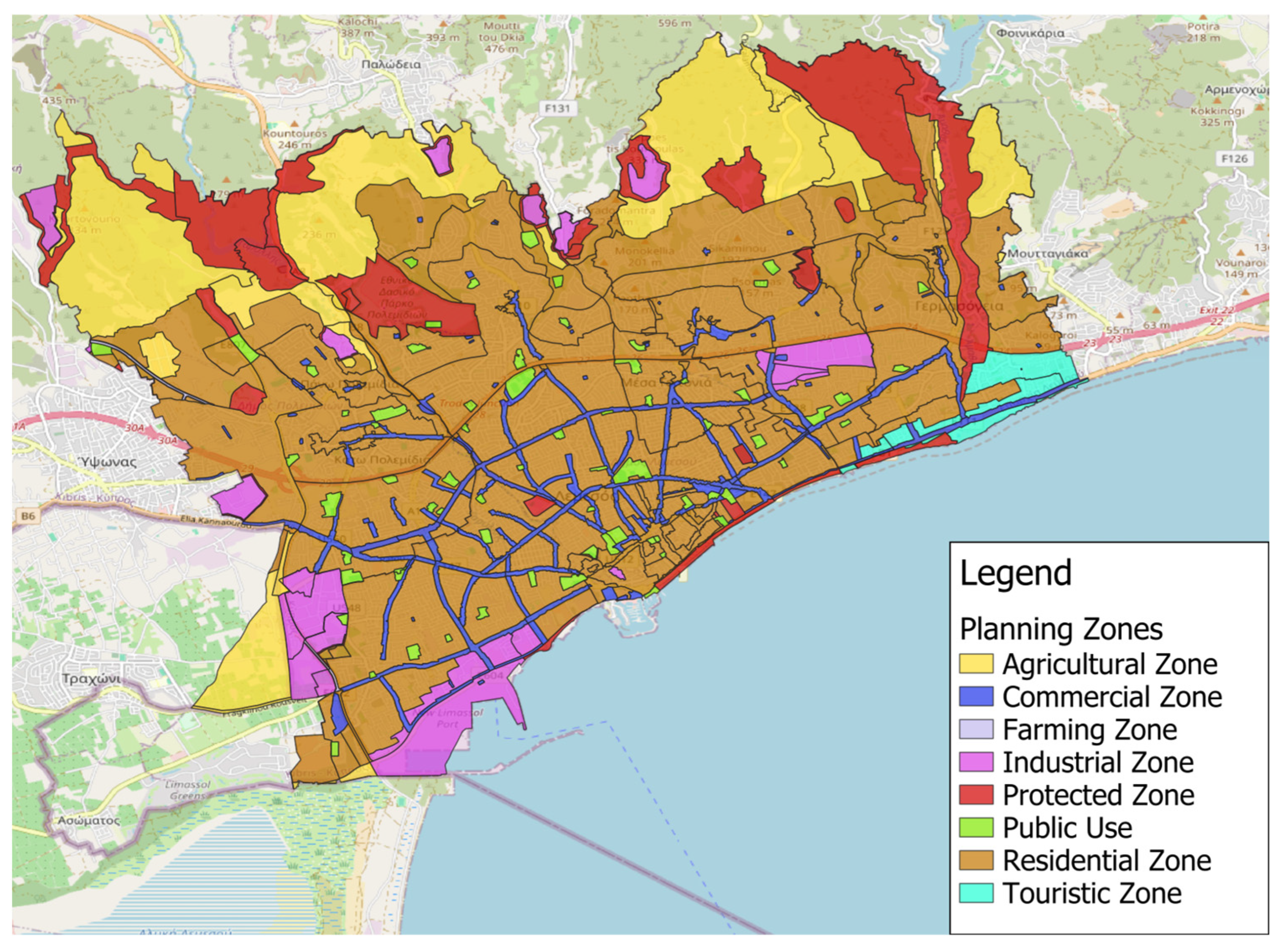
Planning policies are significant for the development of the city and for regulation and thus for the prevention of phenomena such as urban sprawl. Although urban development provides economic growth in the region, it also affects the planning policies, and in some cases, it raises considerations of maintaining agricultural land use and the demand for more living space, which in turn leads to urban sprawl. Examples show that due to urban sprawl, agricultural production is reduced, ecosystems and lifestyles are disturbed, and land values increase [26]. In the case of Limassol, planning policies appeared over the years to lead to urban sprawl. Figure 2 presents the general planning zones in Limassol for the year 2020.
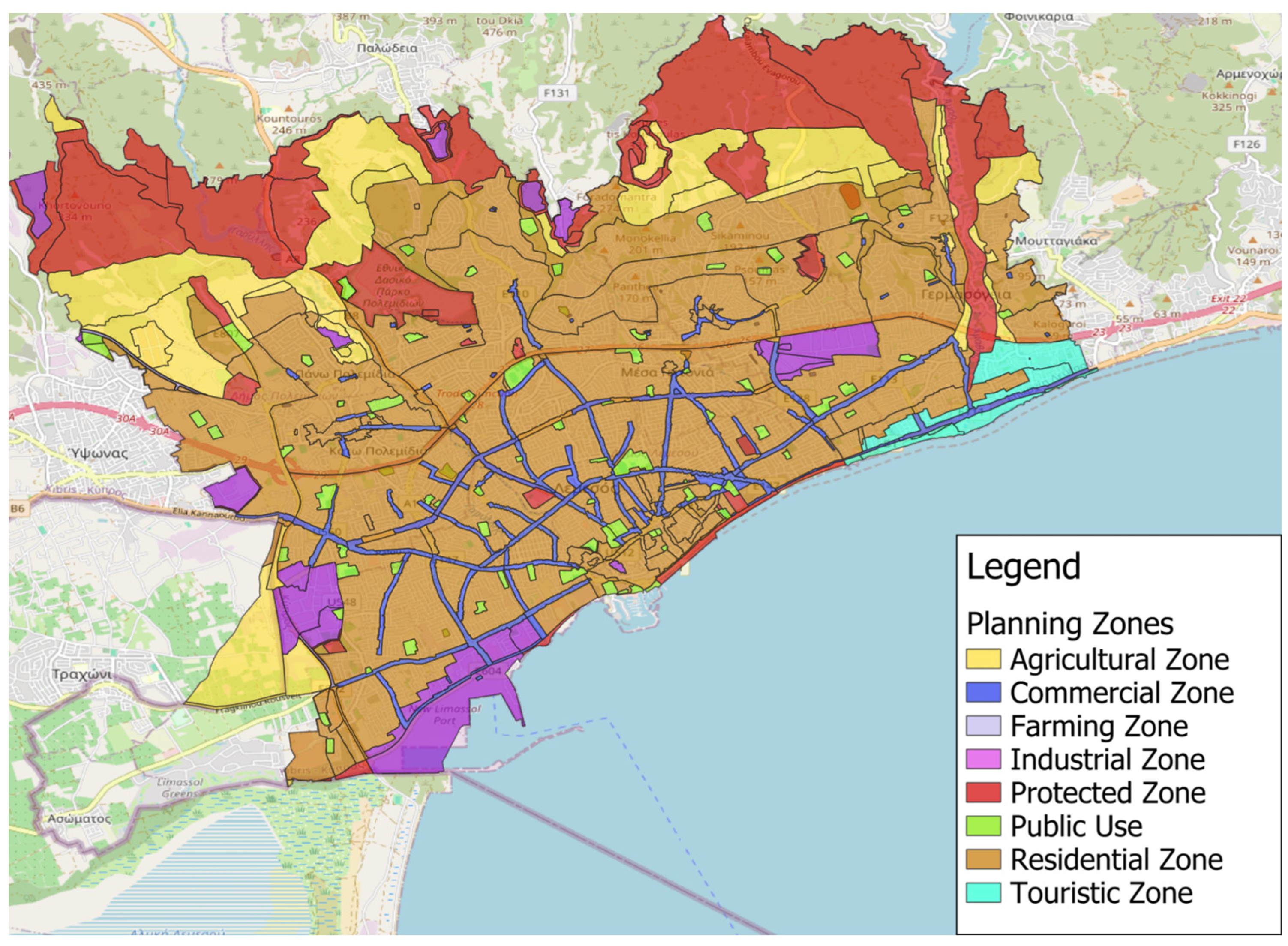
When analyzing how the planning policies have evolved in the city of Limassol, it is important to observe the planning zones within a framework of ten to twenty years. Therefore, Figure 3 presents the planning zones in 2006, with yellow color denoting the agricultural zones, which start with the Greek letter “Γ”. Comparing the two figures (Figure 2 and Figure 3), it can be observed that many agricultural areas in the planning zones in 2006 have been transitioned to residential areas in the planning zones of 2020 (approximately more than 1.5 square kilometers), indicating that the planning policies followed the trend of urban expansion, leading to urban sprawl in the city of Limassol in the last twenty years. It should be noted that urban densities in the 2006 planning zones were very low compared to the average European city; in most of the residential areas, these were below 50 residents per hectare [27].
Urban sprawl can be controlled or limited, likewise in the case of Limassol, by planning policies (e.g., restriction of specific land use), economic interventions (e.g., building permits) and institutional change and management (e.g., special agencies for urban revitalization) [28].

2.3. Infrastructure

Planning policies and road infrastructure are closely interrelated. In many cases, areas undergoing urban development, often driven by economic growth, are not effectively regulated by planning policies to prevent urban sprawl. Instead, these policies may unintentionally encourage it. As a result, new residential roads are constructed to accommodate the expanding development. This creates a self-reinforcing cycle: the construction of roads influences land use patterns and stimulates further development, which in turn increases the demand for more roads in previously undeveloped areas. Ultimately, this dynamic reinforces urban sprawl and contributes to the continuous outward expansion of cities, as is the case in Limassol.
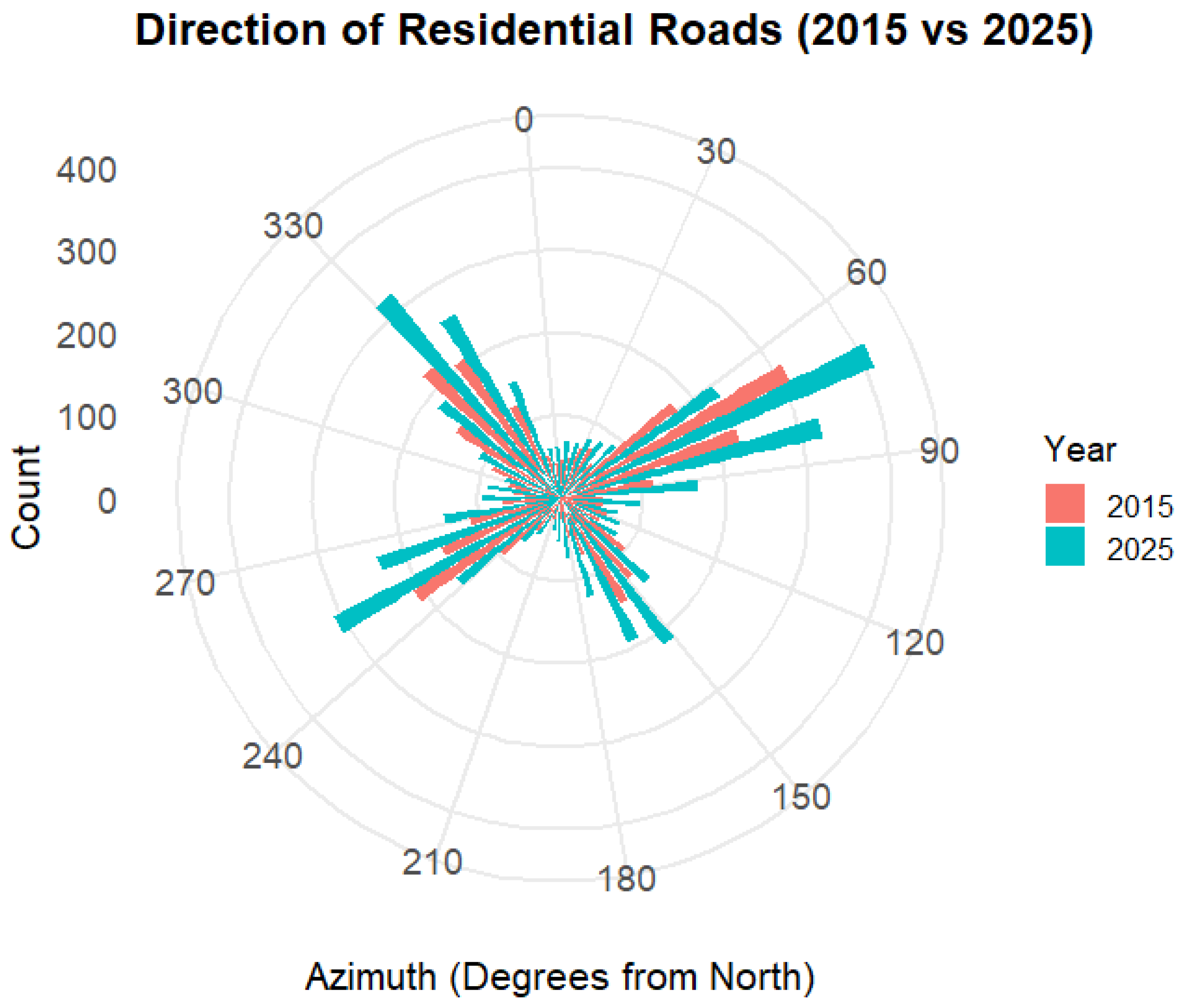
Figure 4 presents the direction of the residential roads from 2015 and 2025, indicating that after a decade the city still proceeds with the construction of residential roads along the sea front, with most across the coastline, as well as some in the hinterland of the city and few in the city center. Therefore, the following figure presents the direction of the city’s development, which again follows the urban sprawl model.
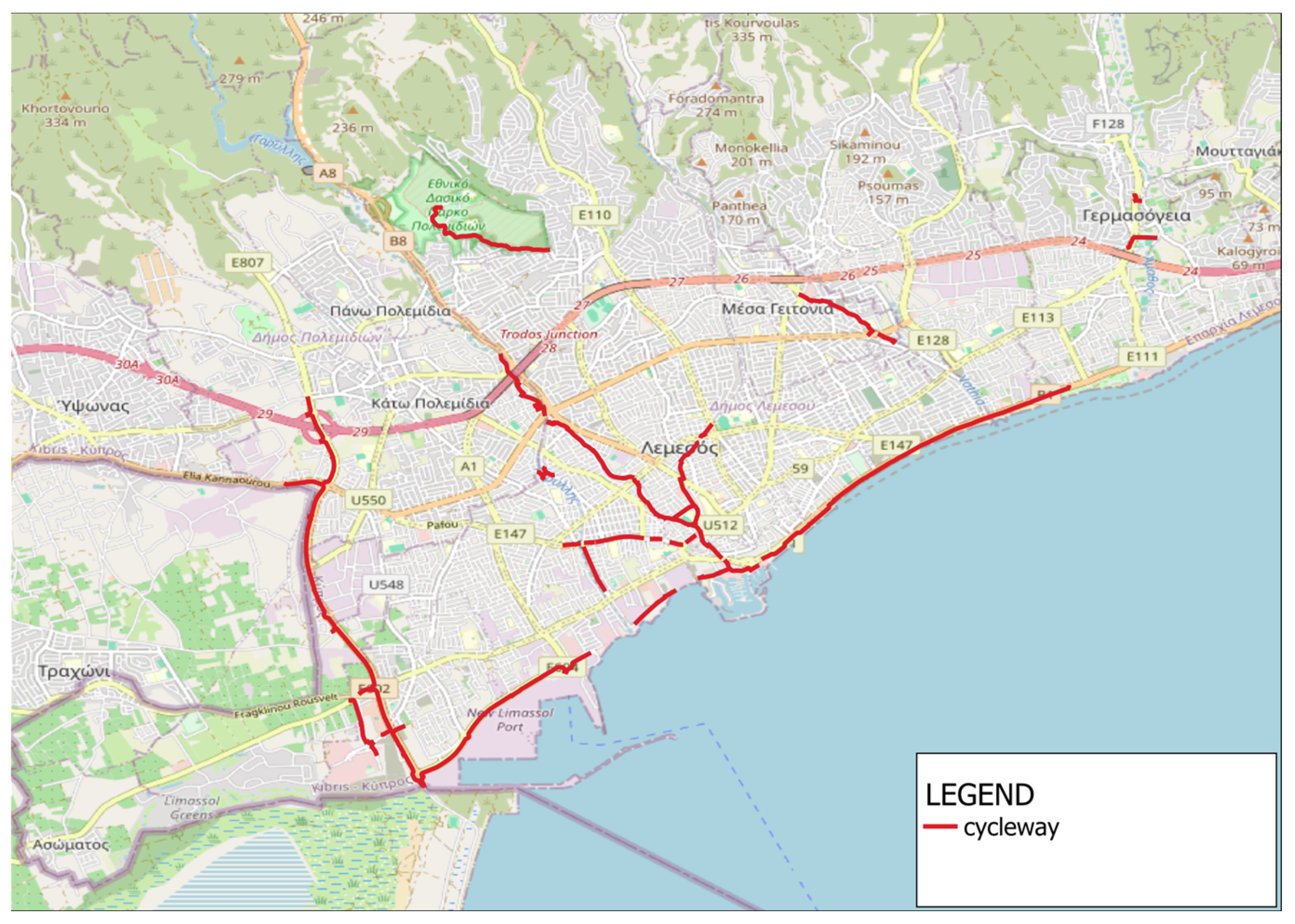
However, despite the expansion of the residential road network in Limassol, it appears that the city also lacks efficiency in micromobility infrastructure, specifically in the provision of dedicated cycleways. Figure 5 presents the existing cycleway network in Limassol, highlighting its limited spatial coverage and fragmented layout. Most cycleways are concentrated along the coastal front, with a few central corridors, while large areas, especially in the western, northern, and inner parts of the city, remain disconnected or underserved. This fragmented infrastructure poses challenges for safe and continuous cycling routes, potentially discouraging daily bicycle use for commuting and reducing the attractiveness of sustainable mobility options overall.

2.4. Social Functions

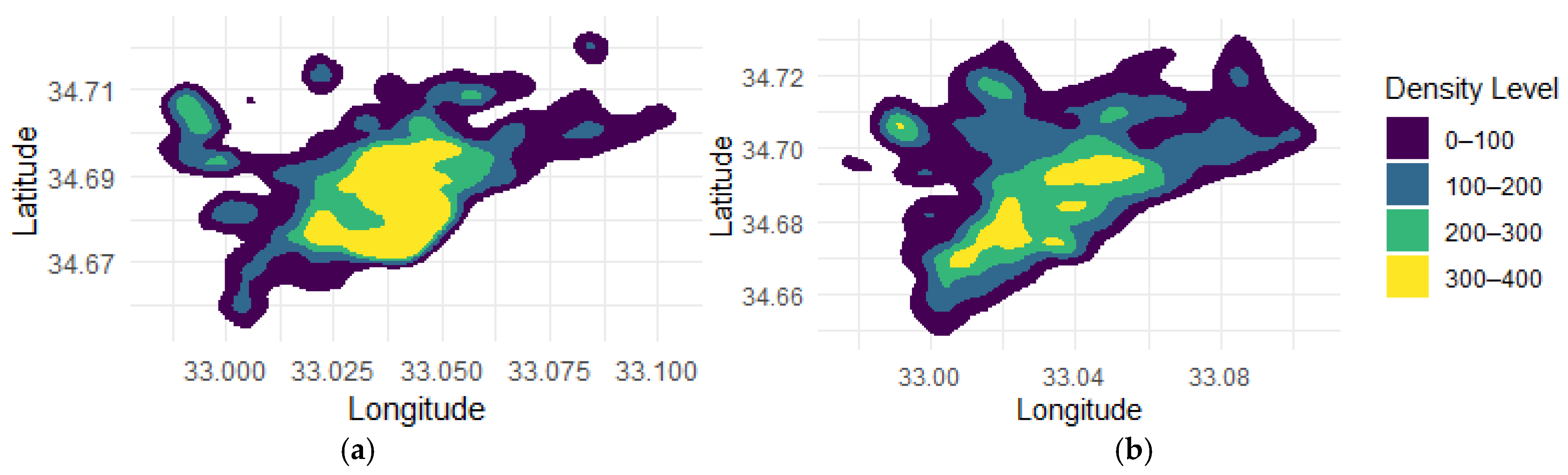
To support the spatial analysis of how Limassol can transition into a 15-minute city, despite its current sprawling structure as resulting from insufficient planning policies, geolocated social function locations were collected using Points of Interest (POIs) from OpenStreetMap. The POIs were extracted for two reference years, 2015 and 2025, and are presented in Figure 6. In 2015, the majority of POIs were concentrated in the city center, forming a predominantly monocentric structure. However, by 2025, the distribution of POIs appears more dispersed, indicating the emergence of polycentric urban patterns. Moreover, several POIs in 2025 are located in areas that were previously unserved in 2015. Given that the current urban form is the focus of this analysis and that the goal is to assess the city’s potential evolution toward the 15-minute city concept, the 2025 POIs were selected as the primary dataset for further investigation.
All POIs used in this study originate from the OpenStreetMap (OSM) database and follow the official OSM tagging scheme. The functional categories employed in the analysis are derived from the 15-minute city framework and group POIs according to the essential daily activities they support. To ensure methodological transparency, the OSM subtypes included in each category are listed below:
  • Education (which includes colleges, kindergarten, libraries, schools, and universities);
  • Food (which includes bakeries, bars, beverages, butchers, cafes, pubs, and supermarkets);
  • Green Areas (which includes parks, dog parks, and camp sites);
  • Health (which includes hospitals, clinics, dentists, doctors, pharmacies, and veterinary);
  • Services (which includes banks and public authorities, e.g., post offices);
  • Shopping (which includes bookshops, clothing retailers, furniture retailers, gift retailers, jewelry retailers, optician outlets, footwear retailers, sports equipment stores, and toy stores);
  • Tourism (which includes hotels, museums, tourist information offices, hostels, guesthouses, and attractions);
  • Transport (which includes bicycle and car rental and parking).
These POIs were not weighted by size or capacity. For instance, a small neighborhood shop and a larger commercial structure were treated equally. This choice reflects the study’s objective of evaluating the spatial availability and coverage of essential services rather than measuring service intensity or user capacity. The categorization method adheres both to established 15-minute city principles and to the standardized structure of OSM’s globally recognized POI taxonomy. Additionally, we clarify that each POI was classified into only one category, following its primary dominant purpose, in line with the approach used in recent 15-minute city research. For example, Rahman et al. (2025) [30] classified POIs based on main purpose (e.g., cinemas assigned only to Entertainment, not Recreation). We adopted this same logic to ensure consistency and avoid double-counting.
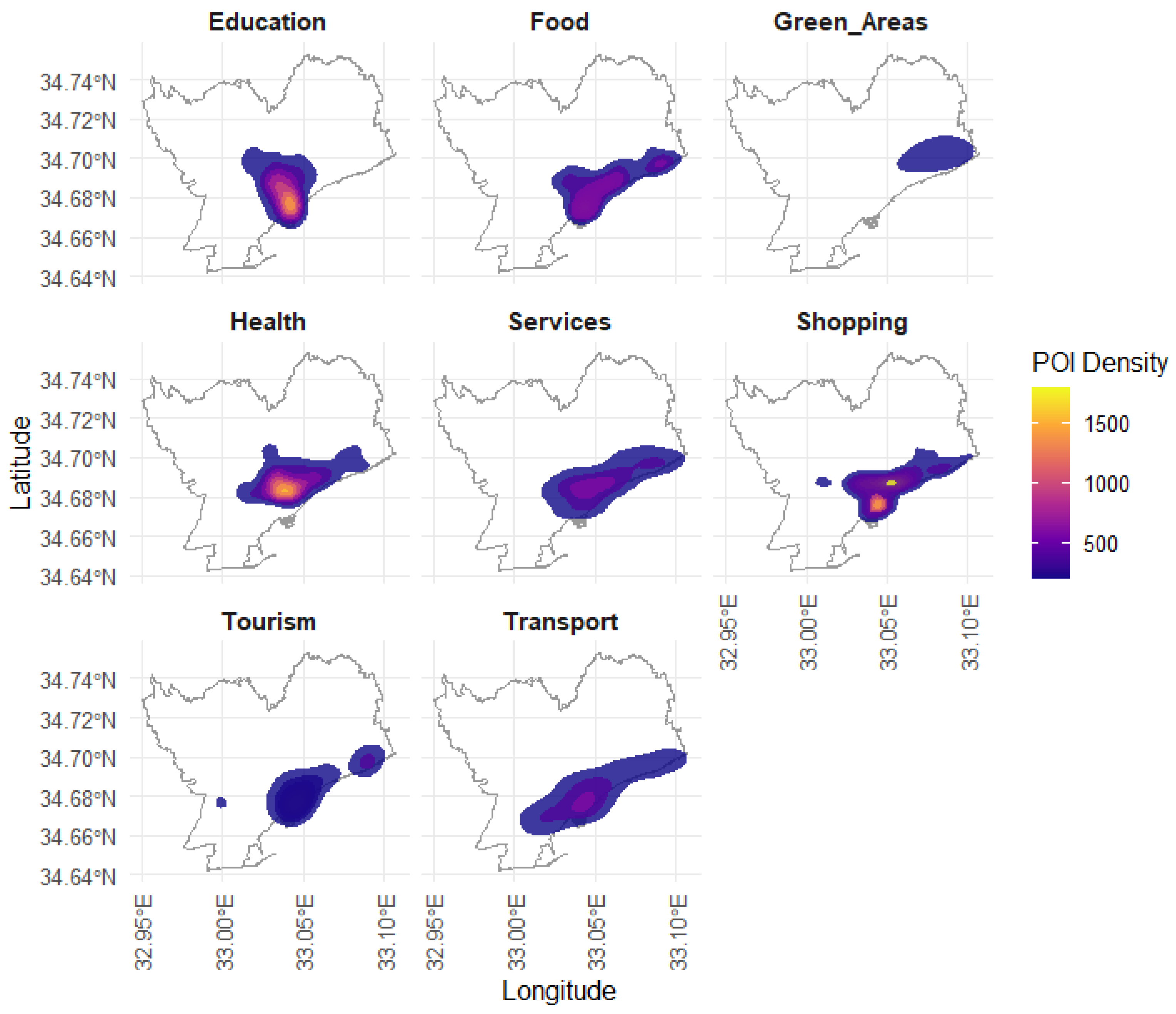
Figure 7 illustrates the spatial density distribution of POIs by different functional groups in Limassol for the year 2025. Notably, the POI distribution across categories such as Education, Health, Services, and Shopping remains heavily concentrated in the central and eastern parts of the city. In particular, the Shopping and Health categories exhibit intense clustering, indicating areas with high accessibility to these services, possibly representing key urban cores or commercial zones. This suggests that although some decentralization is observed, the urban structure still exhibits characteristics of centralization in certain service domains.
On the other hand, categories like Green Areas, Tourism, and Transport show a more dispersed spatial pattern, with POIs extending toward the city’s periphery. This dispersion may reflect ongoing efforts to improve access to public amenities and transport infrastructure in less dense or previously underserved areas, supporting a shift toward a more polycentric and equitable urban forms. The variation in density among categories highlights the uneven development of functional accessibility, which poses both challenges and opportunities for implementing the 15-minute city concept in Limassol. Strengthening the spatial distribution of essential services in currently underrepresented areas could help support more balanced, inclusive, and sustainable urban mobility and accessibility.
This analysis is also motivated by the growing recognition that maintaining strong local social connections and access to everyday amenities is essential for enhancing urban liveability. As observed in many cities, including Limassol, essential services and facilities tend to be concentrated in central urban areas, while peripheral neighborhoods, often predominantly residential, remain underserved. This uneven spatial distribution limits walkability and challenges the implementation of inclusive, human-centered planning frameworks such as the 15-minute city [19].

2.5. Population Distribution

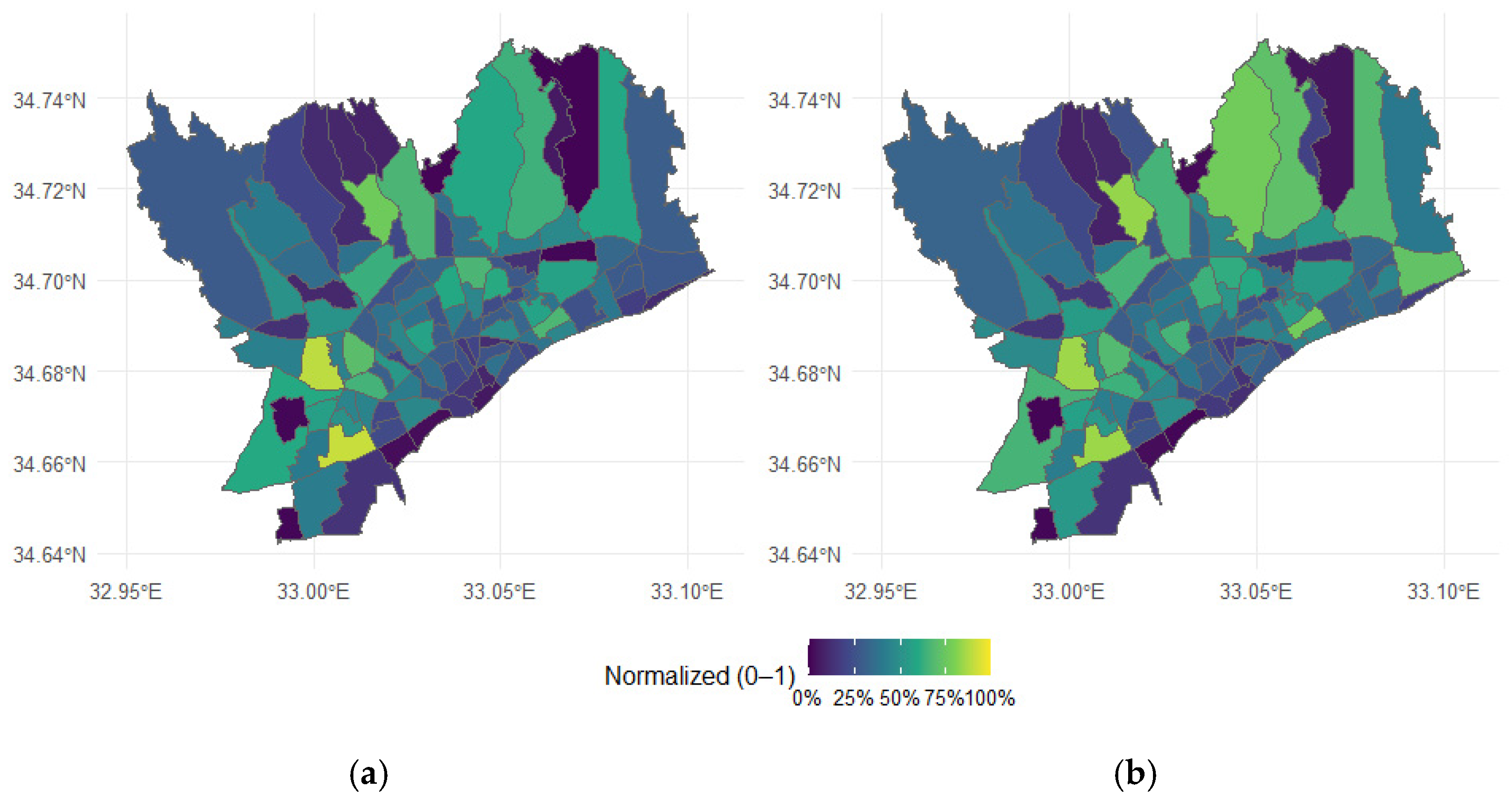
Last but not least, the conceptualization of the city ends with a spatial observation of population distribution, using the census data from 2011 and 2021 reported per each postal code region. Figure 8 illustrates the normalized spatial distribution of the total population per postal code in Limassol. The maps reveal a clear outward expansion of populated areas over the decade, reflecting the city’s ongoing urban sprawl and suburbanization processes. In 2011, higher normalized population values were concentrated primarily within the central and coastal postal codes, corresponding to the historical and commercial core of Limassol. By 2021, these high-density zones had expanded northward and westward, while several previously low-population postal codes in the periphery displayed notable growth. This shift suggests a redistribution of residents from the urban core to newly developed residential areas, driven by housing availability and planning policies that enabled low- to medium-density expansion. The shared normalization allows direct visual comparison between the two years, clearly illustrating both population growth and the spatial diffusion of residential activity across the metropolitan area.
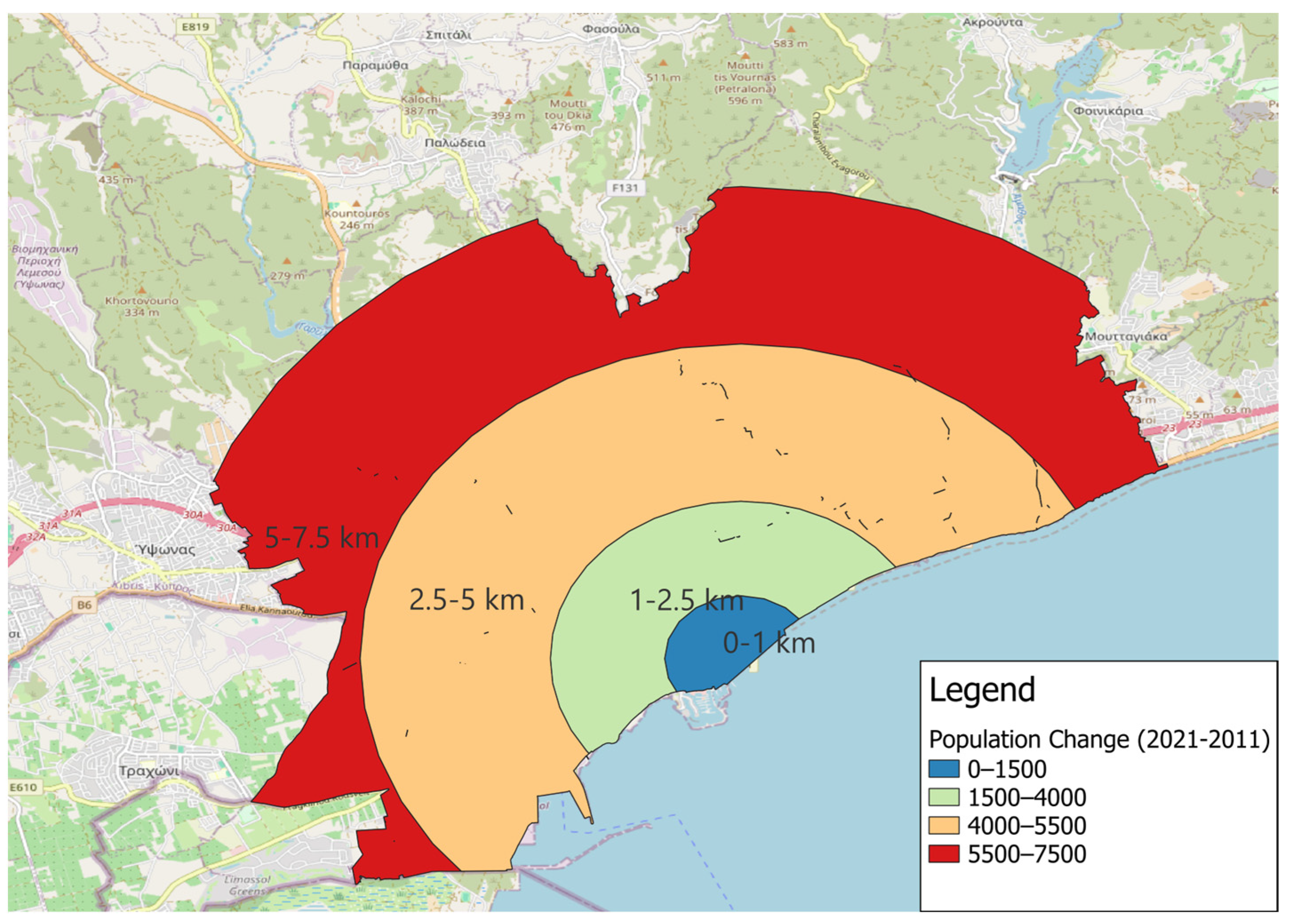
Figure 9 illustrates the spatial distribution of population change across concentric distance bands from the city center of Limassol between 2011 and 2021. The results reveal a clear outward shift in population growth, with the central 0–1 km zone showing relatively low or negative growth, while the surrounding intermediate and outer rings experienced substantial population increases. The most pronounced expansion occurred within the 5–7.5 km band, indicating significant suburbanization and residential development in the city’s northern and western peripheries. This pattern reflects a decentralization trend, where new housing and urban activities have increasingly extended into previously low-density or rural zones. Such spatial redistribution of the population is consistent with urban sprawl dynamics, highlighting the transition of Limassol from a compact urban form toward a more dispersed and fragmented metropolitan structure. The areas outside 7.5 km from the city center were not considered in the observation of the population change, since they do not include residential areas.
Therefore, based on the above illustrations of population distribution in the different postal code areas and the population change between 2021 and 2011 (population census results), compared to the distance of the city center, the two significant components of the sprawl index are “population density” and “proximity” (proximity of the neighborhood to the city center) [32]. However, for further evaluation of urban sprawl, the next section presents the metrics developed, namely fractal dimensions and patch density, for efficiently evaluating the urban sprawl of Limassol.

3. Results

Based on the overview provided for the city of Limassol, a concern was raised for the city in terms of the urban sprawl structure due to the inefficiency of the planning policies followed for the last 10–20 years. Furthermore, the large number of cars, the limited parking spaces, the narrow sidewalks, the traffic accidents involving pedestrians and cyclists, the few green spaces, and the bike-unfriendly mentality that exists make the transition from the current state of Limassol to a different concept of the city difficult [33].

3.1. Urban Sprawl Index

The term “urban sprawl” has been used to describe the transition of rural land to urban land at a growth rate that usually exceeds the rate of population growth over the specified time [34].
For measuring the urban sprawl index, three dimensions should be measured, which are as follows [35]:
  • Size: spatial extent of urbanized areas (km2);
  • Density: population per square kilometer of urbanized areas;
  • Fragmentation: scattered development, as urbanized area patches grow in a dispersed manner; thus, the patch density is measured.
Table 1 presents the results of these dimensions for the urbanized area of Limassol using the planning zones of 2006 and 2020. As can be seen from the table, the size of the urbanized areas increased, based on the two different planning zones; the population in 2021 increased compared to the population in Limassol’s urbanized areas in 2011 as based on the census data. According, to the density dimension, it appears that more people live in one square kilometer of urbanized area in 2021 compared to 2011. Furthermore, the metric that has particular interest for measuring urban sprawl is patch density, which is the number of patches per unit area for the urbanized areas. In detail, the patch density increases as the landscape becomes more patchy, and it reaches the maximum value if every pixel is a separate patch [36]. Therefore, the patch density shows only a slight increase between the two different planning zone regulations, which indicates a modest rise in spatial fragmentation, which is consistent with early or low-intensity forms of urban sprawl. This pattern suggests that new residential development is occurring in a more dispersed manner rather than through compact infill, contributing incrementally to outward expansion.

3.2. Walking and Cycling Isochrones

Since the city of Limassol has evolved to an urban sprawl structure, it is important to study how the city can adopt the 15-minute concept, where inhabitants (i.e., in residential areas) will be able to access different amenities within a walking or cycling time of 15 minutes. Towards this purpose, 15-minute walking and cycling isochrones were generated, with the center of each as the social functions for the different groups. The percentage of coverage of the residential zone was then measured for observing how the city of Limassol is ready to adopt the 15-minute concept.
The estimation of isochrones followed a straightforward procedure, first determining the starting points that were the POIs that represent each category (e.g., transport) presented in the previous section. Then, the networks (roads, existing cycleways, pathways, etc.) were incorporated, which were obtained through OpenStreetMaps. Afterwards, a speed was determined for walking and cycling; based on that speed and for a 15-minute duration and on the allowed network, a network of walking and cycling was identified for the respective distance, which was translated into continuous points. Then, a set of reachable points based on each POI, as the origin, was created, and using the concave hull algorithm, the isochrones were created and presented. Furthermore, for estimating the coverage percentage of residential areas, the isochrone polygons and the planning zones were used, and a coverage percentage was calculated.
For the estimation of the isochrones, an average speed of walking and cycling was selected using previous studies from the literature. The Greater Manchester Accessibility Levels, which provide an accurate measure of accessibility of a point to both the conventional public transport network and Manchester’s local link, considering walking access using an assumed walk speed of 4.8 kph (3 mph) [37]. Based on the Department of Transport in the United Kingdom, the average cycling and walking speed that is used to estimate health benefits, changes in work absenteeism, and journey quality, are 15 km/h and 5 km/h average speed for cycling and walking, respectively [38]. In the study of Bosnia and Weidmann (2017) [39], a literature review was conducted for describing the most important factors influencing walking speed and estimating their impact. This study showed that an average walking speed of approximately 4.8 km/h can be used for the male and female population for different age groups (e.g., 30–40, 40–50, 50–60) and different body weights (e.g., 50–60, 80–90), mainly in cities in Europe (which includes Limassol), at different temperatures, such as 15–25 °C and 25–35 °C (which also correspond to the temperatures in Limassol). Furthermore, the study of Radics et al. (2024) [40] used the average speeds of 4.8 km/h and 14 km/h for walking and cycling, respectively, for studying the x-minute concept city. Based on these studies, it appears that the most representative speeds for developing the isochrones are the average speeds of 4.8 km/h and 14 km/h for walking and cycling, respectively, which also reflect the majority of the population in the city of Limassol, Cyprus. However, when designing using the concept of the 15-minute city, the local and planning authorities should be able to update new average speeds for walking and cycling, since the needs of the population and the demographics change. As suggested by Carvalho et al. (2025) [41], locally adapted time thresholds and metrics are crucial for ensuring that proximity-based policies like the 15-minute city serve all populations equitably, especially in sprawled or segregated urban contexts.
For the production of cycling 15-minute isochrones, the entire road network of the city was used rather than only dedicated cycleways, since many people use the road as a shared space for cycling due to the discontinuous and limited cycling network. However, using the full road network may overestimate the practical or safe accessibility available to cyclists. The fragmented and discontinuous cycling infrastructure in Limassol means that many of the road segments included in the analysis do not provide adequate safety, comfort, or protection from motorized traffic. Therefore, the resulting cycling isochrones are interpreted as representing potential accessibility rather than stress-free or infrastructure-based accessibility. Cyclists in Limassol consistently express a preference for dedicated and protected cycling facilities, and such infrastructure is essential for improving safety. The use of bicycles is still actively encouraged in the city even under the current incomplete network conditions. This situation highlights the urgent need for a continuous and well-integrated cycling network to support safer everyday cycling and to translate potential accessibility into practical, user-friendly mobility options.
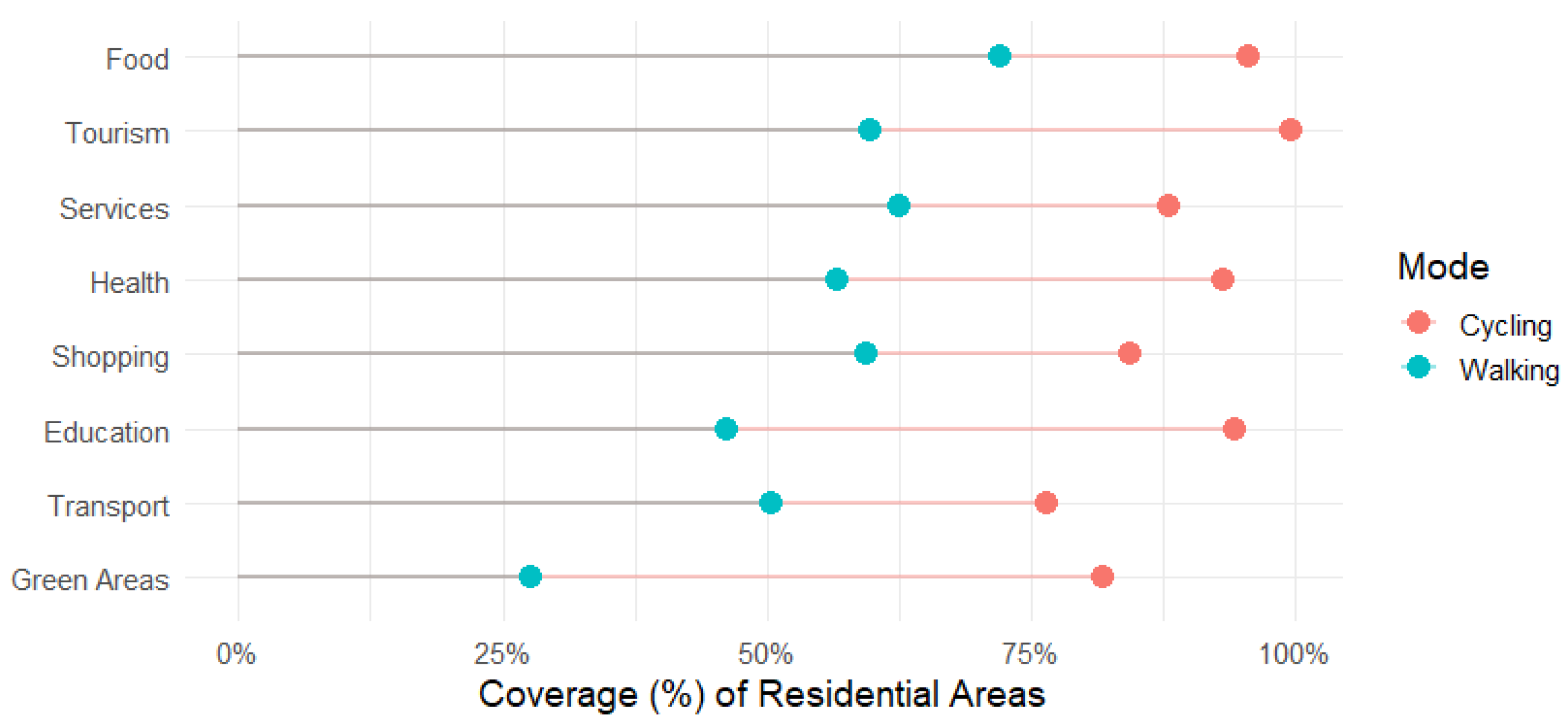
Figure 10 illustrates the share of residential areas in Limassol that fall within a 15-minute walking or cycling distance of key urban functions. The results reveal substantial variation across categories and between modes, providing a nuanced understanding of proximity-based accessibility. Cycling accessibility is uniformly high, exceeding 85–95% coverage for most categories, reflecting the extensive reach of the cycling isochrones across the entire road network. Walking accessibility, however, shows clear disparities: everyday services such as Food, Tourism, Services, and Health reach more than 60–75% of residential areas, while access to Green Areas, Transport hubs, and Education is considerably lower, ranging from 20% to 50%. These findings do not impose a strict threshold for what constitutes ‘readiness’ for the 15-minute city since, as far as we know, no universal benchmark exists in the international literature; instead, accessibility is evaluated comparatively across categories. Categories with high walking coverage indicate stronger alignment with 15-minute principles, while categories with low walking coverage highlight structural gaps that limit walkable access and require targeted interventions for the city to progress toward a fully functional 15-minute city model.
Although the calculation of walking and cycling isochrones typically assumes uniform travel effort across the network, it is important to consider whether terrain variability affects travel times. In the case of Limassol, the urban area is predominantly characterized by a gentle and almost level topography. Elevation analysis shows that slopes between the seafront and the main residential areas generally fall within the 1–2% range, while even the northernmost urban districts rarely exceed 4%. These gradients fall well within the limits considered walkable and cyclable in everyday urban mobility practice and do not represent a physical barrier that would materially alter accessibility outcomes. Therefore, while topography was examined as a potential influencing factor, the city’s minimal slope variation did not necessitate additional correction factors in the isochrone modelling.
The findings of this study underscore both the opportunities and the challenges Limassol faces in its pursuit of the 15-minute city model. While the existing urban form allows for relatively strong cycling accessibility to many amenities, the limited walkable coverage reveals a need for targeted interventions, such as decentralizing certain services, improving pedestrian infrastructure, and strategically introducing new POIs in underserved residential areas. Particularly in categories like Green Areas and Transport, the low walkability scores indicate potential equity issues for populations without access to private vehicles or bicycles. Therefore, while Limassol shows potential for adopting a polycentric, human-scaled city model, significant improvements in local planning and investment in active mobility infrastructure are essential to ensure balanced and inclusive accessibility across all urban functions.
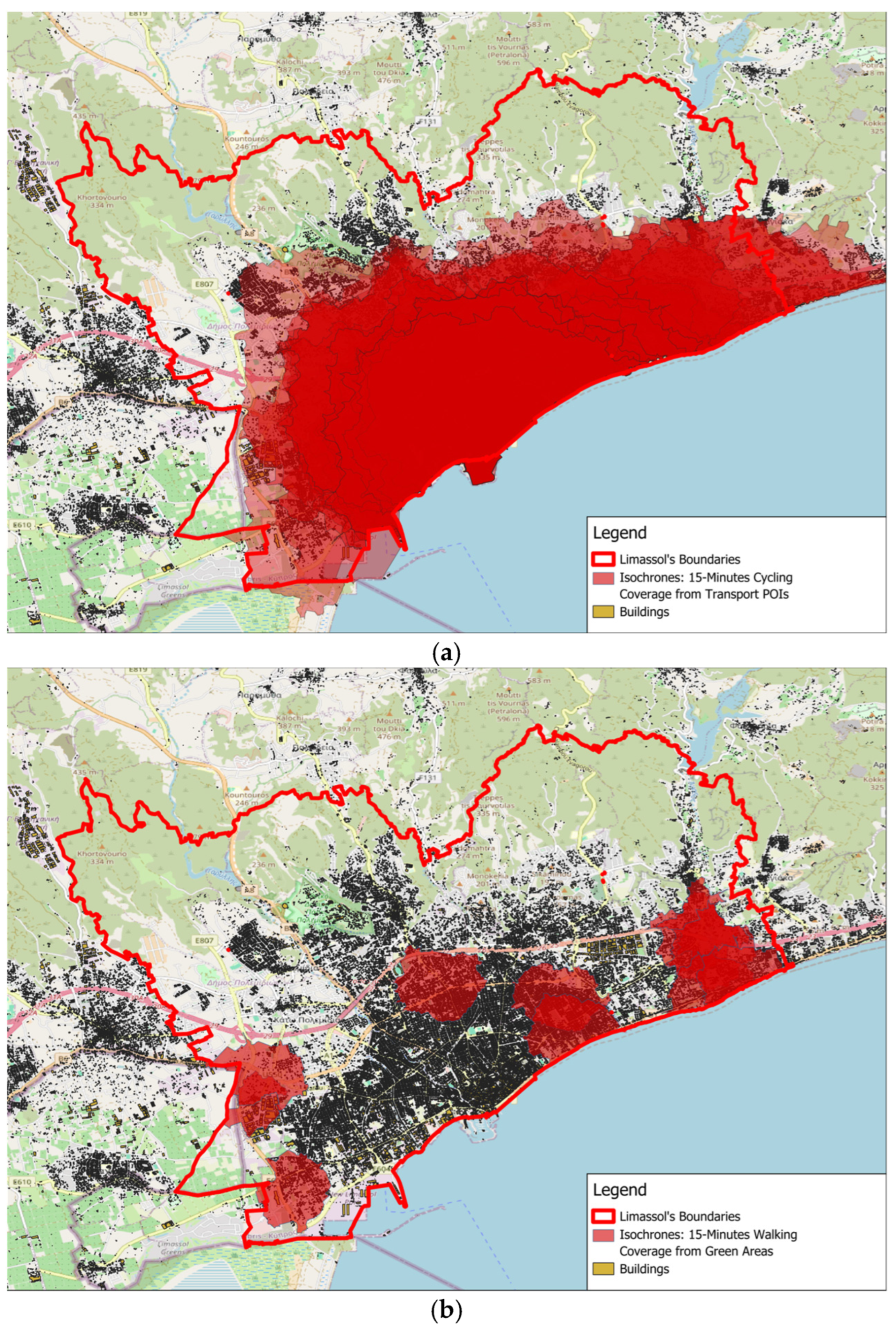
Figure 11 presents the cases where 15-minute walking and cycling from Green Areas and Transport POIs, respectively, appear to have less coverage in residential areas (as depicted in the planning zones of Limassol). As can be seen from Figure 10, the percentage of coverage of 15 minutes of cycling from POIs related to transport is more than 75%, which is considered a high percentage; however compared to the other categories, it is considered low. The residential areas that were not covered by this case are located in the north-east side of the city. As for the case of the 15-minute walking isochrones from green areas, it appears that there are many residential areas, especially inside the city center and close to the coastal line, that do not have green areas. Therefore, based on the results, a strategy can be followed targeting the specific areas of concern.
The results of the spatial and accessibility analysis for Limassol highlight both opportunities and challenges for advancing the 15-minute city model in the context of urban sprawl and car dependency. While the analysis reveals relatively high cycling accessibility to many essential functions, walking accessibility remains limited, especially in peripheral residential areas. These findings are consistent with broader research suggesting that low-density, unplanned urban expansion impedes walkability and undermines proximity-based planning goals [2]. Moreover, as Elldér (2024) [42] emphasizes, increasing population density and promoting mixed land uses are essential built environment factors for advancing 15-minute city transformations. In this regard, Limassol will likely require zoning reforms and land use adjustments to redistribute amenities more equitably and enhance access through active mobility, especially for categories such as green areas, education, and healthcare.
However, achieving spatial proximity is only one part of the equation. As Maciejewska et al. (2025) [43] argue, modern urban lifestyles are shaped by diverse activity patterns and social networks that often extend beyond a 15-minute travel radius. Without policies that actively discourage private car use, the availability of nearby destinations may instead facilitate longer and more specialized trips. This reveals the need for complementary strategies that tackle both behavioral and infrastructural challenges. Furthermore, the use of fixed walking and cycling speeds in this analysis, while grounded in existing research [40], points to a limitation in inclusivity. Planners must account for different mobility needs, especially among older adults, people with disabilities, or households with children, where slower speeds or physical barriers may reduce effective accessibility.
Emerging technologies such as Digital Twins (DTs) are increasingly seen as valuable tools for simulating urban systems and supporting the practical implementation of the 15-minute city concept, especially by enhancing public understanding and enabling more adaptive, evidence-based planning strategies [44]. For a city like Limassol, adopting this concept requires a structured approach that includes clearly defined goals and targets, a phased implementation strategy, either citywide or at the neighborhood level, and actions across several key domains. These include promoting sustainable urban mobility, fostering people-centered public spaces, improving smart logistics and service delivery, and advancing inclusive urban governance for mobility transition. Additional criteria involve the prioritization of walking and cycling infrastructure, land use reforms to support mixed-use development and urban densification, and the integration of participatory planning practices and evaluation frameworks to ensure long-term sustainability [45].
Although this study discussed inclusivity in relation to mobility needs and uneven service distribution, it did not empirically assess socio-economic equity. This is because socio-economic data for Limassol are only available at the postal-code level, which is too coarse to link specific vulnerable groups with accessibility outcomes, and because the city currently does not have an established accessibility index that captures population-specific accessibility patterns. As a result, accessibility could not be disaggregated by socio-demographic characteristics, and the equity implications should be interpreted cautiously. Establishing this accessibility index is a key step forward and will allow future analyses to integrate socio-demographic information and assess inclusiveness in greater depth.

4. Conclusions

This study provides a detailed spatial analysis of Limassol’s urban structure and accessibility landscape, revealing the challenges and opportunities for transitioning toward a 15-minute city. The findings highlight the city’s strong reliance on car-based mobility and centralized service delivery, outcomes of planning policies and economic incentives that encouraged urban sprawl. Despite recent polycentric development trends, many essential functions remain poorly connected to residential areas within walking distance. While cycling infrastructure extends reach significantly, its coverage remains fragmented and non-inclusive of vulnerable populations.
In the case of Limassol, the adoption of the 15-minute city concept offers a valuable framework to improve urban equity, reduce congestion, and promote sustainable mobility in the identified areas that were not covered by the 15-minute walking and cycling isochrones, which can support the strategy of enforcing services in specific areas. However, such a transformation demands substantial policy shifts, including decentralizing amenities, improving pedestrian and cycling networks, and encouraging mixed-use development. Particular attention should be given to underserved areas where access to education, healthcare, green spaces, and public services is currently limited. Urban revitalization policies and participatory planning are essential to ensure that these changes meet the needs of all residents, including those with limited mobility.
Future applications of this work could involve dynamic simulations using Digital Twin technologies to test planning scenarios and infrastructure interventions in real time. By integrating socio-demographic data and behavioral patterns, planners can tailor accessibility metrics more inclusively. Extending this analysis to other Cypriot cities or comparing findings across Mediterranean coastal urban areas could further contextualize Limassol’s development model and guide national urban policy. Additionally, future research will incorporate primary data collection to examine perceived accessibility and identify behavioral or environmental factors, such as personal safety, comfort, aesthetic quality, and cultural preferences, that may discourage walking or cycling even in areas that are objectively accessible. The 15-minute city should not remain a conceptual ambition but evolve into an operational strategy for shaping healthier, more resilient urban environments.

Author Contributions

Conceptualization, P.N., S.B. and B.I.; methodology, S.B., P.N. and B.I.; software, P.N.; validation P.N., S.B. and B.I.; formal analysis, P.N.; investigation, P.N., S.B. and B.I.; data curation, P.N.; writing, original draft preparation, P.N.; writing, review and editing, S.B. and B.I.; visualization, P.N. All authors have read and agreed to the published version of the manuscript.

Funding

This research received no external funding.

Institutional Review Board Statement

Not applicable.

Informed Consent Statement

Not applicable.

Data Availability Statement

The study did not generate any new datasets. All data used in this research are publicly available from international and national open-data platforms.

Conflicts of Interest

The authors declare no conflict of interest.

References

  1. UN-Habitat. World Cities Report 2022. Envisaging the Future of Cities; UN-Habitat: Nairobi, Kenya, 2022; Available online: https://unhabitat.org/sites/default/files/2022/06/wcr_2022.pdf (accessed on 15 October 2025).
  2. United Nations. The Sustainable Development Goals Report 2024; United Nations: New York, NY, USA, 2024; pp. 1–51. Available online: https://unstats.un.org/sdgs/report/2024/The-Sustainable-Development-Goals-Report-2024.pdf (accessed on 15 October 2025).
  3. United Nations (n.d.). The 17 Sustainable Development Goals. United Nations. Available online: https://sdgs.un.org/goals (accessed on 15 October 2025).
  4. Yu, H.; Zhu, S.; Li, J.V.; Wang, L. Dynamics of urban sprawl: Deciphering the role of land prices and transportation costs in government-led urbanization. J. Urban Manag. 2024, 13, 736–754. [Google Scholar] [CrossRef]
  5. Ghasemi, K.; Jarallah Al-Zubaidi, A.M.; Qelichi, M.M.; Dolatkhahi, K. Un-derstanding urban sprawl in Baqubah, Iraq: A study of influential factors. J. Urban Manag. 2025, 14, 787–812. [Google Scholar] [CrossRef]
  6. Rosati, R.M. Urban Sprawl and Routing: A Comparative Study on 156 European Cities. Landsc. Urban Plan. 2024, 253, 105205. [Google Scholar] [CrossRef]
  7. Rahman, M.H.; Antipova, A. Structural equation model in exploring urban sprawl and its impact on commuting time in 162 US urbanized areas. Cities 2024, 148, 104855. [Google Scholar] [CrossRef]
  8. Kakar, K.A.; Prasad, C.S.R.K. Impact of Urban Sprawl on Travel Demand for Public Transport, Private Transport and Walking. Transp. Res. Procedia 2020, 48, 1881–1892. [Google Scholar] [CrossRef]
  9. Lee, C. Quantifying urban sprawl and investigating the cause-effect links among urban sprawl factors, commuting modes, and time: A case study of South Ko-rean cities. J. Transp. Geogr. 2024, 121, 104009. [Google Scholar] [CrossRef]
  10. Moreno, C. The Quarter-Hour City: For a New Chrono-Urban Planning. 2016. Available online: https://www.latribune.fr/regions/smart-cities/la-tribunede-carlos-moreno/la-ville-du-quart-d-heure-pour-un-nouveau-chronourbanisme-Allam604358.html (accessed on 28 July 2025).
  11. Caprotti, F.; Duarte, C.; Joss, S. The 15-minute city as paranoid urbanism: Ten critical reflections. Cities 2024, 155, 105497. [Google Scholar] [CrossRef]
  12. Szymańska, D.; Szafrańska, E.; Korolko, M. The 15-minute city: Assumptions, opportunities and limitations. Bulletin of Geography. Socio-Econ. Ser. 2024, 66, 137–151. [Google Scholar] [CrossRef]
  13. Brennan-Horley, C.; Gibson, C.; Wolifson, P.; McGuirk, P.; Cook, N.; Warren, A. Lived experiences of the x-minute creative city: Front and back spaces of crea-tive work. Cities 2025, 162, 105938. [Google Scholar] [CrossRef]
  14. Basbas, S.; Campisi, T.; Papas, T.; Trouva, M.; Tesoriere, G. The 15-Minute City Model: The Case of Sicily during and after COVID-19. Commun.-Sci. Lett. Univ. Zilina 2023, 25, A83–A92. [Google Scholar] [CrossRef]
  15. Papas, T.; Basbas, S.; Campisi, T. Urban mobility evolution and the 15-minute city model: From holistic to bottom-up approach. Transp. Res. Procedia 2023, 69, 544–551. [Google Scholar] [CrossRef]
  16. Kostas Mouratidis. Time to challenge the 15-minute city: Seven pitfalls for sus-tainability, equity, livability, and spatial analysis. Cities 2024, 153, 105274. [Google Scholar] [CrossRef]
  17. Wang, T.; Li, Y.; Chuang, I.-T.; Qiao, W.; Jiang, J.; Beattie, L. Evaluating the 15-minute city paradigm across urban districts: A mobility-based approach in Hamil-ton, New Zealand. Cities 2024, 151, 105147. [Google Scholar] [CrossRef]
  18. Nikolaou, P.; Basbas, S. Urban Development and Transportation: Investi-gating Spatial Performance Indicators of 12 European Union Coastal Regions. Land 2023, 12, 1757. [Google Scholar] [CrossRef]
  19. Moreno, C.; Allam, Z.; Chabaud, D.; Gall, C.; Pratlong, F. Introducing the ‘15-Minute City’: Sustainability, Resilience and Place Identity in Future Post-Pandemic Cities. Smart Cities 2021, 4, 93–111. [Google Scholar] [CrossRef]
  20. Feng, X.; Jia, N.; Su, X.; Adams, M.D.; Deng, Y.; Ling, S. Assessing the ap-plicability of the 15-minute city: Insights from a spatial accessibility perspective. Transp. Res. Part A Policy Pract. 2025, 199, 104579. [Google Scholar] [CrossRef]
  21. Petrova-Antonova, D.; Murgante, B.; Malinov, S.; Nikolova, S.; Ilieva, S. Walkability analysis of Sofia’s neighborhoods powered by 15-minute city concept. Cities 2025, 165, 106171. [Google Scholar] [CrossRef]
  22. Chen, L.; Liu, X.; Sun, T.; Ma, N.; Zhang, T. Compact urban morphology and the 15-minute city: Evidence from China. Transp. Res. Part A Policy Pract. 2025, 196, 104482. [Google Scholar] [CrossRef]
  23. Liu, J.; Liu, Q. ‘Bridge over troubled water’: Perceived accessibility prevents social exclusion in Chinese cities. Transp. Res. Part D Transp. Environ. 2025, 147, 104930. [Google Scholar] [CrossRef]
  24. Crutcher, A.J.I.U. (n.d.). Is it Really the End for Cyprus’s Golden Passports? Available online: https://www.aljazeera.com/news/2020/10/16/is-this-really-the-end-for-cypruss-golden-passports (accessed on 15 October 2025).
  25. National Open Data Portal. 2025. Available online: https://www.data.gov.cy/ (accessed on 4 August 2025).
  26. Abebe, F. Urban Sprawl and Its Implications on Land Use/Land Cover Dynamics: The Case Bahir Dar City. Ph.D. Thesis, Addis Ababa University, Addis Ababa, Ethiopia, 2025. [Google Scholar] [CrossRef]
  27. Ioannou, B. Ageing in Suburban Neighbourhoods: Planning, Densities and Place Assessment. Urban Plan. 2019, 4, 18–30. [Google Scholar] [CrossRef]
  28. Razin, E. Policies to Control Urban Sprawl: Planning Regulations or Changes in the ‘Rules of the Game’? Urban Stud. 1998, 35, 321–340. [Google Scholar] [CrossRef]
  29. OpenStreetMap Contributors. Planet Dump. 2015. Available online: https://planet.openstreetmap.org (accessed on 4 August 2025).
  30. Rahman, F.; Oliver, R.; Buehler, R.; Lee, J.; Crawford, T.; Kim, J. Impacts of point of interest (POI) data selection on 15-Minute City (15-MC) accessibility scores and inequality assessments. Transp. Res. Part A Policy Pract. 2025, 195, 104429. [Google Scholar] [CrossRef]
  31. Statistical Service of Cyprus: Population Data. Available online: https://www.cystat.gov.cy/en/SubthemeStatistics?id=46 (accessed on 11 November 2025).
  32. Terzi, F.; Kaya, H.S. Dynamic spatial analysis of urban sprawl through fractal geometry: The case of Istanbul. Environ. Plan. B Plan. Des. 2011, 38, 175–190. [Google Scholar] [CrossRef]
  33. Shoina, M.; Voukkali, I.; Anagnostopoulos, A.; Papamichael, I.; Stylianou, M.; Zorpas, A.A. The 15-minute city concept: The case study within a neighbour-hood of Thessaloniki. Waste Manag. Res. J. A Sustain. Circ. Econ. 2024, 42, 694–710. [Google Scholar] [CrossRef]
  34. Apostolos, L. Evaluating Urban Sprawl Patterns through Fractal Analysis: The Case of Greek Metropolitan Areas and Issues of Sustainable Development. RePEc Res. Pap. Econ. 2008, 3, 53–77. [Google Scholar]
  35. Liu, L.; Meng, L. Patterns of Urban Sprawl from a Global Perspective. J. Urban Plan. Dev. 2020, 146, 04020004. [Google Scholar] [CrossRef]
  36. Wan, H.; Yoon, J.; Srikrishnan, V.; Daniel, B.; Judi, D. Landscape metrics regularly outperform other traditionally-used ancillary datasets in dasymetric mapping of population. Comput. Environ. Urban Syst. 2022, 99, 101899. [Google Scholar] [CrossRef]
  37. Greater Manchester Accessibility Levels (GMAL) Model. Available online: https://odata.tfgm.com/opendata/downloads/GMAL/GMAL%20Calculation%20Guide.pdf (accessed on 17 November 2025).
  38. Active Mode Appraisal Toolkit User Guide. 2022. Available online: https://assets.publishing.service.gov.uk/media/631744188fa8f50220e60d1a/active-model-appraisal-toolkit-user-guidance.pdf (accessed on 17 November 2025).
  39. Bosina, E.; Weidmann, U. Estimating pedestrian speed using aggregated literature data. Phys. A Stat. Mech. Its Appl. 2017, 468, 1–29. [Google Scholar] [CrossRef]
  40. Radics, M.; Panayotis Christidis Alonso, B.; dell’Olio, L. The X-Minute City: Analysing Accessibility to Essential Daily Destinations by Active Mobility in Seville. Land 2024, 13, 1656. [Google Scholar] [CrossRef]
  41. Carvalho, T.; Farber, S.; Manaugh, K. Assessing the readiness for 15-minute cities: A literature review on performance metrics and implementation challenges worldwide. Transp. Rev. 2025, 45, 801–827. [Google Scholar] [CrossRef]
  42. Elldér, E. Built environment and the evolution of the ‘15-minute city’: A 25-year longitudinal study of 200 Swedish cities. Cities 2024, 149, 104942. [Google Scholar] [CrossRef]
  43. Maciejewska, M.; Cubells, J.; Marquet, O. When proximity is not enough. A sociodemographic analysis of 15-minute city lifestyles. J. Urban Mobil. 2025, 7, 100119. [Google Scholar] [CrossRef]
  44. Allam, Z.; Bibri, S.E.; Jones, D.S.; Chabaud, D.; Moreno, C. Unpacking the ‘15-Minute City’ via 6G, IoT, and Digital Twins: Towards a New Narrative for Increas-ing Urban Efficiency, Resilience, and Sustainability. Sensors 2022, 22, 1369. [Google Scholar] [CrossRef] [PubMed]
  45. Teixeira, J.F.; Silva, C.; Seisenberger, S.; Büttner, B.; McCormick, B.; Papa, E.; Cao, M. Classifying 15-minute Cities: A review of worldwide practices. Transp. Res. Part A Policy Pract. 2024, 189, 104234. [Google Scholar] [CrossRef]
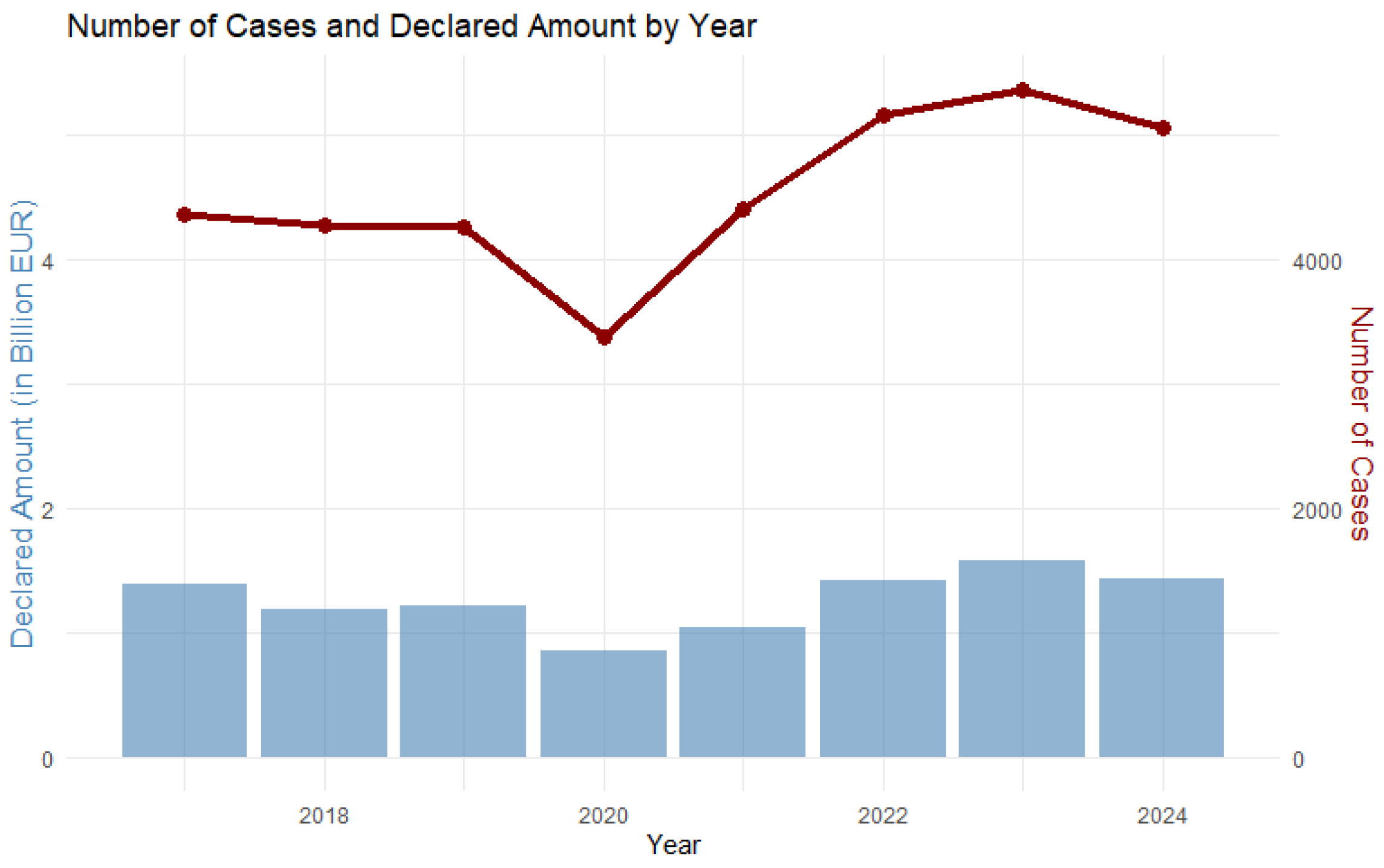
Figure 1. Number of cases and declared amount by year [data from Cyprus Open Data Portal] [25].
Urbansci 09 00509 g001
Figure 2. Planning zones in Limassol for the year 2020 [Map data from Cyprus Open Data Portal]. Note: non-English terms in the map refer to the names of the regions.
Urbansci 09 00509 g002
Figure 3. Planning zones of Limassol in 2006 [Map data from Cyprus Open Data Portal]. Note: non-English terms in the map refer to the names of the regions.
Urbansci 09 00509 g003
Figure 4. Direction of residential roads in 2015 and in 2025 [data from OpenStreetMap].
Urbansci 09 00509 g004
Figure 5. Existing cycleways in Limassol (Cyprus) [map data from OpenStreetMap] [29]. Note: non-English terms in the map refer to the names of the regions.
Urbansci 09 00509 g005
Figure 6. Heatmap of POIs in 2015 (a) and in 2025 (b) [map data from OpenStreetMap].
Urbansci 09 00509 g006
Figure 7. POI density by group in Limassol for the year 2025 [map data from OpenStreetMap].
Urbansci 09 00509 g007
Figure 8. Spatial population distribution based on the census data per postal code for the years (a) 2011 and (b) 2021 [31].
Urbansci 09 00509 g008
Figure 9. Population change between 2021 and 2011, compared to the distance from city center. Note: non-English terms in the map refer to the names of the regions.
Urbansci 09 00509 g009
Figure 10. Fifteen-minute accessibility through cycling or walking: residential coverage by each category.
Urbansci 09 00509 g010
Figure 11. Fifteen-minute cycling and walking isochrones from (a) transport points and (b) green areas. Note: non-English terms in the map refer to the names of the regions.
Urbansci 09 00509 g011
Table 1. Dimensions for clarifying the urban sprawl index of Limassol, Cyprus.
DimensionUrbanized Areas (Based on the Planning Zones in 2006)Urbanized Areas (Based on the Planning Zones in 2020)
Size51 km258 km2
Density3505 people per km2 of urbanized area3627 people per km2 of urbanized area
Fragmentation0.490.53
Disclaimer/Publisher’s Note: The statements, opinions and data contained in all publications are solely those of the individual author(s) and contributor(s) and not of MDPI and/or the editor(s). MDPI and/or the editor(s) disclaim responsibility for any injury to people or property resulting from any ideas, methods, instructions or products referred to in the content.