1. Introduction
Valencia, Spain, on 29 October 2024, was hit by flooding that ranks among the worst in European history. Over 400 mm of rain fell within eight hours, that is, nearly the city’s climatological annual average of approximately 450 mm (state agency of the Government of Spain: AEMET source) and even slightly exceeding it, which led to the city being covered with water and the floods being aggravated. The disaster had a death toll of at least 229 people, caused the displacement of thousands, and the economic loss exceeded 85 billion euros. The media reports the insurance losses at 3.5 billion euros while the total of the damages is around 10.7 billion euros [
1].
These consequences unfolded despite the existence of the “
Pla d’acció territorial de caràcter sectorial sobre prevenció del risc d’inundació a la Comunitat Valenciana” (“Regional Action Plan for Flood Risk Prevention,” PATRICOVA) for 2003–2015, which had undergone revision in 2015 [
2]. Officials and flood specialists have since expressed their frustration and a willingness to re-evaluate PATRICOVA’s role and functionality, recognizing the urgent need for new strategic directions. Moreover, the scale of destruction has raised serious questions about the adequacy of current flood management approaches in the face of extreme climatic events [
3].
The study’s key finding reveals a major gap between policy-based planning and the region’s actual response capabilities. Specifically, the absence of early warning systems, weak intergovernmental cooperation, and poor community response highlight systemic failures. Although AEMET (state agency of the Government of Spain) issued a red alert at 7:30 a.m., residents did not receive the ES-Alert (Spain’s civil protection authority) until 8:11 p.m.—12 h later—long after floods had already begun [
1]. This delay had devastating consequences [
4].
This study seeks to analyze the policy vs. implementation gap in flood management in Valencia by using the Socio–Ecological–Technological Systems (SETS) framework in a comparative analysis of the statutory documents and the media reporting. The objective is to clarify how and why institutional responses were not as planned, and to identify interface failures which contributed to the severity of impacts. This research aims to provide concrete knowledge for enhancing integrated disaster management in the European urban environment.
Table 1 summarizes a timeline of the 2024 Valencia flood.
This disaster demonstrates that effective flood control is about more than just predicting weather; it relies on the interaction between social, ecological, and technological systems. This study links this natural disaster to broader issues such as environmental degradation and global warming [
1], arguing that natural and human-made systems contributed to the failure. Although weather played a role, the true shock stemmed from systemic dysfunction and unpreparedness [
2].
The delayed warning was more than a technical failure; it was a consequence of fragmented coordination among national and local authorities [
4]. The public, misled by the delay, underestimated the urgency to evacuate, which led to preventable deaths and injuries [
4]. These events underscore the critical importance of the “last mile” in disaster response, demonstrating that forecasts mean little without timely and coordinated social action.
1.1. Socio–Ecological–Technological Systems (SETS)
Adopting the SETS conceptual framework developed by Chang and Markolf [
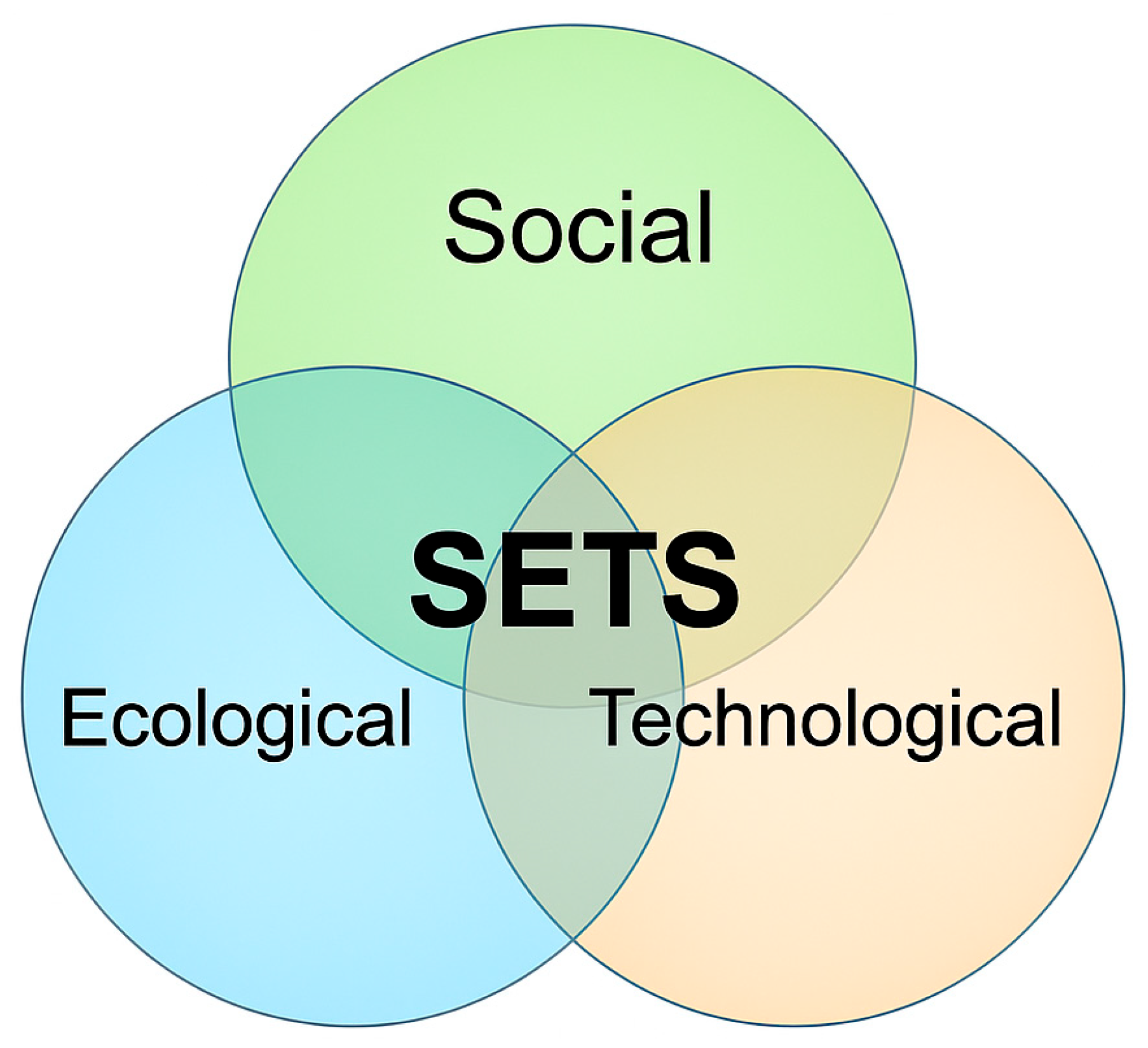
5], the study investigates the influence of domain interactions and interface breakdowns in the outcome in Valencia, as shown in
Figure 1. Social systems include governance systems, capacity, communication and equity systems; ecological systems include natural mitigation systems, ecosystem services systems, land use systems and climate adaptation systems; technological systems include infrastructure systems, monitoring, alerting and response technologies. Prior work shows SETS can uncover points of interface weakness and cascade impacts under stress.
1.2. The Importance of Media Coverage Analysis
This study additionally looks at how the media affected public perception and changed the steering of the disaster caused by the flood of 2024 in Valencia. The Spanish media centered on government failures which officials had hidden, and among them were mismanagement, insufficient preparations, and unequal social impacts. The media coverage, in addition to keeping the public informed, was a core part of the public discourse and functioned as an important perspective in the issue of accountability.
Firstly, in the Spanish setting, the effect of disaster-related reporting has been proven beyond doubt. For instance, during the 2024 floods in southeastern Spain, local newspapers reported on municipal vulnerability and lack of prevention policies, therefore driving political debate on disaster preparedness [
6].
On top of that, the crisis reporting during COVID-19 had already made public sensitivity to issues like transparency and governance stronger, the latter being very relevant for the media landscape of 2024 [
7].
Politically aligned broadcasters played a huge role in how news was reported and, therefore, how the public opinion was influenced. The main theme of Conservative outlets was bureaucratic failures and money mismanagement, whereas according to green media, the matters of environmental injustice and widening social inequality were most important. These two kinds of framing gave an opportunity for the public to see the systemic failures and, at the same time, put pressure on the authorities for more openness and accountability.
Still, the partisan reporting also had some negative sides. Part of the misinformation environment was the political bias of the news, so it was very hard for citizens to get objective reports. For example, during the flooding in Valencia, there were false rumors about dam failures and exaggerated evacuation orders that were widely spread on social media, which caused confusion [
3,
7]. In addition, unverified publications and misinformation targeted even state broadcasters: journalists at RTVE dealt with orchestrated digital harassment and disinformation campaigns that lowered their credibility during live reporting [
8].
Due to these localized examples, lying was not only a danger that was far away but a factor that operated and aggravated uncertainty and distrust. Spanish media provide a more disaster-specific picture of how they influence risk perception and institutional accountability in times of crisis when they examine these dynamics.
Spain’s media landscape plays a vital role in shaping public dialog during recurring flood events. To understand how ideological frameworks influence news coverage and policy interpretation, this research categorizes major media outlets according to their political orientation [
9,
10].
Many influential newspapers on the conservative and center-right spectrum also serve as prominent platforms for those political ideologies [
11].
ABC, the fourth-most-circulated newspaper in Spain, advocates for conservative and monarchist views. Founded in Madrid in 1903, it ranks among the longest-running newspapers in Europe.
El Mundo, the second in circulation, leans right but also features independent and liberal viewpoints.
La Razón, the third largest by circulation, combines conservative political values with a liberal economic stance. At the regional level,
Las Provincias has represented conservative and Blaverist views in the Valencian community since its founding in 1866.
In contrast, progressive and center-left newspapers have carved a niche in climate and disaster narratives. El País, Spain’s media market leader, takes a center-left editorial stance and features a dedicated climate section authored by environmental journalists. The other regional paper, Levante-EMV, based in Valencia, supports eco-initiatives and aligns with the center-left and local government. In addition, Público, a digital-only outlet, offers left-wing perspectives on current political issues.
RTVE, Spain’s leading public broadcaster, functions as the government’s media arm. As a state-owned entity, RTVE serves as the primary channel for official announcements and policy developments.
Media reporting influenced perception, accountability and crisis governance during the 2024 flood: ideologically disparate framing and misinformation episodes complicated public understanding. Conservative media highlighted the failure of bureaucracies and financial costs; the progressive media highlighted environmental justice and vulnerable groups; RTVE shared official discourses and struggled to obtain credibility in the face of harassment and disinformation. These dynamics played a role in shaping how people perceived risk and policy debate, warranting structured analysis of the leanings of the outlets (
Table 2).
1.3. Socio–Ecological–Technological Systems (SETS) Components by Media Leaning
The Spanish media’s political orientation significantly influences how outlets report on each component of the SETS framework in the context of flood disasters. These diverse approaches are vitally instrumental in shaping public understanding of the causes and consequences of such events [
8].
Right-leaning media often focus on the technological dimension, emphasizing infrastructure efficiency (T1), energy-saving systems, and cost-effective solutions that highlight economic resilience (S1). While acknowledging environmental concerns, these outlets tend to frame the ecological aspect through a lens of caution, expressing fears about transitioning from renewable energy sources back to fossil fuels and the potential for increased ecological damage (E1).
In contrast, ecologically focused coverage emphasizes the severity of global warming (E2) and critiques society’s short-term orientation. These narratives often promote local ecosystem restoration and advocate for nature-based solutions as efficient responses to flood risks (E1 and E3).
Progressive and center-left outlets commonly frame floods through the environmental and socio-economic dimensions, connecting them to broader sustainability agendas, such as those addressed at global summits. Their reporting often highlights inclusive access (S1), the emergence of eco-friendly products, technologies and lifestyles (S3) and the need for government adherence to the Environmental Kuznets Curve (S2) by investing in research and development (R&D) and offering financial incentives (T3).
A minority of the authorized press, such as RTVE, typically supports the official government stance. It frequently features policy communication that emphasizes the legitimacy of government action under the umbrella of SETS. In this context, RTVE often draws on government reports (S1), highlights the institutional presence during disaster response, and showcases improvements in publicly funded infrastructure (T1) and national technology programs (T3).
In the social systems domain, RTVE stresses the reliability of public services (S1) and the state’s capacity to deliver during crises. These narratives aim to build public confidence in these institutions and underscore their role in upholding societal stability during disasters.
3. Methodology
3.1. Research Design
Based on SETS, the study presents the results of comparing statutory planning and media reporting content to determine gaps in policy and implementation, as demonstrated by Lee and Hong [
24]. Two instruments are presented, a SETS Policy–Implementation Gap Matrix (aligning intent, media focus, and measured results by subcomponent) and a Media SETS Coverage Disparity Index (measuring ideological variation in SETS focus).
This method is particularly effective in exploring the “policy–implementation gap” in disaster governance. Media content provides relatively objective accounts of real-world conditions, while official documents, such as PATRICOVA, reflect institutional structures and intent. Communication content, by contrast, reveals actual system performance, public opinion, and emergent crises. By comparing both sources of data, we identify system failures and explore underlying weaknesses, whether due to flawed design, poor execution, or cross-sectoral issues.
To advance the study’s comparative approach, we introduce two systematic frameworks: the SETS Policy–Implementation Gap Matrix, which functions as a summary table organizing comparative findings, and the Media SETS Coverage Disparity Index, which adapts established content analysis principles to the SETS context. First, the Policy–Implementation Gap Matrix systematically juxtaposes the prominence of each SETS component (Social, Ecological, Technological, and their respective subcategories) across three domains: policy documents (as regulatory intent and planned measures), media representations (frequency and emphasis in news reports), and observable real-world outcomes (as recorded during and after the disaster). For example, for each subcomponent—such as S1 (Governance), E2 (Climate Hazards), or T1 (Hard Infrastructure)—the Matrix displays the relative weight or attention assigned in flood management plans, the frequency and framing of media coverage coded during the event, and the extent to which corresponding actions were realized or failed in practice. This comparative source reveals critical gaps between official intent, public communication, and actual outcomes, highlighting systemic disconnects and priority mismatches that contributed to the disaster’s severity.
In addition, we propose a Media SETS Coverage Disparity Index, which quantifies the variance in SETS framework application among prominent Spanish media outlets. By aggregating the frequency of SETS-related keywords and themes coded within each newspaper, we calculate a proportional index that allows direct comparison of how conservative, progressive, and public-interest media prioritized (or neglected) social, ecological, and technological disaster factors. This index not only visualizes ideological distortions in disaster framing but also provides a pioneering, empirical basis for evaluating media influence on risk perception and policy debate. Collectively, these novel tools offer a replicable and transparent framework for bridging SETS theory, policy evaluation, and real-world disaster communication, thereby distinguishing this study from previous SETS applications that relied exclusively on qualitative or dichotomous content analysis.
This approach also enables us to assess the strengths and limitations of Valencia’s flood management system, helping determine how theoretical frameworks perform in real-world crises. Ultimately, the study provides empirical evidence to inform the reconstruction of disaster governance policies.
3.2. Data Resources
3.2.1. Statutory Planning Documents
This study primarily analyzes the 2015 revision of PATRICOVA, supported by insights from corresponding planning tools, including the Sustainable Development Plan [
25], the Adaptation Framework for Climate Change [
26], the Urban Master Plan, and the Energy Management Strategy of Valencia. While the keyword analysis does not explicitly include them, we also consulted broader policy sources, including the National Flood Management Strategy of Spain, the European Union Floods Directive Implementation Plan [
27], and the EU Climate Adaptation Strategies [
28].
These documents constitute the legislative foundation of flood and disaster response policy in the Valencian community. PATRICOVA identifies high-risk flood zones, prescribes land use regulations, and proposes structural measures, such as infrastructure upgrades and the restoration of natural watercourses [
2].
However, testing these plans under real disaster circumstances remains essential. For instance, although Spanish law mandates that municipalities at medium or high flood risk prepare and adopt Local Flood Action Plans (PAMRIs), only 18 of Valencia’s 136 municipalities had complied by 2024 [
29]. This gap between policy design and implementation lies at the heart of this study.
To investigate this divergence, we compared media accounts of the flood’s impact with the planning content. This comparison clarifies how effectively institutional frameworks translate into emergency response actions. Our study also highlights the political influences on disaster preparedness, such as the disbanding of the Valencian Emergencies Unit following a change in government, which stated that the unit is “spending money pointlessly” [
4].
Leading Spanish newspapers were defined as newspapers with major national/regional circulation and proven influence in terms of disaster coverage. The final sample included 60 articles: 28 conservative, 25 progressive and 7 public broadcaster reports. Outlets included ABC, El Mundo, La Razon, Las Provincias (conservative); El Pais, Levante-EMV, Publi (progressive) and RTVE (public). Articles were retrieved from Factiva and LexisNexis with specific keywords, Boolean operators and filters (region/language/date). SETS domains and framing were coded for each article. International media were either excluded for consistency or systematically integrated in the full comparative analysis according to the Results and Discussion Sections.
In this study, we categorized each policy document using the SETS principles to identify thematic emphases, neglect, or inconsistencies across social, ecological, and technological domains. This process enabled us to identify intended policy strengths and uncover the structural causes of operational weaknesses observed during the disaster.
3.2.2. Media Sources
Media content analysis was conducted to evaluate the framing and discourse surrounding the 2024 Valencia flood event across Spanish and international news sources. To ensure comprehensive and systematic coverage, we utilized the Factiva database, recognized for its access to over 33,000 news sources in 32 languages, alongside LexisNexis as a supplementary resource for additional cross-verification.
A search protocol was established by entering a set of targeted keywords into the database’s advanced search builder. Keywords included [“Valencia flood”], [“2024 flood Spain”], [“Valencia inundación”], [“Spanish disaster”], and outlet-specific terms (such as [“El País”], [“RTVE”], [“La Vanguardia”]). Searches were further refined by applying Boolean operators to maximize retrieval relevance, followed by using filters for source region (Spain) and language (Spanish and English).
The inclusion window was set from 29 October 2024—the date of the flood’s onset—through 31 December 2024, encompassing both immediate responses and subsequent policy debates. Articles were screened for direct relevance to the flood event, coverage of disaster management, and discourse related to institutional responses. Reports focused exclusively on editorial opinions or unrelated crises were excluded. Duplicate articles from syndication channels were also removed to ensure unique coverage within the sample.
The final sample consisted of 60 news articles meeting the outlined selection criteria. The rationale for this sample size was threefold: (i) saturation was achieved for thematic and narrative variation, with additional articles yielding no new discourse categories; (ii) inclusion of ideologically diverse outlets ensured representation of both conservative and progressive perspectives; and (iii) the manageable sample size facilitated rigorous qualitative coding and intercoder reliability testing (κ = 0.81), optimizing both depth and replicability of the analysis. All coding procedures, as well as coder training and conflict-resolution steps, were fully documented to ensure methodological transparency and replicability.
Spanish domestic media coverage included:
El País: Provided detailed reporting and post-crisis analysis [
30].
ABC: Reflected conservative perspectives in mainstream news.
La Vanguardia: Offered political and logistical context.
RTVE: Delivered official government narratives and crisis updates.
Las Provincias and
Levante-EMV: Offered regional perspectives on local damage, community response, and institutional coordination efforts [
8].
International media coverage included:
BBC News: Focused on human-interest stories and community resilience.
CNN: Reported on missing persons, civic unrest, and political accountability.
Reuters: Presented casualty data, government actions, and public reaction.
The Independent: Analyzed broader socio-political ramifications.
These sources captured the evolving crisis and illustrated how different ideological leanings influenced coverage. Conservative media emphasized bureaucratic inefficiencies and delays, while progressive outlets framed the disaster in terms of social vulnerability and the impact of climate change.
The assault on
RTVE journalists during live coverage reflects the growing distrust between the public and state-aligned information systems [
8]. Therefore, including international media broadens the scope of analysis and introduces comparative perspectives on transnational resilience.
Together, these media accounts revealed the policy–performance disconnect, identified governance failures, and documented the societal consequences of systemic failures.
3.3. Socio–Ecological–Technological Systems (SETS) Framework
This study adopted the SETS framework, which provided a systems-thinking approach for examining Valencia’s disaster management mechanisms in depth. We categorized media reports and planning documents according to the SETS domains: social, ecological, and technological. This classification enabled us to trace the interactions and breakdowns across subsystems and expose vulnerabilities caused by poor coordination. Documents and media were coded across S1–S3, E1–E3, and T1–T3, enabling interface analysis and failure tracing across subsystems.
3.3.1. Social Systems
The analysis of social systems encompasses governance structures, coordination mechanisms, emergency communication protocols, public alert systems, community preparedness, and social equity. We used med reports to evaluate these processes in real time, focusing on how different communities engaged with emergency responses.
Media coverage highlighted failures in governance, such as President Carlos Mazón’s delayed attendance at an emergency coordination meeting and the slow response between the central and regional authorities. The media also criticized the ES-Alert system’s delayed activation, highlighting how partisan perspectives influenced interpretation: conservative outlets advocated for efficiency reforms, while public and progressive media emphasized accessibility and fairness for marginalized groups.
Media narratives played a crucial role in capturing the lived experiences of those affected by the catastrophe, revealing inadequacies in community engagement, particularly among older adults, immigrants, and low-income populations. These findings suggest a lack of adaptive, inclusive social systems that could foster resilience during disasters.
3.3.2. Ecological Systems
The ecological component analysis addressed natural flood management, ecosystem services, land use, and climate adaptation. Media sources approached these issues from contrasting ideological perspectives.
Conservative outlets praised eco-economic development as a strategic advancement, while green and progressive sources criticized ongoing environmental degradation and insufficient adaptation to new climate scenarios. The inclusion of L’Albufera Natural Park in discussions of nature-based solutions demonstrated the potential of ecological buffers. However, reports stated that planning documents relied on outdated flood data and continued to allow urbanization in flood-prone areas, thereby reducing the catchment’s resilience to future extremes.
3.3.3. Technological Systems
The technological analysis focused on infrastructure resilience, monitoring networks, early warning systems, emergency technologies, and communication platforms. While PATRICOVA prescribed appropriate flood control measures, the system failed due to the unprecedented rainfall.
Conservative outlets emphasized innovation and cost efficiency, while progressive media stressed the equitable distribution of resources. Despite early weather detection by surveillance systems, authorities failed to translate the data into timely public warnings. This breakdown revealed a dangerous disconnection between technological and social systems.
Implementation documents revealed minimal use of adaptive intelligent technologies and insufficient redundancy in the core systems, which contributed to systemic failures. Instances such as overloaded hotlines and mobile network outages demonstrated the fragility of emergency communication infrastructure during high-stress events.
3.4. Analytical Approach
We systematically coded media content using the SETS framework to identify domain-specific failures, successes, and gaps. We analyzed planning documents to assess how well they incorporated SETS principles and examined the mechanisms of integration across subsystems.
By comparing projected capabilities in the planning documents with actual performance during flood events, we identified key discrepancies. This analytical approach enabled a comprehensive evaluation of the disaster management system, providing insights into how theoretical frameworks function—or fail—in real-world scenarios.
The degree of agreement between coders of the same experiment was measured by Cohen’s κ statistic. At first, both researchers separately coded the same set of news articles using a prior established codebook that was based on the SETS framework. The measurement of the intercoder agreement was performed by looking at how the codes that were assigned to each article matched. Observed agreement (Po) is the percentage of articles on which both coders have selected the same category, while expected agreement (Pe) reflects the probability of partial matching by chance, given the overall distribution of categories. The formula to calculate the final κ value is given below:
Intercoder reliability was measured from the agreement between two independent coders beyond chance, using Cohen’s Kappa coefficient to quantify the ad hoc reliability of the intercoder text coding system in the classification of the textual data according to the SETS framework. A high value of Kappa of 0.81 was obtained, which shows considerable agreement and good reliability.
In order to address disagreements, a consensus process was used such that coders reviewed cases that they disagreed on together, clarified coding criteria, and reached a consensus on the most appropriate categorization. This iterative reconciliation ensured consistency and reduced recording bias, adding to the validity of the content analysis.
4. Results
4.1. Analysis of Statutory Planning Documents Using the Socio–Ecological–Technological Systems (SETS) Framework
This research examined Valencia’s flood disaster management priorities and policy weightings through the SETS framework by analyzing four essential governmental statutory planning documents: the Basic Energy Management Plan, the Sustainable Development Master Plan, the Urban Comprehensive Plan, and the Climate Change Response Strategy. The SETS framework categorizes content into nine thematic subcategories across three interconnected domains.
The social systems domain includes:
S1 (Governance/Institutions): government policies, legal norms, and institutional capability
S2 (Public Participation/Capacity): civic engagement, community empowerment, and social learning
S3 (Equity/Vulnerability): social justice, protection of vulnerable groups, and environmental justice.
The ecological systems domain includes:
E1 (Natural Systems): biodiversity and ecosystem health
E2 (Climate Risks): natural hazards due to climate change
E3 (Ecosystem Services): nature-based solutions and ecological benefits.
The technological systems domain includes:
T1 (Hard Infrastructure): physical assets and built environment
T2 (Monitoring Systems): early warning systems and data collection
T3 (Smart Technologies): digital solutions and innovation.
This classification enabled the identification of key policy issues and management priorities through a systems-thinking lens.
4.1.1. Socio–Ecological–Technological Systems (SETS) Results
Table 3 presents the distribution of the SETS keywords across the planning documents (PATRICOVA and others). The coding process identified 48 keywords, with T1 (Hard Infrastructure) appearing most frequently (13 keywords, 27.1%), followed by E1 (Natural Systems) with eight keywords (16.7%) and S1 (Governance/Institutions) and E2 (Climate Risks), each appearing seven times (14.6%).
While
Table 3 presents the relative frequency of SETS-related keywords across planning documents, keyword counts alone risk oversimplification. Therefore, we examined key passages in PATRICOVA and associated plans to contextualize these results. For instance, T1 (Hard Infrastructure) terms often appear in reference to hydraulic engineering projects and drainage expansion, such as the directive specifying “reinforced levee systems and channel widening along the Júcar River.” Similarly, E1 (Natural Systems) keywords appear primarily in sections on floodplain zoning, where ecological systems are framed as constraints for construction rather than as proactive buffers. By contrast, S1 (Governance) keywords appear mainly in administrative protocols (e.g., interdepartmental coordination checklists), while S2 (Public Participation) is limited to procedural mentions of municipal compliance, without detailed guidance on citizen training or engagement mechanisms. Notably, S3 (Equity/Vulnerability) is absent, reflecting a lack of direct attention to disadvantaged populations. This qualitative assessment shows that while technological and ecological priorities are embedded with some detail, social system content is both quantitatively rare and qualitatively superficial.
This distribution reveals a strong emphasis on engineered infrastructure and ecological considerations. The Climate Change Response Strategy contained the highest number of SETS-aligned keywords (14 keywords, 29.2%), especially E1 (Natural Systems) and S2 (Public Participation/Capacity), signaling a more holistic and environmentally conscious approach. In contrast, the Urban Master Plan (13 keywords, 27.1%) prioritized T1 (Hard Infrastructure) and E3 (Ecosystem Services), showing limited integration of nature-based strategies. The Basic Energy Plan (11 keywords, 22.9%) centered on E2 (Climate Risks), reflecting concern for climate-induced hazards, whereas the Sustainable Development Master Plan (10 keywords, 20.8%) displayed a relatively balanced SETS presence.
Notably, S3 (Equity/Vulnerability) and T2 (Monitoring) were absent across the documents. The underrepresentation of E3 (Ecosystem Services) and T3 (Smart Technologies) further highlighted the limited uptake of ecological and digital innovations, factors that likely contributed to the system-wide failures during the 2024 Valencia flood.
4.1.2. Assessment of Social Components
Formal multi-level protocols existed but failed operationally: technical surveillance did not translate into timely alerts; public–private coordination remained superficial; equity was not addressed despite disproportionate harms to older adults, immigrants, and low-income residents; intergovernmental delays and unit disbandment impaired coordination.
The PATRICOVA plan introduced a structured multi-layer governance framework and outlined emergency response steps. It formalized coordination among regional, national, and local authorities and detailed operational protocols. However, the 2024 disaster exposed major flaws.
Communication protocols failed. Although technical surveillance systems functioned, authorities struggled to convert alerts into timely public warnings. For instance, a nearly 12 h delay occurred between the red alert issued by AEMET and the activation of the ES-Alert system—a socio-technical failure rooted in poor public communication, despite the accuracy of the forecasts.
Public–private partnerships in the plan remained superficial. PATRICOVA adopted a technocratic approach, ignoring local cultural knowledge, community capacity-building, and citizen engagement. This omission contrasted sharply with the self-organization and spontaneous volunteer response observed during the flood.
The plan also failed to address equity. Although it thoroughly analyzed physical hazards, it excluded social vulnerability indicators and overlooked the policy’s impact on disadvantaged groups. Media reports later confirmed that elderly, immigrant, and low-income residents suffered, validating concerns about social oversight.
Despite having intergovernmental structures, the governance system faltered. There was a delay in emergency responses, and coordination between government levels broke down. The governor’s delayed crisis meetings and the disbandment of the regional emergency response unit worsened the situation. These failures demonstrate that unclear authority and weak inter-agency collaboration can lead to catastrophic outcomes in decentralized disaster management.
4.1.3. Assessment of Ecological Components
PATRICOVA demonstrated ecological strengths by improving the flood risk map using a six-tier, recurrence-based system. It also enforced land use regulations, preventing construction on 7500 hectares of flood-prone land—an initiative that avoided damages worth 200 million to 250 million euros.
However, the plan exhibited significant shortcomings. It failed to integrate climate change projections adequately. Instead of using forward-looking models, planners relied solely on historical flood data, which did not account for the climate-driven causes of the 2024 flood.
PATRICOVA also marginalized ecological flood-proofing strategies. While it mapped ecosystems, it did not incorporate them into flood management. Urban expansion continued to displace natural flood buffers. Although L’Albufera Natural Park absorbed some flooding, other vulnerable areas remained exposed. Moreover, the plan did not address watershed-level interconnections between upstream and downstream zones—a critical oversight that diverged from mainstream ecological planning.
While risk zoning and land use controls prevented some exposure, reliance on historical data and marginalization of nature-based solutions limited performance; watershed connections and buffers (beyond L’Albufera) were insufficiently integrated.
4.1.4. Assessment of Technological Components
Research indicated that critical infrastructure and communications network systems were adapted and designed for conditions of the past, smart technologies and redundancy were underdeveloped, and communication systems suffered from overloaded call lines and mobile outages.
Technological measures dominated the PATRICOVA plan. The city implemented sophisticated hydraulic infrastructure and established a monitoring network that focused on structural flood protection measures and waste systems.
Despite these efforts, the plan failed to account for future extremes. The city used past flood events to create the plan, but it did not incorporate climate change projections, making its infrastructure inadequate for the 2024 disaster. Furthermore, the plan favored static systems over real-time adaptive management.
The plan had underdeveloped smart technologies and redundancy protocols, leading to failures in flood sensors and data integration among agencies, which resulted in decreased situational awareness. Most critically, the lack of backup systems caused communication breakdowns. The overload of emergency call systems and mobile network failures severely disrupted crisis response.
These issues reveal an overreliance on a single technological trajectory and a lack of resilient, fail-safe infrastructure—factors that critically undermined the city’s flood management capacity.
4.1.5. Coverage Disparity Index
A simple, interpretable index can be calculated as either the standard deviation or range of the coverage percentages across SETS domains, which measures imbalance.
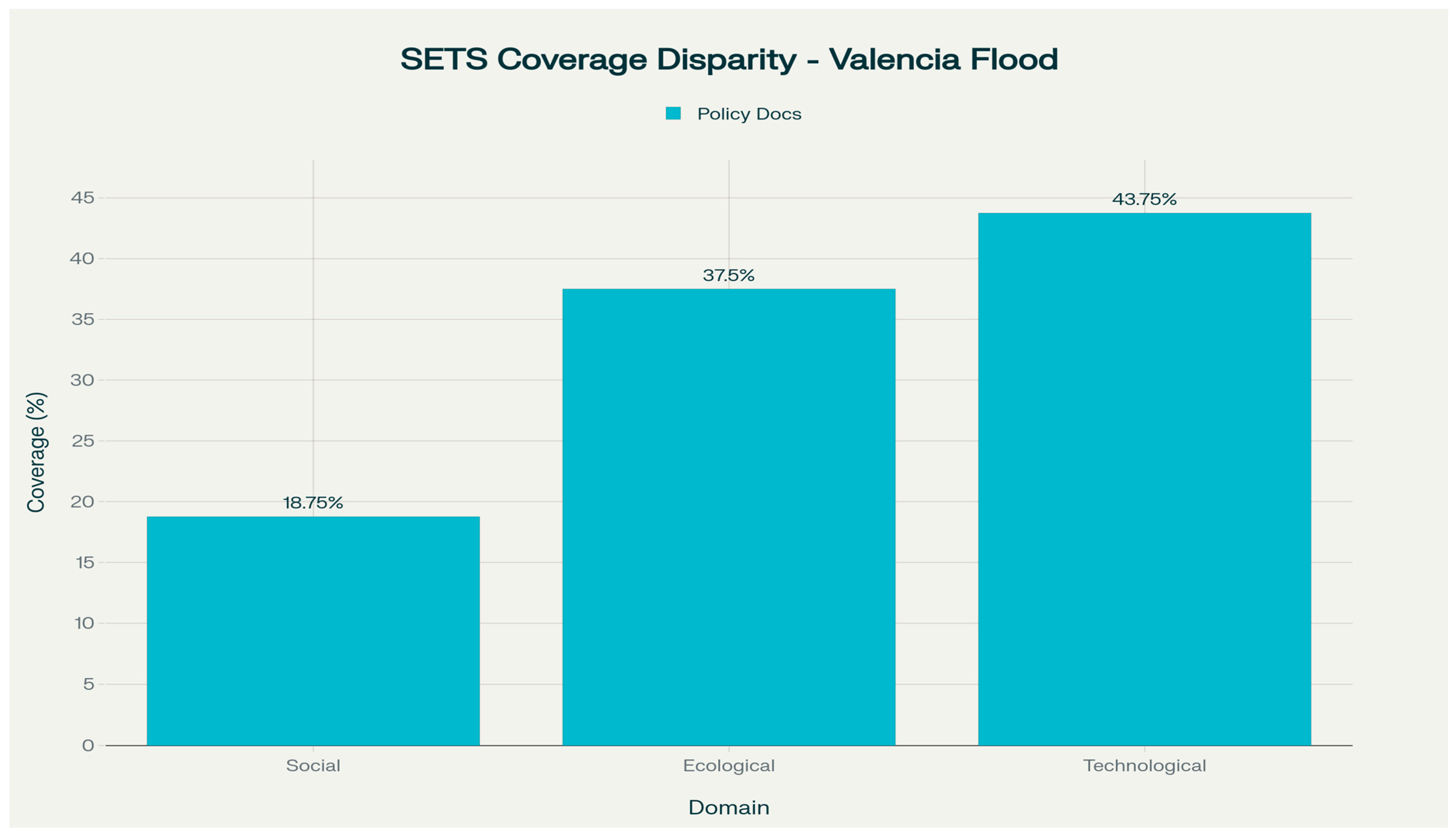
(a) Calculate Standard Deviation (SD) for policy document SETS proportions: Proportions of social, ecological, and technological emphasis were 18.75%, 37.5%, and 43.75%, respectively; the standard deviation (~10.63) and range (25 points) indicate substantial imbalance favoring technical/ecological over social dimensions, signaling weak equity, participation, and institutional capacity integration.
4.2. Analysis of Media Reports: Failures Exposed During the 2024 Floods
4.2.1. Social System Failure Reporting by Media Tendency
Spanish media outlets reported on the 2024 Valencia flood in highly polarized ways, with their political affiliations shaping how they portrayed social system failures. Each outlet influenced public opinion by assigning blame based on its ideological position. Conservative media, such as
ABC and
El Mundo, focused on government incompetence, bureaucratic inefficiency, and fiscal mismanagement.
La Razón highlighted conflicts between central and regional governments, whereas
Las Provincias criticized local municipalities directly [
4].
These conservative outlets framed the disaster through the lens of governance and financial accountability, emphasizing failures in S1 (Governance/Institutions) and T1 (Hard Infrastructure). In contrast, progressive media like
El País,
Levante-EMV, and
Público adopted a socio-ecological perspective, highlighting climate change, environmental injustice, and the neglect of vulnerable populations [
31,
32]. They interpreted the flood as symptomatic of deeper societal divides and called for transparency and equity-centered reforms (S3 and E2).
Public broadcasters such as RTVE focused on covering official government actions and informing the public. However, organized harassment campaigns against field reporters and incidents of abuse damaged the media’s credibility and raised concerns about public trust in the media during crises. These diverse media narratives shaped societal discourse around the root causes of the disaster and potential policy responses.
4.2.2. Emergency Communication Failure: A Media Tendency
Media outlets widely reported the delayed activation of the ES-Alert emergency warning system as a critical failure. Authorities did not issue the alert until 8:11 p.m. on 29 October 2024, despite
El País having reported that the government issued the red weather alert at 7:30 a.m. that same day [
4]. This delay revealed a breakdown in the socio-technological interface: technical warnings failed to trigger timely public action.
Media outlets interpreted this failure differently. For instance, conservative sources criticized the administrative inefficiency (S1) and technological underperformance (T2) of the response system, emphasizing the need for greater financial investment and upgraded infrastructure. They highlighted outdated equipment and weak technological capacity as root causes and promoted modernization as the solution.
Progressive media, meanwhile, emphasized the disproportionate impact of the failure on marginalized groups. They underscored the system’s inaccessibility (S3) to vulnerable populations and called for inclusive planning that addresses social inequity. Local news sources echoed public sentiment, providing eyewitness accounts of the flooding’s impact [
32] and reinforcing that the communication breakdown stemmed from technical flaws and a lack of coordination between forecasting tools and public responsiveness.
Together, the media critiques pointed to the failure as more than just a technical shortcoming; it was a deeper dysfunction in managing the interface between meteorological prediction (technological capacity) and community protection (social capacity).
4.2.3. Failure of Government Coordination: Analysis by Political Leaning
Media reports unanimously criticized the breakdown of cross-government coordination during the 2024 Valencia flood disaster [
4]. Conservative outlets such as
ABC and
La Vanguardia criticized regional authorities for failing to respond swiftly. For example, they defended regional governor Carlos Mazón for missing a midday meeting while criticizing the central president for arriving late to the first emergency coordination meeting. These outlets portrayed public officials as disengaged and ill-prepared, emphasizing institutional inertia and poor governance (S1).
Conservative media often used these failures to advocate for bureaucratic reform and criticized Spain’s decentralized governance system, arguing that jurisdictional disputes and institutional confusion contributed to the crisis. They framed the disaster as the consequences of administrative mismanagement and institutional fragmentation.
In contrast, progressive media framed the disaster as a systemic failure rooted in collective governmental responsibility. They criticized the failure of local responders and the neglect of broader social and environmental conditions. Public media aimed to justify official actions and promote institutional narratives, but their credibility suffered amid reports of physical attacks on journalists and coordinated digital harassment [
8,
22].
The jurisdictional confusion, exemplified by the Military Emergency Unit’s (UME) delay due to the lack of regional clearance, exposed the structural ambiguity in Spain’s decentralized emergency management. Media coverage across the political spectrum ultimately revealed that the primary coordination failures stemmed from unclear legal authority and fragmented responsibilities across government levels [
3].
4.2.4. Social Vulnerability
The media reported extensively that the 2024 Valencia flood disproportionately affected the most vulnerable members of society, particularly older adults, immigrants, and low-income populations [
32]. Of the 104 fatalities reported across 28 municipalities, 56 victims were 70 or older [
3]. The high death toll among elderly people reflected factors such as limited mobility, poor access to early warning systems, and social isolation [
33].
In addition to immediate fatalities, survivors experienced long-term consequences: psychological trauma, housing instability, loss of income, educational disruption, and exposure to unhygienic living conditions [
33]. Media reports also described sewage overflows and collapsed garage structures as signs of ongoing health and safety risks, contributing to public anxiety and distress.
These outcomes revealed a critical failure to integrate social vulnerability indicators into flood management (S3). By underlining the unequal burden borne by marginalized groups, the media created space for public discourse on expanding the definition of disaster resilience. They called for a shift from focusing solely on physical infrastructure to prioritizing equity-centered policies in disaster preparedness and response planning.
4.3. Ecological System Impact: Analysis by Media Stance
Conservative narratives were more interested in speedy reconstruction and regulatory release; progressive narratives focused on climate attribution, environmental justice and nature-based solutions, frequently pointing to L’Albufera as a buffering success. Urbanization in mapped risk zones as well as misaligned planning–ecology interfaces were found across outlets.
4.3.1. Conservative Media Framing of Ecological Systems
Conservative media outlets covered the 2024 Valencia flood’s environmental effects and consequences by minimizing the ecological damage and prioritizing development and short-term economic recovery. These outlets portrayed developers as pragmatic innovators and framed environmental activism as a costly obstacle to infrastructure progress. They criticized land use restrictions and environmental regulations, often presenting them as impediments to swift economic recovery.
In this framing, conservative outlets emphasized the need for rapid reconstruction, suggesting that environmental safeguards could delay economic recovery. They advocated for budget-conscious solutions, private investment, and practical approaches that favored rebuilding over systemic change. Right-leaning publications presented the damage repair process as a technical challenge best addressed through traditional economic tools rather than ecological resilience.
This narrative prioritized financial efficiency over environmental stewardship and largely overlooked the long-term social and ecological benefits of building climate-resilient communities. Although conservative media occasionally mentioned circular economy practices, such as renewable energy and efficient resource use, they treated these as secondary rather than integral to disaster recovery efforts.
4.3.2. Progressive Media Framing of Ecological Systems
Progressive media framed the 2024 Valencia flood as an unmistakable consequence of climate change and ecological degradation. They consistently emphasized the link between extreme weather and broader environmental crises, arguing that the flood signaled systemic failures in climate adaptation and urban planning. These outlets did not treat the disaster as an isolated event but instead framed it as part of a global pattern of accelerating climate risks.
Their reporting highlighted the importance of environmental justice, social equity, and sustainable development [
32], urging policymakers to pursue long-term reforms. Progressive media strongly advocated for nature-based solutions and green infrastructure, illustrating their potential to mitigate future disasters. They consistently referenced L’Albufera Nature Park as a success story in ecological flood mitigation. According to their accounts, the park absorbed significant floodwaters, demonstrating how biodiversity and urban resilience could coexist effectively [
34].
Through this lens, progressive outlets depicted ecological systems, particularly E2 (Climate Risks) and E3 (Ecosystem Services), as central to effective flood governance. They framed the disaster as a failure of climate preparedness and a missed opportunity to prioritize ecological resilience. Their messaging called for integrated flood governance grounded in ecosystem-based approaches.
4.3.3. Urban Development and Flood Risk
Media across the political spectrum identified urban development as a major contributor to the severity of the 2024 flood. Reports pointed to unchecked construction in rural floodplains as a direct cause of increased flood vulnerability [
28]. For example,
La Vanguardia and
El País cited detailed evidence showing drastic changes to landscapes previously classified as high-risk in PATRICOVA documents [
35].
These reports revealed a disconnect between urban planning and environmental regulation. Media outlets criticized the failure of authorities to align policy with ecological realities, arguing that city expansion undermined the natural flood-absorbing capacity of the land. They frequently cited L’Albufera Nature Park as a model of successful ecological management, contrasting it with overbuilt urban areas that suffered severe consequences during the flood, including loss of natural resources (E3) [
35].
The media also linked these development patterns to broader climate change dynamics. Following EU climate policy discourse, many Spanish outlets asserted that human-induced climate alterations had intensified extreme weather events. They attributed the disaster to more than just rainfall, indicating that the compounded effects of poor land use decisions and escalating global warming exacerbated the flood.
In conclusion, media coverage highlighted how unregulated urban development compromised ecosystem integrity and amplified flood risk. Their analyses emphasized the urgent need to restore ecological functions, integrate climate foresight into planning and shift flood governance toward nature-aligned solutions.
4.4. Technological System Failures: Media Ideological Analysis
Systems of communications failed; monitoring data was not converted into appropriate public alerts in time, design, redundancy, and governance constraints were typical cross-frames, and there were varying prescriptions (market vs. equity and universal access).
4.4.1. Failure of Communication Infrastructure
Media outlets covering the 2024 Valencia flood highlighted widespread technological failures, particularly in the communication infrastructure. Reports documented how critical services collapsed: emergency call lines became overloaded, mobile networks failed, and essential digital platforms struggled to operate under pressure. These breakdowns exposed the collapse of communication infrastructure (T1) and the resulting paralysis of social systems (S1) and emergency coordination mechanisms.
Media interpretations of the failures varied by political leaning. Right-leaning outlets argued for technological upgrades and market-based solutions. They emphasized the need for private sector involvement to boost system efficiency and advocated for modernizing the infrastructure to restore its functionality. In contrast, progressive outlets focused on chronic underinvestment in public infrastructure and the lack of equitable access. They insisted that universal access to communication must serve as the foundation for long-term resilience and inclusivity.
Technology-focused media criticized the system’s lack of interconnectivity and resilience. These outlets identified the absence of contingency planning and structural redundancies as serious flaws. They warned about vulnerabilities embedded in Valencia’s emergency communication networks and called for a more distributed and robust system capable of withstanding crisis-level disruptions.
Across ideological lines, media accounts collectively revealed that Valencia’s technological system failure stemmed from more than just overwhelmed hardware; it also included deeper issues such as flawed system design, insufficient funding, and inadequate governance strategies.
4.4.2. Inadequacy of Monitoring Systems
Throughout the disaster, news broadcasting companies repeatedly criticized the failure to translate extreme weather tracking data into timely public alerts. Although Valencia’s meteorological infrastructure tracked the storm in real time, authorities issued emergency warnings too late. This delay demonstrated a fatal breakdown at the socio-technical interface, specifically, a failure to transfer information from the monitoring system (T2) to the social communication protocols (S1) [
3].
Media perspectives on the issue diverged sharply. Conservative media called for improved operational efficiency and technological modernization, encouraging private sector participation to drive innovation. They prioritized service optimization, often framing it as a market-responsive solution. In contrast, progressive media emphasized equitable access and protection for vulnerable populations. They advocated for inclusive warning systems that address social disparities and ensure universal coverage.
Technology-focused publications proposed broader solutions. They called for unified platforms, integration of artificial intelligence, and climate change mitigation strategies in real time. These sources also cited research by Rombeek et al. [
36] and Hahn et al. [
37], which promoted the use of personal weather stations (PWSs) to enable real-time flood forecasting and rainfall monitoring, particularly useful when traditional monitoring systems falter.
These divergent narratives reveal that the core failure was not purely technological. Instead, the root problem lay in the mismatch between advanced detection systems and underdeveloped, socially responsive communication channels. This finding underscores the urgent need for holistic reform in infrastructure design and governance systems.
4.4.3. Infrastructure Overload
Media outlets widely reported that the 2024 flood overwhelmed Valencia’s drainage infrastructure, flood barriers, and transportation systems. The extreme rainfall displaced residents, damaged property and exceeded the design capacity of critical systems [
36]. Coverage emphasized that Valencia’s hard infrastructure (T1) failed to cope with the intensity of climate-induced weather events.
Media accounts also highlighted how degraded natural systems (E1), resulting from urban sprawl and environmental damage, exacerbated the floods’ impact. By destroying natural flood buffers, human activity reduced the land’s ability to absorb excess water. Once infrastructure systems reached their limits, the lack of ecological resilience worsened the situation.
While these system failures intensified the scale of the disaster, they also exposed the inadequacy of integration between technological and ecological systems, which contributed to the severity and spread of damage. The media collectively underscored the urgent need for climate-resilient infrastructure and the restoration of ecological functions as cornerstones of effective urban flood management.
4.5. Discrepancy: Plan vs. Reality
Four gaps were identified: static risk assumptions, the neglect of social systems (e.g., warning/community preparedness), top-down orientation vs. emergent bottom-up mobilization, and the lack of integration of climate–social interdependencies, creating an “illusion of resilience”, with documents not reflected in practice. Failures were focused at set interfaces (socio-technological, including alerts; eco-technological including capacity vs. buffers; and socio-ecological including vulnerability for risky land uses). The comparison between Valencia’s official flood management plans and the actual response during the 2024 disaster reveals four major discrepancies.
First, planners based the flood management strategy on static risk management assumptions and failed to incorporate adaptive, proactive responses to emerging climate extremes [
35].
Second, the plans prioritized technical and regulatory solutions while neglecting the functional requirements of society during the disaster, such as issuing timely warnings and creating community preparedness [
28].
Third, the organizing body strictly adhered to a top-down model. Planners did not develop context-sensitive solutions, while the media highlighted how community networks and volunteers successfully mobilized through bottom-up efforts. This contrast exposed the weaknesses of formal systems and the strengths of informal social structures.
Fourth, planners overlooked the interconnection between climate change and social factors, failing to address the cascading risks of floods alongside other climate-induced or societal disruptions. These oversights demonstrate that Valencia’s flood regulation relied on an “illusion of resilience”—a flawed belief that planners could achieve resilience through static documents, while ignoring the evolving interdependent nature of disasters.
The core failures occurred in the SETS domain interactions.
The social–technological interface broke down when communication system failures (T2) disrupted public notifications, thereby limiting the social system’s (S1, S2) capacity to respond [
3]. This disconnection between technological warnings and social responsiveness prevented timely community action.
The ecological–technological interface also failed. Valencia’s infrastructure could not handle the flood load, in part because planners failed to integrate it with natural systems. Urbanization had already stripped the land of its natural absorptive capacity, weakening ecological defenses (E1) and the effectiveness of flood control technologies. As a result, technical systems operated in isolation rather than synergy with nature, amplifying vulnerability [
35].
The social–ecological interface also suffered. Authorities made land use decisions without considering that vulnerable communities lived in environmentally sensitive areas. Despite zoning restrictions, developers continued to build in high-risk zones, pushing low-income families into harm’s way [
28,
32]. These actions undermined social safety and contradicted basic principles of equitable disaster planning.
Together, these breakdowns confirm that a system’s weakness does not lie in the complexity or number of its components but in the speed and quality of interconnections among them.
A combined review of official planning documents and media reports further illustrates the disconnect between planning priorities and operational realities. Official documents emphasized ecological strategies (37.5%), technological solutions (35.4%), and social engagement (27.1%)—a distribution that favors physical systems over human-centered approaches.
Media coverage painted a different picture. Journalists exposed how many of the ecological plans had failed, how the technological systems—particularly early warning tools—had collapsed, and how communication breakdowns had hindered effective response. Their narratives revealed a significant gap between planning ideals and on-the-ground execution.
Political ideology influenced these media interpretations. Conservative outlets criticized technical failures, particularly the malfunctioning warning systems and the slow deployment of infrastructure, framing these issues as the result of fiscal mismanagement and public sector inefficiency. In contrast, progressive reporters highlighted the absence of equity mechanisms and the lack of community involvement, questioning the effectiveness of current climate adaptation strategies.
Business-focused media acknowledged the scale of planning efforts but noted the persistent gap between theoretical and practical outcomes (
Table 4). These varied perspectives revealed how a sudden natural disaster uncovered a multi-domain systems failure where the collapse of one domain quickly triggered vulnerabilities in others. The lack of communication and coordination across SETS domains turned a natural hazard into a systemic crisis.
4.6. Intercoder Reliability
This research gathered and examined 60 news articles published from 25 October to 3 November 2019. The sample included 28 articles from conservative media outlets (ABC, El Mundo, La Razón, Las Provincias), 25 from progressive media outlets (El País, Levante-EMV, Público), and 7 from the public broadcaster RTVE. These articles were collected via Factiva and the official websites of the news organizations. As for the analysis, a coding dictionary was created, which was designed according to the detailed categories of the SETS framework. Two researchers working separately carried out content analysis. The degree of inter-coder reliability was checked by Cohen’s kappa coefficient, which obtained the result of 0.81, indicating a high level of agreement. Conflicting views were resolved by discussion, thus the final version of the codebook was agreed upon.
5. Discussion
Although this case study confirms the reality that gaps in the implementation of policy and failure in the interface between SETSs exist in the case of Valencia, the results must be understood in the context of recent urban resilience and disaster systems literature. For example, the poor integration of community participation and warning technology reflects both long-standing criticisms of top-down flood planning in Spain and the limitations of SETS if it is not accompanied by a strong participatory process or adaptive management. This serves to supplement Sharifi’s [
13] argument that SETS frameworks can run the risk of abstraction without the foundations of social equity and procedural justice. Furthermore, the difference in SETS domain coverage demonstrated through the keyword analysis highlighted infrastructural bias that is prevalent in the domain of disaster governance debate in Europe.
The implications go beyond Valencia: cities with increasing climate risks and rapid urbanization cannot only implement frameworks of this sort (such as SETS), but also need to critically reflect on the policy, institutional and participatory mechanisms that make theory operational. We recommend that mechanisms that allow cross-sector coordination and resilience-building should be driven by both technological innovation and socioeconomic diversity in order to address the systemic needs of today’s implementation. Methodological shortcomings, such as use of document-based keyword frequency as opposed to lived experience, indicate that future research must incorporate ethnographic/participatory methods to provide more nuanced dimensions of resilience.
A main point of strength in terms of methodology in this piece of research is the achievement of a high level of intercoder reliability in the content analysis of news articles. The use of Cohen’s κ statistic allowed us to obtain a κ value of 0.81, showing that the agreement between the two independent coders is somewhere from substantial to almost perfect in light of the criteria for the evaluation of such agreements proposed by Landis and Koch [
38]. Such a high κ value points out that the coding scheme and codebook were both quite clear and even strong enough to bring about the same results, which, in turn, made the findings more authentic and more likely to be repeated. The quality of the work—kicking off with a pilot coding phase, and then progressing through codebook refinement and discrepancy reconciliation—was instrumental in building up the reliability of the qualitative analysis. Yet, one should be aware that the high intercoder reliability is still accompanied by some contextual nuances, subjectivity in the interpretation of comments, and the latent framing that may exist particularly in politicized and semantically ambiguous news articles. That is, the statistical reliability measure goes a long way in supporting the integrity of the data coding; however, careful contextual interpretation and comparative textual critique are still the main ways to address the complexity of sociopolitical discourse and the multiple meanings embedded in the source material.
5.1. Insights from the Socio–Ecological–Technological Systems (SETS) Framework
The analysis based on the SETS framework and the Valencia case reveals that the failure in flood management was not due to individual incompetence in specific domains but because the entire system became dysfunctional. The disconnection between social, ecological, and technological components created a system breakdown. The results of this study support recent research suggesting that urban flood resilience depends on the interlinkages among all SETS elements [
30].
Valencia exemplifies a typical example of siloed planning. Although the official documents addressed each domain professionally, they failed to integrate them into a coherent system when emergency conditions arose. The inability to activate interlinkages under extreme circumstances highlights the need to adopt holistic standards and interactive governance rather than isolated planning approaches.
The major finding of this research is that despite its framing as a general strategy, the PATRICOVA plan failed to integrate the SETS components effectively. It applied linear strategies to isolated areas—such as eco-mapping for flood hazard zones, infrastructure design under technical plans, and social governance frameworks in the social system—without creating mechanisms for cross-sector integration in emergency conditions.
Media reports highlighted these failures. For instance, although technical systems produced the necessary flood alerts, the alerts never reached the public through reliable communication channels. Similarly, while ecological assets like L’Albufera Natural Park had the potential to mitigate flood impacts, emergency protocols rarely activated them. Media responses reflected their ideological leanings.
Conservative outlets focused on improving technical efficiency and profit-driven strategies. They emphasized isolated solutions, such as upgrading hard infrastructure (T1), and criticized bureaucratic inefficiencies in governance (S1). In contrast, progressive media underscored equity (S3) and ecological systems (E2), highlighting systemic vulnerabilities, social injustice, and the structural barriers between SETS domains. Public media, while presenting official viewpoints, often exposed system-wide contradictions, especially when government actions lacked support on the ground.
These diverging perspectives reveal that the integration flaws in the PATRICOVA plan stem from more than just technological gaps; they reflect a complex interplay of political, social, and economic factors. Understanding these dynamics is crucial for designing flood resilience strategies that are technically efficient and socially inclusive.
5.2. Limits of Adaptive Capacity
The 2024 Valencia flood highlighted the limitations of SETS components in adapting to change. The city based its planning model on outdated flood patterns instead of projections of future extreme events. This conclusion supports new studies that advocate for flexible, climate-responsive flood management.
Social systems in Valencia lacked adaptability, as their rigid hierarchies and poor communication structures hindered rapid responses. Additionally, technological systems, which were dependent on auxiliary units, collapsed under pressure, resulting in secondary system failures.
Media outlets interpreted these adaptation challenges through ideological lenses. Right-wing media emphasized technological advancements and infrastructure investment, promoting incremental strategies and inviting private sector involvement, with a focus on smart technologies (T1, T3) and governance efficiency (S1). In contrast, left-wing media argued for systemic change, highlighting the roles of social learning, local leadership, and climate justice. They emphasized the reorganization of public participation and social systems (S2, S3) and ecological resilience (E2).
International media provided comparative viewpoints, drawing on global best practices to address urban resilience deficits. These varied narratives underscore that adaptive capacity is not just a technical or financial issue; it requires a combination of political commitment, societal value shifts, and operational transformation across systems.
5.3. Policy Implications and Recommendations for Action
5.3.1. Immediate Actionable Reforms
To address the shortcomings of the 2024 flood response, policymakers must reintroduce SETS analysis into disaster management.
First, Valencia must implement an automated early warning system that directly connects to meteorological services. This integration would allow real-time alerts to reach the public, as well as technological systems (T2) and social systems (S1, S2), to convert forecasts into action [
34].
Second, communities should establish preparedness networks. These grassroots groups can mobilize volunteers, support crisis response when official systems fail, and enhance the resilience of social systems.
Third, Valencia must clarify intergovernmental coordination by standardizing protocols for emergency authority and communication across different levels of government [
3]. Strengthening governance (S1) ensures that emergency responses are swift, unified, and effective.
Together, these proposed reforms support an adaptive, integrated flood management paradigm capable of responding to climate-driven disasters.
5.3.2. Long-Term Strategic Transformation
To build long-term resilience, Valencia must embed flexibility into all phases of flood planning. Authorities should utilize forward-looking climate scenarios to inform future preparedness, thereby enhancing climate risk management (E2).
Valencia should also invest in green infrastructure and promote nature-based solutions, such as enhancing the L’Albufera wetland’s role in flood control as an ecosystem service (E3) [
35]. Social resilience also demands attention. Policymakers must invest in community capacity-building, the unification of social networks, and equitable flood preparedness measures to strengthen social systems (S2, S3) and mitigate the effects of disasters [
28].
When combined, these actions form the foundation of a participatory and resilient flood governance model tailored to Valencia’s climate realities.
5.3.3. Role of Media and Improvement of the Information-Sharing Ecosystem
To implement the SETS framework successfully, Valencia must enhance media diversity and the information-sharing ecosystem. Diverse media perspectives across conservative, progressive, and public outlets enhance the depth of SETS analyses and broaden civic engagement.
Authorities should develop a crisis communication strategy that focuses on three key areas: partnering with fact-checkers, delivering timely, transparent updates, and promoting media literacy to counter misinformation [
7].
In addition, the city should engage citizens through community-based information networks. These channels would close the “last mile” gap in emergency communication, strengthen communication within social systems (S2), and increase public readiness.
5.3.4. Interpreting Policy Gaps: Political Economy, Power Dynamics, and Equity
The observed gap—in particular, the utter absence of S3 (Equity) in PATRICOVA and related plans—can be best understood by delving into the political economy of planning in Spain, institutionalized technological problem-solving preference, and power relations in flood risk governance.
Historically, regarding flood management, Spanish and European strategies have placed an emphasis on a technical and ecological approach based on hydraulic infrastructure, risk mapping and climate adaptation. Despite provisions in the law to implement land use controls in hazardous areas, most public funds and policy attention have focused on “hard” engineering solutions such as levees, diversion channels and monitoring technology. This can be explained by both a technocratic tradition and political incentives: investments in infrastructure are highly visible (often EU co-financed) and offer clear deliverables for political actors.
In the context of metropolitan governance in Spain, there is a weak institutional focus on equity considerations (S3) (e.g., addressing the vulnerability of low-income entities, migrants or elderly people), except in cases of strong civil society advocacy or explicit requirements at higher-level policy frameworks, which are missing or fragmented. The lack of equity of PATRICOVA therefore seems to be the result of both technical (excessive reliance on quantifiable risk and engineering standards) and political–economic factors (institutional inertia, lack of participatory mechanisms, and lack of pressure to address distributive justice in the planning goals.
Recent research points to the fact that the dominance of technical actors and the “lock-in” to technological regimes leave out social and equity-oriented measures, which are often seen as being less efficient or difficult to quantify. As such, non-participatory and non-just approaches such as PATRICOVA may replicate existing inequalities through the lack of incorporation of equity criteria, participatory decision-making or explicit measures to protect the most vulnerable. Breaking these dynamics will need not only technical change but also changes in governance priorities, wider stakeholder engagement and meaningful inclusion of marginalized people in the development of flood risk policy.
5.4. Approaches to Implementing an Integrated Socio–Ecological–Technological (SETS) Framework
To close systemic gaps, Valencia must establish a fully integrated SETS framework based on dynamic interconnection. Authorities must avoid segregating social, ecological, and technological planning and instead design coordination mechanisms that enable real-time communication across all systems. The proposed integration acknowledges the dependencies and enables the flexibility necessary to respond promptly in times of crisis.
The new framework should incorporate adaptive management, allowing systems to learn and adjust in response to changing conditions. Planners must replace outdated, retrospective planning methodologies with future-oriented, flexible methods.
Multi-scalar coordination is also an essential principle of the new framework, which involves linking local ecological processes with regional technological infrastructure available to community members. This principle acknowledges that flood management must operate on multiple levels, geographically and institutionally, and that management must be free from territorial boundaries.
Lastly, the framework must center on equity, actively reducing social vulnerabilities through inclusive governance and climate justice.
5.5. Valencia-Contextualized Strategic Directions
This study offers four strategic directions for Valencia’s urban flood resilience.
First, restore natural floodplains along the Turia and Poyo valleys, including urban park planning, and expand green infrastructure networks to enhance natural systems (E1).
Second, adopt artificial intelligence (AI)-based forecasting tools to enable real-time response and adaptive infrastructure (T3) that can dynamically minimize the effects of extreme events [
34]. These actions will also optimize socio-capital stocks.
Third, create bottom-up local community resilience networks that combine local knowledge and monitoring technologies to enhance capabilities for managing sudden changes. These networks can strengthen social systems (S2) and civic–government communication.
Fourth, enhance inter-regional cooperation with nearby towns and river basin authorities to promote multi-level flood governance. Using social systems (S1) to align regulatory systems with climate and societal realities will strengthen institutional coordination.
The application of the SETS Coverage Disparity Index to Valencia’s statutory planning documents reveals a marked imbalance in the emphasis placed on the three core dimensions of disaster management. Specifically, 43.75% of the coded keywords pertain to technological systems, 37.5% to ecological systems, and only 18.75% to social systems. This distribution, as evidenced by the standard deviation and overall range, underscores a significant underrepresentation of social considerations—such as community engagement, equity, and institutional capacity—within the planning framework, as shown in
Figure 2.
This finding is particularly salient in the context of contemporary urban resilience scholarship, which increasingly asserts that investments in technological and ecological infrastructure, while necessary, are insufficient for fostering adaptive and effective flood governance. The efficacy of disaster response and recovery efforts is contingent not only upon physical and environmental systems but also upon the integration of socially inclusive strategies, the strengthening of local capacities, and the mitigation of vulnerabilities among marginalized populations.
The observed disparity suggests that existing policy documents may inadvertently reinforce systemic inequities by neglecting to adequately incorporate social systems into disaster preparedness and response mechanisms. Accordingly, future policy reforms should aim to recalibrate the SETS framework, ensuring a more equitable distribution of attention across all three domains. Central to this endeavor is the sustained prioritization of social participation and equity, which must be recognized as foundational pillars of resilient urban governance.
5.6. Critical Views to SETS Analysis and Limitation
Although the SETS framework offers a compelling integrative perspective to study the interaction of social, ecological and technological systems in urban disaster contexts, some potential limitations and criticisms have been identified in the recent literature.
First, the SETS domains’ abstraction and generalization, which allows for cross-system comparisons, often masks the unique socio-cultural, economic and political conditions of certain localities. Regarding the analytical application of functional similarities across diverse communities as “systems,” there is a particular concern that if local stakeholder values and historical contexts are not adequately incorporated into analysis, then inequities, power relations, and questions of justice are run the risk of being overlooked.
Additionally, SETS-based analysis—especially when operationalized through keyword or network-based methods—can give priority to quantifiable or codable data, and so underemphasize qualitative insights, lived experience, and procedural questions of governance and decision-making. But even in relation to gentrification, community resistance, or contestation over infrastructure and ‘nature-based’ solutions, there is an ongoing debate over how best to capture not only system structure and function, but who is and is not included.
Finally, some researchers [
13] have pointed out that there is a risk of “technocratic overreach” in taking a SETS approach. If technological or ecological solutions are prioritized without a parallel focus on social adaptation, inclusion and local agency, then systemic interventions may in fact reinforce existing patterns of marginalization or not lead to resilience in practice.
A more critical application of the SETS approach, therefore, needs to be more directly concerned with equity, pluralism of knowledge systems, procedural justice, and the dynamic local contexts as advised in recent extensions to the framework.