
Article

Effects of Sodium Hypochlorite on Daphnia spp. Populations and Resting Eggs Hatching in Urban Wastewater Treatment


by
Pedro Esperanço
1,2,
Carolina Coelho
1,2,
Olímpia Sobral
1,2,
Verónica Oliveira
1,2,*,
António Luís Amaral
1,2,3 and
Carla Rodrigues
1,2
1
Agriculture School, Polytechnic University of Coimbra, Rua da Misericórdia, Lagar dos Cortiços, S. Martinho do Bispo, 3045-093 Coimbra, Portugal
2
Research Center for Natural Resources, Environment and Society (CERNAS), Polytechnic University of Coimbra, Bencanta, 3045-601 Coimbra, Portugal
3
CEB—Centre of Biological Engineering, University of Minho, Campus de Gualtar, 4710-057 Braga, Portugal
*
Author to whom correspondence should be addressed.
Urban Sci. 2026, 10(7), 375; https://doi.org/10.3390/urbansci10070375
Submission received: 18 March 2026 / Revised: 16 June 2026 / Accepted: 18 June 2026 / Published: 2 July 2026
(This article belongs to the Special Issue Biodiversity in Urban Landscapes)

Abstract

The proliferation of daphnids in secondary clarifiers of urban wastewater treatment plants (WWTPs) can compromise effluent quality and disrupt treatment stability. This study evaluated the effectiveness of sodium hypochlorite (NaOCl) for controlling daphnid populations and assessed its influence on dormant eggs hatching. A pilot-scale oxidation ditch activated sludge system was operated under conditions simulating a full-scale WWTP. Acute toxicity tests were performed in clarified water (CW) and mixed liquor (ML) using NaOCl concentrations between 0.76 and 5 mg L−1, with mortality monitored over 96 h and LC50 values determined. In CW, concentrations ≥ 3.125 mg L−1 caused 100% mortality within 24 h (24 h LC50 = 1.75 mg L−1). In ML, toxicity was significantly reduced (24 h LC50 = 7.43 mg L−1). Statistical analysis confirmed NaOCl concentration as the main driver of mortality, with additional contributions from operational parameters such as electrical conductivity, total dissolved solids, and dissolved oxygen. Hatching assays revealed that higher NaOCl concentrations and prior cold exposure (4 °C) increased ephippia hatching, reaching 40% under combined conditions. Although NaOCl effectively inhibits active organisms, it may stimulate dormant egg hatching, potentially sustaining populations. Optimized control strategies are therefore required to ensure effective and sustainable daphnid management in WWTPs.

1. Introduction

The efficiency of urban wastewater treatment can be influenced by operational challenges and external conditions. A microcrustacean belonging to the Daphniidae family is frequently observed in secondary clarifiers of wastewater treatment plants (WWTP). While their occurrence is often associated with well-treated, low-organic effluents and can indicate good treatment performance, their excessive proliferation under certain conditions may lead to operational issues, including increased suspended solids and turbidity. This aspect is particularly relevant in wastewater treatment plants that disinfect water before discharging it into the aquatic environment, and especially critical in WWTPs that employ ultraviolet (UV) radiation, where low turbidity is essential for treatment efficiency. This, in turn, compromises the quality of the final effluent and could affect the biological treatment due to the recirculation of sludge to the biological reactor. These freshwater microcrustaceans play a crucial role in aquatic ecosystems as central components of food chains. Acting as primary consumers, they filter bacteria, algae, protozoa, and other fine particles, making them potentially useful in wastewater treatment processes [1]. Additionally, they serve as a food source for invertebrates and predatory fish. Their ecological importance extends to functioning as bioindicators of environmental changes, reflecting conditions that may impact their habitat [2]. Their high sensitivity to pollutants, short life cycle (30–60 days), and rapid reproduction rate make them ideal candidates for toxicity assessments of chemicals and effluents [3,4]. Furthermore, their ability to reproduce clonally through asexual stages enhances their utility for laboratory studies [5].
Daphnids exhibit the ability to hybridize and can reproduce through two mechanisms, depending on environmental conditions: asexual or sexual reproduction [6,7]. Parthenogenesis, an asexual method, optimizes reproduction and ensures genetic consistency with the parent organisms. In contrast, sexual reproduction occurs under unfavorable conditions, producing males and dormant eggs [8]. These eggs, encased in ephippia, provide protection during latency and exhibit resilience to extreme conditions, including variations in temperature and digestion by other organisms [9,10,11]. This reproductive strategy allows genetic adaptation to environmental changes, supports colonization of new habitats, and facilitates the re-establishment of extinct populations [12].
The physical-chemical and biological characteristics of water significantly influence the reproduction and development of daphnids. Factors such as salinity and pH play critical roles, while light intensity and photoperiod affect their feeding behavior and mobility [13]. For example, photoperiods exceeding 8 h enhance their filtration capacity and population growth, while darkness inhibits both growth and reproduction [14]. Temperature also impacts their metabolic rate and reproductive success, with optimal growth observed between 20 °C and 25 °C. Belanger & Cherry [15] found that daphnids exhibit 100% lethality at pH levels below 3.4 or above 10.8.
Urban WWTPs provide an ideal environment for daphnids due to abundant food sources and suitable environmental conditions. Previous work done by the authors reported episodes of Daphnia spp. overgrowth in full-scale WWTPs and highlighted the influence of effluent quality parameters on their presence and absence [16]. However, even when environmental changes eliminate active organisms, the issue can persist because dormant eggs settle and recirculate to the biological reactor with the sludge. Despite their recognized significance in ecotoxicology, there is limited research on the presence of daphnids in WWTPs, particularly regarding their potential applications in wastewater treatment and toxicity evaluation [17,18,19,20]. Additionally, little information is available on strategies to mitigate their occurrence in these systems.
This work was done in collaboration with “Águas do Centro Litoral—Portugal” and was based on an urban WWTP located in the central region of Portugal, operating under an activated sludge treatment with oxidation ditches. The work focused on preventing their presence in the secondary clarifiers using sodium hypochlorite (NaOCl), a commonly employed disinfectant in WWTPs. Acute toxicity tests were conducted for this purpose. In this context, the objective of the work is not the indiscriminate elimination of Daphnia spp., but rather the targeted control of their population when it reaches levels that compromise treatment efficiency.
The main objective of this study was to evaluate the effectiveness of NaOCl as a control strategy for Daphnia spp. populations in wastewater treatment systems, while simultaneously assessing their acute toxicity and influence on key biological responses. Since matrix complexity and environmental conditions are expected to modulate NaOCl toxicity and Daphnia spp. responses, statistical tools were applied to quantify and predict the relationships between operational parameters and observed mortality in both matrices.
Furthermore, it is known that changes in the effluent may trigger sexual reproduction in daphnids, leading to the production of dormant eggs that settle in the sludge and are subsequently recirculated to the upstream treatment system. Therefore, it is crucial to understand how this agent affects ephippia to ensure their complete removal from the secondary clarifiers, as it is known to facilitate and promote their hatching [21,22].
In contrast to conventional ecotoxicological studies under standardized laboratory conditions, this work evaluates sodium hypochlorite (NaOCl) toxicity under realistic wastewater treatment plant conditions using complex matrices and natural daphniid populations, assessing matrix-dependent toxicity (clarified water vs. mixed liquor), combining short-term toxicity with longer-term biological responses (ephippia hatching and viability), and applying multivariate analyses (PCA and regression) to identify operational drivers of mortality.

2. Materials and Methods

2.1. Pilot-Scale Biological Reactor and Daphnid Culture

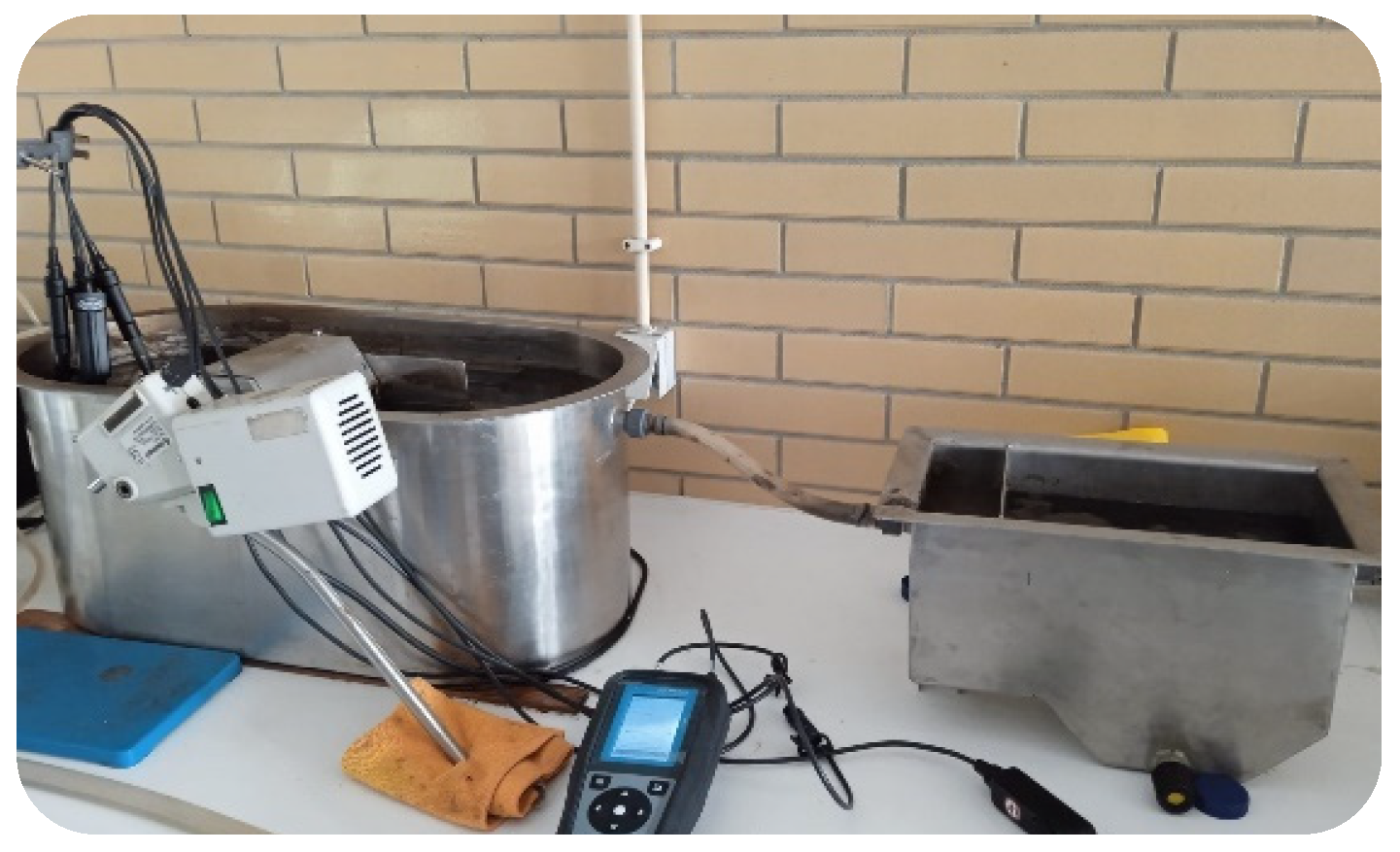
The experimental work involved a pilot-scale installation of an oxidation ditch biological reactor with 32 L (27 L of working volume) following the decanter with 7 L, which was fed with raw effluent from the WWTP case study (Figure 1). Similar conditions to the ones observed in the real WWTP were set in the pilot reactor. Using a peristaltic pump (C.P.78002-10, ISMATEC, Glattburg, Switzerland), a flow rate of 0.48 L h−1 was employed, resulting in a hydraulic retention time (HRT) of about 2 days and an organic load of 0.16 BOD (mg SSV day−1), similar to that observed in the WWTP case study. There were guaranteed periods of 15 min alternating between aeration, agitation, and pause adjusted by a mechanical agitator and an air diffuser (AC-9601, AQUAPOR, Lisbon, Portugal) with an air flow rate of 1.8 L min−1, to simulate the different processes across the biological treatment.
Cultures of daphnids, collected in periods of occurrence in the WWTP case study, were maintained in the laboratory in 1 L glass containers filled with 0.25 L of clarified water (CW) obtained from the pilot-scale decanter, and were fed daily with 1 mL of decanted sludge (composed by microorganisms, nutrients, extracellular polymeric substances—EPS, and undissolved solids) with a medium renovation rate of 10 mL day−1. Parallel to these maintenance cultures, daphnids were placed without medium renovation to induce stress and, consequently, sexual reproduction by fecundation, originating the ephippia further used in the hatching rate essays.

2.2. Physico-Chemical Characterization of Clarified Water and Mixed Liquor

Physico-chemical characterization of clarified water (CW) collected from the pilot-scale decanter and mixed liquor (ML), the mixture of activated sludge and wastewater, obtained from the biological reactor, was performed through off-line analyses. The evaluated parameters included chemical oxygen demand (COD), biochemical oxygen demand at 5 days (BOD5), total solids (TS) and volatile solids (VS), suspended solids (SS) and volatile suspended solids (VSS), total Kjeldahl nitrogen (TKN), and total phosphorus (TP). All analyses were carried out in accordance with the Standard Methods for the Examination of Water and Wastewater [23]. Samples were collected and analyzed in triplicate.

2.3. Toxicity and Hatching Rate Tests with NaOCl

Acute toxicity tests were carried out according to the Organization of Economic Cooperation and Development (OECD) for chemical substances regarding Daphnia spp., though using 8-day-old organisms [24]. Although OECD guidelines recommend the use of neonates (<24 h) for standardized toxicity testing, 8-day-old organisms were used in this study to better reflect the operational conditions of wastewater treatment systems, where multiple developmental stages coexist. This choice also allowed the prevention of uncontrolled reproduction and ephippia production during the exposure period, ensuring a stable and well-defined test population. Nevertheless, it is acknowledged that organism age may influence sensitivity to toxicants, and this should be considered when interpreting the results.
The objective of these tests was to evaluate the effect of the active chlorine present in a commercial NaOCl solution (14.8% active chlorine) in two distinct matrices, CW and ML, from which were prepared successive dilutions to concentrations of 5 mg L−1, 3.12 mg L−1, 1.95 mg L−1, 1.22 mg L−1, and 0.76 mg L−1. After media preparation, a total of 5 daphnids (8 days of age) were placed in 0.25 L glass containers containing 0.1 L of medium, at a ratio of 20 mL medium per daphnid. The experience was carried out in quadruplicate. The tests lasted for 96 h, and mortality rates were registered every 24 h, determined by immobilization of the individuals under light stimulation [25].
The hatching rate experiments were conducted following the method of Retnaningdyah and Ebert [26], by exposing ephippia (dormant eggs) collected from the maintenance cultures to the same NaOCl concentrations used in the toxicity assays, but only in CW. The ephippia underwent a 7-day temperature pretreatment, with half stored at refrigeration temperature (4 °C) and half at room temperature (20 °C), to simulate seasonal environmental variations commonly observed in WWTPs. This approach accounted for the known effect of temperature on stimulating resting egg hatching [27,28,29]. Subsequently, the ephippia were individually placed in test tubes containing CW, with 10 ephippia per NaOCl concentration, with a total of 60 ephippia per test. The test tubes were subjected to an 8 h photoperiod using artificial light (5–6 W) under constant agitation (50 rpm). Hatching was monitored every 24 h for 22 days at 20 °C, a temperature identified as optimal for promoting ephippia hatching [30]. Differences in hatching rates were evaluated using a Chi-squared (χ2) test, with significance set at p < 0.05.
During toxicity tests, the mediums used were monitored for a set of in-line parameters such as pH, temperature (T), concentration of dissolved oxygen (DO), concentration of total dissolved solids (TDS), oxidation–reduction potential (ORP), electrical conductivity (EC) were monitored across the toxicity tests using a portable field meter equipped with multi-parametric probes marketed by HACH® (HQ 2200, Dusseldorf, Germany). The results were then computed using MATLAB R2010b (The Mathworks Inc., Natick, MA, USA), adopting a significance level of <0.05 for statistical differences [31]. The first approach was based on Spearman’s correlation to identify collinear parameters [32,33]. Then, a stepwise regression was applied to understand the contribution of each monitored parameter to the mortality of the daphnids [34]. Finally, the set of parameters was subjected to the Principal Component Analysis (PCA) analytical method, to establish interrelationships and identify possible clusters regarding the mortality rate of Daphnia spp. in relation to the different parameters comprising the dataset [35,36].

3. Results and Discussion

3.1. Physicochemical Characterization of Clarified Water and Mixed Liquor

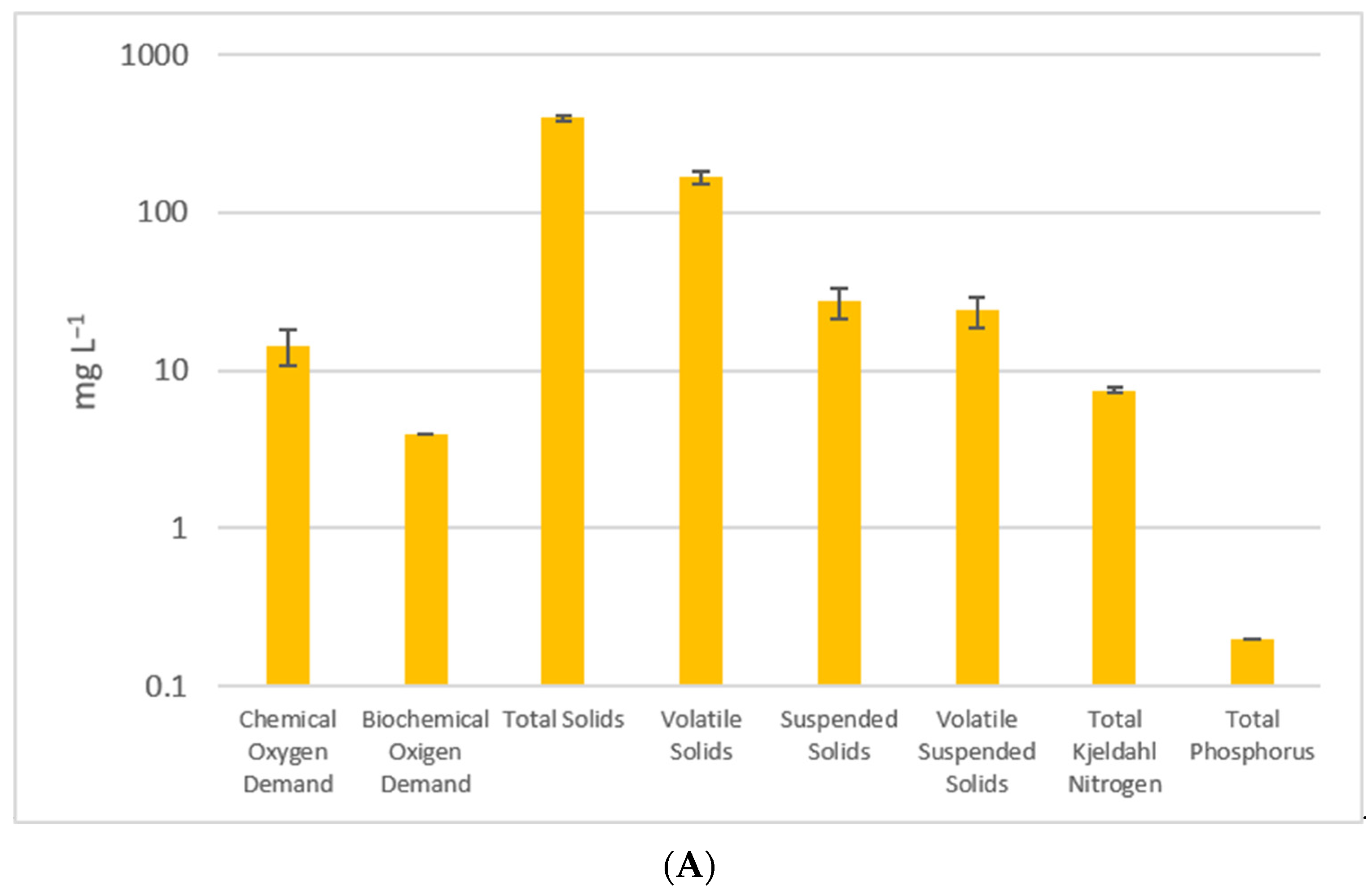
Before performing the acute toxicity tests, the main physicochemical parameters of the CW and ML were quantified to characterize the test matrices (Figure 2). CW represents a much lighter and stabilized matrix, as COD and BOD5 concentrations are very low (14.3 ± 3.7 mg L−1 and 4 ± 0 mg L−1, respectively), while both total and volatile solids are reduced to a few hundred milligrams per liter (TS: 397.3 ± 14.1 mg L−1; TVS: 168 ± 15.9 mg L−1). Suspended matter is minimal (SS: 27.3 ± 6.1 mg L−1; VSS: 24 ± 5.3 mg L−1), giving this medium much greater clarity and homogeneity compared to ML. In terms of nutrient concentration, CW is also low, with TKN at 7.5 ± 0.3 mg L−1 and TP at 0.2 ± 0.0 mg L−1.
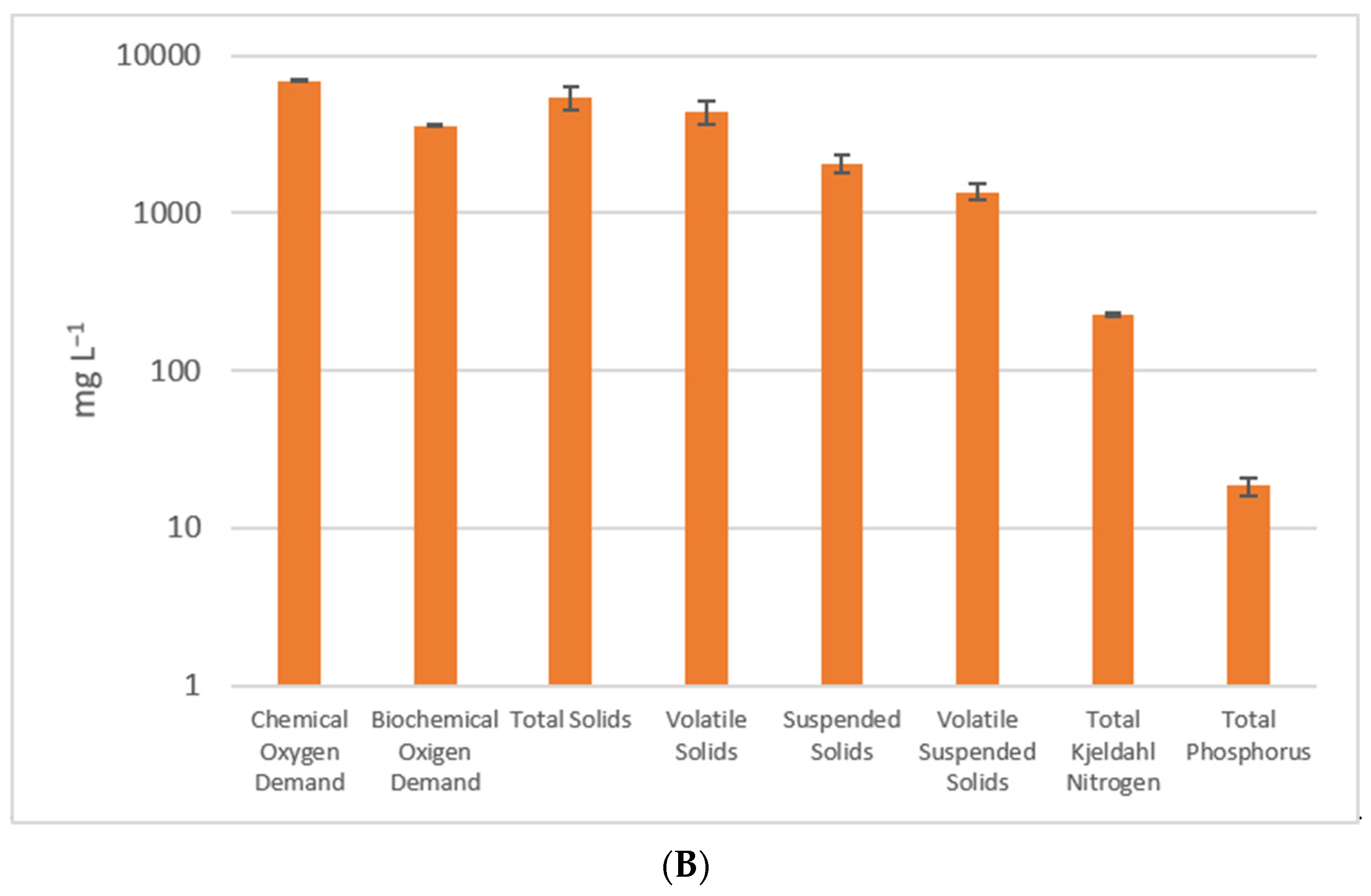
In contrast, ML present extremely high concentrations of organic matter and solids, reflected in an elevated COD (6913 ± 45 mg L−1) and BOD5 (3567 ± 50 mg L−1) values, as well as the large amounts of total (5384.7 ± 886.3 mg L−1) and volatile solids (4440.7 ± 762.2 mg L−1). Suspended fractions also contribute substantially (SS at 2078.7 ± 271.5 mg L−1 and VSS: 1361.3 ± 161.1 mg L−1). In terms of nutrients, ML was also higher than CW (TKN 228.5 ± 5.9 mg L−1), while TP, though lower, is still significant (18.5 ± 2.4 mg L−1). Together, these characteristics define ML as a rich, heterogeneous, and unstable medium, likely to exert considerable chemical and biological stress in subsequent acute toxicity tests.

3.2. Acute Toxicity Tests

During the acute toxicity test in CW, the two highest NaOCl concentrations (5 mg L−1 and 3.125 mg L−1) led to 100% mortality rate at 24 h, whereas for 1.95 mg L−1, the mortality rate increased over time, from 10% at 24 h, to 20% at 48 h, reaching a maximum value of 80% mortality, as shown in Figure 3. The 1.22 mg L−1 concentration also showed a steady increase in mortality rate over time, rising from 30% (24 h) to 60% (96 h). The lowest NaOCL concentration, 0.76 mg L−1, led to 35% mortality and reached 45% at the final count (96 h). No mortality was observed in the control group (NaOCl concentration: 0 mg L−1) during the first 48 h, with a mortality rate of 5% recorded at the end of the experiment.
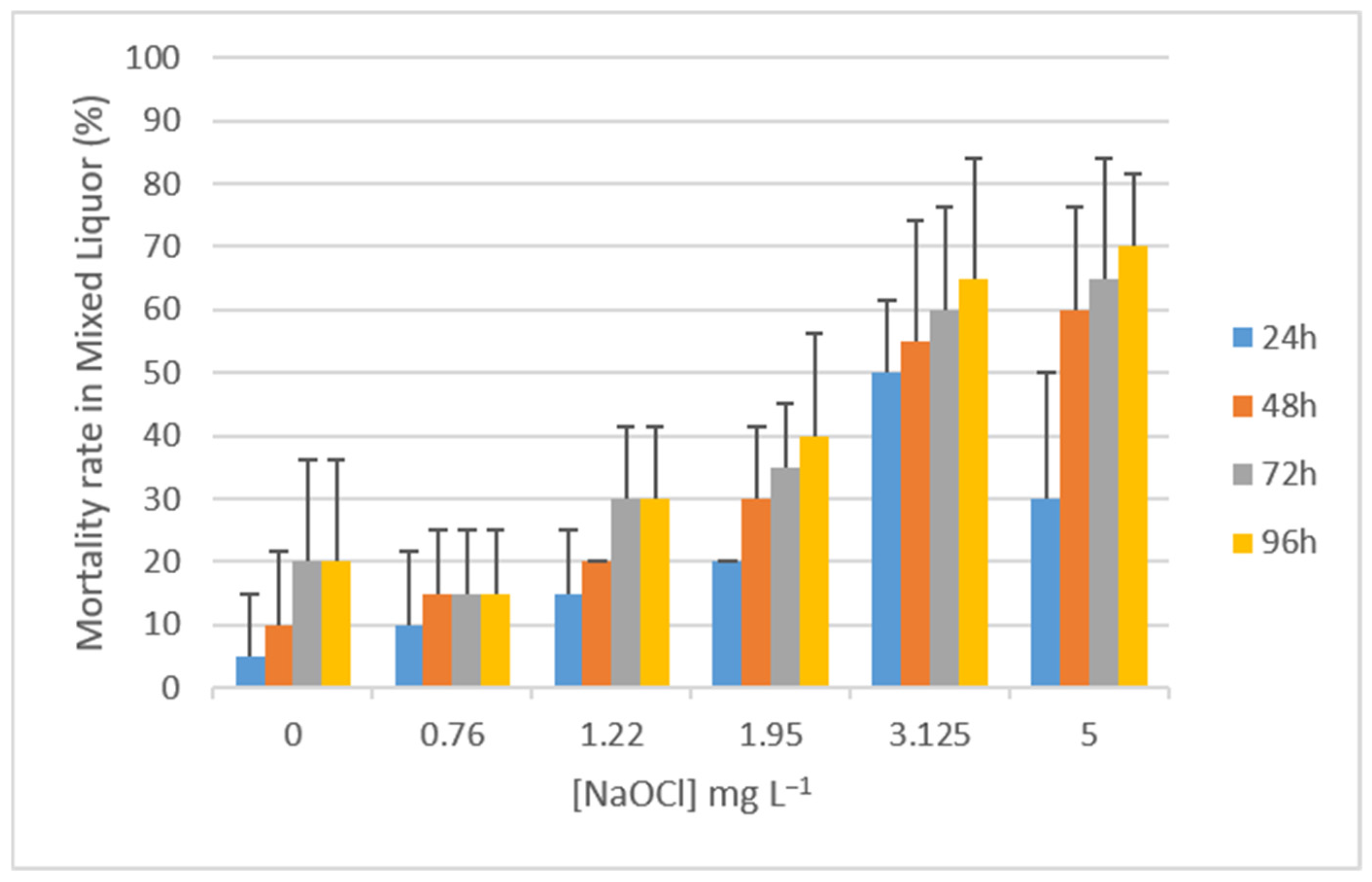
In the acute toxicity test in ML (Figure 4), none of the tested NaOCl concentrations resulted in 100% mortality. The highest concentration, 5 mg L−1, showed a 30% mortality within the first 24 h, rising 5% on each 24 h afterwards. The concentration of NaOCl of 3.125 mg L−1 showed a steady increase in the mortality rate from 50% ending on 65% at 96 h. On the other hand, the remaining concentrations of 1.95 mg L−1, 1.22 mg L−1, and 0.76 mg L−1 increased from a 10% mortality rate (0.76 mg L−1 at 24 h) to a 40% mortality rate (1.95 mg L−1 at 96 h). The control group in ML, without NaOCl, showed a 10% mortality rate at 48 h. It is important to note that this is not a standardized test, as it was conducted with a real daphnid population and real matrices. The main objective was to evaluate how matrix complexity influences the toxicity of NaOCl and its potential to control daphnid overgrowth in WWTPs, rather than to establish a definitive LC50. In this context, the LC50 values serve only as a comparative tool between the different media tested.
The above data allowed the 50% lethal concentration (LC50) for the NaOCl at 24 h with the program QCAL [37]. Thus, a LC50 of 1.75 (1.4–2.1) mg L−1 was found in CW, meaning that a NaOCl concentration of 1.75 mg L−1 can eliminate 50% of the tested population, varying between the lower limit of 1.4 mg L−1 and the upper limit of 2.1 mg L−1. In ML, the concentration that would guarantee 50% lethality of the population was higher (7.43 mg L−1), varying between 2.5 mg L−1 and 21.2 mg L−1. Thus, the NaOCl does not seem to be as efficient at eliminating the daphniid population in ML as it is in CW, which can be attributed to the higher complexity of ML, as it is characterized by high contents of organic matter, suspended solids (Figure 1), and microbial activity that can interact with NaOCl, consuming free chlorine and reducing its bioavailability and overall toxicity to daphniids compared to when tested in CW [38].
The observed differences in NaOCl toxicity between CW and ML can be explained by differences in chlorine demand associated with matrix composition. In ML, the high content of organic matter, suspended solids, and microbial biomass promotes rapid consumption of free chlorine through oxidation reactions with organic compounds, cellular structures, and extracellular polymeric substances [39]. In addition, reactions with nitrogen-containing compounds may lead to the formation of chloramines, further reducing the concentration of active chlorine species [40]. In contrast, CW exhibits lower concentrations of organic and particulate matter, resulting in reduced chlorine demand and higher availability of free NaOCl, which enhances its toxicity towards daphniids.
Organizations like the EPA (U.S Environmental Protection Agency, Washington, DC, USA) and ECHA (European Chemicals Agency, Helsinki, Finland) reported NaOCl as highly toxic to freshwater species, such as daphnids. The EPA determined the LC50 of total residual chlorine from exposing Daphnia magna to NaOCl as being in the range of 28 µg L−1 to 710 µg L−1, while ECHA reported a study that determined the half maximal effective concentration (EC50) as being in the range of 121 µg L−1 to 165 µg L−1 [41,42]. However, these values are based on tests carried out using freshwater as medium to simulate natural aquatic conditions, usually with a neutral pH, hardness from 250 to 350 mg L−1 as calcium carbonate (CaCO3), containing major ions (ex. calcium, magnesium, sodium and potassium), temperature around 20–25 °C and dissolved oxygen levels to maintain healthy daphnids, differently from this study medium, and with newborn organisms (<24 h), which are a lot more sensitive [43]. Ton et al. [44] also carried out toxicity tests of different disinfectants on young D. magna and embryos for 48 h and determined that the NaOCl had a 24 h EC50 of 0.05 mg L−1 and a 48 h EC50 of 0.02 mg L−1, indicating that the acute toxicity to daphnids was mainly in the first 24 h, though continuing to rise up to 48 h, in line with the present results. Mattei et al. [45] further determined the LC50 of a D. magna population exposed to NaOCl, achieving a concentration of 0.08 mg L−1. Another study, carried out by Angerville et al. [46], assessed the EC50 of NaOCl from D. magna neonates and observed an EC50 of 0.460 (0.430–0.490) mg L−1 at 24 h. The LC50 values obtained in this study were higher than those reported in the literature, which can be attributed to differences in experimental conditions. In particular, the use of 8-day-old daphniids, which are generally less sensitive than neonates (<24 h), and the use of complex wastewater matrices (Clarified Water and Mixed Liquor) likely contributed to reduced apparent toxicity.
The present results, when compared to other studies in the literature, suggest that the toxicity of NaOCl is strongly influenced by the medium. Specifically, it appears that NaOCl toxicity to daphnids is lower in complex environments, such as wastewater treatment effluents, than in more controlled settings like the standard freshwater conditions used in most studies. This may be due to variations in the operational conditions in these media that contribute to a reduction in NaOCl toxicity.
These findings are particularly relevant in the context of wastewater treatment plants, where Daphnia spp. proliferation can become operationally problematic. In a previous study conducted by the authors in a full-scale WWTP, Daphnia spp. occurrence was associated with periods of improved effluent quality, characterized by low organic matter concentrations and favorable environmental conditions [16]. While that work identified factors promoting the establishment of Daphnia populations, it did not evaluate mitigation strategies. The present study extends those findings by demonstrating that NaOCl can be used as a control measure, although its effectiveness is strongly dependent on matrix composition and chlorine demand.
While these results demonstrate the effectiveness of NaOCl under the tested conditions, their environmental implications must also be considered. The concentrations evaluated in this study fall within ranges known to be toxic to aquatic organisms if residual oxidants persist in the final effluent. However, in practical WWTP operation, NaOCl is typically consumed through a series of reactions with organic matter, ammonia, and other constituents, which substantially reduces free chlorine levels prior to discharge. Nevertheless, the formation of disinfection by-products (DBPs), particularly in the presence of organic matter, remains a relevant concern [47]. Therefore, any implementation of this approach should include careful control of dosage and contact time, as well as monitoring of residual chlorine and DBPs, to ensure compliance with environmental regulations and to minimize ecological risks to receiving water bodies.

3.3. Influence of the Operational Conditions on the Toxicity Tests

Regarding the monitored parameters across the toxicity tests, namely pH, T, DO, TDS, EC, and ORP, the results of the Spearman correlation with the mortality values are presented in Table 1.
In the CW, significant positive correlations were observed for concentration of TDS (rho = 0.845, p < 0.05) and conductivity (rho = 0.761, p < 0.05), both of which showed strong positive relationships, whereas in the ML, significant positive correlations were found for pH (rho = 0.687, p < 0.05) and dissolved oxygen (rho = 0.727, p < 0.05). On the other hand, the temperature displayed a moderate, though statistically significant, inverse correlation in ML (rho = −0.623, p < 0.05). Other parameters, such as the oxidation–reduction potential, did not show significant correlations, as evidenced by the higher p-values (p > 0.05). Specifically, in the CW, the correlation for ORP was weak and not significant (rho = 0.191, p = 0.312), while in the ML, the ORP showed a negative, though non-significant, correlation (rho = −0.306, p = 0.101).
A stepwise regression was used to estimate the mortality results, as lower p-values stand for higher relevance and, conversely, higher p-values for lower relevance. In the CW (Table 2), the most relevant parameters were the concentration of TDS and NaOCl, as well as pH (p < 0.05; Status = In), while the T, DO, EC, and ORP were cut off from the final regression equation (p > 0.05; Status = Out). Regarding the ML (Table 3), the most relevant parameter was the concentration of NaOCl, followed by T, ORP, and EC (p < 0.05; Status = In), while pH, DO, and TDS were cut off (p > 0.05; Status = Out). The results show the high relevance of the concentration of NaOCl in mortality, indicating its strong toxicological impact, and remaining consistent across both matrices (CW and ML).
In order to assess potential correlations among the parameters included in the stepwise regression models, aiming to identify possible multicollinearity issues, pairwise correlation coefficients (R) were calculated between all physicochemical parameters (Table 3). The strength of the correlations was interpreted according to the classification proposed by Papageourgiu [48], based on Evans [49], where correlation coefficients are categorized as very weak (0.00–0.19), weak (0.20–0.39), moderate (0.40–0.59), strong (0.60–0.79), and very strong (0.80–1.00). Only correlations reaching at least moderate strength (|R| ≥ 0.40) and statistical significance (p < 0.05) were considered relevant for interpretation. This approach allowed the identification of strongly interrelated variables, which may indicate redundancy or shared underlying processes, and therefore potential multicollinearity issues that could influence the robustness and interpretability of the regression models.
The results indicate that several parameters were moderate, and in some cases strongly correlated with each other. In CW, notable relationships were observed between pH and EC, pH and TDS, T and DO, TDS and EC, and TDS and NaOCl concentration. In ML, strong correlations were identified between pH and T, pH and DO, T and DO, TDS and EC, and TDS and NaOCl, and EC and NaOCl. These interrelationships suggest the presence of multicollinearity among predictors, which may affect the robustness and interpretability of the stepwise regression results.
Highly correlated variables can introduce redundancy, inflate coefficient variance, and lead to unstable variable selection, where the inclusion or exclusion of predictors becomes sensitive to small variations in the data. Consequently, the reliability of the final regression model may be compromised, and the results should be interpreted with caution.
In this context, PCA is a valuable tool for investigating the interrelationships among variables, although it is not intended for direct predictive modeling. By transforming the original correlated variables into a set of orthogonal (uncorrelated) principal components, PCA mitigates multicollinearity issues inherent in the dataset. This transformation enables a clearer interpretation of the data structure and facilitates the visualization of correlations and grouping patterns among variables.
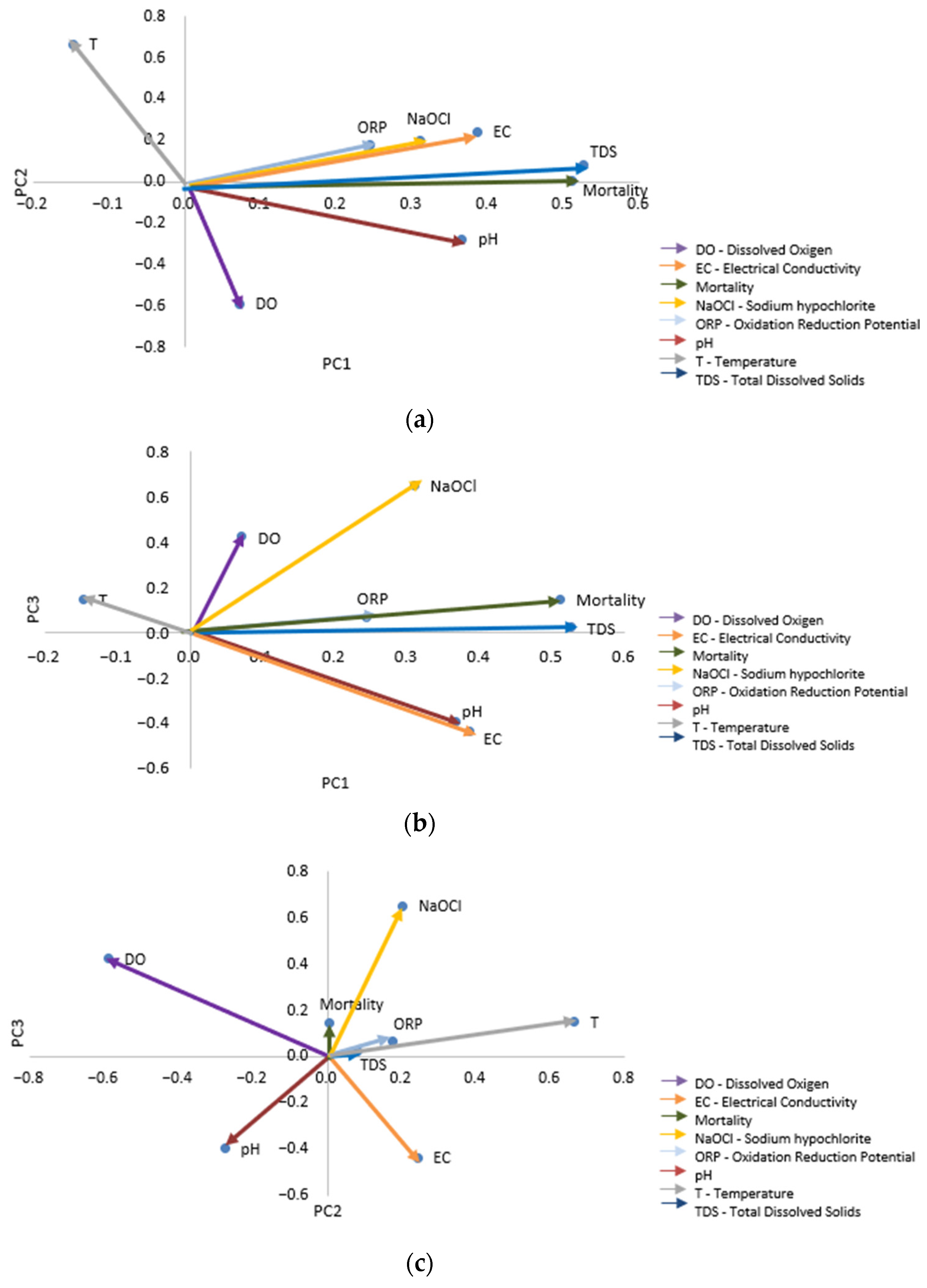
PCA was also applied in this study to identify the key parameters influencing the observed mortality, with the first three principal components (PC1, PC2, and PC3) in the CW explaining up to 75% of the variability in the data. Analyzing Figure 5, it is apparent that NaOCl and ORP move in the same direction, presenting positive values in all 3 PC. This should be expected given the known oxidative power of NaOCl. Except for PC3, EC and TDS move together, which could be expected given that conductivity is a measure of the water’s ability to pass an electrical current (dictated by ions). Further, it is expected that EC, pH, and NaOCl represent a common gradient associated with ionic strength and disinfectant concentration. Except for PC3, DO and T move in opposite directions, which could also be expected from a thermodynamic point of view. The PC1 vs. PC2 biplot (Figure 5a) shows that higher TDS, ORP, conductivity, NaOCl, and pH (within the studied ranges), and lower temperatures, increase the mortality observed. The same behavior is seen in the plot PC1 vs. PC3 (Figure 5b) and when plotting PC2 vs. PC3 (Figure 5c).
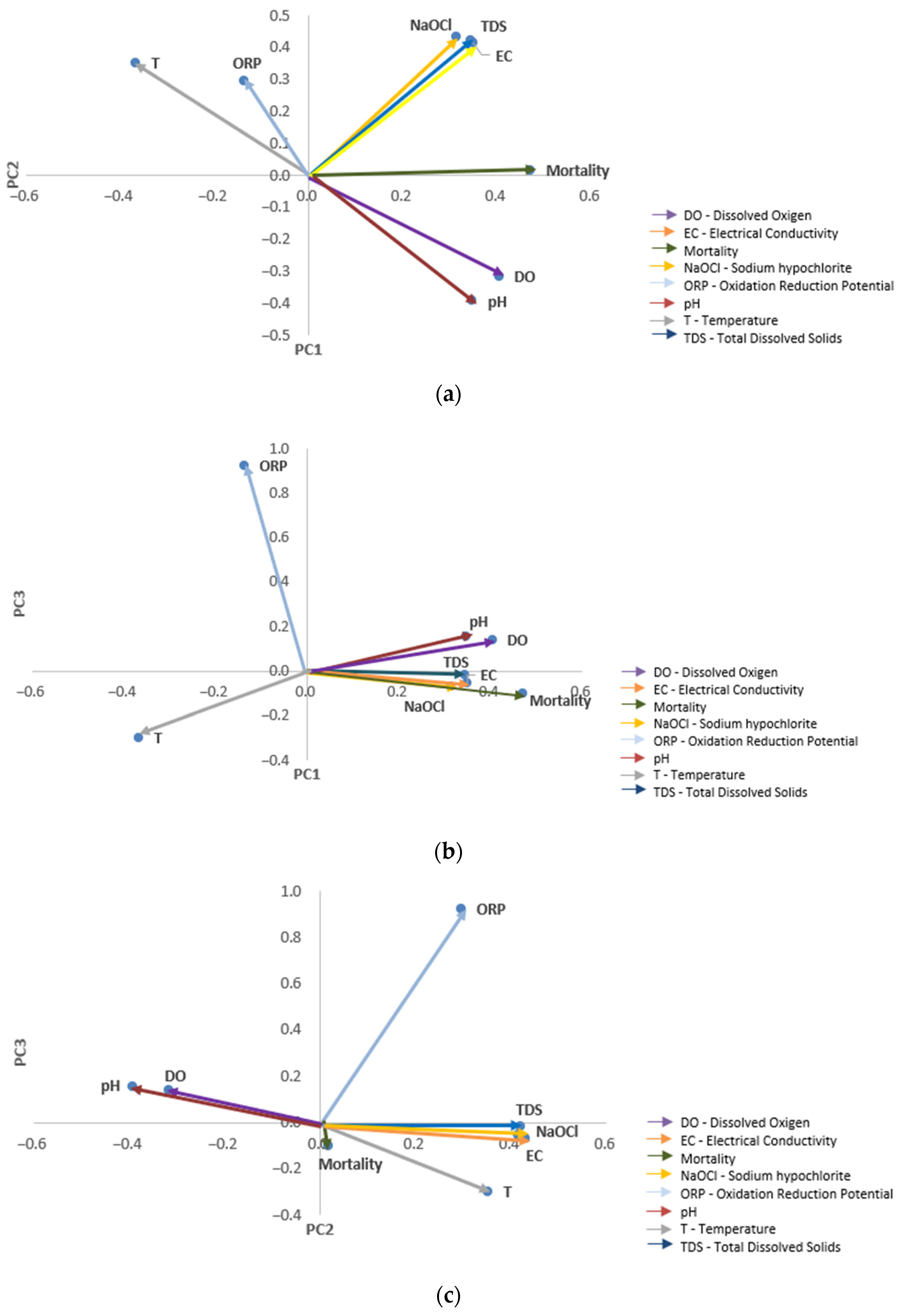
The first three PCA components in ML (Figure 6) justify 92% of the variability in the data. In all PC, NaOCl, TDS, and EC move together, exhibiting a stronger internal coherence among ionic variables. While in the latter two, it is well known the effect of TDS on conductivity, it seems that in the case of ML, the NaOCl content has decoupled from the measured ORP, given the high demand for biomass chlorine in ML. As expected, DO and T are opposed in all 3 PC, with pH further moving closer to DO. Given that higher temperatures (within a given range) lead to higher metabolic rates and CO2 production, thus lowering the pH of the ML. Again, it could be found that the parameters increasing the observed mortality rates are NaOCl, TDS, EC, DO, and pH, alongside lower temperatures (within the studied ranges), leading to an overall higher mortality. Further, it should be emphasized that the assays in this medium seem more influenced by the medium composition than by the NaOCl concentration itself.
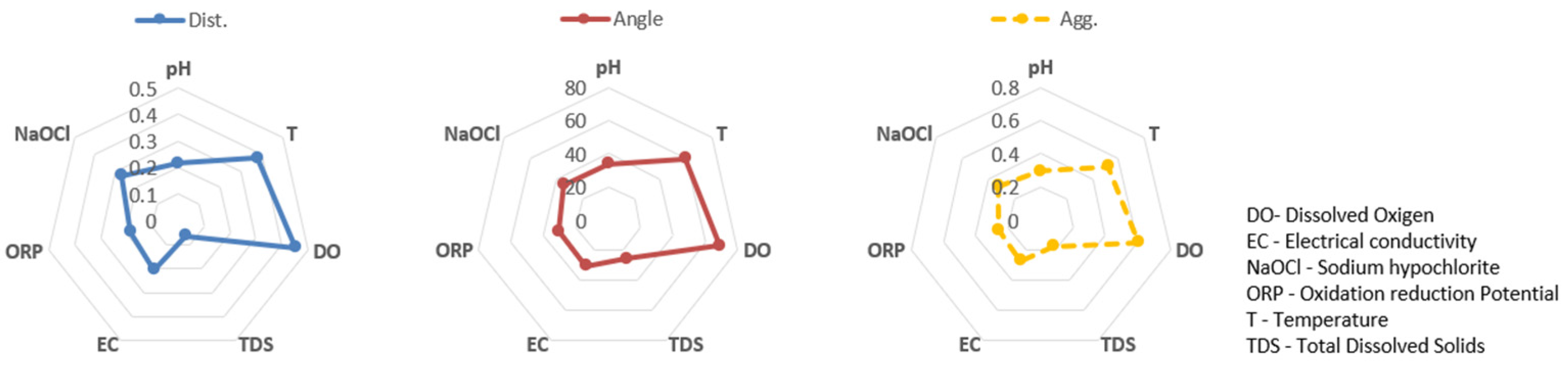
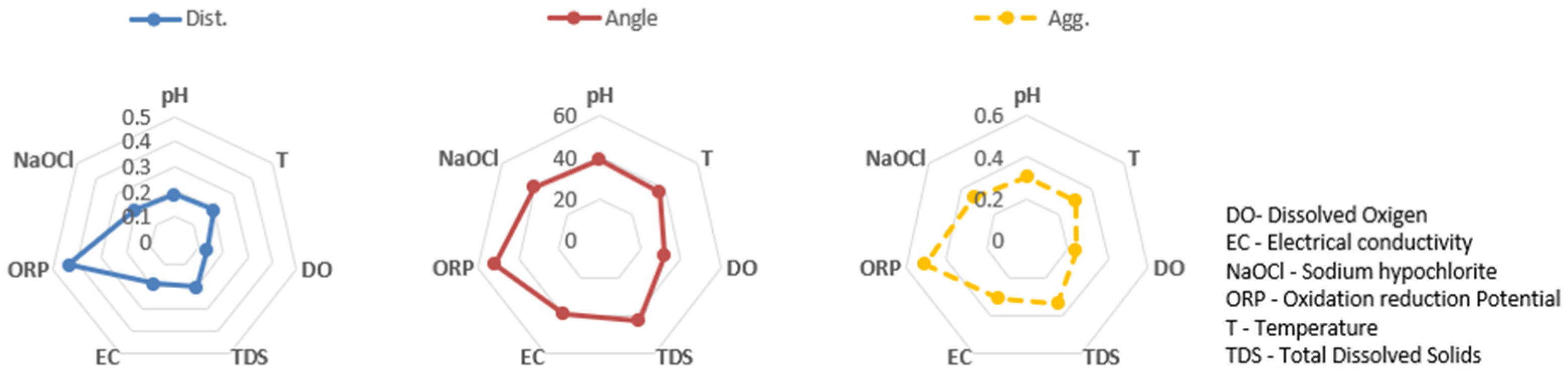
Based on the PCA outputs, the relationship between mortality and the studied variables was assessed using the loadings of the first three principal components (PC), allowing the evaluation of their proximity (or diametrically opposite) in terms of direction (distancing from 0 to 90°) and spatial distribution for both the CW (Table 4) and ML (Table 5). From these analyses, an aggregated metric (average between the distance and normalized angle) was determined, being represented in Figure 7 (CW) and Figure 8 (ML). This multivariate approach provides a structural representation of the data that is independent of multicollinearity, which affects regression-based methods and may obscure underlying relationships among variables.
In CW, TDS showed the greater proximity to mortality (25.9°, 0.063), showcasing the influence of the total ionic strength (and possible NaOCl toxic byproducts) as stressors for Daphnia spp. ORP and conductivity were also related to mortality, with the first representing the oxidizing power (related to the NaOCl addition) and the second representing the ionic strength. Additionally, the pH and NaOCl (as expected) were also found to be related to the mortality, given that the NaOCl addition tends to increase the pH. On the other hand, neither the temperature nor the DO showed a marked effect on the mortality, given the range of both variables within this study (between 7.9 and 8.9 mg O2 L−1, and 21.9 and 24.1 °C).
In ML, DO showed the greater proximity to mortality (30.4°, 0.134), presenting a large variation throughout the experiment (from 1.5 to 6.2 mg O2 L−1), showcasing the oxygen demand of the biological system. Given that Daphnia spp. are quite sensitive to lower DO conditions, this stressor was the most relatable with the mortality. The temperature was also shown to be quite related to mortality and presented an opposite trend. Indeed, as temperature increases (within the studied 21.6 to 26.6 °C range), the oxygen solubility decreases and the microbial metabolism tends to increase. Still quite relatable with the mortality was the pH, and to a lesser degree the conductivity, NaOCl, and TDS, stressing that in ML the dominant driver for Daphnia spp. is oxygen and not the salinity or NaOCl and byproducts. The least relatable variable was, by far, the ORP, decoupling from the NaOCl content, and indicating that oxidative potential did not play a primary role in explaining mortality patterns under the studied conditions.
Across both matrices, NaOCl consistently clusters (or associates) with EC and TDS, confirming that its apparent effect is matrix-dependent and mediated by ionic strength and chlorine demand. The results clearly indicate that toxicity is not governed solely by nominal NaOCl concentration, but rather by its interaction with dissolved solids, conductivity, and the broader physicochemical environment, while ORP acts as a secondary, integrative descriptor rather than a primary structural driver in ML. The patterns identified differ from those obtained through stepwise regression. While stepwise regression prioritizes variables based on predictive contribution, PCA captures the covariance structure of the dataset, enabling the identification of groups of interrelated parameters that act as co-varying system components rather than independent predictors. Importantly, these PCA-derived relationships provide mechanistic insight into system behavior that is not captured by stepwise regression alone. While regression identifies variables with the highest predictive contribution to mortality, PCA reveals the underlying structure of interdependencies among operational parameters. This distinction is critical, as it demonstrates that toxicity is driven by interacting physicochemical processes rather than by isolated variables.

3.4. Hatching Rate Tests

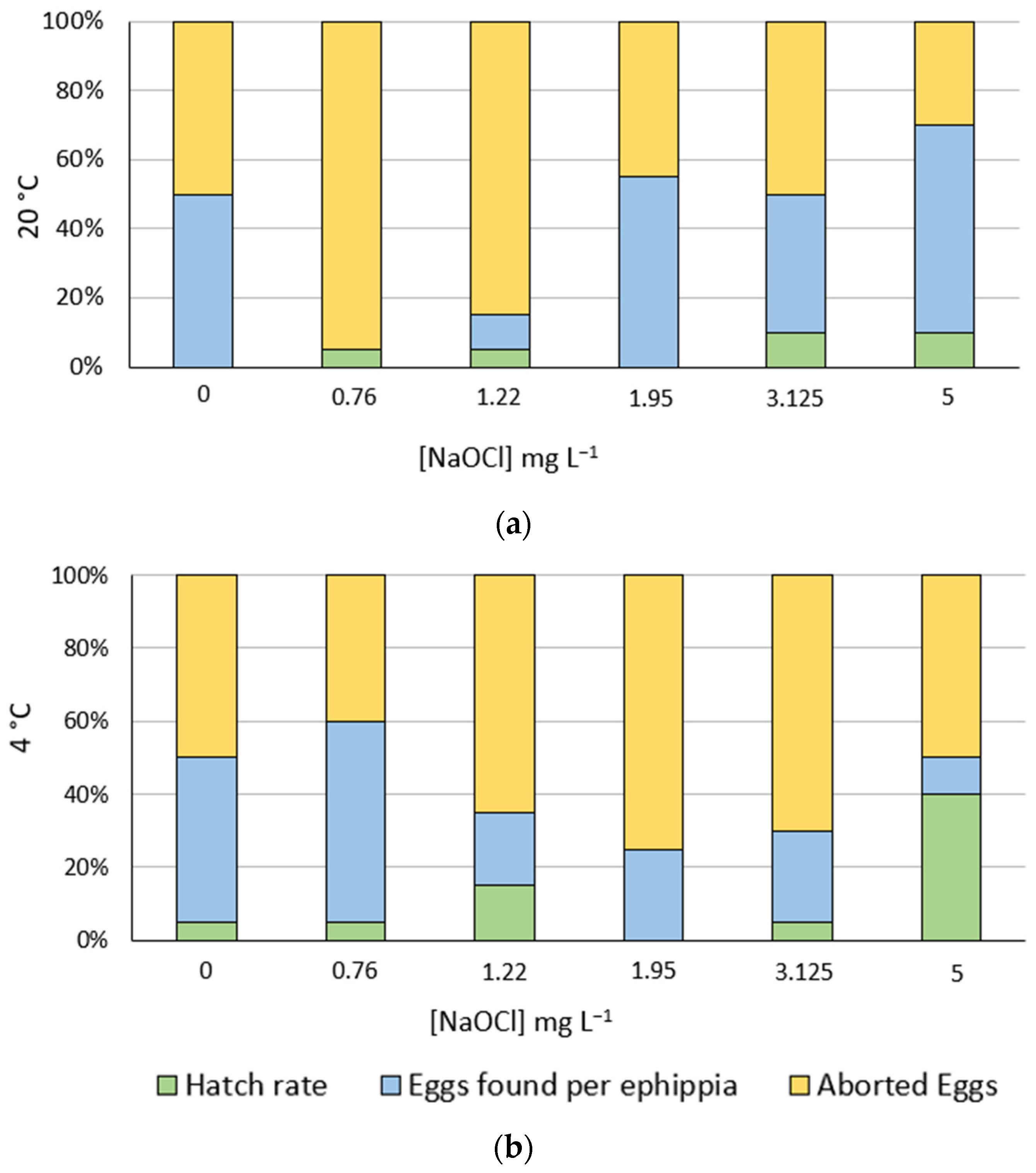
The combined results of the hatching rates, aborted eggs (ephippia without dormant eggs), and eggs found per ephippia exposed to NaOCl in CW can be seen in Figure 9. It can be observed that, in the test with the ephippia that remained at lab temperature (20 °C), the higher NaOCl concentrations (5 mg L−1 and 3.125 mg L−1) led to the higher hatching rates (10%) without any hatching in the control group. The higher concentration also registered the higher number of eggs found after opening the ephippia (60%), and the higher value of aborted eggs was found in the lower concentration (0.76 mg L−1), where only one ephippia hatched.
The group of ephippia previously exposed to 4 °C showed a somewhat similar behavior with the higher NaOCl concentration (5 mg L−1), leading to higher hatching (40%). The lower concentration (0.76 mg L−1 NaOCl) only verified 5% hatch, and most eggs were after opening ephippia. The control showed 1 hatch (5%), and the highest value of aborted eggs was found in the concentration of 1.95 mg L−1.
This low hatching rate aligns with the findings from other studies. For example, da Silva et al. [50] observed a hatching success of only 22% using intact ephippia collected from reservoir sediments in Brazil. These ephippia were stored at 4 °C in the dark until laboratory processing, and, akin to the current study, the last hatching occurred on day 10.
The presence of aborted or non-viable eggs in this study may be attributed to external factors that were not controlled, such as microbial activity, which has been proven to affect resting eggs hatching by Mushegian et al. [51], determining a consistent positive effect of the exposure to bacteria on the successful hatching of resting eggs from D. magna. However, in the context of the present study, the role of bacteria is likely influenced by the applied NaOCl concentrations. At higher concentrations, NaOCl is expected to significantly reduce bacterial viability due to its strong oxidative and disinfectant properties. Conversely, at lower concentrations, partial microbial survival may occur, particularly due to the presence of organic matter, which can exert a protective effect by increasing chlorine demand and reducing the effective disinfectant concentration. This could allow a fraction of the microbial community to persist and potentially contribute to the observed hatching responses. It is therefore plausible that the influence of bacteria on ephippia hatching is concentration-dependent, with greater microbial involvement at lower NaOCl levels. Nonetheless, the observed increase in hatching at higher NaOCl concentrations suggests that this phenomenon may not be solely driven by microbial activity. Instead, it is likely that ephippia hatching is also triggered by stress-related mechanisms induced by chemical exposure.
Additionally, the collection method and the ephippia age could also contribute to the presence of aborted or non-viable eggs. Although the ephippia were collected from maintenance cultures, within a relatively short period (7 days before the test) to ensure enough numbers for the experiment (120 ephippia, 10 per NaOCl concentration, and 60 per pre-treatment at 4 °C and 20 °C), these factors might still have influenced the viability.
Variability in egg viability and external factors, such as microbial interactions, may also have contributed to differences in hatching responses. This represents a limitation of the study, since biological variability cannot be fully excluded in environmentally realistic matrices.
Based on these results, it is evident that higher NaOCl concentrations, combined with exposure to lower temperatures, facilitated the hatching process.
In the hatching rate tests, the first hatchings appeared on day 4 for the highest NaOCl concentration (5 mg L−1) and up to day 10 (Table 6). The previous cold exposure (4 °C) appeared to help the hatching process, as it led to earlier hatchings, on day 4 and 5, (Figure 6a, Table 3), and overall, to higher hatching percentages when compared to the ephippia at the lab temperature of 20 °C (Figure 7, Table 5), where hatchings were concentrated later (after 7 days). A Chi-squared analysis revealed that the distribution of ephippia hatching differed significantly among pre-treatments (χ2 = 12.86, df = 5, p-value = 0.025), indicating that temperature influenced hatching success. Specifically, hatching tended to occur earlier under previous cold exposure.
The comparison between temperature pre-treatments revealed that, although both conditions followed similar trends, ephippia exposed to prior cold conditions (4 °C) exhibited higher and earlier hatching rates than those maintained at laboratory temperature (20 °C). This suggests that cold exposure enhances subsequent chemical stimuli, likely by partially breaking dormancy. Indeed, Radzikowski [52] reported that relatively low temperatures (up to 12 °C) can stimulate the hatching of Daphnia resting eggs.
Higher NaOCl concentrations resulted in increased hatching rates, despite their known lethality. This response may be explained by a stress-induced hatching mechanism. Dormant eggs may trigger hatching in extreme environmental stress conditions as a last-resort survival response. In this case, NaOCl may act as a strong oxidative stressor, overriding dormancy controls and inducing hatching even under unfavorable conditions. Additionally, NaOCl may contribute to oxidative degradation or weakening of the ephippial outer layers, facilitating the exposure and activation of dormant eggs [52].
These findings have important implications for wastewater treatment systems. The use of NaOCl as a disinfectant may not fully prevent zooplankton emergence from resting egg banks and may, under certain conditions, even promote hatching. This suggests that disinfection strategies should be carefully optimized, considering not only microbial inactivation but also the potential stimulation of dormant stages. Therefore, integrating chemical treatment with additional control measures may be necessary to effectively limit biological regrowth.
Although the experiments were conducted at pilot scale, the use of real wastewater matrices and naturally occurring daphnid populations provides a relevant approximation of full-scale WWTP conditions. This allows the incorporation of key interactions between NaOCl, organic matter, suspended solids, and microbial communities that influence treatment performance. However, it should be noted that scale-dependent factors, such as hydraulic dynamics, mixing conditions, and temporal variability, may affect the direct transferability of these results to full-scale systems. Therefore, the findings should be interpreted as indicative of general trends and mechanisms, supporting process understanding and optimization rather than defining fixed operational conditions.
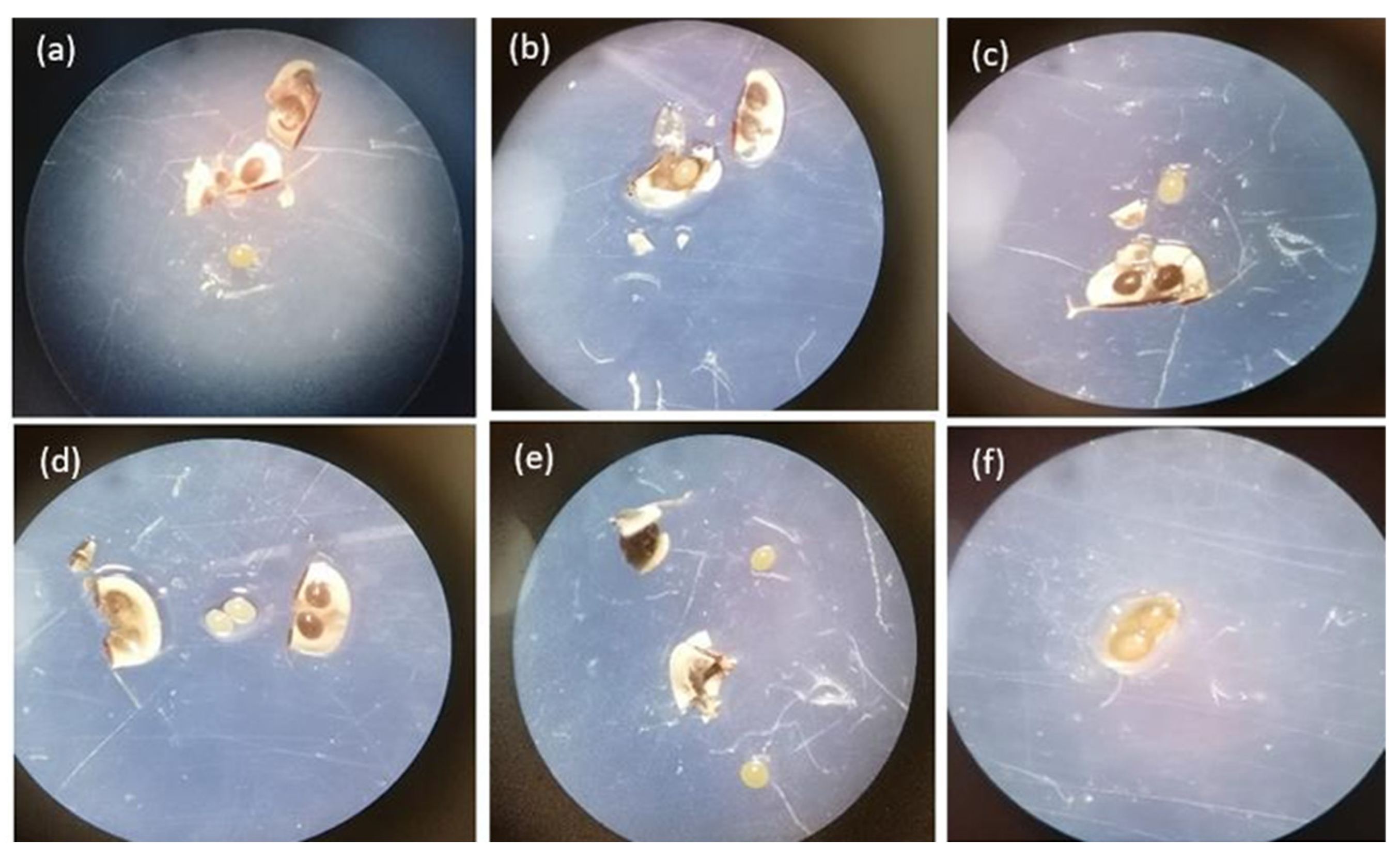
After the 22-day observation period, the viability of the ephippium that did not hatch was assessed. This was performed by carefully opening each ephippium under a microscope using a scalpel and examining its contents for dormant eggs, as illustrated in Figure 10 [50,53].
The results of this analysis are presented in Figure 7, which shows the distribution of hatched ephippia, eggs found per ephippium, and aborted (non-viable) eggs under different NaOCl concentrations and temperature pre-treatments.

4. Conclusions

Wastewater treatment systems play a central role in water quality and in maintaining water resources. However, internal and external factors, such as Daphnia spp. proliferation, can compromise the effectiveness of disinfection processes (e.g., UV radiation), ultimately affecting the quality of the final effluent discharged into receiving water bodies.
In this study, it could be concluded that the daphnid population in the case is highly susceptible to sodium hypochlorite, with concentrations above 3.125 mg L−1 guaranteeing a 100% lethality of the test population in clarified water. It was also observed that in the presence of biomass, as in mixed liquor, these same concentrations are less effective, reaching a maximum mortality rate of 65% and 70% after 96 h. These results highlight that NaOCl efficiency is strongly dependent on matrix composition, particularly organic load and suspended solids, which reduce its bioavailability through increased chlorine demand.
Additionally, it was possible to conclude that the different parameters monitored across the assay, such as pH, temperature, concentration of dissolved oxygen, concentration of total dissolved solids, electrical conductivity, and oxidation–reduction potential, can contribute to the mortality rates obtained, confirming the combined role of chemical and operational conditions in treatment performance.
Regarding the hatching rates, it was possible to verify that the same NaOCl concentrations that could lead to the inhibition of grown daphnids may help dormant eggs in ephippia to hatch, contributing to the maintenance of these organisms in the secondary decanters of a WWTP. Additionally, the exposure to low temperatures (4 °C) enhanced the effect of NaOCl, resulting in more hatching compared to room temperature, which could further emphasize the problem in winter seasons. This represents a relevant operational constraint, as it may contribute to the persistence of daphniid populations in secondary decanters.
From an operational perspective, these findings suggest that NaOCl dosing strategies in WWTP should be carefully optimized according to matrix characteristics to ensure effective organism control while avoiding unintended ecological responses. Control strategies should consider both suspended solids and organic load as key drivers of chlorine demand, as well as the potential risk of inducing ephippia hatching under oxidative stress conditions. The possible continuous application of NaOCl could prevent the overproliferation of Daphnia spp. overtime. However, careful control of dosage and contact time is required to prevent recolonization while minimizing the formation of disinfection by-products. Overall, NaOCl-based control strategies should be integrated into routine plant operation as part of a broader management approach that balances biological control efficiency with environmental safety.
In conclusion, this study appears as a first step to achieve the desired purpose of controlling daphnid proliferation in WWTPs using NaOCl, but further research is needed to better establish limits that can effectively inhibit these organisms from the secondary decanters of urban WWTP, without compromising its treatment and minimizing the unintended stimulation of ephippia hatching.

Author Contributions

Conceptualization, P.E.; methodology, P.E., O.S., A.L.A., and C.R.; software, P.E., O.S., and A.L.A.; validation, V.O., A.L.A., and C.R.; investigation, P.E. and C.C.; data curation, P.E., O.S., and A.L.A.; writing—original draft preparation, P.E.; writing—review and editing, O.S., V.O., A.L.A., and C.R.; supervision, O.S., A.L.A., and C.R. All authors have read and agreed to the published version of the manuscript.

Funding

This research received no external funding.

Institutional Review Board Statement

Not applicable.

Informed Consent Statement

Not applicable.

Data Availability Statement

The original contributions presented in this study are included in the article. Further inquiries can be directed to the corresponding author.

Acknowledgments

The authors thank “Águas do Centro Litoral” for supplying the material necessary for the development of this study. V. Oliveira is thankful for the national funding provided by FCT—Foundation for Science and Technology, P.I., through the institutional scientific employment program contract (DOI: 10.54499/CEECINST/00077/2021/CP2798/CT0002).

Conflicts of Interest

The authors declare no conflicts of interest.

Abbreviations

The following abbreviations are used in this manuscript:
BOD5Biochemical Oxygen Demand at 5 days
CWClarified Water
CODChemical Oxygen Demand
ECElectrical Conductivity
DBPDisinfection by-Product
DODissolved Oxygen
EC50Effective Concentration 50%
ECHAEuropean Chemicals Agency
EPAU.S. Environmental Protection Agency
hHour
LLiters
LC50Lethal Concentration for 50% of the Tested Population
MLMixed Liquor
NaOClSodium Hypochlorite
OECDOrganization for Economic Cooperation and Development
ORPOxidation–Reduction Potential
PCPrincipal Component
PCAPrincipal Components Analysis
rpmRotations per Minute
RCorrelation Coefficient
RWRaw Wastewater
SSSuspended Solids
TTemperature
TDSTotal Dissolved Solids
TKNTotal Kjeldahl Nitrogen
TPTotal Phosphorous
TSTotal Solids
TVSTotal Volatile Solids
UVUltraviolet
VSSVolatile Suspended Solids
WWTPWastewater Treatment Plant

References

  1. Ebert, D. Ecology, Epidemiology, and Evolution of Parasitism in Daphnia; National Center for Biotechnology Information (US): Bethesda, MD, USA, 2005. [Google Scholar]
  2. Albuquerque, M.V.C.; Dias, J.; Batista, F.R.C.; Oliveira, E.M.A.; Silva, M.C.C.P.; Rodrigues, R.M.M.; Leite, V.D.; Lopes, W.S. Daphnia spp. as bioindicator organisms of toxicity and environmental characterization of eutrophized aquatic systems. Obs. De Econ. Latinoam. 2023, 21, 17419–17431. [Google Scholar] [CrossRef]
  3. Reilly, K.; Ellis, L.-J.A.; Davoudi, H.; Supian, S.; Maia, M.T.; Silva, G.H.; Guo, Z.; Stéfani, D.; Lynch, I. Daphnia as a model organism to probe biological responses to nanomaterials—From individual to population effects via adverse outcome pathways. Front. Toxicol. 2023, 5, 1178482. [Google Scholar] [CrossRef] [PubMed]
  4. Popova, E.V.; Petrusek, A.; Kořínek, V.; Mergeay, J.; Bekker, E.I.; Karabanov, D.P.; Galimov, Y.R.; Neretina, T.V.; Taylor, D.J.; Kotov, A.A. Revision of the Old World Daphnia (Ctenodaphnia) similis group (Cladocera: Daphniidae). Zootaxa 2016, 4161, 1–40. [Google Scholar] [CrossRef] [PubMed]
  5. de Castro Nascimento, L.; Naval, L.P. Toxicity determined by the use of agrochemicals in organisms indicators of water quality. Rev. Bras. Ciênc. Ambient. 2020, 53, 69–80. [Google Scholar] [CrossRef]
  6. Chin, T.A.; Cristescu, M.E. Speciation in Daphnia. Mol. Ecol. 2021, 30, 1398–1418. [Google Scholar] [CrossRef] [PubMed]
  7. La, G.-H.; Choi, J.-Y.; Chang, K.-H.; Jang, M.-H.; Joo, G.-J.; Kim, H.-W. Mating behavior of Daphnia: Impacts of predation risk, food quantity, and reproductive phase of females. PLoS ONE 2014, 9, e104545. [Google Scholar] [CrossRef] [PubMed][Green Version]
  8. Ebert, D. Daphnia as a versatile model system in ecology and evolution. EvoDevo 2022, 13, 16. [Google Scholar] [CrossRef] [PubMed]
  9. Chen, L.; Gómez, R.; Horstmann, M.; Weiss, L.C. Temperature and light timing effects on diapause progression in Daphnia magna. Freshw. Biol. 2024, 69, 1596–1606. [Google Scholar] [CrossRef]
  10. Navis, S.; Waterkeyn, A.; Putman, A.; De Meester, L.; Vanermen, G.; Brendonck, L. Sensitivity of Daphnia magna dormant eggs to fenoxycarb exposure depends on embryonic developmental stage. Aquat. Toxicol. 2015, 159, 176–183. [Google Scholar] [CrossRef] [PubMed]
  11. Santos, J.L.; Ebert, D. The limits of stress-tolerance for zooplankton resting stages in freshwater ponds. Oecologia 2023, 203, 453–465. [Google Scholar] [CrossRef] [PubMed]
  12. Hiruta, C.; Tochinai, S. Formation and structure of the ephippium in Daphnia pulex. J. Morphol. 2014, 275, 760–767. [Google Scholar] [CrossRef] [PubMed]
  13. Simoncelli, S.; Thackeray, S.J.; Wain, D.J. Effect of temperature on zooplankton vertical migration velocity. Hydrobiologia 2019, 829, 143–166. [Google Scholar] [CrossRef]
  14. Serra, T.; Müller, M.F.; Barcelona, A.; Salvadó, V.; Pous, N.; Colomer, J. Optimal light conditions for Daphnia filtration. Sci. Total Environ. 2019, 686, 151–157. [Google Scholar] [CrossRef] [PubMed]
  15. Belanger, S.E.; Cherry, D.S. Interacting Effects of Ph Acclimation, Ph, and Heavy Metals on Acute and Chronic Toxicity to Ceriodaphnia Dubia (Cladocera). J. Crustac. Biol. 1990, 10, 225–235. [Google Scholar] [CrossRef]
  16. Esperanço, P.; Egito, R.; Oliveira, V.; Amaral, A.L.; Rodrigues, C. Influence of Effluent Quality Parameters on Daphnia spp. Overgrowth in an Urban Wastewater Treatment Plant: A Multiyear Case Study Analysis. Processes 2025, 13, 1164. [Google Scholar] [CrossRef]
  17. Charazińska, S.; Łożyński, P. Wastewater treatment and immobilization of Daphnia magna. J. Environ. Res. 2022, 212, 113438. [Google Scholar] [CrossRef] [PubMed]
  18. Serra, T.; Barcelona, A.; Pous, N.; Salvadó, V.; Colomer, J. Disinfection and particle removal by a nature-based Daphnia filtration system for wastewater treatment. J. Water Process Eng. 2022, 50, 103238. [Google Scholar] [CrossRef]
  19. Stevčić, Č.; Pulkkinen, K.; Pirhonen, J. Efficiency of Daphnia magna in removal of green microalgae cultivated in Nordic recirculating aquaculture system wastewater. Algal Res. 2020, 52, 102108. [Google Scholar] [CrossRef]
  20. Pau, C.; Serra, T.; Colomer, J.; Casamitjana, X.; Sala, L.; Kamp, R. Filtering capacity of Daphnia magna on sludge particles in treated wastewater. Water Res. 2013, 47, 181–186. [Google Scholar] [CrossRef] [PubMed]
  21. Paes, T.A.S.V.; Rietzler, A.C.; Maia-Barbosa, P.M. Selection of Daphnia resting eggs. Braz. J. Biol. 2016, 76, 1058–1063. [Google Scholar] [CrossRef] [PubMed]
  22. Uddin, S.; Khan, A.; Hossain, M.E.; Moni, M.A. Comparing supervised machine learning algorithms. BMC Med. Inform. Decis. Mak. 2019, 19, 281. [Google Scholar] [CrossRef] [PubMed]
  23. APHA. Standard Methods for the Examination of Water and Wastewater, 20th ed.; American Public Health Association: Washington, DC, USA; American Water Works Association: Denver, CO, USA; Water Environment Federation: Alexandria, VA, USA, 1998. [Google Scholar]
  24. OECD. Test No. 202: Daphnia sp. Acute Immobilisation Test; OECD Publishing: Paris, France, 2004. [Google Scholar]
  25. ISO 6341:1996; Water Quality—Determination of the Inhibition of the Mobility of Daphnia magna—Acute Toxicity Test. International Organization for Standardization: Geneva, Switzerland, 1996.
  26. Retnaningdyah, C.; Ebert, D. Bleach solution requirement for hatching resting eggs. J. Trop. Life Sci. 2016, 6, 136–141. [Google Scholar]
  27. Schwartz, S.S.; Hebert, P.D.N. Activation of resting eggs. Freshw. Biol. 1987, 17, 373–379. [Google Scholar] [CrossRef]
  28. Pancella, J.R.; Stross, R.G. Light-induced hatching of resting eggs. Chesap. Sci. 1963, 4, 135–140. [Google Scholar]
  29. Yalcin, S.; Özkan, S.; Shah, T. Incubation temperature and lighting: Effect on embryonic development, post-hatch growth, and adaptive response. Front. Physiol. 2022, 13, 899977. [Google Scholar] [CrossRef] [PubMed]
  30. Graf, P.; Resgalla, C. Production and viability of resting eggs of the cladocera Daphnia magna Straus, 1820 in intensive culture. Braz. J. Aquat. Sci. Technol. 2018, 21, 1–9. [Google Scholar]
  31. The MathWorks Inc. MATLAB, Version 7.9 (R2010b); The MathWorks Inc.: Natick, MA, USA, 2010.
  32. Artusi, R.; Verderio, P.; Marubini, E. Bravais–Pearson and Spearman correlation coefficients: Meaning, test of hypothesis and confidence interval. Int. J. Biol. Markers 2002, 17, 148–151. [Google Scholar] [CrossRef] [PubMed]
  33. Rebekić, A.; Lončarić, Z.; Petrović, S.; Marić, S. Pearson’s or Spearman’s correlation coefficient—Which one to use? Poljoprivreda 2015, 21, 47–54. [Google Scholar] [CrossRef]
  34. Zhang, Z. Variable selection with stepwise and best subset approaches. Ann. Transl. Med. 2016, 4, 136. [Google Scholar] [CrossRef] [PubMed]
  35. Maćkiewicz, A.; Ratajczak, W. Principal component analysis. Comput. Geosci. 1993, 19, 303–342. [Google Scholar] [CrossRef]
  36. Jolliffe, I.T.; Cadima, J. Principal component analysis: A review and recent developments. Philos. Trans. R. Soc. A 2016, 374, 20150202. [Google Scholar] [CrossRef] [PubMed]
  37. Lozano-Fuentes, S.; Saavedra-Rodriguez, K.; Black, W.C.; Eisen, L. QCal: A software application for the calculation of dose–response curves in insecticide resistance bioassays. J. Am. Mosq. Control Assoc. 2012, 28, 59–61. [Google Scholar] [CrossRef] [PubMed]
  38. Shen, D.; Tian, L.; Hua, L.; Chen, X.; Wang, L.; Luo, Z.; Liu, M.; Li, Y.; Li, Y.; Zhu, X.; et al. Effect of sodium hypochlorite on aerobic granular sludge systems: Performance, extracellular polymeric substances structure and microbial response. J. Environ. Chem. Eng. 2025, 13, 118956. [Google Scholar] [CrossRef]
  39. Kang, S.-W.; Ahn, K.-H. The Influence of Organic Matter Origin on the Chlorine Bulk Decay Coefficient in Reclaimed Water. Water 2022, 14, 765. [Google Scholar] [CrossRef]
  40. Lee, W.; Westerhoff, P. Formation of organic chloramines during water disinfection—Chlorination versus chloramination. Water Res. 2009, 43, 2233–2239. [Google Scholar] [CrossRef] [PubMed]
  41. EPA-HQ-OPP-2008-0421-0027; Ecological Hazard and Risk Assessment for Sodium and Calcium Hypochlorite. U.S. Environmental Protection Agency: Washington, DC, USA, 2011.
  42. European Chemicals Agency (ECHA). Sodium Hypochlorite: Registration Dossier; ECHA—European Chemicals Agency: Helsinki, Finland, 2018. [Google Scholar]
  43. Connors, K.A.; Brill, J.L.; Norberg-King, T.; Barron, M.G.; Carr, G.; Belanger, S.E. Daphnia magna and Ceriodaphnia dubia have similar sensitivity in standard acute and chronic toxicity tests. Environ. Toxicol. Chem. 2021, 41, 134–147. [Google Scholar] [CrossRef] [PubMed]
  44. Ton, S.-S.; Chang, S.-H.; Hsu, L.-Y.; Wang, M.-H.; Wang, K.-S. Evaluation of acute toxicity and teratogenic effects of disinfectants by Daphnia magna embryo assay. Environ. Pollut. 2012, 168, 54–61. [Google Scholar] [CrossRef] [PubMed]
  45. Mattei, D.; Cataudella, S.; Mancini, L.; Tancioni, L.; Migliore, L. Effects of disinfectants on Daphnia and benthic communities. Water Air Soil Pollut. 2006, 177, 441–455. [Google Scholar]
  46. Angerville, R.; Boillot, C.; Perrodin, Y. Evaluation of the combined effects of binary mixtures of sodium hypochlorite and surfactants against Daphnia magna Straus. Int. J. Environ. Technol. Manag. 2009, 10, 353. [Google Scholar] [CrossRef]
  47. Wang, H.; Ma, D.; Shi, W.; Yang, Z.; Cai, Y.; Gao, B. Formation of disinfection by-products during sodium hypochlorite cleaning of fouled membranes in membrane bioreactors. Water Res. 2021, 188, 116540. [Google Scholar] [CrossRef] [PubMed]
  48. Papageorgiou, S.N. On correlation coefficients and their interpretation. J. Orthod. 2022, 49, 359–361. [Google Scholar] [CrossRef] [PubMed]
  49. Evans, J.D. Straightforward Statistics for the Behavioral Sciences; Thomson Brooks/Cole Publishing Co.: Pacific Grove, CA, USA, 1996. [Google Scholar]
  50. da Silva, M.I.B.; de Oliveira, D.M.; Brandão, L.P.M.; Barbosa, F.A.R.; Maia-Barbosa, P.M. Rethinking resting egg decapsulation. Acta Limnol. Bras. 2019, 31, e24. [Google Scholar] [CrossRef]
  51. Mushegian, A.A.; Burcklen, E.; Schär, T.M.M.; Ebert, D. Temperature-dependent benefits of bacterial exposure in embryonic development of Daphnia magna resting eggs. J. Exp. Biol. 2016, 219, 897–904. [Google Scholar] [CrossRef] [PubMed]
  52. Radzikowski, J.; Krupińska, K.; Ślusarczyk, M. Different thermal stimuli initiate hatching of Daphnia diapausing eggs originating from lakes and temporary waters. Limnology 2017, 19, 81–88. [Google Scholar] [CrossRef]
  53. Cuenca Cambronero, M.; Orsini, L. Resurrection of dormant Daphnia magna. J. Vis. Exp. 2018, 131, 56637. [Google Scholar] [CrossRef] [PubMed]
Figure 1. Pilot-scale installation of an oxidation ditch biological reactor and decanter.
Urbansci 10 00375 g001
Figure 2. Physicochemical characterization of offline parameters on (A) clarified water; (B) mixed liquor.
Urbansci 10 00375 g002aUrbansci 10 00375 g002b
Figure 3. Mortality rate registered during the 96 h toxicity test, at serial dilutions of NaOCl (r = 1.6) and control (clarified water used as test medium).
Urbansci 10 00375 g003
Figure 4. Mortality rate registered during the 96 h toxicity test, at serial dilutions of NaOCl (r = 1.6) and control (Mixed Liquor used as test medium).
Urbansci 10 00375 g004
Figure 5. (a) PCA scores plot for the dataset PC1 vs. PC2; (b) PCA scores plot for the dataset PC1 vs. PC3; (c) PCA scores plot for the dataset PC2 vs. PC3 in CW.
Urbansci 10 00375 g005
Figure 6. (a) PCA scores plot for the dataset PC1 vs. PC2; (b) PCA scores plot for the dataset PC1 vs. PC3; (c) PCA scores plot for the dataset PC2 vs. PC3, in ML.
Urbansci 10 00375 g006
Figure 7. Relationship between mortality and the studied variables in CW (distance, angle, and aggregated).
Urbansci 10 00375 g007
Figure 8. Relationship between mortality and the studied variables in ML (distance, angle, and aggregated).
Urbansci 10 00375 g008
Figure 9. (a) Hatching rates and eggs found for the ephippia pre-treated at 20 °C; (b) hatching rate and eggs found in the ephippia pre-treated at 4 °C.
Urbansci 10 00375 g009
Figure 10. Open ephippium observed with a magnifying glass: (ac)—open ephippium with 1 dormant egg; (df)—open ephippium with 2 dormant eggs.
Urbansci 10 00375 g010
Table 1. Spearman correlation in Clarified Water and Mixed Liquor. Abbreviations: T—temperature, DO—dissolved oxygen, TDS—total dissolved solids, EC—electrical conductivity, ORP—oxidation reduction potential, NaOCl—sodium hypochlorite concentration.
ParameterUnitsClarified WaterMixed Liquor
Rhop-ValueRhop-Value
pH 0.5220.003 *0.6872.72 × 10−5 *
T°C−0.2660.156−0.6230.000 *
DOmg L−1−0.0170.9300.7275.30 × 10−6 *
TDSmg L−10.8454.16 × 10−9 *0.4950.005 *
ECµS/cm0.7611.64 × 10−6 *0.4840.008 *
ORPmV0.1910.312−0.3060.101
* p-value < 0.05.
Table 2. Stepwise regression in the Clarified Water and Mixed Liquor. Abbreviations: T—temperature, DO—dissolved oxygen, TDS—total dissolved solids, EC—electrical conductivity, ORP—oxidation reduction potential, NaOCl—sodium hypochlorite concentration.
ParameterUnitsClarified WaterMixed Liquor
Coeff.Std. Errorp-ValueStatusCoeff.Std. Errorp-ValueStatus
pH 0.26300.12030.0383 *In0.22860.16050.1673Out
T°C−0.10690.11410.3579Out−0.55900.08506.92 × 10−7 *In
DOmg L−1−0.02510.10970.8211Out−0.02780.18420.8813Out
TDSmg L−10.49190.13760.0015 *In−0.06090.15380.6958Out
ECµS cm−10.04580.13190.7317Out−0.07240.15490.6445Out
ORPmV−0.17750.10720.1109Out−0.22610.08600.0144 *In
[NaOCl]mg L−10.37760.12380.0053 *In0.67990.08291.47 × 10−8 *In
* p-value < 0.05.
Table 3. Parameters correlation in Clarified Water and Mixed Liquor. Abbreviations: T—temperature, DO—dissolved oxygen, TDS—total dissolved solids, EC—electrical conductivity, ORP—oxidation reduction potential, NaOCl—sodium hypochlorite concentration.
Clarified WaterMixed Liquor
ParametersRStrengthp-ValueParametersRStrengthp-Value
pH vs. TDS0.442Moderate0.014pH vs. T−0.846Very strong3.97 × 10−9
pH vs. EC0.411Moderate0.024pH vs. DO0.861Very strong1.08 × 10−9
T vs. DO−0.544Moderate0.002T vs. DO−0.848Very Strong3.32 × 10−9
TDS vs. EC0.578Moderate8.16 × 10−4TDS vs. EC0.994Very Strong1.07 × 10−28
TDS vs. NaOCl0.493Moderate0.006TDS vs. NaOCl0.840Very Strong6.33 × 10−9
EC vs. NaOCl0.837Very Strong1.50 × 10−8
Table 4. Pairwise relationships between mortality and the studied variables in CW based on PCA (PC1–PC3), distance (lower triangle), and angles in degrees (upper triangle). Abbreviations: T—temperature, DO—dissolved oxygen, TDS—total dissolved solids, EC—electrical conductivity, ORP—oxidation reduction potential, NaOCl—sodium hypochlorite concentration.
VariablepHTDOTDSECORPNaOCl
Angle33.759.368.525.930.630.333.9
Distance0.2160.3790.4510.0630.2050.1850.274
Aggregated0.2960.5190.6060.1760.2730.2610.325
Bold values indicate variables identified as the strongest contributors to mortality patterns based on PCA-derived association metrics (angles and distances).
Table 5. Pairwise relationships between mortality and the studied variables in ML based on PCA (PC1–PC3), distance (lower triangle), and angles in degrees (upper triangle). Abbreviations: T—temperature, DO—dissolved oxygen, TDS—total dissolved solids, EC—electrical conductivity, ORP—oxidation reduction potential, NaOCl—sodium hypochlorite concentration.
VariablepHTDOTDSECORPNaOCl
Angle36.634.630.441.437.947.738.5
Distance0.1860.2000.1340.2030.1890.4350.206
Aggregated0.3080.3050.2440.3430.3160.5060.328
Bold values indicate variables identified as the strongest contributors to mortality patterns based on PCA-derived association metrics (angles and distances).
Table 6. Hatching rate of ephippia per day per test condition.
Test
Condition
Nb. of Ephippia Tested% of Hatched Ephippia per DayChi-Squared Test
Day 4Day 5Day 7Day 8Day 10
4 °C60501225013χ2 = 12.86, df = 5, p = 0.025 *
20 °C600050500
* Chi-squared analysis indicated significant differences in the distribution of ephippia hatching between pre-treatments (p-value < 0.05).
Disclaimer/Publisher’s Note: The statements, opinions and data contained in all publications are solely those of the individual author(s) and contributor(s) and not of MDPI and/or the editor(s). MDPI and/or the editor(s) disclaim responsibility for any injury to people or property resulting from any ideas, methods, instructions or products referred to in the content.