1. Introduction
Rapid economic growth coupled with accelerated urbanization has led to urban expansion at the expense of green areas [
1,
2]. Increased replacement of green areas by impenetrable areas has resulted in many environmental issues [
3]. As the built environment engulfs the natural environment, stormwater runoff increases [
4]. An increase in stormwater runoff leads to an increased incidence of urban flooding, which leads to adverse consequences in cities and the nearby environment [
5]. Furthermore, the rapid expansions of impervious concrete structures dramatically increase the absorption of short-wave solar radiation, driving the Urban Heat Island (UHI) effect [
6]. The UHI effect is an environmental phenomenon where developed urban areas experience significantly higher temperatures compared to their surrounding rural landscapes [
7]. On a global scale, as the Earth’s average atmospheric temperature rises and the frequency of extreme weather events increases, these macro-climatic changes will intensify urban environmental issues at a municipal level [
5]. Therefore, there is an immediate need to implement solutions to these urban challenges [
1].
Vegetation plays a major role in mitigating urban environmental issues. It diminishes the UHI effect by masking the surfaces of buildings and deflecting radiation from the sun [
8,
9]. They help to cool the environment by absorbing solar energy for evapotranspiration and photosynthesis [
10]. It has been shown that the addition of 10% of vegetation can reduce the temperature by 0.6 K [
11]. Furthermore, increasing the green cover in urban areas increases the retention of water and thus reduces the volume of stormwater runoff [
12].
However, due to the competition for space in urban areas, increasing the green cover poses significant challenges. Therefore, the most feasible solution is to integrate vegetation onto the built structure itself. Most roofing structures of buildings are underutilized, harsh, and barren areas that exacerbate urban environmental issues [
13]. Roof areas account for 40–50% of the total impenetrable areas in a city [
14]. Therefore, a roof offers a sustainable pathway to introducing Nature back into the urban landscape [
15].
A green roof is an engineered ecosystem that is entirely or partially covered with vegetation and growth medium [
16]. Mihalakakou et al. [
17] state that the implementation of these roofs as a Nature-based solution is a central theme in urban sustainability research, providing a holistic solution to climate change and the Urban Heat Island effect. They point out that these systems have the potential to reduce indoor air temperatures by as much as 15 °C and cooling loads by up to 70%. Saleh et al. [
18] further confirm that in tropical and subtropical regions, green roofs successfully reduce concrete surface temperatures via evapotranspiration, though they note that effectiveness varies significantly with local humidity. Furthermore, Jia et al. [
19] highlight that green roofs reliably reduce year-round energy demand in sunny regions. However, Jamei et al. [
20] observe that while a 50.2% reduction in cooling load is possible in temperate climates, this reduction averages between 10% and 14.8% in hot-humid and hot-dry zones, respectively.
In the specific context of Sri Lanka, Herath et al. [
21] establish a concrete baseline for local climatic conditions, reporting a significant indoor ambient temperature reduction of 1.76 °C to 1.79 °C through superficial green roof additions. Subaskar et al. [
22] further support these findings, concluding that green roofs actively block severe heat transfer from the tropical sun into the top floors of high-rise buildings, generating a significantly cooler indoor microclimate. This reduction in indoor air temperature directly translates to lower energy consumption for cooling, which, as Cai et al. [
23] argue, ultimately leads to a reduction in the life cycle cost of the building. Expanding on these performance metrics, Nadeeshani et al. [
24] demonstrate that intensive green roofs in the Colombo district reduce heat transfer by nearly 90% compared to conventional concrete flat roofs. These researchers find that this performance drastically lowers operational energy demand, achieving savings of 135.51 kWh/m
2 annually, compared to traditional roofing systems.
Beyond these thermal benefits, Cristiano et al. [
25] maintain that green roofs provide an excellent solution for mitigating stormwater runoff, fostering biodiversity, and preventing noise pollution. They suggest that such systems improve the well-being and productivity of urban populations and should be integrated into broader strategies for urban air pollution control.
Green roofs can be installed on new or existing roofs. The majority of the existing green roofs in the world are established on flat roofs. This is because flat roofs can be easily converted into green roofs [
26]. However, there are limited options available to convert a sloped roof into a green roof.
A green roof is defined as a sustainable system “built over a slab” [
27]. This definition reflects the standard practice of building green roofs upon slab-based systems. Therefore, existing sloped roofs can also be constructed as green roofs by installing a structural slab or reinforced deck. However, this approach involves significant modifications to the existing sloped roof, thus increasing the overall cost of the green roof system. These excessive costs are a deterrent, which discourages consumers from pursuing this conversion.
The majority of housing units in tropical Asian countries feature sloped roofs. Similarly, in Sri Lanka, 93% of occupied housing units are equipped with sloped configurations [
28]. Based on the Census of Population and Housing, the standard roofing materials used across Sri Lanka are summarized in
Table 1, showing that approximately 87% of these sloped roofs consist of clay tiles and asbestos sheets. If these roofs are to be converted into green roofs using a slab-based system, it will significantly increase the overall cost of the green roof system. In this regard, Kodituwakku et al. [
29] observe that while green roofs offer significant potential for urban cooling, their active deployment in Sri Lanka remains critically limited. They point out that among green-certified buildings in the country, very few incorporate vegetative roofs due to barriers such as prohibitive initial costs and installation challenges on existing sloped profiles.
To optimize building-integrated vegetation (BIV) systems for tropical regions, recent studies focus on shifting from continuous cast-in situ concrete overlays toward lightweight, modular variants. This transition toward modularity is evident in both horizontal and vertical green infrastructure research. Regarding vertical envelopes, Perera et al. [
30] investigate vertical greenery modules and demonstrate that selecting specific tropical plant species yields a maximum temperature reduction of 2.07 °C in Colombo’s urban microclimate, highlighting the efficacy of modular vegetation in reducing building heat gain. Furthermore, Rubero et al. [
31] evaluate an experimental modular green roof system using lightweight fiberglass modules to improve thermal comfort.
Despite these documented advancements in modular green walls and flat roof retrofits, a critical gap remains in current scientific knowledge. While authors such as Wong et al. [
32] evaluate the performance of vertical modules and flat extensive systems; the literature does not address the sloped residential infrastructure that dominates the tropical Asian landscape. Existing modular systems function almost exclusively as secondary, non-structural tray overlays that rest on top of an already completed concrete roof slab. Consequently, there is an absence of research investigating a modular vegetative component engineered to act as a direct structural replacement for conventional roofing materials on sloped timber or steel trusses. This study addresses this specific gap by evaluating a system that merges structural roofing requirements with active biological performance.
A vegetative roof tile is a modular building envelope component. It functions as a roof membrane with an active, live vegetation layer that anchors plants and substrate. Instead of acting as an overlay, the engineered vegetative tile is designed to fully replace the existing outer roofing sheets and fastens directly to the underlying sloped roof framework [
31]. By integrating vegetation directly into the roofing envelope, this study investigates a non-destructive approach to urban greening in tropical climates.
The overarching aim of this research is to make tropical cities more climate-resilient by lowering the barriers associated with retrofitting building-integrated vegetation onto conventional residential housing stocks.
To achieve this aim, the study addresses the following immediate objectives:
To analyze existing Sri Lankan roofing systems and installation laboriousness to determine the optimal dimensions for a modular vegetative tile;
To engineer a profile for the vegetated roofing tile that complies with Eurocode standards;
To validate the performance of fiber-reinforced plastic as a durable, root-resistant structural material for vegetative tiles;
To determine the optimal substrate depth for tropical conditions by investigating the relationship between media volume and plant health;
To assess the survival rates and canopy coverage of selected tropical species on the engineered tile system.
2. Materials and Methods
This section details the experimental procedures and analytical methodologies employed in the design of a vegetative roof tile for existing pitched roofs in Sri Lanka, including design optimization and structural performance analysis.
2.1. A Study of the Existing Roofing Systems in Sri Lanka
As evident from
Table 1, the most popular roof types in Sri Lanka are tiled roofs and asbestos roofs. The proposed vegetative roofing tile must be designed to be supported on these roofing structures with minimal modifications. Therefore, the structures of tiled roofs and asbestos roofs in Sri Lanka were obtained from the guidelines provided by the Construction Industry Development Authority (CIDA) and studied. The results are summarized in
Table 2.
Based on the information given in
Table 2, possible linear dimensions (length and width) for the vegetative roofing tile were identified.
2.2. Laboriousness Study
Ease of installation is one of the key parameters that affects the selection of roofing materials. In ergonomic and construction theory, ‘Laboriousness’ is a metric that quantifies the total human energy expenditure and labor-time required (measured in person-hours per unit area) to manually handle, position, and assemble building components on-site [
33]. Previous studies have shown that the analysis of the laboriousness of the installation process can help to find the optimal physical parameters of green roof modules [
33]. The methodology for assessing installation laboriousness in this study was adapted from the approach described by Korol & Shushunova [
33].
To determine the optimal module dimensions (length and width) prior to structural engineering, a laboriousness study was conducted. Based on the dimensions finalized after studying the existing roofing structures in Sri Lanka, 10 tiles were prepared for each dimension. This sample size was selected to capture the average time and effort required for the repetitive installation task.
These initial sample tiles were unvegetated structural shells weighted to simulate the anticipated maximum operational weight. This setup allowed the laboriousness study to isolate how the horizontal dimensions affect manual handling.
The installation and removal procedures were performed by non-skilled laborers to simulate real-world conditions. The laboriousness study was conducted on a conventional one-storey residential house located in the Colombo District of Sri Lanka. All tests were conducted on the same day under consistent weather conditions to minimize external variable interferences.
The labor and time required for the installation and removal of each tile size were determined. During this process, the following parameters were calculated separately for each dimension.
Time taken (seconds) to lift the tiles to the roof and for stacking;
Time taken (seconds) to install the tiles on a sloped roof;
Time taken (seconds) to remove the tiles from the roof;
Time taken (seconds) to stack the tiles back on the ground.
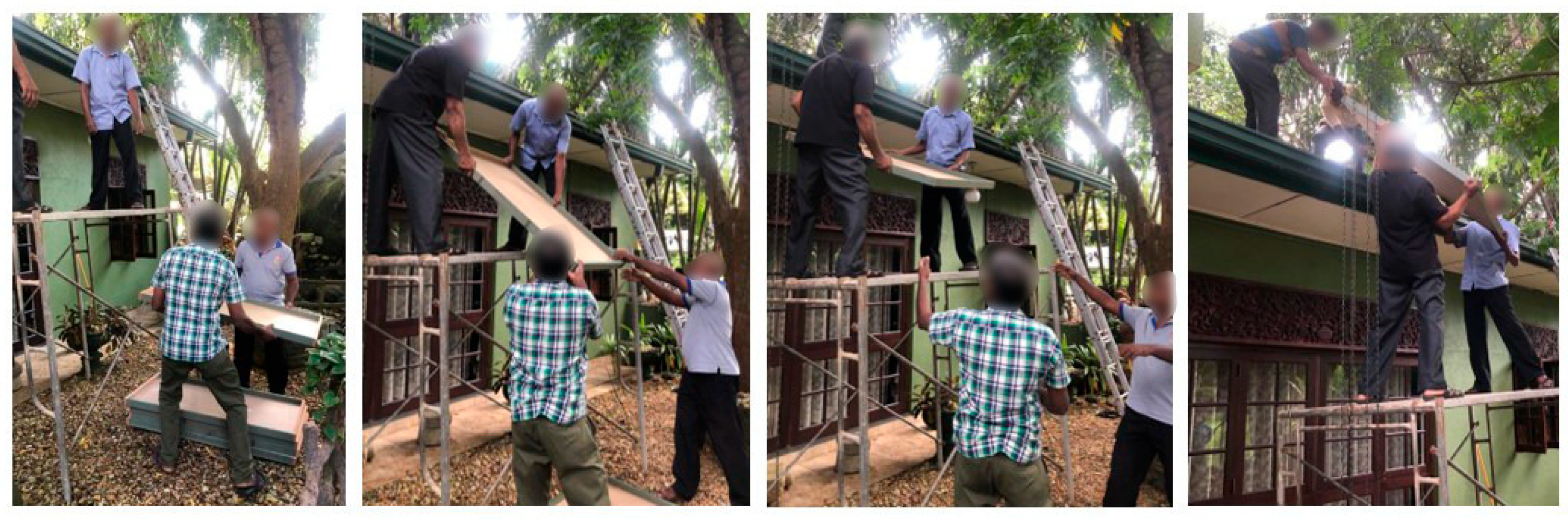
Figure 1 presents selected images captured during the installation and removal procedures undertaken in the laboriousness study.
The process was repeated twice to get an average value. The labor-seconds per square meter for each dimension was then calculated, allowing for a quantitative comparison of the installation effort, similar to the person-hours per area metric used by Korol & Shushunova [
33].
2.3. Determination of the Depth of the Vegetative Roofing Tile
The depth of the vegetative roofing tile must allow for adequate plant development under tropical climatic conditions. In this regard, Pianella et al. [
34] report that substrate depth is one of the most influential design factors directly affecting the thermal performance of extensive green roofs. To determine the optimum depth for the vegetative roofing tile, three different substrate profiles (2.5 cm, 5.0 cm, and 7.5 cm) were experimentally evaluated.
Sample plots were prepared for each of the thicknesses and filled with the substrate mix recommended by John et al. [
35] for extensive green roofs for the tropical climate of Sri Lanka (40% sand, 40% crushed bricks, 10% compost, 5% rice husk, and 5% coir). Using the plant selection matrix for the tropical climate developed by John & Halwatura [
36],
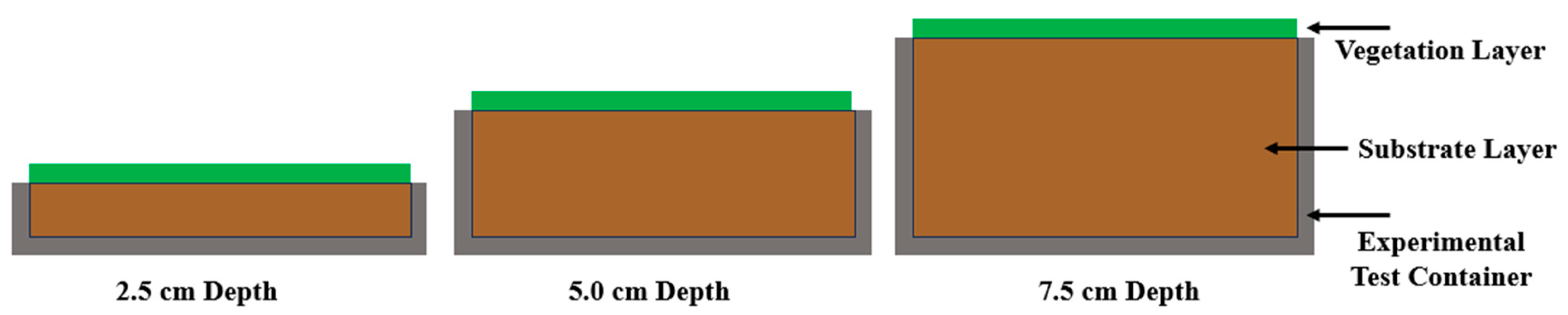
Alternanthera sessilis was selected as the vegetation layer for the evaluation. The cross-sectional profiles of these experimental sample plots are shown in
Figure 2.
The coverage and survival rate were monitored for 12 weeks to identify the suitable substrate depth for the tropical climate. Additionally, the amount of water required to irrigate each substrate depth, as well as the irrigation frequency for each substrate depth, was determined. Volumetric water content at field capacity and moisture content at permanent wilting point were determined through laboratory tests. Irrigation water requirement was calculated based on the volumetric water content at field capacity. As per the agricultural recommendation, plants should be irrigated at or before the moisture content reaches 50% in-between the field capacity moisture content and the permanent wilting point [
37,
38]. Therefore, the moisture content at the permanent wilting point was calculated to determine the irrigation frequency.
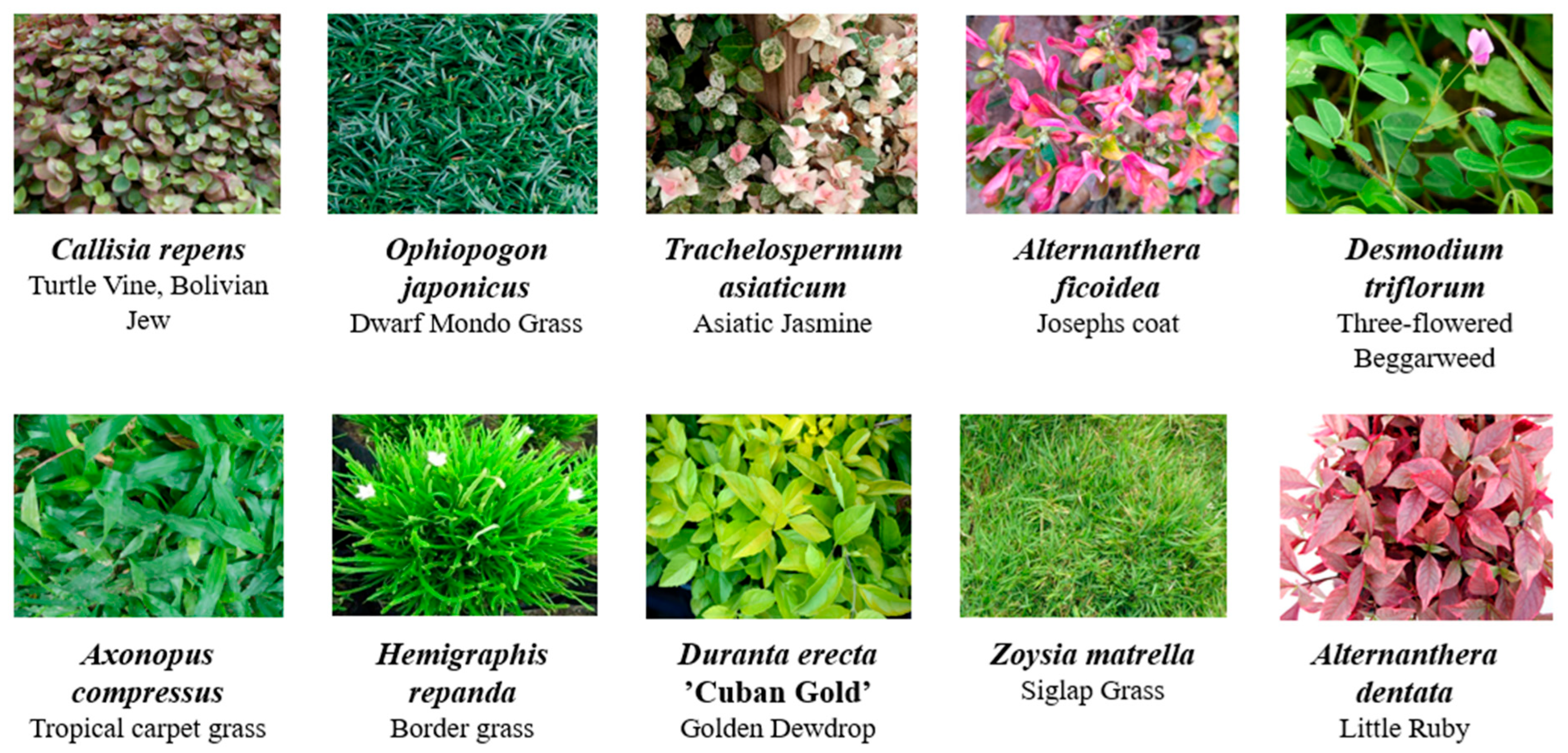
Although
Alternanthera sessilis was used for the initial depth and irrigation testing, a subsequent evaluation of 10 different tropical plant species was obtained through the matrix developed by John & Halwatura [
36], was conducted to assess the system’s broader viability. The selected 10 plant species are given in
Figure 3.
These plant species were tested for coverage, plant height, and survival rate for a 12-week period on a 10° sloped roof.
2.4. Profile Design and Modeling
After the finalization of the dimensions of the vegetative roofing tile, the profile of the tile was designed. Profiles of existing roofing materials were studied for their characteristics.
Corrugated profiles are inherently beneficial for lightweight structural applications due to their anisotropic behavior [
39]. They exhibit stiffness perpendicular to the corrugation direction, enabling them to efficiently carry loads without excessive bending or sagging [
40]. This characteristic is particularly crucial for our vegetative roof tile, which must support the weight of both the substrate and the vegetation layer. The enhanced stiffness also allows corrugated sheets to span longer distances. This is advantageous given the intended span for the proposed vegetative roofing tile design [
40]. Therefore, a corrugated base was recommended for the vegetative roofing tile.
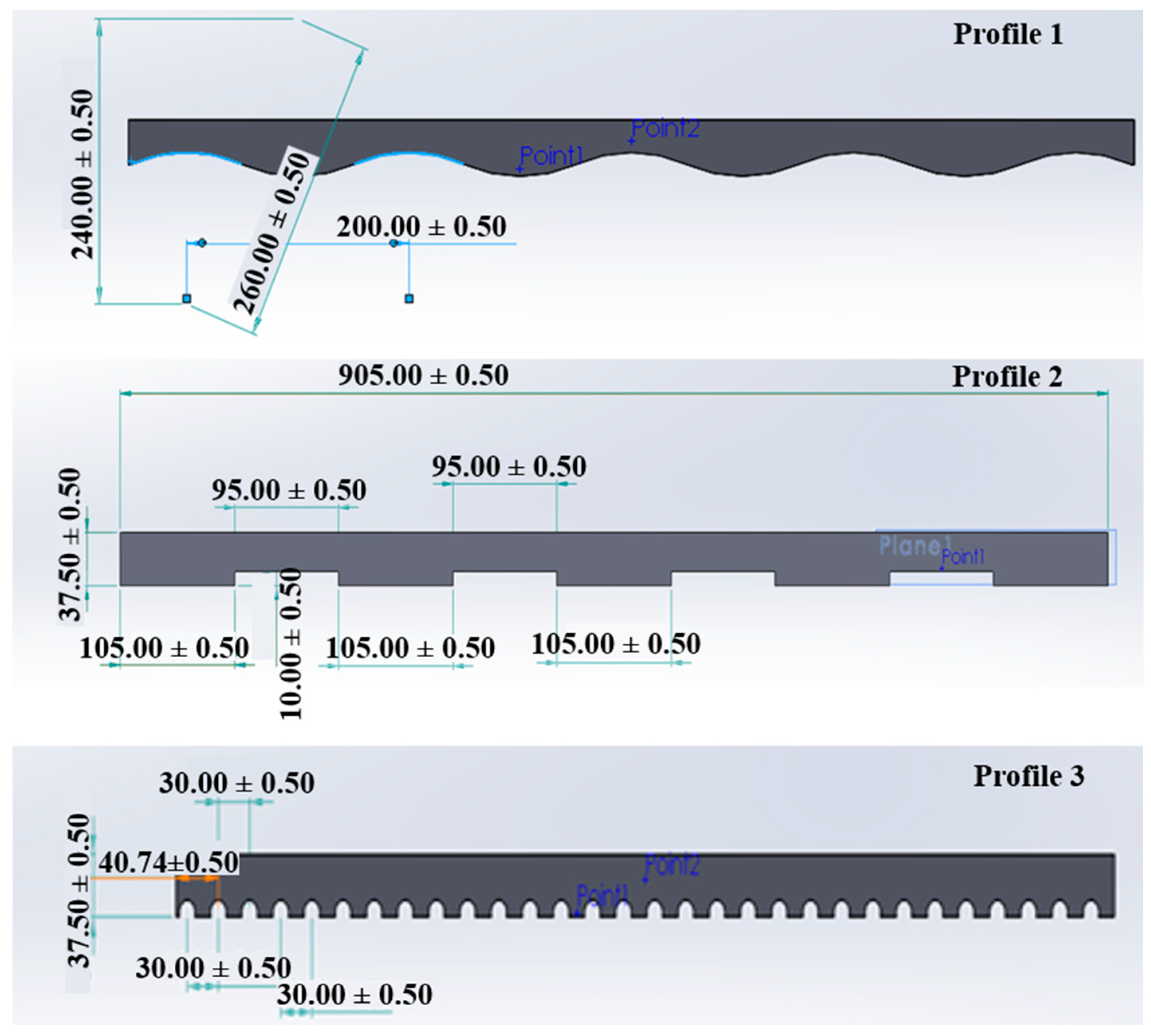
Three profiles, as shown in
Figure 4, were thus designed, based on asbestos roofing sheets, roman clay tiles, and asphalt shingles, respectively. The profiles were selected to avoid tension points and stress concentration points while improving the load-bearing capacity of the system.
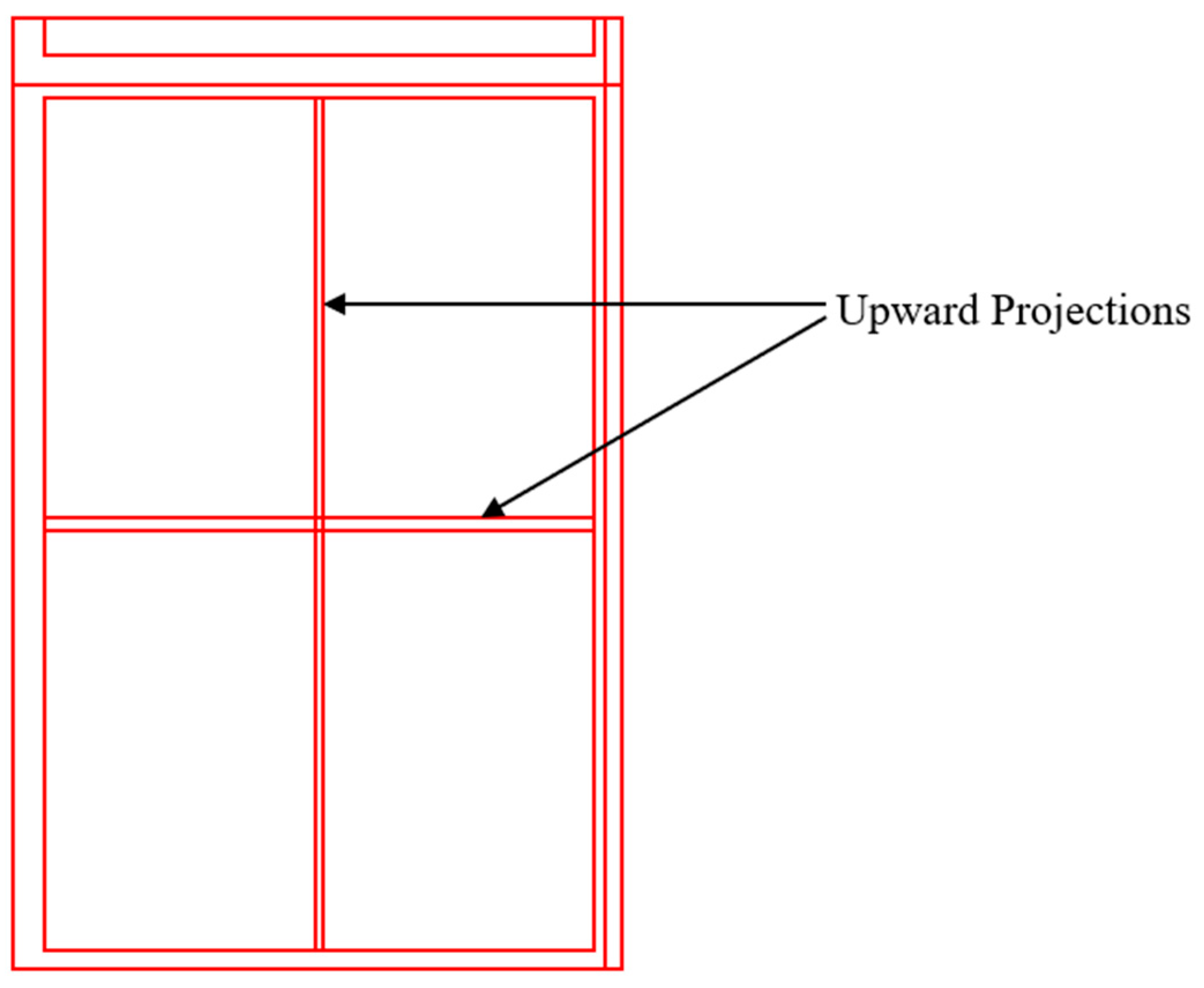
The vegetated roof tile incorporates specific geometric projections designed to simultaneously manage structural anchoring, water shedding, and biological containment. As shown in
Figure 5, the upper surface features a plurality of upward projections that segment the base layer into individual tray-like recesses. The upward projection height is configured to accommodate the depth of the substrate. These upward projections function as anti-slip boundaries that secure the growth substrate on sloped roofs. Holes provided on these upward projections help to maintain continuous water drainage.
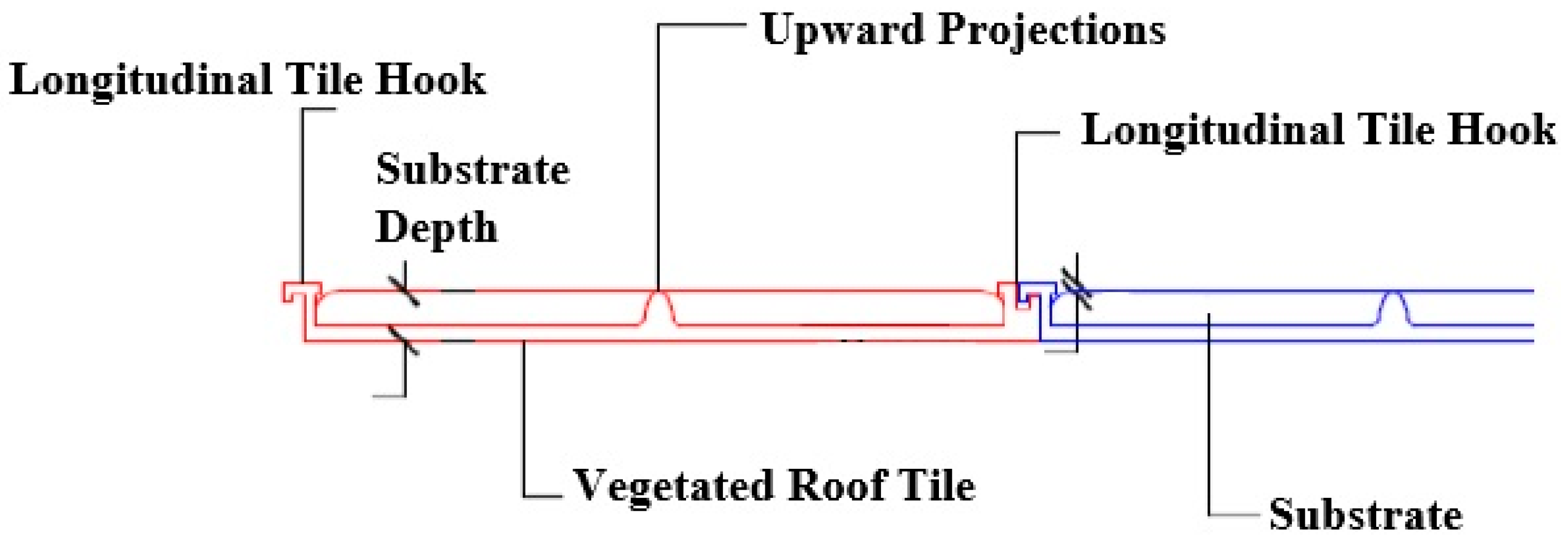
To facilitate the interlocking of vegetated roof tiles, the modules utilize longitudinal and transverse tile hooks along their edges. A simplified schematic of this locking mechanism is shown in
Figure 6. This locking mechanism allows adjacent tiles to securely interlock, ensuring a flush joint that maintains a continuous gravitational water flow.
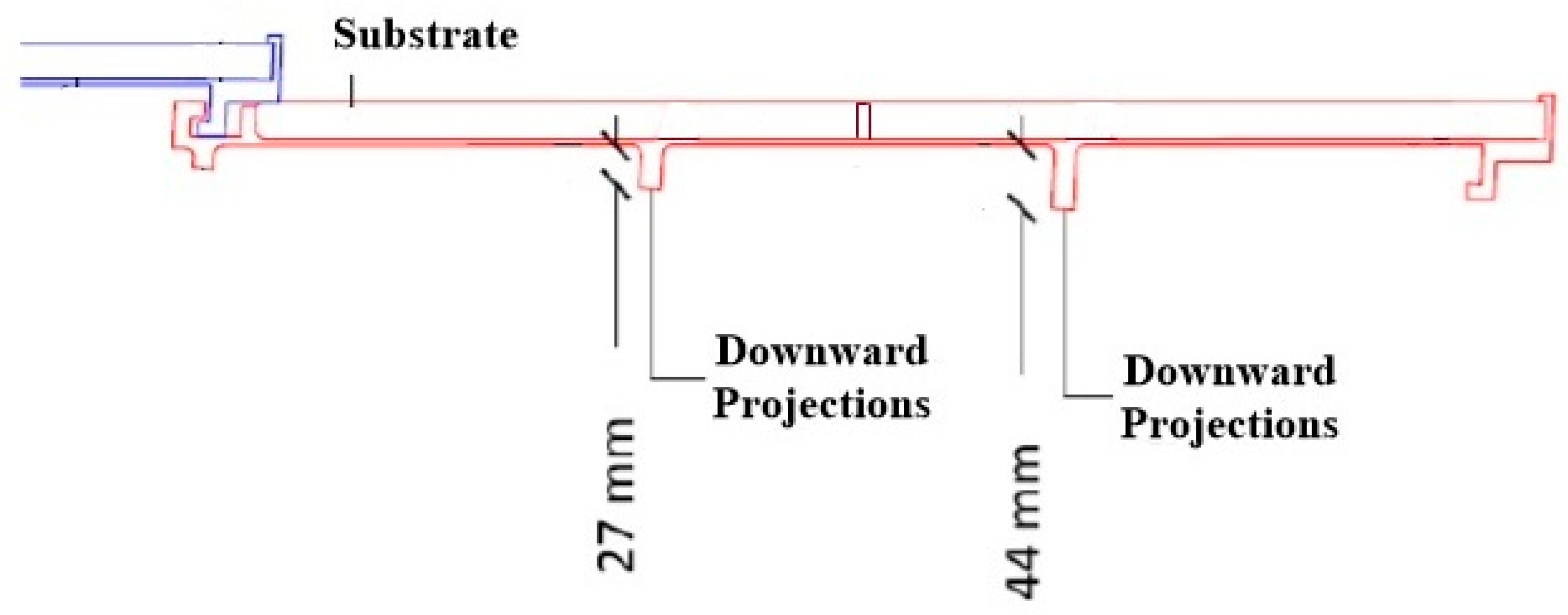
Furthermore, the underside of the tile comprises a series of integral downward projections with a depth profile ranging from 27 mm to 44 mm. These downward projections are illustrated conceptually on a simplified flat profile in
Figure 7. They are engineered to hook and anchor the tile directly onto conventional 25 mm thick roof purlins. They serve as anti-slip keys counteracting the downslope sliding gravity vectors in pitched roofs, transferring the dead load safely into the primary building trusses.
The specific depth profiles for downward projections (ranging from 27 mm to 44 mm) are selected to comply with standard regional roofing frameworks. According to the guidelines provided by the CIDA, in tropical residential construction, conventional sloped roofs utilize timber laths with 25 mm thickness. The minimum downward projection depth of 27 mm ensures an exact mechanical clearance to hook securely over a 25 mm lath, accommodating a 2 mm tolerance for timber surface variations. The variance up to 44 mm compensates for the undulating corrugated geometry of the upper base layer, maintaining a uniform, planar contact surface against the purlins.
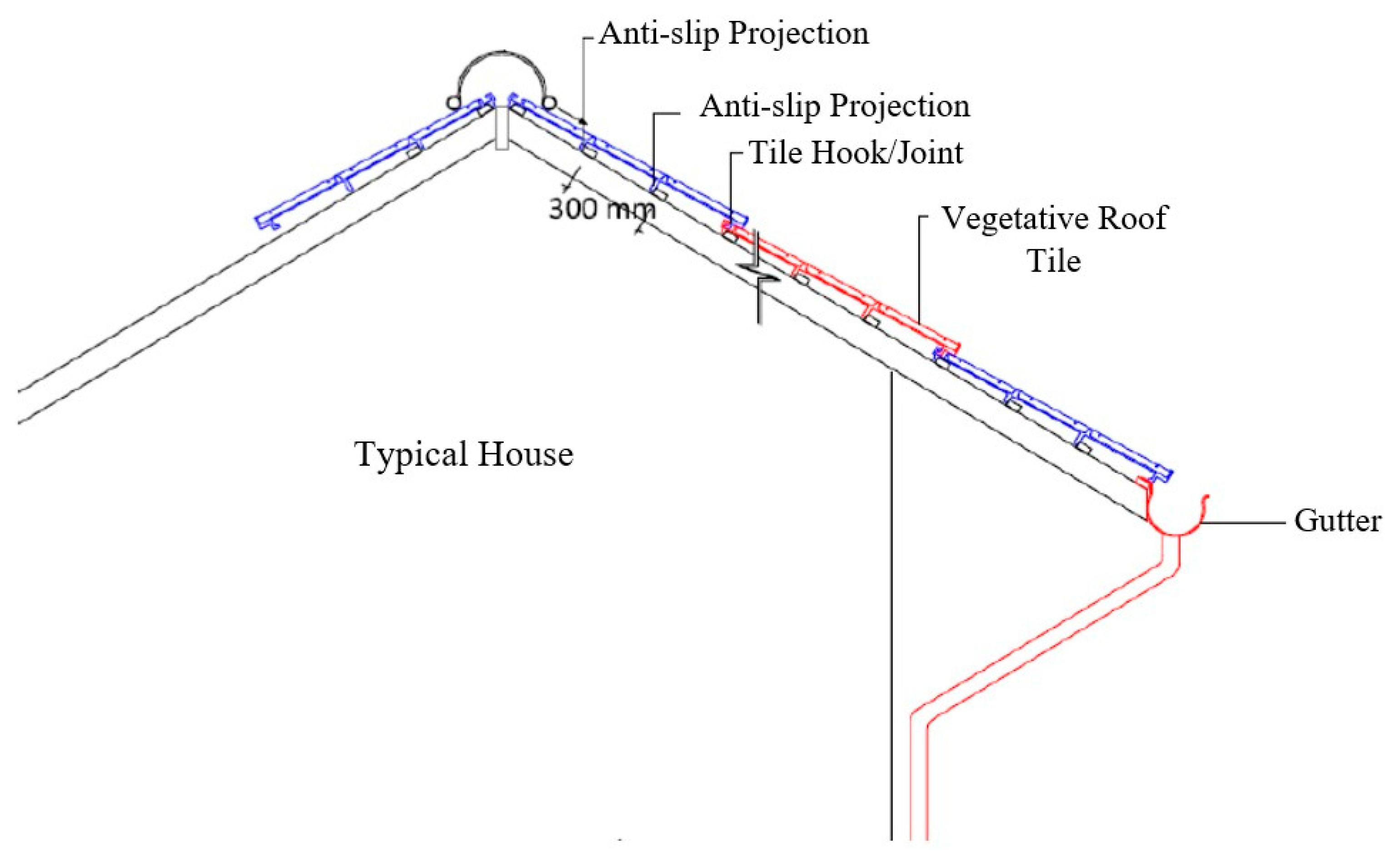
Figure 8 shows the installation of the vegetated roof tiles on a conventional sloped roof with 300 mm purlin spacings.
The selected geometric profiles, including these localized joint profiles and projection details, were subsequently modeled using SOLIDWORKS 2024 Design Premium for Students (Dassault Systèmes)and analyzed using ABAQUS 2024 (Dassault Systèmes).
2.5. Structural Analysis
To proceed with the structural analysis, it was imperative to select a suitable material for the modular roof tile. In the research conducted by Rubero et al. [
31], fiberglass was proposed as a suitable material with favorable characteristics for green roof applications in tropical climates. Therefore, Fiber-Reinforced Plastic (FRP) was chosen as a suitable material for the vegetative roofing tile for the structural analysis.
It is important to note that FRP encompasses various types and compositions [
41]. To ensure consistency and relevance to the specific structural requirements of the modular roof tile, Type S—Fiberglass was specifically selected. Type S—Fiberglass possesses properties and characteristics that align with the structural demands of the modular roof tile, such as sufficient strength, durability, and load-bearing capacity.
The following parameters were used for the analysis [
42]
The specifications for the substrate layer (unsaturated unit weight = 1200 kg/m
3; saturated unit weight of 1500 kg/m
3) of the roof tile were determined based on the research by John et al. [
35]. To ensure the structural integrity and safety of the roof tile, relevant roof loading considerations were taken into account, applying a safety factor of 1.35 for dead loads and a safety factor of 1.5 for live loads in accordance with the Eurocode standards.
The profiles selected for analysis were accurately modelled using SOLIDWORKS software 2024 Design Premium for Students (Dassault Systèmes) to capture their geometrical features. These profiles were then analyzed using the ABAQUS 2024 (Dassault Systèmes) software. To establish a baseline for comparison, a flat base profile was used. This flat base profile served as a reference for evaluating the performance of the corrugated profiles.
The roof tile was assumed to be supported on two parallel battens. The tile edges resting on the battens were modeled as simply supported lines. To prevent rigid-body motion of the model, minimal in-plane constraints were assigned to one node at each support line. This boundary condition replicates the seating of tiles on battens, while avoiding unrealistic edge fixity.
The following load cases were applied to each corrugated profile in accordance with BS EN 1991-1-1:2002 [
43].
- (1)
Self-weight (dead load): Applied using gravity loading based on the density of Type S—Fiberglass.
- (2)
Substrate load: Applied as a uniform surface pressure normal to the roof plane. The maximum pressure was derived from the saturated unit weight (1500 kg/m3), to represent the most adverse conditions. This ensures that the tile can safely support the substrate even after heavy rainfall or irrigation.
- (3)
Vegetation load: In an extensive green roof, the load from the vegetation is negligible when compared to the saturated weight of the substrate [
44]. Therefore, the weight of the vegetation was not considered in this study.
- (4)
Maintenance live load: Applied as a concentrated load in accordance with BS EN 1991-1-1:2002 for roof category H. As per the Eurocode, both a concentrated and uniformly distributed imposed load were assessed separately for their effects on the vegetative roof tile. Accordingly, the most adverse effect was observed under the concentrated load. Therefore, a concentrated load of 1.0 kN was considered as the maintenance live load in this study.
- (5)
Wind suction (uplift): The wind suction (uplift) acting on the vegetative roof tile was determined according to BS EN 1991-1-4:2005 [
45], in conjunction with the Sri Lanka Standards National Annex (NA to SLS EN 1991-1-4:2019) [
46]. Based on the wind loading map for Sri Lanka, the Colombo district falls under Wind Zone 3, with a 10 min mean wind speed of 23 ms
−1. Terrain Category III was selected as per EN 1991-1-4:2005, to account for the roughness of the surrounding environment. Applying the procedures outlined in the Eurocode, the Peak Velocity Pressure (q
p(z)) was determined to be 0.444 kN/m
2. For a duo pitch roof with an angle of 15 degrees, the wind load (suction) on the surface was found to be 0.976 kN/m
2. This value represents the maximum design uplift pressure for cladding elements in the most susceptible roof zone. Therefore, it ensures the structural integrity of the vegetative roof tile under extreme wind conditions.
To identify the most structurally efficient profile, each of the corrugated profiles was compared against the flat base profile. Corrugation increases the effective length of the tile. Consequently, the effective length of the three corrugated profiles used in this study was different from each other. Therefore, to balance the structural performance with material use, a normalized metric, coined “structural efficiency”, was used. This normalized metric is given in Equation (1).
Based on this metric, the profile that is the most structurally efficient relative to its geometric modifications was selected.
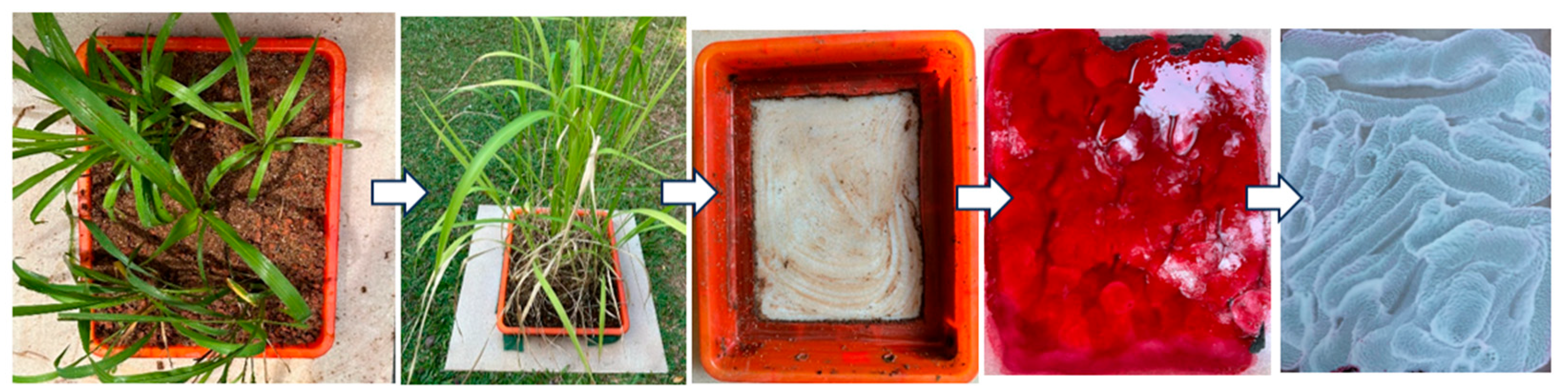
2.6. Resistance to Root Penetration of FRP Under Tropical Climatic Conditions
To evaluate the long-term durability and puncture resistance of the FRP sheets under tropical climatic conditions, a continuous 12-month root penetration test was conducted. The experimental procedure was adapted from the guidelines prescribed by the German Landscape Development and Landscaping Research Society (FLL) [
47].
Testing was conducted using sealed test containers designed to hold a flat FRP sheet beneath a substrate bed. The test containers had dimensions of 800 mm × 800 mm, and the depth of the substrate used for the testing was 25 mm. While the standard FLL protocol specifies
Elymus repens (Couch Grass) as the baseline indicator plant for root penetration, its geographical unavailability in tropical South Asia necessitated an ecologically representative alternative. Consequently,
Imperata cylindrica (Cogon Grass) was selected due to its extensive, sharp, and vigorous rhizome system, providing a rigorous biological challenge to the barrier material. The experimental setup is shown in
Figure 9.
Following a 12-month exposure period, a non-destructive dye penetration test was performed to inspect the FRP sheets. The substrate was removed, and the roots were washed off the FRP surfaces. The test areas were then cleaned with acetone and allowed to dry completely. A penetrant dye was sprayed over the entire surface of the sheets, including the edges. A dwell time of 20 min was allowed for the dye to seep into any micro-cracks or holes. After the dwell time, excess surface dye was removed using a clean, dry cloth. A thin layer of developer was then applied over the test area to draw out any trapped dye, revealing any micro-fissures or penetrations during visual inspection.
3. Results
3.1. Dimensions of the Vegetative Roofing Tile
The two most popular roofs in Sri Lanka are Tiled roofs and Asbestos roofs. By studying their structure, as given in
Table 2, we identified two possible dimensions for our vegetative roofing tile. These dimensions were selected to ensure the vegetative tile could span the existing purlin spacings (300 mm for tiled roofs, or multiples thereof) and fit within the rafter spacings (600 mm for tiled roofs, 900–1200 mm for asbestos roofs) with minimal modifications. The two proposed dimensions are given in
Table 3.
A laboriousness study was conducted using these two proposed dimensions to determine their ease of installation and to identify the optimal dimension.
The average time and effort required for the installation and disassembly of 10 tiles of each dimension were measured, and the results are summarized in
Table 4.
A lower ‘Labor-seconds/m2’ value indicates greater installation efficiency. Based on this quantitative comparison of the installation effort, a dimension of 900 mm × 1200 mm was selected as optimal for the vegetative roofing tile.
3.2. Depth of the Vegetative Roofing Tile
The depth of the vegetative roof tile was determined by evaluating plant performance and irrigation requirements under three substrate depths: 2.5 cm, 5.0 cm, and 7.5 cm. Moreover, the weight of the system under each substrate depth was also determined.
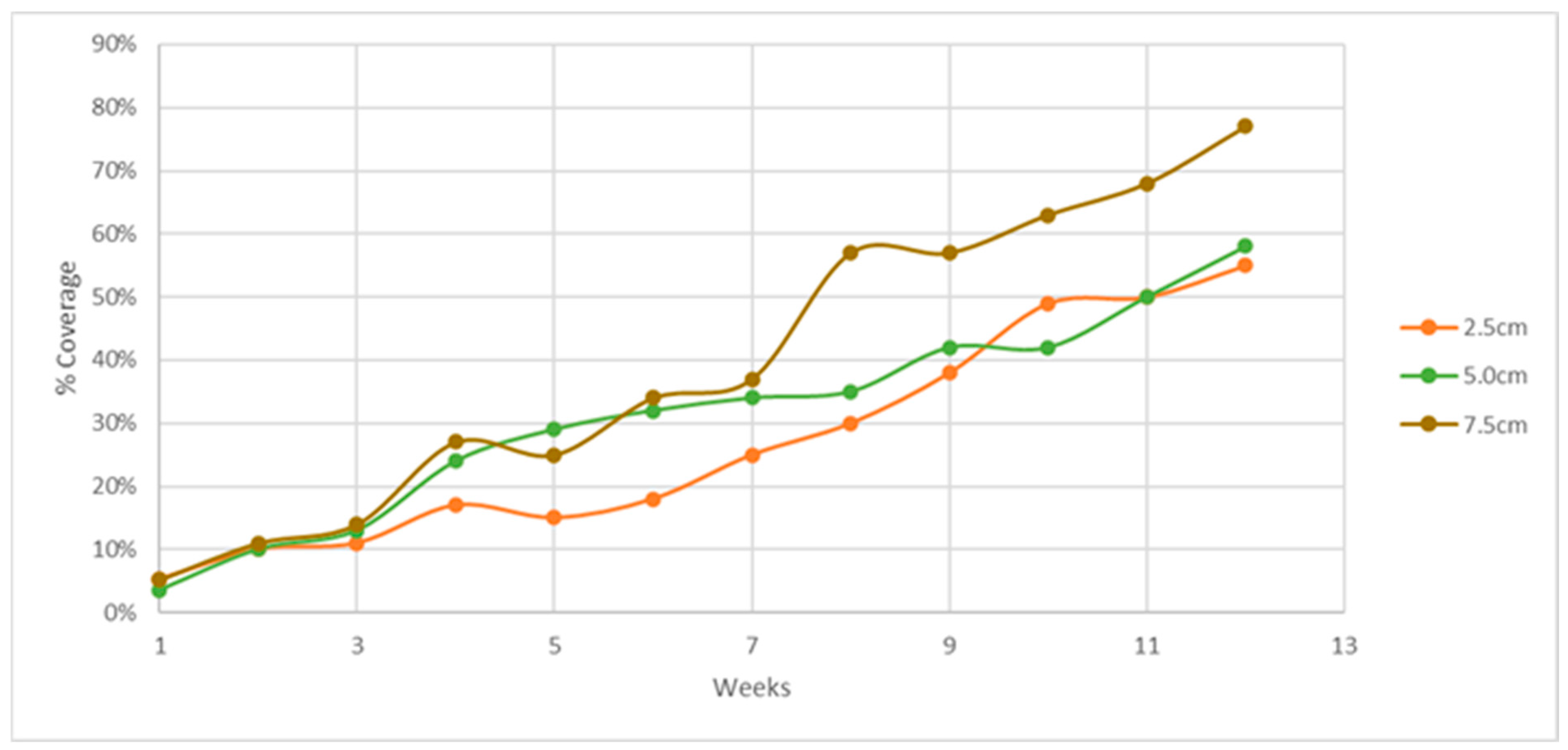
For each substrate depth, the coverage and survival rate of
Alternanthera sessilis were measured for a 12-week period. The percentage plant cover is given in
Figure 10.
As shown in
Figure 10, the deepest substrate depth, 7.5 cm, consistently showed the highest coverage throughout the 12-week period. However, over time, the difference in coverage among different plot depths diminished, and by the end of the 12-week period, all plots, including the 2.5 cm depth, achieved a coverage exceeding 50%.
This demonstrates that even the shallowest substrate depth can support adequate plant establishment. With regard to plant survival, complete plant establishment was achieved at all substrate depths, demonstrating a 100% survival rate throughout the study period.
The saturated weight of each substrate was calculated based on the saturated unit weight of 1500 kg/m
3. The total saturated weight of the system when combined with the weight of the FRP tile is given in
Table 5.
As shown in
Table 5, the 2.5 cm depth maintains a lightweight profile that can be supported by existing sloped roofs with minimal modifications.
The volumetric water content at field capacity was determined for each substrate depth using laboratory analysis. Based on the soil volume in each sample plot, the irrigation water requirement for each substrate depth was then determined. The results are summarized in
Table 6.
To determine the irrigation frequency, the moisture content at the permanent wilting point was calculated. As per the agricultural recommendation, plants should be irrigated at or before the moisture content reaches 50% in-between the field capacity moisture content and the permanent wilting point. Based on the results obtained for field capacity and permanent wilting point, the irrigation frequency for each substrate depth was calculated as given in
Table 7.
As per
Table 7, a 2.5 cm substrate depth should be irrigated at/before the moisture content in the soil reaches 9%. Similarly, 5.0 cm substrate depths should be irrigated before the moisture content reaches 9%, and the 7.5 cm substrate depths should be irrigated before the moisture content reaches 7%. Next, the time taken to reach this critical moisture content in each substrate depth was determined.
Each plot was irrigated until it was saturated, and then the moisture content was monitored for 96 h. For the 2.5 cm depth, under both substrate mixes, the critical moisture content was attained within 24 h. Therefore, the 2.5 cm depth should be irrigated daily. For the 5.0 cm depth, the critical moisture content was attained in 72 h, and hence, it should be irrigated once every 3 days. The 7.5 cm depth should be irrigated once every 4 days, as the critical moisture content was achieved in 96 h.
In the tropical climate of Sri Lanka, where water scarcity is not a major concern, irrigating the plots once every 24 h is feasible. Therefore, considering the plant coverage exceeding 50%, the 100% plant survival rate, the manageable daily irrigation requirement, and critically, the reduced weight associated with a shallower substrate depth, the 2.5 cm substrate depth was identified as a suitable option for the vegetative roofing tile.
To assess the broader applicability of the 2.5 cm substrate depth, the performance of ten tropical plant species was monitored. The results of the study, at the end of a 12-week period, are summarized in
Table 8.
The study revealed high overall resilience across the selected flora. Eight out of ten species achieved a 100% survival rate. While Desmodium triflorum and Callisia repens showed slightly lower survival rates of 58% and 94% respectively, the majority of the species proved highly compatible with the shallow substrate. In terms of establishment, Axonopus compressus and Zoysia matrella exhibited the most robust performance, reaching 90% and 82% coverage respectively. Plant heights varied significantly between species, ranging from the low-profile Desmodium triflorum (1.2 cm) to the more upright Alternanthera ficoidea (15.2 cm), providing a diverse range of aesthetic and functional options for extensive green roof applications. These results confirm that the 2.5 cm substrate depth is biologically sufficient to support a variety of tropical vegetation.
Therefore, the 2.5 cm depth was selected for the vegetive roof tile as it balances plant performance with the essential requirement for a lightweight design. Accordingly, the dimensions of the vegetative roof tile were finalized as 1200 mm × 900 mm × 25 mm.
3.3. The Profile of the Vegetated Roofing Tile
Once the dimensions of the vegetated roofing tile were finalized, the next step was to identify the most structurally efficient profile. Based on the principles outlined in
Section 2.4, three profiles, derived from existing roofing materials (asbestos roofing sheets, Roman clay tiles, and asphalt shingles), were modeled using SOLIDWORKS 2024 Design Premium for Students (Dassault Systèmes). The maximum displacement under the load conditions and support conditions detailed in
Section 2.5 was calculated using ABAQUS 2024 (Dassault Systèmes) for each of the 3 profiles and the flat base profile. Because of the different types of corrugation, the effective length of the three profiles is different. Therefore, to balance structural performance with material use, a normalized metric called Structural Efficiency, as defined in Equation 1, was used to identify the most structurally efficient profile. The results of this comparative structural analysis are summarized in
Table 9.
As shown in
Table 9, a significant reduction in displacement is observed across all corrugated profiles compared to the flat base profile. This clearly demonstrates the enhanced stiffness and load-bearing capacity of corrugated profiles.
Profile 1, exhibiting a structural efficiency of 1.8207, was selected as the most structurally efficient for the vegetated roofing tile. Consequently, it was decided that the vegetated roofing tile would be designed with a corrugation pattern similar to that of asbestos roofing sheets.
3.4. Determination of the Rise and Pitch of the Selected Profile
Following the selection of Profile 1 as the most structurally efficient corrugated pattern, the next step was to finalize the geometric parameters of the profile, specifically the rise and pitch. Therefore, a parametric study was conducted to evaluate three rise values (5 mm, 10 mm, and 15 mm) and three different pitch values (100 mm, 200 mm, and 300 mm). Each of these nine combinations was modeled, and the maximum displacement under the defined load cases was calculated using ABAQUS 2024 (Dassault Systèmes) software.
According to the Eurocode 2: BS EN 1992, the maximum allowable deflection for structural elements is Span/250 ([
48]). Therefore, only the combinations of rise and pitch that met this criterion were considered. The results are given in
Table 10.
As shown in
Table 10, only four out of the nine configurations met the Euro Code criterion for deflection. From these compliant configurations, configuration 5, with a rise of 10 mm and a pitch of 200 mm, was selected as it showed the highest structural efficiency. This ensured that the finalized profile met the structural safety standards while also optimizing material usage and performance.
3.5. Finalized Profile of the Vegetated Roofing Tile
Based on the comprehensive studies detailed in
Section 3.1,
Section 3.2,
Section 3.3 and
Section 3.4, the final design of the vegetative roofing tile was established. The laboriousness study was used to identify the optimal overall dimensions. By determining the substrate depth, the depth of the vegetated roofing tile was finalized. Subsequently, the structural analysis in
Section 3.3 selected the most efficient corrugated profile, and the parametric study in
Section 3.4 optimized its rise and pitch.
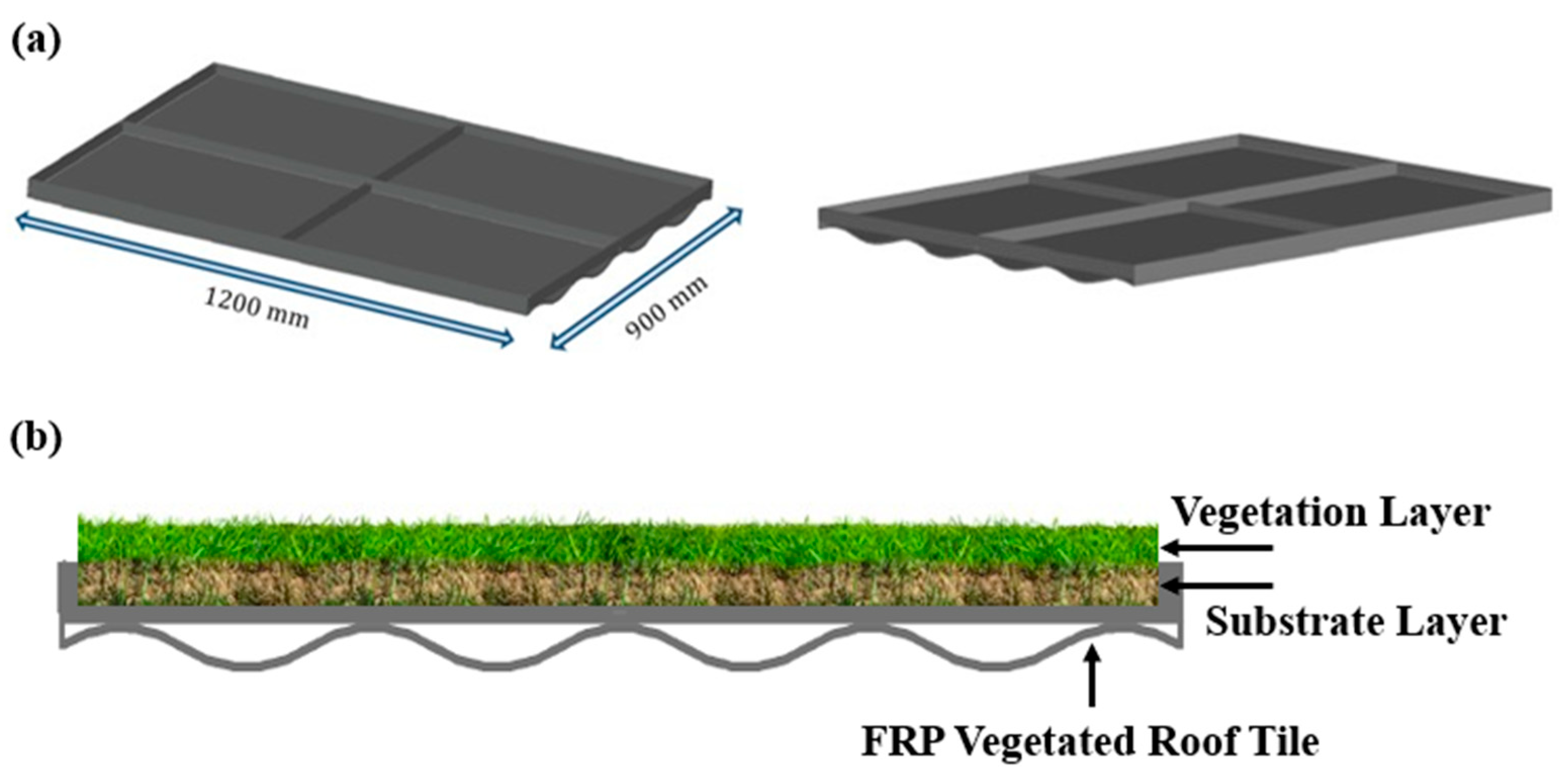
The finalized vegetative roofing tile possesses overall dimensions of 1200 mm (length), 900 mm (width), and 25 mm (depth). The selected corrugated profile has a shape similar to asbestos roofing sheets and incorporates a rise of 10 mm and a pitch of 200 mm. This design demonstrated the highest structural efficiency while meeting the deflection criteria stipulated by Eurocode 2: BS EN 1992. The resulting profile is illustrated in
Figure 11.
Figure 11a displays the complete 3D geometric profile of the engineered module, and
Figure 11b provides a detailed front elevation cross-section illustrating the precise integration of the biological components.
To ensure the structural integrity of the system under the maximum design uplift pressure of 0.976 kN/m
2, the tiles are secured to the existing roof purlins using stainless steel self-tapping screws equipped with EPDM washers. While the downward projections (
Figure 7) handle primary gravity load distribution and prevent downslope sliding, these fasteners provide essential secondary anchorage against wind-induced uplift. This dual-layer approach provides a non-destructive yet secure connection that adheres to the ‘minimal modification’ requirement.
3.6. Evaluation of Root Penetration and Material Integrity
The resistance to root penetration of the flat FRP sheets was evaluated after a 1-year period of continuous exposure to Imperata cylindrica. Visual inspection of the sheets indicated that the test surface remained undamaged with no evidence of localized root penetration. The results of the dye penetration test confirmed these observations. The dye application revealed no indication of micro-fissures, surface porosity, or structural capillary tracking on the exposed faces of the sheets.
The FRP sheets successfully maintained their structural and barrier integrity under sustained root growth pressure and tropical climate cycles, demonstrating sufficient resilience against root penetration.
4. Discussion
The rapid urbanization of tropical Asian countries like Sri Lanka has led to a critical loss of green cover, exacerbating environmental challenges such as the Urban Heat Island (UHI) effect and increased stormwater runoff. While green roofs are a proven mitigation strategy, their application in Sri Lanka is severely limited by the fact that 93%of housing units utilize sloped roofs, which are costly and difficult to convert using traditional slab-based methods. This research addresses this gap by developing a novel, lightweight vegetative roof tile specifically designed for existing sloped structures.
The selection of the 900 mm × 1200 mm tile dimension was driven by a quantitative laboriousness study, which demonstrated that larger modules offer higher installation efficiency due to a reduced unit-per-area requirement. This ease of installation is a vital criterion for ensuring the accessibility of green infrastructure. By reducing the labor and time required for installation, this modular system becomes a more viable option for low-to-middle-income residential areas. While a comprehensive economic analysis and Life Cycle Assessment (LCA) were not performed as part of this initial engineering phase, the system is inherently low-cost because it completely eliminates the need for expensive structural retrofitting, concrete slabs, or frame reinforcing. By utilizing the existing underlying roof structure directly, the capital expenditure is significantly minimized compared to traditional green roof conversions. Detailed economic modeling and a full cradle-to-grave LCA remain important pathways for future research.
Biologically, the 2.5 cm substrate depth proved highly effective for the tropical context. While deeper substrates (7.5 cm) initially showed higher coverage, the 2.5 cm plots achieved satisfactory establishment (greater than 50% coverage) and a 100% survival rate for Alternanthera sessilis within 12 weeks. The required daily irrigation for this shallow depth is feasible in Sri Lanka’s tropical climate, where water scarcity is generally not a primary concern. It is important to note that active irrigation is primarily required during extended dry spells, as frequent natural monsoonal rainfall sustains the system for most of the year. To further optimize the sustainability profile of the system, irrigation demands can be met by pairing the modular roofs with domestic rainwater harvesting (RWH) configurations. Capturing and storing intense stormwater runoff for reuse during dry intervals creates a circular urban water loop, mitigating the reliance on municipal freshwater supplies. While the current pilot study utilizes Alternanthera sessilis for initial testing, the modular system is inherently adaptable. Future research will evaluate the integration of native, drought-resistant succulent species, which would significantly reduce supplemental water requirements and further strengthen the system’s long-term environmental and operational sustainability. Additionally, the robust performance of species like Axonopus compressus, which achieved 90% coverage, highlights the system’s ability to support diverse flora through stoloniferous growth that stabilizes the shallow substrate.
While the 12-week experimental timeline successfully validated the initial establishment, survival rates, and substrate stabilization performance of the selected species, it represents a limitation regarding long-term biological stability. Future work will extend this observation window across multiple monsoon and dry cycles to evaluate long-term plant succession, weed invasion risks, and permanent maintenance requirements under tropical conditions.
The durability of the material used for the vegetated roofing tile is another critical determinant. The 12-month root penetration evaluation confirmed that the FRP sheet is a suitable material for the vegetated roofing tile, showing no micro-perforations or structural degradation under tropical climatic conditions. This validation confirmed the baseline durability of the material prior to geometry scaling.
Structurally, the weight of the system is the most critical factor for retrofitting. At the finalized 2.5 cm depth, the system achieves a total saturated weight of 52.5 kg/m2, making it significantly lighter and more compatible with typical Sri Lankan rafter and purlin spacings than traditional systems that often exceed 150 kg/m2. The adoption of a corrugated base—specifically Profile 1, which mimics asbestos roofing sheets—was a deliberate design choice to provide the necessary stiffness to carry substrate loads over longer spans without excessive bending. Validating the initial hypothesis, all corrugated profiles showed a significant reduction in displacement compared to flat profiles, with the 10 mm rise and 200 mm pitch configuration demonstrating the maximum structural efficiency.
While the structural integrity of the corrugated FRP profile has been verified via rigorous numerical modeling and finite element analysis, it is important to note that no experimental validation of a full-scale prototype was carried out. Future work will entail full-scale prototype field installation and continuous monitoring to evaluate the system’s performance under real-world weather conditions, as detailed in the limitations outlined in
Section 5 (Conclusions).
By establishing a consistent vegetative cover, this tile system acts as a functional Nature-Based Solution (NBS) that can significantly increase urban albedo and promote cooling through evapotranspiration. Beyond thermal benefits, the system serves as an initial barrier for rainwater interception, reducing the volume and velocity of stormwater runoff at the source. Collectively, these factors allow the proposed system to provide a simple, scalable, and decentralized solution to mitigate UHI and stormwater issues in densely populated tropical cities.
5. Conclusions
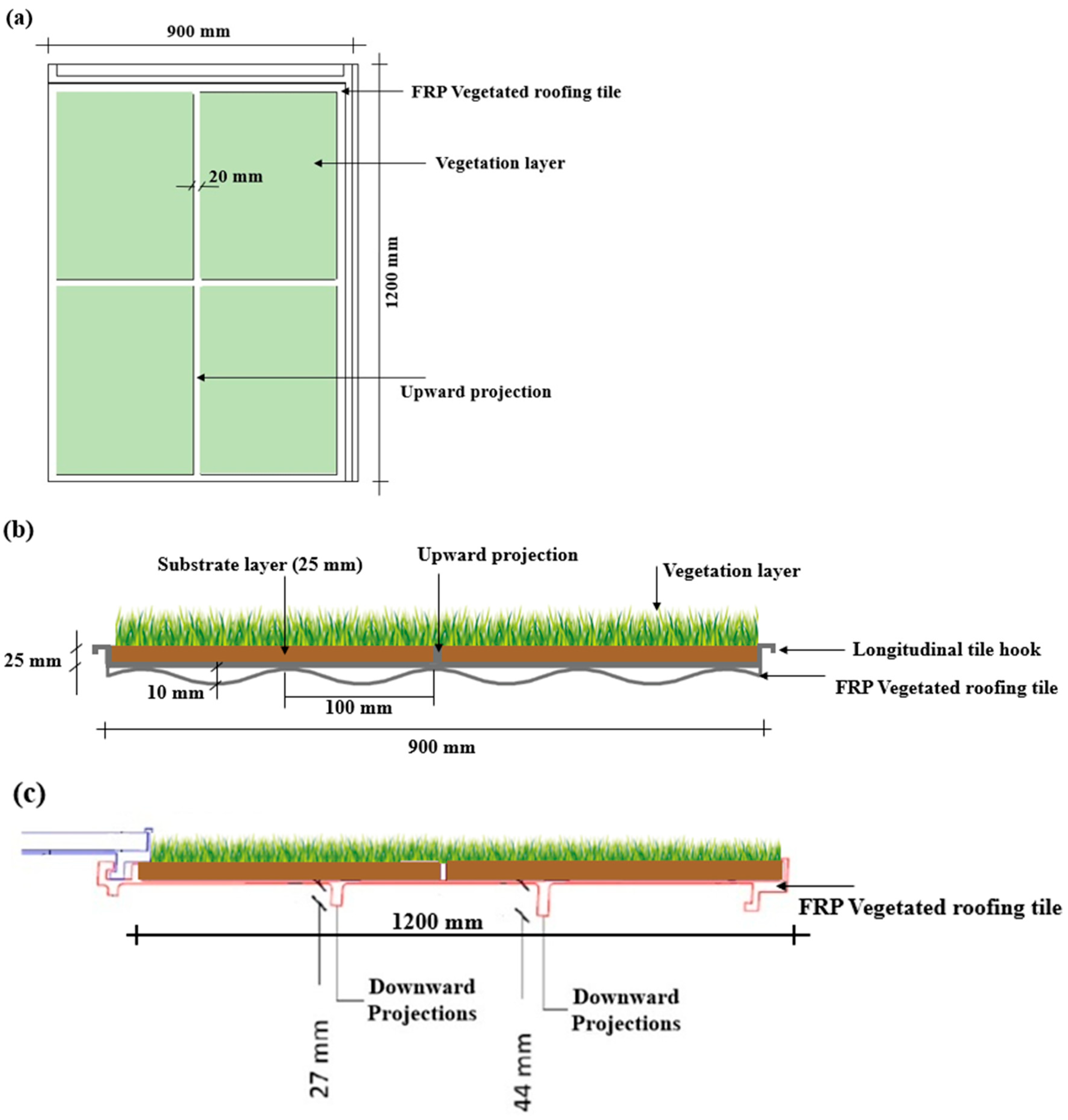
This study successfully developed a novel, lightweight vegetative roof tile system optimized for the sloped roof archetypes prevalent in tropical Asia. The final engineered configuration is detailed as a comprehensive technical blueprint in
Figure 12. The module features a plan footprint of 900 mm × 1200 mm (
Figure 12a) and is fabricated from Fiber-reinforced plastic. The surface incorporates a grid of 25 mm high upward anti-slip projections, which segment the module into distinct tray-like compartments. As illustrated in the cross-sectional profile (
Figure 12b), these trays confine both the 25 mm growth substrate and the matured vegetation canopy. Structural anchorage is achieved through a fully mechanical interlocking system (
Figure 12c). The lateral edge boundaries utilize longitudinal and transverse hooks to ensure a flush joint, while the undulating underside integrates downward anti-slip keys (ranging from 27 mm to 44 mm) engineered to latch securely over conventional 25 mm thick timber purlins at a standard 300 mm spacing. With a total saturated weight of only 52.5 kg/m
2 and a wave-shaped corrugated geometry, the system is highly suitable for the non-destructive retrofitting of existing roof structures, effectively overcoming a major structural barrier to urban greening in tropical Asia.
A primary strength of this research lies in its holistic, cross-disciplinary approach, which successfully bridges product industrial design, structural civil engineering, and tropical agronomic life-cycle testing. The resulting system offers a highly practical, lightweight, tool-free installation mechanism that fits seamlessly onto existing regional sloped roofs, bypassing the costly concrete deck reinforcements traditionally required for extensive urban greening.
Conversely, several limitations of the current study warrant further investigation. Firstly, while short-term plant survival rates were comprehensively mapped, long-term substrate nutrient depletion and the degradation lifecycle of the FRP base under extended ultraviolet exposure require further longitudinal field evaluations. Secondly, regarding structural safety, while static gravity and maintenance loads were successfully validated via ABAQUS finite element analysis, the dynamic performance of the fastening system remains an area for future work. Specifically, physical pull-out testing of the stainless steel self-tapping screws with EPDM washer connections through the FRP is required to validate the fatigue resistance and long-term integrity of these connections under cyclic, dynamic wind-uplift pressures. Finally, the installation of fully saturated, vegetated modules (52.5 kg/m2) presents distinct ergonomic challenges. Although our laboriousness study established an efficiency baseline using weighted shells, the final fully saturated weight of 52.5 kg/m2 increases the physical demand of installation. Practical field implementation should therefore account for this additional mass by incorporating optimized lifting techniques and mechanical assistance where feasible to ensure worker safety during the positioning of these modular components. It is important to note that the proposed vegetative roof tile system does not promote the use, reuse, cutting, drilling, or disturbance of asbestos-containing materials. Furthermore, any removal, replacement, handling, or disposal of existing asbestos-containing roofing sheets must be conducted by qualified professionals in accordance with applicable health, safety, environmental, and legal regulations.





 ,
,