1. Introduction
Post-war Aleppo is most often discussed in terms of destruction, emergency needs, reconstruction costs, legal constraints, and the technical requirements of rebuilding [
1,
2,
3,
4,
5,
6]. Within this dominant framing, recovery tends to appear as a process that begins only after rupture, as if the city were merely a damaged fabric awaiting repair, rehabilitation, and institutional stabilization. Yet this perspective leaves aside another question of equal importance: what forms of urban thinking had already emerged before the war, and how might they still matter for recovery today? This article argues that Aleppo before 2011 should not be understood only as a city managed through routine municipal services or isolated urban projects, but as a city in which the municipal council had begun to articulate a broader, if incomplete, urban vision concerned with strategic urban development, heritage rehabilitation, public-space improvement, mobility restructuring, social activation, and partnership-based urban capacity.
This question is especially important in cities with layered histories [
7,
8,
9,
10,
11,
12,
13], where recovery cannot be reduced to the physical rebuilding of damaged sites. In such contexts, urban continuity depends not only on restoring structures, but also on reactivating the relationships between heritage, public life, accessibility, centrality, and municipal governance [
13,
14,
15]. Aleppo provides a particularly significant case because its pre-2011 municipal material suggests that the city council was already moving beyond a narrowly service-based understanding of local government toward a broader municipal urbanism concerned with quality of life, strategic coordination, environmental improvement, public-space networks, and the management of urban change over time [
16]. This broader orientation is visible not only in strategic tools such as the City Development Strategy and Madinatuna initiative, but also in the way major projects were framed as connected parts of a wider urban agenda rather than as isolated interventions.
Aleppo is therefore framed not only as a historically layered city, but also as a crisis-affected urban system whose recovery must be read through the geography of damage, displacement, and service disruption. Before the crisis, Aleppo accommodated almost three million inhabitants and functioned as a major industrial, commercial, and cultural centre. A substantial share of the city’s population lived in informal areas, and the historic core remained closely connected to the wider metropolitan structure. The war profoundly altered this condition by producing large-scale displacement, deep service disruption, and extensive damage to housing, infrastructure, public facilities, and heritage sites. UN-Habitat’s City Profile estimated that more than 302,000 housing units were partially or fully damaged by the end of 2013, representing around 52% of the 2011 housing stock. This post-war context is used in the present article as an interpretive layer through which the pre-2011 municipal vision is critically re-evaluated.
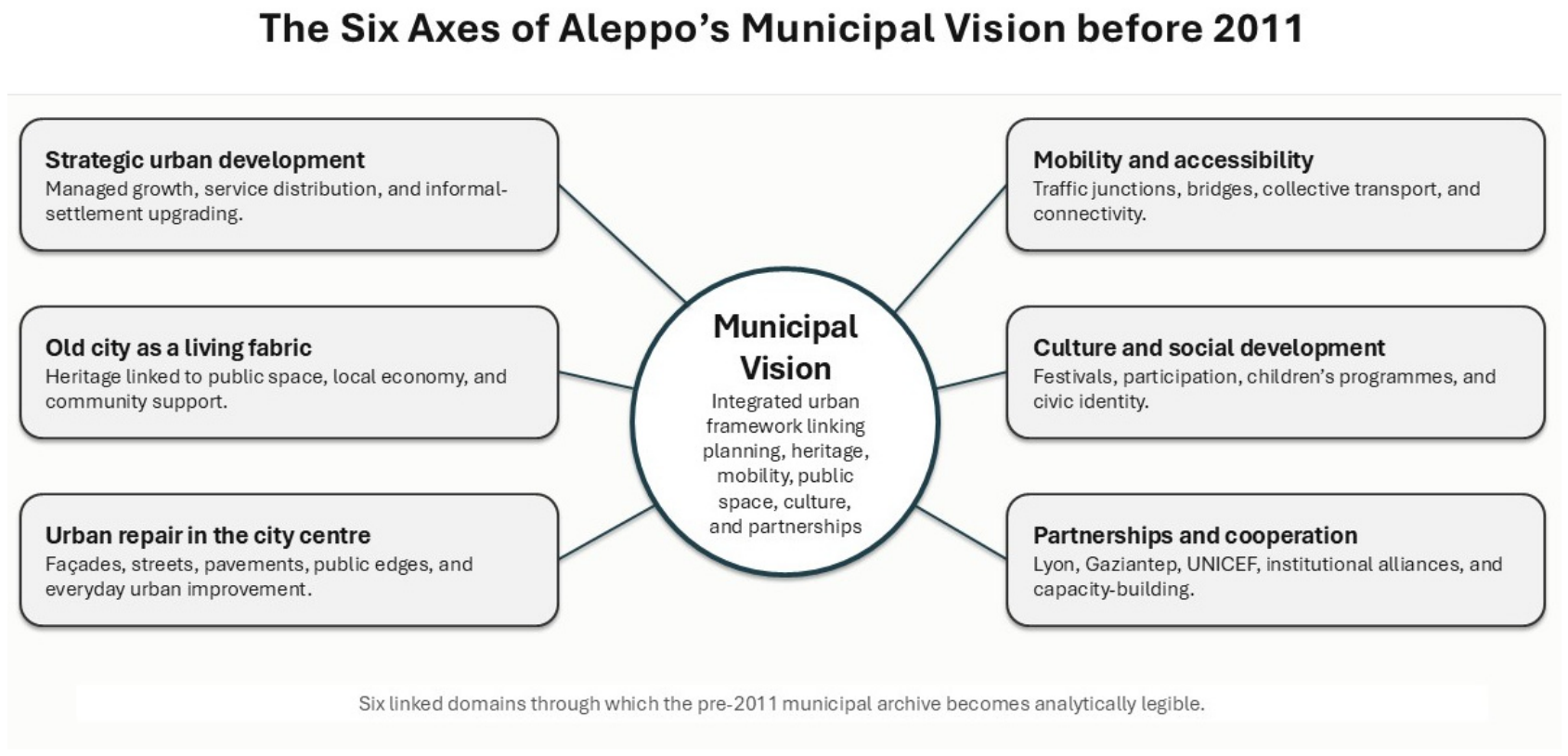
The article starts from the premise that pre-conflict municipal visions can constitute analytically recoverable resources for post-war urban recovery. In Aleppo, the available municipal documents do not simply record past activities; they also reveal how the city was being imagined, prioritised, and reorganised across multiple and interconnected fields of action. Read comparatively, these materials suggest that the municipal vision before 2011 can be reconstructed through six interrelated axes: strategic urban development, spatial planning, and managed urban growth; the old city as a living urban fabric; urban repair in the city centre; mobility and accessibility; culture and social development; and development partnerships and international cooperation. Taken together, these axes indicate that the municipality was beginning to frame Aleppo as a complex urban system requiring coordinated intervention across spatial, social, and institutional domains.
This repositioning matters at three levels. Nationally, it restores a locally generated urban memory that is often absent from Syrian reconstruction debates, which tend to privilege damage assessment, legal mechanisms, financial requirements, and externally driven recovery models. Internationally, it contributes to post-war urban scholarship by shifting attention from reconstruction after rupture to the recovery of interrupted local urban logics. Scientifically, it addresses a gap between heritage studies, urban governance research, and post-war reconstruction scholarship, fields that often remain insufficiently connected in the case of Aleppo. While existing research has generated important insights into destruction, conservation, legal frameworks, participation, and institutional challenges [
17,
18,
19,
20]. However, the pre-2011 municipal vision itself has rarely been examined as an object of inquiry and as a potential recovery framework in its own right.
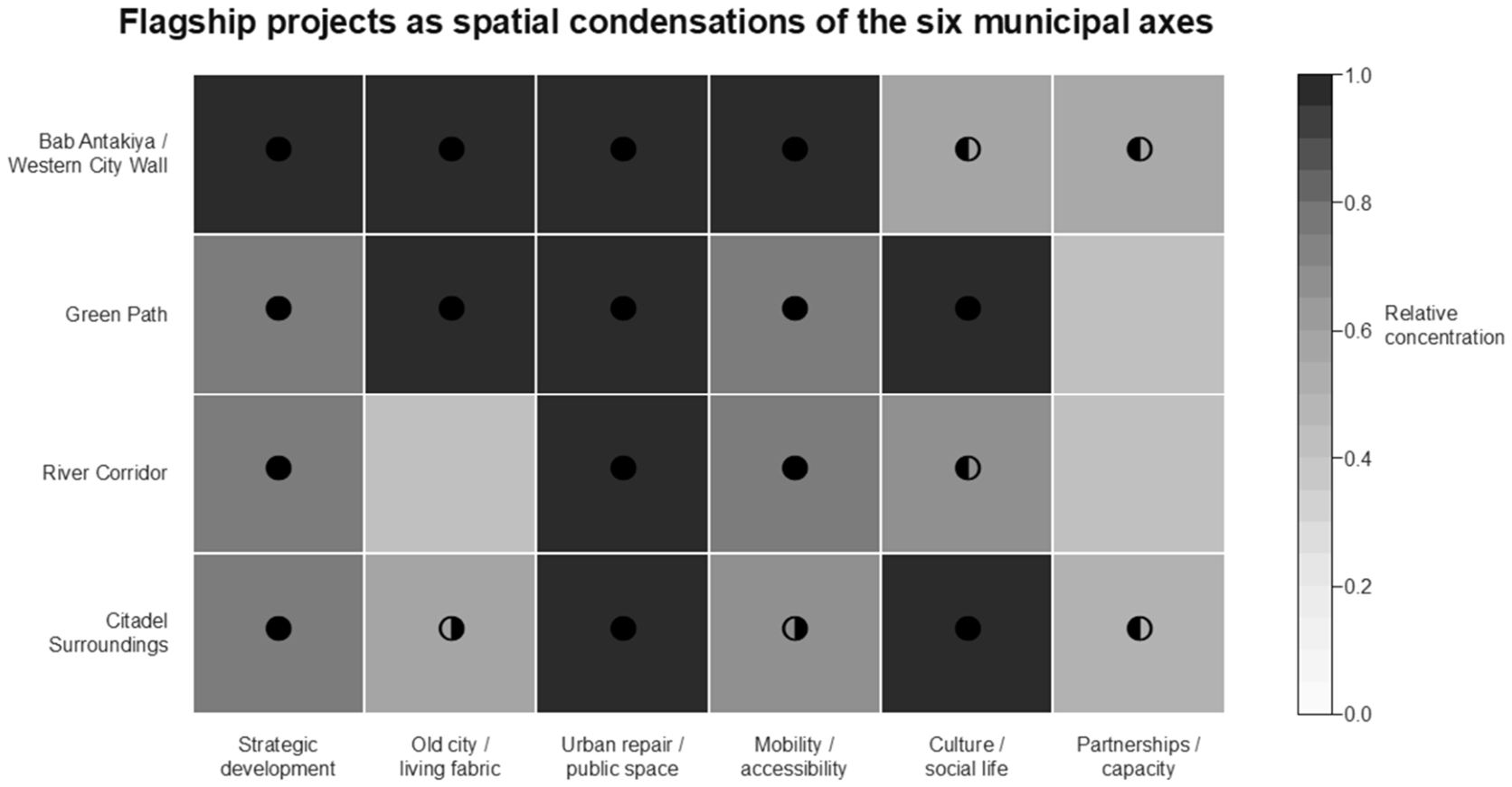
The novelty of this article, therefore, lies not simply in revisiting municipal archives but in developing an analytical framework for reading pre-conflict municipal visions as latent recovery resources. Rather than treating the archive as a passive repository of past projects, the article treats it as evidence of an interrupted municipal urbanism: a partially integrated urban logic through which the city was being reimagined across strategy, sectoral intervention, and flagship spatial projects. In this sense, the study shifts the analytical focus from the archive as a record to the municipal vision as an urban framework. It also moves beyond reading highly visible projects in isolation by showing how they can be understood as spatial condensations of a wider municipal logic.
On this basis, the article addresses three questions: What were the principal components of Aleppo’s municipal vision before 2011? How was this vision translated into strategic priorities, sectoral interventions, and major urban projects? And in what ways can this interrupted vision be re-read today as a framework for post-war urban recovery? By addressing these questions, the article seeks to contribute not only to the historiography of Aleppo but also to a wider debate on how cities emerging from conflict can recover through critical continuity rather than by starting from scratch.
The article contributes to the literature in three ways. First, it conceptualises pre-conflict municipal visions as analytically recoverable resources for post-war recovery in historically layered cities. Second, it demonstrates, through the case of Aleppo, that municipal archives can reveal not merely isolated projects but a broader, partially integrated urban logic connecting planning, heritage, public space, accessibility, socio-cultural activation, and municipal capacity. Third, it proposes a shift in recovery thinking from reconstruction after rupture to recovery through critical continuity, showing that one of the most valuable foundations for rebuilding may lie in the locally produced urban intelligence that was interrupted by conflict.
The remainder of the article is organised as follows. The next section presents the materials and methods, including the documentary corpus, research design, and analytical procedure.
Section 5 then reconstructs Aleppo’s municipal vision through the six axes identified in the source material and examines the flagship projects in their spatial materialisation. The Discussion interprets this vision as a form of interrupted municipal urbanism, examines why it remained incomplete, and considers its implications for post-war recovery. The article concludes by reflecting on the broader relevance of re-reading pre-conflict municipal visions as grounded recovery frameworks in historically layered cities.
3. Conceptual Framework
3.1. From Archive to Municipal Vision
The article begins with a distinction between the archive and the municipal vision. An archive, in the narrow sense, preserves traces of projects, policies, and administrative decisions. A municipal vision, by contrast, refers to the broader urban logic through which such traces can be interpreted as related components of an emerging framework. In Aleppo, the pre-2011 municipal documents do more than list interventions. Read comparatively, they reveal recurring priorities, repeated spatial logics, and cross-sectoral links that together point to a broader municipal way of imagining and reorganising the city.
3.2. Interrupted Municipal Urbanism
This broader logic is conceptualised here as interrupted municipal urbanism. The term refers to a partially formed yet analytically legible urban trajectory through which the municipality was beginning to connect strategic planning, heritage, mobility, public space, socio-cultural activation, and institutional modernisation before that trajectory was disrupted by war. The concept does not imply that Aleppo had reached a fully consolidated model of integrated urban governance. Rather, it captures an intermediate condition: more than fragmentation, but less than a stable and fully institutionalised urban order.
The concept is useful because it avoids two opposite errors. It avoids reducing the pre-2011 archive to scattered municipal initiatives with no deeper coherence. At the same time, it avoids overstating the pre-war moment as if Aleppo had already achieved a finished and exemplary planning model. What the archive reveals is a broader trajectory in formation, but one that remained incomplete, unevenly realized, and institutionally vulnerable.
3.3. Critical Continuity
If interrupted municipal urbanism describes the nature of the pre-war trajectory, critical continuity defines how that trajectory should be approached in relation to post-war recovery. Continuity here does not mean restoring the past unchanged, nor does it imply smooth transmission across rupture. It refers instead to the selective reactivation of meaningful urban relations, principles, and forms of municipal intelligence that remain relevant under post-war conditions.
The adjective critical is essential. The argument is not that Aleppo should revive the pre-2011 municipal agenda as a ready-made blueprint. The archive records both strengths and limitations. Yet it preserves forms of local urban reasoning that are too valuable to ignore. Critical continuity, therefore, offers an alternative both to nostalgic restoration and to reconstruction from zero.
To make the concept operational, critical continuity is treated here as a filtering procedure rather than as a general slogan. Pre-2011 municipal projects, principles, and spatial logics are re-read through the present condition of the city. This filter asks whether each archived element remains spatially present, socially needed, structurally recoverable, institutionally feasible, and compatible with contemporary recovery priorities. The result is not a simple acceptance or rejection of the archive, but a distinction between elements that can be recovered, elements that must be adapted, and elements that should be suspended or considered obsolete under current conditions. See
Table 1.
3.4. Analytical Dimensions
To operationalise this framework, the study interprets the archive through six analytical dimensions: strategic urban development and managed growth; the old city as a living urban fabric; urban repair in the city centre; mobility and accessibility; culture and social development; and development partnerships and international cooperation. These dimensions bridge the gap between concept and documentary evidence. They are not arbitrary themes, but the recurring domains through which the broader municipal urbanism of pre-2011 Aleppo becomes legible.
4. Materials and Methods
4.1. Research Design
This study adopts a qualitative interpretive research design based on pre-2011 municipal documents produced by and for the Aleppo City Council. Its purpose is not to reconstruct an exhaustive administrative history of the municipality, nor to verify the implementation status of every project in a narrowly technical sense. Rather, it seeks to identify the broader urban vision embedded in the municipal material and to assess its relevance for post-war recovery. The documentary corpus is therefore treated not as a simple inventory of past interventions, but as evidence through which a municipal way of thinking about the city can be reconstructed analytically. More specifically, the study reads the archive as the trace of an interrupted municipal urbanism that linked strategic planning, sectoral action, and spatial projects before the rupture of war.
4.2. Source Material
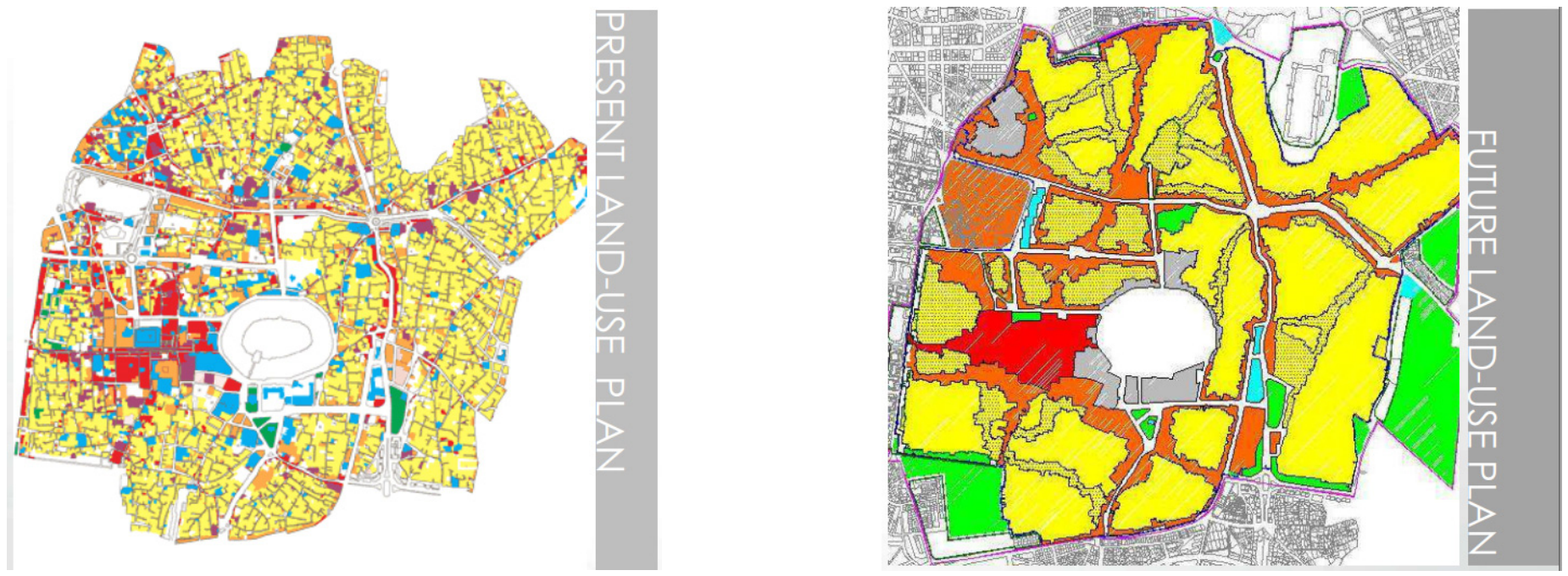
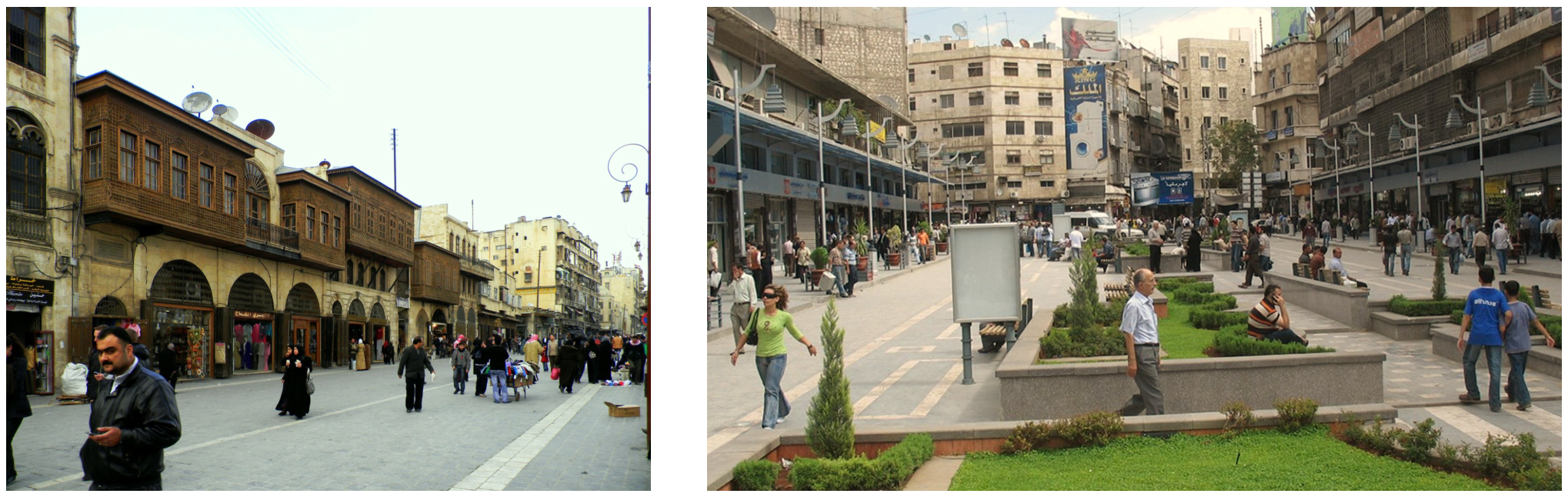
The corpus includes three main categories of source material. The first consists of strategic and programmatic municipal documents, especially the City Council work programme, which sets out declared objectives, strategic axes, administrative restructuring efforts, decentralisation measures, environmental priorities, service-related concerns, and developmental ambitions. The second consists of planning-oriented presentations that position urban projects within broader frameworks such as the City Development Strategy, Madinatuna initiative, urban services, green networks, and the restructuring of central and historic urban areas. The third consists of detailed project material for specific interventions, most notably Bab Antakiya/the Western City Wall, where implementation phases, traffic reorganisation, land-use adjustments, public-space proposals, and heritage-related measures are articulated in greater operational and spatial detail. Taken together, these materials enable movement across scales, from strategic discourse to sectoral translation to project-level spatialisation.
4.3. Case Framing and Analytical Procedure
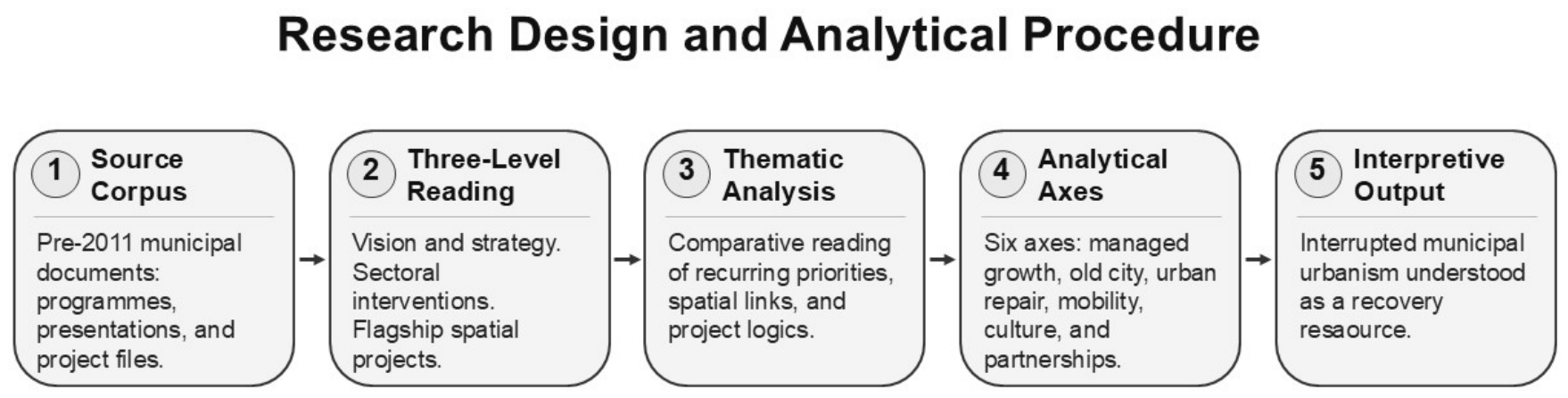
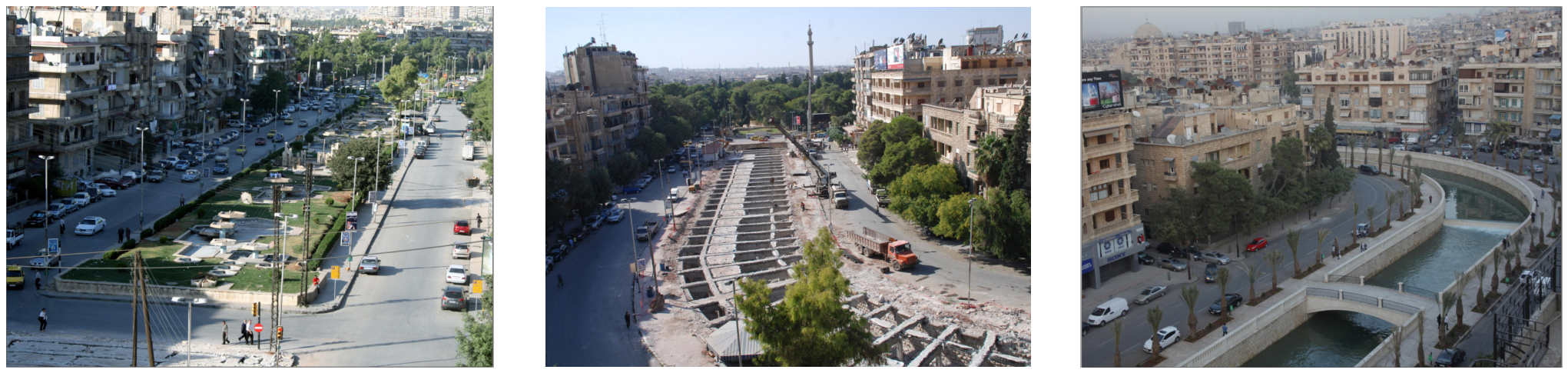
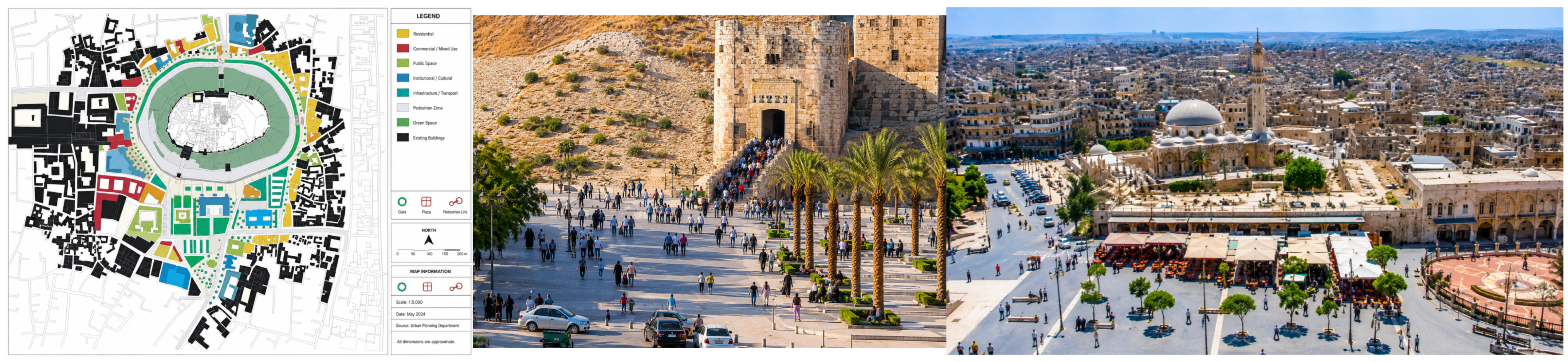
The analysis proceeded through a three-level reading. First, the documents were examined at the level of vision and strategy in order to identify how the municipality framed its role in relation to urban management, planning, decentralisation, environmental improvement, quality of life, and development. Second, they were read at the level of sectoral intervention in order to trace how this vision became visible across domains such as the old city, the city centre, transport, public space, cultural programming, social initiatives, and partnerships. Third, they were examined at the level of flagship projects, where the vision became materially legible in spatial interventions such as Bab Antakiya, the Green Path, the river corridor, and the Citadel surroundings. This three-level procedure was adopted to avoid reducing the municipal vision to either abstract planning rhetoric or a set of visually prominent projects alone.
Analytically, the study relied on comparative thematic reading. Recurring concepts, repeated project references, cross-sectoral linkages, converging spatial priorities, and repeated forms of municipal self-definition were identified across the corpus. The purpose was to make visible not only what projects existed, but also the urban logic that connected them. On that basis, the material was reorganised into six analytical axes that structure
Section 5: (1) strategic urban development, spatial planning, and managed urban growth; (2) the old city as a living urban fabric; (3) urban repair in the city centre; (4) mobility and accessibility; (5) culture and social development; and (6) development partnerships and international cooperation. These axes were not imposed deductively in advance; they were derived from the repeated ways in which the municipality itself framed its priorities, projects, and urban interventions across documents and scales.
Aleppo was selected as a critical case for three reasons. First, it combines an exceptionally layered historic core with a large metropolitan territory, informal urban growth, industrial districts, and major public-space and mobility projects. Second, it preserves an unusually rich municipal archive from the pre-2011 period, allowing the reconstruction of an urban vision across documents, projects, and institutional practices. Third, it experienced severe post-war damage, displacement, and functional fragmentation, making it a relevant case for testing how pre-conflict municipal intelligence can be re-read for recovery rather than treated as a closed historical record. Chronologically, the analysis is organized around three moments: the formation of the municipal vision before 2011; the rupture produced by war, displacement, and large-scale urban damage; and the post-war recovery context in which the pre-2011 municipal vision is reassessed through the concept of critical continuity. This chronology is used as a textual analytical frame rather than as a separate graphical timeline; see
Figure 1.
The manuscript also uses post-war maps and damage information as contextual evidence. These sources do not replace the municipal archive as the main corpus of the study; rather, they allow the pre-2011 vision to be interpreted against the present urban condition. In this sense, damage mapping and functionality mapping serve as a contemporary filter for the article’s core concept of critical continuity. To situate the analysis within Aleppo’s broader post-war urban condition, the manuscript includes two contextual elements.
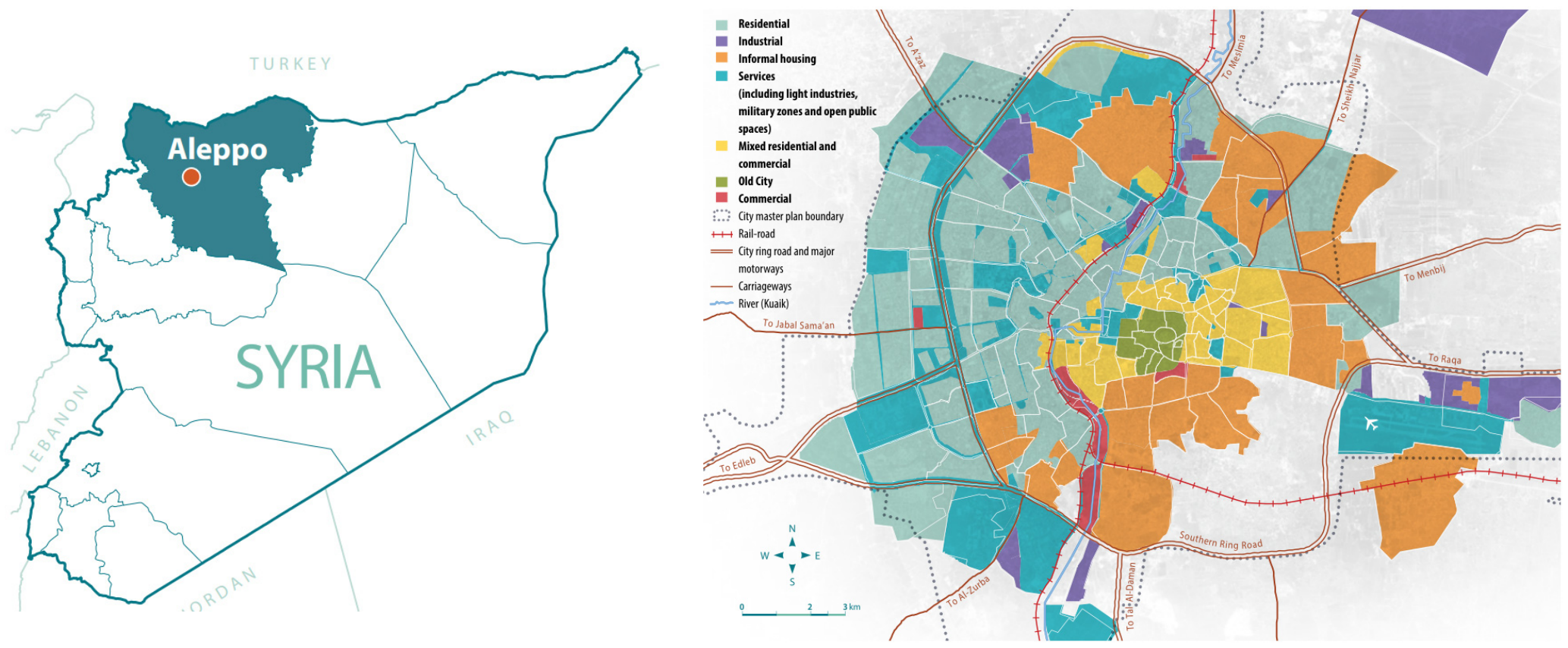
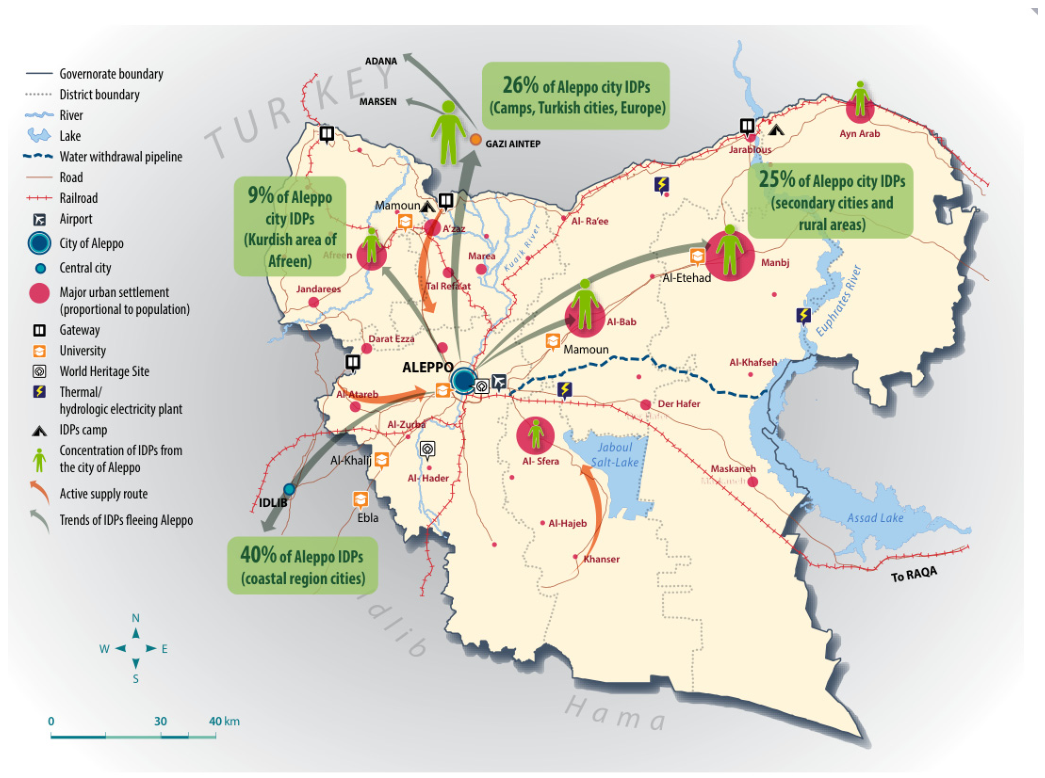
Figure 2 locates Aleppo within its governorate and regional setting, highlighting the city’s strategic position and wider territorial relationships.
Table 2 complements this spatial framing by summarizing recent sectoral damage data for Aleppo Governorate, including damage to housing, schools, hospitals, health centres, mosques, and bakeries. Together, these materials clarify the scale and multi-sectoral nature of destruction and provide the necessary background for reading the pre-2011 municipal vision through the lens of post-war recovery.
These statistics show that the war produced a multi-sectoral pattern of damage across Aleppo Governorate, affecting not only housing but also essential public services, religious buildings, health facilities, schools, hospitals, and bakeries. Housing represents the largest absolute burden, with 179,133 damaged units, including 24,262 completely destroyed units, which indicates the scale of displacement, shelter insecurity, and the need for long-term residential reconstruction. The education sector was also heavily affected, with 1477 damaged schools, representing more than half of the estimated school stock, while 98 health centers and 9 hospitals were damaged, directly reducing the capacity of the city to provide basic healthcare. Damage to 91 bakeries is particularly significant because bakeries are part of the everyday food-supply infrastructure, while the damage to 1118 mosques reflects the impact of the conflict on both religious life and the social fabric of neighbourhoods. Taken together, these figures confirm that recovery in Aleppo cannot be limited to the physical reconstruction of buildings or monuments; it requires an integrated urban recovery strategy linking housing, infrastructure, public services, education, health, food supply, heritage, and local governance.
4.4. Reflexivity, Positionality, and Authorship Bias
Because the second author served as Mayor of Aleppo during the examined period (2003–2011), the study required explicit methodological reflexivity. This position provided privileged access to municipal archives, planning processes, and project documentation, but it also required measures to reduce authorship bias and maintain analytical distance. At the same time, the article acknowledges that several urban challenges exceeded the capacity of Aleppo Municipality during the pre-war period. These included long-standing issues of spatial injustice, informal housing, and rural-to-urban migration, which were not only municipal problems but also symptoms of broader weaknesses in state-level urban policy, territorial governance, and national planning frameworks.
First, the analysis relies primarily on documented material rather than personal recollection. It distinguishes between administrative participation and analytical interpretation by examining how a broader municipal urban vision becomes legible across documents, projects, and repeated institutional priorities. Second, the study adopts an objective thematic reading rather than a project-success narrative. This strategy privileges cross-document relationships and structural patterns over subjective administrative memory. Third, the co-authors critically reviewed the interpretation, questioned assumptions, reformulated claims, and reframed the archive through the concept of interrupted municipal urbanism. This concept was used precisely to avoid presenting the pre-2011 period as a complete or exemplary governance model.
The manuscript therefore acknowledges that the municipal path remained institutionally vulnerable because it depended on political will, leadership continuity, and Syria’s highly centralized administrative system. It also recognizes that the municipality operated within structural constraints that limited its ability to address deep-rooted problems such as uneven development, informal settlement expansion, and socio-spatial inequality. The methodological challenge is not to eliminate proximity to the archive, which is impossible in this case, but to transform insider access into critically examined and analytically transparent knowledge.
4.5. Scope and Limitations
This study is exploratory and interpretive in scope. It does not seek statistical generalisation, nor does it treat municipal presentations as transparent evidence of full implementation. Some projects are described in considerable detail, while others remain at the conceptual, strategic packaging, or projected intervention level. Repetition across documents may indicate both actual importance and the municipality’s desire to foreground specific initiatives as emblematic. For this reason, the article reads the corpus primarily as evidence of how the municipality understood the city, how it prioritised interventions, and how it attempted to connect sectors, spaces, and institutional tools within a broader urban framework. This is precisely what makes the archive valuable for the present study: it reveals a partially formed municipal urbanism whose interruption remains analytically significant for recovery thinking today; see
Figure 3.
6. Discussion
6.1. From Municipal Archive to Interrupted Municipal Urbanism
The Results show that Aleppo’s pre-2011 municipal material can be read as more than a fragmented archive of local initiatives. Across strategic programming, sectoral interventions, and flagship projects, the documents reveal a partially integrated municipal urbanism through which the city was being reimagined in relation to strategic development, historic fabric, city-centre repair, mobility, socio-cultural activation, and partnership-based capacity. This finding matters because it shifts the analytical focus away from the assumption that recovery begins only after destruction. In the case of Aleppo, recovery can also be thought through what had already been locally imagined before the rupture of war.
This is where the six-axis framework becomes especially useful. Taken together, the axes do not merely classify municipal activities; they reveal the internal structure of an urban logic already in formation. Strategic planning linked growth management to service provision and territorial differentiation. The old city was framed as a living urban fabric rather than a detached heritage enclave. Urban repair in the city centre pointed to a cumulative improvement in everyday public environments. Mobility initiatives treated accessibility as a structuring component of urban quality. Cultural and social programmes linked urban development to civic life and public activation. Development partnerships expanded municipal capacity through wider networks of exchange and cooperation. Read together, these six fields show that the municipality was beginning to think of Aleppo as a connected urban system rather than as a set of isolated sectors.
6.2. Why the Vision Remained Incomplete
At the same time, the article does not suggest that Aleppo’s pre-2011 municipal vision had consolidated into a fully stable or resilient model of urban governance. One of the central findings of this study is precisely that the vision remained incomplete, not because it lacked ambition, but because its strategic and spatial intelligence was developing within Syria’s highly centralized presidential administrative system. In that system, the Ministry of Local Administration and the central government maintained a dominant role over local authorities, limiting municipalities’ autonomy in planning, budgeting, institutional continuity, and long-term implementation. As a result, local urban initiatives could expand in scope and sophistication without being secured in a governance structure capable of protecting them from abrupt administrative or political reversal. The municipal reform moment in Aleppo, therefore, represented a meaningful advance in urban thinking, but not a fully empowered local governance transformation.
This structural limitation became especially visible in the relationship between municipal initiative and central authority. Even where the city council developed strategic planning tools, district-based service reorganization, urban observatory mechanisms, partnership-building, and a broader city-development agenda, these efforts remained vulnerable to central intervention. The mayor and council members could be dismissed by the central government, and shifts in local leadership could interrupt ongoing plans and redirect municipal priorities in accordance with the vision imposed from Damascus. In this sense, the incompleteness of the municipal vision was not merely technical or managerial; it was rooted in an administrative order that prevented local institutions across the country from developing into fully empowered and durable actors in urban governance. The case of Aleppo shows how a promising municipal trajectory could be weakened when local continuity depended less on institutional autonomy than on political tolerance from the centre.
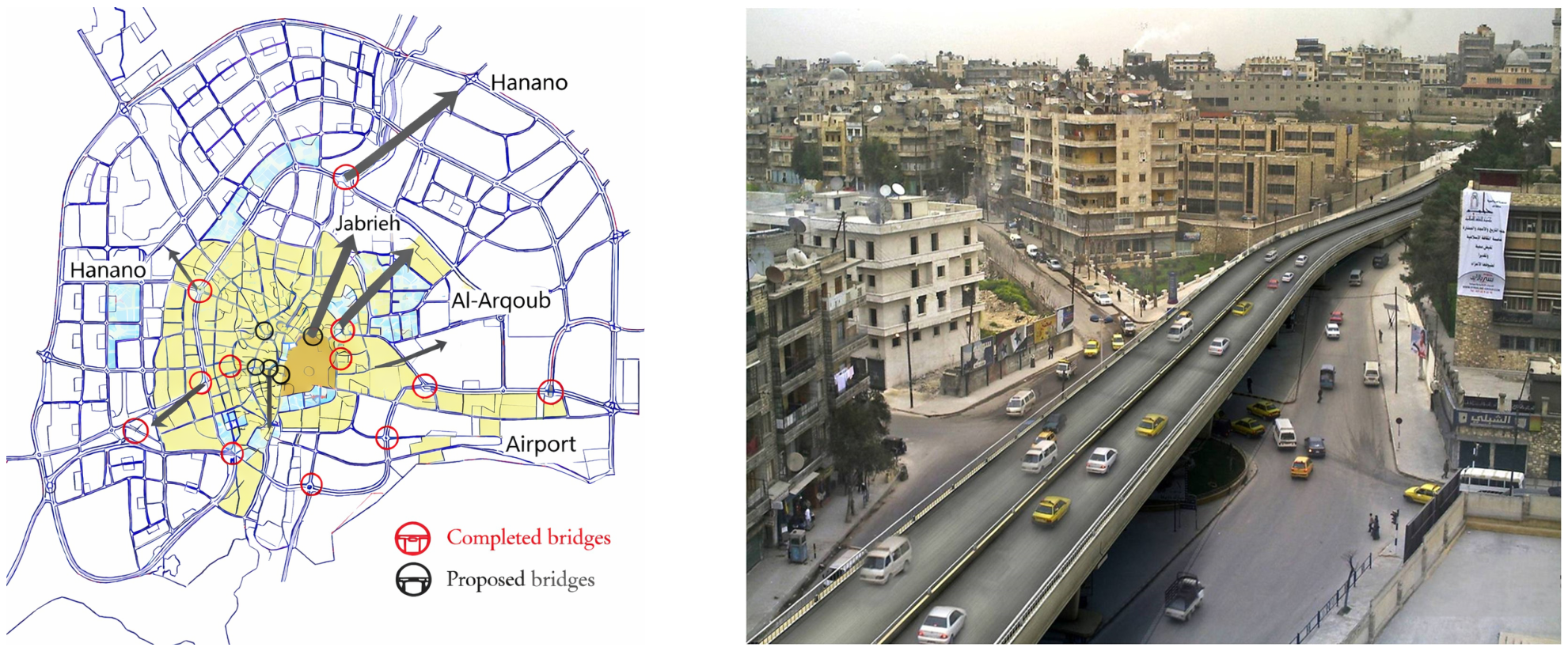
This fragility can be read through the six axes themselves. The first axis, strategic urban development and managed growth, generated substantial planning outputs, including the reframing of the master plan and the production of thirty detailed urban plans, but these advances were not secured within a durable institutional order capable of guaranteeing continuity and local autonomy. The second and third axes, concerning the old city and city-centre repair, were more spatially visible and materially grounded, yet they progressed unevenly across sites and relied more on project momentum than on a routinized municipal delivery system. The fourth axis, mobility and accessibility, clearly expanded the municipality’s planning horizon, but some of its most ambitious dimensions remained at the level of studies, projected schemes, and future-oriented coordination rather than sustained implementation. The fifth axis, culture and social development, widened the meaning of urban policy considerably, yet much of its vitality depended on episodic activation and project-based participation rather than institutionalized civic structures. The sixth axis, development partnerships and international cooperation, enlarged the municipality’s technical and strategic horizon, but it also exposed parts of the urban agenda to dependence on cooperation environments that could not compensate for the absence of secure local institutional power. Seen from this perspective, the incompleteness of the vision lay not in the absence of urban intelligence, but in the gap between strategic imagination and durable local empowerment. This is why the vision should be treated neither as a nostalgic pre-war ideal nor as a ready-made reconstruction blueprint, but as a meaningful yet unfinished trajectory whose interruption reveals both the potential and the limits of municipal urbanism under a strongly centralized state structure.
For current recovery, this governance limitation means that the municipal vision cannot be implemented today as a single top-down master project. A more realistic approach would be to translate the six axes into micro-scale and phased governance mechanisms: neighbourhood recovery cells, municipal-university observatories, transparent damage-priority matrices, pilot public-space repairs, heritage-and-livelihood clusters in the Old City, and international technical partnerships focused on capacity building rather than externally imposed redevelopment. Such mechanisms would not remove the structural constraints of centralization, but they would create implementable channels through which critical continuity could operate under present institutional conditions.
6.3. Post-War Damage as a Filter for Critical Continuity
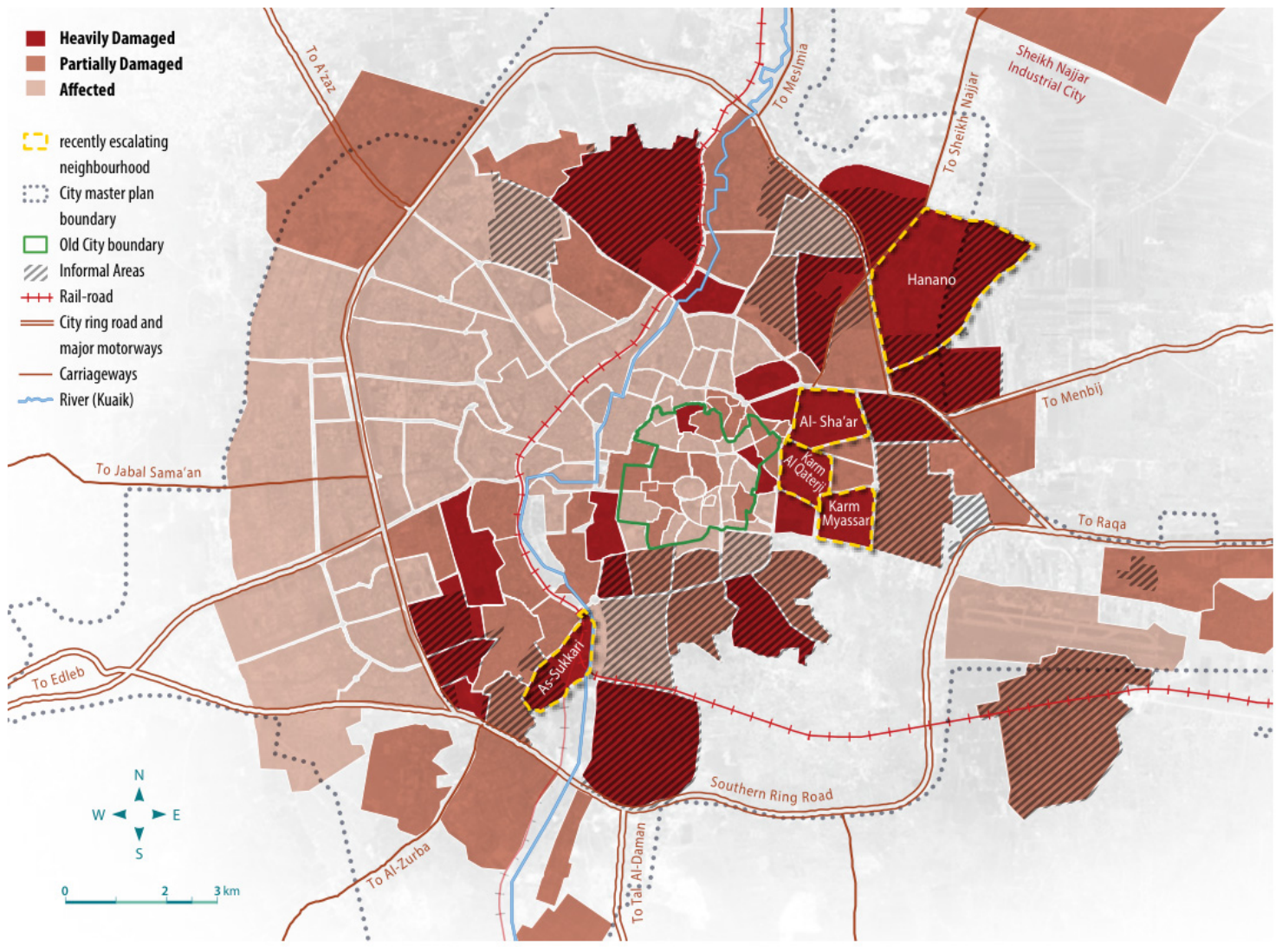
Post-war damage is used as a filter for critical continuity. The pre-2011 municipal vision is therefore not treated as a blueprint to be restored, but as a set of urban logics to be reassessed according to current destruction, displacement, functionality, and heritage loss. It is assessed against the current geography of destruction, displacement, urban functionality, and heritage loss. The UN-Habitat City Profile identifies a city divided by severe differences in damage, service provision, accessibility, and governance capacity. It reports heavily damaged neighbourhoods, partially damaged neighbourhoods, non-functional areas, and severe impacts on housing, infrastructure, education, health, and the Ancient City. Recent sectoral damage assessment for Aleppo Governorate further confirms that the recovery challenge includes not only monuments, but also housing, hospitals, health centres, schools, mosques, bakeries, and other everyday infrastructures; see
Figure 16.
This evidence changes how the municipal archive should be read. Projects such as Bab Antakiya, the Citadel surroundings, the Green Path, and city-centre repair remain analytically valuable, but their present relevance depends on whether they can reconnect damaged urban fabrics, restore accessibility, support livelihoods, and reactivate public life under current conditions. Critical continuity therefore operates through comparison between the pre-war urban logic and the post-war damage map: where the two overlap, the archive can guide repair; where conditions have radically changed, the archive must be adapted or suspended.
6.4. Re-Reading the Vision for Post-War Recovery
The value of the municipal vision for the present lies in its capacity to be re-read as a framework for post-war urban recovery. This does not mean mechanically reviving the pre-war municipal agenda, nor does it assume that the conditions in Aleppo today are identical to those before 2011. Rather, it means recognizing that the six axes preserve a locally generated urban logic that can still orient recovery by showing what kinds of relations, priorities, and forms of coordination were already being imagined before the rupture of war. The pre-war vision matters, therefore, not because it was complete, but because it reveals a direction of urban thinking that remains usable.
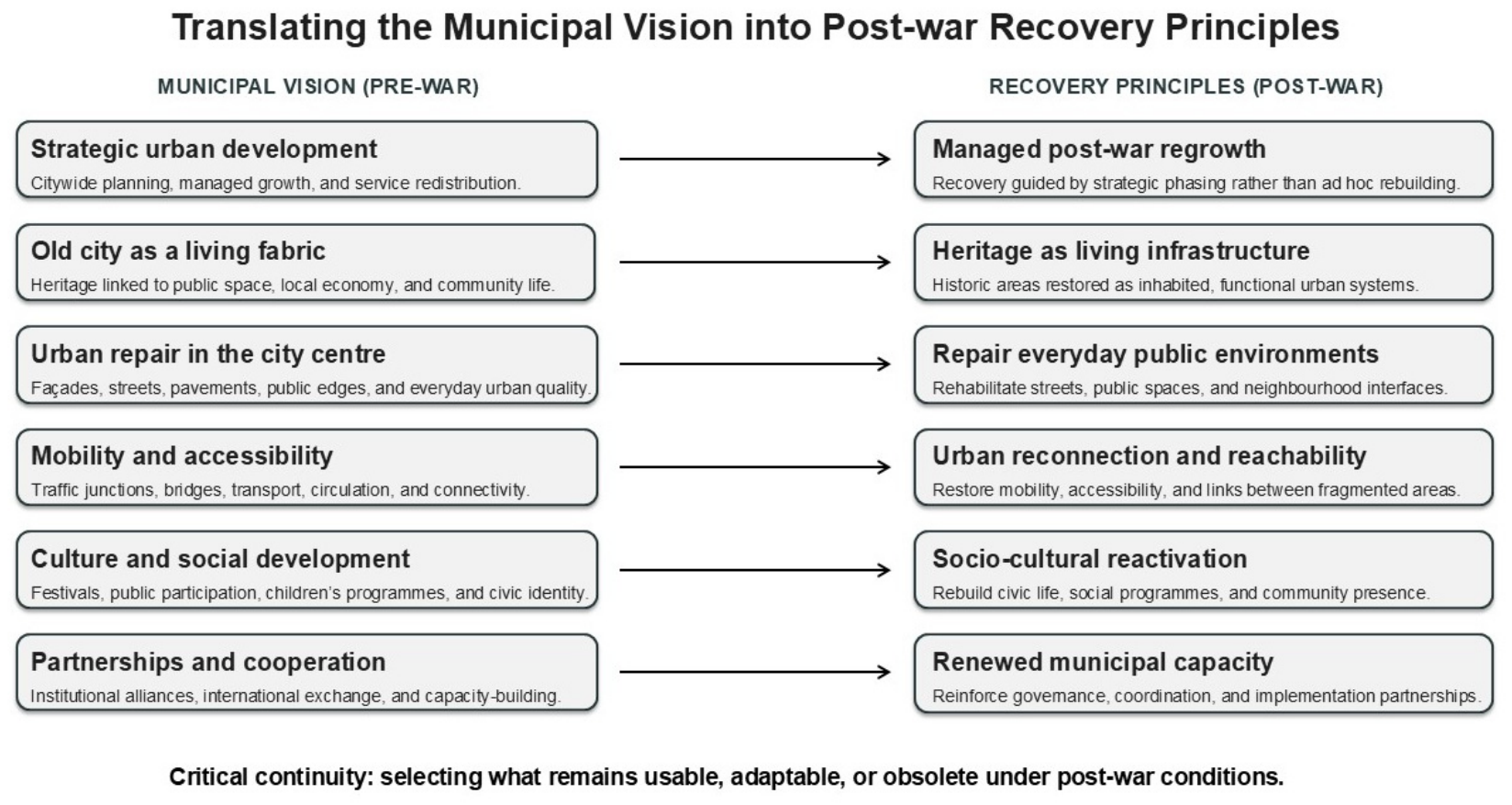
Each of the six axes suggests a corresponding recovery principle. The first axis points toward recovery through strategic planning and managed regrowth rather than ad hoc reconstruction. The second suggests that heritage should be treated as a living urban fabric rather than as a detached object of preservation. The third indicates that recovery must include the repair of everyday streets, façades, and public environments, not only emblematic monuments. The fourth highlights accessibility and urban reconnection as central recovery issues rather than secondary technical ones. The fifth shows that recovery must include socio-cultural reactivation, public life, and support for vulnerable groups. The sixth demonstrates that partnerships and renewed municipal capacity are essential to rebuilding durable urban coordination. In this sense, the six axes are not simply retrospective categories; they can be translated into a recovery grammar grounded in Aleppo’s own interrupted planning intelligence; see
Figure 17.
6.5. Recovery Through Critical Continuity
This leads to the article’s main interpretive conclusion: Aleppo’s recovery is best approached through critical continuity rather than either nostalgic restoration or tabula rasa reconstruction [
60,
61]. Critical continuity means identifying which locally generated urban logics remain valuable [
62], which institutional weaknesses need correction, and which planning principles can be reworked under present post-war conditions. It begins from the recognition that war interrupted a municipal urbanism already in formation, and that rebuilding from zero risks erases not only the damaged fabric but also the city’s own unfinished urban intelligence.
The comparison with other post-war cities reinforces this position. Warsaw illustrates how reconstruction can mobilize memory and urban identity, but also how recovery may become selective and politically framed. Beirut illustrates the risks of reconstruction led by capital-intensive redevelopment that can weaken social continuity and everyday urban life. Aleppo’s situation requires a different approach: neither literal reconstruction of the past nor tabula-rasa redevelopment, but a selective and evidence-based reactivation of locally generated planning intelligence.
Future technical work can strengthen this approach by combining the municipal archive with GIS, satellite-based damage assessment, and remote sensing methods such as Sentinel-1 InSAR. Such tools are particularly relevant in post-conflict settings where field access is uneven and where structural deformation, infrastructure vulnerability, and large-scale damage must be assessed before recovery interventions are prioritized. In the present article, these methods are identified as future extensions rather than as part of the empirical methodology, which remains qualitative and archive-based.
The broader significance of this argument extends beyond Aleppo. In historically layered cities affected by war, disaster, or political rupture, recovery debates often focus on damage, legal frameworks, or technical rebuilding after crisis, while overlooking the urban trajectories that had already been evolving before interruption. The Aleppo case suggests that these interrupted trajectories deserve closer attention because they may preserve locally grounded principles of continuity, heritage integration, public-space linkage, mobility, civic life, and municipal responsibility. The contribution of the present study, therefore, lies not only in reinterpreting Aleppo’s municipal archive but also in proposing that pre-conflict municipal visions can be studied as latent recovery frameworks in cities where continuity between past, present, and future remains central to urban recovery.
7. Conclusions
This article has argued that Aleppo’s municipal vision before 2011 should be understood not merely as a record of local projects, but as an interrupted municipal urbanism whose relevance extends into the post-war present. By reading municipal material across strategy, sectoral intervention, and flagship urban projects, the study has shown that the city council was beginning to articulate a broader and partially integrated urban logic linking strategic urban development, the living fabric of the old city, city-centre repair, mobility restructuring, socio-cultural activation, and partnership-based urban capacity.
The article contributes to the literature in three main ways. First, it repositions pre-conflict municipal visions as analytically valuable sources for post-war urban research. Second, it shows that Aleppo’s pre-2011 vision was not a fragmented set of isolated projects, but a broader municipal framework visible across multiple scales, from strategic planning and institutional reorientation to sectoral interventions and flagship urban projects. Third, it advances the idea of recovery through critical continuity, arguing that post-war recovery can benefit from identifying and reworking the locally produced planning intelligence that was interrupted by the conflict.
At the same time, the study has shown that the value of this vision lies not in its completeness. The pre-2011 municipal trajectory remained institutionally fragile. Although the municipality widened its urban scope and increasingly connected planning, heritage, public space, movement, civic life, and development, these efforts did not consolidate into a sufficiently durable governance structure. The significance of the case, therefore, lies in a double lesson: Aleppo’s municipal vision before 2011 preserves a locally grounded urban logic that remains relevant for recovery, but it also reveals the institutional conditions under which such a logic may remain vulnerable.
From the standpoint of post-war urban recovery, the article suggests that rebuilding Aleppo should not be framed only as the technical repair of damaged structures or the isolated restoration of monuments and sites. The six analytical dimensions identified in the municipal vision point toward a broader recovery agenda: reconnecting strategic planning to managed urban growth, treating the old city as a living urban fabric, repairing everyday public environments, restoring accessibility and urban reachability, reactivating socio-cultural life, and rebuilding municipal capacity through renewed institutional and partnership frameworks. This is why Aleppo should not start from scratch. One of the most valuable foundations for its future lies in the interrupted urban logic that the war did not erase entirely.
More broadly, the article suggests that historically layered cities affected by war, disaster, or political rupture may contain, within their pre-conflict archives, not only records of what existed, but also latent frameworks for thinking about what could still be recovered, translated, and reworked. Municipal archives are often used to document institutional history or illustrate past projects, but they can also serve as analytical sources for reconstructing interrupted urban trajectories. In settings where war or political rupture has broken continuity, such archives may provide one of the few grounded ways to reconnect recovery thinking with the city’s own prior planning intelligence. In this sense, Aleppo offers more than a historical case. It offers a grounded way to ask how a city might recover as a city, not merely as a collection of rebuilt sites.
Future research should develop this framework in three directions. First, municipal archives should be combined with GIS-based damage mapping and field verification to identify which pre-war projects, corridors, and public-space networks remain physically recoverable. Second, technical studies using remote sensing, structural assessment, and infrastructure monitoring should evaluate the safety and resilience of damaged assets before rehabilitation. Third, participatory research with residents, heritage actors, municipal professionals, and displaced communities should test whether the principles of critical continuity correspond to present social needs and local perceptions of recovery. These future studies would move the framework from interpretive analysis toward implementable recovery planning.