1. Introduction
The mainstream approach in transportation planning is grounded in utilitarian reasoning, which prioritizes maximizing overall utility by assuming that serving the needs of the “average user” yields the most significant societal benefit [
1,
2,
3]. This claim is most evident in the widespread use of cost–benefit analysis, which evaluates transportation interventions primarily based on metrics such as travel time savings and willingness-to-pay. While useful for resource allocation, this approach often masks the uneven distribution of benefits and burdens, systematically disadvantaging certain social groups [
4].
Specifically, the Utilitarian Approach overlooks the diverse transportation needs of different population groups as it is not concerned with accessibility as a value in itself, but merely as a means to facilitate utility-generating trips [
2]. This orientation leads to aggregate measures, while disregarding the distribution of accessibility [
4]. By reinforcing a one-size-fits-all approach to infrastructure and services, this logic sidelines the needs of women, children, older adults, and individuals with limited mobility, whose daily patterns and constraints differ significantly from the statistical norm [
5,
6,
7,
8]. Flattening differences into averages, this model fails to recognize and respond to the lived realities of many users. As a result, decisions that maximize total welfare may inadvertently reinforce exclusion and inequality, even under the pretense of neutrality.
These theoretical critiques are supported by empirical evidence. Public transit systems are often designed around an “ideal passenger”, typically a financially secure, able-bodied male commuter working standard hour [
9]. As a result, those who fall outside this norm, such as women concerned about personal safety, parents traveling with strollers, people with disabilities, and low-income riders, often face numerous barriers, including high costs, limited accessibility, and, in some cases, discriminatory treatment. Consequently, these users may be forced to navigate difficult trade-offs between fulfilling essential family responsibilities and securing reliable access to transportation.
In response to these limitations, alternative ethical frameworks emphasize that fairness in transportation should be measured by an individual’s ability to participate in essential out-of-home activities [
10]. Similarly, when applying the “Capability Approach”, developed by Amartya Sen and Martha Nussbaum, mobility should be assessed based on individuals’ fundamental freedoms and opportunities [
11,
12]. According to this view, access to transportation is not a goal in itself, but a condition for achieving broader capabilities, such as employment, education, and caregiving. Hence, equitable transportation is that which enables individuals to lead lives they have reason to value.
To challenge the utilitarian paradigm, a shift from resource or utility-based evaluations toward a mid-fare approach has been proposed [
10]. This justice-theoretical framework focuses on the ability of individuals to translate transportation resources into meaningful opportunities for participation in daily activities. Rather than measuring how many kilometers can be traveled or how much enjoyment a trip provides, the mid-fare perspective highlights whether an individual can realistically access meaningful opportunities within their specific circumstances. Access to transportation determines the extent to which individuals can participate in economic, educational, and social life. Therefore, equity in transportation requires systems tailored to the varied life situations of different population groups, ensuring accessibility aligns with actual abilities [
13,
14,
15].
The rise of emerging technologies such as Autonomous Mobility on Demand (AMoD) systems offers a crucial opportunity to reevaluate the core principles of transportation design and planning [
14,
15]. Unlike traditional transportation modes, AMoD services integrate vehicle automation with shared mobility and real-time responsiveness, providing dynamic, adaptable, and user-focused transportation solutions [
16]. Their ability to tailor mobility services to the specific needs and travel patterns of different users can also enhance system efficiency and accessibility, allowing vehicles to operate more effectively and potentially reducing unnecessary travel and energy consumption [
17,
18]. As a result, AMoD systems can potentially reduce fleet sizes, lower travel expenses, ease congestion, and mitigate environmental impacts while improving accessibility, especially in regions underserved by traditional transit [
17,
19]. These environmental benefits may be further strengthened when such fleets operate using zero-emission propulsion technologies, for example battery electric vehicles (BEVs) or hydrogen-based fuel cell vehicles (FCVs), which are increasingly considered viable solutions for high-intensity shared mobility fleets [
20,
21], with evidence indicating that under appropriately designed deployment and pricing condition such systems can achieve substantial reductions in energy use and air pollutant emissions [
19]. In addition, AMoD systems may help address the first/last-mile problem and reduce car dependency, thereby contributing to more sustainable and efficient urban environments [
20,
22].
However, even with these marked advantages, there is no guarantee that this future service will operate in a way that ensures equal opportunities across different population groups [
14,
15]. Alongside technological and operational considerations, the deployment of autonomous mobility systems also raises important regulatory and governance challenges. In particular, questions regarding responsibility and liability in the event of road incidents remain an important issue in the literature on autonomous vehicles [
23]. These institutional aspects may influence public trust, regulatory acceptance, and ultimately the equitable deployment of AMoD services across different populations.
Without deliberate planning and design focused on fairness, AMoD systems risk replicating the inequalities embedded in existing transport models, continuing to privilege the average user. Bridging this gap requires future AMoD systems to adopt an inclusive approach, enabling them to function as tools for social inclusion rather than exclusion.
Clustering analysis is based on measuring the similarity between individuals in the population using a distance function applied to the selected indicators. A variety of clustering techniques have been employed.
This perspective is further substantiated as transportation behavior cannot be adequately accounted for by income levels alone [
24]. An analysis of trip chains in the Greater Toronto and Hamilton Area reveals substantial variation in mobility patterns within the same income bracket, shaped by factors such as gender, car ownership, and the characteristics of the built environment. For instance, women in low-income households without access to a private vehicle frequently undertake complex, caregiving-related journeys via public transportation. In contrast, men in similar households are more likely to make direct car commutes. These findings demonstrate the limitations of average-based planning approaches and highlight the importance of incorporating differentiated mobility needs and the diverse experiences of various user groups into transport policy and design. The Capability Approach offers a particularly valuable perspective for the development of AMoD systems, as it shifts attention from aggregate travel behavior to the structural conditions that enable or constrain individual freedoms.
In empirical applications, operationalizing the Capability Approach in transportation requires identifying relevant capabilities and developing group-specific indicators that reflect the diverse needs and constraints of different population groups [
11,
12]. While commonly used indicators such as age and gender provide valuable insights, they do not fully capture the complexity of individuals’ mobility needs. More nuanced indicators, such as access to private and public transport, offer a more comprehensive understanding. For example, in Portugal, low-income populations are often compelled to rely on private vehicles due to poor accessibility to public transport, thereby exacerbating their financial burden [
25].
Similar accessibility inequalities have also been documented in other national contexts. For example, research conducted in the United States [
26] shows that disadvantaged populations, such as older adults, non-drivers, and residents of non-metropolitan areas, often experience lower access to public transport and essential destinations. These disparities highlight the broader challenge of transport disadvantages and its implications for social inclusion and equitable access to opportunities [
27]. A systematic review by [
28], covering studies from countries such as Canada and China, similarly identified persistent inequalities in public transport accessibility among older adults, with lower levels of accessibility often observed in peripheral and less central areas. These findings suggest that transport disadvantages are a widespread issue and highlight the importance of promoting more socially inclusive and equitable accessibility in transport planning.
Income level is a crucial factor in transportation analysis, as economic opportunities influence mobility behavior and higher income levels are associated with a greater adoption of multimodal transport applications, particularly in large urban areas [
29]. This trend enhances users’ travel efficiency by fostering better planning, integrating transport modes, and providing greater flexibility in their daily commutes.
Income-based distinctions are particularly important in transportation analyses, as they help uncover the service potential for socially disadvantaged groups. For example, older women with low incomes demonstrated a high level of awareness regarding electric vehicles, yet their limited financial resources posed a significant barrier to adoption [
30]. Each indicator can be considered on its own, but it is often helpful to combine several indicators, particularly through clustering analysis.
Clustering analysis is based on measuring the similarity between individuals in the population using a distance function applied to the selected indicators. A variety of clustering techniques have been employed in transportation behavior research to identify meaningful population segments. Variants of the K-Means algorithm are among the most commonly used, as demonstrated in several studies [
25,
30,
31,
32]. Hierarchical clustering has also been applied, for example, by [
30,
33], the latter primarily to determine the optimal number of clusters. Density-based clustering methods, including hierarchical density-based approaches (HDBSCAN), have also gained traction [
34].
The different methods have their advantages and disadvantages, but all require selecting a criterion that defines when two individuals or their actions are considered similar. As not all variables are continuous, defining proximity between individuals is more complex. For example, gender is typically a binary variable, while employment status is a categorical variable. In such cases, one approach is to use distance functions that are not purely geometric, such as Gower distance [
35], which can handle a mix of variable types, or Jaccard distance, which is suited for binary data. An alternative approach involves transforming all attributes, including quantitative, binary, and categorical, into continuous representations. This enables the use of methods that map individuals into continuous geometric spaces, such as UMAP and t-SNE [
36], which preserve structural relationships in the data. Additionally, deep learning techniques, such as Autoencoders (AEs) [
37], can learn compact latent representations that capture underlying behavioral patterns in a data-driven manner.
This paper bridges the gap between behavior-based evidence on disadvantaged groups and their potential mobility behavior under AMoD by combining population segmentation with the analysis of daily activity and travel patterns derived from large-scale travel survey data to understand how emerging technologies may affect such groups.
We thus contribute to the literature in four ways. First, we identify previously overlooked potential AMoD user segments and latent demand, highlighting new market shares that may emerge as automated and personalized mobility becomes available to populations currently constrained by limited transport opportunities. Second, we propose a scalable, data-driven population segmentation framework, presented in
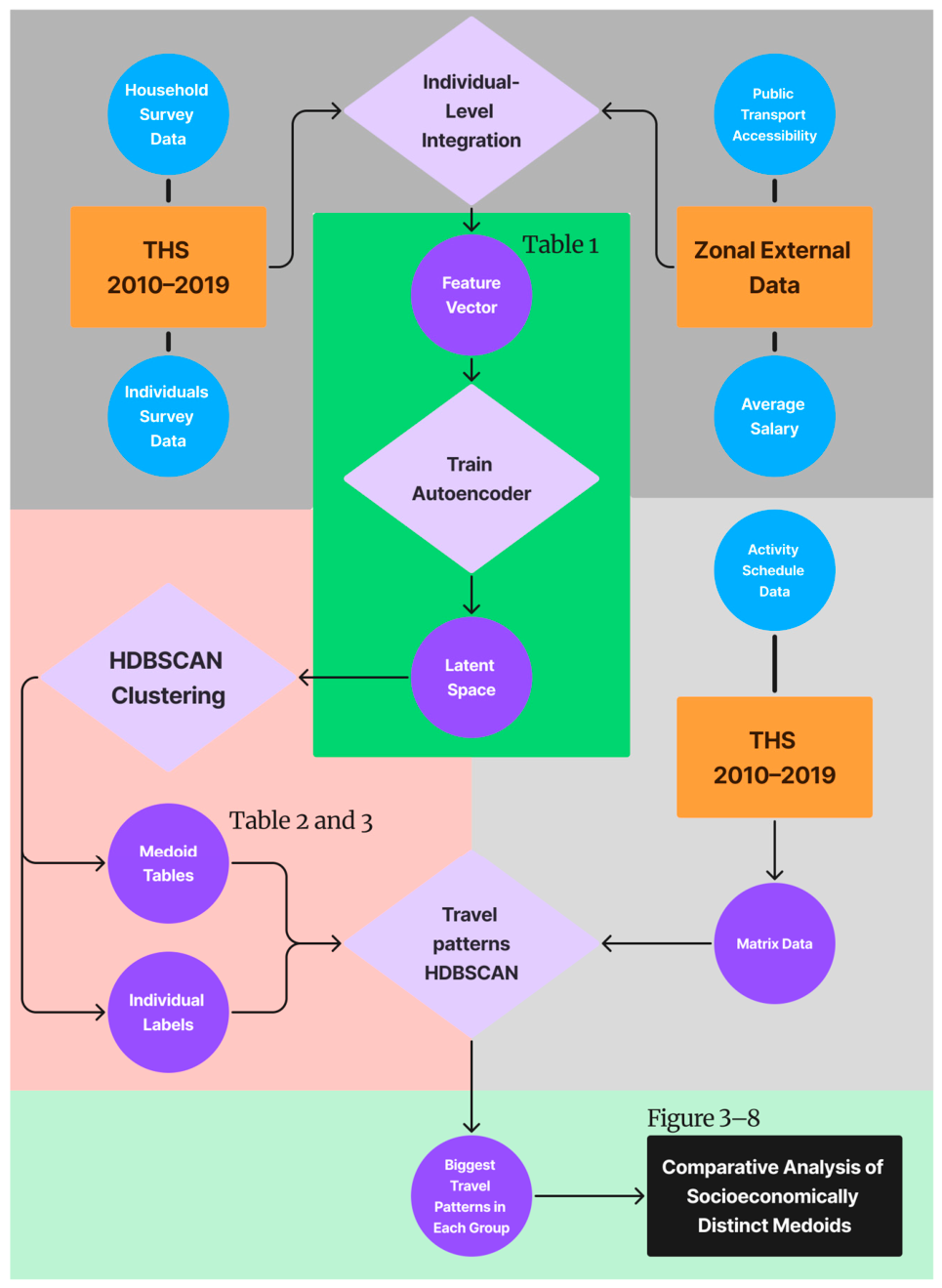
Section 2.1, which combines an Autoencoder for representation learning with HDBSCAN clustering to identify population groups based on heterogeneous socioeconomic and transport opportunity variables. Third, we provide evidence on how personalized AMoD could reduce transport-related social gaps, by showing which groups are most constrained today and which mobility opportunities could plausibly expand under tailored on-demand automation. Fourth, we provide large-scale empirical evidence using four Israeli Travel Habits Surveys (2010–2019) covering four metropolitan areas. The scale and diversity of the dataset enable the identification of rare and vulnerable population groups that are often underrepresented in smaller travel surveys.
To explore transportation justice considerations in the design of fair AMoD services, we analyze and compare travel patterns of different population groups using advanced segmentation; the analysis focuses on users with low accessibility and limited economic opportunities. To this end, we examine four large-scale Travel Habits Surveys (THS) conducted in Israel between 2010 and 2019 in the four major metropolitan areas: (1) Jerusalem, (2) Tel Aviv, (3) Haifa, and (4) Be’er Sheva. The consolidated 5 database comprises data from over 129,000 individuals, recorded over 169,000 travel days represented as daily activity logs. The rest of this paper is structured as follows.
Section 2 presents the methodology, including the population segmentation and travel pattern analysis.
Section 3 describes the results of the clustering and travel behavior analysis.
Section 4 discusses the implications of the findings for transportation justice and AMoD service design with key insights.
3. Results
The methodology identified four distinct clusters for children aged 0–8 and four clusters for those aged 9–16. The medoids of these clusters are presented in
Table 2. Across all child clusters, we observe that those associated with high family income tend to have low accessibility to public transportation. However, they exhibit high accessibility to private cars, provided that the household owns at least one vehicle. In contrast, the medoids of low-income children are characterized by zero car ownership.
As a validity check, we observe that clusters representing children consistently include the attributes “Unemployed” for employment status and “<12 years” for education, which is self-evident. If such patterns did not appear, it could indicate a flaw in the methodological process. The A-1 and A-3 groups of children are characterized by low income, high accessibility to public transportation, and low accessibility to private vehicles. The main difference between the two groups is the gender of the children.
Figure 3,
Figure 4,
Figure 5,
Figure 6,
Figure 7 and
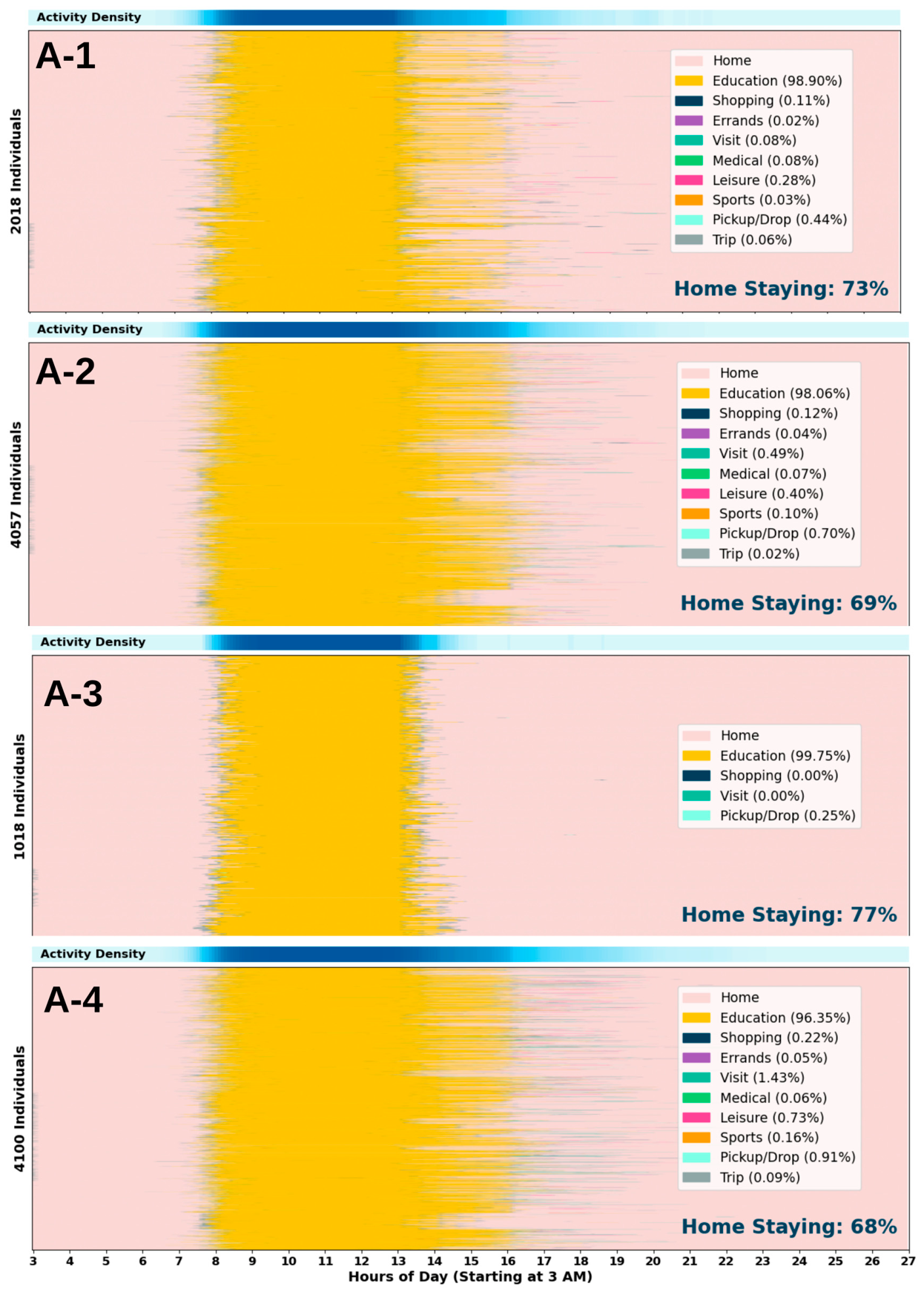
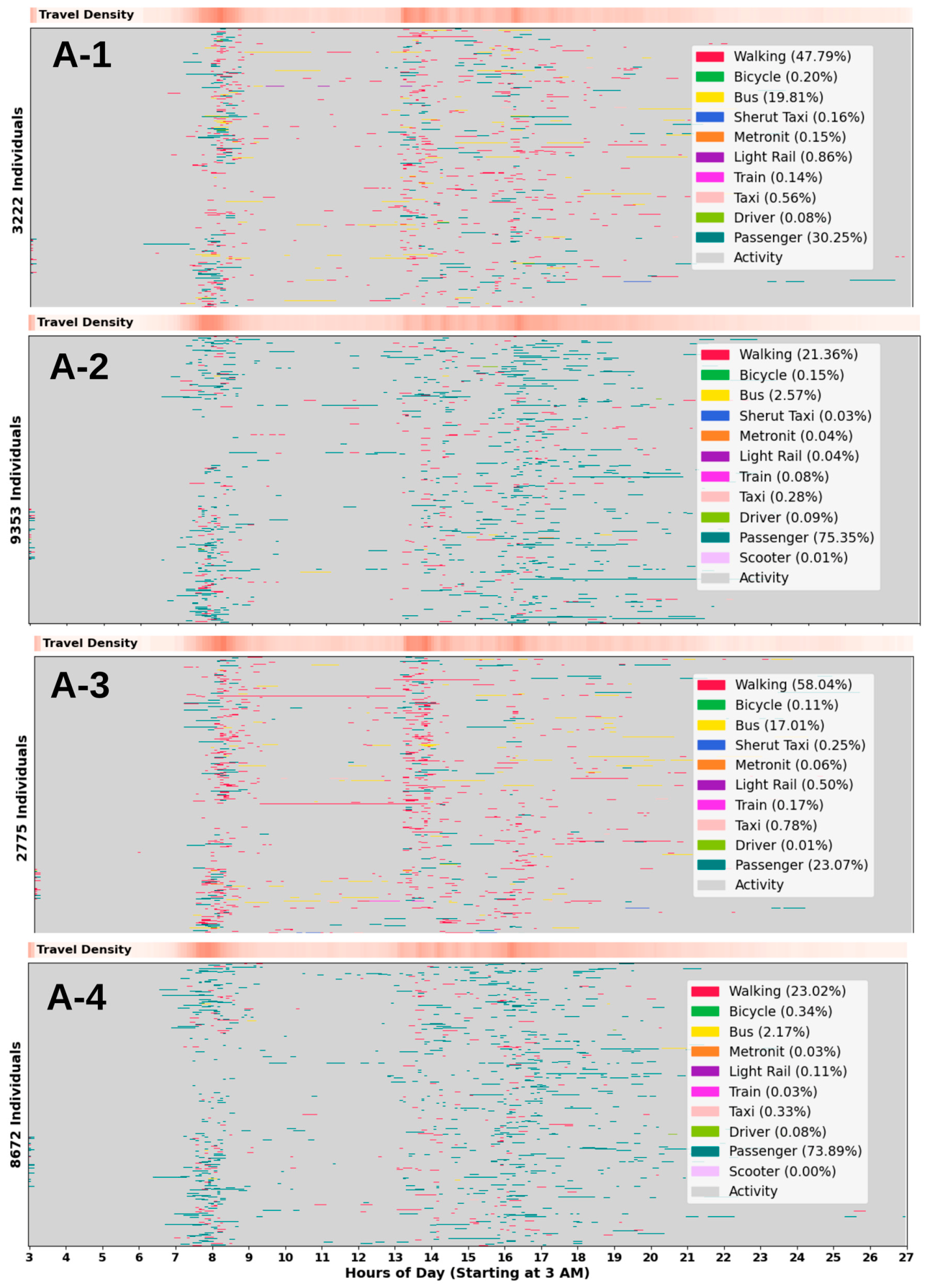
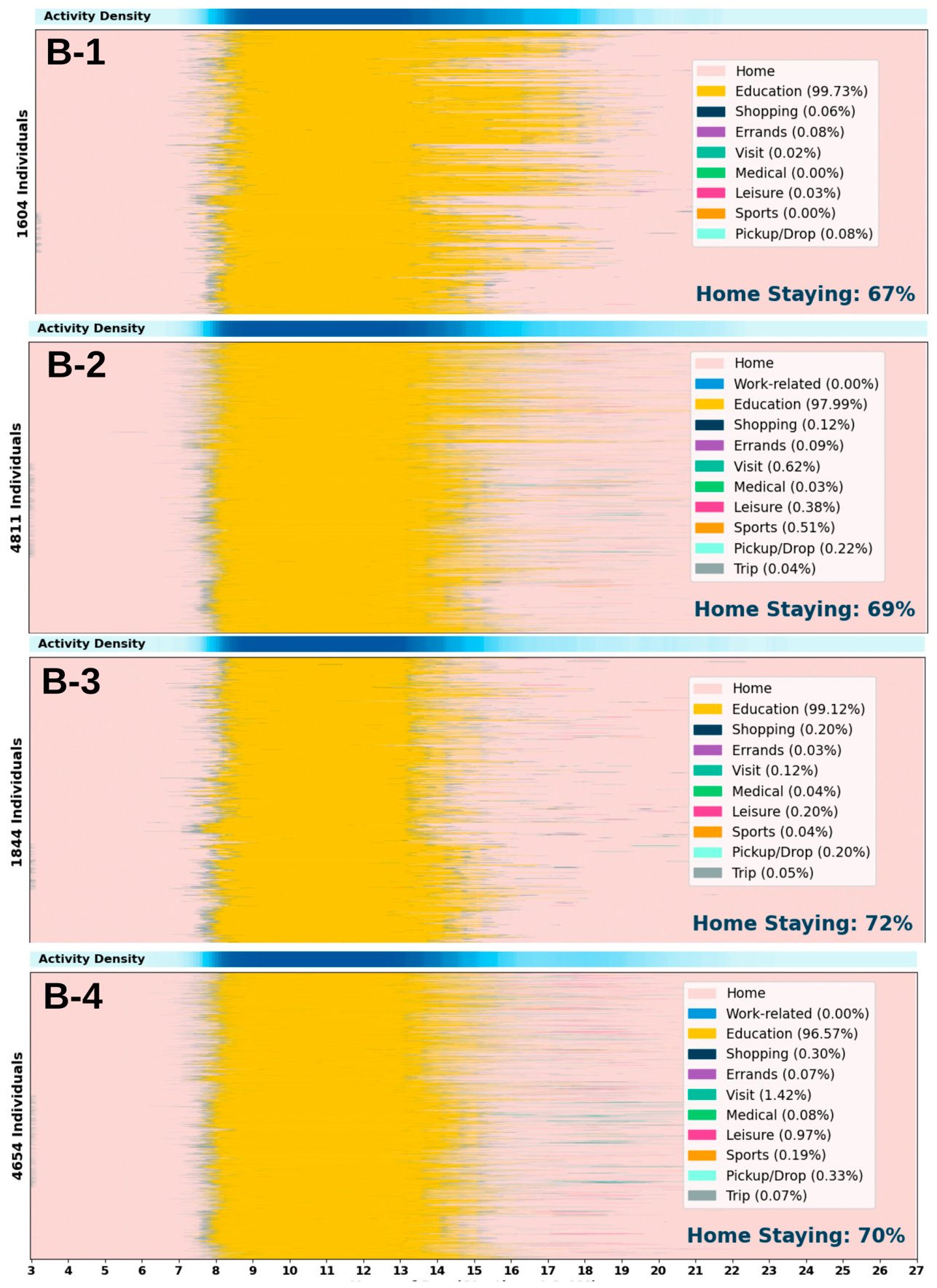
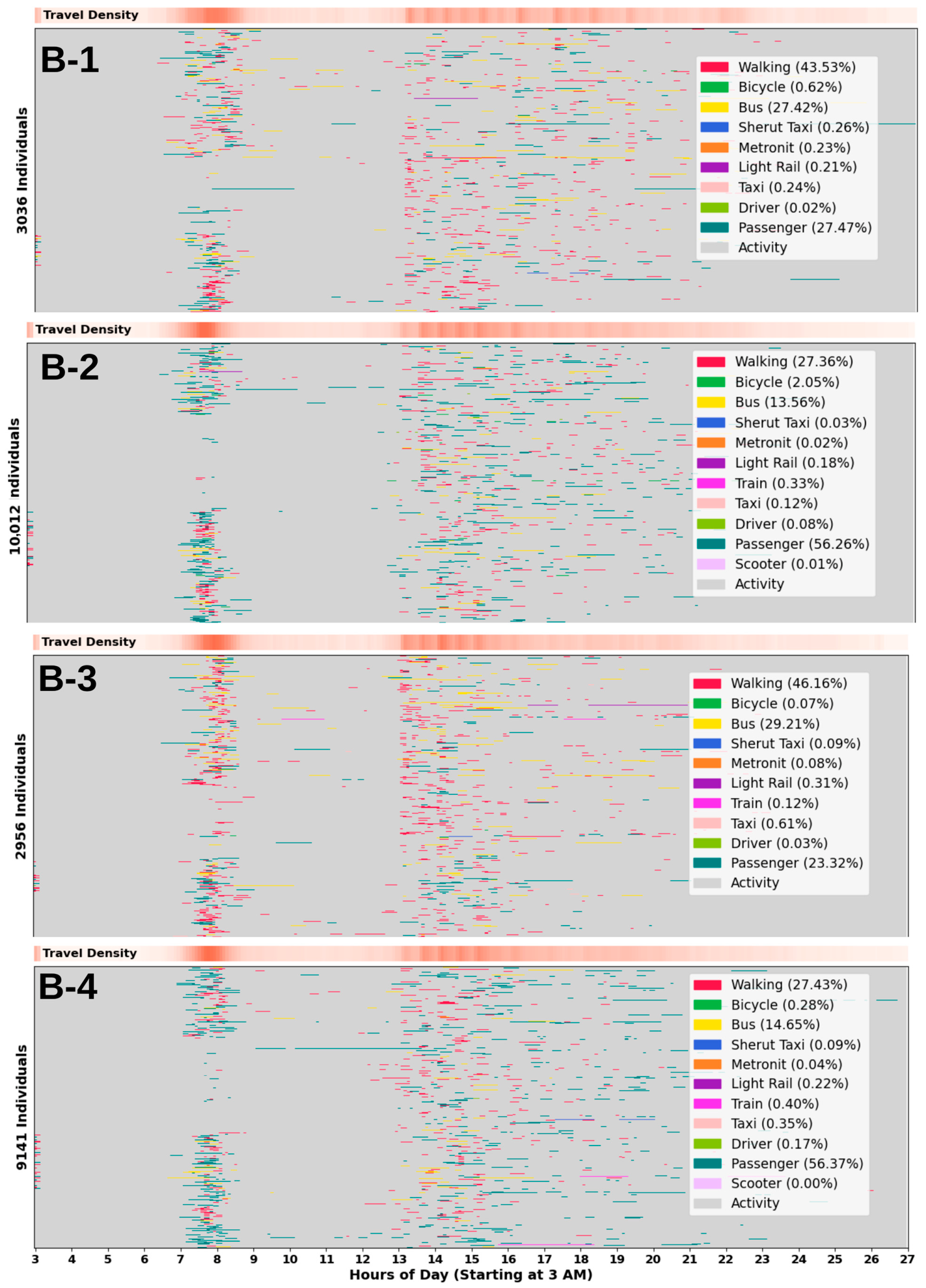
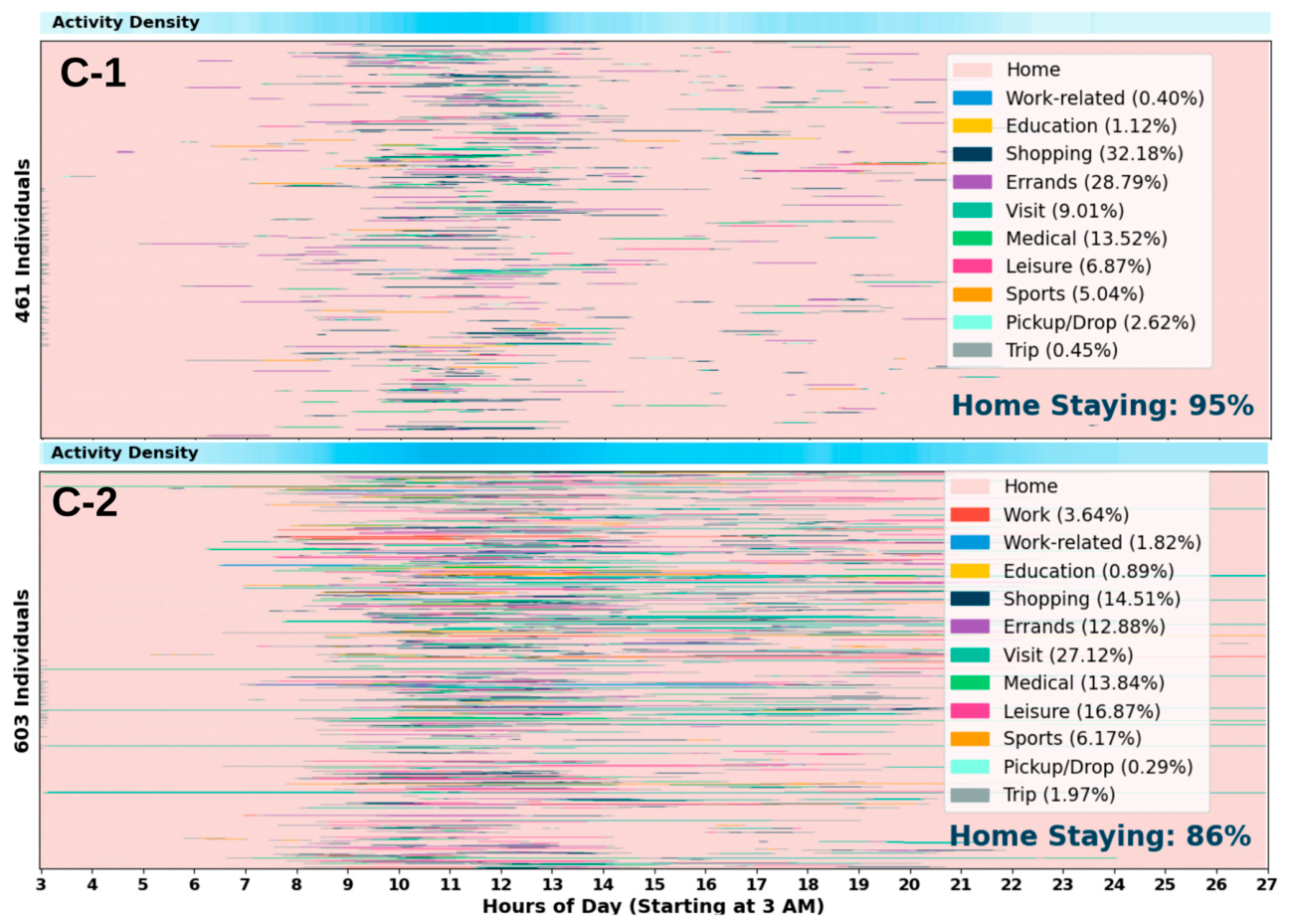
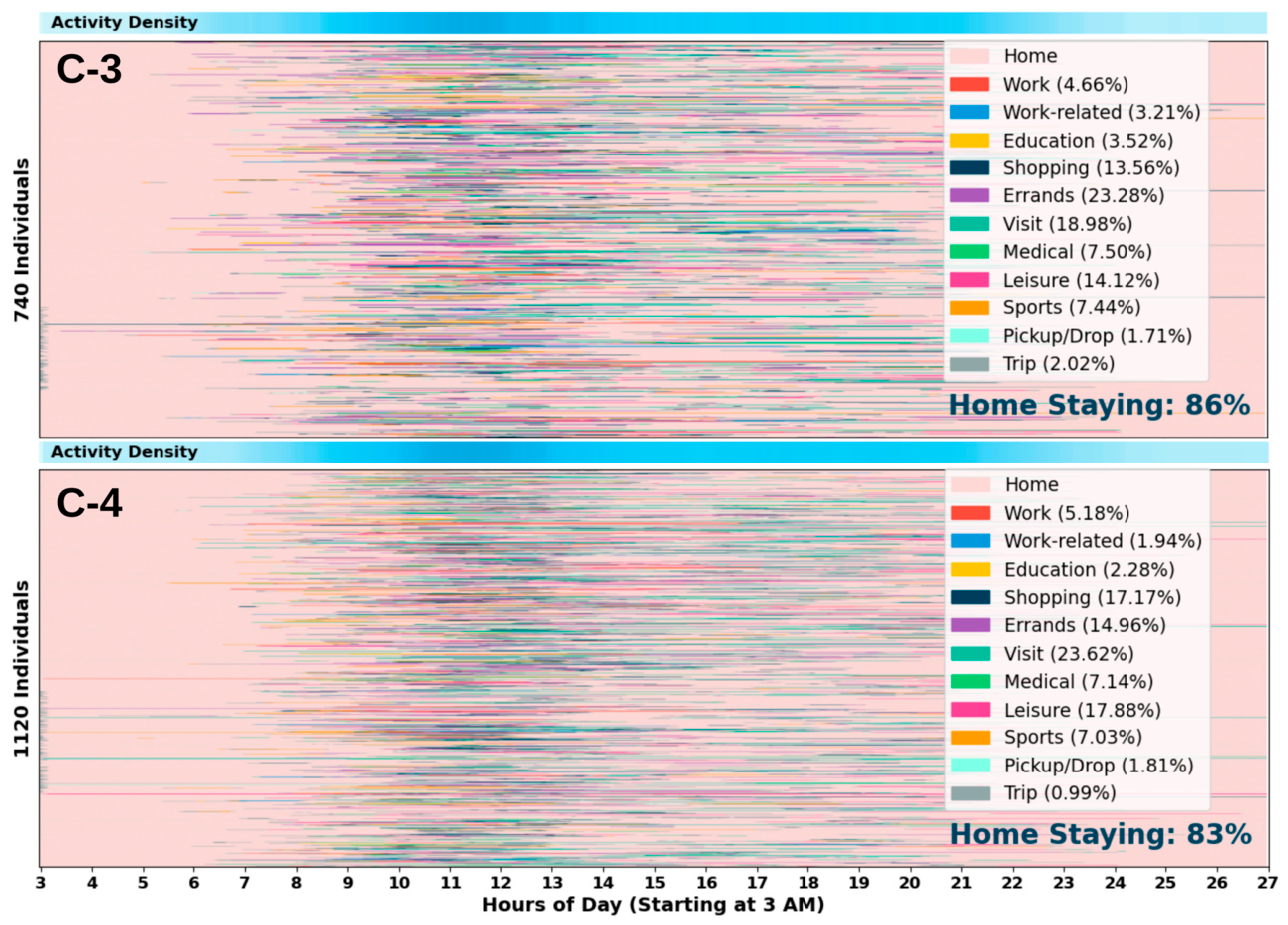
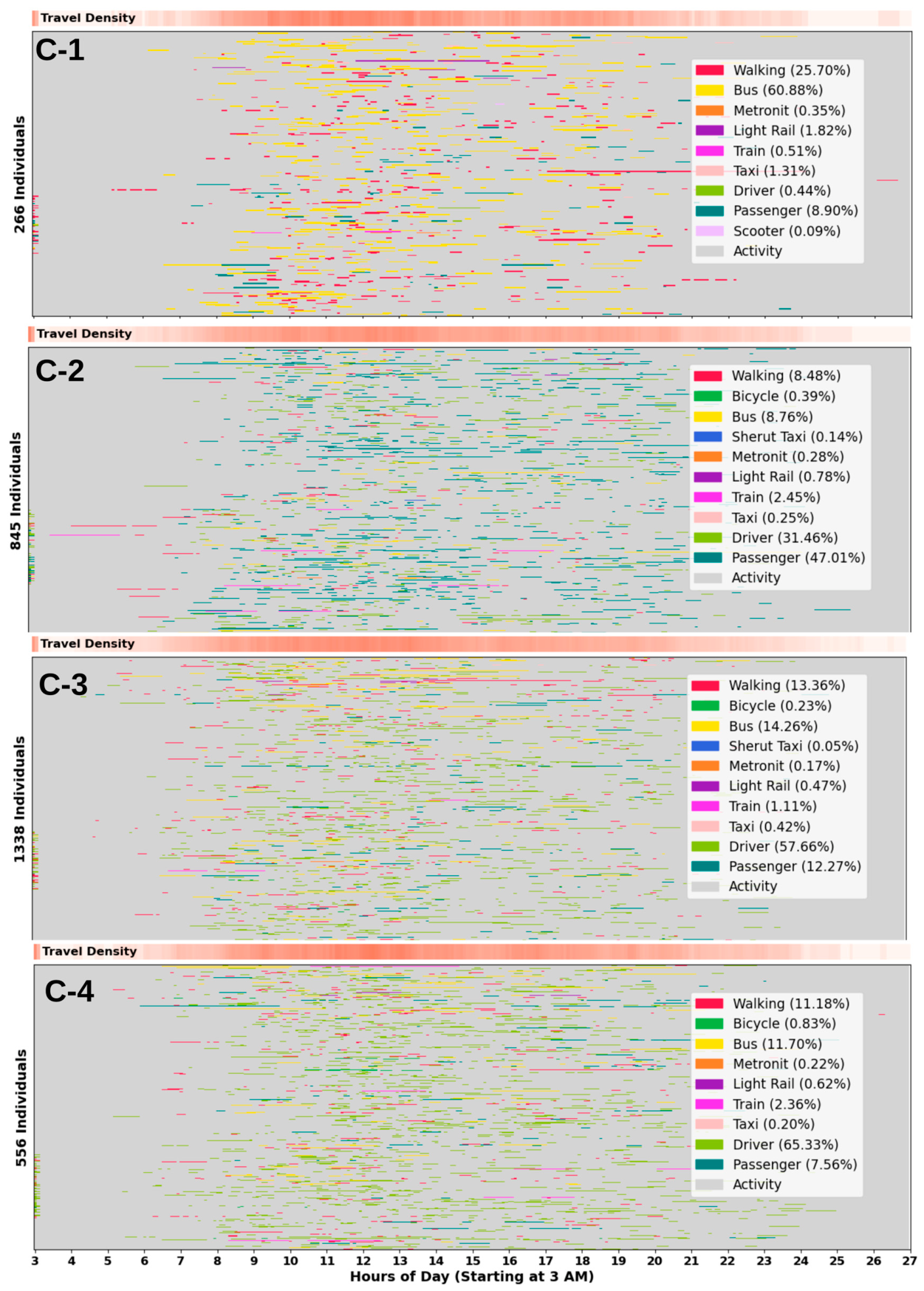
Figure 8 in this section visualize daily activity and travel mode patterns at the individual level. In these figures, each row on the vertical axis represents a single individual, while the horizontal axis represents time of day in 5-min intervals. The colors indicate the type of activity or travel mode performed at each time interval. In addition, a horizontal bar displayed above each figure summarizes the temporal intensity of out-of-home activity or travel. In activity figures, darker or more saturated segments indicate time intervals in which a larger share of individuals is engaged in activities outside the home. In travel mode figures, the bar reflects the overall intensity of travel across individuals at each time interval. The legend associated with each figure reports the share of total daily time (in percentage) allocated to each activity type or travel mode within the population group. This provides an aggregate indication of the relative prevalence of different activities or modes across the group.
When examining the travel patterns of children in these groups, it appears that the main destination for travel is educational programs. According to
Figure 3, most educational activities begin around 8:00 a.m. and end around 1:00 p.m., with a “tail” on the girls’ group (A-1) who also attend formal care settings between 1:00 p.m. and 4:00 p.m.
In contrast, in groups A-2 and A-4, which are characterized by high income, low accessibility to public transportation, and high accessibility to private vehicles, there is a trend toward a higher proportion of activities between 1:00 p.m. and 4:00 p.m., which is reflected in a more intense yellow coloring at those times in
Figure 3. The four groups of children also engage in non-educational activities, mainly in the evenings, but in low-income groups, they are seen less often, as it is more common to stay home after school.
When examining the patterns on A-1 to A-4 groups, it can be seen that among children from low-income households, the rate of staying at home is higher: 77% of boys and 73% of girls stay home after school. In contrast, among children from high-income households, the rate of staying at home is 68–69%.
Among children from high-income families, afternoon activities such as visiting friends and participating in clubs are common. In contrast, boys from families with low socioeconomic status are characterized by a low rate of participation in afternoon activities. When examining the travel patterns of these population groups, it can be seen that children from low-income families tend to travel during three prominent time windows throughout the day: around 8:00 a.m., 1:00 p.m., and to a lesser extent at 4:00 p.m. In low-income families (A-1 and A-3), the use of walking among children as the main mode of transportation is particularly prominent (represented by the red color in
Figure 4). Overall, 47% of girls’ travel time and 58% of boys’ travel time are dedicated to walking, mainly during these hours.
In contrast, among children from high-income families (A-2 and A-4), a distinct pattern emerges, characterized by the extensive use of private vehicles (represented by the blue color in
Figure 4), which accounts for over 70% of the group’s total travel time. After 4:00 p.m., walking is almost non-existent, and private car use clearly dominates. Walking appears to be limited to the three main time windows identified earlier. In addition, in high-income families, bus use is extremely rare, less than 2.5% of total travel time, compared with rates of 17–19.8% among boys and girls from low-income families. This can be explained by the partial and sometimes problematic availability of the public transportation system, which leads people to use it only when no other option is available.
These results reinforce the activity patterns observed in
Figure 3, where children from high-income families show a wider distribution of afternoon activities, likely due to the use of private vehicles, which enables greater mobility compared to walking. Interestingly, when transportation opportunities are available, parents seem to prefer that their children (or themselves as escorts) not walk in the late afternoon. This preference may stem from personal safety considerations.
Figure 5 presents the activity patterns of youth aged 9–16 across the day. In groups B-1 and B-4, representing children aged 9 to 16, similar activity patterns to those of children aged 0 to 8 are observed, with education-related activity remaining dominant (
Figure 5). Among this age group, the most notable differences appear along the gender dimension. Boys tend to stay at home at a slightly higher rate (72% in group B2 and 70% in group B4), compared to girls (67% in group B1 and 69% in group B3).
Differences between income groups are not significant, but certain trends can be observed. For example, in the high-income groups (B-1 and B-3), sports activities are not represented at all in the travel patterns. In contrast, in the low-income groups (B2 and B4), sports activities account for 0.2% of the total activity time among boys and 0.5% among girls. Leisure activities and visiting friends are also affected by the level of economic well-being. Among boys, the gap between high- and low-income groups reaches 0.8% of the total activity time for leisure activities, and 1.3% for visiting friends.
Among youths aged 9–16, clear differences emerge in travel mode patterns between groups with different levels of accessibility and opportunities. In the lower income groups (B-1, B-3), the most common transportation modes are walking and bus travel (represented by red and yellow colors, respectively, in
Figure 6). Approximately 45% of total travel time is spent walking, while about 30% is spent on public transportation.
Figure 6 shows a clear concentration of trips between 7:00 and 8:00 a.m., alongside additional trips dispersed throughout the afternoon, starting at 1:00 p.m. Even when adolescents from low-income families participate in afternoon or evening activities, they primarily rely on walking or public transportation. On the other hand, in the high-income groups (B2 and B4) characterized by high accessibility to private cars (represented in blue color in
Figure 6), a significantly different pattern emerges. In the morning, between 7:00 and 8:00 a.m., the majority of trips are made by private car, accounting for over 50% of the total travel time of these groups.
Between 1:00 and 4:00 p.m., a high intensity of additional trips is recorded in all groups. In the evening hours, trips among children from high-income families are mostly made by private car, usually as passengers. Buses account for 13.6% and 14.7% of trips among the high-income adolescents for girls and boys, respectively.
The clustering process also yielded 23 distinct medoid representations, each reflecting a different profile of individuals aged 65 and over. Among these 23 medoids, only four yielded distinct travel patterns that the HDBSCAN algorithm recognized as valid clusters rather than noise. These four representative profiles are detailed in
Table 3.
The PT accessibility score is relatively low across all these groups. However, the relationship found among children and youth is maintained here as well; higher income is associated with a lower accessibility score, whereas comparatively lower income sometimes coincides with better PT accessibility. In addition, all groups exhibiting clear travel patterns consist of older adults who are unemployed. This may reflect the wide differences in working hours and the nature of activities among people of this age, which make it difficult to identify uniform patterns among older working adults.
Figure 7 shows the activity patterns of groups C-1 andC-4. Across all groups, a very high rate of staying at home is recorded, over 80% of the group’s daily time. At these ages, the time spent at home does not appear to depend on income but is mainly influenced by gender.
Women in this age group tend to spend more time at home than men. In the lower-income groups (C-1, C-3), women spend about 95% of the time at home, compared with 86% among men. There is also a gender gap in the higher income groups (C-2, C-4), with women staying at home about 86% of the day, roughly 3% more than men in this group. Such a high rate of lack of involvement in activities outside the home has previously been identified as a risk factor for reduced mobility among older adults in Israel [
47].
Group C-1, characterized by the highest rate of staying at home, exhibits limited patterns of going out. In this group, when women do leave the house, most trips are made for grocery shopping (32.2%), followed by personal errands (28.8%), and finally, medical visits (13.5%). Other activities occur at rates below 10%, including sports, leisure, and visiting friends.
However, this group stands out for its social isolation; only about 9% of the time spent out of the home is dedicated to visiting friends, compared to stable rates of over 23% among the other groups. This finding highlights the vulnerability of this group. In terms of the distribution of activity by time of day, two main columns can be identified in the graph representing the peak times of activity periods: one in the late morning and the other in the afternoon and evening. The first period spans approximately from 9:00 a.m. to 1:00 p.m., while the second shows a high concentration of activity between 4:00 and 8:00 p.m. However, group C-1 deviates from this pattern: it shows only one period of activity in the morning, with no significant presence of activity in the evening.
Figure 8 illustrates the mode choice patterns among elderly groups. The most isolated group, C-1, is characterized by a very high dependence on public transportation, with 60.9% of travel time spent on buses. In contrast, older women with higher incomes (C-2) use the bus for only 8.8% of their travel time and significantly prefer private car transportation, which accounts for about 47% of their travel time. Convenient access to transportation contributes to a higher ability to participate in activities, while maintaining a rate of staying at home similar to that of men from lower-income groups, highlighting the behavioral pattern of the advantaged women group (C-2).
Among men, a clear preference for private cars is evident (represented by green color in
Figure 8), almost regardless of socioeconomic status. Men from the lower-income group (C-3) travel by private car at a rate of 57%, while in the higher-income group (C-4), the rate rises to 65%. The pattern observed in
Figure 7, which reflects men’s advantage over women in this age group in terms of out-of-home activity participation, may be explained by the high car accessibility shown in
Figure 8, as it enables greater independence and mobility.
4. Discussion
The HDBSCAN algorithm was applied after dimensionality reduction with an AE to identify disadvantaged groups in the population that exhibit distinct travel patterns. These groups were compared to advantaged populations by analyzing their travel patterns to examine how personalized autonomous vehicle services tailored to their specific needs could change existing accessibility patterns.
4.1. Implications for Equitable AMoD Design
The findings reveal substantial socioeconomic disparities in children’s travel patterns. Children from low-income families tend to rely heavily on walking, primarily for educational purposes in the morning and, to a lesser extent, for afternoon activities, particularly among boys. These patterns reflect limited access to private vehicles, which, among the Israeli study population, results in reduced ability to engage in after-school activities, particularly during the later hours of the day. The introduction of AMoD-based transportation services, assumed to be less costly and autonomous, could enable children from low-income families to participate in afternoon and evening activities, as is currently observed among children from higher-income families, thereby expanding their opportunities.
Safety considerations likely explain the avoidance of walking with children in the evenings, as indicated by the results. Consequently, this pattern may also manifest in a preference for using autonomous vehicles for evening travel once such services become available. While AMoD adaptation may contribute to reducing social gaps in late-day activities, it could also lead to less desirable outcomes, most notably a decline in walking. A reduction in walking could harm the health and well-being of children, who have traditionally relied on walking as their primary mode of transportation, and also reduce their daily physical activity.
Among teenagers from high-income families, parental involvement in transporting children is high both during and after school hours. This phenomenon reflects the high availability of private vehicles as well as the resources and time that high-income parents can dedicate. Theoretically, autonomous vehicles could free up time for parents’ personal activities and encourage independence among youth. This is particularly relevant since, unlike in the 0–8 age group, an adult’s presence in the vehicle is not always necessary as children mature. On the other hand, populations with lower incomes rely primarily on walking and public transit. Introducing autonomous vehicles to the market might reduce the use of these modes, as already shown in simulation studies [
48]. However, autonomous vehicles could enable children and teenagers from disadvantaged populations to participate in evening activities more similarly to their higher-income peers, thereby increasing their opportunities and freedoms.
In analyzing activity patterns among the elderly population, the most vulnerable group in terms of social isolation is middle-income elderly women. This group primarily leaves the house for functional needs, such as shopping and running errands. At the same time, the rate of participation in social activities, including visiting friends or engaging in sports, is significantly lower compared to other groups. Overall, all groups of elderly people examined demonstrated a very high rate of staying at home throughout the day. Furthermore, among higher-income groups at this age, involvement in leisure and sports activities is higher compared to disadvantaged populations of the same gender. These insights indicate the potential of AMoD to expand the range of opportunities and improve accessibility for elderly women with limited mobility. This population, currently characterized by social isolation and limited opportunities, can potentially increase the rate of visiting friends from 9% to ~27%, with the help of a tailored service, similar to the more advantaged groups. Such a change could make a significant contribution to the mental and social health of these women. Older women may therefore represent a key target group that would particularly benefit from autonomous vehicle services. This inference is supported by the observation that, when resources permit, their preferred mode of travel is by private car as a passenger rather than driving themselves or using public transportation.
Overall, the findings indicate significant potential, both in expanding the scope of after-school activities among children and in reducing the rate of staying at home among older women. These findings highlight how personalized AMoD services can broaden accessibility and opportunities, ultimately reduce social disparities and dependency, while also providing decision-makers with insights into existing inequalities. Such insights can guide targeted interventions that extend beyond autonomous vehicle technology, including improvements to PT services in low-income neighborhoods and offering subsidized on-demand services for older adults, particularly older women, and young children. Furthermore, these insights can extend to the design of the vehicles themselves, enabling user-centered interior configurations that accommodate the specific needs, safety considerations, and comfort preferences of diverse population groups.
From a planning perspective, the empirical findings suggest several equity-oriented design principles for future AMoD systems. The results show that children from low-income households participate less in afternoon activities and rely heavily on walking due to limited access to private vehicles. This pattern indicates that pricing mechanisms such as targeted subsidies or reduced fares for disadvantaged households could help reduce economic barriers and enable greater participation in after-school activities. At the same time, the clustering results reveal that populations with lower incomes often experience limited access to private vehicles despite living in areas with relatively good public transport accessibility, which constrains their mobility options. This suggests that AMoD service coverage could be prioritized in neighborhoods characterized by lower car ownership or reduced transport opportunities, ensuring that on-demand services complement existing accessibility gaps. The activity patterns identified in the analysis also highlight clear temporal constraints in mobility, particularly among children during afternoon hours and among older adults during daytime hours. Increasing AMoD service availability during these specific time windows may therefore better support the daily mobility needs of these groups. In addition, the findings regarding social isolation among elderly women suggest that targeted policy instruments, such as mobility credits or partnerships with social services and community programs, could help ensure that AMoD services effectively support populations facing structural mobility barriers.
4.2. Limitations
This work should be considered along with its limitations. Although segmenting the population and analyzing the most common travel patterns within each group offers clear advantages, generalizing a single pattern across all group members presents challenges. This is particularly the case when the probability gaps between the most common pattern and alternative patterns are not significant, as was the case in some of the clusters analyzed. In such cases, the main pattern represents only a partial trend and may not fully capture the internal diversity of the group.
Another critical assumption to the discussion of the results concerns a prevalent claim in contemporary research, according to which AMoD services are expected to reduce consumers’ costs and increase transportation accessibility. Although this is a common assumption, it is essential to remember that it is inherently prospective and uncertain. This study employs this assumption to analyze a possible future scenario, with the aim of understanding the social and spatial implications of deploying personalized AMoD services. Furthermore, this study assumes that groups with fewer opportunities will behave similarly to groups with greater socio-economic power if they are offered an available and accessible transportation solution, such as an affordable AMoD service. However, this assumption is also uncertain. While improving transportation accessibility can remove a significant barrier, disadvantaged populations may still participate less in activities, even when affordable and accessible transportation is available. This may be due to other economic constraints, such as the inability to finance the activities themselves or the lack of free time among working parents. In addition, the actual adoption of AMoD services may depend on further factors such as service pricing, social acceptance, safety perceptions, supervision requirements, and regulatory conditions. Furthermore, the deployment of autonomous mobility systems also raises regulatory and legal challenges, particularly regarding responsibility and liability in the event of road incidents. These issues may influence public trust and the broader acceptance of autonomous mobility services. The feasibility of implementing AMoD services may also depend on the quality of road infrastructure. Autonomous vehicles typically rely on well-maintained road networks, clear lane markings, and reliable infrastructure conditions to operate safely and efficiently. In regions where road infrastructure is limited or poorly maintained, the deployment and scalability of AMoD services may face additional challenges. Future research could further examine how infrastructure conditions influence the practical implementation of autonomous mobility services.