Article

Generative Design in Urban Planning with Regard to Local Zoning Regulations: A BIM Case Study

by
Andrzej Szymon Borkowski
*,
Filip Pawlikowski
,
Anna Ptaszek
,
Patrycja Raczkowska
,
Wiktoria Winiarska
and
Natalia Wyrzykowska
Faculty of Geodesy and Cartography, Warsaw University of Technology, Politechniki Square 1, 00-661 Warsaw, Poland
*
Author to whom correspondence should be addressed.
Urban Sci. 2026, 10(5), 267; https://doi.org/10.3390/urbansci10050267
Submission received: 24 March 2026 / Revised: 23 April 2026 / Accepted: 30 April 2026 / Published: 13 May 2026

Abstract

The development of Building Information Modeling (BIM) and Generative Design (GD) methods supported by artificial intelligence opens up new possibilities in the field of urban planning analyses and the verification of land-use compliance with local regulations. The aim of this study was to assess the potential of the Autodesk Forma Site Design environment, which utilizes BIM technology and generative methods, in streamlining planning processes, using the example of an analysis of the compliance of existing development with local regulations. The research was conducted based on a case study of selected plots located in the Polish city of Włocławek, covered by the 2004 Local Spatial Development Plan (LDSP). The scope of work included the analysis of planning documents, parametric modeling in Autodesk Forma Site Design, and the generation of development variants using the Archistar and One Click LCA Generative Design plugins. The results indicate that Generative Design tools can effectively support the early stages of urban planning analyses, enabling the rapid generation and comparison of land-use variants as well as a preliminary assessment of their compliance with planning regulations. At the same time, significant technological limitations were identified, including the lack of full determinism of parameters, difficulties in the automatic interpretation of complex planning regulations, and the need for manual correction of results. Consequently, the current level of development of generative tools allows for a partial streamlining of planning processes, but does not yet provide a basis for the full automation of verifying the compliance of land-use plans with local regulations.

1. Introduction

1.1. Conditions for BIM Implementation and the Application of Generative Methods in Spatial Planning

The digital transformation of the architecture, engineering, and construction (AEC) sector has introduced new methods for addressing the complexity of urban design and spatial planning. The study was conducted based on a case study of selected plots located in the Polish city of Włocławek, covered by the 2004 local zoning plan (in Polish: MPZP—Miejscowy Plan Zagospodarowania Przestrzennego) [1]. Building Information Modeling (BIM) has undoubtedly become one of the key technologies in design and construction processes, enabling the integration of all aspects of a building’s design, construction, and operation throughout its entire life cycle [2,3,4]. As the importance of BIM grows, so does the demand within companies for highly qualified personnel capable of working with advanced 3D models. However, the implementation of this technology entails significant organizational costs, including both the creation of dedicated positions and investments in specialized training necessary to effectively harness its potential [5]. These high costs stem, among other things, from the need for precise data annotation in BIM models—including data supplementation, standardization, and updates—a process that requires not only technical knowledge but also the ability to interpret complex design and construction information [6,7]. Many companies are therefore striving to achieve critical mass at the lowest possible cost, i.e., the minimum adoption threshold, above which the standardization of 3D models, data interoperability, and cross-industry synergy generate economies of scale that exceed the initial implementation costs. The ongoing development of BIM technology and its integration with artificial intelligence and analytics methods are creating new opportunities, prompting the construction sector to increasingly seek tools within these solutions that enhance design efficiency—without the need to create new positions and while simultaneously reducing data annotation costs. The automation of 3D model annotation, validation, and standardization processes eliminates tedious manual work, allowing for faster error detection and the optimization of human resources. As a result, companies achieve organizational savings [8,9].
In the context of urban planning, BIM methodology is finding increasingly widespread application as a tool supporting planning analyses, enabling the assessment of a proposed development’s compliance with local zoning regulations, the identification of potential non-compliance, and more informed investment decisions [2]. The design process can be further supported in the BIM environment by AI-powered Generative Design, which relies on algorithms and automatically generates many possible solutions based on user-defined parameters and constraints, thereby gaining particular significance as a tool enabling rapid comparison of variants and optimization of land use [10]. The inclusion of GIS data further expands the scope of analysis, allowing spatial and environmental conditions to be taken into account as early as the design phase [3]. This forms the foundation of the City Information Modeling (CIM) concept, which extends BIM technology to the urban scale by combining geospatial data with object models. This makes it possible to examine the relationship between actual land use and planning requirements [11].
Generative Design (GD) has emerged as a distinct subfield of computational design. It differs from parametric and algorithmic approaches by coupling rule-based generation with performance-based selection and optimisation [12]. In the urban context, GD is increasingly used to address the combinatorial complexity of design-space exploration. Recent frameworks integrate spatial analytics, evolutionary optimisation, and multi-criteria evaluation at the scale of neighbourhoods and urban blocks [13]. Sun and Dogan [14] showed that tensor-field-based generative toolkits can accelerate solution-space exploration for masterplanning. They also noted that most workflows operate in isolation from legal and regulatory constraints, which limits their usefulness in real planning practice. A recent systematic review by Jiang et al. [15] covered 48 studies and identified three recurring stages of generative urban design: problem formulation, design generation, and decision-making. The review also reported that the formal compliance of generated outputs with statutory planning frameworks remains underexplored. Similar observations apply to commercial platforms such as Autodesk Forma, TestFit, Archistar, and Digital Blue Foam. These tools differ in scope, from parcel-level massing to urban-block optimisation. Their ability to interpret binding provisions of local zoning law has not yet been systematically assessed. The present study addresses this gap. It evaluates how generative plugins embedded in Autodesk Forma Site Design, namely Archistar and One Click LCA Generative Design, perform when confronted with the concrete provisions of a Polish Local Spatial Development Plan (LSDP). In this way, GD is positioned not only as a design-exploration instrument but also as a candidate component of compliance-verification workflows in spatial planning.
Within this framework, the present study aims to assess the potential of BIM environments and generative tools for identifying inconsistencies between actual development and the provisions of LSDPs. The study also analyses the technological limitations of AI-based solutions and their influence on planners’ work under Polish legal and spatial regulations [11]. The theoretical framework of the study combines three perspectives: BIM as a semantically rich modelling environment, Generative Design as a method for exploring the design space under formal constraints, and CIM as the broader context linking these tools with statutory planning instruments. These research objectives are addressed through a case study of selected cadastral plots located in the Polish city of Włocławek, covered by the 2004 local zoning plan [1]. The case study provides a concrete empirical setting in which the capabilities and limitations of generative tools can be tested against binding planning regulations.
A terminological clarification is in order at this point, as the terms parametric modelling, Generative Design, rule-based optimisation, and artificial intelligence are often used interchangeably in the literature, but refer to distinct computational paradigms [12]. Parametric modelling relies on explicit geometric and numerical relationships defined by the user and produces a single design that updates when parameters change. Rule-based optimisation explores a design space defined by hard constraints and objective functions, typically using deterministic or evolutionary algorithms. Generative Design couples rule-based generation with performance-based selection and may rely on a range of underlying methods, from evolutionary algorithms to heuristic search, and, more recently, on machine-learning and deep-learning models. Artificial intelligence in the narrow sense refers to methods based on learning from data, such as neural networks and generative models. The tools analysed in the present study (Autodesk Forma Site Design, Archistar, and One Click LCA Generative Design) combine parametric modelling with rule-based generation and, according to their vendors, incorporate selected AI-assisted components for site analysis and optimisation. Since the internal architecture of these commercial tools is not fully disclosed, the present study does not claim to evaluate the contribution of specific AI components, but rather assesses the overall behaviour of the tools as currently delivered to end users. In what follows, the term “Generative Design” is used consistently for the main methodological category, and the expression “AI-assisted” is reserved for features explicitly described as such by the software vendors.
On the basis of the reviewed literature, the research gap addressed by the present study can be stated as follows. First, existing work on Generative Design in the urban context focuses mainly on design-space exploration and environmental optimisation, while the use of generative tools for verifying compliance with statutory planning instruments has received little attention [15]. Second, the capacity of commercial generative platforms to interpret legally binding planning parameters has not yet been empirically assessed in a peer-reviewed setting. Third, the literature lacks case studies grounded in the legal and planning context of Central and Eastern Europe, where local zoning plans remain the dominant statutory planning instrument. The present study addresses these three aspects by evaluating how generative plugins embedded in Autodesk Forma Site Design interpret and apply the provisions of a Polish LSDP in a real cadastral setting.

1.2. Research Question and Objective

Today, spatial planning involves the need to examine a significant volume of documents such as LSDPs. Their effective analysis could be aided by continuously improving modern technologies, including generative algorithms and artificial intelligence.

Research Question

To what extent can Generative Design tools utilizing AI elements, such as Autodesk Forma Site Design, support the analysis and simulation of land use compliance with local zoning plans?
The aim of this study was to assess the potential of the Autodesk Forma Site Design environment, which utilizes BIM technology and the Generative Design method, in streamlining planning processes, based on an analysis of the compliance of existing development constructed in accordance with the 2004 LSDP. The study also includes an assessment of Generative Design’s potential in streamlining urban planning decisions, the identification of limitations in AI-based tools (such as errors in generating geometric forms or limits on input parameters), and an analysis of the challenges associated with the automatic interpretation of planning standards.
In the context of the present study, the term “support” is operationalised along three complementary dimensions. The first dimension is the coverage of planning provisions, understood as the share of provisions of the LSDP that can be translated into input parameters supported by the generative tool. The second dimension is the degree of compliance of the generated variants with the provisions of the LSDP, assessed qualitatively on the basis of the case-study results. The third dimension is the need for manual intervention, understood as the identification of planning provisions that cannot be enforced automatically and therefore require expert verification. Together, these three dimensions allow a qualitative but structured assessment of the extent to which the analysed tools support the verification of land-use compliance with the LSDP.

2. Materials and Methods

The research was conducted using a case study method for the area covered by the LSDP in the Polish city of Włocławek (Figure 1) between the side dam of the barrage on the Vistula River, Płocka Street, Kazimierz Wielki Avenue, the boundary of forest land along the former “URSUS” and “Fabryka Domów”, the emergency dam of the hydroelectric power plant on the Vistula River, Rybnicka Street, and the city boundary, adopted by Resolution No. 50/XXIV/2004 of the City Council of Włocławek on 30 August 2004 in Poland.

2.1. Research Material

The research material included:
  • The textual and graphic components of the current LSDP;
  • Spatial data obtained from the city’s Geoportal: geoportal.wloclawek.eu (accessed on 12 November 2025);
  • Orthophoto maps dated 7 September 2024;
  • Cadastral data for selected parcels;
  • The Autodesk Forma Site Design environment (cloud-based version, accessed in the period March–June 2025) together with the Archistar and One Click LCA Generative Design plugins available within it, as well as Autodesk Revit 2024 used in the BIM semantic enrichment stage and ArcGIS Pro 3.2 used for spatial analyses in the GIS environment.
The choice of Autodesk Forma Site Design was motivated by several factors. First, it is one of the few commercial platforms that integrates generative design with environmental analyses in a cloud-based BIM-oriented environment, which aligns with the aim of testing tools suitable for early-stage planning work. Second, its direct interoperability with Autodesk Revit, through the Autodesk Forma Add-In, allows a smooth transition from the conceptual stage to a semantically enriched BIM model, which was essential for the semantic enrichment stage of the study. Third, the Archistar and One Click LCA Generative Design plugins available within Forma Site Design provide complementary approaches to generative design: Archistar focuses on parcel-level massing based on predefined building templates, while One Click LCA generates variants based on environmental and spatial parameters. Other platforms, such as TestFit, Digital Blue Foam, or Sidewalk Labs Delve, were considered but not selected, either because of limited integration with BIM environments, the lack of free academic access, or their orientation towards markets and building typologies different from those covered by the Polish LSDP. ArcGIS Pro was selected for the GIS analyses due to its wide use in Polish academic practice and its compatibility with the WMS and WMTS services provided by the city’s Geoportal. Autodesk Revit was selected as the reference BIM environment because of its dominant position in Polish design practice and its compatibility with the Autodesk Forma workflow.
The analyses were carried out using the trial version of Autodesk Forma Site Design and its plugins, which imposes several practical limitations. The trial version restricts the duration of access to 30 days, limits the number of projects that can be created and stored in the cloud environment, and disables selected advanced features available in the full commercial version, in particular some of the environmental analyses offered by the One Click LCA Generative Design plugin. The trial version also restricts the number of variants that can be generated per session and does not provide access to the full library of building templates available in the Archistar plugin. These restrictions did not prevent the execution of the analyses planned for this study, but they should be taken into account when interpreting the results, as the full commercial version of the tool may offer a broader range of generative options than those tested here.
Areas with a predominant single-family residential function were selected for the study. The criteria for selecting specific locations were the long validity period of the LSDP—over 20 years (meaning that over two decades, residents had managed to make changes to the original land use without regard to the LSDP provisions)—and the presence of noticeable discrepancies between the existing conditions and the planning provisions.
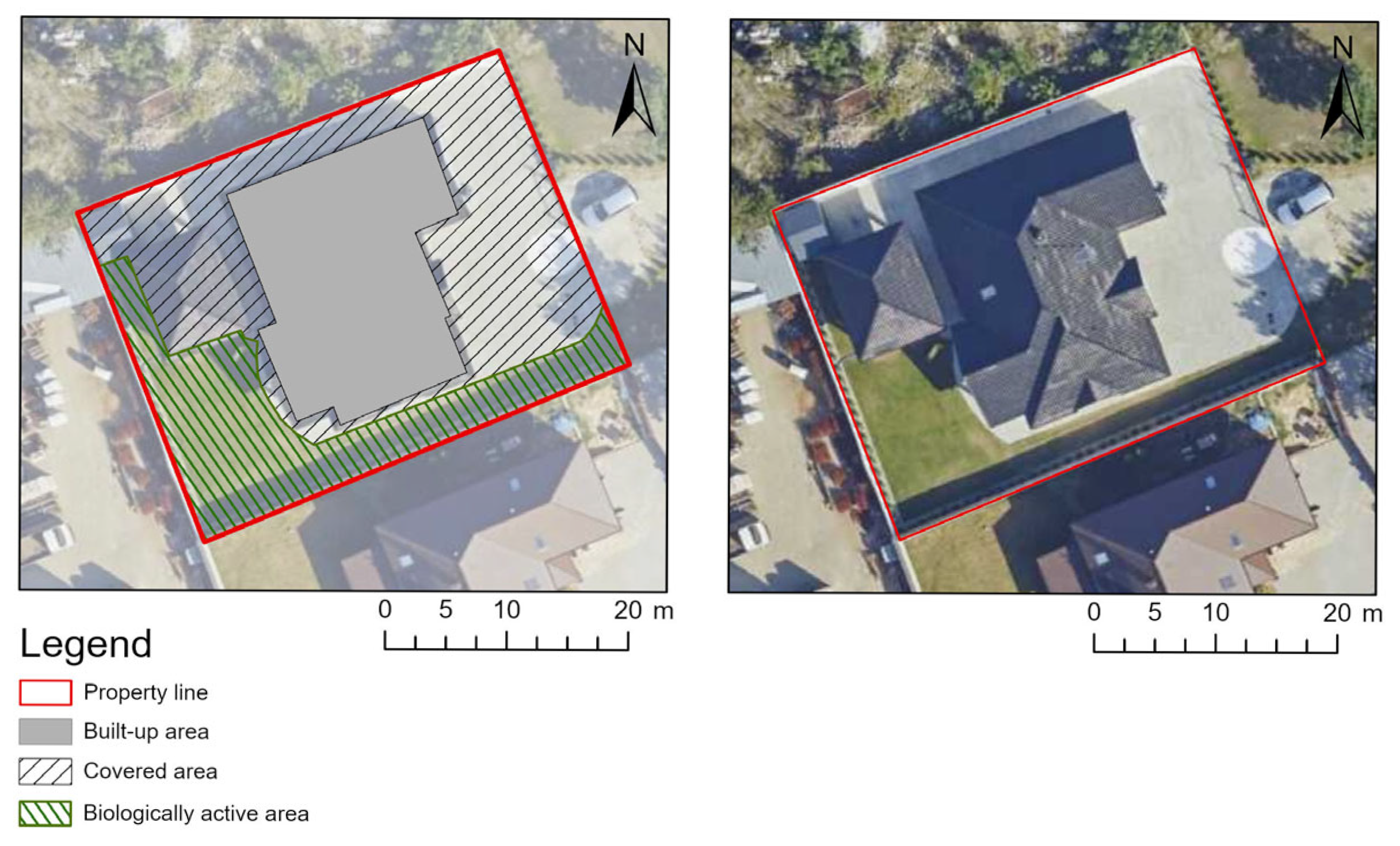
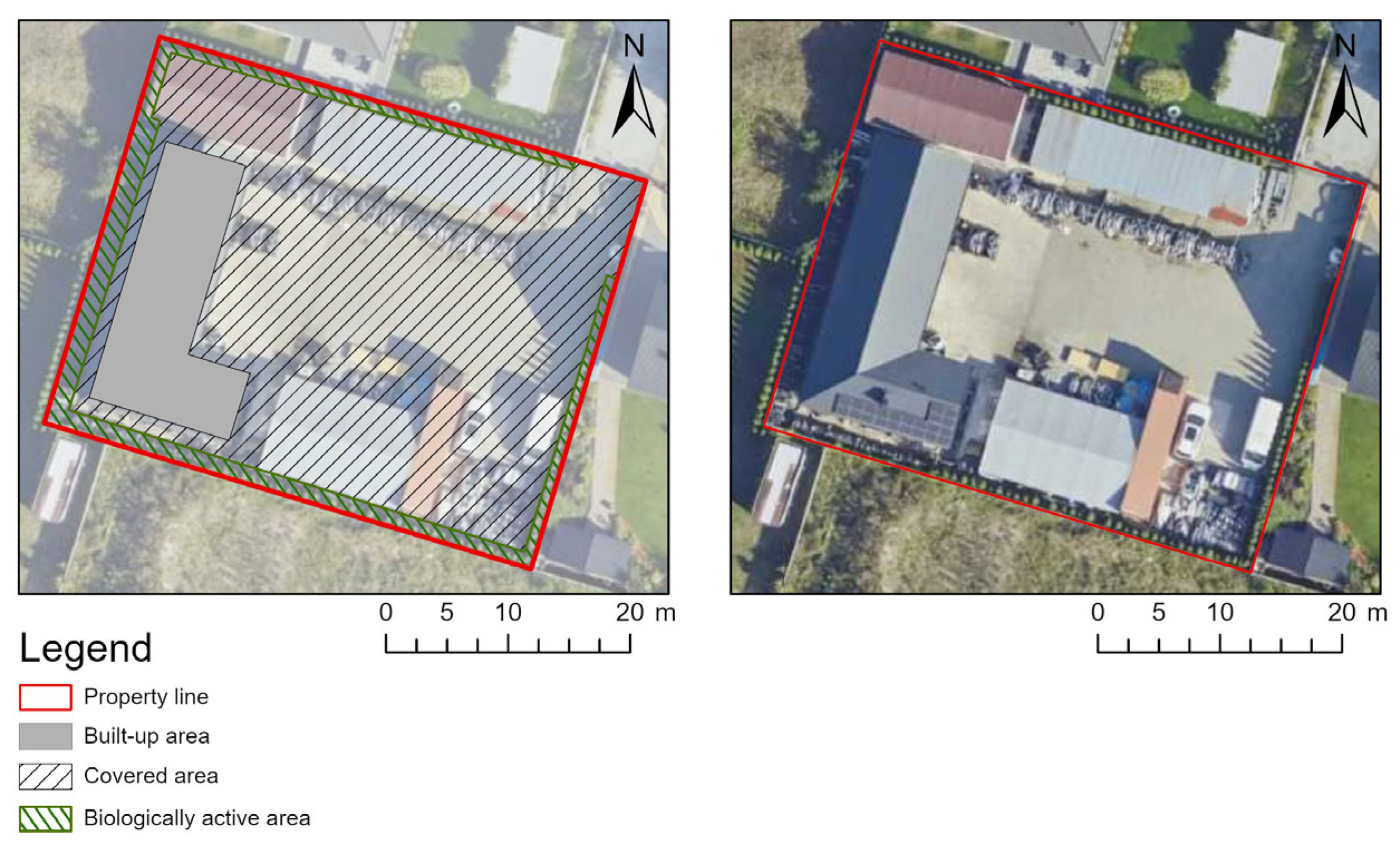
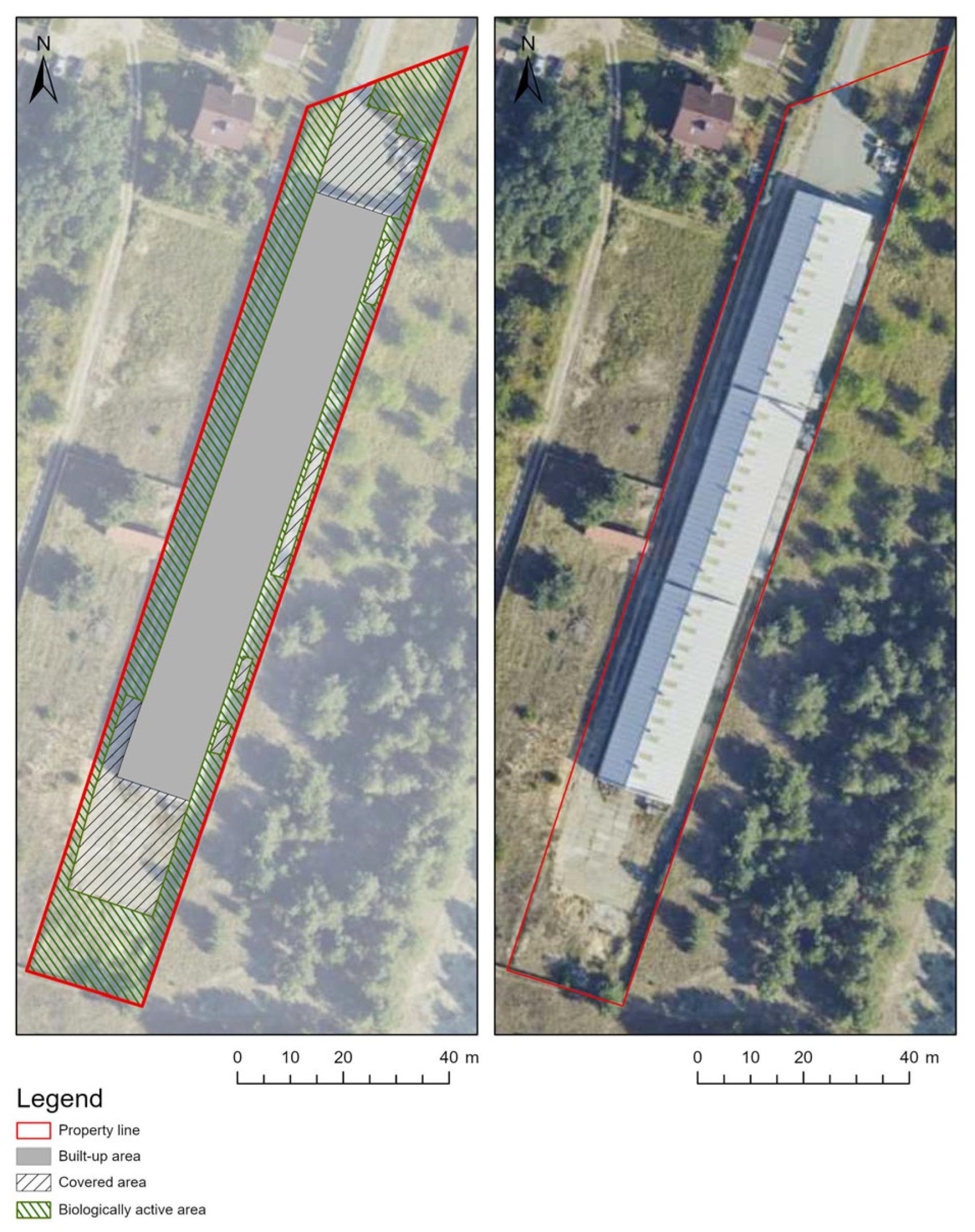
The detailed analysis covered the following selected cadastral parcels: 046401_1.1170.8/8 (Figure 2), [NW2.1]046401_1.1190.39/1 (Figure 3), and 046401_1.1190.22/4 (Figure 4).

2.2. Research Methods

The overall research workflow can be described schematically as a sequence of four main blocks: input data, analysis and modelling, generative design and comparison, and BIM enrichment and evaluation. The first block covers the input materials: the textual and graphic provisions of the LSDP, spatial data from the city Geoportal, the orthophoto map, and cadastral data. The second block includes the analysis of planning documents, the spatial analysis performed in the GIS environment, and the parametric modelling in Autodesk Forma Site Design. The third block comprises the generation of design variants using the Archistar and One Click LCA Generative Design plugins, the comparative analysis of the results, and the qualitative evaluation of the tool’s limitations. The fourth block concerns the export of the selected variant to Autodesk Revit and the semantic enrichment of the BIM model. The output of the workflow is a combined assessment of the compliance of the generated variants with the LSDP and an evaluation of the usability of the applied tools. Each block corresponds to the procedure steps (a)–(h) described below.
The research procedure was divided into the following stages:
(a)
Analysis of planning documents
An analysis of the provisions of the LSDP was conducted, covering land use designations, planned urban planning indicators, maximum building heights, and requirements for biologically active areas.
(b)
Spatial analysis in a GIS environment
Calculations were performed in the GIS environment regarding plot areas, built-up areas, impervious areas, and the actual proportion of biologically active areas. Discrepancies between the existing conditions and the plan provisions were identified.
(c)
Modeling in the Autodesk Forma Site Design environment
Based on spatial data and the provisions of the 2004 plan, model plots were developed in the Autodesk Forma Site Design environment. Parameters derived from the LSDP were entered into the system, including minimum registered plot area, mandatory proportion of biologically active area, permissible building height, and land use designation.
(d)
Generation of design variants
Variants were generated using the Generative Design tools available in Autodesk Forma Site Design. The following plugins were used: Archistar and One Click LCA Generative Design. Using these tools, sets of land-use variants were generated that met the specified formal constraints. The variants were subjected to environmental analyses, including a preliminary assessment of the biologically active area balance.
(e)
Comparative Analysis
The actual state, the provisions of the LSDP and the results generated by the Autodesk Forma Site Design software were compared. The analysis examined the degree of compliance of the designs with the plan, the consistency of the results, the stability of the algorithms, and the quality of the visualizations.
(f)
Tool evaluation
In the next stage, a qualitative evaluation was conducted of the technological limitations of Autodesk Forma Site Design, including parametric errors, limitations of the tool’s trial version, solution generation time, and the level of automatic interpretation of planning provisions.
(g)
Export of a design variant from Autodesk Forma Site Design to the Revit environment
This stage involved transferring the best land development variant (9-MN/UR), generated in the Autodesk Forma Site Design environment, to Autodesk Revit 2024. The Autodesk Forma Add-In for Revit was used to transfer data between the design environments.
(h)
Semantic enrichment of the BIM model
This section focused on the process of semantically enriching the model in the Autodesk Revit environment, which involves assigning descriptive, functional, and planning information to model elements.
The procedure described above can also be read as a general evaluation protocol for assessing the capability of Generative Design tools to support compliance verification with statutory planning instruments. The protocol consists of four steps: (1) extraction of quantitative and qualitative provisions from the statutory planning document, (2) mapping of these provisions onto the input parameters supported by the generative tool, (3) generation and adaptation of variants using the tool, and (4) comparative evaluation of the generated variants against the original provisions, including the identification of parameters that cannot be handled automatically. This protocol is independent of the specific tool used and can be applied to other generative platforms and to other legal and planning contexts, which is intended as a transferable methodological contribution of the present study.

3. Case Study

A key stage in preparing for analyses of the effectiveness of Generative Design tools was the identification of actual urban planning issues in the study area. To accomplish this, a comparison was made between the provisions of the LSDP and the actual land use of registered plots (Table 1, Table 2 and Table 3) (Figure 2, Figure 3 and Figure 4). This analysis serves as the basis for further simulations in the BIM environment. Planning parameters, with particular emphasis on the minimum proportion of biologically active area, were implemented in the Autodesk Forma Site Design tool as design guidelines. The planning parameters used as design guidelines in Autodesk Forma Site Design were derived directly from the provisions of the LSDP and include: the land-use designation, the minimum registered plot area (1000 m2), the maximum building height, the permissible building coverage, and the minimum share of biologically active area (50%). Among these parameters, particular emphasis was placed on the minimum share of biologically active area for three reasons. First, in the Polish legal context, the biologically active area is one of the few planning indicators defined by a precise numerical threshold, which makes it directly translatable into a parameter that can be verified automatically. Second, it is the indicator for which the most significant discrepancies between the actual state and the plan provisions were identified in all three analysed plots (see Section 3.1, Section 3.2 and Section 3.3), which makes it the most informative variable for assessing tool performance. Third, the biologically active area has a direct environmental and urban relevance, as it influences stormwater management, microclimate, and the overall quality of the urban environment. The remaining parameters, such as building height or plot coverage, were also entered into the tool, but played a supporting rather than a leading role in the compliance assessment.

3.1. Analysis of Cadastral Plot 046401_1.1170.8/8

A detached single-family home is located on the analyzed area, which is consistent with the land use designation in the LSDP. However, significant discrepancies exist regarding the biologically active area. The survey revealed that its share relative to the registered plot area is approximately 25.5%, whereas legal regulations require this ratio to be at least 50%.

3.2. Analysis of Cadastral Parcel 046401_1.1190.39/1

An analysis of the area revealed that the function of the existing building is inconsistent with the zoning regulations. The LSDP designates this area for single-family housing, whereas in reality, the registered plot is occupied by commercial and service buildings. Furthermore, the inventory revealed that the biologically active area covers only 12% of the site. Planning regulations require that this ratio be at least 50%.

3.3. Analysis of Cadastral Parcel 046401_1.1190.22/4

The actual condition of the cadastral parcel deviates from the provisions of the LSDP in terms of land use and the biologically active area ratio. Instead of single-family residential development, the area in question contains a commercial structure in the form of a warehouse. Despite the relatively large area of the plot, the current proportion of biologically active area is lower than required by local regulations and amounts to 41%.

4. Results

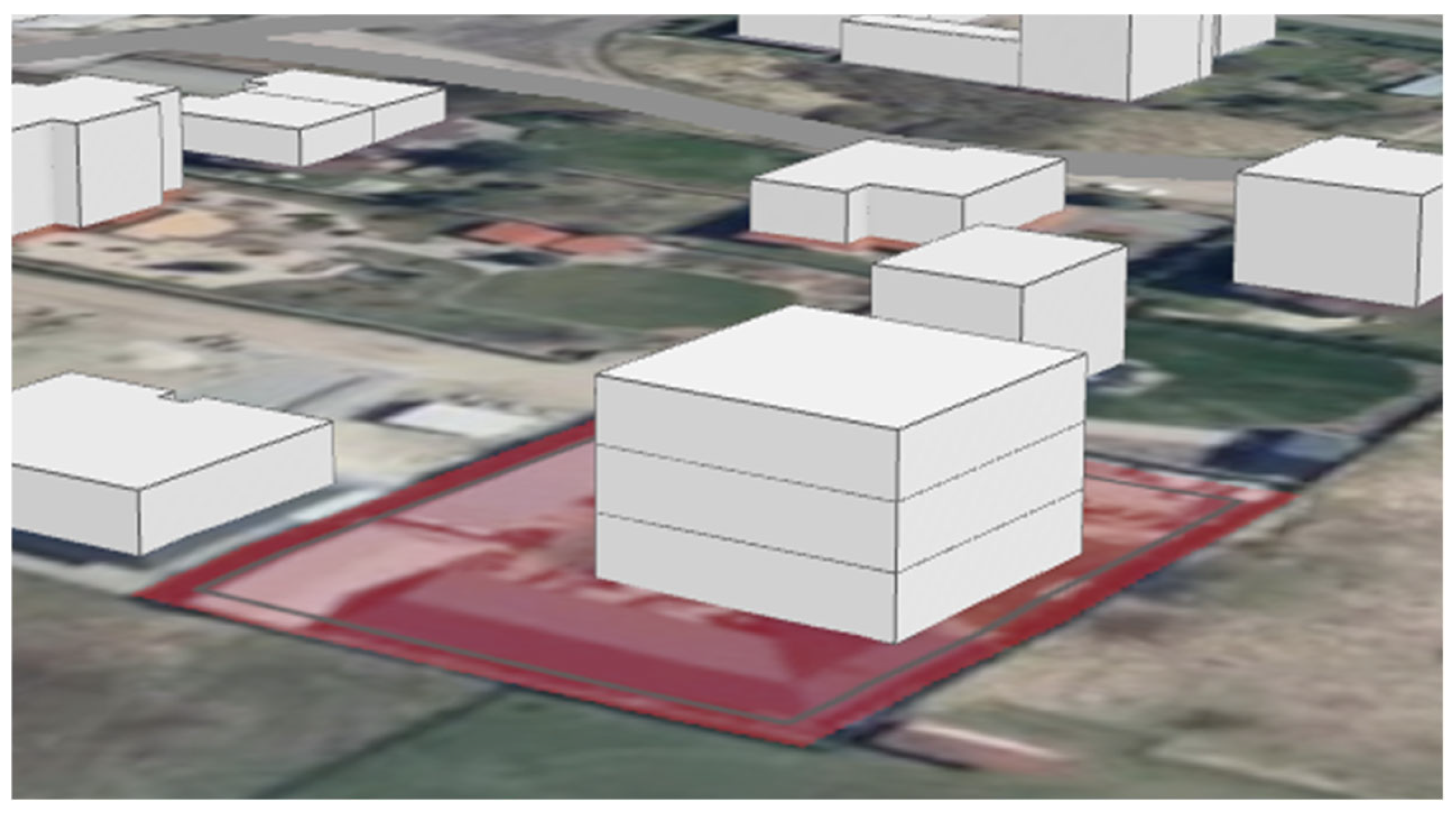
The use of the Autodesk Forma Site Design tool enabled the generation, on selected cadastral parcels, of buildings with simple geometric forms, most often in the form of cuboids. In the analyzed case, the parameterization process was limited mainly to defining the dimensions of the designed objects (Table 4, Table 5 and Table 6). It is worth noting, however, that parameters such as width or length are treated by the software as suggested values, and as a result, the generated solid may deviate from the assumed dimensions. This discrepancy can be seen in the first of the analyzed examples (Figure 5), where the building, despite the specified dimensions of 12 × 15 m, occupies the entire width of the lot. An analysis of the local zoning plan provisions indicates, among other things, the need to maintain a specific percentage of biologically active area, which cannot be directly defined as a parameter in Autodesk Forma Site Design. The only available solution is then to appropriately shape the building’s dimensions so that it occupies the correct portion of the plot. However, this process may be complicated due to the aforementioned discrepancies between the specified values and those actually generated by the software.
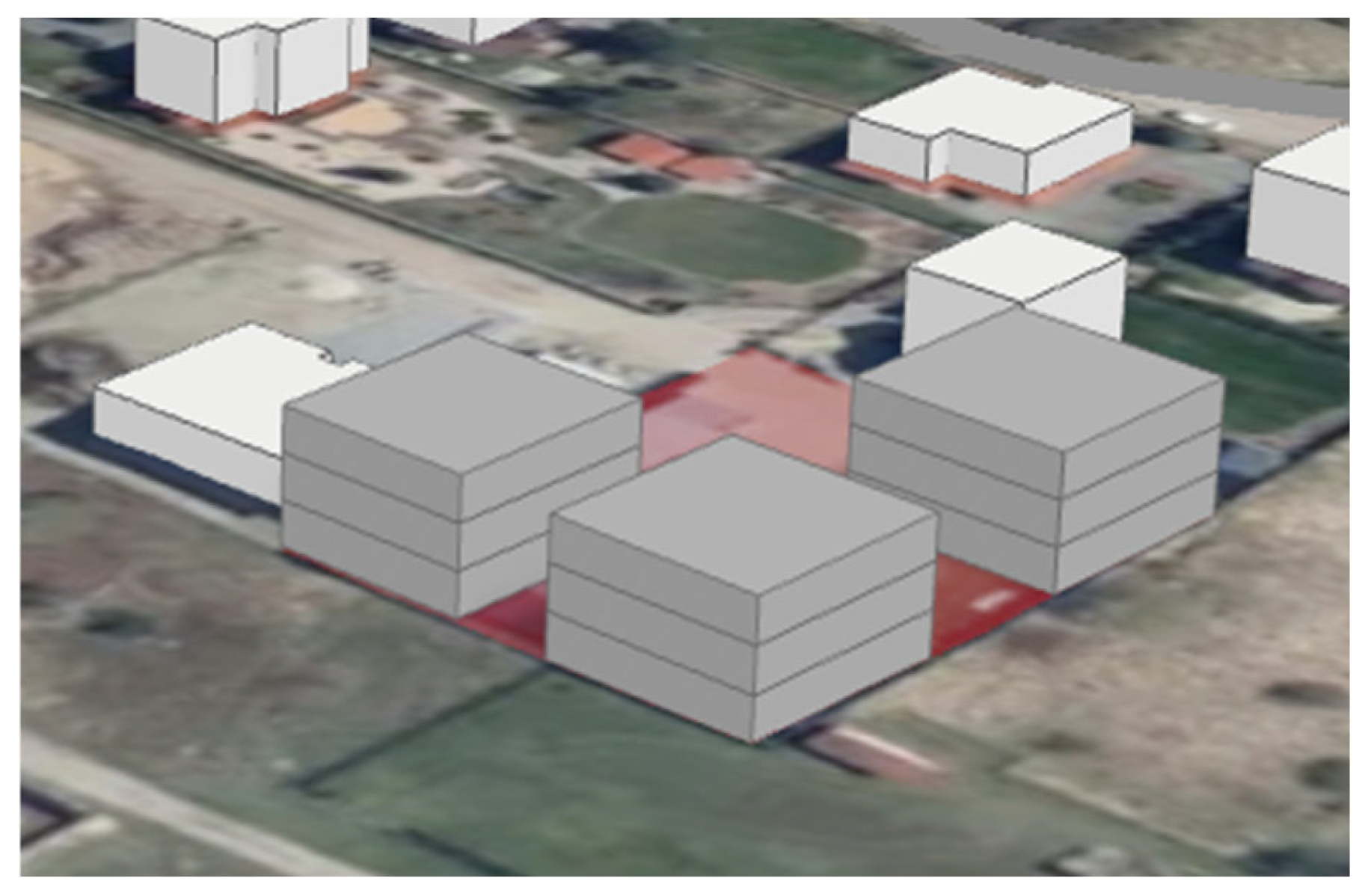
Due to the limited area of the plot, the program very often generated a building with a compact, cubic form (Figure 6). This orientation allowed for optimal use of the available space and maintained the required distances from the plot boundaries. The proposed building form complies with the provisions of the LSDP, both in terms of the building’s geometry and development parameters.
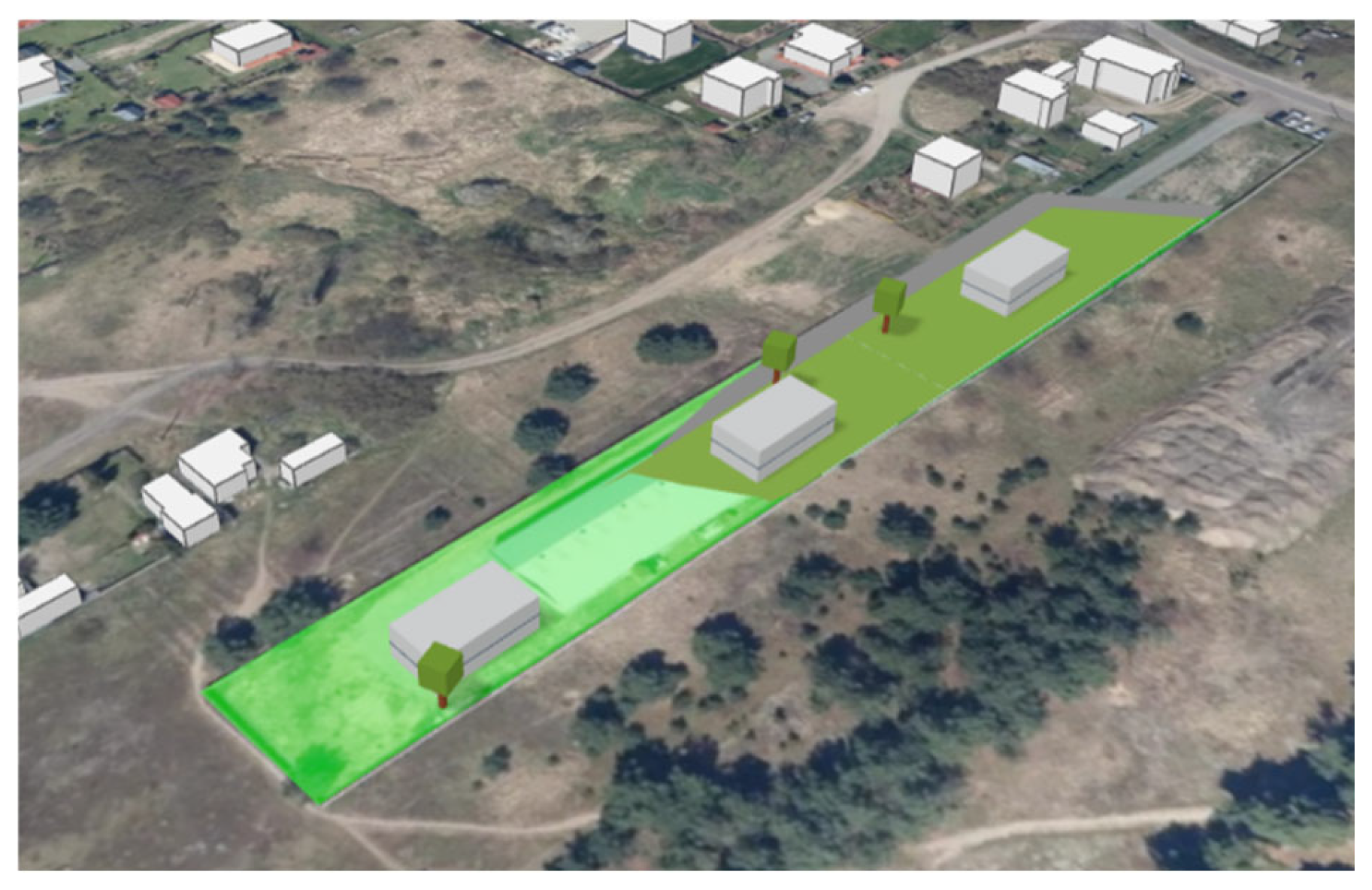
In the case of plot no. 046401_1.1190.22/4 (Figure 7), a problem also arose due to the failure to account for the specified building dimensions. As a result, the objects were placed too densely, which made it impossible to meet the requirement specified in the LSDP regarding the minimum plot area.
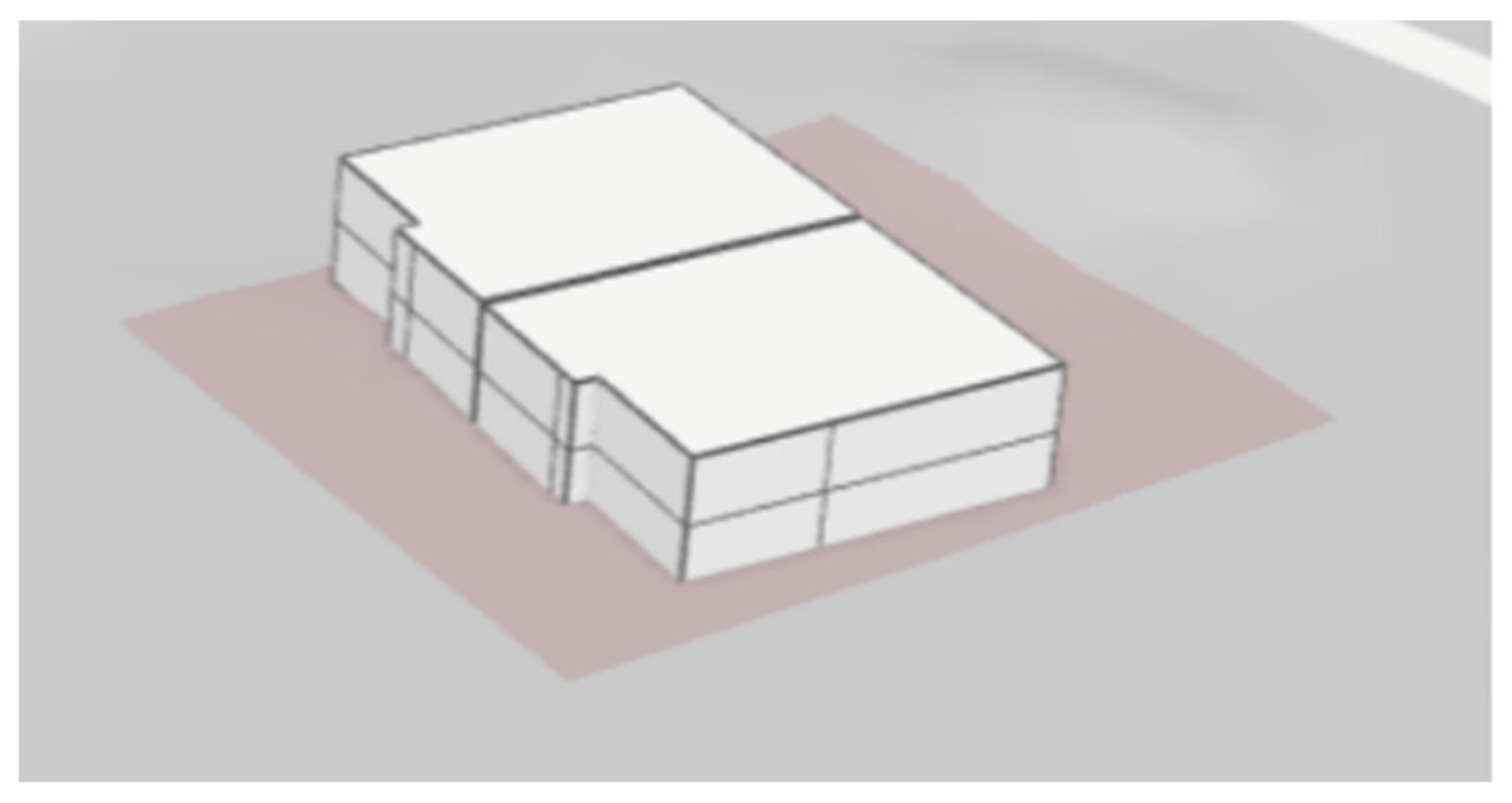
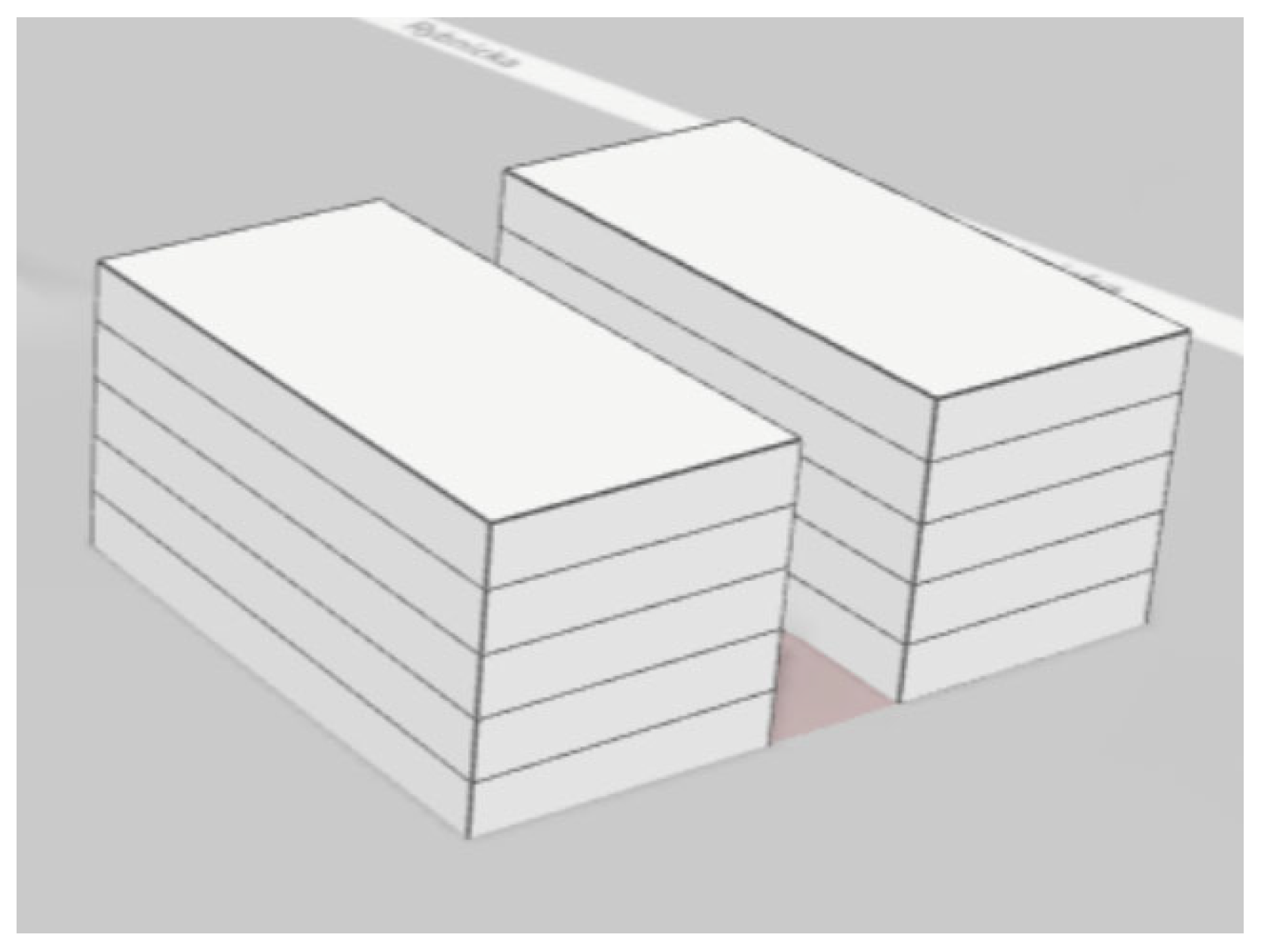
The introduction of the Archistar plugin into Autodesk Forma Site Design expanded the possibilities for parameterizing the generated concepts. In the context of the provisions of the LSDP, the ability to define indicators such as the minimum biologically active area and the minimum registered plot area proved particularly important (Table 7, Table 8 and Table 9). Despite the increased control over parameters, the final result of the building generation was decisively influenced by the building template used, which determined the type and character of the building to be constructed on a given plot. It should be noted that not every available template can be applied to all analyzed cadastral plots, as its applicability depends on the area of the analyzed site. An example of such a situation is cadastral plot No. 046401_1.1170.8/8 (Figure 8), for which the only generated solution turned out to be a semi-detached building, inconsistent with the assumptions of the LSDP. However, it is possible to adapt this concept by combining the two segments into a single structure, which allows for the further use of the generated form as a starting point for subsequent design work.
On plot 046401_1.1190.39/1 (Figure 9), using the Townhouse template, a detached building with a simple, cuboid form was generated, which complies with the provisions of the LSDP.
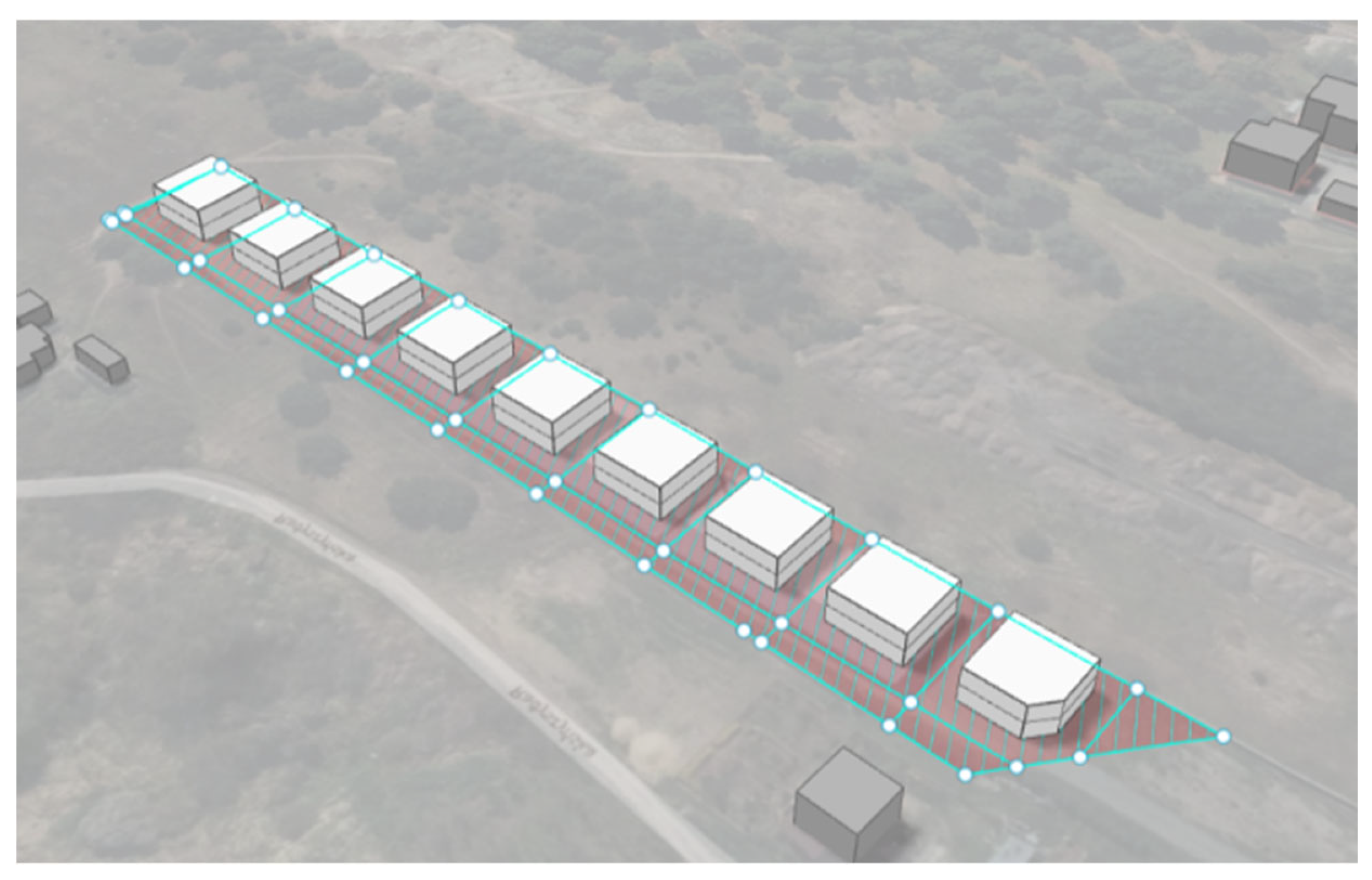
In the case of plot no. 046401_1.1190.22/4 (Figure 10), the use of the Single Detached template allowed for the generation of several building structures within a single parcel. The main objective of this action was to subdivide the plot into several smaller parcels with a minimum area of 1000 m2, designated for single-family detached housing. This objective was achieved while adhering to all key parameters specified in the LSDP.
The One Click LCA Generative Design plugin for Autodesk Forma Site Design enables the generation of development concepts by defining specific parameters across several key categories (Table 10, Table 11 and Table 12). The most important parameters for the analyses include, among others, the height and width of the building, as well as the proportion of biologically active surface area. Unfortunately, in the analyzed cases, each of the obtained concepts showed discrepancies with the provisions of the LSDP. On plot 046401_1.1170.8/8 (Figure 11), two buildings were generated that occupy nearly the entire area of the plot. Such land development results in a significant exceedance of the permissible building parameters, particularly regarding the biologically active surface area and the limit on the number of buildings located on the property.
For the next cadastral plot (Figure 12), an excessive number of buildings was again generated. Theoretically, the presented concept meets the requirement for the minimum share of biologically active area; however, this value is at the threshold of the acceptable minimum. This means that the design does not include a reserve for other land-use elements, such as access roads, walkways, parking spaces, or paved pathways, which in practice would further reduce the biologically active area.
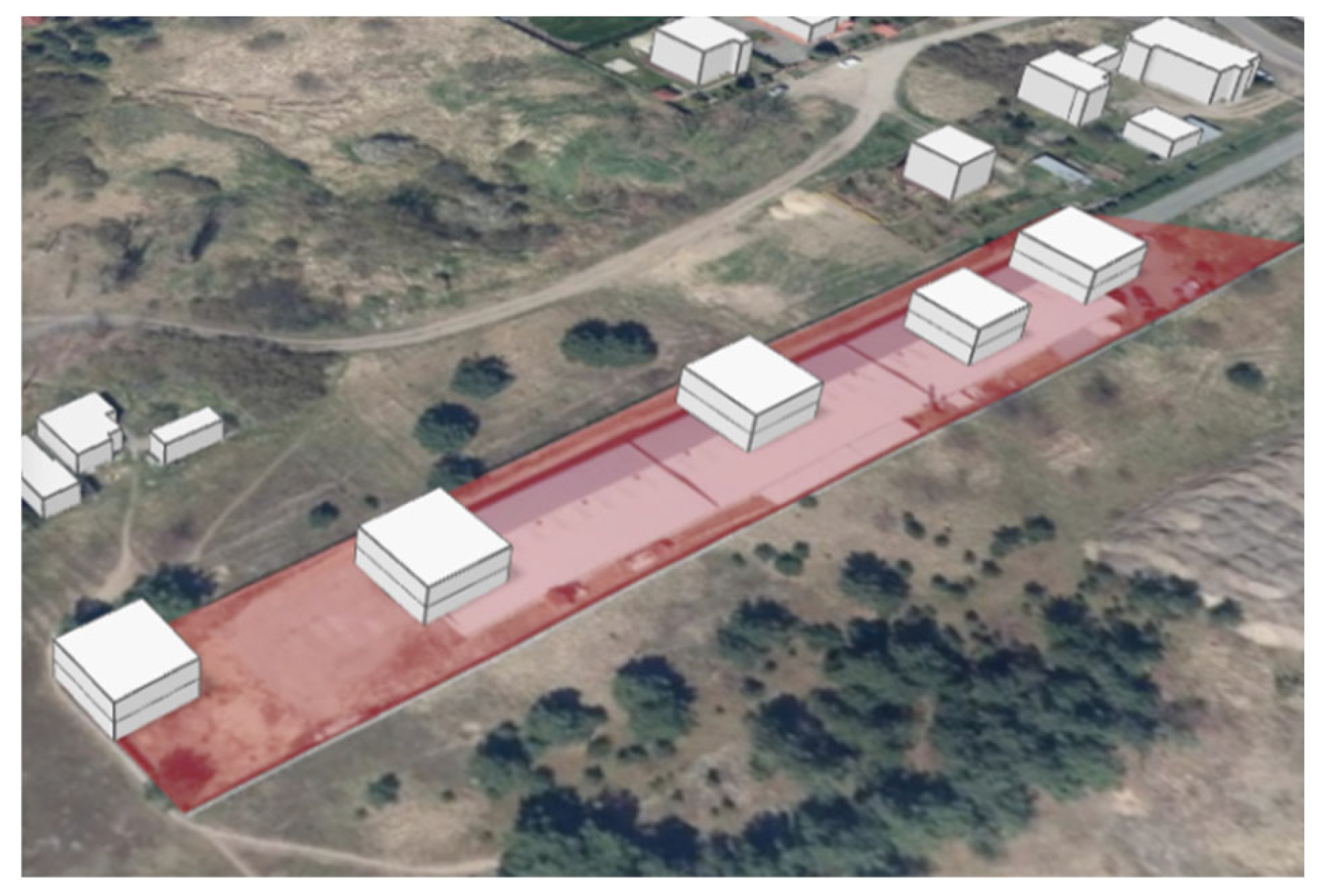
On cadastral plot 046401_1.1190.22/4 (Figure 13), still assuming that it will be divided into several smaller parcels, a larger number of structures may be considered acceptable. However, the buildings were arranged in a random and uncoordinated manner, and the walls of two of them were located directly on the boundary of the cadastral plot, which is inconsistent with applicable planning regulations and the principles of building design.
Analyses conducted using the Archistar plugin have shown that Autodesk Forma Site Design enables the generation of development variants that comply with imposed planning regulations; however, in practice, this tool also encounters certain problems resulting mainly from its sensitivity to the accuracy of input data, limitations in interpreting complex planning provisions, and difficulties in generating results in the case of incomplete or ambiguous site parameterization. For each of the analyzed plots, the software correctly interpreted key parameters derived from the LSDP, including minimum and maximum building areas, building lines and contours, permissible heights, intensity ratios, and the required biologically active area. Based on this, the system automatically generated a set of development variants that met all imposed formal constraints. The generated models enabled the comparison of alternative urban layouts in terms of geometry, volume proportions, functional distribution, and relationship with the surroundings, which significantly reduced the time required for manual design iterations.
It should be noted that the variants generated by the tool were not always directly usable and, in several cases, required manual adjustments before they could be considered compliant with the provisions of the LSDP. For cadastral plot 046401_1.1170.8/8, the Archistar plugin proposed a semi-detached form, which did not match the land-use designation of the plan; this result was adapted manually by merging the two segments into a single detached structure. For cadastral plot 046401_1.1190.22/4, the buildings generated by the One Click LCA plugin were placed directly on the plot boundary, which is inconsistent with Polish building distance regulations, and had to be repositioned manually. In addition, several planning parameters defined in the LSDP could not be entered into the tool as explicit constraints. These include, among others, the minimum distances between buildings and plot boundaries, the obligation to maintain specific building lines, the requirement to provide a minimum number of parking spaces per dwelling unit, and architectural requirements regarding roof geometry. These parameters had to be verified manually after the generation of the variants. The main difficulty encountered during the adaptation of the generated solutions was the lack of a direct mechanism for enforcing strict geometric constraints; the tool treats input values as suggested rather than binding, which required repeated iterations and visual inspection before a compliant variant could be obtained.
The One Click LCA plugin allows users to define basic building parameters by entering custom prompts or selecting one of the predefined options across several categories, such as: the degree of plot coverage by buildings, the distance of the structure from the boundaries of the cadastral plot, and the proportion of green areas and open spaces. This allows the user to quickly define key urban and spatial assumptions that serve as the starting point for generating development concepts. The tool generates variants that aim to maximize the specified parameters and, in some cases, even exceed them. For this reason, when defining threshold values—such as the minimum biologically active area—it is important to leave an appropriate margin in the parameter values. This helps avoid situations where the generated concept formally exceeds the permissible ratios specified in the LSDP. In line with steps (d) and (e) of the research procedure defined in Section 2.2, the generated variants were subjected to a preliminary environmental assessment and to a comparative analysis. With regard to the environmental assessment, the biologically active area balance was calculated for each generated variant on the basis of the building footprint and the share of the remaining plot area available for vegetation. The variants generated by the Archistar plugin generally met the required threshold of 50% biologically active area, while the variants generated by the One Click LCA plugin were closer to the threshold and, in some cases, did not leave sufficient reserve for access roads, walkways, or parking spaces. With regard to the comparative analysis, four aspects were considered: the degree of compliance of the designs with the plan, the consistency of the results, the stability of the algorithms, and the quality of the visualizations. The degree of compliance varied across the plugins, with Archistar producing the highest share of compliant variants and One Click LCA showing the highest number of discrepancies, particularly regarding the number and placement of buildings. The consistency of the results was generally acceptable for Archistar and Autodesk Forma Site Design, but lower for One Click LCA, where repeated generations with identical input parameters produced noticeably different results. The stability of the algorithms was sufficient for the purpose of the study, although occasional failures to respect the specified building dimensions were observed in Autodesk Forma Site Design. The quality of the visualizations was comparable across the tools and was considered adequate for the conceptual stage of design, with the Revit export enabling further refinement of the selected variant. These observations complement the qualitative findings reported earlier in this section and support the conclusions presented in the Discussion.
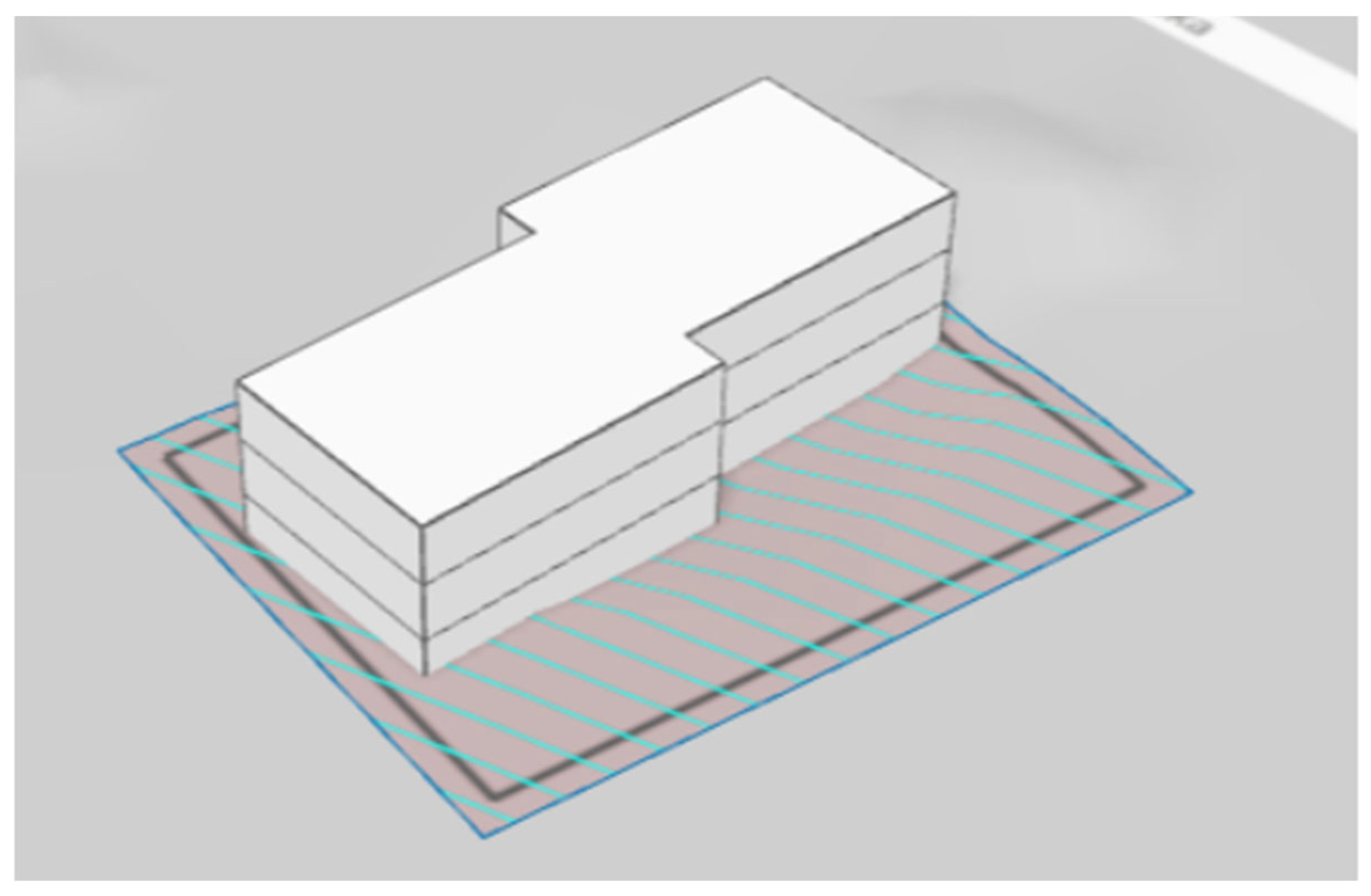
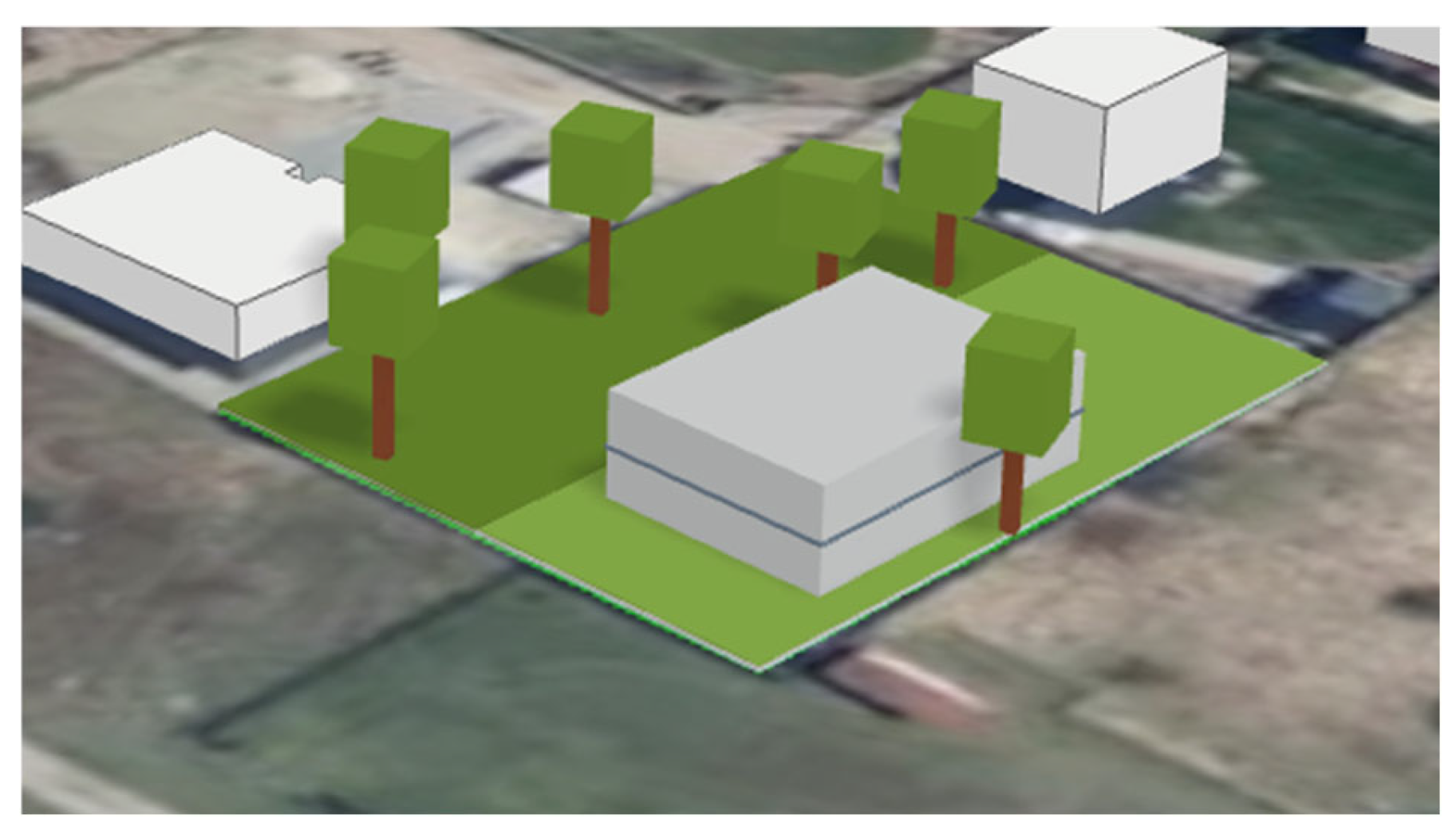
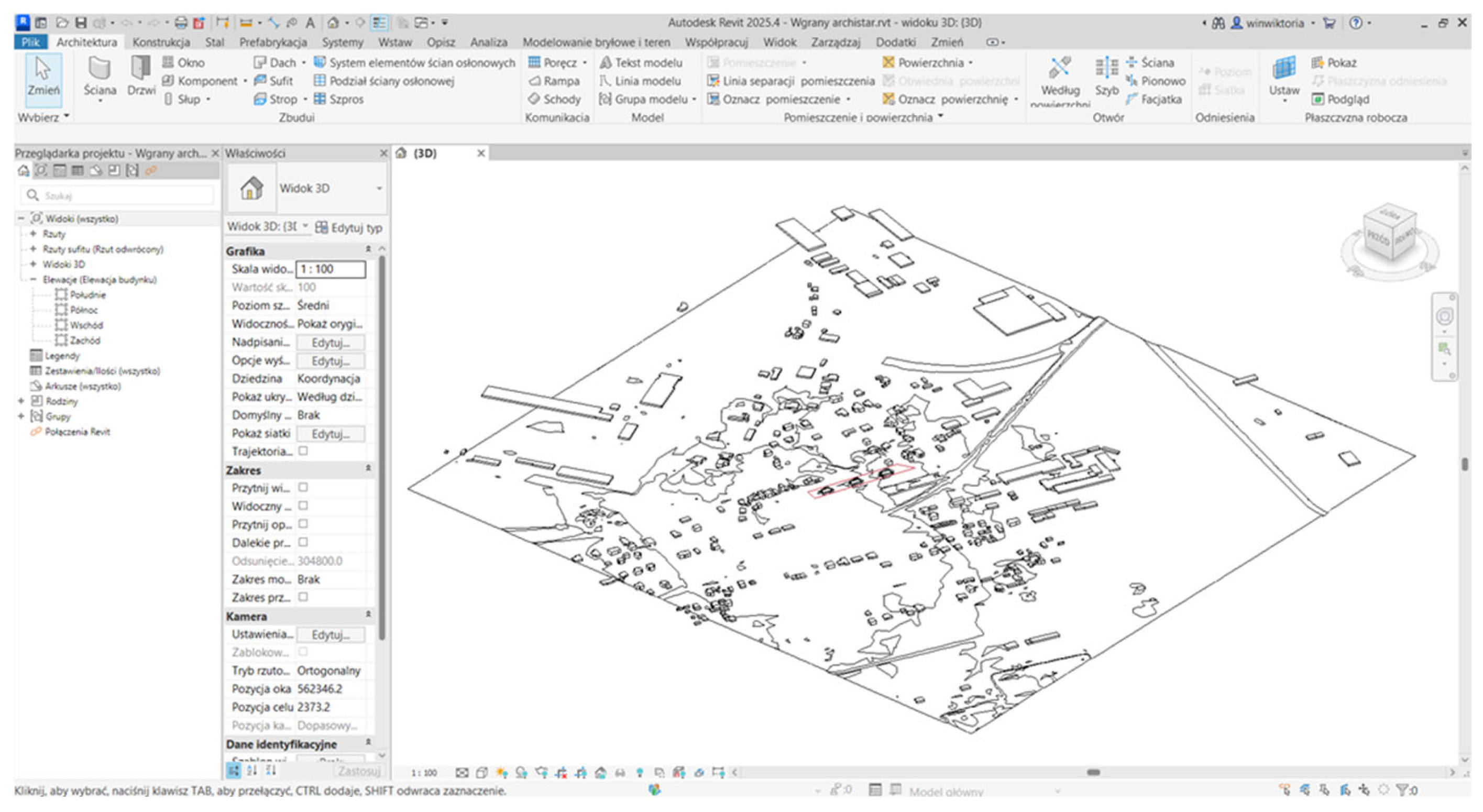
During the semantic model enrichment phase, the Autodesk Forma Add-In for Revit enabled the direct transfer of building solids generated in the Autodesk Forma Site Design environment to Autodesk Revit. The import process did not include only the designed volumetric objects. Along with them, spatial context was included in the form of surrounding buildings and a terrain model (Figure 14), which were generated based on external datasets used for the general representation of the spatial development status. The selected variant, compliant with the provisions of the LSDP, was exported for further modeling in a BIM environment with a higher level of detail. During the process, key geometric parameters, spatial relationships, and relevant planning constraints—including building lines, building density, and maximum building heights—were preserved. Integrating the model with Revit enabled a seamless transition from the conceptual phase, based on generative design, to an environment conducive to precise modeling and further enrichment of the model with semantic information.
The results confirm that the integration of generative processes with analyses of land use forms in the Forma environment significantly expands the possibilities for design evaluation at the conceptual stage. The software enabled a quick comparison of variants in terms of compliance with the LSDP, urban planning indicators, and environmental parameters, which translates into increased design efficiency and a reduction in the number of subsequent corrections.
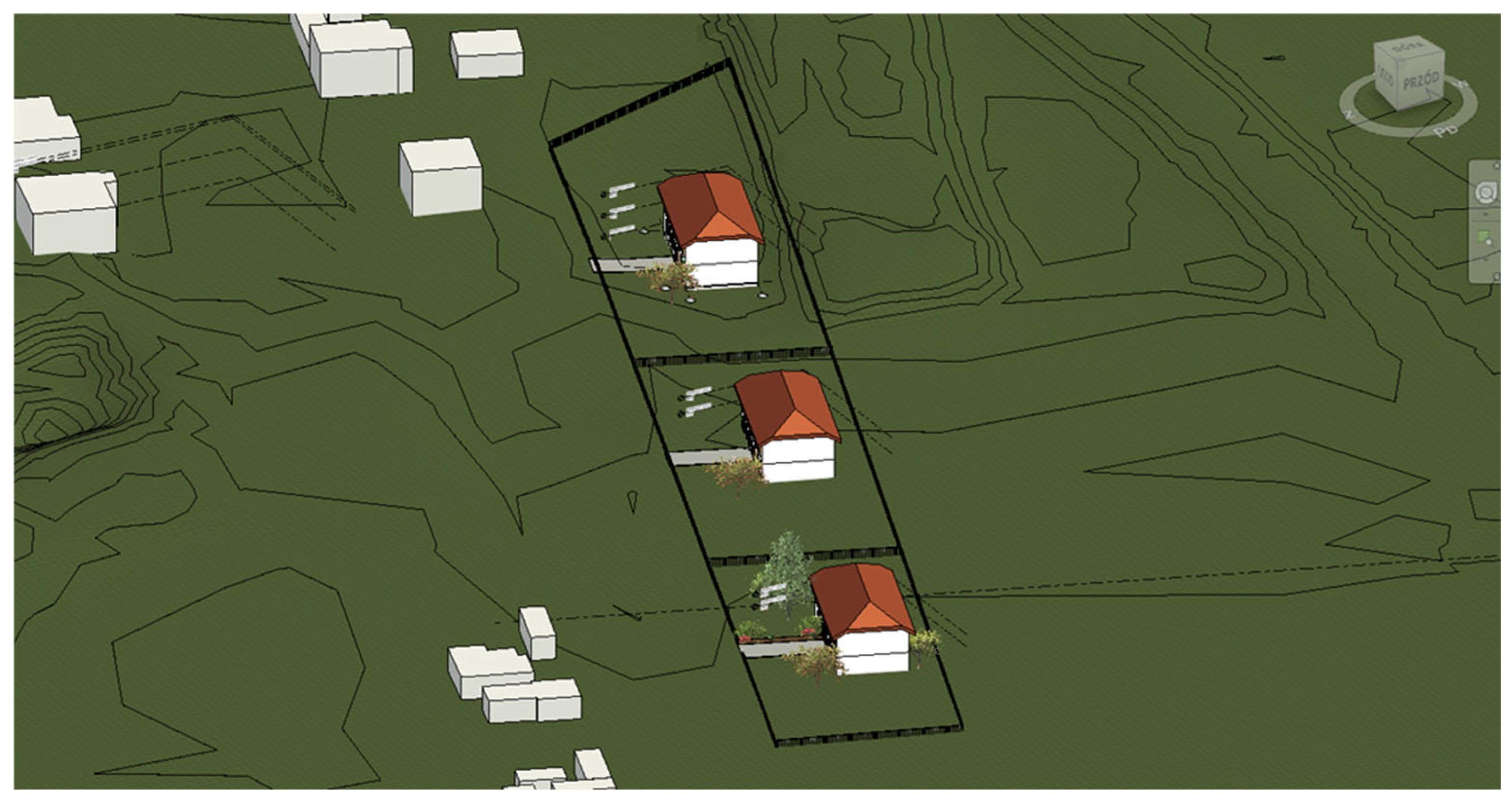
Furthermore, the semantic enrichment of the property conducted at a later stage enabled the transformation of the BIM model from a purely geometric representation into a repository of knowledge about land use (Figure 15).
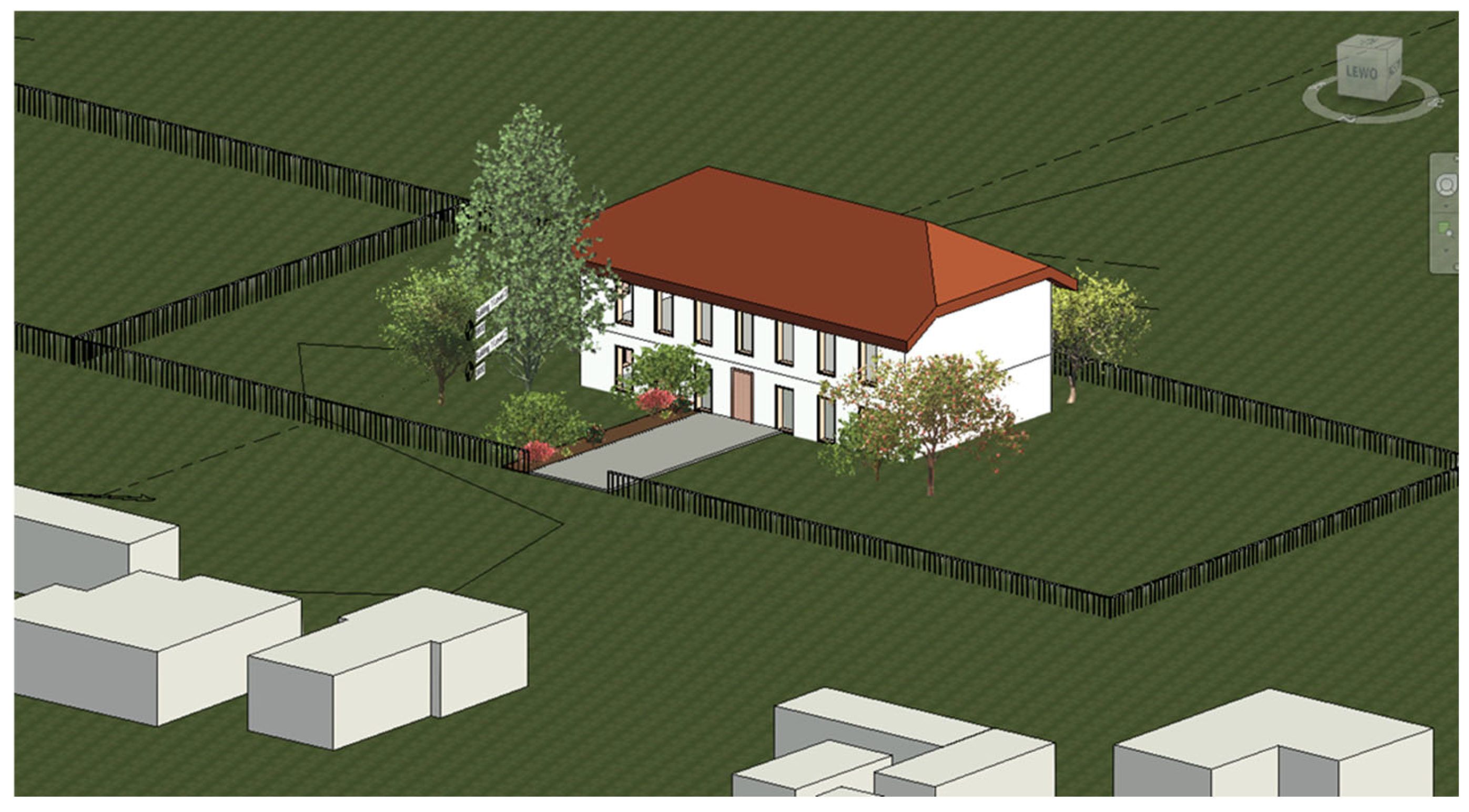
The visualization allows for the analysis of potential development scenarios in relation to the provisions of the LSDP as early as the pre-implementation stage, including an assessment of the architectural form of the proposed building in the context of its surroundings (Figure 16), which in turn enables planners and designers to assess the spatial impacts of the adopted solutions, test variants, and better understand the relationship between planning regulations and the actual form of development prior to the project’s implementation.
Semantic enrichment of the BIM model can also be achieved by assigning a set of descriptive parameters derived from planning documents to a cadastral parcel. These include, among others, the parcel identifier and minimum area, the required proportion of biologically active area, and the land use designation in accordance with the LSDP. This organization of information enables unambiguous interpretation of planning provisions directly within the design environment. As a result, the BIM model becomes a tool supporting the analysis of the compliance of designed solutions with applicable regulations as early as the initial stage of the investment process (Figure 17).

5. Discussion

5.1. Interpretation of Results and Evaluation of the Research Objective

The analyses conducted enabled an assessment of the extent to which Generative Design tools utilizing AI elements can streamline the verification of land-use compliance with the provisions of the LSDP. In response to the research question, it must be stated that although the examined environment accelerates the process of generating development variants, its functionality in the described scope remains limited. These tools can support a preliminary assessment of the consistency between the actual development of a registered plot and the requirements of local law, but the accuracy of the generated results proves insufficient. The lack of full automation and the limitations described in detail in Chapter 3 necessitate manual correction of the results. Consequently, the current state of development of Generative Design tools allows for only a minor improvement in verifying the compliance of land use with the provisions of the LSDP, which is unsatisfactory from a planner’s perspective. It should be emphasized, however, that the research focused on single-family housing. An analysis of multi-family or commercial buildings, which have different characteristics, could yield different results. The technological and methodological limitations underlying this conclusion are discussed in more detail in the following subsection. This empirical observation is also consistent with the classification proposed by Solihin and Eastman [16], who showed that only the simplest classes of building rules, based on explicit design entities and simple derived attributes, can be reliably automated, while more complex rules involving extended data structures or multiple acceptable solutions remain difficult to implement in automated checking systems.
In addition to these empirical findings, the study contributes a simple and transferable evaluation protocol (Section 2.2), which formalises the steps required to assess the compliance-verification capability of Generative Design tools and can be applied to other tools and to other legal and planning contexts.

5.2. Identified Limitations

Effectively eliminating the identified barriers could significantly improve the usefulness of these tools for spatial planning purposes. It would be necessary to introduce strict geometric constraints in place of the current suggested values. Furthermore, it would be necessary to allow for the inclusion of a greater number of indicators that are considered during the preparation of local zoning plans. Such development of the tools would enable not only visualization but also automatic validation of existing land use against legal requirements, which would lead to a reduction in the time required for analyses.
Another significant aspect revealed during the research is the impact of using Generative Design tools on the process of working with land-use variants. The analyses conducted showed that the ability to quickly generate multiple solutions fosters an exploratory approach to design, in which the emphasis shifts from searching for a single optimal variant to comparing the spatial consequences of various building configurations. The support offered by Generative Design is most evident during the comparative analysis phase, enabling an assessment of the extent to which specific planning parameters influence the form of development. Such an approach can enhance the decision-making awareness of the designer or planner; however, it does not lead directly to unambiguous conclusions but rather broadens the spectrum of solutions under consideration.
The parameters entered into Autodesk Forma Site Design and its plugins were sufficient to reflect the main quantitative provisions of the LSDP, namely the land-use designation, the minimum registered plot area, the maximum building height, the permissible building coverage, and the minimum share of biologically active area. However, the results indicate that these parameters alone are not sufficient to obtain variants fully compliant with the plan. Several additional parameters would need to be supported to improve compliance. Among these are the minimum distances between buildings and plot boundaries, the obligatory building lines, the required number of parking spaces per dwelling unit, and architectural requirements such as roof geometry, façade composition, or permissible building materials. Support for functional zoning within a single plot and for explicit rules on subdivision of larger plots into smaller units would also be needed, particularly in the case of plot 046401_1.1190.22/4. Including these parameters as binding constraints, rather than as suggested values, would significantly increase the degree of compliance of the generated variants with the provisions of the plan, and would reduce the need for manual corrections. This observation confirms that the current limitations of the tool are not only related to the non-deterministic treatment of input values, but also to the restricted set of planning parameters that can be entered as explicit constraints. Building on these observations, several directions for further research can be formulated, which are outlined in the following subsection.
The limitations identified in this study should also be viewed in the broader context of the ongoing transformation of BIM environments. As recent critical work has argued [17], BIM is currently undergoing a transition from monolithic file-based desktop applications, through cloud-based Software-as-a-Service (SaaS) platforms, towards granular data ecosystems in which geometry, semantic attributes, and non-geometric data are decoupled and exchanged through open, kernel-independent formats. The Autodesk Forma Site Design environment and its plugins analysed in the present study are a typical example of the SaaS stage of this evolution, which is characterised by cloud-based generative workflows but still by relatively opaque internal data structures and limited access to the underlying model data. This positioning helps to explain some of the limitations observed in the study, in particular the non-deterministic treatment of input parameters and the restricted support for statutory planning rules, which reflect the current state of the technology rather than structural barriers of the underlying BIM paradigm. A further transition to granular, kernel-independent data ecosystems [17] may therefore provide a more favourable environment for the integration of statutory planning provisions as machine-readable constraints, by allowing planning rules to be linked directly to structured data rather than embedded in proprietary, file-based model representations.

5.3. Proposal for Further Research

Further research should focus on developing a technology that allows for the direct implementation of the requirements contained in the LSDP into a digital environment, which would become a key element of CIM processes. This direction is also consistent with the broader research agenda on Urban Digital Twins, in which Weil et al. [18] identify the integration of regulatory and planning data as one of the open challenges for sustainable smart cities. Another area of research should be the expansion of analyses to include a larger number of case studies, covering areas with diverse planning, functional, and spatial conditions, which would allow for an assessment of the universality of the observed relationships and their susceptibility to local context. At the same time, it would be valuable to link Generative Design tools with multi-criteria methods for assessing the quality of space, encompassing functional, environmental, and usability aspects such as accessibility, sunlight conditions, and user comfort. Future research could also focus on evaluating the potential for using Generative Design tools in planning procedures in the context of their application, for example, as support for consultation processes, which would allow for a more precise determination of their potential and limitations in spatial design practice. In addition, a dedicated quantitative comparison of design and implementation times across different generative tools and between generative and traditional workflows, based on a structured experimental protocol, would allow a more reliable assessment of the time savings offered by these approaches and represents a promising direction for future research.

6. Conclusions

The combination of BIM technology and Generative Design methods holds significant potential for supporting planners and urban designers in the rational shaping of space; however, at the current stage of development, these tools are not yet sufficient for a full, automated analysis of local regulations. One of the key issues revealed in the research is that generative algorithms do not treat the input parameters in a fully deterministic manner. Values such as the width and length of a building, its location on a cadastral plot, or the percentage of biologically active area are interpreted by the system as optimization guidelines rather than rigid constraints, leading to discrepancies between the input data and the actual generated geometry. This limitation is particularly significant in the context of spatial planning, where compliance with legal standards is based on precise numerical thresholds and unambiguous boundaries. The lack of strict enforcement of parameters by generative plugins undermines their usefulness as tools for automatic compliance checking and confirms that, at present, these technologies primarily serve a conceptual support role rather than that of a binding tool for formal legal verification. Undoubtedly, the greatest value of using Generative Design with BIM technology lies in the ability to quickly test multiple development scenarios within defined constraints; however, the final assessment of legal and urban planning compliance must still be performed by a specialist, which underscores the complementary—rather than substitute—role of generative tools in the spatial planning process.
More specifically, the empirical findings of the study allow the following concrete conclusions. First, the analysed tools correctly interpret quantitative planning parameters expressed as numerical thresholds (minimum plot area, maximum building height, minimum share of biologically active area), but fail to enforce qualitative, spatial, and conditional provisions, such as obligatory building lines, minimum distances from plot boundaries, parking requirements, and architectural conditions. Second, the three analysed plugins (Autodesk Forma Site Design, Archistar, and One Click LCA Generative Design) differ in their coverage of LSDP provisions and in the consistency of their outputs, with Archistar producing the highest share of compliant variants and One Click LCA showing the highest number of discrepancies. Third, the non-deterministic treatment of input parameters, observed for example on plot 046401_1.1170.8/8 where a building of specified dimensions occupied the entire width of the plot, significantly limits the reliability of the tools for compliance verification. Fourth, the methodological contribution of this work lies in the transferable evaluation protocol introduced in Section 2.2, which formalises the steps required to assess the compliance-verification capability of Generative Design tools and can be applied to other tools and to other legal and planning contexts. Taken together, these conclusions define the boundary between the conceptual support that current generative tools can offer to planners and the formal legal verification that still requires expert judgement.


Author Contributions

Conceptualization, A.S.B., F.P., A.P., P.R., W.W. and N.W.; methodology, A.S.B., F.P., A.P., P.R., W.W. and N.W.; validation, A.S.B.; formal analysis, F.P., P.R., W.W. and N.W.; resources, F.P., P.R., W.W. and N.W.; data curation, F.P., P.R., W.W. and N.W.; writing—original draft preparation, A.S.B., F.P., A.P., P.R., W.W. and N.W.; writing—review and editing, A.S.B., F.P., A.P., P.R., W.W. and N.W.; visualization, F.P., P.R., W.W. and N.W.; supervision, A.S.B.; funding acquisition, A.S.B. All authors have read and agreed to the published version of the manuscript.

Funding

This research received no external funding.

Institutional Review Board Statement

Not applicable.

Informed Consent Statement

Not applicable.

Data Availability Statement

The data presented in this study are available on request from the corresponding author. The data are not publicly available due to ongoing research.

Acknowledgments

The authors would like to thank the reviewers for their feedback, insightful comments, and assistance in improving the article.

Conflicts of Interest

The authors declare no conflicts of interest.

References

  1. Włocławek City Council. Resolution No. 50/XXIV/2004 of August 30, 2004, Regarding the Local Spatial Development Plan for the City of Włocławek Concerning the Area Located Between the Side Dam of the Water Barrage on the Vistula River, Płocka Street, Kazimierz Wielki Avenue, the Boundary of Forest Land Along the Former “Ursus” and “Fabryka Domów” Plants, the Emergency Dam of the Water Barrage on the Vistula River, Rybnicka Street, and the City Boundary. Official Journal of the Kujawsko-Pomorskie Province, 30 August 2004.
  2. Chew, Z.X.; Wong, J.Y.; Tang, Y.H.; Yip, C.C.; Maul, T. Generative design in the built environment. Autom. Constr. 2024, 166, 105638. [Google Scholar] [CrossRef]
  3. Pérez-Martínez, I.; Martínez-Rojas, M.; Soto-Hidalgo, J.M. A methodology for urban planning generation: A novel approach based on generative design. Eng. Appl. Artif. Intell. 2023, 124, 106609. [Google Scholar] [CrossRef]
  4. He, M.; Liang, Y.; Wang, S.; Zheng, Y.; Wang, Q.; Zhuang, D.; Tian, L.; Zhao, J. Generative AI for urban design: A stepwise approach integrating human expertise with multimodal diffusion models. arXiv 2025, arXiv:2505.24260. [Google Scholar] [CrossRef]
  5. Apollo, M.; Grzyl, B. Current status of BIM implementation in Polish construction companies. Build. Mater. 2023, 606, 28–31. [Google Scholar] [CrossRef]
  6. Azhar, S. Building Information Modeling (BIM): Trends, Benefits, Risks, and Challenges for the AEC Industry. Leadersh. Manag. Eng. 2011, 11, 241–252. [Google Scholar] [CrossRef]
  7. Pishdad, P.; Onungwa, I.O. Analysis of 5D BIM for cost estimation, cost control, and payments. J. Inf. Technol. Constr. 2024, 29, 525–548. [Google Scholar] [CrossRef]
  8. Lu, W.; Fung, A.; Peng, Y.; Liang, C.; Rowlinson, S. Cost-benefit analysis of Building Information Modeling implementation in building projects through demystification of time-effort distribution curves. Build. Environ. 2014, 82, 317–327. [Google Scholar] [CrossRef]
  9. Azhar, S.; Hein, M.; Sketo, B. Building information modeling (BIM): Benefits, risks and challenges. Assoc. Sch. Constr. 2008, 4, 1–11. Available online: http://ascpro0.ascweb.org/archives/cd/2008/paper/CPGT182002008.pdf (accessed on 14 December 2025).
  10. Molitch-Hou, M. Generative Design Meets BIM for Smart Urban Planning. 2017. Available online: https://www.engineering.com/generative-design-meets-bim-for-smart-urban-planning/ (accessed on 14 November 2025).
  11. Lawal, O.; Nawari, O.O. Blockchain and city information modeling (CIM): A new approach to transparency and efficiency. J. Inf. Technol. Constr. 2023, 28, 711. [Google Scholar] [CrossRef]
  12. Caetano, I.; Santos, L.; Leitão, A. Computational design in architecture: Defining parametric, generative, and algorithmic design. Front. Archit. Res. 2020, 9, 287–300. [Google Scholar] [CrossRef]
  13. Koenig, R.; Miao, Y.; Aichinger, A.; Knecht, K.; Konieva, K. Integrating urban analysis, generative design, and evolutionary optimization for solving urban design problems. Environ. Plan. B Urban Anal. City Sci. 2020, 47, 997–1013. [Google Scholar] [CrossRef]
  14. Sun, Y.; Dogan, T. Generative methods for urban design and rapid solution space exploration. Environ. Plan. B Urban Anal. City Sci. 2023, 50, 1577–1590. [Google Scholar] [CrossRef]
  15. Jiang, F.; Ma, J.; Webster, C.J.; Chiaradia, A.J.F.; Zhou, Y.; Zhao, Z.; Zhang, X. Generative urban design: A systematic review on problem formulation, design generation, and decision-making. Prog. Plan. 2024, 180, 100795. [Google Scholar] [CrossRef]
  16. Solihin, W.; Eastman, C. Classification of rules for automated BIM rule checking development. Autom. Constr. 2015, 53, 69–82. [Google Scholar] [CrossRef]
  17. Borkowski, A.S. A critical analysis of the direction of BIM development: From CAD through file-based approaches and SaaS to granular data. J. Inf. Technol. Constr. 2026, 31, 380–393. [Google Scholar] [CrossRef]
  18. Weil, C.; Bibri, S.E.; Longchamp, R.; Golay, F.; Alahi, A. Urban Digital Twin Challenges: A Systematic Review and Perspectives for Sustainable Smart Cities. Sustain. Cities Soc. 2023, 99, 104862. [Google Scholar] [CrossRef]
Figure 1. Map showing the location of the city of Włocławek in relation to the country and the province (source: author’s own work based on the State Boundary Register).
Urbansci 10 00267 g001
Figure 2. Inventory of the existing land cover of cadastral parcel 046401_1.1170.8/8 (source: author’s own work, based on an orthophoto map as a WMTS service and the National Land Registry Integration Service as a WMS service available at www.geoportal.gov.pl (accessed on 12 November 2025), in ArcGIS Pro).
Urbansci 10 00267 g002
Figure 3. Inventory of the existing land cover of cadastral parcel 046401_1.1190.39/1 (source: author’s own work, based on an orthophoto map as a WMTS service and the National Land Registry Integration service as a WMS, available at www.geoportal.gov.pl (accessed on 12 November 2025), in ArcGIS Pro).
Urbansci 10 00267 g003
Figure 4. Inventory of the existing land cover of cadastral parcel 046401_1.1190.22/4 (source: author’s own work, based on an orthophoto map as a WMTS service and the National Land Registry Integration service as a WMS, available at www.geoportal.gov.pl (accessed on 12 November 2025), in ArcGIS Pro).
Urbansci 10 00267 g004
Figure 5. Building model generated in the Autodesk Forma Site Design environment for parcel 046401_1.1170.8/8 (source: author’s own work).
Urbansci 10 00267 g005
Figure 6. Building model generated in the Autodesk Forma Site Design environment for cadastral parcel 046401_1.1190.39/1 (source: author’s own work).
Urbansci 10 00267 g006
Figure 7. Model of buildings generated in the Autodesk Forma Site Design environment for cadastral parcel 046401_1.1190.22/4 (source: author’s own work).
Urbansci 10 00267 g007
Figure 8. Model of buildings generated in the Archistar plugin for plot 046401_1.1170.8/8 (source: author’s own work).
Urbansci 10 00267 g008
Figure 9. Building model generated in the Archistar plugin for plot 046401_1.1190.39/1 (source: author’s own work).
Urbansci 10 00267 g009
Figure 10. Model of buildings generated in the Archistar plugin for cadastral parcel 046401_1.1190.22/4 (source: author’s own work).
Urbansci 10 00267 g010
Figure 11. Building model generated in the One Click LCA plugin for cadastral plot 046401_1.1170.8/8 (source: author’s own work).
Urbansci 10 00267 g011
Figure 12. Building model generated in the One Click LCA plugin for cadastral plot 046401_1.1190.39/1 (source: author’s own work).
Urbansci 10 00267 g012
Figure 13. Building model generated in the One Click LCA plugin for cadastral parcel 046401_1.1190.22/4 (source: author’s own work).
Urbansci 10 00267 g013
Figure 14. View of imported data in Autodesk Revit (source: author’s own work).
Urbansci 10 00267 g014
Figure 15. Revit model with semantically enriched building lots—visualization of the proposed development’s location in relation to the terrain and development boundaries (source: author’s own work).
Urbansci 10 00267 g015
Figure 16. Visualization of a proposed single-family home, taking into account planning parameters and its relationship with the surroundings (source: author’s own work).
Urbansci 10 00267 g016
Figure 17. Set of semantic parameters assigned to a registered plot in the model (source: author’s own work).
Urbansci 10 00267 g017
Table 1. Local Master Plan provisions for registered plot 046401_1.1170.8/8 (source: author’s own compilation based on the plot inventory and the analyzed Local Master Plan).
Area 6-MN/UR/U/P
ParameterLocal Master Plan ProvisionsActual status
Cadastral plot ID-046401_1.1170.8/8
Land UsePrimary: Single-family detached housing
Supplementary: Non-intrusive services, internal transportation
Single-family, detached residential development
Area of the registered plotMin. 1000 m21069.08 m2
Building area-322.56 m2 (30%)
Covered surface-474.19 m2 (44.5%)
Biologically active area50%272.33 m2 (25.5%)
Table 2. Local Master Plan provisions for cadastral parcel 046401_1.1190.39/1 (source: author’s own compilation based on the cadastral parcel inventory and the analyzed Local Master Plan).
Area 7-MN/UR
ParameterLocal Master Plan ProvisionsActual status
Cadastral plot ID-046401_1.1170.8/8
Land UsePrimary: Single-family detached housing
Supplementary: Non-intrusive services, internal transportation
Retail and service development
Area of the registered plotMin. 1000 m21380.18 m2
Building area-179.52 m2 (13%)
Covered area-1034.52 m2 (75%)
Biologically active area50%166.14 m2 (12%)
Table 3. Local Master Plan provisions for cadastral plot 046401_1.1190.22/4 (source: author’s own compilation based on the cadastral plot inventory and the analyzed Local Master Plan).
Area 9-MN/UR
ParameterLocal Zoning Plan ProvisionsActual status
Cadastral plot ID-046401_1.1190.22/4
Land UsePrimary: Single-family detached housing
Supplementary: Non-intrusive services, internal transportation
Utility buildings (warehouse)
Area of the registered plotMin. 1000 m24358.01 m2
Building area-1702.52 m2 (39%)
Covered area-879.91 m2 (20%)
Biologically active area50%1775.58 m2 (41%)
Table 4. Input parameters for generating a development concept in Autodesk Forma Site Design for cadastral plot 046401_1.1170.8/8 (source: author’s own work).
Cadastral Plot 046401_1.1170.8/8
ParametersNumber of floors: 3
Floor height: 3 m
Building width: 12 m
Building length: 15 m
Table 5. Input parameters for generating a development concept in Autodesk Forma Site Design for cadastral plot 046401_1.1190.39/1 (source: author’s own work).
Cadastral Plot 046401_1.1190.39/1
ParametersNumber of floors: 3
Floor height: 3 m
Building width: 12 m
Building length: 15 m
Table 6. Input parameters for generating a development concept in Autodesk Forma Site Design for plot 046401_1.1190.22/4 (source: own work).
Cadastral Plot 046401_1.1190.22/4
ParametersNumber of floors: 2
Floor height: 3 m
Building width: 12 m
Building length: 12 m
Table 7. Input parameters for generating a development concept in Archistar for cadastral plot 046401_1.1170.8/8 (source: author’s own work).
Cadastral Plot 046401_1.1170.8/8
Parametersdevelopment template: duplex
minimum plot area: 1000 m2
50% biologically active area
Table 8. Input parameters for generating a development concept in Archistar for plot 046401_1.1190.39/1 (source: author’s own work).
Cadastral Plot 046401_1.1190.39/1
Parametersdevelopment template: townhouse
minimum plot area: 1000 m2
50% biologically active area
Table 9. Input parameters for generating a development concept in Archistar for cadastral plot 046401_1.1190.22/4 (source: author’s own work).
Cadastral Plot 046401_1.1190.22/4
ParametersDevelopment template: single detached
minimum plot area: 1000 m2
50% biologically active area
Table 10. Input parameters for generating a development concept in One Click LCA for plot 046401_1.1170.8/8 (source: author’s own work).
Cadastral Plot 046401_1.1170.8/8
Parametersmaximum height: 15 m
50% biologically active area
Table 11. Input parameters for generating the development concept in One Click LCA for cadastral parcel 046401_1.1190.39/1 (source: author’s own work).
Cadastral Plot 046401_1.1190.39/1
Parametersmaximum height: 10 m
50% biologically active area
Table 12. Input parameters for generating a development concept in One Click LCA for cadastral plot 046401_1.1190.22/4 (source: author’s own work).
Cadastral Plot 046401_1.1190.22/4
Parametersmaximum height: 8 m
50% biologically active area
Disclaimer/Publisher’s Note: The statements, opinions and data contained in all publications are solely those of the individual author(s) and contributor(s) and not of MDPI and/or the editor(s). MDPI and/or the editor(s) disclaim responsibility for any injury to people or property resulting from any ideas, methods, instructions or products referred to in the content.