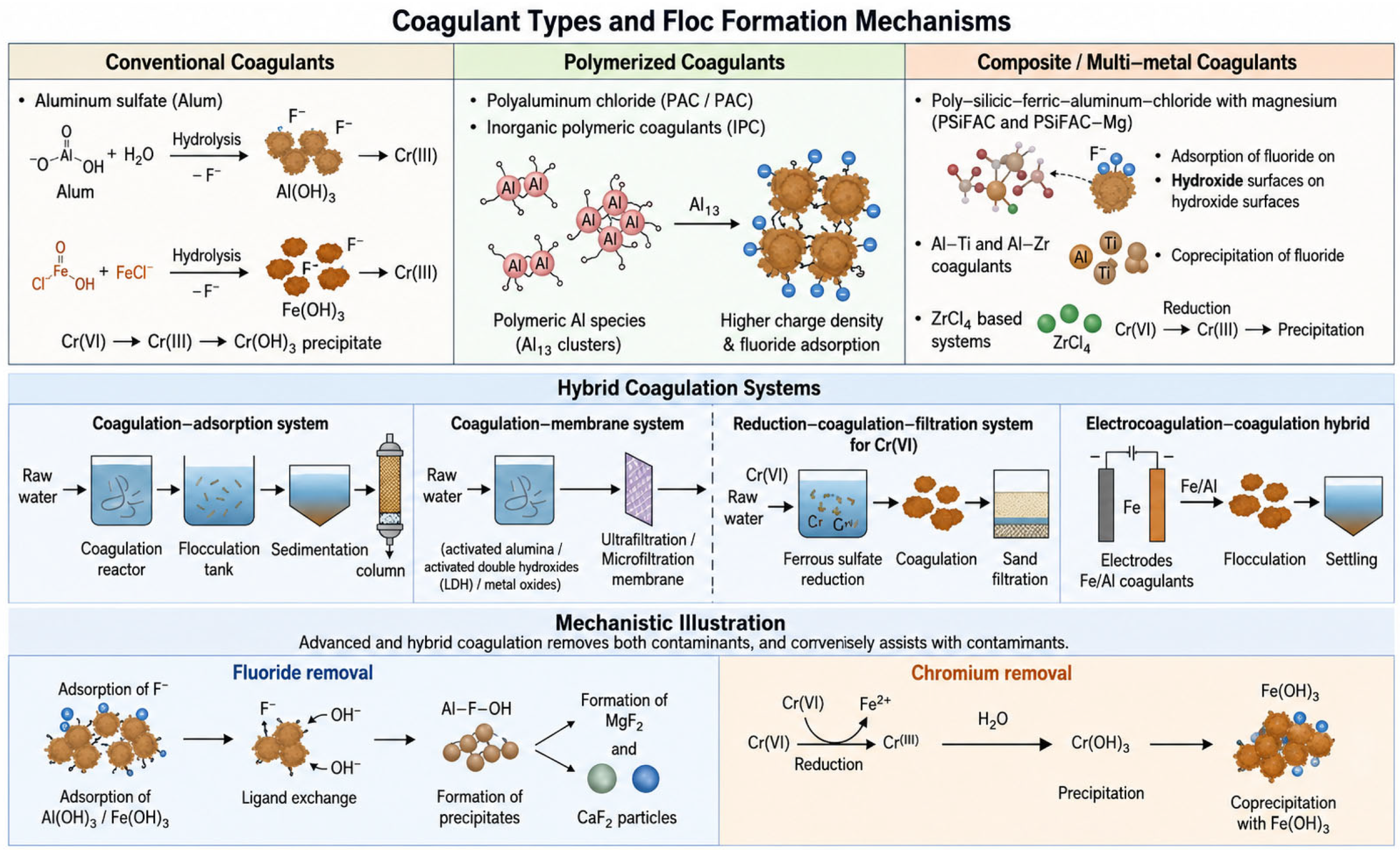


Removal of Fluoride Anions and Chromium (VI) from Water and Urban Wastewater by Coagulation: Emphasis on Public Health


Abstract
1. Introduction
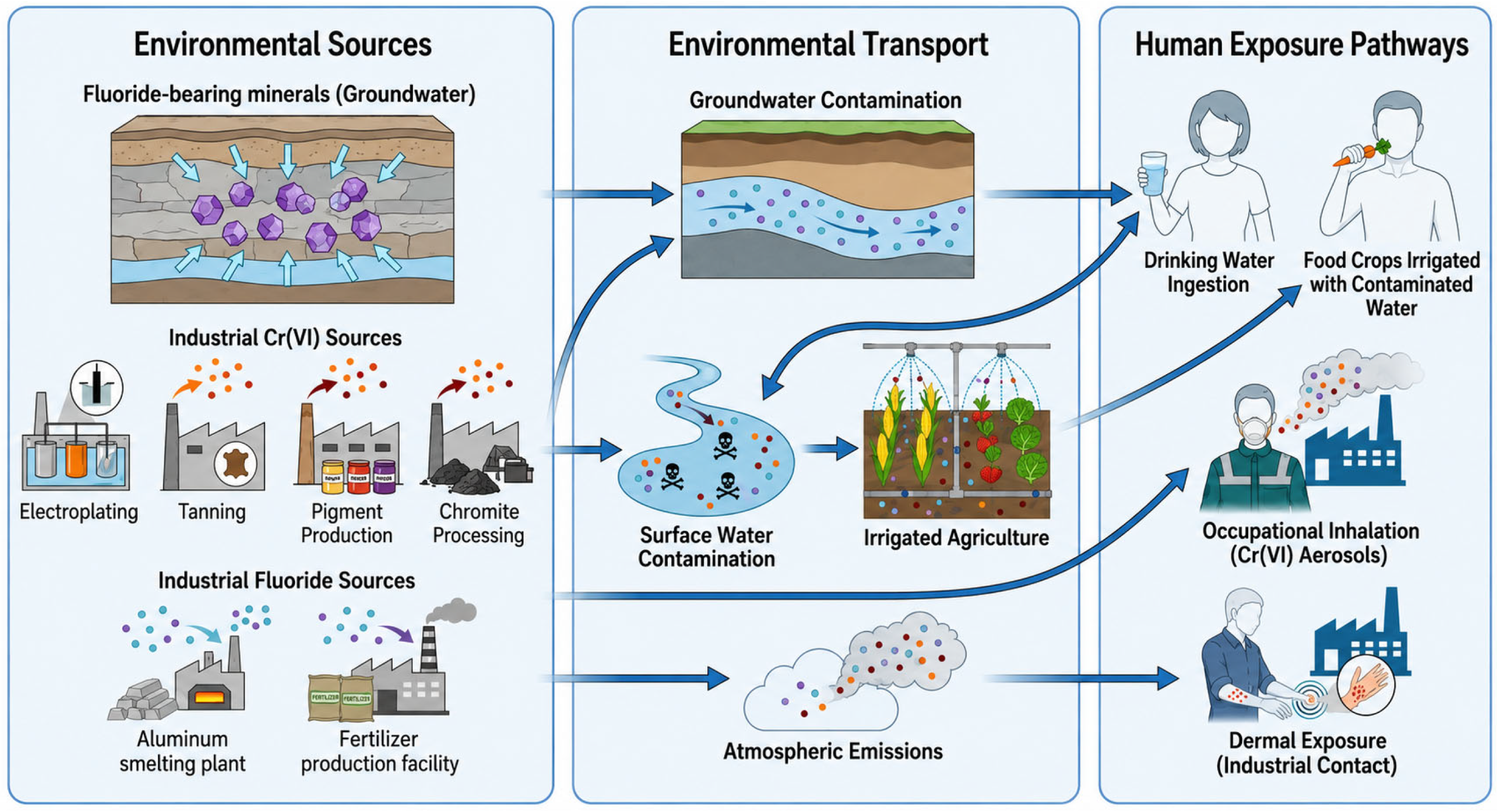
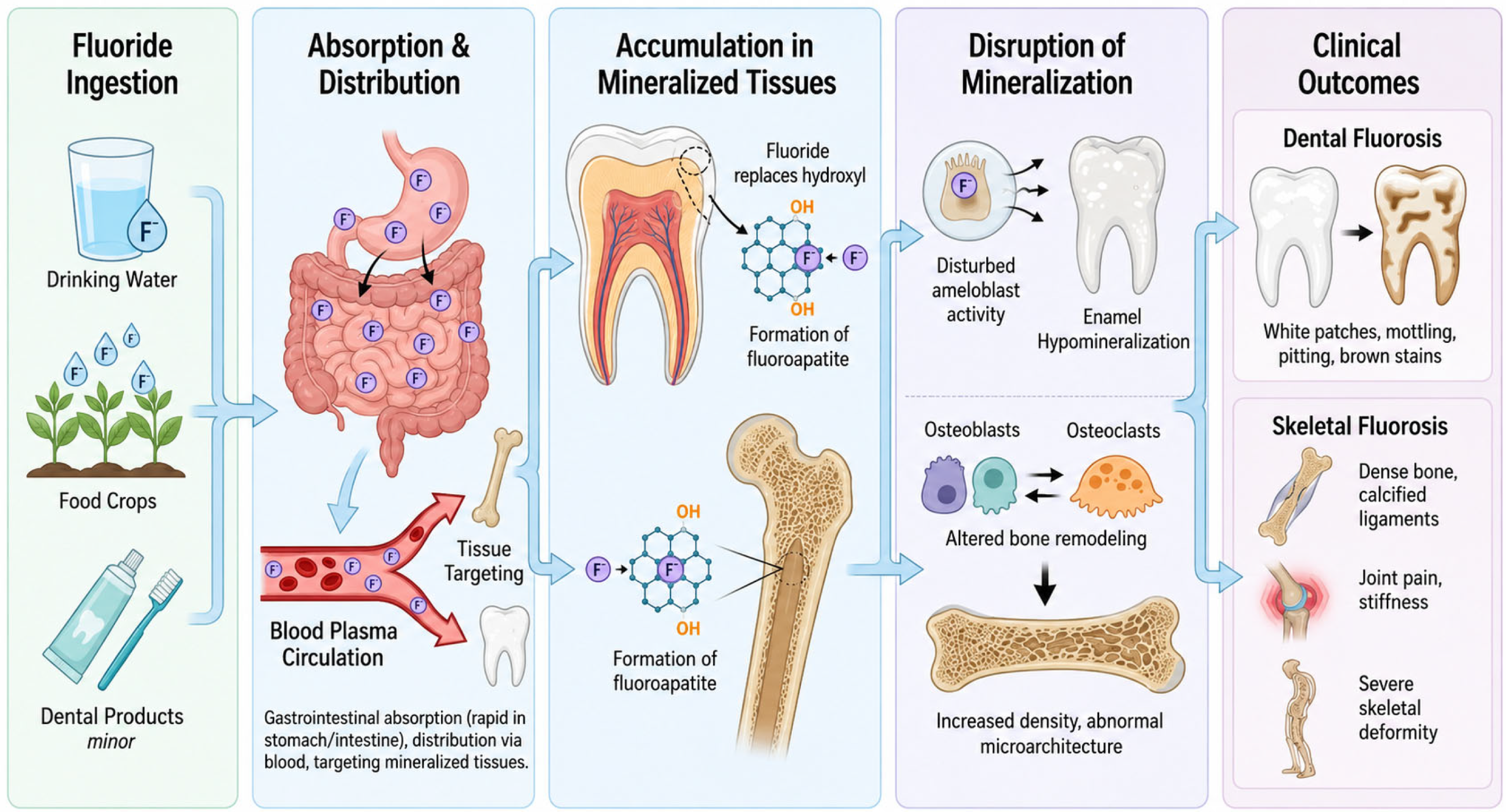
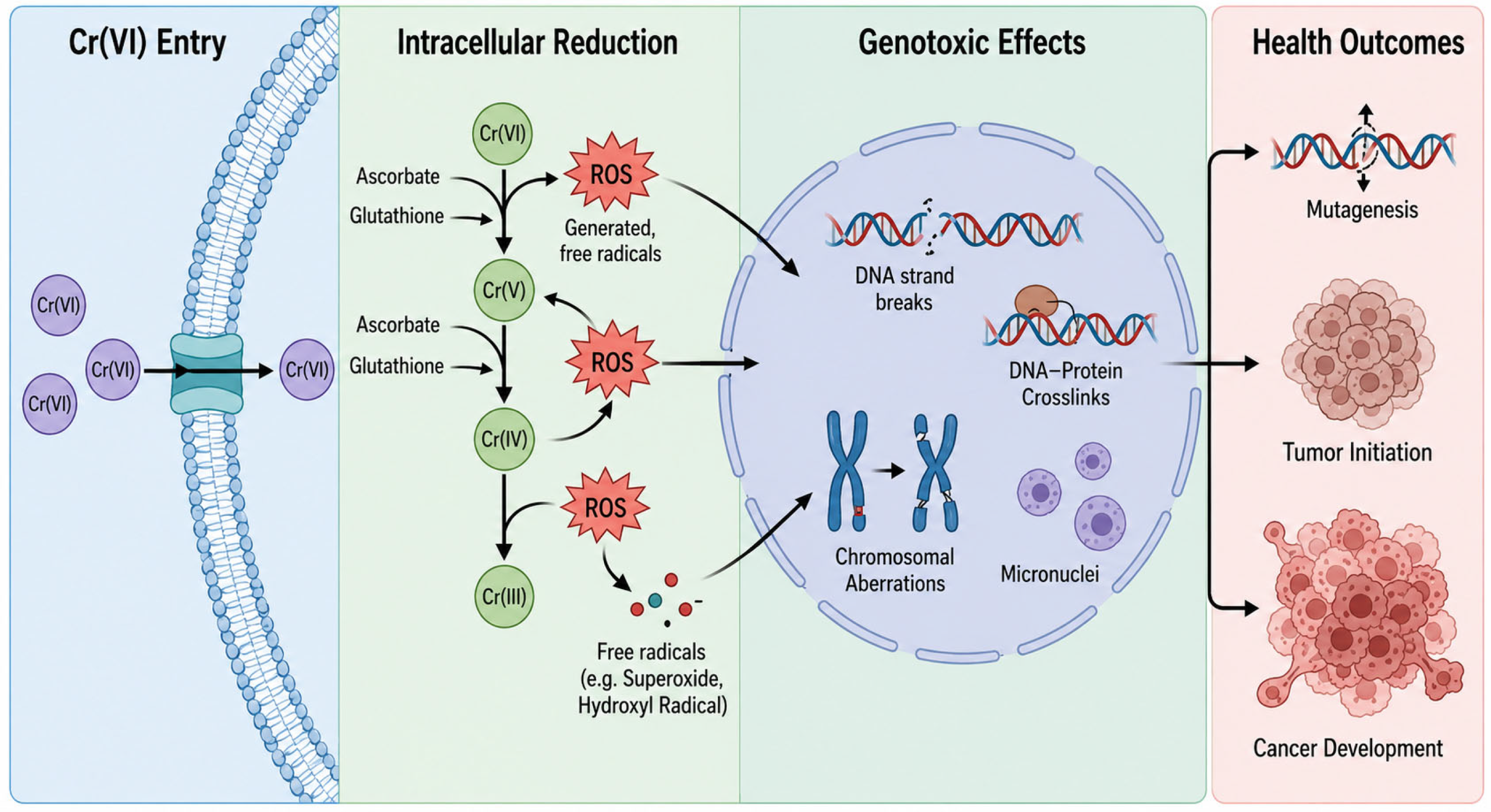
1.1. Background and Significance for Public Health
1.2. Rationale for Focusing on Coagulation
1.3. Objectives and Scope of the Review
2. Physicochemical Properties and Sources of Fluoride and Chromium
2.1. Chemical Speciation and Behavior in Water Systems
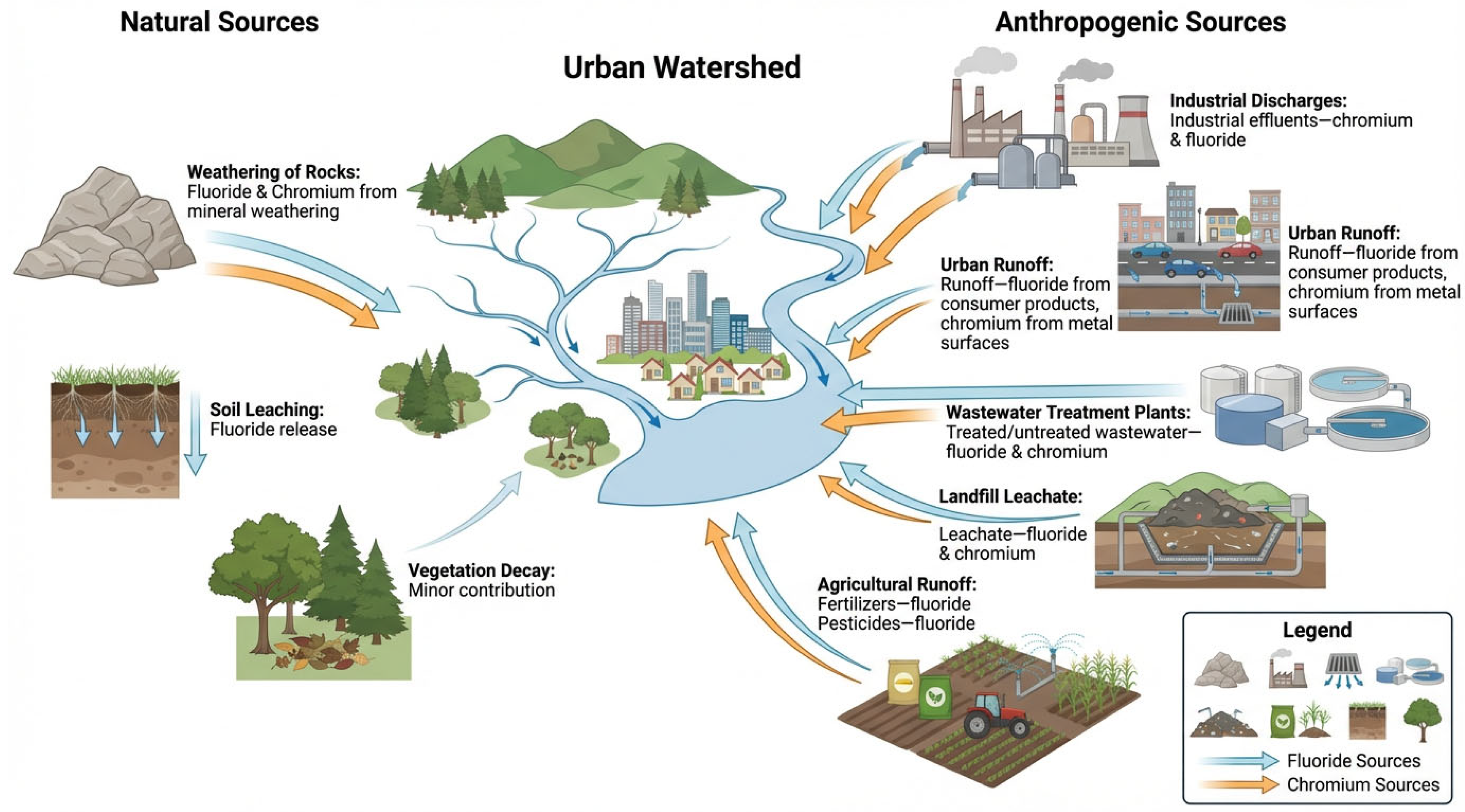
2.2. Natural and Anthropogenic Sources in Urban Watersheds
3. Fluoride and Chromium (VI) Removal by Coagulation
3.1. Mechanistic Understanding of F− and Cr(VI) Uptake During Coagulation
3.2. Influence of Coagulant Type and Hydrolysis Chemistry
3.3. Effect of Solution Characteristics and Operational Parameters
3.4. Hybrid Coagulation Technologies
3.5. Performance in Real Water and Wastewater Applications
3.6. Operational Challenges
- Sludge generation and management: Nalgonda and other high-dose alum schemes produce large volumes of Al-rich, F-bearing sludge that are rarely managed as hazardous waste. Improper drying and disposal can lead to leaching of F− and metals, undermining treatment gains. Cr-bearing sludges from Fe-based coagulation or EC similarly risk re-release of Cr(VI) under aerobic, alkaline conditions [20,33,43].
- Residual metals: Many alum-based defluoridation systems leave residual Al above 0.2 mg/L, especially when pH and dose are not tightly controlled; Fe-based systems can leave elevated iron and color. Moreover, advanced coagulants often incorporate Zr or other metals whose long-term fate in distribution and sludge is not fully characterized [5,39].
- Chemical and energy costs: Conventional alum defluoridation is chemically intensive where F− is high; IPCs and PSiFAC-Mg reduce Al consumption while Zr-based coagulants are significantly costlier and less available. EC and hybrid systems add electrical energy costs and electrode replacement to the resource burden [33,40,49].
- Robustness to variability: maintaining consistent F− and Cr(VI) removal under diurnal and seasonal fluctuations in contaminant loads, alkalinity, NOM, and temperature requires reliable monitoring and control (e.g., online pH, turbidity, residual F−/Cr sensors, and streaming-current control) that many urban utilities currently lack [42,64,105,106].
4. Cost, Energy Demand, and Operational Complexity in Urban Utilities
5. Suitability for Centralized vs. Decentralized Urban Water and Wastewater Systems
6. Research Gaps and Future Directions
6.1. Need for Pilot- and Full-Scale Studies in Diverse Urban Contexts
6.2. Development of Low-Toxicity, Green Coagulants and Process Intensification
6.3. Life-Cycle, Cost–Benefit, and Health Impact Assessments of Coagulation-Based Schemes
6.4. Priorities for Interdisciplinary Research Bridging Engineering and Urban Health
7. Conclusions
Author Contributions
Funding
Institutional Review Board Statement
Informed Consent Statement
Data Availability Statement
Conflicts of Interest
References
- Devrajani, S.K.; Ahmed, Z.; Qambrani, N.A.; Kanwal, S.; Sundaram, U.M.; Mubarak, N.M. Mechanism of Arsenic Removal Using Brown Seaweed Derived Impregnated with Iron Oxide Biochar for Batch and Column Studies. Sci. Rep. 2024, 14, 18102. [Google Scholar] [CrossRef] [PubMed]
- Saxena, V. Water Quality, Air Pollution, and Climate Change: Investigating the Environmental Impacts of Industrialization and Urbanization. Water Air Soil Pollut. 2025, 236, 73. [Google Scholar] [CrossRef]
- Shaji, E.; Sarath, K.V.; Santosh, M.; Krishnaprasad, P.K.; Arya, B.K.; Babu, M.S. Fluoride Contamination in Groundwater: A Global Review of the Status, Processes, Challenges, and Remedial Measures. Geosci. Front. 2024, 15, 101734. [Google Scholar] [CrossRef]
- Rahaman, M.A.; Kalam, A.; Al-Mamun, M. Unplanned Urbanization and Health Risks of Dhaka City in Bangladesh: Uncovering the Associations between Urban Environment and Public Health. Front. Public Health 2023, 11, 1269362. [Google Scholar] [CrossRef]
- Ahmad, S.; Singh, R.; Arfin, T.; Neeti, K. Fluoride Contamination, Consequences and Removal Techniques in Water: A Review. Environ. Sci. Adv. 2022, 1, 620–661. [Google Scholar] [CrossRef]
- Hossini, H.; Shafie, B.; Niri, A.D.; Nazari, M.; Esfahlan, A.J.; Ahmadpour, M.; Nazmara, Z.; Ahmadimanesh, M.; Makhdoumi, P.; Mirzaei, N.; et al. A Comprehensive Review on Human Health Effects of Chromium: Insights on Induced Toxicity. Environ. Sci. Pollut. Res. 2022, 29, 70686–70705. [Google Scholar] [CrossRef]
- Ling, Y.; Podgorski, J.; Sadiq, M.; Rasheed, H.; Eqani, S.A.M.A.S.; Berg, M. Monitoring and Prediction of High Fluoride Concentrations in Groundwater in Pakistan. Sci. Total Environ. 2022, 839, 156058. [Google Scholar] [CrossRef]
- Shoushtarian, F.; Negahban-Azar, M. Worldwide Regulations and Guidelines for Agricultural Water Reuse: A Critical Review. Water 2020, 12, 971. [Google Scholar] [CrossRef]
- Herschy, R.W. Water Quality for Drinking: WHO Guidelines. In Encyclopedia of Lakes and Reservoirs; Springer: Dordrecht, The Netherlands, 2012; pp. 876–883. [Google Scholar] [CrossRef]
- Mousazadeh, M.; Alizadeh, S.; Frontistis, Z.; Kabdaşlı, I.; Karamati Niaragh, E.; Al Qodah, Z.; Naghdali, Z.; Mahmoud, A.; Sandoval, M.; Butler, E.; et al. Electrocoagulation as a Promising Defluoridation Technology from Water: A Review of State of the Art of Removal Mechanisms and Performance Trends. Water 2021, 13, 656. [Google Scholar] [CrossRef]
- Rashid, T.; Sabarathinam, C.; Bhandary, H.; Al-Jumaa, M.; Shishter, A.; Al-Salman, B. Hydrogeochemical Changes in Arid Groundwater Systems: Inferences from Well-Field Long-Term Data. Environ. Earth Sci. 2025, 84, 674. [Google Scholar] [CrossRef]
- Ya, V.; Le, A.H.; Nguyen, L.S.P. Recovery of Fluoride from Fluorine Industrial Wastewater: Recent Technologies, Challenges and Perspectives. In Fluoride and Fluorocarbon Toxicity; Kumar, N., Ed.; Environmental Science and Engineering; Springer Nature: Singapore, 2024; pp. 255–274. [Google Scholar]
- Rafique, T.; Naseem, S.; Usmani, T.H.; Bashir, E.; Khan, F.A.; Bhanger, M.I. Geochemical Factors Controlling the Occurrence of High Fluoride Groundwater in the Nagar Parkar Area, Sindh, Pakistan. J. Hazard. Mater. 2009, 171, 424–430. [Google Scholar] [CrossRef]
- Ayoob, S.; Gupta, A.K. Fluoride in Drinking Water: A Review on the Status and Stress Effects. Crit. Rev. Environ. Sci. Technol. 2006, 36, 433–487. [Google Scholar] [CrossRef]
- Kanwal, S.; Devrajani, S.K.; Hashmani, S.A.K. Removal of Fluoride from Aqueous Solution Using Biochar Derived from Brown Macroalgae (Sargassum polycystum) Impregnated with Fe3O4 Nanoparticles. Phycology 2025, 5, 37. [Google Scholar] [CrossRef]
- Rajan, M.; Karunanidhi, D.; Subramani, T.; Preethi, B. Evaluation of Fluoride Contamination in Groundwater and Its Non-Carcinogenic Health Hazards in a Drought-Prone River Basin of South India. Phys. Chem. Earth Parts ABC 2024, 136, 103714. [Google Scholar] [CrossRef]
- Kamruzzaman, M.; Hredoy, R.H.; Shimo, F.J.; Khan, M.S.U.; Amin, M.S.; Ritu, S.A.; Uddin, S. Chromium Toxicity: Source, Distribution, Challenges, and Remediation. In Chromium Toxicity; Kumar, N., Ed.; Springer Nature: Cham, Switzerland, 2026; pp. 1–48. [Google Scholar]
- Pakade, V.E.; Tavengwa, N.T.; Madikizela, L.M. Recent Advances in Hexavalent Chromium Removal from Aqueous Solutions by Adsorptive Methods. RSC Adv. 2019, 9, 26142–26164. [Google Scholar] [CrossRef] [PubMed]
- Sharma, P.; Singh, S.P.; Parakh, S.K.; Tong, Y.W. Health Hazards of Hexavalent Chromium (Cr (VI)) and Its Microbial Reduction. Bioengineered 2022, 13, 4923–4938. [Google Scholar] [CrossRef] [PubMed]
- Zhitkovich, A. Chromium in Drinking Water: Sources, Metabolism, and Cancer Risks. Chem. Res. Toxicol. 2011, 24, 1617–1629. [Google Scholar] [CrossRef]
- Junaid, M.; Hashmi, M.Z.; Malik, R.N.; Pei, D.-S. Toxicity and Oxidative Stress Induced by Chromium in Workers Exposed from Different Occupational Settings around the Globe: A Review. Environ. Sci. Pollut. Res. 2016, 23, 20151–20167. [Google Scholar] [CrossRef]
- Seidler, A.; Jähnichen, S.; Hegewald, J.; Fishta, A.; Krug, O.; Rüter, L.; Strik, C.; Hallier, E.; Straube, S. Systematic Review and Quantification of Respiratory Cancer Risk for Occupational Exposure to Hexavalent Chromium. Int. Arch. Occup. Environ. Health 2013, 86, 943–955. [Google Scholar] [CrossRef]
- Das, R.K.; Marma, M.; Mizan, A.; Chen, G.; Alam, M.S. Heavy Metals and Microplastics as Emerging Contaminants in Bangladesh’s River Systems: Evidence from Urban–Industrial Corridors. Toxics 2025, 13, 803. [Google Scholar] [CrossRef]
- Vasudevan, S.; Lakshmi, J.; Vanathi, R. Electrochemical Coagulation for Chromium Removal: Process Optimization, Kinetics, Isotherms and Sludge Characterization. CLEAN—Soil Air Water 2010, 38, 9–16. [Google Scholar] [CrossRef]
- Kanagaraj, G.; Elango, L. Chromium and Fluoride Contamination in Groundwater around Leather Tanning Industries in Southern India: Implications from Stable Isotopic Ratio δ53Cr/δ52Cr, Geochemical and Geostatistical Modelling. Chemosphere 2019, 220, 943–953. [Google Scholar] [CrossRef]
- Melak, F.; Asere, T.G. Comparative Removal of Cr(VI) and F− Ions from Water by Freezing Technology. J. Chem. 2022, 2022, 9143182. [Google Scholar] [CrossRef]
- Ergović Ravančić, M.; Habuda-Stanić, M. Fluoride Adsorption from Water Using Activated Carbon Modified with Nitric Acid and Hydrogen Peroxide. Water 2024, 16, 3439. [Google Scholar] [CrossRef]
- Fezraoui, A.; Cornu, D.; Hébrant, M. Fast and Efficient Chromium(VI) Extraction by Colloidal Mg/Al Layered Double Hydroxide Nanoparticles. Appl. Clay Sci. 2024, 260, 107536. [Google Scholar] [CrossRef]
- Perluxo, J.D.; Alves, F.C.; Maia, L.S.; Faria, M.I.S.T.; De Oliveira, D.M.; Botelho, E.C.; Rosa, D.S.; Mulinari, D.R. Sustainable Solutions for Cr6+ Removal Using Carbon-Based Adsorbents. Colloids Surf. Physicochem. Eng. Asp. 2025, 726, 137881. [Google Scholar] [CrossRef]
- Priyadharshini, R.; Elanchezhiyan, S.S.; Prabhu, S.M.; Meenakshi, S. Bimetallic Oxide Integrated Chitosan Matrix for Adsorption Coupled Reduction of Cr(VI) from Aqueous Solution. Sep. Purif. Technol. 2025, 370, 133158. [Google Scholar] [CrossRef]
- Wei, L.; Zietzschmann, F.; Rietveld, L.C.; Van Halem, D. Fluoride Removal from Water by Ca-Al-CO3 Layered Double Hydroxides and Simultaneous Acidification. J. Water Process Eng. 2021, 40, 101957. [Google Scholar] [CrossRef]
- Xiao, F.; Jiang, G.; Bu, D.; Fu, J.; Cui, X.; Zhang, Q. Rapid and Synergistic Adsorption of Arsenic and Fluoride by Bifunctional Al/Ce Oxides in Complex Geothermal Matrices. Ecotoxicol. Environ. Saf. 2025, 306, 119362. [Google Scholar] [CrossRef] [PubMed]
- Solanki, Y.S.; Agarwal, M.; Maheshwari, K.; Gupta, S.; Shukla, P.; Gupta, A.B. Removal of Fluoride from Water by Using a Coagulant (Inorganic Polymeric Coagulant). Environ. Sci. Pollut. Res. 2021, 28, 3897–3905. [Google Scholar] [CrossRef] [PubMed]
- Aoudj, S.; Khelifa, A.; Drouiche, N.; Belkada, R.; Miroud, D. Simultaneous Removal of Chromium(VI) and Fluoride by Electrocoagulation–Electroflotation: Application of a Hybrid Fe-Al Anode. Chem. Eng. J. 2015, 267, 153–162. [Google Scholar] [CrossRef]
- Bahrodin, M.B.; Zaidi, N.S.; Hussein, N.; Sillanpää, M.; Prasetyo, D.D.; Syafiuddin, A. Recent Advances on Coagulation-Based Treatment of Wastewater: Transition from Chemical to Natural Coagulant. Curr. Pollut. Rep. 2021, 7, 379–391. [Google Scholar] [CrossRef]
- He, Z.; Lan, H.; Gong, W.; Liu, R.; Gao, Y.; Liu, H.; Qu, J. Coagulation Behaviors of Aluminum Salts towards Fluoride: Significance of Aluminum Speciation and Transformation. Sep. Purif. Technol. 2016, 165, 137–144. [Google Scholar] [CrossRef]
- Jagtap, S.; Yenkie, M.K.; Labhsetwar, N.; Rayalu, S. Fluoride in Drinking Water and Defluoridation of Water. Chem. Rev. 2012, 112, 2454–2466. [Google Scholar] [CrossRef] [PubMed]
- Mondal, P.; George, S. A Review on Adsorbents Used for Defluoridation of Drinking Water. Rev. Environ. Sci. Biotechnol. 2015, 14, 195–210. [Google Scholar] [CrossRef]
- Dubey, S.; Agarwal, M.; Gupta, A.B. Experimental Investigation of Al-F Species Formation and Transformation during Coagulation for Fluoride Removal Using Alum and PACl. J. Mol. Liq. 2018, 266, 349–360. [Google Scholar] [CrossRef]
- Tolkou, A.K.; Mitrakas, M.; Katsoyiannis, I.A.; Ernst, M.; Zouboulis, A.I. Fluoride Removal from Water by Composite Al/Fe/Si/Mg Pre-Polymerized Coagulants: Characterization and Application. Chemosphere 2019, 231, 528–537. [Google Scholar] [CrossRef] [PubMed]
- Sinharoy, A.; Chung, C.M. Fluoride Removal from Wastewater and Potential for Resource Recovery: Comparative Studies between Different Treatment Technologies. Environ. Eng. Res. 2024, 29, 240179. [Google Scholar] [CrossRef]
- Gong, W.-X.; Qu, J.-H.; Liu, R.-P.; Lan, H.-C. Effect of Aluminum Fluoride Complexation on Fluoride Removal by Coagulation. Colloids Surf. Physicochem. Eng. Asp. 2012, 395, 88–93. [Google Scholar] [CrossRef]
- Pan, C.; Troyer, L.D.; Catalano, J.G.; Giammar, D.E. Dynamics of Chromium(VI) Removal from Drinking Water by Iron Electrocoagulation. Environ. Sci. Technol. 2016, 50, 13502–13510. [Google Scholar] [CrossRef]
- Meng, X.; Zeng, P.; Lin, S.; Wu, M.; Yang, L.; Bao, H.; Kang, J.; Han, H.; Zhang, C.; Sun, W. Deep Removal of Fluoride from Tungsten Smelting Wastewater by Combined Chemical Coagulation-Electrocoagulation Treatment: From Laboratory Test to Pilot Test. J. Clean. Prod. 2023, 416, 137914. [Google Scholar] [CrossRef]
- Khatibikamal, V.; Torabian, A.; Janpoor, F.; Hoshyaripour, G. Fluoride Removal from Industrial Wastewater Using Electrocoagulation and Its Adsorption Kinetics. J. Hazard. Mater. 2010, 179, 276–280. [Google Scholar] [CrossRef]
- El Mouhri, G.; Elmansouri, I.; Amakdouf, H.; Belhassan, H.; Kachkoul, R.; El Oumari, F.E.; Merzouki, M.; Lahrichi, A. Evaluating the Effectiveness of Coagulation–Flocculation Treatment on a Wastewater from the Moroccan Leather Tanning Industry: An Ecological Approach. Heliyon 2024, 10, e27056. [Google Scholar] [CrossRef]
- Kurniawan, S.; Abdullah, S.; Imron, M.; Said, N.; Ismail, N.; Hasan, H.; Othman, A.; Purwanti, I. Challenges and Opportunities of Biocoagulant/Bioflocculant Application for Drinking Water and Wastewater Treatment and Its Potential for Sludge Recovery. Int. J. Environ. Res. Public. Health 2020, 17, 9312. [Google Scholar] [CrossRef]
- Teh, C.Y.; Budiman, P.M.; Shak, K.P.Y.; Wu, T.Y. Recent Advancement of Coagulation–Flocculation and Its Application in Wastewater Treatment. Ind. Eng. Chem. Res. 2016, 55, 4363–4389. [Google Scholar] [CrossRef]
- Gan, Y.; Wang, X.; Zhang, L.; Wu, B.; Zhang, G.; Zhang, S. Coagulation Removal of Fluoride by Zirconium Tetrachloride: Performance Evaluation and Mechanism Analysis. Chemosphere 2019, 218, 860–868. [Google Scholar] [CrossRef] [PubMed]
- Mohapatra, M.; Anand, S.; Mishra, B.K.; Giles, D.E.; Singh, P. Review of Fluoride Removal from Drinking Water. J. Environ. Manag. 2009, 91, 67–77. [Google Scholar] [CrossRef] [PubMed]
- He, J.; Yang, Y.; Wu, Z.; Xie, C.; Zhang, K.; Kong, L.; Liu, J. Review of Fluoride Removal from Water Environment by Adsorption. J. Environ. Chem. Eng. 2020, 8, 104516. [Google Scholar] [CrossRef]
- Gai, W.-Z.; Deng, Z.-Y. A Comprehensive Review of Adsorbents for Fluoride Removal from Water: Performance, Water Quality Assessment and Mechanism. Environ. Sci. Water Res. Technol. 2021, 7, 1362–1386. [Google Scholar] [CrossRef]
- Das, D.; Nandi, B.K. A Comprehensive Approach towards Efficient Removal of Fluoride along with Co-Existing Pollutants from Real Groundwater Using Electrocoagulation Process. J. Appl. Electrochem. 2025, 55, 2573–2586. [Google Scholar] [CrossRef]
- Sun, Y.; Zhang, C.; Ma, J.; Sun, W.; Shah, K.J. Review of Fluoride Removal Technology from Wastewater Environment. Desalination Water Treat. 2023, 299, 90–101. [Google Scholar] [CrossRef]
- Wan, K.; Huang, L.; Yan, J.; Ma, B.; Huang, X.; Luo, Z.; Zhang, H.; Xiao, T. Removal of Fluoride from Industrial Wastewater by Using Different Adsorbents: A Review. Sci. Total Environ. 2021, 773, 145535. [Google Scholar] [CrossRef]
- Sun, X.; Ke, C.; Lu, Q.; Wang, Q.; Zhou, S.; Liang, L.; Xie, G. Recent Advances in Adsorption Techniques for the Removal of Fluoride Ions from Wastewater: A Review. Ind. Eng. Chem. Res. 2024, 63, 19936–19954. [Google Scholar] [CrossRef]
- Ramli, N.N.; Kurniawan, S.B.; Ighalo, J.O.; Mohd Said, N.S.; Marsidi, N.; Buhari, J.; Ramli Shah, R.A.; Zulkifli, M.; Alias, J.; Daud, N.M.; et al. A Review of the Treatment Technologies for Hexavalent Chromium Contaminated Water. BioMetals 2023, 36, 1189–1219. [Google Scholar] [CrossRef]
- Irshad, M.A.; Sattar, S.; Nawaz, R.; Al-Hussain, S.A.; Rizwan, M.; Bukhari, A.; Waseem, M.; Irfan, A.; Inam, A.; Zaki, M.E.A. Enhancing Chromium Removal and Recovery from Industrial Wastewater Using Sustainable and Efficient Nanomaterial: A Review. Ecotoxicol. Environ. Saf. 2023, 263, 115231. [Google Scholar] [CrossRef] [PubMed]
- Mallik, A.K.; Moktadir, M.A.; Rahman, M.A.; Shahruzzaman, M.; Rahman, M.M. Progress in Surface-Modified Silicas for Cr(VI) Adsorption: A Review. J. Hazard. Mater. 2022, 423, 127041. [Google Scholar] [CrossRef] [PubMed]
- Zeng, W.; Luo, Y.; Wang, C.; Liu, Z.; Xue, M.; Xie, X. A Review on Recent Advances of Adsorption and Photoreduction of Cr(VI). Environ. Pollut. Bioavailab. 2025, 37, 2493057. [Google Scholar] [CrossRef]
- Zhigalenok, Y.; Tazhibayeva, A.; Kokhmetova, S.; Starodubtseva, A.; Kan, T.; Isbergenova, D.; Malchik, F. Hexavalent Chromium at the Crossroads of Science, Environment and Public Health. RSC Adv. 2025, 15, 21439–21464. [Google Scholar] [CrossRef]
- Hamdan, S.S.; El-Naas, M.H. Characterization of the Removal of Chromium(VI) from Groundwater by Electrocoagulation. J. Ind. Eng. Chem. 2014, 20, 2775–2781. [Google Scholar] [CrossRef]
- Nasseh, N.; Taghavi, L.; Barikbin, B.; Harifi-Mood, A.R. The Removal of Cr(VI) from Aqueous Solution by Almond Green Hull Waste Material: Kinetic and Equilibrium Studies. J. Water Reuse Desalination 2017, 7, 449–460. [Google Scholar] [CrossRef]
- Bidiraa, F.; Bekele, E.A.; Muleta, W.S. Optimizing Chromium Removal from Synthetic Wastewater via Electrocoagulation Process with a Natural Coagulant (Blended of Eggshell Powder and Lime) Using Response Surface Methodology. Heliyon 2024, 10, e39234. [Google Scholar] [CrossRef]
- Nungula, E.Z.; Ngaiza, V.V.; Chappa, L.R.; Mwadalu, R.; Nyambele, K.A.; Uddin, S.; Ranjan, S.; Sow, S.; Heydarzadeh, S.; Gitari, H.I. Fluoride in Groundwater: Causes, Implications and Mitigation Measures. In Fluorides in Drinking Water; Sharma, K., Ed.; Environmental Science and Engineering; Springer Nature: Cham, Switzerland, 2025; pp. 283–303. [Google Scholar]
- Schlesinger, W.H.; Klein, E.M.; Vengosh, A. Global Biogeochemical Cycle of Fluorine. Glob. Biogeochem. Cycles 2020, 34, e2020GB006722. [Google Scholar] [CrossRef]
- Meng, X.; Luo, Z.; Wu, M.; Sun, W. Comparative Analysis of Aluminum Sulfate and Polyaluminum Chloride for Fluoride Removal from Smelting Wastewater. J. Water Process Eng. 2025, 79, 108917. [Google Scholar] [CrossRef]
- Li, C.; Chen, H.; Zhang, Y.; Fang, W.; Zou, L.; Chi, R. Investigation of the Mechanism of Soluble Fluoride Removal from Phosphogypsum Leachate Using Polyaluminium Chloride Flocculation: A Molecular Dynamics Approach. Colloids Surf. Physicochem. Eng. Asp. 2025, 718, 136822. [Google Scholar] [CrossRef]
- Zhang, Y.-X.; Jia, Y. Fluoride adsorption onto amorphous aluminum hydroxide: Roles of the surface acetate anions. J. Colloid Interface Sci. 2016, 483, 295–306. [Google Scholar] [CrossRef]
- Dou, X.; Mohan, D.; Pittman, C.U.; Yang, S. Remediating Fluoride from Water Using Hydrous Zirconium Oxide. Chem. Eng. J. 2012, 198–199, 236–245. [Google Scholar] [CrossRef]
- Pei, K.; Liu, T. Enhanced Cr (VI) Removal with Pb (II) Presence by Fe2+ -Activated Persulfate and Zero-Valent Iron System. Environ. Technol. 2023, 44, 2215–2229. [Google Scholar] [CrossRef] [PubMed]
- Zewge, F. Combined Aluminium Sulfate/Hydroxide Process for Fluoride Removal from Drinking Water. Bull. Chem. Soc. Ethiop. 2017, 30, 391–401. [Google Scholar] [CrossRef]
- Du, H.; Fang, L.; Shi, X.; Li, T.; Sui, Z.; Zhong, J.; Li, K. Efficient Defluoridation of High-Fluoride Water Using Rare Earth-Based Adsorbents: Adsorption Performance, Mechanism, and Kinetics. Sci. Rep. 2025, 15, 42709. [Google Scholar] [CrossRef] [PubMed]
- Ozairi, N.; Mousavi, S.A.; Samadi, M.T.; Seidmohammadi, A.; Nayeri, D. Removal of Fluoride from Water Using Coagulation–Flocculation Process: A Comparative Study. Desalination Water Treat. 2020, 180, 265–270. [Google Scholar] [CrossRef]
- Li, S.; Liu, M.; Meng, F.; Hu, X.; Yu, W. Removal of F− and Organic Matter from Coking Wastewater by Coupling Dosing FeCl3 and AlCl3. J. Environ. Sci. 2021, 110, 2–11. [Google Scholar] [CrossRef]
- Qu, L.; Gan, Y.; Xu, B.; Wu, B.; Wu, W.; Huang, T.; Kong, M.; Chao, J.; Ding, C.; Cui, Y. Application of a Novel Zirconium Coagulant in the Coagulation-Ultrafiltration Process: Fluoride Removal and Membrane Fouling Alleviation. Chem. Eng. J. 2023, 478, 147324. [Google Scholar] [CrossRef]
- Kachoue Sefiddashti, M.H.; Farhikhte, M.; Khorashadi Zadeh, F.; Berahmand, M. Integrated Evaluation of Five Coagulants and Precipitants for Fluoride and Turbidity Removal from Steel Industry Wastewater: Removal Performance, Sedimentation, and Life Cycle Assessment. Sustainability 2026, 7, 100270. [Google Scholar] [CrossRef]
- Katsoyiannis, I.A.; Xanthopoulou, M.; Zouboulis, A.I. Cr(VI) Femoval from Ground Waters by Ferrous Iron Redox-Assisted Coagulation in a Continuous Treatment Unit Comprising a Plug Flow Pipe Reactor and Downflow Sand Filtration. Appl. Sci. 2020, 10, 802. [Google Scholar] [CrossRef]
- Pangeran, A.B.; Afandy, M.A.; Sawali, F.D.I. Efficiency of FeSO4.7H2O as a Coagulant on Chromium Hexavalent Removal Using Coagulation-Flocculation Process: Optimization Using Response Surface Methodology. J. Tek. Kim. Dan Lingkung. 2023, 7, 123–133. [Google Scholar] [CrossRef]
- Dermentzis, K.; Karakosta, K.; Chatzichristou, C.; Spanos, T. Comparing Chemical Coagulation and Electrocoagulation on Removal Efficiency of Chromium (VI) from Galvanic Effluents. J. Eng. Sci. Technol. Rev. 2021, 14, 54–58. [Google Scholar] [CrossRef]
- Stylianou, S.; Simeonidis, K.; Mitrakas, M.; Zouboulis, A.; Ernst, M.; Katsoyiannis, I.A. Reductive Precipitation and Removal of Cr(VI) from Groundwaters by Pipe Flocculation-Microfiltration. Environ. Sci. Pollut. Res. 2018, 25, 12256–12262. [Google Scholar] [CrossRef]
- El Gaayda, J.; Rachid, Y.; Titchou, F.E.; Barra, I.; Hsini, A.; Yap, P.-S.; Oh, W.-D.; Swanson, C.; Hamdani, M.; Akbour, R.A. Optimizing Removal of Chromium (VI) Ions from Water by Coagulation Process Using Central Composite Design: Effectiveness of Grape Seed as a Green Coagulant. Sep. Purif. Technol. 2023, 307, 122805. [Google Scholar] [CrossRef]
- Muleta, W.S.; Abdi, F.B.; Bekele, E.A. Removal of Chromium from Synthetic Wastewater by Electrocoagulation and Using Natural Coagulant (Blend of Hen Eggshell Powder with Lime): Optimization of Response Surface Methodology. Appl. Water Sci. 2025, 15, 48. [Google Scholar] [CrossRef]
- Sun, Y.; Hu, Z.; Wang, Z.; Zhang, C.; Sun, W. Efficient Removal of Fluoride From Water by Polymeric Aluminum Zirconium Chloride: Performance and Mechanism From Flocculation Aspects. Water. Air. Soil Pollut. 2025, 236, 674. [Google Scholar] [CrossRef]
- Zhang, N.; Yang, Y.; Fan, L.; Zheng, X.; Wang, J.; Jiang, C.; Xu, S.; Xu, H.; Wang, D. Coagulation Effect of Polyaluminum-Titanium Chloride Coagulant and the Effect of Floc Aging in Fluoride Removal: A Mechanism Analysis. Sep. Purif. Technol. 2023, 325, 124674. [Google Scholar] [CrossRef]
- Akhtar, N.A.; Kobya, M.; Khataee, A. Removal of Cr(VI) by Continuous Flow Electrocoagulation Reactor at Controlled and Uncontrolled Initial pH Conditions. Chem. Eng. Res. Des. 2025, 214, 403–414. [Google Scholar] [CrossRef]
- Bhatti, I.A.; Ahmad, N.; Iqbal, N.; Zahid, M.; Iqbal, M. Chromium Adsorption Using Waste Tire and Conditions Optimization by Response Surface Methodology. J. Environ. Chem. Eng. 2017, 5, 2740–2751. [Google Scholar] [CrossRef]
- Frumento, D.; Ţălu, Ş. Recent Advances in the Application of Natural Coagulants for Sustainable Water Purification. Eng 2026, 7, 38, Correction in Eng 2026, 7, 114. https://doi.org/10.3390/eng7030114. [Google Scholar] [CrossRef]
- Tahraoui, H.; Toumi, S.; Boudoukhani, M.; Touzout, N.; Sid, A.N.E.H.; Amrane, A.; Belhadj, A.-E.; Hadjadj, M.; Laichi, Y.; Aboumustapha, M.; et al. Evaluating the Effectiveness of Coagulation–Flocculation Treatment Using Aluminum Sulfate on a Polluted Surface Water Source: A Year-Long Study. Water 2024, 16, 400. [Google Scholar] [CrossRef]
- Katsoyiannis, I.; Tzollas, N.; Tolkou, A.; Mitrakas, M.; Ernst, M.; Zouboulis, A. Use of Novel Composite Coagulants for Arsenic Removal from Waters—Experimental Insight for the Application of Polyferric Sulfate (PFS). Sustainability 2017, 9, 590. [Google Scholar] [CrossRef]
- Abujazar, M.S.S.; Karaağaç, S.U.; Abu Amr, S.S.; Alazaiza, M.Y.D.; Bashir, M.J. Recent Advancement in the Application of Hybrid Coagulants in Coagulation-Flocculation of Wastewater: A Review. J. Clean. Prod. 2022, 345, 131133. [Google Scholar] [CrossRef]
- Agarwal, M.; Dubey, S.; Gupta, A.B. Coagulation Process for Fluoride Removal by Comparative Evaluation of Alum and PACl Coagulants with Subsequent Membrane Micro-Filtration. Int. J. Environ. Technol. Manag. 2017, 20, 200–224. [Google Scholar] [CrossRef]
- Li, Y.; Wang, Y.; Liao, M.; Su, F.; Zhang, Y.; Peng, L. Effects of Electroflocculation/Oxidation Pretreatment on the Fouling Characteristics of Ultrafiltration Membranes. Water Sci. Technol. 2022, 85, 1079–1089. [Google Scholar] [CrossRef]
- Arab, N.; Derakhshani, R.; Sayadi, M.H. Approaches for the Efficient Removal of Fluoride from Groundwater: A Comprehensive Review. Toxics 2024, 12, 306. [Google Scholar] [CrossRef]
- Qin, G.; McGuire, M.J.; Blute, N.K.; Seidel, C.; Fong, L. Hexavalent Chromium Removal by Reduction with Ferrous Sulfate, Coagulation, and Filtration: A Pilot-Scale Study. Environ. Sci. Technol. 2005, 39, 6321–6327. [Google Scholar] [CrossRef]
- Vishwakarma, V.; Srivastava, J.K. Removal of Fluoride from Ground Water by Electrocoagulation Method: Investigation of Process Parameters, Kinetic Analysis, and Operating Cost. J. Dispers. Sci. Technol. 2024, 45, 2344–2354. [Google Scholar] [CrossRef]
- Pająk, M. Alum Sludge as an Adsorbent for Inorganic and Organic Pollutants Removal from Aqueous Solutions: A Review. Int. J. Environ. Sci. Technol. 2023, 20, 10953–10972. [Google Scholar] [CrossRef]
- Aghapour, A.A.; Khorsandi, H.; Dehghani, A.; Karimzade, S. Preparation and Characterization and Application of Activated Alumina (AA) from Alum Sludge for the Adsorption of Fluoride from Aqueous Solutions: New Approach to Alum Sludge Recycling. Water Supply 2018, 18, 1825–1831. [Google Scholar] [CrossRef]
- Dassanayake, K.B.; Jayasinghe, G.Y.; Surapaneni, A.; Hetherington, C. A Review on Alum Sludge Reuse with Special Reference to Agricultural Applications and Future Challenges. Waste Manag. 2015, 38, 321–335. [Google Scholar] [CrossRef] [PubMed]
- Genawi, N.M.; Ibrahim, M.H.; El-Naas, M.H.; Alshaik, A.E. Chromium Removal from Tannery Wastewater by Electrocoagulation: Optimization and Sludge Characterization. Water 2020, 12, 1374. [Google Scholar] [CrossRef]
- Tang, W.; Zhang, H.; Huang, S. Removal Cr(VI) from Tunneling Wastewater by Fe-Containing Sludge Biochar: The Role of Endogenous Iron. Desalination Water Treat. 2024, 318, 100306. [Google Scholar] [CrossRef]
- Teshome, L.Y.; Jim, F.C.; Feleke, Z.B.; David, A.S. Performance Enhancement of Nalgonda Technique and Pilot Testing Electrolytic Defluoridation System for Removing Fluoride from Drinking Water in East Africa. Afr. J. Environ. Sci. Technol. 2018, 12, 357–369. [Google Scholar] [CrossRef]
- Hao, W.; Gao, T.; Shi, W.; Zhao, M.; Huang, Z.; Ren, H.; Ruan, W. Coagulation Removal of Dissolved Organic Matter (DOM) in Nanofiltration Concentrate of Biologically Treated Landfill Leachate by ZrCl4: Performance, Mechanism and Coagulant Recycling. Chemosphere 2022, 301, 134768. [Google Scholar] [CrossRef] [PubMed]
- Konradt, N.; Dillmann, S.; Becker, J.; Schroden, D.; Rohns, H.-P.; Wagner, C.; Müller, U.; Konradt, D.; Janknecht, P.; Hobby, R.; et al. Removal of Chromium Species from Low-Contaminated Raw Water by Different Drinking Water Treatment Processes. Water 2023, 15, 516. [Google Scholar] [CrossRef]
- Sinha, R.; Kumar, R.; Sharma, P.; Kant, N.; Shang, J.; Aminabhavi, T.M. Removal of Hexavalent Chromium via Biochar-Based Adsorbents: State-of-the-Art, Challenges, and Future Perspectives. J. Environ. Manag. 2022, 317, 115356. [Google Scholar] [CrossRef]
- Mthombeni, N.H.; Onyango, M.S.; Aoyi, O. Adsorption of Hexavalent Chromium onto Magnetic Natural Zeolite-Polymer Composite. J. Taiwan Inst. Chem. Eng. 2015, 50, 242–251. [Google Scholar] [CrossRef]
- He, C.; Sun, Y.; Gu, Y.; Ji, H. Enhanced Fluoride Removal Using Mg-Zr Binary Metal Oxide Nanoparticles Confined in a Strong-Base Anion Exchanger. Chemosphere 2024, 358, 141980. [Google Scholar] [CrossRef] [PubMed]
- El-Gawad, H.A.; Hassan, G.K.; Aboelghait, K.M.; Mahmoud, W.H.; Mohamed, R.M.; Afify, A.A. Removal of Chromium from Tannery Industry Wastewater Using Iron-Based Electrocoagulation Process: Experimental; Kinetics; Isotherm and Economical Studies. Sci. Rep. 2023, 13, 19597. [Google Scholar] [CrossRef] [PubMed]
- Ono, R.; Shimoda, S.; Fukuoka, A.; Takada, T. Fluoride Removal from Water Using Zr-Modified Meso- and Macroporous Carbons: Effect of Pore Structure and Adsorption Conditions. Chem. Eng. J. Adv. 2023, 15, 100512. [Google Scholar] [CrossRef]
- El Mahjoub, A.A.; Najid, N.; Falil, F.Z.; Audonnet, F.; Vial, C.; Rashwan, H.A.; Stiriba, Y.; Necibi, M.C.; Gourich, B. Pilot-Scale Demonstration for Simultaneous Removal of Fluoride, Silica and Hardness from Real Brackish Groundwater Using Electrocoagulation Process: Performance Evaluation and Machine Learning Prediction. Desalination 2026, 619, 119510. [Google Scholar] [CrossRef]
- Ibrahim, A.; Yaser, A.Z.; Lamaming, J. Synthesising Tannin-Based Coagulants for Water and Wastewater Application: A Review. J. Environ. Chem. Eng. 2021, 9, 105007. [Google Scholar] [CrossRef]
- Salehizadeh, H.; Yan, N.; Farnood, R. Recent Advances in Polysaccharide Bio-Based Flocculants. Biotechnol. Adv. 2018, 36, 92–119. [Google Scholar] [CrossRef]
- Goyal, H.; Mondal, P. Life Cycle Assessment (LCA) of the Arsenic and Fluoride Removal from Groundwater through Adsorption and Electrocoagulation: A Comparative Study. Chemosphere 2022, 304, 135243. [Google Scholar] [CrossRef]
- Choudhary, V.; Goyal, H.; Varma, A.K.; Shankar, R.; Chakma, S.; Malviya, P.; Thakur, L.S. Life Cycle Assessment (LCA) of the Lead, Chromium, and Cadmium Removal from Water through Electrocoagulation. Mater. Today Proc. 2024, 111, 8–14. [Google Scholar] [CrossRef]



| Review | Pollutant Focus | Treatment Methods | Multiple Pollutant Discussion | Public Health Perspective | Ref. |
|---|---|---|---|---|---|
| Review A | F− | Membrane and adsorption | No | No | [50] |
| Review B | F− | Adsorption | No | No | [51] |
| Review C | F− | Adsorption | No | No | [52] |
| Review D | F− | Electrocoagulation | Yes | No | [53] |
| Review E | F− | Various | No | No | [54] |
| Review F | F− | Adsorption | No | No | [55] |
| Review G | F− | Adsorption | No | No | [56] |
| Review H | Cr(VI) | Various | No | No | [57] |
| Review I | Cr(VI) | Various | No | Limited | [58] |
| Review G | Cr(VI) | Adsorption | No | No | [59] |
| Review K | Cr(VI) | Adsorption and photocatalytic reduction | No | No | [60] |
| Review L | Cr(VI) | Various | No | Yes | [61] |
| Review M | F− and Cr(VI) | Coagulation/Electrocoagulation | Yes | Yes | This Review |
| Coagulant | Type | Pollutant | pH | Coagulant Dose (mg/L) | C0 (mg/L) | Removal (%) | Ref. |
|---|---|---|---|---|---|---|---|
| Aluminum-based | |||||||
| Alum sulfate (Al2(SO4)3·14H2O) | Alum salt | F− | 4 | 30 | 2 | 83.0 | [74] |
| AlCl3 | Conventional aluminum salt | F− | 6.5 | 2667 | 92.0 | 94.4 | [75] |
| PAC | Pre-polymerized Al coagulant | F− | 6 | 205 | 4 | 24.7 | [76] |
| PACl | poly aluminum chloride | F− | 7 | 200 | 16 | 90.0 | [77] |
| Iron-based | |||||||
| FeCl3 | Conventional Fe salt | F− | 4 | 250 | 16 | 18.8 | [77] |
| FeCl3 | Conventional iron salt | F− | 6.5 | 2667 | 92.0 | 25.4 | [75] |
| FeSO4/Fe (II) | Ferrous iron | Cr(VI) | 7.3 | 1 | 0.05 | >90.0 | [78] |
| FeSO4.7H2O | Conventional reducing iron salt | Cr(VI) | 8 | 150 | - | 99.9 | [79] |
| FeCl3·6H2O | Conventional ferric coagulant | Cr(VI) | 11 | 500 | 300 | 99.9 | [80] |
| Fe(II) | Redox-assisted coagulation in pipe flocculation reactors | Cr(VI) | ~7.0 | 1 | 0.5 | 99.0 | [81] |
| Other Metal-based | |||||||
| ZXC (zirconium xerogel coagulant) | Polymeric Zr-based coagulant | F− | 5 | 205 | 4 | 81.0 | [76] |
| Natural coagulant | |||||||
| Grape seed powder (GSP) | Plant-based green coagulant | Cr(VI) | 4.53 | 500 | 5.12 | - | [82] |
| Blend of hen eggshell powder + lime with Al electrodes | Natural coagulant-assisted electrocoagulation | Cr(VI) | 7 | - | 338 | 99.8 | [64] |
| Blend of hen eggshell powder with lime + Al electrodes | Natural coagulant-assisted electrocoagulation | Cr(VI) | 5.45 | - | 456 | 99.0 | [83] |
| Composite coagulants | |||||||
| PSiFAC-Mg | Mg-modified Al–Fe–Si composite coagulant | F− | 7.0 | 30 | 5 | 76.0 | [40] |
| PAZC | Polymeric aluminum zirconium chloride | F− | 7 | 50 | 5 | 92.0 | [84] |
| PATC | Polyaluminum–titanium chloride | F− | - | 26 | - | >20.2 | [85] |
Disclaimer/Publisher’s Note: The statements, opinions and data contained in all publications are solely those of the individual author(s) and contributor(s) and not of MDPI and/or the editor(s). MDPI and/or the editor(s) disclaim responsibility for any injury to people or property resulting from any ideas, methods, instructions or products referred to in the content. |
© 2026 by the authors. Licensee MDPI, Basel, Switzerland. This article is an open access article distributed under the terms and conditions of the Creative Commons Attribution (CC BY) license.
Share and Cite
Sagar, S.K.; Sorlini, S.; Devrajani, S.K.; Tolkou, A.K. Removal of Fluoride Anions and Chromium (VI) from Water and Urban Wastewater by Coagulation: Emphasis on Public Health. Urban Sci. 2026, 10, 262. https://doi.org/10.3390/urbansci10050262
Sagar SK, Sorlini S, Devrajani SK, Tolkou AK. Removal of Fluoride Anions and Chromium (VI) from Water and Urban Wastewater by Coagulation: Emphasis on Public Health. Urban Science. 2026; 10(5):262. https://doi.org/10.3390/urbansci10050262
Chicago/Turabian StyleSagar, Sanjay Kay, Sabrina Sorlini, Satesh Kumar Devrajani, and Athanasia K. Tolkou. 2026. "Removal of Fluoride Anions and Chromium (VI) from Water and Urban Wastewater by Coagulation: Emphasis on Public Health" Urban Science 10, no. 5: 262. https://doi.org/10.3390/urbansci10050262
APA StyleSagar, S. K., Sorlini, S., Devrajani, S. K., & Tolkou, A. K. (2026). Removal of Fluoride Anions and Chromium (VI) from Water and Urban Wastewater by Coagulation: Emphasis on Public Health. Urban Science, 10(5), 262. https://doi.org/10.3390/urbansci10050262