1. Introduction
Informal street food vending represents a vital component of urban food systems in many low- and middle-income countries (LMICs), contributing significantly to food accessibility, employment creation, and household income generation [
1,
2,
3]. For a substantial proportion of urban populations, particularly low-income workers and commuters, informal food vendors provide affordable, accessible, and culturally appropriate meals in proximity to workplaces and residential areas [
2,
3]. Beyond its socio-economic importance, the informal food sector plays a critical role in urban livelihoods, serving as a key entry point to economic participation for marginalised populations. However, despite these contributions, informal food vending often operates outside formal regulatory systems, creating persistent challenges for food hygiene, environmental sanitation, and public health protection [
4].
From a public health perspective, inadequate food hygiene and safety practices among informal food vendors have been consistently associated with foodborne disease transmission and broader environmental health risks [
5,
6]. While a substantial body of research has documented gaps in food safety knowledge and hygiene practices among vendors, much of this literature remains predominantly descriptive, focusing on identifying deficiencies rather than critically interrogating the underlying drivers of behaviour. Notably, existing studies present conflicting explanations for poor hygiene practices. Some attribute these challenges primarily to limited knowledge and awareness, suggesting that educational interventions may be sufficient to improve compliance [
3]. In contrast, other studies emphasise structural constraints, including inadequate access to potable water, sanitation infrastructure, and waste management services, which limit vendors’ ability to implement safe practices even when knowledge is present [
7,
8]. This divergence highlights an important limitation in the current evidence base, namely the lack of integrative frameworks that account for both behavioural and structural determinants of hygiene practices.
Regulatory and policy responses have largely adopted a compliance-driven approach, framing hygiene within informal food vending as a matter of enforcement, inspection, and adherence to prescribed standards [
9,
10]. In South Africa, informal street food vendors are regulated through municipal by-laws under the Business Act (Act No. 71 of 1991), and the Foodstuffs, Cosmetics and Disinfectants Act (Act No. 54 of 1972) [
11,
12]. These legislative frameworks mandate compliance with food hygiene standards, routine environmental health inspections, and the acquisition of Certificates of Acceptability (COA) for food premises. While these measures are essential for safeguarding public health, their implementation often prioritises regulatory compliance without sufficiently addressing the contextual realities of informal trading environments. Consequently, enforcement-focused approaches may inadvertently overlook the socio-economic and infrastructural constraints that shape vendor behaviour, limiting the effectiveness and sustainability of public health interventions.
In the South African context, informal street food vendors typically operate as small-scale enterprises, trading in ready-to-eat products such as cooked meats, starch-based meals, fried foods, and beverages [
2,
13]. These enterprises are characterised by narrow profit margins, fluctuating daily income, and limited access to formal business support systems. Despite these economic realities, existing research has largely focused on food safety knowledge, regulatory compliance, and product quality, with comparatively little attention to the relationship between hygiene practices and business performance outcomes [
14,
15,
16,
17,
18]. This narrow focus reflects a broader disciplinary divide, where public health research prioritises risk reduction, while business and economic analyses of informal enterprises remain insufficiently integrated into health-focused studies.
Importantly, the current body of literature remains fragmented and conceptually limited in its treatment of hygiene practices within informal food vending. Many studies adopt a compliance-oriented perspective, positioning hygiene primarily as a regulatory requirement rather than as a dynamic behaviour are associated with a combination of individual perceptions, environmental constraints, and economic incentives. This framing risks oversimplifying hygiene practices by treating them as isolated actions, rather than as embedded within complex socio-economic systems. Furthermore, the limited integration of behavioural theories within this field constrains the ability to explain why gaps persist between knowledge and practice, and why interventions often fail to produce sustained improvements in hygiene behaviour.
Emerging scholarship has begun to recognise that hygiene practices may also have implications beyond public health, particularly in shaping enterprise functioning, customer trust, and long-term business sustainability [
3,
15,
16,
19]. Within informal trading environments characterised by intense competition and resource constraints, consistent hygiene practices may contribute to improved customer retention, enhanced reputation, and operational stability. However, empirical evidence linking hygiene practices to measurable business outcomes, such as income stability, staffing capacity, and enterprise growth, remains limited, particularly within public health–oriented research. This gap represents a critical oversight, as it neglects the potential for aligning public health objectives with economic incentives to promote sustainable behaviour change among informal food vendors.
Beyond behavioural and regulatory perspectives, informal food vending must also be understood within the broader context of urban informality and governance. Informal food vendors operate within complex urban systems characterised by limited infrastructure, fragmented service delivery, and often ambiguous regulatory enforcement [
9,
15,
16]. In many cities, municipal systems struggle to provide consistent access to water, sanitation, waste management, and designated trading spaces, which directly constrains vendors’ ability to comply with food hygiene standards [
9,
14,
15,
16,
19]. These structural conditions highlight that hygiene practices are not solely determined by individual knowledge or behaviour but are embedded within broader socio-economic and governance frameworks. Therefore, incorporating insights from the urban informality and governance studies provides a more comprehensive understanding of the systemic factors that shape hygiene practices and compliance in informal food-vending environments.
To address these limitations, this study adopts an integrative analytical approach that combines behavioural and performance perspectives. Specifically, the study draws on the Health Belief Model (HBM) to examine the behavioural determinants of hygiene practices, including perceived risks, benefits, and barriers, and the Balanced Scorecard (BSC) to assess the implications of these practices for business sustainability across financial, operational, and learning dimensions [
20,
21,
22]. By bridging these two perspectives, the study moves beyond traditional compliance-based analyses to provide a more comprehensive understanding of informal food vending systems.
The Aim and Contribution
This paper presents integrated empirical findings on food hygiene and safety practices among informal street food vendors, with particular emphasis on how hygiene was significantly associated with behavioural compliance and business sustainability. While the study design and conceptual integration have been published previously in a protocol paper [
23], this paper focuses on the combined outcomes most relevant to public health practice and the sustainability of informal livelihoods literature, by demonstrating how hygiene practices can simultaneously serve as a health-protection mechanism and a strategic business asset [
23].
3. Results
3.1. Vendor Demographic and Business Characteristics
3.1.1. Age and Gender
A total of 30 informal street food vendors participated in the study. The majority of vendors were female (73%,
n = 22), while 27% (
n = 8) were male (
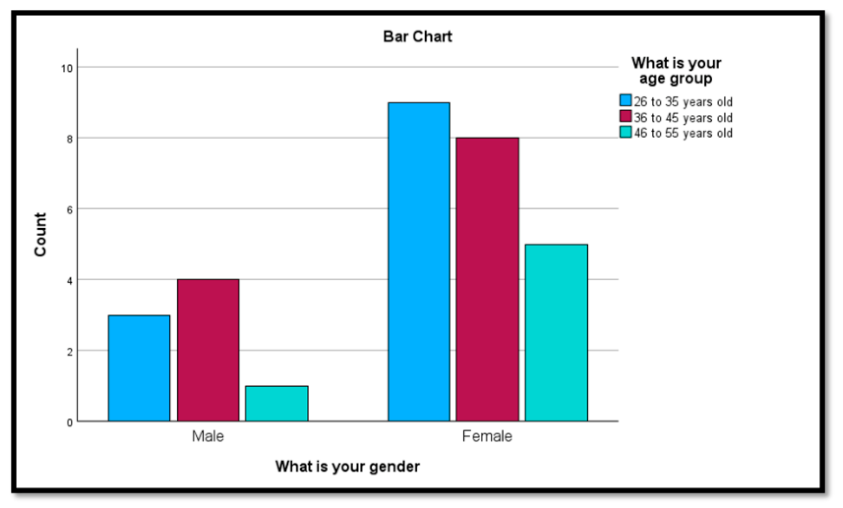
Table 1). Participants ranged in age from 26 to 55 years, with most vendors clustered in the economically active age groups of 26–35 years (40%,
n = 12) and 36–45 years (40%,
n = 12). The mean age of vendors was 41 years (SD = 9.2). No statistically significant association was observed between vendor gender and age group (χ
2 = 3.872, df = 3,
p = 0.276), although female vendors were represented across all age categories (
Figure 1).
3.1.2. Education and Business Experience
Educational attainment varied among vendors. Most participants had completed primary education (63%,
n = 19), followed by secondary education (23%,
n = 7), while a smaller proportion reported no formal education (13%,
n = 4) (
Figure 2). Gender was not significantly associated with education level (χ
2 = 0.779, df = 2,
p = 0.678).
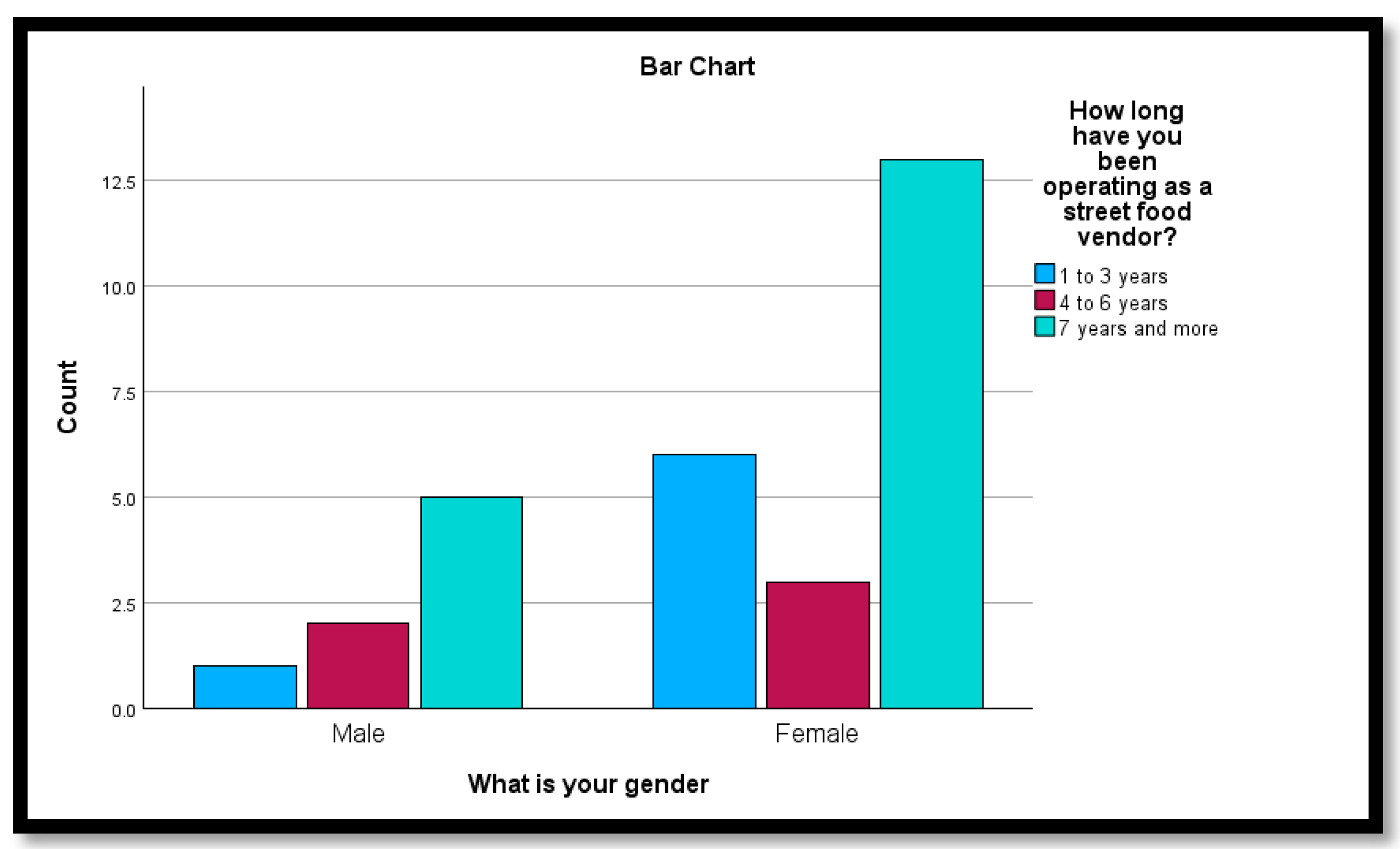
Regarding business experience or operation duration, 60% (
n = 18) of vendors had been operating for more than 7 years, 23% (
n = 7) for 1 to 3 years, and 17% (
n = 5) for 4 to 6 years (
Figure 2). Although no statistically significant association was observed between gender and operation duration (χ
2 = 1.307, df = 2,
p = 0.520), female vendors constituted the majority of long-established businesses.
3.1.3. Staffing
Staffing levels differed across enterprises. Half of the vendors (50%, n = 15) employed one to two workers, 37% (n = 11) employed three to four workers, and 10% (n = 3) employed five or more workers. Only one vendor operated without additional staff. Although the association between gender and staffing levels was not statistically significant (χ2 = 2.359, df = 3, p = 0.501), larger operations were more frequently observed among female-owned enterprises.
3.2. Regulatory Inspection and Certification Status
Most vendors (83%;
n = 25) reported being inspected by municipal environmental health authorities at least once. Despite this, only approximately half of the vendors (47–50%) held a valid Certificate of Acceptability (COA) at the time of the study (
Table 2). Chi-square analysis revealed a statistically significant association between years of operation and certification status (χ
2 = 8.23,
p = 0.005), indicating that vendors with longer business histories were more likely to be certified (
Table 2).
One vendor remarked, “They say I need COA, but it is hard. I have been trading here for years. Inspections happen, but I do not know how to apply them properly”. Some vendors reported pending COA applications or irregular inspection visits. One participant noted, “I have applied for it,” when asked about their COA. Qualitative accounts highlighted persistent barriers to certification, including unclear application procedures, inconsistent follow-up by authorities, and fear of penalties during inspections. Vendors frequently reported that inspections occurred without sufficient guidance on how to achieve or maintain compliance, suggesting systemic gaps in regulatory support mechanisms.
3.3. Awareness and Training Related to Food Hygiene and Safety
Most vendors (70%,
n = 21) reported awareness of food hygiene and safety regulations, while 77% (
n = 23) reported receiving some form of hygiene or food safety training (
Table 3). Among those trained, approximately 30% received formal training through municipal health departments, while the remainder acquired knowledge informally through peer learning or experience. A minority of vendors (13%,
n = 4) reported no exposure to training.
Training was significantly associated with hygiene practices (χ2 = 6.39, p = 0.011). Awareness of regulations was also significantly associated with vendor age (χ2 = 11.39, p = 0.002) and years of business operation (χ2 = 16.12, p < 0.001).
Qualitative findings indicated that access to training was uneven across vendors. One participant noted, “The training helped, but they do not come back. Most of what I know now, I learned by watching others”.
3.4. Observed Hygiene Practices at Vending Sites
Structured observations of 30 vending stalls revealed mixed levels of compliance with hygiene standards. Certain core food safety practices were consistently applied. All vendors (100%) were observed to separate raw and cooked food items, and 87% maintained appropriate food storage conditions, indicating strong adherence to fundamental food-handling principles (
Table 4).
In contrast, personal hygiene practices were inconsistently observed. Protective clothing, such as aprons or gloves, was used by 63% of vendors during food preparation. Although most vendors acknowledged the importance of protective gear, inconsistent use was attributed to cost, availability, and discomfort during long trading hours. Only 30% of vendors consistently avoided direct hand contact with food, despite recognising this as a recommended practice.
Hand hygiene infrastructure and behaviour were similarly uneven. While 73% of vendors had access to clean water at or near their stalls, only 67% were observed washing their hands during the observation period. Environmental hygiene conditions posed additional concerns: 43% of stalls were located near stagnant water, waste accumulation, or unpaved surfaces, and pests, including flies and rodents, were observed at 67% of vending sites.
3.5. Behavioural Drivers of Hygiene Practices (HBM-Aligned Findings)
Qualitative findings mapped onto the HBM revealed that vendors generally recognised the severity of food contamination risks and expressed concern about potential business disruption due to regulatory action (
Table 5). Perceived benefits of hygiene practices included improved operational stability, reduced risk of penalties, and enhanced professional legitimacy. However, perceived barriers, particularly the lack of access to water, inadequate waste infrastructure, and the cost of hygiene supplies, frequently constrain daily practices.
Training and inspections functioned as important cues to action, although their effects were often temporary. Vendors who had received training demonstrated higher self-efficacy and greater consistency in hygiene practices, underscoring the importance of ongoing capacity-building interventions.
3.6. Hygiene Practices and Business Sustainability Indicators
Statistically significant associations were identified between hygiene-related variables and indicators of business sustainability (
Table 6). Vendors employing more staff were significantly more likely to report higher income categories (
p = 0.006), indicating a relationship between enterprise scale and financial performance. Certification status was also significantly associated with years in business and regulatory awareness (
p < 0.01), suggesting that compliance capacity increases with operational longevity.
When interpreted through the BSC lens, hygiene practices are associated with multiple sustainability domains, including financial stability, internal operational processes, and learning and capability development. Vendors demonstrating consistent hygiene practices reported greater operational stability. They were less likely to experience inspection-related disruptions, reinforcing hygiene as a contributor to enterprise sustainability rather than solely a compliance requirement.
3.7. Integrated Interpretation of Hygiene, Compliance, and Sustainability
The integration of observational, quantitative, and qualitative findings indicates that food hygiene and safety practices serve both as public health safeguards and operational resources within informal food vending enterprises. While core food-handling practices were widely adopted, persistent gaps in personal and environmental hygiene reflect structural constraints rather than mere lack of awareness. Behavioural factors, as explained through the HBM, combined with performance patterns captured through the BSC, demonstrate that sustainable hygiene improvements require supportive regulatory and infrastructural interventions, as well as training.
3.7.1. Age and Gender Group
Age and gender were associated with differences in awareness of regulations, hygiene practices, customer trust, and PPE use. Older vendors were significantly more likely to report awareness of relevant health and safety regulations, as indicated by the chi-square result (χ2 = 11.39, p = 0.002). This trend suggests that with age and possibly accumulated experience, vendors become more familiar with regulatory frameworks.
Older vendors were more likely to report that maintaining hygiene enhanced customer trust (χ2 = 10.564, p = 0.001). Vendors in older age groups were significantly more likely to consistently use gloves or aprons (χ2 = 9.112, p = 0.005).
Gender was also a significant factor influencing hygiene behaviours. Female vendors were more likely than their male counterparts to consistently adhere to safe hygiene practices, a statistically significant association (χ2 = 4.34, p = 0.037). Female vendors were significantly more likely to link hygiene to customer trust (χ2 = 6.879, p = 0.032), suggesting that women may internalise hygiene practices not only for compliance but also as a marker of their market value. Women were more likely to report awareness of health and safety regulations (χ2 = 4.877, p = 0.027), suggesting that female vendors may be more exposed to, or more responsive to, health education or inspections.
3.7.2. Business Experience
A similar pattern emerged with the number of years in business. Vendors who had operated for more extended periods were more likely to possess a valid Certificate of Acceptability (χ2 = 8.23, p = 0.005), and they were also more likely to be aware of food safety regulations (χ2 = 16.12, p < 0.001). Longer-established vendors were significantly more likely to use protective gear (χ2 = 10.553, p = 0.032).
3.7.3. Formal Education and Hygiene Training
Education emerged as another critical driver, with vendors who had completed formal education significantly more likely to report better hygiene practices (χ2 = 9.56, p = 0.008). Training status was positively associated with reported hygiene compliance (χ2 = 6.39, p = 0.011). Vendors with higher levels of formal education were more likely to be aware of health and safety regulations (χ2 = 11.231, p = 0.009).
3.7.4. Infrastructure and Government Constraints
Thematic analysis of vendor interviews revealed persistent structural barriers that impede consistent adherence to hygiene practices. Chief among these was limited access to basic infrastructure. Many vendors operated in environments without adequate drainage, potable water, or designated waste-disposal systems. As one vendor explained, “There is no drain here, so wastewater just collects around my stand. I have to sweep it away every hour”. Another noted, “Even when we try to keep clean, flies and dust come from the street. We have no roof”.
Space constraints were a recurring concern. Several vendors reported that cramped setups made it challenging to separate raw and cooked foods or maintain handwashing stations, stating, “There is no space to put two tables, so everything is together, money, food, dishes”. These limitations directly undermined their ability to comply with hygiene guidelines, despite their awareness of them.
Regulatory engagement was often experienced as punitive rather than supportive. Some vendors expressed fear of inspectors: “If inspectors come, they can shut you down if you do not have gloves, even if you are clean”. Others reported inconsistent inspection routines, delays in issuing certificates, and limited post-training follow-up. These gaps contribute to a regulatory environment perceived as unpredictable and unhelpful.
4. Discussion
This study examined food hygiene and safety practices among informal street food vendors and analysed how these practices function as determinants of both behavioural compliance and business sustainability. By explicitly integrating the Health Belief Model (HBM) and the Balanced Scorecard (BSC), the findings demonstrate how behavioural drivers (perceived risk, barriers, and self-efficacy) translate into measurable enterprise outcomes, including income stability, operational continuity, and customer trust. This dual-theoretical application enables a more comprehensive understanding of hygiene practices as both health behaviours and economic assets within informal food systems.
4.1. Food Hygiene and Safety Practices as Behavioural Compliance Drivers
The findings reveal a persistent gap between vendors’ reported awareness of food hygiene regulations and the consistent application of hygiene practices, particularly in personal hygiene, environmental sanitation, and pest control. Although 70% of vendors reported awareness of regulations and 77% had received some form of training, observational data showed inconsistent use of protective clothing, limited avoidance of direct hand contact with food, and widespread exposure to environmental contaminants.
This disconnect between knowledge and practice has been widely reported in the informal food vending literature across LMICs, as well as in more formalised food service systems, where compliance gaps persist despite structured food safety management systems [
7,
18,
31]. The present study reinforces the argument that awareness alone is insufficient to drive sustained compliance in informal settings. Instead, hygiene practices are shaped by a combination of behavioural intention and contextual feasibility. This also reflects the concept of food safety culture, where organisational and environmental contexts influence the extent to which knowledge is translated into practice, highlighting that behaviour is embedded within broader social and structural systems [
32]. The discrepancy between reported knowledge and observed practices may also reflect methodological limitations, particularly social desirability bias. Vendors may over-report compliance due to perceived regulatory expectations or fear of negative consequences. The use of observational checklists in this study helped to reveal these inconsistencies, reinforcing the importance of mixed-method approaches in accurately assessing hygiene practices [
33].
Interpreted through the HBM, vendors generally demonstrated high perceived severity of food contamination risks and acknowledged the potential consequences of non-compliance, including business closure or penalties. However, perceived barriers, including limited access to water, inadequate drainage, high costs of gloves and aprons, and exposure to dust and pests, significantly constrained self-efficacy. These structural barriers impede the translation of risk awareness into daily practice, consistent with prior studies highlighting how environmental constraints undermine health-protective behaviours in informal work contexts [
3,
7].
Training and inspections emerged as important cues to action, temporarily improving hygiene behaviours. However, their effects were often short-lived, suggesting that episodic interventions without infrastructural support are insufficient to sustain compliance. This finding supports calls for continuous, supportive engagement rather than inspection-driven compliance models.
4.2. Gender, Education, and Experience as Determinants of Hygiene Practice
Significant associations between hygiene practices and vendor characteristics, particularly gender, education level, and years of operation, highlight important social determinants of compliance. Female vendors were more likely to use protective clothing, practice consistent hygiene, and associate cleanliness with customer trust. This aligns with broader evidence suggesting that women in informal food systems often adopt stricter food safety behaviours, potentially reflecting socialised roles related to food preparation, caregiving, and customer interaction [
3,
19].
Education also played a critical role. Vendors with secondary education were significantly more likely to demonstrate better hygiene practices and regulatory awareness. Literacy and formal education may enhance vendors’ ability to interpret guidelines, engage with inspectors, and translate abstract health messages into practice. This highlights how literacy and education may enhance vendors’ ability to understand and apply health guidelines. Similar relationships between education and food safety compliance have been documented in South Africa and other LMIC contexts [
6,
18]. This supports the role of education in increasing regulatory literacy and the capacity to interpret guidelines, both of which are critical to enabling hygiene compliance.
Business experience further shaped compliance capacity. Vendors operating for more than seven years were significantly more likely to hold a Certificate of Acceptability and to be aware of hygiene regulations. Operational longevity appears to facilitate cumulative learning, increased exposure to inspections, and gradual adaptation to regulatory expectations. The association highlights that perceptions of hygiene benefits (as defined by HBM’s perceived benefit construct) are shaped by age and experiential learning. This may reflect greater maturity, health awareness, or compliance mindset, possibly due to longer time in the business or prior exposure to inspections. These findings challenge deficit narratives that frame informal vendors as inherently non-compliant, instead highlighting compliance as an outcome of accumulated capacity and experience.
Interpreted through the HBM perspective, differences in hygiene practices across gender, education, and experience may reflect variations in self-efficacy and perceived barriers. Vendors with higher levels of education and experience are more likely to possess the cognitive and practical capacity to translate risk awareness into consistent behaviour, thereby strengthening self-efficacy. Similarly, gender differences in hygiene practices may be associated with socially embedded perceptions of responsibility and risk, which shape behavioural intentions. From a BSC perspective, these individual characteristics contribute to the “learning and growth” dimension, enhancing vendors’ capacity to sustain operational improvements and adapt to regulatory requirements over time.
4.3. Hygiene Practices as Determinants of Business Sustainability
A key contribution of this study is to demonstrate that food hygiene and safety practices are significantly associated with business sustainability indicators, including staffing levels, income categories, and operational duration.
Vendors employing more staff reported higher income levels, and those demonstrating visible hygiene practices reported stronger customer trust and repeat purchasing. This finding is consistent with evidence that informal food vendors actively adopt operational and marketing strategies to enhance competitiveness and customer retention, including visible hygiene practices that signal quality and reliability to consumers [
34].
Viewed through the Balanced Scorecard lens, hygiene practices are associated with multiple sustainability domains. Financially, hygienic practices were associated with higher income stability, likely due to customer confidence and reduced risk of trading disruptions. Operationally, compliant vendors experienced fewer inspection-related interruptions, enhancing continuity. From a learning and capability perspective, training and experience strengthened vendors’ ability to maintain hygiene routines.
These findings align with international evidence that health and safety practices can function as productive assets rather than compliance burdens in small and informal enterprises [
35,
36]. Hygiene practices in this context function as informal risk-management strategies, reducing vulnerability to regulatory shocks and reputational damage. This reframes hygiene not as an external imposition, but as an internal investment in enterprise resilience.
4.4. Structural and Regulatory Constraints Shaping Hygiene and Sustainability
These findings are consistent with urban informality and governance literature, which emphasises that infrastructural deficits and fragmented municipal systems are key determinants of operational practices in informal economies. Despite recognising the benefits of hygiene, vendors consistently identified infrastructural and regulatory barriers that limited their ability to sustain compliance. Poor access to potable water, inadequate waste removal, inadequate drainage, and exposure to environmental contaminants were recurring challenges.
These findings mirror those reported in informal food-vending environments globally, where structural neglect, rather than behavioural resistance, undermines food safety outcomes [
15,
16,
37]. These challenges are widely recognised in global assessments of informal food systems, where infrastructural deficits are identified as key barriers to adopting safe food-handling practices [
37].
Regulatory engagement was frequently experienced as punitive and unpredictable. Vendors reported inconsistent inspections, limited guidance, and delays in certification processes. Such regulatory approaches may inadvertently discourage engagement and undermine trust, reinforcing avoidance rather than cooperation. Similar critiques have been raised in studies examining the governance of informality, where enforcement-heavy models exacerbate vulnerability and fail to achieve sustained compliance [
38].
From an HBM perspective, these regulatory and infrastructural barriers act as strong deterrents to action, despite high perceived benefits. From a business sustainability perspective, they constrain vendors’ capacity to invest in hygiene as a long-term operational strategy. Addressing these constraints, therefore, requires systemic, not individual-level, interventions. These findings suggest that perceived barriers outweigh perceived benefits in many informal trading contexts, limiting the effectiveness of behaviour-driven interventions in the absence of structural support. This highlights a key limitation of individual-level models such as the HBM when applied in resource-constrained environments, where structural conditions significantly mediate behavioural outcomes.
Collectively, these findings extend the application of the HBM within informal economic contexts by demonstrating how structural and economic constraints mediate behavioural outcomes. Furthermore, the integration of the BSC provides empirical evidence that hygiene practices serve not only as public health behaviours but also as strategic assets that are associated with enterprise sustainability. This combined framework offers a novel analytical lens for understanding informal food systems.
These findings further highlight an important limitation of individual-level behavioural models such as the HBM when applied in resource-constrained informal settings. While the model effectively explains perceived risk and behavioural intention, it does not fully account for structural constraints such as infrastructure deficits and regulatory barriers. This study, therefore, extends the HBM by demonstrating the need for integrated socio-structural adaptations. Similarly, the application of the BSC in this context represents a novel adaptation, extending its use beyond formal enterprises to informal micro-businesses, where performance is reflected not only in financial outcomes but also in customer trust, operational continuity, and regulatory resilience.
4.5. Implications for Public Health and Informal Food System Governance
The findings support reframing informal food safety governance toward integrated, supportive models that recognise the interdependence between public health protection and livelihood sustainability.
Municipalities should establish clear timelines for obtaining Certificates of Acceptability (COAs), for example, within the first year of operation, and support them with structured onboarding programmes. Furthermore, national food safety frameworks such as the WHO guidelines and the South African Department of Health regulations should be adapted into accessible training modules for informal vendors. This approach is consistent with the WHO Global Strategy for Food Safety, which emphasises integrated, risk-based, and inclusive approaches to improving food safety across diverse food systems, including informal sectors [
39].
Enforcement-only approaches are unlikely to achieve durable improvements in hygiene in contexts characterised by infrastructural deficits and economic precarity. Instead, public health interventions should combine regulatory oversight with infrastructural investment, continuous training, and enterprise support. Providing shared water points, waste facilities, and designated trading spaces could substantially improve the feasibility of hygiene. Linking certification processes to incremental compliance milestones may reduce fear and improve regulatory trust.
By empirically demonstrating that hygiene practices contribute to business sustainability, this study strengthens the case for aligning food safety messaging with vendors’ economic priorities. Framing hygiene as a driver of customer trust, income stability, and business continuity may resonate more strongly than compliance-based narratives alone. Such alignment is essential for advancing safer, more resilient, and inclusive urban food systems in rapidly urbanising LMIC contexts. These interventions also align with broader global priorities to improve food system efficiency and reduce food loss and waste, particularly within informal and small-scale food enterprises [
40].
From a practical perspective, interventions should prioritise (1) the provision of shared infrastructure such as water access points and waste management systems, (2) continuous and accessible hygiene training programmes tailored to informal vendors, and (3) supportive regulatory frameworks that emphasise guidance rather than punitive enforcement. Additionally, linking hygiene compliance to business incentives, such as certification-linked market access or micro-financing opportunities, may enhance sustained adoption of safe practices.
4.6. Limitations
This study has several limitations that should be considered when interpreting the findings. First, the cross-sectional design limits the ability to infer causal relationships between food hygiene and safety practices and business sustainability outcomes. While statistically significant associations were identified, these relationships reflect patterns at a single point in time and may be influenced by unmeasured contextual factors. In addition, the cross-sectional design restricts causal inference. It remains unclear whether improved hygiene leads to higher income or whether more successful vendors are better positioned to invest in hygiene practices. This limitation is inherent in cross-sectional study designs, which are effective for identifying associations but do not establish temporal or causal relationships between variables [
41]. Future research should employ larger sample sizes and multivariate analytical approaches, such as logistic or ordinal regression, to assess adjusted relationships between hygiene practices and business outcomes. Longitudinal studies would be valuable in assessing how changes in hygiene practices are associated with enterprise sustainability over time.
Second, some business sustainability indicators, including income categories, staffing levels, and perceptions of operational stability, were self-reported by vendors and may be subject to recall bias or social desirability bias. Although self-reported data were triangulated with observational findings and regulatory records where available, inaccuracies cannot be entirely excluded. In addition, income was assessed categorically rather than continuously, which may have reduced sensitivity to finer-scale income variations. The use of a mixed-method approach strengthened the data collected. The use of mixed-method approaches is widely recommended in social and business research to enhance the validity and depth of findings by combining quantitative and qualitative insights [
33].
Third, the study was conducted within a single metropolitan context. The relatively small sample size limits the generalisability of the findings. Although the findings are consistent with evidence from other urban informal food settings, caution should be exercised in generalising the results to rural areas or cities with different regulatory, infrastructural, or socio-economic conditions. Nonetheless, the structural challenges identified, such as limited access to water, sanitation, and waste management, are common across many informal food vending environments in low- and middle-income countries.
Finally, while the study applied behavioural and performance-oriented analytical lenses to interpret findings, other potentially relevant factors, such as broader market dynamics, seasonal variations in demand, and municipal policy changes, were not explicitly examined. Future research could benefit from integrating these dimensions to provide a more comprehensive understanding of the determinants of hygiene compliance and business sustainability within informal food systems.
5. Conclusions
This study demonstrates that food hygiene and safety practices among informal street food vendors extend beyond regulatory compliance and are significantly associated with enterprise sustainability. By integrating behavioural and performance-oriented analytical lenses, the findings highlight how hygiene practices are associated not only with public health protection but also with operational stability, staffing capacity, and income-related outcomes within informal food vending enterprises.
The results underscore that persistent hygiene gaps are closely linked to structural and infrastructural constraints rather than to limited awareness alone. While vendors generally recognise the importance of hygiene and regulatory compliance, their capacity to consistently implement food safety practices is shaped by access to basic services, training opportunities, and the nature of regulatory engagement. These findings reinforce the need for public health strategies that address both behavioural and contextual determinants of hygiene practices in informal food systems.
By empirically demonstrating associations between food hygiene and safety practices and business sustainability indicators, the study provides a basis for reframing informal food safety governance toward more integrated and supportive approaches. Policies and interventions that align food safety objectives with livelihood sustainability may be more effective in promoting sustained compliance and improving public health outcomes. As informal street food vending continues to expand in urban environments, recognising hygiene as both a public health safeguard and an operational resource remains essential for advancing safer, more resilient, and inclusive urban food systems.