1. Introduction
Global waste generation has risen rapidly alongside socio-economic development, urbanisation, and changing consumption patterns, creating major challenges for contemporary waste management (WM) systems [
1]. While technological advances have improved waste collection, separation, and recycling processes, growing waste volumes and complexity still lead to significant resource loss and environmental pressures, especially in developed economies [
2]. Waste contains valuable recyclable materials and energy-rich components, and its disposal in landfills represents both resource depletion and missed opportunities for low-carbon energy recovery. In this context, waste-to-energy (WtE) systems are increasingly recognised as a means to reduce waste volumes, recover energy, and lower net carbon emissions, thereby contributing to climate mitigation and sustainable resource management [
3].
Kuwait provides a particularly relevant case for examining WtE potential. As one of the wealthiest Gulf Cooperation Council (GCC) countries, Kuwait has experienced rapid socio-economic growth, rising living standards, and a corresponding increase in consumption and waste generation [
4]. Within the GCC, Kuwait aligns with collective climate goals but lags behind some neighboring countries in domestic renewable energy deployment. Municipal solid waste (MSW) generation has expanded significantly over recent decades [
5,
6], yet most household waste (HW) is not separated at source, and is largely disposed of in landfills [
7]. At the same time, Kuwait’s electricity supply is almost entirely dependent on fossil fuels, with gas and oil accounting for nearly all generation, with over 97% of electricity generated from natural gas (~63%) and oil (~37%), resulting in very high per capita CO
2 emissions and severe air pollution, including PM2.5 concentrations far above World Health Organization guidelines [
8]. These conditions underscore the urgency of developing integrated strategies that simultaneously address WM and decarbonisation.
HW is a major component of Kuwait’s MSW stream, and represents a key entry point to introduce more sustainable practices, such as source separation, recycling, and WtE. However, the success of such strategies depends heavily on public awareness, attitudes, and willingness to adopt new behaviours [
9]. Understanding how households perceive WtE and their current WM practices is therefore essential for designing effective policies and interventions.
Against this backdrop, the present study aims to investigate Kuwaiti households’ perceptions of WtE as a potential WM and clean energy solution, and to explore their existing WM behaviours. By conducting a household survey, the research seeks to identify opportunities and barriers for WtE adoption from a social perspective, and to generate evidence that can inform national strategies seeking to reduce landfill dependence, recover energy from waste, and support Kuwait’s broader commitments to emissions reduction and sustainable development by 2030.
2. Literature Review
MSW management is a major challenge worldwide, with poorly managed waste linked to land degradation, pollution, and public health risks. Kuwait is no exception. The country covers 17,818 km
2 between Saudi Arabia and Iraq, and has experienced rapid socio-economic development, urbanisation, and consumerism and consumption in recent decades, all of which have intensified waste generation pressures [
5]. Over the period from 2013 to 2025, Kuwait’s average per capita waste generation rate increased from approximately 1.35 to 1.7 kg/person/day, with growing concern among government agencies, NGOs, and private firms regarding escalating waste volumes and the need for more sustainable management strategies [
5,
6].
Kuwait Municipality is the primary public authority responsible for MSW collection, transport, and disposal, working through contractual agreements with private operators. The average cost of HW collection and transport was estimated at around USD 72.51 per tonne in 2024, reflecting the significant financial burden of conventional waste handling systems [
10]. Collected waste is currently disposed of at three main dumpsites: Al-Jahra, Mina Abdulla, and the Seventh Ring Road site, the latter of which serves around 70 districts and represents the largest MSW facility in the country [
11]. However, both the siting and engineering design of these dumpsites have been criticised as suboptimal, with concerns about long-term environmental risks [
12].
The composition of Kuwait’s MSW stream is also highly relevant for resource recovery. Organic waste constitutes around 46% of the total, followed by paper and corrugated fibre (15%) and plastics (12%) [
6]. This composition indicates strong potential for energy recovery and material recycling, yet most of the waste is still landfilled with minimal source separation. As in many rapidly developing economies, Kuwait’s prevailing practice remains conventional landfill disposal, although there is an ongoing transition from uncontrolled dumping towards more controlled facilities with the stated ambition of incorporating advanced WtE technologies in the future [
13].
2.1. WtE as a Response to MSW Challenges
The international literature emphasises WtE as a key option to address both WM and energy system challenges. WtE technologies utilise MSW and other waste streams (including industrial and commercial wastes) to produce electricity, heat, and in some cases biofuels and bioproduct precursors. The typical process involves burning energy-dense components such as paper, plastics, wood, and yard waste to generate steam, which drives turbines for power generation. In contrast to the earlier focus on hygiene and simple removal of refuse from urban areas, contemporary WM increasingly prioritises resource efficiency, energy recovery, and environmental protection [
2].
The potential benefits of WtE are well documented. Properly designed and operated plants can significantly reduce waste volumes, thereby relieving pressure on landfills and extending their lifespan, while reducing environmental burdens associated with uncontrolled dumping and leachate generation [
14]. When equipped with advanced flue gas cleaning systems, modern WtE plants can comply with stringent emission standards, limiting pollutants such as dust, hydrochloric acid, carbon monoxide, polyaromatic hydrocarbons, dioxins, and furans [
2,
15]. From a broader sustainability perspective, WtE can displace fossil fuel-based electricity and thus contribute to greenhouse gas mitigation, while also providing a reliable, base-load source of power [
16,
17].
Nevertheless, WtE’s social acceptance and environmental performance have been contested, particularly in densely populated urban areas. In many developing countries, local opposition is pronounced where WtE plants are sited close to residential communities. In high-income countries, “not-in-my-backyard” (NIMBY) attitudes often surface in response to proposed incineration projects, even where regulatory frameworks and pollution control technologies are well established [
18]. Economic compensation schemes—such as tax reductions or lower utility bills—have been used to alleviate such opposition, but their effectiveness is uneven, and some communities continue to resist siting decisions despite compensation [
19].
Kuwait’s particular spatial context is somewhat distinctive. The population is highly centralised in a relatively small urbanised area, while large tracts of the national territory are sparsely inhabited desert [
5]. This theoretically affords greater flexibility in siting WtE facilities away from densely populated districts, potentially mitigating some NIMBY concerns. However, social acceptance cannot be assumed, and there is a clear need to understand public perceptions of WtE before large-scale deployment.
2.2. Public Participation and Awareness in WM and WtE
A recurrent theme in the literature is that technical solutions alone are insufficient; effective MSW management critically depends on public participation and awareness. In developing country contexts in particular, community participation has been shown to be central to the success of waste collection and disposal services [
20]. Households influence the entire waste chain through everyday practices: storing waste correctly, segregating recyclables, placing waste at designated locations and times, and maintaining cleanliness in the immediate environment.
Community involvement can extend beyond the household level to collective activities such as neighbourhood clean-up campaigns, local committees, and awareness-raising events, as well as financial and material contributions to waste services [
21]. However, studies have also documented widespread practices of indiscriminate dumping in public spaces, even where collection systems exist [
22,
23]. Such behaviour underscores the gap between formal WM systems and everyday social practices, and highlights the importance of long-term educational and behavioural interventions.
Some studies argue that modern waste streams, composed of complex and often hazardous materials, pose risks that far exceed those of pre-modern biodegradable wastes [
24]. Such studies emphasise that waste generation is driven by human activity at every stage of the production–consumption cycle, from the extraction of raw materials to manufacturing, use, and disposal. In this sense, WM is fundamentally a societal issue: laws and enforcement mechanisms are necessary but insufficient without active public engagement. Consequently, there have been increasing calls for comprehensive waste education, integrated into school curricula from an early age, and supported by mass media campaigns and inter-agency coordination [
24].
The value of public participation has also been examined in specific institutional contexts. Carnes et al. [
25], studying the U.S. Department of Energy’s environmental management programmes, concluded that Structured public involvement can generate tangible benefits such as cost savings, better problem definition, more legitimate decisions, and smoother implementation. However, they also note that demonstrating the return on investment of participation is important for sustaining institutional commitment. More recent studies have affirmed that public engagement plays an essential instrumental role in modern WM strategy, potentially leveraging cutting-edge technologies [
26].
2.3. Public Perceptions of WtE: Evidence from International Studies
Empirical research on public attitudes towards WtE provides important insights for countries like Kuwait. Yuan et al. [
27], focusing on China, note that MSW has become a critical environmental and public health issue, and that WtE offers a technologically and politically supported option. However, they also document strong local resistance to WtE facilities, especially in communities near proposed sites. In a survey of 650 respondents, they found that the general public was, in principle, positively disposed towards WtE, but concerns about environmental and health risks remained salient. Interestingly, public awareness of environmental problems had a limited direct influence on attitudes towards WtE, whereas perceived benefits and risk perceptions were more strongly associated with support. Demographic factors such as age, education, and income also shaped attitudes, with older, rural, and less educated respondents more likely to oppose WtE [
27].
Yuan et al. [
27] argue that inadequate public communication and transparency have contributed to the failure of several WtE projects in China, including the cancellation of a major plant in Guangzhou despite passing formal environmental impact assessments. Similar protests have arisen in other provinces, and even in contexts such as Taiwan, where overall acceptance of WtE is relatively higher, local organisations have resisted facility siting. Conversely, they describe a successful WtE project in Zhejiang province where early and meaningful engagement with the public helped overcome NIMBY opposition, suggesting that participatory processes can play a decisive role in project success.
These findings reinforce the broader literature on WM: public awareness, trust in institutions, perceived fairness of decision-making, and clarity about risks and benefits are critical determinants of social acceptance of WtE. For Kuwait, where WtE is still in a developmental phase, such evidence underlines the importance of proactively understanding and shaping public perceptions before investing heavily in infrastructure.
2.4. Emerging WtE Initiatives in Kuwait
Kuwait has begun to position WtE as a strategic component of its waste and energy policy. The Integrated WM Project, led by Kuwait Municipality, aims to reduce the volume of waste sent to landfills by around 80% and substantially expand the role of WtE technologies [
28]. A flagship facility under this programme is planned to process up to 3000 tonnes of MSW per day, generating electricity for approximately 150,000 households. Complementary projects, such as the Al-Salmi Renewable Energy Park, combine solar generation with WtE capabilities and reportedly process up to 1000 tonnes of solid waste per day [
29].
At the policy level, the Green Kuwait initiative seeks to promote environmental sustainability and diversify the national energy mix. Targets include increasing the share of renewables—solar, wind, and WtE—to 15% of total electricity generation by 2030 and 25% by 2050 [
30]. These developments signal a growing official recognition that MSW is not merely a disposal problem but also a potential resource that can contribute to Kuwait’s climate and energy goals.
However, the literature also reveals important gaps. While technical, economic, and policy dimensions of WtE in Kuwait are beginning to be documented, there is limited empirical research on household-level perceptions, attitudes, and willingness to support or participate in WtE and related waste practices such as source separation. Given the centrality of public participation and awareness to successful MSW and WtE systems [
20,
24,
27], this gap is significant.
Thus, the existing literature highlights that Kuwait faces a dual challenge: managing a growing and resource-rich MSW stream and transitioning towards a lower-carbon energy system. WtE emerges as a promising technology at this nexus, but its long-term success will depend not only on engineering and policy design, but also on the engagement, perceptions, and behaviours of Kuwaiti households.
3. Materials and Methods
This study employed a quantitative research design combining a structured household survey with mathematical calculations to estimate the potential energy that could be generated from MSW in Kuwait. The methodology was selected to address the dual aims of: (1) assessing Kuwaiti households’ perceptions and attitudes towards WtE as a WM solution, and (2) quantifying the potential energy yield from household solid waste.
3.1. Research Design
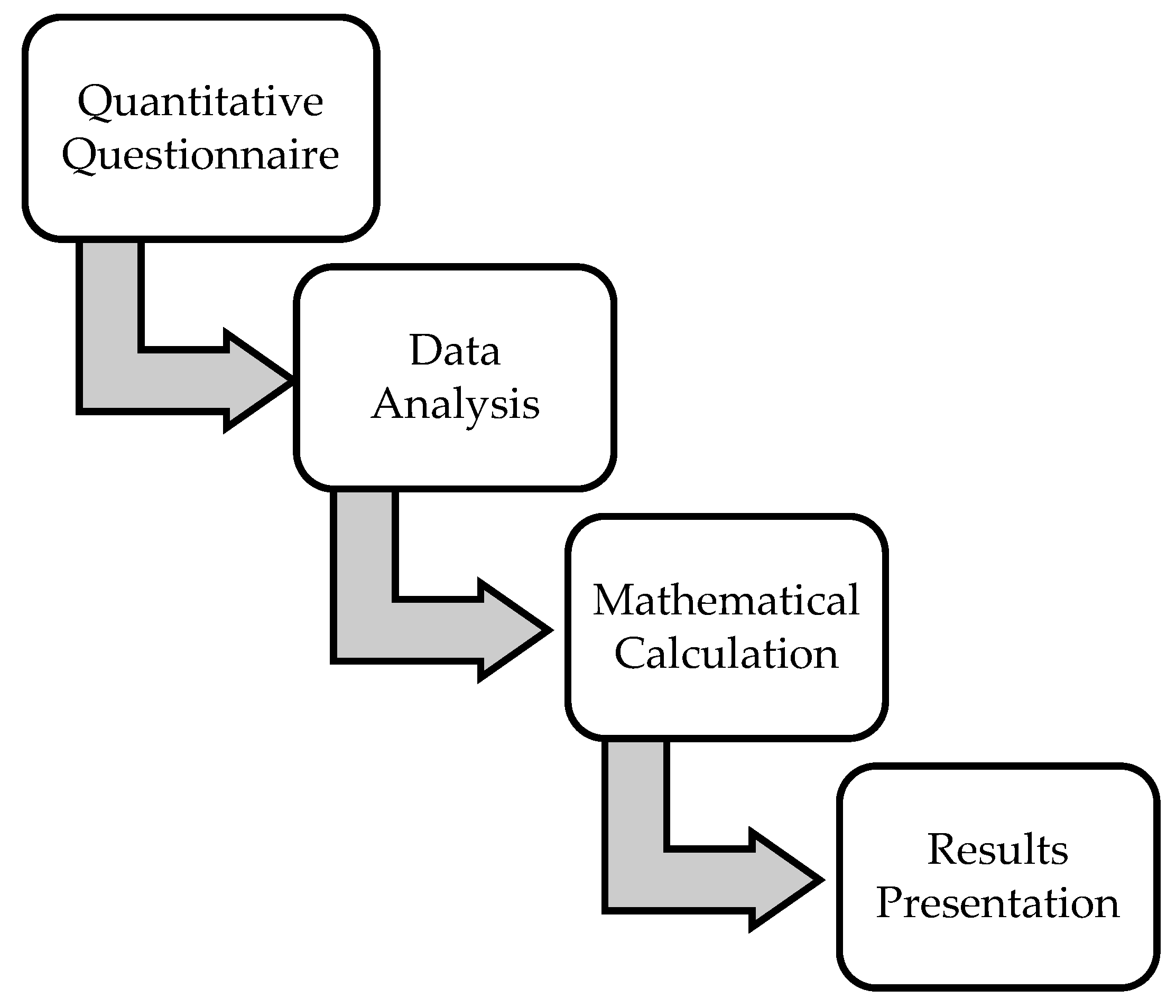
As shown in
Figure 1, the research followed a four-stage sequential design. In the first stage, a structured questionnaire was developed and administered to households across Kuwait to collect quantitative data on socio-demographic characteristics and perceptions of WtE. In the second stage, the survey data were statistically analysed to characterise public awareness, perceived risks and benefits, and overall attitudes towards WtE. The results from this phase provided inputs for the third stage, which consisted of mathematical calculations to estimate the energy that could be generated from HW. In the fourth and final stage, the findings from the survey and the calculations were integrated to provide a comprehensive assessment of both social acceptance and technical potential of WtE in the Kuwaiti context [
31].
The combination of a survey-based approach with mathematical calculations allowed the study to capture both behavioural/attitudinal dimensions and quantitative energy potential, thereby strengthening the policy relevance and practical applicability of the findings [
31,
32,
33,
34].
3.2. Data Collection
3.2.1. Questionnaire Development
Questionnaires were chosen as the primary data collection tool for the social dimension of the research. This method was considered appropriate owing to its cost-effectiveness, suitability for time-limited projects, capacity to reach geographically dispersed participants, and compatibility with quantitative analysis [
33].
The questionnaire was designed as an online survey and developed by adapting items from a validated instrument used in a previous study on public perceptions of WtE in China by Yuan et al. [
27]. This ensured that the core constructs (awareness, perceived risks, perceived benefits, and attitudes) were grounded in prior empirical work, while items were contextualised for the Kuwait setting. To mitigate potential cultural differences arising from the adapted questionnaire, a pilot study was conducted prior to the main data collection. This pilot phase helped ensure clarity of the survey items and confirmed that no cultural sensitivities were present that could influence respondents’ answers [
33].
The final instrument consisted of two sections. The first section collected demographic and household information, including place of residence, age group, education level, and number of individuals living in the household. The second section focused on social acceptance of WtE and comprised 29 items organised into five thematic categories, as described in
Table 1.
All attitudinal items were measured using a five-point Likert-type scale ranging from 1 (“strongly agree”) to 5 (“strongly disagree”), with a neutral midpoint of 3. The use of a Likert-type scale facilitates quantification of subjective perceptions and enables a wide range of statistical analyses, including descriptive statistics, tests of difference, and regression modelling [
34,
35].
3.2.2. Administration
The questionnaire was administered online via a survey link. The link to the questionnaire (hosted on Google Forms) was distributed via WhatsApp, which is widely used for everyday communication in Kuwait, making it an efficient and culturally appropriate recruitment channel [
36]. The survey link was shared directly with potential participants and circulated further through personal and social networks (i.e., snowball sampling), enabling broad coverage across different regions and demographic groups.
This approach allowed participants to complete the questionnaire at their convenience and reduced any perceived pressure to respond. The online format also simplified data collection and storage, ensuring that responses were captured systematically for subsequent analysis.
3.3. Sampling and Recruitment
Determining an appropriate sample size was essential to ensure that the findings would be statistically robust and reasonably generalisable to Kuwaiti households. The total number of houses in Kuwait is approximately 159,240 [
37]. For large populations (>100,000), a commonly accepted rule is that a sample size of 385 respondents yields a 95% confidence level, with a 5% margin of error [
38].
Based on this, the target sample size for the study was set at 385 completed questionnaires. This size balances statistical precision with practical constraints of time and resources typical of an MSc-level project.
In line with standard survey practice, the sampling strategy was primarily non-probabilistic, relying on voluntary participation via distributing an online survey link (as described above). While this approach does not provide a strict probability sample, the use of broad networks and extensive circulation across the country helped enhance diversity in terms of age, education, and region. All participants were adults residing in Kuwait, and responses were recorded using a pre-designed online schedule tailored to the research aims and analysis requirements [
38].
3.4. Mathematical Calculations for Energy Estimation
In addition to the survey, the study employed mathematical calculations to estimate the energy that could be generated from household solid waste in Kuwait. The calculations were based on Calculator Academy’s simple, previously tested formula [
39]:
where
is the energy from waste (kWh),
is the total mass of solid waste (in tons), and 550 kWh/ton, which is the assumed average energy yield per ton of solid waste.
This formula, which accounts for Kuwait’s MSW, implies that the estimated energy in kWh that can be generated from a given mass of MSW (in tons) is obtained by multiplying the mass by 550, which represents the approximate average electrical energy (in kWh) that can be obtained per ton of solid waste processed. The formula was judged appropriate for the research context, providing a straightforward way to approximate energy potential from HW quantities.
Microsoft Excel was used to implement the formula, perform the required calculations, and generate graphical representations of the results. Excel offers a flexible platform for applying mathematical models, manipulating data, and creating visual outputs that support interpretation of findings [
40,
41].
3.5. Data Analysis
Two software tools were used for data analysis: SPSS version 26.0 for the questionnaire data and Microsoft Excel for the energy calculations.
For the survey data, SPSS 26.0 was employed to conduct reliability analysis, descriptive statistics, and inferential tests [
42]. The reliability of the multi-item scales was assessed using standard reliability coefficients (e.g., Cronbach’s alpha), ensuring internal consistency of the constructs. Descriptive analysis (means, standard deviations, frequency distributions) was used to summarise demographic characteristics and overall trends in awareness, PR-WtE, PB-WtE, and PAT-WtE.
Inferential analyses included:
Analysis of variance (ANOVA): to examine differences in mean scores across demographic groups (e.g., age, education level, household size);
Independent samples t-tests: to compare mean responses between two-group categories where relevant;
Multiple regression analysis: to explore the relationships between dependent variables (e.g., PAT-WtE) and multiple independent variables (e.g., PAW-WtE, PR-WtE, and PB-WtE).
These techniques made it possible to identify significant predictors of PAT-WtE, and to assess how different dimensions of awareness and risk–benefit perception contribute to social acceptance.
For the second part of the study, Excel was used to apply the energy formula and compute the estimated energy potential from HW quantities. The calculated values were then tabulated and visualised to facilitate comparison and interpretation, and to link the technical potential with the patterns observed in the survey data.
Together, the use of SPSS and Excel provided a robust analytical framework for integrating social and technical evidence, thereby supporting well-founded conclusions and policy-relevant recommendations regarding the feasibility and public acceptability of WtE in Kuwait.
4. Results
This section presents and discusses the main findings of the study, combining the survey results on public perceptions of WtE in Kuwait with the quantitative analysis of the energy that could be generated from MSW.
First, the survey findings are reported, covering respondents’ demographic characteristics, their PAW-Gen, PR-WtE, and PB-WtE, and PAT-WtE (concerning WtE adoption as a WM strategy). These insights provide a nuanced picture of social acceptance and potential behavioural support for WtE initiatives.
Second, the results of the mathematical calculations are presented, including the parameters and formula used, estimated waste generated per household, corresponding energy potential, current household energy consumption, and the resulting generated-to-consumed energy ratio.
Together, these social and technical findings offer an integrated evidence base to inform stakeholders and decision-makers considering WtE as a viable option for Kuwait’s future WM and energy planning.
4.1. Survey Results
4.1.1. Socio-Demographic Characteristics
Table 2 displays the socio-demographic characteristics of the participants, revealing that they were located in various residential areas across Kuwait. In terms of gender, the majority of participants are male (81.7%), and the largest age cohort was between 21–30 years old (67.2%), followed by those aged 31–40 (8.1%). In terms of highest educational attainment, over half of participants reported a graduate qualification (55.7%), and almost a third cited a postgraduate qualification (31.5%), while 12.8% reported a high school qualification. There were varying numbers of inhabitants per household, but the largest cohort reported 10 or more people residing in their home (28.1%).
4.1.2. PAW-Gen
Table 3 indicates general concern about environmentalism among respondents. The mean score for the item “environmental pollution issues” was moderately less than that for “the shortage of resources and energy,” thereby suggesting that the PAW level for pollution issues is greater than for energy and resource shortages, albeit this did not attain statistical significance. Very small proportions of respondents selected “disagree” or “strongly disagree” about such issues’ importance.
4.1.3. PAW-WtE
Table 4 displays relatively low awareness concerning “WtE technology,” “the national policies about WtE,” “how MSW is disposed of,” and “WtE may cause environmental pollution.” Q3–Q6 concerned dependent variables deployed in
t-test and ANOVA (with 0.05 significance level); the outcomes are displayed in
Table 5, which indicates significant within-group differences for: “Number of people living in the house” for Q3 and Q4; “Educational level” for Q5 and Q6; and “Place of residence” for Q5.
According to one-way ANOVA testing, the following statistically significant differences were noted for the studied items. For “Place of residence,” there was a significant difference for Q5, whereby “Ahmadi” residents scored the largest mean value, which indicates that they have a lower level of PAW-WtE, and commensurately more potential to cause environmental pollution. For “Educational level,” a significant difference exists for Q5 and Q6, whereby those with “High school” educational attainment reported the largest mean value, which indicates that such respondents have a lower level of PAW-WtE (and thus more potential to cause environmental pollution) and awareness of national policies about WtE. For “No. home residents,” a significant difference exists for Q3 and Q4, whereby those in households with five and four residents had the highest mean values (respectively).
4.1.4. PR-WtE
Notwithstanding the PB-WtE adumbrated previously, participants perceived various risk issues attributed to WtE that were commensurate with those reported by previous studies, including great costs for initial investment, and pollutants such as waste runoff, smells, gases, and liquid, as well as noise pollution associated with processing activities [
43,
44,
45],
Table 6 shows that how “WtE will impact the health of residents” was a major risk perceived by participants, followed in ranking order of importance by “The storage process has environmental impacts” [
43,
44]. Respondents were least concerned about “WtE may discharge waste liquid” [
45].
4.1.5. PB-WtE
PB-WtE factors are generally acknowledged in terms of energy efficiency and reduced negative environmental impacts [
46,
47]. Furthermore, the potential employment offered by WtE infrastructure (including for development and operation) makes it an increasingly viable economic consideration [
47]. Nevertheless, the mean values for PR-WtE were consistently higher than those of PB-WtE (as displayed in
Table 6 and
Table 7), reflecting general risk perceptions outweighing any optimistic evaluations of WtE potential impacts [
46,
47]. “WtE can solve garbage siege” was considered to be the most significant benefit of WtE, followed in descending order by “provides jobs” and “increases the income of local residents” [
46,
47]. Respondents affirmed that they regard WtE as an expedient solution for ecological protection and (more prosaically) solid waste processing [
46,
47].
4.1.6. PAT-WtE
Table 8 indicates that participants were more amenable to WtE electricity generation than that derived from fossil fuels, but they would prefer commensurate facilities to be distant from their own homes (“construction in non-local place” rather than “construction in local places”), reflecting NIMBY resistance (as discussed in
Section 2).
Table 9 indicates that the PAW did not attain statistical significance for PAT-WtE, while PR-WtE and PB-WtE displayed a positive correlation with the latter, thereby indicating that acceptance would be promoted by higher PB-WtE and PR-WtE levels. As for PAW-Gen, the positive correlation with PAT-WtE is negligible.
4.2. WtE Estimation
4.2.1. Calculation Parameters and Formula
In order to facilitate the necessary comparison, three key parameters were essential for the calculation. These parameters included the monthly waste generated per person in Kuwait and the global average, as well as the monthly electricity consumption per person in Kuwait and the global average. These fundamental figures are presented in
Table 10 for easy reference.
By incorporating these parameters into the calculation process, we can obtain accurate and meaningful results. The waste generation figures provide insights into the quantity of waste produced in Kuwait and the global average, offering a basis for assessing the potential energy generation from waste. Simultaneously, the electricity consumption figures enable us to evaluate the existing energy demand in both Kuwait and the world, providing valuable context for the WtE calculation. Equation 1 is used to determine the generated energy that can be derived from waste.
4.2.2. Generated Waste per Home
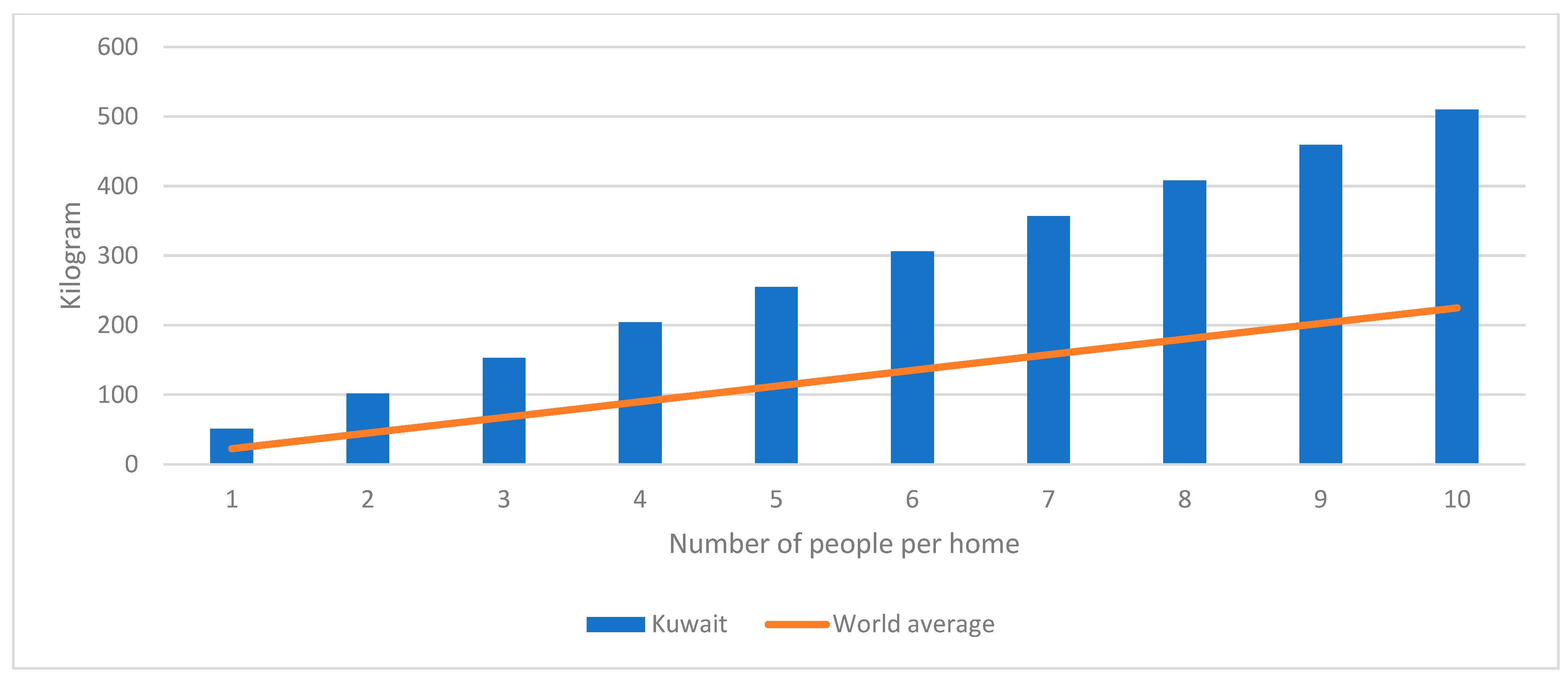
To compare the monthly waste generation in Kuwaiti homes with the global average, calculations were performed, and
Figure 2 illustrates the results. The analysis reveals that Kuwaiti homes tend to generate approximately twice the amount of waste compared to the world average for the same number of people residing in each household.
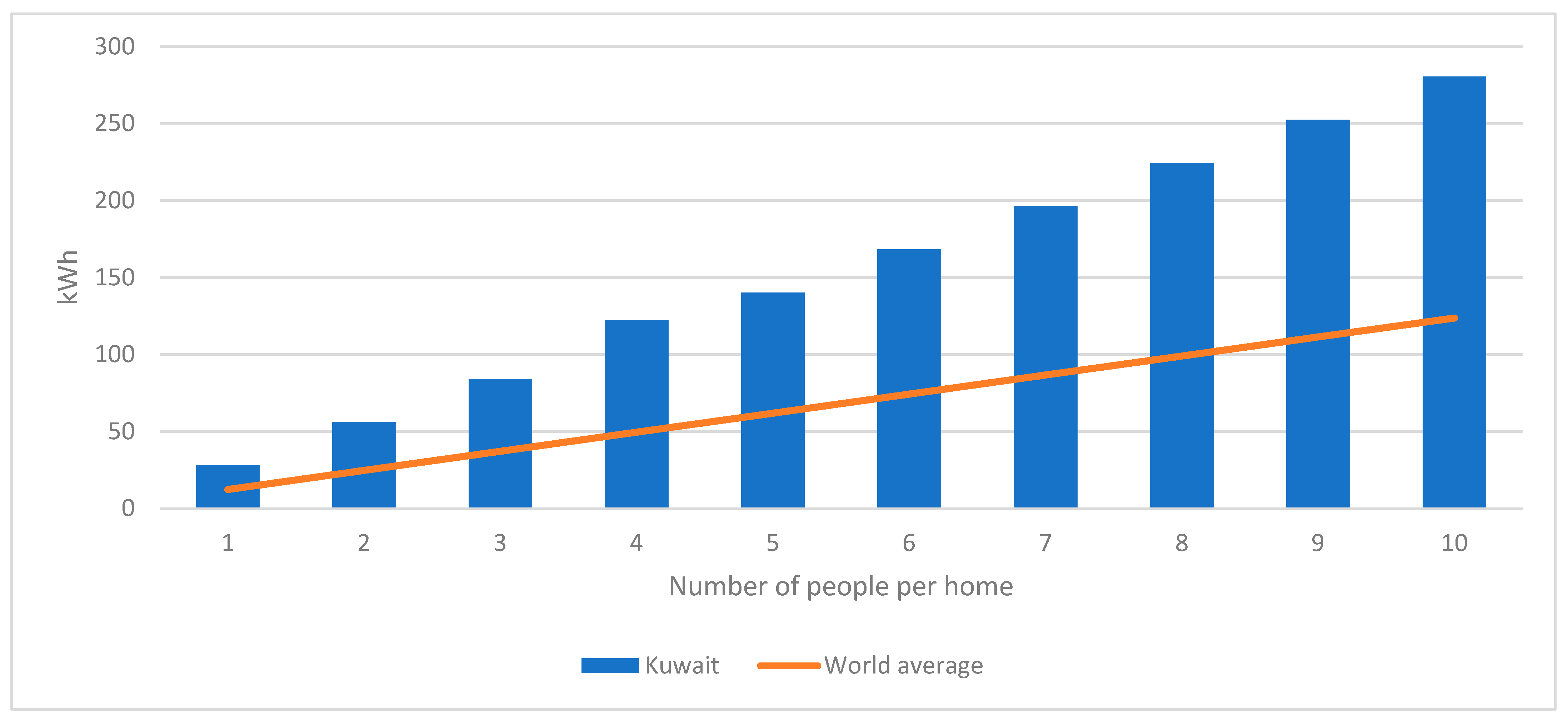
The above formula generates truly linear results, assuming energy output is directly proportional to waste mass, so doubling the mass doubles the estimated energy without accounting for thresholds or diminishing returns. This linearity is appropriate for first-order, large-scale assessments where average waste composition and conversion efficiency are assumed to be constant, and variations in calorific value average out, making the approach suitable for preliminary planning and comparison. Therefore, due to the substantial waste generation in Kuwaiti homes, the potential energy that can be derived from this waste is also significantly higher, reaching almost twice the amount compared to the global average, as depicted in
Figure 3.
4.2.3. Generated Energy from Waste
The use of the above formula is justified as a simplified, empirically derived method that represents average MSW energy content and typical WtE efficiencies, making it appropriate for preliminary energy potential estimates. The amount of monthly energy generated from waste in a household depends on the number of people residing in that particular home.
Figure 3 visually illustrates this relationship, indicating that an increase in the number of occupants leads to a corresponding increase in the potential energy generation from waste within that household. However, it is crucial to recall that Kuwaiti homes tend to produce more waste compared to the global average. It is envisaged that Kuwaiti households generate high waste volumes due to the rapid economic growth, high consumption, a preference for replacing rather than repairing or recycling items, and limited waste-separation awareness and infrastructure. Consequently, it becomes evident that Kuwaiti households would generate a significantly higher amount of energy than the global average (indeed, they could produce nearly double the energy generated by an average household worldwide).
4.2.4. Energy Consumption
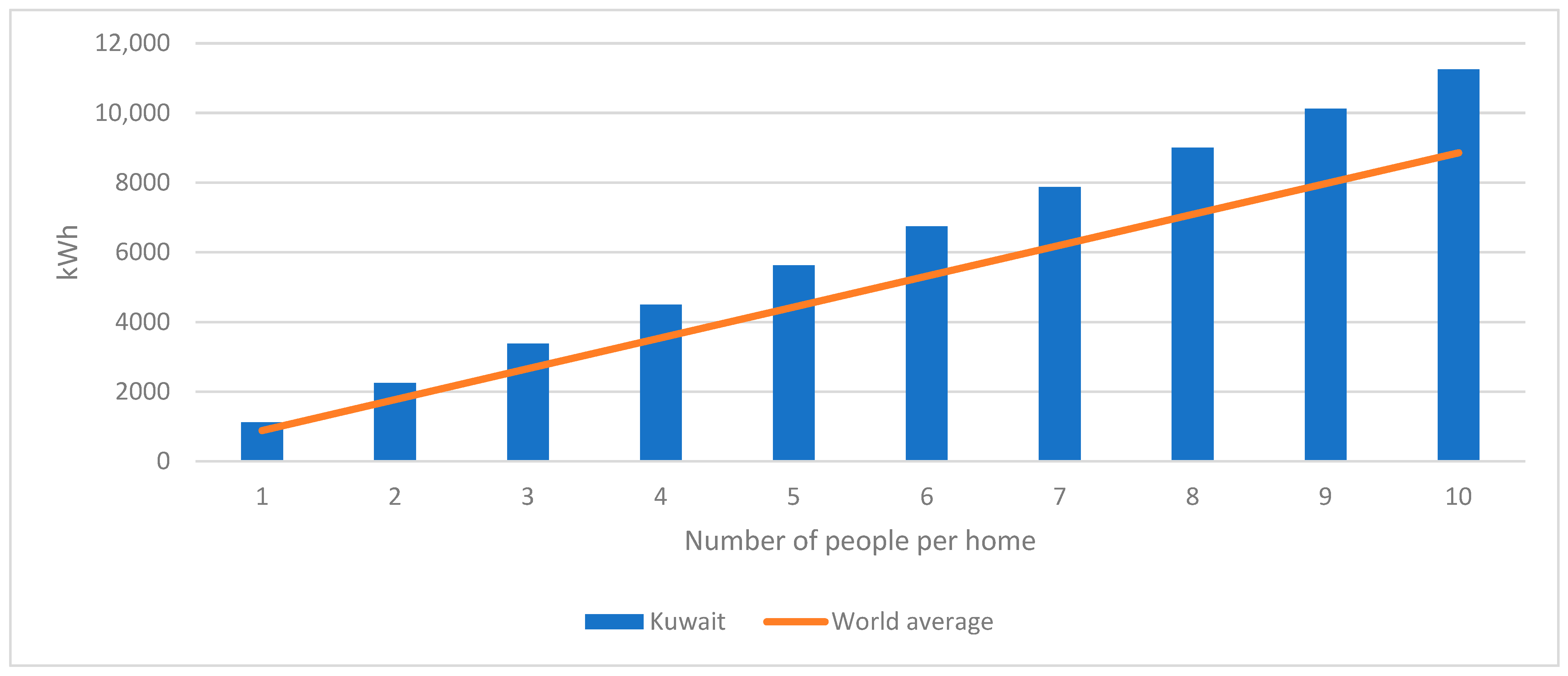
Due to the higher electricity consumption per individual in Kuwait compared to the global average, it follows that energy consumption per household is also higher. This disparity is illustrated in
Figure 4, which provides a visual comparison between Kuwaiti households and the global average in terms of energy consumption. The figure clearly demonstrates that Kuwaiti households consume a greater amount of energy compared to the world average.
4.2.5. Generated to Consumed Energy
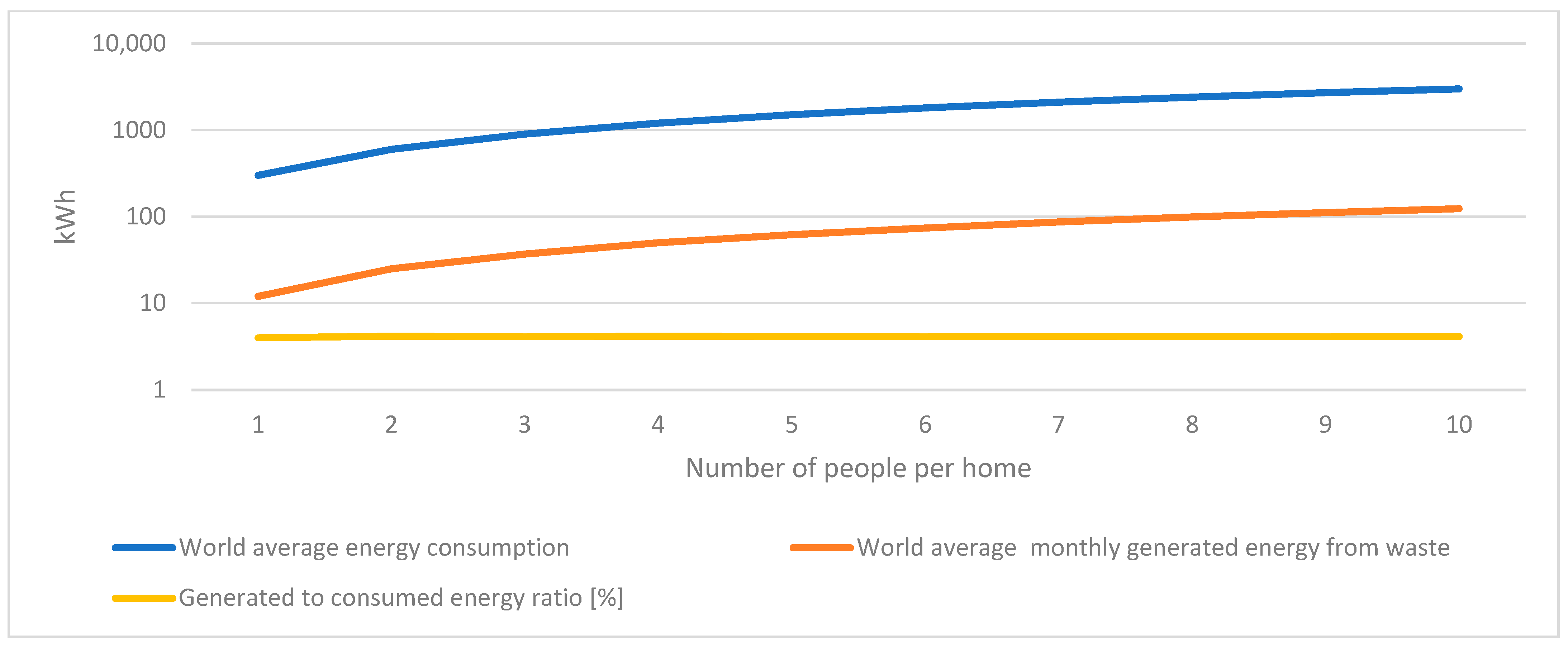
Figure 5 presents a comparison between the energy consumed per home based on the number of people living in that household and the energy generated from waste. Additionally, it provides the ratio of generated energy to consumed energy, highlighting an important metric for evaluation. Notably, the figure reveals that the global average ratio stands at 4.1.
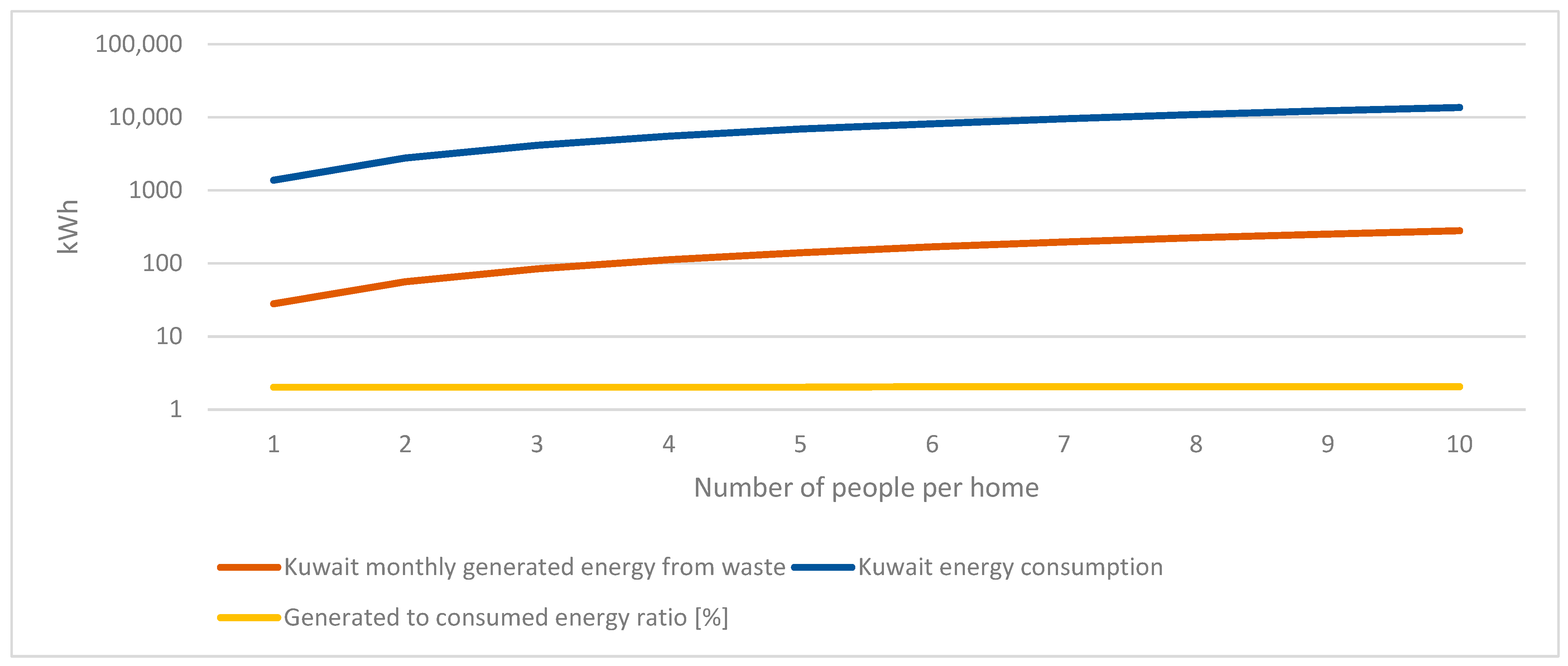
Figure 6 illustrates the energy consumption per home in Kuwait based on the number of people living in the household, as well as the energy generated from waste in relation to the number of individuals residing in the same household. Furthermore, it presents the generated-to-consumed energy ratio, which amounts to 2, nearly half the world average.
5. Discussion
The findings of this study shed light on the attitudes, awareness, and knowledge of Kuwaiti households towards WtE as a strategy for WM. Overall, the results indicate that there is a high level of concern and awareness regarding the environmental implications of WtE, and participants generally view it as a favourable approach for WM. Additionally, respondents showed a fair understanding of the benefits associated with WtE, particularly the potential to generate electricity from waste instead of relying on fossil fuels. However, it is important to note that there are regional differences in responses, which underscores the necessity for a unified roadmap to ensure the successful implementation of WtE strategies across the country.
Based on the calculations and analysis, it is evident that Kuwait is well-positioned to benefit from WtE strategies, surpassing the global average due to several key factors. Firstly, Kuwaiti households generate significantly more waste per household compared to the global average. This higher waste generation poses a unique challenge for WM, but it also presents an abundant resource for potential utilization in WtE processes. Implementing WtE strategies would not only address the WM challenge but also unlock the vast energy potential inherent in the country’s waste.
Furthermore, the analysis demonstrates that the energy generation potential from household waste in Kuwait, when assessed relative to household size, represents a meaningful opportunity to partially offset residential energy consumption. The comparison between energy consumed per household and energy generated from waste indicates a generated-to-consumed energy ratio of approximately 2, which, although below the global average ratio of 4.1, still highlights the strategic value of waste-to-energy (WtE) systems in the Kuwaiti context. By adopting WtE solutions, Kuwait can simultaneously address municipal waste management challenges while contributing to domestic energy supply through more sustainable and resource-efficient practices.
Additionally, Kuwaiti households consume more energy compared to the global average, which further underscores the importance of adopting WtE strategies. By harnessing waste as a renewable energy source, Kuwait can reduce its reliance on conventional energy sources and enhance its energy self-sufficiency, leading to long-term environmental and economic benefits.
Moreover, the comparison of generated-to-consumed energy ratios reveals that Kuwaiti households exhibit higher efficiency and effectiveness in utilizing waste as a renewable energy source compared to the global average. This indicates that WtE systems in Kuwait have the potential to achieve greater energy generation in proportion to the energy consumed, making it a promising avenue for sustainable energy production.
6. Conclusions
6.1. Main Outcomes
This study set out to assess Kuwaiti homeowners’ PAT-WtE as a WM strategy, and to estimate the potential energy that could be generated from HW. Against the backdrop of Kuwait’s high per capita waste generation and heavy dependence on fossil fuels, the findings indicate that WtE represents both a socially acceptable and technically promising option.
The survey results show that Kuwaiti homeowners generally exhibit positive perceptions of WtE, recognising it as an environmentally sound strategy that can convert waste into a valuable energy resource, while reducing reliance on conventional fossil-based electricity. This aligns with broader global trends towards low-carbon and renewable energy systems. Moreover, WtE is perceived as a means of alleviating pressure on landfills, mitigating environmental pollution, and contributing to a more sustainable and integrated WM system.
The second component of the study—mathematical estimation of energy potential from HW—demonstrated that WtE could make a meaningful contribution to household energy demand and, in the longer term, support the development of net-zero or low-carbon homes. These calculations, while based on a simplified formula, illustrate that household solid waste in Kuwait is not merely an environmental liability but also a latent energy resource. In addition, WtE offers an avenue for treating certain hazardous waste streams in a controlled, regulated manner, thereby supporting national sustainability and public health objectives.
Taken together, the positive attitudes, baseline awareness, and willingness to engage with WtE reported by households, combined with the indicative energy potential, underscore the strategic role that WtE could play in Kuwait’s transition towards more sustainable waste and energy systems. Harnessing this potential will require coordinated policy action, public engagement, and more refined technical assessments, but the evidence from this study suggests a favourable foundation on which to build.
6.2. Recommendations
To fully capitalise on the favourable public attitudes identified in this research and to translate them into concrete behavioural and policy outcomes, the following recommendations are proposed:
A comprehensive national programme should be established to consolidate existing positive perceptions of WtE while addressing residual concerns and information gaps. This programme should:
Communicate clearly the environmental and energy benefits of WtE, including reduced landfill dependency and lower greenhouse gas emissions.
Use multiple channels—television, radio, social media, schools, mosques, and community events—to reach diverse segments of the population.
Highlight economic co-benefits, such as potential cost savings in WM and job creation in the green and renewable energy sectors.
- 2.
Promote household-level participation and proper waste segregation.
Public support must be matched with practical guidance on how households can contribute to WtE success. Policy and outreach efforts should:
Emphasise proper waste segregation at source (e.g., separating organics, plastics, paper, and metals).
Provide user-friendly instructions and infrastructure (clearly labelled bins, collection schedules, community collection points).
Encourage long-term behavioural change by linking segregation and recycling to national goals and local benefits, such as cleaner neighbourhoods and reduced odour and pests.
- 3.
Strengthen multi-stakeholder collaboration.
Effective implementation of WtE requires coordination across government entities, municipalities, private waste operators, environmental agencies, and educational institutions. It is particularly recommended to:
Establish formal platforms or working groups to align regulations, technical standards, and communication strategies.
Involve universities and research centres in monitoring, public education, and technology assessment.
Engage civil society and NGOs to act as intermediaries between authorities and communities, especially during the planning and siting of WtE facilities.
- 4.
Refine energy potential estimates through detailed waste profiling.
The energy estimations in this study were based on a universal conversion factor and aggregate waste mass. To support investment decisions and detailed project design, future research should:
Conduct a comprehensive characterisation of Kuwait’s HW streams, quantifying the proportions of organic waste, plastics, paper, metals, and other fractions.
Evaluate the specific calorific value and energy potential of each major waste type.
Develop or adopt differentiated formulas and models that more accurately reflect the energy yield of mixed and segregated waste streams in the Kuwaiti context.
- 5.
Integrate WtE into broader sustainability and climate planning.
Finally, WtE should not be treated as an isolated technical solution, but as part of an integrated waste and energy strategy. Policymakers should:
Align WtE deployment with national targets on emissions reduction, renewable energy, and the circular economy.
Ensure that WtE complements, rather than replaces, waste prevention, reduction, and recycling efforts.
Use the findings from this and similar studies as evidence inputs into long-term planning for infrastructure, land use, and public finance.
By acting on these recommendations, Kuwait can leverage the positive public attitudes and substantial waste resources identified in this study to accelerate the adoption of WtE, thereby contributing to a more sustainable, resilient, and low-carbon future.
Author Contributions
Conceptualization, Z.H. and S.A.; methodology, Z.H. and S.A.; investigation, Z.H. and S.A.; writing—original draft preparation, Z.H. and S.A.; writing—review and editing, Z.A.H.; W.B. Supervision. All authors have read and agreed to the published version of the manuscript.
Funding
This research received no external funding.
Institutional Review Board Statement
The study was conducted in accordance with the Declaration of Helsinki and approved by the Department of Civil and Environmental Engineering, Brunel University London (Reference No. 2272304; approval date: 24 August 2023).
Informed Consent Statement
Informed consent was obtained online from all participants involved in the study.
Data Availability Statement
The data that support the findings of this study are available on request from the corresponding author.
Conflicts of Interest
The authors declare no conflicts of interest.
Abbreviations
The following abbreviations are used in this manuscript:
| ANOVA | Analysis of variance |
| GCC | Gulf Cooperation Council |
| HW | Household waste |
| MSW | Municipal solid waste |
| NIMBY | Not-in-my-backyard |
| PAT-WtE | Overall public attitudes towards waste-to-energy |
| PAW-Gen | Public awareness of general environmental issues |
| PAW-WtE | Public awareness of waste-to-energy |
| PB-WtE | Perceived benefits of waste-to-energy |
| PR-WtE | Perceived risks of waste-to-energy |
| WM | Waste management |
| WtE | Waste-to-energy |
References
- Qazi, A.; Dickson, A.; Quigley, J.; Gaudenzi, B. Supply chain risk network management: A Bayesian belief network and expected utility based approach for managing supply chain risks. Int. J. Prod. Econ. 2018, 196, 24–42. [Google Scholar] [CrossRef]
- Brunner, P.H.; Rechberger, H. Waste to energy—Key element for sustainable waste management. Waste Manag. 2015, 37, 3–12. [Google Scholar] [CrossRef] [PubMed]
- Lee, D.J. Gasification of municipal solid waste (MSW) as a cleaner final disposal route: A mini-review. Bioresour. Technol. 2022, 344, 126217. [Google Scholar] [CrossRef] [PubMed]
- Farahat, A. Air quality in the Gulf Cooperation Council (GCC) countries. In Asian Atmospheric Pollution; Singh, R.P., Ed.; Elsevier: Amsterdam, The Netherlands, 2022; pp. 201–226. ISBN 978-0-12-816693-2. [Google Scholar] [CrossRef]
- Al-Jarallah, R.; Aleisa, E. Investigating causes contributing to increased municipal solid waste in Kuwait: A national survey. J. Eng. Res. 2013, 1, 123–143. [Google Scholar]
- Al-Jarallah, R.; Aleisa, E. A baseline study characterizing the municipal solid waste in the state of Kuwait. Waste Manag. 2014, 34, 952–960. [Google Scholar] [CrossRef]
- Alshawaf, M.; Alwaeli, M.; Pikon, K.; Alolayan, M. The characterization of municipal solid waste in Kuwait: A pathway to reform the waste management sector. Discov. Sustain. 2025, 6, 208. [Google Scholar] [CrossRef]
- Alsaad, M. The Unsustainability of Kuwait’s Energy System—Examining Kuwait’s Energy Problem. London School of Economics and Political Science. 2021. Available online: https://blogs.lse.ac.uk/mec/2021/02/11/the-unsustainability-of-kuwaits-energy-system-examining-kuwaits-energy-problem/ (accessed on 12 October 2025).
- Wang, X. The moral roots of household waste-sorting attitudes and intentions in China. Discov. Sustain. 2024, 5, 358. [Google Scholar] [CrossRef]
- Aleisa, E.; Al-Jarallah, R. Characterization of municipal solid waste in Kuwait: Sector-specific composition analysis and implications. J. Air Waste Manag. Assoc. 2024, 74, 623–638. [Google Scholar] [CrossRef]
- Aleisa, E.; Al-Jarallah, R. A triple bottom line evaluation of solid waste management strategies: A case study for an arid Gulf State Kuwait. Int. J. Life Cycle Assess. 2018, 23, 1460–1475. [Google Scholar] [CrossRef]
- Al-Yaqout, A.; Hamoda, M.F. Long-term temporal variations in characteristics of leachates from a closed landfill in an arid region. Water Air Soil Pollut. 2020, 231, 319. [Google Scholar] [CrossRef]
- Graf, M. Current Status Waste Management Strategies and Planning in Kuwait. Waste to Energy Research and Technology Council. 2018. Available online: https://www.wtert.net/paper/4187/Current-Status-Waste-Management-Strategies-and-Planning-in-Kuwait.html (accessed on 12 October 2025).
- Udomsri, S.; Martin, A.R.; Martin, V. Thermally driven cooling coupled with municipal solid waste-fired power plant: Application of combined heat cooling and power in tropical urban areas. Appl. Energy 2011, 88, 1532–1542. [Google Scholar] [CrossRef]
- Dankwa, D.D.; Boh, M.Y.; Clark, O.G. Measuring greenhouse gas emissions from composting: A comparative review of methods. Waste Manag. 2026, 210, 115250. [Google Scholar] [CrossRef]
- Vaish, B.; Srivastava, V.; Singh, P.; Singh, A.; Singh, P.K.; Singh, R.P. Exploring untapped energy potential of urban solid waste. Energy Ecol. Environ. 2016, 1, 323–342. [Google Scholar] [CrossRef]
- Valinejadshoubi, M.; Ghanizadehgrayli, M.; Heidari, S. Modeling and fabrication of a kinetic solar energy-absorbing window as a green idea for sustainable future buildings. J. Green Build. 2018, 13, 145–162. [Google Scholar] [CrossRef]
- Cao, K.; Gao, X.; Zheng, W.; Zhai, K.; Zheng, J. Towards a better psychological satisfaction: Developing a mixed multi-criteria evaluation system to urban ‘Not in my back yard’ facilities siting. BMC Psychol. 2024, 12, 206. [Google Scholar] [CrossRef]
- Li, W.; Liu, J.; Li, D. Getting their voices heard: Three cases of public participation in environmental protection in China. J. Environ. Manag. 2012, 98, 65–72. [Google Scholar] [CrossRef]
- Suryawan, I.W.K.; Lee, C.H. Green transition management: The key role of community participation in developing resilient waste management policies for coastal and inland communities. Environ. Sci. Pollut. Res. Int. 2025, 32, 27523–27540. [Google Scholar] [CrossRef] [PubMed]
- Li, X.; Li, Y.; Li, G.; Xu, J. Sustainable supply chain management practices and performance: The moderating effect of stakeholder pressure. Humanit. Soc. Sci. Commun. 2025, 12, 336. [Google Scholar] [CrossRef]
- Kaho, T.; Sakakibara, K.; Arimura, M.; Watanabe, S. Optimization of garbage collection routes for evidence-based policy-making. Artif. Life Rob. 2025, 30, 156–164. [Google Scholar] [CrossRef]
- Tian, A.; Tang, H.; Chen, W.; Pan, X.; Wu, F.; Tang, Q. A multi-field coupling model for municipal solid waste degradation in landfills: Integrating microbial, chemical, thermal, and hydraulic processes. Sustainability 2025, 17, 9691. [Google Scholar] [CrossRef]
- Al-Rashed, W.S. Assessing public perception and parametric analysis of municipal solid waste management solutions in Tabuk City, Saudi Arabia. Sci. Rep. 2025, 15, 11304. [Google Scholar] [CrossRef]
- Carnes, S.A.; Schweitzer, M.; Peelle, E.B.; Wolfe, A.K.; Munro, J.F. Measuring the success of public participation on environmental restoration and waste management activities in the US Department of Energy. Technol. Soc. 1998, 20, 385–406. [Google Scholar] [CrossRef]
- Chang, Y.-J.; Yu, T.-Y.; Lin, Y.-K.; Lin, Y.-C. from gameplay to green choices: Paper goes green, a board game for fostering life cycle thinking and sustainable consumption. Sustainability 2025, 17, 9571. [Google Scholar] [CrossRef]
- Yuan, X.; Fan, X.; Liang, J.; Liu, M.; Teng, Y.; Ma, Q.; Wang, Q.; Mu, R.; Zuo, J. Public perception towards waste-to-energy as a waste management strategy: A case from Shandong, China. Int. J. Environ. Res. Public Health 2019, 16, 2997. [Google Scholar] [CrossRef]
- Alsulaili, A.; AlSager, B.; Albanwan, H.; Almeer, A.; Alessa, L.M. An integrated solid waste management system in Kuwait. In Proceedings of the 5th International Conference on Environmental Science and Technology, Houston, TX, USA, 9–13 September 2024; IACSIT Press: Singapore, 2014; Volume 69, pp. 54–59. [Google Scholar]
- Kuwait News Agency. Kuwait Inaugurates Al-Salmi Renewable Energy Park. 2020. Available online: https://www.kuna.net.kw/ArticleDetails.aspx?id=2881689&Language=en (accessed on 12 October 2025).
- Public Authority for Agriculture Affairs and Fish Resources (PAAF). Green Urban Development Initiative (GUDI). 2021. Available online: https://gudi.gov.kw/ (accessed on 12 October 2025).
- Jones, M. Research Methods in the Social Sciences; Palgrave Macmillan: London, UK, 2015; ISBN 978-1-137-47856-3. [Google Scholar]
- Paradis, E.; O’Brien, B.; Nimmon, L.; Bandiera, G.; Martimianakis, M.A. Design: Selection of data collection methods. J. Grad. Med. Educ. 2016, 8, 263–264. [Google Scholar] [CrossRef] [PubMed]
- Nardi, P.M. Doing Survey Research: A Guide to Quantitative Methods, 4th ed.; Routledge: London, UK, 2018; ISBN 978-1-138-0433-81. [Google Scholar]
- Johnson, R.B.; Christensen, L.B. Educational Research: Quantitative, Qualitative and Mixed Approaches, 5th ed.; SAGE Publications: London, UK, 2019; ISBN 978-1-4522-4440-2. [Google Scholar]
- Haslbeck, J.M.B.; Martínez, A.J.; Roefs, A.J.; Fried, E.I.; Lemmens, L.H.J.M.; Groot, E.; Edelsbrunneret, P.A. Comparing Likert and visual analogue scales in ecological momentary assessment. Behav. Res. 2025, 57, 217. [Google Scholar] [CrossRef] [PubMed]
- Jorrat, D. Recruiting experimental subjects using WhatsApp. J. Behav. Exp. Econ. 2021, 90, 101644. [Google Scholar] [CrossRef]
- Times Kuwait. Kuwait Has 7000 Empty Houses. 2022. Available online: https://timeskuwait.com/news/kuwait-has-7000-empty-houses/ (accessed on 12 October 2025).
- Del Águila, M.R.; González-Ramírez, A.R. Sample size calculation. Allergol. Immunopathol. 2014, 42, 485–492. [Google Scholar] [CrossRef]
- Calculator Academy. Waste to Energy Calculator. 2022. Available online: https://calculator.academy/waste-to-energy-calculator/ (accessed on 12 October 2025).
- Myers, J.L.; Well, A.; Lorch, R.F. Research Design and Statistical Analysis; Routledge: London, UK, 2010; ISBN 978-0-805-8643-11. [Google Scholar]
- Guerrero, H. Excel Data Analysis, 2nd ed.; Springer International Publishing: Cham, Switzerland, 2019; ISBN 978-3-030-01278-6. [Google Scholar] [CrossRef]
- Salcedo, J.; McCormick, K. SPSS Statistics for Dummies, 4th ed.; John Wiley & Sons: Hoboken, NJ, USA, 2020; ISBN 978-1-119-5608-38. [Google Scholar]
- Muter, O.; Gudrā, D.; Žorža, L.; Selga, T.; Roga, A.; Skinderskis, E.; Eismonts, U.; Vonda, K.; Kalniņa, I.; Fridmanis, D. Stimulation of batch mesophilic anaerobic digestion by cellulose- and polysaccharide-derived polymers in landfill leachates. Energies 2024, 17, 5384. [Google Scholar] [CrossRef]
- Tait, P.W.; Brew, J.; Che, A.; Costanzo, A.; Danyluk, A.; Davis, M.; Khalaf, A.; McMahon, K.; Watson, A.; Rowcliff, K.; et al. The health impacts of waste incineration: A systematic review. Aust. N. Z. J. Public Health 2020, 44, 40–48. [Google Scholar] [CrossRef]
- Delkash, M. Air emissions from combustion and incineration processes: Insights into air quality and US EPA regulations. Water Air Soil Pollut. 2026, 237, 104. [Google Scholar] [CrossRef]
- Kang, S.; Kim, S.; Lee, D.; Lee, J.; Kim, K.H.; Jeon, E.C. The study on biomass fraction estimation for waste incinerated in Korea: A case study. Sustainability 2017, 9, 511. [Google Scholar] [CrossRef]
- Ohnishi, S.; Fujii, M.; Ohata, M.; Rokuta, I.; Fujita, T. Efficient energy recovery through a combination of waste-to-energy systems for a low-carbon city. Resour. Conserv. Recycl. 2018, 128, 394–405. [Google Scholar] [CrossRef]
- The World Bank. Electric Power Consumption per Capita (kWh)—Kuwait. World Bank Open Data 2025. Available online: https://data.worldbank.org/indicator/EG.USE.ELEC.KH.PC?locations=KW (accessed on 23 January 2026).
- World Bank. What a Waste 2.0: A Global Snapshot of Solid Waste Management to 2050. World Bank Publications 2018. Available online: https://datatopics.worldbank.org/what-a-waste/ (accessed on 23 January 2026).
- Statista. Electricity Consumption per Capita Worldwide in 2024, by Selected Country (In Kilowatt-Hours). Available online: https://www.statista.com/statistics/383633/worldwide-consumption-of-electricity-by-country/ (accessed on 23 January 2026).
| Disclaimer/Publisher’s Note: The statements, opinions and data contained in all publications are solely those of the individual author(s) and contributor(s) and not of MDPI and/or the editor(s). MDPI and/or the editor(s) disclaim responsibility for any injury to people or property resulting from any ideas, methods, instructions or products referred to in the content. |