
Article

Characterization of Wood Biomass Ash Received from Energy Production Process: Preliminary Assessment of Risk and Valorization Potential for Agricultural and Environmental Applications


by
Abdulmannan Rouhani
1,*,
Valentina Pidlisnyuk
2,
Andrzej Cezary Żołnowski
3,
Elżbieta Rolka
3,
Sylvie Kříženecká
2 and
Karim Suhail Al Souki
2
1
Department of Environment, Faculty of Environment, Jan Evangelista Purkyně University in Ústí nad Labem, Pasteurova 15, 400 96 Ústí nad Labem, Czech Republic
2
Department of Environmental Chemistry and Technology, Faculty of Environment, Jan Evangelista Purkyně University in Ústí nad Labem, Pasteurova 15, 400 96 Ústí nad Labem, Czech Republic
3
Department of Agricultural and Environmental Chemistry, Faculty of Agriculture and Forestry, University of Warmia and Mazury in Olsztyn, Łódzki 4 Sq., 10-727 Olsztyn, Poland
*
Author to whom correspondence should be addressed.
Urban Sci. 2026, 10(4), 197; https://doi.org/10.3390/urbansci10040197
Submission received: 15 January 2026 / Revised: 25 February 2026 / Accepted: 9 March 2026 / Published: 3 April 2026

Abstract

Wood biomass ash (WBA) from thermal power plants is often landfilled despite its potential as a secondary raw material. This study adopts a circular economy perspective to assess the physicochemical properties, valorization potential, and environmental risks of WBA, aiming to support its use in agriculture and environmental management. Comprehensive characterization included pH, cation exchange capacity (CEC), proximate and elemental composition, and selected organic contaminants, including polycyclic aromatic hydrocarbons (PAHs). The WBA exhibited a strongly alkaline pH (10.55), moderate CEC (4.36 cmol kg−1), and high ash content (78.32%), with lower nutrient content than other biomass ashes. Major elements included Ca (6.84%), K (2.90%), and Si (3.19%), while nitrogen was absent. Potentially toxic elements (PTEs) such as As, Cd, and Ni were below detection limits; Cr, Cu, Pb, and Zn remained within most regulatory thresholds, although Zn exceeded some limits. ΣPAHs were low (0.05 mg·kg−1), indicating minimal environmental concern. Despite reduced nutrient richness, the ash demonstrated suitability as a liming agent and supplementary nutrient source, provided that Zn levels are managed and nitrogen is supplemented. These results support the redirection of WBA from disposal to beneficial use, advancing circular economy goals and contributing to more sustainable and resilient agricultural systems.

1. Introduction

The use of biomass derived from forests for bioenergy is on the rise, motivated by the need to reduce reliance on fossil fuels and achieve the objectives of carbon neutrality [1,2]. The growing transformation of forest chips and by-products from the forestry industry into energy is boosting the production of wood biomass ash (WBA) [3]. In practice, the majority of this ash ends up in landfills, with only a minimal portion being recycled, thus placing a considerable strain on land resources and the environment. Transformation of WBA into construction materials [4,5], catalysts [6], enhancers of geotechnical soil properties [7], and soil amendments and fertilizers [8,9], among others, can transform waste into valuable raw ingredients. This strategy represents an environmentally sustainable method to mitigate the challenges associated with waste disposal, a longstanding issue that has presented notable difficulties for government agencies [10]. The use of WBA in agriculture has been a topic of research for a long time. As early as 1875, the phosphorus content and fertilizer benefits were examined [11], and even after 150 years, studies continue, such as those investigating WBA’s impact on soil properties and plant development [12,13].
WBA shows potential as a promising material for use as a soil conditioner and an alternative nutrient source for agricultural soils. It plays a role in improving soil quality and aiding environmental remediation, underscoring its capacity as a sustainable solution to tackle soil degradation and advance environmental sustainability in agricultural and ecological systems [14,15,16]. WBA improves soil quality by adjusting pH levels, improving water retention, and increasing the availability of essential macronutrients through stimulation of microbial activity [17,18]. WBA has also been reported to improve soil microbial functions and alter the composition of the microbial community; these advantageous impacts largely depend on the type and amount of WBA used [19,20]. Additionally, the nutritional composition of WBA is significantly influenced by the type of tree species utilized, the source, whether it is bark or wood, and the effectiveness of the combustion process [21]. Moreover, WBA supports carbon sequestration by improving the organic matter humification process, thus increasing the stability of carbon in soils [22,23]. However, the reported properties and effects of biomass ashes vary substantially due to differences in biomass source, combustion conditions, and environmental context, and existing research often emphasizes selected parameters rather than providing a decision-relevant evaluation combining material characterization with contaminant screening and environmental acceptability. This variability and fragmented assessment hinder a consistent evaluation of WBA quality and its safe valorization potential, highlighting the need for systematic investigation.
The European Green Deal aims to promote the recycling of limited resources and stresses the objective of zero pollution. In alignment with this initiative, WBA should be recognized as a resource, but its use should not result in environmental pollution [12]. WBAs contain potentially toxic elements (PTEs) derived from the wood biomass utilized in combustion. As trees grow, they absorb PTEs from the soil [24,25]. The overall composition of PTEs in the soil is the result of the combined concentrations of elements originating from minerals in the geological parent material that form the soil (lithogenic source) and various potential anthropogenic contributions (contamination) [26]. Therefore, geographically and across different locations, the levels of PTEs vary significantly according to how much trees can absorb from the soil. Even in rural regions, forests have been exposed to PTEs [27]. Persistent organic pollutants, such as polycyclic aromatic hydrocarbons (PAHs), may also be present due to incomplete combustion or transformations within the flue gas pathway [28,29]. In addition, its high alkalinity and low N content might also cause some negative effects [30,31]. Therefore, despite its resource recovery potential, the variability in contaminant content and the possibility of adverse soil and environmental effects necessitate a comprehensive risk evaluation to ensure that the WBA application is consistent with zero-pollution objectives and regulatory requirements.
The growing reliance on biomass for heat generation has led to a substantial increase in WBA production, much of which is still disposed of in landfills without considering its resource potential [32]. This approach opposes the objectives of sustainable waste management and the core principles of the circular economy, which focus on the recovery and reuse of materials. Although numerous studies have investigated selected physicochemical properties or agronomic effects of WBA, comprehensive evaluations that simultaneously integrate detailed material characterization, contaminant screening, regulatory-based risk interpretation, and comparative assessment with other biomass ash types remain limited. Therefore, the present study provides a systematic assessment of the WBA generated by heating energy plants, with particular emphasis on its chemical composition, physicochemical properties, and environmental risk profile. By analyzing a wide range of parameters, including pH, cation exchange capacity (CEC), proximate composition (water content, volatile matter, ash content, and fixed carbon), nutrients, PTEs, and PAHs, and evaluating associated environmental risks against relevant regulatory thresholds, this study generates a comprehensive dataset to support evidence-based decision-making on the utilization of WBA. Furthermore, by combining original analytical data with structured comparison with the existing literature, this comprehensive analysis provides a decision-oriented analysis of the advantages and limitations of WBA valorization and facilitates informed strategies to redirect it from landfills towards advantageous uses in agriculture and environmental remediation. This research is part of a wider effort to cycle resources more efficiently and improve the sustainability of bioenergy systems.

2. Materials and Methods

2.1. WBA Background

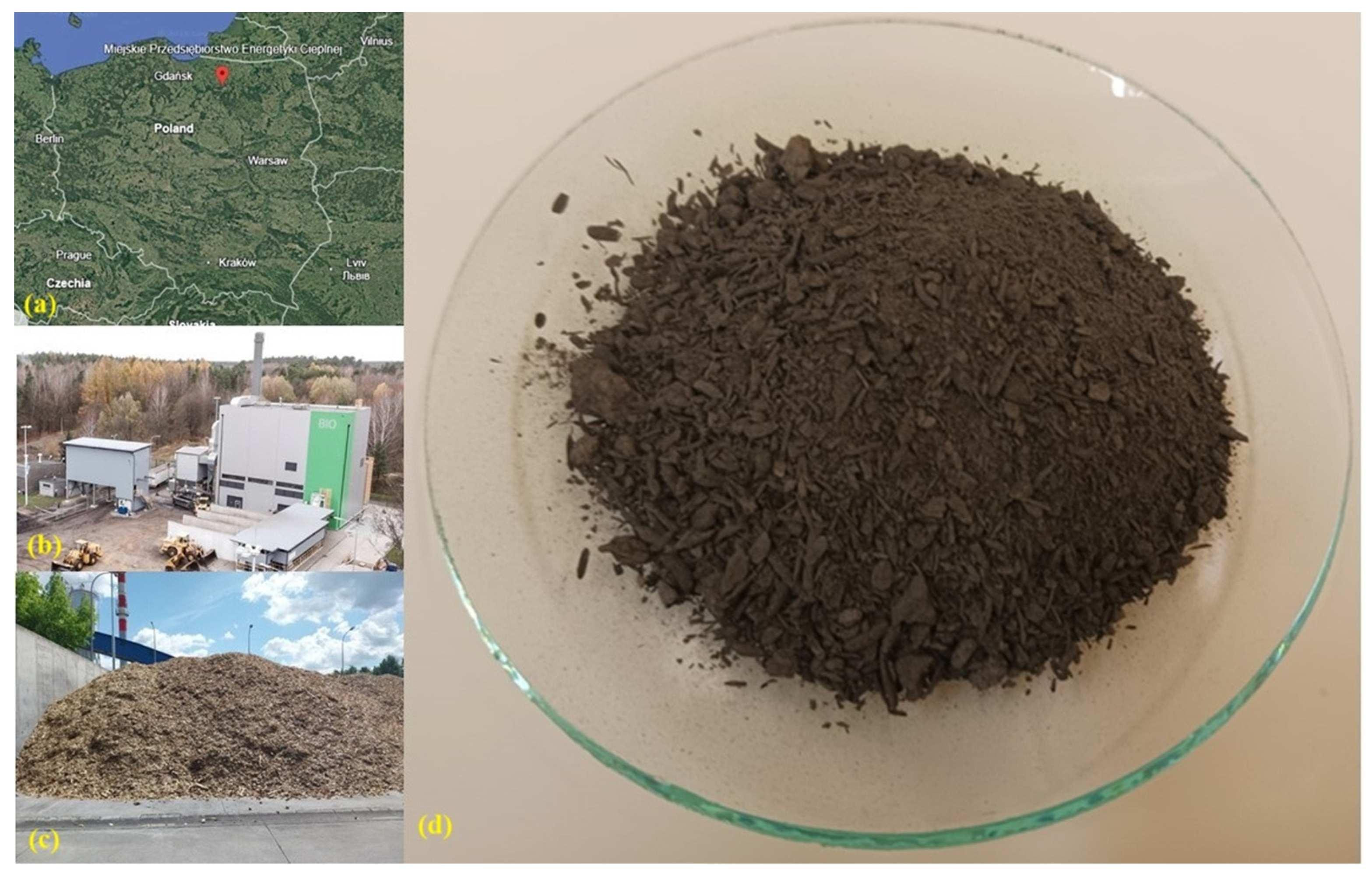
The WBA analyzed in this study was obtained from the Municipal Heating Energy Company in Olsztyn (MPEC Olsztyn, Poland) as a by-product of the combustion of wood chips used as biomass fuel (Figure 1c), with the resulting ash shown in Figure 1d. The biomass consisted of forest harvesting residues that comprised mainly mechanically shredded branches and other non-usable above-ground parts of trees. The material originated from forests located in the Warmian–Masurian Voivodeship (Napiwodzko–Ramucka Forest, Poland), an area of approximately 150 km2 dominated by coniferous stands. The predominant species included Scots pine (Pinus sylvestris L.) and Norway spruce (Picea abies (L.) H. Karst.). The chips are incinerated in a biomass boiler at the Kortowo-Bio heating plant, which has been in operation since 2019 and combusts approximately 50,000 Mg of wood chips annually [33]. Combustion in the boiler chamber is conducted at 800–900 °C. The WBA sample intended for analysis was obtained as a collective sample from a week’s operation of the bio-heating plant in the 2023–2024 heating season. After being transported to the laboratory, the material was dried at room temperature and thoroughly mixed to homogenize the composition.

2.2. WBA Characterization

The collected WBA samples were air-dried at room temperature, gently disaggregated, and sieved to <2 mm. The sieved WBA was thoroughly homogenized by manual mixing prior to preparation of analytical aliquots. Representative portions for each analysis were taken from the homogenized bulk sample. The pH of WBA was measured using a glass electrode in a 1:10 ash-to-deionized water suspension after one hour of shaking using a benchtop multiparameter meter (inoLab Multi 9430 IDS, WTW, Weilheim, Germany). Cation exchange capacity (CEC) was determined using the ammonium acetate method, which involved percolation with ammonium acetate, subsequent extraction with sodium chloride (NaCl) (ISO/TS 2217, 2023 [34]), and quantification of ammonium ions (NH4+) by spectrophotometry (SpectraMax® 190, Molecular Devices, San Jose, CA, USA). Proximate analysis, including the determination of moisture content, volatile matter, ash content, and fixed carbon, was conducted using a thermogravimetric multi-analyzer system TGA801 (Leco, Mönchengladbach, Germany) according to ASTM D1762-84 (2021) [35].
The chemical composition of the ash was determined using a wavelength-dispersive X-ray fluorescence (WDXRF) spectrometer ZSX Primus IV (Rigaku, Tokyo, Japan) operated with SQX software (version 3.43, Rigaku Corporation, Tokyo, Japan), which allows for the quantification of elements ranging from fluorine (F) to uranium (U), with detection limits ranging from parts per million (ppm) to 100%. Quantification was performed using fundamental parameter calibration with matrix correction and verified using certified reference materials and replicate analyses (RSD < 5%). The detection limit was 1–10 mg·kg−1 for trace elements; limits of quantification (LOQs) were defined as 10× the standard deviation of blanks. PAHs were quantified according to the method described by Al Souki et al. [36]. For extraction and cleanup, acetone and hexane were used as extraction solvents, and cyclohexane was used for solvent exchange and concentration; purification was performed using HCl-activated copper and silica gel. Instrumental analysis was carried out using a GC 7890B gas chromatograph coupled to an MS 7000D triple quadrupole mass spectrometer (Agilent Technologies, Santa Clara, CA, USA). The system was equipped with a splitless double-taper UI liner and a DB-EUPAH capillary column (20 m × 0.18 mm, 0.14 µm. Helium (purity 5.5) was used as the carrier gas, and nitrogen (purity 6.0) served as the collision gas. A total of sixteen EPA priority PAHs [37] were targeted in the analysis. Quantification was based on multi-point calibration with internal standards (r2 ≥ 0.995). Method blanks, matrix spikes, and duplicate samples were analyzed with each batch. Detection limits for individual PAHs ranged from 0.1 to 0.5 μg·kg−1, and LOQs were defined as 10× the standard deviation of replicate low-level spikes.

3. Results and Discussion

3.1. WBA Characteristics

3.1.1. Basic Physicochemical and Proximate Characteristics of WBA

The proximate composition and CEC of the WBA were evaluated and compared to the values reported for other biomass ashes (Table 1), with corresponding literature sources provided therein. The WBA examined in this study exhibited a CEC of 4.36 ± 0.37 cmol kg−1, which is substantially lower than the CEC reported for several other biomass ashes. For example, Canadian wood ash showed a considerably higher CEC of 59.8 cmol kg−1, while rice husk ash and rice mill ash had values of 40.0 and 17.64 cmol kg−1, respectively. Even sago bark ash, derived from a woody biomass source such as this ash, presented a significantly higher CEC of 13.13 cmol kg−1. In comparison with the feedstocks, the CEC in the current study is quite low (4.36 ± 0.37 cmol kg−1). Several reasons could be behind this value. To begin with, the elevated combustion temperature (800–900 °C) might have destroyed the majority of the organic functional groups (COOH, OH, and phenolic groups) that contribute to the cationic exchange property of the product. Such temperatures normally result in an ash that is dominated by crystalline mineral phases (oxides, carbonates, and silicates), which possess low surface charge and therefore low CEC [38]. Another possible reason could be the low residual or fixed carbon (FC = 5.83 ± 0.19%). It is well known that CEC in ash is strongly associated with unburned carbon fractions. The relatively low fixed carbon content indicates efficient combustion, leaving little amorphous carbon surface that is capable of contributing to augmenting the exchange sites [39]. Its agronomic potential can be enhanced when applied in conjunction with organic amendments or materials that exhibit higher CEC, especially in soils with low buffering capacity.
After air-drying at ambient temperature, the WBA had a water content of 6.72 ± 0.18%. The initial moisture content was higher, as expected for fresh ash stored under typical environmental conditions. This drying procedure was essential to ensure uniformity in subsequent analyses and to simulate the ash’s behavior under practical handling, storage, and application conditions. Although data on moisture content for the other referenced ashes are limited, the final low moisture level indicates favorable manageability for transport and incorporation into agricultural or environmental uses. The volatile matter (VM) content in the analyzed WBA was 15.86 ± 0.56% on a dry basis, signifying the presence of residual organic compounds or partially combusted materials. This percentage is lower than that found in Canadian wood ash (20%) and high-carbon wood ash (19.63%) but markedly higher than the VM reported for mixed biomass ash composed of agricultural and woody feedstocks, which contained only 1.17%. Forest residues (branches and bark fractions) may burn less uniformly and consequently leave small amounts of volatile organic compounds in the ash [45]. From the perspective of valorization, the VM may affect both the chemical reactivity of the ashes and their interactions with soil microbial communities [46]. While the VM level is moderate, it should be considered when assessing the ashes’ suitability for land application, particularly where stability and minimal organic residues are prioritized.
The ash content measured in the targeted WBA was 78.32 ± 0.46% on a dry basis, indicating a large proportion of inorganic residue remaining after combustion. This figure exceeds that of Canadian wood ash, which had 70.4%, and is substantially greater than high-carbon wood ash’s 26.15%, reflecting the latter’s higher organic residue content. Conversely, the ash content was lower than that of mixed biomass ash (98.67%) and rice husk ash (96.0%), both known for highly mineralized residues due to their feedstock composition and combustion efficiency. The elevated combustion temperature might have induced almost full oxidation of lignocellulosic material. Nevertheless, inorganic residues are predominantly left [47]. In addition, the increase in the final ash proportion could be due to the fact that branches and bark were the combusted parts of the trees. It is known that these parts contain a higher mineral content than the stem wood [48]. This level of ash content suggests potential as a mineral-rich soil amendment capable of supplying base-forming elements, though it also indicates that combustion, while efficient, may not have been entirely complete. The fixed carbon (FC) content of the WBA was 5.83 ± 0.19% on a dry basis. This is less than the 9.6% reported for Canadian wood ash but notably higher than the 0.11% FC found in mixed biomass ash derived from agricultural and woody sources. The relatively low FC content could be the result of efficient combustion at 800–900 °C with the presence of an adequate oxygen supply, which promoted almost full oxidation of fixed carbon [49]. From an application standpoint, the FC content may impact the ash’s chemical reactivity and nutrient adsorption capacity, as well as its stability within soil systems [50]. Although the FC is not excessive, it may contribute marginally to soil carbon inputs, but the WBA should not be regarded as a significant carbon source.
The elemental composition and pH of the WBA were assessed and compared with a variety of biomass ashes documented in the literature (Table 2). The pH of the analyzed WBA was measured at 10.55 ± 0.03, indicating a strongly alkaline nature. This pH value is lower than those reported for Danish wood ash (12.7), Canadian wood ash (11.5), mixed biomass ashes (12.83 and 12.39), and olive cake ash (12.8), yet slightly exceeds the pH values of agricultural residue ash (10.06) and Miscanthus × giganteus ash (11.8). Obtaining a high value of ash pH is a familiar phenomenon. The high concentrations of cations (Ca, K, Mg, and Na) indicated dominance of basic oxides and carbonates, which hydrolyze in water and generate OH ions. In addition, the absence of acidic organic functional groups eliminates buffering capacity and ensures strong alkalinity [51]. Although less alkaline than many counterparts, the WBA retains a significant liming capacity, suggesting its potential to correct soil acidity, particularly in acidic environments [8,19]. Biomass ash has been reported to have a stronger liming effect than biochar [52]. However, the high pH of WBA presents risks of over-alkalization if applied in high doses, particularly in neutral or slightly alkaline soils [32,53].

3.1.2. Elemental Composition of WBA

The aluminum (Al) concentration in the WBA was 0.79 ± 0.05%, considerably lower than the notably high Al content in Canadian wood ash (30.22%) and also below levels found in Danish wood ash (1.24%) and agricultural residue ash (4.31%). However, it is substantially elevated compared to mixed biomass ash derived from agricultural and animal waste sources, which contained only 0.05% Al. Considering the elevated pH level of the WBA (10.55), which restricts the solubility and bioavailability of Al, the concentration of Al present is unlikely to present substantial environmental or agronomic risks. Nonetheless, Al monitoring remains prudent when applying ash repeatedly or at high rates, especially in acidic soils where Al mobilization might increase [61]. Calcium (Ca) content was determined to be 6.84 ± 0.42%, placing it in the lower-to-moderate spectrum relative to other biomass ashes. This value is considerably lower than the Ca concentrations observed in Danish wood ash (13.5%), Canadian wood ash (23.18%), mixed biomass ashes (14.51% and 5.99%), as well as agricultural residue ash (31.9%) and olive cake ash (19.8%). It does, however, slightly surpass the Ca content reported for Miscanthus × giganteus ash (4.68%). Although the Ca level here is relatively low compared to certain ashes, it still supports the WBA’s ability to improve lime effects and nutritional benefits. Ca improves soil structure, reduces acidity, and supports plant physiological functions [62,63]. Therefore, the Ca level present in WBA confirms its suitability as an additional source of Ca for agricultural and environmental uses, particularly when combined with other materials to ensure a balanced nutrient supply.
The iron (Fe) content of the WBA was 0.51 ± 0.05%, placing it within a low-to-moderate range compared to other ashes described in the literature. This concentration is significantly lower than those reported for Canadian wood ash (14.35%) and agricultural residue ash (12.0%), which may be indicative of contamination by soil or metal-rich feedstocks in those samples. In contrast, the Fe concentration slightly surpasses that of mixed biomass ashes (0.43% and 0.22%), Danish wood ash (0.67%), and Miscanthus × giganteus ash (0.14%). From an agronomic standpoint, the Fe content may supply beneficial micronutrients to plants, particularly in Fe-deficient soils, although its availability may be constrained under the ash’s alkaline conditions [64,65]. The potassium (K) content was determined to be 2.90 ± 0.13%, which is comparatively low in relation to other biomass ashes. This is significantly less than Canadian wood ash (9.82%), agricultural residue ash (11.7%), and olive cake ash (16%), all of which reflect nutrient-rich feedstock origins. Mixed biomass ashes demonstrate elevated K concentrations, varying between 5.31% and 16.56%, and Miscanthus × giganteus ash also presents a higher K content at 4.89%. The comparatively modest K level in the studied WBA likely reflects the characteristics of coniferous wood, known for lower K accumulation relative to herbaceous or agricultural biomass. While the WBA may contribute to K supply in soil, its nutrient value in this respect is limited compared to other ashes. Nonetheless, it can continue to function as an ancillary source of K, particularly when incorporated into fertilization strategies designed to diminish dependence on traditional mineral fertilizers. Utilization of biomass ashes in soil has been shown to increase K content in many studies [13,66,67].
The magnesium (Mg) content of the WBA analyzed in this study was 0.71 ± 0.07%, placing it at the lower spectrum of values reported for other biomass ashes. This concentration is markedly less than that found in Canadian wood ash (6.62%), olive cake ash (7.52%), and agricultural residue ash (3.13%), as well as Danish wood ash (1.27%) and mixed biomass ash consisting of 70% forest and 30% agricultural material (1.35%). It is also slightly below the level observed in mixed ash from agricultural and animal waste (0.86%). While Mg is a crucial element for plant growth, the comparatively low concentration in this WBA constrains its efficacy as an exclusive Mg fertilizer. Nevertheless, it may still enhance the overall Mg supply to the soil when utilized in conjunction with other nutrient sources. The sodium (Na) content measured in the WBA was 0.27 ± 0.11%, which falls within the low-to-moderate range among biomass ashes. This is substantially lower than the Na content reported for Canadian wood ash (13.33%) and below the concentrations found in Danish wood ash (1.05%), agricultural residue ash (0.85%), and olive cake ash (0.38%). Conversely, it exceeds the Na level reported for mixed biomass ash composed of 70% forest and 30% agricultural biomass (0.14%) yet remains lower than that in mixed ash from agricultural and animal wastes (0.77%). From an agronomic standpoint, the concentration of Na is not expected to pose salinity hazards when utilized at conventional rates, particularly in soils that are well-drained or exhibit tolerance to Na. Nevertheless, it is recommended that continuous monitoring be conducted if the WBA is applied recurrently, especially in soils that are sensitive or vulnerable, as the excessive accumulation of Na may negatively impact soil structure by inducing clay dispersion and diminishing permeability [68].
The phosphorus (P) content in the WBA was quantified at 0.46 ± 0.04%, which represents a relatively low concentration in comparison to other biomass ashes. This value is slightly below the phosphorus concentration in Canadian wood ash (0.56%) and considerably lower than those reported for Danish wood ash (1.0%), mixed biomass ashes (0.92% and 1.47%), Miscanthus × giganteus ash (1.29%), agricultural residue ash (1.65%), and notably olive cake ash, which contains the highest P level at 3.53%. While the WBA contributes some P, its capacity as a primary P fertilizer is limited relative to ashes with richer nutrient profiles. However, due to its alkaline characteristics and the inclusion of base-forming elements, the WBA has the capability to improve soil fertility when used in integrated nutrient management systems. The P contribution from WBA may be of particular significance in low-input agricultural systems or environments where P availability is moderately restricted. Many studies indicated that the addition of biomass ash to soil significantly increased the content of P in soil [15,69,70]. The sulfur (S) content of the WBA was 0.60 ± 0.04%, representing a moderate level compared to other biomass ashes. It exceeds S concentrations reported for Danish wood ash (0.24%), Canadian wood ash (below detection limits), and olive cake ash (0.35%). Moreover, it exceeds the S concentration found in mixed biomass ash, which consists of 70% forest residues and 30% agricultural residues (0.47%). However, agricultural residue ash exhibits a substantially higher S content (1.62%), and S levels were not reported for some ashes, including Miscanthus × giganteus ash. Agronomically, this S content provides an additional supply of this vital macronutrient, which is fundamental for the formation of proteins and numerous metabolic activities in plants [71,72]. However, the variability in S forms and their solubility within ash materials must be taken into account when evaluating their bioavailability for plant uptake.
The silicon (Si) content of the WBA analyzed in this study was 3.19 ± 0.18%, which is markedly lower than the values reported for most other biomass ashes in the literature. Canadian wood ash contained the highest Si level at 54.03%. This was followed by agricultural residue ash, which had a Si content of 27.9%, and Danish wood ash at 25.4%. These values reflect the high Si content typical of herbaceous or soil-contaminated feedstocks. Even mixed biomass ash derived from agricultural and animal wastes showed a higher Si content of 6.65%. The reduced Si content is especially relevant in the assessment of safety and environmental considerations. Research indicates that rice husk ash, for example, may contain extremely high Si levels ranging from 87 to 99.8%, typically in a highly porous and lightweight structure with extensive surface area [73,74]. Silicon in its amorphous form is known to improve soil structure and enhance plant stress resistance; however, its crystalline form has been designated as a carcinogen, with extended exposure associated with an increased risk of lung cancer [75,76]. The crystallinity of Si is significantly affected by the conditions of combustion, with particular emphasis on temperature and duration, wherein elevated calcination temperatures or prolonged exposure times facilitate the formation of crystalline silica [77]. Considering the moderate Si levels detected in the WBA analyzed in this study, it is likely that this material presents a reduced risk of crystalline silica-related hazards in comparison to rice husk ash. Consequently, from the perspective of health and environmental safety, this composition is more advantageous, notably in situations concerning direct soil application or handling. Therefore, while its agronomic value as a Si source is limited, its lower Si content may be advantageous in reducing occupational and environmental risks related to crystalline silica exposure.
The chromium (Cr) concentration in the analyzed WBA was 37.67 ± 3.06 mg·kg−1, placing it in a low-to-moderate range compared to the values reported for other biomass ashes. This level exceeds that found in Canadian wood ash (26.6 mg·kg−1) and agricultural residue ash (3.59 mg·kg−1) but is lower than the concentrations observed in mixed biomass ashes (313 and 48.4 mg·kg−1), Miscanthus × giganteus ash (49.31 mg·kg−1), Danish wood ash (55.6 mg·kg−1), and olive cake ash (68.1 mg·kg−1). Compared to ashes derived from herbaceous or more heterogeneous biomass, often characterized by elevated PTE content due to soil pollution or variable feedstock inputs, the Cr content in this WBA appears relatively controlled. While Cr does not increase the nutritional value, its presence is a significant factor to consider when assessing the appropriateness of this WBA for application on land, especially in relation to the cumulative input of PTE. The copper (Cu) content of the analyzed WBA was 47.33 ± 7.57 mg·kg−1, which falls within a low-to-intermediate range relative to other biomass ashes. This value is marginally lower than those reported for Danish wood ash (60.4 mg·kg−1), Canadian wood ash (55 mg·kg−1), and agricultural residue ash (52.3 mg·kg−1), but exceeds the Cu concentration found in Miscanthus × giganteus ash (24 mg·kg−1). It is substantially lower than the values in mixed biomass ashes (536 and 208.7 mg·kg−1) and olive cake ash (140 mg·kg−1), reflecting greater variability and possible contamination from diverse or nutrient-rich feedstocks. From a valorization perspective, Cu serves as a critical micronutrient for plant metabolism and enzyme activity [78,79]. Although this WBA is not a major Cu source, it can contribute supplemental Cu to soils, particularly in deficient contexts, without reaching toxic or environmentally concerning levels at typical application rates.
Manganese (Mn) concentration in the analyzed WBA was 2073 ± 163 mg·kg−1, representing a moderate level compared to other biomass ashes. This value exceeds the Mn content reported for Miscanthus × giganteus ash (978 mg·kg−1), mixed biomass ash from agricultural and animal wastes (1310 mg·kg−1), and olive cake ash (409 mg·kg−1). However, it is lower than the concentrations measured in Canadian wood ash (7548 mg·kg−1), Danish wood ash (7430 mg·kg−1), and agricultural residue ash (5480 mg·kg−1). As an essential micronutrient involved in multiple enzymatic and physiological plant processes, the Mn content enhances the agronomic value of this ash, particularly for soils deficient in micronutrients [80]. Although not as enriched as some ashes, the Mn level suggests its role as a valuable supplementary source of micronutrients in agricultural and environmental applications. Lead (Pb) content in the analyzed WBA was 28.5 ± 0.71 mg·kg−1, placing it within an intermediate range relative to other biomass ashes. This concentration is considerably higher than the levels reported for Canadian wood ash (0.10 mg·kg−1), Miscanthus × giganteus ash (0.82 mg·kg−1), and olive cake ash (2.51 mg·kg−1), and exceeds that of Danish wood ash (13.8 mg·kg−1). It is slightly lower than concentrations found in mixed biomass ash from agricultural and animal wastes (30.03 mg·kg−1) and markedly below mixed biomass ash composed of 70% forest and 30% agricultural residues (130 mg·kg−1). Although Pb has no beneficial role in agriculture and poses toxicity risks, its concentration in this ash remains consistent with levels typical of ashes derived from clean wood sources.
Zinc (Zn) content in the analyzed WBA was notably high at 774.67 ± 60.78 mg·kg−1, exceeding all biomass ashes referenced. This value surpasses the concentrations found in mixed biomass ash from agricultural and animal wastes (628.1 mg·kg−1), mixed biomass ash composed of 70% forest and 30% agricultural residues (423 mg·kg−1), Danish wood ash (340 mg·kg−1), Canadian wood ash (238 mg·kg−1), and agricultural residue ash (207 mg·kg−1). It also significantly exceeds Zn levels in Miscanthus × giganteus ash (73.9 mg·kg−1) and olive cake ash (49.6 mg·kg−1). Zn is an essential micronutrient that generally accumulates in bark and branches. The Zn content elevation in the WBA could be due to the fact that the biomass consisted mainly of forest residues. In addition, combustion removes organic mass but retains Zn in mineral form (ex. ZnO), thus concentrating it in the ash matrix [81]. On the other hand, the low Cd, As, and Ni indicate minimal anthropogenic contamination. Zn is an essential micronutrient involved in enzymatic activity, protein synthesis, and growth regulation. From an agronomic perspective, the elevated Zn concentration enhances the nutrient profile of the WBA, especially for use in Zn-deficient soils [82,83]. Nonetheless, Zn bioavailability depends on soil properties such as pH, and further investigation into solubility and plant uptake is necessary to fully assess fertilizing potential. Still, the elevated Zn content indicates that this WBA may constitute a significant micronutrient resource for application in both agricultural and environmental contexts. On the other hand, continuous use of this WBA can result in an accumulation of Zn, especially in acidic soils, as Zn tends to be more bioavailable and possibly harmful to both plants and soil microorganisms [84].
Nitrogen (N) was not detected in the analyzed WBA, which is consistent with established knowledge that N is almost entirely volatilized during biomass combustion. During the combustion process, N in the feedstock is lost primarily as molecular nitrogen (N2) or nitrogen oxides (NOx) [85]; therefore, biomass ash does not contribute to the N supply of the soil and cannot serve as a N fertilizer. This limitation has important agronomic implications, as cropping systems utilizing ash for nutrient input will require supplemental N from chemical fertilizers or biological fixation, such as legume rotations. Recognizing this deficit, some studies advocate the combination of biomass ash with N-rich organic amendments or synthetic fertilizers to achieve a more balanced nutrient profile for sustainable crop production [86,87].

3.2. Risk Assessments

3.2.1. Regulatory Compliance of Wood Ash

The absence of EU-wide legislation that regulates PTE concentrations in biomass ash used as soil fertilizers means that individual countries enforce their own standards. National laws and decrees vary, with compilations available from Denmark, Finland, and Sweden [88], as well as Lithuania, Austria, and Croatia [89]. To evaluate the environmental safety of the WBA for land application, its PTE concentrations were compared with these national standards (Table 3). The Cr content of 37.67 mg·kg−1 in the ash falls comfortably within the limits established by most national regulations. Sweden, Lithuania, and Denmark allow up to 100 mg·kg−1; Austria allows 150 mg·kg−1 for Class A and 250 mg·kg−1 for Class B ashes; France and Canada set thresholds at 150 and 120 mg·kg−1, respectively; and Finland permits as much as 300 mg·kg−1. The exception is Germany, which enforces a notably stringent limit of 2 mg·kg−1. In general, the Cr concentration complies with the majority of standards, which supports the potential for environmentally safe reuse of the WBA. Cu concentration measured at 47.33 mg·kg−1 also remains well below maximum permissible limits across most jurisdictions. Sweden and Lithuania permit up to 400 mg·kg−1, Austria allows 200 mg·kg−1 for Class A and 250 mg·kg−1 for Class B ashes, France and Canada both set limits at 100 mg·kg−1, and Finland allows up to 700 mg·kg−1. Germany applies a stricter threshold of 70 mg·kg−1, which the WBA meets. These results confirm that the Cu content does not pose regulatory concerns, further supporting the suitability of the WBA for agricultural and environmental use.
The Pb concentration of 28.5 mg·kg−1 is well within the allowable limits under all reference standards. Sweden and Lithuania permit up to 300 mg·kg−1; Germany and Finland set limits at 150 mg·kg−1; Denmark allows 120 mg·kg−1; Austria sets 100 mg·kg−1 for Class A and 200 mg·kg−1 for Class B ashes; France and Canada maintain stricter caps of 100 and 60 mg·kg−1, respectively. The measured Pb content is comfortably below even the most restrictive thresholds, indicating that there are no regulatory issues with respect to Pb in this WBA. Zn at 774.67 mg·kg−1 generally complies with international regulatory limits. It remains well below the generous thresholds of Sweden (7000 mg·kg−1), Finland (4500 mg·kg−1), and Austria (1200 mg·kg−1 for Class A and 1500 mg·kg−1 for Class B ashes). While Lithuania’s threshold is 700 mg·kg−1, the measured Zn slightly exceeds this limit. In contrast, France (300 mg·kg−1) and Canada (220 mg·kg−1) apply more conservative limits. Although Germany and Denmark do not provide explicit guidance, the Zn content of the WBA is generally acceptable in most frameworks, but its elevated concentration warrants caution in regions with more restrictive policies. In typical application scenarios, WBA poses minimal Zn-related risk but may require dosage management when stricter controls apply.
As, Cd, and Ni were below detection limits in the analyzed WBA, ensuring compliance with the strictest international standards. Sweden and Lithuania allow up to 30 mg·kg−1 for As and Cd and 70 mg·kg−1 for Ni. Germany imposes stricter restrictions, with the Cd limit at 1.5 mg·kg−1 and Ni at 80 mg·kg−1, while Finland allows up to 40 mg·kg−1 for As, 25 mg·kg−1 for Cd, and 150 mg·kg−1 for Ni. Austria, France, and Canada apply varied thresholds, with Canada having the lowest limits for Cd (1.6 mg·kg−1) and Ni (32 mg·kg−1). Given that none of these elements were detected, the WBA can be deemed environmentally safe with regard to As, Cd, and Ni in all the national regulations examined.
Although the EU does not have specific legislation regulating PTE concentrations in biomass ash used as soil fertilizer, it has established regulatory limits for materials applied as liming agents or inorganic soil improvers [97]. According to Regulation (EU) 2019/1009 of the European Parliament and the Council, if substances are being used as liming material, then PTEs in a lime material must not exceed the following limit values: Cd: 2 mg·kg−1, hexavalent chromium (Cr(VI)): 2 mg·kg−1, Ni: 90 mg·kg−1, Pb: 120 mg·kg−1, As: 40 mg·kg−1, Cu: 300 mg·kg−1, and Zn: 800 mg·kg−1. The levels of As, Cd, Cu, Ni, Pb, and Zn in the WBA were all below the respective thresholds for liming material. These results indicate compliance with the regulation for these elements. However, the measured concentration of Cr in the WBA exceeds the regulatory limit for liming material, which is for Cr(VI). Since the present study did not distinguish between Cr species, compliance with the Cr(VI) limit cannot be confirmed. Therefore, while the WBA meets the regulatory limits for all other assessed PTEs in the context of liming material, Cr speciation analysis is required to determine full regulatory conformity. Moreover, if substances are used as inorganic soil improver, then PTEs must not exceed the following limit values specified by the EU: Cd: 1.5 mg·kg−1, Cr(VI): 2 mg·kg−1, Ni: 100 mg·kg−1, Pb: 120 mg·kg−1, As: 40 mg·kg−1, Cu: 300 mg·kg−1, and Zn: 800 mg·kg−1. Compared with these maximum allowable concentrations, the PTE content in the WBA from the current study remained within allowable limits for all analyzed elements, except Cr, for which the same limitation with respect to speciation applies.

3.2.2. Content of PAHs in WBA

To evaluate the organic pollutant content, the PAH concentrations in the WBA were compared with those reported for other types of ash (Table 4). The total concentration of the 16 EPA priority ΣPAHs in the analyzed WBA was 0.05 mg·kg−1. This value is higher than those reported for Polish wood ash (0.01 mg·kg−1) and coal ash (0.01 mg·kg−1). However, it is markedly lower than PAH concentrations found in biomass ashes derived from wheat straw fly ash (160 mg·kg−1), Polish WBA (78.86 mg·kg−1), wood chips ash (0.09 mg·kg−1) and a mixture of coconut and chicken waste (0.311 mg·kg−1). African traditional cookstove ash, another wood-based material, also exhibited a higher ΣPAHs value of 10.91 mg·kg−1. Among the individual PAHs detected in the studied WBA, the highest concentration was observed for naphthalene (0.05 mg·kg−1), while the other 15 individual PAHs were below the detection limit. At 800–900 °C with sufficient oxygen, PAHs are thermally decomposed and oxidized to CO2 and H2O. Practically, controlled industrial combustion ensures stable temperature and oxygen availability, which minimizes the formation of pyrolytic organic hydrocarbons [98]. The detection of trace amounts of naphthalene could reflect minimal contamination or analytical background interference.

3.2.3. Evaluation of Risks on WBA Utilization

Considering the comprehensive dataset, the WBA demonstrates a generally low environmental hazard, although several direct and indirect risks may arise from its application, particularly under repeated or poorly managed use. Direct risks are primarily associated with its elevated Zn content (774.67 mg·kg−1), which, although below thresholds in countries such as Sweden and Finland, exceeds the limits set by others such as France and Canada. Zn, while essential for plant growth, can become phytotoxic at high concentrations, affect microbial function, and contribute to long-term soil contamination. The high alkalinity (pH 10.55) of WBA, while beneficial in acid soils, can also induce oxidative stress effects in neutral or alkaline environments, leading to nutrient imbalances, particularly deficiencies in Fe, Mn, and P, and an altered structure of the microbial community.
Indirect risks arise from the long-term accumulation of PTEs such as Cu, Pb, and Cr, which are currently within regulatory limits but could accumulate with repeated applications, especially in soils with low buffering capacity. Additionally, the complete absence of N in the WBA, as a result of volatilization during combustion, limits its function as a complete fertilizer. This imbalance may compromise plant nutrition if the WBA is applied as the sole amendment, thus requiring additional N through mineral fertilizers or organic sources. Furthermore, the fine particle size and chemical reactivity of WBA could influence the physical properties of the soil and indirectly affect the biology and structure of the soil over time. Therefore, while WBA meets most safety criteria, its use should be guided by site-specific assessments, controlled application rates, and integrated nutrient management to mitigate potential environmental and agronomic risks.

4. Conclusions

This study comprehensively characterized the WBA produced by a municipal heating energy plant to assess its potential for valorization in agricultural and environmental applications. The WBA exhibited a strongly alkaline pH, moderate CEC, and high ash content, confirming its suitability as a liming agent. Nutrient analysis revealed substantial levels of Ca, K, and Si, and a moderate P content, indicating its potential contribution to soil fertility. However, N was not detected, which reflects the inherent nutrient imbalance commonly found in biomass ash. PTEs such as As, Cd, and Ni were below the detection limits, while Cr, Cu, Pb, and Zn remained within or near most international regulatory thresholds, although the elevated Zn content exceeded the limits in some regulatory frameworks. The ΣPAH concentration was low, indicating minimal environmental concern related to organic pollutants. The findings demonstrate that this WBA can be safely and beneficially reused as a soil amendment for pH correction and partial nutrient supply, provided that its limitations, particularly the absence of N and the need to monitor Zn accumulation, are managed through integrated nutrient planning and site-specific application strategies. Future research should explore the bioavailability of key nutrients and PTEs in different soil types, long-term field trials under diverse agronomic conditions, and the optimization of ash mixing with organic or mineral inputs to improve its agronomic performance. By reframing this WBA from a waste material to a resource, the study contributes to sustainable waste management practices and circular economy strategies. It shows that when properly assessed and managed, energy-sector by-products such as WBA can play a meaningful role in reducing reliance on synthetic inputs and promoting resilient, low-waste agricultural systems.

Author Contributions

A.R.: conceptualization, formal analysis, methodology, investigation, visualization, funding acquisition, writing—original draft, writing—review and editing. V.P.: funding acquisition, writing—review and editing. A.C.Ż.: resources, writing—review and editing. E.R.: resources, writing—review and editing. S.K.: methodology, writing—review and editing. K.S.A.S.: methodology, writing—review and editing. All authors have read and agreed to the published version of the manuscript.

Funding

The publication was supported by the project RUR—Region for university, university for region, reg. no. CZ.10.02.01/00/22_002/0000210, co-financed by the European Union.

Institutional Review Board Statement

Not applicable.

Informed Consent Statement

Not applicable.

Data Availability Statement

The datasets generated during this study are presented in the tables in this manuscript.

Acknowledgments

We would like to express our special thanks to the Management Board of Municipal Heating Energy Company in Olsztyn (MPEC Olsztyn, Poland) for providing the ashes used in the presented research.

Conflicts of Interest

The authors have no conflicts of interest relevant to the content of this article.

References

  1. Gasperini, T.; Yeşil, V.; Toscano, G. Machine learning and woody biomasses: Assessing wood chip quality for sustainable energy production. Biomass Bioenergy 2025, 193, 107527. [Google Scholar] [CrossRef]
  2. Ngavouka, M.D.N.; Mayala, T.S.; Douma, D.H.; Brown, A.E.; Hammerton, J.M.; Ross, A.B.; Nsongola, G.; M’passi-Mabiala, B.; Lovett, J.C. Characterization of Congolese Woody Biomass and Its Potential as a Bioenergy Source. Appl. Sci. 2025, 15, 371. [Google Scholar] [CrossRef]
  3. Mäkinen, H.; Ilvesniemi, H.; Lindroos, A.J.; Smolander, A. Effects of wood ash, nitrogen, and biosolids fertilisation on the growth and soil properties of Scots pine and Norway spruce stands. For. Ecol. Manag. 2025, 578, 122467. [Google Scholar] [CrossRef]
  4. Sae-Long, W.; Chompoorat, T.; Limkatanyu, S.; Damrongwiriyanupap, N.; Sukontasukkul, P.; Chub-Uppakarn, T.; Thepumong, T. Experimental and simulation analysis of RCA and para-wood ash as partial substitutes for NCA and cement in recycled aggregate concrete. Case Stud. Constr. Mater. 2024, 21, e03716. [Google Scholar] [CrossRef]
  5. Wongvatana, N.; Noorak, A.; Poorahong, H.; Jongpradist, P.; Chaiprakaikeow, S.; Jamsawang, P. Sustainable road construction materials incorporating dam sediment and eucalyptus ash waste: A circular economy framework. Case Stud. Constr. Mater. 2025, 22, e04118. [Google Scholar] [CrossRef]
  6. Rattanachueskul, N.; Onsri, P.; Watcharin, W.; Makarasen, A.; Techasakul, S.; Dechtrirat, D.; Chuenchom, L. Waste para-rubber wood ash and iron scrap for the sustainable preparation of magnetic Fenton catalyst for efficient degradation of tetracycline. Arab. J. Chem. 2024, 17, 105791. [Google Scholar] [CrossRef]
  7. Blayi, R.A.; Omer, B.; Sherwani, A.F.H.; Hamadamin, R.M.; Muhammed, H.K. Geotechnical characteristics of fine-grained soil with wood ash. Clean. Eng. Technol. 2024, 18, 100726. [Google Scholar] [CrossRef]
  8. Herts, A.; Rouhani, A.; Kononchuk, O.; Markiv, V.; Horyn, O.; Khomenchuk, V.; Stadnik, V.; Shapoval, P.; Pidlisnyuk, V. Evaluation of ash derived from conversion of contaminated Miscanthus × giganteus biomass as a soil amendment: Impacts on soil parameters and physiological characteristics of Zea mays L. Biocatal. Agric. Biotechnol. 2025, 69, 103786. [Google Scholar] [CrossRef]
  9. Rolka, E.; Żołnowski, A.C.; Wyszkowski, M.; Skorwider-Namiotko, A. Determination of the Possibilities of Using Woody Biomass Ash from Thermal Power Plants in Corn Cultivation. Energies 2024, 17, 2783. [Google Scholar] [CrossRef]
  10. Du, Y.; Pundienė, I.; Pranckevičienė, J.; Kligys, M.; Girskas, G.; Korjakins, A. A Review of Biomass Wood Ash in Alkali-Activated Materials: Treatment, Application, and Outlook. J. Compos. Sci. 2024, 8, 161. [Google Scholar] [CrossRef]
  11. Scientific American. Wood ashes as fertilizer. Sci. Am. 1875, 32, 200. [Google Scholar]
  12. Ottosen, L.M.; Sigvardsen, N.M. Heavy metal leaching from wood ash before and after hydration and carbonation. Environ. Sci. Pollut. Res. 2025, 32, 27728–27740. [Google Scholar] [CrossRef] [PubMed]
  13. Manirakiza, E.; Gagnon, B.; Ziadi, N. Soil and plant cations as affected by application of wood ash, biochar, and papermill biosolids. Agron. J. 2025, 117, e21714. [Google Scholar] [CrossRef]
  14. Rouhani, A.; Al Souki, K.S.; Newton, R.A.; Mamirova, A.; Pidlisnyuk, V. Valorization of Biomass-Derived Ash as a Soil Amendment and Its Impact on Crops. In Environmental Contaminants and Health; The Handbook of Environmental Chemistry; Ali, S., Negm, A., Eds.; Springer: Cham, Germany, 2025; Volume 143. [Google Scholar] [CrossRef]
  15. Oliveira, W.C.D.; Bonfim-Silva, E.M.; Ferraz, A.P.; Guimarães, S.L.; Silva, T.J.D.; Duarte, T.F. Soil quality indicators for Urochloa brizantha fertilized with wood ash. Rev. Bras. Eng. Agrícola Ambient. 2023, 27, 241–249. [Google Scholar] [CrossRef]
  16. Zuševica, A.; Adamovičs, A.; Dūmiņš, K.; Vendiņa, V.; Žīgure, S.; Lazdina, D. Soil Fertility Improvement with Mixtures of Wood Ash and Biogas Digestates Enhances Leaf Photosynthesis and Extends the Growth Period for Deciduous Trees. Plants 2023, 12, 1152. [Google Scholar] [CrossRef] [PubMed]
  17. Moragues-Saitua, L.; Arias-González, A.; Blanco, F.; Benito-Carnero, G.; Gartzia-Bengoetxea, N. Effects of biochar and wood ash amendments in the soil-water-plant environment of two temperate forest plantations. Front. For. Glob. Change 2023, 5, 878217. [Google Scholar] [CrossRef]
  18. Pitman, R.M.; Vanguelova, E.I.; Benham, S. Soil change and broadleaf tree growth 10 years after wood ash and brash co-application to a clearfelled lowland conifer site in Britain. For. Int. J. For. Res. 2024, 97, 76–93. [Google Scholar] [CrossRef]
  19. Błońska, E.; Prażuch, W.; Boroń, P.; Lasota, J. Effects of wood ash on the soil properties and fungal community structure in a beech forest in Poland. Geoderma Reg. 2023, 34, e00676. [Google Scholar] [CrossRef]
  20. Isagba, E.S.; Ajieh, M.U.; Oshoma, C.E.; Amenaghawon, A.; Ogofure, A.; Obatusin, V.; Obuekwe, I.S.; Tongo, I.; Ihoeghian, N.; Edosa, V.I.O.; et al. Assessment of anaerobic digestate amended with wood ash and green vegetable matter and impacts on microbial growth. Waste Biomass Valorization 2023, 14, 3013–3025. [Google Scholar] [CrossRef]
  21. Hamidi, N.H.; Ahmed, O.H.; Omar, L.; Ch’ng, H.Y. Soil nitrogen sorption using charcoal and wood ash. Agronomy 2021, 11, 1801. [Google Scholar] [CrossRef]
  22. Medaiyese, A.O.; Wu, J.; Unc, A. Utility of wood ash, paper sludge and biochar for the mitigation of greenhouse gases emissions from acid boreal soils. J. Environ. Manag. 2023, 330, 117202. [Google Scholar] [CrossRef] [PubMed]
  23. Tominc, S.; Ducman, V. Methodology for Evaluating the CO2 Sequestration Capacity of Waste Ashes. Materials 2023, 16, 5284. [Google Scholar] [CrossRef] [PubMed]
  24. Ike, M.; Shiota, K.; Takaoka, M. Microwave-induced plasma optical emission spectrometry (MIP-OES) analysis of the major elements in woody biomass ash following microwave acid digestion. Spectrochim. Acta Part B 2024, 220, 107032. [Google Scholar] [CrossRef]
  25. Scanlon, M.; Whyte, E. Determination of Concentration of Heavy Metals in Wood Ash. Proc. West Va. Acad. Sci. 2024, 96. [Google Scholar] [CrossRef]
  26. Alloway, B.J. Sources of heavy metals and metalloids in soils. In Heavy Metals in Soils: Trace Metals and Metalloids in Soils and Their Bioavailability, 3rd ed.; Alloway, B.J., Ed.; Springer: Dordrecht, The Netherlands, 2013; pp. 11–50. [Google Scholar]
  27. Conquer, S.M.; Yan, N.D.; Watmough, S.A. Sugar maple sap, soil, and foliar chemistry in response to non-industrial wood ash fertilizer in Muskoka, Ontario. Can. J. For. Res. 2023, 54, 315–330. [Google Scholar] [CrossRef]
  28. Odzijewicz, J.I.; Wołejko, E.; Wydro, U.; Wasil, M.; Jabłońska-Trypuć, A. Utilization of ashes from biomass combustion. Energies 2022, 15, 9653. [Google Scholar] [CrossRef]
  29. Zhai, J.; Burke, I.T.; Stewart, D.I. Potential reuse options for biomass combustion ash as affected by the persistent organic pollutants (POPs) content. J. Hazard. Mater. Adv. 2022, 5, 100038. [Google Scholar] [CrossRef]
  30. Johansen, J.L.; Nielsen, M.L.; Vestergård, M.; Mortensen, L.H.; Cruz-Paredes, C.; Rønn, R.; Kjøller, R.; Hovmand, M.; Christensen, S.; Ekelund, F. The complexity of wood ash fertilization disentangled: Effects on soil pH, nutrient status, plant growth and cadmium accumulation. Environ. Exp. Bot. 2021, 185, 104424. [Google Scholar] [CrossRef]
  31. Rehl, E.; Reimer, K.B.; Rutherford, P.M. pH-dependent release of elements from hardened and non-hardened wood ash. Waste Manag. 2022, 138, 140–147. [Google Scholar] [CrossRef]
  32. Rouhani, A.; Pidlisnyuk, V.; Al Souki, K.S. Characterizations of ash derived from the crops’ waste biomass for soil improvement and assisted phytoremediation. Biocatal. Agric. Biotechnol. 2024, 62, 103456. [Google Scholar] [CrossRef]
  33. Rolka, E.; Żołnowski, A.C.; Wyszkowski, M.; Zych, W.; Skorwider-Namiotko, A. Wood Biomass ash (WBA) from the heat production process as a mineral amendment for improving selected soil properties. Energies 2023, 16, 5110. [Google Scholar] [CrossRef]
  34. ISO/TC 22171:2023; Soil Quality—Determination of Potential Cation Exchange Capacity (CEC) and Exchangeable Cations Buffered at pH 7, Using a Molar Ammonium Acetate Solution. International Organization for Standardization: Geneva, Switzerland, 2023. Available online: https://www.iso.org/standard/80891.html (accessed on 8 March 2024).
  35. ASTM D1762-84(2021); Standard Test Method for Chemical Analysis of Wood Charcoal. ASTM International: West Conshohocken, PA, USA, 2021. [CrossRef]
  36. Al Souki, K.S.; Burdová, H.; Mamirova, A.; Kuráň, P.; Kříženecká, S.; Oravová, L.; Tolaszová, J.; Nebeská, D.; Popelka, J.; Ust’aK, S.; et al. Evaluation of the Miscanthus × giganteus short term impacts on enhancing the quality of agricultural soils affected by single and/or multiple contaminants. Environ. Technol. Innov. 2021, 24, 101890. [Google Scholar] [CrossRef]
  37. Wise, S.A.; Sander, L.C.; Schantz, M.M. Analytical methods for determination of polycyclic aromatic hydrocarbons (PAHs)—A historical perspective on the 16 US EPA priority pollutant PAHs. Polycycl. Aromat. Compd. 2015, 35, 187–247. [Google Scholar] [CrossRef]
  38. Domingues, R.R.; Sánchez-Monedero, M.A.; Spokas, K.A.; Melo, L.C.; Trugilho, P.F.; Valenciano, M.N.; Silva, C.A. Enhancing cation exchange capacity of weathered soils using biochar: Feedstock, pyrolysis conditions and addition rate. Agronomy 2020, 10, 824. [Google Scholar] [CrossRef]
  39. Abney, R.B.; Fitch, J. Utilizing wood ash as a liming agent for the improvement of soil health and growth of bermudagrass. Front. Soil Sci. 2025, 5, 1685994. [Google Scholar] [CrossRef]
  40. Wu, W.; Yan, B.; Zhong, L.; Zhang, R.; Guo, X.; Cui, X.; Lu, W.; Chen, G. Combustion ash addition promotes the production of K-enriched biochar and K release characteristics. J. Clean. Prod. 2021, 311, 127557. [Google Scholar] [CrossRef]
  41. Williams, J.M.; Thomas, S.C. High-carbon wood ash biochar for mine tailings restoration: A field assessment of planted tree performance and metals uptake. Sci. Total Environ. 2023, 901, 165861. [Google Scholar] [CrossRef]
  42. Hamidi, N.H.; Ahmed, O.H.; Omar, L.; Ch’ng, H.Y.; Johan, P.D.; Paramisparam, P.; Musah, A.A.; Jalloh, M.B. Charcoal and sago bark ash regulates ammonium adsorption and desorption in an acid soil. Sustainability 2023, 15, 1368. [Google Scholar] [CrossRef]
  43. Severo, F.F.; da Silva, L.S.; Moscôso, J.S.C.; Sarfaraz, Q.; Júnior, L.F.R.; Lopes, A.F.; Marzari, L.B.; Molin, G.D. Chemical and physical characterization of rice husk biochar and ashes and their iron adsorption capacity. SN Appl. Sci. 2020, 2, 1286. [Google Scholar] [CrossRef]
  44. Alvarez-Campos, O.; Lang, T.A.; Bhadha, J.H.; McCray, J.M.; Glaz, B.; Daroub, S.H. Biochar and mill ash improve yields of sugarcane on a sand soil in Florida. Agric. Ecosyst. Environ. 2018, 253, 122–130. [Google Scholar] [CrossRef]
  45. Deb, A.; Borah, A.; Das Ghatak, M. An experimental study on biomass pellets of saw-dust with different binders based on gasification and multi-criteria decision making. Waste Biomass Valorization 2025, 17, 659–680. [Google Scholar] [CrossRef]
  46. Maaz, T.M.; Hockaday, W.C.; Deenik, J.L. Biochar volatile matter and feedstock effects on soil nitrogen mineralization and soil fungal colonization. Sustainability 2021, 13, 2018. [Google Scholar] [CrossRef]
  47. Vinod, A.; Pulikkalparambil, H.; Jagadeesh, P.; Rangappa, S.M.; Siengchin, S. Recent advancements in lignocellulose biomass-based carbon fiber: Synthesis, properties, and applications. Heliyon 2023, 9, e13614. [Google Scholar] [CrossRef]
  48. Werkelin, J.; Skrifvars, B.J.; Hupa, M. Ash-forming elements in four Scandinavian wood species. Part 1: Summer harvest. Biomass Bioenergy 2005, 29, 451–466. [Google Scholar] [CrossRef]
  49. Yadav, M.; Kumar, D. Prediction and Optimization of Unburned Carbon Reduction in Fly Ash and Bottom Ash Using Multiple Linear Regression Method. Heat Transf. 2025, 54, 3927–3946. [Google Scholar] [CrossRef]
  50. Lehmann, J.; Joseph, S. Biochar for environmental management: An introduction. In Biochar for Environmental Management; Routledge: New York, NY, USA, 2015; pp. 1–13. [Google Scholar] [CrossRef]
  51. Qin, J.; Hovmand, M.F.; Ekelund, F.; Rønn, R.; Christensen, S.; de Groot, G.A.; Mortensen, L.H.; Skov, S.; Krogh, P.H. Wood ash application increases pH but does not harm the soil mesofauna. Environ. Pollut. 2017, 224, 581–589. [Google Scholar] [CrossRef] [PubMed]
  52. Uwiringiyimana, E.; Lai, H.-W.; Ni, N.; Shi, R.-Y.; Pan, X.-Y.; Gao, J.-N.; Biswash, R.; Li, J.-Y.; Cui, X.-M.; Xu, R.-K. Comparative efficacy of alkaline slag, biomass ash, and biochar application for the amelioration of different acidic soils. Plant Soil 2024, 504, 47–61. [Google Scholar] [CrossRef]
  53. Silva, F.C.; Cruz, N.C.; Tarelho, L.A.; Rodrigues, S.M. Use of biomass ash-based materials as soil fertilisers: Critical review of the existing regulatory framework. J. Clean. Prod. 2019, 214, 112–124. [Google Scholar] [CrossRef]
  54. Maresca, A.; Hyks, J.; Astrup, T.F. Recirculation of biomass ashes onto forest soils: Ash composition, mineralogy and leaching properties. Waste Manag. 2017, 70, 127–138. [Google Scholar] [CrossRef]
  55. Mahmood, T.; Kamal, A. Ash properties relevance to beneficial uses. Waste Manag. 2022, 141, 282–289. [Google Scholar] [CrossRef]
  56. Szostek, M.; Szpunar-Krok, E.; Jańczak-Pieniążek, M.; Ilek, A. Short-term effect of fly ash from biomass combustion on spring rape plants growth, nutrient, and trace elements accumulation, and soil properties. Int. J. Environ. Res. Public Health 2022, 20, 455. [Google Scholar] [CrossRef]
  57. Uysal, A.; Yıldızbaş, B. Hazenite and K-struvite production: Phosphorus and potassium recovery from biomass power plant bottom ash using extraction and crystallization processes. J. Mater. Cycles Waste Manag. 2024, 26, 1450–1462. [Google Scholar] [CrossRef]
  58. Brami, C.; Pérès, G.; Menasseri-Aubry, S.; Byers-Woods, J.D.; Jacquet, T.; Lowe, C.N. Effect of Miscanthus× giganteus ash on survival, biomass, reproduction and avoidance behaviour of the endogeic earthworm Aporrectodea caliginosa. Ecotoxicology 2021, 30, 431–440. [Google Scholar] [CrossRef]
  59. Liu, H.; Zhou, Z.; Zhang, Y.; Chen, N.; Kang, J.; Liu, G.; Hosmane, N.S.; Wu, A. Suppression of the environmental risks of lead in cropland soil using biomass ash and its modified product. Nanoscale Adv. 2019, 1, 1740–1745. [Google Scholar] [CrossRef]
  60. López, R.; Díaz, M.J.; González-Pérez, J.A. Extra CO2 sequestration following reutilization of biomass ash. Sci. Total Environ. 2018, 625, 1013–1020. [Google Scholar] [CrossRef] [PubMed]
  61. Lindsay, W.L.; Walthall, P.M. The solubility of aluminum in soils. In The Environmental Chemistry of Aluminum; CRC Press: Boca Raton, FL, USA, 2020; pp. 333–361. [Google Scholar] [CrossRef]
  62. Cristelo, N.; Glendinning, S.; Fernandes, L.; Pinto, A.T. Effect of calcium content on soil stabilisation with alkaline activation. Constr. Build. Mater. 2012, 29, 167–174. [Google Scholar] [CrossRef]
  63. Jing, T.; Li, J.; He, Y.; Shankar, A.; Saxena, A.; Tiwari, A.; Maturi, K.C.; Solanki, M.K.; Singh, V.; Eissa, M.A.; et al. Role of calcium nutrition in plant Physiology: Advances in research and insights into acidic soil conditions-A comprehensive review. Plant Physiol. Biochem. 2024, 210, 108602. [Google Scholar] [CrossRef] [PubMed]
  64. Colombo, C.; Palumbo, G.; He, J.Z.; Pinton, R.; Cesco, S. Review on iron availability in soil: Interaction of Fe minerals, plants, and microbes. J. Soils Sediments 2014, 14, 538–548. [Google Scholar] [CrossRef]
  65. Vu, K.A.; Mulligan, C.N. Remediation of organic contaminated soil by Fe-based nanoparticles and surfactants: A review. Environ. Technol. Rev. 2023, 12, 60–82. [Google Scholar] [CrossRef]
  66. Das, P.P.; Singh, K.R.; Nagpure, G.; Mansoori, A.; Singh, R.P.; Ghazi, I.A.; Kumar, A.; Singh, J. Plant-soil-microbes: A tripartite interaction for nutrient acquisition and better plant growth for sustainable agricultural practices. Environ. Res. 2022, 214, 113821. [Google Scholar] [CrossRef] [PubMed]
  67. Bhandari, D.; Arlović, S.; Galić, M.; Bilandžija, N.; Leto, J.; Bilandžija, D. Influence of biomass ash fertilization on soil pH, CaCO3, K2O and P2O5 under Miscanthus × giganteus. J. Cent. Eur. Agric. 2024, 25, 833–841. [Google Scholar] [CrossRef]
  68. Qadir, M.; Noble, A.D.; Schubert, S.; Thomas, R.J.; Arslan, A. Sodicity-induced land degradation and its sustainable management: Problems and prospects. Land Degrad. Dev. 2006, 17, 661–676. [Google Scholar] [CrossRef]
  69. Romanowska-Duda, Z.; Janas, R.; Grzesik, M.; van Duijn, B. Valorization of sorghum ash with digestate and biopreparations in the development biomass of plants in a closed production system of energy. Sci. Rep. 2023, 13, 18604. [Google Scholar] [CrossRef]
  70. Pycia, K.; Szpunar-Krok, E.; Szostek, M.; Pawlak, R.; Juszczak, L. Selected Physicochemical, Thermal, and Rheological Properties of Barley Starch Depending on the Type of Soil and Fertilization with Ash from Biomass Combustion. Foods 2023, 13, 49. [Google Scholar] [CrossRef] [PubMed]
  71. Al-Mayahi, A.; Menezes-Blackburn, D.; Al-Ismaily, S.; Al-Busaidi, H.; Al-Siyabi, A.; Al-Siyabi, B.; Al-Saidi, S.; Al-Harrasi, N. Elemental sulfur effects on salt leaching, plant growth, nutrient uptake, and microbial diversity in an arid saline soil. J. Saudi Soc. Agric. Sci. 2024, 23, 227–235. [Google Scholar] [CrossRef]
  72. Sharma, R.K.; Cox, M.S.; Oglesby, C.; Dhillon, J.S. Revisiting the role of sulfur in crop production: A narrative review. J. Agric. Food Res. 2024, 15, 101013. [Google Scholar] [CrossRef]
  73. Samsuri, A.W.; Tariq, F.S.; Karam, D.S.; Aris, A.Z.; Jamilu, G. The effects of rice husk ashes and inorganic fertilizers application rates on the phytoremediation of gold mine tailings by vetiver grass. Appl. Geochem. 2019, 108, 104366. [Google Scholar] [CrossRef]
  74. Fernandes, I.J.; Moraes, C.A.; Egea, J.R.; Sousa, V.C. Production and characterization of silica materials from rice husk ash by different combustion processes. Powder Technol. 2024, 436, 119473. [Google Scholar] [CrossRef]
  75. Yuvakkumar, R.; Nathanael, A.J.; Rajendran, V.; Hong, S.I. Rice husk ash nanosilica to inhibit human breast cancer cell line (3T3). J. Sol-Gel Sci. Technol. 2014, 72, 198–205. [Google Scholar] [CrossRef]
  76. Brandariz, J.R.; Ríos, M.P.; Pedreira, C.C.; Martínez, C.; Varela-Lema, L.; Ruano-Ravina, A. EP01. 01-21 Respirable Crystalline Silica Exposure and Lung Cancer Risk: A Review of Cut-off Points. J. Thorac. Oncol. 2023, 18, S421–S422. [Google Scholar] [CrossRef]
  77. Shen, J.; Liu, X.; Zhu, S.; Zhang, H.; Tan, J. Effects of calcination parameters on the silica phase of original and leached rice husk ash. Mater. Lett. 2011, 65, 1179–1183. [Google Scholar] [CrossRef]
  78. Gaetke, L.M.; Chow, C.K. Copper toxicity, oxidative stress, and antioxidant nutrients. Toxicology 2003, 189, 147–163. [Google Scholar] [CrossRef] [PubMed]
  79. Burkhead, J.L.; Collins, J.F. Nutrition information brief—Copper. Adv. Nutr. 2022, 13, 681–683. [Google Scholar] [CrossRef] [PubMed]
  80. Kanwal, F.; Riaz, A.; Ali, S.; Zhang, G. NRAMPs and manganese: Magic keys to reduce cadmium toxicity and accumulation in plants. Sci. Total Environ. 2024, 921, 171005. [Google Scholar] [CrossRef]
  81. Vamvuka, D.; Kakaras, E. Ash properties and environmental impact of various biomass and coal fuels and their blends. Fuel Process. Technol. 2011, 92, 570–581. [Google Scholar] [CrossRef]
  82. Montalvo, D.; Degryse, F.; Da Silva, R.C.; Baird, R.; McLaughlin, M.J. Agronomic effectiveness of zinc sources as micronutrient fertilizer. Adv. Agron. 2016, 139, 215–267. [Google Scholar] [CrossRef]
  83. Hamzah Saleem, M.; Usman, K.; Rizwan, M.; Al Jabri, H.; Alsafran, M. Functions and strategies for enhancing zinc availability in plants for sustainable agriculture. Front. Plant Sci. 2022, 13, 1033092. [Google Scholar] [CrossRef]
  84. Kaur, H.; Garg, N. Zinc toxicity in plants: A review. Planta 2021, 253, 129. [Google Scholar] [CrossRef]
  85. Ondrasek, G.; Kovačić, M.B.; Carević, I.; Štirmer, N.; Stipičević, S.; Udiković-Kolić, N.; Filipović, V.; Romić, D.; Rengel, Z. Bioashes and their potential for reuse to sustain ecosystem services and underpin circular economy. Renew. Sust. Energy Rev. 2021, 151, 111540. [Google Scholar] [CrossRef]
  86. Żołnowski, A.C.; Janeczek, K.; Rolka, E.; Żołnowska, B. Impact of the Fly Ashes from Biomass Combustion on the Yield and Quality of Green Forage of Corn (Zea mays L.). Energies 2025, 18, 5714. [Google Scholar] [CrossRef]
  87. Rolka, E.; Wyszkowski, M.; Żołnowski, A.C.; Skorwider-Namiotko, A.; Szostek, R. Wood Biomass Ash (WBA) Used in Conjunction with Post-Fermentation Mass (PFM) as a Way to Stabilize Soil Properties. Materials 2025, 18, 5176. [Google Scholar] [CrossRef] [PubMed]
  88. Pesonen, J.; Kaakinen, J.; Välimäki, I.; Illikainen, M.; Kuokkanen, T. Comparison of standard methods for evaluating the metal concentrations in bio ash. Int. J. Environ. Waste Manag. 2017, 20, 203–214. [Google Scholar] [CrossRef]
  89. Carević, I.; Štirmer, N.; Trkmić, M.; Kostanić Jurić, K. Leaching characteristics of wood biomass fly ash cement composites. Appl. Sci. 2020, 10, 8704. [Google Scholar] [CrossRef]
  90. Emilsson, S. International Handbook: From Extraction of Forest Fuels to Ash Recycling; Swedish Forest Agency: Stockholm, Switzerland, 2006. [Google Scholar]
  91. Stupak, I.; Asikainen, A.; Röser, D.; Pasanen, K. Review of recommendations for forest energy harvesting and wood ash recycling. In Sustainable Use of Forest Biomass for Energy: A Synthesis with Focus on the Baltic and Nordic Region; Springer: Dordrecht, The Netherlands, 2008; pp. 155–196. [Google Scholar] [CrossRef]
  92. Nurmesniemi, H.; Mäkelä, M.; Pöykiö, R.; Manskinen, K.; Dahl, O. Comparison of the forest fertilizer properties of ash fractions from two power plants of pulp and paper mills incinerating biomass-based fuels. Fuel Process. Technol. 2012, 104, 1–6. [Google Scholar] [CrossRef]
  93. Niu, Y.; Tan, H. Ash-related issues during biomass combustion: Alkali-induced slagging, silicate melt-induced slagging (ash fusion), agglomeration, corrosion, ash utilization, and related countermeasures. Prog. Energy Combust. Sci. 2016, 52, 1–61. [Google Scholar] [CrossRef]
  94. Lanzerstorfer, C. Chemical and physical characterization of cyclone fly ashes from five grate-fired biomass combustion plants. Carpathian J. Earth Environ. Sci. 2014, 9, 129–135. [Google Scholar]
  95. Maltas, A.; Charles, R.; Sinaj, S. Fertilité du sol et productivité des cultures: Effets des apports organiques et du labour. Rech. Agron. Suisse 2011, 2, 120–127. [Google Scholar]
  96. Ké, A.; Dihé, D. Physico-Chemical Characterization of Wood Ash for Agronomic Purposes. J. Agric. Chem. Environ. 2024, 13, 235–250. [Google Scholar] [CrossRef]
  97. EU. Regulation (EU) 2019/1009 of the European Parliament and of the Council of 5 June 2019 Laying Down Rules on the Making Available on the Market of EU Fertilising Products and Amending Regulations (EC) No 1069/2009 and (EC) No 1107/2009 and Repealing Regulation (EC) No 2003/2003 (EU, 2019). 2019. Available online: https://eur-lex.europa.eu/legal-content/EN/TXT/?uri=celex:52019DC0640 (accessed on 30 June 2025).
  98. DeCoster, J.; Ergut, A.; Levendis, Y.A.; Richter, H.; Howard, J.B.; Carlson, J.B. PAH emissions from high-temperature oxidation of vaporized anthracene. Proc. Combust. Inst. 2007, 31, 491–499. [Google Scholar] [CrossRef]
  99. Kozielska, B.; Żeliński, J.; Cieślar, M. Occurrence of polycyclic aromatic hydrocarbons in bottom ash from individual heating devices. Zesz. Nauk. SGSP/Szkoła Główna Służby Pożarniczej 2022, 83, 12. [Google Scholar] [CrossRef]
  100. Ondrasek, G.; Kranjčec, F.; Filipović, L.; Filipović, V.; Kovačić, M.B.; Badovinac, I.J.; Peter, R.; Petravić, M.; Macan, J.; Rengel, Z. Biomass bottom ash & dolomite similarly ameliorate an acidic low-nutrient soil, improve phytonutrition and growth, but increase Cd accumulation in radish. Sci. Total Environ. 2021, 753, 141902. [Google Scholar] [CrossRef] [PubMed]
  101. Etchie, A.T.; Etchie, T.O.; Elemile, O.O.; Boladale, O.; Oni, T.; Akanno, I.; Bankole, D.T.; Ibitoye, O.O.; Pillarisetti, A.; Sivanesan, S.; et al. Burn to kill: Wood ash a silent killer in Africa. Sci. Total Environ. 2020, 748, 141316. [Google Scholar] [CrossRef] [PubMed]
  102. Košnář, Z.; Wiesnerová, L.; Částková, T.; Kroulíková, S.; Bouček, J.; Mercl, F.; Tlustoš, P. Bioremediation of polycyclic aromatic hydrocarbons (PAHs) present in biomass fly ash by co-composting and co-vermicomposting. J. Hazard. Mater. 2019, 369, 79–86. [Google Scholar] [CrossRef] [PubMed]
  103. Masto, R.E.; Sarkar, E.; George, J.; Jyoti, K.; Dutta, P.; Ram, L.C. PAHs and potentially toxic elements in the fly ash and bed ash of biomass fired power plants. Fuel Process. Technol. 2015, 132, 139–152. [Google Scholar] [CrossRef]
  104. Poluszyńska, J. Assessment of contamination possibility of soil by polycyclic aromatic hydrocarbons (PAHs) contained in the fly ash from power boilers. Sci. Work. Inst. Ceram. Build. Mater. 2013, 12, 60–71. Available online: https://yadda.icm.edu.pl/baztech/element/bwmeta1.element.baztech-dde0b374-a38a-47e6-a931-035c3a7cf5cf/c/Poluszynska.pdf (accessed on 30 June 2025). (In Polish)
Figure 1. (a) Location of the Municipal Heating Energy Company in Olsztyn (MPEC Olsztyn, Poland); (b) heating energy facility where biomass combustion and ash generation occur; (c) wood chips used as fuel; (d) WBA obtained as the combustion by-product.
Urbansci 10 00197 g001
Table 1. Proximate composition and CEC of the WBA studied compared to selected biomass ashes.
Ash TypeCEC
(cmol kg−1)
WC (%)VM (%, DM)Ash (%, DM)FC (%, DM)References
WBA (current study)4.36 ± 0.376.72 ± 0.1815.86 ± 0.5678.32 ± 0.465.83 ± 0.19This study
Canadian wood ash59.8ng2070.49.6Manirakiza et al. [13]
Mix biomass ash angng1.1798.670.11Wu et al. [40]
High-carbon wood ashngng19.6326.15ngWilliams & Thomas [41]
Sago Bark Ash13.13ngngngngHamidi et al. [42]
Rice husk ash40.0ngng96.0ngSevero et al. [43]
Rice mill ash17.64ngngngngAlvarez-Campos et al. [44]
CEC: cation exchange capacity; WC: water content; VM: volatile matter; DM: dry mass; FC: fixed C; a: agricultural and woody biomass; ng: not given; ±: standard deviation.
Table 2. Elemental composition and pH of the studied WBA compared with selected biomass ashes reported in the literature.
ElementsWBA (Current Study)Danish Wood AshCanadian Wood AshMix Biomass Ash aMix Biomass Ash bM × g AshAgricultural Residue Ash cOlive Cake Ash
pH10.55 ± 0.0312.711.512.8312.3911.810.0612.8
Al (%)0.79 ± 0.051.2430.22ng0.05ng4.31ng
Ca (%)6.84 ± 0.4213.523.1814.515.994.6831.919.8
Fe (%)0.51 ± 0.050.6714.350.430.220.1412ng
K (%)2.90 ± 0.133.949.8216.565.314.8911.716
Mg (%)0.71 ± 0.071.276.621.350.86ng3.137.52
Na (%)0.27 ± 0.111.0513.330.140.77ng0.850.38
P (%)0.46 ± 0.041.00.560.921.471.291.653.53
S (%)0.60 ± 0.040.24<LOD0.47ngng1.620.35
Si (%)3.19 ± 0.1825.454.03ng6.65ng27.9ng
Cr
(mg·kg−1)
37.67 ± 3.0626.631348.449.313.5955.668.1
Cu
(mg·kg−1)
47.33 ± 7.5760.455536208.72452.3140
Mn
(mg·kg−1)
2073 ± 16374307548149013109785480409
Pb
(mg·kg−1)
28.5 ± 0.7113.80.1013030.030.8246.02.51
Zn
(mg·kg−1)
774.67 ± 60.78340238423628.173.920749.6
ReferencesThis studyMaresc et al. [54]Mahmood & Kamal, [55]Szostek et al. [56]Uysal & Yıldızbaş, [57]Brami et al. [58]Liu et al. [59]López et al. [60]
Note: ng: not given; a: (70% forest and 30% agricultural biomass); b: (agricultural and animal wastes); c: (wheat stem, maize straw, groundnut shell, cotton stalk, and other agricultural residues); ±: standard deviation.
Table 3. Concentrations of PTEs (mg·kg−1) in the WBA studied compared to international regulatory limits for land application.
Ash TypePTEsReferences
AsCdCrCuNiPbZn
WBA (Current study)<LOD<LOD37.6747.33<LOD28.5774.67This study
Sweden3030100400703007000Emilsson [90]
Lithuania303010040070300700Stupak et al. [91]
Germany401.527080150ngSilva et al. [53]
Finland40253007001501504500Nurmesniemi et al. [92]
Denmarkng5100ng30120ngNiu & Tan [93]
Austria (Class A/B)20/205/8150/250200/250150/200100/2001200/1500Lanzerstorfer, [94]
Franceng215010050100300Maltas et al. [95]; Ké & Dihé [96]
Canada141.61201003260220Ké & Dihé [96]
Note: <LOD: below detection limit; ng: not given.
Table 4. Concentrations of 16 EPA priority PAHs (mg·kg−1) in the studied WBA compared to selected biomass and coal ashes.
16 PAHs (mg kg−1)WBA (Current Study) Wood Ash aCoal Ash aWood Chips AshAfrican Wood Ash bCzech Wheat Straw Fly AshMix Biomass Ash cPolish WBA
Naphthalene0.050.0001<LOD0.080.03519.10.05549.81
Acenaphthylene<LOD0.00006<LODng0.34212.60.021<LOD
Acenaphthene<LOD0.00050.0001ng0.1883.870.009<0.02
Fluorene<LOD0.0010.0007ng0.1890.170.00823.26
Anthracene<LOD0.00020.0003ng2.92521.70.0150.90
Phenanthrene<LOD0.0010.001ng0.28017.90.0910.47
Fluoranthene<LOD0.0010.001ng0.58116.30.0280.21
Pyrene<LOD0.00020.0001ng0.7196.540.0190.11
Benz[a]anthracene<LOD0.0040.005ng0.4797.28<0.0004<LOD
Chrysene<LOD0.00070.0006ng0.7296.49<0.00030.11
Benzo[k]fluoranthene<LOD0.00020.0001ng1.2777.57<0.001<LOD
Benzo[b]fluoranthene<LOD0.00030.0002ng1.27513.80.060<LOD
Benzo[a]pyrene<LOD0.00020.0002ng0.39615.00.0050.54
Indeno [1,2,3-cd]pyrene<LOD0.00010.0001ng0.4141.15<0.0063.01
Dibenz[a,h]anthracene<LOD0.00010.00008ng0.1533.87<0.006<LOD
Benzo[g,h,i]perylene<LOD0.000040.00003ng1.0266.69<0.0060.34
ΣPAHs0.050.010.010.0910.911600.31178.86
ReferencesThis studyKozielska et al. [99]Kozielska et al. [99]Ondrasek et al. [100]Etchie et al. [101]Košnář et al. [102]Masto et al. [103]Poluszyńska [104]
Note: a: (Lesser Poland Region and Silesian province, Poland); b: (wood ash from African traditional cookstoves); c: (coconut and chicken waste); <LOD: below the detection limit.
Disclaimer/Publisher’s Note: The statements, opinions and data contained in all publications are solely those of the individual author(s) and contributor(s) and not of MDPI and/or the editor(s). MDPI and/or the editor(s) disclaim responsibility for any injury to people or property resulting from any ideas, methods, instructions or products referred to in the content.