1. Introduction
The impact of international migration on the urban fabric has become a subject of tremendous importance in contemporary studies of population and urban life. Far from being limited to the demographic transformation of cities, migration flows have profoundly modified socioeconomic structures, ways of life, and forms of intraurban organization. In particular, the growing presence of a foreign-born population in some urban areas has contributed to the redefinition of these territories, producing dynamics of socio-spatial differentiation, concentration, and segregation. Understanding how these processes interact and materialize is fundamental for clarifying the complex relations between space and population, differentiation, inequality and society.
Various investigations have shown that certain characteristics, such as country of birth, professional skills, language competence, legal status and the existence (or absence) of support networks, directly influence the integration of migrant groups within the urban fabric [
1,
2,
3]. Such variables not only condition access to housing, work and urban services but also contribute to the creation of differentiated patterns of settlement, which may manifest themselves in terms of the spatial segregation of the population.
It is also important to highlight the fact that, on becoming part of an urban context, foreign-born populations construct socio-spatial strategies that are not limited to residence. These strategies link housing location with employment opportunities, access to education, urban mobility, and the development of protection and sociability networks. Moreover, they emerge in response to the structural constraints and opportunities that they encounter and tend to be shaped by the political, economic and social frameworks of the urban environment. Such practices reveal the tensions that exist between the migrant population and the structural framework that it encounters and call for a careful analysis of the diversity of migration experiences.
Beyond approaches predominantly focused on large metropolitan areas, socio-spatial segregation in medium-sized cities has progressively emerged as a distinct analytical field in urban literature and as one capable of capturing dynamics of residential differentiation that do not simply reproduce the patterns observed in major metropolises. Empirical evidence shows that, far from constituting socially homogeneous spaces, these cities display structured configurations of segregation that are linked to both the typology and spatial distribution of their housing stock and the historical legacy of their urban growth processes, as well as to the highly varied incorporation of different social groups into local housing markets [
4,
5,
6,
7]. In the Spanish case, these dynamics have been particularly intensified by the concatenation of international financial crises, the socio-spatial effects of the COVID-19 pandemic, and a persistent housing crisis. These factors have tended to deepen pre-existing residential inequalities within the urban fabric of Spain’s medium-sized cities.
The methodological approach followed was mainly quantitative. It was based on disaggregated census data organized by census tracts, together with the calculation of the segregation index (SI) and Pearson correlation coefficient techniques.
This article proposes a comparative geographical analysis of the foreign-born population residing in medium-sized Spanish cities and is explicitly grounded in the premise that immigrants cannot be analytically approached as a spatially homogeneous group. It focuses on patterns of residential differentiation within urban areas associated with the three most demographically representative immigrant groups present in Spain (Moroccans, Romanians, and Colombians), highlighting how distinct socio-spatial configurations emerge according to their group-specific trajectories and positions in local housing and urban contexts.
The central objective of this research was to identify indicators that can support the diagnosis of potential contexts of segregation and explore residential patterns by country of origin. To this end, the study analyzed the existence and magnitude of socio-spatial segregation among the three main foreign-born population groups in the context of Spain’s medium-sized cities. The research was structured around two complementary analytical scales. Firstly, a comparative assessment of residential segregation levels was conducted across 34 urban areas using the segregation index. This enabled the identification of differentiated segregation patterns for each national group. Secondly, a more detailed intraurban and socioeconomic analysis was carried out in three medium-sized cities in Catalonia (Girona, Lleida, and Manresa) with the aim of examining the intraurban dynamics that shaped the spatial distribution of these collectives.
Based on the results obtained at both scales, the study formulated specific objectives that focused on a systematic comparison of the three groups. This sought to identify similarities, divergences, and distinctive patterns in their respective residential locations. The intraurban analysis made it possible to establish correlations between a wide range of socioeconomic variables and the concentrations of the groups studied, highlighting those indicators with the greatest explanatory relevance.
2. Literature Review: Brief Considerations About Inequality, Urban Segregation and Medium-Sized Cities
The relationship between international migration and socio-spatial segregation has been the subject of extensive debate in international scientific literature. Various studies have previously sought to understand the origins, patterns, consequences and territorial variations in this phenomenon, especially in urban contexts marked by historical inequalities and policies of selective reception. At the global scale, research into residential segregation has been carried out on a large scale in North America, Latin America, Asia and Oceania and has shown how historical, economic, racial and institutional factors have shaped the dynamics of spatial differentiation [
8,
9,
10,
11].
The concept of residential segregation has been interpreted from various theoretical perspectives within urban studies and human geography. Classical approaches initially emphasized the uneven spatial distribution of social groups as a result of housing markets and socioeconomic stratification [
12,
13]. Later contributions highlighted the role of institutional factors, urban policies and discriminatory mechanisms in shaping patterns of spatial concentration and dispersion [
14,
15]. More recent research has emphasized the importance of migration trajectories, labor market insertion and housing accessibility when explaining differentiated settlement patterns among immigrant populations [
16]. From this perspective, segregation should be understood as a multidimensional socio-spatial process reflecting broader structures of inequality and urban transformation.
Within the European context, scientific production on this subject can broadly be divided into two main groups: comparative studies and case studies. Comparative studies have sought to identify wider patterns of residential segregation based on different urban traditions, welfare regimes and migration policies [
17,
18,
19]. Case studies, in contrast, have delved into both national-level and local-level dynamics, as highlighted in studies of segregation in countries such as Sweden [
20], the UK [
21,
22], France [
23], the Netherlands [
24], Germany [
25] and Italy [
26,
27,
28]. Viñuela has mentioned the need to understand the main regional and local factors that help to explain the current patterns of spatial concentration of foreign-born population [
29].
In Spain, the literature on urban segregation has grown significantly in recent decades, with an initial emphasis on metropolitan areas and major cities. Research has shown how socioeconomic inequality and precarious housing are structured through a differentiated distribution of population [
30,
31,
32]. Recent contributions have also examined the subject of segregation as it affects schools [
33,
34], the use of geospatial techniques to measure segregation [
35], and the evolution of patterns of segregation between 2001 and 2011 [
36]. The analysis of long-term trends has been emphasized in studies of Spain’s global cities: Madrid, Barcelona and Valencia [
37]. Research has also related urban policy to socio-spatial inequalities [
38]. Within this context, Fernández-García [
39] proposed and validated an index of socioeconomic levels that was based on the particular circumstances of urban areas in Spain and included a detailed analysis of their territorial inequalities.
Several studies have also shown that different migrant groups tend to display distinct residential patterns that depend on their socioeconomic circumstances, migration trajectories and access to housing markets. In Spain, research has documented that North African populations, and particularly Moroccans, often experience higher levels of segregation. These tend to be associated with precarious employment and restricted access to housing opportunities [
40]. In contrast, Latin American migrants tend to display a more diffuse pattern of settlement within the urban space. Eastern European migrants, including Romanians, frequently occupy an intermediate position, combining processes of spatial concentration with residential locations that are more closely associated with suburban environments and peripheral urban areas [
41,
42].
Recent research has increasingly emphasized the fact that socio-spatial segregation in Spain cannot be understood exclusively through the analytical lens of large metropolitan areas. Medium-sized cities have progressively emerged as relevant laboratories for examining new forms of urban fragmentation, territorial differentiation and residential inequality. Studies have shown that, although these cities often display lower overall levels of segregation than those observed in major metropolitan centers, they nonetheless present structured patterns of socio-spatial differentiation associated with housing markets, the structure of the local labor market, and historic factors that have conditioned urban morphology [
43,
44]. Empirical analyses conducted in several medium-sized Spanish cities have also revealed the growing presence of “extreme neighborhoods,” characterized by the spatial concentration of either highly vulnerable populations or socioeconomically privileged groups. These have further reinforced ongoing processes of urban polarization [
45,
46]. At the same time, recent methodological advances, which have combined the use of GIS techniques, multicriteria analysis and new territorial indicators, have helped to refine how urban fragmentation and segregation are measured in these contexts [
47,
48]. These contributions have collectively demonstrated that medium-sized Spanish cities are far from socially homogeneous spaces and that they constitute a particularly fertile empirical field for analyzing differentiated patterns of residential segregation among migrant populations [
49].
In the case of Catalonia, the literature has highlighted the complexity of urban transformations associated with modern-day migratory flows. Since the first decade of the 21st century, Catalonia has become one of the main destinations for international migration in Spain. This is due to its strategic position on the Mediterranean Sea and to the dynamism of its labor market [
50,
51,
52,
53,
54]. The resulting transformations have caused significant demographic changes, put pressure on the housing market, and directly affected the distribution patterns of the region’s foreign-born population.
Checa and Nel·lo [
38] highlighted the fact that residential segregation is very closely related to living conditions and provided examples of marked inequalities within Catalan cities. However, the growing pressure on Catalonia’s housing system has not only stemmed from the arrival of migrants; it has also been a product of the reconversion of residential property into tourist accommodation, which has intensified exclusion in many urban areas [
55]. The literature also distinguishes between different migration profiles: there are both migrants who are employed in precarious sectors and Europeans attracted by opportunities in highly qualified positions, with alternative lifestyles, and/or with links to tourism [
50].
In the specific case of Barcelona, studies by Martori & Hoberg [
35] and Nel·lo [
55] have shown a growing fragmentation of the city’s urban space, with a concentration of foreign-born residents in more vulnerable neighborhoods and a shortage of public services. Bayona-i-Carrasco [
56] put forward the concept of fragmented segregation to characterize the diversity within Barcelona’s urban fabric, drawing attention to the absence of comparisons between different migrant groups and between this city and other non-metropolitan cities. This shortcoming is even more evident in the case of medium-sized cities. Very few studies have compared the residential segregation of different nationalities within these urban spaces. Roquer, Alberich and Muro [
57] made one of only a few analyses exclusively dedicated to the foreign-born population residing in medium-sized cities in Catalonia. This reveals the urgent need for new empirical studies exploring the diversity of migration and the mechanisms of socio-spatial differentiation that are present in non-metropolitan urban contexts.
To understand what is understood to constitute a “medium-sized city” in Spain, it is not enough to simply resort to demographic criteria (a city with between 50,000 and 250,000 inhabitants), but it is also necessary to consider its urban functions, strategic position, and role within its regional network. According to Bellet et al. [
58], these cities exercise functional centrality in their respective regions, attracting investment, migratory flows and offers of public services, in which urban segregation is also present. However, they tend to follow a different operational logic from that found in metropolitan areas. Although these cities generally present lower levels of segregation than that found in major urban centers, it is possible to observe the emergence of incipient processes of territorial segmentation and residential vulnerability.
Given this situation, the present article develops a comparative analysis of residential segregation patterns among Moroccan, Romanian and Colombian populations living in medium-sized cities in Catalonia. By separately focusing on these three migrant groups, the study seeks to offer a more nuanced understanding of the socio-spatial differentiation of immigrant populations in non-metropolitan urban contexts. In particular, the analysis aims to shed light on the complexity of the relationship between international migration and urban segregation in medium-sized cities, a dimension that has hitherto received relatively little attention in the literature. By examining how different migrant groups are distributed across the urban space, the study also contributes to the broader debate on the diverse patterns of concentration and diffusion of immigrant populations within European urban systems. These findings may thereby help to contextualize segregation processes not only within medium-sized Spanish cities but also within comparable urban contexts in the rest of Southern Europe.
3. Materials and Methods
This study is methodologically anchored in critical and reflexive strands of contemporary human geography [
59,
60] and is situated within the well-established field of residential segregation and socio-spatial differentiation analysis. Empirically, the research is structured around two complementary analytical movements. The first provides a broad overview of residential segregation patterns among the foreign-born population across 34 medium-sized Spanish cities located in inland Spain and allows the identification of general trends and interurban contrasts. The second narrows the analytical scale to the intraurban level, focusing on a detailed examination of segregation dynamics affecting Moroccans, Romanians, and Colombians in three medium-sized cities in Catalonia, where local urban structures and housing markets enable a more fine-grained spatial analysis. Methodologically, the study revisits the classic foundations of segregation measurement [
12], employing indices designed to capture the unequal distribution of social groups within urban space. While such indices have been subject to sustained critique, they have been continuously refined and remain analytically robust and highly relevant, provided they are applied with careful attention to territorial context and scale [
61].
The study incorporated insights from quantitative geography and spatial analysis that emphasize the importance of exploring more complex spatial dimensions within studies of segregation. It did this by taking into consideration concepts such as urban form, extent and fragmentation [
62]. This approach challenges traditional ways of measuring and analyzing residential space and proposes a broader understanding of the notion of segregation, which includes the lived urban space and how this influences the individual [
63].
The present study, therefore, adopted a quantitative and spatial focus based on statistical and cartographic analyses of the residential segregation of groups of foreign-born citizens living in medium-sized cities. It can be broken down into three main parts:
- (i)
Delimitation of the study area;
- (ii)
Sources of data and spatial units;
- (iii)
Segregation indicators and spatial analysis.
3.1. Delimitation of the Study Area
The first stage of spatial delimitation consisted of analyzing urban areas within medium-sized cities in Spain. These cities were defined as population nuclei with between 50,000 and 300,000 inhabitants, whose total urban hinterlands did not contain more than 400,000 inhabitants. This definition combines demographic criteria with the consideration of the wider functional influence of each city within its surrounding territory.
The delimitation of these areas included not only the municipality of the city itself but also the surrounding municipalities that form part of its immediate hinterland. In order to capture these functional relationships beyond administrative boundaries, the spatial units used in this study correspond to functional urban areas (FUAs).
The concept of functional urban areas (FUAs) used in this research follows the methodological framework developed within the European statistical system and adopted by the Urban Audit program. Following this approach, urban areas are defined according to functional relationships between municipalities, and particularly those associated with daily commuter flows. A functional urban area, therefore, consists of a central city and any surrounding municipalities that are functionally integrated with it through labor mobility. According to the criteria proposed by Eurostat, a municipality can be considered part of an FUA when at least 15% of its employed residents commute to the central city to work. This methodology made it possible to delimit urban systems that extend beyond administrative boundaries and better reflect the functional organization of urban territories. In the case of medium-sized Spanish cities, this approach has been widely used to identify the spatial limits of urban areas and their respective hinterlands [
64,
65].
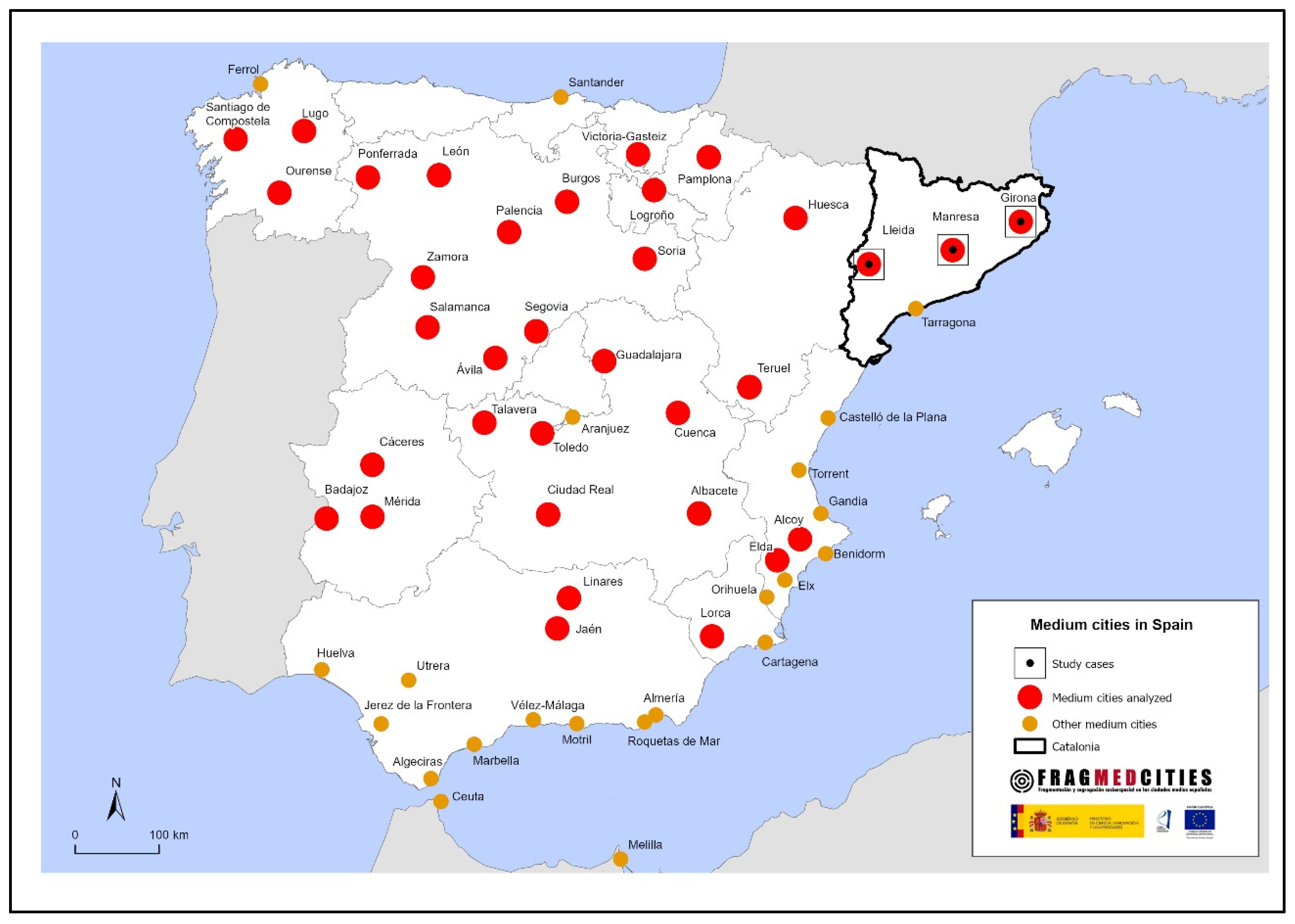
Based on these criteria, a total of 34 functional urban areas were identified in inland Spain. These cities, together with their respective FUAs, were located beyond the reach of the dynamics of coastal tourism, and neither did they form part of any larger metropolitan urban systems (
Figure 1). This selection made it possible to analyze segregation processes in urban contexts that are less influenced by the exceptional demographic and economic dynamics associated with large metropolitan regions and tourism-driven coastal economies.
Based on these criteria, three urban areas in Catalonia were selected as case studies: Girona, Lleida and Manresa. These cities present both significant absolute numbers and relatively high proportions of foreign-born residents, as well as a diversity of migratory origins that broadly reflects patterns observed throughout both Spain and Catalonia.
3.2. Sources of Data and Spatial Units
Demographic data were obtained from Spain’s 2021 Instituto Nacional de Estadística (INE—National Institute of Statistics) Censo de Población y Viviendas (Population and Housing Census). For the statistical analyses and the production of the cartographic representations of the FUAs, the most detailed administrative boundaries available with census information were used—namely, the census tracts. This is the smallest standardized statistical unit and has been widely used in other studies of urban segregation. Two additional elements were incorporated into the maps to facilitate the spatial interpretation of the results and to support the identification of central and peripheral areas among the different groups of foreign-born residents. Firstly, the boundaries of the consolidated urban fabric were included. Secondly, the location of each city hall was marked. In all three case studies, the municipal headquarters are situated in the historic center of the city, providing a stable spatial reference.
The use of census tracts made it possible to monitor intraurban variations in population distribution with the highest possible degree of precision. The data obtained related to the total number of residents, their nationality based on their place of birth, and 60 other socioeconomic variables. The estimated average level of income for each census tract was obtained from the 2021 INE Atlas de Renta (Income Atlas).
The three immigrant groups with the largest foreign-born presence in Spain—Moroccans, Romanians and Colombians—were selected for study. This was done with the objective of guaranteeing the statistical robustness of the analysis. It was necessary to ensure that the study would be sufficiently representative at the census-tract level and that it would permit the application of segregation indicators.
3.3. Segregation Indicators and Spatial Analysis
The third methodological stage focused on using the segregation index (SI). This was originally formulated by Duncan & Duncan [
12] and has been widely used in the international scientific literature [
66,
67]. The SI makes it possible to evaluate uneven distributions of a specific population group with respect to other residents living in a determined territorial unit and reveals the degree of spatial separation between the groups analyzed. Its application in this study was justified by its methodological soundness, simplicity of calculation, wide academic acceptance and potential for cartographic visualization.
By allowing objective and comparable measurements of segregation patterns, SI offers a robust and rigorous tool for the analysis of residential segregation in different urban contexts. SI offers the advantage of greater methodological transparency and interpretative capacity than other, more sophisticated indices, and this is very relevant when making comparative analyses involving multiple cases. Its use also permits comparisons with previous research carried out in both European and international contexts. This made it possible to integrate the results of this study with those of previous research and to add to a consolidated tradition of urban studies.
Formula for obtaining the segregation index, where
- -
xi: Population, according to country of birth/origin, in census tract i.
- -
X: Total population, according to country of birth/origin, in the functional urban areas (FUAs).
- -
ti: Total population of the census tract i.
- -
T: Total population of the functional urban areas (FUAs).
- -
n: Number of census tracts in the functional urban areas (FUAs).
However, despite the well-documented critiques directed at classical segregation indices, and particularly those associated with the checkerboard problem and the Modifiable Areal Unit Problem (MAUP), their use remains analytically justified and methodologically appropriate for the objectives of the present study. Firstly, these limitations do not constitute shortcomings that are specific to the segregation index itself, but rather constraints inherent to any approach based on aggregated spatial units. This is an issue that has been extensively discussed and theoretically incorporated in the specialized literature [
68,
69,
70]. Secondly, when applied to relatively homogeneous intraurban units and compared between cities with similar urban morphologies and institutional contexts, the index provides a robust and interpretable measure of inequality in residential distribution [
35,
41,
71]. In this sense, the index is not employed as a definitive representation of urban segregation, but rather as an exploratory instrument aimed at identifying structural contrasts and guiding subsequent analytical stages. Its value, therefore, lies less in the precise capture of the spatial form of segregation than in the establishment of a consistent and comparable baseline from which differentiated intraurban patterns can be examined. When used reflexively and with sensitivity to context, the segregation index thus remains a valid and informative tool for comparative urban analysis. In the international literature, SI is usually interpreted based on the following intervals: values below 0.30 indicate low levels of segregation; those between 0.30 and 0.60 show moderate segregation; and those above 0.60 denote high segregation. It should, however, be noted that these references were originally formulated for large North American cities with high demographic densities and marked ethno-racial divisions [
13]. Given that the present study focused on medium-sized Spanish cities, it was necessary to tweak the methodology and to modify the parameters referring to the size of the foreign-born populations, the urban density and the morphology of the territories analyzed. Based on previous research into segregation in smaller urban contexts [
72], it was decided to use an adapted classification: SI < 0.30 for low segregation; between 0.30 and 0.40 for moderate segregation; and >0.40 for high segregation. This adaptation permitted a greater sensitivity to the distribution patterns of the foreign-born population and thereby helped to identify spatial inequalities in the 34 urban areas that were studied.
Finally, for the intraurban analysis, the most relevant variables were identified by combining statistical and spatial criteria. To do this, we considered the results of Pearson correlations and a cluster and outlier analysis. Statistically significant patterns and values were identified using Anselin’s Local Moran’s I statistic. These procedures made it possible to detect non-redundant variables, identify significant spatial patterns, and ensure that the selected indicators provided meaningful information for the analysis.
Cartographic analysis was carried out using ArcGisPro (version 3.2) software, with zone 30N UTM projection, and was based on official census-tract shapefiles obtained from Spain’s Instituto Geográfico Nacional (IGN—National Geographic Institute). The territorial delimitation of the census tracts in Spain defines the extent of this statistical unit, which is smaller than the municipality and serves as the basis for most statistical operations used by Spain’s Instituto Nacional de Estadística (INE—National Institute of Statistics).
4. Results
The first stage of the empirical analysis sought to understand the wider phenomenon of the presence of the foreign-born population in Spain and, more specifically, that in the 34 urban areas in inland Spain that were selected for the purposes of this study. A strategic cut-off was made prior to the analysis. This focused on the foreign-born groups studied in the different urban areas and made it possible to contextualize processes inherent to international migration in Spanish territory and its repercussions for the country’s medium-sized cities.
From the end of the 1990s, Spain’s economic growth and the low natural growth of its native population both favored immigration. Foreign migrants were mainly attracted by job opportunities in the agricultural and agro-industrial, construction and service sectors. Official figures show that Spain’s foreign-born population numbered 7,534,513 in 2022: 15.8% of the country’s total population (
Table 1).
The three migrant groups on which this study focused were Moroccans, Colombians and Romanians.
Table 1 shows that they not only constituted the most numerous collectives of foreign-born residents for the whole of Spain but also had the highest proportional representation in medium-sized cities located in inland Spain.
This high proportion revealed a possible tendency towards a significant presence of these three population groups in the context of Spain’s medium-sized cities and suggested a relative preference for urban areas outside the country’s large metropolitan centers. Furthermore, the sum total population of the three groups represented a quarter of all the immigrants in Spain and a third of those living in the urban areas of the 34 medium-sized cities that were analyzed. This spatial configuration further reinforced the relevance of focusing the analysis of residential segregation on these three groups. In this way, it was thought possible to identify specific settlement patterns that could be related to phenomena such as selective migration, community support networks, conditions for access to housing, and local economic structures.
A second area of analysis referred to the evolution of the presence of Spain’s foreign-born population over time and, more specifically, the demographic behavior of the Moroccan, Colombian and Romanian communities over the previous 20 years (see
Table 2).
The data showed significant growth in Spain’s foreign-born population between 2003 and 2022. At the national scale, the foreign-born population grew from 3.3 million in 2003 to 7.5 million in 2022: an increase of 128.2% over the 20-year period. This increase contrasted with the demographic behavior of Spain’s native population, which showed much more modest growth, including periods of decline.
It was possible to observe a differentiated trajectory in population growth amongst the three most important migrant groups. The population of Moroccan origin exhibited continuous growth throughout the study period, with numbers increasing from 438,221 in 2003 to 984,682 in 2022. Growth was positive throughout the study period, even during times of crisis, and was particularly relevant between 2003 and 2007 (+41.8%). The Colombian population also showed a general tendency for growth, although there was a slight decline between 2012 and 2017 (−1.7%). It exhibited the most vigorous expansion amongst all of the three groups monitored during the period 2017 to 2022 (+54.1%). In the case of the Romanians, after a period of extraordinary growth in the early 2000s (+270.7% between 2003 and 2007), there was a decline in the last two five-year periods, with negative growth of −26.8% between 2012 and 2017 and of −11.6% between 2017 and 2022, suggesting a process of mobility.
However, when the analytical focus shifted to the group of 34 urban areas in medium-sized cities located in the interior of Spain, it was necessary to incorporate a series of additional considerations.
The proportions of immigrants of Romanian and Colombian origin in relation to the total foreign-born population were generally less evident than that of Moroccans. Even so, there are contexts in which these groups play relevant roles in the composition of local demographics. In the case of Romanians, two cities particularly stood out. The first was Lleida, which is also one of the cities analyzed in greater depth in this study. In Lleida, the population of Romanian origin accounted for 19% of the foreign-born population. In the case of Colombians, their greatest relative concentration was registered in Vitoria-Gasteiz, where the population of Colombian origin represented 16.4% of the total foreign population.
Before going on to analyze the three immigrant groups selected for this study, we calculated the residential segregation indices (SI) for 34 medium-sized cities located in inland Spain. The indices were based on separate calculations made for each immigrant group.
Measuring segregation made it possible to identify the degree of concentration or dispersion of determined collectives within the urban fabric of each city. This provided a solid empirical base from which to interpret the spatial patterns of settlement of the foreign-born population. As explained in the Materials and Methods Section, by using the segregation index (SI), it was possible not only to make comparisons between cities but also between groups and to show which urban contexts exhibited the greatest tendency for territorial segmentation based on the countries of origin of their residents.
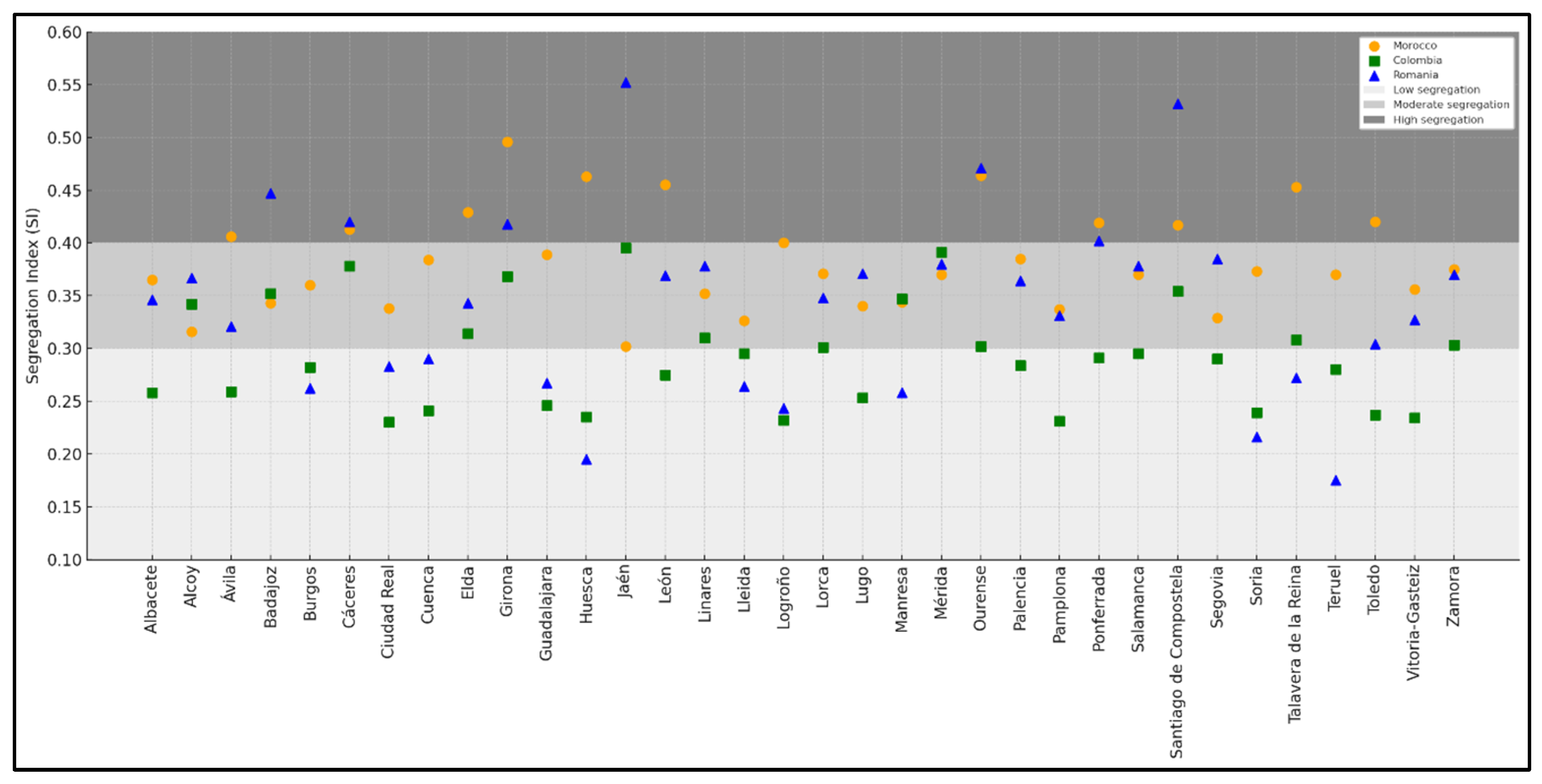
Figure 2 shows that the SI values for the Moroccan community were high in 12 of the 34 cities studied, while in the other 22 cases, they were moderate. There were no cities in which the presence of Moroccans was associated with a low level of segregation. The Romanian population exhibited a pattern characterized by a significant degree of heterogeneity: seven cities exhibited a high level of segregation, 16 had moderate levels, and the other 11 exhibited a low level of segregation. In the case of the Colombians, the opposite pattern was observed: in 20 cities, the SI was low, and in 14, it was moderate. None of the cities registered SI values that could be considered consistent with a high level of segregation of this community.
4.1. The Case of Medium-Sized Catalan Cities: The Urban Areas of Girona, Lleida and Manresa
After a general characterization of the levels of segregation in the selection of 34 medium-sized cities located in inland Spain, this section offers a more detailed analysis of three urban areas located within the autonomous community of Catalonia: Girona, Lleida and Manresa. The choice of these three cities was based on both the quantitative relevance of foreign-born communities living in these cities and the demographic and spatial peculiarities that they present within the regional context. They also exhibited notably different settlement patterns for the three immigrant communities analyzed.
Individual analyses of each collective revealed demographically different dynamics of urban insertion (
Table 3). The Moroccan population presented the highest values in all three cities. In Manresa, it represented 38.05% of the total foreign-born population, followed by 20.61% in Girona and 17.93% in Lleida.
In the case of the Romanian population, Lleida stood out as the most important pole of attraction: its 7614 Romanian residents corresponded to 17.77% of its foreign-born population, which was greater than the 6.35% registered in Girona and 6.75% in Manresa.
The Colombian population showed a more balanced and moderate distribution across the three cities, with a slight predominance in Lleida, where it accounted for 7.34% of the foreign-born total, followed by 5.15% in Girona and 4.87% in Manresa.
Finally, an exploratory Pearson correlation coefficient analysis was made to compare the three migrant collectives. This was conducted with the aim of looking more deeply into the possibility of their socio-spatial segregation. This analysis covered 315 census tracts within the three cities analyzed. It considered a total of 60 sociodemographic variables that were obtained from Spain’s 2021 Population Census. This exercise made it possible to identify significant associations that revealed territorial configurations that were differentiated by the countries of origin of foreign-born residents.
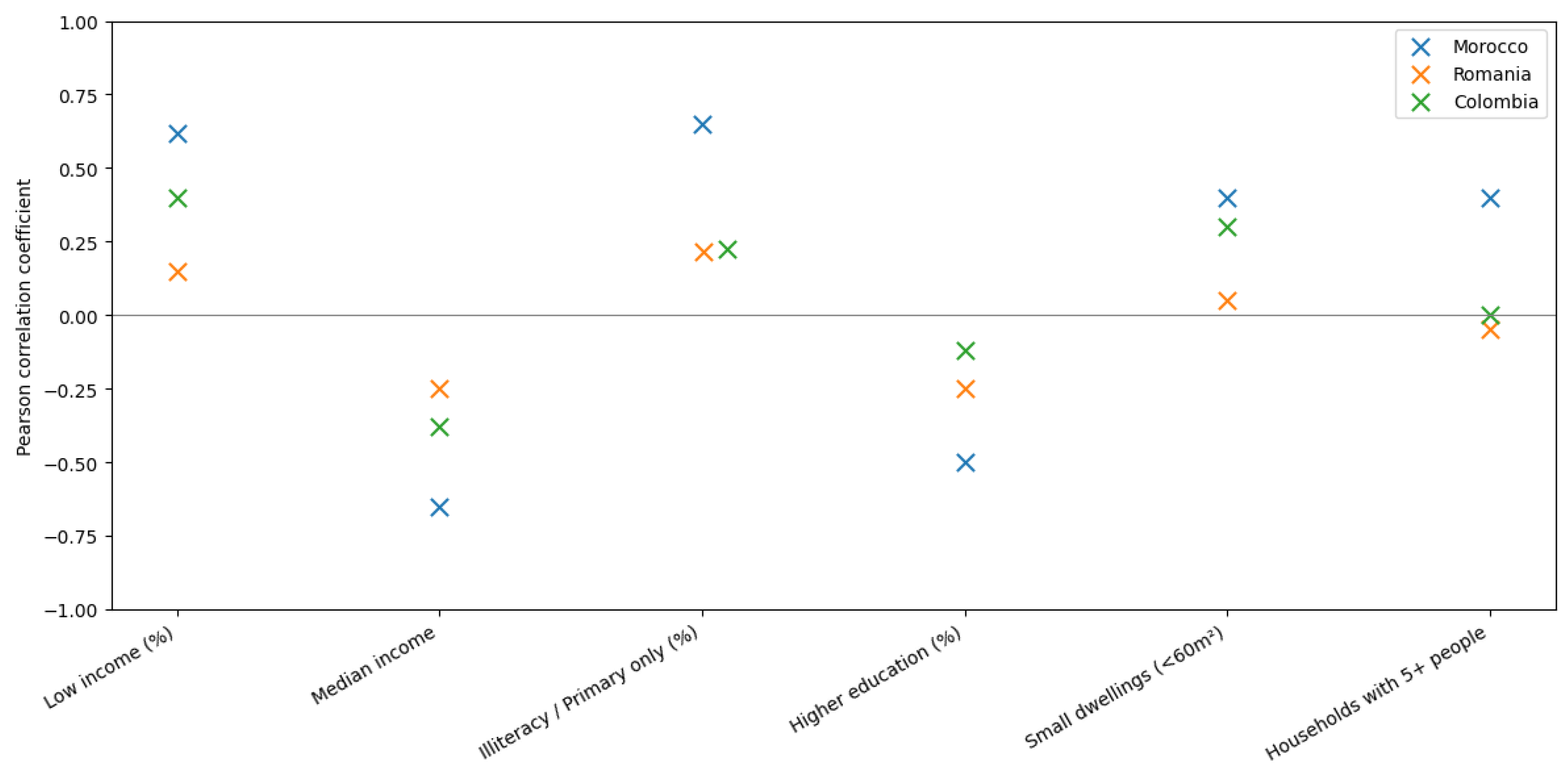
Pearson correlation analyses, complemented by clustering procedures and outlier detection, made it possible to determine which associations were statistically significant. Taken together, these techniques facilitated the identification of non-redundant variables and the selection of the most relevant indicators for the study (
Figure 3).
Correlation analysis highlighted a number of key issues associated with the three immigrant collectives (
Table 4 and
Figure 3). The first was that the most intense negative correlations with indicators of socioeconomic welfare corresponded to residents born in Morocco. This reflected a greater probability of them living in areas with lower incomes and having lower levels of education. Negative associations with the median income (−0.651), the percentage of residents with higher-level studies (−0.501), and the proportion of those with high incomes (−0.567) were particularly evident. There were also highly positive correlations with variables relating to vulnerability and residential precariousness, such as the percentage of residents with low incomes (0.625), those living in households with 5 or more residents (0.401), those living in small dwellings (0.399), and those with either little education or who were illiterate (0.649). Overall, the analysis highlighted the fact that Moroccan residents faced less favorable living conditions than the other immigrant collectives studied. From a structural perspective, these findings placed Moroccans amongst the most vulnerable socioeconomic collectives living in Catalan cities.
The Colombia-born population also showed negative correlations for income and education, albeit with values that were less intense than for Moroccans. In this case, positive correlations with indicators of inequality, such as the GINI Index (0.428) and 80/20 ratio (0.445), particularly stood out. This suggested the presence of this collective in urban environments characterized by great differences in income and internal heterogeneity, albeit without an exclusive concentration amongst lower-income segments.
In the case of residents born in Romania, the correlations with socioeconomic indicators, whether negative or positive, were generally weaker. Associations with income (−0.250) and higher-level studies (−0.246) were moderate, while there were hardly any positive correlations with indicators of residential precariousness and inequality. This pattern could have been associated with a greater degree of spatial dispersion and/or with settlement strategies that were less closely associated with concentrations in areas of socioeconomic vulnerability.
These data revealed not only a significant presence of the three immigrant collectives in the demographic configuration of the cities studied but also peculiarities with regard to their relative concentrations and their absolute magnitudes within each context. As shown below, these population patterns have had significant repercussions for the dynamics of residential segregation observed in the intraurban territories of Girona, Lleida and Manresa.
4.1.1. Lleida
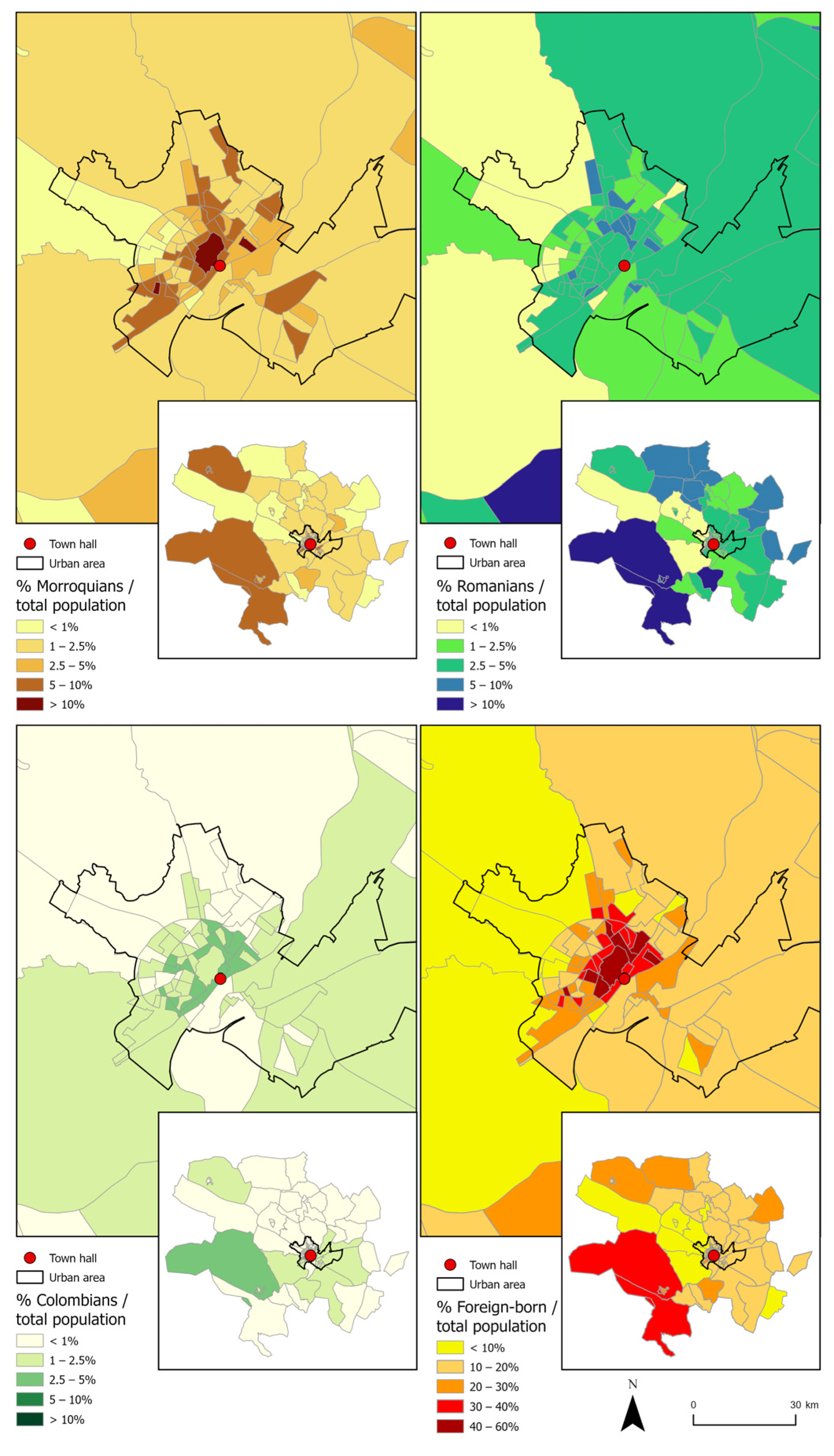
When analyzing cartography corresponding to the urban area of Lleida (
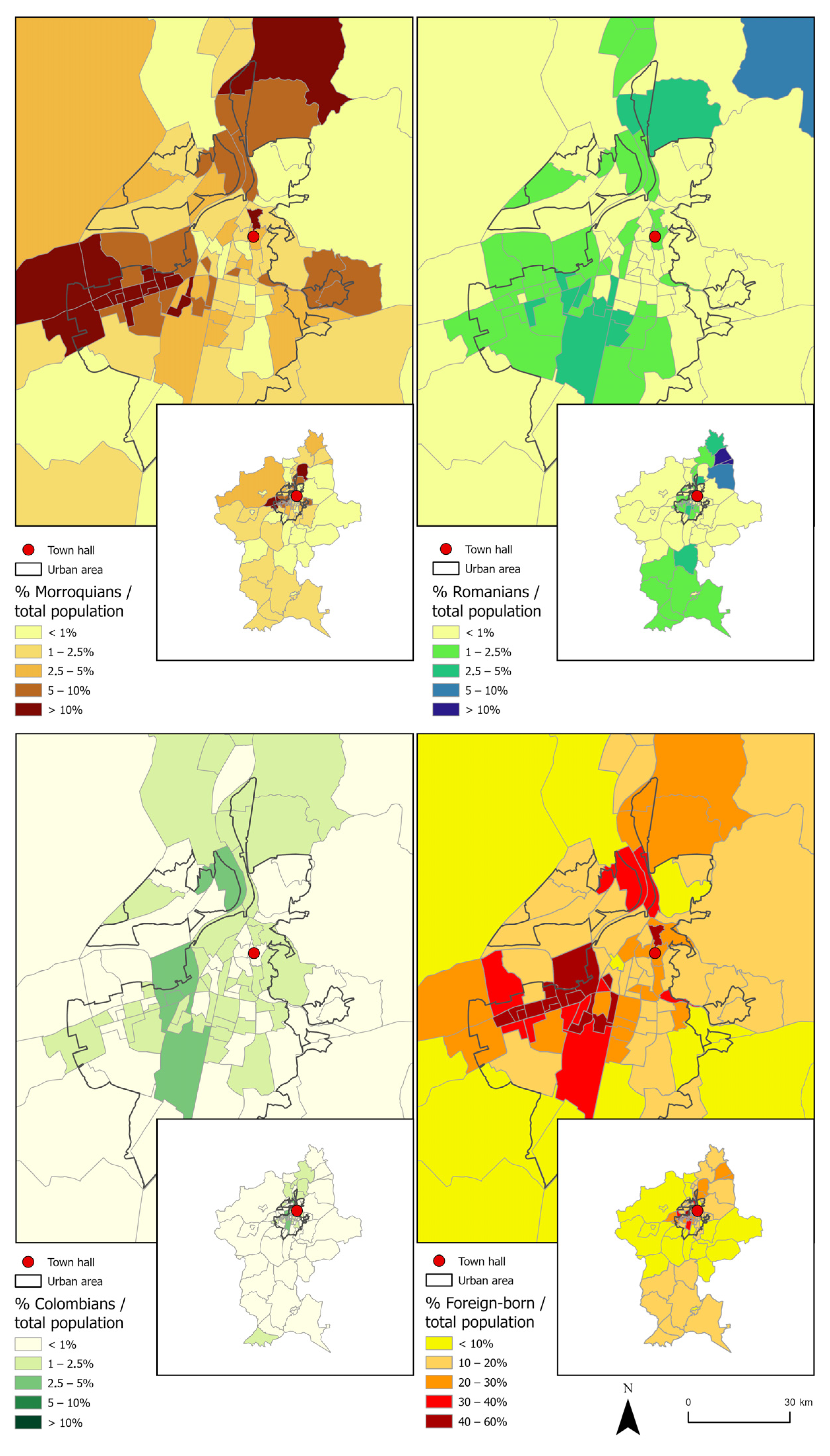
Figure 4), the maps revealed that the presence of foreign-born population was significantly concentrated within the historic center of the city and in its neighboring tracts. In these areas, immigrant groups accounted for 30 to 60% of the total population. This suggests a pattern of marked segregation in some census tracts within the city’s urban area.
This has produced clearly defined internal divisions between a zone with a very high proportion of foreign-born residents and the rest of the population living within the urban fabric of the city. In spatial terms, Lleida’s historic center is not only a space that serves as a functional area and a point of reference for heritage, but also a territory that is clearly marked by the symbolic load associated with its immigrant population.
Within this framework, the Moroccan community is the collective that has been most responsible for shaping the overall pattern. In the city’s historic center, there are areas in which more than 10% of local residents are Moroccans. This dynamic seems to express a process of territorialization that has been conditioned both by the price of housing and by proximity to central services and commercial circuits that sustain the permanence of this collective.
In the case of Lleida’s Romanian population, the main characteristic observed was the absence of any major continuous block of Romanian residents, or of anything similar, in or near the central area of the city. What predominated was a more peripheral and fragmented distribution, with concentrations that tended to range between 1 and 2.5% and 2.5–5%. In terms of urban life, this suggests that the urban periphery could play a significant role in shaping the day-to-day experiences of this collective. This could be a result of proximity to where Romanians work, as many are engaged in activities associated with the agri-food sector. Other relevant factors could be the rural backgrounds of many of these immigrants and the fact that their residential strategies tend to prioritize access to employment over living in the central urban area.
In Lleida, the Colombians exhibited a pattern of settlement that was noticeably different from that of the other two immigrant collectives. Their distribution was predominantly diffuse and watered down by its low intensity. The predominant values were between 1% and 2.5%, rising to between 2.5% and 5% in some areas. Colombians were mainly present in census tracts that were close to the historic center, but without any tendency to create specific enclaves or to reorient the city’s urban morphology.
4.1.2. Girona
In the case of the city of Girona, a notable concentration of foreign-born population was observed in the consolidated urban zone; however, this did not follow a concentric pattern but was rather guided by major axes (
Figure 5). The western part of the city and its immediate vicinity exhibited a very high proportion of foreign-born population, which exceeded 40% in some census tracts. In addition, on the urban fringe, there were some census tracts in which between 10% and 20% of the population had been born outside Spain.
As in the case of Lleida, the distribution of Moroccans in Girona tended to follow the general pattern for foreign-born residents. This collective had a major presence in the census tracts corresponding to the municipality of Salt, where it accounted for over 10% of the total population in some census tracts. The same pattern was observed along the axis running towards the north-northeast part of the city, where there was a notable presence of Moroccans. Based on a knowledge of local urban dynamics and the geographical context, it has been suggested that this configuration could be a product of consolidated community networks, proximity to immigrant-run businesses and services, and the availability of low-cost housing.
In the case of Romanian residents, there was also a peripheral pattern of settlement. This was particularly dominant in the northeast part of the city, where over 10% of the population was Romanian-born in some census tracts. This distribution followed a markedly diffuse logic and was particularly evident in more peripheral areas. The presence of Romanian residents seems to be more closely associated with new areas of functional transition than with the city’s historic center.
As in the case of Lleida, the distribution of the Colombian population followed a pattern that was not very concentrated and strongly marked by dispersion within the limits of the main urban area. Values of concentration of less than 1% predominated everywhere, with only a few zones exhibiting values of between 2.5% and 5%. The latter were observed in tracts located within the central area of the city. The logic of the distribution of Colombian residents was marked more by their coexistence with other groups than by the existence of specific areas of concentration of this group.
4.1.3. Manresa
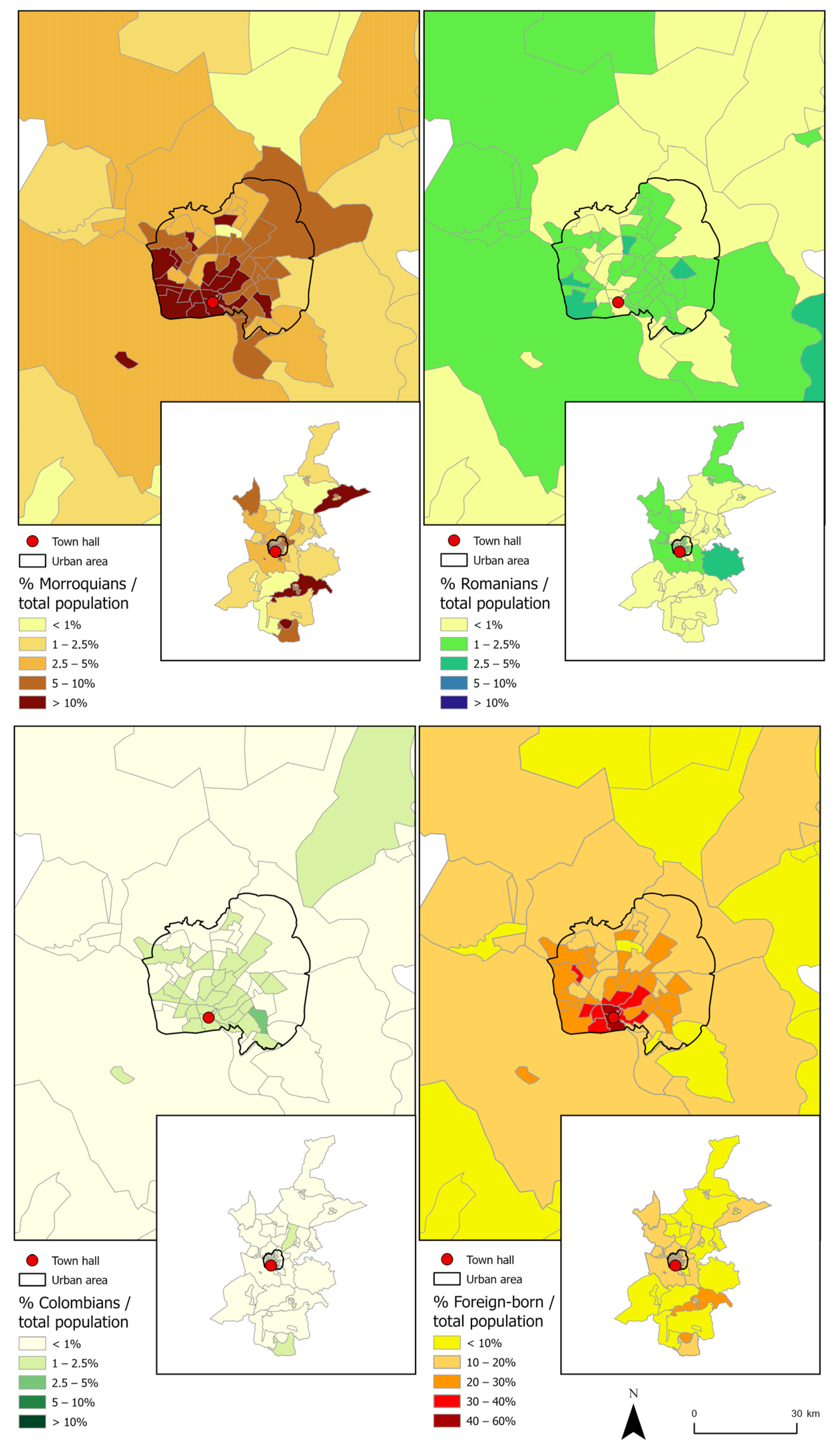
The third, and final, case corresponded to the urban area of Manresa, where it was evident that the foreign-born population was relatively concentrated in the city’s historic center. This occupied the central part of the city and included contiguous sectors in which over 40% of the population was foreign-born (
Figure 6). The central area had therefore become a relevant place for the presence of migrants. In parallel, it is relevant to highlight the presence of an arc, which runs from east to west and is adjacent to this central area, containing census tracts in which between 10% and 20% of the population was born outside Spain.
In Manresa, the presence of Moroccan residents again seemed to have actively influenced the overall urban distribution pattern, but in this case, there were a number of peculiarities. While Moroccans were mainly found in the city’s historic center, they were also present in relatively high percentages in some rural census tracts.
In the case of residents of Romanian origin, the configuration was similar to that observed in the other two Catalan cities: their distribution either obeyed a polycentric peripheral logic or exhibited a pattern of low- to medium-intensity spread across the territory. Manresa had several census tracts in which the concentrations of Romanian residents were between 5% and 10%. These were mainly located outside the most consolidated urban area.
In the case of Colombian residents, there was a diffuse distribution and quite a diluted distribution in the main urban area of the city. The presence of Colombians tended not to exceed 2.5% in Manresa, although there were a few census tracts with concentrations of between 2.5% and 5%.
In summary, the spatial structure of the foreign-born populations of Lleida, Girona, and Manresa reveals three distinct patterns of residential insertion based on country of origin. Firstly, Moroccan residents tend to concentrate in historic city centers and adjacent areas, forming dense and contiguous enclaves that, in some tracts, may account for more than 10% of the total foreign-born population. Secondly, Romanian nationals tend to be distributed across the urban periphery in a polycentric and discontinuous manner, exhibiting a significant but less cohesive presence that fosters greater interaction with other groups and a lesser degree of segregation. Thirdly, Colombian residents exhibit a diffuse distribution pattern, without the formation of enclaves, with only a diluted presence in areas near the city center, and do not reshape the urban space in demographic terms. Despite local variations, such as the axial distribution observed in Girona, these dynamics reflect a complex pattern of spatial segregation, which has relevant implications for urban planning and social cohesion.
5. Discussion
This study investigated the extent to which the residential segregation of Moroccans, Romanians and Colombians is manifested in medium-sized cities located in the interior of Spain. This was achieved by firstly identifying the socio-spatial factors that have contributed to the distribution of these foreign-born collectives within these urban areas and then focusing on the dynamics of interurban space in three medium-sized Spanish cities in the autonomous community of Catalonia: Girona, Lleida and Manresa.
At the first level of analysis, the results obtained showed that in the group of 34 urban areas that were analyzed. Moroccans consistently exhibited moderate to high levels of segregation. Romanians presented a more heterogeneous distribution, with a presence in some urban areas with a high level of segregation, but they predominantly appeared in others with low levels of segregation. Colombians tended to be found in areas with low and moderate levels of segregation. These results reinforced the idea that the segregation of immigrant communities in Spain’s intermediate cities does not follow the pattern observed in its metropolitan areas. In contrast, segregation patterns revealed an urban mosaic structured by the influence of historical centralities, the existence of functional areas associated with work and housing, and the influence of the cultural legacy of the countries of origin.
In the second analysis, which was carried out for the three case studies in Catalonia, it was possible to identify the most relevant indicators through the assessment of socioeconomic correlations and the application of clustering procedures. The statistically most significant indicators for the three groups were income level (low and median income), educational attainment (low and university-level education), and housing characteristics, more specifically, dwellings that were smaller than 60 m2 and households with more than five members. The results showed a clear differentiation between correlations based on the different countries of origin. The Moroccan population was consistently associated with contexts of structural disadvantage and less educational capital. From a structural perspective, this placed them amongst the most socioeconomically vulnerable segments of society. The Colombian-born immigrants tended to be found in areas with pronounced internal inequalities. The correlations for Romanians tended to be weaker than the others. This last result may reflect a greater degree of territorial dispersion, or perhaps patterns of settlement that are less closely associated with contexts of vulnerability.
This underlined the importance of improving the analysis of socio-spatial segregation by reference group in order to avoid generalizations that treat “the foreign-born population” as if it were a homogeneous group.
The intraurban spatial analysis confirmed and refined these trends. In Lleida and Manresa, the Moroccan population was concentrated in the historic centers of these cities and in adjacent census tracts. These spaces combined higher residential turnover with more affordable housing. In Girona, in contrast, the well-preserved historic center accommodated fewer immigrants. The highest Moroccan concentration was found in the western part of the FUA, where the overall share of the immigrant population was higher and housing was comparatively more accessible. Across the three Catalan case studies, Romanians displayed the most peripheral distribution, with a presence in census tracts located in urban-rural transition zones. This was consistent with the availability of agro-industrial employment and cheaper single-family housing in peripheral and semi-peripheral areas. Colombians exhibited less intense and more diffuse settlement patterns, suggesting more varied forms of labor market incorporation and a weaker tendency towards enclave formation.
These observations raised a number of questions: In addition to socioeconomic and spatial considerations, could other factors also help to reveal the driving forces behind these differentiated territorial configurations? Could linguistic and religious networks have reinforced the concentration of Moroccans in specific urban contexts? Might proximity to work have led Romanians to settle in more suburban and peripheral areas? In the case of Colombians, could a more diffuse pattern of settlement be related not only to a shared language and religion but also to their insertion within broader Latin American communities in Spain? These traits should be understood not simply as causal claims but rather as plausible interpretive hypotheses arising from quantitative evidence that call for further qualitative inquiry.
These findings complement the growing literature on segregation in medium-sized Spanish cities, which has been increasingly shaped and characterized by fragmentation, polarization and the emergence of extreme neighborhoods [
7,
44,
46,
48,
65].
The results obtained were solid and valid from a demographic and spatial point of view, as they were based on official sources (INE, 2021), were at the level of the most detailed statistical unit available (the census tracts), and used consolidated indicators, such as the segregation index (SI) and Pearson correlation coefficient, to compare residential distribution and socioeconomic variables. The design employed ensured comparability and replicability, as well as allowed integrated interpretations combining spatial patterns and socioeconomic contexts.
However, the inherent limitations of the quantitative design must also be recognized. These included the MAUP, the possible under-registration of immigrants whose legal status had not been regulated, the high residential mobility of some groups, and the hiding of some atypical residential situations. These limitations did not invalidate the findings, but they call for a critical and reflexive reading of their explanatory reach.
As an agenda for further research, we propose incorporating more qualitative elements in order to better contextualize and contrast the results obtained. Different migrant groups are shaped by distinct historical trajectories, forms of territorial insertion and urban contexts, which help explain specific socio-spatial patterns. These qualitative approaches could include interviews in census tracts with high and low levels of segregation, dialogues with community leaders such as associations, mosques, parishes and cultural collectives, and conversations with foreign-born entrepreneurs, as well as commented routes, mobility diaries and participatory cartography. Such input could perhaps clarify the reasons for “Moroccans preferring centrality”, the “Romanian preference for the periphery” and “Colombian urban dispersion” that were highlighted by this quantitative investigation. Finally, the results presented here should be understood as part of a comparative empirical framework that is attentive to urban specificities but which also acknowledges the complexity, limits and uneven rhythms of contemporary migratory processes and their spatial differentiation within cities. The intersection between segregation, foreign-born populations and intraurban space emerges as a dynamic and ongoing phenomenon that cannot be fully explained from a single scale of analysis. Addressing this complexity requires geographical approaches that combine robust metrics with contextualized interpretations and qualitative evidence. This is required for a more nuanced understanding of how socio-spatial inequalities are produced and reproduced across different urban scales. Such an approach not only strengthens comparative research agendas but also provides a more solid basis for territorially informed public responses.