
Integrated Management of the Urban Water Cycle: A Synthesis of Impacts and Solutions from Source to Tap

 , , and
Abstract
1. Introduction
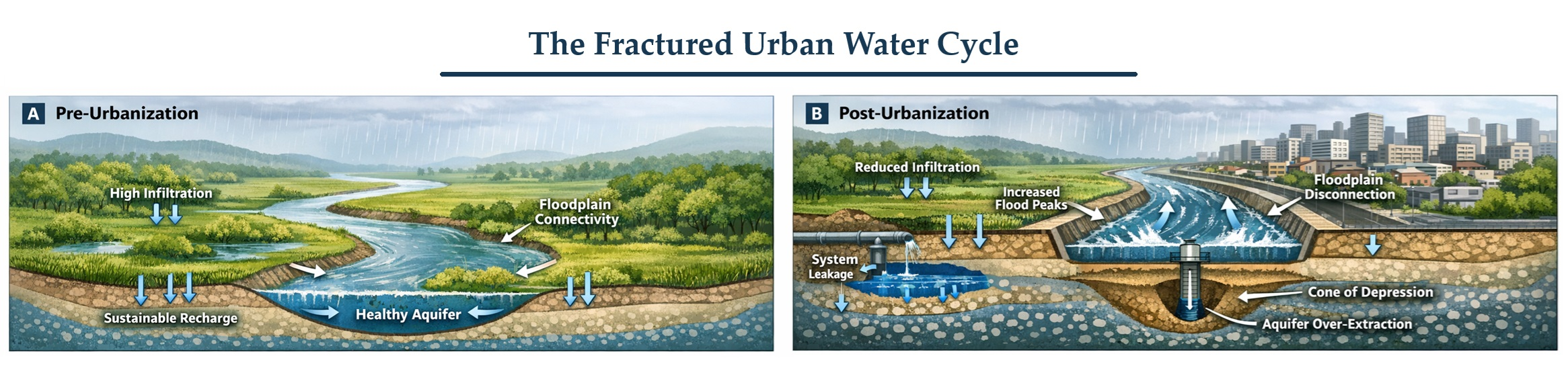
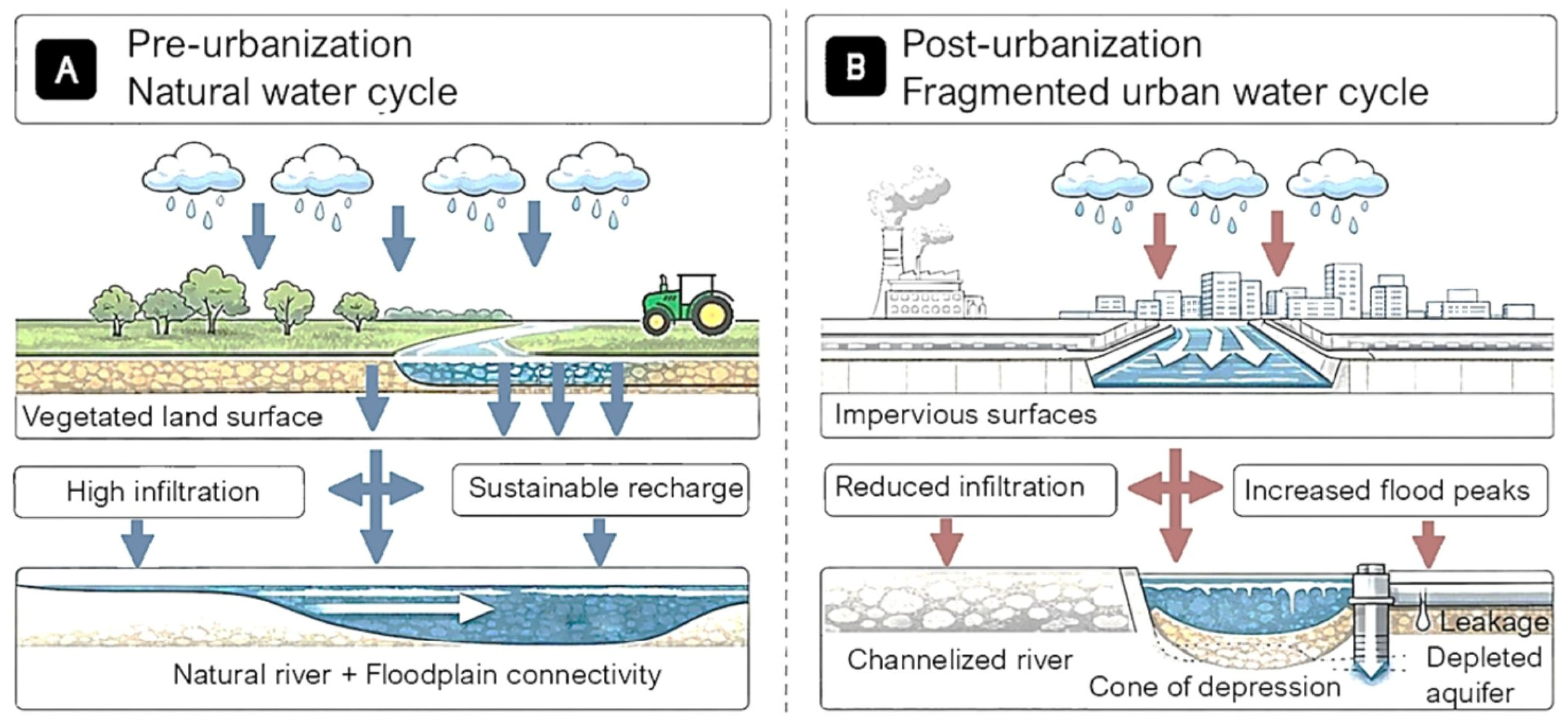
- (1)
- To systematically document the impacts of urbanization on surface water, groundwater, and distribution infrastructure, using a series of detailed case studies from Romania as evidence;
- (2)
- To consolidate a modern “toolbox” of engineering and modeling solutions capable of addressing these multifaceted challenges;
- (3)
- To propose a cohesive conceptual framework that integrates these tools into a practical strategy for action.
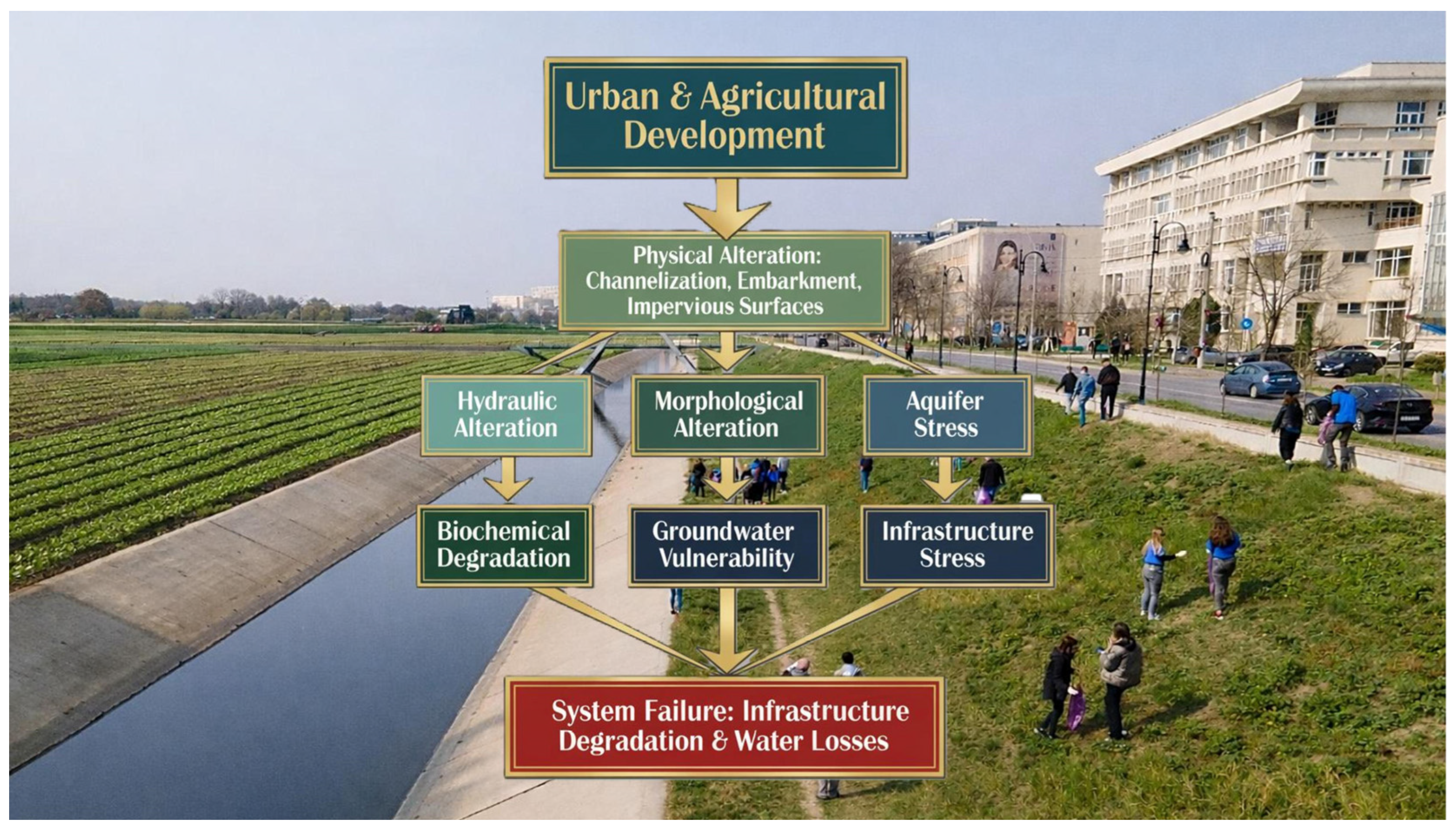
2. The Systemic Impacts of Urbanization on Water Bodies: A Cascade of Degradation
2.1. Hydraulic and Morphological Alteration of River Systems
2.2. Biochemical Degradation of Surface Waters
2.3. Quantitative Stress on Aquifer Systems
2.4. Increased Vulnerability of Groundwater Quality
2.5. Degradation of Water Infrastructure: The Challenge of Non-Revenue Water (NRW)
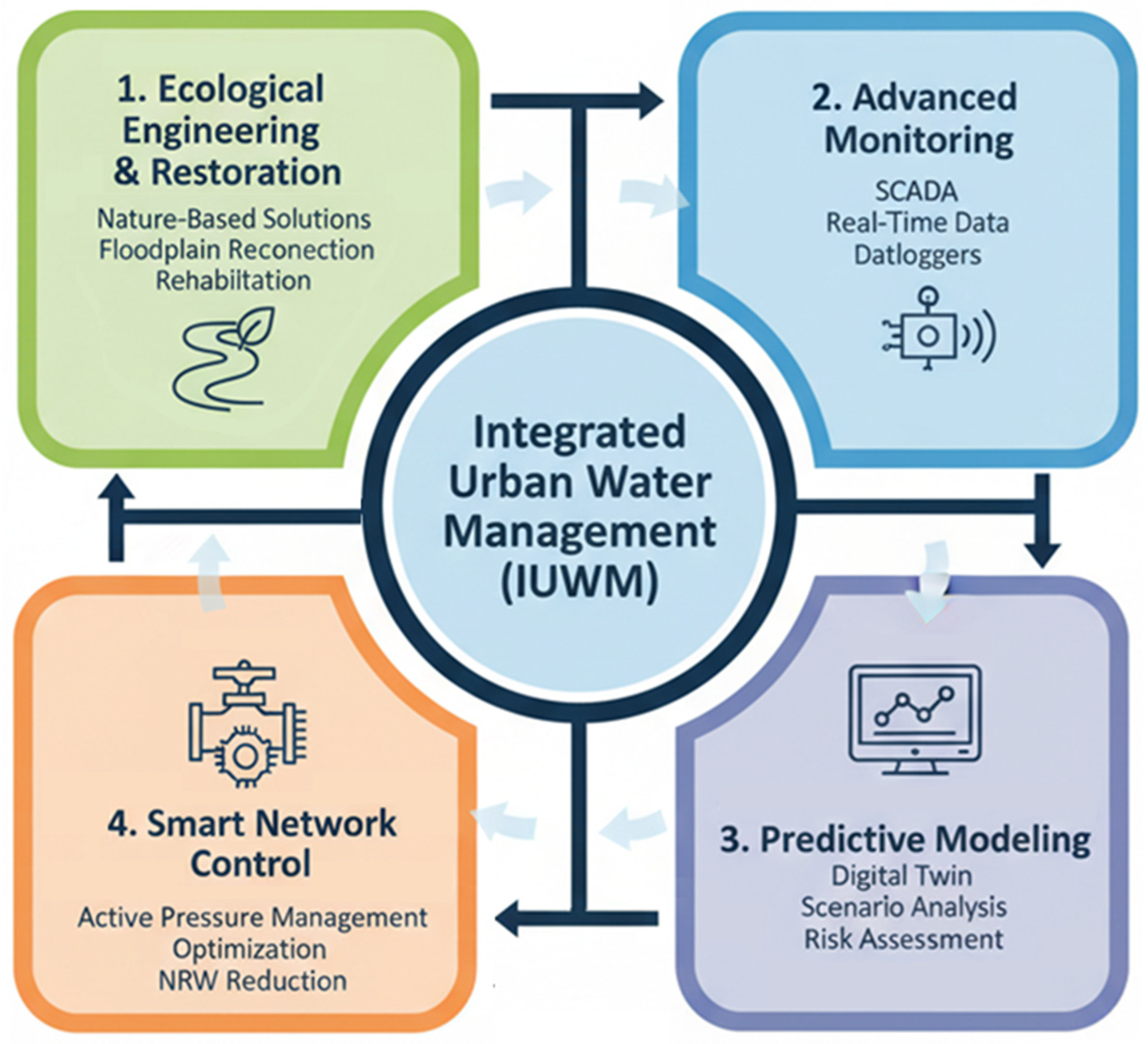
3. A Toolbox for Modern Water Management: From Problem to Solution
- (1)
- The principles of ecological engineering;
- (2)
- The technologies for advanced monitoring;
- (3)
- The power of predictive modeling;
- (4)
- The precision of smart network control.

3.1. Ecological Engineering and Restoration: Working with Nature, Not Against It
3.2. Advanced Monitoring and Data Acquisition: The Sensory System of Water Management
3.3. Predictive Modeling: The Brain of Proactive Management
3.4. Smart Network Control: Optimizing the Final Mile
4. Synthesis: Developing an Integrated Urban Water Management (IUWM) Framework
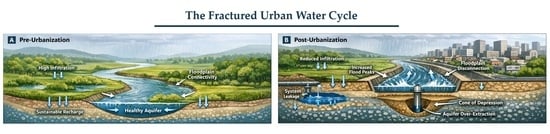
4.1. The River-Aquifer-Network Continuum: A Unified System View
4.2. A Proposed Framework for Action: Diagnose, Prescribe, Optimize
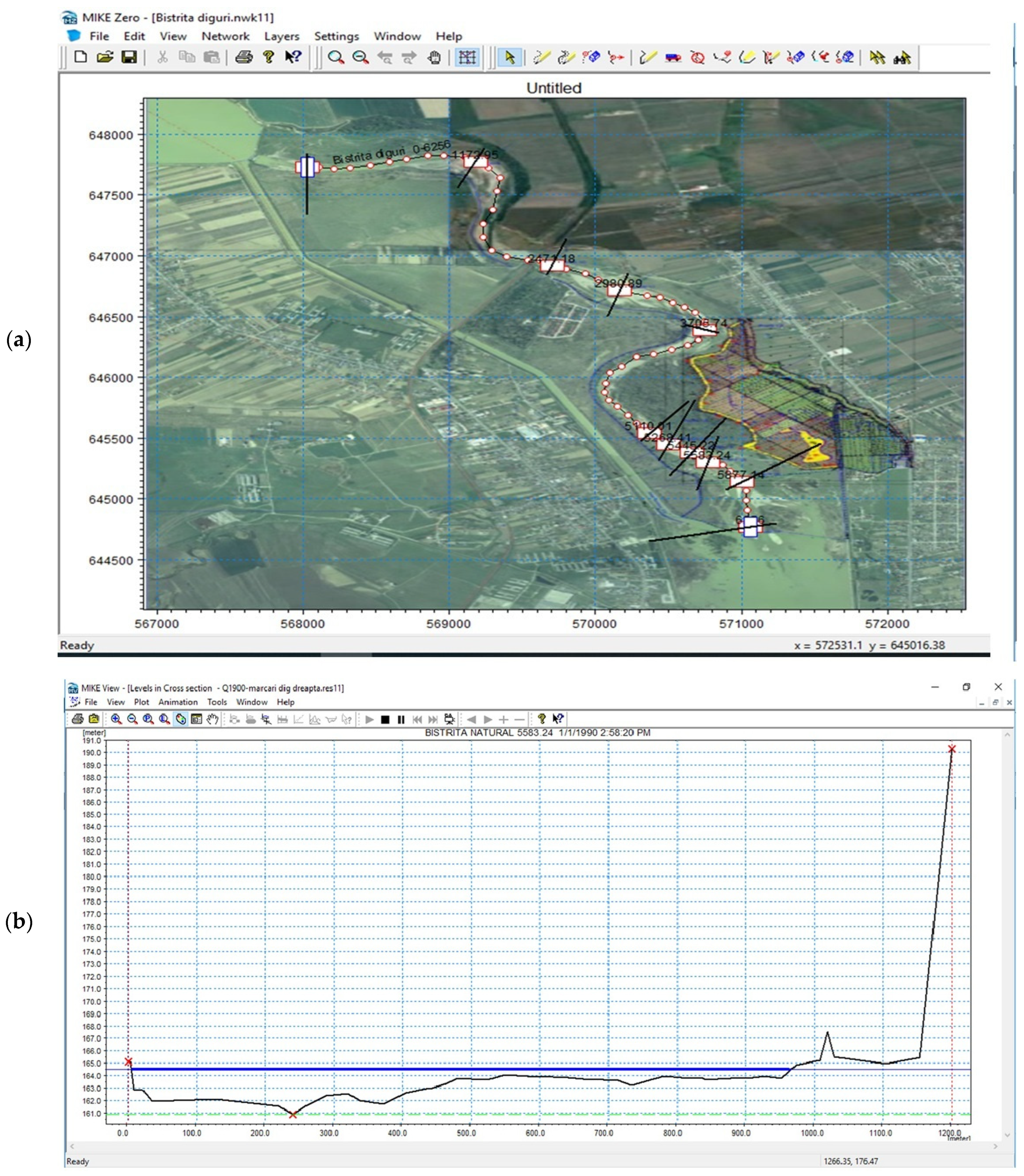
- Diagnose—Building the System-Wide Digital Twin: The foundational stage of any modern management intervention is a deep, quantitative understanding of the system’s current state. This moves beyond treating isolated symptoms (e.g., a localized flood or a pipe burst) to identifying the root causes of systemic dysfunction. This is achieved by creating a comprehensive, data-driven “digital twin” of the entire urban water system, powered by the tools of advanced monitoring and predictive modeling. This involves developing and calibrating a suite of interconnected models: a hydrodynamic model to understand flood risk, as was done for the Prut River; a hydrogeological model to assess aquifer stress and vulnerability, as demonstrated for the Gherăești-Bacău wellfield; and a hydraulic network model to pinpoint inefficiencies, as applied to the Iași distribution system. By integrating these components, managers can accurately map the River-Aquifer-Network continuum, identify critical points of failure, and run “what-if” scenarios to test the sensitivity of the system to various stressors. This diagnostic engine provides the scientific basis for all subsequent actions.
- Prescribe—Implementing Foundational, Nature-Based Solutions: Based on the system-wide diagnosis, the second stage involves the strategic implementation of large-scale, often nature-based, solutions designed to restore the fundamental health and resilience of the natural components of the system. This is the stage for “big picture,” foundational interventions that address the systemic failures identified in the diagnostic phase. A prime example is the proposed rehabilitation of the Trifești-Sculeni floodplain, which prescribes the re-establishment of over 8000 hectares of functional wetlands. This is not merely an environmental project; it is a strategic hydraulic intervention designed to restore natural flood attenuation and improve regional water quality. This approach aligns with global best practices, such as the massive “Making Space for Water” initiative in the UK, which prioritizes floodplain reconnection and managed realignment of coastal defenses over the construction of ever-higher concrete walls [78]. These prescriptions act as a form of preventative medicine, healing the core of the water system rather than just managing its symptoms.
- Optimize—Fine-Tuning Engineered Systems with Smart Technology: The final stage focuses on the continuous, real-time improvement of the engineered components of the system, ensuring they operate with maximum efficiency and minimal environmental impact. Once the foundational health of the natural system is addressed through prescription, smart technologies are deployed to fine-tune the performance of the hard infrastructure. The implementation of Active Pressure Management in the Iași network, which demonstrated a clear ability to reduce and stabilize system pressures during low-demand periods, is a perfect example of optimization. This not only reduces water losses and saves energy but also lowers the physical stress on aging pipes, extending the life of the infrastructure. This principle of dynamic optimization is the core of “smart water grids” being developed in cities like Singapore, where thousands of sensors and automated valves work in concert to minimize leakage and ensure a resilient supply.
- Diagnostic Fidelity (the proven ability of the integrated models to accurately replicate historical extremes, such as achieving minimal error margins in piezometric or flood level simulations);
- Prescriptive Synergy (the quantifiable recovery of lost ecosystem services, measured by regained flood storage volumes and the return of protected indicator species within the rehabilitated zones);
- Optimization Efficiency (verifiable reductions in nocturnal pressure variances and subsequent, measurable decreases in Non-Revenue Water percentages).
4.3. Overcoming Fragmentation: Institutional and Governance Challenges
- The creation of shared data and modeling platforms, where monitoring data and the “digital twin” of the water system are accessible to all parties, creating a common, science-based understanding of the problems;
- The development of integrated, basin-scale management plans that are co-authored by all relevant agencies and explicitly align the objectives of flood risk, water supply, and ecological health;
- The crucial alignment of funding mechanisms to prioritize and support multi-benefit projects, such as a floodplain restoration that can simultaneously claim funding from flood defense, environmental improvement, and public recreation budgets.
4.4. Case Study Illustration: The Iași-Bacău Region as a Microcosm
- (1)
- (2)
- A highly centralized but deteriorating water infrastructure that suffers from decades of deferred maintenance, resulting in the high regional NRW rates (often exceeding 40%) consistently reported by the Danube Water Program [92];
- (3)
- A rapid, post-1990 peri-urban areas development that outpaces drainage capacity of the drainage systems to cope with this urban expansion [93].
5. Conclusions and Recommendation
- The River-Aquifer-Pipe Network Continuum: The primary outcome of this synthesis is the validation of the urban water system as an integrated continuum. Treating these components in isolation ignores the mutually reinforcing feedback loops that propagate degradation across the entire system.
- Hydromorphological and Biochemical Collapse: River channelization (e.g., the Prut and Olt rivers) directly exacerbates downstream flood peaks and cripples natural self-purification capacities, leading to severe biochemical distress, evidenced by critical DO sags and high BOD levels (e.g., the Bahlui River).
- Groundwater Vulnerability: Intensive urban groundwater extraction (e.g., 190 L/s at the Gherăești-Bacău wellfield) significantly alters regional hydrogeology, potentially inducing surface water infiltration and increasing the contamination risk for strategic reserves.
- Infrastructure Failure: The cascading systemic stress culminates in aging distribution networks (e.g., the Iași system), where the necessity for high-pressure operations drives chronic and costly Non-Revenue Water (NRW) losses.
- The DPO Framework: To address these deeply interconnected problems, this paper proposes the Diagnose-Prescribe-Optimize (DPO) framework, operationalizing the Integrated Urban Water Management (IUWM) approach into a practical roadmap.
- Integrated Solutions: The synthesis proves that a resilient urban water system requires a multi-tool approach: deep model-based Diagnosis, the Prescription of foundational Nature-Based Solutions (like the Trifești-Sculeni floodplain rehabilitation), and the continuous Optimization of existing infrastructure using smart, active pressure control technologies.
Author Contributions
Funding
Institutional Review Board Statement
Informed Consent Statement
Data Availability Statement
Acknowledgments
Conflicts of Interest
References
- Kaika, M. City of Flows: Modernity, Nature, and the City, 1st ed.; Routledge: New York, NY, USA, 2004; pp. 141–166. [Google Scholar] [CrossRef]
- Borah, G. Urban Water stress: Climate change implications for water supply in cities. Water Conserv. Sci. Eng. 2025, 10, 20. [Google Scholar] [CrossRef]
- Dawoud, M.A.; Al Hassan, W.A. Groundwater Management and Treatment: A Resilient Source for Environmental Protection. In Sustainable Remediation for Pollution and Climate Resilience; Abdel Latef, A.A.H., Zayed, E.M., Omar, A.A., Eds.; Springer: Singapore, 2025; pp. 661–693. [Google Scholar] [CrossRef]
- Cheshmehzangi, A.; Sedrez, M.; Flynn, A. (Eds.) Stormwater Management: Issues, Opportunities, and Challenges in Cities and Communities. In Rethinking Stormwater Management Through Sustainable Urban Design; Urban Sustainability; Springer: Singapore, 2024; pp. 1–22. [Google Scholar] [CrossRef]
- Radutu, A.; Luca, O.; Gogu, C.R. Groundwater and Urban Planning Perspective. Water 2022, 14, 1627. [Google Scholar] [CrossRef]
- La Vigna, F. Review: Urban groundwater issues and resource management, and their roles in the resilience of cities. Hydrogeol. J. 2022, 30, 1657–1683. [Google Scholar] [CrossRef]
- Mosleh, L.; Negahban-Azar, M. Role of Models in the Decision-Making Process in Integrated Urban Water Management: A Review. Water 2021, 13, 1252. [Google Scholar] [CrossRef]
- Vlad, L.M.; Bartha, J.; Ilas, I.; Toma, D. Renaturation and Extension Solutions for Wetlands Inside Embanked Enclosures. Present Environ. Sustain. Dev. 2013, 7, 280–288. [Google Scholar]
- Daigger, G.T.; Sharvelle, S.; Arabi, M.; Love, N.G. Progress and promise transitioning to the One Water/Resource Recovery Integrated Urban Water Management systems. J. Environ. Eng. 2019, 145, 04019061. [Google Scholar] [CrossRef]
- Thakur, K.; Singh, I.; Sharma, P. A systematic review of integrated urban water management (IUWM). Environ. Dev. Sustain. 2024. [Google Scholar] [CrossRef]
- Stein, U.; Bueb, B.; Bouleau, G.; Rouillé-Kielo, G. Making Urban Water Management Tangible for the Public by Means of Digital Solutions. Sustainability 2023, 15, 1280. [Google Scholar] [CrossRef]
- Sophocleous, M. Interactions between groundwater and surface water: The state of the science. Hydrogeol. J. 2002, 10, 52–67. [Google Scholar] [CrossRef]
- Mays, L.W. Groundwater Resources Sustainability: Past, present, and future. Water Resour. Manag. 2013, 27, 4409–4424. [Google Scholar] [CrossRef]
- Cantos, W.P.; Juran, I. Infrastructure aging risk assessment for water distribution systems. Water Sci. Technol. Water Supply 2018, 19, 899–907. [Google Scholar] [CrossRef]
- Chen, Y.; Wang, P.; Yang, Z.; Wang, X. Research on the Ecological Effects of River Landscape Pattern Evolution under the Background of Urbanization. In Advances in Engineering Research; Atlantis Press: Dordrecht, The Netherlands, 2025; pp. 166–180. [Google Scholar] [CrossRef]
- Sammen, S.S.; Mohammad, T.A.; Majeed, Q.G. Environmental consideration in flood mitigation and river restoration. IOP Conf. Ser. Mater. Sci. Eng. 2019, 518, 022088. [Google Scholar] [CrossRef]
- Vlad, L.; Bartha, I. Solution for Environmental Planning of Watercourses. Available online: https://hgim.tuiasi.ro/wp-content/uploads/2017/11/HIDRO3-4din2012.pdf (accessed on 10 December 2025).
- Hibbs, B.; Camarena, A.; Drummond, M.; Alwood, L.; Peralta, M.; Eastoe, C. Groundwater Seepage into Lined Urban Channels: An Overlooked Source of Nutrients and Trace Elements in the Upper Los Angeles River. Water 2025, 17, 3164. [Google Scholar] [CrossRef]
- Bartha, I.; Vlad, L.M.; Toma, D.; Toacă, D.; Cotiușcă-Zaucă, D. Rehabilitation and Extension of Wetlands Within Floodplains of Embanked Rivers. Environ. Eng. Manag. 2014, 13, 3143–3152. [Google Scholar] [CrossRef]
- Uehlinger, U.; Arndt, H.; Wantzen, K.M.; Leuven, R.S.E.W. The Rhine River Basin. In Rivers of Europe; Tockner, K., Urs Uehlinger, U., Robinson, C.T., Eds.; Elsevier: London, UK, 2009; pp. 199–245. [Google Scholar] [CrossRef]
- Bartha, J.; Marcoie, N.; Toma, D.; Mitroi, R. Hydraulics; Course for Civil Engineers; Editura Performantica: Iasi, Romania, 2017; p. 230. [Google Scholar]
- Ding, M.; Lin, P.; Gao, S.; Wang, J.; Zeng, Z.; Zheng, K.; Zhou, X.; Yamazaki, D.; Gao, Y.; Liu, Y. Reversal of the levee effect towards sustainable floodplain management. Nat. Sustain. 2023, 6, 1578–1586. [Google Scholar] [CrossRef]
- Sayers, P.; Li, Y.; Galloway, G.; Penning-Rowsell, E.; Shen, F.; Wen, K.; Chen, Y.; Le Quesne, T. Flood Risk Management: A Strategic Approach; UNESCO: Paris, France, 2013. [Google Scholar]
- Simon, A.; Rinaldi, M. Disturbance, stream incision, and channel evolution: The roles of excess transport capacity and boundary materials in controlling channel response. Geomorphology 2006, 79, 361–383. [Google Scholar] [CrossRef]
- Koebel, J.W. An historical perspective on the Kissimmee River Restoration project. Restor. Ecol. 1995, 3, 149–159. [Google Scholar] [CrossRef]
- Motlagh, A. Urban Stormwater and Groundwater Quality: Pathways, Risks, and Green Infrastructure Solutions. Environments 2025, 12, 446. [Google Scholar] [CrossRef]
- Sabater, S.; Tockner, K. Effects of hydrologic alterations on the ecological quality of river ecosystems. In Water Scarcity in the Mediterranean; Sabater, S., Barceló, D., Eds.; The Handbook of Environmental Chemistry; Springer: Berlin/Heidelberg, Germany, 2009; pp. 15–39. [Google Scholar] [CrossRef]
- Wohl, E.; Fryirs, K.; Grabowski, R.C.; Morrison, R.R.; Sear, D. Enhancing the natural absorbing capacity of rivers to restore their resilience. BioScience 2024, 74, 782–796. [Google Scholar] [CrossRef] [PubMed]
- Adame, M.F.; Franklin, H.; Waltham, N.J.; Rodriguez, S.; Kavehei, E.; Turschwell, M.P.; Balcombe, S.R.; Kaniewska, P.; Burford, M.A.; Ronan, M. Nitrogen removal by tropical floodplain wetlands through denitrification. Mar. Freshw. Res. 2019, 70, 1513–1521. [Google Scholar] [CrossRef]
- Marcoie, N.; Chihaia, Ș.; Barta, A.-I.; Toma, D.; Boboc, V.; Balan, M.G.; Balan, C.D.; Nechita, M.-T. Half a Century of Civil Engineering in the Bahlui River Hydrographic System: The Unexpected Journey from Gray Structures to Hybrid Resilience. Hydrology 2026, 13, 15. [Google Scholar] [CrossRef]
- Streeter, H.W.; Phelps, E.B. A Study of the Pollution and Natural Purification of the Ohio River. III. Factors Concerned in the Phenomena of Oxidation and Reaeration; Public Health Bulletin No. 146; U.S. Department of Health, Education and Welfare, Public Health Service: Washington, DC, USA, 1925; Reprint in 1958. [Google Scholar]
- ZSL. The State of the Thames 2021: Environmental Trends of the Tidal Thames; McCormick, H., Cox, T., Pecorelli, J., Debney, A.J., Eds.; ZSL: London, UK, 2021. [Google Scholar]
- Stradling, D.; Stradling, R. Perceptions of the Burning River: Deindustrialization and Cleveland’s Cuyahoga River. Environ. Hist. 2008, 13, 515–535. [Google Scholar] [CrossRef]
- Schreyers, L.; van Emmerik, T.; Biermann, L.; Le Lay, Y.-F. Spotting Green Tides over Brittany from Space: Three Decades of Monitoring with Landsat Imagery. Remote Sens. 2021, 13, 1408. [Google Scholar] [CrossRef]
- Vrba, J. The impact of aquifer intensive use on groundwater quality. In Intensive Use of Groundwater. Challenges and Opportunities, 1st ed.; Llamas, M.R., Custodio, E., Eds.; CRC Press: London, UK, 2003; pp. 113–132. [Google Scholar]
- Marcoie, N.; Toacă, D.; Toma, D.; Boboc, V.; Hrăniciuc, T.A.; Mitroi, R. The impact of the embankment and the recreational lake on capturing front with drilling wells. IOP Conf. Ser. Mater. Sci. Eng. 2024, 1304, 012030. [Google Scholar] [CrossRef]
- Mace, R.E. Groundwater Sustainability—Conception, Development, and Application; Palgrave Macmillan: Cham, Switzerland; Geneva, Switzerland, 2022. [Google Scholar] [CrossRef]
- Evett, S.R.; Colaizzi, P.D.; Lamm, F.R.; O’Shaughnessy, S.A.; Heeren, D.M.; Trout, T.J.; Kranz, W.L.; Lin, X. Past, present, and future of irrigation on the U.S. Great Plains. Trans. ASABE 2020, 63, 703–729. [Google Scholar] [CrossRef]
- Chang, H.; Ross, A.R. Mexico City, Mexico. In Climate Change, Urbanization, and Water Resources; Springer: Cham, Switzerland, 2024. [Google Scholar] [CrossRef]
- Barlow, P.M.; Reichard, E.G. Saltwater intrusion in coastal regions of North America. Hydrogeol. J. 2009, 18, 247–260. [Google Scholar] [CrossRef]
- Pedretti, L.; Giarola, A.; Korff, M.; Lambert, J.; Meisina, C. Comprehensive database of land subsidence in 143 major coastal cities around the world: Overview of issues, causes, and future challenges. Front. Earth Sci. 2024, 12, 1351581. [Google Scholar] [CrossRef]
- Winter, T.C. The role of ground water in generating streamflow in headwater areas and in maintaining base flow. JAWRA J. Am. Water Resour. Assoc. 2007, 43, 15–25. [Google Scholar] [CrossRef]
- Marcoie, N.; Toma, D.; Boboc, V.; Hrăniciuc, T.A.; Balan, C.D. Hydroinformatics tools used to quantify the impact of urban expansion on water bodies, in the context of the intensification of extreme phenomena (Bacău urbanization case study). IOP Conf. Ser. Earth Environ. Sci. 2023, 1136, 012015. [Google Scholar] [CrossRef]
- National Research Council, Division on Earth, Life Studies, Water Science, Technology Board, Board on Environmental Studies, Toxicology, Threatened Species in the Platte River Basin. Endangered and Threatened Species of the Platte River; National Academies Press: Washington, DC, USA, 2005. [Google Scholar]
- Zhang, Y.; Xie, Z.; Hu, Q.; Hao, L. Groundwater Pollution Control and Groundwater Management. Water 2024, 16, 3542. [Google Scholar] [CrossRef]
- Holme, R. Drinking water contamination in Walkerton, Ontario: Positive resolutions from a tragic event. Water Sci. Technol. 2003, 47, 1–6. [Google Scholar] [CrossRef]
- Costas, K.; Knorr, R.S.; Condon, S.K. A case–control study of childhood leukemia in Woburn, Massachusetts: The relationship between leukemia incidence and exposure to public drinking water. Sci. Total Environ. 2002, 300, 23–35. [Google Scholar] [CrossRef]
- Stătescu, F.; Boboc, V.; Tatu, G.; Sârbu, G.C.; Marcoie, N.; Toma, D. Improving pressure monitoring and control in order to reduce water loss in water urban public systems. IOP Conf. Ser. Mater. Sci. Eng. 2024, 1304, 012031. [Google Scholar] [CrossRef]
- Santos, E. Beyond Leakage: Non-Revenue Water Loss and Economic Sustainability. Urban Sci. 2024, 8, 194. [Google Scholar] [CrossRef]
- Prăjanu, C.-C.; Toma, D.; Vîrlan, C.-M.; Marcoie, N. Studies Related to the Biological Treatment of Wastewater within the Wastewater Treatment Plant of Iași City. “Ovidius” Univ. Ann. Ser. Civ. Eng./Analele Univ. “Ovidius” Constanţa Ser. Construcţii 2018, 20, 57–64. [Google Scholar] [CrossRef][Green Version]
- Meșniță, R. Sub Iași „Băltește” un Iaz Cât cel de la Podu Iloaiei, apă Curată ca Lacrima. Ne Costă pe Toți Bani Grei, Indirect, pe Factură (in Romanian), Ziarul de Iași. 3 April 2025. Available online: https://www.ziaruldeiasi.ro/stiri/cine-plateste-la-fiecare-trei-metri-cubi-de-apa-pompata-de-apavital-in-retea-unul-se-duce-in-pamant-pierderi-anuale-aproape-cat-lacul-podu-iloaiei--1740268.html (accessed on 10 December 2025).
- Autoritatea Națională de Reglementare Pentru Serviciile Comunitare de Utilități Publice. Analysis Report on The Performance of Water and Wastewater Operators in Romania and the Effects of Regulation Economy (Raport de analiză a performanței operatorilor de apă și apă uzată din românia și a efectelor reglementării economice). 2024. Available online: https://www.anrsc.ro/wp-content/uploads/2025/06/Raport-de-analiza-pentru-anul-2024-ANRSC.pdf (accessed on 10 December 2025). (In Romanian)
- Ociepa-Kubicka, A.; Deska, I.; Ociepa, E. Issues in Implementation of EU Regulations in Terms of Evaluation of Water Losses: Towards Energy Efficiency Optimization in Water Supply Systems. Energies 2024, 17, 633. [Google Scholar] [CrossRef]
- Reynolds, M. To Stop London Running Out of Water, a Crack Squad Is Hunting Down the City’s Mega Leaks, Wired. 15 November 2019. Available online: https://www.wired.com/story/london-thames-water-leaks/ (accessed on 15 November 2025).
- González-Gómez, F.; García-Rubio, M.A.; Guardiola, J. Why is non-revenue water so high in so many cities? Int. J. Water Resour. Dev. 2011, 27, 345–360. [Google Scholar] [CrossRef]
- Lam, K.L.; Kenway, S.J.; Lant, P.A. Energy use for water provision in cities. J. Clean. Prod. 2016, 143, 699–709. [Google Scholar] [CrossRef]
- Tezer, A. Integrated management of urban aquatic habitats to enhance quality of life and environment in cities: Selected case studies. In Aquatic Habitats in Sustainable Urban Water Management: Urban Water Series—UNESCO-IHP, 1st ed.; Wagner, I., Marsalek, J., Breil, P., Eds.; CRC Press: London, UK, 2007; pp. 179–256. [Google Scholar] [CrossRef]
- Kabisch, N.; Korn, H.; Stadler, J.; Bonn, A. Nature-Based Solutions to Climate Change Adaptation in Urban Areas—Linkages between science, policy and practice. In Nature-Based Solutions to Climate Change Adaptation in Urban Areas; Theory and practice of Urban Sustainability Transitions; Springer: Cham, Switzerland, 2017; pp. 1–11. [Google Scholar] [CrossRef]
- Seddon, N.; Chausson, A.; Berry, P.; Girardin, C.A.J.; Smith, A.; Turner, B. Understanding the value and limits of nature-based solutions to climate change and other global challenges. Philos. Trans. R. Soc. B Biol. Sci. 2020, 375, 20190120. [Google Scholar] [CrossRef]
- Klijn, F.; De Bruin, D.; De Hoog, M.C.; Jansen, S.; Sijmons, D.F. Design quality of room-for-the-river measures in the Netherlands: Role and assessment of the quality team (Q-team). Int. J. River Basin Manag. 2013, 11, 287–299. [Google Scholar] [CrossRef]
- Pedersen, M.L.; Andersen, J.M.; Nielsen, K.; Linnemann, M. Restoration of Skjern River and its valley: Project description and general ecological changes in the project area. Ecol. Eng. 2006, 30, 131–144. [Google Scholar] [CrossRef]
- Pedersen, M.L.; Friberg, N.; Skriver, J.; Baattrup-Pedersen, A.; Larsen, S.E. Restoration of Skjern River and its valley—Short-term effects on river habitats, macrophytes and macroinvertebrates. Ecol. Eng. 2007, 30, 145–156. [Google Scholar] [CrossRef]
- Klaus, V.H.; Kiehl, K. A conceptual framework for urban ecological restoration and rehabilitation. Basic Appl. Ecol. 2021, 52, 82–94. [Google Scholar] [CrossRef]
- Perosa, F.; Disse, M.; Zwirglmaier, V.; Gelhaus, M.; Betz, F.; Cyffka, B.; Habersack, H.; Eder, M.; Comaj, M.; Vesely, D.; et al. Danube Floodplain Output 5.1: DRB Floodplain Restoration and Preservation Manual. Interreg Danube Transnational Project Danube Flood-Plain Co-Funded by the European Commission, Vienna. 2021. Available online: https://dtp.interreg-danube.eu/approved-projects/danube-floodplain/outputs (accessed on 10 December 2025).
- Tătaru, L.; Hrăniciuc, T.A.; Stătescu, F.; Marcoie, N.; Vârlan, C.M.; Mitroi, R. Hydrodynamic modelling and simulation of the variation of the water quality parameters of the Bahlui River. IOP Conf. Ser. Mater. Sci. Eng. 2024, 1304, 012032. [Google Scholar] [CrossRef]
- Bowes, M.J.; Armstrong, L.K.; Harman, S.A.; Wickham, H.D.; Nicholls, D.J.E.; Scarlett, P.M.; Roberts, C.; Jarvie, H.P.; Old, G.H.; Gozzard, E.; et al. Weekly water quality monitoring data for the River Thames (UK) and its major tributaries (2009–2013): The Thames Initiative research platform. Earth Syst. Sci. Data 2018, 10, 1637–1653. [Google Scholar] [CrossRef]
- Bartha, I.; Javgureanu, V.; Marcoie, N. Hidraulica; Editura Performantica: Iaşi, Romania, 2004; 288p. [Google Scholar]
- Shenk, G.W.; Linker, L.C. Development and application of the 2010 Chesapeake Bay Watershed Total Maximum Daily Load Model. JAWRA J. Am. Water Resour. Assoc. 2013, 49, 1042–1056. [Google Scholar] [CrossRef]
- Cooper, N.R.; Blakey, G.; Sherwin, C.; Ta, T.; Whiter, J.T.; Woodward, C.A. The use of GIS to develop a probability-based trunk mains burst risk model. Urban Water 2000, 2, 97–103. [Google Scholar] [CrossRef]
- Kumar, C.S.; Manasa, N.; Bhargavi, G.; Pal, A. Smart Water Infrastructure. In Handbook of Artificial Intelligence in Water Management: Towards Net Zero Emissions, 1st ed.; Haddout, S., Kurniawan, T.A., Eds.; CRC Press: Boca Raton, FL, USA, 2026. [Google Scholar] [CrossRef]
- Marcoie, N.; Chihaia, Ș.; Hrăniciuc, T.A.; Balan, C.D.; Drăgoi, E.N.; Nechita, M.-T. Linking Nutrient Dynamics with Urbanization Degree and Flood Control Reservoirs on the Bahlui River. Water 2024, 16, 1322. [Google Scholar] [CrossRef]
- Marzola, I.; Alvisi, S.; Franchini, M. Minimum Night Flow Analysis and Application of the Fixed and Variable Area Discharges Model for Characterizing Leakage in the Gorino Ferrarese (FE-Italy) District. Environ. Sci. Proc. 2020, 2, 2008. [Google Scholar] [CrossRef]
- Ong, C.; Tortajada, C.; Arora, O. Urban Water Demand Management—A Guidebook for ASEAN; Springer: Singapore, 2023. [Google Scholar] [CrossRef]
- Biehler, A.; Chaillou, G.; Buffin-Bélanger, T.; Baudron, P. Hydrological connectivity in the aquifer–river continuum: Impact of river stages on the geochemistry of groundwater floodplains. J. Hydrol. 2020, 590, 125379. [Google Scholar] [CrossRef]
- Marcoie, N.; Toma, I.O.; Chihaia, Ș.; Hrăniciuc, T.A.; Toma, D.; Balan, C.D.; Drăgoi, E.N.; Nechita, M.-T. Anthropogenic River Segmentation Case Study: Bahlui River from Romania. Hydrology 2025, 12, 224. [Google Scholar] [CrossRef]
- Cech, T. Environmental Reviews & Case Studies: Surface Water and Groundwater Interaction, Management, and Conflict in Colorado: Alarming Trends for the 21st Century. Environ. Pract. 2010, 12, 304–315. [Google Scholar] [CrossRef]
- Chisala, B.N.; Lerner, D.N. Distribution of sewer exfiltration to urban groundwater. Proc. Inst. Civ. Eng.—Water Manag. 2008, 161, 333–341. [Google Scholar] [CrossRef]
- Warner, J.F.; van Buuren, A.; Edelenbos, J. Making Space for the River: Governance Experiences with Multifunctional River Flood Management in the US and Europe; IWA Publishing: London, UK, 2012. [Google Scholar] [CrossRef]
- Rubin, G.I.; Nagabhatla, N.; Londono-Escudero, C.; Vignola, R. Transboundary Aquifer Management Across the Americas: Hydro-Diplomacy as an Accelerator of Adaptive Groundwater Governance Amid Climate Change Challenges. Water 2024, 16, 3117. [Google Scholar] [CrossRef]
- OECD. Water Governance in OECD Countries: A Multi-Level Approach, OECD Studies on Water; OECD Publishing: Paris, France, 2011. [Google Scholar] [CrossRef]
- European Parliament and the Council of the European Union, Directive 2000/60/EC of the European Parliament and of the Council of 23 October 2000 establishing a framework for Community action in the field of water policy. Off. J. Eur. Communities 2000, L 327, 1–73.
- European Parliament and the Council of the European Union, Directive (EU) 2020/2184 of the European Parliament and of the Council of 16 December 2020 on the quality of water intended for human consumption (recast). Off. J. Eur. Communities 2020, L 435, 1–62.
- Baumgart, H.-C.; Sperling, F.; Stemplewski, J. River basin management, described for the example of the Emschergenossenschaft. Water Sci. Technol. 2003, 47, 141–147. [Google Scholar] [CrossRef]
- Collins, R.; Johnson, D.; Crilly, D.; Rickard, A.; Neal, L.; Morse, A.; Walker, M.; Lear, R.; Deasy, C.; Paling, N.; et al. Collaborative water management across England—An overview of the Catchment Based Approach. Environ. Sci. Policy 2020, 112, 117–125. [Google Scholar] [CrossRef]
- Hrăniciuc, T.A.; Marcoie, N.; Bălan, C.D. Determination of the Flood Defense Embankment Elevation Crown, Using Advanced Hydrodynamic Modeling. Environ. Eng. Manag. J. 2021, 20, 467–478. [Google Scholar] [CrossRef]
- Balan, I.; Giurma-Handley, R.; Dănilă, A.; Cucuteanu, A.; Cercel, P.; Topolniceanu, A.; Balan, I. FLOOD RISK ASSESSMENT FOR THE PRUT RIVER HYDROGRAPHIC BASIN IN ROMANIA. Agron. Ser. Sci. Res. 2021, 64, 37–44. [Google Scholar]
- Haase, D.; Dushkova, D.; Haase, A.; Kronenberg, J. Green infrastructure in post-socialist cities—Evidence and experiences from Eastern Germany, Poland and Russia. In Post-Socialist Urban Infrastructures; Tuvikene, T., Sgibnev, W., Neugebauer, C.S., Eds.; Routledge: Abingdon, UK, 2019; pp. 105–124. [Google Scholar] [CrossRef]
- Kowalczak, P.; Matczak, P.; Slavikova, L. Institutional evolution in water management in the Czech Republic and Poland. Int. J. Water Gov. 2013, 1, 307–322. [Google Scholar] [CrossRef]
- Marszelewski, W.; Piasecki, A. Changes in Water and Sewage Management after Communism: Example of the Oder River Basin (Central Europe). Sci. Rep. 2020, 10, 6456. [Google Scholar] [CrossRef]
- Pilua, A.; Kader, S.; Zejnilovic, E.; Tariq, A.; Sestras, P.; Teqja, Z.; Hysa, A. Green or Grey: Investigating the urban rivers’ landscapes along the capital cities of Western Balkans. Eur. Plan. Stud. 2025, 33, 1195–1221. [Google Scholar] [CrossRef]
- O’Briain, R. Climate change and European rivers: An eco-hydromorphological perspective. Ecohydrology 2019, 12, e2099. [Google Scholar] [CrossRef]
- Feldbacher, E.; Paun, M.; Reckendorfer, W.; Sidoroff, M.; Stanica, A.; Strimbu, B.; Tusa, I.; Vulturescu, V.; Hein, T. Twenty years of research on water management issues in the Danube Macro-region—Past developments and future directions. Sci. Total Environ. 2016, 572, 1297–1306. [Google Scholar] [CrossRef] [PubMed]
- Mikuła, Ł. City-regions in Central Eastern Europe: Emerging metropolitan territorialities in post-socialist planning systems. Eur. Plan. Stud. 2023, 32, 148–168. [Google Scholar] [CrossRef]



| Urban Center | Water Body/Source | Event Year | Hydro-Meteorological Parameters (Qmax/P) * | Hydromorphological Context & Socio-Economic Impact |
|---|---|---|---|---|
| Bacău | Bistrița & Siret Rivers | 1837 | Not recorded (Historical high magnitude) | “The Great Deluge”. Historical chronicles record the hydraulic merging of the Bistrița and Siret floodplains, creating a unified water body. Total destruction of wooden hydraulic structures (mills) and bridges. |
| Bistrița River | 1893 | Not recorded (High return period event) | Catastrophic riverine flood. Severe impact on the riparian residential zones. High mortality rate recorded among the raft workers (plutași), indicating high flow velocities and debris transport | |
| Bistrița River | 1948 | Not recorded | Pre-regulation era flood. The last major event before the construction of the Bicaz hydroelectric complex. Inundation of the central-low areas and Gherăești Park. This event catalyzed the implementation of the national electrification and embankment plan. | |
| Siret River | 1970 (May) | Qmax > 2500 m3/s | National hydrological disaster. Exceedance of defense thresholds. Partial isolation of the municipality. Severe inundation of peripheral districts (Letea, Șerbănești) and destruction of transportation infrastructure (bridges). | |
| Siret River | 1991 (July) | Qmax > 3000 m3/s | Hydraulic infrastructure failure. The catastrophic failure of the Belci dam led to a surge wave exceeding the design capacity of downstream defenses. Massive destruction of energy and road infrastructure; widespread inundation of peri-urban zones. | |
| Siret River | 2005 (July) | Qmax > 2800 m3/s | Historical riverine flood. Prolonged hydraulic stress on the flood defense dikes. Inundation of agricultural lands and settlements in the Holt/Letea Veche sector due to embankment overtopping or seepage. | |
| Siret River | 2010 | Qmax > 2400 m3/s | High flood risk. Critical water levels threatened dike stability. Secondary impact on the municipal water supply system due to extreme turbidity levels preventing treatment. | |
| Iași | Bahlui River | 1871 | Not recorded (High return period event) | Floodplain activation. The floodwaters reached the embankment of the newly constructed railway, effectively isolating the city. The Podu Roș area reverted to a lacustrine state, highlighting the vulnerability of the low-lying urban expansion. |
| Bahlui River | 1932 | Not recorded (Historical high magnitude) | Critical design event. The most severe flood in modern history, serving as the reference for subsequent hydro-technical regularization. Hydraulic coupling of Bahlui and Nicolina rivers occurred. Water depths exceeded 2.0 m in the Podu Roș district. | |
| Nicolina River/Pluvial | 2013 | P ≈ 70 L/m2 (in 2 h) | Urban flash flood. The Nicolina river reached danger levels. The drainage capacity of road underpasses (e.g., Galata) was exceeded, leading to the paralysis of urban traffic and inundation of critical transport nodes | |
| Pluvial (Sewerage Runoff) | 2018 | P ≈ 60−80 L/m2 | Sewerage system capacity exceedance. High-intensity rainfall event over impervious urban surfaces generated rapid surface runoff. Widespread flooding of basements and streets in the central and Canta districts due to hydraulic overload of the collection network. | |
| Pluvial (Sewerage Runoff) | 2021 | P ≈ 50 L/m2 (Torrential bursts) | Urban hydrologic stress. Blockage of public transport networks. Significant material damage (vehicles swept by flow, pavement delamination) in the Podu Roș and Railway Station areas, confirming the shift from riverine to pluvial risk dominance. |
Disclaimer/Publisher’s Note: The statements, opinions and data contained in all publications are solely those of the individual author(s) and contributor(s) and not of MDPI and/or the editor(s). MDPI and/or the editor(s) disclaim responsibility for any injury to people or property resulting from any ideas, methods, instructions or products referred to in the content. |
© 2026 by the authors. Licensee MDPI, Basel, Switzerland. This article is an open access article distributed under the terms and conditions of the Creative Commons Attribution (CC BY) license.
Share and Cite
Marcoie, N.; Iliesi, E.; Barta, A.-I.; Raboșapca, I.; Toma, D.; Boboc, V.; Balan, C.-D.; Tofănică, B.-M. Integrated Management of the Urban Water Cycle: A Synthesis of Impacts and Solutions from Source to Tap. Urban Sci. 2026, 10, 175. https://doi.org/10.3390/urbansci10030175
Marcoie N, Iliesi E, Barta A-I, Raboșapca I, Toma D, Boboc V, Balan C-D, Tofănică B-M. Integrated Management of the Urban Water Cycle: A Synthesis of Impacts and Solutions from Source to Tap. Urban Science. 2026; 10(3):175. https://doi.org/10.3390/urbansci10030175
Chicago/Turabian StyleMarcoie, Nicolae, Elena Iliesi, András-István Barta, Irina Raboșapca, Daniel Toma, Valentin Boboc, Cătălin-Dumitrel Balan, and Bogdan-Marian Tofănică. 2026. "Integrated Management of the Urban Water Cycle: A Synthesis of Impacts and Solutions from Source to Tap" Urban Science 10, no. 3: 175. https://doi.org/10.3390/urbansci10030175
APA StyleMarcoie, N., Iliesi, E., Barta, A.-I., Raboșapca, I., Toma, D., Boboc, V., Balan, C.-D., & Tofănică, B.-M. (2026). Integrated Management of the Urban Water Cycle: A Synthesis of Impacts and Solutions from Source to Tap. Urban Science, 10(3), 175. https://doi.org/10.3390/urbansci10030175