1. Introduction
Since 1750, greenhouse gas emissions caused by human activities have increased significantly [
1], leading to a series of global issues such as global warming, biodiversity loss, and frequent extreme weather events. The emission reduction progress of China is crucial for achieving the temperature control target of the Paris Agreement [
2]. The “carbon peaking by 2030 and carbon neutrality by 2060” goals proposed by China indicate that a sustainable low-carbon economy has become the core of the national development strategy [
3,
4]. Cities are central to the economic decarbonization process [
5], contributing 85% of China’s carbon emissions [
6]. However, disparities across cities in economic development, technological capabilities, and industrial structures further increase the complexity of developing a low-carbon economy [
7]. Therefore, given the characteristics of China’s unbalanced regional development, conducting low-carbon assessments for cities is essential to achieving sustainable development.
CEE is a key indicator for assessing the progress of low-carbon economic development, widely applied to evaluate the economic efficiency of urban carbon emissions [
8,
9,
10]. The concept was first introduced by Yamaji et al. (1993) [
11] to help quantify the degree to which regional economic growth has decoupled from carbon emissions. CEE provides a useful tool for cities to coordinate development between the economy, resources, and the environment by establishing a production ratio relationship that minimizes carbon emissions while maximizing economic output [
12]. After more than two decades of development, CEE is now mainly measured using a total-factor approach that includes all inputs, such as labor, capital, and energy [
13], enabling a more accurate and comprehensive reflection of emission efficiency than single-factor analysis [
14]. Current studies primarily employ DEA and Stochastic Frontier Analysis (SFA) [
15] for CEE measurement. Compared to SFA, DEA does not require a pre-specified production function [
16] and offers advantages in handling decision-making units with multiple inputs and outputs. However, traditional DEA models neglect the influence of slack variables, and have consequently been extended to more advanced forms such as the Slack-Based Measure (SBM) and super-SBM models [
10]. These models are widely applied in CEE research across different fields, such as the construction industry [
17], manufacturing [
18], transportation [
19], and agriculture [
20]. As research advances, scholars have introduced methodological innovations, such as integrating DEA with the Directional Distance Function (DDF), enabling the handling of desirable and undesirable outputs at the same time [
9,
21]. Furthermore, some studies have introduced the non-radial DDF model [
22] or the slack-based measure based on directional distance function (SBM-DDF) [
23]. These models allow inputs and outputs to be adjusted in different proportions, effectively addressing the slack measurement in traditional DDF models [
9]. Although methodologies have evolved, most studies assessing carbon efficiency overlook regional disparities in urban development. They typically assume that all cities share a unified efficiency frontier, implying that they operate at the same technological level and development stage. In fact, cities in different regions exhibit significant technological heterogeneity and should structurally belong to different frontiers. Oh (2010) first introduced metafrontier analysis into environmental efficiency research, constructing a unified technical frontier that envelops the boundaries of all characteristic groups, thereby reflecting the objective differences in the actual technical features of different regions [
24]. Based on this, studies such as Li et al. (2020) [
25] and Bian and Meng (2023) [
26] further integrated DDF with metafrontier analysis to address the issue of technological heterogeneity in efficiency evaluation.
The existing literature has made significant progress, yet gaps still remain. Most studies have treated labor, capital, and energy consumption as input factors in constructing input–output indicator systems [
27,
28,
29], with GDP as the desired output and carbon emissions as the undesirable output of economic activities. Although this approach aligns with the intuitive logic of the production process, it implicitly assumes that “the loss associated with each unit of carbon emission is the same across different cities”, often overlooking regional differences in the socio-economic costs of carbon reduction. Specifically, variations in climate risks across cities lead to significant differences in the actual costs of improving efficiency. The differences in climate costs between coastal and inland cities are particularly significant. The high population density in coastal areas increases the pressure from human activities on the environment, thereby exacerbating the risks and social losses from extreme weather events, such as floods and hurricanes [
30,
31]. In other words, the higher the population in high-risk areas, the greater the exposure to these risks [
30]. In contrast, although inland cities may face different climate stresses (e.g., high temperatures), they are generally less exposed to extreme climate conditions. Ignoring this climate-related cost heterogeneity may introduce bias into comparisons of CEE across different areas, such as underestimating the urgency of decarbonization in coastal areas, leading to unreasonable carbon reduction targets and further exacerbating regional development imbalances.
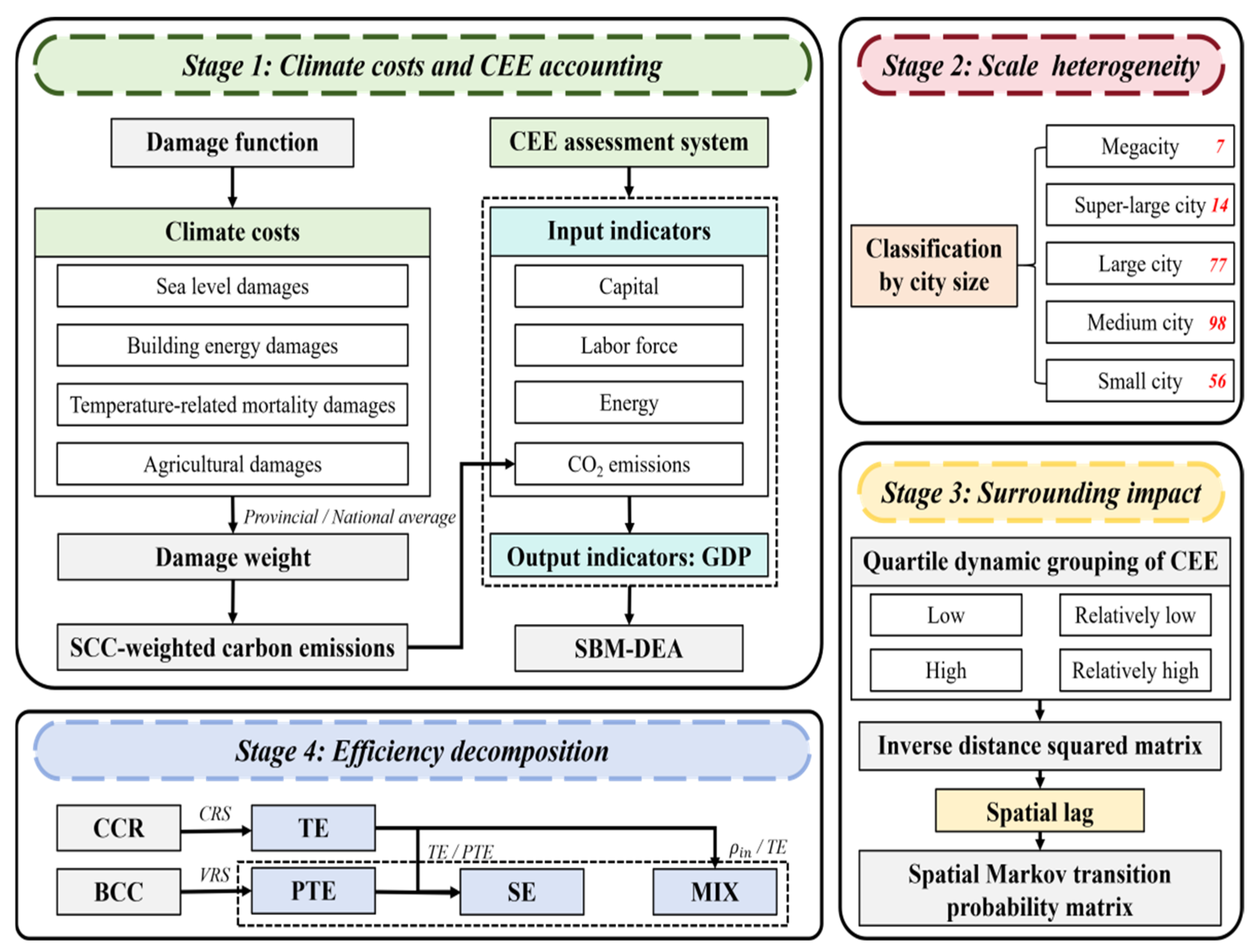
To address this limitation, this article introduces a weighted carbon emission approach and a “combined efficient frontier” for coastal and inland cities. By developing a DEA model that incorporates climate costs to evaluate CEE more equitably, providing valuable insights for low-carbon sustainable development in urban clusters across various areas. First, we conduct a long-term CEE assessment of 252 Chinese cities from 2006 to 2021. Then, the spatial Markov transition matrix is introduced to explore the spatiotemporal evolution of CEE. Finally, efficiency decomposition methods are used to examine how factors like industrial and energy structures influence carbon efficiency, thereby enabling the design of fair and effective carbon reduction policies for cities.
Compared with the existing literature, this study contributes by identifying regional heterogeneity and developing a differentiated policy pathway framework. First, it extends the CEE evaluation framework by incorporating climate cost-weighted emissions to identify the impact of climate risk disparities between coastal and inland regions, thereby addressing the research gap in assessments that account for regional climate heterogeneity. Moreover, it establishes differentiated pathways for efficiency optimization. Current emission reduction policies in China generally impose homogeneous constraints, neglecting climate, development, and scale differences among cities. This framework identifies differentiated factors influencing CEE, providing a foundation for more equitable and differentiated city-level carbon reduction targets.
4. Discussion
4.1. Understanding the CEE Disparity Between Coastal and Inland Cities
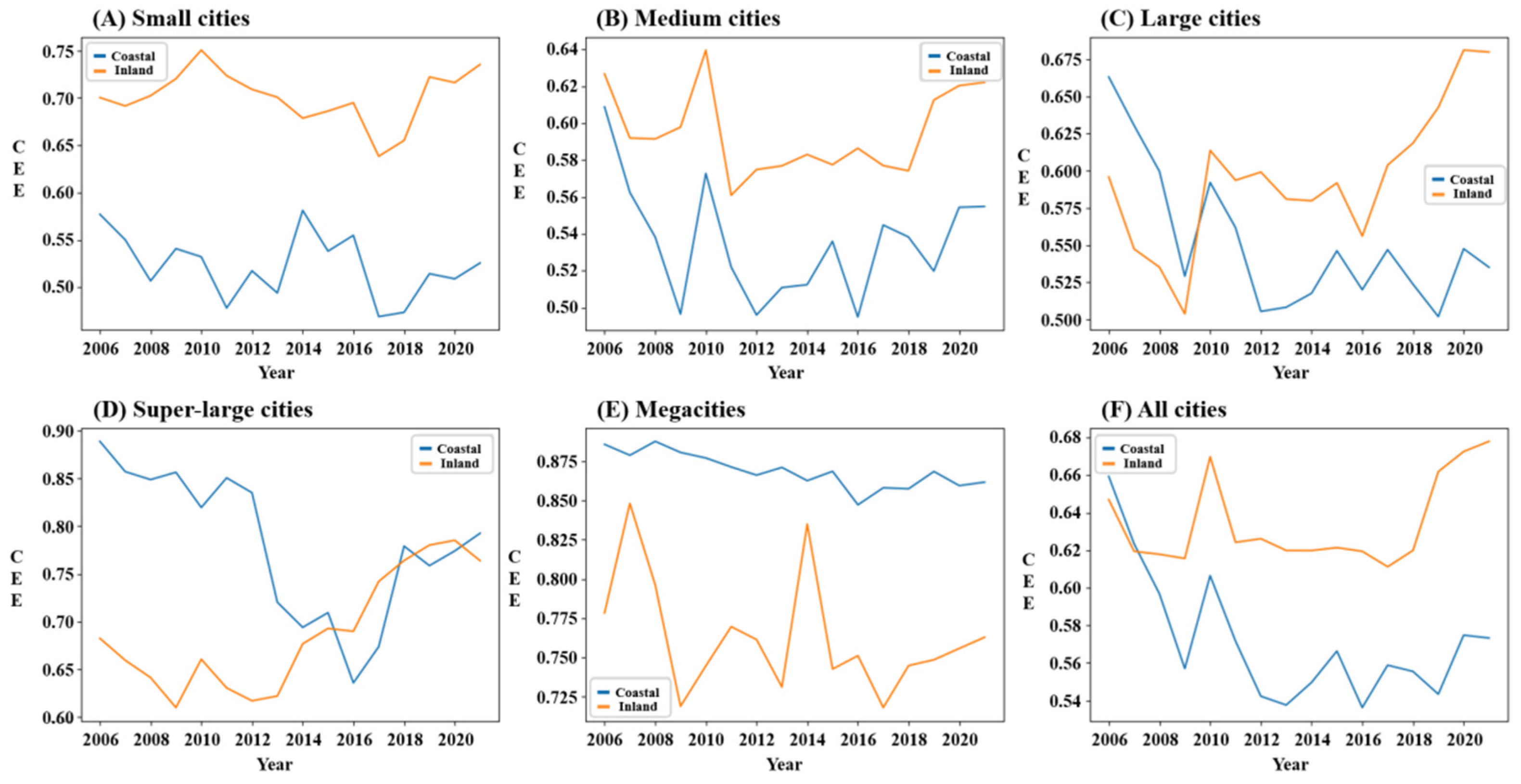
By incorporating climate costs into the assessment framework, this study finds that the average CEE of coastal cities is lower than that of inland cities. However, studies that do not consider climate costs generally conclude that CEE in coastal cities is higher than in inland cities [
27,
29]. In fact, incorporating climate costs fully accounts for regional climate differences and development equity, which may ultimately affect the results. This contradiction in findings can be explained from the following two dimensions.
First, the incorporation of climate costs fundamentally alters the constraints of CEE evaluation. Risks such as sea-level rise, storm surges, and extreme high temperatures are concentrated in coastal areas. As a result, their climate cost per unit of carbon emission is much higher than that of inland provinces, whereas inland areas may generate a “low-cost premium.” By weighting carbon emissions, the high climate costs in coastal areas are converted into higher carbon emission weight coefficients. This does not mean that inland areas are cleaner in terms of production processes, but rather it reveals that after considering the differentiated climate risks, the true costs of economic development are presented more fairly. This conclusion responds to the principle of “common but differentiated responsibility” in global sustainable development discussions.
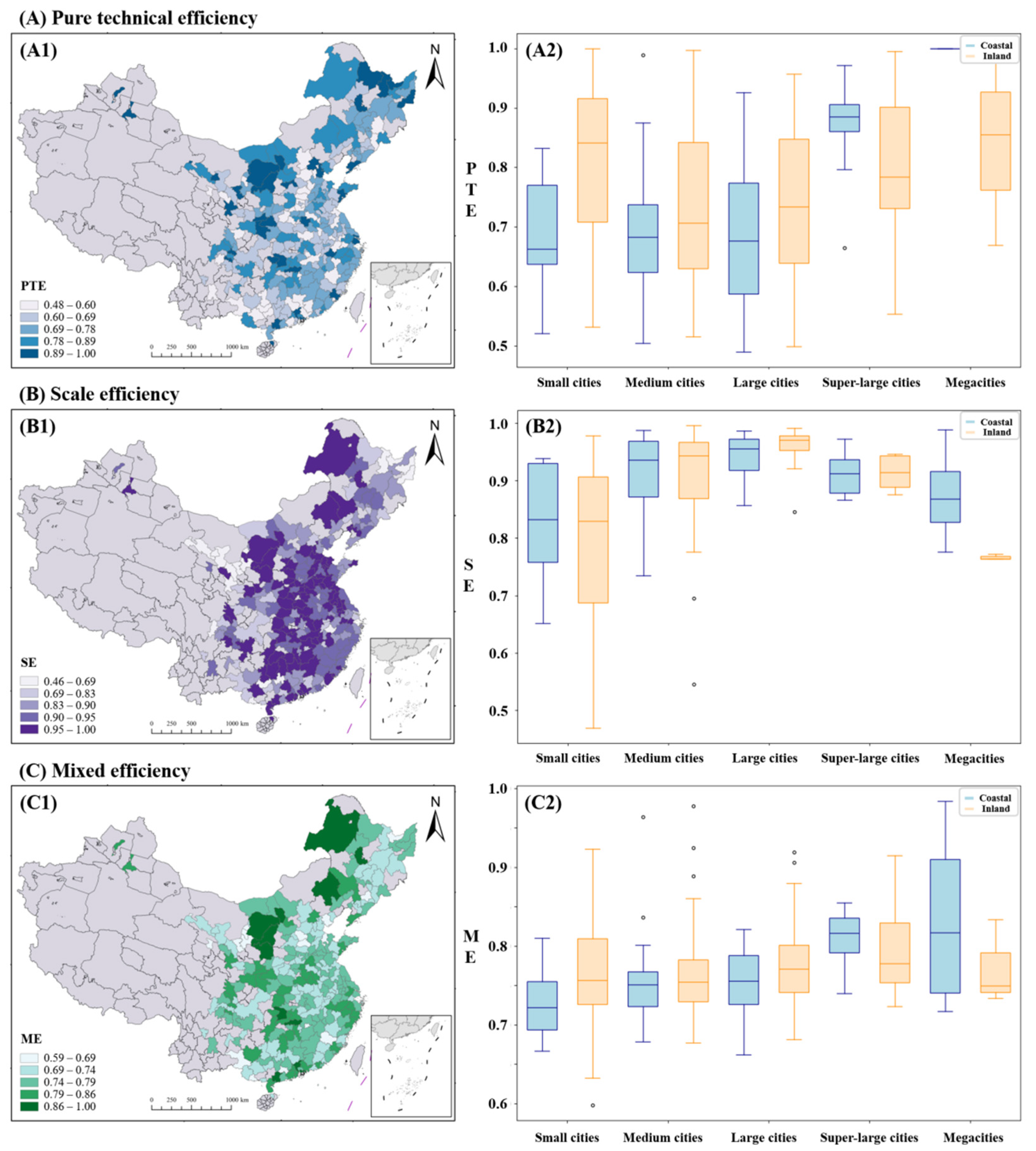
Second, economic development across coastal cities is uneven. Megacities and super-large cities in coastal areas show the highest CEE levels despite facing higher climate costs. The PTE and MIX of leading cities are extremely high due to knowledge spillovers and strong resource allocation capacity. Our findings align with Wang et al. (2026) [
61], showing that as technology, resources, and human capital become more concentrated, the synergistic efficiency among large coastal cities continues to improve. In contrast, a large number of small and medium coastal cities (47.62% of the total coastal cities) have extremely low CEE. These cities are far inferior in green technology, management experience, capital, and talent reserves, making it difficult to cope with the high climate costs. It is precisely the existence of these numerous low-efficiency cities that has lowered the average level of the entire coastal areas. The efficiency differences arising from these relative advantages and disadvantages are consistent with the findings of Jia et al. (2025) [
62]. Therefore, the “overall lower” CEE of coastal urban aggregations is essentially a reflection of their unbalanced internal development.
4.2. Exploring the Driving Factors of Efficiency Differences
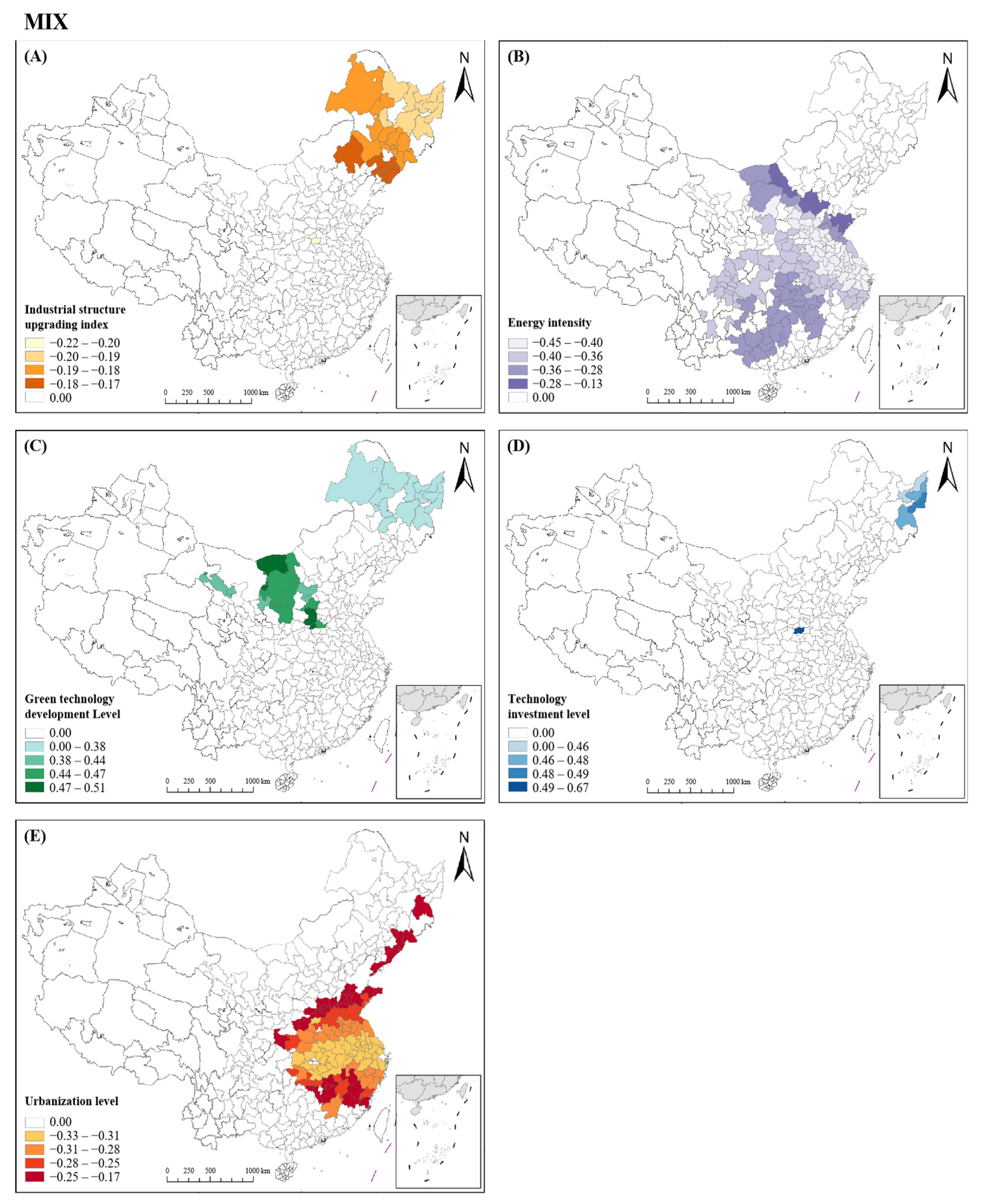
Significant variations exist in the driving factors across regions. To further characterize the driving factors of the three types of decomposed efficiency, we selected eight indicators from five dimensions: industrial structure, energy structure, technological level, social development, and natural resources as variables for analysis using the multiscale geographically weighted regression model (see
Appendix B and
Appendix C).
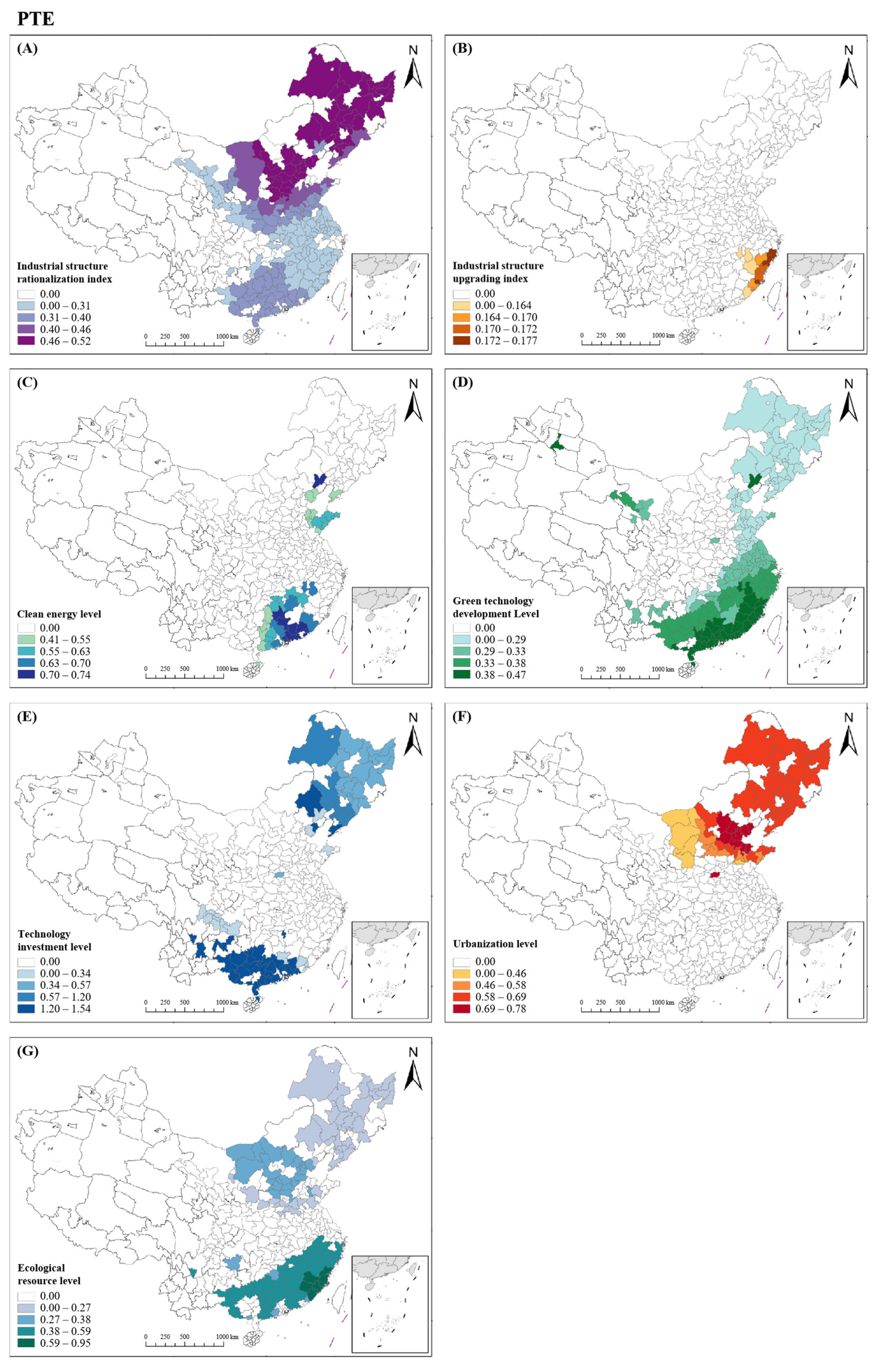
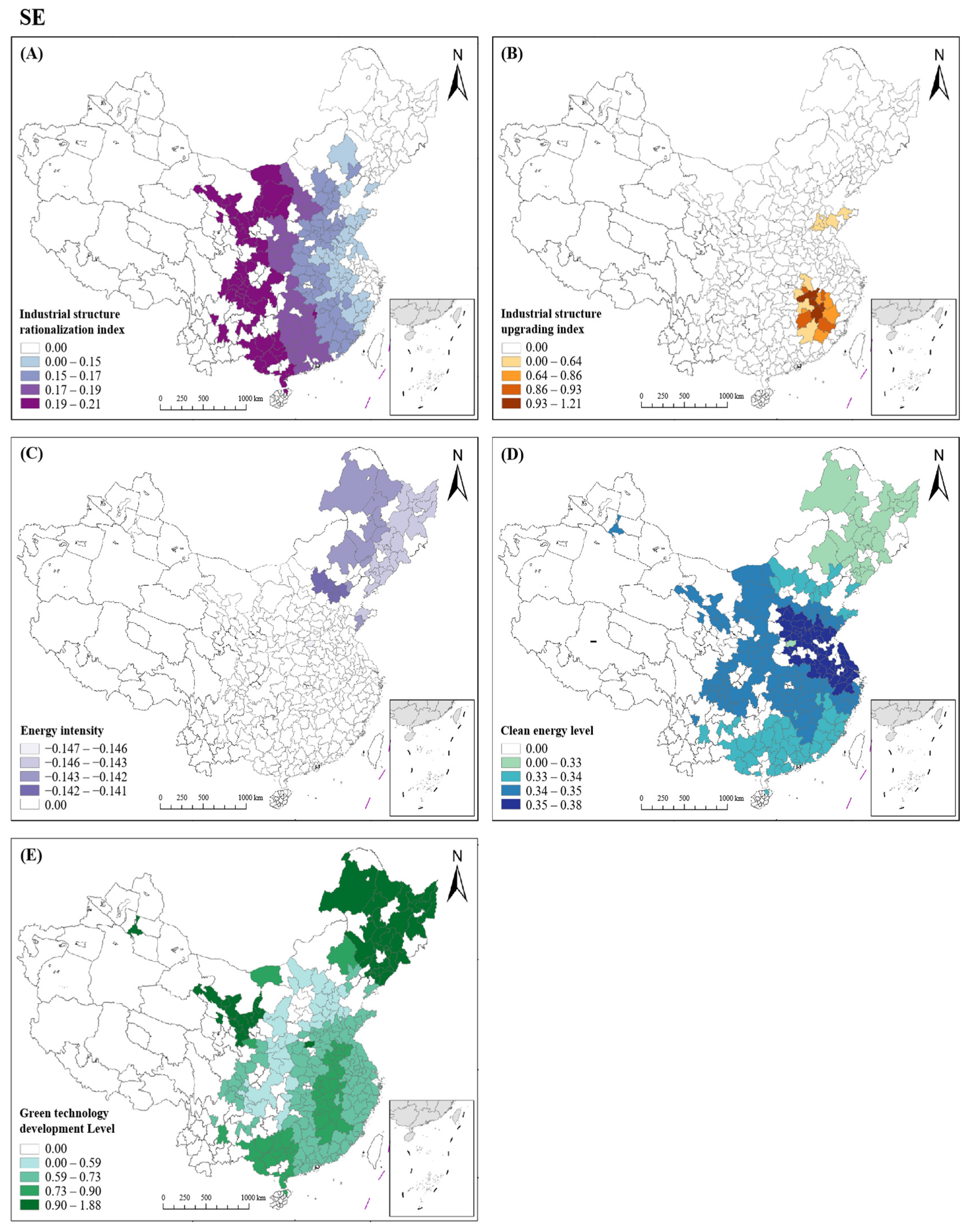
Except for energy intensity, the remaining variables have a positive impact on PTE. Factors including industrial structure rationalization, green technology development level, technology investment level, urbanization level and ecological resource level have a significant positive impact. MIX is mainly influenced by green technology development level and clean energy level, while SE shows a significant negative correlation with the industrial structure upgrading and urbanization level. The effect of industrial structure rationalization on PTE shows a pattern of “low in the south, high in the north”, as the higher degree of industrial structure irrationality in northeast areas enables a stronger synergistic effect with technological progress through improved industrial balance compared to the southeastern areas. The negative impact of industrial structure upgrading on SE is particularly significant in northeast areas. The promotion effect of clean energy on MIX is high in the central and east but low in the north and west, a pattern largely attributable to the latter’s heavy reliance on traditional energy. Green technology generally has a positive impact on all efficiencies. Urbanization has a very significant positive effect on the PTE of cities in northern and northeastern China. However, in coastal areas, excessive urbanization leads to increased costs and environmental pressure, which weakens SE [
63]. Ecological resources effectively improve PTE in southern coastal areas and northern inland areas through carbon sink effect. This promotion effect is more significant in southern coastal areas, mainly because blue carbon ecosystems have more advantages than green carbon in terms of carbon sequestration capacity, carbon storage time and carbon storage volume [
64].
4.3. Policy Implications
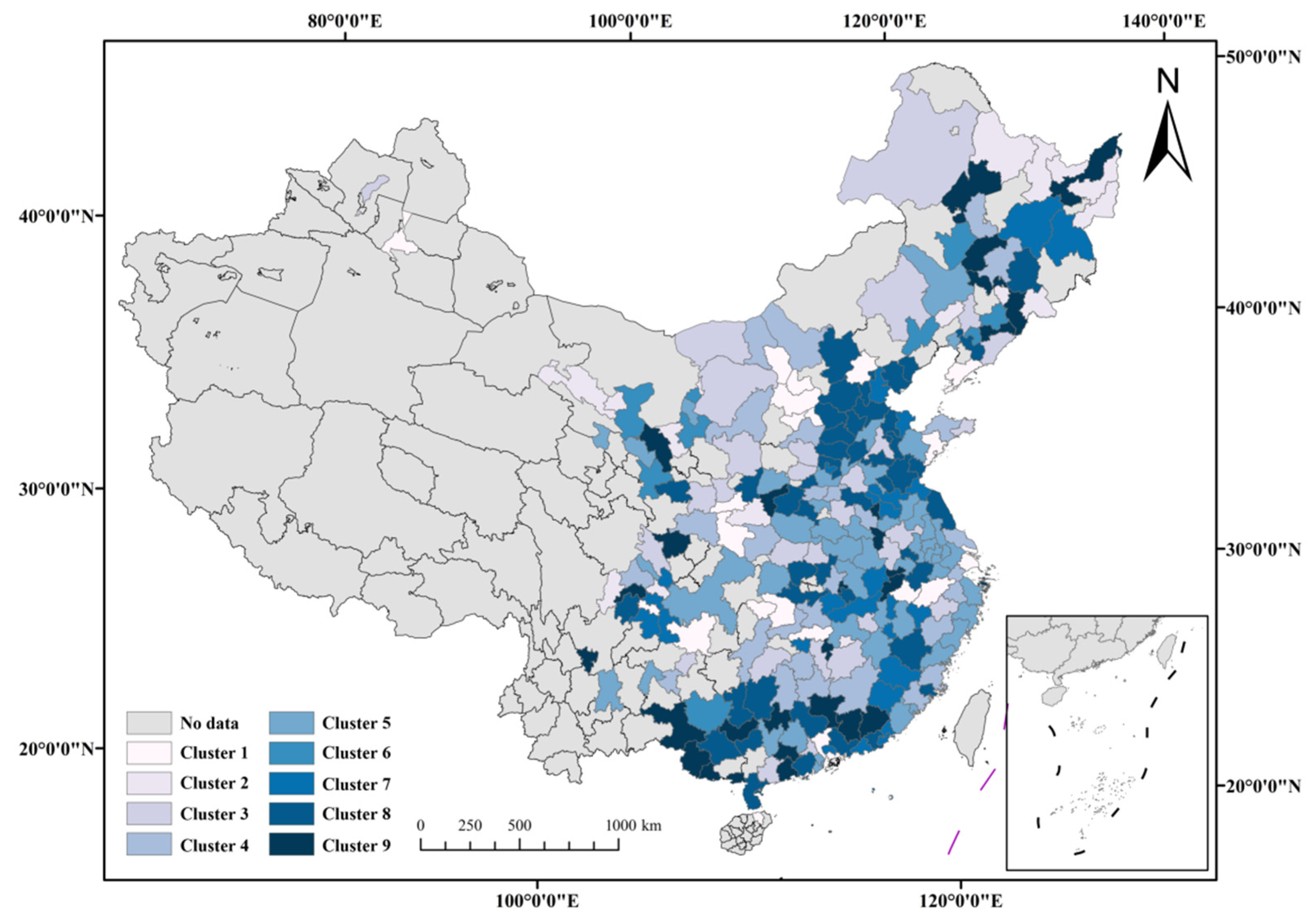
China’s emission reduction strategy must proceed from a holistic perspective. By identifying the emission reduction potential of different cities, a collaborative governance system integrating “technology–capital–policy” can be built. Based on efficiency characteristics and regional distribution, cities have different potential for emission reductions, and differentiated emission reduction strategies should be formulated accordingly. Therefore, we applied the k-means clustering method to classify 252 cities into 9 clusters and developed differentiated policy implications based on this classification (
Appendix D).
Cities with low emission reduction potential (Clusters 1–3) exhibit pronounced polarization in their internal development levels, and thus require differentiated policy guidance: Cities in Cluster 1 are mainly megacities and super-large cities in both coastal and inland areas, such as Beijing, Shanghai, and Hangzhou. Their efficiencies have reached optimal levels; therefore, they should be encouraged to explore frontier low-carbon technologies, play a leading role and assume international emission reduction responsibilities. Cities in Cluster 2 are all small and medium cities in inland areas, such as Wuhai and Hegang. These cities have weak economic foundations, and economic development should remain their primary policy focus. Cities in Cluster 3 are mainly inland medium and large cities, such as Hefei and Shenyang. Policy for these cities should prioritize improving the rationality of their industrial structure and increasing investment in green technologies, so as to enhance PTE and MIX.
Cities with medium emission reduction potential (Clusters 4–6) mainly include small, medium, and large cities in the eastern coastal and inland areas, and they commonly suffer from low PTE or SE. Cities with medium emission reduction potential (Clusters 4–6) mainly include small, medium, and large cities in the eastern coastal and inland areas, and they commonly suffer from low PTE or SE. Policy should focus on stimulating regional innovation vitality, primarily by promoting the diffusion of advanced technologies to inland areas and accelerating the upgrading of industrial structures and urbanization.
Cities with high emission reduction potential (Clusters 7–9) exhibit low levels of both PTE and MIX and are mainly concentrated in the southern coastal, northern coastal, and northeastern areas. These areas should be the priority targets supported by national emission reduction funding and technology. Policies should focus on the introduction of green technologies and large-scale investment in clean energy infrastructure [
65] to improve PTE and MIX at the same time. For cities in the northeastern area (e.g., Benxi and Jilin), carbon emissions can be reduced by leveraging forestry resource endowments. For southern coastal cities (e.g., Jiangmen and Zhanjiang), policies should encourage the utilization of wetland resource advantages to develop blue carbon sink industries and promote nature-based solution (NbS) projects.
5. Conclusions
To systematically evaluate the CEE of 252 prefecture-level cities in China, we built a combined effective frontier DEA model that incorporates climate costs. By accounting for the impacts of climate change on socio-economic systems, this approach extends the CEE evaluation framework. It reveals a new perspective on the comparison of CEE between coastal and inland cities and could provide targeted strategies for sustainable urban development in different cities. Our approach could provide a useful tool for urban low-carbon economic assessment and offers methodological references for similar studies in other cities and regions. The study finds that PTE is the main cause of CEE differences. Inland cities generally have higher overall CEE due to lighter climate damage, but medium and large cities still face development challenges. Although coastal cities bear higher climate costs and small/medium-sized cities are inefficient, their megacities maintain nationally leading efficiency levels due to technological and managerial advantages, reflecting regional development imbalances.
These findings provide valuable directions for advancing net-zero emissions and sustainable development policies in different cities. China should increase investment in green technologies, supporting the leading role of eastern coastal areas in technologies, while promoting technology diffusion and energy structure adjustment to stimulate regional innovation in inland areas. Furthermore, greater policy guidance should be provided on industrial restructuring of the northeastern areas by promoting the development of clean energy and natural resources. China could also accelerate the establishment of a coordinated emission reduction framework featuring “technology research in the eastern areas, energy transformation in the central and western areas, and industrial transformation in the northeastern areas” to achieve the net-zero goals.
However, the study has certain limitations. Due to data constraints, the sample is limited to 252 cities. Future research could extend the analysis to county-level units and incorporate multi-source data. Furthermore, the impacts of climate change are multidimensional and complex and are not limited to linear damages caused by carbon emissions. Future assessments of climate costs could be extended to biological and ecosystem dimensions and could account for the nonlinear effects. Meanwhile, climate adaptation capacity may vary within the same area. More detailed spatial classifications could be considered in the future.