1. Introduction
The intricate relationship between gender and urban mobility has gained attention, particularly in developing contexts, where social norms and structural inequalities continue to shape travel behaviour [
1]. Recent studies highlight the role of socio-cultural contexts in conditioning mobility patterns [
2], influencing women’s access to economic resources, decision-making, and everyday mobility needs [
3]. Consequently, women face persistent constraints regarding accessibility, affordability, and perceived safety when using public transport systems in developing cities [
4]. Despite growing interest, there remains a limited understanding of which factors shape mode choice, trip purposes, and mobility constraints across genders in developing settings [
1,
5]. Foley [
6] focused this discussion on Africa, where socio-economic and gender inequities in travel behaviour perpetuate disadvantages, particularly for women and lower socio-economic groups. Similar concerns are echoed in recent urban mobility and equity debates, which highlight how mobility justice issues and socio-spatial inequalities limit access to urban opportunities and essential services for marginalised populations [
7,
8].
To address these gaps, this study compares gendered mobility dynamics between a developed and a developing city. We selected Oviedo (Spain) and Tangier (Morocco) because both are served by the same bus operator (ALSA), enabling comparability in service provision. Oviedo reflects a context of higher transport equity and socio-economic stability, while Tangier presents distinct socio-cultural barriers affecting women’s mobility. The shared operator isolates cultural and economic factors as the main sources of variation, rather than differences in the transport system itself.
Methodologically, we proceed in two steps: first, comparing bus user profiles and mobility patterns from two original surveys; second, applying Cluster Analysis in Tangier to identify heterogeneous traveller groups based on trip-related variables and to assess the role of gender within them. This comparative framework contributes to urban mobility research by bridging gender studies, transport equity, and socio-cultural analysis. Overall, the study aligns with ongoing efforts to promote inclusive, equitable, and gender-responsive mobility strategies in urban environments.
After this introduction, the paper is structured as follows:
Section 2 presents the scientific literature relevant to this study. The two case studies are described in
Section 3. Then,
Section 4 presents the sequential methodology.
Section 5 describes the results and
Section 6 discusses the main findings. Finally,
Section 7 presents the main conclusions and policy recommendations.
2. Gender Gap in Mobility Equity
Mobility extends beyond physical movement; it encompasses the interactions between people, places and services embedded within wider urban and societal structures [
9]. Rather than being limited to transport modes, mobility reflects a network of cultural, social, and spatial factors that shape how individuals navigate cities and participate in everyday life [
10,
11]. Within this framework, gender emerges as a critical axis of inequality influencing mobility opportunities and choices.
Gender equity is closely tied to power relations and resource distribution, resulting in disparities in access, safety, and travel autonomy [
12]. Empirical research shows that women generally exhibit lower mobility levels, undertake shorter trips, and rely more on public transport than men, due to constraints linked to time, caregiving roles, and safety concerns [
13,
14]. Recent comparative evidence also shows persistent gender differences and inequities in everyday mobility: men tend to use private vehicles more frequently and travel longer distances for work, while women rely more on public or shared modes, reflecting household roles and socio-economic constraints [
15]. Furthermore, new research on emerging mobility services highlights compounded mobility inequities, where gender intersects with age and socio-demographic status to shape access, affordability, and usage of ride-hailing platforms [
16].
Several studies consistently indicate that women tend to undertake fewer trips, travel shorter distances, and rely more heavily on public transport than men, largely due to time constraints, caregiving roles, and safety concerns [
6,
17]. Recent evidence further highlights that women’s mobility remains constrained even in cities with improved infrastructure, due to persistent socio-cultural norms, income disparities, and unequal access to safe transport options [
1,
18].
In developed urban contexts, gender differences also reflect societal expectations. Studies report that women are less car-dependent, more sensitive to travel costs, and more likely to switch to public transport [
19]. Men tend to travel longer distances and engage more in nighttime and leisure activities, while women perform more household- and care-related travel [
14]. Miralles-Guasch et al. [
20] found that women prefer sustainable transportation modes but also face significant obstacles to daily mobility in both urban and rural settings. Loukaitou-Sideris & Yowell [
21] explore safety and accessibility concerns in developed regions, noting how infrastructure design, such as the location of bus stops and lighting, impacts women’s mobility. Kawgan-Kagan [
22] reveals that women show a higher preference for public transportation and environmentally conscious travel options, while men prefer private cars and technology-driven solutions. Mazzulla et al. [
23] examine gender differences in pedestrian path perceptions, highlighting that women prioritise environmental factors, personal security, and cleanliness, while men focus on path continuity and surface conditions. Moreover, insecurity and fear of harassment in public spaces remain pervasive barriers, where inadequate lighting and poor transport infrastructure further restrict women’s mobility [
21]. Those findings showed that there are gender mobility differences in developed countries, although there is a slow trend toward reducing those differences [
24].
These behavioural patterns extend to perceptions of public transport satisfaction. Studies have identified gender differences across attributes such as frequency, comfort, waiting time, and network coverage, illustrating that women and men evaluate service quality differently [
25]. Broader research confirms that service quality dimensions significantly influence satisfaction by gender, shaping improvement priorities and highlighting the need for inclusive transport planning [
26,
27].
This body of research underscores the need for gender-sensitive transport planning in developing cities, recognising that mobility inequalities are embedded in wider processes of urban exclusion and resource distribution. From an urban justice perspective, mobility inequities in Global South cities have been linked to broader socio-spatial inequalities and marginalised user groups [
7]. Moreover, socio-demographic characteristics and accessibility conditions are key determinants of urban mobility choices, influencing how different groups navigate city spaces [
8]. These findings point to the need for localised policy strategies adapted to specific social realities.
In developing countries, gendered mobility patterns are often shaped by intertwined socio-economic, cultural, and institutional factors. Research conducted in Karachi, Pakistan, shows how transport poverty disproportionately affects women by limiting access to safe and affordable mobility options [
17]. Similarly, evidence from New Delhi highlights how the combination of economic marginalisation and restrictive gender norms constrains women’s daily mobility and participation in urban life [
28].
Across the Global South, several recent studies indicate that improvements in transport infrastructure alone are insufficient to close the gender mobility gap. Persistent social norms, income disparities, and safety concerns continue to restrict women’s mobility opportunities, even where services expand [
1,
4,
13]. In response to these constraints, initiatives such as India’s “She Can Ride” programme seek to strengthen women’s social visibility in public transport and to promote their mobility as a legitimate urban practice [
29,
30].
These barriers also affect women’s perceived satisfaction with public transport systems. Studies report that women frequently feel unsafe in overcrowded or poorly maintained vehicles and stations [
30]. Studies report that women frequently feel unsafe in overcrowded or poorly maintained vehicles and stations [
31] and face more complex trip chaining than men due to diverse household and caregiving responsibilities [
32]. Beyond safety, limited economic rights in many developing contexts further reduce women’s ability to choose transport modes or engage in long-distance travel, reinforcing structural disadvantages in urban mobility [
33].
This body of research underscores the need for gender-sensitive transport planning in developing cities, recognising that mobility inequalities are embedded in wider processes of urban exclusion and resource distribution. Recent contributions highlight how gender, socio-economic status, and space jointly influence mobility behaviour and opportunities [
34], pointing to the need for localized policy strategies adapted to social realities. Notably, participatory initiatives such as women-only focus groups in Mexico City have been used to redesign safety features at bus stops, illustrating how inclusive planning can address women’s concerns in context-specific ways [
21]. These insights reinforce the need for effective policies that consider the interplay among economic constraints, gender norms, and mobility patterns to reduce transport inequities in developing countries.
3. Case Study Description: Oviedo and Tangier
To effectively compare and analyse gender differences, it is essential to select cities with distinct socio-economic conditions and cultural settings yet comparable mobility systems. We have selected two very different cities, Oviedo (Spain) and Tangier (Morocco), which represent suitable case studies due to their contrasting levels of development and urban socio-cultural environments.
The World Bank classifies countries according their economic level [
35]. Spain is rated as having a high economic level, and Marrocco is listed among low-medium economic level countries. Therefore, Oviedo could be considered as a city in a developed country, while Tangier is a representative of developing countries.
However, they share similarities in their urban mobility systems: both rely predominantly on bus-based public transport, and both use the same bus operator, ALSA Group. The uniformity in operation and service management standards ensures a comparable baseline, allowing gendered mobility patterns to be examined through the lens of urban inequality, accessibility, and mobility justice in developed and developing contexts.
Developed and developing cities commonly have clear differences in their socio-economic indicators, including per capita income levels, infrastructure provision, and institutional capacity. Cities located in developed countries generally exhibit higher income levels, diversified economic structures, advanced transport infrastructure, and stronger institutional frameworks that support equitable access to services. In contrast, cities in developing countries typically present lower per capita incomes, higher levels of socio-economic inequality, more limited infrastructure provision, and structural barriers that affect access to employment and urban services, including mobility. GDP is widely used as a key indicator of economic development, reflecting cities’ capacity to invest in public infrastructure and social services. On the other hand, economic factors, cultural and social norms also influence gendered mobility patterns.
In developed urban areas such as Oviedo, gender equity in employment and education contributes to more balanced mobility behaviour. Conversely, in developing cities such as Tangier, traditional gender roles, labour market inequalities, and social expectations may constrain women’s access to employment and independent mobility, reinforcing gender disparities in travel behaviour and transport accessibility [
1,
36].
Gender equality in urban mobility is evaluated using quantitative indicators, such as differences in employment-related travel, trip frequency, and access to public transport, with empirical studies reporting statistically significant gender disparities in mobility patterns and accessibility levels between men and women [
1].
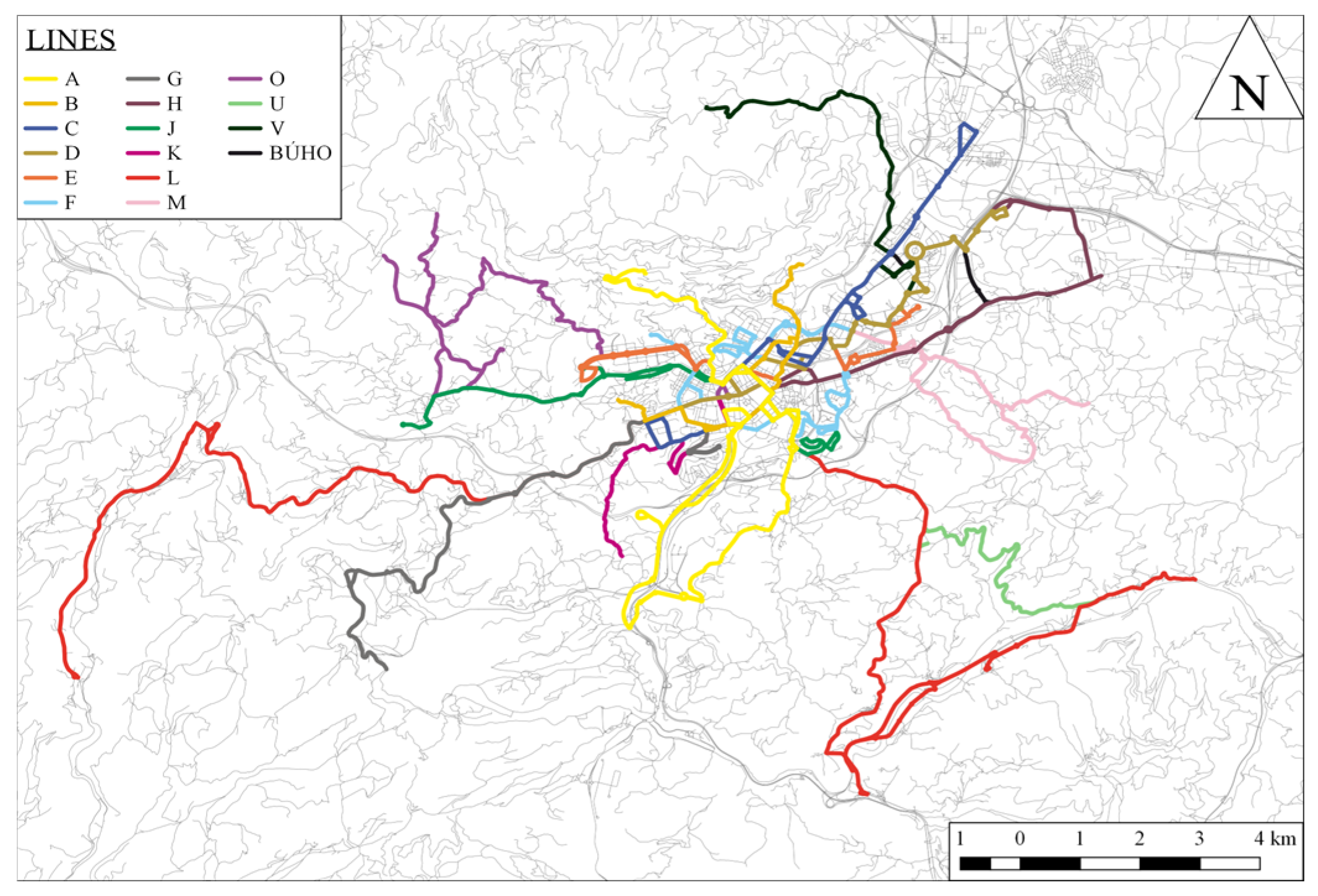
Oviedo, located in Northwest Spain, has a population of 219,943 inhabitants and a per capita income of EUR 23,235. The city has a motorisation rate of 513 vehicles per 1000 inhabitants, reflecting high levels of private vehicle availability typical of developed European cities. Its public transportation system includes a bus network with 15 daytime lines and one nighttime line, covering 206 km and serving 12.0 million passengers annually [
37], as shown in
Figure 1. Daily mobility patterns in Oviedo are characterised by high levels of active travel, with walking and cycling accounting for 66.4% of trips, followed by private motorised transport (24.1%), and buses accounting for 8.5% of urban trips. A single bus ticket costs EUR 1.5 [
38].
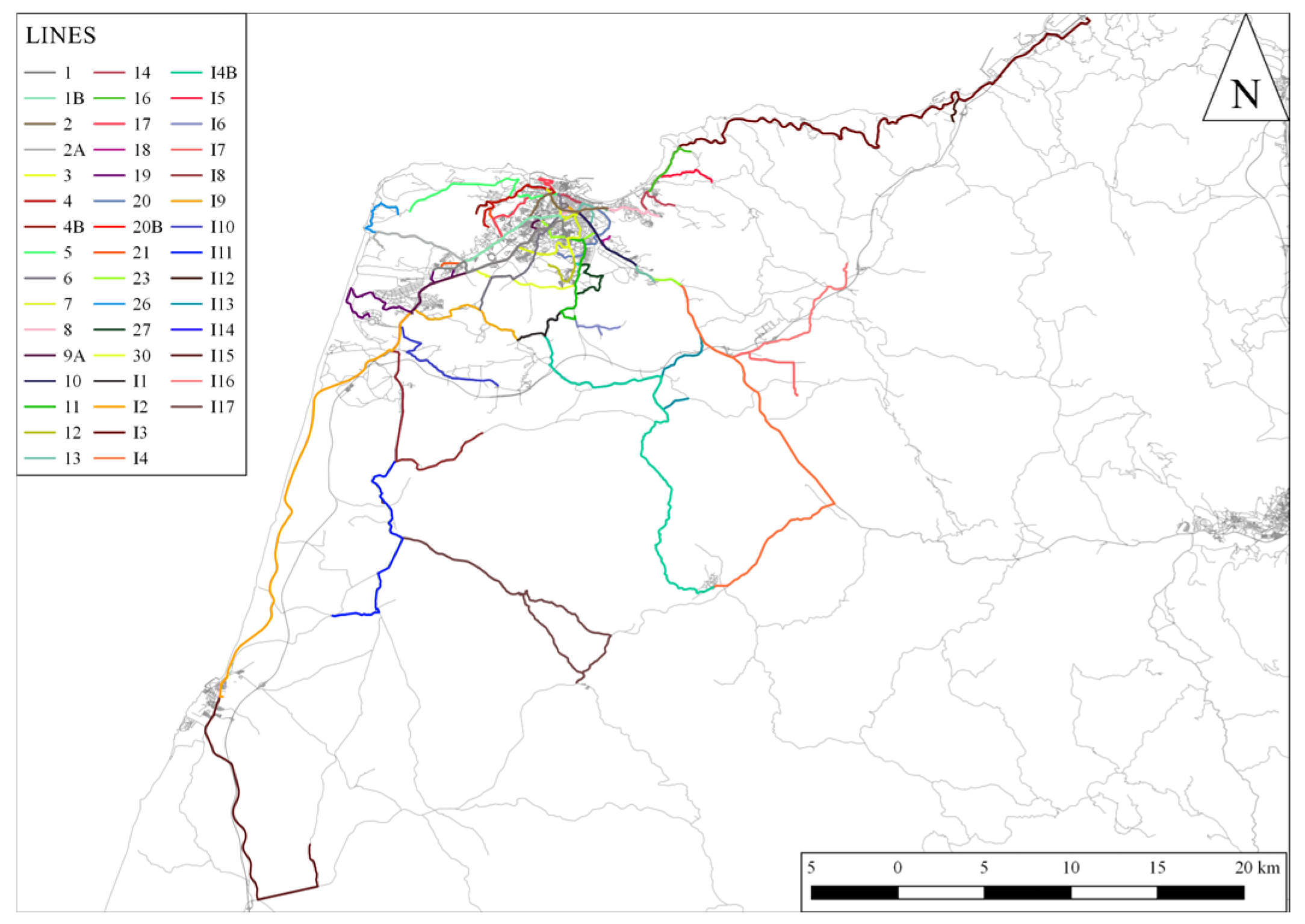
Tangier is a city in North Morocco. It has a significantly larger population of approximately 947,952 inhabitants, but a much lower per capita income of EUR 2650. The motorisation rate in Tangier is only 105 vehicles per 1000 inhabitants. The city’s public transportation network is more extensive, comprising 45 daytime bus lines that cover 795 km and cater to 40.3 million passengers annually [
39], as shown in
Figure 2. Daily mobility patterns in Tangier rely on a mix of walking (37%), buses (24%), and cars, taxis and motorcycles (39%). One ride bus ticket in Tangier costs 3.5 dirhams, equivalent to EUR 0.35 [
40].
4. Research Methodology
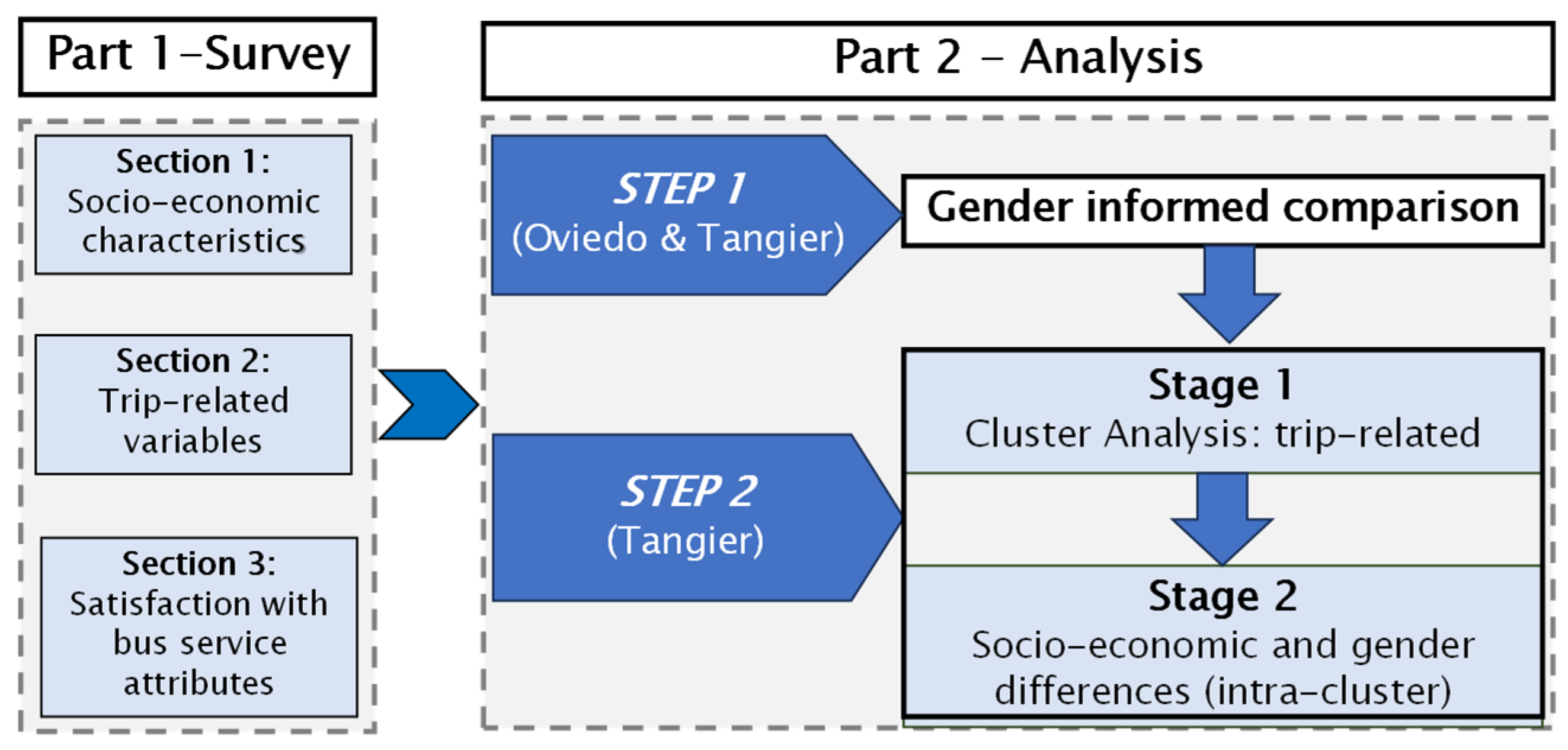
Our research strategy was designed to investigate gendered mobility in urban bus services in Oviedo and Tangier. This methodological framework is organised into two successive parts, as shown in
Figure 3, each designed to highlight gender differences in mobility experiences across varying urban contexts. Part 1 involves carefully designing surveys in each city and collecting data appropriately, which is essential to obtaining accurate insights into gender mobility patterns. Part 2 involves a two-step analysis: the gender-informed comparison (Oviedo vs. Tangier) and a Cluster analysis of bus user profiles in Tangier (
Section 4.2).
It is important to note that the surveys were conducted in November 2021 in Oviedo and March 2022 in Tangier, a period during which mobility restrictions had already been lifted, and travel demand had largely stabilised. Evidence from recent studies analysing post-pandemic mobility trends in Spain indicates that, following the lifting of restrictions in July 2021, trip levels recovered to approximately 90% of pre-pandemic levels and remained relatively stable throughout late 2021 and 2022, with no structural disruptions to mobility patterns [
41]. This confirms that the temporal gap between the two surveys did not coincide with fundamentally different mobility restriction regimes or structural changes in travel demand.
The second step of the analysis focuses exclusively on Tangier, as the initial comparison revealed substantially more pronounced gender disparities in this city than in Oviedo. These differences are closely linked to Tangier’s specific socio-economic conditions and cultural dynamics, where structural barriers more strongly constrain women’s mobility opportunities. Concentrating the second analytical stage on Tangier therefore allows for a deeper exploration of the mechanisms underpinning these inequalities and makes it possible to identify gender-sensitive mobility patterns that are not observable in the more gender-balanced context of Oviedo.
4.1. Data Collection: Survey of Bus Users in Oviedo and Tangier
Given that the public transportation operator in both Oviedo and Tangier is the same company (ALSA), we utilised the quality assessment surveys previously conducted by ALSA in Oviedo in 2018 as a reference for designing the new one. Building on these established surveys ensured consistency and reliability in our approach.
Additionally, we hold discussions with ALSA to tailor the survey to capture the specific details and nuances of each city’s bus network, ensuring that the franchise-specific characteristics are adequately represented in the survey design. For this purpose, we followed recommendations from previous surveys and studies [
42].
This process resulted in a first draft containing an initial version of the survey items. This version was pre-tested through a pilot study involving a small group of participants (ten people in Oviedo and fifteen in Tangier). This pre-testing phase was conducted to ensure clarity and relevance of the items while balancing survey length and comprehensiveness. Additionally, the survey questions were tailored to the specific contexts of Oviedo and Tangier, ensuring that they captured the nuances of local mobility patterns. The revised items were then included in the final version of the survey.
Regarding the sampling procedure, the sample was collected in both cities to ensure age- and gender-representativeness. For Oviedo, the population distribution information was obtained from the Spanish National Statistics Institute [
43], while in Tangier, the data were collected from the High Commissioner for Planning through its report on the general census of the population and inhabitants in Tangier [
44].
In both cities, a similar administration approach was used. All respondents were users who had been intercepted inside buses and at bus stops. The research team completed the questionnaires during face-to-face interviews. In Oviedo, the survey was conducted from 15 to 19 November 2021 by a team of students from the University of Oviedo. They used tablets with internet access to complete the online questionnaire in Spanish. 970 valid responses were obtained. A team of researchers from Tangier’s Faculty of Science and Technology (FST) conducted a survey in March 2022. Due to the lack of internet connectivity in Tangier, the survey was administered on paper. An Arabic version of the questionnaire was used, getting a final sample of 1271 valid answers.
The survey collected information on each respondent and consisted of three sections:
Section 1: Socio-economic variables: This section collected information on gender, age, employment status, and the level of education completed by the respondents.
Section 2: Trip-related variables, including reported frequency of bus use, trip purpose, trip duration, and information on the bus line used by the respondent. Spatial data for the trip were also collected: in Oviedo, the respondent’s residence zip code was recorded; in Tangier (where postal code information is not available), respondents were asked about the origin and destination of their trip.
Section 3: Satisfaction with bus service attributes: Data on perceived satisfaction with the following service-related attributes was collected: service availability, information, accessibility, comfort, ticket price, payment method, frequency, and service hours were all assessed. Users were asked to rate 9 attributes on a 5-point scale from 1 (totally dissatisfied) to 5 (totally satisfied).
4.2. Analysis
After the survey data were collected, the analyses comprised the following two steps, as shown in the methodology outline (see
Figure 3):
In this initial step, the distribution of collected data of the samples in both cities is compared to explore whether contextual and/or gender variables shape bus user profiles in both cities. For this purpose, each sample is described in terms of the distribution of the information collected in the survey, namely: socioeconomic (Section 1), trip-related (Section 2), and satisfaction with bus service attributes (Section 3). The focus is on exploring gender differences in collected variables within and between cities. This phase provided a foundational understanding of the survey data and served as a crucial lens for discerning the distinct roles of gender and contextual variables in mobility behaviours and satisfaction with bus services.
Cluster analysis—also known as segmentation or taxonomy analysis—is an exploratory statistical technique used to group individuals or observations into homogeneous clusters based on shared characteristics. Among the available clustering methods, Ward’s hierarchical approach was selected for its robustness in handling datasets that include both quantitative and qualitative variables, as well as groups of varying sizes. Ward’s method is a hierarchical clustering algorithm that optimises data partitioning by minimising the total within-cluster variance. At each iteration, the algorithm identifies and merges the pair of clusters whose union results in the smallest possible increase in the sum of squared deviations from the cluster centroids. This criterion promotes the formation of compact and internally homogeneous clusters. In contrast to other linkage strategies—such as single or complete linkage—Ward’s method tends to produce clusters of relatively balanced size and shape. The procedure begins with each data point as an individual cluster and iteratively merges clusters until all observations are grouped into a single cluster. A key feature of Ward’s method is that it does not require specifying the number of clusters a priori. This contrasts with partitioning algorithms such as k-means, which require the prior definition of the number of clusters and are more sensitive to initial conditions. In addition, Ward’s method has demonstrated superior performance to k-means in several contexts [
45] and has been widely validated in mobility research [
46].
Therefore, the analysis is structured into two successive stages: The first stage applies this technique to detect different bus user profiles (clusters) based on trip characteristics. In this stage, the non-parametric Kruskal–Wallis test is applied to determine whether there are statistically significant differences across trip-related group categories [
47]. Then, a second stage of analysis delves deeper into the socio-economic differences within each cluster identified in the first stage. The objective is to investigate whether each identified trip-related cluster shows differences in the distribution of socio-economic characteristics, including a specific analysis of “intra-cluster” gender disparities. This comparative step fulfils the first objective of the study: to observe how gendered mobility patterns differ between a developed and a developing urban context.
5. Results
The analysis of the results follows the methodological rationale described before (see
Figure 3).
5.1. Step 1—Gender-Related Comparison: Oviedo vs. Tangier
The results of this comparison are presented in the following two subsections. The first one compares the distribution of socio-economic and trip-related variables (Sections 1 and 2 of the survey). Then, perceived satisfaction with bus service attributes (survey Section 3) was measured on a 1–5 rating scale, enabling various statistical analyses.
5.1.1. Descriptive Analysis of Oviedo and Tangier Sample Characteristics
Table 1 presents the distribution (in % of the total sample) of the collected variables for bus users in Oviedo and Tangier, with specific information on gender disparities for the explanatory variables.
The first difference between cities appears in the distribution of age groups among bus users. Overall, in Oviedo, the sub-samples of men and women are balanced across age groups. This is not the case in Tangier, where women are more prevalent in younger age groups. Indeed, in the under-18 group, women have a higher share (8%) than men (5%), and the same happens in the 18–25 age group (30% women, 25% men). In the 26–35 age group, we find more men (30%) than women (27%), as well as in the over-60 age group (9% men, 4% women). Although these figures refer to the surveyed samples rather than the total city populations, the sampling design aimed to replicate the bus user population in both cities. It targeted routes with the highest passenger volumes and stratified respondents according to each city’s demographic hierarchy, supported by a large number of valid responses.
Regarding employment, our data shows a gender gap in both cities. In particular, in Oviedo, 38% of women bus users are employees, while the percentage of men is 31%; in Tangier, there are fewer female employees (20%) than male employees (33%). Self-employment is more common in Tangier among men (31%) than among women (16%). Lastly, unemployment shares show a significant gender gap in Tangier, where 26% of women and 7% of men in our sample who use buses are unemployed, compared to 10% of men and 6% of women in Oviedo.
We also found differences in the level of completed studies among the sample bus users in both cities. In particular, in Oviedo, the share of those with a primary education degree is lower (5% men, 7% women) than in Tangier (18% men, 20% women). A similar result appears among users who completed secondary school: Oviedo (17% men and 14% women) and Tangier (30% men and 21% women). It is also remarkable that in our sample of bus users in Oviedo, 45% of men and 47% of women had completed high school, whereas the rates are lower in Tangier (12% for men and 10% for women).
Overall, Oviedo shows a gender-balanced distribution for bus trip duration. A similar picture emerges in Tangier, except for minor differences on longer trips. In comparing the two cities, we find the most remarkable difference: a higher share of shorter trips in Oviedo than in Tangier. Indeed, in Oviedo, very few users take trips lasting 46–60 min (1% men, 2% women), whereas these figures are significantly higher in Tangier (33% men, 34% women).
Regarding bus frequency, the most notable differences between cities emerge among high-frequency bus users. In the Oviedo sample, 48% of men and 53% of women use buses daily. In Tangier, daily bus use is higher among men (76%) than among women (70%). Differences in other trip frequencies are less relevant.
In terms of trip purpose, in the Oviedo sample, we found that the share of work-related bus trips is higher for women (40%) than men (32%), while in Tangier, this is reversed: 30% of women and 55% of men use the bus to travel to work. Educational trips are more gender-balanced in Oviedo (31% men, 28% women), but have a lower participation rate than in Tangier, where the gender gap is higher (16% men, 22% women). Leisure trips are similar in Oviedo (34% men, 28% women) but lower in Tangier (12% men, 15% women). Shopping trips in Tangier show significant gender differences (8% men, 22% women), while administrative trips show no gender difference (2% for both).
5.1.2. Satisfaction with Bus Service Attributes: Oviedo vs. Tangier
To make a methodologically sound comparison of service satisfaction values, we have divided the sample in each city into two groups: (1) users of urban lines, and (2) users of suburban lines, which have distinctive service characteristics. Again, both gender disparities and differences between the two cities are analysed in what follows. A
t-test was conducted to assess the statistical significance of gender differences in satisfaction ratings across cities.
Table 2 presents the data for Oviedo. In both urban and suburban areas, significant gender-related differences (
p < 0.05) were observed only in satisfaction with the extent of the bus network, with men rating it higher than women.
This is not the case in Tangier, where gender disparities in perceived satisfaction are much more pronounced, as shown in
Table 3. For urban bus services, statistically significant gender differences were observed in five out of nine service attributes, and in all five cases, women reported lower satisfaction levels than men. In suburban bus lines, statistically significant differences were identified only for the attribute “service start/end time,” again indicating lower satisfaction levels among women.
Based on the descriptive comparison between Oviedo and Tangier, marked gender differences emerged only in Tangier, particularly regarding travel purposes, employment-related mobility and satisfaction with service attributes. In Oviedo, patterns were more balanced, with men and women reporting similar levels of public transport use and comparable employment-related travel behaviour, and without substantial differences in most satisfaction indicators. Given this context, Tangier offered sufficient variability across gender-sensitive variables to justify a more detailed segmentation of bus users. Applying clustering procedures to Oviedo would not have added analytical value, as the descriptive analysis did not reveal meaningful gender distinctions. For this reason, the cluster analysis focused exclusively on Tangier, enabling us to examine how gender intersects with mobility within a socio-economically and culturally complex urban setting.
5.2. Cluster Analysis of Bus Users in the Case Study of Tangier
The second part of the analysis consists of a cluster analysis performed to deepen understanding of the differences across user travel profiles and their socioeconomic differences, including gender. This analysis is structured into two steps: first, we conducted a cluster analysis to identify distinct bus user profiles based solely on trip characteristics, while accounting for gender distribution within each cluster. Then, the second step analysed socioeconomic differences within each mobility cluster, with a particular focus on gender disparities.
Stage 1:
Table 4 shows the cluster analysis results for Tangier, only including trip characteristics: frequency of bus use, trip purpose, and duration. We found significant differences (Kruskal–Wallis) across the defined sample groups for each of these three variables.
Table 4.
Clusters according to trip characteristics and gender in Tangier (%).
Table 4.
Clusters according to trip characteristics and gender in Tangier (%).
| Variables | Clusters | CL-1 | CL-2 | CL-3 | CL-4 |
|---|
| Occasional Travellers | Daily Medium-Distance Travellers | Daily Short-Distance Travellers | Long-Distance Daily Workers |
|---|
| Men | Women | Total | Men | Women | Total | Men | Women | Total | Men | Women | Total |
|---|
| 112 | 86 | 198
(15.6%) | 211 | 207 | 418
(32.9%) | 275 | 186 | 461
(36.3%) | 129 | 65 | 194
(15.3%) |
|---|
| Frequency of bus use | 3–4 per day | 4.5 | 5.8 | 5.1 | 33.6 | 28.5 | 31.1 | 41.1 | 33.3 | 38.0 | 38.8 | 16.9 | 31.4 |
| 1–2 per day | - | - | - | 38.4 | 42.5 | 40.4 | 55.6 | 55.9 | 55.7 | 60.5 | 81.5 | 67.5 |
| 3–4 per week | 34.8 | 24.4 | 30.3 | 4.7 | 6.3 | 5.5 | - | - | - | - | - | - |
| 1–2 per week | 29.5 | 14.0 | 22.7 | 16.1 | 13 | 14.6 | 3.3 | 10.8 | 6.3 | 0.8 | 1.5 | 1.0 |
| Few times | 18.8 | 38.4 | 27.3 | 4.7 | 5.3 | 5.0 | - | - | - | - | - | - |
| Occasionally | 12.5 | 17.4 | 14.6 | 2.4 | 4.3 | 3.3 | - | - | - | - | - | - |
| Kruskal–Wallis significant (p < 0.01) |
| Trip purpose | Work | 58.0 | 29.1 | 45.5 | - | - | - | 82.2 | 53.2 | 70.5 | 83.7 | 56.9 | 74.7 |
| Studies | - | - | - | 55.9 | 58.5 | 57.2 | - | - | - | - | - | - |
| Leisure | - | - | - | 41.2 | 38.2 | 39.7 | - | - | - | - | - | - |
| Shopping | 24.1 | 48.8 | 34.8 | - | - | - | 7.3 | 33.3 | 17.8 | 7.8 | 23.1 | 12.9 |
| Administrative | 3.6 | 1.2 | 2.5 | 2.8 | 3.4 | 3.1 | 1.8 | 1.6 | 1.7 | - | - | - |
| Others | 14.3 | 20.9 | 17.2 | - | - | - | 8.7 | 11.8 | 10.0 | 8.5 | 20.0 | 12.4 |
| Kruskal–Wallis significant (p < 0.01) |
| Trip duration | <15 | 6.3 | 7.0 | 6.6 | 1.4 | 3.9 | 2.6 | 6.5 | 5.9 | 6.3 | - | - | - |
| 15–30 | 41.1 | 33.7 | 37.9 | 44.1 | 43.5 | 43.8 | 71.6 | 70.4 | 71.1 | - | - | - |
| 31–45 | 18.8 | 12.8 | 16.2 | 19.0 | 10.6 | 14.8 | 20.0 | 21.0 | 20.4 | - | - | - |
| 46–60 | 25.9 | 38.4 | 31.3 | 28.4 | 33.3 | 30.9 | - | - | - | 74.4 | 92.3 | 80.4 |
| >60 | 7.1 | 5.8 | 6.6 | 7.1 | 6.8 | 6.9 | - | - | - | 25.6 | 7.7 | 19.6 |
| Kruskal–Wallis significant (p < 0.01) |
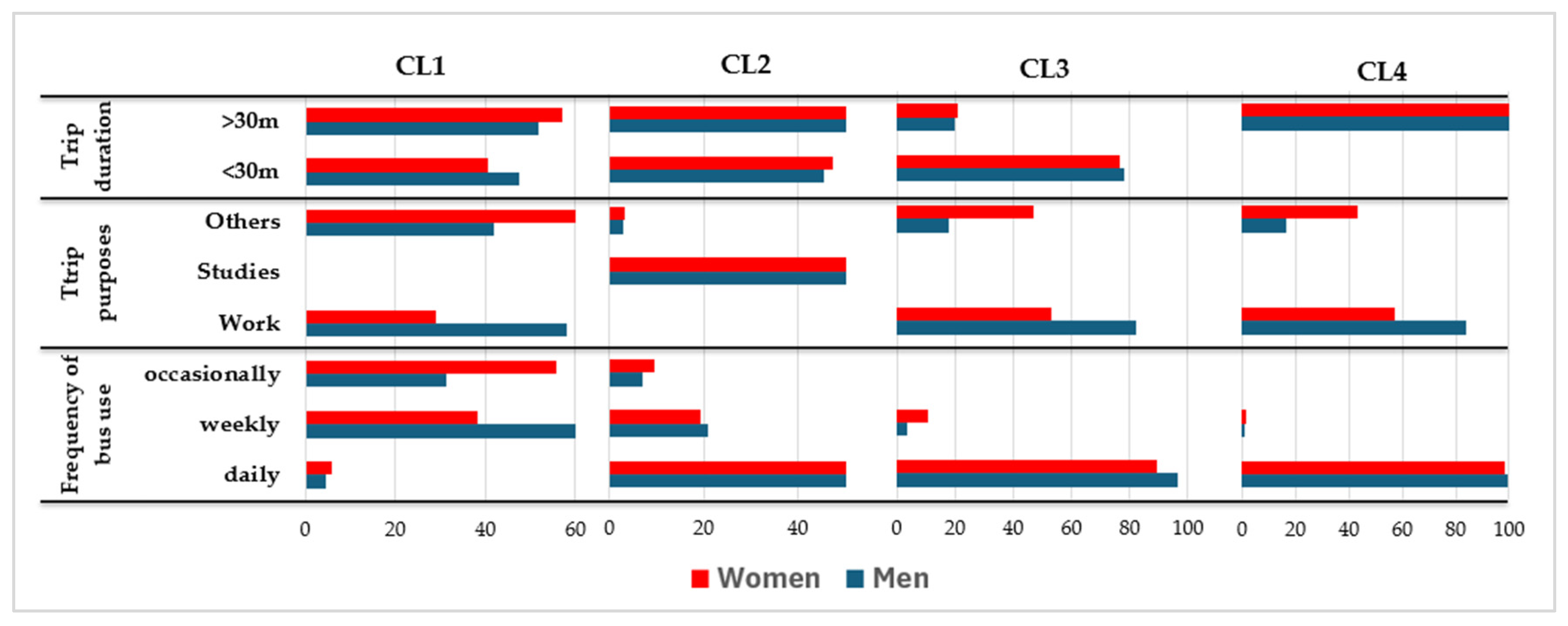
Four clusters have emerged from the analysis (see
Figure 4):
CL 1: Occasional Travellers. This cluster is defined by low-frequency bus use (a few times per week or occasionally), with trip durations mainly between 15 and 60 min and trip purposes distributed across work, shopping, and other activities. Representing 15.6% of the sample, this cluster comprises respondents who use the bus mostly for work (among men) or shopping purposes (among women).
CL 2: Daily Medium-Distance Travellers. This cluster includes users who travel by bus daily (one or more trips per day), with trip durations primarily between 15 and 60 min. The dominant purposes of the trip are studies and leisure. It accounts for 32.9% of the sample. It shows no gender differences.
CL 3: Daily Short-Distance Travellers. This cluster is characterized by high-frequency daily bus use (over 93% make at least one trip per day) and short trip durations (less than 30 min), with work being the predominant trip purpose. This cluster, representing 36.3% of the sample, includes respondents who frequently use buses. Significant gender differences are observed within this group: 82.2% for men and 53.2% for women.
CL 4: Long-Distance Daily Workers. This cluster consists of respondents who use the bus daily (99% using the bus at least once per day) and undertake long-distance trips higher than 45 min, primarily for work purposes. This cluster accounts for 15.3% of the sample. It shows large differences between men (83.7%) and women (56.9%).
Therefore, men make up the majority of work trips, regardless of distance or frequency. On the contrary, other trip purposes—studies and leisure—have no such gender differences. Men make occasional work trips, while women go shopping.
Stage 2: Once bus users are grouped into four distinct trip-related clusters according to their trip patterns, we evaluate their differences regarding the socio-economic variables. Again, as the research is focused on gender, a specific analysis of “intra-cluster” gender differences is also included.
As
Table 5 shows, each cluster group has not only different trip types but also socioeconomic characteristics and includes different shares of women.
CL-1. Occasional travellers. This cluster primarily consists of individuals aged 26–60 years who use the bus occasionally. Men are more likely to be employees (39.3%) or self-employed (31.3%), while women have higher unemployment rates (45.3%). There are notable gender differences in education, with more men than women having secondary education and university degrees. From a gender equity perspective, this profile suggests that women’s occasional travel is associated with lower labour market participation and more fragmented mobility needs, reinforcing the notion that unemployment and restricted access to paid work reduce women’s travel autonomy and their presence in public space.
CL-2. Daily Medium-Distance Travellers. Made up predominantly young adults aged 18–25, this cluster includes students and leisure travellers. Employment and self-employment rates are similar between genders, but more women are unemployed (16.9%). Most of the women in this cluster are students (62.3%). Gender differences in educational attainment are minimal, but more men have a secondary education. This cluster presents the smallest gender gap, reflecting those younger women with access to education experience fewer mobility constraints. However, the higher female unemployment levels foreshadow later inequalities in mobility tied to labour market insertion and household responsibilities, pointing to a transitional stage before gender inequities become more pronounced.
CL-3. Daily Short-Distance Travellers. This cluster includes bus users mostly aged 26–60 who frequently use the bus for short-distance travel, mainly for work. Men are more likely to be employees (36.7%) or self-employed (40.4%), while women have a high unemployment rate (26.9%). Educational levels range from primary-secondary school to university, with a large share of university degrees, 10% higher among women. Despite women being more educated, their lower employment rates reveal a clear mismatch between educational attainment and labour market integration. This mismatch has mobility implications: women make shorter trips and show more constrained mobility patterns, reinforcing gendered inequalities in access to economic opportunities and daily urban life.
CL-4. Long-distance daily workers: This cluster includes long-distance professional commuters and mostly adults aged 36–60. Men are more likely to be employees (40.3%), while women are more likely to be self-employed (29.2%) and have higher unemployment rates (23.1%). There are notable gender differences in education, with men having higher levels of completed studies than women. Although the study found a female unemployment rate of 26%, particularly among highly educated women, this disparity highlights the persistent influence of cultural and structural barriers that limit women’s integration into the workforce and, consequently, their mobility opportunities. Long-distance commuting is strongly associated with formal employment and stable income, making this cluster an indicator of economic autonomy. Women’s lower participation in this group reflects reduced access to well-paid jobs requiring travel, underscoring how labour segmentation and socio-cultural norms shape gendered mobility inequalities.
6. Discussion
The results of this study highlight how gendered mobility patterns are shaped by broader urban socio-economic conditions, revealing differences in how men and women engage with public transport systems in both a developed (Oviedo) and a developing (Tangier) urban context. From an urban science perspective, these findings point to the close relationship between transport accessibility, gender roles, and structural inequalities, especially in cities where socio-cultural norms influence women’s opportunities and everyday travel. Understanding these differences allows us to interpret mobility not only as a transport issue, but as a reflection of urban inequalities, labour market participation, and access to urban services.
In the city-wise gender comparison, the analysis of Oviedo, a city with balanced satisfaction levels among all users in our sample, shows that women have higher daily bus usage (53%) than men (48%). This is also because women use buses more for work (38% vs. 31% for men), reflecting a reliance on public transportation that may be influenced by economic stability and lifestyle choices. Similar gendered mobility patterns have been observed in European contexts, where women’s dependence on public transport reflects differences in access and trip chaining [
13].
On the contrary, bus user patterns in Tangier (Morocco) show significant differences in gender roles. These correspond to their socio-economic and cultural dynamics, typical of a developing city. Men are primarily self-employed and use the bus mainly for work-related trips (55% compared to 30% of women). In contrast, women, who face higher unemployment rates, travel less frequently, mainly for shopping (22% compared to 8% for men). This large difference is further evident in employment status among bus users, with a higher percentage of men being self-employed (31% vs. 16% for women) and a significant proportion of women unemployed (26% vs. 7% for men). These results align with findings from other North African cities, where cultural norms and safety perceptions restrict women’s mobility [
6,
45]. Therefore, there is a lack of gender equity in Tangier, a developing city, compared to the more balanced situation in Oviedo, a developed city, where gender roles are roughly equal.
The differences between the two cities and genders are even more significant in terms of satisfaction with the quality of bus services and their main explanatory variables. Significant gender-related differences were found in satisfaction with the extent of the bus network, both in urban and suburban lines, with men rating it higher (3.91) than women (3.69). Oviedo’s bus services have clear strengths, but there is room for improvement. To enhance overall user satisfaction, the city should expand network coverage to address existing gaps, ensuring greater accessibility and convenience for all passengers. Additionally, implementing regular feedback mechanisms will be crucial for gauging user experience and addressing evolving needs. This user-centred approach reflects current gender-responsive transport planning trends [
18]. Regular quality surveys will allow passengers to provide real-time input, enabling the city to continuously adjust services and maintain high satisfaction levels across all demographics.
Regarding satisfaction levels, gender is a key driver in Tangier: women rate the quality of urban bus services lower than men for five out of nine attributes, including ease of purchasing tickets, network extension, frequency and schedule on weekdays and weekends, and service start/end time. In suburban services, women’s lower satisfaction is particularly marked about start/end service times. These results clearly show that women are less satisfied with attributes related to bus service availability; they prefer a more frequent service with more bus stops. Similar results were found in other developing countries, where service frequency and perceived safety are decisive for women’s satisfaction [
6].
Our statistical analyses also show that satisfaction with attributes related to the quality of the service “inside the bus” (such as travel comfort or smooth driving) is not gender- sensitive. We can then hypothesise that this increased dissatisfaction among women may be due, among other factors, to their higher safety concerns regarding access and egress from bus stops, as well as the possibility of longer waiting times, which women may consider more important than men. In other words, women are more concerned about “outside the bus” situations. That means women’s equity depends to some extent on the quality and security of bus services, which allow them to access work and other activities, whereas men are less bus dependent.
To deepen the investigation of gender differences in Tangier, the Cluster Analysis identified four distinct user groups: Cluster 1 grouped users that travel several times a week, but men in this group predominantly use the bus for work (58%) and more often (weekly 68.8%) than women (44.2% weekly), and also differ in their primary trip purpose which is shopping (49%). Cluster 2 aggregates high-level education students who travel medium distances daily for study and leisure purposes (men, 72%; women, 71%). This means fewer gender differences among upper-level students than in the less educated population. The last two clusters grouped workers of different trip types. Cluster 3 refers to short-distance daily workers (men 82.2%; women 53.2%); women also engage in other activities, such as shopping (33.3%). This cluster has a high share of self-employment (40.4% for men and 23.7% for women), and women have higher education levels than men, with 30.6% holding university degrees. The fourth cluster of workers uses the bus daily for long-distance trips (men: 99.3%; women: 98.4%). The results from the last two clusters show that workers are mainly men, while women have a higher unemployment rate. Remarkably, women in Clusters 3–4 have higher education levels than men, but their unemployment rates are much higher: 26.9–23.1% for women, compared with 6.5–10.1% for men, in each cluster. These findings echo evidence that education alone does not close gender mobility gaps when cultural and institutional barriers persist [
6,
37]. Reducing the gender gap should be combined with policies that address cultural and social dynamics, thereby reducing differences in access to work and other activities, which, in turn, affect travel patterns.
7. Conclusions and Policy Recommendations
The results highlight the intersections between urban characteristics, socio-economic context, and cultural norms, which together shape gender differences in public transport use between Oviedo and Tangier. These findings are particularly relevant for Tangier, where cultural expectations, labour market disparities, and household roles strongly influence mobility choices and levels of participation in the public realm. By considering the operational performance and user experiences observed in Oviedo, policy-makers in Tangier have an opportunity to advance more equitable and inclusive mobility strategies, contributing to broader goals of urban justice and gender equality [
48].
Improving bus services can narrow gender mobility gaps, especially in developing urban contexts. Women are often more reliant on public transport due to lower access to private vehicles, safety concerns, and differentiated household responsibilities; therefore, higher service frequency, extended timetables, and improved spatial coverage can support their participation in employment, education, and social activities.
To move toward greater gender equity, urban and transport governance in Tangier should prioritise gender-sensitive planning approaches, including awareness campaigns that normalise women’s presence in public transport spaces and interventions that improve perception of security through well-lit, monitored, and accessible bus stops [
49].
The findings show minimal gender differences among younger daily travellers engaged in study or leisure activities, suggesting that education and generational change may help to reduce disparities. However, among daily workers, women remain underrepresented despite having comparable education levels, or even higher, indicating persistent structural and cultural barriers in access to formal employment. Among occasional travellers, gender roles remain evident: men travel mainly for work and women for shopping, reflecting differences in household responsibilities and time use.
Nonetheless, this study presents certain limitations that should be acknowledged. First, data collection in Oviedo and Tangier did not take place simultaneously due to pandemic restrictions, which may have introduced minor temporal biases. Second, obtaining detailed socio-economic and household information in Tangier proved challenging due to cultural barriers—particularly affecting women—which limited the inclusion of variables such as marital status, household composition, caregiving roles, or income level. These variables would have enriched the analysis and allowed more comprehensive modelling of gendered mobility dynamics in developing contexts. As highlighted in recent research, gendered mobility inequalities are shaped by the interaction of spatial, economic, technological, and social barriers, suggesting that additional factors such as household structure, land-use patterns, and long-term socio-economic dynamics may further influence mobility outcomes and require longitudinal investigation [
50].
Overall, mobility patterns in Tangier mirror broader socio-cultural and economic dynamics, underscoring the need for coordinated action from urban planners, transport operators, and social institutions. A more inclusive mobility system requires integrating gender perspectives into urban design, transport service planning, and policy evaluation, ensuring that women’s needs—both in daily commuting and occasional activities—are actively considered. Future research could expand this line of work by applying mixed-method approaches—combining surveys with interviews or focus groups—to better capture cultural and social determinants of mobility, and by testing gender-sensitive policy interventions in real urban contexts to assess their effectiveness and replicability across developing cities.