1. Introduction
In the contemporary world, Quality of Life (QoL) is a complex and essential concept, often among the most frequently discussed issues, as it is closely linked to social well-being and the sustainability of cities and societies. From the middle of the 20th century, when experts started to realize that fast economic growth does not necessarily mean a high standard of living, QoL began to be examined as an idea consisting of physical, psychological, social, and other factors that provide a healthy and happy life [
1]. According to [
2], the World Health Organization (WHO) first introduced the concept of QoL in 1948, emphasizing a state of complete physical, mental, and social well-being.
Over the past years, various studies have approached QoL from different perspectives, from economic and health-related indicators to environmental and social dimensions. For example, many studies focus on analyzing QoL at the urban level [
3,
4,
5,
6,
7,
8] emphasizing criteria related to urban space, as well as personal and subjective aspects, such as individual habits. Other studies [
9,
10], have concentrated on assessing QoL in broader contexts, such as the regional level, highlighting the central role of social, economic, and environmental factors in articulating QoL across different dimensions, including education and income characteristics. On the other hand, as the spatial extent increases and the scale becomes broader, such as at the national level, assessments rely more on non-spatial qualitative criteria, like Gross Domestic Product (GDP) per capita, social and health factors, rather than on factors directly affected by space [
11].
The idea of QoL has been applied across different contexts. For instance, Patil and Sharma in 2022 [
6] evaluated and compared QoL across 14 Indian cities, considering basic amenities, economic development, infrastructure, transportation access, environmental conditions, safety and security, and gender-related parameters. These findings, according to the research, highlight the multidimensional nature of QoL measurement and emphasize the need for developing a holistic assessment framework. Other similar studies [
4,
7,
12] also underline the multidimensionality of measuring QoL in urban environments, focusing on social, economic, and environmental factors and considering the urban environment quality as a complex construct, developed with different interrelated, overlapping and diversified components [
4]. Within this broader multidimensional framework, social determinants have also been increasingly recognized as integral components of QoL assessment. Many studies include crime as a social factor that affects the quality of life, especially at the urban scale [
1,
6,
13,
14,
15,
16,
17]. However, the extent to which such factors are explicitly analyzed varies considerably across studies, depending on data availability, spatial scale, and methodological focus.
Geospatial methods play a very significant role in measuring QoL across different spatial scales. Methods and techniques from Remote Sensing (RS) [
9,
18], Geographic Information Systems (GIS) [
6,
16] and Machine Learning (ML) constitute very useful tools for monitoring QoL factors. For example, Sapena et al. in 2021 [
9] used RS and open GIS data, combined with a ML approach (RapidEye mosaic, Local Climate Zone (LCZ) classification, Random Forests), to measure urban spatial patterns in 31 cities across North Rhine-Westphalia, Germany. Another study [
19] applied RS and GIS methods to estimate a QoL index, called Urban Livability Index, using high spatial resolution imagery data and 15 land use-based indicators extracted from GIS/RS data organized into three dimensions: convenience, amenity, health, and safety.
A key methodological issue in this review is evaluating the accuracy with which QoL indicators can be measured using geospatial data. While QoL frameworks encompass social, economic, and environmental factors, only some are directly observable through RS or spatial analysis. Lehner et al. [
20] addressed this by assessing the measurability of International Organization for Standardization (ISO) 37120 QoL indicators with expert-based Multi-Criteria Decision-Making (MCDM) techniques. Their results showed that indicators linked to physical land features—like green spaces, total land area, and outdoor recreational areas—are most suitable for RS. Conversely, social indicators (such as informal housing, sanitation, or household energy use) lack direct spatial detectability and require supplementary socio-economic data. This distinction is especially relevant to this review, as it highlights which QoL dimensions can be reliably evaluated using geospatial methods across various spatial scales.
Beyond the conceptual frameworks of QoL discussed in the reviewed studies, Kovács-Györi et al. [
21] offer an important methodological insight by examining how emerging data-driven methods impact urban livability assessments. Instead of focusing on a single case, their work shows how geospatial big data, RS, Volunteered Geographic Information (VGI), and ML can improve or change QoL evaluations. They point out key challenges, including data reliability, representativeness, and spatial bias, while also recognizing the potential of these methods to measure environmental and spatial aspects of livability. This perspective is especially relevant to this review, as it highlights the conceptual foundation for the increasing use of GIS and RS-based indicators across scales and explains why modern QoL analyses rely more heavily on computational and spatial techniques.
Despite the growing body of research on quality of life, essential gaps remain regard-ing the structure of QoL indices, the selection of factors, and their suitability across spatial scales and analytical purposes. Several studies highlight that existing frameworks often prioritize data availability over conceptual completeness, which can limit their capacity to fully reflect the real quality of life [
9,
22,
23]. Addressing these limitations requires a critical examination of how QoL assessment approaches have evolved. In this context, the present systematic review aims to identify and evaluate indicators, data sources, and methodological frameworks used across multiple spatial scales.
Previous studies have highlighted that QoL approaches exhibit significant limitations that go beyond issues of spatial resolution or data availability. For example, Chen [
24] focuses on environmental QoL, emphasizing that even when operational quantification methods are proposed, a holistic QoL approach requires a combination of objective and subjective assessments and a more systematic selection of indicators, which is often not addressed by environmentally oriented frameworks. In parallel, other studies use geospatial analysis, big data, and machine learning methods for urban sustainability/livability, highlighting that a data-centered, technology-driven approach cannot map the qualitative dimension, such as residents’ perceptions or satisfaction, and they also raise concerns about privacy when location-based data are used [
21]. Furthermore, Sapena et al. [
9] connect the spatial structure and urban morphology with QoL dimensions, recognizing that spatial indicators can explain part of the variation in QoL but do not fully define it, and that observed correlations do not necessarily indicate direct relationships. Finally, Gonzalez et al. [
25] highlighted that the geographical level of analysis can strongly influence the conclusions and the usefulness of indicators. Assessments at a regional scale may hide local differences, while at the municipal level the lack of sufficient and comparable statistical data can undermine the reliability of the evaluation [
21,
24,
25].
In this context, this review aims to analyze the methodologies and frameworks used to measure QoL across different spatial levels, from neighborhood to national, to identify key requirements and offer insights into a multi-scalar approach. This systematic literature review was conducted according to the Preferred Reporting Items for Systematic Reviews and Meta-Analyses (PRISMA) guidelines. The literature was reviewed through a structured search of the Scopus database. It is important to note that the analysis is limited to empirical case studies conducted within specific geographic areas. These case studies provide valuable insights and data that mirror real-world scenarios. Additionally, although two conceptual or methodological papers were included in the theoretical background of the analysis, they were not categorized by spatial scale.
3. Results
This section presents the main findings of this systematic review, organized by spatial scale of analysis. More specifically, the selected studies were examined in detail and categorized into three groups: Urban/Intra-urban, Regional, and National/International. For each category, the techniques and methodologies used to analyze QoL across spatial scales are presented, complemented by brief discussions of observed trends and research gaps.
The following table (
Table 1) presents the distribution of articles by scale of analysis (urban, regional, national). More specifically, 61% of the studies (39 papers) focus on the urban scale, ranging from the neighborhood level to the entire city or metropolitan area. The regional level accounts for 27% (17 studies), while the national scale accounts for 13% (8 studies) and concerns the territorial limits of individual countries.
Before analyzing the findings by spatial scale, it is essential to outline the main conceptual frameworks and indices used to measure QoL in the reviewed literature. The studies included in this review adopt a variety of definitions, reflecting the interdisciplinary nature of QoL assessment and its adaptation to urban and environmental contexts.
Table 2 presents an overview of the most commonly used QoL definitions and indices, illustrating their thematic focus and methodological characteristics.
Although the concept of QoL has been widely used in the international literature, its definitions and measurement methods vary significantly across scientific fields and levels of analysis, QoL is a multidimensional concept that encompasses social, economic, environmental, and physiological components of human well-being. The main types of QoL definitions identified in the reviewed literature can be grouped into several categories. The most frequent measure is the general QoL Index, appearing in 31% of urban papers, reflecting a multidimensional understanding of human well-being that encompasses physical, mental, and social aspects. The Urban Quality of Life Index (UQoL, QoUL), representing the 14% of the studies, is defined within the urban environment and focuses on spatial and environmental parameters, while the Environmental/Ecological Quality of Life (EQoL) accounting for 22% of the papers, interprets QoL through ecological indicators such as pollution levels, green (vegetation) cover, and air quality.
Other less frequently definitions include Regional Quality of Life Index (RQoL, 5%) which examines at regional or inter-urban scales, emphasizing spatial disparities, accessibility, and interregional sustainability, Remote Sensing Quality of Life (RSQoL, 6%) which derives from remote sensing–based ecological indices assessing environmental livability and ecological conditions, the Livability Index which appears in 9% of the total and measures QoL through indicators emphasizing livability, accessibility, and urban services. Finally, a small group of studies (13%) adopts specific thematic QoL frameworks, such as Better Life Index (BLI), Sanitation-related QoL (SanQoL-S), or Territorial QoL indices (TQoL), Infrastructure Quality Index, Water Benefit-based Ecological Index (WBEII), Urban Landscape Quality (ULQI), that analyze Specific thematic QoL frameworks. These approaches reflect different perspectives on examining the concept of quality of life across multiple levels and applications.
For instance, Fu et al. [
19] developed the Urban Livability Index, which was based on 15 land-use indicators grouped into four main dimensions: convenience, amnity, health, and safety. Similarly, Arribas et al. [
23] proposed the Living Environment Deprivation (LED) Index, constructed from parameters such as impervious surface percentage, vegetation cover, water surface, shadow proportion, and texture features derived from remote sensing data.
Table 2 presents the main conceptual categories identified in the reviewed literature regarding the definition and measurement of QoL. Each category reflects a different theoretical orientation and methodological approach, ranging from general multidimensional frameworks to more spatially explicit or deprivation-based interpretations.
The following section presents an analysis of QoL across three spatial scales and approaches: urban/intra-urban, regional, and national/international.
3.1. Urban/Intra Urban Scale: City, Neighbourhood and Community Level
Most studies analyzed the QoL index at the urban or intra-urban level (61%, corresponding to 39 papers). At that scale, several studies (e.g., [
3,
5,
7,
17,
26]) focus on the intra-urban level, examining different sub-levels within cities and other aspects of the city as a whole system [
19,
27,
28,
29]. This local perspective focuses on neighborhoods, communities, or other micro-scale areas, aiming to identify spatial inequalities and variations often reflected in living conditions. At this small spatial scale, researchers frequently use primary data sources (23%), such as questionnaires and field surveys, which are typically combined with high-resolution remote sensing imagery (21%).
The analysis of QoL at the urban level is based on a wide range of data types, used depending on the level of detail and the research question. High-resolution satellite imagery, such as IKONOS, QuickBird, WorldView, SPOT, and Sentinel-2, appears in 21% of urban studies and is used mainly to map very detailed elements of the urban environment, such as building density, green areas, and the texture of the urban environment. Studies like Fu et al. [
19], Najafi et al. [
30], used high-resolution satellite imagery to extract detailed environmental indices, while Arribas et al. [
23] utilize IKONOS imagery to analyze urban degradation patterns. In parallel, Kamarudin et al. [
31] and Faka et al. [
32] used high-resolution imagery data from Urban Atlas and Google Maps to show environmental and socioeconomical differences at the neighborhood level.
Medium-resolution imagery, primarily from Landsat or MODIS satellites, plays a significant role in extracting indices such as the Normalized Difference Vegetation Index (NDVI), the Normalized Difference Built-up Index (NDBI), and the Land Surface Temperature (LST) in urban areas. Salavati et al. [
2] and Tahiri et al. [
33] used Landsat imagery to analyze thermal comfort and environmental degradation, while Musse et al. [
12] and Kazemzadeh-Zow et al. [
8] integrated satellite indices to construct complex environmental QoL indices. Furthermore, Liand and Weng [
28] utilized Landsat thermal zones for analyzing the urban thermal environment, and Roy et al. [
4] combine satellite imagery data with socio-economic datasets to discover spatial inequalities at the ministry level.
The most extensive data categories are census, socio-economic, and spatial datasets, with 20 studies at the urban scale that base their QoL results on these sources. Natera et al. [
15] utilized socioeconomic datasets to calculate the walkability index at the neighborhood level, while Lima and Baracho [
29] combined census data with spatial layers to assess social inequalities. Meanwhile, several studies used municipal administrative data to depict social, environmental, and economic conditions at the neighborhood scale. Lipianina et al. [
14] use municipal administrative data to depict social, environmental, and economic conditions at the neighborhood scale.
Similarly, collecting primary data through field or household surveys is also crucial. Hosseini et al. [
26] used questionnaires to assess social well-being in refugee settlements, while Huynh et al. [
34] gathered data to analyze the links between environmental comfort and perceived quality of life. Sinha et al. [
35] and Kamarudin et al. [
31] combined fieldwork and GIS to map both subjective and objective QoL, and Ebraheem et al. [
36] and Dehimi [
37] relied on interviews and questionnaires to evaluate access to urban services and social satisfaction. Finally, Tesfazghi et al. [
17] and Merschdorf et al. [
38] merged household surveys with geospatial data to create a multidimensional view of urban quality of life.
The methodology used to assess urban QoL mainly relies on spatial approaches with GIS in 59% of the studies, as urban heterogeneity demands detailed spatial representation. GIS-based spatial analysis is the most common method, enabling the calculation of accessibility metrics, the detection of spatial correlations, and the analysis of intra-urban patterns. For example, Fu et al. [
19] used GIS to map comfort and accessibility indicators, while Salavati et al. [
39] applied GIS to combine environmental and social parameters. Similarly, Liang and Weng [
28] and Najafi et al. [
30] employed multilevel spatial analysis to examine changes in urban quality, and Faka [
32] and Macků et al. [
1] used GIS to investigate socio-economic inequalities across neighborhoods.
A second key methodological aspect involves using dimensionality reduction techniques, such as Principal Component Analysis (PCA) and Factor Analysis, to combine multiple indicators into a single, clear measure of QoL. For example, Patil and Sharma [
6] identified underlying QoL dimensions in Indian cities, while Lima and Baracho [
29] used PCA to rearrange social and environmental variables statistically. Similarly, Arribas-Bel et al. [
23] applied PCA for dimensionality reduction and then incorporated the resulting components into a spatial regression model to identify deprivation patterns, and Bhunia et al. [
40] used PCA to create a combined urban well-being indicator. Ustaoglu et al. (2025) [
41] also included PCA as an important part of a larger multicriteria assessment framework in an urban setting.
Alongside these methods, MCDM techniques such as Analytical Hierarchy Process (AHP) [
32,
37,
42], Fuzzy Analytical Hierarchy Process (FAHP) [
2,
8,
39], Technique for Order Preference by Similarity to Ideal Solution (TOPSIS) [
30], and VlseKriterijumska Optimizacija I Kompromisno Resenje (VIKOR) [
8] were commonly used to weight indicators and rank urban areas and appear in 9 urban studies (23%). Salavati et al. [
2] combined FAHP with spatial interpolation to calculate environmental indicators, while Kazemzadeh-Zow et al. [
8] used fuzzy-AHP to assess ecological risks at the neighborhood level. Similarly, Javanbakht et al. [
3] incorporated Fuzzy Analytical Network Process (Fuzzh—ANP) with spatial-temporal analysis to evaluate environmental quality in Tehran, and Bovkir et al. [
42] compare different Multi-Criteria Decision Analysis (MCDA) techniques to develop more reliable QoL indices.
RS is also a vital methodological tool in urban studies, often using indicators like NDVI, NDBI, and LST. Liang and Weng [
28] used NDVI and LST to evaluate the urban microclimate, while Kazemzadeh-Zow et al. [
8] combined NDVI with built-up indices to assess environmental quality across neighborhoods. Similarly, Yagoub et al. [
27] applied remote sensing metrics to identify spatial patterns of urban degradation in Abu Dhabi, whereas Faisal and Shaker [
16] used Landsat imagery to extract environmental indicators. Huynh et al. [
34] incorporate LST, NDWI and NDBI, along with social variables, to analyze the relationships between thermal conditions and perceived quality of life.
Additionally, 13 urban studies used statistical modeling as a crucial methodological tool to analyze factors that influence the quality of life in cities. Huynh et al. [
34] used Partial Least Squares Structural Equation Modeling (PLS-SEM) to explore relationships among social, environmental, and economic factors, and Iamtrakul et al. [
43] combined regression models with deep learning to evaluate transport-related QoL indicators. Similarly, Roy et al. [
4] employed Ordinary Least Squares (OLS) and Moran’s I to identify spatial autocorrelation, while Sinha et al. [
35] use Multivariate analysis with Structural Equation to examine intra-urban differences in QoL. Kamarudin et al. [
31] combine Inverse Distance Weighting (IDW) interpolation with regression to estimate urban spatial trends.
Finally, a significant number of the research papers used ML methods for classification and prediction. Iamtrakul et al. [
43] combined deep learning semantic segmentation with spatial analysis to assess urban conditions and Arribas-Bel et al. [
23] applied ML to model spatial inequalities, and Yagoub et al. [
27] utilized artificial neural networks to classify urban areas using remote sensing data.
The distribution of studies across different spatial scales clearly shows a dominance of sub-city analyses, suggesting that QoL research mainly aims to capture detailed local differences. Neighborhood and community-level studies account for 28% of the sample, with significant contributions from 11 studies [
5,
12,
15,
16,
23,
24,
26,
35,
42,
44,
45]. These studies typically focus on local accessibility, environmental conditions, and subjective well-being. The most common category is the district or ward level (38%), indicating a strong reliance on administrative subdivisions for socio-spatial assessment. Different studies [
2,
3,
4,
7,
8,
17,
28,
30,
32,
36,
39,
43,
46,
47], show how this scale helps researchers identify structured inequalities while remaining compatible with policy-relevant units of analysis. Citywide studies make up 8% of the dataset and focus on overall urban conditions, including three studies [
19,
27,
34]. Their lower frequency may be due to the limited ability of city-level indicators to reveal internal differences. Multi-city and urban-system analyses account for 20%, indicating rising interest in comparative studies and cross-urban interactions. Notable, eight studies are included in this category [
1,
6,
14,
31,
33,
37,
40,
48]. Finally, studies focused on metropolitan regions account for only 5% (two studies) [
35,
48], indicating that broader functional urban areas remain underexplored in QoL research due to data complexity and multi-jurisdictional boundaries.
Overall,
Table 3 illustrates the evolution of research at the urban level, showing a clear shift from traditional statistical and cartographic methods toward more advanced analytical tools. These modern approaches enable the integration of physical, social, and economic indicators within a more comprehensive, data-driven analytical framework.
At the urban level, the mapping scale is rarely specified explicitly because most studies depend on existing administrative boundaries or grid cells to represent spatial variation in QoL. Analyses often concentrate on districts, wards, neighborhoods, or small community units, serving as the practical mapping scale even without explicit cartographic measurements. This pattern appears in studies [
2,
3,
4,
39], in which all indicators are standardized to a uniform spatial grid (typically 30 m) to enable comparisons within cities. In other cases, when the case study covers the entire city [
19,
27], the scale is directly derived from pixel-based data (e.g., 1:10,000 or 200 m × 200 m grid cells), whereas many studies [
7,
15,
47,
50] rely solely on vector-based administrative or statistical zones without using raster datasets.
Raster resolution significantly influences how intra-urban patterns are represented. Many studies [
2,
3,
4,
33,
45,
48], use 30 m Landsat-derived data. This resolution captures broad thermal and land-cover variations but tends to smooth out micro-scale differences. Higher-resolution data are used in studies where greater spatial detail is needed. For instance, Fu et al. [
19] use 10 m ALOS imagery, while Najafi et al. [
30] use 10 m Sentinel-2 data for detailed environmental assessments. High-resolution imagery, such as IKONOS 1–4 m data, is employed selectively [
5], analyze vegetation structures across many micro-spatial units. Conversely, some studies [
1,
6,
28,
32], do not use raster data at all, instead focusing on composite indices, accessibility models, or socio-economic data within vector-based administrative units.
These patterns become even clearer when analyses specifically focus on intra-urban heterogeneity. Krukowski [
5] and Si Chen et al. [
24] exemplify cases where the spatial unit is small—hexagonal cells in the first and fixed neighborhood grids in the second, using IKONOS and SPOT-5 imagery data—to capture detailed environmental variation. Similar methods are used by Najafi et al. [
30] and Kazemzadeh-Zow et al. [
8] who analyze block-level data to assess thermal conditions and environmental quality across thousands of small subdivisions. Other studies [
17,
26,
42,
43] remain vector-based but still operate at the detailed neighborhood or ward level, enabling the identification of intra-urban inequalities without relying on raster layers.
Overall, the literature on urban and intra-urban areas shows that scale is seldom directly specified as a cartographic parameter. Instead, it tends to arise from factors like administrative boundaries, the resolution of remote sensing data, and the level of spatial detail desired in the analysis. Higher resolutions enable more detailed intra-urban differentiation, whereas coarser or vector-based methods tend to highlight larger-scale morphological or social-environmental gradients.
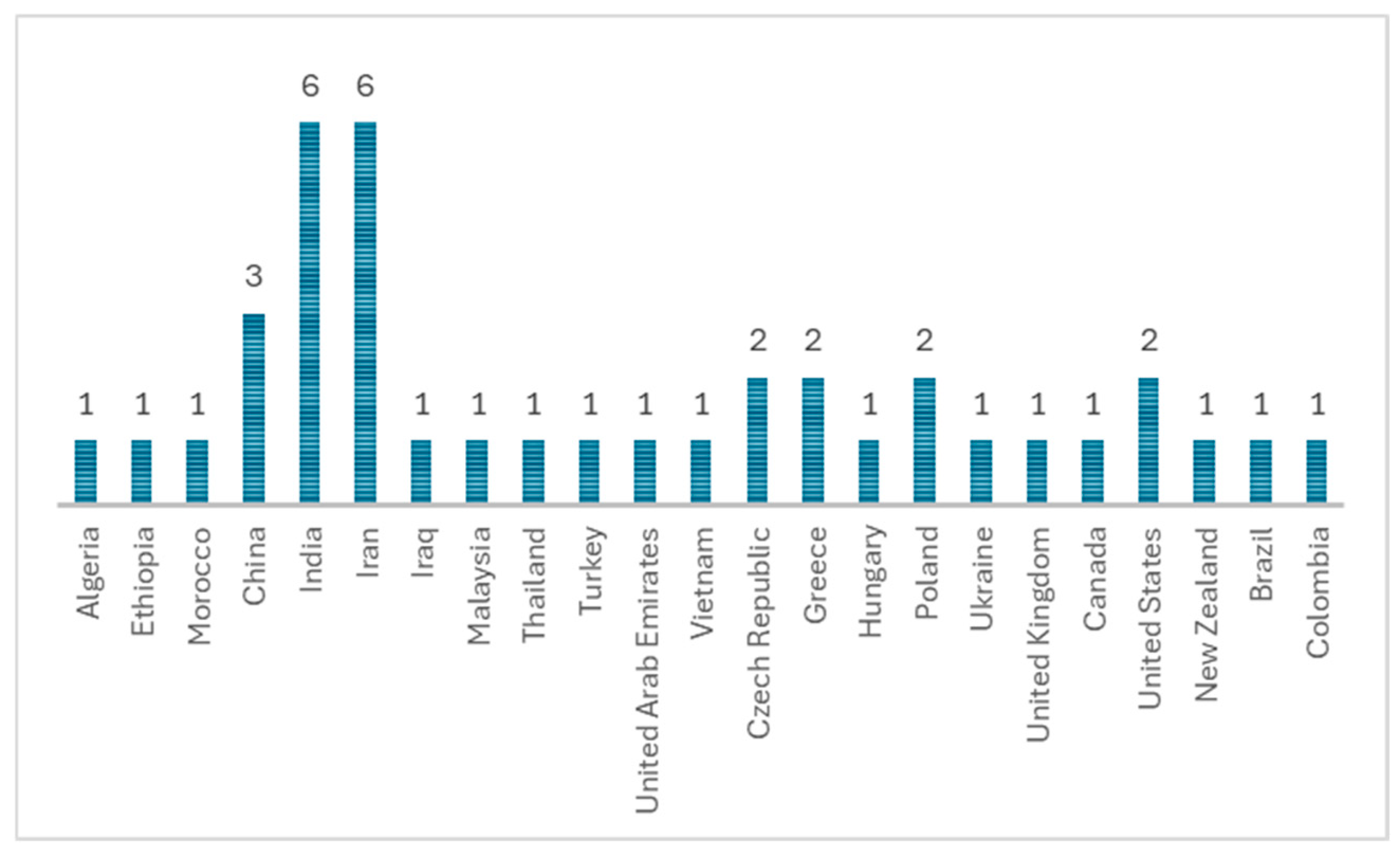
Finally, these patterns are more evident when contrasted with the geographic distribution of urban-scale studies (
Figure 2). Most countries have just one publication (3%), although a few have more. India and Iran each represent the largest share at 15%, followed by China at 8%, with the Czech Republic, Greece, and the United States each at 5%. The remaining countries contribute 3% each. This distribution underscores the geographic diversity in the urban-scale literature and provides context for the earlier discussed methodological trends.
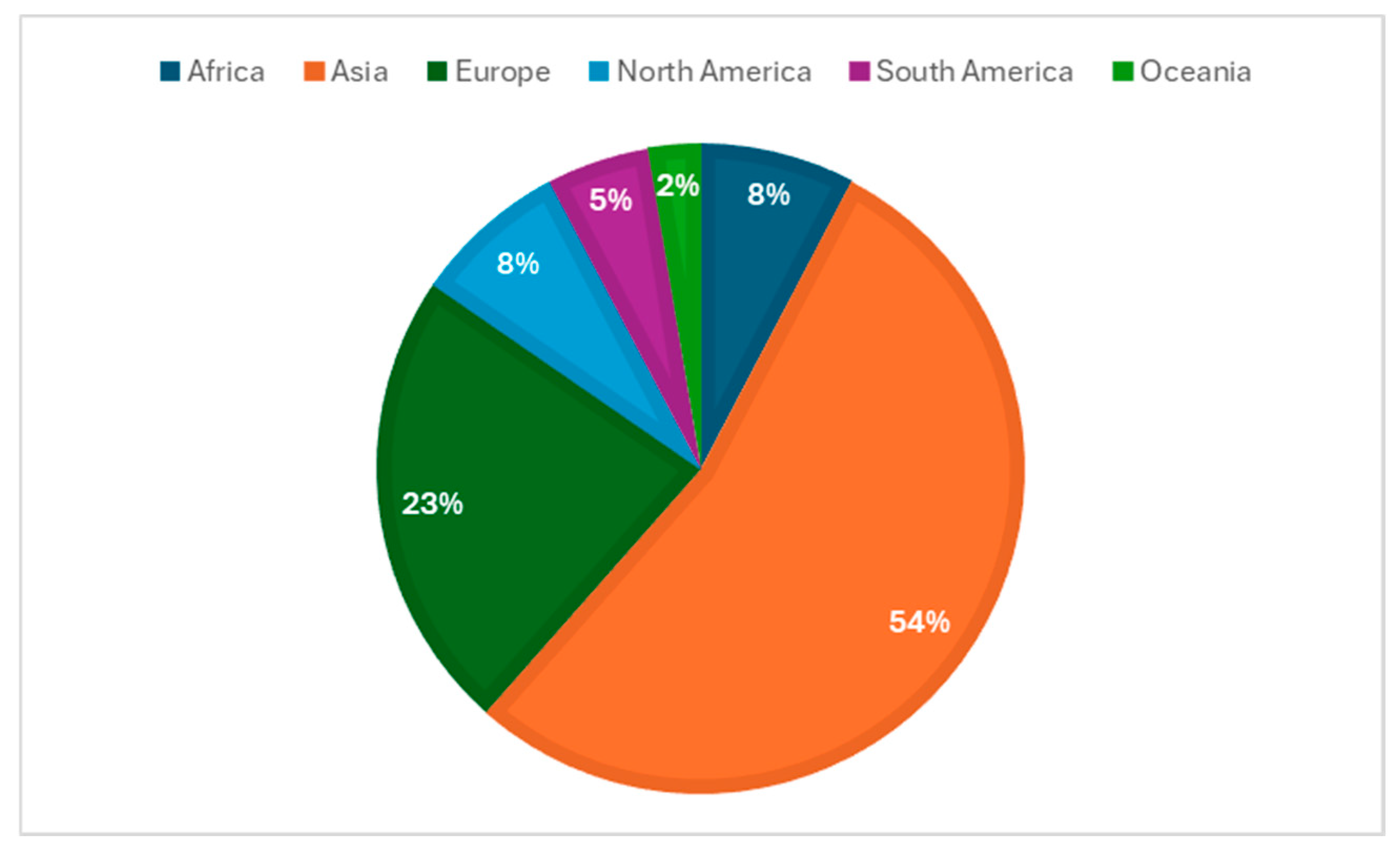
Figure 3 shows the geographic distribution of urban-scale studies. The majority of cases are conducted in Asia, representing 54% of the sample, followed by Europe at 23%. North America contributes 8% of the studies, while South America and Africa each account for 5%, and Oceania represents 2%. This distribution underscores a pronounced concentration of urban QoL research within Asian contexts.
3.2. Regional Scale
At the regional scale, the QoL assessment combines remote sensing data and regional statistics to provide a comprehensive view of social, economic, and environmental conditions. Almost 53% of studies at this scale used medium- to high-resolution data, such as LANDSAT, MODIS, or SENTINEL, to extract indicators, including NDVI, LST, and other measures of environmental quality (e.g., [
18,
51,
52,
53]). In parallel, the same percentage (53%) of studies rely on regional or national statistics data (Eurostat, census data, socio-economic indicators), which provided essential information on income, education, and accessibility, enabling the socio-economic interpretation of spatial standards [
10,
49,
54,
55,
56,
57], showing an equal distribution of methodology. Additionally, 18% of the studies used administrative and spatial databases, such as thematic maps or GIS infrastructure layers, which enhance spatial analysis accuracy and facilitate comparisons across areas.
Regarding the methodology, there is a balance between MCDA and Spatial Multi-Criteria Evaluation (SMCE), with 9 regional studies (53%) and Indicator Weighting, such as AHP/Entropy/MCDM, Outranking methods, and Data Envelopment Analysis (DEA), and Remote Sensing Indices, with each method accounting for 53% of the regional studies (9 studies). These approaches supported the construction of social, environmental, and economic indicators to assess both quality of life and environmental conditions [
41,
51,
58]. Remote sensing indices also played an essential role in QoL assessment at the regional level, with 53% of the studies including vegetation, land surface temperature, or built-up index (NDVI, LST, NDBI, etc.), linking environmental factors with socio-economic characteristics [
52,
59,
60].
PCA and other dimensionality reduction techniques appear in 65% of the studies, helping to identify the most significant features and construct composite indices that group areas with common characteristics (e.g., [
9,
10,
41]). At the same time, the use of statistical models and regressions reaches 65%, allowing the exploration of relationships between social and environmental variables, and detecting the main factors that influence spatial differences in QoL (e.g., [
10,
18,
51,
52,
53,
55,
57,
61]).
ML and AI-based methods also account for a significant proportion (five regional studies—28%) of the studies, indicating a shift in research towards more automated, computationally advanced approaches [
41,
59,
60,
62]. These methods facilitate classification, pattern detection, and the prediction of future changes. At the same time, Cluster and Hotspot Analysis appeared in 41% of studies, assisting in the detection of spatial inequalities [
9,
25,
41,
49,
57,
58], while comparative and temporal analyses are found in 41%, focusing on spatial and temporal variations in environmental and social indicators [
18,
48,
51,
52,
53,
59,
61].
Table 4 summarizes the main data sources and analytical approaches used for assessing QoL at the regional scale.
At the regional level, the focus shifts from detailed urban differences to broader comparisons among provinces, counties, or NUTS-level regions. Most reviewed studies do not specify mapping scale numerically; instead, the administrative boundary system determines the effective scale of analysis. This is clear in several studies [
41,
54,
55,
58,
61], where regional QoL is assessed solely through statistical indicators aggregated at provincial or NUTS-2 levels, without remote sensing or raster data use.
A second category of regional studies integrates remote sensing data primarily as medium-resolution environmental inputs rather than detailed surface maps [
10,
52,
60], which utilize 30 m Landsat-derived variables such as NDVI, LST, and RSEI components. These variables are harmonized across provinces or counties to analyze regional patterns. In this context, raster resolution is constrained by the need for consistent comparisons across regions; higher resolutions do not provide additional benefits, as the analytical units are primarily large administrative areas.
Other research uses even coarser remote sensing datasets like MODIS 500 m [
18,
62], emphasizing the macro-scale nature of regional analysis. These resolutions provide consistent representations of land surface patterns across large areas, making them suitable for studies spanning regions of tens of thousands of square kilometers. A subset of regional research [
9,
53,
59], employs pixel-level or grid-based methods (10–100 m) to analyze environmental or accessibility conditions across regions with significant intra-regional heterogeneity. While these studies use higher-resolution data such as Sentinel-2 (10 m) and CORINE (100 m), the practical mapping scale is still determined by the larger administrative or regional boundaries within which pixel data are grouped. Overall, assessments of regional-scale QoL focus less on detailed cartographic scales and more on administrative comparability. Raster resolutions typically center around 30 m or 500 m, balancing environmental detail with the generalized spatial units needed for cross-regional analysis.
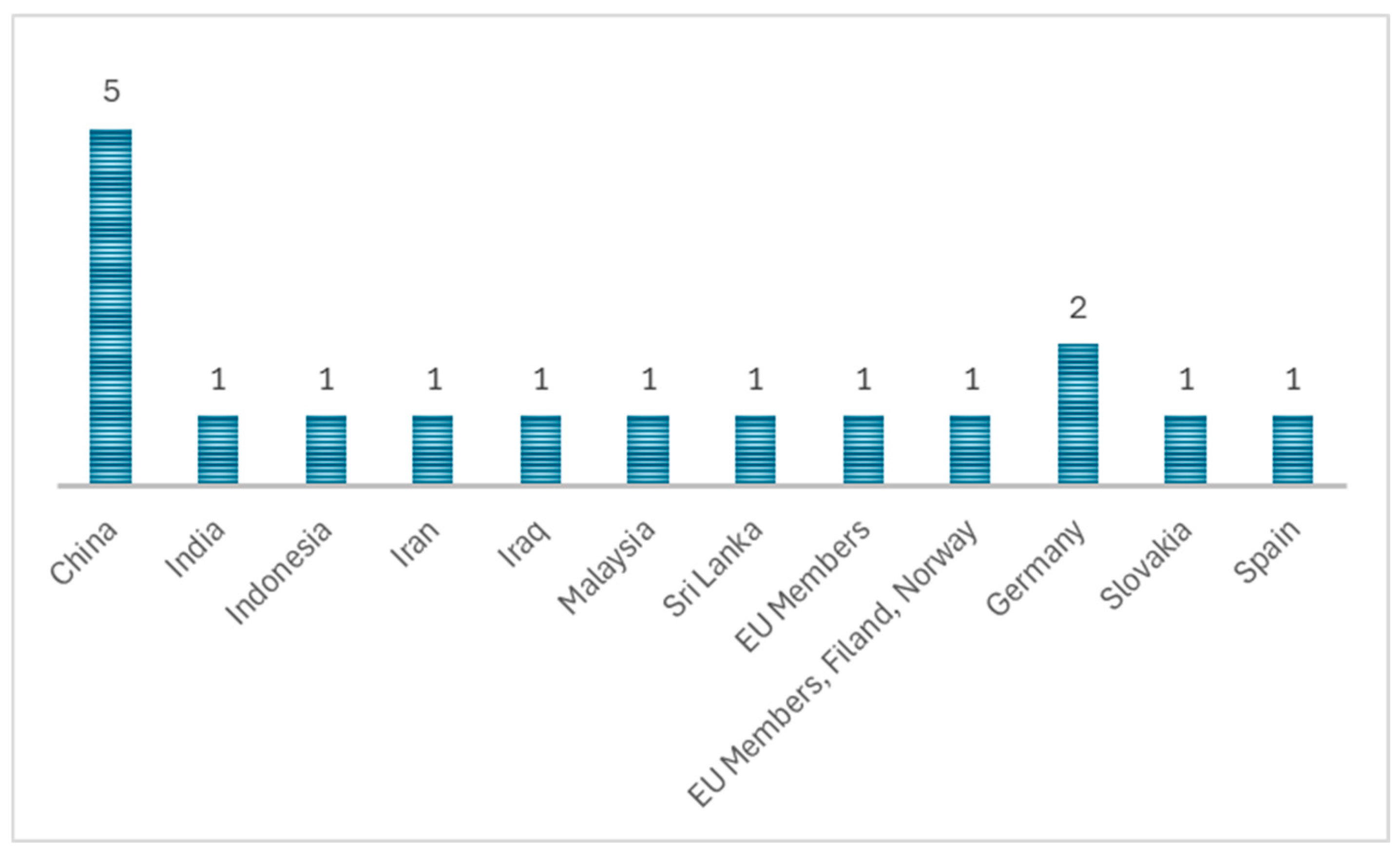
The reviewed regional studies span a wide geographic area. As illustrated in
Figure 4, China accounts for 29% of these publications, followed by Germany with 12%. The remaining studies are distributed across countries such as India, Indonesia, Iran, Iraq, Malaysia, Sri Lanka, Slovakia, and Spain, each contributing approximately 6%. Some research also examines groups of EU Member States or combines EU regions with Norway and Finland, indicating analysis at broader supranational levels. This distribution highlights the geographic diversity of the regional literature and sets the stage for understanding the methodological approaches discussed next.
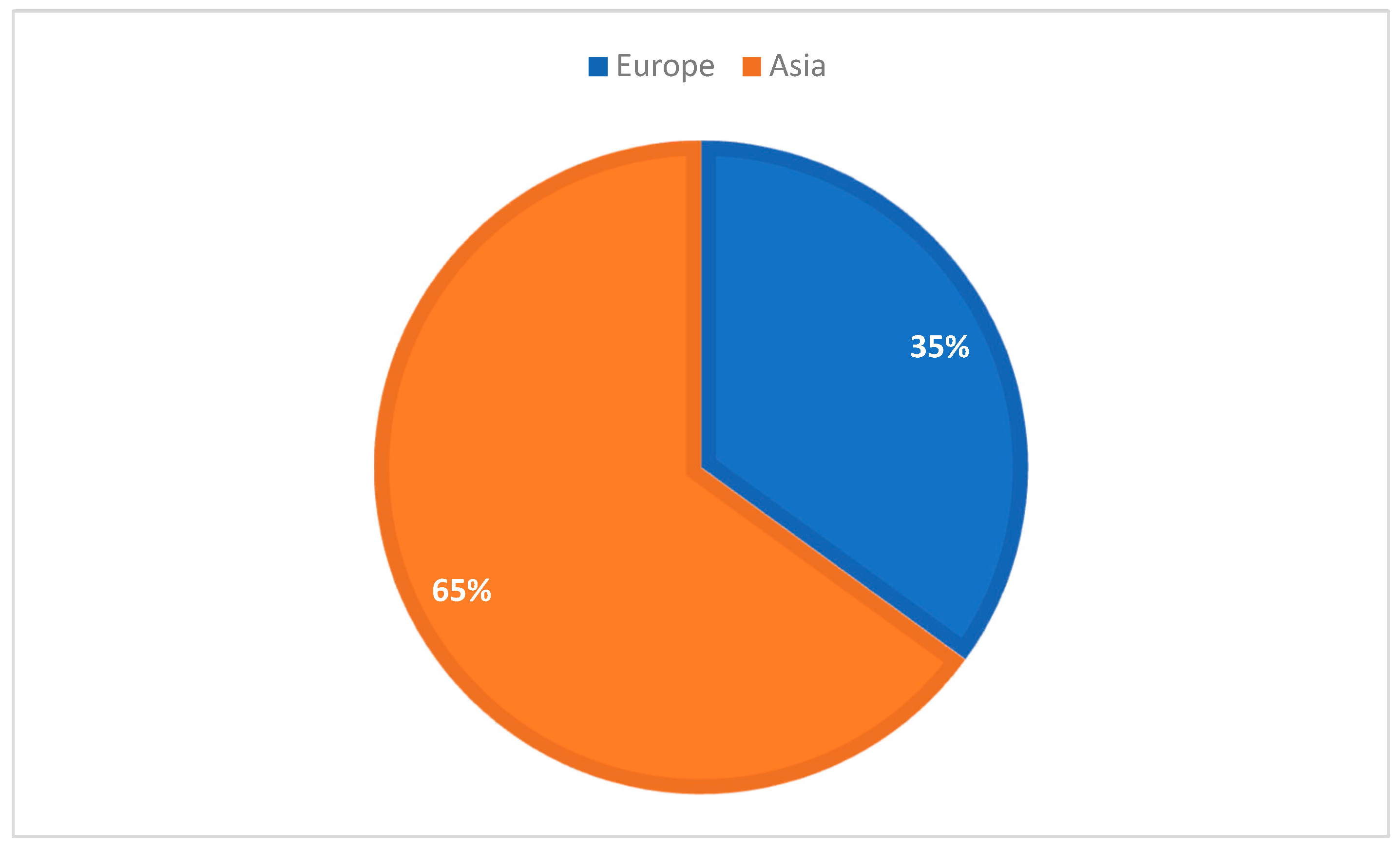
Figure 5 shows the geographic distribution of regional-scale studies across continents. Most of the publications come from Asia, which makes up 65% of the sample, while Europe accounts for the remaining 35%. This distribution highlights the dominance of Asian case studies within the regional-level QoL literature during the reviewed period.
3.3. National/International Scale
At the national scale of analysis (11% of studies, corresponding to seven papers), the QoL assessment is primarily based on large-scale official statistical data (42%), global indices (42%), and survey data (29%). These data sources and internationally harmonized indicators enable cross-country comparisons and the examination of socio-economic differences at a broader spatial level. According to
Table 5, most studies rely on national databases, such as Hellenic Statistical Authority (ELSTAT), National Institute of Statistics and Economic Studies in France (INSEE), and Office for National Statistics (ONS), as well as on global indices such as the World Happiness Index and the Organisation for Economic Co-operation and Development (OECD) Better Life Index with 43% of studies on each category. More specifically, the study by Jannani et al. (2021) [
11] developed a new index—the World Happiness Index—closely related to QoL, that analyzes various socio-economic indicators with pure ML methods, different socio-economic indicators (GDP per capita, social support, healthy life expectancy, freedom, generosity, perception of corruption) across 38 countries. These indices offer a holistic overview of key dimensions of human development, forming a solid foundation for contemporary cross-country analysis.
Methodologically, there is a clear trend toward the use of statistical and ML predictive models. Studies employ either traditional statistical techniques, such as correlation and regression analysis (42%), or more contemporary data-driven approaches based on ML and artificial intelligence. On a national scale, approximately 42% of the reviewed studies use ML tools such as Artificial Neural Network (ANN), Support Vector Regression (SVR), Random Forest (RF), and Long Short-Term Memory network (LSTM), particularly for predicting the modeling of QoL at global or national levels, providing insights into the underlying components of well-being (e.g., [
11,
50,
64]). This transition from traditional statistical methods to data-driven approaches underscores the need for adaptive, autonomous models that can capture the complex relationships among social and environmental factors.
In parallel, studies such as Oshri et al. (2018) [
64] demonstrated that integrating remote sensing data with deep learning techniques can expand the national analytical framework by linking infrastructure, environmental, and socio-economic data. This approach uses satellite imagery (Landsat, Sentinel-2) in Afrobarometer surveys, representing one of the first applications of Convolutional Neural Networks (CNNs) to understand infrastructure and QoL at the national scale.
Additionally, research at this level often employs mixed data sources, such as household surveys and subjective well-being indices, to develop composite indices that combine social, economic, and environmental parameters, highlighting the multidimensional nature of QoL [
13,
65,
66]. For example, Akter et al. [
66] focused on psychometric evaluation and healthcare and safety indicators (SanQoL-5) in six African and Asian countries, while Berbekova et al. [
65] adopted a socio-economic perspective, exploring the correlation between tourism and national QoL indices through economic analysis.
At the same time, statistical techniques, such as correlation and regression analysis, are widely used to explore the relationships among variables that affect well-being. In many cases, the research adopts a comparative perspective, examining differences between areas or countries through reference indicators and statistical clustering [
50,
67].
Table 5.
Overview of data sources and analytical methods for Quality of Life (QoL) assessment at the National and International scales.
Table 5.
Overview of data sources and analytical methods for Quality of Life (QoL) assessment at the National and International scales.
| Category | Sub-Category | Number of Studies | Percentage (%) | Articles |
|---|
| Data Type | National statistics (ELSTAT, INSEE, ONS, etc.) | 3 | 42% | [13,56,65] |
| Global indices (World Happiness Index, Better Life Index) | 3 | 42% | [11,50,67] |
| Survey data | 2 | 29% | [64,66] |
| Methodology | Statistical/Multicriteria analysis (correlation, regression) | 3 | 42% | [13,56,65] |
| Composite index modeling | 3 | 42% | [11,66,67] |
| Cross-country comparison | 3 | 42% | [11,50,67] |
| Spatial visualization (choropleth mapping) | 2 | 29% | [13,64] |
| AI-based modeling (Machine Learning and Deep Learning) | 3 | 42% | [11,50,64] |
At the national and international level, the idea of mapping scale shifts functionally, as analyses depend on the largest available administrative units—such as provinces, regions, or entire countries—rather than detailed spatial divisions. For example, Kırlangıçloğlu [
56] assesses QoL in Turkey across all 81 Turkish provinces using interpolated socio-economic and environmental data but does not specify a formal cartographic scale because the provincial boundary system itself determines the operational spatial level. Similarly, Oshri et al. [
64] examine socio-environmental disparities across African countries at the national scale, using remote sensing data (Sentinel-1 and Landsat-8) as aggregated variables instead of continuous mapped surfaces.
When spatial datasets cover extensive areas, like the nationwide analyses across thousands of U.S. counties, raster resolution becomes less important [
65,
66]. There is no specific spatial scale set, and remote-sensing data are often used indirectly, such as climate or land-use variables summarized at the county level. This approach is also common in multinational evaluations, such as those by Akter et al. [
66] across six African and Asian countries and Kaur et al. [
50] within OECD member states, where GIS mapping is usually not employed, and the analysis mainly relies on harmonized socio-economic indicators.
Additional evidence of this trend is provided by Celebi et al. [
67] who assessed QoL across 31 Asian capitals using composite indicators without spatial mapping units, and by Jananni et al. [
11] who conduct a global QoL assessment across 156 countries using WHR variables aggregated at the national level. In these national and international studies, when included, raster data are typically used only as summarized environmental measures. Overall, the literature at the national scale emphasizes a methodology focused on comparability, aggregated indicators, and macro-pattern recognition instead of detailed spatial differentiation.
At the national level, the reviewed studies cover a broad range of territorial scales, from assessments of individual countries to datasets that include multiple nations and global regions. This range includes analyses focused on Turkey and the United States, as well as larger frameworks such as the 38 OECD member countries, 31 Asian countries, and global samples that encompass up to 156 nations.
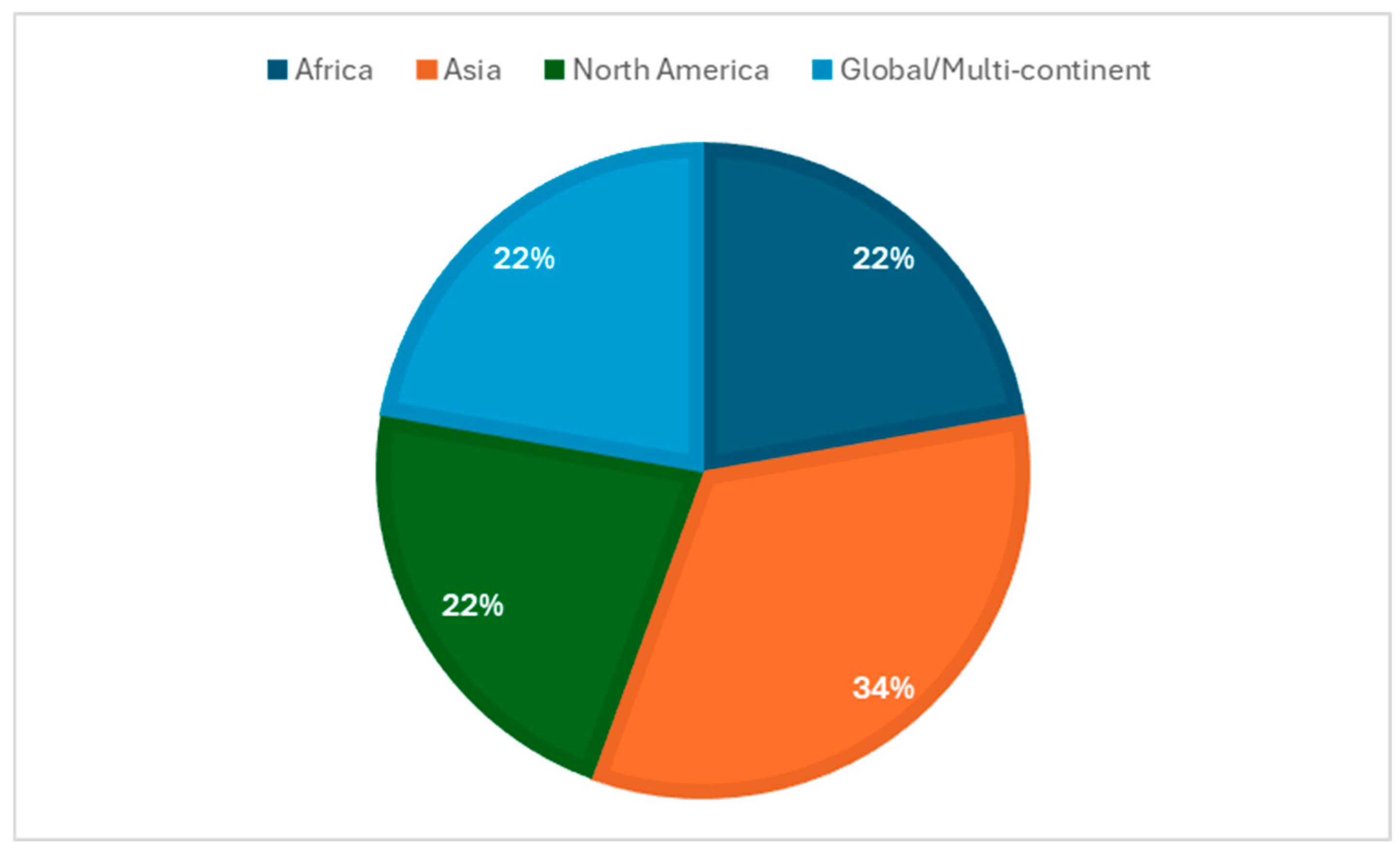
Figure 6 summarizes this variation in study coverage, demonstrating the dominance of multinational and international datasets in QoL research at this spatial scale.
Figure 6 also shows the global distribution of studies at national and international levels. Asia has the highest share of publications (34%), while Africa, North America, and global or multi-continent studies each make up 22% of the sample. This trend suggests a more even distribution of research activity across larger geographic scales compared to urban and regional levels.
3.4. Synthesis and Scale-Dependent Patterns
To summarize the findings from previous sections, this subsection consolidates the key methodological patterns observed at urban, regional, and national scales. The first table summarizes the indicator types, data sources, and analytical methods used at each scale. The second table compares variations in mapping scale, raster resolution, and analytical units across different levels. Together, these tables provide a comprehensive view of how QoL assessments evolve methodologically as spatial extent increases.
Table 6 highlights the main findings by scale, comparing indicators, data sources, and approaches. This overview demonstrates the shift from environmentally focused, data-heavy analyses at smaller scales to more complex, integrated methods at larger scales.
Across spatial scales, the reviewed studies show a steady shift from detailed operational units at the urban level to larger administrative units at the regional and national levels. Raster resolutions also follow this pattern: 10–30 m data are common in urban studies, 30–500 m in regional analyses, and raster inputs are often excluded entirely at the national scale. Mapping scale is seldom reported with specific numbers and is usually implied by the spatial unit of analysis. These patterns reveal apparent differences in analytical detail and data choice across scales. Building on this overall methodological overview, the following table (
Table 7) illustrates how mapping scale, raster resolution, and analytical units vary with the spatial level of analysis.
4. Discussion
The analysis of the results revealed distinct methodological differences in the assessment of QoL across different spatial scales, highlighting the close relationship between analysis, available data, and research focus. Although the overall QoL framework remains consistent and is based on a combination of social, environmental, and economic parameters, the representation of QoL varies considerably across the micro and macro levels of analysis. This variation concerns not only the spatial dimension but also the nature of indicators, data sources, and methodological procedures applied, leading to a more comprehensive and multilevel understanding of QoL.
At the urban and intra-urban scales, the research primarily focuses on parameters related to physical and social space, including green areas, surface temperatures, building density, accessibility, and social cohesion. The use of high-resolution satellite imagery (IKONOS, Sentinel-2, etc.) enables detailed mapping of urban forms and environmental quality, while also allowing integration of census and socio-economic data at the neighborhood level. The methodological approach at this scale also relies on spatial statistical tools, including spatial autocorrelation indicators (LISA, Moran’s I), dimensionality reduction techniques (PCA/FA), and regression or ML models. The integration of ML techniques appears to be a characteristic of advanced research production, enabling automated detection of spatial patterns and the creation of predictive models to identify spatial inequalities and socioeconomic differences in cities. Overall, urban-scale methodological approaches increasingly integrate GIS, remote sensing, statistical analysis, and computational techniques, enabling a detailed and reliable representation of intra-urban variation in quality of life. The data analysis is characterized by a multilayered system of sources that combines satellite imagery, census information, administrative layers, and primary surveys, offering a comprehensive understanding of intra-urban variability and the factors shaping quality of life.
At the regional level, interest shifts toward a more comprehensive approach to quality of life, in which distinct indices are integrated into broader multi-criteria or statistical frameworks. Data at this scale are usually derived from national and European databases, such as Eurostat, and are often complemented by measurements from medium-resolution imagery, including Landsat and MODIS. Another significant point is the typical use of multicriteria methods (MCDA/SMCE), indicator weighting (AHP, Entropy), and spatial regression models, which aim to provide a comprehensive view of social, environmental, and economic parameters. At this scale, RS is closely linked with statistical datasets, enabling the assessment of regional inequalities and facilitating comparisons across different geographical units. A clear trend is also observed toward integrating data from multiple sources, which enhances the reliability of QoL assessments and establishes conditions for conducting multilevel analysis. Overall, the regional scale functions as an intermediate level of analysis, integrating socio-economic and environmental data. These studies emphasize the importance of statistical, remote-sensing, and ML tools for capturing spatial complexity and identifying inequalities that affect the quality of life across regions.
On the other hand, at the national and international levels, the methodology becomes broader in scope. The indices mainly focus on governance factors, such as GDP, the Human Development Index (HDI), and the OECD Better Life Index, and offer comparisons between countries and advance overall evaluation frameworks. The data are taken from international organizations such as the United Nations (UN), the World Bank, and the OECD, as well as from national databases such as ELSTAT and INSEE. The analysis primarily relies on statistical methods, including correlation and regression analyses, as well as the creation of composite indices. However, in recent years, there has been a noticeable shift toward more dynamic, computer-driven approaches, with ML and deep learning techniques used to identify patterns at the macro level and to examine interactions between environmental and socioeconomic factors.
Overall, the results demonstrate that the spatial scale not only influences the type and analysis of data but also the overall research philosophy. At smaller scales, the interest is more human-centered, focusing on the experience and living conditions. When the analysis is broadened, the approach increasingly focuses on understanding how different components interact within a broader system, connecting quality of life with policy and regional development issues. This transition also reflects the evolution of methodology from traditional statistical techniques to multifactor models and, ultimately, data-driven models.
The analysis reveals that adopting a multiscale approach to QoL assessment is not merely a technical option but a necessary step toward a holistic understanding of the phenomenon. The integration of data, ML techniques, and environmental and social factors within a unified framework can serve as the foundation for developing a comprehensive analytical model for QoL assessment. At the same time, the heterogeneity of data sources and the inconsistency of spatial information remain significant challenges, limiting, in some cases, the ability to compare across different spatial levels or geographic areas.
Data availability, spatial resolution, and data access are crucial to research production. Areas with open geospatial data, reliable statistical authorities, and access to high-resolution satellite data make it easier to develop the multidimensional QoL index. In contrast, areas with limited or fragmented data tend to rely on environmental indices or broader administrative levels. This factor appears to affect both the methodology choices and the spatial scale of analysis.
Across the three spatial scales, a consistent pattern emerges regarding how mapping scale and raster resolution influence the assessment of quality of life. Urban studies are conducted at the most detailed level, where the spatial unit—whether pixel, block, or neighborhood—directly determines the analytical resolution. Even in the absence of an explicit cartographic scale, using 10–30 m imagery or fine administrative subdivisions implicitly establishes a micro-spatial framework for examining intra-urban disparities. This detailed operational scale enables researchers to detect localized variations in environmental conditions, accessibility, or socio-economic patterns, but it also necessitates making analytical choices that balance detail with computational practicality.
At the regional level, priorities change, with studies focusing less on micro-spatial heterogeneity and more on broader patterns across provinces, counties, or NUTS regions. The mapping scale is rarely specified numerically, as the administrative unit itself becomes the analysis scale. When raster data are used, they are usually medium (30 m) or low (500 m) resolution, mainly to represent environmental gradients rather than detailed spatial features. This approach aligns with the goal of regional analysis, which emphasizes comparability across large areas and the capture of broad patterns, making high-resolution imagery unnecessary or impractical.
At the national level, the analytical approach widens further. Studies depend on the largest territorial units—often entire countries—where the map scale becomes irrelevant, and raster data are either heavily aggregated or fully omitted. RS data may still be present, but only as summarized environmental indicators. The focus clearly shifts toward harmonized socio-economic datasets, composite indicators, and cross-country comparisons, with methodological choices driven by comparability and generalizability rather than spatial detail. Consequently, the importance of resolution decreases: 30 m imagery suffices for environmental proxies, while many studies state that raster resolution is not applicable.
Overall, the synthesis across different scales shows a transparent methodological gradient. As the spatial extent grows, the need for explicit mapping decreases, shifting reliance from detailed pixel-level raster data to more aggregated representations or indirect environmental proxies. On the other hand, choosing the right spatial unit and raster resolution is crucial to the analysis, affecting both the level of detail and the ability to capture meaningful intra-urban variability. This multiscalar pattern highlights the importance of carefully aligning spatial extent, data resolution, and the conceptual goals of QoL assessment. It emphasizes that methodological decisions are closely linked to the scale at which quality of life is studied.
The geographical distribution of the reviewed studies reveals notable regional patterns that do not always align with traditional expectations. Although Europe has long-established statistical/census authorities and provides a wide range of data, including geospatial data, Asia emerges prominently across all spatial scales in the reviewed studies. This heightened representation likely reflects a combination of factors: large and rapidly urbanizing populations, increasing investment in geospatial technologies and academic output, and a growing policy-driven need to assess spatial inequalities and quality of life. In many Asian countries, QoL research responds directly to pressing socio-economic disparities, and many QoL assessments could be served as immediate tools for political action, which may partly explain the volume of studies observed. However, at the national level, the distribution becomes more balanced, with contributions from Asia, Africa, North America, and global or multi-continent studies that are roughly equal. This suggests that larger-scale QoL assessments rely more on international datasets and global monitoring systems that ensure cross-country comparability. Conversely, regions with fewer studies often correspond to contexts where consistent geospatial data, long-term monitoring programs, or standardized QoL indicators are less accessible. These patterns show that the primary cause of the geographical imbalances is differences in data infrastructure and scientific output rather than a lack of research interest. Increasing regional participation in future QoL research would create a more globally representative evidence base and enhance the comparative value of multiscale QoL assessments.
It is important to note that, at the country level, a large share of the reviewed studies originated from India and Iran. This strong representation does not indicate a lack of relevant research in China, but rather reflects the outcomes of the literature search strategy and the applied study filters. Many Chinese QoL-related studies focus on ecological and environmental indices without explicitly using the term ‘Quality of Life Index’ in their titles, abstracts, and keywords, or they fall outside the selected Scopus thematic areas [
68,
69]. Additionally, in countries such as India and Iran, the concept of the QoL index is frequently applied at the urban scale, often in relation to spatial inequalities, rapid urbanization, and sustainable growth policies, making such studies more prominent within the scope of this research framework.
Despite growing attention to spatial scale in QoL research, most existing studies remain anchored in administrative or other levels of analysis based on statistical data availability. Some studies analyze quality of life at smaller spatial scales, such as the neighborhood level; however, there is a clear absence of studies focusing on the smallest spatial scales, particularly at the precinct or individual street level, suggesting a research gap. The limited number of such studies is likely linked to the availability of high-resolution data, restrictions on private or sensitive datasets, and the increased computational demands of this type of analysis. Although it is widely accepted that adjacent streets can exhibit significant differences in quality of life, most studies rely on administrative or statistical units to balance analytical feasibility with practical applicability. This gap may point to a new conceptual direction and an emerging research orbit for future studies.
Overall, the reviewed studies indicate that existing QoL indicators are generally suitable for capturing environmental and spatial patterns but are only partially effective at reflecting the real QoL, particularly at more detailed spatial scales. The evidence synthesized from the literature further suggests that current QoL assessment approaches face both conceptual and methodological limitations. In many cases, indicator construction is driven by what can be readily measured rather than by what is conceptually critical for capturing the multidimensional nature of QoL. As a result, most QoL indices effectively capture environmental and spatial aspects, primarily through remote sensing and GIS-based metrics, but are less capable of capturing subjective and social dimensions of well-being, such as safety, social cohesion, and personal satisfaction. Although data-driven and technologically advanced approaches are methodologically robust, they often face difficulties in integrating qualitative aspects and producing outputs that are easily interpretable and relevant to policy and planning. These limitations become more evident at smaller spatial scales, where everyday experiences are more influential, highlighting the importance of spatial scale, data availability, and assessment objectives in shaping how quality of life is represented. Taken together, these findings point to the need for more integrated assessment frameworks that combine objective and subjective indicators, explicitly address scale-related effects, and systematically validate QoL assessments using complementary quantitative and qualitative evidence to ensure that composite indices meaningfully reflect the reality of QoL.
Τhese limitations underscore the need to clarify the scope and analytical focus of existing QoL assessments. This review did not focus on the detailed content of individual indicators, but rather on their categorization, data sources, and analytical methodologies across spatial scales. Consequently, specific factors, such as crime, a main factor of QoL, were not examined as standalone dimensions but were implicitly embedded within broader social and environmental indicator categories. This clarification delineates the scope of the review and highlights crime-related factors as a relevant direction for future research.
It should be noted that the above systematic review was conducted using a specific query, which may have yielded a limited set of results—potentially excluding studies relevant to the research topic. More specifically, the query for data retrieval required that “quality of life index” is mentioned either in the title, abstract, or keywords. The term “index” was included so that the resulting studies are more structured, transparent and comparable quantitative evaluations of QoL opposed to studies that only referred to QoL assessment without stating explicitly the development of an index. For example, Takano et al. [
70] evaluated the quality of life towards sustainable development for different metropolitan areas in Japan. Even if they used geospatial elements and their study clearly belongs to the research question by developing a comparison of QoL value between different study areas, their work did not return from the data retrieval process because the term “index” was not clearly stated in the title, abstract, and keywords. Moreover, some studies use the term “indicator” as an index, although in our view, indicator refers to the specific variables opposed to the combined “nature” of an index. For example, in Sousa et al. [
71] authors developed an urban environmental quality indicator (UEQI) to represent the environmental quality of urban areas based on the vegetation conditions to which the resident population is exposed. On the same context, Murillo et al. [
72,
73] constructed an indicator that integrated both objective and subjective variables to measure the QoL of households in Medellín, Colombia. The authors employed local and global spatial autocorrelation indexes to visualize and analyze the geographical structure of the QoL indicator.