1. Introduction
The importance of clean and renewable energy in developing countries cannot be overstated. Most people in these countries rely on biomass, primarily wood products such as charcoal and sawdust, for cooking, heating, and lighting. These can lead to or exacerbate health problems such as respiratory diseases [
1,
2], infant mortality [
3,
4], reduced life expectancy [
5], and unsustainable high fertility rates [
6]. Additionally, reliance on wood as an energy source is time-consuming, and wood-burning is a known source of environmental problems, including indoor pollution, deforestation, and soil erosion [
6]. Therefore, there is an urgent need to transition to renewable sources such as solar and wind. The importance of this need as an international priority was highlighted when the United Nations included access to clean and affordable energy (SDG 7) and sustainable cities (SDG 11) among the key Sustainable Development Goals (SDGs) [
7]. Through this initiative, the UN urged all national governments to prioritize renewable energy as a cleaner alternative to traditional fuels, a way to ensure sustainable, livable cities, and an effective method to reduce CO
2 emissions and combat climate change [
7]. In Africa, the debate is not about the advantages of renewable energy; instead, it centers on the factors that significantly influence efforts to promote its adoption. The main aim of this study is to contribute to ongoing initiatives to address this persistent question.
It employs an environmental scanning model (ESM), namely the HESPECT framework, and focuses on Mozambique as a case study. The framework enables systematic analysis of historical, economic, social, political, ecological, cultural, and technological (HESPECT) factors that influence the country’s renewable energy system. Mozambique is well-suited to this study because it ranks among the world’s poorest and most energy-deprived countries. Therefore, it provides an excellent context for understanding the barriers and opportunities related to improving energy access. Previous studies on the country’s energy situation have overlooked potential barriers and facilitators to its energy policymaking and implementation initiatives (see, e.g., [
7,
8,
9]). Additionally, the study’s focus highlights the implications of non-technical factors for efforts to develop more sustainable energy sources in an impoverished country with a complex colonial and post-colonial history. Finally, by focusing on Mozambique, this study departs from the typical tendency among Anglophone geopolitical analysts to ignore Lusophone African nations.
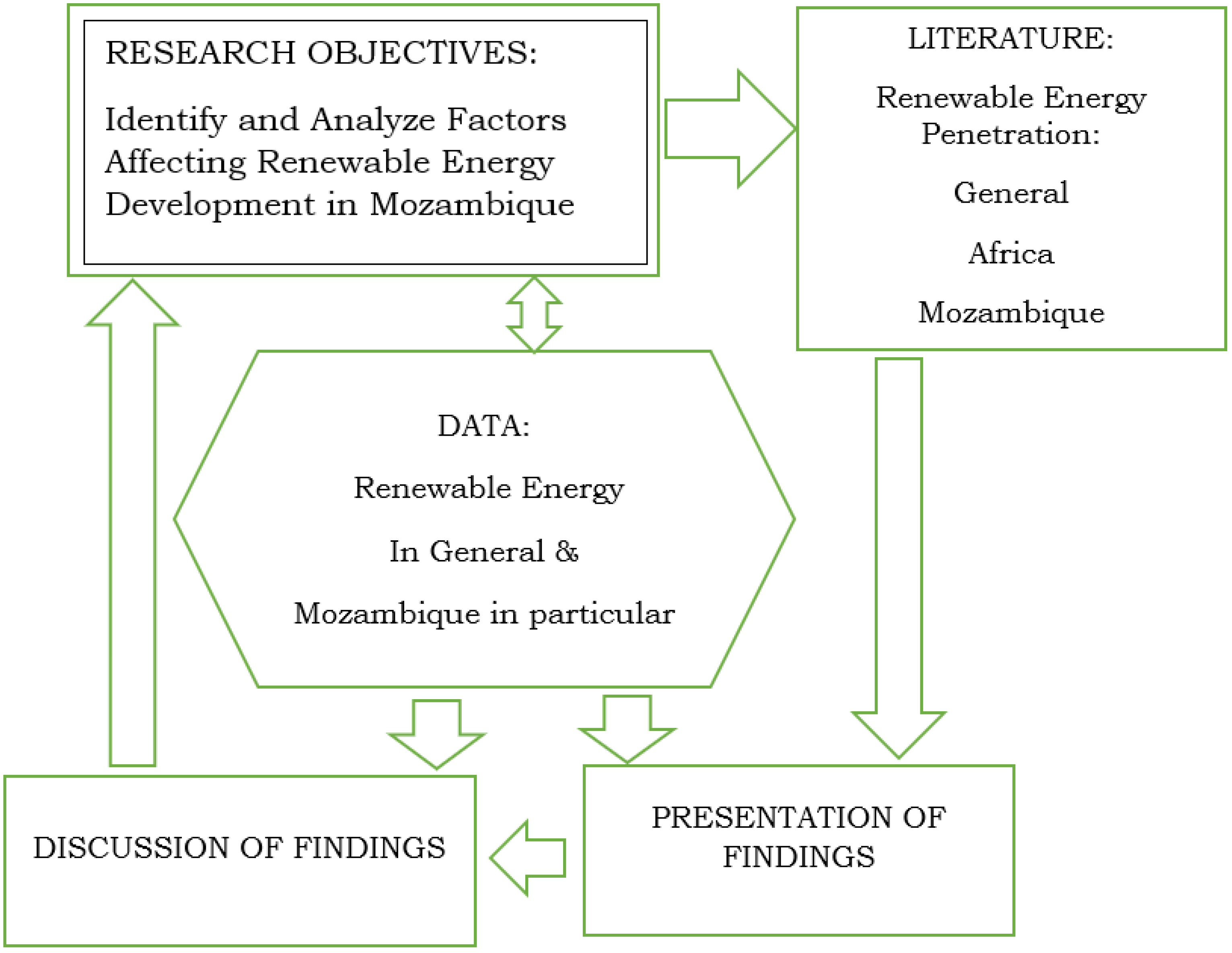
Figure 1 is a diagrammatic outline of the discussion. It comprises six sections: a background on Mozambique; an overview of the literature on environmental scanning models; a conceptual framework for the HESPECT model; an evaluation of the impact of HESPECT factors on the supply and demand of renewable energy in Mozambique; and concluding remarks.
2. Mozambique in Historical and Contemporary Perspectives
Mozambique is one of only a few African countries—including Angola, Sao Tome and Principe, Cape Verde, and Guinea-Bissau—that experienced Portuguese colonialism [
10,
11]. Although Portugal controlled only these five regions, it was among the first European countries to explore the continent. Its early expeditions into the area that includes Mozambique date back to the late 15th century [
12]. At first, the Portuguese settled along the coast, establishing the forts of Sofala (1505) and Ilha de Moçambique around 1507 [
13]. Portugal’s control of a large area of southern Africa, extending from the Indian Ocean to the Atlantic Ocean, dates to 1752 [
13]. However, formal colonization of Mozambique did not begin until the Berlin Conference of 1884/85 [
13]. Due mainly to military and financial constraints, the Portuguese leased many parts of the territory to private chartered companies, which were granted the privilege of exploiting the land and its people.
Mozambique enjoyed remarkable economic prosperity during the colonial era from the 1950s to the 1960s. This is when the Government of Portugal actively encouraged Portuguese citizens to relocate and settle in Mozambique. Neither the period of economic prosperity nor the resettlement of many Portuguese in colonial Mozambique lasted for long. War characterized most of the immediate post-colonial era in the country. For more than a decade (1962 to 1974), there was a bloody struggle for independence led by the Front for the Liberation of Mozambique (FRELIMO). From 1976 to 1992, the country was engulfed by a brutal civil war that pitted the opposition anti-communist Mozambique National Resistance (RENAMO) forces against the ruling FRELIMO government military. The prolonged civil war and mass exodus of Portuguese settlers wreaked havoc on the country’s economy and public infrastructure. This and recent Islamic insurgencies in the northern parts of the country since 2017 have incapacitated its offshore gas fields.
2.1. Natural Environment
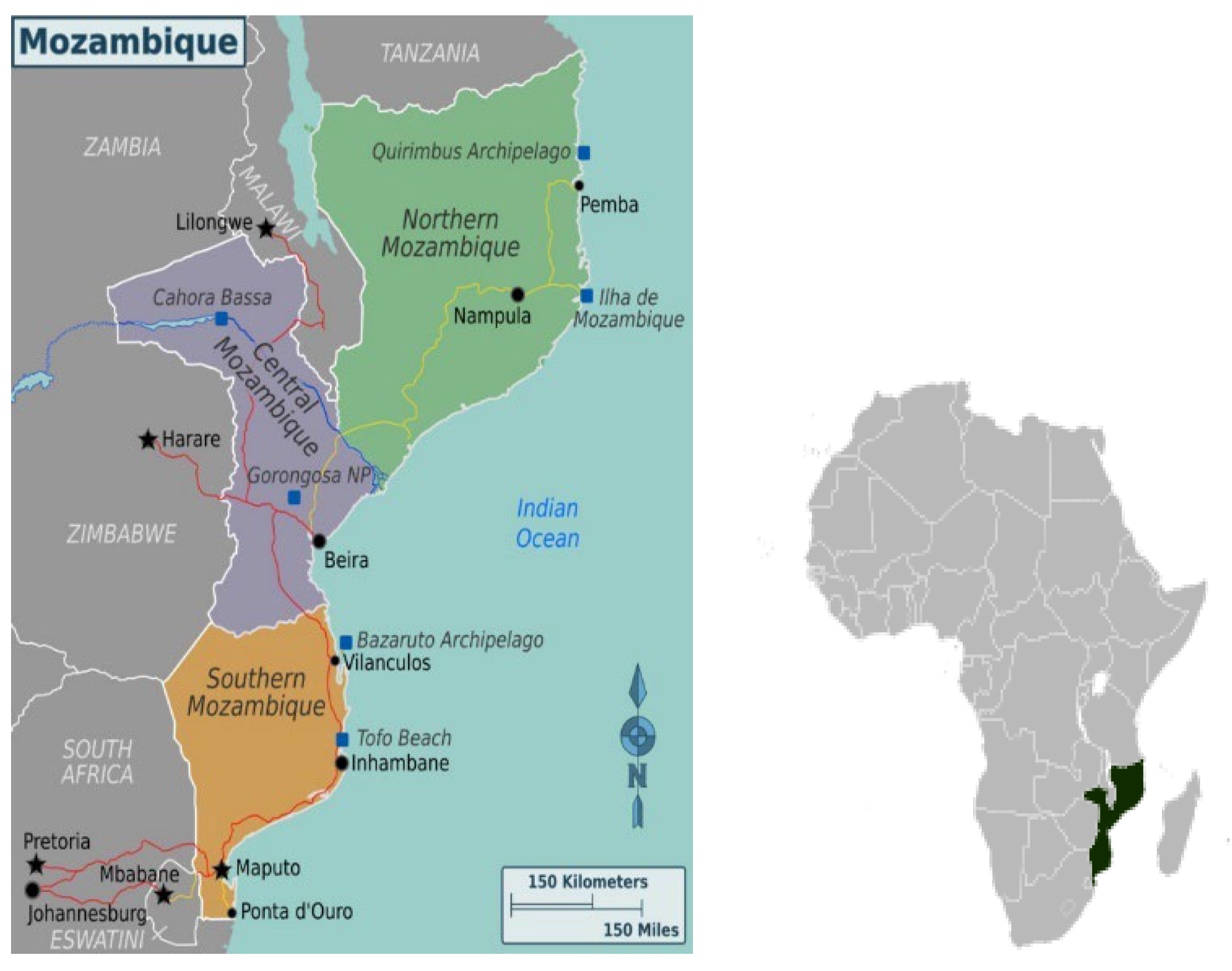
Mozambique is situated on the western edge of the Indian Ocean. Its neighboring countries, as shown in
Figure 2, are Tanzania to the north, Malawi and Zambia to the northwest and southwest, respectively, Zimbabwe to the west, and South Africa to the south. The Mozambique Channel separates the country from three island nations: Comoros, Mayotte, and Madagascar. It has a population of 31,626,000 [
13]. Its eastern coastline extends for 2,500 km and features many beaches, lagoons, small islands, and coral reefs.
The country lies between 10° 27′ S and 26° 52′ S latitude, and 30° 12′ W and 40° 51′ W longitude. Topographically, it features grassland plateaus with an average elevation of 230 meters above sea level. It is home to several mountains scattered throughout, the most notable being Mt. Binga (2436 meters) in Manica Province, Mt. Namuli (2419 meters) in Zambezi, Mt. Domue (2095 meters) in Tete, and Mt. Gorongosa (1862 meters) in Sofala. The country has 25 major rivers that provide reliable water resources for domestic, industrial, and agricultural uses, particularly irrigation. Due to its coastal location, the country is among Africa’s most vulnerable and natural disaster-prone nations. Recently, it has experienced several natural disasters, including widespread flooding in 2000 and Cyclone Idai, which devastated Cabo Delgado Province in the northern part of the country in March 2019.
The CIA World Factbook [
11] provides a comprehensive, up-to-date overview of the country’s climate. The profile highlights significant potential for renewable energy development. The climate is subtropical, with high temperatures both inland and along the coast. It has two seasons: an incredible season (April to September) and a dry season (October to March). The average annual rainfall varies, with 500 mm in the south, 1000 mm in the north, and 1200 mm in semi-arid regions. The country receives approximately 7.33 hours of sunlight per day, totaling roughly 2750 hours per year. It has an average annual solar irradiance of approximately 2000 kWh/m
2 and a solar-harnessing potential of 2.7 GW.
2.2. Institutional Framework
Mozambique’s institutional framework for energy policy has been evolving since the country gained independence in 1975. It is led by a state-owned corporation, Electricidade de Moçambique (EDM), established in 1977, just two years after independence. Initially based on a profit-making model, it was later restructured into a centralized price-setting system. In 1995, EDM was transformed into a public corporation responsible for generating, transmitting, and distributing electricity. Additionally, it was tasked with regulating electricity from renewable energy sources, reflecting the Government of Mozambique’s (GoM) awareness of the importance and potential of renewable resources. Further demonstrating the government’s commitment to renewable energy is the creation of Fundo de Energia (FUNAE), a state-owned corporation established to oversee off-grid rural electrification. FUNAE’s work focuses on renewable energy, supplying electricity to 580 schools and 561 health centers across 260 villages since its establishment by Decree No. 24/97 of 22 July 1997.
2.3. Energy Resources and Accessibility
Mozambique has the largest stockpile of energy resources in the southern African region; some estimates suggest it can generate up to 187 gigawatts (GW) of power from natural sources, including hydro, coal, gas, and wind [
14]. In addition to coal, these are clean, renewable energy sources that are expected to play a significant role in the country’s future energy plans. Gas alone is projected to account for 44 percent of the country’s total energy supply over the next decade [
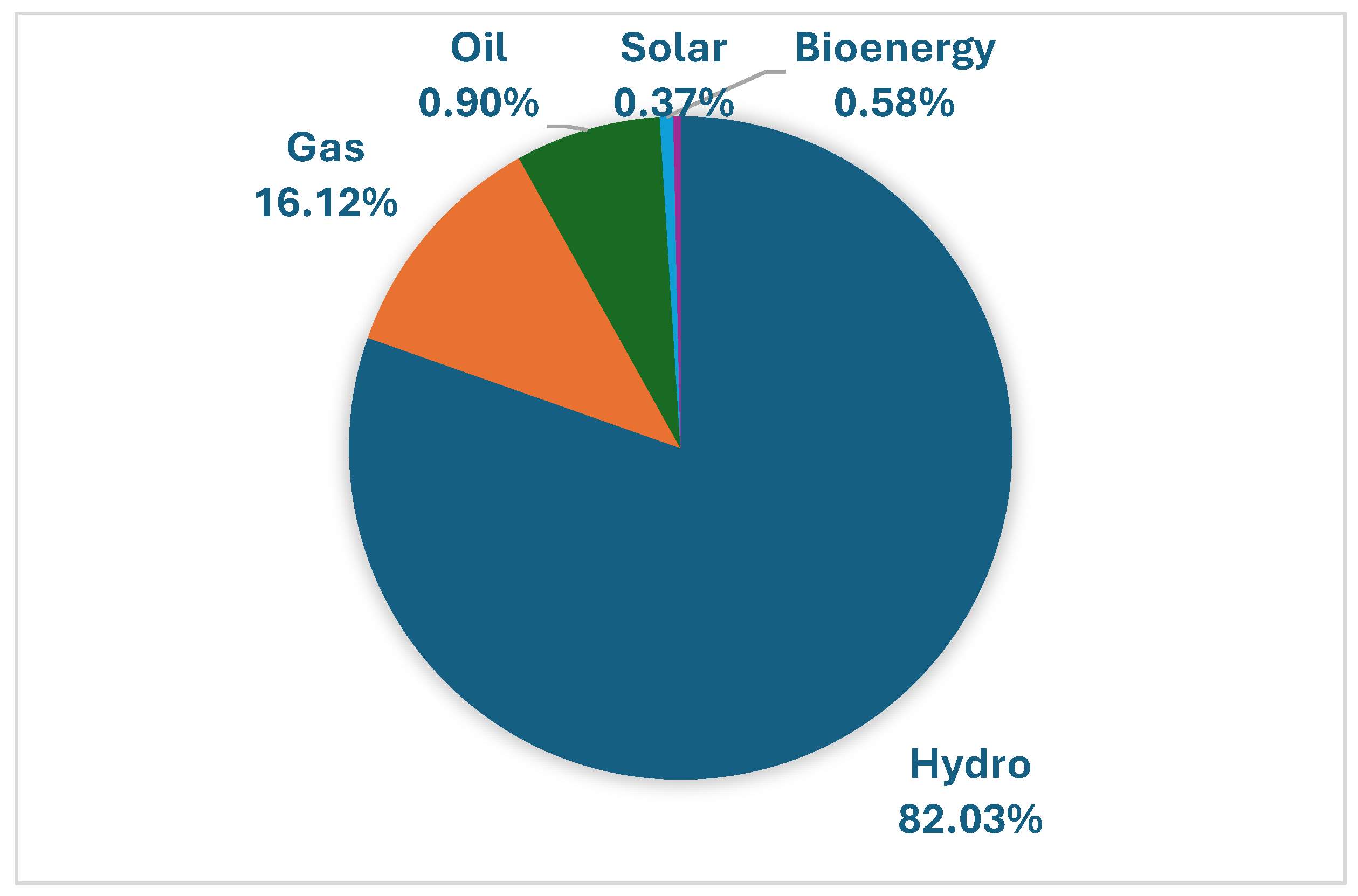
14]. Currently, nearly all of Mozambique’s electricity, as shown in
Figure 3, comes from hydro sources. Most people (61%) in Mozambique lack access to electricity [
15], making the country one of the most electricity-deprived in Africa.
This is ironic, considering that the country is rich in energy resources. Nevertheless, it has made significant progress in recent years. In this regard, electricity access in the country increased from 5 percent in 2001 to 24 percent in 2017, and again to 39 percent in 2021 [
16]. However, despite these improvements, electricity access remains at a mere 5 percent in rural areas [
17]. It is also worth noting that Mozambique is a net energy exporter; it supplies substantial energy to several neighboring countries, particularly South Africa.
Figure 3.
Sources of energy in Mozambique. Source: Compiled from Our World in Data [
18].
Figure 3.
Sources of energy in Mozambique. Source: Compiled from Our World in Data [
18].
As shown in
Table 1, hydropower is the country’s dominant electrical energy source. It accounted for more than 80 percent of its total energy in 2021 [
1]. Its total energy-generating capacity was 2780 MW in 2020 [
17].
According to the country’s Power Sector Masterplan, this capacity is projected to reach 6001 MW by 2030.
Table 2 shows the rest of the country’s energy generation and consumption record from 2017 to 2021 [
13,
16]. The total energy generated increased slightly from 16.7 TWh to 18.1 TWh between 2017 and 2021. Paradoxically, consumption during this period declined slightly from 14.3 TWh to 13.7 TWh. This may reflect a decline in electricity supply due to negative economic trends in the country (see below) [
19]. One important but underexploited source of energy in the country is natural gas, which was discovered in 2011 [
19,
20].
More than half a decade ago, the Mozambican government commissioned several gas-fired thermal plants across the country. Notably, the 120 MW plant, which began operation in 2015, was developed under a Power Purchase Agreement (PPA) with EDM. Gas-based power generation is expected to grow by 18.1 percent annually through 2025 [
16]. Another critical but underutilized energy source in Mozambique is the ocean. With a long coastline along the Indian Ocean, the country has ample offshore wind and energy resources. As is common in impoverished countries, harnessing the benefits of ocean-based renewable energy is challenging. The last, but not least, as shown in
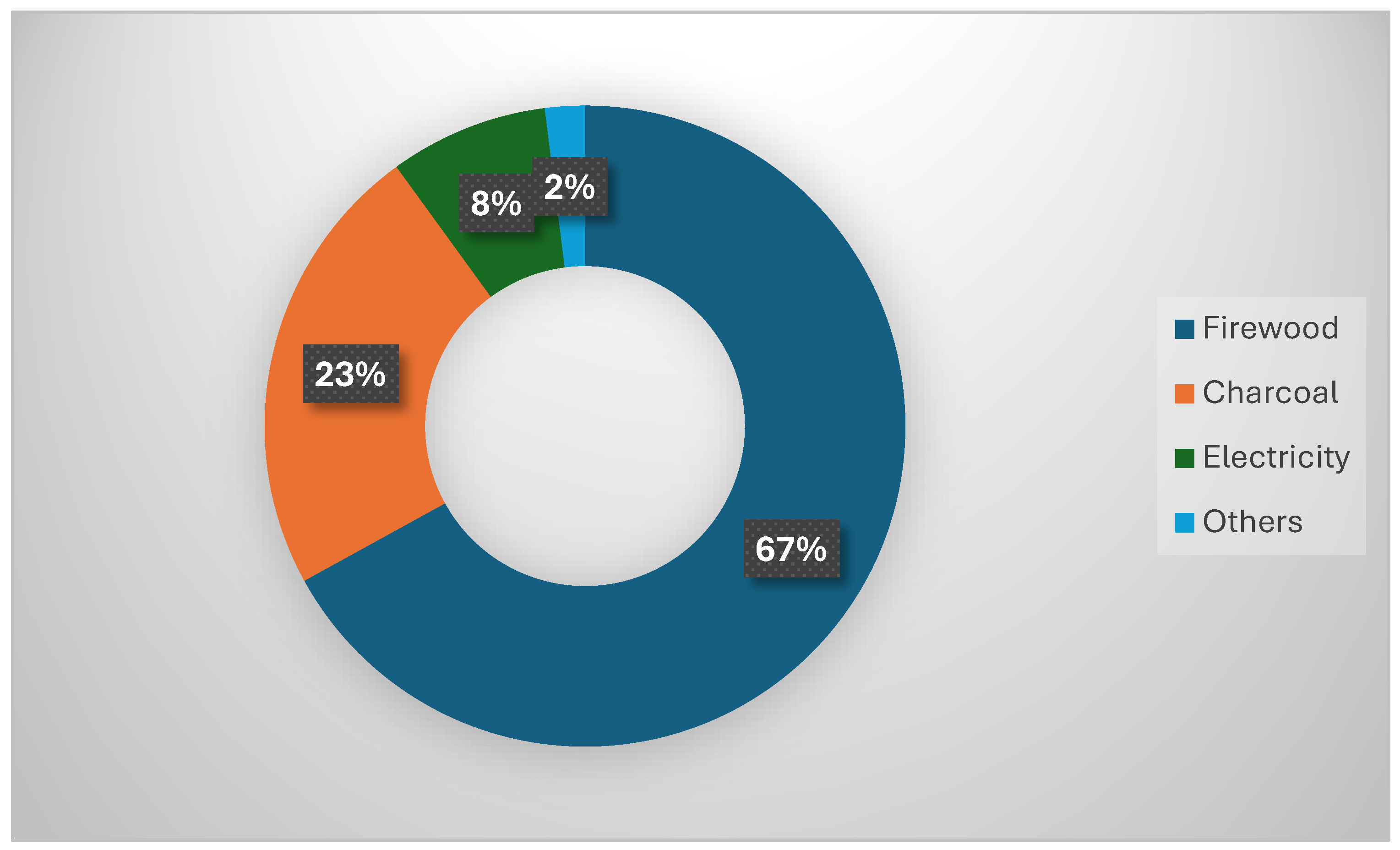
Figure 3, is biomass. This remains the country’s primary energy source. These two sources make up 90 percent of the country’s domestic energy (see
Figure 4). Firewood, which is the primary energy source in rural areas [
21], accounts for 67 percent, while charcoal, primarily used in urban areas, comprises 23 percent [
22].
3. The Literature on ESMs in Energy Research
Environmental scanning models (ESMs) began as tools to help business managers and corporate leaders understand real and potential barriers and opportunities within their organizations’ immediate and broader environments. The earliest and most well-known of these is the SWOT (Strengths-Weaknesses-Opportunities-Threats) model, developed by researchers at the Stanford Research Institute in 1960 [
23]. Since then, the model has been used in non-business contexts, including the energy sector (see, e.g., [
24,
25]). Fertel and colleagues describe the SWOT model as “a strategic analysis tool” and used it to analyze energy and climate policy in Canada [
26]. Similarly, D’Adamo et al. used an integrated SWOT-Analytical Hierarchy Process (SWOT-AHP) model to evaluate the implications of supporting a green energy transition in Europe’s transport sector [
27]. Haque and colleagues used the SWOT model to identify barriers and opportunities for electricity trading in Bangladesh [
28]. Mohammad Khan applied the model to assess the internal and external environments of Iran’s compressed natural gas (CNG) industry [
29]. Meanwhile, Agyekum et al. employed it to measure internal strengths and weaknesses, as well as external opportunities and threats, in Ghana’s nuclear sector [
30]. Additionally, Yu Lei and colleagues employed a SWOT analysis to examine solar photovoltaic (PV) development in Africa and China [
31].
Efforts to apply this model or its variants remain limited. A few studies, such as those by Kaoma and Gheewala [
32] and Njoh [
24], are notable exceptions. Kaoma and Gheewala employed the SWOT-AHP model to evaluate the institutional framework for bioenergy deployment in Zambia [
32]. Meanwhile, Njoh used the SWOT model to assess the feasibility of the sawdust cookstove in Africa [
24]. However, the SWOT model has recently come under intense criticism. The harshest critiques focus on SWOT’s limitations, subjectivity, and tendency to overgeneralize (see, e.g., [
27]). Others, such as Njoh [
24], have criticized it as narrow-minded, overly simplistic, and limited in scope. This criticism has sparked an active search for alternative, more versatile ESMs. Several new models have emerged from this effort, aiming to expand the scope of ESMs. Notable examples include the work of Foster et al [
33], Painuly [
34], and Painuly et al. [
35]. Although these efforts have broadened the SWOT model, they still fall short in certain areas. Their focus on broad financial and economic issues often overlooks critical institutional aspects. Yet, these institutional factors are among the most essential determinants of renewable energy adoption in developing countries. Still, there is increasing recognition of the need to expand ESMs to include institutional factors. The PESTLE framework, which covers six dimensions: political, economic, social, technological, legal, and environmental, constitutes a step in this direction. In advocating for broader ESMs that incorporate these dimensions, Islam argued that energy redesign and renewable energy deployment in the distribution grid typically depend on resource availability, socioeconomic factors, political issues, and environmental considerations [
36].
Similarly, Njoh and colleagues have examined institutional factors that shape the government’s actions in energy policy [
37]. They found evidence suggesting that these actions have, ironically, slowed renewable energy initiatives. Other researchers who have studied institutional factors and their effects on renewable energy adoption include Pegels [
38] and Fischer et al. [
39]. Several additional studies recognizing the importance of institutional factors in promoting renewable energy include those by Garcia-Alvarez et al. [
40]. Consequently, efforts to adapt the traditional SWOT framework for specific energy planning contexts have increased. Early efforts in this area include the work of Fashima and colleagues [
41], who combined multicriteria decision-making technologies (MCDT) with SWOT to identify current issues and plan future actions in the energy sector. By expanding the scope of the ESMs, it is possible to assess the impact of efforts to shift from conventional to renewable energy sources. For example, Ahlborg and Hammar found that in Tanzania and Mozambique, barriers such as limited access to human capital, planning challenges, donor dependence, sluggish rural markets, disinterest from the private sector, and a shortage of technical expertise are significant obstacles to these initiatives [
42]. Their analysis also revealed institutional barriers, including limited planning capacity, inappropriate organizational structures, bureaucratic corruption, economically unviable plans, incompatible donor policies, and a tendency for top-down management in the energy sector. Fashima and colleagues’ work on Uganda supports the idea that institutional factors influence the penetration of renewable energy [
41].
Rennkamp and Perrot examined renewable energy sources, with a focus on wind power in Brazil, India, and South Africa [
43]. Their emphasis on technological factors caused them to overlook non-technological aspects. This narrow approach could limit efforts to promote the adoption of renewable energy technologies (RET), particularly in developing countries. In a recent paper on the RET landscape in BRICS (Brazil, Russia, India, China, and South Africa), Pan and Dong [
41] warn against falling into the ‘new energy technology dilemma’ [
44]. Environmental scanning models (ESMs) have been used to identify drivers of RET adoption. Notably, Ahlborg and Hammar identified key drivers in Tanzania and Mozambique, including government policies supporting RET, donor support, private-sector involvement, market incentives, and increasing local demand [
42]. Conversely, they also identified barriers such as low population density, a limited customer base, long distances, and poor infrastructure in rural areas. Njoh’s 2017 work to broaden the scope of ESMs resulted in a more comprehensive model than earlier ones [
24]. Unlike SWOT, which covers only four dimensions, and PESTLE, which covers six, Njoh’s 2021 model includes seven dimensions: political, economic, social, technological, ecological, cultural, and historical (PESTECH) [
8]. This study uses that model but adjusts the acronym to follow a logical flow from ‘Historical’ factors through ‘Economic,’ ‘Social,’ ‘Political,’ ‘Ecological,’ ‘Cultural,’ to ‘Technological,’ resulting in the new acronym HESPECT.
4. Data, Methodology, and Conceptual Framework
This study examines the structural and contextual factors that influence Mozambique’s efforts to increase the deployment of renewable energy. It uses a qualitative research design that combines both primary and secondary data sources. These are organized and analyzed using the Historical, Economic, Social, Political, Ecological, Cultural, and Technological (HESPECT) framework. Acting as an environmental scanning tool, HESPECT offers a systematic perspective to critically analyze the interconnected drivers, constraints, and enabling conditions affecting renewable energy development in Mozambique.
4.1. Data Sources
Secondary data formed the foundational layer of the analysis and were gathered through an extensive review of published and unpublished materials. These include government policy documents, national development strategies, energy master plans, investment reports, academic journal articles, institutional databases, and archival records. The data were accessed through both physical repositories and online platforms using targeted keyword searches via established search engines and databases maintained by national ministries, international development agencies, multilateral organizations, and global energy institutions.
These sources offered essential historical and contemporary insights into the evolution, governance structure, performance trends, and policy focus of Mozambique’s renewable energy sector. They also shed light on broader structural factors influencing the sector, including regulatory frameworks, infrastructural capacities, financing mechanisms, and institutional coordination challenges. The specific categories of secondary data analyzed are summarized in
Table 3.
To complement and triangulate the documentary evidence, primary data were gathered through direct field observation of renewable energy infrastructure in four selected urban centers in Mozambique. One of the study’s co-authors, a native of Mozambique and a municipal government official, systematically recorded the spatial distribution, physical features, operational status, and functional roles of renewable energy installations serving these urban areas. This observational process enabled the capture of contextual, site-specific details regarding infrastructure placement, technological setup, integration into the urban fabric, and apparent usage levels. It also helped generate rich, contextually relevant data, including experiential accounts of institutional decision-making, governance challenges, infrastructure gaps, investor behavior, and the effects of historical conflict, political instability, and climate-related stressors, such as droughts and extreme weather events, on the renewable energy sector.
4.2. Analytical Strategy and Conceptual Framework
Data analysis was conducted through thematic interpretation guided by the HESPECT framework. All collected data—documentary, observational, and interview-based—were systematically coded and mapped onto the framework’s seven analytical dimensions. This enabled a structured examination of how historical legacies, economic structures, sociopolitical dynamics, ecological conditions, cultural norms, and technological capacities intersect to influence Mozambique’s renewable energy development journey.
By operationalizing HESPECT as an environmental scanning tool, the study provides a multidimensional assessment of the systemic opportunities and constraints within Mozambique’s national energy policy environment. This integrated approach enables a nuanced understanding of how macro-level structural forces and micro-level institutional practices interact to influence outcomes in renewable energy planning, adoption, and implementation. The following sections of the paper apply the HESPECT framework to analyze Mozambique’s renewable energy context in detail, beginning with its conceptual foundations and proceeding to an empirically grounded evaluation of each analytical dimension.
4.3. HESPECT: A Conceptual and Theoretical Framework
As used here, HESPECT is a reworking of the PESTECH model proposed by Njoh and used to analyze the renewable energy situation in Ethiopia [
8]. Njoh and Ayuk-Etang also applied the model in their study of “The determinants of ecofeminism in Anglophone Cameroon.” [
25]. The reworking involved rearranging the letters of the acronym.
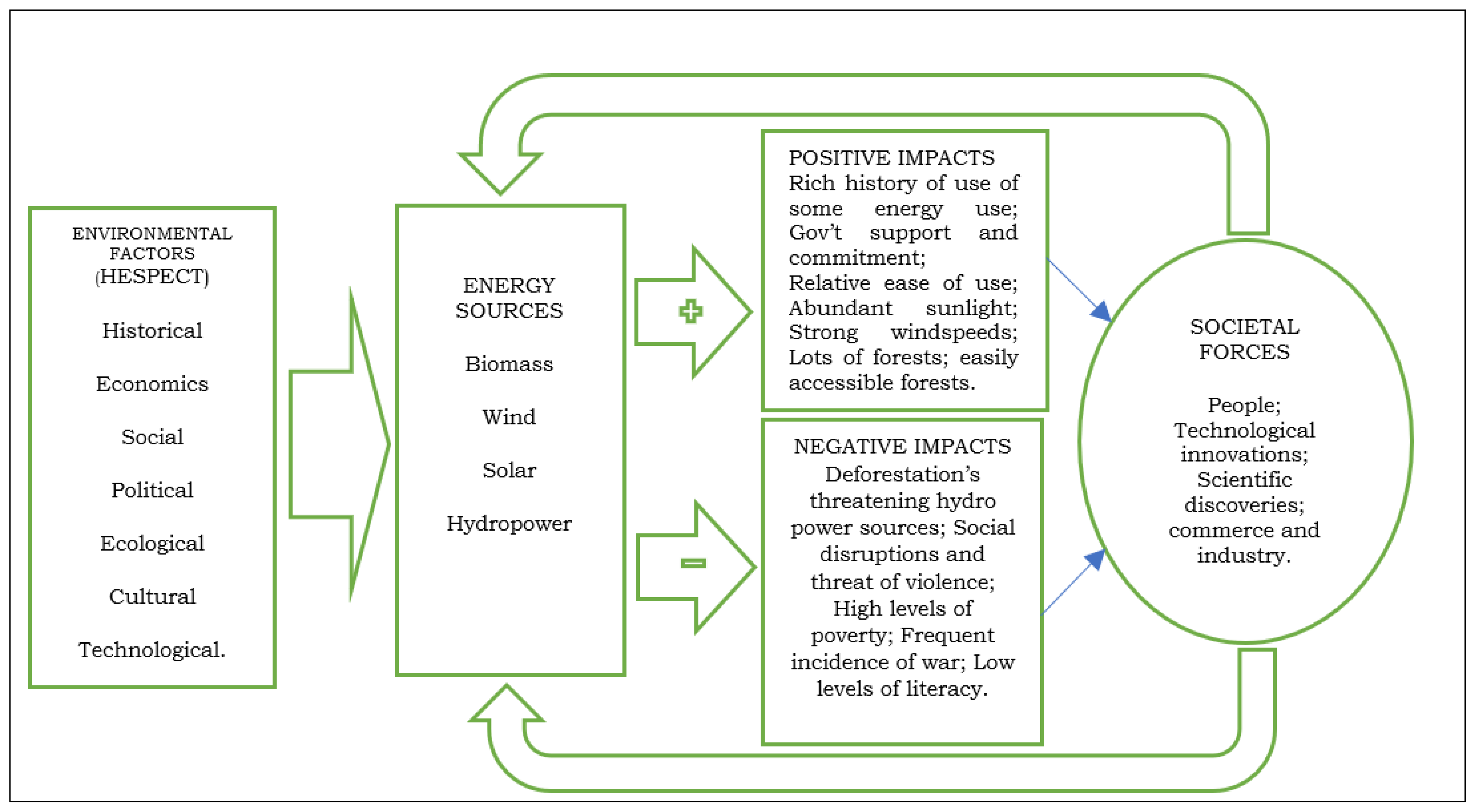
Figure 5 shows the relationships among the HESPECT factors in relation to the energy sector and society as a whole. The revised model, like the original PESTECH, includes seven environmental dimensions, making it more comprehensive than other models. Therefore, it is better suited to evaluate an entity of interest—such as an organization, policy, or tool—from historical, economic, social, political, ecological, cultural, and technological (HESPECT) viewpoints. Previous efforts have used the framework to analyze the institutional context of a community solar electricity project [
37], nature in built space [
8], and ecofeminism in a developing polity [
25]. In this context, it is used to assess how HESPECT factors function as barriers or facilitators to the development of renewable energy resources and technologies in Mozambique.
Table 3 summarizes the seven dimensions and their importance to this study. The historical dimension aims to help understand how a polity’s history, such as Mozambique’s, influences its renewable resources. The social dimension addresses the country’s population, growth rate, literacy rate, and urbanization level. The political dimension emphasizes the form, structure, and stability of the government. It also relates to the state’s legislative activities, policies, import/export regulations, and control. The ecological dimension enables evaluation of questions concerning the country’s natural environment and its impact on renewable energy resources. The cultural dimension calls for a systematic assessment of the country’s norms, belief systems, and societal behavior, and their implications for efforts to promote renewable energy. The technological dimension provides an opportunity to examine issues such as the availability of skills and talent, as well as the level of technical expertise needed to support the growth and development of renewable energy in the country.
5. Main Findings and Discussion
Within the HESPECT analytical framework, several interconnected factors—such as historical, economic, social, political, ecological, and technological—have significant implications for the future of renewable energy in Mozambique’s urban centers. From a social standpoint, Mozambique’s cities, including Maputo, Beira, and Nampula, are undergoing rapid modernization and demographic shifts. These urban changes are accompanied by a growing preference among households for modern cooking and heating technologies powered by electricity, natural gas, and other clean energy sources. This trend reflects a broader continental shift away from firewood and charcoal toward modern energy options. In fact, empirical evidence indicates that the proportion of households relying on biomass is considerably lower in urban Mozambique compared to rural areas [
45].
The social shift away from biomass, for example, has important implications for efforts to make cities in Mozambique inclusive, safe, resilient, and sustainable (i.e., SDG 11). The continued use of charcoal and fuelwood in low-income neighborhoods, particularly in peri-urban areas, poses challenges for the development of sustainable urban energy systems. Heavy dependence on these fuels leads to urban air pollution, deforestation in peri-urban catchments, and adverse public health effects [
45]. Therefore, increasing access to affordable, reliable, and sustainable energy (as called for under SDG 7) is crucial for achieving the broader goals of SDG 11 in Mozambican cities [
46].
Politically, the Government of Mozambique (GoM) has played a key role in shaping policies that govern biomass and renewable energy. The Biofuels Energy Policy (Resolution 22/2009), the Forest and Wildlife Law (Law No. 10/09), and the Land Law (Law No. 19/97) collectively establish the legal framework for regulating biofuel production and use. These laws demonstrate the government’s recognition of bioenergy’s potential to support national development while also seeking to prevent unsustainable exploitation of forest resources. The GoM’s commitment is further evidenced by ongoing efforts to promote ethanol production from sugarcane and sorghum, as well as by the exploration of jatropha and coconut as biodiesel feedstocks. However, Mozambique’s integration into the global sustainable energy economy poses complex disincentives to continued reliance on traditional biomass [
47,
48]. Three main international processes have a strong influence: (1) the global effort to meet the United Nations Sustainable Development Goals, especially SDGs 7 and 11; (2) international climate change mitigation initiatives aimed at reducing CO
2 and greenhouse gases; and (3) the persistent structural inequalities, often called “ecological imperialism,” where external environmental norms and technologies influence local policy priorities. The SDGs’ emphasis on clean, affordable energy has effectively cast biomass as a “dirty” energy source, encouraging urban authorities to adopt more sustainable options.
Notably, Mozambique’s concern with affordable energy access predates the SDG era [
48]. For example, resolution No. 05/98 of March 1998 1998 highlighted the importance of ensuring a reliable and affordable energy supply as a foundation for socio-economic development. However, modern urban energy strategies—especially in Maputo and Beira—are increasingly aligned with the dual goals of SDGs 7 and 11: reducing reliance on inefficient biomass fuels and promoting more sustainable and livable cities. Technologically, the sustainability of biomass energy in urban Mozambique is limited by the lack of local capacity to develop advanced bioenergy technologies [
49]. Biomass-to-energy conversion generally occurs through two methods: (a) direct combustion for heat, a basic process with low efficiency; and (b) biochemical decomposition to produce biogas or methane, a more complex process requiring specialized expertise and equipment. The skills and infrastructure required for the latter remain scarce in Mozambique. Nevertheless, the government has laid important groundwork through initiatives like the New Energy Strategy (Resolution 10/2009) and the New Renewable Energy Development Policy (NREP, Resolution 62/2009), which focus on building local technological capacity and integrating renewables into both urban and rural energy systems. In Mozambique’s efforts toward urban sustainability, the long-term success of biomass energy depends on technological innovation, consistent policies, and the capacity to integrate bioenergy into broader urban climate and energy planning. As cities grow and urban energy demand increases, ensuring a fair and sustainable transition away from traditional biomass will be essential to achieving SDG 7 (Affordable and Clean Energy) and SDG 11 (Sustainable Cities and Communities).
5.1. Wind Energy and Urban Transition in Mozambique
Within Mozambique’s rapidly expanding urban landscape, wind energy plays a vital role in the country’s growing renewable energy portfolio. Using the HESPECT framework to analyze the historical, economic, political, ecological, cultural, and technological aspects of wind energy highlights both opportunities and challenges for achieving sustainable urban electrification. Historically, Mozambicans have long utilized wind’s kinetic energy in daily life, through traditional ventilation systems and small watercraft. This deep-rooted familiarity with wind as a natural force provides a cultural foundation for modern renewable energy initiatives [
45]. The shift from informal uses of wind energy to advanced applications—such as wind farms powering urban grids—represents a natural progression from indigenous ecological knowledge to contemporary sustainability practices, supporting broader goals like SDG 11, which promotes resilient infrastructure and sustainable urban energy access. Economically, Mozambique’s urban energy transition presents both opportunities and challenges. The country’s wind resources, particularly along its southern coast near Maputo, Gaza, and Inhambane provinces, are substantial. However, high capital costs continue to restrict expansion. These issues include limited private-sector engagement and increased risk perceptions in the renewable energy investment market. The Namaacha Wind Farm, launched in Maputo Province in August 2020 with a capacity of 120 MW, marks a significant milestone. The project underscores the growing importance of urban wind initiatives in diversifying Mozambique’s energy mix and alleviating pressure on the national grid. Nonetheless, scaling up such projects requires ongoing financial backing, stable policies, and improved urban infrastructure.
Politically, the Government of Mozambique (GoM) has traditionally controlled the energy sector, restricting innovation and private investment. However, since 2021, the GoM has enacted significant reforms to promote private-sector participation. These reforms are significant in urban areas, where electricity demand is rising rapidly. By easing regulatory hurdles and lowering energy-related transaction costs, the government’s new energy policies have begun to draw international interest and funding for urban-focused, grid-connected renewable energy projects [
50].
Ecologically, Mozambique’s long coastline and diverse topography make it particularly well suited to wind energy generation. The strongest and most consistent wind speeds—averaging around 7 m/s at most major urban centers—thereby facilitating the direct integration of wind-generated electricity into urban grids [
51]. This spatial overlap strengthens the argument for embedding wind energy within urban energy planning frameworks aimed at achieving SDG 11’s sub-targets on sustainable infrastructure and reduced environmental impact.
Technologically, Mozambique still faces limitations due to a lack of local expertise in wind power engineering and maintenance. This problem is not unique to Mozambique; rather, it is commonplace throughout Africa [
8]. To address this, the United States Trade and Development Agency (USTDA) and international partners, such as Delphos International and Globeleq Calanga Wind S.A., have initiated capacity-building and feasibility projects in urban areas, including Inhambane and Manhica District. These initiatives are vital for bridging the country’s technical knowledge gap and creating urban jobs in the renewable energy sector. Overall, integrating wind energy development into Mozambique’s urban energy transition strategy provides a pathway to achieve both SDG 7 (Affordable and Clean Energy) and SDG 11 (Sustainable Cities and Communities). The success of this approach will rely on expanding local technical capacity, maintaining policy consistency, and embedding renewable energy targets into urban governance systems.
5.2. Solar Energy and Urban Sustainability in Mozambique
Solar energy is the most promising area for Mozambique’s urban renewable energy growth. Using the HESPECT analytical approach, the potential of solar energy is linked to the country’s long-standing familiarity with sunlight as a natural resource, along with its geographic features and sociopolitical environment. Historically, Mozambicans have used solar radiation for vital household and agricultural tasks such as drying food, heating water, and providing daylight for daily chores [
52]. This deep-rooted familiarity reduces cultural barriers to the adoption of solar photovoltaic (PV) systems in contemporary urban areas. The country’s tropical location, with annual solar irradiation ranging from 1785 to 2206 kWh/m
2/year, creates favorable conditions for both on-grid and off-grid solar power in densely populated urban centers such as Maputo, Beira, and Nampula [
52].
Socially, however, Mozambique’s urban solar energy transition faces challenges, including persistent income inequality, limited technical literacy, and uneven infrastructure development. Despite these issues, solar power has become more visible in Mozambique’s urban energy landscape. Residential rooftop PV systems, solar-powered streetlights, and institutional installations—especially in hospitals and schools—are emerging as vital parts of urban resilience efforts. These initiatives directly support SDG 11 by enhancing access to reliable energy while reducing urban air pollution and greenhouse gases. From an institutional standpoint, Mozambique’s solar expansion is backed by both public and private efforts. The
Electricidade de Moçambique (EDM), in partnership with the International Finance Corporation (IFC), is leading several solar PV projects that supply urban and peri-urban grids. For example, the 40 MW Mocuba plant in Zambezia Province, the 30 MW Dondo project in Sofala, and the 100 MWp Chimuara solar project highlight a new wave of renewable energy projects aimed at urban centers [
14]. These efforts also emphasize the important role of international partnerships in funding and deploying renewable energy infrastructure that supports sustainable urban growth.
Economically, the appeal of solar energy lies in its modularity and decentralization. For urban households, small-scale solar systems reduce dependence on unreliable grid electricity and volatile fuel prices. On a broader level, urban solar adoption helps diversify Mozambique’s energy mix and decreases the fiscal burden of fossil fuel imports. However, large-scale solar deployment remains limited by high upfront costs, inconsistent policy implementation, and limited access to credit for small energy entrepreneurs.
Technologically, Mozambique faces challenges related to human capital and local manufacturing capacity. The shortage of trained engineers and technicians limits the speed of urban solar deployment. However, emerging partnerships with foreign firms—such as Scatec Solar and Total Eren—are starting to address these gaps through technology transfer and workforce development programs. These collaborations support the national renewable energy strategy’s focus on building local technical capacity to sustain the energy transition.
In summary, solar energy plays a crucial role in Mozambique’s urban sustainability plans. By linking solar energy projects to urban infrastructure development, the country can advance progress toward SDG 7 (Affordable and Clean Energy) and SDG 11 (Sustainable Cities and Communities). As Mozambique’s cities continue to grow, integrating solar energy into housing, public services, and transportation offers a practical pathway to low-carbon, resilient urban development.
5.3. Hydro-Energy and the Urban Energy Landscape in Mozambique
Hydropower remains the backbone of Mozambique’s electricity generation and plays a key role in the country’s urban energy economy. Viewed through the HESPECT framework, hydro-energy development highlights both the potential and the challenges of sustainable urbanization in Mozambique. Historically, hydropower growth in the country has been influenced by colonial and postcolonial political economies. The Cahora Bassa Dam, completed in 1974, stands as a symbol of technological achievement and ecological imperialism, as Portugal maintained controlling interests in the facility until 2007. This ownership model kept energy benefits away from local populations, especially urban centers, and reinforced reliance on foreign capital. Although Mozambique has since gained majority control, the legacy of unequal access continues to shape electricity distribution, leaving many low-income urban communities in Maputo, Beira, and Nampula underserved.
Hydropower has been both beneficial and challenging for Mozambique economically and socially [
53]. It enables the country to export electricity to neighboring countries through the Southern African Power Pool (SAPP), thereby boosting the national economy. However, only about one-third of Mozambicans have access to electricity, and urban electrification remains uneven. In Maputo, formal neighborhoods are connected to the grid, whereas informal settlements—where population growth is fastest—are largely excluded. This urban energy gap directly hinders progress toward SDG 11, which aims to ensure inclusive and equitable access to urban services and infrastructure.
Politically and institutionally, the monopolistic control of
Electricidade de Moçambique (EDM) continues to hinder efficiency and innovation [
21]. Although the government has enacted policies promoting decentralization and rural electrification, implementation has been slow, and urban grid reliability remains fragile. Bureaucratic inefficiency, tariff distortions, and overreliance on centralized hydropower plants have created structural vulnerabilities that are exacerbated by extreme weather events such as cyclones and droughts.
Ecologically, the concentration of hydropower infrastructure on major rivers such as the Zambezi raises significant sustainability concerns. Large dams like Mphanda Nkuwa, projected to generate 2070 MW at an estimated cost of USD 4.5 billion, may enhance national generation capacity but also pose risks to local ecosystems and downstream communities [
19,
50,
54]. These socio-environmental risks underscore the need for a just urban energy transition—one that balances the expansion of clean energy with social equity, ecosystem protection, and disaster resilience.
Technologically, Mozambique’s reliance on large-scale hydropower emphasizes the need to diversify its renewable energy sources to ensure urban energy resilience. Incorporating smaller, distributed hydro systems—alongside solar and wind—into the urban and peri-urban energy network could reduce transmission losses and boost reliability: institutional innovations and hydropower’s role in urban sustainability. Another key constraint with technological implications—common across Africa—is the shortage of skilled labor. Ultimately, the hydropower sector highlights the complex balance between abundant energy and unequal access in Mozambique’s cities. Achieving SDG 7 and SDG 11 will require not only technological diversification but also governance reforms that democratize access, emphasize environmental justice, and integrate energy policy into the broader agenda of sustainable urban development.
5.4. The HESPECT Framework and Mozambique’s Energy Policy Field
An integrated assessment of Mozambique’s renewable energy landscape using the HESPECT framework highlights the country’s multidimensional urban energy transition. Historically, Mozambique’s energy sector developed under the influence of colonial-era resource extraction, with infrastructure like hydropower dams and urban electricity grids primarily serving external markets or privileged communities. This legacy has created a persistent structural bias that persists as urban energy inequality, particularly in informal settlements. However, current efforts to expand renewable energy—mainly wind, solar, and biomass—suggest a possible shift toward a more inclusive and sustainable national energy system.
From an economic perspective, Mozambique’s shift to renewable energy offers significant potential for urban development. Investments in solar and wind power create opportunities to diversify the country’s energy supply, reduce reliance on imported fuels, and increase local employment through technology transfer and maintenance. However, the economic feasibility of these projects relies heavily on sustained foreign investment, stable regulatory policies, and regulations that enhance urban infrastructure resilience. Incorporating renewable energy into urban planning—using strategies like green building codes, distributed generation, and energy-efficient public transit—can multiply the developmental benefits of the renewable sector.
Socially and politically, the shift to renewable energy can reshape the urban social contract. Increasing access to affordable and clean energy can reduce poverty, improve public health, and support the growth of small and medium-sized businesses that form the backbone of urban economies. However, achieving these social benefits requires governance reforms that address bureaucratic inertia, break up utility monopolies, and enable community-based and private-sector involvement in energy production and distribution. This aligns with SDG 11’s focus on inclusive, participatory, and integrated urban governance.
The ecological dimension of the HESPECT framework indicates that Mozambique’s renewable energy future is closely linked to climate resilience. As extreme weather events intensify, the vulnerability of centralized hydropower systems becomes more apparent. The International Energy Agency (IEA) has noted that storms and tropical cyclones are common extreme weather events that significantly affect the country’s renewable energy system. Three recent cyclones—Chido (15 December 2024), Dikeledi (13 January 2025), and Jude (10 March 2025)—each caused power outages affecting more than 150,000 electricity customers, underscoring the issue. Urban energy diversification, primarily through decentralized solar, small hydropower, and biomass systems, offers a practical means to enhance both environmental sustainability and urban adaptive capacity. Encouraging green urban spaces, electrified public transportation, and circular waste-to-energy systems could further boost the ecological sustainability of Mozambique’s cities.
Culturally, Mozambique’s transition to renewable energy is shaped by indigenous ecological practices and local knowledge systems. There is ample evidence that Africans, including Mozambicans, have traditionally used natural energy sources such as the sun, wind, and flowing water for household and agricultural needs. Integrating these cultural values into modern energy planning can promote behavioral acceptance and ownership of renewable technologies in cities. Furthermore, the technical side highlights the importance of building local capacity to support Mozambique’s renewable energy transition. Investing in technical education, vocational training, and research collaborations among universities, local governments, and international organizations will be crucial. Initiatives that build local innovation ecosystems—such as renewable energy incubators, smart city pilot projects, and open-data energy platforms—can speed up the adoption of new technologies and develop the next generation of urban sustainability experts.
6. Concluding Remarks
Mozambique’s transition to renewable energy presents an opportunity to advance SDG 7 (Affordable and Clean Energy) and SDG 11 (Sustainable Cities and Communities) simultaneously. The challenge is not only to increase energy production but also to rethink the social, institutional, and ecological foundations of urban energy systems. Applying the HESPECT framework holistically indicates that sustainable urbanization in Mozambique depends on policy consistency, technological progress, social inclusion, and ecological stewardship. When these elements work together, they can turn Mozambique’s cities into testbeds for fair and resilient energy futures. The country’s renewable energy path highlights both the complexities and opportunities of shifting toward sustainable urban development in the Global South. Its rich mix of hydro, solar, wind, and biomass resources provides a strong base for an inclusive energy future. However, as the HESPECT framework indicates, reaching this future requires more than just adopting new technologies. It demands structural reforms in governance, investment focus, and social participation. Linking renewable energy policies with urban planning, infrastructure, and climate adaptation strategies can turn Mozambican cities into hubs of low-carbon growth. In doing so, Mozambique can make meaningful progress toward the combined goals of SDG 7 and SDG 11, thereby positioning its cities as exemplars of resilience, equity, and ecological sustainability in sub-Saharan Africa.