Article

Establishing an ‘Experiential Priority Index’ for Sustainable Heritage Planning in Religious–Historic Cities

by
Sunanda Kapoor
1,*,
Bibhu Kalyan Nayak
1,* and
Vandana Sehgal
2
1
School of Architecture & Design, Manipal University Jaipur, Jaipur 303007, India
2
Faculty of Architecture and Planning, Dr. A. P. J. Abdul Kalam Technical University, Lucknow 226031, India
*
Authors to whom correspondence should be addressed.
Urban Sci. 2026, 10(1), 14; https://doi.org/10.3390/urbansci10010014
Submission received: 25 October 2025 / Revised: 16 December 2025 / Accepted: 18 December 2025 / Published: 29 December 2025

Abstract

Historic religious cities are living examples of cultural landscapes where spiritual traditions, heritage, and visitor experiences combine to demonstrate a timeless experience. It is very challenging to achieve balance among the demands of mass pilgrimage, heritage preservation, and urbanization. Govardhan, India is a Hindu religious town with historical significance. Millions of pilgrims travel to Govardhan every year to perform parikrama and take a holy dip in kunds. The quality of the visitor experience, spatial coherence, and heritage conservation are all at risk due to increasing urbanization and tourism. The study intends to create a paradigm for the sustainable management of religious heritage towns by evaluating the factors involving visitor perception, historical significance, and spatial visibility, employing a combination of computational methods and cognitive assessments. The study employed space syntax tools (visibility graph analysis and isovist area analysis) to quantify spatial significance (SS) and identify patterns of openness, congestion, and visibility along the parikrama route of Govardhan. By examining pilgrims’ cognitive surveys for openness, orientation, congestion, and spiritual impression, a cognitive index (CI) and heritage importance scores (HIS) have been developed. The computed spatial significance (SS) has been correlated with cognitive index (CI) and heritage importance (HIS) scores to create an experiential priority index (EPI). The study employs a mixed-method approach that incorporates heritage significance scoring, cognitive surveys, and spatial analytics, including methods such as the isovist area analysis and visibility graph analysis. In order to assess how spatial arrangement and intangible perceptions together influence visitor experience, these statistics are further combined using a composite experiential priority index (EPI). The findings show a strong correlation between spiritual orientation, visual connectivity, and spatial openness; locations such as ‘punchari ka lota temple’ and ‘kusum sarovar’ are high-priority nodes. In accordance with United Nation Sustainable Development Goals (SDGs) (11, 9, 12, 4.7, and 8.9), this research proposes a heritage impact assessment (HIA) framework that provides workable solutions for ecological restoration, heritage-sensitive zoning, sustainable pilgrimage management, and enhanced tourism.

1. Introduction

Heritage impact assessment (HIA) is a systematic approach to evaluate the potential effects of proposed development or interventions on cultural heritage sites [1,2,3]. The majority of current research on sacred towns concentrates on either pilgrim management or heritage conservation, using cognitive perception and spatial analytics, but these are rarely combined into a unified evaluation framework. Additionally, there is a significant deficiency in the application of quantitative computational methods like isovist measurements, visibility graph analysis, and experience indices to comprehend how tourists truly see and navigate historic religious settings [4]. Another recent work [5] showed how AI and social media methodologies can be applied, although it did not include physiological validation or an on-site direct survey. The authors of a recent study aimed to combine biometric and eye-tracking data with spatial syntax, but the entire analysis persists at the micro level [6]. For religious–historic cities like Govardhan, HIA is an important tool to make sure that revitalization efforts, tourism infrastructure, or smart city projects do not affect the spiritual, architectural, or cultural sanctity of sacred spaces [7]. Historically, HIA has relied heavily on qualitative analyses [8,9]; however, the incorporation of computational methods such as visibility graph analysis and isovist area analysis has significantly enhanced the objectivity, accuracy, and predictive capacity of these analyses.
The holy town of Govardhan, known for its spiritual and cultural significance, is facing pressure from urbanization, infrastructure growth, and rising numbers of pilgrims [10,11]. The town relies on religious tourism for traditional parikrama, which includes various sacred sites like kusum sarovar and radha kund-shyam kund. However, the urban development of this place has largely harmed the ecological integrity of Govardhan hill [11]. The unregulated construction of guesthouses, encroachment on the natural landscape, and inadequate waste management present risks to both the tangible and intangible heritage of the town [10]. A sustainable approach to development that respects religious significance, protects the environment, and considers space planning is essential. Sustainable development in Govardhan should focus on low-impact infrastructure, conservation of sacred landscapes, effective crowd management, and community involvement. This will help maintain the pilgrimage’s spiritual value while preserving the region’s heritage for future generations. The research is based on the following three questions:
  • How can computational techniques improve heritage impact assessments of religious–historic cities?
  • How do spatial visibility and integration affect visitor experiences in sacred urban areas?
  • How does digital innovation contribute to the sustainable development and management of religious heritage sites like Govardhan?
Historic cities, including those with religious aspects, show a complex relationship between the development of buildings, spatial layout, and visitor experiences [12]. They are known for their beautiful urban environments, which include religious sites, streets, open spaces, and impressive landmarks [13,14]. The distinctiveness of cities is due to their important urban forms [15]. Cultural heritage places actively support cultural continuity, community involvement, and urban revitalization in addition to acting as archives of collective memory and identity [16]. Visual integration is a key factor in how visitors perceive the city’s appeal; it refers to how well different elements fit together in the urban setting [17]. The experiences of visitors in historic cities are shaped by various factors, such as esthetic interest, historical depth, mobility, and cultural experience [18,19]. While religious belief plays a significant role in the experiences of pilgrims, factors like visibility, connectivity, and wayfinding in these spaces are also important [20]. Understanding the connection between the built environment and how people perceive it is important for urban planners, conservationists, and decision-makers [21]. This knowledge helps historic cities maintain cultural evidence from the past while improving functionality and visitor satisfaction. Recent progress in computing techniques provide powerful tools for analyzing heritage impact [22]. The space syntax method, which includes visibility graph analysis (VGA) and isovist area analysis (ISA), enables us to quantitatively assess how the layout of spaces influences the visitor experience [23,24,25]. These methods can identify well-connected areas, potential crowding points, and zones with strong visual appeal and satisfaction [26,27].
This study evaluates visitor experiences in the historic religious city of Govardhan, using computer modelling methods and cognitive analysis. The results provide insights for place-making projects, tourist planning, and urban preservation strategies by linking numerical spatial analysis with surveys about people’s thoughts [28,29]. In historic religious cities, digital tools and technologies play a key role in supporting sustainable growth [30]. They help improve city management, enhance visitor engagement, and protect cultural treasures [31,32]. By finding a balance between preservation and modern needs, these technologies ensure that historical significance is maintained while addressing present challenges.
The study has highlighted the benefits of naturally conscious, technologically aware, and culturally sensitive urban management which makes it highly compatible with several sustainable development goals. With its focus on maintaining cultural identity while improving liveability and flexibility inside historic precincts, the research directly supports SDG 11 (sustainable cities and communities) by analyzing spatial visibility, heritage significance, and tourist experience in Govardhan. By encouraging creative digital approaches to guide infrastructure planning in heritage environments, the application of computational tools like space syntax, visibility analysis, and cognitive mapping supports SDG 9 (industry, innovation, and infrastructure). In order to keep pilgrimage activities sustainable and least disruptive, the suggestions for controlling visitor flows, preserving sacred ecosystems, and enhancing resource efficiency align with SDG 12 (responsible consumption and production). Additionally, SDGs 4.7 and 8.9, which support sustainable tourism and the preservation of cultural heritage through awareness, education, and inclusive development practices, are addressed by the study’s focus on intangible heritage, spiritual landscapes, and experiential understanding. When taken as a whole, these alignments highlight the contribution to a comprehensive model of sustainable development of heritage zones. The outcome of the study includes pilgrim maps that identify places of great spiritual integration.

2. Literature Review

The literature review (databases such as Scopus, Web of Science, and Google Scholar have been used to refer to the existing literature on related topics. Peer-reviewed journal articles or conference papers published majority between 2000 and 2024 have been given the most weightage) focuses on digital innovation, geographical analysis, religious history, and urban morphology in India or similar sacred geographies. The following keywords were searched in order to find the most pertinent research articles: “visibility analysis and temple town”, “space syntax and religious tourism”, “cognitive mapping and visitor experience”, “smart cities and historic precincts”, and “Govardhan parikrama.” The literature study has excluded studies that are solely theological or ritualistic and do not incorporate geographical analysis.
It has been possible to classify the identified content into four theme-based categories. “spatial configuration and visitor experience” is the focus of the first cluster. As a means of decoding the spatial logic of urban areas, Hillier and Hanson (1984) developed space syntax to quantify spatial configuration [33]. Studies conducted in Varanasi, India demonstrate how visual integration promotes ritual flow, direction, and sacred sequencing [34]. Sacred sightlines and visual integration have a significant impact on spiritual and emotional resonance in ‘Kailash Sacred Landscape’ [35]. The second cluster, “visibility and isovist analysis in sacred contexts”, examines how visual openness has been measured using visibility graph analysis (VGA) and isovist area analysis methods to improve navigation and experience quality [36,37]. According to studies conducted in Srirangam and Tirupati, view corridors enhance sacred perception by aligning with ritual aim [38]. In the third cluster, “cognitive mapping and visitor perception”, researchers have examined how visitors create spatial memory based on landmark visibility and cultural expectations through the use of mental mapping and visual diaries [39]. According to anecdotal and survey-based research, natural features such as trees, kunds, and open skies are equally vital for a spiritual experience in Govardhan as constructed shrines [40]. The fourth cluster focuses on “smart heritage cities and digital innovation.” The development of smart heritage management technologies to facilitate real-time spatial feedback loops in historic cores has been studied in this cluster. Studies demonstrate how IoT, augmented reality-based narratives, and spatial data visualizations might inform urban conservation [41,42].

2.1. Research Gaps Identified in the Literature

It has been noted that although there is a lot of research on heritage management, computational spatial analysis and qualitative visitor data are not well-integrated in relation to Indian sacred geographies. In the conversation surrounding digital innovation worldwide, vernacular spiritual places such as Govardhan are underrepresented. More policy-aligned research on heritage management in smart city frameworks is crucial. Based upon the research gap, the aim and objectives of the study have been formulated as follows:

2.2. Broader Aim

To propose sustainable development strategies for religious–historic cities.

2.3. Objectives

  • To integrate space syntax to quantify and qualify the pilgrimage experience.
  • To prepare the experiential priority index of various locations of Govardhan.
  • To align sacred landscape analysis with smart city technologies and sustainable development goals.
  • To generate a computational model of Govardhan’s spatial system to propose sustainable and culturally respectful planning.

3. Methodology

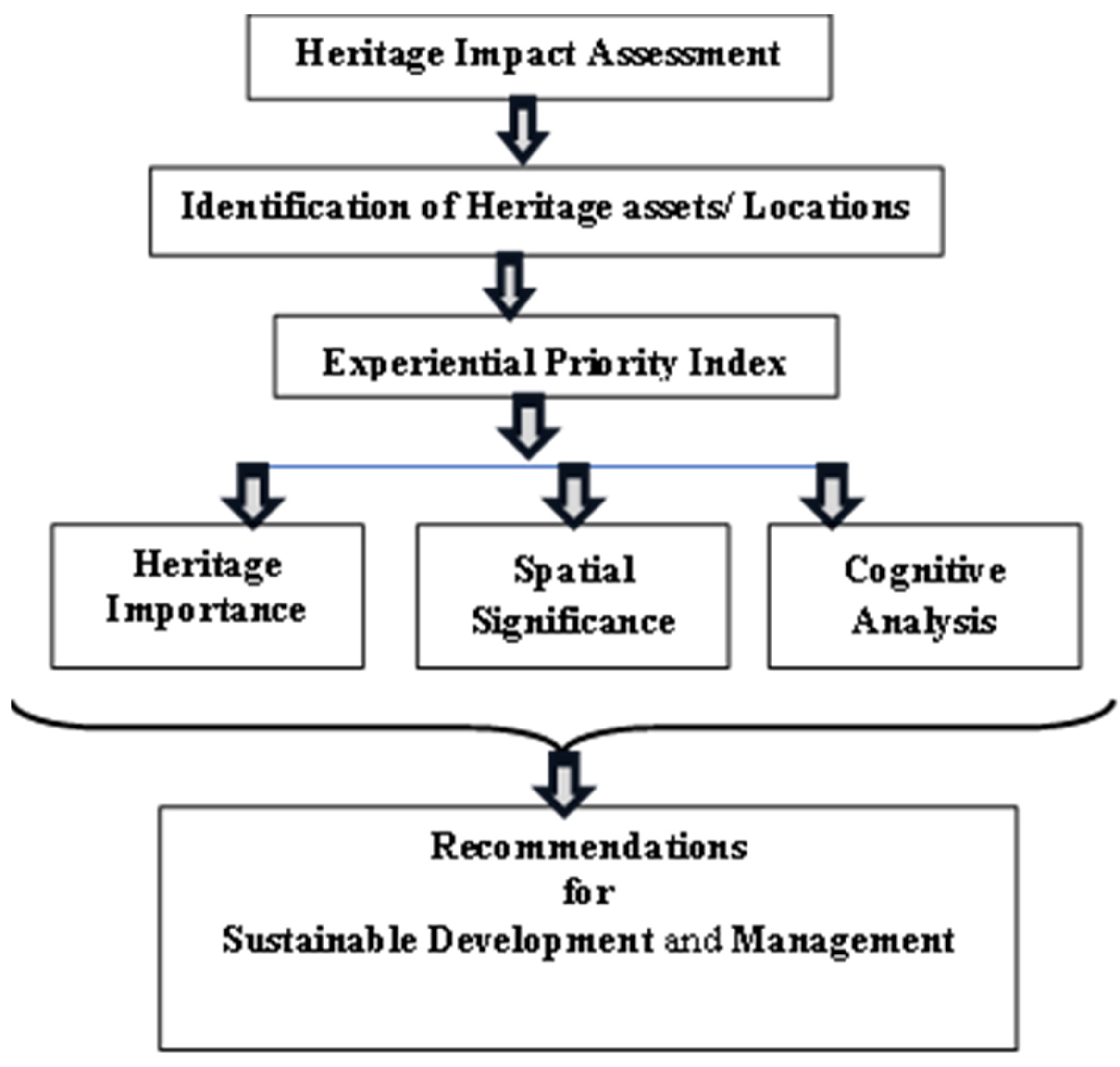
This study employs a mixed-method approach in conducting the Govardhan heritage impact assessment, combining qualitative cognitive assessments with quantitative computational analysis (Figure 1). In order to ensure accuracy and contextual significance in the analysis, the study has intentionally concentrated on a single historic and religious city, Govardhan. Furthermore, it is difficult to accurately generalize the extremely localized spatial patterns, belief systems, ritual practices, and heritage layers of historic temple towns across geographical boundaries. The research is able to capture the intricate spatial behaviours, cognitive perceptions, heritage significance, and experiential characteristics that are exclusive to the pilgrimage culture and sacred geography of Govardhan. Furthermore, high-resolution geographical data and site-specific validation are necessary for the application of computational techniques like visibility graph analysis, isovist analysis, cognitive indexing, and heritage effect assessment, which can only be accomplished through a comprehensive location-based study. Additionally, a single-city approach offers a methodological prototype that can be expanded/tailored for other ancient cities. Therefore, the emphasis on Govardhan guarantees clarity in methodology. Moreover, the religious–historic city of ‘Govardhan’ is an amalgamation of built and unbuilt heritage and thus covers all the parameters of evaluation. The religious–historic precinct’s visibility, connectedness, and openness are evaluated quantitatively using spatial modelling methods like space syntax, visibility graph analysis (VGA), and isovist area analysis (ISA). To gather qualitative information about pilgrims’ perceptions, spiritual orientation, and cultural associations, standardized surveys and interviews with pilgrims, local stakeholders, and shopkeepers are conducted [28,29]. The study offers insights for historical conservation and urban planning initiatives by combining quantitative analysis with qualitative visitor input, promising a balanced approach to sustainable development and management. Several researchers have quantitatively assessed human perception to inform urban planning and spatial decision-making [43,44,45]. Combining these datasets allows for triangulation of results [46], wherein visitor cognition patterns and computational spatial metrics are examined to find correlations among various parameters (Table 1). This combined technique provides a comprehensive basis for recommendations for sustainable development within the sacred landscape by capturing both the quantifiable spatial qualities and the intangible cultural values.
The adopted evaluation criteria for various parameters of HIA in this research has been listed in the table below.

4. About the Case Study

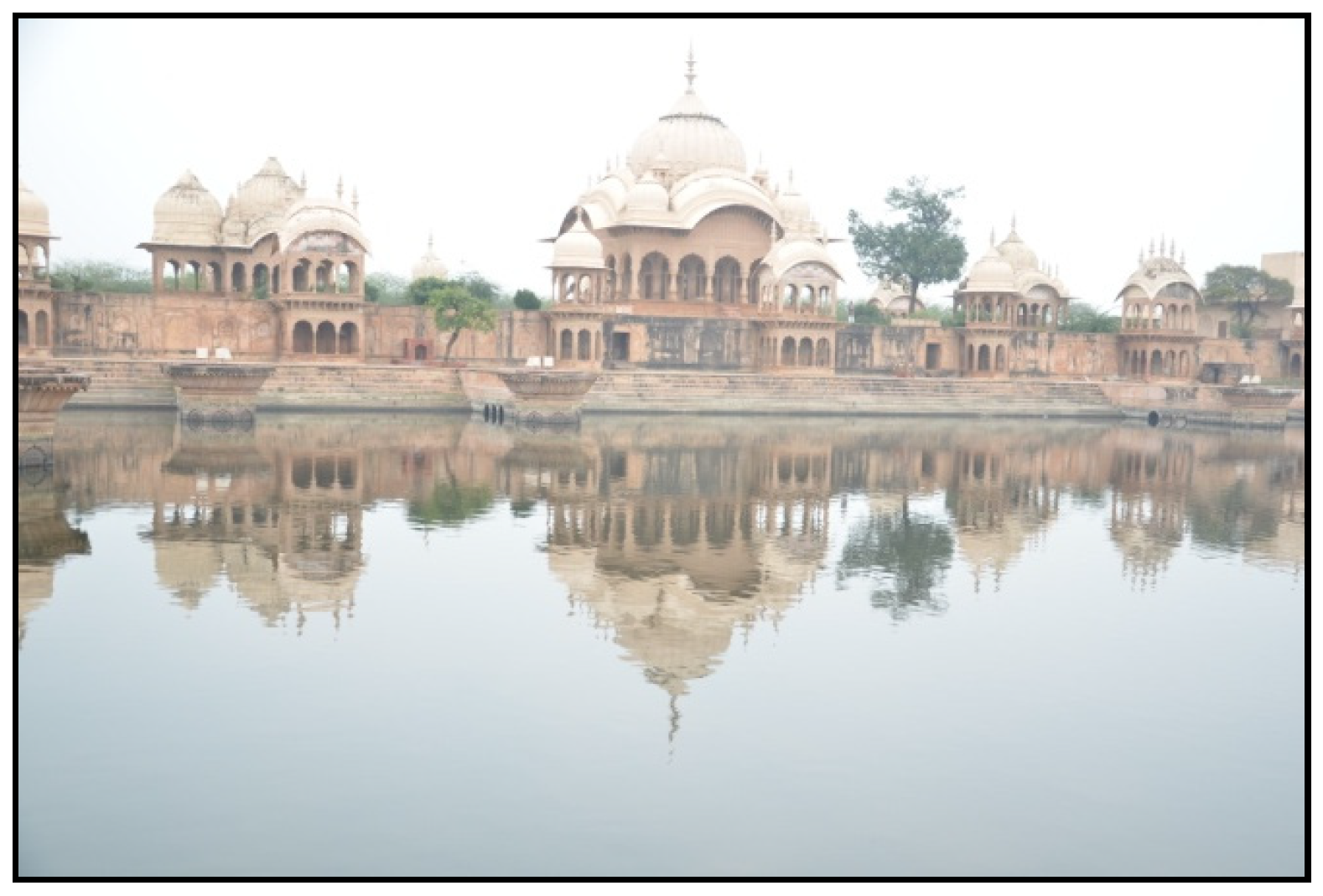
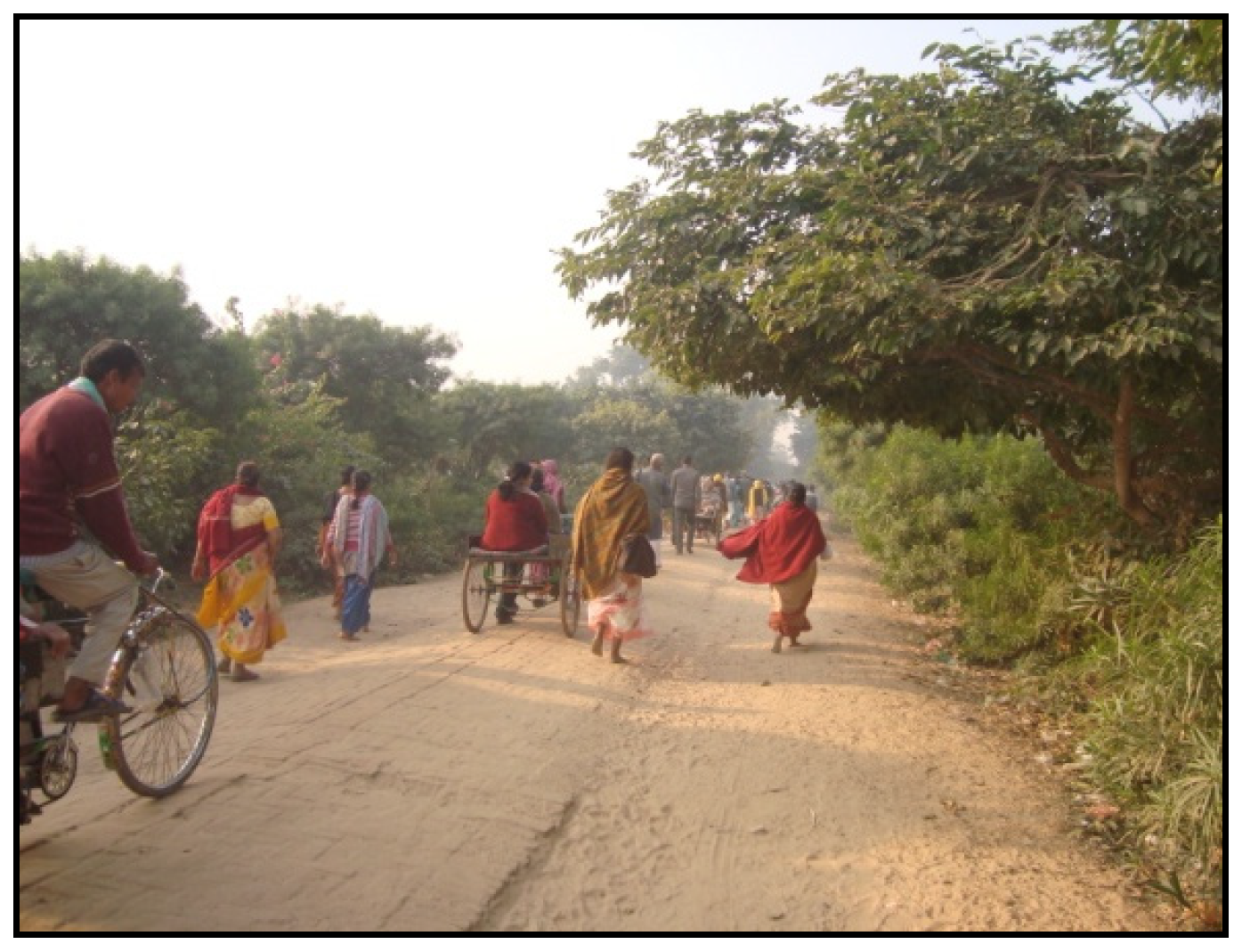
Govardhan, a sacred pilgrimage site of Braj Mandal (Braj Mandal spans approximately 3800 square kilometres in area and traces its roots back to around 600 B.C. This ancient region extends across three states in India: Uttar Pradesh, Rajasthan, and Haryana [47]), is known for the 21 km parikrama (circumambulatory) route around the sacred hill [48]. Unlike confined temple precincts, Govardhan offers a linear-spatial pilgrimage landscape, dotted with sacred kunds, shrines, and natural features, making it an ideal case for visibility and movement-based analysis over time and space (Figure 2 and Figure 3). Govardhan holds significant spiritual importance in the Braj Mandal region. There is an epic that Lord Krishna once shielded the people of Braj Mandal from heavy rains by lifting the colossal Govardhan hill on the little finger of his left hand for seven days. Following this divine intervention, Lord Krishna urged the inhabitants to honour Govardhan through parikrama, circumambulating the hill and offering food. This event gave birth to the festival of ‘Govardhan Puja’, where devotees offer 56 (or 108) different food items as bhog to the hill, forming the ‘ankut’ or ‘annakuta’ (mountain of food). These offerings, ranging from chutneys to salads, symbolize gratitude and devotion and are distributed as prasada among the people [49]. Thousands flock to Govardhan to partake in this tradition, performing the sacred Govardhan parikrama, which is a ritualistic journey around the hill. Govardhan’s spiritual allure draws millions of pilgrims annually, illustrating the prevalence of natural heritage over built structures in religious cities. This case exemplifies the intertwining of spatiality and religion, as well as the spiritual essence embedded within the natural and built environment. Through Govardhan, we gain insights into the deep intangible aspects that influence religious settings, going beyond just physical structures.

5. Analysis: Heritage Impact Assessment

The process of assessing how planned changes or unexpected growth from new buildings or current needs affect the cultural, historical, and spiritual value of heritage sites is called a heritage impact assessment (HIA) [1]. This assessment is particularly important in religious–historic cities like Govardhan, where the landscape includes both intangible factors like rituals, beliefs, and pilgrim experiences, as well as tangible aspects like temples, kunds, and parikrama pathways. Besides highlighting potential threats to the integrity of heritage, the assessment also identifies opportunities for protection, improvement, and sustainable management [50,51]. HIA provides a detailed understanding of how to preserve heritage values while considering modern demands such as tourism, urban growth, and community use by combining geographic analysis, surveys of public opinion, and heritage significance scoring [52,53].
Govardhan, the sacred landscape of Braj Mandal, faces growing threats from urbanization, rising numbers of pilgrims, and environmental strain on its natural resources, including the sacred hill, kunds, and groves. The town becomes very vulnerable to traffic, encroachment, and unchecked development due to the increasing infrastructure needs of millions of visitors who come to perform parikrama and enjoy the sacred atmosphere. The urbanization pressures often compromise the authenticity of both the built and unbuilt heritage and disrupt the spiritual experience of the pilgrimage [54]. To systematically assess how spatial changes, tourist movement patterns, and infrastructure modifications impact both tangible and intangible historic resources, a heritage impact assessment (HIA) is essential in this context [1]. This aligns heritage preservation with sustainable development by ensuring that conservation efforts in Govardhan are not only protective but also sensitive to the town’s spiritual, cultural, and experiential aspects [55].

5.1. Identification of Heritage Assets/Locations

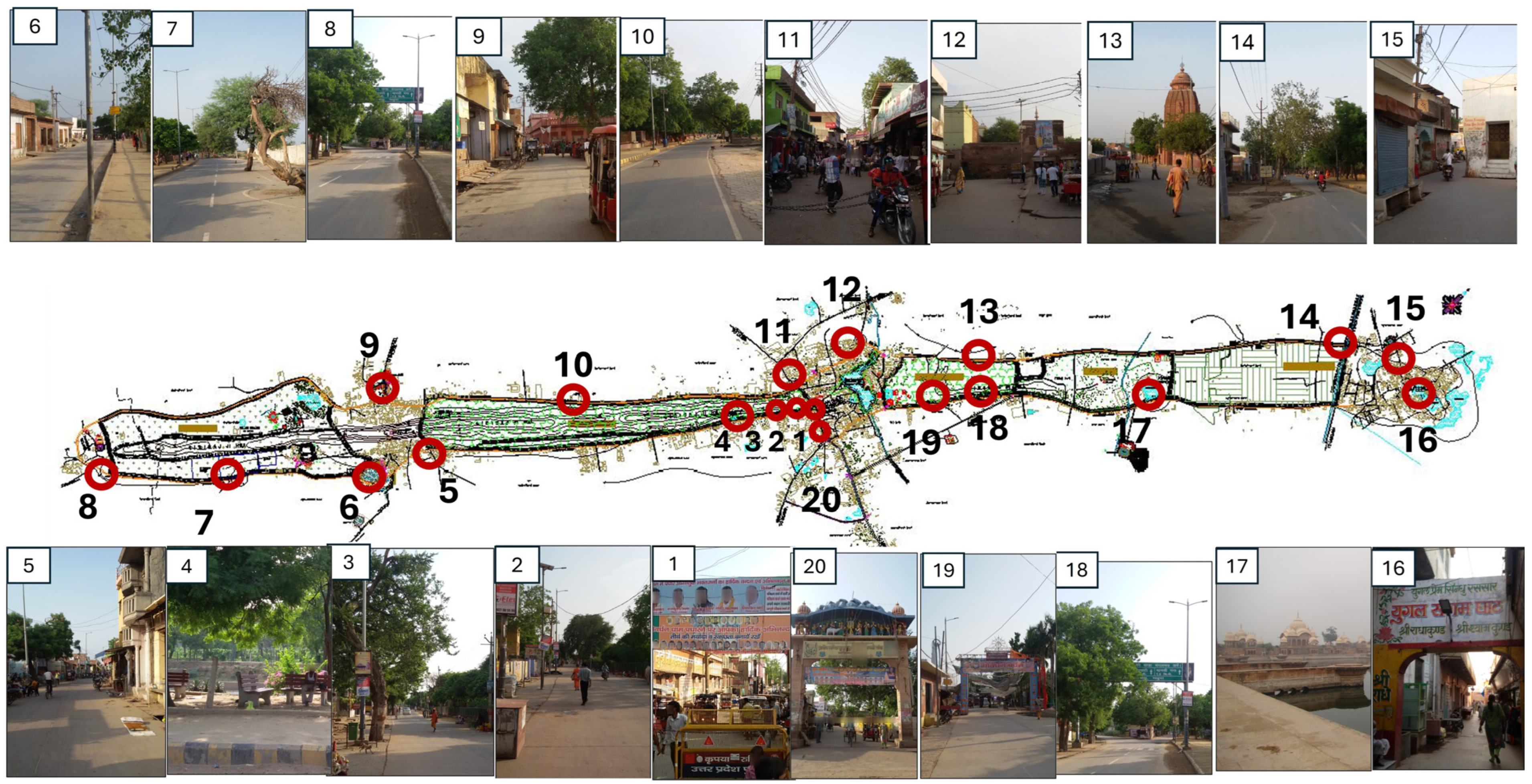
A total of twenty locations along the parikrama marg have been picked for the heritage impact assessment (Figure 4 and Table 2). These twenty vantage points were chosen based on their historic value, spiritual importance, and visual prominence. These locations offer a harmonious blend of both tangible and intangible characteristics that are necessary for assessing the heritage impact holistically.
Key Parameters for the identification of the locations [56,57,58]
  • Spiritual Significance: Along the Parikrama route, the identified location possesses either of the values, i.e., significant temple, ghat, kund (holy water body), and nodes that are of great religious significance. These sites are important to the town’s spiritual rhythm since pilgrims typically stop there to worship, pause, or carry out rituals.
  • Heritage Value: A large number of these viewpoints line up with historic temples, buildings, and natural features that hold cultural significance.
Their presence guarantees a sufficient representation of Govardhan’s architectural, historical, and cultural strata.
Experiential Importance: For pilgrims and tourists, these locations serve as visual cues and emotional connect. The views, sightlines, and openness of the location have a significant impact on visitor’s sense of direction, spiritual impression, and place memory.
Spatial Distribution: The selected vantage sites, which include entry points, intersections, bottleneck zones, and rest areas, are spread across parikrama marg. Variation in visibility, traffic patterns, and spatial experience are all captured by the varied selected locations.
Critical Pressure Points: It is well known that during festivals and busy times of the year, a significant number of pilgrims congregate at specific nodes, such as the Mansi Ganga, Radha Kund-Shyam Kund, Jatipura, and Danghati. Their inclusion in the study enables it to address carrying capacity, heritage vulnerability, and congestion.
Overall, by fusing places of spiritual significance with sites of visual significance, the selection guarantees a thorough heritage impact assessment (HIA) that incorporates visitor experience, spatial characteristics, and religious conviction. To evaluate and prioritize the actions for sustainable development, a more experiential priority index has been created.

5.2. Experiential Priority Index

An experiential priority index (EPI) for heritage planning can be defined as a conceptual instrument that may be obtained from the integration of several elements influencing the perception and value of urban history [34,59]. EPI, in this case, is a combined metric formed by merging spatial visibility, heritage significance, and cognitive perception into one assessment framework. It illustrates how much a place in a historic religious city like Govardhan contributes to the overall experience of a pilgrim or visitor. The EPI offers a detailed view of visitor priorities by combining the heritage importance score (HIS), spatial significance (SS), and cognitive index (CI). A higher EPI value for a particular location indicates that the spot is considered more important for the experience [60], highlighting the need for focused conservation, crowd management, and spatial improvements [61,62].
Therefore, the EPI serves as a tool for administrators, heritage officials, and city planners to make decisions by balancing spatial design and spiritual beliefs in the sustainable development [63,64] of ancient cities.
Three criteria—historical relevance, spatial significance, and cognitive factors— which have been used to evaluate the experience priority index of the twenty locations at Govardhan are being detailed in the following section.

5.2.1. Heritage Significance

The heritage importance scoring (HIS) methodology is a systematic approach to assessing the architectural/historical, cultural, spiritual, and ritual significance [65,66] of particular sites or vantage points in a religious–historic environment, like Govardhan. Every site is evaluated according to several criteria, including its importance in communal memory, architectural merit, symbolic meaning, antiquity, ritual practices, and association with sacred narratives [67]. In order to provide a quantitative depiction of heritage value that enhances qualitative descriptions, scores are thereafter allocated according to the relative relevance of these characteristics. A systematic approach has been adopted to calculate the weights of heritage parameters, incorporating stakeholder participation, analysis of the literature, and expert opinion [28,29]. To begin, in the first step, well-known frameworks like ICOMOS guidelines [68] and heritage impact assessment (HIA) manuals [69] were examined in order to determine the widely recognized criteria of historical significance, spiritual significance, architectural authenticity, ecological sensitivity, and sociocultural significance. The second step was to assign initial weights to the identified parameters. This decision was based on the views of a panel of religious leaders regarding Govardhan’s religious and historical context. The study used a delphi method to balance these perspectives, averaging and refining responses from stakeholders and experts over several rounds until they reached an agreement. To ensure fair representation, the weights were then normalized so that they summed to one or hundred percent using the analytic hierarchy process (AHP). This structured approach ensures that the weights reflect both subjective experience and objective heritage value, creating a solid and relevant scoring system for Govardhan. According to the AHP results, historical significance (HS) has been weighted at 35%, ritual importance (RI) at 25%, spiritual perception (SP) at 20%, and cultural activities (CAs) at 20%. The table below (Table 3) shows the values for each heritage importance parameter based on Equation (1).
H S I i = 0.35 . H S i n o r m + 0.25 . R I i n o r m + 0.25 . S P i n o r m + 0.20 . C A i n o r m
Among the twenty vantage locations in Govardhan, the heritage importance score (HIS) data show a distinct order. Religious sites like Kusum sarovar, Radhakund-shyamkund, and Mansi ganga received the highest scores because of their combined historical antiquity, close philosophical ties, and ongoing ritual significance in pilgrims’ everyday lives. In addition to having strong religious connotations, these sites also host the greatest proportion of rituals, celebrations, and congregational meetings, which increases the significance of their legacy. The analysis highlights the intangible heritage qualities that predominate in sacred landscapes, showing that spiritual significance regularly outweighs architectural or physical scale.

5.2.2. Spatial Significance

The term “spatial significance” describes the characteristics of a particular location due to its specific spatial characteristics [70]. The degree to which a location is open, connected, and visually integrated within its surrounding urban or pilgrimage landscape is quantified by computational methods like visibility graph analysis (VGA) and isovist area analysis (ISA) [71]. Spatial significance in Govardhan emphasizes how viewpoints along the parikrama marg, kunds, and temple nodes promote movement, orientation, and group gathering. While places with poor visibility might cause traffic jams or bottlenecks, those with high spatial visibility are frequently used as landmarks and help pilgrims find their way and stay spiritually oriented [72,73]. A composite spatial significance score that connects visual access and physical openness to visitors’ lived experiences can be obtained by normalizing VGA and ISA values.
The following formula has been applied to determine each location’s spatial significance:
S S i = α . V G A i n o r m + ( 1 α ) . I S A i n o r m
If α = 0.5 → VGA and ISA contribute equally. If α > 0.5 → more weight is given to VGA (connectivity-based spatial significance). If α < 0.5 → more weight is given to ISA (openness-based spatial significance).
This process looks at the visual properties and spatial characteristics of different vantage locations. By selecting twenty diverse spots, researchers aim to gain a full understanding of the spatial dynamics and perceptual qualities in Govardhan. These chosen vantage points provide diversified visibility details and perspectives. This lets researchers investigate and compare the visibility area, connectivity, and overall spatial experience thoroughly. Through the comparison of twenty locations, the location with the highest degree of openness and visibility has been identified.
Space syntax is a computational technique that aims to show and assess different spatial arrangements [74]. It helps explain how spatial features relate to human behaviour on ancient streets [75]. A study of space syntax connects the physical and non-physical aspects of “spatial” culture [23]. Research on space syntax offers the topological, geometric, and metric properties of spatial systems using mathematical modelling tools and metrics [76]. In this study, researchers have examined the social, cognitive, and behavioural aspects of space using tools like VGA and ISA [77].
The visibility analysis for the identified locations has been computed by the software tool ‘Depth Map ucl space syntax © 2025.’ This software allowed for the import of 2D layouts in the Drawing Exchange Format (DXF), creating a digital setup for analysis [78]. After importing the layouts, the software created a grid over the layout, offering a clear representation of the spatial environment. Once the grid was ready, the visibility analysis began. This analysis focused on three main factors: visual connectivity, visual integration, and isovist area [27,79]. These variables are crucial for understanding the perceptual aspects of the spatial environment.
  • Visibility Graph Analysis (VGA) is a computational method used to assess how much of a space can be seen from different points within it. By converting visible interconnections into a network of nodes and edges, VGA helps identify areas of high visual accessibility, openness, and spatial prominence. This makes it useful for understanding how people perceive, navigate, and experience heritage environments such as Govardhan [80]. The values of visual connectivity and visual integration through VGA looked at how well different points or locations in the environment are visually connected [81]. It helps identify possible sightlines and visual paths that aid navigation and orientation within the temple towns [82]. Visual integration looks at how various elements in the environment fit together visually. It examines the coherence and unity of the spatial layout, identifying areas of visual harmony and cohesion, as well as possible disruptions or barriers to visual continuity.
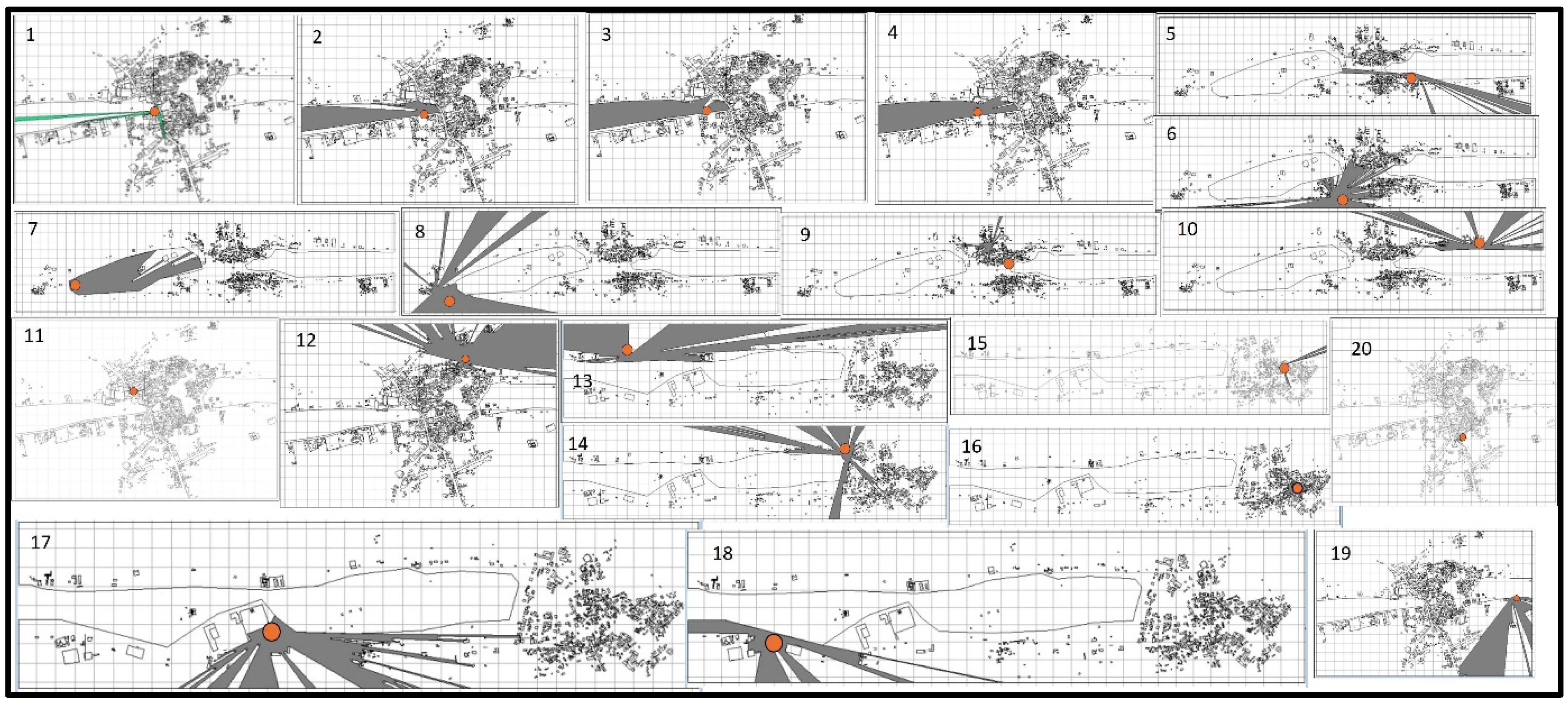
  • Isovist Area (ISA): The isovist area refers to the space visible from a specific viewpoint in the environment. It refers to the measurement of the total visible area from a specific observation point within a spatial setting. An isovist represents the geometric region visible from that point, and analyzing its area helps quantify openness, enclosure, and the perceived spatial experience of a location. It is widely used in architectural morphology and spatial cognition to understand how people visually interpret complex environments [83]. By studying the isovist area, researchers can gain insight into the level of visual exposure and the range of visibility from different locations within the temple towns.
By examining these variables, researchers obtain valuable insights into the visual dynamics and spatial features of the temple towns. This information can aid urban planning, design efforts, and decision-making aimed at improving the visual experience and spatial quality of the built environment.
Visibility Graph Analysis (VGA)
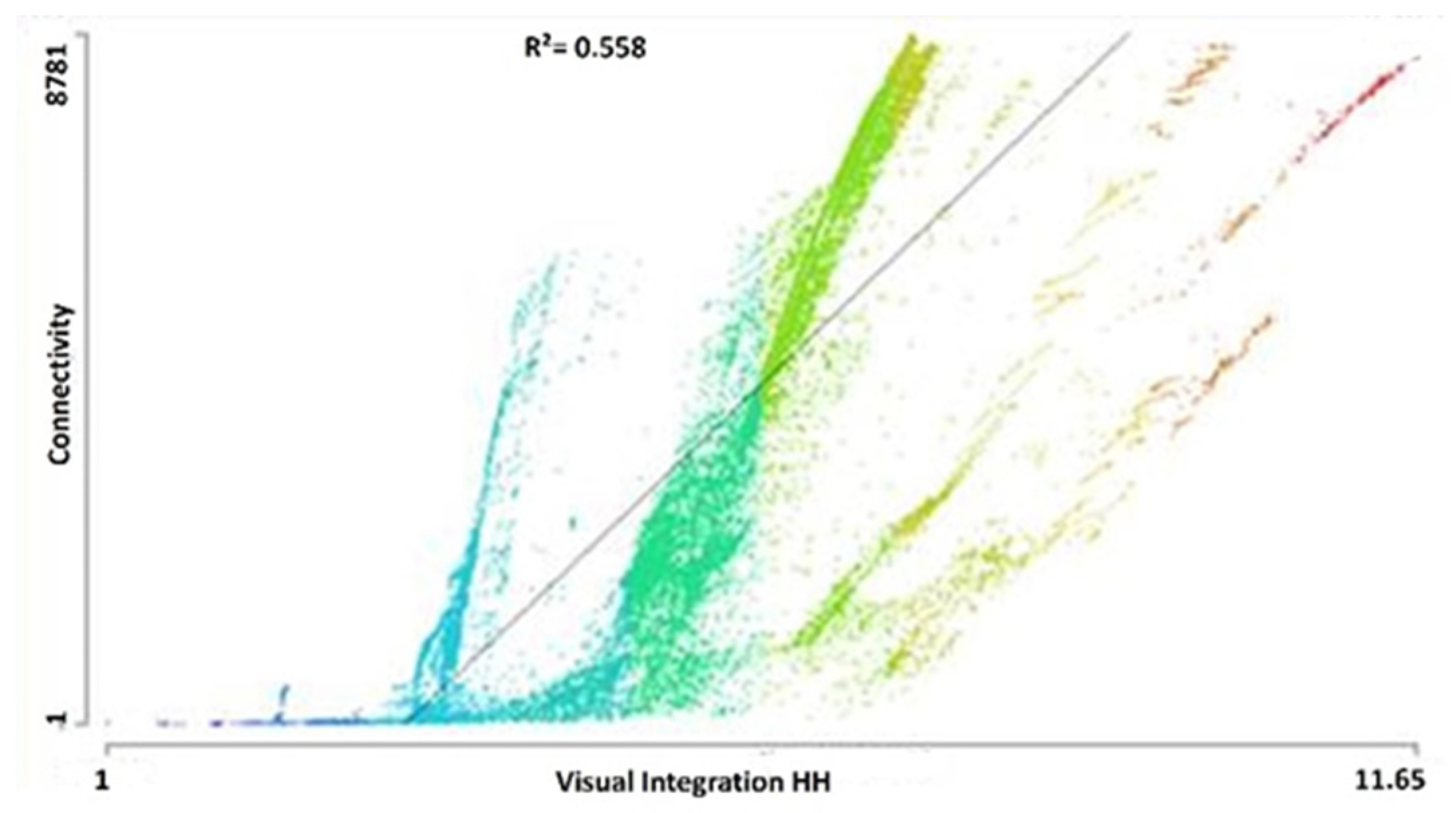
The assessment of visibility graph analysis has been conducted through a software called ‘depth-map’ (Figure 5 and Table 4). A scatter plot has been generated which effectively illustrates the interrelationship between visual integration and visual connectivity (Figure 6). Each colour on the map is assigned both an integration value and a connectivity value. Consequently, a graphical representation is generated, with visual integration plotted along the x-axis and connectivity along the y-axis (Figure 6).
Each individual axial line on the map is represented as a data point, contributing to the formation of a correlation line that signifies the connection between visual integration and connectivity.
Results of VGA [Figure 3 and Figure 4 and Table 1]:
  • Connectivity varies from 1 to 8781
  • Visual integration [HH] varies from 1.4 to 11.65
  • Coefficient of correlation (R2 = 0.558)
Notably, the findings reveal a significantly strong correlation between visual integration and connectivity. This suggests that enhanced visibility is achieved through the presence of more connecting routes. The coefficient of determination (R2) for visual integration and connectivity in this analysis stands at 0.558, signifying a robust relationship. This high R2 value underscores the reasonable level of intelligibility within the area, thus affirming the coherence and clarity of spatial understanding.
Isovist Area Analysis at Govardhan
Isovists essentially delineate the localized physical attributes of space relative to individual observation points [37,83]. Utilized for general depiction and capturing behaviourally significant properties of spatial structure, isovist graphs offer insights into various geometric features extracted from isovist polygons. One fundamental metric derived from isovist analysis is the isovist area, which denotes the area visible from a single observation point. Isovist analysis reveals that visual fields exhibit distinct forms shaped by geometry and movement dynamics. The primary quantifiable aspect of an isovist field is its area (A), representing the visible floor area from a specific vantage point (Figure 7). While area calculation is straightforward, it lacks insight into the isovist’s shape (Table 5). Thus, emphasis is placed on measuring perimeter length and the number of vertices to capture the variations in shape among isovists with similar areas. Transitioning along the parikrama marg, pilgrims encounter changes in visibility structures, marked by rotational asymmetry influencing their experiences and preference dimensions. Certain locations offer panoramic views in multiple directions, augmenting visual permeability and enhancing the overall experience. Results indicate that isovists with fewer vertices tend to exhibit higher compactness, indicative of stable visual information. Notably, the L:16 isovist, characterized by only two vertices, attains the highest compactness value, while L:13 boasts the largest isovist area, signifying maximal openness.
Results
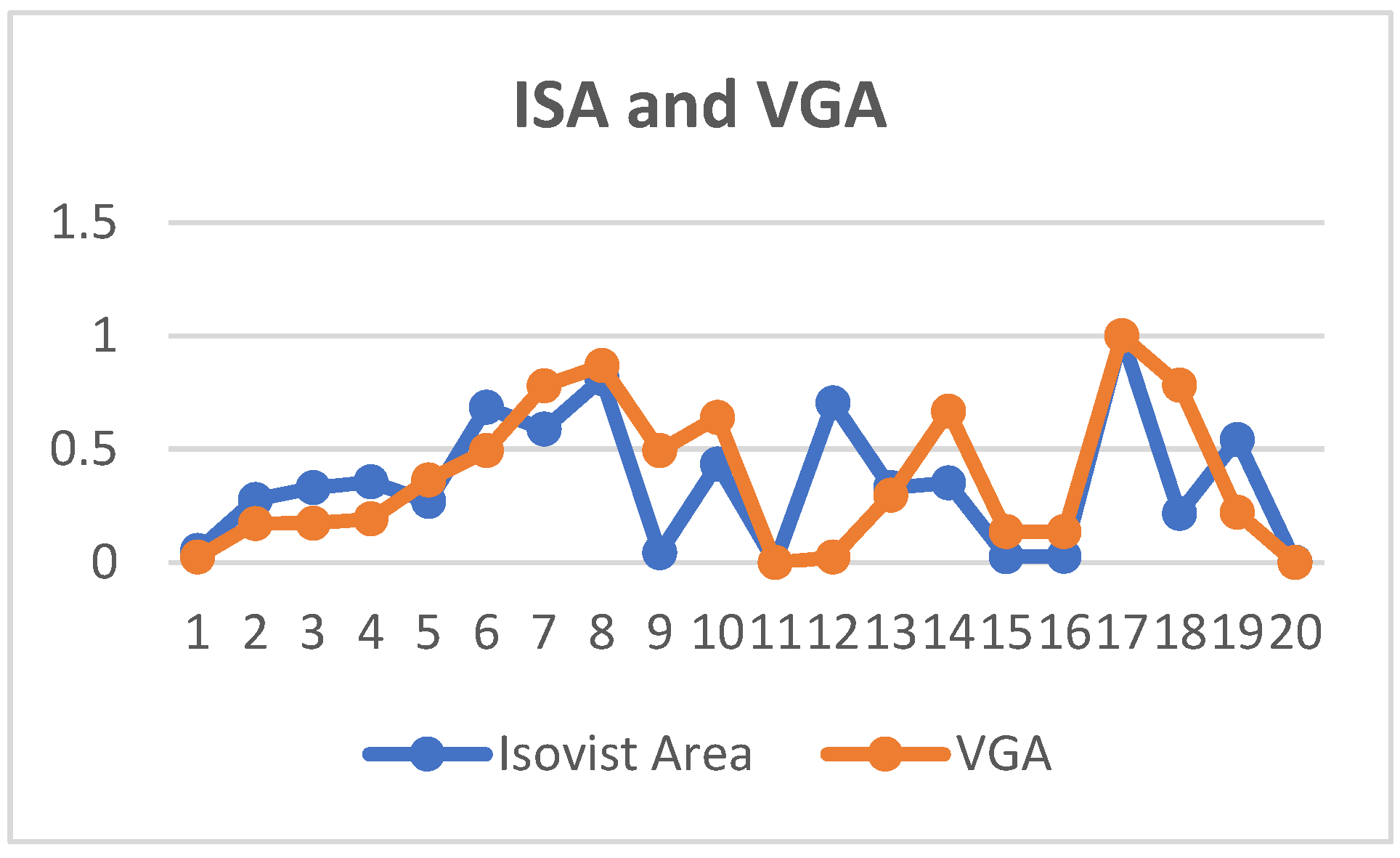
The findings from the isovist area analysis (ISA) and visibility graph analysis (VGA) at the same observation points have been methodically gathered in Table 5 and graphically depicted in Figure 8. The comparative analysis shows that VGA values and ISA assessments are absolutely correlated in every location. Accordingly, regions with higher VGA scores, which signify better visual connectedness and accessibility within the spatial network, also tend to be larger isovist regions, which indicate a higher level of openness and wider visual fields. This correlation also validates computational modelling as a reliable method for deciphering patterns of spatial perception. Additionally, it suggests that locations with high visual integration naturally offer wider sightlines, which facilitate better landmark orientation and may improve visitors’ cognitive experience. This conclusion is especially pertinent to pilgrimage and heritage routes like the Govardhan parikrama, where visibility and spatial openness are crucial in determining both ease of navigation and spiritual participation.
A substantial link between visibility graph analysis (VGA) and isovist area analysis (ISA) highlights the spatial significance of high visibility zones along the sacred route in the context of the heritage impact assessment of Govardhan parikrama. Using space syntax techniques, the simulated spatial visibility values show that certain sections of the Govardhan parikrama marg have exceptionally high levels of visibility and spatial openness. When isovist area calculations are superimposed over the findings from the visibility graph analysis (VGA), a strong correlation between the two computational measures is shown, suggesting that regions with larger vision fields are likewise more connected within the geographical network.
Since these areas of increased receptivity enable pilgrims to visually orient themselves toward holy locations, they are often linked to higher cognitive–spiritual experiences, improving navigation and spiritual awareness. On the other hand, the data also shows that areas with lower levels of spatial openness are more likely to exhibit congestion patterns. This relationship, however, is not only geometric; places with strong religious value frequently draw greater crowds, which leads to high visitor numbers regardless of physical arrangement. For example, because of their higher ceremonial significance, Mansi ganga (S. No: 19) and Radha kund–shyam kund (S. No: 16) are routinely the most crowded nodes. Other sites that are prone to congestion, like S. Nos. 1, 11, 15, and 20, are more crowded during seasons of high pilgrimage because of physical limitations like bottleneck zones and restricted routes. The value of incorporating cultural significance and spatial configuration studies into the design of sustainable interventions for religious heritage sites is highlighted by this dual analysis.

5.2.3. Cognitive Factors

In order to evaluate the complex visitor experience in Govardhan’s sacred landscape, a structured questionnaire was created to investigate cognitive aspects like navigation problems, sightline disruption, sacred views, skyline changes brought on by visual barriers from modern construction near Govardhan hill, feeling of spiritual connection, and crowding. The questionnaire was distributed to many user types, including pilgrims, locals, and vendors. The coding framework used to examine the gathered replies converts perceptual and qualitative data into representations that can be easily understood. This methodical cognitive mapping is an essential tool for connecting user perceptions to spatial arrangements and for guiding more contextually based heritage planning techniques (Table 6).
A cognitive assessment of 250 people along the Govardhan Parikrama Marg showed clear trends in the ways that spiritual importance and geographical dimensions affect the experiences of visitors. The responses were examined and classified in accordance with predetermined cognitive criteria, including perceived congestion, visual comfort, spiritual immersion, and spatial orientation (Table 7).
  • Visual clarity and spatial orientation: A total of 78% of respondents said that they felt less nervous and more orientated while travelling in places with a broad, unhindered range of vision.
  • Landmark visibility and spiritual immersion: A total of 82% of tourists said that being able to see holy sites clearly improved their spiritual participation. Despite traffic, nodes like Mansi ganga and Radha kund–shyam kund, which have a significant religious importance and average visual integration, were seen as places of intense spirituality. A somewhat positive association is indicated by the correlation value of 0.407 between visual connection and spiritual connection. This implies that characteristics of places in Govardhan where pilgrims experience better visual integration are as follows: openness, spatial connection, and clear sightlines to religious landmarks (which tend to promote stronger spiritual feelings and orientation). Essentially, pilgrims’ sense of sacred presence and spiritual attachment are strengthened when they are able to visibly interact with temples, kunds, or sacred hills from their vantage point. Since the correlation is not extremely high (it is closer to 1.0), it also suggests that spiritual connection is not purely reliant on visual clarity; intangible elements like ritual behaviours, personal faith, and spiritual associations also play a significant role. Therefore, while visual accessibility plays a major role in spiritual experience, for a more comprehensive heritage experience, it must be combined with cultural narratives and ritual contexts.
  • Perceived crowding and spatial openness: According to survey data, openness and perceived congestion have a negative correlation (r = −0.171). The perceived crowding scores for narrow routes were high, even during off-peak hours. However, even with comparable foot traffic numbers, larger areas with high visibility values were perceived as less crowded.
  • The relative importance of spiritual versus spatial factors: A total of 58% of visitors selected “religious importance” as the main factor that contributed to their positive experience, while 42% selected “spatial comfort and openness.”
  • Qualitative insights: According to open-ended comments, pilgrims were emotionally uplifted by visual access to the skyline and temple spires. Bottleneck sections caused discomfort, according to some participants, because they completely lack the atmosphere of Govardhan hill.

5.2.4. Analysis

Analysis of tabulated data has been performed to identify the critical locations which need immediate attention. The findings of cognitive analysis were methodically compared with those of the visibility graph analysis (VGA) and isovist area analysis. As a vital validation step, this cross-comparison shows that the computational measurements of spatial arrangement closely match visitors’ subjective perceptions of openness, visual connectedness, and spatial clarity. The reliability of the results is strengthened by the convergence of subjective cognitive responses and objective spatial metrics, which confirms that the cognitive patterns seen among visitors are directly rooted in the spatial structure of Govardhan’s sacred landscape rather than being isolated perceptions. In the first step of analysis, the heritage importance score has been compared with the spatial significance score.
The overall analysis has been conducted under two headings:
  • Govardhan heritage (tangible)
  • Govardhan heritage (intangible)
Govardhan Heritage (Tangible)
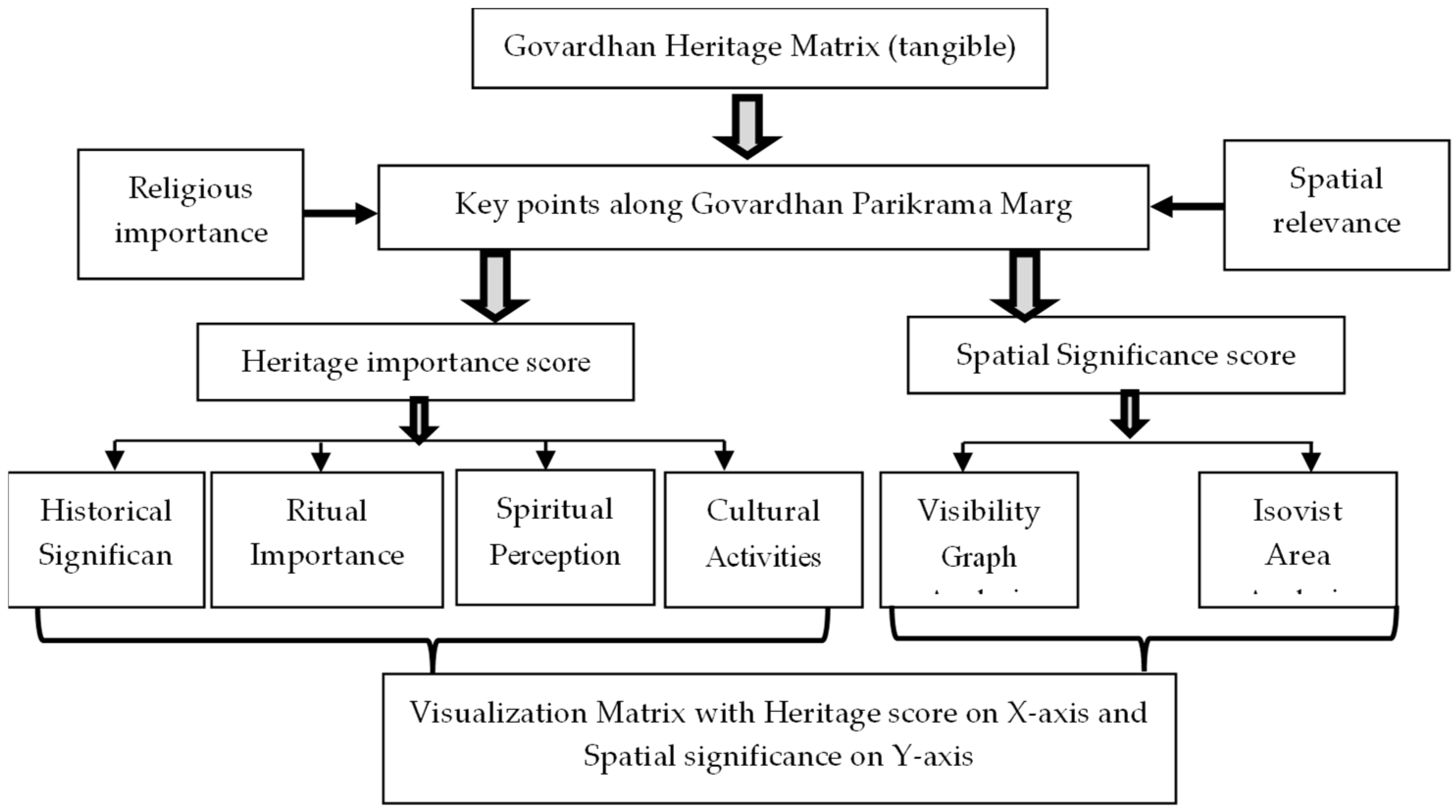
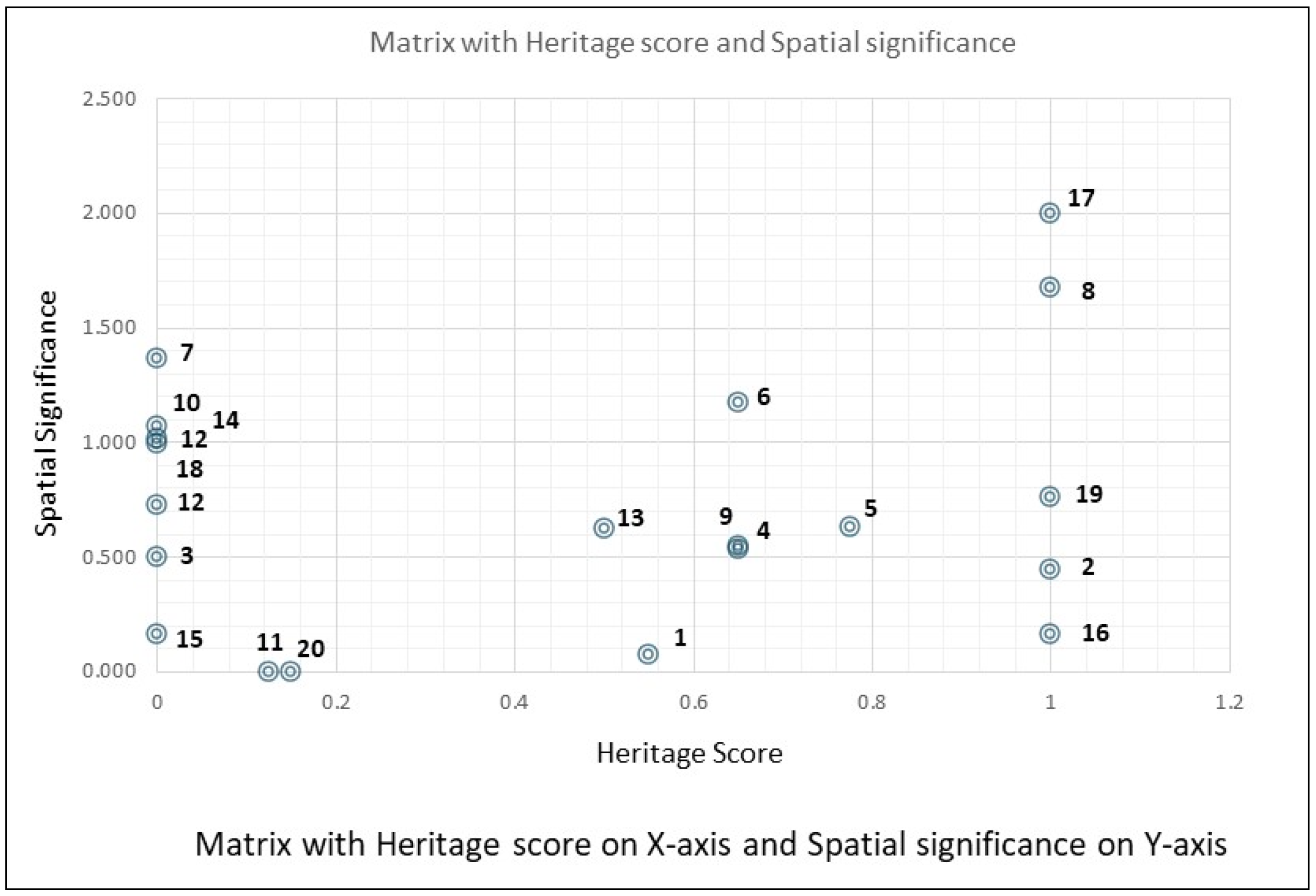
Various parameters of the heritage importance score have been listed, and a matrix has been prepared between the heritage importance score and spatial significance score for Govardhan heritage (tangible) (Figure 9 and Figure 10).
Corelating HIS with SS: For Govardhan’s tangible heritage, a comparative matrix was prepared to correlate the heritage importance score (HIS) with the spatial significance score (SS) (Figure 10). This research made it possible to pinpoint nodes of extraordinary significance, which are places where spatial prominence and cultural–historical significance converge. According to the findings, locations like ‘punchari ka lota temple’ (Location 8) and ‘kusum sarovar’ (Location 17) had the greatest scores in both categories. Along the parikrama route, ‘kusum sarovar’ has excellent spatial visibility and connectedness in addition to having a high heritage value due to its massive construction, its holy relationship with Krishna-lila, and the openness of its surrounding landscape. Similarly, punchari ka lota, which is situated at a visually noticeable curve in the road, is a crucial pilgrim orientation landmark because it combines historical significance with a vantage point that provides broad visibility. The close alignment of HIS and SS at these sites suggests that visual accessibility and open space frequently support pilgrims’ opinions of the significance of the heritage. On the other hand, locations with significant historical significance but limited spatial visibility indicate the need for design changes to enhance visitor interpretation, wayfinding, and accessibility.
Govardhan Heritage (Intangible)
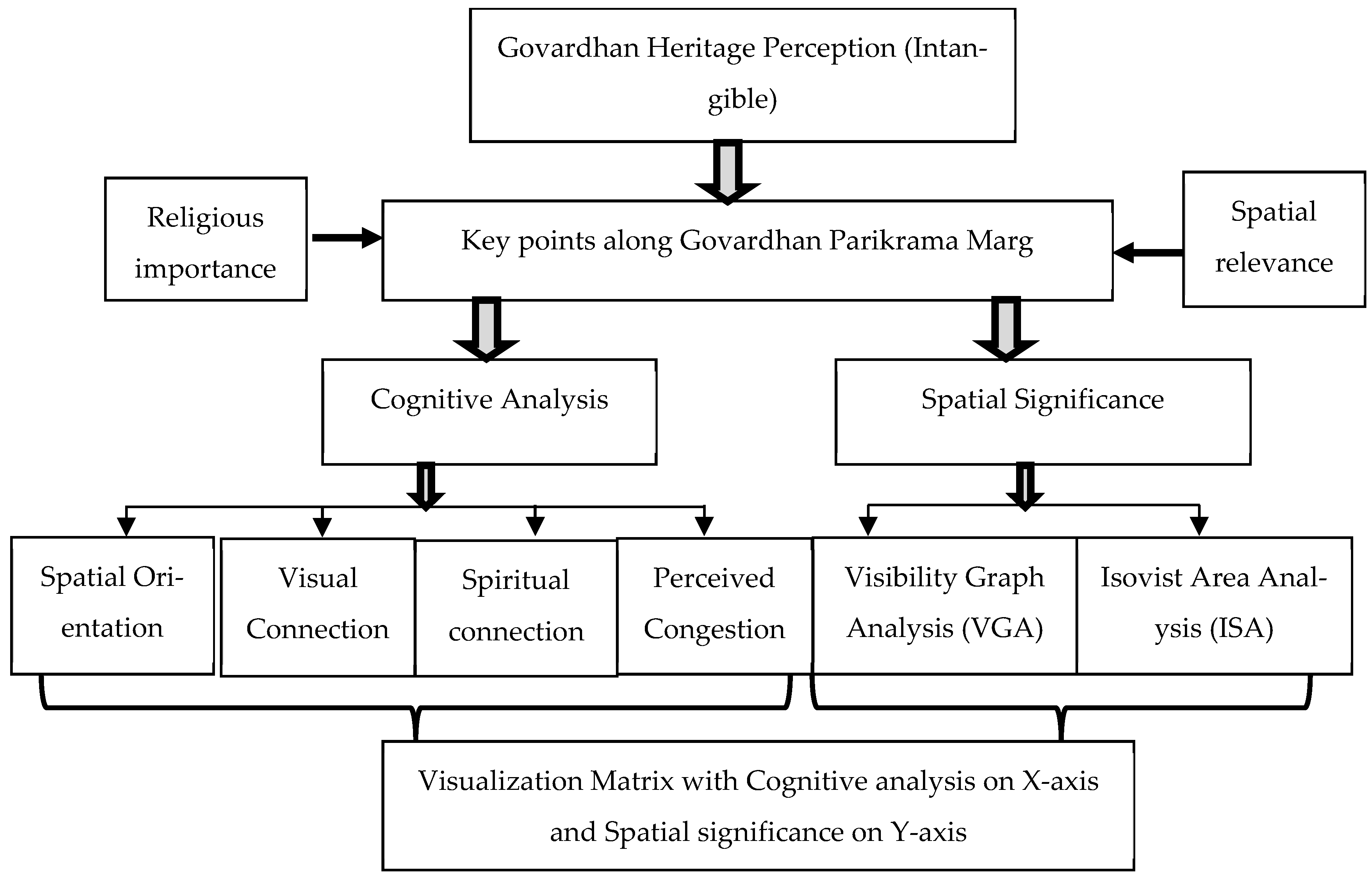
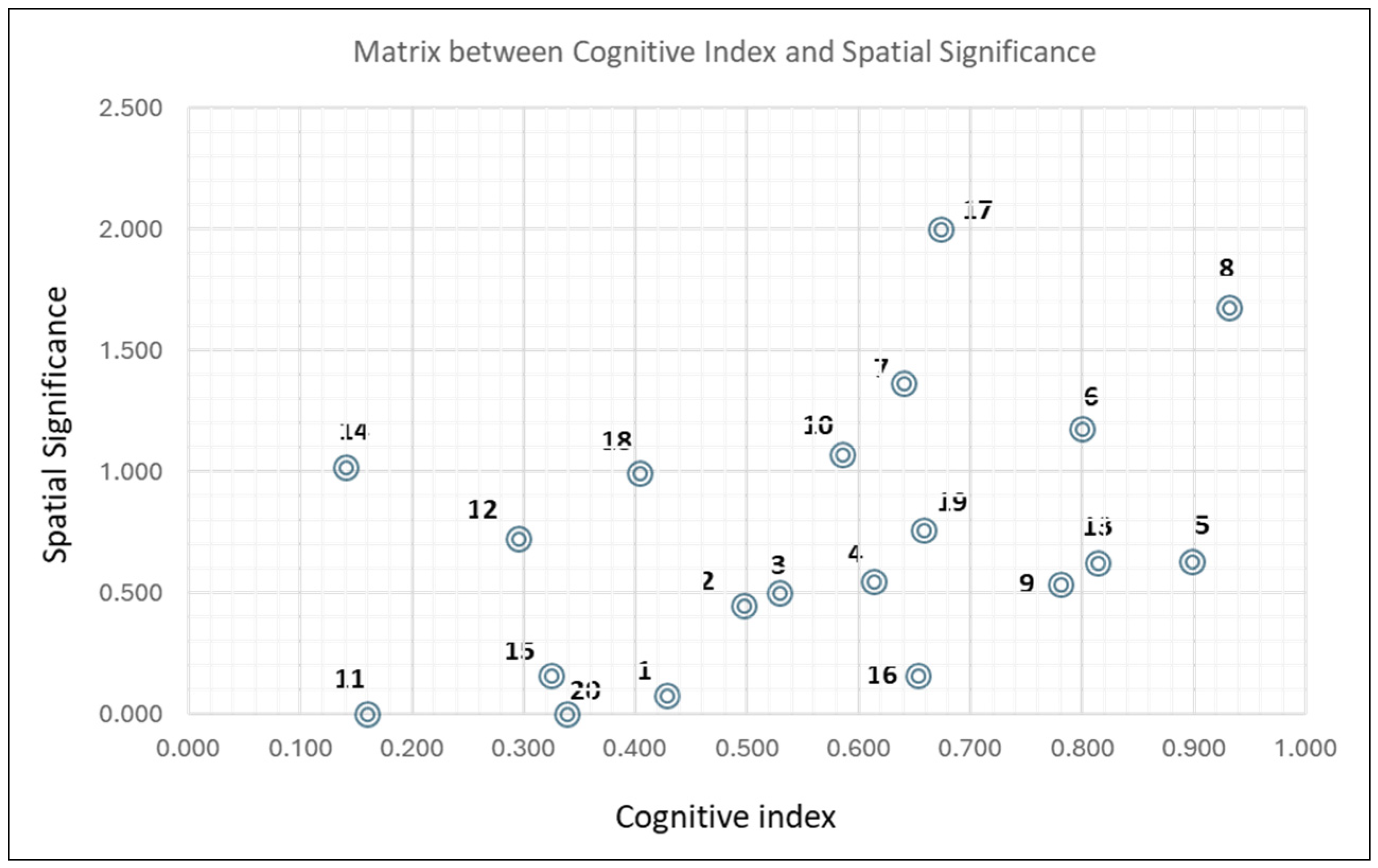
Various parameters of cognitive analysis have been listed, and matrix has been prepared among the cognitive index score and spatial significance score for Govardhan heritage (tangible) (Figure 11 and Figure 12).
A comparative matrix was created for Govardhan’s intangible heritage (Figure 12) in order to determine the relationship between the spatial significance score (SS), which is based on the visibility graph and isovist analysis, and the cognitive index (CI), which represents visitors’ perceptions of openness, orientation, visual connection, and spiritual impression. The ‘punchari ka lota temple’ (Location 8) received the greatest scores in both parameters, according to the data. According to this, the location not only has significant spatial prominence, broad visibility, and orientation benefits, but it also profoundly appeals to the spiritual and sensory senses of visitors. Intangible spiritual experiences can be enhanced by spatial features, as pilgrims view the place as open, visually connected, and spiritually charged. Punchari ka lota’s combined significance as a tangible site anchoring the parikrama route and as an intangible site reaffirming faith and remembrance is highlighted by the overlap of high CI and SS. These results confirm the interdependence of spatial arrangement and cognitive perception in influencing pilgrims’ lived experiences. High-scoring locations on both metrics become significant intersections of tangible and intangible heritage resources, necessitating careful consideration in conservation and planning initiatives.


6. Discussion

In the sacred environment of Govardhan, the results of this study show a complicated but significant connection between spatial arrangement, cognitive perception, and heritage significance. The findings of the isovist area analysis and visibility graph analysis (VGA) demonstrate how visitors’ navigation and interpretation of the pilgrimage environment are greatly influenced by spatial openness, visual integration, and visual interaction. Higher spatial significance locations, such ‘Punchari ka lota temple’ and ‘Kusum sarovar’, also showed higher heritage value scores and greater cognitive reactions, indicating that spatial characteristics directly contribute to spiritual perceptions and experiential richness. The cognitive research also shows that spatial factors have a significant impact on visitors’ opinions of orientation, spiritual ambiance, visual coherence, and congestion. A greater sense of spiritual connection and ease of mobility were linked to locations with high openness and easy visual access to holy sites. On the other hand, despite their high religious significance, places like Mansi ganga and Radha kund-shyam kund, with significant traffic or spatial bottlenecks, scored lower on cognitive tests. This comparison shows that a favourable visitor experience cannot be assured by spiritual significance alone rather, and that the experiential outcome results from striking a balance between heritage value and spatial performance. This finding is further supported by the integration of heritage importance rating with spatial significance. Along the parikrama route, tangible heritage monuments with significant architectural presence, ceremonial significance, and esthetic value frequently correspond with tangible dominant nodes. Some spiritually important places, however, have limited spatial shape, which suggests that careful spatial reorganization is necessary without sacrificing cultural authenticity. A comprehensive framework for prioritizing conservation and development initiatives is provided by the calculated experiential priority index (EPI), which effectively combines cognitive, spatial, and heritage components.
Crucially, despite the study’s emphasis on Govardhan, the methodological approach offers a scalable paradigm for other religious and historic settlements. Despite the exclusive focus on Govardhan, the methodology adopted for the study exhibits a high degree of generalizability to other historic and religious cities. The universality of the methodological framework adopted here dominates the location’s distinctiveness, thus giving rise to generalizable features. Data-driven computational methods that cut across regional cultural barriers include visibility graph analysis (VGA), isovist-based spatial assessment, heritage significance rating, and cognitive perception indexing. The trends noticed in Govardhan, such as the conflict among crowding and historic significance, the positive correlation among spatial openness and visitor satisfaction, and the reinforced relationship between visual connectivity and spiritual perception, are typical characteristic of religious destinations around the globe. Ritual paths, dense activity nodes, landmark-based direction, seasonal crowds, and layered heritage assets are features that many sacred locations have in common. As a result, other temple towns, historic cores, and pilgrimage landscapes can easily adopt, duplicate, and extend the method of analysis presented herein. This case study serves as a model framework that offers transferable insights for planners, conservationists, and policymakers working in similar heritage contexts by developing an evidence-based approach for connecting tangible spatial qualities with intangible phenomenological characteristics. Computational technologies like VGA, isovist analysis, and cognitive quantification show how spatial shape may be objectively mapped and associated with previously intangible feelings. In addition to supporting global sustainable development goals pertaining to cultural preservation, sustainable tourism, and resilient urban design, this adds to the larger conversation on digital innovation in heritage planning.
Overall, the conversation emphasizes the need for an integrated understanding of spatial behaviour, cultural values, and cognitive perspectives in order to improve the experience of visitors to sacred cities. In order to promote a more comprehensive and sustainable approach to maintaining historic pilgrimage sites, the research emphasizes the necessity of planning solutions that respect heritage significance while enhancing spatial usefulness.
This study promotes a number of important sustainable development goals by combining data-driven spatial analysis with heritage-sensitive planning. By encouraging safer, inclusive, and culturally sensitive urban design for sacred towns, the study supports SDG 11 (Sustainable Cities and Communities) through visibility, accessibility, and crowdflow assessments. By illustrating how technological innovation can improve heritage management, computational modelling, digital mapping, and analytical tools directly assist SDG 9 (Industry, Innovation, and Infrastructure). SDG 12 (Responsible Consumption and Production) is in line with suggestions to manage pilgrimage requirements, easing traffic and enhancing resource efficiency. Lastly, the study supports SDGs 4.7 and 8.9, which highlight cultural heritage education and the growth of sustainable, experience-based tourism by enhancing tourist experiences, fostering respectful and sustainable pilgrimage practices, and increasing cultural interpretation.

7. Recommendation

According to the cognitive research, the pilgrimage experience at Govardhan is influenced by both spiritual and spatial elements, though religious value can outweigh spatial discomfort in the perspective of visitors. High visibility and openness improve comfort and orientation. This suggests that in order to avoid disturbing sites that hold spiritual significance, crowd management tactics should concentrate on bottleneck areas. Locations that combine visual openness with strong landmark orientation are essential for both guiding tourists and enhancing their spiritual impression of historical features including temples, pilgrimage sites, and sacred ponds. According to HIA, these areas are valuable visual corridors whose integrity ought to be maintained throughout any renovation or intervention. On the other hand, places with a high spiritual significance but less open space and a lot of traffic are areas that need careful spatial management to strike a balance between cultural preservation and ritual accessibility.
Govardhan’s sustainability strategy makes sure of the following:
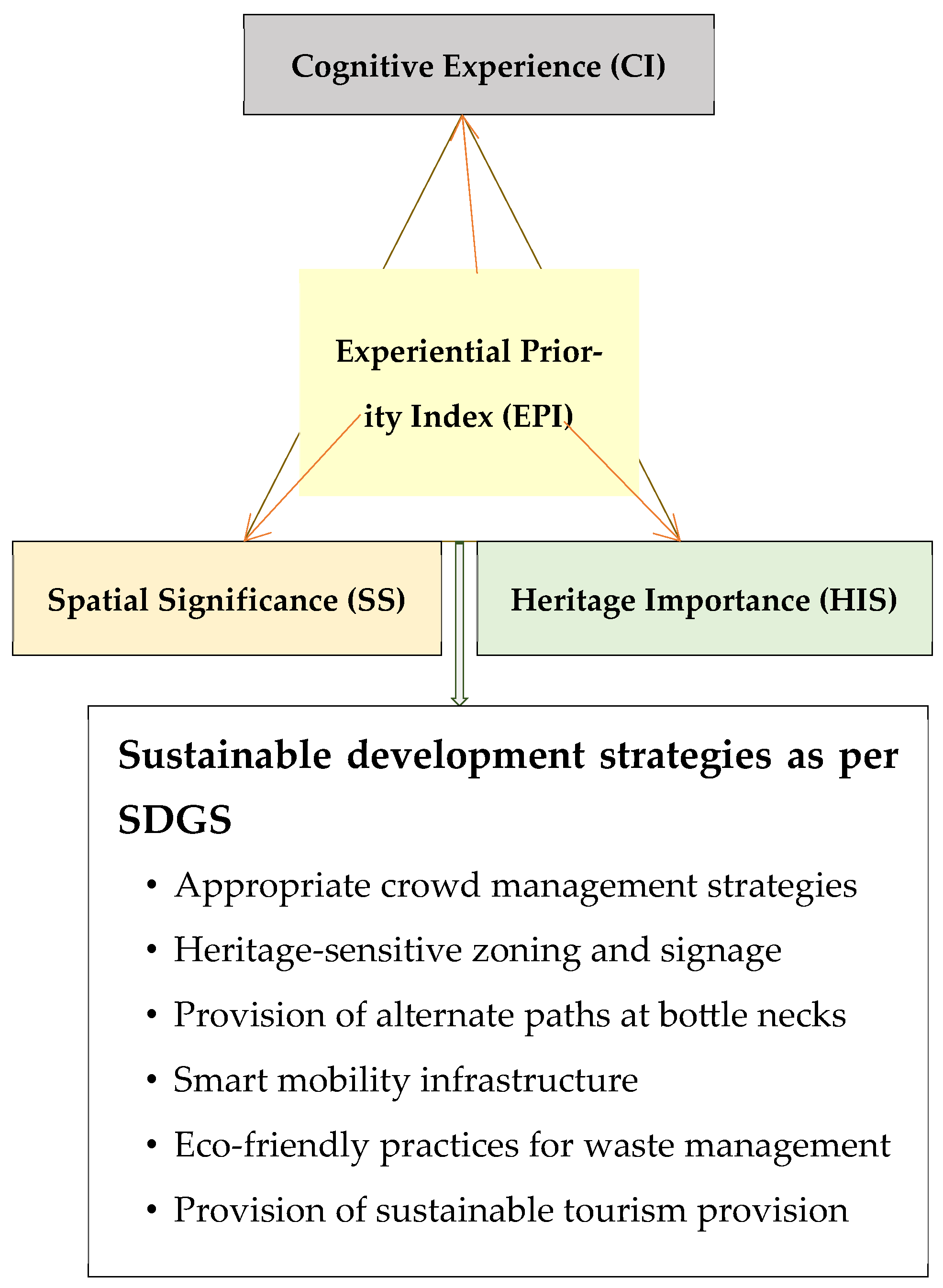
  • High EPI locations (such Kusum sarovar and Punchari ka lota) are given priority for conservation and visitor infrastructure enhancements based on the experiential priority index, which overlays CI, HIS, and SS priorities.
  • High HIS but low SS locations (like Radha kund–Shyam kund) → implemented congestion control and spatial enhancements.
  • Open areas of parikrama with high SS but low HIS are enhanced with cultural interpretation to increase awareness of heritage.
The research has demonstrated that the computation of the experiential priority index can be a reliable tool for sustainable development strategies (Figure 13). It has been established through various stages of investigation that a visitor’s cognitive experience depends on the location’s heritage relevance and spatial significance. The following list includes some suggestions for improving the cognitive experience.
  • Crowd management and mobility: At high-congestion areas (such as Mansi ganga and Radha kund-shyam kund), promote proactive crowd flow control and spiritual guiding. Use group time slots or temporal zoning to stagger pilgrim start times in order to minimize peaks. It is necessary to thoroughly plan out the congestion pattern plot and simulate visitor congestion. The necessity for a spatial or likely temporal crowd control was made evident by a finding on congestion regions that are important landmarks like Mansi ganga (location) and Radha kund-shyam kund (location). To lessen traffic during parikrama, install e-rickshaw corridors, pedestrian walkways, and real-time crowd monitoring.
  • For traffic alerts, use real-time crowd monitoring systems (such as Internet of Things-enabled cameras) close to Mansi ganga and Radha kund-shyam kund.
  • Cultural heritage and sustainable tourism: Promote Govardhan as a paradigm for “spiritual ecotourism,” which strikes a balance between ecology, culture, and devotion. It is possible to introduce community-based tourism by including local priests, artisans, and people in livelihoods related to their heritage. Partner along with educational institutions to organize conservation workshops, history walks, and initiatives that raise understanding of the temple environment.
  • Waste management: To cut down on plastic trash at temples and kunds, promote recyclable offerings. Put sewage treatment and decentralized composting units where they are needed. When performing restoration work, use eco-friendly materials and conventional design concepts.
  • Application of digital tools: Digital techniques like artificial intelligence (AI) and augmented reality (AR) improve visitor experiences by enabling immersive interactions with cultural assets, as seen in Medina, Fez [84]. Digital innovation may revitalize cultural heritage management and promote dynamic inheritance, as demonstrated by projects such as the time machine effort in Zheng and Han states [85]. In order to optimize resource utilization and improve livability while maintaining historical attractiveness, places like Shahjahanabad are being transformed into smart heritage cities by integrating IoT and good governance concepts [86]. In order to promote sustainability, smart solutions in cities like Florence and Yazd show efficient management systems that blend contemporary technology with traditional values [87].
  • To boost visitor learning, cultural interpretation centres should be equipped with digital kiosks that offer AR/VR experiences and guided storytelling. Use GPS-enabled smartphone apps and smart signboards to draw attention to relaxation sites, places of worship, and high visibility locations. Use augmented reality (AR) storytelling applications to enhance spiritual value by explaining the spiritual significance of unfamiliar or hidden locations.
Additionally, it is imperative to propose suitable byelaws and spatial guidelines to prevent encroachments near kunds and temple precincts. Clear visibility lanes should be provided to improve visibility close to landmarks. Provide good drinking water, shady rest spots, and universal access amenities for pilgrims who are elderly or disabled.

Author Contributions

Conceptualization, S.K.; methodology, S.K.; software, S.K.; validation, S.K.; formal analysis, S.K.; resources, B.K.N.; writing—original draft, S.K.; writing—review and editing, B.K.N.; supervision, V.S.; project administration, V.S. All authors have read and agreed to the published version of the manuscript.

Funding

This research received no external funding.

Institutional Review Board Statement

Not applicable.

Informed Consent Statement

Not applicable.

Data Availability Statement

The original contributions presented in this study are included in the article. Further inquiries can be directed to the corresponding authors.

Conflicts of Interest

The authors declare no conflicts of interest.

References

  1. Ashrafi, B.; Neugebauer, C.; Kloos, M. A conceptual framework for heritage impact assessment: A review and perspective. Sustainability 2021, 14, 27. [Google Scholar] [CrossRef]
  2. Pereira Roders, A.; Van Oers, R. Guidance on heritage impact assessments: Learning from its application on World Heritage site management. J. Cult. Herit. Manag. Sustain. Dev. 2012, 2, 104–114. [Google Scholar] [CrossRef]
  3. Rogers, A.P. Built heritage and development: Heritage impact assessment of change in Asia. Built Herit. 2017, 1, 16–28. [Google Scholar] [CrossRef]
  4. Luo, F.; Isa, M.I.; Roosli, R. Research status and development direction of smart heritage: A bibliometric review (1994–2024). J. Asian Archit. Build. Eng. 2025, 24, 4011–4034. [Google Scholar] [CrossRef]
  5. Chen, W.; Zhou, K.; Hu, B.; Yang, Y.; Xu, Y.; Zhuoma, D.; Zhu, R.; Yang, Y.; Pan, J. Unlocking visitor experiences in cultural heritage sites with SHAP-interpretable AI and social media sentiment analysis. NPJ Herit. Sci. 2025, 13, 457. [Google Scholar] [CrossRef]
  6. Dai, Y.; Ren, Y.; Li, H.; Wang, M. Evaluating Art Exhibition Spaces Through Space Syntax and Multimodal Physiological Data. Buildings 2025, 15, 1776. [Google Scholar] [CrossRef]
  7. Yilmaz, Y.; El Gamil, R. The Role of Heritage Impact Assessment in Safeguarding World Heritage Sites: Application Study on Historic Areas of Istanbul and Giza Pyramids. J. Herit. Manag. 2018, 3, 127–158. [Google Scholar] [CrossRef]
  8. Kimball, M.J. Heritage Place Building Theory, Heritage Impact Assessment and the Role of the Sacred Dimension. J. Herit. Manag. 2017, 2, 1–18. [Google Scholar] [CrossRef]
  9. Roders, A.R.P.; Bond, A.; Teller, J. Determining effectiveness in heritage impact assessments. In Proceedings of the 33rd Annual Conference of the International Association for Impact Assessment (IAIA13), Calgary, AB, Canada, 13–16 May 2013; pp. 1–6. Available online: https://research.tue.nl/en/publications/determining-effectiveness-in-heritage-impact-assessments (accessed on 1 October 2025).
  10. Kapoor, S.; Sehgal, V.; Mathur, M. Environmental Psychology of a Pilgrim in search for Authentic Experience at Religious Destination: A Case example of City Govardhan. In Proceedings of the 2020 International Conference on Contemporary Computing and Applications (IC3A), Lucknow, India, 5–7 February 2020; IEEE: Piscataway, NJ, USA, 2020; pp. 6–12. [Google Scholar]
  11. Sinha, A. Sacred Landscapes of Govardhan in Braj, India: Imagined, Enacted, and Reclaimed. In Holy Places and Pilgrimages: Essays on India; Planet Earth & Cultural Understanding Series; Shubhi Publications: New Delhi, India, 2011; Volume 8, pp. 147–164. [Google Scholar]
  12. Shchenkov, A.; Antonova, N. Architectural heritage and identity of Russian cities. Прoект Байкал 2021, 65, 27–31. [Google Scholar] [CrossRef]
  13. Noaime, E.; Alnaim, M.M. Examining the symbolic dimension of Aleppo’s historical landmarks. Alex. Eng. J. 2023, 78, 292–305. [Google Scholar] [CrossRef]
  14. Ali, A.G. Tracing the Roots of Historic Cities: Embracing Sustainable Green Cities and Navigating Threats through Original Characteristics. Adv. Res. Conserv. Sci. 2024, 5, 15–41. [Google Scholar] [CrossRef]
  15. Elshater, A.; Abusaada, H. From uniqueness to singularity through city prestige. Int. J. Middle East Stud. 2018, 50, 562–567. [Google Scholar] [CrossRef]
  16. Tousi, E.; Pancholi, S.; Rashid, M.M.; Khoo, C.K. Cultural heritage sites as a facilitator for place making in the context of smart city: The case of Geelong. Urban Sci. 2025, 9, 337. [Google Scholar] [CrossRef]
  17. Sukwai, J.; Mishima, N.; Srinurak, N. Balancing Cultural Heritage Conservation: Visual Integrity Assessment to Support Change Management in the Buffer Zone of Chiang Mai Historic City Using GIS and Computer-Generated 3D Modeling. Land 2022, 11, 666. [Google Scholar] [CrossRef]
  18. Vaz de Freitas, I.; Sousa, C.; Ramazanova, M.; Albuquerque, H. Feeling a historic city: Porto landscape through the eyes of residents and visitors. Int. J. Tour. Cities 2022, 8, 529–545. [Google Scholar] [CrossRef]
  19. Kempiak, J.; Hollywood, L.; Bolan, P.; McMahon-Beattie, U. The heritage tourist: An understanding of the visitor experience at heritage attractions. Int. J. Herit. Stud. 2017, 23, 375–392. [Google Scholar] [CrossRef]
  20. Yang, Y.; Du, S.; Xiao, Y. Identification of Spatial Influencing Factors and Enhancement Strategies for Cultural Tourism Experience in Huizhou Historic Districts. Buildings 2025, 15, 1568. [Google Scholar] [CrossRef]
  21. Shao, L.; Ma, P.; Zhou, Z. Research on the Impact of Landscape Planning on Visual and Spatial Perception in Historical District Tourism: A Case Study of Laomendong. Land 2024, 13, 1134. [Google Scholar] [CrossRef]
  22. Eldiasty, A.; Hegazi, Y.S.; El-Khouly, T. Using space syntax and TOPSIS to evaluate the conservation of urban heritage sites for possible UNESCO listing the case study of the historic centre of Rosetta, Egypt. Ain Shams Eng. J. 2021, 12, 4233–4245. [Google Scholar] [CrossRef]
  23. Palaiologou, G.; Griffiths, S. The uses of space syntax historical research for policy development in heritage urbanism. In Cultural Urban Heritage: Development, Learning and Landscape Strategies; Springer International Publishing: Cham, Switzerland, 2019; pp. 19–34. [Google Scholar]
  24. Li, Y.; Xiao, L.; Ye, Y.; Xu, W.; Law, A. Understanding tourist space at a historic site through space syntax analysis: The case of Gulangyu, China. Tour. Manag. 2016, 52, 30–43. [Google Scholar] [CrossRef]
  25. Sarihan, E. Visibility model of tangible heritage. Visualization of the urban heritage environment with spatial analysis methods. Heritage 2021, 4, 2163–2182. [Google Scholar] [CrossRef]
  26. Mohamed, A.A.; Kronenberg, J.; Łaszkiewicz, E. Integrating space syntax with field observations to understand the spatial logic of park infrastructure. J. Asian Archit. Build. Eng. 2024, 23, 2115–2133. [Google Scholar] [CrossRef]
  27. Othman, F.; Mohd Yusoff, Z.; Rasam Abdul, A. Isovist and Visibility Graph Analysis (VGA): Strategies to evaluate visibility along movement pattern for safe space. In IOP Conference Series: Earth and Environmental Science; IOP Publishing: Bristol, UK, 2019; Volume 385, p. 012024. [Google Scholar]
  28. Kapoor, S. The Role of SmartPLS in Optimizing Statistical Analysis: A Case Study Approach. In Proceedings of the 2025 5th International Conference on Innovative Research in Applied Science, Engineering and Technology (IRASET), Fez, Morocco, 15–16 May 2025; IEEE: Piscataway, NJ, USA, 2025; pp. 1–5. [Google Scholar]
  29. Kapoor, S.; Sehgal, V.; Mathur, M.; Bhandari, H. Assessing the Sacrality of Religious Historic Destinations: A Case of Braj Mandal, India. ECS Trans. 2022, 107, 8477. [Google Scholar] [CrossRef]
  30. Askarizad, R.; Lamíquiz Daudén, P.J.; Garau, C. The application of space syntax to enhance sociability in public urban spaces: A systematic review. ISPRS Int. J. Geo-Inf. 2024, 13, 227. [Google Scholar] [CrossRef]
  31. Fu, J.M.; Tang, Y.F.; Zeng, Y.K.; Feng, L.Y.; Wu, Z.G. Sustainable historic districts: Vitality analysis and optimization based on space syntax. Buildings 2025, 15, 657. [Google Scholar] [CrossRef]
  32. Xu, Y.; Rollo, J.; Jones, D.; Esteban, Y.; Tong, H.; Mu, Q. Towards Sustainable Heritage Tourism: A Space Syntax-Based Analysis Method to Improve Tourists’ Spatial Cognition in Chinese Historic Districts. Buildings 2020, 10, 29. [Google Scholar] [CrossRef]
  33. Griffiths, S. Temporality in Hillier and Hanson’s theory of spatial description: Some implications of historical research for space syntax. J. Space Syntax 2011, 2, 73–96. [Google Scholar]
  34. Chakraborty, S.; Ji, S. A review of integrating space syntax analysis into heritage impact assessment: A comprehensive framework for sustainable historic urban development. Int. J. Urban Sci. 2024, 29, 123–150. [Google Scholar] [CrossRef]
  35. Zhang, Y.; He, J. Understanding the visual image of Kailash Sacred Landscape through geo-tagged landscape photos mapping. Environ. Chall. 2021, 5, 100360. [Google Scholar] [CrossRef]
  36. Yu, R.; Ostwald, M.J. Spatio-visual experience of movement through the Yuyuan Garden: A computational analysis based on isovists and visibility graphs. Collect. Front. Archit. Res. 2018, 7, 497–509. [Google Scholar] [CrossRef]
  37. Davis Larry, S.; Benedikt, M.L. Computational models of space: Isovists and isovist fields. Comput. Graph. Image Process. 1979, 11, 49–72. [Google Scholar] [CrossRef]
  38. Gopalakrishnan, P.; Srinivas, T. Viewscape Assessment Framework for Protecting the Views of Sacred Monuments: Comparative Study of Srirangam and Thanjavur Religious Towns. Creat. Space 2014, 1, 195–213. [Google Scholar] [CrossRef][Green Version]
  39. Vieira, I.; Fernandes, D. Itineraries of Memory and Historical Recreation Based on Mental Maps: A Study in Lamego, Portugal. In Advances in Tourism, Technology and Systems, Proceedings of the ICOTTS 2023; Abreu, A., Carvalho, J.V., Liberato, P., Monroy, H.C., Eds.; Smart Innovation, Systems and Technologies; Springer: Singapore, 2024; Volume 383. [Google Scholar] [CrossRef]
  40. Kapoor, S.; Sehgal, V.; Mathur, M. The Role of Spatial Configuration in Enhancing the Environmental Ambiance for Devotional Ecstasy at Temple Towns of Braj Mandal. Int. J. Relig. Tour. Pilgr. 2022, 10, 14. [Google Scholar]
  41. Ariza-Colpas, P.P.; Piñeres-Melo, M.A.; Morales-Ortega, R.C.; Rodriguez-Bonilla, A.F.; Butt-Aziz, S.; Naz, S.; Contreras-Chinchilla, L.d.C.; Romero-Mestre, M.; Vacca Ascanio, R.A. Tourism and conservation empowered by augmented reality: A scientometric analysis based on the science tree metaphor. Sustainability 2023, 15, 16847. [Google Scholar] [CrossRef]
  42. Zhang, J.; Wang, G.; Chen, H.; Huang, H.; Shi, Y.; Wang, Q. Internet of Things and Extended Reality in Cultural Heritage: A Review on Reconstruction and Restoration, Intelligent Guided Tour, and Immersive Experiences. IEEE Internet Things J. 2025, 12, 19018–19042. [Google Scholar] [CrossRef]
  43. Chen, D. How visitors perceive heritage value, A quantitative study on visitors’ perceived value and satisfaction of architectural heritage through SEM. Sustainability 2023, 15, 9002. [Google Scholar] [CrossRef]
  44. Han, X.; Li, Z.; Chen, H.; Yu, M.; Shi, Y. Structural Equation Model in Landscape Performance Research: Dimensions, Methodologies, and Recommendations. Land 2025, 14, 646. [Google Scholar] [CrossRef]
  45. Nandankar, S.; Sachan, A.; Adhikari, A.; Mukherjee, A. Developing and validating e-marketplace service quality model in B2G e-commerce settings: A mixed-methods approach. Int. J. Oper. Prod. Manag. 2023, 43, 1809–1840. [Google Scholar] [CrossRef]
  46. Ticau, I.R.; Dan, M.C.; Hadad, S.; Nistoreanu, P. Sustainable development in peri-urban regions: A triangulation analysis. Sustainability 2023, 15, 14837. [Google Scholar] [CrossRef]
  47. Jang, S.-Y.; Kim, S.-A. Content Curation for Spatial Experience of Architectural Heritage. J. Comput. Cult. Herit. 2022, 15, 1–41. [Google Scholar] [CrossRef]
  48. Hill, G. Reclamation of Kunds on GovaRdhan hill, BRaj. J. Vaishnava Stud. 2015, 23, 101–110. [Google Scholar]
  49. Vaudeville, C. The Govardhan myth in northern India. Indo-Iran. J. 1980, 22, 1–45. [Google Scholar] [CrossRef]
  50. Silva, A.; Roders, A. Cultural heritage management and heritage (impact) assessments. In Proceedings of the Joint CIB W070, W092 & TG72 International Conference on Facilities Management, Procurement Systems and Public Private Partnership, Cape Town, South Africa, 23–25 January 2012. [Google Scholar]
  51. Fu, L.; Zhang, Q.; Tang, Y.; Pan, J.; Li, Q. Assessment of urbanization impact on cultural heritage based on a risk-based cumulative impact assessment method. Herit. Sci. 2023, 11, 177. [Google Scholar] [CrossRef]
  52. Khan, O.; Dogar, A.A.; Mumtaz, Z.; Ijaz, H. Religious Tourism in Taxila Valley: Assessing Tourist Impact and Strategies for Heritage Management. Qlantic J. Soc. Sci. Humanit. 2025, 6, 281–289. [Google Scholar] [CrossRef]
  53. Kalmić, L. The sacral places and centers in tourism as a secular pilgrimage. Quaestus Multidiscip. Res. J. 2014, 23, 83–98. [Google Scholar]
  54. Dipasquale, L.; Montoni, L.; Montacchini, A.; Mecca, S. Vernacular and world heritage impact assessment: The case study of Patmos. J. Cult. Herit. Manag. Sustain. Dev. 2022, 12, 150–170. [Google Scholar] [CrossRef]
  55. Seyedashrafi, B.; Ravankhah, M.; Weidner, S.; Schmidt, M. Applying heritage impact assessment to urban development: World heritage property of Masjed-e Jame of Isfahan in Iran. Sustain. Cities Soc. 2017, 31, 213–224. [Google Scholar] [CrossRef]
  56. Huang, K.; Pearce, P.; Guo, Q.; Shen, S. Visitors’ spiritual values and relevant influencing factors in religious tourism destinations. Int. J. Tour. Res. 2020, 22, 314–324. [Google Scholar] [CrossRef]
  57. Dewsbury, J.D.; Cloke, P. Spiritual landscapes: Existence, performance and immanence. Soc. Cult. Geogr. 2009, 10, 695–711. [Google Scholar] [CrossRef]
  58. Aulet, S.; Vidal, D. Tourism and religion: Sacred spaces as transmitters of heritage values. Church Commun. Cult. 2018, 3, 237–259. [Google Scholar] [CrossRef]
  59. Hanekom, N. Heritage Impact Assessment. Palaeontology 2018, 61, S123–S135. [Google Scholar]
  60. Fallon, P.; Schofield, P. The dynamics of destination attribute importance. J. Bus. Res. 2006, 59, 709–713. [Google Scholar] [CrossRef]
  61. Priatmoko, S.; Kabil, M.; Vasa, L.; Pallás, E.I.; Dávid, L.D. Reviving an unpopular tourism destination through the placemaking approach: Case study of Ngawen temple, Indonesia. Sustainability 2021, 13, 6704. [Google Scholar] [CrossRef]
  62. Schröter, M.; Remme, R.P. Spatial prioritisation for conserving ecosystem services: Comparing hotspots with heuristic optimisation. Landsc. Ecol. 2016, 31, 431–450. [Google Scholar] [CrossRef] [PubMed]
  63. Yaralioglu, I.; Kara, C. Sustainable Urban Design Approach for Public Spaces Using an Analytical Hierarchy Process (AHP). Land 2024, 14, 19. [Google Scholar] [CrossRef]
  64. Islam, R.; Dali, N.M.; Abdullah, A. Prioritization of the indicators and sub-indicators of Maqasid Al-Shariah in measuring liveability of cities. Int. J. Anal. Hierarchy Process 2018, 10, 348–371. [Google Scholar] [CrossRef]
  65. Mishra, P.S.; Muhuri, S. Value assessment of existing architectural heritage for future generation using criteria importance through inter-criteria correlation and grey relational analysis method. Curr. Sci. 2021, 121, 823–833. [Google Scholar] [CrossRef]
  66. Najd, M.D.; Ismail, N.A.; Maulan, S.; Yunos, M.Y.M.; Niya, M.D. Visual preference dimensions of historic urban areas: The determinants for urban heritage conservation. Habitat Int. 2015, 49, 115–125. [Google Scholar] [CrossRef]
  67. Al-hagla, K.S. Sustainable urban development in historical areas using the tourist trail approach: A case study of the Cultural Heritage and Urban Development (CHUD) project in Saida, Lebanon. Cities 2010, 27, 234–248. [Google Scholar] [CrossRef]
  68. Al-Barzngy, M.Y.M.; Khayat, M. Post-conflict safeguarding of built heritage: Content analysis of the ICOMOS Heritage at Risk Journal, 2000–2019. Sustainability 2023, 15, 12364. [Google Scholar] [CrossRef]
  69. Kim, C.H.; Kim, D.M. A study on the concept and characteristics of heritage impact assessments for cultural world heritage properties-focused on icomos guidance on heritage impact assessments and case reports. J. Archit. Inst. Korea 2020, 36, 61–72. [Google Scholar]
  70. Taheri, P.; Khatibi, S.M.R. Proposing historic-religious tourism development approaches with an emphasis on identity of urban spaces (case study of imam Khomeini Street, Qazvin). Space Ontol. Int. J. 2016, 5, 69–80. [Google Scholar]
  71. Wu, Z.; Wang, Y.; Gan, W.; Zou, Y.; Dong, W.; Zhou, S.; Wang, M. A survey of the landscape visibility analysis tools and technical improvements. Int. J. Environ. Res. Public Health 2023, 20, 1788. [Google Scholar] [CrossRef]
  72. Bettencourt, L.M. Designing for complexity: The challenge to spatial design from sustainable human development in cities. Technol. Archit. + Des. 2019, 3, 24–32. [Google Scholar] [CrossRef]
  73. Alkharoubi, A.M. Wayfinding for Pedestrians in the Crowded Areas of Al-Hajj: How Can Wayfinding System Designs Increase the Efficiency of Wayfinding and Navigation Performances for Pedestrian Pilgrims During the Islamic Pilgrimage (Al-Hajj). Ph.D. Thesis, University of Minnesota, Minneapolis, MN, USA, 2020. [Google Scholar]
  74. Karimi, K. The configurational structures of social spaces: Space syntax and urban morphology in the context of analytical, evidence-based design. Land 2023, 12, 2084. [Google Scholar] [CrossRef]
  75. Xu, Y.; Rollo, J.; Esteban, Y. Evaluating Experiential Qualities of Historical Streets in Nanxun Canal Town through a Space Syntax Approach. Buildings 2021, 11, 544. [Google Scholar] [CrossRef]
  76. Haq, S.; Berhie, G. Space syntax investigation of Lubbock, a grid-like American city and some insights into isotropic layouts. J. Urban Des. 2018, 23, 5–22. [Google Scholar] [CrossRef]
  77. Lee, J.H.; Ostwald, M.J.; Zhou, L. Socio-spatial experience in Space syntax research: A PRISMA-compliant review. Buildings 2023, 13, 644. [Google Scholar] [CrossRef]
  78. Turner, A. Depthmap 4: A Researcher’s Handbook; University College London (UCL), Bartlett School of Architecture: London, UK, 2004. [Google Scholar]
  79. Turner, A. UCL Depthmap 7: From isovist analysis to generic spatial network analysis. In New Developments in Space Syntax Software; Istanbul Technical University: Istanbul, Turkey, 2007. [Google Scholar]
  80. Turner, A.; Doxa, M.; O’Sullivan, D.; Penn, A. From Isovists to Visibility Graphs: A Methodology for the Analysis of Architectural Space. Environ. Plan. B Plan. Des. 2001, 28, 103–121. [Google Scholar] [CrossRef]
  81. Pont, M.B.; Ahrné, K.A.R.I.N.; Gren, A.; Kaczorowska, A.; Marcus, L. Integrating visibility graph analysis (VGA) with connectivity analysis in landscape ecology. In Proceedings of the 11th International Space Syntax Symposium, Lisbon, Portugal, 3–7 July 2017; Instituto Superior Tecnico: Lisbon, Portugal, 2017. [Google Scholar]
  82. Sang, X.; Huang, C.H.; Wei, H. Recreating historical contexts: Methods and strategies for the restoration of the ‘spatio-temporal landscape’ of Ao Garden in Xiamen, Fujian Province, China. J. Asian Archit. Build. Eng. 2025, 24, 4103–4118. [Google Scholar] [CrossRef]
  83. Benedikt, M.L. To take hold of space: Isovists and isovist fields. Environ. Plan. B Plan. Des. 1979, 6, 47–65. [Google Scholar] [CrossRef]
  84. Zaifri, M.; Mehdi, B. Digital Journey Through Fez’s Historic Medina: Embracing the Core of Responsible Tourism. In Promoting Responsible Tourism with Digital Platforms; IGI Global: Hershey, PA, USA, 2024; pp. 72–89. [Google Scholar]
  85. Ng, W.K.; Chen, C.L.; Huang, Y.H. Revitalization of cultural heritage in the digital era: A case study in Taiwan. Urban Resil. Sustain. 2024, 2, 215–235. [Google Scholar] [CrossRef]
  86. Ashtt, R.; Mathur, M. Transforming Shahjahanabad into a Smart Heritage City Integrating Good Governance, Speech, and IoT Technologies for Sustainable Urban Development. In Proceedings of the 2023 26th Conference of the Oriental COCOSDA International Committee for the Co-Ordination and Standardisation of Speech Databases and Assessment Techniques (O-COCOSDA), Delhi, India, 4–6 December 2023; IEEE: Piscataway, NJ, USA, 2023; pp. 1–6. [Google Scholar]
  87. Hatami, M.; Koramaz, T.K. Smart solutions for heritage sites: Florence and Yazd. Preserv. Digit. Technol. Cult. 2023, 52, 143–155. [Google Scholar] [CrossRef]
Figure 1. Methodology of research. 
Urbansci 10 00014 g001
Figure 2. Kusum Sarovar, Govardhan, 2014. Photo courtesy: Author.
Urbansci 10 00014 g002
Figure 3. Parikrama Marg, Govardhan, 2014. Photo courtesy: Author.
Urbansci 10 00014 g003
Figure 4. Twenty vantage locations in Govardhan [Prepared by the author].
Urbansci 10 00014 g004
Figure 5. Visibility graph analysis of Govardhan through software depth map.
Urbansci 10 00014 g005
Figure 6. Scatter plot between connectivity and visual integration.
Urbansci 10 00014 g006
Figure 7. Isovist images at twenty vantage locations mentioned in Figure 4.
Urbansci 10 00014 g007
Figure 8. Comparing ISA and VGA values.
Urbansci 10 00014 g008
Figure 9. Framework for evaluating the tangible heritage of Govardhan.
Urbansci 10 00014 g009
Figure 10. Matrix between heritage importance score and spatial.
Urbansci 10 00014 g010
Figure 11. Framework for evaluating the intangible heritage of Govardhan.
Urbansci 10 00014 g011
Figure 12. Matrix between the cognitive index score and spatial significance.
Urbansci 10 00014 g012
Figure 13. Experiential priority index as a tool for sustainable development strategies.
Urbansci 10 00014 g013
Table 1. Evaluation criteria for heritage impact assessment (suggested tools at various stages).
ParameterLinked AspectSuggested Tool
Identification of heritage assets/locationsFor suggesting and prioritizing the heritage locationsScriptures and cognitive surveys
Experiential Priority IndexHeritage Importance:
  • Historical significance
  • Ritual importance
  • Spiritual perception
  • Cultural activities
Field survey
Spatial Significance:
  • Visibility Graph Analysis (VGA)
  • Isovist Area Analysis (ISA)
Govardhan map, isovist area analysis, and visibility graph analysis
Cognitive Analysis (Sociocultural impact):
  • Navigation issues
  • Disruption of sightlines, sacred views, skyline changes due to visual barrier because of contemporary construction in the vicinity of Govardhan hill.
  • Feeling of spiritual connection.
  • Overcrowding
Cognitive surveys
Suggestive measures for sustainable development and managementAppropriate suggestive measure for corresponding locationContext and relevant case examples
Table 2. Details of identified locations in Govardhan.
L. NoDistance from the Start Point (km)Landmark/Spot
10Starting point of Govardhan parikrama (Dhanghati)
20.17Aarti point of Govardhan hill
30.75Rest zone
41.32Kund
53.13Anyour temple
63.24Sankarshan kund
74.32Rest zone
85.34Temple-punchari ka lota
97.33Rudra kund
108.6Rest zone
1110.86Start of second part of parikrama
1211.77Commercial activity
1312.4Gaudiya temple
1414.1Rest zone
1515.25Commercial activity
1615.72Radha kund and shyam kund
1718.06Kusum sarovar
1819.6Rest zone
1920.17Mansi ganga
2021End of parikrama
Table 3. Heritage importance score of locations at Govardhan.
Location No.Historical Significance (HS)Ritual Importance (RI)Spiritual Perception (SP)Cultural Activities (CAs)HIS = (0.03 × HS + 0.25 × 25 + 0.25 × SP + 0.20 × CA)HIS NormalizeRemarks
weightage30%25%25%20%
132212.10.55
2333331Aarti point of Govardhan hill
3111110
432222.30.65
533222.550.775
632222.30.65
7111110
8333331Temple-punchari ka lota
932222.30.65
10111110
1112111.250.125
12111110
13222220.5
14111110
15111110
16333331Radha kund and shyam kund
17333331Kusum sarovar
18111110
19333331Mansi ganga
2021111.30.15
Table 4. Range of visibility graph derived from Figure 5.
S.No.ValueAttributeColour Range
1<3.5310,222Urbansci 10 00014 i001
23.53 to 4.8320,805Urbansci 10 00014 i002
34.83 to 6.133860Urbansci 10 00014 i003
46.13 to 7.432854Urbansci 10 00014 i004
57.43 to 8.738338Urbansci 10 00014 i005
68.73 to 10.0311,330Urbansci 10 00014 i006
710.03 to 11.332722Urbansci 10 00014 i007
811.33 to 12.631231Urbansci 10 00014 i008
912.63 to 13.93402Urbansci 10 00014 i009
10>13.9395Urbansci 10 00014 i010
Table 5. ISA and VGA at twenty identified locations of Govardhan.
LocationIsovist AreaVGANormalized Values
Isovist AreaVGA
133,098.31.670.05280.023483
2165,752.23.180.2771650.171233
3196,4363.20.3290620.17319
4211,937.73.390.3552810.191781
5160,774.15.150.2687450.363992
6406,296.46.470.684010.493151
7349,452.99.390.5878670.778865
8480,990.910.30.8103440.867906
926,941.86.470.0423870.493151
10258,093.17.970.4333460.639922
111880.51.4300
12417,943.41.670.7037090.023483
13196,613.24.450.3293620.295499
14209,617.58.250.3513560.667319
1516,895.22.810.0253950.135029
1617,695.12.810.0267480.135029
17593,123.511.6511
18129,558.59.420.2159480.7818
19322,3093.680.5419570.220157
202148.11.430.0004530
Table 6. Framework for cognitive analysis.
Cognitive ParameterResponse TypeCoding FormatPurpose/Insight
Spatial Orientation and WayfindingFive-point Likert (ease of navigation)1 = very easy, 5 = very difficultUnderstand how visitors navigate the sacred space.
Visual–Spatial MemoryFive-scaleIn the vicinity (5), can visually feel (4), neutral (3), partly (2), absolutely not (1)Feeling of connectivity with the hill
Spiritual Cognition and Emotional DepthFive-point Likert (spiritual ambience)1 = very weak, 5 = very strongAssess the perceived sacredness, inner emotional states, and sense of spiritual connection
Environmental Perception: Perceived CongestionFive-point scaleVery clear and broad (5), free from obstruction (4), neutral (3), congested (2), extremely congested (1)Measures impact of environmental stimuli (noise, heat, shade, natural elements) on the cognitive experience
Table 7. Cognitive index at various locations.
Location NoSpatial OrientationVisual ConnectionSpiritual ConnectionPerceived CongestionTotalRemarks
10.170.1750.940.840.531
20.120.520.850.50.498
30.340.7350.510.060.411
40.340.710.790.060.475
50.950.8250.920.50.799anyour temple
60.7050.8050.890.040.610
70.340.8450.7350.050.493
80.950.8950.950.0950.723Temple-punchari ka lota
90.7050.7350.90.2950.659
100.340.8950.520.720.619
110.10.020.360.920.350
120.8450.020.020.670.389
130.9150.7050.820.0850.631
140.340.040.040.370.198
150.8450.060.070.880.464
160.950.040.970.880.710Radha kund and shyam kund
1710.30.720.060.520
180.380.410.420.680.473
190.950.0650.960.80.694Mansi ganga
200.170.020.8250.820.459
Disclaimer/Publisher’s Note: The statements, opinions and data contained in all publications are solely those of the individual author(s) and contributor(s) and not of MDPI and/or the editor(s). MDPI and/or the editor(s) disclaim responsibility for any injury to people or property resulting from any ideas, methods, instructions or products referred to in the content.