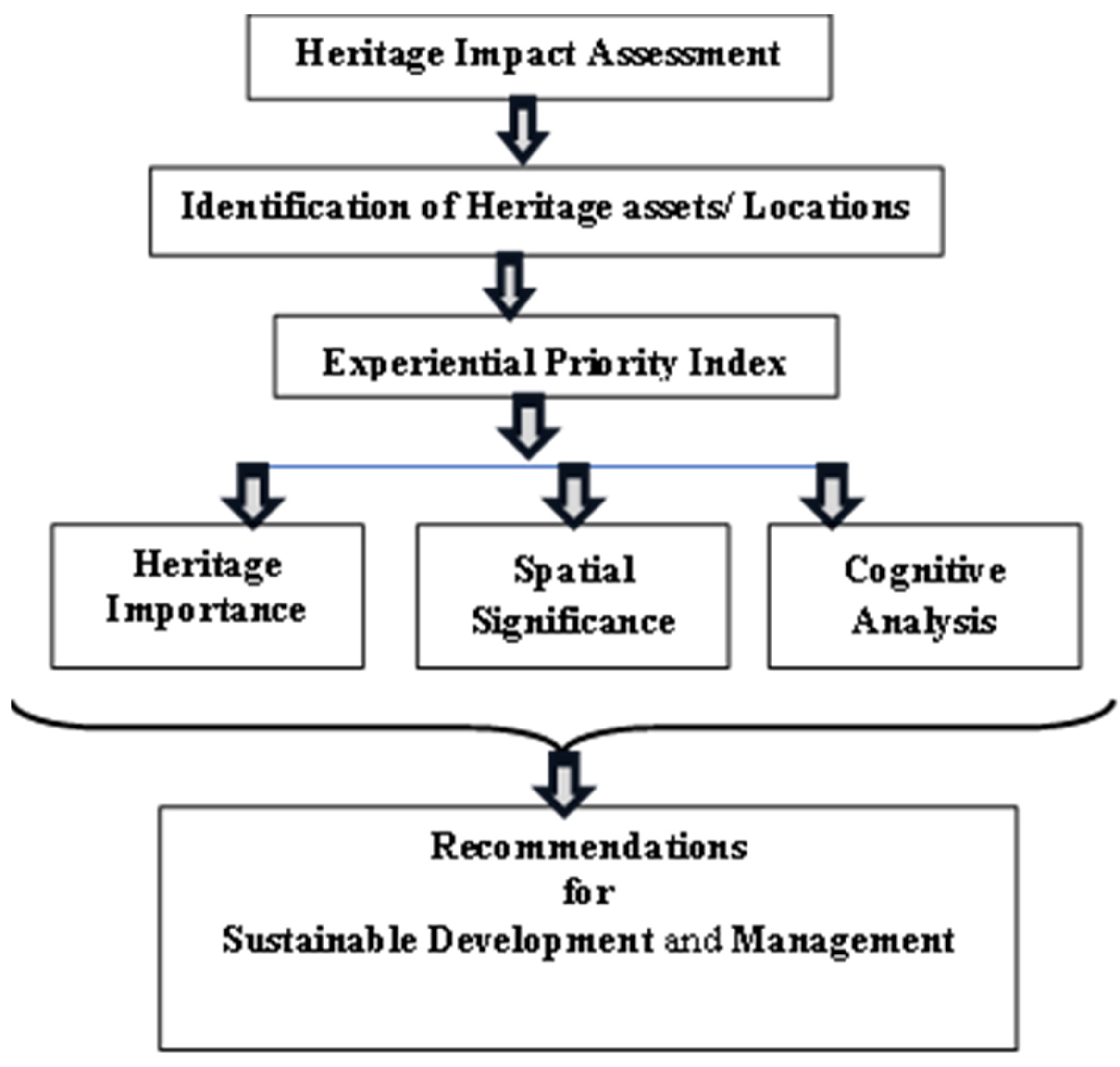
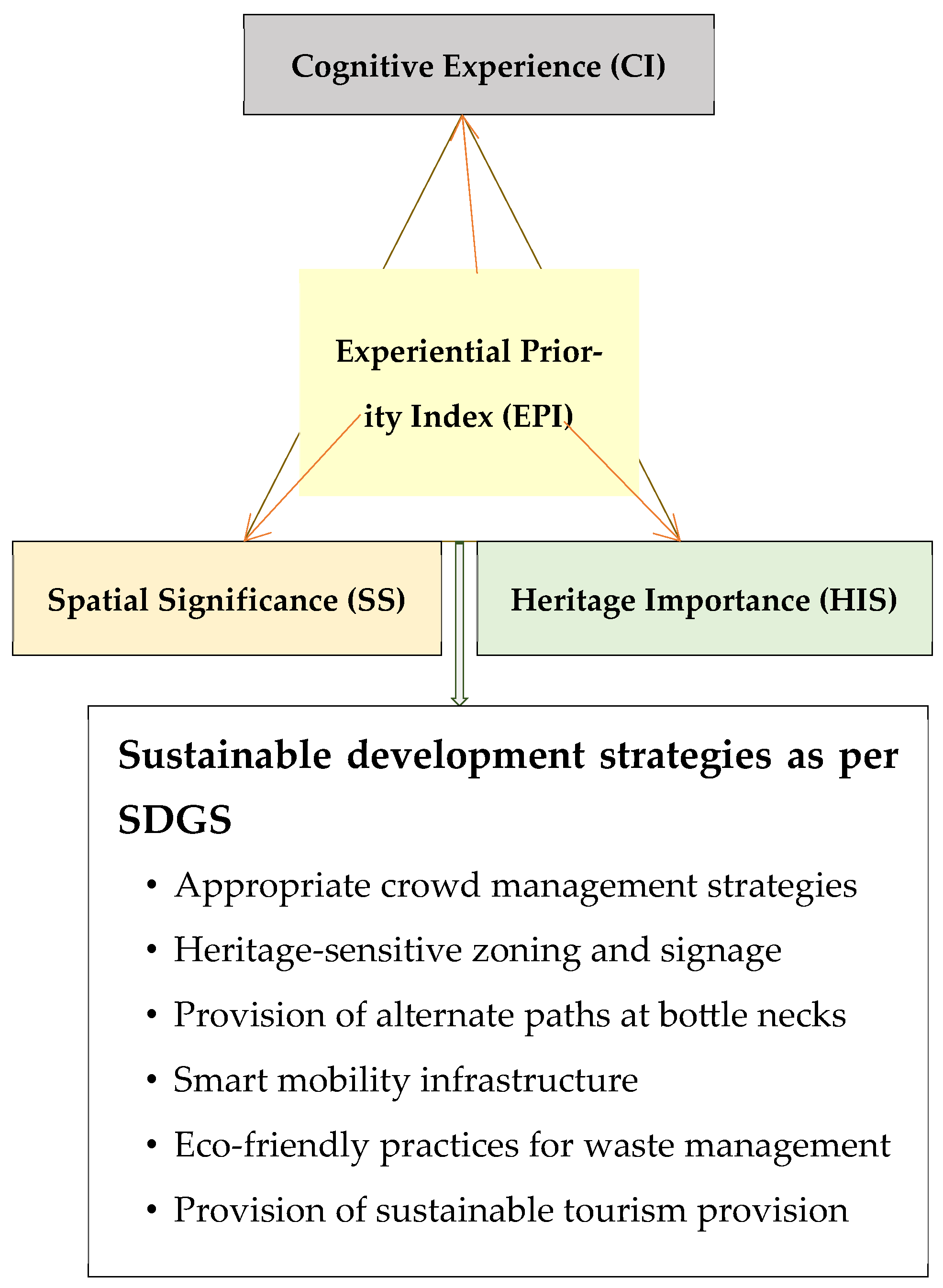
Three criteria—historical relevance, spatial significance, and cognitive factors— which have been used to evaluate the experience priority index of the twenty locations at Govardhan are being detailed in the following section.
5.2.1. Heritage Significance
The heritage importance scoring (HIS) methodology is a systematic approach to assessing the architectural/historical, cultural, spiritual, and ritual significance [
65,
66] of particular sites or vantage points in a religious–historic environment, like Govardhan. Every site is evaluated according to several criteria, including its importance in communal memory, architectural merit, symbolic meaning, antiquity, ritual practices, and association with sacred narratives [
67]. In order to provide a quantitative depiction of heritage value that enhances qualitative descriptions, scores are thereafter allocated according to the relative relevance of these characteristics. A systematic approach has been adopted to calculate the weights of heritage parameters, incorporating stakeholder participation, analysis of the literature, and expert opinion [
28,
29]. To begin, in the first step, well-known frameworks like ICOMOS guidelines [
68] and heritage impact assessment (HIA) manuals [
69] were examined in order to determine the widely recognized criteria of historical significance, spiritual significance, architectural authenticity, ecological sensitivity, and sociocultural significance. The second step was to assign initial weights to the identified parameters. This decision was based on the views of a panel of religious leaders regarding Govardhan’s religious and historical context. The study used a delphi method to balance these perspectives, averaging and refining responses from stakeholders and experts over several rounds until they reached an agreement. To ensure fair representation, the weights were then normalized so that they summed to one or hundred percent using the analytic hierarchy process (AHP). This structured approach ensures that the weights reflect both subjective experience and objective heritage value, creating a solid and relevant scoring system for Govardhan. According to the AHP results, historical significance (HS) has been weighted at 35%, ritual importance (RI) at 25%, spiritual perception (SP) at 20%, and cultural activities (CAs) at 20%. The table below (
Table 3) shows the values for each heritage importance parameter based on Equation (1).
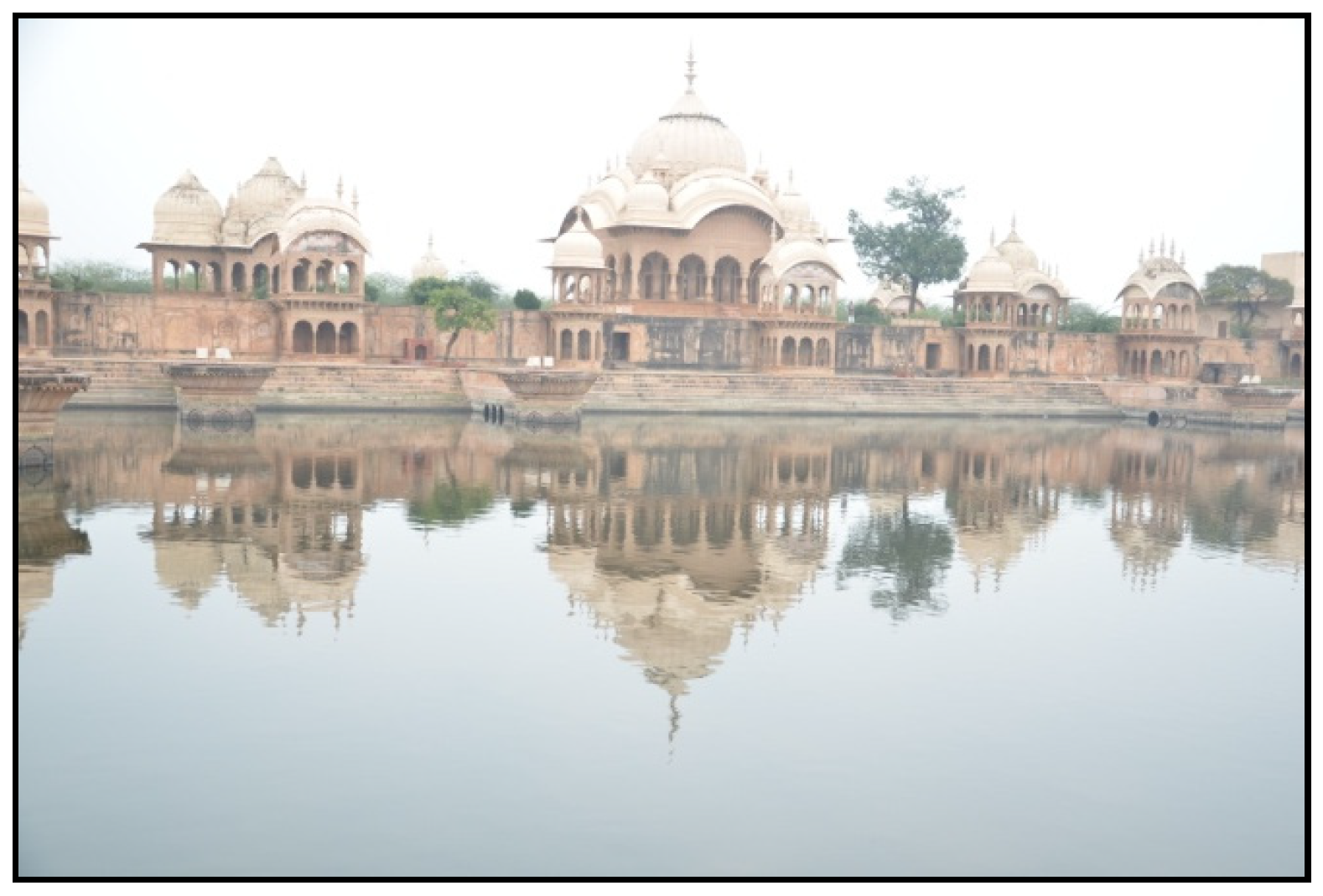
Among the twenty vantage locations in Govardhan, the heritage importance score (HIS) data show a distinct order. Religious sites like Kusum sarovar, Radhakund-shyamkund, and Mansi ganga received the highest scores because of their combined historical antiquity, close philosophical ties, and ongoing ritual significance in pilgrims’ everyday lives. In addition to having strong religious connotations, these sites also host the greatest proportion of rituals, celebrations, and congregational meetings, which increases the significance of their legacy. The analysis highlights the intangible heritage qualities that predominate in sacred landscapes, showing that spiritual significance regularly outweighs architectural or physical scale.
5.2.2. Spatial Significance
The term “spatial significance” describes the characteristics of a particular location due to its specific spatial characteristics [
70]. The degree to which a location is open, connected, and visually integrated within its surrounding urban or pilgrimage landscape is quantified by computational methods like visibility graph analysis (VGA) and isovist area analysis (ISA) [
71]. Spatial significance in Govardhan emphasizes how viewpoints along the
parikrama marg, kunds, and temple nodes promote movement, orientation, and group gathering. While places with poor visibility might cause traffic jams or bottlenecks, those with high spatial visibility are frequently used as landmarks and help pilgrims find their way and stay spiritually oriented [
72,
73]. A composite spatial significance score that connects visual access and physical openness to visitors’ lived experiences can be obtained by normalizing VGA and ISA values.
The following formula has been applied to determine each location’s spatial significance:
If = 0.5 → VGA and ISA contribute equally. If > 0.5 → more weight is given to VGA (connectivity-based spatial significance). If < 0.5 → more weight is given to ISA (openness-based spatial significance).
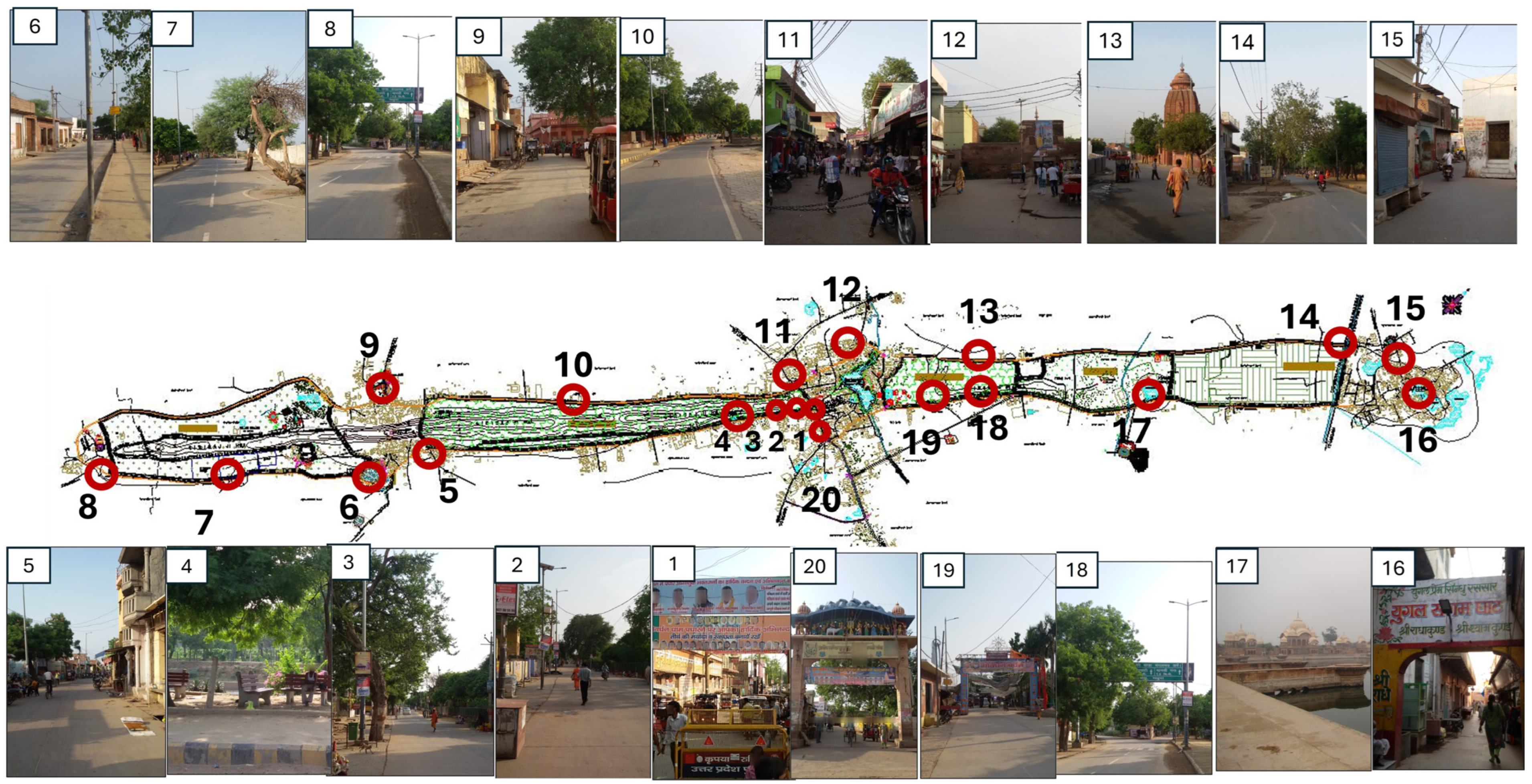
This process looks at the visual properties and spatial characteristics of different vantage locations. By selecting twenty diverse spots, researchers aim to gain a full understanding of the spatial dynamics and perceptual qualities in Govardhan. These chosen vantage points provide diversified visibility details and perspectives. This lets researchers investigate and compare the visibility area, connectivity, and overall spatial experience thoroughly. Through the comparison of twenty locations, the location with the highest degree of openness and visibility has been identified.
Space syntax is a computational technique that aims to show and assess different spatial arrangements [
74]. It helps explain how spatial features relate to human behaviour on ancient streets [
75]. A study of space syntax connects the physical and non-physical aspects of “spatial” culture [
23]. Research on space syntax offers the topological, geometric, and metric properties of spatial systems using mathematical modelling tools and metrics [
76]. In this study, researchers have examined the social, cognitive, and behavioural aspects of space using tools like VGA and ISA [
77].
The visibility analysis for the identified locations has been computed by the software tool ‘Depth Map ucl space syntax © 2025.’ This software allowed for the import of 2D layouts in the Drawing Exchange Format (DXF), creating a digital setup for analysis [
78]. After importing the layouts, the software created a grid over the layout, offering a clear representation of the spatial environment. Once the grid was ready, the visibility analysis began. This analysis focused on three main factors: visual connectivity, visual integration, and isovist area [
27,
79]. These variables are crucial for understanding the perceptual aspects of the spatial environment.
Visibility Graph Analysis (VGA) is a computational method used to assess how much of a space can be seen from different points within it. By converting visible interconnections into a network of nodes and edges, VGA helps identify areas of high visual accessibility, openness, and spatial prominence. This makes it useful for understanding how people perceive, navigate, and experience heritage environments such as Govardhan [
80]. The values of visual connectivity and visual integration through VGA looked at how well different points or locations in the environment are visually connected [
81]. It helps identify possible sightlines and visual paths that aid navigation and orientation within the temple towns [
82]. Visual integration looks at how various elements in the environment fit together visually. It examines the coherence and unity of the spatial layout, identifying areas of visual harmony and cohesion, as well as possible disruptions or barriers to visual continuity.
Isovist Area (ISA): The isovist area refers to the space visible from a specific viewpoint in the environment. It refers to the measurement of the total visible area from a specific observation point within a spatial setting. An isovist represents the geometric region visible from that point, and analyzing its area helps quantify openness, enclosure, and the perceived spatial experience of a location. It is widely used in architectural morphology and spatial cognition to understand how people visually interpret complex environments [
83]. By studying the isovist area, researchers can gain insight into the level of visual exposure and the range of visibility from different locations within the temple towns.
By examining these variables, researchers obtain valuable insights into the visual dynamics and spatial features of the temple towns. This information can aid urban planning, design efforts, and decision-making aimed at improving the visual experience and spatial quality of the built environment.
Visibility Graph Analysis (VGA)
The assessment of visibility graph analysis has been conducted through a software called ‘depth-map’ (
Figure 5 and
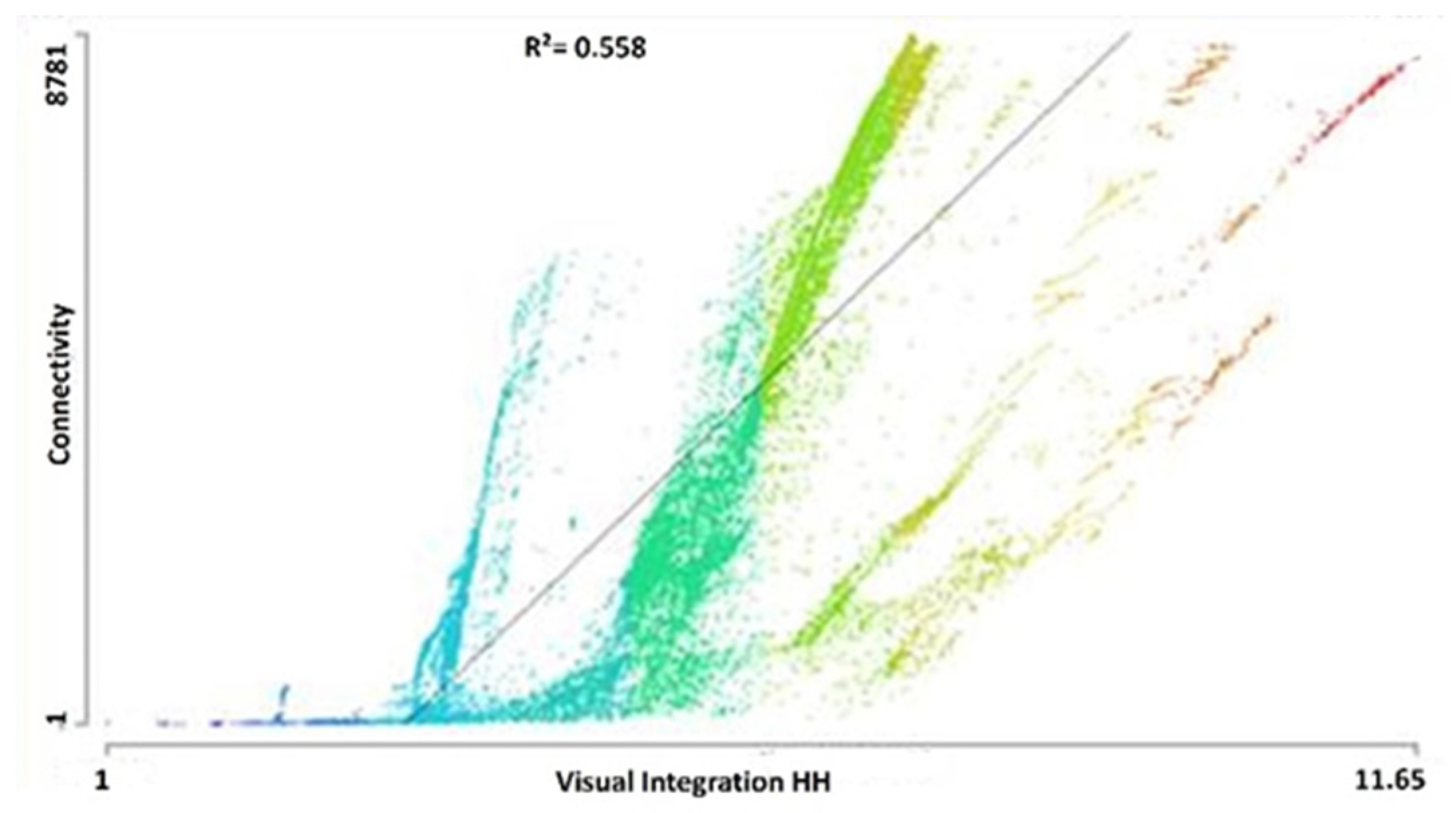
Table 4). A scatter plot has been generated which effectively illustrates the interrelationship between visual integration and visual connectivity (
Figure 6). Each colour on the map is assigned both an integration value and a connectivity value. Consequently, a graphical representation is generated, with visual integration plotted along the x-axis and connectivity along the y-axis (
Figure 6).
Each individual axial line on the map is represented as a data point, contributing to the formation of a correlation line that signifies the connection between visual integration and connectivity.
Connectivity varies from 1 to 8781
Visual integration [HH] varies from 1.4 to 11.65
Coefficient of correlation (R2 = 0.558)
Notably, the findings reveal a significantly strong correlation between visual integration and connectivity. This suggests that enhanced visibility is achieved through the presence of more connecting routes. The coefficient of determination (R2) for visual integration and connectivity in this analysis stands at 0.558, signifying a robust relationship. This high R2 value underscores the reasonable level of intelligibility within the area, thus affirming the coherence and clarity of spatial understanding.
Isovist Area Analysis at Govardhan
Isovists essentially delineate the localized physical attributes of space relative to individual observation points [
37,
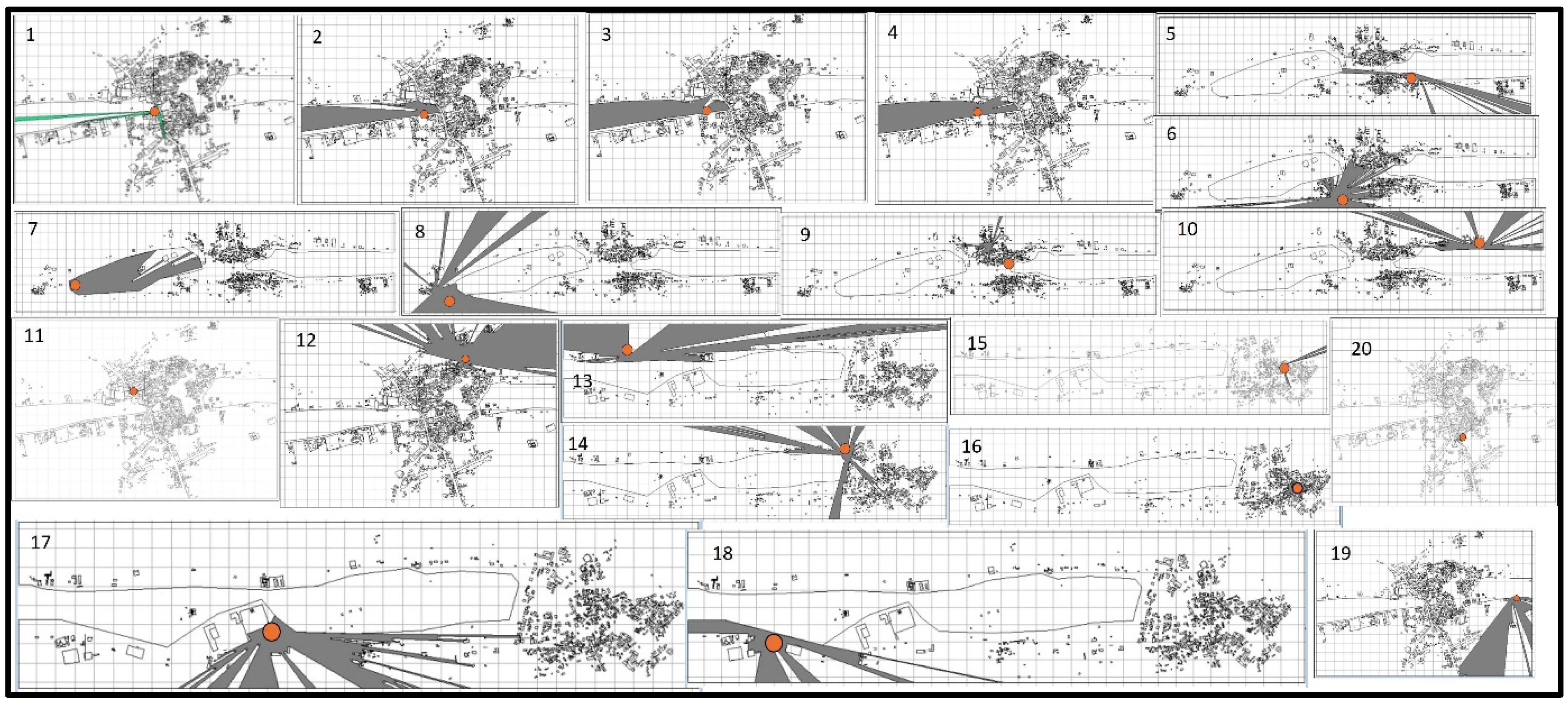
83]. Utilized for general depiction and capturing behaviourally significant properties of spatial structure, isovist graphs offer insights into various geometric features extracted from isovist polygons. One fundamental metric derived from isovist analysis is the isovist area, which denotes the area visible from a single observation point. Isovist analysis reveals that visual fields exhibit distinct forms shaped by geometry and movement dynamics. The primary quantifiable aspect of an isovist field is its area (A), representing the visible floor area from a specific vantage point (
Figure 7). While area calculation is straightforward, it lacks insight into the isovist’s shape (
Table 5). Thus, emphasis is placed on measuring perimeter length and the number of vertices to capture the variations in shape among isovists with similar areas. Transitioning along the
parikrama marg, pilgrims encounter changes in visibility structures, marked by rotational asymmetry influencing their experiences and preference dimensions. Certain locations offer panoramic views in multiple directions, augmenting visual permeability and enhancing the overall experience. Results indicate that isovists with fewer vertices tend to exhibit higher compactness, indicative of stable visual information. Notably, the L:16 isovist, characterized by only two vertices, attains the highest compactness value, while L:13 boasts the largest isovist area, signifying maximal openness.
Results
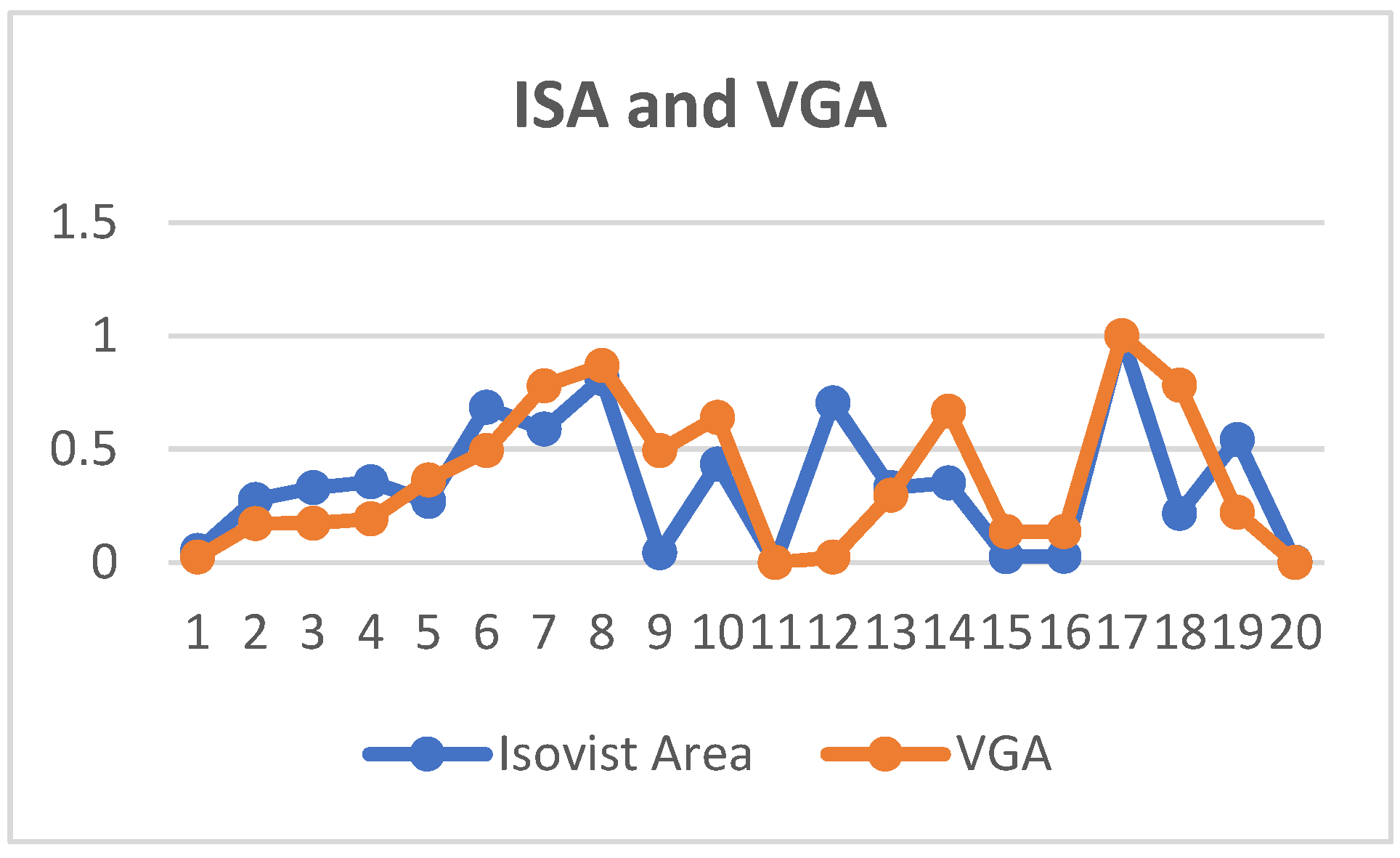
The findings from the isovist area analysis (ISA) and visibility graph analysis (VGA) at the same observation points have been methodically gathered in
Table 5 and graphically depicted in
Figure 8. The comparative analysis shows that VGA values and ISA assessments are absolutely correlated in every location. Accordingly, regions with higher VGA scores, which signify better visual connectedness and accessibility within the spatial network, also tend to be larger isovist regions, which indicate a higher level of openness and wider visual fields. This correlation also validates computational modelling as a reliable method for deciphering patterns of spatial perception. Additionally, it suggests that locations with high visual integration naturally offer wider sightlines, which facilitate better landmark orientation and may improve visitors’ cognitive experience. This conclusion is especially pertinent to pilgrimage and heritage routes like the Govardhan
parikrama, where visibility and spatial openness are crucial in determining both ease of navigation and spiritual participation.
A substantial link between visibility graph analysis (VGA) and isovist area analysis (ISA) highlights the spatial significance of high visibility zones along the sacred route in the context of the heritage impact assessment of Govardhan parikrama. Using space syntax techniques, the simulated spatial visibility values show that certain sections of the Govardhan parikrama marg have exceptionally high levels of visibility and spatial openness. When isovist area calculations are superimposed over the findings from the visibility graph analysis (VGA), a strong correlation between the two computational measures is shown, suggesting that regions with larger vision fields are likewise more connected within the geographical network.
Since these areas of increased receptivity enable pilgrims to visually orient themselves toward holy locations, they are often linked to higher cognitive–spiritual experiences, improving navigation and spiritual awareness. On the other hand, the data also shows that areas with lower levels of spatial openness are more likely to exhibit congestion patterns. This relationship, however, is not only geometric; places with strong religious value frequently draw greater crowds, which leads to high visitor numbers regardless of physical arrangement. For example, because of their higher ceremonial significance, Mansi ganga (S. No: 19) and Radha kund–shyam kund (S. No: 16) are routinely the most crowded nodes. Other sites that are prone to congestion, like S. Nos. 1, 11, 15, and 20, are more crowded during seasons of high pilgrimage because of physical limitations like bottleneck zones and restricted routes. The value of incorporating cultural significance and spatial configuration studies into the design of sustainable interventions for religious heritage sites is highlighted by this dual analysis.
5.2.4. Analysis
Analysis of tabulated data has been performed to identify the critical locations which need immediate attention. The findings of cognitive analysis were methodically compared with those of the visibility graph analysis (VGA) and isovist area analysis. As a vital validation step, this cross-comparison shows that the computational measurements of spatial arrangement closely match visitors’ subjective perceptions of openness, visual connectedness, and spatial clarity. The reliability of the results is strengthened by the convergence of subjective cognitive responses and objective spatial metrics, which confirms that the cognitive patterns seen among visitors are directly rooted in the spatial structure of Govardhan’s sacred landscape rather than being isolated perceptions. In the first step of analysis, the heritage importance score has been compared with the spatial significance score.
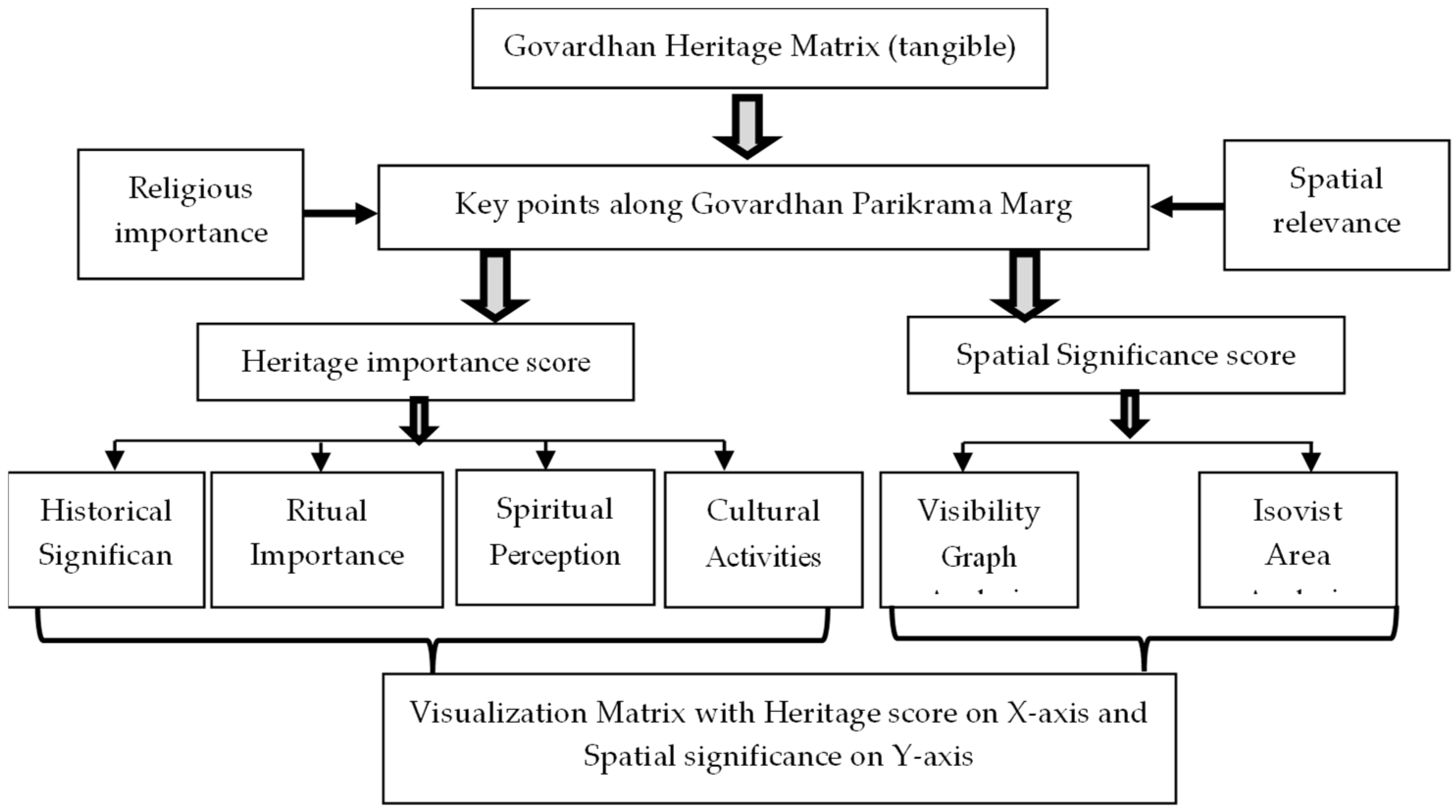
The overall analysis has been conducted under two headings:
Govardhan Heritage (Tangible)
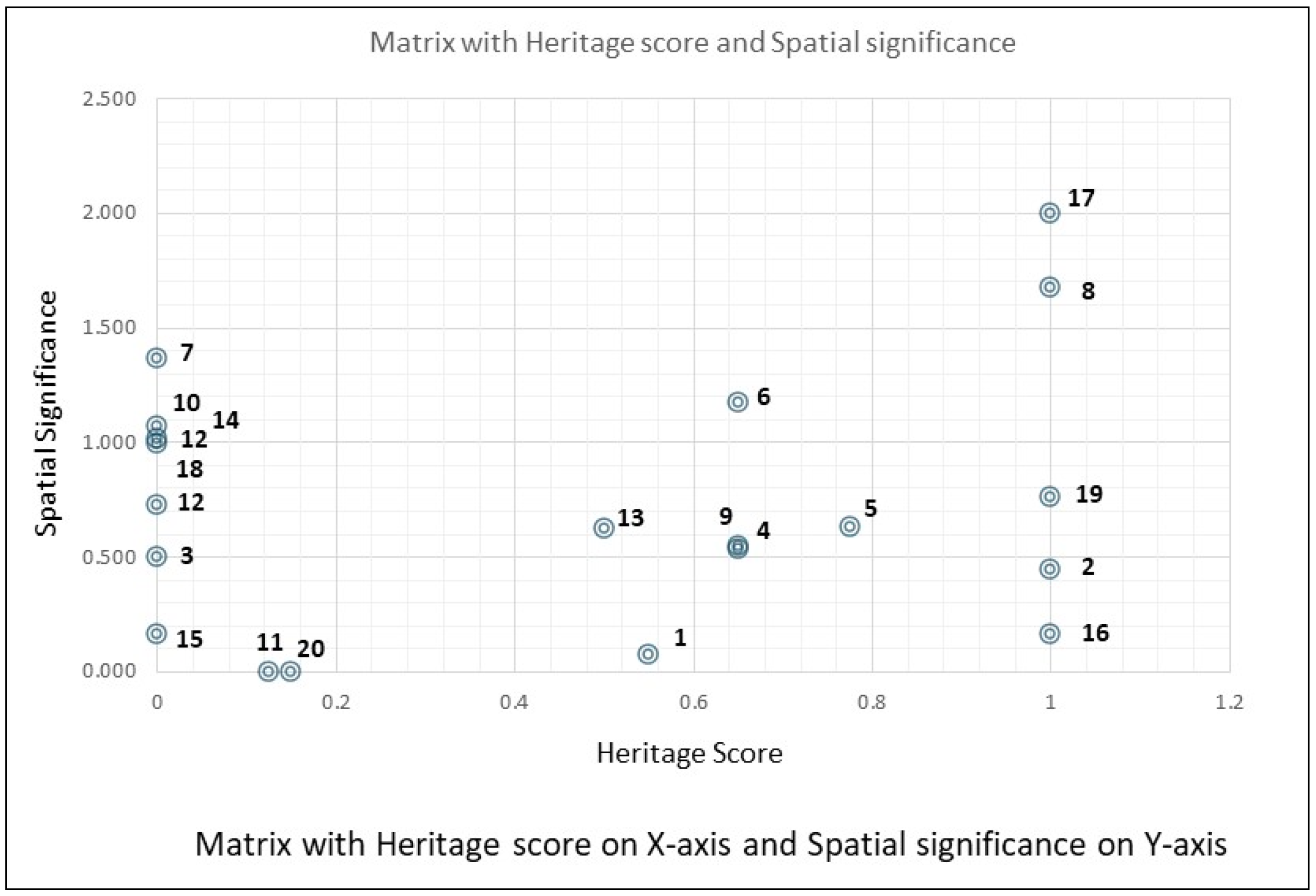
Various parameters of the heritage importance score have been listed, and a matrix has been prepared between the heritage importance score and spatial significance score for Govardhan heritage (tangible) (
Figure 9 and
Figure 10).
Corelating HIS with SS: For Govardhan’s tangible heritage, a comparative matrix was prepared to correlate the heritage importance score (HIS) with the spatial significance score (SS) (
Figure 10). This research made it possible to pinpoint nodes of extraordinary significance, which are places where spatial prominence and cultural–historical significance converge. According to the findings, locations like ‘punchari ka lota temple’ (Location 8) and ‘kusum sarovar’ (Location 17) had the greatest scores in both categories. Along the
parikrama route, ‘kusum sarovar’ has excellent spatial visibility and connectedness in addition to having a high heritage value due to its massive construction, its holy relationship with Krishna-lila, and the openness of its surrounding landscape. Similarly, punchari ka lota, which is situated at a visually noticeable curve in the road, is a crucial pilgrim orientation landmark because it combines historical significance with a vantage point that provides broad visibility. The close alignment of HIS and SS at these sites suggests that visual accessibility and open space frequently support pilgrims’ opinions of the significance of the heritage. On the other hand, locations with significant historical significance but limited spatial visibility indicate the need for design changes to enhance visitor interpretation, wayfinding, and accessibility.
Govardhan Heritage (Intangible)
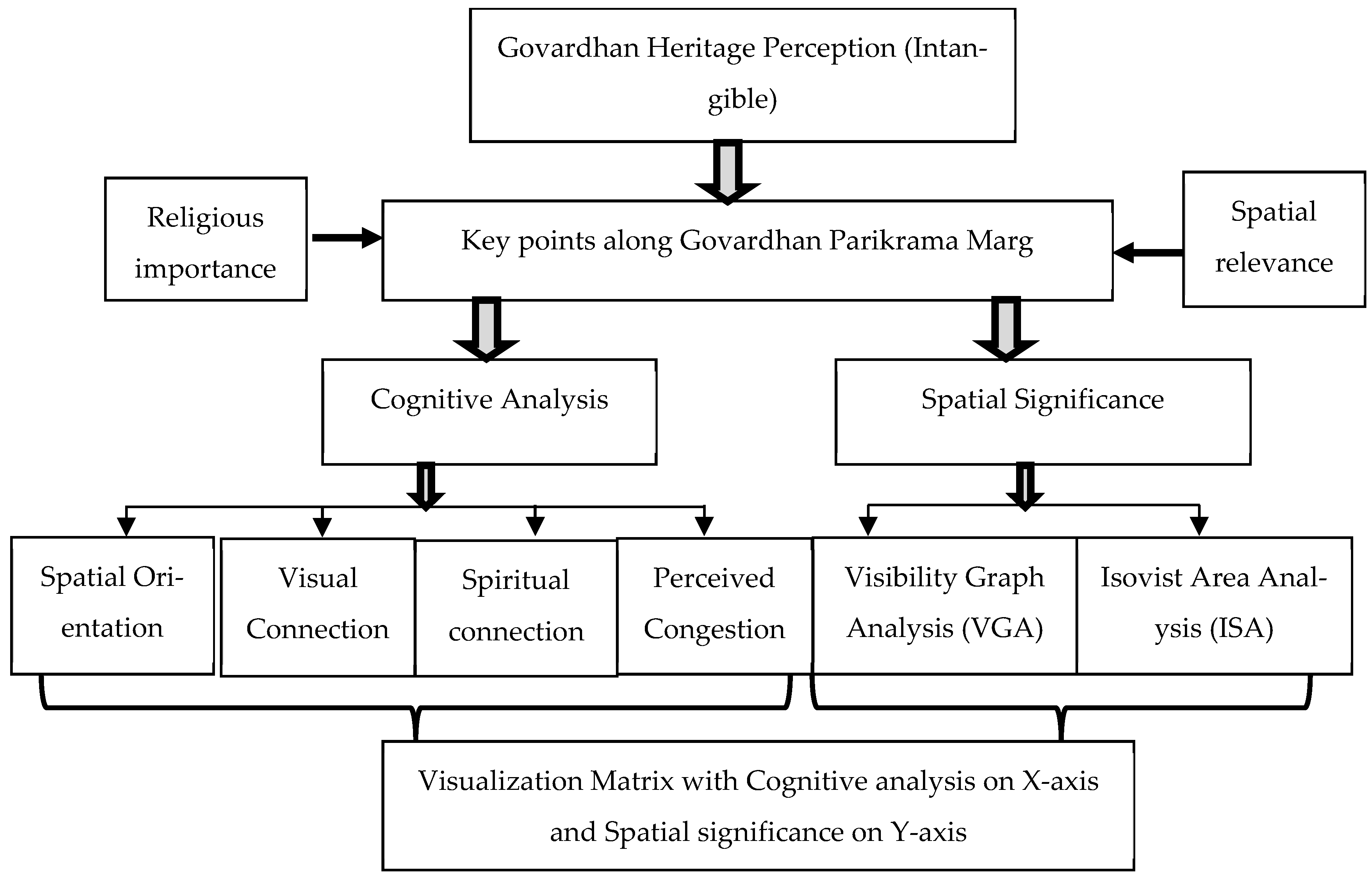
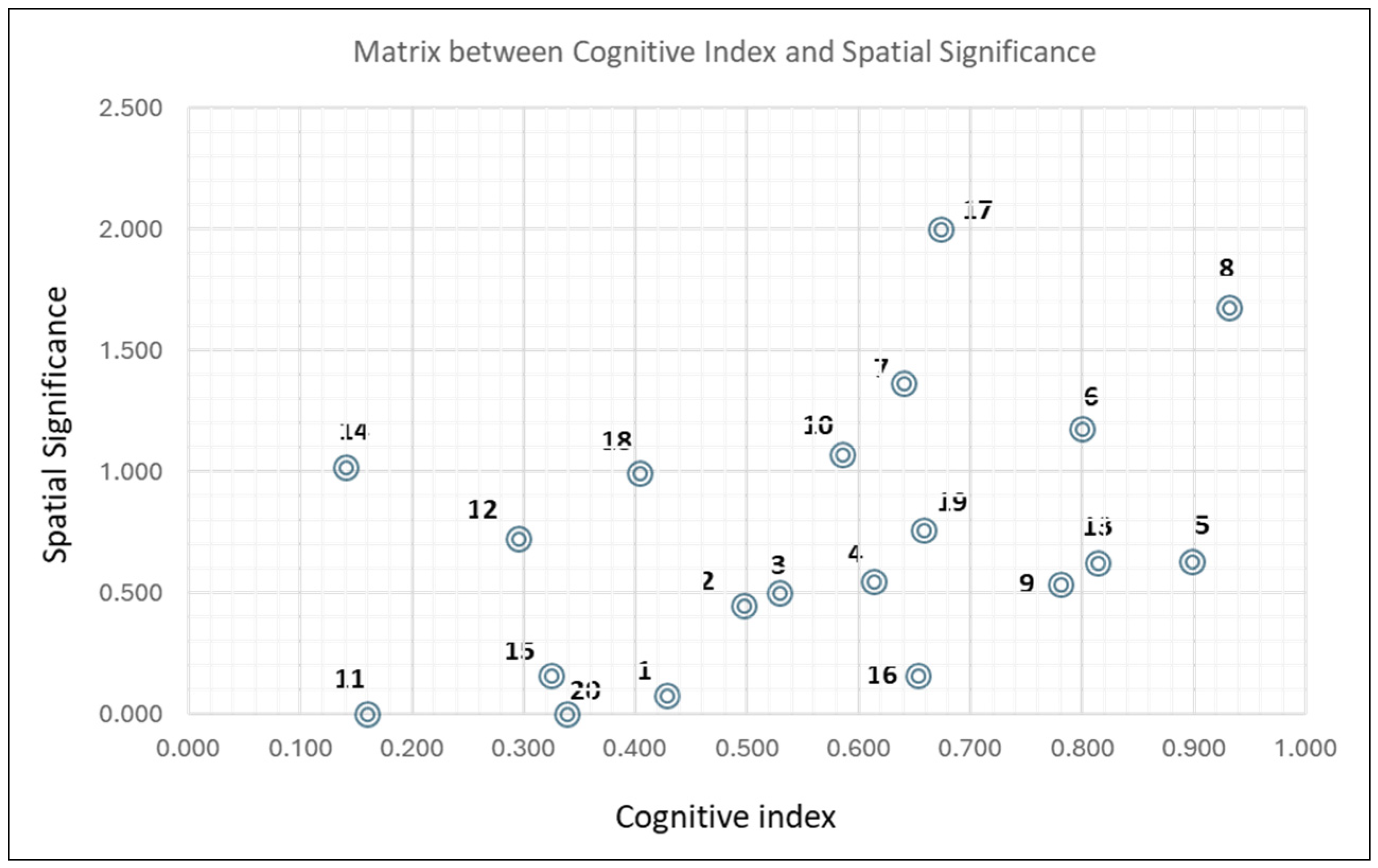
Various parameters of cognitive analysis have been listed, and matrix has been prepared among the cognitive index score and spatial significance score for Govardhan heritage (tangible) (
Figure 11 and
Figure 12).
A comparative matrix was created for Govardhan’s intangible heritage (
Figure 12) in order to determine the relationship between the spatial significance score (SS), which is based on the visibility graph and isovist analysis, and the cognitive index (CI), which represents visitors’ perceptions of openness, orientation, visual connection, and spiritual impression. The ‘punchari ka lota temple’ (Location 8) received the greatest scores in both parameters, according to the data. According to this, the location not only has significant spatial prominence, broad visibility, and orientation benefits, but it also profoundly appeals to the spiritual and sensory senses of visitors. Intangible spiritual experiences can be enhanced by spatial features, as pilgrims view the place as open, visually connected, and spiritually charged. Punchari ka lota’s combined significance as a tangible site anchoring the
parikrama route and as an intangible site reaffirming faith and remembrance is highlighted by the overlap of high CI and SS. These results confirm the interdependence of spatial arrangement and cognitive perception in influencing pilgrims’ lived experiences. High-scoring locations on both metrics become significant intersections of tangible and intangible heritage resources, necessitating careful consideration in conservation and planning initiatives.