
Elemental Composition, Heavy Metal Accumulation and Biologically Active Substances in Wild Plants of Kazakhstan


 , , ,
, , ,  , and
, and 
Abstract
1. Introduction
1.1. Micro- and Macroelements Accumulation in Plants
1.2. Heavy Metals Accumulation in Plants
2. Materials and Methods
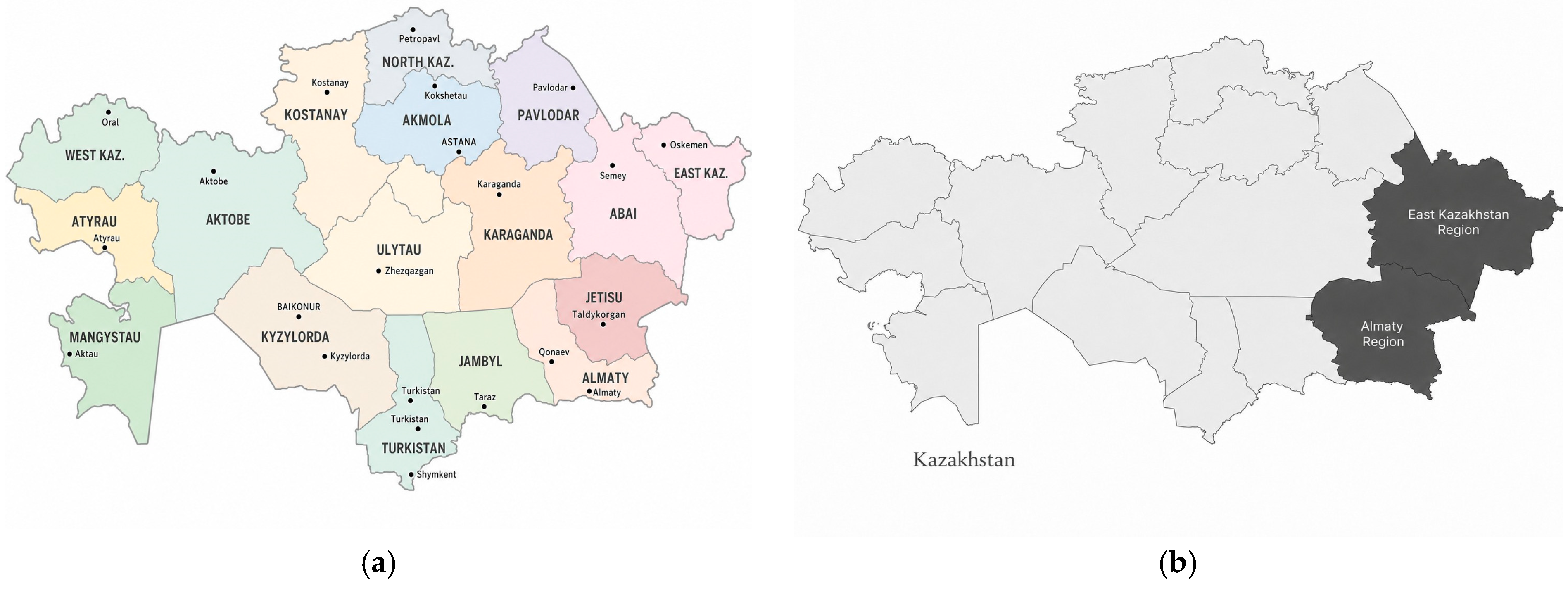
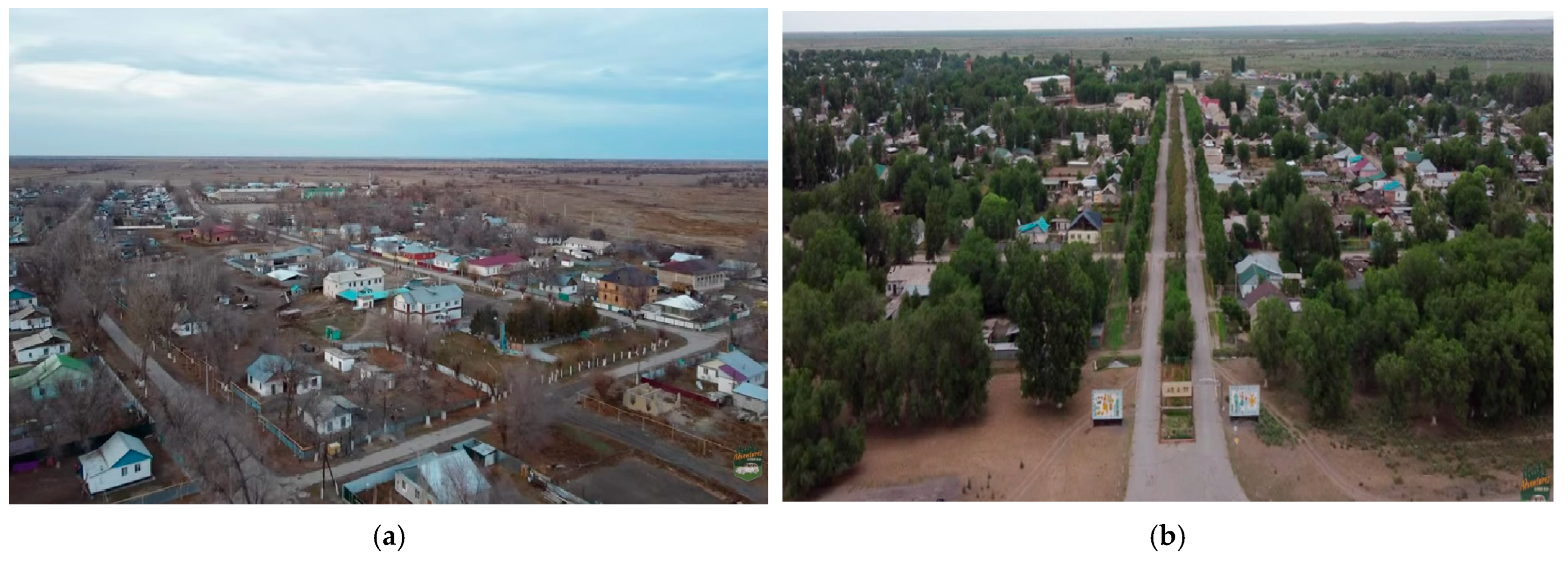
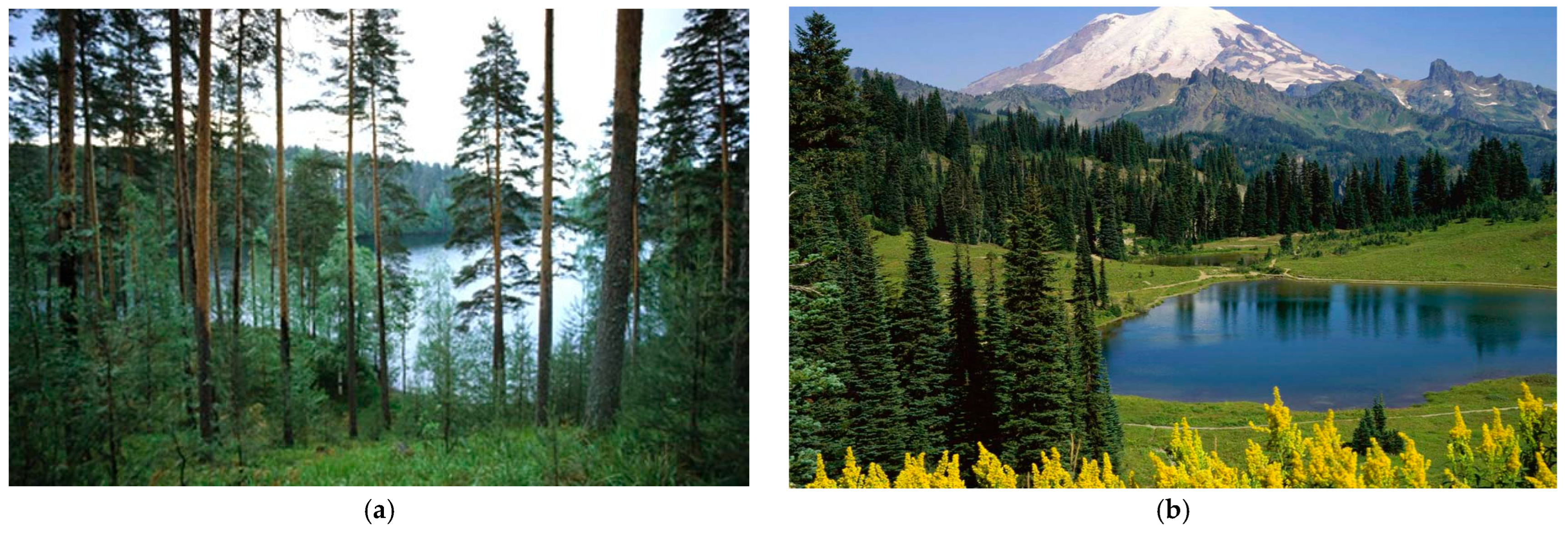
2.1. Brief Description of the Plant Collection Sites Used for This Study
2.2. The Genus of Herbaceous Plants Rheum
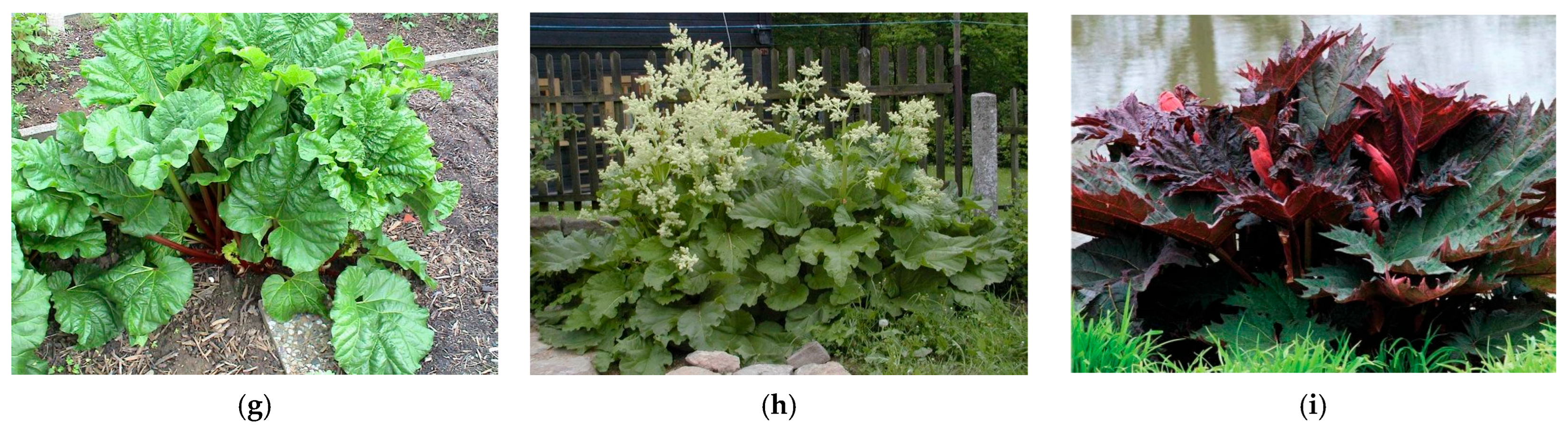
2.2.1. General Information
2.2.2. The Sequence of Selection, Preparation and Analysis of Plant Materials Using Rheum tataricum L. As an Example
2.3. Determination of Macro- and Microelement Composition and Heavy Metal Content in Plants
2.3.1. Equipment for Analysis
2.3.2. Procedure
2.4. Quantitative Determination of the Content of the Main Groups of Biologically Active Compounds in the Roots of Rheum tataricum L.
2.4.1. Quantitative Determination of Total Flavonoids
2.4.2. Quantitative Determination of Anthraquinone Derivatives
2.4.3. Quantitative Determination of Tannins
2.4.4. Quantitative Determination of Organic Acids
2.4.5. Quantitative Determination of Total Phenolic Compounds
3. Results and Discussion
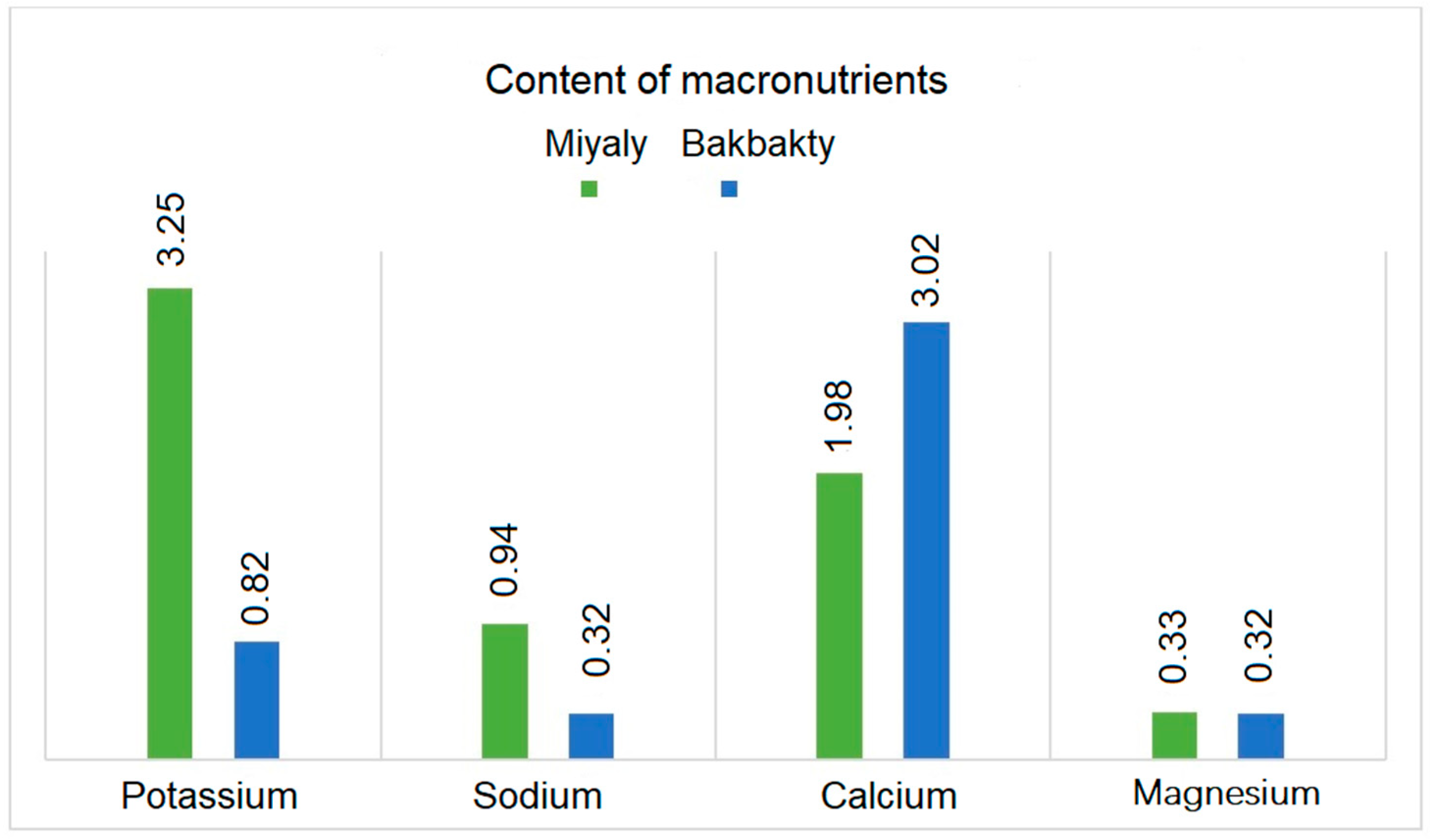
3.1. Determination of the Macro- and Microelement Content in the Roots of Tatar rhubarb (Rheum tataricum L.) Collected in the Almaty Region
3.2. Evaluation of the Component Composition of the Main Groups of Biologically Active Substances (BAS) in the Roots of Rheum tataricum L.
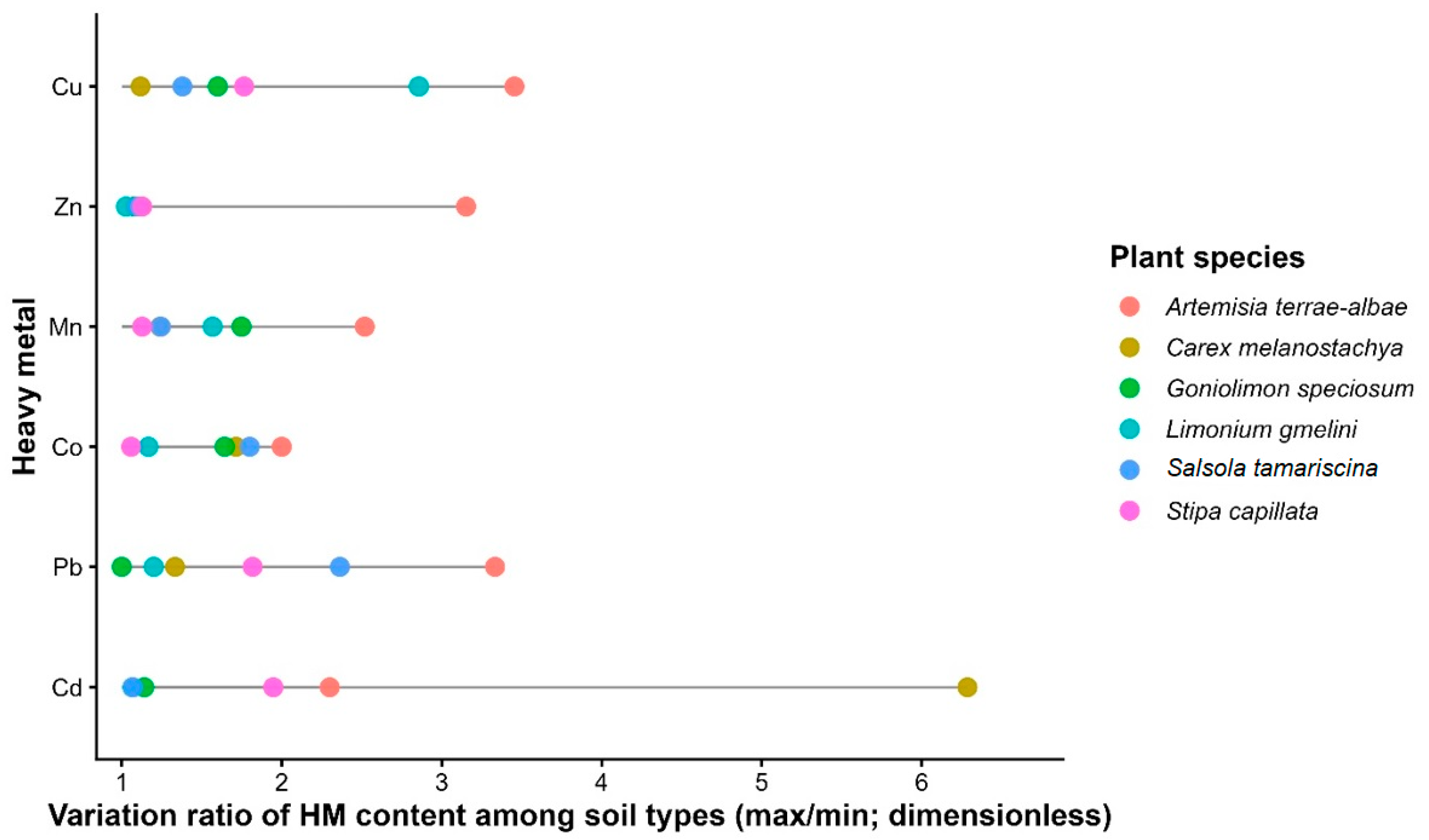
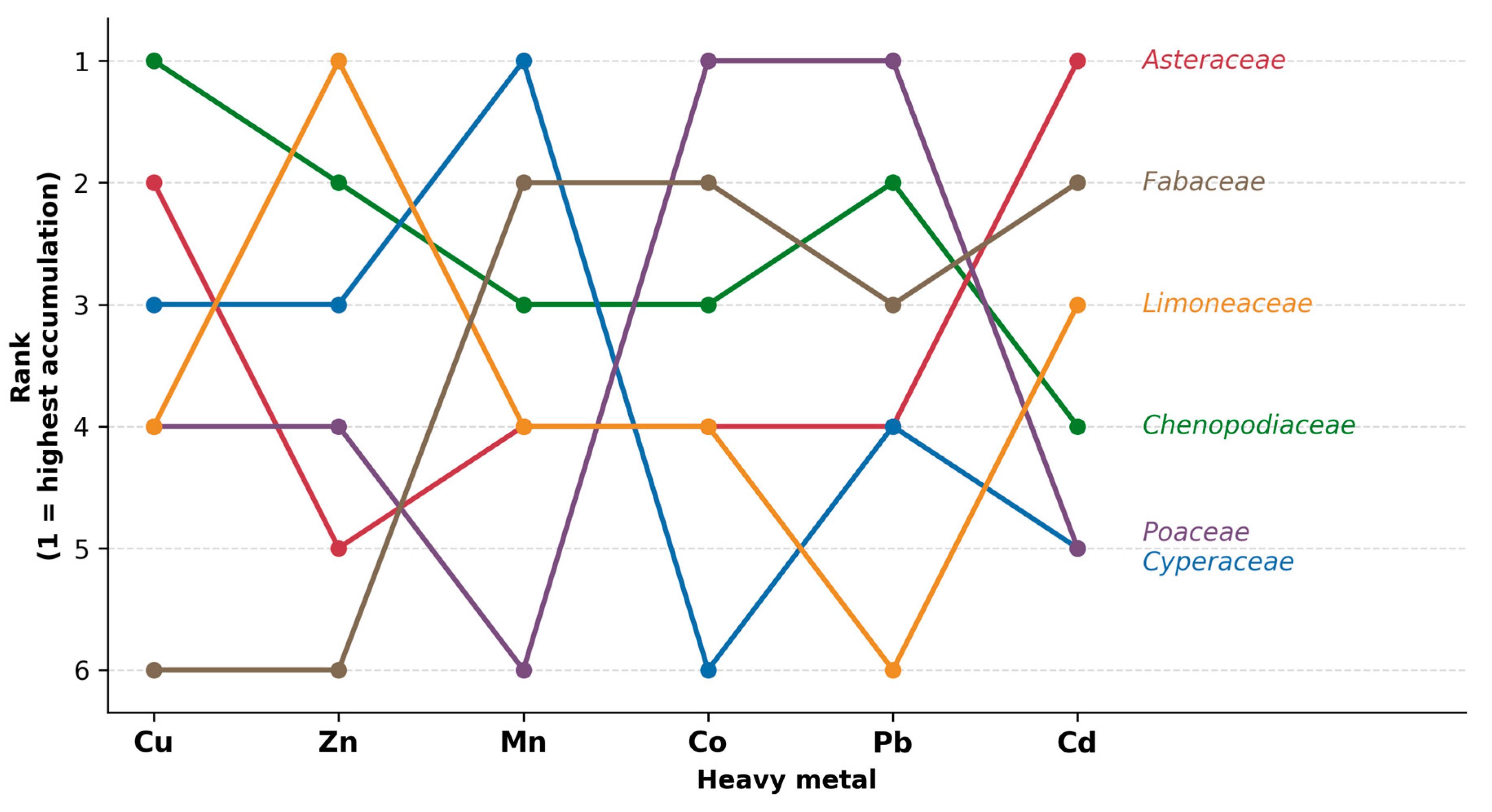
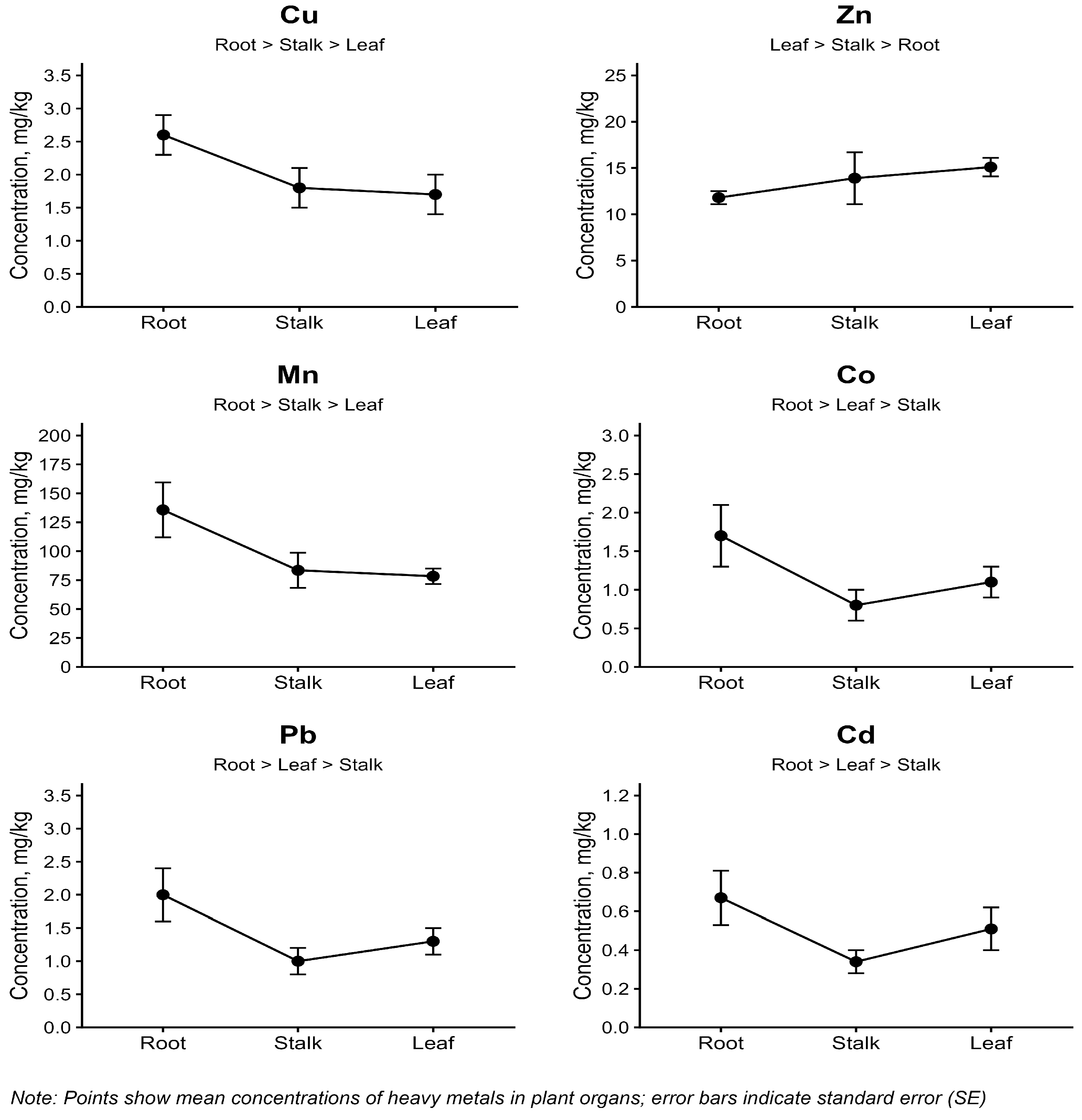
3.3. Determination the Distribution of HMs in Vegetation of Eastern Kazakhstan
4. Conclusions
Author Contributions
Funding
Data Availability Statement
Conflicts of Interest
References
- Agarwala, S.C.; Sharma, C.P.; Farooq, S. Effect of iron supply on growth, chlorophyll, tissue iron and activity of certain enzymes in maize and radish. Plant Physiol. 1965, 40, 493–499. [Google Scholar] [CrossRef]
- Baker, A.J.M.; Brooks, R.R. Terrestrial Higher Plants which Hyperaccumulate Metallic Elements. A Review of Their Distribution, Ecology and Phytochemistry. Biorecovery 1989, 1, 81–126. [Google Scholar] [CrossRef]
- Akenga, P.; Salim, A.; Onditi, A.; Yusuf, A.; Waudo, W. Determination of selected micro and macronutrients in sugarcane growing soils at Kakamega North District, Kenya. IOSR J. Appl. Chem. 2014, 7, 34–41. [Google Scholar] [CrossRef]
- Awad, E.M.; El-Ghamry, A.M. Effect of humic acid, effective microorganisms (em) and magnesium on potatoes in clayey soil. J. Plant Prod. 2007, 32, 7629–7639. [Google Scholar] [CrossRef]
- Elless, M.P.; Blaylock, M.J.; Huang, J.W.; Gussman, C.D. Plants as a natural source of concentrated mineral nutritional supplements. Food Chem. 2000, 71, 181–188. [Google Scholar] [CrossRef]
- Fodor, F. Iron nutrition and its biochemical interactions in plants: Iron uptake, biofortification, bacteria, and fungi in focus. Plants 2024, 13, 561. [Google Scholar] [CrossRef]
- Pilon-Smits, E.A.; Quinn, C.F.; Tapken, W.; Malagoli, M.; Schiavon, M. Physiological functions of beneficial elements. Curr. Opin. Plant Biol. 2009, 12, 267–274. [Google Scholar] [CrossRef] [PubMed]
- Rahman, S.U.; Ullah, Z.; Ali, A.; Ahmad, M.; Sher, H.; Shinwari, Z.K.; Nazir, A. Ethnoecological knowledge of wild fodder plant resources of district Buner Pakistan. Pak. J. Bot. 2022, 54, 645–652. [Google Scholar] [CrossRef]
- Rout, G.R.; Sahoo, S. Role of iron in plant growth and metabolism. Rev. Agric. Sci. 2015, 3, 1–24. [Google Scholar] [CrossRef]
- Madejón, P.; Murillo, J.M.; Marañón, T.; Cabrera, F.; López, R. Bioaccumulation of As, Cd, Cu, Fe and Pb in wild grasses affected by the Aznalcóllar mine spill (SW Spain). Sci. Total Environ. 2002, 290, 105–120. [Google Scholar] [CrossRef]
- Madejón, P. Trace elements and nutrients in white poplar trees affected by the Aznalcóllar mine spill. For. Syst. 2003, 12, 19–32. [Google Scholar] [CrossRef]
- Terry, N.; Abadía, J. Function of iron in chloroplasts. J. Plant Nutr. 1986, 9, 609–646. [Google Scholar] [CrossRef]
- Vinogradov, A.P. Geochemistry of Rare and Trace Chemical Elements in Soils; USSR Academy of Sciences Press: Moscow, Russia, 1957; pp. 203–207. [Google Scholar]
- Zayed, A.; Gowthaman, S.; Terry, N. Phytoaccumulation of Trace Elements by Wetland Plants: I. Duckweed. J. Environ. Qual. 1998, 27, 715–721. [Google Scholar] [CrossRef]
- Qian, J.H.; Zayed, A.; Zhu, Y.L.; Yu, M.; Terry, N. Phytoaccumulation of trace elements by wetland plants: III. Uptake and accumulation of ten trace elements by twelve plant species. J. Environ. Qual. 1999, 28, 1448–1455. [Google Scholar] [CrossRef]
- Akhmetkaliyeva, M.S.; Sassykova, L.R.; Aubakirov, Y.A.; Sendilvelan, S.; Zhumakanova, A.S.; Abildin, T.S.; Zhussupova, A.K.; Amangeldi, M.B. The accumulation of heavy metals by the vegetation of the East Kazakhstan. News Natl. Acad. Sci. Repub. Kazakhstan Ser. Geol. Tech. Sci. 2018, 429, 20–29. [Google Scholar]
- Arias, M.; Pérez-Novo, C.; Osorio, F.; López, E.; Soto, B. Adsorption and desorption of copper and zinc in the surface layer of acid soils. J. Colloid Interface Sci. 2005, 288, 21–29. [Google Scholar] [CrossRef] [PubMed]
- Bačeva, K.; Stafilov, T.; Šajn, R.; Tănăselia, C.; Makreski, P. Distribution of chemical elements in soils and stream sediments in the area of abandoned Sb–As–Tl Allchar mine, Republic of Macedonia. Environ. Res. 2014, 133, 77–89. [Google Scholar] [CrossRef]
- Belzile, N.; Chen, Y.-W. Thallium in the environment: A critical review focused on natural waters, soils, sediments and airborne particles. Appl. Geochem. 2017, 84, 218–243. [Google Scholar] [CrossRef]
- Bi, X.; Feng, X.; Yang, Y.; Qiu, G.; Li, G.; Li, F.; Liu, T.; Fu, Z.; Jin, Z. Environmental contamination of heavy metals from zinc smelting areas in Hezhang County, western Guizhou, China. Environ. Int. 2006, 32, 883–890. [Google Scholar] [CrossRef] [PubMed]
- Bradl, H.B. Adsorption of heavy metal ions on soils and soils constituents. J. Colloid Interface Sci. 2004, 277, 1–18. [Google Scholar] [CrossRef]
- Akhmetkaliyeva, M.S.; Sassykova, L.R.; Aubakirov, Y.A.; Sendilvelan, S. Heavy metals accumulation by the vegetation of the territory of the East Kazakhstan. Int. J. Biol. Chem. 2017, 10, 40–44. [Google Scholar] [CrossRef]
- Cai, L.; Xu, Z.; Ren, M.; Guo, Q.; Hu, X.; Hu, G.; Wan, H.; Peng, P. Source identification of eight hazardous heavy metals in agricultural soils of Huizhou, Guangdong Province, China. Ecotoxicol. Environ. Saf. 2012, 78, 2–8. [Google Scholar] [CrossRef] [PubMed]
- Covelo, E.F.; Vega, F.A.; Andrade, M.L. Competitive sorption and desorption of heavy metals by individual soil components. J. Hazard. Mater. 2007, 140, 308–315. [Google Scholar] [CrossRef]
- Edelstein, M.; Ben-Hur, M. Heavy metals and metalloids: Sources, risks and strategies to reduce their accumulation in horticultural crops. Sci. Hortic. 2018, 234, 431–444. [Google Scholar] [CrossRef]
- Inelova, Z.; Nesterova, S.; Yerubayeva, G.; Yessimsiitova, Z.; Seitkadyr, K.; Zaparina, Y. Heavy metal accumulation in plants of Atyrau region. Pak. J. Bot. 2018, 50, 2259–2263. [Google Scholar]
- Kaverina, M.; Ualiyeva, R.; Syso, A. The impact of heavy metals on plant organisms and methods of their analysis: An overview. Fundam. Exp. Biol. 2025, 12030, 92–109. [Google Scholar] [CrossRef]
- Malik, R.N.; Husain, S.Z.; Nazir, I. Heavy metal concentration and accumulation in soil and wild plant species from industrial area of Islamabad., Pakistan. Pak. J. Bot. 2010, 42, 291–301. [Google Scholar]
- Naimanova, A.; Akhmetova, S.; Issayeva, A.; Vyrakhmanova, A.; Alipbekova, A. Phytoaccumulation of Heavy Metals in South Kazakhstan Soils (Almaty and Turkestan Regions): An Evaluation of Plant-Based Remediation Potential. Int. J. Des. Nat. Ecodynamics 2024, 19, 451–464. [Google Scholar] [CrossRef]
- Onder, S.; Dursun, S.; Gezgin, S.; Demirbas, A. Determination of Heavy Metal Pollution in Grass and Soil of City Centre Green Areas (Konya, Turkey). Pol. J. Environ. Stud. 2007, 16, 145–154. [Google Scholar]
- Oves, M.; Saghir Khan, M.; Huda Qari, A.; Nadeen Felemban, M.; Almeelbi, T. Heavy metals: Biological importance and detoxification strategies. J. Biorem. Biodegrad. 2016, 7, 1–15. [Google Scholar] [CrossRef]
- Pinto, M.C.; da Silva, E.F.; Silva, M.M.V.G.; Melo-Gonçalves, P. Heavy metals of Santiago Island (Cape Verde) top soils: Estimated Background Value maps and environmental risk assessment. J. Afr. Earth Sci. 2015, 101, 162–176. [Google Scholar] [CrossRef]
- Saglam, C. Heavy metal accumulation in the edible parts of some cultivated plants and media samples from a volcanic region in Southern Turkey. Ekoloji 2013, 22, 1–8. [Google Scholar] [CrossRef]
- Sandeep, G.; Vijayalatha, K.R.; Anitha, T. Heavy metals and its impact in vegetable crops. Int. J. Chem. Stud. 2019, 7, 1612–1621. [Google Scholar]
- Smedley, P.L.; Kinniburgh, D.G. Molybdenum in natural waters: A review of occurrence, distributions and controls. Appl. Geochem. 2017, 84, 387–432. [Google Scholar] [CrossRef]
- Smith, C.J.; Hopmans, P.; Cook, F.J. Accumulation of Cr, Pb, Cu, Ni, Zn and Cd in soil following irrigation with untreated urban effluents in Australia. Environ. Pollut. 1996, 94, 317–323. [Google Scholar] [CrossRef]
- Sobukola, O.P.; Adeniran, O.M.; Odedairo, A.A.; Kajihausa, O.E. Heavy metal levels of some fruits and leafy vegetables from selected markets in Lagos, Nigeria. Afr. J. Food Sci. 2010, 4, 389–393. [Google Scholar]
- Sresty, T.V.S.; Rao, K.M. Ultrastructural alterations in response to zinc and nickel stress in the root cells of pigeonpea. Environ. Exp. Bot. 1999, 41, 3–13. [Google Scholar] [CrossRef]
- Wang, X.S.; Qin, Y. Heavy metals in urban soils of Xuzhou (China), Part I: Total concentration of heavy metals in soils. Int. J. Environ. Pollut. 2008, 33, 173–184. [Google Scholar] [CrossRef]
- Yoon, J.; Cao, X.; Zhou, Q.; Ma, L.Q. Accumulation of Pb, Cu, and Zn in native plants growing on a contaminated Florida site. Sci. Total Environ. 2006, 368, 456–464. [Google Scholar] [CrossRef]
- Dyachkov, Y.V.; Farzalieva, G.S.; Fomichev, A.A. New data on the centipede (chilopoda) fauna of East Kazakhstan region. Biol. Bull. Bogdan Chmeln. Melitopol State Pedagog. Univ. 2016, 6, 438–442. [Google Scholar] [CrossRef]
- Regions of Kazakhstan. Available online: https://en.wikipedia.org/wiki/Regions_of_Kazakhstan (accessed on 24 May 2026).
- Balkhash District. Available online: https://www.trip.com/travel-guide/destination/balkhash-district-1915764/?locale=en_xx (accessed on 24 May 2026).
- Weather and Climate in Kazakhstan. Available online: https://www.uscisguide.com/international/weather-and-climate-in-kazakhstan/#google_vignette (accessed on 24 May 2026).
- Salnikov, V.; Turulina, G.; Polyakova, S.; Petrova, Y.; Skakova, A. Climate change in Kazakhstan during the past 70 years. Quat. Int. 2015, 358, 77–82. [Google Scholar] [CrossRef]
- Cherednichenko, A.V.; Cherednichenko, A.V.; Cherednichenko, V.S.; Storozhenko, N.D.; Kozhachmetova, E.P.; Kupchishin, A.I.; Abdrahimov, R.G. Dynamic of Balkhash lake level under climate change conditions. IOP Conf. Ser. Earth Environ. Sci. 2019, 321, 012012. [Google Scholar] [CrossRef]
- Cherednichenko, A.; Cherednichenko, A.; Vilesov, E.N.; Cherednichenko, V.S. Climate change in the City of Almaty during the past 120 years. Quat. Int. 2015, 358, 101–105. [Google Scholar] [CrossRef]
- Kyrgyzbay, K.; Kakimzhanov, Y.; Sagin, J. Climate data verification for assessing climate change in Almaty region of the Republic of Kazakhstan. Clim. Serv. 2023, 32, 100423. [Google Scholar] [CrossRef]
- KAZFLORA. Biodiversity of Kazakhstan’s flora. Botany. Available online: https://kazflora.kz/catalog/?action=catalog&sort=P_SEML&sort_order=ASC (accessed on 24 May 2026).
- Samatova, I.; Inelova, Z.; Kakimzhanova, A.; Hoshino, B.; Zaparina, Y.; Aitzhan, M. Rare, endemic and wild species of the genus Ribes in central Asia and Kazakhstan: Current status and conservation prospects. Pak. J. Bot. 2026, 58, 539–545. [Google Scholar] [CrossRef] [PubMed]
- Sassykova, L.R.; Aubakirov, Y.A.; Akhmetkaliyeva, M.S.; Sassykova, A.R.; Sendilvelan, S.; Prabhahar, M.; Prakash, S.; Tashmukhambetova, Z.K.; Abildin, T.S.; Zhussupova, A.K. Heavy metals accumulation in plants of the dry-steppe zone of the East Kazakhstan region. Mater. Today Proc. 2020, 33, 1187–1191. [Google Scholar] [CrossRef]
- Vdovina, T.A.; Lagus, O.A.; Isakova, E.A.; Vinokurov, A.A. State of coenopopulations of wild berry plants in the territory of Kazakhstan Altai. Bull. Karaganda Univ. Biol. Med. Geogr. Ser. 2024, 11629, 129–134. [Google Scholar] [CrossRef]
- Zhang, Y.; Zhang, D.; Li, W.; Li, Y.; Zhang, C.; Guan, K.; Pan, B. Characteristics and utilization of plant diversity and resources in Central Asia. Reg. Sustain. 2020, 1, 1–10. [Google Scholar] [CrossRef]
- Litvinenko, Y.A.; Muzychkina, R.A. Phytochemical investigation of biologically active substances in certain Kazakhstan Rumex species. 1. Chem. Nat. Compd. 2003, 39, 446–449. [Google Scholar] [CrossRef]
- Rheum maximowiczii. Available online: https://en.wikipedia.org/wiki/Rheum_maximowiczii (accessed on 24 May 2026).
- Grudzinskaya, L.M.; Gemedzhieva, N.G.; Nelina, N.V.; Karzhaubekova, Z.Z. Annotated list of medicinal plants of Kazakhstan. Almaty 2014, 20, 113. [Google Scholar]
- Fairbairn, J.W.; El-Muhtadi, F.J. Chemotaxonomy of anthraquinones in Rumex. Phytochemistry 1972, 11, 263–268. [Google Scholar] [CrossRef]
- Litvinenko, Y.A. Chemical Study of the Roots of Some Kazakh Species of Sorrel (Rumex L.). Doctoral Dissertation, Almaty, Kazakhstan, 2008; pp. 55–56. [Google Scholar]
- Bussmann, R.W.; Batsatsashvili, K.; Kikvidze, Z. Rheum maximowiczii Losisnsk. Polygonaceae. In Ethnobotany of the Mountain Regions of Central Asia and Altai; Ethnobotany of Mountain Regions; Batsatsashvili, K., Kikvidze, Z., Bussmann, R., Eds.; Springer: Cham, Switzerland, 2020. [Google Scholar] [CrossRef]
- State Pharmacopoeia of the Republic of Kazakhstan; Zhibek Zholy Publishing House: Almaty, Kazakhstan, 2009; Volume 2, 804p, Available online: https://labtorg.kz/downloads/Methods/Gosudarstvennaya-farmakopeya-Respubliki-Kazahstan-tom-II.pdf (accessed on 7 May 2026).
- Khojimatov, O.K.; Kosimov, Z.Z.; Bussmann, R.W. Rheum maximowiczii Losinsk—POLYGONACEAE. In Ethnobiology of Uzbekistan; Khojimatov, O.K., Gafforov, Y., Bussmann, R.W., Eds.; Springer: Cham, Switzerland, 2023. [Google Scholar] [CrossRef]
- Chen, Z.M.; Tang, R.Q. Recent advances in Polygonaceae endophytes: Diversity, secondary metabolites and biotechnological applications. Front. Bioeng. Biotechnol. 2025, 13, 1666908. [Google Scholar] [CrossRef]
- Miao, H.; Wang, K.E.; Li, P.; Zhao, Y.Y. Rhubarb: Traditional uses, phytochemistry, multiomics-based novel pharmacological and toxicological mechanisms. Drug Des. Dev. Ther. 2025, 19, 9457–9480. [Google Scholar] [CrossRef]
- Yang, X.; Dai, L.; Yan, F.; Ma, Y.; Guo, X.; Jenis, J.; Wang, Y.; Zhang, J.; Miao, X.; Shang, X. The phytochemistry and pharmacology of three Rheum species: A comprehensive review with future perspectives. Phytomedicine 2024, 131, 155772. [Google Scholar] [CrossRef]
- Grinkevich, N.I.; Safronych, L.N. Chemical Analysis of Medicinal Plants; Nauka: Moscow, Russia, 1983; 176p. [Google Scholar]
- Ermachenko, L.A.; Ermachenko, V.M. Atomic Absorption Analysis in Sanitary and Hygienic Studies; Chuvashia: Moscow, Russia, 1997. [Google Scholar]
- State Standard 30178-96; Raw Materials and Food Products. Atomic Absorption Method for Determining Toxic Elements. Standartinform: Moscow, Russia, 2010.
- State Standard R 53218-2008; Organic Fertilizers. Atomic Absorption Method for Determining Heavy Metal Content. Standartinform: Moscow, Russia, 2020.
- Dmitriev, E.A. Mathematical Statistics in Soil Science; Librokom Book House: Moscow, Russia, 2009. [Google Scholar]
- Brown, J.G.; Lilleland, O.M.U.N.D. Rapid determination of potassium and sodium in plant materials and soil extracts by flame photometry. Proc. Amer. Soc. Hort. Sci. 1946, 48, 341–346. [Google Scholar]
- Alekseev, Y.V. Heavy Metals in Soils and Plants; Agropromizdat: Moscow, Russia, 1987. [Google Scholar]
- Vazhenin, I.G. Methodological Recommendations for the Study and Mapping of Soil Cover by Levels of Pollution by Industrial Discharges; Vaskhnil: Moscow, Russia, 1987. [Google Scholar]
- Rinkis, G.Y.; Ramane, H.K.; Kunitskaya, T.A. Methods of Soil and Plant Analysis; Zinatne: Riga, Latvia, 1987; 174p. [Google Scholar]
- Ainsworth, E.A.; Gillespie, K.M. Estimation of total phenolic content and other oxidation substrates in plant tissues using Folin–Ciocalteu reagent. Nat. Protoc. 2007, 2, 875–877. [Google Scholar] [CrossRef]
- Madibekov, A.; Ismukhanova, L.; Opp, C.; Saidaliyeva, Z.; Zhadi, A.; Sultanbekova, B.; Kurmanova, M. Spatial Distribution of Cu, Zn, Pb, Cd, Co, Ni in the Soils of Ili River Delta and State Natural Reserve “Ili-Balkhash”. Appl. Sci. 2023, 13, 5996. [Google Scholar] [CrossRef]
- Divrikli, U.; Horzum, N.; Soylak, M.; Elci, L. Trace heavy metal contents of some spices and herbal plants from western Anatolia, Turkey. Int. J. Food Sci. Technol. 2006, 41, 712–716. [Google Scholar] [CrossRef]
- Malcolm, J.R.; Markham, A. Global Warming and Terrestrial Biodiversity Decline; WWF-World Wide Fund For Nature: Washington, DC, USA, 2000. [Google Scholar]
- Mann, A.; Reimann, C.; De Caritat, P.; Turner, N.; Birke, M. Mobile Metal Ion® analysis of European agricultural soils: Bioavailability, weathering, geogenic patterns and anthropogenic anomalies. Geochem Explor. Environ. Anal. 2015, 15, 99–112. [Google Scholar] [CrossRef]
- Reddy, S.K.; Reddy, C.S.; Reddy, G.V.S. Bioaccumulation of Trace Metals in Selected Vegetable Crops around Tummalapalle uranium mine in Kadapa District, Andhra Pradesh. Orient J. Chem. 2018, 34, 1078–1090. [Google Scholar] [CrossRef]
- Zinkutė, R.; Baužienė, I.; Dilys, K.; Mažeika, J.; Taminskas, J.; Taraškevičius, R. Recent Lithuanian peri-urban ombrotrophic bog records: Indices derived from the contents of lead, zinc, copper and nickel. Geochem Explor. Environ. Anal. 2015, 15, 293–318. [Google Scholar] [CrossRef]
- Ernst, W.H.O.; Verkleij, J.A.C.; Schat, H. Metal tolerance in plants. Acta Bot. Neerl. 1992, 41, 229–248. [Google Scholar] [CrossRef]
- Ebbs, S.D.; Kochian, L.V. Toxicity of zinc and copper to Brassica species: Implications for phytoremediation. J. Environ. Qual. 1997, 26, 776–781. [Google Scholar] [CrossRef]
- Alda, S.; Nita, S.; Nita, L.D.; Rada, M.; Bordean, D.M.; Alda, L.M. Heavy Metals (Cr, Cd, Cu, Pb and Zn) Uptake by Cirsium arvense and Agropyron repens. Rev. Chim. 2018, 69, 1145–1148. [Google Scholar] [CrossRef]
- Hänsch, R.; Mendel, R.R. Physiological functions of mineral micronutrients (Cu, Zn, Mn, Fe, Ni, Mo, B, Cl). Curr. Opin. Plant Biol. 2009, 12, 259–266. [Google Scholar] [CrossRef]
- Kosegarten, H.; Koyro, H.W. Apoplastic accumulation of iron in the epidermis of maize (Zea mays) roots grown in calcareous soil. Physiol. Plant. 2001, 113, 515–522. [Google Scholar] [CrossRef]
- Bravin, M.N.; Travassac, F.; Le Floch, M.; Hinsinger, P.; Garnier, J.M. Oxygen input controls the spatial and temporal dynamics of arsenic at the surface of a flooded paddy soil and in the rhizosphere of lowland rice (Oryza sativa L.): A microcosm study. Plant Soil 2008, 312, 207–218. [Google Scholar] [CrossRef]
- Yang, X.; Li, T.Q.; Yang, J.C.; He, Z.L.; Lu, L.L.; Memg, F.H. Zinc compartmentation in root, transport into xylem, and absorption into leaf cells in the hyperaccumulating species of Sedum alfredii Hance. Planta 2006, 224, 185–195. [Google Scholar] [CrossRef] [PubMed]
- Richau, K.H.; Kozhevnikova, A.D.; Seregin, I.V.; Voojis, R.; Koevoets, P.L.M.; Snith, J.A.C.; Ivanov, V.B.; Schat, H. Chelation by histidine inhibits the vacuolar sequestration of nickel in roots of the hyperaccumulator Thlaspi caerulescens. New Phytol. 2009, 183, 106–116. [Google Scholar] [CrossRef] [PubMed]
- Page, V.; Weisskopf, L.; Feller, U. Heavy metals in white lupin: Uptake, root-to-shoot transfer and redistribution within the plant. New Phytol. 2006, 171, 329–341. [Google Scholar] [CrossRef] [PubMed]
- Page, V.; Feller, U. Selective transport of zinc, manganese, nickel, cobalt and cadmium in the root system and transfer to the leaves in young wheat plants. Ann. Bot. 2005, 96, 425–434. [Google Scholar] [CrossRef] [PubMed]
- Bouis, H.E.; Welch, R.M. Biofortification-A sustainable agricultural strategy for reducing micronutrient malnutrition in the global south. Crop Sci. 2010, 50, S20–S32. [Google Scholar] [CrossRef]
- Welch, R.M.; Graham, R.D. Agriculture: The real nexus for enhancing bioavailable micronutrients in food crops. J. Trace Elem. Med. Biol. 2005, 18, 299–307. [Google Scholar] [CrossRef]
- Welch, R.M.; Graham, R.D. Breeding for micronutrients in staple food crops from a human nutrition perspective. J. Exp. Bot. 2004, 55, 353–364. [Google Scholar] [CrossRef]
- Page, V.; Feller, U. Heavy Metals in Crop Plants: Transport and Redistribution Processes on the Whole Plant Level. Agronomy 2015, 5, 447–463. [Google Scholar] [CrossRef]
- Daurov, D.; Zhambakin, K.; Daurova, A.; Sapakhova, Z.; Isgandarov, I.; Ramazanova, R.; Zhumagulova, M.; Sumbembayev, A.; Abilda, Z.; Toishimanov, M.; et al. Assessment of Heavy Metal Accumulation in Soils and Dominant Agricultural Crops in an Industrial Environment of Ridder, East Kazakhstan Region. Plants 2026, 15, 983. [Google Scholar] [CrossRef] [PubMed]
- Inelova, Z.; Nesterova, S.; Erubaeva, G.; Sejtkadyr, K.; Zaparina, E.; Baubekova, A.; Galamova, G.G. The heavy metals in Alhagi pseudalhagi, Artemisia terrae-albae, Ceratocarpus arenarius of Mangystau region. Eurasian J. Ecol. 2018, 52, 66–75. [Google Scholar] [CrossRef]
- Vysochina, G.I. Anthraquinones and Biological Activity of Species of The Genus Rheum L. (Polygonaceae) (Review). Chem. Plant Raw Mater. 2018, 4, 29–41. [Google Scholar] [CrossRef]
- Terletskaya, N.; Mamirova, A.; Litvinenko, Y.; Kurmanbayeva, M.; Polyakova, S.; Gemejiyeva, N.; Kulmanov, T.; Mussayeva, A. Soil–Climatic Drivers of Anatomical and Metabolic Plasticity in Rheum tataricum L.f. Across Arid Landscapes of Kazakhstan. Plants 2026, 15, 1025. [Google Scholar] [CrossRef]
- Radulescu, C.; Stihi, C.; Barbes, L.; Chilian, A.; Chelarescu, D.E. Studies concerning heavy metals accumulation of Carduus nutans L. and Taraxacum officinale as potential soil bioindicator species. Rev. Chim. 2013, 64, 754–760. [Google Scholar]
- Gulzira, G.; Yerbolat, M.; Nuriya, A.; Zharas, B.; Gulshat, A.; Kairat, S.; Assiya, D.; Aidana, B.; Saltanat, A. Ecological and Geochemical Characteristics of the Content of Heavy Metals in Steppe Ecosystems of the Akmola Region, Kazakhstan. Sustainability 2025, 17, 6576. [Google Scholar] [CrossRef]





| Name | Appearance (Habitus) | Habitat | Notes |
|---|---|---|---|
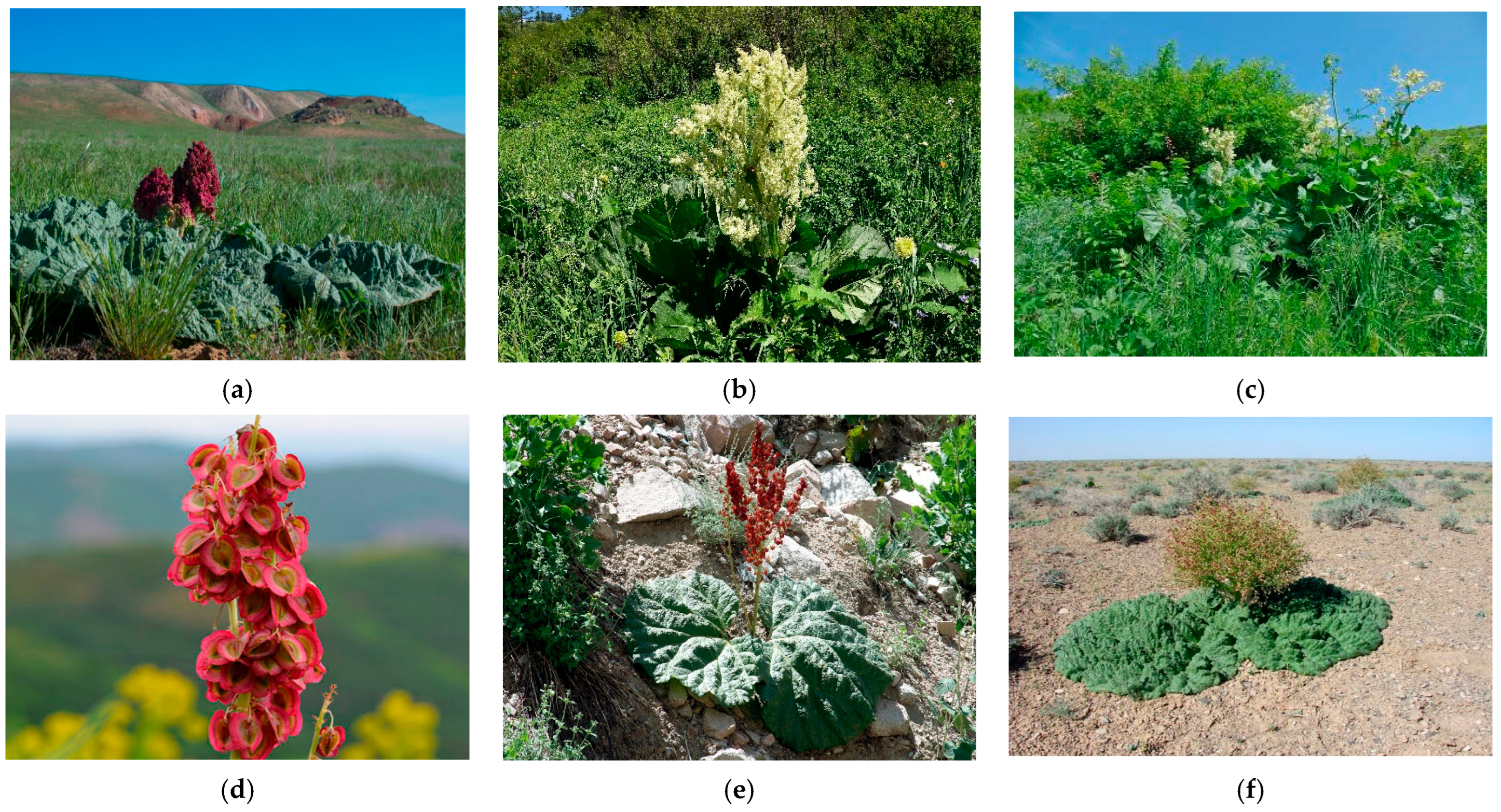
| Rheum tataricum L.—Tatar rhubarb | A perennial herbaceous plant with a vertical rhizome and a leaf width of up to 55 cm, the leaves themselves are wide and oval with small petioles. | It is found in various natural zones of the country: in semi-desert and steppe regions, and also frequently in the Caspian region, Bukeyev, Aktobe, Turgay, and Kyzylorda regions, Turkestan, the Chu-Il Mountains, and Karatau. It prefers open, well-lit areas with moderately dry and well-drained soils. | Flowering time is April–May, fruiting is May–June. |
| Rheum altaicum—Altai rhubarb | A perennial frost-resistant herbaceous plant with a powerful multi-headed short rhizome and fleshy roots. The leaves are stalked and rounded heart-shaped with long petioles. The aboveground part of the plant is characterized by large leaves gathered in a basal rosette, and tall peduncles that can reach 1.5 m in height. The flowers are small, greenish–yellow, collected in a paniculate inflorescence. | It is found in Eastern Kazakhstan and Tarbagatai, is endemic to the Altai region, and prefers subalpine meadows and foothill zones. | It is a rare plant listed in the Red Book of Kazakhstan. |
| Rheum compactum—thick-flowered rhubarb or compact rhubarb | A perennial herbaceous plant, reaching 120 cm in height. The rhizome is strong and significantly thickened, dark brown in color with a pronounced orange tint. The leaves vary in shape from oval-rounded to round-ovate. | The distribution area covers Altai, the mountain ranges of Eastern Kazakhstan and the southeastern regions of the country. This plant prefers to grow on mountain slopes with calcareous and rocky soils. | It is officially included in the Red Book of Kazakhstan as a declining species. |
| Rheum wittrockii Lundstr.—Wittrock’s rhubarb | A perennial herbaceous plant from the buckwheat family, the height of the plant varies from 70cm to 110 cm. It has a powerful root system of light brown color, having a yellowish–orange color on the cut. The root system is well developed, which makes the plant resistant to mountain conditions. The basal leaves are wide, with thin petioles equal to the lamina. The flowers are pinkish–white, the leaf surface is smooth, and the pedicels are short. | It is found in subalpine and Alpine belts, at an altitude of 2000 m above sea level. In the territory of Kazakhstan, it is most often found in the following regions: the Trans-Ili Alatau, including the vicinity of the Great Almaty Lake, the Dzungarian Alatau, the Ketmen Range, and some areas of Eastern Kazakhstan. | |
| Rheum maximowiczii Losinsk—Maximovich’s rhubarb | A perennial plant native to the mountainous regions of Central Asia. The rhizome is powerful, vertical, dark brown in color. The stem is erect, reaching 100 cm, with a reddish tinge at the base. The leaves are large, roundish-ovate, up to 55–60 cm wide, with short petioles. | It is found in the mountainous regions of Central Asia, including Uzbekistan, Kyrgyzstan, Tajikistan, Kazakhstan, and Afghanistan. | The fruit are large, broadly oval nuts up to 18–20 mm long and 14–15 mm wide, with bright red wings that turn purple–brown when ripe. It grows at altitudes ranging from 1300 m to 3200 m above sea level, preferring gravel slopes, as well as the banks of rivers and other springs. |
| Rheum turkestanicum—Turkestan rhubarb | A perennial herbaceous plant with large basal leaves, rounded in shape, and small yellowish–pinkish flowers. | Turkestan rhubarb mainly grows on the Turkestan range, in the valley of the Isfara River, where it is found on slopes and in gorges with rocky and gravelly soils. It also grows in the regions of Central Asia and Central Kazakhstan, including the Turanian plain and desert areas such as Kyzylkum. The preferred habitat for this species is mountain slopes with calcareous and rocky soils. | |
| Rheum cordatum—heart-shaped rhubarb | It is a perennial plant with a well-developed, powerful taproot. Its leaves are large, rounded, with a characteristic heart-shaped base, wide and elongated. | In Kazakhstan, it is found primarily in three floristic regions: the Chu-Ili Mountains, the Karatau Range, and within the Western Tien Shan. Its most typical habitats are rocky mountain slopes and dry, well-lit areas with sparse vegetation. The plant prefers the mid-mountain zone, where it forms stable populations adapted to harsh environmental conditions. | |
| Rheum rhabarbarum—wavy rhubarb | This perennial plant with a strong taproot has a strong, upright, woody rhizome. The basal leaves are large, wide, rounded, and have characteristically wavy margins, which gives the plant its name. | This plant is widespread in the temperate regions of Eurasia and is found in the natural environments of Kazakhstan, Russia, Mongolia, and China. It prefers open rocky slopes, steppes, forest meadows, riverbanks, and ravines. | It is known as a wild species, as well as a cultivated one, used for food and medicinal purposes. |
| Rheum rhabarbarum—wavy rhubarb | This Rhubarb is a vigorous herbaceous plant with large, palmately lobed leaves up to 75 cm wide. This leaf blade gives the plant an ornamental appearance and promotes active photosynthesis. The stem is erect, thick, hollow, and can reach a height of up to 2.5 m. The root system is well-developed and consists of a powerful rhizome with numerous roots, which serves as the main source of raw material for medicinal purposes. In Korea, Mongolia, Japan, and parts of Eastern Europe, it grows in shrubby and rocky areas, as well as along stream banks. | It is found in China, in other regions of Asia, including Korea, Mongolia, Japan, and parts of Eastern Europe, where it grows at altitudes ranging from 2500 to 4000 m above sea level. | It is widely used in traditional Chinese medicine and is cultivated in various regions of Asia. |
| Stage No. | Stage | Description | Conditions/Parameters | Result |
|---|---|---|---|---|
| 1 | Sampling | Collection of plant material in natural conditions or from cultivated areas. | Underground parts of Tatar rhubarb (Polygonaceae family), collected during the growing and fruiting phases in two different villages in the Almaty region in late summer. | Initial plant material—Rheum tataricum L. |
| 2 | Primary processing | Removal of mechanical and foreign particles (soil particles, dust, organic, and inorganic impurities), as well as damaged and discolored plant parts. | Manual sorting; no washing (according to the State Methodology of the Republic of Kazakhstan). | Purified plant material—Rheum tataricum L. |
| 3 | Fractionation | Separation into morphological parts (leaves, stems, roots, flowers). | Visual/manual separation. | Individual plant organs |
| 4 | Drying | Remove moisture to prevent decomposition. | Temperature: 40–60 °C; air circulation; until constant weight. | Dried plant material |
| 5 | Milling (grinding) | Reducing particle size to ensure uniformity. | Particle size: 3–7 mm. | Crushed vegetable raw materials |
| 6 | Homogenization | Ensuring sample homogeneity. | Mechanical mixing. | Homogeneous sample |
| 7 | Storage | Storage before analysis procedure. | Dry, dark place; sealed containers, paper or cloth bags. | Stabilized raw materials |
| 8 | Sample Preparation | Mineralization of plant material to convert elements into soluble form. | Acid decomposition (HNO3 or a mixture of HNO3 + H2O2); heating (in electric stove, muffle furnace); filtration; bringing to volume with distilled water. | A mineralized solution suitable for analysis |
| 9 | Analysis | Determination of sample mineral composition. | Atomic absorption spectroscopy (AAS); calibration using standard solutions; determination of macro- and microelements. | Mineral element content in the sample (mg/kg) |
| Place of Collection of Raw Materials for Research | Elements Content, mg/kg | ||||||
|---|---|---|---|---|---|---|---|
| Zn | Mn | Ni | Fe | Pb | Cd | Cu | |
| Almaty region, Miyaly village | 29.4 | 26.7 | 15.4 | 137 | 27.6 | 5.7 | 1.2 |
| Almaty region, Bakbakty village | 15.0 | 14.8 | 11.3 | 78.4 | 15.0 | 0.8 | 4.2 |
| Group of Biologically Active Substances | Content of the Main Groups of BAS, % | |
|---|---|---|
| Almaty Region, Bakbakty Village | Almaty Region, Miyaly Village | |
| flavonoids | 14.54 | 17.32 |
| anthracene derivatives | 2.34 | 1.05 |
| phenolic compounds | 0.61 | 0.82 |
| tannins | 8.56 | 7.72 |
| organic acids | 0.68 | 0.76 |
| Plant Type (n) | Development Phase | Ash, % | Cu | Zn | Mn | Co | Pb | Cd |
|---|---|---|---|---|---|---|---|---|
| Agropyron repens (L.) Beauv (n = 2) | flower | 8.1 | 1.6 | 13.8 | 13.8 | 0.6 | 1.4 | 0.73 |
| Artemisia terrae-albae Krasch (n = 12) | flower | 9.6 | 2.5 ± 0.6 1.1–4.0 (56) | 9.2 ± 2.2 3.36–15.1 (57) | 115.2 ± 21.5 61.1–187.9 (45) | 0.9 ± 0.2 0.4–1.5 (51) | 1.5 ± 0.5 0.4–3.8 (82) | 0.59 ± 0.31 0.18–2.07 (98) |
| Atriplex verrucifera Bieb. (n = 2) | vegetation | 9.5 | 3.0 | 11.5 | 82,1 | 1.0 | 1.1 | 0.38 |
| Calamagrostis epigeios (L.) Roth (n = 2) | flower | 3.7 | 1.5 | 12.0 | 12.0 | 1.1 | 1.2 | 0.55 |
| Caragana frutex (L.) C.Koch (n = 10) | flower | 3.0 | 1.4 ± 0.2 1.1–2.0 (29) | 9.0 ± 0.4 7.8–10.0 (9) | 120.6 ± 13.5 93.0–160.2 (25) | 1.4 ± 0.2 0.8–2.0 (39) | 1.4 ± 0.1 1.1–1.8 (23) | 0.41 ± 0.12 0.12–0.73 (67) |
| Carex melanostachya Bieb. Ex. Wiild (n = 10) | vegetation | 10.0 | 1.9 ± 0.2 1.6–2.5 (21) | 12.1 ± 0.6 10.4–13.4 (11) | 140.9 ± 18.1 103.6–197.8 (28) | 0.8 ± 0.1 0.5–1.2 (36) | 1.5 ± 0.1 1.2–2.0 (22) | 0.36 ± 0.09 0.07–0.59 (53) |
| Centaurea sibirica (L.) (n = 4) | flower | 11.4 | 1.6 ± 0.1 | 14.2 ± 1.6 | 54.1 ± 2.8 | 1.3 ± 0.4 | 1.2 ± 0.0 | 0.64 ± 0.0 |
| Glycyrrhiza uralensis Fisch (n = 4) | flower | 9.4 | 2.0 ± 0.0 | 12.6 ± 0.5 | 88.9 ± 2.3 | 2.1 ± 0.5 | 2.1 ± 0.1 | 0.37 ± 0.05 |
| Goniolimon speciosum (L.) Boiss (n = 6) | flower | 7.4 | 1.2 ± 0.2 1.0–1.6 (27) | 16.2 ± 0.2 15.8–16.5 (2) | 111.3 ± 24.0 75.8–155.8 (37) | 1.7 ± 0.3 1.4–2.3 (29) | 0.4 ± 0.1 0.4–0.5 (14) | 0.67 ± 0.06 0.56–0.73 (15) |
| Gypsophila paniculata (L.) C.A.Mey (n = 2) | vegetation | 9.7 | 1.6 | 10.5 | 10.5 | 1.5 | 1.5 | 0.42 |
| Lactuca tatarica (L.) (n = 2) | vegetation | 18.5 | 3.0 | 14.9 | 297.1 | 1.2 | 1.6 | 0.58 |
| Limonium gmelinii (Willd.) O. Kuntze (n = 12) | flower | 9.1 | 1.6 ± 0.3 0.5–2.3 (43) | 14.7 ± 0.2 14.2–15.6 (4) | 116.3 ± 19.8 70.0–194.8 (41) | 0.7 ± 0.04 0.6–0.8 (15) | 1.2 ± 0.07 0.9–1.4 (15) | 0.32 ± 0.01 0.28–0.37 (11) |
| Medicago falcata (L.) (n = 4) | flower | 10.8 | 1.9 ± 0.05 | 12.9 ± 1.2 | 187.6 ± 0.9 | 1.2 ± 0.2 | 1.4 ± 0.3 | 1.12 ± 0.50 |
| Poa angustifolia (L.) (n = 4) | vegetation | 8.2 | 2.1 ± 0.1 | 14.1 ± 1.9 | 12.4 ± 0.2 | 1.9 ± 0.4 | 1.5 ± 0.1 | 0.43 ± 0.07 |
| Salsola tamariscina Pall. (n = 10) | flower | 11.2 | 3.4 ± 0.3 2.6–4.1 (19) | 15.7 ± 0.4 14.7–17.0 (6) | 123.3 ± 11.2 101.6–150.9 (20) | 1.3 ± 0.4 0.6–2.9 (76) | 1.7 ± 0.4 0.8–2.9 (50) | 0.44 ± 0.03 0.35–0.53 (16) |
| Scirpus lacustris (L.) (n = 4) | vegetation | 9.3 | 2.6 ± 0.2 | 12.9 ± 0.4 | 103.2 ± 0.2 | 0.4 ± 0.05 | 0.9 ± 0.0 | 0.55 ± 0.09 |
| Stipa capillata (L.) (n = 8) | vegetation | 8.9 | 2.1 ± 0.4 1.4–3.0 (33) | 9.7 ± 0.7 7.7–10.6 (14) | 9.8 ± 0.2 6.7–12.1 (17) | 1.8 ± 0.1 1.5–2.1 (14) | 2.7 ± 0.5 1.8–4.0 (35) | 0.31 ± 0.04 0.19–0.37 (26) |
| Taraxacum officinale (Wigg.) (n = 2) | flower | 13.4 | 1.1 | 14.1 | 52.0 | 0.7 | 1.2 | 1.52 |
| Plant Type (n) | HM | |||||
|---|---|---|---|---|---|---|
| Copper | Zinc | Manganese | Cobalt | Lead | Cadmium | |
| Agropyron repens (L.) Beauv | 1.6 a | 13.8 ab | 13.8 a | 0.6 a | 1.4 ab | 0.73 b |
| Artemisia terrae-albae Krasch | 1.4 a | 13.6 ab | 84.2 b | 0.9 ab | 1.3 ab | 0.24 a |
| Caragana frutex (L.) C.Koch | 1.4 a | 9.0 a | 120.6 c | 1.4 b | 1.4 ab | 0.41 ab |
| Goniolimon speciosum (L.) Boiss | 1.0 a | 15.2 b | 89.1 b | 1.4 b | 0.4 a | 0.64 b |
| Lactuca tatarica (L.) | 3.0 b | 14.9 b | 297.1 d | 1.2 b | 1.6 b | 0.58 b |
| Limonium gmelinii (Willd.) O. Kuntze | 0.7 a | 15.2 b | 84.3 b | 0.6 a | 1.0 ab | 0.30 a |
| Poa angustifolia (L.) | 2.1 b | 14.1 ab | 12.4 a | 1.9 c | 1.5 b | 0.43 ab |
| Stipa capillata (L.) | 1.7 a | 9.4 a | 9.4 a | 1.8 c | 2.2 c | 0.30 a |
| Taraxacum officinale (Wigg.) | 1.1 a | 14.1 ab | 52.0 b | 0.7 a | 1.2 ab | 1.52 c |
| Plant | HM Content/CBA | |||||
|---|---|---|---|---|---|---|
| Cu | Zn | Mn | Co | Pb | Cd | |
| Artemisia terrae-albae Krasch. | Ch1 | |||||
| 1.4/0.1 | 13.6/0.8 | 84.2/0.1 | 0.9/0.2 | 1.3/0.1 | 0.24/0.53 | |
| M1 | ||||||
| 1.1/0.1 | 14.5/0.6 | 61.1/0.1 | 0.6/0.1 | 0.6/0.05 | 0.46/0.56 | |
| S | ||||||
| 3.8/0.2 | 4.6/0.2 | 153.9/0.2 | 1.2/0.2 | 2.0/0.2 | 0.2/0.1 | |
| Carex melanostachya Bieb. Ex. Wiild. | Ch1 | |||||
| 1.9/0.2 | 11.8/0.7 | 146.5/0.2 | 0.7/0.1 | 1.6/0.2 | 0.44/1.02 | |
| M1 | ||||||
| 1.7/0.1 | 13.2/0.7 | 118.2/0.1 | 1.2/0.2 | 1.2/0.1 | 0.07/0.08 | |
| Goniolimon speciosum (L.) Boiss. | Ch1 | |||||
| 1.0/0.1 | 15.2/0.8 | 89.1/0.1 | 1.4/0.2 | 0.4/0.04 | 0.64/1.49 | |
| S | ||||||
| 1.6/0.1 | 16.4/0.8 | 155.8/0.2 | 2.3/0.3 | 0.4/0.04 | 0.73/0.37 | |
| Limonium gmelinii (Willd) O. Kuntze | Ch1 | |||||
| 0.7/0.1 | 15.2/0.8 | 84.3/0.1 | 0.6/0.1 | 1.0/0.1 | 0.3/0.7 | |
| S | ||||||
| 2.0/0.1 | 14.8/0.7 | 132.2/0.2 | 0.7/0.1 | 1.2/0.1 | 0.32/0.16 | |
| Salsola tamariscina Pall. | Ch1 | |||||
| 2.9/0.2 | 15.1/0.8 | 107.5/0.1 | 1.0/0.2 | 1.1/0.1 | 0.43/1.00 | |
| S | ||||||
| 4.0/0.3 | 16.6/0.8 | 133.8/0.2 | 1.8/0.3 | 2.6/0.2 | 0.46/0.23 | |
| Stipa capillata (L.) | Ch1 | |||||
| 1.7/0.1 | 9.4/0.5 | 9.4/0.01 | 1.7/0.2 | 2.2/0.2 | 0.19/0.72 | |
| S | ||||||
| 3.0/0.2 | 10.6/0.5 | 10.6/0.01 | 1.8/0.2 | 4.0/0.3 | 0.37/1.5 | |
Disclaimer/Publisher’s Note: The statements, opinions and data contained in all publications are solely those of the individual author(s) and contributor(s) and not of MDPI and/or the editor(s). MDPI and/or the editor(s) disclaim responsibility for any injury to people or property resulting from any ideas, methods, instructions or products referred to in the content. |
© 2026 by the authors. Licensee MDPI, Basel, Switzerland. This article is an open access article distributed under the terms and conditions of the Creative Commons Attribution (CC BY) license.
Share and Cite
Litvinenko, Y.A.; Sassykova, L.R.; Sassykova, A.R.; Konysbayev, A.T.; Aitbayeva, R.R.; Abildin, T.S.; Kanapiyeva, F.M.; Zhakirova, N.K.; Zhussupova, A.K.; Sendilvelan, S.; et al. Elemental Composition, Heavy Metal Accumulation and Biologically Active Substances in Wild Plants of Kazakhstan. Sci 2026, 8, 123. https://doi.org/10.3390/sci8060123
Litvinenko YA, Sassykova LR, Sassykova AR, Konysbayev AT, Aitbayeva RR, Abildin TS, Kanapiyeva FM, Zhakirova NK, Zhussupova AK, Sendilvelan S, et al. Elemental Composition, Heavy Metal Accumulation and Biologically Active Substances in Wild Plants of Kazakhstan. Sci. 2026; 8(6):123. https://doi.org/10.3390/sci8060123
Chicago/Turabian StyleLitvinenko, Yuliya A., Larissa R. Sassykova, Albina R. Sassykova, Azamat T. Konysbayev, Renata R. Aitbayeva, Tleutai S. Abildin, Fatima M. Kanapiyeva, Nurbubi K. Zhakirova, Aisulu K. Zhussupova, Subramanian Sendilvelan, and et al. 2026. "Elemental Composition, Heavy Metal Accumulation and Biologically Active Substances in Wild Plants of Kazakhstan" Sci 8, no. 6: 123. https://doi.org/10.3390/sci8060123
APA StyleLitvinenko, Y. A., Sassykova, L. R., Sassykova, A. R., Konysbayev, A. T., Aitbayeva, R. R., Abildin, T. S., Kanapiyeva, F. M., Zhakirova, N. K., Zhussupova, A. K., Sendilvelan, S., Bhaskar, K., Gomathi, K., & Hua, R. (2026). Elemental Composition, Heavy Metal Accumulation and Biologically Active Substances in Wild Plants of Kazakhstan. Sci, 8(6), 123. https://doi.org/10.3390/sci8060123