Systematic Review

Carbonation and Chloride Attack in 3D-Printed Cementitious Materials: A Systematic Durability Review


1
Heritage and Territory (Lab2PT), University of Minho, 4804-533 Guimarães, Portugal
2
CTAC, Department of Civil Engineering, University of Minho, 4804-533 Guimarães, Portugal
3
School of Architecture, Art and Design, University of Minho, 4804-533 Guimarães, Portugal
*
Author to whom correspondence should be addressed.
Submission received: 5 February 2026 / Revised: 4 April 2026 / Accepted: 14 April 2026 / Published: 20 April 2026
(This article belongs to the Section Materials Science)

Abstract

3D Concrete Printing (3DCP) is increasingly explored as a digital fabrication technology offering design freedom, automation, and material efficiency. Nevertheless, its application in reinforced and long-life structures remains limited by insufficient understanding and poor comparability of durability performance, as previous reviews have not systematically linked methodologies to transport-related results. This study presents a systematic and critical review of carbonation and chloride ingress in 3DCP cementitious materials, conducted in accordance with the PRISMA methodology. Following a structured database search and two-stage screening process, the selected studies are subjected to qualitative analysis. Experimental methodologies, specimen typologies, exposure conditions, and attack directions are compiled and qualitatively compared. The review highlights pronounced methodological heterogeneity and frequent under-reporting of key parameters, particularly attack direction, sealing conditions, CO2 concentration, and indicator methods, limiting cross-study comparison. Despite these limitations, consistent qualitative trends are identified. Printed specimens generally exhibit inferior durability performance than cast specimens, while cold joints are associated with increased penetration depth and result dispersion. Directional effects are non-negligible, although they are systematically addressed in only a limited number of studies. Overall, the findings emphasise the critical role of process-induced features and the need for harmonised testing methods to enable reliable durability assessment.

1. Introduction

Additive manufacturing technologies have gained increasing relevance in the construction sector over the past decade, particularly through the development of extrusion-based 3D Concrete Printing (3DCP) [1,2]. This technology enables the layer-wise fabrication of cementitious elements without conventional formwork, offering significant advantages in terms of geometric freedom, digital integration, and material efficiency, as highlighted in recent state-of-the-art reviews on 3DCP and digital construction technologies [2,3,4,5].
The rapid evolution of 3DCP has been supported by advances in robotic fabrication systems, material formulation, and process control, allowing the transition from laboratory-scale demonstrations to architectural and structural applications [1,3,4,6]. As discussed in recent reviews, 3DCP is increasingly positioned within the broader framework of Construction 4.0, where automation, digital design, and data-driven fabrication converge to improve productivity and sustainability in the built environment [4]. In this context, 3DCP has also been associated with resource-efficient construction strategies and broader sustainability objectives, including environmental impact reduction and cost optimisation [7].
Despite this progress, several technical challenges continue to limit the widespread adoption of 3DCP in load-bearing and long-life applications. A key issue repeatedly identified in the literature is the intrinsic anisotropy induced by the layer-by-layer deposition process, which leads to direction-dependent mechanical and transport properties [8,9,10]. Interlayer regions, time gaps between successive layers, and variations in pore structure have been shown to influence fluid transport and may act as preferential pathways for the ingress of aggressive agents [11,12,13].
Durability is a critical performance requirement for cementitious materials, as it governs service life, maintenance demand, and life-cycle environmental impact. In the context of 3DCP, durability-related research remains comparatively limited when compared to studies focusing on printability and early-age mechanical performance [2,6,13,14]. This limited body of evidence reflects the relatively early stage of systematic durability research in 3DCP, particularly with respect to transport-driven degradation mechanisms under standardised experimental conditions. Among the various degradation mechanisms, carbonation and chloride ingress are the most frequently investigated, reflecting their central role in reinforcement corrosion and long-term deterioration of cement-based materials [8,12,15,16].
The relevance of carbonation and chloride ingress is further accentuated by the increasing use of eco-efficient binders and optimised mix designs in 3DCP, which are often adopted to reduce the environmental footprint of cementitious materials [2,3,17]. While such approaches are beneficial from a sustainability perspective, several studies have reported increased susceptibility to carbonation and, in some cases, chloride ingress, particularly when alkaline reserves are reduced or pore connectivity is altered [8,12,16].
Although a growing number of experimental studies have addressed carbonation and chloride ingress in 3DCP materials, existing research is characterised by substantial methodological heterogeneity. Differences in testing standards, specimen typology, curing age, exposure conditions, attack direction, and evaluation techniques are frequently reported, limiting direct comparison between studies [8,11,13,14]. Moreover, many investigations assess durability along a single direction only, despite the well-documented orthotropic nature of 3DCP materials [9,10].
Recent state-of-the-art reviews have emphasised the lack of harmonisation in durability testing methodologies for 3DCP, as well as the incomplete reporting of key experimental parameters [2,3,6]. In particular, there is a clear absence of a focused critical synthesis that systematically examines carbonation and chloride ingress in 3DCP materials while simultaneously analysing the experimental frameworks underlying the reported results.
Recent efforts have sought to consolidate knowledge on durability-related aspects of 3D-printed cementitious materials. Other recent reviews have examined durability in 3D-printed concrete from comprehensive state-of-the-art perspectives, integrating mechanical performance, shrinkage, freeze–thaw resistance, chemical attack, chloride ingress, and carbonation within broad assessments [18,19,20,21]. Additional reviews have addressed durability-related aspects within wider technological or material-oriented contexts, including nano-modified cementitious systems and additive manufacturing developments [22], or have discussed reinforcement corrosion challenges in digitally fabricated concrete from an electrochemical standpoint [23]. While these contributions provide valuable panoramic or conceptual insights, they do not systematically isolate carbonation and chloride ingress nor critically compare the experimental variables governing transport-driven degradation assessment in 3D-printed systems.
A preliminary review conducted by the present research group [24] provided a broad mapping of durability research in 3DCP, covering multiple degradation mechanisms and identifying general research trends, yet without undertaking a detailed methodological comparison of carbonation and chloride ingress, nor systematically linking experimental frameworks to the reported transport behaviour. The present study therefore narrows the scope to these two degradation mechanisms and adopts a structured PRISMA-based approach to enable a consistent comparison of experimental methodologies and identification of key parameters affecting durability assessment.
In recent years, construction 3D-printing has emerged as a promising approach for improving execution efficiency, reducing material consumption, and expanding architectural freedom [25]. During the last decade, research on 3DCP has concentrated mainly on printability, mechanical response, and early-age behaviour. More recent investigations have progressively extended this focus to durability-related issues, particularly freeze–thaw resistance and the effect of printing-induced anisotropy on long-term performance [26,27]. Parallel contributions have also underlined the importance of shrinkage and cracking phenomena, showing that they are strongly affected by the layered architecture and interfacial characteristics of printed cementitious materials [28,29].
Even so, durability assessment in 3DCP remains both limited and methodologically fragmented. The layer-wise deposition process generates anisotropic material features, interfacial weak zones, and heterogeneous pore networks, especially near interlayer regions, all of which have a marked influence on transport behaviour and degradation processes [30]. These characteristics have been associated with direction-dependent behaviour and greater susceptibility to environmental exposure; however, the lack of standardised test procedures and consistent experimental protocols still prevents direct comparison between studies [26]. Consequently, critical aspects such as carbonation and chloride ingress—key drivers of reinforcement corrosion—remain insufficiently understood in the context of 3DCP, particularly when considering the combined effects of anisotropy, material composition, and printing parameters. This research gap reinforces the need for systematic and critical studies capable of consolidating the available evidence, particularly on carbonation and chloride ingress, and of supporting more robust durability assessment frameworks for 3DCP materials.
Carbonation and chloride ingress are prioritised in this review because they are the dominant degradation mechanisms governing steel depassivation and corrosion initiation in reinforced cementitious systems, and therefore largely control service life performance. In this context, the present study provides a systematic and critical review of carbonation and chloride ingress in 3DCP cementitious materials, conducted in accordance with the PRISMA methodology for transparent and reproducible systematic reviews [31]. By applying a structured two-stage selection process, the study compiles and critically analyses experimental methodologies, test parameters, specimen typologies, exposure conditions, and evaluation procedures reported in the literature. Beyond documenting methodological diversity, this review aims to identify consistent qualitative trends and performance hierarchies, thereby contributing to improved comparability and more robust durability assessment of 3DCP materials.

2. Methods

This study adopts a structured and transparent search strategy to examine recent advances in the durability of 3DCP cementitious materials, with particular emphasis on carbonation and chloride ingress. Although the scope of the present review focuses on carbonation and chloride ingress, the initial search strategy was intentionally broader, encompassing durability-related studies in 3DCP in general. This approach was adopted to ensure that all potentially relevant publications were captured during the identification stage, after which the screening and qualitative synthesis were refined to address the targeted degradation mechanisms.
A systematic Boolean search was conducted covering publications from the last decade using the Scopus and Web of Science (WoS) databases. The literature search was initially conducted in March 2025 and subsequently updated in January 2026. Owing to the limited number of eligible studies identified after the initial screening stages, the Springer database was additionally consulted to ensure adequate coverage of relevant peer-reviewed literature. This outcome further confirms the still-emerging nature of durability-focused investigations in 3DCP materials. Furthermore, a small number of pertinent publications were identified through manual searching, based on the authors’ prior knowledge of key contributions in the field. These studies were selected based on their recognised relevance, citation frequency, and direct contribution to the topics of carbonation and chloride ingress in 3DCP materials. The initial search query applied in Scopus is presented in Equation (1).
TITLE-ABS-KEY((“3D printing” OR 3DCP OR 3DPC) AND cement),
AND
TITLE-ABS-KEY((durability OR carbonation OR chloride OR “freeze–thaw” OR sulphate OR “acid attack”))
For the Web of Science database, the search strategy was implemented using the Topic field (TS). Owing to database-specific query constraints, the durability-related terms were applied through a set of complementary Boolean expressions, defined in Equations (2) to (7). Each expression combined 3D printing-related keywords with cement-based material descriptors and one durability-related term. The results of these individual searches were subsequently merged, and duplicate records were removed prior to screening.
TS = ((“3D printing” OR 3DCP OR 3DPC) AND cement AND durability)
TS = ((“3D printing” OR 3DCP OR 3DPC) AND cement AND carbonation)
TS = ((“3D printing” OR 3DCP OR 3DPC) AND cement AND chloride)
TS = ((“3D printing” OR 3DCP OR 3DPC) AND cement AND “freeze–thaw”)
TS = ((“3D printing” OR 3DCP OR 3DPC) AND cement AND sulphate)
TS = ((“3D printing” OR 3DCP OR 3DPC) AND cement AND “acid attack”)
For Springer, an equivalent Boolean query was applied using the platform’s advanced search functionality, combining 3D printing-related terms, cement-based materials, and durability-related keywords.
(“3D printing” OR 3DCP OR 3DPC) AND cement AND
(durability OR carbonation OR chloride OR “freeze–thaw” OR sulphate OR “acid attack”)
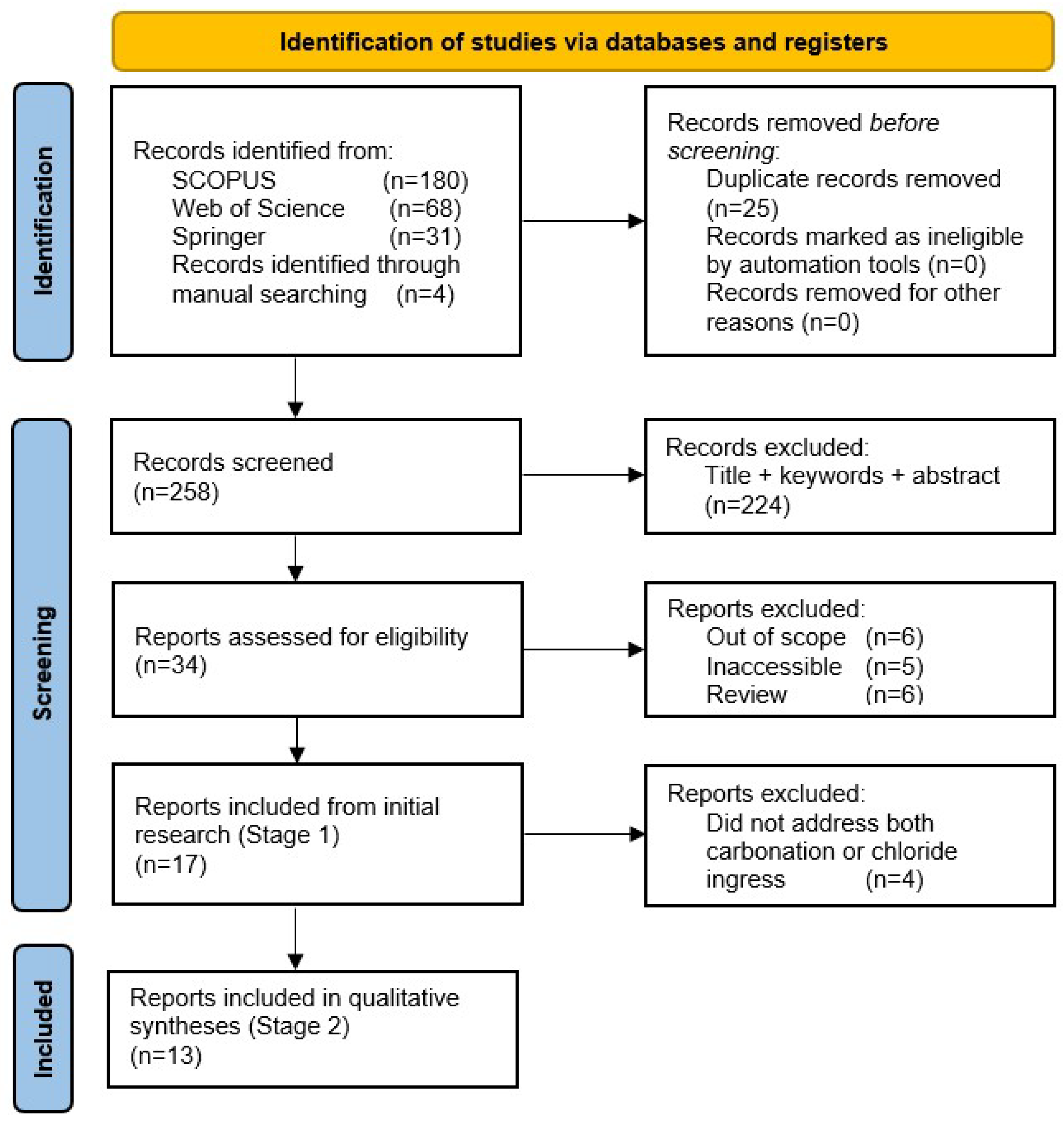
The initial database search yielded 283 records (Figure 1 and Supplementary Material). After duplicate removal, 258 publications remained. Title screening reduced this number to 72 studies, and subsequent analysis of titles, keywords, and abstracts further narrowed the selection to 34 publications. Following a detailed full-text assessment, 17 articles were excluded for being out of scope (6), inaccessible (5), or review papers (6), resulting in 17 eligible studies. The exclusion of inaccessible studies was limited in number and is not expected to affect the overall trends identified, as the analysis is based on a broad and diverse set of publications. Articles were considered out of scope when they focused exclusively on mechanical performance, fresh-state properties, or numerical modelling, without experimental assessment of carbonation or chloride ingress in cementitious 3D-printed materials. From this set, only publications addressing carbonation and/or chloride ingress were retained, leading to a final corpus of 13 studies included in Stage 2 of the review.
In Stage 2, the selected studies were subjected to an in-depth qualitative analysis. This phase focused on the systematic examination and comparison of experimental methodologies, test parameters, specimen typologies, exposure conditions, and evaluation techniques adopted in carbonation and chloride ingress assessments. Key methodological aspects were extracted and compiled to enable cross-study comparison, with particular attention given to parameters known to significantly influence transport behaviour, such as specimen preparation, curing age, attack direction, and measurement procedures.
Based on this structured synthesis, the analysis aimed not only to document methodological diversity but also to identify recurring qualitative trends and consistent performance hierarchies across studies. These trends form the basis for the comparative assessments presented in the Results and Discussion section and provide insights into critical factors governing durability performance in 3DCP materials, as well as into current limitations hindering reliable comparison and benchmarking across the literature.

3. Results and Discussion

3.1. Chlorides

The analysis of studies addressing carbonation and/or chloride ingress in 3DCP materials indicates that, beyond the limited number of publications available, substantial methodological variability exists across the current literature. Significant differences are observed in the adopted testing standards, specimen preparation procedures, curing ages, exposure conditions, and attack directions, among other critical parameters.
As an illustrative example, Table 1 summarises selected experimental parameters reported in studies investigating chloride ingress in 3DCP materials. The table includes the reference to each study (Ref.), the applied testing standard (Standard), and whether the test was conducted under fast (F) or slow (S) conditions. It further specifies the specimen typology, distinguishing between conventionally cast specimens (C), printed specimens without time gaps between layer deposition (P), printed specimens incorporating an intentional time gap between successive layers, resulting in cold joints (CJ), and printed specimens subsequently coated (Ct). In addition, reports the method used to assess chloride penetration depth (Assessment), the type and concentration of the saline solution employed (Saline solution), the acid–base indicator and its concentration (Indicator), the specimen age prior to chloride exposure (Days prior), and the attack directions considered in each study (Dir.).
Some recurring practices can be identified, although none are consistently adopted across all studies. These include the type and concentration of saline solutions and the choice and concentration of acid–base indicators. In addition, the majority of the reviewed studies assessed both cast and printed specimens in parallel. Nevertheless, this table also reveals that several key parameters are frequently omitted or insufficiently reported. For instance, the method used to assess chloride penetration depth is not specified in some studies [37,38,40], while information regarding the saline solution is incomplete or absent in others [8,11,12,13,37]. Similarly, a clear definition of the attack direction is missing in certain cases [43].
More importantly, the wide range of approaches documented highlights the pronounced heterogeneity of testing methodologies, many of which are fundamentally relevant for enabling meaningful comparison with the broader state of knowledge. This heterogeneity is particularly evident in the applied standards, which vary considerably across studies. In the case of chloride-related durability, the use of different test methods is, to some extent, expected, given the diversity of available experimental approaches. Consequently, the adoption of different standards inherently implies variations in test duration, exposure conditions, and evaluation criteria.
In this context, the experimental approaches used to assess chloride ingress can be broadly classified into “fast” and “slow” methods. Fast methods, such as rapid migration or accelerated diffusion tests, typically involve the application of an external electrical field or increased chloride concentrations to shorten testing duration. While these approaches enable rapid assessment, they may modify transport mechanisms and boundary conditions compared to natural exposure.
Conversely, slow methods, including natural diffusion or long-term immersion tests, rely on concentration gradients under conditions that more closely resemble real service environments. Although more representative, these methods require significantly longer exposure times. As a result, direct comparison between fast and slow testing approaches should be undertaken with caution, as they may reflect fundamentally different transport regimes rather than intrinsic material performance.
However, a more detailed examination reveals that even studies adopting the same base standard may differ substantially in experimental design and parameter selection. For example, Bekaert et al. [35] assessed specimens after curing periods of 28 and 74 days prior to chloride exposure, whereas Chen et al. [43] conducted testing after only 3 days. Another seemingly minor, yet non-negligible, source of variability lies in the use of different methods to measure chloride penetration depth, which can significantly influence the reported results and their subsequent interpretation.
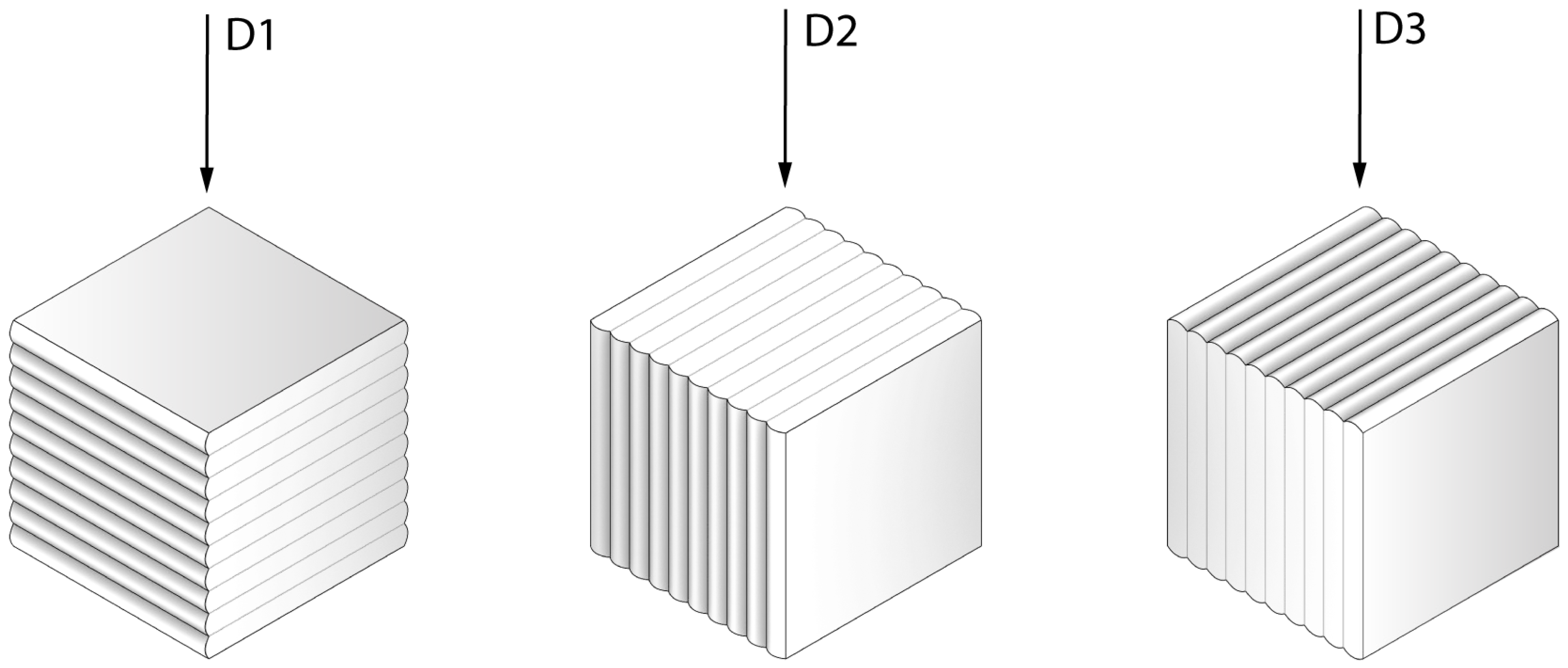
Two of the most critical aspects identified relate to the design of the experimental programme, namely the type of specimens considered and the attack directions investigated (Figure 2). While the choice of specimen typology is generally justified by the specific research objectives, the selection of attack direction requires more careful consideration, as it strongly influences the observed transport behaviour, as discussed later in this section. In this respect, only three studies assessed all three principal directions simultaneously [13,37,44], and only one study investigated two directions in parallel [41].
The observed directional transport behaviour can be directly linked to the intrinsic anisotropic microstructure of 3D-printed cementitious materials. Due to the layer-by-layer deposition process, interlayer regions are typically characterised by increased porosity, lack of fusion, and elongated voids aligned with the printing direction, which differ significantly from the bulk matrix. These interfacial zones act as preferential pathways for the ingress of aggressive agents such as water, chlorides, and carbon dioxide, leading to enhanced transport parallel to the layer interfaces [11,16].
From a mechanistic perspective, transport in these materials is governed by an initial capillary-driven absorption through interconnected interfacial pores, followed by diffusion-controlled migration within the bulk matrix, with the interlayer regions effectively accelerating both processes due to their higher connectivity and permeability [11].
Moreover, several studies have demonstrated that this heterogeneous pore structure induces a strong directional dependence of transport properties, with higher permeability and faster ingress observed along interlayer regions compared to the perpendicular direction. Preferential carbonation and moisture transport at layer interfaces have been experimentally observed and associated with locally increased capillary porosity and interconnected void networks. This behaviour is consistent with the orthotropic nature of printed materials, where the spatial distribution and morphology of pores govern the anisotropic durability performance. In particular, recent findings highlight that water absorption is strongly direction-dependent in printed mortars, confirming that print orientation and interlayer bonding significantly influence transport mechanisms and overall durability [30].

3.2. Carbonation

When a similar assessment is conducted for carbonation-related studies, comparable trends are observed, albeit based on a smaller number of available publications. Table 2 summarises selected experimental parameters reported in studies investigating carbonation in 3DCP materials. Its structure is largely analogous to that of Table 1, while incorporating parameters specific to carbonation testing. In particular, the table reports the exposure conditions adopted during accelerated carbonation, including temperature (T), relative humidity (RH), and the concentration of the aggressive agent (CO2). In addition, the number of sealed specimens faces during exposure (Sealing faces) is indicated, reflecting differences in boundary conditions applied across the reviewed studies.
Several studies omit or insufficiently report key methodological details, including the applied testing standards [35,40], the exposure conditions adopted for accelerated carbonation [9], the preparation and sealing (or lack thereof) of non-exposed specimen faces [8], and the concentration of the acid–base indicator used to determine carbonation depth [16,35,37,40,41,45].
Three methodological aspects are particularly critical. First, the exposure conditions and sealing strategies adopted for accelerated carbonation testing exhibit pronounced variability. For example, the applied CO2 concentration ranges from as low as 1% [11] to as high as 51% [45], which is clearly undesirable from a comparability standpoint. In addition, some studies perform carbonation tests without sealing any specimen faces, while others seal four or even five faces. Accelerated carbonation conducted under such disparate conditions induces markedly different physicochemical transformations within the cementitious matrix. These differences do not constitute methodological errors per se, as they largely reflect the historical evolution of carbonation testing standards [46]; however, they significantly hinder meaningful comparison between published results.
From a mechanistic perspective, the influence of CO2 concentration on carbonation kinetics has long been recognised in the literature [47,48,49,50,51]. Increasing CO2 concentration promotes both gas transport through the pore system and dissolution in the pore solution, which in turn accelerates carbonation. Experimental observations consistently show that elevated CO2 levels produce faster carbonation and greater penetration depths [52,53].
Likewise, variations in specimen sealing alter both the boundary conditions and the exposure geometry, thereby influencing the direction and rate of CO2 ingress. For this reason, results obtained under markedly different CO2 concentrations and sealing configurations are not directly comparable, since they may represent distinct transport regimes and reaction paths rather than intrinsic material behaviour [46]. In addition, these differences may distort the interpretation of durability performance, especially when accelerated testing generates responses that are not representative of natural exposure.
Table 2. Overview of experimental parameters adopted in studies addressing carbonation ingress in 3DCP materials.
TypeSpecimensExposureSealing DaysDir.
Ref.StandardFSCPCJCtTRHCO2FacesIndicatorPrior123
[8]RILEM TC 304
-ADC [32]
20 °C60%2%?Phen.1%61
[11]CEN/TS
12390-10 [54]
20 °C60%1%5 of 6Phen.1%7
[16]BS 1881-210 [55] 23 °C65%2%4 of 6Phen.*35
[35]? 21 °C65%1.2%0Phen.?28, 64, 120
[37]GB/T 50082-2009 [39] 20 °C70%20%0Phen.?28
[38]GB/T 50082-2009 [39] ???5 of 6Phen.1%28
[40]? 20 °C70%20%5 of 6Phen.?27
[41]DIN CEN/TS 12390-10:2007 [56] 20 °C65%2%0Phen.?28
[45]? ?70%51%0Phen.
Thym.
?????
F—fast; S—slow; C—cast; P—printed; CJ—cold joint; Ct—coated; ?—unknown; T—temperature; RH—relative humidity; CO2—CO2 content; Phen.—phenolphthalein; Thym.—thymolpthalein; *—phen. dissolved in 70 mL of ethanol and 30 mL of de-ionised water. ●—applicable or studied; “--”—not applicable.
Second, the vast majority of the reviewed studies employ phenolphthalein as the acid–base indicator to determine carbonation depth. Only one study combines phenolphthalein with thymolphthalein [45]. Although this practice is not inherently problematic, the two indicators exhibit different pH transition ranges, which inevitably leads to differences in the measured carbonation depth. Moreover, phenolphthalein is known to potentially yield misleading results when absolute carbonation depths are small or when partial carbonation occurs [57].
Third, as observed for chloride ingress, the number of investigated attack directions and their selection vary substantially across studies (Figure 2). Only one study evaluates all three principal directions simultaneously [8], while a single investigation considers two directions in parallel [41]. The remaining studies assess carbonation along a single direction only. Given the inherently anisotropic nature of 3DCP materials, this limited consideration of directional effects further constrains the generalisation and comparability of the reported findings.

3.3. Cross-Study Findings and Trends

A further level of analysis concerns the most relevant outcomes reported across the reviewed studies. Rather than focusing on the specific results of individual investigations, this analysis seeks to identify consistent qualitative trends that may provide insights into improving future durability assessment methodologies for 3DCP materials.
Furthermore, the anisotropic nature of 3D-printed cementitious materials has important implications for corrosion behaviour. Direction-dependent transport properties, associated with interlayer interfaces and printing-induced heterogeneity, may lead to non-uniform corrosion initiation across the material. In particular, preferential ingress pathways aligned with the printing direction can promote localised chloride accumulation and earlier depassivation in specific orientations, resulting in direction-dependent time to corrosion initiation under comparable exposure conditions.
In addition, anisotropic permeability and diffusivity may favour the development of preferential corrosion pathways, particularly along interlayer regions, where higher porosity and connectivity are typically observed. These aspects highlight that anisotropy is not only a transport-related feature but also a critical factor governing corrosion risk and should therefore be explicitly considered in durability assessment and structural design of 3DCP elements.
Although carbonation depth and chloride penetration depth are widely used as indicators of durability performance, they do not directly represent the actual corrosion risk of reinforcement. Corrosion initiation is governed by electrochemical and physicochemical conditions at the steel–concrete interface, particularly the attainment of a critical chloride threshold (Ccrit), which leads to depassivation of the steel.
The concept of a critical chloride level is well established and is commonly treated as a probabilistic parameter rather than a fixed value, reflecting the inherent variability of material properties and exposure conditions [58]. In this context, corrosion initiation corresponds to the end of the initiation phase (T0), after which propagation (T1) begins, as described in service life models.
In addition, corrosion initiation is influenced by the balance between chloride concentration and alkalinity, often expressed through the Cl/OH ratio, as well as by the pH of the pore solution, which controls the stability of the passive layer [59]. Parameters such as chloride binding capacity further affect the amount of free chlorides available to participate in the corrosion process, highlighting the limitations of total chloride measurements alone.
Electrochemical indicators, such as corrosion current density, provide a more direct assessment of corrosion activity, with depassivation typically associated with values exceeding approximately 0.1–0.2 μA/cm2 [58,60]. Furthermore, parameters such as electrical resistivity and effective diffusion coefficient play a key role in controlling corrosion kinetics and chloride transport, although they are not consistently reported in the available literature.
Recent studies also highlight that, while chloride penetration governs the initiation phase, other factors such as moisture availability, pore structure, and interfacial defects may control corrosion activation independently of chloride content [58,61,62]. Similarly, experimental investigations frequently report electrochemical measurements, including corrosion potential and corrosion current density, as more reliable indicators of degradation than penetration depth alone [61,63].
Therefore, while penetration-based indicators remain useful for comparative purposes, a comprehensive assessment of corrosion risk requires consideration of these additional parameters. Their limited and non-systematic reporting in the current body of literature represents a significant gap that should be addressed in future research.
Table 3 and Table 4 present a qualitative synthesis of the main trends observed for chloride ingress and carbonation, respectively. Four key aspects are considered: (i) the influence of specimen typology on penetration depth (Specimens); (ii) the effect of attack direction on penetration depth (Direction); (iii) the influence of specimen typology on the homogeneity of the penetration front (Homogeneity), understood as the spatial continuity and regularity of the penetration front; and (iv) the effect of specimen typology on the dispersion of results (Dispersion), referring to the variability observed in penetration depth within and between specimens.
As shown, the qualitative trends are broadly consistent for both degradation mechanisms, allowing three main observations to be drawn. First, a strong and recurrent tendency indicates that printed specimens (P) exhibit inferior durability performance compared to cast specimens (C). Moreover, the presence of cold joints (CJ) is consistently associated with increased penetration depths, indicating a further deterioration of performance. Second, specimen typology also significantly affects the homogeneity of the penetration front and the dispersion of results, following a consistent hierarchy: cast specimens (C) generally exhibit the most homogeneous penetration fronts and lowest dispersion, printed specimens (P) show intermediate behaviour, and specimens containing cold joints (CJ) present the highest heterogeneity and dispersion.
This behaviour is plausibly related to microstructural features generated by the printing process itself. In printed specimens, sequential layer deposition produces interlayer interfaces with higher porosity, reduced bonding quality, and local defects relative to monolithic cast materials. These features increase pore connectivity and make the ingress of aggressive agents easier [11,12,13].
Cold joints further intensify this effect because time gaps between successive depositions reduce interlayer adhesion and favour the formation of discontinuities and interconnected void networks. As a consequence, these regions behave as preferential transport pathways, resulting in greater penetration depths and higher variability in the measured response [12,44].
From a corrosion engineering perspective, interlayer regions and cold joints in 3D-printed cementitious materials may act as preferential sites for corrosion initiation. These interfaces are often characterised by increased porosity, weak bonding, and microstructural discontinuities, which can facilitate the ingress and local accumulation of aggressive agents such as chlorides. In addition, such heterogeneities may promote local variations in moisture and oxygen availability, enabling the formation of differential aeration cells that drive electrochemical corrosion processes. As a result, interlayer regions may favour localised forms of corrosion, such as pitting, particularly under chloride exposure. These mechanisms are consistent with microstructural observations reported in recent studies on 3D-printed materials, including porosity assessments of fibre-reinforced systems, which highlight the critical role of interlayer interfaces in governing transport and durability behaviour [30].
Third, attack direction exerts a pronounced influence on penetration behaviour. For chloride ingress, the most favourable performance is generally associated with Direction 1 (D1), whereas for carbonation, Direction 2 (D2) appears to be more favourable. It should be emphasised that these directional trends should be interpreted as indicative rather than conclusive, as only a limited number of studies have systematically investigated multiple attack directions under comparable conditions.
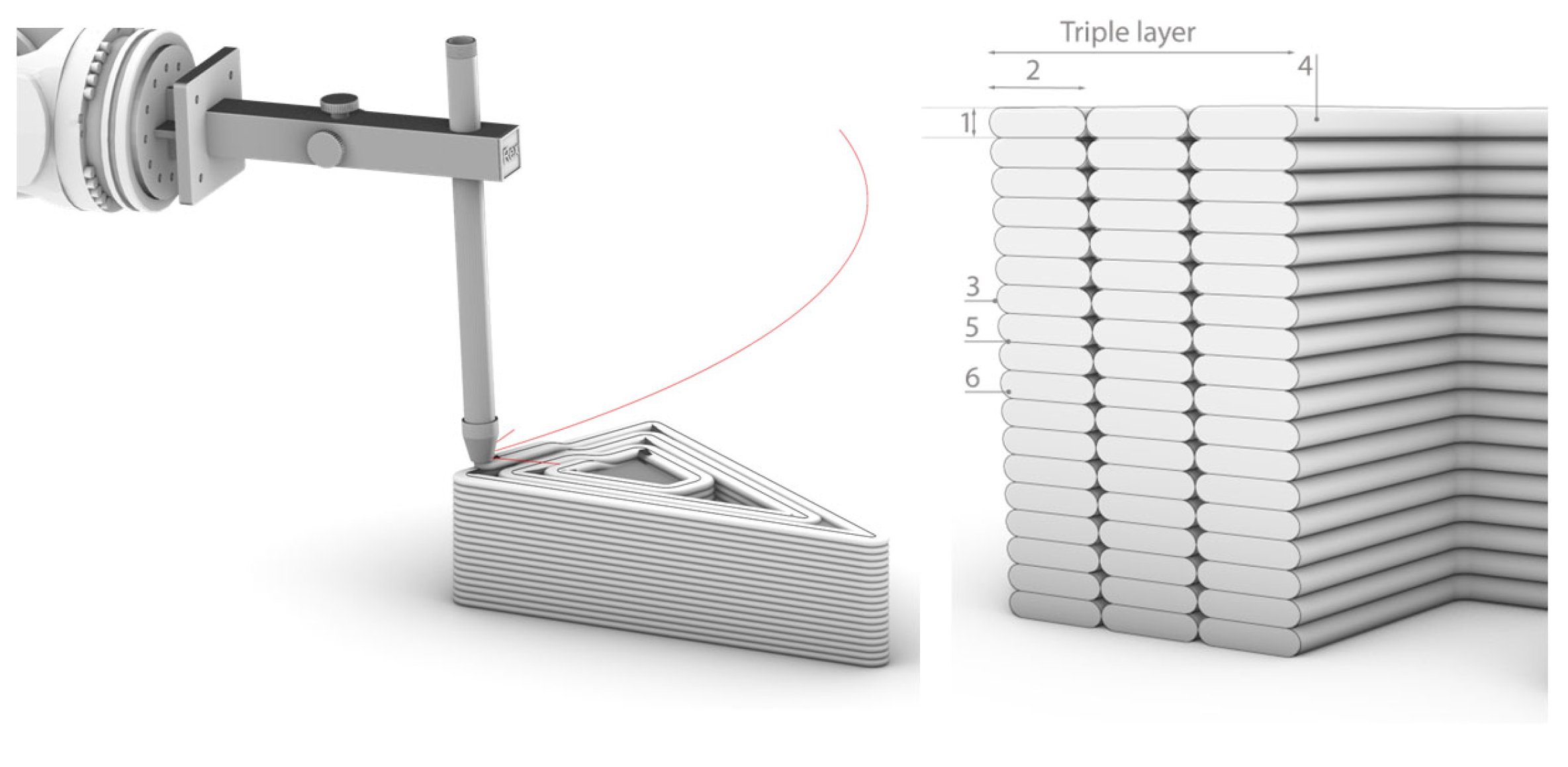
In addition to these general trends, further observations can be drawn with appropriate caution, as they are supported by individual studies only. Malan et al. [6] evaluated corrosion potential under chloride exposure and confirmed a performance hierarchy consistent with the trends identified herein, with cast specimens (C) outperforming printed specimens (P), which in turn performed better than specimens containing cold joints (CJ). Bekaert et al. [7] investigated the effect of layer compaction and reported reduced penetration depths for both chloride ingress and carbonation. These authors further observed lower chloride penetration within the bulk of printed layers compared to interlayer regions. Comparable findings for carbonation were reported by Sanchez et al. [16], who also identified reduced penetration depths within the bulk material (Figure 3).
Taken together, these results indicate that the durability performance of 3DCP materials is governed not only by material composition, but to a significant extent by process-induced features such as specimen typology, interlayer interfaces, and directional anisotropy. While the qualitative trends identified herein are robust across the limited body of available literature, their quantitative validation remains constrained by the lack of harmonised testing protocols and the scarcity of studies systematically addressing directional effects. Consequently, future research should prioritise standardised experimental designs and comprehensive directional assessments to enable more reliable durability.
Reinforcement corrosion in cementitious materials is widely recognised as an electrochemical process that requires moisture, oxygen, and steel depassivation [64,65,66]. Within this framework, carbonation and chloride ingress are central to the initiation of corrosion. Carbonation leads to a reduction in pore solution pH, and when it decreases from typical values of 12–14 to approximately 10.5–11, the passive layer is destabilised, allowing active corrosion to occur. In parallel, chloride ingress may lead to local depassivation once a critical threshold is exceeded, often associated with the balance between chloride concentration and alkalinity of the pore solution.
These processes define the initiation phase of corrosion, as described in classical service life models, and are primarily governed by transport mechanisms such as diffusion and capillary absorption. Therefore, the differences in penetration depth, transport properties, and interlayer characteristics observed in 3DCP materials may directly influence the time to corrosion initiation. In particular, recent studies have shown that 3D-printed cementitious materials exhibit pronounced anisotropic behaviour, with transport properties strongly dependent on the printing direction and interlayer bonding quality. The presence of interlayer interfaces, increased porosity, and direction-dependent absorption behaviour may promote preferential ingress pathways and localised accumulation of aggressive agents, thereby increasing the likelihood of early depassivation and corrosion initiation [30]. Additionally, geometric inconsistencies and deposition-induced defects associated with the printing process may further compromise layer continuity and enhance transport heterogeneity [67]. This behaviour is consistent with the orthotropic mechanical response and interlayer sensitivity reported in recent experimental studies on 3D-printed mortars [68].
From an engineering perspective, the findings of this review have direct implications for service life prediction, structural design, and the applicability of 3D-printed cementitious materials in aggressive environments. The pronounced influence of interlayer interfaces, specimen typology, and anisotropic transport behaviour suggests that conventional service life models, typically based on assumptions of material homogeneity and traditional reinforced concrete systems, may not be directly applicable to 3DCP systems without appropriate adaptation. In particular, direction-dependent transport properties and preferential ingress pathways may lead to non-uniform degradation and reduced time to corrosion initiation in specific orientations, which should be considered in durability-based design approaches. In this context, it becomes necessary to incorporate anisotropy and interlayer effects into predictive models, including parameters such as effective diffusion coefficients, permeability, and directional exposure conditions.
Furthermore, the generally inferior durability performance observed in printed specimens, especially those containing cold joints, raises concerns regarding the suitability of 3DCP elements for aggressive environments, such as marine or chloride-rich conditions. In such cases, additional measures—such as optimised mix design, improved interlayer bonding, surface treatments, or protective strategies—may be required to ensure adequate long-term performance. These aspects also indicate that existing normative frameworks, including testing methodologies and service life prediction models, may need to be adapted to account for the specific characteristics of these emerging technologies. For instance, widely adopted standards and recommendations for reinforced concrete durability and design, such as the Eurocodes, EN 206-1, the fib Model Code for Service Life Design (Bulletin 34), the RILEM Technical Committee 130-CSL recommendations, and the LNEC specifications E464 and E465, do not explicitly account for anisotropy and interlayer effects inherent to 3DCP materials [69,70,71,72,73,74,75,76].

4. Conclusions

This study presents a systematic and critical review of carbonation and chloride ingress in 3D concrete printing (3DCP) cementitious materials, conducted in accordance with the PRISMA methodology. By narrowing the scope to the two most relevant durability-related degradation mechanisms for reinforced cementitious systems, the review addresses a clear gap in the existing literature, which is predominantly focused on broader durability issues or on early-age mechanical performance.
The analysis shows that, despite the growing interest in durability assessment of 3DCP materials, the number of studies specifically addressing carbonation and chloride ingress remains limited. Moreover, the available literature is characterised by pronounced methodological heterogeneity, including differences in testing standards, specimen typology, curing age, exposure conditions, attack directions, and evaluation techniques. This lack of harmonisation significantly constrains direct comparison between studies and limits the robustness of quantitative conclusions.
A structured synthesis of experimental methodologies highlights that several key parameters are frequently omitted or insufficiently reported, particularly with respect to attack direction, sealing conditions, indicator type and concentration, and assessment methods for penetration depth. Given the inherently anisotropic nature of 3DCP materials, such omissions are especially critical and may lead to misinterpretation or overgeneralisation of durability performance. Particular attention should be given to the standardised reporting of attack direction, specimen sealing conditions, CO2 concentration, and indicator methods, as these parameters have been identified as primary sources of variability and are critical for ensuring reliable comparison and interpretation of durability performance across studies.
The qualitative comparison of reported results allows the identification of consistent trends across both degradation mechanisms. Printed specimens generally exhibit inferior durability performance compared to conventionally cast specimens, while the presence of cold joints is associated with increased penetration depths, reduced homogeneity of the penetration front, and higher dispersion of results. These trends can be attributed to process-induced microstructural features inherent to 3D-printing, particularly the presence of interlayer interfaces characterised by increased porosity and weaker bonding, which act as preferential pathways for the ingress of aggressive agents. Furthermore, attack direction exerts a non-negligible influence on both carbonation and chloride ingress, although the limited number of studies systematically addressing directional effects necessitates cautious interpretation.
Taken together, these findings demonstrate that durability performance in 3DCP materials is governed not only by material composition, but to a substantial extent by process-induced features such as interlayer interfaces, specimen typology, and directional anisotropy. While the qualitative trends identified in this review appear robust across the limited body of available evidence, their quantitative validation remains hindered by the absence of standardised testing protocols.
Future research should prioritise the development and adoption of harmonised experimental methodologies specifically tailored to 3DCP materials, with systematic consideration of attack direction and interlayer effects. Such efforts are essential to enable reliable comparison, durability benchmarking, and ultimately the safe, durable, and sustainable application of 3DCP technologies in reinforced structural systems.

Supplementary Materials

The following supporting information can be downloaded at: https://www.mdpi.com/article/10.3390/sci8040093/s1.

Author Contributions

Conceptualization, R.R. and F.A.; Methodology, R.R., F.A. and A.C.; Supervision, A.C.; Project administration, F.B., B.F. and P.J.S.C. All authors have read and agreed to the published version of the manuscript.

Funding

This work is funded by the project FORMA—Fabrication Oriented towards Architectural Resilience and Modularity (ref. NORTE2030-FEDER-02698300), co-funded by the European Union through the European Regional Development Fund (ERDF), within the framework of the NORTE 2030 Programme (SACCCT—Integrated R&D Projects, call NORTE2030-2024-84).

Data Availability Statement

The raw data supporting the conclusions of this article will be made available by the authors on request.

Conflicts of Interest

The authors declare no conflicts of interest.

References

  1. Paolini, A.; Kollmannsberger, S.; Rank, E. Additive manufacturing in construction: A review on processes, applications, and digital planning methods. Addit. Manuf. 2019, 30, 100894. [Google Scholar] [CrossRef]
  2. Rollakanti, C.R.; Prasad, C.V.S.R. Applications, performance, challenges and current progress of 3D concrete printing technologies as the future of sustainable construction—A state of the art review. Mater. Today Proc. 2022, 65, 995–1000. [Google Scholar] [CrossRef]
  3. Ma, G.; Buswell, R.; Leal da Silva, W.R.; Wang, L.; Xu, J.; Jones, S.Z. Technology readiness: A global snapshot of 3D concrete printing and the frontiers for development. Cem. Concr. Res. 2022, 156, 106774. [Google Scholar] [CrossRef]
  4. Forcael, E.; Ferrari, I.; Opazo-Vega, A.; Pulido-Arcas, J.A. Construction 4.0: A literature review. Sustainability 2020, 12, 9755. [Google Scholar] [CrossRef]
  5. Liu, D.; Zhang, Z.; Zhang, X.; Chen, Z. 3D printing concrete structures: State of the art, challenges, and opportunities. Constr. Build. Mater. 2023, 405, 133364. [Google Scholar] [CrossRef]
  6. Buswell, R.A.; Leal de Silva, W.R.; Jones, S.Z.; Dirrenberger, J. 3D printing using concrete extrusion: A roadmap for research. Cem. Concr. Res. 2018, 112, 37–49. [Google Scholar] [CrossRef]
  7. Mendoza Rangel, J.M.; Zapata Padilla, J.R.; Anguiano Pérez, F.D.; Velásquez Hernández, M.I.; Mares Chávez, S.; Espino Robles, E.E.; Alvarado López, J.I.; López Serna, M.A.; Mendoza Jiménez, J.A.; Díaz Aguilera, J.H. Circular economy in the 3D printing construction industry: A design, durability, materials, and processes solution to achieve decent, affordable, and sustainable housing in Nuevo León and Mexico. Rev. Alconpat 2024, 14, 115–140. [Google Scholar] [CrossRef]
  8. Lima, L.; Wangler, T.; Sanchez, A.M.; Anton, A.; Flatt, R.J. Durability of 3D printed concrete: Performance assessment of a two-component system against water absorption, carbonation, and chloride Ingress. In Proceedings of the Fourth RILEM International Conference on Concrete and Digital Fabrication; Lowke, D., Freund, N., Böhler, D., Herding, F., Eds.; Springer Nature: Cham, Switzerland, 2024; pp. 291–298. [Google Scholar]
  9. Wolfs, R.J.M.; Bos, F.P.; Salet, T.A.M. Hardened properties of 3D printed concrete: The influence of process parameters on interlayer adhesion. Cem. Concr. Res. 2019, 119, 132–140. [Google Scholar] [CrossRef]
  10. Kazemian, A.; Yuan, X.; Cochran, E.; Khoshnevis, B. Cementitious materials for construction-scale 3D printing: Laboratory testing of fresh printing mixture. Constr. Build. Mater. 2017, 145, 639–647. [Google Scholar] [CrossRef]
  11. Van Der Putten, J.; De Volder, M.; Van den Heede, P.; Deprez, M.; Cnudde, V.; De Schutter, G.; Van Tittelboom, K. Transport properties of 3D printed cementitious materials with prolonged time gap between successive layers. Cem. Concr. Res. 2022, 155, 106777. [Google Scholar] [CrossRef]
  12. Bran-Anleu, P.; Wangler, T.; Nerella, V.N.; Mechtcherine, V.; Trtik, P.; Flatt, R.J. Using micro-XRF to characterize chloride ingress through cold joints in 3D printed concrete. Mater. Struct. 2023, 56, 51. [Google Scholar] [CrossRef]
  13. Du, L.; Zhou, J.; Lai, J.; Wu, K.; Yin, X.; He, Y. Effect of pore structure on durability and mechanical performance of 3D printed concrete. Constr. Build. Mater. 2023, 400, 132581. [Google Scholar] [CrossRef]
  14. El Inaty, F.; Bilal, B.; Aouad, G. Long-term durability assessment of 3D printed concrete. J. Adhes. Sci. Technol. 2023, 37, 1921–1936. [Google Scholar] [CrossRef]
  15. Rodrigues, R.; Gaboreau, S.; Gance, J.; Ignatiadis, I.; Betelu, S. Reinforced concrete structures: A review of corrosion mechanisms and advances in electrical methods for corrosion monitoring. Constr. Build. Mater. 2021, 269, 121240. [Google Scholar] [CrossRef]
  16. Malan, J.D.M.; van Rooyen, A.S.; van Zijl, G.P.A.G. Chloride induced corrosion and carbonation in 3D printed concrete. Infrastructures 2022, 7, 1. [Google Scholar] [CrossRef]
  17. Tonk, R. Natural fibers for sustainable additive manufacturing: A state of the art review. Mater. Today Proc. 2021, 37, 3087–3090. [Google Scholar] [CrossRef]
  18. Bradshaw, J.; Si, W.; Khan, M.; McNally, C.J.D. Emerging Insights into the Durability of 3D-Printed Concrete: Recent Advances in Mix Design Parameters and Testing. Designs 2025, 9, 85. [Google Scholar] [CrossRef]
  19. Ler, K.H.; Ma, C.K.; Chin, C.L.; Ibrahim, I.S.; Padil, K.H.; Ab Ghafar, M.A.I.; Lenya, A.A. Porosity and durability tests on 3D printing concrete: A review. Constr. Build. Mater. 2024, 446, 137973. [Google Scholar] [CrossRef]
  20. Nodehi, M.; Aguayo, F.; Nodehi, S.E.; Gholampour, A.; Ozbakkaloglu, T.; Gencel, O. Durability properties of 3D printed concrete (3DPC). Autom. Constr. 2022, 142, 104479. [Google Scholar] [CrossRef]
  21. Tushar, F.H.; Hasan, M.; Hasan, K.; Mawa, J.; Habib, M. Factors affecting flowability and rheological behavior of 3D printed concrete: A comprehensive review. Constr. Build. Mater. 2026, 508, 145140. [Google Scholar] [CrossRef]
  22. Song, H.; Li, X. An overview on the rheology, mechanical properties, durability, 3D printing, and microstructural performance of nanomaterials in cementitious composites. Materials 2021, 14, 2950. [Google Scholar] [CrossRef] [PubMed]
  23. Stefanoni, M.; Angst, U.; Elsener, B. Corrosion Challenges and Opportunities in Digital Fabrication of Reinforced Concrete. In Proceedings of the First RILEM International Conference on Concrete and Digital Fabrication—Digital Concrete 2018; Wangler, T., Flatt, R.J., Eds.; Springer International Publishing: Cham, Switzerland, 2019; pp. 225–233. [Google Scholar]
  24. Reis, R.; Aroso, F.; Brandão, F.; Camões, A.; Jesus, C.; Figueiredo, B.; Cruz, P.J.S. A systematic review on the durability of 3D-printed cementitious materials: Insights and research challenges. In Construction, Energy, Environment and Sustainability, Proceedings of CEES 2025 (Volume 1: Construction Materials and Technologies), Bari, Italy, 11–13 June 2025; Berardi, U., António, J., Simões, N., Eds.; Springer Nature: Singapore, 2025; pp. 557–564. [Google Scholar] [CrossRef]
  25. Hassan, H.; Rodriguez-Ubinas, E.; Al Tamimi, A.; Trepci, E.; Mansouri, A.; Almehairbi, K. Towards innovative and sustainable buildings: A comprehensive review of 3D printing in construction. Autom. Constr. 2024, 163, 105417. [Google Scholar] [CrossRef]
  26. Mousavi, M.; Rangaraju, P. Freeze–Thaw Durability of 3D Printed Concrete: A Comprehensive Review of Mechanisms, Materials, and Testing Strategies. CivilEng 2025, 6, 47. [Google Scholar] [CrossRef]
  27. Ghantous, R.; Evseeva, A.; Dickey, B.; Gupta, S.; Prihar, A.; Esmaeeli, H.S.; Moini, M.; Weiss, W. Examining effect of printing directionality on the freeze-thaw response of 3D-printed cement paste. ACI Mater. J. 2023, 120, 89–102. [Google Scholar] [CrossRef]
  28. Els, H.; van Zijl, G.; de Villiers, W. A review of shrinkage and restrained shrinkage cracking in 3D concrete printing. J. Build. Eng. 2025, 111, 113233. [Google Scholar] [CrossRef]
  29. Delavar, M.R.; Aslani, F.; Sercombe, T. Cracking behaviour in 3D concrete printed fibre-reinforced cementitious composites: A review. J. Build. Eng. 2025, 114, 114312. [Google Scholar] [CrossRef]
  30. Reis, R.; Aroso, F.; Brandão, F.; Figueiredo, B.; Camões, A.; Jesus, C.; Cruz, P.J.S. Porosity assessment of fibre-reinforced 3D-printed cementitious mortars. In Proceedings of the 6th Ibero-American Congress on Special Concretes (HACBAC 2025), Faro, Portugal, 18–19 September 2025. [Google Scholar]
  31. Page, M.J.; McKenzie, J.E.; Bossuyt, P.M.; Boutron, I.; Hoffmann, T.C.; Mulrow, C.D.; Shamseer, L.; Tetzlaff, J.M.; Akl, E.A.; Brennan, S.E.; et al. The PRISMA 2020 statement: An updated guideline for reporting systematic reviews. BMJ 2021, 372, n71. [Google Scholar] [CrossRef]
  32. 304-ADC; RILEM Technical Committee 304-ADC; Materials and Structures. RILEM: Champs-sur-Marne, France, 2023.
  33. CEN/TS 12390-11:2015; Testing Hardened Concrete—Part 11: Determination of the Chloride Resistance of Concrete, Unidirectional Diffusion. CEN: Brussels, Belgium, 2015.
  34. NT Build 443; Concrete, Hardened—Accelerated Chloride Penetration. Nordtest: Espoo, Finland, 1995.
  35. Bekaert, M.; Van Tittelboom, K.; De Schutter, G. The effect of curing conditions on the service life of 3D printed concrete formwork. Materials 2023, 16, 6972. [Google Scholar] [CrossRef]
  36. NT Build 492; Chloride Migration Coefficient from Non-Steady-State Migration Experiments. Nordtest: Espoo, Finland, 1992.
  37. Sun, X.; Zhou, J.; Wang, Q.; Shi, J.; Wang, H. PVA fibre reinforced high-strength cementitious composite for 3D printing: Mechanical properties and durability. Addit. Manuf. 2022, 49, 102500. [Google Scholar] [CrossRef]
  38. Zhou, L.; Gou, M.; Ji, J.; Hou, X.; Zhang, H. Durability and hardened properties of 3D printed concrete containing bauxite tailings. Mater. Today Sustain. 2024, 25, 100704. [Google Scholar] [CrossRef]
  39. GB/T 50082-2009; Standard for Test Methods of Long-Term Performance and Durability of Ordinary Concrete. MOHURD: Beijing, China, 2009.
  40. Zhang, Y.; Zhang, Y.; Yang, L.; Liu, G.; Chen, Y.; Yu, S.; Du, H. Hardened properties and durability of large-scale 3D printed cement-based materials. Mater. Struct. 2021, 54, 45. [Google Scholar] [CrossRef]
  41. Weger, D.; Gehlen, C. Particle-Bed Binding by Selective Paste Intrusion—Strength and Durability of Printed Fine-Grain Concrete Members. Materials 2021, 14, 586. [Google Scholar] [CrossRef] [PubMed]
  42. Bundesanstalt für Wasserbau. BAW Code of Practice. In BAW Code of Practice—Resistance of Concrete to Chloride Penetration (MCL); Bundesanstalt für Wasserbau: Karlsruhe, Germany, 2012. [Google Scholar]
  43. Chen, M.; Jin, Y.; Sun, K.; Wang, S.; Zhao, P.; Wang, L.; Liu, J.; Yue, G.; Li, Q.; Lu, L. Study on the durability of 3D printed calcium sulphoaluminate cement-based materials related to rheology control. J. Mater. Res. Technol. 2023, 26, 2481–2494. [Google Scholar] [CrossRef]
  44. Surehali, S.; Tripathi, A.; Nimbalkar, A.S.; Neithalath, N. Anisotropic chloride transport in 3D printed concrete and its dependence on layer height and interface types. Addit. Manuf. 2023, 62, 103405. [Google Scholar] [CrossRef]
  45. Sanchez, A.M.A.; Wangler, T.; Stefanoni, M.; Angst, U. Microstructural examination of carbonated 3D-printed concrete. J. Microsc. 2022, 286, 141–147. [Google Scholar] [CrossRef]
  46. Reis, R. Influence of Hydrated Lime Addition on Carbonation of High Volume Fly Ash Concretes. Ph.D. Thesis, University of Minho, Guimarães, Portugal, 2022. Available online: https://repositorium.sdum.uminho.pt/handle/1822/81153 (accessed on 3 February 2026). (In Portuguese)
  47. Monteiro, A. Multilayer PVD Coatings with Electrochromic Behavior. Master’s Thesis, University of Minho, Guimarães, Portugal, 2004. Available online: http://hdl.handle.net/1822/3280 (accessed on 3 February 2026). (In Portuguese)
  48. Casore, W. Study of the Carbonation of the Cover Layer of Concrete Prototypes with High Contents of Mineral Additions and Hydrated Lime. Master’s Thesis, Federal University of Santa Maria, Santa Maria, Brazil, 2008. (In Portuguese) [Google Scholar]
  49. Wei, S.H.; Mahuli, S.K.; Agnihotri, R.; Fan, L.S. High surface area calcium carbonate: pore structural properties and sulfation characteristics. Ind. Eng. Chem. Res. 1997, 36, 2141–2148. [Google Scholar] [CrossRef]
  50. Lagerblad, B. Carbon Dioxide Uptake During Concrete Life Cycle—State of the Art; Swedish Cement and Concrete Research Institute location: Stockholm, Switzerland, 2005. [Google Scholar]
  51. Czarnecki, L.; Woyciechowski, P. Modelling of concrete carbonation; is it a process unlimited in time and restricted in space? Bull. Pol. Acad. Sci. Tech. Sci. 2015, 63, 43–54. [Google Scholar] [CrossRef]
  52. Hyvert, N. Application of the Probabilistic Approach to the Durability of Precast Concrete Products. Ph.D. Thesis, Universite Paul Sabatier, Toulose, France, 2009. (In French) [Google Scholar]
  53. Gouveia, J. Concrete Degradation Due to Carbonation Phenomena: Consequences on the Reinforcement of Buildings After the 1950s in Lisbon. Master’s Thesis, University of Lisbon, Lisbon, Portugal, 2004. (In Portuguese) [Google Scholar]
  54. CEN/TS 12390-10:2010; Testing Hardened Concrete—Part 10: Determination of the Chloride Migration Coefficient by Non-Steady-State Migration. CEN: Brussels, Belgium, 2010.
  55. BS 1881-210:1986; Testing Concrete—Part 210: Determination of the Potential Carbonation Resistance of Concrete. BSI: London, UK, 1986.
  56. DIN CEN/TS 12390-10:2007; Prüfung von Festbeton—Teil 10: Bestimmung des Relativen Karbonatisierungswiderstandes von Beton; Deutsche Fassung. Beuth: Berlin, Germany, 2010.
  57. Reis, R. Using thymolphthalein for accelerated carbonation testing of high volume fly ash cementitious blends. In Proceedings of the 3rd Workshop of the PhD Students in Civil Engineering, Guimarães, Portugal, 22–23 October 2015. [Google Scholar]
  58. Papworth, F.; Andrade, C.; Lollini, F. Selection of a Critical Chloride Level for Full Probabilistic Modelling. Corros. Mater. Degrad. 2025, 6, 21. [Google Scholar] [CrossRef]
  59. Angst, U.; Elsener, B.; Larsen, C.K.; Vennesland, Ø. Critical chloride content in reinforced concrete—A review. Cem. Concr. Res. 2009, 39, 1122–1138. [Google Scholar] [CrossRef]
  60. Andrade, C.; Alonso, C. Corrosion rate monitoring in the laboratory and on-site. Constr. Build. Mater. 1996, 10, 315–328. [Google Scholar] [CrossRef]
  61. Hageman, T.; Andrade, C.; Martínez-Pañeda, E. Corrosion of metal reinforcements within concrete and localisation of supporting reactions under natural conditions. Electrochim. Acta 2025, 527, 146203. [Google Scholar] [CrossRef]
  62. Zhong, K.; Huang, K.; Liu, Z.; Wang, F.; Hu, S. Dual strategies for enhancing carbonation curing in 3D printing steel slag mortars: Material modification and curing process innovation. Constr. Build. Mater. 2025, 498, 143996. [Google Scholar] [CrossRef]
  63. Bajić, P.; Leporace-Guimil, B.; Andrade, C.; Tošić, N.; de la Fuente, A. Chloride-Induced Corrosion Effects on the Structural Performance of Concrete with Rebar and Fibres: A Review. Appl. Sci. 2025, 15, 6457. [Google Scholar] [CrossRef]
  64. Tuutti, K. Corrosion of Steel in Concrete. Ph.D. Thesis, Lund University, Lund, Sweden, 1982. [Google Scholar]
  65. Gulikers, J. Theoretical considerations on the supposed linear relationship between concrete resistivity and corrosion rate of steel reinforcement. Mater. Corros. 2005, 56, 393–403. [Google Scholar] [CrossRef]
  66. Polito, G. Corrosion in Reinforced Concrete Structures: Causes, Mechanisms, Prevention and Recovery. Ph.D. Thesis, Federal University of Minas Gerais, Belo Horizonte, Brazil, 2006. (In Portuguese) [Google Scholar]
  67. Aroso, F.; Reis, R.; Brandão, F.; Figueiredo, B.; Cruz, P.J.S. Modelling orthotropic behaviour in robotic 3D printing of cementitious matrices with natural fibres and metallic reinforcement: A digital twin approach. In Proceedings of the 6th Ibero-American Congress on Special Concretes (HACBAC 2025), Faro, Portugal, 18–19 September 2025. [Google Scholar]
  68. Aroso, F.; Reis, R.; Brandão, F.; Figueiredo, B.; Jesus, C.; Camões, A.; Cruz, P.J.S. Assessing orthotropic mechanical performance and digital twin of robotic 3D printed cementitious mortars with fibres and metal reinforcements. In Construction, Energy, Environment and Sustainability, Proceedings of CEES 2025 (Volume 1: Construction Materials and Technologies), Bari, Italy, 11–13 June 2025; Berardi, U., António, J., Simões, N., Eds.; Springer Nature: Singapore, 2026; pp. 565–573. [Google Scholar] [CrossRef]
  69. NP EN 1992-1-1:2010; Eurocode 2. Design of Concrete Structures—Part 1-1: General Rules and Rules for Buildings. IPQ: Caparica, Portugal, 2010. (In Portuguese)
  70. NP EN 1990:2009; Eurocode. Basis of Structural Design. IPQ: Caparica, Portugal, 2009. (In Portuguese)
  71. NP EN 206-1:2007; Concrete. Part 1: Specification, Performance, Production and Conformity. IPQ: Caparica, Portugal, 2007. (In Portuguese)
  72. Gonçalves, A.F.; Ribeiro, A.B.; Esteves Ferreira, M.J. Pro056: The new LNEC specifications on reinforced concrete durability. In Proceedings of the International RILEM Workshop on Integral Service Life Modelling of Concrete Structures; Ferreira, R.M., Gulikers, J., Andrade, C., Eds.; RILEM Publications SARL: Champs-sur-Marne, France, 2013; pp. 131–140. [Google Scholar]
  73. Fib. Fib Bulletin No. 34. In Model Code for Service Life Design; Fib: Lausanne, Switzerland, 2009. [Google Scholar]
  74. E 464-2005; Concretes: A Prescriptive Methodology for a 50 and 100 Year Project Lifetime Face to Environmental Actions. LNEC: Lisbon, Portugal, 2005. (In Portuguese)
  75. E 465-2005; Concretes: Methodology to Estimate the Performance Properties That Allow to Satisfy the Lifetime of Reinforced or Prestressed Concrete Structures Under Environmental Exposures XC and XS. LNEC: Lisbon, Portugal, 2005.
  76. Sarja, A. Durability design of concrete structures-Committee report 130-CSL. Mater. Struct. 2000, 33, 14–20. [Google Scholar] [CrossRef]
Figure 1. Prisma flow diagram.
Sci 08 00093 g001
Figure 2. Attack directions relative to the printing direction.
Sci 08 00093 g002
Figure 3. Principle of 3D-printing (left) and schematic representation of the printed layers (right): layer width (1) and layer height (2); external surfaces (3, 4); interlayer region or joint (5); and bulk material (6).
Sci 08 00093 g003
Table 1. Overview of experimental parameters adopted in studies addressing chloride ingress in 3DCP materials.
TypeSpecimens DaysDir.
Ref.StandardFSCPCJCtAssessmentSaline SolutionIndicatorPrior123
[8]RILEM TC 304
-ADC [32]
ImageJNaCl?AgNO3?61
[11]CEN/TS 12390-11 [33] ImageJ----HNO3?7
[16]NT Build 443 [34] CalliperNaCl0.05AgNO30.1 mol/L 42
[35]NT Build 492 [36] NT BUILD 208NaCl10% massAgNO3?28, 64
[37]NT Build 492 [36] ?????28
[38]GB/T 50082-2009 [39] ?NaCl10% massAgNO30.1 mol/L 28
[40]? ?NaCl10% massAgNO30.1 mol/L 27
[41]BAW code of Pra. [42] CalliperNaCl10% mass**?28
[12]? µXRF*Var.----28
[13]NT Build 492 [36] Manual????28
[43]NT Build 492 [36] ManualNaCl10% massAgNO30.1 mol/L 3???
[44]NT Build 492 [36] CalliperNaCl10% massAgNO30.1 mol/L 28
F—fast; S—slow; C—cast; P—printed; CJ—cold joint; Ct—coated; ?—unknown; Dir.—attack direction; *—1 M NaCl + 0.1 M NaOH + sat. Ca(OH)2; **—AgNO3 + K2Cr2O7; ●—applicable or studied; “--"—not applicable.
Table 3. Qualitative assessment of chloride penetration depth, homogeneity, and dispersion reported in the reviewed studies.
SpecimensHomogeneityDispersionDirection
Ref.CPCJCPCJCPCJD1D2D3
[8]++++++++++++++++
[16]++++++++++++++++
[35]++++++++++++++++
[37]+
[38]+ ++++++
[40]+
[41]+ ++
[13]+ +++++
[43] +++
[44]+ +++ +++++
+, ++ and +++ denote low, moderate and high levels, respectively; C—cast; P—printed; CJ—cold joint.
Table 4. Qualitative assessment of carbonation penetration depth, homogeneity, and dispersion reported in the reviewed studies.
SpecimensHomogeneityDispersionDirection
Ref.CPCJCPCJCPCJD1D2D3
[8]+++++++++++++++++
[16]++++++++++++++++
[35]++++++++++++++++++
[37]+++
[38]+++ ++++++
[41]+++ +++ +++ ++
+, ++ and +++ denote low, moderate and high levels, respectively; C—cast; P—printed; CJ—cold joint.
Disclaimer/Publisher’s Note: The statements, opinions and data contained in all publications are solely those of the individual author(s) and contributor(s) and not of MDPI and/or the editor(s). MDPI and/or the editor(s) disclaim responsibility for any injury to people or property resulting from any ideas, methods, instructions or products referred to in the content.