1. Introduction
European agriculture has been supported by the Common Agricultural Policy (CAP) since the creation of the European Economic Community (EEC) in 1957. In 1962, the priority was to increase food production, aiming for self-sufficiency, as Europe was emerging from food scarcity following the Second World War. The first CAP aimed to increase productivity, allowing for an increase in both production and farmers’ income. Additionally, it aimed to stabilise markets by ensuring regular supplies and reasonable consumer prices [
1].
During the 1980s, the EEC reached the desired self-sufficiency, and the member states initiated discussions to agree on a policy reform that would deal with the excess surplus [
2]. Consequently, production funding was reduced, while an alternative source of income for farmers was designed to continue rural development [
3]. The first CAP reform aimed to solve the problems of overproduction and environmental degradation due to the pesticide-rich agriculture practised [
4]. In 1992, the first CAP, known as the McSharry reform, began the integration of environmental concerns and agricultural policy practices [
5]. This CAP reform decoupled subsidies and introduced direct payments to farmers. The 1992 CAPs reform introduced the Single Payment Scheme (SPS), linking payments to farming areas and animal units [
6].
The Uruguay Round, launched in 1986 by the World Trade Organisation (WTO), aimed to reduce agricultural subsidies within the framework of the General Agreement on Tariffs and Trade (GATT) and was also a consequence of the 1992 CAP reform. The Doha WTO Round that followed in 2001 covered various areas, including agriculture, non-agricultural market access, and trade facilitation, and aimed to harmonise market rules and withdraw trade barriers [
7].
The Agenda 2000 was the second CAP reform and took place in 1999. Under this reform, the role of the European farmers was redefined as ‘environmental guardians’. New responsibilities were created, focused on production and protecting the rural environment [
8]. A new pillar (Pillar II) was introduced in the CAP, the Rural Development Program (RDP) [
9]. The RDP aimed to adjust the structure of the farming sector, the support for farming in less favourable areas (LFAs), the support for investments in processing and marketing, the remuneration for agro-environmental activities, and also forestry measures promoting rural areas adaptation and development [
10].
In 2013, the third CAP reform was implemented to include new packages related to animal welfare, food safety, sustainable use of natural resources, and climate change [
11]. This reform came after the full enlargement of the EU to include Eastern European countries, which created more significant pressure to allocate funds among all 28 EU countries. These demands were addressed by including payments for greening practices, equalising support by limiting the budget for large farms, providing support for smaller farms, and offering incentives for young farmers [
12].
The latest and fourth CAP reform was recently implemented in 2023, following its approval in 2021, and established a new regulatory framework with new objectives, instruments, and evaluation mechanisms [
13]. It aims to achieve a more equitable distribution of direct payments, improve environmental and climate performance, and align with the UN SDGs [
14]. The new CAP is expected to enable farmers to significantly promote the transition to a healthier, fairer, and environmentally friendly food system [
15]. This policy embraces the objectives set by the European Commission in the “European Green Deal” [
16] and is reflected in the “Farm to Fork” strategy [
17].
The new CAP has been evolving to address various challenges. The EC established ten objectives for the new CAP [
18]:
“to ensure a fair income for farmers; to increase competitiveness; to improve the position of farmers in the food chain; climate change action; environmental care; to preserve landscapes and biodiversity; to support generational renewal; vibrant rural areas; to protect food and health quality; and fostering knowledge and innovation.”
Farmers are expected to adopt sustainable farming practices promoting water conservation, biodiversity, and soil health. Such practices also involve reducing pesticide and fertiliser use [
19,
20,
21]. Farmers will play a role in mitigating and adapting to climate change, which involves practices that reduce GGE, improve the sequestration of carbon, and enhance the resilience of agricultural systems [
22,
23]. Farmers are encouraged to contribute to biodiversity conservation by adopting practices that support natural habitat preservation, endangered species protection, and promote a diversity of ecosystems on farmland [
24,
25]. Farmers need to optimise natural resources, including water and energy, to enhance efficiency and reduce environmental impact, which involves adopting technologies such as precision farming [
26,
27]. Farmers are expected to produce high-quality, traceable, and safe food, comply with food safety standards, and implement quality assurance systems such as organic and animal welfare [
28,
29]. Farmers will continue to contribute to rural communities’ economic and social well-being while creating employment and supporting local businesses [
30]. Farmers are encouraged to innovate and adopt modern technologies to improve productivity, sustainability, and efficiency in agriculture. Such technologies include digital farming tools and precision agriculture [
31,
32,
33]. Farmers are expected to engage with their local communities and stakeholders, communicating transparently about their practices and contributing to society’s overall well-being [
34].
The CAP consumes around one-third of the EU budget, generating impact and discussion between citizens and policymakers [
35]. In this sense, farmers and other citizens must agree on a “memory of understanding” where the remuneration of the farming activity pays back service to the other EU citizens.
The EU’s food system has significant environmental and social impacts, both domestically and globally. Over the years, EU consumption has contributed to the loss of millions of hectares of forests and other natural ecosystems, exacerbating climate change, biodiversity loss, and social inequalities [
36]. From an environmental standpoint, providing healthy and sustainable food for a growing global population is one of the most significant challenges of the 21st century [
37]. European citizens advocate for a more sustainable and equitable food system and are willing to adjust their dietary habits accordingly. They assert that consuming sustainable food is vital for combating climate change and biodiversity loss [
38].
While the CAP has evolved to incorporate economic, environmental, and social objectives, less attention has been paid to how citizens prioritise these roles, and how such preferences vary across population groups. Understanding these perceptions requires a theoretically grounded analysis of the factors shaping public attitudes.
The responsibilities attributed to farmers in European society are closely linked to the concept of sustainable development, which encompasses economic, environmental, and social dimensions. Agriculture is expected to balance food production, environmental protection, and rural livelihoods, reflecting these interconnected pillars. However, sustainability is inherently normative, as different societal groups prioritise these dimensions differently. As highlighted in the recent literature (e.g., refs. [
39,
40]), these competing perspectives shape how agricultural roles are understood. This study therefore interprets citizens’ perceptions of farmers’ responsibilities as expressions of differing sustainability priorities.
Citizens’ perceptions of farmers’ responsibilities can be understood as the outcome of multiple interacting factors, including socio-demographic characteristics, ideological orientations, and contextual experiences. Drawing on theories of environmental concern, political economy, and public attitudes toward food systems, individuals’ preferences are shaped by their access to resources (e.g., education and income), value systems (e.g., political ideology), and lived experiences (e.g., rural versus urban contexts). These factors influence whether individuals prioritise environmental sustainability, economic productivity, food security, or animal welfare.
In this framework, socio-demographic resources such as education and social class are associated with greater awareness of environmental and health-related issues, while political orientations shape attitudes toward regulation and market-based solutions. Spatial context further influences perceptions through differing levels of exposure to agricultural practices. This study applies this framework to examine how these factors are associated with citizens’ expectations of farmers within the European context.
Surveys are essential instruments for collecting both qualitative and quantitative data and are widely utilised to capture a broad range of experiences and perspectives from respondents [
41]. Assessing public support for various policies is particularly significant in democratic societies, such as those in Europe, where diversity is highly valued. Democratic representation models suggest that when citizens express their views on key issues, it prompts policymakers to align more closely with public preferences [
42].
The European Union places a high priority on understanding the social, economic, and political views of its citizens across member states. For this reason, the Eurobarometer survey program was established in 1974 to consistently gauge public opinion for the European Commission, the European Parliament, and other EU bodies. Conducted twice a year, the Standard Eurobarometer tracks major trends important to the EU. In 2022, the Special Eurobarometer 97.1 focused on investigating European citizens’ perceptions of agriculture and the Common Agricultural Policy (CAP) [
43]. These surveys cover numerous variables, which are initially summarised by the European Commission using descriptive statistics, thus offering researchers an opportunity to conduct more detailed analyses using statistical inference.
Based on the framework described, the analysis focuses on three groups of explanatory variables. First, socio-demographic characteristics (gender, age, education, and social class) capture differences in resources and values associated with environmental and food-related concerns. Second, political and attitudinal variables (political positioning, EU image, and EU future expectations) reflect ideological orientations that shape preferences regarding economic versus environmental priorities. Third, spatial context (community size) captures differences in exposure to rural and agricultural environments. Together, these variables provide a structured approach to analysing variation in citizens’ perceptions.
Although previous research has examined public attitudes toward agriculture and food systems, there is limited empirical evidence on how citizens prioritise the different responsibilities assigned to farmers and how these priorities vary across socio-demographic and ideological groups at the European level.
This research aims to analyse how socio-demographic characteristics, political orientations, and contextual factors are associated with European citizens’ perceptions of farmers’ responsibilities, and to assess how these perceptions align with the objectives of the Common Agricultural Policy. objectives of the Common Agricultural Policy (CAP). A deeper understanding of European citizens’ views can inform policy changes in the agriculture and food sectors to reshape the food system.
2. Materials and Methods
2.1. Data Source and Variables
Data were retrieved from the European survey Eurobarometer 97.1 survey [
43]. The survey was conducted between 21 February and 21 March 2022, and contains
n = 21,002 interviews with European Citizens from all 27 EU countries. Country-level weighting was applied to account for differences in population size and sampling. Full methodological information can be consulted directly in the Eurobarometer’s repository at
https://search.gesis.org/research_data/ZA7886?doi=10.4232/1.14101 (accessed on 13 December 2025).
Particularly in this study, as a dependent variable, we used the answers to the question Q6―‘What do you think should be the two main responsibilities of farmers in our society?’. To answer the question, the interviewees were allowed a maximum of two choices from the following list:
Protecting the environment and tackling climate change;
Creating growth and jobs in rural areas;
Securing a stable supply of food in the EU at all times;
Providing safe, healthy, and sustainable food of high quality;
Supplying the population with a diversity of quality products;
Ensuring the welfare of farmed animals;
Encouraging and improving life in the countryside;
Other;
Don’t know
As independent variables, we used ‘Gender’ as a factor and as a covariate:
‘Age’―How old are you?
‘Age Education’―How old were you when you stopped full-time education? ‘Refusal’ and ‘Don’t Know’ were also available as options but were excluded from the analysis;
‘Political Position’―People talk of “the left” and “the right” in political matters. How would you place your views on this scale? Rated from 1 (left) to 10 (right). ‘Refusal’ and ‘Don’t Know’ were also available as options but were excluded from the analysis;
‘Social Class’―Do you see yourself and your household belonging to…? 1―The working class of society, 2―The lower middle class of society, 3―The middle class of society, 4―The upper middle class of society, 5―The higher class of society. The options ‘Other’, ‘None’, ‘Refusal’, and ‘Don’t know’ were also available but were excluded from analysis;
‘EU Image’―In general, does the EU conjure up a very positive, fairly positive, neutral, fairly negative, or very negative image for you? 1―Very positive, 2―Fairly positive, 3―Neutral, 4―Fairly negative, 5―Very negative. ‘Don’t Know’ was also available as an option, but was excluded from the analysis;
‘EU Future’―Would you say that you are very optimistic, fairly optimistic, fairly pessimistic, or very pessimistic about the future of the EU? ‘Refusal’ and ‘Don’t Know’ were also available as options but were excluded from the analysis;
‘Community Size’―Locality size: 1―Rural, 2―Town, 3―City.
2.2. Statistical Analysis
The analysis adopts a theory-informed exploratory approach. Independent variables were selected based on theoretical relevance from the literature on socio-demographic and attitudinal determinants of environmental and agricultural perceptions. Given the limited prior evidence on how citizens prioritise farmers’ responsibilities, the models are not strictly hypothesis-testing but aim to identify patterns of association consistent with existing theoretical expectations.
The dependent variables were constructed as separate binary indicators for each response option (selected vs. not selected). Although respondents could select up to two options, each choice was modelled independently to examine the factors associated with the likelihood of selecting each responsibility. Given the large number of possible combinations of responses, modelling the joint choice structure (e.g., using multinomial or multivariate approaches) would substantially increase model complexity and reduce interpretability. We, therefore, have fitted generalised linear models from the binomial family to explain them. Several link functions were tested, and the logit link achieved the best fit. We ended up with multivariable logistic regressions to model the dependent variables. All independent variables were initially included based on theoretical relevance derived from the literature on socio-demographic and attitudinal determinants of environmental and agricultural perceptions. A backward stepwise procedure was subsequently applied as a model refinement tool to improve model parsimony and reduce redundancy among predictors. using the Wald chi-square test. The omnibus test used to evaluate the models was the likelihood ratio chi-square, and the models were compared using the Akaike information criterion (AIC). The level of significance was set to p < 0.05.
We acknowledge that stepwise selection methods have well-documented limitations, including sensitivity to sample-specific variation and the risk of excluding theoretically relevant variables (e.g., refs. [
44,
45]). For this reason, the procedure was not used for exploratory variable selection but rather as a simplification approach starting from a theoretically informed full model. This approach allows retaining the core theoretical structure while improving interpretability and avoiding over-parameterisation in the presence of multiple correlated predictors [
46].
The models were adjusted using the GENLIN procedure of the statistical package IBM Corp.® SPSS® Statistics (Armonk, NY, USA), version: 29.0.2.0 (20).
The data have a hierarchical structure, with individuals nested within countries. While multilevel modelling or clustered standard errors could be used to explicitly account for this structure, the present analysis focuses on estimating average individual-level associations across the EU rather than country-specific effects. While this analysis focuses on average individual-level associations across the EU, the models do not explicitly account for within-country clustering. As a result, standard errors may be underestimated, potentially inflating statistical significance. Therefore,
p-values should be interpreted with caution, and greater emphasis is placed on the magnitude and direction of effects rather than statistical significance alone. Given the relatively large number of clusters (27 countries), standard errors are unlikely to be severely biased [
44]. Moreover, the large sample size and the consistency of results across model specifications support the robustness of the findings.
To account for the sampling design of the Eurobarometer survey, post-stratification weights provided in the dataset were applied in all analyses. Specifically, the population weight variable was incorporated into both descriptive statistics and regression models to ensure that estimates are representative of the EU population.
In the regression analyses, weights were applied using the weighting option available in the GENLIN procedure in IBM SPSS Statistics, Version 29.0.2.0 (20). This approach ensures that parameter estimates reflect the weighted sample distribution, although standard errors are based on the assumed model structure and do not explicitly account for the full complex survey design.
3. Results
Given the large sample size and the absence of explicit adjustment for clustering, statistical significance is not interpreted as strong evidence on its own; instead, emphasis is placed on effect sizes and consistent patterns across models.
To assess the stability of the results, several robustness checks were performed. Models were estimated using alternative specifications, including (i) models without stepwise selection and (ii) models retaining all theoretically relevant variables. We have also compared results across different link functions within the generalised linear modelling framework. Finally, sensitivity analyses were conducted by excluding observations with missing or extreme values in key covariates. Across these alternative specifications, the direction and relative magnitude of the main associations remained largely unchanged. In particular, the effects of education, political orientation, social class, and gender were consistently observed across models. These results provide confidence that the reported findings that follow are not driven by specific modelling choices.
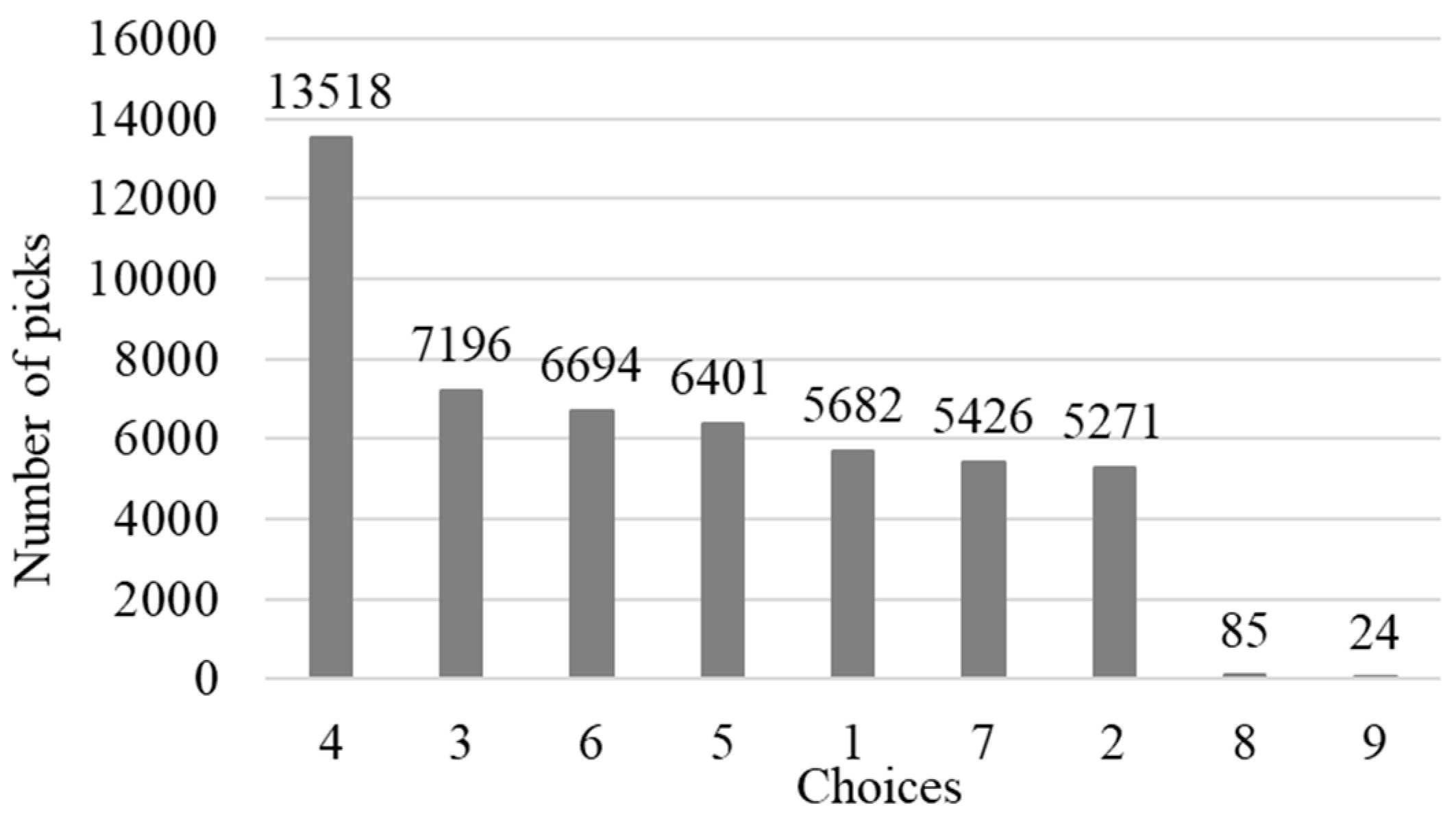
The choices of the interviewees regarding the main question, ‘What do you think should be the two main responsibilities of farmers in our society?’, are represented in
Figure 1.
The choice ‘Providing safe, healthy, and sustainable food of high quality’ was the most popular. All seven options offered add many picks; therefore, all the possibilities are relevant for EU citizens. The options ‘Other’ and ‘Don’t know’ added a marginal choice and were excluded from further analysis.
In
Table 1, we find the parameterisation of the fitted models. The odds ratios for each of the parameters in the model are given in
Table 2.
The interpretation of the following model results, given the large sample size, focuses on effect sizes (odds ratios, translated as percentages) rather than statistical significance alone [
47]. As the analysis is based on cross-sectional survey data, the relationships identified should be interpreted as associations rather than causal effects.
3.1. Model 1 Protecting the Environment and Tackling Climate Change
The significant variables in this model include ‘Gender’, ‘Age Education’, ‘Political Position’, ‘Community Size’, ‘Social Class’, ‘EU Future’, and ‘EU Image’.
Women demonstrate a higher likelihood of selecting this option. The disparity between the odds ratios for women and men suggests that women’s likelihood of choosing this option is greater than men’s.
The odds of an individual choosing this option:
Increases with higher levels of education;
Decreases as political alignment shifts towards the right.
It decreases as the size of the community enlarges. It is, therefore, higher in cities and smaller in rural areas.
Increases in higher classes of society.
Decreases in individuals more pessimistic about the future of the EU;
Decreases in individuals thinking of the EU as a more negative image.
3.2. Model 2 Creating Growth and Jobs in Rural Areas
The significant variables in this model are ‘Gender’, ‘Age’, ‘Age Education’, ‘Political Position’, ‘Community Size’, and ‘Social Class’.
Men have a higher probability of choosing this option. The difference between the odds ratios for men and women is 0.555 − 0.535 = 0.02.
The odds of an individual choosing this option:
Decreases with age
Decreases with the education level;
Increases as the political positioning moves to the right;
Increases as the size of the community enlarges. It is, therefore, higher in rural areas and smaller in cities;
Decreases in higher classes of society.
3.3. Model 3 Securing a Stable Supply of Food in the EU at All Times
The significant variables in this model are ‘Gender’, ‘Age’, ‘Age Education’, ‘Political Position’, ‘Social Class’, and ‘EU Image’.
Men have a higher odds of choosing this option. The difference between the odds ratios for men and women is 0.280 − 0.190 = 0.09.
The odds of an individual choosing this option:
Increases with age
Increases with the education level;
Increases as the political positioning moves to the right;
Increases in higher classes of society.
Decreases in individuals thinking of the EU as a more negative image.
3.4. Model 4 Providing Safe, Healthy, and Sustainable Food of High Quality
The significant variables in this model are ‘Gender’, ‘Age’, ‘Age Education’, ‘Community Size’, ‘Social Class’, ‘EU Future’, and ‘EU Image’.
Women have a higher odds of choosing this option. The difference between the odds ratios for women and men is 0.627 − 0.595 = 0.032.
The odds of an individual choosing this option:
Increases with age;
Increases with the education level;
Increases as the size of the community enlarges. It is, therefore, higher in rural areas and smaller in cities;
Increases in higher classes of society;
Increases in individuals more pessimistic about the future of the EU;
Decreases in individuals thinking of the EU as a more negative image.
3.5. Model 5 Supplying the Population with a Diversity of Quality Products
The significant variables in this model are ‘Gender’, ‘Age Education’, ‘Political Position’, ‘Community Size’, ‘Social Class’, and ‘EU Future’.
Men have a higher probability of choosing this option. The difference between the odds ratios for men and women is 0.408 − 0.397 = 0.011. The odds of an individual choosing this option:
Decreases with the education level;
Increases as the political positioning moves to the right;
It decreases as the size of the community enlarges. It is, therefore, higher in rural areas and smaller in cities;
Decreases in higher classes of society;
Increases in individuals more pessimistic about the future of the EU.
3.6. Model 6 Ensuring the Welfare of Farmed Animals
The significant variables in this model are ‘Gender’, ‘Age Education’, ‘Political Position’, ‘Social Class’, ‘EU Future’, and ‘EU Image’.
Women have a higher probability of choosing this option. The difference between the odds ratios for women and men is 0.365 − 0.266 = 0.099.
The odds of an individual choosing this option:
Increases with the education level;
Decreases as the political positioning moves to the right;
Increases in higher classes of society
Decreases in individuals more pessimistic about the future of the EU;
Increases in individuals thinking of the EU as a more negative image (10.6% per point progression in the scale).
3.7. Model 7 Encouraging and Improving Life in the Countryside
The significant variables in this model are ‘Gender’, ‘Age’, ‘Age Education’, ‘Political Position’, ‘Community Size’, and ‘Social Class’.
Men have higher odds of choosing this option. The difference between the odds ratios for men and women is 0.331 − 0.314 = 0.017.
The odds of an individual choosing this option:
Increases with the education level;
Increases as the political positioning moves to the right;
Increases as the size of the community enlarges. It is, therefore, higher in rural areas and smaller in cities;
Decreases in higher classes of society.
4. Discussion
This study analysed the diversity of perspectives of European citizens towards the role of farmers in society. European citizens are growing increasingly concerned about various issues, including food safety, health, sustainability, animal welfare, climate change, environmental conservation, and the diversification of the economy and the creation of jobs in rural areas. The following sections discuss the effects of the different factors examined in this study on the perspectives of EU citizens.
Socio-demographic resources such as education and social class are often associated with greater environmental awareness and health consciousness. Individuals with higher educational attainment and socio-economic status may therefore place greater emphasis on environmental protection, food quality, and animal welfare.
4.1. Gender Effects
The study findings may indicate that men are more likely than women to prioritise certain aspects, such as ‘Creating growth and jobs in rural areas’, ‘Securing a stable supply of food in the EU at all times’, ‘Supplying the population with a diversity of quality products’, and ‘Encouraging and improving life in the countryside’. Conversely, women are, apparently, more inclined to select priorities like ‘Protecting the environment and tackling climate change’, ‘Providing safe, healthy, and sustainable food of high quality’, and ‘Ensuring the welfare of farmed animals’. These results are consistent with findings from other recent studies [
48,
49].
Similar conclusions regarding farm animal welfare have been drawn by other authors [
50]. Notably, women have shown a more significant concern for animal welfare than men. This difference may be attributed to the evolutionary development of distinct gender roles within human societies. Men, historically positioned as hunters, tend to exhibit utilitarian attitudes towards animals, while women, traditionally assuming nurturing and caregiving roles, tend to demonstrate more moralistic attitudes towards animals [
50] and more protective feelings towards nature and the environment [
51]. The evolutionary, historical, and cultural factors that shape stereotypical gender roles also influence the tendency for men to prioritise job availability and food supply more than women [
52].
4.2. Age Effects
Younger individuals prioritise ‘Creating growth and jobs in rural areas’. In comparison, older individuals are more inclined towards ‘Securing a stable supply of food in the EU at all times’ and ‘Providing safe, healthy, and sustainable food of high quality’.
In the current European context, where youth should play a pivotal role in ensuring sustainable community development, young people living in rural areas are becoming an increasingly scarce asset [
53]. Decent employment for young individuals can be regarded as one of the most sustainable and dignified means of fostering social inclusion and ensuring long-term food security. Moreover, creating job opportunities for the younger workforce in rural areas poses a significant challenge. Enhancing productivity and promoting decent employment in the European agricultural sector through the digital revolution can bolster local food availability by contributing to a sustainable increase in food production [
54].
4.3. Education Effects
Our results also show that more educated European citizens correlate with a prioritisation of specific issues. Specifically, there is a significant correlation between higher education levels and the likelihood of selecting ‘Protecting the environment and tackling climate change’, ‘Securing a stable supply of food in the EU at all times’, ‘Providing safe, healthy, and sustainable food of high quality’, ‘Ensuring the welfare of farmed animals’, and ‘Encouraging and improving life in the countryside’. Conversely, individuals with lower levels of education tend to prioritise ‘Creating growth and jobs in rural areas’ and ‘Supplying the population with a diversity of quality products’.
Our findings are consistent with other studies identifying a positive correlation between higher education levels and environmental concerns. For instance, De Silva and Pownall [
55], Meyer [
56], and Mata et al. [
51] have all reported similar associations. Additionally, research by Piras et al. [
57] has shown that education influences food choices, impacting the environment. Individuals with lower levels of education tend to consume diets high in carbohydrates and low in fibre, as well as exhibiting higher consumption of sweets and red meats. Conversely, those with higher levels of education tend to consume more fruits, vegetables, and fish. Therefore, food quality concerns increase with education.
Furthermore, areas with higher levels of schooling coincide with increased nutritional diversity and lower caloric intake, as demonstrated by Fard et al. [
58]. Burrel and Vrieze [
59] and Mata et al. [
51] reported similar findings regarding the correlation between higher education and concern for animal welfare. Lower-educated individuals tend to be more concerned about their jobs, as technological advancements create a perception of manufacturing job erosion [
60].
4.4. Political Positioning Effects
European citizens who lean more toward the right of the political spectrum tend to prioritise specific issues. Specifically, they are more inclined to choose ‘Creating growth and jobs in rural areas’, ‘Securing a stable supply of food in the EU at all times’, ‘Supplying the population with a diversity of quality products’, and ‘Encouraging and improving life in the countryside’.
Conversely, European citizens leaning more toward the left tend to prioritise different issues. They are more likely to choose ‘Protecting the environment and tackling climate change’, but less likely to choose ‘Ensuring the welfare of farmed animals’.
Our results are consistent with authors who found that EU citizens tending to the left increasingly support more climate-friendly agriculture [
61,
62,
63]. This support positively correlates with preferences for climate-friendly dietary options across the political spectrum and is also associated with changes in nutritional habits, including meat reduction.
Animal welfare is considered a non-partisan issue across the political spectrum in Europe, regardless of nationality. Animal welfare parties are gaining traction in Europe and have secured representation in several national parliaments and the EU Parliament [
64].
4.5. Community Size Effect
Larger communities prioritise ‘Creating growth and jobs in rural areas’, ‘Providing safe, healthy, and sustainable food of high quality’, and ‘Encouraging and improving life in the countryside’. On the other hand, smaller communities prioritise ‘Protecting the environment and tackling climate change’ and ‘Supplying the population with a diversity of quality products’.
Larger communities primarily emphasise economic development and food quality, which may reflect their reliance on rural areas for employment and food sources. In contrast, smaller communities, likely more connected to environmental concerns [
65] and local products, prioritise ecological preservation and product diversity [
66].
4.6. Social Class Effects
Higher social classes tend to prioritise ‘Protecting the environment and tackling climate change’, ‘Securing a stable supply of food in the EU at all times’, ‘Providing safe, healthy, and sustainable food of high quality’, and ‘Ensuring the welfare of farmed animals’. Lower social classes, on the other hand, tend to prioritise ‘Creating growth and jobs in rural areas’, ‘Supplying the population with a diversity of quality products’, and ‘Encouraging and improving life in the countryside’.
Differences in interests among different social classes extend to dietary preferences. For example, individuals in higher social class groups tend to have healthier diets, including higher intakes of fruit, lean meat, fish, wholemeal products, and raw vegetables, compared to those in the working class [
67]. This may be attributed to higher health consciousness and purchasing power, leading to healthier lifestyles among higher social classes.
Furthermore, citizens are increasingly aware that the cost of living is often lower in rural areas. Combined with considerations of quality of life, health, environment, and technological advances, there is a growing emphasis on rural development to stimulate economic growth and enhance overall well-being.
Lower social classes are less concerned with farm animal welfare, as this implies a cost while purchasing animal food products [
68], which also justifies the concerns with job creation.
4.7. The Effects of the Feelings About the EU
More pessimistic individuals about the EU’s future tend to prioritise ‘Providing safe, healthy, and sustainable food of high quality’ and ‘Supplying the population with a diversity of quality products.’ Conversely, more optimistic individuals lean towards ‘Protecting the environment and tackling climate change’ and ‘Ensuring the welfare of farmed animals’.
In terms of satisfaction with the EU image, less satisfied individuals tend to favour ‘Securing a stable supply of food in the EU at all times’ and ‘Providing safe, healthy, and sustainable food of high quality.’ Conversely, more satisfied individuals prioritise ‘Protecting the environment and tackling climate change’ and ‘Ensuring the welfare of farmed animals’.
Additionally, more pessimistic and less satisfied citizens are aware of the impact of extreme weather events, such as increasingly severe floods and droughts, on food supply and security. The ongoing conflict between Russia and Ukraine, both major agricultural powers, exacerbates socio-economic consequences worldwide and undermines the functioning of the global food system. On the other hand, more optimistic and satisfied citizens express greater concern for environmental issues and animal welfare.
4.8. Policy Implications
The findings of this study suggest that European citizens’ expectations of farmers are not homogeneous but vary systematically across socio-demographic and attitudinal groups. Therefore, policy design and communication strategies under the Common Agricultural Policy (CAP) should move beyond uniform approaches and adopt targeted and differentiated interventions.
Gender differences indicate that women are more likely to prioritise environmental protection, food quality, and animal welfare, while men place relatively greater emphasis on economic functions such as job creation and food supply. This suggests that policy communication can be tailored accordingly. For instance, sustainability-oriented measures (e.g., eco-schemes, animal welfare standards) may resonate more strongly with female audiences, whereas messages emphasising economic resilience, productivity, and rural employment may be more effective when targeting male stakeholders.
Age-related patterns show that younger individuals are more likely to prioritise job creation in rural areas, while older individuals place greater emphasis on food security and quality. This highlights the importance of aligning rural development policies with youth employment strategies, including support for young farmers, digital agriculture, and innovation in rural economies. At the same time, communication targeting older populations may benefit from emphasising food safety, stability of supply, and quality assurance systems.
Education and social class emerge as important factors shaping preferences. Individuals with higher education levels and higher socio-economic status are more likely to prioritise environmental protection, food quality, and animal welfare, whereas lower socio-economic groups place greater emphasis on employment and economic aspects of agriculture. This suggests that policies promoting sustainability transitions should be accompanied by measures ensuring affordability and accessibility, particularly for lower-income groups. Without such considerations, there is a risk of widening social disparities in access to sustainable food systems.
Political orientation plays a role in shaping priorities. Individuals with more right-leaning views tend to emphasise production, economic growth, and rural development, while those with more left-leaning orientations place greater importance on environmental protection. This indicates that policy framing is crucial: sustainability policies may gain broader support if they are also presented in terms of economic opportunities, innovation, and competitiveness, rather than solely environmental objectives.
Spatial differences between rural and urban populations further underline the need for differentiated approaches. Respondents in rural areas show stronger preferences for job creation and rural development, while urban populations place relatively greater emphasis on environmental protection and food quality. This suggests that rural development programmes should continue to prioritise employment and economic diversification, whereas urban-oriented communication strategies may focus more on sustainability, food quality, and environmental outcomes.
Attitudes toward the EU also influence preferences. Individuals who are more optimistic about the EU or hold a more positive image of it tend to prioritise environmental protection and animal welfare, whereas more sceptical individuals emphasise food security and product diversity. This implies that trust in EU institutions plays a role in shaping support for sustainability-oriented policies. Strengthening transparency, communication, and citizen engagement may therefore enhance the legitimacy and acceptance of CAP measures.
In today’s society, consumers are increasingly demanding and conscious about the products they consume. Within the EU, the globalisation process allows for access to products worldwide throughout the year, driven by accelerated industrialisation of agricultural practices and production costs. Factors such as the ongoing conflict between Russia and Ukraine, extreme weather events, and rapid market transformations significantly influence citizens’ perspectives. Waves of discontent across Europe regarding political, economic, and social issues have profoundly shaken European citizens.
In response, the scientific community is concerned about how policies are interpreted within a society that is becoming increasingly conscious of environmental problems, climate change, human resilience, and the sustainability of food systems. Consumer habits have evolved, with a growing emphasis on purchasing and consuming more sustainable and healthy products, ensuring food safety, and supporting the development of local and rural economies.
Previous research has shown that EU citizens are supportive of the Common Agricultural Policies [
69]. Our research indicates that European citizens desire a more sustainable and equitable food system capable of generating employment opportunities and enhancing the overall quality of life.
This study offers theoretical and practical implications. Our study contributes to the state of the art, prompting European institutions to consider the role of EU agriculture in meeting society’s demands for sustainably high-quality, safe, and nutritious food. This includes improving animal welfare and well-being. Also, it gives valuable insights to farmers, businesses, members of the food chain, and policymakers. They need to be informed of the evolution of public perceptions and consumer concerns to make informed decisions that help them improve their sustainability.
Practical implications should consider citizens’ points of view. They play a vital role in society. If they participate actively, they influence the process of shaping public opinion [
70], drive change and legislation, and influence the political decisions made by governments [
71,
72]. They exert influence by voting, participating in association movements, and writing to politicians and the media [
70]. Also, they strongly influence the market, as they can change their purchasing behaviour [
73].
European policymakers should prioritise addressing the specific challenges of rural areas through rural development measures and national and regional programs, as well as supporting local initiatives while also promoting the concept of smart villages. Attracting young and new farmers is crucial for the sustainable development of rural businesses. This approach fosters job creation, economic growth, gender equality (including increased participation of women in agriculture), and social inclusion while also promoting the circular economy.
Effective agricultural policy requires not only well-designed instruments but also targeted communication and implementation strategies that reflect the diversity of societal preferences. A “one-size-fits-all” approach is unlikely to be effective. Instead, aligning policy narratives and measures with the priorities of different population groups can improve both policy acceptance and effectiveness. Future policy design should therefore integrate socio-demographic segmentation as a key component of agricultural and food policy strategies. Research should cooperate with community organisers to better understand the needs and aspirations of regions. Inclusion should be approached through different lenses, including gender, vulnerability, multiple discrimination, or the digital divide.
4.9. Limitations and Suggestions to Future Research
Given the large sample size (n = 21,002), statistical significance at conventional thresholds (e.g., p < 0.001) may not necessarily indicate substantively meaningful effects. Therefore, this study emphasises the interpretation of effect sizes (odds ratios) alongside statistical significance to distinguish between practically relevant and negligible associations. Additionally, the cross-sectional design does not allow causal inference. Future research using longitudinal or experimental approaches could better examine the causal mechanisms underlying citizens’ perceptions of farmers’ responsibilities.
The variable ‘age at completion of full-time education’ serves as a proxy for educational attainment but is not standardised across EU countries and is correlated with age, potentially confounding results. Additionally, key confounders, such as respondents’ involvement in agriculture, are missing, which may influence perceptions of farmers’ roles, particularly regarding rural development, food supply, and economic functions, and should be considered when interpreting education- and occupation-related findings.
Stepwise selection procedures may be sensitive to sample-specific characteristics and can lead to instability in variable selection. Although robustness checks suggest that the main findings are not driven by model specification, results should be interpreted with caution.
While the data analysed in this study provide strong evidence, with many samples from multiple countries and a diverse spectrum, it’s essential to acknowledge that various other factors may also influence and interact with these self-perceptions. These findings should be interpreted as average associations across the pooled sample and may mask important cross-country differences. Institutional, cultural, and economic factors at the national level may shape citizens’ perceptions and should be explored in future research using multilevel approaches.
The hierarchical structure of the data (individuals nested within countries) is not explicitly modelled in the analysis. While the number of clusters is relatively large (27 countries), ignoring within-country correlation may lead to some underestimation of standard errors. Therefore, statistical significance should be interpreted with caution. However, the consistency of effect sizes across models and the focus on substantive magnitude rather than significance mitigate this concern. While the present models do not explicitly account for country-level variation, the consistency of several effects across multiple model specifications suggests that the observed relationships are not solely driven by country-specific contexts. Nevertheless, future research should formally test this using multilevel modelling techniques to explicitly capture country-level heterogeneity. Developing a typology of profiles and analysing their geographical distribution alongside the current socio-political context would be intriguing. Additionally, discussing practical applications of EU policies, including the CAP, would be beneficial. The agricultural industry grapples with contradictory policies, aiming to reduce the environmental impact of agriculture while increasing food production. Food systems inherently involve pursuing multiple policy objectives, such as ensuring food supply, promoting environmental sustainability, maintaining affordable consumer prices, fostering viable farm incomes, and upholding animal welfare standards. Therefore, agricultural and food policies play a pivotal role in achieving these objectives and should be aligned with farmers’ and citizens’ interests and needs.