
Review on Exploring Machine Learning Classifiers in the Diagnosis of Chronic Kidney Disease


Abstract
1. Introduction
2. Methodological Overview
2.1. Data Sources
2.2. Data Preprocessing
2.3. Handling Missing Values
2.4. Data Standardization
2.5. Parameter Selection
2.6. Evaluation Methods
3. Review of ML Classifiers
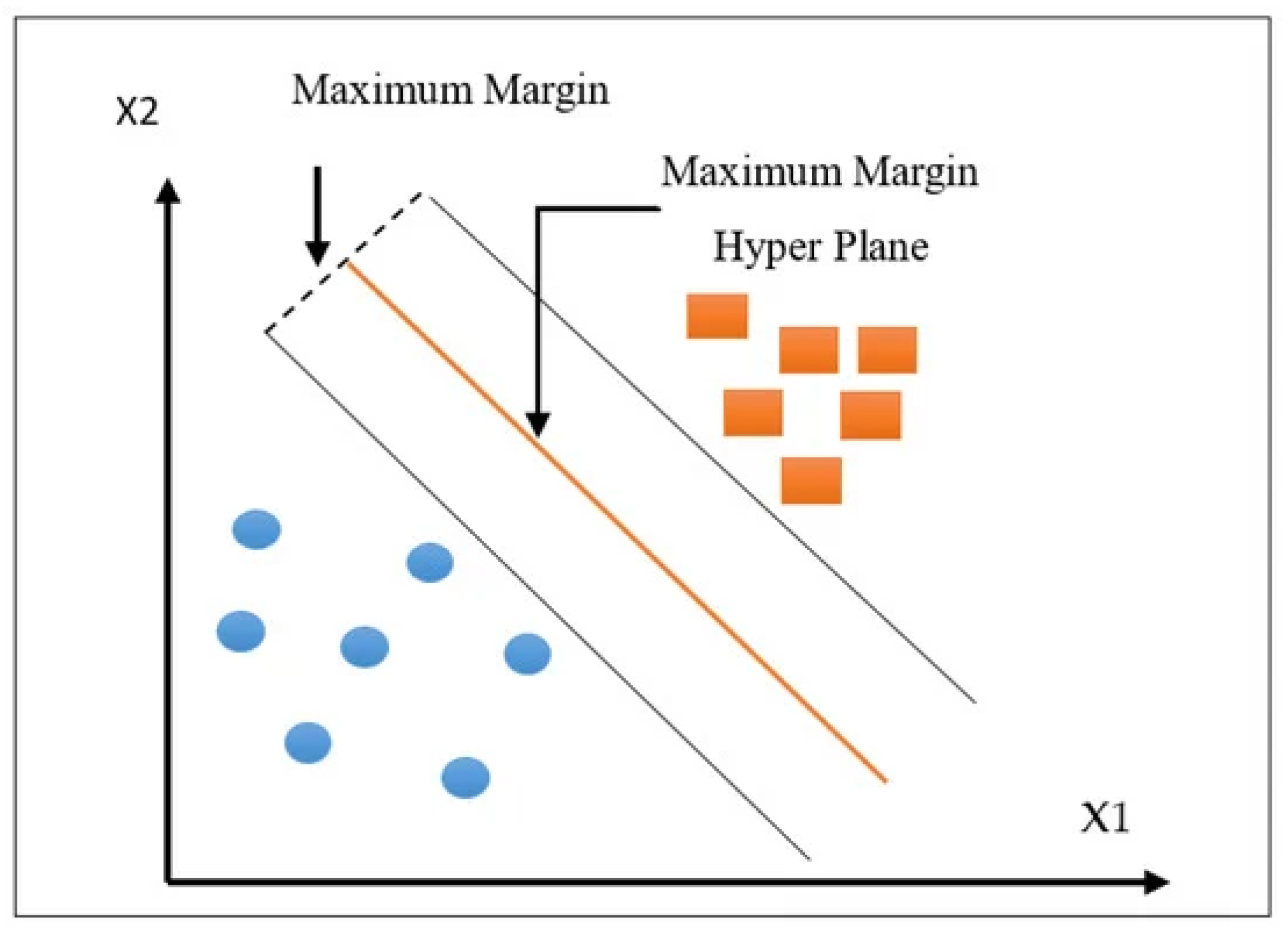
3.1. Support Vector Machine
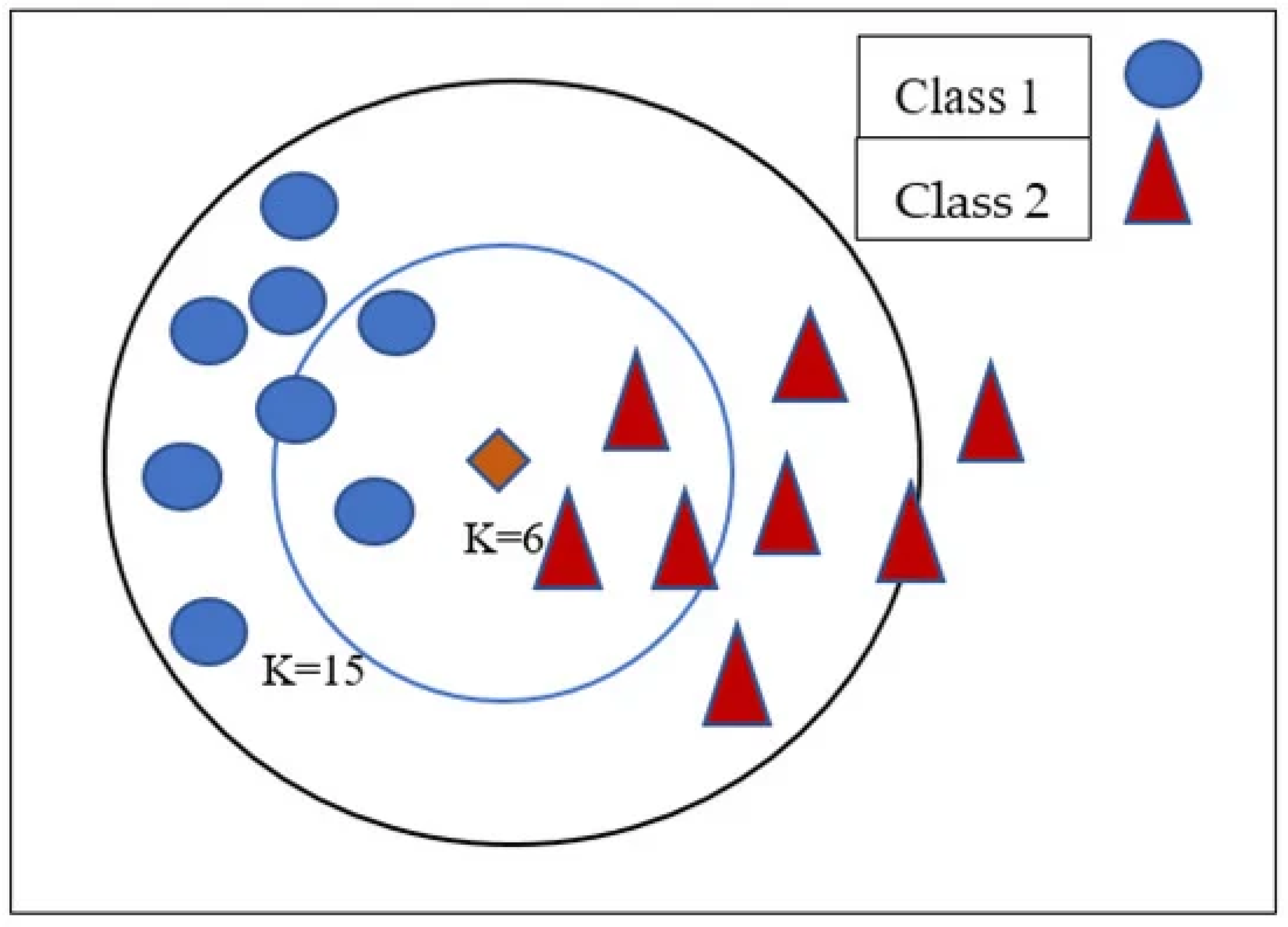
3.2. K-Nearest Neighbors
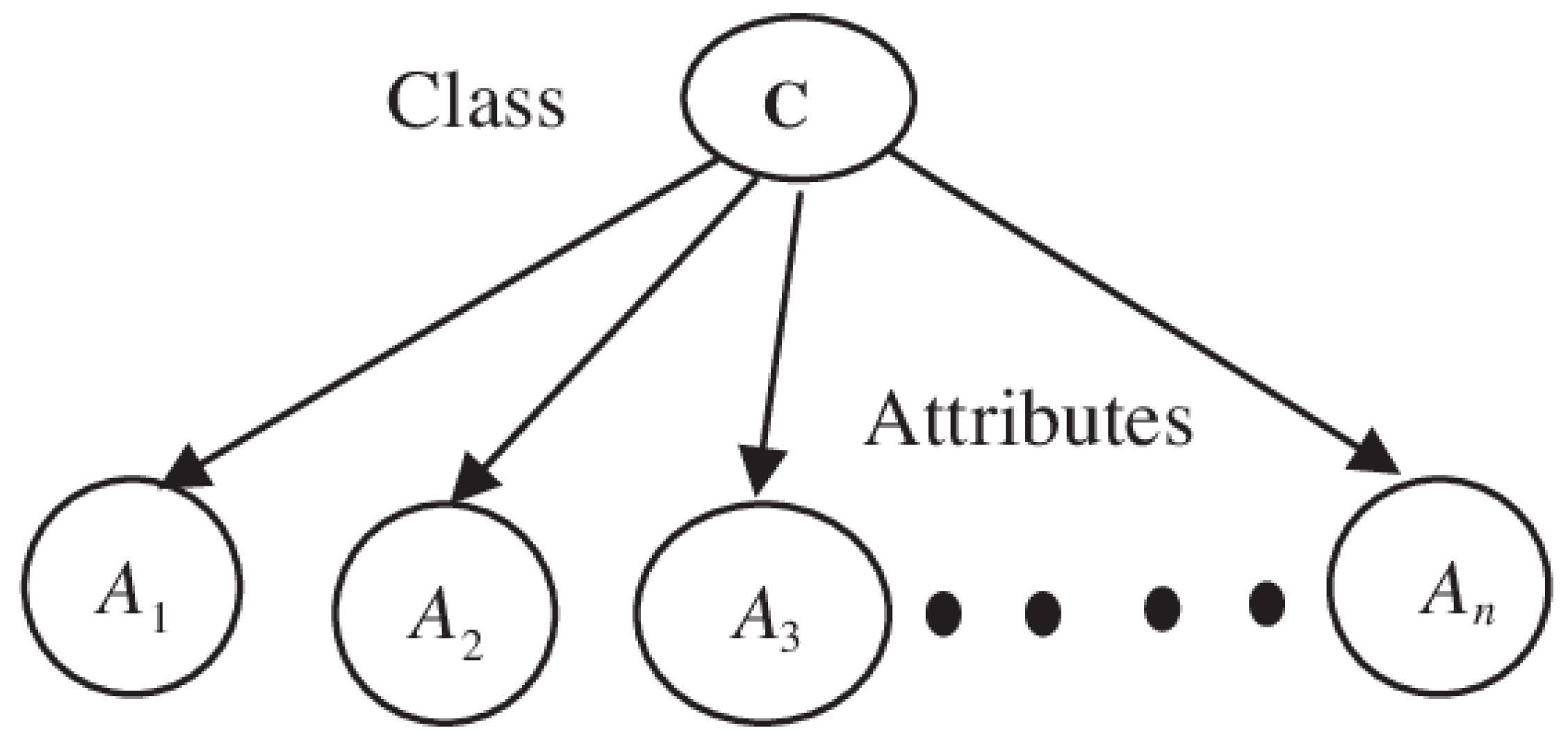
3.3. Naïve Bayes
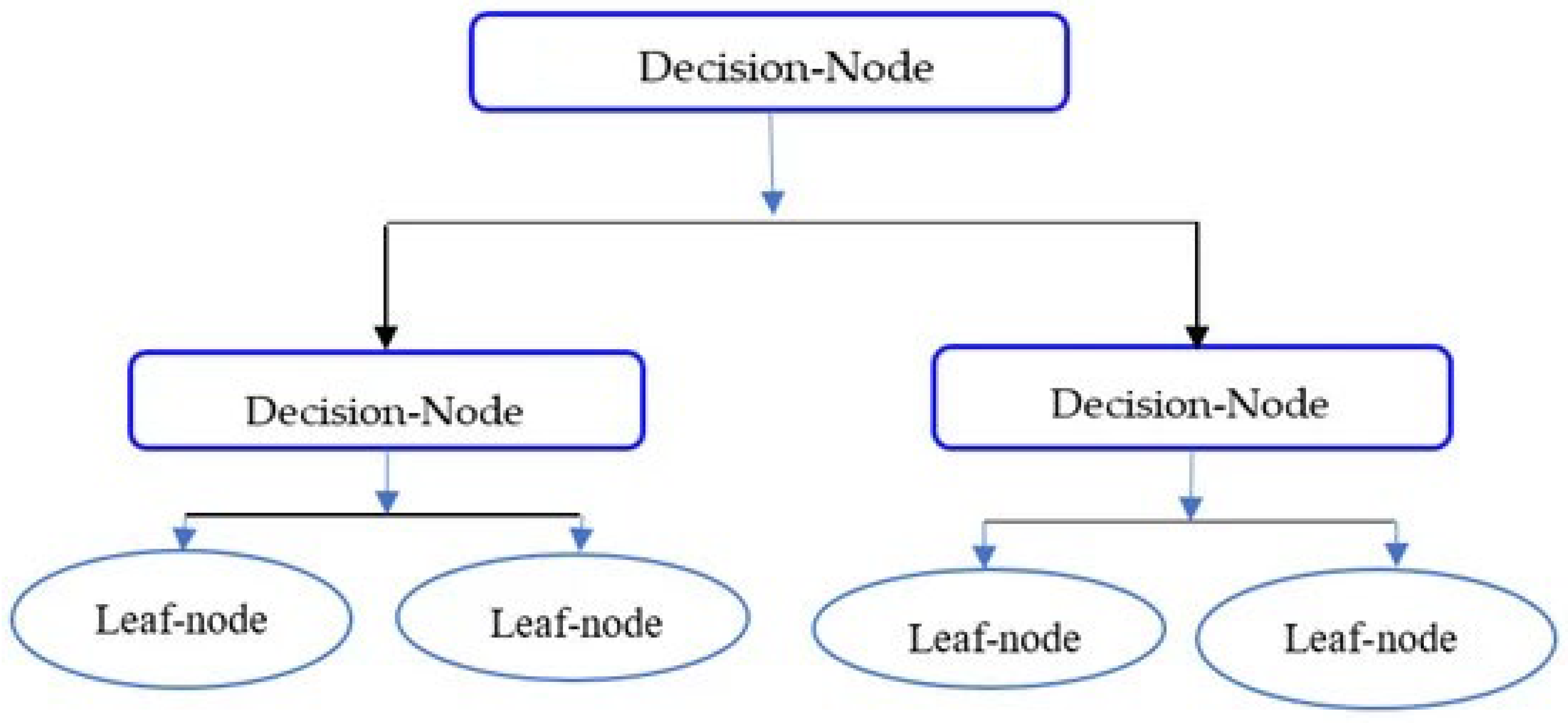
3.4. Decision Tree
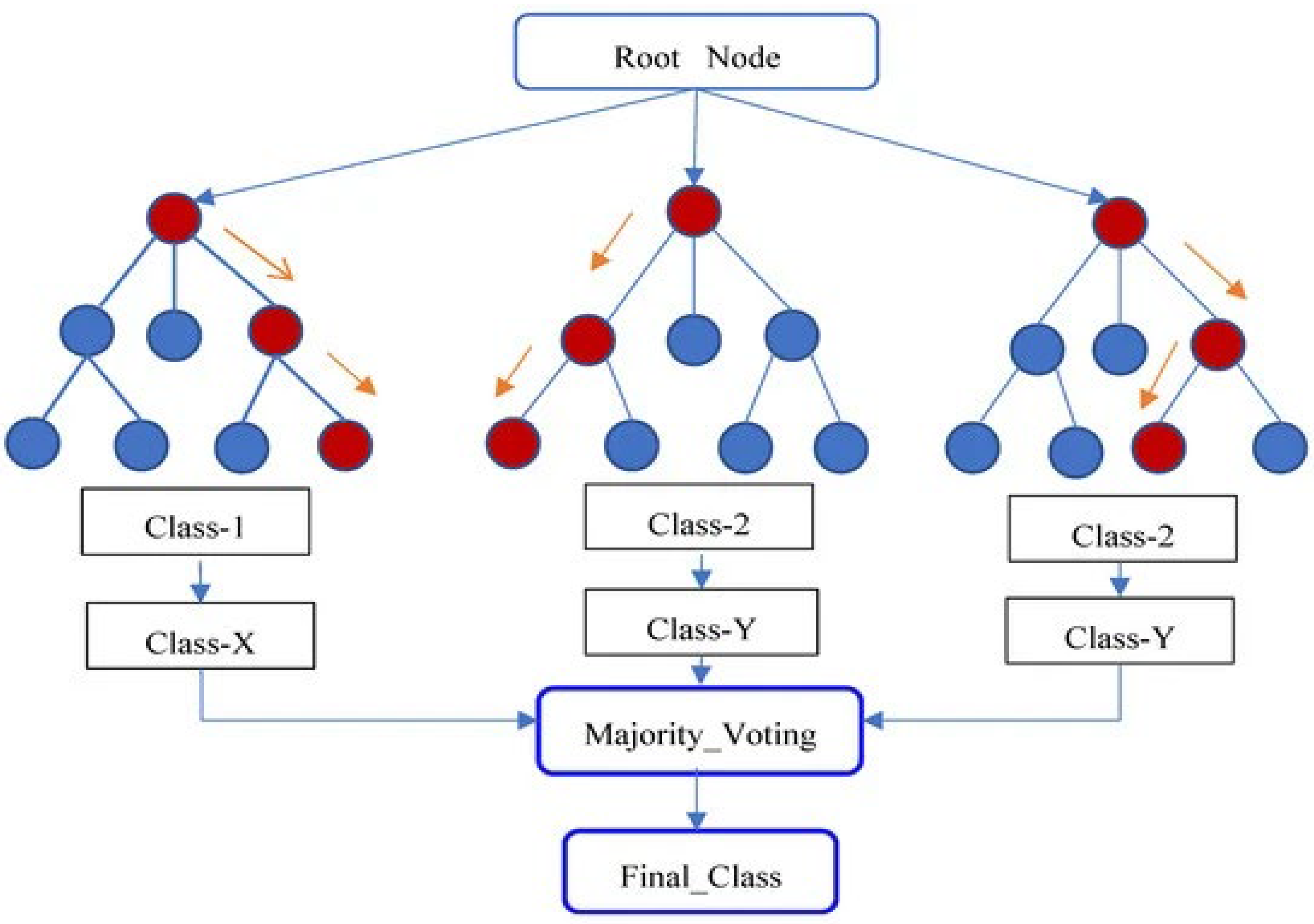
3.5. Random Forest
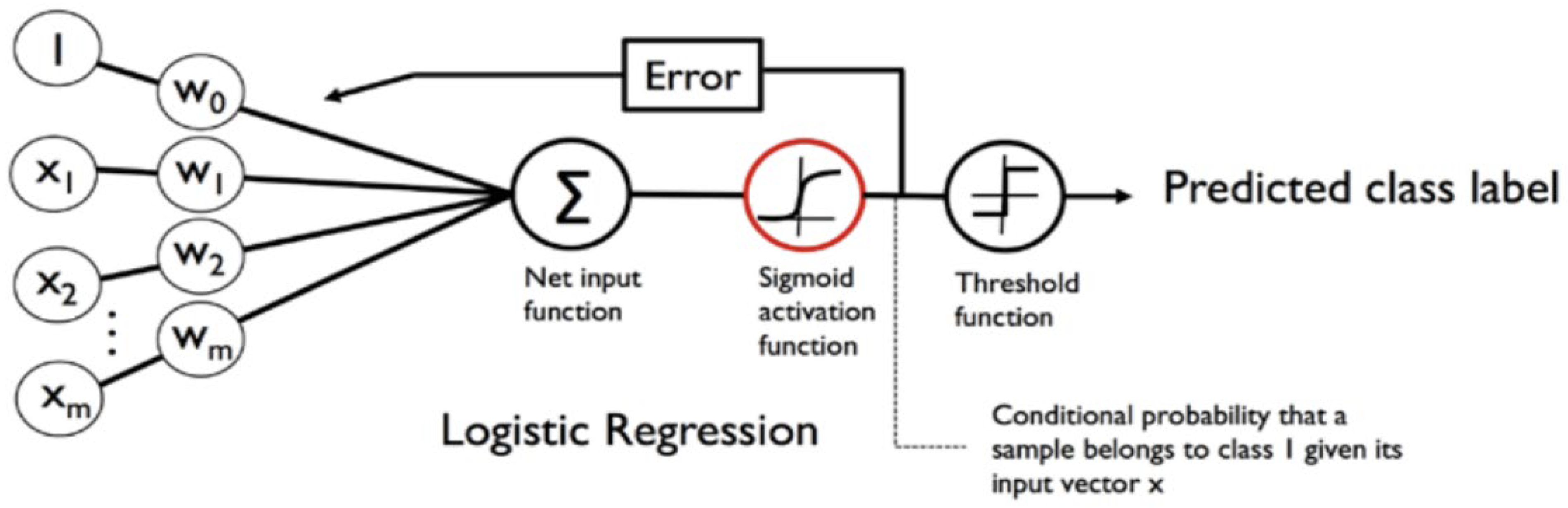
3.6. Logistic Regression
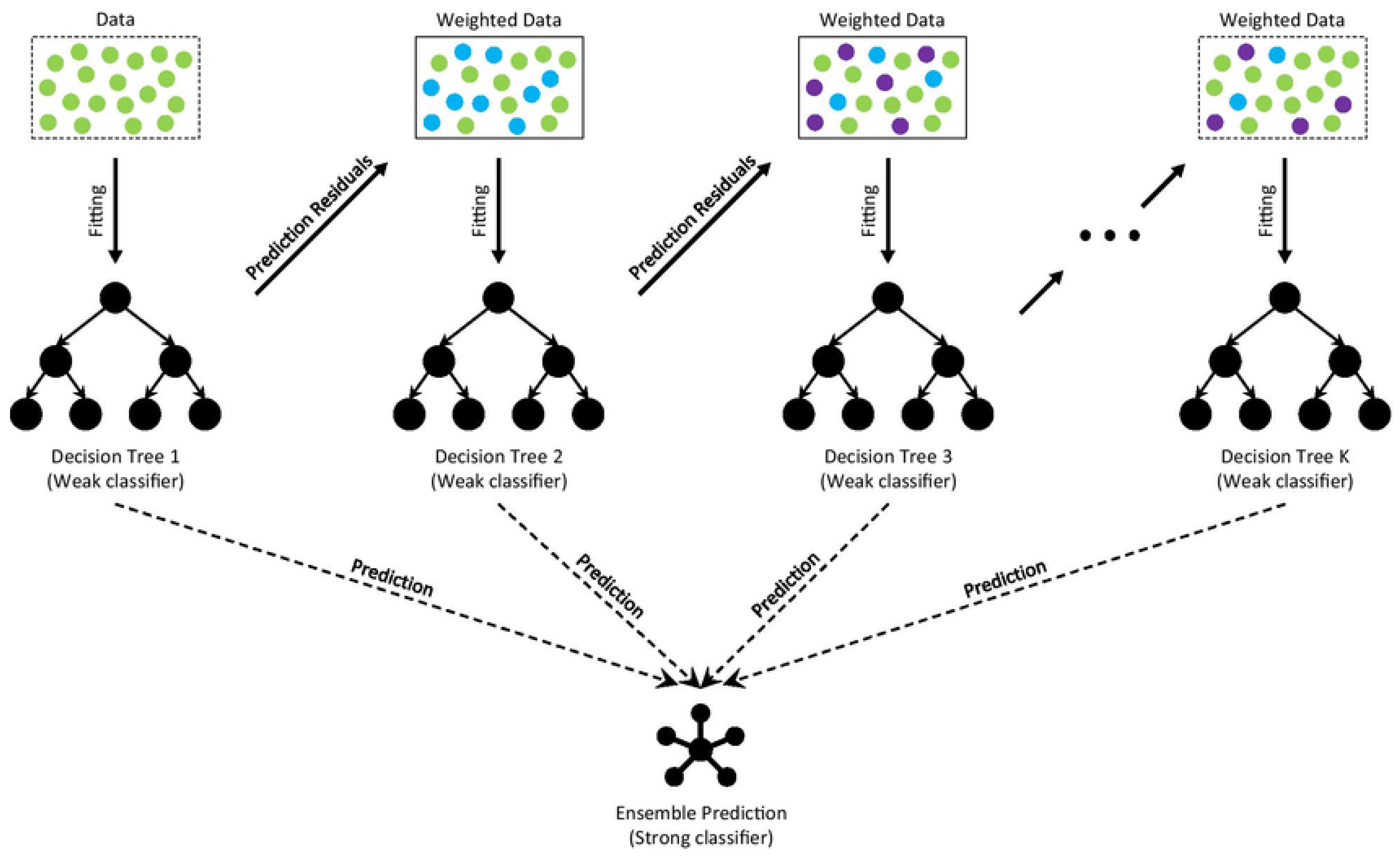
3.7. Boosting Approaches
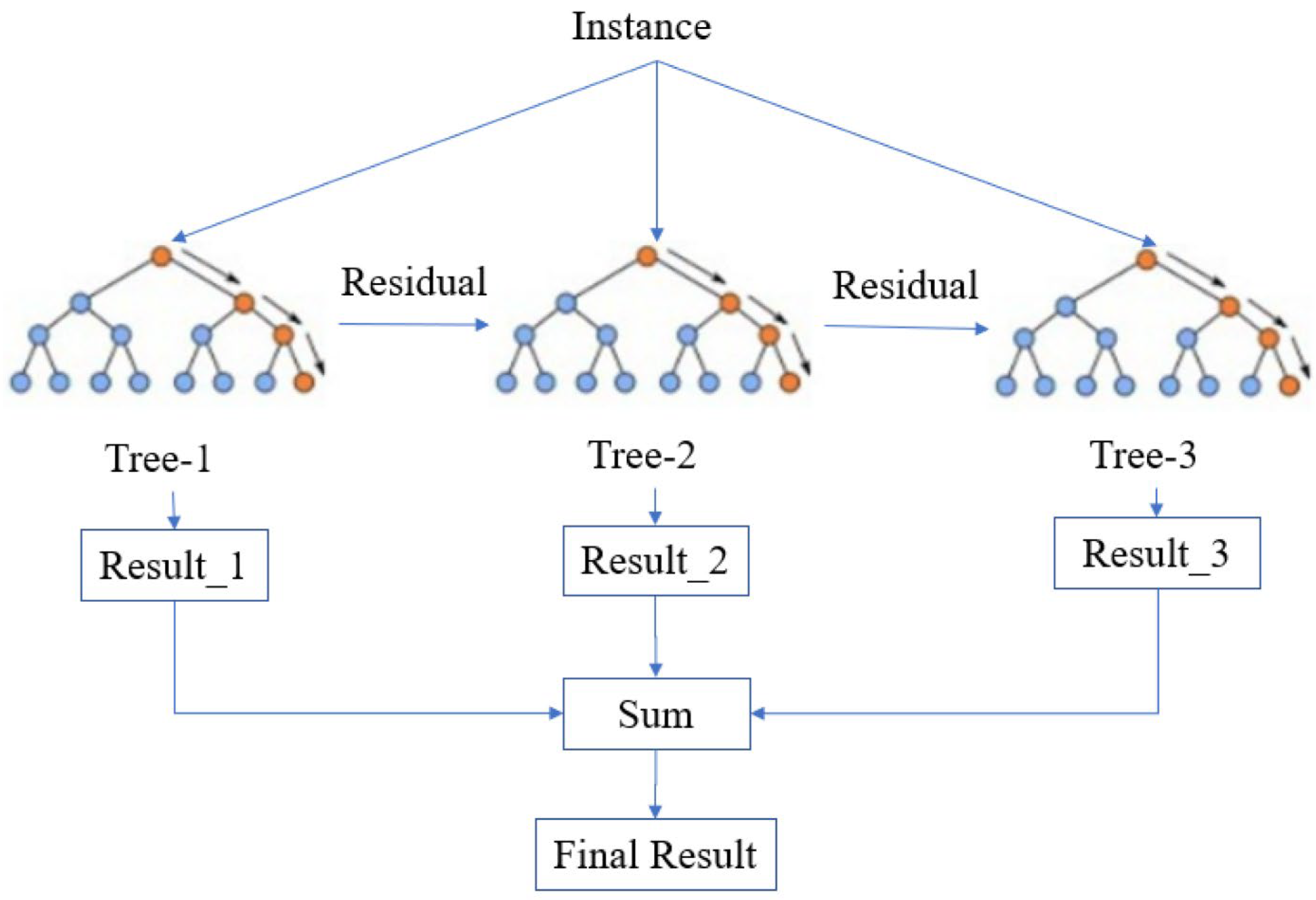
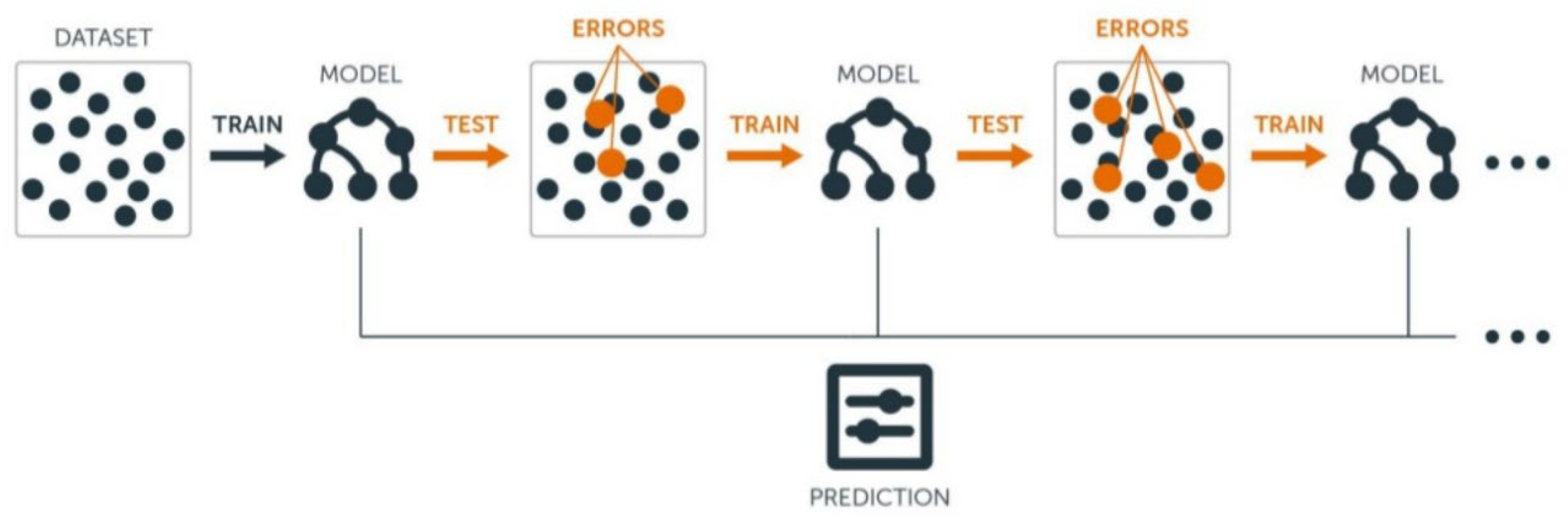
3.7.1. Gradient Boosting (GB)
3.7.2. XGBoost (XGB)
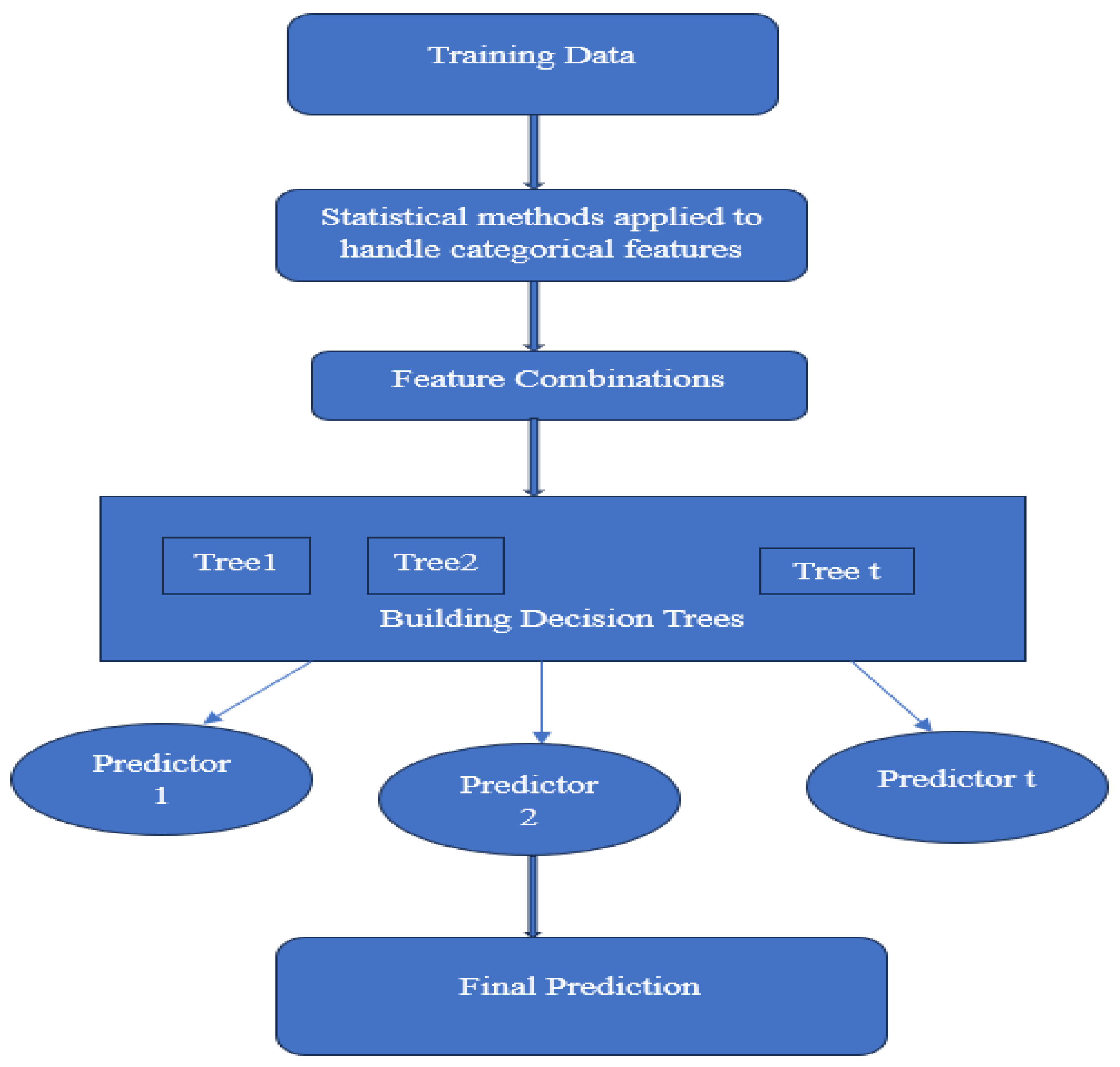
3.7.3. CatBoost
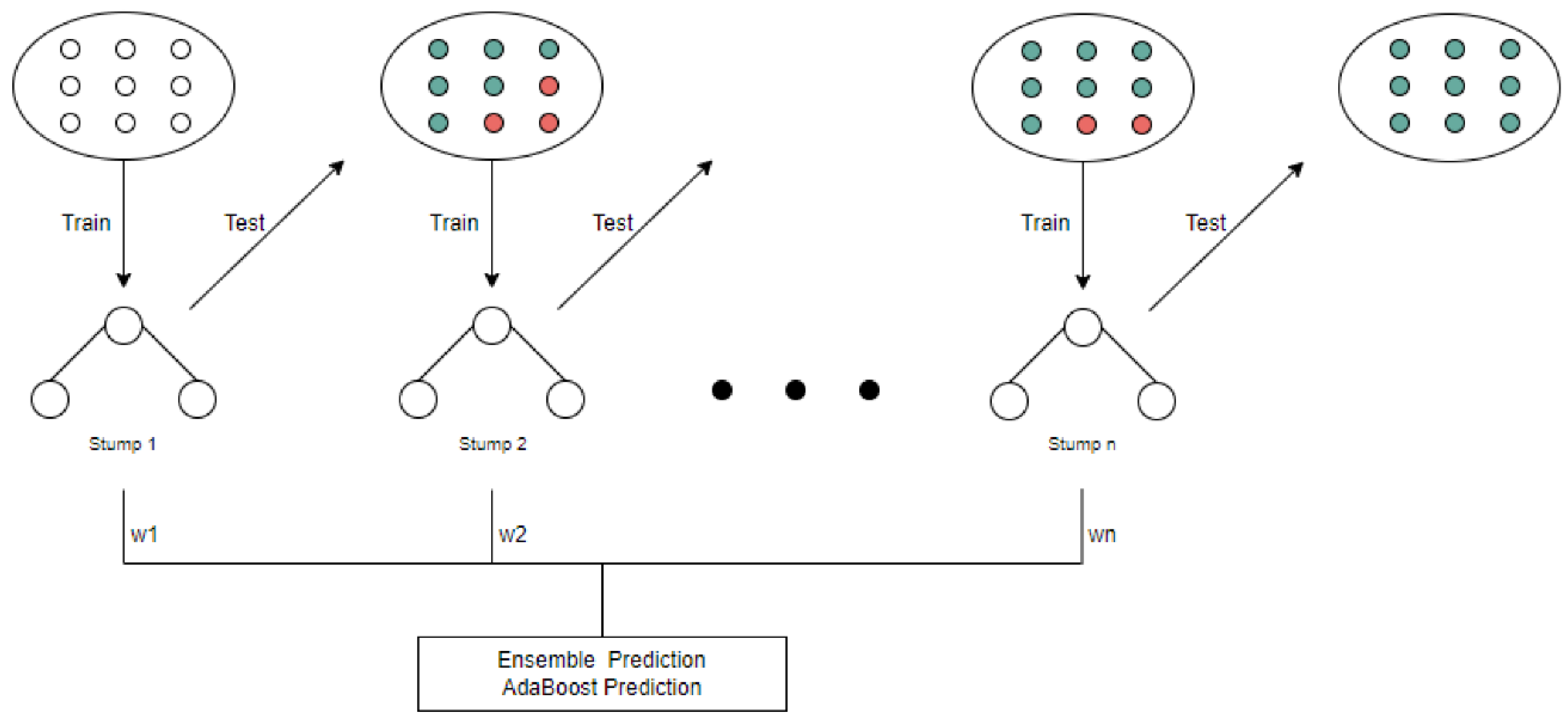
3.7.4. AdaBoost (AB)
3.7.5. Light Gradient Boosting (LGBM)
4. Findings
5. Issues, Challenges and Possible Solutions
- Data Quality and Preprocessing
- ✓
- Heterogeneous Data: CKD datasets often come from different sources with various formats and standards; this leads to inconsistencies in dataset, which is the main problem in the CKD dataset.
- ✓
- Missing Values: Medical datasets such as the UCI CKD dataset have missing or incomplete data, which affects the model performance, making it nonreliable.
- ✓
- Imbalanced Data: Medical datasets are usually imbalanced, and UCI CKD datasets are imbalanced; that is, the number of CKD and NOT CKD samples are not equal, which can lead to complications in model training and biased prediction.
- Model Performance
- ✓
- Overfitting: Overfitting is the major issue, which means high-performing models may not generalize well on new data, especially when models are overly complex, which is challenging.
- ✓
- Model Interpretability: Many high-performing models like RF and XGB act as black-box models, which makes it difficult for clinicians or doctors to interpret and trust the results of the model as they are unaware of the workings of the model.
- Computational Challenges
- ✓
- Resource Intensive: Many ensemble ML techniques require large computational power and memory for training the CKD model, which is a challenging task as it requires large resources.
- ✓
- Scalability: Scalability becomes an issue as the volume of the CKD dataset increases; it results in the need for more efficient ML algorithms and hardware to handle large datasets.
- Integration with Clinical Practice
- ✓
- Clinical Validation: Many ML models perform well in a research setting but lack validation in real-world clinical environments, which is a challenging task; hence, clincal validation is required.
- ✓
- User Acceptance: Clinicians or doctors may be hesitant to adopt ML models due to a lack of understanding or trust in the technology, which is the major challenging task.
- ✓
- Regulatory Hurdles: Implementing ML models in healthcare requires the need for handling complex regulations to ensure compliance with health standards and patient privacy laws.
- Specific Issues with Techniques
- ✓
- Imbalanced Data Handling: There are advanced techniques like SMOTE that help in solving the data imbalance issue, and it can be solved by introducing synthetic data that may not match real-world data accurately.
- ✓
- Feature Selection: Identifying the most relevant features for CKD classification is a challenging task and critical for model accuracy, and not performing feature selection can lead to poor model performance, which is a challenging task.
- Generalization and Adaptability
- ✓
- Generalization Across Populations: It is a challenging issue if models are trained on only one specific population’s datasets as they may not generalize well to diverse populations due to the demographic and genetic differences.
- ✓
- Evolving Medical Knowledge: As medical knowledge advances, there is a need for the models to be continuously updated for new findings and practices, and this is a challenging issue as they need to build interdisciplinary teams between the clinicians and researchers.
6. Conclusions
Author Contributions
Funding
Data Availability Statement
Conflicts of Interest
References
- Saraswat, T.; Pathak, S.; Sachdeva, S.; Sahu, K.; Sawhney, R. Kidney Disease Detection and Identification Using Artificial Intelligence. In Proceedings of the 2023 13th International Conference on Cloud Computing, Data Science & Engineering (Confluence), Noida, India, 19–20 January 2023; pp. 537–543. [Google Scholar] [CrossRef] [Scilit]
- Ameer, O.Z. Hypertension in chronic kidney disease: What lies behind the scene. Front. Pharmacol. 2022, 13, 949260. [Google Scholar] [CrossRef] [Scilit] [PubMed]
- Pujitha, K.; Soni, N.B.; Eram, L.F.; Sai, P.N.; Divija, S.; Supriya, R.S. Chronic Kidney Disease Detection Using Machine Learning Approach. In Proceedings of the 2023 2nd International Conference on Vision Towards Emerging Trends in Communication and Networking Technologies (ViTECoN), Vellore, India, 5–6 May 2023; pp. 1–5. [Google Scholar] [CrossRef] [Scilit]
- Farjana, A.; Liza, F.T.; Pandit, P.P.; Das, M.C.; Hasan, M.; Tabassum, F.; Hossen, M.H. Predicting Chronic Kidney Disease Using Machine Learning Algorithms. In Proceedings of the 2023 IEEE 13th Annual Computing and Communication Workshop and Conference (CCWC), Las Vegas, NV, USA, 8–11 March 2023; pp. 1267–1271. [Google Scholar] [CrossRef] [Scilit]
- Shukla, G.; Dhuriya, G.; Pillai, S.K.; Saini, A. Chronic Kidney Disease Prediction Using Machine Learning Algorithms and the Important Attributes for the Detection. In Proceedings of the 2023 IEEE IAS Global Conference on Emerging Technologies (GlobConET), London, UK, 19–21 May 2023; pp. 1–4. [Google Scholar] [CrossRef] [Scilit]
- Xu, J.H.; Toledo, I.; DeFranco, E.A.; Warshak, C.R.; Czarny, H.N.; Rossi, R.M. Risk of severe maternal morbidity and mortality among pregnant patients with chronic kidney disease. Am. J. Obstet. Gynecol. MFM 2025, 7, 101594. [Google Scholar] [CrossRef] [Scilit]
- Kushwaha, R.; Vardhan, P.S.; Kushwaha, P.P. Chronic Kidney Disease Interplay with Comorbidities and Carbohydrate Metabolism: A Review. Life 2023, 14, 13. [Google Scholar] [CrossRef] [Scilit]
- Francis, A.; Harhay, M.N.; Ong, A.C.; Tummalapalli, S.L.; Ortiz, A.; Fogo, A.B.; Fliser, D.; Roy-Chaudhury, P.; Fontana, M.; Nangaku, M.; et al. Chronic kidney disease and the global public health agenda: An international consensus. Nat. Rev. Nephrol. 2024, 20, 473–485. [Google Scholar] [CrossRef] [Scilit] [PubMed]
- GBD 2023 Chronic Kidney Disease Collaborators. Global, regional, and national burden of chronic kidney disease in adults, 1990–2023, and its attributable risk factors: A systematic analysis for the Global Burden of Disease Study 2023. Lancet 2025, 406, 2461–2482. [Google Scholar] [CrossRef] [Scilit] [PubMed]
- Fukuzaki, H.; Nakata, J.; Nojiri, S.; Shimizu, Y.; Shirotani, Y.; Maeda, T.; Kano, T.; Mishiro, M.; Nohara, N.; Io, H.; et al. Outpatient clinic specific for end-stage renal disease improves patient survival rate after initiating dialysis. Sci. Rep. 2023, 13, 5991. [Google Scholar] [CrossRef] [Scilit]
- Kim, Y.T.; Chung, H.J.; Park, B.R.; Kim, Y.Y.; Lee, J.H.; Kang, D.R.; Kim, J.Y.; Lee, M.Y.; Lee, J.Y. Risk of Cardiovascular Disease and Chronic Kidney Disease According to 2017 Blood Pressure Categories in Diabetes Mellitus. Hypertension 2020, 76, 766–775. [Google Scholar] [CrossRef] [Scilit]
- Shlipak, M.G.; Tummalapalli, S.L.; Boulware, L.E.; Grams, M.E.; Ix, J.H.; Jha, V.; Kengne, A.P.; Madero, M.; Mihaylova, B.; Tangri, N.; et al. The Case for Early Identification and Intervention of Chronic Kidney Disease: Conclusions from a Kidney Disease: Improving Global Outcomes (KDIGO) Controversies Conference. Kidney Int. 2020, 99, 34–47. [Google Scholar] [CrossRef] [Scilit]
- Alkhatib, L.; Diaz, L.A.; Varma, S.; Chowdhary, A.; Bapat, P.; Pan, H.; Kukreja, G.; Palabindela, P.; Selvam, S.A.; Kalra, K. Lifestyle Modifications and Nutritional and Therapeutic Interventions in Delaying the Progression of Chronic Kidney Disease: A Review. Cureus 2023, 15, e34572. [Google Scholar] [CrossRef] [Scilit]
- Jayaprabha, M.S.; Vishwa Priya, V. Chronic Kidney Disease (CKD) Prediction Using Stochastic Deep Radial Basis for Feature Extractiona Residual Neural Network. SN Comput. Sci. 2024, 5, 962. [Google Scholar] [CrossRef] [Scilit]
- Shivahare, B.D.; Singh, J.; Ravi, V.; Chandan, R.R.; Alahmadi, T.J.; Singh, P.; Diwakar, M. Delving into Machine Learning’s Influence on Disease Diagnosis and Prediction. Open Public Health J. 2024, 17. [Google Scholar] [CrossRef] [Scilit]
- Jallow, A.W.; Bah, A.N.S.; Bah, K.; Hsu, C.-Y.; Chu, K.-C. Machine Learning Approach for Chronic Kidney Disease Risk Prediction Combining Conventional Risk Factors and Novel Metabolic Indices. Appl. Sci. 2022, 12, 12001. [Google Scholar] [CrossRef] [Scilit]
- Islam, M.A.; Akter, S.; Hossen, M.S.; Keya, S.A.; Tisha, S.A.; Hossain, S. Risk Factor Prediction of Chronic Kidney Disease Based on Machine Learning Algorithms. In Proceedings of the 2020 3rd International Conference on Intelligent Sustainable Systems (ICISS), Thoothukudi, India, 3–5 December 2020. [Google Scholar] [CrossRef] [Scilit]
- Kanda, E.; Suzuki, A.; Makino, M.; Tsubota, H.; Kanemata, S.; Shirakawa, K.; Yajima, T. Machine learning models for prediction of HF and CKD development in early-stage type 2 diabetes patients. Sci. Rep. 2022, 12, 20012. [Google Scholar] [CrossRef] [Scilit] [PubMed]
- Krishnamurthy, S.; Ks, K.; Dovgan, E.; Luštrek, M.; Gradišek Piletič, B.; Srinivasan, K.; Li, Y.C.; Gradišek, A.; Syed-Abdul, S. Machine Learning Prediction Models for Chronic Kidney Disease Using National Health Insurance Claim Data in Taiwan. Healthcare 2021, 9, 546. [Google Scholar] [CrossRef] [Scilit]
- Kalantar-Zadeh, K.; Lockwood, M.B.; Rhee, C.M.; Tantisattamo, E.; Andreoli, S.; Balducci, A.; Laffin, P.; Harris, T.; Knight, R.; Kumaraswami, L.; et al. Patient-centred approaches for the management of unpleasant symptoms in kidney disease. Nat. Rev. Nephrol. 2022, 18, 185–198. [Google Scholar] [CrossRef] [Scilit] [PubMed]
- Singh, V.; Asari, V.K.; Rajasekaran, R. A Deep Neural Network for Early Detection and Prediction of Chronic Kidney Disease. Diagnostics 2022, 12, 116. [Google Scholar] [CrossRef] [Scilit] [PubMed]
- Shanthakumari, A.S.; Jayakarthik, R. Utilizing support vector machines for predictive analytics in chronic kidney diseases. Mater. Today Proc. 2023, 91, 951–956. [Google Scholar] [CrossRef] [Scilit]
- Kumar, V.; Yadav, A.K.; Sethi, J.; Ghosh, A.; Sahay, M.; Prasad, N.; Varughese, S.; Parameswaran, S.; Gopalakrishnan, N.; Kaur, P.; et al. The Indian Chronic Kidney Disease (ICKD) study: Baseline characteristics. Clin. Kidney J. 2021, 15, 60–69. [Google Scholar] [CrossRef] [Scilit]
- Rubini, L.; Soundarapandian, P.; Eswaran, P. Chronic Kidney Disease. UCI Machine Learning Repository. 2015. Available online: https://archive.ics.uci.edu/dataset/336/chronic+kidney+disease (accessed on 13 January 2026).
- Chronic Kidney Disease Dataset. Available online: https://www.kaggle.com/datasets/mansoordaku/ckdisease (accessed on 23 March 2025).
- Harsha, K.; Grace, A. Efficient detection of kidney disease using novel support vector machine in comparison with decision tree classifier. AIP Conf. Proc. 2023, 2821, 020032. [Google Scholar] [CrossRef] [Scilit]
- Swain, D.; Mehta, U.; Bhatt, A.; Patel, H.; Patel, K.; Mehta, D.; Acharya, B.; Gerogiannis, V.C.; Kanavos, A.; Manika, S. A Robust Chronic Kidney Disease Classifier Using Machine Learning. Electronics 2023, 12, 212. [Google Scholar] [CrossRef] [Scilit]
- Iftikhar, H.; Khan, M.; Khan, Z.; Khan, F.; Alshanbari, H.M.; Ahmad, Z. A Comparative Analysis of Machine Learning Models: A Case Study in Predicting Chronic Kidney Disease. Sustainability 2023, 15, 2754. [Google Scholar] [CrossRef] [Scilit]
- Listiana, E.; Muzayanah, R.; Muslim, M.A.; Sugiharti, E. Optimization of support vector machine using information gain and adaboost to improve accuracy of chronic kidney disease diagnosis. J. Soft Comput. Explor. 2023, 4, 152–158. [Google Scholar]
- Ashafuddula, N.I.M.; Islam, B.; Islam, R. An Intelligent Diagnostic System to Analyze Early-Stage Chronic Kidney Disease for Clinical Application. Appl. Comput. Intell. Soft Comput. 2023, 2023, 1–17. [Google Scholar] [CrossRef] [Scilit]
- Deepika, B.; Kr, V.R.; Rampure, D.N.; Prajwal, P.; Devan Gowda, G. Early Prediction of Chronic Kidney Disease by using Machine Learning Techniques. Int. J. Appl. Sci.-Res. Rev. 2020, 8, 7. [Google Scholar]
- Regin Bose, K.; Bhuvaneshwar, N.; Dinesh Kumar, D.; Brearley, B.J. Analysis of Chronic Kidney Disease Prediction Using Decision Tree and K-Nearest Neighbor Classification. J. Nambian Stud. 2023, 34, 1086–1097. [Google Scholar]
- Barakat, M.E.; Chung, G.C.; Lee, I.E. Performance Analysis of Chronic Kidney Disease Detection Based on K-Nearest Neighbors Data Mining. Int. J. Intell. Syst. Appl. Eng. 2023, 11, 393–400. [Google Scholar]
- Supriana, I.W.; Pramartha, C.; Putra, C.; Raharja, M.D.A.; Wiguna, P.P.K. Modified K-Nearest Neighbor Optimization with Genetic Algorithm in Chronic Kidney Disease Classification. In Advances in Computer Science Research; Atlantis Press: Dordrecht, The Netherlands, 2024; pp. 204–213. [Google Scholar] [CrossRef] [Scilit]
- Alturki, N.; Altamimi, A.; Umer, M.; Saidani, O.; Alshardan, A.; Alsubai, S.; Omar, M.; Ashraf, I. Improving Prediction of Chronic Kidney Disease Using KNN Imputed SMOTE Features and TrioNet Model. Comput. Model. Eng. Sci. 2024, 139, 3513–3534. [Google Scholar] [CrossRef] [Scilit]
- Santiko, I.; Honggo, I. Naive Bayes Algorithm Using Selection of Correlation Based Featured Selections Features for Chronic Diagnosis Disease. IJIIS Int. J. Inform. Inf. Syst. 2019, 2, 56–60. [Google Scholar] [CrossRef] [Scilit]
- Jongbo, O.A.; Adetunmbi, A.O.; Ogunrinde, R.B.; Badeji-Ajisafe, B. Development of an ensemble approach to chronic kidney disease diagnosis. Sci. Afr. 2020, 8, e00456. [Google Scholar] [CrossRef] [Scilit]
- Almustafa, K.M. Prediction of chronic kidney disease using different classification algorithms. Inform. Med. Unlocked 2021, 24, 100631. [Google Scholar] [CrossRef] [Scilit]
- Poonia, R.C.; Gupta, M.K.; Abunadi, I.; Albraikan, A.A.; Al-Wesabi, F.N.; Hamza, M.A.; B, T. Intelligent Diagnostic Prediction and Classification Models for Detection of Kidney Disease. Healthcare 2022, 10, 371. [Google Scholar] [CrossRef] [Scilit]
- Syarif, A.; Riana, O.D.; Shofiana, D.A.; Junaidi, A. A Comprehensive Comparative Study of Machine Learning Methods for Chronic Kidney Disease Classification: Decision Tree, Support Vector Machine, and Naive Bayes. Int. J. Adv. Comput. Sci. Appl. 2023, 14. [Google Scholar] [CrossRef] [Scilit]
- Azizah, M.F.; Paramitha, A.T. Predictive Modelling of Chronic Kidney Disease Using Gaussian Naive Bayes Algorithm. Int. J. Artif. Intell. Med. Issues 2024, 2, 125–135. [Google Scholar] [CrossRef] [Scilit]
- Pasadana, I.A.; Hartama, D.; Zarlis, M.; Sianipar, A.S.; Munandar, A.; Baeha, S.; Alam, A.R. Chronic Kidney Disease Prediction by Using Different Decision Tree Techniques. J. Phys. Conf. Ser. 2019, 1255, 012024. [Google Scholar] [CrossRef] [Scilit]
- Chaudhuri, A.K.; Sinha, D.; Banerjee, D.K.; Das, A. A novel enhanced decision tree model for detecting chronic kidney disease. Netw. Model. Anal. Health Inform. Bioinform. 2021, 10, 29. [Google Scholar] [CrossRef] [Scilit]
- Ilyas, H.; Ali, S.; Ponum, M.; Hasan, O.; Mahmood, M.T.; Iftikhar, M.; Malik, M.H. Chronic kidney disease diagnosis using decision tree algorithms. BMC Nephrol. 2021, 22, 273. [Google Scholar] [CrossRef] [Scilit]
- Rohith, J.; Uma Priyadarsini, P.S. An Analysis of Chronic Kidney Disease Using Novel Decision Tree Algorithm by Comparing Logistic Regression for Obtaining Better Accuracy. Cardiometry 2023, 1779–1785. [Google Scholar] [CrossRef] [Scilit]
- Halder, R.K.; Uddin, M.N.; Uddin, M.A.; Aryal, S.; Saha, S.; Hossen, R.; Ahmed, S.; Rony, M.A.; Akter, M.F. ML-CKDP: Machine learning-based chronic kidney disease prediction with smart web application. J. Pathol. Inform. 2024, 15, 100371. [Google Scholar] [CrossRef] [Scilit]
- Rashed-Al-Mahfuz, M.; Haque, A.; Azad, A.; Alyami, S.A.; Quinn, J.M.W.; Moni, M.A. Clinically Applicable Machine Learning Approaches to Identify Attributes of Chronic Kidney Disease (CKD) for Use in Low-Cost Diagnostic Screening. IEEE J. Transl. Eng. Health Med. 2021, 9, 4900511. [Google Scholar] [CrossRef] [Scilit]
- Chicco, D.; Lovejoy, C.A.; Oneto, L. A Machine Learning Analysis of Health Records of Patients with Chronic Kidney Disease at Risk of Cardiovascular Disease. IEEE Access 2021, 9, 165132–165144. [Google Scholar] [CrossRef] [Scilit]
- Al-Shamsi, S.; Regmi, D.; Govender, R.D. Chronic kidney disease in patients at high risk of cardiovascular disease in the United Arab Emirates: A population-based study. PLoS ONE 2018, 13, e0199920. [Google Scholar] [CrossRef] [Scilit] [PubMed]
- Moreno-Sánchez, P.A. Data-Driven Early Diagnosis of Chronic Kidney Disease: Development and Evaluation of an Explainable AI Model. IEEE Access 2023, 11, 38359–38369. [Google Scholar] [CrossRef] [Scilit]
- Dubey, Y.; Mange, P.; Barapatre, Y.; Sable, B. Prachi Palsodkar, Roshan Umate, Unlocking Precision Medicine for Prognosis of Chronic Kidney Disease Using Machine Learning. Diagnostics 2023, 13, 3151. [Google Scholar] [CrossRef] [Scilit]
- Liu, P.; Liu, Y.; Liu, H.; Xiong, L.; Mei, C.; Yuan, L. Random Forest Algorithm for Assessing Risk factors associated with Chronic Kidney Disease (Preprint). Asian Pac. Isl. Nurs. J. 2024, 8, e48378. [Google Scholar] [CrossRef] [Scilit] [PubMed]
- Torres, R.; Ohashi, O.; Pessin, G. A Machine-Learning Approach to Distinguish Passengers and Drivers Reading While Driving. Sensors 2019, 19, 3174. [Google Scholar] [CrossRef] [Scilit]
- Qin, J.; Chen, L.; Liu, Y.; Liu, C.; Feng, C.; Chen, B. A Machine Learning Methodology for Diagnosing Chronic Kidney Disease. IEEE Access 2020, 8, 20991–21002. [Google Scholar] [CrossRef] [Scilit]
- Chittora, P.; Chaurasia, S.; Chakrabarti, P.; Kumawat, G.; Chakrabarti, T.; Leonowicz, Z.; Jasiński, M.; Jasiński, Ł.; Gono, R.; Jasińska, E.; et al. Prediction of Chronic Kidney Disease—A Machine Learning Perspective. IEEE Access 2021, 9, 17312–17334. [Google Scholar] [CrossRef] [Scilit]
- Deng, H.; Zhou, Y.; Wang, L.; Zhang, C. Ensemble learning for the early prediction of neonatal jaundice with genetic features. BMC Med. Inform. Decis. Mak. 2021, 21, 338. [Google Scholar] [CrossRef] [Scilit]
- Ghosh, P.; Shamrat, F.M.J.M.; Shultana, S.; Afrin, S.; Anjum, A.A.; Khan, A.A. Optimization of Prediction Method of Chronic Kidney Disease Using Machine Learning Algorithm. In Proceedings of the 2020 15th International Joint Symposium on Artificial Intelligence and Natural Language Processing (iSAI-NLP), Bangkok, Thailand, 18–20 November 2020; pp. 1–6. [Google Scholar] [CrossRef] [Scilit]
- Baidya, D.; Umaima, U.; Islam, M.N.; Shamrat, F.M.J.M.; Pramanik, A.; Rahman, M.S. A Deep Prediction of Chronic Kidney Disease by Employing Machine Learning Method. In Proceedings of the 2022 6th International Conference on Trends in Electronics and Informatics (ICOEI), Tirunelveli, India, 28–30 April 2022; pp. 1305–1310. [Google Scholar] [CrossRef] [Scilit]
- Karkare, P. The Artistry of Stochastic Gradient Boosting and Gradient Boosting Classifiers in Chronic Renal Disease Classification. J. Electr. Syst. 2024, 20, 2405–2415. [Google Scholar] [CrossRef] [Scilit]
- Ganie, S.M.; Dutta, K.; Mallik, S.; Zhao, Z. Chronic kidney disease prediction using boosting techniques based on clinical parameters. PLoS ONE 2023, 18, e0295234. [Google Scholar] [CrossRef] [Scilit]
- Wang, W.; Chakraborty, G.; Chakraborty, B. Predicting the Risk of Chronic Kidney Disease (CKD) Using Machine Learning Algorithm. Appl. Sci. 2020, 11, 202. [Google Scholar] [CrossRef] [Scilit]
- Busi, R.A.; Stephen, M.J. Effective Classification of Chronic Kidney Disease Using Extreme Gradient Boosting Algorithm. Int. J. Softw. Innov. 2023, 11, 1–18. [Google Scholar] [CrossRef] [Scilit]
- Kumar, M. Early detection of chronic kidney disease using recursive feature elimination and cross-validated XGBoost model. Int. J. Comput. Mater. Sci. Eng. 2023, 13, 2350036. [Google Scholar] [CrossRef] [Scilit]
- Ghosh, S.K.; Khandoker, A.H. Investigation on explainable machine learning models to predict chronic kidney diseases. Sci. Rep. 2024, 14, 3687. [Google Scholar] [CrossRef] [Scilit] [PubMed]
- Chen, Z.; Tin, M.; Su, Z. Interpretable machine learning model integrating clinical and elastosonographic features to detect renal fibrosis in Asian patients with chronic kidney disease. J. Nephrol. 2024, 37, 1027–1039. [Google Scholar] [CrossRef] [Scilit] [PubMed]
- Dharmarathne, G.; Bogahawaththa, M.; McAfee, M.; Rathnayake, U.; Meddage, D.P.P. On the diagnosis of chronic kidney disease using a machine learning-based interface with explainable artificial intelligence. Intell. Syst. Appl. 2024, 22, 200397. [Google Scholar] [CrossRef] [Scilit]
- Pandey, M.; Karbasi, M.; Jamei, M.; Malik, A.; Pu, J.H. A Comprehensive Experimental and Computational Investigation on Estimation of Scour Depth at Bridge Abutment: Emerging Ensemble Intelligent Systems. Water Resour. Manag. 2023, 37, 3745–3767. [Google Scholar] [CrossRef] [Scilit]
- Gollapalli, M.; Saad, B.; Alabdulkarim, J.; Sendi, R.; Alsabt, R.; Alsharif, S. Detection of Chronic Kidney Disease Using Machine Learning Approach. In Proceedings of the 2022 14th International Conference on Computational Intelligence and Communication Networks (CICN), Al-Khobar, Saudi Arabia, 4–6 December 2022; pp. 460–465. [Google Scholar] [CrossRef] [Scilit]
- Dey, S.K.; Uddin, K.M.M.; Babu, H.M.H.; Rahman, M.M.; Howlader, A.; Uddin, K.M.A. Chi2-MI: A hybrid feature selection based machine learning approach in diagnosis of chronic kidney disease. Intell. Syst. Appl. 2022, 16, 200144. [Google Scholar] [CrossRef] [Scilit]
- Rani, R.; Patel, D.J.; Jain, S.K.; Jyothi, R.R. A novel deer hunting optimized cat boost approach for interactive medical decision-making system. Multidiscip. Sci. J. 2024, 6, 2024ss0610. [Google Scholar] [CrossRef] [Scilit]
- Imran, M.; Aslam, N.; Ahmad, H.; Mazhar, F.; Bhatti, Y.I.; Abid, U. Predictive Modeling of Chronic Kidney Disease Using Extra Tree Classifier: A Comparative Analysis with Traditional Methods. J. Comput. Biomed. Inform. 2024, 6, 261–271. [Google Scholar]
- Son, J.; Yang, S. A New Approach to Machine Learning Model Development for Prediction of Concrete Fatigue Life under Uniaxial Compression. Appl. Sci. 2022, 12, 9766. [Google Scholar] [CrossRef] [Scilit]
- Moreno-Sanchez, P.A. Chronic Kidney Disease Early Diagnosis Enhancing by Using Data Mining Classification and Features Selection. In IoT Technologies for HealthCare. HealthyIoT 2020; Lecture Notes of the Institute for Computer Sciences, Social Informatics and Telecommunications Engineering; Springer: Berlin/Heidelberg, Germany, 2021; pp. 61–76. [Google Scholar] [CrossRef] [Scilit]
- Suganthi, N.M.; Jemin, V.M.; Rama, P.; Chandralekha, E. Chronic Kidney Disease Detection Using AdaBoosting Ensemble Method and K-Fold Cross Validation. In Proceedings of the 2022 International Conference on Automation, Computing and Renewable Systems (ICACRS), Pudukkottai, India, 13–15 December 2022; pp. 979–983. [Google Scholar] [CrossRef] [Scilit]
- Imran, S.M.; Prakash, D.N. ReBoost: A Robust Chronic Kidney Disease detection using Probability Reweighted AdaBoost. Telematique 2022, 21. Available online: https://www.provinciajournal.com/index.php/telematique/article/view/416 (accessed on 13 January 2026).
- Ebiaredoh-Mienye, S.A.; Swart, T.G.; Esenogho, E.; Mienye, I.D. A Machine Learning Method with Filter-Based Feature Selection for Improved Prediction of Chronic Kidney Disease. Bioengineering 2022, 9, 350. [Google Scholar] [CrossRef] [Scilit]
- Al-Kateeb, Z.N.; Abdullah, D.B. AdaBoost-powered cloud of things framework for low-latency, energy-efficient chronic kidney disease prediction. Trans. Emerg. Telecommun. Technol. 2024, 35, e5007. [Google Scholar] [CrossRef] [Scilit]
- Ma, D.; Li, X.; Mou, S.; Cheng, Z.; Yan, X.; Lu, Y.; Yan, R.; Cao, S. Prediction of chronic kidney disease risk using multimodal data. In Proceedings of the 2021 The 5th International Conference on Compute and Data Analysis, Sanya, China, 2–4 February 2021. [Google Scholar] [CrossRef] [Scilit]
- Rahman, M.M.; Al-Amin, M.; Hossain, J. Machine learning models for chronic kidney disease diagnosis and prediction. Biomed. Signal Process. Control 2024, 87, 105368. [Google Scholar] [CrossRef] [Scilit]
- Li, M.; Han, S.; Liang, F.; Hu, C.; Zhang, B.; Hou, Q.; Zhao, S. Machine Learning for Predicting Risk and Prognosis of Acute Kidney Disease in Critically Ill Elderly Patients During Hospitalization: Internet-Based and Interpretable Model Study. J. Med. Internet Res. 2024, 26, e51354. [Google Scholar] [CrossRef] [Scilit] [PubMed]






| Ref | Dataset | Model | Accuracy | Precision | Recall | F-Score | Research Gap |
|---|---|---|---|---|---|---|---|
| [22] | CKD | ESVM | 80 | 80 | 80 | 80 | Missing values, severity was not identified and heterogeneous data |
| UCI | 98.2 | 98.4 | 98.4 | 98.4 | |||
| Kaggle | 98.8 | 98.6 | 98.6 | 98.6 | |||
| CKD | EKNN | 58.8 | 58.6 | 58.6 | 58.6 | ||
| UCI | 98.8 | 98.6 | 98.6 | 98.6 | |||
| Kaggle | 99.2 | 99.2 | 99.2 | 99.2 | |||
| [26] | UCI | SVM | 96.3 | 96.1 | 96.5 | 96.2 | Missing values |
| [27] | UCI | SVM | 99.3 | 99 | 100 | 99 | Limited-size dataset |
| RF | 98.67 | 97 | 100 | 99 | |||
| [28] | Collected | SVM + Laplace | 90.52 | 85.85 | 94.49 | 93.04 | Imbalanced data |
| [29] | UCI | AB + IG + SVM | 99.75 | 99.56 | 99.65 | 99.45 | Missing values |
| [30] | UCI | SVM + PCA | 100 | 100 | 100 | 100 | Overfitting |
| Collected | 100 | 100 | 100 | 100 | |||
| UCI+ Collected | 97.37 | 99 | 96 | 97 | |||
| [31] | UCI | KNN | 97 | 97 | 97 | 97 | Missing values, severity was not identified |
| [32] | CKD | KNN | 97.5 | 97.87 | 95.83 | 96.84 | Overfitting |
| [33] | CKD | KNN (k = 2) | 99 | 98.6 | 98.8 | 98.8 | Overfitting |
| [34] | CKD | MKNN | 93 | 93.2 | 93.2 | 93.2 | Overfitting |
| [35] | UCI | KNN + SMOTE | 98.97 | 98.92 | 99.84 | 99.76 | Missing values, severity was not identified |
| [36] | CKD | NB | 93.58 | 93.54 | 93.12 | 93.52 | Overfitting |
| [37] | UCI | NB | 94.2 | 97.3 | 88.9 | 95.50 | Imbalanced data |
| [38] | UCI | NB | 95 | 94.8 | 94.6 | 94.5 | Limited-size dataset |
| [39] | UCI | NB | 95 | 95 | 95 | 95 | Missing values, severity was not identified |
| LR | 97.5 | 98 | 97 | 98 | |||
| [40] | Kaggle | NB | 96 | 96 | 96 | 96 | Overfitting |
| [41] | Kaggle | GNB | 89.93 | 88.15 | 89.93 | 88.42 | Imbalanced data |
| [42] | UCI | DS | 92 | 92.6 | 92 | 92.1 | Model interpretability, limited sample size, overfitting |
| HT | 95.75 | 96.2 | 95.8 | 95.8 | |||
| J48 | 99 | 99 | 99 | 99 | |||
| CTC | 97 | 97.2 | 97 | 97 | |||
| J48Graft | 98.75 | 98.7 | 98.8 | 98.7 | |||
| LMT | 98 | 98.1 | 98 | 98 | |||
| NBTree | 98.5 | 98.5 | 98.5 | 98.5 | |||
| RF | 100 | 100 | 100 | 100 | |||
| RT | 95.5 | 95.6 | 95.5 | 95.5 | |||
| REPTree | 96.75 | 96.8 | 96.8 | 96.7 | |||
| SC | 97.5 | 97.5 | 97.5 | 97.5 | |||
| [43] | UCI | EDT | 100 | 100 | 100 | 100 | Severity was not identified, overfitting |
| [44] | UCI | J48 | 85.30 | 85.2 | 85.2 | 85.2 | Model interpretability |
| [45] | CKD | NDT | 96.66 | 96.2 | 96.3 | 96.4 | Imbalanced data |
| [46] | UCI | DT | 96.6 | 96.2 | 96.5 | 95.6 | Overfitting |
| [47] | UCI | RF | 99.50 | 100 | 98.75 | 100 | Model interpretability |
| [48] | CKD | RF | 84.3 | 79.3 | 85.2 | 55.0 | Missing values |
| [50] | UCI | RF | 97.5 | 100 | 100 | 98 | Model interpretability |
| [51] | UCI | RF | 98.75 | 60 | 62 | 61 | Imbalanced data |
| [52] | UCI | RF | 93 | 92.5 | 91.5 | 92.5 | Handling missing values |
| [54] | UCI | LR+RF | 99.83 | 99.84 | 99.80 | 99.86 | Imbalanced data |
| [55] | UCI | LR + Wrapper + FS | 78.54 | 98.55 | 100 | 99.27 | Model interpretability |
| [57] | UCI | GB | 99.80 | 97.56 | 98.15 | 98.45 | Overfitting |
| [58] | UCI | GB | 98 | 97.5 | 97.6 | 97.4 | Handling missing values |
| [59] | UCI | GB | 99.2 | 98 | 100 | 98 | Missing values, severity was not identified, heterogeneous data, overfitting |
| SGB | 99.2 | 98 | 100 | 99 | |||
| Kaggle | GB | 100 | 100 | 100 | 100 | ||
| SGB | 100 | 100 | 100 | 100 | |||
| [60] | UCI | GB | 97.46 | 97.43 | 97.42 | 97.12 | Model interpretability, severity was not identified |
| XGB | 95.93 | 95.55 | 95.46 | 95.58 | |||
| CB | 96.44 | 96.42 | 96.12 | 96.35 | |||
| AB | 98.46 | 98.56 | 98.42 | 98.45 | |||
| [62] | UCI | XGB | 99.29 | 99.17 | 98.97 | 99.65 | Imbalanced data |
| [63] | UCI | XGB | 99.5 | 99.2 | 99.3 | 99.4 | Handling missing values |
| [64] | Collected | XGB | 93.29 | 91.80 | 94.73 | 93.13 | |
| [65] | Collected | XGB + SHAP + CV | 95 | 90 | 86 | 90 | Model Interpretability |
| [66] | UCI | XGB | 97.5 | 98.7 | 97.40 | 98 | Severity was not identified |
| [68] | UCI | CB | 99 | 98.12 | 98.21 | 98.46 | Model interpretability |
| [69] | UCI | CB | 96 | 96 | 95 | 96 | Overfitting |
| [70] | UCI | CB | 97.2 | 96.5 | 95.5 | 97.7 | Handling missing values |
| [71] | UCI | CB | 98.33 | 96 | 97 | 98 | Imbalanced data |
| [73] | UCI | AB | 100 | 100 | 100 | 100 | Overfitting |
| [74] | UCI | AB + RF | 99 | 99 | 99 | 99 | Handling missing values, severity was not identified |
| [75] | UCI | Weight + AB | 99 | 99 | 99 | 99 | Imbalanced data |
| [76] | UCI | CSAB | 99.8 | 100 | 99.8 | 99.8 | Overfitting |
| [77] | UCI | AdaBoostCoTCKD | 99.97 | 99.96 | 99.95 | 99.96 | Model interpretability |
| [78] | Collected | MD-BERT-LGB | 78.12 | 75.12 | 75.65 | 76.42 | Advanced technique may limit the accessibility of the model for healthcare professionals |
| [79] | UCI | LGB | 99.75 | 99.40 | 99.41 | 99.61 | Imbalanced data |
| [80] | Collected | LGB | 95 | 94 | 94.2 | 94.4 | Overfitting |
Disclaimer/Publisher’s Note: The statements, opinions and data contained in all publications are solely those of the individual author(s) and contributor(s) and not of MDPI and/or the editor(s). MDPI and/or the editor(s) disclaim responsibility for any injury to people or property resulting from any ideas, methods, instructions or products referred to in the content. |
© 2026 by the authors. Licensee MDPI, Basel, Switzerland. This article is an open access article distributed under the terms and conditions of the Creative Commons Attribution (CC BY) license.
Share and Cite
Bhandurge, S.; Sambrekar, K.; Malghan, R.L.; Rao, K.M.C. Review on Exploring Machine Learning Classifiers in the Diagnosis of Chronic Kidney Disease. Sci 2026, 8, 68. https://doi.org/10.3390/sci8040068
Bhandurge S, Sambrekar K, Malghan RL, Rao KMC. Review on Exploring Machine Learning Classifiers in the Diagnosis of Chronic Kidney Disease. Sci. 2026; 8(4):68. https://doi.org/10.3390/sci8040068
Chicago/Turabian StyleBhandurge, Sonam, Kuldeep Sambrekar, Rashmi Laxmikant Malghan, and Karthik M C Rao. 2026. "Review on Exploring Machine Learning Classifiers in the Diagnosis of Chronic Kidney Disease" Sci 8, no. 4: 68. https://doi.org/10.3390/sci8040068
APA StyleBhandurge, S., Sambrekar, K., Malghan, R. L., & Rao, K. M. C. (2026). Review on Exploring Machine Learning Classifiers in the Diagnosis of Chronic Kidney Disease. Sci, 8(4), 68. https://doi.org/10.3390/sci8040068