


Abstract
Diverse natural systems in the universe from stars to organisms have finite “life cycles” (durations of existence). In my review, I attempt to answer fundamental but little explored questions about birth-death cycles, including “why do they exist?”, “what do they have in common?”, and “how/why do they vary?” Various physical and biological systems have life cycles because they cannot avoid “death”, metaphorically speaking. Thus, if their type is to persist, they must replace themselves. All systems with life cycles are dissipative structures with a generative phase of growth and increasing order driven by energy uptake/use and a degenerative phase of degrowth and decreasing order driven by entropy production and accidental damage. Life cycles vary in rapidity and duration, often in relation to system size. The life cycles of living systems also differ from those of non-living systems in using information to regulate their birth and death, at least in part. Living systems are born via self-production, whereas non-living systems are “born” de novo. Thus, living systems perpetuate themselves by means of branching ancestor–descendant lineages, thereby enabling the cumulative evolution of their relatively high levels of diversity and complexity. Living systems (from cells to societies) are also extraordinary in having multi-layered compound cycles, i.e., “cycles within cycles”. Based on my comparative analysis of living and non-living systems across the universe, I propose a preliminary, multi-mechanistic theory of life cycles and their origins.
1. Introduction
Many natural systems in the universe have finite “life cycles” comprising “birth”, “growth” and “death”. We all know that organisms have life cycles, but many other non-living systems also have birth-death cycles, such as stars, planets, galaxies, lakes, clouds, tornadoes, hurricanes, forest fires, and other astronomical/geological/atmospheric phenomena, and perhaps even the universe itself [1,2,3,4,5,6,7,8,9,10,11,12,13,14,15,16]. The characteristics of such “life cycles”, including their total duration and that of various developmental stages, the temporal dynamics of their growth/decline and energy uptake/use, and other ontogenetic properties/processes have been extensively studied, especially for stars (e.g., [6,11,14,17]) and living organisms (e.g., [18,19,20,21,22]). However, the basic question “why do life cycles exist?” has been insufficiently addressed because their existence has been largely taken for granted.
The purpose of my review is to pose and begin to address this largely unstudied question and related questions. In doing so, I apply the terms “birth”, “aging”, “death”, and “life cycle” to non-living systems in a metaphorical sense, as many scientists have done with respect to stars [6,11,14], lakes [4,16], tornadoes [1], hurricanes [10], and other physical systems [3,7,8,12,13]. These metaphors call attention to the fact that many non-living systems have a limited existence with periods of inception, growth, decay, and termination, as do living systems. These comparable patterns have inspired me to explore the nature of “life cycles” in a broad, multidisciplinary way that raises several specific, underexplored questions, which are the major focus of my review. These questions include (1) Why do many natural systems in the universe undergo repeated cycles of inception, growth, and collapse rather than sustaining a continuously active existence—i.e., why are they not “immortal”? (2) What are the intrinsic/extrinsic properties of many natural systems that cause them to have limited lifetimes? (3) How do various natural systems first appear—i.e., how are they “born”? (4) How do the size and energy (resource) uptake and use of many natural systems change during their lifetimes? (5) How do time-limited natural systems “age” (dissipate)? (6) Are the birth-death cycles of various time-limited natural systems related to their other cycles of activity at various hierarchical levels and if so, how? (7) Do the cycles of different natural systems affect one another, and if so, how? (8) Are the lifetimes of many natural systems related to their structural size and complexity and, if so, how? (9) Do artificial (human-made), mechanical/technical systems exhibit life cycles, and if so, do they provide insight into the life cycles of natural systems? (10) Do answers to these questions provide a foundation for developing a general theory of life cycles in the universe? These questions are challenging, and therefore, I can only offer preliminary, tentative, incomplete answers, which are meant to stimulate further thought and research.
My review provides an exploratory, comparative study of life cycles in the broadest sense, which to my knowledge has not previously been undertaken, though thermodynamic processes underlying transient dissipative structures of many kinds have received considerable attention (see Section 3) and a comparison of the energetic ontogenies of living and non-living systems with finite lifetimes has been examined, but only recently in a limited way (see Section 5.2). By doing so, I do not claim that all these systems (living and non-living) work entirely in the same way, but rather that we may be better able to understand their repeated origins, development, and demise by comparing how they are similar, as well as different, and by exploring why. The most novel aspects of my review involve comparing the life cycles of various living and non-living systems, as an essential step toward attempting to derive a unifying, multi-mechanistic theory of life cycles. Specialists who find my presentation of what we know about specific systems as not being new, or even incomplete, should keep my overall objective in mind. Even if some readers feel that I have not accomplished my challenging goal of developing a novel unifying perspective, I hope that they will be sufficiently stimulated by my comparative analyses in ways that will generate new research ideas/perspectives about the systems that most interest them. Nature is unaware of human-made scientific disciplines, and therefore, to understand nature we should not be afraid to employ a transdisciplinary perspective. Looking outside one’s specific discipline may provide new insights.
I also wish to emphasize that the purpose of my review is not to discuss the many ideas about the origin(s) of primordial life and how life has evolved increased complexity, or the various definitions that scientists have used to distinguish living systems from non-living systems. I consider these topics briefly and incompletely only in the context of my major focus on life cycles, which I hope provides a fresh perspective beyond the structural and functional approaches typically used. As pointed out for organisms [18], we tend to characterize many kinds of natural systems chiefly at their peak development, rather than over their entire lifetime.
2. Why Do Life Cycles Exist?
Why do many natural systems in the universe have a punctuated existence, rather than being continually extant, i.e., “immortal”? Why do they have beginnings and ends? An answer requires that we examine the intrinsic and extrinsic properties of systems with birth-death cycles. These properties will be discussed in more detail in Section 3 but let me just say in this preface for other later sections that the discreteness of many natural systems in time appears to be related to their discreteness in space and to the opposing physical processes causing order versus disorder. Limits on the duration of a natural system may be related positively or negatively to limits on its spatial extent, as explained further in Section 9. In addition, as Peter Calow [19] (p. 3) remarked: “processes occurring throughout nature are cyclical, involving a continuous flux between order and disorder, generation and degeneration”. This perspective may help explain not only why life cycles exist, but also why many other kinds of cycles exist in nature (also see Section 6, Section 7 and Section 8).
Ultimately, life cycles exist because natural systems possessing them cannot maintain their integrity indefinitely and thus are unavoidably doomed to collapse. If they are to persist in the universe as a natural kind, they must be able to remake themselves. Accordingly, selection for persistence may be responsible for the existence of natural systems with life cycles, where birth and death are coupled. This may be why so many natural systems come and go, as explained further in Section 3 and Section 4.
3. Intrinsic and Extrinsic Properties of Natural Systems with Life Cycles
Four major conditions may contribute to the existence of life cycles (Table 1).
Table 1.
Four conditions are associated with the existence of life cycles in various natural systems.
Natural systems with life cycles are discrete, resource-requiring, dissipative structures that experience continual entropy (disorder) production and the ever-present possibility of “wear and tear” and/or accidental (random) damage or destruction. Due to inevitable destruction, selection for persistence (continuation of a system type) should favor specific configurations (kinds) of dissipative structures that are most stable and capable of remaking themselves. Otherwise “mortal” natural systems would cease to exist. I argue that “selection”, here viewed as a statistical bias toward the perpetuation of more stable and/or generative system types, operates in both living and non-living systems (as explained further in Section 4). Life cycles may also be influenced by environmental cycles of harshness and resource availability. For example, in seasonal environments, natural selection may favor organisms that expend large amounts of their energy on growth and reproduction during favorable, resource-rich seasons at the expense of survival during unfavorable, resource-poor seasons. This may be why many organisms have annual life cycles.
Fundamental particles of matter (i.e., atoms and simple molecules) requiring no outside energy (resources) can exist for an indeterminate amount of time, unless broken up by outside forces or intrinsic decay (as occurs for radioactive atoms). By contrast, more complex natural systems that require outside resources to maintain their integrity are doomed to end when their resources run out and/or entropy production prevails, thus causing their dissolution. This may be why, according to the principles of nonequilibrium thermodynamics, natural dissipative systems with life cycles are most common at intermediate temperatures. If it is too hot, high entropy production associated with high levels of molecular movement disrupts the formation and maintenance of complex dissipative systems. If it is too cold, minimal molecular movement and kinetic energy prevent the formation of organized dissipative structures and cause natural systems to be in a perpetually frozen state. However, at intermediate temperatures and levels of molecular movement, natural dynamic dissipative systems can flourish, as is especially true on our planet.
If one considers the atoms and simple molecules of the universe to be its “dust”, then the biblical phrase “from dust to dust” applies metaphorically not only to humans and other living organisms but also to all natural systems with life cycles, including stars and planets. Furthermore, these cycles are linked, considering that humans and all life are ultimately made of “star dust” [29]. Indeed, cosmic dust may have been involved in the origin of life [30].
4. How Are Natural Systems with Life Cycles “Born”?
Death and destruction, coupled with selection, have driven the evolution of life cycles. This includes not only their diverse characteristics [20,21,31] and their scaling with system size (see Section 9), as especially shown by living systems [32], but also their very existence. Many natural systems have limited lifetimes because of ever-occurring hazards and entropy production that cause damage, disorder and destruction. For each of their types to persist, they must undergo repeated origination, which may be accomplished in two ways: by recurrent independent formation or by self-replication, i.e., copying from pre-existing systems (Figure 1: see also [19]). All non-living systems with limited lifespans persist by repeated formation anew (e.g., stars, planets, clouds, storms, and lakes). However, living systems (e.g., bacteria, plants, and animals) use self-replication. They are the only “mortal” natural systems that do this. Note that non-living systems that can replicate (e.g., crystals) are effectively “immortal”, equilibrium (non-dissipative) systems. Moreover, non-living replicative systems may have played a role in the origin of biological replication and life itself [33,34].
Figure 1.
Types of natural systems with limited lifespans persist in two major ways: (a) by repeated, independent formation (e.g., stars, fires, clouds and tornadoes), or (b) by self-replication, either by production of germ cells (plant/animal reproductive propagules), or fragmentation (cell division used by unicellular organisms or budding/fracturing used by some multicellular plants and animals). Only self-replication permits divergent cumulative (stepwise) evolution of a system type into new types.
The method of de novo formation may involve the spontaneous coalescing of dispersed atoms and molecules into self-organized dissipative structures. For example, stars originate from accumulations of gases and dust (molecular clouds) driven by gravitational attraction [6,11,14,35,36]. As the atoms, molecules, and dust particles concentrate, they heat up, and eventually the protostar becomes sufficiently dense and hot to initiate nuclear reactions that cause it to shine. Hence, a star is born! Other non-living dissipative structures may spontaneously form by using energy gradients generated by combustion (fires), thermal gradients (tornadoes and hurricanes) [1,10], or other kinds of chemical or physical (e.g., electrical or gravitational) gradients [23,24,25,26,27,28].
The development of stars and many other non-living systems starts from scratch, and hence their ontogenies (developmental histories) are unitary dead ends that generate no further ontogenies (Figure 1a). Thus, they are incapable of cumulative evolutionary change. In addition, since the rapidity and effectiveness of processes that generate new stars and other de novo forming natural systems do not appear to vary greatly for each type of system, the possibility of generating markedly new types via differential formation and ensuing selection appears to be quite limited. Therefore, the diversity and complexity of stars and other natural systems that originate via de novo formation are less than those of living systems.
By contrast, organisms use self-replication, which starts with an already ordered system to produce new ordered systems. Therefore, their ontogenies produce multiple, new, descendent ontogenies, ultimately generating multiplicative, branching, family lineages (Figure 1b). Biological replication also uses special information-based genetic systems that are prone to error, as expected in an entropy-driven universe. Genetic mutation and natural selection (differential reproduction and survival) of organisms and their ancestor–descendant lineages in heterogeneous environments have driven the cumulative evolution of living systems, yielding an immense phylogenetic (evolutionary) tree of life with millions of branching, hierarchically nested clades having widely varying organizational complexity. Living systems have evolved increased complexity by aggregating smaller systems (e.g., cells and organisms) into larger systems (e.g., multicellular organisms, social groups, and “super-organisms”). As a result of error-prone, information-based, self-replication that produces individual genetic variation, and natural selection and other evolutionary processes (e.g., genetic drift and reproductive isolation) acting on this variation to cause the formation, divergence and differential perpetuation of multiple varying lineages, replicating living systems have become the most diverse and complex natural systems in the universe.
Living systems replicate in two major ways: by somatic fragmentation or the production of special reproductive propagules (Figure 1b; refs. [18,37]). Fragmentation includes cell division in unicellular organisms [18,38], budding in some animals and plants [39], and other forms of somatic division (e.g., [40]). The alternative method of replication via production of gametes and special reproductive propagules varies substantially among plant and animal species. Reproductive propagules, including spores, seeds and eggs, vary greatly in size and form [20]. Most multicellular organisms grow by cell division and expansion [19,41,42], but some grow by the aggregation of free-living, unicellular, reproductive propagules (e.g., slime molds [18,43,44]). The number of reproductive propagules or offspring produced by a parent varies considerably from only one or a few to millions [20,45]. In many plants and animals, numerous offspring with a low probability of survival are produced (Figure 2a). High fecundity is required to compensate for high juvenile mortality (as in trees and teleost fishes), thus increasing the probability that one or a few offspring survive to reproduce, thus continuing the system type (genetic type, population, or species) [32,45,46,47]. By contrast, some animals (e.g., birds and mammals) produce relatively few offspring with a high probability of survival and future reproduction (Figure 2b). This reproductive strategy is enabled by well-developed parental care (including parental resource provisioning and protection from environmental hazards) [45,48,49].
Figure 2.
Organisms exhibit a diversity of reproductive strategies that are related to their age-specific mortality rates. Births are indicated by  symbols and deaths by
  symbols (as in Figure 1). These strategies have evolved to ensure persistence of specific genetic types, populations or species by ensuring that the rate of death is balanced by the rate of birth. (a) Female adults of many plant and animal species produce many offspring that have a low probability of survival, because of little or no parental care. (b) By contrast, female adults of some animal species, including humans, produce relatively few offspring that have a high probability of survival.
symbols and deaths by symbols (as in Figure 1). These strategies have evolved to ensure persistence of specific genetic types, populations or species by ensuring that the rate of death is balanced by the rate of birth. (a) Female adults of many plant and animal species produce many offspring that have a low probability of survival, because of little or no parental care. (b) By contrast, female adults of some animal species, including humans, produce relatively few offspring that have a high probability of survival.
The reproductive schedules of organisms also vary over a lifetime. Some reproduce only once (semelparity), whereas others reproduce multiple times (iteroparity) [31]. These different reproductive strategies, which represent a parity continuum, rather than a simple dichotomy [50], reveal the significant impact that reproduction has on the lifespan of organisms. Some semelparous species require a relatively long period of maturation and accumulation of energy (resource) reserves before their energy-expensive “big bang” reproduction can be accomplished (e.g., the century plant [51] and periodical cicadas [52,53]). In addition, all semelparous species experience relatively rapid ageing and death after expending massive amounts of energy on reproduction that causes them to be so energy-depleted that they can no longer survive (e.g., salmon [54,55,56]). Thus, their post-maturation lifetime is always very short compared to their pre-maturation time (Figure 3). By contrast, iteroparous species tend to have long post-maturation lifetimes, allowing for multiple, relatively energy-conservative reproductive events (e.g., humans). Thus, their post-maturation lifetimes are typically much longer than their pre-maturation lifetimes, the opposite of that observed for semelparous species (Figure 3). As a result, the post-maturation ageing of iteroparous species is relatively slow, thus delaying death (see also Section 6).
Figure 3.
Semelparous organisms that reproduce once per lifetime have short post-maturation life durations (blue line) relative to their pre-maturation life durations (red line). By contrast, iteroparous organisms that reproduce multiple times per lifetime have long post-maturation life durations relative to their pre-maturation life durations. These opposite proportional patterns illustrate that the timing of births affects the relative amount of an organism’s lifetime that is allocated to pre-adult development versus post-adult survival and reproduction. Birth and death not only bookend life cycles but also birth schedules can affect the relative timing of maturation and death.
These reproductive strategies further illustrate how birth and death are linked in living systems. They not only represent the beginning and end of a life cycle, but also the time schedule of births can affect the relative amount of time that organisms spend maturing versus living as adults. In addition, the iteroparous strategy enables parents and offspring to coexist longer, thus augmenting the evolution of parental care and social family groups [57]. By contrast, in some invertebrate animals, risky and energy-expensive parental care of offspring may reduce the survivorship of parents and thus be associated with a semelparous strategy [58,59].
5. Growth and Decline of the Size and Energetic Intensity of Natural Systems with Life Cycles
5.1. Growth and Decline of System Size and Structure
The life cycles of many natural dissipative systems often have five major stages: initiation, growth, peak development, decay and death. These stages are especially well recognized in relatively small, short-lived, readily observed and quantified fires [60] and living organisms [18,61]. However, they are more difficult to quantify in many astronomical/geological/atmospheric systems of huge size and/or duration, where estimating size (especially mass) or energy intensity at different ontogenetic stages is challenging (e.g., stars, tornadoes and hurricanes: see e.g., [17,62,63,64]). Nevertheless, the funnel and damage path widths of a tornado have been observed to increase during its “organizing” stage and decrease during its “shrinking” and “decaying” stages (Figure 4a). Similarly, cyclones (hurricanes) typically show increases and then decreases in their radii during their lifetimes (Figure 4b). Much more could be learned about the size-structure dynamics of dissipative natural systems with birth-death cycles. In multicellular organisms, two major patterns of size change can be discerned: determinate growth where growth ceases after reproductive maturation (attainment of adulthood), and indeterminate growth where growth continues after maturation [20]. These types of growth have major consequences for the actuarial aging (age-specific reproduction and mortality) of organisms, as further discussed in Section 6.
Figure 4.
Changes in the size of major storms during their lifetimes. (a) Change in funnel width of a tornado (Union City, OK, USA; 24 May 1973) from inception to termination (graph redrawn and modified from [62]). (b) Generalized change in radius width of cyclones (hurricanes) during their lifetime based on normalized data (graph redrawn and modified from [63]).
5.2. Growth and Decline of Energetic Intensity
The inception, growth and decline of many natural dissipative systems is associated with an increase and then decrease in their energetic intensity, including their rates of energy (resource) uptake/use and heat production (Figure 5a and Figure 6a). This has been especially well documented for fires and living systems. After ignition, the heat production of a fire typically shows an exponential increase, a plateau period, and then an exponential decay (Figure 5b). Similarly, it has been inferred that during their lifetime stars undergo an exponential increase in energetic intensity followed by a precipitous exponential decline (Figure 5c). I suggest that exponential increases and decreases in energy intensity are characteristic of many kinds of non-regulated dissipative structures, a hypothesis requiring testing. The wind (rotational) velocity of tornadoes and hurricanes also builds up and then dissipates with time, but its temporal dynamics can vary greatly [65,66,67,68,69].
Figure 5.
Schematic representation of the rise and fall of energy intensity during the lifetime of many non-regulated dissipative structures. (a) Many dissipative systems show five major stages during their lifetime: inception, growth, peak intensity of energy expenditure per unit size, decline, and termination. (b) A characterization of the rise and fall of heat production by a fire (after [70,71]; based on numerous observations of the heat release rates of various items in fires). (c) The exponential rise and decay of the energy rate density (normalized to mass) of a low-mass star like our sun, as inferred from comparative data of the luminosities of observed stars at various stages of development (figure redrawn and modified from [64]). Arrow and dashed line represent the predicted trajectory with increasing age.
Figure 6.
Schematic representation of the rise and fall of energy intensity during the lifetime of many regulated living systems. (a) Many organisms show five major stages during their lifetime: birth, growth, peak intensity of energy expenditure per unit size, decline (ageing), and death. (b) The rise and fall of mass-specific respiration rate during the post-hatching development of the pea aphid Acyrthosiphon pisum (data from [72]). The aphid picture is from https://www.phylopic.org/images/cd57935f-334e-4067-8078-3c0dc1f44bf0/aphididae (accessed on 25 December 2025). (c) The rise and fall of mass-specific basal metabolic rate during the post-hatching development of the domestic chicken Gallus domesticus (data from [73]). The chicken picture is from https://www.phylopic.org/images/b2de15b4-bcf1-45ad-99ff-c2b9204baa3a/gallus-gallus-domesticus (accessed on 25 December 2025).
As observed for fires, stars, tornadoes and hurricanes, during their early stages of development, organisms (e.g., embryos and larvae) tend to show increasing intensities of energy expenditure and heat production per unit body mass that later decline during later stages of development (late juvenile and adult stages) (Figure 6b,c) (see also [61,74,75,76,77,78,79,80]). These ontogenetic phases of increase and decrease resemble those shown for entropy production, which is proportional to heat production or dissipation in humans [81] and swine [82].
Rapid increases in the energetic intensities of embryos and larvae appear to be related to the high energetic costs of growth and differentiation [42,72,73,83,84,85,86]. In addition, energetic intensities may decline with aging, as commonly observed in humans [61,64] and other animals (e.g., [75,76,79,87,88,89,90,91,92]). However, constancy of metabolic rate [93,94,95,96,97] or even slight increases have also been observed in some ageing animals [98]. Photosynthetic rates per unit surface area may also increase and then decrease during the ontogeny of plants [99].
Unlike fires and stars, the increase and decrease phases of the energetic intensity of living systems are often curvilinear concave downward rather than concave upward. In addition, as just noted, energetic intensity may not decline in some ageing animals. I suggest that these apparent differences in energetic dynamics between living and non-living dissipative systems exist because of highly developed homeostatic regulation in living systems, a hypothesis requiring testing. Exponential growth often indicates non-limiting conditions (as observed for exponential population growth), whereas concave downward curvilinear growth (as observed for logistic population growth) is more indicative of regulated, limiting conditions.
In any case, age-related changes in energy fluxes are probably characteristic of all dissipative structures [100]. Indeed, an up-and-down lifecycle pattern of energetic (power) or entropy dynamics appears to occur for not only stars and humans but also even human civilizations [64] and aquatic ecosystems [101,102] (see also Section 10).
6. How Do Natural Systems “Age”?
Signs of “aging” in natural systems with limited lifetimes include decreases in size and energy intensity, as discussed in Section 5. Other signs may involve configurational changes, including increased disorder leading to collapse. For example, the shape and structure of tornadoes and hurricanes alter as they near dissipation [1,10,62,69,103]. As dying stars use up their nuclear fuel, they become planetary nebulae, white dwarfs, neutron stars or black holes [104,105]. As galaxies degenerate, they lose their spiral symmetry and become disorganized [106,107]. As expiring fires exhaust their combustible fuel, they become smoke and ashes [108].
The process of aging has been much studied in living systems. Various genomic, biochemical, cellular, and physiological changes (markers of ageing) have been identified [109,110,111,112,113]. The rate of senescence has been estimated in various ways, including actuarily (based on age-specific mortality and reproductive rates) and physiologically (based on somatic and biochemical (e.g., oxidative) damage leading to a decrease in functional integrity) [110,113,114,115]. Rates of ageing (and longevity) vary considerably among species [115,116,117,118] due to differences in extrinsic mortality factors (related to body size, lifestyle, and environment) [32] and various intrinsic biological factors, including the fidelity of somatic repair mechanisms [19,113,119] and the diversity of life-history patterns (e.g., determinate versus indeterminate growth and semelparous versus iteroparous reproduction) [118,120,121,122,123]. If growth and senescence are antagonistic (as claimed by [124,125,126]; but see [127]), then continuing growth after maturity should slow or even reverse aging (actuarily), as observed [54,117,118,119,128,129,130]. However, reproductive senescence may still occur despite indeterminate growth, as demonstrated in ray-finned fishes [131]. The reproductive schedule may also affect aging: e.g., rapid aging is associated with semelparous reproduction, whereas slower aging is associated with iteroparous reproduction [54,56]. The above-described, age-specific patterns of growth and reproduction suggest that somatic growth (production of the current generation) and reproductive growth (production of the next generation) may have opposing effects on the rates of aging, a hypothesis requiring further testing. However, the role of life-history trade-offs in causing ageing is currently a contentious topic [132,133].
Rates of ageing may vary not only between species and conspecific populations but also within the bodies of species. “Within body mosaic ageing” involving different parts or functions ageing (deteriorating) at different rates [134,135,136,137] or “asynchronous ageing” involving different traits (e.g., basal versus standard metabolic rate) changing in different ways with ageing [138] may occur. Not all indicators of ageing may increase synchronously with age as expected; indeed, mortality rates may level off or even decrease in very old individuals of humans and other animal species (e.g., [114,139,140], though at least some of these trends may be the result of demographic errors [141,142,143].
The pace of life and death is not uniform in organisms but varies within them at the molecular, cellular and tissue levels (see also Section 7). Thus, one may hypothesize that the “weakest spot” that fails earliest may cause the collapse of the whole system (as referred to in the poem “The Deacon’s Masterpiece, or the Wonderful One-Hoss Shay” by Oliver Wendell Holmes [135]). Determining what part of an organism is most likely to fail first, and why, is a major challenge for the science of gerontology and for remedial medical care.
All in all, “ageing” of various natural systems entails decreasing order and functional effectiveness, whereas the initial formation of natural systems involves increasing order and functional effectiveness. These appear to be opposing tendencies—generation versus degeneration—but it should not be overlooked that increasing the rate of generation may also be accompanied by an increased rate of degeneration. Long ago, Charles Minot [127] claimed that organismal ageing was most rapid during early development, but this is not what I mean. Rather, maturing earlier brings one closer to death, because (1) doing so results in smaller adult size, and thus greater vulnerability to environmental hazards that can cause death (see [32]), (2) rapid growth and development requiring elevated rates of metabolism and DNA replication increase rates of oxidative or DNA damage [144,145,146,147,148,149,150], and/or entail greater developmental error, including anatomical deformities and physiological dysfunction [144,146,150,151], and/or produce lower quality adults that are more vulnerable to injury and dysfunction caused by various hazards [144,146,147,152,153], (3) rapid maturation entails an earlier completion of cellular differentiation, which has been implicated in the ageing process (also see Section 7.2 and [127,154,155,156,157,158], and/or (4) earlier maturation and initiation of energy-expensive reproduction may result in less energetic investment in somatic repair, thus causing increased ageing (following [19,120,157,159,160,161,162]), all of which are hypotheses worth further testing (also see [123,133,162]).
7. Cycles Within Cycles: How Are They Related?
Many natural systems exhibit cycles within cycles, i.e., multi-level or “nested cycles”. For example, during their life cycles, natural systems often exhibit cyclic (oscillatory) behavior. This behavior may encompass the whole system or its components. Consider that tornadoes and hurricanes embody whirling (rotating) winds [67,69]; and some chemical dissipative structures exhibit oscillatory behavior or patterns [100,163,164,165]. Some tornadoes may also consist of multiple vortices [166]. Furthermore, galaxies consist of stars that have their own birth-death cycles. Indeed, the birth, growth and demise of galaxies depend on the relative rates of birth and death of their component stars and their dispersion in space [5,11,107].
The focus of this section is on living systems, which are especially interesting because they exhibit many kinds of cyclic behavior at both the level of the whole system and its components, i.e., they are highly “multi-cyclic”. In Section 7.1, I discuss how organisms exhibit whole-body cyclic behavior, such as cycles of activity and inactivity (sleep or dormancy). In Section 7.2, I discuss how living systems exhibit cycles at various hierarchical levels, including the molecular, cellular, organismal, population and ecosystem levels. In both sections, I hope to stimulate further research by discussing (1) how the various internal cycles of organisms may relate to or affect their individual life cycles, and (2) how the cycles of populations, nutrients, species and clades may relate to individual life cycles.
7.1. Whole-Body Cyclic Behavior of Organisms
Organisms (especially actively mobile animals) exhibit multiple kinds of whole-body cyclic behavior, such as circadian rhythms, cycles of activity and inactivity (sleep or dormancy), cyclic locomotor movements, and breathing and heartbeat cycles involving the cyclic transport of nutrients and respiratory gases throughout the body. Their existence raises three important questions.
First, do they occur for similar reasons as do life cycles? Both lifecycles and activity cycles involve periodic dissipation and restoration of energy (resources). Sleep is thought to be required for restoring/conserving vital resources, removing toxic wastes, consolidating memories, repairing DNA and cellular damage, and rejuvenating brain function [167,168,169,170]. If so, daily sleep differs from the “eternal sleep” of death by acting to restore living activity, rather than being the end of living activity due to resource dissipation and a decreasing ability to maintain structural order and functional effectiveness (see also Section 6). Dormancy (including periodic torpor, diapause or hibernation) tends to occur when resource availability is low or acquiring resources is especially hazardous [171,172,173,174,175,176,177]. During dormancy, organisms reduce their rates of metabolism and activity, thus saving energy. Thus, dormancy is a kind of temporary “pseudo-death” or suspension of active living (followed by “resurrection”), but its mechanistic comparability to lifecycles is largely unknown. Nevertheless, it has been suggested that increased metabolism occurring during arousal from hibernation (winter sleep) and its causes resemble in some ways those occurring during mammalian birth [178].
Oscillatory locomotor (two-stroke) movements (e.g., walking, running, swimming and flying) involve a “reach” stroke that moves a limb (leg, fin or wing) forward and a “push” stroke that expends work (and dissipates energy) to move the whole body forward against the surrounding resistant medium [179,180]. The build-up and dissipation of work energy for “moving” during a locomotor cycle bears some resemblance to the build-up and dissipation of metabolic energy for “living” during a lifecycle, but otherwise they are different because locomotor cycles do not involve the repeated demise of the locomotor system. Furthermore, although other kinds of whole-organism cycles, such as circadian rhythms and cyclic muscular movements within the body require energy to occur, they appear to involve other kinds of causes besides energy (resource) limits. For example, the periodic contraction and relaxation of muscles involved in breathing and heartbeat cycles appear to involve physical (spatial back and forth) limits that have little to do with the mechanisms causing lifecycles. Therefore, whether organismal cycles of activity provide any insight into why lifecycles occur remains an open, unanswered question.
The importance of “agency” or biological regulation in causing and supporting cycles of activity and energy use in organisms at various temporal scales should also be considered. In Section 5.2, I discussed how energy-use intensity grows and declines during an organism’s lifetime. This up-and-down energy dynamics is largely governed by a biologically regulated ontogenetic sequence of rapid growth and development, adult maintenance, and gradual senescent decline. Specific, actively regulated, temporary organismal activities may also show a similar time course of energy intensity. For example, when animals undergo periods of strenuous muscular activity (as humans do during exercise training), oxygen uptake and energy expenditure increase but then decline when the activity ceases (see e.g., [181,182,183,184,185,186]).
Second, can whole-organism activity cycles affect life cycles? There are many lines of evidence suggesting that the answer is “yes”. For example, disruption of sleep cycles can affect health, aging and death, and thus life cycles [170,187,188,189,190]. Dormancy can prolong life: e.g., hibernating mammals generally live longer than non-hibernating mammals of equivalent body size [191]. Diapause is necessary for an Antarctic insect to complete its two-year life cycle in an environment with especially long harsh winters [192]. More generally, insect diapause prolongs life by essentially halting the process of ageing [116,162,193,194,195,196,197]. Obviously, disruption of breathing and heartbeat cycles can have lethal consequences. Indeed, mammals with various longevities tend to have a similar number of breathing cycles or heartbeats per lifetime [198,199]. All in all, cycles of activity/inactivity help organisms persist.
Third, if cycles of sleep and dormancy (and other internal cycles described in Section 7.2) involve “rejuvenating” stages that help an organism to survive and even reduce ageing (indeed, post-diapause adult fruit flies reclaim the relatively low mortality rates seen in newly emergent, post-pupal, young adults [193]), why can organisms (including humans) not use similar mechanisms to prevent death altogether? This is a major puzzle, for which I do not have any conclusive answer (see also [200]). Perhaps, these episodes of rejuvenation (as also observed for the regeneration of body parts) are not sufficient to overcome ageing effects associated with reproduction that reduces energy for somatic maintenance and repair, nor with repeated exposure to environmental hazards and internal accidents, and thus a lifetime accumulation of damage and disorder that inevitably leads to lethal dysfunction. In short, entropy ultimately wins out (see also Section 11).
7.2. Hierarchical Cyclic Behavior of Living Systems
Living systems not only have whole-body cycles of birth, activity and death, but also many other important inner (component) cycles. As noted by Peter Calow [19] (pp. 135–136): “Organisms are part of a cycle, their life cycle, but they are also made up of a series of cycles within cycles.” Life cycles of multicellular organisms encompass “cell cycles”, and cellular organelle cycles, which in turn encompass “molecular cycles” (Figure 7) [19,201,202]. Cell cycles involve the turnover (death and replacement by self-replication) of cells, which varies greatly with tissue type [19,22,41,203,204,205]. Cellular organelle cycles involve self-replication or cycles of disintegration and de novo synthesis [201,206]. Molecular cycles involve the turnover (degradation and resynthesis) of biologically important organic molecules, which varies greatly with the type of molecule [19,22,204], as well as self-replication of DNA, transcription of RNA from DNA, and translation of proteins from RNA [203]. Many other biochemical, physiological and behavioral cycles also occur [207]. This existence of “compound cycles” (or “cycles within cycles”) prompts fundamental questions deserving further research.
Figure 7.
Schematic representation of “compound cycles” or “cycles within cycles” at various hierarchical levels in living organisms. Birth-death cycles occur at the levels of the organism, cells, organelles and molecules. Other cycles also occur in many animals (e.g., sleep–wake, breathing, and heartbeat cycles) but are not depicted.
First, what determines the temporal heterogeneity of molecular and cellular cycles in organisms? This temporal mosaic indicates that organisms do not have a single uniform “pace of life”, but multiple component paces of life that are little understood [22]. The rates of various biological processes in organisms are not simply a function of whole-organism metabolic rate, as commonly thought [86]. Instead, the tempo of various cycles at the molecular, cellular and organismal levels appears to be set by the rate of death or destruction of the units involved [22,32]. To maintain steady state concentrations of essential organic molecules, rates of degradation must be compensated by equal rates of resynthesis. Similarly, cells that experience high wear and tear (e.g., epithelial cells lining various external and internal body surfaces) require more rapid replacement than more protected cells (e.g., neurons and muscle, fat and lens cells) [203,204]. Given this internal heterogeneity of the pace of life, it is not surprising that the rate of aging also varies among different tissues of the body (see Section 6). Whether and how the pace of life and the rate of aging may be related is a subject of current research (see e.g., [32,86,113,122,208]).
Second, why do molecular and cell cycles occur at all? One answer, as alluded to above, is that organic molecules and cells have limited “lifetimes” and thus must be replaced in a cyclical way. This time-based answer resembles that proposed for organismal life cycles (see Section 2). Energy- and information-based answers may also apply to biochemical cycles, such as the tricarboxylic cycle and other metabolic cycles. According to Baldwin and Krebs [209], metabolic cycles evolved by means of natural selection because they more efficiently use resources and provide more regulatory control points than linear reaction sequences (see also [210]). Accordingly, the evolution of metabolic cycles is thought to have been importantly involved in the origin of life ([210,211,212]; but see [213]).
Third, are the inner cycles of organisms at different hierarchical levels related to their life cycles, and if so, how? Obviously, cell cycles and life cycles are the same in unicellular organisms [38,201]. Furthermore, both molecular and cellular cycles affect the birth and death of multicellular organisms. Meiotic formation of single-celled gametes is obviously necessary for sexual reproduction. In addition, rates of molecular and cellular turnover decline with age, thus contributing to the aging process [19]. Senescence at the cellular and organismal levels is associated with reductions in the rate of cell division [110,124,156,214,215,216,217,218], as well as stem cell exhaustion and the loss of proteostasis, which depends on continual protein resynthesis [110]. Mitotic activity reduces the accumulation of cellular waste products and damaged parts that contribute to cell senescence [215,219,220,221]. Cell division is also essential for wound healing and regeneration [121,205], both of which prolong life. Indeed, plants that have continuously growing parts made possible by cell division appear to be virtually immortal [222,223].
Fourth, how is the cycling of higher-level living systems linked to organismal life cycles? These systems include populations and ecosystem processes such as nutrient cycles. Population cycles depend on the birth-death cycles of the organisms making up populations. Nutrient cycles depend on the cyclic uptake and release of nutrients by organisms during and after death (see also Section 8). In addition, species and higher taxa (clades) cycle through geological time. Speciation and extinction rates drive the life cycles (rise and fall) of species and clades, as do birth and death rates for populations. The processes promoting the “birth of new species” (speciation) are a major topic of modern evolutionary biology [224,225,226,227,228,229]. Once born, species may “grow in size” (abundance and geographical distribution) when reproductive rates exceed mortality rates and then decline when mortality rates exceed reproductive rates (thus linking species life cycles to organismal life cycles) (see e.g., [230,231]). Higher taxa “grow in size” (number of species and geographical distribution) when speciation rates exceed extinction rates and then decline when extinction rates exceed speciation rates (thus linking the life cycles of clades to species life cycles: see e.g., [232,233]). Thus, one may surmise that phylogenetic (evolutionary) cycles ultimately result from organismal life cycles, which ultimately result from thermodynamic processes governing order and disorder, but exactly how this occurs is a topic requiring further research.
9. Are the Temporal Duration and Structural Size of Natural Systems with Limited Lifespans Related?
Time-limited natural systems have two major physical properties: spatial size (mass) and duration in time. Here I ask whether these two properties are related and thus whether the physical size of a system provides any insight into the duration of its birth-death cycle. The answer is “yes” to both questions, but much remains to be learned.
In general, stars show a negative scaling of lifetime with mass. Typically, large stars burn their nuclear fuel more quickly and intensely and thus their lifetimes are shorter than that shown by smaller stars [6,11,14,254]. However, other systems show a positive scaling of lifetime with size. For example, larger, stronger tornadoes tend to last longer than smaller, weaker tornadoes [255]. Old lakes also tend to be relatively large and deep [16,256]. In addition, larger organisms are generally more long-lived than smaller organisms. Across species, this size-scaling relationship is often so regular that it can be described by a power function with a log-log scaling exponent less than one [32,121,257].
Why do opposite size-lifetime scaling relationships exist for stars and living organisms? One possible answer is that increased star size is related to faster rates of combustion, whereas increased organism size is related to slower rates of combustion (metabolism). In essence, this answer represents an application of the “rate of living” theory [258] to both stars and organisms. However, this view is not generally applicable for two reasons. First, it does not apply to tornadoes whose lifetime is positively related to their energetic intensity [255], rather than negatively related as expected. Second, lifetime is not generally negatively related to metabolic rate across the tree of life [86,208,259]. The wide variation of organismal lifetimes from very short in microbes to very long in large trees and whales appears to relate more to extrinsic mortality factors (e.g., predation and other environmental hazards) than to intrinsic factors (e.g., metabolic rate) [32,260]. Furthermore, the long lifetimes of large multicellular organisms are made possible, at least in part, by the continual replenishment of smaller subunits (cells and organelles) with shorter lifetimes (see Section 7.2). Therefore, although system duration is often related to system size, the underlying mechanisms may vary with system type. Further understanding may be gained by studies of the size scaling of lifetime in other kinds of natural systems.
10. Life Cycles of Human Artifacts and Organizations
Human artifacts and organizations, including mechanical devices, lifestyle fashions, intellectual/political movements, societies/nations/civilizations, and companies/businesses and other institutions often exhibit life cycles like many other kinds of living and non-living natural systems. Mechanical devices are created and then they gradually experience wear and tear that may ultimately lead to their deterioration and loss of reliability [261,262]. Lifestyle fashions (e.g., clothing) and other fads become popular and then fade away [263,264]. New companies, societies and civilizations rise and then fall, which has captured the attention of many historians, economists, and other social scientists, and thus I briefly discuss these social life cycles here. A major question is whether the life cycles of human artifacts and organizations occur for similar or different reasons than those driving the life cycles of various natural systems (see also Section 11).
Companies (businesses) and other organizations are created and then eventually die, most soon after their creation, and a select few after a relatively long period of success [265,266,267,268,269]. An important driver of their success and thus duration is their profit margin [270]. If a company cannot make sufficient revenue that equals or exceeds its costs of operation, it is not sustainable and will be forced to close or fuse with another more successful company. Interestingly, this financial constraint is analogous to the energetic constraints affecting living organisms: they can only survive and grow if their energy intake equals or exceeds their energy expenditure. The rise and fall of other non-living natural systems also depend on growing and then declining energy flow (see Section 5).
Like organisms, human governments and civilizations have successive phases of genesis, growth, stability, breakdown, and disintegration [271,272,273,274]. According to Andrew Targowski [274], the life cycles of civilizations may be driven by the acquisition and use of new information (knowledge) that enables the successful overcoming of challenges from the environment and competing civilizations. When those challenges can no longer be met successfully, a civilization dies. Availability and effective utilization of resources may also play a critical role in the rise and fall of societies [275,276,277], as well as other environmental, economic, and political factors [278,279]. The growth and decline of energy use by civilizations [64] resemble similar patterns shown by various natural dissipative systems (see Section 5). In addition, information acquisition and use play important roles in driving not only the life cycles of human civilizations but also of organisms, populations, and species (see Section 11).
11. Toward a General (Unifying) Theory of Life Cycles in the Universe
11.1. Preliminary Theoretical Synthesis
The life cycles of many natural systems, living and non-living, share many properties, as listed in Table 1. Most importantly, natural systems with life cycles are all discrete, dissipative structures that require energy to grow and persist. They are also all subject to the relentless production of entropy (disorder) and random damage that ultimately leads to their destruction. This in turn requires that if a system type is to persist, it must be capable of “birth” to balance inevitable “death”. Thus, a general theory of life cycles for various dissipative systems, physical and biological, would seem possible and desirable [28].
Given that everything in the universe must obey the same physical laws, from stars and planets to organisms (see e.g., [280]), it is natural to strive for universal theory based on physical principles. However, noble and inspiring this may be, it should be done with caution, so that imagined order is not imposed on a complex, contingent universe. As Albert Einstein once remarked, scientific explanations should be as simple as possible, but not simpler (i.e., they should not leave out important details [281]). Complex systems have emergent properties and are affected by numerous kinds of physical laws that do not necessarily act in simple independent or additive ways. Consider how a flying bird defies the law of gravity by exploiting other physical (aerodynamic) laws [282]. Consider also how organisms have evolved growth trajectories in ways that do not follow simple allometric laws of metabolism [283]. Many more examples can be described. This is why even specific activities of complex living systems cannot be fully explained by focusing on only a single physical law. Multiple laws (and mechanisms) must be considered and placed in appropriate context. Therefore, I recommend a “meta-mechanistic” approach to understanding complex systems [282]. Meta-mechanistic theories (like the theory of natural selection) depend on multiple mechanisms whose actions depend on specific contexts.
Therefore, in this section I attempt to construct a preliminary meta-mechanistic theory of life cycles (depicted schematically in Figure 8). This is clearly a “work in progress”.
Figure 8.
Schematic representation of a multi-mechanistic “dissipative life cycles” (DLC) theory. According to this theory, an expanding universe has created the spatiotemporal heterogeneity of energy intensity and matter density that established the energy/matter gradients/forces/movements required to power the formation of dissipative structures, which eventually “die” because of accumulating entropy (their rise and fall is depicted by a curved blue line: see also Figure 4 and Figure 5). Since non-living dissipative structures originate de novo, they do not form ancestor–descendant lineages that permit cumulative evolution, thus limiting their diversification. By contrast, living systems originate by self-production (either by fragmentation or self-replication), which has allowed them to form ancestor–descendant lineages that permit cumulative evolution and their spectacular diversification (see Figure 1). The life cycles of living dissipative structures are driven by not only energy/entropy, but also information-based regulation, which is involved in both their birth and death. The advent of information control has contributed not only to the diversity of life but also has enabled the evolution of increasingly complex life forms consisting of hierarchically organized and integrated subunits each with their own birth-death cycles. Life cycles exist at various levels of biological/social organization from cells to societies.
Some components of my “dissipative life cycles” (DLC) theory are admittedly quite speculative and not completely explained because of lack of data, especially regarding ancient events such as the origins of the universe and life. However, I believe that the DLC theory is quite logical and plausible as far as it goes. During my presentation of the DLC theory, it should become apparent why scientifically explaining the widespread existence of life cycles and other kinds of natural cycles is difficult and why religious explanations are often given and believed instead. We are unavoidably venturing toward the limits of scientific knowledge where science and religion (philosophy) meet. Nevertheless, I hope that my theoretical (philosophical) musings will stimulate further scientific research on why cyclic behavior is so common in the universe at many levels of complexity.
I start by assuming that dissipative structures can only exist in a dynamic, heterogenous universe. This heterogeneity includes spatiotemporal variation in energy intensity and matter density, i.e., the existence of ever-changing “hot and cold spots” of energy/matter accumulation across the universe. This is critical because such heterogeneity permits energy/matter gradients, forces, and movement that are needed to support dissipative structures. If energy and matter were uniformly distributed across the universe in a static way, dissipative structures would not be possible. Therefore, a critical question is “how did the heterogeneity of the universe arise?” Now we are confronted with contemplating the origin of the universe, the ultimate scientific mystery.
Two major theories of the history of the universe are the “big bang” theory [13,254,284,285] and the “cyclic universe” theory [286,287]. According to big bang theory, the universe began as a highly dense, intensely “hot” concentration of energy and fundamental particles that “exploded”, causing it to expand, thus dispersing energy and diverse forms of developing matter outward as the universe cooled. As a result, heterogenous systems of energy and matter naturally arose that provided the energy sources and gradients and kinetic and gravitational forces required for forming various kinds of dissipative structures from stars to living organisms. Cyclic theory posits that the universe has repeatedly expanded and contracted over time. This theory could also explain the origin of heterogeneity in the universe needed for the formation of dissipative structures. If it is true, it would explain the existence of dissipative life cycles in the universe as being the result of the cyclic behavior of the universe itself. The DLC theory works regardless of which theory about the history of the universe is accepted.
Based on the ongoing cooling of the universe (as posited by both the cyclic and big bang theories of the universe), the DLC theory predicts that during the universe’s expansion phase, the rate/frequency of formation of dissipative structures should increase and then decrease. This is because dissipative structures are more readily formed at intermediate temperatures than at very hot or cold temperatures (see Section 3). If so, the ontogeny of the universe may resemble the ontogeny of individual dissipative structures in the sense that they both show an increase and then decrease in generative activity during their life cycles (see Section 5).
The DLC theory is meta-mechanistic because various kinds of energy/matter-related heterogeneity, gradients, forces, or movements may cause dissipative structures, as explained in Section 4. It also distinguishes the modes of birth and death exhibited by living and non-living dissipative structures, which have great consequences for their evolution (Figure 1 and Figure 8; Section 4). All non-living physical systems with life cycles originate de novo. Therefore, their ability to evolve is limited because they do not form continuous ancestor–descendant lineages and therefore, cannot accumulate changes in structure and function. By contrast, living systems are created by self-production (fragmentation or self-replication), which has resulted in diverse lineages that have evolved cumulatively in response to natural selection [288,289,290]. Furthermore, living systems transmit information (genes) across generations, thus enabling natural selection to favor those systems whose genetic information best promotes their use of resources for fitness-enhancing reproduction and survival. Therefore, evolution has produced organisms that are “well-informed resource users [282,291]. Using resources “wisely” also contributes to the success of social groups and human institutions/civilizations (see also Section 10). The importance of information-based regulation (agency and purpose) in living systems further distinguishes them from non-living dissipative structures (Figure 8). Informed self-replication and regulation, lineage formation, and the cumulative effects of natural selection have all caused the diversity of living dissipative structures and life cycles to be much greater than that of non-living dissipative structures. In essence, information-based regulation has allowed the evolution of living dissipative structures to be more “creative” than that of non-living dissipative structures.
Living systems have also evolved higher levels of complexity, including a hierarchy of multiple cycles that supports their highly diverse activities, compared to non-living systems (Figure 7 and Figure 8). Cycles promoting cycles is nowhere better seen than in living dissipative structures (see Section 7). Indeed, biological rhythms themselves can be viewed as dissipative structures, as well [207,292]. Multiple redundant cycles at various hierarchical levels (e.g., molecular and cellular levels) increase the reliability of whole-organism functions and processes. According to reliability theory, redundancy promotes system durability because failure of a component (e.g., a macromolecule or cell) may be compensated by the continued function of similar redundant components (e.g., other existing or resynthesized macromolecules or cells) (see [139,293]). Loss of reliable information can contribute to ageing and eventual death [109,110,216].
Why living systems have been able to evolve complex “compound cycles” more readily than non-living systems may be linked to their ability to self-reproduce, which facilitates the connected aggregation of cyclic subunits (e.g., the formation of multicellular organisms and modular colonies) and enables the formation of ancestor–descendant lineages that cluster phylogenetically at various hierarchical levels from populations to clades. The hierarchy of cycles seen in some non-living systems, which are created independently of other systems of the same kind, is relatively simple. For example, stars form unconnected groups called galaxies that also have life cycles. Transient cyclic collections of clouds, fires, and lakes may also form. However, the hierarchy of life cycles exhibited by living systems is much greater and more organized, including organelles, cells, organisms, populations, species and clades. Thus, small-scale cycles with rapid turnover support large-scale cycles with slower turnover (see also Section 7.2 and Section 9).
Some living and non-living dissipative structures form by the coalescence of smaller entities, but again multiple mechanisms are involved. Stars coalesce due to gravitational attraction of gases and dust particles, whereas slime molds, animal social groups, and human societies/institutions form due to autocratic control and/or energetic/fitness/financial advantages of smaller units aggregating into larger units (see also Section 4 and Section 10).
Although all dissipative structures are subject to demise resulting from accumulating entropy and random damage, living and non-living systems also differ in how they “age”, at least in part. Again, the key difference involves the use of information, which is not only essential for the birth of living systems but also affects their rate of decline toward death (Figure 8). Information-based regulation of biochemical reactions allows organisms to combust their fuel more slowly and thus last longer than non-living systems of equivalent size. For example, a small fire may last only minutes or hours, whereas a mouse of comparable size may live for months or years. Unlike non-living systems, living systems can also use information-based repair mechanisms to slow or undo damage, thus prolonging their lives ([19,119,126,214,215,219,220,221,294]; see also Section 6). The lifetime of human machines can be prolonged by repair, as well. In addition, many organisms can even regenerate lost parts [295,296,297]. Furthermore, information-based regulation appears to cause the growth and demise of living systems to occur in a more gradual way than the more abrupt exponential changes that often occur in non-living dissipative structures (see also Section 5). Nevertheless, aging in living systems may involve increasing unreliability of homeostatic regulatory systems (see e.g., [109,110,214,216].
Lastly, dissipative structures differ in how their energy intensity and lifetime vary with system size. Although all dissipative structures show an up-down ontogeny of energy intensity and generative activity, some show a positive correlation between energy intensity and size (e.g., stars and tornadoes), whereas others (e.g., many living organisms) typically show a negative correlation (see Section 9). Even living organisms vary in how their energetic activity scales with body size. Although most eukaryotic multicellular organisms show a decrease in the rate of their mass-specific energy expenditure (metabolism) with increasing body size, many unicellular eukaryotes (protists) show an approximately constant mass-specific metabolic rate with increasing size, and unicellular prokaryotes (bacteria) even show an increase [298,299,300,301], as do stars. The effects of these different scaling relationships on size-related longevity also vary. For example, large energetically intense stars typically have shorter lifetimes than smaller, less intense stars, whereas the opposite occurs for tornadoes (see Section 9). Larger multicellular eukaryotes typically show longer lifetimes than smaller ones, but lifetime is not well correlated with rate of energy expenditure across species [86,208,259]. One might predict that lifetime should correlate negatively with increasing cell size in prokaryotes, given that larger prokaryotes expend energy more rapidly than smaller ones, as do stars, but relevant empirical data are not yet available.
11.2. Research Questions
I have presented a preliminary theoretical synthesis requiring testing, but many more questions remain, some of which I briefly discuss next.
First, how did information-based control (agency, purpose, or “internal teleonomy” [302,303,304,305]) that demarcates living systems and some human mechanical devices (e.g., computers) from non-living systems first evolve? This question is at the center of the mystery of the origin of life [289]. Interestingly, cycles play an important role in some theories about the origin of life—e.g., “hypercycles” or cycles of molecular replication [305]. Non-living dissipative structures form spontaneously, whereas the birth of living dissipative structures depends upon information-based self-production. The integrated action of energy and information has made life purposeful, which has been accentuated by natural selection. It has been said that purpose is an underappreciated causal agent in evolution [303,306], a much-debated view, but here I argue that natural selection drives increasing purposefulness, which is geared toward an increasingly effective use of energy (resources) for survival and reproduction. Many theoretical models of biological processes have been based on energy or information (regulation), but now we need more holistic, integrated energy-information models to better understand the properties and dynamics of living systems at all hierarchical levels from cells to ecosystems (see also [307,308]).
Second, how has heterogeneity in the universe not only spurred the origin of all kinds of dissipative structures, but also how has it specifically promoted the spectacular diversification of living dissipative structures? In seeking an answer, it may be useful to consider the viewpoints of scientists and philosophers who have emphasized the importance of heterogeneity in the evolution of the universe and life. For example, Herbert Spencer described the evolution of the universe, organisms, and human societies as trending toward greater heterogeneity [309,310], which according to the DLC theory has promoted the formation of both living and non-living dissipative structures. McShea and Brandon [311] have also described how increasing diversity and complexity are a major trend of organic evolution, which they have called “Biology’s First Law”. Without going into detail about these views, it seems reasonable to suppose that heterogeneity begets biodiversity, which begets more heterogeneity, and so on. This could happen in multiple ways. For example, more complex living systems with multiple heterogeneous components may be able to evolve in more directions than simpler living systems. In addition, species diversification produces a more heterogeneous resource-diverse environment that may facilitate further species diversification. Positive feedback between biological or abiotic/biotic environmental heterogeneity and species diversification has been observed (see e.g., [312,313,314,315,316], but much remains to be learned. The life-cycle perspective promoted in my article may help shed light on this process. Living systems have diversified not only in form and function but also in terms of their life histories.
Third, how ontogenetic changes in system size, energy intensity and the rate of “aging” covary among life-history types require more comparative study. For example, is the ontogenetic scaling of the rate of metabolism (energy expenditure) with growing body mass different between species with different temporal patterns of growth and reproduction? For example, do species that grow throughout their lifetime (indeterminate growers) exhibit different ontogenetic metabolic scaling patterns compared to those that cease growing at maturity (determinate growers)? Some evidence consistent with this hypothesis includes the steeper interspecific metabolic scaling shown by ectothermic vertebrates with indeterminate growth compared to endothermic vertebrates with determinate growth [85]; and also the steeper intraspecific metabolic scaling shown by populations of a freshwater amphipod that exhibit indeterminate growth in the absence of size-selective fish predators, compared to those that exhibit determinate growth in the presence of fish predators [283,317]. Indeterminate growth also appears to be associated with slower rates of aging (see Section 6).
It would also be interesting to compare birth-to-death patterns of metabolic intensity among species with different reproductive schedules (e.g., semelparous versus iteroparous species: see Section 4). In addition, how do the dynamics of growth, energy intensity, and decline vary among non-living systems (e.g., stars) with different kinds of life cycles (durations) (see e.g., [6,11,14,17,36,105])? Such research could contribute to the development of a general theory of birth-death life cycles.
Fourth, how does the existence of organisms within resource-sharing populations affect their life cycles? To persist, the birth and death rates of biological populations must balance. Therefore, in living systems, birth and death rates are highly related [32]. Changes in one can cause changes in the other (see Section 4). In addition, within populations self-reproduction of organisms produces young, vigorous resource competitors that make it more difficult for older, less vigorous individuals to obtain sufficient resources. Thus, it may be a better evolutionary strategy to produce more young, vigorous offspring than to devote resources for continued survival of older, less vigorous, aging individuals. If so, aging may be self-reinforcing. Unremitting hazards throughout life make the probability of death increase with age, thus favoring resource allocation to reproduction, which in turn increases ageing [47,119,160]). This situation may depend on whether a species exhibits growth that is determinate or indeterminate. With indeterminate growth, older individuals are larger and still vigorous and thus can continue to be successful competitors for resources. If so, this could help explain why indeterminate growers tend to age more slowly than determinate growers, an open research question (see also Section 6).
Fifth, does the wear and tear of human machines provide any insight into organismal senescence? Apparently, hazard (failure) rate decreases and then increases in both biological (e.g., Drosophila and humans) and technical/mechanical systems, following a U-shaped (concave upward) curve [139,293]. This curve appears to be the opposite of hump-shaped (concave downward) curves for rates of relative growth, metabolism, and vital capacity (see [75]; and Section 5). Mortality rate decreases then increases in humans [293,318], the opposite of ontogenetic changes in energy intensity [61]. However, note that in some species, very old individuals may show decreased mortality rates. Some of these cases may be due to demographic errors [141,142,143] or because of the selective removal of “failed” individuals and survival of only the most robust. These possibilities should also be considered for cars where it has been claimed that survival rates increase in the oldest cars [319]. Age-related patterns of mortality and physical degradation require more study in a variety of organisms, machines, and other time-dependent physical systems.
Sixth, does the theoretical (scientific) perspective that I present bear any resemblance to specific religious (philosophical) views about birth and death? I have already mentioned how the biblical description of the human life cycle as going from “dust to dust” has some merit, at least metaphorically, and is applicable to many non-living dissipative structures (e.g., stars), as well (see Section 3). The fact that life requires energy (i.e., solar energy from above), and that death entails entropy (i.e., decomposition often underground) can be linked with the notions of “heaven” (a reputed higher place of harmony, joy, and light) giving everlasting life and of “hell” (a reputed lower place of chaos, agony, and darkness) providing everlasting damnation (or eternal dissipation). However, the view that we may achieve everlasting life runs counter to what we know about natural dissipative systems. This religious view may be a mental epiphenomenon of the strong drive for survival exhibited by humans and other large complex long-lived animals (see [262]). The ultimate origin of the universe remains beyond our scientific understanding and thus is often explained as being the result of a supernatural creator or power, a notion that we cannot prove/refute with any certainty, hence centuries of ongoing debate. In any case, I hope that further thought/research about birth-death cycles will bring science and religion closer together or at least make clearer their respective roles in providing meaning in our lives.
12. Conclusions
In my article, I have reviewed various properties of birth-death cycles in a variety of living and non-living systems. All life cycles show both similarities and differences. They all involve energy/entropy-driven dissipative structures that depend on the spatiotemporal heterogeneity of a dynamic expanding universe. Ever-changing forces, energy gradients and coalescing/dispersing material objects drive the temporary formation of many dissipative structures at various spatiotemporal scales. These structures are repeatedly born and then die when the energy they exploit dissipates. Everything is in flux, and no complex system exists forever. Note that if all parts of the universe were static (motionless), homogeneous, and in an absolute equilibrium (maximal entropy) state, ordered, dissipative structures (and hence life cycles) could not form.
However, the life cycles of living dissipative structures differ from those of non-living dissipative structures in also being governed by information-based regulatory systems. Biological regulation is involved in both the birth and death of living systems. The information-based self-production of living systems enables the formation of branching ancestor–descendant lineages that permit cumulative evolution, not found in non-living systems. As a result, living systems have been able to produce a much greater diversity of types (i.e., species), as well as the most complex entities known in the universe. The most complex organisms (e.g., humans and their social groups) are highly integrated, hierarchical systems of nested (multi-layered) birth-death cycles, thus showing that cycles can drive and build upon other cycles. Moreover, life cycles of various entities are not only driven by (or dependent on) internal cycles but also may depend on the cycles of other systems. For example, the life/seasonal cycles of many organisms depend on the cyclic rotation and revolution of the Earth around the sun. Ultimately, the life cycles of stars and planets have made possible many kinds of geological/atmospheric/hydrological/biological/ecological cycles.
A greater understanding of birth-death cycles in the universe may not only have significant theoretical value, but also practical value. An important theoretical benefit may derive from a lifecycle-centered conceptual framework that links a wide range of physical, chemical, biological, ecological, and sociological phenomena, as I have attempted to begin constructing in my review. Cycles occur everywhere and why they are so ubiquitous at many spatial and temporal scales and how and why they vary deserves further study. Some practical implications of a general robust science of life cycles may include increased abilities to create synthetic life or body parts that have economic/medical benefits and to develop medical therapies that reduce ageing and prolong a healthy life, both of which are difficult but worthwhile challenges (see e.g., [320,321]). A general theory of life cycles may also help to bridge science and religion in some mutually beneficial ways.
In conclusion, to understand birth we must understand death. Previously, I have argued that death drives the scaling of life [32]. Ironically, death also drives birth and the pace of life, and even the very existence of life cycles. Without death and destruction, there would be no need for life cycles. “Entropy rules” but living dissipative structures have partially overcome its disintegrating effects by harnessing information-based regulatory systems to create order and export entropy, thus allowing the most complex and diverse systems and associated birth-death cycles in the universe to evolve.
Funding
This research received no external funding.
Data Availability Statement
No new data were created or analyzed in this study. All data used in my review come from other published studies that I have cited.
Acknowledgments
I thank John Bonner, Peter Calow, and LaMont Cole for inspiring my life-long interest in life cycles, and two anonymous reviewers for their comments, which helped me to clarify the over-arching purpose and some specific details of my review.
Conflicts of Interest
The author declares no conflicts of interest.
References
- Peterson, R.E. Life cycle of a tornado. Weather 1979, 34, 316–319. [Google Scholar] [CrossRef] [Scilit]
- Yarie, J. Forest fire cycles and life tables: A case study from interior Alaska. Can. J. For. Res. 1981, 11, 554–562. [Google Scholar] [CrossRef] [Scilit]
- Aitken, J.D. Birth, growth and death of the Middle Cambrian Cathedral carbonate lithosome, Southern Rocky Mountains. Bull. Can. Pet. Geol. 1989, 37, 316–333. [Google Scholar] [CrossRef]
- Kázmér, M. Birth, life and death of the Pannonian Lake. Palaeogeogr. Palaeoclimatol. Palaeoecol. 1990, 79, 171–188. [Google Scholar] [CrossRef] [Scilit]
- Adams, F.C.; Laughlin, G. A dying universe: The long-term fate and evolution of astrophysical objects. Rev. Mod. Phys. 1997, 69, 337. [Google Scholar] [CrossRef] [Scilit]
- Naeye, R. Through the Eyes of Hubble: The Birth, Life and Violent Death of Stars; Kalmbach Books: Waukisha, WI, USA, 1997. [Google Scholar]
- Shervais, J.W. Birth, death, and resurrection: The life cycle of suprasubduction zone ophiolites. Geochem. Geophys. Geosystems 2001, 2, 2000GC000080. [Google Scholar] [CrossRef] [Scilit]
- Ward, P.D.; Brownlee, D. The Life and Death of Planet Earth: How the New Science of Astrobiology Charts the Ultimate Fate of Our World; Henry Holt & Company: New York, NY, USA, 2002. [Google Scholar]
- Day, J.A. The Book of Clouds; Sterling Publishing Company: New York, NY, USA, 2005. [Google Scholar]
- Hendricks, E.A.; Schubert, W.H.; Taft, R.K.; Wang, H.; Kossin, J.P. Life cycles of hurricane-like vorticity rings. J. Atmos. Sci. 2009, 66, 705–722. [Google Scholar] [CrossRef] [Scilit]
- Lequeux, J. Birth, Evolution and Death of Stars; World Scientific Publishing Company: Hackensack, NJ, USA, 2013. [Google Scholar]
- Kimura, S.S.; Kunitomo, M.; Takahashi, S.Z. From birth to death of protoplanetary discs: Modelling their formation, evolution and dispersal. Mon. Not. R. Astron. Soc. 2016, 461, 2257–2265. [Google Scholar] [CrossRef] [Scilit]
- Fischer, A.E. A simple all-time model for the birth, big bang, and death of the universe. Int. J. Mod. Phys. D 2017, 26, 1743014. [Google Scholar] [CrossRef] [Scilit]
- Hill, G. The Evolution of Stars: From Birth to Death; Cambridge Scholars Publishing: Newcastle upon Tyne, UK, 2020. [Google Scholar]
- Mack, K. The End of Everything: (Astrophysically Speaking); Simon and Schuster: New York, NY, USA, 2021. [Google Scholar]
- Saylor, J.R. Lakes: Their Birth, Life, and Death; Timber Press: Portland, OR, USA, 2022. [Google Scholar]
- Serenelli, A.; Weiss, A.; Aerts, C.; Angelou, G.C.; Baroch, D.; Bastian, N.; Beck, P.G.; Bergemann, M.; Bestenlehner, J.M.; Czekala, I.; et al. Weighing stars from birth to death: Mass determination methods across the HRD. Astron. Astrophys. Rev. 2021, 29, 4. [Google Scholar] [CrossRef] [Scilit]
- Bonner, J.T. Size and Cycle: An Essay on the Structure of Biology; Princeton University Press: Princeton, NJ, USA, 1965. [Google Scholar]
- Calow, P. Life Cycles: An Evolutionary Approach to the Physiology of Reproduction, Development and Ageing; Chapman & Hall: London, UK, 1978. [Google Scholar]
- Stearns, S.C. The Evolution of Life Histories; Oxford University Press: Oxford, UK, 1992. [Google Scholar]
- Roff, D.A. Life History Evolution; Sinauer Associates: Sunderland, MA, USA, 2002. [Google Scholar]
- Glazier, D.S. The relevance of time in biological scaling. Biology 2023, 12, 1084. [Google Scholar] [CrossRef] [Scilit]
- Nicolis, G.; Prigogine, I. Self-Organization in Non-Equilibrium Systems: From Dissipative Structures to Order Through Fluctuations; John Wiley & Sons: New York, NY, USA, 1977. [Google Scholar]
- Bodifee, G. Star formation regions as galactic dissipative structures. Astrophys. Space Sci. 1986, 122, 41–56. [Google Scholar] [CrossRef] [Scilit]
- Davies, P. The Cosmic Blueprint: New Discoveries in Nature’s Creative Ability to Order the Universe; Simon & Schuster: New York, NY, USA, 1989. [Google Scholar]
- Tiezzi, E.B.P.; Pulselli, R.M.; Marchettini, N.; Tiezzi, E. Dissipative structures in nature and human systems. In Design & Nature IV: Comparing Design in Nature with Science and Engineering; Brebbia, C.A., Ed.; WIT Press: Southampton, UK, 2008; pp. 293–300. [Google Scholar]
- Kondepudi, D.; Kay, B.; Dixon, J. Dissipative structures, machines, and organisms: A perspective. Chaos Interdiscip. J. Nonlinear Sci. 2017, 27, 104607. [Google Scholar] [CrossRef] [Scilit] [PubMed]
- Chung, B.J.; De Bari, B.; Dixon, J.; Kondepudi, D.; Pateras, J.; Vaidya, A. On the thermodynamics of self-organization in dissipative systems: Reflections on the unification of physics and biology. Fluids 2022, 7, 141. [Google Scholar] [CrossRef] [Scilit]
- Sagan, C. The Cosmic Connection: An Extraterrestrial Perspective; Anchor Press: Garden City, NY, USA, 1973. [Google Scholar]
- Greenberg, J.M.; Kouchi, A.; Niessen, W.; Irth, H.; van Paradijs, J.; de Groot, M.; Hermsen, W. Interstellar dust, chirality, comets and the origins of life: Life from dead stars? J. Biol. Phys. 1995, 20, 61–70. [Google Scholar] [CrossRef] [Scilit]
- Cole, L.C. The population consequences of life history phenomena. Q. Rev. Biol. 1954, 29, 103–137. [Google Scholar] [CrossRef] [Scilit]
- Glazier, D.S. Does death drive the scaling of life? Biol. Rev. 2025, 100, 586–619. [Google Scholar] [CrossRef] [Scilit] [PubMed]
- Cairns-Smith, A.G. The origin of life and the nature of the primitive gene. J. Theor. Biol. 1966, 10, 53–88. [Google Scholar] [CrossRef] [Scilit] [PubMed]
- Schulman, R.; Winfree, E. Self-replication and evolution of DNA crystals. In Advances in Artificial Life; Capcarrère, M.S., Freitas, A.A., Bentley, P.J., Johnson, C.G., Timmis, J., Eds.; Springer: Berlin, Germany, 2005; pp. 734–743. [Google Scholar] [CrossRef] [Scilit]
- McKee, C.F.; Ostriker, E.C. Theory of star formation. Annu. Rev. Astron. Astrophys. 2007, 45, 565–687. [Google Scholar] [CrossRef] [Scilit]
- Crowther, P. Birth, life and death of massive stars. Astron. Geophys. 2012, 53, 4–30. [Google Scholar] [CrossRef] [Scilit]
- Pichugin, Y.; Peña, J.; Rainey, P.B.; Traulsen, A. Fragmentation modes and the evolution of life cycles. PLoS Comput. Biol. 2017, 13, e1005860. [Google Scholar] [CrossRef] [Scilit]
- Brock, T.D.; Madigan, M.T.; Martinko, J.M.; Parker, J. Biology of Microorganisms, 2nd ed.; Prentice Hall: Englewood Cliffs, NJ, USA, 1994. [Google Scholar]
- Boyden, A. The significance of asexual reproduction. Syst. Zool. 1954, 3, 26–47. [Google Scholar] [CrossRef] [Scilit]
- Highsmith, R.C. Reproduction by fragmentation in corals. Mar. Ecol. Prog. Ser. 1982, 7, 207–226. [Google Scholar] [CrossRef] [Scilit]
- Goss, R.J. Hypertrophy versus hyperplasia: How much organs can grow depends on whether their functional units increase in size or in number. Science 1966, 153, 1615–1620. [Google Scholar] [CrossRef] [Scilit]
- Glazier, D.S. How metabolic rate relates to cell size. Biology 2022, 11, 1106. [Google Scholar] [CrossRef] [Scilit]
- Staps, M.; Van Gestel, J.; Tarnita, C.E. Emergence of diverse life cycles and life histories at the origin of multicellularity. Nat. Ecol. Evol. 2019, 3, 1197–1205. [Google Scholar] [CrossRef] [Scilit]
- Pentz, J.T.; Márquez-Zacarías, P.; Bozdag, G.O.; Burnetti, A.; Yunker, P.J.; Libby, E.; Ratcliff, W.C. Ecological advantages and evolutionary limitations of aggregative multicellular development. Curr. Biol. 2020, 30, 4155–4164. [Google Scholar] [CrossRef] [Scilit] [PubMed]
- Glazier, D.S. Age-specific mortality predicts body-mass scaling of offspring mass and number. Evol. Ecol. 2024, 38, 513–535. [Google Scholar] [CrossRef] [Scilit]
- Schmalhausen, I.I. Factors of Evolution: The Theory of Stabilizing Selection; Blakiston: Philadelphia, PA, USA, 1949. [Google Scholar]
- Williams, G.C. Adaptation and Natural Selection: A Critique of Some Current Evolutionary Thought; Princeton University Press: Princeton, NJ, USA, 1966. [Google Scholar]
- Clutton-Brock, T.H. The Evolution of Parental Care; Princeton University Press: Princeton, NJ, USA, 1991. [Google Scholar]
- Glazier, D.S. Parental care. In Encyclopedia of Evolution; Pagel, M., Ed.; Oxford University Press: New York, NY, USA, 2002; pp. 860–865. [Google Scholar]
- Hughes, P.W. Between semelparity and iteroparity: Empirical evidence for a continuum of modes of parity. Ecol. Evol. 2017, 7, 8232–8261. [Google Scholar] [CrossRef] [Scilit]
- Young, T.P.; Augspurger, C.K. Ecology and evolution of long-lived semelparous plants. Trends Ecol. Evol. 1991, 6, 285–289. [Google Scholar] [CrossRef] [Scilit]
- Karban, R. Prolonged development in cicadas. In The Evolution of Insect Life Cycles; Taylor, F., Karban, R., Eds.; Springer: New York, NY, USA, 1986; pp. 222–235. [Google Scholar]
- Sota, T. Life-cycle control of 13-and 17-year periodical cicadas: A hypothesis and its implication in the evolutionary process. Ecol. Res. 2022, 37, 686–700. [Google Scholar] [CrossRef] [Scilit]
- Patnaik, B.K.; Mahapatro, N.; Jena, B.S. Ageing in fishes. Gerontology 1994, 40, 113–132. [Google Scholar] [CrossRef] [Scilit]
- Hendry, A.P.; Berg, O.K. Secondary sexual characters, energy use, senescence, and the cost of reproduction in sockeye salmon. Can. J. Zool. 1999, 77, 1663–1675. [Google Scholar] [CrossRef]
- Gems, D.; Kern, C.C.; Nour, J.; Ezcurra, M. Reproductive suicide: Similar mechanisms of aging in C. elegans and Pacific salmon. Front. Cell Dev. Biol. 2021, 9, 688788. [Google Scholar] [CrossRef] [Scilit] [PubMed]
- Trumbo, S.T. Maternal care, iteroparity and the evolution of social behavior: A critique of the semelparity hypothesis. Evol. Biol. 2013, 40, 613–626. [Google Scholar] [CrossRef] [Scilit]
- Tallamy, D.W.; Brown, W.P. Semelparity and the evolution of maternal care in insects. Anim. Behav. 1999, 57, 727–730. [Google Scholar] [CrossRef] [Scilit]
- Varpe, Ø.; Ejsmond, M.J. Semelparity and iteroparity. In The Natural History of the Crustacea; Wellborn, G.A., Thiel, M., Eds.; Oxford University Press: New York, NY, USA, 2018; Volume 5, pp. 97–124. [Google Scholar]
- Prajapati, R. What Are the Four Stages of Fire? Chemical Tweak. Available online: https://chemicaltweak.com/stages-of-fire/ (accessed on 21 July 2025).
- Pontzer, H.; Yamada, Y.; Sagayama, H.; Ainslie, P.N.; Andersen, L.F.; Anderson, L.J.; Arab, L.; Baddou, I.; Bedu-Addo, K.; Blaak, E.E.; et al. Daily energy expenditure through the human life course. Science 2021, 373, 808–812. [Google Scholar] [CrossRef] [Scilit]
- Golden, J.H.; Purcell, D. Life cycle of the Union City, Oklahoma tornado and comparison with waterspouts. Mon. Weather Rev. 1978, 106, 3–11. [Google Scholar] [CrossRef] [Scilit]
- Rudeva, I.; Gulev, S.K. Climatology of cyclone size characteristics and their changes during the cyclone life cycle. Mon. Weather Rev. 2007, 135, 2568–2587. [Google Scholar] [CrossRef] [Scilit]
- van Duin, M. Development of mass and energy rate (density) of dissipative systems over their lifetimes: A comparison of a low-mass star, like our sun, a human and the Roman Empire. J. Big Hist. 2025, 8, 99–123. [Google Scholar] [CrossRef] [Scilit]
- Riehl, H. A model of hurricane formation. J. Appl. Phys. 1950, 21, 917–925. [Google Scholar] [CrossRef] [Scilit]
- Lewis, B.M.; Jorgensen, D.P. Study of the dissipation of Hurricane Gertrude (1974). Mon. Weather Rev. 1978, 106, 1288–1306. [Google Scholar] [CrossRef] [Scilit]
- Emanuel, K. Tropical cyclones. Annu. Rev. Earth Planet. Sci. 2003, 31, 75–104. [Google Scholar] [CrossRef] [Scilit]
- Musgrave, K.D.; Taft, R.K.; Vigh, J.L.; McNoldy, B.D.; Schubert, W.H. Time evolution of the intensity and size of tropical cyclones. J. Adv. Model. Earth Syst. 2012, 4, 3. [Google Scholar] [CrossRef] [Scilit]
- French, M.M.; Kingfield, D.M. Dissipation characteristics of tornadic vortex signatures associated with long-duration tornadoes. J. Appl. Meteorol. Climatol. 2019, 58, 317–339. [Google Scholar] [CrossRef] [Scilit]
- Kim, H.J.; Lilley, D.G. Heat release rates of burning items in fires. J. Propuls. Power 2002, 18, 866–870. [Google Scholar] [CrossRef] [Scilit]
- Hansen, R. Varying heat release rates per unit area–the impact in underground mines. Min. Rev. 2023, 29, 1–28. [Google Scholar] [CrossRef] [Scilit]
- Randolph, P.A.; Randolph, J.C.; Barlow, C.A. Age-specific energetics of the Pea Aphid, Acrythosiphon pisum. Ecology 1975, 56, 359–369. [Google Scholar] [CrossRef] [Scilit]
- Kuenzel, W.J.; Kuenzel, N.T. Basal metabolic rate in growing chicks Gallus domesticus. Poult. Sci. 1977, 56, 619–627. [Google Scholar] [CrossRef] [Scilit]
- Needham, J. Chemical Embryology; Cambridge University Press: Cambridge, UK, 1931. [Google Scholar]
- Brody, S. Bioenergetics and Growth, with Special Reference to the Efficiency Complex in Domestic Animals; Hafner Press: New York, NY, USA, 1945. [Google Scholar]
- De Cuyper, C.; Vanfleteren, J.R. Oxygen consumption during development and aging of the nematode Caenorhabditis elegans. Comp. Biochem. Physiol. A Physiol. 1982, 73, 283–289. [Google Scholar] [CrossRef] [Scilit]
- Vanfleteren, J.R.; De Vreese, A. Rate of aerobic metabolism and superoxide production rate potential in the nematode Caenorhabditis elegans. J. Exp. Zool. 1996, 274, 93–100. [Google Scholar] [CrossRef]
- Radzinskaya, L.I.; Nikol’skaya, I.S.; Alekseeva, T.A.; Vladimirova, I.G.; Kovalenko, P.I.; Ozernyuk, N.D. Changes in the intensity of respiration during ontogenesis of some invertebrates. Russ. J. Dev. Biol. 2003, 34, 317–320. [Google Scholar] [CrossRef] [Scilit]
- Vladimirova, I.G.; Kleimenov, S.Y.; Alekseeva, T.A.; Radzinskaya, L.I. Specific growth rate and the level of energy metabolism in the ontogeny of axolotl, Ambystoma mexicanum (Amphibia: Ambystomatidae). Biol. Bull. Russ. Acad. Sci. 2003, 30, 591–596. [Google Scholar] [CrossRef] [Scilit]
- Kurosawa, Y.; Mori, S.; Wang, M.; Pedro Ferrio, J.; Nishizono, T.; Yamaji, K.; Koyama, K.; Haruma, T.; Doyama, K. Ontogenetic changes in root and shoot respiration, fresh mass and surface area of Fagus crenata. Ann. Bot. 2023, 131, 313–322. [Google Scholar] [CrossRef] [Scilit]
- Aoki, I. Entropy principle for human development, growth and aging. J. Theor. Biol. 1991, 150, 215–223. [Google Scholar] [CrossRef] [Scilit] [PubMed]
- Aoki, I. Entropy physiology of swine—A macroscopic viewpoint. J. Theor. Biol. 1992, 157, 363–371. [Google Scholar] [CrossRef] [Scilit]
- Zeuthen, E. Oxygen uptake as related to body size in organisms. Q. Rev. Biol. 1953, 28, 1–12. [Google Scholar] [CrossRef] [Scilit]
- Riisgård, H.U. No foundation of a “3/4 power scaling law” for respiration in biology. Ecol. Lett. 1998, 1, 71–73. [Google Scholar] [CrossRef] [Scilit]
- Glazier, D.S. Beyond the ‘3/4-power law’: Variation in the intra-and interspecific scaling of metabolic rate in animals. Biol. Rev. 2005, 80, 611–662. [Google Scholar] [CrossRef] [Scilit]
- Glazier, D.S. Is metabolic rate a universal ‘pacemaker’ for biological processes? Biol. Rev. 2015, 90, 377–407. [Google Scholar] [CrossRef] [Scilit] [PubMed]
- Sutcliffe, D.W. Quantitative aspects of oxygen uptake by Gammarus (Crustacea, Amphipoda): A critical review. Freshw. Biol. 1984, 14, 443–489. [Google Scholar] [CrossRef] [Scilit]
- Even, P.C.; Rolland, V.; Roseau, S.; Bouthegourd, J.C.; Tome, D. Prediction of basal metabolism from organ size in the rat: Relationship to strain, feeding, age, and obesity. Am. J. Physiol. Regul. Integr. Comp. Physiol. 2001, 280, R1887–R1896. [Google Scholar] [CrossRef] [Scilit] [PubMed]
- Speakman, J.R.; Van Acker, A.; Harper, E.J. Age-related changes in the metabolism and body composition of three dog breeds and their relationship to life expectancy. Aging Cell 2003, 2, 265–275. [Google Scholar] [CrossRef] [Scilit]
- Broggi, J.; Hohtola, E.; Koivula, K.; Orell, M.; Nilsson, J.Å. Idle slow as you grow old: Longitudinal age-related metabolic decline in a wild passerine. Evol. Ecol. 2010, 24, 177–184. [Google Scholar] [CrossRef] [Scilit]
- Rønning, B.; Moe, B.; Berntsen, H.H.; Noreen, E.; Bech, C. Is the rate of metabolic ageing and survival determined by basal metabolic rate in the zebra finch? PLoS ONE 2014, 9, e108675. [Google Scholar] [CrossRef] [Scilit]
- Elliott, K.H.; Hare, J.F.; Le Vaillant, M.; Gaston, A.J.; Ropert-Coudert, Y.; Anderson, W.G. Ageing gracefully: Physiology but not behaviour declines with age in a diving seabird. Funct. Ecol. 2015, 29, 219–228. [Google Scholar] [CrossRef] [Scilit]
- McCarter, R.J.; Palmer, J. Energy metabolism and aging: A lifelong study of Fischer 344 rats. Am. J. Physiol.-Endocrinol. Metab. 1992, 263, E448–E452. [Google Scholar] [CrossRef] [Scilit]
- O’Connor, T.P.; Lee, A.; Jarvis, J.U.; Buffenstein, R. Prolonged longevity in naked mole-rats: Age-related changes in metabolism, body composition and gastrointestinal function. Comp. Biochem. Physiol. Part A Mol. Integr. Physiol. 2002, 133, 835–842. [Google Scholar] [CrossRef] [Scilit]
- Sukhotin, A.A.; Abele, D.; Pörtner, H.O. Growth, metabolism and lipid peroxidation in Mytilus edulis: Age and size effects. Mar. Ecol. Prog. Ser. 2002, 226, 223–234. [Google Scholar] [CrossRef] [Scilit]
- Chappell, M.A.; Rezende, E.L.; Hammond, K.A. Age and aerobic performance in deer mice. J. Exp. Biol. 2003, 206, 1221–1231. [Google Scholar] [CrossRef] [Scilit]
- Moe, B.; Angelier, F.; Bech, C.; Chastel, O. Is basal metabolic rate influenced by age in a long-lived seabird, the snow petrel? J. Exp. Biol. 2007, 210, 3407–3414. [Google Scholar] [CrossRef] [Scilit]
- Mouton, S.; Willems, M.; Houthoofd, W.; Bert, W.; Braeckman, B.P. Lack of metabolic ageing in the long-lived flatworm Schmidtea polychroa. Exp. Gerontol. 2011, 46, 755–761. [Google Scholar] [CrossRef] [Scilit]
- Barton, K.E. The ontogenetic dimension of plant functional ecology. Funct. Ecol. 2024, 38, 98–113. [Google Scholar] [CrossRef] [Scilit]
- Prigogine, I.; Lefever, R. Theory of dissipative structures. In Synergetics: Cooperative Phenomena in Multi-Component Systems; Haken, H., Ed.; Springer: Wiesbaden, Germany, 1973; pp. 124–135. [Google Scholar]
- Aoki, I. Entropy and exergy in the development of living systems: A case study of lake-ecosystems. J. Phys. Soc. Jpn. 1998, 67, 2132–2139. [Google Scholar] [CrossRef] [Scilit]
- Aoki, I. Entropy law in aquatic communities and the general entropy principle for the development of living systems. Ecol. Model. 2008, 215, 89–92. [Google Scholar] [CrossRef] [Scilit]
- Kobayashi, F.; Kikuchi, K.; Uyeda, H. Life cycle of the Chitose tornado of September 22, 1988. J. Meteorol. Soc. Japan. Ser. II 1996, 74, 125–140. [Google Scholar] [CrossRef] [Scilit]
- Balick, B.; Frank, A. The extraordinary deaths of ordinary stars. Sci. Am. 2004, 291, 50–59. [Google Scholar] [CrossRef] [Scilit]
- Lang, K.R. The Life and Death of Stars; Cambridge University Press: Cambridge, UK, 2013. [Google Scholar]
- Tinsley, B.M. Evolution of the stars and gas in galaxies. Fundam. Cosm. Phys. 1980, 5, 287–388. [Google Scholar] [CrossRef] [Scilit]
- Abraham, R.G.; van den Bergh, S. The morphological evolution of galaxies. Science 2001, 293, 1273–1278. [Google Scholar] [CrossRef] [Scilit] [PubMed]
- Bodí, M.B.; Martin, D.A.; Balfour, V.N.; Santín, C.; Doerr, S.H.; Pereira, P.; Cerdà, A.; Mataix-Solera, J. Wildland fire ash: Production, composition and eco-hydro-geomorphic effects. Earth-Sci. Rev. 2014, 130, 103–127. [Google Scholar] [CrossRef] [Scilit]
- López-Otín, C.; Blasco, M.A.; Partridge, L.; Serrano, M.; Kroemer, G. The hallmarks of aging. Cell 2013, 153, 1194–1217. [Google Scholar] [CrossRef] [Scilit] [PubMed]
- López-Otín, C.; Blasco, M.A.; Partridge, L.; Serrano, M.; Kroemer, G. Hallmarks of aging: An expanding universe. Cell 2023, 186, 243–278. [Google Scholar] [CrossRef] [Scilit]
- Guerville, F.; Barreto, P.D.S.; Ader, I.; Andrieu, S.; Casteilla, L.; Dray, C.; Fazilleau, N.; Guyonnet, S.; Langin, D.; Liblau, R.; et al. Revisiting the hallmarks of aging to identify markers of biological age. J. Prev. Alzheimer’s Dis. 2020, 7, 56–64. [Google Scholar] [CrossRef] [Scilit] [PubMed]
- Lemoine, M. The evolution of the hallmarks of aging. Front. Genet. 2021, 12, 693071. [Google Scholar] [CrossRef] [Scilit]
- de Magalhães, J.P. An overview of contemporary theories of ageing. Nat. Cell Biol. 2025, 27, 1074–1082. [Google Scholar] [CrossRef] [Scilit]
- Carey, J.R.; Liedo, P.; Orozco, D.; Vaupel, J.W. Slowing of mortality rates at older ages in large medfly cohorts. Science 1992, 258, 457–461. [Google Scholar] [CrossRef] [Scilit]
- Austad, S.N. Diverse aging rates in metazoans: Targets for functional genomics. Mech. Ageing Dev. 2005, 126, 43–49. [Google Scholar] [CrossRef] [Scilit]
- Comfort, A. Ageing: The Biology of Senescence; Holt, Rinehart & Winston: New York, NY, USA, 1964. [Google Scholar]
- Finch, C.E. Longevity, Senescence, and the Genome; University of Chicago Press: Chicago, IL, USA, 1990. [Google Scholar]
- Jones, O.R.; Scheuerlein, A.; Salguero-Gómez, R.; Camarda, C.G.; Schaible, R.; Casper, B.B.; Dahlgren, J.P.; Ehrlén, J.; García, M.B.; Menges, E.S.; et al. Diversity of ageing across the tree of life. Nature 2014, 505, 169–173. [Google Scholar] [CrossRef] [Scilit]
- Kirkwood, T.B.L. 1981 Repair and its evolution: Survival versus reproduction. In Physiological Ecology: An Evolutionary Approach to Resource Use; Townsend, C.R., Calow, P., Eds.; Sinauer Associates: Sunderland, MA, USA, 1981; pp. 165–189. [Google Scholar]
- Olson, C.B. A review of why and how we age: A defense of multifactorial aging. Mech. Ageing Dev. 1987, 41, 1–28. [Google Scholar] [CrossRef] [Scilit]
- Healy, K.; Guillerme, T.; Finlay, S.; Kane, A.; Kelly, S.B.; McClean, D.; Kelly, D.J.; Donohue, I.; Jackson, A.L.; Cooper, N. Ecology and mode-of-life explain lifespan variation in birds and mammals. Proc. R. Soc. B Biol. Sci. 2014, 281, 20140298. [Google Scholar] [CrossRef] [Scilit] [PubMed]
- Healy, K.; Ezard, T.H.; Jones, O.R.; Salguero-Gómez, R.; Buckley, Y.M. Animal life history is shaped by the pace of life and the distribution of age-specific mortality and reproduction. Nat. Ecol. Evol. 2019, 3, 1217–1224. [Google Scholar] [CrossRef] [Scilit] [PubMed]
- Li, S.; Vazquez, J.M.; Sudmant, P.H. The evolution of aging and lifespan. Trends Genet. 2023, 39, 830–843. [Google Scholar] [CrossRef] [Scilit]
- Bidder, G.P. Senescence. Br. Med. J. 1932, 2, 583–585. [Google Scholar] [CrossRef] [Scilit]
- Lansing, A.I. Evidence for aging as a consequence of growth cessation. Proc. Natl. Acad. Sci. USA 1948, 34, 304–310. [Google Scholar] [CrossRef] [Scilit]
- Walker, R.F. Cessation of somatic growth aging theory. In Encyclopedia of Gerontology and Population Aging; Gu, D., Dupre, M.E., Eds.; Springer: Cham, Switzerland, 2022; pp. 914–923. [Google Scholar]
- Minot, C.S. The Problem of Age, Growth, and Death: A Study of Cytomorphosis; Putnam: New York, NY, USA, 1908. [Google Scholar]
- Vaupel, J.W.; Baudisch, A.; Dölling, M.; Roach, D.A.; Gampe, J. The case for negative senescence. Theor. Popul. Biol. 2004, 65, 339–351. [Google Scholar] [CrossRef] [Scilit] [PubMed]
- Jones, O.R.; Vaupel, J.W. Senescence is not inevitable. Biogerontology 2017, 18, 965–971. [Google Scholar] [CrossRef] [Scilit]
- Roper, M.; Capdevila, P.; Salguero-Gómez, R. Senescence: Why and where selection gradients might not decline with age. Proc. R. Soc. B Biol. Sci. 2021, 288, 20210851. [Google Scholar] [CrossRef] [Scilit]
- Vrtílek, M.; Žák, J.; Reichard, M. Evidence for reproductive senescence across ray-finned fishes: A review. Front. Ecol. Evol. 2022, 10, 982915. [Google Scholar] [CrossRef] [Scilit]
- Cohen, A.A.; Coste, C.F.; Li, X.-Y.; Bourg, S.; Pavard, S. Are trade-offs really the key drivers of ageing and life span? Funct. Ecol. 2020, 34, 153–166. [Google Scholar] [CrossRef] [Scilit]
- Lemaître, J.F.; Moorad, J.; Gaillard, J.M.; Maklakov, A.A.; Nussey, D.H. A unified framework for evolutionary genetic and physiological theories of aging. PLoS Biol. 2024, 22, e3002513. [Google Scholar] [CrossRef] [Scilit]
- Rumyantsev, S.N. The intra-individual diversity in senescence. Biogerontology 2003, 4, 171–178. [Google Scholar] [CrossRef] [Scilit]
- Walker, L.C.; Herndon, J.G. Mosaic aging. Med. Hypotheses 2010, 74, 1048–1051. [Google Scholar] [CrossRef] [Scilit]
- Romero-Haro, A.Á.; Mulder, E.; Verhulst, S.; Tschirren, B. No evidence that life history strategies shape within-body mosaics of ageing. Mol. Ecol. 2025, 34, e70040. [Google Scholar] [CrossRef] [Scilit] [PubMed]
- Wang, Q.; Huang, J.; He, Q.; Sun, M.; Snyder, M.P.; Li, L. Patterns of organ-specific proteomic aging in relation to lifestyle, diseases, and mortality. Aging Cell 2025, 24, e70251. [Google Scholar] [CrossRef] [Scilit]
- Briga, M.; Verhulst, S. Mosaic metabolic ageing: Basal and standard metabolic rates age in opposite directions and independent of environmental quality, sex and life span in a passerine. Funct. Ecol. 2021, 35, 1055–1068. [Google Scholar] [CrossRef] [Scilit]
- Gavrilov, L.A.; Gavrilova, N.S. Reliability theory of aging and longevity. In Handbook of the Biology of Aging, 6th ed.; Masoro, E.J., Austad, S.N., Eds.; Academic Press: London, UK, 2005; pp. 3–42. [Google Scholar]
- Ruparelia, A.A.; Salavaty, A.; Barlow, C.K.; Lu, Y.; Sonntag, C.; Hersey, L.; Eramo, M.J.; Krug, J.; Reuter, H.; Schittenhelm, R.B.; et al. The African killifish: A short-lived vertebrate model to study the biology of sarcopenia and longevity. Aging Cell 2024, 23, e13862. [Google Scholar] [CrossRef] [Scilit] [PubMed]
- Newman, S.J. Errors as a primary cause of late-life mortality deceleration and plateaus. PLoS Biol. 2018, 16, e2006776. [Google Scholar] [CrossRef] [Scilit]
- Gavrilov, L.A.; Gavrilova, N.S. Late-life mortality is underestimated because of data errors. PLoS Biol. 2019, 17, e3000148. [Google Scholar] [CrossRef] [Scilit]
- Dang, L.H.K.; Camarda, C.G.; Ouellette, N.; Meslé, F.; Robine, J.M.; Vallin, J. The question of the human mortality plateau. Demogr. Res. 2023, 48, 321–338. [Google Scholar] [CrossRef] [Scilit]
- Arendt, J.D. Adaptive intrinsic growth rates: An integration across taxa. Q. Rev. Biol. 1997, 72, 149–177. [Google Scholar] [CrossRef] [Scilit]
- Rollo, C.D. Growth negatively impacts the life span of mammals. Evol. Dev. 2002, 4, 55–61. [Google Scholar] [CrossRef] [Scilit]
- Metcalfe, N.B.; Monaghan, P. Growth versus lifespan: Perspectives from evolutionary ecology. Exp. Gerontol. 2003, 38, 935–940. [Google Scholar] [CrossRef] [Scilit] [PubMed]
- Bartke, A.; Brown-Borg, H. Life extension in the Dwarf Mouse. Curr. Top. Dev. Biol. 2004, 63, 189–225. [Google Scholar] [CrossRef] [Scilit] [PubMed]
- Dmitriew, C.M. The evolution of growth trajectories: What limits growth rate? Biol. Rev. 2011, 86, 97–116. [Google Scholar] [CrossRef] [Scilit] [PubMed]
- Lee, W.S.; Monaghan, P.; Metcalfe, N.B. Experimental demonstration of the growth rate–lifespan trade-off. Proc. R. Soc. B Biol. Sci. 2013, 280, 20122370. [Google Scholar] [CrossRef] [Scilit]
- Zhou, M.; Schmied, G.; Vo, B.T.; Bradatsch, M.; Resente, G.; Hazarika, R.; Kakoulidou, I.; Costa, M.C.; Serra, M.; Peters, R.L.; et al. Accelerated growth increases the somatic epimutation rate in trees. Nat. Comm. 2025, 16, 9483. [Google Scholar] [CrossRef] [Scilit]
- Sibly, R.M.; Calow, P. Physiological Ecology of Animals: An Evolutionary Approach; Blackwell: Oxford, UK, 1986. [Google Scholar]
- Brown-Borg, H.M. Growth hormone, not IGF-1 is the key longevity regulator in mammals. J. Gerontol. A 2022, 77, 1719–1723. [Google Scholar] [CrossRef] [Scilit]
- Ricklefs, R.E. Embryo development and ageing in birds and mammals. Proc. R. Soc. B Biol. Sci. 2006, 273, 2077–2082. [Google Scholar] [CrossRef] [Scilit]
- Ricklefs, R.E. Life-history connections to rates of aging in terrestrial vertebrates. Proc. Natl. Acad. Sci. USA 2010, 107, 10314–10319. [Google Scholar] [CrossRef] [Scilit]
- Franks, L.M. Ageing in differentiated cells. Gerontology 1974, 20, 51–62. [Google Scholar] [CrossRef] [Scilit]
- Sheldrake, A.R. The ageing, growth and death of cells. Nature 1974, 250, 381–385. [Google Scholar] [CrossRef] [Scilit]
- Kirkwood, T.B.L. Understanding the odd science of aging. Cell 2005, 120, 437–447. [Google Scholar] [CrossRef] [Scilit]
- Kowald, A.; Passos, J.F.; Kirkwood, T.B. On the evolution of cellular senescence. Aging Cell 2020, 19, e13270. [Google Scholar] [CrossRef] [Scilit]
- Kirkwood, T.B.L.; Holliday, R. The evolution of ageing and longevity. Proc. R. Soc. Lond. B Biol. Sci. 1979, 205, 531–546. [Google Scholar] [CrossRef] [Scilit]
- Kirkwood, T.B.L.; Rose, M.R. Evolution of senescence: Late survival sacrificed for reproduction. Philos. Trans. R. Soc. Lond. B Biol. Sci. 1991, 332, 15–24. [Google Scholar] [CrossRef] [Scilit] [PubMed]
- Yuan, R.; Hascup, E.; Hascup, K.; Bartke, A. Relationships among development, growth, body size, reproduction, aging, and longevity–trade-offs and pace-of-life. Biochemistry 2023, 88, 1692–1703. [Google Scholar] [CrossRef] [Scilit] [PubMed]
- Harel, I. Scaling life as an interspecies hallmark of aging. Genes Dev. 2025, 39, 930–932. [Google Scholar] [CrossRef] [Scilit]
- Lefever, R. Dissipative structures in chemical systems. J. Chem. Phys. 1968, 49, 4977. [Google Scholar] [CrossRef] [Scilit]
- Prigogine, I.; Nicolis, G. Biological order, structure and instabilities. Q. Rev. Biophys. 1971, 4, 107–148. [Google Scholar] [CrossRef] [Scilit]
- Epstein, I.R.; Kustin, K.; De Kepper, P.; Orbán, M. Oscillating chemical reactions. Sci. Am. 1983, 248, 112–123. [Google Scholar] [CrossRef] [Scilit]
- Wurman, J. The multiple-vortex structure of a tornado. Weather Forecast. 2002, 17, 473–505. [Google Scholar] [CrossRef] [Scilit]
- Siegel, J.M. Clues to the functions of mammalian sleep. Nature 2005, 437, 1264–1271. [Google Scholar] [CrossRef] [Scilit]
- Vyazovskiy, V.V. Sleep, recovery, and metaregulation: Explaining the benefits of sleep. Nat. Sci. Sleep 2015, 7, 171–184. [Google Scholar] [CrossRef] [Scilit]
- Lesku, J.A.; Schmidt, M.H. Energetic costs and benefits of sleep. Curr. Biol. 2022, 32, R656–R661. [Google Scholar] [CrossRef] [Scilit]
- Aguillon, R.; Harduf, A.; Sagi, D.; Simon-Blecher, N.; Levy, O.; Applebaum, L. DNA damage modulates sleep drive in basal cnidarians with divergent chronotypes. Nat. Commun. 2026, 17, 3. [Google Scholar] [CrossRef] [Scilit] [PubMed]
- Humphries, M.M.; Thomas, D.W.; Kramer, D.L. The role of energy availability in mammalian hibernation: A cost-benefit approach. Physiol. Biochem. Zool. 2003, 76, 165–179. [Google Scholar] [CrossRef] [Scilit] [PubMed]
- Ruf, T.; Geiser, F. Daily torpor and hibernation in birds and mammals. Biol. Rev. 2015, 90, 891–926. [Google Scholar] [CrossRef] [Scilit]
- Denlinger, D.L. Insect Diapause; Cambridge University Press: Cambridge, UK, 2022. [Google Scholar]
- Ruf, T.; Bieber, C. Why hibernate? Predator avoidance in the edible dormouse. Mammal Res. 2023, 68, 1–11. [Google Scholar] [CrossRef] [Scilit] [PubMed]
- Cooper, C.E.; Withers, P.C. Dormancy. In Encyclopedia of Ecology, 3rd ed.; Fath, B., Ed.; Elsevier: Amsterdam, The Netherlands, 2024; pp. 1–14. [Google Scholar]
- Schebeck, M.; Lehmann, P.; Laparie, M.; Bentz, B.J.; Ragland, G.J.; Battisti, A.; Hahn, D.A. Seasonality of forest insects: Why diapause matters. Trends Ecol. Evol. 2024, 39, 757–770. [Google Scholar] [CrossRef] [Scilit]
- Scopes, E.R.; Broome, A.; Walsh, K.; Bennie, J.J.; McDonald, R.A. Conservation implications of hibernation in mammals. Mammal Rev. 2024, 54, 310–324. [Google Scholar] [CrossRef] [Scilit]
- Heidkamp, M.; Herwig, A.; Singer, D. Mammalian birth versus arousal from hibernation: Thyroid hormones, common regulators of metabolic transition? J. Comp. Physiol. B 2025, 195, 277–292. [Google Scholar] [CrossRef] [Scilit]
- Labonte, D.; Holt, N.C. Elastic energy storage and the efficiency of movement. Curr. Biol. 2022, 32, R661–R666. [Google Scholar] [CrossRef] [Scilit] [PubMed]
- Bejan, A.; Gunes, U.; Almahmoud, H. Locomotion rhythm makes power and speed. Sci. Rep. 2023, 13, 14018. [Google Scholar] [CrossRef] [Scilit]
- Henriksson, J.; Reitman, J.S. Time course of changes in human skeletal muscle succinate dehydrogenase and cytochrome oxidase activities and maximal oxygen uptake with physical activity and inactivity. Acta Physiol. Scand. 1977, 99, 91–97. [Google Scholar] [CrossRef] [Scilit]
- Nummela, A.; Rusko, H. Time course of anaerobic and aerobic energy expenditure during short-term exhaustive running in athletes. Int. J. Sports Med. 1995, 16, 522–527. [Google Scholar] [CrossRef] [Scilit]
- Westerterp, K.R. Physical activity as determinant of daily energy expenditure. Physiol. Behav. 2008, 93, 1039–1043. [Google Scholar] [CrossRef] [Scilit]
- Sousa, A.; Figueiredo, P.; Zamparo, P.; Vilas-Boas, J.P.; Fernandes, R.J. Anaerobic alactic energy assessment in middle distance swimming. Eur. J. Appl. Physiol. 2013, 113, 2153–2158. [Google Scholar] [CrossRef] [Scilit] [PubMed]
- Killen, S.S.; Calsbeek, R.; Williams, T.D. The ecology of exercise: Mechanisms underlying individual variation in behavior, activity, and performance: An introduction to symposium. Integr. Comp. Biol. 2017, 57, 185–194. [Google Scholar] [CrossRef] [Scilit] [PubMed]
- Miller, P.; Perez, N.; Farrell, J.W., III. Acute oxygen consumption response to fast start high-intensity intermittent exercise. Sports 2023, 11, 238. [Google Scholar] [CrossRef] [Scilit]
- D’Ambrosio, C.; Redline, S. Sleep across the lifespan. In Impact of Sleep and Sleep Disturbances on Obesity and Cancer; Redline, S., Berger, N., Eds.; Springer: New York, USA, 2014; pp. 1–23. [Google Scholar]
- Mattis, J.; Sehgal, A. Circadian rhythms, sleep, and disorders of aging. Trends Endocrinol. Metab. 2016, 27, 192–203. [Google Scholar] [CrossRef] [Scilit]
- Irwin, M. Why sleep is important for health: A psychoneuroimmunology perspective. Annu. Rev. Psychol. 2015, 66, 143–172. [Google Scholar] [CrossRef] [Scilit] [PubMed]
- Carroll, J.E.; Prather, A.A. Sleep and biological aging: A short review. Curr. Opin. Endocr. Metab. Res. 2021, 18, 159–164. [Google Scholar] [CrossRef] [Scilit]
- Turbill, C.; Bieber, C.; Ruf, T. Hibernation is associated with increased survival and the evolution of slow life histories among mammals. Proc. R. Soc. B Biol. Sci. 2011, 278, 3355–3363. [Google Scholar] [CrossRef] [Scilit] [PubMed]
- Yoshida, M.; Convey, P.; Hayward, S.A.; Lee, R.E., Jr.; Denlinger, D.L.; Teets, N.M.; Goto, S.G. Obligate diapause and its termination shape the life-cycle seasonality of an Antarctic insect. Sci. Rep. 2025, 15, 3890. [Google Scholar] [CrossRef] [Scilit]
- Tatar, M.; Yin, C.M. Slow aging during insect reproductive diapause: Why butterflies, grasshoppers and flies are like worms. Exp. Gerontol. 2001, 36, 723–738. [Google Scholar] [CrossRef] [Scilit]
- Kubrak, O.I.; Kučerová, L.; Theopold, U.; Nässel, D.R. The sleeping beauty: How reproductive diapause affects hormone signaling, metabolism, immune response and somatic maintenance in Drosophila melanogaster. PLoS ONE 2014, 9, e113051. [Google Scholar] [CrossRef] [Scilit]
- Hutfilz, C. Endocrine regulation of lifespan in insect diapause. Front. Physiol. 2022, 13, 825057. [Google Scholar] [CrossRef] [Scilit]
- Grula, C.C.; Rinehart, J.D.; Anacleto, A.; Kittilson, J.D.; Heidinger, B.J.; Greenlee, K.J.; Rinehart, J.P.; Bowsher, J.H. Telomere length is longer following diapause in two solitary bee species. Sci. Rep. 2024, 14, 11208. [Google Scholar] [CrossRef] [Scilit] [PubMed]
- Foley, E.E.; Thomas, C.L.; Kyriacou, C.P.; Mallon, E.B. Larval diapause slows adult epigenetic aging in an insect model, Nasonia vitripennis. Proc. Natl. Acad. Sci. USA 2025, 122, e2513020122. [Google Scholar] [CrossRef] [Scilit]
- Lindstedt, S.L.; Calder, W.A., III. Body size, physiological time, and longevity of homeothermic animals. Q. Rev. Biol. 1981, 56, 1–16. [Google Scholar] [CrossRef] [Scilit]
- Zhang, G.Q.; Zhang, W. Heart rate, lifespan, and mortality risk. Ageing Res. Rev. 2009, 8, 52–60. [Google Scholar] [CrossRef] [Scilit]
- Tatar, M. Stalking the link between reproduction and aging: After decades of research, it still remains a mystery whether and how reproduction drives the process of aging. EMBO Rep. 2023, 24, e57374. [Google Scholar] [CrossRef] [Scilit]
- Bonner, J.T. On Development: The Biology of Form; Harvard University Press: Cambridge, MA, USA, 1974. [Google Scholar]
- Kriete, A. Dissipative scaling of development and aging in multicellular organisms. BioSystems 2024, 237, 105157. [Google Scholar] [CrossRef] [Scilit]
- Alberts, B.; Bray, D.; Lewis, J.; Raff, M.; Roberts, K.; Watson, J.D. Molecular Biology of the Cell; Garland: New York, USA, 1983. [Google Scholar]
- Milo, R.; Phillips, R. Cell Biology by the Numbers; Garland Science: New York, NY, USA, 2015. [Google Scholar]
- O’Brien, L.E. Tissue homeostasis and non-homeostasis: From cell life cycles to organ states. Annu. Rev. Cell Dev. Biol. 2022, 38, 395–418. [Google Scholar] [CrossRef] [Scilit]
- Imoto, Y.; Yoshida, Y.; Yagisawa, F.; Kuroiwa, H.; Kuroiwa, T. The cell cycle, including the mitotic cycle and organelle division cycles, as revealed by cytological observations. J. Electron Microsc. 2011, 60, S117–S136. [Google Scholar] [CrossRef] [Scilit]
- Goldbeter, A. Dissipative structures and biological rhythms. Chaos Interdiscip. J. Nonlinear Sci. 2017, 27, 104612. [Google Scholar] [CrossRef] [Scilit] [PubMed]
- Stark, G.; Pincheira-Donoso, D.; Meiri, S. No evidence for the ‘rate-of-living’ theory across the tetrapod tree of life. Glob. Ecol. Biogeogr. 2020, 29, 857–884. [Google Scholar] [CrossRef] [Scilit]
- Baldwin, J.E.; Krebs, H. The evolution of metabolic cycles. Nature 1981, 291, 381–382. [Google Scholar] [CrossRef] [Scilit]
- Arnold, P.K.; Finley, L.W. Regulation and function of the mammalian tricarboxylic acid cycle. J. Biol. Chem. 2023, 299, 102838. [Google Scholar] [CrossRef] [Scilit]
- Wächtershäuser, G. Evolution of the first metabolic cycles. Proc. Natl. Acad. Sci. USA 1990, 87, 200–204. [Google Scholar] [CrossRef] [Scilit] [PubMed]
- Roszak, R.; Wołos, A.; Benke, M.; Gleń, Ł.; Konka, J.; Jensen, P.; Burgchardt, P.; Żądło-Dobrowolska, A.; Janiuk, P.; Szymkuć, S.; et al. Emergence of metabolic-like cycles in blockchain-orchestrated reaction networks. Chem 2024, 10, 952–970. [Google Scholar] [CrossRef] [Scilit]
- Orgel, L.E. The implausibility of metabolic cycles on the prebiotic Earth. PLoS Biol. 2008, 6, e18. [Google Scholar] [CrossRef] [Scilit]
- Calow, P. Bidder’s hypothesis revisited: Solution to some key problems associated with general molecular theory of ageing. Gerontology 1978, 24, 448–458. [Google Scholar] [CrossRef] [Scilit]
- Hirsch, H.R. The waste-product theory of aging: Waste dilution by cell division. Mech. Ageing Dev. 1978, 8, 51–62. [Google Scholar] [CrossRef] [Scilit]
- McHugh, D.; Gil, J. Senescence and aging: Causes, consequences, and therapeutic avenues. J. Cell Biol. 2018, 217, 65–77. [Google Scholar] [CrossRef] [Scilit] [PubMed]
- Kumari, R.; Jat, P. Mechanisms of cellular senescence: Cell cycle arrest and senescence associated secretory phenotype. Front. Cell Dev. Biol. 2021, 9, 645593. [Google Scholar] [CrossRef] [Scilit]
- Roger, L.; Tomas, F.; Gire, V. Mechanisms and regulation of cellular senescence. Int. J. Mol. Sci. 2021, 22, 13173. [Google Scholar] [CrossRef] [Scilit]
- Stroikin, Y.; Dalen, H.; Brunk, U.T.; Terman, A. Testing the “garbage” accumulation theory of ageing: Mitotic activity protects cells from death induced by inhibition of autophagy. Biogerontology 2005, 6, 39–47. [Google Scholar] [CrossRef] [Scilit]
- Miettinen, T.P.; Ly, K.S.; Lam, A.; Manalis, S.R. Single-cell monitoring of dry mass and dry mass density reveals exocytosis of cellular dry contents in mitosis. eLife 2022, 11, e76664. [Google Scholar] [CrossRef] [Scilit] [PubMed]
- Sheldrake, A.R. Cellular senescence, rejuvenation and potential immortality. Proc. R. Soc. B 2022, 289, 20212434. [Google Scholar] [CrossRef] [Scilit]
- D’Amato, F. Cytological and genetic aspects of ageing. In Genetics Today, Proceedings of the XI International Congress of Genetics, The Hague, The Netherlands; Geerts, S.J., Ed.; Pergamon Press: London, UK, 1963; Volume 2, pp. 285–295. [Google Scholar]
- Woolhouse, H.W. Ageing Processes in Higher Plants; Oxford University Press: Oxford, UK, 1972. [Google Scholar]
- Mayr, E. Animal Species and Evolution; Harvard University Press: Cambridge, MA, USA, 1963. [Google Scholar]
- Glazier, D.S. Toward a predictive theory of speciation: The ecology of isolate selection. J. Theor. Biol. 1987, 126, 323–333. [Google Scholar] [CrossRef] [Scilit]
- Coyne, J.A.; Orr, H.A. Speciation; Oxford University Press: Oxford, UK, 2004. [Google Scholar]
- Sobel, J.M.; Chen, G.F.; Watt, L.R.; Schemske, D.W. The biology of speciation. Evolution 2010, 64, 295–315. [Google Scholar] [CrossRef] [Scilit] [PubMed]
- Stankowski, S.; Cutter, A.D.; Satokangas, I.; Lerch, B.A.; Rolland, J.; Smadja, C.M.; Segami Marzal, J.C.; Cooney, C.R.; Feulner, P.G.; Domingos, F.M.C.B.; et al. Toward the integration of speciation research. Evol. J. Linn. Soc. 2024, 3, kzae001. [Google Scholar] [CrossRef] [Scilit]
- Hausdorf, B. Changing views on speciation. Mol. Ecol. 2025, 34, e70175. [Google Scholar] [CrossRef] [Scilit] [PubMed]
- Levin, D.A. The Origin, Expansion, and Demise of Plant Species; Oxford University Press: Oxford, UK, 2000. [Google Scholar]
- Liow, L.H.; Stenseth, N.C. The rise and fall of species: Implications for macroevolutionary and macroecological studies. Proc. R. Soc. B Biol. Sci. 2007, 274, 2745–2752. [Google Scholar] [CrossRef] [Scilit] [PubMed]
- Raia, P.; Carotenuto, F.; Mondanaro, A.; Castiglione, S.; Passaro, F.; Saggese, F.; Melchionna, M.; Serio, C.; Alessio, L.; Silvestro, D.; et al. Progress to extinction: Increased specialisation causes the demise of animal clades. Sci. Rep. 2016, 6, 30965. [Google Scholar] [CrossRef] [Scilit]
- Quintero, I.; Andréoletti, J.; Silvestro, D.; Morlon, H. Loss of macroevolutionary species fitness explains the rise and fall of clades. Nat. Ecol. Evol. 2025, 9, 2346–2357. [Google Scholar] [CrossRef] [Scilit]
- Lavie, P. Sleep-wake as a biological rhythm. Annu. Rev. Psychol. 2001, 52, 277–303. [Google Scholar] [CrossRef] [Scilit]
- Beersma, D.G.; Gordijn, M.C. Circadian control of the sleep–wake cycle. Physiol. Behav. 2007, 90, 190–195. [Google Scholar] [CrossRef] [Scilit]
- Refinetti, R. Biological rhythms. Encyclopedia of Ecology, 2nd ed.; Fath, B.D., Ed.; Elsevier: Amsterdam, The Netherlands, 2009; pp. 163–169. [Google Scholar]
- Rees, W.J.; Sidrak, G.H. Plant nutrition on fly-ash. Plant Soil 1956, 8, 141–159. [Google Scholar] [CrossRef] [Scilit]
- Boerner, R.E. Fire and nutrient cycling in temperate ecosystems. BioScience 1982, 32, 187–192. [Google Scholar] [CrossRef] [Scilit]
- Kutiel, P.; Naveh, Z. The effect of fire on nutrients in a pine forest soil. Plant Soil 1987, 104, 269–274. [Google Scholar] [CrossRef] [Scilit]
- González-Rabanal, F.; Casal, M. Effect of high temperatures and ash on germination of ten species from gorse shrubland. Vegetatio 1995, 116, 123–131. [Google Scholar] [CrossRef] [Scilit]
- Johnston, M.; Elliott, J. The effect of fire severity on ash, and plant and soil nutrient levels following experimental burning in a boreal mixedwood stand. Can. J. Soil Sci. 1998, 78, 35–44. [Google Scholar] [CrossRef] [Scilit]
- Reyes, O.; Casal, M. Effects of forest fire ash on germination and early growth of four Pinus species. Plant Ecol. 2004, 175, 81–89. [Google Scholar] [CrossRef] [Scilit]
- Bargmann, T.; MAaren, I.E.; Vandvik, V. Life after fire: Smoke and ash as germination cues in ericads, herbs and graminoids of northern heathlands. Appl. Veg. Sci. 2014, 17, 670–679. [Google Scholar] [CrossRef] [Scilit]
- Fidelis, A.; Rosalem, P.; Zanzarini, V.; Camargos, L.S.; Martins, A.R. From ashes to flowers. Ecology 2019, 100, e02648. [Google Scholar] [CrossRef] [Scilit]
- Danks, H.V. Modes of seasonal adaptation in the insects: I. Winter survival. Can. Entomol. 1978, 110, 1167–1205. [Google Scholar] [CrossRef] [Scilit]
- Bronson, F.H.; Heideman, P.D. Seasonal regulation of reproduction. In The Physiology of Reproduction, 2nd ed.; Knobil, E., Neill, J.D., Eds.; Raven Press: New York, USA, 1994; pp. 541–583. [Google Scholar]
- Varpe, Ø. Life history adaptations to seasonality. Integr. Comp. Biol. 2017, 57, 943–960. [Google Scholar] [CrossRef] [Scilit]
- Abrams, P.A. The evolution of predator-prey interactions: Theory and evidence. Annu. Rev. Ecol. Syst. 2000, 31, 79–105. [Google Scholar] [CrossRef] [Scilit]
- DeAngelis, D.L. Dynamics of Nutrient Cycling and Food Webs; Chapman & Hall: London, UK, 1992. [Google Scholar]
- Austin, A.T.; Zanne, A.E. Whether in life or in death: Fresh perspectives on how plants affect biogeochemical cycling. J. Ecol. 2015, 103, 1367–1371. [Google Scholar] [CrossRef] [Scilit]
- Atkinson, C.L.; Capps, K.A.; Rugenski, A.T.; Vanni, M.J. Consumer-driven nutrient dynamics in freshwater ecosystems: From individuals to ecosystems. Biol. Rev. 2017, 92, 2003–2023. [Google Scholar] [CrossRef] [Scilit] [PubMed]
- Sokol, N.W.; Slessarev, E.; Marschmann, G.L.; Nicolas, A.; Blazewicz, S.J.; Brodie, E.L.; Firestone, M.K.; Foley, M.M.; Hestrin, R.; Hungate, B.A.; et al. Life and death in the soil microbiome: How ecological processes influence biogeochemistry. Nat. Rev. Microbiol. 2022, 20, 415–430. [Google Scholar] [CrossRef] [Scilit] [PubMed]
- Newell, S.E.; Wilhelm, S.W.; McCarthy, M.J. Nutrient Cycling. In Encyclopedia of Astrobiology; Gargaud, M., Irvine, W.M., Amils, R., Claeys, P., Cleaves, H.J., Gerin, M., Rouan, D., Spohn, T., Tirard, S., Viso, M., Eds.; Springer: Berlin, Germany, 2023; pp. 2124–2130. [Google Scholar]
- Marov, M.Y. The Fundamentals of Modern Astrophysics: A Survey of the Cosmos from the Home Planet to Space Frontiers; Springer: New York, NY, USA, 2015. [Google Scholar]
- Brooks, H.E. On the relationship of tornado path length and width to intensity. Weather Forecast. 2004, 19, 310–319. [Google Scholar] [CrossRef] [Scilit]
- Free, C.M. Ancient Lakes of the World. Internet Archive. 2016. Available online: https://web.archive.org/web/20200209063201/https://marine.rutgers.edu/~cfree/ancient-lakes-of-the-world/ (accessed on 1 December 2025).
- Peters, R.H. The Ecological Implications of Body Size; Cambridge University Press: Cambridge, UK, 1983. [Google Scholar]
- Pearl, R. The Rate of Living: Being an Account of Some Experimental Studies on the Biology of Life Duration; Alfred A. Knopf: New York, NY, USA, 1928. [Google Scholar]
- de Magalhães, J.P.; Costa, J.; Church, G.M. An analysis of the relationship between metabolism, developmental schedules, and longevity using phylogenetic contrasts. J. Gerontol. Biol. Sci. 2007, 62A, 149–169. [Google Scholar] [CrossRef] [Scilit]
- Glazier, D.S. Evolution of body size and selfhood: Size-scaling from selfless reproduction to enhanced self-preservation. J. Biosci. 2025, 50, 30. [Google Scholar] [CrossRef] [Scilit] [PubMed]
- Kragelskii, I.V.; Marchenko, E.A. Wear of machine components. J. Tribol. 1982, 104, 1–8. [Google Scholar] [CrossRef] [Scilit]
- Blekhman, I.I.; Blekhman, L.I.; Vasilkov, V.B.; Ivanov, K.S.; Yakimova, K.S. Wear and tear of nominally fixed joints affected by vibration and percussive impacts. Bull. Sci. Tech. Dev. 2018, 11, 3–14. [Google Scholar] [CrossRef] [Scilit]
- Meyersohn, R.; Katz, E. Notes on a natural history of fads. Am. J. Sociol. 1957, 62, 594–601. [Google Scholar] [CrossRef] [Scilit]
- Gronow, J. Fads, fashions and ‘real’ innovations: Novelties and social change. In Time, Consumption and Everyday Life: Practice Materiality and Culture; Shove, E., Trentman, F., Wilk, R., Eds.; Berg: Oxford, UK, 2009; pp. 129–142. [Google Scholar]
- Brüderl, J.; Preisendörfer, P.; Ziegler, R. Survival chances of newly founded business organizations. Am. Sociol. Rev. 1992, 57, 227–242. [Google Scholar] [CrossRef] [Scilit]
- Beck, D. The rise and fall of great companies. J. Bus. Strategy 1991, 12, 62–64. [Google Scholar] [CrossRef] [Scilit]
- Picard, R.G. The rise and fall of communication empires. J. Media Econ. 1996, 9, 23–40. [Google Scholar] [CrossRef] [Scilit]
- Alsaaty, F.M.; Makhlouf, H.H. The rise and fall of small business enterprises. Open J. Bus. Manag. 2020, 8, 1908–1916. [Google Scholar] [CrossRef]
- Buldyrev, S.V.; Pammolli, F.; Riccaboni, M.; Stanley, H.E. The Rise and Fall of Business Firms: A Stochastic Framework on Innovation, Creative Destruction and Growth; Cambridge University Press: Cambridge, UK, 2020. [Google Scholar]
- Astuti, W. A literature review of net profit margin. Soc. Sci. Stud. 2021, 1, 115–128. [Google Scholar] [CrossRef] [Scilit]
- Toynbee, A.J. A Study of History: Abridgement of Volumes I–VI; Oxford University Press: Oxford, UK, 1946. [Google Scholar]
- Blaha, S. The Life Cycle of Civilizations; Pingree-Hill Publishing: Auburn, AL, USA, 2002. [Google Scholar]
- Turchin, P. Historical Dynamics: Why States Rise and Fall; Princeton University Press: Princeton, NJ, USA, 2003. [Google Scholar]
- Targowski, A. Information Technology and Societal Development; IGI Global Scientific Publishing: Hershey, PA, USA, 2009. [Google Scholar]
- Diamond, J. Ecological collapses of past civilizations. Proc. Am. Philos. Soc. 1994, 138, 363–370. [Google Scholar]
- Greer, J.M. How Civilizations Fall: A Theory of Catabolic Collapse. 2005. Available online: https://www.ecoshock.org/transcripts/greer_on_collapse.pdf (accessed on 25 December 2025).
- Greer, J.M. The Long Descent: A User’s Guide to the End of the Industrial Age; New Society Publishers: Gabriola Island, BC, Canada, 2008. [Google Scholar]
- Nyman, R.; Ormerod, P.; Bentley, R.A. A simple model of the rise and fall of civilizations. Entropy 2023, 25, 1298. [Google Scholar] [CrossRef] [Scilit]
- Liu, S. The multiplay of the rise and fall of civilizations: Interwoven effects of military, political, environmental, and demographic. Adv. Educ. Humanit. Soc. Sci. Res. 2024, 12, 664. [Google Scholar] [CrossRef] [Scilit]
- Ginzburg, L.; Colyvan, M. Ecological Orbits: How Planets Move and Populations Grow; Oxford University Press: Oxford, UK, 2004. [Google Scholar]
- Robinson, A. Did Einstein really say that? Nature 2018, 557, 30–31. [Google Scholar] [CrossRef] [Scilit]
- Glazier, D.S. Metabolic scaling in complex living systems. Systems 2014, 2, 451–540. [Google Scholar] [CrossRef] [Scilit]
- Glazier, D.S.; Borrelli, J.J.; Hoffman, C.L. Effects of fish predators on the mass-related energetics of a keystone freshwater crustacean. Biology 2020, 9, 40. [Google Scholar] [CrossRef] [Scilit] [PubMed]
- Fox, K.C. The Big Bang Theory: What It Is, Where It Came From, and Why It Works; Wiley: New York, USA, 2002. [Google Scholar]
- Gould, R.R. Universe in Creation: A New Understanding of the Big Bang and the Emergence of Life; Harvard University Press: Cambridge, MA, USA, 2023. [Google Scholar]
- Steinhardt, P.J.; Turok, N. A cyclic model of the universe. Science 2002, 296, 1436–1439. [Google Scholar] [CrossRef] [Scilit]
- Ijjas, A.; Steinhardt, P.J. A new kind of cyclic universe. Phys. Lett. B 2019, 795, 666–672. [Google Scholar] [CrossRef] [Scilit]
- Kriegman, S.; Blackiston, D.; Levin, M.; Bongard, J. Kinematic self-replication in reconfigurable organisms. Proc. Natl. Acad. Sci. USA 2021, 118, e2112672118. [Google Scholar] [CrossRef] [Scilit]
- Gómez-Márquez, J. The origin of life and cellular systems: A continuum from prebiotic chemistry to biodiversity. Life 2025, 15, 1745. [Google Scholar] [CrossRef] [Scilit]
- Katla, S.K.; Lin, C.; Pérez-Mercader, J. Self-reproduction as an autonomous process of growth and reorganization in fully abiotic, artificial and synthetic cells. Proc. Natl. Acad. Sci. USA 2025, 122, e2412514122. [Google Scholar] [CrossRef] [Scilit]
- Glazier, D.S. Resource allocation patterns. In Resource Allocation Theory Applied to Farm Animal Production; Rauw, W.M., Ed.; CAB International: Wallingford, UK, 2009; pp. 22–43. [Google Scholar]
- Goldbeter, A. Dissipative structures in biological systems: Bistability, oscillations, spatial patterns and waves. Philos. Trans. R. Soc. A Math. Phys. Eng. Sci. 2018, 376, 20170376. [Google Scholar] [CrossRef] [Scilit]
- Gavrilov, L.A.; Gavrilova, N.S. Exploring patterns of human mortality and aging: A reliability theory viewpoint. Biochemistry 2024, 89, 341–355. [Google Scholar] [CrossRef] [Scilit] [PubMed]
- Zhao, Y.; Simon, M.; Seluanov, A.; Gorbunova, V. DNA damage and repair in age-related inflammation. Nat. Rev. Immunol. 2023, 23, 75–89. [Google Scholar] [CrossRef] [Scilit] [PubMed]
- Goss, R.J. Principles of Regeneration; Academic Press: New York, USA, 2013. [Google Scholar]
- Birnbaum, K.D.; Alvarado, A.S. Slicing across kingdoms: Regeneration in plants and animals. Cell 2008, 132, 697–710. [Google Scholar] [CrossRef] [Scilit]
- Elchaninov, A.; Sukhikh, G.; Fatkhudinov, T. Evolution of regeneration in animals: A tangled story. Front. Ecol. Evol. 2021, 9, 621686. [Google Scholar] [CrossRef] [Scilit]
- Makarieva, A.M.; Gorshkov, V.G.; Li, B.L.; Chown, S.L.; Reich, P.B.; Gavrilov, V.M. Mean mass-specific metabolic rates are strikingly similar across life’s major domains: Evidence for life’s metabolic optimum. Proc. Natl. Acad. Sci. USA 2008, 105, 16994–16999. [Google Scholar] [CrossRef] [Scilit] [PubMed]
- Glazier, D.S. Metabolic level and size scaling of rates of respiration and growth in unicellular organisms. Funct. Ecol. 2009, 23, 963–968. [Google Scholar] [CrossRef] [Scilit]
- DeLong, J.P.; Okie, J.G.; Moses, M.E.; Sibly, R.M.; Brown, J.H. Shifts in metabolic scaling, production, and efficiency across major evolutionary transitions of life. Proc. Natl. Acad. Sci. USA 2010, 107, 12941–12945. [Google Scholar] [CrossRef] [Scilit]
- Huete-Ortega, M.; Cermeno, P.; Calvo-Díaz, A.; Maranon, E. Isometric size-scaling of metabolic rate and the size abundance distribution of phytoplankton. Proc. R. Soc. B Biol. Sci. 2012, 279, 1815–1823. [Google Scholar] [CrossRef] [Scilit] [PubMed]
- Dobzhansky, T.; Ayala, F.J.; Stebbins, G.L.; Valentine, J.W. Evolution; Freeman: San Francisco, CA, USA, 1977. [Google Scholar]
- Corning, P.A. Evolution ‘on purpose’: How behaviour has shaped the evolutionary process. Biol. J. Linn. Soc. 2014, 112, 242–260. [Google Scholar] [CrossRef] [Scilit]
- Vermeij, G.J.; Grosberg, R.K.; Roopnarine, P.D. Energetics and evolutionary fitness. Proc. Natl. Acad. Sci. USA 2025, 122, e2423684122. [Google Scholar] [CrossRef] [Scilit]
- Eigen, M.; Schuster, P. The Hypercycle: A Principle of Natural Self-Organization; Springer: Berlin, Germany, 2012. [Google Scholar]
- Walsh, D.M. Organisms, Agency, and Evolution; Cambridge University Press: Cambridge, UK, 2015. [Google Scholar]
- Cheetham, N.W. Introducing Biological Energetics: How Energy and Information Control the Living World; Oxford University Press: Oxford, UK, 2010. [Google Scholar]
- Hoke, K.L.; Zimmer, S.L.; Roddy, A.B.; Ondrechen, M.J.; Williamson, C.E.; Buan, N.R. Reintegrating biology through the nexus of energy, information, and matter. Integr. Comp. Biol. 2021, 61, 2082–2094. [Google Scholar] [CrossRef] [Scilit]
- Spencer, H. First Principles; Williams and Norgate: London, UK, 1862. [Google Scholar]
- Weinstein, D. Herbert Spencer. In The Stanford Encyclopedia of Philosophy; Zalta, E., Nodelman, U., Allen, C., Perry, J., Eds.; Stanford University: Stanford, CA, USA, 2012. [Google Scholar]
- McShea, D.W.; Brandon, R.N. Biology’s First Law: The Tendency for Diversity and Complexity to Increase in Evolutionary Systems; University of Chicago Press: Chicago, IL, USA, 2010. [Google Scholar]
- Whittaker, R.H. Evolution and measurement of species diversity. Taxon 1972, 21, 213–251. [Google Scholar] [CrossRef] [Scilit]
- Stein, A.; Gerstner, K.; Kreft, H. Environmental heterogeneity as a universal driver of species richness across taxa, biomes and spatial scales. Ecol. Lett. 2014, 17, 866–880. [Google Scholar] [CrossRef] [Scilit]
- Heidrich, L.; Brandl, R.; Ammer, C.; Bae, S.; Bässler, C.; Doerfler, I.; Fischer, M.; Gossner, M.M.; Heurich, M.; Heibl, C.; et al. Effects of heterogeneity on the ecological diversity and redundancy of forest fauna. Basic Appl. Ecol. 2023, 73, 72–79. [Google Scholar] [CrossRef] [Scilit]
- Wan, J.Z.; Wang, C.J.; Marquet, P.A. Environmental heterogeneity as a driver of terrestrial biodiversity on a global scale. Prog. Phys. Geogr. Earth Environ. 2023, 47, 912–930. [Google Scholar] [CrossRef] [Scilit]
- Agra, J.; Cornelissen, T.; Viana-Junior, A.B.; Callisto, M. A global synthesis and meta-analysis of the environmental heterogeneity effects on the freshwater biodiversity. Oikos 2024, 2024, e10186. [Google Scholar] [CrossRef] [Scilit]
- Glazier, D.S.; Butler, E.M.; Lombardi, S.A.; Deptola, T.J.; Reese, A.J.; Satterthwaite, E.V. Ecological effects on metabolic scaling: Amphipod responses to fish predators in freshwater springs. Ecol. Monogr. 2011, 81, 599–618. [Google Scholar] [CrossRef] [Scilit]
- Flietner, V.; Heidergott, B.; den Hollander, F.; Lindner, I.; Parvaneh, A.; Strulik, H. A unifying theory of aging and mortality. Sci. Rep. 2025, 15, 28766. [Google Scholar] [CrossRef] [Scilit] [PubMed]
- Newman, S.J. British automobiles, aging theory, and the death of complex machines. arXiv 2025, arXiv:2505.11505. [Google Scholar] [CrossRef] [Scilit]
- Brooks, S.M.; Alper, H.S. Applications, challenges, and needs for employing synthetic biology beyond the lab. Nat. Commun. 2021, 12, 1390. [Google Scholar] [CrossRef] [Scilit]
- Rigamonti, A.E.; Bollati, V.; Favero, C.; Albetti, B.; Bondesan, A.; Marazzi, N.; Cella, S.G.; Sartorio, A. Evaluation of epigenetic age acceleration in growth hormone (GH)-deficient children after 6 months of recombinant human GH replacement therapy: Anti-ageing GH vs. pro-ageing insulin-like Growth Factor 1 (IGF-1)? J. Clin. Med. 2025, 14, 3840. [Google Scholar] [CrossRef] [Scilit]
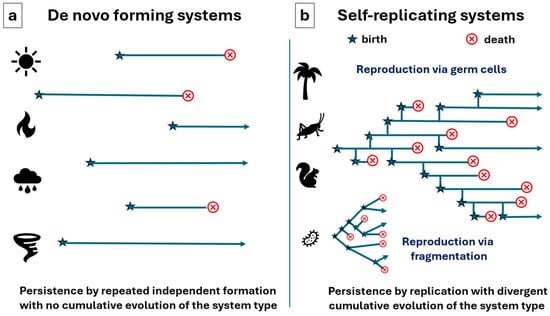
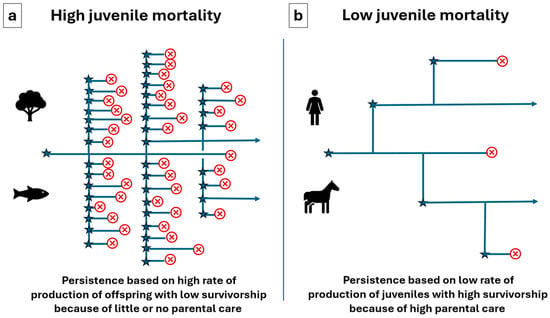
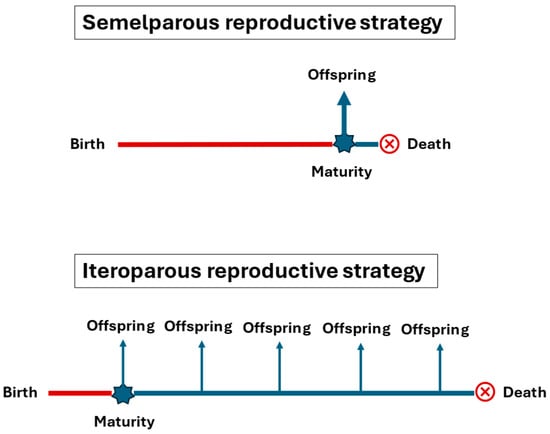
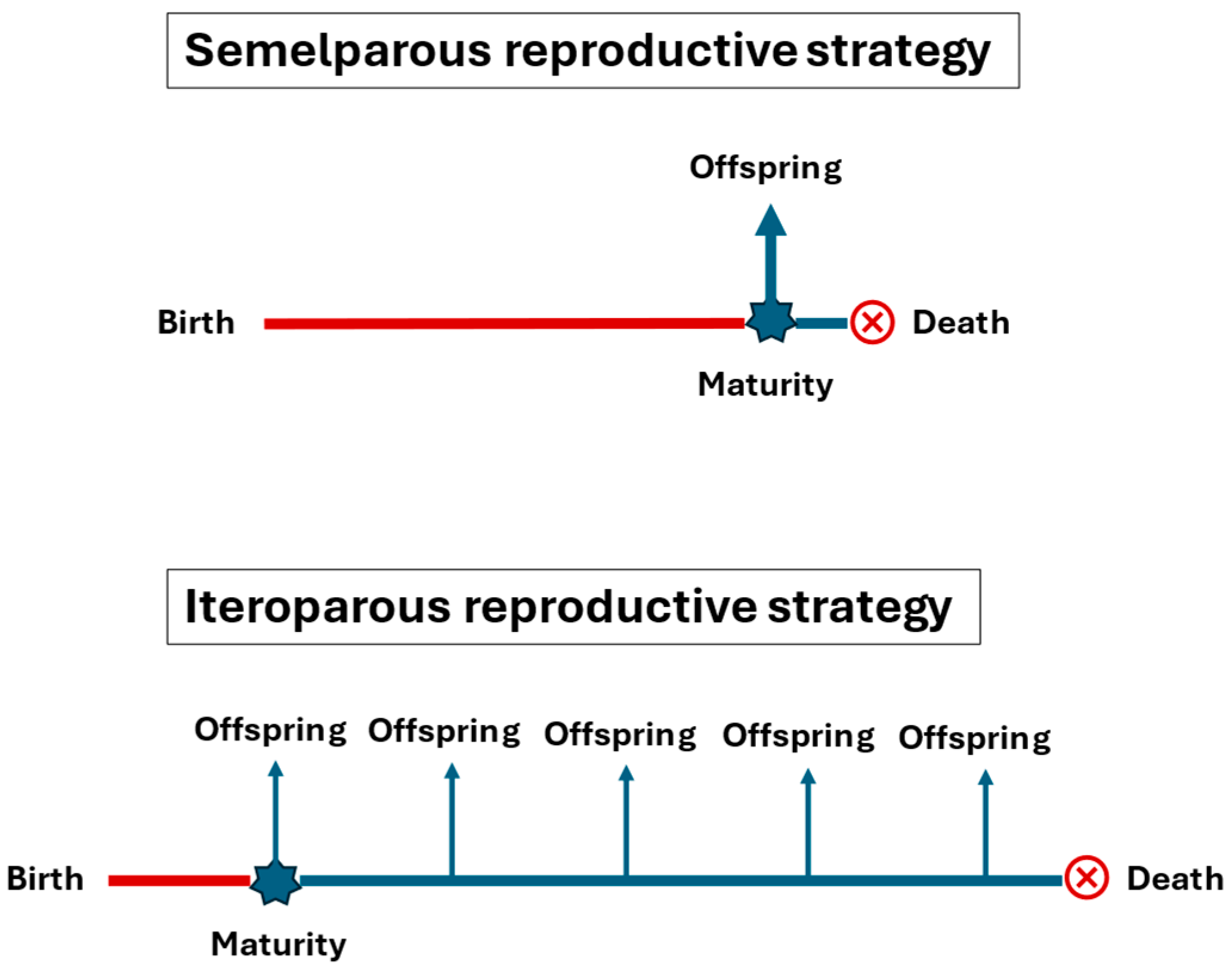
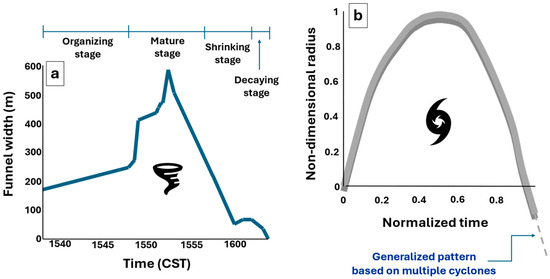
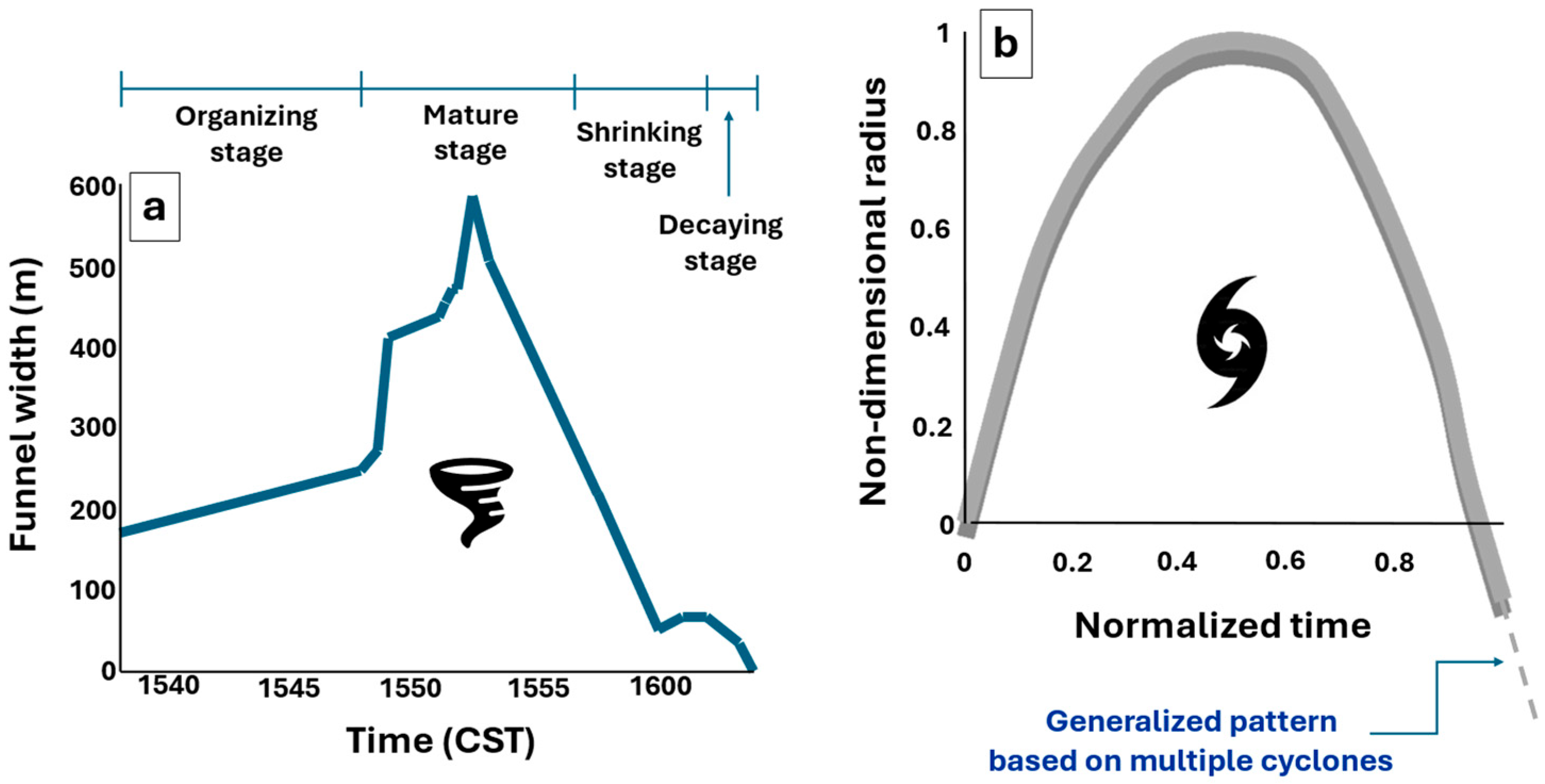
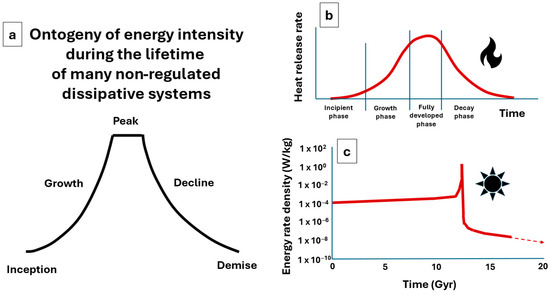
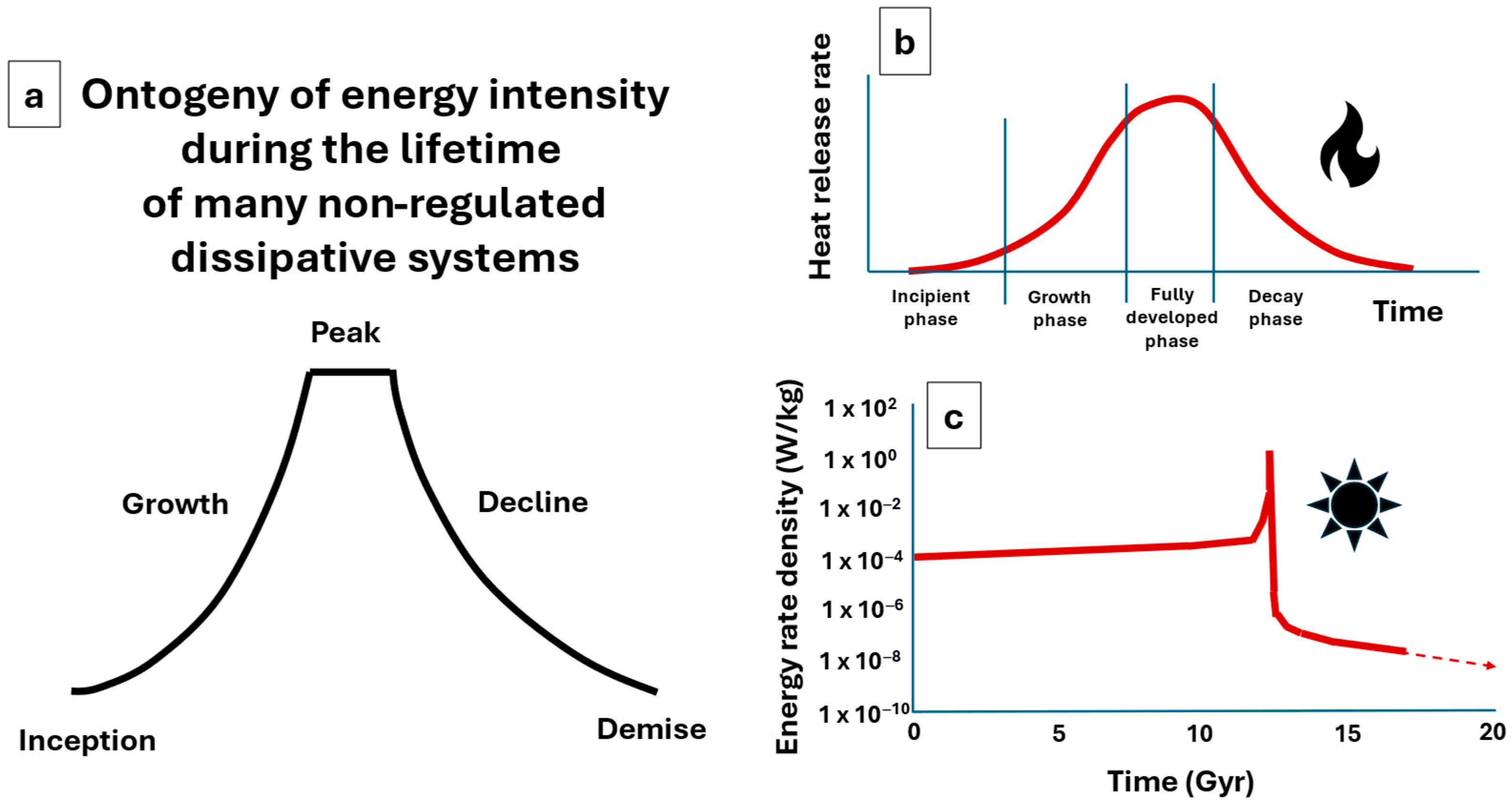
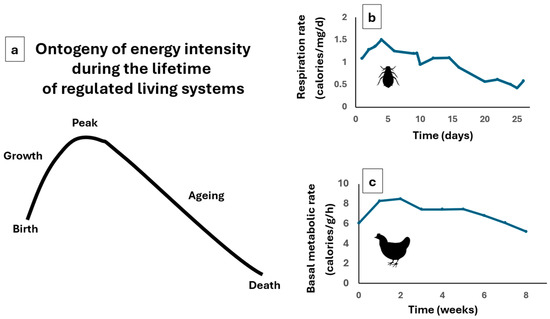
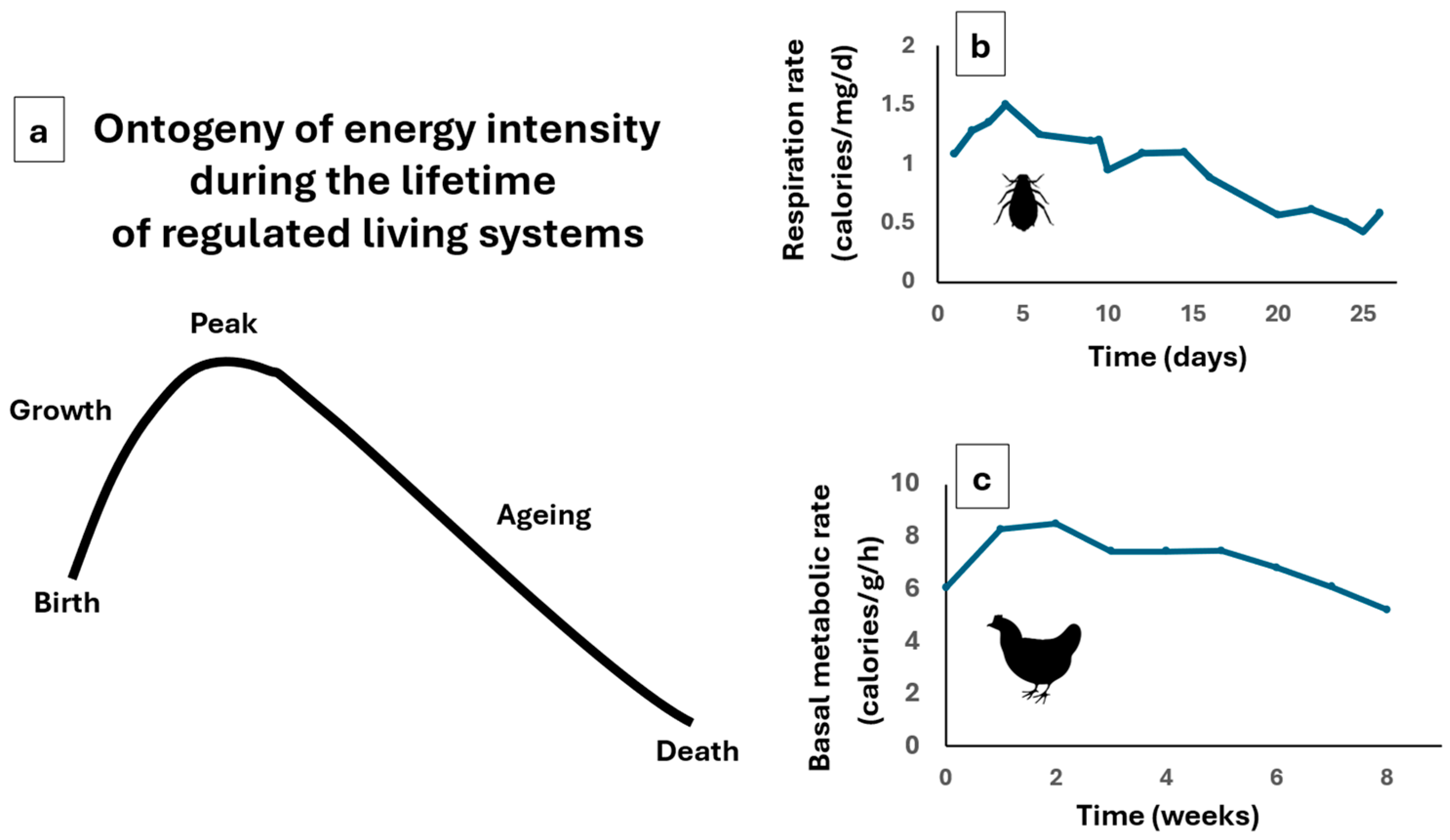
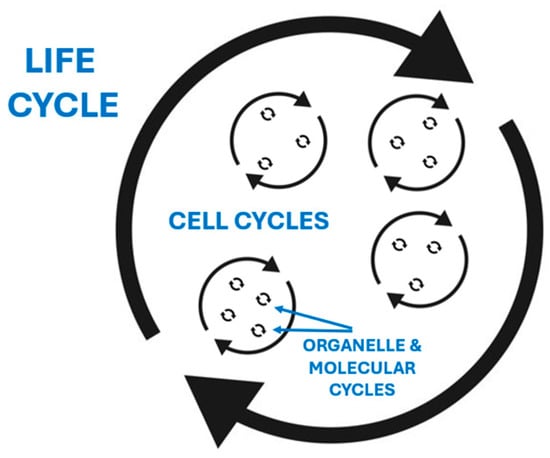
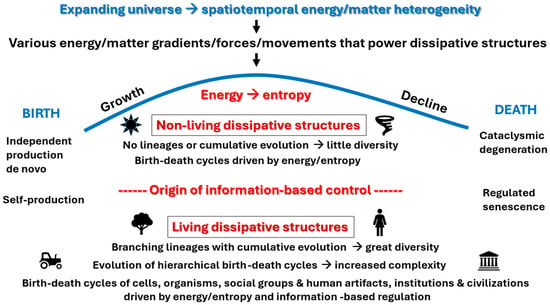

Disclaimer/Publisher’s Note: The statements, opinions and data contained in all publications are solely those of the individual author(s) and contributor(s) and not of MDPI and/or the editor(s). MDPI and/or the editor(s) disclaim responsibility for any injury to people or property resulting from any ideas, methods, instructions or products referred to in the content. |
© 2026 by the author. Licensee MDPI, Basel, Switzerland. This article is an open access article distributed under the terms and conditions of the Creative Commons Attribution (CC BY) license.